
Articles | Volume 26, issue 19
https://doi.org/10.5194/acp-26-14259-2026
© Author(s) 2026. This work is distributed under
the Creative Commons Attribution 4.0 License.
the Creative Commons Attribution 4.0 License.
https://doi.org/10.5194/acp-26-14259-2026
© Author(s) 2026. This work is distributed under
the Creative Commons Attribution 4.0 License.
the Creative Commons Attribution 4.0 License.
Research article
| 
12 Oct 2026
Research article |
| 12 Oct 2026
| 12 Oct 2026
Warm-sector heavy rainfall over the eastern China plains: identification, characteristics, and precursor dynamic signals
Weilong Deng
Key Laboratory of Climate Resource Development and Disaster Prevention in Gansu Province, College of Atmospheric Sciences, Lanzhou University, Lanzhou 730000, China
State Key Laboratory of Severe Weather Meteorological Science and Technology & Specialized Meteorological Advanced Support Technology Research Center, Chinese Academy of Meteorological Sciences, China Meteorological Administration, Beijing 100081, China

State Key Laboratory of Severe Weather Meteorological Science and Technology & Specialized Meteorological Advanced Support Technology Research Center, Chinese Academy of Meteorological Sciences, China Meteorological Administration, Beijing 100081, China
CMA Field Scientific Experiment Base for Low-Altitude Economy Meteorological Support of Unmanned Aviation in Guangdong-Hong Kong-Macao Greater Bay Area, Shenzhen 518108, China
Ning Li
State Key Laboratory of Severe Weather Meteorological Science and Technology & Specialized Meteorological Advanced Support Technology Research Center, Chinese Academy of Meteorological Sciences, China Meteorological Administration, Beijing 100081, China
College of Earth and Planetary Sciences, University of Chinese Academy of Sciences, Beijing 100049, China
Zhen Zhang
State Key Laboratory of Severe Weather Meteorological Science and Technology & Specialized Meteorological Advanced Support Technology Research Center, Chinese Academy of Meteorological Sciences, China Meteorological Administration, Beijing 100081, China
Department of Atmospheric and Oceanic Sciences & Institute of Atmospheric Sciences, Fudan University, Shanghai 200438, China
Yifei Wang
State Key Laboratory of Severe Weather Meteorological Science and Technology & Specialized Meteorological Advanced Support Technology Research Center, Chinese Academy of Meteorological Sciences, China Meteorological Administration, Beijing 100081, China
Yi Yang
CORRESPONDING AUTHOR
Key Laboratory of Climate Resource Development and Disaster Prevention in Gansu Province, College of Atmospheric Sciences, Lanzhou University, Lanzhou 730000, China
Related authors
No articles found.
Tian Xian, Yuping Sun, Tianmeng Chen, Hui Xu, Xiaoran Guo, Zhen Zhang, Zhongwang Wu, Huaquan Hu, Juan Chen, Liping Zeng, Yifei Wang, Shuairu Jiang, Pengzhan Yao, Ning Li, Honglong Yang, and Jianping Guo
EGUsphere, https://doi.org/10.5194/egusphere-2026-5822, https://doi.org/10.5194/egusphere-2026-5822, 2026
This preprint is open for discussion and under review for Atmospheric Chemistry and Physics (ACP).
Short summary
Short summary
Turbulence in the planetary boundary layer (PBL) affects cloud and precipitation, yet little is known about it across China. With summertime 2022 data from 132 radar wind profilers, we map the turbulence dissipation rate (ε) within and above the PBL. Stability and wind shear jointly govern turbulence within the PBL, whereas shear dominates above it; clouds enhance turbulence aloft, and topography and land cover shape its regional pattern, offering new constraints for weather and climate models.
Hui Xu, Jianping Guo, Jianbo Deng, Rongfang Yang, Deli Meng, Zhen Zhang, Ning Li, Yuping Sun, Shuairu Jiang, Tianmeng Chen, Juan Chen, Liping Zeng, Yongshui Zhou, and Bing Tong
Atmos. Chem. Phys., 26, 14303–14327, https://doi.org/10.5194/acp-26-14303-2026, https://doi.org/10.5194/acp-26-14303-2026, 2026
Short summary
Short summary
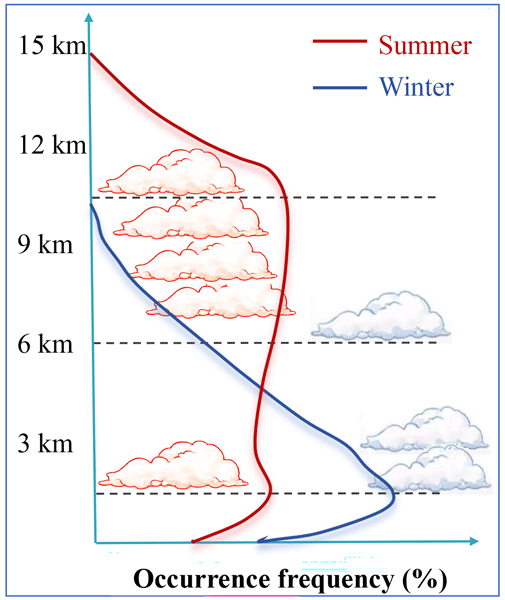
Using a new national network of 80 cloud radars, we mapped how clouds are layered and how high they reach across China. Clouds vary strongly by region, season, and time of day, with deeper clouds in humid conditions and shallower clouds under stable or strong shear conditions. Afternoon single‑layer low CBH is significantly higher than all‑hour, especially over evergreen broadleaf. These findings help improve weather and climate predictions.
Qi Zhang, Tianmeng Chen, Jianping Guo, Bin Deng, Han Li, and Yu Wu
Geosci. Model Dev., 19, 9555–9580, https://doi.org/10.5194/gmd-19-9555-2026, https://doi.org/10.5194/gmd-19-9555-2026, 2026
Short summary
Short summary
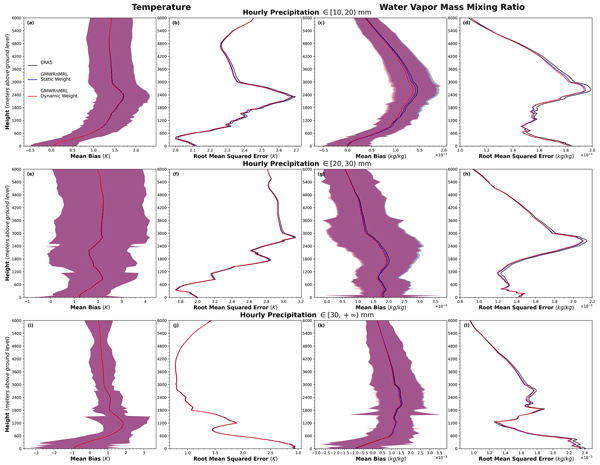
This study presents an adaptive observation-weighting scheme for thermodynamic profile retrievals from ground-based microwave radiometers and Mie–Raman lidars. The method dynamically estimates observational contributions during the retrieval process, replacing the commonly used static weighting assumption. Evaluation using 107 heavy-precipitation cases shows improved retrieval accuracy, particularly for atmospheric moisture profiles.
Juan Zhao, Jianping Guo, Jidong Gao, and Honglong Yang
EGUsphere, https://doi.org/10.5194/egusphere-2026-3350, https://doi.org/10.5194/egusphere-2026-3350, 2026
This preprint is open for discussion and under review for Geoscientific Model Development (GMD).
Short summary
Short summary
Expanding low-altitude activities demand better lower-atmosphere weather data. Using observing system simulation experiments (OSSEs) over the Beijing-Tianjin-Hebei region, we tested if meteorological drone observations of temperature, humidity, and wind improve short-term rainfall forecasts. Dense, multi-height networks with wind measurements yield best accuracy, especially over mountains where storms form. These findings guide low-altitude observing network design to support safe operations.
Rongfang Yang, Deli Meng, Guanglei Zhang, Lihui Liu, Guocui Li, Zhen Zhang, and Jianping Guo
EGUsphere, https://doi.org/10.5194/egusphere-2026-4218, https://doi.org/10.5194/egusphere-2026-4218, 2026
This preprint is open for discussion and under review for Atmospheric Measurement Techniques (AMT).
Short summary
Short summary
The air near the ground affects weather, pollution, and low-flying aircraft safety, but is hard to measure over hills. We flew a drone with weather sensors and compared it with a tall measurement tower. The drone accurately captured how wind, temperature, and humidity change with height. It shook most when strong shifting winds met weak stability, especially near cloud base. This helps make drone weather observations and low-altitude flight safer.

Qi Zhang, Tianmeng Chen, Jianping Guo, and Xun Li
Atmos. Meas. Tech., 19, 4853–4873, https://doi.org/10.5194/amt-19-4853-2026, https://doi.org/10.5194/amt-19-4853-2026, 2026
Short summary
Short summary
Accurate monitoring of boundary-layer water vapor prior to nocturnal heavy precipitation remains challenging. This study extends a physically constrained retrieval framework by integrating Raman lidar observations to improve water vapor profile estimation. The method shows improved accuracy compared to reanalysis data and captures coherent pre-precipitation moisture evolution, demonstrating its potential for studying and monitoring severe weather processes.
Kaiqiang Gu, Yi Yang, Shixiang Su, Xiaoming Hu, and Feifan Bian
EGUsphere, https://doi.org/10.5194/egusphere-2026-3527, https://doi.org/10.5194/egusphere-2026-3527, 2026
This preprint is open for discussion and under review for Atmospheric Chemistry and Physics (ACP).
Short summary
Short summary
To assess how China’s carbon peaking and carbon neutrality pathways alter atmospheric carbon dioxide, we combined regional simulations with airflow tracking. Near-surface carbon dioxide responded much more strongly to emission changes than the full-column average. Under deep cuts, ecosystem effects became more important, while weather controlled whether local emissions or regional transport dominated high-concentration episodes, showing the value of coordinated regional mitigation.
Feimin Zhang, Kaixuan Bi, Xing Chen, Yi Yang, Fang Yang, and Chenghai Wang
Earth Syst. Sci. Data, 18, 3711–3728, https://doi.org/10.5194/essd-18-3711-2026, https://doi.org/10.5194/essd-18-3711-2026, 2026
Short summary
Short summary
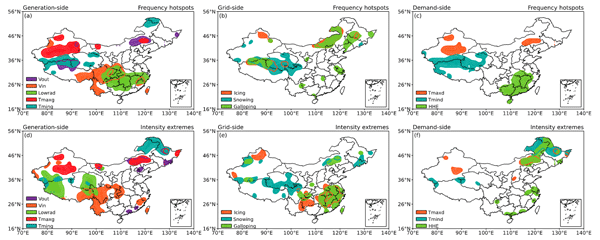
The China New-type Power Systems Meteorological (CNPS-Met) dataset covers mainland China with a daily resolution and a 25 km grid. It includes eight meteorological variables and eleven high-impact weather events related to power generation, grid transmission, and electricity demand. CNPS-Met outperforms other existing datasets in accuracy for most meteorological variables. We also quantified the frequency hotspots and intensity extremes of high-impact weather events.
Xiaozhong Cao, Qiyun Guo, Haowen Luo, Jincheng Wang, Rongkang Yang, Die Xiao, Yinfeng Liu, Zhongliang Sun, Shijun Liu, Sijie Chen, Anfan Huang, Guo Jianping, and Peng Zhang
Atmos. Meas. Tech., 19, 3231–3251, https://doi.org/10.5194/amt-19-3231-2026, https://doi.org/10.5194/amt-19-3231-2026, 2026
Short summary
Short summary
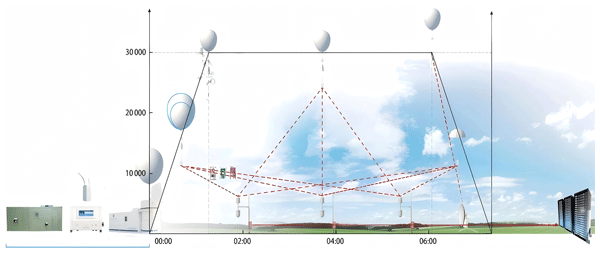
The Ascent-Drift-Descent Radiosonde System (ADDRS) represents an emerging cost-effective technology for upper-air measurements, Its 'Internet cloud + instrument terminal' design enables targeted observations for extreme weather research. Initial data application shows high potential for numerical weather prediction, The pilot application of ADDRS is list in the World Meteorological Organization Region II Coordination 2025-2027 demonstration project (No.RA II-18-I-DP-2).
Rumo Wang, Tianyi Fan, Zhanqing Li, and Jianping Guo
EGUsphere, https://doi.org/10.5194/egusphere-2026-1730, https://doi.org/10.5194/egusphere-2026-1730, 2026
Short summary
Short summary
This study investigated whether aerosols from anthropogenic emissions can make storm environment more favorable for producing tornados. We numerically modeled a real storm in the populated eastern China and found that aerosols can warm the low-level air and strengthen the updraft, allowing the storm to more effectively ingest environmental vorticity, and thus favoring the production of tornados. This suggests that air pollution may increase severe weather risk in densely populated regions.
Yonglin Fang, Hancheng Hu, Xiangdong Zheng, Jianping Guo, Xingbing Zhao, Fang Ma, and Hao Wu
Atmos. Chem. Phys., 26, 4089–4104, https://doi.org/10.5194/acp-26-4089-2026, https://doi.org/10.5194/acp-26-4089-2026, 2026
Short summary
Short summary
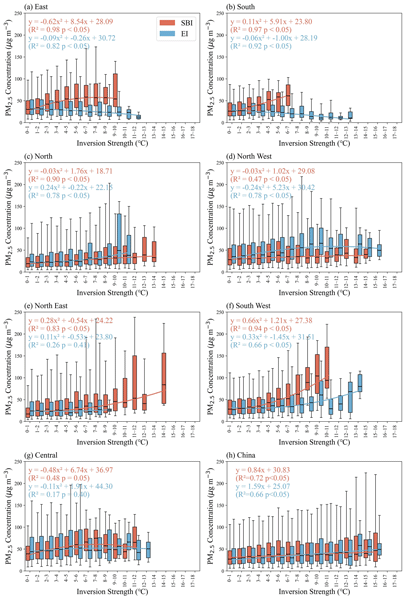
This study shows how temperature inversions (warm air above cold) trap pollution in China. Using six years of national data, we find these "lids" frequently cause severe haze, especially in winter, by increasing pollution probability and intensity. Impacts differ by region and inversion type/strength. These findings help improve air quality forecasts and regional pollution control strategies.
Zhe Tong, Boming Liu, Xin Ma, Jianping Guo, Haowei Zhang, Haoyu Dong, Ge Han, Yingying Ma, and Wei Gong
Earth Syst. Sci. Data Discuss., https://doi.org/10.5194/essd-2026-73, https://doi.org/10.5194/essd-2026-73, 2026
Revised manuscript accepted for ESSD
Short summary
Short summary
Near-surface wind is crucial for weather and wind energy studies. This work uses physically constrained machine learning combined with satellite wind observations to generate a wind speed profile dataset within the global atmospheric boundary layer. The dataset accurately depicts the spatial distribution and variation of global wind speeds with improved accuracy, finer vertical detail, and reduced data gaps, supporting boundary-layer meteorology, climate studies, and wind energy applications.
Ning Li, Jianping Guo, Xiaoran Guo, Tianmeng Chen, Zhen Zhang, Na Tang, Yifei Wang, Honglong Yang, Yongguang Zheng, and Yongshui Zhou
Atmos. Chem. Phys., 26, 3339–3356, https://doi.org/10.5194/acp-26-3339-2026, https://doi.org/10.5194/acp-26-3339-2026, 2026
Short summary
Short summary
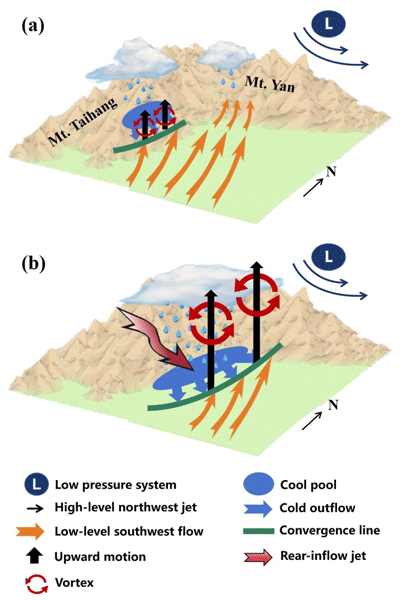
Nighttime rainfall often links to low-level jets (LLJs), but we lack clarity on nationwide LLJ features. We here used a nationwide radar wind profiler network to study LLJ changes 2 hours before rainfall, covering China’s 2023–2024 rainy seasons. 56% nighttime rainfall had LLJs. The LLJs-associated heavy rain needed a rapid adjustment of LLJs’ vertical structure, especially a significant intensification within 30 minutes preceding rain. This shows the importance of LLJ in nowcasting rainfall.
Xiaoran Guo, Jianping Guo, Ning Li, Zhen Zhang, Tianmeng Chen, Yu Shi, Pengzhan Yao, Shuairu Jiang, Lei Zhao, and Fei Hu
Atmos. Chem. Phys., 26, 2391–2409, https://doi.org/10.5194/acp-26-2391-2026, https://doi.org/10.5194/acp-26-2391-2026, 2026
Short summary
Short summary
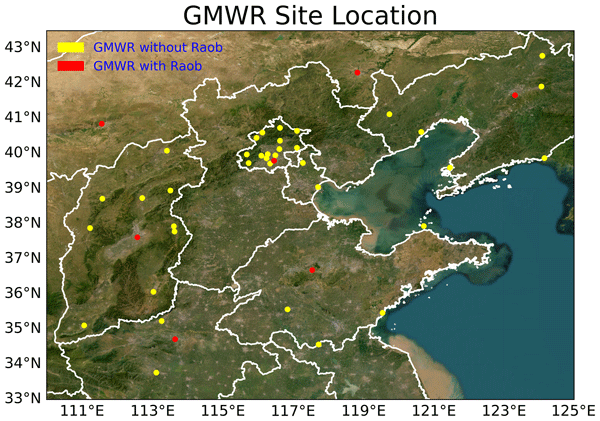
Wind gusts threaten safety and infrastructure but are hard to predict. To address this gap, we studied an extreme wind gust event in Beijing on 30 May 2024. We used seven radar wind profilers to track how this gust developed. It formed when cold northeasterly air clashed with warm southerly winds as the storm moved downhill. Evaporation of rain cooled the air, boosting downward air movement and wind strength. The turbulence transferring energy from small to large eddies intensify winds.
Qi Zhang, Tianmeng Chen, Jianping Guo, Yu Wu, Bin Deng, and Junjie Yan
Geosci. Model Dev., 19, 505–522, https://doi.org/10.5194/gmd-19-505-2026, https://doi.org/10.5194/gmd-19-505-2026, 2026
Short summary
Short summary
We propose TCKF1D-Var, a thermodynamic-constrained variational framework for ground-based microwave radiometer retrievals. Using virtual potential temperature, a ratio-based cost function, and a microphysics closure, it reduces biases relative to ERA5 and 1D-Var, improves cloud liquid water representation, and enhances heavy rainfall precursors, extending lead times. This approach strengthens continuous profiling and supports high-impact weather nowcasting.
Deli Meng, Jianping Guo, Juan Chen, Xiaoran Guo, Ning Li, Yuping Sun, Zhen Zhang, Na Tang, Hui Xu, Tianmeng Chen, Rongfang Yang, and Jiajia Hua
Earth Syst. Sci. Data, 17, 4023–4037, https://doi.org/10.5194/essd-17-4023-2025, https://doi.org/10.5194/essd-17-4023-2025, 2025
Short summary
Short summary
This study provides a high-resolution dataset of low-level atmospheric turbulence across China, using radar and weather balloon observations. It reveals regional and seasonal variations in turbulence, with stronger activity in spring and summer. The dataset supports weather forecasting, aviation safety, and low-altitude flight planning, aiding China's growing low-altitude economy, and is accessible at https://doi.org/10.5281/zenodo.14959025.
Xiaoran Guo, Jianping Guo, Deli Meng, Yuping Sun, Zhen Zhang, Hui Xu, Liping Zeng, Juan Chen, Ning Li, and Tianmeng Chen
Earth Syst. Sci. Data, 17, 3541–3552, https://doi.org/10.5194/essd-17-3541-2025, https://doi.org/10.5194/essd-17-3541-2025, 2025
Short summary
Short summary
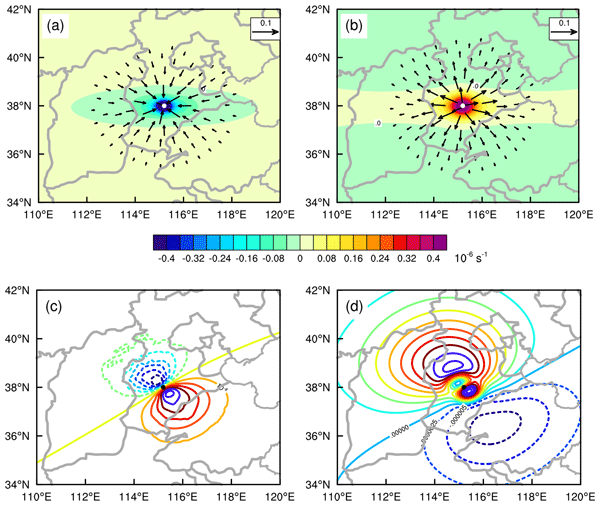
Optimal atmospheric dynamic conditions are essential for convective storms. This study generates a dataset of high-resolution divergence and vorticity profiles using the measurements of a radar wind profiler mesonet in Beijing. The negative divergence and positive vorticity are present ahead of rainfall events. This suggests that this dataset can help improve our understanding of the pre-storm environment and has the potential to be applied in weather forecasting.
Juan Zhao, Jianping Guo, and Xiaohui Zheng
Geosci. Model Dev., 18, 4075–4101, https://doi.org/10.5194/gmd-18-4075-2025, https://doi.org/10.5194/gmd-18-4075-2025, 2025
Short summary
Short summary
A series of observing system simulation experiments are conducted to assess the impact of multiple radar wind profiler (RWP) networks on convective-scale numerical weather prediction. Results from three southwest-type heavy rainfall cases in the Beijing–Tianjin–Hebei region suggest the added forecast skill of ridge and foothill networks associated with the Taihang Mountains over the existing RWP network. This research provides valuable guidance for designing optimal RWP networks in the region.
Seoung Soo Lee, Chang Hoon Jung, Jinho Choi, Young Jun Yoon, Junshik Um, Youtong Zheng, Jianping Guo, Manguttathil G. Manoj, Sang-Keun Song, and Kyung-Ja Ha
Atmos. Chem. Phys., 25, 705–726, https://doi.org/10.5194/acp-25-705-2025, https://doi.org/10.5194/acp-25-705-2025, 2025
Short summary
Short summary
This study attempts to test a general factor that explains differences in the properties of different mixed-phase clouds using a modeling tool. Although this attempt is not to identify a factor that can perfectly explain and represent the properties of different mixed-phase clouds, we believe that this attempt acts as a valuable stepping stone towards a more complete, general way of using climate models to better predict climate change.
Zhiqi Xu, Jianping Guo, Guwei Zhang, Yuchen Ye, Haikun Zhao, and Haishan Chen
Earth Syst. Sci. Data, 16, 5753–5766, https://doi.org/10.5194/essd-16-5753-2024, https://doi.org/10.5194/essd-16-5753-2024, 2024
Short summary
Short summary
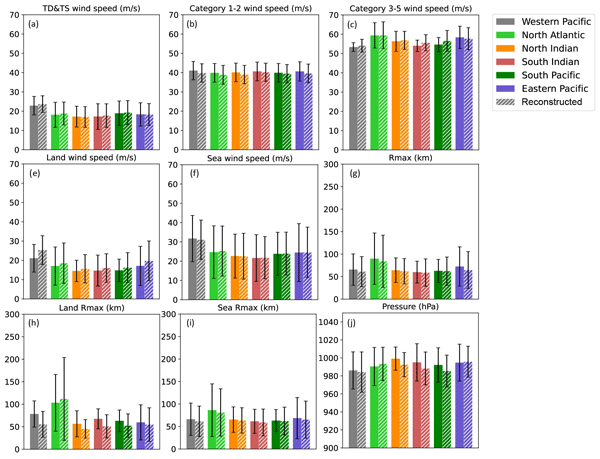
Tropical cyclones (TCs) are powerful weather systems that can cause extreme disasters. Here we generate a global long-term TC size and intensity reconstruction dataset, covering a time period from 1959 to 2022, with a 3 h temporal resolution, using machine learning models. These can be valuable for filling observational data gaps and advancing our understanding of TC climatology, thereby facilitating risk assessments and defenses against TC-related disasters.
Deli Meng, Jianping Guo, Xiaoran Guo, Yinjun Wang, Ning Li, Yuping Sun, Zhen Zhang, Na Tang, Haoran Li, Fan Zhang, Bing Tong, Hui Xu, and Tianmeng Chen
Atmos. Chem. Phys., 24, 8703–8720, https://doi.org/10.5194/acp-24-8703-2024, https://doi.org/10.5194/acp-24-8703-2024, 2024
Short summary
Short summary
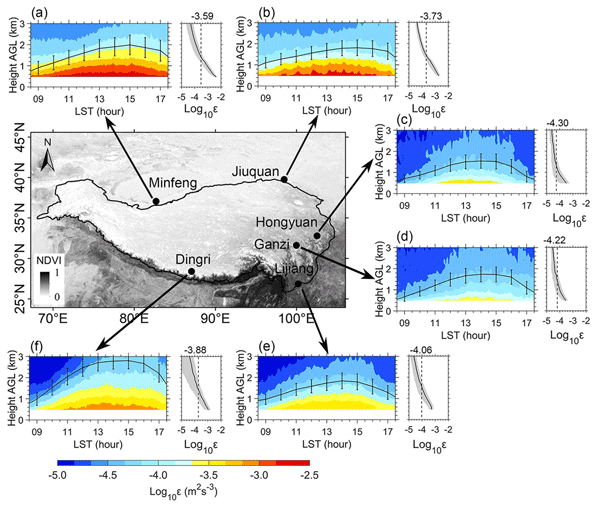
The turbulence in the planetary boundary layer (PBL) over the Tibetan Plateau (TP) remains unclear. Here we elucidate the vertical profile of and temporal variation in the turbulence dissipation rate in the PBL over the TP based on a radar wind profiler (RWP) network. To the best of our knowledge, this is the first time that the turbulence profile over the whole TP has been revealed. Furthermore, the possible mechanisms of clouds acting on the PBL turbulence structure are investigated.
Hong Li, Yi Yang, Jian Sun, Yuan Jiang, Ruhui Gan, and Qian Xie
Geosci. Model Dev., 17, 5883–5896, https://doi.org/10.5194/gmd-17-5883-2024, https://doi.org/10.5194/gmd-17-5883-2024, 2024
Short summary
Short summary
Vertical atmospheric motions play a vital role in convective-scale precipitation forecasts by connecting atmospheric dynamics with cloud development. A three-dimensional variational vertical velocity assimilation scheme is developed within the high-resolution CMA-MESO model, utilizing the adiabatic Richardson equation as the observation operator. A 10 d continuous run and an individual case study demonstrate improved forecasts, confirming the scheme's effectiveness.
Xiaoran Guo, Jianping Guo, Tianmeng Chen, Ning Li, Fan Zhang, and Yuping Sun
Atmos. Chem. Phys., 24, 8067–8083, https://doi.org/10.5194/acp-24-8067-2024, https://doi.org/10.5194/acp-24-8067-2024, 2024
Short summary
Short summary
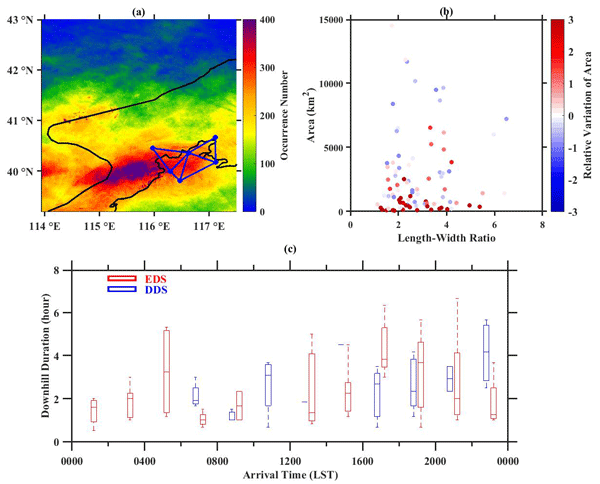
The prediction of downhill thunderstorms (DSs) remains elusive. We propose an objective method to identify DSs, based on which enhanced and dissipated DSs are discriminated. A radar wind profiler (RWP) mesonet is used to derive divergence and vertical velocity. The mid-troposphere divergence and prevailing westerlies enhance the intensity of DSs, whereas low-level divergence is observed when the DS dissipates. The findings highlight the key role that an RWP mesonet plays in the evolution of DSs.
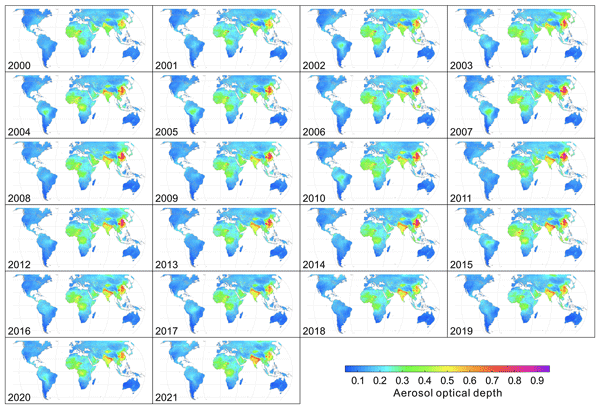
Kaixu Bai, Ke Li, Liuqing Shao, Xinran Li, Chaoshun Liu, Zhengqiang Li, Mingliang Ma, Di Han, Yibing Sun, Zhe Zheng, Ruijie Li, Ni-Bin Chang, and Jianping Guo
Earth Syst. Sci. Data, 16, 2425–2448, https://doi.org/10.5194/essd-16-2425-2024, https://doi.org/10.5194/essd-16-2425-2024, 2024
Short summary
Short summary
A global gap-free high-resolution air pollutant dataset (LGHAP v2) was generated to provide spatially contiguous AOD and PM2.5 concentration maps with daily 1 km resolution from 2000 to 2021. This gap-free dataset has good data accuracies compared to ground-based AOD and PM2.5 concentration observations, which is a reliable database to advance aerosol-related studies and trigger multidisciplinary applications for environmental management, health risk assessment, and climate change analysis.
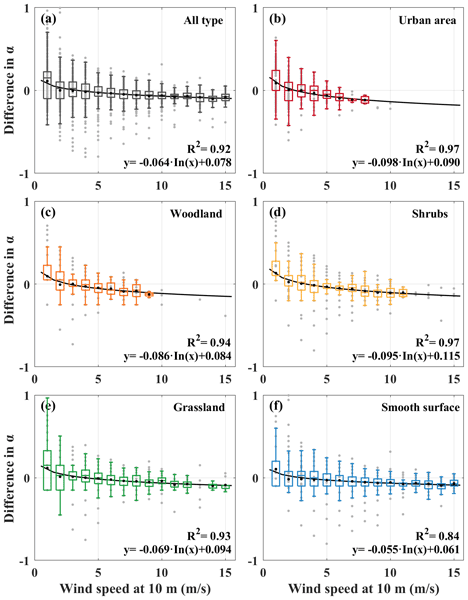
Boming Liu, Xin Ma, Jianping Guo, Renqiang Wen, Hui Li, Shikuan Jin, Yingying Ma, Xiaoran Guo, and Wei Gong
Atmos. Chem. Phys., 24, 4047–4063, https://doi.org/10.5194/acp-24-4047-2024, https://doi.org/10.5194/acp-24-4047-2024, 2024
Short summary
Short summary
Accurate wind profile estimation, especially for the lowest few hundred meters of the atmosphere, is of great significance for the weather, climate, and renewable energy sector. We propose a novel method that combines the power-law method with the random forest algorithm to extend wind profiles beyond the surface layer. Compared with the traditional algorithm, this method has better stability and spatial applicability and can be used to obtain the wind profiles on different land cover types.
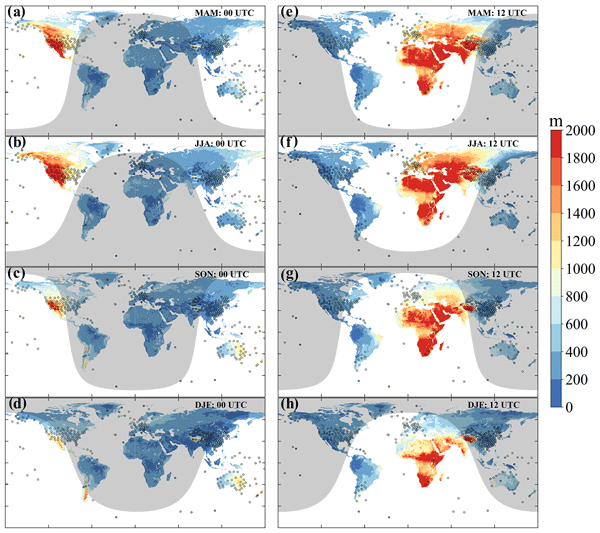
Jianping Guo, Jian Zhang, Jia Shao, Tianmeng Chen, Kaixu Bai, Yuping Sun, Ning Li, Jingyan Wu, Rui Li, Jian Li, Qiyun Guo, Jason B. Cohen, Panmao Zhai, Xiaofeng Xu, and Fei Hu
Earth Syst. Sci. Data, 16, 1–14, https://doi.org/10.5194/essd-16-1-2024, https://doi.org/10.5194/essd-16-1-2024, 2024
Short summary
Short summary
A global continental merged high-resolution (PBLH) dataset with good accuracy compared to radiosonde is generated via machine learning algorithms, covering the period from 2011 to 2021 with 3-hour and 0.25º resolution in space and time. The machine learning model takes parameters derived from the ERA5 reanalysis and GLDAS product as input, with PBLH biases between radiosonde and ERA5 as the learning targets. The merged PBLH is the sum of the predicted PBLH bias and the PBLH from ERA5.
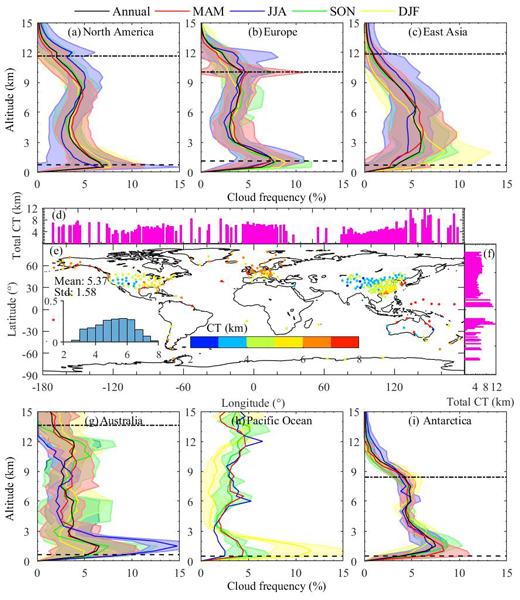
Hui Xu, Jianping Guo, Bing Tong, Jinqiang Zhang, Tianmeng Chen, Xiaoran Guo, Jian Zhang, and Wenqing Chen
Atmos. Chem. Phys., 23, 15011–15038, https://doi.org/10.5194/acp-23-15011-2023, https://doi.org/10.5194/acp-23-15011-2023, 2023
Short summary
Short summary
The radiative effect of cloud remains one of the largest uncertain factors in climate change, largely due to the lack of cloud vertical structure (CVS) observations. The study presents the first near-global CVS climatology using high-vertical-resolution soundings. Single-layer cloud mainly occurs over arid regions. As the number of cloud layers increases, clouds tend to have lower bases and thinner layer thicknesses. The occurrence frequency of cloud exhibits a pronounced seasonal diurnal cycle.
Boming Liu, Xin Ma, Jianping Guo, Hui Li, Shikuan Jin, Yingying Ma, and Wei Gong
Atmos. Chem. Phys., 23, 3181–3193, https://doi.org/10.5194/acp-23-3181-2023, https://doi.org/10.5194/acp-23-3181-2023, 2023
Short summary
Short summary
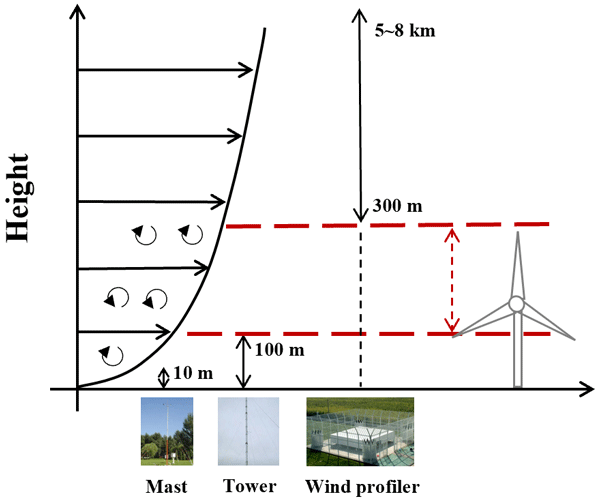
Wind energy is one of the most essential clean and renewable forms of energy in today’s world. However, the traditional power law method generally estimates the hub-height wind speed by assuming a constant exponent between surface and hub-height wind speeds. This inevitably leads to significant uncertainties in estimating the wind speed profile. To minimize the uncertainties, we here use a machine learning algorithm known as random forest to estimate the wind speed at hub height.
Seoung Soo Lee, Junshik Um, Won Jun Choi, Kyung-Ja Ha, Chang Hoon Jung, Jianping Guo, and Youtong Zheng
Atmos. Chem. Phys., 23, 273–286, https://doi.org/10.5194/acp-23-273-2023, https://doi.org/10.5194/acp-23-273-2023, 2023
Short summary
Short summary
This paper elaborates on process-level mechanisms regarding how the interception of radiation by aerosols interacts with the surface heat fluxes and atmospheric instability in warm cumulus clouds. This paper elucidates how these mechanisms vary with the location or altitude of an aerosol layer. This elucidation indicates that the location of aerosol layers should be taken into account for parameterizations of aerosol–cloud interactions.
Seoung Soo Lee, Jinho Choi, Goun Kim, Kyung-Ja Ha, Kyong-Hwan Seo, Chang Hoon Jung, Junshik Um, Youtong Zheng, Jianping Guo, Sang-Keun Song, Yun Gon Lee, and Nobuyuki Utsumi
Atmos. Chem. Phys., 22, 9059–9081, https://doi.org/10.5194/acp-22-9059-2022, https://doi.org/10.5194/acp-22-9059-2022, 2022
Short summary
Short summary
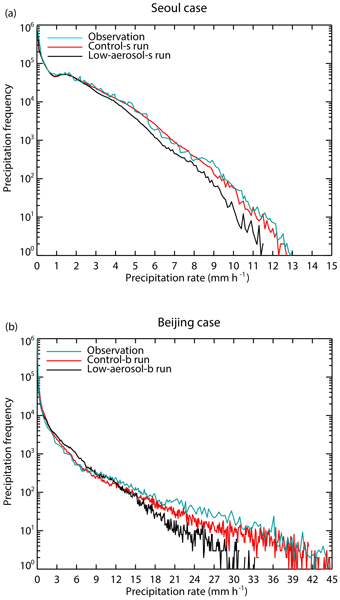
This study investigates how aerosols affect clouds and precipitation and how the aerosol effects vary with varying types of clouds that are characterized by cloud depth in two metropolitan areas in East Asia. As cloud depth increases, the enhancement of precipitation amount transitions to no changes in precipitation amount with increasing aerosol concentrations. This indicates that cloud depth needs to be considered for a comprehensive understanding of aerosol-cloud interactions.
Peilin Song, Yongqiang Zhang, Jianping Guo, Jiancheng Shi, Tianjie Zhao, and Bing Tong
Earth Syst. Sci. Data, 14, 2613–2637, https://doi.org/10.5194/essd-14-2613-2022, https://doi.org/10.5194/essd-14-2613-2022, 2022
Short summary
Short summary
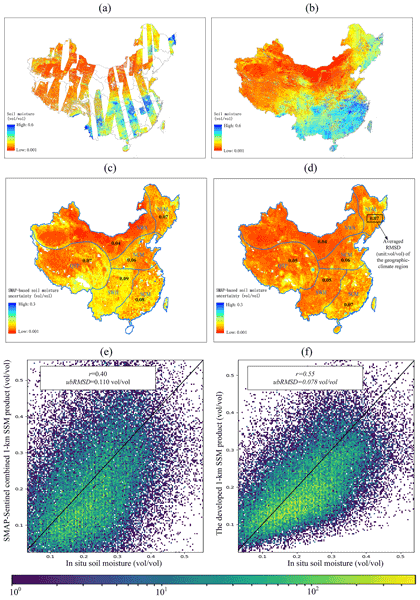
Soil moisture information is crucial for understanding the earth surface, but currently available satellite-based soil moisture datasets are imperfect either in their spatiotemporal resolutions or in ensuring image completeness from cloudy weather. In this study, therefore, we developed one soil moisture data product over China that has tackled most of the above problems. This data product has the potential to promote the investigation of earth hydrology and be extended to the global scale.
Kaixu Bai, Ke Li, Mingliang Ma, Kaitao Li, Zhengqiang Li, Jianping Guo, Ni-Bin Chang, Zhuo Tan, and Di Han
Earth Syst. Sci. Data, 14, 907–927, https://doi.org/10.5194/essd-14-907-2022, https://doi.org/10.5194/essd-14-907-2022, 2022
Short summary
Short summary
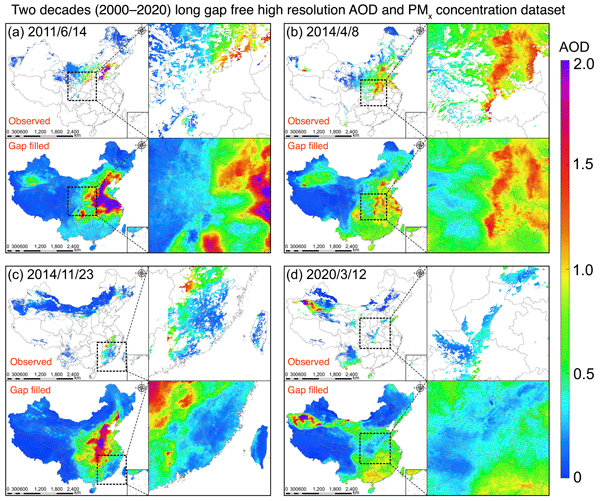
The Long-term Gap-free High-resolution Air Pollutant concentration dataset, providing gap-free aerosol optical depth (AOD) and PM2.5 and PM10 concentration with a daily 1 km resolution for 2000–2020 in China, is generated and made publicly available. This is the first long-term gap-free high-resolution aerosol dataset in China and has great potential to trigger multidisciplinary applications in Earth observations, climate change, public health, ecosystem assessment, and environment management.

Linye Song, Shangfeng Chen, Wen Chen, Jianping Guo, Conglan Cheng, and Yong Wang
Atmos. Chem. Phys., 22, 1669–1688, https://doi.org/10.5194/acp-22-1669-2022, https://doi.org/10.5194/acp-22-1669-2022, 2022
Short summary
Short summary
This study shows that in most years when haze pollution (HP) over the North China Plain (NCP) is more (less) serious in winter, air conditions in the following spring are also worse (better) than normal. Conversely, there are some years when HP in the following spring is opposed to that in winter. It is found that North Atlantic sea surface temperature (SST) anomalies play important roles in HP evolution over the NCP. Thus North Atlantic SST is an important preceding signal for NCP HP evolution.
Boming Liu, Jianping Guo, Wei Gong, Yong Zhang, Lijuan Shi, Yingying Ma, Jian Li, Xiaoran Guo, Ad Stoffelen, Gerrit de Leeuw, and Xiaofeng Xu
Atmos. Meas. Tech. Discuss., https://doi.org/10.5194/amt-2022-26, https://doi.org/10.5194/amt-2022-26, 2022
Publication in AMT not foreseen
Short summary
Short summary
Aeolus is the first satellite mission to directly observe wind profile information on a global scale. However, Aeolus wind products over China were thus far not evaluated by in-situ comparison. This work is the comparison of wind speed on a large scale between the Aeolus, ERA5 and RS , shedding important light on the data application of Aeolus wind products.

Jianping Guo, Jian Zhang, Kun Yang, Hong Liao, Shaodong Zhang, Kaiming Huang, Yanmin Lv, Jia Shao, Tao Yu, Bing Tong, Jian Li, Tianning Su, Steve H. L. Yim, Ad Stoffelen, Panmao Zhai, and Xiaofeng Xu
Atmos. Chem. Phys., 21, 17079–17097, https://doi.org/10.5194/acp-21-17079-2021, https://doi.org/10.5194/acp-21-17079-2021, 2021
Short summary
Short summary
The planetary boundary layer (PBL) is the lowest part of the troposphere, and boundary layer height (BLH) is the depth of the PBL and is of critical importance to the dispersion of air pollution. The study presents the first near-global BLH climatology by using high-resolution (5-10 m) radiosonde measurements. The variations in BLH exhibit large spatial and temporal dependence, with a peak at 17:00 local solar time. The most promising reanalysis product is ERA-5 in terms of modeling BLH.

Seoung Soo Lee, Kyung-Ja Ha, Manguttathil Gopalakrishnan Manoj, Mohammad Kamruzzaman, Hyungjun Kim, Nobuyuki Utsumi, Youtong Zheng, Byung-Gon Kim, Chang Hoon Jung, Junshik Um, Jianping Guo, Kyoung Ock Choi, and Go-Un Kim
Atmos. Chem. Phys., 21, 16843–16868, https://doi.org/10.5194/acp-21-16843-2021, https://doi.org/10.5194/acp-21-16843-2021, 2021
Short summary
Short summary
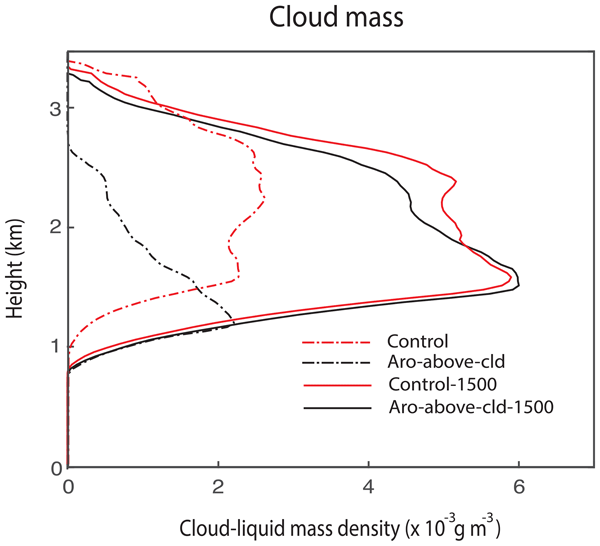
Using a modeling framework, a midlatitude stratocumulus cloud system is simulated. It is found that cloud mass in the system becomes very low due to interactions between ice and liquid particles compared to that in the absence of ice particles. It is also found that interactions between cloud mass and aerosols lead to a reduction in cloud mass in the system, and this is contrary to an aerosol-induced increase in cloud mass in the absence of ice particles.
Cited articles
Banacos, P. C. and Schultz, D. M.: The use of moisture flux convergence in forecasting convective initiation: Historical and operational perspectives, Weather Forecast., 20, 351–366, https://doi.org/10.1175/WAF858.1, 2005.
Blackadar, A. K.: Boundary Layer Wind Maxima and Their Significance for the Growth of Nocturnal Inversions, B. Am. Meteorol. Soc., 38, 283–290, https://doi.org/10.1175/1520-0477-38.5.283, 1957.
Bolton, D.: The computation of equivalent potential temperature, Mon. Weather Rev., 108, 1046–1053, https://doi.org/10.1175/1520-0493(1980)108<1046:TCOEPT>2.0.CO;2, 1980.
Chen, G., Wen, L., Chen, X., Hua, S., Xu, F., and Zhang, S.: Contrasts in microphysical characteristics between the Meiyu warm-sector and frontal heavy rainfall in East China, Geophys. Res. Lett., 52, e2025GL117902, https://doi.org/10.1029/2025GL117902, 2025.
Deng, W. and Guo, J.: Data for Warm-Sector Heavy Rainfall over the Eastern China Plains: Identification, Characteristics, and Precursor Dynamic Signals, Zenodo [data set], https://doi.org/10.5281/zenodo.21257973, 2026.
Doswell, C. A., Brooks, H. E., and Maddox, R. A.: Flash flood forecasting: An ingredients-based methodology, Weather Forecast., 11, 560–581, https://doi.org/10.1175/1520-0434(1996)011<0560:FFFAIB>2.0.CO;2, 1996.
Du, Y. and Chen, G.: Heavy rainfall associated with double low-level jets over Southern China. Part I: Ensemble-based analysis, Mon. Weather Rev., 146, 3827–3844, https://doi.org/10.1175/MWR-D-18-0101.1, 2018.
Du, Y. and Chen, G.: Heavy rainfall associated with double low-level jets over Southern China. Part II: Convection initiation, Mon. Weather Rev., 147, 543–565, https://doi.org/10.1175/MWR-D-18-0102.1, 2019.
Du, Y., Zhang, Q., Ying, Y., and Yang, Y.: Characteristics of Low-level Jets in Shanghai during the 2008–2009 Warm Seasons as Inferred from Wind Profiler Radar Data, J. Meteorol. Soc. Jpn., 90, 891–903, https://doi.org/10.2151/jmsj.2012-603, 2012.
Fu, J., Zhang, F., and Hewson, T. D.: Object-Oriented Composite Analysis of Warm-Sector Rainfall in North China, Mon. Weather Rev., 148, 2719–2735, https://doi.org/10.1175/MWR-D-19-0038.1, 2020a.
Fu, S., Jin, S., Shen, W., Li, D., Liu, B., and Sun, J.: A kinetic energy budget on the severe wind production that causes a serious state grid failure in Southern Xinjiang China, Atmos. Sci. Lett., 21, e977, https://doi.org/10.1002/asl.977, 2020b.
Fu, Y., Sun, J., Fu, S., and Zhang, Y.: Comparison between warm-sector and frontal heavy rainfall events in South China and the objective classification of warm-sector heavy rainfall events, Meteorol. Atmos. Phys., 135, 11, https://doi.org/10.1007/s00703-022-00949-8, 2023.
Guo, X., Guo, J., Zhang, D.-L., and Yun, Y.: Vertical divergence profiles as detected by two wind-profiler mesonets over East China: Implications for nowcasting convective storms, Q. J. Roy. Meteor. Soc., 149, 1629–1649, https://doi.org/10.1002/qj.4474, 2023.
He, H. and Zhang, F.: Diurnal variations of warm-season precipitation over Northern China, Mon. Weather Rev., 138, 1017–1025, https://doi.org/10.1175/2010MWR3356.1, 2010.
He, L., Long, L., Chen, B., Wang, Y., Geng, F., and Yan, X.: A case study on the triggering mechanisms of localized warm-sector rainstorm, Meteorol. Atmos. Phys., 133, 1707–1717, https://doi.org/10.1007/s00703-021-00836-8, 2021.
Hersbach, H., Bell, B., Berrisford, P., Hirahara, S., Horányi, A., Muñoz-Sabater, J., Nicolas, J., Peubey, C., Radu, R., Schepers, D., Simmons, A., Soci, C., Abdalla, S., Abellan, X., Balsamo, G., Bechtold, P., Biavati, G., Bidlot, J., Bonavita, M., De Chiara, G., Dahlgren, P., Dee, D., Diamantakis, M., Dragani, R., Flemming, J., Forbes, R., Fuentes, M., Geer, A., Haimberger, L., Healy, S., Hogan, R. J., Hólm, E., Janisková, M., Keeley, S., Laloyaux, P., Lopez, P., Lupu, C., Radnoti, G., de Rosnay, P., Rozum, I., Vamborg, F., Villaume, S., and Thépaut, J.-N.: The ERA5 global reanalysis, Q. J. Roy. Meteor. Soc., 146, 1999–2049, https://doi.org/10.1002/qj.3803, 2020.
Hersbach, H., Bell, B., Berrisford, P., Biavati, G., Horányi, A., Muñoz Sabater, J., Nicolas, J., Peubey, C., Radu, R., Rozum, I., Schepers, D., Simmons, A., Soci, C., Dee, D., and Thépaut, J.-N.: ERA5 hourly data on pressure levels from 1940 to present, Copernicus Climate Change Service (C3S) Climate Data Store (CDS) [data set], https://doi.org/10.24381/cds.bd0915c6, 2023.
Hewson, T. D.: Objective fronts, Meteorol. Appl., 5, 37–65, https://doi.org/10.1017/S1350482798000553, 1998.
Huang, P., Wan, Q., Li, L., and Hu, S.: Numerical simulation and analysis of the modulation effect of sub-grid turbulent orographic form drag on warm-sector heavy rainfall in South China, Atmos. Res., 318, 107991, https://doi.org/10.1016/j.atmosres.2025.107991, 2025.
Huang, S. S., Li, Z. G., Bao, C. L., Chen, H. Y., Yu, S. H., Li, J. H., Peng, B. X., Sun, S. Q., Zhu, Q. G., Liang, B. Q., Zhuang, Y. M., Fang, Z. Y., Yu, Z. H., and Wang, L. M.: Heavy Rainfall over Southern China in the Pre-Summer Rainy Season, Guangdong Science and Technology Press, 244 pp., Chinese unified book number: 13182⋅129, 1986 (in Chinese).
Jenkner, J., Sprenger, M., Schwenk, I., Schwierz, C., Dierer, S., and Leuenberger, D.: Detection and climatology of fronts in a high-resolution model reanalysis over the Alps, Meteorol. Appl., 17, 1–18, https://doi.org/10.1002/met.142, 2010.
Li, N., Guo, J., Wu, M., Zhang, F., Guo, X., Sun, Y., Zhang, Z., Liang, H., and Chen, T.: Low-level jet and its effect on the onset of summertime nocturnal rainfall in Beijing, Geophys. Res. Lett., 51, e2024GL110840, https://doi.org/10.1029/2024GL110840, 2024.
Li, N., Guo, J., Guo, X., Chen, T., Zhang, Z., Tang, N., Wang, Y., Yang, H., Zheng, Y., and Zhou, Y.: On the nationwide variability of low-level jets prior to warm-season nocturnal rainfall in China revealed by radar wind profilers, Atmos. Chem. Phys., 26, 3339–3356, https://doi.org/10.5194/acp-26-3339-2026, 2026.
Li, W., Bi, X., Sheng, L., Luo, Y., and Sun, J.: Modulations of Synoptic Weather Patterns on Warm-Sector Heavy Rainfall in South China: Insights from High-Density Observations with Principal Component Analysis, Front. Earth Sci., 9, 678230, https://doi.org/10.3389/feart.2021.678230, 2021.
Li, X., Guo, X., and Fu, D.: TRMM-retrieved cloud structure and evolution of MCSs over the northern South China Sea and impacts of CAPE and vertical wind shear, Adv. Atmos. Sci., 30, 77–88, https://doi.org/10.1007/s00376-012-2055-2, 2013.
Luo, Y., Zhang, R., Wan, Q., Wang, B., Wong, W. K., Hu, Z., Jou, B. J.-D., Lin, Y., Johnson, R. H., Chang, C.-P., Zhu, Y., Zhang, X., Wang, H., Xia, R., Ma, J., Zhang, D.-L., Gao, M., Zhang, Y., Liu, X., Chen, Y., Huang, H., Bao, X., Ruan, Z., Cui, Z., Meng, Z., Sun, J., Wu, M., Wang, H., Peng, X., Qian, W., Zhao, K., and Xiao, Y.: The Southern China Monsoon Rainfall Experiment (SCMREX), B. Am. Meteorol. Soc., 98, 999–1013, https://doi.org/10.1175/BAMS-D-15-00235.1, 2017.
Markowski, P. and Richardson, Y.: On the Classification of Vertical Wind Shear as Directional Shear versus Speed Shear, Weather Forecast., 21, 242–247, https://doi.org/10.1175/WAF897.1, 2006.
Miao, Y., Guo, J., Liu, S., Wei, W., Zhang, G., Lin, Y., and Zhai, P.: The climatology of low-level jet in Beijing and Guangzhou, China, J. Geophys. Res.-Atmos., 123, 2816–2830, https://doi.org/10.1002/2017JD027321, 2018.
Rotunno, R., Klemp, J. B., and Weisman, M. L.: A theory for strong, long-lived squall lines, J. Atmos. Sci., 45, 463–485, https://doi.org/10.1175/1520-0469(1988)045<0463:ATFSLL>2.0.CO;2, 1988.
Schumacher, R. S. and Johnson, R. H.: Organization and environmental properties of extreme-rain-producing mesoscale convective systems, Mon. Weather Rev., 133, 961–976, https://doi.org/10.1175/MWR2899.1, 2005.
Seager, R. and Henderson, N.: Diagnostic computation of moisture budgets in the ERA-Interim reanalysis with reference to analysis of CMIP-archived atmospheric model data, J. Climate, 26, 7876–7901, https://doi.org/10.1175/JCLI-D-13-00018.1, 2013.
Song, L., Zhang, L., Ma, X., Dong, F., and Zhi, X.: Objective Identification and Analysis of Warm-Sector Rainstorm with Warm-Shear Pattern over Yangtze–Huaihe River Region, Chinese J. Atmos. Sci., 47, 1709–1722, https://doi.org/10.3878/j.issn.1006-9895.2207.21220, 2023 (in Chinese).
Sun, J., Zhang, Y., Liu, R., Fu, S., and Tian, F.: A review of research on warm-sector heavy rainfall in China, Adv. Atmos. Sci., 36, 1299–1307, https://doi.org/10.1007/s00376-019-9021-1, 2019.
Thompson, R. L., Mead, C. M., and Edwards, R.: Effective Storm-Relative Helicity and Bulk Shear in Supercell Thunderstorm Environments, Weather Forecast., 22, 102–115, https://doi.org/10.1175/WAF969.1, 2007.
Wang, X., Jiang, W., Wu, J., Hou, P., Dai, Z., Rao, P., Ling, Z., and Deng, Y.: Extreme hourly precipitation characteristics of Mainland China from 1980 to 2019, Int. J. Climatol., 43, 2989–3004, https://doi.org/10.1002/joc.8012, 2023.
Wang, Z., Gao, H., and Dong, Y.: Refined characteristics and large-scale anomalous circulations associated with the “25.7” extreme rainstorm in Beijing, Trans. Atmos. Sci., 49, 217–227, https://doi.org/10.13878/j.cnki.dqkxxb.20260107005, 2026 (in Chinese).
Wei, W., Zhang, H. S., and Ye, X. X.: Comparison of low-level jets along the north coast of China in summer, J. Geophys. Res.-Atmos., 119, 9692–9706, https://doi.org/10.1002/2014JD021476, 2014.
Weisman, M. L. and Klemp, J. B.: The Dependence of Numerically Simulated Convective Storms on Vertical Wind Shear and Buoyancy, Mon. Weather Rev., 110, 504–520, https://doi.org/10.1175/1520-0493(1982)110<0504:TDONSC>2.0.CO;2, 1982.
Wilson, J. W. and Schreiber, W. E.: Initiation of convective storms at radar-observed boundary-layer convergence lines, Mon. Weather Rev., 114, 2516–2536, https://doi.org/10.1175/1520-0493(1986)114<2516:IOCSAR>2.0.CO;2, 1986.
Wu, M. and Luo, Y.: Mesoscale observational analysis of lifting mechanism of a warm-sector convective system producing the maximal daily precipitation in China mainland during pre-summer rainy season of 2015, J. Meteorol. Res., 30, 719–736, https://doi.org/10.1007/s13351-016-6089-8, 2016.
Wu, N., Ding, X., Wen, Z., Chen, G., Meng, Z., Lin, L., and Min, J.: Contrasting frontal and warm-sector heavy rainfalls over South China during the early-summer rainy season, Atmos. Res., 235, 104693, https://doi.org/10.1016/j.atmosres.2019.104693, 2020.
Yang, H., Du, Y., Chen, Z., and Fang, J.: Could developing frontal rainfall influence warm-sector rainfall?, Geophys. Res. Lett., 51, e2024GL110430, https://doi.org/10.1029/2024GL110430, 2024.
Yu, R., Xu, Y., Zhou, T., and Li, J.: Relation between rainfall duration and diurnal variation in the warm season precipitation over central eastern China, Geophys. Res. Lett., 34, L13703, https://doi.org/10.1029/2007GL030315, 2007a.
Yu, R., Zhou, T., Xiong, A., Zhu, Y., and Li, J.: Diurnal variations of summer precipitation over contiguous China, Geophys. Res. Lett., 34, L01704, https://doi.org/10.1029/2006GL028129, 2007b.
Yu, Y., Zhang, L., Song, L., Li, W., Zhou, L., and Ouyang, L.: Multiscale Features and Triggering Mechanisms of the Warm-Sector Heavy Rainfall Accompanied by Warm Shear Along the Yangtze–Huaihe Coastal Regions, J. Hydrometeorol., 25, 465–478, https://doi.org/10.1175/JHM-D-23-0143.1, 2024.
Zhang, L., Ma, X., Zhu, S., Guo, Z., Zhi, X., and Chen, C.: Analyses and applications of the precursor signals of a kind of warm-sector heavy rainfall over the coast of Guangdong, China, Atmos. Res., 280, 106425, https://doi.org/10.1016/j.atmosres.2022.106425, 2022.
Zhang, M. and Meng, Z.: Warm-Sector Heavy Rainfall in Southern China and Its WRF Simulation Evaluation: A Low-Level-Jet Perspective, Mon. Weather Rev., 147, 4461–4480, https://doi.org/10.1175/MWR-D-19-0110.1, 2019.
Zhang, Y., Guo, J., Yang, Y., Wang, Y., and Yim, S. H. L.: Vertical windshear modulates particulate matter pollutions: A perspective from radar wind profiler observations in Beijing, China, Remote Sens., 12, 546, https://doi.org/10.3390/rs12030546, 2020.
Zhang, Y., Liang, K., and Liu, C.: Time distribution pattern and spatial heterogeneity of hourly scale event-based extreme precipitation in China, J. Hydrol., 622, 129712, https://doi.org/10.1016/j.jhydrol.2023.129712, 2023.
Zhao, J., Guo, J., and Zheng, X.: Impact of multiple radar wind profiler data assimilation on convective-scale short-term rainfall forecasts: OSSE studies over the Beijing–Tianjin–Hebei region, Geosci. Model Dev., 18, 4075–4101, https://doi.org/10.5194/gmd-18-4075-2025, 2025.
Short summary
Heavy rain far ahead of weather fronts is easily overlooked and hard to forecast. Using five warm seasons of rain gauge and wind radar data from eastern China's plains, we found that these brief, intense events supplied nearly half of heavy rainfall at some sites. Before rain began, fast winds at low heights became more common and the strongest upward air movements intensified. These changes could help identify warning signs, but their ability to predict individual downpours still needs testing.
Heavy rain far ahead of weather fronts is easily overlooked and hard to forecast. Using five...


Altmetrics
Final-revised paper
Preprint