the Creative Commons Attribution 4.0 License.
the Creative Commons Attribution 4.0 License.
 | 25 Aug 2026
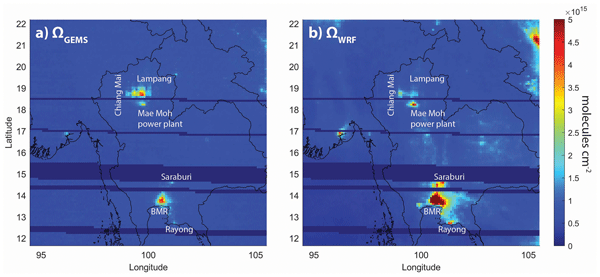
Do GEMS geostationary satellite observations of tropospheric NO2 always improve NOx emission estimates and related air quality modelling?

Xiaolin Wang
Yi Wang
Gitaek T. Lee
Haolin Wang
Liang Feng
Daven K. Henze
Rokjin J. Park
Related authors
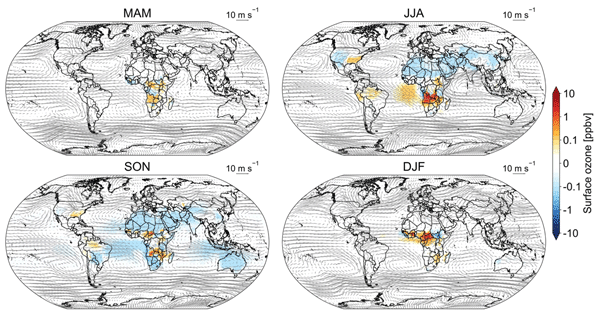
We examine the impact of diurnally varying African biomass burning (BB) emissions on tropospheric ozone using GEOS-Chem simulations with a high-resolution satellite-derived emission inventory. Compared to coarser temporal resolutions, incorporating diurnal variations leads to significant changes in surface ozone and atmospheric oxidation capacity. Our findings highlight the importance of accurately representing BB emission timing in chemical transport models to improve ozone predictions.
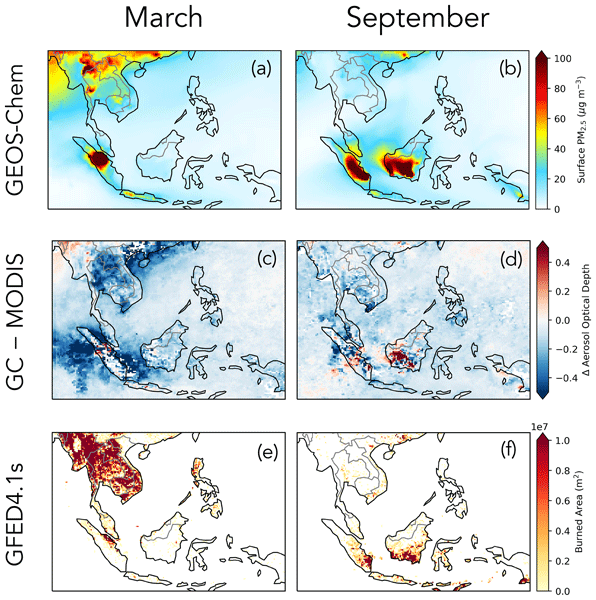
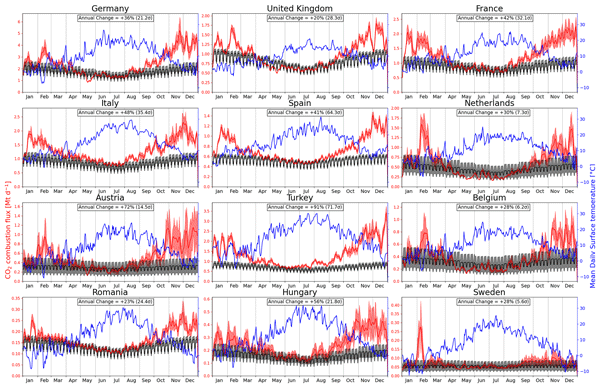
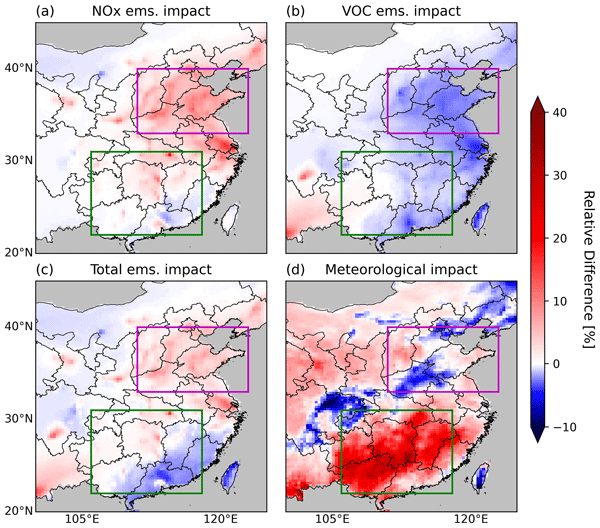
We develop a novel, dual-CTM bias correction framework to attribute summertime PM2.5 and ozone changes over eastern China during 2015–2024. The framework substantially reduces the CTM biases and reconciles the inter-model discrepancies in the attribution. Emission reductions dominate both the PM2.5 decline and ozone increase, but there is a marked transition of their role after 2019. Persistent unfavorable meteorological conditions contribute to ozone increase especially before 2019.
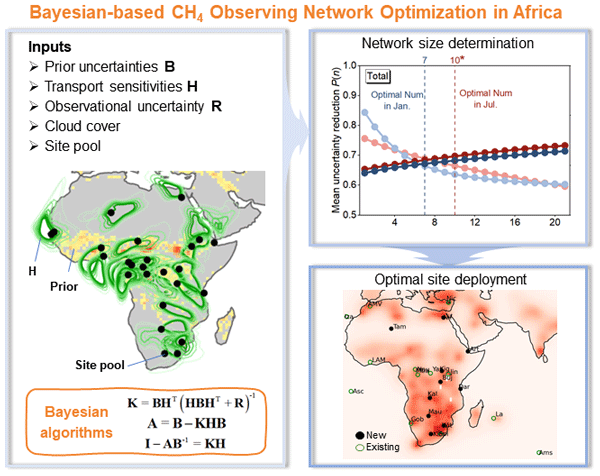
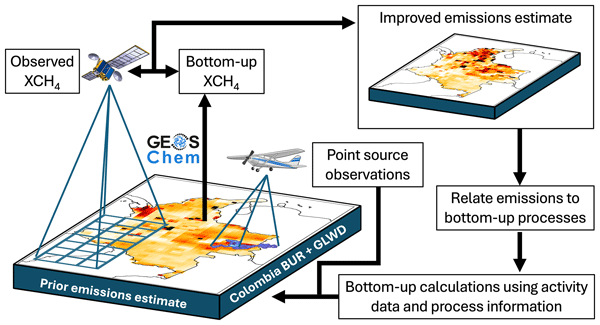
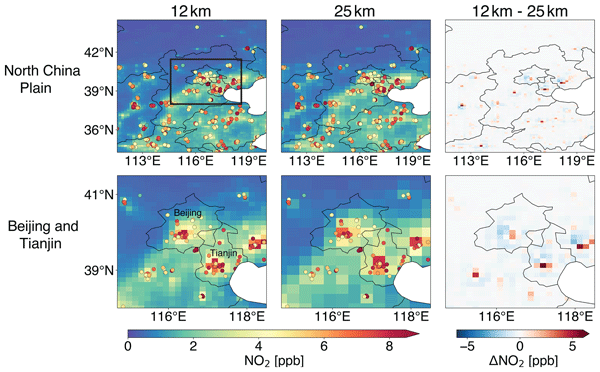
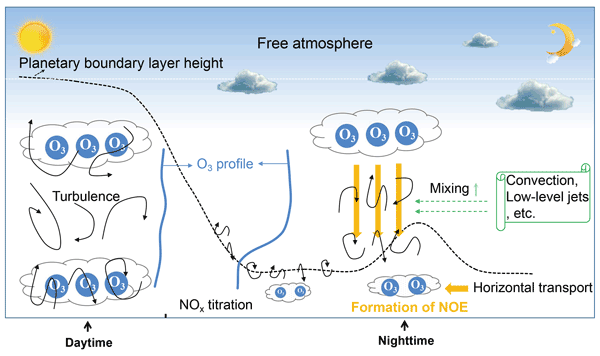
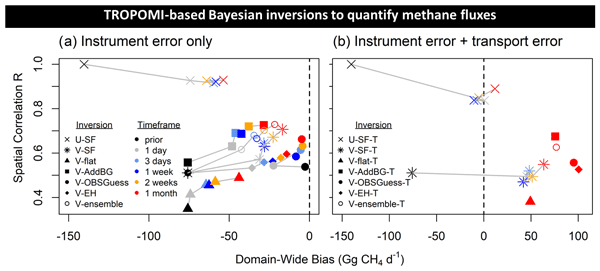
We implement a new 12-km global nested simulation capability in GEOS-Chem, an open-source global 3-D model of atmospheric chemistry. Compared with the standard 25-km simulation, the 12-km simulation features stronger vertical transport due to better resolved horizontal convergence, along with improved representation of urban NO2 and ozone titration. Application to methane emission inversion yields higher information content and resolves finer spatial structure in emission sectors.
We examine the impact of diurnally varying African biomass burning (BB) emissions on tropospheric ozone using GEOS-Chem simulations with a high-resolution satellite-derived emission inventory. Compared to coarser temporal resolutions, incorporating diurnal variations leads to significant changes in surface ozone and atmospheric oxidation capacity. Our findings highlight the importance of accurately representing BB emission timing in chemical transport models to improve ozone predictions.