
Articles | Volume 26, issue 15
https://doi.org/10.5194/acp-26-11371-2026
© Author(s) 2026. This work is distributed under
the Creative Commons Attribution 4.0 License.
the Creative Commons Attribution 4.0 License.
https://doi.org/10.5194/acp-26-11371-2026
© Author(s) 2026. This work is distributed under
the Creative Commons Attribution 4.0 License.
the Creative Commons Attribution 4.0 License.
Research article
| 
12 Aug 2026
Research article |
| 12 Aug 2026
| 12 Aug 2026
Impacts of secondary ice production on the microphysics and dynamics of deep convective clouds in different environments

Institute of Meteorology and Climate Research Troposphere Research, Karlsruhe Institute of Technology, Karlsruhe, Germany
Julian Meusel
Institute of Meteorology and Climate Research Troposphere Research, Karlsruhe Institute of Technology, Karlsruhe, Germany
Behrooz Keshtgar
Institute of Meteorology and Climate Research Troposphere Research, Karlsruhe Institute of Technology, Karlsruhe, Germany
Gabriella Wallentin
Institute of Meteorology and Climate Research Troposphere Research, Karlsruhe Institute of Technology, Karlsruhe, Germany
Christian Barthlott
Institute of Meteorology and Climate Research Troposphere Research, Karlsruhe Institute of Technology, Karlsruhe, Germany
Sachin Patade
Indian Institute of Tropical Meteorology, Ministry of Earth Sciences, Pune, India
Sonali Shete
Indian Institute of Tropical Meteorology, Ministry of Earth Sciences, Pune, India
Thara Prabhakaran
Indian Institute of Tropical Meteorology, Ministry of Earth Sciences, Pune, India
Romain Fievet
Max Planck Institute for Meteorology, Hamburg, Germany
Declan Finney
National Centre for Atmospheric Science, University of Leeds, Leeds, United Kingdom
Alan Blyth
National Centre for Atmospheric Science, University of Leeds, Leeds, United Kingdom
Corinna Hoose
Institute of Meteorology and Climate Research Troposphere Research, Karlsruhe Institute of Technology, Karlsruhe, Germany
Related authors
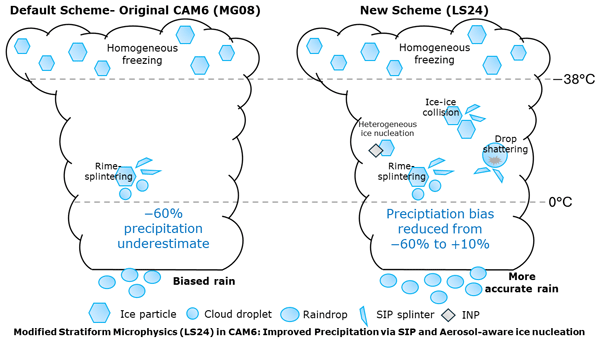
Chandra Shekhar Pant, Deepak Waman, Sachin Patade, Akash Deshmukh, Niharika Singh, Vaughan Phillips, and Aaron Bansemer
Atmos. Chem. Phys., 26, 7407–7433, https://doi.org/10.5194/acp-26-7407-2026, https://doi.org/10.5194/acp-26-7407-2026, 2026
Short summary
Short summary
Large-scale stratiform clouds play a decisive role in the Earth's radiation budget and precipitation patterns, yet global models historically exhibit major biases in their simulations. Our study addresses these gaps by implementing physically-based representations of secondary ice production pathways and advanced aerosol activation schemes, including bin-bulk microphysics. These improvements enable the robust simulation of both cloud droplet and ice formation.

Sachin Patade, Deepak Waman, Akash Deshmukh, Ashok Kumar Gupta, Arti Jadav, Vaughan T. J. Phillips, Aaron Bansemer, Jacob Carlin, and Alexander Ryzhkov
Atmos. Chem. Phys., 22, 12055–12075, https://doi.org/10.5194/acp-22-12055-2022, https://doi.org/10.5194/acp-22-12055-2022, 2022
Short summary
Short summary
This modeling study focuses on the role of multiple groups of primary biological aerosol particles as ice nuclei on cloud properties and precipitation. This was done by implementing a more realistic scheme for biological ice nucleating particles in the aerosol–cloud model. Results show that biological ice nucleating particles have a limited role in altering the ice phase and precipitation in deep convective clouds.
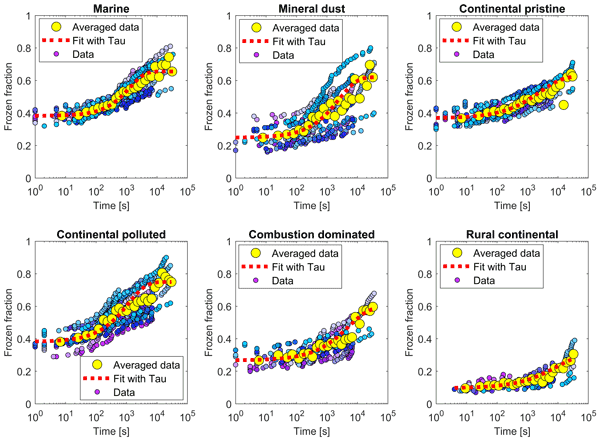
Jonas K. F. Jakobsson, Deepak B. Waman, Vaughan T. J. Phillips, and Thomas Bjerring Kristensen
Atmos. Chem. Phys., 22, 6717–6748, https://doi.org/10.5194/acp-22-6717-2022, https://doi.org/10.5194/acp-22-6717-2022, 2022
Short summary
Short summary
Long-lived cold-layer clouds at subzero temperatures are observed to be remarkably persistent in their generation of ice particles and snow precipitation. There is uncertainty about why this is so. This motivates the present lab study to observe the long-term ice-nucleating ability of aerosol samples from the real troposphere. Time dependence of their ice nucleation is observed to be weak in lab experiments exposing the samples to isothermal conditions for up to about 10 h.
Lloyd Villanueva, Hans W. Chen, Gabriella Wallentin, and Luisa Ickes
EGUsphere, https://doi.org/10.5194/egusphere-2026-6039, https://doi.org/10.5194/egusphere-2026-6039, 2026
This preprint is open for discussion and under review for Atmospheric Chemistry and Physics (ACP).
Short summary
Short summary
In the Arctic winter, clouds act like a blanket that slows the loss of heat from the ground. Clouds often stack in layers, but the cause is not well known. Using weather balloon and radar data from Svalbard, we found that warm, moist air from the south brings stacked clouds twice as often as cold northern air. In cold air, stacked clouds keep the ground warmer than single clouds, but in warm air layering makes no clear difference. This could help climate models represent Arctic clouds better.
Woosub Roh, Masaki Satoh, Romain Fiévet, Mark D. Fielding, Robin J. Hogan, Bjorn Stevens, Takuji Kubota, and Hajime Okamoto
EGUsphere, https://doi.org/10.5194/egusphere-2026-3606, https://doi.org/10.5194/egusphere-2026-3606, 2026
This preprint is open for discussion and under review for Geoscientific Model Development (GMD).
Short summary
Short summary
Clouds and rainfall are still difficult to represent accurately in weather and climate models. We introduce a new project called the EarthCARE–ORCESTRA Model Intercomparison Project (ECOMIP), which uses observations from the new Earth Cloud, Aerosol and Radiation Explorer (EarthCARE) satellite and a tropical field campaign to compare and improve atmospheric models. Initial results show that different models can reproduce the same storm system but differ in its size and structure.
Miriam Simm, Tom Beucler, and Corinna Hoose
EGUsphere, https://doi.org/10.48550/arXiv.2606.20165, https://doi.org/10.48550/arXiv.2606.20165, 2026
This preprint is open for discussion and under review for Geoscientific Model Development (GMD).
Short summary
Short summary
During numerical weather prediction simulations, it is impractical to routinely save microphysical process rates due to storage constraints. We built PRecover, a machine learning-based method that recovers these process rates from ICON simulation output. Most instantaneous process rates are recovered accurately, and PRecover generalizes well, as shown in two case studies. This enables process-oriented studies of cloud microphysics even when the underlying process rates were not saved initially.
Sandhya Singh, Ashish Soni, Shivdas Bankar, Ritesh Kumar, Rohit Srivastava, Sreerag Athirpankandi, Rajani Kanta Mishra, Jitender Singh, Gaddamidi Sreenivas, Amey Datye, Yogesh Tiwari, Suvarna Fadnavis, Thara Prabhakaran, and Anoop Sharad Mahajan
EGUsphere, https://doi.org/10.5194/egusphere-2026-3546, https://doi.org/10.5194/egusphere-2026-3546, 2026
Short summary
Short summary
The Southern Ocean helps regulate Earth’s climate, but cloud formation in this region is poorly understood due to limited measurements. We collected the first continuous Cloud Condensation Nuclei (CCN) observations from the tropics to coastal Antarctica in the Indian Sector of the Southern Ocean. We show that sea spray was not the main source; however, CCN increased when air passed over biologically productive waters, showing marine life strongly influences cloud-forming particles.
Gabriella Wallentin, Alexander Böhmländer, Ross Herbert, Heike Wex, Charlotte M. Beall, Pia Bogert, Zoé Brasseur, Jie Chen, Jessie M. Creamean, Paul J. DeMott, Oliver Eckermann, Kunfeng Gao, Xianda Gong, Silvia Henning, Naruki Hiranuma, Christina S. McCluskey, Christos Mitsios, Ottmar Möhler, Athanasios Nenes, Mark D. Tarn, Christian Tatzelt, Ping Tian, Yutaka Tobo, Franziska Vogel, André Welti, Elise Wilbourn, Jennifer Winstone, and Corinna Hoose
EGUsphere, https://doi.org/10.5194/egusphere-2026-4134, https://doi.org/10.5194/egusphere-2026-4134, 2026
This preprint is open for discussion and under review for Atmospheric Chemistry and Physics (ACP).
Short summary
Short summary
Ice nucleating particles (INPs) are aerosols essential for cloud ice formation in the temperature range -38 °C and 0 °C. Due to measurement challenges, the availability of observations of INPs remains scarce. This study applies machine learning to predict a global INP distribution using aerosol mass concentration reanalysis and observed INPs. This manuscript demonstrates that even with limited measurements, the occurrence of INPs can be estimated, following the spatial pattern of key aerosols.
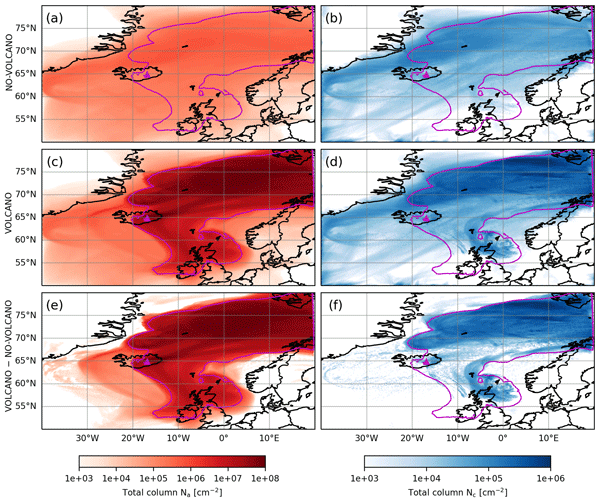
Fatemeh Zarei, Julia Bruckert, Gholam Ali Hoshyaripour, and Corinna Hoose
Atmos. Chem. Phys., 26, 9697–9719, https://doi.org/10.5194/acp-26-9697-2026, https://doi.org/10.5194/acp-26-9697-2026, 2026
Short summary
Short summary
Volcanic eruptions are a rich source of aerosol particles, such as sulfate and ash, that can impact cloud droplet and ice crystal formation. They lead to strong local perturbations of clouds. In this study, these processes were simulated with a numerical model. In two contrasting case studies of an Icelandic and a Caribbean volcano, the perturbations to processes involving liquid droplets and ice crystals are investigated.
Ezri E. Alkilani-Brown, Declan L. Finney, Alan M. Blyth, Paul R. Field, Jonathan Crosier, and Chetan R. Deva
EGUsphere, https://doi.org/10.5194/egusphere-2026-3385, https://doi.org/10.5194/egusphere-2026-3385, 2026
Short summary
Short summary
Graupel continues to be one of the most poorly characterised ice particles in deep convective clouds. In situ images are critical for understanding its microphysical development. Consequently, a plethora of independent classification schemes has become commonplace. Here, an independent evaluation of several open-source algorithms was undertaken to assess if they are generalisable. Classifications were then applied to the entire DCMEX campaign, to infer graupel concentrations.
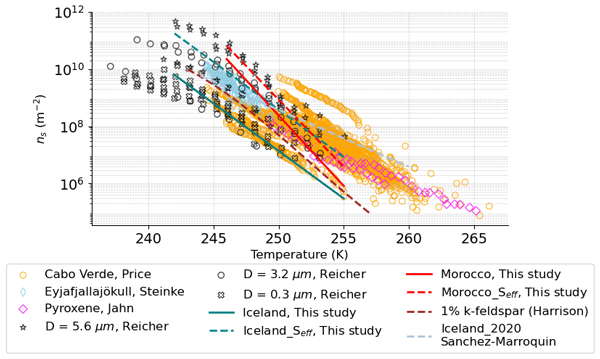
Sebastian Vergara-Palacio, Alexei Kiselev, Franziska Vogel, Adolfo González-Romero, Romy Fösig, Xavier Querol, Corinna Hoose, Nsikanabasi Silas Umo, Ottmar Möhler, Konrad Kandler, Carlos Pérez García-Pando, and Martina Klose
Atmos. Chem. Phys., 26, 9113–9147, https://doi.org/10.5194/acp-26-9113-2026, https://doi.org/10.5194/acp-26-9113-2026, 2026
Short summary
Short summary
Atmospheric mineral dust can help clouds form ice, changing cloud properties and affecting weather and climate. We tested dust from Morocco and Iceland in more than 300 controlled laboratory experiments. Icelandic samples were up to 100 times less able to promote ice formation than Moroccan samples, and showed mineral-composition dependence. The results show the role of larger dust particles in ice nucleation and their relationship with mineralogy and size for low- and high-latitude sources.
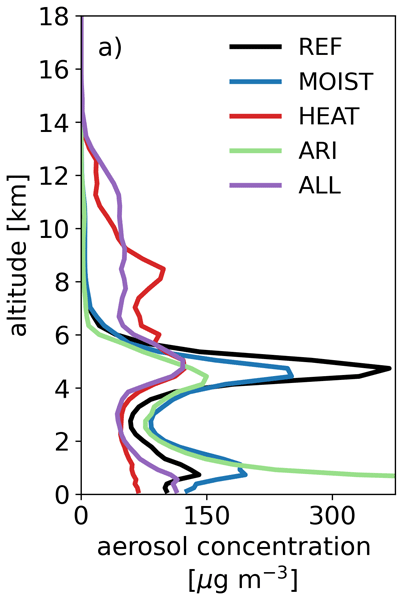
Lisa Janina Muth, Gholam Ali Hoshyaripour, Bernhard Vogel, Heike Vogel, and Corinna Hoose
Atmos. Chem. Phys., 26, 8505–8528, https://doi.org/10.5194/acp-26-8505-2026, https://doi.org/10.5194/acp-26-8505-2026, 2026
Short summary
Short summary
Wildfire plume injection height is key for atmospheric impact but hard to model. This study simulates the 2019/2020 Australian wildfires, testing fire-atmosphere feedbacks. Heat release increases plume rise; moisture has minor effects. Aerosol-radiation interaction lowers injection height initially, then lofts it. Only the combined simulation matches observed upper troposphere aerosol layers, especially during peak fire intensity.
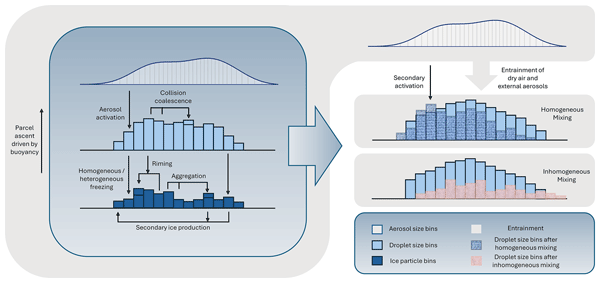
Bowen Z. Portman, Paul J. Connolly, Alan M. Blyth, Rachel L. James, and Huihui Wu
Atmos. Chem. Phys., 26, 8367–8385, https://doi.org/10.5194/acp-26-8367-2026, https://doi.org/10.5194/acp-26-8367-2026, 2026
Short summary
Short summary
Secondary ice production (SIP) is key to explaining the high ice particle concentrations observed in deep convective clouds. We investigate secondary ice production in summer convective clouds over New Mexico, and our results show that collisions between supercooled water droplets and more massive ice particles are the dominant SIP mechanism in these clouds. We also find that the entrainment of external aerosols leads to earlier ice enhancement under homogeneous mixing.
Chandra Shekhar Pant, Deepak Waman, Sachin Patade, Akash Deshmukh, Niharika Singh, Vaughan Phillips, and Aaron Bansemer
Atmos. Chem. Phys., 26, 7407–7433, https://doi.org/10.5194/acp-26-7407-2026, https://doi.org/10.5194/acp-26-7407-2026, 2026
Short summary
Short summary
Large-scale stratiform clouds play a decisive role in the Earth's radiation budget and precipitation patterns, yet global models historically exhibit major biases in their simulations. Our study addresses these gaps by implementing physically-based representations of secondary ice production pathways and advanced aerosol activation schemes, including bin-bulk microphysics. These improvements enable the robust simulation of both cloud droplet and ice formation.
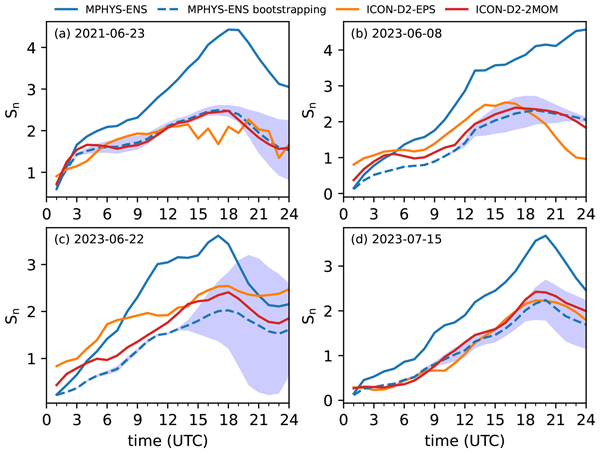
Christian Barthlott, Beata Czajka, Christoph Gebhardt, and Corinna Hoose
Atmos. Chem. Phys., 26, 6061–6081, https://doi.org/10.5194/acp-26-6061-2026, https://doi.org/10.5194/acp-26-6061-2026, 2026
Short summary
Short summary
The study uses the ICOsahedral Non-hydrostatic (ICON) model to examine how microphysical uncertainties affect summertime convection in central Europe. A 108-member ensemble varying aerosol and cloud parameters showed strong differences in precipitation intensity and location but little impact on convection onset. Results highlight that cloud microphysics is a key source of forecast uncertainty in convective weather prediction.
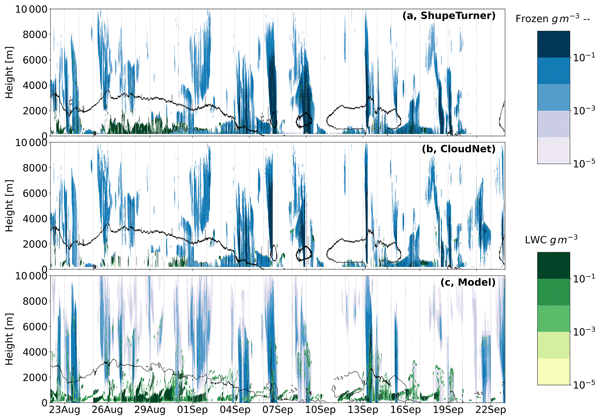
Gabriella Wallentin, Luisa Ickes, Peggy Achtert, Matthias Tesche, and Corinna Hoose
Atmos. Chem. Phys., 26, 3069–3089, https://doi.org/10.5194/acp-26-3069-2026, https://doi.org/10.5194/acp-26-3069-2026, 2026
Short summary
Short summary
Multilayer clouds are cloud systems with two or more vertically stacked cloud layers. Using a weather prediction model, we simulate clouds in the Arctic during a month. The model is evaluated against observations collected during the ship campaign MOSAiC (Multidisciplinary Drifting Observatory for the Study of Arctic Climate). We find that multilayer clouds frequently occur in the region, in fact, they dominate the cloud occurrence. The study highlights the importance of representing these clouds in simulations over the Arctic.
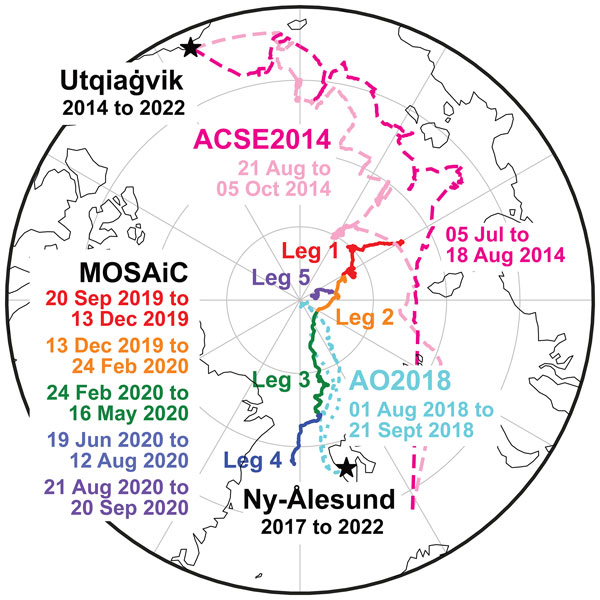
Peggy Achtert, Torsten Seelig, Gabriella Wallentin, Luisa Ickes, Matthew D. Shupe, Corinna Hoose, and Matthias Tesche
Atmos. Chem. Phys., 26, 3049–3068, https://doi.org/10.5194/acp-26-3049-2026, https://doi.org/10.5194/acp-26-3049-2026, 2026
Short summary
Short summary
We quantify the occurrence of single- and multi-layer clouds in the Arctic based on combining soundings with cloud-radar observations. We also assess the rate of ice-crystal seeding in multi-layer cloud systems as this is an important initiator of glaciation in super-cooled liquid cloud layers. We find an abundance of multi-layer clouds in the Arctic with seeding in about half to two thirds of cases in which the gap between upper and lower layers ranges between 100 and 1000 m.
Gholam Ali Hoshyaripour, Andreas Baer, Sascha Bierbauer, Julia Bruckert, Dominik Brunner, Jochen Förstner, Arash Hamzehloo, Valentin Hanft, Corina Keller, Martina Klose, Pankaj Kumar, Patrick Ludwig, Enrico Metzner, Lisa Muth, Andreas Pauling, Nikolas Porz, Maryam Ramezani Ziarani, Thomas Reddmann, Luca Reißig, Roland Ruhnke, Khompat Satitkovitchai, Axel Seifert, Miriam Sinnhuber, Michael Steiner, Stefan Versick, Heike Vogel, Michael Weimer, Sven Werchner, and Corinna Hoose
Geosci. Model Dev., 19, 1645–1681, https://doi.org/10.5194/gmd-19-1645-2026, https://doi.org/10.5194/gmd-19-1645-2026, 2026
Short summary
Short summary
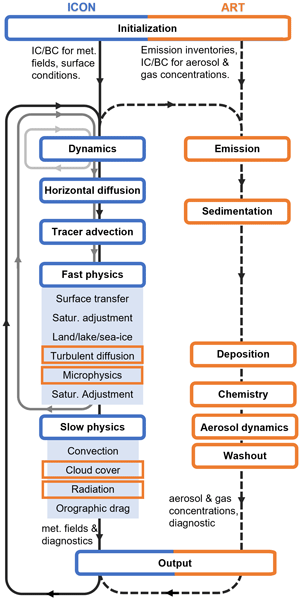
This paper presents recent advances in ICON-ART, a modeling system that simulates atmospheric composition – such as gases and particles – and their interactions with weather and climate. By integrating updated chemistry, emissions, and aerosol processes, ICON-ART enables detailed, scale-spanning simulations. It supports both scientific research and operational forecasts, contributing to improved air quality, weather and climate predictions.
Yichen Jia, Hendrik Andersen, David Neubauer, Ulrike Lohmann, Corinna Hoose, and Jan Cermak
EGUsphere, https://doi.org/10.5194/egusphere-2026-569, https://doi.org/10.5194/egusphere-2026-569, 2026
Short summary
Short summary
Understanding how ocean clouds respond to air pollution is important for climate projections. Using artificial intelligence and a climate model, we show that some model settings produce very high cloud cover, leaving little room for further cloud growth as pollution increases. This “headroom effect” can make cloud responses appear weak. Our results highlight the need to consider existing cloud conditions when interpreting how cloud cover responds to the environment.
Mengyu Sun, Paul J. Connolly, Paul R. Field, Declan L. Finney, and Alan M. Blyth
Atmos. Chem. Phys., 25, 18549–18569, https://doi.org/10.5194/acp-25-18549-2025, https://doi.org/10.5194/acp-25-18549-2025, 2025
Short summary
Short summary
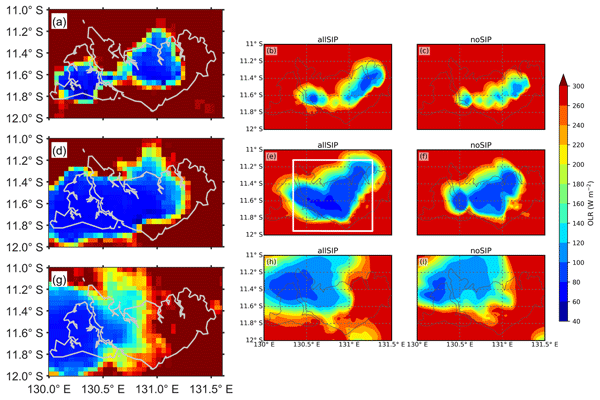
We investigated how extra ice particles form inside tropical storm clouds and how they affect rainfall and sunlight reflection. By using a weather model, we found that these extra ice particles can change how clouds grow, reduce heat escaping to space, and slightly shift where rain falls. This helps improve how weather and climate models predict tropical storms.
Lina Lucas, Christian Barthlott, Corinna Hoose, and Peter Knippertz
Atmos. Chem. Phys., 25, 18527–18548, https://doi.org/10.5194/acp-25-18527-2025, https://doi.org/10.5194/acp-25-18527-2025, 2025
Short summary
Short summary
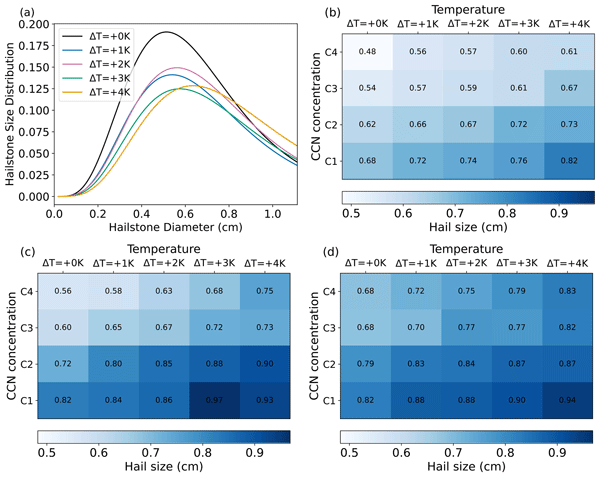
We studied how climate change and cleaner air could affect severe storms in Germany. Using high-resolution weather simulations of past supercell storms under warmer and less polluted conditions, we found that storms may become more intense, with heavier rainfall and larger hailstones. These changes suggest an increased risk of damage in the future. Our findings help improve understanding of how extreme storms may evolve in a changing climate.
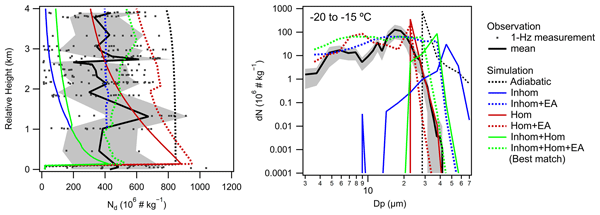
Huihui Wu, Nicholas Marsden, Paul Connolly, Michael Flynn, Paul I. Williams, Declan Finney, Kezhen Hu, Graeme J. Nott, Navaneeth M. Thamban, Keith Bower, Alan Blyth, Martin Gallagher, and Hugh Coe
Atmos. Chem. Phys., 25, 18409–18429, https://doi.org/10.5194/acp-25-18409-2025, https://doi.org/10.5194/acp-25-18409-2025, 2025
Short summary
Short summary
Airborne observations over the Magdalena Mountains in New Mexico underscore the combined influence of meteorological conditions and aerosol characteristics on the development of deep-convective clouds under different flow regimes. Model-observation comparisons emphasize the critical role of aerosol entrainment in reproducing the observed broad cloud droplet spectra. This study provides valuable constraints for improving parameterizations of aerosol-cloud interactions in deep convective systems.
Mengyu Sun, Paul J. Connolly, Paul R. Field, Declan L. Finney, and Alan M. Blyth
EGUsphere, https://doi.org/10.5194/egusphere-2025-5665, https://doi.org/10.5194/egusphere-2025-5665, 2025
Short summary
Short summary
We use a high resolution weather model together with satellite and radar data to study how small particles in the air influence ice and rain in a tropical storm near Darwin. We find that when particle levels are moderate, storm clouds form more ice high in the atmosphere, spread a wider cloud cover, and produce stronger rainfall concentrated in certain regions. These results help improve how weather and climate models represent tropical storms and their rainfall.
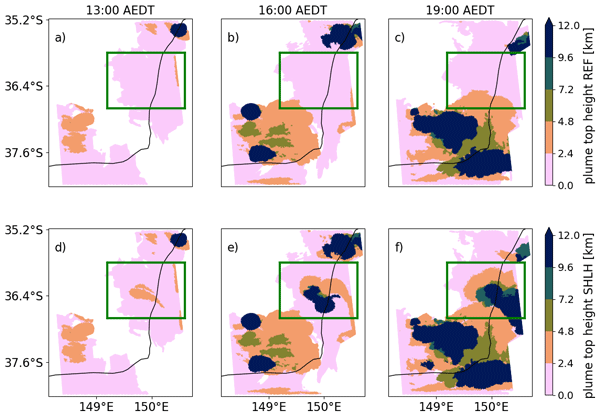
Lisa Janina Muth, Sascha Bierbauer, Corinna Hoose, Bernhard Vogel, Heike Vogel, and Gholam Ali Hoshyaripour
Atmos. Chem. Phys., 25, 16027–16040, https://doi.org/10.5194/acp-25-16027-2025, https://doi.org/10.5194/acp-25-16027-2025, 2025
Short summary
Short summary
In our study, we explore how intense wildfires create thunderstorm-like clouds that can affect weather and climate globally. Using simulations with high resolution, we found that fire heat and moisture help form these clouds, lifting particles high into the atmosphere. This process is crucial for understanding how fires affect the environment. Despite some differences from observational data, our findings match well over time, showing the importance of fire-induced heat in cloud formation.
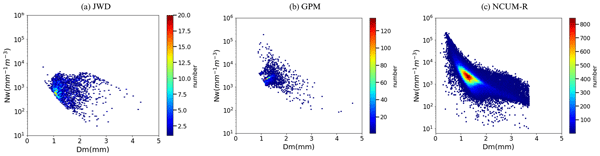
K. S. Apsara, Aravindakshan Jayakumar, Theethai Jacob Anurose, Saji Mohandas, Paul R. Field, Thara Prabhakaran, Mahen Konwar, and Vijayapurapu Srinivasa Prasad
Atmos. Chem. Phys., 25, 11423–11439, https://doi.org/10.5194/acp-25-11423-2025, https://doi.org/10.5194/acp-25-11423-2025, 2025
Short summary
Short summary
Science has made significant strides in weather prediction, especially for intense tropical rainfall that can lead to floods and landslides. Our study aims to improve monsoon rainfall forecasts by analyzing raindrop sizes. Using a new approach to model raindrop growth, we achieved a more accurate depiction of large rainfall events. These improvements can be generalized to enhance early warning systems, offering reliable predictions that help reduce risks from severe tropical weather events.
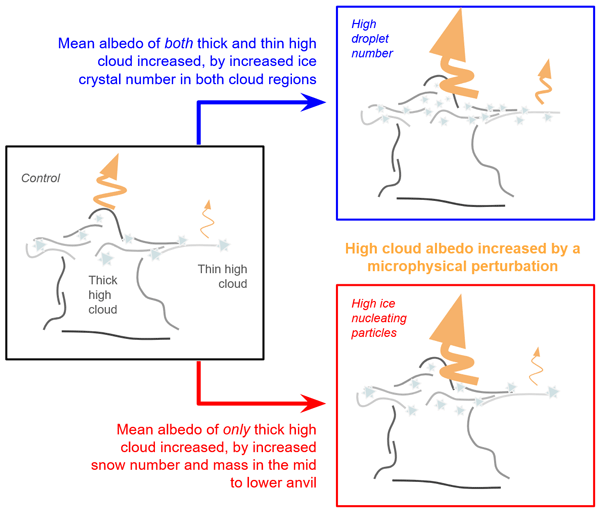
Declan L. Finney, Alan M. Blyth, Paul R. Field, Martin I. Daily, Benjamin J. Murray, Mengyu Sun, Paul J. Connolly, Zhiqiang Cui, and Steven Böing
Atmos. Chem. Phys., 25, 10907–10929, https://doi.org/10.5194/acp-25-10907-2025, https://doi.org/10.5194/acp-25-10907-2025, 2025
Short summary
Short summary
We present observation-informed modelling from the Deep Convective Microphysics Experiment (DCMEX) to study how environmental conditions and cloud processes affect anvil cloud albedo and radiation. Aerosols influencing cloud droplets or influencing ice formation yield varying radiative effects. We introduce fingerprint metrics to discern these effects. Using detailed observations and modelling, we offer insights into high-cloud radiative effects and feedbacks.
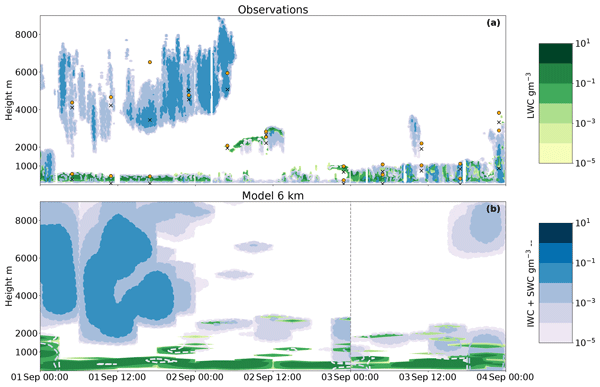
Gabriella Wallentin, Annika Oertel, Luisa Ickes, Peggy Achtert, Matthias Tesche, and Corinna Hoose
Atmos. Chem. Phys., 25, 6607–6631, https://doi.org/10.5194/acp-25-6607-2025, https://doi.org/10.5194/acp-25-6607-2025, 2025
Short summary
Short summary
Multilayer clouds are common in the Arctic but remain underrepresented. We use an atmospheric model to simulate multilayer cloud cases from the Arctic expedition MOSAiC 2019/2020. We find that it is complex to accurately model these cloud layers due to the lack of correct temperature profiles. The model also struggles to capture the observed cloud phase and the relative concentration of cloud droplets and cloud ice. We constrain our model to measured aerosols to mitigate this issue.
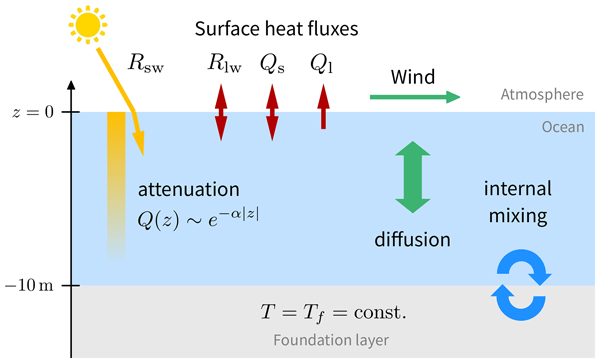
Reyk Börner, Jan O. Haerter, and Romain Fiévet
Geosci. Model Dev., 18, 1333–1356, https://doi.org/10.5194/gmd-18-1333-2025, https://doi.org/10.5194/gmd-18-1333-2025, 2025
Short summary
Short summary
The daily cycle of sea surface temperature (SST) impacts clouds above the ocean and could influence the clustering of thunderstorms linked to extreme rainfall and hurricanes. However, daily SST variability is often poorly represented in modeling studies of how clouds cluster. We present a simple, wind-responsive model of upper-ocean temperature for use in atmospheric simulations. Evaluating the model against observations, we show that it performs significantly better than common slab models.
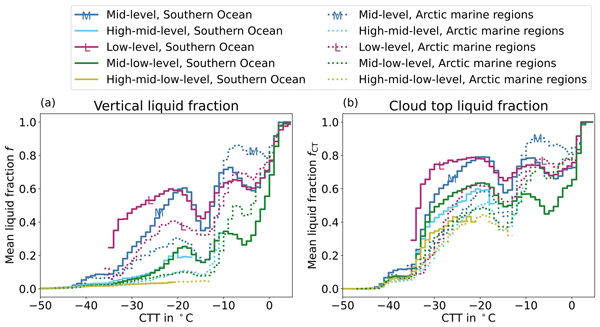
Barbara Dietel, Odran Sourdeval, and Corinna Hoose
Atmos. Chem. Phys., 24, 7359–7383, https://doi.org/10.5194/acp-24-7359-2024, https://doi.org/10.5194/acp-24-7359-2024, 2024
Short summary
Short summary
Uncertainty with respect to cloud phases over the Southern Ocean and Arctic marine regions leads to large uncertainties in the radiation budget of weather and climate models. This study investigates the phases of low-base and mid-base clouds using satellite-based remote sensing data. A comprehensive analysis of the correlation of cloud phase with various parameters, such as temperature, aerosols, sea ice, vertical and horizontal cloud extent, and cloud radiative effect, is presented.
Gary Lloyd, Alan Blyth, Zhiqiang Cui, Thomas Choularton, Keith Bower, Martin Gallagher, Michael Flynn, Nicholas Marsden, Leif Denby, and Peter Gallimore
EGUsphere, https://doi.org/10.5194/egusphere-2024-142, https://doi.org/10.5194/egusphere-2024-142, 2024
Preprint archived
Short summary
Short summary
Clouds that develop in the tropical trade-wind regions are extensive and persistent in nature. They are important for understanding how the magnitude of warming by these cloud systems might change in a warming climate. This paper describes measurements of common cloud types in these regions (shallow cumulus clouds) and the way in which they produce rainfall. During different periods, with different amounts of particulate in the air, the characteristics of the clouds were very different.
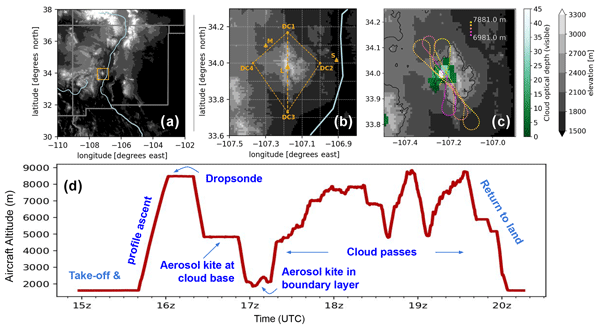
Declan L. Finney, Alan M. Blyth, Martin Gallagher, Huihui Wu, Graeme J. Nott, Michael I. Biggerstaff, Richard G. Sonnenfeld, Martin Daily, Dan Walker, David Dufton, Keith Bower, Steven Böing, Thomas Choularton, Jonathan Crosier, James Groves, Paul R. Field, Hugh Coe, Benjamin J. Murray, Gary Lloyd, Nicholas A. Marsden, Michael Flynn, Kezhen Hu, Navaneeth M. Thamban, Paul I. Williams, Paul J. Connolly, James B. McQuaid, Joseph Robinson, Zhiqiang Cui, Ralph R. Burton, Gordon Carrie, Robert Moore, Steven J. Abel, Dave Tiddeman, and Graydon Aulich
Earth Syst. Sci. Data, 16, 2141–2163, https://doi.org/10.5194/essd-16-2141-2024, https://doi.org/10.5194/essd-16-2141-2024, 2024
Short summary
Short summary
The DCMEX (Deep Convective Microphysics Experiment) project undertook an aircraft- and ground-based measurement campaign of New Mexico deep convective clouds during July–August 2022. The campaign coordinated a broad range of instrumentation measuring aerosol, cloud physics, radar signals, thermodynamics, dynamics, electric fields, and weather. The project's objectives included the utilisation of these data with satellite observations to study the anvil cloud radiative effect.
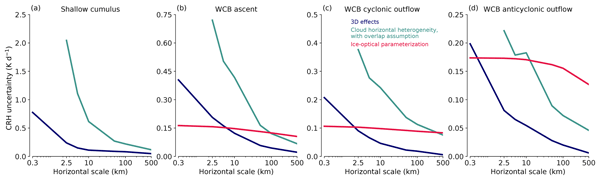
Behrooz Keshtgar, Aiko Voigt, Bernhard Mayer, and Corinna Hoose
Atmos. Chem. Phys., 24, 4751–4769, https://doi.org/10.5194/acp-24-4751-2024, https://doi.org/10.5194/acp-24-4751-2024, 2024
Short summary
Short summary
Cloud-radiative heating (CRH) affects extratropical cyclones but is uncertain in weather and climate models. We provide a framework to quantify uncertainties in CRH within an extratropical cyclone due to four factors and show that the parameterization of ice optical properties contributes significantly to uncertainty in CRH. We also argue that ice optical properties, by affecting CRH on spatial scales of 100 km, are relevant for the large-scale dynamics of extratropical cyclones.
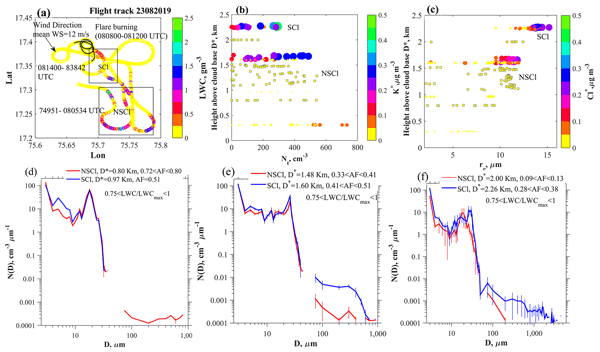
Mahen Konwar, Benjamin Werden, Edward C. Fortner, Sudarsan Bera, Mercy Varghese, Subharthi Chowdhuri, Kurt Hibert, Philip Croteau, John Jayne, Manjula Canagaratna, Neelam Malap, Sandeep Jayakumar, Shivsai A. Dixit, Palani Murugavel, Duncan Axisa, Darrel Baumgardner, Peter F. DeCarlo, Doug R. Worsnop, and Thara Prabhakaran
Atmos. Meas. Tech., 17, 2387–2400, https://doi.org/10.5194/amt-17-2387-2024, https://doi.org/10.5194/amt-17-2387-2024, 2024
Short summary
Short summary
In a warm cloud seeding experiment hygroscopic particles are released to alter cloud processes to induce early raindrops. During the Cloud–Aerosol Interaction and Precipitation Enhancement Experiment, airborne mini aerosol mass spectrometers analyse the particles on which clouds form. The seeded clouds showed higher concentrations of chlorine and potassium, the oxidizing agents of flares. Small cloud droplet concentrations increased, and seeding particles were detected in deep cloud depths.
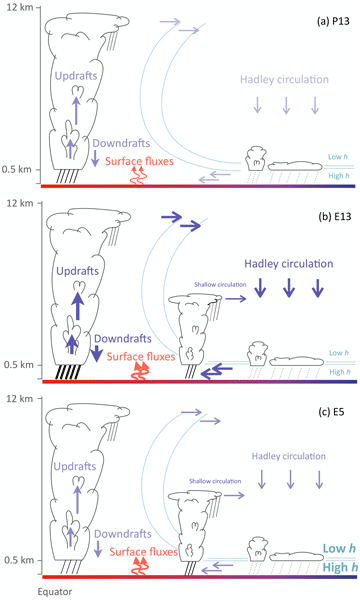
Hyunju Jung, Peter Knippertz, Yvonne Ruckstuhl, Robert Redl, Tijana Janjic, and Corinna Hoose
Weather Clim. Dynam., 4, 1111–1134, https://doi.org/10.5194/wcd-4-1111-2023, https://doi.org/10.5194/wcd-4-1111-2023, 2023
Short summary
Short summary
A narrow rainfall belt in the tropics is an important feature for large-scale circulations and the global water cycle. The accurate simulation of this rainfall feature has been a long-standing problem, with the reasons behind that unclear. We present a novel diagnostic tool that allows us to disentangle processes important for rainfall, which changes due to modifications in model. Using our diagnostic tool, one can potentially identify sources of uncertainty in weather and climate models.
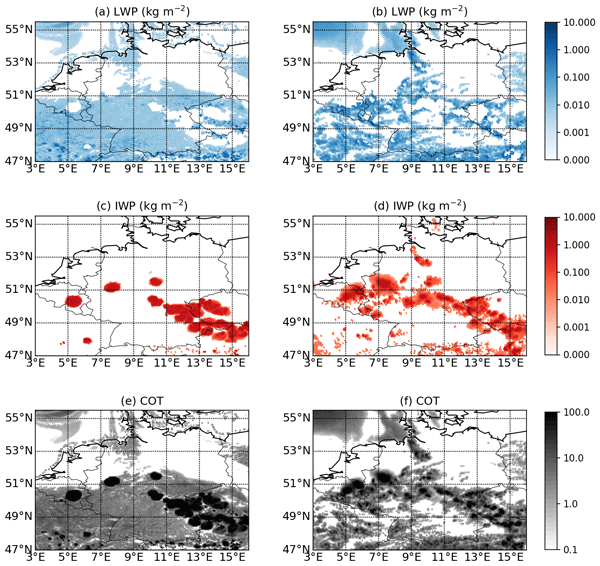
Cunbo Han, Corinna Hoose, Martin Stengel, Quentin Coopman, and Andrew Barrett
Atmos. Chem. Phys., 23, 14077–14095, https://doi.org/10.5194/acp-23-14077-2023, https://doi.org/10.5194/acp-23-14077-2023, 2023
Short summary
Short summary
Cloud phase has been found to significantly impact cloud thermodynamics and Earth’s radiation budget, and various factors influence it. This study investigates the sensitivity of the cloud-phase distribution to the ice-nucleating particle concentration and thermodynamics. Multiple simulation experiments were performed using the ICON model at the convection-permitting resolution of 1.2 km. Simulation results were compared to two different retrieval products based on SEVIRI measurements.
Nair Krishnan Kala, Narayana Sarma Anand, Mohanan R. Manoj, Srinivasan Prasanth, Harshavardhana S. Pathak, Thara Prabhakaran, Pramod D. Safai, Krishnaswamy K. Moorthy, and Sreedharan K. Satheesh
Atmos. Chem. Phys., 23, 12801–12819, https://doi.org/10.5194/acp-23-12801-2023, https://doi.org/10.5194/acp-23-12801-2023, 2023
Short summary
Short summary
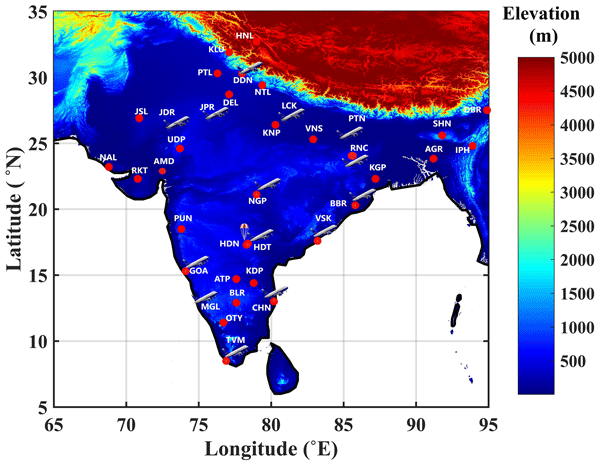
We present a 3D data set of aerosol black carbon over the Indian mainland by assimilating data from surface, aircraft, and balloon measurements, along with multi-satellite observations. Radiative transfer computations using height-resolved aerosol absorption show higher warming in the free troposphere and will have large implications for atmospheric stability. This data set will help reduce the uncertainty in aerosol radiative effects in climate model simulations over the Indian region.
Zhiqiang Cui, Alan Blyth, Ralph Burton, Sandrine Bony, Steven Böing, Alan Gadian, and Leif Denby
EGUsphere, https://doi.org/10.5194/egusphere-2023-1999, https://doi.org/10.5194/egusphere-2023-1999, 2023
Preprint archived
Short summary
Short summary
Cumulus clouds near Barbados can influence how much heat and energy reaches the Earth's surface. A cluster of clouds resembling a flower is presented. Satellite images, dropsonde data, and weather data are used to understand how this cloud system developed. A significant feature was the appearance of a large area of rain at the centre of the cloud system during its later stages. The paper also studied the environmental conditions around the cloud system.
Annika Oertel, Annette K. Miltenberger, Christian M. Grams, and Corinna Hoose
Atmos. Chem. Phys., 23, 8553–8581, https://doi.org/10.5194/acp-23-8553-2023, https://doi.org/10.5194/acp-23-8553-2023, 2023
Short summary
Short summary
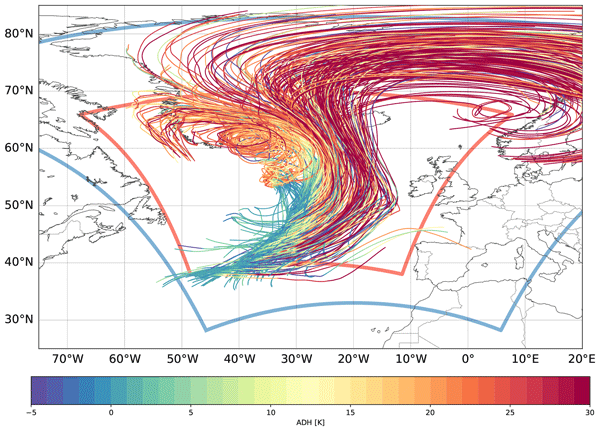
Warm conveyor belts (WCBs) are cloud- and precipitation-producing airstreams in extratropical cyclones that are important for the large-scale flow and cloud radiative forcing. We analyze cloud formation processes during WCB ascent in a two-moment microphysics scheme. Quantification of individual diabatic heating rates shows the importance of condensation, vapor deposition, rain evaporation, melting, and cloud-top radiative cooling for total heating and WCB-related potential vorticity structure.
Sylvia Sullivan, Behrooz Keshtgar, Nicole Albern, Elzina Bala, Christoph Braun, Anubhav Choudhary, Johannes Hörner, Hilke Lentink, Georgios Papavasileiou, and Aiko Voigt
Geosci. Model Dev., 16, 3535–3551, https://doi.org/10.5194/gmd-16-3535-2023, https://doi.org/10.5194/gmd-16-3535-2023, 2023
Short summary
Short summary
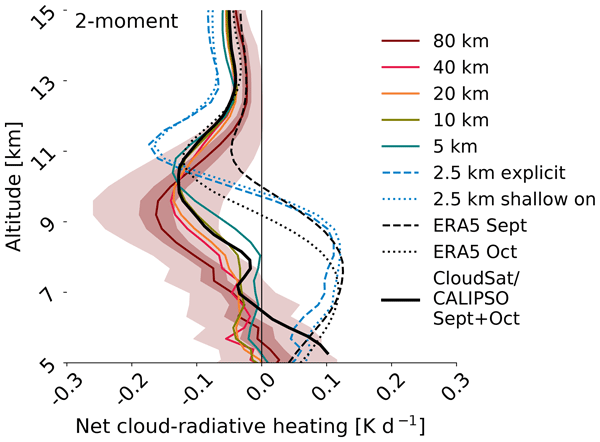
Clouds absorb and re-emit infrared radiation from Earth's surface and absorb and reflect incoming solar radiation. As a result, they change atmospheric temperature gradients that drive large-scale circulation. To better simulate this circulation, we study how the radiative heating and cooling from clouds depends on model settings like grid spacing; whether we describe convection approximately or exactly; and the level of detail used to describe small-scale processes, or microphysics, in clouds.
Julia Thomas, Andrew Barrett, and Corinna Hoose
Atmos. Chem. Phys., 23, 1987–2002, https://doi.org/10.5194/acp-23-1987-2023, https://doi.org/10.5194/acp-23-1987-2023, 2023
Short summary
Short summary
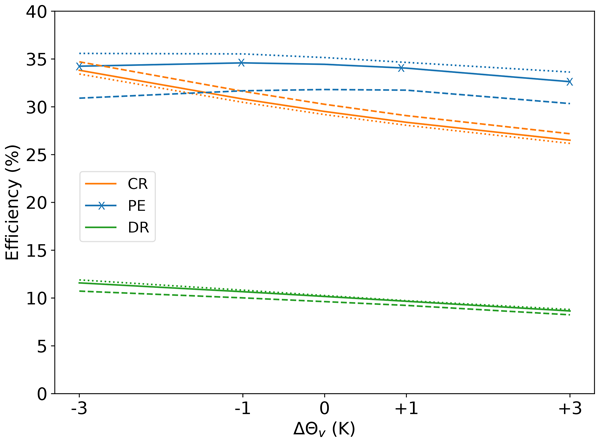
We study the sensitivity of rain formation processes during a heavy-rainfall event over mountains to changes in temperature and pollution. Total rainfall increases by 2 % K−1, and a 6 % K−1 increase is found at the highest altitudes, caused by a mixed-phase seeder–feeder mechanism (frozen cloud particles melt and grow further as they fall through a liquid cloud layer). In a cleaner atmosphere this process is enhanced. Thus the risk of severe rainfall in mountains may increase in the future.
Behrooz Keshtgar, Aiko Voigt, Corinna Hoose, Michael Riemer, and Bernhard Mayer
Weather Clim. Dynam., 4, 115–132, https://doi.org/10.5194/wcd-4-115-2023, https://doi.org/10.5194/wcd-4-115-2023, 2023
Short summary
Short summary
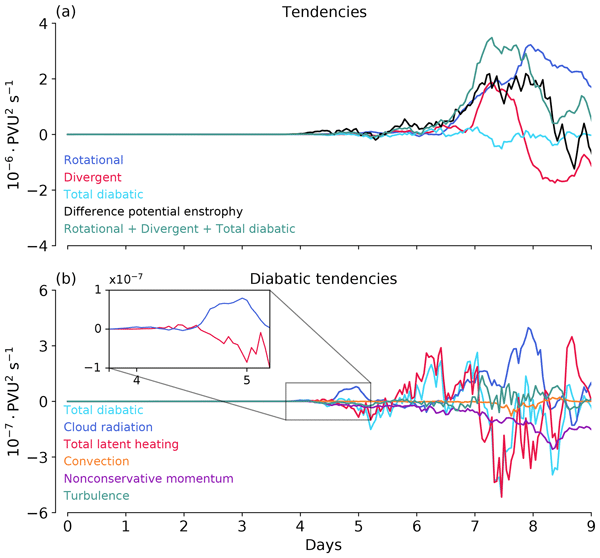
Forecasting extratropical cyclones is challenging due to many physical factors influencing their behavior. One such factor is the impact of heating and cooling of the atmosphere by the interaction between clouds and radiation. In this study, we show that cloud-radiative heating (CRH) increases the intensity of an idealized cyclone and affects its predictability. We find that CRH affects the cyclone mostly via increasing latent heat release and subsequent changes in the synoptic circulation.
Takumi Matsunobu, Christian Keil, and Christian Barthlott
Weather Clim. Dynam., 3, 1273–1289, https://doi.org/10.5194/wcd-3-1273-2022, https://doi.org/10.5194/wcd-3-1273-2022, 2022
Short summary
Short summary
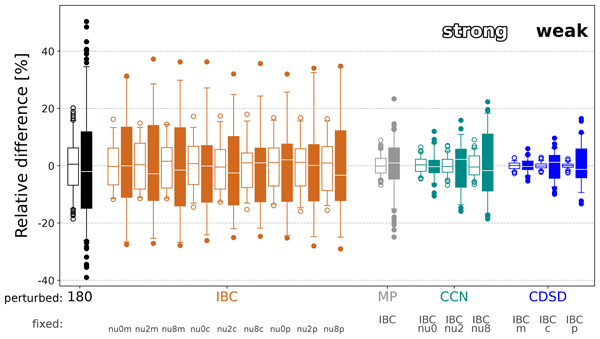
This study quantifies the impact of poorly constrained parameters used to represent aerosol–cloud–precipitation interactions on precipitation and cloud forecasts associated with uncertainties in input atmospheric states. Uncertainties in these parameters have a non-negligible impact on daily precipitation amount and largely change the amount of cloud. The comparison between different weather situations reveals that the impact becomes more important when convection is triggered by local effects.
Sachin Patade, Deepak Waman, Akash Deshmukh, Ashok Kumar Gupta, Arti Jadav, Vaughan T. J. Phillips, Aaron Bansemer, Jacob Carlin, and Alexander Ryzhkov
Atmos. Chem. Phys., 22, 12055–12075, https://doi.org/10.5194/acp-22-12055-2022, https://doi.org/10.5194/acp-22-12055-2022, 2022
Short summary
Short summary
This modeling study focuses on the role of multiple groups of primary biological aerosol particles as ice nuclei on cloud properties and precipitation. This was done by implementing a more realistic scheme for biological ice nucleating particles in the aerosol–cloud model. Results show that biological ice nucleating particles have a limited role in altering the ice phase and precipitation in deep convective clouds.
Christian Barthlott, Amirmahdi Zarboo, Takumi Matsunobu, and Christian Keil
Atmos. Chem. Phys., 22, 10841–10860, https://doi.org/10.5194/acp-22-10841-2022, https://doi.org/10.5194/acp-22-10841-2022, 2022
Short summary
Short summary
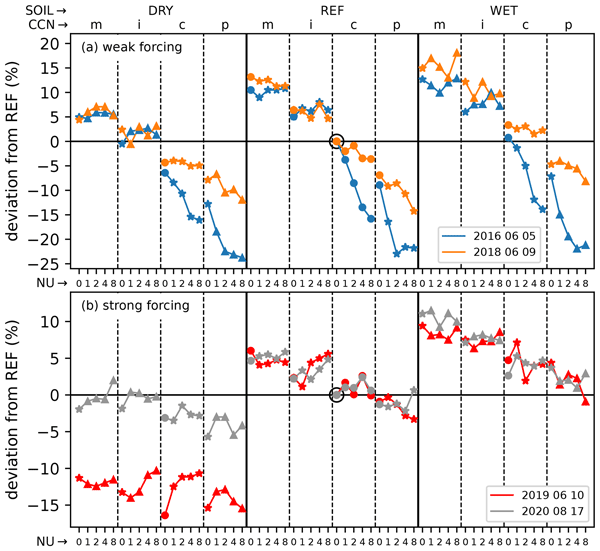
The relevance of microphysical and land-surface uncertainties for convective-scale predictability is evaluated with a combined-perturbation strategy in realistic convection-resolving simulations. We find a large ensemble spread which demonstrates that the uncertainties investigated here and, in particular, their collective effect are highly relevant for quantitative precipitation forecasting of summertime convection in central Europe.
Jonas K. F. Jakobsson, Deepak B. Waman, Vaughan T. J. Phillips, and Thomas Bjerring Kristensen
Atmos. Chem. Phys., 22, 6717–6748, https://doi.org/10.5194/acp-22-6717-2022, https://doi.org/10.5194/acp-22-6717-2022, 2022
Short summary
Short summary
Long-lived cold-layer clouds at subzero temperatures are observed to be remarkably persistent in their generation of ice particles and snow precipitation. There is uncertainty about why this is so. This motivates the present lab study to observe the long-term ice-nucleating ability of aerosol samples from the real troposphere. Time dependence of their ice nucleation is observed to be weak in lab experiments exposing the samples to isothermal conditions for up to about 10 h.

Julia Bruckert, Gholam Ali Hoshyaripour, Ákos Horváth, Lukas O. Muser, Fred J. Prata, Corinna Hoose, and Bernhard Vogel
Atmos. Chem. Phys., 22, 3535–3552, https://doi.org/10.5194/acp-22-3535-2022, https://doi.org/10.5194/acp-22-3535-2022, 2022
Short summary
Short summary
Volcanic emissions endanger aviation and public health and also influence weather and climate. Forecasting the volcanic-plume dispersion is therefore a critical yet sophisticated task. Here, we show that explicit treatment of volcanic-plume dynamics and eruption source parameters significantly improves volcanic-plume dispersion forecasts. We further demonstrate the lofting of the SO2 due to a heating of volcanic particles by sunlight with major implications for volcanic aerosol research.

Christian Barthlott, Amirmahdi Zarboo, Takumi Matsunobu, and Christian Keil
Atmos. Chem. Phys., 22, 2153–2172, https://doi.org/10.5194/acp-22-2153-2022, https://doi.org/10.5194/acp-22-2153-2022, 2022
Short summary
Short summary
The relative impact of cloud condensation nuclei (CCN) concentrations and the shape parameter of the cloud droplet size distribution is evaluated in realistic convection-resolving simulations. We find that an increase in the shape parameter can produce almost as large a variation in precipitation as a CCN increase from maritime to polluted conditions. The choice of the shape parameter may be more important than previously thought for determining cloud radiative characteristics.
Zhiqiang Cui, Alan Blyth, Yahui Huang, Gary Lloyd, Thomas Choularton, Keith Bower, Paul Field, Rachel Hawker, and Lindsay Bennett
Atmos. Chem. Phys., 22, 1649–1667, https://doi.org/10.5194/acp-22-1649-2022, https://doi.org/10.5194/acp-22-1649-2022, 2022
Short summary
Short summary
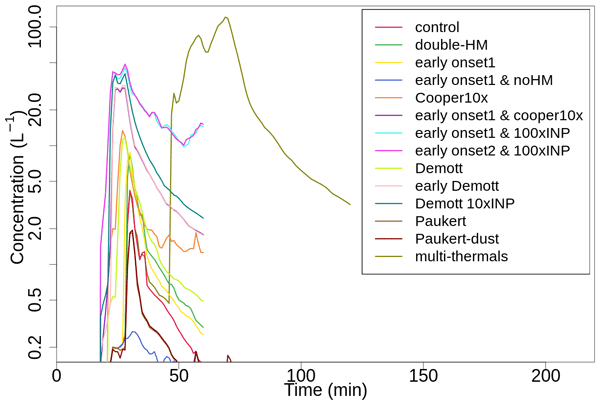
High concentrations of ice particles were observed at temperatures greater than about –8 C. The default scheme of the secondary ice production cannot explain the high concentrations. Relaxing the conditions for secondary ice production or considering dust aerosol alone is insufficient to produce the observed amount of ice particles. It is likely that multi-thermals play an important role in producing very high concentrations of secondary ice particles in some tropical clouds.
Cited articles
Bacon, N., Swanson, B., Baker, M., and Davis, E.: Breakup of levitated frost particles, Atmos. Res., 103, 13763–13775, https://doi.org/10.1029/98JD01162, 1998. a, b
Bigg, E. K.: The formation of atmospheric ice crystals by the freezing of droplets, Q. J. Roy. Meteor. Soc., 79, 510–519, https://doi.org/10.1002/qj.49707934207, 1953. a
Bouniol, D., Roca, R., Fiolleau, T., and Poan, D. E.: Macrophysical, microphysical, and radiative properties of tropical mesoscale convective systems over their life cycle, J. Climate, 29, 3353–3371, https://doi.org/10.1175/JCLI-D-15-0551.1, 2016. a
Bower, K. N., Moss, S., Johnson, D., Choularton, T., Latham, J., Brown, P., Blyth, A., and Cardwell, J.: A parametrization of the ice water content observed in frontal and convective clouds, Q. J. Roy. Meteor. Soc., 122, 1815–1844, 1996. a
Chandra, A., Zhang, C., Kollias, P., Matrosov, S., and Szyrmer, W.: Automated rain rate estimates using the Ka-band ARM zenith radar (KAZR), Atmos. Meas. Tech., 8, 3685–3699, https://doi.org/10.5194/amt-8-3685-2015, 2015. a
Cotton, R. J. and Field, P. R.: Ice nucleation characteristics of an isolated wave cloud, Q. J. Roy. Meteor. Soc., 128, 2417–2437, https://doi.org/10.1256/qj.01.150, 2002. a
Daily, M. I., Robinson, J., Finney, D. L., Raif, E. N., McQuaid, J. B., Sanchez‐Marroquin, A., Hu, K., Lloyd, G., Flynn, M., Field, P. R., and Bower, K. N.: Ice‐nucleating particle and cloud ice crystal concentrations associated with developing summertime deep convective clouds in south‐western USA, J. Geophys. Res.-Atmos. 131, e2024JD043236, https://doi.org/10.1029/2024JD043236, 2026. a, b
DeMott, P., Prenni, A., Liu, X., Kreidenweis, S., Petters, M., Twohy, C., Richardson, M., Eidhammer, T., and Rogers, D.: Predicting global atmospheric ice nuclei distributions and their impacts on climate, P. Natl. Acad. Sci. USA, 107, 11217–11222, https://doi.org/10.1073/pnas.0910818107, 2010. a
DeMott, P. J., Suski, K. J., Hill, T. C. J., and Levin, E. J. T.: Southern Great Plains Ice Nuclei Characterization Experiment Final Campaign Summary (No. DOE/SC-ARM-15-012), DOE Office of Science Atmospheric Radiation Measurement (ARM) Program (United States), https://www.arm.gov/publications/programdocs/doe-sc-arm-15-012.pdf (last access: 25 May 2026), 2015. a, b
Dong, Y. Y., Oraltay, R. G., and Hallett, J.: Ice particle generation during evaporation, Atmos. Res., 32, 45–53, https://doi.org/10.1016/0169-8095(94)90050-7, 1994. a, b
Ewald, F.: MIRA Cloud Radar Moments from the HALO Microwave Package (Level 2), ORCESTRA campaign dataset, ORCESTRA data repository [data set], https://browser.orcestra-campaign.org/#/ds/ipfs://bafybeifxtmq5mpn7vwiiwl4vlpoil7rgm2tnhmkeyqsyudleqegxzvwl3a (last access: 2 June 2026), 2025. a
Ewald, F., Groß, S., Hagen, M., Hirsch, L., Delanoë, J., and Bauer-Pfundstein, M.: Calibration of a 35 GHz airborne cloud radar: lessons learned and intercomparisons with 94 GHz cloud radars, Atmos. Meas. Tech., 12, 1815–1839, https://doi.org/10.5194/amt-12-1815-2019, 2019. a
Feng, Z., Dong, X., Xi, B., Schumacher, C., Minnis, P., and Khaiyer, M.: Top‐of‐atmosphere radiation budget of convective core/stratiform rain and anvil clouds from deep convective systems, J. Geophys. Res., 116, https://doi.org/10.1029/2011JD016451, 2011. a
Field, P. R. and Heymsfield, A. J.: Importance of snow to global precipitation, Geophys. Res. Lett., 42, 9512–9520, https://doi.org/10.1002/2015GL065497, 2015. a
Field, P. R., Heymsfield, A. J., and Bansemer, A.: Shattering and particle interarrival times measured by optical array probes in ice clouds, J. Atmos. Ocean. Tech., 23, 1357–1371, https://doi.org/10.1175/JTECH1922.1, 2006. a
Field, P. R., Lawson, R. P., Brown, P. R., Lloyd, G., Westbrook, C., Moisseev, D., Miltenberger, A., Nenes, A., Blyth, A., Choularton, T., and Connolly, P.: Secondary ice production: Current state of the science and recommendations for the future, Meteor. Mon., 58, 7.1–7.20, https://doi.org/10.1175/AMSMONOGRAPHS-D-16-0014.1, 2017. a
Finney, D. L., Blyth, A. M., Gallagher, M., Wu, H., Nott, G. J., Biggerstaff, M. I., Sonnenfeld, R. G., Daily, M., Walker, D., Dufton, D., Bower, K., Böing, S., Choularton, T., Crosier, J., Groves, J., Field, P. R., Coe, H., Murray, B. J., Lloyd, G., Marsden, N. A., Flynn, M., Hu, K., Thamban, N. M., Williams, P. I., Connolly, P. J., McQuaid, J. B., Robinson, J., Cui, Z., Burton, R. R., Carrie, G., Moore, R., Abel, S. J., Tiddeman, D., and Aulich, G.: Deep Convective Microphysics Experiment (DCMEX) coordinated aircraft and ground observations: microphysics, aerosol, and dynamics during cumulonimbus development, Earth Syst. Sci. Data, 16, 2141–2163, https://doi.org/10.5194/essd-16-2141-2024, 2024. a, b, c, d
Foth, A.: Cloud radar and Cloudnet on RV Meteor during BOWTIE, ORCESTRA data repository [data set], https://doi.org/10.82246/bafybeidtfyua2vmmr pnhbl6nj57x2ynowaceghdapyetc6lnrpjii2tlli, 2026. a
Gassmann, A. and Herzog, H. J.: Towards a consistent numerical compressible non-hydrostatic model using generalized Hamiltonian tools, Q. J. Roy. Meteor. Soc., 134, 1597–1613, https://doi.org/10.1002/qj.297, 2008. a
GEBCO Compilation Group: GEBCO 2025 Grid, GEBCO, https://doi.org/10.5285/37c52e96-24ea-67ce-e063-7086abc05f29, 2025. a
Grzegorczyk, P., Yadav, S., Zanger, F., Theis, A., Mitra, S. K., Borrmann, S., and Szakáll, M.: Fragmentation of ice particles: laboratory experiments on graupel–graupel and graupel–snowflake collisions, Atmos. Chem. Phys., 23, 13505–13521, https://doi.org/10.5194/acp-23-13505-2023, 2023. a, b
Grzegorczyk, P., Wobrock, W., Canzi, A., Niquet, L., Tridon, F., and Planche, C.: Investigating secondary ice production in a deep convective cloud with a 3D bin microphysics model: Part II-Effects on the cloud formation and development, Atmos. Res., 314, 107797, https://doi.org/10.1016/j.atmosres.2024.107797, 2025. a, b, c, d
Gupta, A. K., Deshmukh, A., Waman, D., Patade, S., Jadav, A., Phillips, V. T. J., Bansemer, A., Martins, J. A., and Goncalves, F. L. T.: The microphysics of the warm-rain and ice crystal processes of precipitation in simulated continental convective storms, Commun. Earth Environ., 4, https://doi.org/10.1038/s43247-023-00884-5, 2023. a
Hallett, J. and Mossop, S.: Production of secondary ice particles during the riming process, Nature, 249, 26–28, https://doi.org/10.1038/249026a0, 1974. a, b
Hersbach, H., Bell, B., Berrisford, P., Hirahara, S., Horányi, A., Muñoz-Sabater, J., Nicolas, J., Peubey, C., Radu, R., Schepers, D., Simmons, A., Soci, C., Abdalla, S., Abellan, X., Balsamo, G., Bechtold, P., Biavati, G., Bidlot, J., Bonavita, M., De Chiara, G., Dahlgren, P., Dee, D., Diamantakis, M., Dragani, R., Flemming, J., Forbes, R., Fuentes, M., Geer, A., Haimberger, L., Healy, S., Hogan, R. J., Hólm, E., Janisková, M., Keeley, S., Laloyaux, P., Lopez, P., Lupu, C., Radnoti, G., de Rosnay, P., Rozum, I., Vamborg, F., Villaume, S., and Thépaut, J.-N.: The ERA5 global reanalysis, Q. J. Roy. Meteor. Soc., 146, 1999–2049, https://doi.org/10.1002/qj.3803, 2020. a
Hogan, R. and Bozzo, A.: A Flexible and Efficient Radiation Scheme for the ECMWF Model, P. Natl. Acad. Sci. USA, 10, 1990–2008, https://doi.org/10.1029/2018MS001364, 2018. a
Houze, R. A. J.: Cloud clusters and large-scale vertical motions in the tropics, J. Meteorol. Soc. Jpn., 60, 396–410, https://doi.org/10.2151/jmsj1965.60.1_396, 1982. a
Huang, Y., Wu, W., McFarquhar, G. M., Wang, X., Morrison, H., Ryzhkov, A., Hu, Y., Wolde, M., Nguyen, C., Schwarzenboeck, A., Milbrandt, J., Korolev, A. V., and Heckman, I.: Microphysical processes producing high ice water contents (HIWCs) in tropical convective clouds during the HAIC-HIWC field campaign: evaluation of simulations using bulk microphysical schemes, Atmos. Chem. Phys., 21, 6919–6944, https://doi.org/10.5194/acp-21-6919-2021, 2021. a, b
James, R. L., Phillips, V. T. J., and Connolly, P. J.: Secondary ice production during the break-up of freezing water drops on impact with ice particles, Atmos. Chem. Phys., 21, 18519–18530, https://doi.org/10.5194/acp-21-18519-2021, 2021. a
Järvinen, E., McCluskey, C. S., Waitz, F., Schnaiter, M., Bansemer, A., Bardeen, C. G., Gettelman, A., Heymsfield, A., Stith, J. L., Wu, W., D'Alessandro, J. J., McFarquhar, G. M., Diao, M., Finlon, J. A., Hill, T. C. J., Levin, E. J. T., Moore, K. A., and DeMott, P. J.: Evidence for secondary ice production in Southern Ocean maritime boundary layer clouds, J. Geophys. Res.-Atmos., 127, e2021JD036411, https://doi.org/10.1029/2021JD036411, 2022. a
Jeffery, C. A. and Austin, P. H.: Homogeneous nucleation of supercooled water: Results from a new equation of state, Q. J. Roy. Meteor. Soc., 102, 25269–25279, https://doi.org/10.1029/97JD02243, 1997. a
Jensen, M. P., Petersen, W. A., Bansemer, A., Bharadwaj, N., Carey, L. D., Cecil, D. J., Collis, S. M., Del Genio, A. D., Dolan, B., Gerlach, J., Giangrande, S. E., Heymsfield, A., Heymsfield, G., Kollias, P., Lang, T. J., Nesbitt, S. W., Neumann, A., Poellot, M., Rutledge, S. A., Schwaller, M., Tokay, A., Williams, C. R., Wolff, D. B., Xie, S., and Zipser, E. J.: The Midlatitude Continental Convective Clouds Experiment (MC3E), B. Am. Meteorol. Soc., 97, 1667–1686, https://doi.org/10.1175/BAMS-D-14-00228.1, 2016. a
Johnson, D. and Hallett, J.: Freezing and shattering of supercooled water drops, Q. J. Roy. Meteor. Soc., 94, 468–482, 1968. a
Kanji, Z., Ladino, L., Wex, H., Boose, Y., Burkert-Kohn, M., Cziczo, D., and Krämer, M.: Overview of ice nucleating particles, Meteorol. Monogr., 58, 1.1–1.33, https://doi.org/10.1175/AMSMONOGRAPHS-D-16-0006.1, 2017. a
Keinert, A., Spannagel, D., Leisner, T., and Kiselev, A.: Secondary ice production upon freezing of freely falling drizzle droplets, J. Atmos. Sci., 77, 2959–2967, https://doi.org/10.1175/JAS-D-20-0081.1, 2020. a
Keshtgar, B., Voigt, A., Mayer, B., and Hoose, C.: Uncertainties in cloud-radiative heating within an idealized extratropical cyclone, Atmos. Chem. Phys., 24, 4751–4769, https://doi.org/10.5194/acp-24-4751-2024, 2024. a
Kim, J., Kollias, P., Puigdomènech Treserras, B., Battaglia, A., and Tan, I.: Evaluation of the EarthCARE Cloud Profiling Radar (CPR) Doppler velocity measurements using surface-based observations, Atmos. Chem. Phys., 25, 15389–15402, https://doi.org/10.5194/acp-25-15389-2025, 2025. a
Kleinheins, J., Kiselev, A., Keinert, A., Kind, M., and Leisner, T.: Thermal Imaging of Freezing Drizzle Droplets: Pressure Release Events as a Source of Secondary Ice Particles, J. Atmos. Sci., 78, 1703–1713, https://doi.org/10.1175/JAS-D-20-0323.1, 2021. a
Korolev, A. and Isaac, G. A.: Observations of sublimating ice particles in clouds, in: Proceedings of the 14th International Conference on clouds and precipitation, 19–23 July, Bologna, Italy, 808–811, 2004. a
Korolev, A. V., Emery, E. F., Strapp, W., Cober, S. G., Issac, G. A., Wasley, E., and Marcotte, D.: Small Ice Particles in Tropospheric Clouds: Fact or Artifact?, B. Am. Meteorol. Soc.,, 92, 967–973, https://doi.org/10.1175/2010BAMS3141.1, 2011. a, b
Lasher-Trapp, S., Leon, D. C., DeMott, P. J., Villanueva-Birriel, C. M., Johnson, A. V., Moser, D. H., Tully, C. S., and Wu, W.: A multisensor investigation of rime splintering in tropical maritime cumuli, J. Atmos. Sci., 73, 2547–2564, 2016. a
Lasher-Trapp, S., Scott, E. L., Järvinen, M., Schnaiter, F., Waitz, P. J., DeMott, P. J., McCluskey, C. S., and Hill, T. C. J.: Observations and Modeling of Rime Splintering in Southern Ocean Cumuli, J. Geophys. Res., 126, https://doi.org/10.1029/2021JD035479, 2021. a
Lau, K. M. and Wu, H. T.: Warm rain processes over tropical oceans and climate implications, Geophys. Res. Lett., 30, 7.3–7.5, https://doi.org/10.1029/2003GL018567, 2003. a
Lawson, P., Woods, S., and Morisson, H.: The Microphysics of Ice and Precipitation Development in Tropical Cumulus Clouds, J. Atmos. Sci., 72, 2429–2445, https://doi.org/10.1175/JAS-D-14-0274.1, 2015. a, b
Lohmann, U., Lüönd, F., and Mahrt, F.: An introduction to clouds: From the microscale to climate, Cambridge University Press, ISBN 978-1-107-01822-8, 2016. a
Mason, B. J. and Maybank, J.: The fragmentation and electrification of freezing water drops, Q. J. Roy. Meteor. Soc., 86, 1703–1713, https://doi.org/10.1002/qj.49708636806, 1960. a
Oraltay, R. G. and Hallett, J.: Evaporation and melting of ice crystals: A laboratory study, Atmos. Res., 24, 169–189, https://doi.org/10.1016/0169-8095(89)90044-6, 1989. a, b
Ori, D., Schemann, V., Karrer, M., Dias Neto, J., von Terzi, L., Seifert, A., and Kneifel, S.: Evaluation of ice particle growth in ICON using statistics of multi-frequency Doppler cloud radar observations, Q. J. Roy. Meteor. Soc., 146, 3830–3849, 2020. a
Patade, S., Shete, S., Malap, N., Kulkarni, G., and Prabha, T. V.: Observational and simulated cloud microphysical features of rain formation in the mixed phase clouds observed during CAIPEEX, Atmos. Res., 169, 32–45, https://doi.org/10.1016/j.atmosres.2015.09.018, 2016. a
Phillips, V. T. J., Yano, J. J., Formenton, M., Ilotoviz, E., Kanawade, V., Kudzotsa, I., Sun, J., Bansemer, A., Detwiler, A. G., Khain, A., and Tessendorf, S.: Ice multiplication by breakup in ice–ice collisions. Part II: Numerical simulations, J. Atmos. Sci., 74, 2789–2811, https://doi.org/10.1175/JAS-D-16-0223.1, 2017a. a
Phillips, V. T. J., Yano, J. J., and Khain, A.: Ice multiplication by breakup in ice–ice collisions. Part I: Theoretical formulation, J. Atmos. Sci., 74, 1705–1719, https://doi.org/10.1175/JAS-D-16-0224.1, 2017b. a, b, c, d
Phillips, V. T. J., Patade, S., Gutierrez, J., and Bansemer, A.: Secondary ice production by fragmentation of freezing drops: Formulation and theory Possible High Ice Particle Production during Graupel–Graupel Collisions, J. Atmos. Sci., 75, 3031–3070, https://doi.org/10.1175/JAS-D-17-0190.1, 2018. a, b, c, d
Prabhakaran, T., Murugavel, P., Konwar, M., Malap, N., Gayatri, K., Dixit, S., Samanta, S., Chowdhuri, S., Bera, S., Varghese, M., Rao, J., Sandeep, J., Safai, P. D., Sahai, A. K., Axisa, D., Karipot, A., Baumgardner, D., Werden, B., Fortner, E., Hibert, K., Nair, S., Bankar, S., Gurnule, D., Todekar, K., Jose, J., Jayachandran, V., Soyam, P. S., Gupta, A., Choudhary, H., Aravindhavel, Kantipudi, S. B., Pradeepkumar, P., Krishnan, R., Nandakumar, K., DeCarlo, P. F., Worsnop, D., Bhat, G. S., Rajeevan, M., and Nanjundiah, R.: CAIPEEX: Indian Cloud Seeding Scientific Experiment, B. Am. Meterol. Soc., 104, E2095–E2120, https://doi.org/10.1175/BAMS-D-21-0291.1, 2023. a, b
Price, H. C., Baustian, K. J., McQuaid, J. B., Blyth, A., Bower, K. N., Choularton, T., Cotton, R. J., Cui, Z., Field, P. R., Gallagher, M., Hawker, R., Merrington, A., Miltenberger, A., Neely III, R. R., Parker, S. T., Rosenberg, P. D., Taylor, J. W., Trembath, J., Vergara-Temprado, J., Whale, T. F., Wilson, T. W., Young, G., and Murray, B. J.: Atmospheric ice-nucleating particles in the dusty tropical Atlantic, J. Geophys. Res.-Atmos., 123, 2175–2193, 2018. a, b, c
Qu, Z., Korolev, A., Milbrandt, J. A., Heckman, I., Huang, Y., McFarquhar, G. M., Morrison, H., Wolde, M., and Nguyen, C.: The impacts of secondary ice production on microphysics and dynamics in tropical convection, Atmos. Chem. Phys., 22, 12287–12310, https://doi.org/10.5194/acp-22-12287-2022, 2022. a, b, c, d
Roca, R., Fiolleau, T., and Bouniol, D.: A simple model of the life cycle of mesoscale convective systems cloud shield in the tropics, J. Climate, 30, 4283–4298, https://doi.org/10.1175/JCLI-D-16-0556.1, 2017. a
Sakradzija, M., Seifert, A., and Heus, T.: Fluctuations in a quasi-stationary shallow cumulus cloud ensemble, Nonlin. Processes Geophys., 22, 65–85, https://doi.org/10.5194/npg-22-65-2015, 2015. a
Sasikumar, S., Battaglia, A., Puigdomènech Treserras, B., and Kollias, P.: The estimation of path integrated attenuation for the EarthCARE cloud profiling radar, Atmos. Meas. Tech., 19, 2313–2328, https://doi.org/10.5194/amt-19-2313-2026, 2026. a
Sato, K., Okamoto, H., Nishizawa, T., Jin, Y., Nakajima, T. Y., Wang, M., Satoh, M., Roh, W., Ishimoto, H., and Kudo, R.: JAXA Level 2 cloud and precipitation microphysics retrievals based on EarthCARE radar, lidar, and imager: the CPR_CLP, AC_CLP, and ACM_CLP products, Atmos. Meas. Tech., 18, 1325–1338, https://doi.org/10.5194/amt-18-1325-2025, 2025. a
Segal, Y. and Khain, A.: Dependence of droplet concentration on aerosol conditions in different cloud types: Application to droplet concentration parameterization of aerosol conditions, J. Geophys. Res., 111, 1–11, https://doi.org/10.1029/2005JD006561, 2006. a, b
Seidel, J. S., Kiselev, A. A., Keinert, A., Stratmann, F., Leisner, T., and Hartmann, S.: Secondary ice production – no evidence of efficient rime-splintering mechanism, Atmos. Chem. Phys., 24, 5247–5263, https://doi.org/10.5194/acp-24-5247-2024, 2024. a, b
Seifert, A. and Beheng, K. D.: A two-moment cloud microphysics parameterization for mixed-phase clouds. Part 1: Model description, Meteor. Atmos. Phys., 92, 45–66, https://doi.org/10.1007/s00703-005-0112-4, 2006. a, b, c
Shete, S., Patade, S., Malap, N., Bankar, S., Jaykumar, S., Baumgardner, D., Axisa, D., Murugavel, P., and Prabhakaran, T.: Observations and simulations of immersion freezing INPs and their impact on cloud properties over the rain shadow region of India, Atmos. Res., 109056, https://doi.org/10.1016/j.atmosres.2026.109056, 2026. a, b
Sotiropoulou, G., Sullivan, S., Savre, J., Lloyd, G., Lachlan-Cope, T., Ekman, A. M. L., and Nenes, A.: The impact of secondary ice production on Arctic stratocumulus, Atmos. Chem. Phys., 20, 1301–1316, https://doi.org/10.5194/acp-20-1301-2020, 2020. a
Stevens, B., Bony, S., Gross, S., Klocke, D., Windmiller, J. M., Wing, A. A., von Bismarck, J., Brito, E., David, R. O., Delanoë, J., Farrell, D., and Wu, Y.: Orcestra: Organized convection and earthcare studies over the tropical Atlantic, Tellus, 79, https://doi.org/10.16993/tellus.4123, 2026. a, b
Sullivan, S., Keshtgar, B., Albern, N., Bala, E., Braun, C., Choudhary, A., Hörner, J., Lentink, H., Papavasileiou, G., and Voigt, A.: How does cloud-radiative heating over the North Atlantic change with grid spacing, convective parameterization, and microphysics scheme in ICON version 2.1.00?, Geosci. Model Dev., 16, 3535–3551, https://doi.org/10.5194/gmd-16-3535-2023, 2023. a
Sullivan, S. C., Barthlott, C., Crosier, J., Zhukov, I., Nenes, A., and Hoose, C.: The effect of secondary ice production parameterization on the simulation of a cold frontal rainband, Atmos. Chem. Phys., 18, 16461–16480, https://doi.org/10.5194/acp-18-16461-2018, 2018. a, b, c
Takahashi, C. and Yamashita, A.: Production of ice splinters by the freezing of water drops in free fall, J. Meteorol. Soc. Jpn. II, 55, 139–141, 1977. a
Takahashi, T., Nagao, Y., and Kushiyama, Y.: Possible High Ice Particle Production during Graupel–Graupel Collisions, J. Atmos. Sci., 52, 4523–4527, https://doi.org/10.1175/1520-0469(1995)052<4523:PHIPPD>2.0.CO;2, 1995. a, b, c
Tian, L. and Srivastava, R.: Measurement of attenuation at C band in a convective storm by a dual-radar method, J. Atmos. Ocean. Tech., 14, 184–196, 1997. a
Trenberth, K. E., Fasullo, J. T., and Kiehl, J.: Earth's global energy budget, B. Am. Meteorol. Soc., 90, 311–324, https://doi.org/10.1175/2008BAMS2634.1, 2009. a
Vardiman, L.: The generation of secondary ice particles in clouds by crystal–crystal collision, J. Atmos. Sci., 35, 2168–2180, https://doi.org/10.1175/1520-0469(1978)035<2168:TGOSIP>2.0.CO;2, 1978. a
Waman, D., Patade, S., Jadav, A., Deshmukh, A., Gupta, A., Phillips, V. T. J., Bansemer, A., and DeMott, P. J.: Dependencies of Four Mechanisms of Secondary Ice Production on Cloud-Top Temperature in a Continental Convective Storm, J. Atmos. Sci., 79, 3375–3404, https://doi.org/10.1175/JAS-D-21-0278.1, 2022. a, b, c, d, e, f, g, h, i, j
Waman, D., Meusel, J., Keshtgar, B., Wallentin, G., Barthlott, C., Patade, S., Prabhakaran, T., Fiévet, R., Finney, D., Blyth, A., and Hoose, C.: Datasets for Impacts of Secondary Ice Production on the Microphysics and Dynamics of Deep Convective Clouds in Different Environments, Zenodo [data set], https://doi.org/10.5281/zenodo.21826426, 2026. a
Wan, H., Giorgetta, M. A., Zängl, G., Restelli, M., Majewski, D., Bonaventura, L., Fröhlich, K., Reinert, D., Rípodas, P., Kornblueh, L., and Förstner, J.: The ICON-1.2 hydrostatic atmospheric dynamical core on triangular grids – Part 1: Formulation and performance of the baseline version, Geosci. Model Dev., 6, 735–763, https://doi.org/10.5194/gmd-6-735-2013, 2013. a
Wang, D., Prein, A. F., Giangrande, S. E., Ramos-Valle, A., Ge, M., and Jensen, M. P.: Convective updraft and downdraft characteristics of continental mesoscale convective systems in the model gray zone, J. Geophys. Res.-Atmos., 127, e2022JD036746, https://doi.org/10.1029/2022JD036746, 2022. a
Wehr, T., Kubota, T., Tzeremes, G., Wallace, K., Nakatsuka, H., Ohno, Y., Koopman, R., Rusli, S., Kikuchi, M., Eisinger, M., Tanaka, T., Taga, M., Deghaye, P., Tomita, E., and Bernaerts, D.: The EarthCARE mission – science and system overview, Atmos. Meas. Tech., 16, 3581–3608, https://doi.org/10.5194/amt-16-3581-2023, 2023. a, b, c
Widener, K. B., Bharadwaj, N., and Johnson, K.: Ka-Band ARM Zenith Radar (KAZR) Instrument handbook, ARM-TR-106, DOE Office of Science, Office of Biological and Environmental Research, United States, https://doi.org/10.2172/1035855, 2012. a
Wilcox, E. M., Yuan, T., and Song, H.: Deep convective cloud system size and structure across the global tropics and subtropics, Atmos. Meas. Tech., 16, 5387–5401, https://doi.org/10.5194/amt-16-5387-2023, 2023. a, b
Wu, H., Marsden, N., Connolly, P., Flynn, M., Williams, P. I., Finney, D., Hu, K., Nott, G. J., Thamban, N. M., Bower, K., Blyth, A., Gallagher, M., and Coe, H.: The role of aerosols and meteorological conditions in shaping cloud droplet development in New Mexico summer deep-convective systems, Atmos. Chem. Phys., 25, 18409–18429, https://doi.org/10.5194/acp-25-18409-2025, 2025. a
Yang, J., Huang, S., Yang, T., Zhang, Q., Deng, Y., and Liu, Y.: Impact of ice multiplication on the cloud electrification of a cold-season thunderstorm: a numerical case study, Atmos. Chem. Phys., 24, 5989–6010, https://doi.org/10.5194/acp-24-5989-2024, 2024. a, b, c
Zängl, G., Reinert, D., Ripodas, P., and Baldauf, M.: The ICON (ICOsahedral Nonhydrostatic) modelling framework of DWD and MPI-M: Description of the nonhydrostatic dynamical core, Q. J. Roy. Meteor. Soc., 141, 563–579, https://doi.org/10.1002/qj.2378, 2015. a, b
Zhao, X. and Liu, X.: Global importance of secondary ice production, Geophys. Res. Lett., 48, e2021GL092581, https://doi.org/10.1029/2021GL092581, 2021. a, b
Short summary
We use a weather model with aircraft and satellite data to study ice multiplication in thunderstorms across India, Mexico, Oklahoma, and the tropical Atlantic. This process can create spurious ice particles in clouds, thereby increasing latent and radiative heating that strengthens stratiform ascents in storms and extends anvil-cloud lifetimes. These results improve our understanding of how small-scale ice processes influence large-scale storm behavior and rainfall patterns.
We use a weather model with aircraft and satellite data to study ice multiplication in...


Altmetrics
Final-revised paper
Preprint