
Articles | Volume 25, issue 23
https://doi.org/10.5194/acp-25-18051-2025
© Author(s) 2025. This work is distributed under
the Creative Commons Attribution 4.0 License.
the Creative Commons Attribution 4.0 License.
https://doi.org/10.5194/acp-25-18051-2025
© Author(s) 2025. This work is distributed under
the Creative Commons Attribution 4.0 License.
the Creative Commons Attribution 4.0 License.
Research article
| 
10 Dec 2025
Research article |
| 10 Dec 2025
| 10 Dec 2025
Modeling and verifying ice supersaturated regions in the ARPEGE model for persistent contrail forecast
Sara Arriolabengoa
CORRESPONDING AUTHOR

Météo-France, CNRS, Univ. Toulouse, CNRM, Toulouse, France
Pierre Crispel
CORRESPONDING AUTHOR
Météo-France, CNRS, Univ. Toulouse, CNRM, Toulouse, France
Olivier Jaron
Météo-France, CNRS, Univ. Toulouse, CNRM, Toulouse, France
Yves Bouteloup
Météo-France, CNRS, Univ. Toulouse, CNRM, Toulouse, France
Benoît Vié
Météo-France, CNRS, Univ. Toulouse, CNRM, Toulouse, France
Institute of Climate and Energy Systems: Troposphere (ICE-3), Forschungszentrum Jülich, Jülich, Germany
Andreas Petzold
Institute of Climate and Energy Systems: Troposphere (ICE-3), Forschungszentrum Jülich, Jülich, Germany
Matthieu Plu
Météo-France, CNRS, Univ. Toulouse, CNRM, Toulouse, France
Related authors
No articles found.
Nicolas Emig, Annette Miltenberger, Heiko Bozem, Martina Krämer, Armin Afchine, Daniel Kunkel, Hans-Christoph Lachnitt, Yun Li, Philipp Reutter, Christian Rolf, Nicole Spelten, Holger Tost, and Peter Hoor
EGUsphere, https://doi.org/10.5194/egusphere-2026-4614, https://doi.org/10.5194/egusphere-2026-4614, 2026
This preprint is open for discussion and under review for Atmospheric Chemistry and Physics (ACP).
Short summary
Short summary
In this study we show mixing of ice particles across the extratropical tropopause via turbulence in the jet shear zone based on in situ measurements from the TPEx campaign over the North Sea, combined with Lagrangian model analysis. Trace gas correlations and subsaturated ice particles constrain the timing and mechanism, while backward trajectories indicate suitable turbulent conditions beforehand. This process possibly impacts the water vapour budget of the extratropical lowermost stratosphere.
Hyunkwang Lim, Tamaki Fujinawa, Takafumi Sugita, Satoshi Inomata, Hiroshi Tanimoto, Christoph Mahnke, Andreas Petzold, Ulrich Bundke, Yugo Kanaya, Yasuko Kasai, Tomohiro O. Sato, Sang Seo Park, Minseok Kim, Yun Gon Lee, and Ukkyo Jeong
EGUsphere, https://doi.org/10.5194/egusphere-2026-4968, https://doi.org/10.5194/egusphere-2026-4968, 2026
This preprint is open for discussion and under review for Atmospheric Measurement Techniques (AMT).
Short summary
Short summary
Satellite measurements of nitrogen dioxide can be biased when the assumed vertical distribution of pollution does not match reality. We combined satellite, aircraft, and ground-based observations near major Asian airports and found that using aircraft-measured profiles generally reduced this bias. However, improvements varied by location, showing that spatial representativeness and other retrieval uncertainties also remain important.

Marie Mazoyer, Christine Lac, Frédéric Burnet, Benoît Vié, Marie Taufour, Théophane Costabloz, Salomé Antoine, and Maroua Fathalli
Atmos. Chem. Phys., 26, 12837–12864, https://doi.org/10.5194/acp-26-12837-2026, https://doi.org/10.5194/acp-26-12837-2026, 2026
Short summary
Short summary
Fog modelling remains a significant challenge due to the complex, interrelated physical processes involved, including microphysics. We evaluated the ability of an advanced microphysical scheme to reproduce the fog life cycle by comparing it with new vertical microphysical observations obtained using a tethered balloon during an extensive field campaign. Although realistic modelling performance was achieved, some biases remain that require further microphysics observations.
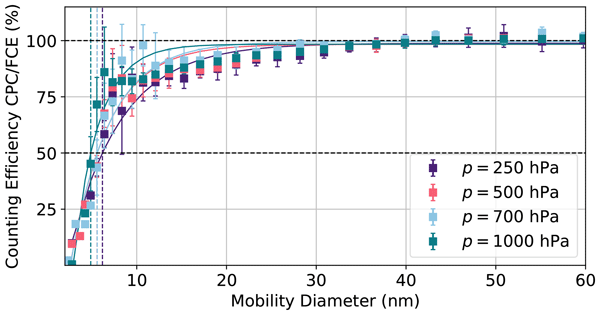
Sarah Kirchhoff, Patrick Weber, Oliver F. Bischof, Gerhard Steiner, Christian Kunath, Lothar Keck, Victoria M. Fruhmann, Helmut Krasa, Alexander Bergmann, Andreas Petzold, and Ulrich Bundke
Atmos. Meas. Tech., 19, 5243–5266, https://doi.org/10.5194/amt-19-5243-2026, https://doi.org/10.5194/amt-19-5243-2026, 2026
Short summary
Short summary
We evaluated dimethyl sulfoxide (DMSO) as a safe, non-flammable working fluid for condensation particle counters, comparing it with butanol under varied pressures, temperatures, and aerosols. Laboratory, field, and simulation results show reliable particle activation, comparable counting efficiency, reduced fluid use, and stable long-term operation. Mixtures with water extend usability, supporting safe monitoring in remote or harsh environments.

Patrick Konjari, Christian Rolf, Martina Krämer, Armin Afchine, Nicole Spelten, Irene Bartolome Garcia, Annette Miltenberger, Nicolas Emig, Philipp Joppe, Johannes Schneider, Yun Li, Andreas Petzold, Heiko Bozem, and Peter Hoor
Atmos. Chem. Phys., 25, 18031–18050, https://doi.org/10.5194/acp-25-18031-2025, https://doi.org/10.5194/acp-25-18031-2025, 2025
Short summary
Short summary
We investigated how a powerful storm over southern Sweden in June 2024 transported ice particles and moist air into the normally dry stratosphere. We observed unusually high water vapor and ice levels up to 1.5 kilometers above the tropopause. Although the extra water vapor lasted only a few days to weeks, it shows how such storms can temporarily alter the upper atmosphere’s composition.
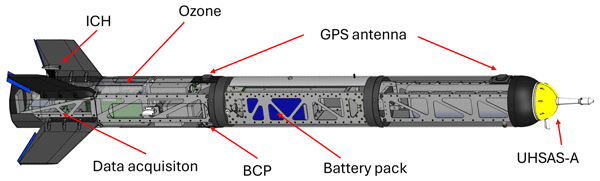
Heiko Bozem, Philipp Joppe, Yun Li, Nicolas Emig, Armin Afchine, Anna Breuninger, Joachim Curtius, Stefan Hofmann, Sadath Ismayil, Konrad Kandler, Daniel Kunkel, Arthur Kutschka, Hans-Christoph Lachnitt, Andreas Petzold, Sarah Richter, Timo Röschenthaler, Christian Rolf, Lisa Schneider, Johannes Schneider, Alexander Vogel, and Peter Hoor
Atmos. Meas. Tech., 18, 6545–6568, https://doi.org/10.5194/amt-18-6545-2025, https://doi.org/10.5194/amt-18-6545-2025, 2025
Short summary
Short summary
Deployed on a Learjet as a tandem measurement platform during the TPEx I (TropoPause composition gradients and mixing Experiment) campaign in June 2024, the new TPC-TOSS (TropoPause Composition Towed Sensor Shuttle) system delivers high-resolution in situ data on ozone, aerosol, and key meteorological parameters. Laboratory and in-flight tests confirmed its precision and stability. Observed gradients near the tropopause reveal active mixing and transport processes in the tropopause region.
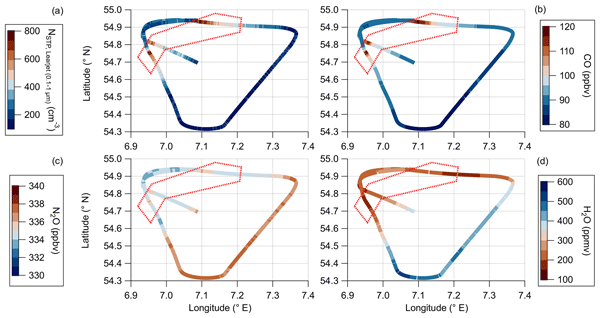
Philipp Joppe, Johannes Schneider, Jonas Wilsch, Heiko Bozem, Anna Breuninger, Joachim Curtius, Martin Ebert, Nicolas Emig, Peter Hoor, Sadath Ismayil, Konrad Kandler, Daniel Kunkel, Isabel Kurth, Hans-Christoph Lachnitt, Yun Li, Annette Miltenberger, Sarah Richter, Christian Rolf, Lisa Schneider, Cornelis Schwenk, Nicole Spelten, Alexander L. Vogel, Yafang Cheng, and Stephan Borrmann
Atmos. Chem. Phys., 25, 15077–15103, https://doi.org/10.5194/acp-25-15077-2025, https://doi.org/10.5194/acp-25-15077-2025, 2025
Short summary
Short summary
We show measurements of a filament with biomass burning influence transported by a warm conveyor belt (WCB) into the tropopause region over Europe. The pollution originates from Canadian forest fires and is transported in the lower troposphere towards Europe. The WCB transport is followed by mixing with air masses of stratospheric chemical signatures. We hypothesize that this mixing leads to a change in the vertical gradient of the potential temperature.
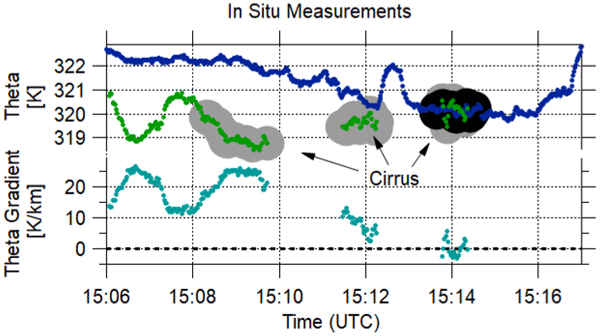
Nicolas Emig, Annette K. Miltenberger, Peter M. Hoor, and Andreas Petzold
Atmos. Chem. Phys., 25, 13077–13101, https://doi.org/10.5194/acp-25-13077-2025, https://doi.org/10.5194/acp-25-13077-2025, 2025
Short summary
Short summary
This study presents in situ observations of cirrus occurrence from aircraft measurements in the extratropical transition layer (ExTL) using simultaneous measurements from two platforms. Lagrangian diagnostics based on high-resolution ICON simulations show long residence times of the cirrus in stratospheric air, allowing us to separate different diabatic processes during transit. The findings suggest that radiative diabatic cloud processes significantly impact the tropopause thermodynamic structure.
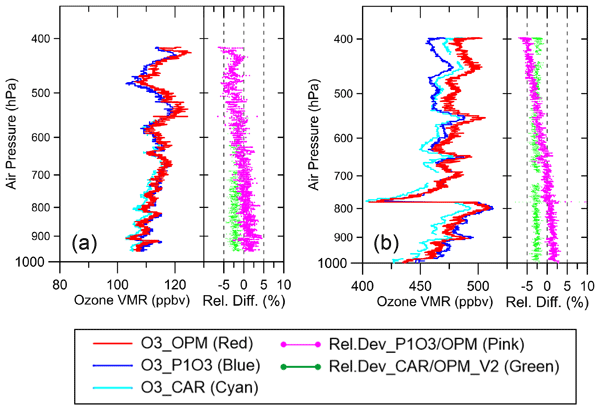
Herman G. J. Smit, Torben Galle, Romain Blot, Florian Obersteiner, Philippe Nédélec, Andreas Zahn, Jean-Marc Cousin, Ulrich Bundke, Andreas Petzold, Valerie Thouret, and Hannah Clark
Atmos. Meas. Tech., 18, 4985–5001, https://doi.org/10.5194/amt-18-4985-2025, https://doi.org/10.5194/amt-18-4985-2025, 2025
Short summary
Short summary
The two ozone instruments of IAGOS (In-service Aircraft for a Global Observation System) have been compared with the Ozone PhotoMeter (OPM) of the World Calibration Center of Ozone Sondes (WCCOS) in an atmospheric simulation chamber under realistic flight conditions of pressure, temperature, and ozone concentrations. The two IAGOS-instruments showed good agreement with the OPM within 5–6 %. The observed differences are small but systematic and reproducible during the intercomparison.
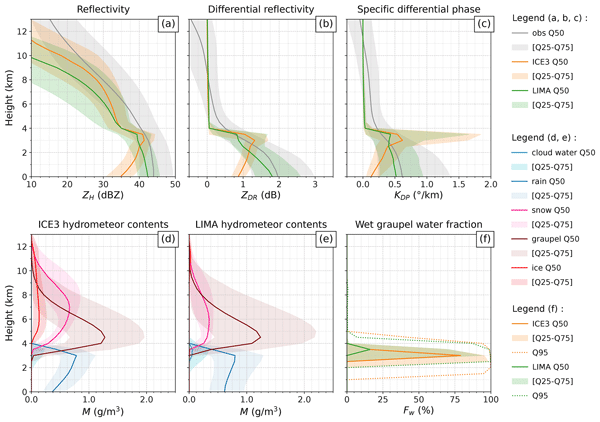
Cloé David, Clotilde Augros, Benoit Vié, François Bouttier, and Tony Le Bastard
Atmos. Meas. Tech., 18, 3715–3745, https://doi.org/10.5194/amt-18-3715-2025, https://doi.org/10.5194/amt-18-3715-2025, 2025
Short summary
Short summary
Simulations of storm characteristics and associated radar signatures were improved, especially under the freezing level, using an advanced cloud scheme. Discrepancies between observations and forecasts at and above the melting layer highlighted issues in both the radar forward operator and the microphysics. To overcome some of these issues, different parameterizations of the operator were suggested. This work aligns with the future integration of polarimetric data into assimilation systems.
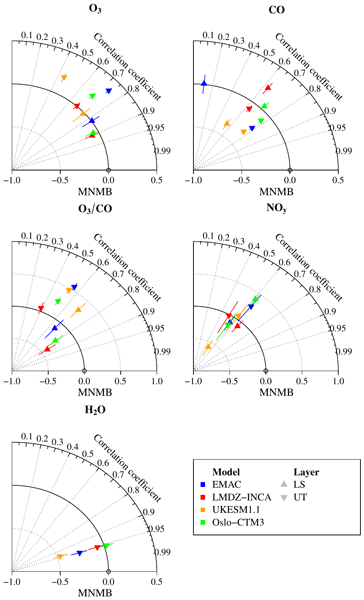
Yann Cohen, Didier Hauglustaine, Nicolas Bellouin, Marianne Tronstad Lund, Sigrun Matthes, Agnieszka Skowron, Robin Thor, Ulrich Bundke, Andreas Petzold, Susanne Rohs, Valérie Thouret, Andreas Zahn, and Helmut Ziereis
Atmos. Chem. Phys., 25, 5793–5836, https://doi.org/10.5194/acp-25-5793-2025, https://doi.org/10.5194/acp-25-5793-2025, 2025
Short summary
Short summary
The chemical composition of the atmosphere near the tropopause is a key parameter for evaluating the climate impact of subsonic aviation pollutants. This study uses in situ data collected aboard passenger aircraft to assess the ability of four chemistry–climate models to reproduce (bi-)decadal climatologies of ozone, carbon monoxide, water vapour, and reactive nitrogen in this region. The models reproduce the very distinct ozone seasonality in the upper troposphere and in the lower stratosphere well.
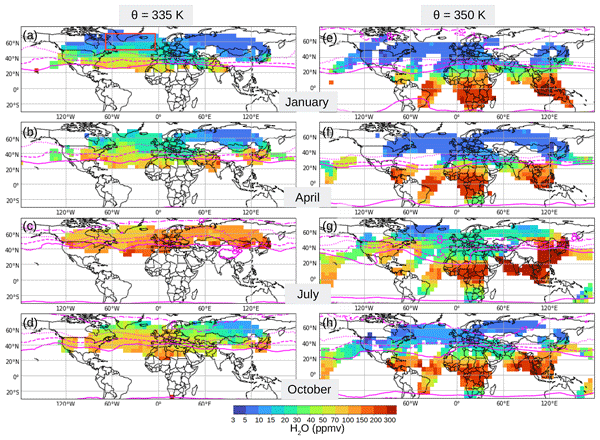
Patrick Konjari, Christian Rolf, Michaela I. Hegglin, Susanne Rohs, Yun Li, Andreas Zahn, Harald Bönisch, Philippe Nedelec, Martina Krämer, and Andreas Petzold
Atmos. Chem. Phys., 25, 4269–4289, https://doi.org/10.5194/acp-25-4269-2025, https://doi.org/10.5194/acp-25-4269-2025, 2025
Short summary
Short summary
This study introduces a new method to derive adjusted water vapor (H2O) climatologies for the upper tropopshere and lower statosphere (UT/LS) using data from 60 000 flights under the IAGOS program. Biases in the IAGOS water vapour dataset are adjusted, based on the more accurate IAGOS-CARIBIC data. The resulting highly resolved H2O climatologies will contribute to a better understanding of the H2O variability in the UT/LS and its connection to various transport and mixing processes.
Ziming Wang, Luca Bugliaro, Klaus Gierens, Michaela I. Hegglin, Susanne Rohs, Andreas Petzold, Stefan Kaufmann, and Christiane Voigt
Atmos. Chem. Phys., 25, 2845–2861, https://doi.org/10.5194/acp-25-2845-2025, https://doi.org/10.5194/acp-25-2845-2025, 2025
Short summary
Short summary
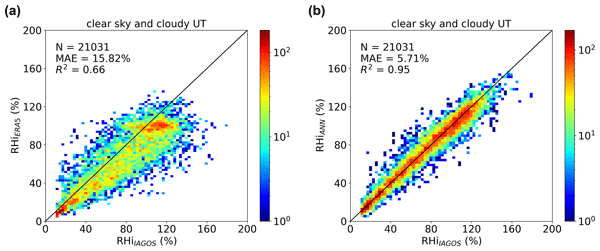
Upper-tropospheric relative humidity bias in the ERA5 weather model is corrected by 10 % by an artificial neural network using aircraft in-service humidity data and thermodynamic and dynamical variables. The improved skills of the weather model will advance cirrus research, weather forecasts, and measures for contrail reduction.
Kevin Wolf, Nicolas Bellouin, Olivier Boucher, Susanne Rohs, and Yun Li
Atmos. Chem. Phys., 25, 157–181, https://doi.org/10.5194/acp-25-157-2025, https://doi.org/10.5194/acp-25-157-2025, 2025
Short summary
Short summary
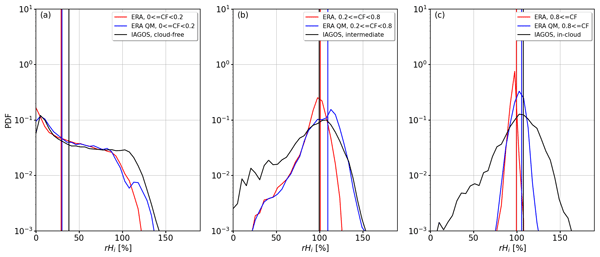
ERA5 atmospheric reanalysis and airborne in situ observations from IAGOS are compared in terms of the representation of the contrail formation potential and the presence of supersaturation. Differences are traced back to biases in ERA5 relative humidity fields. Those biases are addressed by applying a quantile mapping technique that significantly improved contrail estimation based on post-processed ERA5 data.
Marie Taufour, Jean-Pierre Pinty, Christelle Barthe, Benoît Vié, and Chien Wang
Geosci. Model Dev., 17, 8773–8798, https://doi.org/10.5194/gmd-17-8773-2024, https://doi.org/10.5194/gmd-17-8773-2024, 2024
Short summary
Short summary
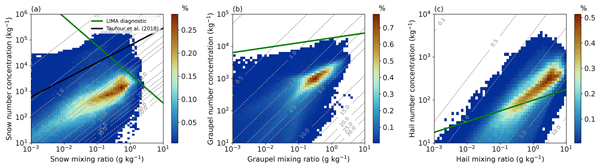
We have developed a complete two-moment version of the LIMA (Liquid Ice Multiple Aerosols) microphysics scheme. We have focused on collection processes, where the hydrometeor number transfer is often estimated in proportion to the mass transfer. The impact of these parameterizations on a convective system and the prospects for more realistic estimates of secondary parameters (reflectivity, hydrometeor size) are shown in a first test on an idealized case.
Benjamin Doiteau, Florian Pantillon, Matthieu Plu, Laurent Descamps, and Thomas Rieutord
Weather Clim. Dynam., 5, 1409–1427, https://doi.org/10.5194/wcd-5-1409-2024, https://doi.org/10.5194/wcd-5-1409-2024, 2024
Short summary
Short summary
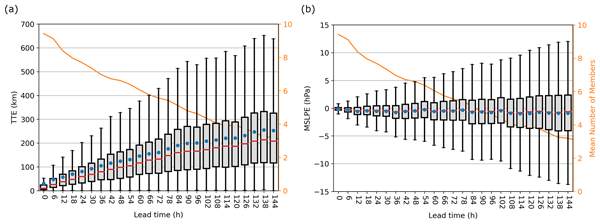
The predictability of Mediterranean cyclones is investigated through a large dataset of 1960 cyclones tracks, ensuring robust statistical results. The motion speed of the cyclone appears to determine the predictability of its location. In particular, the location of specific slow cyclones concentrated in the Gulf of Genoa is remarkably well predicted. It is also shown that the intensity of deep cyclones, occurring in winter, is particularly poorly predicted in the Mediterranean region.
Kuo-Ying Wang, Philippe Nedelec, Valerie Thouret, Hannah Clark, Andreas Wahner, and Andreas Petzold
EGUsphere, https://doi.org/10.5194/egusphere-2024-2414, https://doi.org/10.5194/egusphere-2024-2414, 2024
Preprint archived
Short summary
Short summary
We use routine in-service commercial passenger airplanes Airbus A340 and A330 to collect air pollutants in the upper troposphere. The beauty in using commercial airplanes is that these commercial airplanes, like taxi on the ground, keep flying all the time. We find that short-lived air pollutants are very sensitive to ground-level emissions. Effective regulation in ground-level emissions can help to reduce air pollution in the upper troposphere.
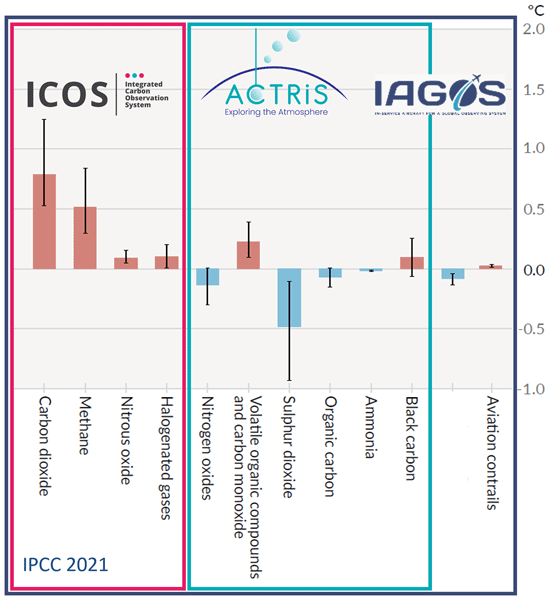
Andreas Petzold, Ulrich Bundke, Anca Hienola, Paolo Laj, Cathrine Lund Myhre, Alex Vermeulen, Angeliki Adamaki, Werner Kutsch, Valerie Thouret, Damien Boulanger, Markus Fiebig, Markus Stocker, Zhiming Zhao, and Ari Asmi
Atmos. Chem. Phys., 24, 5369–5388, https://doi.org/10.5194/acp-24-5369-2024, https://doi.org/10.5194/acp-24-5369-2024, 2024
Short summary
Short summary
Easy and fast access to long-term and high-quality observational data is recognised as fundamental to environmental research and the development of climate forecasting and assessment services. We discuss the potential new directions in atmospheric sciences offered by the atmosphere-centric European research infrastructures ACTRIS, IAGOS, and ICOS, building on their capabilities for standardised provision of data through open access combined with tools and methods of data-intensive science.
Ella Gilbert, Jhaswantsing Purseed, Yun Li, Martina Krämer, Beatrice Altamura, and Nicolas Bellouin
EGUsphere, https://doi.org/10.5194/egusphere-2024-821, https://doi.org/10.5194/egusphere-2024-821, 2024
Preprint withdrawn
Short summary
Short summary
We use a simple experiment to explore the non-CO2 impacts of aviation on climate, which are considerably larger than the impact of the sector’s carbon emissions alone. We show that the main effect of our experiments – which intend to mimic the effect of aircraft soot emissions reaching existing high-altitude cirrus clouds – is to extend cloud lifetime, thereby enhancing their effect on climate.
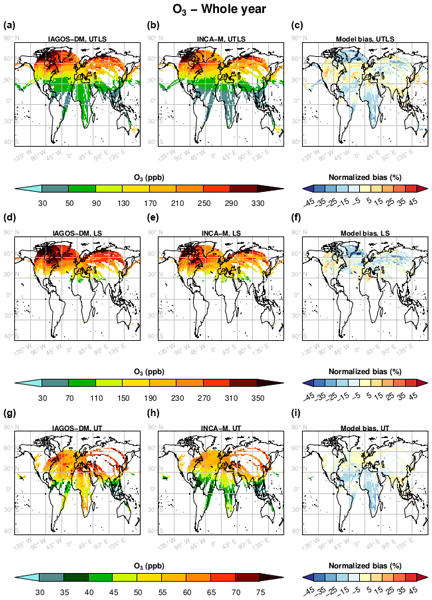
Yann Cohen, Didier Hauglustaine, Bastien Sauvage, Susanne Rohs, Patrick Konjari, Ulrich Bundke, Andreas Petzold, Valérie Thouret, Andreas Zahn, and Helmut Ziereis
Atmos. Chem. Phys., 23, 14973–15009, https://doi.org/10.5194/acp-23-14973-2023, https://doi.org/10.5194/acp-23-14973-2023, 2023
Short summary
Short summary
The upper troposphere–lower stratosphere (UTLS) is a key region regarding the lower atmospheric composition. This study consists of a comprehensive evaluation of an up-to-date chemistry–climate model in this layer, using regular in situ measurements based on passenger aircraft. For this purpose, a specific software (Interpol-IAGOS) has been updated and made publicly available. The model reproduces the carbon monoxide peaks due to biomass burning over the continental tropics particularly well.
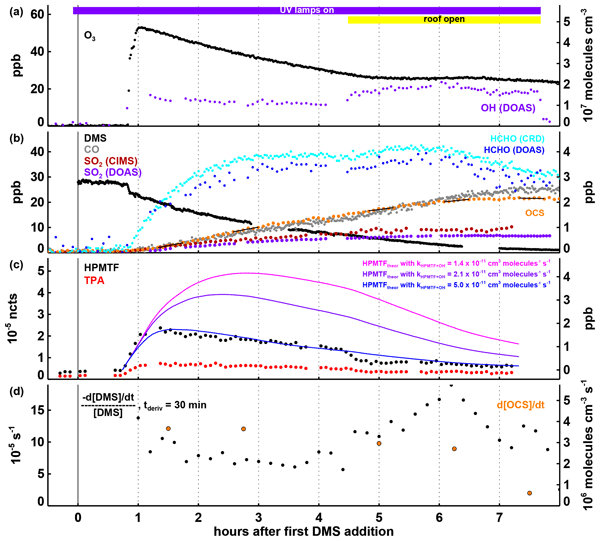
Marc von Hobe, Domenico Taraborrelli, Sascha Alber, Birger Bohn, Hans-Peter Dorn, Hendrik Fuchs, Yun Li, Chenxi Qiu, Franz Rohrer, Roberto Sommariva, Fred Stroh, Zhaofeng Tan, Sergej Wedel, and Anna Novelli
Atmos. Chem. Phys., 23, 10609–10623, https://doi.org/10.5194/acp-23-10609-2023, https://doi.org/10.5194/acp-23-10609-2023, 2023
Short summary
Short summary
The trace gas carbonyl sulfide (OCS) transports sulfur from the troposphere to the stratosphere, where sulfate aerosols are formed that influence climate and stratospheric chemistry. An uncertain OCS source in the troposphere is chemical production form dimethyl sulfide (DMS), a gas released in large quantities from the oceans. We carried out experiments in a large atmospheric simulation chamber to further elucidate the chemical mechanism of OCS production from DMS.
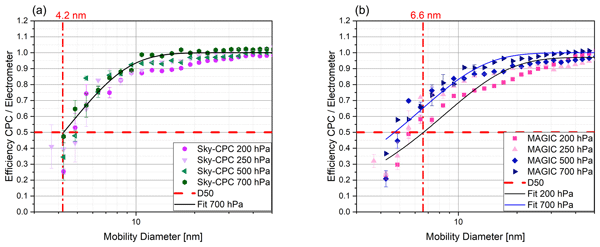
Patrick Weber, Oliver F. Bischof, Benedikt Fischer, Marcel Berg, Susanne Hering, Steven Spielman, Gregory Lewis, Andreas Petzold, and Ulrich Bundke
Atmos. Meas. Tech., 16, 3505–3514, https://doi.org/10.5194/amt-16-3505-2023, https://doi.org/10.5194/amt-16-3505-2023, 2023
Short summary
Short summary
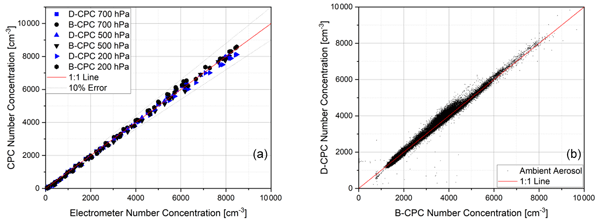
This study tests the new water condensation particle counter (MAGIC 210-LP) for deployment on passenger aircraft coordinated by the European research infrastructure IAGOS. We conducted a series of laboratory experiments for flight altitude conditions. We demonstrate that this water condensation particle counter model shows excellent agreement with a butanol-based instrument used in parallel and a Faraday cup electrometer as reference instrument at all tested pressure conditions.
Patrick Weber, Oliver F. Bischof, Benedikt Fischer, Marcel Berg, Jannik Schmitt, Gerhard Steiner, Lothar Keck, Andreas Petzold, and Ulrich Bundke
Aerosol Research, 1, 1–12, https://doi.org/10.5194/ar-1-1-2023, https://doi.org/10.5194/ar-1-1-2023, 2023
Short summary
Short summary
The aerosol number concentration is essential information for aerosol science. A condensation particle counter (CPC) can robustly provide this information. Butanol is often used as a working fluid in a CPC. We could show that dimethyl sulfoxide (DMSO) behaves equivalently to butanol in terms of the instrument`s counting efficiency, cut-off diameter and concentration linearity. We tested this on different aerosols, including sodium chloride, ammonium sulfate and fresh combustion soot.
Yun Li, Christoph Mahnke, Susanne Rohs, Ulrich Bundke, Nicole Spelten, Georgios Dekoutsidis, Silke Groß, Christiane Voigt, Ulrich Schumann, Andreas Petzold, and Martina Krämer
Atmos. Chem. Phys., 23, 2251–2271, https://doi.org/10.5194/acp-23-2251-2023, https://doi.org/10.5194/acp-23-2251-2023, 2023
Short summary
Short summary
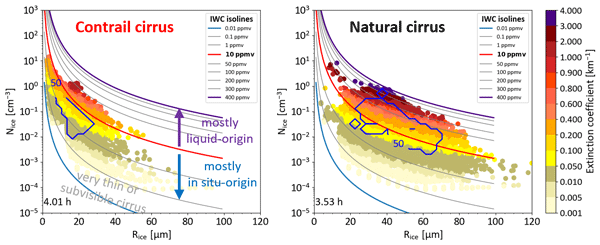
The radiative effect of aviation-induced cirrus is closely related to ambient conditions and its microphysical properties. Our study investigated the occurrence of contrail and natural cirrus measured above central Europe in spring 2014. It finds that contrail cirrus appears frequently in the pressure range 200 to 245 hPa and occurs more often in slightly ice-subsaturated environments than expected. Avoiding slightly ice-subsaturated regions by aviation might help mitigate contrail cirrus.
Youness El-Ouartassy, Irène Korsakissok, Matthieu Plu, Olivier Connan, Laurent Descamps, and Laure Raynaud
Atmos. Chem. Phys., 22, 15793–15816, https://doi.org/10.5194/acp-22-15793-2022, https://doi.org/10.5194/acp-22-15793-2022, 2022
Short summary
Short summary
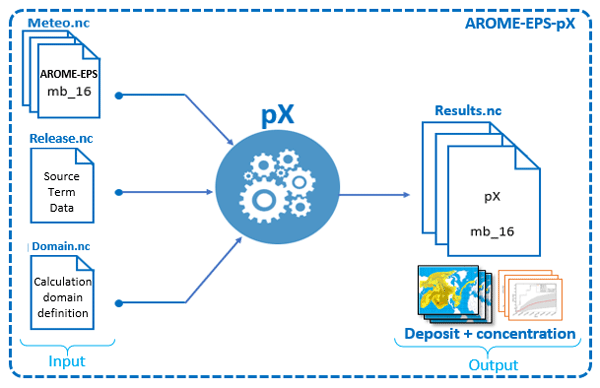
This work investigates the potential value of using fine-scale meteorological ensembles to represent the inherent meteorological uncertainties in atmospheric dispersion model outputs. Probabilistic scores were used to evaluate the probabilistic performance of dispersion ensembles, using an original dataset of new continuous 85Kr air concentration measurements and a well-known source term. The results show that the ensemble dispersion simulations perform better than deterministic ones.
Patrick Weber, Andreas Petzold, Oliver F. Bischof, Benedikt Fischer, Marcel Berg, Andrew Freedman, Timothy B. Onasch, and Ulrich Bundke
Atmos. Meas. Tech., 15, 3279–3296, https://doi.org/10.5194/amt-15-3279-2022, https://doi.org/10.5194/amt-15-3279-2022, 2022
Short summary
Short summary
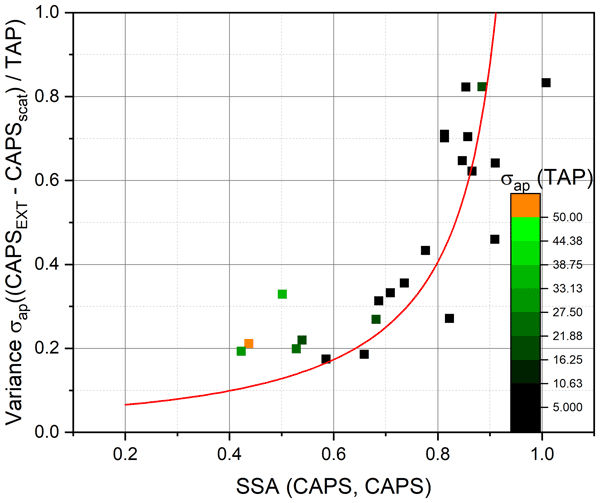
In our laboratory closure study, we measured the full set of aerosol optical properties for different light-absorbing aerosols using a set of instruments.
Our key finding is that the extensive and intensive aerosol optical properties obtained agree with data from reference instruments, except the absorption Ångström exponent of externally mixed aerosols. The reported uncertainty in the single-scattering albedo fulfils the defined goals for Global Climate Observing System applications of 10 %.
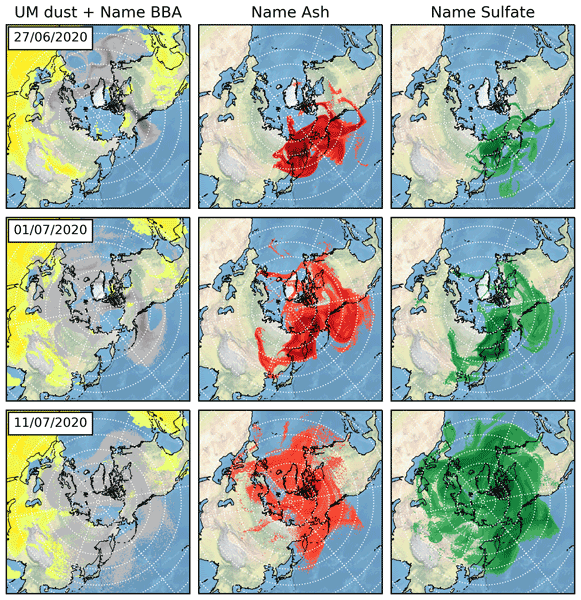
Martin J. Osborne, Johannes de Leeuw, Claire Witham, Anja Schmidt, Frances Beckett, Nina Kristiansen, Joelle Buxmann, Cameron Saint, Ellsworth J. Welton, Javier Fochesatto, Ana R. Gomes, Ulrich Bundke, Andreas Petzold, Franco Marenco, and Jim Haywood
Atmos. Chem. Phys., 22, 2975–2997, https://doi.org/10.5194/acp-22-2975-2022, https://doi.org/10.5194/acp-22-2975-2022, 2022
Short summary
Short summary
Using the Met Office NAME dispersion model, supported by satellite- and ground-based remote-sensing observations, we describe the dispersion of aerosols from the 2019 Raikoke eruption and the concurrent wildfires in Alberta Canada. We show how the synergy of dispersion modelling and multiple observation sources allowed observers in the London VAAC to arrive at a more complete picture of the aerosol loading at altitudes commonly used by aviation.
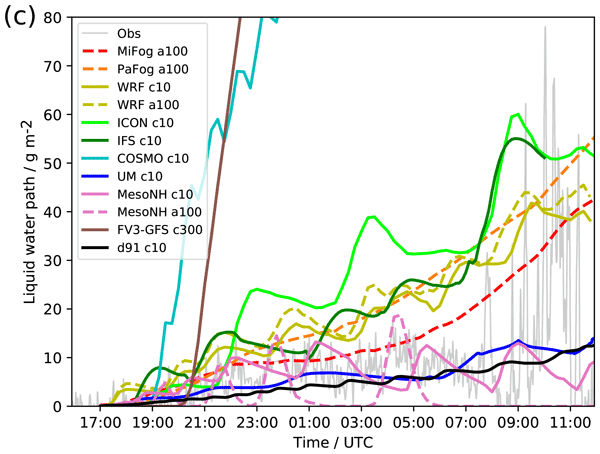
Ian Boutle, Wayne Angevine, Jian-Wen Bao, Thierry Bergot, Ritthik Bhattacharya, Andreas Bott, Leo Ducongé, Richard Forbes, Tobias Goecke, Evelyn Grell, Adrian Hill, Adele L. Igel, Innocent Kudzotsa, Christine Lac, Bjorn Maronga, Sami Romakkaniemi, Juerg Schmidli, Johannes Schwenkel, Gert-Jan Steeneveld, and Benoît Vié
Atmos. Chem. Phys., 22, 319–333, https://doi.org/10.5194/acp-22-319-2022, https://doi.org/10.5194/acp-22-319-2022, 2022
Short summary
Short summary
Fog forecasting is one of the biggest problems for numerical weather prediction. By comparing many models used for fog forecasting with others used for fog research, we hoped to help guide forecast improvements. We show some key processes that, if improved, will help improve fog forecasting, such as how water is deposited on the ground. We also showed that research models were not themselves a suitable baseline for comparison, and we discuss what future observations are required to improve them.
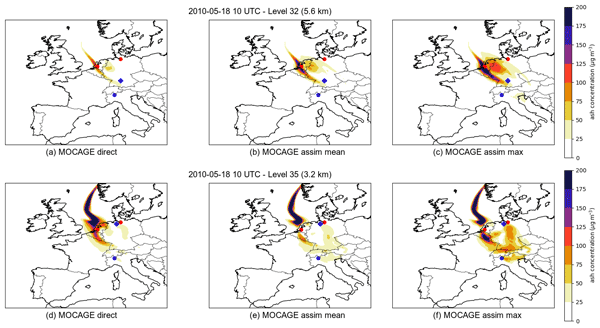
Matthieu Plu, Guillaume Bigeard, Bojan Sič, Emanuele Emili, Luca Bugliaro, Laaziz El Amraoui, Jonathan Guth, Beatrice Josse, Lucia Mona, and Dennis Piontek
Nat. Hazards Earth Syst. Sci., 21, 3731–3747, https://doi.org/10.5194/nhess-21-3731-2021, https://doi.org/10.5194/nhess-21-3731-2021, 2021
Short summary
Short summary
Volcanic eruptions that spread out ash over large areas, like Eyjafjallajökull in 2010, may have huge economic consequences due to flight cancellations. In this article, we demonstrate the benefits of source term improvement and of data assimilation for quantifying volcanic ash concentrations. The work, which was supported by the EUNADICS-AV project, is the first one, to our knowledge, that demonstrates the benefit of the assimilation of ground-based lidar data over Europe during an eruption.
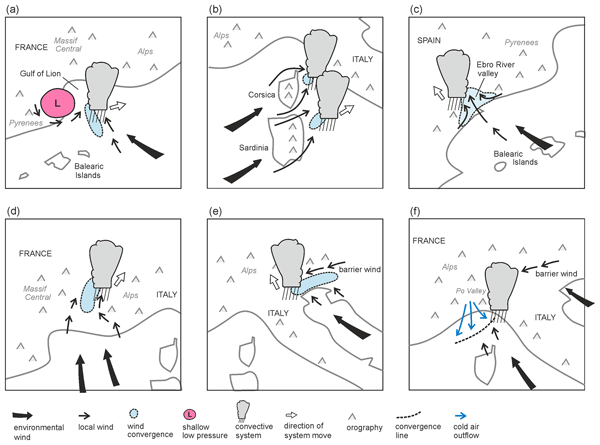
Samira Khodayar, Silvio Davolio, Paolo Di Girolamo, Cindy Lebeaupin Brossier, Emmanouil Flaounas, Nadia Fourrie, Keun-Ok Lee, Didier Ricard, Benoit Vie, Francois Bouttier, Alberto Caldas-Alvarez, and Veronique Ducrocq
Atmos. Chem. Phys., 21, 17051–17078, https://doi.org/10.5194/acp-21-17051-2021, https://doi.org/10.5194/acp-21-17051-2021, 2021
Short summary
Short summary
Heavy precipitation (HP) constitutes a major meteorological threat in the western Mediterranean. Every year, recurrent events affect the area with fatal consequences. Despite this being a well-known issue, open questions still remain. The understanding of the underlying mechanisms and the modeling representation of the events must be improved. In this article we present the most recent lessons learned from the Hydrological Cycle in the Mediterranean Experiment (HyMeX).
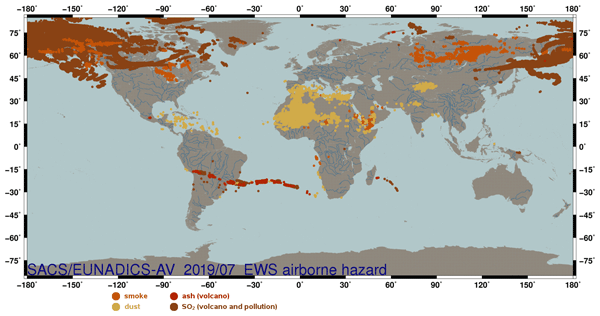
Hugues Brenot, Nicolas Theys, Lieven Clarisse, Jeroen van Gent, Daniel R. Hurtmans, Sophie Vandenbussche, Nikolaos Papagiannopoulos, Lucia Mona, Timo Virtanen, Andreas Uppstu, Mikhail Sofiev, Luca Bugliaro, Margarita Vázquez-Navarro, Pascal Hedelt, Michelle Maree Parks, Sara Barsotti, Mauro Coltelli, William Moreland, Simona Scollo, Giuseppe Salerno, Delia Arnold-Arias, Marcus Hirtl, Tuomas Peltonen, Juhani Lahtinen, Klaus Sievers, Florian Lipok, Rolf Rüfenacht, Alexander Haefele, Maxime Hervo, Saskia Wagenaar, Wim Som de Cerff, Jos de Laat, Arnoud Apituley, Piet Stammes, Quentin Laffineur, Andy Delcloo, Robertson Lennart, Carl-Herbert Rokitansky, Arturo Vargas, Markus Kerschbaum, Christian Resch, Raimund Zopp, Matthieu Plu, Vincent-Henri Peuch, Michel Van Roozendael, and Gerhard Wotawa
Nat. Hazards Earth Syst. Sci., 21, 3367–3405, https://doi.org/10.5194/nhess-21-3367-2021, https://doi.org/10.5194/nhess-21-3367-2021, 2021
Short summary
Short summary
The purpose of the EUNADICS-AV (European Natural Airborne Disaster Information and Coordination System for Aviation) prototype early warning system (EWS) is to develop the combined use of harmonised data products from satellite, ground-based and in situ instruments to produce alerts of airborne hazards (volcanic, dust, smoke and radionuclide clouds), satisfying the requirement of aviation air traffic management (ATM) stakeholders (https://cordis.europa.eu/project/id/723986).
Hannah Clark, Yasmine Bennouna, Maria Tsivlidou, Pawel Wolff, Bastien Sauvage, Brice Barret, Eric Le Flochmoën, Romain Blot, Damien Boulanger, Jean-Marc Cousin, Philippe Nédélec, Andreas Petzold, and Valérie Thouret
Atmos. Chem. Phys., 21, 16237–16256, https://doi.org/10.5194/acp-21-16237-2021, https://doi.org/10.5194/acp-21-16237-2021, 2021
Short summary
Short summary
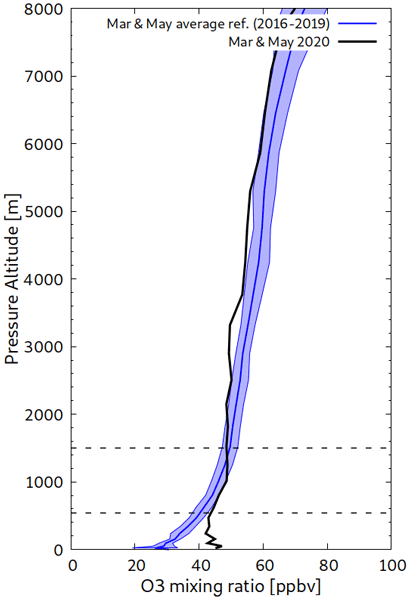
We examined 27 years of IAGOS (In-service Aircraft for a Global Observing System) profiles at Frankfurt to see if there were unusual features during the spring of 2020 related to COVID-19 lockdowns in Europe. Increased ozone near the surface was partly linked to the reduction in emissions. Carbon monoxide decreased near the surface, but the impact of the lockdowns was offset by polluted air masses from elsewhere. There were small reductions in ozone and carbon monoxide in the free troposphere.
Cited articles
Arriolabengoa, S.: Software material for Arriolabengoa et al. (2025), Zenodo [code], https://doi.org/10.5281/zenodo.15303979, 2025. a, b
Bland, J., Gray, S., Methven, J., and Forbes, R.: Characterising extratropical near-tropopause analysis humidity biases and their radiative effects on temperature forecasts, Quarterly Journal of the Royal Meteorological Society, 147, 3878–3898, 2021. a
Borella, A., Vignon, É., Boucher, O., and Rohs, S.: An empirical parameterization of the subgrid-scale distribution of water vapor in the UTLS for atmospheric general circulation models, Journal of Geophysical Research: Atmospheres, 129, e2024JD040981, https://doi.org/10.1029/2024JD040981, 2024. a
Bougeault, P.: Modeling the trade-wind cumulus boundary layer. Part I: Testing the ensemble cloud relations against numerical data, Journal of Atmospheric Sciences, 38, 2414–2428, 1981. a
Boulanger, D., Thouret, V., and Petzold, A.: IAGOS Data Portal, AERIS [data set], https://doi.org/10.25326/06, 2020. a
Bouttier, F. and Marchal, H.: Probabilistic short-range forecasts of high-precipitation events: optimal decision thresholds and predictability limits, Nat. Hazards Earth Syst. Sci., 24, 2793–2816, https://doi.org/10.5194/nhess-24-2793-2024, 2024. a, b, c
Bouyssel, F., Berre, L., Bénichou, H., Chambon, P., Girardot, N., Guidard, V., Loo, C., Mahfouf, J.-F., Moll, P., Payan, C., and Raspaud, D.: The 2020 Global Operational NWP Data Assimilation System at Météo-France, Springer International Publishing, Cham, 645–664, ISBN 978-3-030-77722-7, https://doi.org/10.1007/978-3-030-77722-7_25, 2022. a
Bradley, A. A., Schwartz, S. S., and Hashino, T.: Sampling Uncertainty and Confidence Intervals for the Brier Score and Brier Skill Score, Weather and Forecasting, 23, 992–1006, https://doi.org/10.1175/2007WAF2007049.1, 2008. a
Bundke, U., Berg, M., Houben, N., Ibrahim, A., Fiebig, M., Tettich, F., Klaus, C., Franke, H., and Petzold, A.: The IAGOS-CORE aerosol package: instrument design, operation and performance for continuous measurement aboard in-service aircraft, Tellus B: Chemical and Physical Meteorology, 67, 28339, https://doi.org/10.3402/tellusb.v67.28339, 2015. a
Chen, C.-C., Gettelman, A., Craig, C., Minnis, P., and Duda, D. P.: Global contrail coverage simulated by CAM5 with the inventory of 2006 global aircraft emissions, Journal of Advances in Modeling Earth Systems, 4, https://doi.org/10.1029/2011MS000105, 2012. a, b
Chevallier, R., Shapiro, M., Engberg, Z., Soler, M., and Delahaye, D.: Linear contrails detection, tracking and matching with aircraft using geostationary satellite and air traffic data, Aerospace, 10, 578, https://doi.org/10.3390/aerospace10070578, 2023. a
Christen, P., Hand, D. J., and Kirielle, N.: A Review of the F-Measure: Its History, Properties, Criticism, and Alternatives, ACM Comput. Surv., 56, https://doi.org/10.1145/3606367, 2023. a
CICONIA SESAR Joint Undertaking: CICONIA – Climate effects reduced by Innovative Concept of Operations – Needs and Impacts Assessment, https://www.sesarju.eu/projects/CICONIA (last access: 30 April 2025), 2023. a
Curat, V. and Péchaud, L.: Prediction of contrails formation & Observation process, Presented at the Sustainable Skies Conference: Contrails in Focus, CANSO/EUROCONTROL, Brussels Belgium, https://www.eurocontrol.int/sites/default/files/2023-11/2023-11-07-contrails-conference-session-004-curat-pechaut-prediction-contrail-formation-observation-process.pdf (last access: 7 November 2023), 2023. a
Dietmüller, S., Matthes, S., Dahlmann, K., Yamashita, H., Simorgh, A., Soler, M., Linke, F., Lührs, B., Meuser, M. M., Weder, C., Grewe, V., Yin, F., and Castino, F.: A Python library for computing individual and merged non-CO2 algorithmic climate change functions: CLIMaCCF V1.0, Geosci. Model Dev., 16, 4405–4425, https://doi.org/10.5194/gmd-16-4405-2023, 2023. a, b
Ebert, E. E.: Neighborhood Verification: A Strategy for Rewarding Close Forecasts, Weather and Forecasting, 24, 1498–1510, https://doi.org/10.1175/2009WAF2222251.1, 2009. a
ECMWF-documentation: FS documentation, https://www.ecmwf.int/en/publications/ifs-documentation (last access: 27 June 2025), 2025. a
Filges, A., Gerbig, C., Chen, H., Franke, H., Klaus, C., and Jordan, A.: The IAGOS-core greenhouse gas package: a measurement system for continuous airborne observations of CO2, CH4, H2O and CO, Tellus B: Chemical and Physical Meteorology, 67, 27989, https://doi.org/10.3402/tellusb.v67.27989, 2015. a
Fowler, L. D., Randall, D. A., and Rutledge, S. A.: Liquid and ice cloud microphysics in the CSU general circulation model. Part 1: Model description and simulated microphysical processes, Journal of climate, 9, 489–529, 1996. a
Gierens, K.: On the transition between heterogeneous and homogeneous freezing, Atmos. Chem. Phys., 3, 437–446, https://doi.org/10.5194/acp-3-437-2003, 2003. a
Gierens, K., Matthes, S., and Rohs, S.: How well can persistent contrails be predicted?, Aerospace, 7, 169, https://doi.org/10.3390/aerospace7120169, 2020. a, b, c
Gierens, K. M. and Vázquez-Navarro, M.: Statistical analysis of contrail lifetimes from a satellite perspective, Meteorologische Zeitschrift, https://doi.org/10.1127/metz/2018/0888, 2018. a, b
Gilleland, E., Ahijevych, D., Brown, B. G., Casati, B., and Ebert, E. E.: Intercomparison of Spatial Forecast Verification Methods, Weather and Forecasting, 24, 1416–1430, https://doi.org/10.1175/2009WAF2222269.1, 2009. a, b
Hanst, M., Köhler, C. G., Seifert, A., and Schlemmer, L.: Predicting Ice Supersaturation for Contrail Avoidance: Ensemble Forecasting using ICON with Two-Moment Ice Microphysics, EGUsphere [preprint], https://doi.org/10.5194/egusphere-2025-3312, 2025. a, b
Heymsfield, A. J., Krämer, M., Luebke, A., Brown, P., Cziczo, D. J., Franklin, C., Lawson, P., Lohmann, U., McFarquhar, G., Ulanowski, Z., and Van Tricht, K.: Cirrus clouds, Meteorological Monographs, 58, 2–1, 2017. a
ICAO: Manual of the ICAO standard atmosphere, extended to 80 kilometres (262 500 feet), 3rd Edition, Technical Report Doc 7488-CD, https://store.icao.int/en/manual-of-the-icao-standard-atmosphere-extended-to-80-kilometres-262500-feet-doc-7488 (last access: 9 August 2022), 1993. a
Kärcher, B. and Lohmann, U.: A parameterization of cirrus cloud formation: Homogeneous freezing of supercooled aerosols, Journal of Geophysical Research: Atmospheres, 107, AAC–4, https://doi.org/10.1029/2001JD000470, 2002. a
Krämer, M., Schiller, C., Afchine, A., Bauer, R., Gensch, I., Mangold, A., Schlicht, S., Spelten, N., Sitnikov, N., Borrmann, S., de Reus, M., and Spichtinger, P.: Ice supersaturations and cirrus cloud crystal numbers, Atmos. Chem. Phys., 9, 3505–3522, https://doi.org/10.5194/acp-9-3505-2009, 2009. a
Kulik, L.: Satellite-based detection of contrails using deep learning, Ph.D. thesis, Massachusetts Institute of Technology, https://hdl.handle.net/1721.1/124179 (last access: 28 May 2024), 2019. a
Lee, D. S., Fahey, D. W., Forster, P. M., Newton, P. J., Wit, R. C., Lim, L. L., Owen, B., and Sausen, R.: Aviation and global climate change in the 21st century, Atmospheric environment, 43, 3520–3537, 2009. a
Lee, D. S., Fahey, D. W., Skowron, A., Allen, M. R., Burkhardt, U., Chen, Q., Doherty, S. J., Freeman, S., Forster, P. M., Fuglestvedt, J., Gettelman, A., De León, R. R., Lim, L. L., Lund, M. T., Millar, R. J., Owen, B., Penner, J. E., Pitari, G., Prather, M. J., Sausen, R., and Wilcox, L. J.: The contribution of global aviation to anthropogenic climate forcing for 2000 to 2018, Atmospheric environment, 244, 117834, https://doi.org/10.1016/j.atmosenv.2020.117834, 2021. a
Li, Y., Mahnke, C., Rohs, S., Bundke, U., Spelten, N., Dekoutsidis, G., Groß, S., Voigt, C., Schumann, U., Petzold, A., and Krämer, M.: Upper-tropospheric slightly ice-subsaturated regions: frequency of occurrence and statistical evidence for the appearance of contrail cirrus, Atmos. Chem. Phys., 23, 2251–2271, https://doi.org/10.5194/acp-23-2251-2023, 2023. a
Lopez, P.: Implementation and validation of a new prognostic large-scale cloud and precipitation scheme for climate and data-assimilation purposes, Quarterly Journal of the Royal Meteorological Society, 128, 229–257, 2002. a
Marenco, A., Thouret, V., Nédélec, P., Smit, H., Helten, M., Kley, D., Karcher, F., Simon, P., Law, K., Pyle, J., Poschmann, G., Von Wrede, R., Hume, C., and Cook, T.: Measurement of ozone and water vapor by Airbus in-service aircraft: The MOZAIC airborne program, An overview, Journal of Geophysical Research: Atmospheres, 103, 25631–25642, 1998. a
Matthes, S., Lührs, B., Dahlmann, K., Grewe, V., Linke, F., Yin, F., Klingaman, E., and Shine, K. P.: Climate-optimized trajectories and robust mitigation potential: Flying ATM4E, Aerospace, 7, 156, https://doi.org/10.3390/aerospace7110156, 2020. a
Mellor, G. L.: The Gaussian cloud model relations, Journal of the Atmospheric Sciences, 34, 356–358, 1977. a
Minnis, P., Young, D. F., Garber, D. P., Nguyen, L., Smith Jr, W. L., and Palikonda, R.: Transformation of contrails into cirrus during SUCCESS, Geophysical Research Letters, 25, 1157–1160, 1998. a
Neale, R. B., Chen, C.-C., Gettelman, A., Lauritzen, P. H., Park, S., Williamson, D. L., Conley, A. J., Garcia, R., Kinnison, D., Lamarque, J.-F., Marsh, D., Mills, M., Smith, A. K., Tilmes, S., Francis, V., Cameron-Smith, P., Collins, W. D., Iacono, M. J., Rasch, P. J. and Taylor, M. A.: Description of the NCAR community atmosphere model (CAM 5.0), NCAR Tech. Note Ncar/tn-486+ STR, 1, 1–12, https://fr.scribd.com/document/69495827/cam5-desc (last access: 24 December 2020), 2010. a
Nédélec, P., Blot, R., Boulanger, D., Athier, G., Cousin, J.-M., Gautron, B., Petzold, A., Volz-Thomas, A., and Thouret, V.: Instrumentation on commercial aircraft for monitoring the atmospheric composition on a global scale: the IAGOS system, technical overview of ozone and carbon monoxide measurements, Tellus B: Chemical and Physical Meteorology, 67, 27791, https://doi.org/10.3402/tellusb.v67.27791, 2015. a
Neis, P., Smit, H. G., Rohs, S., Bundke, U., Krämer, M., Spelten, N., Ebert, V., Buchholz, B., Thomas, K., and Petzold, A.: Quality assessment of MOZAIC and IAGOS capacitive hygrometers: insights from airborne field studies, Tellus B: Chemical and Physical Meteorology, 67, 28320, https://doi.org/10.3402/tellusb.v67.28320, 2015. a
Petzold, A., Thouret, V., Gerbig, C., Zahn, A., Brenninkmeijer, C. A., Gallagher, M., Hermann, M., Pontaud, M., Ziereis, H., Boulanger, D., Marshall, J., Nédélec, P., Smit, H. G. J., Friess, U., Flaud, J.-M., Wahner, A., Cammas, J.-P., Volz-Thomas, A., and IAGOS TEAM: Global-scale atmosphere monitoring by in-service aircraft–current achievements and future prospects of the European Research Infrastructure IAGOS, Tellus B: Chemical and Physical Meteorology, 67, 28452, https://doi.org/10.3402/tellusb.v67.28452, 2015. a, b
Petzold, A., Neis, P., Rütimann, M., Rohs, S., Berkes, F., Smit, H. G. J., Krämer, M., Spelten, N., Spichtinger, P., Nédélec, P., and Wahner, A.: Ice-supersaturated air masses in the northern mid-latitudes from regular in situ observations by passenger aircraft: vertical distribution, seasonality and tropospheric fingerprint, Atmos. Chem. Phys., 20, 8157–8179, https://doi.org/10.5194/acp-20-8157-2020, 2020. a, b
Piriou, J.-M.: DDH toolbox, GitHub, https://github.com/UMR-CNRM/ddhtoolbox (last access: 5 November 2024), 2024. a
Reutter, P., Neis, P., Rohs, S., and Sauvage, B.: Ice supersaturated regions: properties and validation of ERA-Interim reanalysis with IAGOS in situ water vapour measurements, Atmos. Chem. Phys., 20, 787–804, https://doi.org/10.5194/acp-20-787-2020, 2020. a
Roehrig, R., Beau, I., Saint-Martin, D., Alias, A., Decharme, B., Guérémy, J.-F., Voldoire, A., Abdel-Lathif, A. Y., Bazile, E., Belamari, S., Blein, S., Bouniol, D., Bouteloup, Y., Cattiaux, J., Chauvin, F., Chevallier, M., Colin, J., Douville, H., Marquet, P., Michou, M., Nabat, P., Oudar, T., Peyrillé, P., Piriou, J.-M., Salas y Mélia, D., Séférian, R., and Sénési, S.: The CNRM global atmosphere model ARPEGE-Climat 6.3: Description and evaluation, Journal of Advances in Modeling Earth Systems, 12, e2020MS002075, https://doi.org/10.1029/2020MS002075, 2020. a
Saito, T. and Rehmsmeier, M.: The Precision-Recall Plot Is More Informative than the ROC Plot When Evaluating Binary Classifiers on Imbalanced Datasets, PloS one, 10, e0118432, https://doi.org/10.1371/journal.pone.0118432, 2015. a, b
Sausen, R., Hofer, S. M., Gierens, K. M., Bugliaro Goggia, L., Ehrmanntraut, R., Sitova, I., Walczak, K., Burridge-Diesing, A., Bowman, M., and Miller, N.: Can we successfully avoid persistent contrails by small altitude adjustments of flights in the real world?, Meteorologische Zeitschrift, 33, https://doi.org/10.1127/metz/2023/1157, 2023. a
Schumann, U.: On conditions for contrail formation from aircraft exhausts, Meteorologische Zeitschrift, 5, 4–23, 1996. a
Schumann, U. and Heymsfield, A. J.: On the life cycle of individual contrails and contrail cirrus, Meteorological Monographs, 58, 3–1, 2017. a
Schumann, U., Mayer, B., Graf, K., and Mannstein, H.: A parametric radiative forcing model for contrail cirrus, Journal of Applied Meteorology and Climatology, 51, 1391–1406, 2012. a
Schwartz, C. S.: A Comparison of Methods Used to Populate Neighborhood-Based Contingency Tables for High-Resolution Forecast Verification, Weather and Forecasting, 32, 733–741, https://doi.org/10.1175/WAF-D-16-0187.1, 2017. a, b
Seity, Y., Brousseau, P., Malardel, S., Hello, G., Bénard, P., Bouttier, F., Lac, C., and Masson, V.: The AROME-France convective-scale operational model, Monthly Weather Review, 139, 976–991, 2011. a
Seity, Y., Lac, C., Bouyssel, F., Riette, S., and Bouteloup, Y.: Cloud and microphysical schemes in ARPEGE and AROME models, in: Proceedings of the Workshop on Parametrization of Clouds and Precipitation (ECMWF), Reading, UK, 5–8, https://www.ecmwf.int/sites/default/files/elibrary/2012/14805-cloud-and-microphysical-schemes-arpege-and-arome-models.pdf (last access: 12 October 2025), 2012. a
Spichtinger, P. and Leschner, M.: Horizontal scales of ice-supersaturated regions, Tellus B: Chemical and Physical Meteorology, 68, 29020, https://doi.org/10.3402/tellusb.v68.29020, 2016. a, b, c
Stein, J. and Stoop, F.: Neighborhood-based contingency tables including errors compensation, Monthly Weather Review, 147, 329–344, 2019. a
Teoh, R., Schumann, U., Majumdar, A., and Stettler, M. E.: Mitigating the climate forcing of aircraft contrails by small-scale diversions and technology adoption, Environmental Science & Technology, 54, 2941–2950, 2020. a
Teoh, R., Schumann, U., Gryspeerdt, E., Shapiro, M., Molloy, J., Koudis, G., Voigt, C., and Stettler, M. E. J.: Aviation contrail climate effects in the North Atlantic from 2016 to 2021, Atmos. Chem. Phys., 22, 10919–10935, https://doi.org/10.5194/acp-22-10919-2022, 2022. a, b
Teoh, R., Engberg, Z., Schumann, U., Voigt, C., Shapiro, M., Rohs, S., and Stettler, M. E. J.: Global aviation contrail climate effects from 2019 to 2021, Atmos. Chem. Phys., 24, 6071–6093, https://doi.org/10.5194/acp-24-6071-2024, 2024. a
Thompson, G., Scholzen, C., O'Donoghue, S., Haughton, M., Jones, R. L., Durant, A., and Farrington, C.: On the fidelity of high-resolution numerical weather forecasts of contrail-favorable conditions, Atmospheric Research, 311, 107663, https://doi.org/10.1016/j.atmosres.2024.107663, 2024. a, b, c, d
van Manen, J. and Grewe, V.: Algorithmic climate change functions for the use in eco-efficient flight planning, Transportation Research Part D: Transport and Environment, 67, 388–405, 2019. a
Vazquez-Navarro, M., Mannstein, H., and Mayer, B.: An automatic contrail tracking algorithm, Atmos. Meas. Tech., 3, 1089–1101, https://doi.org/10.5194/amt-3-1089-2010, 2010. a
Vié, B., Pinty, J.-P., Berthet, S., and Leriche, M.: LIMA (v1.0): A quasi two-moment microphysical scheme driven by a multimodal population of cloud condensation and ice freezing nuclei, Geosci. Model Dev., 9, 567–586, https://doi.org/10.5194/gmd-9-567-2016, 2016. a
Wolf, K., Bellouin, N., Boucher, O., Rohs, S., and Li, Y.: Correction of ERA5 temperature and relative humidity biases by bivariate quantile mapping for contrail formation analysis, Atmos. Chem. Phys., 25, 157–181, https://doi.org/10.5194/acp-25-157-2025, 2025. a, b, c, d
Wolff, J. K., Harrold, M., Fowler, T., Gotway, J. H., Nance, L., and Brown, B. G.: Beyond the Basics: Evaluating Model-Based Precipitation Forecasts Using Traditional, Spatial, and Object-Based Methods, Weather and Forecasting, 29, 1451–1472, https://doi.org/10.1175/WAF-D-13-00135.1, 2014. a
Zhang, W., Van Weverberg, K., Morcrette, C. J., Feng, W., Furtado, K., Field, P. R., Chen, C.-C., Gettelman, A., Forster, P. M., Marsh, D. R., and Rap, A.: Impact of host climate model on contrail cirrus effective radiative forcing estimates, Atmos. Chem. Phys., 25, 473–489, https://doi.org/10.5194/acp-25-473-2025, 2025. a
Short summary
Aircraft condensation trails, also known as contrails, have a significant impact on the global climate when they persist. In this work, we present a modification to the Météo-France weather model ARPEGE (Action de Recherche Petite Echelle Grande Echelle) to improve the forecasting of areas favourable to the persistence of contrails. The spatial correspondence between observations and the modified model is demonstrated and evaluated by appropriate metrics. The modified model can therefore be used for further contrail climate impact applications.
Aircraft condensation trails, also known as contrails, have a significant impact on the global...


Altmetrics
Final-revised paper
Preprint