
Articles | Volume 26, issue 12
https://doi.org/10.5194/acp-26-9221-2026
© Author(s) 2026. This work is distributed under
the Creative Commons Attribution 4.0 License.
the Creative Commons Attribution 4.0 License.
https://doi.org/10.5194/acp-26-9221-2026
© Author(s) 2026. This work is distributed under
the Creative Commons Attribution 4.0 License.
the Creative Commons Attribution 4.0 License.
Research article
| 
01 Jul 2026
Research article |
| 01 Jul 2026
| 01 Jul 2026
The impact of aerosol mixing state on immersion freezing: insights from classical nucleation theory and particle-resolved simulations
Wenhan Tang
CORRESPONDING AUTHOR

Department of Climate, Meteorology, and Atmospheric Sciences, University of Illinois Urbana-Champaign, Urbana, Illinois, USA
Sylwester Arabas
Faculty of Physics and Applied Computer Science, AGH University of Krakow, Kraków, Poland
Jeffrey H. Curtis
Department of Climate, Meteorology, and Atmospheric Sciences, University of Illinois Urbana-Champaign, Urbana, Illinois, USA
Daniel A. Knopf
School of Marine and Atmospheric Sciences, Stony Brook University, Stony Brook, New York, USA
Matthew West
Department of Mechanical Science and Engineering, University of Illinois Urbana-Champaign, Urbana, Illinois, USA
Department of Climate, Meteorology, and Atmospheric Sciences, University of Illinois Urbana-Champaign, Urbana, Illinois, USA
Related authors
Wenxiu Zhang, Di Liu, Hanqin Tian, Naiqin Pan, Ruqi Yang, Wenhan Tang, Jia Yang, Fei Lu, Buddhi Dayananda, Han Mei, Siyuan Wang, and Hao Shi
Earth Syst. Sci. Data Discuss., https://doi.org/10.5194/essd-2022-428, https://doi.org/10.5194/essd-2022-428, 2022
Manuscript not accepted for further review
Short summary
Short summary
High temporal resolution surface ozone concentration data is still lacking in China, so we used deep learning to generate hourly surface ozone data (HrSOD) during 2005–2020 across China. HrSOD showed that surface O3 in China tended to increase from 2016 to 2019, despite a decrease in 2020. HrSOD had high spatial and temporal accuracies, long time ranges and high temporal resolution, enabling it to be easily converted to various evaluation indicators for ecosystem and human health assessments.
McKenna Stanford, Alice Keinert, Ann Fridlind, Alexei Kiselev, Daniel Knopf, Andrew Ackerman, Thomas Leisner, and Paul Lawson
EGUsphere, https://doi.org/10.5194/egusphere-2026-4713, https://doi.org/10.5194/egusphere-2026-4713, 2026
Short summary
Short summary
Clouds containing a mixture of liquid and ice are poorly simulated because ice crystals multiply via poorly understood mechanisms. This study uses laboratory experiments to represent ice multiplication from freezing drops and evaluates that representation in high-resolution simulations against aircraft observations. Ice fragment production increases ice crystal numbers but is modulated by the evolution of raindrops prior to freezing, with direct implications for weather and climate models.
Yicen Liu, Jian Wang, and Nicole Riemer
Atmos. Chem. Phys., 26, 10965–10978, https://doi.org/10.5194/acp-26-10965-2026, https://doi.org/10.5194/acp-26-10965-2026, 2026
Short summary
Short summary
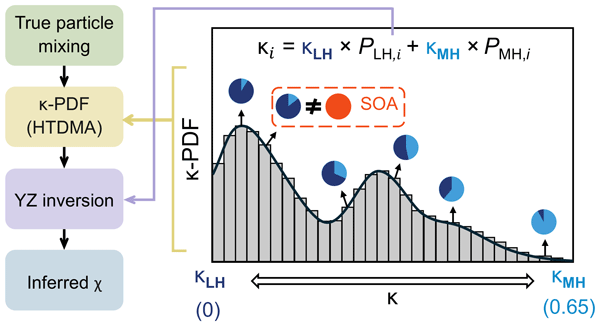
Airborne particles affect clouds, climate, and air quality, but it is difficult to determine how their chemical components are mixed within individual particles. We tested a method that estimates this mixing from water-uptake measurements using detailed computer simulations. The method works well in many cases, but can overestimate particle mixing when moderately water-attracting material exists in separate particle types. We then applied this uncertainty framework to long-term observations.
Xiaotian Xu, Jeffrey H. Curtis, Matthew West, and Nicole Riemer
Atmos. Chem. Phys., 26, 10647–10659, https://doi.org/10.5194/acp-26-10647-2026, https://doi.org/10.5194/acp-26-10647-2026, 2026
Short summary
Short summary
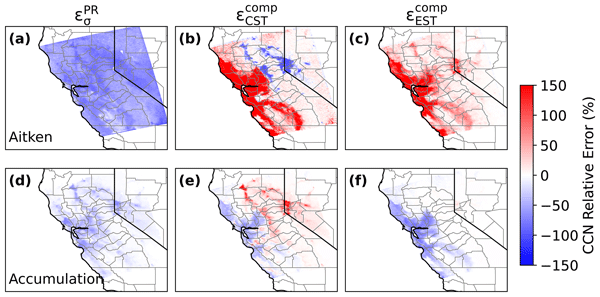
This study examines how common simplifications in atmospheric models affect predictions of particles that form cloud droplets. Using a detailed simulation that tracks individual particles, we compare it with simplified approaches. We find that these simplifications can produce seemingly accurate results because different errors cancel each other. However, this masks incorrect physical processes. Including surfactants effect improves predictions, highlighting a pathway to better climate modeling.
Yicen Liu, Shengqian Zhou, Jian Wang, and Nicole Riemer
EGUsphere, https://doi.org/10.5194/egusphere-2026-4216, https://doi.org/10.5194/egusphere-2026-4216, 2026
Short summary
Short summary
Airborne particles contain different chemicals, and their distribution among particles influences cloud formation and climate. Given limited long-term evidence, we combined measurements from eight locations to examine changes across particle sizes, seasons, and environments. Larger particles were more similar in composition, while smaller particles and those influenced by urban or marine air varied more. The results provide observational benchmarks for improving atmospheric and climate models.
Sylwester Arabas, Agnieszka Żaba, Daria Klimaszewska, Emma C. Ware, Clare E. Singer, Manhal Alhilali, Jason Barr, Daniel G. Partridge, Shin-ichiro Shima, and Robert Wood
EGUsphere, https://doi.org/10.5194/egusphere-2026-3906, https://doi.org/10.5194/egusphere-2026-3906, 2026
This preprint is open for discussion and under review for Geoscientific Model Development (GMD).
Short summary
Short summary
The paper focuses on the use of Python and its package ecosystem for modeling the dynamics of atmospheric aerosol and cloud droplets. We highlight that concise code and high-level abstractions (incl. programmatic expression of physical units) can be used without performance tradeoffs. The paper features two cloud-microphysics classics: an adiabatic parcel model and a Monte-Carlo coagulation solver. The presented code constitutes a single Jupyter notebook that can be executed "in the cloud".
Tim Lüttmer, Sylwester Arabas, and Peter Spichtinger
EGUsphere, https://doi.org/10.5194/egusphere-2026-2217, https://doi.org/10.5194/egusphere-2026-2217, 2026
Short summary
Short summary
Homogeneous freezing describes the spontaneous freezing of supercooled droplets, with the probability depending on temperature, droplet size, and elapsed time. Droplets freeze across a range of temperatures rather than all at once, and faster updrafts and larger droplets lead to freezing at warmer temperatures. Once some droplets freeze, the growing ice crystals deplete the surrounding vapour, causing the remaining droplets to evaporate. This affects the number of ice crystals in the cloud.
Samuel G. Frederick, Matin Mohebalhojeh, Jeffrey H. Curtis, Matthew West, and Nicole Riemer
Atmos. Chem. Phys., 26, 4863–4883, https://doi.org/10.5194/acp-26-4863-2026, https://doi.org/10.5194/acp-26-4863-2026, 2026
Short summary
Short summary
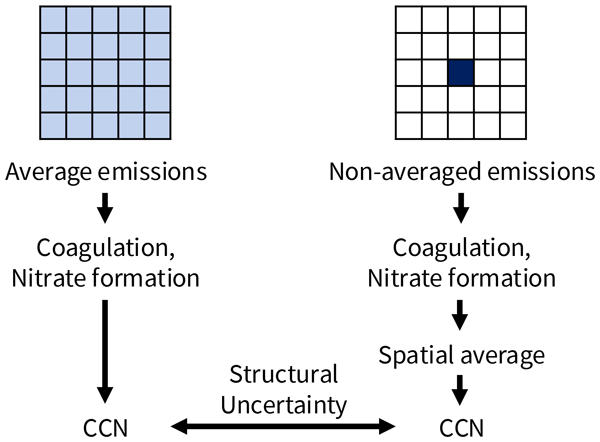
We show with detailed computer simulations that spatial patterns of emissions strongly affect aerosols and their ability to seed clouds. Highly variable emissions can raise cloud-forming particle concentrations in the boundary layer by up to 25 %. Because clouds regulate climate and precipitation, these findings underscore the need to represent realistic emission patterns to improve climate predictions.
Yijia Sun, Ann M. Fridlind, Israel Silber, Nicole Riemer, and Daniel A. Knopf
Geosci. Model Dev., 19, 1581–1617, https://doi.org/10.5194/gmd-19-1581-2026, https://doi.org/10.5194/gmd-19-1581-2026, 2026
Short summary
Short summary
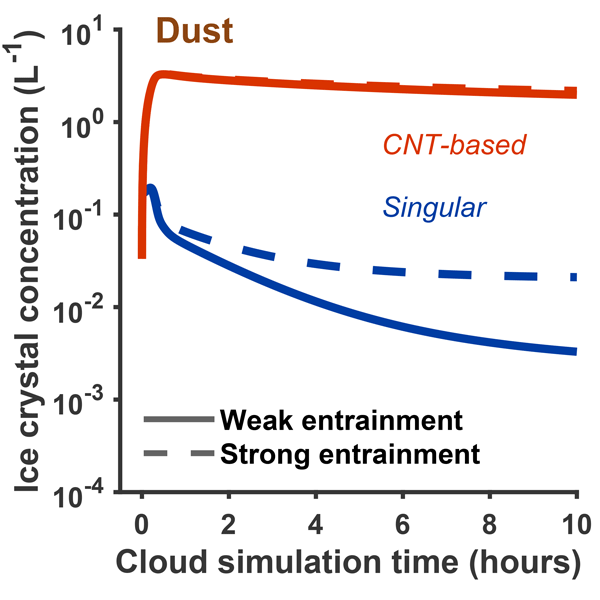
The role of Arctic clouds in the regional climate remains uncertain due to insufficient understanding of the amount of liquid droplets and ice crystals present in these clouds. An aerosol-cloud model is employed to examine the role of different aerosol types and freezing parameterizations on the number of ice crystals. The choice of freezing parameterization significantly changes the number of ice crystals impacting the interpretation of the evolution and warming effect of Arctic clouds.
Oscar H. Díaz-Ibarra, Samuel G. Frederick, Jeffrey H. Curtis, Zachary D'Aquino, Peter A. Bosler, Lekha Patel, Cosmin Safta, Matthew West, and Nicole Riemer
Geosci. Model Dev., 19, 1281–1299, https://doi.org/10.5194/gmd-19-1281-2026, https://doi.org/10.5194/gmd-19-1281-2026, 2026
Short summary
Short summary
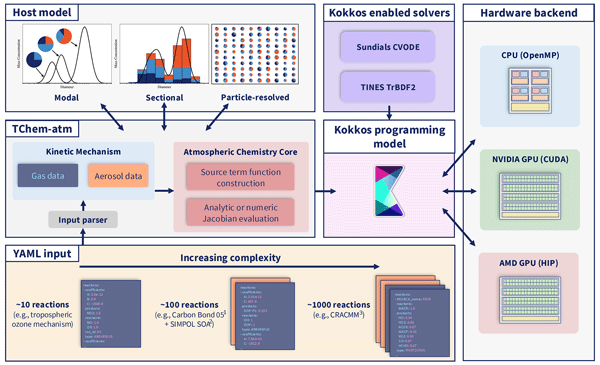
We developed TChem-atm, a new open-source tool for simulating atmospheric chemistry and aerosols. As models become more detailed, traditional methods are too slow. TChem-atm runs on both standard processors and graphics processors, making these simulations faster and more efficient. The tool provides a foundation for next-generation models that improve predictions of air quality and climate.
Cristofer Jimenez, Albert Ansmann, Kevin Ohneiser, Hannes Griesche, Ronny Engelmann, Martin Radenz, Julian Hofer, Dietrich Althausen, Daniel A. Knopf, Sandro Dahlke, Johannes Bühl, Holger Baars, Patric Seifert, and Ulla Wandinger
Atmos. Chem. Phys., 25, 12955–12981, https://doi.org/10.5194/acp-25-12955-2025, https://doi.org/10.5194/acp-25-12955-2025, 2025
Short summary
Short summary
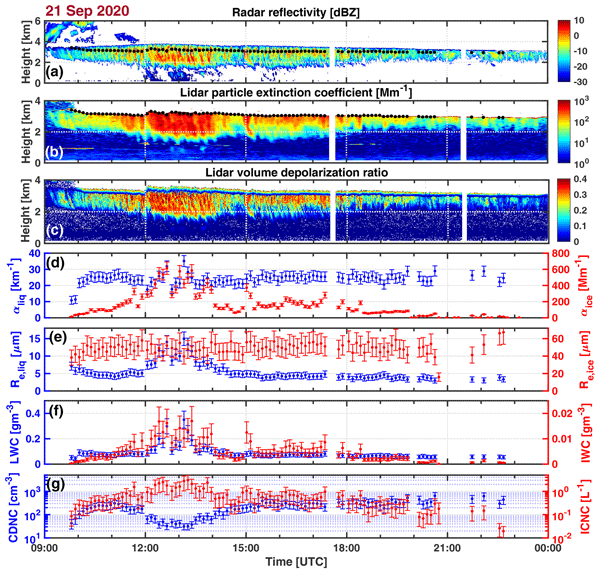
We studied the water and ice phases of Arctic mixed-phase clouds (MPCs) using dual FOV polarization lidar and Doppler radar on board Polarstern during the MOSAiC expedition. Two long-lasting Arctic MPCs and year-round statistics show persistent droplet activation and dominant immersion freezing, indicating well-filled cloud condensation nuclei and ice-nucleating particle reservoirs. These findings help explain MPC longevity and may improve cloud life cycle representation in weather and climate models.
Albert Ansmann, Cristofer Jimenez, Daniel A. Knopf, Johanna Roschke, Johannes Bühl, Kevin Ohneiser, and Ronny Engelmann
Atmos. Chem. Phys., 25, 4867–4884, https://doi.org/10.5194/acp-25-4867-2025, https://doi.org/10.5194/acp-25-4867-2025, 2025
Short summary
Short summary
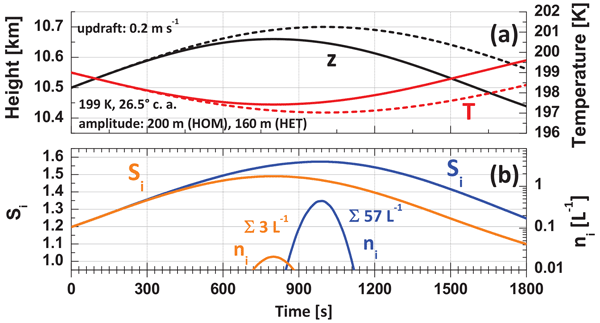
In this study, we focus on the potential impact of wildfire smoke on cirrus formation. Aerosol and cirrus observations with lidar and radar during the MOSAiC (Multidisciplinary drifting Observatory for the Study of Arctic Climate) expedition, presented in the companion paper (Ansmann et al., 2025), are closely linked to comprehensive modeling of ice nucleation in cirrus evolution processes, presented in this article. A clear impact of wildfire smoke on cirrus formation was found.
Albert Ansmann, Cristofer Jimenez, Johanna Roschke, Johannes Bühl, Kevin Ohneiser, Ronny Engelmann, Martin Radenz, Hannes Griesche, Julian Hofer, Dietrich Althausen, Daniel A. Knopf, Sandro Dahlke, Tom Gaudek, Patric Seifert, and Ulla Wandinger
Atmos. Chem. Phys., 25, 4847–4866, https://doi.org/10.5194/acp-25-4847-2025, https://doi.org/10.5194/acp-25-4847-2025, 2025
Short summary
Short summary
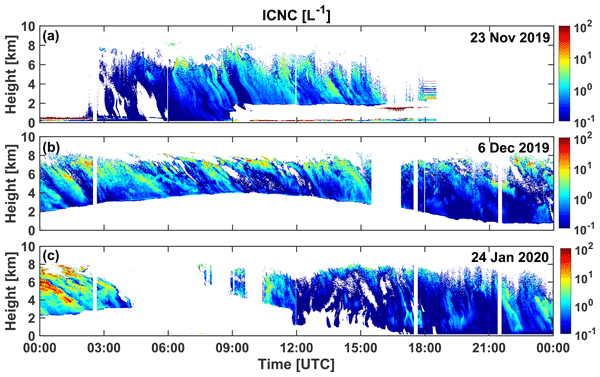
In this study, we focus on the potential impact of wildfire smoke on cirrus formation. For the first time, state-of-the-art aerosol and cirrus observations with lidar and radar, presented in this paper (Part 1 of a series of two articles), are closely linked to the comprehensive modeling of gravity-wave-induced ice nucleation in cirrus evolution processes, presented in a companion paper (Part 2). We found a clear impact of wildfire smoke on cirrus evolution.
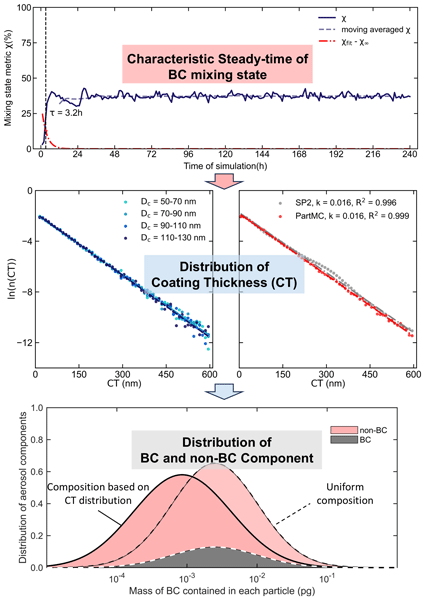
Zhouyang Zhang, Jiandong Wang, Jiaping Wang, Nicole Riemer, Chao Liu, Yuzhi Jin, Zeyuan Tian, Jing Cai, Yueyue Cheng, Ganzhen Chen, Bin Wang, Shuxiao Wang, and Aijun Ding
Atmos. Chem. Phys., 25, 1869–1881, https://doi.org/10.5194/acp-25-1869-2025, https://doi.org/10.5194/acp-25-1869-2025, 2025
Short summary
Short summary
Black carbon (BC) exerts notable warming effects. We use a particle-resolved model to investigate the long-term behavior of the BC mixing state, revealing its compositions, coating thickness distribution, and optical properties all stabilize with a characteristic time of less than 1 d. This study can effectively simplify the description of the BC mixing state, which facilitates the precise assessment of the optical properties of BC aerosols in global and chemical transport models.
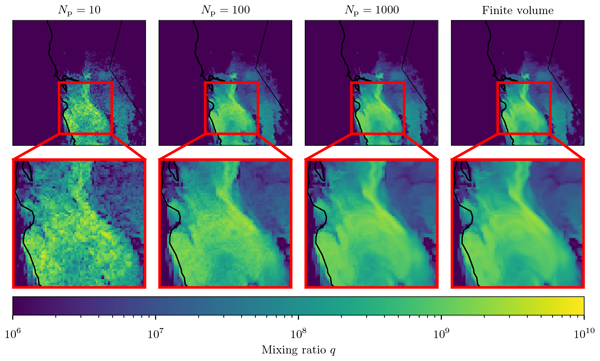
Jeffrey H. Curtis, Nicole Riemer, and Matthew West
Geosci. Model Dev., 17, 8399–8420, https://doi.org/10.5194/gmd-17-8399-2024, https://doi.org/10.5194/gmd-17-8399-2024, 2024
Short summary
Short summary
This paper introduces a numerical method for simulating particle-based aerosol transport in atmospheric models. We detail the various numerical properties of the advection order method and demonstrate its implementation in a 3D weather prediction model (WRF) for the first time. Particle-based techniques improve the accuracy of aerosol size and composition predictions, which are key for aerosol–cloud and aerosol–radiation interactions.
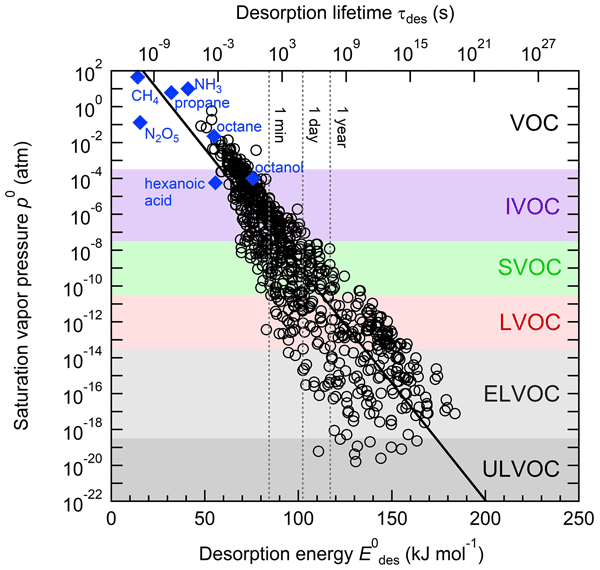
Daniel A. Knopf, Markus Ammann, Thomas Berkemeier, Ulrich Pöschl, and Manabu Shiraiwa
Atmos. Chem. Phys., 24, 3445–3528, https://doi.org/10.5194/acp-24-3445-2024, https://doi.org/10.5194/acp-24-3445-2024, 2024
Short summary
Short summary
The initial step of interfacial and multiphase chemical processes involves adsorption and desorption of gas species. This study demonstrates the role of desorption energy governing the residence time of the gas species at the environmental interface. A parameterization is formulated that enables the prediction of desorption energy based on the molecular weight, polarizability, and oxygen-to-carbon ratio of the desorbing chemical species. Its application to gas–particle interactions is discussed.
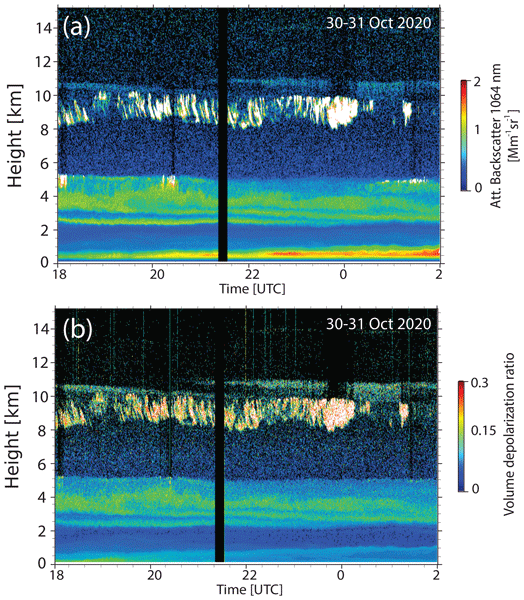
Rodanthi-Elisavet Mamouri, Albert Ansmann, Kevin Ohneiser, Daniel A. Knopf, Argyro Nisantzi, Johannes Bühl, Ronny Engelmann, Annett Skupin, Patric Seifert, Holger Baars, Dragos Ene, Ulla Wandinger, and Diofantos Hadjimitsis
Atmos. Chem. Phys., 23, 14097–14114, https://doi.org/10.5194/acp-23-14097-2023, https://doi.org/10.5194/acp-23-14097-2023, 2023
Short summary
Short summary
For the first time, rather clear evidence is found that wildfire smoke particles can trigger strong cirrus formation. This finding is of importance because intensive and large wildfires may occur increasingly often in the future as climate change proceeds. Based on lidar observations in Cyprus in autumn 2020, we provide detailed insight into the cirrus formation at the tropopause in the presence of aged wildfire smoke (here, 8–9 day old Californian wildfire smoke).
Albert Ansmann, Kevin Ohneiser, Ronny Engelmann, Martin Radenz, Hannes Griesche, Julian Hofer, Dietrich Althausen, Jessie M. Creamean, Matthew C. Boyer, Daniel A. Knopf, Sandro Dahlke, Marion Maturilli, Henriette Gebauer, Johannes Bühl, Cristofer Jimenez, Patric Seifert, and Ulla Wandinger
Atmos. Chem. Phys., 23, 12821–12849, https://doi.org/10.5194/acp-23-12821-2023, https://doi.org/10.5194/acp-23-12821-2023, 2023
Short summary
Short summary
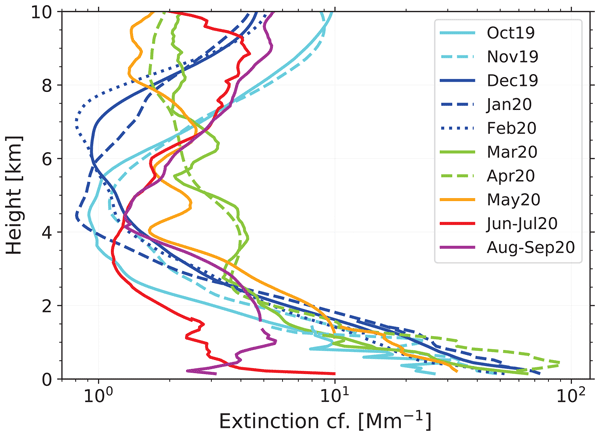
The 1-year MOSAiC (2019–2020) expedition with the German ice breaker Polarstern was the largest polar field campaign ever conducted. The Polarstern, with our lidar aboard, drifted with the pack ice north of 85° N for more than 7 months (October 2019 to mid-May 2020). We measured the full annual cycle of aerosol conditions in terms of aerosol optical and cloud-process-relevant properties. We observed a strong contrast between polluted winter and clean summer aerosol conditions.
Daniel A. Knopf, Peiwen Wang, Benny Wong, Jay M. Tomlin, Daniel P. Veghte, Nurun N. Lata, Swarup China, Alexander Laskin, Ryan C. Moffet, Josephine Y. Aller, Matthew A. Marcus, and Jian Wang
Atmos. Chem. Phys., 23, 8659–8681, https://doi.org/10.5194/acp-23-8659-2023, https://doi.org/10.5194/acp-23-8659-2023, 2023
Short summary
Short summary
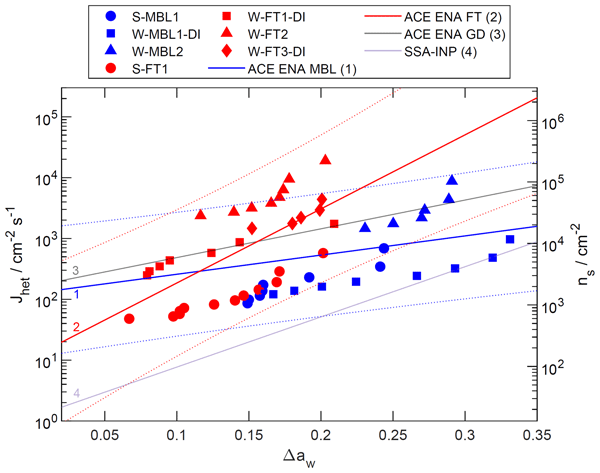
Ambient particle populations and associated ice-nucleating particles (INPs)
were examined from particle samples collected on board aircraft in the marine
boundary layer and free troposphere in the eastern North Atlantic during
summer and winter. Chemical imaging shows distinct differences in the
particle populations seasonally and with sampling altitudes, which are
reflected in the INP types. Freezing parameterizations are derived for
implementation in cloud-resolving and climate models.
Emily de Jong, John Ben Mackay, Oleksii Bulenok, Anna Jaruga, and Sylwester Arabas
Geosci. Model Dev., 16, 4193–4211, https://doi.org/10.5194/gmd-16-4193-2023, https://doi.org/10.5194/gmd-16-4193-2023, 2023
Short summary
Short summary
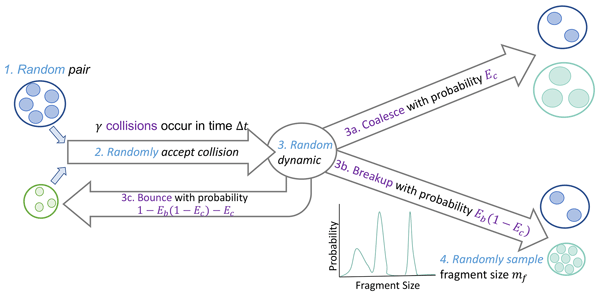
In clouds, collisional breakup occurs when two colliding droplets splinter into new, smaller fragments. Particle-based modeling approaches often do not represent breakup because of the computational demands of creating new droplets. We present a particle-based breakup method that preserves the computational efficiency of these methods. In a series of simple demonstrations, we show that this representation alters cloud processes in reasonable and expected ways.
Sudipta Ghosh, Sagnik Dey, Sushant Das, Nicole Riemer, Graziano Giuliani, Dilip Ganguly, Chandra Venkataraman, Filippo Giorgi, Sachchida Nand Tripathi, Srikanthan Ramachandran, Thazhathakal Ayyappen Rajesh, Harish Gadhavi, and Atul Kumar Srivastava
Geosci. Model Dev., 16, 1–15, https://doi.org/10.5194/gmd-16-1-2023, https://doi.org/10.5194/gmd-16-1-2023, 2023
Short summary
Short summary
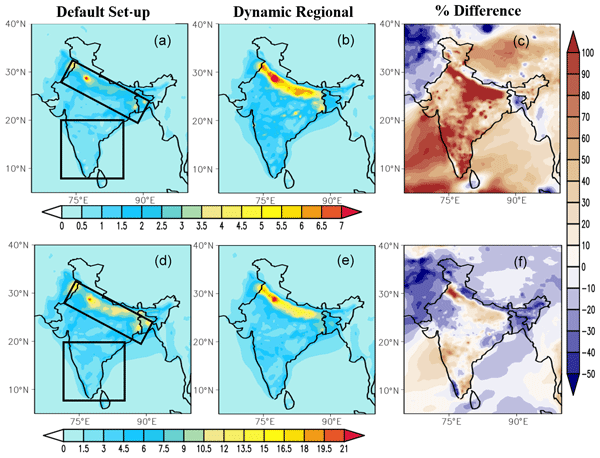
Accurate representation of aerosols in climate models is critical for minimizing the uncertainty in climate projections. Here, we implement region-specific emission fluxes and a more accurate scheme for carbonaceous aerosol ageing processes in a regional climate model (RegCM4) and show that it improves model performance significantly against in situ, reanalysis, and satellite data over the Indian subcontinent. We recommend improving the model performance before using them for climate studies.
Wenxiu Zhang, Di Liu, Hanqin Tian, Naiqin Pan, Ruqi Yang, Wenhan Tang, Jia Yang, Fei Lu, Buddhi Dayananda, Han Mei, Siyuan Wang, and Hao Shi
Earth Syst. Sci. Data Discuss., https://doi.org/10.5194/essd-2022-428, https://doi.org/10.5194/essd-2022-428, 2022
Manuscript not accepted for further review
Short summary
Short summary
High temporal resolution surface ozone concentration data is still lacking in China, so we used deep learning to generate hourly surface ozone data (HrSOD) during 2005–2020 across China. HrSOD showed that surface O3 in China tended to increase from 2016 to 2019, despite a decrease in 2020. HrSOD had high spatial and temporal accuracies, long time ranges and high temporal resolution, enabling it to be easily converted to various evaluation indicators for ecosystem and human health assessments.

Albert Ansmann, Kevin Ohneiser, Alexandra Chudnovsky, Daniel A. Knopf, Edwin W. Eloranta, Diego Villanueva, Patric Seifert, Martin Radenz, Boris Barja, Félix Zamorano, Cristofer Jimenez, Ronny Engelmann, Holger Baars, Hannes Griesche, Julian Hofer, Dietrich Althausen, and Ulla Wandinger
Atmos. Chem. Phys., 22, 11701–11726, https://doi.org/10.5194/acp-22-11701-2022, https://doi.org/10.5194/acp-22-11701-2022, 2022
Short summary
Short summary
For the first time we present a systematic study on the impact of wildfire smoke on ozone depletion in the Arctic (2020) and Antarctic stratosphere (2020, 2021). Two major fire events in Siberia and Australia were responsible for the observed record-breaking stratospheric smoke pollution. Our analyses were based on lidar observations of smoke parameters (Polarstern, Punta Arenas) and NDACC Arctic and Antarctic ozone profiles as well as on Antarctic OMI satellite observations of column ozone.
Yu Yao, Jeffrey H. Curtis, Joseph Ching, Zhonghua Zheng, and Nicole Riemer
Atmos. Chem. Phys., 22, 9265–9282, https://doi.org/10.5194/acp-22-9265-2022, https://doi.org/10.5194/acp-22-9265-2022, 2022
Short summary
Short summary
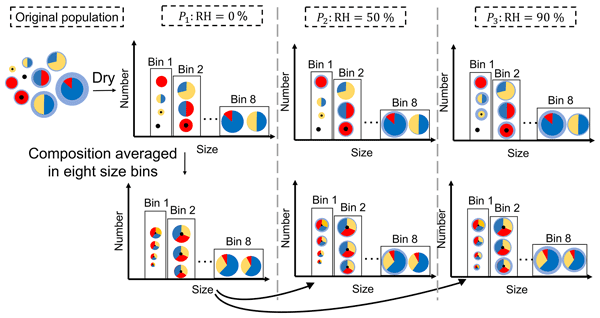
Investigating the impacts of aerosol mixing state on aerosol optical properties has a long history from both the modeling and experimental perspective. In this study, we used particle-resolved simulations as a benchmark to determine the error in optical properties when using simplified aerosol representations. We found that errors in single scattering albedo due to the internal mixture assumptions can have substantial effects on calculating aerosol direct radiative forcing.
Kevin Ohneiser, Albert Ansmann, Bernd Kaifler, Alexandra Chudnovsky, Boris Barja, Daniel A. Knopf, Natalie Kaifler, Holger Baars, Patric Seifert, Diego Villanueva, Cristofer Jimenez, Martin Radenz, Ronny Engelmann, Igor Veselovskii, and Félix Zamorano
Atmos. Chem. Phys., 22, 7417–7442, https://doi.org/10.5194/acp-22-7417-2022, https://doi.org/10.5194/acp-22-7417-2022, 2022
Short summary
Short summary
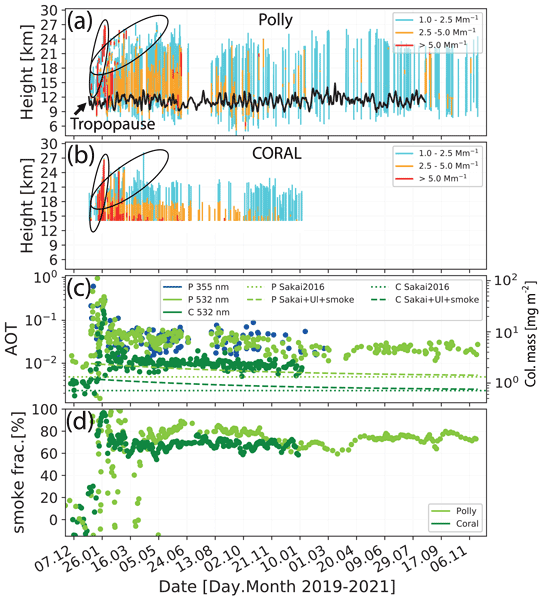
We present and discuss 2 years of long-term lidar observations of the largest stratospheric perturbation by wildfire smoke ever observed. The smoke originated from the record-breaking Australian fires in 2019–2020 and affects climate conditions and even the ozone layer in the Southern Hemisphere. The obvious link between dense smoke occurrence in the stratosphere and strong ozone depletion found in the Arctic and in the Antarctic in 2020 can be regarded as a new aspect of climate change.

Michael A. Olesik, Jakub Banaśkiewicz, Piotr Bartman, Manuel Baumgartner, Simon Unterstrasser, and Sylwester Arabas
Geosci. Model Dev., 15, 3879–3899, https://doi.org/10.5194/gmd-15-3879-2022, https://doi.org/10.5194/gmd-15-3879-2022, 2022
Short summary
Short summary
In systems such as atmospheric clouds, droplets undergo growth through condensation of vapor. The broadness of the resultant size spectrum of droplets influences precipitation likelihood and the radiative properties of clouds. One of the inherent limitations of simulations of the problem is the so-called numerical diffusion causing overestimation of the spectrum width, hence the term numerical broadening. In the paper, we take a closer look at one of the algorithms used in this context: MPDATA.
Matthew L. Dawson, Christian Guzman, Jeffrey H. Curtis, Mario Acosta, Shupeng Zhu, Donald Dabdub, Andrew Conley, Matthew West, Nicole Riemer, and Oriol Jorba
Geosci. Model Dev., 15, 3663–3689, https://doi.org/10.5194/gmd-15-3663-2022, https://doi.org/10.5194/gmd-15-3663-2022, 2022
Short summary
Short summary
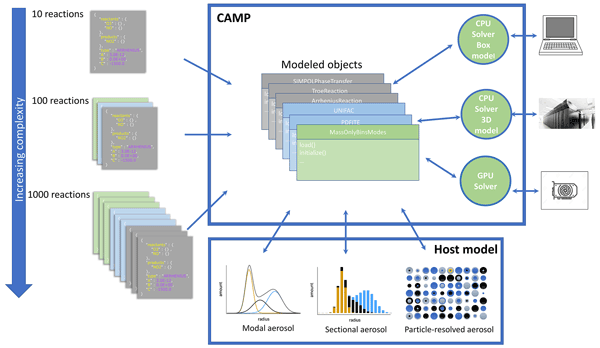
Progress in identifying complex, mixed-phase physicochemical processes has resulted in an advanced understanding of the evolution of atmospheric systems but has also introduced a level of complexity that few atmospheric models were designed to handle. We present a flexible treatment for multiphase chemical processes for models of diverse scale, from box up to global models. This enables users to build a customized multiphase mechanism that is accessible to a much wider community.
Daniel A. Knopf, Joseph C. Charnawskas, Peiwen Wang, Benny Wong, Jay M. Tomlin, Kevin A. Jankowski, Matthew Fraund, Daniel P. Veghte, Swarup China, Alexander Laskin, Ryan C. Moffet, Mary K. Gilles, Josephine Y. Aller, Matthew A. Marcus, Shira Raveh-Rubin, and Jian Wang
Atmos. Chem. Phys., 22, 5377–5398, https://doi.org/10.5194/acp-22-5377-2022, https://doi.org/10.5194/acp-22-5377-2022, 2022
Short summary
Short summary
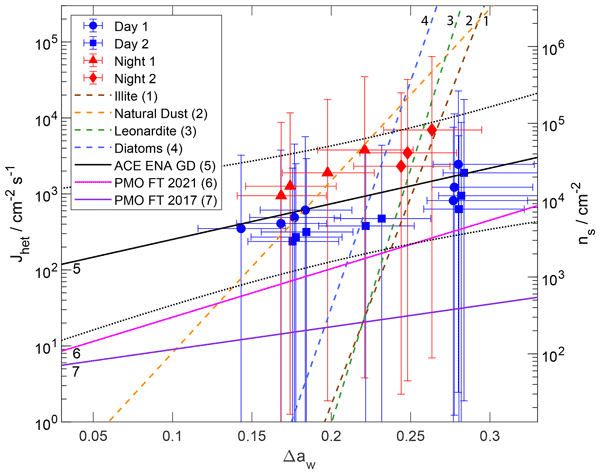
Marine boundary layer aerosols collected in the remote region of the eastern North Atlantic induce immersion freezing and deposition ice nucleation under typical mixed-phase and cirrus cloud conditions. Corresponding ice nucleation parameterizations for model applications have been derived. Chemical imaging of ambient aerosol and ice-nucleating particles demonstrates that the latter is dominated by sea salt and organics while also representing a major particle type in the particle population.
Jay M. Tomlin, Kevin A. Jankowski, Daniel P. Veghte, Swarup China, Peiwen Wang, Matthew Fraund, Johannes Weis, Guangjie Zheng, Yang Wang, Felipe Rivera-Adorno, Shira Raveh-Rubin, Daniel A. Knopf, Jian Wang, Mary K. Gilles, Ryan C. Moffet, and Alexander Laskin
Atmos. Chem. Phys., 21, 18123–18146, https://doi.org/10.5194/acp-21-18123-2021, https://doi.org/10.5194/acp-21-18123-2021, 2021
Short summary
Short summary
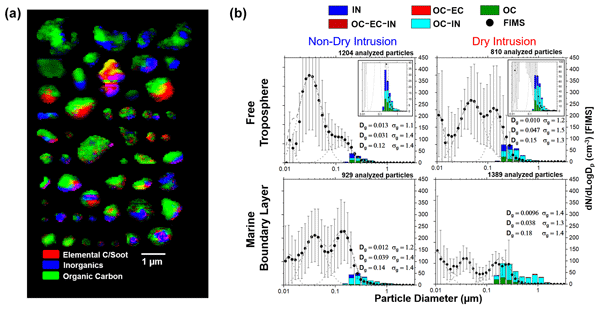
Analysis of individual atmospheric particles shows that aerosol transported from North America during meteorological dry intrusion episodes may have a substantial impact on the mixing state and particle-type population over the mid-Atlantic, as organic contribution and particle-type diversity are significantly enhanced during these periods. These observations need to be considered in current atmospheric models.
Zhonghua Zheng, Matthew West, Lei Zhao, Po-Lun Ma, Xiaohong Liu, and Nicole Riemer
Atmos. Chem. Phys., 21, 17727–17741, https://doi.org/10.5194/acp-21-17727-2021, https://doi.org/10.5194/acp-21-17727-2021, 2021
Short summary
Short summary
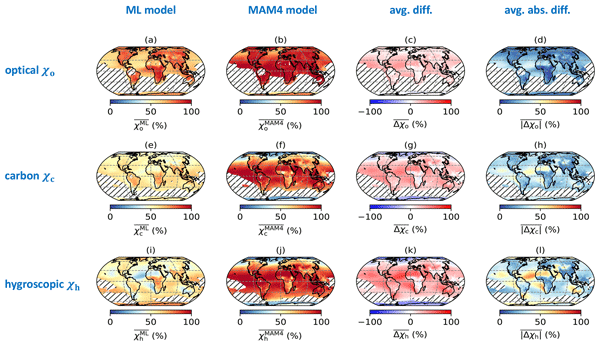
Aerosol mixing state is an important emergent property that affects aerosol radiative forcing and aerosol–cloud interactions, but it has not been easy to constrain this property globally. We present a framework for evaluating the error in aerosol mixing state induced by aerosol representation assumptions, which is one of the important contributors to structural uncertainty in aerosol models. Our study provides insights into potential improvements to model process representation for aerosols.
Daniel A. Knopf and Markus Ammann
Atmos. Chem. Phys., 21, 15725–15753, https://doi.org/10.5194/acp-21-15725-2021, https://doi.org/10.5194/acp-21-15725-2021, 2021
Short summary
Short summary
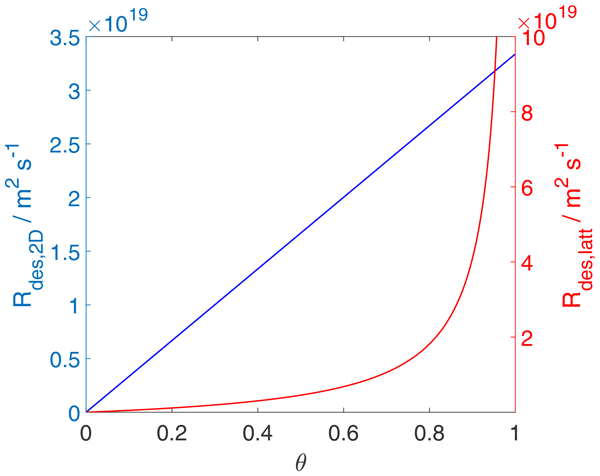
Adsorption on and desorption of gas molecules from solid or liquid surfaces or interfaces represent the initial interaction of gas-to-condensed-phase processes that can define the physicochemical evolution of the condensed phase. We apply a thermodynamic and microscopic treatment of these multiphase processes to evaluate how adsorption and desorption rates and surface accommodation depend on the choice of adsorption model and standard states with implications for desorption energy and lifetimes.
Cited articles
Abade, G. C. and Albuquerque, D. G.: Persistent mixed-phase states in adiabatic cloud parcels under idealised conditions, Q. J. Roy. Meteor. Soc., 150, 3450–3474, https://doi.org/10.1002/qj.4775, 2024. a
Alpert, P. A. and Knopf, D. A.: Analysis of isothermal and cooling-rate-dependent immersion freezing by a unifying stochastic ice nucleation model, Atmos. Chem. Phys., 16, 2083–2107, https://doi.org/10.5194/acp-16-2083-2016, 2016. a, b, c
Alpert, P. A., Kilthau, W. P., O’Brien, R. E., Moffet, R. C., Gilles, M. K., Wang, B., Laskin, A., Aller, J. Y., and Knopf, D. A.: Ice-nucleating agents in sea spray aerosol identified and quantified with a holistic multimodal freezing model, Science Advances, 8, eabq6842, https://doi.org/10.1126/sciadv.abq6842, 2022. a
Ansmann, A., Tesche, M., Althausen, D., Müller, D., Seifert, P., Freudenthaler, V., Heese, B., Wiegner, M., Pisani, G., Knippertz, P., and Dubovik, O.: Influence of Saharan dust on cloud glaciation in southern Morocco during the Saharan Mineral Dust Experiment, J. Geophys. Res.-Atmos., 113, D04210, https://doi.org/10.1029/2007JD008785, 2008. a
Arabas, S., Curtis, J. H., Silber, I., Fridlind, A., Knopf, D. A., West, M., and Riemer, N.: Immersion freezing in particle-based aerosol-cloud microphysics: a probabilistic perspective on singular and time-dependent models, J. Adv. Model. Earth Sy., https://doi.org/10.1029/2024MS004770, 2025. a, b
Baustian, K. J., Cziczo, D. J., Wise, M. E., Pratt, K. A., Kulkarni, G., Hallar, A. G., and Tolbert, M. A.: Importance of aerosol composition, mixing state, and morphology for heterogeneous ice nucleation: A combined field and laboratory approach, J. Geophys. Res.-Atmos., 117, https://doi.org/10.1029/2011JD016784, 2012. a
Berkemeier, T., Ammann, M., Mentel, T. F., Pöschl, U., and Shiraiwa, M.: Organic nitrate contribution to new particle formation and growth in secondary organic aerosols from α-pinene ozonolysis, Environ. Sci. Technol., 50, 6334–6342, https://doi.org/10.1021/acs.est.6b00961, 2016. a
Bi, Y., Cabriolu, R., and Li, T.: Heterogeneous ice nucleation controlled by the coupling of surface crystallinity and surface hydrophilicity, J. Phys. Chem. C, 120, 1507–1514, https://doi.org/10.1021/acs.jpcc.5b09740, 2016. a
Broadley, S. L., Murray, B. J., Herbert, R. J., Atkinson, J. D., Dobbie, S., Malkin, T. L., Condliffe, E., and Neve, L.: Immersion mode heterogeneous ice nucleation by an illite rich powder representative of atmospheric mineral dust, Atmos. Chem. Phys., 12, 287–307, https://doi.org/10.5194/acp-12-287-2012, 2012. a
Charnawskas, J. C., Alpert, P. A., Lambe, A. T., Berkemeier, T., O’Brien, R. E., Massoli, P., Onasch, T. B., Shiraiwa, M., Moffet, R. C., Gilles, M. K., Davidovits, P., Worsnop, D. R., and Knopf, D. A.: Condensed-phase biogenic–anthropogenic interactions with implications for cold cloud formation, Faraday Discuss., 200, 165–194, https://doi.org/10.1039/C7FD00010C, 2017. a
Ching, J., Riemer, N., and West, M.: Impacts of black carbon mixing state on black carbon nucleation scavenging: Insights from a particle-resolved model, J. Geophys. Res.-Atmos., 117, https://doi.org/10.1029/2012JD018269, 2012. a
Consiglio, A. N., Ouyang, Y., Powell-Palm, M. J., and Rubinsky, B.: An extreme value statistics model of heterogeneous ice nucleation for quantifying the stability of supercooled aqueous systems, J. Chem. Phys., 159, https://doi.org/10.1063/5.0155494, 2023. a, b
Curtis, J. H., Michelotti, M., Riemer, N., Heath, M. T., and West, M.: Accelerated simulation of stochastic particle removal processes in particle-resolved aerosol models, J. Comput. Phys., 322, 21–32, https://doi.org/10.1016/j.jcp.2016.06.029, 2016. a, b, c, d
Curtis, J. H., Riemer, N., and West, M.: A single-column particle-resolved model for simulating the vertical distribution of aerosol mixing state: WRF-PartMC-MOSAIC-SCM v1.0, Geosci. Model Dev., 10, 4057–4079, https://doi.org/10.5194/gmd-10-4057-2017, 2017. a
D'Aquino, Z., Arabas, S., Curtis, J., Vaishnav, A., Ware, E., Adamus, G., Tang, W., Riemer, N., and West, M.: PyPartMC (v2.0.2), Zenodo [code], https://doi.org/10.5281/zenodo.19440879, 2026. a
Deng, Z. Z., Zhao, C. S., Ma, N., Ran, L., Zhou, G. Q., Lu, D. R., and Zhou, X. J.: An examination of parameterizations for the CCN number concentration based on in situ measurements of aerosol activation properties in the North China Plain, Atmos. Chem. Phys., 13, 6227–6237, https://doi.org/10.5194/acp-13-6227-2013, 2013. a
DeVille, L., Riemer, N., and West, M.: Convergence of a generalized Weighted Flow Algorithm for stochastic particle coagulation, Journal of Computational Dynamics, 6, 69–94, https://doi.org/10.3934/jcd.2019003, 2019. a
DeVille, R. L., Riemer, N., and West, M.: Weighted Flow Algorithms (WFA) for stochastic particle coagulation, J. Comput. Phys., 230, 8427–8451, https://doi.org/10.1016/j.jcp.2011.07.027, 2011. a
Diehl, K. and Mitra, S.: A laboratory study of the effects of a kerosene-burner exhaust on ice nucleation and the evaporation rate of ice crystals, Atmos. Environ., 32, 3145–3151, https://doi.org/10.1016/S1352-2310(97)00467-6, 1998. a, b
Fitzner, M., Sosso, G. C., Cox, S. J., and Michaelides, A.: The many faces of heterogeneous ice nucleation: Interplay between surface morphology and hydrophobicity, J. Am. Chem. Soc., 137, 13658–13669, https://doi.org/10.1021/jacs.5b08748, 2015. a, b
Fletcher, N. H.: Size effect in heterogeneous nucleation, J. Chem. Phys., 29, 572–576, https://doi.org/10.1063/1.1744540, 1958. a, b
Fletcher, N. H.: On ice-crystal production by aerosol particles, J. Atmos. Sci., 16, 173–180, https://doi.org/10.1175/1520-0469(1959)016<0173:OICPBA>2.0.CO;2, 1959. a, b
Fletcher, N. H.: Surface structure of water and ice, Philos. Mag., 7, 255–269, https://doi.org/10.1080/14786436208211860, 1962. a, b
Hodshire, A. L., Akherati, A., Alvarado, M. J., Brown-Steiner, B., Jathar, S. H., Jimenez, J. L., Kreidenweis, S. M., Lonsdale, C. R., Onasch, T. B., Ortega, A. M., and Pierce, J. R.: Aging effects on biomass burning aerosol mass and composition: A critical review of field and laboratory studies, Environ. Sci. Technol., 53, 10007–10022, https://doi.org/10.1021/acs.est.9b02588, 2019. a
Hoose, C. and Möhler, O.: Heterogeneous ice nucleation on atmospheric aerosols: a review of results from laboratory experiments, Atmos. Chem. Phys., 12, 9817–9854, https://doi.org/10.5194/acp-12-9817-2012, 2012. a, b
Hughes, M., Kodros, J. K., Pierce, J. R., West, M., and Riemer, N.: Machine learning to predict the global distribution of aerosol mixing state metrics, Atmosphere-Basel, 9, 15, https://doi.org/10.3390/atmos9010015, 2018. a
Joghataei, M., Ostovari, F., Atabakhsh, S., and Tobeiha, N.: Heterogeneous ice nucleation by Graphene nanoparticles, Sci. Rep.-UK, 10, 9723, https://doi.org/10.1038/s41598-020-66714-2, 2020. a
Kaiser, J. C., Riemer, N., and Knopf, D. A.: Detailed heterogeneous oxidation of soot surfaces in a particle-resolved aerosol model, Atmos. Chem. Phys., 11, 4505–4520, https://doi.org/10.5194/acp-11-4505-2011, 2011. a
Kanji, Z. A., Ladino, L. A., Wex, H., Boose, Y., Burkert-Kohn, M., Cziczo, D. J., and Krämer, M.: Overview of ice nucleating particles, Meteor. Mon., 58, 1–1, https://doi.org/10.1175/AMSMONOGRAPHS-D-16-0006.1, 2017. a, b, c
Kiselev, A., Bachmann, F., Pedevilla, P., Cox, S. J., Michaelides, A., Gerthsen, D., and Leisner, T.: Active sites in heterogeneous ice nucleation – the example of K-rich feldspars, Science, 355, 367–371, https://doi.org/10.1126/science.aai8034, 2017. a
Knopf, D. A., Barry, K. R., Brubaker, T. A., Jahl, L. G., Jankowski, K. A., Li, J., Lu, Y., Monroe, L. W., Moore, K. A., Rivera-Adorno, F. A., Sauceda, K. A., Shi, Y., Tomlin, J. M., Vepuri, H. S. K., Wang, P., Lata, N. N., Levin, E. J. T., Creamean, J. M., Hill, T. C. J., China, S., Alpert, P. A., Moffet, R. C., Hiranuma, N., Sullivan, R. C., Fridlind, A. M., West, M., Riemer, N., Laskin, A., DeMott, P. J., and Liu, X.: Aerosol–ice formation closure: a Southern Great Plains field campaign, B. Am. Meteorol. Soc., 102, E1952–E1971, https://doi.org/10.1175/BAMS-D-20-0151.1, 2021. a
Knopf, D. A. and Alpert, P. A.: Atmospheric ice nucleation, Nature Reviews Physics, 5, 203–217, https://doi.org/10.1038/s42254-023-00570-7, 2023. a, b, c
Knopf, D. A., Alpert, P. A., Wang, B., O'Brien, R. E., Kelly, S. T., Laskin, A., Gilles, M. K., and Moffet, R. C.: Microspectroscopic imaging and characterization of individually identified ice nucleating particles from a case field study, J. Geophys. Res.-Atmos., 119, 10–365, https://doi.org/10.1002/2014JD021866, 2014. a, b
Knopf, D. A., Alpert, P. A., Zipori, A., Reicher, N., and Rudich, Y.: Stochastic nucleation processes and substrate abundance explain time-dependent freezing in supercooled droplets, npj Climate and Atmospheric Science, 3, 2, https://doi.org/10.1038/s41612-020-0106-4, 2020. a
Knopf, D. A., Wang, P., Wong, B., Tomlin, J. M., Veghte, D. P., Lata, N. N., China, S., Laskin, A., Moffet, R. C., Aller, J. Y., Marcus, M. A., and Wang, J.: Physicochemical characterization of free troposphere and marine boundary layer ice-nucleating particles collected by aircraft in the eastern North Atlantic, Atmos. Chem. Phys., 23, 8659–8681, https://doi.org/10.5194/acp-23-8659-2023, 2023. a
Koop, T., Luo, B., Biermann, U. M., Crutzen, P. J., and Peter, T.: Freezing of
Koop, T., Luo, B., Tsias, A., and Peter, T.: Water activity as the determinant for homogeneous ice nucleation in aqueous solutions, Nature, 406, 611–614, https://doi.org/10.1038/35020537, 2000. a, b
Laskin, A., Gilles, M. K., Knopf, D. A., Wang, B., and China, S.: Progress in the analysis of complex atmospheric particles, Annu. Rev. Anal. Chem., 9, 117–143, https://doi.org/10.1146/annurev-anchem-071015-041521, 2016. a, b
Laskin, A., Moffet, R. C., and Gilles, M. K.: Chemical imaging of atmospheric particles, Accounts Chem. Res., 52, 3419–3431, https://doi.org/10.1021/acs.accounts.9b00396, 2019. a
Lata, N. N., Zhang, B., Schum, S., Mazzoleni, L., Brimberry, R., Marcus, M. A., Cantrell, W. H., Fialho, P., Mazzoleni, C., and China, S.: Aerosol composition, mixing state, and phase state of free tropospheric particles and their role in ice cloud formation, ACS Earth and Space Chemistry, 5, 3499–3510, https://doi.org/10.1021/acsearthspacechem.1c00315, 2021. a, b
Leonard, J. and Im, J. S.: Modelling solid nucleation and growth in supercooled liquid, MRS Online Proceedings Library (OPL), 580, 233, https://doi.org/10.1557/PROC-580-233, 1999. a, b
Lesins, G., Chylek, P., and Lohmann, U.: A study of internal and external mixing scenarios and its effect on aerosol optical properties and direct radiative forcing, J. Geophys. Res.-Atmos., 107, AAC-5, https://doi.org/10.1029/2001JD000973, 2002. a
Liu, L. and Mishchenko, M.: Scattering and radiative properties of morphologically complex carbonaceous aerosols: A systematic modeling study, Remote Sens.-Basel, 10, 1634, https://doi.org/10.3390/rs10101634, 2018. a
Lohmann, U.: Possible aerosol effects on ice clouds via contact nucleation, J. Atmos. Sci., 59, 647–656, https://doi.org/10.1175/1520-0469(2001)059<0647:PAEOIC>2.0.CO;2, 2002. a
McCoy, D. T., Hartmann, D. L., and Grosvenor, D. P.: Observed Southern Ocean cloud properties and shortwave reflection. Part I: Calculation of SW flux from observed cloud properties, J. Climate, 27, 8836–8857, https://doi.org/10.1175/JCLI-D-14-00287.1, 2014a. a
McCoy, D. T., Hartmann, D. L., and Grosvenor, D. P.: Observed Southern Ocean cloud properties and shortwave reflection. Part II: Phase changes and low cloud feedback, J. Climate, 27, 8858–8868, https://doi.org/10.1175/JCLI-D-14-00288.1, 2014b. a
McCoy, D. T., Tan, I., Hartmann, D. L., Zelinka, M. D., and Storelvmo, T.: On the relationships among cloud cover, mixed-phase partitioning, and planetary albedo in GCMs, J. Adv. Model. Earth Sy., 8, 650–668, https://doi.org/10.1002/2015MS000589, 2016. a
Michelotti, M., Heath, M. T., and West, M.: Binning for efficient stochastic multiscale particle simulations, Multiscale Model. Sim., 11, 1071–1096, https://doi.org/10.1137/130908038, 2013. a, b
Möhler, O., Benz, S., Saathoff, H., Schnaiter, M., Wagner, R., Schneider, J., Walter, S., Ebert, V., and Wagner, S.: The effect of organic coating on the heterogeneous ice nucleation efficiency of mineral dust aerosols, Environ. Res. Lett., 3, 025007, https://doi.org/10.1088/1748-9326/3/2/025007, 2008. a, b
Murphy, D. and Thomson, D.: Chemical composition of single aerosol particles at Idaho Hill: Negative ion measurements, J. Geophys. Res.-Atmos., 102, 6353–6368, https://doi.org/10.1029/96JD00859, 1997. a
Murray, B., O'Sullivan, D., Atkinson, J., and Webb, M.: Ice nucleation by particles immersed in supercooled cloud droplets, Chem. Soc. Rev., 41, 6519–6554, https://doi.org/10.1039/C2CS35200A, 2012. a
Murray, B. J., Carslaw, K. S., and Field, P. R.: Opinion: Cloud-phase climate feedback and the importance of ice-nucleating particles, Atmos. Chem. Phys., 21, 665–679, https://doi.org/10.5194/acp-21-665-2021, 2021. a
Niedermeier, D., Shaw, R. A., Hartmann, S., Wex, H., Clauss, T., Voigtländer, J., and Stratmann, F.: Heterogeneous ice nucleation: exploring the transition from stochastic to singular freezing behavior, Atmos. Chem. Phys., 11, 8767–8775, https://doi.org/10.5194/acp-11-8767-2011, 2011. a, b
Niedermeier, D., Ervens, B., Clauss, T., Voigtländer, J., Wex, H., Hartmann, S., and Stratmann, F.: A computationally efficient description of heterogeneous freezing: A simplified version of the Soccer ball model, Geophys. Res. Lett., 41, 736–741, https://doi.org/10.1002/2013GL058684, 2014. a
Niedermeier, D., Augustin-Bauditz, S., Hartmann, S., Wex, H., Ignatius, K., and Stratmann, F.: Can we define an asymptotic value for the ice active surface site density for heterogeneous ice nucleation?, J. Geophys. Res.-Atmos., 120, 5036–5046, https://doi.org/10.1002/2014JD022814, 2015. a
Niemand, M., Möhler, O., Vogel, B., Vogel, H., Hoose, C., Connolly, P., Klein, H., Bingemer, H., DeMott, P., Skrotzki, J., and Leisner, T.: A particle-surface-area-based parameterization of immersion freezing on desert dust particles, J. Atmos. Sci., 69, 3077–3092, https://doi.org/10.1175/JAS-D-11-0249.1, 2012. a
Petters, M. D. and Kreidenweis, S. M.: A single parameter representation of hygroscopic growth and cloud condensation nucleus activity, Atmos. Chem. Phys., 7, 1961–1971, https://doi.org/10.5194/acp-7-1961-2007, 2007. a
Phillips, V. T., DeMott, P. J., and Andronache, C.: An empirical parameterization of heterogeneous ice nucleation for multiple chemical species of aerosol, J. Atmos. Sci., 65, 2757–2783, https://doi.org/10.1175/2007JAS2546.1, 2008. a, b
Rejano, F., Casans, A., Via, M., Casquero-Vera, J. A., Castillo, S., Lyamani, H., Cazorla, A., Andrews, E., Pérez-Ramírez, D., Alastuey, A., Gómez-Moreno, F. J., Alados-Arboledas, L., Olmo, F. J., and Titos, G.: CCN estimations at a high-altitude remote site: role of organic aerosol variability and hygroscopicity, Atmos. Chem. Phys., 24, 13865–13888, https://doi.org/10.5194/acp-24-13865-2024, 2024. a
Ren, J., Zhang, F., Wang, Y., Collins, D., Fan, X., Jin, X., Xu, W., Sun, Y., Cribb, M., and Li, Z.: Using different assumptions of aerosol mixing state and chemical composition to predict CCN concentrations based on field measurements in urban Beijing, Atmos. Chem. Phys., 18, 6907–6921, https://doi.org/10.5194/acp-18-6907-2018, 2018. a
Riemer, N., West, M., Zaveri, R. A., and Easter, R. C.: Simulating the evolution of soot mixing state with a particle-resolved aerosol model, J. Geophys. Res.-Atmos., 114, https://doi.org/10.1029/2008JD011073, 2009. a, b, c
Rudich, Y.: Laboratory perspectives on the chemical transformations of organic matter in atmospheric particles, Chem. Rev., 103, 5097–5124, https://doi.org/10.1021/cr020508f, 2003. a
Shima, S., Sato, Y., Hashimoto, A., and Misumi, R.: Predicting the morphology of ice particles in deep convection using the super-droplet method: development and evaluation of SCALE-SDM 0.2.5-2.2.0, -2.2.1, and -2.2.2, Geosci. Model Dev., 13, 4107–4157, https://doi.org/10.5194/gmd-13-4107-2020, 2020. a
Spichtinger, P. and Cziczo, D. J.: Impact of heterogeneous ice nuclei on homogeneous freezing events in cirrus clouds, J. Geophys. Res.-Atmos., 115, https://doi.org/10.1029/2009JD012168, 2010. a
Stevens, R. and Dastoor, A.: A review of the representation of aerosol mixing state in atmospheric models, Atmosphere-Basel, 10, 168, https://doi.org/10.3390/atmos10040168, 2019. a
Storelvmo, T.: Aerosol effects on climate via mixed-phase and ice clouds, Annu. Rev. Earth Pl. Sc., 45, 199–222, https://doi.org/10.1146/annurev-earth-060115-012240, 2017. a
Sullivan, R. C., Petters, M. D., DeMott, P. J., Kreidenweis, S. M., Wex, H., Niedermeier, D., Hartmann, S., Clauss, T., Stratmann, F., Reitz, P., Schneider, J., and Sierau, B.: Irreversible loss of ice nucleation active sites in mineral dust particles caused by sulphuric acid condensation, Atmos. Chem. Phys., 10, 11471–11487, https://doi.org/10.5194/acp-10-11471-2010, 2010. a
Tang, W., Arabas, S., Curtis, J. H., Knopf, D. A., West, M., and Riemer, N.: Data for: The impact of aerosol mixing state on immersion freezing: Insights from classical nucleation theory and particle-resolved simulations, University of Illinois Urbana-Champaign [data set], https://doi.org/10.13012/B2IDB-6849781_V2, 2026. a
Tian, J., Riemer, N., West, M., Pfaffenberger, L., Schlager, H., and Petzold, A.: Modeling the evolution of aerosol particles in a ship plume using PartMC-MOSAIC, Atmos. Chem. Phys., 14, 5327–5347, https://doi.org/10.5194/acp-14-5327-2014, 2014. a
Wagner, R., Ickes, L., Bertram, A. K., Els, N., Gorokhova, E., Möhler, O., Murray, B. J., Umo, N. S., and Salter, M. E.: Heterogeneous ice nucleation ability of aerosol particles generated from Arctic sea surface microlayer and surface seawater samples at cirrus temperatures, Atmos. Chem. Phys., 21, 13903–13930, https://doi.org/10.5194/acp-21-13903-2021, 2021. a
Wang, B., Knopf, D. A., China, S., Arey, B. W., Harder, T. H., Gilles, M. K., and Laskin, A.: Direct observation of ice nucleation events on individual atmospheric particles, Phys. Chem. Chem. Phys., 18, 29721–29731, https://doi.org/10.1039/c6cp05253c, 2016. a
Wang, Y., Li, Z., Zhang, Y., Du, W., Zhang, F., Tan, H., Xu, H., Fan, T., Jin, X., Fan, X., Dong, Z., Wang, Q., and Sun, Y.: Characterization of aerosol hygroscopicity, mixing state, and CCN activity at a suburban site in the central North China Plain, Atmos. Chem. Phys., 18, 11739–11752, https://doi.org/10.5194/acp-18-11739-2018, 2018. a
West, M., Riemer, N., Curtis, J., Michelotti, M., Tian, J., Dawson, M., Tang, W., and Arabas, S.: compdyn/partmc: Version 2.9.0 (2.9.0), Zenodo [code], https://doi.org/10.5281/zenodo.20939670, 2026. a
Winkler, P.: The growth of atmospheric aerosol particles as a function of the relative humidity – II. An improved concept of mixed nuclei, J. Aerosol Sci., 4, 373–387, https://doi.org/10.1016/0021-8502(73)90027-X, 1973. a
Xue, J., Zhang, T., Park, K., Yan, J., Yoon, Y. J., Park, J., and Wang, B.: Diverse sources and aging change the mixing state and ice nucleation properties of aerosol particles over the western Pacific and Southern Ocean, Atmos. Chem. Phys., 24, 7731–7754, https://doi.org/10.5194/acp-24-7731-2024, 2024. a, b
Yang, F., Cruikshank, O., He, W., Kostinski, A., and Shaw, R. A.: Nonthermal ice nucleation observed at distorted contact lines of supercooled water drops, Phys. Rev. E, 97, 023103, https://doi.org/10.1103/PhysRevE.97.023103, 2018. a
Yao, Y., Curtis, J. H., Ching, J., Zheng, Z., and Riemer, N.: Quantifying the effects of mixing state on aerosol optical properties, Atmos. Chem. Phys., 22, 9265–9282, https://doi.org/10.5194/acp-22-9265-2022, 2022. a
Zaveri, R. A., Easter, R. C., Fast, J. D., and Peters, L. K.: Model for simulating aerosol interactions and chemistry (MOSAIC), J. Geophys. Res.-Atmos., 113, https://doi.org/10.1029/2007JD008782, 2008. a
Zheng, Z., West, M., Zhao, L., Ma, P.-L., Liu, X., and Riemer, N.: Quantifying the structural uncertainty of the aerosol mixing state representation in a modal model, Atmos. Chem. Phys., 21, 17727–17741, https://doi.org/10.5194/acp-21-17727-2021, 2021. a
Zuberi, B., Bertram, A. K., Cassa, C. A., Molina, L. T., and Molina, M. J.: Heterogeneous nucleation of ice in (NH4)2SO4-H2O particles with mineral dust immersions, Geophys. Res. Lett., 29, 142-1, https://doi.org/10.1029/2001GL014289, 2002. a
Short summary
We studied how aerosol particles help form ice in clouds. Using new theory and detailed computer simulations, we found that the way different materials are mixed within these particles has a strong impact on how much ice forms. When ice-forming material is spread across all particles, more droplets freeze than when it is only in a few. This result means that to better predict clouds and climate, models need to account for how particle materials are mixed.
We studied how aerosol particles help form ice in clouds. Using new theory and detailed computer...


Altmetrics
Final-revised paper
Preprint