
Articles | Volume 26, issue 1
https://doi.org/10.5194/acp-26-809-2026
© Author(s) 2026. This work is distributed under
the Creative Commons Attribution 4.0 License.
the Creative Commons Attribution 4.0 License.
https://doi.org/10.5194/acp-26-809-2026
© Author(s) 2026. This work is distributed under
the Creative Commons Attribution 4.0 License.
the Creative Commons Attribution 4.0 License.
Research article
| 
16 Jan 2026
Research article |
| 16 Jan 2026
| 16 Jan 2026
Beyond binary maps from HCHO∕NO2: a deep neural network approach to global daily mapping of net ozone production rates and sensitivities constrained by satellite observations (2005–2023)
Amir H. Souri
CORRESPONDING AUTHOR

Atmospheric Chemistry and Dynamics Laboratory, NASA Goddard Space Flight Center, Greenbelt, MD, USA
GESTAR II, Morgan State University, Baltimore, MD, USA
Gonzalo González Abad
Atomic and Molecular Physics (AMP) Division, Center for Astrophysics, Harvard & Smithsonian, Cambridge, MA, USA
Bryan N. Duncan
Atmospheric Chemistry and Dynamics Laboratory, NASA Goddard Space Flight Center, Greenbelt, MD, USA
Luke D. Oman
Atmospheric Chemistry and Dynamics Laboratory, NASA Goddard Space Flight Center, Greenbelt, MD, USA
Related authors
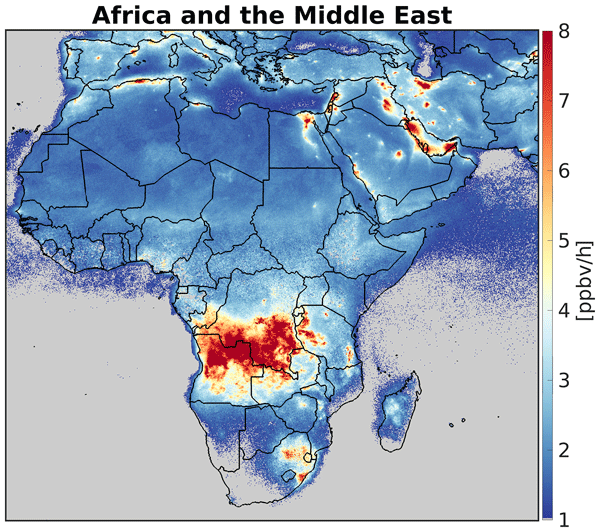
Amir H. Souri, Gonzalo González Abad, Glenn M. Wolfe, Tijl Verhoelst, Corinne Vigouroux, Gaia Pinardi, Steven Compernolle, Bavo Langerock, Bryan N. Duncan, and Matthew S. Johnson
Atmos. Chem. Phys., 25, 2061–2086, https://doi.org/10.5194/acp-25-2061-2025, https://doi.org/10.5194/acp-25-2061-2025, 2025
Short summary
Short summary
We establish a simple yet robust relationship between ozone production rates and geophysical parameters obtained from several intensive atmospheric composition campaigns. We show that satellite remote sensing data can effectively constrain these parameters, enabling us to produce the first global maps of ozone production rates with unprecedented resolution.
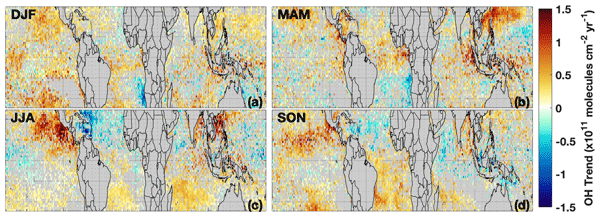
Bryan N. Duncan, Daniel C. Anderson, Arlene M. Fiore, Joanna Joiner, Nickolay A. Krotkov, Can Li, Dylan B. Millet, Julie M. Nicely, Luke D. Oman, Jason M. St. Clair, Joshua D. Shutter, Amir H. Souri, Sarah A. Strode, Brad Weir, Glenn M. Wolfe, Helen M. Worden, and Qindan Zhu
Atmos. Chem. Phys., 24, 13001–13023, https://doi.org/10.5194/acp-24-13001-2024, https://doi.org/10.5194/acp-24-13001-2024, 2024
Short summary
Short summary
Trace gases emitted to or formed within the atmosphere may be chemically or physically removed from the atmosphere. One trace gas, the hydroxyl radical (OH), is responsible for initiating the chemical removal of many trace gases, including some greenhouse gases. Despite its importance, scientists have not been able to adequately measure OH. In this opinion piece, we discuss promising new methods to indirectly constrain OH using satellite data of trace gases that control the abundance of OH.
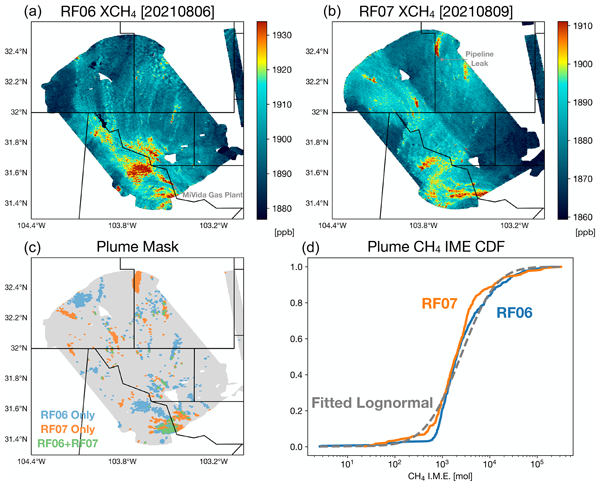
Christopher Chan Miller, Sébastien Roche, Jonas S. Wilzewski, Xiong Liu, Kelly Chance, Amir H. Souri, Eamon Conway, Bingkun Luo, Jenna Samra, Jacob Hawthorne, Kang Sun, Carly Staebell, Apisada Chulakadabba, Maryann Sargent, Joshua S. Benmergui, Jonathan E. Franklin, Bruce C. Daube, Yang Li, Joshua L. Laughner, Bianca C. Baier, Ritesh Gautam, Mark Omara, and Steven C. Wofsy
Atmos. Meas. Tech., 17, 5429–5454, https://doi.org/10.5194/amt-17-5429-2024, https://doi.org/10.5194/amt-17-5429-2024, 2024
Short summary
Short summary
MethaneSAT is an upcoming satellite mission designed to monitor methane emissions from the oil and gas (O&G) industry globally. Here, we present observations from the first flight campaign of MethaneAIR, a MethaneSAT-like instrument mounted on an aircraft. MethaneAIR can map methane with high precision and accuracy over a typically sized oil and gas basin (~200 km2) in a single flight. This paper demonstrates the capability of the upcoming satellite to routinely track global O&G emissions.
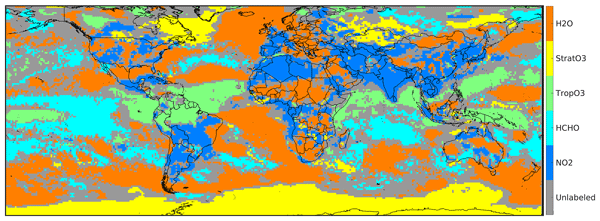
Amir H. Souri, Bryan N. Duncan, Sarah A. Strode, Daniel C. Anderson, Michael E. Manyin, Junhua Liu, Luke D. Oman, Zhen Zhang, and Brad Weir
Atmos. Chem. Phys., 24, 8677–8701, https://doi.org/10.5194/acp-24-8677-2024, https://doi.org/10.5194/acp-24-8677-2024, 2024
Short summary
Short summary
We explore a new method of using the wealth of information obtained from satellite observations of Aura OMI NO2, HCHO, and MERRA-2 reanalysis in NASA’s GEOS model equipped with an efficient tropospheric OH (TOH) estimator to enhance the representation of TOH spatial distribution and its long-term trends. This new framework helps us pinpoint regional inaccuracies in TOH and differentiate between established prior knowledge and newly acquired information from satellites on TOH trends.

Heesung Chong, Gonzalo González Abad, Caroline R. Nowlan, Christopher Chan Miller, Alfonso Saiz-Lopez, Rafael P. Fernandez, Hyeong-Ahn Kwon, Zolal Ayazpour, Huiqun Wang, Amir H. Souri, Xiong Liu, Kelly Chance, Ewan O'Sullivan, Jhoon Kim, Ja-Ho Koo, William R. Simpson, François Hendrick, Richard Querel, Glen Jaross, Colin Seftor, and Raid M. Suleiman
Atmos. Meas. Tech., 17, 2873–2916, https://doi.org/10.5194/amt-17-2873-2024, https://doi.org/10.5194/amt-17-2873-2024, 2024
Short summary
Short summary
We present a new bromine monoxide (BrO) product derived using radiances measured from OMPS-NM on board the Suomi-NPP satellite. This product provides nearly a decade of global stratospheric and tropospheric column retrievals, a feature that is currently rare in publicly accessible datasets. Both stratospheric and tropospheric columns from OMPS-NM demonstrate robust performance, exhibiting good agreement with ground-based observations collected at three stations (Lauder, Utqiagvik, and Harestua).
Eamon K. Conway, Amir H. Souri, Joshua Benmergui, Kang Sun, Xiong Liu, Carly Staebell, Christopher Chan Miller, Jonathan Franklin, Jenna Samra, Jonas Wilzewski, Sebastien Roche, Bingkun Luo, Apisada Chulakadabba, Maryann Sargent, Jacob Hohl, Bruce Daube, Iouli Gordon, Kelly Chance, and Steven Wofsy
Atmos. Meas. Tech., 17, 1347–1362, https://doi.org/10.5194/amt-17-1347-2024, https://doi.org/10.5194/amt-17-1347-2024, 2024
Short summary
Short summary
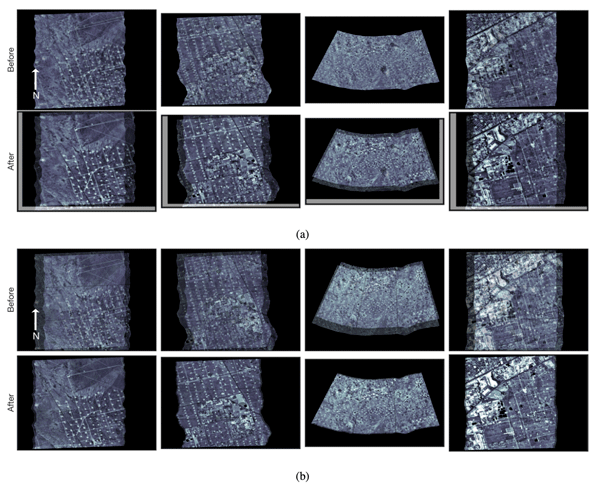
The work presented here describes the processes required to convert raw sensor data for the MethaneAIR instrument to geometrically calibrated data. Each algorithm is described in detail. MethaneAIR is the airborne simulator for MethaneSAT, a new satellite under development by MethaneSAT LLC, a subsidiary of the EDF. MethaneSAT's goals are to precisely map over 80 % of the production sources of methane emissions from oil and gas fields across the globe to a high degree of accuracy.
Apisada Chulakadabba, Maryann Sargent, Thomas Lauvaux, Joshua S. Benmergui, Jonathan E. Franklin, Christopher Chan Miller, Jonas S. Wilzewski, Sébastien Roche, Eamon Conway, Amir H. Souri, Kang Sun, Bingkun Luo, Jacob Hawthrone, Jenna Samra, Bruce C. Daube, Xiong Liu, Kelly Chance, Yang Li, Ritesh Gautam, Mark Omara, Jeff S. Rutherford, Evan D. Sherwin, Adam Brandt, and Steven C. Wofsy
Atmos. Meas. Tech., 16, 5771–5785, https://doi.org/10.5194/amt-16-5771-2023, https://doi.org/10.5194/amt-16-5771-2023, 2023
Short summary
Short summary
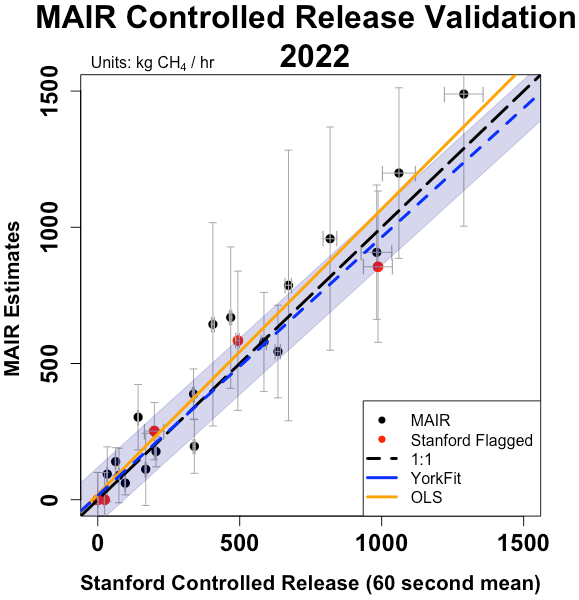
We show that MethaneAIR, a precursor to the MethaneSAT satellite, demonstrates accurate point source quantification during controlled release experiments and regional observations in 2021 and 2022. Results from our two independent quantification methods suggest the accuracy of our sensor and algorithms is better than 25 % for sources emitting 200 kg h−1 or more. Insights from these measurements help establish the capabilities of MethaneSAT and MethaneAIR.
Matthew S. Johnson, Amir H. Souri, Sajeev Philip, Rajesh Kumar, Aaron Naeger, Jeffrey Geddes, Laura Judd, Scott Janz, Heesung Chong, and John Sullivan
Atmos. Meas. Tech., 16, 2431–2454, https://doi.org/10.5194/amt-16-2431-2023, https://doi.org/10.5194/amt-16-2431-2023, 2023
Short summary
Short summary
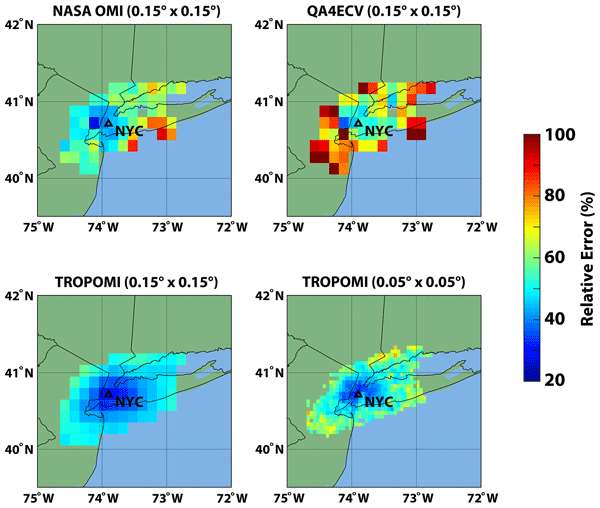
Satellites provide vital information for studying the processes controlling ozone formation. Based on the abundance of particular gases in the atmosphere, ozone formation is sensitive to specific human-induced and natural emission sources. However, errors and biases in satellite retrievals hinder this data source’s application for studying ozone formation sensitivity. We conducted a thorough statistical evaluation of two commonly applied satellites for investigating ozone formation sensitivity.
Amir H. Souri, Matthew S. Johnson, Glenn M. Wolfe, James H. Crawford, Alan Fried, Armin Wisthaler, William H. Brune, Donald R. Blake, Andrew J. Weinheimer, Tijl Verhoelst, Steven Compernolle, Gaia Pinardi, Corinne Vigouroux, Bavo Langerock, Sungyeon Choi, Lok Lamsal, Lei Zhu, Shuai Sun, Ronald C. Cohen, Kyung-Eun Min, Changmin Cho, Sajeev Philip, Xiong Liu, and Kelly Chance
Atmos. Chem. Phys., 23, 1963–1986, https://doi.org/10.5194/acp-23-1963-2023, https://doi.org/10.5194/acp-23-1963-2023, 2023
Short summary
Short summary
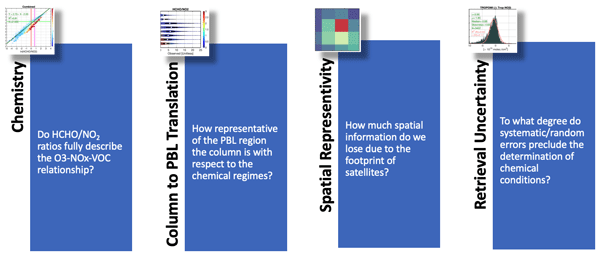
We have rigorously characterized different sources of error in satellite-based HCHO / NO2 tropospheric columns, a widely used metric for diagnosing near-surface ozone sensitivity. Specifically, the errors were categorized/quantified into (i) an inherent chemistry error, (ii) the decoupled relationship between columns and the near-surface concentration, (iii) the spatial representativeness error of ground satellite pixels, and (iv) the satellite retrieval errors.
Amir H. Souri, Kelly Chance, Kang Sun, Xiong Liu, and Matthew S. Johnson
Atmos. Meas. Tech., 15, 41–59, https://doi.org/10.5194/amt-15-41-2022, https://doi.org/10.5194/amt-15-41-2022, 2022
Short summary
Short summary
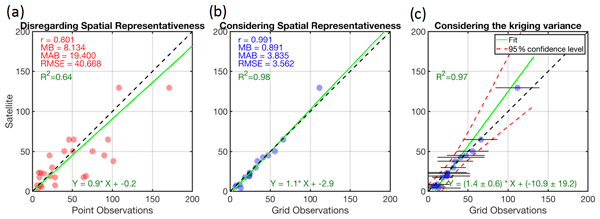
The central component of satellite and model validation is pointwise measurements. A point is an element of space, whereas satellite (model) pixels represent an averaged area. These two datasets are inherently different. We leveraged some geostatistical tools to transform discrete points to gridded data with quantified uncertainty, comparable to satellite footprint (and response functions). This in part alleviated some complications concerning point–pixel comparisons.
Amir H. Souri, Kelly Chance, Juseon Bak, Caroline R. Nowlan, Gonzalo González Abad, Yeonjin Jung, David C. Wong, Jingqiu Mao, and Xiong Liu
Atmos. Chem. Phys., 21, 18227–18245, https://doi.org/10.5194/acp-21-18227-2021, https://doi.org/10.5194/acp-21-18227-2021, 2021
Short summary
Short summary
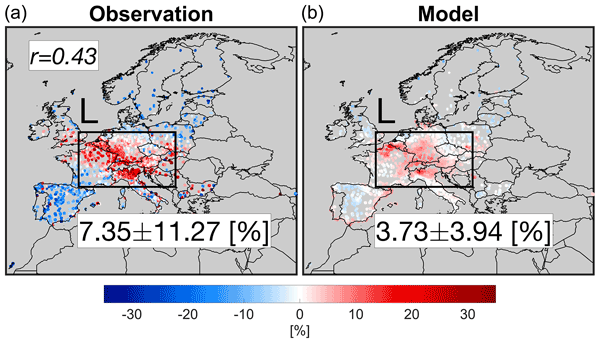
The global pandemic is believed to have an impact on emissions of air pollutants such as nitrogen dioxide (NO2) and formaldehyde (HCHO). This study quantifies the changes in the amount of NOx and VOC emissions via state-of-the-art inverse modeling technique using satellite observations during the lockdown 2020 with respect to a baseline over Europe, which in turn, it permits unraveling atmospheric processes being responsible for ozone formation in a less cloudy month.
Caterina Mogno, Peter R. Colarco, Allison B. Collow, Sampa Das, Sarah A. Strode, Vanessa Valenti, Michael E. Manyin, Qing Liang, Luke Oman, Stephen D. Steenrod, and K. Emma Knowland
Atmos. Chem. Phys., 26, 3025–3047, https://doi.org/10.5194/acp-26-3025-2026, https://doi.org/10.5194/acp-26-3025-2026, 2026
Short summary
Short summary
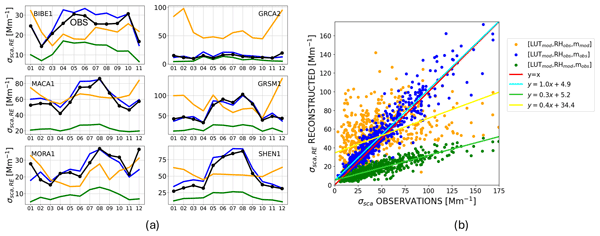
We investigated a climate model's ability to simulate atmospheric aerosols focusing on the relationship between mass and optical properties, by comparing predictions with observations. Our analysis revealed that model errors in aerosol scattering primarily stem from inaccurate particle mass concentrations and relative humidity, rather than flawed optical property assumptions in the model. These findings point out improvements for enhancing the accuracy for aerosols representation in our model.
Juseon Bak, Arno Keppens, Daesung Choi, Sungjae Hong, Jae-Hwan Kim, Cheol-Hee Kim, Hyo-Jung Lee, Wonbae Jeon, Jhoon Kim, Ja-Ho Koo, Joowan Kim, Kanghyun Baek, Kai Yang, Xiong Liu, Gonzalo González Abad, Klaus-Peter Heue, Jean-Christopher Lambert, Yeonjin Jung, Hyunkee Hong, and Won-Jin Lee
Atmos. Meas. Tech., 19, 119–134, https://doi.org/10.5194/amt-19-119-2026, https://doi.org/10.5194/amt-19-119-2026, 2026
Short summary
Short summary
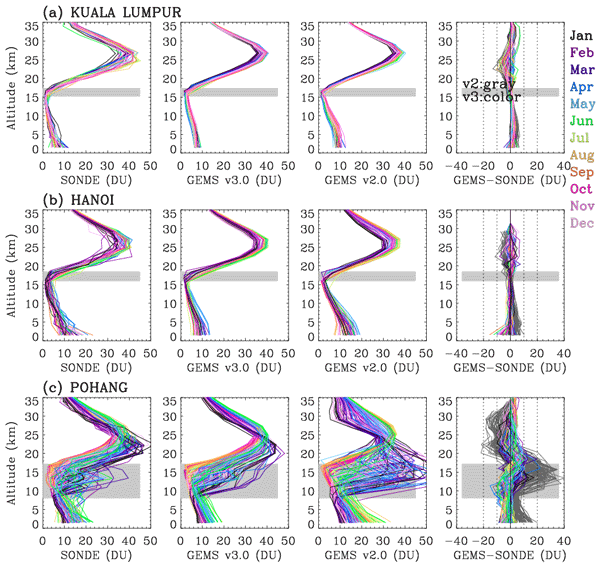
This study presents the first complete description of the operational version 3 ozone profile retrieval algorithm for the Geostationary Environment Monitoring Spectrometer (GEMS) and its performance characteristics. Improvements in radiometric and wavelength calibration reduce spectral fitting uncertainties and enhance agreement with ozonesonde profiles and Pandora total ozone measurements.
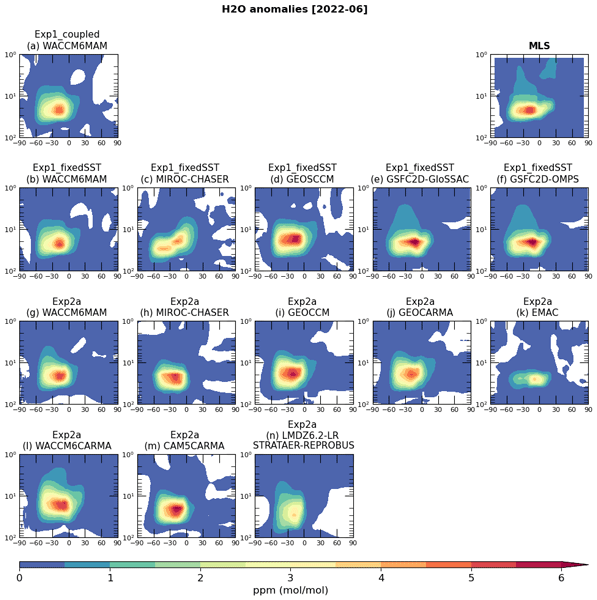
Yunqian Zhu, Hideharu Akiyoshi, Valentina Aquila, Elizabeth Asher, Ewa M. Bednarz, Slimane Bekki, Christoph Brühl, Amy H. Butler, Parker Case, Simon Chabrillat, Gabriel Chiodo, Margot Clyne, Peter R. Colarco, Sandip Dhomse, Lola Falletti, Eric Fleming, Ben Johnson, Andrin Jörimann, Mahesh Kovilakam, Gerbrand Koren, Ales Kuchar, Nicolas Lebas, Qing Liang, Cheng-Cheng Liu, Graham Mann, Michael Manyin, Marion Marchand, Olaf Morgenstern, Paul Newman, Luke D. Oman, Freja F. Østerstrøm, Yifeng Peng, David Plummer, Ilaria Quaglia, William Randel, Samuel Rémy, Takashi Sekiya, Stephen Steenrod, Timofei Sukhodolov, Simone Tilmes, Kostas Tsigaridis, Rei Ueyama, Daniele Visioni, Xinyue Wang, Shingo Watanabe, Yousuke Yamashita, Pengfei Yu, Wandi Yu, Jun Zhang, and Zhihong Zhuo
Geosci. Model Dev., 18, 5487–5512, https://doi.org/10.5194/gmd-18-5487-2025, https://doi.org/10.5194/gmd-18-5487-2025, 2025
Short summary
Short summary
To understand the climate impact of the 2022 Hunga volcanic eruption, we developed a climate model–observation comparison project. The paper describes the protocols and models that participate in the experiments. We designed several experiments to achieve our goals of this activity: (1) to evaluate the climate model performance and (2) to understand the Earth system responses to this eruption.
Amir H. Souri, Gonzalo González Abad, Glenn M. Wolfe, Tijl Verhoelst, Corinne Vigouroux, Gaia Pinardi, Steven Compernolle, Bavo Langerock, Bryan N. Duncan, and Matthew S. Johnson
Atmos. Chem. Phys., 25, 2061–2086, https://doi.org/10.5194/acp-25-2061-2025, https://doi.org/10.5194/acp-25-2061-2025, 2025
Short summary
Short summary
We establish a simple yet robust relationship between ozone production rates and geophysical parameters obtained from several intensive atmospheric composition campaigns. We show that satellite remote sensing data can effectively constrain these parameters, enabling us to produce the first global maps of ozone production rates with unprecedented resolution.
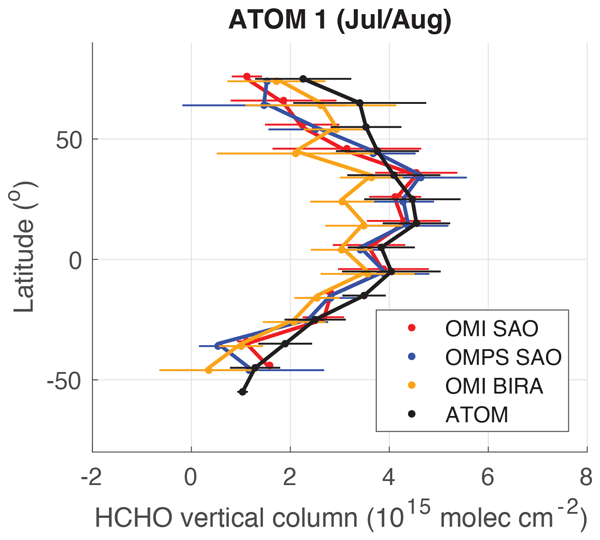
Jin Liao, Glenn M. Wolfe, Alexander E. Kotsakis, Julie M. Nicely, Jason M. St. Clair, Thomas F. Hanisco, Gonzalo González Abad, Caroline R. Nowlan, Zolal Ayazpour, Isabelle De Smedt, Eric C. Apel, and Rebecca S. Hornbrook
Atmos. Meas. Tech., 18, 1–16, https://doi.org/10.5194/amt-18-1-2025, https://doi.org/10.5194/amt-18-1-2025, 2025
Short summary
Short summary
Validation of satellite HCHO over the remote marine regions is relatively low, and modeled HCHO in these regions is usually added as a global satellite HCHO background. This paper intercompares three satellite HCHO retrievals and validates them against in situ observations from the NASA ATom mission. All retrievals are correlated with ATom-integrated columns over remote oceans, with OMI SAO (v004) showing the best agreement. A persistent low bias is found in all retrievals at high latitudes.
Bryan N. Duncan, Daniel C. Anderson, Arlene M. Fiore, Joanna Joiner, Nickolay A. Krotkov, Can Li, Dylan B. Millet, Julie M. Nicely, Luke D. Oman, Jason M. St. Clair, Joshua D. Shutter, Amir H. Souri, Sarah A. Strode, Brad Weir, Glenn M. Wolfe, Helen M. Worden, and Qindan Zhu
Atmos. Chem. Phys., 24, 13001–13023, https://doi.org/10.5194/acp-24-13001-2024, https://doi.org/10.5194/acp-24-13001-2024, 2024
Short summary
Short summary
Trace gases emitted to or formed within the atmosphere may be chemically or physically removed from the atmosphere. One trace gas, the hydroxyl radical (OH), is responsible for initiating the chemical removal of many trace gases, including some greenhouse gases. Despite its importance, scientists have not been able to adequately measure OH. In this opinion piece, we discuss promising new methods to indirectly constrain OH using satellite data of trace gases that control the abundance of OH.
Christopher Chan Miller, Sébastien Roche, Jonas S. Wilzewski, Xiong Liu, Kelly Chance, Amir H. Souri, Eamon Conway, Bingkun Luo, Jenna Samra, Jacob Hawthorne, Kang Sun, Carly Staebell, Apisada Chulakadabba, Maryann Sargent, Joshua S. Benmergui, Jonathan E. Franklin, Bruce C. Daube, Yang Li, Joshua L. Laughner, Bianca C. Baier, Ritesh Gautam, Mark Omara, and Steven C. Wofsy
Atmos. Meas. Tech., 17, 5429–5454, https://doi.org/10.5194/amt-17-5429-2024, https://doi.org/10.5194/amt-17-5429-2024, 2024
Short summary
Short summary
MethaneSAT is an upcoming satellite mission designed to monitor methane emissions from the oil and gas (O&G) industry globally. Here, we present observations from the first flight campaign of MethaneAIR, a MethaneSAT-like instrument mounted on an aircraft. MethaneAIR can map methane with high precision and accuracy over a typically sized oil and gas basin (~200 km2) in a single flight. This paper demonstrates the capability of the upcoming satellite to routinely track global O&G emissions.
Amir H. Souri, Bryan N. Duncan, Sarah A. Strode, Daniel C. Anderson, Michael E. Manyin, Junhua Liu, Luke D. Oman, Zhen Zhang, and Brad Weir
Atmos. Chem. Phys., 24, 8677–8701, https://doi.org/10.5194/acp-24-8677-2024, https://doi.org/10.5194/acp-24-8677-2024, 2024
Short summary
Short summary
We explore a new method of using the wealth of information obtained from satellite observations of Aura OMI NO2, HCHO, and MERRA-2 reanalysis in NASA’s GEOS model equipped with an efficient tropospheric OH (TOH) estimator to enhance the representation of TOH spatial distribution and its long-term trends. This new framework helps us pinpoint regional inaccuracies in TOH and differentiate between established prior knowledge and newly acquired information from satellites on TOH trends.
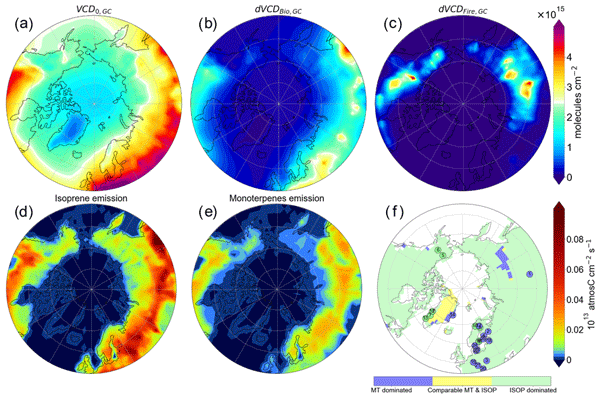
Tianlang Zhao, Jingqiu Mao, Zolal Ayazpour, Gonzalo González Abad, Caroline R. Nowlan, and Yiqi Zheng
Atmos. Chem. Phys., 24, 6105–6121, https://doi.org/10.5194/acp-24-6105-2024, https://doi.org/10.5194/acp-24-6105-2024, 2024
Short summary
Short summary
HCHO variability is a key tracer in understanding VOC emissions in response to climate change. We investigate the role of methane oxidation and biogenic and wildfire emissions in HCHO interannual variability over northern high latitudes in summer, emphasizing wildfires as a key driver of HCHO interannual variability in Alaska, Siberia and northern Canada using satellite HCHO and SIF retrievals and then GEOS-Chem model. We show SIF is a tool to understand biogenic HCHO variability in this region.
Heesung Chong, Gonzalo González Abad, Caroline R. Nowlan, Christopher Chan Miller, Alfonso Saiz-Lopez, Rafael P. Fernandez, Hyeong-Ahn Kwon, Zolal Ayazpour, Huiqun Wang, Amir H. Souri, Xiong Liu, Kelly Chance, Ewan O'Sullivan, Jhoon Kim, Ja-Ho Koo, William R. Simpson, François Hendrick, Richard Querel, Glen Jaross, Colin Seftor, and Raid M. Suleiman
Atmos. Meas. Tech., 17, 2873–2916, https://doi.org/10.5194/amt-17-2873-2024, https://doi.org/10.5194/amt-17-2873-2024, 2024
Short summary
Short summary
We present a new bromine monoxide (BrO) product derived using radiances measured from OMPS-NM on board the Suomi-NPP satellite. This product provides nearly a decade of global stratospheric and tropospheric column retrievals, a feature that is currently rare in publicly accessible datasets. Both stratospheric and tropospheric columns from OMPS-NM demonstrate robust performance, exhibiting good agreement with ground-based observations collected at three stations (Lauder, Utqiagvik, and Harestua).
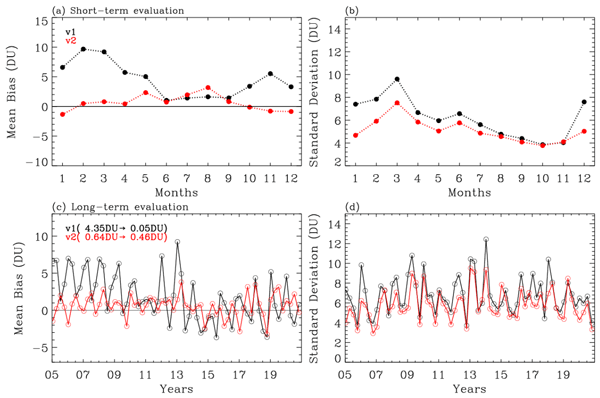
Juseon Bak, Xiong Liu, Kai Yang, Gonzalo Gonzalez Abad, Ewan O'Sullivan, Kelly Chance, and Cheol-Hee Kim
Atmos. Meas. Tech., 17, 1891–1911, https://doi.org/10.5194/amt-17-1891-2024, https://doi.org/10.5194/amt-17-1891-2024, 2024
Short summary
Short summary
The new version (V2) of the OMI ozone profile product is introduced to improve retrieval quality and long-term consistency of tropospheric ozone by incorporating the recent collection 4 OMI L1b spectral products and refining radiometric correction, forward model calculation, and a priori ozone data.
Eamon K. Conway, Amir H. Souri, Joshua Benmergui, Kang Sun, Xiong Liu, Carly Staebell, Christopher Chan Miller, Jonathan Franklin, Jenna Samra, Jonas Wilzewski, Sebastien Roche, Bingkun Luo, Apisada Chulakadabba, Maryann Sargent, Jacob Hohl, Bruce Daube, Iouli Gordon, Kelly Chance, and Steven Wofsy
Atmos. Meas. Tech., 17, 1347–1362, https://doi.org/10.5194/amt-17-1347-2024, https://doi.org/10.5194/amt-17-1347-2024, 2024
Short summary
Short summary
The work presented here describes the processes required to convert raw sensor data for the MethaneAIR instrument to geometrically calibrated data. Each algorithm is described in detail. MethaneAIR is the airborne simulator for MethaneSAT, a new satellite under development by MethaneSAT LLC, a subsidiary of the EDF. MethaneSAT's goals are to precisely map over 80 % of the production sources of methane emissions from oil and gas fields across the globe to a high degree of accuracy.
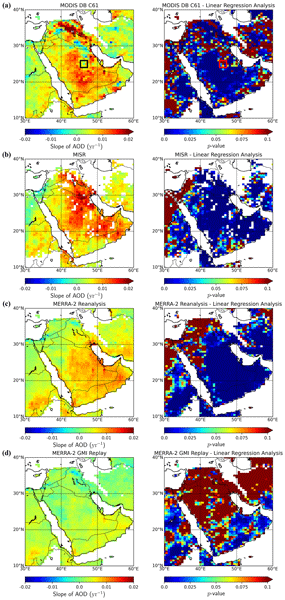
Adriana Rocha-Lima, Peter R. Colarco, Anton S. Darmenov, Edward P. Nowottnick, Arlindo M. da Silva, and Luke D. Oman
Atmos. Chem. Phys., 24, 2443–2464, https://doi.org/10.5194/acp-24-2443-2024, https://doi.org/10.5194/acp-24-2443-2024, 2024
Short summary
Short summary
Observations show an increasing aerosol optical depth trend in the Middle East between 2003–2012. We evaluate the NASA Goddard Earth Observing System (GEOS) model's ability to capture these trends and examine the meteorological and surface parameters driving dust emissions. Our results highlight the importance of data assimilation for long-term trends of atmospheric aerosols and support the hypothesis that vegetation cover loss may have contributed to increasing dust emissions in the period.
Apisada Chulakadabba, Maryann Sargent, Thomas Lauvaux, Joshua S. Benmergui, Jonathan E. Franklin, Christopher Chan Miller, Jonas S. Wilzewski, Sébastien Roche, Eamon Conway, Amir H. Souri, Kang Sun, Bingkun Luo, Jacob Hawthrone, Jenna Samra, Bruce C. Daube, Xiong Liu, Kelly Chance, Yang Li, Ritesh Gautam, Mark Omara, Jeff S. Rutherford, Evan D. Sherwin, Adam Brandt, and Steven C. Wofsy
Atmos. Meas. Tech., 16, 5771–5785, https://doi.org/10.5194/amt-16-5771-2023, https://doi.org/10.5194/amt-16-5771-2023, 2023
Short summary
Short summary
We show that MethaneAIR, a precursor to the MethaneSAT satellite, demonstrates accurate point source quantification during controlled release experiments and regional observations in 2021 and 2022. Results from our two independent quantification methods suggest the accuracy of our sensor and algorithms is better than 25 % for sources emitting 200 kg h−1 or more. Insights from these measurements help establish the capabilities of MethaneSAT and MethaneAIR.
Huiqun Wang, Gonzalo González Abad, Chris Chan Miller, Hyeong-Ahn Kwon, Caroline R. Nowlan, Zolal Ayazpour, Heesung Chong, Xiong Liu, Kelly Chance, Ewan O'Sullivan, Kang Sun, Robert Spurr, and Robert J. Hargreaves
Atmos. Meas. Tech. Discuss., https://doi.org/10.5194/amt-2023-66, https://doi.org/10.5194/amt-2023-66, 2023
Preprint withdrawn
Short summary
Short summary
A pipeline for retrieving Total Column Water Vapor from satellite blue spectra is developed. New constraints are considered. Water-leaving radiance is important over the oceans. Results agree with reference datasets well under clear conditions. Due to high sensitivity to clouds, strict data filtering criteria are required. All-sky retrievals can be corrected using machine learning. GPS stations’ representation errors follow a power law relationship with grid resolutions.
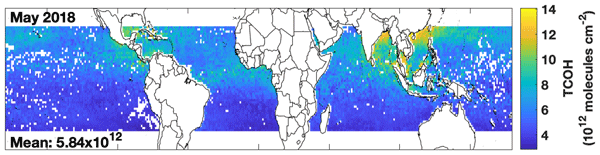
Daniel C. Anderson, Bryan N. Duncan, Julie M. Nicely, Junhua Liu, Sarah A. Strode, and Melanie B. Follette-Cook
Atmos. Chem. Phys., 23, 6319–6338, https://doi.org/10.5194/acp-23-6319-2023, https://doi.org/10.5194/acp-23-6319-2023, 2023
Short summary
Short summary
We describe a methodology that combines machine learning, satellite observations, and 3D chemical model output to infer the abundance of the hydroxyl radical (OH), a chemical that removes many trace gases from the atmosphere. The methodology successfully captures the variability of observed OH, although further observations are needed to evaluate absolute accuracy. Current satellite observations are of sufficient quality to infer OH, but retrieval validation in the remote tropics is needed.
Matthew S. Johnson, Amir H. Souri, Sajeev Philip, Rajesh Kumar, Aaron Naeger, Jeffrey Geddes, Laura Judd, Scott Janz, Heesung Chong, and John Sullivan
Atmos. Meas. Tech., 16, 2431–2454, https://doi.org/10.5194/amt-16-2431-2023, https://doi.org/10.5194/amt-16-2431-2023, 2023
Short summary
Short summary
Satellites provide vital information for studying the processes controlling ozone formation. Based on the abundance of particular gases in the atmosphere, ozone formation is sensitive to specific human-induced and natural emission sources. However, errors and biases in satellite retrievals hinder this data source’s application for studying ozone formation sensitivity. We conducted a thorough statistical evaluation of two commonly applied satellites for investigating ozone formation sensitivity.
Amir H. Souri, Matthew S. Johnson, Glenn M. Wolfe, James H. Crawford, Alan Fried, Armin Wisthaler, William H. Brune, Donald R. Blake, Andrew J. Weinheimer, Tijl Verhoelst, Steven Compernolle, Gaia Pinardi, Corinne Vigouroux, Bavo Langerock, Sungyeon Choi, Lok Lamsal, Lei Zhu, Shuai Sun, Ronald C. Cohen, Kyung-Eun Min, Changmin Cho, Sajeev Philip, Xiong Liu, and Kelly Chance
Atmos. Chem. Phys., 23, 1963–1986, https://doi.org/10.5194/acp-23-1963-2023, https://doi.org/10.5194/acp-23-1963-2023, 2023
Short summary
Short summary
We have rigorously characterized different sources of error in satellite-based HCHO / NO2 tropospheric columns, a widely used metric for diagnosing near-surface ozone sensitivity. Specifically, the errors were categorized/quantified into (i) an inherent chemistry error, (ii) the decoupled relationship between columns and the near-surface concentration, (iii) the spatial representativeness error of ground satellite pixels, and (iv) the satellite retrieval errors.
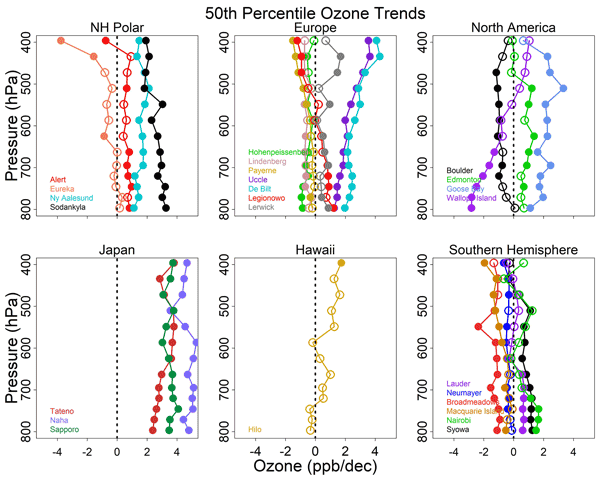
Amy Christiansen, Loretta J. Mickley, Junhua Liu, Luke D. Oman, and Lu Hu
Atmos. Chem. Phys., 22, 14751–14782, https://doi.org/10.5194/acp-22-14751-2022, https://doi.org/10.5194/acp-22-14751-2022, 2022
Short summary
Short summary
Understanding tropospheric ozone trends is crucial for accurate predictions of future air quality and climate, but drivers of trends are not well understood. We analyze global tropospheric ozone trends since 1980 using ozonesonde and surface measurements, and we evaluate two models for their ability to reproduce trends. We find observational evidence of increasing tropospheric ozone, but models underestimate these increases. This hinders our ability to estimate ozone radiative forcing.
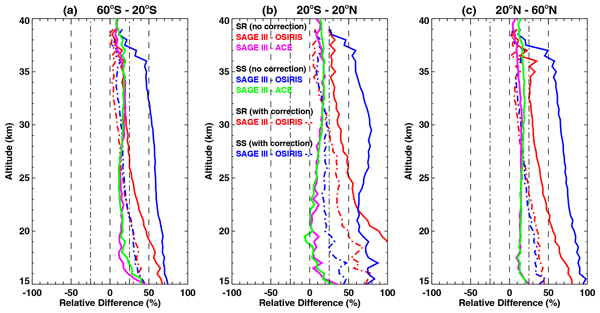
Sarah A. Strode, Ghassan Taha, Luke D. Oman, Robert Damadeo, David Flittner, Mark Schoeberl, Christopher E. Sioris, and Ryan Stauffer
Atmos. Meas. Tech., 15, 6145–6161, https://doi.org/10.5194/amt-15-6145-2022, https://doi.org/10.5194/amt-15-6145-2022, 2022
Short summary
Short summary
We use a global atmospheric chemistry model simulation to generate scaling factors that account for the daily cycle of NO2 and ozone. These factors facilitate comparisons between sunrise and sunset observations from SAGE III/ISS and observations from other instruments. We provide the scaling factors as monthly zonal means for different latitudes and altitudes. We find that applying these factors yields more consistent comparisons between observations from SAGE III/ISS and other instruments.
Daniel C. Anderson, Melanie B. Follette-Cook, Sarah A. Strode, Julie M. Nicely, Junhua Liu, Peter D. Ivatt, and Bryan N. Duncan
Geosci. Model Dev., 15, 6341–6358, https://doi.org/10.5194/gmd-15-6341-2022, https://doi.org/10.5194/gmd-15-6341-2022, 2022
Short summary
Short summary
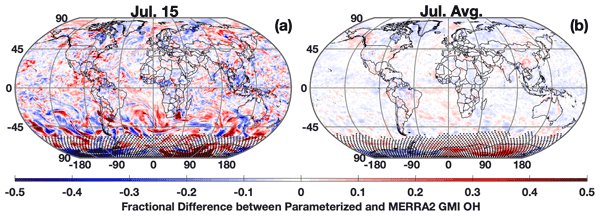
The hydroxyl radical (OH) is the most important chemical in the atmosphere for removing certain pollutants, including methane, the second-most-important greenhouse gas. We present a methodology to create an easily modifiable parameterization that can calculate OH concentrations in a computationally efficient way. The parameterization, which predicts OH within 5 %, can be integrated into larger climate models to allow for calculation of the interactions between OH, methane, and other chemicals.
Kang Sun, Mahdi Yousefi, Christopher Chan Miller, Kelly Chance, Gonzalo González Abad, Iouli E. Gordon, Xiong Liu, Ewan O'Sullivan, Christopher E. Sioris, and Steven C. Wofsy
Atmos. Meas. Tech., 15, 3721–3745, https://doi.org/10.5194/amt-15-3721-2022, https://doi.org/10.5194/amt-15-3721-2022, 2022
Short summary
Short summary
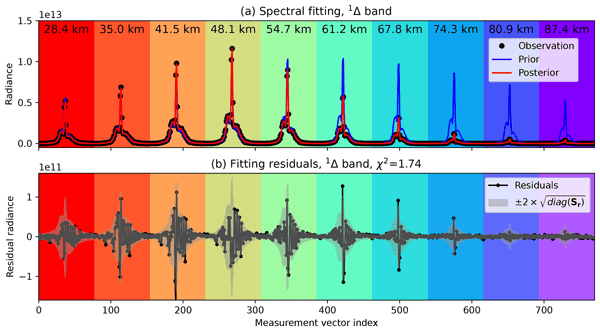
This study of upper atmospheric airglow from oxygen is motivated by the need to measure oxygen simultaneously with methane and CO2 in satellite remote sensing. We provide an accurate understanding of the spatial, temporal, and spectral distribution of airglow emissions, which will help in the satellite remote sensing of greenhouse gases and constraining the chemical and physical processes in the upper atmosphere.
Tianlang Zhao, Jingqiu Mao, William R. Simpson, Isabelle De Smedt, Lei Zhu, Thomas F. Hanisco, Glenn M. Wolfe, Jason M. St. Clair, Gonzalo González Abad, Caroline R. Nowlan, Barbara Barletta, Simone Meinardi, Donald R. Blake, Eric C. Apel, and Rebecca S. Hornbrook
Atmos. Chem. Phys., 22, 7163–7178, https://doi.org/10.5194/acp-22-7163-2022, https://doi.org/10.5194/acp-22-7163-2022, 2022
Short summary
Short summary
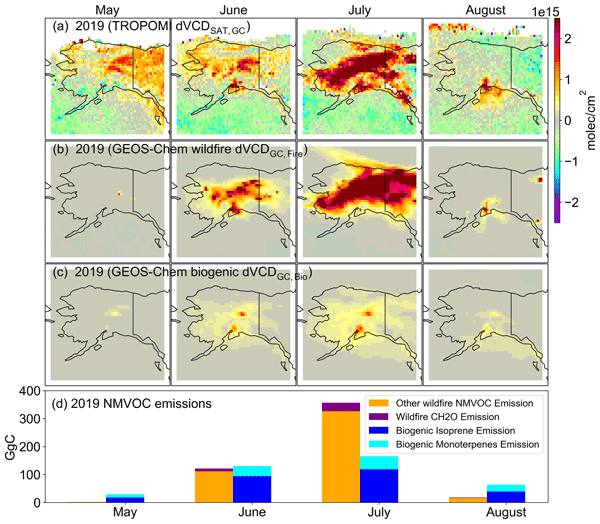
Monitoring formaldehyde (HCHO) can help us understand Arctic vegetation change. Here, we compare satellite data and model and show that Alaska summertime HCHO is largely dominated by a background from methane oxidation during mild wildfire years and is dominated by wildfire (largely from direct emission of fire) during strong fire years. Consequently, it is challenging to use satellite HCHO to study vegetation change in the Arctic region.
Amir H. Souri, Kelly Chance, Kang Sun, Xiong Liu, and Matthew S. Johnson
Atmos. Meas. Tech., 15, 41–59, https://doi.org/10.5194/amt-15-41-2022, https://doi.org/10.5194/amt-15-41-2022, 2022
Short summary
Short summary
The central component of satellite and model validation is pointwise measurements. A point is an element of space, whereas satellite (model) pixels represent an averaged area. These two datasets are inherently different. We leveraged some geostatistical tools to transform discrete points to gridded data with quantified uncertainty, comparable to satellite footprint (and response functions). This in part alleviated some complications concerning point–pixel comparisons.
Amir H. Souri, Kelly Chance, Juseon Bak, Caroline R. Nowlan, Gonzalo González Abad, Yeonjin Jung, David C. Wong, Jingqiu Mao, and Xiong Liu
Atmos. Chem. Phys., 21, 18227–18245, https://doi.org/10.5194/acp-21-18227-2021, https://doi.org/10.5194/acp-21-18227-2021, 2021
Short summary
Short summary
The global pandemic is believed to have an impact on emissions of air pollutants such as nitrogen dioxide (NO2) and formaldehyde (HCHO). This study quantifies the changes in the amount of NOx and VOC emissions via state-of-the-art inverse modeling technique using satellite observations during the lockdown 2020 with respect to a baseline over Europe, which in turn, it permits unraveling atmospheric processes being responsible for ozone formation in a less cloudy month.
Jerald R. Ziemke, Gordon J. Labow, Natalya A. Kramarova, Richard D. McPeters, Pawan K. Bhartia, Luke D. Oman, Stacey M. Frith, and David P. Haffner
Atmos. Meas. Tech., 14, 6407–6418, https://doi.org/10.5194/amt-14-6407-2021, https://doi.org/10.5194/amt-14-6407-2021, 2021
Short summary
Short summary
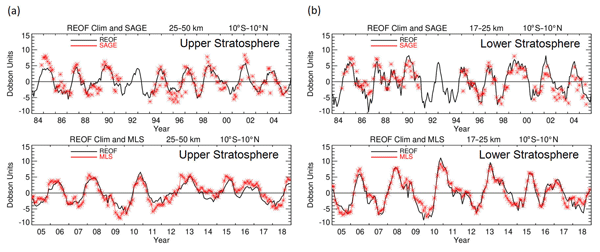
Seasonal and interannual ozone profile climatologies are produced from combined MLS and MERRA-2 GMI ozone for the general public. Both climatologies extend from pole to pole at altitudes of 0–80 km (1 km spacing) for the time record from 1970 to 2018. These climatologies are important for use as a priori information in satellite ozone retrieval algorithms, as validation of other measured and model-simulated ozone, and in radiative transfer studies of the atmosphere.
Cited articles
Abadi, M., Barham, P., Chen, J., Chen, Z., Davis, A., Dean, J., Devin, M., Ghemawat, S., Irving, G., Isard, M., Kudlur, M., Levenberg, J., Monga, R., Moore, S., Murray, D. G., Steiner, B., Tucker, P., Vasudevan, V., Warden, P., Wicke, M., Yu, Y., and Zheng, X.: TensorFlow: A system for large-scale machine learning, arXiv [preprint], https://doi.org/10.48550/arXiv.1605.08695, 31 May 2016.
Anderson, D. C., Duncan, B. N., Liu, J., Nicely, J. M., Strode, S. A., Follette-Cook, M. B., Souri, A. H., Ziemke, J. R., González-Abad, G., and Ayazpour, Z.: Trends and Interannual Variability of the Hydroxyl Radical in the Remote Tropics During Boreal Autumn Inferred From Satellite Proxy Data, Geophys. Res. Lett., 51, e2024GL108531, https://doi.org/10.1029/2024GL108531, 2024.
Ayazpour, Z., González Abad, G., Nowlan, C. R., Sun, K., Kwon, H.-A., Chan Miller, C., Chong, H., Wang, H., Liu, X., Chance, K., O'Sullivan, E., Zhu, L., Vigouroux, C., De Smedt, I., Stremme, W., Hannigan, J. W., Notholt, J., Sun, X., Palm, M., Petri, C., Strong, K., Röhling, A. N., Mahieu, E., Smale, D., Té, Y., Morino, I., Murata, I., Nagahama, T., Kivi, R., Makarova, M., Jones, N., Sussmann, R., and Zhou, M.: Aura Ozone Monitoring Instrument (OMI) Collection 4 Formaldehyde Products, Earth Space Sci., 12, e2024EA003792, https://doi.org/10.1029/2024EA003792, 2025.
Bates, K. H. and Jacob, D. J.: An Expanded Definition of the Odd Oxygen Family for Tropospheric Ozone Budgets: Implications for Ozone Lifetime and Stratospheric Influence, Geophys. Res. Lett., 47, e2019GL084486, https://doi.org/10.1029/2019GL084486, 2020.
Bauwens, M., Stavrakou, T., Müller, J.-F., De Smedt, I., Van Roozendael, M., van der Werf, G. R., Wiedinmyer, C., Kaiser, J. W., Sindelarova, K., and Guenther, A.: Nine years of global hydrocarbon emissions based on source inversion of OMI formaldehyde observations, Atmos. Chem. Phys., 16, 10133–10158, https://doi.org/10.5194/acp-16-10133-2016, 2016.
Bocquet, M., Elbern, H., Eskes, H., Hirtl, M., Žabkar, R., Carmichael, G. R., Flemming, J., Inness, A., Pagowski, M., Pérez Camaño, J. L., Saide, P. E., San Jose, R., Sofiev, M., Vira, J., Baklanov, A., Carnevale, C., Grell, G., and Seigneur, C.: Data assimilation in atmospheric chemistry models: current status and future prospects for coupled chemistry meteorology models, Atmos. Chem. Phys., 15, 5325–5358, https://doi.org/10.5194/acp-15-5325-2015, 2015.
Boersma, K. F., Eskes, H. J., Richter, A., De Smedt, I., Lorente, A., Beirle, S., van Geffen, J. H. G. M., Zara, M., Peters, E., Van Roozendael, M., Wagner, T., Maasakkers, J. D., van der A, R. J., Nightingale, J., De Rudder, A., Irie, H., Pinardi, G., Lambert, J.-C., and Compernolle, S. C.: Improving algorithms and uncertainty estimates for satellite NO2 retrievals: results from the quality assurance for the essential climate variables (QA4ECV) project, Atmos. Meas. Tech., 11, 6651–6678, https://doi.org/10.5194/amt-11-6651-2018, 2018.
Borger, C., Beirle, S., and Wagner, T.: Analysis of global trends of total column water vapour from multiple years of OMI observations, Atmos. Chem. Phys., 22, 10603–10621, https://doi.org/10.5194/acp-22-10603-2022, 2022.
Boynard, A., Wespes, C., Hadji-Lazaro, J., Sinnathamby, S., Hurtmans, D., Coheur, P.-F., Doutriaux-Boucher, M., Onderwaater, J., Steinbrecht, W., Pennington, E. A., Bowman, K., and Clerbaux, C.: Assessment of 16-year tropospheric ozone trends from the IASI Climate Data Record, Atmos. Chem. Phys., 25, 11719–11755, https://doi.org/10.5194/acp-25-11719-2025, 2025.
Brune, W. H., Miller, D. O., Thames, A. B., Allen, H. M., Apel, E. C., Blake, D. R., Bui, T. P., Commane, R., Crounse, J. D., Daube, B. C., Diskin, G. S., DiGangi, J. P., Elkins, J. W., Hall, S. R., Hanisco, T. F., Hannun, R. A., Hintsa, E. J., Hornbrook, R. S., Kim, M. J., McKain, K., Moore, F. L., Neuman, J. A., Nicely, J. M., Peischl, J., Ryerson, T. B., St. Clair, J. M., Sweeney, C., Teng, A. P., Thompson, C., Ullmann, K., Veres, P. R., Wennberg, P. O., and Wolfe, G. M.: Exploring Oxidation in the Remote Free Troposphere: Insights From Atmospheric Tomography (ATom), J. Geophys. Res.-Atmos., 125, e2019JD031685, https://doi.org/10.1029/2019JD031685, 2020.
Brune, W. H., Miller, D. O., Thames, A. B., Brosius, A. L., Barletta, B., Blake, D. R., Blake, N. J., Chen, G., Choi, Y., Crawford, J. H., Digangi, J. P., Diskin, G., Fried, A., Hall, S. R., Hanisco, T. F., Huey, G. L., Hughes, S. C., Kim, M., Meinardi, S., Montzka, D. D., Pusede, S. E., Schroeder, J. R., Teng, A., Tanner, D. J., Ullmann, K., Walega, J., Weinheimer, A., Wisthaler, A., and Wennberg, P. O.: Observations of atmospheric oxidation and ozone production in South Korea, Atmos. Environ., 269, 118854, https://doi.org/10.1016/j.atmosenv.2021.118854, 2022.
Cazorla, M. and Brune, W. H.: Measurement of Ozone Production Sensor, Atmos. Meas. Tech., 3, 545–555, https://doi.org/10.5194/amt-3-545-2010, 2010.
Cazorla, M., Brune, W. H., Ren, X., and Lefer, B.: Direct measurement of ozone production rates in Houston in 2009 and comparison with two estimation methods, Atmos. Chem. Phys., 12, 1203–1212, https://doi.org/10.5194/acp-12-1203-2012, 2012.
Chatfield, R. B., Ren, X., Brune, W., and Schwab, J.: Controls on urban ozone production rate as indicated by formaldehyde oxidation rate and nitric oxide, Atmos. Environ., 44, 5395–5406, https://doi.org/10.1016/j.atmosenv.2010.08.056, 2010.
Chin, M., Ginoux, P., Kinne, S., Torres, O., Holben, B. N., Duncan, B. N., Martin, R. V., Logan, J. A., Higurashi, A., and Nakajima, T.: Tropospheric Aerosol Optical Thickness from the GOCART Model and Comparisons with Satellite and Sun Photometer Measurements, J. Atmos. Sci., 59, 461–483, https://doi.org/10.1175/1520-0469(2002)059<0461:TAOTFT>2.0.CO;2, 2002.
Choi, Y. and Souri, A. H.: Chemical condition and surface ozone in large cities of Texas during the last decade: Observational evidence from OMI, CAMS, and model analysis, Remote Sens. Environ., 168, 90–101, https://doi.org/10.1016/j.rse.2015.06.026, 2015a.
Choi, Y. and Souri, A. H.: Seasonal behavior and long-term trends of tropospheric ozone, its precursors and chemical conditions over Iran: A view from space, Atmos. Environ., 106, 232–240, https://doi.org/10.1016/j.atmosenv.2015.02.012, 2015b.
Choi, Y., Kim, H., Tong, D., and Lee, P.: Summertime weekly cycles of observed and modeled NOx and O3 concentrations as a function of satellite-derived ozone production sensitivity and land use types over the Continental United States, Atmos. Chem. Phys., 12, 6291–6307, https://doi.org/10.5194/acp-12-6291-2012, 2012.
Compernolle, S., Verhoelst, T., Pinardi, G., Granville, J., Hubert, D., Keppens, A., Niemeijer, S., Rino, B., Bais, A., Beirle, S., Boersma, F., Burrows, J. P., De Smedt, I., Eskes, H., Goutail, F., Hendrick, F., Lorente, A., Pazmino, A., Piters, A., Peters, E., Pommereau, J.-P., Remmers, J., Richter, A., van Geffen, J., Van Roozendael, M., Wagner, T., and Lambert, J.-C.: Validation of Aura-OMI QA4ECV NO2 climate data records with ground-based DOAS networks: the role of measurement and comparison uncertainties, Atmos. Chem. Phys., 20, 8017–8045, https://doi.org/10.5194/acp-20-8017-2020, 2020.
Cooper, M. J., Martin, R. V., McLinden, C. A., and Brook, J. R.: Inferring ground-level nitrogen dioxide concentrations at fine spatial resolution applied to the TROPOMI satellite instrument, Environ. Res. Lett., 15, 104013, https://doi.org/10.1088/1748-9326/aba3a5, 2020.
Copernicus Sentinel-5P: TROPOMI Level 2 Formaldehyde Total Column products, Version 02, European Space Agency, Copernicus Sentinel-5P [data set], https://doi.org/10.5270/S5P-vg1i7t0, 2020.
Copernicus Sentinel-5P: TROPOMI Level 2 Nitrogen Dioxide total column products, Version 02, European Space Agency, Copernicus Sentinel-5P [data set], https://doi.org/10.5270/S5P-9bnp8q8, 2021.
David, L. M. and Nair, P. R.: Tropospheric column O3 and NO2 over the Indian region observed by Ozone Monitoring Instrument (OMI): Seasonal changes and long-term trends, Atmos. Environ., 65, 25–39, https://doi.org/10.1016/j.atmosenv.2012.09.033, 2013.
De Smedt, I., Pinardi, G., Vigouroux, C., Compernolle, S., Bais, A., Benavent, N., Boersma, F., Chan, K.-L., Donner, S., Eichmann, K.-U., Hedelt, P., Hendrick, F., Irie, H., Kumar, V., Lambert, J.-C., Langerock, B., Lerot, C., Liu, C., Loyola, D., Piters, A., Richter, A., Rivera Cárdenas, C., Romahn, F., Ryan, R. G., Sinha, V., Theys, N., Vlietinck, J., Wagner, T., Wang, T., Yu, H., and Van Roozendael, M.: Comparative assessment of TROPOMI and OMI formaldehyde observations and validation against MAX-DOAS network column measurements, Atmos. Chem. Phys., 21, 12561–12593, https://doi.org/10.5194/acp-21-12561-2021, 2021.
Duncan, B., Yoshida, Y., Olson, J., Sillman, S., Retscher, C., Martin, R., Lamsal, L., Hu, Y., Pickering, K., Retscher, C., Allen, D., and Crawford, J.: Application of OMI observations to a space-based indicator of NOx and VOC controls on surface ozone formation, Atmos. Environ., 44, 2213–2223, https://doi.org/10.1016/j.atmosenv.2010.03.010, 2010.
Duncan, B. N., Strahan, S. E., Yoshida, Y., Steenrod, S. D., and Livesey, N.: Model study of the cross-tropopause transport of biomass burning pollution, Atmos. Chem. Phys., 7, 3713–3736, https://doi.org/10.5194/acp-7-3713-2007, 2007.
Eskes, H. J. and Boersma, K. F.: Averaging kernels for DOAS total-column satellite retrievals, Atmos. Chem. Phys., 3, 1285–1291, https://doi.org/10.5194/acp-3-1285-2003, 2003.
Fisher, B. L., Lamsal, L. N., Fasnacht, Z., Oman, L. D., Joiner, J., Krotkov, N. A., Choi, S., Qin, W., and Yang, E.-S.: Revised estimates of NO2 reductions during the COVID-19 lockdowns using updated TROPOMI NO2 retrievals and model simulations, Atmos. Environ., 326, 120459, https://doi.org/10.1016/j.atmosenv.2024.120459, 2024.
Fleming, Z. L., Doherty, R. M., von Schneidemesser, E., Malley, C. S., Cooper, O. R., Pinto, J. P., Colette, A., Xu, X., Simpson, D., Schultz, M. G., Lefohn, A. S., Hamad, S., Moolla, R., Solberg, S., and Feng, Z.: Tropospheric Ozone Assessment Report: Present-day ozone distribution and trends relevant to human health, Elem. Sci. Anth., 6, 12, https://doi.org/10.1525/elementa.273, 2018.
Gaudel, A., Cooper, O. R., Ancellet, G., Barret, B., Boynard, A., Burrows, J. P., Clerbaux, C., Coheur, P.-F., Cuesta, J., Cuevas, E., Doniki, S., Dufour, G., Ebojie, F., Foret, G., Garcia, O., Granados-Muñoz, M. J., Hannigan, J. W., Hase, F., Hassler, B., Huang, G., Hurtmans, D., Jaffe, D., Jones, N., Kalabokas, P., Kerridge, B., Kulawik, S., Latter, B., Leblanc, T., Le Flochmoën, E., Lin, W., Liu, J., Liu, X., Mahieu, E., McClure-Begley, A., Neu, J. L., Osman, M., Palm, M., Petetin, H., Petropavlovskikh, I., Querel, R., Rahpoe, N., Rozanov, A., Schultz, M. G., Schwab, J., Siddans, R., Smale, D., Steinbacher, M., Tanimoto, H., Tarasick, D. W., Thouret, V., Thompson, A. M., Trickl, T., Weatherhead, E., Wespes, C., Worden, H. M., Vigouroux, C., Xu, X., Zeng, G., and Ziemke, J.: Tropospheric Ozone Assessment Report: Present-day distribution and trends of tropospheric ozone relevant to climate and global atmospheric chemistry model evaluation, Elem. Sci. Anth., 6, 39, https://doi.org/10.1525/elementa.291, 2018.
Georgoulias, A. K., Boersma, K. F., van Vliet, J., Zhang, X., van der A, R., Zanis, P., and de Laat, J.: Detection of NO2 pollution plumes from individual ships with the TROPOMI/S5P satellite sensor, Environ. Res. Lett., 15, 124037, https://doi.org/10.1088/1748-9326/abc445, 2020.
Gonzalez Abad, G., Souri, A. H., Bak, J., Chance, K., Flynn, L. E., Krotkov, N. A., Lamsal, L., Li, C., Liu, X., Miller, C. C., Nowlan, C. R., Suleiman, R., and Wang, H.: Five decades observing Earth's atmospheric trace gases using ultraviolet and visible backscatter solar radiation from space, J. Quant. Spectrosc. Ra., 238, 106478, https://doi.org/10.1016/j.jqsrt.2019.04.030, 2019.
Granier, C., Bessagnet, B., Bond, T., D'Angiola, A., Denier van der Gon, H., Frost, G. J., Heil, A., Kaiser, J. W., Kinne, S., Klimont, Z., Kloster, S., Lamarque, J.-F., Liousse, C., Masui, T., Meleux, F., Mieville, A., Ohara, T., Raut, J.-C., Riahi, K., Schultz, M. G., Smith, S. J., Thompson, A., van Aardenne, J., van der Werf, G. R., and van Vuuren, D. P.: Evolution of anthropogenic and biomass burning emissions of air pollutants at global and regional scales during the 1980–2010 period, Clim. Change, 109, 163, https://doi.org/10.1007/s10584-011-0154-1, 2011.
Guenther, A. B., Jiang, X., Heald, C. L., Sakulyanontvittaya, T., Duhl, T., Emmons, L. K., and Wang, X.: The Model of Emissions of Gases and Aerosols from Nature version 2.1 (MEGAN2.1): an extended and updated framework for modeling biogenic emissions, Geosci. Model Dev., 5, 1471–1492, https://doi.org/10.5194/gmd-5-1471-2012, 2012.
Hilboll, A., Richter, A., and Burrows, J. P.: Long-term changes of tropospheric NO2 over megacities derived from multiple satellite instruments, Atmos. Chem. Phys., 13, 4145–4169, https://doi.org/10.5194/acp-13-4145-2013, 2013.
Ichoku, C. and Ellison, L.: Global top-down smoke-aerosol emissions estimation using satellite fire radiative power measurements, Atmos. Chem. Phys., 14, 6643–6667, https://doi.org/10.5194/acp-14-6643-2014, 2014.
Jeon, W., Choi, Y., Souri, A. H., Roy, A., Diao, L., Pan, S., Lee, H. W., and Lee, S.-H.: Identification of chemical fingerprints in long-range transport of burning induced upper tropospheric ozone from Colorado to the North Atlantic Ocean, Sci. Total Environ., 613–614, 820–828, https://doi.org/10.1016/j.scitotenv.2017.09.177, 2018.
Jin, X., Fiore, A. M., Murray, L. T., Valin, L. C., Lamsal, L. N., Duncan, B., Folkert Boersma, K., De Smedt, I., Abad, G. G., Chance, K., and Tonnesen, G. S.: Evaluating a Space-Based Indicator of Surface Ozone-NOx-VOC Sensitivity Over Midlatitude Source Regions and Application to Decadal Trends, J. Geophys. Res.-Atmos., 122, 10439–10461, https://doi.org/10.1002/2017JD026720, 2017.
Johnson, M. S., Philip, S., Meech, S., Kumar, R., Sorek-Hamer, M., Shiga, Y. P., and Jung, J.: Insights into the long-term (2005–2021) spatiotemporal evolution of summer ozone production sensitivity in the Northern Hemisphere derived with the Ozone Monitoring Instrument (OMI), Atmos. Chem. Phys., 24, 10363–10384, https://doi.org/10.5194/acp-24-10363-2024, 2024.
Kingma, D. P. and Ba, J.: Adam: A Method for Stochastic Optimization, arXiv [preprint], https://doi.org/10.48550/arXiv.1412.6980, 30 January 2017.
Kleinman, L. I., Daum, P. H., Imre, D., Lee, Y.-N., Nunnermacker, L. J., Springston, S. R., Weinstein-Lloyd, J., and Rudolph, J.: Ozone production rate and hydrocarbon reactivity in 5 urban areas: A cause of high ozone concentration in Houston, Geophys. Res. Lett., 29, 105-1–105-4, https://doi.org/10.1029/2001GL014569, 2002.
Kleinman, L. I., Daum, P. H., Lee, Y.-N., Nunnermacker, L. J., Springston, S. R., Weinstein-Lloyd, J., and Rudolph, J.: A comparative study of ozone production in five U.S. metropolitan areas, J. Geophys. Res.-Atmos., 110, https://doi.org/10.1029/2004JD005096, 2005.
Martin, R. V., Fiore, A. M., and Van Donkelaar, A.: Space-based diagnosis of surface ozone sensitivity to anthropogenic emissions, Geophys. Res. Lett., 31, https://doi.org/10.1029/2004GL019416, 2004.
Mazzuca, G. M., Ren, X., Loughner, C. P., Estes, M., Crawford, J. H., Pickering, K. E., Weinheimer, A. J., and Dickerson, R. R.: Ozone production and its sensitivity to NOx and VOCs: results from the DISCOVER-AQ field experiment, Houston 2013, Atmos. Chem. Phys., 16, 14463–14474, https://doi.org/10.5194/acp-16-14463-2016, 2016.
Miller, D. O. and Brune, W. H.: Investigating the Understanding of Oxidation Chemistry Using 20 Years of Airborne OH and HO2 Observations, J. Geophys. Res.-Atmos., 127, e2021JD035368, https://doi.org/10.1029/2021JD035368, 2022.
Mills, G., Pleijel, H., Malley, C. S., Sinha, B., Cooper, O. R., Schultz, M. G., Neufeld, H. S., Simpson, D., Sharps, K., Feng, Z., Gerosa, G., Harmens, H., Kobayashi, K., Saxena, P., Paoletti, E., Sinha, V., and Xu, X.: Tropospheric Ozone Assessment Report: Present-day tropospheric ozone distribution and trends relevant to vegetation, Elem. Sci. Anth., 6, 47, https://doi.org/10.1525/elementa.302, 2018.
Miyazaki, K., Bowman, K. W., Yumimoto, K., Walker, T., and Sudo, K.: Evaluation of a multi-model, multi-constituent assimilation framework for tropospheric chemical reanalysis, Atmos. Chem. Phys., 20, 931–967, https://doi.org/10.5194/acp-20-931-2020, 2020.
Molod, A., Takacs, L., Suarez, M., and Bacmeister, J.: Development of the GEOS-5 atmospheric general circulation model: evolution from MERRA to MERRA2, Geosci. Model Dev., 8, 1339–1356, https://doi.org/10.5194/gmd-8-1339-2015, 2015.
Nielsen, J. E., Pawson, S., Molod, A., Auer, B., da Silva, A. M., Douglass, A. R., Duncan, B., Liang, Q., Manyin, M., Oman, L. D., Putman, W., Strahan, S. E., and Wargan, K.: Chemical Mechanisms and Their Applications in the Goddard Earth Observing System (GEOS) Earth System Model, J. Adv. Model. Earth Syst., 9, 3019–3044, https://doi.org/10.1002/2017MS001011, 2017.
Nowlan, C. R., González Abad, G., Kwon, H.-A., Ayazpour, Z., Chan Miller, C., Chance, K., Chong, H., Liu, X., O'Sullivan, E., Wang, H., Zhu, L., De Smedt, I., Jaross, G., Seftor, C., and Sun, K.: Global Formaldehyde Products From the Ozone Mapping and Profiler Suite (OMPS) Nadir Mappers on Suomi NPP and NOAA-20, Earth Space Sci., 10, e2022EA002643, https://doi.org/10.1029/2022EA002643, 2023.
Opacka, B., Stavrakou, T., Müller, J.-F., De Smedt, I., van Geffen, J., Marais, E. A., Horner, R. P., Millet, D. B., Wells, K. C., and Guenther, A. B.: Natural emissions of VOC and NOx over Africa constrained by TROPOMI HCHO and NO2 data using the MAGRITTEv1.1 model, Atmos. Chem. Phys., 25, 2863–2894, https://doi.org/10.5194/acp-25-2863-2025, 2025.
Orbe, C., Oman, L. D., Strahan, S. E., Waugh, D. W., Pawson, S., Takacs, L. L., and Molod, A. M.: Large-Scale Atmospheric Transport in GEOS Replay Simulations, J. Adv. Model. Earth Syst., 9, 2545–2560, https://doi.org/10.1002/2017MS001053, 2017.
Pinardi, G., Van Roozendael, M., Hendrick, F., Theys, N., Abuhassan, N., Bais, A., Boersma, F., Cede, A., Chong, J., Donner, S., Drosoglou, T., Dzhola, A., Eskes, H., Frieß, U., Granville, J., Herman, J. R., Holla, R., Hovila, J., Irie, H., Kanaya, Y., Karagkiozidis, D., Kouremeti, N., Lambert, J.-C., Ma, J., Peters, E., Piters, A., Postylyakov, O., Richter, A., Remmers, J., Takashima, H., Tiefengraber, M., Valks, P., Vlemmix, T., Wagner, T., and Wittrock, F.: Validation of tropospheric NO2 column measurements of GOME-2A and OMI using MAX-DOAS and direct sun network observations, Atmos. Meas. Tech., 13, 6141–6174, https://doi.org/10.5194/amt-13-6141-2020, 2020.
Ren, X., van Duin, D., Cazorla, M., Chen, S., Mao, J., Zhang, L., Brune, W. H., Flynn, J. H., Grossberg, N., Lefer, B. L., Rappenglück, B., Wong, K. W., Tsai, C., Stutz, J., Dibb, J. E., Thomas Jobson, B., Luke, W. T., and Kelley, P.: Atmospheric oxidation chemistry and ozone production: Results from SHARP 2009 in Houston, Texas, J. Geophys. Res.-Atmos., 118, 5770–5780, https://doi.org/10.1002/jgrd.50342, 2013.
Roberts, G., Wooster, M. J., and Lagoudakis, E.: Annual and diurnal african biomass burning temporal dynamics, Biogeosciences, 6, 849–866, https://doi.org/10.5194/bg-6-849-2009, 2009.
Sadanaga, Y., Kawasaki, S., Tanaka, Y., Kajii, Y., and Bandow, H.: New System for Measuring the Photochemical Ozone Production Rate in the Atmosphere, Environ. Sci. Technol., 51, 2871–2878, https://doi.org/10.1021/acs.est.6b04639, 2017.
Schroeder, J. R., Crawford, J. H., Fried, A., Walega, J., Weinheimer, A., Wisthaler, A., Müller, M., Mikoviny, T., Chen, G., Shook, M., Blake, D. R., and Tonnesen, G. S.: New insights into the column
Schroeder, J. R., Crawford, J. H., Ahn, J.-Y., Chang, L., Fried, A., Walega, J., Weinheimer, A., Montzka, D. D., Hall, S. R., Ullmann, K., Wisthaler, A., Mikoviny, T., Chen, G., Blake, D. R., Blake, N. J., Hughes, S. C., Meinardi, S., Diskin, G., Digangi, J. P., Choi, Y., Pusede, S. E., Huey, G. L., Tanner, D. J., Kim, M., and Wennberg, P.: Observation-based modeling of ozone chemistry in the Seoul metropolitan area during the Korea-United States Air Quality Study (KORUS-AQ), Elem. Sci. Anth., 8, 3, https://doi.org/10.1525/elementa.400, 2020.
Shen, Z., Yang, H., and Zhang, S.: Neural network approximation: Three hidden layers are enough, Neural Netw., 141, 160–173, https://doi.org/10.1016/j.neunet.2021.04.011, 2021.
Sillman, S. and He, D.: Some theoretical results concerning O3-NOx-VOC chemistry and NOx-VOC indicators, J. Geophys. Res.-Atmos., 107, ACH 26-1–ACH 26-15, https://doi.org/10.1029/2001JD001123, 2002.
Sklaveniti, S., Locoge, N., Stevens, P. S., Wood, E., Kundu, S., and Dusanter, S.: Development of an instrument for direct ozone production rate measurements: measurement reliability and current limitations, Atmos. Meas. Tech., 11, 741–761, https://doi.org/10.5194/amt-11-741-2018, 2018.
Souri, A. and Gonzalez Abad, G.: “ahsouri/ozonerates: Ozonerates v1.0”, Zenodo [code], https://doi.org/10.5281/zenodo.15076487, 2025.
Souri, A. H., Choi, Y., Jeon, W., Li, X., Pan, S., Diao, L., and Westenbarger, D. A.: Constraining NOx emissions using satellite NO2 measurements during 2013 DISCOVER-AQ Texas campaign, Atmos. Environ., 131, 371–381, https://doi.org/10.1016/j.atmosenv.2016.02.020, 2016.
Souri, A. H., Choi, Y., Jeon, W., Woo, J.-H., Zhang, Q., and Kurokawa, J.: Remote sensing evidence of decadal changes in major tropospheric ozone precursors over East Asia, J. Geophys. Res.-Atmos., 122, 2474–2492, https://doi.org/10.1002/2016JD025663, 2017.
Souri, A. H., Nowlan, C. R., Wolfe, G. M., Lamsal, L. N., Chan Miller, C. E., Abad, G. G., Janz, S. J., Fried, A., Blake, D. R., Weinheimer, A. J., Diskin, G. S., Liu, X., and Chance, K.: Revisiting the effectiveness of
Souri, A. H., Nowlan, C. R., González Abad, G., Zhu, L., Blake, D. R., Fried, A., Weinheimer, A. J., Wisthaler, A., Woo, J.-H., Zhang, Q., Chan Miller, C. E., Liu, X., and Chance, K.: An inversion of NOx and non-methane volatile organic compound (NMVOC) emissions using satellite observations during the KORUS-AQ campaign and implications for surface ozone over East Asia, Atmos. Chem. Phys., 20, 9837–9854, https://doi.org/10.5194/acp-20-9837-2020, 2020b.
Souri, A. H., Chance, K., Sun, K., Liu, X., and Johnson, M. S.: Dealing with spatial heterogeneity in pointwise-to-gridded- data comparisons, Atmos. Meas. Tech., 15, 41–59, https://doi.org/10.5194/amt-15-41-2022, 2022.
Souri, A. H., Johnson, M. S., Wolfe, G. M., Crawford, J. H., Fried, A., Wisthaler, A., Brune, W. H., Blake, D. R., Weinheimer, A. J., Verhoelst, T., Compernolle, S., Pinardi, G., Vigouroux, C., Langerock, B., Choi, S., Lamsal, L., Zhu, L., Sun, S., Cohen, R. C., Min, K.-E., Cho, C., Philip, S., Liu, X., and Chance, K.: Characterization of errors in satellite-based
Souri, A. H., Kumar, R., Chong, H., Golbazi, M., Knowland, K. E., Geddes, J., and Johnson, M. S.: Decoupling in the vertical shape of HCHO during a sea breeze event: The effect on trace gas satellite retrievals and column-to-surface translation, Atmos. Environ., 309, 119929, https://doi.org/10.1016/j.atmosenv.2023.119929, 2023b.
Souri, A. H., Duncan, B. N., Strode, S. A., Anderson, D. C., Manyin, M. E., Liu, J., Oman, L. D., Zhang, Z., and Weir, B.: Enhancing long-term trend simulation of the global tropospheric hydroxyl (TOH) and its drivers from 2005 to 2019: a synergistic integration of model simulations and satellite observations, Atmos. Chem. Phys., 24, 8677–8701, https://doi.org/10.5194/acp-24-8677-2024, 2024.
Souri, A. H., González Abad, G., Wolfe, G. M., Verhoelst, T., Vigouroux, C., Pinardi, G., Compernolle, S., Langerock, B., Duncan, B. N., and Johnson, M. S.: Feasibility of robust estimates of ozone production rates using a synergy of satellite observations, ground-based remote sensing, and models, Atmos. Chem. Phys., 25, 2061–2086, https://doi.org/10.5194/acp-25-2061-2025, 2025.
Stavrakou, T., Müller, J.-F., De Smedt, I., Van Roozendael, M., Kanakidou, M., Vrekoussis, M., Wittrock, F., Richter, A., and Burrows, J. P.: The continental source of glyoxal estimated by the synergistic use of spaceborne measurements and inverse modelling, Atmos. Chem. Phys., 9, 8431–8446, https://doi.org/10.5194/acp-9-8431-2009, 2009.
Stavrakou, T., Müller, J.-F., Bauwens, M., De Smedt, I., Lerot, C., Van Roozendael, M., Coheur, P.-F., Clerbaux, C., Boersma, K. F., van der A, R., and Song, Y.: Substantial Underestimation of Post-Harvest Burning Emissions in the North China Plain Revealed by Multi-Species Space Observations, Sci. Rep., 6, 32307, https://doi.org/10.1038/srep32307, 2016.
Strahan, S. E., Duncan, B. N., and Hoor, P.: Observationally derived transport diagnostics for the lowermost stratosphere and their application to the GMI chemistry and transport model, Atmos. Chem. Phys., 7, 2435–2445, https://doi.org/10.5194/acp-7-2435-2007, 2007.
Sullivan, J. T., McGee, T. J., Stauffer, R. M., Thompson, A. M., Weinheimer, A., Knote, C., Janz, S., Wisthaler, A., Long, R., Szykman, J., Park, J., Lee, Y., Kim, S., Jeong, D., Sanchez, D., Twigg, L., Sumnicht, G., Knepp, T., and Schroeder, J. R.: Taehwa Research Forest: a receptor site for severe domestic pollution events in Korea during 2016, Atmos. Chem. Phys., 19, 5051–5067, https://doi.org/10.5194/acp-19-5051-2019, 2019.
Tao, M., Fiore, A. M., Jin, X., Schiferl, L. D., Commane, R., Judd, L. M., Janz, S., Sullivan, J. T., Miller, P. J., Karambelas, A., Davis, S., Tzortziou, M., Valin, L., Whitehill, A., Civerolo, K., and Tian, Y.: Investigating Changes in Ozone Formation Chemistry during Summertime Pollution Events over the Northeastern United States, Environ. Sci. Technol., 56, 15312–15327, https://doi.org/10.1021/acs.est.2c02972, 2022.
Thorsen, T. J. and Fu, Q.: CALIPSO-inferred aerosol direct radiative effects: Bias estimates using ground-based Raman lidars, J. Geophys. Res.-Atmos., 120, 12209–12220, https://doi.org/10.1002/2015JD024095, 2015.
Tilstra, L. G., de Graaf, M., Trees, V. J. H., Litvinov, P., Dubovik, O., and Stammes, P.: A directional surface reflectance climatology determined from TROPOMI observations, Atmos. Meas. Tech., 17, 2235–2256, https://doi.org/10.5194/amt-17-2235-2024, 2024.
Valin, L. C., Russell, A. R., Hudman, R. C., and Cohen, R. C.: Effects of model resolution on the interpretation of satellite NO2 observations, Atmos. Chem. Phys., 11, 11647–11655, https://doi.org/10.5194/acp-11-11647-2011, 2011.
van Geffen, J., Eskes, H., Compernolle, S., Pinardi, G., Verhoelst, T., Lambert, J.-C., Sneep, M., ter Linden, M., Ludewig, A., Boersma, K. F., and Veefkind, J. P.: Sentinel-5P TROPOMI NO2 retrieval: impact of version v2.2 improvements and comparisons with OMI and ground-based data, Atmos. Meas. Tech., 15, 2037–2060, https://doi.org/10.5194/amt-15-2037-2022, 2022.
Veefkind, J. P., Aben, I., McMullan, K., Förster, H., de Vries, J., Otter, G., Claas, J., Eskes, H. J., de Haan, J. F., Kleipool, Q., van Weele, M., Hasekamp, O., Hoogeveen, R., Landgraf, J., Snel, R., Tol, P., Ingmann, P., Voors, R., Kruizinga, B., Vink, R., Visser, H., and Levelt, P. F.: TROPOMI on the ESA Sentinel-5 Precursor: A GMES mission for global observations of the atmospheric composition for climate, air quality and ozone layer applications, Remote Sens. Environ., 120, 70–83, https://doi.org/10.1016/j.rse.2011.09.027, 2012.
Verhoelst, T., Compernolle, S., Pinardi, G., Lambert, J.-C., Eskes, H. J., Eichmann, K.-U., Fjæraa, A. M., Granville, J., Niemeijer, S., Cede, A., Tiefengraber, M., Hendrick, F., Pazmiño, A., Bais, A., Bazureau, A., Boersma, K. F., Bognar, K., Dehn, A., Donner, S., Elokhov, A., Gebetsberger, M., Goutail, F., Grutter de la Mora, M., Gruzdev, A., Gratsea, M., Hansen, G. H., Irie, H., Jepsen, N., Kanaya, Y., Karagkiozidis, D., Kivi, R., Kreher, K., Levelt, P. F., Liu, C., Müller, M., Navarro Comas, M., Piters, A. J. M., Pommereau, J.-P., Portafaix, T., Prados-Roman, C., Puentedura, O., Querel, R., Remmers, J., Richter, A., Rimmer, J., Rivera Cárdenas, C., Saavedra de Miguel, L., Sinyakov, V. P., Stremme, W., Strong, K., Van Roozendael, M., Veefkind, J. P., Wagner, T., Wittrock, F., Yela González, M., and Zehner, C.: Ground-based validation of the Copernicus Sentinel-5P TROPOMI NO2 measurements with the NDACC ZSL-DOAS, MAX-DOAS and Pandonia global networks, Atmos. Meas. Tech., 14, 481–510, https://doi.org/10.5194/amt-14-481-2021, 2021.
Vigouroux, C., Langerock, B., Bauer Aquino, C. A., Blumenstock, T., Cheng, Z., De Mazière, M., De Smedt, I., Grutter, M., Hannigan, J. W., Jones, N., Kivi, R., Loyola, D., Lutsch, E., Mahieu, E., Makarova, M., Metzger, J.-M., Morino, I., Murata, I., Nagahama, T., Notholt, J., Ortega, I., Palm, M., Pinardi, G., Röhling, A., Smale, D., Stremme, W., Strong, K., Sussmann, R., Té, Y., van Roozendael, M., Wang, P., and Winkler, H.: TROPOMI–Sentinel-5 Precursor formaldehyde validation using an extensive network of ground-based Fourier-transform infrared stations, Atmos. Meas. Tech., 13, 3751–3767, https://doi.org/10.5194/amt-13-3751-2020, 2020.
Vinken, G. C. M., Boersma, K. F., Jacob, D. J., and Meijer, E. W.: Accounting for non-linear chemistry of ship plumes in the GEOS-Chem global chemistry transport model, Atmos. Chem. Phys., 11, 11707–11722, https://doi.org/10.5194/acp-11-11707-2011, 2011.
Wolfe, G. M., Marvin, M. R., Roberts, S. J., Travis, K. R., and Liao, J.: The Framework for 0-D Atmospheric Modeling (F0AM) v3.1, Geosci. Model Dev., 9, 3309–3319, https://doi.org/10.5194/gmd-9-3309-2016, 2016.
Wolfe, G. M., Hanisco, T. F., Arkinson, H. L., Blake, D. R., Wisthaler, A., Mikoviny, T., Ryerson, T. B., Pollack, I., Peischl, J., Wennberg, P. O., Crounse, J. D., St. Clair, J. M., Teng, A., Huey, L. G., Liu, X., Fried, A., Weibring, P., Richter, D., Walega, J., Hall, S. R., Ullmann, K., Jimenez, J. L., Campuzano-Jost, P., Bui, T. P., Diskin, G., Podolske, J. R., Sachse, G., and Cohen, R. C.: Photochemical evolution of the 2013 California Rim Fire: synergistic impacts of reactive hydrocarbons and enhanced oxidants, Atmos. Chem. Phys., 22, 4253–4275, https://doi.org/10.5194/acp-22-4253-2022, 2022.
Yu, K., Jacob, D. J., Fisher, J. A., Kim, P. S., Marais, E. A., Miller, C. C., Travis, K. R., Zhu, L., Yantosca, R. M., Sulprizio, M. P., Cohen, R. C., Dibb, J. E., Fried, A., Mikoviny, T., Ryerson, T. B., Wennberg, P. O., and Wisthaler, A.: Sensitivity to grid resolution in the ability of a chemical transport model to simulate observed oxidant chemistry under high-isoprene conditions, Atmos. Chem. Phys., 16, 4369–4378, https://doi.org/10.5194/acp-16-4369-2016, 2016.
Short summary
We create long-term maps of PO3 magnitudes along with their corresponding sensitivity maps. This is achieved using a deep learning parameterization method that relies on satellite data, atmospheric models, and ground-based remote sensing. Our approach provides more quantitative information than commonly used methods that depend on ratio-based indicators (such as HCHO/NO2). Additionally, our method considers light and water vapor, making it suitable for applications with GEO satellites.
We create long-term maps of PO3 magnitudes along with their corresponding sensitivity maps. This...


Altmetrics
Final-revised paper
Preprint