
Articles | Volume 26, issue 9
https://doi.org/10.5194/acp-26-5925-2026
© Author(s) 2026. This work is distributed under
the Creative Commons Attribution 4.0 License.
the Creative Commons Attribution 4.0 License.
https://doi.org/10.5194/acp-26-5925-2026
© Author(s) 2026. This work is distributed under
the Creative Commons Attribution 4.0 License.
the Creative Commons Attribution 4.0 License.
Research article
| 
04 May 2026
Research article |
| 04 May 2026
| 04 May 2026
Dissimilar roles of aerosols, nitrogen deposition and ozone on the terrestrial carbon sink in China during 2010–2020
Nanhong Xie
School of Atmospheric Sciences, Nanjing University, Nanjing, China
Tijian Wang
CORRESPONDING AUTHOR
School of Atmospheric Sciences, Nanjing University, Nanjing, China
Shu Li
School of Atmospheric Sciences, Nanjing University, Nanjing, China
Bingliang Zhuang
School of Atmospheric Sciences, Nanjing University, Nanjing, China
Mengmeng Li
School of Atmospheric Sciences, Nanjing University, Nanjing, China
School of Environment, Nanjing Normal University, Nanjing, China
Qian Zhang
School of Atmospheric Sciences, Nanjing University, Nanjing, China
Danyang Ma
School of Environment, Nanjing Normal University, Nanjing, China
Department of Geography and Planning, University of Toronto, Toronto, Ontario, Canada
Jing M. Chen
Department of Geography and Planning, University of Toronto, Toronto, Ontario, Canada
Zhaozhong Feng
Key Laboratory of Ecosystem Carbon Source and Sink, China Meteorological Administration (ECSS-CMA), School of Ecology and Applied Meteorology, Nanjing University of Information Science and Technology, Nanjing, China
Dimitrios Melas
Laboratory of Atmospheric Physics, School of Physics, Aristotle University of Thessaloniki, Thessaloniki, Greece
Kostas Karatzas
Environmental Informatics Research Group, School of Mechanical Engineering, Aristotle University of Thessaloniki, Thessaloniki, Greece
Related authors
Xin Zeng, Tijian Wang, Congwu Huang, Bingliang Zhuang, Shu Li, Mengmeng Li, Min Xie, Qian Zhang, and Nanhong Xie
EGUsphere, https://doi.org/10.5194/egusphere-2025-608, https://doi.org/10.5194/egusphere-2025-608, 2025
Preprint archived
Short summary
Short summary
In this study, we enhanced the regional climate-chemistry-ecology model to reveal the seasonal and spatial variations of N2O levels. The lowest concentration was recorded in June (334.01 ppb), while the highest occurred in December (335.42 ppb). Certain regions, such as the North China Plain and the Ganges Basin, exhibited higher nitrous oxide levels. We also gained deeper insights into the complex interactions between N2O emissions and atmospheric processes.
Nanhong Xie, Tijian Wang, Xiaodong Xie, Xu Yue, Filippo Giorgi, Qian Zhang, Danyang Ma, Rong Song, Beiyao Xu, Shu Li, Bingliang Zhuang, Mengmeng Li, Min Xie, Natalya Andreeva Kilifarska, Georgi Gadzhev, and Reneta Dimitrova
Geosci. Model Dev., 17, 3259–3277, https://doi.org/10.5194/gmd-17-3259-2024, https://doi.org/10.5194/gmd-17-3259-2024, 2024
Short summary
Short summary
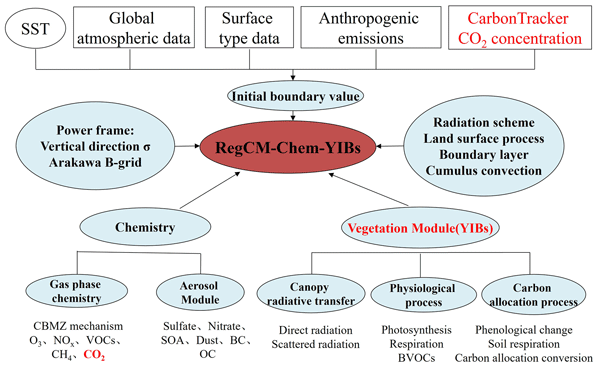
For the first time, we coupled a regional climate chemistry model, RegCM-Chem, with a dynamic vegetation model, YIBs, to create a regional climate–chemistry–ecology model, RegCM-Chem–YIBs. We applied it to simulate climatic, chemical, and ecological parameters in East Asia and fully validated it on a variety of observational data. Results show that RegCM-Chem–YIBs model is a valuable tool for studying the terrestrial carbon cycle, atmospheric chemistry, and climate change on a regional scale.
Zihan Xia, Chun Zhao, Chen Jin, Xin Qu, Zining Yang, Ziyu Zhang, Qike Yang, Jun Gu, Gudongze Li, Jiawang Feng, Shen Du, and Jane Liu
EGUsphere, https://doi.org/10.5194/egusphere-2026-4483, https://doi.org/10.5194/egusphere-2026-4483, 2026
This preprint is open for discussion and under review for Geoscientific Model Development (GMD).
Short summary
Short summary
To study multiscale air pollution, we developed an online gas-phase chemistry framework in a global variable-resolution atmospheric model. Comparing simulations using a global 60km grid and a 4km refinement over North China, we found that regional refinement reverses nighttime ozone errors over complex terrain by capturing slope winds and local nitrogen oxide emissions. It also corrects daily ozone cycles, showing that mesh refinement alters coupled physical and chemical processes across scales.
Raghav Sharma, Frank Zhang, Jane Liu, and Baoxin Hu
ISPRS Ann. Photogramm. Remote Sens. Spatial Inf. Sci., XI-2-2026, 511–516, https://doi.org/10.5194/isprs-annals-XI-2-2026-511-2026, https://doi.org/10.5194/isprs-annals-XI-2-2026-511-2026, 2026
Peng Gao, Bingliang Zhuang, Yaxin Hu, Yinan Zhou, Runqi Zhao, Qianqian Wang, Shu Li, Tijian Wang, Mengmeng Li, and Min Xie
EGUsphere, https://doi.org/10.5194/egusphere-2026-2776, https://doi.org/10.5194/egusphere-2026-2776, 2026
Short summary
Short summary
In this study, we incorporate a dynamic black carbon aerosols (BC) aging scheme into a regional climate model to assess the BC climate effects over East Asia during summer. Results indicate that variations in the aging rate can substantially influence BC loadings and their optical and physical properties. Furthermore, BC radiative forcing and regional climate responses are further evaluated, providing deeper insights into the interactions between air pollution and climate change in East Asia.

Yuwen Li, Wuhu Feng, John M. C. Plane, Tijian Wang, and Martyn P. Chipperfield
Atmos. Chem. Phys., 26, 3621–3635, https://doi.org/10.5194/acp-26-3621-2026, https://doi.org/10.5194/acp-26-3621-2026, 2026
Short summary
Short summary
The space industry is growing rapidly, but its environmental effects remain uncertain. We used a global chemistry-climate model to study how chlorine released by rocket launches could affect the ozone layer and its recovery from past depletion. Even with large growth in launches, global ozone loss remains small but could locally slow the healing of the ozone layer. These findings highlight the need to consider rocket emissions in future environmental policies.
Shengxuan Ji, Yawei Qu, Cheng Yuan, Tijian Wang, Bing Liu, Lili Zhu, Huihui Zheng, Zhenfeng Qiu, and Pulong Chen
EGUsphere, https://doi.org/10.5194/egusphere-2025-5589, https://doi.org/10.5194/egusphere-2025-5589, 2026
Short summary
Short summary
This study introduces BiXiao, an artificial intelligence model that forecasts air pollution by combining weather data and observations from monitoring stations. Tested in northern China, BiXiao can produce city-scale air-quality forecasts within seconds and is more accurate than traditional numerical models. The work shows how artificial intelligence can enhance environmental forecasting and support cleaner air and public health.
Yasong Li, Chen Li, Yaoyu Li, Tijian Wang, Mengmeng Li, Yawei Qu, Hao Wu, Min Xie, and Yanjin Wang
Atmos. Chem. Phys., 26, 1301–1319, https://doi.org/10.5194/acp-26-1301-2026, https://doi.org/10.5194/acp-26-1301-2026, 2026
Short summary
Short summary
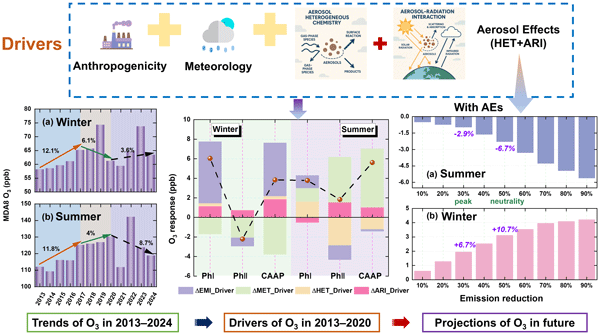
Over the past decade, ozone levels have risen in China despite cleaner air. Using an improved atmospheric model, we show that changes in tiny airborne particles influence ozone differently in winter and summer: reduced particles boost winter ozone through sunlight-driven reactions, while summer ozone responds to chemical reactions on particle surfaces. These findings highlight the need to consider particle-ozone interactions in air quality and climate policies to avoid unintended effects.
Haoran Zhang, Chengchun Shi, Chuanyou Ying, Shengheng Weng, Erling Ni, Lanbu Zhao, Peiheng Yang, Keqin Tang, Xueyu Zhou, Chuanhua Ren, Xuguang Chi, Derong Zhou, Mengmeng Li, Nan Li, Tengyu Liu, and Xin Huang
Atmos. Chem. Phys., 25, 16797–16816, https://doi.org/10.5194/acp-25-16797-2025, https://doi.org/10.5194/acp-25-16797-2025, 2025
Short summary
Short summary
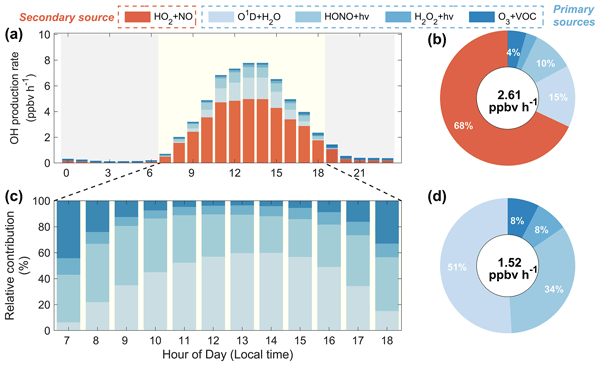
This study reports a unique diurnal pattern of nitrous acid (HONO), featuring higher concentrations around noon, based on one-month measurements in coastal Fujian, southeast China. Using an improved chemical transport model, we successfully reproduced the observed HONO levels and temporal variations. Further process analyses and sensitivity experiments quantified the formation mechanisms of HONO in coastal areas and shed light on its impact on the formation of OH radicals and ozone.
Shengjun Xi, Yuhang Wang, Xiangyang Yuan, Zhaozhong Feng, Fanghe Zhao, Yanli Zhang, and Xinming Wang
Geosci. Model Dev., 18, 8627–8649, https://doi.org/10.5194/gmd-18-8627-2025, https://doi.org/10.5194/gmd-18-8627-2025, 2025
Short summary
Short summary
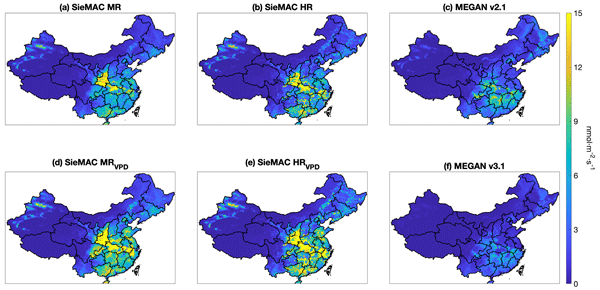
We developed the Speciated Isoprene Emission Model with Model of Emissions of Gases and Aerosols from Nature Algorithm for China to improve biogenic emission estimates using updated vegetation data and local measurements. The model predicts summer 2013 emissions of 10.92–11.37 teragrams of carbon. Validation shows our model performs better than the existing models, revealing underestimated isoprene impacts on ozone pollution in eastern China.
Mengzhu Xi, Min Xie, Da Gao, Danyang Ma, Yi Luo, Lingyun Feng, Shitong Chen, and Shuxian Zhang
Atmos. Chem. Phys., 25, 14573–14590, https://doi.org/10.5194/acp-25-14573-2025, https://doi.org/10.5194/acp-25-14573-2025, 2025
Short summary
Short summary
Tropical cyclones (TCs) have a significant impact on ozone in coastal areas by affecting atmospheric circulation and meteorological conditions. We have studied the impact and future trends of climate change in the Yangtze River Delta region and found that the intensification of climate change will exacerbate the impact of TCs on O3 in the Yangtze River Delta, requiring strengthened monitoring and early warning.
Beiyao Xu, Steven Dobbie, Huiyi Yang, Lianxin Yang, Yu Jiang, Andrew Challinor, Karina Williams, Yunxia Wang, and Tijian Wang
Geosci. Model Dev., 18, 7257–7273, https://doi.org/10.5194/gmd-18-7257-2025, https://doi.org/10.5194/gmd-18-7257-2025, 2025
Short summary
Short summary
Ozone (O3) pollution harms rice production and threatens food security. To understand these impacts, we calibrated a crop model using unique data from experiments where rice was grown in open fields under controlled O3 exposure (free air). This is the first time such data have been used to improve a model's ability to predict how rice responds to O3 pollution. Our work provides a more accurate tool to study O3's effects and guide strategies to protect agriculture.

Danyang Ma, Min Xie, Huan He, Tijian Wang, Mengzhu Xi, Lingyun Feng, Shuxian Zhang, and Shitong Chen
Atmos. Chem. Phys., 25, 12069–12086, https://doi.org/10.5194/acp-25-12069-2025, https://doi.org/10.5194/acp-25-12069-2025, 2025
Short summary
Short summary
The PM2.5 concentration in China underwent significant changes in 2013. We examined the underlying causes from three perspectives: anthropogenic pollutant emissions, meteorological conditions, and CO2 concentration variations. Our study highlighted the importance of considering the role of CO2 in vegetation when predicting PM2.5 concentrations and developing corresponding control strategies.
Hua Lu, Min Xie, Nan Wang, Bojun Liu, Jinyue Jiang, Bingliang Zhuang, Ying Zhang, Meixuan Wu, Jianfeng Yang, Kunqin Lv, and Danyang Ma
Atmos. Chem. Phys., 25, 10141–10158, https://doi.org/10.5194/acp-25-10141-2025, https://doi.org/10.5194/acp-25-10141-2025, 2025
Short summary
Short summary
Fires are important sources of air pollution in many regions. This study isolates fire-specific PM2.5 from observations, showing its increasing proportion in recent years. Our findings indicate that fire-specific PM2.5 disproportionately affects impoverished populations in the Asia Pacific. Furthermore, we suggest that, under future climate change, fire-specific PM2.5 will likely continue rising. This highlights the need for interventions to reduce fire-related air pollution and its health impacts.
Roeland Van Malderen, Zhou Zang, Kai-Lan Chang, Robin Björklund, Owen R. Cooper, Jane Liu, Eliane Maillard Barras, Corinne Vigouroux, Irina Petropavlovskikh, Thierry Leblanc, Valérie Thouret, Pawel Wolff, Peter Effertz, Audrey Gaudel, David W. Tarasick, Herman G. J. Smit, Anne M. Thompson, Ryan M. Stauffer, Debra E. Kollonige, Deniz Poyraz, Gérard Ancellet, Marie-Renée De Backer, Matthias M. Frey, James W. Hannigan, José L. Hernandez, Bryan J. Johnson, Nicholas Jones, Rigel Kivi, Emmanuel Mahieu, Isamu Morino, Glen McConville, Katrin Müller, Isao Murata, Justus Notholt, Ankie Piters, Maxime Prignon, Richard Querel, Vincenzo Rizi, Dan Smale, Wolfgang Steinbrecht, Kimberly Strong, and Ralf Sussmann
Atmos. Chem. Phys., 25, 9905–9935, https://doi.org/10.5194/acp-25-9905-2025, https://doi.org/10.5194/acp-25-9905-2025, 2025
Short summary
Short summary
Tropospheric ozone is an important greenhouse gas and an air pollutant whose distribution and time variability are mainly governed by anthropogenic emissions and dynamics. In this paper, we assess regional trends of tropospheric ozone column amounts, based on two different approaches of merging or synthesizing ground-based observations and their trends within specific regions. Our findings clearly demonstrate regional trend differences but also consistently higher pre-COVID than post-COVID trends.
Xin Zeng, Tijian Wang, Congwu Huang, Bingliang Zhuang, Shu Li, Mengmeng Li, Min Xie, Qian Zhang, and Nanhong Xie
EGUsphere, https://doi.org/10.5194/egusphere-2025-608, https://doi.org/10.5194/egusphere-2025-608, 2025
Preprint archived
Short summary
Short summary
In this study, we enhanced the regional climate-chemistry-ecology model to reveal the seasonal and spatial variations of N2O levels. The lowest concentration was recorded in June (334.01 ppb), while the highest occurred in December (335.42 ppb). Certain regions, such as the North China Plain and the Ganges Basin, exhibited higher nitrous oxide levels. We also gained deeper insights into the complex interactions between N2O emissions and atmospheric processes.
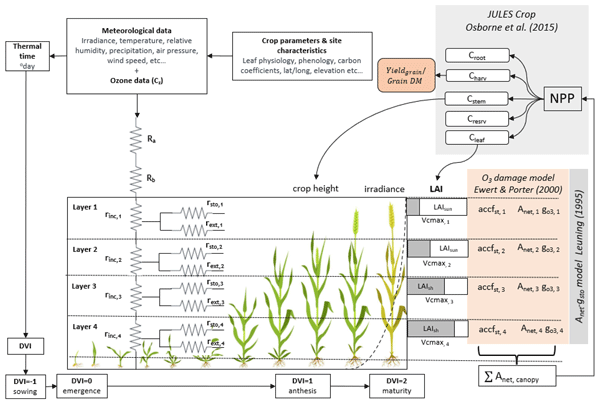
Pritha Pande, Sam Bland, Nathan Booth, Jo Cook, Zhaozhong Feng, and Lisa Emberson
Biogeosciences, 22, 181–212, https://doi.org/10.5194/bg-22-181-2025, https://doi.org/10.5194/bg-22-181-2025, 2025
Short summary
Short summary
The DO3SE-Crop model extends the DO3SE to simulate ozone's impact on crops with modules for ozone uptake, damage, and crop growth from JULES-crop. It's versatile, suits China's varied agriculture, and improves yield predictions under ozone stress. It is essential for policy, water management, and climate response, and it integrates into Earth system models for a comprehensive understanding of agriculture's interaction with global systems.
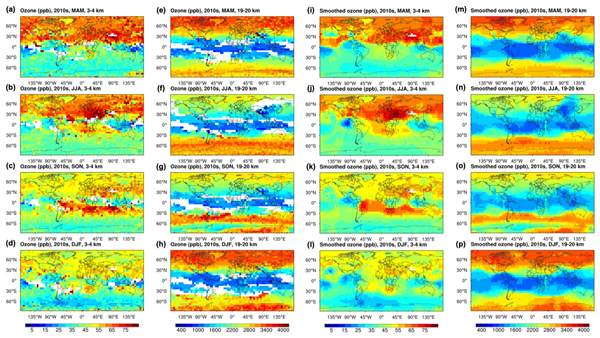
Zhou Zang, Jane Liu, David Tarasick, Omid Moeini, Jianchun Bian, Jinqiang Zhang, Anne M. Thompson, Roeland Van Malderen, Herman G. J. Smit, Ryan M. Stauffer, Bryan J. Johnson, and Debra E. Kollonige
Atmos. Chem. Phys., 24, 13889–13912, https://doi.org/10.5194/acp-24-13889-2024, https://doi.org/10.5194/acp-24-13889-2024, 2024
Short summary
Short summary
The Trajectory-mapped Ozonesonde dataset for the Stratosphere and Troposphere (TOST) provides a global-scale, long-term ozone climatology that is horizontally and vertically resolved. In this study, we improved, updated and validated TOST from 1970 to 2021. Based on this TOST dataset, we characterized global ozone variations spatially in both the troposphere and stratosphere and temporally by season and decade. We also showed a stagnant lower stratospheric ozone variation since the late 1990s.
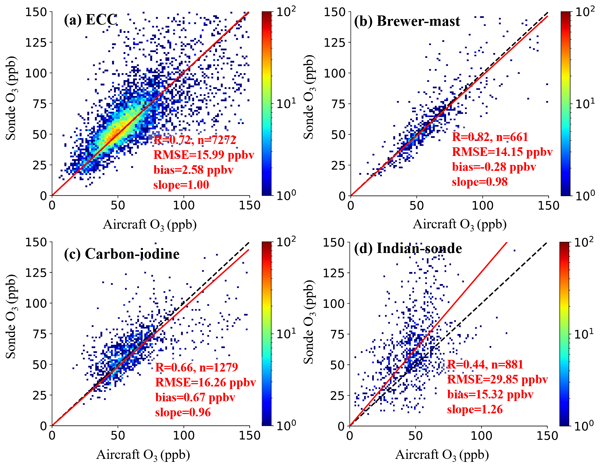
Honglei Wang, David W. Tarasick, Jane Liu, Herman G. J. Smit, Roeland Van Malderen, Lijuan Shen, Romain Blot, and Tianliang Zhao
Atmos. Chem. Phys., 24, 11927–11942, https://doi.org/10.5194/acp-24-11927-2024, https://doi.org/10.5194/acp-24-11927-2024, 2024
Short summary
Short summary
In this study, we identify 23 suitable pairs of sites from World Ozone and Ultraviolet Radiation Data Centre (WOUDC) and In-service Aircraft for a Global Observing System (IAGOS) datasets (1995 to 2021), compare the average vertical distributions of tropospheric O3 from ozonesonde and aircraft measurements, and analyze the differences based on ozonesonde type and station–airport distance.
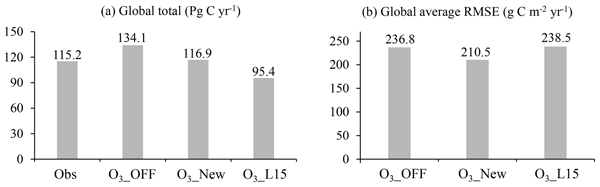
Fang Li, Zhimin Zhou, Samuel Levis, Stephen Sitch, Felicity Hayes, Zhaozhong Feng, Peter B. Reich, Zhiyi Zhao, and Yanqing Zhou
Geosci. Model Dev., 17, 6173–6193, https://doi.org/10.5194/gmd-17-6173-2024, https://doi.org/10.5194/gmd-17-6173-2024, 2024
Short summary
Short summary
A new scheme is developed to model the surface ozone damage to vegetation in regional and global process-based models. Based on 4210 data points from ozone experiments, it accurately reproduces statistically significant linear or nonlinear photosynthetic and stomatal responses to ozone in observations for all vegetation types. It also enables models to implicitly capture the variability in plant ozone tolerance and the shift among species within a vegetation type.
Hua Lu, Min Xie, Bingliang Zhuang, Danyang Ma, Bojun Liu, Yangzhihao Zhan, Tijian Wang, Shu Li, Mengmeng Li, and Kuanguang Zhu
Atmos. Chem. Phys., 24, 8963–8982, https://doi.org/10.5194/acp-24-8963-2024, https://doi.org/10.5194/acp-24-8963-2024, 2024
Short summary
Short summary
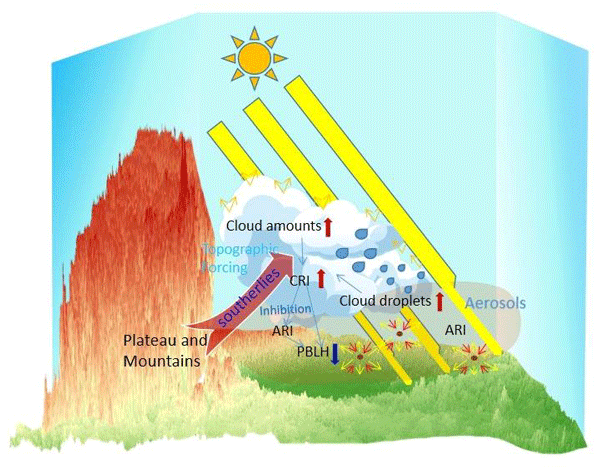
To identify cloud, aerosol, and planetary boundary layer (PBL) interactions from an air quality perspective, we summarized two pollution patterns characterized by denser liquid cloud and by obvious cloud radiation interaction (CRI). Numerical simulation experiments showed CRI could cause a 50 % reduction in aerosol radiation interaction (ARI) under a low-trough system. The results emphasized the nonnegligible role of CRI and its inhibition of ARI under wet and cloudy pollution synoptic patterns.
Tong Sha, Siyu Yang, Qingcai Chen, Liangqing Li, Xiaoyan Ma, Yan-Lin Zhang, Zhaozhong Feng, K. Folkert Boersma, and Jun Wang
Atmos. Chem. Phys., 24, 8441–8455, https://doi.org/10.5194/acp-24-8441-2024, https://doi.org/10.5194/acp-24-8441-2024, 2024
Short summary
Short summary
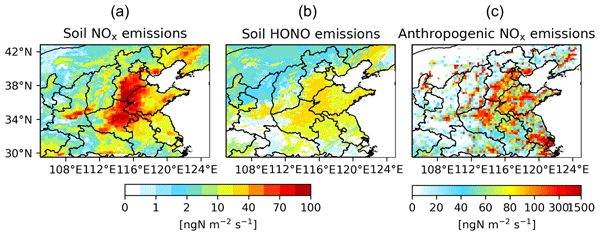
Using an updated soil reactive nitrogen emission scheme in the Unified Inputs for Weather Research and Forecasting coupled with Chemistry (UI-WRF-Chem) model, we investigate the role of soil NO and HONO (Nr) emissions in air quality and temperature in North China. Contributions of soil Nr emissions to O3 and secondary pollutants are revealed, exceeding effects of soil NOx or HONO emission. Soil Nr emissions play an important role in mitigating O3 pollution and addressing climate change.
Nanhong Xie, Tijian Wang, Xiaodong Xie, Xu Yue, Filippo Giorgi, Qian Zhang, Danyang Ma, Rong Song, Beiyao Xu, Shu Li, Bingliang Zhuang, Mengmeng Li, Min Xie, Natalya Andreeva Kilifarska, Georgi Gadzhev, and Reneta Dimitrova
Geosci. Model Dev., 17, 3259–3277, https://doi.org/10.5194/gmd-17-3259-2024, https://doi.org/10.5194/gmd-17-3259-2024, 2024
Short summary
Short summary
For the first time, we coupled a regional climate chemistry model, RegCM-Chem, with a dynamic vegetation model, YIBs, to create a regional climate–chemistry–ecology model, RegCM-Chem–YIBs. We applied it to simulate climatic, chemical, and ecological parameters in East Asia and fully validated it on a variety of observational data. Results show that RegCM-Chem–YIBs model is a valuable tool for studying the terrestrial carbon cycle, atmospheric chemistry, and climate change on a regional scale.
Jiye Leng, Jing M. Chen, Wenyu Li, Xiangzhong Luo, Mingzhu Xu, Jane Liu, Rong Wang, Cheryl Rogers, Bolun Li, and Yulin Yan
Earth Syst. Sci. Data, 16, 1283–1300, https://doi.org/10.5194/essd-16-1283-2024, https://doi.org/10.5194/essd-16-1283-2024, 2024
Short summary
Short summary
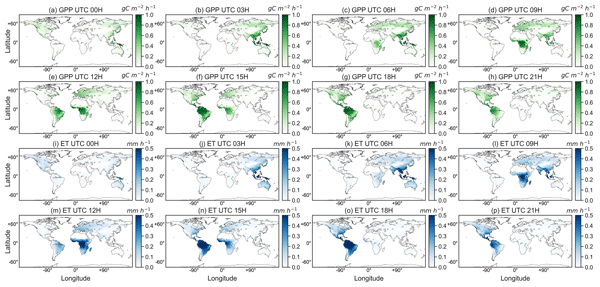
We produced a long-term global two-leaf gross primary productivity (GPP) and evapotranspiration (ET) dataset at the hourly time step by integrating a diagnostic process-based model with dynamic parameterizations. The new dataset provides us with a unique opportunity to study carbon and water fluxes at sub-daily time scales and advance our understanding of ecosystem functions in response to transient environmental changes.
Shiyi Lai, Ximeng Qi, Xin Huang, Sijia Lou, Xuguang Chi, Liangduo Chen, Chong Liu, Yuliang Liu, Chao Yan, Mengmeng Li, Tengyu Liu, Wei Nie, Veli-Matti Kerminen, Tuukka Petäjä, Markku Kulmala, and Aijun Ding
Atmos. Chem. Phys., 24, 2535–2553, https://doi.org/10.5194/acp-24-2535-2024, https://doi.org/10.5194/acp-24-2535-2024, 2024
Short summary
Short summary
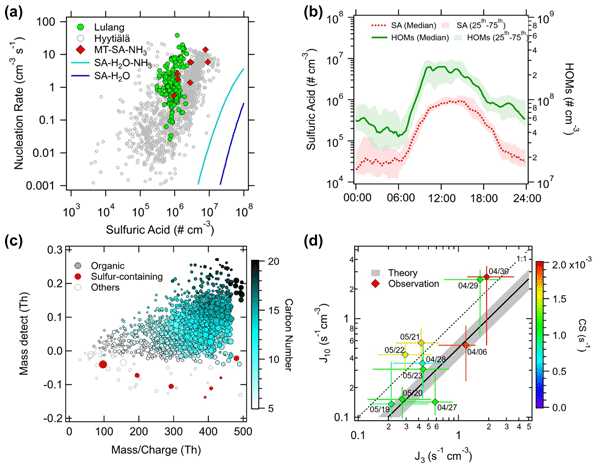
By combining in situ measurements and chemical transport modeling, this study investigates new particle formation (NPF) on the southeastern Tibetan Plateau. We found that the NPF was driven by the presence of biogenic gases and the transport of anthropogenic precursors. The NPF was vertically heterogeneous and shaped by the vertical mixing. This study highlights the importance of anthropogenic–biogenic interactions and meteorological dynamics in NPF in this climate-sensitive region.
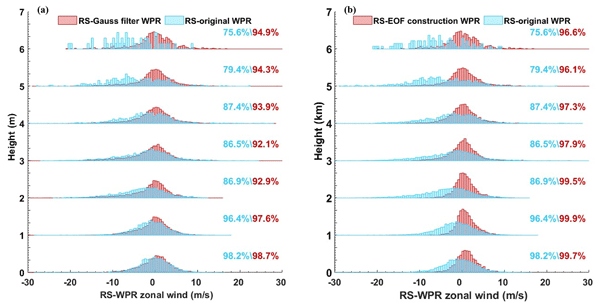
Hua Lu, Min Xie, Wei Zhao, Bojun Liu, Tijian Wang, and Bingliang Zhuang
Atmos. Meas. Tech., 17, 167–179, https://doi.org/10.5194/amt-17-167-2024, https://doi.org/10.5194/amt-17-167-2024, 2024
Short summary
Short summary
Observations of vertical wind in regions with complex terrain are essential, but they are always sparse and have poor representation. Data verification and quality control are conducted on the wind profile radar and Aeolus wind products in this study, trying to compensate for the limitations of wind field observations. The results shed light on the comprehensive applications of multi-source wind profile data in complicated terrain regions with sparse ground-based wind observations.
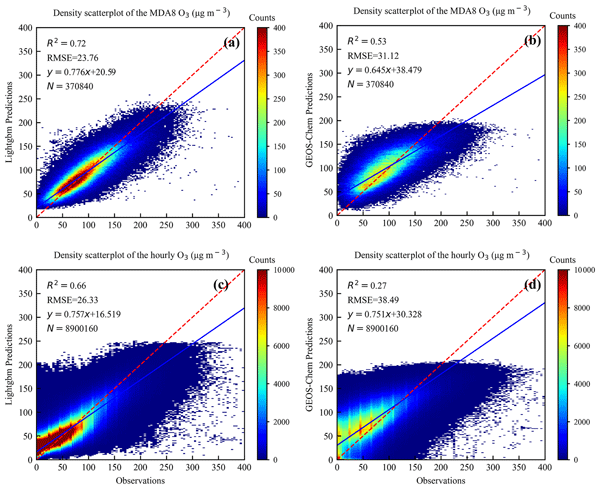
Jia Mao, Amos P. K. Tai, David H. Y. Yung, Tiangang Yuan, Kong T. Chau, and Zhaozhong Feng
Atmos. Chem. Phys., 24, 345–366, https://doi.org/10.5194/acp-24-345-2024, https://doi.org/10.5194/acp-24-345-2024, 2024
Short summary
Short summary
Surface ozone (O3) is well-known for posing great threats to both human health and agriculture worldwide. However, a multidecadal assessment of the impacts of O3 on public health and agriculture in China is lacking without sufficient O3 observations. We used a hybrid approach combining a chemical transport model and machine learning to provide a robust dataset of O3 concentrations over the past 4 decades in China, thereby filling the gap in the long-term O3 trend and impact assessment in China.
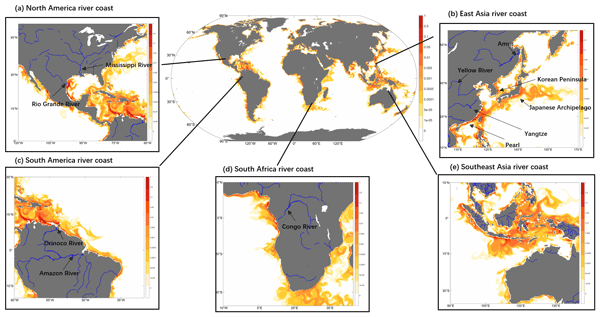
Siyu Zhu, Peipei Wu, Siyi Zhang, Oliver Jahn, Shu Li, and Yanxu Zhang
Geosci. Model Dev., 16, 5915–5929, https://doi.org/10.5194/gmd-16-5915-2023, https://doi.org/10.5194/gmd-16-5915-2023, 2023
Short summary
Short summary
In this study, we estimate the global biogeochemical cycling of Hg in a state-of-the-art physical-ecosystem ocean model (high-resolution-MITgcm/Hg), providing a more accurate portrayal of surface Hg concentrations in estuarine and coastal areas, strong western boundary flow and upwelling areas, and concentration diffusion as vortex shapes. The high-resolution model can help us better predict the transport and fate of Hg in the ocean and its impact on the global Hg cycle.
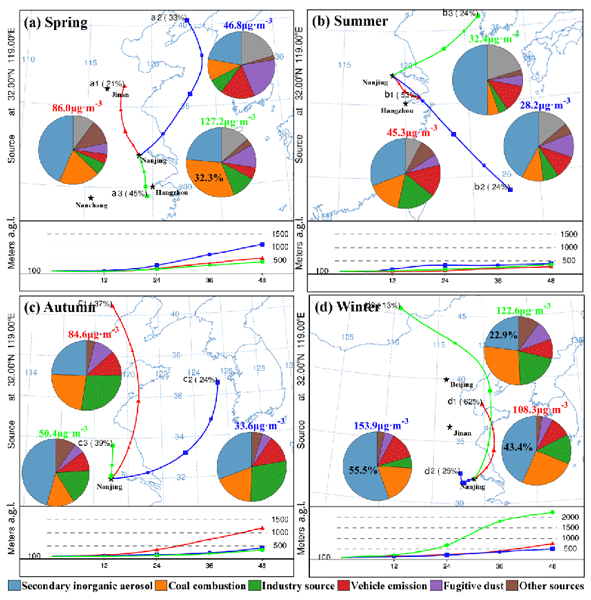
Yangzhihao Zhan, Min Xie, Wei Zhao, Tijian Wang, Da Gao, Pulong Chen, Jun Tian, Kuanguang Zhu, Shu Li, Bingliang Zhuang, Mengmeng Li, Yi Luo, and Runqi Zhao
Atmos. Chem. Phys., 23, 9837–9852, https://doi.org/10.5194/acp-23-9837-2023, https://doi.org/10.5194/acp-23-9837-2023, 2023
Short summary
Short summary
Although the main source contribution of pollution is secondary inorganic aerosols in Nanjing, health risks mainly come from industry sources and vehicle emissions. Therefore, the development of megacities should pay more attention to the health burden of vehicle emissions, coal combustion, and industrial processes. This study provides new insight into assessing the relationship between source apportionment and health risks and can provide valuable insight into air pollution strategies.
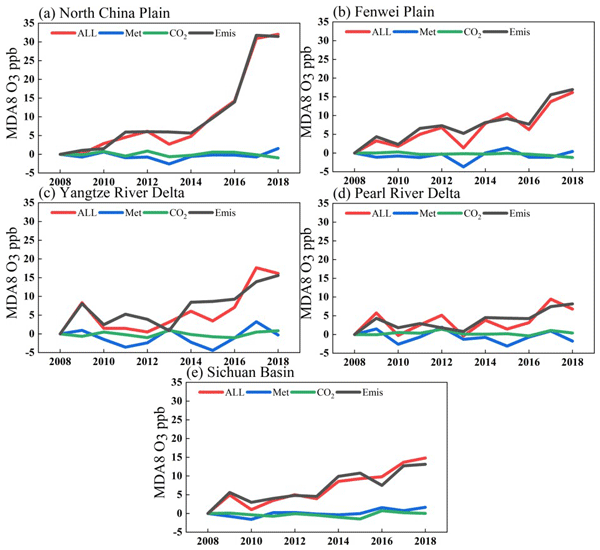
Danyang Ma, Tijian Wang, Hao Wu, Yawei Qu, Jian Liu, Jane Liu, Shu Li, Bingliang Zhuang, Mengmeng Li, and Min Xie
Atmos. Chem. Phys., 23, 6525–6544, https://doi.org/10.5194/acp-23-6525-2023, https://doi.org/10.5194/acp-23-6525-2023, 2023
Short summary
Short summary
Increasing surface ozone (O3) concentrations have long been a significant environmental issue in China, despite the Clean Air Action Plan launched in 2013. Most previous research ignores the contributions of CO2 variations. Our study comprehensively analyzed O3 variation across China from various perspectives and highlighted the importance of considering CO2 variations when designing long-term O3 control policies, especially in high-vegetation-coverage areas.
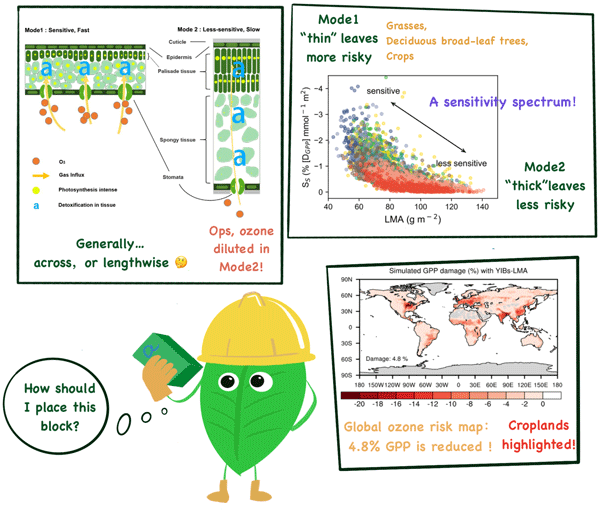
Yimian Ma, Xu Yue, Stephen Sitch, Nadine Unger, Johan Uddling, Lina M. Mercado, Cheng Gong, Zhaozhong Feng, Huiyi Yang, Hao Zhou, Chenguang Tian, Yang Cao, Yadong Lei, Alexander W. Cheesman, Yansen Xu, and Maria Carolina Duran Rojas
Geosci. Model Dev., 16, 2261–2276, https://doi.org/10.5194/gmd-16-2261-2023, https://doi.org/10.5194/gmd-16-2261-2023, 2023
Short summary
Short summary
Plants have been found to respond differently to O3, but the variations in the sensitivities have rarely been explained nor fully implemented in large-scale assessment. This study proposes a new O3 damage scheme with leaf mass per area to unify varied sensitivities for all plant species. Our assessment reveals an O3-induced reduction of 4.8 % in global GPP, with the highest reduction of >10 % for cropland, suggesting an emerging risk of crop yield loss under the threat of O3 pollution.
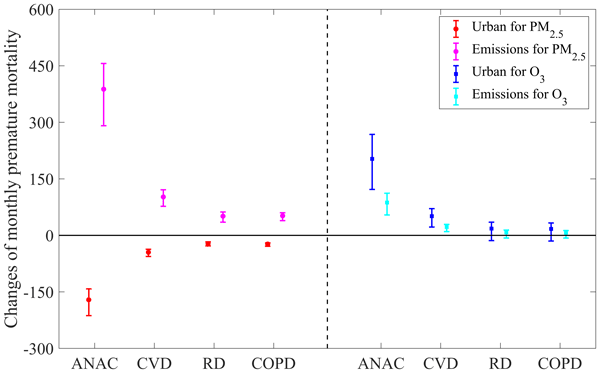
Chenchao Zhan, Min Xie, Hua Lu, Bojun Liu, Zheng Wu, Tijian Wang, Bingliang Zhuang, Mengmeng Li, and Shu Li
Atmos. Chem. Phys., 23, 771–788, https://doi.org/10.5194/acp-23-771-2023, https://doi.org/10.5194/acp-23-771-2023, 2023
Short summary
Short summary
With the development of urbanization, urban land use and anthropogenic
emissions increase, affecting urban air quality and, in turn, the health risks associated with air pollutants. In this study, we systematically evaluate the impacts of urbanization on air quality and the corresponding health risks in a highly urbanized city with severe air pollution and complex terrain. This work focuses on the health risks caused by urbanization and can provide valuable insight for air pollution strategies.

Shiyue Zhang, Gang Zeng, Tijian Wang, Xiaoye Yang, and Vedaste Iyakaremye
Atmos. Chem. Phys., 22, 16017–16030, https://doi.org/10.5194/acp-22-16017-2022, https://doi.org/10.5194/acp-22-16017-2022, 2022
Short summary
Short summary
Severe haze days in eastern China (HDEC) are affected by the atmospheric circulation variations on a synoptic scale, while the dominant atmospheric circulation patterns influencing HDEC and the differences between them are still unclear. This study obtains three dominant circulation types that could lead to severe HDEC and investigates the differences between them. The results provide a basis for establishing applicable haze prediction and management policies.
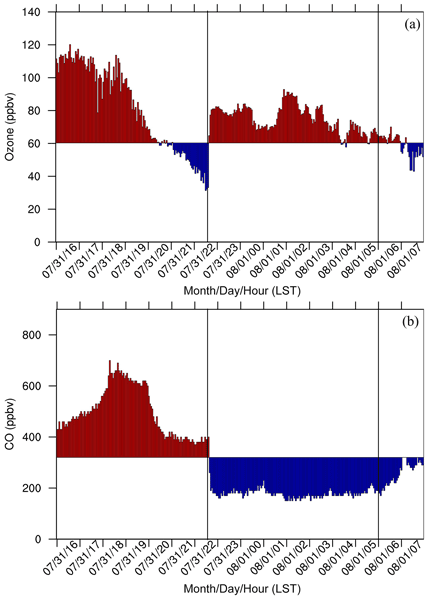
Zhixiong Chen, Jane Liu, Xiushu Qie, Xugeng Cheng, Yukun Shen, Mengmiao Yang, Rubin Jiang, and Xiangke Liu
Atmos. Chem. Phys., 22, 8221–8240, https://doi.org/10.5194/acp-22-8221-2022, https://doi.org/10.5194/acp-22-8221-2022, 2022
Short summary
Short summary
A vigorous surface ozone surge event of stratospheric origin occurred in the North China Plain at night. Surface ozone concentrations were 40–50 ppbv higher than the corresponding monthly mean, whereas surface carbon monoxide concentrations declined abruptly, which confirmed the direct stratospheric intrusions to the surface. We further addressed the notion that a combined effect of the dying typhoon and mesoscale convective systems was responsible for this vigorous ozone surge.
Chenchao Zhan and Min Xie
Atmos. Chem. Phys., 22, 1351–1371, https://doi.org/10.5194/acp-22-1351-2022, https://doi.org/10.5194/acp-22-1351-2022, 2022
Short summary
Short summary
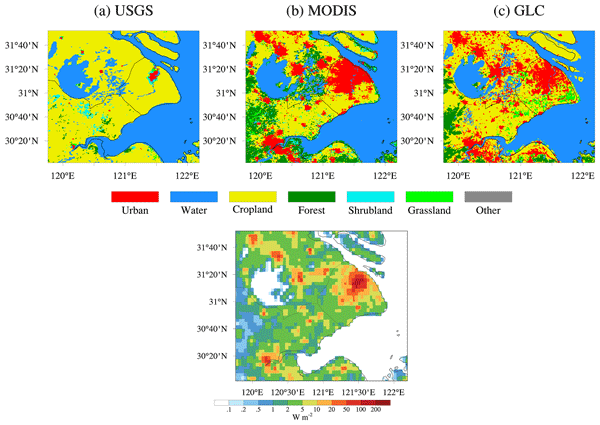
The changes of land use and anthropogenic heat (AH) derived from urbanization can affect meteorology and in turn O3 evolution. In this study, we briefly describe the general features of O3 pollution in the Yangtze River Delta (YRD) based on in situ observational data. Then, the impacts of land use and anthropogenic heat on O3 via changing the meteorological factors and local circulations are investigated in this region using the WRF-Chem model.
Zhixiong Chen, Jane Liu, Xugeng Cheng, Mengmiao Yang, and Hong Wang
Atmos. Chem. Phys., 21, 16911–16923, https://doi.org/10.5194/acp-21-16911-2021, https://doi.org/10.5194/acp-21-16911-2021, 2021
Short summary
Short summary
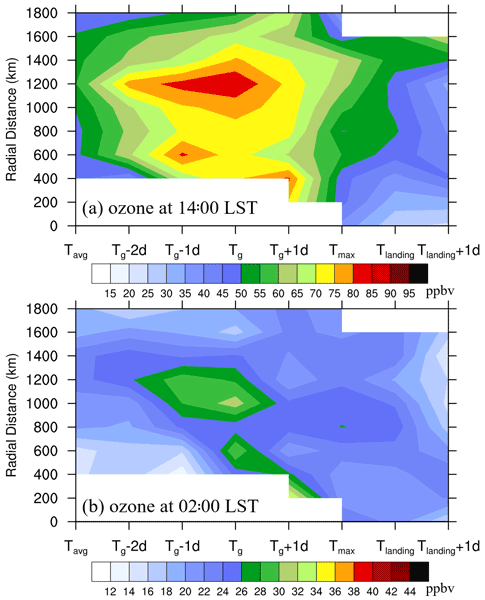
Using a large ensemble of typhoons, we investigate the impacts of evolving typhoons on tropospheric ozone and address the linkages between typhoon-affected meteorological conditions and ozone variations. The influences of typhoon-induced stratospheric intrusions on lower-troposphere ozone are also quantified. Thus, the results obtained in this study have important implications for a full understanding of the multifaced roles of typhoons in modulating tropospheric ozone variation.
Mengmeng Li, Zihan Zhang, Quan Yao, Tijian Wang, Min Xie, Shu Li, Bingliang Zhuang, and Yong Han
Atmos. Chem. Phys., 21, 15135–15152, https://doi.org/10.5194/acp-21-15135-2021, https://doi.org/10.5194/acp-21-15135-2021, 2021
Short summary
Short summary
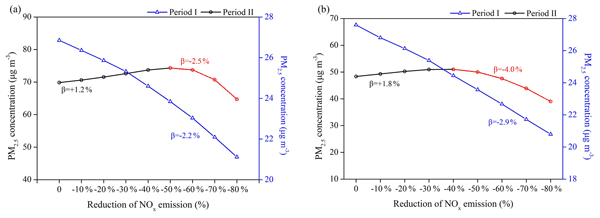
We establish the nonlinear responses between nitrate and NOx in China. Reduction of NOx results in linearly lower nitrate in summer–autumn whereas an increase of winter nitrate until an inflexion point at 40–50 % reduction due to the excess oxidants. NH3 and VOCs are effective in controlling nitrate pollution, whereas decreasing the SO2 and NOx emissions may have counterintuitive effects on nitrate aerosols. This paper helps understand the nonlinear aerosol and photochemistry feedback.
Cited articles
Cao, S., He, Y., Zhang, L., Sun, Q., Zhang, Y., Li, H., Wei, X., and Liu, Y.: Spatiotemporal dynamics of vegetation net ecosystem productivity and its response to drought in Northwest China, GISci. Remote Sens., 60, 2194597, https://doi.org/10.1080/15481603.2023.2194597, 2023.
Cen, X., He, N., Van Sundert, K., Yu, K., Li, M., Xu, L., He, L., and Butterbach-Bahl, K.: Global patterns of nitrogen saturation in forests, One Earth, 8, https://doi.org/10.1016/j.oneear.2024.10.007, 2025.
Chen, H., Li, D., Gurmesa, G. A., Yu, G., Li, L., Zhang, W., Fang, H., and Mo, J.: Effects of nitrogen deposition on carbon cycle in terrestrial ecosystems of China: A meta-analysis, Environ. Pollut., 206, 352–360, https://doi.org/10.1016/j.envpol.2015.07.033, 2015.
Dee, D. P., Uppala, S. M., Simmons, A. J., Berrisford, P., Poli, P., Kobayashi, S., Andrae, U., Balmaseda, M. A., Balsamo, G., Bauer, P., Bechtold, P., Beljaars, A. C. M., van de Berg, L., Bidlot, J., Bormann, N., Delsol, C., Dragani, R., Fuentes, M., Geer, A. J., Haimberger, L., Healy, S. B., Hersbach, H., Hólm, E. V., Isaksen, L., Kållberg, P., Köhler, M., Matricardi, M., McNally, A. P., Monge-Sanz, B. M., Morcrette, J. J., Park, B. K., Peubey, C., de Rosnay, P., Tavolato, C., Thépaut, J. N., and Vitart, F.: The ERA-Interim reanalysis: configuration and performance of the data assimilation system, Q. J. Roy. Meteor. Soc., 137, 553–597, https://doi.org/10.1002/qj.828, 2011a.
Dee, D. P., Uppala, S. M., Simmons, A. J., Berrisford, P., Poli, P., Kobayashi, S., Andrae, U., Balmaseda, M. A., Balsamo, G., Bauer, P., Bechtold, P., Beljaars, A. C. M., van de Berg, L., Bidlot, J., Bormann, N., Delsol, C., Dragani, R., Fuentes, M., Geer, A. J., Haimberger, L., Healy, S. B., Hersbach, H., Hólm, E. V., Isaksen, L., Kållberg, P., Köhler, M., Matricardi, M., McNally, A. P., Monge-Sanz, B. M., Morcrette, J.-J., Park, B.-K., Peubey, C., de Rosnay, P., Tavolato, C., Thépaut, J.-N., and Vitart, F.: ERA-Interim global atmospheric reanalysis, Copernicus Climate Change Service (C3S) Climate Data Store (CDS) [data set], https://doi.org/10.24381/cds.f2f5241d, 2011b.
Doughty, C. E., Flanner, M. G., and Goulden, M. L.: Effect of smoke on subcanopy shaded light, canopy temperature, and carbon dioxide uptake in an Amazon rainforest, Global Biogeochem. Cy., 24, https://doi.org/10.1029/2009gb003670, 2010.
Emmons, L. K., Walters, S., Hess, P. G., Lamarque, J.-F., Pfister, G. G., Fillmore, D., Granier, C., Guenther, A., Kinnison, D., Laepple, T., Orlando, J., Tie, X., Tyndall, G., Wiedinmyer, C., Baughcum, S. L., and Kloster, S.: Description and evaluation of the Model for Ozone and Related chemical Tracers, version 4 (MOZART-4), Geosci. Model Dev., 3, 43–67, https://doi.org/10.5194/gmd-3-43-2010, 2010.
Feng, Z., Hu, E., Wang, X., Jiang, L., and Liu, X.: Ground-level O3 pollution and its impacts on food crops in China: A review, Environ. Pollut., 199, 42–48, https://doi.org/10.1016/j.envpol.2015.01.016, 2015.
Geng, G. N., Liu, Y. X., Liu, Y., Liu, S. G., Cheng, J., Yan, L., Wu, N. N., Hu, H. W., Tong, D., Zheng, B., Yin, Z. C., He, K. B., and Zhang, Q.: Efficacy of China's clean air actions to tackle PM2.5 pollution between 2013 and 2020, Nat. Geosci., 17, https://doi.org/10.1038/s41561-024-01540-z, 2024.
Giorgi, F., Coppola, E., Solmon, F., Mariotti, L., Sylla, M. B., Bi, X., Elguindi, N., Diro, G. T., Nair, V., Giuliani, G., Turuncoglu, U. U., Cozzini, S., Guttler, I., O'Brien, T. A., Tawfik, A. B., Shalaby, A., Zakey, A. S., Steiner, A. L., Stordal, F., Sloan, L. C., and Brankovic, C.: RegCM4: model description and preliminary tests over multiple CORDEX domains, Clim. Res., 52, 7–29, https://doi.org/10.3354/cr01018, 2012.
Gu, L. H., Baldocchi, D. D., Wofsy, S. C., Munger, J. W., Michalsky, J. J., Urbanski, S. P., and Boden, T. A.: Response of a deciduous forest to the Mount Pinatubo eruption: Enhanced photosynthesis, Science, 299, 2035–2038, https://doi.org/10.1126/science.1078366, 2003.
Hao, Y., Meng, X., Yu, X., Lei, M., Li, W., Yang, W., Shi, F., and Xie, S.: Quantification of primary and secondary sources to PM2.5 using an improved source regional apportionment method in an industrial city, China, Sci. Total Environ., 706, https://doi.org/10.1016/j.scitotenv.2019.135715, 2020.
Haywood, J. and Boucher, O.: Estimates of the direct and indirect radiative forcing due to tropospheric aerosols: A review, Rev. Geophys., 38, 513–543, https://doi.org/10.1029/1999rg000078, 2000.
He, M. Z., Kimball, J. S., Maneta, M. P., Maxwell, B. D., Moreno, A., Begueria, S., and Wu, X. C.: Regional Crop Gross Primary Productivity and Yield Estimation Using Fused Landsat-MODIS Data, Remote Sens., 10, 372, https://doi.org/10.3390/rs10030372, 2018.
Hersbach, H., Bell, B., Berrisford, P., Hirahara, S., Horányi, A., Muñoz-Sabater, J., Nicolas, J., Peubey, C., Radu, R., Schepers, D., Simmons, A., Soci, C., Abdalla, S., Abellan, X., Balsamo, G., Bechtold, P., Biavati, G., Bidlot, J., Bonavita, M., De Chiara, G., Dahlgren, P., Dee, D., Diamantakis, M., Dragani, R., Flemming, J., Forbes, R., Fuentes, M., Geer, A., Haimberger, L., Healy, S., Hogan, R. J., Hólm, E., Janisková, M., Keeley, S., Laloyaux, P., Lopez, P., Lupu, C., Radnoti, G., de Rosnay, P., Rozum, I., Vamborg, F., Villaume, S., and Thépaut, J. N.: The ERA5 global reanalysis, Q. J. Roy. Meteor. Soc., 146, 1999–2049, https://doi.org/10.1002/qj.3803, 2020.
Horowitz, L. W., Walters, S., Mauzerall, D. L., Emmons, L. K., Rasch, P. J., Granier, C., Tie, X. X., Lamarque, J. F., Schultz, M. G., Tyndall, G. S., Orlando, J. J., and Brasseur, G. P.: A global simulation of tropospheric ozone and related tracers: Description and evaluation of MOZART, version 2, J. Geophys. Res.-Atmos., 108, 4784, https://doi.org/10.1029/2002jd002853, 2003.
Jung, M., Reichstein, M., Schwalm, C. R., Huntingford, C., Sitch, S., Ahlstrom, A., Arneth, A., Camps-Valls, G., Ciais, P., Friedlingstein, P., Gans, F., Ichii, K., Ain, A. K. J., Kato, E., Papale, D., Poulter, B., Raduly, B., Rodenbeck, C., Tramontana, G., Viovy, N., Wang, Y.-P., Weber, U., Zaehle, S., and Zeng, N.: Compensatory water effects link yearly global land CO2 sink changes to temperature, Nature, 541, 516–520, https://doi.org/10.1038/nature20780, 2017.
Kong, L., Tang, X., Zhu, J., Wang, Z., Li, J., Wu, H., Wu, Q., Chen, H., Zhu, L., Wang, W., Liu, B., Wang, Q., Chen, D., Pan, Y., Song, T., Li, F., Zheng, H., Jia, G., Lu, M., Wu, L., and Carmichael, G. R.: A 6-year-long (2013–2018) high-resolution air quality reanalysis dataset in China based on the assimilation of surface observations from CNEMC, Earth Syst. Sci. Data, 13, 529–570, https://doi.org/10.5194/essd-13-529-2021, 2021.
Kuniyal, J. C. and Guleria, R. P.: The current state of aerosol-radiation interactions: A mini review, J. Aerosol Sci., 130, 45–54, https://doi.org/10.1016/j.jaerosci.2018.12.010, 2019.
Lan, X.: Atmospheric Carbon Dioxide Dry Air Mole Fractions from the NOAA GML Carbon Cycle Cooperative Global Air Sampling Network, 1968–2022, Version: 2023-08-28, NOAA Global Monitoring Laboratory [data set], https://doi.org/10.15138/wkgj-f215, 2023.
Lawrence, P. J. and Chase, T. N.: Representing a new MODIS consistent land surface in the Community Land Model (CLM 3.0), J. Geophys. Res.-Biogeo., 112, G01023, https://doi.org/10.1029/2006jg000168, 2007.
Lei, Y., Yue, X., Wang, Z., Liao, H., Zhang, L., Tian, C., Zhou, H., Zhong, J., Guo, L., Che, H., and Zhang, X.: Mitigating ozone damage to ecosystem productivity through sectoral and regional emission controls: a case study in the Yangtze River Delta, China, Environ. Res. Lett., 17, https://doi.org/10.1088/1748-9326/ac6ff7, 2022.
Levy, R. C., Mattoo, S., Munchak, L. A., Remer, L. A., Sayer, A. M., Patadia, F., and Hsu, N. C.: The Collection 6 MODIS aerosol products over land and ocean, Atmos. Meas. Tech., 6, 2989–3034, https://doi.org/10.5194/amt-6-2989-2013, 2013.
Li, M., Huang, X., Yan, D., Lai, S., Zhang, Z., Zhu, L., Lu, Y., Jiang, X., Wang, N., Wang, T., Song, Y., and Ding, A.: Coping with the concurrent heatwaves and ozone extremes in China under a warming climate, Sci. Bull., 69, 2938–2947, https://doi.org/10.1016/j.scib.2024.05.034, 2024.
Li, M., Liu, H., Geng, G. N., Hong, C. P., Liu, F., Song, Y., Tong, D., Zheng, B., Cui, H. Y., Man, H. Y., Zhang, Q., and He, K. B.: Anthropogenic emission inventories in China: a review, Natl. Sci. Rev., 4, 834–866, https://doi.org/10.1093/nsr/nwx150, 2017.
Li, X., Liang, H., and Cheng, W.: Spatio-Temporal Variation in AOD and Correlation Analysis with PAR and NPP in China from 2001 to 2017, Remote Sens., 12, https://doi.org/10.3390/rs12060976, 2020.
Liu, H., Liu, S., Xue, B., Lv, Z., Meng, Z., Yang, X., Xue, T., Yu, Q., and He, K.: Ground-level ozone pollution and its health impacts in China, Atmos. Environ., 173, 223–230, https://doi.org/10.1016/j.atmosenv.2017.11.014, 2018.
Liu, L., Wen, Z., Liu, S., Zhang, X., and Liu, X.: Decline in atmospheric nitrogen deposition in China between 2010 and 2020, Nat. Geosci., 17, https://doi.org/10.1038/s41561-024-01484-4, 2024.
Liu, M., Shang, F., Lu, X., Huang, X., Song, Y., Liu, B., Zhang, Q., Liu, X., Cao, J., Xu, T., Wang, T., Xu, Z., Xu, W., Liao, W., Kang, L., Cai, X., Zhang, H., Dai, Y., and Zhu, T.: Unexpected response of nitrogen deposition to nitrogen oxide controls and implications for land carbon sink, Nat. Commun., 13, https://doi.org/10.1038/s41467-022-30854-y, 2022.
Liu, X., Zhang, Y., Han, W., Tang, A., Shen, J., Cui, Z., Vitousek, P., Erisman, J. W., Goulding, K., Christie, P., Fangmeier, A., and Zhang, F.: Enhanced nitrogen deposition over China, Nature, 494, 459–462, https://doi.org/10.1038/nature11917, 2013.
Lu, X., Jiang, H., Liu, J., Zhang, X., Jin, J., Zhu, Q., Zhang, Z., and Peng, C.: Simulated effects of nitrogen saturation on the global carbon budget using the IBIS model, Sci. Rep., 6, https://doi.org/10.1038/srep39173, 2016.
Lu, X., Zhang, L., Wang, X. L., Gao, M., Li, K., Zhang, Y. Z., Yue, X., and Zhang, Y. H.: Rapid Increases in Warm-Season Surface Ozone and Resulting Health Impact in China Since 2013, Environ. Sci. Tech. Let., 7, 240–247, https://doi.org/10.1021/acs.estlett.0c00171, 2020.
Lu, X., Hou, E., Guo, J., Gilliam, F. S., Li, J., Tang, S., and Kuang, Y.: Nitrogen addition stimulates soil aggregation and enhances carbon storage in terrestrial ecosystems of China: A meta-analysis, Glob. Change Biol., 27, 2780–2792, https://doi.org/10.1111/gcb.15604, 2021.
Luo, Y. X., Zheng, X. B., Zhao, T. L., and Chen, J.: A climatology of aerosol optical depth over China from recent 10 years of MODIS remote sensing data, Int. J. Climatol., 34, 863–870, https://doi.org/10.1002/joc.3728, 2014.
Ma, D., Wang, T., Wu, H., Qu, Y., Liu, J., Liu, J., Li, S., Zhuang, B., Li, M., and Xie, M.: The effect of anthropogenic emission, meteorological factors, and carbon dioxide on the surface ozone increase in China from 2008 to 2018 during the East Asia summer monsoon season, Atmos. Chem. Phys., 23, 6525–6544, https://doi.org/10.5194/acp-23-6525-2023, 2023.
Madani, N., Kimball, J. S., Affleck, D. L. R., Kattge, J., Graham, J., van Bodegom, P. M., Reich, P. B., and Running, S. W.: Improving ecosystem productivity modeling through spatially explicit estimation of optimal light use efficiency, J. Geophys. Res.-Biogeosci., 119, 1755–1769, https://doi.org/10.1002/2014jg002709, 2014.
Mercado, L. M., Bellouin, N., Sitch, S., Boucher, O., Huntingford, C., Wild, M., and Cox, P. M.: Impact of changes in diffuse radiation on the global land carbon sink, Nature, 458, 1014–1087, https://doi.org/10.1038/nature07949, 2009.
Oliphant, A. J., Dragoni, D., Deng, B., Grimmond, C. S. B., Schmid, H. P., and Scott, S. L.: The role of sky conditions on gross primary production in a mixed deciduous forest, Agr. Forest Meteorol., 151, 781–791, https://doi.org/10.1016/j.agrformet.2011.01.005, 2011.
Peng, X., Wei, W., Niu, S., Huang, Y., and Chen, L.: Divergent impact of long-term anthropogenic nitrogen inputs on global particulate and mineral-associated organic carbon, Ecol. Process., 14, https://doi.org/10.1186/s13717-025-00624-x, 2025.
Peters, W., Jacobson, A. R., Sweeney, C., Andrews, A. E., Conway, T. J., Masarie, K., Miller, J. B., Bruhwiler, L. M. P., Petron, G., Hirsch, A. I., Worthy, D. E. J., van der Werf, G. R., Randerson, J. T., Wennberg, P. O., Krol, M. C., and Tans, P. P.: An atmospheric perspective on North American carbon dioxide exchange: CarbonTracker, P. Natl. Acad. Sci. USA, 104, 18925–18930, https://doi.org/10.1073/pnas.0708986104, 2007.
Piao, S., Sitch, S., Ciais, P., Friedlingstein, P., Peylin, P., Wang, X., Ahlstrom, A., Anav, A., Canadell, J. G., Cong, N., Huntingford, C., Jung, M., Levis, S., Levy, P. E., Li, J., Lin, X., Lomas, M. R., Lu, M., Luo, Y., Ma, Y., Myneni, R. B., Poulter, B., Sun, Z., Wang, T., Viovy, N., Zaehle, S., and Zeng, N.: Evaluation of terrestrial carbon cycle models for their response to climate variability and to CO2 trends, Glob. Change Biol., 19, 2117–2132, https://doi.org/10.1111/gcb.12187, 2013.
Piao, S., He, Y., Wang, X., and Chen, F.: Estimation of China's terrestrial ecosystem carbon sink: Methods, progress and prospects, Sci. China Earth Sci., 65, 641–651, https://doi.org/10.1007/s11430-021-9892-6, 2022.
Platnick, S., King, M., and Hubanks, P.: MOD08_M3 – MODIS/Terra Aerosol Cloud Water Vapor Ozone Monthly L3 Global 1Deg CMG, NASA MODIS Adaptive Processing System, Goddard Space Flight Center, USA [data set], https://doi.org/10.5067/MODIS/MOD08_M3.061, 2015.
Post, E., Steinman, B. A., and Mann, M. E.: Acceleration of phenological advance and warming with latitude over the past century, Sci. Rep., 8, 3927, https://doi.org/10.1038/s41598-018-22258-0, 2018.
Ren, W., Tian, H. Q., Tao, B., Huang, Y., and Pan, S. F.: China's crop productivity and soil carbon storage as influenced by multifactor global change, Glob. Change Biol., 18, 2945–2957, https://doi.org/10.1111/j.1365-2486.2012.02741.x, 2012.
Ren, W., Banger, K., Tao, B., Yang, J., Huang, Y., and Tian, H.: Global pattern and change of cropland soil organic carbon during 1901–2010: Roles of climate, atmospheric chemistry, land use and management, Geography and Sustainability, 1, 59-69, https://doi.org/10.1016/j.geosus.2020.03.001, 2020.
Running, S., Mu, Q., and Zhao, M.: MOD17A2H MODIS/Terra Gross Primary Productivity 8-Day L4 Global 500m SIN Grid V006, NASA EOSDIS Land Processes Distributed Active Archive Center [data set], https://doi.org/10.5067/MODIS/MOD17A2H.006, 2015.
Shalaby, A., Zakey, A. S., Tawfik, A. B., Solmon, F., Giorgi, F., Stordal, F., Sillman, S., Zaveri, R. A., and Steiner, A. L.: Implementation and evaluation of online gas-phase chemistry within a regional climate model (RegCM-CHEM4), Geosci. Model Dev., 5, 741–760, https://doi.org/10.5194/gmd-5-741-2012, 2012.
Shang, F., Liu, M. X., Song, Y., Lu, X. J., Zhang, Q., Matsui, H., Liu, L. L., Ding, A. J., Huang, X., Liu, X. J., Cao, J. J., Wang, Z. F., Dai, Y. J., Kang, L., Cai, X. H., Zhang, H. S., and Zhu, T.: Substantial nitrogen abatement accompanying decarbonization suppresses terrestrial carbon sinks in China, Nat. Commun., 15, https://doi.org/10.1038/s41467-024-52152-5, 2024.
Shu, Y., Liu, S., Wang, Z., Xiao, J., Shi, Y., Peng, X., Gao, H., Wang, Y., Yuan, W., Yan, W., Ning, Y., and Li, Q.: Effects of Aerosols on Gross Primary Production from Ecosystems to the Globe, Remote Sens., 14, https://doi.org/10.3390/rs14122759, 2022.
Sitch, S., Cox, P. M., Collins, W. J., and Huntingford, C.: Indirect radiative forcing of climate change through ozone effects on the land-carbon sink, Nature, 448, 791–794, https://doi.org/10.1038/nature06059, 2007.
Strada, S. and Unger, N.: Potential sensitivity of photosynthesis and isoprene emission to direct radiative effects of atmospheric aerosol pollution, Atmos. Chem. Phys., 16, 4213–4234, https://doi.org/10.5194/acp-16-4213-2016, 2016.
Tang, M., Huang, X., Lu, K., Ge, M., Li, Y., Cheng, P., Zhu, T., Ding, A., Zhang, Y., Gligorovski, S., Song, W., Ding, X., Bi, X., and Wang, X.: Heterogeneous reactions of mineral dust aerosol: implications for tropospheric oxidation capacity, Atmos. Chem. Phys., 17, 11727–11777, https://doi.org/10.5194/acp-17-11727-2017, 2017.
Tu, M., Liu, Z., He, C., Fang, Z., and Lu, W.: The relationships between urban landscape patterns and fine particulate pollution in China: A multiscale investigation using a geographically weighted regression model, J. Clean. Prod., 237, https://doi.org/10.1016/j.jclepro.2019.117744, 2019.
Unger, N., Yue, X., and Harper, K. L.: Aerosol climate change effects on land ecosystem services, Faraday Discuss., 200, 121–142, https://doi.org/10.1039/c7fd00033b, 2017.
Unger, N., Zheng, Y., Yue, X., and Harper, K. L.: Mitigation of ozone damage to the world's land ecosystems by source sector, Nat. Clim. Change, 10, 134–137, https://doi.org/10.1038/s41558-019-0678-3, 2020.
Wang, J., Dong, J., Yi, Y., Lu, G., Oyler, J., Smith, W. K., Zhao, M., Liu, J., and Running, S.: Decreasing net primary production due to drought and slight decreases in solar radiation in China from 2000 to 2012, J. Geophys. Res.-Biogeosci., 122, 261–278, https://doi.org/10.1002/2016jg003417, 2017.
Wang, K., Zhang, Y., Yahya, K., Wu, S. Y., and Grell, G.: Implementation and initial application of new chemistry-aerosol options in WRF/Chem for simulating secondary organic aerosols and aerosol indirect effects for regional air quality, Atmos. Environ., 115, 716–732, https://doi.org/10.1016/j.atmosenv.2014.12.007, 2015.
Wang, X., Wu, J., Chen, M., Xu, X., Wang, Z., Wang, B., Wang, C., Piao, S., Lin, W., Miao, G., Deng, M., Qiao, C., Wang, J., Xu, S., and Liu, L.: Field evidences for the positive effects of aerosols on tree growth, Glob. Change Biol., 24, 4983–4992, https://doi.org/10.1111/gcb.14339, 2018.
Wang, Y., Ni, J., Xu, K., Zhang, H., Gong, X., and He, C.: Intricate synergistic effects between air pollution and carbon emission: An emerging evidence from China, Environ. Pollut., 349, https://doi.org/10.1016/j.envpol.2024.123851, 2024.
Wittig, V. E., Ainsworth, E. A., and Long, S. P.: To what extent do current and projected increases in surface ozone affect photosynthesis and stomatal conductance of trees? A meta-analytic review of the last 3 decades of experiments, Plant Cell Environ., 30, 1150–1162, https://doi.org/10.1111/j.1365-3040.2007.01717.x, 2007.
Xia, J., Xia, X., Wang, X., Ju, W., Lin, Z., Qin, Z., Sang, Y., Yan, Y., Yuan, W., Yue, X., Zhang, H., Zhou, H., and Zhu, Q.: China Land Carbon Budget (CLCB1.0): a comprehensive estimate of the land carbon budget in China, Natl. Sci. Rev., 12, https://doi.org/10.1093/nsr/nwaf052, 2025.
Xie, N., Wang, T., Xie, X., Yue, X., Giorgi, F., Zhang, Q., Ma, D., Song, R., Xu, B., Li, S., Zhuang, B., Li, M., Xie, M., Andreeva Kilifarska, N., Gadzhev, G., and Dimitrova, R.: The regional climate–chemistry–ecology coupling model RegCM-Chem (v4.6)–YIBs (v1.0): development and application, Geosci. Model Dev., 17, 3259–3277, https://doi.org/10.5194/gmd-17-3259-2024, 2024.
Xie, N. H., Wang, T. J., Xie, M., Ma, D. Y., Zhang, Q., Li, M. M., Li, S., Zhuang, B. L., Kalsoom, U., Kilifarska, N. A., Gadzhev, G., Dimitrova, R., Melas, D., and Karatzas, K.: Carbon Sink of Terrestrial Ecosystems in China During 2010–2020: Spatiotemporal Variability and Climate Impact, J. Geophys. Res.-Atmos., 130, https://doi.org/10.1029/2025jd043405, 2025.
Xie, X., Wang, T., Yue, X., Li, S., Zhuang, B., and Wang, M.: Effects of atmospheric aerosols on terrestrial carbon fluxes and CO2 concentrations in China, Atmos. Res., 237, https://doi.org/10.1016/j.atmosres.2020.104859, 2020.
Xie, X. D., Wang, T. J., Yue, X., Li, S., Zhuang, B. L., Wang, M. H., and Yang, X. Q.: Numerical modeling of ozone damage to plants and its effects on atmospheric CO2 in China, Atmos. Environ., 217, 116970, https://doi.org/10.1016/j.atmosenv.2019.116970, 2019.
Xue, T., Liu, J., Zhang, Q., Geng, G., Zheng, Y., Tong, D., Liu, Z., Guan, D., Bo, Y., Zhu, T., He, K., and Hao, J.: Rapid improvement of PM2.5 pollution and associated health benefits in China during 2013–2017, Sci. China-Earth Sci., 62, 1847–1856, https://doi.org/10.1007/s11430-018-9348-2, 2019.
Yan, S., Zhu, B., Shi, S., Lu, W., Gao, J., Kang, H., and Liu, D.: Impact of aerosol optics on vertical distribution of ozone in autumn over Yangtze River Delta, Atmos. Chem. Phys., 23, 5177–5190, https://doi.org/10.5194/acp-23-5177-2023, 2023.
Yang, H., Chen, L., Liao, H., Zhu, J., Wang, W., and Li, X.: Impacts of aerosol–photolysis interaction and aerosol–radiation feedback on surface-layer ozone in North China during multi-pollutant air pollution episodes, Atmos. Chem. Phys., 22, 4101–4116, https://doi.org/10.5194/acp-22-4101-2022, 2022.
Yu, G., Jia, Y., He, N., Zhu, J., Chen, Z., Wang, Q., Piao, S., Liu, X., He, H., Guo, X., Wen, Z., Li, P., Ding, G., and Goulding, K.: Stabilization of atmospheric nitrogen deposition in China over the past decade, Nat. Geosci. 12, 424–429, https://doi.org/10.1038/s41561-019-0352-4, 2019.
Yuan, X., Chen, X., Ochege, F. U., Hamdi, R., Tabari, H., Li, B., He, B., Zhang, C., De Maeyer, P., and Luo, G.: Weakening of global terrestrial carbon sequestration capacity under increasing intensity of warm extremes, Nat. Ecol. Evol., 9, https://doi.org/10.1038/s41559-024-02576-5, 2025.
Yue, H., He, C., Huang, Q., Yin, D., and Bryan, B. A.: Stronger policy required to substantially reduce deaths from PM2.5 pollution in China, Nat. Commun., 11, https://doi.org/10.1038/s41467-020-15319-4, 2020.
Yue, K., Peng, Y., Peng, C., Yang, W., Peng, X., and Wu, F.: Stimulation of terrestrial ecosystem carbon storage by nitrogen addition: a meta-analysis, Sci. Rep., 6, https://doi.org/10.1038/srep19895, 2016.
Yue, X. and Unger, N.: The Yale Interactive terrestrial Biosphere model version 1.0: description, evaluation and implementation into NASA GISS ModelE2, Geosci. Model Dev., 8, 2399–2417, https://doi.org/10.5194/gmd-8-2399-2015, 2015.
Yue, X. and Unger, N.: Aerosol optical depth thresholds as a tool to assess diffuse radiation fertilization of the land carbon uptake in China, Atmos. Chem. Phys., 17, 1329–1342, https://doi.org/10.5194/acp-17-1329-2017, 2017.
Yue, X., Unger, N., Harper, K., Xia, X., Liao, H., Zhu, T., Xiao, J., Feng, Z., and Li, J.: Ozone and haze pollution weakens net primary productivity in China, Atmos. Chem. Phys., 17, 6073–6089, https://doi.org/10.5194/acp-17-6073-2017, 2017.
Yue, X., Zhang, T., and Shao, C.: Afforestation increases ecosystem productivity and carbon storage in China during the 2000s, Agr. Forest Meteorol., 296, 108227, https://doi.org/10.1016/j.agrformet.2020.108227, 2021.
Zhang, F. M., Chen, J. M., Chen, J. Q., Gough, C. M., Martin, T. A., and Dragoni, D.: Evaluating spatial and temporal patterns of MODIS GPP over the conterminous US against flux measurements and a process model, Remote Sens. Environ., 124, 717–729, https://doi.org/10.1016/j.rse.2012.06.023, 2012.
Zhang, Q., Wang, T. J., Wu, H., Qu, Y. W., Xie, M., Li, S., Zhuang, B. L., Li, M. M., and Kilifarska, N. A.: Radiative and Chemical Effects of Non-Homogeneous Methane on Terrestrial Carbon Fluxes in Asia, J. Geophys. Res.-Atmos., 129, https://doi.org/10.1029/2023jd040204, 2024.
Zhang, Q., Wang, T., Zhang, Z., Xu, X., Xie, N., Zhuang, B., Li, S., Gao, L., Li, M., and Xie, M.: Methane Emissions in Asian Wetlands During 2010–2020: Insights From an Online-Coupled Microbial Functional-Group-Based Model, Earth's Future, 13, https://doi.org/10.1029/2025ef005991, 2025.
Zhang, W. W., Wang, M., Wang, A. Y., Yin, X. H., Feng, Z. Z., and Hao, G. Y.: Elevated ozone concentration decreases whole-plant hydraulic conductance and disturbs water use regulation in soybean plants, Physiol. Plantarum, 163, 183–195, https://doi.org/10.1111/ppl.12673, 2018.
Zheng, B., Tong, D., Li, M., Liu, F., Hong, C., Geng, G., Li, H., Li, X., Peng, L., Qi, J., Yan, L., Zhang, Y., Zhao, H., Zheng, Y., He, K., and Zhang, Q.: Trends in China's anthropogenic emissions since 2010 as the consequence of clean air actions, Atmos. Chem. Phys., 18, 14095–14111, https://doi.org/10.5194/acp-18-14095-2018, 2018.
Zhou, H., Yue, X., Lei, Y., Tian, C., Ma, Y., and Cao, Y.: Aerosol radiative and climatic effects on ecosystem productivity and evapotranspiration, Current Opinion in Environmental Science & Health, 19, https://doi.org/10.1016/j.coesh.2020.10.006, 2021.
Zhou, H., Yue, X., Lei, Y., Tian, C., Zhu, J., Ma, Y., Cao, Y., Yin, X., and Zhang, Z.: Distinguishing the impacts of natural and anthropogenic aerosols on global gross primary productivity through diffuse fertilization effect, Atmos. Chem. Phys., 22, 693–709, https://doi.org/10.5194/acp-22-693-2022, 2022.
Zhou, H., Yue, X., Dai, H., Geng, G., Yuan, W., Chen, J., Shen, G., Zhang, T., Zhu, J., and Liao, H.: Recovery of ecosystem productivity in China due to the Clean Air Action plan, Nat. Geosci., 17, https://doi.org/10.1038/s41561-024-01586-z, 2024.
Zhu, J. X., Jia, Y. L., Yu, G. R., Wang, Q. F., He, N. P., Chen, Z., He, H. L., Zhu, X. J., Li, P., Zhang, F. S., Liu, X. J., Goulding, K., Fowler, D., and Vitousek, P.: Changing patterns of global nitrogen deposition driven by socio-economic development, Nat. Commun., 16, https://doi.org/10.1038/s41467-024-55606-y, 2025.
Short summary
Since 2013, China’s Clean Air Action has altered land carbon uptake. Our modeling shows that while aerosols and nitrogen deposition previously boosted the carbon sink, their effects have weakened. Conversely, ozone's negative impact has grown. This shifts the overall atmospheric influence from enhancement to suppression. Controlling ozone is thus key for dual benefits in clean air and carbon neutrality.
Since 2013, China’s Clean Air Action has altered land carbon uptake. Our modeling shows that...


Altmetrics
Final-revised paper
Preprint