
Articles | Volume 26, issue 8
https://doi.org/10.5194/acp-26-5355-2026
© Author(s) 2026. This work is distributed under
the Creative Commons Attribution 4.0 License.
the Creative Commons Attribution 4.0 License.
https://doi.org/10.5194/acp-26-5355-2026
© Author(s) 2026. This work is distributed under
the Creative Commons Attribution 4.0 License.
the Creative Commons Attribution 4.0 License.
Research article
| 
21 Apr 2026
Research article |
| 21 Apr 2026
| 21 Apr 2026
Multi-decadal ozone air quality and the role of temperature in Switzerland during summertime
Clara M. Nussbaumer
CORRESPONDING AUTHOR

Institute for Atmospheric and Climate Science (IAC), ETH Zürich, 8092 Zürich, Switzerland
Colette L. Heald
CORRESPONDING AUTHOR
Institute for Atmospheric and Climate Science (IAC), ETH Zürich, 8092 Zürich, Switzerland
Amanda M. Häne
Institute for Atmospheric and Climate Science (IAC), ETH Zürich, 8092 Zürich, Switzerland
Christoph Hüglin
Swiss Federal Laboratories for Materials Science and Technology (Empa), 8600 Dübendorf, Switzerland
Related authors
Clara M. Nussbaumer, Colette L. Heald, Teresa Campos, Eric A. Kort, Paul B. Krummel, Ray L. Langenfelds, Monica Madronich, Kathryn McKain, Gabrielle Pétron, Ann Stavert, and Steven C. Wofsy
EGUsphere, https://doi.org/10.5194/egusphere-2026-5476, https://doi.org/10.5194/egusphere-2026-5476, 2026
This preprint is open for discussion and under review for Atmospheric Chemistry and Physics (ACP).
Short summary
Short summary
Changes in emissions and climate increasingly impact the remote Southern Hemisphere and we know little about the consequences for the atmospheric composition. We investigate if rapid increases in the greenhouse gas methane since 2008 have led to increases in carbon monoxide. A global model confirms this hypothesis and shows that enhanced emissions from plants and rising temperatures also contribute to the trend. Observations are inconsistent and highlight the need for more accurate measurements.

Ryan Vella, Sergey Gromov, Clara M. Nussbaumer, Laura Stecher, Matthias Kohl, Samuel Ruhl, Holger Tost, Jos Lelieveld, and Andrea Pozzer
Atmos. Chem. Phys., 25, 9885–9904, https://doi.org/10.5194/acp-25-9885-2025, https://doi.org/10.5194/acp-25-9885-2025, 2025
Short summary
Short summary
This work examines the impact of replacing forests with farmland and grazing areas on atmospheric composition. Using a global climate–chemistry model, we found that deforestation reduces biogenic volatile organic compounds (BVOCs), increases farming emissions, and shifts ozone chemistry. These changes result in a slight cooling effect on the climate. Restoring natural vegetation could reverse some of these effects.
Clara M. Nussbaumer, Bryan K. Place, Qindan Zhu, Eva Y. Pfannerstill, Paul Wooldridge, Benjamin C. Schulze, Caleb Arata, Ryan Ward, Anthony Bucholtz, John H. Seinfeld, Allen H. Goldstein, and Ronald C. Cohen
Atmos. Chem. Phys., 23, 13015–13028, https://doi.org/10.5194/acp-23-13015-2023, https://doi.org/10.5194/acp-23-13015-2023, 2023
Short summary
Short summary
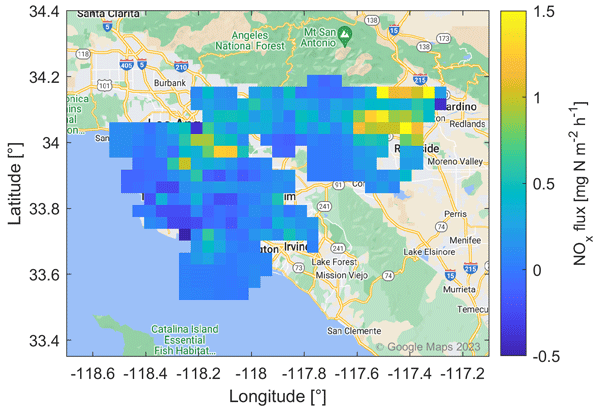
NOx is a precursor to hazardous tropospheric ozone and can be emitted from various anthropogenic sources. It is important to quantify NOx emissions in urban environments to improve the local air quality, which still remains a challenge, as sources are heterogeneous in space and time. In this study, we calculate NOx emissions over Los Angeles, based on aircraft measurements in June 2021, and compare them to a local emission inventory, which we find mostly overpredicts the measured values.
Clara M. Nussbaumer, Horst Fischer, Jos Lelieveld, and Andrea Pozzer
Atmos. Chem. Phys., 23, 12651–12669, https://doi.org/10.5194/acp-23-12651-2023, https://doi.org/10.5194/acp-23-12651-2023, 2023
Short summary
Short summary
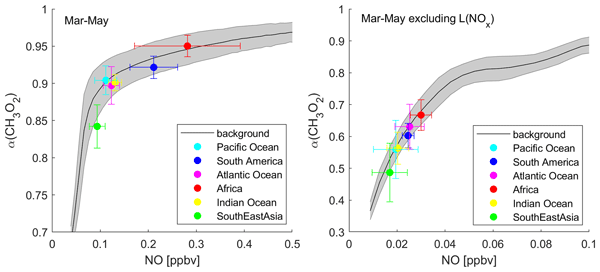
Ozone is a greenhouse gas and contributes to the earth’s radiative energy budget and therefore to global warming. This effect is the largest in the upper troposphere. In this study, we investigate the processes controlling ozone formation and the sensitivity to its precursors in the upper tropical troposphere based on model simulations by the ECHAM5/MESSy2 Atmospheric Chemistry (EMAC) model. We find that NO𝑥 emissions from lightning most importantly affect ozone chemistry at these altitudes.
Qindan Zhu, Bryan Place, Eva Y. Pfannerstill, Sha Tong, Huanxin Zhang, Jun Wang, Clara M. Nussbaumer, Paul Wooldridge, Benjamin C. Schulze, Caleb Arata, Anthony Bucholtz, John H. Seinfeld, Allen H. Goldstein, and Ronald C. Cohen
Atmos. Chem. Phys., 23, 9669–9683, https://doi.org/10.5194/acp-23-9669-2023, https://doi.org/10.5194/acp-23-9669-2023, 2023
Short summary
Short summary
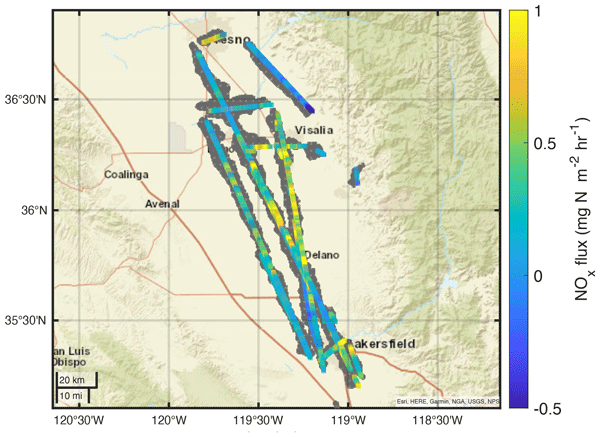
Nitrogen oxide (NOx) is a hazardous air pollutant, and it is the precursor of short-lived climate forcers like tropospheric ozone and aerosol particles. While NOx emissions from transportation has been strictly regulated, soil NOx emissions are overlooked. We use the airborne flux measurements to observe NOx emissions from highways and urban and cultivated soil land cover types. We show non-negligible soil NOx emissions, which are significantly underestimated in current model simulations.
Lenard L. Röder, Patrick Dewald, Clara M. Nussbaumer, Jan Schuladen, John N. Crowley, Jos Lelieveld, and Horst Fischer
Atmos. Meas. Tech., 16, 1167–1178, https://doi.org/10.5194/amt-16-1167-2023, https://doi.org/10.5194/amt-16-1167-2023, 2023
Short summary
Short summary
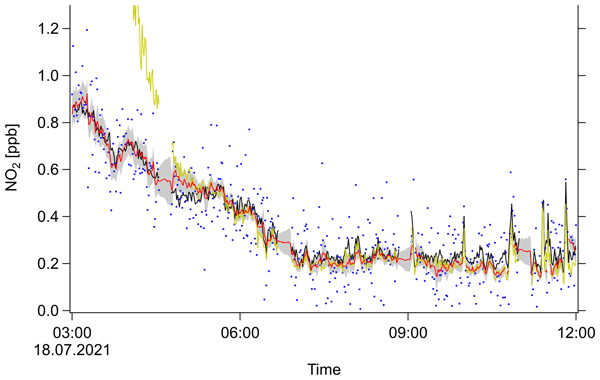
Field experiments in atmospheric chemistry provide insights into chemical interactions of our atmosphere. However, high data coverage and accuracy are needed to enable further analysis. In this study, we explore a statistical method that combines knowledge about the chemical reactions with information from measurements to increase the quality of field experiment datasets. We test the algorithm for several applications and discuss limitations that depend on the specific variable and the dynamics.
Patrick Dewald, Clara M. Nussbaumer, Jan Schuladen, Akima Ringsdorf, Achim Edtbauer, Horst Fischer, Jonathan Williams, Jos Lelieveld, and John N. Crowley
Atmos. Chem. Phys., 22, 7051–7069, https://doi.org/10.5194/acp-22-7051-2022, https://doi.org/10.5194/acp-22-7051-2022, 2022
Short summary
Short summary
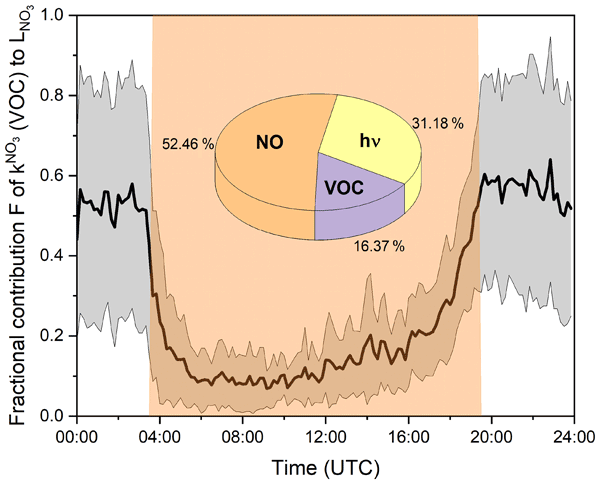
We measured the gas-phase reactivity of the NO3 radical on the summit (825 m a.s.l.) of a semi-rural mountain in southwestern Germany in July 2021. The impact of VOC-induced NO3 losses (mostly monoterpenes) competing with a loss by reaction with NO and photolysis throughout the diel cycle was estimated. Besides chemistry, boundary layer dynamics and plant-physiological processes presumably have a great impact on our observations, which were compared to previous NO3 measurements at the same site.
Clara M. Nussbaumer, Andrea Pozzer, Ivan Tadic, Lenard Röder, Florian Obersteiner, Hartwig Harder, Jos Lelieveld, and Horst Fischer
Atmos. Chem. Phys., 22, 6151–6165, https://doi.org/10.5194/acp-22-6151-2022, https://doi.org/10.5194/acp-22-6151-2022, 2022
Short summary
Short summary
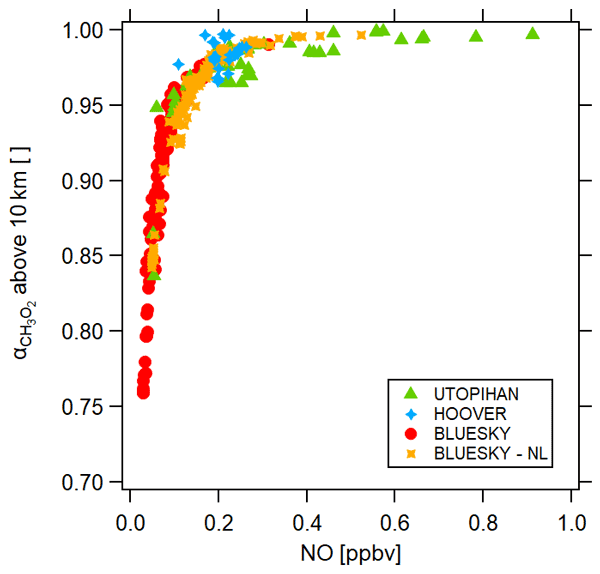
The European COVID-19 lockdowns have significantly reduced the emission of primary pollutants such as NOx, which impacts the tropospheric photochemical processes and the abundance of O3. In this study, we present how the lockdowns have affected tropospheric trace gases and ozone production based on in situ observations and modeling simulations. We additionally show that the chemical regime shifted from a transition point to a NOx limitation in the upper troposphere.

Clara M. Nussbaumer, John N. Crowley, Jan Schuladen, Jonathan Williams, Sascha Hafermann, Andreas Reiffs, Raoul Axinte, Hartwig Harder, Cheryl Ernest, Anna Novelli, Katrin Sala, Monica Martinez, Chinmay Mallik, Laura Tomsche, Christian Plass-Dülmer, Birger Bohn, Jos Lelieveld, and Horst Fischer
Atmos. Chem. Phys., 21, 18413–18432, https://doi.org/10.5194/acp-21-18413-2021, https://doi.org/10.5194/acp-21-18413-2021, 2021
Short summary
Short summary
HCHO is an important atmospheric trace gas influencing the photochemical processes in the Earth’s atmosphere, including the budget of HOx and the abundance of tropospheric O3. This research presents the photochemical calculations of HCHO and O3 based on three field campaigns across Europe. We show that HCHO production via the oxidation of only four volatile organic compound precursors, i.e., CH4, CH3CHO, C5H8 and CH3OH, can balance the observed loss at all sites well.
Clara M. Nussbaumer, Uwe Parchatka, Ivan Tadic, Birger Bohn, Daniel Marno, Monica Martinez, Roland Rohloff, Hartwig Harder, Flora Kluge, Klaus Pfeilsticker, Florian Obersteiner, Martin Zöger, Raphael Doerich, John N. Crowley, Jos Lelieveld, and Horst Fischer
Atmos. Meas. Tech., 14, 6759–6776, https://doi.org/10.5194/amt-14-6759-2021, https://doi.org/10.5194/amt-14-6759-2021, 2021
Short summary
Short summary
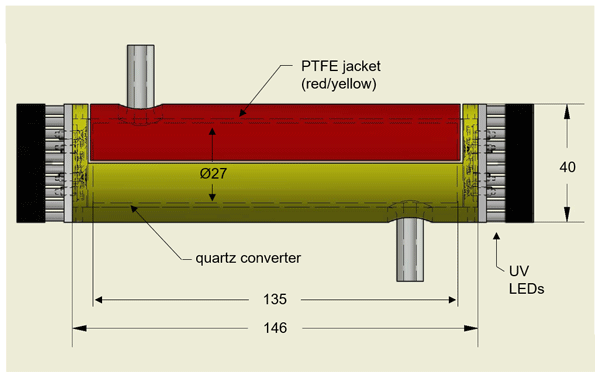
NO2 plays a central role in atmospheric photochemical processes and requires accurate measurements. This research presents NO2 data obtained via chemiluminescence using a photolytic converter from airborne studies around Cabo Verde and laboratory investigations. We show the limits and error-proneness of a conventional blue light converter in aircraft measurements affected by humidity and NO levels and suggest the use of an alternative quartz converter for more reliable results.
Md Atiur Rahman, Ralf Kaegi, and Christoph Hueglin
EGUsphere, https://doi.org/10.5194/egusphere-2026-5039, https://doi.org/10.5194/egusphere-2026-5039, 2026
This preprint is open for discussion and under review for Atmospheric Measurement Techniques (AMT).
Short summary
Short summary
Tire wear particles (TWP) are environmental pollutants of growing concern. We developed an analytical method for TWP because no standardized reference method is currently available and there is a clear need for robust and reliable techniques to quantify tire wear particles in environmental samples. The proposed method is based on pyrolysis gas chromatography-mass spectrometry (Py-GC-MS) and uses multiple pyrolysis products that are characteristic of the main rubber polymers used in tires.
Clara M. Nussbaumer, Colette L. Heald, Teresa Campos, Eric A. Kort, Paul B. Krummel, Ray L. Langenfelds, Monica Madronich, Kathryn McKain, Gabrielle Pétron, Ann Stavert, and Steven C. Wofsy
EGUsphere, https://doi.org/10.5194/egusphere-2026-5476, https://doi.org/10.5194/egusphere-2026-5476, 2026
This preprint is open for discussion and under review for Atmospheric Chemistry and Physics (ACP).
Short summary
Short summary
Changes in emissions and climate increasingly impact the remote Southern Hemisphere and we know little about the consequences for the atmospheric composition. We investigate if rapid increases in the greenhouse gas methane since 2008 have led to increases in carbon monoxide. A global model confirms this hypothesis and shows that enhanced emissions from plants and rising temperatures also contribute to the trend. Observations are inconsistent and highlight the need for more accurate measurements.
Ishir Dutta, Colette L. Heald, Ilann Bourgeois, John D. Crounse, Eric J. Hintsa, Fred L. Moore, and Jeff Peischl
Atmos. Chem. Phys., 26, 11875–11891, https://doi.org/10.5194/acp-26-11875-2026, https://doi.org/10.5194/acp-26-11875-2026, 2026
Short summary
Short summary
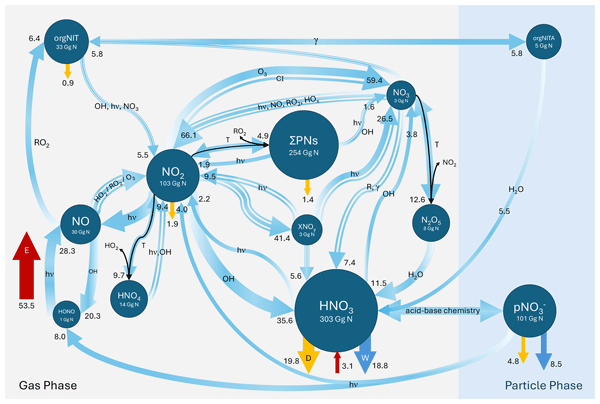
This study presents a global budget of tropospheric reactive oxidized nitrogen (NOy) based on the GEOS‑Chem chemical transport model evaluated against ATom aircraft observations. In addition to burdens, deposition, and lifetimes, we detail the magnitudes of the chemical fluxes governing cycling between NOy species, including uncertain heterogeneous processes such as aerosol nitrate photolysis and organic nitrate hydrolysis.
Narain M. Ashta, Guillaume Crosset-Perrotin, Angélique Moraz, Matthias Philipp, Thomas D. Bucheli, Ralf Kaegi, and Christoph Hueglin
Atmos. Chem. Phys., 26, 11803–11815, https://doi.org/10.5194/acp-26-11803-2026, https://doi.org/10.5194/acp-26-11803-2026, 2026
Short summary
Short summary
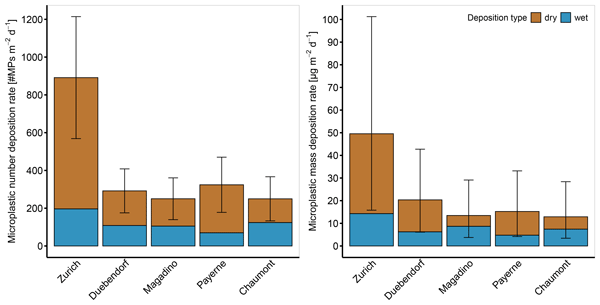
Microplastics are environmental contaminants of concern that are also present in air. Using an infrared-based device, we measured the amount of microplastics deposited from air to different parts of Switzerland over a one-year period. We found microplastics everywhere, with levels in the city being more than twice as high as those in suburban, rural and mountainous places. We also found that air is an important transporter of microplastics that contaminates agricultural land and water bodies.
Arlett Díaz-Zurita, Simone Brunamonti, Alexander Haefele, Martine Collaud Coen, Giovanni Martucci, Benjamin Tobias Brem, Martin Gysel-Beer, Hassan Lyamani, Gloria Titos, Daniel Pérez-Ramírez, Christoph Hüglin, Lucas Alados-Arboledas, Alejandro Keller, Frank Gunther Wienhold, Maxime Hervo, and Francisco Navas-Guzmán
EGUsphere, https://doi.org/10.5194/egusphere-2026-4361, https://doi.org/10.5194/egusphere-2026-4361, 2026
Short summary
Short summary
This study provides a unique framework for assessing aerosol hygroscopicity by combining Raman lidar observations with vertically resolved in situ measurements from the balloon-borne Compact Backscatter Aerosol Detector coupled with Vaisala RS41 radiosondes and ground-based tandem nephelometers. The three approaches showed good agreement. Raman lidar identified more than 200 hygroscopic aerosol layers, constituting one of the largest datasets available for statistical investigations.
Flossie Brown, Colette L. Heald, Allison Steiner, Ana Maria Yáñez-Serrano, Jürgen Kesselmeier, Carolina de A. Monteiro, Hartwig Harder, Alessandro C. de Araújo, Denisi H. Hall, Cléo Quaresma Dias-Júnior, and Stefan Wolff
Atmos. Chem. Phys., 26, 9181–9205, https://doi.org/10.5194/acp-26-9181-2026, https://doi.org/10.5194/acp-26-9181-2026, 2026
Short summary
Short summary
The environment inside a forest canopy is often not represented in large atmospheric models. This study uses a detailed canopy model to understand trace gas emissions and chemistry within the Amazon rainforest. We show escape of trace gases from the canopy to the atmosphere can depend on turbulence and vary over the day, which is currently not included in atmospheric models. We show that the atmospheric composition above the Amazon and within the canopy is strongly affected by forest fires.
Yang Shi, Colette L. Heald, and Jesse H. Kroll
EGUsphere, https://doi.org/10.5194/egusphere-2026-1570, https://doi.org/10.5194/egusphere-2026-1570, 2026
Short summary
Short summary
We implement secondary organic aerosol (SOA) formation pathways due to peroxy radical (RO2) isomerization and accretion reactions in the CESM2 model. The contribution of RO2 pathways to SOA formation varies from the past to the future; for monoterpenes RO2, isomerization remains important under all climate conditions. We also quantify changes in total biogenic SOA burden under different climates. Our study highlights the need to better represent RO2 chemistry in SOA modeling.
Luce Creman, Stuart K. Grange, Pascal Rubli, Andrea Fischer, Dominik Brunner, Christoph Hueglin, Lukas Emmenegger, and Leonie Bernet
Atmos. Meas. Tech., 19, 1441–1463, https://doi.org/10.5194/amt-19-1441-2026, https://doi.org/10.5194/amt-19-1441-2026, 2026
Short summary
Short summary
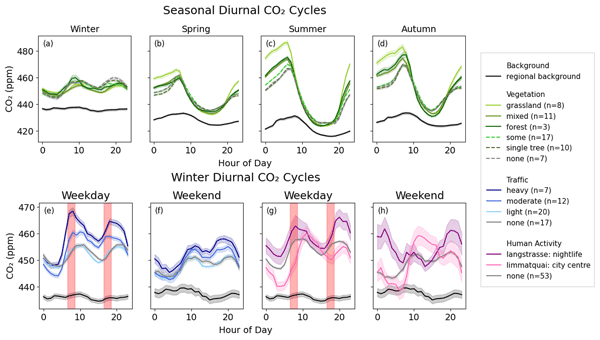
ZiCOS-L is a network of low-cost sensors in Zurich (Switzerland) to monitor carbon dioxide (CO2) concentrations. After correcting for drift and checking the sensor performance, we found that local factors like traffic, public events and vegetation affect CO2 levels. Even though the sensors have higher uncertainties than other sensors, the lower cost allows for a denser network with detailed insights into CO2 levels across the city, helping cities track emissions and support climate action plans.
Zoé Le Bras, Pascal Rubli, Christoph Hueglin, and Stefan Reimann
Atmos. Chem. Phys., 26, 869–878, https://doi.org/10.5194/acp-26-869-2026, https://doi.org/10.5194/acp-26-869-2026, 2026
Short summary
Short summary
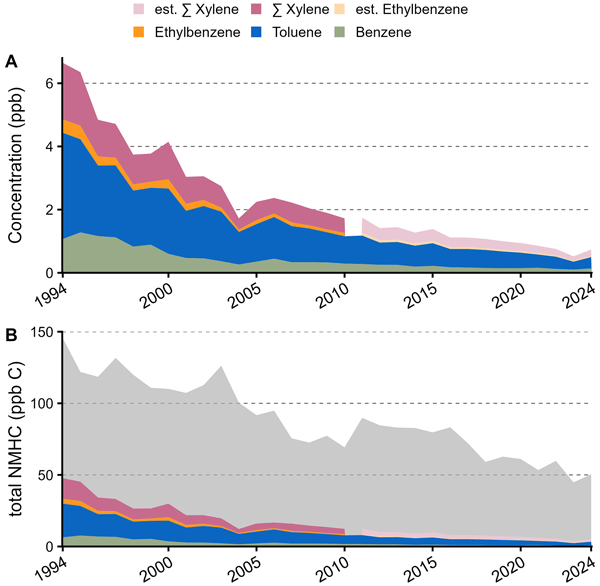
Since 1994, harmful air pollutants called BTEX (benzene, toluene, ethylbenzene and xylene) have declined by up to 89 % in the suburban area of Zurich thanks to the introduction of various air quality directives in Switzerland and in Europe. Although their contribution to ozone formation became less abundant, they still significantly contribute to the formation of airborne particles. While this study shows clear improvements in air quality, it also highlights the need for further efforts.
Narain M. Ashta, Guillaume Crosset-Perrotin, Angélique Moraz, Josua Stoffel, Ueli Schilt, Eric Ceglie, David Schoenenberger, Matthias Philipp, Thomas D. Bucheli, Ralf Kaegi, and Christoph Hueglin
Atmos. Meas. Tech., 19, 371–388, https://doi.org/10.5194/amt-19-371-2026, https://doi.org/10.5194/amt-19-371-2026, 2026
Short summary
Short summary
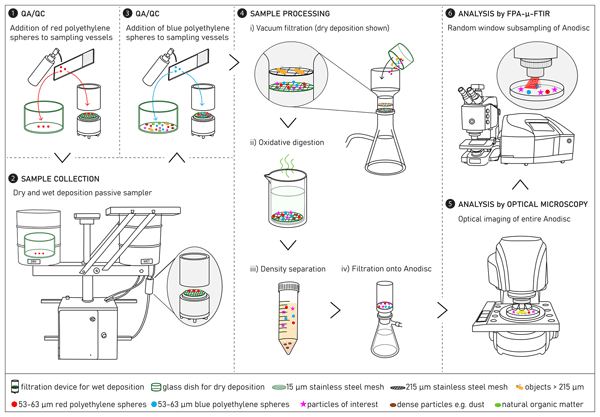
Microplastics are environmental contaminants of global concern. In this study, we developed a method for measuring the amount of microplastics in atmospheric samples. In doing so, we introduced a new way to collect rain/snow samples and a custom software that helps with the analysis of microplastics. We then assessed the precision of our method and tested it on real samples. Our work may be useful for researchers seeking to measure microplastics in environmental samples.
Joseph O. Palmo, Colette L. Heald, Donald R. Blake, Ilann Bourgeois, Matthew Coggon, Jeff Collett, Frank Flocke, Alan Fried, Georgios Gkatzelis, Samuel Hall, Lu Hu, Jose L. Jimenez, Pedro Campuzano-Jost, I-Ting Ku, Benjamin Nault, Brett Palm, Jeff Peischl, Ilana Pollack, Amy Sullivan, Joel Thornton, Carsten Warneke, Armin Wisthaler, and Lu Xu
Atmos. Chem. Phys., 25, 17107–17124, https://doi.org/10.5194/acp-25-17107-2025, https://doi.org/10.5194/acp-25-17107-2025, 2025
Short summary
Short summary
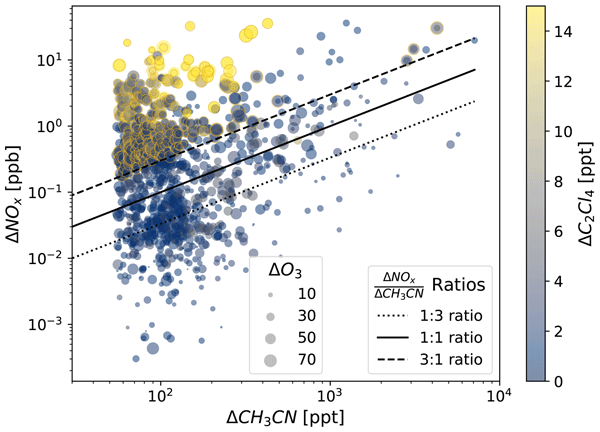
This study investigates ozone production within wildfire smoke plumes as they age, using both aircraft observations and models. We find that the chemical environment and resulting ozone production within smoke changes as plumes evolve, with implications for climate and public health.
Pauline Bros, Sophie Darfeuil, Véronique Jacob, Rhabira Elazzouzi, Dielleza Tusha, Tristan Rousseau, Julian Weng, Patrik Winiger, Imad El Haddad, Christoph Hueglin, Gaëlle Uzu, and Jean-Luc Jaffrezo
Atmos. Meas. Tech., 18, 6315–6327, https://doi.org/10.5194/amt-18-6315-2025, https://doi.org/10.5194/amt-18-6315-2025, 2025
Short summary
Short summary
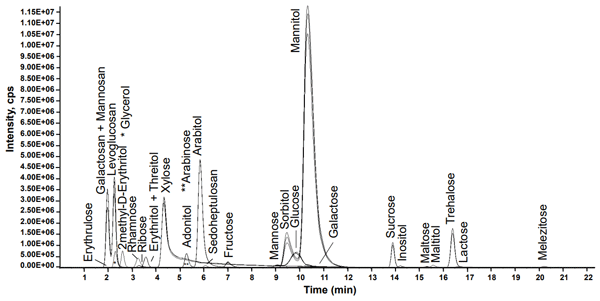
We present and validate an ultra-high-performance liquid chromatography tandem mass spectrometry method for the quantification of 21 sugars in atmospheric particulate matter. The method is fast, sensitive, and suitable for low-mass samples. Its application to a 6-year dataset from the Jungfraujoch site highlights its potential for source identification and understanding of biogenic and biomass burning tracers.
Ryan Vella, Sergey Gromov, Clara M. Nussbaumer, Laura Stecher, Matthias Kohl, Samuel Ruhl, Holger Tost, Jos Lelieveld, and Andrea Pozzer
Atmos. Chem. Phys., 25, 9885–9904, https://doi.org/10.5194/acp-25-9885-2025, https://doi.org/10.5194/acp-25-9885-2025, 2025
Short summary
Short summary
This work examines the impact of replacing forests with farmland and grazing areas on atmospheric composition. Using a global climate–chemistry model, we found that deforestation reduces biogenic volatile organic compounds (BVOCs), increases farming emissions, and shifts ozone chemistry. These changes result in a slight cooling effect on the climate. Restoring natural vegetation could reverse some of these effects.
Lubna Dada, Benjamin T. Brem, Lidia-Marta Amarandi-Netedu, Martine Collaud Coen, Nikolaos Evangeliou, Christoph Hueglin, Nora Nowak, Robin Modini, Martin Steinbacher, and Martin Gysel-Beer
Aerosol Research, 3, 315–336, https://doi.org/10.5194/ar-3-315-2025, https://doi.org/10.5194/ar-3-315-2025, 2025
Short summary
Short summary
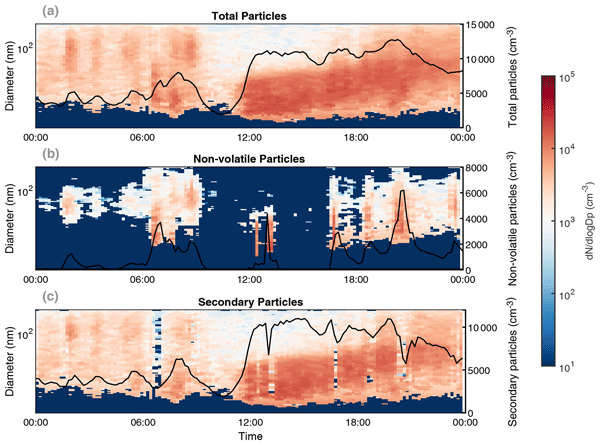
We investigated the sources of ultrafine particles (UFPs) in Payerne, Switzerland, highlighting the significant role of secondary processes in elevating UFP concentrations to levels comparable to urban areas. As the first study in rural midland Switzerland to analyze new particle formation events and secondary contributions, it offers key insights for air quality regulation and the role of agriculture in Switzerland and central Europe.
Natalie M. Mahowald, Longlei Li, Julius Vira, Marje Prank, Douglas S. Hamilton, Hitoshi Matsui, Ron L. Miller, P. Louis Lu, Ezgi Akyuz, Daphne Meidan, Peter Hess, Heikki Lihavainen, Christine Wiedinmyer, Jenny Hand, Maria Grazia Alaimo, Célia Alves, Andres Alastuey, Paulo Artaxo, Africa Barreto, Francisco Barraza, Silvia Becagli, Giulia Calzolai, Shankararaman Chellam, Ying Chen, Patrick Chuang, David D. Cohen, Cristina Colombi, Evangelia Diapouli, Gaetano Dongarra, Konstantinos Eleftheriadis, Johann Engelbrecht, Corinne Galy-Lacaux, Cassandra Gaston, Dario Gomez, Yenny González Ramos, Roy M. Harrison, Chris Heyes, Barak Herut, Philip Hopke, Christoph Hüglin, Maria Kanakidou, Zsofia Kertesz, Zbigniew Klimont, Katriina Kyllönen, Fabrice Lambert, Xiaohong Liu, Remi Losno, Franco Lucarelli, Willy Maenhaut, Beatrice Marticorena, Randall V. Martin, Nikolaos Mihalopoulos, Yasser Morera-Gómez, Adina Paytan, Joseph Prospero, Sergio Rodríguez, Patricia Smichowski, Daniela Varrica, Brenna Walsh, Crystal L. Weagle, and Xi Zhao
Atmos. Chem. Phys., 25, 4665–4702, https://doi.org/10.5194/acp-25-4665-2025, https://doi.org/10.5194/acp-25-4665-2025, 2025
Short summary
Short summary
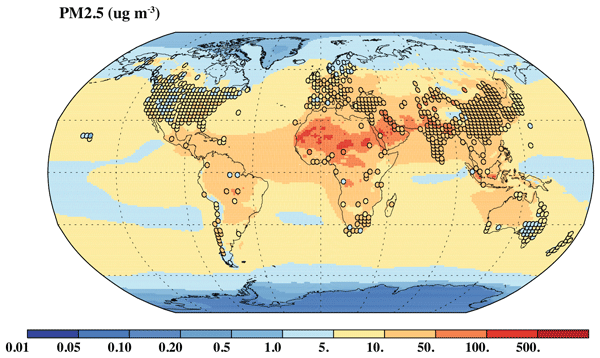
Aerosol particles are an important part of the Earth system, but their concentrations are spatially and temporally heterogeneous, as well as being variable in size and composition. Here, we present a new compilation of PM2.5 and PM10 aerosol observations, focusing on the spatial variability across different observational stations, including composition, and demonstrate a method for comparing the data sets to model output.
Stuart K. Grange, Pascal Rubli, Andrea Fischer, Dominik Brunner, Christoph Hueglin, and Lukas Emmenegger
Atmos. Chem. Phys., 25, 2781–2806, https://doi.org/10.5194/acp-25-2781-2025, https://doi.org/10.5194/acp-25-2781-2025, 2025
Short summary
Short summary
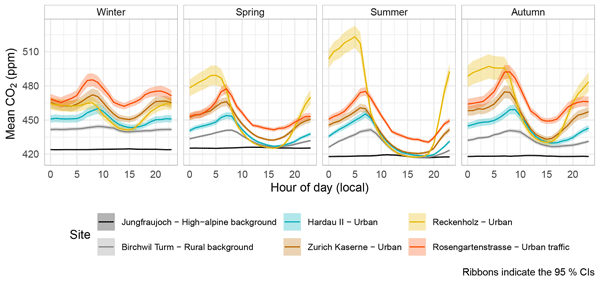
Carbon dioxide (CO2) is a very important atmospheric pollutant, and to better understand the gas's source and sink dynamics, a mid-cost sensor network hosting 26 sites was deployed in and around Zurich, Switzerland. The sensor measurement performance was quantified, and natural and anthropogenic CO2 emission sources were explored with a focus on what drives high CO2 levels. The observations will be used further by others to validate what is thought to be known about CO2 emissions in the region.
Hector Navarro-Barboza, Jordi Rovira, Vincenzo Obiso, Andrea Pozzer, Marta Via, Andres Alastuey, Xavier Querol, Noemi Perez, Marjan Savadkoohi, Gang Chen, Jesus Yus-Díez, Matic Ivancic, Martin Rigler, Konstantinos Eleftheriadis, Stergios Vratolis, Olga Zografou, Maria Gini, Benjamin Chazeau, Nicolas Marchand, Andre S. H. Prevot, Kaspar Dallenbach, Mikael Ehn, Krista Luoma, Tuukka Petäjä, Anna Tobler, Jaroslaw Necki, Minna Aurela, Hilkka Timonen, Jarkko Niemi, Olivier Favez, Jean-Eudes Petit, Jean-Philippe Putaud, Christoph Hueglin, Nicolas Pascal, Aurélien Chauvigné, Sébastien Conil, Marco Pandolfi, and Oriol Jorba
Atmos. Chem. Phys., 25, 2667–2694, https://doi.org/10.5194/acp-25-2667-2025, https://doi.org/10.5194/acp-25-2667-2025, 2025
Short summary
Short summary
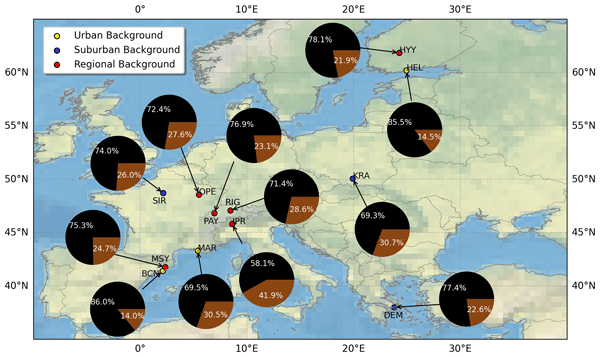
Brown carbon (BrC) absorbs ultraviolet (UV) and visible light, influencing climate. This study explores BrC's imaginary refractive index (k) using data from 12 European sites. Residential emissions are a major organic aerosol (OA) source in winter, while secondary organic aerosol (SOA) dominates in summer. Source-specific k values were derived, improving model accuracy. The findings highlight BrC's climate impact and emphasize source-specific constraints in atmospheric models.
Olivia G. Norman, Colette L. Heald, Solomon Bililign, Pedro Campuzano-Jost, Hugh Coe, Marc N. Fiddler, Jaime R. Green, Jose L. Jimenez, Katharina Kaiser, Jin Liao, Ann M. Middlebrook, Benjamin A. Nault, John B. Nowak, Johannes Schneider, and André Welti
Atmos. Chem. Phys., 25, 771–795, https://doi.org/10.5194/acp-25-771-2025, https://doi.org/10.5194/acp-25-771-2025, 2025
Short summary
Short summary
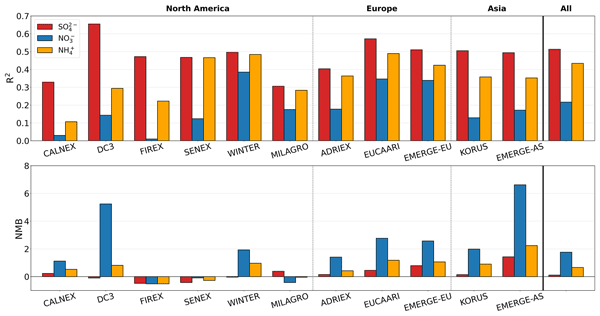
This study finds that one component of secondary inorganic aerosols, nitrate, is greatly overestimated by a global atmospheric chemistry model compared to observations from 11 flight campaigns. None of the loss and production pathways explored can explain the nitrate bias alone. The model’s inability to capture the variability in the observations remains and requires future investigation to avoid biases in policy-related studies (i.e., air quality, health, climate impacts of these aerosols).
Natalie M. Mahowald, Longlei Li, Julius Vira, Marje Prank, Douglas S. Hamilton, Hitoshi Matsui, Ron L. Miller, Louis Lu, Ezgi Akyuz, Daphne Meidan, Peter Hess, Heikki Lihavainen, Christine Wiedinmyer, Jenny Hand, Maria Grazia Alaimo, Célia Alves, Andres Alastuey, Paulo Artaxo, Africa Barreto, Francisco Barraza, Silvia Becagli, Giulia Calzolai, Shankarararman Chellam, Ying Chen, Patrick Chuang, David D. Cohen, Cristina Colombi, Evangelia Diapouli, Gaetano Dongarra, Konstantinos Eleftheriadis, Corinne Galy-Lacaux, Cassandra Gaston, Dario Gomez, Yenny González Ramos, Hannele Hakola, Roy M. Harrison, Chris Heyes, Barak Herut, Philip Hopke, Christoph Hüglin, Maria Kanakidou, Zsofia Kertesz, Zbiginiw Klimont, Katriina Kyllönen, Fabrice Lambert, Xiaohong Liu, Remi Losno, Franco Lucarelli, Willy Maenhaut, Beatrice Marticorena, Randall V. Martin, Nikolaos Mihalopoulos, Yasser Morera-Gomez, Adina Paytan, Joseph Prospero, Sergio Rodríguez, Patricia Smichowski, Daniela Varrica, Brenna Walsh, Crystal Weagle, and Xi Zhao
Earth Syst. Sci. Data Discuss., https://doi.org/10.5194/essd-2024-1, https://doi.org/10.5194/essd-2024-1, 2024
Preprint withdrawn
Short summary
Short summary
Aerosol particles can interact with incoming solar radiation and outgoing long wave radiation, change cloud properties, affect photochemistry, impact surface air quality, and when deposited impact surface albedo of snow and ice, and modulate carbon dioxide uptake by the land and ocean. Here we present a new compilation of aerosol observations including composition, a methodology for comparing the datasets to model output, and show the implications of these results using one model.
Clara M. Nussbaumer, Bryan K. Place, Qindan Zhu, Eva Y. Pfannerstill, Paul Wooldridge, Benjamin C. Schulze, Caleb Arata, Ryan Ward, Anthony Bucholtz, John H. Seinfeld, Allen H. Goldstein, and Ronald C. Cohen
Atmos. Chem. Phys., 23, 13015–13028, https://doi.org/10.5194/acp-23-13015-2023, https://doi.org/10.5194/acp-23-13015-2023, 2023
Short summary
Short summary
NOx is a precursor to hazardous tropospheric ozone and can be emitted from various anthropogenic sources. It is important to quantify NOx emissions in urban environments to improve the local air quality, which still remains a challenge, as sources are heterogeneous in space and time. In this study, we calculate NOx emissions over Los Angeles, based on aircraft measurements in June 2021, and compare them to a local emission inventory, which we find mostly overpredicts the measured values.
Clara M. Nussbaumer, Horst Fischer, Jos Lelieveld, and Andrea Pozzer
Atmos. Chem. Phys., 23, 12651–12669, https://doi.org/10.5194/acp-23-12651-2023, https://doi.org/10.5194/acp-23-12651-2023, 2023
Short summary
Short summary
Ozone is a greenhouse gas and contributes to the earth’s radiative energy budget and therefore to global warming. This effect is the largest in the upper troposphere. In this study, we investigate the processes controlling ozone formation and the sensitivity to its precursors in the upper tropical troposphere based on model simulations by the ECHAM5/MESSy2 Atmospheric Chemistry (EMAC) model. We find that NO𝑥 emissions from lightning most importantly affect ozone chemistry at these altitudes.
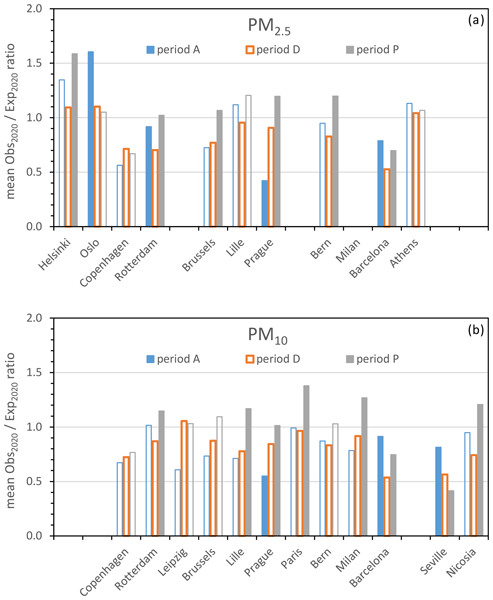
Jean-Philippe Putaud, Enrico Pisoni, Alexander Mangold, Christoph Hueglin, Jean Sciare, Michael Pikridas, Chrysanthos Savvides, Jakub Ondracek, Saliou Mbengue, Alfred Wiedensohler, Kay Weinhold, Maik Merkel, Laurent Poulain, Dominik van Pinxteren, Hartmut Herrmann, Andreas Massling, Claus Nordstroem, Andrés Alastuey, Cristina Reche, Noemí Pérez, Sonia Castillo, Mar Sorribas, Jose Antonio Adame, Tuukka Petaja, Katrianne Lehtipalo, Jarkko Niemi, Véronique Riffault, Joel F. de Brito, Augustin Colette, Olivier Favez, Jean-Eudes Petit, Valérie Gros, Maria I. Gini, Stergios Vratolis, Konstantinos Eleftheriadis, Evangelia Diapouli, Hugo Denier van der Gon, Karl Espen Yttri, and Wenche Aas
Atmos. Chem. Phys., 23, 10145–10161, https://doi.org/10.5194/acp-23-10145-2023, https://doi.org/10.5194/acp-23-10145-2023, 2023
Short summary
Short summary
Many European people are still exposed to levels of air pollution that can affect their health. COVID-19 lockdowns in 2020 were used to assess the impact of the reduction in human mobility on air pollution across Europe by comparing measurement data with values that would be expected if no lockdown had occurred. We show that lockdown measures did not lead to consistent decreases in the concentrations of fine particulate matter suspended in the air, and we investigate why.
Qindan Zhu, Bryan Place, Eva Y. Pfannerstill, Sha Tong, Huanxin Zhang, Jun Wang, Clara M. Nussbaumer, Paul Wooldridge, Benjamin C. Schulze, Caleb Arata, Anthony Bucholtz, John H. Seinfeld, Allen H. Goldstein, and Ronald C. Cohen
Atmos. Chem. Phys., 23, 9669–9683, https://doi.org/10.5194/acp-23-9669-2023, https://doi.org/10.5194/acp-23-9669-2023, 2023
Short summary
Short summary
Nitrogen oxide (NOx) is a hazardous air pollutant, and it is the precursor of short-lived climate forcers like tropospheric ozone and aerosol particles. While NOx emissions from transportation has been strictly regulated, soil NOx emissions are overlooked. We use the airborne flux measurements to observe NOx emissions from highways and urban and cultivated soil land cover types. We show non-negligible soil NOx emissions, which are significantly underestimated in current model simulations.
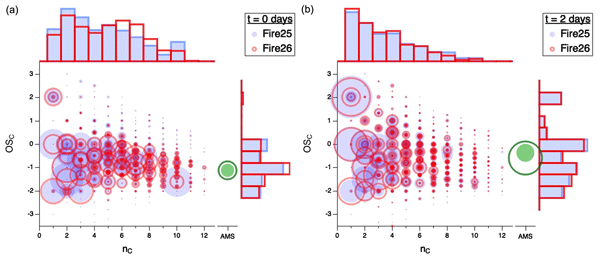
Kevin J. Nihill, Matthew M. Coggon, Christopher Y. Lim, Abigail R. Koss, Bin Yuan, Jordan E. Krechmer, Kanako Sekimoto, Jose L. Jimenez, Joost de Gouw, Christopher D. Cappa, Colette L. Heald, Carsten Warneke, and Jesse H. Kroll
Atmos. Chem. Phys., 23, 7887–7899, https://doi.org/10.5194/acp-23-7887-2023, https://doi.org/10.5194/acp-23-7887-2023, 2023
Short summary
Short summary
In this work, we collect emissions from controlled burns of biomass fuels that can be found in the western United States into an environmental chamber in order to simulate their oxidation as they pass through the atmosphere. These findings provide a detailed characterization of the composition of the atmosphere downwind of wildfires. In turn, this will help to explore the effects of these changing emissions on downwind populations and will also directly inform atmospheric and climate models.
Lenard L. Röder, Patrick Dewald, Clara M. Nussbaumer, Jan Schuladen, John N. Crowley, Jos Lelieveld, and Horst Fischer
Atmos. Meas. Tech., 16, 1167–1178, https://doi.org/10.5194/amt-16-1167-2023, https://doi.org/10.5194/amt-16-1167-2023, 2023
Short summary
Short summary
Field experiments in atmospheric chemistry provide insights into chemical interactions of our atmosphere. However, high data coverage and accuracy are needed to enable further analysis. In this study, we explore a statistical method that combines knowledge about the chemical reactions with information from measurements to increase the quality of field experiment datasets. We test the algorithm for several applications and discuss limitations that depend on the specific variable and the dynamics.
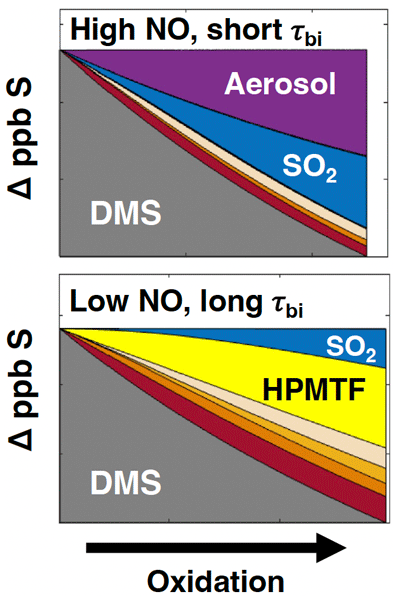
Qing Ye, Matthew B. Goss, Jordan E. Krechmer, Francesca Majluf, Alexander Zaytsev, Yaowei Li, Joseph R. Roscioli, Manjula Canagaratna, Frank N. Keutsch, Colette L. Heald, and Jesse H. Kroll
Atmos. Chem. Phys., 22, 16003–16015, https://doi.org/10.5194/acp-22-16003-2022, https://doi.org/10.5194/acp-22-16003-2022, 2022
Short summary
Short summary
The atmospheric oxidation of dimethyl sulfide (DMS) is a major natural source of sulfate particles in the atmosphere. However, its mechanism is poorly constrained. In our work, laboratory measurements and mechanistic modeling were conducted to comprehensively investigate DMS oxidation products and key reaction rates. We find that the peroxy radical (RO2) has a controlling effect on product distribution and aerosol yield, with the isomerization of RO2 leading to the suppression of aerosol yield.
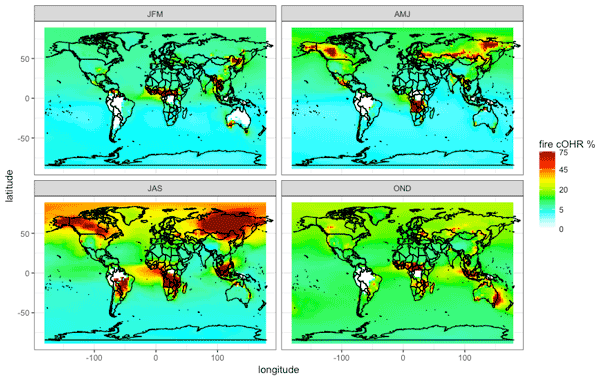
Therese S. Carter, Colette L. Heald, Jesse H. Kroll, Eric C. Apel, Donald Blake, Matthew Coggon, Achim Edtbauer, Georgios Gkatzelis, Rebecca S. Hornbrook, Jeff Peischl, Eva Y. Pfannerstill, Felix Piel, Nina G. Reijrink, Akima Ringsdorf, Carsten Warneke, Jonathan Williams, Armin Wisthaler, and Lu Xu
Atmos. Chem. Phys., 22, 12093–12111, https://doi.org/10.5194/acp-22-12093-2022, https://doi.org/10.5194/acp-22-12093-2022, 2022
Short summary
Short summary
Fires emit many gases which can contribute to smog and air pollution. However, the amount and properties of these chemicals are not well understood, so this work updates and expands their representation in a global atmospheric model, including by adding new chemicals. We confirm that this updated representation generally matches measurements taken in several fire regions. We then show that fires provide ~15 % of atmospheric reactivity globally and more than 75 % over fire source regions.
Patrick Dewald, Clara M. Nussbaumer, Jan Schuladen, Akima Ringsdorf, Achim Edtbauer, Horst Fischer, Jonathan Williams, Jos Lelieveld, and John N. Crowley
Atmos. Chem. Phys., 22, 7051–7069, https://doi.org/10.5194/acp-22-7051-2022, https://doi.org/10.5194/acp-22-7051-2022, 2022
Short summary
Short summary
We measured the gas-phase reactivity of the NO3 radical on the summit (825 m a.s.l.) of a semi-rural mountain in southwestern Germany in July 2021. The impact of VOC-induced NO3 losses (mostly monoterpenes) competing with a loss by reaction with NO and photolysis throughout the diel cycle was estimated. Besides chemistry, boundary layer dynamics and plant-physiological processes presumably have a great impact on our observations, which were compared to previous NO3 measurements at the same site.
Stuart K. Grange, Gaëlle Uzu, Samuël Weber, Jean-Luc Jaffrezo, and Christoph Hueglin
Atmos. Chem. Phys., 22, 7029–7050, https://doi.org/10.5194/acp-22-7029-2022, https://doi.org/10.5194/acp-22-7029-2022, 2022
Short summary
Short summary
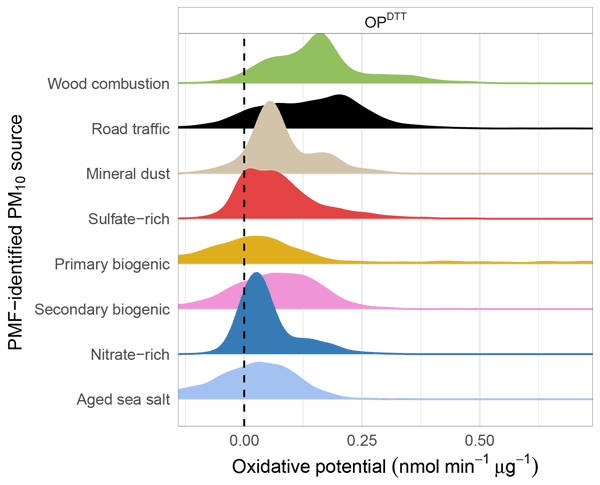
Oxidative potential (OP), a biologically relevant metric for particulate matter (PM), was linked to PM10 and PM2.5 sources and constituents across Switzerland between 2018 and 2019. Wood burning and non-exhaust traffic emissions were identified as key processes that led to enhanced OP. Therefore, the make-up of the PM mix was very important for OP. The results highlight the importance of the management of wood burning and non-exhaust emissions to reduce OP, and presumably biological harm.
Horim Kim, Michael Müller, Stephan Henne, and Christoph Hüglin
Atmos. Meas. Tech., 15, 2979–2992, https://doi.org/10.5194/amt-15-2979-2022, https://doi.org/10.5194/amt-15-2979-2022, 2022
Short summary
Short summary
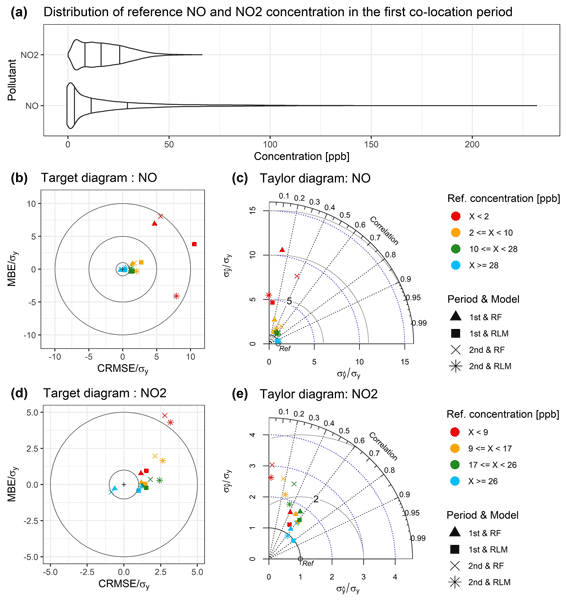
In this study, the performance of electrochemical sensors for NO and NO2 for measuring air quality was determined over a longer operating period. The performance of NO sensors remained reliable for more than 18 months. However, the NO2 sensors showed decreasing performance over time. During deployment, we found that the NO2 sensors can distinguish general pollution levels, but they proved unsuitable for accurate measurements due to significant biases.
Clara M. Nussbaumer, Andrea Pozzer, Ivan Tadic, Lenard Röder, Florian Obersteiner, Hartwig Harder, Jos Lelieveld, and Horst Fischer
Atmos. Chem. Phys., 22, 6151–6165, https://doi.org/10.5194/acp-22-6151-2022, https://doi.org/10.5194/acp-22-6151-2022, 2022
Short summary
Short summary
The European COVID-19 lockdowns have significantly reduced the emission of primary pollutants such as NOx, which impacts the tropospheric photochemical processes and the abundance of O3. In this study, we present how the lockdowns have affected tropospheric trace gases and ozone production based on in situ observations and modeling simulations. We additionally show that the chemical regime shifted from a transition point to a NOx limitation in the upper troposphere.
Adam Brighty, Véronique Jacob, Gaëlle Uzu, Lucille Borlaza, Sébastien Conil, Christoph Hueglin, Stuart K. Grange, Olivier Favez, Cécile Trébuchon, and Jean-Luc Jaffrezo
Atmos. Chem. Phys., 22, 6021–6043, https://doi.org/10.5194/acp-22-6021-2022, https://doi.org/10.5194/acp-22-6021-2022, 2022
Short summary
Short summary
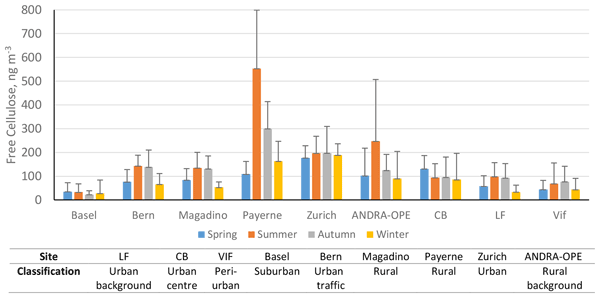
With an revised analytical method and long-term sampling strategy, we have been able to elucidate much more information about atmospheric plant debris, a poorly understood class of particulate matter. We found weaker seasonal patterns at urban locations compared to rural locations and significant interannual variability in concentrations between previous years and 2020, during the COVID-19 pandemic. This suggests a possible man-made influence on plant debris concentration and source strength.
Franz Conen, Annika Einbock, Claudia Mignani, and Christoph Hüglin
Atmos. Chem. Phys., 22, 3433–3444, https://doi.org/10.5194/acp-22-3433-2022, https://doi.org/10.5194/acp-22-3433-2022, 2022
Short summary
Short summary
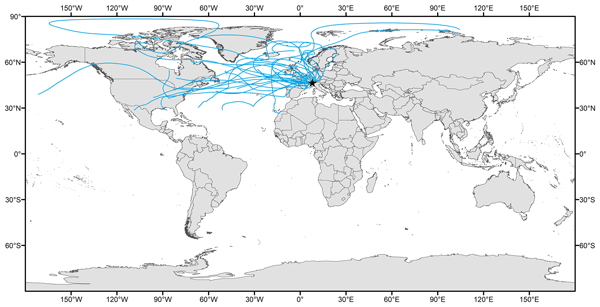
Above western Europe, ice typically starts to form in clouds a few kilometres above the ground if suitable aerosol particles are present. In air masses typical for that altitude, we found that such particles most likely originate from bacteria and fungi living on plants. Occasional Saharan dust intrusions seem to contribute little to the number concentration of particles able to freeze cloud droplets between 0°C and −15°C.
Ka Ming Fung, Colette L. Heald, Jesse H. Kroll, Siyuan Wang, Duseong S. Jo, Andrew Gettelman, Zheng Lu, Xiaohong Liu, Rahul A. Zaveri, Eric C. Apel, Donald R. Blake, Jose-Luis Jimenez, Pedro Campuzano-Jost, Patrick R. Veres, Timothy S. Bates, John E. Shilling, and Maria Zawadowicz
Atmos. Chem. Phys., 22, 1549–1573, https://doi.org/10.5194/acp-22-1549-2022, https://doi.org/10.5194/acp-22-1549-2022, 2022
Short summary
Short summary
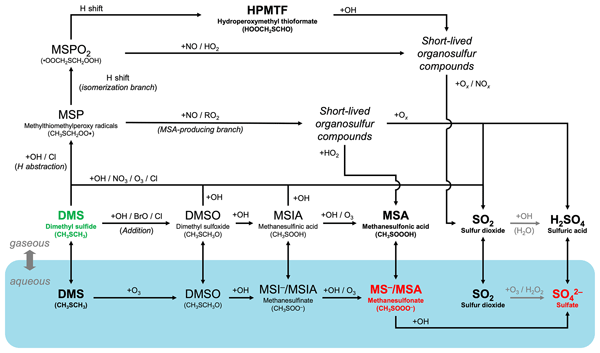
Understanding the natural aerosol burden in the preindustrial era is crucial for us to assess how atmospheric aerosols affect the Earth's radiative budgets. Our study explores how a detailed description of dimethyl sulfide (DMS) oxidation (implemented in the Community Atmospheric Model version 6 with chemistry, CAM6-chem) could help us better estimate the present-day and preindustrial concentrations of sulfate and other relevant chemicals, as well as the resulting aerosol radiative impacts.
Clara M. Nussbaumer, John N. Crowley, Jan Schuladen, Jonathan Williams, Sascha Hafermann, Andreas Reiffs, Raoul Axinte, Hartwig Harder, Cheryl Ernest, Anna Novelli, Katrin Sala, Monica Martinez, Chinmay Mallik, Laura Tomsche, Christian Plass-Dülmer, Birger Bohn, Jos Lelieveld, and Horst Fischer
Atmos. Chem. Phys., 21, 18413–18432, https://doi.org/10.5194/acp-21-18413-2021, https://doi.org/10.5194/acp-21-18413-2021, 2021
Short summary
Short summary
HCHO is an important atmospheric trace gas influencing the photochemical processes in the Earth’s atmosphere, including the budget of HOx and the abundance of tropospheric O3. This research presents the photochemical calculations of HCHO and O3 based on three field campaigns across Europe. We show that HCHO production via the oxidation of only four volatile organic compound precursors, i.e., CH4, CH3CHO, C5H8 and CH3OH, can balance the observed loss at all sites well.
Clara M. Nussbaumer, Uwe Parchatka, Ivan Tadic, Birger Bohn, Daniel Marno, Monica Martinez, Roland Rohloff, Hartwig Harder, Flora Kluge, Klaus Pfeilsticker, Florian Obersteiner, Martin Zöger, Raphael Doerich, John N. Crowley, Jos Lelieveld, and Horst Fischer
Atmos. Meas. Tech., 14, 6759–6776, https://doi.org/10.5194/amt-14-6759-2021, https://doi.org/10.5194/amt-14-6759-2021, 2021
Short summary
Short summary
NO2 plays a central role in atmospheric photochemical processes and requires accurate measurements. This research presents NO2 data obtained via chemiluminescence using a photolytic converter from airborne studies around Cabo Verde and laboratory investigations. We show the limits and error-proneness of a conventional blue light converter in aircraft measurements affected by humidity and NO levels and suggest the use of an alternative quartz converter for more reliable results.
Gang Chen, Yulia Sosedova, Francesco Canonaco, Roman Fröhlich, Anna Tobler, Athanasia Vlachou, Kaspar R. Daellenbach, Carlo Bozzetti, Christoph Hueglin, Peter Graf, Urs Baltensperger, Jay G. Slowik, Imad El Haddad, and André S. H. Prévôt
Atmos. Chem. Phys., 21, 15081–15101, https://doi.org/10.5194/acp-21-15081-2021, https://doi.org/10.5194/acp-21-15081-2021, 2021
Short summary
Short summary
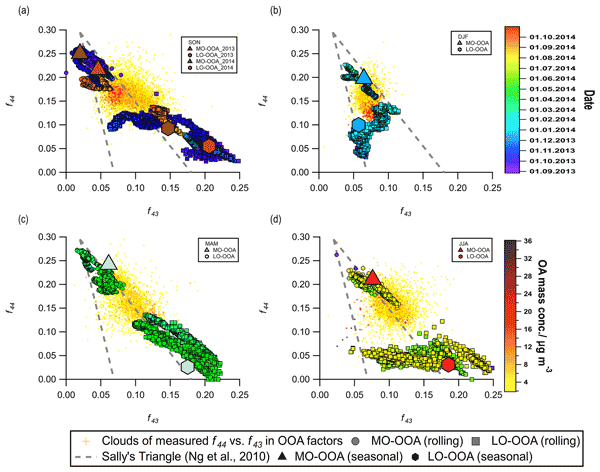
A novel, advanced source apportionment technique was applied to a dataset measured in Magadino. Rolling positive matrix factorisation (PMF) allows for retrieving more realistic, time-dependent, and detailed information on organic aerosol sources. The strength of the rolling PMF mechanism is highlighted by comparing it with results derived from conventional seasonal PMF. Overall, this comprehensive interpretation of aerosol chemical speciation monitor data could be a role model for similar work.
Cited articles
Adame, J., Gutiérrez-Álvarez, I., Cristofanelli, P., Notario, A., Bogeat, J., López, A., Gómez, A., Bolívar, J., and Yela, M.: Surface ozone trends over a 21-year period at El Arenosillo observatory (Southwestern Europe), Atmos. Res., 269, 106048, https://doi.org/10.1016/j.atmosres.2022.106048, 2022. a
Aksoyoglu, S., Keller, J., Ciarelli, G., Prévôt, A. S. H., and Baltensperger, U.: A model study on changes of European and Swiss particulate matter, ozone and nitrogen deposition between 1990 and 2020 due to the revised Gothenburg protocol, Atmos. Chem. Phys., 14, 13081–13095, https://doi.org/10.5194/acp-14-13081-2014, 2014. a, b
Baidar, S., Hardesty, R., Kim, S.-W., Langford, A., Oetjen, H., Senff, C., Trainer, M., and Volkamer, R.: Weakening of the weekend ozone effect over California's South Coast Air Basin, Geophys. Res. Lett., 42, 9457–9464, https://doi.org/10.1002/2015GL066419, 2015. a
Black, E., Blackburn, M., Harrison, G., Hoskins, B., and Methven, J.: Factors contributing to the summer 2003 European heatwave, Weather, 59, 217–223, https://doi.org/10.1256/wea.74.04, 2004. a
Bloomer, B. J., Stehr, J. W., Piety, C. A., Salawitch, R. J., and Dickerson, R. R.: Observed relationships of ozone air pollution with temperature and emissions, Geophys. Res. Lett., 36, https://doi.org/10.1029/2009GL037308, 2009. a, b
Boleti, E., Hüglin, C., and Takahama, S.: Trends of surface maximum ozone concentrations in Switzerland based on meteorological adjustment for the period 1990–2014, Atmos. Environ., 213, 326–336, https://doi.org/10.1016/j.atmosenv.2019.05.018, 2019. a, b, c
Boleti, E., Hueglin, C., Grange, S. K., Prévôt, A. S. H., and Takahama, S.: Temporal and spatial analysis of ozone concentrations in Europe based on timescale decomposition and a multi-clustering approach, Atmos. Chem. Phys., 20, 9051–9066, https://doi.org/10.5194/acp-20-9051-2020, 2020. a
Bundesamt für Statistik BFS: Teleheimarbeit, https://www.bfs.admin.ch/bfs/de/home/statistiken/kultur-medien-informationsgesellschaft-sport/informationsgesellschaft/gesamtindikatoren/volkswirtschaft/teleheimarbeit.assetdetail.34948916.html (last access: 14 February 2026), 2025a. a
Bundesamt für Statistik BFS: Mobilität und Verkehr – Taschenstatistik 2025, Statistical report, Neuchâtel, Switzerland, https://doi.org/10.71668/xyja-zn22, 2025b. a
Bundesamt für Strassen ASTRA, Fachbereich Verkehrsmanagement: Verkehrsentwicklung und Verfügbarkeit der Nationalstrassen Jahresbericht 2024, Report, https://www.astra.admin.ch/astra/de/home/themen/nationalstrassen/verkehrsfluss-stauaufkommen/verkehrsfluss-nationalstrassen.html (last access: 14 February 2026), 2025. a
Chace, W. S., Womack, C., Ball, K., Bates, K. H., Bohn, B., Coggon, M., Crounse, J. D., Fuchs, H., Gilman, J., Gkatzelis, G. I., Jernigan, C. M., Novak, G. A., Novelli, A., Peischl, J., Pollack, I., Robinson, M. A., Rollins, A., Schafer, N. B., Schwantes, R. H., Selby, M., Stainsby, A., Stockwell, C., Taylor, R., Treadaway, V., Veres, P. R., Warneke, C., Waxman, E., Wennberg, P. O., Wolfe, G. M., Xu, L., Zuraski, K., and Brown, S. S.: Ozone Production Efficiencies in the Three Largest United States Cities from Airborne Measurements, Environ. Sci. Technol., https://doi.org/10.1021/acs.est.5c02073, 2025. a
Chang, K.-L., McDonald, B. C., Harkins, C., and Cooper, O. R.: Surface ozone trend variability across the United States and the impact of heat waves (1990–2023), Atmos. Chem. Phys., 25, 5101–5132, https://doi.org/10.5194/acp-25-5101-2025, 2025. a
Chinkin, L. R., Coe, D. L., Funk, T. H., Hafner, H. R., Roberts, P. T., Ryan, P. A., and Lawson, D. R.: Weekday versus weekend activity patterns for ozone precursor emissions in California's South Coast Air Basin, J. Air Waste Manage. Assoc., 53, 829–843, https://doi.org/10.1080/10473289.2003.10466223, 2003. a
Coates, J., Mar, K. A., Ojha, N., and Butler, T. M.: The influence of temperature on ozone production under varying NOx conditions – a modelling study, Atmos. Chem. Phys., 16, 11601–11615, https://doi.org/10.5194/acp-16-11601-2016, 2016. a, b
Collaud Coen, M., Praz, C., Haefele, A., Ruffieux, D., Kaufmann, P., and Calpini, B.: Determination and climatology of the planetary boundary layer height above the Swiss plateau by in situ and remote sensing measurements as well as by the COSMO-2 model, Atmos. Chem. Phys., 14, 13205–13221, https://doi.org/10.5194/acp-14-13205-2014, 2014. a
Cooper, O., Derwent, D., Collins, B., Doherty, R., Stevenson, D., Stohl, A., and Hess, P.: Chapter 1: Conceptual Overview of Hemispheric or Intercontinental Transport of Ozone and Particulate Matter, in: Hemispheric transport of air pollution, edited by: Dentener, F., Keating, T. J., and Akimoto, H., United Nations, New York and Geneva, ISBN 978-92-1-117043-6, 2010. a
Crutzen, P. J.: Tropospheric ozone: An overview, Springer, https://doi.org/10.1007/978-94-009-2913-5_1, 1988. a
Denman, K. L., Brasseur, G., Chidthaisong, A., Ciais, P., Cox, P. M., Dickinson, R. E., Hauglustaine, D., Heinze, C., Holland, E., Jacob, D., Lohmann, U., Ramachandran, S., da Silva Dias, P. L., Wofsy, S. C., and Zhang, X.: Couplings Between Changes in the Climate System and Biogeochemistry, in: Climate Change 2007: The Physical Science Basis, Contribution of Working Group I to the Fourth Assessment Report of the Intergovernmental Panel on Climate Change, edited by: Solomon, S., Qin, D., Manning, M., Chen, Z., Marquis, M., Averyt, K. B., Tignor, M., and Miller, H. L., Cambridge University Press, Cambridge, United Kingdom and New York, NY, USA, ISBN 978052188009-1, 2007. a
Derwent, R. G., Utembe, S. R., Jenkin, M. E., and Shallcross, D. E.: Tropospheric ozone production regions and the intercontinental origins of surface ozone over Europe, Atmos. Environ., 112, 216–224, https://doi.org/10.1016/j.atmosenv.2015.04.049, 2015. a
Dong, B., Sutton, R. T., and Shaffrey, L.: Understanding the rapid summer warming and changes in temperature extremes since the mid-1990s over Western Europe, Clim. Dynam., 48, 1537–1554, https://doi.org/10.1007/s00382-016-3158-8, 2017. a
Empa and BAFU: Technischer Bericht zum Nationalen Beobachtungsnetz für Luftfremdstoffe (NABEL) 2024, Technical report, Dübendorf, Switzerland, https://www.bafu.admin.ch/bafu/de/home/themen/luft/zustand/daten/nationales-beobachtungsnetz-fuer-luftfremdstoffe--nabel-/berichte-des-nabel.html (last access: 15 November 2025), 2024. a, b
European Environmental Agency: Harm to human health from air pollution in Europe: burden of disease status, https://doi.org/10.2800/3950756, 2024. a
Federal Office of the Environment: Data query NABEL, https://www.bafu.admin.ch/bafu/en/home/topics/air/luftbelastung/data/data-query-nabel.html (last access: 15 November 2025), 2025. a
Federal Office of Topography swisstopo: swissBOUNDARIES3D, https://www.swisstopo.admin.ch/en/landscape-model-swissboundaries3d#Additional-information (last access: 15 November 2025), 2024. a
Fujita, E. M., Stockwell, W. R., Campbell, D. E., Keislar, R. E., and Lawson, D. R.: Evolution of the magnitude and spatial extent of the weekend ozone effect in California's South Coast Air Basin, 1981–2000, J. Air Waste Manage. Assoc., 53, 802–815, https://doi.org/10.1080/10473289.2003.10466225, 2003. a
Geddes, J. A., Murphy, J. G., and Wang, D. K.: Long term changes in nitrogen oxides and volatile organic compounds in Toronto and the challenges facing local ozone control, Atmos. Environ., 43, 3407–3415, https://doi.org/10.1016/j.atmosenv.2009.03.053, 2009. a
Gkatzelis, G. I., Gilman, J. B., Brown, S. S., Eskes, H., Gomes, A. R., Lange, A. C., McDonald, B. C., Peischl, J., Petzold, A., Thompson, C. R., and Kiendler-Scharr, A.: The global impacts of COVID-19 lockdowns on urban air pollution: A critical review and recommendations, Elem. Sci. Anth., 9, 00176, https://doi.org/10.1525/elementa.2021.00176, 2021. a
Grange, S. K., Lewis, A. C., Moller, S. J., and Carslaw, D. C.: Lower vehicular primary emissions of NO2 in Europe than assumed in policy projections, Nat. Geosci., 10, 914–918, https://doi.org/10.1038/s41561-017-0009-0, 2017. a
Grange, S. K., Farren, N. J., Vaughan, A. R., Rose, R. A., and Carslaw, D. C.: Strong temperature dependence for light-duty diesel vehicle NOx emissions, Environ. Sci. Technol., 53, 6587–6596, https://doi.org/10.1021/acs.est.9b01024, 2019. a, b, c
Grange, S. K., Farren, N. J., Vaughan, A. R., Davison, J., and Carslaw, D. C.: Post-dieselgate: evidence of NOx emission reductions using on-road remote sensing, Environ. Sci. Technol. Lett., 7, 382–387, https://doi.org/10.1021/acs.estlett.0c00188, 2020. a
Guenther, A. B., Jiang, X., Heald, C. L., Sakulyanontvittaya, T., Duhl, T., Emmons, L. K., and Wang, X.: The Model of Emissions of Gases and Aerosols from Nature version 2.1 (MEGAN2.1): an extended and updated framework for modeling biogenic emissions, Geosci. Model Dev., 5, 1471–1492, https://doi.org/10.5194/gmd-5-1471-2012, 2012. a
Guo, F., Bui, A. A., Schulze, B. C., Yoon, S., Shrestha, S., Wallace, H. W., Sakai, Y., Actkinson, B. W., Erickson, M. H., Alvarez, S., Sheesley, R., Usenko, S., Flynn, J., and Griffin, R. J.: Urban core-downwind differences and relationships related to ozone production in a major urban area in Texas, Atmos. Environ., 262, 118624, https://doi.org/10.1016/j.atmosenv.2021.118624, 2021. a
Huang, T., Zhu, X., Zhong, Q., Yun, X., Meng, W., Li, B., Ma, J., Zeng, E. Y., and Tao, S.: Spatial and temporal trends in global emissions of nitrogen oxides from 1960 to 2014, Environ. Sci. Technol., 51, 7992–8000, https://doi.org/10.1021/acs.est.7b02235, 2017. a
Hüglin. C. and Rohrbach, S.: Zeitliche Entwicklung der NO2 – Immissionen an verkehrsbelasteten städtischen Standorten, Technical Report, Dübendorf, Switzerland, https://www.empa.ch/documents/56101/29574162/Trend+NO2+Immissionen+Stadt+2022.pdf/ddba8b88-c599-4ed4-8b94-cc24670be683?version=1.0&t=1717509377000&download=true (last access: 15 November 2025), 2022. a
Hüglin, C., Buchmann, B., Steinbacher, M., and Emmenegger, L.: The Swiss National Air Pollution Monitoring Network (NABEL) – Bridging Science and Environmental Policy, Chimia, 78, 722–727, https://doi.org/10.2533/chimia.2024.722, 2024. a
Kleinman, L. I., Daum, P. H., Lee, Y.-N., Nunnermacker, L. J., Springston, S. R., Weinstein-Lloyd, J., and Rudolph, J.: Ozone production efficiency in an urban area, J. Geophys. Res.-Atmos., 107, ACH–23, https://doi.org/10.1029/2002JD002529, 2002. a
Levitt, S. B. and Chock, D. P.: Weekday-weekend pollutant studies of the Los Angeles basin, JAPCA J. Air Waste Ma., 26, 1091–1092, https://doi.org/10.1080/00022470.1976.10470368, 1976. a
Li, S., Wang, H., and Lu, X.: Anthropogenic emission controls reduce summertime ozone–temperature sensitivity in the United States, Atmos. Chem. Phys., 25, 2725–2743, https://doi.org/10.5194/acp-25-2725-2025, 2025. a, b, c
Massagué, J., Torre-Pascual, E., Carnerero, C., Escudero, M., Alastuey, A., Pandolfi, M., Querol, X., and Gangoiti, G.: Extreme ozone episodes in a major Mediterranean urban area, Atmos. Chem. Phys., 24, 4827–4850, https://doi.org/10.5194/acp-24-4827-2024, 2024. a
Mazzuca, G. M., Ren, X., Loughner, C. P., Estes, M., Crawford, J. H., Pickering, K. E., Weinheimer, A. J., and Dickerson, R. R.: Ozone production and its sensitivity to NOx and VOCs: results from the DISCOVER-AQ field experiment, Houston 2013, Atmos. Chem. Phys., 16, 14463–14474, https://doi.org/10.5194/acp-16-14463-2016, 2016. a
McDonald, B. C., de Gouw, J. A., Gilman, J. B., Jathar, S. H., Akherati, A., Cappa, C. D., Jimenez, J. L., Lee-Taylor, J., Hayes, P. L., McKeen, S. A., Cui, Y. Y., Kim, S., Gentner, D. R., Isaacman-VanWertz, G., Goldstein, A. H., Harley, R. A., Frost, G. J., Roberts, J. M., Ryerson, T. B., and Trainer, M.: Volatile chemical products emerging as largest petrochemical source of urban organic emissions, Science, 359, 760–764, https://doi.org/10.1126/science.aaq0524, 2018. a
McDuffie, E. E., Smith, S. J., O'Rourke, P., Tibrewal, K., Venkataraman, C., Marais, E. A., Zheng, B., Crippa, M., Brauer, M., and Martin, R. V.: A global anthropogenic emission inventory of atmospheric pollutants from sector- and fuel-specific sources (1970–2017): an application of the Community Emissions Data System (CEDS), Earth Syst. Sci. Data, 12, 3413–3442, https://doi.org/10.5194/essd-12-3413-2020, 2020. a
Murphy, J. G., Day, D. A., Cleary, P. A., Wooldridge, P. J., Millet, D. B., Goldstein, A. H., and Cohen, R. C.: The weekend effect within and downwind of Sacramento – Part 1: Observations of ozone, nitrogen oxides, and VOC reactivity, Atmos. Chem. Phys., 7, 5327–5339, https://doi.org/10.5194/acp-7-5327-2007, 2007. a, b
Nault, B. A., Laughner, J. L., Wooldridge, P. J., Crounse, J. D., Dibb, J., Diskin, G., Peischl, J., Podolske, J. R., Pollack, I. B., Ryerson, T. B., Scheuer, E., Wennberg, P. O., and Cohen, R. C.: Lightning NOx emissions: Reconciling measured and modeled estimates with updated NOx chemistry, Geophys. Res. Lett., 44, 9479–9488, https://doi.org/10.1002/2017GL074436, 2017. a
Nussbaumer, C. M. and Cohen, R. C.: The role of temperature and NOx in ozone trends in the Los Angeles Basin, Environ. Sci. Technol., 54, 15652–15659, https://doi.org/10.1021/acs.est.0c04910, 2020. a, b
Nuvolone, D., Petri, D., and Voller, F.: The effects of ozone on human health, Environ. Sci. Pollut. R., 25, 8074–8088, https://doi.org/10.1007/s11356-017-9239-3, 2018. a
Oikawa, P., Ge, C., Wang, J., Eberwein, J., Liang, L., Allsman, L., Grantz, D., and Jenerette, G.: Unusually high soil nitrogen oxide emissions influence air quality in a high-temperature agricultural region, Nat. Commun., 6, 8753, https://doi.org/10.1038/ncomms9753, 2015. a
Ordóñez, C., Mathis, H., Furger, M., Henne, S., Hüglin, C., Staehelin, J., and Prévôt, A. S. H.: Changes of daily surface ozone maxima in Switzerland in all seasons from 1992 to 2002 and discussion of summer 2003, Atmos. Chem. Phys., 5, 1187–1203, https://doi.org/10.5194/acp-5-1187-2005, 2005. a
Otero, N., Rust, H. W., and Butler, T.: Temperature dependence of tropospheric ozone under NOx reductions over Germany, Atmos. Environ., 253, 118334, https://doi.org/10.1016/j.atmosenv.2021.118334, 2021. a
Perdigones, B. C., Lee, S., Cohen, R. C., Park, J.-H., and Min, K.-E.: Two decades of changes in summertime ozone production in California's South Coast Air Basin, Environ. Sci. Technol., 56, 10586–10595, https://doi.org/10.1021/acs.est.2c01026, 2022. a
Pollack, I., Ryerson, T., Trainer, M., Parrish, D., Andrews, A., Atlas, E. L., Blake, D., Brown, S. S., Commane, R., Daube, B. C., de Gouw, J. A., Dubé, W. P., Flynn, J., Frost, G. J., Gilman, J. B., Grossberg, N., Holloway, J. S., Kofler, J., Kort, E. A., Kuster, W. C., Lang, P. M., Lefer, B., Lueb, R. A., Neuman, J. A., Nowak, J. B., Novelli, P. C., Peischl, J., Perring, A. E., Roberts, J. M., Santoni, G., Schwarz, J. P., Spackman, J. R., Wagner, N. L., Warneke, C., Washenfelder, R. A., Wofsy, S. C., and Xiang, B.: Airborne and ground-based observations of a weekend effect in ozone, precursors, and oxidation products in the California South Coast Air Basin, J. Geophys. Res.-Atmos., 117, https://doi.org/10.1029/2011JD016772, 2012. a
Porter, W. C. and Heald, C. L.: The mechanisms and meteorological drivers of the summertime ozone–temperature relationship, Atmos. Chem. Phys., 19, 13367–13381, https://doi.org/10.5194/acp-19-13367-2019, 2019. a, b
Pusede, S. E. and Cohen, R. C.: On the observed response of ozone to NOx and VOC reactivity reductions in San Joaquin Valley California 1995–present, Atmos. Chem. Phys., 12, 8323–8339, https://doi.org/10.5194/acp-12-8323-2012, 2012. a
Pusede, S. E., Steiner, A. L., and Cohen, R. C.: Temperature and recent trends in the chemistry of continental surface ozone, Chem. Rev., 115, 3898–3918, https://doi.org/10.1021/cr5006815, 2015. a, b
Qin, M., She, Y., Wang, M., Wang, H., Chang, Y., Tan, Z., An, J., Huang, J., Yuan, Z., Lu, J., Wang, Q., Liu, C., Liu, Z., Xie, X., Li, J., Liao, H., Pye, H. O. T., Huang, C., Guo, S., Hu, M., Zhang, Y., Jacob, D. J., and Hu, J.: Increased urban ozone in heatwaves due to temperature-induced emissions of anthropogenic volatile organic compounds, Nat. Geosci., 18, 50–56, https://doi.org/10.1038/s41561-024-01608-w, 2025. a
Rasmussen, D., Hu, J., Mahmud, A., and Kleeman, M. J.: The ozone–climate penalty: past, present, and future, Environ. Sci. Technol., 47, 14258–14266, https://doi.org/10.1021/es403446m, 2013. a, b
Schär, C., Vidale, P. L., Lüthi, D., Frei, C., Häberli, C., Liniger, M. A., and Appenzeller, C.: The role of increasing temperature variability in European summer heatwaves, Nature, 427, 332–336, https://doi.org/10.1038/nature02300, 2004. a
Schweizerischer Bundesrat: Verordnung 2 über Massnahmen zur Bekämpfung des Coronavirus (COVID-19) (COVID-19-Verordnung 2), https://www.newsd.admin.ch/newsd/message/attachments/60681.pdf (last access: 14 February 2026), 2020. a
Seinfeld, J. H. and Pandis, S. N.: Atmospheric chemistry and physics: from air pollution to climate change, 3rd edn., John Wiley & Sons, ISBN 978-1-118-94740-1, 2016. a
Sindelarova, K., Granier, C., Bouarar, I., Guenther, A., Tilmes, S., Stavrakou, T., Müller, J.-F., Kuhn, U., Stefani, P., and Knorr, W.: Global data set of biogenic VOC emissions calculated by the MEGAN model over the last 30 years, Atmos. Chem. Phys., 14, 9317–9341, https://doi.org/10.5194/acp-14-9317-2014, 2014. a
Stockwell, C. E., Coggon, M. M., Schwantes, R. H., Harkins, C., Verreyken, B., Lyu, C., Zhu, Q., Xu, L., Gilman, J. B., Lamplugh, A., Peischl, J., Robinson, M. A., Veres, P. R., Li, M., Rollins, A. W., Zuraski, K., Baidar, S., Liu, S., Kuwayama, T., Brown, S. S., McDonald, B. C., and Warneke, C.: Urban ozone formation and sensitivities to volatile chemical products, cooking emissions, and NOx upwind of and within two Los Angeles Basin cities, Atmos. Chem. Phys., 25, 1121–1143, https://doi.org/10.5194/acp-25-1121-2025, 2025. a
Tan, Z., Lu, K., Dong, H., Hu, M., Li, X., Liu, Y., Lu, S., Shao, M., Su, R., Wang, H., Wu, Y., Wahner, A., and Zhang, Y.: Explicit diagnosis of the local ozone production rate and the ozone-NOx-VOC sensitivities, Sci. Bull., 63, 1067–1076, https://doi.org/10.1016/j.scib.2018.07.001, 2018. a
Twardosz, R., Walanus, A., and Guzik, I.: Warming in Europe: recent trends in annual and seasonal temperatures, Pure Appl. Geophys., 178, 4021–4032, https://doi.org/10.1007/s00024-021-02860-6, 2021. a, b
Wang, Y., van Pinxteren, D., Tilgner, A., Hoffmann, E. H., Hell, M., Bastian, S., and Herrmann, H.: Ozone (O3) observations in Saxony, Germany, for 1997–2020: trends, modelling and implications for O3 control, Atmos. Chem. Phys., 25, 8907–8927, https://doi.org/10.5194/acp-25-8907-2025, 2025a. a
Wang, Y., Yang, Y., Yuan, Q., Li, T., Zhou, Y., Zong, L., Wang, M., Xie, Z., Ho, H. C., Gao, M., Tong, S., Lolli, S., and Zhang, L.: Substantially underestimated global health risks of current ozone pollution, Nat. Commun., 16, 102, https://doi.org/10.1038/s41467-024-55450-0, 2025b. a
Weng, H., Lin, J., Martin, R., Millet, D. B., Jaeglé, L., Ridley, D., Keller, C., Li, C., Du, M., and Meng, J.: Global high-resolution emissions of soil NOx, sea salt aerosols, and biogenic volatile organic compounds, Sci. Data, 7, 148, https://doi.org/10.1038/s41597-020-0488-5, 2020. a
Wu, S., Mickley, L. J., Leibensperger, E. M., Jacob, D. J., Rind, D., and Streets, D. G.: Effects of 2000–2050 global change on ozone air quality in the United States, J. Geophys. Res.-Atmos., 113, https://doi.org/10.1029/2007JD008917, 2008. a, b
Wu, W., Fu, T.-M., Arnold, S. R., Spracklen, D. V., Zhang, A., Tao, W., Wang, X., Hou, Y., Mo, J., Chen, J., Li, Y., Feng, X., Lin, H., Huang, Z., Zheng, J., Shen, H., Zhu, L., Wang, C., Ye, J., and Yang, X.: Temperature-dependent evaporative anthropogenic VOC emissions significantly exacerbate regional ozone pollution, Environ. Sci. Technol., 58, 5430–5441, https://doi.org/10.1021/acs.est.3c09122, 2024. a
Yan, Y., Pozzer, A., Ojha, N., Lin, J., and Lelieveld, J.: Analysis of European ozone trends in the period 1995–2014, Atmos. Chem. Phys., 18, 5589–5605, https://doi.org/10.5194/acp-18-5589-2018, 2018. a
Short summary
Ground-level ozone is harmful to human health. While precursors to ozone were strongly reduced over the past decades, unhealthy levels of ozone are still frequently reported in Switzerland. In this study, we investigate changes in ozone and its relationship with temperature over time. We find that precursor reductions have positively affected ozone in remote locations, while ozone is increasing close to busy roads. High ozone is often associated with hot summer days.
Ground-level ozone is harmful to human health. While precursors to ozone were strongly reduced...


Altmetrics
Final-revised paper
Preprint