
Articles | Volume 26, issue 6
https://doi.org/10.5194/acp-26-4049-2026
© Author(s) 2026. This work is distributed under
the Creative Commons Attribution 4.0 License.
the Creative Commons Attribution 4.0 License.
https://doi.org/10.5194/acp-26-4049-2026
© Author(s) 2026. This work is distributed under
the Creative Commons Attribution 4.0 License.
the Creative Commons Attribution 4.0 License.
Research article
| 
24 Mar 2026
Research article |
| 24 Mar 2026
| 24 Mar 2026
Observing the role of wind-driven processes in the evolution of warm marine cloud properties
Vishnu Nair
CORRESPONDING AUTHOR

Department of Physics, Imperial College, London, UK
Edward Gryspeerdt
Department of Physics, Imperial College, London, UK
Antti Arola
Finnish Meteorological Institute, Kuopio, Finland
Antti Lipponen
Finnish Meteorological Institute, Kuopio, Finland
Timo Virtanen
Finnish Meteorological Institute, Kuopio, Finland
Related authors
Vishnu Nair, Anujah Mohanathan, Michael Herzog, David G. Macfarlane, and Duncan A. Robertson
Geosci. Model Dev., 18, 4417–4432, https://doi.org/10.5194/gmd-18-4417-2025, https://doi.org/10.5194/gmd-18-4417-2025, 2025
Short summary
Short summary
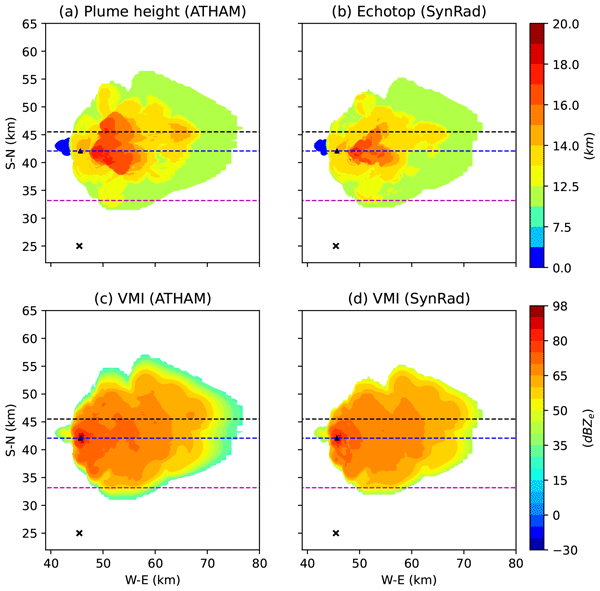
A numerical model that simulates the measurement processes behind the ground-based radars used to detect volcanic ash clouds is introduced. Using weather radars to detect volcanic clouds is not ideal, as fine ash particles are smaller than raindrops and remain undetected. We evaluate the performance of weather radars to study ash clouds and to identify optimal frequencies that balance the trade-off between a higher return signal and the higher path attenuation that comes at these higher frequencies.
Hui Ling Wong, Rafael Palacios, and Edward Gryspeerdt
EGUsphere, https://doi.org/10.5194/egusphere-2026-5835, https://doi.org/10.5194/egusphere-2026-5835, 2026
This preprint is open for discussion and under review for Atmospheric Chemistry and Physics (ACP).
Short summary
Short summary
Contrails are clouds that form behind aircraft and have a significant warming impact on the climate. To reduce this impact, aircraft can avoid the regions where contrails form. This raises the question of whether this increases the risk of turbulence encounters. We found that contrail-forming regions associated with increased turbulence risk occur in winter and where air rises quickly. These findings can make contrail avoidance strategies safer and more effective.
Neus Sabater, Pekka Kolmonen, Marika Honkanen, Antti Kukkurainen, Andreas Burkart, Tommaso Julitta, Shari Van Wittenberghe, Ella Kivimäki, Hannakaisa Lindqvist, and Antti Arola
Int. Arch. Photogramm. Remote Sens. Spatial Inf. Sci., XLVIII-M-12-2026, 69–75, https://doi.org/10.5194/isprs-archives-XLVIII-M-12-2026-69-2026, https://doi.org/10.5194/isprs-archives-XLVIII-M-12-2026-69-2026, 2026
Roberto Colombo, Béatrice Berthelot, Alireza Mahmoodi, Louis Sainte-Marie, Gwennaël Matot, Jorge Vicent Servera, Ornela Nanushi, Brice Mora, Mohamed Salah Djellali, Neus Sabater, Pekka Kolmonen, Timo H. Virtanen, Astrid M. Zimmermann, Pieter De Vis, Micol Rossini, Giulia Tagliabue, Pietro Chierichetti, Sergio Cogliati, Juliane Bendig, Bastian Siegmann, Uwe Rascher, Egor Prikaziuk, Christiaan van der Tol, Darren Ghent, Jasdeep Singh Anand, Tommaso Julitta, Matthias Drusch, Marco Celesti, Dirk Schüttemeyer, and Marin Tudoroiu
Int. Arch. Photogramm. Remote Sens. Spatial Inf. Sci., XLVIII-M-12-2026, 17–24, https://doi.org/10.5194/isprs-archives-XLVIII-M-12-2026-17-2026, https://doi.org/10.5194/isprs-archives-XLVIII-M-12-2026-17-2026, 2026
Kanika Taneja, Silvia M. Calderón, Harri Kokkola, Juha Tonttila, Sami Romakkaniemi, Seethala Chellappan, Antti Arola, Antti Lipponen, Taina Yli-Juuti, Snehitha M. Kommula, Tuukka Petäjä, Markku Kulmala, and Tero Mielonen
EGUsphere, https://doi.org/10.5194/egusphere-2026-4750, https://doi.org/10.5194/egusphere-2026-4750, 2026
This preprint is open for discussion and under review for Atmospheric Chemistry and Physics (ACP).
Short summary
Short summary
Vegetation can cool the climate by releasing gases that form aerosols, which scatter sunlight and brighten clouds. To quantify this feedback in Finland and the United States, we combine field measurements of aerosols and satellite observations of clouds. It is essential to select near-ideal clouds; otherwise, cloud-related cooling is underestimated. Cloud cooling matched aerosol cooling at the clean site in Finland and was nearly three times stronger at the rural site in the United States.
Thomas F. Eck, Jeffrey S. Reid, Alexander Sinyuk, Pawan Gupta, Antti Arola, Ilya Slutsker, Brent N. Holben, Philippe Goloub, Oleg Dubovik, Joel S. Schafer, Mikhail G. Sorokin, Alexander Smirnov, Hongbin Yu, Dongchul Kim, Elena Lind, Jason Kraft, Elizabeth A. Reid, Aboubacry Diallo, Thierno Ndiaye, Africa Barreto, Sidi Baika, Lahouari Zeudmi-Sahraoui, Francisco Evora, Gael Dubois, Luc Blarel, Rachel T. Pinker, Isaac Abiodun Adimula, Jean Louis Rajot, Aliko Maman, Muguette Allegre, Cassandra Gaston, Peter Sealy, Edmund Blades, Rebecca Chewitt-Lucas, Ian Lau, David Barker, Adel Saad Alshihiween, Abdulrahman Alsaferan, Odbayar Mishigdorj, and Chogsom Jargalsaixan
EGUsphere, https://doi.org/10.5194/egusphere-2026-5531, https://doi.org/10.5194/egusphere-2026-5531, 2026
This preprint is open for discussion and under review for Atmospheric Chemistry and Physics (ACP).
Short summary
Short summary
The optical properties of airborne soil particles from major desert regions measured by ground based remote sensing retrievals are presented. The relative spectral absorption of these particles from the remote sensing data agree very well with absorption of soil dust samples measured in a laboratory. A large fraction of the optical effects were attributed to relatively small submicron sized dust particles which would also be more easily inhalable and therefore may impact human health.
Iarla Boyce, Alice Cicirello, and Edward Gryspeerdt
Atmos. Meas. Tech., 19, 5475–5490, https://doi.org/10.5194/amt-19-5475-2026, https://doi.org/10.5194/amt-19-5475-2026, 2026
Short summary
Short summary
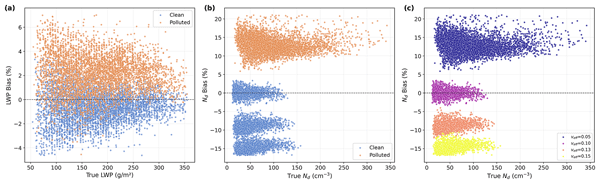
We tested whether satellites accurately measure clouds affected by ship pollution. Using computer simulations, we found that satellites overestimate how much cloud droplet numbers rise in polluted ship tracks compared to nearby clean clouds. This means the cooling effect of pollution on clouds may be overstated, which matters for strategies like marine cloud brightening that aim to boost this cooling effect deliberately.
William Wandji Nyamsi, Ville Leinonen, Antti Lipponen, Else van den Besselaar, Santtu Mikkonen, Arturo Sanchez-Lorenzo, Martin Wild, Doris Folini, Tero Mielonen, Harri Kokkola, Antti Kukkurainen, Neus Sabater, Rei Kudo, Ben Liley, Raghav Srinivasan, Bruce W. Forgan, Alexandru Dumitrescu, Grzegorz Urban, Michał K. Kowalewski, Márcia Akemi Yamasoe, Nilton Évora do Rosário, Dimitra Founda, Stelios Kazadzis, Veronica Manara, Derbetini A. Vondou, Christian Gueymard, Anders V. Lindfors, Atsumu Ohmura, and Antti Arola
Atmos. Chem. Phys., 26, 10767–10788, https://doi.org/10.5194/acp-26-10767-2026, https://doi.org/10.5194/acp-26-10767-2026, 2026
Short summary
Short summary
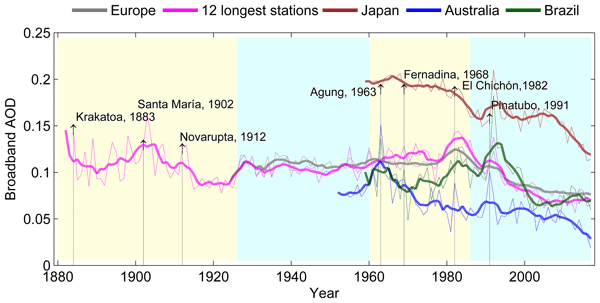
Worldwide reconstructed historical aerosol load reveals that during the period of:
- 1900–1959: the atmosphere became cleaner in most European cities;
- 1960–1985: anthropogenic aerosols were responsible for the dimming phenomenon in Europe. AOD increased over Southeast Brazil and decreased noticeably over Japan while a small negative trend was found over Oceania;
- 1986–2015: generally, the atmosphere has become much cleaner everywhere after the reversal trend around 1980s mainly observed in Europe.
Maria Christina Gatou, Antti Lipponen, Ari Leskinen, Petri Tiitta, Maria Filioglou, Xiaoxia Shang, Sanna Pätsi, Annika Saarto, Marjut Roponen, Elina Giannakaki, and Mika Komppula
EGUsphere, https://doi.org/10.5194/egusphere-2026-1806, https://doi.org/10.5194/egusphere-2026-1806, 2026
Short summary
Short summary
We investigate the pollen distribution at different heights using measurements from ground level up to 272 meters in eastern Finland. By combining optical pollen sensors with traditional monitoring methods and atmospheric model predictions, we examined how pollen concentrations vary with height. The results show that pollen concentrations decrease with altitude and that optical sensors combined with machine learning can identify dominant pollen types for continuous pollen monitoring.
Andrea Porcheddu, Ville Kolehmainen, Timo Lähivaara, Robert Levy, Yingxi Rona Shi, Hai Zhang, and Antti Lipponen
EGUsphere, https://doi.org/10.5194/egusphere-2026-1987, https://doi.org/10.5194/egusphere-2026-1987, 2026
Short summary
Short summary
We developed a new way to improve satellite measurements of atmospheric aerosols, which affect air quality and climate. By combining data from two geostationary satellites and using advanced machine learning methods that capture changes over time, we achieved more accurate and detailed results. This approach reduces errors in current satellite-based aerosol data and can better support monitoring and decision making related to air pollution and climate impacts.
Antti Lipponen, Jorge Lezaca, Yves-Marie Saint-Drenan, Marion Schroedter-Homscheidt, and Antti Arola
EGUsphere, https://doi.org/10.5194/egusphere-2026-2743, https://doi.org/10.5194/egusphere-2026-2743, 2026
Short summary
Short summary
We studied what causes errors in Copernicus Atmosphere Monitoring Service solar radiation data using explainable machine learning methods and ground-based observations. The analysis showed that cloud properties are the main source of errors, while aerosols and surface reflectance have smaller effects. The results improve understanding of the strengths and weaknesses of current models and can support future model development, forecasting and solar energy applications.
Nick Schutgens, Elisabeth J. Andrews, Antti Arola, Yusuf Bhatti, Guanliang Fu, Otto Hasekamp, Pekka Kolmonen, Antti Lipponen, Tero Mielonen, Leighton Reygare, and Andrew M. Sayer
EGUsphere, https://doi.org/10.5194/egusphere-2026-2656, https://doi.org/10.5194/egusphere-2026-2656, 2026
Short summary
Short summary
Aerosol are fine particles in the air that affect public health and the climate. We develop a new method to study aerosol through patterns (called autocorrelations) in their time-series. We show that autocorrelations are linked to aerosol deposition processes and contain information on the important but uncertain aerosol lifetime. Autocorrelations can be observed from satellites and we provide the first ever global climatology of aerosol autocorrelations.
Izabela Wojciechowska and Edward Gryspeerdt
Atmos. Chem. Phys., 26, 4571–4582, https://doi.org/10.5194/acp-26-4571-2026, https://doi.org/10.5194/acp-26-4571-2026, 2026
Short summary
Short summary
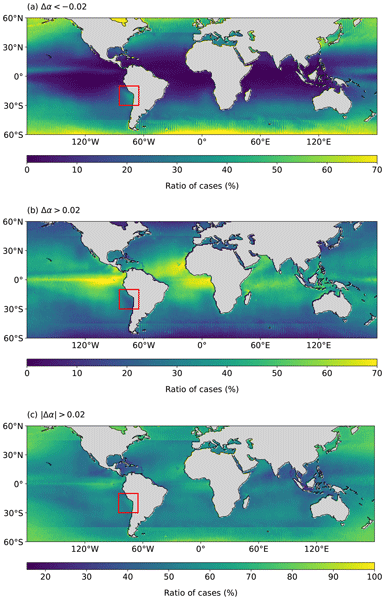
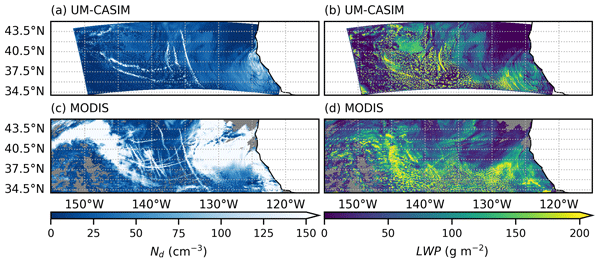
Marine clouds play a major role in cooling the Earth by reflecting sunlight, but predicting how bright they appear is not straightforward. We used satellite data from 2003 to 2021 and examined whether the brightness of marine clouds can be explained by their main properties. We found that the relationship varies across the globe, and that regional differences need to be considered to better understand cloud impact on climate.
Anna Tippett, Paul R. Field, and Edward Gryspeerdt
Atmos. Chem. Phys., 26, 4251–4274, https://doi.org/10.5194/acp-26-4251-2026, https://doi.org/10.5194/acp-26-4251-2026, 2026
Short summary
Short summary
Clouds and their interactions with tiny particles in the air (aerosols) are a large source of uncertainty in climate models. To study Marine Cloud Brightening (MCB), we use ship tracks (changes to clouds from ship pollution). Comparing real ship track data with model results, we find the model struggles under rainy conditions and overestimates effects at high pollution levels, suggesting it needs improvement for reliable MCB simulations.
William Wandji Nyamsi, Anders V. Lindfors, Angela Meyer, Antti Lipponen, and Antti Arola
Atmos. Meas. Tech., 19, 899–922, https://doi.org/10.5194/amt-19-899-2026, https://doi.org/10.5194/amt-19-899-2026, 2026
Short summary
Short summary
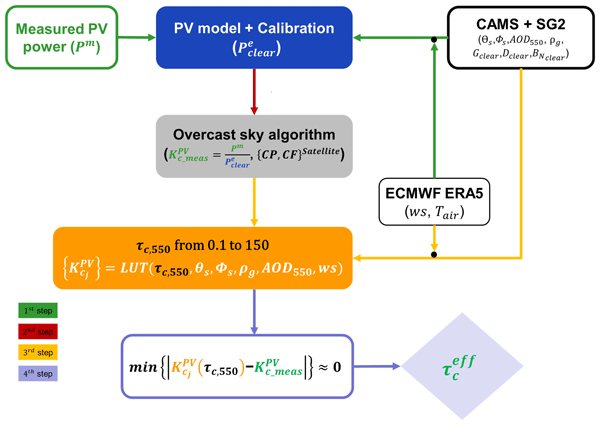
This paper proposes a new, fast and accurate method for estimating the cloud optical depth (τc) from photovoltaic (PV) power measurements under overcast sky conditions. The method performs very well with the European Centre for Medium-Range Weather Forecasts (ECMWF) products as inputs describing the state of the atmosphere. The method exhibits a better performance than published state-of-the-art methods when compared to ground and satellite-based τc retrievals serving as reference.
Oliver G. A. Driver, Marc E. J. Stettler, and Edward Gryspeerdt
Atmos. Chem. Phys., 25, 16411–16433, https://doi.org/10.5194/acp-25-16411-2025, https://doi.org/10.5194/acp-25-16411-2025, 2025
Short summary
Short summary
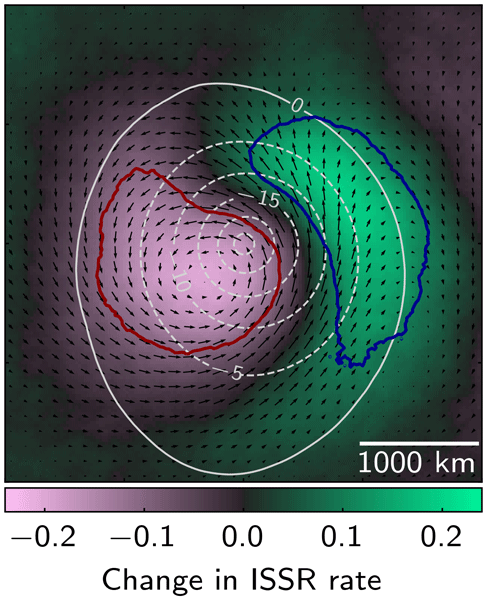
Contrails are ice clouds caused by planes. They have a warming effect, so are important to model. In humid (ice supersaturated) regions, ice crystals are stable so can persist. However, weather model data doesn't represent ice supersaturated regions well enough. We demonstrate that ice supersaturation modelling is structured by North Atlantic storm systems. Averaging many systems, we link the bias to underling processes being modelled, and gain insight into how the existing data could be used.

Antti Kukkurainen, Antti Mikkonen, Antti Arola, Antti Lipponen, Ville Kolehmainen, and Neus Sabater
Geosci. Model Dev., 18, 7529–7544, https://doi.org/10.5194/gmd-18-7529-2025, https://doi.org/10.5194/gmd-18-7529-2025, 2025
Short summary
Short summary
HAPI2LIBIS is a new software tool that enhances the capabilities of the radiative transfer model libRadtran. It simplifies high-wavelength-resolution simulations by using up-to-date molecular data from the HITRAN (High-Resolution Transmission Molecular Absorption) database and streamlining computations. This tool helps researchers analyze how gases interact with radiation in the Earth's atmosphere and at the surface, improving atmospheric studies and satellite observations and making detailed modeling more accurate and accessible.
Andrea Porcheddu, Ville Kolehmainen, Timo Lähivaara, and Antti Lipponen
Atmos. Meas. Tech., 18, 4771–4789, https://doi.org/10.5194/amt-18-4771-2025, https://doi.org/10.5194/amt-18-4771-2025, 2025
Short summary
Short summary
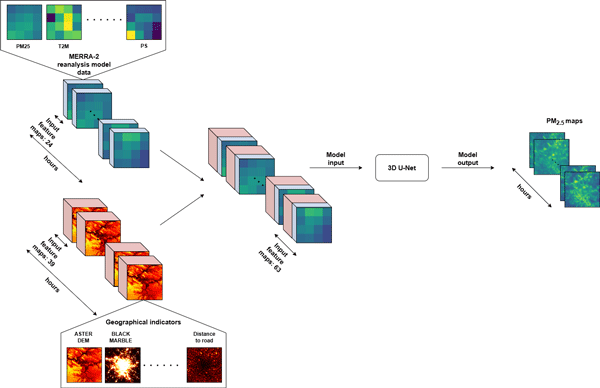
This study proposes a novel machine learning method to estimate pollution levels (PM2.5) on urban areas at fine scale. Our model generates hourly PM2.5 maps with high spatial resolution, by combining satellite data, ground measurements, geophysical model data, and different geographical indicators. The model properly accounts for spatial and temporal variability of the urban pollution levels, and can be highly beneficial for air quality monitoring and health protection.
Vishnu Nair, Anujah Mohanathan, Michael Herzog, David G. Macfarlane, and Duncan A. Robertson
Geosci. Model Dev., 18, 4417–4432, https://doi.org/10.5194/gmd-18-4417-2025, https://doi.org/10.5194/gmd-18-4417-2025, 2025
Short summary
Short summary
A numerical model that simulates the measurement processes behind the ground-based radars used to detect volcanic ash clouds is introduced. Using weather radars to detect volcanic clouds is not ideal, as fine ash particles are smaller than raindrops and remain undetected. We evaluate the performance of weather radars to study ash clouds and to identify optimal frequencies that balance the trade-off between a higher return signal and the higher path attenuation that comes at these higher frequencies.
George Horner and Edward Gryspeerdt
Atmos. Chem. Phys., 25, 5617–5631, https://doi.org/10.5194/acp-25-5617-2025, https://doi.org/10.5194/acp-25-5617-2025, 2025
Short summary
Short summary
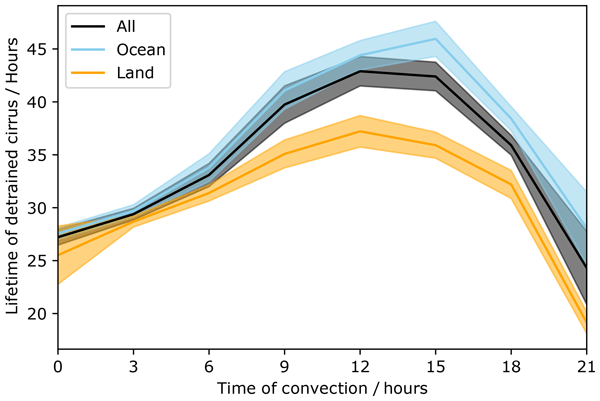
This work tracks the life cycle of thin cirrus clouds that flow out of tropical convective storms. These cirrus clouds are found to have a warming effect on the atmosphere over their whole lifetime. Thin cirrus that originate from land origin convection warm more than those of ocean origin. Moreover, if the lifetime of these cirrus clouds increase, the warming they exert over their whole lifetime also increases. These results help us understand how these clouds might change in a future climate.
Oliver G. A. Driver, Marc E. J. Stettler, and Edward Gryspeerdt
Atmos. Meas. Tech., 18, 1115–1134, https://doi.org/10.5194/amt-18-1115-2025, https://doi.org/10.5194/amt-18-1115-2025, 2025
Short summary
Short summary
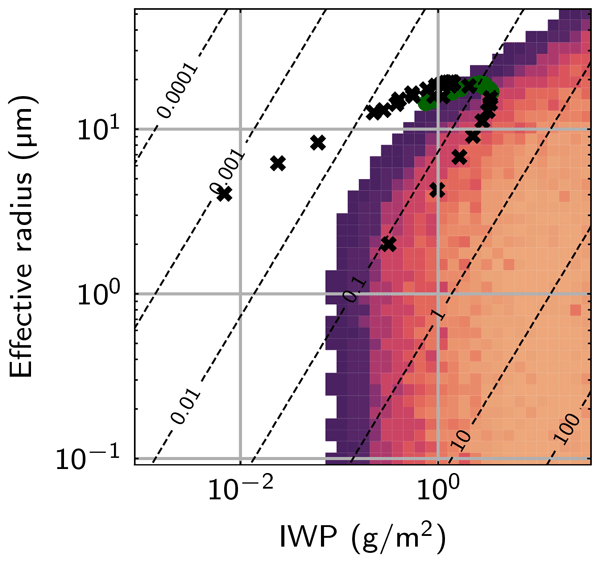
Contrails (clouds caused by planes) play a large role in the climate warming caused by aviation. Satellites are a good tool to validate modelled impact estimates. Many contrails are either too narrow or too disperse to detect. This work shows that only around half of contrails are observable but that the most climatically important are easier to detect. It supports the use of satellites for contrail observation but highlights the need for observability considerations for specific applications.
Timo H. Virtanen, Anu-Maija Sundström, Elli Suhonen, Antti Lipponen, Antti Arola, Christopher O'Dell, Robert R. Nelson, and Hannakaisa Lindqvist
Atmos. Meas. Tech., 18, 929–952, https://doi.org/10.5194/amt-18-929-2025, https://doi.org/10.5194/amt-18-929-2025, 2025
Short summary
Short summary
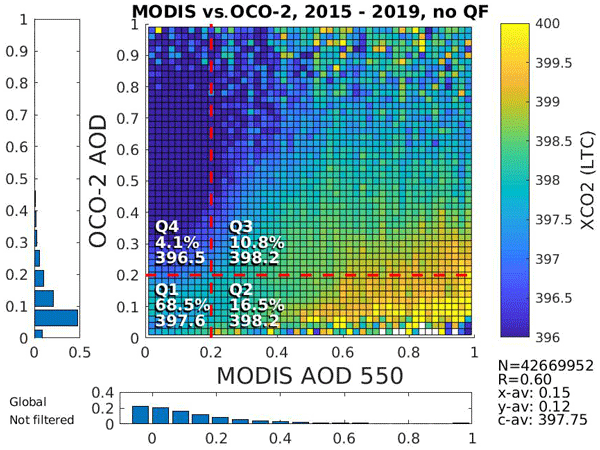
We find that small particles suspended in the air (aerosols) affect the satellite observations of carbon dioxide (CO2) made by the Orbiting Carbon Observatory-2 satellite instrument. Satellite estimates of CO2 appear to be too high for clean areas and too low for polluted areas. Our results show that CO2 and aerosols are often co-emitted, and this is partly masked out in the current retrievals. Correctly accounting for the aerosol effect is important for CO2 emission estimates by satellites.
Harri Kokkola, Juha Tonttila, Silvia M. Calderón, Sami Romakkaniemi, Antti Lipponen, Aapo Peräkorpi, Tero Mielonen, Edward Gryspeerdt, Timo Henrik Virtanen, Pekka Kolmonen, and Antti Arola
Atmos. Chem. Phys., 25, 1533–1543, https://doi.org/10.5194/acp-25-1533-2025, https://doi.org/10.5194/acp-25-1533-2025, 2025
Short summary
Short summary
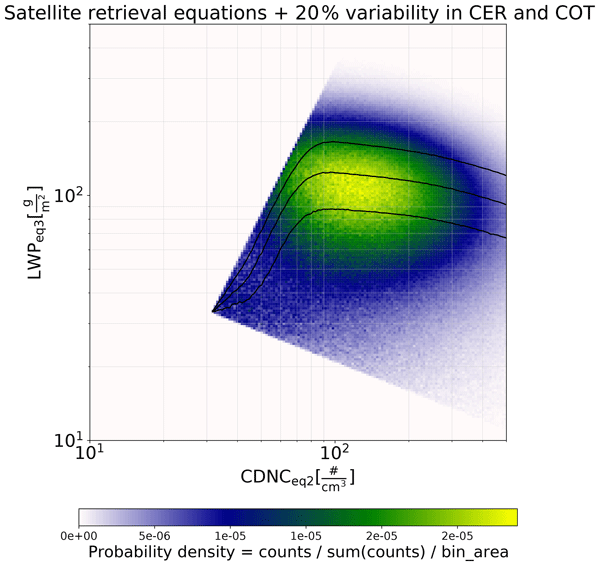
Understanding how atmospheric aerosols affect clouds is a scientific challenge. One question is how aerosols affects the amount of cloud water. We used a cloud-scale model to study these effects on marine clouds. The study showed that variations in cloud properties and instrument noise can cause bias in satellite-derived cloud water content. However, our results suggest that for similar weather conditions with well-defined aerosol concentrations, satellite data can reliably track these effects.
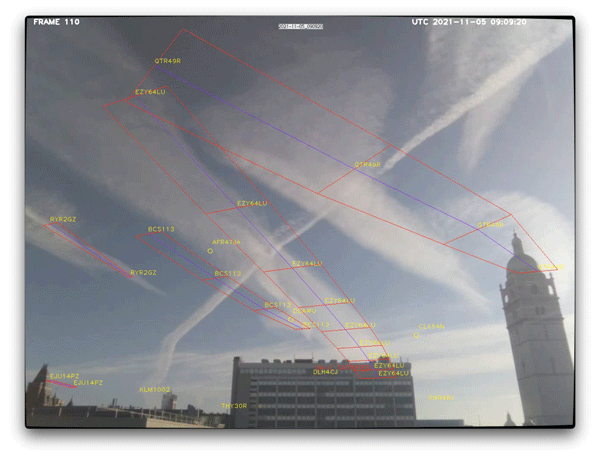
Jade Low, Roger Teoh, Joel Ponsonby, Edward Gryspeerdt, Marc Shapiro, and Marc E. J. Stettler
Atmos. Meas. Tech., 18, 37–56, https://doi.org/10.5194/amt-18-37-2025, https://doi.org/10.5194/amt-18-37-2025, 2025
Short summary
Short summary
The radiative forcing due to contrails is of the same order of magnitude as aviation CO2 emissions but has a higher uncertainty. Observations are vital to improve our understanding of the contrail lifecycle, improve models, and measure the effect of mitigation action. Here, we use ground-based cameras combined with flight telemetry to track visible contrails and measure their lifetime and width. We evaluate model predictions and demonstrate the capability of this approach.
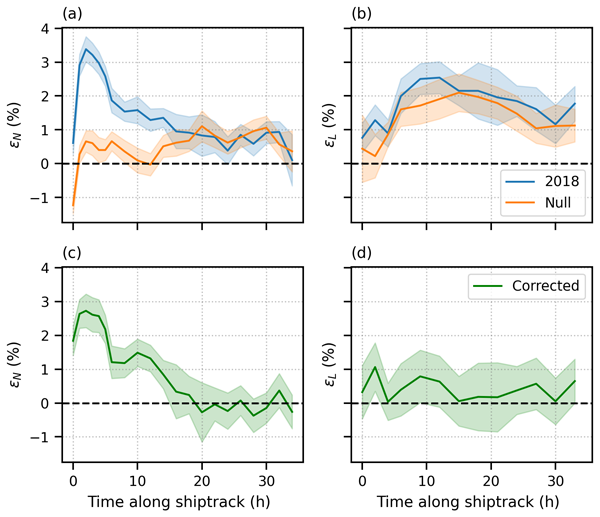
Anna Tippett, Edward Gryspeerdt, Peter Manshausen, Philip Stier, and Tristan W. P. Smith
Atmos. Chem. Phys., 24, 13269–13283, https://doi.org/10.5194/acp-24-13269-2024, https://doi.org/10.5194/acp-24-13269-2024, 2024
Short summary
Short summary
Ship emissions can form artificially brightened clouds, known as ship tracks, and provide us with an opportunity to investigate how aerosols interact with clouds. Previous studies that used ship tracks suggest that clouds can experience large increases in the amount of water (LWP) from aerosols. Here, we show that there is a bias in previous research and that, when we account for this bias, the LWP response to aerosols is much weaker than previously reported.
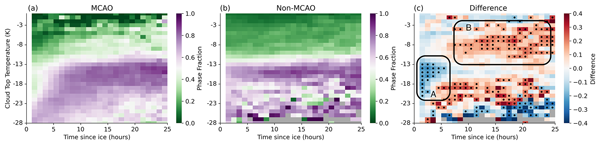
Rebecca J. Murray-Watson and Edward Gryspeerdt
Atmos. Chem. Phys., 24, 11115–11132, https://doi.org/10.5194/acp-24-11115-2024, https://doi.org/10.5194/acp-24-11115-2024, 2024
Short summary
Short summary
The formation of mixed-phase clouds during marine cold-air outbreaks is not well understood. Our study, using satellite data and Lagrangian trajectories, reveals that the occurrence of these clouds depends on both time and temperature, influenced partly by the presence of biological ice-nucleating particles. This highlights the importance of comprehending local aerosol dynamics for precise modelling of cloud-phase transitions in the Arctic.
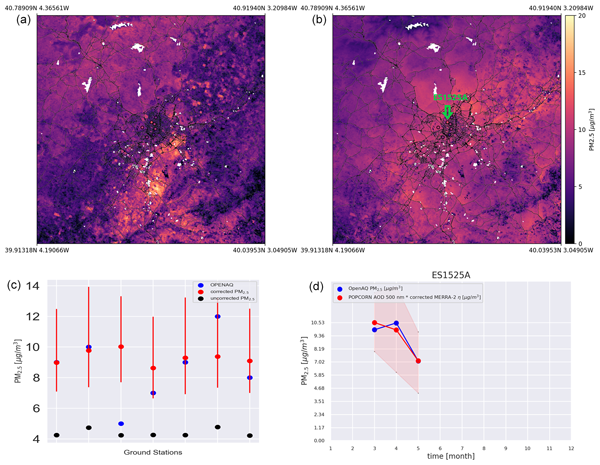
Andrea Porcheddu, Ville Kolehmainen, Timo Lähivaara, and Antti Lipponen
Atmos. Meas. Tech., 17, 5747–5764, https://doi.org/10.5194/amt-17-5747-2024, https://doi.org/10.5194/amt-17-5747-2024, 2024
Short summary
Short summary
This study focuses on improving the accuracy of satellite-based PM2.5 retrieval, crucial for monitoring air quality and its impact on health. It employs machine learning to correct the AOD-to-PM2.5 conversion ratio using various data sources. The approach produces high-resolution PM2.5 estimates with improved accuracy. The method is flexible and can incorporate additional training data from different sources, making it a valuable tool for air quality monitoring and epidemiological studies.
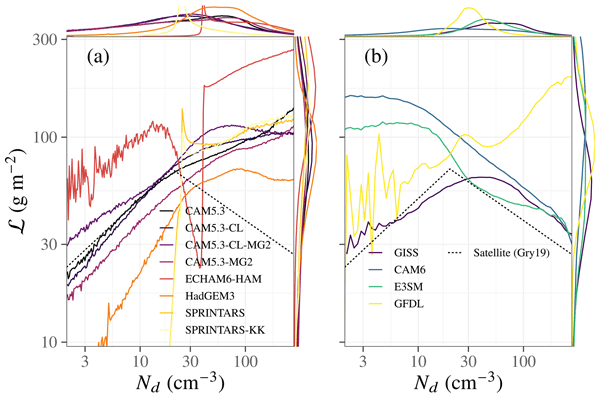
Johannes Mülmenstädt, Edward Gryspeerdt, Sudhakar Dipu, Johannes Quaas, Andrew S. Ackerman, Ann M. Fridlind, Florian Tornow, Susanne E. Bauer, Andrew Gettelman, Yi Ming, Youtong Zheng, Po-Lun Ma, Hailong Wang, Kai Zhang, Matthew W. Christensen, Adam C. Varble, L. Ruby Leung, Xiaohong Liu, David Neubauer, Daniel G. Partridge, Philip Stier, and Toshihiko Takemura
Atmos. Chem. Phys., 24, 7331–7345, https://doi.org/10.5194/acp-24-7331-2024, https://doi.org/10.5194/acp-24-7331-2024, 2024
Short summary
Short summary
Human activities release copious amounts of small particles called aerosols into the atmosphere. These particles change how much sunlight clouds reflect to space, an important human perturbation of the climate, whose magnitude is highly uncertain. We found that the latest climate models show a negative correlation but a positive causal relationship between aerosols and cloud water. This means we need to be very careful when we interpret observational studies that can only see correlation.
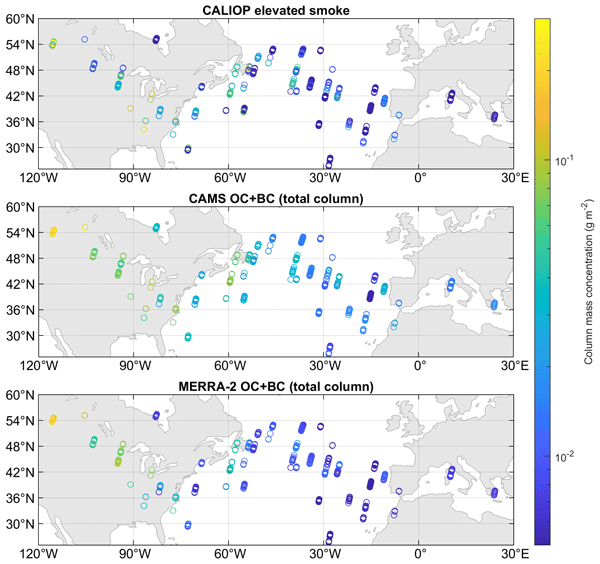
Xiaoxia Shang, Antti Lipponen, Maria Filioglou, Anu-Maija Sundström, Mark Parrington, Virginie Buchard, Anton S. Darmenov, Ellsworth J. Welton, Eleni Marinou, Vassilis Amiridis, Michael Sicard, Alejandro Rodríguez-Gómez, Mika Komppula, and Tero Mielonen
Atmos. Chem. Phys., 24, 1329–1344, https://doi.org/10.5194/acp-24-1329-2024, https://doi.org/10.5194/acp-24-1329-2024, 2024
Short summary
Short summary
In June 2019, smoke particles from a Canadian wildfire event were transported to Europe. The long-range-transported smoke plumes were monitored with a spaceborne lidar and reanalysis models. Based on the aerosol mass concentrations estimated from the observations, the reanalysis models had difficulties in reproducing the amount and location of the smoke aerosols during the transport event. Consequently, more spaceborne lidar missions are needed for reliable monitoring of aerosol plumes.
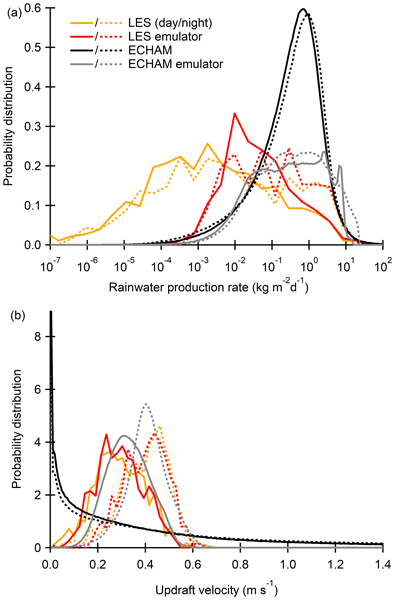
Kalle Nordling, Jukka-Pekka Keskinen, Sami Romakkaniemi, Harri Kokkola, Petri Räisänen, Antti Lipponen, Antti-Ilari Partanen, Jaakko Ahola, Juha Tonttila, Muzaffer Ege Alper, Hannele Korhonen, and Tomi Raatikainen
Atmos. Chem. Phys., 24, 869–890, https://doi.org/10.5194/acp-24-869-2024, https://doi.org/10.5194/acp-24-869-2024, 2024
Short summary
Short summary
Our results show that the global model is stable and it provides meaningful results. This way we can include a physics-based presentation of sub-grid physics (physics which happens on a 100 m scale) in the global model, whose resolution is on a 100 km scale.
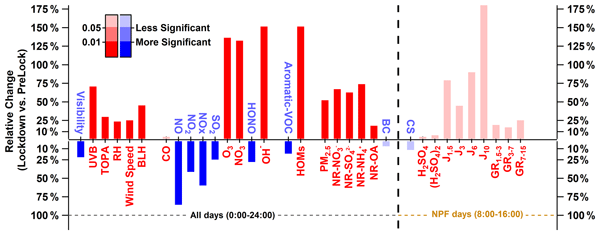
Markku Kulmala, Anna Lintunen, Hanna Lappalainen, Annele Virtanen, Chao Yan, Ekaterina Ezhova, Tuomo Nieminen, Ilona Riipinen, Risto Makkonen, Johanna Tamminen, Anu-Maija Sundström, Antti Arola, Armin Hansel, Kari Lehtinen, Timo Vesala, Tuukka Petäjä, Jaana Bäck, Tom Kokkonen, and Veli-Matti Kerminen
Atmos. Chem. Phys., 23, 14949–14971, https://doi.org/10.5194/acp-23-14949-2023, https://doi.org/10.5194/acp-23-14949-2023, 2023
Short summary
Short summary
To be able to meet global grand challenges, we need comprehensive open data with proper metadata. In this opinion paper, we describe the SMEAR (Station for Measuring Earth surface – Atmosphere Relations) concept and include several examples (cases), such as new particle formation and growth, feedback loops and the effect of COVID-19, and what has been learned from these investigations. The future needs and the potential of comprehensive observations of the environment are summarized.
George Horner and Edward Gryspeerdt
Atmos. Chem. Phys., 23, 14239–14253, https://doi.org/10.5194/acp-23-14239-2023, https://doi.org/10.5194/acp-23-14239-2023, 2023
Short summary
Short summary
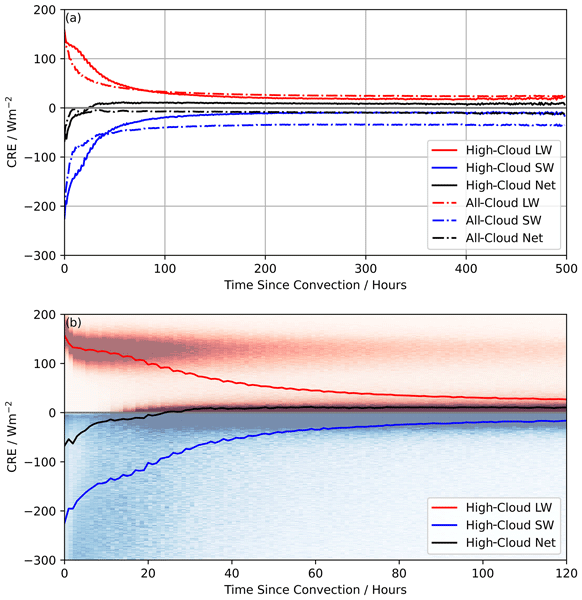
Tropical deep convective clouds, and the thin cirrus (ice) clouds that flow out from them, are important for modulating the energy budget of the tropical atmosphere. This work uses a new method to track the evolution of the properties of these clouds across their entire lifetimes. We find these clouds cool the atmosphere in the first 6 h before switching to a warming regime after the deep convective core has dissipated, which is sustained beyond 120 h from the initial convective event.
Rebecca J. Murray-Watson, Edward Gryspeerdt, and Tom Goren
Atmos. Chem. Phys., 23, 9365–9383, https://doi.org/10.5194/acp-23-9365-2023, https://doi.org/10.5194/acp-23-9365-2023, 2023
Short summary
Short summary
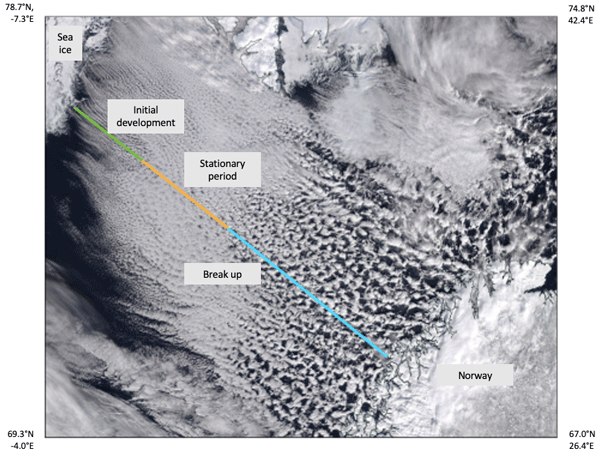
Clouds formed in Arctic marine cold air outbreaks undergo a distinct evolution, but the factors controlling their transition from high-coverage to broken cloud fields are poorly understood. We use satellite and reanalysis data to study how these clouds develop in time and the different influences on their evolution. The aerosol concentration is correlated with cloud break-up; more aerosol is linked to prolonged coverage and a stronger cooling effect, with implications for a more polluted Arctic.
William Wandji Nyamsi, Yves-Marie Saint-Drenan, Antti Arola, and Lucien Wald
Atmos. Meas. Tech., 16, 2001–2036, https://doi.org/10.5194/amt-16-2001-2023, https://doi.org/10.5194/amt-16-2001-2023, 2023
Short summary
Short summary
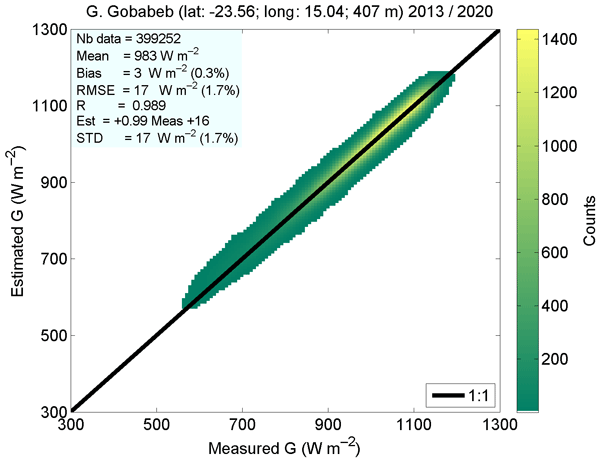
The McClear service provides estimates of surface solar irradiances in cloud-free conditions. By comparing McClear estimates to 1 min measurements performed in Sub-Saharan Africa and the Maldives Archipelago in the Indian Ocean, McClear accurately estimates global irradiance and tends to overestimate direct irrradiance. This work establishes a general overview of the performance of the McClear service.
Edward Gryspeerdt, Adam C. Povey, Roy G. Grainger, Otto Hasekamp, N. Christina Hsu, Jane P. Mulcahy, Andrew M. Sayer, and Armin Sorooshian
Atmos. Chem. Phys., 23, 4115–4122, https://doi.org/10.5194/acp-23-4115-2023, https://doi.org/10.5194/acp-23-4115-2023, 2023
Short summary
Short summary
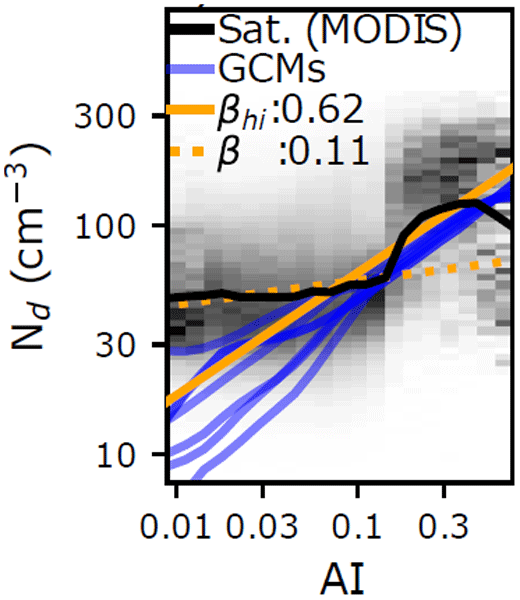
The impact of aerosols on clouds is one of the largest uncertainties in the human forcing of the climate. Aerosol can increase the concentrations of droplets in clouds, but observational and model studies produce widely varying estimates of this effect. We show that these estimates can be reconciled if only polluted clouds are studied, but this is insufficient to constrain the climate impact of aerosol. The uncertainty in aerosol impact on clouds is currently driven by cases with little aerosol.
Tuuli Miinalainen, Harri Kokkola, Antti Lipponen, Antti-Pekka Hyvärinen, Vijay Kumar Soni, Kari E. J. Lehtinen, and Thomas Kühn
Atmos. Chem. Phys., 23, 3471–3491, https://doi.org/10.5194/acp-23-3471-2023, https://doi.org/10.5194/acp-23-3471-2023, 2023
Short summary
Short summary
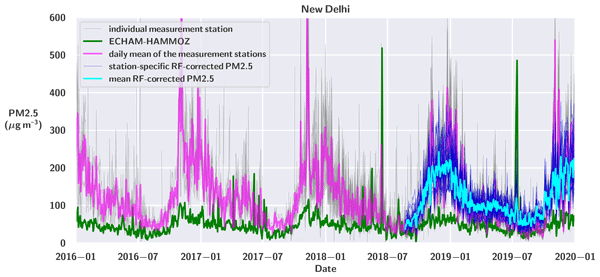
We simulated the effects of aerosol emission mitigation on both global and regional radiative forcing and city-level air quality with a global-scale climate model. We used a machine learning downscaling approach to bias-correct the PM2.5 values obtained from the global model for the Indian megacity New Delhi. Our results indicate that aerosol mitigation could result in both improved air quality and less radiative heating for India.
Larisa Sogacheva, Matthieu Denisselle, Pekka Kolmonen, Timo H. Virtanen, Peter North, Claire Henocq, Silvia Scifoni, and Steffen Dransfeld
Atmos. Meas. Tech., 15, 5289–5322, https://doi.org/10.5194/amt-15-5289-2022, https://doi.org/10.5194/amt-15-5289-2022, 2022
Short summary
Short summary
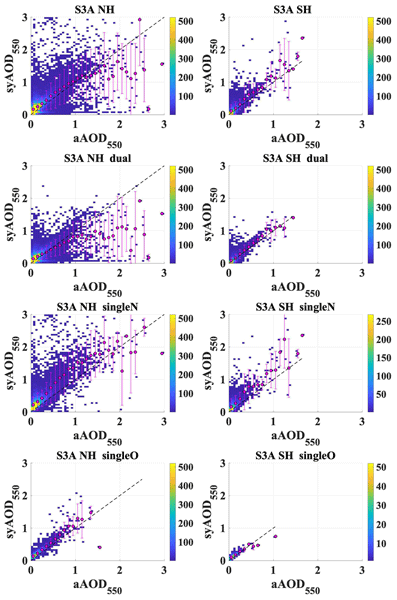
The aim of this study was to provide global characterisation of a new SYNERGY aerosol product derived from the data from the OLCI and SLSTR sensors aboard the Sentinel-3A and Sentinel-3B satellites. Over ocean, the performance of SYNERGY-retrieved AOD is good. Reduced performance over land was expected since the surface reflectance and angular distribution of scattering are more difficult to treat. Validation statistics are often slightly better for S3B and in the Southern Hemisphere.
Chao Yan, Yicheng Shen, Dominik Stolzenburg, Lubna Dada, Ximeng Qi, Simo Hakala, Anu-Maija Sundström, Yishuo Guo, Antti Lipponen, Tom V. Kokkonen, Jenni Kontkanen, Runlong Cai, Jing Cai, Tommy Chan, Liangduo Chen, Biwu Chu, Chenjuan Deng, Wei Du, Xiaolong Fan, Xu-Cheng He, Juha Kangasluoma, Joni Kujansuu, Mona Kurppa, Chang Li, Yiran Li, Zhuohui Lin, Yiliang Liu, Yuliang Liu, Yiqun Lu, Wei Nie, Jouni Pulliainen, Xiaohui Qiao, Yonghong Wang, Yifan Wen, Ye Wu, Gan Yang, Lei Yao, Rujing Yin, Gen Zhang, Shaojun Zhang, Feixue Zheng, Ying Zhou, Antti Arola, Johanna Tamminen, Pauli Paasonen, Yele Sun, Lin Wang, Neil M. Donahue, Yongchun Liu, Federico Bianchi, Kaspar R. Daellenbach, Douglas R. Worsnop, Veli-Matti Kerminen, Tuukka Petäjä, Aijun Ding, Jingkun Jiang, and Markku Kulmala
Atmos. Chem. Phys., 22, 12207–12220, https://doi.org/10.5194/acp-22-12207-2022, https://doi.org/10.5194/acp-22-12207-2022, 2022
Short summary
Short summary
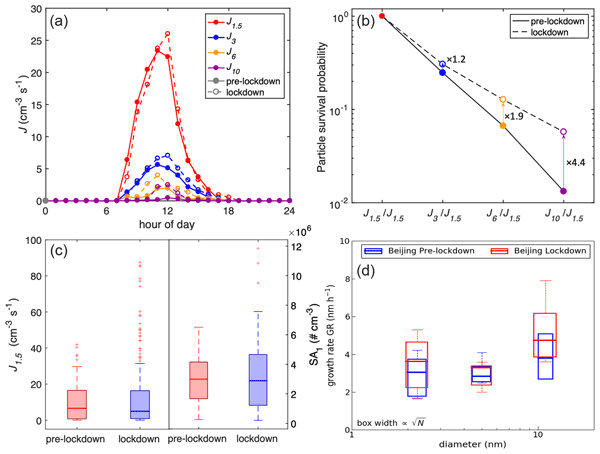
Atmospheric new particle formation (NPF) is a dominant source of atmospheric ultrafine particles. In urban environments, traffic emissions are a major source of primary pollutants, but their contribution to NPF remains under debate. During the COVID-19 lockdown, traffic emissions were significantly reduced, providing a unique chance to examine their relevance to NPF. Based on our comprehensive measurements, we demonstrate that traffic emissions alone are not able to explain the NPF in Beijing.
Edward Gryspeerdt, Franziska Glassmeier, Graham Feingold, Fabian Hoffmann, and Rebecca J. Murray-Watson
Atmos. Chem. Phys., 22, 11727–11738, https://doi.org/10.5194/acp-22-11727-2022, https://doi.org/10.5194/acp-22-11727-2022, 2022
Short summary
Short summary
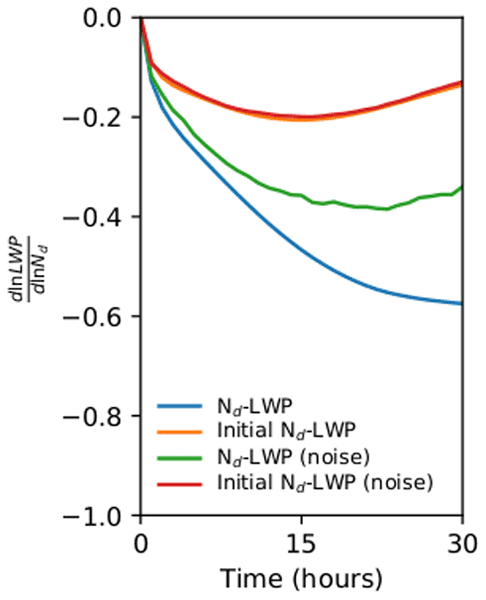
The response of clouds to changes in aerosol remains a large uncertainty in our understanding of the climate. Studies typically look at aerosol and cloud processes in snapshot images, measuring all properties at the same time. Here we use multiple images to characterise how cloud temporal development responds to aerosol. We find a reduction in liquid water path with increasing aerosol, party due to feedbacks. This suggests the aerosol impact on cloud water may be weaker than in previous studies.
Roger Teoh, Ulrich Schumann, Edward Gryspeerdt, Marc Shapiro, Jarlath Molloy, George Koudis, Christiane Voigt, and Marc E. J. Stettler
Atmos. Chem. Phys., 22, 10919–10935, https://doi.org/10.5194/acp-22-10919-2022, https://doi.org/10.5194/acp-22-10919-2022, 2022
Short summary
Short summary
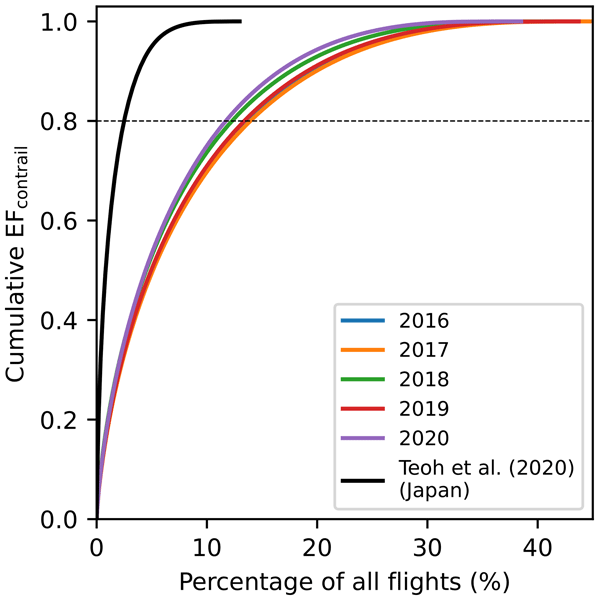
Aircraft condensation trails (contrails) contribute to over half of the climate forcing attributable to aviation. This study uses historical air traffic and weather data to simulate contrails in the North Atlantic over 5 years, from 2016 to 2021. We found large intra- and inter-year variability in contrail radiative forcing and observed a 66 % reduction due to COVID-19. Most warming contrails predominantly result from night-time flights in winter.
Edward Gryspeerdt, Daniel T. McCoy, Ewan Crosbie, Richard H. Moore, Graeme J. Nott, David Painemal, Jennifer Small-Griswold, Armin Sorooshian, and Luke Ziemba
Atmos. Meas. Tech., 15, 3875–3892, https://doi.org/10.5194/amt-15-3875-2022, https://doi.org/10.5194/amt-15-3875-2022, 2022
Short summary
Short summary
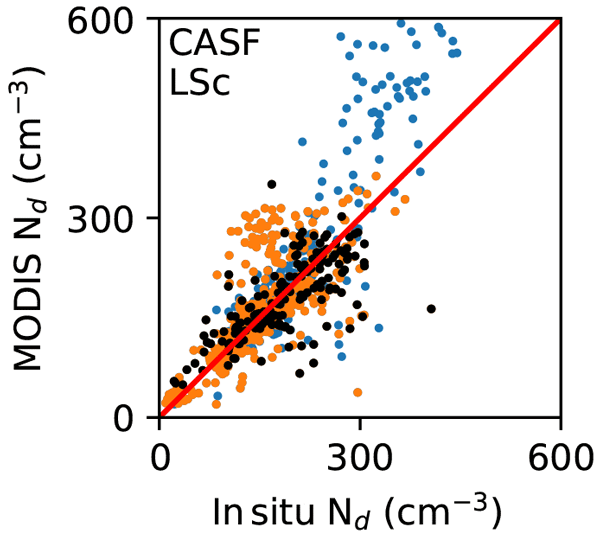
Droplet number concentration is a key property of clouds, influencing a variety of cloud processes. It is also used for estimating the cloud response to aerosols. The satellite retrieval depends on a number of assumptions – different sampling strategies are used to select cases where these assumptions are most likely to hold. Here we investigate the impact of these strategies on the agreement with in situ data, the droplet number climatology and estimates of the indirect radiative forcing.
Hailing Jia, Johannes Quaas, Edward Gryspeerdt, Christoph Böhm, and Odran Sourdeval
Atmos. Chem. Phys., 22, 7353–7372, https://doi.org/10.5194/acp-22-7353-2022, https://doi.org/10.5194/acp-22-7353-2022, 2022
Short summary
Short summary
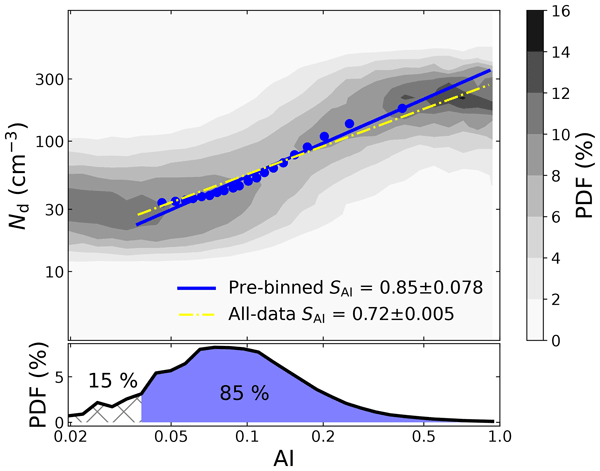
Aerosol–cloud interaction is the most uncertain component of the anthropogenic forcing of the climate. By combining satellite and reanalysis data, we show that the strength of the Twomey effect (S) increases remarkably with vertical velocity. Both the confounding effect of aerosol–precipitation interaction and the lack of vertical co-location between aerosol and cloud are found to overestimate S, whereas the retrieval biases in aerosol and cloud appear to underestimate S.
Rebecca J. Murray-Watson and Edward Gryspeerdt
Atmos. Chem. Phys., 22, 5743–5756, https://doi.org/10.5194/acp-22-5743-2022, https://doi.org/10.5194/acp-22-5743-2022, 2022
Short summary
Short summary
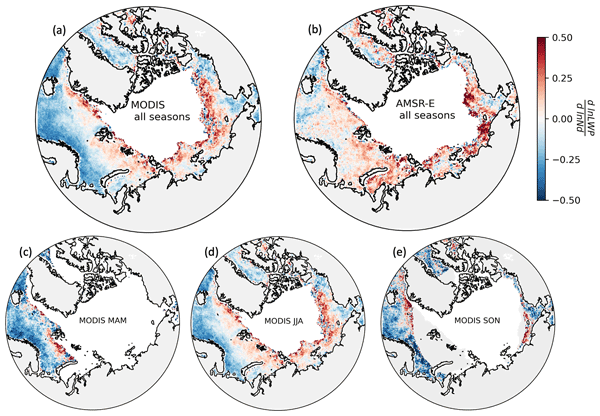
Clouds are important to the Arctic surface energy budget, but the impact of aerosols on their properties is largely uncertain. This work shows that the response of liquid water path to cloud droplet number increases is strongly dependent on lower tropospheric stability (LTS), with weaker cooling effects in polluted clouds and at high LTS. LTS is projected to decrease in a warmer Arctic, reducing the cooling effect of aerosols and producing a positive, aerosol-dependent cloud feedback.
Jaakko Ahola, Tomi Raatikainen, Muzaffer Ege Alper, Jukka-Pekka Keskinen, Harri Kokkola, Antti Kukkurainen, Antti Lipponen, Jia Liu, Kalle Nordling, Antti-Ilari Partanen, Sami Romakkaniemi, Petri Räisänen, Juha Tonttila, and Hannele Korhonen
Atmos. Chem. Phys., 22, 4523–4537, https://doi.org/10.5194/acp-22-4523-2022, https://doi.org/10.5194/acp-22-4523-2022, 2022
Short summary
Short summary
Clouds are important for the climate, and cloud droplets have a significant role in cloud properties. Cloud droplets form when air rises and cools and water vapour condenses on small particles that can be natural or of anthropogenic origin. Currently, the updraft velocity, meaning how fast the air rises, is poorly represented in global climate models. In our study, we show three methods that will improve the depiction of updraft velocity and which properties are vital to updrafts.
Antti Lipponen, Jaakko Reinvall, Arttu Väisänen, Henri Taskinen, Timo Lähivaara, Larisa Sogacheva, Pekka Kolmonen, Kari Lehtinen, Antti Arola, and Ville Kolehmainen
Atmos. Meas. Tech., 15, 895–914, https://doi.org/10.5194/amt-15-895-2022, https://doi.org/10.5194/amt-15-895-2022, 2022
Short summary
Short summary
We have developed a machine-learning-based model that can be used to correct the Sentinel-3 satellite-based aerosol parameter data of the Synergy data product. The strength of the model is that the original satellite data processing does not have to be carried out again but the correction can be carried out with the data already available. We show that the correction significantly improves the accuracy of the satellite aerosol parameters.

Matthew W. Christensen, Andrew Gettelman, Jan Cermak, Guy Dagan, Michael Diamond, Alyson Douglas, Graham Feingold, Franziska Glassmeier, Tom Goren, Daniel P. Grosvenor, Edward Gryspeerdt, Ralph Kahn, Zhanqing Li, Po-Lun Ma, Florent Malavelle, Isabel L. McCoy, Daniel T. McCoy, Greg McFarquhar, Johannes Mülmenstädt, Sandip Pal, Anna Possner, Adam Povey, Johannes Quaas, Daniel Rosenfeld, Anja Schmidt, Roland Schrödner, Armin Sorooshian, Philip Stier, Velle Toll, Duncan Watson-Parris, Robert Wood, Mingxi Yang, and Tianle Yuan
Atmos. Chem. Phys., 22, 641–674, https://doi.org/10.5194/acp-22-641-2022, https://doi.org/10.5194/acp-22-641-2022, 2022
Short summary
Short summary
Trace gases and aerosols (tiny airborne particles) are released from a variety of point sources around the globe. Examples include volcanoes, industrial chimneys, forest fires, and ship stacks. These sources provide opportunistic experiments with which to quantify the role of aerosols in modifying cloud properties. We review the current state of understanding on the influence of aerosol on climate built from the wide range of natural and anthropogenic laboratories investigated in recent decades.
Hugues Brenot, Nicolas Theys, Lieven Clarisse, Jeroen van Gent, Daniel R. Hurtmans, Sophie Vandenbussche, Nikolaos Papagiannopoulos, Lucia Mona, Timo Virtanen, Andreas Uppstu, Mikhail Sofiev, Luca Bugliaro, Margarita Vázquez-Navarro, Pascal Hedelt, Michelle Maree Parks, Sara Barsotti, Mauro Coltelli, William Moreland, Simona Scollo, Giuseppe Salerno, Delia Arnold-Arias, Marcus Hirtl, Tuomas Peltonen, Juhani Lahtinen, Klaus Sievers, Florian Lipok, Rolf Rüfenacht, Alexander Haefele, Maxime Hervo, Saskia Wagenaar, Wim Som de Cerff, Jos de Laat, Arnoud Apituley, Piet Stammes, Quentin Laffineur, Andy Delcloo, Robertson Lennart, Carl-Herbert Rokitansky, Arturo Vargas, Markus Kerschbaum, Christian Resch, Raimund Zopp, Matthieu Plu, Vincent-Henri Peuch, Michel Van Roozendael, and Gerhard Wotawa
Nat. Hazards Earth Syst. Sci., 21, 3367–3405, https://doi.org/10.5194/nhess-21-3367-2021, https://doi.org/10.5194/nhess-21-3367-2021, 2021
Short summary
Short summary
The purpose of the EUNADICS-AV (European Natural Airborne Disaster Information and Coordination System for Aviation) prototype early warning system (EWS) is to develop the combined use of harmonised data products from satellite, ground-based and in situ instruments to produce alerts of airborne hazards (volcanic, dust, smoke and radionuclide clouds), satisfying the requirement of aviation air traffic management (ATM) stakeholders (https://cordis.europa.eu/project/id/723986).
Anu Kauppi, Antti Kukkurainen, Antti Lipponen, Marko Laine, Antti Arola, Hannakaisa Lindqvist, and Johanna Tamminen
Atmos. Meas. Tech. Discuss., https://doi.org/10.5194/amt-2021-328, https://doi.org/10.5194/amt-2021-328, 2021
Revised manuscript not accepted
Short summary
Short summary
We present a methodology in Bayesian framework for retrieving atmospheric aerosol optical depth and aerosol type from the pre-computed look-up tables (LUTs). Especially, we consider Bayesian model averaging and uncertainty originating from aerosol model selection and imperfect forward modelling. Our aim is to get more realistic uncertainty estimates. We have applied the methodology to TROPOMI/S5P satellite observations and evaluated the results against ground-based data from the AERONET.
Cited articles
Ackerman, A. S., Kirkpatrick, M. P., Stevens, D. E., and Toon, O. B.: The impact of humidity above stratiform clouds on indirect aerosol climate forcing, Nature, https://doi.org/10.1038/nature03174, 2004. a, b, c
Albrecht, B. A.: Aerosols, Cloud Microphysics, and Fractional Cloudiness, Science, 245, 1227–1230, https://doi.org/10.1126/science.245.4923.1227, 1989. a, b
Andreae, M. O., Jones, C. D., and Cox, P. M.: Strong present-day aerosol cooling implies a hot future, Nature, 435, 1187–1190, https://doi.org/10.1038/nature03671, 2005. a
Arola, A., Lipponen, A., Kolmonen, P., Virtanen, T. H., Bellouin, N., Grosvenor, D. P., Gryspeerdt, E., Quaas, J., and Kokkola, H.: Aerosol effects on clouds are concealed by natural cloud heterogeneity and satellite retrieval errors, Nat. Commun., 13, 7357, https://doi.org/10.1038/s41467-022-34948-5, 2022. a, b
Bellouin, N., Quaas, J., Gryspeerdt, E., Kinne, S., Stier, P., Watson-Parris, D., Boucher, O., Carslaw, K. S., Christensen, M., Daniau, A.-L., Dufresne, J.-L., Feingold, G., Fiedler, S., Forster, P., Gettelman, A., Haywood, J. M., Lohmann, U., Malavelle, F., Mauritsen, T., McCoy, D. T., Myhre, G., Mülmenstädt, J., Neubauer, D., Possner, A., Rugenstein, M., Sato, Y., Schulz, M., Schwartz, S. E., Sourdeval, O., Storelvmo, T., Toll, V., Winker, D., and Stevens, B.: Bounding Global Aerosol Radiative Forcing of Climate Change, Rev. Geophys., 58, e2019RG000660, https://doi.org/10.1029/2019RG000660, 2020. a, b
Blyth, A. M., Lowenstein, J. H., Huang, Y., Cui, Z., Davies, S., and Carslaw, K. S.: The production of warm rain in shallow maritime cumulus clouds, Q. J. Roy. Meteor. Soc., 139, 20–31, https://doi.org/10.1002/qj.1972, 2013. a
Bréon, F.-M., Tanré, D., and Generoso, S.: Aerosol Effect on Cloud Droplet Size Monitored from Satellite, Science, 295, 834–838, https://doi.org/10.1126/science.1066434, 2002. a
Bretherton, C. S., Blossey, P. N., and Uchida, J.: Cloud droplet sedimentation, entrainment efficiency, and subtropical stratocumulus albedo, Geophys. Res. Lett., 34, https://doi.org/10.1029/2006GL027648, 2007. a, b
Chen, Y.-C., Xue, L., Lebo, Z. J., Wang, H., Rasmussen, R. M., and Seinfeld, J. H.: A comprehensive numerical study of aerosol-cloud-precipitation interactions in marine stratocumulus, Atmos. Chem. Phys., 11, 9749–9769, https://doi.org/10.5194/acp-11-9749-2011, 2011. a
Colón-Robles, M., Rauber, R. M., and Jensen, J. B.: Influence of low-level wind speed on droplet spectra near cloud base in trade wind cumulus, Geophys. Res. Lett., 33, https://doi.org/10.1029/2006GL027487, 2006. a
Dagan, G., Koren, I., and Altaratz, O.: Aerosol effects on the timing of warm rain processes, Geophys. Res. Lett., 42, 4590–4598, https://doi.org/10.1002/2015GL063839, 2015. a
Eastman, R. and Wood, R.: Factors controlling low cloud evolution over the eastern subtropical oceans: A Lagrangian perspective using the A-Train satellites, J. Atmos. Sci., 73, 331–351, 2016. a
Eastman, R., Wood, R., and Bretherton, C. S.: Time Scales of Clouds and Cloud-Controlling Variables in Subtropical Stratocumulus from a Lagrangian Perspective, J. Atmos. Sci., 73, 3079–3091, https://doi.org/10.1175/JAS-D-16-0050.1, 2016. a
Eastman, R., Lebsock, M., and Wood, R.: Warm Rain Rates from AMSR-E 89-GHz Brightness Temperatures Trained Using CloudSat Rain-Rate Observations, J. Atmos. Ocean. Tech., 36, 1033–1051, https://doi.org/10.1175/JTECH-D-18-0185.1, 2019. a, b, c, d
Eastman, R., McCoy, I. L., and Wood, R.: Wind, Rain, and the Closed to Open Cell Transition in Subtropical Marine Stratocumulus, J. Geophys. Res.-Atmos., 127, e2022JD036795, https://doi.org/10.1029/2022JD036795, 2022. a, b
Feingold, G., Cotton, W. R., Kreidenweis, S. M., and Davis, J. T.: The Impact of Giant Cloud Condensation Nuclei on Drizzle Formation in Stratocumulus: Implications for Cloud Radiative Properties, J. Atmos. Sci., 56, 4100–4117, https://doi.org/10.1175/1520-0469(1999)056<4100:TIOGCC>2.0.CO;2, 1999. a, b
Fons, E., Runge, J., Neubauer, D., and Lohmann, U.: Stratocumulus adjustments to aerosol perturbations disentangled with a causal approach, npj Clim. Atmos. Sci., 6, https://doi.org/10.1038/s41612-023-00452-w, 2023. a, b, c
Fossum, K. N., Ovadnevaite, J., Ceburnis, D., Preißler, J., Snider, J. R., Huang, R.-J., Zuend, A., and O'Dowd, C.: Sea-spray regulates sulfate cloud droplet activation over oceans, npj Clim. Atmos. Sci., 3, 14, https://doi.org/10.1038/s41612-020-0116-2, 2020. a
Ghan, S. J., Guzman, G., and Abdul-Razzak, H.: Competition between Sea Salt and Sulfate Particles as Cloud Condensation Nuclei, J. Atmos. Sci., 55, 3340–3347, https://doi.org/10.1175/1520-0469(1998)055<3340:CBSSAS>2.0.CO;2, 1998. a, b
Glassmeier, F., Hoffmann, F., Johnson, J. S., Yamaguchi, T., Carslaw, K. S., and Feingold, G.: Aerosol-cloud-climate cooling overestimated by ship-track data, Science, 371, 485–489, https://doi.org/10.1126/science.abd3980, 2021. a, b, c
Grosvenor, D. P., Sourdeval, O., Zuidema, P., Ackerman, A., Alexandrov, M. D., Bennartz, R., Boers, R., Cairns, B., Chiu, J. C., Christensen, M., Deneke, H., Diamond, M., Feingold, G., Fridlind, A., Hünerbein, A., Knist, C., Kollias, P., Marshak, A., McCoy, D., Merk, D., Painemal, D., Rausch, J., Rosenfeld, D., Russchenberg, H., Seifert, P., Sinclair, K., Stier, P., van Diedenhoven, B., Wendisch, M., Werner, F., Wood, R., Zhang, Z., and Quaas, J.: Remote Sensing of Droplet Number Concentration in Warm Clouds: A Review of the Current State of Knowledge and Perspectives, Rev. Geophys., 56, 409–453, https://doi.org/10.1029/2017RG000593, 2018. a, b
Gryspeerdt, E., Goren, T., and Smith, T. W. P.: Observing the timescales of aerosol–cloud interactions in snapshot satellite images, Atmos. Chem. Phys., 21, 6093–6109, https://doi.org/10.5194/acp-21-6093-2021, 2021. a, b, c, d
Gryspeerdt, E., Glassmeier, F., Feingold, G., Hoffmann, F., and Murray-Watson, R. J.: Observing short-timescale cloud development to constrain aerosol–cloud interactions, Atmos. Chem. Phys., 22, 11727–11738, https://doi.org/10.5194/acp-22-11727-2022, 2022a. a, b, c, d
Gryspeerdt, E., McCoy, D. T., Crosbie, E., Moore, R. H., Nott, G. J., Painemal, D., Small-Griswold, J., Sorooshian, A., and Ziemba, L.: The impact of sampling strategy on the cloud droplet number concentration estimated from satellite data, Atmos. Meas. Tech., 15, 3875–3892, https://doi.org/10.5194/amt-15-3875-2022, 2022b. a
Hersbach, H., Bell, B., Berrisford, P., Biavati, G., Horányi, A., Muñoz Sabater, J., Nicolas, J., Peubey, C., Radu, R., Rozum, I., Schepers, D., Simmons, A., Soci, C., Dee, D., and Thépaut, J.-N. : ERA5 hourly data on pressure levels from 1940 to present, Copernicus Climate Change Service (C3S) Climate Data Store (CDS) [data set], https://doi.org/10.24381/cds.bd0915c6, 2023. a
Hoffmann, F. and Feingold, G.: Cloud Microphysical Implications for Marine Cloud Brightening: The Importance of the Seeded Particle Size Distribution, J. Atmos. Sci., 78, 3247–3262, https://doi.org/10.1175/JAS-D-21-0077.1, 2021. a
Hoffmann, F., Glassmeier, F., Yamaguchi, T., and Feingold, G.: Liquid Water Path Steady States in Stratocumulus: Insights from Process-Level Emulation and Mixed-Layer Theory, J. Atmos. Sci., 77, 2203–2215, https://doi.org/10.1175/JAS-D-19-0241.1, 2020. a
Huebert, B. J., Blomquist, B. W., Hare, J. E., Fairall, C. W., Johnson, J. E., and Bates, T. S.: Measurement of the sea-air DMS flux and transfer velocity using eddy correlation, Geophys. Res. Lett., 31, https://doi.org/10.1029/2004GL021567, 2004. a
Jung, E., Albrecht, B. A., Jonsson, H. H., Chen, Y.-C., Seinfeld, J. H., Sorooshian, A., Metcalf, A. R., Song, S., Fang, M., and Russell, L. M.: Precipitation effects of giant cloud condensation nuclei artificially introduced into stratocumulus clouds, Atmos. Chem. Phys., 15, 5645–5658, https://doi.org/10.5194/acp-15-5645-2015, 2015. a
Kaufman, Y. J., Koren, I., Remer, L. A., Rosenfeld, D., and Rudich, Y.: The effect of smoke, dust, and pollution aerosol on shallow cloud development over the Atlantic Ocean, P. Natl. Acad. Sci. USA, 102, 11207–11212, https://doi.org/10.1073/pnas.0505191102, 2005. a
Kazil, J., Feingold, G., and Yamaguchi, T.: Wind speed response of marine non-precipitating stratocumulus clouds over a diurnal cycle in cloud-system resolving simulations, Atmos. Chem. Phys., 16, 5811–5839, https://doi.org/10.5194/acp-16-5811-2016, 2016. a, b, c, d
Lasher-Trapp, S. G., Knight, C. A., and Straka, J. M.: Early Radar Echoes from Ultragiant Aerosol in a Cumulus Congestus: Modeling and Observations, J. Atmos. Sci., 58, 3545–3562, https://doi.org/10.1175/1520-0469(2001)058<3545:EREFUA>2.0.CO;2, 2001. a
L'Ecuyer, T. S., Berg, W., Haynes, J., Lebsock, M., and Takemura, T.: Global observations of aerosol impacts on precipitation occurrence in warm maritime clouds, J. Geophys. Res.-Atmos., 114, https://doi.org/10.1029/2008JD011273, 2009. a
Lehahn, Y., Koren, I., Boss, E., Ben-Ami, Y., and Altaratz, O.: Estimating the maritime component of aerosol optical depth and its dependency on surface wind speed using satellite data, Atmos. Chem. Phys., 10, 6711–6720, https://doi.org/10.5194/acp-10-6711-2010, 2010. a
Lehahn, Y., Koren, I., Altaratz, O., and Kostinski, A. B.: Effect of coarse marine aerosols on stratocumulus clouds, Geophys. Res. Lett., 38, https://doi.org/10.1029/2011GL048504, 2011. a
Lewis, E. and Schwartz, S.: Sea Salt Aerosol Production: Mechanisms, Methods, Measurements and Models – A Critical Review, Washington DC American Geophysical Union Geophysical Monograph Series, 152, 299–344, https://doi.org/10.1029/GM152, 2004. a
Liu, F., Mao, F., Rosenfeld, D., Pan, Z., Zang, L., Zhu, Y., Yin, J., and Gong, W.: Opposing comparable large effects of fine aerosols and coarse sea spray on marine warm clouds, Commun. Earth Environ., 3, 232, https://doi.org/10.1038/s43247-022-00562-y, 2022. a, b
Liu, F., Mao, F., Rosenfeld, D., Pan, Z., Zang, L., Zhu, Y., and Gong, W.: Marine Stratocumulus Clouds With More Coarse Sea Spray Aerosols Are Brighter, Geophys. Res. Lett., 52, e2024GL113718, https://doi.org/10.1029/2024GL113718, 2025. a, b
Ludlam, F. H.: The production of showers by the coalescence of cloud droplets, Q. J. Roy. Meteor. Soc., 77, 402–417, https://doi.org/10.1002/qj.49707733306, 1951. a
Meskhidze, N., Remer, L. A., Platnick, S., Negrón Juárez, R., Lichtenberger, A. M., and Aiyyer, A. R.: Exploring the differences in cloud properties observed by the Terra and Aqua MODIS Sensors, Atmos. Chem. Phys., 9, 3461–3475, https://doi.org/10.5194/acp-9-3461-2009, 2009. a
Mülmenstädt, J., Ackerman, A. S., Fridlind, A. M., Huang, M., Ma, P.-L., Mahfouz, N., Bauer, S. E., Burrows, S. M., Christensen, M. W., Dipu, S., Gettelman, A., Leung, L. R., Tornow, F., Quaas, J., Varble, A. C., Wang, H., Zhang, K., and Zheng, Y.: Can general circulation models (GCMs) represent cloud liquid water path adjustments to aerosol–cloud interactions?, Atmos. Chem. Phys., 24, 13633–13652, https://doi.org/10.5194/acp-24-13633-2024, 2024a. a
Mülmenstädt, J., Gryspeerdt, E., Dipu, S., Quaas, J., Ackerman, A. S., Fridlind, A. M., Tornow, F., Bauer, S. E., Gettelman, A., Ming, Y., Zheng, Y., Ma, P.-L., Wang, H., Zhang, K., Christensen, M. W., Varble, A. C., Leung, L. R., Liu, X., Neubauer, D., Partridge, D. G., Stier, P., and Takemura, T.: General circulation models simulate negative liquid water path–droplet number correlations, but anthropogenic aerosols still increase simulated liquid water path, Atmos. Chem. Phys., 24, 7331–7345, https://doi.org/10.5194/acp-24-7331-2024, 2024b. a
Nair, V.: Data files and postprocessing script, Zenodo [data set], https://doi.org/10.5281/zenodo.17426841, 2025. a
Platnick, S., Meyer, K. G., King, M. D., Wind, G., Amarasinghe, N., Marchant, B., Arnold, G. T., Zhang, Z., Hubanks, P. A., Holz, R. E., Yang, P., Ridgway, W. L., and Riedi, J.: The MODIS Cloud Optical and Microphysical Products: Collection 6 Updates and Examples From Terra and Aqua, IEEE T. Geosci. Remote, 55, 502–525, https://doi.org/10.1109/TGRS.2016.2610522, 2017. a
Quaas, J., Boucher, O., and Lohmann, U.: Constraining the total aerosol indirect effect in the LMDZ and ECHAM4 GCMs using MODIS satellite data, Atmos. Chem. Phys., 6, 947–955, https://doi.org/10.5194/acp-6-947-2006, 2006. a
Randall, D. A., Coakley, J. A., Fairall, C. W., Kropfli, R. A., and Lenschow, D. H.: Outlook for Research on Subtropical Marine Stratiform Clouds, B. Am. Meteorol. Soc., 65, 1290–1301, https://doi.org/10.1175/1520-0477(1984)065<1290:OFROSM>2.0.CO;2, 1984. a
Rosenfeld, D., Lahav, R., Khain, A., and Pinsky, M.: The Role of Sea Spray in Cleansing Air Pollution over Ocean via Cloud Processes, Science, 297, 1667–1670, https://doi.org/10.1126/science.1073869, 2002. a, b, c
Schulz, B. and Mellado, J. P.: Wind Shear Effects on Radiatively and Evaporatively Driven Stratocumulus Tops, J. Atmos. Sci., 75, 3245–3263, https://doi.org/10.1175/JAS-D-18-0027.1, 2018. a
Slingo, A.: Sensitivity of the Earth's radiation budget to changes in low clouds, Nature, 343, 49–51, https://doi.org/10.1038/343049a0, 1990. a
Stocker, T. F., Qin, D., Plattner, G.-K., Tignor, M., Allen, S. K., Boschung, J., Nauels, A., Xia, Y., Bex, V., and Midgley, P. M. (Eds.): Climate Change 2013: The Physical Science Basis, contribution of Working Group I to the Fifth Assessment Report of the Intergovernmental Panel on Climate Change, Cambridge University Press, Cambridge, United Kingdom and New York, NY, USA, https://doi.org/10.1017/CBO9781107415324, 2013. a
Twomey, S.: Pollution and the planetary albedo, Atmos. Environ., 8, 1251–1256, https://doi.org/10.1016/0004-6981(74)90004-3, 1974. a, b
Twomey, S.: The Influence of Pollution on the Shortwave Albedo of Clouds, J. Atmos. Sci., 34, 1149–1152, https://doi.org/10.1175/1520-0469(1977)034<1149:TIOPOT>2.0.CO;2, 1977. a
Wang, S., Golaz, J.-C., and Wang, Q.: Effect of intense wind shear across the inversion on stratocumulus clouds, Geophys. Res. Lett., 35, https://doi.org/10.1029/2008GL033865, 2008. a
Wang, S., Zheng, X., and Jiang, Q.: Strongly sheared stratocumulus convection: an observationally based large-eddy simulation study, Atmos. Chem. Phys., 12, 5223–5235, https://doi.org/10.5194/acp-12-5223-2012, 2012. a
Wood, R., Leon, D., Lebsock, M., Snider, J., and Clarke, A. D.: Precipitation driving of droplet concentration variability in marine low clouds, J. Geophys. Res.-Atmos., 117, https://doi.org/10.1029/2012JD018305, 2012. a
Yin, Y., Levin, Z., Reisin, T. G., and Tzivion, S.: The effects of giant cloud condensation nuclei on the development of precipitation in convective clouds – a numerical study, Atmos. Res., 53, 91–116, https://doi.org/10.1016/S0169-8095(99)00046-0, 2000. a
Zamora Zapata, M., Heus, T., and Kleissl, J.: Effects of Surface and Top Wind Shear on the Spatial Organization of Marine Stratocumulus-Topped Boundary Layers, J. Geophys. Res.-Atmos., 126, e2020JD034162, https://doi.org/10.1029/2020JD034162, 2021. a, b
Zhang, J., Chen, Y.-S., Yamaguchi, T., and Feingold, G.: Cloud water adjustments to aerosol perturbations are buffered by solar heating in non-precipitating marine stratocumuli, Atmos. Chem. Phys., 24, 10425–10440, https://doi.org/10.5194/acp-24-10425-2024, 2024. a, b, c
Short summary
Surface winds affect clouds by generating sea salt aerosols and evaporating water from the ocean and transporting them to the cloud base. Previous studies analysed these processes using satellite snapshots; here we use observations of evolving clouds which capture feedbacks due to time-dependent adjustments of clouds to aerosol changes. We show that even though sea salt changes droplet sizes, evaporation from the ocean surface has a stronger impact on clouds, thus hiding the real aerosol effect.
Surface winds affect clouds by generating sea salt aerosols and evaporating water from the ocean...


Altmetrics
Final-revised paper
Preprint