
Articles | Volume 26, issue 4
https://doi.org/10.5194/acp-26-2853-2026
© Author(s) 2026. This work is distributed under
the Creative Commons Attribution 4.0 License.
the Creative Commons Attribution 4.0 License.
https://doi.org/10.5194/acp-26-2853-2026
© Author(s) 2026. This work is distributed under
the Creative Commons Attribution 4.0 License.
the Creative Commons Attribution 4.0 License.
Research article
| 
26 Feb 2026
Research article |
| 26 Feb 2026
| 26 Feb 2026
Implications of Sea Breeze Circulations on boundary layer aerosols in the southern coastal Texas region

Environmental Science and Technologies, Brookhaven National Laboratory, Upton, NY, United States
Michael P. Jensen
Environmental Science and Technologies, Brookhaven National Laboratory, Upton, NY, United States
Environmental Science and Technologies, Brookhaven National Laboratory, Upton, NY, United States
Scott E. Giangrande
Environmental Science and Technologies, Brookhaven National Laboratory, Upton, NY, United States
Mark C. Harvey
Department of Physics, Texas Southern University, Houston, TX, United States
Ashish Singh
Environmental Science and Technologies, Brookhaven National Laboratory, Upton, NY, United States
Environmental Science and Technologies, Brookhaven National Laboratory, Upton, NY, United States
Institute for Atmospheric and Climate Science, ETH Zürich, Universitätstrasse 16, Zürich 8092, Switzerland
Maria Zawadowicz
Environmental Science and Technologies, Brookhaven National Laboratory, Upton, NY, United States
Chongai Kuang
Environmental Science and Technologies, Brookhaven National Laboratory, Upton, NY, United States
Related authors
Aino Ovaska, Daniel Holmberg, Elio Rauth, Mansour Alghamdi, Paulo Artaxo, Eija Asmi, John Backman, Benjamin Bergmans, Matthew Boyer, Liezl Bredenkamp, Maurizio Busetto, Delano Campos De Oliveira, Juan Andrés Casquero-Vera, Darius Ceburnis, Tak Chan, Tommy Chan, Sebastien Conil, Daniele Contini, Suzanne Crumeyrolle, Valentin Duflot, Kostas Eleftheriadis, Johan Esveld, Ekaterina Ezhova, Markus Fiebig, Shahzad Gani, Olga Garmash, Francisco Gómez-Moreno, Roy M. Harrison, Andras Hoffer, Rakesh Hooda, Antti Hyvärinen, Tareq Hussein, Jorma Joutsensaari, Nikos Kalivitis, Heinz Kaminski, Jutta Kesti, Radovan Krejci, Adam Kristensson, Chongai Kuang, Markku Kulmala, Lauri Laakso, Ari Leskinen, Heikki Lihavainen, Andreas Massling, Maik Merkel, Steffen Noe, Jakub Ondracek, Noemí Perez, Jean-Eudes Petit, Tuukka Petäjä, Michael Pikridas, Christopher Pöhlker, Mira Pöhlker, Jean-Philippe Putaud, Ximeng Qi, Cristina Reche, Sergio Rodríguez, Petr Roztocil, Jean Sciare, Karine Sellegri, Dongjie Shang, Ashish Singh, Mikko Sipilä, Henrik Skov, Mar Sorribas, Tamanna Subba, Junying Sun, Peter Tunved, Ville Vakkari, Pieter G. Van Zyl, Aki Virkkula, Jens Voigtländer, Kay Weinhold, Alfred Wiedensohler, Hee-Jung Yoo, Putian Zhou, Kai Puolamäki, Tuomo Nieminen, Veli-Matti Kerminen, Victoria A. Sinclair, and Pauli Paasonen
Earth Syst. Sci. Data Discuss., https://doi.org/10.5194/essd-2026-415, https://doi.org/10.5194/essd-2026-415, 2026
Preprint under review for ESSD
Short summary
Short summary
All clouds form around aerosol particles, and their abundance influences cloud properties. In turn, clouds affect climate by changing how energy moves through the atmosphere, making them important for climate change. To better understand these interactions, we need accurate information on how many aerosol particles are in the atmosphere. Therefore, we have developed a new 21-year global dataset of particle concentrations relevant for cloud formation.
Daniel Hernandez-Deckers, Toshihisa Matsui, Takamichi Iguchi, Kelcy Brunner, Eric Bruning, Marcus van Lier-Walqui, Edward R. Mansell, Tamanna Subba, Chongai Kuang, Michael P. Jensen, and Scott Braun
Atmos. Chem. Phys., 26, 10071–10099, https://doi.org/10.5194/acp-26-10071-2026, https://doi.org/10.5194/acp-26-10071-2026, 2026
Short summary
Short summary
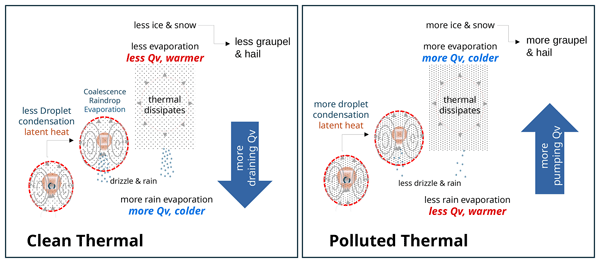
Aerosols from air pollution affect weather and climate in various ways. Uncertainties remain on their interactions with clouds, in particular via microphysics (processes related to phase-changes of water that generate rain and lightning). We investigate this with high resolution simulations, focusing on cumulus thermals (the rising bubbles in clouds). We describe the thermals’ roles in these interactions, and identify related mesoscale feedback that enhance convection under polluted conditions.
Dié Wang, Roni Kobrosly, Tao Zhang, Tamanna Subba, Susan van den Heever, Siddhant Gupta, and Michael Jensen
Atmos. Chem. Phys., 25, 9295–9314, https://doi.org/10.5194/acp-25-9295-2025, https://doi.org/10.5194/acp-25-9295-2025, 2025
Short summary
Short summary
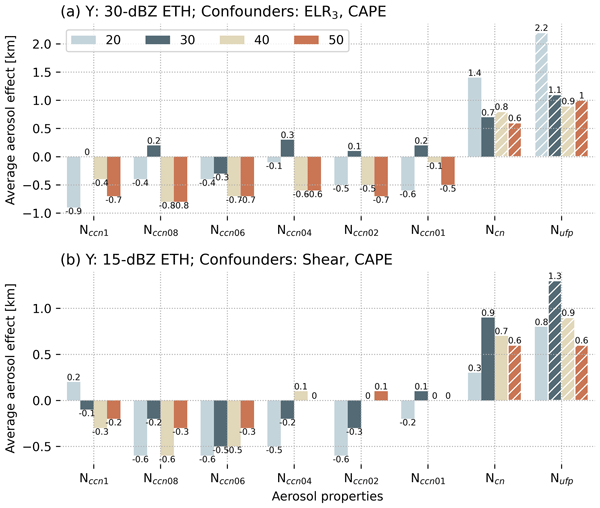
We aim to understand how tiny particles in the air, called aerosols, affect rain clouds in the Houston–Galveston area. More aerosols generally do not make these clouds grow much taller, with an average height increase of about 1 km. However, their effects on rainfall strength and cloud expansion are less certain. Clouds influenced by sea breezes show a stronger aerosol impact, possibly due to factors that are unaccounted for like vertical winds in near-surface layers.
Min Deng, Scott E. Giangrande, Adam K. Theisen, Karen L. Johnson, Iosif A. Lindenmaier, Timothy G. Wendler, Jennifer Comstock, Marquette Rocque, Zeen Zhu, and Alyssa Matthews
Atmos. Meas. Tech., 19, 6327–6339, https://doi.org/10.5194/amt-19-6327-2026, https://doi.org/10.5194/amt-19-6327-2026, 2026
Short summary
Short summary
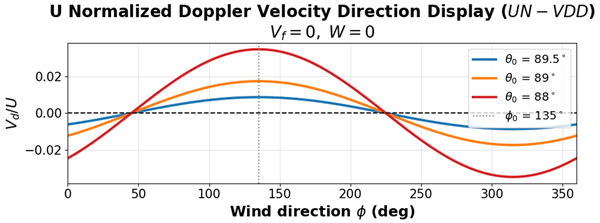
Cloud radars are used to measure air motion, clouds, and precipitation, but small pointing errors can reduce their accuracy. We developed a method to detect these errors using routine weather balloon observations. Tests with several radar systems in different environments showed that the method can identify small but important pointing biases, helping improve the accuracy and long-term consistency of weather and climate observations.
Fan Mei, Jian Wang, Israel Silber, Nurun Nahar Lata, Gregory W. Vandergrift, Jing Li, Bo Chen, Sarah D. Brooks, Michael P. Jensen, Min Deng, Damao Zhang, Darielle Dexheimer, Beat Schmid, Zezhen Cheng, and Swarup China
Atmos. Chem. Phys., 26, 13885–13908, https://doi.org/10.5194/acp-26-13885-2026, https://doi.org/10.5194/acp-26-13885-2026, 2026
Short summary
Short summary
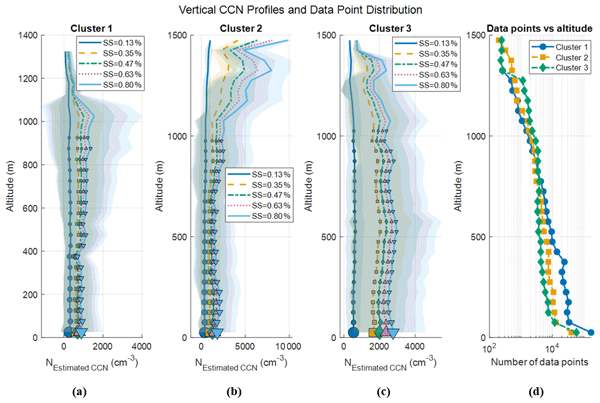
Tethered balloon measurements from 149 flights during DOE ARM TRACER over Houston characterize vertical aerosol and CCN structure. Back-trajectory clustering identifies three air mass types – marine, mixed, and urban – with distinct profiles shaped by boundary-layer depth and coastal circulations. A case study shows mesoscale advection simultaneously transforms thermodynamic and aerosol conditions, underscoring the need to constrain meteorology before attributing cloud changes to aerosol forcing.
Scott E. Giangrande, Christopher R. Williams, and Alain Protat
Atmos. Meas. Tech., 19, 6251–6265, https://doi.org/10.5194/amt-19-6251-2026, https://doi.org/10.5194/amt-19-6251-2026, 2026
Short summary
Short summary
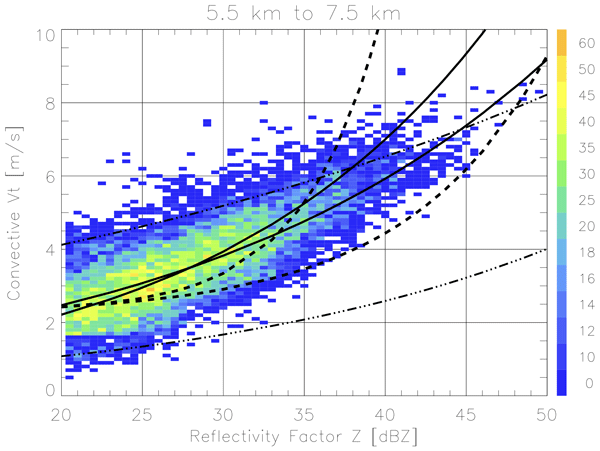
Better characterization of precipitation characteristics has important implications for simulated storm behaviors and remotely-sensed retrievals of cloud intensity. We use a unique radar technique to estimate the fall speeds of media found within deep tropical clouds. These retrievals can be performed within intense storm conditions that are otherwise impractical to sample. Our observations suggest mixed media or graupel fall speeds are contextually faster than prior references.
Kang Yang, Zhien Wang, and Min Deng
Atmos. Chem. Phys., 26, 13319–13339, https://doi.org/10.5194/acp-26-13319-2026, https://doi.org/10.5194/acp-26-13319-2026, 2026
Short summary
Short summary
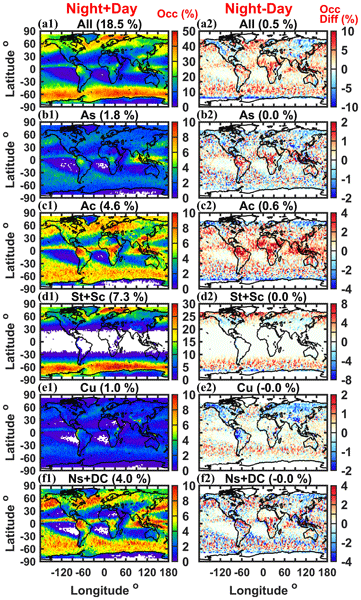
Mixed-phase clouds, which contain both ice crystals and supercooled liquid droplets, strongly influence Earth's radiation budget but remain difficult to represent in climate models. Using global satellite observations, we show that they vary greatly by cloud type, with distinct spatial distributions, vertical structures, and seasonal and surface contrasts. These results provide new observational constraints for improving model representation of mixed-phase clouds.
Yuhang Guo, Chongai Kuang, Darielle Dexheimer, Manish Shrivastava, Ogochukwu Enekwizu, Yang Wang, Jingbo Mao, Gan Luo, Fangqun Yu, and Jie Zhang
EGUsphere, https://doi.org/10.5194/egusphere-2026-4905, https://doi.org/10.5194/egusphere-2026-4905, 2026
This preprint is open for discussion and under review for Atmospheric Chemistry and Physics (ACP).
Short summary
Short summary
Aerosol particle size distributions can vary greatly with height, but these vertical changes are rarely measured directly. Using a tethered balloon, we measured particle size distributions from the ground to about 1.2 kilometers in two contrasting environments. We found that atmospheric mixing strongly shapes their vertical structure, storage overnight, and redistribution the next day. These observations improve our understanding of how aerosol populations evolve in the lower atmosphere.
Maria Anna Zawadowicz, Amie Dobracki, Janek Uin, and Rebecca Trojanowski
EGUsphere, https://doi.org/10.5194/egusphere-2026-3129, https://doi.org/10.5194/egusphere-2026-3129, 2026
Short summary
Short summary
We studied tiny airborne particles at the Southern Great Plains observatory to understand how seasons and fire smoke change the air. Using three years of measurements, we found that winter particles were often linked to cold-weather chemistry, while spring and summer had more material formed in sunlight. Smoke events were brief but important: they greatly increased the number of particles able to form cloud droplets, helping improve predictions of clouds, climate, and air quality.
Aino Ovaska, Daniel Holmberg, Elio Rauth, Mansour Alghamdi, Paulo Artaxo, Eija Asmi, John Backman, Benjamin Bergmans, Matthew Boyer, Liezl Bredenkamp, Maurizio Busetto, Delano Campos De Oliveira, Juan Andrés Casquero-Vera, Darius Ceburnis, Tak Chan, Tommy Chan, Sebastien Conil, Daniele Contini, Suzanne Crumeyrolle, Valentin Duflot, Kostas Eleftheriadis, Johan Esveld, Ekaterina Ezhova, Markus Fiebig, Shahzad Gani, Olga Garmash, Francisco Gómez-Moreno, Roy M. Harrison, Andras Hoffer, Rakesh Hooda, Antti Hyvärinen, Tareq Hussein, Jorma Joutsensaari, Nikos Kalivitis, Heinz Kaminski, Jutta Kesti, Radovan Krejci, Adam Kristensson, Chongai Kuang, Markku Kulmala, Lauri Laakso, Ari Leskinen, Heikki Lihavainen, Andreas Massling, Maik Merkel, Steffen Noe, Jakub Ondracek, Noemí Perez, Jean-Eudes Petit, Tuukka Petäjä, Michael Pikridas, Christopher Pöhlker, Mira Pöhlker, Jean-Philippe Putaud, Ximeng Qi, Cristina Reche, Sergio Rodríguez, Petr Roztocil, Jean Sciare, Karine Sellegri, Dongjie Shang, Ashish Singh, Mikko Sipilä, Henrik Skov, Mar Sorribas, Tamanna Subba, Junying Sun, Peter Tunved, Ville Vakkari, Pieter G. Van Zyl, Aki Virkkula, Jens Voigtländer, Kay Weinhold, Alfred Wiedensohler, Hee-Jung Yoo, Putian Zhou, Kai Puolamäki, Tuomo Nieminen, Veli-Matti Kerminen, Victoria A. Sinclair, and Pauli Paasonen
Earth Syst. Sci. Data Discuss., https://doi.org/10.5194/essd-2026-415, https://doi.org/10.5194/essd-2026-415, 2026
Preprint under review for ESSD
Short summary
Short summary
All clouds form around aerosol particles, and their abundance influences cloud properties. In turn, clouds affect climate by changing how energy moves through the atmosphere, making them important for climate change. To better understand these interactions, we need accurate information on how many aerosol particles are in the atmosphere. Therefore, we have developed a new 21-year global dataset of particle concentrations relevant for cloud formation.
Daniel Hernandez-Deckers, Toshihisa Matsui, Takamichi Iguchi, Kelcy Brunner, Eric Bruning, Marcus van Lier-Walqui, Edward R. Mansell, Tamanna Subba, Chongai Kuang, Michael P. Jensen, and Scott Braun
Atmos. Chem. Phys., 26, 10071–10099, https://doi.org/10.5194/acp-26-10071-2026, https://doi.org/10.5194/acp-26-10071-2026, 2026
Short summary
Short summary
Aerosols from air pollution affect weather and climate in various ways. Uncertainties remain on their interactions with clouds, in particular via microphysics (processes related to phase-changes of water that generate rain and lightning). We investigate this with high resolution simulations, focusing on cumulus thermals (the rising bubbles in clouds). We describe the thermals’ roles in these interactions, and identify related mesoscale feedback that enhance convection under polluted conditions.
Jose A. Perez Chavez, Maria A. Zawadowicz, Joseph Wilkins, and Christopher Blaszczak-Boxe
Atmos. Meas. Tech., 19, 2575–2599, https://doi.org/10.5194/amt-19-2575-2026, https://doi.org/10.5194/amt-19-2575-2026, 2026
Short summary
Short summary
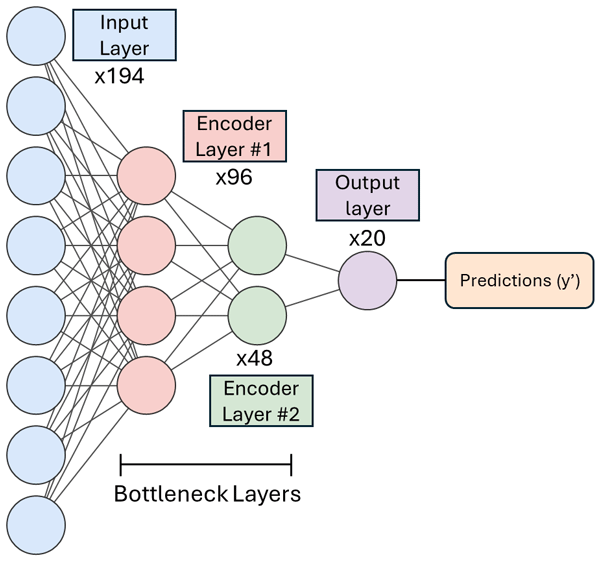
In this study, we leverage the power of machine learning to develop classifiers using a comprehensive dataset of SPMS spectra. These classifiers enable automatic differentiation of aerosol particles based on their chemistry and size, facilitating more accurate and efficient aerosol classification. Our results show increased accuracy when including unlabeled data in a semi-supervised framework.
Yufei Chu, Guo Lin, Min Deng, Lulin Xue, Weiwei Li, Hyeyum Hailey Shin, Jun A. Zhang, Hanqing Guo, and Zhien Wang
Atmos. Chem. Phys., 26, 1415–1434, https://doi.org/10.5194/acp-26-1415-2026, https://doi.org/10.5194/acp-26-1415-2026, 2026
Short summary
Short summary
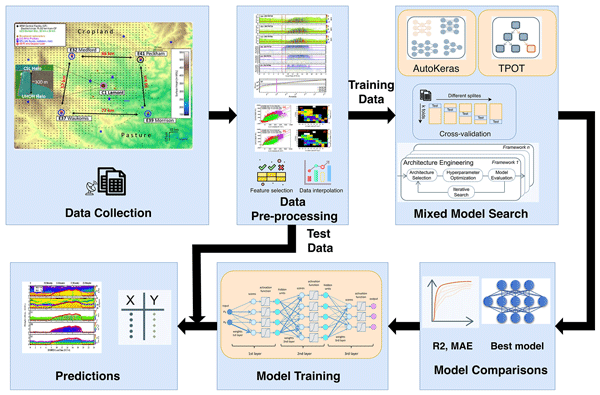
We developed a new machine learning approach to estimate the height of the mixing layer in the lower atmosphere, which is important for predicting weather and air quality. By using daily temperature and heat patterns, the model learns how the atmosphere changes throughout the day. It gives accurate results across different locations and seasons, helping improve future climate and weather forecasts through better understanding of surface–atmosphere interactions.
Andrew M. Sayer, Brian Cairns, Kirk D. Knobelspiesse, Luca Lelli, Chamara Rajapakshe, Scott E. Giangrande, Gareth E. Thomas, and Damao Zhang
Atmos. Meas. Tech., 18, 6681–6703, https://doi.org/10.5194/amt-18-6681-2025, https://doi.org/10.5194/amt-18-6681-2025, 2025
Short summary
Short summary
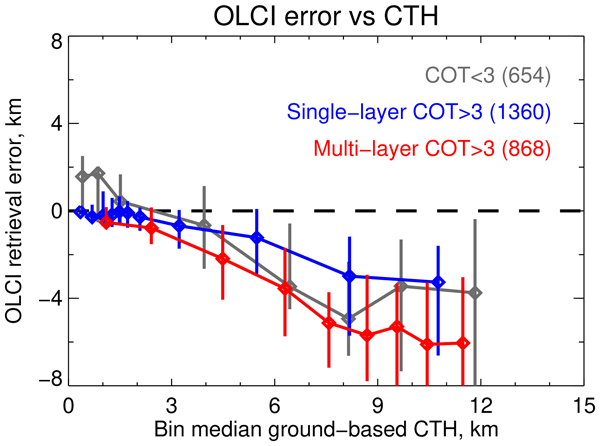
Satellites can estimate cloud height in several ways: two include a thermal technique (colder clouds being higher up), and another looking at colours of light that oxygen in the atmosphere absorbs (darker clouds being lower down). It can also be measured (from ground or space) by radar and lidar. We compare satellite data we developed using the oxygen method with other estimates to help us refine our technique.
Kaiden Sookdar, Scott E. Giangrande, John Rausch, Lihong Ma, Meng Wang, Dié Wang, Michael P. Jensen, Ching-Shu Hung, and J. Christine Chiu
Atmos. Meas. Tech., 18, 6271–6289, https://doi.org/10.5194/amt-18-6271-2025, https://doi.org/10.5194/amt-18-6271-2025, 2025
Short summary
Short summary
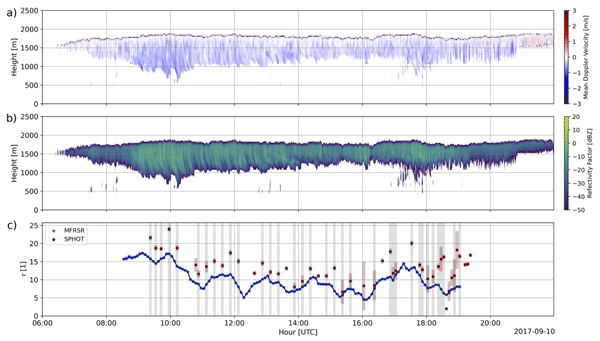
Photometer observations of stratocumulus cloud properties are evaluated for a multiyear archive. Retrievals for cloud optical depth, cloud droplet effective radius, and liquid water path show solid agreement with collocated references. Continental stratocumulus clouds sorted by cloud thickness indicate double the cloud optical depth and liquid water path of their marine counterparts, while exhibiting similar bulk cloud droplet effective radius.
Jing Li, Jiaoshi Zhang, Xianda Gong, Steven Spielman, Chongai Kuang, Ashish Singh, Maria A. Zawadowicz, Lu Xu, and Jian Wang
Atmos. Chem. Phys., 25, 13975–13993, https://doi.org/10.5194/acp-25-13975-2025, https://doi.org/10.5194/acp-25-13975-2025, 2025
Short summary
Short summary
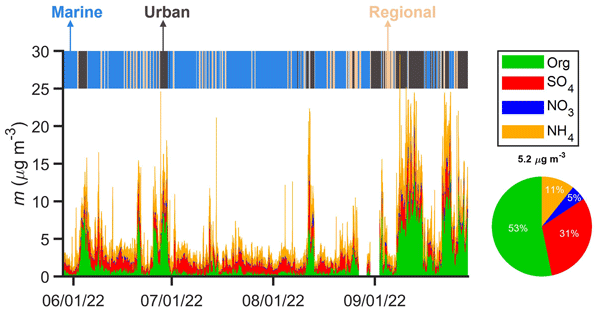
Using measurements at a rural coastal site, we quantified aerosols in representative air masses and identified major sources of organics in the Houston area. Our results show cooking aerosol is likely overestimated by earlier studies. Additionally, diurnal variation of highly oxidized organics is mostly driven by air mass changes instead of photochemistry. This study highlights the impacts of emissions, atmospheric chemistry, and meteorology on aerosol properties in the coastal–rural environment.
Travis Hahn, Hershel Weiner, Calvin Brooks, Jie Xi Li, Siddhant Gupta, and Dié Wang
Geosci. Model Dev., 18, 5971–5996, https://doi.org/10.5194/gmd-18-5971-2025, https://doi.org/10.5194/gmd-18-5971-2025, 2025
Short summary
Short summary
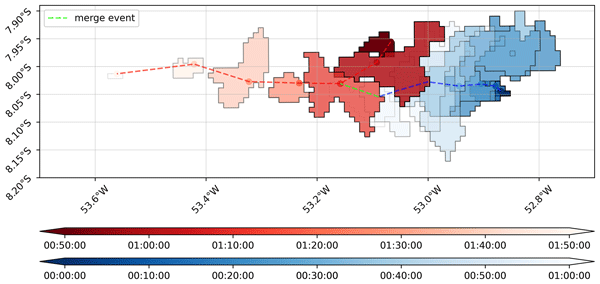
Understanding how clouds evolve is important for improving weather predictions, but existing tools for tracking cloud changes are complex and difficult to compare. To address this, we developed the Community Cloud Model Evaluation Toolkit (CoCoMET) that makes it easier to analyze clouds in both models and observations. By simplifying data processing, standardizing results, and introducing new analysis features, CoCoMET helps researchers better evaluate cloud behavior and improve models.
Dié Wang, Roni Kobrosly, Tao Zhang, Tamanna Subba, Susan van den Heever, Siddhant Gupta, and Michael Jensen
Atmos. Chem. Phys., 25, 9295–9314, https://doi.org/10.5194/acp-25-9295-2025, https://doi.org/10.5194/acp-25-9295-2025, 2025
Short summary
Short summary
We aim to understand how tiny particles in the air, called aerosols, affect rain clouds in the Houston–Galveston area. More aerosols generally do not make these clouds grow much taller, with an average height increase of about 1 km. However, their effects on rainfall strength and cloud expansion are less certain. Clouds influenced by sea breezes show a stronger aerosol impact, possibly due to factors that are unaccounted for like vertical winds in near-surface layers.
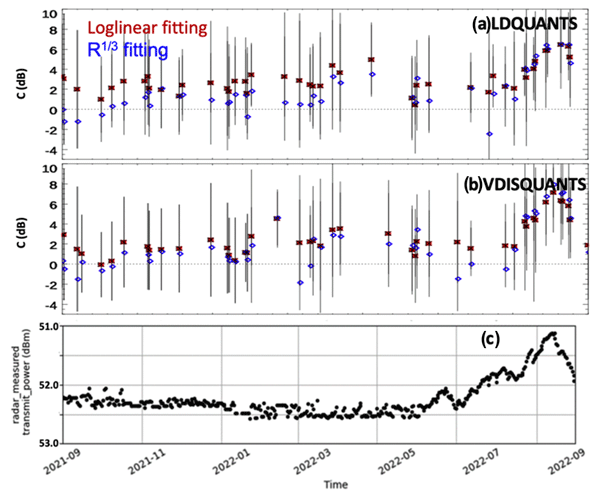
Min Deng, Scott E. Giangrande, Michael P. Jensen, Karen Johnson, Christopher R. Williams, Jennifer M. Comstock, Ya-Chien Feng, Alyssa Matthews, Iosif A. Lindenmaier, Timothy G. Wendler, Marquette Rocque, Aifang Zhou, Zeen Zhu, Edward Luke, and Die Wang
Atmos. Meas. Tech., 18, 1641–1657, https://doi.org/10.5194/amt-18-1641-2025, https://doi.org/10.5194/amt-18-1641-2025, 2025
Short summary
Short summary
A relative calibration technique is developed for the cloud radar by monitoring the intercept of the wet-radome attenuation log-linear behavior as a function of rainfall rates in light and moderate rain conditions. This resulting reflectivity offset during the recent field campaign is compared favorably with the traditional disdrometer comparison near the rain onset, while it also demonstrates similar trends with respect to collocated and independently calibrated reference radars.
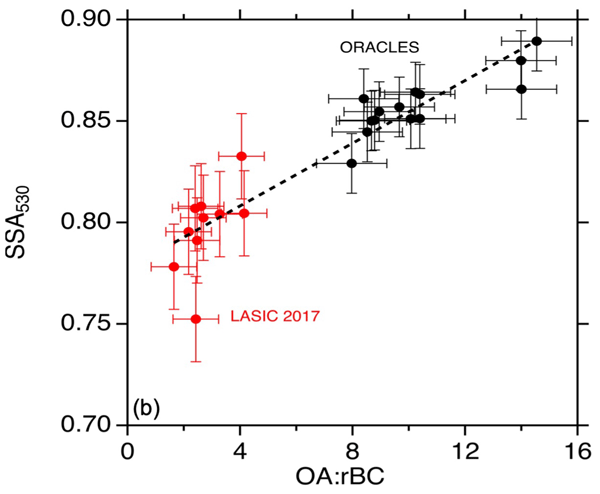
Amie Dobracki, Ernie R. Lewis, Arthur J. Sedlacek III, Tyler Tatro, Maria A. Zawadowicz, and Paquita Zuidema
Atmos. Chem. Phys., 25, 2333–2363, https://doi.org/10.5194/acp-25-2333-2025, https://doi.org/10.5194/acp-25-2333-2025, 2025
Short summary
Short summary
Biomass-burning aerosol is commonly present in the marine boundary layer over the southeast Atlantic Ocean between June and October. Our research indicates that burning conditions, aerosol transport pathways, and prolonged oxidation processes (heterogeneous and aqueous phases) determine the chemical, microphysical, and optical properties of the boundary layer aerosol. Notably, we find that the aerosol optical properties can be estimated from the chemical properties alone.
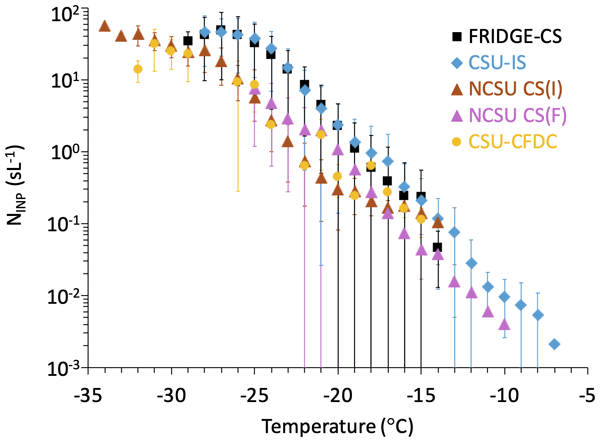
Paul J. DeMott, Jessica A. Mirrielees, Sarah Suda Petters, Daniel J. Cziczo, Markus D. Petters, Heinz G. Bingemer, Thomas C. J. Hill, Karl Froyd, Sarvesh Garimella, A. Gannet Hallar, Ezra J. T. Levin, Ian B. McCubbin, Anne E. Perring, Christopher N. Rapp, Thea Schiebel, Jann Schrod, Kaitlyn J. Suski, Daniel Weber, Martin J. Wolf, Maria Zawadowicz, Jake Zenker, Ottmar Möhler, and Sarah D. Brooks
Atmos. Meas. Tech., 18, 639–672, https://doi.org/10.5194/amt-18-639-2025, https://doi.org/10.5194/amt-18-639-2025, 2025
Short summary
Short summary
The Fifth International Ice Nucleation Workshop Phase 3 (FIN-03) compared the ambient atmospheric performance of ice-nucleating particle (INP) measuring systems and explored general methods for discerning atmospheric INP compositions. Mirroring laboratory results, INP concentrations agreed within 5–10 factors. Measurements of total aerosol properties and investigations of INP compositions supported a dominant role of soil and plant organic aerosol elements as INPs during the study.
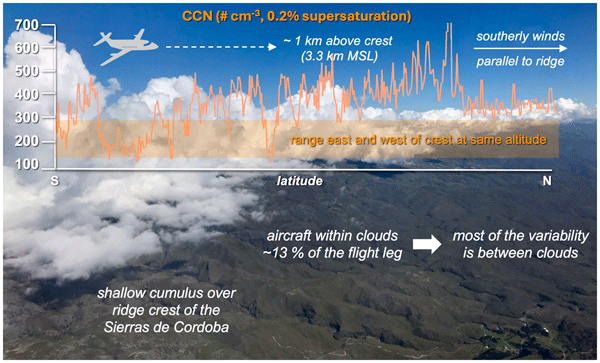
Jerome D. Fast, Adam C. Varble, Fan Mei, Mikhail Pekour, Jason Tomlinson, Alla Zelenyuk, Art J. Sedlacek III, Maria Zawadowicz, and Louisa Emmons
Atmos. Chem. Phys., 24, 13477–13502, https://doi.org/10.5194/acp-24-13477-2024, https://doi.org/10.5194/acp-24-13477-2024, 2024
Short summary
Short summary
Aerosol property measurements recently collected on the ground and by a research aircraft in central Argentina during the Cloud, Aerosol, and Complex Terrain Interactions (CACTI) campaign exhibit large spatial and temporal variability. These measurements coupled with coincident meteorological information provide a valuable data set needed to evaluate and improve model predictions of aerosols in a traditionally data-sparse region of South America.
Xiaoli Shen, David M. Bell, Hugh Coe, Naruki Hiranuma, Fabian Mahrt, Nicholas A. Marsden, Claudia Mohr, Daniel M. Murphy, Harald Saathoff, Johannes Schneider, Jacqueline Wilson, Maria A. Zawadowicz, Alla Zelenyuk, Paul J. DeMott, Ottmar Möhler, and Daniel J. Cziczo
Atmos. Chem. Phys., 24, 10869–10891, https://doi.org/10.5194/acp-24-10869-2024, https://doi.org/10.5194/acp-24-10869-2024, 2024
Short summary
Short summary
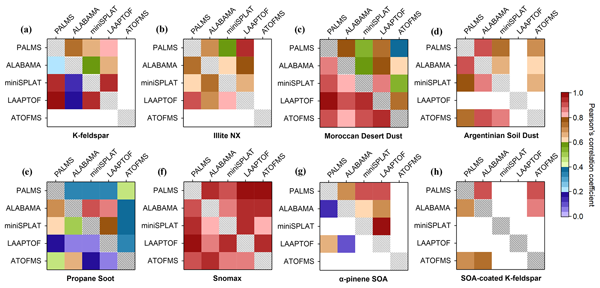
Single-particle mass spectrometry (SPMS) is commonly used to measure the chemical composition and mixing state of aerosol particles. Intercomparison of SPMS instruments was conducted. All instruments reported similar size ranges and common spectral features. The instrument-specific detection efficiency was found to be more dependent on particle size than type. All differentiated secondary organic aerosol, soot, and soil dust but had difficulties differentiating among minerals and dusts.
Toshi Matsui, Daniel Hernandez-Deckers, Scott E. Giangrande, Thiago S. Biscaro, Ann Fridlind, and Scott Braun
Atmos. Chem. Phys., 24, 10793–10814, https://doi.org/10.5194/acp-24-10793-2024, https://doi.org/10.5194/acp-24-10793-2024, 2024
Short summary
Short summary
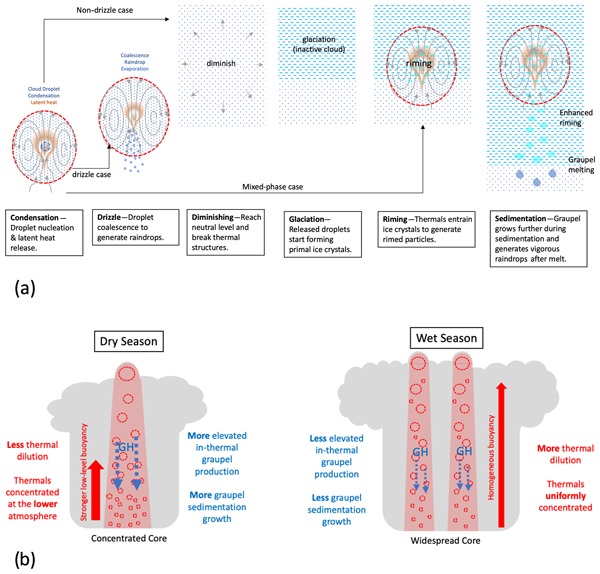
Using computer simulations and real measurements, we discovered that storms over the Amazon were narrower but more intense during the dry periods, producing heavier rain and more ice particles in the clouds. Our research showed that cumulus bubbles played a key role in creating these intense storms. This study can improve the representation of the effect of continental and ocean environments on tropical regions' rainfall patterns in simulations.
Siddhant Gupta, Dié Wang, Scott E. Giangrande, Thiago S. Biscaro, and Michael P. Jensen
Atmos. Chem. Phys., 24, 4487–4510, https://doi.org/10.5194/acp-24-4487-2024, https://doi.org/10.5194/acp-24-4487-2024, 2024
Short summary
Short summary
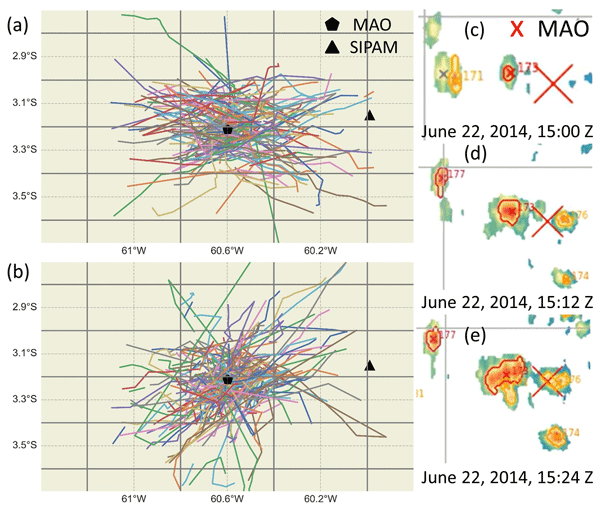
We examine the lifecycle of isolated deep convective clouds (DCCs) in the Amazon rainforest. Weather radar echoes from the DCCs are tracked to evaluate their lifecycle. The DCC size and intensity increase, reach a peak, and then decrease over the DCC lifetime. Vertical profiles of air motion and mass transport from different seasons are examined to understand the transport of energy and momentum within DCC cores and to address the deficiencies in simulating DCCs using weather and climate models.
Jingting Huang, S. Marcela Loría-Salazar, Min Deng, Jaehwa Lee, and Heather A. Holmes
Atmos. Chem. Phys., 24, 3673–3698, https://doi.org/10.5194/acp-24-3673-2024, https://doi.org/10.5194/acp-24-3673-2024, 2024
Short summary
Short summary
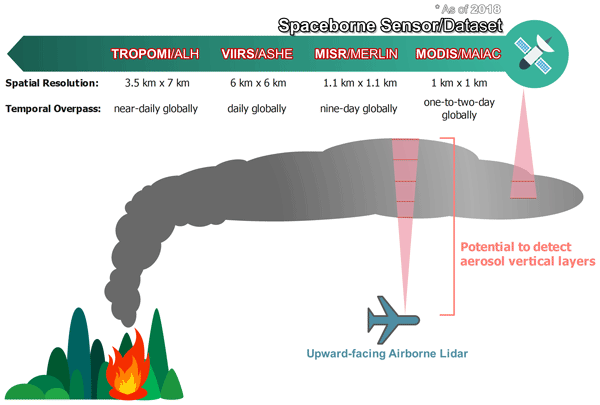
Increased wildfire intensity has resulted in taller wildfire smoke plumes. We investigate the vertical structure of wildfire smoke plumes using aircraft lidar data and establish two effective smoke plume height metrics. Four novel satellite-based plume height products are evaluated for wildfires in the western US. Our results provide guidance on the strengths and limitations of these satellite products and set the stage for improved plume rise estimates by leveraging satellite products.
Yang Wang, Chanakya Bagya Ramesh, Scott E. Giangrande, Jerome Fast, Xianda Gong, Jiaoshi Zhang, Ahmet Tolga Odabasi, Marcus Vinicius Batista Oliveira, Alyssa Matthews, Fan Mei, John E. Shilling, Jason Tomlinson, Die Wang, and Jian Wang
Atmos. Chem. Phys., 23, 15671–15691, https://doi.org/10.5194/acp-23-15671-2023, https://doi.org/10.5194/acp-23-15671-2023, 2023
Short summary
Short summary
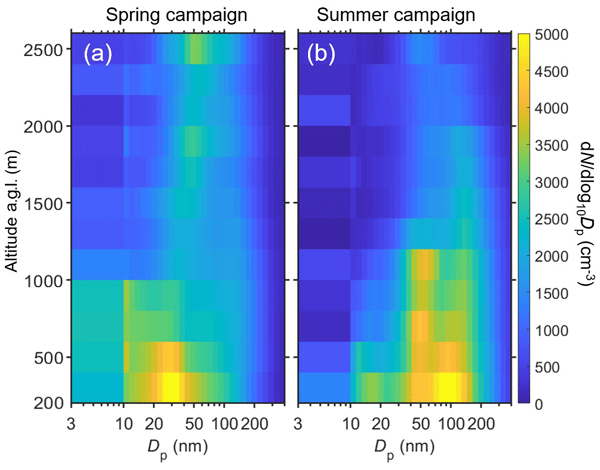
We report the vertical profiles of aerosol properties over the Southern Great Plains (SGP), a region influenced by shallow convective clouds, land–atmosphere interactions, boundary layer turbulence, and the aerosol life cycle. We examined the processes that drive the aerosol population and distribution in the lower troposphere over the SGP. This study helps improve our understanding of aerosol–cloud interactions and the model representation of aerosol processes.
Calvin Howes, Pablo E. Saide, Hugh Coe, Amie Dobracki, Steffen Freitag, Jim M. Haywood, Steven G. Howell, Siddhant Gupta, Janek Uin, Mary Kacarab, Chongai Kuang, L. Ruby Leung, Athanasios Nenes, Greg M. McFarquhar, James Podolske, Jens Redemann, Arthur J. Sedlacek, Kenneth L. Thornhill, Jenny P. S. Wong, Robert Wood, Huihui Wu, Yang Zhang, Jianhao Zhang, and Paquita Zuidema
Atmos. Chem. Phys., 23, 13911–13940, https://doi.org/10.5194/acp-23-13911-2023, https://doi.org/10.5194/acp-23-13911-2023, 2023
Short summary
Short summary
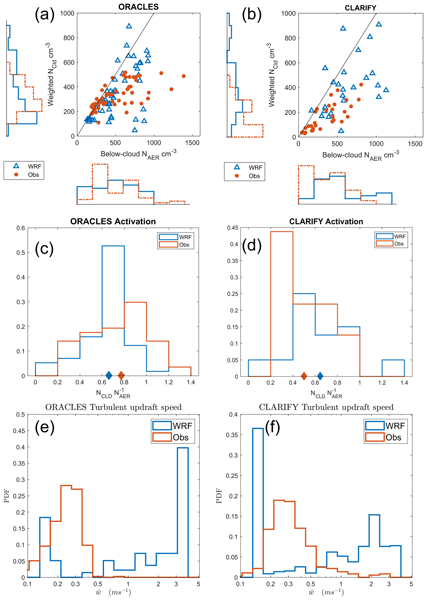
To better understand smoke properties and its interactions with clouds, we compare the WRF-CAM5 model with observations from ORACLES, CLARIFY, and LASIC field campaigns in the southeastern Atlantic in August 2017. The model transports and mixes smoke well but does not fully capture some important processes. These include smoke chemical and physical aging over 4–12 days, smoke removal by rain, sulfate particle formation, aerosol activation into cloud droplets, and boundary layer turbulence.
Scott E. Giangrande, Thiago S. Biscaro, and John M. Peters
Atmos. Chem. Phys., 23, 5297–5316, https://doi.org/10.5194/acp-23-5297-2023, https://doi.org/10.5194/acp-23-5297-2023, 2023
Short summary
Short summary
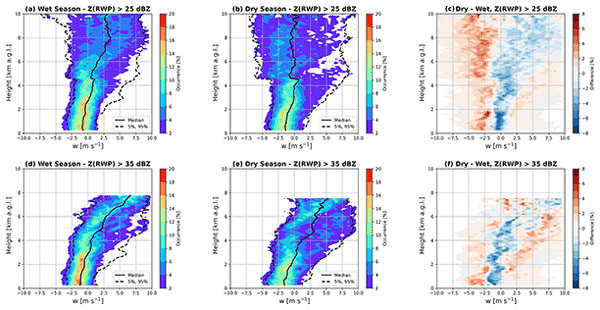
Our study tracks thunderstorms observed during the wet and dry seasons of the Amazon Basin using weather radar. We couple this precipitation tracking with opportunistic overpasses of a wind profiler and other ground observations to add unique insights into the upwards and downwards air motions within these clouds at various stages in the storm life cycle. The results of a simple updraft model are provided to give physical explanations for observed seasonal differences.
Christopher R. Williams, Joshua Barrio, Paul E. Johnston, Paytsar Muradyan, and Scott E. Giangrande
Atmos. Meas. Tech., 16, 2381–2398, https://doi.org/10.5194/amt-16-2381-2023, https://doi.org/10.5194/amt-16-2381-2023, 2023
Short summary
Short summary
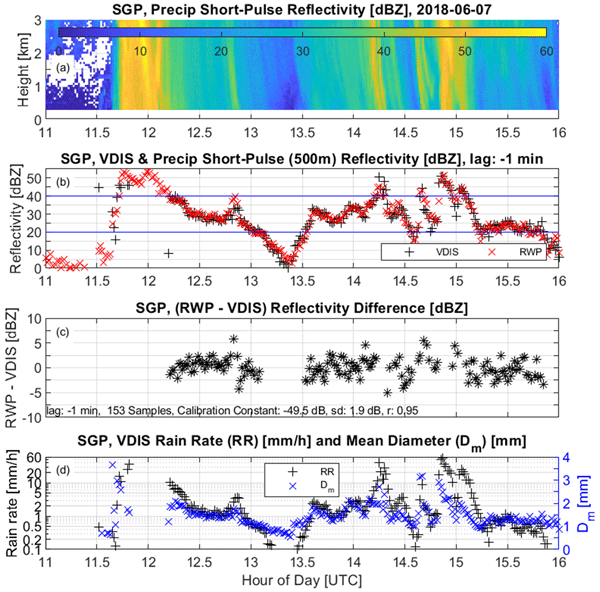
This study uses surface disdrometer observations to calibrate 8 years of 915 MHz radar wind profiler deployed in the central United States in northern Oklahoma. This study had two key findings. First, the radar wind profiler sensitivity decreased approximately 3 to 4 dB/year as the hardware aged. Second, this drift was slow enough that calibration can be performed using 3-month intervals. Calibrated radar wind profiler observations and Python processing code are available on public repositories.

Francesca Gallo, Janek Uin, Kevin J. Sanchez, Richard H. Moore, Jian Wang, Robert Wood, Fan Mei, Connor Flynn, Stephen Springston, Eduardo B. Azevedo, Chongai Kuang, and Allison C. Aiken
Atmos. Chem. Phys., 23, 4221–4246, https://doi.org/10.5194/acp-23-4221-2023, https://doi.org/10.5194/acp-23-4221-2023, 2023
Short summary
Short summary
This study provides a summary statistic of multiday aerosol plume transport event influences on aerosol physical properties and the cloud condensation nuclei budget at the U.S. Department of Energy Atmospheric Radiation Measurement Facility in the eastern North Atlantic (ENA). An algorithm that integrates aerosol properties is developed and applied to identify multiday aerosol transport events. The influence of the aerosol plumes on aerosol populations at the ENA is successively assessed.
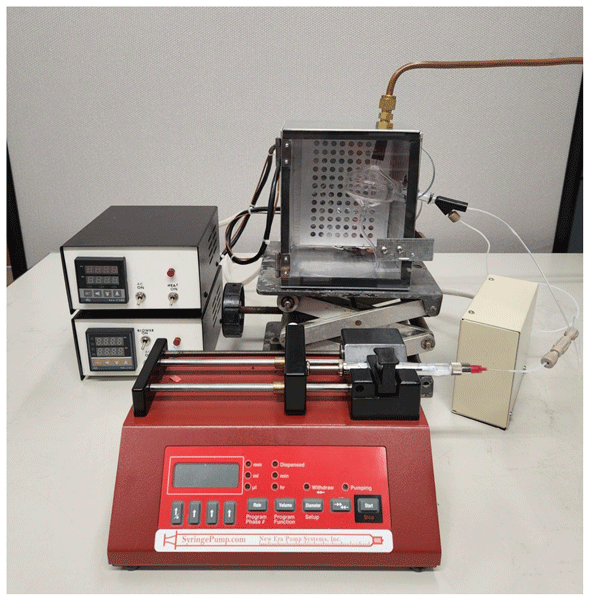
Christopher R. Niedek, Fan Mei, Maria A. Zawadowicz, Zihua Zhu, Beat Schmid, and Qi Zhang
Atmos. Meas. Tech., 16, 955–968, https://doi.org/10.5194/amt-16-955-2023, https://doi.org/10.5194/amt-16-955-2023, 2023
Short summary
Short summary
This novel micronebulization aerosol mass spectrometry (MS) technique requires a low sample volume (10 μL) and can quantify nanogram levels of organic and inorganic particulate matter (PM) components when used with 34SO4. This technique was successfully applied to PM samples collected from uncrewed atmospheric measurement platforms and provided chemical information that agrees well with real-time data from a co-located aerosol chemical speciation monitor and offline data from secondary ion MS.

Fabian Mahrt, Carolin Rösch, Kunfeng Gao, Christopher H. Dreimol, Maria A. Zawadowicz, and Zamin A. Kanji
Atmos. Chem. Phys., 23, 1285–1308, https://doi.org/10.5194/acp-23-1285-2023, https://doi.org/10.5194/acp-23-1285-2023, 2023
Short summary
Short summary
Major aerosol types emitted by biomass burning include soot, ash, and charcoal particles. Here, we investigated the ice nucleation activity of 400 nm size-selected particles of two different pyrolyis-derived charcoal types in the mixed phase and cirrus cloud regime. We find that ice nucleation is constrained to cirrus cloud conditions, takes place via pore condensation and freezing, and is largely governed by the particle porosity and mineral content.
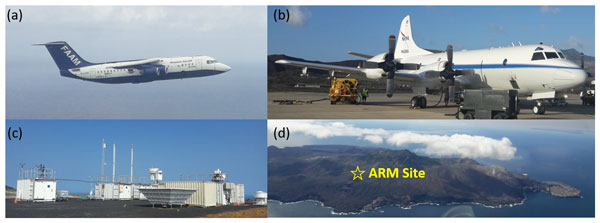
Paul A. Barrett, Steven J. Abel, Hugh Coe, Ian Crawford, Amie Dobracki, James Haywood, Steve Howell, Anthony Jones, Justin Langridge, Greg M. McFarquhar, Graeme J. Nott, Hannah Price, Jens Redemann, Yohei Shinozuka, Kate Szpek, Jonathan W. Taylor, Robert Wood, Huihui Wu, Paquita Zuidema, Stéphane Bauguitte, Ryan Bennett, Keith Bower, Hong Chen, Sabrina Cochrane, Michael Cotterell, Nicholas Davies, David Delene, Connor Flynn, Andrew Freedman, Steffen Freitag, Siddhant Gupta, David Noone, Timothy B. Onasch, James Podolske, Michael R. Poellot, Sebastian Schmidt, Stephen Springston, Arthur J. Sedlacek III, Jamie Trembath, Alan Vance, Maria A. Zawadowicz, and Jianhao Zhang
Atmos. Meas. Tech., 15, 6329–6371, https://doi.org/10.5194/amt-15-6329-2022, https://doi.org/10.5194/amt-15-6329-2022, 2022
Short summary
Short summary
To better understand weather and climate, it is vital to go into the field and collect observations. Often measurements take place in isolation, but here we compared data from two aircraft and one ground-based site. This was done in order to understand how well measurements made on one platform compared to those made on another. Whilst this is easy to do in a controlled laboratory setting, it is more challenging in the real world, and so these comparisons are as valuable as they are rare.
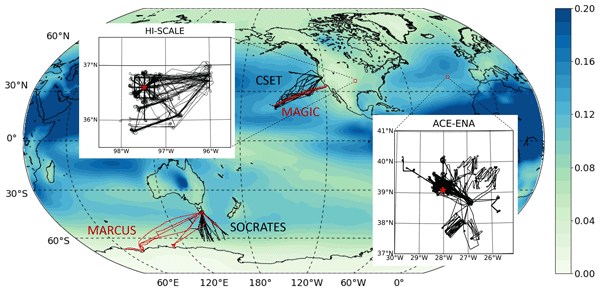
Shuaiqi Tang, Jerome D. Fast, Kai Zhang, Joseph C. Hardin, Adam C. Varble, John E. Shilling, Fan Mei, Maria A. Zawadowicz, and Po-Lun Ma
Geosci. Model Dev., 15, 4055–4076, https://doi.org/10.5194/gmd-15-4055-2022, https://doi.org/10.5194/gmd-15-4055-2022, 2022
Short summary
Short summary
We developed an Earth system model (ESM) diagnostics package to compare various types of aerosol properties simulated in ESMs with aircraft, ship, and surface measurements from six field campaigns across spatial scales. The diagnostics package is coded and organized to be flexible and modular for future extension to other field campaign datasets and adapted to higher-resolution model simulations. Future releases will include comprehensive cloud and aerosol–cloud interaction diagnostics.
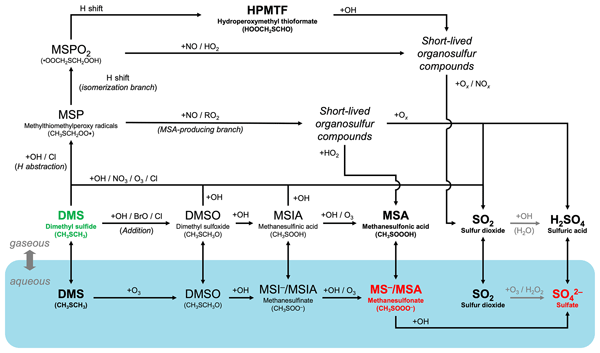
Ka Ming Fung, Colette L. Heald, Jesse H. Kroll, Siyuan Wang, Duseong S. Jo, Andrew Gettelman, Zheng Lu, Xiaohong Liu, Rahul A. Zaveri, Eric C. Apel, Donald R. Blake, Jose-Luis Jimenez, Pedro Campuzano-Jost, Patrick R. Veres, Timothy S. Bates, John E. Shilling, and Maria Zawadowicz
Atmos. Chem. Phys., 22, 1549–1573, https://doi.org/10.5194/acp-22-1549-2022, https://doi.org/10.5194/acp-22-1549-2022, 2022
Short summary
Short summary
Understanding the natural aerosol burden in the preindustrial era is crucial for us to assess how atmospheric aerosols affect the Earth's radiative budgets. Our study explores how a detailed description of dimethyl sulfide (DMS) oxidation (implemented in the Community Atmospheric Model version 6 with chemistry, CAM6-chem) could help us better estimate the present-day and preindustrial concentrations of sulfate and other relevant chemicals, as well as the resulting aerosol radiative impacts.
Cited articles
Ackermann, I. J., Hass, H., Memmesheimer, M., Ebel, A., Binkowski, F. S., and Shankar, U.: Modal aerosol dynamics model for Europe: Development and first applications, Atmos. Environ., 32, 2981–2999, https://doi.org/10.1016/S1352-2310(98)00006-5, 1998.
Adaricheva, K., Bernhardt, J. E., Liu, W., and Schmidt, B.: Importance of overnight parameters to predict Sea Breeze on Long Island, arXiv [preprint], https://doi.org/10.48550/arXiv.2309.01803, 4 September 2023.
Ahlm, L., Julin, J., Fountoukis, C., Pandis, S. N., and Riipinen, I.: Particle number concentrations over Europe in 2030: the role of emissions and new particle formation, Atmos. Chem. Phys., 13, 10271–10283, https://doi.org/10.5194/acp-13-10271-2013, 2013.
Ahmadov, R., Gerbig, C., Kretschmer, R., Koerner, S., Neininger, B., Dolman, A. J., and Sarrat, C.: Mesoscale covariance of transport and CO2 fluxes: Evidence from observations and simulations using the WRF-VPRM coupled atmosphere-biosphere model, J. Geophys. Res.-Atmos., 112, https://doi.org/10.1029/2007JD008552, 2007.
Albrecht, B. A.: Aerosols, cloud microphysics, and fractional cloudiness, Science, 245, 1227–1230, 1989.
Aldhaif, A. M., Lopez, D. H., Dadashazar, H., and Sorooshian, A.: Sources, frequency, and chemical nature of dust events impacting the United States East Coast, Atmos. Environ., 231, https://doi.org/10.1016/j.atmosenv.2020.117456, 2020.
Ariya, P., Sun, J., Eltouny, N., Hudson, E. D., Hayes, C. T., and Kos, G.: Physical and chemical characterization of bioaerosols – Implications for nucleation processes, Int. Rev. Phys. Chem., 28, 1–32, https://doi.org/10.1080/01442350802597438, 2009.
Arrillaga, J. A., Jiménez, P., de Arellano, J. V.-G., Jiménez, M. A., Román-Cascón, C., Sastre, M., and Yagüe, C.: Analyzing the synoptic-, meso- and local-scale involved in sea breeze formation and frontal characteristics, J. Geophys. Res.-Atmos., 125, e2019JD031302, https://doi.org/10.1029/2019JD031302, 2020.
Atabakhsh, S., Poulain, L., Bigi, A., Coen, M. C., Pöhlker, M., and Herrmann, H.: Trends of PM1 aerosol chemical composition, carbonaceous aerosol, and source over the last 10 years at Melpitz (Germany), Atmos. Environ., 346, 121075, https://doi.org/10.1016/j.atmosenv.2025.121075, 2025.
Atmospheric Radiation Measurement (ARM): sfcmetradaq-tceq: cleaned 5-minute resolution air quality and meteorological data from nine TCEQ CAMS sites in Houston, Texas (Nov 2021–Oct 2022), ARM PI product, ARM [data set], https://doi.org/10.5439/2587278, 2022.
Augustin, P., Billet, S., Crumeyrolle, S., Deboudt, K., Dieudonné, E., Flament, P., Fourmentin, M., Guilbaud, S., Hanoune, B., Landkocz, Y., Méausoone, C., Roy, S., Schmitt, F. G., Sentchev, A., and Sokolov, A.: Impact of sea breeze dynamics on atmospheric pollutants and their toxicity in industrial and urban coastal environments, Remote Sensing, 12, 648, https://doi.org/10.3390/rs12040648, 2020.
Banta, R. M., Senff, C. J., Alvarez, R. J., Langford, A. O., Parrish, D. D., Trainer, M. K., Darby, L. S., Michael Hardesty, R., Lambeth, B., Andrew Neuman, J., Angevine, W. M., Nielsen-Gammon, J., Sandberg, S. P., and White, A. B.: Dependence of daily peak O3 concentrations near Houston, Texas on environmental factors: Wind speed, temperature, and boundary-layer depth, Atmos. Environ., 45, 162–173, https://doi.org/10.1016/j.atmosenv.2010.09.030, 2011.
Bao, S., Pietrafesa, L., Gayes, P., Noble, S., Viner, B., Qian, J. H., Werth, D., Mitchell, G., and Burdette, S.: Mapping the Spatial Footprint of Sea Breeze Winds in the Southeastern United States, J. Geophys. Res.-Atmos., 128, e2022JD037524, https://doi.org/10.1029/2022JD037524, 2023.
Barrett, T. E. and Sheesley, R. J.: Urban impacts on regional carbonaceous aerosols: Case study in central Texas, Journal of the Air and Waste Management Association, 64, 917–926, https://doi.org/10.1080/10962247.2014.904252, 2014.
Bauman, W. H.: Verify MesoNAM Performance. NASA Contractor Report CR-2010-216-287, Kennedy Space Center, FL, 31 pp., ENSCO, Inc., 1980 N. Atlantic Ave., Suite 830, Cocoa Beach, FL, 32931, http://science.ksc.nasa.gov/amu/final-reports/mesoNAMverify.pdf (last access: 2 Janaury 2026), 2010.
Berg, L. K., Shrivastava, M., Easter, R. C., Fast, J. D., Chapman, E. G., Liu, Y., and Ferrare, R. A.: A new WRF-Chem treatment for studying regional-scale impacts of cloud processes on aerosol and trace gases in parameterized cumuli, Geosci. Model Dev., 8, 409–429, https://doi.org/10.5194/gmd-8-409-2015, 2015.
Bond, T. C., Doherty, S. J., Fahey, D. W., Forster, P. M., Berntsen, T., Deangelo, B. J., Flanner, M. G., Ghan, S., Kärcher, B., Koch, D., Kinne, S., Kondo, Y., Quinn, P. K., Sarofim, M. C., Schultz, M. G., Schulz, M., Venkataraman, C., Zhang, H., Zhang, S., Bellouin, N., Guttikunda, S. K., Hopke, P. K., Jacobson, M. Z., Kaiser, J. W., Klimont, Z., Lohmann, U., Schwarz, J. P., Shindell, D., Storelvmo, T., Warren, S. G., and Zender, C. S.: Bounding the role of black carbon in the climate system: A scientificassessment, J. Geophys. Res.-Atmos., 118, 5380–5552, https://doi.org/10.1002/jgrd.50171, 2013.
Borge, R., Alexandrov, V., José del Vas, J., Lumbreras, J., and Rodríguez, E.: A comprehensive sensitivity analysis of the WRF model for air quality applications over the Iberian Peninsula, Atmos. Environ., 42, 8560–8574, https://doi.org/10.1016/j.atmosenv.2008.08.032, 2008.
Boyer, C. H., Keeler, J. M., and Rakoczy, B. C.: An Idealized Parameter Study of Destabilization and Convection Initiation in Coastal Regions. Part I: Calm or Offshore Synoptic-Scale Flow, J. Atmos. Sci., 82, 519–539, https://doi.org/10.1175/JAS-D-23-0180.1, 2025.
Boyouk, N., Léon, J. F., Delbarre, H., Augustin, P., and Fourmentin, M.: Impact of sea breeze on vertical structure of aerosol optical properties in Dunkerque, France, Atmos. Res., 101, 902–910, https://doi.org/10.1016/j.atmosres.2011.05.016, 2011.
Bozlaker, A., Prospero, J. M., Fraser, M. P., and Chellam, S.: Quantifying the contribution of long-range saharan dust transport on particulate matter concentrations in Houston, Texas, using detailed elemental analysis, Environ. Sci. Technol., 47, 10179–10187, https://doi.org/10.1021/es4015663, 2013.
Brown, S., Nicholls, R. J., Woodroffe, C. D., Hanson, S., Hinkel, J., Kebede, A. S., Neumann, B., and Vafeidis, A. T.: Sea-Level Rise Impacts and Responses: A Global Perspective, in: Coastal Hazards, edited by: Finkl, C. W., Dordrecht, Springer Netherlands, 117–149, https://doi.org/10.1007/978-94-007-5234-4_5, 2013.
Burkart, J., Gratzl, J., Seifried, T. M., Bieber, P., and Grothe, H.: Isolation of subpollen particles (SPPs) of birch: SPPs are potential carriers of ice nucleating macromolecules, Biogeosciences, 18, 5751–5765, https://doi.org/10.5194/bg-18-5751-2021, 2021.
Charlson, R. J., Schwartz, S. E., Hales, J. M., Cess, R. D., Coakley Jr., J. A., Hansen, J. E., and Hofmann, D. J.: Climate forcing by anthropogenic aerosols, Science, 255, 423–430, 1992.
Chen, F. and Dudhia, J.: Coupling an advanced land surface-hydrology model with the Penn State-NCAR MM5 modeling system. Part I: Model implementation and sensitivity, Mon. Weather Rev., 129, 569–585, https://doi.org/10.1175/1520-0493(2001)129<0569:CAALSH>2.0.CO;2, 2001.
Chou, M., Suarez, M. J., Ho, C., Yan, M. M., and Lee, K.: Parameterizations for cloud overlapping and shortwave single-scattering properties for use in general circulation and cloud ensemble models, J. Climate, 11, 202–214, https://doi.org/10.1175/1520-0442(1998)011<0202:PFCOAS>2.0.CO;2, 1998.
Clappier, A., Martilli, A., Grossi, P., Thunis, P., Pasi, F., Krueger, B. C., Calpini, B., Graziani, G., and van den Bergh, H.: Effect of Sea Breeze on Air Pollution in the Greater Athens Area. Part I: Numerical Simulations and Field Observations, J. Appl. Meteorol., 39, 546–562, https://doi.org/10.1175/1520-0450(2000)039<0546:EOSBOA>2.0.CO;2, 1999.
Comin, A. N., Miglietta, M. M., Rizza, U., Acevedo, O. C., and Degrazia, G. A.: Investigation of sea-breeze convergence in Salento Peninsula (southeastern Italy), Atmos. Res., 160, 68–79, https://doi.org/10.1016/j.atmosres.2015.03.010, 2015.
Crippa, M., Canonaco, F., Lanz, V. A., Äijälä, M., Allan, J. D., Carbone, S., Capes, G., Ceburnis, D., Dall'Osto, M., Day, D. A., DeCarlo, P. F., Ehn, M., Eriksson, A., Freney, E., Hildebrandt Ruiz, L., Hillamo, R., Jimenez, J. L., Junninen, H., Kiendler-Scharr, A., Kortelainen, A.-M., Kulmala, M., Laaksonen, A., Mensah, A. A., Mohr, C., Nemitz, E., O'Dowd, C., Ovadnevaite, J., Pandis, S. N., Petäjä, T., Poulain, L., Saarikoski, S., Sellegri, K., Swietlicki, E., Tiitta, P., Worsnop, D. R., Baltensperger, U., and Prévôt, A. S. H.: Organic aerosol components derived from 25 AMS data sets across Europe using a consistent ME-2 based source apportionment approach, Atmos. Chem. Phys., 14, 6159–6176, https://doi.org/10.5194/acp-14-6159-2014, 2014.
Crossett, K., Culliton, T., Wiley, P., and Goodspeed, T.: Population trends along the coastal United States, 1980–2008, National Oceanic and Atmospheric Administration, Coastal Trend s Report Series, https://repository.library.noaa.gov/view/noaa/1765 (last access: 3 February 2026), 2004.
Dal Maso, M., Kulmala, M., Lehtinen, K. E. J., Mäkelä, J. M., Aalto, P., and O'Dowd, C. D.: Condensation and coagulation sinks and formation of nucleation mode particles in coastal and boreal forest boundary layers, J. Geophys, Res.-Atmos., 107, https://doi.org/10.1029/2001JD001053, 2002.
Das, S., Prospero, J. M., and Chellam, S.: Quantifying international and interstate contributions to primary ambient PM2.5 and PM10 in a complex metropolitan atmosphere, Atmos. Environ., 292, 119415, https://doi.org/10.1016/j.atmosenv.2022.119415, 2023.
Deng, M., Jensen, M. P., Giangrande, S. E., Johnson, K., Wang, D., Chu, Y., Subba, T., Peña, J. C., Walter, P., Flynn, J., and Griggs, T.: A Closed Bay-Breeze Circulation and Its Lifecycle from TRACER with a New Orienteering Tape Recorder Diagram, A closed bay-breeze circulation and its lifecycle from TRACER with a new orienteering tape recorder diagram, J. Geophys. Res.-Atmos., 130, e2024JD043187, https://doi.org/10.1029/2024JD043187, 2025.
di Bernardino, A., Iannarelli, A. M., Casadio, S., Mevi, G., Campanelli, M., Casasanta, G., Cede, A., Tiefengraber, M., Siani, A. M., Spinei, E., & Cacciani, M.: On the effect of sea breeze regime on aerosols and gases properties in the urban area of Rome, Italy, Urban Climate, 37. https://doi.org/10.1016/j.uclim.2021.100842, 2021.
Di Maria, V. ,Rahman, M., Collins, P., Dondi, G., and Sangiorgi, C.: Urban Heat Island Effect: Thermal Response from Different Types of Exposed Paved Surfaces, International Journal of Pavement Research and Technology, 6, 414–422, https://doi.org/10.6135/ijprt.org.tw/2013.6(4).414, 2013.
Dueker, M. E., O'Mullan, G. D., Martínez, J. M., Juhl, A. R., and Weathers, K. C.: Onshore wind speed modulates microbial aerosols along an urban waterfront, Atmosphere, 8, 215, https://doi.org/10.3390/atmos8110215, 2017.
Emmons, L. K., Walters, S., Hess, P. G., Lamarque, J.-F., Pfister, G. G., Fillmore, D., Granier, C., Guenther, A., Kinnison, D., Laepple, T., Orlando, J., Tie, X., Tyndall, G., Wiedinmyer, C., Baughcum, S. L., and Kloster, S.: Description and evaluation of the Model for Ozone and Related chemical Tracers, version 4 (MOZART-4), Geosci. Model Dev., 3, 43–67, https://doi.org/10.5194/gmd-3-43-2010, 2010.
Fang, C., Li, X., Li, J., Tian, J., and Wang, J.: Research on the impact of land use and land cover changes on local meteorological conditions and surface ozone in the north China plain from 2001 to 2020, Scientific Reports, 15, 2001, https://doi.org/10.1038/s41598-025-85940-0, 2025.
Gangoiti, G., Millán, M. M., Salvador, R., and Mantilla, E.: Long-range transport and re-circulation of pollutants in the western Mediterranean during the project Regional Cycles of Air Pollution in the West-Central Mediterranean Area, Atmos. Environ., 35, 6267–6276, https://doi.org/10.1016/S1352-2310(01)00440-X, 2001.
Gelaro, R., McCarty, W., Suárez, M. J., Todling, R., Molod, A., Takacs, L., Randles, C. A., Darmenov, A., Bosilovich, M. G., Reichle, R., Wargan, K., Coy, L., Cullather, R., Draper, C., Akella, S., Buchard, V., Conaty, A., da Silva, A. M., Gu, W., Kim, G.-K., Koster, R., Lucchesi, R., Merkova, D., Nielsen, J. E., Partyka, G., Pawson, S., Putman, W., Rienecker, M., Schubert, S. D., Sienkiewicz, M., and Zhao, B: The Modern-Era Retrospective Analysis for Research and Applications, version 2 (MERRA-2), J. Climate, 30, 5419–5454, https://doi.org/10.1175/JCLI-D-16-0758.1, 2017.
Georgiou, G. K., Christoudias, T., Proestos, Y., Kushta, J., Pikridas, M., Sciare, J., Savvides, C., and Lelieveld, J.: Evaluation of WRF-Chem model (v3.9.1.1) real-time air quality forecasts over the Eastern Mediterranean, Geosci. Model Dev., 15, 4129–4146, https://doi.org/10.5194/gmd-15-4129-2022, 2022.
Gettelman, A., Mills, M. J., Kinnison,D. E., Garcia, R. R., Smith, A. K., Marsh, D. R., Tilmes, S., Vitt, F., Bardeen, C. G., McInerny, J., Liu, H.-L., Solomon, S. C., Polvani, L. M., Emmons, L. K., Lamarque, J.-F., Richter, J. H., Glanville, A. S., Bacmeister, J. T., Phillips, A. S., Neale, R. B., Simpson, I. R., DuVivier, A. K., Hodzic, A., and Randel, W. J.: The wholeatmosphere community climate modelversion 6 (WACCM6), J. Geophys. Res.-Atmos., 124, 12380–12403, https://doi.org/10.1029/2019JD030943, 2019.
Gordon, H., Kirkby, J., Baltensperger, U., Bianchi, F., Breitenlechner, M., Curtius, J., Dias, A., Dommen, J., Donahue, N. M., Dunne, E. M., Duplissy, J., Ehrhart, S., Flagan, R. C., Frege, C., Fuchs, C., Hansel, A., Hoyle, C. R., Kulmala, M., Kürten, A., Lehtipalo, K., Makhmutov, V., Molteni, U., Rissanen, M. P., Stozkhov, Y., Tröstl, J., Tsagkogeorgas, G., Wagner, R., Williamson, C., Wimmer, D., Winkler, P. M., Yan, C., and Carslaw, K. S.: Causes and importance of new particle formation in the present-day and preindustrial atmospheres, J. Geophys. Res.-Atmos., 122, 8739–8760, https://doi.org/10.1002/2017JD026844, 2017.
Yu, F. and Luo, G.: Simulation of particle size distribution with a global aerosol model: contribution of nucleation to aerosol and CCN number concentrations, Atmos. Chem. Phys., 9, 7691–7710, https://doi.org/10.5194/acp-9-7691-2009, 2009.
Grell, G. A. and Devenyi, D.: A generalized approach to parameterizing convection combining ensemble and data assimilation techniques, Geophys. Res. Lett., 29, 38-1–38-4, https://doi.org/10.1029/2002GL015311, 2002.
Grell, G. A., Peckham, S. E., Schmitz, R., McKeen, S. A., Frost, G., Skamarock, W. C., and Eder, B.: Fully coupled “online” chemistry within the WRF model, Atmos. Environ., 39, 6957–6975, https://doi.org/10.1016/j.atmosenv.2005.04.027, 2005.
Guenther, A. B., Jiang, X., Heald, C. L., Sakulyanontvittaya, T., Duhl, T., Emmons, L. K., and Wang, X.: The Model of Emissions of Gases and Aerosols from Nature version 2.1 (MEGAN2.1): an extended and updated framework for modeling biogenic emissions, Geosci. Model Dev., 5, 1471–1492, https://doi.org/10.5194/gmd-5-1471-2012, 2012.
Hanft, W. and Houston, A. L.: An Observational and Modeling Study of Mesoscale Air Masses with High Theta-E, Mon. Wea. Rev., 146, 2503–2524, https://doi.org/10.1175/MWR-D-17-0389.1, 2018.
Hernández-Ceballos, M. A., Sorribas, M., San Miguel, E. G., Cinelli, G., Adame, J. A., and Bolívar, J. P.: Impact of sea-land breezes on 210Pb in southern Iberian Peninsula – Feasibility study on using submicron-sized aerosol particles to analyze 210Pb hourly patterns, Atmos. Pollut. Res., 7, 1–8, https://doi.org/10.1016/j.apr.2015.06.011, 2016.
Hong, S. Y., Noh, Y., and Dudhia, J.: A new vertical diffusion package with an explicit treatment of entrainment processes, Mon. Weather Rev., 134, 2318–2341, https://doi.org/10.1175/MWR3199.1, 2006.
Hu, L.: A Global Assessment of Coastal Marine Heatwaves and Their Relation With Coastal Urban Thermal Changes, Geophys. Res. Lett., 48, e2021GL093260, https://doi.org/10.1029/2021GL093260, 2021.
Huang, X.-F., He, L.-Y., Hu, M., Canagaratna, M. R., Sun, Y., Zhang, Q., Zhu, T., Xue, L., Zeng, L.-W., Liu, X.-G., Zhang, Y.-H., Jayne, J. T., Ng, N. L., and Worsnop, D. R.: Highly time-resolved chemical characterization of atmospheric submicron particles during 2008 Beijing Olympic Games using an Aerodyne High-Resolution Aerosol Mass Spectrometer, Atmos. Chem. Phys., 10, 8933–8945, https://doi.org/10.5194/acp-10-8933-2010, 2010.
Hudson, B.: Coastal Land Loss and the Mitigation-Adaptation Dilemma: Between Scylla and Charybdis Repository Citation Coastal Land Loss and the Mitigation-Adaptation Dilemma: Between Scylla and Charybdis, Louisiana Law Review, Vol. 73, https://digitalcommons.law.lsu.edu/lalrev/vol73/iss1/3 (last access: 3 February 2026), 2012.
Igel, A. L., van den Heever, S. C., and Johnson, J. S.: Meteorological and Land Surface Properties Impacting Sea Breeze Extent and Aerosol Distribution in a Dry Environment, J. Geophys. Res.-Atmos., 123, 22–37, https://doi.org/10.1002/2017JD027339, 2018.
IPCC (Intergovernmental Panel on Climate Change): The Physical Science Basis. Contribution of Working Group I to the Sixth Assessment Report of the Intergovernmental Panel on Climate Change, edited by: Masson-Delmotte, V., Zhai, P., Pirani, A., Connors, S. L., Péan, C., Berger, S., Caud, N., Chen, Y., Goldfarb, L., Gomis, M. I., Huang, M., Leitzell, K., Lonnoy, E., Matthews, J. B. R., Maycock, T. K., Waterfield, T., Yelekçi, O., Yu, R., and Zhou, B., Cambridge University Press, https://doi.org/10.1017/9781009157896, 2021.
Iwai, H., Murayama, Y., Ishii, S., Mizutani, K., Ohno, Y., and Hashiguchi, T.: Strong Updraft at a Sea-Breeze Front and Associated Vertical Transport of Near-Surface Dense Aerosol Observed by Doppler Lidar and Ceilometer, Bound.-Lay. Meteorol., 141, 117–142, https://doi.org/10.1007/s10546-011-9635-z, 2011.
Janjic, Z. I.: Nonsingular implementation of the Mellor–Yamada level 2.5 scheme in the NCEP Meso model,Camp Springs, MD, National Centers for Environmental Prediction, Prince George's County, 437, 1-61, 2002.
Jensen, M. P., Flynn, J. H., Judd, L. M., Kollias, P., Kuang, C., Mcfarquhar, G., Nadkarni, R., Powers, H., and Sullivan, J.: A Succession of Cloud, Precipitation, Aerosol, and Air Quality Field Experiments in the Coastal Urban Environment, B. Am. Meteorol. Soc., 103, 103–105, https://doi.org/10.1175/BAMS-D-21-0104.1, 2022.
Jensen, M. P., Flynn, J. H., Gonzalez-Cruz, J. E., et al.: Studying Aerosol, Clouds, and Air Quality in the Coastal Urban Environment of Southeastern Texas, B. Am. Meteorol. Soc., https://doi.org/10.1175/bams-d-23-0331.1, 2025.
Karnae, S. and John, K.: Source apportionment of PM2.5 measured in South Texas near U.S.A. – Mexico border, Atmos. Pollut. Res., 10, 1663–1676, https://doi.org/10.1016/j.apr.2019.06.007, 2019.
Kasparoglu, S., Meskhidze, N., and Petters, M. D.: Aerosol mixing state, new particle formation, and cloud droplet number concentration in an urban environment, Sci. Total Environ., 951, 175307, https://doi.org/10.1016/j.scitotenv.2024.175307, 2024.
Kerminen, V. M., Chen, X., Vakkari, V., Petäjä, T., Kulmala, M., and Bianchi, F.: Atmospheric new particle formation and growth: review of field observations, Environ. Res. Lett., 13, 103003, https://doi.org/10.1088/1748-9326/aadf3c, 2018.
Kgabi, N. A. and Mokgwetsi, T.: Dilution and dispersion of inhalable particulate matter, WIT Transactions on Ecology and the Environment, 127, 229–238, https://doi.org/10.2495/RAV090201, 2009.
Kleinman, L. I., Daum, P. H., Imre, D. G., Lee, Y.-N., Nunnermacker, L. J., Springston, S. R., Weinstein-Lloyd, J., and Rudolph, J.: Ozone production rate and hydrocarbon reactivity in 5 urban areas: A cause of high ozone concentration in Houston, Geophys. Res. Lett., 29, 1467, https://doi.org/10.1029/2001GL014569, 2002.
Kuang, C., McMurry, P. H., and McCormick, A. V.: Determination of cloud condensation nuclei production from measured new particle formation events, Geophys. Res. Lett., 36, L09822, https://doi.org/10.1029/2009GL037584, 2009.
Kuang, C., Chen, M., Zhao, J., Smith, J., McMurry, P. H., and Wang, J.: Size and time-resolved growth rate measurements of 1 to 5 nm freshly formed atmospheric nuclei, Atmos. Chem. Phys., 12, 3573–3589, https://doi.org/10.5194/acp-12-3573-2012, 2012.
Kulmala, M., Laakso, L., Lehtinen, K. E. J., Riipinen, I., Dal Maso, M., Anttila, T., Kerminen, V.-M., Hõrrak, U., Vana, M., and Tammet, H.: Initial steps of aerosol growth, Atmos. Chem. Phys., 4, 2553–2560, https://doi.org/10.5194/acp-4-2553-2004, 2004.
Levy, M. E., Zhang, R., Khalizov, A. F., Zheng, J., Collins, D. R., Glen, C. R., Wang, Y., Yu, X. Y., Luke, W., Jayne, J. T., and Olaguer, E.: Measurements of submicron aerosols in Houston, Texas during the 2009 SHARP field campaign, J. Geophys. Res.-Atmos., 118, 10518–10534, https://doi.org/10.1002/jgrd.50785, 2013.
Li, W., Wang, Y., Bernier, C., and Estes, M.: Identification of Sea Breeze Recirculation and Its Effects on Ozone in Houston, TX, During DISCOVER-AQ 2013, J. Geophys. Res.-Atmos., 125, e2020JD033165, https://doi.org/10.1029/2020JD033165, 2020.
Linden, P. F. and Simpson, J. E.: Gravity-driven flows in a turbulent fluid, J. Fluid Mech., 172, 481–497, https://doi.org/10.1017/S0022112086001829, 1986.
Liu, H., Zhang, B., Moore, R. H., Ziemba, L. D., Ferrare, R. A., Choi, H., Sorooshian, A., Painemal, D., Wang, H., Shook, M. A., Scarino, A. J., Hair, J. W., Crosbie, E. C., Fenn, M. A., Shingler, T. J., Hostetler, C. A., Chen, G., Kleb, M. M., Luo, G., Yu, F., Vaughan, M. A., Hu, Y., Diskin, G. S., Nowak, J. B., DiGangi, J. P., Choi, Y., Keller, C. A., and Johnson, M. S.: Tropospheric aerosols over the western North Atlantic Ocean during the winter and summer deployments of ACTIVATE 2020: life cycle, transport, and distribution, Atmos. Chem. Phys., 25, 2087–2121, https://doi.org/10.5194/acp-25-2087-2025, 2025.
Lu, R. and Turco, R. P.: Air pollutant transport in a coastal environment. Part I: Two-dimensional simulations of sea-breeze and mountain effects, J. Atmos. Sci., 51, 2285–2308, https://doi.org/10.1175/1520-0469(1994)051<2285:APTIAC>2.0.CO;2, 1994.
Ma, S. and Tong, D. Q.: Neighborhood Emission Mapping Operation (NEMO): A 1-km anthropogenic emission dataset in the United States, Scientific Data, 9, 680, https://doi.org/10.1038/s41597-022-01790-9, 2022.
Mack, S. M., Madl, A. K., and Pinkerton, K. E.: Respiratory health effects of exposure to ambient particulate matter and bioaerosols, Compr. Physiol., 10, 1–20. https://doi.org/10.1002/cphy.c180040, 2020.
Mao, F., Zang, L., Wang, Z., Pan, Z., Zhu, B., and Gong, W.: Dominant synoptic patterns during wintertime and their impacts on aerosol pollution in Central China, Atmos. Res., 232, 104701, https://doi.org/10.1016/j.atmosres.2019.104701, 2020.
Masselink, G. and Pattiaratchi, C. B.: The effect of sea breeze on beach morphology, surf zone hydrodynamics and sediment resuspension, Mar. Geol., 146, 115–135, 1998.
Mather, J. H. and Voyles, J. W.: The Arm Climate Research Facility: A Review of Structure and Capabilities, B. Am. Meteorol. Soc., 94, 377–392, https://doi.org/10.1175/BAMS-D-11-00218.1, 2013.
Miller, S. T. K., Keim, B. D., Talbot, R. W., and Mao, H.: Sea breeze: Structure, forecasting, and impacts, Rev. Geophys., 41, 1011, https://doi.org/10.1029/2003RG000124, 2003.
Mikkonen, S., Romakkaniemi, S., Smith, J. N., Korhonen, H., Petäjä, T., Plass-Duelmer, C., Boy, M., McMurry, P. H., Lehtinen, K. E. J., Joutsensaari, J., Hamed, A., Mauldin III, R. L., Birmili, W., Spindler, G., Arnold, F., Kulmala, M., and Laaksonen, A.: A statistical proxy for sulphuric acid concentration, Atmos. Chem. Phys., 11, 11319–11334, https://doi.org/10.5194/acp-11-11319-2011, 2011.
Minguillón, M. C., Ripoll, A., Pérez, N., Prévôt, A. S. H., Canonaco, F., Querol, X., and Alastuey, A.: Chemical characterization of submicron regional background aerosols in the western Mediterranean using an Aerosol Chemical Speciation Monitor, Atmos. Chem. Phys., 15, 6379–6391, https://doi.org/10.5194/acp-15-6379-2015, 2015.
Mlawer, E. J., Taubman, S. J., Brown, P. D., Iacono, M., and Clough, S. A.: Radiative transfer for inhomogeneous atmospheres: RRTM, a validated correlated-k model for the longwave, J. Geophys. Res., 102, 16663–16682, https://doi.org/10.1029/97JD00237, 1997.
Monin, A. S. and Obukhov, A. M.: Basic laws of turbulent mixing in the surface layer of the atmosphere, Contributions of the Geophysical Institute of the Slovak Academy of Science, USSR, 151, 163–187, 1954.
Moorthy, K. K., Murthy, B. V. K., and Nair, P. R.: Sea-breeze front effects on boundary layer aerosols at a tropical station, J. Appl. Meteorol., 32, 1196–1205, 1993.
Moorthy, K. K., Pillai, P. S., and Suresh Babu, S.: Influence of changes in the prevailing synoptic conditions on the response of aerosol characteristics to land-and sea-breeze circulations at a coastal station, Bound.-Lay. Meteorol., 108, 145–161, https://doi.org/10.1023/A:1023073929115, 2003.
Morrison, H., Curry, J. A., and Khvorostyanov, V. I.: A new double-moment microphysics parameterization for application in cloud and climate models. Part I: Description, J. Atmos. Sci., 62, 1665–1677, https://doi.org/10.1175/jas3446.1, 2005.
Papanastasiou, D. K., Melas, D., Bartzanas, T., and Kittas, C.: Temperature, comfort and pollution levels during heat waves and the role of sea breeze, Int. J. Biometeorol., 54, 307–317, https://doi.org/10.1007/s00484-009-0281-9, 2010.
Parajuli, S. P., Stenchikov, G. L., Ukhov, A., Mostamandi, S., Kucera, P. A., Axisa, D., Gustafson Jr., W. I., and Zhu, Y.: Effect of dust on rainfall over the Red Sea coast based on WRF-Chem model simulations, Atmos. Chem. Phys., 22, 8659–8682, https://doi.org/10.5194/acp-22-8659-2022, 2022.
Parajuli, S. P., Stenchikov, G. L., Ukhov, A., Shevchenko, I., Dubovik, O., and Lopatin, A.: Aerosol vertical distribution and interactions with land/sea breezes over the eastern coast of the Red Sea from lidar data and high-resolution WRF-Chem simulations, Atmos. Chem. Phys., 20, 16089–16116, https://doi.org/10.5194/acp-20-16089-2020, 2020.
Park, J. M. and van den Heever, S. C.: Weakening of tropical sea breeze convective systems through interactions of aerosol, radiation, and soil moisture, Atmos. Chem. Phys., 22, 10527–10549, https://doi.org/10.5194/acp-22-10527-2022, 2022.
Park, J. M., van den Heever, S. C., Igel, A. L., Grant, L. D., Johnson, J. S., Saleeby, S. M., Miller, S. D., and Reid, J. S.: Environmental Controls on Tropical Sea Breeze Convection and Resulting Aerosol Redistribution, J. Geophys. Res.-Atmos., 125, e2019JD031699, https://doi.org/10.1029/2019JD031699, 2020.
Parrish, D. D., Allen, D. T., Bates, T. S., Estes, M., Fehsenfeld, F. C., Feingold, G., Ferrare, R., Hardesty, R. M., Meagher, J. F., Nielsen-Gammon, J. W., Pierce, R. B., Ryerson, T. B., Seinfeld, J. H., and Williams, E. J.: Overview of the second texas air quality study (TexAQS II) and the Gulf of Mexico atmospheric composition and climate study (GoMACCS), J. Geophys. Res.Atmos., 114, D00F13, https://doi.org/10.1029/2009JD011842, 2009.
Partanen, A. I., Landry, J. S., and Matthews, H. D.: Climate and health implications of future aerosol emission scenarios, Environ. Res. Lett., 13, 024028, https://doi.org/10.1088/1748-9326/aaa511, 2018.
Perry, K. D., Cahill, T. A., Eldred, R. A., Dutcher, D. D., and Gill, T. E.: Long-range transport of North African dust to the eastern United States. J. Geophys. Res.-Atmos., 102, 11225–11238, https://doi.org/10.1029/97jd00260, 1997.
Pinto, J. P., Dibb, J., Lee, B. H., Rappenglück, B., Wood, E. C., Levy, M., Zhang, R. Y., Lefer, B., Ren, X. R., Stutz, J., Tsai, C., Ackermann, L., Golovko, J., Herndon, S. C., Oakes, M., Meng, Q. Y., Munger, J. W., Zahniser, M., and Zheng, J.: Intercomparison of field measurements of nitrous acid (HONO) during the SHARP campaign, J. Geophys. Res., 119, 5583–5601, https://doi.org/10.1002/2013JD020287, 2014.
Plant, R. S. and Keith, G. J.: Occurrence of Kelvin-Helmholtz billows in sea-breeze circulations, Bound.-Lay. Meteorol., 122, 1–15, https://doi.org/10.1007/s10546-006-9089-x, 2007.
Qi, L., Vogel, A. L., Esmaeilirad, S., Cao, L., Zheng, J., Jaffrezo, J.-L., Fermo, P., Kasper-Giebl, A., Daellenbach, K. R., Chen, M., Ge, X., Baltensperger, U., Prévôt, A. S. H., and Slowik, J. G.: A 1-year characterization of organic aerosol composition and sources using an extractive electrospray ionization time-of-flight mass spectrometer (EESI-TOF), Atmos. Chem. Phys., 20, 7875–7893, https://doi.org/10.5194/acp-20-7875-2020, 2020.
Ramanathan, V., Crutzen, P. J., Kiehl, J. T., and Rosenfeld, D.: Aerosols, Climate, and the Hydrological Cycle, Science, 294, 5549, https://doi.org/10.1126/science.1064034, 2001.
Rao, P. A. and Fuelberg, H. E.: An Investigation of Convection behind the Cape Canaveral Sea-Breeze Front, Mon. Weather Rev., 128, 3437–3458, https://doi.org/10.1175/1520-0493(2000)128<3437:AIOCBT>2.0.CO;2, 2000.
Rapp, A. D., Brooks, S. D., Nowotarski, C. J., Sharma, M., Thompson, S. A., Chen, B., Matthews, B. H., Etten-Bohm, M., Nielsen, E. R., and Li, R.: TAMU TRACER: Targeted mobile measurements to isolate the impacts of aerosols and meteorology on deep convection, B. Am. Meteorol. Soc., 105, E1685–E1702, https://doi.org/10.1175/BAMS-D-23-0218.1, 2024.
Rodier, Q., Masson, V., Couvreux, F., and Paci, A.: Evaluation of a buoyancy and shear based mixing length for a turbulence scheme, Frontiers in Earth Science, 5, 65, https://doi.org/10.3389/feart.2017.00065, 2017.
Rosenfeld, D., Lohmann, U., Raga, G. B., O'Dowd, C. D., Kulmala, M., Fuzzi, S., Reissell, A., and Andreae, M. O.: Flood or drought: How do aerosols affect precipitation?, Science, 321, 1309–1313, 2008.
Ryerson, T. B., Trainer, M., Angevine, W. M., Brock, C. A., Dissly, R. W., Fehsenfeld, F. C., Frost, G. J., Goldan, P. D., Holloway, J. S., Hübler, G., Jakoubek, R. O., Kuster, W. C., Neuman, J. A., Nicks, D. K., Parrish, D. D., Roberts, J. M., Sueper, D. T., Atlas, E. L., Donnelly, S. G., Flocke, F., Fried, A., Potter, W. T., Schauffler, S., Stroud, V., Weinheimer, A. J., Wert, B. P., Wiedinmyer, C., Alvarez, R. J., Banta, R. M.,Darby, L. S., and Senff, C. J..: Effect of petrochemical industrial emissions of reactive alkenes and NOx on tropospheric ozone formation in Houston, Texas, J. Geophys. Res.-Atmos., 108, 4249, https://doi.org/10.1029/2002jd003070, 2003.
Schell, B., Ackerman, I. J., Hass, H., Binkowski, F. S., and Ebel, A.: Modelling the formation of secondary organic aerosol within a comprehensive air quality model system, J. Geophys. Res., 106, 28275–28293, https://doi.org/10.1029/2001JD000384, 2001.
Seinfeld, J. H. and Pandis, S. N.: Atmospheric Chemistry and Physics: From Air Pollution to Climate Change, 2nd edn., Wiley, Hoboken, NJ, USA, ISBN 978-0-471-72018-8, 2006.
Sharma, M., Rapp, A. D., Nowotarski, C. J., and Brooks, S. D.: Observed Variability in Convective Cell Characteristics and Near-Storm Environments across the Sea- and Bay-Breeze Fronts in Southeast Texas, Mon. Weather Rev., 152, 2419–2441, https://doi.org/10.1175/MWR-D-23-0243.1, 2024.
Shrestha, S., Zhou, S., Mehra, M., Guagenti, M., Yoon, S., Alvarez, S. L., Guo, F., Chao, C.-Y., Flynn III, J. H., Wang, Y., Griffin, R. J., Usenko, S., and Sheesley, R. J.: Evaluation of aerosol- and gas-phase tracers for identification of transported biomass burning emissions in an industrially influenced location in Texas, USA, Atmos. Chem. Phys., 23, 10845–10867, https://doi.org/10.5194/acp-23-10845-2023, 2023.
Shrivastava, M., Zhang, J., Zaveri, R. A., Zhao, B., Pierce, J. R., O'Donnell, S. E., Fast, J. D., Gaudet, B., Shilling, J. E., Zelenyuk, A., Murphy, B. N., Pye, H. O. T., Zhang, Q., Trousdell, J., and Chen, Q.: Anthropogenic extremely low volatility organics (ELVOCs) govern the growth of molecular clusters over the Southern Great Plains during the springtime, J. Geophys. Res.-Atmos., 129, e2024JD041212, https://doi.org/10.1029/2024JD041212, 2024.
Simpson, J. E.: Sea Breeze and Local Wind, Cambridge Univ. Press, New York, 234 pp., ISBN-0-521-45211-2, 1994.
Singh, A. and Kuang, C.: Scanning Mobility Particle Sizer (SMPS) Instrument Handbook, U.S. Department of Energy, Atmospheric Radiation Measurement user facility, Richland, Washington, DOE/SC-ARM-TR-147, https://doi.org/10.2172/1245993, 2024.
Skamarock, W. C., Klemp, J. B., Dudhia, J., Gill, D. O., Barker, D., Wang, W., and Powers, J. G.: A description of the Advanced Research WRF version 3. NCAR Tech. Note NCAR/TN-475+STR, 113 pp., https://doi.org/10.5065/D68S4MVH, 2008.
Song, S. K., Choi, Y. N., Choi, Y., Flynn, J., and Sadeghi, B.: Characteristics of aerosol chemical components and their impacts on direct radiative forcing at urban and suburban locations in Southeast Texas, Atmos. Environ., 246, https://doi.org/10.1016/j.atmosenv.2020.118151, 2021.
Soni, M., Verma, S., Mishra, M. K., Mall, R. K., and Payra, S.: Estimation of particulate matter pollution using WRF-Chem during dust storm event over India, Urban Climate, 44, https://doi.org/10.1016/j.uclim.2022.101202, 2022.
Stockwell, W. R., Middleton, P., Chang, J. S., and Tang, X.: The second generation regional acid deposition model chemical mechanism for regional air quality modeling, J. Geophys. Res., 95, 16343–16367, https://doi.org/10.1029/JD095iD10p16343, 1990.
Subba, T., Zhang, Y., and Steiner, A. L.: Simulating the transport and rupture of pollen in the atmosphere, J. Adv. Model. Earth Sy., 15, e2022MS003329, https://doi.org/10.1029/2022MS003329, 2023.
Subramanian, A., Nagarajan, A. M., Vinod, S., Chakraborty, S., Sivagami, K., Theodore, T., Sathyanarayanan, S. S., Tamizhdurai, P., and Mangesh, V. L.: Long-term impacts of climate change on coastal and transitional eco-systems in India: an overview of its current status, future projections, solutions, and policies, RSC Advances, 13, 12204–12228, https://doi.org/10.1039/d2ra07448f, 2023.
Talbot, C., Augustin, P., Leroy, C., Willart, V., Delbarre, H., and Khomenko, G.: Impact of a sea breeze on the boundary-layer dynamics and the atmospheric stratification in a coastal area of the North Sea, Bound.-Lay. Meteorol., 125, 133–154, 2007.
Thompson, S. A., Chen, B., Matthews, B. H., Li, R., Nowotarski, C. J., Rapp, A. D., and Brooks, S. D.: CharacterizingGreater Houston's aerosol by air massduring TRACER, J. Geophys. Res.-Atmos., 130, e2025JD043353, https://doi.org/10.1029/2025JD043353, 2025.
Tuccella, P., Curci, G., Visconti, G., Bessagnet, B., Menut, L., and Park, R. J.: Modeling of gas and aerosol with WRF/Chem over Europe: Evaluation and sensitivity study, J. Geophys. Res.-Atmos., 117, https://doi.org/10.1029/2011JD016302, 2012.
Twomey, S.: Pollution and the planetary albedo, Atmos. Environ., 8, 1251–1256, 1974.
Uin, J., Aiken, A. C., Dubey, M. K., Kuang, C., Pekour, M., Salwen, C., Sedlacek, A. J., Senum, G., Smith, S., Wang, J., Watson, T. B., and Springston, S. R.: Atmospheric radiation measurement (ARM) aerosol observing systems (AOS) for surface-based in situ atmospheric aerosol and trace gas measurements, J. Atmos. Ocean. Tech., 36, 2429–2447, https://doi.org/10.1175/JTECH-D-19-0077.1, 2019.
Verma, S., Boucher, O., Venkataraman, C., Reddy, M. S., Müller, D., Chazette, P., and Crouzille, B.: Aerosol lofting from sea breeze during the Indian Ocean Experiment, J. Geophys. Res., 111, 07208, https://doi.org/10.1029/2005JD005953, 2006.
Viner, B., Noble, S., Qian, J. H., Werth, D., Gayes, P., Pietrafesa, L., and Bao, S.: Frequency and characteristics of inland advecting sea breezes in the Southeast United States, Atmosphere, 12, https://doi.org/10.3390/atmos12080950, 2021.
Wang, B., Geddes, J. A., Adams, T. J., Lind, E. S., McDonald, B. C., He, J., Harkins, C., Li, D., and Pfister, G. G.: Implications of Sea Breezes on Air Quality Monitoring in a Coastal Urban Environment: Evidence From High Resolution Modeling of NO2 and O3, J. Geophys. Res.-Atmos., 128, https://doi.org/10.1029/2022jd037860, 2023.
Wang, D., Jensen, M. P., Taylor, D., Kowalski, G., Hogan, M., Wittemann, B. M., Rakotoarivony, A., Giangrande, S. E., and Park, J. M.: Linking Synoptic Patterns to Cloud Properties and Local Circulations Over Southeastern Texas, J. Geophys. Res.-Atmos., 127, https://doi.org/10.1029/2021JD035920, 2022.
Wang, D., Melvin, E. C., Smith, N., Jensen, M. P., Gupta, S., Abdullah-Smoot, A., Pszeniczny, N., and Hahn, T.: TRACER Perspectives on Gulf-Breeze and Bay-Breeze Circulations and Coastal Convection, Mon. Weather Rev., 152, 2207–2228, https://doi.org/10.1175/MWR-D-23-0292.1, 2024.
Wang, K., Zhang, Y., and Yahya, K.: Decadal application of WRF/Chem over the continental U.S.: Simulation design, sensitivity simulations, and climatological model evaluation, Atmos. Environ., 253, 118331, https://doi.org/10.1016/j.atmosenv.2021.118331, 2021.
Wang, S. C., Wang, Y., Estes, M., Lei, R., Talbot, R., Zhu, L., and Hou, P.: Transport of Central American Fire Emissions to the U.S. Gulf Coast: Climatological Pathways and Impacts on Ozone and PM2.5, J. Geophys. Res.-Atmos., 123, 8344–8361, https://doi.org/10.1029/2018JD028684, 2018.
Watson, T. B.: Aerosol Chemical Speciation Monitor (ACSM) Instrument Handbook, DOE/SC-ARM-TR-196, https://doi.org/10.2172/1375336, 2017.
Wert, B. P., Trainer, M., Fried, A., Ryerson, T. B., Henry, B., Potter, W., Angevine, W. M., Atlas, E., Donnelly, S. G., Fehsenfeld, F. C., Frost, G. J., Goldan, P. D., Hansel, A., Holloway, J. S., Hubler, G., Kuster, W. C., Nicks, D. K., Neuman, J. A., Parrish, D. D., Schauffler, S., Stutz, J., Sueper, D. T., Wiedinmyer, C., and Wisthaler, A.: Signatures of terminal alkene oxidation in airbone formaldehyde measurements during TexAQS 2000, J. Geophys. Res.-Atmos., 108, 4104, https://doi.org/10.1029/2002JD002502, 2003.
Westenbarger, D. A. and Morris, G. A.: Identifying biomass burning impacts on air quality in Southeast Texas 26–29 August 2011 using satellites, models and surface data, Atmos. Chem. Phys. Discuss. [preprint], https://doi.org/10.5194/acp-2017-1234, 2018.
Yoon, S., Ortiz, S. M., Clark, A. E., Barrett, T. E., Usenko, S., Duvall, R. M., Ruiz, L. H., Bean, J. K., Faxon, C. B., Flynn, J. H., Lefer, B. L., Leong, Y. J., Griffin, R. J., and Sheesley, R. J.: Apportioned primary and secondary organic aerosol during pollution events of DISCOVER-AQ Houston, Atmos. Environ., 244, 117954, https://doi.org/10.1016/j.atmosenv.2020.117954, 2021.
Short summary
Using TRacking Aerosol Convection Interactions Experiment field campaign observations and model simulations, we studied summertime sea-breeze events in southern Texas. When sea-breeze fronts moved inland, they mixed marine and continental air, changing aerosol concentrations by up to a factor of two as far as 50 km inland. The sea breeze also reduced the number of particles that can form cloud droplets, highlighting the connection between coastal meteorology and aerosol-cloud interactions.
Using TRacking Aerosol Convection Interactions Experiment field campaign observations and model...


Altmetrics
Final-revised paper
Preprint