
Articles | Volume 26, issue 3
https://doi.org/10.5194/acp-26-2161-2026
© Author(s) 2026. This work is distributed under
the Creative Commons Attribution 4.0 License.
the Creative Commons Attribution 4.0 License.
https://doi.org/10.5194/acp-26-2161-2026
© Author(s) 2026. This work is distributed under
the Creative Commons Attribution 4.0 License.
the Creative Commons Attribution 4.0 License.
Research article
| 
10 Feb 2026
Research article |
| 10 Feb 2026
| 10 Feb 2026
Stratopause trends observed by satellite limb instruments

Institute of Space and Atmospheric Studies, University of Saskatchewan, Saskatoon, SK, Canada
Adam Bourassa
Institute of Space and Atmospheric Studies, University of Saskatchewan, Saskatoon, SK, Canada
Susann Tegtmeier
Institute of Space and Atmospheric Studies, University of Saskatchewan, Saskatoon, SK, Canada
Daniel Zawada
Institute of Space and Atmospheric Studies, University of Saskatchewan, Saskatoon, SK, Canada
Douglas Degenstein
Institute of Space and Atmospheric Studies, University of Saskatchewan, Saskatoon, SK, Canada
Related authors
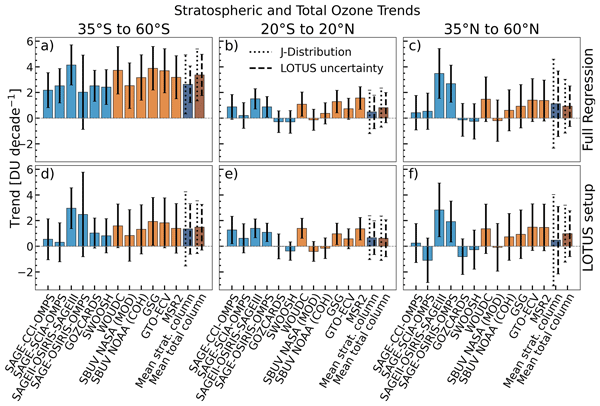
Brian Auffarth, Mark Weber, Alexei Rozanov, Carlo Arosio, John P. Burrows, Melanie Coldewey-Egbers, Sean M. Davis, Doug Degenstein, Kimberlee Dubé, Stacey M. Frith, Lucien Froidevaux, Diego Loyola, Vitali E. Fioletov, Viktoria Sofieva, Ronald van der A, and Jeannette D. Wild
Atmos. Chem. Phys., 26, 13359–13386, https://doi.org/10.5194/acp-26-13359-2026, https://doi.org/10.5194/acp-26-13359-2026, 2026
Short summary
Short summary
This study examines the trends of stratospheric and total ozone between 2000 and 2024, using long-term satellite datasets. Our results show positive trends in the upper stratosphere and a strong ozone recovery in the Southern Hemisphere, while changes in lower altitudes remain mostly small. The total and stratospheric trends show very similar results, indicating that tropospheric ozone contributes little to total column changes, while the stratospheric column is the dominant driver.
Kimberlee Dubé, William Randel, Adam Bourassa, Susann Tegtmeier, Xinyue Wang, Jun Zhang, Eilidh Hlady, Meghan Brehon, Sergey Khaykin, and Douglas Degenstein
EGUsphere, https://doi.org/10.5194/egusphere-2026-4022, https://doi.org/10.5194/egusphere-2026-4022, 2026
Short summary
Short summary
The Hunga volcanic eruption in January 2022 increased the total stratospheric water vapor (H2O) mass by 10 %. The study uses satellite observations and models to track the transport of the Hunga H2O. We find that there is substantially more H2O in the observations than the model during 2024 and 2025, suggesting that the modelled transport across the lower stratosphere is too fast. We also find evidence that some of the H2O that reaches the lower stratosphere is mixed back into the tropics.
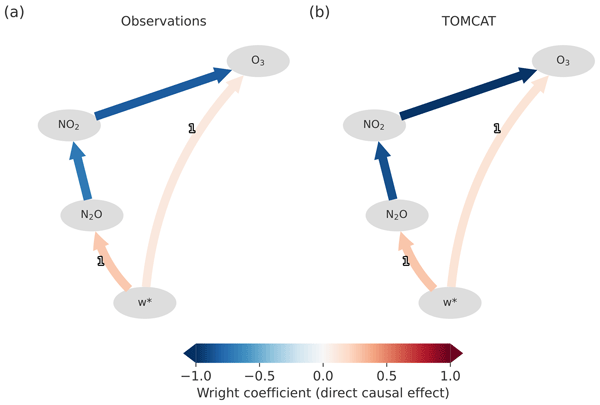
Evgenia Galytska, Birgit Hassler, Carlo Arosio, Martyn P. Chipperfield, Sandip S. Dhomse, Kimberlee Dubé, Wuhu Feng, Fernando Iglesias-Suarez, and Jakob Runge
Atmos. Chem. Phys., 26, 8185–8209, https://doi.org/10.5194/acp-26-8185-2026, https://doi.org/10.5194/acp-26-8185-2026, 2026
Short summary
Short summary
We explore how chemical and dynamical processes shape ozone in the tropical middle stratosphere using satellite data and a chemistry-transport model. We apply a framework to identify cause–effect relationships and estimate their strength. For 2004-2021 monthly data, we detect an indirect pathway controlling ozone variability, with effects increasing after two–three months. We further assess how different wind regimes influence this pathway.
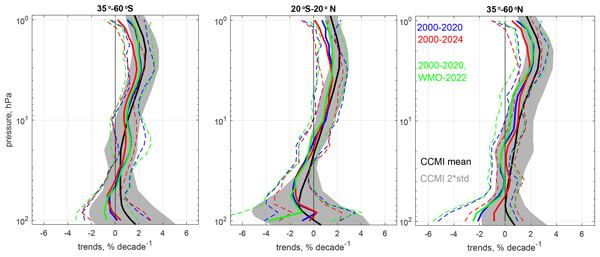
Viktoria F. Sofieva, Monika E. Szelag, Natalya A. Kramarova, Robert Damadeo, Wolfgang Steinbrecht, Irina Petropavlovskikh, Corinne Vigouroux, Eliane Maillard Barras, Daniel Zawada, Kleareti Tourpali, Stacey M. Frith, Jeannette D. Wild, Sean M. Davis, Carlo Arosio, Mark Weber, Alexei Rozanov, Brian Auffarth, Lucien Froidevaux, Ryan Fuller, Doug Degenstein, Kimberlee Dube, Peter Effertz, Thierry Leblanc, Gérard Ancellet, Sophie Godin-Beekmann, Glen McConville, Richard Querel, Dan Smale, Marie-Renee DeBacker, Emmanuel Mahieu, and Ralf Sussmann
Atmos. Chem. Phys., 26, 7387–7405, https://doi.org/10.5194/acp-26-7387-2026, https://doi.org/10.5194/acp-26-7387-2026, 2026
Short summary
Short summary
We present an updated evaluation of stratospheric ozone profile trends in the 60°S–60°N latitude range using long-term ground-based and satellite climate data records, as well as simulations by chemistry-climate models. Analyses confirm the statistically significant positive ozone trends in the upper stratosphere of ~1–3 % decade-1. The trends are close to zero in the middle stratosphere, and mostly negative in the lower stratosphere, but they are not statistically significant.
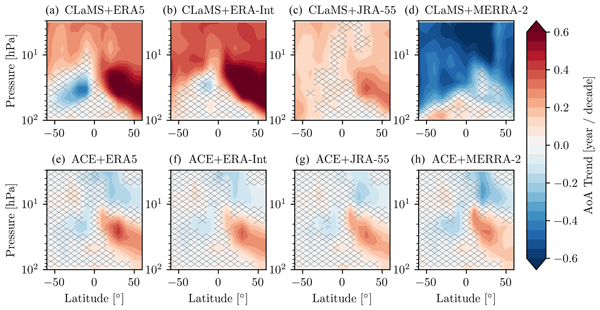
Kimberlee Dubé, Susann Tegtmeier, Felix Ploeger, and Kaley A. Walker
Atmos. Chem. Phys., 25, 1433–1447, https://doi.org/10.5194/acp-25-1433-2025, https://doi.org/10.5194/acp-25-1433-2025, 2025
Short summary
Short summary
The transport rate of air in the stratosphere has changed in response to human emissions of greenhouse gases and ozone-depleting substances. This transport rate can be approximated using measurements of long-lived trace gases. We use observations and model results to derive anomalies and trends in the mean rate of stratospheric air transport. We find that air in the Northern Hemisphere aged by up to 0.3 years per decade relative to air in the Southern Hemisphere over 2004–2017.
Kimberlee Dubé, Susann Tegtmeier, Adam Bourassa, Daniel Zawada, Douglas Degenstein, William Randel, Sean Davis, Michael Schwartz, Nathaniel Livesey, and Anne Smith
Atmos. Chem. Phys., 24, 12925–12941, https://doi.org/10.5194/acp-24-12925-2024, https://doi.org/10.5194/acp-24-12925-2024, 2024
Short summary
Short summary
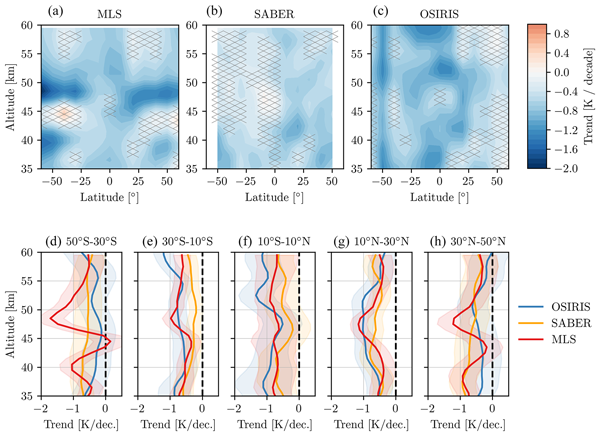
Greenhouse gas emissions that warm the troposphere also result in stratospheric cooling. The cooling rate is difficult to quantify above 35 km due to a deficit of long-term observational data with high vertical resolution in this region. We use satellite observations from several instruments, including a new temperature product from OSIRIS, to show that the upper stratosphere, from 35–60 km, cooled by 0.5 to 1 K per decade over 2005–2021 and by 0.6 K per decade over 1979–2021.
Daniel Zawada, Kimberlee Dubé, Taran Warnock, Adam Bourassa, Susann Tegtmeier, and Douglas Degenstein
Atmos. Meas. Tech., 17, 1995–2010, https://doi.org/10.5194/amt-17-1995-2024, https://doi.org/10.5194/amt-17-1995-2024, 2024
Short summary
Short summary
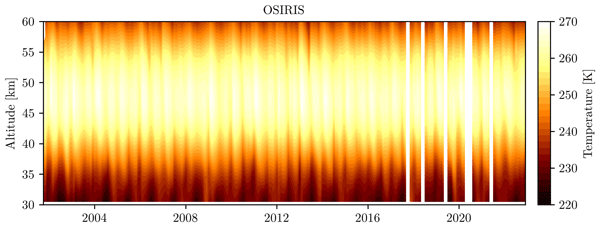
There remain large uncertainties in long-term changes of stratospheric–atmospheric temperatures. We have produced a time series of more than 20 years of satellite-based temperature measurements from the OSIRIS instrument in the upper–middle stratosphere. The dataset is publicly available and intended to be used for a better understanding of changes in stratospheric temperatures.
Kimberlee Dubé, Susann Tegtmeier, Adam Bourassa, Daniel Zawada, Douglas Degenstein, Patrick E. Sheese, Kaley A. Walker, and William Randel
Atmos. Chem. Phys., 23, 13283–13300, https://doi.org/10.5194/acp-23-13283-2023, https://doi.org/10.5194/acp-23-13283-2023, 2023
Short summary
Short summary
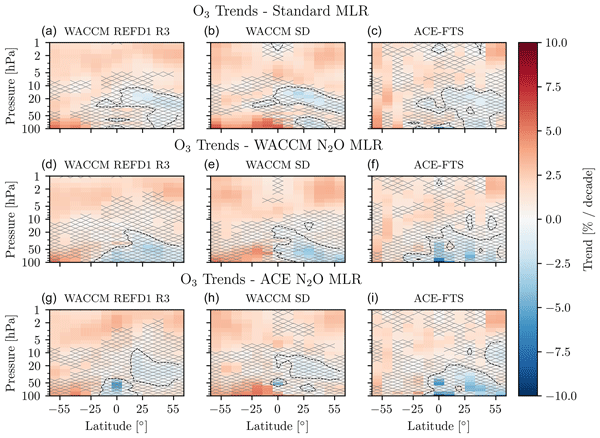
This paper presents a technique for understanding the causes of long-term changes in stratospheric composition. By using N2O as a proxy for stratospheric circulation in the model used to calculated trends, it is possible to separate the effects of dynamics and chemistry on observed trace gas trends. We find that observed HCl increases are due to changes in the stratospheric circulation, as are O3 decreases above 30 hPa in the Northern Hemisphere.
Kimberlee Dubé, Daniel Zawada, Adam Bourassa, Doug Degenstein, William Randel, David Flittner, Patrick Sheese, and Kaley Walker
Atmos. Meas. Tech., 15, 6163–6180, https://doi.org/10.5194/amt-15-6163-2022, https://doi.org/10.5194/amt-15-6163-2022, 2022
Short summary
Short summary
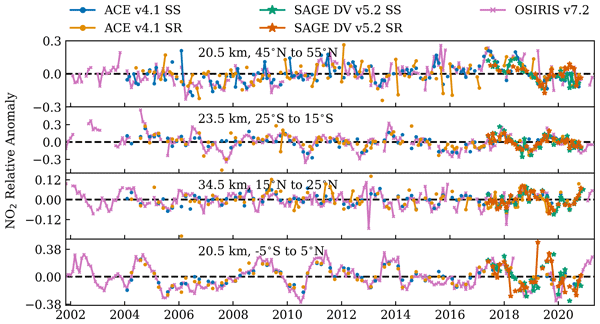
Satellite observations are important for monitoring changes in atmospheric composition. Here we describe an improved version of the NO2 retrieval for the Optical Spectrograph and InfraRed Imager System. The resulting NO2 profiles are compared to those from the Atmospheric Chemistry Experiment – Fourier Transform Spectrometer and the Stratospheric Aerosol and Gas Experiment III on the International Space Station. All datasets agree within 20 % throughout the stratosphere.
Brian Auffarth, Mark Weber, Alexei Rozanov, Carlo Arosio, John P. Burrows, Melanie Coldewey-Egbers, Sean M. Davis, Doug Degenstein, Kimberlee Dubé, Stacey M. Frith, Lucien Froidevaux, Diego Loyola, Vitali E. Fioletov, Viktoria Sofieva, Ronald van der A, and Jeannette D. Wild
Atmos. Chem. Phys., 26, 13359–13386, https://doi.org/10.5194/acp-26-13359-2026, https://doi.org/10.5194/acp-26-13359-2026, 2026
Short summary
Short summary
This study examines the trends of stratospheric and total ozone between 2000 and 2024, using long-term satellite datasets. Our results show positive trends in the upper stratosphere and a strong ozone recovery in the Southern Hemisphere, while changes in lower altitudes remain mostly small. The total and stratospheric trends show very similar results, indicating that tropospheric ozone contributes little to total column changes, while the stratospheric column is the dominant driver.
Florian Voet, Felix Ploeger, Johannes C. Laube, Laura N. Saunders, Patrick E. Sheese, Attahir Mainika, Peter Preusse, Jens-Uwe Grooß, Kaley A. Walker, Susann Tegtmeier, and Michaela Imelda Hegglin
EGUsphere, https://doi.org/10.5194/egusphere-2026-4647, https://doi.org/10.5194/egusphere-2026-4647, 2026
This preprint is open for discussion and under review for Atmospheric Chemistry and Physics (ACP).
Short summary
Short summary
We developed a better way to estimate how long air remains in the upper atmosphere, because satellite estimates can be too noisy to show long-term changes. Using measurements of several gases from a satellite, we found that combining them cuts uncertainty by about half and gives estimates with about 0.3 years of average uncertainty. Results for 2004–2021 show older air in the Northern Hemisphere and younger air in the tropics and Southern Hemisphere, suggesting slower circulation in the north.
Kimberlee Dubé, William Randel, Adam Bourassa, Susann Tegtmeier, Xinyue Wang, Jun Zhang, Eilidh Hlady, Meghan Brehon, Sergey Khaykin, and Douglas Degenstein
EGUsphere, https://doi.org/10.5194/egusphere-2026-4022, https://doi.org/10.5194/egusphere-2026-4022, 2026
Short summary
Short summary
The Hunga volcanic eruption in January 2022 increased the total stratospheric water vapor (H2O) mass by 10 %. The study uses satellite observations and models to track the transport of the Hunga H2O. We find that there is substantially more H2O in the observations than the model during 2024 and 2025, suggesting that the modelled transport across the lower stratosphere is too fast. We also find evidence that some of the H2O that reaches the lower stratosphere is mixed back into the tropics.
Matthias Kohl, Christoph Brühl, Holger Tost, Christos Xenofontos, Theodoros Christoudias, Sergey Gromov, Oliver Appel, Stephan Borrmann, Adam Bourassa, Pedro Campunzano-Jost, Yafang Cheng, Oliver Eppers, Karl D. Froyd, Bruna A. Holanda, Jose L. Jimenez, Patrick Jöckel, Philipp Joppe, Katharina Kaiser, Joseph M. Katich, Klaus Klingmüller, Franziska Köllner, Agnieszka Kupc, Anna Martin, Christopher Pöhlker, Mira L. Pöhlker, Ulrich Pöschl, Landon Rieger, Samuel Ruhl, Gregory P. Schill, Johannes Schneider, Christiane Schulz, Joshua P. Schwarz, Alexandra P. Tsimpidi, Ryan Vella, Christina J. Williamson, Yifan Yang, Daniel Zawada, Jos Lelieveld, and Andrea Pozzer
EGUsphere, https://doi.org/10.5194/egusphere-2026-3649, https://doi.org/10.5194/egusphere-2026-3649, 2026
Short summary
Short summary
Aerosols are crucial for Earth's climate, yet their vertical distribution remains poorly understood. We present first consistent global simulations of aerosol distributions and composition from the Earth's surface to the stratosphere, validated by extensive observations. Key findings include a global minimum in aerosol mass in the free troposphere, a significant contribution of organic aerosol in the lower stratosphere, and limited transport of primary particles to the stratosphere.
Evgenia Galytska, Birgit Hassler, Carlo Arosio, Martyn P. Chipperfield, Sandip S. Dhomse, Kimberlee Dubé, Wuhu Feng, Fernando Iglesias-Suarez, and Jakob Runge
Atmos. Chem. Phys., 26, 8185–8209, https://doi.org/10.5194/acp-26-8185-2026, https://doi.org/10.5194/acp-26-8185-2026, 2026
Short summary
Short summary
We explore how chemical and dynamical processes shape ozone in the tropical middle stratosphere using satellite data and a chemistry-transport model. We apply a framework to identify cause–effect relationships and estimate their strength. For 2004-2021 monthly data, we detect an indirect pathway controlling ozone variability, with effects increasing after two–three months. We further assess how different wind regimes influence this pathway.
Viktoria F. Sofieva, Monika E. Szelag, Natalya A. Kramarova, Robert Damadeo, Wolfgang Steinbrecht, Irina Petropavlovskikh, Corinne Vigouroux, Eliane Maillard Barras, Daniel Zawada, Kleareti Tourpali, Stacey M. Frith, Jeannette D. Wild, Sean M. Davis, Carlo Arosio, Mark Weber, Alexei Rozanov, Brian Auffarth, Lucien Froidevaux, Ryan Fuller, Doug Degenstein, Kimberlee Dube, Peter Effertz, Thierry Leblanc, Gérard Ancellet, Sophie Godin-Beekmann, Glen McConville, Richard Querel, Dan Smale, Marie-Renee DeBacker, Emmanuel Mahieu, and Ralf Sussmann
Atmos. Chem. Phys., 26, 7387–7405, https://doi.org/10.5194/acp-26-7387-2026, https://doi.org/10.5194/acp-26-7387-2026, 2026
Short summary
Short summary
We present an updated evaluation of stratospheric ozone profile trends in the 60°S–60°N latitude range using long-term ground-based and satellite climate data records, as well as simulations by chemistry-climate models. Analyses confirm the statistically significant positive ozone trends in the upper stratosphere of ~1–3 % decade-1. The trends are close to zero in the middle stratosphere, and mostly negative in the lower stratosphere, but they are not statistically significant.
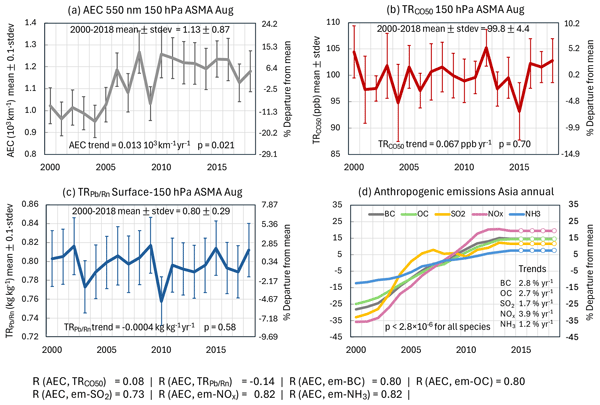
Mian Chin, Jonathon S. Wright, Huisheng Bian, Qian Tan, Xiaohua Pan, Toshihiko Takemura, Hitoshi Matsui, Kostas Tsigaridis, Susanne Bauer, Paul Ginoux, Yiran Peng, Zengyuan Guo, Suvarna Fadnavis, Anton Laakso, John P. Burrows, Ghassan Taha, Jayanta Kar, Alexei Rozanov, Carlo Arosio, Landon Rieger, and Adam Bourassa
Atmos. Chem. Phys., 26, 6035–6059, https://doi.org/10.5194/acp-26-6035-2026, https://doi.org/10.5194/acp-26-6035-2026, 2026
Short summary
Short summary
Aerosols in the upper troposphere influence weather and climate. The Asian summer monsoon efficiently transports surface pollutants upward, shaping aerosol amounts and variability in the upper troposphere. Using multiple global models, this study finds a summertime increase in upper-tropospheric aerosols at 1.2 % per year from 2000 to 2018 over Asia, consistent with rising pollutant emissions in Asia, while year-to-year changes are mainly driven by climate variability affecting monsoon dynamics.
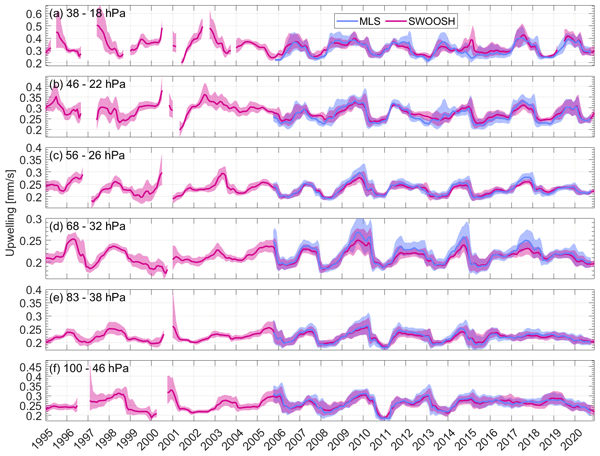
Meghan Brehon, Susann Tegtmeier, Adam Bourassa, Sean M. Davis, Udo Grabowski, Tobias Kerzenmacher, and Gabriele Stiller
Atmos. Chem. Phys., 26, 3743–3764, https://doi.org/10.5194/acp-26-3743-2026, https://doi.org/10.5194/acp-26-3743-2026, 2026
Short summary
Short summary
We used observations of water vapour to estimate vertical transport rates in the tropical stratosphere for 1995-2020 and analyze stratospheric variability. Our results find good agreement between our observation-based estimates and reanalysis upwelling and reveal that the variability is mainly driven by the Quasi-Biennial Oscillation (QBO) and El Niño Southern Oscillation (ENSO) with a clear signal in the upwelling time series coinciding with the recent QBO disruptions of 2015/16 and 2019/20.
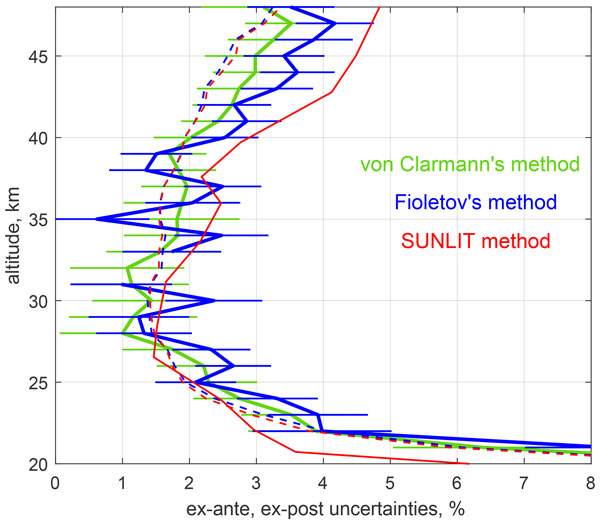
Viktoria F. Sofieva, Alexandra Laeng, Thomas von Clarmann, Gabriele Stiller, Michael Kiefer, Johanna Tamminen, Alexey Rozanov, Carlo Arosio, Nathaniel Livesey, Robert Damadeo, Patrick Sheese, Kaley A. Walker, Doug Degenstein, Daniel Zawada, Natalya A. Kramarova, and Arno Keppens
Atmos. Meas. Tech., 19, 1837–1852, https://doi.org/10.5194/amt-19-1837-2026, https://doi.org/10.5194/amt-19-1837-2026, 2026
Short summary
Short summary
For satellite measurements of atmospheric composition, the random uncertainty estimates provided by retrieval algorithms might be imperfect due to various approximations used in the retrievals or presence of unknown error sources. This paper presents an overview of the methods used for validation of random uncertainty estimates. All methods discussed in this study are categorized, and assumptions and limitations of each method are discussed.

Clair Duchamp, Bernard Legras, Aurélien Podglajen, Pasquale Sellitto, Adam E. Bourassa, Alexei Rozanov, Ghassan Taha, and Daniel J. Zawada
Atmos. Meas. Tech., 19, 1675–1696, https://doi.org/10.5194/amt-19-1675-2026, https://doi.org/10.5194/amt-19-1675-2026, 2026
Short summary
Short summary
We analyzed the stratospheric aerosol plume from the 2022 Hunga eruption using satellite lidar data. We implemented a method to retrieve some aerosol properties, as standard products failed in this case. We found very high optical depth values in the days following the eruption, which decreased rapidly but remained elevated for months. Our results are broadly validated, though some satellite products underestimate the values due, in part, to the unusual aerosol size distribution in the plume.
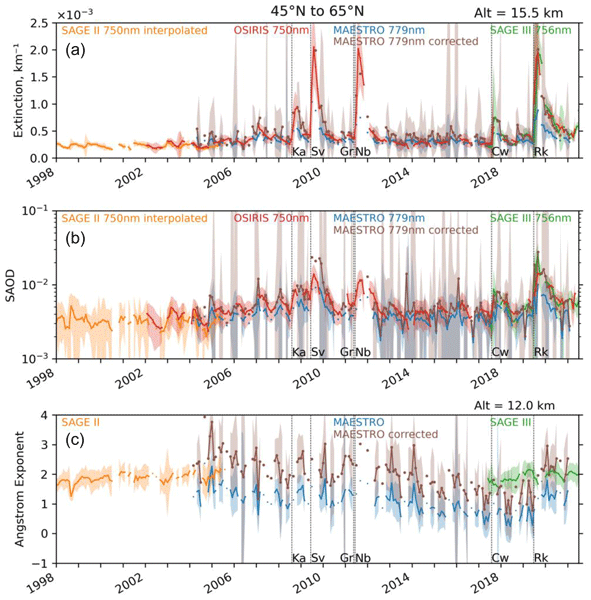
Sujan Khanal, Matthew Toohey, Adam Bourassa, C. Thomas McElroy, Christopher Sioris, and Kaley A. Walker
Atmos. Meas. Tech., 18, 6835–6852, https://doi.org/10.5194/amt-18-6835-2025, https://doi.org/10.5194/amt-18-6835-2025, 2025
Short summary
Short summary
Measurements of stratospheric aerosol from the Measurement of Aerosol Extinction in the Stratosphere and Troposphere Retrieved by Occultation (MAESTRO) instrument are compared to other measurements to assess their scientific value. We find that medians of MAESTRO measurements binned by month and latitude show reasonable correlation with other data sets, with notable increases after volcanic eruptions, and that biases in the data can be alleviated through a simple correction technique. Used with care, MAESTRO aerosol measurements provide information that can complement other data sets.
Daniel Letros, Liam Graham, Adam Bourassa, Doug Degenstein, Paul Loewen, Landon Rieger, and Nick Lloyd
Atmos. Meas. Tech., 18, 6185–6210, https://doi.org/10.5194/amt-18-6185-2025, https://doi.org/10.5194/amt-18-6185-2025, 2025
Short summary
Short summary
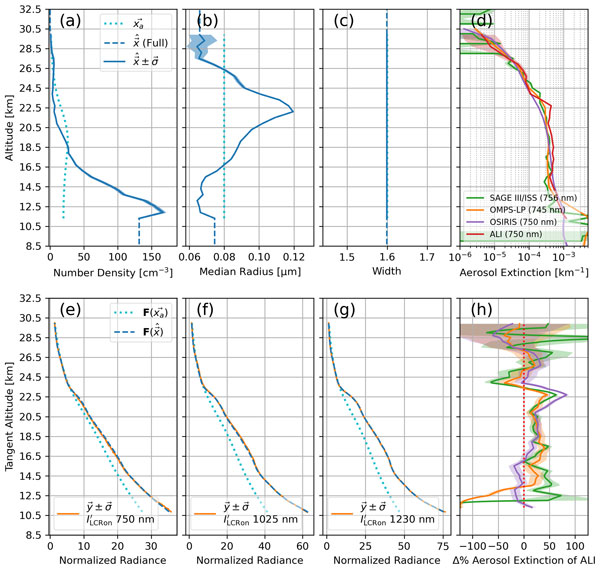
The Aerosol Limb Imager (ALI) is an optical instrument which measures stratospheric aerosols. These aerosols are of interest to atmospheric science as they have a significant impact on the Earth's climate. ALI has the ability to measure the polarization of atmospheric light over a wide spectral range, which is a novel ability for the measurement ALI uses. We demonstrate and discuss ALI capability and how the polarized information may improve aerosol information for this type of measurement.
Zhihong Zhuo, Xinyue Wang, Yunqian Zhu, Wandi Yu, Ewa M. Bednarz, Eric Fleming, Peter R. Colarco, Shingo Watanabe, David Plummer, Georgiy Stenchikov, William Randel, Adam Bourassa, Valentina Aquila, Takashi Sekiya, Mark R. Schoeberl, Simone Tilmes, Jun Zhang, Paul J. Kushner, and Francesco S. R. Pausata
Atmos. Chem. Phys., 25, 13161–13176, https://doi.org/10.5194/acp-25-13161-2025, https://doi.org/10.5194/acp-25-13161-2025, 2025
Short summary
Short summary
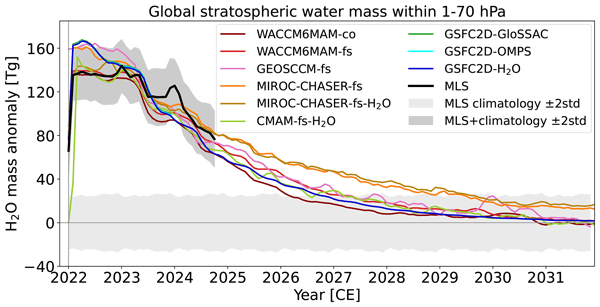
The 2022 Hunga eruption caused unprecedented stratospheric water injection, triggering unique atmospheric impacts. This study combines observations and model simulations, projecting a stratospheric water vapor anomaly lasting 4–7 years, with significant temperature variations and ozone depletion in the upper atmosphere lasting 7–10 years. These findings offer critical insights into the role of stratospheric water vapor in shaping climate and atmospheric chemistry.
Mona Zolghadrshojaee, Susann Tegtmeier, Sean M. Davis, Robin Pilch Kedzierski, and Leopold Haimberger
Atmos. Chem. Phys., 25, 12213–12232, https://doi.org/10.5194/acp-25-12213-2025, https://doi.org/10.5194/acp-25-12213-2025, 2025
Short summary
Short summary
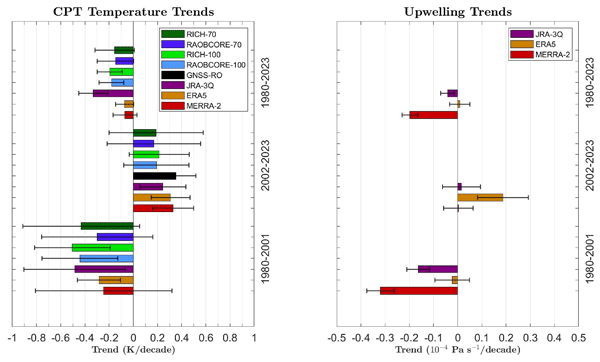
The tropical tropopause layer (TTL) is a crucial region where the troposphere transitions into the stratosphere, influencing air mass transport. This study examines temperature trends in the TTL and lower stratosphere using data from weather balloons, satellites and reanalysis datasets. We found cooling trends in the TTL from 1980 to 2001, followed by warming from 2002 to 2023. These shifts are linked to changes in atmospheric circulation and impact water vapour transport into the stratosphere.
Björn Linder, Jörg Gumbel, Donal P. Murtagh, Linda Megner, Lukas Krasauskas, Doug Degenstein, Ole Martin Christensen, and Nickolay Ivchenko
Atmos. Meas. Tech., 18, 4453–4466, https://doi.org/10.5194/amt-18-4453-2025, https://doi.org/10.5194/amt-18-4453-2025, 2025
Short summary
Short summary
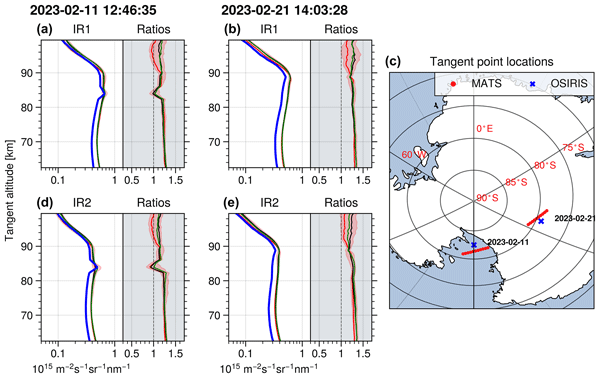
In this study, the primary instrument carried by the satellite MATS is compared to the OSIRIS instrument on board the Odin satellite. A total of 36 close approaches between December 2022 and February 2023 were identified and analysed. The comparison reveals that the two instruments have good structural agreement and that MATS detects a signal that is ~20 % stronger than what is measured by OSIRIS.
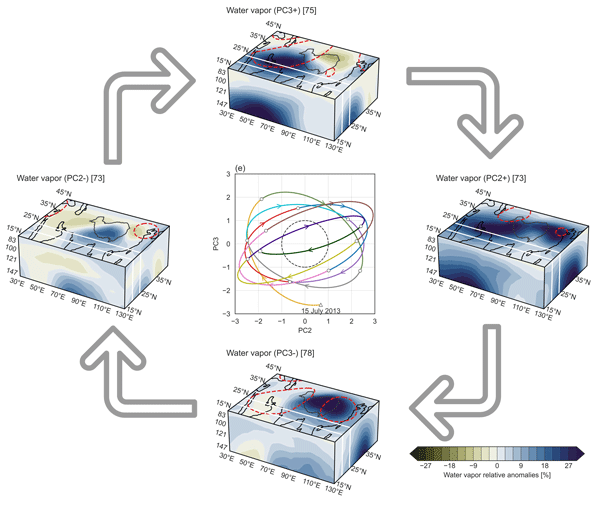
Shenglong Zhang, Jiao Chen, Jonathon S. Wright, Sean M. Davis, Jie Gao, Paul Konopka, Ninghui Li, Mengqian Lu, Susann Tegtmeier, Xiaolu Yan, Guang J. Zhang, and Nuanliang Zhu
Atmos. Chem. Phys., 25, 10109–10139, https://doi.org/10.5194/acp-25-10109-2025, https://doi.org/10.5194/acp-25-10109-2025, 2025
Short summary
Short summary
Swirling above summer storms, the Asian monsoon anticyclone functions as both gateway and gatekeeper to moisture entering the stratosphere. Although well monitored from space since 2005, many details of the anticyclone and the air that flows through it remain mysterious. Reanalyses, which combine model output and observations, may help to address how and why but only if they reliably capture the what and where of water vapor variations. Current reanalyses are beginning to meet these criteria.
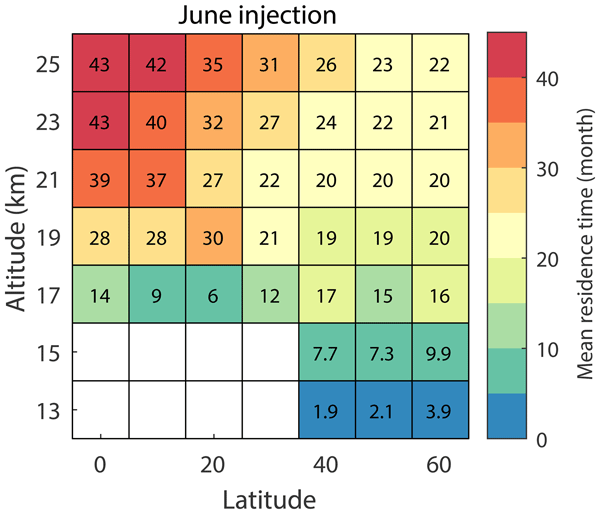
Matthew Toohey, Yue Jia, Sujan Khanal, and Susann Tegtmeier
Atmos. Chem. Phys., 25, 3821–3839, https://doi.org/10.5194/acp-25-3821-2025, https://doi.org/10.5194/acp-25-3821-2025, 2025
Short summary
Short summary
The climate impact of volcanic eruptions depends in part on how long aerosols spend in the stratosphere. We develop a conceptual model for stratospheric aerosol lifetime in terms of production and decay timescales, as well as a lag between injection and decay. We find residence time depends strongly on injection height in the lower stratosphere. We show that the lifetime of stratospheric aerosol from the 1991 Pinatubo eruption is around 22 months, significantly longer than is commonly reported.
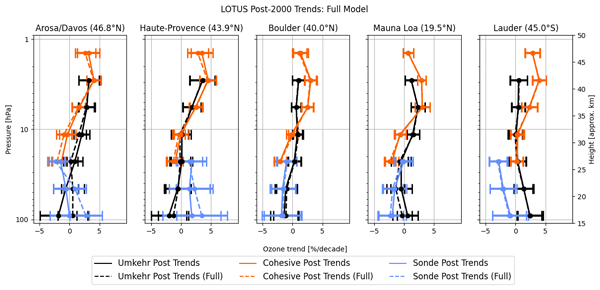
Irina Petropavlovskikh, Jeannette D. Wild, Kari Abromitis, Peter Effertz, Koji Miyagawa, Lawrence E. Flynn, Eliane Maillard Barras, Robert Damadeo, Glen McConville, Bryan Johnson, Patrick Cullis, Sophie Godin-Beekmann, Gerard Ancellet, Richard Querel, Roeland Van Malderen, and Daniel Zawada
Atmos. Chem. Phys., 25, 2895–2936, https://doi.org/10.5194/acp-25-2895-2025, https://doi.org/10.5194/acp-25-2895-2025, 2025
Short summary
Short summary
Observational records show that stratospheric ozone is recovering in accordance with the implementation of the Montreal Protocol and its amendments. Natural ozone variability complicates the detection of small trends. This study optimizes a statistical model fit in ground-station-based observational records by adding parameters that interpret seasonal and long-term changes in atmospheric circulation and airmass mixing, which reduces uncertainties in detecting the stratospheric ozone recovery.
Kimberlee Dubé, Susann Tegtmeier, Felix Ploeger, and Kaley A. Walker
Atmos. Chem. Phys., 25, 1433–1447, https://doi.org/10.5194/acp-25-1433-2025, https://doi.org/10.5194/acp-25-1433-2025, 2025
Short summary
Short summary
The transport rate of air in the stratosphere has changed in response to human emissions of greenhouse gases and ozone-depleting substances. This transport rate can be approximated using measurements of long-lived trace gases. We use observations and model results to derive anomalies and trends in the mean rate of stratospheric air transport. We find that air in the Northern Hemisphere aged by up to 0.3 years per decade relative to air in the Southern Hemisphere over 2004–2017.
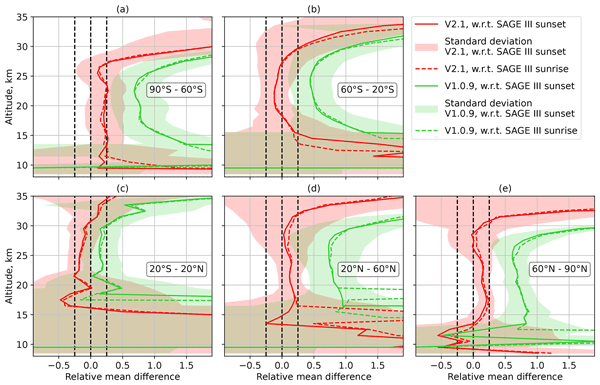
Alexei Rozanov, Christine Pohl, Carlo Arosio, Adam Bourassa, Klaus Bramstedt, Elizaveta Malinina, Landon Rieger, and John P. Burrows
Atmos. Meas. Tech., 17, 6677–6695, https://doi.org/10.5194/amt-17-6677-2024, https://doi.org/10.5194/amt-17-6677-2024, 2024
Short summary
Short summary
We developed a new algorithm to retrieve vertical distributions of aerosol extinction coefficients in the stratosphere. The algorithm is applied to measurements of scattered solar light from the spaceborne OMPS-LP (Ozone Mapper and Profiler Suite Limb Profiler) instrument. The retrieval results are compared to data from other spaceborne instruments and used to investigate the evolution of the aerosol plume following the eruption of the Hunga Tonga–Hunga Ha'apai volcano in January 2022.
Kimberlee Dubé, Susann Tegtmeier, Adam Bourassa, Daniel Zawada, Douglas Degenstein, William Randel, Sean Davis, Michael Schwartz, Nathaniel Livesey, and Anne Smith
Atmos. Chem. Phys., 24, 12925–12941, https://doi.org/10.5194/acp-24-12925-2024, https://doi.org/10.5194/acp-24-12925-2024, 2024
Short summary
Short summary
Greenhouse gas emissions that warm the troposphere also result in stratospheric cooling. The cooling rate is difficult to quantify above 35 km due to a deficit of long-term observational data with high vertical resolution in this region. We use satellite observations from several instruments, including a new temperature product from OSIRIS, to show that the upper stratosphere, from 35–60 km, cooled by 0.5 to 1 K per decade over 2005–2021 and by 0.6 K per decade over 1979–2021.
Viktoria F. Sofieva, Alexei Rozanov, Monika Szelag, John P. Burrows, Christian Retscher, Robert Damadeo, Doug Degenstein, Landon A. Rieger, and Adam Bourassa
Earth Syst. Sci. Data, 16, 5227–5241, https://doi.org/10.5194/essd-16-5227-2024, https://doi.org/10.5194/essd-16-5227-2024, 2024
Short summary
Short summary
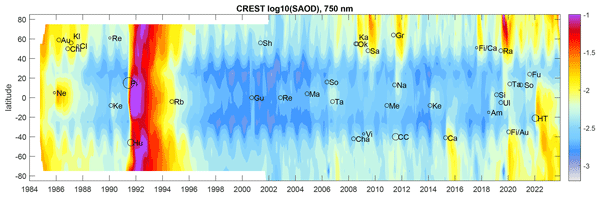
Climate-related studies need information about the distribution of stratospheric aerosols, which influence the energy balance of the Earth’s atmosphere. In this work, we present a merged dataset of vertically resolved stratospheric aerosol extinction coefficients, which is derived from data of six limb and occultation satellite instruments. The created aerosol climate record covers the period from October 1984 to December 2023. It can be used in various climate-related studies.
Christine Pohl, Felix Wrana, Alexei Rozanov, Terry Deshler, Elizaveta Malinina, Christian von Savigny, Landon A. Rieger, Adam E. Bourassa, and John P. Burrows
Atmos. Meas. Tech., 17, 4153–4181, https://doi.org/10.5194/amt-17-4153-2024, https://doi.org/10.5194/amt-17-4153-2024, 2024
Short summary
Short summary
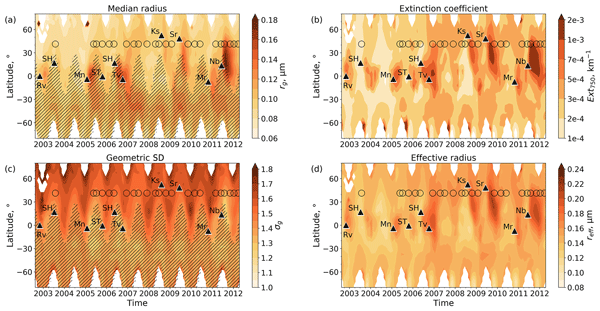
Knowledge of stratospheric aerosol characteristics is important for understanding chemical and climate aerosol feedbacks. Two particle size distribution parameters, the aerosol extinction coefficient and the effective radius, are obtained from SCIAMACHY limb observations. The aerosol characteristics show good agreement with independent data sets from balloon-borne and satellite observations. This data set expands the limited knowledge of stratospheric aerosol characteristics.
Mona Zolghadrshojaee, Susann Tegtmeier, Sean M. Davis, and Robin Pilch Kedzierski
Atmos. Chem. Phys., 24, 7405–7419, https://doi.org/10.5194/acp-24-7405-2024, https://doi.org/10.5194/acp-24-7405-2024, 2024
Short summary
Short summary
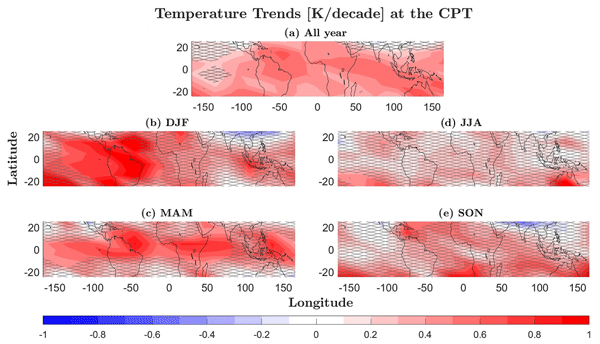
Satellite data challenge the idea of an overall cooling trend in the tropical tropopause layer. From 2002 to 2022, a warming trend was observed, diverging from earlier findings. Tropopause height changes indicate dynamic processes alongside radiative effects. Upper-tropospheric warming contrasts with lower-stratosphere temperatures. The study highlights the complex interplay of factors shaping temperature trends.
Bjorn Stevens, Stefan Adami, Tariq Ali, Hartwig Anzt, Zafer Aslan, Sabine Attinger, Jaana Bäck, Johanna Baehr, Peter Bauer, Natacha Bernier, Bob Bishop, Hendryk Bockelmann, Sandrine Bony, Guy Brasseur, David N. Bresch, Sean Breyer, Gilbert Brunet, Pier Luigi Buttigieg, Junji Cao, Christelle Castet, Yafang Cheng, Ayantika Dey Choudhury, Deborah Coen, Susanne Crewell, Atish Dabholkar, Qing Dai, Francisco Doblas-Reyes, Dale Durran, Ayoub El Gaidi, Charlie Ewen, Eleftheria Exarchou, Veronika Eyring, Florencia Falkinhoff, David Farrell, Piers M. Forster, Ariane Frassoni, Claudia Frauen, Oliver Fuhrer, Shahzad Gani, Edwin Gerber, Debra Goldfarb, Jens Grieger, Nicolas Gruber, Wilco Hazeleger, Rolf Herken, Chris Hewitt, Torsten Hoefler, Huang-Hsiung Hsu, Daniela Jacob, Alexandra Jahn, Christian Jakob, Thomas Jung, Christopher Kadow, In-Sik Kang, Sarah Kang, Karthik Kashinath, Katharina Kleinen-von Königslöw, Daniel Klocke, Uta Kloenne, Milan Klöwer, Chihiro Kodama, Stefan Kollet, Tobias Kölling, Jenni Kontkanen, Steve Kopp, Michal Koran, Markku Kulmala, Hanna Lappalainen, Fakhria Latifi, Bryan Lawrence, June Yi Lee, Quentin Lejeun, Christian Lessig, Chao Li, Thomas Lippert, Jürg Luterbacher, Pekka Manninen, Jochem Marotzke, Satoshi Matsouoka, Charlotte Merchant, Peter Messmer, Gero Michel, Kristel Michielsen, Tomoki Miyakawa, Jens Müller, Ramsha Munir, Sandeep Narayanasetti, Ousmane Ndiaye, Carlos Nobre, Achim Oberg, Riko Oki, Tuba Özkan-Haller, Tim Palmer, Stan Posey, Andreas Prein, Odessa Primus, Mike Pritchard, Julie Pullen, Dian Putrasahan, Johannes Quaas, Krishnan Raghavan, Venkatachalam Ramaswamy, Markus Rapp, Florian Rauser, Markus Reichstein, Aromar Revi, Sonakshi Saluja, Masaki Satoh, Vera Schemann, Sebastian Schemm, Christina Schnadt Poberaj, Thomas Schulthess, Cath Senior, Jagadish Shukla, Manmeet Singh, Julia Slingo, Adam Sobel, Silvina Solman, Jenna Spitzer, Philip Stier, Thomas Stocker, Sarah Strock, Hang Su, Petteri Taalas, John Taylor, Susann Tegtmeier, Georg Teutsch, Adrian Tompkins, Uwe Ulbrich, Pier-Luigi Vidale, Chien-Ming Wu, Hao Xu, Najibullah Zaki, Laure Zanna, Tianjun Zhou, and Florian Ziemen
Earth Syst. Sci. Data, 16, 2113–2122, https://doi.org/10.5194/essd-16-2113-2024, https://doi.org/10.5194/essd-16-2113-2024, 2024
Short summary
Short summary
To manage Earth in the Anthropocene, new tools, new institutions, and new forms of international cooperation will be required. Earth Virtualization Engines is proposed as an international federation of centers of excellence to empower all people to respond to the immense and urgent challenges posed by climate change.
Daniel Zawada, Kimberlee Dubé, Taran Warnock, Adam Bourassa, Susann Tegtmeier, and Douglas Degenstein
Atmos. Meas. Tech., 17, 1995–2010, https://doi.org/10.5194/amt-17-1995-2024, https://doi.org/10.5194/amt-17-1995-2024, 2024
Short summary
Short summary
There remain large uncertainties in long-term changes of stratospheric–atmospheric temperatures. We have produced a time series of more than 20 years of satellite-based temperature measurements from the OSIRIS instrument in the upper–middle stratosphere. The dataset is publicly available and intended to be used for a better understanding of changes in stratospheric temperatures.
Lukas Fehr, Chris McLinden, Debora Griffin, Daniel Zawada, Doug Degenstein, and Adam Bourassa
Geosci. Model Dev., 16, 7491–7507, https://doi.org/10.5194/gmd-16-7491-2023, https://doi.org/10.5194/gmd-16-7491-2023, 2023
Short summary
Short summary
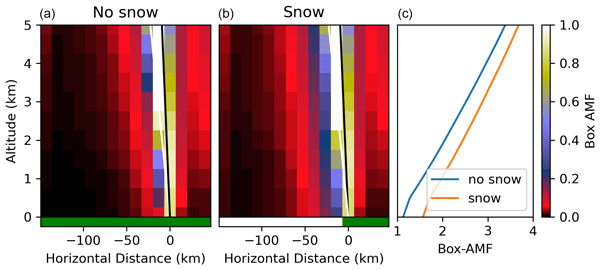
This work highlights upgrades to SASKTRAN, a model that simulates sunlight interacting with the atmosphere to help measure trace gases. The upgrades were verified by detailed comparisons between different numerical methods. A case study was performed using SASKTRAN’s multidimensional capabilities, which found that ignoring horizontal variation in the atmosphere (a common practice in the field) can introduce non-negligible errors where there is snow or high pollution.
Kimberlee Dubé, Susann Tegtmeier, Adam Bourassa, Daniel Zawada, Douglas Degenstein, Patrick E. Sheese, Kaley A. Walker, and William Randel
Atmos. Chem. Phys., 23, 13283–13300, https://doi.org/10.5194/acp-23-13283-2023, https://doi.org/10.5194/acp-23-13283-2023, 2023
Short summary
Short summary
This paper presents a technique for understanding the causes of long-term changes in stratospheric composition. By using N2O as a proxy for stratospheric circulation in the model used to calculated trends, it is possible to separate the effects of dynamics and chemistry on observed trace gas trends. We find that observed HCl increases are due to changes in the stratospheric circulation, as are O3 decreases above 30 hPa in the Northern Hemisphere.
Ethan Runge, Jeff Langille, Daniel Zawada, Adam Bourassa, and Doug Degenstein
Atmos. Meas. Tech., 16, 3123–3139, https://doi.org/10.5194/amt-16-3123-2023, https://doi.org/10.5194/amt-16-3123-2023, 2023
Short summary
Short summary
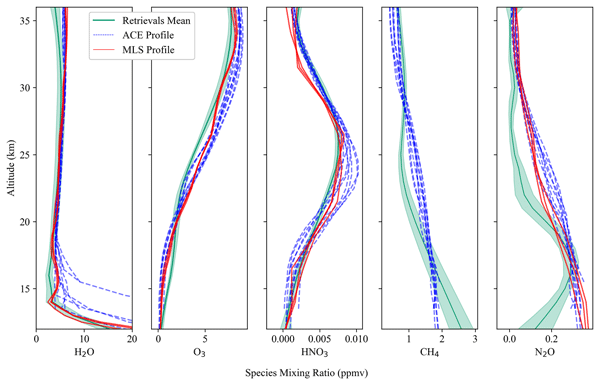
The Limb Imaging Fourier Transform Spectrometer Experiment (LIFE) instrument takes vertical images of limb radiance across a wide mid-infrared spectral band from a stratospheric balloon. Measurements are used to infer vertical-trace-gas-profile retrievals of H2O, O3, HNO3, CH4, and N2O. Nearly time-/space-coincident observations from the Atmospheric Chemistry Experiment Fourier Transform Spectrometer (ACE-FTS) and Microwave Limb Sounder (MLS) instruments are compared to the LIFE results.
Viktoria F. Sofieva, Monika Szelag, Johanna Tamminen, Carlo Arosio, Alexei Rozanov, Mark Weber, Doug Degenstein, Adam Bourassa, Daniel Zawada, Michael Kiefer, Alexandra Laeng, Kaley A. Walker, Patrick Sheese, Daan Hubert, Michel van Roozendael, Christian Retscher, Robert Damadeo, and Jerry D. Lumpe
Atmos. Meas. Tech., 16, 1881–1899, https://doi.org/10.5194/amt-16-1881-2023, https://doi.org/10.5194/amt-16-1881-2023, 2023
Short summary
Short summary
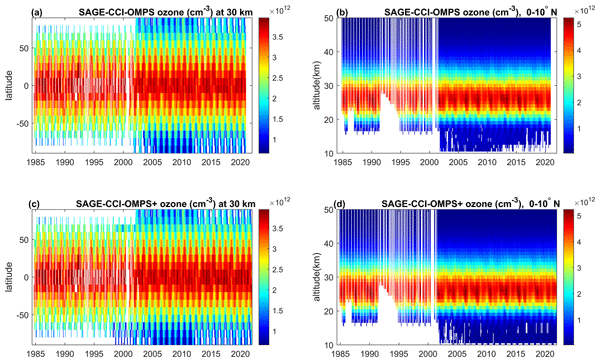
The paper presents the updated SAGE-CCI-OMPS+ climate data record of monthly zonal mean ozone profiles. This dataset covers the stratosphere and combines measurements by nine limb and occultation satellite instruments (SAGE II, OSIRIS, MIPAS, SCIAMACHY, GOMOS, ACE-FTS, OMPS-LP, POAM III, and SAGE III/ISS). The update includes new versions of MIPAS, ACE-FTS, and OSIRIS datasets and introduces data from additional sensors (POAM III and SAGE III/ISS) and retrieval processors (OMPS-LP).
Yi Wang, Mark Schoeberl, Ghassan Taha, Daniel Zawada, and Adam Bourassa
Atmos. Meas. Tech. Discuss., https://doi.org/10.5194/amt-2023-36, https://doi.org/10.5194/amt-2023-36, 2023
Revised manuscript not accepted
Short summary
Short summary
The OMPS-LP satellite instrument measures aerosol scattering properties across the atmospheric limb. Adopting an algorithm that uses extinction at two wavelengths, we retrieve vertical profiles of particle size and concentration. We demonstrate that these profiles are consistent with in-situ balloon and SAGE-III/ISS satellite measurements. We also show how aerosol size and concentration evolve during Reikoke and Hunga Tonga-Hunga Ha'apai eruptions.

Paul S. Jeffery, Kaley A. Walker, Chris E. Sioris, Chris D. Boone, Doug Degenstein, Gloria L. Manney, C. Thomas McElroy, Luis Millán, David A. Plummer, Niall J. Ryan, Patrick E. Sheese, and Jiansheng Zou
Atmos. Chem. Phys., 22, 14709–14734, https://doi.org/10.5194/acp-22-14709-2022, https://doi.org/10.5194/acp-22-14709-2022, 2022
Short summary
Short summary
The upper troposphere–lower stratosphere is one of the most variable regions in the atmosphere. To improve our understanding of water vapour and ozone concentrations in this region, climatologies have been developed from 14 years of measurements from three Canadian satellite instruments. Horizontal and vertical coordinates have been chosen to minimize the effects of variability. To aid in analysis, model simulations have been used to characterize differences between instrument climatologies.
Kimberlee Dubé, Daniel Zawada, Adam Bourassa, Doug Degenstein, William Randel, David Flittner, Patrick Sheese, and Kaley Walker
Atmos. Meas. Tech., 15, 6163–6180, https://doi.org/10.5194/amt-15-6163-2022, https://doi.org/10.5194/amt-15-6163-2022, 2022
Short summary
Short summary
Satellite observations are important for monitoring changes in atmospheric composition. Here we describe an improved version of the NO2 retrieval for the Optical Spectrograph and InfraRed Imager System. The resulting NO2 profiles are compared to those from the Atmospheric Chemistry Experiment – Fourier Transform Spectrometer and the Stratospheric Aerosol and Gas Experiment III on the International Space Station. All datasets agree within 20 % throughout the stratosphere.
Sophie Godin-Beekmann, Niramson Azouz, Viktoria F. Sofieva, Daan Hubert, Irina Petropavlovskikh, Peter Effertz, Gérard Ancellet, Doug A. Degenstein, Daniel Zawada, Lucien Froidevaux, Stacey Frith, Jeannette Wild, Sean Davis, Wolfgang Steinbrecht, Thierry Leblanc, Richard Querel, Kleareti Tourpali, Robert Damadeo, Eliane Maillard Barras, René Stübi, Corinne Vigouroux, Carlo Arosio, Gerald Nedoluha, Ian Boyd, Roeland Van Malderen, Emmanuel Mahieu, Dan Smale, and Ralf Sussmann
Atmos. Chem. Phys., 22, 11657–11673, https://doi.org/10.5194/acp-22-11657-2022, https://doi.org/10.5194/acp-22-11657-2022, 2022
Short summary
Short summary
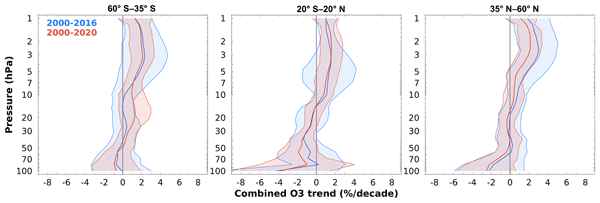
An updated evaluation up to 2020 of stratospheric ozone profile long-term trends at extrapolar latitudes based on satellite and ground-based records is presented. Ozone increase in the upper stratosphere is confirmed, with significant trends at most latitudes. In this altitude region, a very good agreement is found with trends derived from chemistry–climate model simulations. Observed and modelled trends diverge in the lower stratosphere, but the differences are non-significant.
Kristof Bognar, Susann Tegtmeier, Adam Bourassa, Chris Roth, Taran Warnock, Daniel Zawada, and Doug Degenstein
Atmos. Chem. Phys., 22, 9553–9569, https://doi.org/10.5194/acp-22-9553-2022, https://doi.org/10.5194/acp-22-9553-2022, 2022
Short summary
Short summary
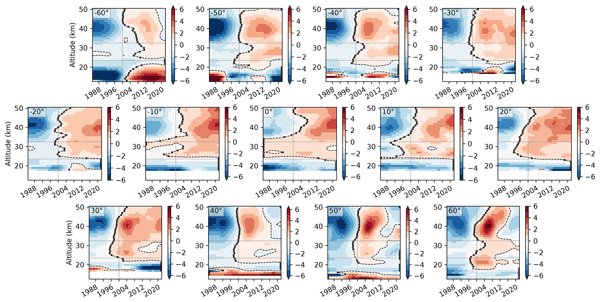
We quantify recent changes in stratospheric ozone (outside the polar regions) using a combination of three satellite datasets. We find that upper stratospheric ozone have increased significantly since 2000, although the recovery shows an unexpected pause in the Northern Hemisphere. Combined with the likely decrease in ozone in the lower stratosphere, this presents an interesting challenge for predicting the future of the ozone layer.
Yue Jia, Birgit Quack, Robert D. Kinley, Ignacio Pisso, and Susann Tegtmeier
Atmos. Chem. Phys., 22, 7631–7646, https://doi.org/10.5194/acp-22-7631-2022, https://doi.org/10.5194/acp-22-7631-2022, 2022
Short summary
Short summary
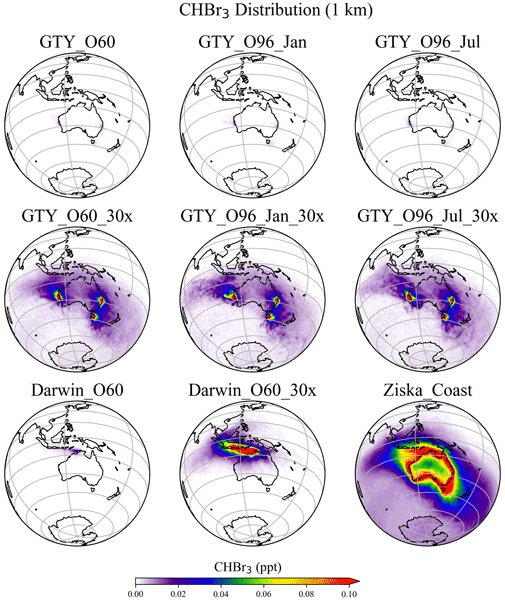
In this study, we assessed the potential risks of bromoform released from Asparagopsis farming near Australia for the stratospheric ozone layer by analyzing different cultivation scenarios. We conclude that the intended operation of Asparagopsis seaweed cultivation farms with an annual yield to meet the needs of 50 % of feedlots and cattle in either open-ocean or terrestrial cultures in Australia will not impact the ozone layer under normal operating conditions.
Susann Tegtmeier, Christa Marandino, Yue Jia, Birgit Quack, and Anoop S. Mahajan
Atmos. Chem. Phys., 22, 6625–6676, https://doi.org/10.5194/acp-22-6625-2022, https://doi.org/10.5194/acp-22-6625-2022, 2022
Short summary
Short summary
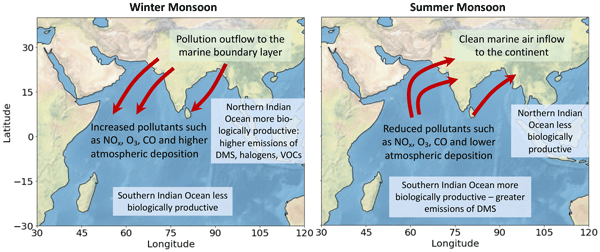
In the atmosphere over the Indian Ocean, intense anthropogenic pollution from Southeast Asia mixes with pristine oceanic air. During the winter monsoon, high pollution levels are regularly observed over the entire northern Indian Ocean, while during the summer monsoon, clean air dominates. Here, we review current progress in detecting and understanding atmospheric gas-phase composition over the Indian Ocean and its impacts on the upper atmosphere, oceanic biogeochemistry, and marine ecosystems.
Julia Koch, Adam Bourassa, Nick Lloyd, Chris Roth, and Christian von Savigny
Atmos. Chem. Phys., 22, 3191–3202, https://doi.org/10.5194/acp-22-3191-2022, https://doi.org/10.5194/acp-22-3191-2022, 2022
Short summary
Short summary
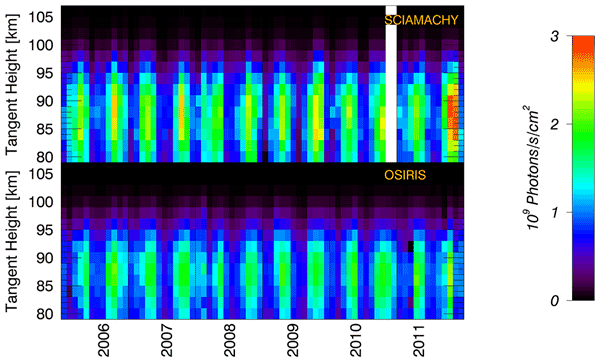
The mesopause, the region of the earth's atmosphere between 85 and 100 km, is hard to access by direct measurements. Therefore we look for parameters that can be measured using satellite or ground-based measurements. In this study we researched sodium airglow, a phenomenon that occurs when sodium atoms are excited by chemical reactions. We compared satellite measurements of the airglow and resulting sodium concentration profiles to gain a better understanding of the sodium in that region.
Patrick E. Sheese, Kaley A. Walker, Chris D. Boone, Adam E. Bourassa, Doug A. Degenstein, Lucien Froidevaux, C. Thomas McElroy, Donal Murtagh, James M. Russell III, and Jiansheng Zou
Atmos. Meas. Tech., 15, 1233–1249, https://doi.org/10.5194/amt-15-1233-2022, https://doi.org/10.5194/amt-15-1233-2022, 2022
Short summary
Short summary
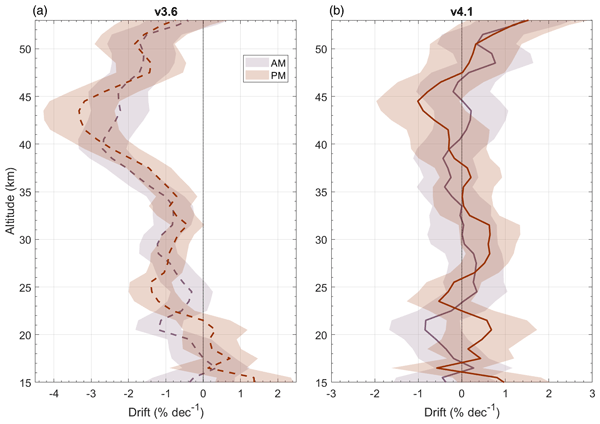
This study analyzes the quality of two versions (v3.6 and v4.1) of ozone concentration measurements from the ACE-FTS (Atmospheric Chemistry Experiment Fourier Transform Spectrometer), by comparing with data from five satellite instruments between 2004 and 2020. It was found that although the v3.6 data exhibit a better agreement than v4.1 with respect to the other instruments, v4.1 exhibits much better stability over time than v3.6. The stability of v4.1 makes it suitable for ozone trend studies.
Debora Griffin, Chris A. McLinden, Enrico Dammers, Cristen Adams, Chelsea E. Stockwell, Carsten Warneke, Ilann Bourgeois, Jeff Peischl, Thomas B. Ryerson, Kyle J. Zarzana, Jake P. Rowe, Rainer Volkamer, Christoph Knote, Natalie Kille, Theodore K. Koenig, Christopher F. Lee, Drew Rollins, Pamela S. Rickly, Jack Chen, Lukas Fehr, Adam Bourassa, Doug Degenstein, Katherine Hayden, Cristian Mihele, Sumi N. Wren, John Liggio, Ayodeji Akingunola, and Paul Makar
Atmos. Meas. Tech., 14, 7929–7957, https://doi.org/10.5194/amt-14-7929-2021, https://doi.org/10.5194/amt-14-7929-2021, 2021
Short summary
Short summary
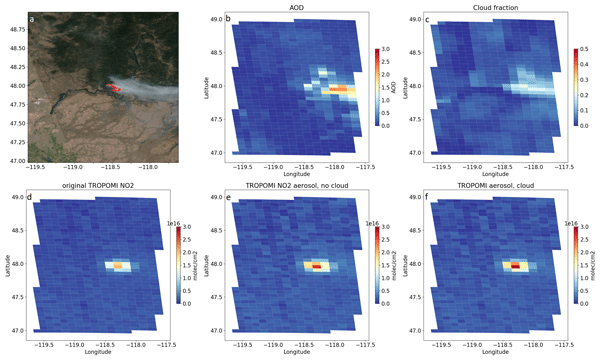
Satellite-derived NOx emissions from biomass burning are estimated with TROPOMI observations. Two common emission estimation methods are applied, and sensitivity tests with model output were performed to determine the accuracy of these methods. The effect of smoke aerosols on TROPOMI NO2 columns is estimated and compared to aircraft observations from four different aircraft campaigns measuring biomass burning plumes in 2018 and 2019 in North America.
Anqi Li, Chris Z. Roth, Adam E. Bourassa, Douglas A. Degenstein, Kristell Pérot, Ole Martin Christensen, and Donal P. Murtagh
Earth Syst. Sci. Data, 13, 5115–5126, https://doi.org/10.5194/essd-13-5115-2021, https://doi.org/10.5194/essd-13-5115-2021, 2021
Short summary
Short summary
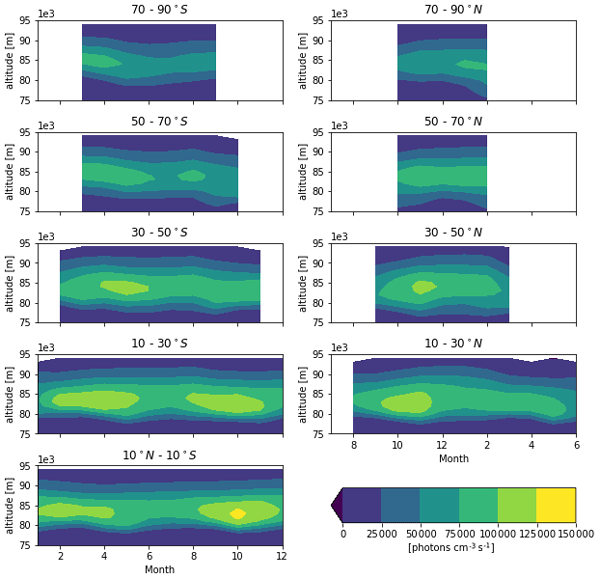
The nightglow emission originating from the vibrationally excited hydroxyl layer (about 85 km altitude) has been measured by the infrared imager (IRI) on the Odin satellite for more than 15 years. In this study, we document the retrieval steps, the resulting volume emission rates and the layer characteristics. Finally, we use the monthly zonal averages to demonstrate the fidelity of the data set. This unique, long-term data set will be valuable for studying various topics near the mesopause.
Cited articles
Akiyoshi, H., Kadowaki, M., Yamashita, Y., and Nagatomo, T.: Dependence of column ozone on future ODSs and GHGs in the variability of 500-ensemble members, Scientific Reports, 13, 320, https://doi.org/10.1038/s41598-023-27635-y, 2023. a
Archibald, A. T., O'Connor, F. M., Abraham, N. L., Archer-Nicholls, S., Chipperfield, M. P., Dalvi, M., Folberth, G. A., Dennison, F., Dhomse, S. S., Griffiths, P. T., Hardacre, C., Hewitt, A. J., Hill, R. S., Johnson, C. E., Keeble, J., Köhler, M. O., Morgenstern, O., Mulcahy, J. P., Ordóñez, C., Pope, R. J., Rumbold, S. T., Russo, M. R., Savage, N. H., Sellar, A., Stringer, M., Turnock, S. T., Wild, O., and Zeng, G.: Description and evaluation of the UKCA stratosphere–troposphere chemistry scheme (StratTrop vn 1.0) implemented in UKESM1, Geoscientific Model Development, 13, 1223–1266, https://doi.org/10.5194/gmd-13-1223-2020, 2020. a
Cussac, M., Marécal, V., Thouret, V., Josse, B., and Sauvage, B.: The impact of biomass burning on upper tropospheric carbon monoxide: a study using MOCAGE global model and IAGOS airborne data, Atmospheric Chemistry and Physics, 20, 9393–9417, https://doi.org/10.5194/acp-20-9393-2020, 2020. a
Damadeo, R., Hassler, B., Zawada, D., Frith, S., Ball, W., Chang, K., Degenstein, D., Hubert, D., Misois, S., Petropavlovskikh, I., Roth, C., Sofieva, V., Steinbrecht, W., Tourpali, K., Zerefos, C., Alsing, J., Balis, D., Coldewey-Egbers, M., Eleftheratos, K., Godin-Beekmann, S., Gruzdev, A., Kapsomenakis, J., Laeng, A., Laine, M., Maillard Barras, E., Taylor, M., von Clarmann, T., Weber, M., and Wild, J.: LOTUS Regression Code, SPARC LOTUS Activity, GitHub [code], https://github.com/usask-arg/lotus-regression (last access: 24 October 2023), 2022. a, b
Dennison, F. and Woodhouse, M. T.: ACCESS-CM2-Chem: evaluation of southern hemisphere ozone and its effect on the Southern Annular Mode, Journal of Southern Hemisphere Earth Systems Science, 73, 17–29, https://doi.org/10.1071/ES22015, 2023. a
Dubé, K., Tegtmeier, S., Bourassa, A., Zawada, D., Degenstein, D., Randel, W., Davis, S., Schwartz, M., Livesey, N., and Smith, A.: Upper-stratospheric temperature trends: new results from the Optical Spectrograph and InfraRed Imager System (OSIRIS), Atmospheric Chemistry and Physics, 24, 12925–12941, https://doi.org/10.5194/acp-24-12925-2024, 2024. a, b, c, d
Eichinger, R. and Šácha, P.: Overestimated acceleration of the advective Brewer–Dobson circulation due to stratospheric cooling, Quarterly Journal of the Royal Meteorological Society, 146, 3850–3864, https://doi.org/10.1002/qj.3876, 2020. a
Esplin, R., Mlynczak, M. G., Russell, J., Gordley, L., and Team, T. S.: Sounding of the Atmosphere Using Broadband Emission Radiometry (SABER): Instrument and Science Measurement Description, Earth and Space Science, 10, e2023EA002999, https://doi.org/10.1029/2023EA002999, 2023. a, b
France, J. A., Harvey, V. L., Randall, C. E., Hitchman, M. H., and Schwartz, M. J.: A climatology of stratopause temperature and height in the polar vortex and anticyclones, Journal of Geophysical Research: Atmospheres, 117, https://doi.org/10.1029/2011JD016893, 2012. a
Garcia, R. R., Dunkerton, T. J., Lieberman, R. S., and Vincent, R. A.: Climatology of the semiannual oscillation of the tropical middle atmosphere, Journal of Geophysical Research: Atmospheres, 102, 26019–26032, https://doi.org/10.1029/97JD00207, 1997. a
Gelaro, R., McCarty, W., Suárez, M. J., Todling, R., Molod, A., Takacs, L., Randles, C. A., Darmenov, A., Bosilovich, M. G., Reichle, R., Wargan, K., Coy, L., Cullather, R., Draper, C., Akella, S., Buchard, V., Conaty, A., da Silva, A. M., Gu, W., Kim, G.-K., Koster, R., Lucchesi, R., Merkova, D., Nielsen, J. E., Partyka, G., Pawson, S., Putman, W., Rienecker, M., Schubert, S. D., Sienkiewicz, M., and Zhao, B.: The Modern-Era Retrospective Analysis for Research and Applications, Version 2 (MERRA-2), Journal of Climate, 30, 5419–5454, https://doi.org/10.1175/JCLI-D-16-0758.1, 2017. a
Gettelman, A., Mills, M. J., Kinnison, D. E., Garcia, R. R., Smith, A. K., Marsh, D. R., Tilmes, S., Vitt, F., Bardeen, C. G., McInerny, J., Liu, H.-L., Solomon, S. C., Polvani, L. M., Emmons, L. K., Lamarque, J.-F., Richter, J. H., Glanville, A. S., Bacmeister, J. T., Phillips, A. S., Neale, R. B., Simpson, I. R., DuVivier, A. K., Hodzic, A., and Randel, W. J.: The Whole Atmosphere Community Climate Model Version 6 (WACCM6), Journal of Geophysical Research: Atmospheres, 124, 12380–12403, https://doi.org/10.1029/2019JD030943, 2019. a
Gulev, S., Thorne, P. W., Ahn, J., Dentener, F., Domingues, C., Gerland, S., Gong, D., Kaufman, D., Nnamchi, H., Quaas, J., Rivera, J., Sathyendranath, S., Smith, S., Trewin, B., von Schuckmann, K., and Vose, R.: Changing State of the Climate System, in: Climate Change 2021: The Physical Science Basis. Contribution of Working Group I to the Sixth Assessment Report of the Intergovernmental Panel on Climate Change, edited by: Masson-Delmotte, V., Zhai, P., Pirani, A., Connors, S. L., Péan, C., Berger, S., N. Caud, Y. C., Goldfarb, L., Gomis, M. I., Huang, M., Leitzell, K., Lonnoy, E., Matthews, J. B. R., Maycock, T. K., Waterfield, T., Yelekçi, O., Yu, R., and Zhou, B., Chap. 2, 287–422, Cambridge University Press, https://doi.org/10.1017/9781009157896.004, 2021. a
Hirota, I.: Observational evidence of the semiannual oscillation in the tropical middle atmosphere – A review, Pure and Applied Geophysics, 118, 217–238, 1980. a
Huang, F. T., Mayr, H. G., Russell III, J. M., Mlynczak, M. G., and Reber, C. A.: Ozone diurnal variations and mean profiles in the mesosphere, lower thermosphere, and stratosphere, based on measurements from SABER on TIMED, Journal of Geophysical Research: Space Physics, 113, https://doi.org/10.1029/2007JA012739, 2008. a
Jöckel, P., Tost, H., Pozzer, A., Kunze, M., Kirner, O., Brenninkmeijer, C. A. M., Brinkop, S., Cai, D. S., Dyroff, C., Eckstein, J., Frank, F., Garny, H., Gottschaldt, K.-D., Graf, P., Grewe, V., Kerkweg, A., Kern, B., Matthes, S., Mertens, M., Meul, S., Neumaier, M., Nützel, M., Oberländer-Hayn, S., Ruhnke, R., Runde, T., Sander, R., Scharffe, D., and Zahn, A.: Earth System Chemistry integrated Modelling (ESCiMo) with the Modular Earth Submodel System (MESSy) version 2.51, Geoscientific Model Development, 9, 1153–1200, https://doi.org/10.5194/gmd-9-1153-2016, 2016. a
Jonsson, A. I., de Grandpré, J., Fomichev, V. I., McConnell, J. C., and Beagley, S. R.: Doubled CO2-induced cooling in the middle atmosphere: Photochemical analysis of the ozone radiative feedback, Journal of Geophysical Research: Atmospheres, 109, https://doi.org/10.1029/2004JD005093, 2004. a
Josse, B., Simon, P., and Peuch, V.-H.: Radon global simulations with the multiscale chemistry and transport model MOCAGE, Tellus B: Chemical and Physical Meteorology, 56, 339–356, https://doi.org/10.3402/tellusb.v56i4.16448, 2004. a
Karami, K., Borchert, S., Eichinger, R., Jacobi, C., Kuchar, A., Mehrdad, S., Pisoft, P., and Sacha, P.: The Climatology of Elevated Stratopause Events in the UA-ICON Model and the Contribution of Gravity Waves, Journal of Geophysical Research: Atmospheres, 128, e2022JD037907, https://doi.org/10.1029/2022JD037907, 2023. a
Liu, J., Strode, S. A., Liang, Q., Oman, L. D., Colarco, P. R., Fleming, E. L., Manyin, M. E., Douglass, A. R., Ziemke, J. R., Lamsal, L. N., and Li, C.: Change in Tropospheric Ozone in the Recent Decades and Its Contribution to Global Total Ozone, Journal of Geophysical Research: Atmospheres, 127, e2022JD037170, https://doi.org/10.1029/2022JD037170, 2022. a
Liu, X., Xu, J., Yue, J., Liu, Y., and Andrioli, V. F.: Trends in the high-latitude mesosphere temperature and mesopause revealed by SABER, Atmospheric Chemistry and Physics, 24, 10143–10157, https://doi.org/10.5194/acp-24-10143-2024, 2024. a
Llewellyn, E. J., Lloyd, N. D., Degenstein, D. A., Gattinger, R. L., Petelina, S. V., Bourassa, A. E., Wiensz, J. T., Ivanov, E. V., McDade, I. C., Solheim, B. H., McConnell, J. C., Haley, C. S., von Savigny, C., Sioris, C. E., McLinden, C. A., Griffioen, E., Kaminski, J., Evans, W. F., Puckrin, E., Strong, K., Wehrle, V., Hum, R. H., Kendall, D. J., Matsushita, J., Murtagh, D. P., Brohede, S., Stegman, J., Witt, G., Barnes, G., Payne, W. F., Piché, L., Smith, K., Warshaw, G., Deslauniers, D. L., Marchand, P., Richardson, E. H., King, R. A., Wevers, I., McCreath, W., Kyrölä, E., Oikarinen, L., Leppelmeier, G. W., Auvinen, H., Mégie, G., Hauchecorne, A., Lefèvre, F., de La Noe, J., Ricaud, P., Frisk, U., Sjoberg, F., von Schéele, F., and Nordh, L.: The OSIRIS instrument on the Odin spacecraft, Canadian Journal of Physics, 82, 411–422, https://doi.org/10.1139/p04-005, 2004. a, b
Long, C., Fujiwara, M., Davis, S., Mitchell, D., and Wright, C.: Overview of Temperature and Winds, in: SPARC Reanalysis Intercomparison Project (S-RIP) Final Report, edited by: Fujiwara, M., Manney, G. L., Gray, L. J., and Wright, J. S., Chap. 3, SPARC Report No. 10, WCRP-6/2021, https://doi.org/10.17874/800dee57d13, 2022. a
Manabe, S. and Wetherald, R. T.: Thermal Equilibrium of the Atmosphere with a Given Distribution of Relative Humidity, Journal of Atmospheric Sciences, 24, 241–259, 1967. a
Marchand, M., Keckhut, P., Lefebvre, S., Claud, C., Cugnet, D., Hauchecorne, A., Lefèvre, F., Lefebvre, M.-P., Jumelet, J., Lott, F., Hourdin, F., Thuillier, G., Poulain, V., Bossay, S., Lemennais, P., David, C., and Bekki, S.: Dynamical amplification of the stratospheric solar response simulated with the Chemistry-Climate Model LMDz-Reprobus, Journal of Atmospheric and Solar-Terrestrial Physics, 75-76, 147–160, https://doi.org/10.1016/j.jastp.2011.11.008, 2012. a
Meng, L., Liu, J., Tarasick, D. W., Randel, W. J., Steiner, A. K., Wilhelmsen, H., Wang, L., and Haimberger, L.: Continuous rise of the tropopause in the Northern Hemisphere over 1980–2020, Science Advances, 7, eabi8065, https://doi.org/10.1126/sciadv.abi8065, 2021. a
Mlynczak, M. G., Hunt, L. A., Garcia, R. R., Harvey, V. L., Marshall, B. T., Yue, J., Mertens, C. J., and Russell III, J. M.: Cooling and Contraction of the Mesosphere and Lower Thermosphere From 2002 to 2021, Journal of Geophysical Research: Atmospheres, 127, e2022JD036767, https://doi.org/10.1029/2022JD036767, 2022. a
Morgenstern, O., Braesicke, P., O'Connor, F. M., Bushell, A. C., Johnson, C. E., Osprey, S. M., and Pyle, J. A.: Evaluation of the new UKCA climate-composition model – Part 1: The stratosphere, Geoscientific Model Development, 2, 43–57, https://doi.org/10.5194/gmd-2-43-2009, 2009. a
Murtagh, D., Frisk, U., Merino, F., Ridal, M., Jonsson, A., Stegman, J., Witt, G., Eriksson, P., Jiménez, C., Megie, G., de la Noë, J., Ricaud, P., Baron, P., Pardo, J. R., Hauchcorne, A., Llewellyn, E. J., Degenstein, D. A., Gattinger, R. L., Lloyd, N. D., Evans, W. F. J., McDade, I. C., Haley, C. S., Sioris, C., von Savigny, C., Solheim, B. H., McConnell, J. C., Strong, K., Richardson, E. H., Leppelmeier, G. W., Kyrölä, E., Auvinen, H., and Oikarine, L.: An overview of the Odin atmospheric mission, Canadian Journal of Physics, 80, 309–319, https://doi.org/10.1139/p01-157, 2002. a
Oman, L. D., Douglass, A. R., Ziemke, J. R., Rodriguez, J. M., Waugh, D. W., and Nielsen, J. E.: The ozone response to ENSO in Aura satellite measurements and a chemistry-climate simulation, Journal of Geophysical Research: Atmospheres, 118, 965–976, https://doi.org/10.1029/2012JD018546, 2013. a
Picone, J. M., Hedin, A. E., Drob, D. P., and Aikin, A. C.: NRLMSISE-00 empirical model of the atmosphere: Statistical comparisons and scientific issues, Journal of Geophysical Research: Space Physics, 107, SIA 15-1–SIA 15-16, https://doi.org/10.1029/2002JA009430, 2002. a
Pisoft, P., Sacha, P., Polvani, L. M., Añel, J. A., de la Torre, L., Eichinger, R., Foelsche, U., Huszar, P., Jacobi, C., Karlicky, J., Kuchar, A., Miksovsky, J., Zak, M., and Riede, H. E.: Stratospheric contraction caused by increasing greenhouse gases, Environmental Research Letters, 16, 064038, https://doi.org/10.1088/1748-9326/abfe2b, 2021. a, b, c
Plumb, R. A.: Stratospheric transport, Journal of the Meteorological Society of Japan. Ser. II, 80, 793–809, https://doi.org/10.2151/jmsj.80.793, 2002. a
Plummer, D., Nagashima, T., Tilmes, S. Archibald, A., Chiodo, G., Fadnavis, S., Garny, H., Josse, B., Kim, J., Lamarque, J.-F., Morgenstern, O., Murray, L., Orbe, C., Tai, A., Chipperfield, M., Funke, B., Juckes, M., Kinnison, D., Kunze, M., Luo, B., Matthes, K., Newman, P. A., Pascoe, C., and Peter, T.: CCMI-2022: A new set of Chemistry-Climate Model Initiative (CCMI) Community Simulations to Update the Assessment of Models and Support Upcoming Ozone Assessment Activities, SPARC Newsletter No. 57, https://aparc-climate.org/wp-content/uploads/2025/10/SPARCnewsletter_Jul2021_web.pdf (last access: 6 February 2026), 2021. a
Ramesh, K. and Sridharan, S.: Long-Term Trends in Tropical (10° N–15° N) Middle Atmosphere (40–110 km) CO2 Cooling, Journal of Geophysical Research: Space Physics, 123, 5661–5673, https://doi.org/10.1029/2017JA025060, 2018. a
Remsberg, E.: Observation and Attribution of Temperature Trends Near the Stratopause From HALOE, Journal of Geophysical Research: Atmospheres, 124, 6600–6611, https://doi.org/10.1029/2019JD030455, 2019. a
Remsberg, E. E., Marshall, B. T., Garcia-Comas, M., Krueger, D., Lingenfelser, G. S., Martin-Torres, J., Mlynczak, M. G., Russell III, J. M., Smith, A. K., Zhao, Y., Brown, C., Gordley, L. L., Lopez-Gonzalez, M. J., Lopez-Puertas, M., She, C.-Y., Taylor, M. J., and Thompson, R. E.: Assessment of the quality of the Version 1.07 temperature-versus-pressure profiles of the middle atmosphere from TIMED/SABER, Journal of Geophysical Research: Atmospheres, 113, https://doi.org/10.1029/2008JD010013, 2008. a, b, c
Rezac, L., Yue, J., Yongxiao, J., Russell III, J. M., Garcia, R., López-Puertas, M., and Mlynczak, M. G.: On Long-Term SABER CO2 Trends and Effects Due to Nonuniform Space and Time Sampling, Journal of Geophysical Research: Space Physics, 123, 7958–7967, https://doi.org/10.1029/2018JA025892, 2018. a
Russell, J. M., Mlynczak, M. G., Gordley, L. L., Jr., J. J. T., and Esplin, R. W.: Overview of the SABER experiment and preliminary calibration results, in: Optical Spectroscopic Techniques and Instrumentation for Atmospheric and Space Research III, edited by: Larar, A. M., vol. 3756, 277–288, International Society for Optics and Photonics, SPIE, https://doi.org/10.1117/12.366382, 1999. a
Russell III, J. M., Gordley, L. L., Park, J. H., Drayson, S. R., Hesketh, W. D., Cicerone, R. J., Tuck, A. F., Frederick, J. E., Harries, J. E., and Crutzen, P. J.: The Halogen Occultation Experiment, Journal of Geophysical Research: Atmospheres, 98, 10777–10797, https://doi.org/10.1029/93JD00799, 1993. a
Santer, B. D., Wehner, M. F., Wigley, T. M. L., Sausen, R., Meehl, G. A., Taylor, K. E., Ammann, C., Arblaster, J., Washington, W. M., Boyle, J. S., and Brüggemann, W.: Contributions of Anthropogenic and Natural Forcing to Recent Tropopause Height Changes, Science, 301, 479–483, https://doi.org/10.1126/science.1084123, 2003. a
Santer, B. D., Po-Chedley, S., Zhao, L., Zou, C.-Z., Fu, Q., Solomon, S., Thompson, D. W. J., Mears, C., and Taylor, K. E.: Exceptional stratospheric contribution to human fingerprints on atmospheric temperature, Proceedings of the National Academy of Sciences, 120, e2300758120, https://doi.org/10.1073/pnas.2300758120, 2023. a
Scinocca, J. F., McFarlane, N. A., Lazare, M., Li, J., and Plummer, D.: Technical Note: The CCCma third generation AGCM and its extension into the middle atmosphere, Atmospheric Chemistry and Physics, 8, 7055–7074, https://doi.org/10.5194/acp-8-7055-2008, 2008. a
Seidel, D. J. and Randel, W. J.: Variability and trends in the global tropopause estimated from radiosonde data, Journal of Geophysical Research: Atmospheres, 111, https://doi.org/10.1029/2006JD007363, 2006. a
Sellar, A. A., Jones, C. G., Mulcahy, J. P., Tang, Y., Yool, A., Wiltshire, A., O'Connor, F. M., Stringer, M., Hill, R., Palmieri, J., Woodward, S., de Mora, L., Kuhlbrodt, T., Rumbold, S. T., Kelley, D. I., Ellis, R., Johnson, C. E., Walton, J., Abraham, N. L., Andrews, M. B., Andrews, T., Archibald, A. T., Berthou, S., Burke, E., Blockley, E., Carslaw, K., Dalvi, M., Edwards, J., Folberth, G. A., Gedney, N., Griffiths, P. T., Harper, A. B., Hendry, M. A., Hewitt, A. J., Johnson, B., Jones, A., Jones, C. D., Keeble, J., Liddicoat, S., Morgenstern, O., Parker, R. J., Predoi, V., Robertson, E., Siahaan, A., Smith, R. S., Swaminathan, R., Woodhouse, M. T., Zeng, G., and Zerroukat, M.: UKESM1: Description and Evaluation of the U.K. Earth System Model, Journal of Advances in Modeling Earth Systems, 11, 4513–4558, https://doi.org/10.1029/2019MS001739, 2019. a
SPARC/IO3C/GAW: SPARC/IO3C/GAW Report on Long-term Ozone Trends and Uncertainties in the Stratosphere, in: SPARC Report No. 9 (2019) of The SPARC LOTUS Activity, edited by: Petropavlovskikh, I., Godin-Beekmann, S., Hubert, D., Damadeo, R., Hassler, B., and Sofieva, V., SPARC Report No. 9, GAW Report No. 241, WCRP-17/2018, https://doi.org/10.17874/f899e57a20b, 2019. a, b
Sukhodolov, T., Egorova, T., Stenke, A., Ball, W. T., Brodowsky, C., Chiodo, G., Feinberg, A., Friedel, M., Karagodin-Doyennel, A., Peter, T., Sedlacek, J., Vattioni, S., and Rozanov, E.: Atmosphere–ocean–aerosol–chemistry–climate model SOCOLv4.0: description and evaluation, Geoscientific Model Development, 14, 5525–5560, https://doi.org/10.5194/gmd-14-5525-2021, 2021. a
Waters, J., Froidevaux, L., Harwood, R., Jarnot, R., Pickett, H., Read, W., Siegel, P., Cofield, R., Filipiak, M., Flower, D., Holden, J., Lau, G., Livesey, N., Manney, G., Pumphrey, H., Santee, M., Wu, D., Cuddy, D., Lay, R., Loo, M., Perun, V., Schwartz, M., Stek, P., Thurstans, R., Boyles, M., Chandra, K., Chavez, M., Chen, G.-S., Chudasama, B., Dodge, R., Fuller, R., Girard, M., Jiang, J., Jiang, Y., Knosp, B., LaBelle, R., Lam, J., Lee, K., Miller, D., Oswald, J., Patel, N., Pukala, D., Quintero, O., Scaff, D., Van Snyder, W., Tope, M., Wagner, P., and Walch, M.: The Earth Observing System Microwave Limb Sounder (EOS MLS) on the Aura Satellite, IEEE Transactions on Geoscience and Remote Sensing, 44, 1075–1092, https://doi.org/10.1109/TGRS.2006.873771, 2006. a
Zawada, D., Dubé, K., Warnock, T., Bourassa, A., Tegtmeier, S., and Degenstein, D.: OSIRIS stratospheric temperature v7.3, Zenodo [data set], https://doi.org/10.5281/zenodo.8271140, 2023. a
Zawada, D., Dubé, K., Warnock, T., Bourassa, A., Tegtmeier, S., and Degenstein, D.: A multi-decadal time series of upper stratospheric temperature profiles from Odin-OSIRIS limb-scattered spectra, Atmospheric Measurement Techniques, 17, 1995–2010, https://doi.org/10.5194/amt-17-1995-2024, 2024. a, b, c, d
Zhao, X. R., Sheng, Z., Shi, H. Q., Weng, L. B., and Liao, Q. X.: Long-Term Trends and Solar Responses of the Mesopause Temperatures Observed by SABER During the 2002–2019 Period, Journal of Geophysical Research: Atmospheres, 125, e2020JD032418, https://doi.org/10.1029/2020JD032418, 2020. a
Zhao, X. R., Sheng, Z., Shi, H. Q., Weng, L. B., and He, Y.: Middle Atmosphere Temperature Changes Derived from SABER Observations during 2002–20, Journal of Climate, 34, 7995–8012, https://doi.org/10.1175/JCLI-D-20-1010.1, 2021. a, b
Short summary
The stratopause, the boundary between the stratosphere and the mesosphere, is projected to cool and move lower in response to anthropogenic greenhouse gas emissions. We use observations from two satellite instruments to assess the annual and inter-annual variability and to quantify trends in the stratopause temperature and height. We find that the stratopause cooled by ~0.5–1 K per decade and that the tropical stratopause moved lower by 300–475 m per decade during 2005–2021.
The stratopause, the boundary between the stratosphere and the mesosphere, is projected to cool...


Altmetrics
Final-revised paper
Preprint