
Articles | Volume 26, issue 3
https://doi.org/10.5194/acp-26-2041-2026
© Author(s) 2026. This work is distributed under
the Creative Commons Attribution 4.0 License.
the Creative Commons Attribution 4.0 License.
https://doi.org/10.5194/acp-26-2041-2026
© Author(s) 2026. This work is distributed under
the Creative Commons Attribution 4.0 License.
the Creative Commons Attribution 4.0 License.
Research article
| 
10 Feb 2026
Research article |
| 10 Feb 2026
| 10 Feb 2026
European summer precipitation
Birthe Marie Steensen
CORRESPONDING AUTHOR

Center for International Climate Research (CICERO), Oslo, 0318, Norway
Gunnar Myhre
Center for International Climate Research (CICERO), Oslo, 0318, Norway
Rachael Byrom
Center for International Climate Research (CICERO), Oslo, 0318, Norway
Ada Gjermundsen
Section for Meteorology and Ocean Sciences, University of Oslo, Oslo, 0318, Norway
Norwegian Meteorological Institute, Oslo, 0313, Norway
Caroline Jouan
Center for International Climate Research (CICERO), Oslo, 0318, Norway
Camilla Weum Stjern
Center for International Climate Research (CICERO), Oslo, 0318, Norway
Related authors
No articles found.
Jianyu Zheng, Hongbin Yu, Chamara Rajapakse, Mian Chin, Michael Schulz, Yves Balkanski, Susanne E. Bauer, Huisheng Bian, Peter Colarco, Dongchul Kim, Ramiro Checa-Garcia, Yevgeny Derimian, Oleg Dubovik, Paul Ginoux, Zak Kipling, Jasper F. Kok, Harri Kokkola, Philippe Le Sager, Lei Li, Marianne Tronstad Lund, Gunnar Myhre, Hitoshi Matsui, Dirk J. L. Olivie, Samuel Remy, Oyvind Seland, Qianqian Song, Toshihiko Takemura, Qian Tan, Kostas Tsigaridis, Twan van Noije, David Winker, Bin Xie, Hua Zhang, Xindan Zhang, and Zhibo Zhang
EGUsphere, https://doi.org/10.5194/egusphere-2026-4322, https://doi.org/10.5194/egusphere-2026-4322, 2026
This preprint is open for discussion and under review for Atmospheric Chemistry and Physics (ACP).
Short summary
Short summary
Winds carry vast amounts of Saharan dust across the Atlantic Ocean, influencing climate, air quality, and ocean ecosystems. Within the Aerosol Comparisons between Observations and Models (AeroCom) project, we evaluated 17 numerical models against observations. Models deposit dust too quickly, so too little reaches the Caribbean. Better simulations require emitting larger particles, treating their non-spherical shapes, and capturing processes that keep dust aloft during transport.
Ragnhild Bieltvedt Skeie, Terje K. Berntsen, Ada Gjermundsen, Ragnar Bang Huseby, Gunnar Myhre, Dirk Olivié, and Trude Storelvmo
EGUsphere, https://doi.org/10.5194/egusphere-2026-4634, https://doi.org/10.5194/egusphere-2026-4634, 2026
This preprint is open for discussion and under review for Earth System Dynamics (ESD).
Short summary
Short summary
Climate sensitivity is a key quantity in climate science. We tested an observation-based method for estimating climate sensitivity by replacing observations with historical climate model simulations. Estimates varied substantially among simulations of the same model where only the initial conditions differed. Since the historical climate is only one realization of the Earth’s climate, this highlights that natural variability is an important source of uncertainty in observation-based estimates.
Mélissa Cholette, Caroline Jouan, Hugh Morrison, Jason A. Milbrandt, Zhipeng Qu, Zane Dedekind, Alexei Korolev, and Zen Mariani
EGUsphere, https://doi.org/10.5194/egusphere-2026-4229, https://doi.org/10.5194/egusphere-2026-4229, 2026
Short summary
Short summary
This study implements prognostic aerosols in the P3 bulk microphysics scheme. Using aerosol awareness, the convection-permitting simulations of layered Arctic mixed-phase clouds are improved with more persistent supercooled liquid water and better agreement with EarthCARE and in situ observations. The new framework enhances the microphysics realism of aerosol–cloud interactions, which are critical for radiative balance and weather prediction in polar regions and elsewhere.
Srinath Krishnan, Ragnhild Bieltvedt Skeie, Øivind Hodnebrog, Gunnar Myhre, Maria Sand, Marit Sandstad, Hannah Bryant, Didier A. Hauglustaine, Fabien Paulot, Michael Prather, and David Stevenson
Atmos. Chem. Phys., 26, 9509–9539, https://doi.org/10.5194/acp-26-9509-2026, https://doi.org/10.5194/acp-26-9509-2026, 2026
Short summary
Short summary
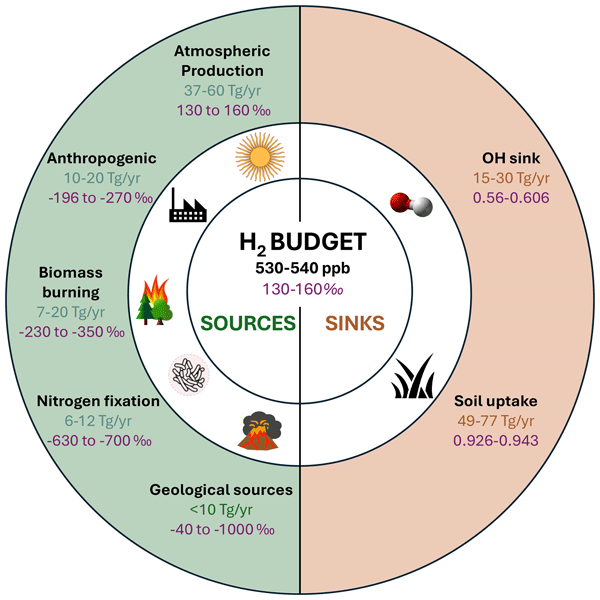
Hydrogen (H2) is an indirect greenhouse gas that can affect climate through chemical reactions in the atmosphere. To better understand this impact, it is important to constrain the sources and sinks of hydrogen. Using a suite of three-dimensional and one-dimensional models, we find that atmospheric production of hydrogen is 37–60 Tg/yr and that the geological source of H2 is much smaller than suggested. More field and isotopic measurements are needed to improve these estimates.
Feifei Luo, Manoj Joshi, Bjørn H. Samset, Laura J. Wilcox, Camilla W. Stjern, Robert J. Allen, Yan-Ning Kuo, Wei Hua, and Shuanglin Li
EGUsphere, https://doi.org/10.5194/egusphere-2026-3301, https://doi.org/10.5194/egusphere-2026-3301, 2026
Short summary
Short summary
This study examines if this impact changes in a warmer world. Using a climate model, we compare identical Asian emissions under cooler and 1 K warmer climates. Aerosols reduce extreme rainfall in both, but more strongly over northern India in the warmer climate. A warmer, stabler atmosphere weakens circulation that partly offsets aerosol drying in cooler conditions. Continued warming may strengthen this drying over parts of Asia, while future pollution cuts could amplify heavy rainfall.
Jianing Guo, Xiaoning Xie, Gunnar Myhre, Drew Shindell, Alf Kirkevåg, Trond Iversen, Apostolos Voulgarakis, Toshihiko Takemura, Ke Shang, Xinzhou Li, Zhengguo Shi, Yangang Liu, Xiaodong Liu, and Hong Yan
Atmos. Chem. Phys., 26, 5169–5184, https://doi.org/10.5194/acp-26-5169-2026, https://doi.org/10.5194/acp-26-5169-2026, 2026
Short summary
Short summary
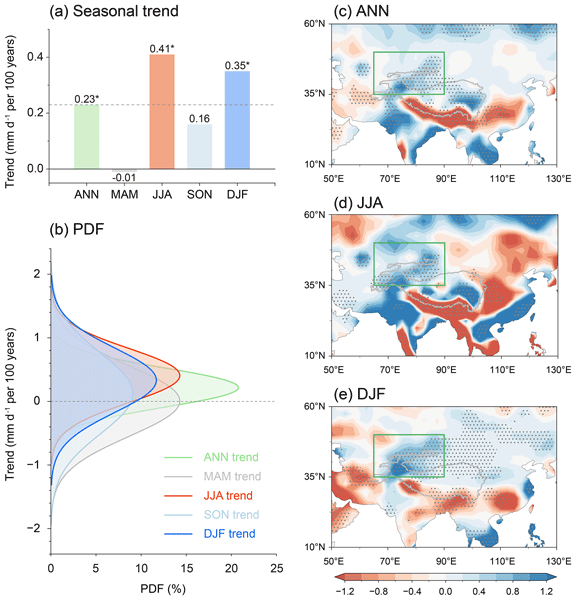
Central Asia has grown wetter in recent decades, but the drivers differ by season. We analyzed observations and climate model experiments to understand these changes and their future. Our analysis reveals that greenhouse gases from human activities drive winter wetting, whereas aerosol from Asia urbanization and industrialization enhances summer precipitation. As future reductions in air pollution, the region may experience drier summers and create new risks for regional water resources.
Gunnar Myhre, Øivind Hodnebrog, Srinath Krishnan, Maria Sand, Marit Sandstad, Ragnhild B. Skeie, Lieven Clarisse, Bruno Franco, Dylan B. Millet, Kelley C. Wells, Alexander Archibald, Hannah N. Bryant, Alex T. Chaudhri, David S. Stevenson, Didier Hauglustaine, Michael Prather, J. Christopher Kaiser, Dirk J. L. Olivie, Michael Schulz, Oliver Wild, Ye Wang, Thérèse Salameh, Jason E. Williams, Philippe Le Sager, Fabien Paulot, Kostas Tsigaridis, and Haley E. Plaas
Geosci. Model Dev., 19, 2577–2591, https://doi.org/10.5194/gmd-19-2577-2026, https://doi.org/10.5194/gmd-19-2577-2026, 2026
Short summary
Short summary
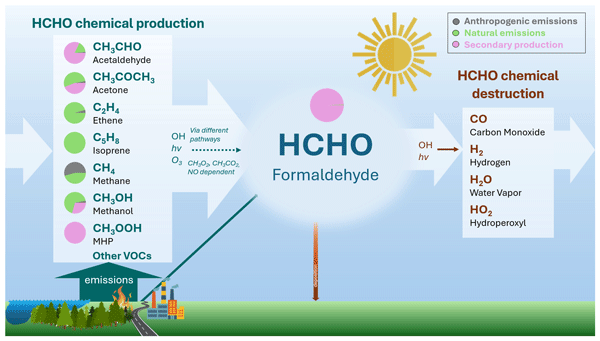
Volatile organic compounds (VOCs) affect air quality and climate, but their behavior in the atmosphere is still uncertain. We launched a global research effort to compare how different models represent these compounds and to improve their accuracy. By analyzing model results alongside observations and satellite data, we aim to better understand the atmospheric composition of these compounds.
Christopher D. Wells, Lennart Ramme, Chris Smith, Jannes Breier, Adakudlu Muralidhar, Chao Li, Ada Gjermundsen, William Alexander Schoenberg, Benjamin Blanz, and Cecilie Mauritzen
Geosci. Model Dev., 19, 1429–1453, https://doi.org/10.5194/gmd-19-1429-2026, https://doi.org/10.5194/gmd-19-1429-2026, 2026
Short summary
Short summary
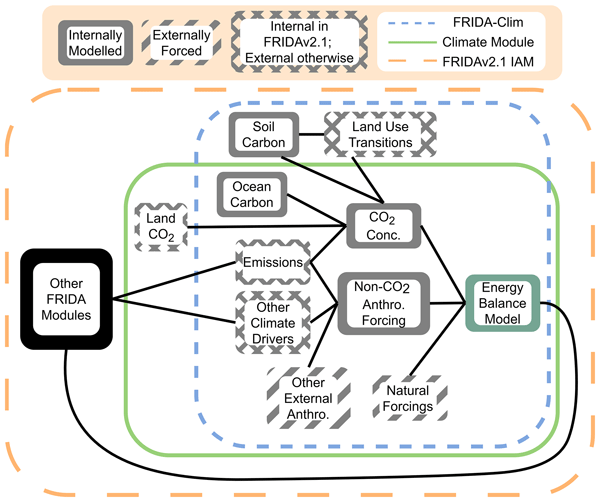
Understanding the change in climate that would occur under different future pathways of greenhouse gas emissions and changes in land use is crucial. Here, we develop a new simple climate model to help study this. We reduce the number of inputs so that our model can be connected to a model of the human causes of climate change. This way, we can study the interaction between climate change and society, including climate impacts. Our model broadly agrees with historical observations.
Joe Adabouk Amooli, Marianne T. Lund, Sourangsu Chowdhury, Gunnar Myhre, Ane N. Johansen, Bjørn H. Samset, and Daniel M. Westervelt
Atmos. Chem. Phys., 25, 11611–11632, https://doi.org/10.5194/acp-25-11611-2025, https://doi.org/10.5194/acp-25-11611-2025, 2025
Short summary
Short summary
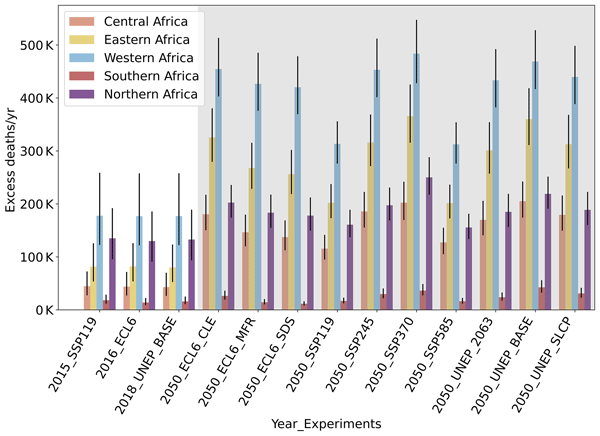
We analyze various projections of African aerosol emissions and their potential impacts on climate and public health. We find that future emissions vary widely across emission projections, with differences in sectoral emission distributions. Using the Oslo chemical transport model, we show that air pollution exposure in some regions of Africa could increase significantly by 2050, increasing pollution-related deaths, with most scenarios projecting aerosol-induced warming over sub-Saharan Africa.
Mingxuan Wu, Hailong Wang, Zheng Lu, Xiaohong Liu, Huisheng Bian, David D. Cohen, Yan Feng, Mian Chin, Didier A. Hauglustaine, Vlassis A. Karydis, Marianne T. Lund, Gunnar Myhre, Andrea Pozzer, Michael Schulz, Ragnhild B. Skeie, Alexandra P. Tsimpidi, Svetlana G. Tsyro, and Shaocheng Xie
Atmos. Chem. Phys., 25, 10049–10074, https://doi.org/10.5194/acp-25-10049-2025, https://doi.org/10.5194/acp-25-10049-2025, 2025
Short summary
Short summary
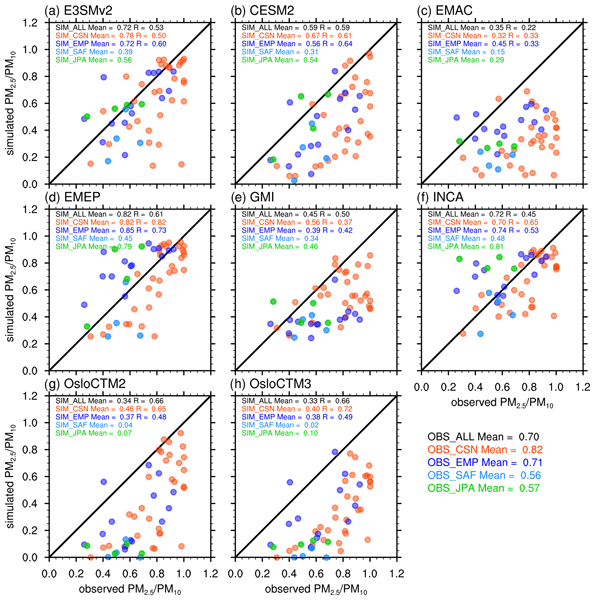
A key challenge in simulating the life cycle of nitrate aerosol in global models is accurately representing the mass size distribution of nitrate aerosol, which lacks sufficient observational constraints. We found that most global models underestimate the mass fraction of fine-mode nitrate at the surface in all regions. Our study highlights the importance of gas–aerosol partitioning parameterization and the simulation of dust and sea salt in correctly simulating the mass size distribution of nitrate.
William J. Collins, Fiona M. O'Connor, Rachael E. Byrom, Øivind Hodnebrog, Patrick Jöckel, Mariano Mertens, Gunnar Myhre, Matthias Nützel, Dirk Olivié, Ragnhild Bieltvedt Skeie, Laura Stecher, Larry W. Horowitz, Vaishali Naik, Gregory Faluvegi, Ulas Im, Lee T. Murray, Drew Shindell, Kostas Tsigaridis, Nathan Luke Abraham, and James Keeble
Atmos. Chem. Phys., 25, 9031–9060, https://doi.org/10.5194/acp-25-9031-2025, https://doi.org/10.5194/acp-25-9031-2025, 2025
Short summary
Short summary
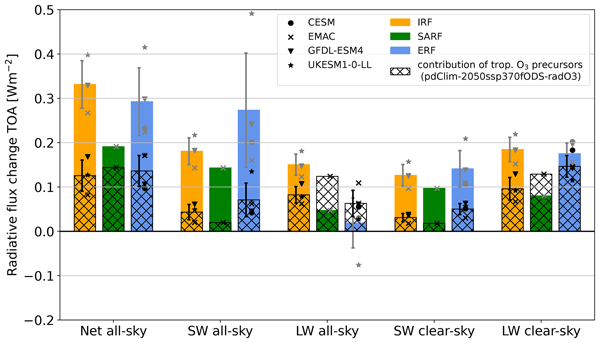
We used 7 climate models that include atmospheric chemistry and find that in a scenario with weak controls on air quality, the warming effects (over 2015 to 2050) of decreases in ozone-depleting substances and increases in air quality pollutants are approximately equal and would make ozone the second highest contributor to warming over this period. We find that for stratospheric ozone recovery, the standard measure of climate effects underestimates a more comprehensive measure.
Feifei Luo, Bjørn H. Samset, Camilla W. Stjern, Manoj Joshi, Laura J. Wilcox, Robert J. Allen, Wei Hua, and Shuanglin Li
Atmos. Chem. Phys., 25, 7647–7667, https://doi.org/10.5194/acp-25-7647-2025, https://doi.org/10.5194/acp-25-7647-2025, 2025
Short summary
Short summary
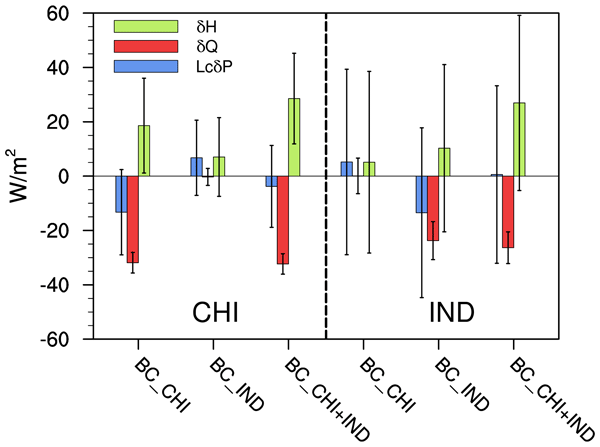
Black carbon (BC) aerosol is emitted from the incomplete combustion of biomass and fossil fuels. We found that Asian BC leads to strong local cooling and drying. Reductions in precipitation primarily depend on the thermodynamic effects due to solar radiation absorption by BC. The combined thermodynamic and dynamic effects shape the spatial pattern of precipitation responses to Asian BC. These results help us further understand the impact of emissions of anthropogenic aerosols on Asian climate.
Rachael E. Byrom, Gunnar Myhre, Øivind Hodnebrog, Dirk Olivié, and Michael Schulz
Atmos. Chem. Phys., 25, 5683–5693, https://doi.org/10.5194/acp-25-5683-2025, https://doi.org/10.5194/acp-25-5683-2025, 2025
Short summary
Short summary
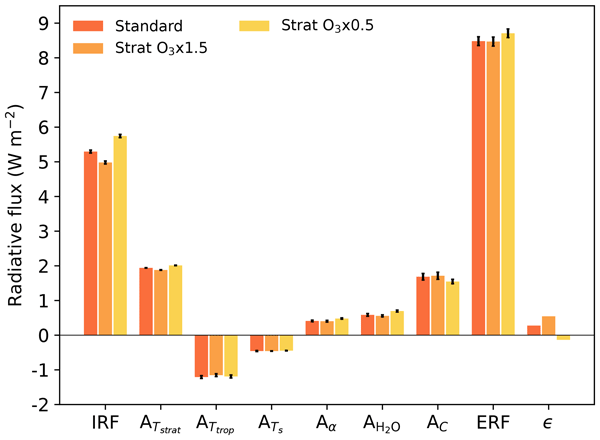
Addressing the cause of model spread in CO2 effective radiative forcing (ERF) is important for reducing uncertainty in climate change. We investigate stratospheric O3 as a driver of this spread by altering its concentration by 50 % and analysing the impact on CO2 forcing. Our experiments show a significant effect on stratospheric temperature that impacts instantaneous radiative forcing, primarily due to the influence on longwave emission. However, the impact on ERF is minimal.
Ragnhild Bieltvedt Skeie, Marit Sandstad, Srinath Krishnan, Gunnar Myhre, and Maria Sand
Atmos. Chem. Phys., 25, 4929–4942, https://doi.org/10.5194/acp-25-4929-2025, https://doi.org/10.5194/acp-25-4929-2025, 2025
Short summary
Short summary
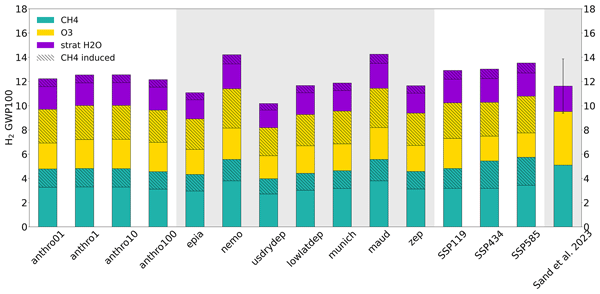
Hydrogen leakages can alter the amount of climate gases in the atmosphere and hence have a climate impact. In this study we investigate, using an atmospheric chemistry model, how this indirect climate effect differs with different amounts of leakages and with where the hydrogen leaks and if this effect changes in the future. The effect is largest for emissions far from areas where hydrogen is removed from the atmosphere by the soil, but these are not relevant locations for a future hydrogen economy.
Duncan Watson-Parris, Laura J. Wilcox, Camilla W. Stjern, Robert J. Allen, Geeta Persad, Massimo A. Bollasina, Annica M. L. Ekman, Carley E. Iles, Manoj Joshi, Marianne T. Lund, Daniel McCoy, Daniel M. Westervelt, Andrew I. L. Williams, and Bjørn H. Samset
Atmos. Chem. Phys., 25, 4443–4454, https://doi.org/10.5194/acp-25-4443-2025, https://doi.org/10.5194/acp-25-4443-2025, 2025
Short summary
Short summary
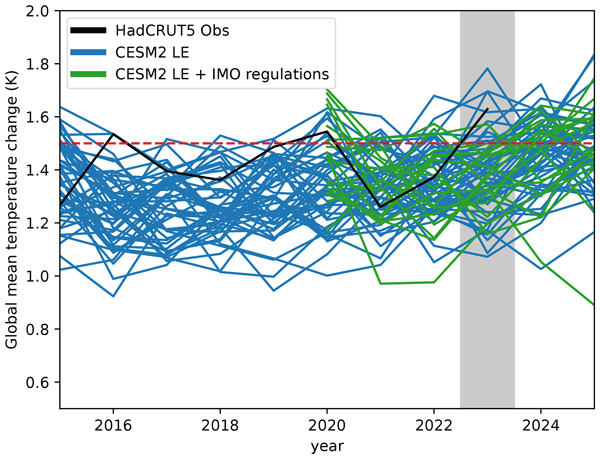
In 2020, regulations by the International Maritime Organization aimed to reduce aerosol emissions from ships. These aerosols previously had a cooling effect, which the regulations might reduce, revealing more greenhouse gas warming. Here we find that, while there is regional warming, the global 2020–2040 temperature rise is only +0.03 °C. This small change is difficult to distinguish from natural climate variability, indicating the regulations have had a limited effect on observed warming to date.
Mariya Petrenko, Ralph Kahn, Mian Chin, Susanne E. Bauer, Tommi Bergman, Huisheng Bian, Gabriele Curci, Ben Johnson, Johannes W. Kaiser, Zak Kipling, Harri Kokkola, Xiaohong Liu, Keren Mezuman, Tero Mielonen, Gunnar Myhre, Xiaohua Pan, Anna Protonotariou, Samuel Remy, Ragnhild Bieltvedt Skeie, Philip Stier, Toshihiko Takemura, Kostas Tsigaridis, Hailong Wang, Duncan Watson-Parris, and Kai Zhang
Atmos. Chem. Phys., 25, 1545–1567, https://doi.org/10.5194/acp-25-1545-2025, https://doi.org/10.5194/acp-25-1545-2025, 2025
Short summary
Short summary
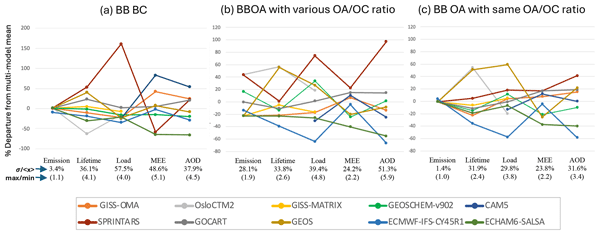
We compared smoke plume simulations from 11 global models to each other and to satellite smoke amount observations aimed at constraining smoke source strength. In regions where plumes are thick and background aerosol is low, models and satellites compare well. However, the input emission inventory tends to underestimate in many places, and particle property and loss rate assumptions vary enormously among models, causing uncertainties that require systematic in situ measurements to resolve.
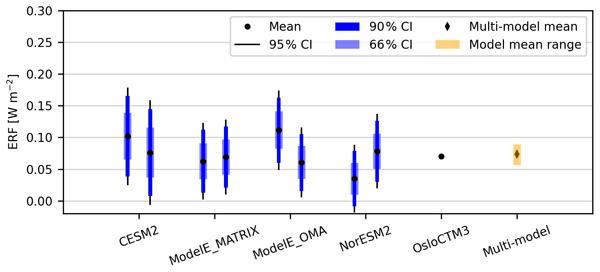
Ragnhild Bieltvedt Skeie, Rachael Byrom, Øivind Hodnebrog, Caroline Jouan, and Gunnar Myhre
Atmos. Chem. Phys., 24, 13361–13370, https://doi.org/10.5194/acp-24-13361-2024, https://doi.org/10.5194/acp-24-13361-2024, 2024
Short summary
Short summary
In 2020, new regulations by the International Maritime Organization regarding sulfur emissions came into force, reducing emissions of SO2 from the shipping sector by approximately 80 %. In this study, we use multiple models to calculate how much the Earth energy balance changed due to the emission reduction or the so-called effective radiative forcing. The calculated effective radiative forcing is weak, comparable to the effect of the increase in CO2 over the last 2 to 3 years.
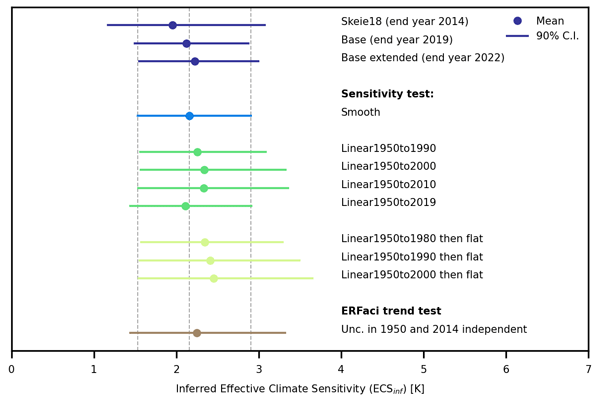
Ragnhild Bieltvedt Skeie, Magne Aldrin, Terje K. Berntsen, Marit Holden, Ragnar Bang Huseby, Gunnar Myhre, and Trude Storelvmo
Earth Syst. Dynam., 15, 1435–1458, https://doi.org/10.5194/esd-15-1435-2024, https://doi.org/10.5194/esd-15-1435-2024, 2024
Short summary
Short summary
Climate sensitivity and aerosol forcing are central quantities in climate science that are uncertain and contribute to the spread in climate projections. To constrain them, we use observations of temperature and ocean heat content as well as prior knowledge of radiative forcings over the industrialized period. The estimates are sensitive to how aerosol cooling evolved over the latter part of the 20th century, and a strong aerosol forcing trend in the 1960s–1970s is not supported by our analysis.
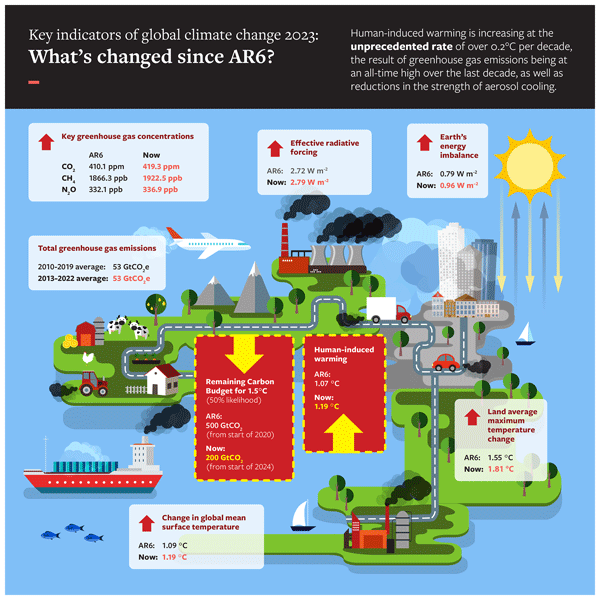
Piers M. Forster, Chris Smith, Tristram Walsh, William F. Lamb, Robin Lamboll, Bradley Hall, Mathias Hauser, Aurélien Ribes, Debbie Rosen, Nathan P. Gillett, Matthew D. Palmer, Joeri Rogelj, Karina von Schuckmann, Blair Trewin, Myles Allen, Robbie Andrew, Richard A. Betts, Alex Borger, Tim Boyer, Jiddu A. Broersma, Carlo Buontempo, Samantha Burgess, Chiara Cagnazzo, Lijing Cheng, Pierre Friedlingstein, Andrew Gettelman, Johannes Gütschow, Masayoshi Ishii, Stuart Jenkins, Xin Lan, Colin Morice, Jens Mühle, Christopher Kadow, John Kennedy, Rachel E. Killick, Paul B. Krummel, Jan C. Minx, Gunnar Myhre, Vaishali Naik, Glen P. Peters, Anna Pirani, Julia Pongratz, Carl-Friedrich Schleussner, Sonia I. Seneviratne, Sophie Szopa, Peter Thorne, Mahesh V. M. Kovilakam, Elisa Majamäki, Jukka-Pekka Jalkanen, Margreet van Marle, Rachel M. Hoesly, Robert Rohde, Dominik Schumacher, Guido van der Werf, Russell Vose, Kirsten Zickfeld, Xuebin Zhang, Valérie Masson-Delmotte, and Panmao Zhai
Earth Syst. Sci. Data, 16, 2625–2658, https://doi.org/10.5194/essd-16-2625-2024, https://doi.org/10.5194/essd-16-2625-2024, 2024
Short summary
Short summary
This paper tracks some key indicators of global warming through time, from 1850 through to the end of 2023. It is designed to give an authoritative estimate of global warming to date and its causes. We find that in 2023, global warming reached 1.3 °C and is increasing at over 0.2 °C per decade. This is caused by all-time-high greenhouse gas emissions.
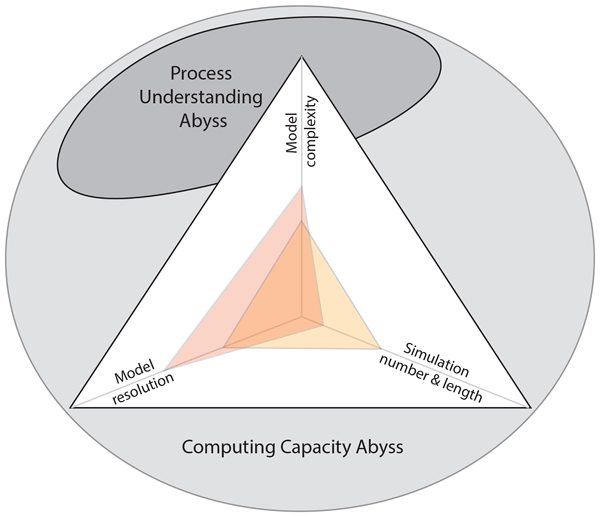
Stephanie Fiedler, Vaishali Naik, Fiona M. O'Connor, Christopher J. Smith, Paul Griffiths, Ryan J. Kramer, Toshihiko Takemura, Robert J. Allen, Ulas Im, Matthew Kasoar, Angshuman Modak, Steven Turnock, Apostolos Voulgarakis, Duncan Watson-Parris, Daniel M. Westervelt, Laura J. Wilcox, Alcide Zhao, William J. Collins, Michael Schulz, Gunnar Myhre, and Piers M. Forster
Geosci. Model Dev., 17, 2387–2417, https://doi.org/10.5194/gmd-17-2387-2024, https://doi.org/10.5194/gmd-17-2387-2024, 2024
Short summary
Short summary
Climate scientists want to better understand modern climate change. Thus, climate model experiments are performed and compared. The results of climate model experiments differ, as assessed in the latest Intergovernmental Panel on Climate Change (IPCC) assessment report. This article gives insights into the challenges and outlines opportunities for further improving the understanding of climate change. It is based on views of a group of experts in atmospheric composition–climate interactions.
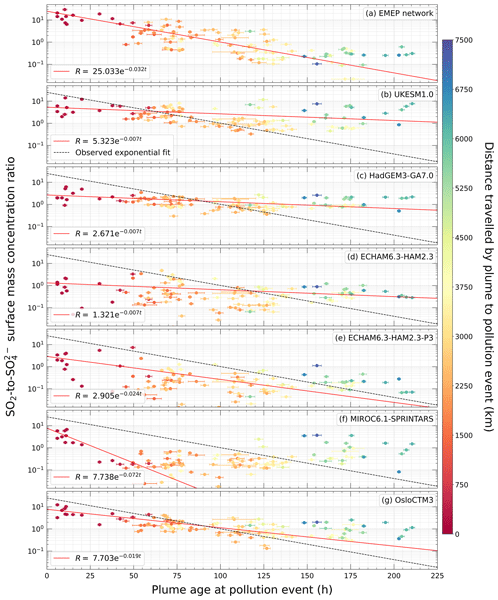
George Jordan, Florent Malavelle, Ying Chen, Amy Peace, Eliza Duncan, Daniel G. Partridge, Paul Kim, Duncan Watson-Parris, Toshihiko Takemura, David Neubauer, Gunnar Myhre, Ragnhild Skeie, Anton Laakso, and James Haywood
Atmos. Chem. Phys., 24, 1939–1960, https://doi.org/10.5194/acp-24-1939-2024, https://doi.org/10.5194/acp-24-1939-2024, 2024
Short summary
Short summary
The 2014–15 Holuhraun eruption caused a huge aerosol plume in an otherwise unpolluted region, providing a chance to study how aerosol alters cloud properties. This two-part study uses observations and models to quantify this relationship’s impact on the Earth’s energy budget. Part 1 suggests the models capture the observed spatial and chemical evolution of the plume, yet no model plume is exact. Understanding these differences is key for Part 2, where changes to cloud properties are explored.
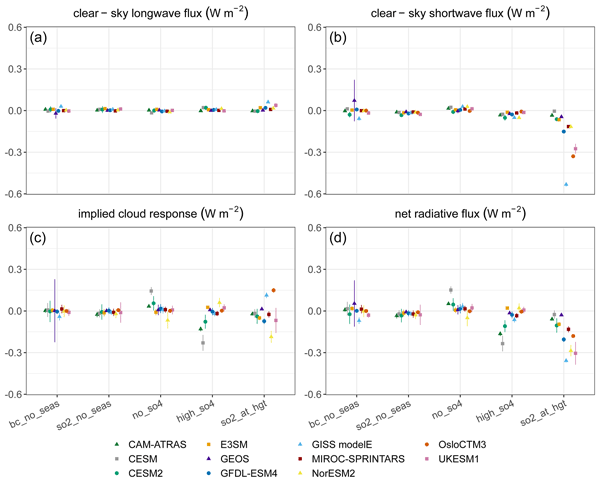
Hamza Ahsan, Hailong Wang, Jingbo Wu, Mingxuan Wu, Steven J. Smith, Susanne Bauer, Harrison Suchyta, Dirk Olivié, Gunnar Myhre, Hitoshi Matsui, Huisheng Bian, Jean-François Lamarque, Ken Carslaw, Larry Horowitz, Leighton Regayre, Mian Chin, Michael Schulz, Ragnhild Bieltvedt Skeie, Toshihiko Takemura, and Vaishali Naik
Atmos. Chem. Phys., 23, 14779–14799, https://doi.org/10.5194/acp-23-14779-2023, https://doi.org/10.5194/acp-23-14779-2023, 2023
Short summary
Short summary
We examine the impact of the assumed effective height of SO2 injection, SO2 and BC emission seasonality, and the assumed fraction of SO2 emissions injected as SO4 on climate and chemistry model results. We find that the SO2 injection height has a large impact on surface SO2 concentrations and, in some models, radiative flux. These assumptions are a
hiddensource of inter-model variability and may be leading to bias in some climate model results.
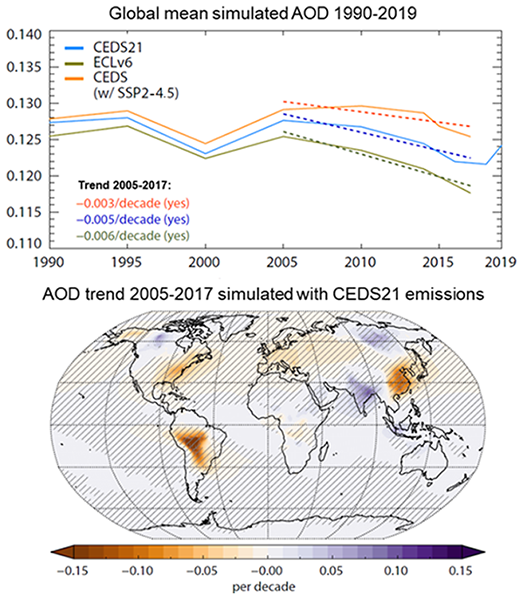
Marianne Tronstad Lund, Gunnar Myhre, Ragnhild Bieltvedt Skeie, Bjørn Hallvard Samset, and Zbigniew Klimont
Atmos. Chem. Phys., 23, 6647–6662, https://doi.org/10.5194/acp-23-6647-2023, https://doi.org/10.5194/acp-23-6647-2023, 2023
Short summary
Short summary
Here we show that differences, in magnitude and trend, between recent global anthropogenic emission inventories have a notable influence on simulated regional abundances of anthropogenic aerosol over the 1990–2019 period. This, in turn, affects estimates of radiative forcing. Our findings form a basis for comparing existing and upcoming studies on anthropogenic aerosols using different emission inventories.
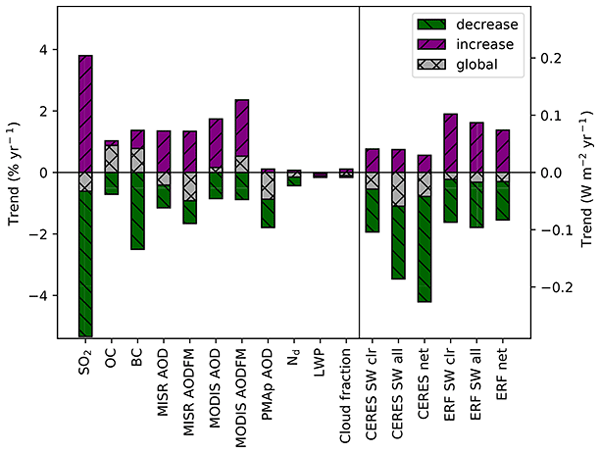
Johannes Quaas, Hailing Jia, Chris Smith, Anna Lea Albright, Wenche Aas, Nicolas Bellouin, Olivier Boucher, Marie Doutriaux-Boucher, Piers M. Forster, Daniel Grosvenor, Stuart Jenkins, Zbigniew Klimont, Norman G. Loeb, Xiaoyan Ma, Vaishali Naik, Fabien Paulot, Philip Stier, Martin Wild, Gunnar Myhre, and Michael Schulz
Atmos. Chem. Phys., 22, 12221–12239, https://doi.org/10.5194/acp-22-12221-2022, https://doi.org/10.5194/acp-22-12221-2022, 2022
Short summary
Short summary
Pollution particles cool climate and offset part of the global warming. However, they are washed out by rain and thus their effect responds quickly to changes in emissions. We show multiple datasets to demonstrate that aerosol emissions and their concentrations declined in many regions influenced by human emissions, as did the effects on clouds. Consequently, the cooling impact on the Earth energy budget became smaller. This change in trend implies a relative warming.
Qirui Zhong, Nick Schutgens, Guido van der Werf, Twan van Noije, Kostas Tsigaridis, Susanne E. Bauer, Tero Mielonen, Alf Kirkevåg, Øyvind Seland, Harri Kokkola, Ramiro Checa-Garcia, David Neubauer, Zak Kipling, Hitoshi Matsui, Paul Ginoux, Toshihiko Takemura, Philippe Le Sager, Samuel Rémy, Huisheng Bian, Mian Chin, Kai Zhang, Jialei Zhu, Svetlana G. Tsyro, Gabriele Curci, Anna Protonotariou, Ben Johnson, Joyce E. Penner, Nicolas Bellouin, Ragnhild B. Skeie, and Gunnar Myhre
Atmos. Chem. Phys., 22, 11009–11032, https://doi.org/10.5194/acp-22-11009-2022, https://doi.org/10.5194/acp-22-11009-2022, 2022
Short summary
Short summary
Aerosol optical depth (AOD) errors for biomass burning aerosol (BBA) are evaluated in 18 global models against satellite datasets. Notwithstanding biases in satellite products, they allow model evaluations. We observe large and diverse model biases due to errors in BBA. Further interpretations of AOD diversities suggest large biases exist in key processes for BBA which require better constraining. These results can contribute to further model improvement and development.
Maria Sand, Bjørn H. Samset, Gunnar Myhre, Jonas Gliß, Susanne E. Bauer, Huisheng Bian, Mian Chin, Ramiro Checa-Garcia, Paul Ginoux, Zak Kipling, Alf Kirkevåg, Harri Kokkola, Philippe Le Sager, Marianne T. Lund, Hitoshi Matsui, Twan van Noije, Dirk J. L. Olivié, Samuel Remy, Michael Schulz, Philip Stier, Camilla W. Stjern, Toshihiko Takemura, Kostas Tsigaridis, Svetlana G. Tsyro, and Duncan Watson-Parris
Atmos. Chem. Phys., 21, 15929–15947, https://doi.org/10.5194/acp-21-15929-2021, https://doi.org/10.5194/acp-21-15929-2021, 2021
Short summary
Short summary
Absorption of shortwave radiation by aerosols can modify precipitation and clouds but is poorly constrained in models. A total of 15 different aerosol models from AeroCom phase III have reported total aerosol absorption, and for the first time, 11 of these models have reported in a consistent experiment the contributions to absorption from black carbon, dust, and organic aerosol. Here, we document the model diversity in aerosol absorption.
Cited articles
Allan, R. P., Barlow, M., Byrne, M. P., Cherchi, A., Douville, H., Fowler, H. J., Gan, T. Y., Pendergrass, A. G., Rosenfeld, D., Swann, A. L. S, Wilcos, L. J., and Zolina, O.: Advances in understanding large-scale responses of the water cycle to climate change, Ann. NY Acad. Sci., 1472, 49–75, https://doi.org/10.1111/nyas.14337, 2020
Allen, M. R. and Ingram, W. J.: Constraints on future changes in climate and the hydrologic cycle, Nature, 419, 224–232, 2002.
Bi, D., Dix, M., Marsland, S., O'farrell, S., Sullivan, A., Bodman, R., Law, R., Harman, I., Srbinovsky, J., Rashid, H. A., Dobrohotoff, P., Mackallah, C., Yan, H., Hirst, A., Savita, A., Dias, F. B., Woodhouse, M., Fiedler, R., and Heerdegen, A.: Configuration and spin-up of ACCESS-CM2, the new generation Australian Community Climate and Earth System Simulator Coupled Model, Journal of Southern Hemisphere Earth Systems Science, 70, 225–251, https://doi.org/10.1071/ES19040, 2020.
Copernicus Climate Change Service: ERA5 monthly averaged data on single levels from 1940 to present, Copernicus Climate Change Service (C3S) Climate Data Store (CDS) [data set], https://doi.org/10.24381/cds.f17050d7, 2023.
Cornes, R. C., Van Der Schrier, G., Van Den Besselaar, E. J., and Jones, P. D.: An Ensemble Version of the E-OBS Temperature and Precipitation Data Sets, J. Geophys. Res.-Atmos., 123, 9391–9409, https://doi.org/10.1029/2017JD028200, 2018.
DeAngelis, A. M., Qu, X., Zelinka, M. D., and Hall, A.: An observational radiative constraint on hydrologic cycle intensification, Nature, 528, 249–253, https://doi.org/10.1038/nature15770, 2015.
Döscher, R., Acosta, M., Alessandri, A., Anthoni, P., Arsouze, T., Bergman, T., Bernardello, R., Boussetta, S., Caron, L.-P., Carver, G., Castrillo, M., Catalano, F., Cvijanovic, I., Davini, P., Dekker, E., Doblas-Reyes, F. J., Docquier, D., Echevarria, P., Fladrich, U., Fuentes-Franco, R., Gröger, M., v. Hardenberg, J., Hieronymus, J., Karami, M. P., Keskinen, J.-P., Koenigk, T., Makkonen, R., Massonnet, F., Ménégoz, M., Miller, P. A., Moreno-Chamarro, E., Nieradzik, L., van Noije, T., Nolan, P., O'Donnell, D., Ollinaho, P., van den Oord, G., Ortega, P., Prims, O. T., Ramos, A., Reerink, T., Rousset, C., Ruprich-Robert, Y., Le Sager, P., Schmith, T., Schrödner, R., Serva, F., Sicardi, V., Sloth Madsen, M., Smith, B., Tian, T., Tourigny, E., Uotila, P., Vancoppenolle, M., Wang, S., Wårlind, D., Willén, U., Wyser, K., Yang, S., Yepes-Arbós, X., and Zhang, Q.: The EC-Earth3 Earth system model for the Coupled Model Intercomparison Project 6, Geosci. Model Dev., 15, 2973–3020, https://doi.org/10.5194/gmd-15-2973-2022, 2022.
Douville, H., Raghavan, K., Renwick, J., Allan, R. P., Arias, P. A., Barlow, M., Cerezo-Mota, R., Cherchi, A., Gan, T. Y., Gergis, J., Jiang, D., Khan, A., Pokam Mba, W., Rosenfeld, D., Tierney, J., and Zolina, O.: Water Cycle Changes. In Climate Change 2021: The Physical Science Basis. Contribution of Working Group I to the Sixth Assessment Report of the Intergovernmental Panel on Climate Change, Cambridge University Press, Cambridge, United Kingdom and New York, NY, USA, 1055–1210, https://doi.org/10.1017/9781009157896.010, 2021.
Dyrrdal, A. V., Olsson, J., Médus, E., Arnbjerg-Nielsen, K., Post, P., Aòiskeviča, S., Thorndahl, S., Førland, E., Wern, L., Maciulyte, V., and Mäkelä, A.: Observed changes in heavy daily precipitation over the Nordic-Baltic region, J. Hydrol. Reg. Stud., 38, 100965, https://doi.org/10.1016/j.ejrh.2021.100965, 2021.
Eyring, V., Bony, S., Meehl, G. A., Senior, C. A., Stevens, B., Stouffer, R. J., and Taylor, K. E.: Overview of the Coupled Model Intercomparison Project Phase 6 (CMIP6) experimental design and organization, Geosci. Model Dev., 9, 1937–1958, https://doi.org/10.5194/gmd-9-1937-2016, 2016.
Gelaro, R. , McCarty, W., Suárez, M. J., Todling, R., Molod, A., Takacs, L., Randles, C. A., Darmenov, A., Bosilovich, M. G., Reichle, R., Wargan, K., Coy, L., Cullather, R., Draper, C., Akella, S., Buchard, V., Contay, A., da Silva, A. M., Gu, W., Kim, G.-K., Koster, R., Lucchesi, R., Merkova, D., Nielsen, J. E., Partyka, G., Pawson, S., Putman, W., Rienecker, M., Schubert, S. D., Sienkiewic, M., and Zhao, B.: The Modern-Era Retrospective Analysis for Research and Applications, Version 2 (MERRA-2), J. Climate, 30, 5419–5454, https://doi.org/10.1175/JCLI-D-16-0758.1, 2017.
Gjermundsen, A., Nummelin, A., Olivié, D., Bentsen, M., Seland, Ø., and Schulz, M.: Shutdown of Southern Ocean convection controls long-term greenhouse gas-induced warming, Nature Geoscience, 14, 724–731, https://doi.org/10.1038/s41561-021-00825-x, 2021.
Hänsel, S., Hoy, A., Brendel, C., and Maugeri, M.: Record summers in Europe: Variations in drought and heavy precipitation during 1901–2018, Int. J. Climatol., 42, 6235–6257, https://doi.org/10.1002/joc.7587, 2022.
Hersbach, H., Bell, B., Berrisford, P., Hirahara, S., Horányi, A., Muñoz-Sabater, J., Nicolas, J., Peubey, C., Radu, R., Schepers, D., Simmons, A., Soci, C., Abdalla, S., Abellan, X., Balsamo, G., Bechtold, P., Biavati, G., Bidlot, J., Bonavita, M., De Chiara, G., Dahlgren, P., Dee, D., Diamantakis, M., Dragani, R., Flemming, J., Forbes, R., Fuentes, M., Geer, A., Haimberger, L., Healy, S., Hogan, R. J., Hólm, E., Janisková, M., Keeley, S., Laloyaux, P., Lopez, P., Lupu, C., Radnoti, G., de Rosnay, P., Rozum, I., Vamborg, F., Villaume, S., and Thépaut, J. N.: The ERA5 global reanalysis, Q. J. R. Meteorol. Soc., 146, 1999–2049, https://doi.org/10.1002/qj.3803, 2020.
IPCC: Climate Change 2022 – Impacts, Adaptation and Vulnerability: Working Group II Contribution to the Sixth Assessment Report of the Intergovernmental Panel on Climate Change, 1st Edn., Cambridge University Press, https://doi.org/10.1017/9781009325844, 2021.
Irving, D., Hobbs, W., Church, J., and Zika, J.: A Mass and Energy Conservation Analysis of Drift in the CMIP6 Ensemble, J. Climate, 34, 3157–3170, https://doi.org/10.1175/JCLI-D-20-0281.1, 2021.
Lionello, P. and Scarascia, L.: The relation between climate change in the Mediterranean region and global warming, Reg. Environ. Change, 18, 1481–1493, https://doi.org/10.1007/s10113-018-1290-1, 2018.
Loeb, N. G., Mayer, M., Kato, S., Fasullo, J. T., Zuo, H., Senan, R., Lyman, J. M., Johnson, G. C., and Balmaseda, M.: Evaluating Twenty-Year Trends in Earth's Energy Flows From Observations and Reanalyses, J. Geophys. Res.-Atmos., 127, e2022JD036686, https://doi.org/10.1029/2022JD036686, 2022.
Loeb, N. G., Ham, S. H., Allan, R. P., Thorsen, T. J., Meyssignac, B., Kato, S., Johnson, G. C., and Lyman, J. M.: Observational Assessment of Changes in Earth's Energy Imbalance Since 2000, Surv. Geophys., 45, 1757–1783, https://doi.org/10.1007/s10712-024-09838-8, 2024.
Moseid, K. O., Schulz, M., Storelvmo, T., Julsrud, I. R., Olivié, D., Nabat, P., Wild, M., Cole, J. N. S., Takemura, T., Oshima, N., Bauer, S. E., and Gastineau, G.: Bias in CMIP6 models as compared to observed regional dimming and brightening, Atmos. Chem. Phys., 20, 16023–16040, https://doi.org/10.5194/acp-20-16023-2020, 2020.
Muller, C. J. and O'Gorman, P. A.: An energetic perspective on the regional response of precipitation to climate change, Nature Climate Change, 1, 266–271, https://doi.org/10.1038/nclimate1169, 2011.
Myhre, G., Jouan, C., Stjern, C. W., and Hodnebrog, Ø.: Strong contribution from sensible heat to global precipitation increase in climate models is not supported by observational based data, Frontiers in Climate, 6, 1383337, https://doi.org/10.3389/fclim.2024.1383337, 2024.
O'Gorman, P. A., Allan, R. P., Byrne, M. P., and Previdi, M.: Energetic Constraints on Precipitation Under Climate Change, Surv. Geophys., 33, 585–608, https://doi.org/10.1007/s10712-011-9159-6, 2012.
O'Neill, B. C., Tebaldi, C., van Vuuren, D. P., Eyring, V., Friedlingstein, P., Hurtt, G., Knutti, R., Kriegler, E., Lamarque, J.-F., Lowe, J., Meehl, G. A., Moss, R., Riahi, K., and Sanderson, B. M.: The Scenario Model Intercomparison Project (ScenarioMIP) for CMIP6, Geosci. Model Dev., 9, 3461–3482, https://doi.org/10.5194/gmd-9-3461-2016, 2016.
Palmer, T. E., Booth, B. B. B., and McSweeney, C. F.: How does the CMIP6 ensemble change the picture for European climate projections?, Environ. Res. Lett., 16, 094042, https://doi.org/10.1088/1748-9326/ac1ed9, 2021.
Pendergrass, A. G.: The Global-Mean Precipitation Response to CO2-Induced Warming in CMIP6 Models, Geophys. Res. Lett., 47, e2020GL089964, https://doi.org/10.1029/2020GL089964, 2020.
Rowell, D. P. and Jones, R. G.: Causes and uncertainty of future summer drying over Europe, Clim. Dynam., 27, 281–299, https://doi.org/10.1007/s00382-006-0125-9, 2006.
Seager, R., Osborn, T. J., Kushnir, Y., Simpson, I. R., Nakamura, J., and Liu, H.: Climate Variability and Change of Mediterranean-Type Climates, J. Climate, 32, 2887–2915, https://doi.org/10.1175/JCLI-D-18-0472.1, 2019.
Seland, Ø., Bentsen, M., Olivié, D., Toniazzo, T., Gjermundsen, A., Graff, L. S., Debernard, J. B., Gupta, A. K., He, Y.-C., Kirkevåg, A., Schwinger, J., Tjiputra, J., Aas, K. S., Bethke, I., Fan, Y., Griesfeller, J., Grini, A., Guo, C., Ilicak, M., Karset, I. H. H., Landgren, O., Liakka, J., Moseid, K. O., Nummelin, A., Spensberger, C., Tang, H., Zhang, Z., Heinze, C., Iversen, T., and Schulz, M.: Overview of the Norwegian Earth System Model (NorESM2) and key climate response of CMIP6 DECK, historical, and scenario simulations, Geosci. Model Dev., 13, 6165–6200, https://doi.org/10.5194/gmd-13-6165-2020, 2020.
Spinoni, J., Naumann, G., Vogt, J., and Barbosa, P.: European drought climatologies and trends based on a multi-indicator approach, Glob. Planet. Change, 127, 50–57, https://doi.org/10.1016/j.gloplacha.2015.01.012, 2015.
Spinoni, J., Barbosa, P., Bucchignani, E., Cassano, J., Cavazos, T., Christensen, J. H., Christensen, O. B., Coppola, E., Evans, J., Geyer, B., Giorgi, F., Hadjinicolaou, P., Jacob, D., Katzfey, J., Koenigk, T., Laprise, R., Lennard, C. J., Kurnaz, M. L., Delei, L. I., Llopart, M., McCormick, N., Naumann, G., Nikulin, G., Ozturk, T., Panitz, H. J., da Rocha, R. P., Rockel, B., Solman, S. A., Syktus, J., Tangang, F., Teichmann, C., Vautard, R., Vogt, J. V., Winger, K., Zittis, G., and Dosio, A.: Future Global Meteorological Drought Hot Spots: A Study Based on CORDEX Data, J. Climate, 33, 3635–3661, https://doi.org/10.1175/JCLI-D-19-0084.1, 2020.
Sun, Q., Zhang, X., Zwiers, F., Westra, S., and Alexander, L. V.: A Global, Continental, and Regional Analysis of Changes in Extreme Precipitation, J. Climate, 34, 243–258, https://doi.org/10.1175/JCLI-D-19-0892.1, 2021.
Wild, M.: The global energy balance as represented in CMIP6 climate models, Clim. Dynam., 55, 553–577, https://doi.org/10.1007/s00382-020-05282-7, 2020.
Wild, M. and Bosilovich, M. G.: The Global Energy Balance as Represented in Atmospheric Reanalyses, Surv. Geophys., 45, 1799–1825, https://doi.org/10.1007/s10712-024-09861-9, 2024.
Zelinka, M. D., Myers, T. A., McCoy, D. T., Po-Chedley, S., Caldwell, P. M., Ceppi, P., Klein, S. A., and Taylor, K. E.: Causes of Higher Climate Sensitivity in CMIP6 Models, Geophys. Res. Let., 47, e2019GL085782, https://doi.org/10.1029/2019GL085782, 2020.
Ziehn, T., Chamberlain, M. A., Law, R. M., Lenton, A., Bodman, R. W., Dix, M., Stevens, L., Wang, Y.-P., and Srbinovsky, J.: The Australian Earth System Model: ACCESS-ESM1.5, JSHESS, 70, 193–214, https://doi.org/10.1071/ES19035, 2020.
Short summary
In this study we analyze summer precipitation within a regional atmospheric budget framework over Europe. We identify the terms with the largest uncertainties for current change and future projections that cause the large spread in precipitation change, as sensible heat and dry static energy flux divergence in Earth System models. However, the Earth System models show consistent agreement that there will be an increase in drying over continental Europe with global warming.
In this study we analyze summer precipitation within a regional atmospheric budget framework...


Altmetrics
Final-revised paper
Preprint