
Articles | Volume 26, issue 21
https://doi.org/10.5194/acp-26-16013-2026
© Author(s) 2026. This work is distributed under
the Creative Commons Attribution 4.0 License.
the Creative Commons Attribution 4.0 License.
Special issue:
https://doi.org/10.5194/acp-26-16013-2026
© Author(s) 2026. This work is distributed under
the Creative Commons Attribution 4.0 License.
the Creative Commons Attribution 4.0 License.
Research article
| 
12 Nov 2026
Research article |
| 12 Nov 2026
| 12 Nov 2026
Methane in the Asian Monsoon anticyclone and global UTLS behavior observed in ACE-FTS satellite data

Zhejiang Carbon Neutral Innovation Institute & Zhejiang International Coorperation Base for Science and Technology on Carbon Emission Reduction and Monitoring, ZheJiang University of Technology, HangZhou, ZheJiang, China
William J. Randel
NSF National Center for Atmospheric Research, Boulder, CO, USA
Laura L. Pan
NSF National Center for Atmospheric Research, Boulder, CO, USA
State Key Laboratory of Atmospheric Environment and Extreme Meteorology, Institute of Atmospheric Physics, Chinese Academy of Sciences, Beijing, China
Shuangxi Fang
Zhejiang Carbon Neutral Innovation Institute & Zhejiang International Coorperation Base for Science and Technology on Carbon Emission Reduction and Monitoring, ZheJiang University of Technology, HangZhou, ZheJiang, China
Zhaonan Cai
State Key Laboratory of Atmospheric Environment and Extreme Meteorology, Institute of Atmospheric Physics, Chinese Academy of Sciences, Beijing, China
Teresa Campos
NSF National Center for Atmospheric Research, Boulder, CO, USA
Benjamin Gaubert
NSF National Center for Atmospheric Research, Boulder, CO, USA
Related authors
No articles found.
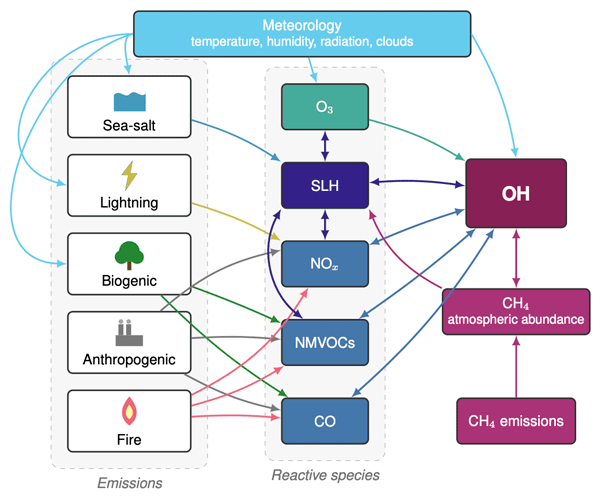
Benjamin Gaubert, Mohammad Amin Mirrezaei, Rafael P. Fernandez, Ivan Ortega, Louisa Emmons, John Orlando, Youmi Oh, Lori Bruhwiler, Shuo Chen, Gabrielle Pétron, Xin Lan, Claire Granier, Nicolas Zilbermann, Idir Bouarar, Guy P. Brasseur, Chuan Feng, Yangyang Xu, Alfonso Saiz-Lopez, Carlos A. Cuevas, and Avelino F. Arellano Jr.
Atmos. Chem. Phys., 26, 15683–15719, https://doi.org/10.5194/acp-26-15683-2026, https://doi.org/10.5194/acp-26-15683-2026, 2026
Short summary
Short summary
Atmospheric methane levels have been rising in ways scientists struggle to explain. Much of the uncertainty lies in a chemical that removes methane from the air. Using a detailed model of the Earth, we found that chemistry plays an important role in the fate of methane in the atmosphere, even small variations need to be included to track methane accurately.
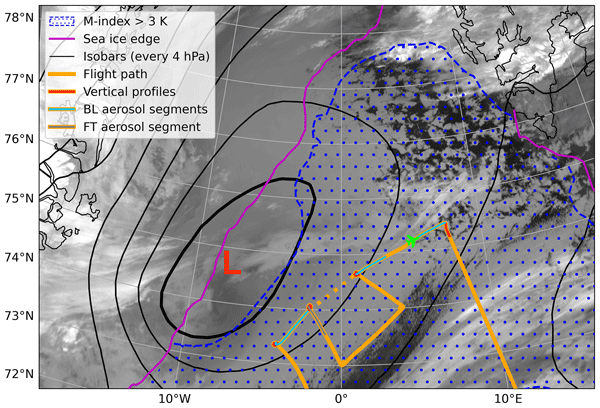
Samuel Ephraim, Paquita Zuidema, Aaron Bansemer, Lintong Cai, Markus Petters, Elise Rosky, Jefferson R. Snider, Zhien Wang, Sarah Woods, Kevin Barry, Theresa Campos, Owen Cruikshank, Sabine Eckhardt, Nikolaos Evangeliou, Romanos Foskinis, Jeffrey R. French, Bart Geerts, Coltin Grasmick, Silvia Henning, Varun Kumar, Andreas Massling, Camille Mavis, Greg M. McFarquhar, Athanasios Nenes, Gunnar Noer, Ryan Patnaude, Russell Perkins, Lise Lotte Sørensen, Henrik Skov, Tyler Tatro, Florian Tornow, and Lu Zhang
Atmos. Chem. Phys., 26, 15375–15404, https://doi.org/10.5194/acp-26-15375-2026, https://doi.org/10.5194/acp-26-15375-2026, 2026
Short summary
Short summary
The processes that establish how mixed-phase closed-cell clouds transition to open-cells are poorly known. First-of-its kind aircraft observations document such a transition in the presence of anomalously high aerosol concentrations, reducing the drop size thereby discouraging riming, over the Nordic Seas at cloud temperatures < −15 °C. Eventually, ice precipitation produces surface cold pools that appear to drive the convective transition, despite strong counteracting surface fluxes.
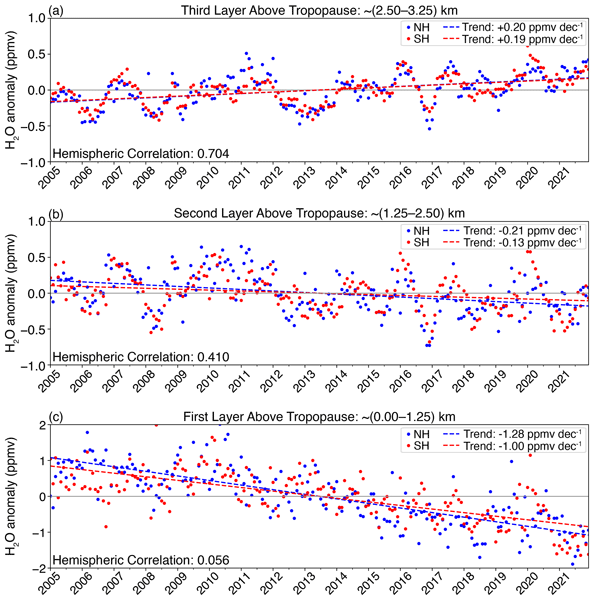
Emily Nicole Tinney, William J. Randel, and Jun Zhang
Atmos. Chem. Phys., 26, 15405–15422, https://doi.org/10.5194/acp-26-15405-2026, https://doi.org/10.5194/acp-26-15405-2026, 2026
Short summary
Short summary
Water vapor in the stratosphere plays an important role in Earth’s climate. The moist lower atmosphere and the drier stratosphere meet at the tropopause, creating a complex transition region. Using satellite observations and computer model simulations, this study examines how water vapor varies with height and over time near this boundary. We find that satellite datasets disagree on long-term changes, but consistently show that this transition layer extends about 2.5 kms into the stratosphere.
Ziyan Wu, Shaohui Li, Zihan Fan, Fuhao Li, Cunxin Hu, Kunpeng Zang, Shuangxi Fang, and Shuo Liu
EGUsphere, https://doi.org/10.5194/egusphere-2026-5269, https://doi.org/10.5194/egusphere-2026-5269, 2026
This preprint is open for discussion and under review for Biogeosciences (BG).
Short summary
Short summary
Urban lawns are expanding, but their greenhouse gas (GHG) dynamics remain unclear. We measured CO₂, CH₄, and N₂O fluxes from broad‑leaved (BF) and coniferous (CF) forest lawns. CF lawns emitted 2.3-fold more CO₂; both were net CH₄ sinks. CO₂ showed an atypical "daytime low, nighttime high" pattern. BF lawns respond mainly to temperature-nitrogen, while CF lawns are governed by moisture-microbes-carbon. Mowing effects were seasonal. These findings inform low‑carbon green space management.
Clara M. Nussbaumer, Colette L. Heald, Teresa Campos, Eric A. Kort, Paul B. Krummel, Ray L. Langenfelds, Monica Madronich, Kathryn McKain, Gabrielle Pétron, Ann Stavert, and Steven C. Wofsy
EGUsphere, https://doi.org/10.5194/egusphere-2026-5476, https://doi.org/10.5194/egusphere-2026-5476, 2026
Short summary
Short summary
Changes in emissions and climate increasingly impact the remote Southern Hemisphere and we know little about the consequences for the atmospheric composition. We investigate if rapid increases in the greenhouse gas methane since 2008 have led to increases in carbon monoxide. A global model confirms this hypothesis and shows that enhanced emissions from plants and rising temperatures also contribute to the trend. Observations are inconsistent and highlight the need for more accurate measurements.
Rongjin Song, Zhaonan Cai, Yi Liu, Dongxu Yang, Lin Wu, Longfei Tian, Denghui Hu, and Guohua Liu
EGUsphere, https://doi.org/10.5194/egusphere-2026-3549, https://doi.org/10.5194/egusphere-2026-3549, 2026
Short summary
Short summary
We tested whether the way a neural network is trained can improve satellite methane measurements. Using GOSAT-2 observations, we compared two training targets and checked the results against later satellite data and ground-based measurements. The model trained with the proxy-based target was more stable, more accurate across time, and less affected by changing observation conditions. This suggests that target design is key for building faster and more reliable methane retrievals.
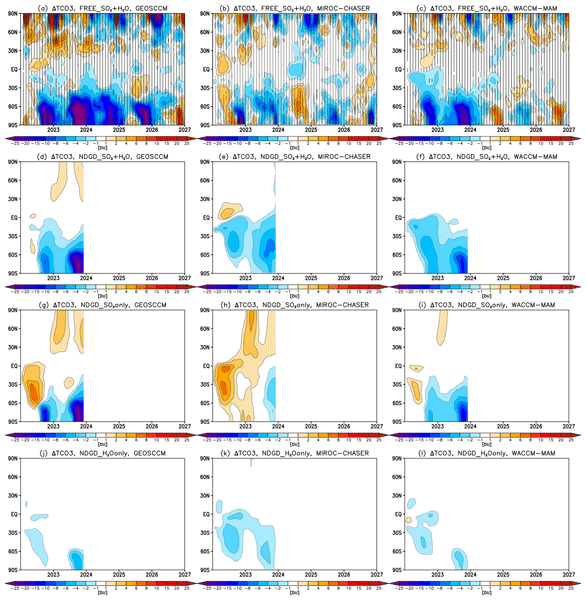
Ewa M. Bednarz, Valentina Aquila, Amy H. Butler, Peter Colarco, Eric Fleming, Freja F. Østerstrøm, David Plummer, Ilaria Quaglia, William Randel, Michelle L. Santee, Takashi Sekiya, Simone Tilmes, Xinyue Wang, Shingo Watanabe, Wandi Yu, Jun Zhang, Yunqian Zhu, and Zhihong Zhuo
Atmos. Chem. Phys., 26, 11355–11370, https://doi.org/10.5194/acp-26-11355-2026, https://doi.org/10.5194/acp-26-11355-2026, 2026
Short summary
Short summary
The 2022 Hunga eruption injected unprecedented quantities of water vapor into the stratosphere, alongside modest amounts of aerosol precursors. We assess its impacts on stratospheric ozone layer using a multi-model ensemble of chemistry-climate simulations. The results confirm the eruption's role in modulating SH (Southern Hemisphere) mid and high latitudes ozone abundances in the short term, and discuss the different chemical and dynamical processes driving those changes as well as the role of natural variability.
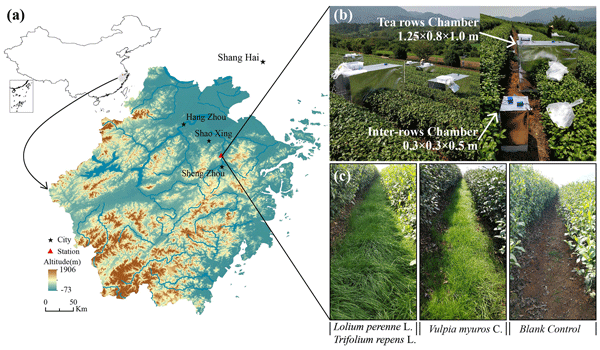
Shuo Liu, Zeping Jin, Ziyi Chen, Haolin Li, Zihan Fan, Shaohui Li, Haiwang Fu, Wei He, Kunpeng Zang, Shuangxi Fang, and Peng Yan
Biogeosciences, 23, 5497–5513, https://doi.org/10.5194/bg-23-5497-2026, https://doi.org/10.5194/bg-23-5497-2026, 2026
Short summary
Short summary
We studied how planting green manure between tea rows affects carbon dioxide release from tea fields. Mixing legume and grass species improved soil health, reduced emissions from tea rows, and stabilized carbon over time. Although inter-row areas released more carbon, overall emissions declined with continued intercropping. This shows that green manure can make tea farming more climate-friendly and sustainable.
Kimberlee Dubé, William Randel, Adam Bourassa, Susann Tegtmeier, Xinyue Wang, Jun Zhang, Eilidh Hlady, Meghan Brehon, Sergey Khaykin, and Douglas Degenstein
EGUsphere, https://doi.org/10.5194/egusphere-2026-4022, https://doi.org/10.5194/egusphere-2026-4022, 2026
Short summary
Short summary
The Hunga volcanic eruption in January 2022 increased the total stratospheric water vapor (H2O) mass by 10 %. The study uses satellite observations and models to track the transport of the Hunga H2O. We find that there is substantially more H2O in the observations than the model during 2024 and 2025, suggesting that the modelled transport across the lower stratosphere is too fast. We also find evidence that some of the H2O that reaches the lower stratosphere is mixed back into the tropics.
Mengrong Lu, Huilin Chen, Xun Zhang, Xuguang Chi, Chong Wei, Shuangxi Fang, Fenjuan Wang, Eleftherios Ioannidis, Friedemann Reum, Xinlu Wang, Prajal Pradhan, Wouter Peters, Klaus Hubacek, and Sander Houweling
EGUsphere, https://doi.org/10.5194/egusphere-2026-3879, https://doi.org/10.5194/egusphere-2026-3879, 2026
Short summary
Short summary
Effective methane mitigation requires accurate knowledge of the spatial and temporal distribution of sources and sinks. Using high-resolution atmospheric modeling and ground-based observations, we estimated methane emissions in East Asia, focusing on the Yangtze River Delta. Emissions are lower than most inventories suggest, but show a clear seasonal cycle, with summer peaks driven by rice cultivation and natural sources. This seasonality is critical for emission tracking and mitigation design.
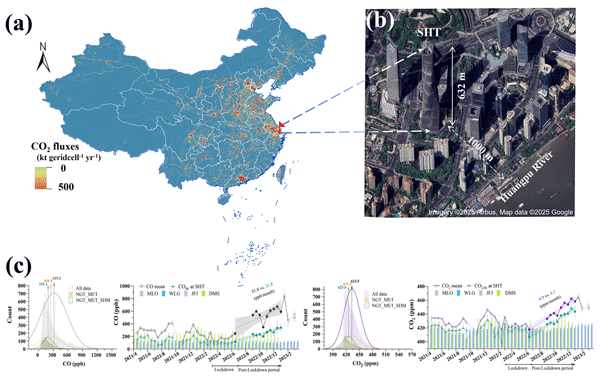
Shuang Fu, Xuemei Qing, Kunpeng Zang, Yi Lin, Shuo Liu, Yuanyuan Chen, Bingjiang Chen, Wei Gao, Martin Steinbacher, and Shuangxi Fang
Atmos. Chem. Phys., 26, 5477–5496, https://doi.org/10.5194/acp-26-5477-2026, https://doi.org/10.5194/acp-26-5477-2026, 2026
Short summary
Short summary
Urban carbon dynamics are critical for climate action, yet remote background monitoring often misses key details. This study utilized the unique vantage point of the 632-m Shanghai Tower to investigate carbon dioxide and carbon monoxide dynamics directly above the urban core. Our research confirms such elevated observations can effectively track metropolitan-scale footprint, revealing fossil fuels as the dominant source (85%) of excess carbon dioxide and supporting targeted reduction measures.
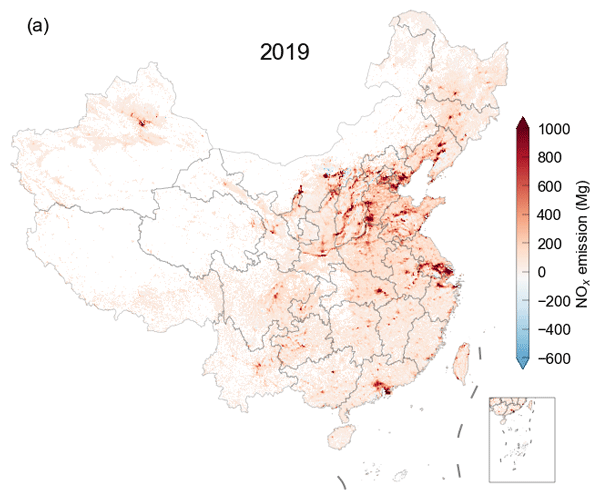
Ling Chen, Zhaonan Cai, Kang Sun, Yi Liu, Dongxu Yang, Mingming Li, and Lingyun Zhu
Earth Syst. Sci. Data, 18, 2749–2767, https://doi.org/10.5194/essd-18-2749-2026, https://doi.org/10.5194/essd-18-2749-2026, 2026
Short summary
Short summary
An appropriate representation of the NOx/NO2 ratio and NOx lifetime is essential for satellite-based NOx emissions estimation. We introduce a lightweight approach that applies variable NOx/NO2 ratios and piecewise fitting based on the directional derivative approach (DDA) to estimate regional and point-source NOx emissions. Our method directly captures nonlinear NOx chemistry and serves as an efficient alternative to both bottom-up inventories and computationally demanding top-down models.
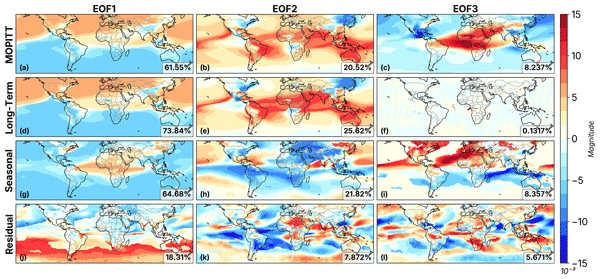
John McKinnon, Chayan Roychoudhury, Avelino Arellano Jr., and Benjamin Gaubert
Atmos. Meas. Tech., 19, 2529–2554, https://doi.org/10.5194/amt-19-2529-2026, https://doi.org/10.5194/amt-19-2529-2026, 2026
Short summary
Short summary
We use a statistical method called Empirical Orthogonal Function (EOF) analysis to analyze complex data, focusing on its strengths and limitations. This method is widely used in climate research, but its use in atmospheric chemistry is relatively new. While EOF analysis can be powerful, it may not be suitable for datasets that do not follow specific statistical assumptions. Our research provides recommendations to improve how we use this technique in analyzing atmospheric chemistry data.

Paul Konopka, Felix Ploeger, Francesco D'Amato, Teresa Campos, Marc von Hobe, Shawn B. Honomichl, Peter Hoor, Laura L. Pan, Michelle L. Santee, Silvia Viciani, Kaley A. Walker, and Michaela I. Hegglin
Atmos. Chem. Phys., 25, 17973–17996, https://doi.org/10.5194/acp-25-17973-2025, https://doi.org/10.5194/acp-25-17973-2025, 2025
Short summary
Short summary
We present an improved version of the Chemical Lagrangian Model of the Stratosphere (CLaMS-3.0), which better represents transport from the lower atmosphere to the upper troposphere and lower stratosphere. By refining grid resolution and improving convection representation, the model more accurately simulates carbon monoxide transport. Comparisons with satellite and in situ observations highlight its ability to capture seasonal variations and improve our understanding of atmospheric transport.
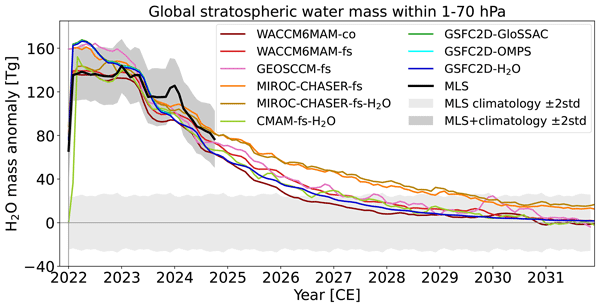
Zhihong Zhuo, Xinyue Wang, Yunqian Zhu, Wandi Yu, Ewa M. Bednarz, Eric Fleming, Peter R. Colarco, Shingo Watanabe, David Plummer, Georgiy Stenchikov, William Randel, Adam Bourassa, Valentina Aquila, Takashi Sekiya, Mark R. Schoeberl, Simone Tilmes, Jun Zhang, Paul J. Kushner, and Francesco S. R. Pausata
Atmos. Chem. Phys., 25, 13161–13176, https://doi.org/10.5194/acp-25-13161-2025, https://doi.org/10.5194/acp-25-13161-2025, 2025
Short summary
Short summary
The 2022 Hunga eruption caused unprecedented stratospheric water injection, triggering unique atmospheric impacts. This study combines observations and model simulations, projecting a stratospheric water vapor anomaly lasting 4–7 years, with significant temperature variations and ozone depletion in the upper atmosphere lasting 7–10 years. These findings offer critical insights into the role of stratospheric water vapor in shaping climate and atmospheric chemistry.
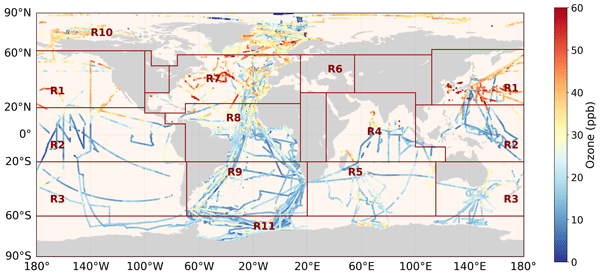
Yugo Kanaya, Roberto Sommariva, Alfonso Saiz-Lopez, Andrea Mazzeo, Theodore K. Koenig, Kaori Kawana, James E. Johnson, Aurélie Colomb, Pierre Tulet, Suzie Molloy, Ian E. Galbally, Rainer Volkamer, Anoop Mahajan, John W. Halfacre, Paul B. Shepson, Julia Schmale, Hélène Angot, Byron Blomquist, Matthew D. Shupe, Detlev Helmig, Junsu Gil, Meehye Lee, Sean C. Coburn, Ivan Ortega, Gao Chen, James Lee, Kenneth C. Aikin, David D. Parrish, John S. Holloway, Thomas B. Ryerson, Ilana B. Pollack, Eric J. Williams, Brian M. Lerner, Andrew J. Weinheimer, Teresa Campos, Frank M. Flocke, J. Ryan Spackman, Ilann Bourgeois, Jeff Peischl, Chelsea R. Thompson, Ralf M. Staebler, Amir A. Aliabadi, Wanmin Gong, Roeland Van Malderen, Anne M. Thompson, Ryan M. Stauffer, Debra E. Kollonige, Juan Carlos Gómez Martin, Masatomo Fujiwara, Katie Read, Matthew Rowlinson, Keiichi Sato, Junichi Kurokawa, Yoko Iwamoto, Fumikazu Taketani, Hisahiro Takashima, Mónica Navarro-Comas, Marios Panagi, and Martin G. Schultz
Earth Syst. Sci. Data, 17, 4901–4932, https://doi.org/10.5194/essd-17-4901-2025, https://doi.org/10.5194/essd-17-4901-2025, 2025
Short summary
Short summary
The first comprehensive dataset of tropospheric ozone over oceans/polar regions is presented, including 77 ship/buoy and 48 aircraft campaign observations (1977–2022, 0–5000 m altitude), supplemented by ozonesonde and surface data. Air masses isolated from land for 72+ hours are systematically selected as essentially oceanic. Among the 11 global regions, they show daytime decreases of 11–16 % in the tropics, while near-zero depletions are rare, unlike in the Arctic, implying different mechanisms.
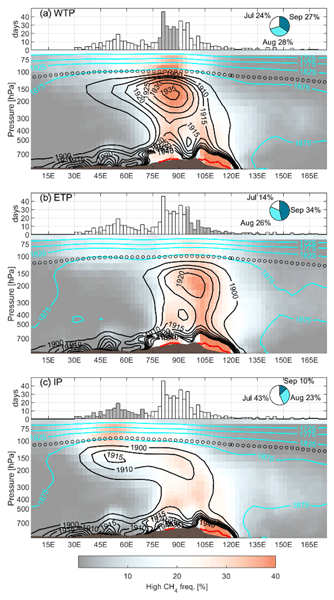
Sihong Zhu, Mengchu Tao, Zhaonan Cai, Yi Liu, Liang Feng, Pubu Sangmu, Zhongshui Yu, and Junji Cao
Atmos. Chem. Phys., 25, 9843–9857, https://doi.org/10.5194/acp-25-9843-2025, https://doi.org/10.5194/acp-25-9843-2025, 2025
Short summary
Short summary
Methane (CH4) emissions can be transported into the upper troposphere (UT) via the Asian monsoon anticyclone (AMA), driving CH4 enhancements. Whether emissions or upward transport is the dominant factor remains debated. We analyzed UT CH4 variability with AMA dynamics, finding strong ties between CH4 distribution and the AMA's east–west oscillation. When centered near 80° E, vertical transport largely enhances CH4 anomalies, with circulation effects 1–2 times greater than those of emissions.
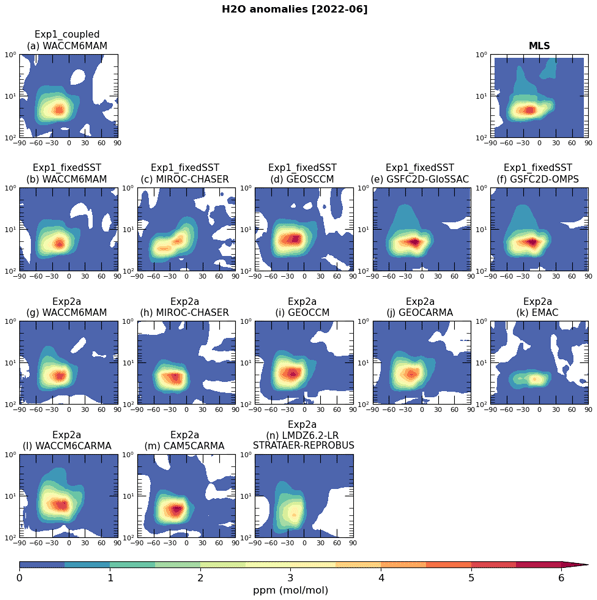
Yunqian Zhu, Hideharu Akiyoshi, Valentina Aquila, Elizabeth Asher, Ewa M. Bednarz, Slimane Bekki, Christoph Brühl, Amy H. Butler, Parker Case, Simon Chabrillat, Gabriel Chiodo, Margot Clyne, Peter R. Colarco, Sandip Dhomse, Lola Falletti, Eric Fleming, Ben Johnson, Andrin Jörimann, Mahesh Kovilakam, Gerbrand Koren, Ales Kuchar, Nicolas Lebas, Qing Liang, Cheng-Cheng Liu, Graham Mann, Michael Manyin, Marion Marchand, Olaf Morgenstern, Paul Newman, Luke D. Oman, Freja F. Østerstrøm, Yifeng Peng, David Plummer, Ilaria Quaglia, William Randel, Samuel Rémy, Takashi Sekiya, Stephen Steenrod, Timofei Sukhodolov, Simone Tilmes, Kostas Tsigaridis, Rei Ueyama, Daniele Visioni, Xinyue Wang, Shingo Watanabe, Yousuke Yamashita, Pengfei Yu, Wandi Yu, Jun Zhang, and Zhihong Zhuo
Geosci. Model Dev., 18, 5487–5512, https://doi.org/10.5194/gmd-18-5487-2025, https://doi.org/10.5194/gmd-18-5487-2025, 2025
Short summary
Short summary
To understand the climate impact of the 2022 Hunga volcanic eruption, we developed a climate model–observation comparison project. The paper describes the protocols and models that participate in the experiments. We designed several experiments to achieve our goals of this activity: (1) to evaluate the climate model performance and (2) to understand the Earth system responses to this eruption.
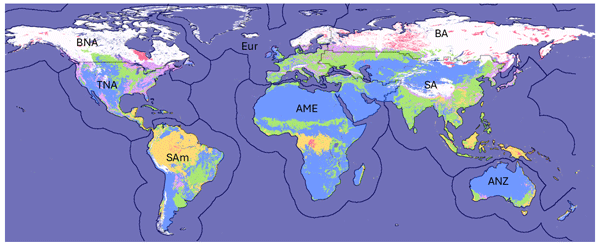
Cynthia H. Whaley, Tim Butler, Jose A. Adame, Rupal Ambulkar, Steve R. Arnold, Rebecca R. Buchholz, Benjamin Gaubert, Douglas S. Hamilton, Min Huang, Hayley Hung, Johannes W. Kaiser, Jacek W. Kaminski, Christoph Knote, Gerbrand Koren, Jean-Luc Kouassi, Meiyun Lin, Tianjia Liu, Jianmin Ma, Kasemsan Manomaiphiboon, Elisa Bergas Masso, Jessica L. McCarty, Mariano Mertens, Mark Parrington, Helene Peiro, Pallavi Saxena, Saurabh Sonwani, Vanisa Surapipith, Damaris Y. T. Tan, Wenfu Tang, Veerachai Tanpipat, Kostas Tsigaridis, Christine Wiedinmyer, Oliver Wild, Yuanyu Xie, and Paquita Zuidema
Geosci. Model Dev., 18, 3265–3309, https://doi.org/10.5194/gmd-18-3265-2025, https://doi.org/10.5194/gmd-18-3265-2025, 2025
Short summary
Short summary
The multi-model experiment design of the HTAP3 Fires project takes a multi-pollutant approach to improving our understanding of transboundary transport of wildland fire and agricultural burning emissions and their impacts. The experiments are designed with the goal of answering science policy questions related to fires. The options for the multi-model approach, including inputs, outputs, and model setup, are discussed, and the official recommendations for the project are presented.
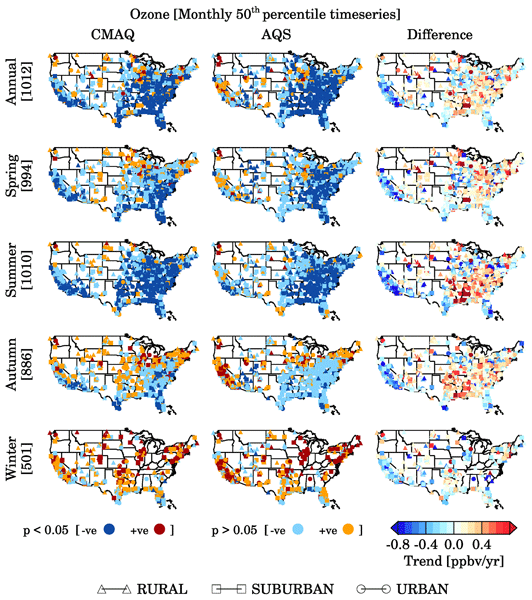
Rajesh Kumar, Piyush Bhardwaj, Cenlin He, Jennifer Boehnert, Forrest Lacey, Stefano Alessandrini, Kevin Sampson, Matthew Casali, Scott Swerdlin, Olga Wilhelmi, Gabriele G. Pfister, Benjamin Gaubert, and Helen Worden
Earth Syst. Sci. Data, 17, 1807–1834, https://doi.org/10.5194/essd-17-1807-2025, https://doi.org/10.5194/essd-17-1807-2025, 2025
Short summary
Short summary
We have created a 14-year hourly air quality dataset at 12 km resolution by combining satellite observations of atmospheric composition with air quality models over the contiguous United States (CONUS). The dataset has been found to reproduce key observed features of air quality over the CONUS. To enable easy visualization and interpretation of county-level air quality measures and trends by stakeholders, an ArcGIS air quality dashboard has also been developed.
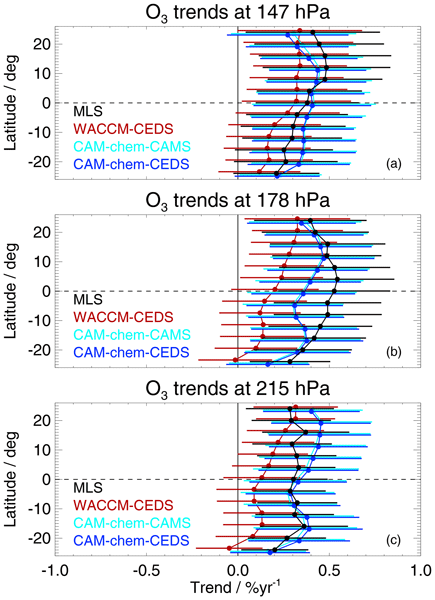
Lucien Froidevaux, Douglas E. Kinnison, Benjamin Gaubert, Michael J. Schwartz, Nathaniel J. Livesey, William G. Read, Charles G. Bardeen, Jerry R. Ziemke, and Ryan A. Fuller
Atmos. Chem. Phys., 25, 597–624, https://doi.org/10.5194/acp-25-597-2025, https://doi.org/10.5194/acp-25-597-2025, 2025
Short summary
Short summary
We compare observed changes in ozone (O3) and carbon monoxide (CO) in the tropical upper troposphere (10–15 km altitude) for 2005–2020 to predictions from model simulations that track the evolution of natural and industrial emissions transported to this region. An increasing trend in measured upper-tropospheric O3 is well matched by model trends. We find that changes in modeled industrial CO surface emissions lead to better model agreement with observed slight decreases in upper-tropospheric CO.
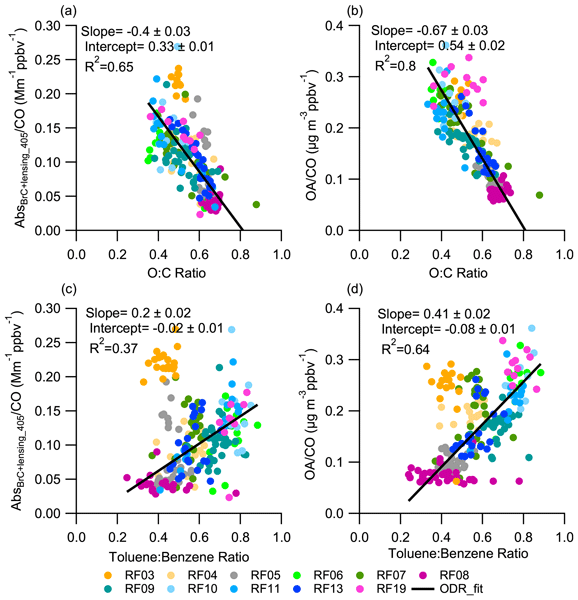
Yingjie Shen, Rudra P. Pokhrel, Amy P. Sullivan, Ezra J. T. Levin, Lauren A. Garofalo, Delphine K. Farmer, Wade Permar, Lu Hu, Darin W. Toohey, Teresa Campos, Emily V. Fischer, and Shane M. Murphy
Atmos. Chem. Phys., 24, 12881–12901, https://doi.org/10.5194/acp-24-12881-2024, https://doi.org/10.5194/acp-24-12881-2024, 2024
Short summary
Short summary
The magnitude and evolution of brown carbon (BrC) absorption remain unclear, with uncertainty in climate models. Data from the WE-CAN airborne experiment show that model parameterizations overestimate the mass absorption cross section (MAC) of BrC. Observed decreases in BrC absorption with chemical markers are due to decreasing organic aerosol (OA) mass rather than a decreasing BrC MAC, which is currently implemented in models. Water-soluble BrC contributes 23 % of total absorption at 660 nm.
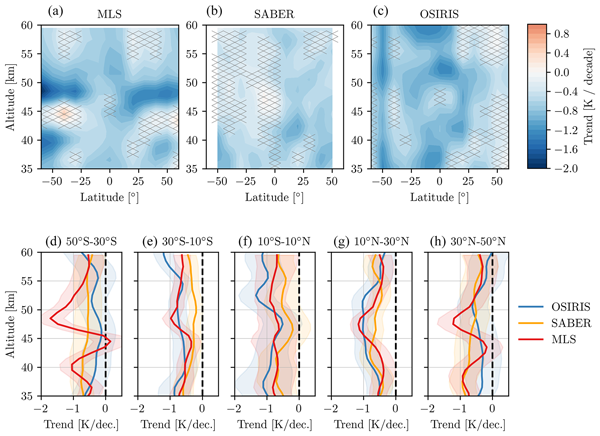
Kimberlee Dubé, Susann Tegtmeier, Adam Bourassa, Daniel Zawada, Douglas Degenstein, William Randel, Sean Davis, Michael Schwartz, Nathaniel Livesey, and Anne Smith
Atmos. Chem. Phys., 24, 12925–12941, https://doi.org/10.5194/acp-24-12925-2024, https://doi.org/10.5194/acp-24-12925-2024, 2024
Short summary
Short summary
Greenhouse gas emissions that warm the troposphere also result in stratospheric cooling. The cooling rate is difficult to quantify above 35 km due to a deficit of long-term observational data with high vertical resolution in this region. We use satellite observations from several instruments, including a new temperature product from OSIRIS, to show that the upper stratosphere, from 35–60 km, cooled by 0.5 to 1 K per decade over 2005–2021 and by 0.6 K per decade over 1979–2021.
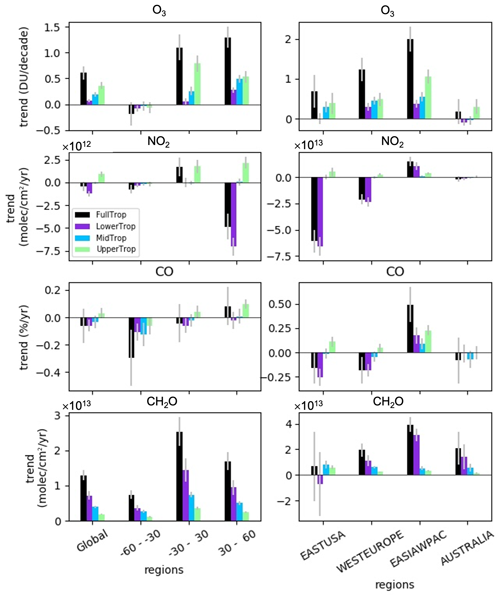
Yasin Elshorbany, Jerald R. Ziemke, Sarah Strode, Hervé Petetin, Kazuyuki Miyazaki, Isabelle De Smedt, Kenneth Pickering, Rodrigo J. Seguel, Helen Worden, Tamara Emmerichs, Domenico Taraborrelli, Maria Cazorla, Suvarna Fadnavis, Rebecca R. Buchholz, Benjamin Gaubert, Néstor Y. Rojas, Thiago Nogueira, Thérèse Salameh, and Min Huang
Atmos. Chem. Phys., 24, 12225–12257, https://doi.org/10.5194/acp-24-12225-2024, https://doi.org/10.5194/acp-24-12225-2024, 2024
Short summary
Short summary
We investigated tropospheric ozone spatial variability and trends from 2005 to 2019 and related those to ozone precursors on global and regional scales. We also investigate the spatiotemporal characteristics of the ozone formation regime in relation to ozone chemical sources and sinks. Our analysis is based on remote sensing products of the tropospheric column of ozone and its precursors, nitrogen dioxide, formaldehyde, and total column CO, as well as ozonesonde data and model simulations.
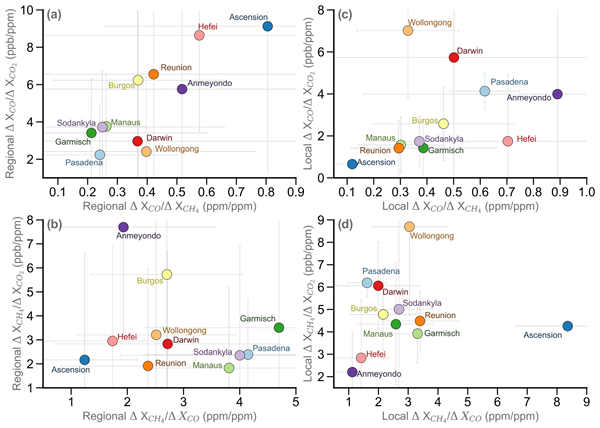
Kavitha Mottungan, Chayan Roychoudhury, Vanessa Brocchi, Benjamin Gaubert, Wenfu Tang, Mohammad Amin Mirrezaei, John McKinnon, Yafang Guo, David W. T. Griffith, Dietrich G. Feist, Isamu Morino, Mahesh K. Sha, Manvendra K. Dubey, Martine De Mazière, Nicholas M. Deutscher, Paul O. Wennberg, Ralf Sussmann, Rigel Kivi, Tae-Young Goo, Voltaire A. Velazco, Wei Wang, and Avelino F. Arellano Jr.
Atmos. Meas. Tech., 17, 5861–5885, https://doi.org/10.5194/amt-17-5861-2024, https://doi.org/10.5194/amt-17-5861-2024, 2024
Short summary
Short summary
A combination of data analysis techniques is introduced to separate local and regional influences on observed levels of carbon dioxide, carbon monoxide, and methane from an established ground-based remote sensing network. We take advantage of the covariations in these trace gases to identify the dominant type of sources driving these levels. Applying these methods in conjunction with existing approaches to other datasets can better address uncertainties in identifying sources and sinks.
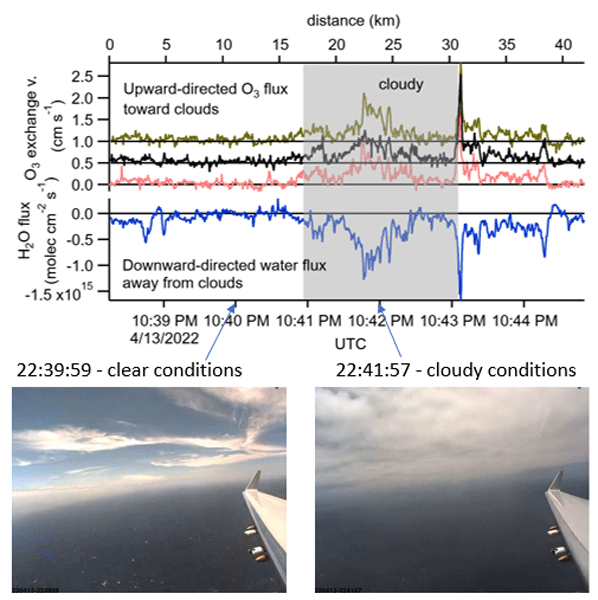
Randall Chiu, Florian Obersteiner, Alessandro Franchin, Teresa Campos, Adriana Bailey, Christopher Webster, Andreas Zahn, and Rainer Volkamer
Atmos. Meas. Tech., 17, 5731–5746, https://doi.org/10.5194/amt-17-5731-2024, https://doi.org/10.5194/amt-17-5731-2024, 2024
Short summary
Short summary
The ozone sink into oceans and marine clouds is seldom studied and highly uncertain. Calculations suggest O3 destruction at aqueous surfaces (ocean, droplets) may be strongly accelerated, but field evidence is missing. Here we compare three fast airborne O3 instruments to measure eddy covariance fluxes of O3 over the remote ocean, in clear and cloudy air. We find O3 fluxes below clouds are consistently directed into clouds, while O3 fluxes into oceans are much smaller and spatially variable.
Xiaoyu Ren, Dongxu Yang, Yi Liu, Yong Wang, Ting Wang, Zhaonan Cai, Lu Yao, Tonghui Zhao, Jing Wang, and Zhe Jiang
Atmos. Meas. Tech. Discuss., https://doi.org/10.5194/amt-2024-49, https://doi.org/10.5194/amt-2024-49, 2024
Publication in AMT not foreseen
Short summary
Short summary
We aim to verify the performance of the low-cost CO2 sensors (LUCCN). The measurements show that accuracies of LUCCNs are higher than the medium accuracy standard. And LUCCNs are also sensitive to the changes of CO2 concentrations. These results prove that the LUCCN can measure CO2 concentrations effectively, which means that LUCCN is a powerful tool to achieve the CO2 monitoring network.
Wenfu Tang, Benjamin Gaubert, Louisa Emmons, Daniel Ziskin, Debbie Mao, David Edwards, Avelino Arellano, Kevin Raeder, Jeffrey Anderson, and Helen Worden
Atmos. Meas. Tech., 17, 1941–1963, https://doi.org/10.5194/amt-17-1941-2024, https://doi.org/10.5194/amt-17-1941-2024, 2024
Short summary
Short summary
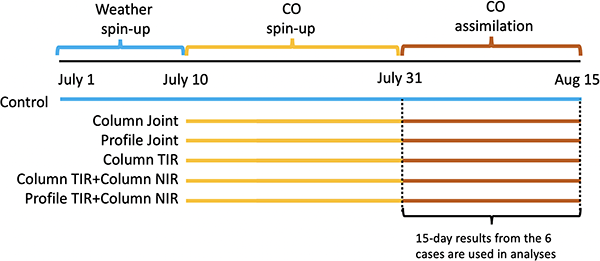
We assimilate different MOPITT CO products to understand the impact of (1) assimilating multispectral and joint retrievals versus single spectral products, (2) assimilating satellite profile products versus column products, and (3) assimilating multispectral and joint retrievals versus assimilating individual products separately.
Adrien Deroubaix, Marco Vountas, Benjamin Gaubert, Maria Dolores Andrés Hernández, Stephan Borrmann, Guy Brasseur, Bruna Holanda, Yugo Kanaya, Katharina Kaiser, Flora Kluge, Ovid Oktavian Krüger, Inga Labuhn, Michael Lichtenstern, Klaus Pfeilsticker, Mira Pöhlker, Hans Schlager, Johannes Schneider, Guillaume Siour, Basudev Swain, Paolo Tuccella, Kameswara S. Vinjamuri, Mihalis Vrekoussis, Benjamin Weyland, and John P. Burrows
EGUsphere, https://doi.org/10.5194/egusphere-2024-516, https://doi.org/10.5194/egusphere-2024-516, 2024
Preprint archived
Short summary
Short summary
This study assesses atmospheric composition using air quality models during aircraft campaigns in Europe and Asia, focusing on carbonaceous aerosols and trace gases. While carbon monoxide is well modeled, other pollutants have moderate to weak agreement with observations. Wind speed modeling is reliable for identifying pollution plumes, where models tend to overestimate concentrations. This highlights challenges in accurately modeling aerosol and trace gas composition, particularly in cities.
Adrien Deroubaix, Marco Vountas, Benjamin Gaubert, Maria Dolores Andrés Hernández, Stephan Borrmann, Guy Brasseur, Bruna Holanda, Yugo Kanaya, Katharina Kaiser, Flora Kluge, Ovid Oktavian Krüger, Inga Labuhn, Michael Lichtenstern, Klaus Pfeilsticker, Mira Pöhlker, Hans Schlager, Johannes Schneider, Guillaume Siour, Basudev Swain, Paolo Tuccella, Kameswara S. Vinjamuri, Mihalis Vrekoussis, Benjamin Weyland, and John P. Burrows
EGUsphere, https://doi.org/10.5194/egusphere-2024-521, https://doi.org/10.5194/egusphere-2024-521, 2024
Preprint archived
Short summary
Short summary
This study explores the proportional relationships between carbonaceous aerosols (black and organic carbon) and trace gases using airborne measurements from two campaigns in Europe and East Asia. Differences between regions were found, but air quality models struggled to reproduce them accurately. We show that these proportional relationships can help to constrain models and can be used to infer aerosol concentrations from satellite observations of trace gases, especially in urban areas.
Wenfu Tang, Louisa K. Emmons, Helen M. Worden, Rajesh Kumar, Cenlin He, Benjamin Gaubert, Zhonghua Zheng, Simone Tilmes, Rebecca R. Buchholz, Sara-Eva Martinez-Alonso, Claire Granier, Antonin Soulie, Kathryn McKain, Bruce C. Daube, Jeff Peischl, Chelsea Thompson, and Pieternel Levelt
Geosci. Model Dev., 16, 6001–6028, https://doi.org/10.5194/gmd-16-6001-2023, https://doi.org/10.5194/gmd-16-6001-2023, 2023
Short summary
Short summary
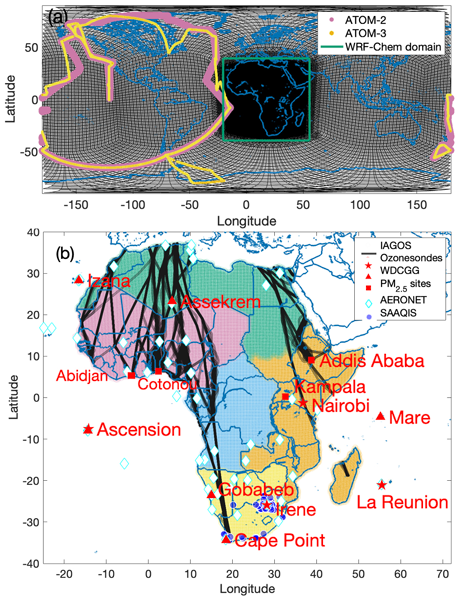
The new MUSICAv0 model enables the study of atmospheric chemistry across all relevant scales. We develop a MUSICAv0 grid for Africa. We evaluate MUSICAv0 with observations and compare it with a previously used model – WRF-Chem. Overall, the performance of MUSICAv0 is comparable to WRF-Chem. Based on model–satellite discrepancies, we find that future field campaigns in an eastern African region (30°E–45°E, 5°S–5°N) could substantially improve the predictive skill of air quality models.
Yunqian Zhu, Robert W. Portmann, Douglas Kinnison, Owen Brian Toon, Luis Millán, Jun Zhang, Holger Vömel, Simone Tilmes, Charles G. Bardeen, Xinyue Wang, Stephanie Evan, William J. Randel, and Karen H. Rosenlof
Atmos. Chem. Phys., 23, 13355–13367, https://doi.org/10.5194/acp-23-13355-2023, https://doi.org/10.5194/acp-23-13355-2023, 2023
Short summary
Short summary
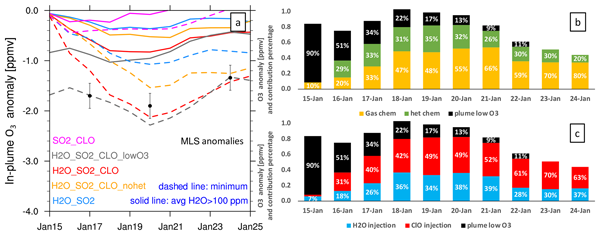
The 2022 Hunga Tonga eruption injected a large amount of water into the stratosphere. Ozone depletion was observed inside the volcanic plume. Chlorine and water vapor injected by this eruption exceeded the normal range, which made the ozone chemistry during this event occur at a higher temperature than polar ozone depletion. Unlike polar ozone chemistry where chlorine nitrate is more important, hypochlorous acid plays a large role in the in-plume chlorine balance and heterogeneous processes.
Kimberlee Dubé, Susann Tegtmeier, Adam Bourassa, Daniel Zawada, Douglas Degenstein, Patrick E. Sheese, Kaley A. Walker, and William Randel
Atmos. Chem. Phys., 23, 13283–13300, https://doi.org/10.5194/acp-23-13283-2023, https://doi.org/10.5194/acp-23-13283-2023, 2023
Short summary
Short summary
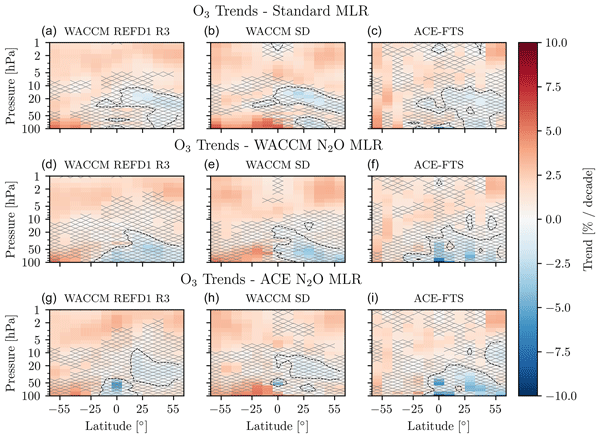
This paper presents a technique for understanding the causes of long-term changes in stratospheric composition. By using N2O as a proxy for stratospheric circulation in the model used to calculated trends, it is possible to separate the effects of dynamics and chemistry on observed trace gas trends. We find that observed HCl increases are due to changes in the stratospheric circulation, as are O3 decreases above 30 hPa in the Northern Hemisphere.
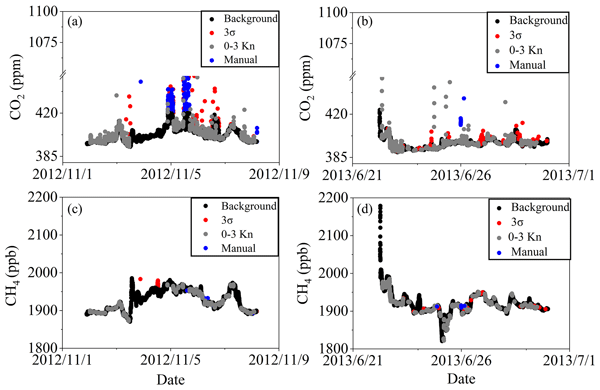
Jiaxin Li, Kunpeng Zang, Yi Lin, Yuanyuan Chen, Shuo Liu, Shanshan Qiu, Kai Jiang, Xuemei Qing, Haoyu Xiong, Haixiang Hong, Shuangxi Fang, Honghui Xu, and Yujun Jiang
Atmos. Meas. Tech., 16, 4757–4768, https://doi.org/10.5194/amt-16-4757-2023, https://doi.org/10.5194/amt-16-4757-2023, 2023
Short summary
Short summary
Based on observed data of CO2 and CH4 and meteorological parameters over the Yellow Sea in November 2012 and June 2013, a data process and quality control method was optimized and established to filter the data influenced by multiple factors. Spatial and seasonal variations in CO2 and CH4 mixing ratios were mainly controlled by the East Asian Monsoon, while the influence of air–sea exchange was slight.
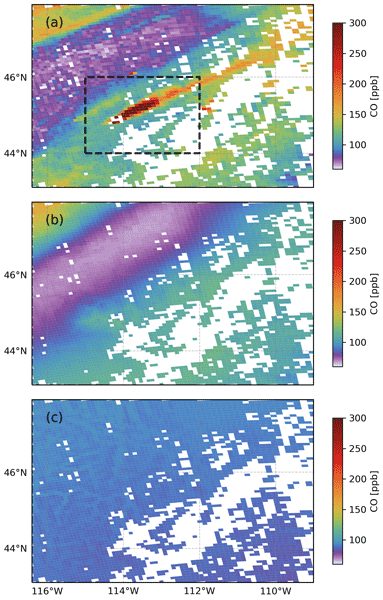
Tobias Borsdorff, Teresa Campos, Natalie Kille, Kyle J. Zarzana, Rainer Volkamer, and Jochen Landgraf
Atmos. Meas. Tech., 16, 3027–3038, https://doi.org/10.5194/amt-16-3027-2023, https://doi.org/10.5194/amt-16-3027-2023, 2023
Short summary
Short summary
ECMWF plans to assimilate TROPOMI CO with their CAMS-IFS model. This will constrain the total column and the vertical CO distribution of the model. To show this, we combine individual TROPOMI CO column retrievals with different vertical sensitivities and obtain a vertical CO concentration profile. We test the approach on three CO pollution events in comparison with CAMS-IFS simulations that do not assimilate TROPOMI CO data and in situ airborne measurements of the BB-FLUX campaign.
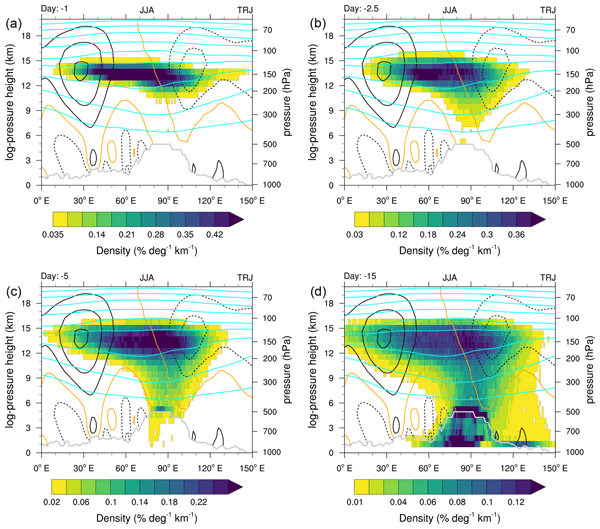
Matthias Nützel, Sabine Brinkop, Martin Dameris, Hella Garny, Patrick Jöckel, Laura L. Pan, and Mijeong Park
Atmos. Chem. Phys., 22, 15659–15683, https://doi.org/10.5194/acp-22-15659-2022, https://doi.org/10.5194/acp-22-15659-2022, 2022
Short summary
Short summary
During the Asian summer monsoon season, a large high-pressure system is present at levels close to the tropopause above Asia. We analyse how air masses are transported from surface levels to this high-pressure system, which shows distinct features from the surrounding air masses. To this end, we employ multiannual data from two complementary models that allow us to analyse the climatology as well as the interannual and intraseasonal variability of these transport pathways.
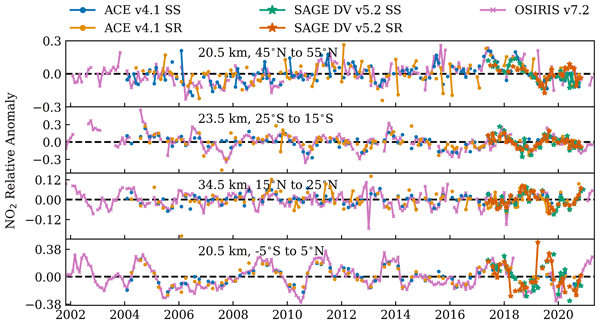
Kimberlee Dubé, Daniel Zawada, Adam Bourassa, Doug Degenstein, William Randel, David Flittner, Patrick Sheese, and Kaley Walker
Atmos. Meas. Tech., 15, 6163–6180, https://doi.org/10.5194/amt-15-6163-2022, https://doi.org/10.5194/amt-15-6163-2022, 2022
Short summary
Short summary
Satellite observations are important for monitoring changes in atmospheric composition. Here we describe an improved version of the NO2 retrieval for the Optical Spectrograph and InfraRed Imager System. The resulting NO2 profiles are compared to those from the Atmospheric Chemistry Experiment – Fourier Transform Spectrometer and the Stratospheric Aerosol and Gas Experiment III on the International Space Station. All datasets agree within 20 % throughout the stratosphere.
Amy P. Sullivan, Rudra P. Pokhrel, Yingjie Shen, Shane M. Murphy, Darin W. Toohey, Teresa Campos, Jakob Lindaas, Emily V. Fischer, and Jeffrey L. Collett Jr.
Atmos. Chem. Phys., 22, 13389–13406, https://doi.org/10.5194/acp-22-13389-2022, https://doi.org/10.5194/acp-22-13389-2022, 2022
Short summary
Short summary
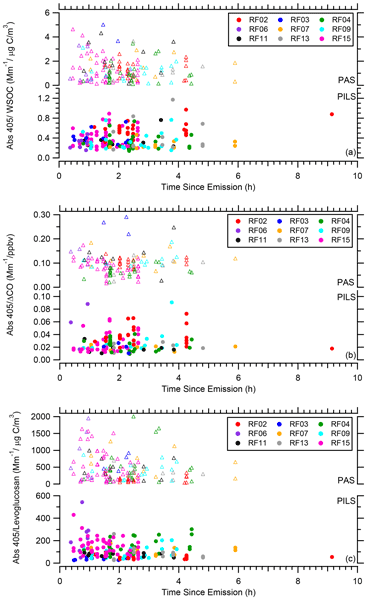
During the WE-CAN (Western Wildfire Experiment for Cloud Chemistry, Aerosol Absorption and Nitrogen) study, brown carbon (BrC) absorption was measured on the NSF/NCAR C-130 aircraft using a particle-into-liquid sampler and photoacoustic aerosol absorption spectrometer. Approximately 45 % of the BrC absorption in wildfires was observed to be due to water-soluble species. The ratio of BrC absorption to WSOC or ΔCO showed no clear dependence on fire dynamics or the time since emission over 9 h.
Eric A. Ray, Elliot L. Atlas, Sue Schauffler, Sofia Chelpon, Laura Pan, Harald Bönisch, and Karen H. Rosenlof
Atmos. Chem. Phys., 22, 6539–6558, https://doi.org/10.5194/acp-22-6539-2022, https://doi.org/10.5194/acp-22-6539-2022, 2022
Short summary
Short summary
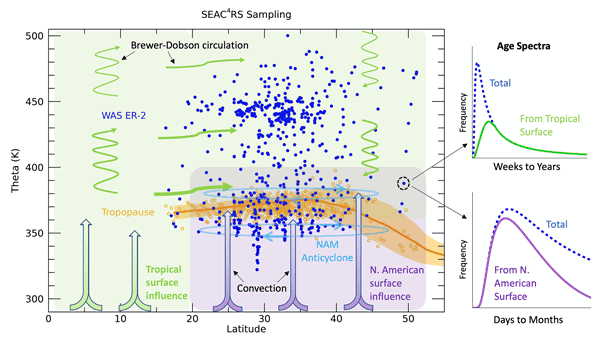
The movement of air masses and the trace gases they contain from the Earth’s surface into the upper troposphere and lower stratosphere (UTLS) can have important implications for the radiative and chemical balance of the atmosphere. In this study we build on recent techniques and use new ones to estimate a range of transport diagnostics based on simultaneously measured trace gases in the UTLS during the monsoon season in North America.
Shima Bahramvash Shams, Von P. Walden, James W. Hannigan, William J. Randel, Irina V. Petropavlovskikh, Amy H. Butler, and Alvaro de la Cámara
Atmos. Chem. Phys., 22, 5435–5458, https://doi.org/10.5194/acp-22-5435-2022, https://doi.org/10.5194/acp-22-5435-2022, 2022
Short summary
Short summary
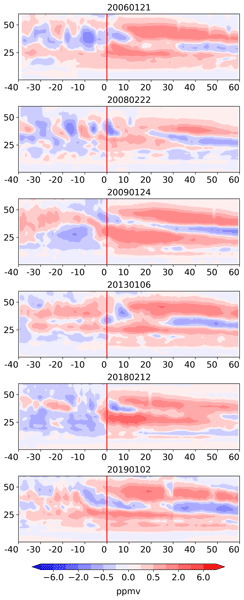
Large-scale atmospheric circulation has a strong influence on ozone in the Arctic, and certain anomalous dynamical events, such as sudden stratospheric warmings, cause dramatic alterations of the large-scale circulation. A reanalysis model is evaluated and then used to investigate the impact of sudden stratospheric warmings on mid-atmospheric ozone. Results show that the position of the cold jet stream over the Arctic before these events influences the variability of ozone.
Carlos Alberti, Frank Hase, Matthias Frey, Darko Dubravica, Thomas Blumenstock, Angelika Dehn, Paolo Castracane, Gregor Surawicz, Roland Harig, Bianca C. Baier, Caroline Bès, Jianrong Bi, Hartmut Boesch, André Butz, Zhaonan Cai, Jia Chen, Sean M. Crowell, Nicholas M. Deutscher, Dragos Ene, Jonathan E. Franklin, Omaira García, David Griffith, Bruno Grouiez, Michel Grutter, Abdelhamid Hamdouni, Sander Houweling, Neil Humpage, Nicole Jacobs, Sujong Jeong, Lilian Joly, Nicholas B. Jones, Denis Jouglet, Rigel Kivi, Ralph Kleinschek, Morgan Lopez, Diogo J. Medeiros, Isamu Morino, Nasrin Mostafavipak, Astrid Müller, Hirofumi Ohyama, Paul I. Palmer, Mahesh Pathakoti, David F. Pollard, Uwe Raffalski, Michel Ramonet, Robbie Ramsay, Mahesh Kumar Sha, Kei Shiomi, William Simpson, Wolfgang Stremme, Youwen Sun, Hiroshi Tanimoto, Yao Té, Gizaw Mengistu Tsidu, Voltaire A. Velazco, Felix Vogel, Masataka Watanabe, Chong Wei, Debra Wunch, Marcia Yamasoe, Lu Zhang, and Johannes Orphal
Atmos. Meas. Tech., 15, 2433–2463, https://doi.org/10.5194/amt-15-2433-2022, https://doi.org/10.5194/amt-15-2433-2022, 2022
Short summary
Short summary
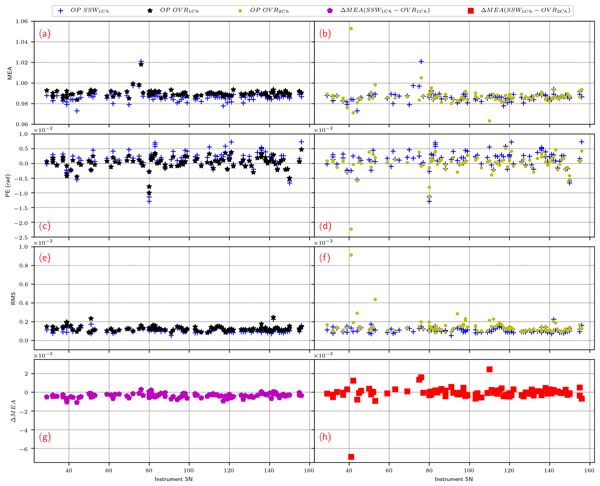
Space-borne greenhouse gas missions require ground-based validation networks capable of providing fiducial reference measurements. Here, considerable refinements of the calibration procedures for the COllaborative Carbon Column Observing Network (COCCON) are presented. Laboratory and solar side-by-side procedures for the characterization of the spectrometers have been refined and extended. Revised calibration factors for XCO2, XCO and XCH4 are provided, incorporating 47 new spectrometers.
Lu Yao, Yi Liu, Dongxu Yang, Zhaonan Cai, Jing Wang, Chao Lin, Naimeng Lu, Daren Lyu, Longfei Tian, Maohua Wang, Zengshan Yin, Yuquan Zheng, and Sisi Wang
Atmos. Meas. Tech., 15, 2125–2137, https://doi.org/10.5194/amt-15-2125-2022, https://doi.org/10.5194/amt-15-2125-2022, 2022
Short summary
Short summary
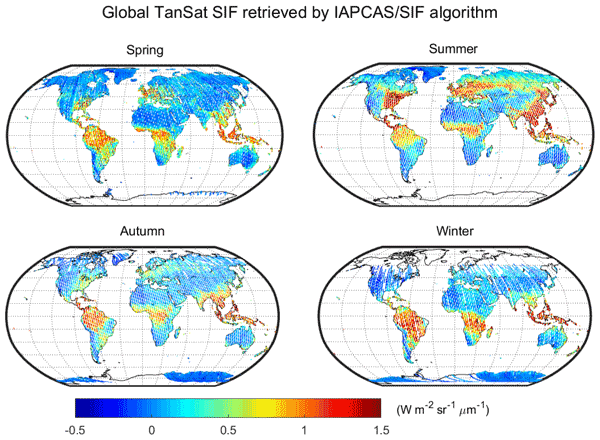
A physics-based SIF retrieval algorithm, IAPCAS/SIF, is introduced and applied to OCO-2 and TanSat measurements. The strong linear relationship between OCO-2 SIF retrieved by IAPCAS/SIF and the official product indicates the algorithm's reliability. The good consistency in the spatiotemporal patterns and magnitude of the OCO-2 and TanSat SIF products suggests that the combinative usage of multi-satellite products has potential and that such work would contribute to further research.
William J. Randel, Fei Wu, Alison Ming, and Peter Hitchcock
Atmos. Chem. Phys., 21, 18531–18542, https://doi.org/10.5194/acp-21-18531-2021, https://doi.org/10.5194/acp-21-18531-2021, 2021
Short summary
Short summary
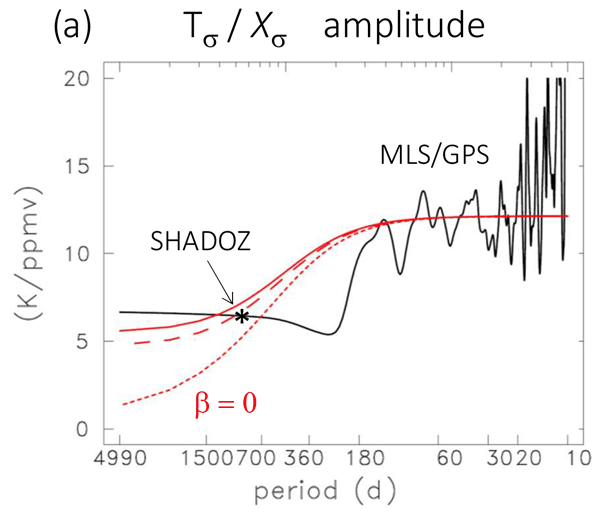
Balloon and satellite observations show strong coupling between large-scale ozone and temperature fields in the tropical lower stratosphere, spanning timescales of days to years. We present a simple interpretation of this behavior based on an idealized model of transport by the tropical stratospheric circulation, and good quantitative agreement with observations demonstrates that this is a useful simplification. The results provide simple understanding of observed atmospheric behavior.
Cited articles
Baker, A. K., Schuck, T. J., Brenninkmeijer, C. A. M., Rauthe-Schöch, A., Slemr, F., Velthoven, P. F. J., and Lelieveld, J.: Estimating the contribution of monsoon-related biogenic production to methane emissions from South Asia using CARIBIC observations, Geophys. Res. Lett., 39, 813–819, https://doi.org/10.1029/2012gl051756, 2012.
Bernath, P. F., McElroy, C. T., Abrams, M. C., Boone, C. D., Butler, M., Camy-Peyret, C., Carleer, M., Clerbaux, C., Coheur, P.-F., Colin, R., DeCola, P., DeMazière, M., Drummond, J. R., Dufour, D., Evans, W. F. J., Fast, H., Fussen, D., Gilbert, K., Jennings, D. E., Llewellyn, E. J., Lowe, R. P., Mahieu, E., McConnell, J. C., McHugh, M., McLeod, S. D., Michaud, R., Midwinter, C., Nassar, R., Nichitiu, F., Nowlan, C., Rinsland, C. P., Rochon, Y. J., Rowlands, N., Semeniuk, K., Simon, P., Skelton, R., Sloan, J. J., Soucy, M.-A., Strong, K., Tremblay, P., Turnbull, D., Walker, K. A., Walkty, I., Wardle, D. A., Wehrle, V., Zander, R., and Zou, J.: Atmospheric Chemistry Experiment (ACE): Mission overview, Geophys. Res. Lett., 32, https://doi.org/10.1029/2005gl022386, 2005.
Boone, C. D., Bernath, P. F., and Lecours, M.: Version 5 retrievals for ACE-FTS and ACE-imagers, J. Quant. Spectrosc. Ra., 310, 108749, https://doi.org/10.1016/j.jqsrt.2023.108749, 2023.
Cai, Z.: AirCore at northern Tibetan Plateau during Asian Summer Monsoon[DS/OL], V2, Science Data Bank [data set], https://doi.org/10.57760/sciencedb.09463, 2024.
Clemens, J., Ploeger, F., Konopka, P., Portmann, R., Sprenger, M., and Wernli, H.: Characterization of transport from the Asian summer monsoon anticyclone into the UTLS via shedding of low potential vorticity cutoffs, Atmos. Chem. Phys., 22, 3841–3860, https://doi.org/10.5194/acp-22-3841-2022, 2022.
Copernicus Climate Change Service: ERA5 monthly averaged data on pressure levels from 1940 to present, Copernicus Climate Change Service (C3S) Climate Data Store (CDS) [data set], https://doi.org/10.24381/cds.6860a573, 2023.
Crippa, M., Guizzardi, D., Schaaf, E., Monforti-Ferrario, F., and Quadrelli, R.: GHG emissions of all world countries – 2023, Publications Office of the European Union, https://doi.org/10.2760/953322, 2023.
De Mazière, M., Vigouroux, C., Bernath, P. F., Baron, P., Blumenstock, T., Boone, C., Brogniez, C., Catoire, V., Coffey, M., Duchatelet, P., Griffith, D., Hannigan, J., Kasai, Y., Kramer, I., Jones, N., Mahieu, E., Manney, G. L., Piccolo, C., Randall, C., Robert, C., Senten, C., Strong, K., Taylor, J., Tétard, C., Walker, K. A., and Wood, S.: Validation of ACE-FTS v2.2 methane profiles from the upper troposphere to the lower mesosphere, Atmos. Chem. Phys., 8, 2421–2435, https://doi.org/10.5194/acp-8-2421-2008, 2008.
Dubé, K., Tegtmeier, S., Bourassa, A., Zawada, D., Degenstein, D., Sheese, P. E., Walker, K. A., and Randel, W.: N2O as a regression proxy for dynamical variability in stratospheric trace gas trends, Atmos. Chem. Phys., 23, 13283–13300, https://doi.org/10.5194/acp-23-13283-2023, 2023.
Dubé, K., Tegtmeier, S., Ploeger, F., and Walker, K. A.: Hemispheric asymmetry in recent stratospheric age of air changes, Atmos. Chem. Phys., 25, 1433–1447, https://doi.org/10.5194/acp-25-1433-2025, 2025.
East, J. D., Jacob, D. J., Balasus, N., Bloom, A. A., Bruhwiler, L., Chen, Z., Kaplan, J. O., Mickley, L. J., Mooring, T. A., Penn, E., Poulter, B., Sulprizio, M. P., Worden, J. R., Yantosca, R. M., and Zhang, Z.: Interpreting the Seasonality of Atmospheric Methane, Geophys. Res. Lett., 51, 494–505, https://doi.org/10.1029/2024gl108494, 2024.
Etiope, G. and Schwietzke, S.: Global geological methane emissions: An update of top-down and bottom-up estimates, Elem. Sci. Anth., 7, 47, https://doi.org/10.1525/elementa.383, 2019.
Fleming, E. L., George, C., Heard, D. E., Jackman, C. H., Kurylo, M. J., Mellouki, W., Orkin, V. L., Swartz, W. H., Wallington, T. J., Wine, P. H., and Burkholder, J. B.: The impact of current CH4 and N2O atmospheric loss process uncertainties on calculated ozone abundances and trends, J. Geophys. Res.-Atmos., 120, 5267–5293, https://doi.org/10.1002/2014jd022067, 2015.
Fu, Q. and Dong, C.: Global stratospheric methane loss from satellite observations, P. Natl. Acad. Sci., 123, e2529774123, https://doi.org/10.1073/pnas.2529774123, 2026.
Garny, H. and Randel, W. J.: Transport pathways from the Asian monsoon anticyclone to the stratosphere, Atmos. Chem. Phys., 16, 2703–2718, https://doi.org/10.5194/acp-16-2703-2016, 2016.
Haenel, F. J., Stiller, G. P., von Clarmann, T., Funke, B., Eckert, E., Glatthor, N., Grabowski, U., Kellmann, S., Kiefer, M., Linden, A., and Reddmann, T.: Reassessment of MIPAS age of air trends and variability, Atmos. Chem. Phys., 15, 13161–13176, https://doi.org/10.5194/acp-15-13161-2015, 2015.
Han, Y., Tian, W., Chipperfield, M. P., Zhang, J., Wang, F., Sang, W., Luo, J., Feng, W., Chrysanthou, A., and Tian, H.: Attribution of the Hemispheric Asymmetries in Trends of Stratospheric Trace Gases Inferred From Microwave Limb Sounder (MLS) Measurements, J. Geophys. Res.-Atmos., 124, 6283–6293, https://doi.org/10.1029/2018jd029723, 2019.
Hersbach, H., Bell, B., Berrisford, P., Hirahara, S., Horányi, A., Muñoz-Sabater, J., Nicolas, J., Peubey, C., Radu, R., Schepers, D., Simmons, A., Soci, C., Abdalla, S., Abellan, X., Balsamo, G., Bechtold, P., Biavati, G., Bidlot, J., Bonavita, M., Chiara, G. D., Dahlgren, P., Dee, D., Diamantakis, M., Dragani, R., Flemming, J., Forbes, R., Fuentes, M., Geer, A., Haimberger, L., Healy, S., Hogan, R. J., Hólm, E., Janisková, M., Keeley, S., Laloyaux, P., Lopez, P., Lupu, C., Radnoti, G., Rosnay, P. de, Rozum, I., Vamborg, F., Villaume, S., and Thépaut, J.: The ERA5 global reanalysis, Q. J. Roy. Meteor. Soc., 146, 1999–2049, https://doi.org/10.1002/qj.3803, 2020.
Höglund-Isaksson, L., Gmez-Sanabria, A., Klimont, Z., Rafaj, P., and Schpp, W.: Technical potentials and costs for reducing global anthropogenic methane emissions in the 2050 timeframe results from the GAINS model, Environ. Res. Commun., 2, 025004, https://doi.org/10.1088/2515-7620/ab7457, 2020.
Hoffmann, L. and Spang, R.: An assessment of tropopause characteristics of the ERA5 and ERA-Interim meteorological reanalyses, Atmos. Chem. Phys., 22, 4019–4046, https://doi.org/10.5194/acp-22-4019-2022, 2022.
Ivaniha, O., Abalos, M., Calvo, N., Stiller, G. P., Shah, K., and Davis, S.: Stratospheric Subtropical Transport Barriers in CESM1-WACCM and Observations: Climatology, Variability, and Trends, J. Geophys. Res.-Atmos., 131, https://doi.org/10.1029/2025jd045069, 2026.
Loeb, N. G., Doelling, D. R., Wang, H., Su, W., Nguyen, C., Corbett, J. G., Liang, L., Mitrescu, C., Rose, F. G., and Kato, S.: Clouds and the Earth's Radiant Energy System (CERES) Energy Balanced and Filled (EBAF) Top-of-Atmosphere (TOA) Edition 4.0 Data Product, J. Climate, 31, 895–918, https://doi.org/10.1175/jcli-d-17-0208.1, 2017.
Loeb, N. G., Doelling, D. R., Kato, S., Su, W., Mlynczak, P. E., and Wilkins, J. C.: Continuity in Top-of-Atmosphere Earth Radiation Budget Observations, J. Climate, 37, 6093–6108, https://doi.org/10.1175/jcli-d-24-0180.1, 2024.
Mahieu, E., Chipperfield, M. P., Notholt, J., Reddmann, T., Anderson, J., Bernath, P. F., Blumenstock, T., Coffey, M. T., Dhomse, S. S., Feng, W., Franco, B., Froidevaux, L., Griffith, D. W. T., Hannigan, J. W., Hase, F., Hossaini, R., Jones, N. B., Morino, I., Murata, I., Nakajima, H., Palm, M., Paton-Walsh, C., Russell III, J. M., Schneider, M., Servais, C., Smale, D., and Walker, K. A.: Recent Northern Hemisphere stratospheric HCl increase due to atmospheric circulation changes, Nature, 515, 104–107, https://doi.org/10.1038/nature13857, 2014.
Murguia-Flores, F., Arndt, S., Ganesan, A. L., Murray-Tortarolo, G., and Hornibrook, E. R. C.: Soil Methanotrophy Model (MeMo v1.0): a process-based model to quantify global uptake of atmospheric methane by soil, Geosci. Model Dev., 11, 2009–2032, https://doi.org/10.5194/gmd-11-2009-2018, 2018.
Nassar, R., Bernath, P. F., Boone, C. D., Manney, G. L., McLeod, S. D., Rinsland, C. P., Skelton, R., and Walker, K. A.: Stratospheric abundances of water and methane based on ACE-FTS measurements, Geophys. Res. Lett., 32, https://doi.org/10.1029/2005gl022383, 2005.
Orbe, C., Waugh, D. W., and Newman, P. A.: Air-mass origin in the tropical lower stratosphere: The influence of Asian boundary layer air, Geophys. Res. Lett., 42, https://doi.org/10.1002/2015gl063937, 2015.
Pan, L. L., Honomichl, S. B., Kinnison, D. E., Abalos, M., Randel, W. J., Bergman, J. W., and Bian, J.: Transport of chemical tracers from the boundary layer to stratosphere associated with the dynamics of the Asian summer monsoon, J. Geophys. Res.-Atmos., 121, 14159–14174, https://doi.org/10.1002/2016jd025616, 2016.
Pan, L. L., Atlas, E. L., Honomichl, S. B., Smith, W. P., Kinnison, D. E., Solomon, S., Santee, M. L., Saiz-Lopez, A., Laube, J. C., Wang, B., Ueyama, R., Bresch, J. F., Hornbrook, R. S., Apel, E. C., Hills, A. J., Treadaway, V., Smith, K., Schauffler, S., Donnelly, S., Hendershot, R., Lueb, R., Campos, T., Viciani, S., D'Amato, F., Bianchini, G., Barucci, M., Podolske, J. R., Iraci, L. T., Gurganus, C., Bui, P., Dean-Day, J. M., Millán, L., Ryoo, J.-M., Barletta, B., Koo, J.-H., Kim, J., Liang, Q., Randel, W. J., Thornberry, T., and Newman, P. A.: East Asian summer monsoon delivers large abundances of very short-lived organic chlorine substances to the lower stratosphere, P. Natl. Acad. Sci., 121, e2318716121, https://doi.org/10.1073/pnas.2318716121, 2024.
Pan, L. L., Atlas, E. L., Newman, P. A., Thornberry, T., Jucks, K. W., Toon, O. B., Randel, W. J., Liang, Q., Kinnison, D. E., Ueyama, R., Bresch, J. F., Honomichl, S. B., Smith, W. P., Hornbrook, R. S., Ziemba, L., Fujiwara, M., Apel, E. C., Barucci, M., Bianchini, G., Brown, M., Bui, T. P., Campos, T., Chin, M., D'Amato, F., Dean-Day, J., Diskin, G., Franchin, A., Gurganus, C., Iraci, L. T., Kim, J., Koo, J. -H., Lait, L. R., Lesko, K., Podolske, J. R., Rollins, A., Sakai, T., Shiraishi, K., Treadaway, V., Viciani, S., and Waxman, E.: The Asian Summer Monsoon Chemical and Climate Impact Project (ACCLIP): An Overview, J. Geophys. Res.-Atmos., 130, https://doi.org/10.1029/2025jd044417, 2025.
Park, M., Randel, W. J., Kinnison, D. E., Garcia, R. R., and Choi, W.: Seasonal variation of methane, water vapor, and nitrogen oxides near the tropopause: Satellite observations and model simulations, J. Geophys. Res.-Atmos., 109, 302–318, https://doi.org/10.1029/2003jd003706, 2004.
Park, M., Randel, W. J., Gettelman, A., Massie, S. T., and Jiang, J. H.: Transport above the Asian summer monsoon anticyclone inferred from Aura Microwave Limb Sounder tracers, J. Geophys. Res.-Atmos., 112, 309–322, https://doi.org/10.1029/2006jd008294, 2007.
Park, M., Randel, W. J., Emmons, L. K., Bernath, P. F., Walker, K. A., and Boone, C. D.: Chemical isolation in the Asian monsoon anticyclone observed in Atmospheric Chemistry Experiment (ACE-FTS) data, Atmos. Chem. Phys., 8, 757–764, https://doi.org/10.5194/acp-8-757-2008, 2008.
Park, M., Randel, W. J., Kinnison, D. E., Emmons, L. K., Bernath, P. F., Walker, K. A., Boone, C. D., and Livesey, N. J.: Hydrocarbons in the upper troposphere and lower stratosphere observed from ACE-FTS and comparisons with WACCM, J. Geophys. Res.-Atmos., 118, 1964–1980, https://doi.org/10.1029/2012jd018327, 2013.
Patra, P. K., Houweling, S., Krol, M., Bousquet, P., Belikov, D., Bergmann, D., Bian, H., Cameron-Smith, P., Chipperfield, M. P., Corbin, K., Fortems-Cheiney, A., Fraser, A., Gloor, E., Hess, P., Ito, A., Kawa, S. R., Law, R. M., Loh, Z., Maksyutov, S., Meng, L., Palmer, P. I., Prinn, R. G., Rigby, M., Saito, R., and Wilson, C.: TransCom model simulations of CH4 and related species: linking transport, surface flux and chemical loss with CH4 variability in the troposphere and lower stratosphere, Atmos. Chem. Phys., 11, 12813–12837, https://doi.org/10.5194/acp-11-12813-2011, 2011.
Ploeger, F. and Garny, H.: Hemispheric asymmetries in recent changes in the stratospheric circulation, Atmos. Chem. Phys., 22, 5559–5576, https://doi.org/10.5194/acp-22-5559-2022, 2022.
Ploeger, F., Günther, G., Konopka, P., Fueglistaler, S., Müller, R., Hoppe, C., Kunz, A., Spang, R., Grooß, J.-U., and Riese, M.: Horizontal water vapor transport in the lower stratosphere from subtropics to high latitudes during boreal summer, J. Geophys. Res.-Atmos., 118, 8111–8127, https://doi.org/10.1002/jgrd.50636, 2013.
Ploeger, F., Konopka, P., Walker, K., and Riese, M.: Quantifying pollution transport from the Asian monsoon anticyclone into the lower stratosphere, Atmos. Chem. Phys., 17, 7055–7066, https://doi.org/10.5194/acp-17-7055-2017, 2017.
Prignon, M., Chabrillat, S., Friedrich, M., Smale, D., Strahan, S. E., Bernath, P. F., Chipperfield, M. P., Dhomse, S. S., Feng, W., Minganti, D., Servais, C., and Mahieu, E.: Stratospheric Fluorine as a Tracer of Circulation Changes: Comparison Between Infrared Remote-Sensing Observations and Simulations With Five Modern Reanalyses, J. Geophys. Res.-Atmos., 126, https://doi.org/10.1029/2021jd034995, 2021.
Randel, W. J. and Park, M.: Deep convective influence on the Asian summer monsoon anticyclone and associated tracer variability observed with Atmospheric Infrared Sounder (AIRS), J. Geophys. Res.-Atmos., 111, 314–327, https://doi.org/10.1029/2005jd006490, 2006.
Randel, W. J., Park, M., Wu, F., and Livesey, N.: A Large Annual Cycle in Ozone above the Tropical Tropopause Linked to the Brewer–Dobson Circulation, J. Atmos. Sci., 64, 4479–4488, https://doi.org/10.1175/2007JAS2409.1, 2007.
Randel, W. J., Park, M., Emmons, L., Kinnison, D., Bernath, P., Walker, K. A., Boone, C., and Pumphrey, H.: Asian Monsoon Transport of Pollution to the Stratosphere, Science, 328, 611–613, https://doi.org/10.1126/science.1182274, 2010.
Randel, W. J., Moyer, E., Park, M., Jensen, E., Bernath, P., Walker, K., and Boone, C.: Global variations of HDO and
Riese, M., Ploeger, F., Rap, A., Vogel, B., Konopka, P., Dameris, M., and Forster, P.: Impact of uncertainties in atmospheric mixing on simulated UTLS composition and related radiative effects, J. Geophys. Res.-Atmos., 117, 305–315, https://doi.org/10.1029/2012jd017751, 2012.
Riese, M., Hoor, P., Rolf, C., Kunkel, D., Vogel, B., Köllner, F., Pöhlker, M., Ploeger, F., Ungermann, J., Woiwode, W., Johansson, S., Bauer, R., Barmpounis, K., Borrmann, S., Brauner, P., Clemens, J., Dragoneas, A., Ekinci, F., Emig, N., Engel, A., Eppers, O., Fadnavis, S., Friedl-Vallon, F., Geldenhuys, M., Günther, G., Grooß, J. U., Hegglin, M. I., Höpfner, M., Jesswein, M., Joppe, P., Kaumanns, J., Kachula, O., Keber, T., Kretschmer, E., Lachnitt, H. C., Lauther, V., Lloyd, P. E., Molleker, S., Müller, R., Neubert, T., Ort, L., Pöschl, U., Pöhlker, C., Rapp, M., Retzlaff, M., Rhode, S., Schneider, J., Schuck, T., Sinnhuber, B.-M., Spelten, N., Strobel, J., Tomsche, L., Turhal, K., Luijt, R. van, Versick, S., Voigt, C., Volk, M., Hobe, M. von, Weyland, F., Zahn, A., Ziereis, H., and Zlotos, L. O.: Long-range transport of polluted Asian summer monsoon air to high latitudes during the PHILEAS campaign in the boreal summer 2023, B. Am. Meteorol. Soc., https://doi.org/10.1175/bams-d-24-0232.1, 2025.
Saunois, M., Martinez, A., Poulter, B., Zhang, Z., Raymond, P. A., Regnier, P., Canadell, J. G., Jackson, R. B., Patra, P. K., Bousquet, P., Ciais, P., Dlugokencky, E. J., Lan, X., Allen, G. H., Bastviken, D., Beerling, D. J., Belikov, D. A., Blake, D. R., Castaldi, S., Crippa, M., Deemer, B. R., Dennison, F., Etiope, G., Gedney, N., Höglund-Isaksson, L., Holgerson, M. A., Hopcroft, P. O., Hugelius, G., Ito, A., Jain, A. K., Janardanan, R., Johnson, M. S., Kleinen, T., Krummel, P. B., Lauerwald, R., Li, T., Liu, X., McDonald, K. C., Melton, J. R., Mühle, J., Müller, J., Murguia-Flores, F., Niwa, Y., Noce, S., Pan, S., Parker, R. J., Peng, C., Ramonet, M., Riley, W. J., Rocher-Ros, G., Rosentreter, J. A., Sasakawa, M., Segers, A., Smith, S. J., Stanley, E. H., Thanwerdas, J., Tian, H., Tsuruta, A., Tubiello, F. N., Weber, T. S., van der Werf, G. R., Worthy, D. E. J., Xi, Y., Yoshida, Y., Zhang, W., Zheng, B., Zhu, Q., Zhu, Q., and Zhuang, Q.: Global Methane Budget 2000–2020, Earth Syst. Sci. Data, 17, 1873–1958, https://doi.org/10.5194/essd-17-1873-2025, 2025.
Schmidt, M., Bernath, P., Boone, C., Lecours, M., and Steffen, J.: Trends in atmospheric composition between 2004–2023 using version 5 ACE-FTS data, J. Quant. Spectrosc. Ra., 325, 109088, https://doi.org/10.1016/j.jqsrt.2024.109088, 2024.
Sheese, P. E., Walker, K. A., Boone, C. D., and Plummer, D. A.: Quantifying the sources of increasing stratospheric water vapour concentrations, Atmos. Chem. Phys., 25, 5199–5213, https://doi.org/10.5194/acp-25-5199-2025, 2025.
SPARC/IO3C/GAW: SPARC/IO3C/GAW Report on Long-term Ozone Trends and Uncertainties in the Stratosphere, SPARC Report No. 9, GAW Report No. 241, WCRP-17/2018, SPARC, https://doi.org/10.17874/f899e57a20b, 2019.
Stiller, G. P., Fierli, F., Ploeger, F., Cagnazzo, C., Funke, B., Haenel, F. J., Reddmann, T., Riese, M., and von Clarmann, T.: Shift of subtropical transport barriers explains observed hemispheric asymmetry of decadal trends of age of air, Atmos. Chem. Phys., 17, 11177–11192, https://doi.org/10.5194/acp-17-11177-2017, 2017.
Strahan, S. E., Smale, D., Douglass, A. R., Blumenstock, T., Hannigan, J. W., Hase, F., Jones, N. B., Mahieu, E., Notholt, J., Oman, L. D., Ortega, I., Palm, M., Prignon, M., Robinson, J., Schneider, M., Sussmann, R., and Velazco, V. A.: Observed Hemispheric Asymmetry in Stratospheric Transport Trends From 1994 to 2018, Geophys. Res. Lett., 47, https://doi.org/10.1029/2020gl088567, 2020.
Subramanian, R., Thompson, R. L., Vojta, M., Schneising, O., and Stohl, A.: Strong monsoon influence on South Asian methane emissions in 2020 revealed by a Bayesian inversion constrained by satellite observations, Atmos. Chem. Phys., 26, 9757–9777, https://doi.org/10.5194/acp-26-9757-2026, 2026.
van der Werf, G. R., Randerson, J. T., Giglio, L., van Leeuwen, T. T., Chen, Y., Rogers, B. M., Mu, M., van Marle, M. J. E., Morton, D. C., Collatz, G. J., Yokelson, R. J., and Kasibhatla, P. S.: Global fire emissions estimates during 1997–2016, Earth Syst. Sci. Data, 9, 697–720, https://doi.org/10.5194/essd-9-697-2017, 2017.
Vogel, B., Günther, G., Müller, R., Grooß, J.-U., Hoor, P., Krämer, M., Müller, S., Zahn, A., and Riese, M.: Fast transport from Southeast Asia boundary layer sources to northern Europe: rapid uplift in typhoons and eastward eddy shedding of the Asian monsoon anticyclone, Atmos. Chem. Phys., 14, 12745–12762, https://doi.org/10.5194/acp-14-12745-2014, 2014.
Vogel, B., Günther, G., Müller, R., Grooß, J.-U., and Riese, M.: Impact of different Asian source regions on the composition of the Asian monsoon anticyclone and of the extratropical lowermost stratosphere, Atmos. Chem. Phys., 15, 13699–13716, https://doi.org/10.5194/acp-15-13699-2015, 2015.
Vogel, B., Müller, R., Günther, G., Spang, R., Hanumanthu, S., Li, D., Riese, M., and Stiller, G. P.: Lagrangian simulations of the transport of young air masses to the top of the Asian monsoon anticyclone and into the tropical pipe, Atmos. Chem. Phys., 19, 6007–6034, https://doi.org/10.5194/acp-19-6007-2019, 2019.
Vogel, B., Lauther, V., Köllner, F., Ekinci, F., Rolf, C., Strobel, J., van Luijt, R., Volk, C. M., Borrmann, S., Dragoneas, A., Eppers, O., Molleker, S., Hoor, P., Ort, L., Weyland, F., Zahn, A., Clemens, J., Günther, G., Kachula, O., Müller, R., Ploeger, F., and Riese, M.: Continental and marine source regions contributing to the outflow of the Asian summer monsoon anticyclone during the PHILEAS campaign in summer 2023, Atmos. Chem. Phys., 26, 6283–6319, https://doi.org/10.5194/acp-26-6283-2026, 2026.
von Hobe, M., Ploeger, F., Konopka, P., Kloss, C., Ulanowski, A., Yushkov, V., Ravegnani, F., Volk, C. M., Pan, L. L., Honomichl, S. B., Tilmes, S., Kinnison, D. E., Garcia, R. R., and Wright, J. S.: Upward transport into and within the Asian monsoon anticyclone as inferred from StratoClim trace gas observations, Atmos. Chem. Phys., 21, 1267–1285, https://doi.org/10.5194/acp-21-1267-2021, 2021.
Waters, J. W., Froidevaux, L., Harwood, R. S., Jarnot, R. F., Pickett, H. M., Read, W. G., Siegel, P. H., Cofield, R. E., Filipiak, M. J., Flower, D. A., Holden, J. R., Lau, G. K., Livesey, N. J., Manney, G. L., Pumphrey, H. C., Santee, M. L., Wu, D. L., Cuddy, D. T., Lay, R. R., Loo, M. S., Perun, V. S., Schwartz, M. J., Stek, P. C., Thurstans, R. P., Boyles, M. A., Chandra, K. M., Chavez, M. C., Chen, G.-S., Chudasama, B. V., Dodge, R., Fuller, R. A., Girard, M. A., Jiang, J. H., Jiang, Y., Knosp, B. W., LaBelle, R. C., Lam, J. C., Lee, K. A., Miller, D., Oswald, J. E., Patel, N. C., Pukala, D. M., Quintero, O., Scaff, D. M., Snyder, W. V., Tope, M. C., Wagner, P. A., and Walch, M. J.: The Earth Observing System Microwave Limb Sounder (EOS MLS) on the Aura Satellite, IEEE T. Geosci. Remote Sens., 44, 1075–1092, https://doi.org/10.1109/tgrs.2006.873771, 2006.
Weber, T., Wiseman, N. A., and Kock, A.: Global ocean methane emissions dominated by shallow coastal waters, Nat. Commun., 10, 4584, https://doi.org/10.1038/s41467-019-12541-7, 2019.
Xiong, X., Houweling, S., Wei, J., Maddy, E., Sun, F., and Barnet, C.: Methane plume over south Asia during the monsoon season: satellite observation and model simulation, Atmos. Chem. Phys., 9, 783–794, https://doi.org/10.5194/acp-9-783-2009, 2009.
Yi, Y., Cai, Z., Liu, Y., Tao, M., Fang, S., Yang, D., Bai, Z., Liang, M., Yao, B., Bian, J., Honomichl, S. B., Randel, W. J., and Pan, L. L.: AirCore Observations at Northern Tibetan Plateau During the Asian Summer Monsoon, Geophys. Res. Lett., 51, 256–265, https://doi.org/10.1029/2024gl109256, 2024.
Yi, Y., Cai, Z., Liu, Y., Fang, S., Liang, M., Tao, M., Yang, D., Yao, B., Bai, Z., and Bian, J.: Observation of CH4, CO and N2O in the upper troposphere and lower stratosphere over the Qinghai–Tibet Plateau, Environ. Res. Lett., 21, 034009, https://doi.org/10.1088/1748-9326/ae34cd, 2026.
Yu, X., Millet, D. B., Henze, D. K., Turner, A. J., Delgado, A. L., Bloom, A. A., and Sheng, J.: A high-resolution satellite-based map of global methane emissions reveals missing wetland, fossil fuel, and monsoon sources, Atmos. Chem. Phys., 23, 3325–3346, https://doi.org/10.5194/acp-23-3325-2023, 2023.
Zeng, Z.-C., Byrne, B., Gong, F.-Y., He, Z., and Lei, L.: Correlation between paddy rice growth and satellite-observed methane column abundance does not imply causation, Nat. Commun., 12, 1163, https://doi.org/10.1038/s41467-021-21434-7, 2021.
Short summary
Methane is a potent greenhouse gas, but how it reaches the upper atmosphere is not well known. Using satellite data, we show that the Asian summer monsoon plays a key role in transporting methane from the lower atmosphere to the upper atmosphere, where it affects both Earth's radiation and the amount of water vapor. Our findings reveal that a regional weather system can influence the global distribution of methane, helping scientists better predict future climate change.
Methane is a potent greenhouse gas, but how it reaches the upper atmosphere is not well known....


Altmetrics
Final-revised paper
Preprint