
Articles | Volume 26, issue 20
https://doi.org/10.5194/acp-26-14905-2026
© Author(s) 2026. This work is distributed under
the Creative Commons Attribution 4.0 License.
the Creative Commons Attribution 4.0 License.
https://doi.org/10.5194/acp-26-14905-2026
© Author(s) 2026. This work is distributed under
the Creative Commons Attribution 4.0 License.
the Creative Commons Attribution 4.0 License.
Research article
| 
23 Oct 2026
Research article |
| 23 Oct 2026
| 23 Oct 2026
Simultaneous ground-based observations of a large quasi 26 d wave from three different measurement sites in northern mid-latitudes
Christoph Kalicinsky
CORRESPONDING AUTHOR

Institute for Atmospheric and Environmental Research, University of Wuppertal, Wuppertal, Germany
Sandra Wallis
Institute of Physics, University of Greifswald, Greifswald, Germany
Lukas Depenthal
Institute of Physics, University of Greifswald, Greifswald, Germany
Christoph G. Hoffmann
Institute of Physics, University of Greifswald, Greifswald, Germany
Anna Lange
Institute of Physics, University of Greifswald, Greifswald, Germany
Christian von Savigny
Institute of Physics, University of Greifswald, Greifswald, Germany
Related authors
Harry Ballington and Christoph Kalicinsky
EGUsphere, https://doi.org/10.5194/egusphere-2026-4868, https://doi.org/10.5194/egusphere-2026-4868, 2026
This preprint is open for discussion and under review for Atmospheric Measurement Techniques (AMT).
Short summary
Short summary
Molecules of hydrogen and oxygen emit a faint infrared glow that can be used to measure the temperature of the middle atmosphere. The signal is an important indicator of climate change, but analysis can be slow and tedious. By using artificial intelligence, 11 years of expert judgement is encapsulated into an automated algorithm, helping to sustain one of the world's longest running temperature records.
Christoph Kalicinsky, Robert Reisch, and Peter Knieling
Atmos. Chem. Phys., 26, 2531–2544, https://doi.org/10.5194/acp-26-2531-2026, https://doi.org/10.5194/acp-26-2531-2026, 2026
Short summary
Short summary
Planetary waves are important for driving large scale circulations. We observed planetary waves in a ground-based data set spanning more than 30 years. The waves can be assigned to expected waves due to their periods. The wave activity is strongest in winter for waves with periods longer than 20 days and shows maxima around equinoxes for periods below 20 d. The long-term behaviour shows a quasi-20 year oscillation of the wave activity with respect to the magnitude of the wave amplitudes.
Dirk Offermann, Christoph Kalicinsky, Ralf Koppmann, and Johannes Wintel
Atmos. Chem. Phys., 23, 3267–3278, https://doi.org/10.5194/acp-23-3267-2023, https://doi.org/10.5194/acp-23-3267-2023, 2023
Short summary
Short summary
Atmospheric oscillations with periods between 5 and more than 200 years are believed to be self-excited (internal) in the atmosphere, i.e. non-anthropogenic. They are found at all altitudes up to 110 km and at four very different geographical locations (75° N, 70° E; 75° N, 280° E; 50° N, 7° E; 50° S, 7° E). Therefore, they hint at a global-oscillation mode. Their amplitudes are on the order of present-day climate trends, and it is therefore difficult to disentangle them.
Harry Ballington and Christoph Kalicinsky
EGUsphere, https://doi.org/10.5194/egusphere-2026-4868, https://doi.org/10.5194/egusphere-2026-4868, 2026
This preprint is open for discussion and under review for Atmospheric Measurement Techniques (AMT).
Short summary
Short summary
Molecules of hydrogen and oxygen emit a faint infrared glow that can be used to measure the temperature of the middle atmosphere. The signal is an important indicator of climate change, but analysis can be slow and tedious. By using artificial intelligence, 11 years of expert judgement is encapsulated into an automated algorithm, helping to sustain one of the world's longest running temperature records.
Anna Lange, John Andrew Dykema, Sandro Vattioni, Ulrike Niemeier, Alexei Rozanov, and Christian von Savigny
Atmos. Chem. Phys., 26, 13055–13067, https://doi.org/10.5194/acp-26-13055-2026, https://doi.org/10.5194/acp-26-13055-2026, 2026
Short summary
Short summary
This study addresses the question of whether it is possible to detect the continuous injection of 5 Tg yr-1 of alumina or calcite into the stratosphere using satellite solar occultation instruments. The research shows that it is possible to detect these injections of solid particles into the stratosphere and that they can also be distinguished from natural variability, considering the assumptions made.
Ronald Eixmann, Thorben H. Lüke-Mense, Jan Froh, Michael Gerding, Josef Höffner, Christian Löns, Robin Wing, Christian von Savigny, and Gerd Baumgarten
Atmos. Meas. Tech., 19, 5309–5324, https://doi.org/10.5194/amt-19-5309-2026, https://doi.org/10.5194/amt-19-5309-2026, 2026
Short summary
Short summary
We introduce a new lidar-based measurement technique that can observe small particles in the middle atmosphere, up to 30 km altitude, both during the day and at night. The compact instrument, with a volume of about one cubic meter, provides high-accuracy vertical profiles of aerosols and can be deployed at different locations worldwide. Comparisons with satellite data show strong agreement, highlighting its potential for longterm monitoring of stratospheric aerosols.
Anna Lange, Ilaria Quaglia, Daniele Visioni, Alexei Rozanov, and Christian von Savigny
EGUsphere, https://doi.org/10.5194/egusphere-2026-3347, https://doi.org/10.5194/egusphere-2026-3347, 2026
This preprint is open for discussion and under review for Atmospheric Chemistry and Physics (ACP).
Short summary
Short summary
What happens to the colours of the sky when a volcano erupts during an ongoing stratospheric aerosol injection deployment? This study is the first to tackle this question, combining climate model simulations, radiative transfer calculations, and colour modelling. The results show several optical phenomena, including Bishop's Rings, unusual greenish twilight colours, and purple light.
Anna Lange, Ulrike Niemeier, Alexei Rozanov, and Christian von Savigny
Atmos. Meas. Tech., 19, 1973–1989, https://doi.org/10.5194/amt-19-1973-2026, https://doi.org/10.5194/amt-19-1973-2026, 2026
Short summary
Short summary
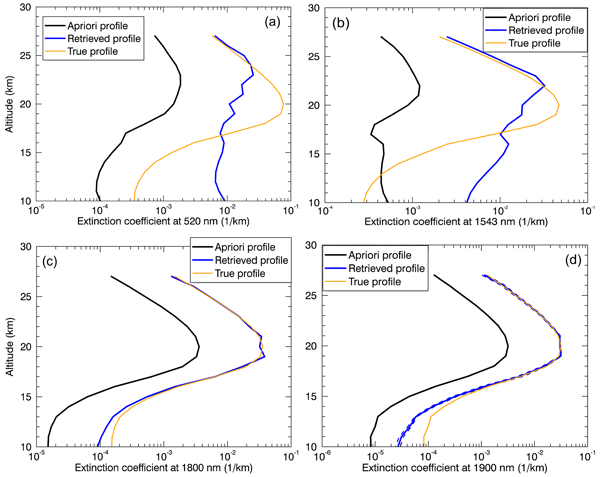
We investigate which wavelengths, depending on the latitude, are required for aerosol measurements after continuous sulphur injections of 30 Tg S yr-1 into the stratosphere, here at 19 km, in order to obtain physically meaningful stratospheric aerosol extinction profile retrieval results from the perspective of a typical satellite instrument with the so-called solar occultation geometry. Consistent with expectations, a longer wavelength is required for the latitude range of and near the injection.
Christoph Kalicinsky, Robert Reisch, and Peter Knieling
Atmos. Chem. Phys., 26, 2531–2544, https://doi.org/10.5194/acp-26-2531-2026, https://doi.org/10.5194/acp-26-2531-2026, 2026
Short summary
Short summary
Planetary waves are important for driving large scale circulations. We observed planetary waves in a ground-based data set spanning more than 30 years. The waves can be assigned to expected waves due to their periods. The wave activity is strongest in winter for waves with periods longer than 20 days and shows maxima around equinoxes for periods below 20 d. The long-term behaviour shows a quasi-20 year oscillation of the wave activity with respect to the magnitude of the wave amplitudes.
Christine Pohl, Ulrike Niemeier, Alexei Rozanov, Felix Wrana, and Christian von Savigny
EGUsphere, https://doi.org/10.5194/egusphere-2026-578, https://doi.org/10.5194/egusphere-2026-578, 2026
Short summary
Short summary
Satellite aerosol retrievals and models are crucial for studying volcanic impacts on the stratosphere but remain uncertain in perturbed situations due to assumed aerosol properties. SCIAMACHY retrievals are compared with ECHAM simulations following the Manam and Sarychev eruptions to evaluate both approaches. Agreement is found for Sarychev, while Manam shows differences. Comparisons with SAGE II support the SCIAMACHY retrievals. The importance of model setup details is highlighted.
Christian Löns, Ronald Eixmann, Christine Pohl, Alexei Rozanov, and Christian von Savigny
Atmos. Chem. Phys., 25, 18209–18225, https://doi.org/10.5194/acp-25-18209-2025, https://doi.org/10.5194/acp-25-18209-2025, 2025
Short summary
Short summary
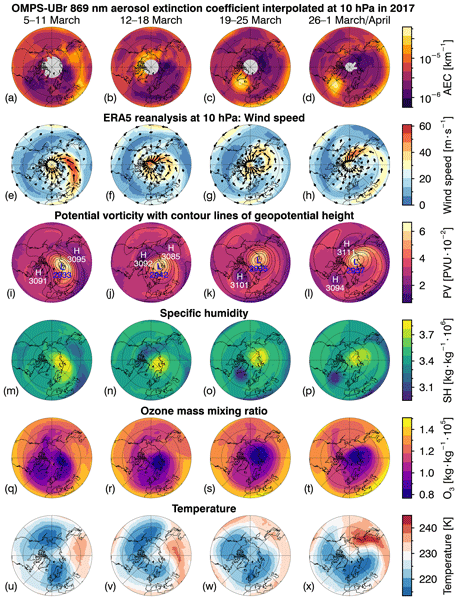
During the polar vortex season, so-called streamers can transport tropical air towards the pole in the middle stratosphere. This tropical air can get trapped in high-pressure areas at high latitudes after the polar vortex breaks down. In this study, remote sensing instruments are used to observe the course of such streamers by measuring the scattered solar radiation. Aerosols get transported to high latitudes at an altitude of about 25–35 km, increasing the aerosol mass there significantly.
Anna Lange, Ulrike Niemeier, Alexei Rozanov, and Christian von Savigny
Atmos. Chem. Phys., 25, 11673–11688, https://doi.org/10.5194/acp-25-11673-2025, https://doi.org/10.5194/acp-25-11673-2025, 2025
Short summary
Short summary
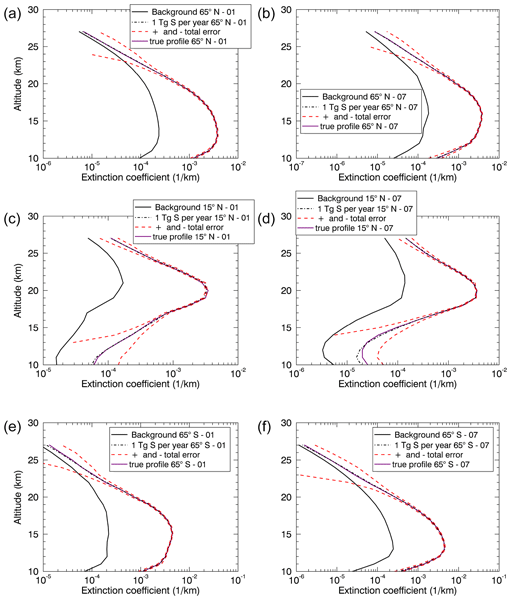
Our paper investigates whether it is possible to observe continuous injections of 1 and 2 Tg S y-1 (sulfur per year) into the stratosphere with the currently active satellite occultation instruments. The calculations show that, considering the natural variability and the assumptions made here, the stratospheric aerosols formed from continuous emissions of 1 and 2 Tg S y-1 in the quasi-steady-state phase can be detected, which is not the case in the first month of the 2-year initial phase.
Felix Wrana, Terry Deshler, Christian Löns, Larry W. Thomason, and Christian von Savigny
Atmos. Chem. Phys., 25, 3717–3736, https://doi.org/10.5194/acp-25-3717-2025, https://doi.org/10.5194/acp-25-3717-2025, 2025
Short summary
Short summary
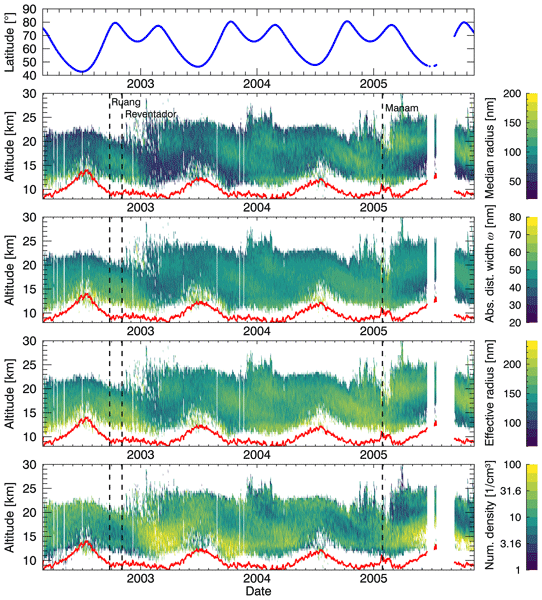
There is a natural and globally occurring layer of small droplets (aerosols) at roughly 20 km altitude in the atmosphere. In this work, the size of these droplets is calculated from satellite measurements for the years 2002 to 2005, which is important for the aerosol cooling effect on Earth's climate. These years are interesting because there were no large volcanic eruptions that would change the background state of the aerosols. The results are compared to reliable balloon-borne measurements.
Sandra Wallis, Matthew DeLand, and Christian von Savigny
Atmos. Chem. Phys., 25, 3635–3645, https://doi.org/10.5194/acp-25-3635-2025, https://doi.org/10.5194/acp-25-3635-2025, 2025
Short summary
Short summary
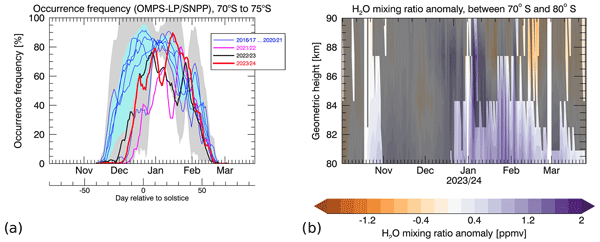
The 2022 Hunga Tonga – Hunga Ha'apai eruption emitted about 150 Tg H2O that partly reached the upper polar Southern Hemisphere mesosphere in the beginning of 2024. Noctilucent clouds (NLCs) did not show a clear perturbation in their occurrence frequency, but the slight increase from mid-January to February could potentially have been caused by the additional H2O. It needed 2 years to reach the summer polar mesopause region, analogous to the 1883 Krakatoa eruption that is argued to have caused the first sightings of NLCs.
Christine Pohl, Felix Wrana, Alexei Rozanov, Terry Deshler, Elizaveta Malinina, Christian von Savigny, Landon A. Rieger, Adam E. Bourassa, and John P. Burrows
Atmos. Meas. Tech., 17, 4153–4181, https://doi.org/10.5194/amt-17-4153-2024, https://doi.org/10.5194/amt-17-4153-2024, 2024
Short summary
Short summary
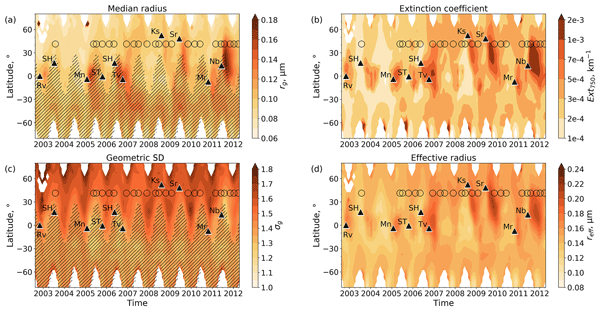
Knowledge of stratospheric aerosol characteristics is important for understanding chemical and climate aerosol feedbacks. Two particle size distribution parameters, the aerosol extinction coefficient and the effective radius, are obtained from SCIAMACHY limb observations. The aerosol characteristics show good agreement with independent data sets from balloon-borne and satellite observations. This data set expands the limited knowledge of stratospheric aerosol characteristics.
Christian von Savigny, Anna Lange, Christoph G. Hoffmann, and Alexei Rozanov
Atmos. Chem. Phys., 24, 2415–2422, https://doi.org/10.5194/acp-24-2415-2024, https://doi.org/10.5194/acp-24-2415-2024, 2024
Short summary
Short summary
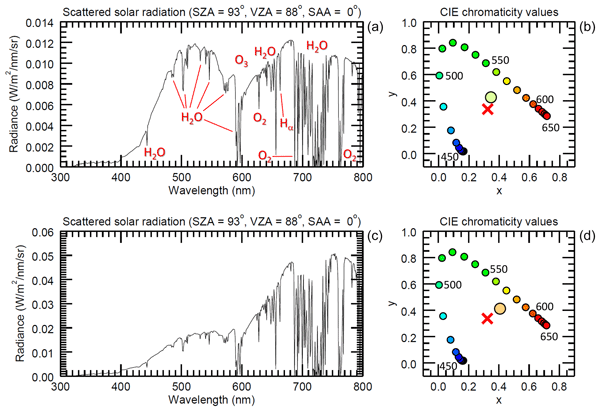
It is well known that volcanic eruptions strongly affect the colours of the twilight sky. Typically, volcanic eruptions lead to enhanced reddish and violet twilight colours. In rare cases, however, volcanic eruptions can also lead to green sunsets. This study provides an explanation for the occurrence of these unusual green sunsets based on simulations with a radiative transfer model. Green volcanic sunsets require a sufficient stratospheric aerosol optical depth and specific aerosol sizes.
Anna Lange, Alexei Rozanov, and Christian von Savigny
Atmos. Chem. Phys., 23, 14829–14839, https://doi.org/10.5194/acp-23-14829-2023, https://doi.org/10.5194/acp-23-14829-2023, 2023
Short summary
Short summary
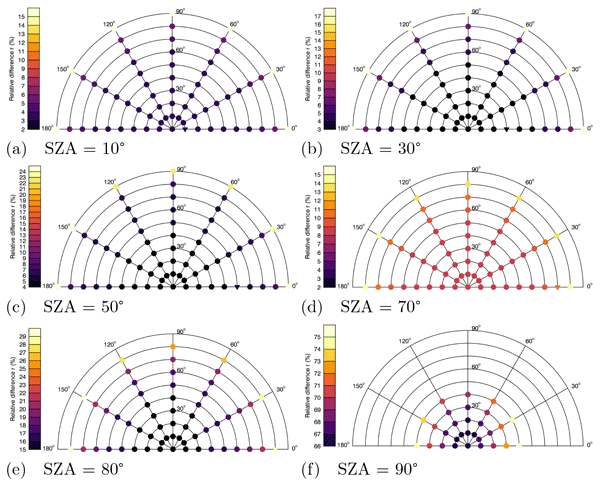
We were able to demonstrate quantitatively that the blue colour of the sky cannot be solely attributed to Rayleigh scattering. The influence of ozone on the blue colour of the sky is calculated for different viewing geometries, total ozone columns and an enhanced stratospheric aerosol scenario. Furthermore, the effects of polarisation, surface albedo and observer height are investigated.
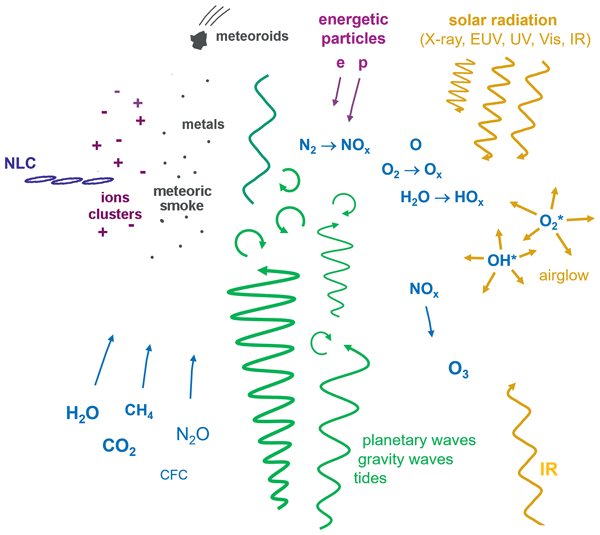
John M. C. Plane, Jörg Gumbel, Konstantinos S. Kalogerakis, Daniel R. Marsh, and Christian von Savigny
Atmos. Chem. Phys., 23, 13255–13282, https://doi.org/10.5194/acp-23-13255-2023, https://doi.org/10.5194/acp-23-13255-2023, 2023
Short summary
Short summary
The mesosphere or lower thermosphere region of the atmosphere borders the edge of space. It is subject to extreme ultraviolet photons and charged particles from the Sun and atmospheric gravity waves from below, which tend to break in this region. The pressure is very low, which facilitates chemistry involving species in excited states, and this is also the region where cosmic dust ablates and injects various metals. The result is a unique and exotic chemistry.
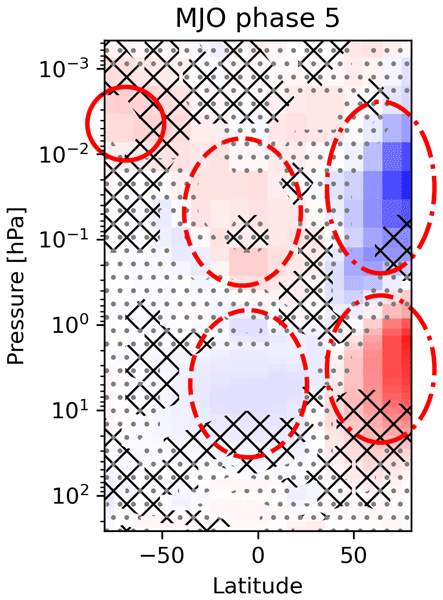
Christoph G. Hoffmann, Lena G. Buth, and Christian von Savigny
Atmos. Chem. Phys., 23, 12781–12799, https://doi.org/10.5194/acp-23-12781-2023, https://doi.org/10.5194/acp-23-12781-2023, 2023
Short summary
Short summary
The Madden–Julian oscillation is an important feature of weather in the tropics. Although it is mainly active in the troposphere, we show that it systematically influences the air temperature in the layers above, up to about 100 km altitude and from pole to pole. We have linked this to another known far-reaching process, interhemispheric coupling. This is basic research on atmospheric couplings and variability but might also be of interest for intraseasonal weather forecasting models.
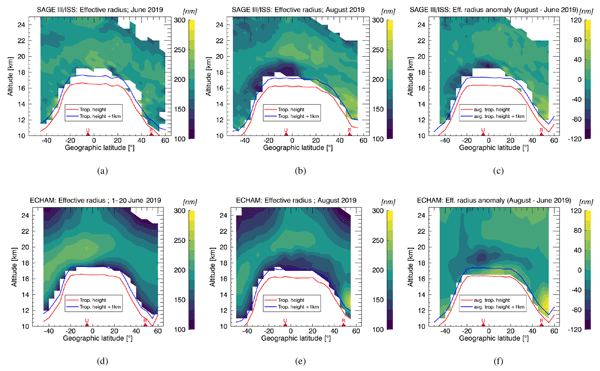
Felix Wrana, Ulrike Niemeier, Larry W. Thomason, Sandra Wallis, and Christian von Savigny
Atmos. Chem. Phys., 23, 9725–9743, https://doi.org/10.5194/acp-23-9725-2023, https://doi.org/10.5194/acp-23-9725-2023, 2023
Short summary
Short summary
The stratospheric aerosol layer is a naturally occurring and permanent layer of aerosol, in this case very small droplets of mostly sulfuric acid and water, that has a cooling effect on our climate. To quantify this effect and for our general understanding of stratospheric microphysical processes, knowledge of the size of those aerosol particles is needed. Using satellite measurements and atmospheric models we show that some volcanic eruptions can lead to on average smaller aerosol sizes.
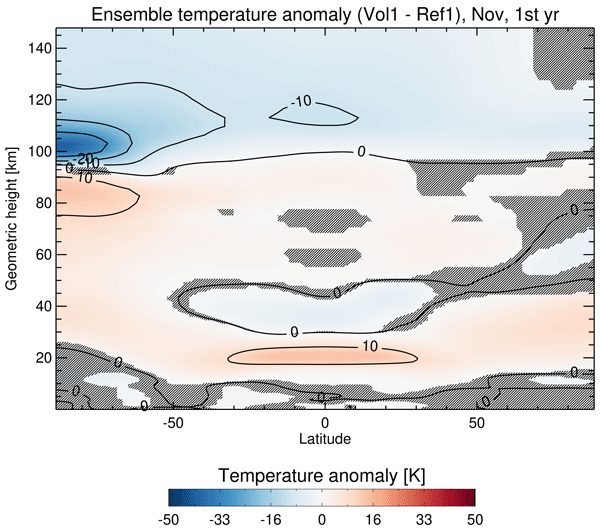
Sandra Wallis, Hauke Schmidt, and Christian von Savigny
Atmos. Chem. Phys., 23, 7001–7014, https://doi.org/10.5194/acp-23-7001-2023, https://doi.org/10.5194/acp-23-7001-2023, 2023
Short summary
Short summary
Strong volcanic eruptions are able to alter the temperature and the circulation of the middle atmosphere. This study simulates the atmospheric response to an idealized strong tropical eruption and focuses on the impact on the mesosphere. The simulations show a warming of the polar summer mesopause in the first November after the eruption. Our study indicates that this is mainly due to dynamical coupling in the summer hemisphere with a potential contribution from interhemispheric coupling.
Dirk Offermann, Christoph Kalicinsky, Ralf Koppmann, and Johannes Wintel
Atmos. Chem. Phys., 23, 3267–3278, https://doi.org/10.5194/acp-23-3267-2023, https://doi.org/10.5194/acp-23-3267-2023, 2023
Short summary
Short summary
Atmospheric oscillations with periods between 5 and more than 200 years are believed to be self-excited (internal) in the atmosphere, i.e. non-anthropogenic. They are found at all altitudes up to 110 km and at four very different geographical locations (75° N, 70° E; 75° N, 280° E; 50° N, 7° E; 50° S, 7° E). Therefore, they hint at a global-oscillation mode. Their amplitudes are on the order of present-day climate trends, and it is therefore difficult to disentangle them.
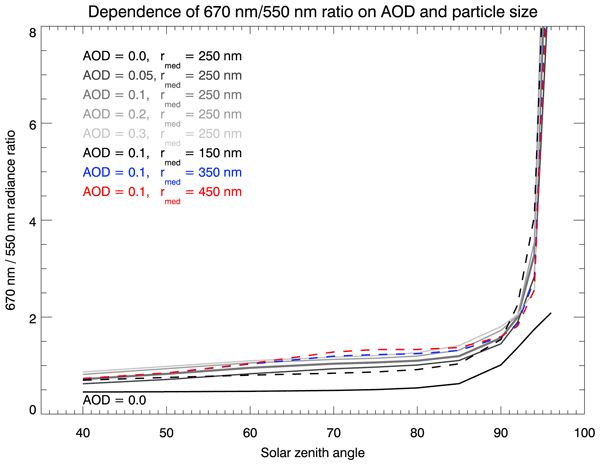
Christian von Savigny, Anna Lange, Anne Hemkendreis, Christoph G. Hoffmann, and Alexei Rozanov
Clim. Past, 18, 2345–2356, https://doi.org/10.5194/cp-18-2345-2022, https://doi.org/10.5194/cp-18-2345-2022, 2022
Short summary
Short summary
This study investigates the possibility of inferring information on aerosol optical depth from photographs of historic paintings. The idea – which has been applied in previous studies – is very interesting because it would provide an archive of the atmospheric aerosol loading covering many centuries. We show that twilight colours depend not only on the aerosol optical thickness, but also on several other parameters, making a quantitative estimate of aerosol optical depth very difficult.
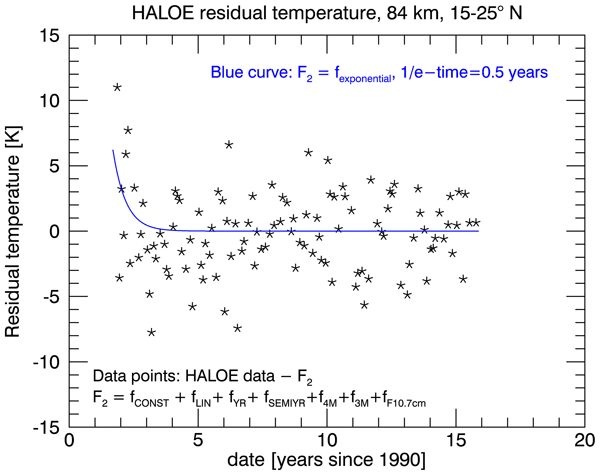
Sandra Wallis, Christoph Gregor Hoffmann, and Christian von Savigny
Ann. Geophys., 40, 421–431, https://doi.org/10.5194/angeo-40-421-2022, https://doi.org/10.5194/angeo-40-421-2022, 2022
Short summary
Short summary
Although the 1991 eruption of Mt Pinatubo had a severe impact on Earth's climate, the effect of this event on the mesosphere is not well understood. We investigated satellite-borne temperature measurements from the HALOE instrument and found indications that a positive temperature anomaly is present in the tropical upper mesosphere at the beginning of the HALOE time series, which may be related to the eruption of Mt. Pinatubo.
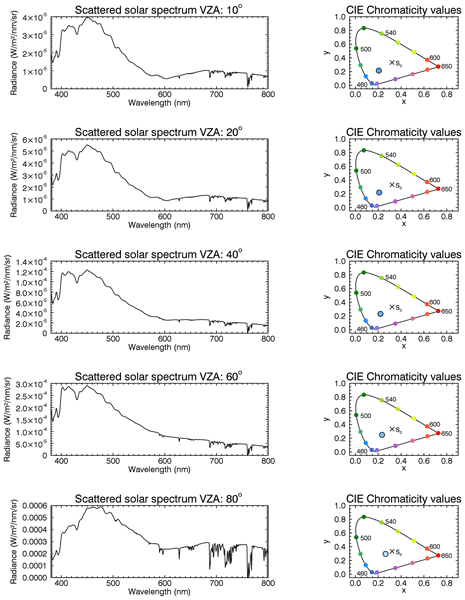
Anna Lange, Gerd Baumgarten, Alexei Rozanov, and Christian von Savigny
Ann. Geophys., 40, 407–419, https://doi.org/10.5194/angeo-40-407-2022, https://doi.org/10.5194/angeo-40-407-2022, 2022
Short summary
Short summary
We investigate the influence of different parameters on the colour of noctilucent clouds (highest clouds in the atmosphere), using radiative transfer calculations. We determined the effect of the particle size, optical depth, single scattering/multiple scattering and ozone. For sufficiently large optical depth and for specific viewing geometries, ozone plays only a minor role in the blueish colour of noctilucent clouds (new result).
Mireia Papke Chica, Valerian Hahn, Tiziana Braeuer, Elena de la Torre Castro, Florian Ewald, Mathias Gergely, Simon Kirschler, Luca Bugliaro Goggia, Stefanie Knobloch, Martina Kraemer, Johannes Lucke, Johanna Mayer, Raphael Maerkl, Manuel Moser, Laura Tomsche, Tina Jurkat-Witschas, Martin Zoeger, Christian von Savigny, and Christiane Voigt
Atmos. Chem. Phys. Discuss., https://doi.org/10.5194/acp-2022-255, https://doi.org/10.5194/acp-2022-255, 2022
Preprint withdrawn
Short summary
Short summary
The mixed-phase temperature regime in convective clouds challenges our understanding of microphysical and radiative cloud properties. We provide a rare and unique dataset of aircraft in situ measurements in a strong mid-latitude convective system. We find that mechanisms initiating ice nucleation and growth strongly depend on temperature, relative humidity, and vertical velocity and variate within the measured system, resulting in altitude dependent changes of the cloud liquid and ice fraction.
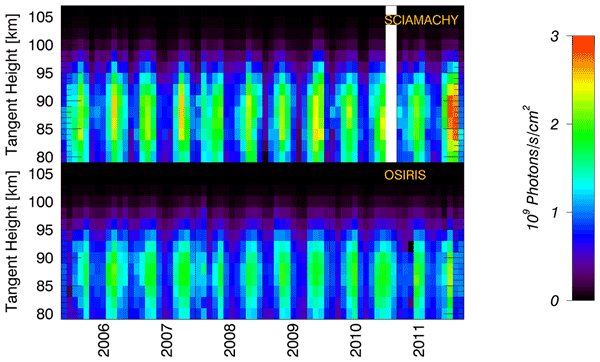
Julia Koch, Adam Bourassa, Nick Lloyd, Chris Roth, and Christian von Savigny
Atmos. Chem. Phys., 22, 3191–3202, https://doi.org/10.5194/acp-22-3191-2022, https://doi.org/10.5194/acp-22-3191-2022, 2022
Short summary
Short summary
The mesopause, the region of the earth's atmosphere between 85 and 100 km, is hard to access by direct measurements. Therefore we look for parameters that can be measured using satellite or ground-based measurements. In this study we researched sodium airglow, a phenomenon that occurs when sodium atoms are excited by chemical reactions. We compared satellite measurements of the airglow and resulting sodium concentration profiles to gain a better understanding of the sodium in that region.
Cited articles
Andrews, D., Holton, J., and Leovy, C.: Middle atmosphere dynamics, Academic Press, London, https://doi.org/10.1016/B978-0-12-058575-5.50001-3, 1987. a
Baker, D. J. and Stair Jr., A. T.: Rocket measurements of the altitude distributions of the hydroxyl airglow, Phys. Scr., 37, 611, https://doi.org/10.1088/0031-8949/37/4/021, 1988. a
Bittner, M., Offermann, D., and Graef, H. H.: Mesopause temperature variability above a midlatitude station in Europe, J. Geophys. Res., 105, 2045–2058, https://doi.org/10.1029/1999JD900307, 2000. a, b, c
Bittner, M., Offermann, D., Graef, H. H., Donner, M., and Hamilton, K.: An 8-year time series of OH∗ rotational temperatures and middle atmosphere decadal variations, J. Atmos. Sol.-Terr. Phy., 64, 1147–1166, https://doi.org/10.1016/S1364-6826(02)00065-2, 2002. a, b
Day, K. A. and Mitchell, N. J.: The 5-day wave in the Arctic and Antarctic mesosphere and lower thermosphere, J. Geophys. Res., 115, D01109, https://doi.org/10.1029/2009JD012545, 2010a. a
Day, K. A. and Mitchell, N. J.: The 16-day wave in the Arctic and Antarctic mesosphere and lower thermosphere, Atmos. Chem. Phys., 10, 1461–1472, https://doi.org/10.5194/acp-10-1461-2010, 2010b. a
Esplin, R., Mlynczak, M. G., Russell, J., Gordley, L., and the SABER Team: Sounding of the Atmosphere using Broadband Emission Radiometry (SABER): Instrument and science measurement description, Earth Space Sci., 10, https://doi.org/10.1029/2023EA002999, 2023. a
Espy, P. J., Hibbins, R. E., Riggin, D. M., and Fritts, D. C.: Mesospheric planetary waves over Antarctica during 2002, Geophys. Res. Lett., 32, L21804, https://doi.org/10.1029/2005GL023886, 2005. a
French, W. J. R., Burns, G. B., and Espy, P. J.: Anomalous winter hydroxyl temperatures at 69° S during 2002 in a multiyear context, Geophys. Res. Lett., 32, L12818, https://doi.org/10.1029/2004GL022287, 2005. a
García-Comas, M., López-González, M. J., González-Galindo, F., de la Rosa, J. L., López-Puertas, M., Shepherd, M. G., and Shepherd, G. G.: Mesospheric OH layer altitude at midlatitudes: variability over the Sierra Nevada Observatory in Granada, Spain (37° N, 3° W), Ann. Geophys., 35, 1151–1164, https://doi.org/10.5194/angeo-35-1151-2017, 2017. a
Guinn, T. and Mosher, F.: Numerical model derived altimeter correction maps for non-standard atmospheric temperature and pressure, International Journal of Aviation, Aeronautics, and Aerospace, 2, 1–22, https://doi.org/10.15394/ijaaa.2015.1060, 2015. a
Holton, J. R.: The Generation of Mesospheric Planetary Waves by Zonally Asymmetric Gravity Wave Breaking, J. Atmos. Sci., 41, 3427–3430, https://doi.org/10.1175/1520-0469(1984)041<3427:TGOMPW>2.0.CO;2, 1984. a
Hood, L. L.: Coupled Stratospheric Ozone and Temperature Responses to Short-Term Changes in Solar Ultraviolet Flux: An Analysis of Nimbus 7 SBUV and SAMS data, J. Geophys. Res., 91, 5264–5276, https://doi.org/10.1029/JD091iD04p05264, 1986. a
Kalicinsky, C., Knieling, P., Koppmann, R., Offermann, D., Steinbrecht, W., and Wintel, J.: Long-term dynamics of OH* temperatures over central Europe: trends and solar correlations, Atmos. Chem. Phys., 16, 15033–15047, https://doi.org/10.5194/acp-16-15033-2016, 2016. a, b
Kalicinsky, C., Reisch, R., Knieling, P., and Koppmann, R.: Determination of time-varying periodicities in unequally spaced time series of OH* temperatures using a moving Lomb–Scargle periodogram and a fast calculation of the false alarm probabilities, Atmos. Meas. Tech., 13, 467–477, https://doi.org/10.5194/amt-13-467-2020, 2020. a, b
Kalicinsky, C., Kirchhoff, S., Knieling, P., and Zlotos, L. O.: Long-term variations in the mesopause region derived from OH*(3,1) rotational temperature observations at Wuppertal, Germany, from 1988–2022, Adv. Space Res., 73, 3398–3407, https://doi.org/10.1016/j.asr.2023.08.045, 2024. a, b, c, d, e
Kalicinsky, C., Reisch, R., and Knieling, P.: Ground-based observations of periodic temperature fluctuations in the mesopause region with periods longer than 2 d, Atmos. Chem. Phys., 26, 2531–2544, https://doi.org/10.5194/acp-26-2531-2026, 2026. a
Kasahara, A.: Effect of zonal flows on the free oscillations of a barotropic atmosphere, J. Atmos. Sci., 37, 917–929, https://doi.org/10.1175/1520-0469(1980)037<0917:EOZFOT>2.0.CO;2, 1980. a
Laštovička, J.: Observations of tides and planetary waves in the atmosphere-ionosphere system, Adv. Space Res., 20, 1209–1222, https://doi.org/10.1016/S0273-1177(97)00774-6, 1997. a
Livesey, N., Read, W., Wagner, P., Froidevaux, L., Santee, M., Schwartz, M., Lambert, A., Millán, L., Pumphrey, H., Manney, G., Fuller, R., Jarnot, R., Knosp, B., and Lay, R.: Earth observing system (EOS) aura microwave limb sounder (MLS) verion 5.0x level 2 and 3 data quality and description document, JPL D-105336 Rev. B, 5.0–1.1a, https://mls.jpl.nasa.gov/data/v5-0_data_quality_document.pdf (last access: March 2026), 2022. a, b
López-González, M. J., Rodríguez, E., García-Comas, M., Costa, V., Shepherd, M. G., Shepherd, G. G., Aushev, V. M., and Sargoytchev, S.: Climatology of planetary wave type oscillations with periods of 2–20 days derived from O2 atmospheric and OH(6-2) airglow observations at mid-latitude with SATI, Ann. Geophys., 27, 3645–3662, https://doi.org/10.5194/angeo-27-3645-2009, 2009. a
Noll, S., Kausch, W., Kimeswenger, S., Unterguggenberger, S., and Jones, A. M.: OH populations and temperatures from simultaneous spectroscopic observations of 25 bands, Atmos. Chem. Phys., 15, 3647–3669, https://doi.org/10.5194/acp-15-3647-2015, 2015. a
Oberheide, J., Offermann, D., Russell III, J. M., and Mlynczak, M. G.: Intercomparison of kinetic temperature from 15 µm CO2 limb emissions and OH∗(3,1) rotational temperature in nearly coincident air masses: SABER, GRIPS, Geophys. Res. Lett., 33, L14811, https://doi.org/10.1029/2006GL026439, 2006. a
Offermann, D., Hoffmann, P., Knieling, P., Koppmann, R., Oberheide, J., and Steinbrecht, W.: Long-term trends and solar cycle variations of mesospheric temperature and dynamics, J. Geophys. Res., 115, D18127, https://doi.org/10.1029/2009JD013363, 2010. a
Perminov, V. I., Semenov, A. I., Medvedeva, I. V., and Zheleznov, Yu. A.: Variability of mesopause temperature from hydroxyl airglow observations over mid-latitudinal sites, Zvenigorod and Tory, Russia, Adv. Sp. Res., 54, 2511–2517, https://doi.org/10.1016/j.asr.2014.01.027, 2014. a
Reisin, E. R.: Quasi-two-day wave characteristics in the mesopause region from airglow data measured at El Leoncito (31.8° S, 69.3° W), J. Atmos. Sol.-Terr. Phys., 218, 105613, https://doi.org/10.1016/j.jastp.2021.105613, 2021. a
Robert, C. E., von Savigny, C., Rahpoe, N., Bovensmann, H., Burrows, J. P., DeLand, M. T., and Schwartz, M. J.: First evidence of a 27 day solar signature in noctilucent cloud occurrence frequency, J. Geophys. Res., 115, D00I12, https://doi.org/10.1029/2009JD012359, 2010. a
Russell III, J. M., Mlynczak, M. G., Gordley, L. L., Tansock, J., and Esplin, R.: An overview of the SABER experiment and preliminary calibration results, in: 44th Annual Meeting, Denver, Colorado, 18–23 July 1999, Proceedings of the SPIE, vol. 3756, 277–288, https://doi.org/10.1117/12.366382, 1999. a, b
Salby, M. L.: Rossby Normal Modes in Nonuniform Background Configurations. Part I: Simple fields, J. Atmos. Sci., 38, 1803–1826, https://doi.org/10.1175/1520-0469(1981)038<1803:RNMINB>2.0.CO;2, 1981a. a
Salby, M. L.: Rossby Normal Modes in Nonuniform Background Configurations. Part II: Equinox and Solstice Conditions, J. Atmos. Sci., 38, 1827–1840, https://doi.org/10.1175/1520-0469(1981)038<1827:RNMINB>2.0.CO;2, 1981b. a
Salby, M.: Survey of planetary-scale travelling waves: the state of theory and observation, Rev. Geophys. Space Phys., 22, 209–236, https://doi.org/10.1029/RG022i002p00209, 1984. a
Sassi, F., Garcia, R. R., and Hoppel, K. W.: Large‐scale Rossby normal modes during some recent Northern Hemisphere winters, J. Atmos. Scien., 69, 820–839, https://doi.org/10.1175/JAS-D-11-0103.1, 2012. a, b
Schmidt, C., Höppner, K., and Bittner, M.: A ground-based spectrometer equipped with an InGaAs array for routine observations of OH(3-1) rotational temperatures in the mesopause region, J. Atmos. Sol.-Terr. Phy., 102, 125–139, https://doi.org/10.1016/j.jastp.2013.05.001, 2013. a
Shapiro, A. V., Rozanov, E., Shapiro, A. I., Wang, S., Egorova, T., Schmutz, W., and Peter, Th.: Signature of the 27-day solar rotation cycle in mesospheric OH and H2O observed by the Aura Microwave Limb Sounder, Atmos. Chem. Phys., 12, 3181–3188, https://doi.org/10.5194/acp-12-3181-2012, 2012. a
Smith, A. K.: The Origin of Stationary Planetary Waves in the Upper Mesosphere, J. Atmos. Sci., 60, 3033–3041, https://doi.org/10.1175/1520-0469(2003)060<3033:TOOSPW>2.0.CO;2, 2003. a
Stevens, M. H., Jones Jr., M., Evans, J. S., Harding, B. J., Dhadly, M. S., and Immel, T. J.: On the strength of solar forcing in the Earth's thermosphere, Geophys. Res. Lett., 53, e2025GL121012, https://doi.org/10.1029/2025GL121012, 2026. a
Stockwell, R. G., Riggin, D. M., French, W. J. R., Burns, G. B., and Murphy, D. J.: Planetary waves and intraseasonal oscillations at Davis, Antarctica, from undersampled time series, J. Geophys. Res., 112, D21107, https://doi.org/10.1029/2006JD008034, 2007. a
Takahashi, H., Shiokawa, K., Egito, F., Murayama, Y., Kawamura, S., and Wrasse, C. M.: Planetary wave induced wind and airglow oscillations in the middle latitude MLT region, J. Atmos. Sol.-Terr. Phys., 98, 97–104, https://doi.org/10.1016/j.jastp.2013.03.014, 2013. a
Volland, H.: Atmospheric Tidal and Planetary Waves, Kluwer Academic Publishers, Boston, https://doi.org/10.1007/978-94-009-2861-9, 1988. a
von Savigny, C.: Variability of OH(3–1) emission altitude from 2003 to 2011: Long-term stability and universality of the emission rate – altitude relationship, J. Atmos. Sol.-Terr. Physics, 127, 120–128, https://doi.org/10.1016/j.jastp.2015.02.001, 2015. a
von Savigny, C., McDade, I. C., Eichmann, K.-U., and Burrows, J. P.: On the dependence of the OH* Meinel emission altitude on vibrational level: SCIAMACHY observations and model simulations, Atmos. Chem. Phys., 12, 8813–8828, https://doi.org/10.5194/acp-12-8813-2012, 2012a. a
von Savigny, C., Eichmann, K.-U., Robert, C. E., Burrows, J. P., and Weber, M.: Sensitivity of equatorial mesopause temperatures to the 27-day solar cycle, Geophys. Res. Lett., 39, L21804, https://doi.org/10.1029/2012GL053563, 2012b. a, b
Waters, J., Froidevaux, L., Harwood, R., Jarnot, R., Pickett, H., Read, W., Siegel, P., Cofield, R., Filipiak, M., Flower, D., Holden, J., Lau, G., Livesey, N., Manney, G., Pumphrey, H., Santee, M., Wu, D., Cuddy, D., Lay, R., Loo, M., Perun, V., Schwartz, M., Stek, P., Thurstans, R., Boyles, M., Chandra, K., Chavez, M., Chen, G.-S., Chudasama, B., Dodge, R., Fuller, R., Girard, M., Jiang, J., Jiang, Y., Knosp, B., LaBelle, R., Lam, J., Lee, K., Miller, D., Oswald, J., Patel, N., Pukala, D., Quintero, O., Scaff, D., Van Snyder, W., Tope, M., Wagner, P., and Walch, M.: The Earth observing system microwave limb sounder (EOS MLS) on the aura Satellite, IEEE T. Geosci. Remote, 44, 1075–1092, https://doi.org/10.1109/TGRS.2006.873771, 2006. a
Yoshida, S., Tsuda, T., Shimizu, A., and Nakamura, T.: Seasonal variations of 3.0 ∼ 3.8-day ultra-fast Kelvin waves observed with a meteor wind radar and radiosonde in Indonesia, Earth Planet. Space, 51, 675–684, https://doi.org/10.1186/BF03353225, 1999. a
Zhao, Y., Taylor, M. J., Pautet, P.-D., Moffat-Griffin, T., Hervig, M. E., Murphy, D. J., French, W. J. R., Liu, H. L., Pendleton Jr., W. R., and, Russell III, J. M.: Investigating an unusually large 28-day oscillation in mesospheric temperature over Antarctica using ground-based and satellite measurements, J. Geophys. Res.-Atmos., 124, 8576–8593, https://doi.org/10.1029/2019JD030286, 2019. a, b
Short summary
We present simultaneous observations of a planetary 26-day wave in mesospheric temperature observed by three different ground-based mid-latitude OH spectrometers at stations in Germany in boreal winter 2016/2017. With supporting information from satellite measurements the event can be linked to a Rossby wave (1,4) mode. The periodic changes are also seen in other atmospheric parameters such as atomic oxygen further illustrating the importance of such events for the atmospheric state.
We present simultaneous observations of a planetary 26-day wave in mesospheric temperature...


Altmetrics
Final-revised paper
Preprint