
Articles | Volume 26, issue 19
https://doi.org/10.5194/acp-26-14329-2026
© Author(s) 2026. This work is distributed under
the Creative Commons Attribution 4.0 License.
the Creative Commons Attribution 4.0 License.
https://doi.org/10.5194/acp-26-14329-2026
© Author(s) 2026. This work is distributed under
the Creative Commons Attribution 4.0 License.
the Creative Commons Attribution 4.0 License.
Research article
| 
12 Oct 2026
Research article |
| 12 Oct 2026
| 12 Oct 2026
Simultaneous measurements of gas- and aerosol-phase water-soluble organic nitrogen in the winter urban atmosphere of Chengdu, China
Kaitao Chen
Key Laboratory of Geographic Information Science of the Ministry of Education, School of Geographic Sciences, East China Normal University, Shanghai 200241, China
Zheng Li
Key Laboratory of Geographic Information Science of the Ministry of Education, School of Geographic Sciences, East China Normal University, Shanghai 200241, China
Rui Li
Key Laboratory of Geographic Information Science of the Ministry of Education, School of Geographic Sciences, East China Normal University, Shanghai 200241, China
Luyao Chen
Key Laboratory of Geographic Information Science of the Ministry of Education, School of Geographic Sciences, East China Normal University, Shanghai 200241, China
Rongjie Li
Key Laboratory of Geographic Information Science of the Ministry of Education, School of Geographic Sciences, East China Normal University, Shanghai 200241, China
Binyu Xiao
Key Laboratory of Geographic Information Science of the Ministry of Education, School of Geographic Sciences, East China Normal University, Shanghai 200241, China
Shaojun Lv
Key Laboratory of Geographic Information Science of the Ministry of Education, School of Geographic Sciences, East China Normal University, Shanghai 200241, China
now at: the State Key Laboratory of Advanced Environmental Technology, Guangzhou Institute of Geochemistry, Chinese Academy of Sciences, Guangzhou 510640, China
Can Wu
Key Laboratory of Geographic Information Science of the Ministry of Education, School of Geographic Sciences, East China Normal University, Shanghai 200241, China
Institute of Eco-Chongming, 20 Cuiniao Rd., Chongming, Shanghai 202150, China
Rui Li
Key Laboratory of Geographic Information Science of the Ministry of Education, School of Geographic Sciences, East China Normal University, Shanghai 200241, China
Institute of Eco-Chongming, 20 Cuiniao Rd., Chongming, Shanghai 202150, China
Junke Zhang
Faculty of Geosciences and Environmental Engineering, Southwest Jiaotong University, Chengdu 611756, China

Key Laboratory of Geographic Information Science of the Ministry of Education, School of Geographic Sciences, East China Normal University, Shanghai 200241, China
Institute of Eco-Chongming, 20 Cuiniao Rd., Chongming, Shanghai 202150, China
Related authors
No articles found.
Can Wu, Huijun Zhang, Kehan Sun, Rongjie Li, Ziting Yan, Yubao Chen, Zheng Li, Binyu Xiao, Yanqin Ren, and Gehui Wang
Atmos. Chem. Phys., 26, 14229–14243, https://doi.org/10.5194/acp-26-14229-2026, https://doi.org/10.5194/acp-26-14229-2026, 2026
Short summary
Short summary
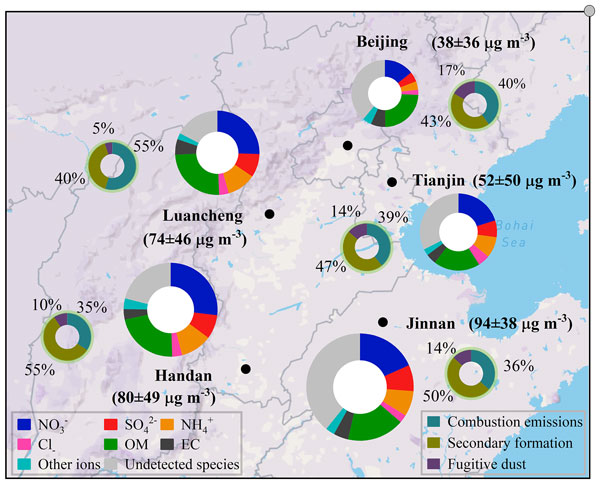
Nitrogenous organic compounds represent the pivotal chromophores governing the optical properties of atmospheric brown carbon (BrC) across the North China Plain, which are mainly formed through ammonia-driven aqueous reactions. Accordingly, the mitigation of ammonia emissions is indispensable for the further abatement of haze and BrC pollution in this region.
Zihao Bian, Hao Shi, Rui Li, Fei Lun, Francesco N. Tubiello, Nathaniel D. Mueller, Shiyu You, Rong Hao, Jiageng Ma, Longhui Li, Changchun Huang, Bing He, Yuanzhi Yao, and Hanqin Tian
Earth Syst. Sci. Data, 18, 7125–7141, https://doi.org/10.5194/essd-18-7125-2026, https://doi.org/10.5194/essd-18-7125-2026, 2026
Short summary
Short summary
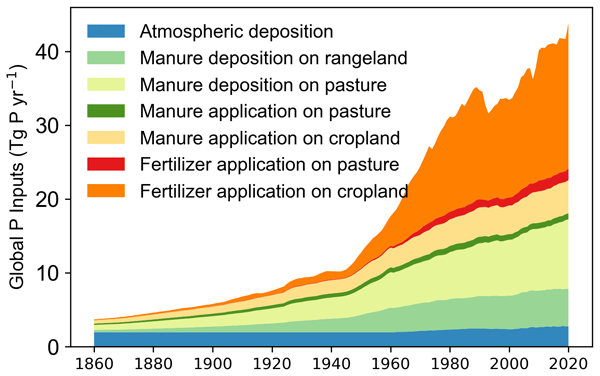
The History of Anthropogenic Phosphorus Inputs (HaPi) provides a dataset of global human-driven phosphorus fluxes to terrestrial biosphere from 1860–2020 at a resolution of 5 arcmin. This comprehensive dataset consists of phosphorus fertilizer/manure application to cropland, manure application/deposition to pasture, manure deposition to rangeland, and atmospheric phosphorus deposition. It supports analyses of nutrient budgets and provides essential forcing data for Earth system models.
Jiao Tang, Shujie Hu, Xiao Wang, Jiaqi Wang, Shaojun Lv, Xiaofei Geng, Guangcai Zhong, Yangzhi Mo, Surat Bualert, Jun Li, Shizhen Zhao, and Gan Zhang
Atmos. Chem. Phys., 26, 8341–8353, https://doi.org/10.5194/acp-26-8341-2026, https://doi.org/10.5194/acp-26-8341-2026, 2026
Short summary
Short summary
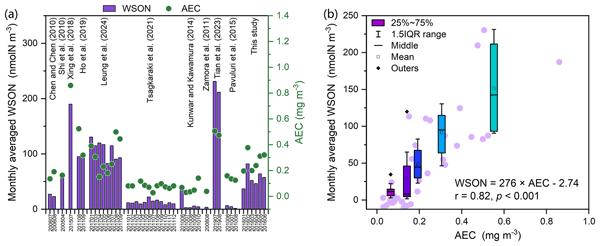
Water-soluble organic nitrogen (WSON) in coastal aerosols is critical for atmospheric chemistry and climate processes. This Bangkok study found sea-spray aerosol (SSA) is an important contributor to coastal aerosol WSON under marine air, its contribution surging from 3.8 % (continental) to 34 %. SSA-associated WSON strongly correlated (r=0.96) with trajectory-based air-mass exposure to chlorophyll-a, which is consistent with marine-biogenic enhancement.
Dongmei Tang, Yuanzhi Yao, Rui Li, and Xia Li
Earth Syst. Sci. Data Discuss., https://doi.org/10.5194/essd-2026-243, https://doi.org/10.5194/essd-2026-243, 2026
Revised manuscript under review for ESSD
Short summary
Short summary
We present a global, gridded dataset (1 km resolution) of consumption-based deforestation carbon emissions for the period 2001 to 2020. Our dataset shows that deforestation emissions embodied in international trade account for 31.8 % of global deforestation emissions. It provides spatially explicit information to support analyses of consumption-driven deforestation emissions and inform climate mitigation and policy assessments.
Guochen Wang, Xuedong Cui, Bingye Xu, Can Wu, Minkang Zhi, Keliang Li, Liang Xu, Qi Yuan, Yuntao Wang, Yele Sun, Zongbo Shi, Akinori Ito, Shixian Zhai, and Weijun Li
Atmos. Chem. Phys., 26, 1483–1496, https://doi.org/10.5194/acp-26-1483-2026, https://doi.org/10.5194/acp-26-1483-2026, 2026
Short summary
Short summary
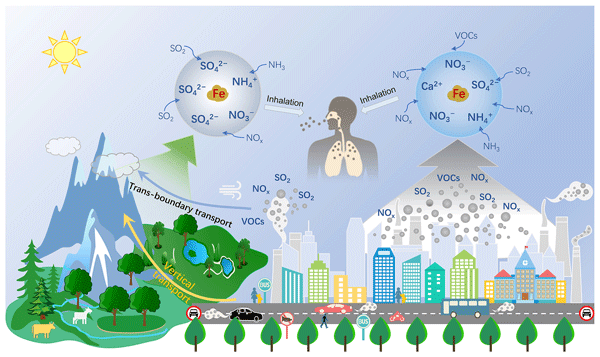
Iron acidification process is primarily driven by sulphuric acid in the upper mixing layer different from nitric acid at the ground-level. Enhanced atmospheric aging process contributes to high iron solubility in the upper mixing layer. Numerical models should consider vertical variations in iron dissolution to improve simulation accuracy.
Rui Li, Yumeng Shao, Dongmei Tang, Yining Gao, and Hongfang Zhao
Atmos. Chem. Phys., 25, 14501–14511, https://doi.org/10.5194/acp-25-14501-2025, https://doi.org/10.5194/acp-25-14501-2025, 2025
Short summary
Short summary
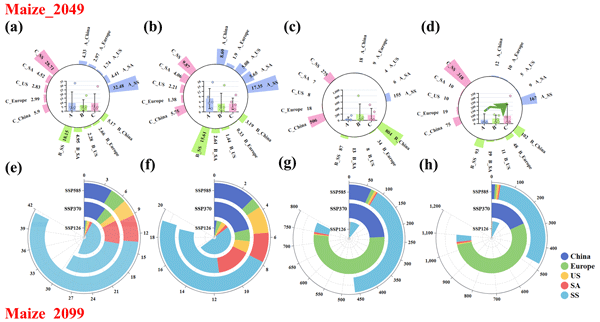
In both of historical and future scenarios, Sub-Sahara Africa (SS) and South America (SA) showed the highest fire-sourced maximum daily 8 h average (MDA8) O3 concentrations. However, the crop production losses (CPL) caused by O3 exposure reached the highest values in China. The emission control measures largely decreased the O3 damage to crop in China instead of SS and SA.
Wenwen Sun, Xing Liu, and Rui Li
Atmos. Chem. Phys., 25, 13007–13018, https://doi.org/10.5194/acp-25-13007-2025, https://doi.org/10.5194/acp-25-13007-2025, 2025
Short summary
Short summary
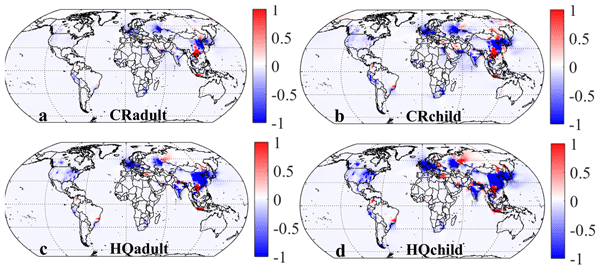
We predicted global variations in atmospheric nine hazardous trace metal levels and assess their responses to COVID-19 lockdown measures. The rise in Pb and Zn concentrations during lockdowns was primarily linked to sustained coal combustion and non-ferrous smelting activities. The reduced emissions of Pb and As during the lockdown period yielded the greatest health benefits. Targeting fossil fuel combustion should be prioritized in Pb and As mitigation strategies.
Can Wu, Yubao Chen, Yuwei Sun, Huijun Zhang, Si Zhang, Cong Cao, Jianjun Li, and Gehui Wang
Atmos. Chem. Phys., 25, 11975–11989, https://doi.org/10.5194/acp-25-11975-2025, https://doi.org/10.5194/acp-25-11975-2025, 2025
Short summary
Short summary
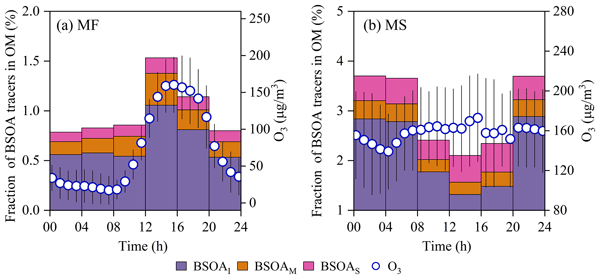
Biogenic secondary organic aerosol (BSOA), as an important atmospheric component, is prevalent within the boundary layer and can influence air quality and human health. Our observations demonstrate that anthropogenic NOx and the enhanced aerosol water driven by sulfate inhibit BSOA formation in lifting air masses, leading to a moderate reduction in the SOA burden in the upper boundary layer.
Zheng Li, Gehui Wang, Binyu Xiao, Rongjie Li, Can Wu, Shaojun Lv, Feng Wu, Qingyan Fu, and Yusen Duan
Atmos. Chem. Phys., 25, 12037–12049, https://doi.org/10.5194/acp-25-12037-2025, https://doi.org/10.5194/acp-25-12037-2025, 2025
Short summary
Short summary
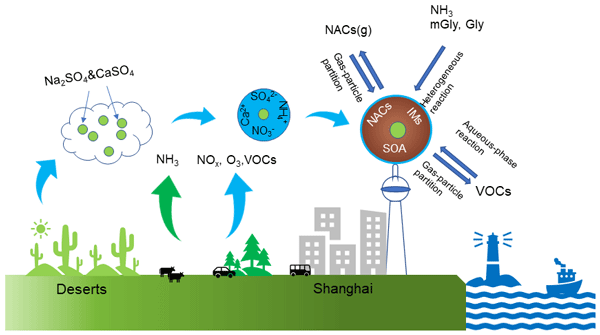
Gas-to-aerosol partitioning of organics was investigated in Shanghai during the 2023 dust storm period. We found the partitioning coefficients (Fp) of water-soluble organic compounds in the dust storm period (DS) were comparable to those during a haze episode (HE), and aerosol liquid water content primarily drove Fp variation in HE, while pH was the dominant factor in DS. Moreover, an enhanced light absorption of Asian dust by brown carbon, mainly in coarse mode, formation was revealed.
Rui Li, Xing Liu, Yubing Shen, Yumeng Shao, Yining Gao, Ziwei Yao, Xi Liu, and Guitao Shi
Atmos. Chem. Phys., 25, 9263–9274, https://doi.org/10.5194/acp-25-9263-2025, https://doi.org/10.5194/acp-25-9263-2025, 2025
Short summary
Short summary
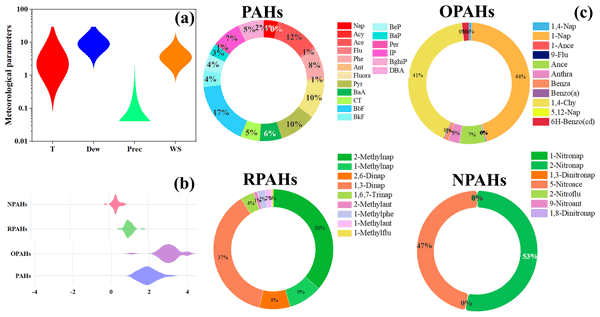
We reveal for the first time the global variations of PAHs and derivatives in marine air. We found that marine aerosols in East China Sea (ECS) and Western Pacific (WP) were significantly affected by coal and engine combustion, while those in Bismarck Sea (BS) and East Australian Sea (EAS) were mainly influenced by wildfire and coal combustion. The Antarctic Ocean (AO) was dominated by biomass burning and local shipping emissions. This finding helps elucidate the mechanism of the global PAH cycle.
Junke Zhang, Xinyi Fu, Chunying Chen, Yunfei Su, Siyu Liu, Luyao Chen, Yubao Chen, Gehui Wang, and Andre S. H. Prevot
Atmos. Chem. Phys., 25, 8983–9004, https://doi.org/10.5194/acp-25-8983-2025, https://doi.org/10.5194/acp-25-8983-2025, 2025
Short summary
Short summary
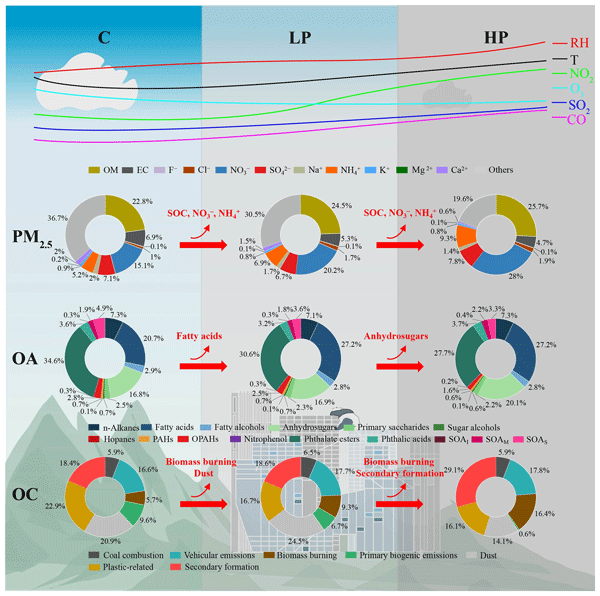
We measured (at the molecular level) the 125 organic aerosol (OA) compounds present in Chengdu in winter. OA was dominated by fatty acids, phthalate esters, and anhydrosugars, and it was deeply influenced by anthropogenic sources. As pollution worsened, secondary inorganic species and secondary organic carbon (OC) dominated the increase in PM2.5, fatty acids and anhydrosugars dominated the increase in OA, and the contributions of secondary formation and biomass burning to OC increased markedly.
Binyu Xiao, Fan Zhang, Zeyu Liu, Yan Zhang, Rui Li, Can Wu, Xinyi Wan, Yi Wang, Yubao Chen, Yong Han, Min Cui, Libo Zhang, Yingjun Chen, and Gehui Wang
Atmos. Chem. Phys., 25, 7053–7069, https://doi.org/10.5194/acp-25-7053-2025, https://doi.org/10.5194/acp-25-7053-2025, 2025
Short summary
Short summary
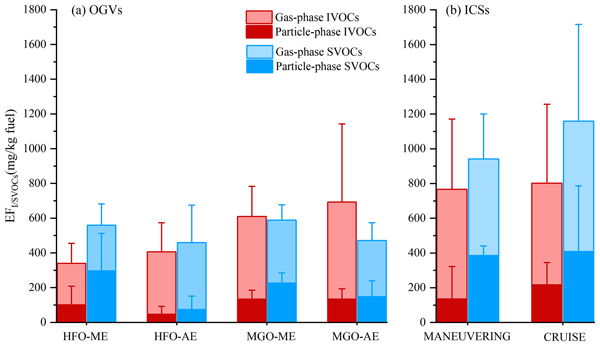
Intermediate-volatility/semi-volatile organic compounds in gas and particle phases from ship exhausts are enhanced due to the switch of fuels from low sulfur to ultra-low sulfur. The findings indicate that optimization is necessary for the forthcoming global implementation of an ultra-low-sulfur oil policy. Besides, we find that organic diagnostic markers of hopanes in conjunction with the ratio of octadecanoic to tetradecanoic could be considered potential tracers for heavy fuel oil exhausts.
Yanqin Ren, Zhenhai Wu, Fang Bi, Hong Li, Haijie Zhang, Junling Li, Rui Gao, Fangyun Long, Zhengyang Liu, Yuanyuan Ji, and Gehui Wang
Atmos. Chem. Phys., 25, 6975–6990, https://doi.org/10.5194/acp-25-6975-2025, https://doi.org/10.5194/acp-25-6975-2025, 2025
Short summary
Short summary
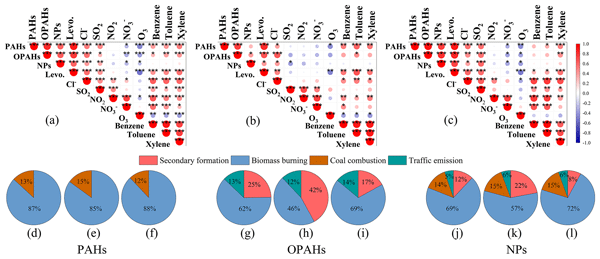
The daily concentrations of Polycyclic aromatic hydrocarbons (PAHs), oxygenated PAHs (OPAHs), and nitrated phenols (NPs) in PM2.5 were all increased during the heating season. Biomass burning was identified to be the primary source of these aromatic compounds, particularly for PAHs. Phenol and nitrobenzene are two main primary precursors for 4NP, with phenol showing lower reaction barriers. P-Cresol was identified as the primary precursor for the formation of 4-methyl-5-nitrocatechol.
Baoye Hu, Naihua Chen, Rui Li, Mingqiang Huang, Jinsheng Chen, Youwei Hong, Lingling Xu, Xiaolong Fan, Mengren Li, Lei Tong, Qiuping Zheng, and Yuxiang Yang
Atmos. Chem. Phys., 25, 905–921, https://doi.org/10.5194/acp-25-905-2025, https://doi.org/10.5194/acp-25-905-2025, 2025
Short summary
Short summary
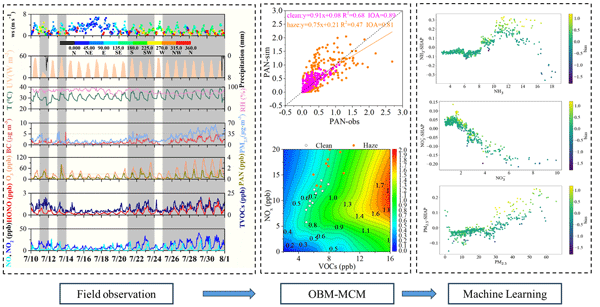
Box modeling with the Master Chemical Mechanism (MCM) was used to explore summertime peroxyacetyl nitrate (PAN) formation and its link to aerosol pollution under high-ozone conditions. The MCM model is effective in the study of PAN photochemical formation and performed better during the clean period than the haze period. Machine learning analysis identified ammonia, nitrate, and fine particulate matter as the top three factors contributing to simulation bias.
Si Zhang, Yining Gao, Xinbei Xu, Luyao Chen, Can Wu, Zheng Li, Rongjie Li, Binyu Xiao, Xiaodi Liu, Rui Li, Fan Zhang, and Gehui Wang
Atmos. Chem. Phys., 24, 14177–14190, https://doi.org/10.5194/acp-24-14177-2024, https://doi.org/10.5194/acp-24-14177-2024, 2024
Short summary
Short summary
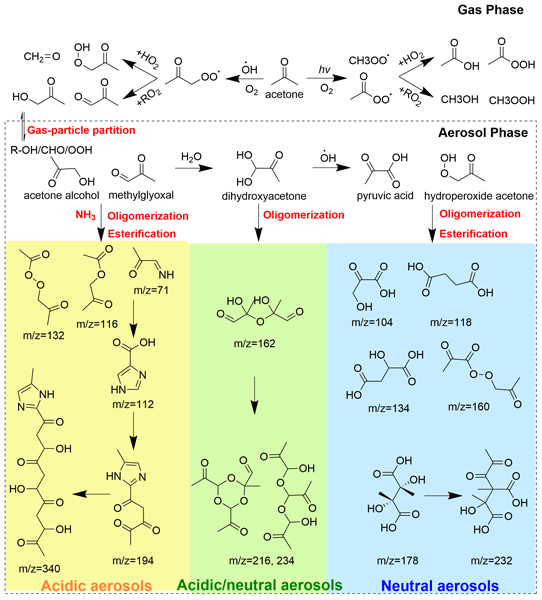
Secondary organic aerosols (SOAs) from acetone photooxidation in the presence of various seeds were studied to illustrate SOA formation kinetics under ammonia-rich conditions. The oxidation mechanism of acetone was investigated using an observation-based model incorporating a Master Chemical Mechanism model. A higher SOA yield of acetone was observed compared to methylglyoxal due to an enhanced uptake of the small photooxidation products of acetone.
Xinbei Xu, Yining Gao, Si Zhang, Luyao Chen, Rongjie Li, Zheng Li, Rui Li, and Gehui Wang
EGUsphere, https://doi.org/10.5194/egusphere-2024-3046, https://doi.org/10.5194/egusphere-2024-3046, 2024
Preprint archived
Short summary
Short summary
This work systematically explained the nonlinear effect of NOx level on isoprene-SOA mass yield through a series of chamber experiments. We found that the turning point under various oxidants was smaller than previous reported in the presence of OH precursors, which could be attributed to the RO2 pathway competition in nucleation and condensation of low volatile products. The highest SOA yield was at a branching ratio β of 0.5, which can be used as a reference for field campaign and modeling.
Can Wu, Xiaodi Liu, Ke Zhang, Si Zhang, Cong Cao, Jianjun Li, Rui Li, Fan Zhang, and Gehui Wang
Atmos. Chem. Phys., 24, 9263–9275, https://doi.org/10.5194/acp-24-9263-2024, https://doi.org/10.5194/acp-24-9263-2024, 2024
Short summary
Short summary
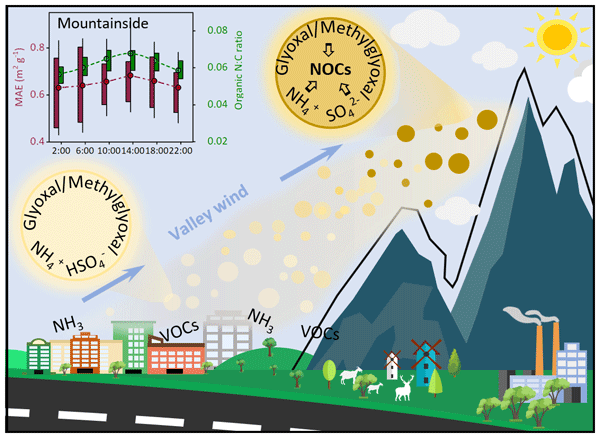
Brown carbon (BrC) is prevalent in the troposphere and can efficiently absorb solar and terrestrial radiation. Our observations show that the enhanced light absorption of BrC relative to black carbon at the tropopause can be attributed to the formation of nitrogen-containing organic compounds through the aqueous-phase reactions of carbonyls with ammonium.
Fan Zhang, Binyu Xiao, Zeyu Liu, Yan Zhang, Chongguo Tian, Rui Li, Can Wu, Yali Lei, Si Zhang, Xinyi Wan, Yubao Chen, Yong Han, Min Cui, Cheng Huang, Hongli Wang, Yingjun Chen, and Gehui Wang
Atmos. Chem. Phys., 24, 8999–9017, https://doi.org/10.5194/acp-24-8999-2024, https://doi.org/10.5194/acp-24-8999-2024, 2024
Short summary
Short summary
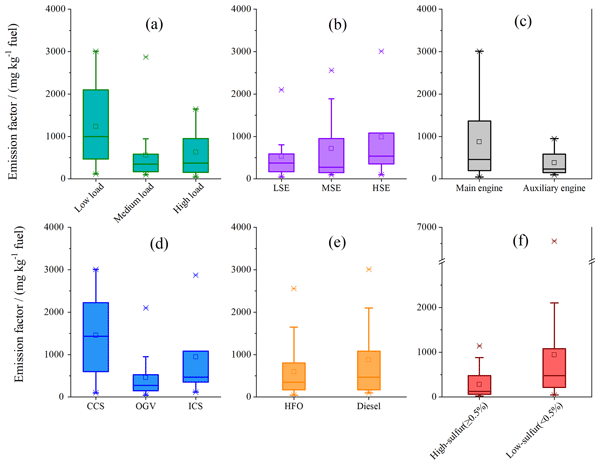
Mandatory use of low-sulfur fuel due to global sulfur limit regulations means large uncertainties in volatile organic compound (VOC) emissions. On-board tests of VOCs from nine cargo ships in China were carried out. Results showed that switching from heavy-fuel oil to diesel increased emission factor VOCs by 48 % on average, enhancing O3 and the secondary organic aerosol formation potential. Thus, implementing a global ultra-low-sulfur oil policy needs to be optimized in the near future.
Shijie Liu, Xinbei Xu, Si Zhang, Rongjie Li, Zheng Li, Can Wu, Rui Li, Guiqin Zhang, and Gehui Wang
EGUsphere, https://doi.org/10.5194/egusphere-2024-1599, https://doi.org/10.5194/egusphere-2024-1599, 2024
Preprint archived
Short summary
Short summary
We conducted α-pinene photooxidation experiments in an atmospheric chamber at different NOx concentrations. The increased distribution coefficient of the oxidation products between the aerosol and gas phases with NOx was responsible for the increased SOA yields with NOx under low-NOx conditions. We also found the fraction of SOA made up of nitrogen-containing organic compounds (NOCs) increased with NOx.
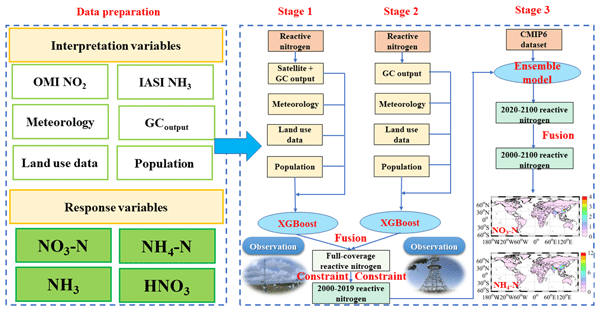
Rui Li, Yining Gao, Lijia Zhang, Yubing Shen, Tianzhao Xu, Wenwen Sun, and Gehui Wang
Atmos. Chem. Phys., 24, 7623–7636, https://doi.org/10.5194/acp-24-7623-2024, https://doi.org/10.5194/acp-24-7623-2024, 2024
Short summary
Short summary
A three-stage model was developed to obtain the global maps of reactive nitrogen components during 2000–2100. The results implied that cross-validation R2 values of four species showed satisfactory performance (R2 > 0.55). Most reactive nitrogen components, except NH3, in China showed increases during 2000–2013. In the future scenarios, SSP3-7.0 (traditional-energy scenario) and SSP1-2.6 (carbon neutrality scenario) showed the highest and lowest reactive nitrogen component concentrations.
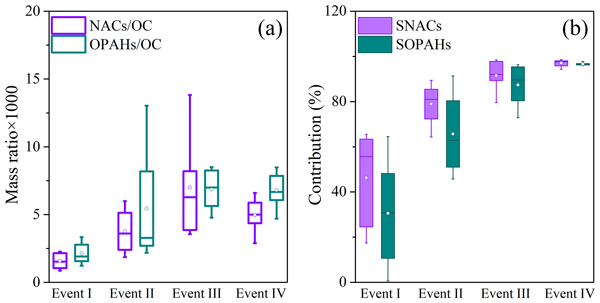
Yanqin Ren, Zhenhai Wu, Yuanyuan Ji, Fang Bi, Junling Li, Haijie Zhang, Hao Zhang, Hong Li, and Gehui Wang
Atmos. Chem. Phys., 24, 6525–6538, https://doi.org/10.5194/acp-24-6525-2024, https://doi.org/10.5194/acp-24-6525-2024, 2024
Short summary
Short summary
Nitrated aromatic compounds (NACs) and oxygenated derivatives of polycyclic aromatic hydrocarbons (OPAHs) in PM2.5 were examined from an urban area in Beijing during the autumn and winter. The OPAH and NAC concentrations were much higher during heating than before heating. They majorly originated from the combustion of biomass and automobile emissions, and the secondary generation was the major contributor throughout the whole sampling period.
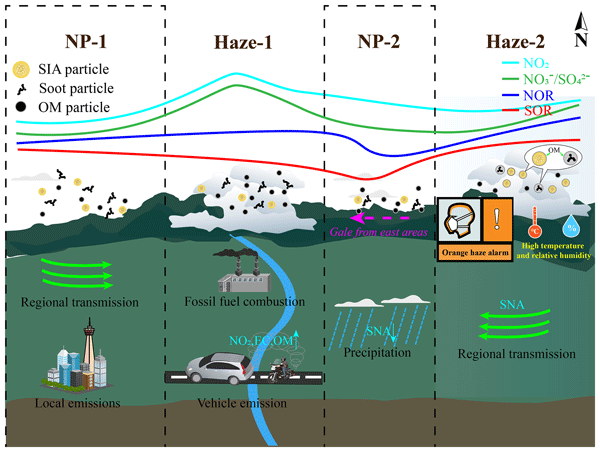
Junke Zhang, Yunfei Su, Chunying Chen, Wenkai Guo, Qinwen Tan, Miao Feng, Danlin Song, Tao Jiang, Qiang Chen, Yuan Li, Wei Li, Yizhi Wang, Xiaojuan Huang, Lin Han, Wanqing Wu, and Gehui Wang
Atmos. Chem. Phys., 24, 2803–2820, https://doi.org/10.5194/acp-24-2803-2024, https://doi.org/10.5194/acp-24-2803-2024, 2024
Short summary
Short summary
Typical haze events in Chengdu at the beginning of 2023 were investigated with bulk-chemical and single-particle analyses along with numerical model simulations. By integrating the obtained chemical composition, source, mixing state and numerical simulation results, we infer that Haze-1 was mainly caused by pollutants related to fossil fuel combustion, especially local mobile sources, while Haze-2 was triggered by the secondary pollutants, which mainly came from regional transmission.
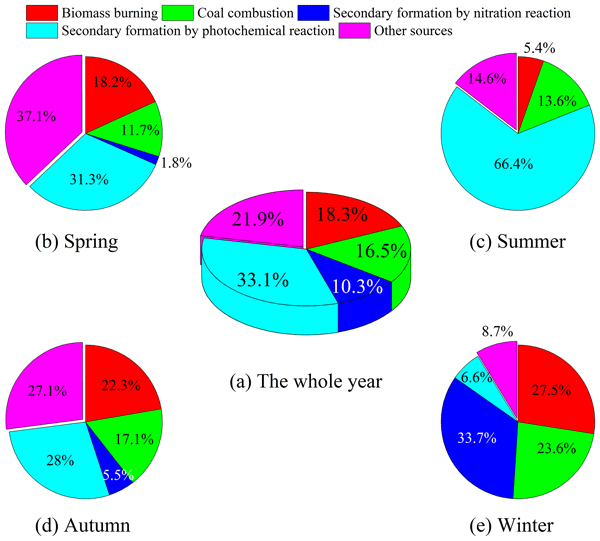
Yanqin Ren, Gehui Wang, Jie Wei, Jun Tao, Zhisheng Zhang, and Hong Li
Atmos. Chem. Phys., 23, 6835–6848, https://doi.org/10.5194/acp-23-6835-2023, https://doi.org/10.5194/acp-23-6835-2023, 2023
Short summary
Short summary
Nine quantified nitrated aromatic compounds (NACs) in PM2.5 were examined at the peak of Mt. Wuyi. They manifested a significant rise in overall abundance in the winter and autumn. The transport of contaminants had a significant impact on NACs. Under low-NOx conditions, the formation of NACs was comparatively sensitive to NO2, suggesting that NACs would become significant in the aerosol characteristics when nitrate concentrations decreased as a result of emission reduction measures.
Rui Li, Yining Gao, Yubao Chen, Meng Peng, Weidong Zhao, Gehui Wang, and Jiming Hao
Atmos. Chem. Phys., 23, 4709–4726, https://doi.org/10.5194/acp-23-4709-2023, https://doi.org/10.5194/acp-23-4709-2023, 2023
Short summary
Short summary
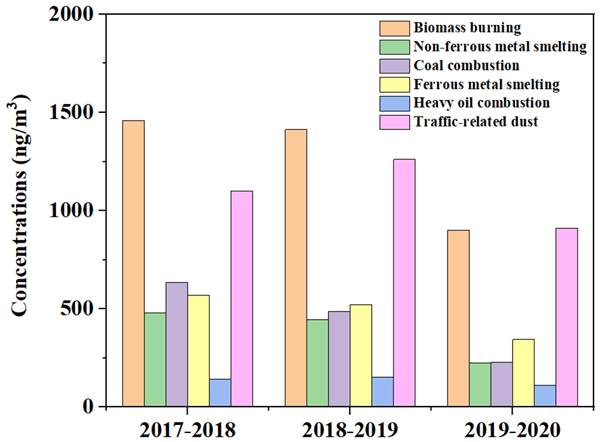
A random forest model was used to isolate the effects of emission and meteorology to trace elements in PM2.5 in Tangshan. The results suggested that control measures facilitated decreases of Ga, Co, Pb, Zn, and As, due to the strict implementation of coal-to-gas strategies and optimisation of industrial structure and layout. However, the deweathered levels of Ca, Cr, and Fe only displayed minor decreases, indicating that ferrous metal smelting and vehicle emission controls should be enhanced.
Chaohao Ling, Lulu Cui, and Rui Li
Atmos. Chem. Phys., 23, 3311–3324, https://doi.org/10.5194/acp-23-3311-2023, https://doi.org/10.5194/acp-23-3311-2023, 2023
Short summary
Short summary
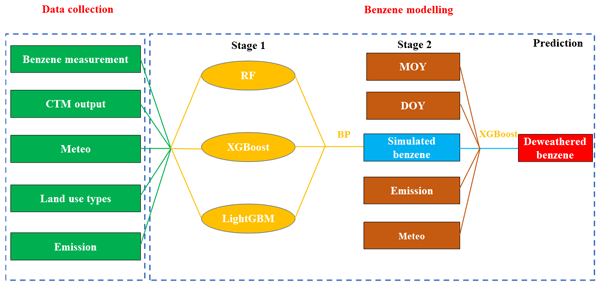
An ensemble machine-learning model coupled with chemical transport models (CTMs) was applied to assess the impact of COVID-19 on ambient benzene. The change ratio of the deweathered benzene concentration from the pre-lockdown to lockdown period was in the order of India (−23.6 %) > Europe (−21.9 %) > the United States (−16.2 %) > China (−15.6 %), which might be associated with local serious benzene pollution and substantial emission reduction in the industrial and transportation sectors.

Can Wu, Cong Cao, Jianjun Li, Shaojun Lv, Jin Li, Xiaodi Liu, Si Zhang, Shijie Liu, Fan Zhang, Jingjing Meng, and Gehui Wang
Atmos. Chem. Phys., 22, 15621–15635, https://doi.org/10.5194/acp-22-15621-2022, https://doi.org/10.5194/acp-22-15621-2022, 2022
Short summary
Short summary
Over the past decade, the relative abundance of NH4NO3 in aerosol has been enhanced in most urban areas of China, which profoundly affects the PM2.5 pollution episodes. Our work finds that fine-particle nitrate and ammonium exhibited distinct, different physicochemical behaviors in the aerosol aging process.
Shijie Liu, Dandan Huang, Yiqian Wang, Si Zhang, Xiaodi Liu, Can Wu, Wei Du, and Gehui Wang
Atmos. Chem. Phys., 21, 17759–17773, https://doi.org/10.5194/acp-21-17759-2021, https://doi.org/10.5194/acp-21-17759-2021, 2021
Short summary
Short summary
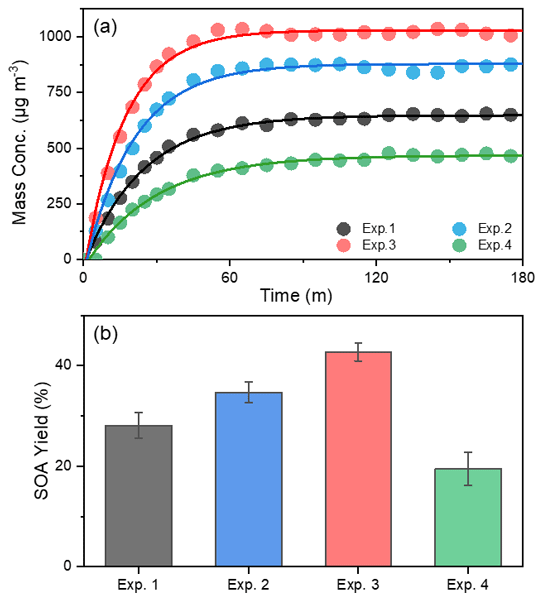
A series of chamber experiments was performed to probe the individual and common effects of NH3 and NOx on toluene secondary organic aerosol (SOA) formation through OH photooxidation. The synergetic effects of NH3 and NOx on the toluene SOA concentration and optical absorption were observed. The higher-volatility products formed in the presence of NOx could precipitate into the particle phase when NH3 was added. The formation pathways of N-containing OAs through NOx or NH3 are also discussed.
Cited articles
Almeida, J., Schobesberger, S., Kürten, A., Ortega, I. K., Kupiainen-Määttä, O., Praplan, A. P., Adamov, A., Amorim, A., Bianchi, F., Breitenlechner, M., David, A., Dommen, J., Donahue, N. M., Downard, A., Dunne, E., Duplissy, J., Ehrhart, S., Flagan, R. C., Franchin, A., Guida, R., Hakala, J., Hansel, A., Heinritzi, M., Henschel, H., Jokinen, T., Junninen, H., Kajos, M., Kangasluoma, J., Keskinen, H., Kupc, A., Kurtén, T., Kvashin, A. N., Laaksonen, A., Lehtipalo, K., Leiminger, M., Leppä, J., Loukonen, V., Makhmutov, V., Mathot, S., McGrath, M. J., Nieminen, T., Olenius, T., Onnela, A., Petäjä, T., Riccobono, F., Riipinen, I., Rissanen, M., Rondo, L., Ruuskanen, T., Santos, F. D., Sarnela, N., Schallhart, S., Schnitzhofer, R., Seinfeld, J. H., Simon, M., Sipilä, M., Stozhkov, Y., Stratmann, F., Tomé, A., Tröstl, J., Tsagkogeorgas, G., Vaattovaara, P., Viisanen, Y., Virtanen, A., Vrtala, A., Wagner, P. E., Weingartner, E., Wex, H., Williamson, C., Wimmer, D., Ye, P., Yli-Juuti, T., Carslaw, K. S., Kulmala, M., Curtius, J., Baltensperger, U., Worsnop, D. R., Vehkamäki, H., and Kirkby, J.: Molecular understanding of sulphuric acid–amine particle nucleation in the atmosphere, Nature, 502, 359–363, https://doi.org/10.1038/nature12663, 2013.
Brean, J., Bortolussi, F., Rowell, A., Beddows, D. C. S., Weinhold, K., Mettke, P., Merkel, M., Kumar, A., Barua, S., Iyer, S., Karppinen, A., Sandström, H., Rinke, P., Wiedensohler, A., Pöhlker, M., Dal Maso, M., Rissanen, M., Shi, Z., and Harrison, R. M.: Traffic-Emitted Amines Promote New Particle Formation at Roadsides, ACS ES&T Air, 2, 1704–1713, https://doi.org/10.1021/acsestair.5c00119, 2025.
Chen, Y., Xia, M., Zheng, P., Li, Y., Zou, Z., Tong, S., Li, K., Feng, X., Hui, L., Yuan, Q., Li, J., Yu, J. Z., Lee, S., Wang, T., and Wang, Z.: Complex gas-particle partitioning of nitro-phenolic compounds: field-based insights and determination of apparent activity coefficient, npj Clim. Atmos. Sci., 8, https://doi.org/10.1038/s41612-025-01156-z, 2025.
Chow, J. C., Watson, J. G., Chen, L. W. A., Chang, M. C. O., Robinson, N. F., Trimble, D., and Kohl, S.: The IMPROVE_A Temperature Protocol for Thermal/Optical Carbon Analysis: Maintaining Consistency with a Long-Term Database, J. Air Waste Manage., 57, 1014–1023, https://doi.org/10.3155/1047-3289.57.9.1014, 2007.
Ditto, J. C., Abbatt, J. P. D., and Chan, A. W. H.: Gas- and Particle-Phase Amide Emissions from Cooking: Mechanisms and Air Quality Impacts, Environ. Sci. Technol., 56, 7741–7750, https://doi.org/10.1021/acs.est.2c01409, 2022.
Feng, X., Wei, S., and Wang, S.: Temperature inversions in the atmospheric boundary layer and lower troposphere over the Sichuan Basin, China: Climatology and impacts on air pollution, Sci. Total Environ., 726, https://doi.org/10.1016/j.scitotenv.2020.138579, 2020.
Fountoukis, C. and Nenes, A.: ISORROPIA II: a computationally efficient thermodynamic equilibrium model for K+–Ca2+–Mg2+–
Ge, X., Wexler, A. S., and Clegg, S. L.: Atmospheric amines – Part II. Thermodynamic properties and gas/particle partitioning, Atmos. Environ., 45, 561–577, https://doi.org/10.1016/j.atmosenv.2010.10.013, 2011.
Glasoe, W. A., Volz, K., Panta, B., Freshour, N., Bachman, R., Hanson, D. R., McMurry, P. H., and Jen, C.: Sulfuric acid nucleation: An experimental study of the effect of seven bases, J. Geophys. Res.-Atmos., 120, 1933–1950, https://doi.org/10.1002/2014jd022730, 2015.
González-Sánchez, J. M., Brun, N., Wu, J., Morin, J., Temime-Roussel, B., Ravier, S., Mouchel-Vallon, C., Clément, J.-L., and Monod, A.: On the importance of atmospheric loss of organic nitrates by aqueous-phase •OH oxidation, Atmos. Chem. Phys., 21, 4915–4937, https://doi.org/10.5194/acp-21-4915-2021, 2021.
Guan, L., Ding, C., Zhang, Y., Hu, J., and Yu, X.: Pollution Characteristics and Sources of Water-soluble Organic Nitrogen in PM2.5 in Jiangbei New Area,Nanjing, Environm. Sci., 43, 2888–2894, https://doi.org/10.13227/j.hjkx.202110026, 2022.
Guo, H., Xu, L., Bougiatioti, A., Cerully, K. M., Capps, S. L., Hite Jr., J. R., Carlton, A. G., Lee, S.-H., Bergin, M. H., Ng, N. L., Nenes, A., and Weber, R. J.: Fine-particle water and pH in the southeastern United States, Atmos. Chem. Phys., 15, 5211–5228, https://doi.org/10.5194/acp-15-5211-2015, 2015.
Guo, J., Zhu, Y., He, L., Ni, C., Yang, Y., and Tu, C.: Lower tropospheric inversion during haze process in Sichuan Basin: characteristics and influences, Environ. Sci. Technol., 49, 128–136, https://doi.org/10.19672/j.cnki.1003-6504.1316.25.338, 2026.
Hennigan, C. J., Izumi, J., Sullivan, A. P., Weber, R. J., and Nenes, A.: A critical evaluation of proxy methods used to estimate the acidity of atmospheric particles, Atmos. Chem. Phys., 15, 2775–2790, https://doi.org/10.5194/acp-15-2775-2015, 2015.
Huang, S., Song, Q., Hu, W., Yuan, B., Liu, J., Jiang, B., Li, W., Wu, C., Jiang, F., Chen, W., Wang, X., and Shao, M.: Chemical composition and sources of amines in PM2.5 in an urban site of PRD, China, Environ. Res., 212, https://doi.org/10.1016/j.envres.2022.113261, 2022.
Jickells, T., Baker, A. R., Cape, J. N., Cornell, S. E., and Nemitz, E.: The cycling of organic nitrogen through the atmosphere, Philos. T. R. Soc. B, 368, https://doi.org/10.1098/rstb.2013.0115, 2013.
Kanawade, V. P. and Jokinen, T.: Atmospheric amines are a crucial yet missing link in Earth's climate via airborne aerosol production, Communications Earth Environment, 6, https://doi.org/10.1038/s43247-025-02063-0, 2025.
Leung, C. W., Wang, X., and Hu, D.: Characteristics and source apportionment of water-soluble organic nitrogen (WSON) in PM2.5 in Hong Kong: With focus on amines, urea, and nitroaromatic compounds, J. Hazard. Mater., 469, https://doi.org/10.1016/j.jhazmat.2024.133899, 2024.
Li, Y., Fu, T.-M., Yu, J. Z., Yu, X., Chen, Q., Miao, R., Zhou, Y., Zhang, A., Ye, J., Yang, X., Tao, S., Liu, H., and Yao, W.: Dissecting the contributions of organic nitrogen aerosols to global atmospheric nitrogen deposition and implications for ecosystems, Natl. Sci. Rev., 10, https://doi.org/10.1093/nsr/nwad244, 2023.
Li, Z., Wang, G., Xiao, B., Li, R., Wu, C., Lv, S., Wu, F., Fu, Q., and Duan, Y.: Measurement report: simultaneous measurement on gas- and particle-phase water-soluble organics in Shanghai: enhanced light absorption of transported Asian dust, Atmos. Chem. Phys., 25, 12037–12049, https://doi.org/10.5194/acp-25-12037-2025, 2025.
Li, Z., Li, R., Xiao, B., Wu, C., Chen, K., Meng, J., Li, J., and Wang, G.: Gas-to-Particle Phase Transformation of Atmospheric Organics Amplified by Low Temperature and High Aerosol Water in Winter Haze of China, Environ. Sci. Technol., https://doi.org/10.1021/acs.est.5c18827, 2026.
Liu, F., Bi, X., Zhang, G., Lian, X., Fu, Y., Yang, Y., Lin, Q., Jiang, F., Wang, X., Peng, P. A., and Sheng, G.: Gas-to-particle partitioning of atmospheric amines observed at a mountain site in southern China, Atmos. Environ., 195, 1–11, https://doi.org/10.1016/j.atmosenv.2018.09.038, 2018.
Liu, X., Wang, H., Wang, F., Lv, S., Wu, C., Zhao, Y., Zhang, S., Liu, S., Xu, X., Lei, Y., and Wang, G.: Secondary Formation of Atmospheric Brown Carbon in China Haze: Implication for an Enhancing Role of Ammonia, Environ. Sci. Technol., 57, 11163–11172, https://doi.org/10.1021/acs.est.3c03948, 2023.
Lu, H., Xie, M., Zhuang, B., Ma, D., Liu, B., Zhan, Y., Wang, T., Li, S., Li, M., and Zhu, K.: Impacts of atmospheric circulation patterns and cloud inhibition on aerosol radiative effect and boundary layer structure during winter air pollution in Sichuan Basin, China, Atmos. Chem. Phys., 24, 8963–8982, https://doi.org/10.5194/acp-24-8963-2024, 2024.
Lutz, A., Mohr, C., Le Breton, M., Lopez-Hilfiker, F. D., Priestley, M., Thornton, J. A., and Hallquist, M.: Gas to Particle Partitioning of Organic Acids in the Boreal Atmosphere, ACS Earth Space Chem., 3, 1279–1287, https://doi.org/10.1021/acsearthspacechem.9b00041, 2019.
Lv, S., Wang, F., Wu, C., Chen, Y., Liu, S., Zhang, S., Li, D., Du, W., Zhang, F., Wang, H., Huang, C., Fu, Q., Duan, Y., and Wang, G.: Gas-to-Aerosol Phase Partitioning of Atmospheric Water-Soluble Organic Compounds at a Rural Site in China: An Enhancing Effect of NH3 on SOA Formation, Environ. Sci. Technol., 56, 3915–3924, https://doi.org/10.1021/acs.est.1c06855, 2022a.
Lv, S., Wu, C., Wang, F., Liu, X., Zhang, S., Chen, Y., Zhang, F., Yang, Y., Wang, H., Huang, C., Fu, Q., Duan, Y., and Wang, G.: Nitrate-Enhanced Gas-to-Particle-Phase Partitioning of Water-Soluble Organic Compounds in Chinese Urban Atmosphere: Implications for Secondary Organic Aerosol Formation, Environ. Sci. Technol. Lett., 10, 14–20, https://doi.org/10.1021/acs.estlett.2c00894, 2022b.
Matsumoto, K., Ogawa, T., Ishikawa, M., Hirai, A., Watanabe, Y., and Nakano, T.: Organic and inorganic nitrogen deposition on the red pine forests at the northern foot of Mt. Fuji, Japan, Atmos. Environ., 237, https://doi.org/10.1016/j.atmosenv.2020.117676, 2020.
Özel, M. Z., Ward, M. W., Hamilton, J. F., Lewis, A. C., Raventós-Duran, T., and Harrison, R. M.: Analysis of Organic Nitrogen Compounds in Urban Aerosol Samples Using GCxGC-TOF/MS, Aerosol Sci. Tech., 44, 109–116, https://doi.org/10.1080/02786820903410105, 2010.
Pankow, J. F.: An absorption model of gas/particle partitioning of organic compounds in the atmosphere, Atmos. Environ., 28, 185–188, https://doi.org/10.1016/1352-2310(94)90093-0, 1994.
Pankow, J. F.: Phase considerations in the gas/particle partitioning of organic amines in the atmosphere, Atmos. Environ., 122, 448–453, https://doi.org/10.1016/j.atmosenv.2015.09.056, 2015.
Qiu, C. and Zhang, R.: Multiphase chemistry of atmospheric amines, Phys. Chem. Chem. Phys., 15, https://doi.org/10.1039/c3cp43446j, 2013.
Rao, Z., Tao, H., Zhou, L., Wang, W., Liu, S., Luo, B., Zhang, W., Cao, P., Li, J., Yang, F., and Ge, M.: Divergent drivers of winter PM2.5 pollution in representative cities of the Sichuan Basin: Insights from observation and machine learning, J. Hazard. Mater., 514, https://doi.org/10.1016/j.jhazmat.2026.142877, 2026.
Rizzo, R. C. and Jorgensen, W. L.: OPLS All-Atom Model for Amines: Resolution of the Amine Hydration Problem, J. Am. Chem. Soc., 121, 4827–4836, https://doi.org/10.1021/ja984106u, 1999.
Rollins, A. W., Pusede, S., Wooldridge, P., Min, K. E., Gentner, D. R., Goldstein, A. H., Liu, S., Day, D. A., Russell, L. M., Rubitschun, C. L., Surratt, J. D., and Cohen, R. C.: Gas/particle partitioning of total alkyl nitrates observed with TD-LIF in Bakersfield, J. Geophys. Res.-Atmos., 118, 6651–6662, https://doi.org/10.1002/jgrd.50522, 2013.
Schobesberger, S., Junninen, H., Bianchi, F., Lönn, G., Ehn, M., Lehtipalo, K., Dommen, J., Ehrhart, S., Ortega, I. K., Franchin, A., Nieminen, T., Riccobono, F., Hutterli, M., Duplissy, J., Almeida, J., Amorim, A., Breitenlechner, M., Downard, A. J., Dunne, E. M., Flagan, R. C., Kajos, M., Keskinen, H., Kirkby, J., Kupc, A., Kürten, A., Kurtén, T., Laaksonen, A., Mathot, S., Onnela, A., Praplan, A. P., Rondo, L., Santos, F. D., Schallhart, S., Schnitzhofer, R., Sipilä, M., Tomé, A., Tsagkogeorgas, G., Vehkamäki, H., Wimmer, D., Baltensperger, U., Carslaw, K. S., Curtius, J., Hansel, A., Petäjä, T., Kulmala, M., Donahue, N. M., and Worsnop, D. R.: Molecular understanding of atmospheric particle formation from sulfuric acid and large oxidized organic molecules, P. Natl. Acad. Sci. USA, 110, 17223–17228, https://doi.org/10.1073/pnas.1306973110, 2013.
Shu, X., Qiao, X., Tang, Y., Hopke, P. K., Ying, Q., Wang, J., Han, B., Xu, Z., Xia, Z., Ma, Y., Dai, Y., and Leng, J.: Enclosed-terrain urbanized areas require vertically stratified air quality management: Insights from particulate matter vertical observations in China's Sichuan Basin, J. Environ. Manage., 391, https://doi.org/10.1016/j.jenvman.2025.126564, 2025.
Tang, S., Li, F., Lv, J., Liu, L., Wu, G., Wang, Y., Yu, W., Wang, Y., and Jiang, G.: Unexpected molecular diversity of brown carbon formed by Maillard-like reactions in aqueous aerosols, Chem. Sci., 13, 8401–8411, https://doi.org/10.1039/d2sc02857c, 2022.
Tilgner, A., Schaefer, T., Alexander, B., Barth, M., Collett Jr., J. L., Fahey, K. M., Nenes, A., Pye, H. O. T., Herrmann, H., and McNeill, V. F.: Acidity and the multiphase chemistry of atmospheric aqueous particles and clouds, Atmos. Chem. Phys., 21, 13483–13536, https://doi.org/10.5194/acp-21-13483-2021, 2021.
Wang, Y., Hu, M., Hu, W., Zheng, J., Niu, H., Fang, X., Xu, N., Wu, Z., Guo, S., Wu, Y., Chen, W., Lu, S., Shao, M., Xie, S., Luo, B., and Zhang, Y.: Secondary Formation of Aerosols Under Typical High-Humidity Conditions in Wintertime Sichuan Basin, China: A Contrast to the North China Plain, J. Geophys. Res.-Atmos., 126, https://doi.org/10.1029/2021jd034560, 2021.
Xiao, B., Wang, G., Li, Z., Li, R., Liang, C., Wang, H., Zhang, S., Wu, C., Li, R., Zhang, F., Zhang, R., Wu, Y., and Zhang, L.: High Contribution of Secondary Formation to Brown Carbon in China Humid Haze: Enhancing Role of Ammonia and Amines, Environ. Sci. Technol., 59, 27530–27540, https://doi.org/10.1021/acs.est.5c13436, 2025.
Xie, F., Wang, F., Li, L., Peng, C., Zhou, X., Sun, Y., and Lü, C.: Characteristics and sources of water-soluble organic nitrogen in PM2.5 from a resource-dependent city, Atmos. Pollut. Res., 16, https://doi.org/10.1016/j.apr.2025.102586, 2025.
Xu, Y., Miyazaki, Y., Tachibana, E., Sato, K., Ramasamy, S., Mochizuki, T., Sadanaga, Y., Nakashima, Y., Sakamoto, Y., Matsuda, K., and Kajii, Y.: Aerosol Liquid Water Promotes the Formation of Water-Soluble Organic Nitrogen in Submicrometer Aerosols in a Suburban Forest, Environ. Sci. Technol., 54, 1406–1414, https://doi.org/10.1021/acs.est.9b05849, 2020.
Yang, D., Zhu, S., Ma, Y., Zhou, L., Zheng, F., Wang, L., Jiang, J., and Zheng, J.: Emissions of Ammonia and Other Nitrogen-Containing Volatile Organic Compounds from Motor Vehicles under Low-Speed Driving Conditions, Environ. Sci. Technol., 56, 5440–5447, https://doi.org/10.1021/acs.est.2c00555, 2022.
Yang, X., Cao, F., Fan, M., Lin, Y., Xie, F., and Zhang, Y.: Seasonal variations of low molecular alkyl amines in PM2.5 in a North China Plain industrial city: Importance of secondary formation and combustion emissions, Sci. Total Environ., 857, https://doi.org/10.1016/j.scitotenv.2022.159371, 2023.
Yao, L., Garmash, O., Bianchi, F., Zheng, J., Yan, C., Kontkanen, J., Junninen, H., Mazon, S. B., Ehn, M., Paasonen, P., Sipilä, M., Wang, M. Y., Wang, X. K., Xiao, S., Chen, H. F., Lu, Y. Q., Zhang, B. W., Wang, D. F., Fu, Q. Y., Geng, F. H., Li, L., Wang, H. L., Qiao, L. P., Yang, X., Chen, J. M., Kerminen, V. M., Petäjä, T., Worsnop, D. R., Kulmala, M., and Wang, L.: Atmospheric new particle formation from sulfuric acid and amines in a Chinese megacity, Science, 361, 278–281, https://doi.org/10.1126/science.aao4839, 2018.
Yu, Q., Fu, N., Lu, J., Zhang, Y., Du, W., and Wang, J.: Atmospheric Amines: Advances in Analytical Techniques, Emission Inventories, Regional Pollution, and Roles in New Particle Formation, Current Pollution Reports, 11, https://doi.org/10.1007/s40726-025-00364-8, 2025.
Yu, X., Yu, Q., Zhu, M., Tang, M., Li, S., Yang, W., Zhang, Y., Deng, W., Li, G., Yu, Y., Huang, Z., Song, W., Ding, X., Hu, Q., Li, J., Bi, X., and Wang, X.: Water Soluble Organic Nitrogen (WSON) in Ambient Fine Particles Over a Megacity in South China: Spatiotemporal Variations and Source Apportionment, J. Geophys. Res.-Atmos., 122, https://doi.org/10.1002/2017jd027327, 2017.
Yu, X., Li, D., Li, D., Zhang, G., Zhou, H., Li, S., Song, W., Zhang, Y., Bi, X., Yu, J., and Wang, X.: Enhanced Wet Deposition of Water-Soluble Organic Nitrogen During the Harvest Season: Influence of Biomass Burning and In-Cloud Scavenging, J. Geophys. Res.-Atmos., 125, https://doi.org/10.1029/2020jd032699, 2020.
Yu, X., Li, Q., Liao, K., Li, Y., Wang, X., Zhou, Y., Liang, Y., and Yu, J. Z.: New measurements reveal a large contribution of nitrogenous molecules to ambient organic aerosol, npj Clim. Atmos. Sci., 7, https://doi.org/10.1038/s41612-024-00620-6, 2024.
Zhang, J., Su, Y., Chen, C., Guo, W., Tan, Q., Feng, M., Song, D., Jiang, T., Chen, Q., Li, Y., Li, W., Wang, Y., Huang, X., Han, L., Wu, W., and Wang, G.: Chemical composition, sources and formation mechanism of urban PM2.5 in Southwest China: a case study at the beginning of 2023, Atmos. Chem. Phys., 24, 2803–2820, https://doi.org/10.5194/acp-24-2803-2024, 2024.
Zhu, S., Yan, C., Zheng, J., Chen, C., Ning, H., Yang, D., Wang, M., Ma, Y., Zhan, J., Hua, C., Yin, R., Li, Y., Liu, Y., Jiang, J., Yao, L., Wang, L., Kulmala, M., and Worsnop, D. R.: Observation and Source Apportionment of Atmospheric Alkaline Gases in Urban Beijing, Environ. Sci. Technol., 56, 17545–17555, https://doi.org/10.1021/acs.est.2c03584, 2022.
Short summary
During winter haze in Chengdu, water-soluble organic nitrogen compounds shift from gas to particles, with concentrations more than doubling. The main driver is particle water content, not acidity or temperature. As particles absorb water, they take up these compounds, fueling aerosol growth. This study reveals how nitrogen-rich organic aerosols form in humid air, aiding pollution control strategies.
During winter haze in Chengdu, water-soluble organic nitrogen compounds shift from gas to...


Altmetrics
Final-revised paper
Preprint