
Articles | Volume 26, issue 19
https://doi.org/10.5194/acp-26-13861-2026
© Author(s) 2026. This work is distributed under
the Creative Commons Attribution 4.0 License.
the Creative Commons Attribution 4.0 License.
https://doi.org/10.5194/acp-26-13861-2026
© Author(s) 2026. This work is distributed under
the Creative Commons Attribution 4.0 License.
the Creative Commons Attribution 4.0 License.
Research article
| 
05 Oct 2026
Research article |
| 05 Oct 2026
| 05 Oct 2026
Sensitivity of dynamic aging on the climate effects of black carbon aerosols over East Asia in summer
Peng Gao
School of Atmospheric Sciences, CMA-NJU Joint Laboratory for Climate Prediction Studies, Jiangsu Collaborative Innovation Center for Climate Change, Nanjing University, Nanjing 210023, Jiangsu, China

School of Atmospheric Sciences, CMA-NJU Joint Laboratory for Climate Prediction Studies, Jiangsu Collaborative Innovation Center for Climate Change, Nanjing University, Nanjing 210023, Jiangsu, China
Yaxin Hu
School of Atmospheric Sciences, CMA-NJU Joint Laboratory for Climate Prediction Studies, Jiangsu Collaborative Innovation Center for Climate Change, Nanjing University, Nanjing 210023, Jiangsu, China
Yinan Zhou
School of Atmospheric Sciences, CMA-NJU Joint Laboratory for Climate Prediction Studies, Jiangsu Collaborative Innovation Center for Climate Change, Nanjing University, Nanjing 210023, Jiangsu, China
Runqi Zhao
School of Atmospheric Sciences, CMA-NJU Joint Laboratory for Climate Prediction Studies, Jiangsu Collaborative Innovation Center for Climate Change, Nanjing University, Nanjing 210023, Jiangsu, China
Qianqian Wang
School of Atmospheric Sciences, CMA-NJU Joint Laboratory for Climate Prediction Studies, Jiangsu Collaborative Innovation Center for Climate Change, Nanjing University, Nanjing 210023, Jiangsu, China
Shu Li
School of Atmospheric Sciences, CMA-NJU Joint Laboratory for Climate Prediction Studies, Jiangsu Collaborative Innovation Center for Climate Change, Nanjing University, Nanjing 210023, Jiangsu, China
Tijian Wang
School of Atmospheric Sciences, CMA-NJU Joint Laboratory for Climate Prediction Studies, Jiangsu Collaborative Innovation Center for Climate Change, Nanjing University, Nanjing 210023, Jiangsu, China
Mengmeng Li
School of Atmospheric Sciences, CMA-NJU Joint Laboratory for Climate Prediction Studies, Jiangsu Collaborative Innovation Center for Climate Change, Nanjing University, Nanjing 210023, Jiangsu, China
School of Environment, Nanjing Normal University, Nanjing 210023, Jiangsu, China
Related authors
No articles found.
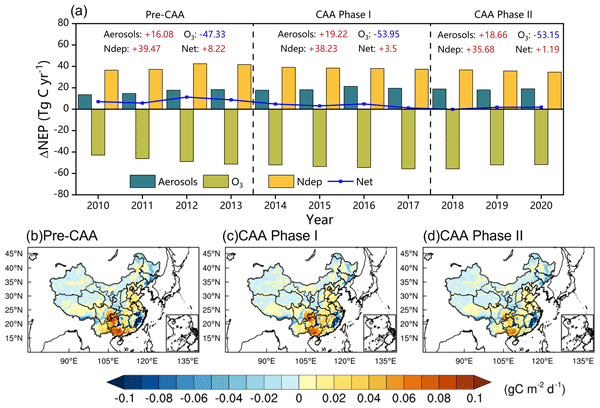
Nanhong Xie, Tijian Wang, Shu Li, Bingliang Zhuang, Mengmeng Li, Min Xie, Qian Zhang, Danyang Ma, Jane Liu, Jing M. Chen, Zhaozhong Feng, Dimitrios Melas, and Kostas Karatzas
Atmos. Chem. Phys., 26, 5925–5945, https://doi.org/10.5194/acp-26-5925-2026, https://doi.org/10.5194/acp-26-5925-2026, 2026
Short summary
Short summary
Since 2013, China’s Clean Air Action has altered land carbon uptake. Our modeling shows that while aerosols and nitrogen deposition previously boosted the carbon sink, their effects have weakened. Conversely, ozone's negative impact has grown. This shifts the overall atmospheric influence from enhancement to suppression. Controlling ozone is thus key for dual benefits in clean air and carbon neutrality.

Yuwen Li, Wuhu Feng, John M. C. Plane, Tijian Wang, and Martyn P. Chipperfield
Atmos. Chem. Phys., 26, 3621–3635, https://doi.org/10.5194/acp-26-3621-2026, https://doi.org/10.5194/acp-26-3621-2026, 2026
Short summary
Short summary
The space industry is growing rapidly, but its environmental effects remain uncertain. We used a global chemistry-climate model to study how chlorine released by rocket launches could affect the ozone layer and its recovery from past depletion. Even with large growth in launches, global ozone loss remains small but could locally slow the healing of the ozone layer. These findings highlight the need to consider rocket emissions in future environmental policies.
Shengxuan Ji, Yawei Qu, Cheng Yuan, Tijian Wang, Bing Liu, Lili Zhu, Huihui Zheng, Zhenfeng Qiu, and Pulong Chen
EGUsphere, https://doi.org/10.5194/egusphere-2025-5589, https://doi.org/10.5194/egusphere-2025-5589, 2026
Short summary
Short summary
This study introduces BiXiao, an artificial intelligence model that forecasts air pollution by combining weather data and observations from monitoring stations. Tested in northern China, BiXiao can produce city-scale air-quality forecasts within seconds and is more accurate than traditional numerical models. The work shows how artificial intelligence can enhance environmental forecasting and support cleaner air and public health.
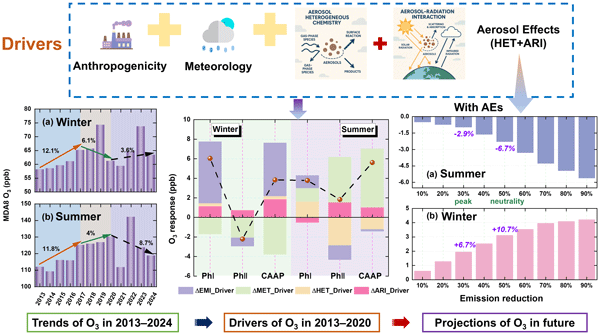
Yasong Li, Chen Li, Yaoyu Li, Tijian Wang, Mengmeng Li, Yawei Qu, Hao Wu, Min Xie, and Yanjin Wang
Atmos. Chem. Phys., 26, 1301–1319, https://doi.org/10.5194/acp-26-1301-2026, https://doi.org/10.5194/acp-26-1301-2026, 2026
Short summary
Short summary
Over the past decade, ozone levels have risen in China despite cleaner air. Using an improved atmospheric model, we show that changes in tiny airborne particles influence ozone differently in winter and summer: reduced particles boost winter ozone through sunlight-driven reactions, while summer ozone responds to chemical reactions on particle surfaces. These findings highlight the need to consider particle-ozone interactions in air quality and climate policies to avoid unintended effects.
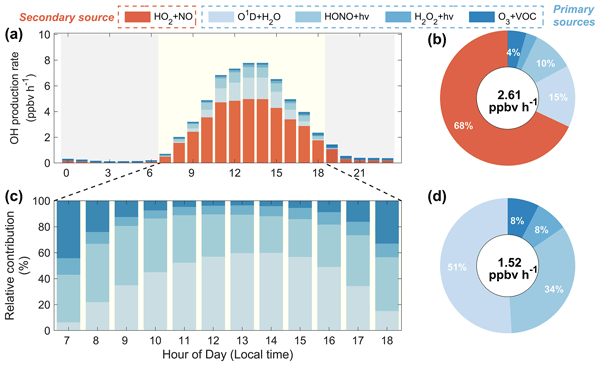
Haoran Zhang, Chengchun Shi, Chuanyou Ying, Shengheng Weng, Erling Ni, Lanbu Zhao, Peiheng Yang, Keqin Tang, Xueyu Zhou, Chuanhua Ren, Xuguang Chi, Derong Zhou, Mengmeng Li, Nan Li, Tengyu Liu, and Xin Huang
Atmos. Chem. Phys., 25, 16797–16816, https://doi.org/10.5194/acp-25-16797-2025, https://doi.org/10.5194/acp-25-16797-2025, 2025
Short summary
Short summary
This study reports a unique diurnal pattern of nitrous acid (HONO), featuring higher concentrations around noon, based on one-month measurements in coastal Fujian, southeast China. Using an improved chemical transport model, we successfully reproduced the observed HONO levels and temporal variations. Further process analyses and sensitivity experiments quantified the formation mechanisms of HONO in coastal areas and shed light on its impact on the formation of OH radicals and ozone.
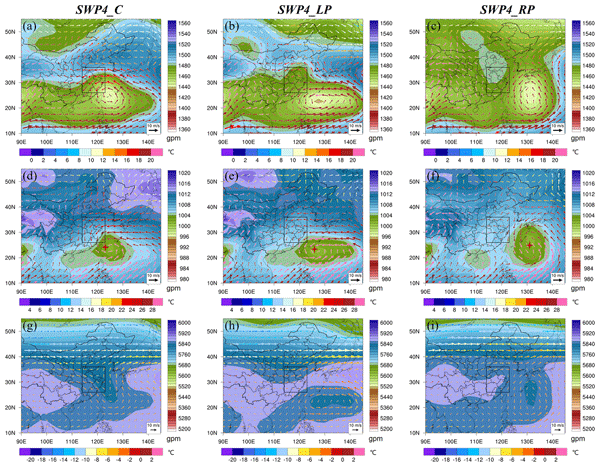
Mengzhu Xi, Min Xie, Da Gao, Danyang Ma, Yi Luo, Lingyun Feng, Shitong Chen, and Shuxian Zhang
Atmos. Chem. Phys., 25, 14573–14590, https://doi.org/10.5194/acp-25-14573-2025, https://doi.org/10.5194/acp-25-14573-2025, 2025
Short summary
Short summary
Tropical cyclones (TCs) have a significant impact on ozone in coastal areas by affecting atmospheric circulation and meteorological conditions. We have studied the impact and future trends of climate change in the Yangtze River Delta region and found that the intensification of climate change will exacerbate the impact of TCs on O3 in the Yangtze River Delta, requiring strengthened monitoring and early warning.
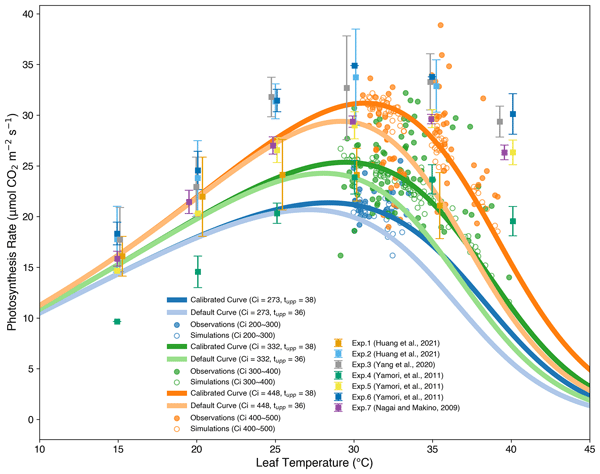
Beiyao Xu, Steven Dobbie, Huiyi Yang, Lianxin Yang, Yu Jiang, Andrew Challinor, Karina Williams, Yunxia Wang, and Tijian Wang
Geosci. Model Dev., 18, 7257–7273, https://doi.org/10.5194/gmd-18-7257-2025, https://doi.org/10.5194/gmd-18-7257-2025, 2025
Short summary
Short summary
Ozone (O3) pollution harms rice production and threatens food security. To understand these impacts, we calibrated a crop model using unique data from experiments where rice was grown in open fields under controlled O3 exposure (free air). This is the first time such data have been used to improve a model's ability to predict how rice responds to O3 pollution. Our work provides a more accurate tool to study O3's effects and guide strategies to protect agriculture.

Danyang Ma, Min Xie, Huan He, Tijian Wang, Mengzhu Xi, Lingyun Feng, Shuxian Zhang, and Shitong Chen
Atmos. Chem. Phys., 25, 12069–12086, https://doi.org/10.5194/acp-25-12069-2025, https://doi.org/10.5194/acp-25-12069-2025, 2025
Short summary
Short summary
The PM2.5 concentration in China underwent significant changes in 2013. We examined the underlying causes from three perspectives: anthropogenic pollutant emissions, meteorological conditions, and CO2 concentration variations. Our study highlighted the importance of considering the role of CO2 in vegetation when predicting PM2.5 concentrations and developing corresponding control strategies.
Hua Lu, Min Xie, Nan Wang, Bojun Liu, Jinyue Jiang, Bingliang Zhuang, Ying Zhang, Meixuan Wu, Jianfeng Yang, Kunqin Lv, and Danyang Ma
Atmos. Chem. Phys., 25, 10141–10158, https://doi.org/10.5194/acp-25-10141-2025, https://doi.org/10.5194/acp-25-10141-2025, 2025
Short summary
Short summary
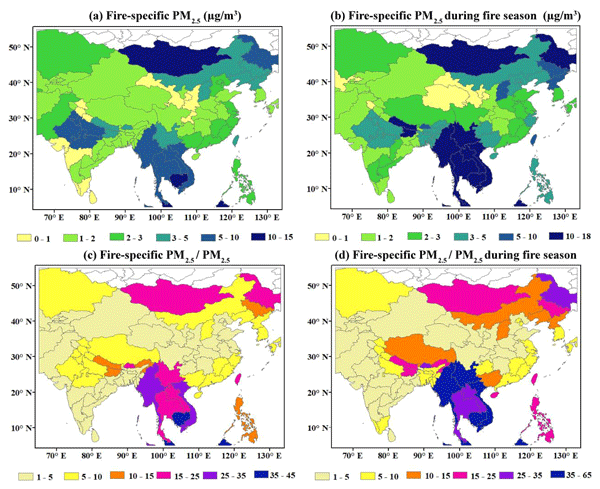
Fires are important sources of air pollution in many regions. This study isolates fire-specific PM2.5 from observations, showing its increasing proportion in recent years. Our findings indicate that fire-specific PM2.5 disproportionately affects impoverished populations in the Asia Pacific. Furthermore, we suggest that, under future climate change, fire-specific PM2.5 will likely continue rising. This highlights the need for interventions to reduce fire-related air pollution and its health impacts.
Xin Zeng, Tijian Wang, Congwu Huang, Bingliang Zhuang, Shu Li, Mengmeng Li, Min Xie, Qian Zhang, and Nanhong Xie
EGUsphere, https://doi.org/10.5194/egusphere-2025-608, https://doi.org/10.5194/egusphere-2025-608, 2025
Preprint archived
Short summary
Short summary
In this study, we enhanced the regional climate-chemistry-ecology model to reveal the seasonal and spatial variations of N2O levels. The lowest concentration was recorded in June (334.01 ppb), while the highest occurred in December (335.42 ppb). Certain regions, such as the North China Plain and the Ganges Basin, exhibited higher nitrous oxide levels. We also gained deeper insights into the complex interactions between N2O emissions and atmospheric processes.
Hua Lu, Min Xie, Bingliang Zhuang, Danyang Ma, Bojun Liu, Yangzhihao Zhan, Tijian Wang, Shu Li, Mengmeng Li, and Kuanguang Zhu
Atmos. Chem. Phys., 24, 8963–8982, https://doi.org/10.5194/acp-24-8963-2024, https://doi.org/10.5194/acp-24-8963-2024, 2024
Short summary
Short summary
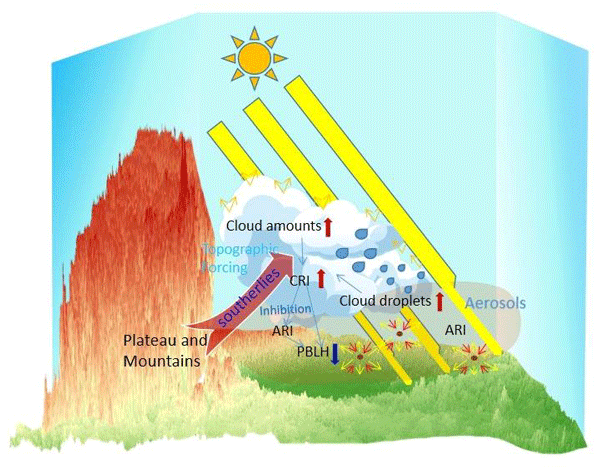
To identify cloud, aerosol, and planetary boundary layer (PBL) interactions from an air quality perspective, we summarized two pollution patterns characterized by denser liquid cloud and by obvious cloud radiation interaction (CRI). Numerical simulation experiments showed CRI could cause a 50 % reduction in aerosol radiation interaction (ARI) under a low-trough system. The results emphasized the nonnegligible role of CRI and its inhibition of ARI under wet and cloudy pollution synoptic patterns.
Nanhong Xie, Tijian Wang, Xiaodong Xie, Xu Yue, Filippo Giorgi, Qian Zhang, Danyang Ma, Rong Song, Beiyao Xu, Shu Li, Bingliang Zhuang, Mengmeng Li, Min Xie, Natalya Andreeva Kilifarska, Georgi Gadzhev, and Reneta Dimitrova
Geosci. Model Dev., 17, 3259–3277, https://doi.org/10.5194/gmd-17-3259-2024, https://doi.org/10.5194/gmd-17-3259-2024, 2024
Short summary
Short summary
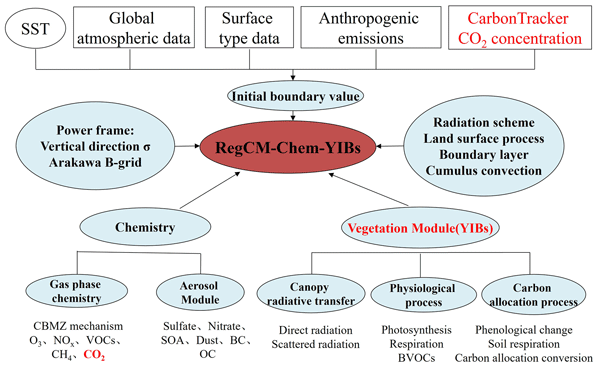
For the first time, we coupled a regional climate chemistry model, RegCM-Chem, with a dynamic vegetation model, YIBs, to create a regional climate–chemistry–ecology model, RegCM-Chem–YIBs. We applied it to simulate climatic, chemical, and ecological parameters in East Asia and fully validated it on a variety of observational data. Results show that RegCM-Chem–YIBs model is a valuable tool for studying the terrestrial carbon cycle, atmospheric chemistry, and climate change on a regional scale.
Shiyi Lai, Ximeng Qi, Xin Huang, Sijia Lou, Xuguang Chi, Liangduo Chen, Chong Liu, Yuliang Liu, Chao Yan, Mengmeng Li, Tengyu Liu, Wei Nie, Veli-Matti Kerminen, Tuukka Petäjä, Markku Kulmala, and Aijun Ding
Atmos. Chem. Phys., 24, 2535–2553, https://doi.org/10.5194/acp-24-2535-2024, https://doi.org/10.5194/acp-24-2535-2024, 2024
Short summary
Short summary
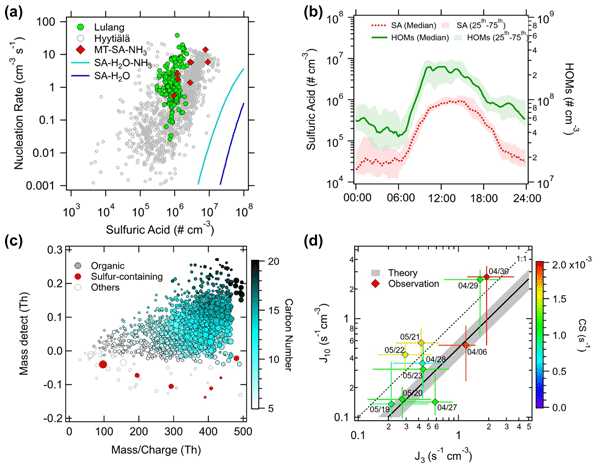
By combining in situ measurements and chemical transport modeling, this study investigates new particle formation (NPF) on the southeastern Tibetan Plateau. We found that the NPF was driven by the presence of biogenic gases and the transport of anthropogenic precursors. The NPF was vertically heterogeneous and shaped by the vertical mixing. This study highlights the importance of anthropogenic–biogenic interactions and meteorological dynamics in NPF in this climate-sensitive region.
Hua Lu, Min Xie, Wei Zhao, Bojun Liu, Tijian Wang, and Bingliang Zhuang
Atmos. Meas. Tech., 17, 167–179, https://doi.org/10.5194/amt-17-167-2024, https://doi.org/10.5194/amt-17-167-2024, 2024
Short summary
Short summary
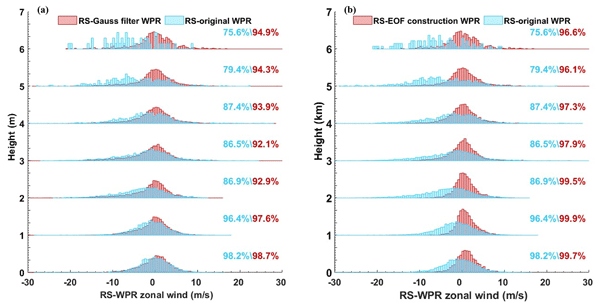
Observations of vertical wind in regions with complex terrain are essential, but they are always sparse and have poor representation. Data verification and quality control are conducted on the wind profile radar and Aeolus wind products in this study, trying to compensate for the limitations of wind field observations. The results shed light on the comprehensive applications of multi-source wind profile data in complicated terrain regions with sparse ground-based wind observations.
Siyu Zhu, Peipei Wu, Siyi Zhang, Oliver Jahn, Shu Li, and Yanxu Zhang
Geosci. Model Dev., 16, 5915–5929, https://doi.org/10.5194/gmd-16-5915-2023, https://doi.org/10.5194/gmd-16-5915-2023, 2023
Short summary
Short summary
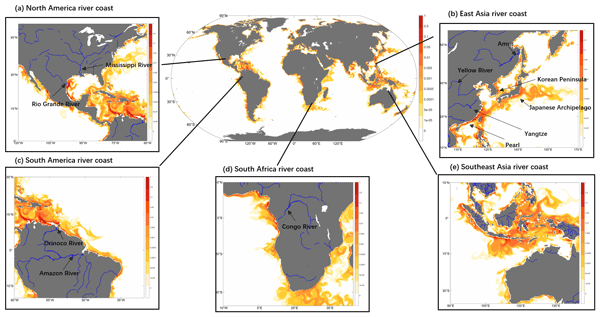
In this study, we estimate the global biogeochemical cycling of Hg in a state-of-the-art physical-ecosystem ocean model (high-resolution-MITgcm/Hg), providing a more accurate portrayal of surface Hg concentrations in estuarine and coastal areas, strong western boundary flow and upwelling areas, and concentration diffusion as vortex shapes. The high-resolution model can help us better predict the transport and fate of Hg in the ocean and its impact on the global Hg cycle.
Yangzhihao Zhan, Min Xie, Wei Zhao, Tijian Wang, Da Gao, Pulong Chen, Jun Tian, Kuanguang Zhu, Shu Li, Bingliang Zhuang, Mengmeng Li, Yi Luo, and Runqi Zhao
Atmos. Chem. Phys., 23, 9837–9852, https://doi.org/10.5194/acp-23-9837-2023, https://doi.org/10.5194/acp-23-9837-2023, 2023
Short summary
Short summary
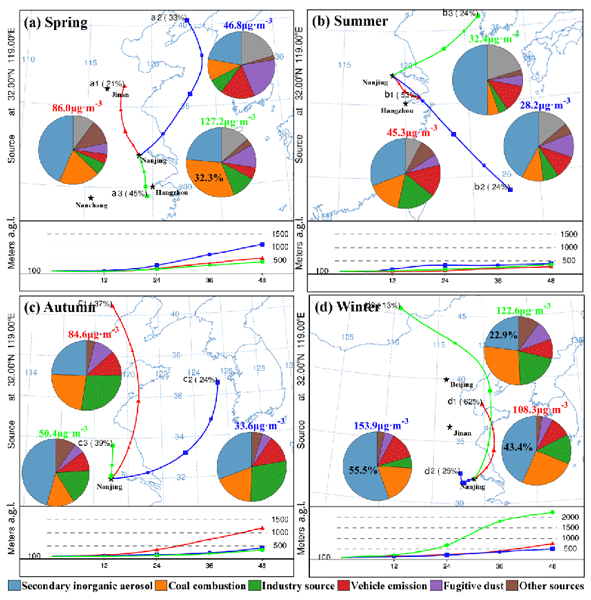
Although the main source contribution of pollution is secondary inorganic aerosols in Nanjing, health risks mainly come from industry sources and vehicle emissions. Therefore, the development of megacities should pay more attention to the health burden of vehicle emissions, coal combustion, and industrial processes. This study provides new insight into assessing the relationship between source apportionment and health risks and can provide valuable insight into air pollution strategies.
Danyang Ma, Tijian Wang, Hao Wu, Yawei Qu, Jian Liu, Jane Liu, Shu Li, Bingliang Zhuang, Mengmeng Li, and Min Xie
Atmos. Chem. Phys., 23, 6525–6544, https://doi.org/10.5194/acp-23-6525-2023, https://doi.org/10.5194/acp-23-6525-2023, 2023
Short summary
Short summary
Increasing surface ozone (O3) concentrations have long been a significant environmental issue in China, despite the Clean Air Action Plan launched in 2013. Most previous research ignores the contributions of CO2 variations. Our study comprehensively analyzed O3 variation across China from various perspectives and highlighted the importance of considering CO2 variations when designing long-term O3 control policies, especially in high-vegetation-coverage areas.
Chenchao Zhan, Min Xie, Hua Lu, Bojun Liu, Zheng Wu, Tijian Wang, Bingliang Zhuang, Mengmeng Li, and Shu Li
Atmos. Chem. Phys., 23, 771–788, https://doi.org/10.5194/acp-23-771-2023, https://doi.org/10.5194/acp-23-771-2023, 2023
Short summary
Short summary
With the development of urbanization, urban land use and anthropogenic
emissions increase, affecting urban air quality and, in turn, the health risks associated with air pollutants. In this study, we systematically evaluate the impacts of urbanization on air quality and the corresponding health risks in a highly urbanized city with severe air pollution and complex terrain. This work focuses on the health risks caused by urbanization and can provide valuable insight for air pollution strategies.

Shiyue Zhang, Gang Zeng, Tijian Wang, Xiaoye Yang, and Vedaste Iyakaremye
Atmos. Chem. Phys., 22, 16017–16030, https://doi.org/10.5194/acp-22-16017-2022, https://doi.org/10.5194/acp-22-16017-2022, 2022
Short summary
Short summary
Severe haze days in eastern China (HDEC) are affected by the atmospheric circulation variations on a synoptic scale, while the dominant atmospheric circulation patterns influencing HDEC and the differences between them are still unclear. This study obtains three dominant circulation types that could lead to severe HDEC and investigates the differences between them. The results provide a basis for establishing applicable haze prediction and management policies.
Chenchao Zhan and Min Xie
Atmos. Chem. Phys., 22, 1351–1371, https://doi.org/10.5194/acp-22-1351-2022, https://doi.org/10.5194/acp-22-1351-2022, 2022
Short summary
Short summary
The changes of land use and anthropogenic heat (AH) derived from urbanization can affect meteorology and in turn O3 evolution. In this study, we briefly describe the general features of O3 pollution in the Yangtze River Delta (YRD) based on in situ observational data. Then, the impacts of land use and anthropogenic heat on O3 via changing the meteorological factors and local circulations are investigated in this region using the WRF-Chem model.
Mengmeng Li, Zihan Zhang, Quan Yao, Tijian Wang, Min Xie, Shu Li, Bingliang Zhuang, and Yong Han
Atmos. Chem. Phys., 21, 15135–15152, https://doi.org/10.5194/acp-21-15135-2021, https://doi.org/10.5194/acp-21-15135-2021, 2021
Short summary
Short summary
We establish the nonlinear responses between nitrate and NOx in China. Reduction of NOx results in linearly lower nitrate in summer–autumn whereas an increase of winter nitrate until an inflexion point at 40–50 % reduction due to the excess oxidants. NH3 and VOCs are effective in controlling nitrate pollution, whereas decreasing the SO2 and NOx emissions may have counterintuitive effects on nitrate aerosols. This paper helps understand the nonlinear aerosol and photochemistry feedback.
Cited articles
Abdul-Razzak, H. and Ghan, S. J.: A parameterization of aerosol activation 2. Multiple aerosol types, J. Geophys. Res.-Atmos., 105, 6837–6844, https://doi.org/10.1029/1999jd901161, 2000.
Abdul-Razzak, H. and Ghan, S. J.: A parameterization of aerosol activation – 3. Sectional representation, J. Geophys. Res.-Atmos., 107, AAC 1–1–AAC 1–6, https://doi.org/10.1029/2001jd000483, 2002.
Bauer, S. E., Wright, D. L., Koch, D., Lewis, E. R., McGraw, R., Chang, L.-S., Schwartz, S. E., and Ruedy, R.: MATRIX (Multiconfiguration Aerosol TRacker of mIXing state): an aerosol microphysical module for global atmospheric models, Atmos. Chem. Phys., 8, 6003–6035, https://doi.org/10.5194/acp-8-6003-2008, 2008.
Bond, T. C., Doherty, S. J., Fahey, D. W., Forster, P. M., Berntsen, T., DeAngelo, B. J., Flanner, M. G., Ghan, S., Kaercher, B., Koch, D., Kinne, S., Kondo, Y., Quinn, P. K., Sarofim, M. C., Schultz, M. G., Schulz, M., Venkataraman, C., Zhang, H., Zhang, S., Bellouin, N., Guttikunda, S. K., Hopke, P. K., Jacobson, M. Z., Kaiser, J. W., Klimont, Z., Lohmann, U., Schwarz, J. P., Shindell, D., Storelvmo, T., Warren, S. G., and Zender, C. S.: Bounding the role of black carbon in the climate system: A scientific assessment, J. Geophys. Res.-Atmos., 118, 5380–5552, https://doi.org/10.1002/jgrd.50171, 2013.
Boucher, O. and Lohmann, U.: The Sulfate-Ccn-Cloud Albedo Effect – A Sensitivity Study With 2 General-Circulation Models, Tellus B, 47, 281–300, https://doi.org/10.1034/j.1600-0889.47.issue3.1.x, 1995.
Cao, H., Zhuang, B., Zhou, Y., Gao, P., Hu, Y., Wang, T., Li, S., Li, M., Xie, M., and Liu, Q.: Impact of boundary layer schemes in RegCM-Chem on East Asian climate and its response to the aerosol-radiation interaction, Atmos. Res., 337, 108951, https://doi.org/10.1016/j.atmosres.2026.108951, 2026.
Cappa, C. D., Onasch, T. B., Massoli, P., Worsnop, D. R., Bates, T. S., Cross, E. S., Davidovits, P., Hakala, J., Hayden, K. L., Jobson, B. T., Kolesar, K. R., Lack, D. A., Lerner, B. M., Li, S.-M., Mellon, D., Nuaaman, I., Olfert, J. S., Petaja, T., Quinn, P. K., Song, C., Subramanian, R., Williams, E. J., and Zaveri, R. A.: Radiative Absorption Enhancements Due to the Mixing State of Atmospheric Black Carbon, Science, 337, 1078–1081, https://doi.org/10.1126/science.1223447, 2012.
Chakrabarty, R. K. and Heinson, W. R.: Scaling Laws for Light Absorption Enhancement Due to Nonrefractory Coating of Atmospheric Black Carbon Aerosol, Phys. Rev. Lett., 121, https://doi.org/10.1103/PhysRevLett.121.218701, 2018.
Che, H., Wang, Y., Sun, J., Zhang, X., Zhang, X., and Guo, J.: Variation of Aerosol Optical Properties over the Taklimakan Desert in China, Aerosol Air Qual. Res., 13, 777–785, https://doi.org/10.4209/aaqr.2012.07.0200, 2013.
Che, H. Z., Xia, X. G., Zhao, H. J., Li, L., Gui, K., Zheng, Y., Song, J. J., Qi, B., Zhu, J., Miao, Y. C., Wang, Y. Q., Wang, Z. L., Wang, H., Dubovik, O., Holben, B., Chen, H. B., Shi, G. Y., and Zhang, X. Y.: Aerosol optical and radiative properties and their environmental effects in China: A review, Earth Sci. Rev., 248, https://doi.org/10.1016/j.earscirev.2023.104634, 2024.
Chen, H., Zhuang, B., Liu, J., Li, S., Wang, T., Xie, X., Xie, M., Li, M., and Zhao, M.: Regional Climate Responses in East Asia to the Black Carbon Aerosol Direct Effects from India and China in Summer, J. Climate, 33, 9783–9800, https://doi.org/10.1175/jcli-d-19-0706.1, 2020.
Chen, H., Zhuang, B., Liu, J., Ma, D., Li, S., Wang, T., Xie, M., and Li, M.: The influence of the black carbon warming effect on near-surface ozone in China in summer, Atmos. Res., 301, 107284, https://doi.org/10.1016/j.atmosres.2024.107284, 2024.
Chen, W. T., Lee, Y. H., Adams, P. J., Nenes, A., and Seinfeld, J. H.: Will black carbon mitigation dampen aerosol indirect forcing?, Geophys. Res. Lett., 37, https://doi.org/10.1029/2010gl042886, 2010.
Chen, X., Wang, Z., Yu, F., Pan, X., Li, J., Ge, B., Wang, Z., Hu, M., Yang, W., and Chen, H.: Estimation of atmospheric aging time of black carbon particles in the polluted atmosphere over central-eastern China using microphysical process analysis in regional chemical transport model, Atmos. Environ., 163, 44–56, https://doi.org/10.1016/j.atmosenv.2017.05.016, 2017.
Chung, S. H. and Seinfeld, J. H.: Global distribution and climate forcing of carbonaceous aerosols, J. Geophys. Res.-Atmos., 107, AAC 14–11–AAC 14–33, https://doi.org/10.1029/2001JD001397, 2002.
Cooke, W. F., Liousse, C., Cachier, H., and Feichter, J.: Construction of a 1°×1° fossil fuel emission data set for carbonaceous aerosol and implementation and radiative impact in the ECHAM4 model, J. Geophys. Res.-Atmos., 104, 22137–22162, https://doi.org/10.1029/1999jd900187, 1999.
Cozic, J., Verheggen, B., Mertes, S., Connolly, P., Bower, K., Petzold, A., Baltensperger, U., and Weingartner, E.: Scavenging of black carbon in mixed phase clouds at the high alpine site Jungfraujoch, Atmos. Chem. Phys., 7, 1797–1807, https://doi.org/10.5194/acp-7-1797-2007, 2007.
Dalirian, M., Ylisirniö, A., Buchholz, A., Schlesinger, D., Ström, J., Virtanen, A., and Riipinen, I.: Cloud droplet activation of black carbon particles coated with organic compounds of varying solubility, Atmos. Chem. Phys., 18, 12477–12489, https://doi.org/10.5194/acp-18-12477-2018, 2018.
Denis, B., Laprise, R., Caya, D., and Cote, J.: Downscaling ability of one-way nested regional climate models: the Big-Brother Experiment, Clim. Dynam., 18, 627–646, https://doi.org/10.1007/s00382-001-0201-0, 2002.
Ding, A. J., Huang, X., Nie, W., Sun, J. N., Kerminen, V. M., Petaja, T., Su, H., Cheng, Y. F., Yang, X. Q., Wang, M. H., Chi, X. G., Wang, J. P., Virkkula, A., Guo, W. D., Yuan, J., Wang, S. Y., Zhang, R. J., Wu, Y. F., Song, Y., Zhu, T., Zilitinkevich, S., Kulmala, M., and Fu, C. B.: Enhanced haze pollution by black carbon in megacities in China, Geophys. Res. Lett., 43, 2873–2879, https://doi.org/10.1002/2016gl067745, 2016.
Dusek, U., Reischl, G. P., and Hitzenberger, R.: CCN activation of pure and coated carbon black particles, Environ. Sci. Technol., 40, 1223–1230, https://doi.org/10.1021/es0503478, 2006.
Emmons, L. K., Walters, S., Hess, P. G., Lamarque, J.-F., Pfister, G. G., Fillmore, D., Granier, C., Guenther, A., Kinnison, D., Laepple, T., Orlando, J., Tie, X., Tyndall, G., Wiedinmyer, C., Baughcum, S. L., and Kloster, S.: Description and evaluation of the Model for Ozone and Related chemical Tracers, version 4 (MOZART-4), Geosci. Model Dev., 3, 43–67, https://doi.org/10.5194/gmd-3-43-2010, 2010.
Fang, C., Zhu, B., Pan, C., Yun, X., Ding, D., and Tao, S.: Regional and Sectoral Sources for Black Carbon Over South China in Spring and Their Sensitivity to East Asian Summer Monsoon Onset, J. Geophys. Res.-Atmos., 125, https://doi.org/10.1029/2020jd033219, 2020.
Fang, C., Zhu, B., Pan, C., Qian, P., Wang, D., Zhang, Y., Lu, C., and Liao, H.: Inconsistent Fast and Slow Responses of East Asian Summer Monsoon Precipitation Forced by Black Carbon, J. Climate, 38, 1081–1103, https://doi.org/10.1175/jcli-d-24-0067.1, 2025.
Fierce, L., Riemer, N., and Bond, T. C.: Toward Reduced Representation Of Mixing State For Simulating Aerosol Effects On Climate, B. Am. Meteorol. Soc., 98, 971–980, https://doi.org/10.1175/bams-d-16-0028.1, 2017.
Fierce, L., Li, Y., Feng, Y., Riemer, N., Schutgens, N. A. J., Aiken, A. C., Dubey, M. K., Ma, P.-L., and Wuebbles, D.: Constraining Black Carbon Aging in Global Models to Reflect Timescales for Internal Mixing, J. Adv. Model. Earth Sy., 17, https://doi.org/10.1029/2024ms004471, 2025.
Fountoukis, C. and Nenes, A.: ISORROPIA II: a computationally efficient thermodynamic equilibrium model for K+–Ca2+–Mg2+–NH4+–Na+–SO42−–NO3−–Cl−–H2O aerosols, Atmos. Chem. Phys., 7, 4639–4659, https://doi.org/10.5194/acp-7-4639-2007, 2007.
Furutani, H., Dall'osto, M., Roberts, G. C., and Prather, K. A.: Assessment of the relative importance of atmospheric aging on CCN activity derived from field observations, Atmos. Environ., 42, 3130–3142, https://doi.org/10.1016/j.atmosenv.2007.09.024, 2008.
Gao, P., Gao, Y., Zhou, Y., Cao, H., Hu, Y., Li, S., Liang, S., Wang, T., Xie, M., Li, M., and Zhuang, B.: Changes in the Direct Climate Effect of Black Carbon Aerosols in East Asia Under the “Dual Carbon” Goal of China, J. Geophys. Res.-Atmos., 129, e2024JD040874, https://doi.org/10.1029/2024jd040874, 2024.
Gao, Y., Zhuang, B., Wang, T., Chen, H., Li, S., Wei, W., Lin, H., and Li, M.: Climatic-Environmental Effects of Aerosols and Their Sensitivity to Aerosol Mixing States in East Asia in Winter, Remote Sens., 14, https://doi.org/10.3390/rs14153539, 2022.
Gao, Y., Gao, P., Zhuang, B., Hu, Y., Zhou, Y., Wang, T., Li, S., Li, M., and Xie, M.: Changes in the Climate Effects of Major Anthropogenic Aerosols in East Asia Under Different Emission Reduction Scenarios in China, J. Geophys. Res.-Atmos., 130, https://doi.org/10.1029/2024jd042301, 2025.
Ghan, S., Laulainen, N., Easter, R., Wagener, R., Nemesure, S., Chapman, E., Zhang, Y., and Leung, R.: Evaluation of aerosol direct radiative forcing in MIRAGE, J. Geophys. Res.-Atmos., 106, 5295–5316, https://doi.org/10.1029/2000jd900502, 2001.
Ghosh, S., Riemer, N., Giuliani, G., Giorgi, F., Ganguly, D., and Dey, S.: Sensitivity of Carbonaceous Aerosol Properties to the Implementation of a Dynamic Aging Parameterization in the Regional Climate Model RegCM, J. Geophys. Res.-Atmos., 126, https://doi.org/10.1029/2020jd033613, 2021.
Ghosh, S., Dey, S., Das, S., Riemer, N., Giuliani, G., Ganguly, D., Venkataraman, C., Giorgi, F., Tripathi, S. N., Ramachandran, S., Rajesh, T. A., Gadhavi, H., and Srivastava, A. K.: Towards an improved representation of carbonaceous aerosols over the Indian monsoon region in a regional climate model: RegCM, Geosci. Model Dev., 16, 1–15, https://doi.org/10.5194/gmd-16-1-2023, 2023.
Giorgi, F.: A Particle Dry-Deposition Parameterization Scheme For Use In Tracer Transport Models, J. Geophys. Res.-Atmos., 91, 9794–9806, https://doi.org/10.1029/JD091iD09p09794, 1986.
Giorgi, F.: Two-dimensional simulations of possible mesoscale effects of nuclear war fires: 1. Model description, J. Geophys. Res.-Atmos., 94, 1127–1144, https://doi.org/10.1029/JD094iD01p01127, 1989.
Giorgi, F., Coppola, E., Solmon, F., Mariotti, L., Sylla, M. B., Bi, X., Elguindi, N., Diro, G. T., Nair, V., Giuliani, G., Turuncoglu, U. U., Cozzini, S., Guettler, I., O'Brien, T. A., Tawfik, A. B., Shalaby, A., Zakey, A. S., Steiner, A. L., Stordal, F., Sloan, L. C., and Brankovic, C.: RegCM4: model description and preliminary tests over multiple CORDEX domains, Clim. Res., 52, 7–29, https://doi.org/10.3354/cr01018, 2012.
Gryspeerdt, E., Povey, A. C., Grainger, R. G., Hasekamp, O., Hsu, N. C., Mulcahy, J. P., Sayer, A. M., and Sorooshian, A.: Uncertainty in aerosol–cloud radiative forcing is driven by clean conditions, Atmos. Chem. Phys., 23, 4115–4122, https://doi.org/10.5194/acp-23-4115-2023, 2023.
Gu, Y., Xue, Y., De Sales, F., and Liou, K. N.: A GCM investigation of dust aerosol impact on the regional climate of North Africa and South/East Asia, Clim. Dynam., 46, 2353–2370, https://doi.org/10.1007/s00382-015-2706-y, 2016.
Guan, L., Cohen, J. B., Wang, S., Tiwari, P., Liu, Z., and Qin, K.: Improving Aerosol Absorption Estimates Via Size-Resolved Constraints Based on AERONET and In Situ Measurements, Geophys. Res. Lett., 53, https://doi.org/10.1029/2025gl117418, 2026a.
Guan, L., Cohen, J. B., Wang, S., Tiwari, P., Liu, Z., Li, Z., and Qin, K.: In-tandem multi-waveband particulate absorption and size observations yield substantial changes in radiative forcing over industrial Central China, Atmos. Chem. Phys., 26, 3107–3123, https://doi.org/10.5194/acp-26-3107-2026, 2026b.
Harris, A., Wick, G., and Castro, S.: The Effect of Water Vapor and Solar Zenith Angle on Oceanic Diurnal Warming, Geophys. Res. Lett., 52, https://doi.org/10.1029/2024gl114394, 2025.
He, C., Li, Q., Liou, K.-N., Qi, L., Tao, S., and Schwarz, J. P.: Microphysics-based black carbon aging in a global CTM: constraints from HIPPO observations and implications for global black carbon budget, Atmos. Chem. Phys., 16, 3077–3098, https://doi.org/10.5194/acp-16-3077-2016, 2016.
Hu, Y., Zhuang, B., Zhou, Y., Gao, Y., Gao, P., Wang, T., Li, S., Xie, M., and Li, M.: Effects of emission reductions on major anthropogenic aerosol-radiation-cloud interactions in East Asia in winter during 2007–2020, Atmos. Environ., 327, https://doi.org/10.1016/j.atmosenv.2024.120499, 2024.
Huang, Y., Chameides, W. L., and Dickinson, R. E.: Direct and indirect effects of anthropogenic aerosols on regional precipitation over east Asia, J. Geophys. Res.-Atmos., 112, https://doi.org/10.1029/2006jd007114, 2007.
IPCC (Climate Change 2013): The Physical Science Basis. Contribution of Working Group I to the Fifth Assessment Report of the Intergovernmental Panel on Climate Change, edited by: Stocker, T. F., Qin, D., Plattner, G.-K., Tignor, M., Allen, S. K., Boschung, J., Nauels, A., Xia, Y., Bex, V., and Midgley, P. M., Cambridge University Press, https://doi.org/10.1017/CBO9781107415324, 2013.
IPCC (Climate Change 2021): The Physical Science Basis. Contribution of Working Group I to the Sixth Assessment Report of the Intergovernmental Panel on Climate Change, edited by: Masson-Delmotte, V., Zhai, P., Pirani, A., Connors, S. L., Péan, C., Berger, S., Caud, N., Chen, Y., Goldfarb, L., Gomis, M. I., Huang, M., Leitzell, K., Lonnoy, E., Matthews, J. B. R., Maycock, T. K., Waterfield, T., Yelekçi, O., Yu, R., and Zhou, B., Cambridge University Press, https://doi.org/10.1017/9781009157896, 2021.
Jacobson, M. Z.: Control of fossil-fuel particulate black carbon and organic matter, possibly the most effective method of slowing global warming, J. Geophys. Res.-Atmos., 107, https://doi.org/10.1029/2001jd001376, 2002.
Jacobson, M. Z.: Short-term effects of controlling fossil-fuel soot, biofuel soot and gases, and methane on climate, Arctic ice, and air pollution health, J. Geophys. Res.-Atmos., 115, https://doi.org/10.1029/2009jd013795, 2010.
Ji, Z., Kang, S., Cong, Z., Zhang, Q., and Yao, T.: Simulation of carbonaceous aerosols over the Third Pole and adjacent regions: distribution, transportation, deposition, and climatic effects, Clim. Dynam., 45, 2831–2846, https://doi.org/10.1007/s00382-015-2509-1, 2015.
Jiang, H. L. and Cotton, W. R.: A diagnostic study of subgrid-scale activation, J. Geophys. Res.-Atmos., 110, https://doi.org/10.1029/2004jd005722, 2005.
Johnson, K. S., Zuberi, B., Molina, L. T., Molina, M. J., Iedema, M. J., Cowin, J. P., Gaspar, D. J., Wang, C., and Laskin, A.: Processing of soot in an urban environment: case study from the Mexico City Metropolitan Area, Atmos. Chem. Phys., 5, 3033–3043, https://doi.org/10.5194/acp-5-3033-2005, 2005.
Kanakidou, M., Seinfeld, J. H., Pandis, S. N., Barnes, I., Dentener, F. J., Facchini, M. C., Van Dingenen, R., Ervens, B., Nenes, A., Nielsen, C. J., Swietlicki, E., Putaud, J. P., Balkanski, Y., Fuzzi, S., Horth, J., Moortgat, G. K., Winterhalter, R., Myhre, C. E. L., Tsigaridis, K., Vignati, E., Stephanou, E. G., and Wilson, J.: Organic aerosol and global climate modelling: a review, Atmos. Chem. Phys., 5, 1053–1123, https://doi.org/10.5194/acp-5-1053-2005, 2005.
Kasten, F.: Visibility in the prephase of condensation, Tellus, 21, 631–635, 1969.
Kiehl, J. T. and Briegleb, B. P.: The Relative Roles of Sulfate Aerosols and Greenhouse Gases in Climate Forcing, Science, 260, 311–314, https://doi.org/10.1126/science.260.5106.311, 1993.
Kiehl, J. T., Hack, J. J., Bonan, G. B., Boville, B. A., Briegleb, B. P., Williamson, D. L., and Rasch, P. J.: Description of the NCAR Community Climate Model (CCM3), University Corporation for Atmospheric Research, NCAR/TN-420+STR, https://doi.org/10.5065/D6FF3Q99, 1996.
Kiehl, J. T., Schneider, T. L., Rasch, P. J., Barth, M. C., and Wong, J.: Radiative forcing due to sulfate aerosols from simulations with the National Center for Atmospheric Research Community Climate Model, Version 3, J. Geophys. Res.-Atmos., 105, 1441–1457, https://doi.org/10.1029/1999JD900495, 2000.
Kim, H., Pendergrass, A. G., and Kang, S. M.: The Dependence of Mean Climate State on Shortwave Absorption by Water Vapor, J. Climate, 35, 2189–2207, https://doi.org/10.1175/jcli-d-21-0417.1, 2022.
Koch, D. and Del Genio, A. D.: Black carbon semi-direct effects on cloud cover: review and synthesis, Atmos. Chem. Phys., 10, 7685–7696, https://doi.org/10.5194/acp-10-7685-2010, 2010.
Koch, D., Schulz, M., Kinne, S., McNaughton, C., Spackman, J. R., Balkanski, Y., Bauer, S., Berntsen, T., Bond, T. C., Boucher, O., Chin, M., Clarke, A., De Luca, N., Dentener, F., Diehl, T., Dubovik, O., Easter, R., Fahey, D. W., Feichter, J., Fillmore, D., Freitag, S., Ghan, S., Ginoux, P., Gong, S., Horowitz, L., Iversen, T., Kirkevåg, A., Klimont, Z., Kondo, Y., Krol, M., Liu, X., Miller, R., Montanaro, V., Moteki, N., Myhre, G., Penner, J. E., Perlwitz, J., Pitari, G., Reddy, S., Sahu, L., Sakamoto, H., Schuster, G., Schwarz, J. P., Seland, Ø., Stier, P., Takegawa, N., Takemura, T., Textor, C., van Aardenne, J. A., and Zhao, Y.: Evaluation of black carbon estimations in global aerosol models, Atmos. Chem. Phys., 9, 9001–9026, https://doi.org/10.5194/acp-9-9001-2009, 2009.
Koch, D., Bauer, S. E., Del Genio, A., Faluvegi, G., McConnell, J. R., Menon, S., Miller, R. L., Rind, D., Ruedy, R., Schmidt, G. A., and Shindell, D.: Coupled Aerosol-Chemistry-Climate Twentieth-Century Transient Model Investigation: Trends in Short-Lived Species and Climate Responses, J. Climate, 24, 2693–2714, https://doi.org/10.1175/2011jcli3582.1, 2011.
Krasowsky, T. S., McMeeking, G. R., Wang, D., Sioutas, C., and Ban-Weiss, G. A.: Measurements of the impact of atmospheric aging on physical and optical properties of ambient black carbon particles in Los Angeles, Atmos. Environ., 142, 496–504, https://doi.org/10.1016/j.atmosenv.2016.08.010, 2016.
Kristjánsson, J. E.: Studies of the aerosol indirect effect from sulfate and black carbon aerosols, J. Geophys. Res.-Atmos., 107, https://doi.org/10.1029/2001jd000887, 2002.
Lack, D. A., Langridge, J. M., Bahreini, R., Cappa, C. D., Middlebrook, A. M., and Schwarz, J. P.: Brown carbon and internal mixing in biomass burning particles, P. Natl. Acad. Sci. USA, 109, 14802–14807, https://doi.org/10.1073/pnas.1206575109, 2012.
Lee, Y. H., Lamarque, J.-F., Flanner, M. G., Jiao, C., Shindell, D. T., Berntsen, T., Bisiaux, M. M., Cao, J., Collins, W. J., Curran, M., Edwards, R., Faluvegi, G., Ghan, S., Horowitz, L. W., McConnell, J. R., Ming, J., Myhre, G., Nagashima, T., Naik, V., Rumbold, S. T., Skeie, R. B., Sudo, K., Takemura, T., Thevenon, F., Xu, B., and Yoon, J.-H.: Corrigendum to “Evaluation of preindustrial to present-day black carbon and its albedo forcing from Atmospheric Chemistry and Climate Model Intercomparison Project (ACCMIP)” published in Atmos. Chem. Phys., 13, 2607–2634, 2013, Atmos. Chem. Phys., 13, 6553–6554, https://doi.org/10.5194/acp-13-6553-2013, 2013.
Li, J., Carlson, B. E., Yung, Y. L., Lv, D., Hansen, J., Penner, J. E., Liao, H., Ramaswamy, V., Kahn, R. A., Zhang, P., Dubovik, O., Ding, A., Lacis, A. A., Zhang, L., and Dong, Y.: Scattering and absorbing aerosols in the climate system, Nat. Rev. Earth Environ., 3, 363–379, https://doi.org/10.1038/s43017-022-00296-7, 2022.
Li, K., Liao, H., Mao, Y., and Ridley, D. A.: Source sector and region contributions to concentration and direct radiative forcing of black carbon in China, Atmos. Environ., 124, 351–366, https://doi.org/10.1016/j.atmosenv.2015.06.014, 2016.
Li, M., Liu, H., Geng, G., Hong, C., Liu, F., Song, Y., Tong, D., Zheng, B., Cui, H., Man, H., Zhang, Q., and He, K.: Anthropogenic emission inventories in China: a review, Natl. Sci. Rev., 4, 834–866, https://doi.org/10.1093/nsr/nwx150, 2017a.
Li, M., Zhang, Q., Kurokawa, J.-I., Woo, J.-H., He, K., Lu, Z., Ohara, T., Song, Y., Streets, D. G., Carmichael, G. R., Cheng, Y., Hong, C., Huo, H., Jiang, X., Kang, S., Liu, F., Su, H., and Zheng, B.: MIX: a mosaic Asian anthropogenic emission inventory under the international collaboration framework of the MICS-Asia and HTAP, Atmos. Chem. Phys., 17, 935–963, https://doi.org/10.5194/acp-17-935-2017, 2017b.
Liou, K. N. and Ou, S. C.: The Role Of Cloud Microphysical Processes In Climate - An Assessment From A One-Dimensional Perspective, J. Geophys. Res.-Atmos., 94, 8599–8607, https://doi.org/10.1029/JD094iD06p08599, 1989.
Liu, X., Ma, P.-L., Wang, H., Tilmes, S., Singh, B., Easter, R. C., Ghan, S. J., and Rasch, P. J.: Description and evaluation of a new four-mode version of the Modal Aerosol Module (MAM4) within version 5.3 of the Community Atmosphere Model, Geosci. Model Dev., 9, 505–522, https://doi.org/10.5194/gmd-9-505-2016, 2016.
Liu, Y., Wang, M., Qian, Y., and Ding, A.: A Strong Anthropogenic Black Carbon Forcing Constrained by Pollution Trends Over China, Geophys. Res. Lett., 49, https://doi.org/10.1029/2022gl098965, 2022.
Liu, Y. G. and Daum, P. H.: Anthropogenica erosols – Indirect warming effect from dispersion forcing, Nature, 419, 580–581, https://doi.org/10.1038/419580a, 2002.
Liu, Z., Cohen, J. B., Wang, S., Wang, X., Tiwari, P., and Qin, K.: Remotely sensed BC columns over rapidly changing Western China show significant decreases in mass and inconsistent changes in number, size, and mixing properties due to policy actions, npj Clim. Atmos. Sci., 7, https://doi.org/10.1038/s41612-024-00663-9, 2024.
Liu, Z., Cohen, J. B., Tiwari, P., Guan, L., Wang, S., Li, Z., and Qin, K.: A global black carbon dataset of column concentration and microphysical information derived from MISR multi-band observations and Mie scattering simulations, Earth Syst. Sci. Data, 18, 507–533, https://doi.org/10.5194/essd-18-507-2026, 2026.
Lohmann, U., Feichter, J., Chuang, C. C., and Penner, J. E.: Prediction of the number of cloud droplets in the ECHAM GCM, J. Geophys. Res.-Atmos., 104, 9169–9198, https://doi.org/10.1029/1999JD900046, 1999.
Lund, M. T., Berntsen, T. K., and Samset, B. H.: Sensitivity of black carbon concentrations and climate impact to aging and scavenging in OsloCTM2–M7, Atmos. Chem. Phys., 17, 6003–6022, https://doi.org/10.5194/acp-17-6003-2017, 2017.
Lund, M. T., Samset, B. H., Skeie, R. B., Watson-Parris, D., Katich, J. M., Schwarz, J. P., and Weinzierl, B.: Short Black Carbon lifetime inferred from a global set of aircraft observations, npj Clim. Atmos. Sci., 1, https://doi.org/10.1038/s41612-018-0040-x, 2018.
Ma, D. Y., Wang, T. J., Xu, B. Y., Song, R., Gao, L. B., Chen, H. M., Ren, X. J., Li, S., Zhuang, B. L., Li, M. M., Xie, M., and Saikawa, E.: The mutual interactions among ozone, fine particulate matter, and carbon dioxide on summer monsoon climate in East Asia, Atmos. Environ., 299, https://doi.org/10.1016/j.atmosenv.2023.119668, 2023.
Martin, G. M., Johnson, D. W., and Spice, A.: The Measurement And Parameterization Of Effective Radius Of Droplets In Warm Stratocumulus Clouds, J. Atmos. Sci., 51, 1823–1842, https://doi.org/10.1175/1520-0469(1994)051<1823:Tmapoe>2.0.Co;2, 1994.
Matzler, C.: MATLAB functions for Mie scattering and absorption, IAP Res. Rep., 8, https://doi.org/10.7892/boris.146551, 2002.
McFiggans, G., Artaxo, P., Baltensperger, U., Coe, H., Facchini, M. C., Feingold, G., Fuzzi, S., Gysel, M., Laaksonen, A., Lohmann, U., Mentel, T. F., Murphy, D. M., O'Dowd, C. D., Snider, J. R., and Weingartner, E.: The effect of physical and chemical aerosol properties on warm cloud droplet activation, Atmos. Chem. Phys., 6, 2593–2649, https://doi.org/10.5194/acp-6-2593-2006, 2006.
Menon, S., Hansen, J., Nazarenko, L., and Luo, Y. F.: Climate effects of black carbon aerosols in China and India, Science, 297, 2250–2253, https://doi.org/10.1126/science.1075159, 2002.
Moffet, R. C. and Prather, K. A.: In-situ measurements of the mixing state and optical properties of soot with implications for radiative forcing estimates, P. Natl. Acad. Sci. USA, 106, 11872–11877, https://doi.org/10.1073/pnas.0900040106, 2009.
Myhre, G., Samset, B. H., Schulz, M., Balkanski, Y., Bauer, S., Berntsen, T. K., Bian, H., Bellouin, N., Chin, M., Diehl, T., Easter, R. C., Feichter, J., Ghan, S. J., Hauglustaine, D., Iversen, T., Kinne, S., Kirkevåg, A., Lamarque, J.-F., Lin, G., Liu, X., Lund, M. T., Luo, G., Ma, X., van Noije, T., Penner, J. E., Rasch, P. J., Ruiz, A., Seland, Ø., Skeie, R. B., Stier, P., Takemura, T., Tsigaridis, K., Wang, P., Wang, Z., Xu, L., Yu, H., Yu, F., Yoon, J.-H., Zhang, K., Zhang, H., and Zhou, C.: Radiative forcing of the direct aerosol effect from AeroCom Phase II simulations, Atmos. Chem. Phys., 13, 1853–1877, https://doi.org/10.5194/acp-13-1853-2013, 2013.
Nair, V. S., Solmon, F., Giorgi, F., Mariotti, L., Babu, S. S., and Moorthy, K. K.: Simulation of South Asian aerosols for regional climate studies, J. Geophys. Res.-Atmos., 117, https://doi.org/10.1029/2011jd016711, 2012.
Ocko, I. B., Ramaswamy, V., Ginoux, P., Ming, Y., and Horowitz, L. W.: Sensitivity of scattering and absorbing aerosol direct radiative forcing to physical climate factors, J. Geophys. Res.-Atmos., 117, https://doi.org/10.1029/2012jd018019, 2012.
Ohata, S., Moteki, N., Mori, T., Koike, M., and Kondo, Y.: A key process controlling the wet removal of aerosols: new observational evidence, Sci. Rep., 6, https://doi.org/10.1038/srep34113, 2016.
Park, R. J., Jacob, D. J., Chin, M., and Martin, R. V.: Sources of carbonaceous aerosols over the United States and implications for natural visibility, J. Geophys. Res.-Atmos., 108, https://doi.org/10.1029/2002jd003190, 2003.
Peng, J., Hu, M., Guo, S., Du, Z., Zheng, J., Shang, D., Zamora, M., Zeng, L., Shao, M., Wu, Y., Zheng, J., Wang, Y., Glen, C., Collins, D., Molina, M., and Zhang, R.: Markedly enhanced absorption and direct radiative forcing of black carbon under polluted urban environments, P. Natl. Acad. Sci. USA, 113, 4266–4271, https://doi.org/10.1073/pnas.1602310113, 2016.
Petters, M. D. and Kreidenweis, S. M.: A single parameter representation of hygroscopic growth and cloud condensation nucleus activity, Atmos. Chem. Phys., 7, 1961–1971, https://doi.org/10.5194/acp-7-1961-2007, 2007.
Qian, Y., Giorgi, F., Huang, Y., Chameides, W., and Luo, C.: Regional simulation of anthropogenic sulfur over East Asia and its sensitivity to model parameters, Tellus B, 53, 171–191, https://doi.org/10.1034/j.1600-0889.2001.d01-14.x, 2001.
Qie, K., Tian, W., Bian, J., Xie, F., and Li, D.: Weakened Asian summer monsoon anticyclone related to increased anthropogenic aerosol emissions in recent decades, npj Clim. Atmos. Sci., 8, https://doi.org/10.1038/s41612-025-01026-8, 2025.
Ramanathan, V. and Carmichael, G.: Global and regional climate changes due to black carbon, Nat. Geosci., 1, 221–227, https://doi.org/10.1038/ngeo156, 2008.
Randles, C. A. and Ramaswamy, V.: Absorbing aerosols over Asia: A Geophysical Fluid Dynamics Laboratory general circulation model sensitivity study of model response to aerosol optical depth and aerosol absorption, J. Geophys. Res.-Atmos., 113, https://doi.org/10.1029/2008jd010140, 2008.
Reutter, P., Su, H., Trentmann, J., Simmel, M., Rose, D., Gunthe, S. S., Wernli, H., Andreae, M. O., and Pöschl, U.: Aerosol- and updraft-limited regimes of cloud droplet formation: influence of particle number, size and hygroscopicity on the activation of cloud condensation nuclei (CCN), Atmos. Chem. Phys., 9, 7067–7080, https://doi.org/10.5194/acp-9-7067-2009, 2009.
Riemer, N., Vogel, H., and Vogel, B.: Soot aging time scales in polluted regions during day and night, Atmos. Chem. Phys., 4, 1885–1893, https://doi.org/10.5194/acp-4-1885-2004, 2004.
Riemer, N., West, M., Zaveri, R. A., and Easter, R. C.: Simulating the evolution of soot mixing state with a particle-resolved aerosol model, J. Geophys. Res.-Atmos., 114, https://doi.org/10.1029/2008jd011073, 2009.
Riemer, N., Ault, A. P., West, M., Craig, R. L., and Curtis, J. H.: Aerosol Mixing State: Measurements, Modeling, and Impacts, Rev. Geophys., 57, 187–249, https://doi.org/10.1029/2018rg000615, 2019.
Sadiq, M., Tao, W., Liu, J., and Tao, S.: Air quality and climate responses to anthropogenic black carbon emission changes from East Asia, North America and Europe, Atmos. Environ., 120, 262–276, https://doi.org/10.1016/j.atmosenv.2015.07.001, 2015.
Sand, M., Samset, B. H., Myhre, G., Gliß, J., Bauer, S. E., Bian, H., Chin, M., Checa-Garcia, R., Ginoux, P., Kipling, Z., Kirkevåg, A., Kokkola, H., Le Sager, P., Lund, M. T., Matsui, H., van Noije, T., Olivié, D. J. L., Remy, S., Schulz, M., Stier, P., Stjern, C. W., Takemura, T., Tsigaridis, K., Tsyro, S. G., and Watson-Parris, D.: Aerosol absorption in global models from AeroCom phase III, Atmos. Chem. Phys., 21, 15929–15947, https://doi.org/10.5194/acp-21-15929-2021, 2021.
Shalaby, A., Zakey, A. S., Tawfik, A. B., Solmon, F., Giorgi, F., Stordal, F., Sillman, S., Zaveri, R. A., and Steiner, A. L.: Implementation and evaluation of online gas-phase chemistry within a regional climate model (RegCM-CHEM4), Geosci. Model Dev., 5, 741–760, https://doi.org/10.5194/gmd-5-741-2012, 2012.
Shen, W., Wang, M., Liu, Y., Dong, X., Zhao, D., Yue, M., Tian, P., and Ding, D.: Evaluating BC Aging Processes in the Community Atmosphere Model Version 6 (CAM6), J. Geophys. Res.-Atmos., 128, https://doi.org/10.1029/2022jd037427, 2023.
Shen, W., Wang, M., Riemer, N., Zheng, Z., Liu, Y., and Dong, X.: Improving BC Mixing State and CCN Activity Representation With Machine Learning in the Community Atmosphere Model Version 6 (CAM6), J. Adv. Model. Earth Sy., 16, https://doi.org/10.1029/2023ms003889, 2024.
Shen, Z., Liu, J., Horowitz, L. W., Henze, D. K., Fan, S., H., L. I., Mauzerall, D. L., Lin, J.-T., and Tao, S.: Analysis of transpacific transport of black carbon during HIPPO-3: implications for black carbon aging, Atmos. Chem. Phys., 14, 6315–6327, https://doi.org/10.5194/acp-14-6315-2014, 2014.
Shindell, D. and Faluvegi, G.: Climate response to regional radiative forcing during the twentieth century, Nat. Geosci., 2, 294–300, https://doi.org/10.1038/ngeo473, 2009.
Smith, C. J., Kramer, R. J., Myhre, G., Forster, P. M., Soden, B. J., Andrews, T., Boucher, O., Faluvegi, G., Flaschner, D., Hodnebrog, O., Kasoar, M., Kharin, V., Kirkevag, A., Lamarque, J. F., Muelmenstaedt, J., Olivie, D., Richardson, T., Samset, B. H., Shindell, D., Stier, P., Takemura, T., Voulgarakis, A., and Watson-Parris, D.: Understanding Rapid Adjustments to Diverse Forcing Agents, Geophys. Res. Lett., 45, 12023–12031, https://doi.org/10.1029/2018gl079826, 2018.
Solmon, F., Giorgi, F., and Liousse, C.: Aerosol modelling for regional climate studies: application to anthropogenic particles and evaluation over a European/African domain, Tellus B, 58, 51–72, https://doi.org/10.1111/j.1600-0889.2005.00155.x, 2006.
Spracklen, D. V., Carslaw, K. S., Pöschl, U., Rap, A., and Forster, P. M.: Global cloud condensation nuclei influenced by carbonaceous combustion aerosol, Atmos. Chem. Phys., 11, 9067–9087, https://doi.org/10.5194/acp-11-9067-2011, 2011.
Stjern, C. W., Samset, B. H., Myhre, G., Forster, P. M., Hodnebrog, O., Andrews, T., Boucher, O., Faluvegi, G., Iversen, T., Kasoar, M., Kharin, V., Kirkevag, A., Lamarque, J.-F., Olivie, D., Richardson, T., Shawki, D., Shindell, D., Smith, C. J., Takemura, T., and Voulgarakis, A.: Rapid Adjustments Cause Weak Surface Temperature Response to Increased Black Carbon Concentrations, J. Geophys. Res.-Atmos., 122, 11462–11481, https://doi.org/10.1002/2017jd027326, 2017.
Storelvmo, T.: Uncertainties in aerosol direct and indirect effects attributed to uncertainties in convective transport parameterizations, Atmos. Res., 118, 357–369, https://doi.org/10.1016/j.atmosres.2012.06.022, 2012.
Sullivan, S. C., Lee, D., Oreopoulos, L., and Nenes, A.: Role of updraft velocity in temporal variability of global cloud hydrometeor number, P. Natl. Acad. Sci. USA, 113, 5791–5796, https://doi.org/10.1073/pnas.1514039113, 2016.
Sun, H., Pan, Z., and Liu, X.: Numerical simulation of spatial-temporal distribution of dust aerosol and its direct radiative effects on East Asian climate, J. Geophys. Res.-Atmos., 117, https://doi.org/10.1029/2011jd017219, 2012.
Takemura, T., Nozawa, T., Emori, S., Nakajima, T. Y., and Nakajima, T.: Simulation of climate response to aerosol direct and indirect effects with aerosol transport-radiation model, J. Geophys. Res.-Atmos., 110, https://doi.org/10.1029/2004jd005029, 2005.
Tiwari, P., Cohen, J. B., Lu, L., Wang, S., Li, X., Guan, L., Liu, Z., Li, Z., and Qin, K.: Multi-platform observations and constraints reveal overlooked urban sources of black carbon in Xuzhou and Dhaka, Commun. Earth Environ., 6, https://doi.org/10.1038/s43247-025-02012-x, 2025.
Twomey, S.: Influence of Pollution on Shortwave Albedo of Clouds, J. Atmos. Sci., 34, 1149–1152, https://doi.org/10.1175/1520-0469(1977)034<1149:Tiopot>2.0.Co;2, 1977.
Virtanen, A., Joutsensaari, J., Kokkola, H., Partridge, D. G., Blichner, S., Seland, O., Holopainen, E., Tovazzi, E., Lipponen, A., Mikkonen, S., Leskinen, A., Hyvaerinen, A.-P., Zieger, P., Krejci, R., Ekman, A. M. L., Riipinen, I., Quaas, J., and Romakkaniemi, S.: High sensitivity of cloud formation to aerosol changes, Nat. Geosci., 18, 289–295, https://doi.org/10.1038/s41561-025-01662-y, 2025.
Wang, D., Zhu, B., Wang, H., and Sun, L.: Simulation study on the indirect effect of sulfate on the summer climate over the eastern China monsoon region, Sci. Rep., 11, https://doi.org/10.1038/s41598-021-87832-5, 2021a.
Wang, H., Easter, R. C., Rasch, P. J., Wang, M., Liu, X., Ghan, S. J., Qian, Y., Yoon, J.-H., Ma, P.-L., and Vinoj, V.: Sensitivity of remote aerosol distributions to representation of cloud–aerosol interactions in a global climate model, Geosci. Model Dev., 6, 765–782, https://doi.org/10.5194/gmd-6-765-2013, 2013.
Wang, J., Wang, J., Cai, R., Liu, C., Jiang, J., Nie, W., Wang, J., Moteki, N., Zaveri, R. A., Huang, X., Ma, N., Chen, G., Wang, Z., Jin, Y., Cai, J., Zhang, Y., Chi, X., Holanda, B. A., Xing, J., Liu, T., Qi, X., Wang, Q., Poehlker, C., Su, H., Cheng, Y., Wang, S., Hao, J., Andreae, M. O., and Ding, A.: Unified theoretical framework for black carbon mixing state allows greater accuracy of climate effect estimation, Nat. Commun., 14, https://doi.org/10.1038/s41467-023-38330-x, 2023.
Wang, M. and Penner, J. E.: Aerosol indirect forcing in a global model with particle nucleation, Atmos. Chem. Phys., 9, 239–260, https://doi.org/10.5194/acp-9-239-2009, 2009.
Wang, T. J., Zhuang, B. L., Li, S., Liu, J., Xie, M., Yin, C. Q., Zhang, Y., Yuan, C., Zhu, J. L., Ji, L. Q., and Han, Y.: The interactions between anthropogenic aerosols and the East Asian summer monsoon using RegCCMS, J. Geophys. Res.-Atmos., 120, 5602–5621, https://doi.org/10.1002/2014jd022877, 2015.
Wang, Y., Pang, Y., Huang, J., Bi, L., Che, H., Zhang, X., and Li, W.: Constructing Shapes and Mixing Structures of Black Carbon Particles With Applications to Optical Calculations, J. Geophys. Res.-Atmos., 126, https://doi.org/10.1029/2021jd034620, 2021b.
Wang, Z., Lei, Y., Che, H., Wu, B., and Zhang, X.: Aerosol forcing regulating recent decadal change of summer water vapor budget over the Tibetan Plateau, Nat. Commun., 15, https://doi.org/10.1038/s41467-024-46635-8, 2024.
Watson-Parris, D. and Smith, C. J.: Large uncertainty in future warming due to aerosol forcing, Nat. Clim. Change, 12, 1111–1113, https://doi.org/10.1038/s41558-022-01516-0, 2022.
Weingartner, E., Burtscher, H., and Baltensperger, U.: Hygroscopic properties of carbon and diesel soot particles, Atmos. Environ., 31, 2311–2327, https://doi.org/10.1016/s1352-2310(97)00023-x, 1997.
Wu, Y., Liu, D., Wang, J., Shen, F., Chen, Y., Cui, S., Ge, S., Wu, Y., Chen, M., and Ge, X.: Characterization of Size-Resolved Hygroscopicity of Black Carbon-Containing Particle in Urban Environment, Environ. Sci. Technol., 53, 14212–14221, https://doi.org/10.1021/acs.est.9b05546, 2019.
Yang, Y., Wang, H., Smith, S. J., Ma, P.-L., and Rasch, P. J.: Source attribution of black carbon and its direct radiative forcing in China, Atmos. Chem. Phys., 17, 4319–4336, https://doi.org/10.5194/acp-17-4319-2017, 2017.
Yang, Y., Ni, C., Jiang, M., and Chen, Q.: Effects of aerosols on the atmospheric boundary layer temperature inversion over the Sichuan Basin, China, Atmos. Environ., 262, https://doi.org/10.1016/j.atmosenv.2021.118647, 2021.
Yin, C., Wang, T., Solmon, F., Mallet, M., Jiang, F., Li, S., and Zhuang, B.: Assessment of direct radiative forcing due to secondary organic aerosol over China with a regional climate model, Tellus B, 67, https://doi.org/10.3402/tellusb.v67.24634, 2015.
Zakey, A. S., Giorgi, F., and Bi, X.: Modeling of sea salt in a regional climate model: Fluxes and radiative forcing, J. Geophys. Res.-Atmos., 113, https://doi.org/10.1029/2007jd009209, 2008.
Zhang, H., Wang, Z., Guo, P., and Wang, Z.: A Modeling Study of the Effects of Direct Radiative Forcing Due to Carbonaceous Aerosol on the Climate in East Asia, Adv. Atmos. Sci., 26, 57–66, https://doi.org/10.1007/s00376-009-0057-5, 2009.
Zhang, J., Liu, J., Tao, S., and Ban-Weiss, G. A.: Long-range transport of black carbon to the Pacific Ocean and its dependence on aging timescale, Atmos. Chem. Phys., 15, 11521–11535, https://doi.org/10.5194/acp-15-11521-2015, 2015.
Zhang, Z., Wang, J., Riemer, N., Wang, J., Liu, C., Jin, Y., Tian, Z., Shen, S., Wang, B., Chen, G., Zhao, B., Hu, J., Wang, M., Su, H., Wang, S., Cheng, Y., and Ding, A.: The Droplet Activation Parameterization for Black Carbon-Containing Particles in Steady State, Geophys. Res. Lett., 52, https://doi.org/10.1029/2024gl114433, 2025.
Zhao, S. and Suzuki, K.: Differing Impacts of Black Carbon and Sulfate Aerosols on Global Precipitation and the ITCZ Location via Atmosphere and Ocean Energy Perturbations, J. Climate, 32, 5567–5582, https://doi.org/10.1175/jcli-d-18-0616.1, 2019.
Zheng, B., Tong, D., Li, M., Liu, F., Hong, C., Geng, G., Li, H., Li, X., Peng, L., Qi, J., Yan, L., Zhang, Y., Zhao, H., Zheng, Y., He, K., and Zhang, Q.: Trends in China's anthropogenic emissions since 2010 as the consequence of clean air actions, Atmos. Chem. Phys., 18, 14095–14111, https://doi.org/10.5194/acp-18-14095-2018, 2018.
Zhou, Y., Huang, A., Jiang, J., and La, M.: Modeled interaction between the subseasonal evolving of the East Asian summer monsoon and the direct effect of anthropogenic sulfate, J. Geophys. Res.-Atmos., 119, 1993–2016, https://doi.org/10.1002/2013jd020612, 2014.
Zhou, Y., Zhuang, B., Wang, T., Gao, P., Li, S., Hu, Y., Li, M., Cao, H., Xie, M., and Chen, H.: Characteristics of urban black carbon aerosols in the Yangtze River Delta of China based on long-term observations, Atmos. Environ., 326, https://doi.org/10.1016/j.atmosenv.2024.120488, 2024.
Zhu, J., Che, H., Xia, X., Chen, H., Goloub, P., and Zhang, W.: Column-integrated aerosol optical and physical properties at a regional background atmosphere in North China Plain, Atmos. Environ., 84, 54–64, https://doi.org/10.1016/j.atmosenv.2013.11.019, 2014.
Zhuang, B., Liu, Q., Wang, T., Yin, C., Li, S., Xie, M., Jiang, F., and Mao, H.: Investigation on semi-direct and indirect climate effects of fossil fuel black carbon aerosol over China, Theor. Appl. Climatol., 114, 651–672, https://doi.org/10.1007/s00704-013-0862-8, 2013.
Zhuang, B., Gao, Y., Hu, Y., Chen, H., Wang, T., Li, S., Li, M., and Xie, M.: Interaction between different mixing aerosol direct effects and East Asian summer monsoon, Clim. Dynam, 61, 1157–1176, https://doi.org/10.1007/s00382-022-06617-2, 2023.
Zhuang, B. L., Wang, T. J., Li, S., Liu, J., Talbot, R., Mao, H. T., Yang, X. Q., Fu, C. B., Yin, C. Q., Zhu, J. L., Che, H. Z., and Zhang, X. Y.: Optical properties and radiative forcing of urban aerosols in Nanjing, China, Atmos. Environ., 83, 43–52, https://doi.org/10.1016/j.atmosenv.2013.10.052, 2014.
Zhuang, B. L., Li, S., Wang, T. J., Liu, J., Chen, H. M., Chen, P. L., Li, M. M., and Xie, M.: Interaction between the Black Carbon Aerosol Warming Effect and East Asian Monsoon Using RegCM4, J. Climate, 31, 9367–9388, https://doi.org/10.1175/jcli-d-17-0767.1, 2018.
Zhuang, B. L., Chen, H. M., Li, S., Wang, T. J., Liu, J., Zhang, L. J., Liu, H. N., Xie, M., Chen, P. L., Li, M. M., and Zhao, M.: The direct effects of black carbon aerosols from different source sectors in East Asia in summer, Clim. Dynam., 53, 5293–5310, https://doi.org/10.1007/s00382-019-04863-5, 2019.
Zhuang, B. L., Zhou, Y. A., Hu, Y. X., Liang, S. R., Gao, P., Gao, Y. M., Chen, H. M., Li, S., Wang, T. J., Xie, M., and Li, M. M.: Influence of ship emitted sulfur and carbonaceous aerosols on East Asian climate in summer, Atmos. Environ., 344, https://doi.org/10.1016/j.atmosenv.2025.121035, 2025.
Zou, Q., Zhu, L., Lu, C., Zhang, G. J., Xu, X., Chen, Q., and Li, D.: Parameterizations of different hydrometeor spectral relative dispersion in the convective clouds, Atmos. Oceanic Sci. Lett., 15, https://doi.org/10.1016/j.aosl.2021.100141, 2022.
Zuberi, B., Johnson, K. S., Aleks, G. K., Molina, L. T., and Laskin, A.: Hydrophilic properties of aged soot, Geophys. Res. Lett., 32, https://doi.org/10.1029/2004gl021496, 2005.
Zwiers, F. W. and von Storch, H.: Taking serial correlation into account in tests of the mean, J. Climate, 8, 336–351, https://doi.org/10.1175/1520-0442(1995)008<0336:Tsciai>2.0.Co;2, 1995.
Short summary
In this study, we incorporate a dynamic black carbon (BC) aerosols aging scheme into a regional climate model to assess the BC climate effects over East Asia during summer. Results indicate that variations in the aging rate can substantially influence BC loadings and their optical and physical properties. Furthermore, BC radiative forcing and regional climate responses are further evaluated, providing deeper insights into the interactions between air pollution and climate change in East Asia.
In this study, we incorporate a dynamic black carbon (BC) aerosols aging scheme into a regional...


Altmetrics
Final-revised paper
Preprint