
Articles | Volume 26, issue 16
https://doi.org/10.5194/acp-26-11967-2026
© Author(s) 2026. This work is distributed under
the Creative Commons Attribution 4.0 License.
the Creative Commons Attribution 4.0 License.
https://doi.org/10.5194/acp-26-11967-2026
© Author(s) 2026. This work is distributed under
the Creative Commons Attribution 4.0 License.
the Creative Commons Attribution 4.0 License.
Research article
| 
24 Aug 2026
Research article |
| 24 Aug 2026
| 24 Aug 2026
Improved representation of isoprene-derived secondary organic aerosol in CAM6-Chem reveals regional contrasts in its long-term changes over China
Wenxin Zhang
School of Atmospheric Science, Nanjing University, Nanjing, 210023, China
School of Atmospheric Science, Nanjing University, Nanjing, 210023, China
Zhejiang Institute of Meteorological Sciences, Hangzhou, 310008, China
Xinyue Shao
Jiangsu Meteorological Observatory, Jiangsu Meteorological Bureau, Nanjing, 210019, China

School of Atmospheric Science, Nanjing University, Nanjing, 210023, China
Frontiers Science Center for Critical Earth Material Cycling, Nanjing University, Nanjing, 210023, China
Joint International Research Laboratory of Atmospheric and Earth System Sciences & Institute for Climate and Global Change Research, Nanjing University, Nanjing, 210023, China
Minghuai Wang
School of Atmospheric Science, Nanjing University, Nanjing, 210023, China
Joint International Research Laboratory of Atmospheric and Earth System Sciences & Institute for Climate and Global Change Research, Nanjing University, Nanjing, 210023, China
Related authors
Xinyue Shao, Minghuai Wang, Xinyi Dong, Yaman Liu, Stephen R. Arnold, Leighton A. Regayre, Duseong S. Jo, Wenxiang Shen, Hao Wang, Man Yue, Jingyi Wang, Wenxin Zhang, and Ken S. Carslaw
Atmos. Chem. Phys., 26, 4439–4451, https://doi.org/10.5194/acp-26-4439-2026, https://doi.org/10.5194/acp-26-4439-2026, 2026
Short summary
Short summary
This study uses a global chemistry–climate model to investigate how new particle formation (NPF) from highly oxygenated organic molecules (HOMs) contributes to cloud condensation nuclei (CCN) in both preindustrial and present-day environments and its impact on aerosol indirect radiative forcing. The findings highlight the crucial role of biogenic emissions in climate change, providing new insights for carbon-neutral scenarios and enhancing our understanding of aerosol–cloud interactions.
Wenxin Zhang, Yaman Liu, Man Yue, Xinyi Dong, Kan Huang, and Minghuai Wang
Atmos. Chem. Phys., 25, 3857–3872, https://doi.org/10.5194/acp-25-3857-2025, https://doi.org/10.5194/acp-25-3857-2025, 2025
Short summary
Short summary
Understanding long-term organic aerosol (OA) trends and their driving factors is important for air quality management. Our modeling revealed that OA in China increased by 5.6 % from 1990 to 2019, primarily due to a 32.3 % increase in secondary organic aerosols (SOAs) and an 8.1 % decrease in primary organic aerosols (POAs), both largely driven by changes in anthropogenic emissions. Biogenic SOA increased due to warming but showed little response to changes in anthropogenic nitrogen oxide emissions.
Boyang Zheng, Yannian Zhu, Yang Cao, Kang-En Huang, Jihu Liu, Yichuan Wang, Jun Shi, Yicheng Wei, Daniel Rosenfeld, Chen Zhou, and Minghuai Wang
Earth Syst. Sci. Data Discuss., https://doi.org/10.5194/essd-2026-360, https://doi.org/10.5194/essd-2026-360, 2026
Preprint under review for ESSD
Short summary
Short summary
We created a global dataset of clear‑sky energy at the top of the atmosphere over the ocean that matches real satellite overpass times. Knowing how much energy the Earth reflects and emits under cloud‑free conditions helps assess how clouds influence climate. We trained a model with satellite measurements and atmospheric data to estimate clear‑sky energy fluxes at observation times. This dataset can support studies of atmospheric processes and improve comparisons between models and observations.
Guangxin Ai, Shuaiqi Tang, Hailong Wang, Fan Mei, and Minghuai Wang
Atmos. Chem. Phys., 26, 7967–7984, https://doi.org/10.5194/acp-26-7967-2026, https://doi.org/10.5194/acp-26-7967-2026, 2026
Short summary
Short summary
Tiny aerosol particles help form cloud droplets and can affect rainfall and climate, but their behavior is hard to predict. We used aircraft measurements over the ocean near the Azores and over the central United States to compare clean and polluted air. We found that particle size and chemical makeup together control how easily clouds form, and organic-rich particles often reduce droplet formation. These results can improve how weather and climate models represent clouds.
Xinyue Shao, Yaman Liu, Xinyi Dong, Minghuai Wang, Ruochong Xu, Joel A. Thornton, Duseong S. Jo, Man Yue, Wenxiang Shen, Manish Shrivastava, Stephen R. Arnold, and Ken S. Carslaw
Atmos. Chem. Phys., 26, 6427–6448, https://doi.org/10.5194/acp-26-6427-2026, https://doi.org/10.5194/acp-26-6427-2026, 2026
Short summary
Short summary
Highly Oxygenated Organic Molecules (HOMs) are key precursors of secondary organic aerosols (SOA). Incorporating the HOMs chemical mechanism into a global climate model allows for a reasonable reproduction of observed HOM characteristics. HOM-SOA constitutes a significant fraction of global SOA, and its distribution and formation pathways exhibit strong sensitivity to uncertainties in autoxidation processes and peroxy radical branching ratios.
Xinyue Shao, Minghuai Wang, Xinyi Dong, Yaman Liu, Stephen R. Arnold, Leighton A. Regayre, Duseong S. Jo, Wenxiang Shen, Hao Wang, Man Yue, Jingyi Wang, Wenxin Zhang, and Ken S. Carslaw
Atmos. Chem. Phys., 26, 4439–4451, https://doi.org/10.5194/acp-26-4439-2026, https://doi.org/10.5194/acp-26-4439-2026, 2026
Short summary
Short summary
This study uses a global chemistry–climate model to investigate how new particle formation (NPF) from highly oxygenated organic molecules (HOMs) contributes to cloud condensation nuclei (CCN) in both preindustrial and present-day environments and its impact on aerosol indirect radiative forcing. The findings highlight the crucial role of biogenic emissions in climate change, providing new insights for carbon-neutral scenarios and enhancing our understanding of aerosol–cloud interactions.
Yuanyuan Wu, Jihu Liu, Yannian Zhu, Yu Zhang, Yang Cao, Kang-En Huang, Boyang Zheng, Yichuan Wang, Yanyun Li, Quan Wang, Chen Zhou, Yuan Liang, Jianning Sun, Minghuai Wang, and Daniel Rosenfeld
Earth Syst. Sci. Data, 17, 3243–3258, https://doi.org/10.5194/essd-17-3243-2025, https://doi.org/10.5194/essd-17-3243-2025, 2025
Short summary
Short summary
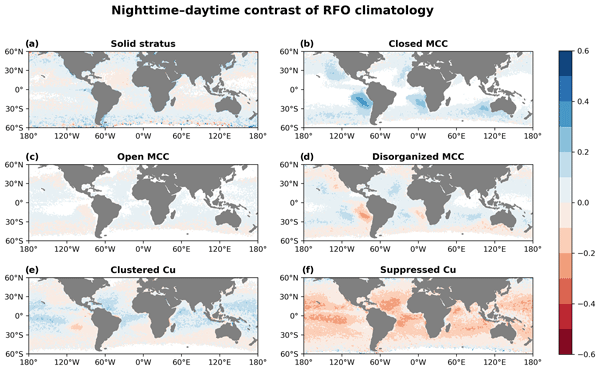
Based on a deep-learning method, we established a global classification dataset of daytime and nighttime marine low-cloud mesoscale morphology. This aims to promote a comprehensive understanding of cloud dynamics and cloud–climate feedback. Closed mesoscale cellular convection (MCC) clouds occur more frequently at night, while suppressed cumulus clouds exhibit remarkable decreases. Solid stratus and MCC cloud types show clear seasonal variations.
Hanzheng Zhu, Yaman Liu, Man Yue, Shihui Feng, Pingqing Fu, Kan Huang, Xinyi Dong, and Minghuai Wang
Atmos. Chem. Phys., 25, 5175–5197, https://doi.org/10.5194/acp-25-5175-2025, https://doi.org/10.5194/acp-25-5175-2025, 2025
Short summary
Short summary
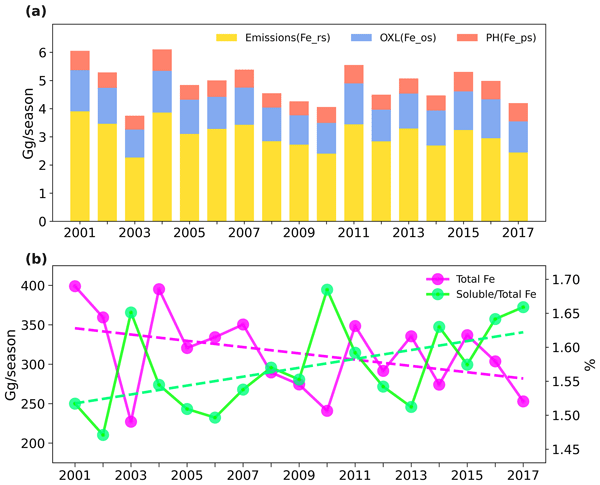
Dust-soluble iron deposition from East Asia plays an important role in the marine ecology of the Northwest Pacific. Using the developed model, our findings highlight a dual trend: a decrease in the overall deposition of soluble iron from dust but an increase in the solubility of the iron itself due to the enhanced atmospheric processing. The study underscores the critical roles of both dust emission and atmospheric processing in soluble iron deposition and marine ecology.
Wenxin Zhang, Yaman Liu, Man Yue, Xinyi Dong, Kan Huang, and Minghuai Wang
Atmos. Chem. Phys., 25, 3857–3872, https://doi.org/10.5194/acp-25-3857-2025, https://doi.org/10.5194/acp-25-3857-2025, 2025
Short summary
Short summary
Understanding long-term organic aerosol (OA) trends and their driving factors is important for air quality management. Our modeling revealed that OA in China increased by 5.6 % from 1990 to 2019, primarily due to a 32.3 % increase in secondary organic aerosols (SOAs) and an 8.1 % decrease in primary organic aerosols (POAs), both largely driven by changes in anthropogenic emissions. Biogenic SOA increased due to warming but showed little response to changes in anthropogenic nitrogen oxide emissions.
Xinyue Shao, Minghuai Wang, Xinyi Dong, Yaman Liu, Wenxiang Shen, Stephen R. Arnold, Leighton A. Regayre, Meinrat O. Andreae, Mira L. Pöhlker, Duseong S. Jo, Man Yue, and Ken S. Carslaw
Atmos. Chem. Phys., 24, 11365–11389, https://doi.org/10.5194/acp-24-11365-2024, https://doi.org/10.5194/acp-24-11365-2024, 2024
Short summary
Short summary
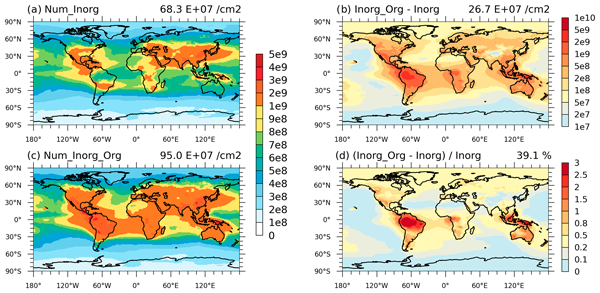
Highly oxygenated organic molecules (HOMs) play an important role in atmospheric new particle formation (NPF). By semi-explicitly coupling the chemical mechanism of HOMs and a comprehensive nucleation scheme in a global climate model, the updated model shows better agreement with measurements of nucleation rate, growth rate, and NPF event frequency. Our results reveal that HOM-driven NPF leads to a considerable increase in particle and cloud condensation nuclei burden globally.
Yawen Liu, Yun Qian, Philip J. Rasch, Kai Zhang, Lai-yung Ruby Leung, Yuhang Wang, Minghuai Wang, Hailong Wang, Xin Huang, and Xiu-Qun Yang
Atmos. Chem. Phys., 24, 3115–3128, https://doi.org/10.5194/acp-24-3115-2024, https://doi.org/10.5194/acp-24-3115-2024, 2024
Short summary
Short summary
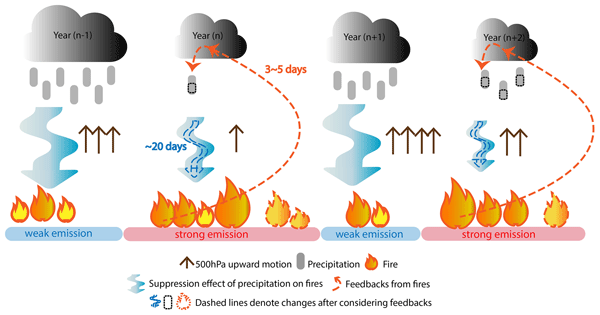
Fire management has long been a challenge. Here we report that spring-peak fire activity over southern Mexico and Central America (SMCA) has a distinct quasi-biennial signal by measuring multiple fire metrics. This signal is initially driven by quasi-biennial variability in precipitation and is further amplified by positive feedback of fire–precipitation interaction at short timescales. This work highlights the importance of fire–climate interactions in shaping fires on an interannual scale.
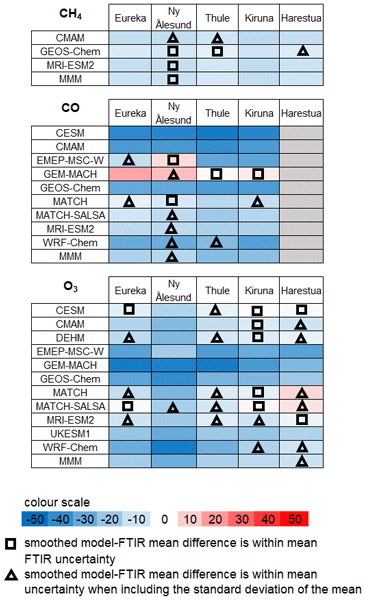
Victoria A. Flood, Kimberly Strong, Cynthia H. Whaley, Kaley A. Walker, Thomas Blumenstock, James W. Hannigan, Johan Mellqvist, Justus Notholt, Mathias Palm, Amelie N. Röhling, Stephen Arnold, Stephen Beagley, Rong-You Chien, Jesper Christensen, Makoto Deushi, Srdjan Dobricic, Xinyi Dong, Joshua S. Fu, Michael Gauss, Wanmin Gong, Joakim Langner, Kathy S. Law, Louis Marelle, Tatsuo Onishi, Naga Oshima, David A. Plummer, Luca Pozzoli, Jean-Christophe Raut, Manu A. Thomas, Svetlana Tsyro, and Steven Turnock
Atmos. Chem. Phys., 24, 1079–1118, https://doi.org/10.5194/acp-24-1079-2024, https://doi.org/10.5194/acp-24-1079-2024, 2024
Short summary
Short summary
It is important to understand the composition of the Arctic atmosphere and how it is changing. Atmospheric models provide simulations that can inform policy. This study examines simulations of CH4, CO, and O3 by 11 models. Model performance is assessed by comparing results matched in space and time to measurements from five high-latitude ground-based infrared spectrometers. This work finds that models generally underpredict the concentrations of these gases in the Arctic troposphere.
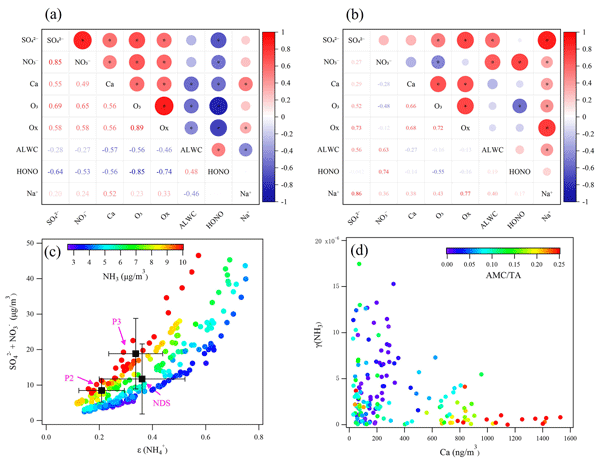
Da Lu, Hao Li, Mengke Tian, Guochen Wang, Xiaofei Qin, Na Zhao, Juntao Huo, Fan Yang, Yanfen Lin, Jia Chen, Qingyan Fu, Yusen Duan, Xinyi Dong, Congrui Deng, Sabur F. Abdullaev, and Kan Huang
Atmos. Chem. Phys., 23, 13853–13868, https://doi.org/10.5194/acp-23-13853-2023, https://doi.org/10.5194/acp-23-13853-2023, 2023
Short summary
Short summary
Environmental conditions during dust are usually not favorable for secondary aerosol formation. However in this study, an unusual dust event was captured in a Chinese mega-city and showed “anomalous” meteorology and a special dust backflow transport pathway. The underlying formation mechanisms of secondary aerosols are probed in the context of this special dust event. This study shows significant implications for the varying dust aerosol chemistry in the future changing climate.
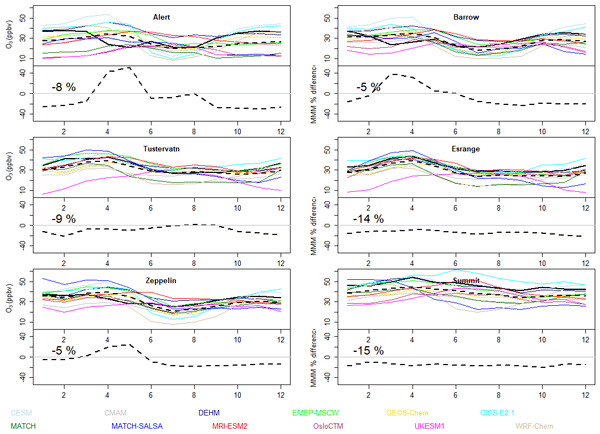
Cynthia H. Whaley, Kathy S. Law, Jens Liengaard Hjorth, Henrik Skov, Stephen R. Arnold, Joakim Langner, Jakob Boyd Pernov, Garance Bergeron, Ilann Bourgeois, Jesper H. Christensen, Rong-You Chien, Makoto Deushi, Xinyi Dong, Peter Effertz, Gregory Faluvegi, Mark Flanner, Joshua S. Fu, Michael Gauss, Greg Huey, Ulas Im, Rigel Kivi, Louis Marelle, Tatsuo Onishi, Naga Oshima, Irina Petropavlovskikh, Jeff Peischl, David A. Plummer, Luca Pozzoli, Jean-Christophe Raut, Tom Ryerson, Ragnhild Skeie, Sverre Solberg, Manu A. Thomas, Chelsea Thompson, Kostas Tsigaridis, Svetlana Tsyro, Steven T. Turnock, Knut von Salzen, and David W. Tarasick
Atmos. Chem. Phys., 23, 637–661, https://doi.org/10.5194/acp-23-637-2023, https://doi.org/10.5194/acp-23-637-2023, 2023
Short summary
Short summary
This study summarizes recent research on ozone in the Arctic, a sensitive and rapidly warming region. We find that the seasonal cycles of near-surface atmospheric ozone are variable depending on whether they are near the coast, inland, or at high altitude. Several global model simulations were evaluated, and we found that because models lack some of the ozone chemistry that is important for the coastal Arctic locations, they do not accurately simulate ozone there.
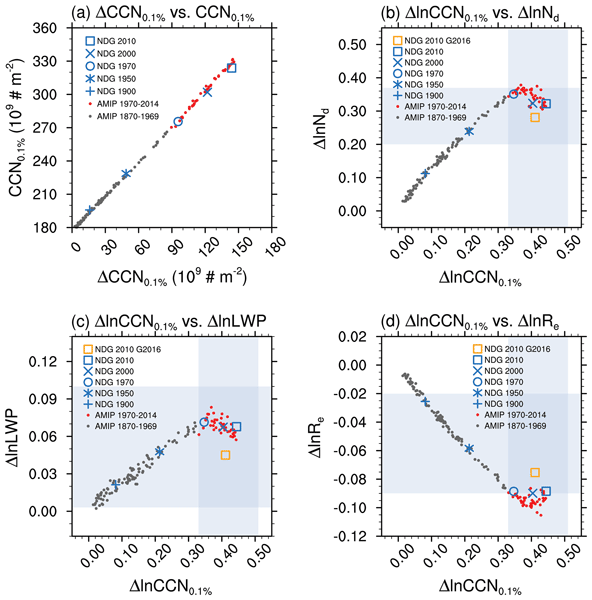
Kai Zhang, Wentao Zhang, Hui Wan, Philip J. Rasch, Steven J. Ghan, Richard C. Easter, Xiangjun Shi, Yong Wang, Hailong Wang, Po-Lun Ma, Shixuan Zhang, Jian Sun, Susannah M. Burrows, Manish Shrivastava, Balwinder Singh, Yun Qian, Xiaohong Liu, Jean-Christophe Golaz, Qi Tang, Xue Zheng, Shaocheng Xie, Wuyin Lin, Yan Feng, Minghuai Wang, Jin-Ho Yoon, and L. Ruby Leung
Atmos. Chem. Phys., 22, 9129–9160, https://doi.org/10.5194/acp-22-9129-2022, https://doi.org/10.5194/acp-22-9129-2022, 2022
Short summary
Short summary
Here we analyze the effective aerosol forcing simulated by E3SM version 1 using both century-long free-running and short nudged simulations. The aerosol forcing in E3SMv1 is relatively large compared to other models, mainly due to the large indirect aerosol effect. Aerosol-induced changes in liquid and ice cloud properties in E3SMv1 have a strong correlation. The aerosol forcing estimates in E3SMv1 are sensitive to the parameterization changes in both liquid and ice cloud processes.
Cynthia H. Whaley, Rashed Mahmood, Knut von Salzen, Barbara Winter, Sabine Eckhardt, Stephen Arnold, Stephen Beagley, Silvia Becagli, Rong-You Chien, Jesper Christensen, Sujay Manish Damani, Xinyi Dong, Konstantinos Eleftheriadis, Nikolaos Evangeliou, Gregory Faluvegi, Mark Flanner, Joshua S. Fu, Michael Gauss, Fabio Giardi, Wanmin Gong, Jens Liengaard Hjorth, Lin Huang, Ulas Im, Yugo Kanaya, Srinath Krishnan, Zbigniew Klimont, Thomas Kühn, Joakim Langner, Kathy S. Law, Louis Marelle, Andreas Massling, Dirk Olivié, Tatsuo Onishi, Naga Oshima, Yiran Peng, David A. Plummer, Olga Popovicheva, Luca Pozzoli, Jean-Christophe Raut, Maria Sand, Laura N. Saunders, Julia Schmale, Sangeeta Sharma, Ragnhild Bieltvedt Skeie, Henrik Skov, Fumikazu Taketani, Manu A. Thomas, Rita Traversi, Kostas Tsigaridis, Svetlana Tsyro, Steven Turnock, Vito Vitale, Kaley A. Walker, Minqi Wang, Duncan Watson-Parris, and Tahya Weiss-Gibbons
Atmos. Chem. Phys., 22, 5775–5828, https://doi.org/10.5194/acp-22-5775-2022, https://doi.org/10.5194/acp-22-5775-2022, 2022
Short summary
Short summary
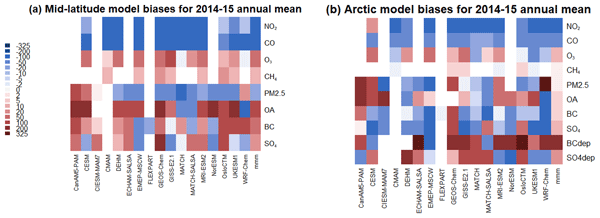
Air pollutants, like ozone and soot, play a role in both global warming and air quality. Atmospheric models are often used to provide information to policy makers about current and future conditions under different emissions scenarios. In order to have confidence in those simulations, in this study we compare simulated air pollution from 18 state-of-the-art atmospheric models to measured air pollution in order to assess how well the models perform.
Cited articles
Bardakov, R., Thornton, J. A., Riipinen, I., Krejci, R., and Ekman, A. M. L.: Transport and chemistry of isoprene and its oxidation products in deep convective clouds, Tellus B, 73, 1979856, https://doi.org/10.1080/16000889.2021.1979856, 2021.
Birdsall, A. W., Miner, C. R., Mael, L. E., and Elrod, M. J.: Mechanistic study of secondary organic aerosol components formed from nucleophilic addition reactions of methacrylic acid epoxide, Atmos. Chem. Phys., 14, 12951–12964, https://doi.org/10.5194/acp-14-12951-2014, 2014.
Budisulistiorini, S. H., Li, X., Bairai, S. T., Renfro, J., Liu, Y., Liu, Y. J., McKinney, K. A., Martin, S. T., McNeill, V. F., Pye, H. O. T., Nenes, A., Neff, M. E., Stone, E. A., Mueller, S., Knote, C., Shaw, S. L., Zhang, Z., Gold, A., and Surratt, J. D.: Examining the effects of anthropogenic emissions on isoprene-derived secondary organic aerosol formation during the 2013 Southern Oxidant and Aerosol Study (SOAS) at the Look Rock, Tennessee ground site, Atmos. Chem. Phys., 15, 8871–8888, https://doi.org/10.5194/acp-15-8871-2015, 2015.
Budisulistiorini, S. H., Nenes, A., Carlton, A. G., Surratt, J. D., McNeill, V. F., and Pye, H. O. T.: Simulating aqueous-phase isoprene-epoxydiol (IEPOX) secondary organic aerosol production during the 2013 Southern Oxidant and Aerosol Study (SOAS), Environ. Sci. Technol., 51, 5026–5034, https://doi.org/10.1021/acs.est.6b05750, 2017.
Carlton, A. G., Wiedinmyer, C., and Kroll, J. H.: A review of Secondary Organic Aerosol (SOA) formation from isoprene, Atmos. Chem. Phys., 9, 4987–5005, https://doi.org/10.5194/acp-9-4987-2009, 2009.
Carlton, A. G., Bhave, P. V., Napelenok, S. L., Edney, E. O., Sarwar, G., Pinder, R. W., Pouliot, G. A., and Houyoux, M.: Model representation of secondary organic aerosol in CMAQv4.7, Environ. Sci. Technol., 44, 8553–8560, https://doi.org/10.1021/es100636q, 2010.
Chang, X., Zhao, B., Zheng, H., Wang, S., Cai, S., Guo, F., Gui, P., Huang, G., Wu, D., Han, L., Xing, J., Man, H., Hu, R., Liang, C., Xu, Q., Qiu, X., Ding, D., Liu, K., Han, R., Robinson, A. L., and Donahue, N. M.: Full-volatility emission framework corrects missing and underestimated secondary organic aerosol sources, One Earth, 5, 403–412, https://doi.org/10.1016/j.oneear.2022.03.015, 2022.
Chen, Q., Miao, R., Geng, G., Shrivastava, M., Dao, X., Xu, B., Sun, J., Zhang, X., Liu, M., Tang, G., Tang, Q., Hu, H., Huang, R.-J., Wang, H., Zheng, Y., Qin, Y., Guo, S., Hu, M., and Zhu, T.: Widespread 2013–2020 decreases and reduction challenges of organic aerosol in China, Nat. Commun., 15, 4465, https://doi.org/10.1038/s41467-024-48902-0, 2024a.
Chen, Y., Zhang, Y., Lambe, A. T., Xu, R., Lei, Z., Olson, N. E., Zhang, Z., Szalkowski, T., Cui, T., Vizuete, W., Gold, A., Turpin, B. J., Ault, A. P., Chan, M. N., and Surratt, J. D.: Heterogeneous hydroxyl radical oxidation of isoprene-epoxydiol-derived methyltetrol sulfates: plausible formation mechanisms of previously unexplained organosulfates in ambient fine aerosols, Environ. Sci. Technol. Lett., 7, 460–468, https://doi.org/10.1021/acs.estlett.0c00276, 2020.
Chen, Y., Ng, A. E., Green, J., Zhang, Y., Riva, M., Riedel, T. P., Pye, H. O. T., Lei, Z., Olson, N. E., Cooke, M. E., Zhang, Z., Vizuete, W., Gold, A., Turpin, B. J., Ault, A. P., and Surratt, J. D.: Applying a Phase-Separation Parameterization in Modeling Secondary Organic Aerosol Formation from Acid-Driven Reactive Uptake of Isoprene Epoxydiols under Humid Conditions, ACS ES&T Air, 1, 511–524, https://doi.org/10.1021/acsestair.4c00002, 2024b.
Chin, M., Ginoux, P., Kinne, S., Torres, O., Holben, B. N., Duncan, B. N., Martin, R. V., Logan, J. A., Higurashi, A., and Nakajima, T.: Tropospheric aerosol optical thickness from the GOCART model and comparisons with satellite and sun photometer measurements, J. Atmos. Sci., 59, 461–483, https://doi.org/10.1175/1520-0469(2002)059<0461:TAOTFT>2.0.CO;2, 2002.
Chung, S. H. and Seinfeld, J. H.: Global distribution and climate forcing of carbonaceous aerosols, J. Geophys. Res.-Atmos., 107, 4407, https://doi.org/10.1029/2001JD001397, 2002.
Cooke, M. E., Armstrong, N. C., Fankhauser, A. M., Chen, Y., Lei, Z., Zhang, Y., Ledsky, I. R., Turpin, B. J., Zhang, Z., Gold, A., McNeill, V. F., Surratt, J. D., and Ault, A. P.: Decreases in epoxide-driven secondary organic aerosol production under highly acidic conditions: the importance of acid–base equilibria, Environ. Sci. Technol., 58, 10675–10684, https://doi.org/10.1021/acs.est.3c10851, 2024.
Darer, A. I., Cole-Filipiak, N. C., O'Connor, A. E., and Elrod, M. J.: Formation and stability of atmospherically relevant isoprene-derived organosulfates and organonitrates, Environ. Sci. Technol., 45, 1895–1902, https://doi.org/10.1021/es103797z, 2011.
Ding, X., He, Q.-F., Shen, R.-Q., Yu, Q.-Q., and Wang, X.-M.: Spatial distributions of secondary organic aerosols from isoprene, monoterpenes, β-caryophyllene, and aromatics over China during summer: secondary organic aerosols over China, J. Geophys. Res.-Atmos., 119, 11877–11891, https://doi.org/10.1002/2014JD021748, 2014.
Ding, X., He, Q.-F., Shen, R.-Q., Yu, Q.-Q., Zhang, Y.-Q., Xin, J.-Y., Wen, T.-X., and Wang, X.-M.: Spatial and seasonal variations of isoprene secondary organic aerosol in China: Significant impact of biomass burning during winter, Sci. Rep., 6, 20411, https://doi.org/10.1038/srep20411, 2016.
Donahue, N. M., Robinson, A. L., Stanier, C. O., and Pandis, S. N.: Coupled partitioning, dilution, and chemical aging of semivolatile organics, Environ. Sci. Technol., 40, 2635–2643, https://doi.org/10.1021/es052297c, 2006.
Dong, X., Liu, Y., Li, X., Yue, M., Liu, Y., Ma, Z., Zheng, H., Huang, R., and Wang, M.: Modeling Analysis of Biogenic Secondary Organic Aerosol Dependence on Anthropogenic Emissions in China, Environ. Sci. Technol. Lett., 9, 286–292, https://doi.org/10.1021/acs.estlett.2c00104, 2022.
Eddingsaas, N. C., VanderVelde, D. G., and Wennberg, P. O.: Kinetics and Products of the Acid-Catalyzed Ring-Opening of Atmospherically Relevant Butyl Epoxy Alcohols, J. Phys. Chem. A, 114, 8106–8113, https://doi.org/10.1021/jp103907c, 2010.
Emmons, L. K., Schwantes, R. H., Orlando, J. J., Tyndall, G., Kinnison, D., Lamarque, J., Marsh, D., Mills, M. J., Tilmes, S., Bardeen, C., Buchholz, R. R., Conley, A., Gettelman, A., Garcia, R., Simpson, I., Blake, D. R., Meinardi, S., and Pétron, G.: The Chemistry Mechanism in the Community Earth System Model Version 2 (CESM2), J. Adv. Model. Earth Syst., 12, e2019MS001882, https://doi.org/10.1029/2019MS001882, 2020.
Fahey, K. M., Carlton, A. G., Pye, H. O. T., Baek, J., Hutzell, W. T., Stanier, C. O., Baker, K. R., Appel, K. W., Jaoui, M., and Offenberg, J. H.: A framework for expanding aqueous chemistry in the Community Multiscale Air Quality (CMAQ) model version 5.1, Geosci. Model Dev., 10, 1587–1605, https://doi.org/10.5194/gmd-10-1587-2017, 2017.
Farrell, S. L., Rasool, Q. Z., Pye, H. O. T., Zhang, Y., Li, Y., Chen, Y., Wang, C.-T., Zhang, H., Schmedding, R., Shiraiwa, M., Greene, J., Budisulistiorini, S. H., Jimenez, J. L., Hu, W., Surratt, J. D., and Vizuete, W.: Simulated reductions in Heterogeneous Isoprene Epoxydiol Reactive Uptake from aerosol morphology in the contiguous United States using the Community Multiscale Air Quality Model (CMAQv5.3.2), EGUsphere [preprint], https://doi.org/10.5194/egusphere-2025-2253, 2025.
Frauenheim, M., Offenberg, J., Zhang, Z., Surratt, J. D., and Gold, A.: The C5–alkene triol conundrum: structural characterization and quantitation of isoprene-derived C5H10O3 reactive uptake products, Environ. Sci. Technol. Lett., 9, 829–836, https://doi.org/10.1021/acs.estlett.2c00548, 2022.
Frauenheim, M., Offenberg, J., Zhang, Z., Surratt, J. D., and Gold, A.: Chemical composition of secondary organic aerosol formed from the oxidation of semivolatile isoprene epoxydiol isomerization products, Environ. Sci. Technol., 58, 22571–22582, https://doi.org/10.1021/acs.est.4c06850, 2024.
Gaston, C. J., Thornton, J. A., and Ng, N. L.: Reactive uptake of N2O5 to internally mixed inorganic and organic particles: the role of organic carbon oxidation state and inferred organic phase separations, Atmos. Chem. Phys., 14, 5693–5707, https://doi.org/10.5194/acp-14-5693-2014, 2014.
Gelaro, R., McCarty, W., Suárez, M. J., Todling, R., Molod, A., Takacs, L., Randles, C. A., Darmenov, A., Bosilovich, M. G., Reichle, R., Wargan, K., Coy, L., Cullather, R., Draper, C., Akella, S., Buchard, V., Conaty, A., Da Silva, A. M., Gu, W., Kim, G.-K., Koster, R., Lucchesi, R., Merkova, D., Nielsen, J. E., Partyka, G., Pawson, S., Putman, W., Rienecker, M., Schubert, S. D., Sienkiewicz, M., and Zhao, B.: The Modern-Era Retrospective Analysis for Research and Applications, Version 2 (MERRA-2), J. Climate, 30, 5419–5454, https://doi.org/10.1175/JCLI-D-16-0758.1, 2017.
Gettelman, A. and Morrison, H.: Advanced Two-Moment Bulk Microphysics for Global Models. Part I: Off-Line Tests and Comparison with Other Schemes, J. Climate, 28, 1268–1287, https://doi.org/10.1175/JCLI-D-14-00102.1, 2015.
Griffin, R. J., Cocker III, D. R., Flagan, R. C., and Seinfeld, J. H.: Organic aerosol formation from the oxidation of biogenic hydrocarbons, J. Geophys. Res.-Atmos., 104, 3555–3567, https://doi.org/10.1029/1998JD100049, 1999.
Guenther, A. B., Jiang, X., Heald, C. L., Sakulyanontvittaya, T., Duhl, T., Emmons, L. K., and Wang, X.: The Model of Emissions of Gases and Aerosols from Nature version 2.1 (MEGAN2.1): an extended and updated framework for modeling biogenic emissions, Geosci. Model Dev., 5, 1471–1492, https://doi.org/10.5194/gmd-5-1471-2012, 2012.
He, Q.-F., Ding, X., Fu, X.-X., Zhang, Y.-Q., Wang, J.-Q., Liu, Y.-X., Tang, M.-J., Wang, X.-M., and Rudich, Y.: Secondary organic aerosol formation from isoprene epoxides in the Pearl River Delta, South China: IEPOX- and HMML-derived tracers, J. Geophys. Res.-Atmos., 123, 6999–7012, https://doi.org/10.1029/2017JD028242, 2018.
Hettiyadura, A. P. S., Al-Naiema, I. M., Hughes, D. D., Fang, T., and Stone, E. A.: Organosulfates in Atlanta, Georgia: anthropogenic influences on biogenic secondary organic aerosol formation, Atmos. Chem. Phys., 19, 3191–3206, https://doi.org/10.5194/acp-19-3191-2019, 2019.
Hodzic, A., Kasibhatla, P. S., Jo, D. S., Cappa, C. D., Jimenez, J. L., Madronich, S., and Park, R. J.: Rethinking the global secondary organic aerosol (SOA) budget: stronger production, faster removal, shorter lifetime, Atmos. Chem. Phys., 16, 7917–7941, https://doi.org/10.5194/acp-16-7917-2016, 2016.
Hu, H., Liang, Y., Li, T., She, Y., Wang, Y., Yang, T., Zhou, M., Li, Z., Li, C., Xiao, H., Hu, J., Li, J., and Zhao, Y.: Pathway-specific responses of isoprene-derived secondary organic aerosol formation to anthropogenic emission reductions in a megacity in eastern China, Atmos. Chem. Phys., 25, 17889–17906, https://doi.org/10.5194/acp-25-17889-2025, 2025.
Hu, W., Palm, B. B., Day, D. A., Campuzano-Jost, P., Krechmer, J. E., Peng, Z., de Sá, S. S., Martin, S. T., Alexander, M. L., Baumann, K., Hacker, L., Kiendler-Scharr, A., Koss, A. R., de Gouw, J. A., Goldstein, A. H., Seco, R., Sjostedt, S. J., Park, J.-H., Guenther, A. B., Kim, S., Canonaco, F., Prévôt, A. S. H., Brune, W. H., and Jimenez, J. L.: Volatility and lifetime against OH heterogeneous reaction of ambient isoprene-epoxydiols-derived secondary organic aerosol (IEPOX-SOA), Atmos. Chem. Phys., 16, 11563–11580, https://doi.org/10.5194/acp-16-11563-2016, 2016.
Hu, W. W., Campuzano-Jost, P., Palm, B. B., Day, D. A., Ortega, A. M., Hayes, P. L., Krechmer, J. E., Chen, Q., Kuwata, M., Liu, Y. J., de Sá, S. S., McKinney, K., Martin, S. T., Hu, M., Budisulistiorini, S. H., Riva, M., Surratt, J. D., St. Clair, J. M., Isaacman-Van Wertz, G., Yee, L. D., Goldstein, A. H., Carbone, S., Brito, J., Artaxo, P., de Gouw, J. A., Koss, A., Wisthaler, A., Mikoviny, T., Karl, T., Kaser, L., Jud, W., Hansel, A., Docherty, K. S., Alexander, M. L., Robinson, N. H., Coe, H., Allan, J. D., Canagaratna, M. R., Paulot, F., and Jimenez, J. L.: Characterization of a real-time tracer for isoprene epoxydiols-derived secondary organic aerosol (IEPOX-SOA) from aerosol mass spectrometer measurements, Atmos. Chem. Phys., 15, 11807–11833, https://doi.org/10.5194/acp-15-11807-2015, 2015.
Jo, D. S., Hodzic, A., Emmons, L. K., Marais, E. A., Peng, Z., Nault, B. A., Hu, W., Campuzano-Jost, P., and Jimenez, J. L.: A simplified parameterization of isoprene-epoxydiol-derived secondary organic aerosol (IEPOX-SOA) for global chemistry and climate models: a case study with GEOS-Chem v11-02-rc, Geosci. Model Dev., 12, 2983–3000, https://doi.org/10.5194/gmd-12-2983-2019, 2019.
Jo, D. S., Hodzic, A., Emmons, L. K., Tilmes, S., Schwantes, R. H., Mills, M. J., Campuzano-Jost, P., Hu, W., Zaveri, R. A., Easter, R. C., Singh, B., Lu, Z., Schulz, C., Schneider, J., Shilling, J. E., Wisthaler, A., and Jimenez, J. L.: Future changes in isoprene-epoxydiol-derived secondary organic aerosol (IEPOX SOA) under the Shared Socioeconomic Pathways: the importance of physicochemical dependency, Atmos. Chem. Phys., 21, 3395–3425, https://doi.org/10.5194/acp-21-3395-2021, 2021.
Kim, P. S., Jacob, D. J., Fisher, J. A., Travis, K., Yu, K., Zhu, L., Yantosca, R. M., Sulprizio, M. P., Jimenez, J. L., Campuzano-Jost, P., Froyd, K. D., Liao, J., Hair, J. W., Fenn, M. A., Butler, C. F., Wagner, N. L., Gordon, T. D., Welti, A., Wennberg, P. O., Crounse, J. D., St. Clair, J. M., Teng, A. P., Millet, D. B., Schwarz, J. P., Markovic, M. Z., and Perring, A. E.: Sources, seasonality, and trends of southeast US aerosol: an integrated analysis of surface, aircraft, and satellite observations with the GEOS-Chem chemical transport model, Atmos. Chem. Phys., 15, 10411–10433, https://doi.org/10.5194/acp-15-10411-2015, 2015.
Li, J., Wang, G., Wu, C., Cao, C., Ren, Y., Wang, J., Li, J., Cao, J., Zeng, L., and Zhu, T.: Characterization of isoprene-derived secondary organic aerosols at a rural site in North China Plain with implications for anthropogenic pollution effects, Sci. Rep., 8, 535, https://doi.org/10.1038/s41598-017-18983-7, 2018.
Li, M., Liu, H., Geng, G., Hong, C., Liu, F., Song, Y., Tong, D., Zheng, B., Cui, H., Man, H., Zhang, Q., and He, K.: Anthropogenic emission inventories in China: a review, Natl. Sci. Rev., 4, 834–866, https://doi.org/10.1093/nsr/nwx150, 2017.
Lin, Y.-H., Zhang, Z., Docherty, K. S., Zhang, H., Budisulistiorini, S. H., Rubitschun, C. L., Shaw, S. L., Knipping, E. M., Edgerton, E. S., Kleindienst, T. E., Gold, A., and Surratt, J. D.: Isoprene Epoxydiols as Precursors to Secondary Organic Aerosol Formation: Acid-Catalyzed Reactive Uptake Studies with Authentic Compounds, Environ. Sci. Technol., 46, 250–258, https://doi.org/10.1021/es202554c, 2012.
Lin, Y.-H., Zhang, H., Pye, H. O. T., Zhang, Z., Marth, W. J., Park, S., Arashiro, M., Cui, T., Budisulistiorini, S. H., Sexton, K. G., Vizuete, W., Xie, Y., Luecken, D. J., Piletic, I. R., Edney, E. O., Bartolotti, L. J., Gold, A., and Surratt, J. D.: Epoxide as a precursor to secondary organic aerosol formation from isoprene photooxidation in the presence of nitrogen oxides, P. Natl. Acad. Sci. USA, 110, 6718–6723, https://doi.org/10.1073/pnas.1221150110, 2013.
Liu, X., Ma, P.-L., Wang, H., Tilmes, S., Singh, B., Easter, R. C., Ghan, S. J., and Rasch, P. J.: Description and evaluation of a new four-mode version of the Modal Aerosol Module (MAM4) within version 5.3 of the Community Atmosphere Model, Geosci. Model Dev., 9, 505–522, https://doi.org/10.5194/gmd-9-505-2016, 2016.
Liu, Y., Dong, X., Emmons, L. K., Jo, D. S., Liu, Y., Shrivastava, M., Yue, M., Liang, Y., Song, Z., He, X., and Wang, M.: Exploring the Factors Controlling the Long‐Term Trend (1988–2019) of Surface Organic Aerosols in the Continental United States by Simulations, J. Geophys. Res.-Atmos., 128, e2022JD037935, https://doi.org/10.1029/2022JD037935, 2023.
Lu, Z., Liu, X., Zaveri, R. A., Easter, R. C., Tilmes, S., Emmons, L. K., Vitt, F., Singh, B., Wang, H., Zhang, R., and Rasch, P. J.: Radiative Forcing of Nitrate Aerosols From 1975 to 2010 as Simulated by MOSAIC Module in CESM2‐MAM4, J. Geophys. Res.-Atmos., 126, e2021JD034809, https://doi.org/10.1029/2021JD034809, 2021.
Mael, L. E., Jacobs, M. I., and Elrod, M. J.: Organosulfate and nitrate formation and reactivity from epoxides derived from 2-methyl-3-buten-2-ol, J. Phys. Chem. A, 119, 4464–4472, https://doi.org/10.1021/jp510033s, 2015.
Marais, E. A., Jacob, D. J., Jimenez, J. L., Campuzano-Jost, P., Day, D. A., Hu, W., Krechmer, J., Zhu, L., Kim, P. S., Miller, C. C., Fisher, J. A., Travis, K., Yu, K., Hanisco, T. F., Wolfe, G. M., Arkinson, H. L., Pye, H. O. T., Froyd, K. D., Liao, J., and McNeill, V. F.: Aqueous-phase mechanism for secondary organic aerosol formation from isoprene: application to the southeast United States and co-benefit of SO2 emission controls, Atmos. Chem. Phys., 16, 1603–1618, https://doi.org/10.5194/acp-16-1603-2016, 2016.
Marais, E. A., Jacob, D. J., Turner, J. R., and Mickley, L. J.: Evidence of 1991–2013 decrease of biogenic secondary organic aerosol in response to SO2 emission controls, Environ. Res. Lett., 12, 054018, https://doi.org/10.1088/1748-9326/aa69c8, 2017.
Miao, R., Chen, Q., Shrivastava, M., Chen, Y., Zhang, L., Hu, J., Zheng, Y., and Liao, K.: Process-based and observation-constrained SOA simulations in China: the role of semivolatile and intermediate-volatility organic compounds and OH levels, Atmos. Chem. Phys., 21, 16183–16201, https://doi.org/10.5194/acp-21-16183-2021, 2021.
Ng, A. E., Chen, Y., Green, J., Farrell, S., Surratt, J. D., Ault, A. P., Turpin, B. J., and Vizuete, W. C.: Regional-scale modeling parameterizations for secondary organic aerosol formation from isoprene epoxydiols: experimentally based evaluation and optimization, ACS ES&T Air, 2, 2625–2637, https://doi.org/10.1021/acsestair.5c00258, 2025.
Nguyen, T. B., Bates, K. H., Crounse, J. D., Schwantes, R. H., Zhang, X., Kjaergaard, H. G., Surratt, J. D., Lin, P., Laskin, A., Seinfeld, J. H., and Wennberg, P. O.: Mechanism of the hydroxyl radical oxidation of methacryloyl peroxynitrate (MPAN) and its pathway toward secondary organic aerosol formation in the atmosphere, Phys. Chem. Chem. Phys., 17, 17914–17926, https://doi.org/10.1039/c5cp02001h, 2015.
Odum, J. R., Hoffmann, T., Bowman, F., Collins, D., Flagan, R. C., and Seinfeld, J. H.: Gas/particle partitioning and secondary organic aerosol yields, Environ. Sci. Technol., 30, 2580–2585, https://doi.org/10.1021/es950943, 1996.
OpenAI: ChatGPT image-generation tools, OpenAI, https://chatgpt.com/ (last access: 2 June 2026), 2026.
Paulot, F., Crounse, J. D., Kjaergaard, H. G., Kroll, J. H., Seinfeld, J. H., and Wennberg, P. O.: Isoprene photooxidation: new insights into the production of acids and organic nitrates, Atmos. Chem. Phys., 9, 1479–1501, https://doi.org/10.5194/acp-9-1479-2009, 2009a.
Paulot, F., Crounse, J. D., Kjaergaard, H. G., Kürten, A., St. Clair, J. M., Seinfeld, J. H., and Wennberg, P. O.: Unexpected Epoxide Formation in the Gas-Phase Photooxidation of Isoprene, Science, 325, 730–733, https://doi.org/10.1126/science.1172910, 2009b.
Pye, H. O. T. and Seinfeld, J. H.: A global perspective on aerosol from low-volatility organic compounds, Atmos. Chem. Phys., 10, 4377–4401, https://doi.org/10.5194/acp-10-4377-2010, 2010.
Pye, H. O. T., Pinder, R. W., Piletic, I. R., Xie, Y., Capps, S. L., Lin, Y.-H., Surratt, J. D., Zhang, Z., Gold, A., Luecken, D. J., Hutzell, W. T., Jaoui, M., Offenberg, J. H., Kleindienst, T. E., Lewandowski, M., and Edney, E. O.: Epoxide pathways improve model predictions of isoprene markers and reveal key role of acidity in aerosol formation, Environ. Sci. Technol., 47, 11056–11064, https://doi.org/10.1021/es402106h, 2013.
Pye, H. O. T., Zuend, A., Fry, J. L., Isaacman-VanWertz, G., Capps, S. L., Appel, K. W., Foroutan, H., Xu, L., Ng, N. L., and Goldstein, A. H.: Coupling of organic and inorganic aerosol systems and the effect on gas–particle partitioning in the southeastern US, Atmos. Chem. Phys., 18, 357–370, https://doi.org/10.5194/acp-18-357-2018, 2018.
Rattanavaraha, W., Chu, K., Budisulistiorini, S. H., Riva, M., Lin, Y.-H., Edgerton, E. S., Baumann, K., Shaw, S. L., Guo, H., King, L., Weber, R. J., Neff, M. E., Stone, E. A., Offenberg, J. H., Zhang, Z., Gold, A., and Surratt, J. D.: Assessing the impact of anthropogenic pollution on isoprene-derived secondary organic aerosol formation in PM2.5 collected from the Birmingham, Alabama, ground site during the 2013 Southern Oxidant and Aerosol Study, Atmos. Chem. Phys., 16, 4897–4914, https://doi.org/10.5194/acp-16-4897-2016, 2016.
Riva, M., Chen, Y., Zhang, Y., Lei, Z., Olson, N. E., Boyer, H. C., Narayan, S., Yee, L. D., Green, H. S., Cui, T., Zhang, Z., Baumann, K., Fort, M., Edgerton, E., Budisulistiorini, S. H., Rose, C. A., Ribeiro, I. O., E Oliveira, R. L., Dos Santos, E. O., Machado, C. M. D., Szopa, S., Zhao, Y., Alves, E. G., De Sá, S. S., Hu, W., Knipping, E. M., Shaw, S. L., Duvoisin Junior, S., De Souza, R. A. F., Palm, B. B., Jimenez, J.-L., Glasius, M., Goldstein, A. H., Pye, H. O. T., Gold, A., Turpin, B. J., Vizuete, W., Martin, S. T., Thornton, J. A., Dutcher, C. S., Ault, A. P., and Surratt, J. D.: Increasing Isoprene Epoxydiol-to-Inorganic Sulfate Aerosol Ratio Results in Extensive Conversion of Inorganic Sulfate to Organosulfur Forms: Implications for Aerosol Physicochemical Properties, Environ. Sci. Technol., 53, 8682–8694, https://doi.org/10.1021/acs.est.9b01019, 2019.
Robinson, A. L., Donahue, N. M., Shrivastava, M. K., Weitkamp, E. A., Sage, A. M., Grieshop, A. P., Lane, T. E., Pierce, J. R., and Pandis, S. N.: Rethinking organic aerosols: semivolatile emissions and photochemical aging, Science, 315, 1259–1262, https://doi.org/10.1126/science.1133061, 2007.
Royer, H. M., Harrill, A. J., Christensen, C. M., Chen, Y., Zhang, Z., Gold, A., Ault, A. P., Surratt, J. D., and Turpin, B. J.: 2-Methyltetrol sulfate oxidation by hydroxyl radical in atmospheric water mimics and implications for the fate of isoprene-derived secondary organic aerosol, ACS ES&T Air, 3, 806–815, https://doi.org/10.1021/acsestair.5c00406, 2026.
Schmedding, R., Ma, M., Zhang, Y., Farrell, S., Pye, H. O. T., Chen, Y., Wang, C., Rasool, Q. Z., Budisulistiorini, S. H., Ault, A. P., Surratt, J. D., and Vizuete, W.: α-Pinene-Derived organic coatings on acidic sulfate aerosol impacts secondary organic aerosol formation from isoprene in a box model, Atmos. Environ., 213, 456–462, https://doi.org/10.1016/j.atmosenv.2019.06.005, 2019.
Schmedding, R., Rasool, Q. Z., Zhang, Y., Pye, H. O. T., Zhang, H., Chen, Y., Surratt, J. D., Lopez-Hilfiker, F. D., Thornton, J. A., Goldstein, A. H., and Vizuete, W.: Predicting secondary organic aerosol phase state and viscosity and its effect on multiphase chemistry in a regional-scale air quality model, Atmos. Chem. Phys., 20, 8201–8225, https://doi.org/10.5194/acp-20-8201-2020, 2020.
Schwantes, R. H., Charan, S. M., Bates, K. H., Huang, Y., Nguyen, T. B., Mai, H., Kong, W., Flagan, R. C., and Seinfeld, J. H.: Low-volatility compounds contribute significantly to isoprene secondary organic aerosol (SOA) under high-NOx conditions, Atmos. Chem. Phys., 19, 7255–7278, https://doi.org/10.5194/acp-19-7255-2019, 2019.
Schwantes, R. H., Emmons, L. K., Orlando, J. J., Barth, M. C., Tyndall, G. S., Hall, S. R., Ullmann, K., St. Clair, J. M., Blake, D. R., Wisthaler, A., and Bui, T. P. V.: Comprehensive isoprene and terpene gas-phase chemistry improves simulated surface ozone in the southeastern US, Atmos. Chem. Phys., 20, 3739–3776, https://doi.org/10.5194/acp-20-3739-2020, 2020.
Shrivastava, M., Andreae, M. O., Artaxo, P., Barbosa, H. M. J., Berg, L. K., Brito, J., Ching, J., Easter, R. C., Fan, J., Fast, J. D., Feng, Z., Fuentes, J. D., Glasius, M., Goldstein, A. H., Alves, E. G., Gomes, H., Gu, D., Guenther, A., Jathar, S. H., Kim, S., Liu, Y., Lou, S., Martin, S. T., McNeill, V. F., Medeiros, A., De Sá, S. S., Shilling, J. E., Springston, S. R., Souza, R. A. F., Thornton, J. A., Isaacman-VanWertz, G., Yee, L. D., Ynoue, R., Zaveri, R. A., Zelenyuk, A., and Zhao, C.: Urban pollution greatly enhances formation of natural aerosols over the Amazon rainforest, Nat. Commun., 10, 1046, https://doi.org/10.1038/s41467-019-08909-4, 2019.
Shrivastava, M., Rasool, Q. Z., Zhao, B., Octaviani, M., Zaveri, R. A., Zelenyuk, A., Gaudet, B., Liu, Y., Shilling, J. E., Schneider, J., Schulz, C., Zöger, M., Martin, S. T., Ye, J., Guenther, A., Souza, R. F., Wendisch, M., and Pöschl, U.: Tight Coupling of Surface and In-Plant Biochemistry and Convection Governs Key Fine Particulate Components over the Amazon Rainforest, ACS Earth Space Chem., 6, 380–390, https://doi.org/10.1021/acsearthspacechem.1c00356, 2022.
Silver, B., Conibear, L., Reddington, C. L., Knote, C., Arnold, S. R., and Spracklen, D. V.: Pollutant emission reductions deliver decreased PM2.5-caused mortality across China during 2015–2017, Atmos. Chem. Phys., 20, 11683–11695, https://doi.org/10.5194/acp-20-11683-2020, 2020.
Stadtler, S., Kühn, T., Schröder, S., Taraborrelli, D., Schultz, M. G., and Kokkola, H.: Isoprene-derived secondary organic aerosol in the global aerosol–chemistry–climate model ECHAM6.3.0–HAM2.3–MOZ1.0, Geosci. Model Dev., 11, 3235–3260, https://doi.org/10.5194/gmd-11-3235-2018, 2018.
Su, S., Li, B., Cui, S., and Tao, S.: Sulfur Dioxide Emissions from Combustion in China: From 1990 to 2007, Environ. Sci. Technol., 45, 8403–8410, https://doi.org/10.1021/es201656f, 2011.
Surratt, J. D., Kroll, J. H., Kleindienst, T. E., Edney, E. O., Claeys, M., Sorooshian, A., Ng, N. L., Offenberg, J. H., Lewandowski, M., Jaoui, M., Flagan, R. C., and Seinfeld, J. H.: Evidence for Organosulfates in Secondary Organic Aerosol, Environ. Sci. Technol., 41, 517–527, https://doi.org/10.1021/es062081q, 2007.
Surratt, J. D., Gómez-González, Y., Chan, A. W. H., Vermeylen, R., Shahgholi, M., Kleindienst, T. E., Edney, E. O., Offenberg, J. H., Lewandowski, M., Jaoui, M., Maenhaut, W., Claeys, M., Flagan, R. C., and Seinfeld, J. H.: Organosulfate Formation in Biogenic Secondary Organic Aerosol, J. Phys. Chem. A, 112, 8345–8378, https://doi.org/10.1021/jp802310p, 2008.
Surratt, J. D., Chan, A. W. H., Eddingsaas, N. C., Chan, M., Loza, C. L., Kwan, A. J., Hersey, S. P., Flagan, R. C., Wennberg, P. O., and Seinfeld, J. H.: Reactive intermediates revealed in secondary organic aerosol formation from isoprene, P. Natl. Acad. Sci. USA, 107, 6640–6645, https://doi.org/10.1073/pnas.0911114107, 2010.
Tilmes, S., Hodzic, A., Emmons, L. K., Mills, M. J., Gettelman, A., Kinnison, D. E., Park, M., Lamarque, J.-F., Vitt, F., Shrivastava, M., Campuzano‐Jost, P., Jimenez, J. L., and Liu, X.: Climate Forcing and Trends of Organic Aerosols in the Community Earth System Model (CESM2), J. Adv. Model. Earth Syst., 11, 4323–4351, https://doi.org/10.1029/2019MS001827, 2019.
Wennberg, P. O., Bates, K. H., Crounse, J. D., Dodson, L. G., McVay, R. C., Mertens, L. A., Nguyen, T. B., Praske, E., Schwantes, R. H., Smarte, M. D., St Clair, J. M., Teng, A. P., Zhang, X., and Seinfeld, J. H.: Gas-Phase Reactions of Isoprene and Its Major Oxidation Products, Chem. Rev., 118, 3337–3390, https://doi.org/10.1021/acs.chemrev.7b00439, 2018.
Worton, D. R., Surratt, J. D., LaFranchi, B. W., Chan, A. W. H., Zhao, Y., Weber, R. J., Park, J.-H., Gilman, J. B., De Gouw, J., Park, C., Schade, G., Beaver, M., St. Clair, J. M., Crounse, J., Wennberg, P., Wolfe, G. M., Harrold, S., Thornton, J. A., Farmer, D. K., Docherty, K. S., Cubison, M. J., Jimenez, J.-L., Frossard, A. A., Russell, L. M., Kristensen, K., Glasius, M., Mao, J., Ren, X., Brune, W., Browne, E. C., Pusede, S. E., Cohen, R. C., Seinfeld, J. H., and Goldstein, A. H.: Observational Insights into Aerosol Formation from Isoprene, Environ. Sci. Technol., 47, 11403–11413, https://doi.org/10.1021/es4011064, 2013.
Wu, K., Yang, X., Chen, D., Gu, S., Lu, Y., Jiang, Q., Wang, K., Ou, Y., Qian, Y., Shao, P., and Lu, S.: Estimation of biogenic VOC emissions and their corresponding impact on ozone and secondary organic aerosol formation in China, Atmos. Res., 231, 104656, https://doi.org/10.1016/j.atmosres.2019.104656, 2020.
Xu, R., Chen, Y., Ng, S. I. M., Zhang, Z., Gold, A., Turpin, B. J., Ault, A. P., Surratt, J. D., and Chan, M. N.: Formation of inorganic sulfate and volatile nonsulfated products from heterogeneous hydroxyl radical oxidation of 2-methyltetrol sulfate aerosols: mechanisms and atmospheric implications, Environ. Sci. Technol. Lett., 11, 968–974, https://doi.org/10.1021/acs.estlett.4c00451, 2024.
Yang, Q., Yuan, Q., Li, T., Shen, H., and Zhang, L.: The relationships between PM2.5 and meteorological factors in China: seasonal and regional variations, Int. J. Environ. Res. Pu., 14, 1510, https://doi.org/10.3390/ijerph14121510, 2017.
Zaveri, R. A., Easter, R. C., Fast, J. D., and Peters, L. K.: Model for Simulating Aerosol Interactions and Chemistry (MOSAIC), J. Geophys. Res., 113, 2007JD008782, https://doi.org/10.1029/2007JD008782, 2008.
Zaveri, R. A., Easter, R. C., Singh, B., Wang, H., Lu, Z., Tilmes, S., Emmons, L. K., Vitt, F., Zhang, R., Liu, X., Ghan, S. J., and Rasch, P. J.: Development and Evaluation of Chemistry‐Aerosol‐Climate Model CAM5‐Chem‐MAM7‐MOSAIC: Global Atmospheric Distribution and Radiative Effects of Nitrate Aerosol, J. Adv. Model. Earth Syst., 13, e2020MS002346, https://doi.org/10.1029/2020MS002346, 2021.
Zawadowicz, M. A., Lee, B. H., Shrivastava, M., Zelenyuk, A., Zaveri, R. A., Flynn, C., Thornton, J. A., and Shilling, J. E.: Photolysis controls atmospheric budgets of biogenic secondary organic aerosol, Environ. Sci. Technol., 54, 3861–3870, https://doi.org/10.1021/acs.est.9b07051, 2020.
Zhang, G. J. and McFarlane, N. A.: Sensitivity of climate simulations to the parameterization of cumulus convection in the Canadian climate centre general circulation model, Atmos. Ocean, 33, 407–446, https://doi.org/10.1080/07055900.1995.9649539, 1995.
Zhang, W., Liu, Y., Yue, M., Dong, X., Huang, K., and Wang, M.: Understanding the long-term trend of organic aerosol and the influences from anthropogenic emission and regional climate change in China, Atmos. Chem. Phys., 25, 3857–3872, https://doi.org/10.5194/acp-25-3857-2025, 2025.
Zhang, Y., Chen, Y., Lambe, A. T., Olson, N. E., Lei, Z., Craig, R. L., Zhang, Z., Gold, A., Onasch, T. B., Jayne, J. T., Worsnop, D. R., Gaston, C. J., Thornton, J. A., Vizuete, W., Ault, A. P., and Surratt, J. D.: Effect of the Aerosol-Phase State on Secondary Organic Aerosol Formation from the Reactive Uptake of Isoprene-Derived Epoxydiols (IEPOX), Environ. Sci. Technol. Lett., 5, 167–174, https://doi.org/10.1021/acs.estlett.8b00044, 2018.
Zhang, Y., Chen, Y., Lei, Z., Olson, N. E., Riva, M., Koss, A. R., Zhang, Z., Gold, A., Jayne, J. T., Worsnop, D. R., Onasch, T. B., Kroll, J. H., Turpin, B. J., Ault, A. P., and Surratt, J. D.: Joint impacts of acidity and viscosity on the formation of secondary organic aerosol from isoprene epoxydiols (IEPOX) in phase-separated particles, ACS Earth Space Chem., 3, 2646–2658, https://doi.org/10.1021/acsearthspacechem.9b00209, 2019.
Zhang, Y.-Q., Ding, X., He, Q.-F., Wen, T.-X., Wang, J.-Q., Yang, K., Jiang, H., Cheng, Q., Liu, P., Wang, Z.-R., He, Y.-F., Hu, W.-W., Wang, Q.-Y., Xin, J.-Y., Wang, Y.-S., and Wang, X.-M.: Observational Insights into Isoprene Secondary Organic Aerosol Formation through the Epoxide Pathway at Three Urban Sites from Northern to Southern China, Environ. Sci. Technol., 56, 4795–4805, https://doi.org/10.1021/acs.est.1c06974, 2022.
Zheng, Y., Thornton, J. A., Ng, N. L., Cao, H., Henze, D. K., McDuffie, E. E., Hu, W., Jimenez, J. L., Marais, E. A., Edgerton, E., and Mao, J.: Long-term observational constraints of organic aerosol dependence on inorganic species in the southeast US, Atmos. Chem. Phys., 20, 13091–13107, https://doi.org/10.5194/acp-20-13091-2020, 2020.
Zhu, S., Zhang, J., Li, L., Zhou, M., Qiao, L., Wang, H., Huang, D. D., Wang, Q., Jing, S., Wu, Y., Wang, S., Chen, C., Ying, Q., and Yu, J. Z.: Aerosol Uptake Coefficients of Isoprene Epoxides: Determination and Parameter Estimation from Online Field Measurements of Organic Molecular Markers, Environ. Sci. Technol., 59, 18249–18258, https://doi.org/10.1021/acs.est.5c09046, 2025.
Short summary
Isoprene-derived secondary organic aerosol (ISOA) remains poorly represented in models, creating uncertainty in its changes and drivers. An improved model better matches observations and shows that low-NOx formation dominates. Overall ISOA changed little from 2000 to 2019 because opposite regional trends offset each other: increases in Southwest China were driven by stronger isoprene emissions, while decreases in Shaanxi–Gansu–Ningxia were driven by changes in anthropogenic emissions.
Isoprene-derived secondary organic aerosol (ISOA) remains poorly represented in models, creating...


Altmetrics
Final-revised paper
Preprint