
Articles | Volume 25, issue 23
https://doi.org/10.5194/acp-25-17595-2025
© Author(s) 2025. This work is distributed under
the Creative Commons Attribution 4.0 License.
the Creative Commons Attribution 4.0 License.
https://doi.org/10.5194/acp-25-17595-2025
© Author(s) 2025. This work is distributed under
the Creative Commons Attribution 4.0 License.
the Creative Commons Attribution 4.0 License.
Research article
| 
04 Dec 2025
Research article |
| 04 Dec 2025
| 04 Dec 2025
A novel identification method for stratospheric gravity waves in nadir viewing satellite observations

Centre for Climate Adaptation and Environment Research, University of Bath, Bath, UK
Corwin J. Wright
Centre for Climate Adaptation and Environment Research, University of Bath, Bath, UK
Neil P. Hindley
Centre for Climate Adaptation and Environment Research, University of Bath, Bath, UK
Phoebe E. Noble
Centre for Climate Adaptation and Environment Research, University of Bath, Bath, UK
Lars Hoffmann
Jülich Supercomputing Center, Forschungszentrum Jülich, Jülich, Germany, Jülich, Germany
Related authors
No articles found.
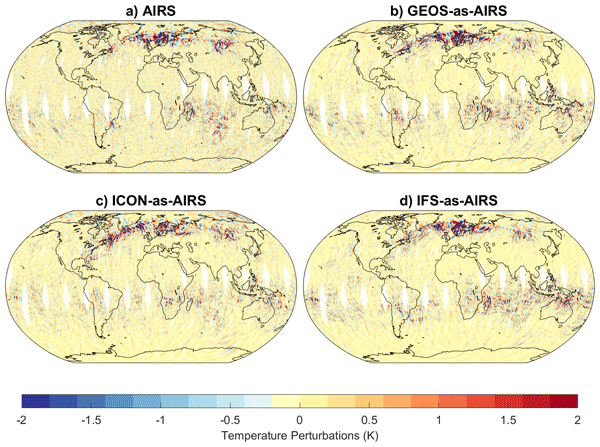
Phoebe Noble, Haruka Okui, Joan Alexander, Manfred Ern, Neil P. Hindley, Lars Hoffmann, Laura Holt, Annelize van Niekerk, Riwal Plougonven, Inna Polichtchouk, Claudia C. Stephan, Martina Bramberger, Milena Corcos, William Putnam, Christopher Kruse, and Corwin J. Wright
Atmos. Chem. Phys., 26, 7607–7630, https://doi.org/10.5194/acp-26-7607-2026, https://doi.org/10.5194/acp-26-7607-2026, 2026
Short summary
Short summary
Gravity waves are small-scale processes that drive the circulation in the middle and upper atmosphere. In this work, we assess 3 new high-resolution (3-5km horizontal resolution) models against satellite data. Generally, models capture the spatial patterns and represent stratospheric northern hemisphere mountain generated waves well. However, they still underestimate amplitudes globally and struggle with the representation of southern hemispheric convective waves.
Yen-Sen Lu, Lars Hoffmann, Xue Wu, Corwin J. Wright, and Neil P. Hindley
EGUsphere, https://doi.org/10.5194/egusphere-2026-1469, https://doi.org/10.5194/egusphere-2026-1469, 2026
Preprint archived
Short summary
Short summary
We studied how computer models represent atmospheric waves triggered by intense tropical cyclones. We used a real typhoon as a case study to test how different mathematical descriptions of the atmospheric model affect these wave patterns. We found that small changes in model settings significantly impact the predicted waves in the upper atmosphere. This research helps scientists choose better model configurations to improve weather forecasts and our understanding of atmospheric science.
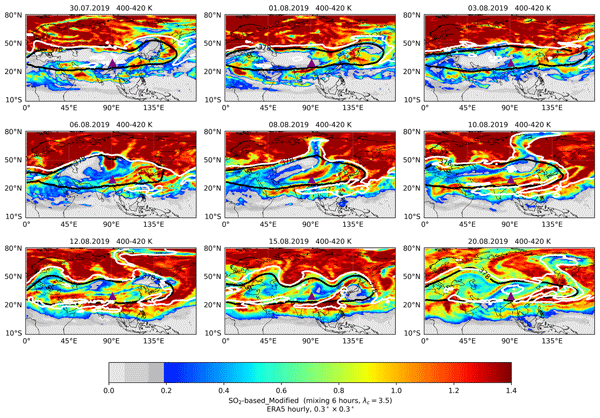
Zhen Yang, Bärbel Vogel, Felix Plöger, Zhixuan Bai, Dan Li, Sabine Griessbach, Lars Hoffmann, Frank G. Wienhold, Elizabeth Asher, Alexandre A. Baron, Katie R. Smith, Troy Thornberry, Jianchun Bian, and Michaela I. Hegglin
Atmos. Chem. Phys., 26, 4749–4769, https://doi.org/10.5194/acp-26-4749-2026, https://doi.org/10.5194/acp-26-4749-2026, 2026
Short summary
Short summary
Balloon measurements over Lhasa, China, combined with satellite guided modelling, tracked aerosol from the 2019 Raikoke eruption through the Asian summer monsoon anticyclone. We find two altitude dependent routes into the anticyclone. It partly blocks transport but also allows entry and mixing, explaining the gradual weakening of the layers. Balloon measurements over Boulder, United States, outside the anticyclone, provide an independent check outside the region.
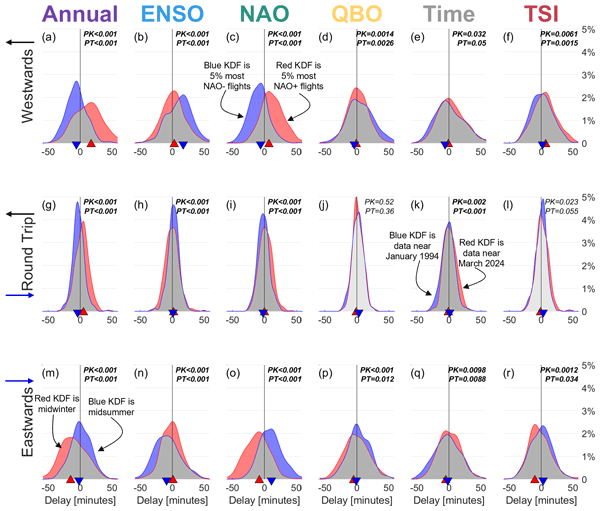
Corwin J. Wright, Phoebe E. Noble, Timothy P. Banyard, Sarah J. Freeman, and Paul D. Williams
Atmos. Chem. Phys., 25, 18267–18290, https://doi.org/10.5194/acp-25-18267-2025, https://doi.org/10.5194/acp-25-18267-2025, 2025
Short summary
Short summary
We use measured transatlantic flight times since 1994 from the IAGOS (In-Service Aircraft for a Global
Observing System) program to assess the impact of the North Atlantic Oscillation, El Nino-Southern Oscillation, Quasi-Biennial Oscillation and solar cycle. We show that they drive changes to one-way flight times of over an hour and to round-trip flight times by several minutes per flight. They thus cause variability in total CO2 emissions of 10s of kT/month and financial cost of millions of US dollars/month over the full transatlantic fleet.
Observing System) program to assess the impact of the North Atlantic Oscillation, El Nino-Southern Oscillation, Quasi-Biennial Oscillation and solar cycle. We show that they drive changes to one-way flight times of over an hour and to round-trip flight times by several minutes per flight. They thus cause variability in total CO2 emissions of 10s of kT/month and financial cost of millions of US dollars/month over the full transatlantic fleet.
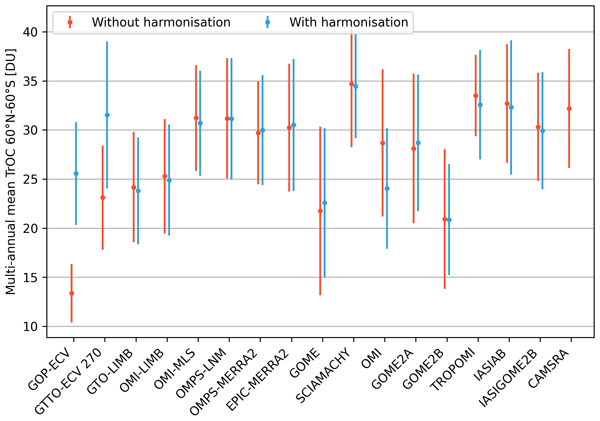
Arno Keppens, Daan Hubert, José Granville, Oindrila Nath, Jean-Christopher Lambert, Catherine Wespes, Pierre-François Coheur, Cathy Clerbaux, Anne Boynard, Richard Siddans, Barry Latter, Brian Kerridge, Serena Di Pede, Pepijn Veefkind, Juan Cuesta, Gaelle Dufour, Klaus-Peter Heue, Melanie Coldewey-Egbers, Diego Loyola, Andrea Orfanoz-Cheuquelaf, Swathi Maratt Satheesan, Kai-Uwe Eichmann, Alexei Rozanov, Viktoria F. Sofieva, Jerald R. Ziemke, Antje Inness, Roeland Van Malderen, and Lars Hoffmann
Atmos. Meas. Tech., 18, 6893–6916, https://doi.org/10.5194/amt-18-6893-2025, https://doi.org/10.5194/amt-18-6893-2025, 2025
Short summary
Short summary
The first Tropospheric Ozone Assessment Report (TOAR) encountered discrepancies between several satellite sensors’ estimates of the distribution and change of ozone in the free troposphere. Therefore, contributing to the second TOAR, we harmonise as much as possible the observational perspective of sixteen tropospheric ozone products from satellites. This only partially accounts for the observed discrepancies, with a reduction of 10–40 % of the inter-product dispersion upon harmonisation.
Marwa Almowafy, Corwin J. Wright, and Neil P. Hindley
Atmos. Meas. Tech., 18, 6393–6416, https://doi.org/10.5194/amt-18-6393-2025, https://doi.org/10.5194/amt-18-6393-2025, 2025
Short summary
Short summary
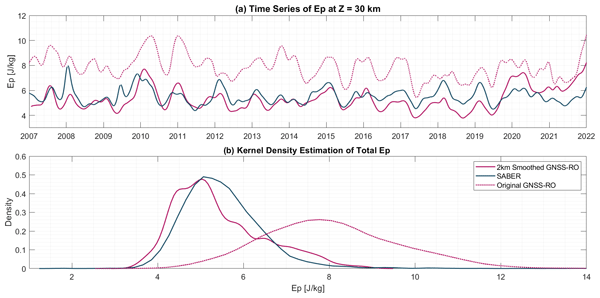
Gravity waves (GW) influence atmospheric dynamics. One key effect is on the zonal winds in the tropics stratosphere, which drive the quasi-biennial oscillation (QBO). Satellite observations are used to study gravity waves, but each satellite is constrained by its observational limits. This study investigates how GW–QBO interactions are observed by two satellites, SABER and GNSS-RO, and examines the potential for GNSS-RO to extend the GW climatology that is carried out by SABER for 23 years.
Farahnaz Khosrawi and Lars Hoffmann
EGUsphere, https://doi.org/10.5194/egusphere-2025-3147, https://doi.org/10.5194/egusphere-2025-3147, 2025
Preprint archived
Short summary
Short summary
Computer performance has increased immensely in recent years, but the ability to store data has only increased slightly. This presents scientists with major challenges. Many compression methods have been developed in recent years with which data can be stored either lossless or lossy. Here we test three of these methods: two lossy compression methods and one lossless compressor. Our study shows that compression is a valuable tool to cope with the high demand of disk space from these data sets.
Mingzhao Liu, Lars Hoffmann, Jens-Uwe Grooß, Zhongyin Cai, Sabine Grießbach, and Yi Heng
Atmos. Chem. Phys., 25, 4403–4418, https://doi.org/10.5194/acp-25-4403-2025, https://doi.org/10.5194/acp-25-4403-2025, 2025
Short summary
Short summary
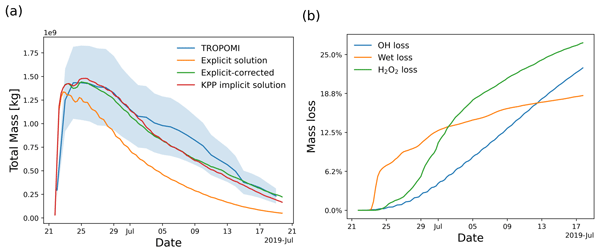
We studied the transport and chemical decomposition of volcanic SO2, focusing on the 2019 Raikoke event. By comparing two different chemistry modeling schemes, we found that including complex chemical reactions leads to a more accurate prediction of how long SO2 stays in the atmosphere. This research helps improve our understanding of volcanic pollution and its impact on air quality and climate, providing better tools for scientists to track and predict the movement of these pollutants.
Chaim I. Garfinkel, Zachary D. Lawrence, Amy H. Butler, Etienne Dunn-Sigouin, Irene Erner, Alexey Y. Karpechko, Gerbrand Koren, Marta Abalos, Blanca Ayarzagüena, David Barriopedro, Natalia Calvo, Alvaro de la Cámara, Andrew Charlton-Perez, Judah Cohen, Daniela I. V. Domeisen, Javier García-Serrano, Neil P. Hindley, Martin Jucker, Hera Kim, Robert W. Lee, Simon H. Lee, Marisol Osman, Froila M. Palmeiro, Inna Polichtchouk, Jian Rao, Jadwiga H. Richter, Chen Schwartz, Seok-Woo Son, Masakazu Taguchi, Nicholas L. Tyrrell, Corwin J. Wright, and Rachel W.-Y. Wu
Weather Clim. Dynam., 6, 171–195, https://doi.org/10.5194/wcd-6-171-2025, https://doi.org/10.5194/wcd-6-171-2025, 2025
Short summary
Short summary
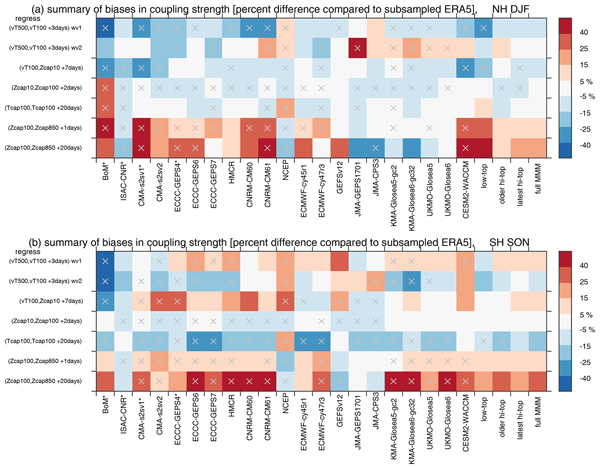
Variability in the extratropical stratosphere and troposphere is coupled, and because of the longer timescales characteristic of the stratosphere, this allows for a window of opportunity for surface prediction. This paper assesses whether models used for operational prediction capture these coupling processes accurately. We find that most processes are too weak; however downward coupling from the lower stratosphere to the near surface is too strong.
Ling Zou, Reinhold Spang, Sabine Griessbach, Lars Hoffmann, Farahnaz Khosrawi, Rolf Müller, and Ines Tritscher
Atmos. Chem. Phys., 24, 11759–11774, https://doi.org/10.5194/acp-24-11759-2024, https://doi.org/10.5194/acp-24-11759-2024, 2024
Short summary
Short summary
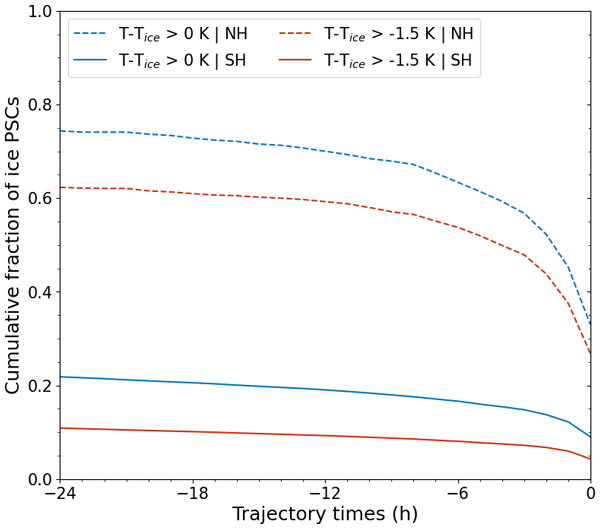
This study provided estimates of the occurrence of ice polar stratospheric clouds (PSCs) observed by the Michelson Interferometer for Passive Atmospheric Sounding (MIPAS) and their connection with temperatures above the frost point (Tice) using a Lagrangian model derived from ERA5. We found that ice PSCs above Tice with temperature fluctuations along the backward trajectory are 33 % in the Arctic and 9 % in the Antarctic. This quantitative assessment enhances our understanding of ice PSCs.
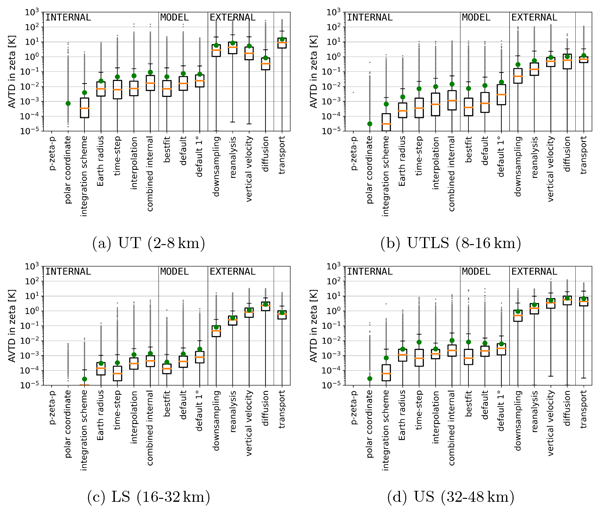
Jan Clemens, Lars Hoffmann, Bärbel Vogel, Sabine Grießbach, and Nicole Thomas
Geosci. Model Dev., 17, 4467–4493, https://doi.org/10.5194/gmd-17-4467-2024, https://doi.org/10.5194/gmd-17-4467-2024, 2024
Short summary
Short summary
Lagrangian transport models simulate the transport of air masses in the atmosphere. For example, one model (CLaMS) is well suited to calculating transport as it uses a special coordinate system and special vertical wind. However, it only runs inefficiently on modern supercomputers. Hence, we have implemented the benefits of CLaMS into a new model (MPTRAC), which is already highly efficient on modern supercomputers. Finally, in extensive tests, we showed that CLaMS and MPTRAC agree very well.
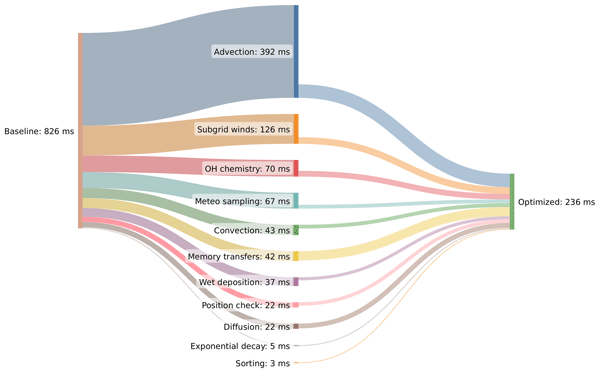
Lars Hoffmann, Kaveh Haghighi Mood, Andreas Herten, Markus Hrywniak, Jiri Kraus, Jan Clemens, and Mingzhao Liu
Geosci. Model Dev., 17, 4077–4094, https://doi.org/10.5194/gmd-17-4077-2024, https://doi.org/10.5194/gmd-17-4077-2024, 2024
Short summary
Short summary
Lagrangian particle dispersion models are key for studying atmospheric transport but can be computationally intensive. To speed up simulations, the MPTRAC model was ported to graphics processing units (GPUs). Performance optimization of data structures and memory alignment resulted in runtime improvements of up to 75 % on NVIDIA A100 GPUs for ERA5-based simulations with 100 million particles. These optimizations make the MPTRAC model well suited for future high-performance computing systems.
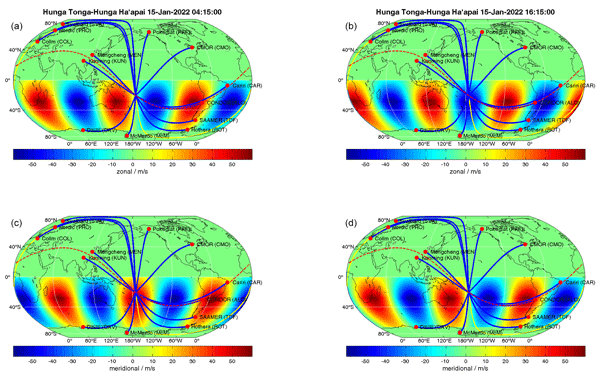
Gunter Stober, Sharon L. Vadas, Erich Becker, Alan Liu, Alexander Kozlovsky, Diego Janches, Zishun Qiao, Witali Krochin, Guochun Shi, Wen Yi, Jie Zeng, Peter Brown, Denis Vida, Neil Hindley, Christoph Jacobi, Damian Murphy, Ricardo Buriti, Vania Andrioli, Paulo Batista, John Marino, Scott Palo, Denise Thorsen, Masaki Tsutsumi, Njål Gulbrandsen, Satonori Nozawa, Mark Lester, Kathrin Baumgarten, Johan Kero, Evgenia Belova, Nicholas Mitchell, Tracy Moffat-Griffin, and Na Li
Atmos. Chem. Phys., 24, 4851–4873, https://doi.org/10.5194/acp-24-4851-2024, https://doi.org/10.5194/acp-24-4851-2024, 2024
Short summary
Short summary
On 15 January 2022, the Hunga Tonga-Hunga Ha‘apai volcano exploded in a vigorous eruption, causing many atmospheric phenomena reaching from the surface up to space. In this study, we investigate how the mesospheric winds were affected by the volcanogenic gravity waves and estimated their propagation direction and speed. The interplay between model and observations permits us to gain new insights into the vertical coupling through atmospheric gravity waves.
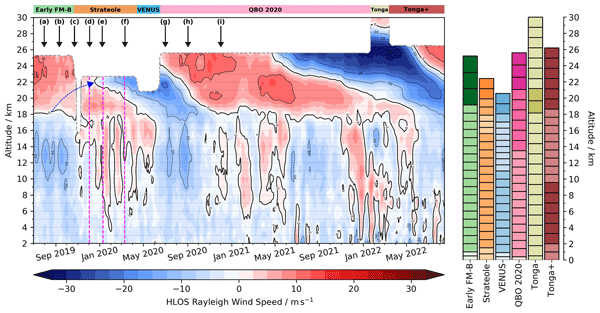
Timothy P. Banyard, Corwin J. Wright, Scott M. Osprey, Neil P. Hindley, Gemma Halloran, Lawrence Coy, Paul A. Newman, Neal Butchart, Martina Bramberger, and M. Joan Alexander
Atmos. Chem. Phys., 24, 2465–2490, https://doi.org/10.5194/acp-24-2465-2024, https://doi.org/10.5194/acp-24-2465-2024, 2024
Short summary
Short summary
In 2019/2020, the tropical stratospheric wind phenomenon known as the quasi-biennial oscillation (QBO) was disrupted for only the second time in the historical record. This was poorly forecasted, and we want to understand why. We used measurements from the first Doppler wind lidar in space, Aeolus, to observe the disruption in an unprecedented way. Our results reveal important differences between Aeolus and the ERA5 reanalysis that affect the timing of the disruption's onset and its evolution.
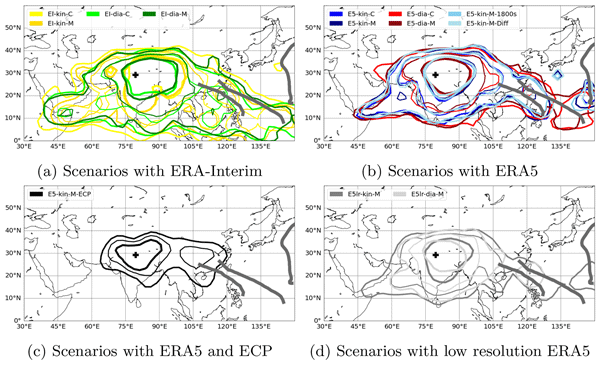
Jan Clemens, Bärbel Vogel, Lars Hoffmann, Sabine Griessbach, Nicole Thomas, Suvarna Fadnavis, Rolf Müller, Thomas Peter, and Felix Ploeger
Atmos. Chem. Phys., 24, 763–787, https://doi.org/10.5194/acp-24-763-2024, https://doi.org/10.5194/acp-24-763-2024, 2024
Short summary
Short summary
The source regions of the Asian tropopause aerosol layer (ATAL) are debated. We use balloon-borne measurements of the layer above Nainital (India) in August 2016 and atmospheric transport models to find ATAL source regions. Most air originated from the Tibetan plateau. However, the measured ATAL was stronger when more air originated from the Indo-Gangetic Plain and weaker when more air originated from the Pacific. Hence, the results indicate important anthropogenic contributions to the ATAL.
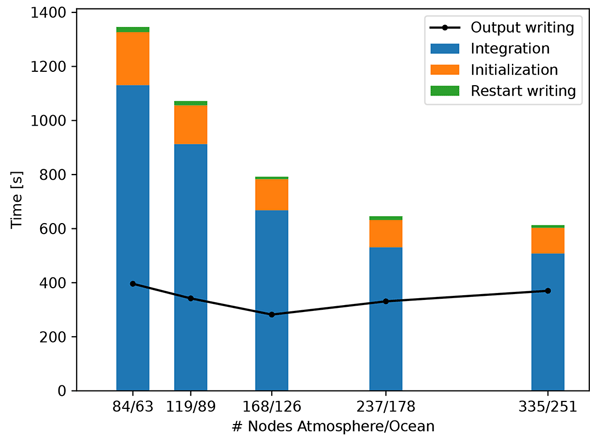
Abhiraj Bishnoi, Olaf Stein, Catrin I. Meyer, René Redler, Norbert Eicker, Helmuth Haak, Lars Hoffmann, Daniel Klocke, Luis Kornblueh, and Estela Suarez
Geosci. Model Dev., 17, 261–273, https://doi.org/10.5194/gmd-17-261-2024, https://doi.org/10.5194/gmd-17-261-2024, 2024
Short summary
Short summary
We enabled the weather and climate model ICON to run in a high-resolution coupled atmosphere–ocean setup on the JUWELS supercomputer, where the ocean and the model I/O runs on the CPU Cluster, while the atmosphere is running simultaneously on GPUs. Compared to a simulation performed on CPUs only, our approach reduces energy consumption by 45 % with comparable runtimes. The experiments serve as preparation for efficient computing of kilometer-scale climate models on future supercomputing systems.
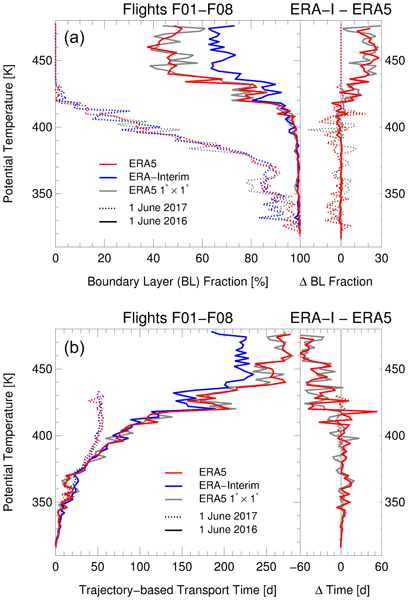
Bärbel Vogel, C. Michael Volk, Johannes Wintel, Valentin Lauther, Jan Clemens, Jens-Uwe Grooß, Gebhard Günther, Lars Hoffmann, Johannes C. Laube, Rolf Müller, Felix Ploeger, and Fred Stroh
Atmos. Chem. Phys., 24, 317–343, https://doi.org/10.5194/acp-24-317-2024, https://doi.org/10.5194/acp-24-317-2024, 2024
Short summary
Short summary
Over the Indian subcontinent, polluted air is rapidly uplifted to higher altitudes during the Asian monsoon season. We present an assessment of vertical transport in this region using different wind data provided by the European Centre for Medium-Range Weather Forecasts (ECMWF), as well as high-resolution aircraft measurements. In general, our findings confirm that the newest ECMWF reanalysis product, ERA5, yields a better representation of transport compared to the predecessor, ERA-Interim.
Xue Wu, Lars Hoffmann, Corwin J. Wright, Neil P. Hindley, M. Joan Alexander, Silvio Kalisch, Xin Wang, Bing Chen, Yinan Wang, and Daren Lyu
EGUsphere, https://doi.org/10.5194/egusphere-2023-3008, https://doi.org/10.5194/egusphere-2023-3008, 2024
Preprint archived
Short summary
Short summary
This study identified a noteworthy time-lagged correlation between hurricane intensity and stratospheric gravity wave intensities during hurricane intensification. Meanwhile, the study reveals distinct frequencies, horizontal wavelengths, and vertical wavelengths in the inner core region during hurricane intensification, offering essential insights for monitoring hurricane intensity via satellite observations of stratospheric gravity waves.
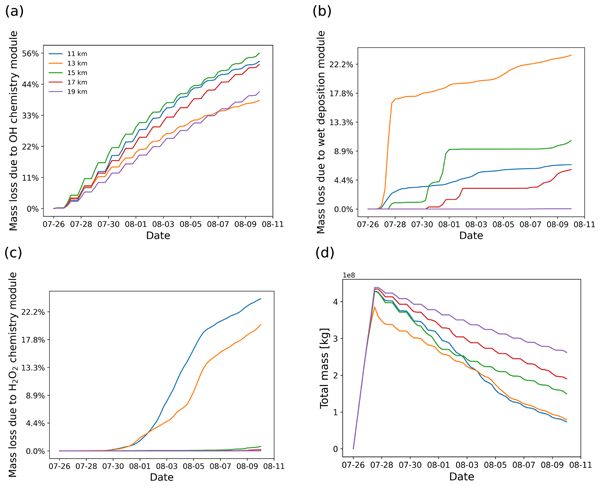
Mingzhao Liu, Lars Hoffmann, Sabine Griessbach, Zhongyin Cai, Yi Heng, and Xue Wu
Geosci. Model Dev., 16, 5197–5217, https://doi.org/10.5194/gmd-16-5197-2023, https://doi.org/10.5194/gmd-16-5197-2023, 2023
Short summary
Short summary
We introduce new and revised chemistry and physics modules in the Massive-Parallel Trajectory Calculations (MPTRAC) Lagrangian transport model aiming to improve the representation of volcanic SO2 transport and depletion. We test these modules in a case study of the Ambae eruption in July 2018 in which the SO2 plume underwent wet removal and convection. The lifetime of SO2 shows highly variable and complex dependencies on the atmospheric conditions at different release heights.
Lars Hoffmann, Paul Konopka, Jan Clemens, and Bärbel Vogel
Atmos. Chem. Phys., 23, 7589–7609, https://doi.org/10.5194/acp-23-7589-2023, https://doi.org/10.5194/acp-23-7589-2023, 2023
Short summary
Short summary
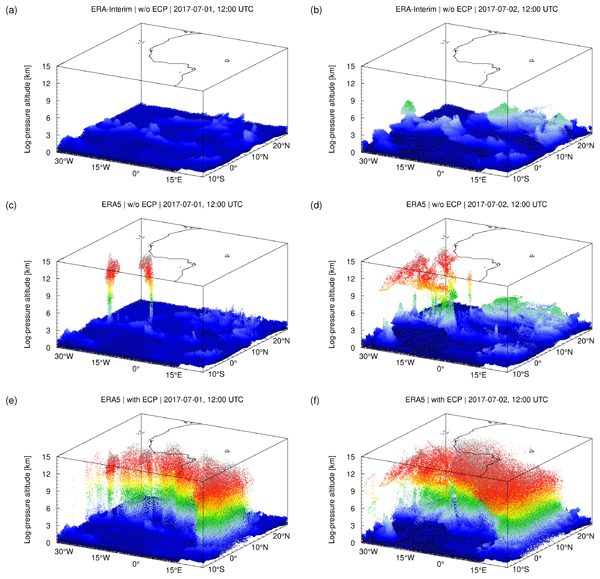
Atmospheric convection plays a key role in tracer transport in the troposphere. Global meteorological forecasts and reanalyses typically have a coarse spatiotemporal resolution that does not adequately resolve the dynamics, transport, and mixing of air associated with storm systems or deep convection. We discuss the application of the extreme convection parameterization in a Lagrangian transport model to improve simulations of tracer transport from the boundary layer into the free troposphere.
Reimar Bauer, Jens-Uwe Grooß, Jörn Ungermann, May Bär, Markus Geldenhuys, and Lars Hoffmann
Geosci. Model Dev., 15, 8983–8997, https://doi.org/10.5194/gmd-15-8983-2022, https://doi.org/10.5194/gmd-15-8983-2022, 2022
Short summary
Short summary
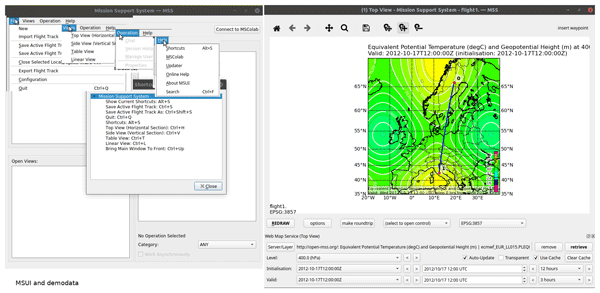
The Mission Support System (MSS) is an open source software package that has been used for planning flight tracks of scientific aircraft in multiple measurement campaigns during the last decade. Here, we describe the MSS software and its use during the SouthTRAC measurement campaign in 2019. As an example for how the MSS software is used in conjunction with many datasets, we describe the planning of a single flight probing orographic gravity waves propagating up into the lower mesosphere.
Paul Konopka, Mengchu Tao, Marc von Hobe, Lars Hoffmann, Corinna Kloss, Fabrizio Ravegnani, C. Michael Volk, Valentin Lauther, Andreas Zahn, Peter Hoor, and Felix Ploeger
Geosci. Model Dev., 15, 7471–7487, https://doi.org/10.5194/gmd-15-7471-2022, https://doi.org/10.5194/gmd-15-7471-2022, 2022
Short summary
Short summary
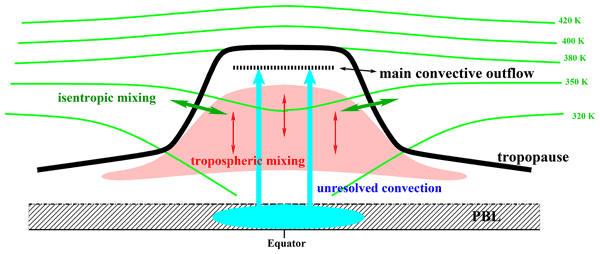
Pure trajectory-based transport models driven by meteorology derived from reanalysis products (ERA5) take into account only the resolved, advective part of transport. That means neither mixing processes nor unresolved subgrid-scale advective processes like convection are included. The Chemical Lagrangian Model of the Stratosphere (CLaMS) includes these processes. We show that isentropic mixing dominates unresolved transport. The second most important transport process is unresolved convection.
Zachary D. Lawrence, Marta Abalos, Blanca Ayarzagüena, David Barriopedro, Amy H. Butler, Natalia Calvo, Alvaro de la Cámara, Andrew Charlton-Perez, Daniela I. V. Domeisen, Etienne Dunn-Sigouin, Javier García-Serrano, Chaim I. Garfinkel, Neil P. Hindley, Liwei Jia, Martin Jucker, Alexey Y. Karpechko, Hera Kim, Andrea L. Lang, Simon H. Lee, Pu Lin, Marisol Osman, Froila M. Palmeiro, Judith Perlwitz, Inna Polichtchouk, Jadwiga H. Richter, Chen Schwartz, Seok-Woo Son, Irene Erner, Masakazu Taguchi, Nicholas L. Tyrrell, Corwin J. Wright, and Rachel W.-Y. Wu
Weather Clim. Dynam., 3, 977–1001, https://doi.org/10.5194/wcd-3-977-2022, https://doi.org/10.5194/wcd-3-977-2022, 2022
Short summary
Short summary
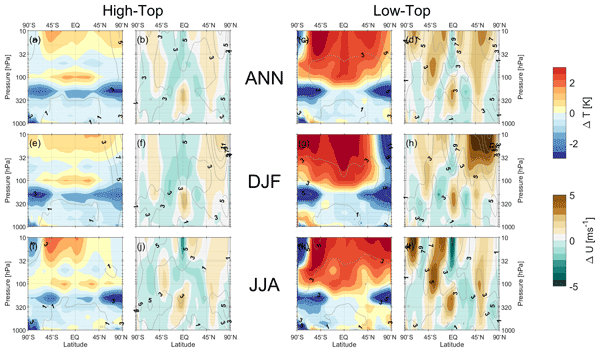
Forecast models that are used to predict weather often struggle to represent the Earth’s stratosphere. This may impact their ability to predict surface weather weeks in advance, on subseasonal-to-seasonal (S2S) timescales. We use data from many S2S forecast systems to characterize and compare the stratospheric biases present in such forecast models. These models have many similar stratospheric biases, but they tend to be worse in systems with low model tops located within the stratosphere.
Neil P. Hindley, Nicholas J. Mitchell, Neil Cobbett, Anne K. Smith, Dave C. Fritts, Diego Janches, Corwin J. Wright, and Tracy Moffat-Griffin
Atmos. Chem. Phys., 22, 9435–9459, https://doi.org/10.5194/acp-22-9435-2022, https://doi.org/10.5194/acp-22-9435-2022, 2022
Short summary
Short summary
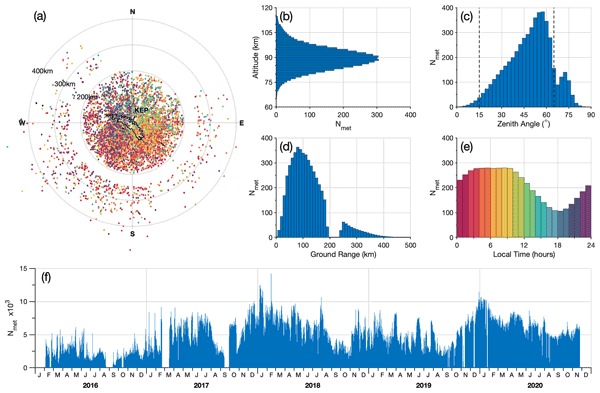
We present observations of winds in the mesosphere and lower thermosphere (MLT) from a recently installed meteor radar on the remote island of South Georgia (54° S, 36° W). We characterise mean winds, tides, planetary waves, and gravity waves in the MLT at this location and compare our measured winds with a leading climate model. We find that the observed wintertime winds are unexpectedly reversed from model predictions, probably because of missing impacts of secondary gravity waves in the model.
Isabell Krisch, Neil P. Hindley, Oliver Reitebuch, and Corwin J. Wright
Atmos. Meas. Tech., 15, 3465–3479, https://doi.org/10.5194/amt-15-3465-2022, https://doi.org/10.5194/amt-15-3465-2022, 2022
Short summary
Short summary
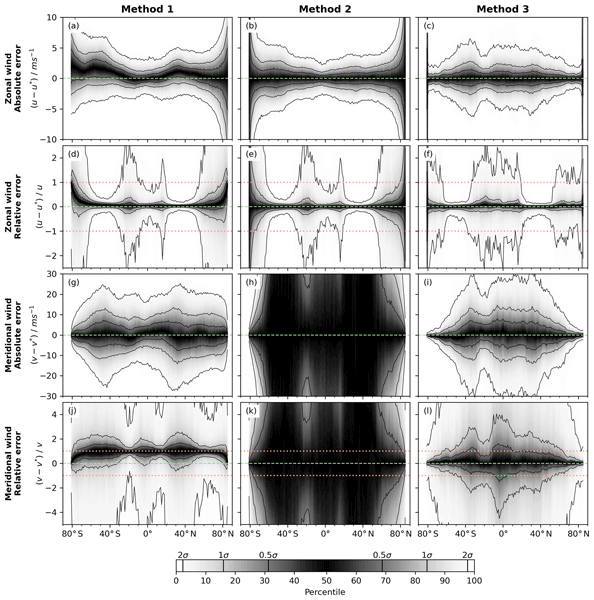
The Aeolus satellite measures global height resolved profiles of wind along a certain line-of-sight. However, for atmospheric dynamics research, wind measurements along the three cardinal axes are most useful. This paper presents methods to convert the measurements into zonal and meridional wind components. By combining the measurements during ascending and descending orbits, we achieve good derivation of zonal wind (equatorward of 80° latitude) and meridional wind (poleward of 70° latitude).
Zhongyin Cai, Sabine Griessbach, and Lars Hoffmann
Atmos. Chem. Phys., 22, 6787–6809, https://doi.org/10.5194/acp-22-6787-2022, https://doi.org/10.5194/acp-22-6787-2022, 2022
Short summary
Short summary
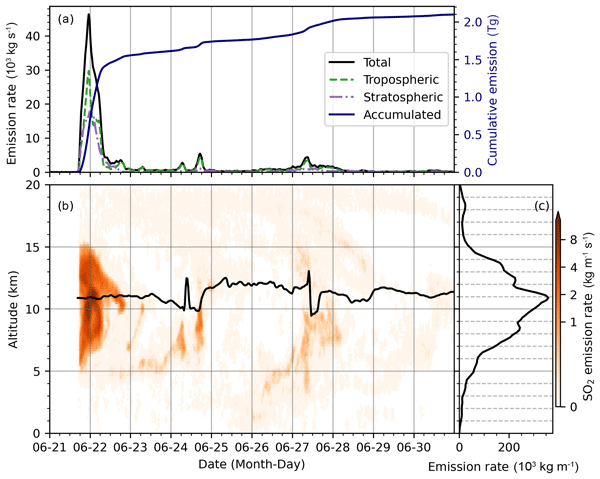
Using AIRS and TROPOMI sulfur dioxide retrievals and the Lagrangian transport model MPTRAC, we present an improved reconstruction of injection parameters of the 2019 Raikoke eruption. Reconstructions agree well between using AIRS nighttime and TROPOMI daytime retrievals, showing the potential of our approach to create a long-term volcanic sulfur dioxide inventory from nearly 20 years of AIRS retrievals.
Ling Zou, Sabine Griessbach, Lars Hoffmann, and Reinhold Spang
Atmos. Chem. Phys., 22, 6677–6702, https://doi.org/10.5194/acp-22-6677-2022, https://doi.org/10.5194/acp-22-6677-2022, 2022
Short summary
Short summary
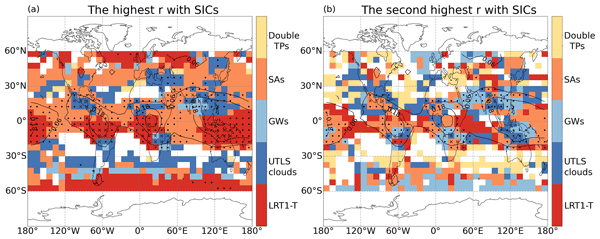
Ice clouds in the stratosphere (SICs) greatly affect the water vapor balance and radiation budget in the upper troposphere and lower stratosphere (UTLS). We quantified the global SICs and analyzed their relationships with tropopause temperature, double tropopauses, UTLS clouds, gravity waves, and stratospheric aerosols. The correlations between SICs and all abovementioned processes indicate that the occurrence of and variability in SICs are spatiotemporally dependent on different processes.
Phoebe Noble, Neil Hindley, Corwin Wright, Chihoko Cullens, Scott England, Nicholas Pedatella, Nicholas Mitchell, and Tracy Moffat-Griffin
Atmos. Chem. Phys. Discuss., https://doi.org/10.5194/acp-2022-150, https://doi.org/10.5194/acp-2022-150, 2022
Revised manuscript not accepted
Short summary
Short summary
We use long term radar data and the WACCM-X model to study the impact of dynamical phenomena, including the 11-year solar cycle, ENSO, QBO and SAM, on Antarctic mesospheric winds. We find that in summer, the zonal wind (both observationally and in the model) is strongly correlated with the solar cycle. We also see important differences in the results from the other processes. In addition we find important and large biases in the winter model zonal winds relative to the observations.
Lars Hoffmann, Paul F. Baumeister, Zhongyin Cai, Jan Clemens, Sabine Griessbach, Gebhard Günther, Yi Heng, Mingzhao Liu, Kaveh Haghighi Mood, Olaf Stein, Nicole Thomas, Bärbel Vogel, Xue Wu, and Ling Zou
Geosci. Model Dev., 15, 2731–2762, https://doi.org/10.5194/gmd-15-2731-2022, https://doi.org/10.5194/gmd-15-2731-2022, 2022
Short summary
Short summary
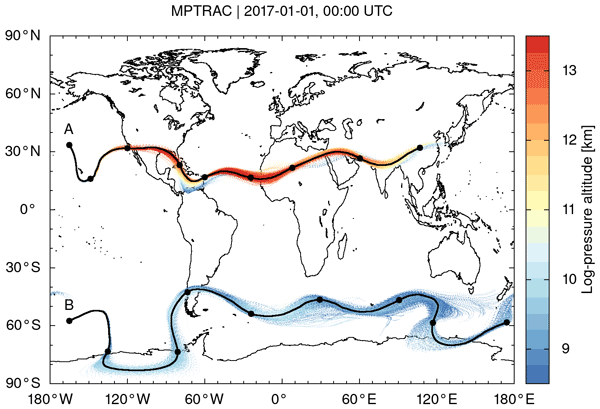
We describe the new version (2.2) of the Lagrangian transport model MPTRAC, which has been ported for application on GPUs. The model was verified by comparing kinematic trajectories and synthetic tracer simulations for the free troposphere and stratosphere from GPUs and CPUs. Benchmarking showed a speed-up of a factor of 16 of GPU-enabled simulations compared to CPU-only runs, indicating the great potential of applying GPUs for Lagrangian transport simulations on upcoming HPC systems.
Lars Hoffmann and Reinhold Spang
Atmos. Chem. Phys., 22, 4019–4046, https://doi.org/10.5194/acp-22-4019-2022, https://doi.org/10.5194/acp-22-4019-2022, 2022
Short summary
Short summary
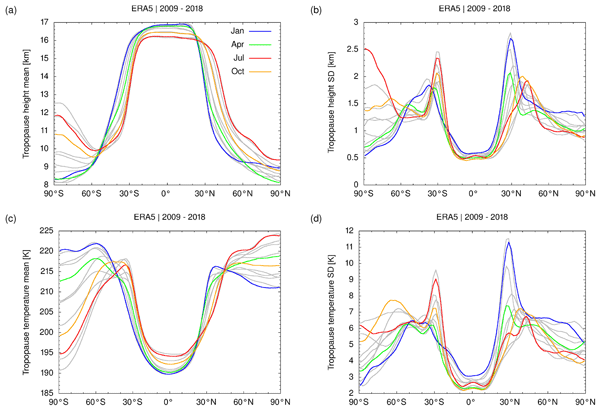
We present an intercomparison of 2009–2018 lapse rate tropopause characteristics as derived from ECMWF's ERA5 and ERA-Interim reanalyses. Large-scale features are similar, but ERA5 shows notably larger variability, which we mainly attribute to UTLS temperature fluctuations due to gravity waves being better resolved by ECMWF's IFS forecast model. Following evaluation with radiosondes and GPS data, we conclude ERA5 will be a more suitable asset for tropopause-related studies in future work.

Paul F. Baumeister and Lars Hoffmann
Geosci. Model Dev., 15, 1855–1874, https://doi.org/10.5194/gmd-15-1855-2022, https://doi.org/10.5194/gmd-15-1855-2022, 2022
Short summary
Short summary
The efficiency of the numerical simulation of radiative transport is shown on modern server-class graphics cards (GPUs). The low-cost prefactor on GPUs compared to general-purpose processors (CPUs) enables future large retrieval campaigns for multi-channel data from infrared sounders aboard low-orbit satellites. The validated research software JURASSIC is available in the public domain.
Corwin J. Wright, Richard J. Hall, Timothy P. Banyard, Neil P. Hindley, Isabell Krisch, Daniel M. Mitchell, and William J. M. Seviour
Weather Clim. Dynam., 2, 1283–1301, https://doi.org/10.5194/wcd-2-1283-2021, https://doi.org/10.5194/wcd-2-1283-2021, 2021
Short summary
Short summary
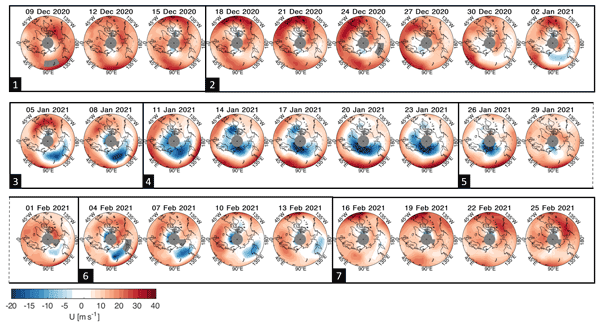
Major sudden stratospheric warmings (SSWs) are some of the most dramatic events in the atmosphere and are believed to help cause extreme winter weather events such as the 2018 Beast from the East in Europe and North America. Here, we use unique data from the European Space Agency's new Aeolus satellite to make the first-ever measurements at a global scale of wind changes due to an SSW in the lower part of the atmosphere to help us understand how SSWs affect the atmosphere and surface weather.
Cited articles
Achatz, U., Alexander, M. J., Becker, E., Chun, H.-Y., Dörnbrack, A., Holt, L., Plougonven, R., Polichtchouk, I., Sato, K., Sheshadri, A., Stephan, C. C., Niekerk, A. V., and Wright, C. J.: Atmospheric Gravity Waves: Processes and Parameterization, Journal of the Atmospheric Sciences, 81, 237–262, https://doi.org/10.1175/JAS-D-23-0210.1, 2024. a
Alexander, M., Eckermann, S. D., Broutman, D., and Ma, J.: Momentum flux estimates for South Georgia Island mountain waves in the stratosphere observed via satellite, Geophysical Research Letters, 36, https://doi.org/10.1029/2009gl038587, 2009. a
Alexander, M. J., Geller, M., McLandress, C., Polavarapu, S., Preusse, P., Sassi, F., Sato, K., Eckermann, S., Ern, M., Hertzog, A., Kawatani, Y., Pulido, M., Shaw, T. A., Sigmond, M., Vincent, R., and Watanabe, S.: Recent developments in gravity-wave effects in climate models and the global distribution of gravity-wave momentum flux from observations and models, Quarterly Journal of the Royal Meteorological Society, 136, 1103–1124, 2010. a
Alexander, M. J. and Barnet, C.: Using Satellite Observations to Constrain Parameterizations of Gravity Wave Effects for Global Models, Journal of the Atmospheric Sciences, 64, 1652–1665, https://doi.org/10.1175/JAS3897.1, 2007. a, b
Alexander, M. J. and Teitelbaum, H.: Observation and analysis of a large amplitude mountain wave event over the Antarctic peninsula, J. Geophys. Res., 112, https://doi.org/10.1029/2006jd008368, 2007. a
Aumann, H. H. and Pagano, T. S.: Early results from AIRS on the EOS, Proceedings of SPIE, 4881, https://doi.org/10.1117/12.462605, 2003. a
Baldwin, M. P., Gray, L. J., Dunkerton, T. J., Hamilton, K., Haynes, P. H., Randel, W. J., Holton, J. R., Alexander, M. J., Hirota, I., Horinouchi, T., Jones, D. B. A., Kinnersley, J. S., Marquardt, C., Sato, K., and Takahashi, M.: The quasi-biennial oscillation, Reviews of Geophysics, 39, 179–229, https://doi.org/10.1029/1999rg000073, 2001. a
Birch, C. E., Parker, D. J., O'Leary, A., Marsham, J. H., Taylor, C. M., Harris, P. P., and Lister, G. M. S.: Impact of soil moisture and convectively generated waves on the initiation of a West African mesoscale convective system, Quarterly Journal of the Royal Meteorological Society, 139, 1712–1730, https://doi.org/10.1002/qj.2062, 2012. a
Booker, J. R. and Bretherton, F. P.: The critical layer for internal gravity waves in a shear flow, Journal of Fluid Mechanics, 27, 513–539, https://doi.org/10.1017/S0022112067000515, 1967. a
Bossert, K., Kruse, C. G., Heale, C. J., Fritts, D. C., Williams, B. P., Snively, J. B., Pautet, P.-D., and Taylor, M. J.: Secondary gravity wave generation over New Zealand during the DEEPWAVE campaign, J. Geophys. Res.-Atmos., 122, 7834–7850, https://doi.org/10.1002/2016jd026079, 2017. a, b
Chahine, M. T., Pagano, T. S., Aumann, H. H., Atlas, R., Barnet, C., Blaisdell, J., Chen, L., Divakarla, M., Fetzer, E. J., Goldberg, M., Gautier, C., Granger, S., Hannon, S., Irion, F. W., Kakar, R., Kalnay, E., Lambrigtsen, B. H., Lee, S.-Y., Marshall, J. L., Mcmillan, W. W., Mcmillin, L., Olsen, E. T., Revercomb, H., Rosenkranz, P., Smith, W. L., Staelin, D., Strow, L. L., Susskind, J., Tobin, D., Wolf, W., and Zhou, L.: AIRS: Improving Weather Forecasting and Providing New Data on Greenhouse Gases, Bulletin of the American Meteorological Society, 87, 911–926, https://doi.org/10.1175/BAMS-87-7-911, 2006. a
Chapman, C. C., Hogg, A. M., Kiss, A. E., and Rintoul, S. R.: The Dynamics of Southern Ocean Storm Tracks, Journal of Physical Oceanography, 45, 884–903, https://doi.org/10.1175/jpo-d-14-0075.1, 2015. a
Choi, H. J., Chun, H. Y., Gong, J., and Wu, D. L.: Comparison of gravity wave temperature variances from ray‐based spectral parameterization of convective gravity wave drag with AIRS observations, J. Geophys. Res., 117, https://doi.org/10.1029/2011jd016900, 2012. a
Delisi, D. P. and Dunkerton, T. J.: Seasonal Variation of the Semiannual Oscillation, Journal of the Atmospheric Sciences, 45, 2772–2787, https://doi.org/10.1175/1520-0469(1988)045<2772:svotso>2.0.co;2, 1988. a
Dunkerton, T.: Wave Transience in a Compressible Atmosphere. Part III: The Saturation of Internal Gravity Waves in the Mesophere, Journal of the atmospheric sciences, 39, 1042–1051, https://doi.org/10.1175/1520-0469(1982)039<1042:wtiaca>2.0.co;2, 1982. a
Dörnbrack, A., Birner, T., Fix, A., Flentje, H., Meister, A., Schmid, H., Browell, E. V., and Mahoney, M. J.: Evidence for inertia gravity waves forming polar stratospheric clouds over Scandinavia, Journal of Geophysical Research: Atmospheres, 107, SOL–30, https://doi.org/10.1029/2001JD000452, 2002. a
Eckermann, S. and Wu, D.: Satellite detection of orographic gravity-wave activity in the winter subtropical stratosphere over Australia and Africa, Geophysical research letters, 39, https://doi.org/10.1029/2012GL053791, 2012. a
Ern, M.: Absolute values of gravity wave momentum flux derived from satellite data, J. Geophys. Res., 109, https://doi.org/10.1029/2004jd004752, 2004. a, b
Ern, M., Trinh, Q. T., Kaufmann, M., Krisch, I., Preusse, P., Ungermann, J., Zhu, Y., Gille, J. C., Mlynczak, M. G., Russell III, J. M., Schwartz, M. J., and Riese, M.: Satellite observations of middle atmosphere gravity wave absolute momentum flux and of its vertical gradient during recent stratospheric warmings, Atmos. Chem. Phys., 16, 9983–10019, https://doi.org/10.5194/acp-16-9983-2016, 2016. a
Ern, M., Diallo, M., Preusse, P., Mlynczak, M. G., Schwartz, M. J., Wu, Q., and Riese, M.: The semiannual oscillation (SAO) in the tropical middle atmosphere and its gravity wave driving in reanalyses and satellite observations, Atmos. Chem. Phys., 21, 13763–13795, https://doi.org/10.5194/acp-21-13763-2021, 2021. a
Fritts, D. C. and Alexander, M. J.: Gravity wave dynamics and effects in the middle atmosphere, Reviews of Geophysics, 41, https://doi.org/10.1029/2001rg000106, 2003. a, b
Fritts, D. C. and Luo, Z.: Gravity wave excitation by geostrophic adjustment of the jet stream. Part I: Two-dimensional forcing, Journal of Atmospheric Sciences, 49, 681–697, 1992. a
Gardner, C. S.: Impact of Atmospheric Compressibility and Stokes Drift on the Vertical Transport of Heat and Constituents by Gravity Waves, J. Geophys. Res.-Atmos., 129, https://doi.org/10.1029/2023JD040436, 2024. a
Garfinkel, C. I. and Oman, L. D.: Effect of Gravity Waves From Small Islands in the Southern Ocean on the Southern Hemisphere Atmospheric Circulation, J. Geophys. Res.-Atmos., 123, 1552–1561, https://doi.org/10.1002/2017JD027576, 2018. a
Gibson, P. C., Lamoureux, M. P., and Margrave, G. F.: Letter to the Editor: Stockwell and Wavelet Transforms, Journal of Fourier Analysis and Applications, 12, 713–721, https://doi.org/10.1007/s00041-006-6087-9, 2006. a
Gisinger, S., Dörnbrack, A., Matthias, V., Doyle, J. D., Eckermann, S. D., Ehard, B., Hoffmann, L., Kaifler, B., Kruse, C. G., and Rapp, M.: Atmospheric Conditions during the Deep Propagating Gravity Wave Experiment (DEEPWAVE), Monthly Weather Review, 145, 4249–4275, https://doi.org/10.1175/MWR-D-16-0435.1, 2017. a, b
Gong, J. and Geller, M. A.: Vertical fluctuation energy in United States high vertical resolution radiosonde data as an indicator of convective gravity wave sources, J. Geophys. Res.-Atmos., 115, https://doi.org/10.1029/2009JD012265, 2010. a, b
Gong, J., Yue, J., and Wu, D. L.: Global survey of concentric gravity waves in AIRS images and ECMWF analysis, J. Geophys. Res.-Atmos., 120, 2210–2228, https://doi.org/10.1002/2014jd022527, 2015. a
Hájková, D. and Šácha, P.: Parameterized orographic gravity wave drag and dynamical effects in CMIP6 models, Climate dynamics, 62, https://doi.org/10.1007/s00382-023-07021-0, 2023. a
Hindley, N. P., Smith, N. D., Wright, C. J., Rees, D. A. S., and Mitchell, N. J.: A two-dimensional Stockwell transform for gravity wave analysis of AIRS measurements, Atmos. Meas. Tech., 9, 2545–2565, https://doi.org/10.5194/amt-9-2545-2016, 2016. a
Hindley, N. P., Wright, C. J., Smith, N. D., Hoffmann, L., Holt, L. A., Alexander, M. J., Moffat-Griffin, T., and Mitchell, N. J.: Gravity waves in the winter stratosphere over the Southern Ocean: high-resolution satellite observations and 3-D spectral analysis, Atmos. Chem. Phys., 19, 15377–15414, https://doi.org/10.5194/acp-19-15377-2019, 2019. a, b, c, d, e, f, g, h, i, j, k, l
Hindley, N. P., Wright, C. J., Hoffmann, L., Moffat-Griffin, T., and Mitchell, N. J.: An 18‐Year Climatology of Directional Stratospheric Gravity Wave Momentum Flux From 3‐D Satellite Observations, Geophysical research letters, 47, https://doi.org/10.1029/2020gl089557, 2020. a, b, c, d
Hoffmann, L.: AIRS/Aqua Observations of Gravity Waves, Jülich DATA, V1 [data set], https://doi.org/10.26165/JUELICH-DATA/LQAAJA, 2021. a
Hoffmann, L., Xue, X., and Alexander, M. J.: A global view of stratospheric gravity wave hotspots located with Atmospheric Infrared Sounder observations, J. Geophys. Res.-Atmos., 118, 416–434, https://doi.org/10.1029/2012jd018658, 2013. a, b, c, d
Hoffmann, L., Alexander, M. J., Clerbaux, C., Grimsdell, A. W., Meyer, C. I., Rößler, T., and Tournier, B.: Intercomparison of stratospheric gravity wave observations with AIRS and IASI, Atmos. Meas. Tech., 7, 4517–4537, https://doi.org/10.5194/amt-7-4517-2014, 2014. a, b
Hoffmann, L., Grimsdell, A. W., and Alexander, M. J.: Stratospheric gravity waves at Southern Hemisphere orographic hotspots: 2003–2014 AIRS/Aqua observations, Atmos. Chem. Phys., 16, 9381–9397, https://doi.org/10.5194/acp-16-9381-2016, 2016. a, b, c
Holton, J. M.: The Role of Gravity Wave Induced Drag and Diffusion in the Momentum Budget of the Mesosphere, Journal of Atmospheric Sciences, 39, 791–799, https://doi.org/10.1175/1520-0469(1982)039<0791:trogwi>2.0.co;2, 1982. a
Jiang, Q., Doyle, J. D., Eckermann, S. D., and Williams, B. P.: Stratospheric Trailing Gravity Waves from New Zealand, Journal of the atmospheric sciences, 76, 1565–1586, https://doi.org/10.1175/jas-d-18-0290.1, 2019. a
Kalisch, S., Chun, H.-Y., Ern, M., Preusse, P., Trinh, Q. T., Eckermann, S. D., and Riese, M.: Comparison of simulated and observed convective gravity waves, J. Geophys. Res.-Atmos., 121, 13474–13492, https://doi.org/10.1002/2016jd025235, 2016. a
Lear, E. J., Wright, C. J., Hindley, N. P., Polichtchouk, I., and Hoffmann, L.: Comparing Gravity Waves in a Kilometer-Scale Run of the IFS to AIRS Satellite Observations and ERA5, J. Geophys. Res.-Atmos., 129, e2023JD040097, https://doi.org/10.1029/2023JD040097, 2024. a
Lehmann, C. I., Kim, Y.-H., Preusse, P., Chun, H.-Y., Ern, M., and Kim, S.-Y.: Consistency between Fourier transform and small-volume few-wave decomposition for spectral and spatial variability of gravity waves above a typhoon, Atmos. Meas. Tech., 5, 1637–1651, https://doi.org/10.5194/amt-5-1637-2012, 2012. a
Lilly, D. K. and Kennedy, P. T. F.: Observations of a Stationary Mountain Wave and its Associated Momentum Flux and Energy Dissipation, Journal of the Atmospheric Sciences, 30, 1135–1152, https://doi.org/10.1175/1520-0469(1973)030<1135:ooasmw>2.0.co;2, 1973. a
Lindzen, R. S.: Turbulence and stress owing to gravity wave and tidal breakdown, J. Geophys. Res.-Oceans, 86, 9707–9714, https://doi.org/10.1029/JC086iC10p09707, 1981. a
Marshall, J. L., Jung, J. A., Derber, J., Chahine, M. T., Treadon, R., Lord, S. J., Goldberg, M. D., Wolf, W., Liu, H. C., Joiner, J., Woollen, J. S., Todling, R., Delst, P. v., and Tahara, Y.: Improving Global Analysis and Forecasting with AIRS, Bulletin of the American Meteorological Society, 87, 891–895, https://doi.org/10.1175/bams-87-7-891, 2006. a
Okui, H., Wright, C. J., Berthelemy, P. G., Hindley, N. P., Hoffmann, L., and Barnes, A. P.: A Convolutional Neural Network for the Detection of Gravity Waves in Satellite Observations and Numerical Simulations, Geophysical Research Letters, 52, e2025GL115683, https://doi.org/10.1029/2025GL115683, 2025. a
Olafsson, H. and Agústsson, H.: Gravity wave breaking in easterly flow over Greenland and associated low level barrier-and reverse tip-jets, Meteorology and atmospheric physics, 104, 191–197, 2009. a
Orza, J., Dhital, S., Fiedler, S., and Kaplan, M.: Large scale upper-level precursors for dust storm formation over North Africa and poleward transport to the Iberian Peninsula. Part I: An observational analysis, Atmospheric Environment, 237, 117688, https://doi.org/10.1016/j.atmosenv.2020.117688, 2020. a
Pautet, P.-D., Taylor, M. J., Eckermann, S. D., and Criddle, N. R.: Regional Distribution of Mesospheric Small‐Scale Gravity Waves During DEEPWAVE, J. Geophys. Res.-Atmos., 124, 7069–7081, https://doi.org/10.1029/2019jd030271, 2019. a, b
Plougonven, R. and Teitelbaum, H.: Comparison of a large-scale inertia-gravity wave as seen in the ECMWF analyses and from radiosondes, Geophysical Research Letters, 30, https://doi.org/10.1029/2003gl017716, 2003. a
Preusse, P., Dörnbrack, A., Eckermann, S. D., Riese, M., Schaeler, B., Bacmeister, J. T., Broutman, D., and Grossmann, K. U.: Space-based measurements of stratospheric mountain waves by CRISTA 1. Sensitivity, analysis method, and a case study, J. Geophys. Res.-Atmos., 107, CRI 6-1–CRI 6-23, https://doi.org/10.1029/2001jd000699, 2002. a
Rapp, M., Kaifler, B., Dörnbrack, A., Gisinger, S., Mixa, T., Reichert, R., Kaifler, N., Knobloch, S., Eckert, R., Wildmann, N., Giez, A., Krasauskas, L., Preusse, P., Geldenhuys, M., Riese, M., Woiwode, W., Friedl-Vallon, F., Sinnhuber, B.-M., Torre, A. d. l., Alexander, P., Hormaechea, J. L., Janches, D., Garhammer, M., Chau, J. L., Conte, J. F., Hoor, P., and Engel, A.: SOUTHTRAC-GW: An Airborne Field Campaign to Explore Gravity Wave Dynamics at the World’s Strongest Hotspot, Bulletin of the American Meteorological Society, 102, E871–E893, https://doi.org/10.1175/BAMS-D-20-0034.1, 2021. a
Reichert, R., Kaifler, B., Kaifler, N., Dörnbrack, A., Rapp, M., and Hormaechea, J. L.: High-Cadence Lidar Observations of Middle Atmospheric Temperature and Gravity Waves at the Southern Andes Hot Spot, J. Geophys. Res.-Atmos., 126, e2021JD034683, https://doi.org/10.1029/2021JD034683, 2021. a, b
Sato, K., Tateno, S., Watanabe, S., and Kawatani, Y.: Gravity Wave Characteristics in the Southern Hemisphere Revealed by a High-Resolution Middle-Atmosphere General Circulation Model, Journal of the Atmospheric Sciences, 69, 1378–1396, https://doi.org/10.1175/JAS-D-11-0101.1, 2012. a
Schlutow, M. and Voelker, G. S.: Part I: Spectral stability of the refracted wave, Mathematics of Climate and Weather Forecasting, 6, 63–74, https://doi.org/10.1515/mcwf-2020-0103, 2020. a
Shaw, T. A., Miyawaki, O., and Donohoe, A.: Stormier Southern Hemisphere induced by topography and ocean circulation, Proceedings of the National Academy of Sciences, 119, e2123512119, https://doi.org/10.1073/pnas.2123512119, 2022. a
Smith, A. K., Garcia, R. R., Moss, A. C., and Mitchell, N. J.: The Semiannual Oscillation of the Tropical Zonal Wind in the Middle Atmosphere Derived from Satellite Geopotential Height Retrievals, Journal of the atmospheric sciences, 74, 2413–2425, https://doi.org/10.1175/jas-d-17-0067.1, 2017. a
Smith, R. B., Nugent, A. D., Kruse, C. G., Fritts, D. C., Doyle, J. D., Eckermann, S. D., Taylor, M. J., Dörnbrack, A., Uddstrom, M., Cooper,W., Romashkin, P., Jensen, J., and Beaton, S.: Stratospheric gravity wave fluxes and scales during DEEPWAVE, Journal of the Atmospheric Sciences, 73, 2851–2869, 2016. a
Smith, S., Friedman, J., Raizada, S., Tepley, C., Baumgardner, J., and Mendillo, M.: Evidence of mesospheric bore formation from a breaking gravity wave event: simultaneous imaging and lidar measurements, Journal Of Atmospheric and Solar-Terrestrial Physics, 67, 345–356, https://doi.org/10.1016/j.jastp.2004.11.008, 2005. a
Stockwell, R., Mansinha, L., and Lowe, R.: Localization of the complex spectrum: the S transform, IEEE Transactions on Signal Processing, 44, 998–1001, https://doi.org/10.1109/78.492555, 1996. a, b
Trinh, P. H.: A topological study of gravity free-surface waves generated by bluff bodies using the method of steepest descents, Proceedings – Royal Society. Mathematical, physical and engineering sciences, 472, 20150833, https://doi.org/10.1098/rspa.2015.0833, 2016. a
Tsuda, T., Murayama, Y., Wiryosumarto, H., Harijono, S. W. B., and Kato, S.: Radiosonde observations of equatorial atmosphere dynamics over Indonesia: 2. Characteristics of gravity waves, J. Geophys. Res., 99, 10507–10507, https://doi.org/10.1029/94jd00354, 1994. a
Wang, L. and Geller, M. A.: Morphology of gravity-wave energy as observed from 4 years (1998–2001) of high vertical resolution U.S. radiosonde data, J. Geophys. Res., 108, ACL 1–12, https://doi.org/10.1029/2002jd002786, 2003. a, b
Whiteway, J. A. and Duck, T. J.: Evidence for critical level filtering of atmospheric gravity waves, Geophysical Research Letters, 23, 145–148, https://doi.org/10.1029/95GL03784, 1996. a
Wright, C. J. and Banyard, T. P.: Multidecadal Measurements of UTLS Gravity Waves Derived From Commercial Flight Data, J. Geophys. Res.-Atmos., 125, e2020JD033445, https://doi.org/10.1029/2020JD033445, 2020. a
Wright, C. J., Osprey, S. M., and Gille, J. C.: Global distributions of overlapping gravity waves in HIRDLS data, Atmos. Chem. Phys., 15, 8459–8477, https://doi.org/10.5194/acp-15-8459-2015, 2015. a
Wright, C. J., Hindley, N. P., Moss, A. C., and Mitchell, N. J.: Multi-instrument gravity-wave measurements over Tierra del Fuego and the Drake Passage – Part 1: Potential energies and vertical wavelengths from AIRS, COSMIC, HIRDLS, MLS-Aura, SAAMER, SABER and radiosondes, Atmos. Meas. Tech., 9, 877–908, https://doi.org/10.5194/amt-9-877-2016, 2016. a
Wright, C. J., Hindley, N. P., Hoffmann, L., Alexander, M. J., and Mitchell, N. J.: Exploring gravity wave characteristics in 3-D using a novel S-transform technique: AIRS/Aqua measurements over the Southern Andes and Drake Passage, Atmos. Chem. Phys., 17, 8553–8575, https://doi.org/10.5194/acp-17-8553-2017, 2017. a, b, c, d, e
Wright, C. J., Hindley, N. P., Alexander, M. J., Holt, L. A., and Hoffmann, L.: Using vertical phase differences to better resolve 3D gravity wave structure, Atmos. Meas. Tech., 14, 5873–5886, https://doi.org/10.5194/amt-14-5873-2021, 2021. a, b, c
Wright, J. S., Fu, R., Fueglistaler, S., Liu, Y. S., and Zhang, Y.: The influence of summertime convection over Southeast Asia on water vapor in the tropical stratosphere, J. Geophys. Res.-Atmos., 116, https://doi.org/10.1029/2010JD015416, 2011. a
Wu, D. L.: Mesoscale gravity wave variances from AMSU-A radiances, Geophysical Research Letters, 31, https://doi.org/10.1029/2004gl019562, 2004. a
Zhang, F., Wei, J., Zhang, M., Bowman, K. P., Pan, L. L., Atlas, E., and Wofsy, S. C.: Aircraft measurements of gravity waves in the upper troposphere and lower stratosphere during the START08 field experiment, Atmos. Chem. Phys., 15, 7667–7684, https://doi.org/10.5194/acp-15-7667-2015, 2015. a
Zhang, S. D.: A numerical study on the propagation and evolution of resonant interacting gravity waves, J. Geophys. Res., 109, https://doi.org/10.1029/2004jd004822, 2004. a
Short summary
Atmospheric gravity waves are one of the key mechanisms for moving energy upwards through the atmosphere. We use temperature data to see them from a satellite, and here have made a new method to automatically detect them. This works by seeing if points next to each other are from the same wave. This is useful for creating larger gravity wave datasets without noise, which can then be used by climate forecasters to improve their understanding of the atmosphere.
Atmospheric gravity waves are one of the key mechanisms for moving energy upwards through the...


Altmetrics
Final-revised paper
Preprint