
Articles | Volume 26, issue 2
https://doi.org/10.5194/acp-26-963-2026
© Author(s) 2026. This work is distributed under
the Creative Commons Attribution 4.0 License.
the Creative Commons Attribution 4.0 License.
https://doi.org/10.5194/acp-26-963-2026
© Author(s) 2026. This work is distributed under
the Creative Commons Attribution 4.0 License.
the Creative Commons Attribution 4.0 License.
Research article
| 
21 Jan 2026
Research article |
| 21 Jan 2026
| 21 Jan 2026
The relative importance of wind and hydroclimate drivers in modulating the interannual variability of dust emissions in Earth system models
Xinzhu Li
Department of Geological and Mining Engineering and Sciences, Michigan Technological University, Houghton, MI, USA

Department of Earth and Atmospheric Sciences, Cornell University, Ithaca, NY, USA
Environmental Science Division, Argonne National Laboratory, Lemont, IL, USA
Xin Xi
CORRESPONDING AUTHOR
Department of Geological and Mining Engineering and Sciences, Michigan Technological University, Houghton, MI, USA
Related authors
No articles found.
Xiaojian Zheng, Yan Feng, David Painemal, Shaocheng Xie, Zhujun Li, and Yuan Wang
EGUsphere, https://doi.org/10.5194/egusphere-2026-5932, https://doi.org/10.5194/egusphere-2026-5932, 2026
This preprint is open for discussion and under review for Atmospheric Chemistry and Physics (ACP).
Short summary
Short summary
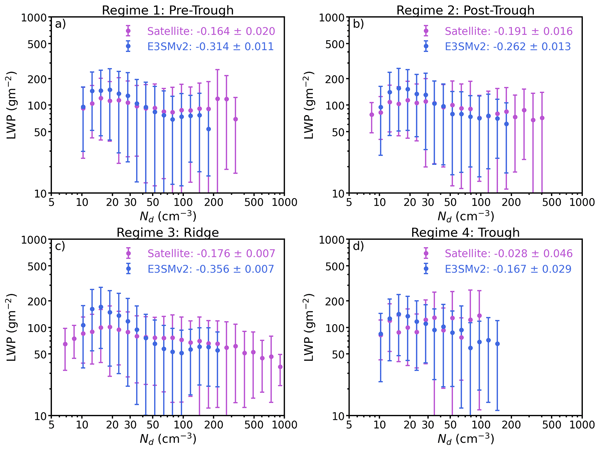
Smoke from African fires often drifts over the cloud deck of the southeastern Atlantic, but how it changes the water in these clouds remains uncertain. Using nine years of satellite data, we sorted days by weather pattern and by whether the smoke sat above or touched the clouds. The cloud-water response depends on both, and averaging over all days hides it. A climate model gives the opposite response, pointing to processes that need improvement in the model.
Zhujun Li, David Painemal, Yan Feng, and Xiaojian Zheng
Atmos. Chem. Phys., 26, 7705–7720, https://doi.org/10.5194/acp-26-7705-2026, https://doi.org/10.5194/acp-26-7705-2026, 2026
Short summary
Short summary
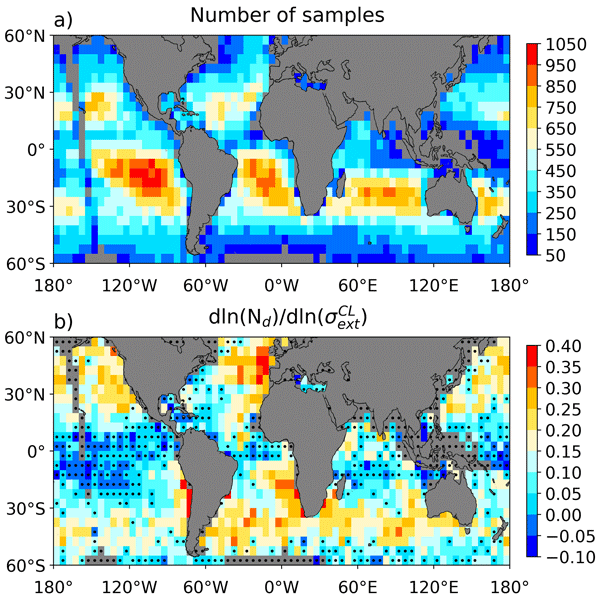
This study is the first global assessment of aerosol-cloud interactions (ACI) and cloud adjustments that relies on vertically resolved aerosol retrievals that are vertically matched with the location of the cloud layer. We computed ACI metrics and cloud adjustments over the global ocean by combining retrievals from active and passive satellite sensors and found high sensitivity of clouds to changes in their cloud droplet number concentration due to aerosols.
Xiaojian Zheng, Yan Feng, David Painemal, Meng Zhang, Shaocheng Xie, Zhujun Li, Robert Jacob, and Bethany Lusch
Atmos. Chem. Phys., 25, 17473–17499, https://doi.org/10.5194/acp-25-17473-2025, https://doi.org/10.5194/acp-25-17473-2025, 2025
Short summary
Short summary
This study used satellite observations and climate model simulations to examine how aerosols affect marine clouds over the Eastern North Atlantic. Cloud responses to aerosols differed significantly across meteorological regimes. The model captured overall trends but exaggerated cloud responses, performing better for shallower than deeper clouds. The results highlight the need to untangle aerosol effects from meteorology and improve cloud process representation in climate models.
Dandan Zhang, Randall V. Martin, Xuan Liu, Aaron van Donkelaar, Christopher R. Oxford, Yanshun Li, Jun Meng, Danny M. Leung, Jasper F. Kok, Longlei Li, Haihui Zhu, Jay R. Turner, Yu Yan, Michael Brauer, Yinon Rudich, and Eli Windwer
Geosci. Model Dev., 18, 6767–6803, https://doi.org/10.5194/gmd-18-6767-2025, https://doi.org/10.5194/gmd-18-6767-2025, 2025
Short summary
Short summary
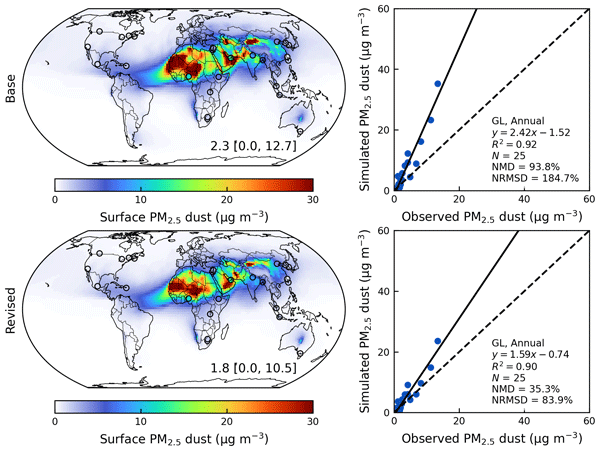
This study develops the fine mineral dust simulation in GEOS-Chem by: 1) implementing a new dust emission scheme with further refinements; 2) revisiting the size distribution of emitted dust; 3) explicitly tracking fine dust for emission, transport and deposition in 4 size bins; 4) updating the parametrization for below-cloud scavenging. All revisions significantly reduce the overestimation of surface fine dust from 94 % to 35 % while retaining comparable skill in representing columnar abundance.
Mingxuan Wu, Hailong Wang, Zheng Lu, Xiaohong Liu, Huisheng Bian, David D. Cohen, Yan Feng, Mian Chin, Didier A. Hauglustaine, Vlassis A. Karydis, Marianne T. Lund, Gunnar Myhre, Andrea Pozzer, Michael Schulz, Ragnhild B. Skeie, Alexandra P. Tsimpidi, Svetlana G. Tsyro, and Shaocheng Xie
Atmos. Chem. Phys., 25, 10049–10074, https://doi.org/10.5194/acp-25-10049-2025, https://doi.org/10.5194/acp-25-10049-2025, 2025
Short summary
Short summary
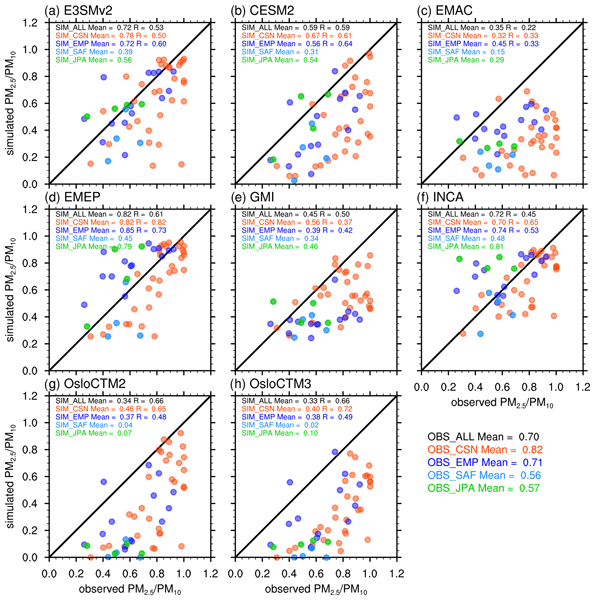
A key challenge in simulating the life cycle of nitrate aerosol in global models is accurately representing the mass size distribution of nitrate aerosol, which lacks sufficient observational constraints. We found that most global models underestimate the mass fraction of fine-mode nitrate at the surface in all regions. Our study highlights the importance of gas–aerosol partitioning parameterization and the simulation of dust and sea salt in correctly simulating the mass size distribution of nitrate.
Xin Xi
EGUsphere, https://doi.org/10.5194/egusphere-2025-2808, https://doi.org/10.5194/egusphere-2025-2808, 2025
Preprint archived
Short summary
Short summary
The atmospheric circulation patterns favoring dust outbreaks from the man-made Aralkum Desert remain poorly understood. This paper reveals that an extreme cold air and dust outbreak in May 2018 was facilitated by recurrent transient Rossby wave packets across the North Atlantic and persistent blocking over Scandinavia. This study underscores the importance of upstream atmospheric blocking for understanding and forecasting cold air and dust outbreaks from Central Asia.
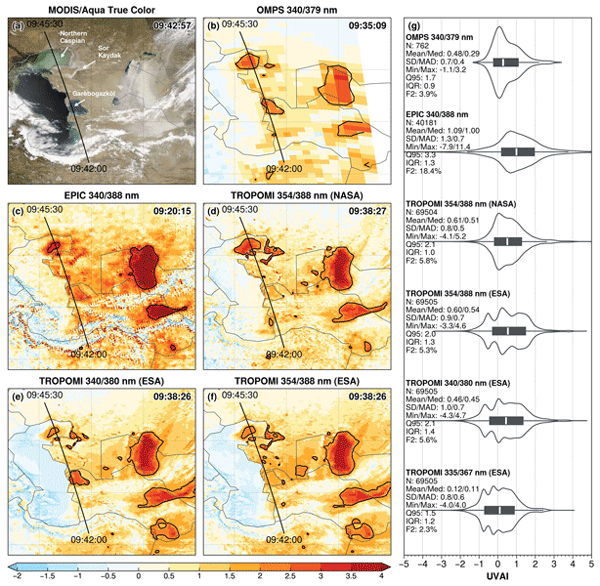
Xin Xi, Jun Wang, Zhendong Lu, Andrew M. Sayer, Jaehwa Lee, Robert C. Levy, Yujie Wang, Alexei Lyapustin, Hongqing Liu, Istvan Laszlo, Changwoo Ahn, Omar Torres, Sabur Abdullaev, James Limbacher, and Ralph A. Kahn
Atmos. Chem. Phys., 25, 7403–7429, https://doi.org/10.5194/acp-25-7403-2025, https://doi.org/10.5194/acp-25-7403-2025, 2025
Short summary
Short summary
The Aralkum Desert is challenging for aerosol retrieval due to its bright, heterogeneous, and dynamic surfaces and the lack of in situ constraints on aerosol properties. The performance and consistency of satellite algorithms in observing Aralkum-generated saline dust remain unknown. This study compares multisensor UVAI (ultraviolet aerosol index), AOD (aerosol optical depth), and ALH (aerosol layer height) products and reveals inconsistencies and potential biases over the Aral Sea basin.
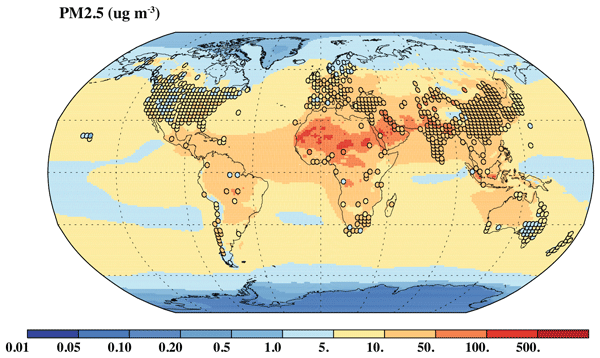
Natalie M. Mahowald, Longlei Li, Julius Vira, Marje Prank, Douglas S. Hamilton, Hitoshi Matsui, Ron L. Miller, P. Louis Lu, Ezgi Akyuz, Daphne Meidan, Peter Hess, Heikki Lihavainen, Christine Wiedinmyer, Jenny Hand, Maria Grazia Alaimo, Célia Alves, Andres Alastuey, Paulo Artaxo, Africa Barreto, Francisco Barraza, Silvia Becagli, Giulia Calzolai, Shankararaman Chellam, Ying Chen, Patrick Chuang, David D. Cohen, Cristina Colombi, Evangelia Diapouli, Gaetano Dongarra, Konstantinos Eleftheriadis, Johann Engelbrecht, Corinne Galy-Lacaux, Cassandra Gaston, Dario Gomez, Yenny González Ramos, Roy M. Harrison, Chris Heyes, Barak Herut, Philip Hopke, Christoph Hüglin, Maria Kanakidou, Zsofia Kertesz, Zbigniew Klimont, Katriina Kyllönen, Fabrice Lambert, Xiaohong Liu, Remi Losno, Franco Lucarelli, Willy Maenhaut, Beatrice Marticorena, Randall V. Martin, Nikolaos Mihalopoulos, Yasser Morera-Gómez, Adina Paytan, Joseph Prospero, Sergio Rodríguez, Patricia Smichowski, Daniela Varrica, Brenna Walsh, Crystal L. Weagle, and Xi Zhao
Atmos. Chem. Phys., 25, 4665–4702, https://doi.org/10.5194/acp-25-4665-2025, https://doi.org/10.5194/acp-25-4665-2025, 2025
Short summary
Short summary
Aerosol particles are an important part of the Earth system, but their concentrations are spatially and temporally heterogeneous, as well as being variable in size and composition. Here, we present a new compilation of PM2.5 and PM10 aerosol observations, focusing on the spatial variability across different observational stations, including composition, and demonstrate a method for comparing the data sets to model output.
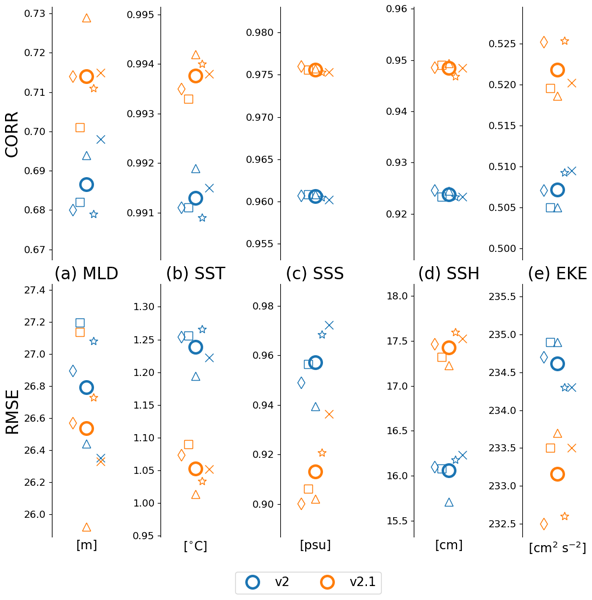
Katherine M. Smith, Alice M. Barthel, LeAnn M. Conlon, Luke P. Van Roekel, Anthony Bartoletti, Jean-Christophe Golaz, Chengzhu Zhang, Carolyn Branecky Begeman, James J. Benedict, Gautam Bisht, Yan Feng, Walter Hannah, Bryce E. Harrop, Nicole Jeffery, Wuyin Lin, Po-Lun Ma, Mathew E. Maltrud, Mark R. Petersen, Balwinder Singh, Qi Tang, Teklu Tesfa, Jonathan D. Wolfe, Shaocheng Xie, Xue Zheng, Karthik Balaguru, Oluwayemi Garuba, Peter Gleckler, Aixue Hu, Jiwoo Lee, Ben Moore-Maley, and Ana C. Ordoñez
Geosci. Model Dev., 18, 1613–1633, https://doi.org/10.5194/gmd-18-1613-2025, https://doi.org/10.5194/gmd-18-1613-2025, 2025
Short summary
Short summary
Version 2.1 of the U.S. Department of Energy's Energy Exascale Earth System Model (E3SM) adds the Fox-Kemper et al. (2011) mixed-layer eddy parameterization, which restratifies the ocean surface layer through an overturning streamfunction. Results include surface layer bias reduction in temperature, salinity, and sea ice extent in the North Atlantic; a small strengthening of the Atlantic meridional overturning circulation; and improvements to many atmospheric climatological variables.
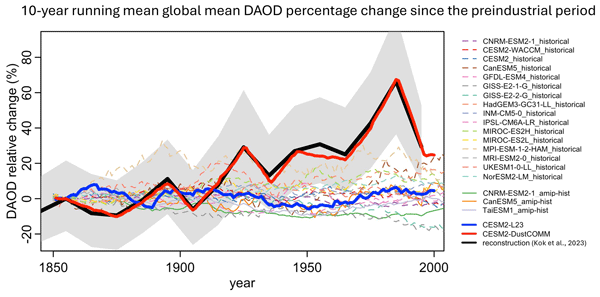
Danny M. Leung, Jasper F. Kok, Longlei Li, David M. Lawrence, Natalie M. Mahowald, Simone Tilmes, and Erik Kluzek
Atmos. Chem. Phys., 25, 2311–2331, https://doi.org/10.5194/acp-25-2311-2025, https://doi.org/10.5194/acp-25-2311-2025, 2025
Short summary
Short summary
This study derives a gridded dust emission dataset for 1841–2000 by employing a combination of observed dust from core records and reanalyzed global dust cycle constraints. We evaluate the ability of global models to replicate the observed historical dust variability by using the emission dataset to force a historical simulation in an Earth system model. We show that prescribing our emissions forces the model to better match observations than other mechanistic models.
Leong Wai Siu, Joseph S. Schlosser, David Painemal, Brian Cairns, Marta A. Fenn, Richard A. Ferrare, Johnathan W. Hair, Chris A. Hostetler, Longlei Li, Mary M. Kleb, Amy Jo Scarino, Taylor J. Shingler, Armin Sorooshian, Snorre A. Stamnes, and Xubin Zeng
Atmos. Meas. Tech., 17, 2739–2759, https://doi.org/10.5194/amt-17-2739-2024, https://doi.org/10.5194/amt-17-2739-2024, 2024
Short summary
Short summary
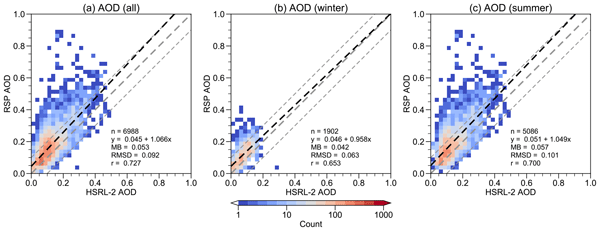
An unprecedented 3-year aerosol dataset was collected from a recent NASA field campaign over the western North Atlantic Ocean, which offers a special opportunity to evaluate two state-of-the-art remote sensing instruments, one lidar and the other polarimeter, on the same aircraft. Special attention has been paid to validate aerosol optical depth data and their uncertainties when no reference dataset is available. Physical reasons for the disagreement between two instruments are discussed.
Danny M. Leung, Jasper F. Kok, Longlei Li, Natalie M. Mahowald, David M. Lawrence, Simone Tilmes, Erik Kluzek, Martina Klose, and Carlos Pérez García-Pando
Atmos. Chem. Phys., 24, 2287–2318, https://doi.org/10.5194/acp-24-2287-2024, https://doi.org/10.5194/acp-24-2287-2024, 2024
Short summary
Short summary
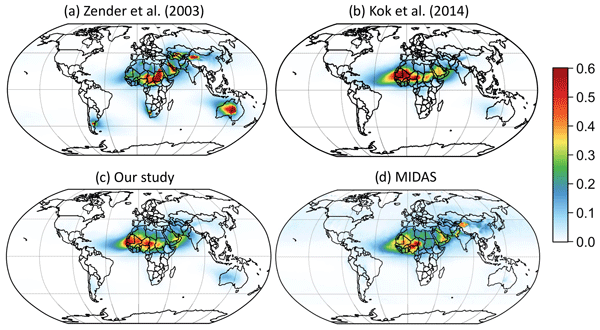
This study uses a premier Earth system model to evaluate a new desert dust emission scheme proposed in our companion paper. We show that our scheme accounts for more dust emission physics, hence matching better against observations than other existing dust emission schemes do. Our scheme's dust emissions also couple tightly with meteorology, hence likely improving the modeled dust sensitivity to climate change. We believe this work is vital for improving dust representation in climate models.
Hui Wan, Kai Zhang, Christopher J. Vogl, Carol S. Woodward, Richard C. Easter, Philip J. Rasch, Yan Feng, and Hailong Wang
Geosci. Model Dev., 17, 1387–1407, https://doi.org/10.5194/gmd-17-1387-2024, https://doi.org/10.5194/gmd-17-1387-2024, 2024
Short summary
Short summary
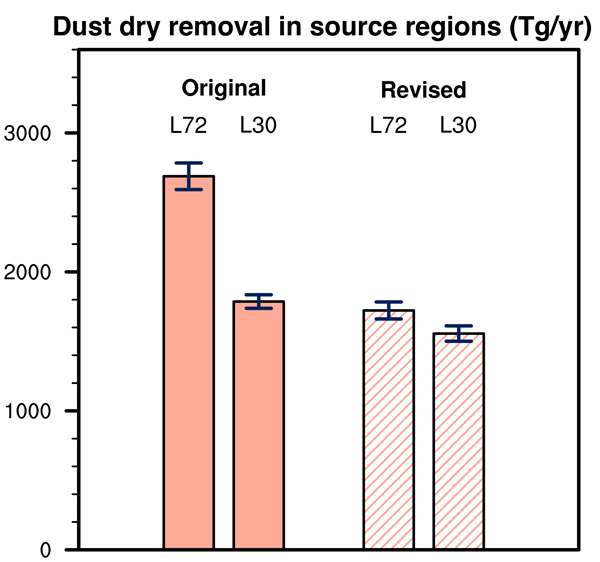
Sophisticated numerical models of the Earth's atmosphere include representations of many physical and chemical processes. In numerical simulations, these processes need to be calculated in a certain sequence. This study reveals the weaknesses of the sequence of calculations used for aerosol processes in a global atmosphere model. A revision of the sequence is proposed and its impacts on the simulated global aerosol climatology are evaluated.
Natalie M. Mahowald, Longlei Li, Julius Vira, Marje Prank, Douglas S. Hamilton, Hitoshi Matsui, Ron L. Miller, Louis Lu, Ezgi Akyuz, Daphne Meidan, Peter Hess, Heikki Lihavainen, Christine Wiedinmyer, Jenny Hand, Maria Grazia Alaimo, Célia Alves, Andres Alastuey, Paulo Artaxo, Africa Barreto, Francisco Barraza, Silvia Becagli, Giulia Calzolai, Shankarararman Chellam, Ying Chen, Patrick Chuang, David D. Cohen, Cristina Colombi, Evangelia Diapouli, Gaetano Dongarra, Konstantinos Eleftheriadis, Corinne Galy-Lacaux, Cassandra Gaston, Dario Gomez, Yenny González Ramos, Hannele Hakola, Roy M. Harrison, Chris Heyes, Barak Herut, Philip Hopke, Christoph Hüglin, Maria Kanakidou, Zsofia Kertesz, Zbiginiw Klimont, Katriina Kyllönen, Fabrice Lambert, Xiaohong Liu, Remi Losno, Franco Lucarelli, Willy Maenhaut, Beatrice Marticorena, Randall V. Martin, Nikolaos Mihalopoulos, Yasser Morera-Gomez, Adina Paytan, Joseph Prospero, Sergio Rodríguez, Patricia Smichowski, Daniela Varrica, Brenna Walsh, Crystal Weagle, and Xi Zhao
Earth Syst. Sci. Data Discuss., https://doi.org/10.5194/essd-2024-1, https://doi.org/10.5194/essd-2024-1, 2024
Preprint withdrawn
Short summary
Short summary
Aerosol particles can interact with incoming solar radiation and outgoing long wave radiation, change cloud properties, affect photochemistry, impact surface air quality, and when deposited impact surface albedo of snow and ice, and modulate carbon dioxide uptake by the land and ocean. Here we present a new compilation of aerosol observations including composition, a methodology for comparing the datasets to model output, and show the implications of these results using one model.
Natalie M. Mahowald, Longlei Li, Samuel Albani, Douglas S. Hamilton, and Jasper F. Kok
Atmos. Chem. Phys., 24, 533–551, https://doi.org/10.5194/acp-24-533-2024, https://doi.org/10.5194/acp-24-533-2024, 2024
Short summary
Short summary
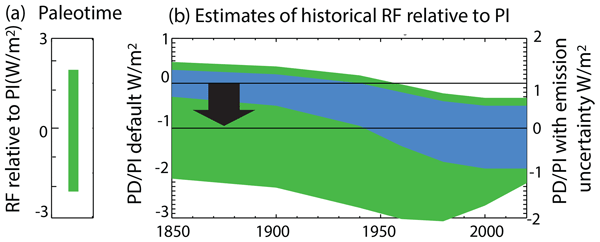
Estimating past aerosol radiative effects and their uncertainties is an important topic in climate science. Aerosol radiative effects propagate into large uncertainties in estimates of how present and future climate evolves with changing greenhouse gas emissions. A deeper understanding of how aerosols interacted with the atmospheric energy budget under past climates is hindered in part by a lack of relevant paleo-observations and in part because less attention has been paid to the problem.
Qi Tang, Jean-Christophe Golaz, Luke P. Van Roekel, Mark A. Taylor, Wuyin Lin, Benjamin R. Hillman, Paul A. Ullrich, Andrew M. Bradley, Oksana Guba, Jonathan D. Wolfe, Tian Zhou, Kai Zhang, Xue Zheng, Yunyan Zhang, Meng Zhang, Mingxuan Wu, Hailong Wang, Cheng Tao, Balwinder Singh, Alan M. Rhoades, Yi Qin, Hong-Yi Li, Yan Feng, Yuying Zhang, Chengzhu Zhang, Charles S. Zender, Shaocheng Xie, Erika L. Roesler, Andrew F. Roberts, Azamat Mametjanov, Mathew E. Maltrud, Noel D. Keen, Robert L. Jacob, Christiane Jablonowski, Owen K. Hughes, Ryan M. Forsyth, Alan V. Di Vittorio, Peter M. Caldwell, Gautam Bisht, Renata B. McCoy, L. Ruby Leung, and David C. Bader
Geosci. Model Dev., 16, 3953–3995, https://doi.org/10.5194/gmd-16-3953-2023, https://doi.org/10.5194/gmd-16-3953-2023, 2023
Short summary
Short summary
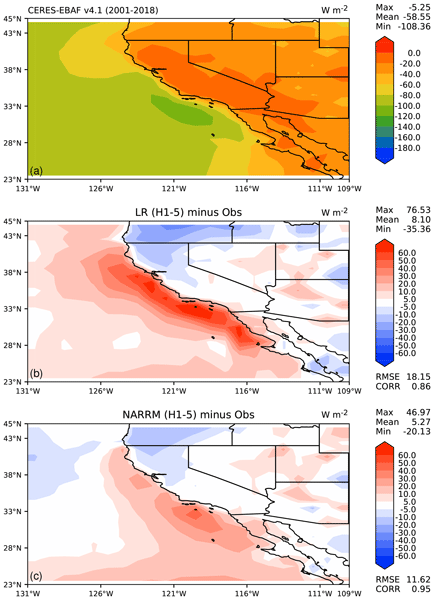
High-resolution simulations are superior to low-resolution ones in capturing regional climate changes and climate extremes. However, uniformly reducing the grid size of a global Earth system model is too computationally expensive. We provide an overview of the fully coupled regionally refined model (RRM) of E3SMv2 and document a first-of-its-kind set of climate production simulations using RRM at an economic cost. The key to this success is our innovative hybrid time step method.
Danny M. Leung, Jasper F. Kok, Longlei Li, Gregory S. Okin, Catherine Prigent, Martina Klose, Carlos Pérez García-Pando, Laurent Menut, Natalie M. Mahowald, David M. Lawrence, and Marcelo Chamecki
Atmos. Chem. Phys., 23, 6487–6523, https://doi.org/10.5194/acp-23-6487-2023, https://doi.org/10.5194/acp-23-6487-2023, 2023
Short summary
Short summary
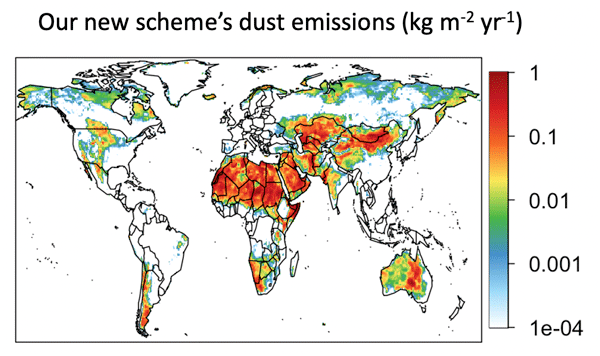
Desert dust modeling is important for understanding climate change, as dust regulates the atmosphere's greenhouse effect and radiation. This study formulates and proposes a more physical and realistic desert dust emission scheme for global and regional climate models. By considering more aeolian processes in our emission scheme, our simulations match better against dust observations than existing schemes. We believe this work is vital in improving dust representation in climate models.
Ian Chang, Lan Gao, Connor J. Flynn, Yohei Shinozuka, Sarah J. Doherty, Michael S. Diamond, Karla M. Longo, Gonzalo A. Ferrada, Gregory R. Carmichael, Patricia Castellanos, Arlindo M. da Silva, Pablo E. Saide, Calvin Howes, Zhixin Xue, Marc Mallet, Ravi Govindaraju, Qiaoqiao Wang, Yafang Cheng, Yan Feng, Sharon P. Burton, Richard A. Ferrare, Samuel E. LeBlanc, Meloë S. Kacenelenbogen, Kristina Pistone, Michal Segal-Rozenhaimer, Kerry G. Meyer, Ju-Mee Ryoo, Leonhard Pfister, Adeyemi A. Adebiyi, Robert Wood, Paquita Zuidema, Sundar A. Christopher, and Jens Redemann
Atmos. Chem. Phys., 23, 4283–4309, https://doi.org/10.5194/acp-23-4283-2023, https://doi.org/10.5194/acp-23-4283-2023, 2023
Short summary
Short summary
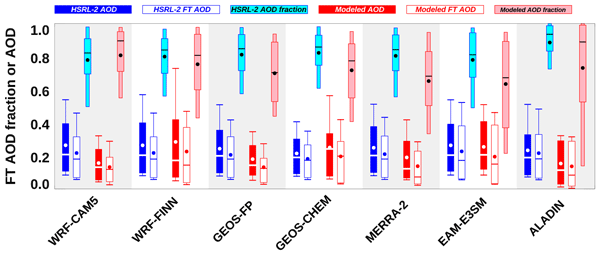
Abundant aerosols are present above low-level liquid clouds over the southeastern Atlantic during late austral spring. The model simulation differences in the proportion of aerosol residing in the planetary boundary layer and in the free troposphere can greatly affect the regional aerosol radiative effects. This study examines the aerosol loading and fractional aerosol loading in the free troposphere among various models and evaluates them against measurements from the NASA ORACLES campaign.

Longlei Li, Natalie M. Mahowald, Jasper F. Kok, Xiaohong Liu, Mingxuan Wu, Danny M. Leung, Douglas S. Hamilton, Louisa K. Emmons, Yue Huang, Neil Sexton, Jun Meng, and Jessica Wan
Geosci. Model Dev., 15, 8181–8219, https://doi.org/10.5194/gmd-15-8181-2022, https://doi.org/10.5194/gmd-15-8181-2022, 2022
Short summary
Short summary
This study advances mineral dust parameterizations in the Community Atmospheric Model (CAM; version 6.1). Efforts include 1) incorporating a more physically based dust emission scheme; 2) updating the dry deposition scheme; and 3) revising the gravitational settling velocity to account for dust asphericity. Substantial improvements achieved with these updates can help accurately quantify dust–climate interactions using CAM, such as the dust-radiation and dust–cloud interactions.
Kai Zhang, Wentao Zhang, Hui Wan, Philip J. Rasch, Steven J. Ghan, Richard C. Easter, Xiangjun Shi, Yong Wang, Hailong Wang, Po-Lun Ma, Shixuan Zhang, Jian Sun, Susannah M. Burrows, Manish Shrivastava, Balwinder Singh, Yun Qian, Xiaohong Liu, Jean-Christophe Golaz, Qi Tang, Xue Zheng, Shaocheng Xie, Wuyin Lin, Yan Feng, Minghuai Wang, Jin-Ho Yoon, and L. Ruby Leung
Atmos. Chem. Phys., 22, 9129–9160, https://doi.org/10.5194/acp-22-9129-2022, https://doi.org/10.5194/acp-22-9129-2022, 2022
Short summary
Short summary
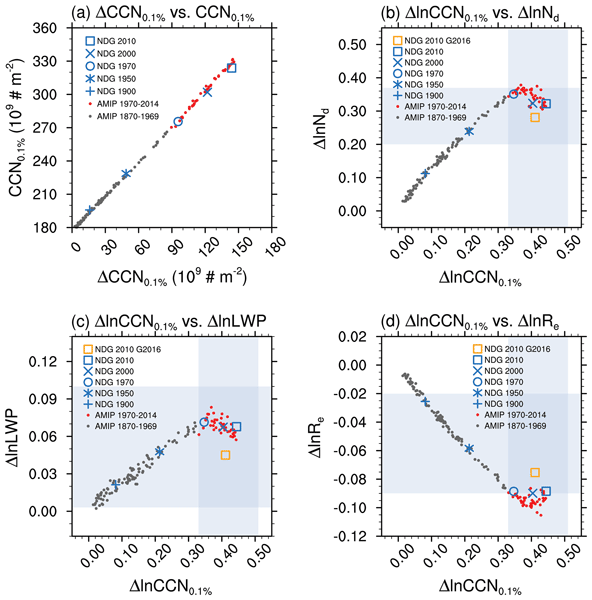
Here we analyze the effective aerosol forcing simulated by E3SM version 1 using both century-long free-running and short nudged simulations. The aerosol forcing in E3SMv1 is relatively large compared to other models, mainly due to the large indirect aerosol effect. Aerosol-induced changes in liquid and ice cloud properties in E3SMv1 have a strong correlation. The aerosol forcing estimates in E3SMv1 are sensitive to the parameterization changes in both liquid and ice cloud processes.
Cited articles
Albani, S., Mahowald, N. M., Perry, A. T., Scanza, R. A., Zender, C. S., Heavens, N. G., Maggi, V., Kok, J. F., and Otto-Bliesner, B. L.: Improved dust representation in the Community Atmosphere Model, Journal of Advances in Modeling Earth Systems, 6, 541–570, https://doi.org/10.1002/2013MS000279, 2015. a
Aryal, Y. N. and Evans, S.: Global Dust Variability Explained by Drought Sensitivity in CMIP6 Models, Journal of Geophysical Research: Earth Surface, 126, https://doi.org/10.1029/2021JF006073, 2021. a
Azen, R. and Budescu, D. V.: The Dominance Analysis Approach for Comparing Predictors in Multiple Regression, Psychological Methods, 8, 129–148, https://doi.org/10.1037/1082-989X.8.2.129, 2003. a
Bagnold, R. A.: The Physics of Blown Sand and Desert Dunes, Springer Dordrecht, 1 edn., ISBN 978-94-009-5684-1, https://doi.org/10.1007/978-94-009-5682-7, 1974. a
Balkanski, Y., Schulz, M., Claquin, T., Moulin, C., and Ginoux, P.: Global Emissions of Mineral Aerosol: Formulation and Validation using Satellite Imagery, in: Emissions of Atmospheric Trace Compounds, edited by Granier, C., Artaxo, P., and Reeves, C. E., Springer, 239–267, https://doi.org/10.1007/978-1-4020-2167-1_6, 2004. a
Bauer, S. E., Tsigaridis, K., Faluvegi, G., Nazarenko, L., Miller, R. L., Kelley, M., and Schmidt, G.: The Turning Point of the Aerosol Era, Journal of Advances in Modeling Earth Systems, 14, https://doi.org/10.1029/2022MS003070, 2022. a
Budescu, D. V.: Dominance analysis: A new approach to the problem of relative importance of predictors in multiple regression, Psychological Bulletin, 114, 542–551, https://doi.org/10.1037/0033-2909.114.3.542, 1993. a
Bullard, J. E. and Livingstone, I.: Interactions between aeolian and fluvial systems in dryland environments, Area, 34, 8–16, https://doi.org/10.1111/1475-4762.00052, 2002. a
Bullard, J. E., Harrison, S. P., Baddock, M. C., Drake, N., Gill, T. E., McTainsh, G., and Sun, Y.: Preferential dust sources: A geomorphological classification designed for use in global dust-cycle models, Journal of Geophysical Research: Earth Surface, 116, https://doi.org/10.1029/2011JF002061, 2011. a
Cowie, S. M., Marsham, J. H., and Knippertz, P.: The importance of rare, high-wind events for dust uplift in northern Africa, Geophysical Research Letters, 42, 8208–8215, https://doi.org/10.1002/2015GL065819, 2015. a
Csavina, J., Field, J., Félix, O., Corral-Avitia, A. Y., Sáez, A. E., and Betterton, E. A.: Effect of wind speed and relative humidity on atmospheric dust concentrations in semi-arid climates, Science of the Total Environment, 487, 82–90, https://doi.org/10.1016/j.scitotenv.2014.03.138, 2014. a
Engelstaedter, S., Kohfeld, K. E., Tegen, I., and Harrison, S. P.: Controls of dust emissions by vegetation and topographic depressions: An evaluation using dust storm frequency data, Geophysical Research Letters, 30, https://doi.org/10.1029/2002GL016471, 2003. a
Evan, A. T.: Surface Winds and Dust Biases in Climate Models, Geophysical Research Letters, 45, 1079–1085, https://doi.org/10.1002/2017GL076353, 2018. a, b
Evan, A. T., Flamant, C., Fiedler, S., and Doherty, O.: An analysis of aeolian dust in climate models, Geophysical Research Letters, 41, 5996–6001, https://doi.org/10.1002/2014GL060545, 2014. a
Evans, S., Ginoux, P., Malyshev, S., and Shevliakova, E.: Climate-vegetation interaction and amplification of Australian dust variability, Geophysical Research Letters, 43, 11,823–11,830, https://doi.org/10.1002/2016GL071016, 2016. a
Feng, Y., Wang, H., Rasch, P. J., Zhang, K., Lin, W., Tang, Q., Xie, S., Hamilton, D. S., Mahowald, N., and Yu, H.: Global Dust Cycle and Direct Radiative Effect in E3SM Version 1: Impact of Increasing Model Resolution, Journal of Advances in Modeling Earth Systems, https://doi.org/10.1029/2021MS002909, 2022. a, b
Fécan, F., Marticorena, B., and Bergametti, G.: Parametrization of the increase of the aeolian erosion threshold wind friction velocity due to soil moisture for arid and semi-arid areas, Ann. Geophys., 17, 149–157, https://doi.org/10.1007/s00585-999-0149-7, 1999. a
Gelaro, R., McCarty, W., Suárez, M. J., Todling, R., Molod, A., Takacs, L., Randles, C. A., Darmenov, A., Bosilovich, M. G., Reichle, R., Wargan, K., Coy, L., Cullather, R., Draper, C., Akella, S., Buchard, V., Conaty, A., Silva, A. M. d., Gu, W., Kim, G. K., Koster, R., Lucchesi, R., Merkova, D., Nielsen, J. E., Partyka, G., Pawson, S., Putman, W., Rienecker, M., Schubert, S. D., Sienkiewicz, M., and Zhao, B.: The modern-era retrospective analysis for research and applications, version 2 (MERRA-2), Journal of Climate, 30, 5419–5454, https://doi.org/10.1175/JCLI-D-16-0758.1, 2017. a, b
Gettelman, A., Mills, M. J., Kinnison, D. E., Garcia, R. R., Smith, A. K., Marsh, D. R., Tilmes, S., Vitt, F., Bardeen, C. G., McInerny, J., Liu, H. L., Solomon, S. C., Polvani, L. M., Emmons, L. K., Lamarque, J. F., Richter, J. H., Glanville, A. S., Bacmeister, J. T., Phillips, A. S., Neale, R. B., Simpson, I. R., DuVivier, A. K., Hodzic, A., and Randel, W. J.: The Whole Atmosphere Community Climate Model Version 6 (WACCM6), Journal of Geophysical Research: Atmospheres, 124, 12380–12403, https://doi.org/10.1029/2019JD030943, 2019. a
Gliß, J., Mortier, A., Schulz, M., Andrews, E., Balkanski, Y., Bauer, S. E., Benedictow, A. M. K., Bian, H., Checa-Garcia, R., Chin, M., Ginoux, P., Griesfeller, J. J., Heckel, A., Kipling, Z., Kirkevåg, A., Kokkola, H., Laj, P., Le Sager, P., Lund, M. T., Lund Myhre, C., Matsui, H., Myhre, G., Neubauer, D., van Noije, T., North, P., Olivié, D. J. L., Rémy, S., Sogacheva, L., Takemura, T., Tsigaridis, K., and Tsyro, S. G.: AeroCom phase III multi-model evaluation of the aerosol life cycle and optical properties using ground- and space-based remote sensing as well as surface in situ observations, Atmospheric Chemistry and Physics, 21, 87–128, https://doi.org/10.5194/acp-21-87-2021, 2021. a, b, c
Hajima, T., Watanabe, M., Yamamoto, A., Tatebe, H., Noguchi, M. A., Abe, M., Ohgaito, R., Ito, A., Yamazaki, D., Okajima, H., Ito, A., Takata, K., Ogochi, K., Watanabe, S., and Kawamiya, M.: Development of the MIROC-ES2L Earth system model and the evaluation of biogeochemical processes and feedbacks, Geoscientific Model Development, 13, 2197–2244, https://doi.org/10.5194/gmd-13-2197-2020, 2020. a, b
Huneeus, N., Schulz, M., Balkanski, Y., Griesfeller, J., Prospero, J., Kinne, S., Bauer, S., Boucher, O., Chin, M., Dentener, F., Diehl, T., Easter, R., Fillmore, D., Ghan, S., Ginoux, P., Grini, A., Horowitz, L., Koch, D., Krol, M. C., Landing, W., Liu, X., Mahowald, N., Miller, R., Morcrette, J.-J., Myhre, G., Penner, J., Perlwitz, J., Stier, P., Takemura, T., and Zender, C. S.: Global dust model intercomparison in AeroCom phase I, Atmospheric Chemistry and Physics, 11, 7781–7816, https://doi.org/10.5194/acp-11-7781-2011, 2011. a, b, c
Kim, D., Chin, M., Yu, H., Diehl, T., Tan, Q., Kahn, R. A., Tsigaridis, K., Bauer, S. E., Takemura, T., Pozzoli, L., Bellouin, N., Schulz, M., Peyridieu, S., Chédin, A., and Koffi, B.: Sources, sinks, and transatlantic transport of North African dust aerosol: A multimodel analysis and comparison with remote sensing data, Journal of Geophysical Research, 119, 6259–6277, https://doi.org/10.1002/2013JD021099, 2014. a
Kim, D., Chin, M., Schuster, G., Yu, H., Takemura, T., Tuccella, P., Ginoux, P., Liu, X., Shi, Y., Matsui, H., Tsigaridis, K., Bauer, S. E., Kok, J. F., and Schulz, M.: Where Dust Comes From: Global Assessment of Dust Source Attributions With AeroCom Models, Journal of Geophysical Research: Atmospheres, 129, e2024JD041377, https://doi.org/10.1029/2024JD041377, Ltd, 2024. a
Kim, H. and Choi, M.: Impact of soil moisture on dust outbreaks in East Asia: Using satellite and assimilation data, Geophysical Research Letters, 42, 2789–2796, https://doi.org/10.1002/2015GL063325, 2015. a, b
Knippertz, P. and Todd, M. C.: Mineral dust aerosols over the Sahara: Meteorological controls on emission and transport and implications for modeling, Reviews of Geophysics, 50, https://doi.org/10.1029/2011RG000362, 2012. a
Kok, J. F., Parteli, E. J. R., Michaels, T. I., and Karam, D. B.: The physics of wind-blown sand and dust, Reports on Progress in Physics, 75, https://doi.org/10.1088/0034-4885/75/10/106901, 2012. a
Kok, J. F., Albani, S., Mahowald, N. M., and Ward, D. S.: An improved dust emission model – Part 2: Evaluation in the Community Earth System Model, with implications for the use of dust source functions, Atmospheric Chemistry and Physics, 14, 13043–13061, https://doi.org/10.5194/acp-14-13043-2014, 2014a. a, b, c, d
Kok, J. F., Mahowald, N. M., Fratini, G., Gillies, J. A., Ishizuka, M., Leys, J. F., Mikami, M., Park, M.-S., Park, S.-U., Van Pelt, R. S., and Zobeck, T. M.: An improved dust emission model – Part 1: Model description and comparison against measurements, Atmospheric Chemistry and Physics, 14, 13023–13041, https://doi.org/10.5194/acp-14-13023-2014, 2014b. a, b, c, d, e, f, g
Kok, J. F., Storelvmo, T., Karydis, V. A., Adebiyi, A. A., Mahowald, N. M., Evan, A. T., He, C., and Leung, D. M.: Mineral dust aerosol impacts on global climate and climate change, Nature Reviews Earth and Environment, 4, 71–86, https://doi.org/10.1038/s43017-022-00379-5, 2023. a
Koster, R. D., Guo, Z., Yang, R., Dirmeyer, P. A., Mitchell, K., and Puma, M. J.: On the nature of soil moisture in land surface models, Journal of Climate, 22, 4322–4335, https://doi.org/10.1175/2009JCLI2832.1, 2009. a
Leung, D. M., Kok, J. F., Li, L., Okin, G. S., Prigent, C., Klose, M., Pérez García-Pando, C., Menut, L., Mahowald, N. M., Lawrence, D. M., and Chamecki, M.: A new process-based and scale-aware desert dust emission scheme for global climate models – Part I: Description and evaluation against inverse modeling emissions, Atmospheric Chemistry and Physics, 23, 6487–6523, https://doi.org/10.5194/acp-23-6487-2023, 2023. a
Li, L., Mahowald, N. M., Kok, J. F., Liu, X., Wu, M., Leung, D. M., Hamilton, D. S., Emmons, L. K., Huang, Y., Sexton, N., Meng, J., and Wan, J.: Importance of different parameterization changes for the updated dust cycle modeling in the Community Atmosphere Model (version 6.1), Geoscientific Model Development, 15, 8181–8219, https://doi.org/10.5194/gmd-15-8181-2022, 2022. a, b
Li, L., Mahowald, N. M., Ageitos, M. G., Obiso, V., Miller, R. L., García-Pando, C. P., Biagio, C. D., Formenti, P., Brodrick, P. G., Clark, R. N., Green, R. O., Kokaly, R., Swayze, G., and Thompson, D. R.: Improved constraints on hematite refractive index for estimating climatic effects of dust aerosols, Communications Earth & Environment, 5, 295, https://doi.org/10.1038/s43247-024-01441-4, 2024. a
Lurton, T., Balkanski, Y., Bastrikov, V., Bekki, S., Bopp, L., Braconnot, P., Brockmann, P., Cadule, P., Contoux, C., Cozic, A., Cugnet, D., Dufresne, J.-L., Éthé, C., Foujols, M.-A., Ghattas, J., Hauglustaine, D., Hu, R.-M., Kageyama, M., Khodri, M., Lebas, N., Levavasseur, G., Marchand, M., Ottlé, C., Peylin, P., Sima, A., Szopa, S., Thiéblemont, R., Vuichard, N., and Boucher, O.: Implementation of the CMIP6 Forcing Data in the IPSL-CM6A-LR Model, Journal of Advances in Modeling Earth Systems, 12, e2019MS001940, https://doi.org/10.1029/2019MS001940, 2020. a
Marticorena, B. and Bergametti, G.: Modeling the atmospheric dust cycle: 1. Design of a soil-derived dust emission scheme, Journal of Geophysical Research, 100, https://doi.org/10.1029/95jd00690, 1995. a
Mauritsen, T., Bader, J., Becker, T., Behrens, J., Bittner, M., Brokopf, R., Brovkin, V., Claussen, M., Crueger, T., Esch, M., Fast, I., Fiedler, S., Fläschner, D., Gayler, V., Giorgetta, M., Goll, D. S., Haak, H., Hagemann, S., Hedemann, C., Hohenegger, C., Ilyina, T., Jahns, T., Jimenéz-de-la Cuesta, D., Jungclaus, J., Kleinen, T., Kloster, S., Kracher, D., Kinne, S., Kleberg, D., Lasslop, G., Kornblueh, L., Marotzke, J., Matei, D., Meraner, K., Mikolajewicz, U., Modali, K., Möbis, B., Müller, W. A., Nabel, J. E. M. S., Nam, C. C. W., Notz, D., Nyawira, S.-S., Paulsen, H., Peters, K., Pincus, R., Pohlmann, H., Pongratz, J., Popp, M., Raddatz, T. J., Rast, S., Redler, R., Reick, C. H., Rohrschneider, T., Schemann, V., Schmidt, H., Schnur, R., Schulzweida, U., Six, K. D., Stein, L., Stemmler, I., Stevens, B., Storch, J.-S. v., Tian, F., Voigt, A., Vrese, P., Wieners, K.-H., Wilkenskjeld, S., Winkler, A., and Roeckner, E.: Developments in the MPI-M Earth System Model version 1.2 (MPI-ESM1.2) and Its Response to Increasing CO2, Journal of Advances in Modeling Earth Systems, 11, 998–1038, https://doi.org/10.1029/2018MS001400, 2019. a
Miller, R. L., Cakmur, R. V., Perlwitz, J., Geogdzhayev, I. V., Ginoux, P., Koch, D., Kohfeld, K. E., Prigent, C., Ruedy, R., Schmidt, G. A., and Tegen, I.: Mineral dust aerosols in the NASA Goddard Institute for Space Sciences ModelE atmospheric general circulation model, Journal of Geophysical Research Atmospheres, 111, https://doi.org/10.1029/2005JD005796, 2006. a, b, c, d
Miller, R. L., Schmidt, G. A., Nazarenko, L. S., Bauer, S. E., Kelley, M., Ruedy, R., Russell, G. L., Ackerman, A. S., Aleinov, I., Bauer, M., Bleck, R., Canuto, V., Cesana, G., Cheng, Y., Clune, T. L., Cook, B. I., Cruz, C. A., Genio, A. D. D., Elsaesser, G. S., Faluvegi, G., Kiang, N. Y., Kim, D., Lacis, A. A., Leboissetier, A., LeGrande, A. N., Lo, K. K., Marshall, J., Matthews, E. E., McDermid, S., Mezuman, K., Murray, L. T., Oinas, V., Orbe, C., García-Pando, C. P., Perlwitz, J. P., Puma, M. J., Rind, D., Romanou, A., Shindell, D. T., Sun, S., Tausnev, N., Tsigaridis, K., Tselioudis, G., Weng, E., Wu, J., and Yao, M. S.: CMIP6 Historical Simulations (1850–2014) With GISS-E2.1, Journal of Advances in Modeling Earth Systems, 13, https://doi.org/10.1029/2019MS002034, 2021. a, b, c
Nandintsetseg, B. and Shinoda, M.: Land surface memory effects on dust emission in a Mongolian temperate grassland, Journal of Geophysical Research: Biogeosciences, 120, 414–427, https://doi.org/10.1002/2014JG002708, 2015. a
van Noije, T., Bergman, T., Le Sager, P., O'Donnell, D., Makkonen, R., Gonçalves-Ageitos, M., Döscher, R., Fladrich, U., von Hardenberg, J., Keskinen, J.-P., Korhonen, H., Laakso, A., Myriokefalitakis, S., Ollinaho, P., Pérez García-Pando, C., Reerink, T., Schrödner, R., Wyser, K., and Yang, S.: EC-Earth3-AerChem: a global climate model with interactive aerosols and atmospheric chemistry participating in CMIP6, Geoscientific Model Development, 14, 5637–5668, https://doi.org/10.5194/gmd-14-5637-2021, 2021. a, b
Owen, P. R.: Saltation of uniform grains in air, Journal of Fluid Mechanics, 20, 225–242, https://doi.org/10.1017/S0022112064001173, 1964. a
Peng, Y., von Salzen, K., and Li, J.: Simulation of mineral dust aerosol with Piecewise Log-normal Approximation (PLA) in CanAM4-PAM, Atmospheric Chemistry and Physics, 12, 6891–6914, https://doi.org/10.5194/acp-12-6891-2012, 2012. a, b, c
Prospero, J. M. and Lamb, P. J.: African Droughts and Dust Transport to the Caribbean: Climate Change Implications, Science, 302, 1024–1027, https://doi.org/10.1126/science.1089915, 2003. a
Prospero, J. M., Ginoux, P., Torres, O., Nicholson, S. E., and Gill, T. E.: Environmental characterization of global sources of atmospheric soil dust identified with the Nimbus 7 Total Ozone Mapping Spectrometer (TOMS) absorbing aerosol product, Reviews of Geophysics, 40, 2-1–2-31, https://doi.org/10.1029/2000RG000095, 2002. a
Pu, B. and Ginoux, P.: The impact of the Pacific Decadal Oscillation on springtime dust activity in Syria, Atmospheric Chemistry and Physics, 16, 13431–13448, https://doi.org/10.5194/acp-16-13431-2016, 2016. a
Pu, B. and Ginoux, P.: How reliable are CMIP5 models in simulating dust optical depth?, Atmospheric Chemistry and Physics, 18, 12491–12510, https://doi.org/10.5194/acp-18-12491-2018, 2018. a
Randles, C. A., Silva, A. M. d., Buchard, V., Colarco, P. R., Darmenov, A., Govindaraju, R., Smirnov, A., Holben, B., Ferrare, R., Hair, J., Shinozuka, Y., and Flynn, C. J.: The MERRA-2 aerosol reanalysis, 1980 onward. Part I: System description and data assimilation evaluation, Journal of Climate, 30, 6823–6850, https://doi.org/10.1175/JCLI-D-16-0609.1, 2017. a
Raupach, M. R., Gillette, D. A., and Leys, J. F.: The effect of roughness elements on wind erosion threshold, Journal of Geophysical Research: Atmospheres, 98, 3023–3029, https://doi.org/10.1029/92JD01922, 1993. a
Ravi, S., Zobeck, T. E. D. M., Over, T. M., Okin, G. S., and D'Odorico, P.: On the effect of moisture bonding forces in air-dry soils on threshold friction velocity of wind erosion, Sedimentology, 53, 597–609, https://doi.org/10.1111/j.1365-3091.2006.00775.x, 2006. a, b
Rind, D., Orbe, C., Jonas, J., Nazarenko, L., Zhou, T., Kelley, M., Lacis, A., Shindell, D., Faluvegi, G., Romanou, A., Russell, G., Tausnev, N., Bauer, M., and Schmidt, G.: GISS Model E2.2: A Climate Model Optimized for the Middle Atmosphere—Model Structure, Climatology, Variability, and Climate Sensitivity, Journal of Geophysical Research: Atmospheres, 125, https://doi.org/10.1029/2019JD032204, 2020. a, b
Roberts, M. J., Baker, A., Blockley, E. W., Calvert, D., Coward, A., Hewitt, H. T., Jackson, L. C., Kuhlbrodt, T., Mathiot, P., Roberts, C. D., Schiemann, R., Seddon, J., Vannière, B., and Vidale, P. L.: Description of the resolution hierarchy of the global coupled HadGEM3-GC3.1 model as used in CMIP6 HighResMIP experiments, Geoscientific Model Development, 12, 4999–5028, https://doi.org/10.5194/gmd-12-4999-2019, 2019. a
Séférian, R., Nabat, P., Michou, M., Saint-Martin, D., Voldoire, A., Colin, J., Decharme, B., Delire, C., Berthet, S., Chevallier, M., Sénési, S., Franchisteguy, L., Vial, J., Mallet, M., Joetzjer, E., Geoffroy, O., Guérémy, J. F., Moine, M. P., Msadek, R., Ribes, A., Rocher, M., Roehrig, R., Salas-y Mélia, D., Sanchez, E., Terray, L., Valcke, S., Waldman, R., Aumont, O., Bopp, L., Deshayes, J., Éthé, C., and Madec, G.: Evaluation of CNRM Earth System Model, CNRM-ESM2-1: Role of Earth System Processes in Present-Day and Future Climate, Journal of Advances in Modeling Earth Systems, 11, 4182–4227, https://doi.org/10.1029/2019MS001791, 2019. a
Seland, Ø., Bentsen, M., Olivié, D., Toniazzo, T., Gjermundsen, A., Graff, L. S., Debernard, J. B., Gupta, A. K., He, Y.-C., Kirkevåg, A., Schwinger, J., Tjiputra, J., Aas, K. S., Bethke, I., Fan, Y., Griesfeller, J., Grini, A., Guo, C., Ilicak, M., Karset, I. H. H., Landgren, O., Liakka, J., Moseid, K. O., Nummelin, A., Spensberger, C., Tang, H., Zhang, Z., Heinze, C., Iversen, T., and Schulz, M.: Overview of the Norwegian Earth System Model (NorESM2) and key climate response of CMIP6 DECK, historical, and scenario simulations, Geoscientific Model Development, 13, 6165–6200, https://doi.org/10.5194/gmd-13-6165-2020, 2020. a
Shao, Y.: A model for mineral dust emission, Journal of Geophysical Research Atmospheres, 106, 20239–20254, https://doi.org/10.1029/2001JD900171, 2001. a
Shao, Y., Raupach, M. R., and Leys, J. F.: A model for predicting aeolian sand drift and dust entrainment on scales from paddock to region, Australian Journal of Soil Research, 34, 309–342, https://doi.org/10.1071/SR9960309, 1996. a, b, c
Shao, Y., Wyrwoll, K. H., Chappell, A., Huang, J., Lin, Z., McTainsh, G. H., Mikami, M., Tanaka, T. Y., Wang, X., and Yoon, S.: Dust cycle: An emerging core theme in Earth system science, Aeolian Research, 2, 181–204, https://doi.org/10.1016/j.aeolia.2011.02.001, 2011. a
Shevliakova, E., Malyshev, S., Martinez-Cano, I., Milly, P. C. D., Pacala, S. W., Ginoux, P., Dunne, K. A., Dunne, J. P., Dupuis, C., Findell, K. L., Ghannam, K., Horowitz, L. W., Knutson, T. R., Krasting, J. P., Naik, V., Phillipps, P., Zadeh, N., Yu, Y., Zeng, F., and Zeng, Y.: The Land Component LM4.1 of the GFDL Earth System Model ESM4.1: Model Description and Characteristics of Land Surface Climate and Carbon Cycling in the Historical Simulation, Journal of Advances in Modeling Earth Systems, 16, e2023MS003922, https://doi.org/10.1029/2023MS003922, Ltd, 2024. a
Shinoda, M. and Nandintsetseg, B.: Soil moisture and vegetation memories in a cold, arid climate, Global and Planetary Change, 79, 110–117, https://doi.org/10.1016/j.gloplacha.2011.08.005, 2011. a
Sigmond, M., Anstey, J., Arora, V., Digby, R., Gillett, N., Kharin, V., Merryfield, W., Reader, C., Scinocca, J., Swart, N., Virgin, J., Abraham, C., Cole, J., Lambert, N., Lee, W.-S., Liang, Y., Malinina, E., Rieger, L., von Salzen, K., Seiler, C., Seinen, C., Shao, A., Sospedra-Alfonso, R., Wang, L., and Yang, D.: Improvements in the Canadian Earth System Model (CanESM) through systematic model analysis: CanESM5.0 and CanESM5.1, Geoscientific Model Development, 16, 6553–6591, https://doi.org/10.5194/gmd-16-6553-2023, 2023. a, b, c, d
Swart, N. C., Cole, J. N. S., Kharin, V. V., Lazare, M., Scinocca, J. F., Gillett, N. P., Anstey, J., Arora, V., Christian, J. R., Hanna, S., Jiao, Y., Lee, W. G., Majaess, F., Saenko, O. A., Seiler, C., Seinen, C., Shao, A., Sigmond, M., Solheim, L., von Salzen, K., Yang, D., and Winter, B.: The Canadian Earth System Model version 5 (CanESM5.0.3), Geoscientific Model Development, 12, 4823–4873, https://doi.org/10.5194/gmd-12-4823-2019, 2019. a
Takemura, T., Egashira, M., Matsuzawa, K., Ichijo, H., O'ishi, R., and Abe-Ouchi, A.: A simulation of the global distribution and radiative forcing of soil dust aerosols at the Last Glacial Maximum, Atmospheric Chemistry and Physics, 9, 3061–3073, https://doi.org/10.5194/acp-9-3061-2009, 2009. a, b, c
Tatebe, H., Ogura, T., Nitta, T., Komuro, Y., Ogochi, K., Takemura, T., Sudo, K., Sekiguchi, M., Abe, M., Saito, F., Chikira, M., Watanabe, S., Mori, M., Hirota, N., Kawatani, Y., Mochizuki, T., Yoshimura, K., Takata, K., O'ishi, R., Yamazaki, D., Suzuki, T., Kurogi, M., Kataoka, T., Watanabe, M., and Kimoto, M.: Description and basic evaluation of simulated mean state, internal variability, and climate sensitivity in MIROC6, Geoscientific Model Development, 12, 2727–2765, https://doi.org/10.5194/gmd-12-2727-2019, 2019. a, b
Tegen, I., Harrison, S. P., Kohfeld, K., Prentice, I. C., Coe, M., and Heimann, M.: Impact of vegetation and preferential source areas on global dust aerosol: Results from a model study, Journal of Geophysical Research Atmospheres, 107, https://doi.org/10.1029/2001JD000963, 2002. a, b
Tegen, I., Neubauer, D., Ferrachat, S., Siegenthaler-Le Drian, C., Bey, I., Schutgens, N., Stier, P., Watson-Parris, D., Stanelle, T., Schmidt, H., Rast, S., Kokkola, H., Schultz, M., Schroeder, S., Daskalakis, N., Barthel, S., Heinold, B., and Lohmann, U.: The global aerosol–climate model ECHAM6.3–HAM2.3 – Part 1: Aerosol evaluation, Geoscientific Model Development, 12, 1643–1677, https://doi.org/10.5194/gmd-12-1643-2019, 2019. a, b
Textor, C., Schulz, M., Guibert, S., Kinne, S., Balkanski, Y., Bauer, S., Berntsen, T., Berglen, T., Boucher, O., Chin, M., Dentener, F., Diehl, T., Easter, R., Feichter, H., Fillmore, D., Ghan, S., Ginoux, P., Gong, S., Grini, A., Hendricks, J., Horowitz, L., Huang, P., Isaksen, I., Iversen, I., Kloster, S., Koch, D., Kirkevåg, A., Kristjansson, J. E., Krol, M., Lauer, A., Lamarque, J. F., Liu, X., Montanaro, V., Myhre, G., Penner, J., Pitari, G., Reddy, S., Seland, Ø., Stier, P., Takemura, T., and Tie, X.: Analysis and quantification of the diversities of aerosol life cycles within AeroCom, Atmospheric Chemistry and Physics, 6, 1777–1813, https://doi.org/10.5194/acp-6-1777-2006, 2006. a
Volodin, E. M.: Possible Climate Change in Russia in the 21st Century Based on the INM-CM5-0 Climate Model, Russian Meteorology and Hydrology, 47, 327–333, https://doi.org/10.3103/S1068373922050016, 2022. a, b
Voss, K. K. and Evan, A. T.: A new satellite-based global climatology of dust aerosol optical depth, Journal of Applied Meteorology and Climatology, 59, 83–102, https://doi.org/10.1175/JAMC-D-19-0194.1, 2020. a
White, B. R.: Soil transport by winds on Mars, Journal of Geophysical Research: Solid Earth, 84, 4643–4651, https://doi.org/10.1029/JB084iB09p04643, 1979. a
Woodward, S.: Modeling the atmospheric life cycle and radiative impact of mineral dust in the Hadley Centre climate model, Journal of Geophysical Research Atmospheres, 106, 18155–18166, https://doi.org/10.1029/2000JD900795, 2001. a, b
Woodward, S.: Mineral dust in HadGEM2, Met Office Hadley Centre Technical Note 87, https://library.metoffice.gov.uk/Portal/Default/en-GB/DownloadImageFile.ashx?objectId=1095&ownerType=0&ownerId=252246 (last access: 16 January 2026), 2011. a
Woodward, S., Sellar, A. A., Tang, Y., Stringer, M., Yool, A., Robertson, E., and Wiltshire, A.: The simulation of mineral dust in the United Kingdom Earth System Model UKESM1, Atmospheric Chemistry and Physics, 22, 14503–14528, https://doi.org/10.5194/acp-22-14503-2022, 2022. a, b, c
Wu, C., Lin, Z., and Liu, X.: The global dust cycle and uncertainty in CMIP5 (Coupled Model Intercomparison Project phase 5) models, Atmospheric Chemistry and Physics, 20, 10401–10425, https://doi.org/10.5194/acp-20-10401-2020, 2020. a, b, c
Xi, X.: Data from “The relative importance of wind and hydroclimate drivers in modulating the interannual variability of dust emissions in Earth system models”, Zenodo [data set], https://doi.org/10.5281/zenodo.17666380, 2025.
Xi, X. and Sokolik, I. N.: Dust interannual variability and trend in Central Asia from 2000 to 2014 and their climatic linkages, Journal of Geophysical Research: Atmospheres, 120, 12175–12197, https://doi.org/10.1002/2015JD024092, 2015a. a
Xi, X. and Sokolik, I. N.: Seasonal dynamics of threshold friction velocity and dust emission in Central Asia, Journal of Geophysical Research: Atmospheres, 120, 1536–1564, https://doi.org/10.1002/2014JD022471, 2015b. a, b
Xie, S., Terai, C. R., Wang, H., Tang, Q., Fan, J., Burrows, S., Lin, W., Wu, M., Song, X., Zhang, Y., Taylor, M. A., Golaz, J., Benedict, J. J., Chen, C., Feng, Y., Hannah, W. M., Ke, Z., Shan, Y., Larson, V. E., Liu, X., Prather, M. J., Richter, J. H., Shrivastava, M., Wan, H., Zhang, G. J., Zhang, K., Bradley, A. M., Cameron-Smith, P., Damiano, L., Debusschere, B. J., Donahue, A. S., Easter, R. C., Eldred, M. S., Griffin, B. M., Guba, O., Guo, Z., Huang, X., Lee, J., Lee, H., Lou, S., Mahfouz, N., Moncrieff, M., Mülmenstädt, J., Qian, Y., Rasool, Q. Z., Roberts, A. F., Santos, S. P., Sargsyan, K., Shpund, J., Singh, B., Tao, C., Xie, J., Yang, Y., Zeng, X., Zhang, C., Zhang, M., Zhang, S., Zhang, T., Zheng, X., Jacob, R. L., Leung, L. R., McCoy, R. B., and Bader, D. C.: The Energy Exascale Earth System Model version 3: 1. Overview of the atmospheric component, Journal of Advances in Modeling Earth Systems, 17, e2025MS005120, https://doi.org/10.1029/2025MS005120, 2025. a, b, c
Yukimoto, S., Kawai, H., Koshiro, T., Oshima, N., Yoshida, K., Urakawa, S., Tsujino, H., Deushi, M., Tanaka, T., Hosaka, M., Yabu, S., Yoshimura, H., Shindo, E., Mizuta, R., Obata, A., Adachi, Y., and Ishii, M.: The meteorological research institute Earth system model version 2.0, MRI-ESM2.0: Description and basic evaluation of the physical component, Journal of the Meteorological Society of Japan, 97, 931–965, https://doi.org/10.2151/jmsj.2019-051, 2019. a, b
Yumimoto, K., Tanaka, T. Y., Oshima, N., and Maki, T.: JRAero: the Japanese Reanalysis for Aerosol v1.0, Geoscientific Model Development, 10, 3225–3253, https://doi.org/10.5194/gmd-10-3225-2017, 2017. a, b, c, d
Zender, C. S. and Kwon, E. Y.: Regional contrasts in dust emission responses to climate, Journal of Geophysical Research Atmospheres, 110, https://doi.org/10.1029/2004JD005501, 2005. a
Zhao, A., Ryder, C. L., and Wilcox, L. J.: How well do the CMIP6 models simulate dust aerosols?, Atmospheric Chemistry and Physics, 22, 2095–2119, https://doi.org/10.5194/acp-22-2095-2022, 2022. a, b, c, d
Zomer, R. J., Xu, J., and Trabucco, A.: Version 3 of the Global Aridity Index and Potential Evapotranspiration Database, Scientific Data, 9, https://doi.org/10.1038/s41597-022-01493-1, 2022. a
Zou, X. K. and Zhai, P. M.: Relationship between vegetation coverage and spring dust storms over northern China, Journal of Geophysical Research: Atmospheres, 109, https://doi.org/10.1029/2003jd003913, 2004. a
Short summary
Earth system models are essential tools for predicting windblown dust emissions from global drylands. These models show large discrepancies in simulating the interannual variability of historical dust emissions, as well as the relative importance of wind speed versus hydroclimate drivers. This study underscores the need to improve near-surface wind simulations in hyperarid areas and land surface process representations in arid and semiarid areas to reduce dust emission uncertainties.
Earth system models are essential tools for predicting windblown dust emissions from global...


Altmetrics
Final-revised paper
Preprint