
Articles | Volume 26, issue 12
https://doi.org/10.5194/acp-26-9149-2026
© Author(s) 2026. This work is distributed under
the Creative Commons Attribution 4.0 License.
the Creative Commons Attribution 4.0 License.
https://doi.org/10.5194/acp-26-9149-2026
© Author(s) 2026. This work is distributed under
the Creative Commons Attribution 4.0 License.
the Creative Commons Attribution 4.0 License.
Research article
| 
30 Jun 2026
Research article |
| 30 Jun 2026
| 30 Jun 2026
Microphysical evolution and column loading drive nonlinear regional contrast in black carbon top-of-atmosphere forcing
Pravash Tiwari
School of Environment and Spatial Informatics, China University of Mining and Technology, Xuzhou 221116, China

School of Environment and Spatial Informatics, China University of Mining and Technology, Xuzhou 221116, China
Hongrui Gao
School of Environment and Spatial Informatics, China University of Mining and Technology, Xuzhou 221116, China
Lingxiao Lu
School of Environment and Spatial Informatics, China University of Mining and Technology, Xuzhou 221116, China
Department of Chemical and Biochemical Engineering, University of Iowa, Iowa City, IA, USA
Oleg Dubovik
University of Lille, CNRS, UMR 8518 – LOA – Laboratoire d'Optique Atmosphérique, 59000 Lille, France
School of Environment and Spatial Informatics, China University of Mining and Technology, Xuzhou 221116, China
Related authors
Wei Hu, Jason Blake Cohen, Lingxiao Lu, Bo Zheng, Pravash Tiwari, Simone Lolli, Andrea Garzelli, Jun Li, and Kai Qin
EGUsphere, https://doi.org/10.5194/egusphere-2026-4468, https://doi.org/10.5194/egusphere-2026-4468, 2026
This preprint is open for discussion and under review for Atmospheric Chemistry and Physics (ACP).
Short summary
Short summary
This study presents a perturbation experiment to investigate the impact of satellite data uncertainty which are not fully removed using a fast and physically-based divergence operator. The shape of the uncertainty distribution governs error propagation and thus effects the stability of derived fluxes. Coal-based emissions sources are reliably captured. These results provide a practical, uncertainty‑aware filter for satellite‑derived methane emissions.
Hongrui Gao, Qin He, Kai Qin, Jhoon Kim, Diego Loyola, Pravash Tiwari, Lingxiao Lu, and Jason Blake Cohen
Earth Syst. Sci. Data Discuss., https://doi.org/10.5194/essd-2026-443, https://doi.org/10.5194/essd-2026-443, 2026
Revised manuscript accepted for ESSD
Short summary
Short summary
There are always gaps in satellite records of air pollution because of factors such as clouds and operating conditions. We used a physics-aware deep learning method, producing a gapless 0.05° hourly dataset of tropospheric nitrogen dioxide over Asian pollution hotspots from 2019 to 2024. The dataset can capture sub-daily changes, revealing how traffic, industry, and clean-air policies shaped pollution, supporting health and environment studies.
Luoyao Guan, Jason Blake Cohen, Shuo Wang, Pravash Tiwari, Zhewen Liu, Zhengqiang Li, and Kai Qin
Atmos. Chem. Phys., 26, 3107–3123, https://doi.org/10.5194/acp-26-3107-2026, https://doi.org/10.5194/acp-26-3107-2026, 2026
Short summary
Short summary
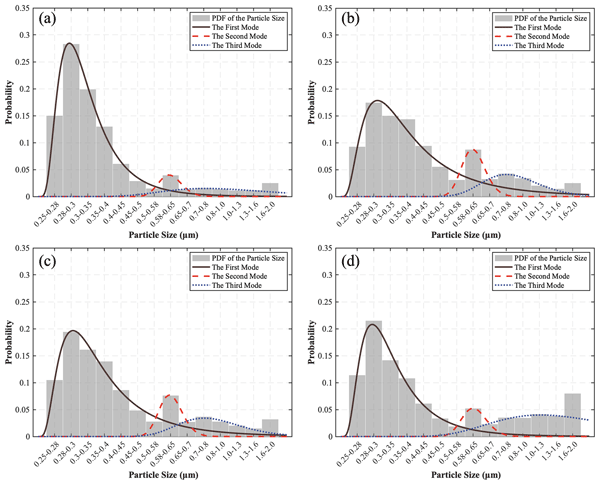
This study examines how black carbon particles from the coal industry influence regional climate by absorbing sunlight. Based on ground measurements and modeling, we find that conventional approaches, which oversimplify particle size and structure, which could leading a bias in terms of their warming effect. Our results highlight that more realistic particle characterizations are crucial for improving climate predictions in industrial regions.
Bo Zheng, Jason Blake Cohen, Lingxiao Lu, Wei Hu, Pravash Tiwari, Simone Lolli, Andrea Garzelli, Hui Su, and Kai Qin
Atmos. Chem. Phys., 26, 1931–1946, https://doi.org/10.5194/acp-26-1931-2026, https://doi.org/10.5194/acp-26-1931-2026, 2026
Short summary
Short summary
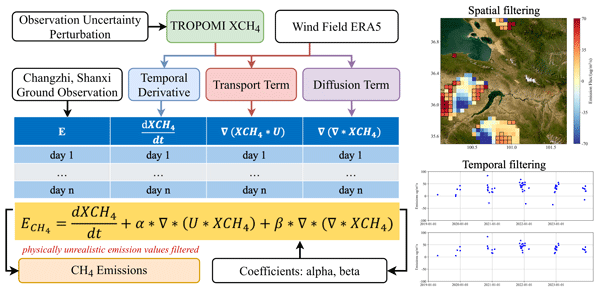
This study provides TROPOMI (TROPOspheric Monitoring Instrument) with a new methane emission estimation method that can accurately identify emission sources. Our results generate non-negative emission datasets using objective selection and filtering methods. The results include lower minimum emission thresholds for all power grids and fewer false positives. The new method provides more robust emission quantification in the face of data uncertainty, going beyond traditional plume identification and background subtraction.
Zhewen Liu, Jason B. Cohen, Pravash Tiwari, Luoyao Guan, Shuo Wang, Zhengqiang Li, and Kai Qin
Earth Syst. Sci. Data, 18, 507–533, https://doi.org/10.5194/essd-18-507-2026, https://doi.org/10.5194/essd-18-507-2026, 2026
Short summary
Short summary
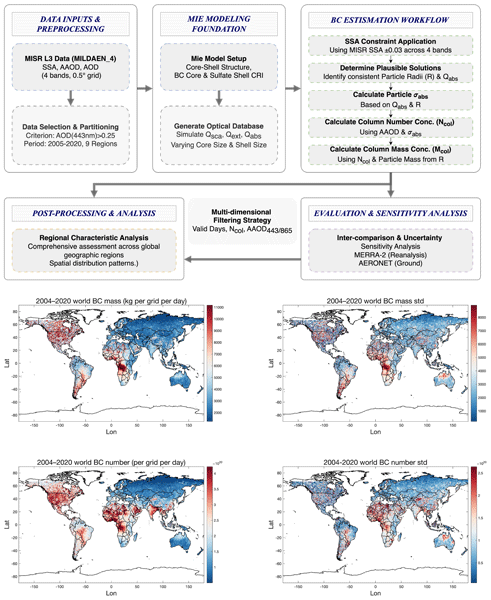
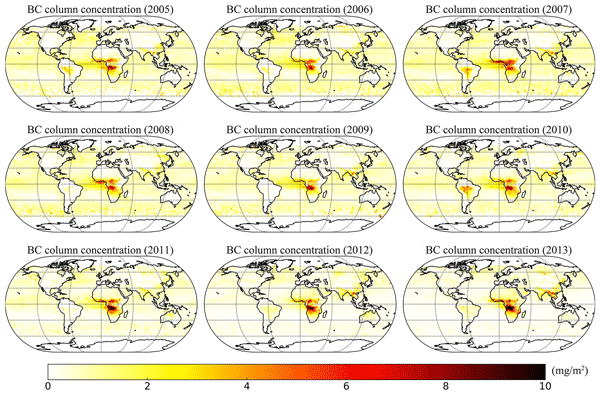
Black carbon (BC), emitted from fires, industry, and fossil fuels, warms the climate and worsens air quality. Due to complex physical and optical properties, BC remains poorly constrained. We combined satellite observations with physical models to build a daily, high-resolution, decadal global dataset of BC mass, number, size, and mixing details. The data contains both known sources and new hotspots. These results can support climate models, satellite products, and pollution mitigation.
Fan Lu, Kai Qin, Jason Blake Cohen, Qin He, Pravash Tiwari, Wei Hu, Chang Ye, Yanan Shan, Qing Xu, Shuo Wang, and Qiansi Tu
Atmos. Chem. Phys., 25, 5837–5856, https://doi.org/10.5194/acp-25-5837-2025, https://doi.org/10.5194/acp-25-5837-2025, 2025
Short summary
Short summary
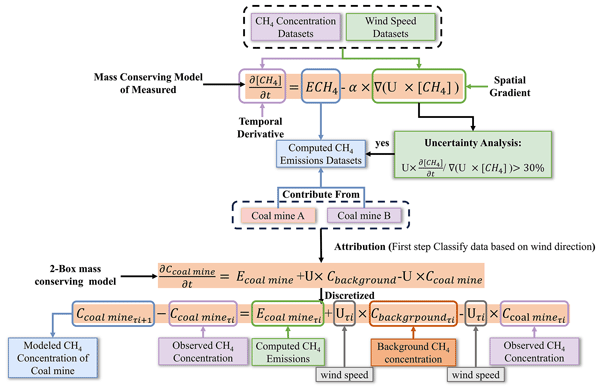
This work describes a field campaign and new fast emissions estimation approach to attribute methane from a large known and previously unknown coal mine in Shanxi, China. The emissions computed are shown to be larger than known oil and gas sources, indicating that methane from coal mines may play a larger role in the global methane budget. The results are found to be slightly larger than or similar to satellite observational campaigns over the same region.
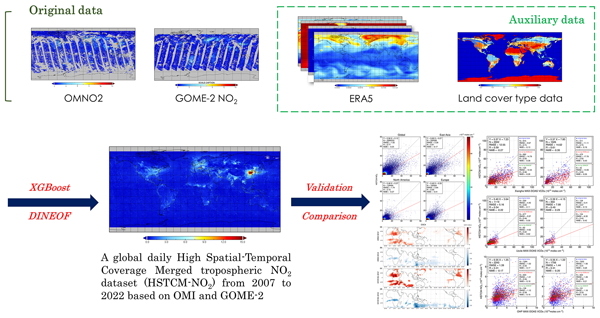
Kai Qin, Hongrui Gao, Xuancen Liu, Qin He, Pravash Tiwari, and Jason Blake Cohen
Earth Syst. Sci. Data, 16, 5287–5310, https://doi.org/10.5194/essd-16-5287-2024, https://doi.org/10.5194/essd-16-5287-2024, 2024
Short summary
Short summary
Satellites have brought new opportunities for monitoring atmospheric NO2, although the results are limited by clouds and other factors, resulting in missing data. This work proposes a new process to obtain reliable data products with high coverage by reconstructing the raw data from multiple satellites. The results are validated in terms of traditional methods as well as variance maximization and demonstrate a good ability to reproduce known polluted and clean areas around the world.
Wei Hu, Jason Blake Cohen, Lingxiao Lu, Bo Zheng, Pravash Tiwari, Simone Lolli, Andrea Garzelli, Jun Li, and Kai Qin
EGUsphere, https://doi.org/10.5194/egusphere-2026-4468, https://doi.org/10.5194/egusphere-2026-4468, 2026
This preprint is open for discussion and under review for Atmospheric Chemistry and Physics (ACP).
Short summary
Short summary
This study presents a perturbation experiment to investigate the impact of satellite data uncertainty which are not fully removed using a fast and physically-based divergence operator. The shape of the uncertainty distribution governs error propagation and thus effects the stability of derived fluxes. Coal-based emissions sources are reliably captured. These results provide a practical, uncertainty‑aware filter for satellite‑derived methane emissions.
Konstantin Kuznetsov, Oleg Dubovik, Anton Lopatin, Elena Lind, and David Fuertes
EGUsphere, https://doi.org/10.5194/egusphere-2026-5392, https://doi.org/10.5194/egusphere-2026-5392, 2026
This preprint is open for discussion and under review for Geoscientific Model Development (GMD).
Short summary
Short summary
We developed a new computer model to track gases and airborne particles using weather records, with future pollution monitoring in mind. Tests using controlled releases in Europe and North America showed agreement with observed pollution movement and amounts. A Saharan dust study showed moderate agreement with satellite estimates. The model provides a reproducible basis for combining satellite measurements and simulations.
Thomas F. Eck, Jeffrey S. Reid, Alexander Sinyuk, Pawan Gupta, Antti Arola, Ilya Slutsker, Brent N. Holben, Philippe Goloub, Oleg Dubovik, Joel S. Schafer, Mikhail G. Sorokin, Alexander Smirnov, Hongbin Yu, Dongchul Kim, Elena Lind, Jason Kraft, Elizabeth A. Reid, Aboubacry Diallo, Thierno Ndiaye, Africa Barreto, Sidi Baika, Lahouari Zeudmi-Sahraoui, Francisco Evora, Gael Dubois, Luc Blarel, Rachel T. Pinker, Isaac Abiodun Adimula, Jean Louis Rajot, Aliko Maman, Muguette Allegre, Cassandra Gaston, Peter Sealy, Edmund Blades, Rebecca Chewitt-Lucas, Ian Lau, David Barker, Adel Saad Alshihiween, Abdulrahman Alsaferan, Odbayar Mishigdorj, and Chogsom Jargalsaixan
EGUsphere, https://doi.org/10.5194/egusphere-2026-5531, https://doi.org/10.5194/egusphere-2026-5531, 2026
This preprint is open for discussion and under review for Atmospheric Chemistry and Physics (ACP).
Short summary
Short summary
The optical properties of airborne soil particles from major desert regions measured by ground based remote sensing retrievals are presented. The relative spectral absorption of these particles from the remote sensing data agree very well with absorption of soil dust samples measured in a laboratory. A large fraction of the optical effects were attributed to relatively small submicron sized dust particles which would also be more easily inhalable and therefore may impact human health.
Jianyu Zheng, Hongbin Yu, Chamara Rajapakse, Mian Chin, Michael Schulz, Yves Balkanski, Susanne E. Bauer, Huisheng Bian, Peter Colarco, Dongchul Kim, Ramiro Checa-Garcia, Yevgeny Derimian, Oleg Dubovik, Paul Ginoux, Zak Kipling, Jasper F. Kok, Harri Kokkola, Philippe Le Sager, Lei Li, Marianne Tronstad Lund, Gunnar Myhre, Hitoshi Matsui, Dirk J. L. Olivie, Samuel Remy, Oyvind Seland, Qianqian Song, Toshihiko Takemura, Qian Tan, Kostas Tsigaridis, Twan van Noije, David Winker, Bin Xie, Hua Zhang, Xindan Zhang, and Zhibo Zhang
EGUsphere, https://doi.org/10.5194/egusphere-2026-4322, https://doi.org/10.5194/egusphere-2026-4322, 2026
This preprint is open for discussion and under review for Atmospheric Chemistry and Physics (ACP).
Short summary
Short summary
Winds carry vast amounts of Saharan dust across the Atlantic Ocean, influencing climate, air quality, and ocean ecosystems. Within the Aerosol Comparisons between Observations and Models (AeroCom) project, we evaluated 17 numerical models against observations. Models deposit dust too quickly, so too little reaches the Caribbean. Better simulations require emitting larger particles, treating their non-spherical shapes, and capturing processes that keep dust aloft during transport.
Fiona Lippert, Andrew Gerald Barr, Marcos Herreras-Giralda, Masahiro Momoi, Fernando Rejano, Sha Lu, Otto Hasekamp, Oleg Dubovik, Edward Malina, and Jochen Landgraf
EGUsphere, https://doi.org/10.5194/egusphere-2026-4724, https://doi.org/10.5194/egusphere-2026-4724, 2026
Short summary
Short summary
Retrieving greenhouse gas concentrations from satellite measurements is computationally demanding. We show that machine learning can greatly accelerate this process while maintaining high accuracy and interpretability. Combining simplified atmospheric simulations with neural networks proved substantially more reliable than using machine learning alone. This hybrid approach could facilitate near-real time processing of rapidly increasing data volumes.
Xinqi Wei, Qin He, and Kai Qin
Int. Arch. Photogramm. Remote Sens. Spatial Inf. Sci., XLIX-B3-2026, 1477–1485, https://doi.org/10.5194/isprs-archives-XLIX-B3-2026-1477-2026, https://doi.org/10.5194/isprs-archives-XLIX-B3-2026-1477-2026, 2026
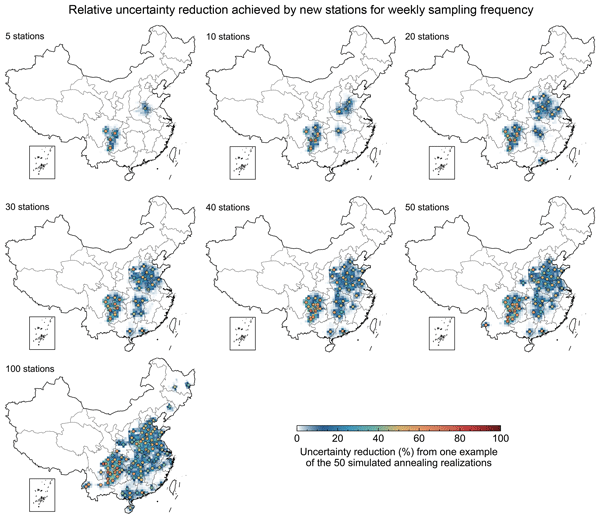
Huiru Zhong, Lu Shen, Fengwei Wan, Meng Qu, and Kai Qin
Atmos. Meas. Tech., 19, 4759–4778, https://doi.org/10.5194/amt-19-4759-2026, https://doi.org/10.5194/amt-19-4759-2026, 2026
Short summary
Short summary
Methane is a potent greenhouse gas, yet existing satellite and ground observations in China are too sparse to accurately quantify emissions, highlighting the need for an expanded ground network. Using Bayesian inversion and simulated annealing, we identify optimal locations for new sites. Results show that prioritizing stations in eastern and southwestern China would be most effective. Expanding the network with 50 stations could nearly double the current emission constraint capability.
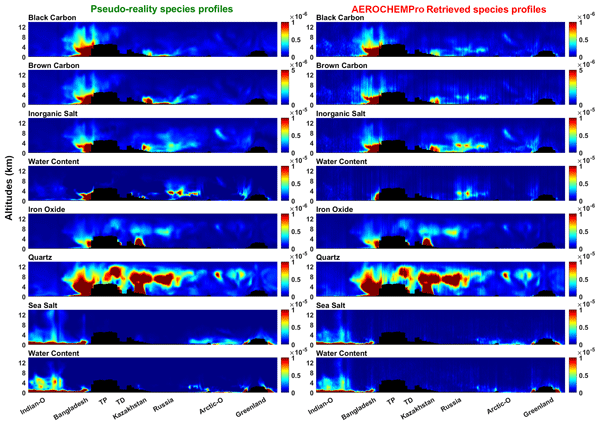
Abou Bakr Merdji, Juan Cuesta, Fazzal Qayyum, Anton Lopatin, Oleg Dubovik, Durgesh Nandan Piyush, Laaziz El Amraoui, Paolo Di Girolamo, and Charles R. Trepte
Atmos. Meas. Tech., 19, 4669–4701, https://doi.org/10.5194/amt-19-4669-2026, https://doi.org/10.5194/amt-19-4669-2026, 2026
Short summary
Short summary
This study presents a novel satellite approach to retrieve the vertical distribution of aerosol chemical species in the atmosphere. By combining spaceborne LIDAR and polarimetric observations, it distinguishes major natural and anthropogenic chemical particle species and their optical properties. Tests with realistic simulations show accurate retrieval of dust, pollution, and sea salt layers, enhancing global monitoring of aerosols relevant to air quality and climate.
Hongrui Gao, Qin He, Kai Qin, Jhoon Kim, Diego Loyola, Pravash Tiwari, Lingxiao Lu, and Jason Blake Cohen
Earth Syst. Sci. Data Discuss., https://doi.org/10.5194/essd-2026-443, https://doi.org/10.5194/essd-2026-443, 2026
Revised manuscript accepted for ESSD
Short summary
Short summary
There are always gaps in satellite records of air pollution because of factors such as clouds and operating conditions. We used a physics-aware deep learning method, producing a gapless 0.05° hourly dataset of tropospheric nitrogen dioxide over Asian pollution hotspots from 2019 to 2024. The dataset can capture sub-daily changes, revealing how traffic, industry, and clean-air policies shaped pollution, supporting health and environment studies.
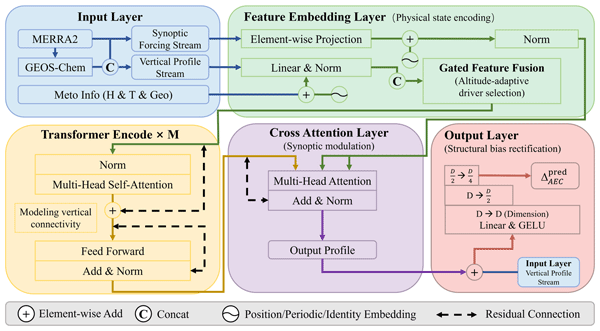
Jiajun Xiong, Yi Wang, Jun Wang, Yanyu Wang, Meng Zhou, Minghui Tao, Wenhui Dong, Jhoon Kim, and Lunche Wang
Atmos. Chem. Phys., 26, 8225–8253, https://doi.org/10.5194/acp-26-8225-2026, https://doi.org/10.5194/acp-26-8225-2026, 2026
Short summary
Short summary
Atmospheric models struggle to accurately map suspended particles at different altitudes. We developed an artificial intelligence tool using multiple data sources to correct these errors, generating precise three-dimensional maps. This approach successfully reduces biases across Asia and North America. Beyond simply correcting data, our tool helps scientists pinpoint physical flaws in existing models, directly guiding improvements for future climate and air quality research.
Luoyao Guan, Jason Blake Cohen, Shuo Wang, Pravash Tiwari, Zhewen Liu, Zhengqiang Li, and Kai Qin
Atmos. Chem. Phys., 26, 3107–3123, https://doi.org/10.5194/acp-26-3107-2026, https://doi.org/10.5194/acp-26-3107-2026, 2026
Short summary
Short summary
This study examines how black carbon particles from the coal industry influence regional climate by absorbing sunlight. Based on ground measurements and modeling, we find that conventional approaches, which oversimplify particle size and structure, which could leading a bias in terms of their warming effect. Our results highlight that more realistic particle characterizations are crucial for improving climate predictions in industrial regions.
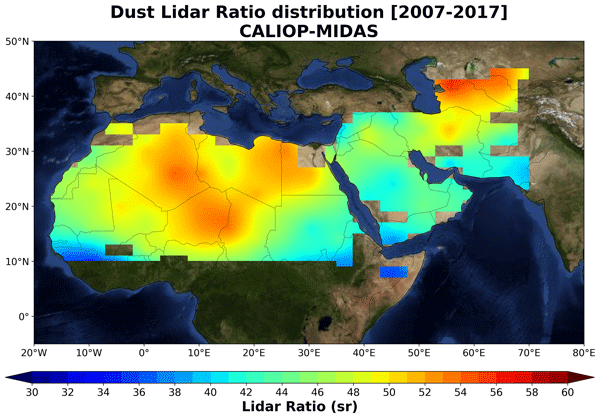
Anna Moustaka, Nikolaos Siomos, Stelios Kazadzis, Emmanouil Proestakis, Kalliopi Artemis Voudouri, Anton Lopatin, Oleg Dubovik, Kleareti Tourpali, Christos Zerefos, Vassilis Amiridis, and Antonis Gkikas
Atmos. Meas. Tech., 19, 1201–1225, https://doi.org/10.5194/amt-19-1201-2026, https://doi.org/10.5194/amt-19-1201-2026, 2026
Short summary
Short summary
North Africa and the Middle East are home to the world’s most active dust sources, but accurately monitoring airborne dust remains challenging. We combine active and passive satellite aerosol products to dynamically estimate dust lidar ratios over a 12-year period. The results reveal pronounced and physically meaningful regional variability, improving aerosol characterization and supporting climate and air-quality applications.
Bo Zheng, Jason Blake Cohen, Lingxiao Lu, Wei Hu, Pravash Tiwari, Simone Lolli, Andrea Garzelli, Hui Su, and Kai Qin
Atmos. Chem. Phys., 26, 1931–1946, https://doi.org/10.5194/acp-26-1931-2026, https://doi.org/10.5194/acp-26-1931-2026, 2026
Short summary
Short summary
This study provides TROPOMI (TROPOspheric Monitoring Instrument) with a new methane emission estimation method that can accurately identify emission sources. Our results generate non-negative emission datasets using objective selection and filtering methods. The results include lower minimum emission thresholds for all power grids and fewer false positives. The new method provides more robust emission quantification in the face of data uncertainty, going beyond traditional plume identification and background subtraction.
Zhewen Liu, Jason B. Cohen, Pravash Tiwari, Luoyao Guan, Shuo Wang, Zhengqiang Li, and Kai Qin
Earth Syst. Sci. Data, 18, 507–533, https://doi.org/10.5194/essd-18-507-2026, https://doi.org/10.5194/essd-18-507-2026, 2026
Short summary
Short summary
Black carbon (BC), emitted from fires, industry, and fossil fuels, warms the climate and worsens air quality. Due to complex physical and optical properties, BC remains poorly constrained. We combined satellite observations with physical models to build a daily, high-resolution, decadal global dataset of BC mass, number, size, and mixing details. The data contains both known sources and new hotspots. These results can support climate models, satellite products, and pollution mitigation.
Ye Feng, Jason Blake Cohen, Xiaolu Li, Lingxiao Lu, Zhewen Liu, Lei Wang, Jian Liu, and Kai Qin
EGUsphere, https://doi.org/10.5194/egusphere-2025-5890, https://doi.org/10.5194/egusphere-2025-5890, 2026
Short summary
Short summary
Carbon monoxide emissions in Central Asia's coal-heavy regions, like Xinjiang Province and Kazakhstan, are poorly tracked. Using satellite data and a new approach, this study maps daily emissions (2019–2024) while addressing measurement errors. About 69 % of estimates were unreliable. Underground coal fires, often ignored, emit as much CO as power plants. Emissions peaked in 2019, dropped until 2022, then rose again, linking to policy changes and economic shifts.
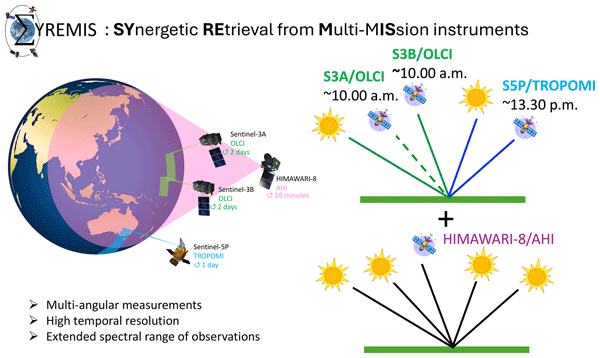
Pavel Litvinov, Cheng Chen, Oleg Dubovik, Siyao Zhai, Christian Matar, Chong Li, Anton Lopatin, David Fuertes, Tatyana Lapyonok, Lukas Bindreiter, Manuel Dornacher, Arthur Lehner, Alexandru Dandocsi, Daniele Gasbarra, and Christian Retscher
Atmos. Meas. Tech., 18, 7679–7716, https://doi.org/10.5194/amt-18-7679-2025, https://doi.org/10.5194/amt-18-7679-2025, 2025
Short summary
Short summary
Developed SYREMIS (SYnergetic REtrieval from Multi-MISsion instruments) approach is based on three main principles: (i) harmonization of the multi-instruments L1 measurements, (ii) their “weighting”, and (iii) optimization of the forward models and the retrieval setups. It substantially enhances aerosol and surface characterization from spaceborne measurements. The approach can be extended to future missions, including synergy with multi-angular, multi-spectral, and polarimetric measurements.
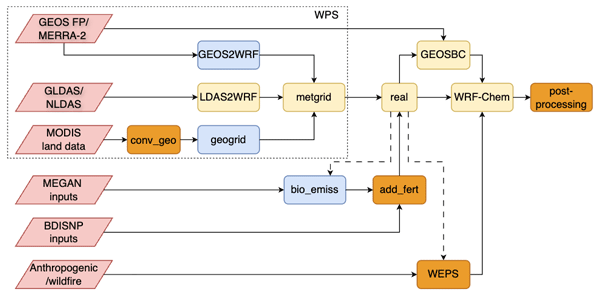
Huanxin Zhang, Jun Wang, Nathan Janechek, Cui Ge, Meng Zhou, Lorena Castro García, Tong Sha, Yanyu Wang, Weizhi Deng, Zhixin Xue, Chengzhe Li, Lakhima Chutia, Yi Wang, Sebastian Val, James L. McDuffie, Sina Hasheminassab, Scott E. Gluck, David J. Diner, Peter R. Colarco, Arlindo M. da Silva, and Jhoon Kim
Geosci. Model Dev., 18, 9061–9099, https://doi.org/10.5194/gmd-18-9061-2025, https://doi.org/10.5194/gmd-18-9061-2025, 2025
Short summary
Short summary
We present the development of the Unified Inputs (of initial and boundary conditions) for WRF (Weather Research and Forecasting)-Chem (UI-WRF-Chem) framework to support the Multi-Angle Imager for Aerosols (MAIA) satellite mission. Major updates include improving dust size distribution in the chemical boundary conditions, updating land surface properties using recent available satellite data and enhancing the representation of soil NOx emissions. We demonstrate subsequent model improvements over several of the MAIA target areas.
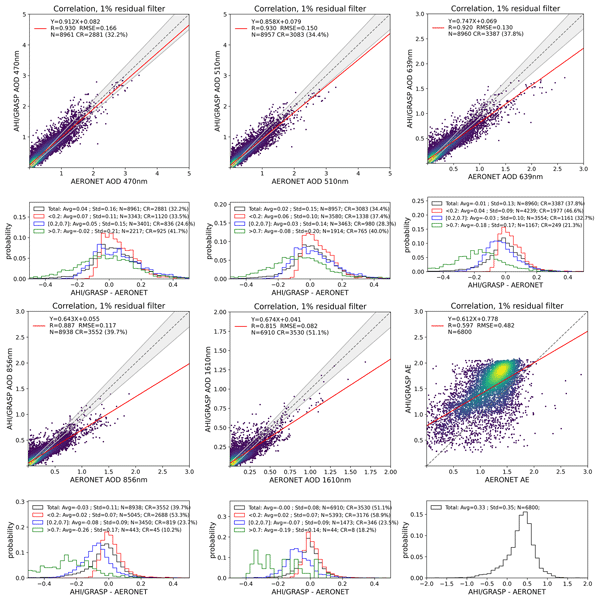
Chong Li, Oleg Dubovik, Jing Li, David Fuertes, Anton Lopatin, Pavel Litvinov, Tatsiana Lapyonok, Lukas Bindreiter, Christian Matar, Yiqi Chu, and Wangshu Tan
Atmos. Meas. Tech., 18, 6609–6643, https://doi.org/10.5194/amt-18-6609-2025, https://doi.org/10.5194/amt-18-6609-2025, 2025
Short summary
Short summary
Using observational data from Japan's geostationary satellite – Himawari-8 , this study improved how we track air pollution (aerosols) across East Asia and the Western Pacific. By applying an advanced aerosol retrieval algorithm called GRASP, we were able to more accurately observe both atmospheric and ground conditions and their dynamics over time. The results closely matched ground-based measurements and showed potential for even better monitoring when combined with ground-based lidar data.
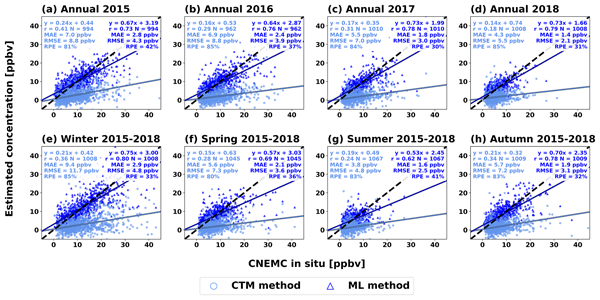
Zachary Watson, Can Li, Fei Liu, Sean W. Freeman, Huanxin Zhang, Jun Wang, and Shan-Hu Lee
Atmos. Chem. Phys., 25, 13527–13545, https://doi.org/10.5194/acp-25-13527-2025, https://doi.org/10.5194/acp-25-13527-2025, 2025
Short summary
Short summary
Air pollutants like sulfur dioxide impact human health and the environment. Our work estimated surface sulfur dioxide concentrations from satellite data over eastern China. One method used atmospheric models, and another method used machine learning. We found that compared to measurements from an air quality monitoring network, both methods accurately captured the locations of sulfur dioxide, but the machine learning method was generally much more accurate in the estimated concentrations.
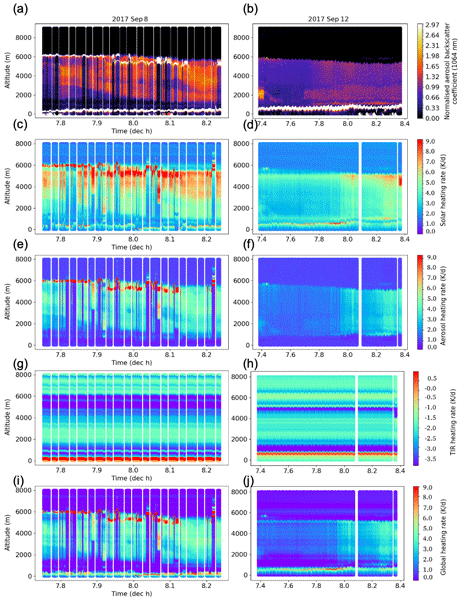
Mégane Ventura, Fabien Waquet, Isabelle Chiapello, Gérard Brogniez, Frédéric Parol, Frédérique Auriol, Rodrigue Loisil, Cyril Delegove, Luc Blarel, Oleg Dubovik, Marc Mallet, Cyrille Flamant, and Paola Formenti
Atmos. Meas. Tech., 18, 4005–4024, https://doi.org/10.5194/amt-18-4005-2025, https://doi.org/10.5194/amt-18-4005-2025, 2025
Short summary
Short summary
Biomass-burning aerosols (BBAs) from Central Africa are transported above stratocumulus clouds. The absorption of solar energy by aerosols induces warming, altering the cloud dynamics. We developed an approach that combines polarimeter and lidar to quantify this. This methodology is assessed during the AEROCLO-sA (AErosol RadiatiOn and CLOud in Southern Africa) campaign. To validate it, we used irradiance measurements acquired during aircraft spiral descents. A major perspective is the generalization of this method to the global level.
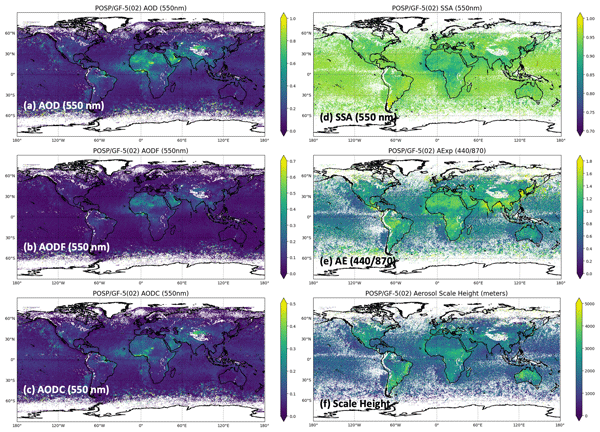
Cheng Chen, Xuefeng Lei, Zhenhai Liu, Haorang Gu, Oleg Dubovik, Pavel Litvinov, David Fuertes, Yujia Cao, Haixiao Yu, Guangfeng Xiang, Binghuan Meng, Zhenwei Qiu, Xiaobing Sun, Jin Hong, and Zhengqiang Li
Earth Syst. Sci. Data, 17, 3497–3519, https://doi.org/10.5194/essd-17-3497-2025, https://doi.org/10.5194/essd-17-3497-2025, 2025
Short summary
Short summary
Particulate Observing Scanning Polarization (POSP) on board the second GaoFen-5 (GF-5(02)) satellite is the first space-borne ultraviolet–visible–near-infrared–shortwave-infrared (UV–VIS–NIR–SWIR) multi-spectral cross-track scanning polarimeter. Due to its wide spectral range and polarimetric capabilities, POSP measurements provide rich information for aerosol and surface characterization. We present the detailed aerosol/surface products generated from POSP's first 18 months of operation, including spectral aerosol optical depth, aerosol-size-/absorption-related properties, surface black-sky and white-sky albedos, etc.
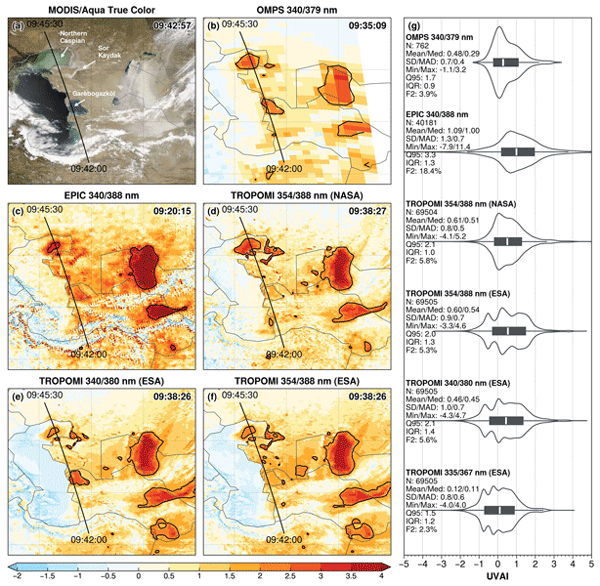
Xin Xi, Jun Wang, Zhendong Lu, Andrew M. Sayer, Jaehwa Lee, Robert C. Levy, Yujie Wang, Alexei Lyapustin, Hongqing Liu, Istvan Laszlo, Changwoo Ahn, Omar Torres, Sabur Abdullaev, James Limbacher, and Ralph A. Kahn
Atmos. Chem. Phys., 25, 7403–7429, https://doi.org/10.5194/acp-25-7403-2025, https://doi.org/10.5194/acp-25-7403-2025, 2025
Short summary
Short summary
The Aralkum Desert is challenging for aerosol retrieval due to its bright, heterogeneous, and dynamic surfaces and the lack of in situ constraints on aerosol properties. The performance and consistency of satellite algorithms in observing Aralkum-generated saline dust remain unknown. This study compares multisensor UVAI (ultraviolet aerosol index), AOD (aerosol optical depth), and ALH (aerosol layer height) products and reveals inconsistencies and potential biases over the Aral Sea basin.
Yuyang Chang, Qiaoyun Hu, Philippe Goloub, Thierry Podvin, Igor Veselovskii, Fabrice Ducos, Gaël Dubois, Masanori Saito, Anton Lopatin, Oleg Dubovik, and Cheng Chen
Atmos. Chem. Phys., 25, 6787–6821, https://doi.org/10.5194/acp-25-6787-2025, https://doi.org/10.5194/acp-25-6787-2025, 2025
Short summary
Short summary
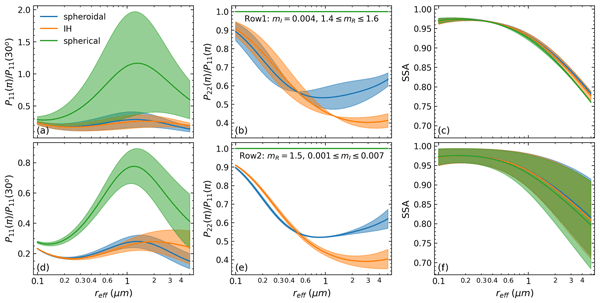
Our study retrieved dust aerosol microphysical properties from lidar measurements using different scattering models. Numeric simulations and real data applications revealed the importance of considering depolarization measurements and the superiority of the irregular–hexahedral model in the retrieval of dust aerosols from lidar measurements.
Fan Lu, Kai Qin, Jason Blake Cohen, Qin He, Pravash Tiwari, Wei Hu, Chang Ye, Yanan Shan, Qing Xu, Shuo Wang, and Qiansi Tu
Atmos. Chem. Phys., 25, 5837–5856, https://doi.org/10.5194/acp-25-5837-2025, https://doi.org/10.5194/acp-25-5837-2025, 2025
Short summary
Short summary
This work describes a field campaign and new fast emissions estimation approach to attribute methane from a large known and previously unknown coal mine in Shanxi, China. The emissions computed are shown to be larger than known oil and gas sources, indicating that methane from coal mines may play a larger role in the global methane budget. The results are found to be slightly larger than or similar to satellite observational campaigns over the same region.
Zhenyu Zhang, Jing Li, Huizheng Che, Yueming Dong, Oleg Dubovik, Thomas Eck, Pawan Gupta, Brent Holben, Jhoon Kim, Elena Lind, Trailokya Saud, Sachchida Nand Tripathi, and Tong Ying
Atmos. Chem. Phys., 25, 4617–4637, https://doi.org/10.5194/acp-25-4617-2025, https://doi.org/10.5194/acp-25-4617-2025, 2025
Short summary
Short summary
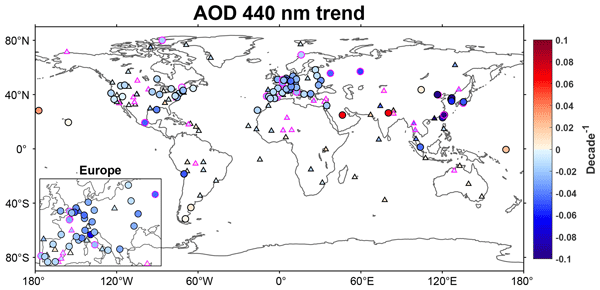
We used ground-based remote sensing data from the Aerosol Robotic Network to examine long-term trends in aerosol characteristics. We found aerosol loadings generally decreased globally, and aerosols became more scattering. These changes are closely related to variations in aerosol compositions, such as decreased anthropogenic emissions over East Asia, Europe, and North America; increased anthropogenic sources over northern India; and increased dust activity over the Arabian Peninsula.
Lingxiao Lu, Jason Blake Cohen, Kai Qin, Xiaolu Li, and Qin He
Atmos. Chem. Phys., 25, 2291–2309, https://doi.org/10.5194/acp-25-2291-2025, https://doi.org/10.5194/acp-25-2291-2025, 2025
Short summary
Short summary
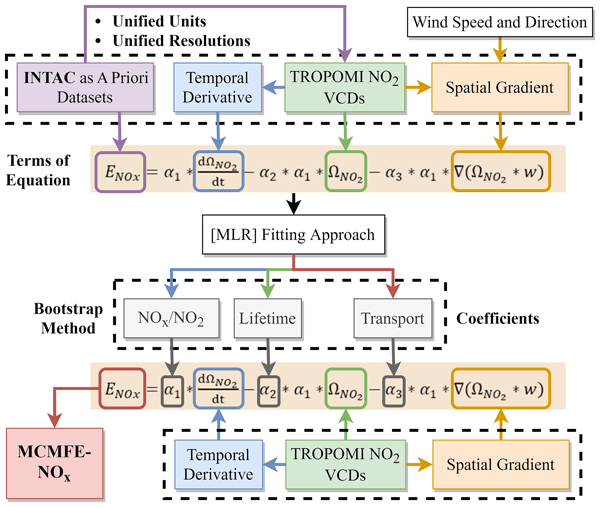
This study applies an approach that assimilates NO2 vertical column densities from TROPOMI in a mass-conserving manner and inverts daily NOx emissions, presented over rapidly changing regions in China. Source attribution is quantified by the local thermodynamics of the combustion temperature (NOx/NO2). Emission results identify sources which do not exist in the a priori datasets, especially medium industrial sources located next to the Yangtze River.
Hyerim Kim, Xi Chen, Jun Wang, Zhendong Lu, Meng Zhou, Gregory R. Carmichael, Sang Seo Park, and Jhoon Kim
Atmos. Meas. Tech., 18, 327–349, https://doi.org/10.5194/amt-18-327-2025, https://doi.org/10.5194/amt-18-327-2025, 2025
Short summary
Short summary
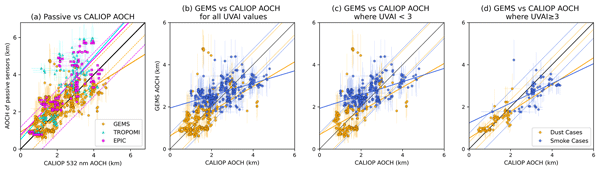
We compare passive aerosol layer height (ALH) retrievals from the Earth Polychromatic Imaging Camera (EPIC), TROPOspheric Monitoring Instrument (TROPOMI), and Geostationary Environment Monitoring Spectrometer (GEMS) with lidar. GEMS shows a lower correlation (R = 0.64) than EPIC and TROPOMI (R > 0.7) but with minimal bias (0.1 km vs. overestimated by ~0.8 km). GEMS performance is improved for an ultraviolet aerosol index ≥ 3. EPIC and GEMS ALH diurnal variation differs slightly.
Kai Qin, Hongrui Gao, Xuancen Liu, Qin He, Pravash Tiwari, and Jason Blake Cohen
Earth Syst. Sci. Data, 16, 5287–5310, https://doi.org/10.5194/essd-16-5287-2024, https://doi.org/10.5194/essd-16-5287-2024, 2024
Short summary
Short summary
Satellites have brought new opportunities for monitoring atmospheric NO2, although the results are limited by clouds and other factors, resulting in missing data. This work proposes a new process to obtain reliable data products with high coverage by reconstructing the raw data from multiple satellites. The results are validated in terms of traditional methods as well as variance maximization and demonstrate a good ability to reproduce known polluted and clean areas around the world.
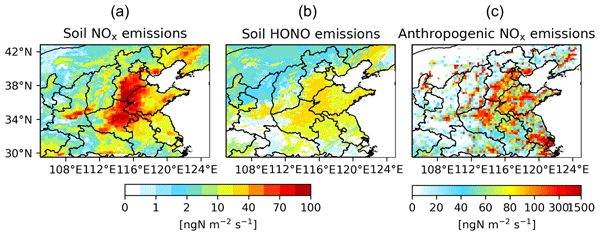
Tong Sha, Siyu Yang, Qingcai Chen, Liangqing Li, Xiaoyan Ma, Yan-Lin Zhang, Zhaozhong Feng, K. Folkert Boersma, and Jun Wang
Atmos. Chem. Phys., 24, 8441–8455, https://doi.org/10.5194/acp-24-8441-2024, https://doi.org/10.5194/acp-24-8441-2024, 2024
Short summary
Short summary
Using an updated soil reactive nitrogen emission scheme in the Unified Inputs for Weather Research and Forecasting coupled with Chemistry (UI-WRF-Chem) model, we investigate the role of soil NO and HONO (Nr) emissions in air quality and temperature in North China. Contributions of soil Nr emissions to O3 and secondary pollutants are revealed, exceeding effects of soil NOx or HONO emission. Soil Nr emissions play an important role in mitigating O3 pollution and addressing climate change.
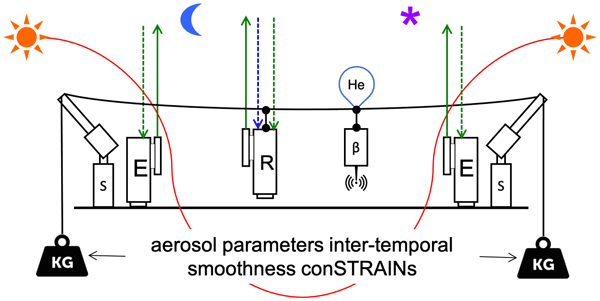
Anton Lopatin, Oleg Dubovik, Georgiy Stenchikov, Ellsworth J. Welton, Illia Shevchenko, David Fuertes, Marcos Herreras-Giralda, Tatsiana Lapyonok, and Alexander Smirnov
Atmos. Meas. Tech., 17, 4445–4470, https://doi.org/10.5194/amt-17-4445-2024, https://doi.org/10.5194/amt-17-4445-2024, 2024
Short summary
Short summary
We compare aerosol properties over the King Abdullah University of Science and Technology campus using Generalized Retrieval of Aerosol and Surface Properties (GRASP) and the Micro-Pulse Lidar Network (MPLNET). We focus on the impact of different aerosol retrieval assumptions on daytime and nighttime retrievals and analyze seasonal variability in aerosol properties, aiding in understanding aerosol behavior and improving retrieval. Our work has implications for climate and public health.
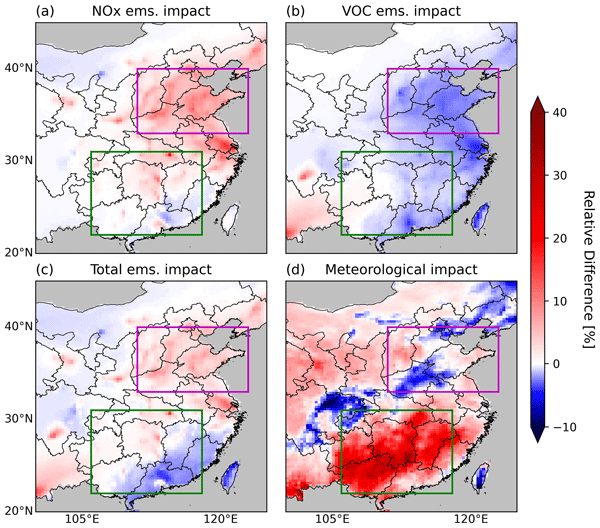
Zhendong Lu, Jun Wang, Yi Wang, Daven K. Henze, Xi Chen, Tong Sha, and Kang Sun
Atmos. Chem. Phys., 24, 7793–7813, https://doi.org/10.5194/acp-24-7793-2024, https://doi.org/10.5194/acp-24-7793-2024, 2024
Short summary
Short summary
In contrast with past work showing that the reduction of emissions was the dominant factor for the nationwide increase of surface O3 during the lockdown in China, this study finds that the variation in meteorology (temperature and other parameters) plays a more important role. This result is obtained through sensitivity simulations using a chemical transport model constrained by satellite (TROPOMI) data and calibrated with surface observations.
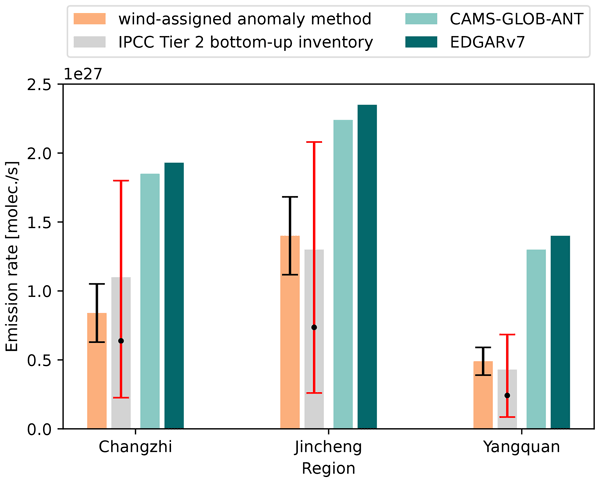
Qiansi Tu, Frank Hase, Kai Qin, Jason Blake Cohen, Farahnaz Khosrawi, Xinrui Zou, Matthias Schneider, and Fan Lu
Atmos. Chem. Phys., 24, 4875–4894, https://doi.org/10.5194/acp-24-4875-2024, https://doi.org/10.5194/acp-24-4875-2024, 2024
Short summary
Short summary
Four-year satellite observations of XCH4 are used to derive CH4 emissions in three regions of China’s coal-rich Shanxi province. The wind-assigned anomalies for two opposite wind directions are calculated, and the estimated emission rates are comparable to the current bottom-up inventory but lower than the CAMS and EDGAR inventories. This research enhances the understanding of emissions in Shanxi and supports climate mitigation strategies by validating emission inventories.
Lieuwe G. Tilstra, Martin de Graaf, Victor J. H. Trees, Pavel Litvinov, Oleg Dubovik, and Piet Stammes
Atmos. Meas. Tech., 17, 2235–2256, https://doi.org/10.5194/amt-17-2235-2024, https://doi.org/10.5194/amt-17-2235-2024, 2024
Short summary
Short summary
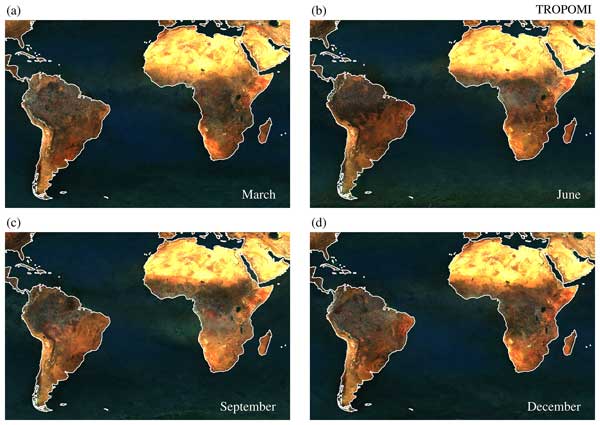
This paper introduces a new surface albedo climatology of directionally dependent Lambertian-equivalent reflectivity (DLER) observed by TROPOMI on the Sentinel-5 Precursor satellite. The database contains monthly fields of DLER for 21 wavelength bands at a relatively high spatial resolution of 0.125 by 0.125 degrees. The anisotropy of the surface reflection is handled by parameterisation of the viewing angle dependence.
Otto Hasekamp, Pavel Litvinov, Guangliang Fu, Cheng Chen, and Oleg Dubovik
Atmos. Meas. Tech., 17, 1497–1525, https://doi.org/10.5194/amt-17-1497-2024, https://doi.org/10.5194/amt-17-1497-2024, 2024
Short summary
Short summary
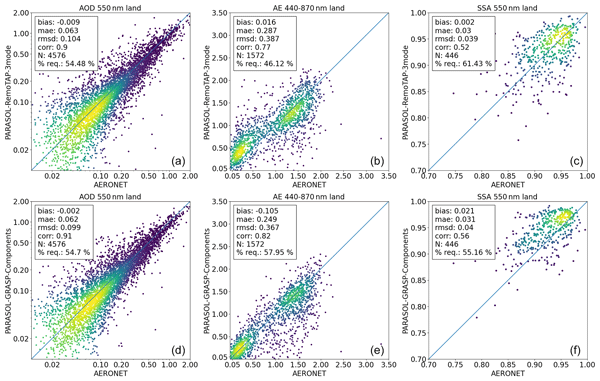
Aerosols are particles in the atmosphere that cool the climate by reflecting and absorbing sunlight (direct effect) and changing cloud properties (indirect effect). The scale of aerosol cooling is uncertain, hampering accurate climate predictions. We compare two algorithms for the retrieval of aerosol properties from multi-angle polarimetric measurements: Generalized Retrieval of Atmosphere and Surface Properties (GRASP) and Remote sensing of Trace gas and Aerosol Products (RemoTAP).
Kai Qin, Wei Hu, Qin He, Fan Lu, and Jason Blake Cohen
Atmos. Chem. Phys., 24, 3009–3028, https://doi.org/10.5194/acp-24-3009-2024, https://doi.org/10.5194/acp-24-3009-2024, 2024
Short summary
Short summary
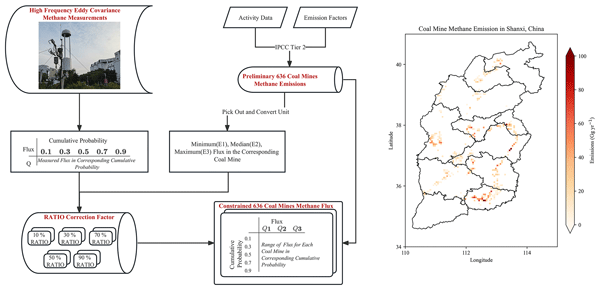
We compute CH4 emissions and uncertainty on a mine-by-mine basis, including underground, overground, and abandoned mines. Mine-by-mine gas and flux data and 30 min observations from a flux tower located next to a mine shaft are integrated. The observed variability and bias correction are propagated over the emissions dataset, demonstrating that daily observations may not cover the range of variability. Comparisons show both an emissions magnitude and spatial mismatch with current inventories.
Jianping Guo, Jian Zhang, Jia Shao, Tianmeng Chen, Kaixu Bai, Yuping Sun, Ning Li, Jingyan Wu, Rui Li, Jian Li, Qiyun Guo, Jason B. Cohen, Panmao Zhai, Xiaofeng Xu, and Fei Hu
Earth Syst. Sci. Data, 16, 1–14, https://doi.org/10.5194/essd-16-1-2024, https://doi.org/10.5194/essd-16-1-2024, 2024
Short summary
Short summary
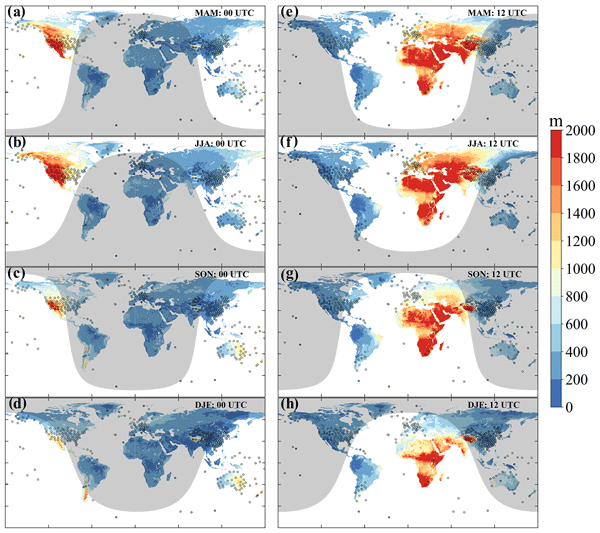
A global continental merged high-resolution (PBLH) dataset with good accuracy compared to radiosonde is generated via machine learning algorithms, covering the period from 2011 to 2021 with 3-hour and 0.25º resolution in space and time. The machine learning model takes parameters derived from the ERA5 reanalysis and GLDAS product as input, with PBLH biases between radiosonde and ERA5 as the learning targets. The merged PBLH is the sum of the predicted PBLH bias and the PBLH from ERA5.
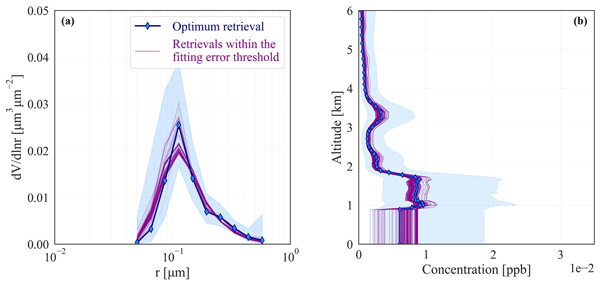
Alexandra Tsekeri, Anna Gialitaki, Marco Di Paolantonio, Davide Dionisi, Gian Luigi Liberti, Alnilam Fernandes, Artur Szkop, Aleksander Pietruczuk, Daniel Pérez-Ramírez, Maria J. Granados Muñoz, Juan Luis Guerrero-Rascado, Lucas Alados-Arboledas, Diego Bermejo Pantaleón, Juan Antonio Bravo-Aranda, Anna Kampouri, Eleni Marinou, Vassilis Amiridis, Michael Sicard, Adolfo Comerón, Constantino Muñoz-Porcar, Alejandro Rodríguez-Gómez, Salvatore Romano, Maria Rita Perrone, Xiaoxia Shang, Mika Komppula, Rodanthi-Elisavet Mamouri, Argyro Nisantzi, Diofantos Hadjimitsis, Francisco Navas-Guzmán, Alexander Haefele, Dominika Szczepanik, Artur Tomczak, Iwona S. Stachlewska, Livio Belegante, Doina Nicolae, Kalliopi Artemis Voudouri, Dimitris Balis, Athena A. Floutsi, Holger Baars, Linda Miladi, Nicolas Pascal, Oleg Dubovik, and Anton Lopatin
Atmos. Meas. Tech., 16, 6025–6050, https://doi.org/10.5194/amt-16-6025-2023, https://doi.org/10.5194/amt-16-6025-2023, 2023
Short summary
Short summary
EARLINET/ACTRIS organized an intensive observational campaign in May 2020, with the objective of monitoring the atmospheric state over Europe during the COVID-19 lockdown and relaxation period. The work presented herein focuses on deriving a common methodology for applying a synergistic retrieval that utilizes the network's ground-based passive and active remote sensing measurements and deriving the aerosols from anthropogenic activities over Europe.
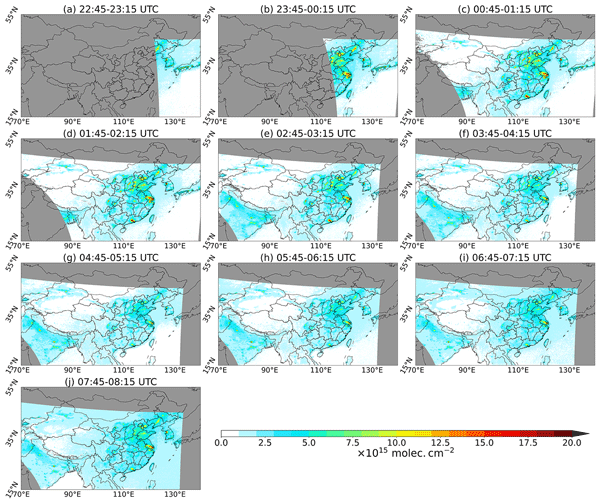
Yuhang Zhang, Jintai Lin, Jhoon Kim, Hanlim Lee, Junsung Park, Hyunkee Hong, Michel Van Roozendael, Francois Hendrick, Ting Wang, Pucai Wang, Qin He, Kai Qin, Yongjoo Choi, Yugo Kanaya, Jin Xu, Pinhua Xie, Xin Tian, Sanbao Zhang, Shanshan Wang, Siyang Cheng, Xinghong Cheng, Jianzhong Ma, Thomas Wagner, Robert Spurr, Lulu Chen, Hao Kong, and Mengyao Liu
Atmos. Meas. Tech., 16, 4643–4665, https://doi.org/10.5194/amt-16-4643-2023, https://doi.org/10.5194/amt-16-4643-2023, 2023
Short summary
Short summary
Our tropospheric NO2 vertical column density product with high spatiotemporal resolution is based on the Geostationary Environment Monitoring Spectrometer (GEMS) and named POMINO–GEMS. Strong hotspot signals and NO2 diurnal variations are clearly seen. Validations with multiple satellite products and ground-based, mobile car and surface measurements exhibit the overall great performance of the POMINO–GEMS product, indicating its capability for application in environmental studies.
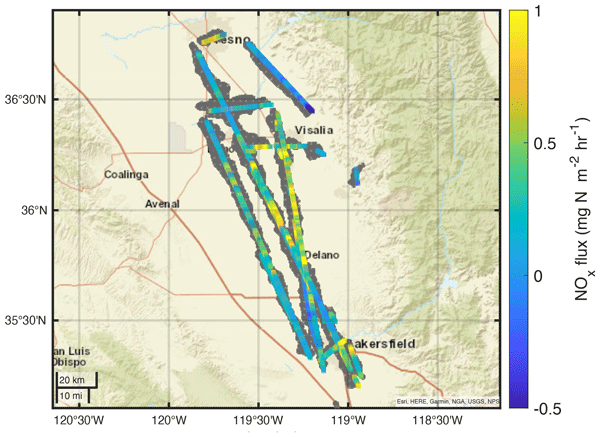
Qindan Zhu, Bryan Place, Eva Y. Pfannerstill, Sha Tong, Huanxin Zhang, Jun Wang, Clara M. Nussbaumer, Paul Wooldridge, Benjamin C. Schulze, Caleb Arata, Anthony Bucholtz, John H. Seinfeld, Allen H. Goldstein, and Ronald C. Cohen
Atmos. Chem. Phys., 23, 9669–9683, https://doi.org/10.5194/acp-23-9669-2023, https://doi.org/10.5194/acp-23-9669-2023, 2023
Short summary
Short summary
Nitrogen oxide (NOx) is a hazardous air pollutant, and it is the precursor of short-lived climate forcers like tropospheric ozone and aerosol particles. While NOx emissions from transportation has been strictly regulated, soil NOx emissions are overlooked. We use the airborne flux measurements to observe NOx emissions from highways and urban and cultivated soil land cover types. We show non-negligible soil NOx emissions, which are significantly underestimated in current model simulations.
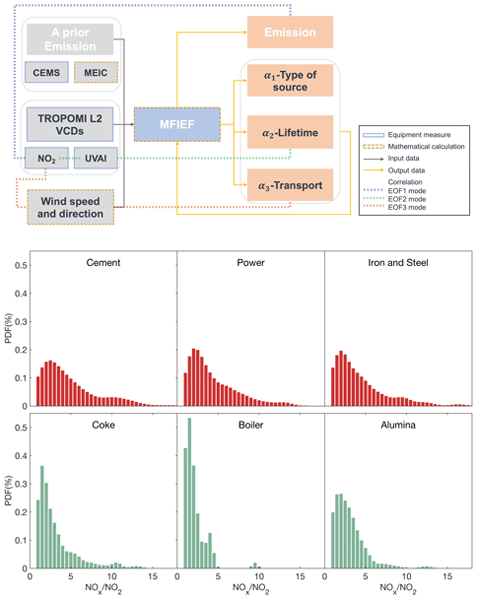
Xiaolu Li, Jason Blake Cohen, Kai Qin, Hong Geng, Xiaohui Wu, Liling Wu, Chengli Yang, Rui Zhang, and Liqin Zhang
Atmos. Chem. Phys., 23, 8001–8019, https://doi.org/10.5194/acp-23-8001-2023, https://doi.org/10.5194/acp-23-8001-2023, 2023
Short summary
Short summary
Remotely sensed NO2 and surface NOx are combined with a mathematical method to estimate daily NOx emissions. The results identify new sources and improve existing estimates. The estimation is driven by three flexible factors: thermodynamics of combustion, chemical loss, and atmospheric transport. The thermodynamic term separates power, iron, and cement from coking, boilers, and aluminum. This work finds three causes for the extremes: emissions, UV radiation, and transport.
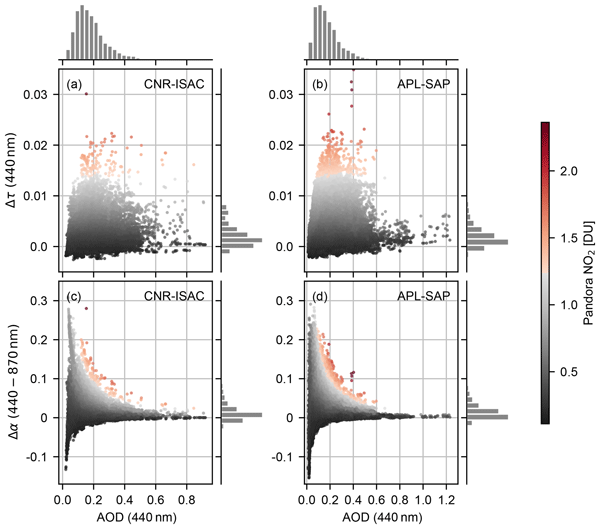
Theano Drosoglou, Ioannis-Panagiotis Raptis, Massimo Valeri, Stefano Casadio, Francesca Barnaba, Marcos Herreras-Giralda, Anton Lopatin, Oleg Dubovik, Gabriele Brizzi, Fabrizio Niro, Monica Campanelli, and Stelios Kazadzis
Atmos. Meas. Tech., 16, 2989–3014, https://doi.org/10.5194/amt-16-2989-2023, https://doi.org/10.5194/amt-16-2989-2023, 2023
Short summary
Short summary
Aerosol optical properties derived from sun photometers depend on the optical depth of trace gases absorbing solar radiation at specific spectral ranges. Various networks use satellite-based climatologies to account for this or neglect their effect. In this work, we evaluate the effect of NO2 absorption in aerosol retrievals from AERONET and SKYNET over two stations in Rome, Italy, with relatively high NO2 spatiotemporal variations, using NO2 data from the Pandora network and the TROPOMI sensor.
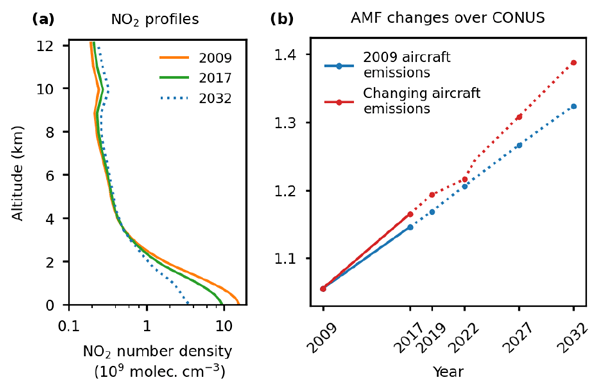
Ruijun Dang, Daniel J. Jacob, Viral Shah, Sebastian D. Eastham, Thibaud M. Fritz, Loretta J. Mickley, Tianjia Liu, Yi Wang, and Jun Wang
Atmos. Chem. Phys., 23, 6271–6284, https://doi.org/10.5194/acp-23-6271-2023, https://doi.org/10.5194/acp-23-6271-2023, 2023
Short summary
Short summary
We use the GEOS-Chem model to better understand the magnitude and trend in free tropospheric NO2 over the contiguous US. Model underestimate of background NO2 is largely corrected by considering aerosol nitrate photolysis. Increase in aircraft emissions affects satellite retrievals by altering the NO2 shape factor, and this effect is expected to increase in future. We show the importance of properly accounting for the free tropospheric background in interpreting NO2 observations from space.
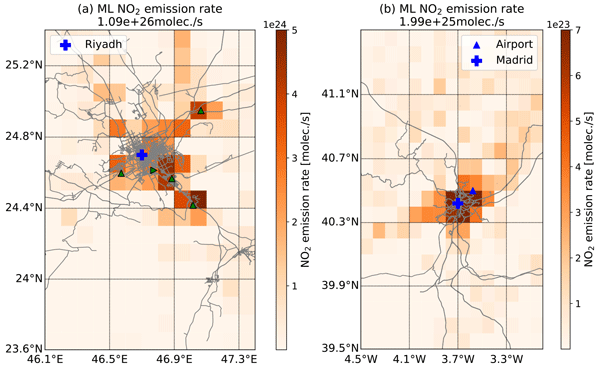
Qiansi Tu, Frank Hase, Zihan Chen, Matthias Schneider, Omaira García, Farahnaz Khosrawi, Shuo Chen, Thomas Blumenstock, Fang Liu, Kai Qin, Jason Cohen, Qin He, Song Lin, Hongyan Jiang, and Dianjun Fang
Atmos. Meas. Tech., 16, 2237–2262, https://doi.org/10.5194/amt-16-2237-2023, https://doi.org/10.5194/amt-16-2237-2023, 2023
Short summary
Short summary
Four-year TROPOMI observations are used to derive tropospheric NO2 emissions in two mega(cities) with high anthropogenic activity. Wind-assigned anomalies are calculated, and the emission rates and spatial patterns are estimated based on a machine learning algorithm. The results are in reasonable agreement with previous studies and the inventory. Our method is quite robust and can be used as a simple method to estimate the emissions of NO2 as well as other gases in other regions.

Jing Wei, Zhanqing Li, Jun Wang, Can Li, Pawan Gupta, and Maureen Cribb
Atmos. Chem. Phys., 23, 1511–1532, https://doi.org/10.5194/acp-23-1511-2023, https://doi.org/10.5194/acp-23-1511-2023, 2023
Short summary
Short summary
This study estimated the daily seamless 10 km ambient gaseous pollutants (NO2, SO2, and CO) across China using machine learning with extensive input variables measured on monitors, satellites, and models. Our dataset yields a high data quality via cross-validation at varying spatiotemporal scales and outperforms most previous related studies, making it most helpful to future (especially short-term) air pollution and environmental health-related studies.
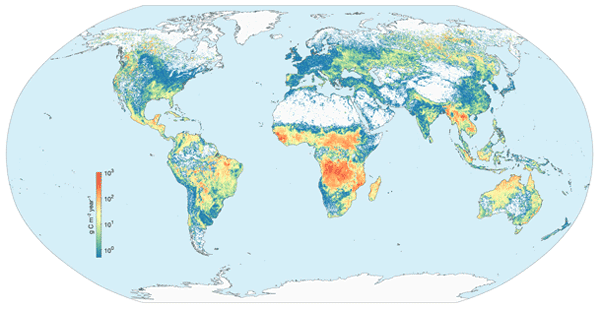
Gonzalo A. Ferrada, Meng Zhou, Jun Wang, Alexei Lyapustin, Yujie Wang, Saulo R. Freitas, and Gregory R. Carmichael
Geosci. Model Dev., 15, 8085–8109, https://doi.org/10.5194/gmd-15-8085-2022, https://doi.org/10.5194/gmd-15-8085-2022, 2022
Short summary
Short summary
The smoke from fires is composed of different compounds that interact with the atmosphere and can create poor air-quality episodes. Here, we present a new fire inventory based on satellite observations from the Visible Infrared Imaging Radiometer Suite (VIIRS). We named this inventory the VIIRS-based Fire Emission Inventory (VFEI). Advantages of VFEI are its high resolution (~500 m) and that it provides information for many species. VFEI is publicly available and has provided data since 2012.
Milagros E. Herrera, Oleg Dubovik, Benjamin Torres, Tatyana Lapyonok, David Fuertes, Anton Lopatin, Pavel Litvinov, Cheng Chen, Jose Antonio Benavent-Oltra, Juan L. Bali, and Pablo R. Ristori
Atmos. Meas. Tech., 15, 6075–6126, https://doi.org/10.5194/amt-15-6075-2022, https://doi.org/10.5194/amt-15-6075-2022, 2022
Short summary
Short summary
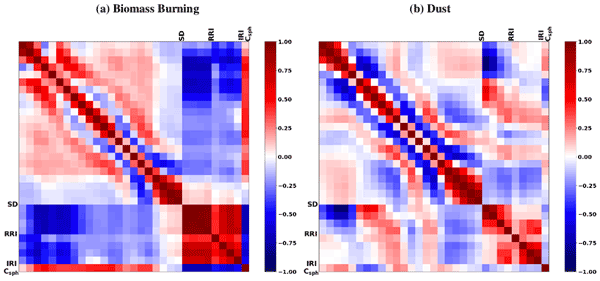
This study deals with the dynamic error estimates of the aerosol-retrieved properties by the GRASP algorithm, which are provided for directly retrieved and derived parameters. Moreover, GRASP provides full covariance matrices that appear to be a useful approach for optimizing observation schemes and retrieval set-ups. The validation of the retrieved dynamic error estimates is done through real and synthetic measurements using sun photometer and lidar observations.
Alireza Moallemi, Rob L. Modini, Tatyana Lapyonok, Anton Lopatin, David Fuertes, Oleg Dubovik, Philippe Giaccari, and Martin Gysel-Beer
Atmos. Meas. Tech., 15, 5619–5642, https://doi.org/10.5194/amt-15-5619-2022, https://doi.org/10.5194/amt-15-5619-2022, 2022
Short summary
Short summary
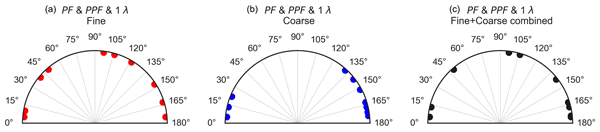
Aerosol properties (size distributions, refractive indices) can be retrieved from in situ, angularly resolved light scattering measurements performed with polar nephelometers. We apply an established framework to assess the aerosol property retrieval potential for different instrument configurations, target applications, and assumed prior knowledge. We also demonstrate how a reductive greedy algorithm can be used to determine the optimal placements of the angular sensors in a polar nephelometer.

Thomas Drugé, Pierre Nabat, Marc Mallet, Martine Michou, Samuel Rémy, and Oleg Dubovik
Atmos. Chem. Phys., 22, 12167–12205, https://doi.org/10.5194/acp-22-12167-2022, https://doi.org/10.5194/acp-22-12167-2022, 2022
Short summary
Short summary
This study presents the implementation of brown carbon in the atmospheric component of the CNRM global climate model and particularly in its aerosol scheme TACTIC. Several simulations were carried out with this climate model, over the period 2000–2014, to evaluate the model by comparison with different reference datasets (PARASOL-GRASP, OMI-OMAERUVd, MACv2, FMI_SAT, AERONET) and to analyze the brown carbon radiative and climatic effects.
Zexia Duan, Zhiqiu Gao, Qing Xu, Shaohui Zhou, Kai Qin, and Yuanjian Yang
Earth Syst. Sci. Data, 14, 4153–4169, https://doi.org/10.5194/essd-14-4153-2022, https://doi.org/10.5194/essd-14-4153-2022, 2022
Short summary
Short summary
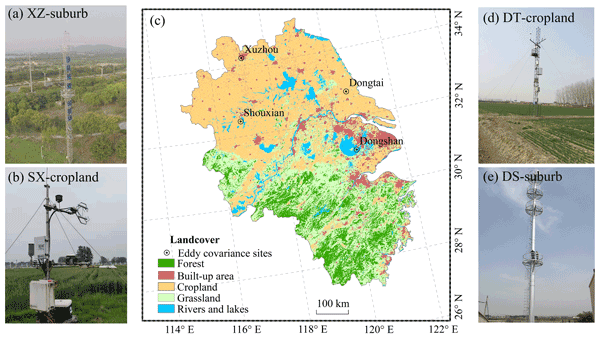
Land–atmosphere interactions over the Yangtze River Delta (YRD) in China are becoming more varied and complex, as the area is experiencing rapid land use changes. In this paper, we describe a dataset of microclimate and eddy covariance variables at four sites in the YRD. This dataset has potential use cases in multiple research fields, such as boundary layer parametrization schemes, evaluation of remote sensing algorithms, and development of climate models in typical East Asian monsoon regions.
Lei Li, Yevgeny Derimian, Cheng Chen, Xindan Zhang, Huizheng Che, Gregory L. Schuster, David Fuertes, Pavel Litvinov, Tatyana Lapyonok, Anton Lopatin, Christian Matar, Fabrice Ducos, Yana Karol, Benjamin Torres, Ke Gui, Yu Zheng, Yuanxin Liang, Yadong Lei, Jibiao Zhu, Lei Zhang, Junting Zhong, Xiaoye Zhang, and Oleg Dubovik
Earth Syst. Sci. Data, 14, 3439–3469, https://doi.org/10.5194/essd-14-3439-2022, https://doi.org/10.5194/essd-14-3439-2022, 2022
Short summary
Short summary
A climatology of aerosol composition concentration derived from POLDER-3 observations using GRASP/Component is presented. The conceptual specifics of the GRASP/Component approach are in the direct retrieval of aerosol speciation without intermediate retrievals of aerosol optical characteristics. The dataset of satellite-derived components represents scarce but imperative information for validation and potential adjustment of chemical transport models.
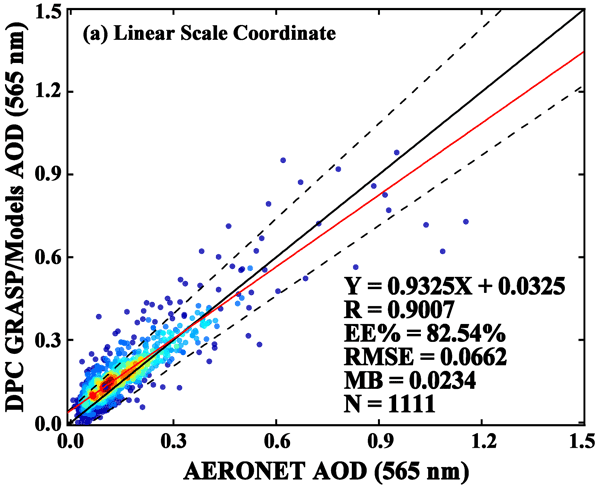
Shikuan Jin, Yingying Ma, Cheng Chen, Oleg Dubovik, Jin Hong, Boming Liu, and Wei Gong
Atmos. Meas. Tech., 15, 4323–4337, https://doi.org/10.5194/amt-15-4323-2022, https://doi.org/10.5194/amt-15-4323-2022, 2022
Short summary
Short summary
Aerosol parameter retrievals have always been a research focus. In this study, we used an advanced aerosol algorithms (GRASP, developed by Oleg Dubovik) to test the ability of DPC/Gaofen-5 (the first polarized multi-angle payload developed in China) images to obtain aerosol parameters. The results show that DPC/GRASP achieves good results (R > 0.9). This research will contribute to the development of hardware and algorithms for aerosols

Alexander Sinyuk, Brent N. Holben, Thomas F. Eck, David M. Giles, Ilya Slutsker, Oleg Dubovik, Joel S. Schafer, Alexander Smirnov, and Mikhail Sorokin
Atmos. Meas. Tech., 15, 4135–4151, https://doi.org/10.5194/amt-15-4135-2022, https://doi.org/10.5194/amt-15-4135-2022, 2022
Short summary
Short summary
This paper describes modification of smoothness constraints on the imaginary part of the refractive index employed in the AERONET aerosol retrieval algorithm. This modification is termed relaxed due to the weaker strength of this new smoothness constraint. Applying the modified version of the smoothness constraint results in a significant reduction of retrieved light absorption by brown-carbon-containing aerosols.
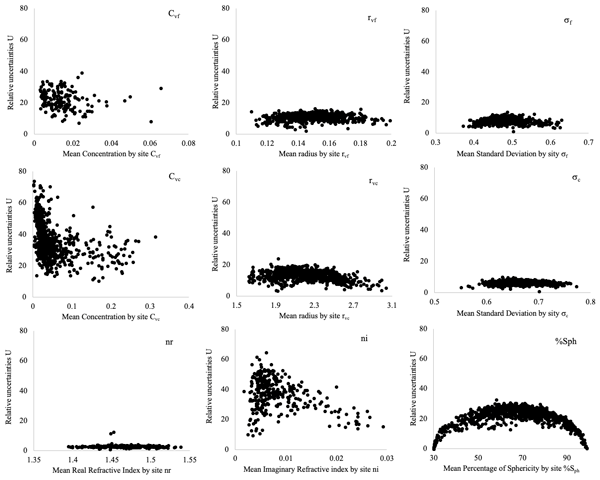
Jean-Claude Roger, Eric Vermote, Sergii Skakun, Emilie Murphy, Oleg Dubovik, Natacha Kalecinski, Bruno Korgo, and Brent Holben
Atmos. Meas. Tech., 15, 1123–1144, https://doi.org/10.5194/amt-15-1123-2022, https://doi.org/10.5194/amt-15-1123-2022, 2022
Short summary
Short summary
From measurements of the sky performed by AERONET, we determined the microphysical properties of the atmospheric particles (aerosols) for each AERONET site. We used the aerosol optical thickness and its variation over the visible spectrum. This allows us to determine an aerosol model useful for (but not only) the validation of the surface reflectance satellite-derived product. The impact of the aerosol model uncertainties on the surface reflectance validation has been found to be 1 % to 3 %.
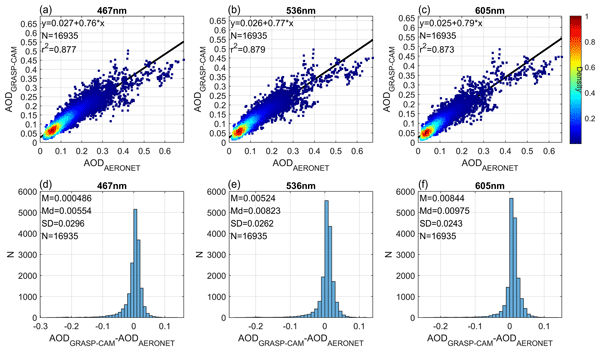
Roberto Román, Juan C. Antuña-Sánchez, Victoria E. Cachorro, Carlos Toledano, Benjamín Torres, David Mateos, David Fuertes, César López, Ramiro González, Tatyana Lapionok, Marcos Herreras-Giralda, Oleg Dubovik, and Ángel M. de Frutos
Atmos. Meas. Tech., 15, 407–433, https://doi.org/10.5194/amt-15-407-2022, https://doi.org/10.5194/amt-15-407-2022, 2022
Short summary
Short summary
An all-sky camera is used to obtain the relative sky radiance, and this radiance is used as input in an inversion code to obtain aerosol properties. This paper is really interesting because it pushes forward the use and capability of sky cameras for more advanced science purposes. Enhanced aerosol properties can be retrieved with accuracy using only an all-sky camera, but synergy with other instruments providing aerosol optical depth could even increase the power of these low-cost instruments.
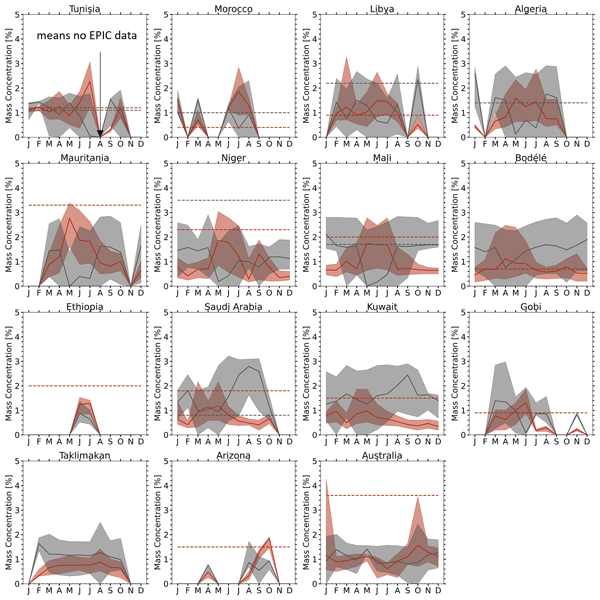
Sujung Go, Alexei Lyapustin, Gregory L. Schuster, Myungje Choi, Paul Ginoux, Mian Chin, Olga Kalashnikova, Oleg Dubovik, Jhoon Kim, Arlindo da Silva, Brent Holben, and Jeffrey S. Reid
Atmos. Chem. Phys., 22, 1395–1423, https://doi.org/10.5194/acp-22-1395-2022, https://doi.org/10.5194/acp-22-1395-2022, 2022
Short summary
Short summary
This paper presents a retrieval algorithm of iron-oxide species (hematite, goethite) content in the atmosphere from DSCOVR EPIC observations. Our results display variations within the published range of hematite and goethite over the main dust-source regions but show significant seasonal and spatial variability. This implies a single-viewing satellite instrument with UV–visible channels may provide essential information on shortwave dust direct radiative effects for climate modeling.
Cited articles
Aouizerats, B., Thouron, O., Tulet, P., Mallet, M., Gomes, L., and Henzing, J. S.: Development of an online radiative module for the computation of aerosol optical properties in 3-D atmospheric models: validation during the EUCAARI campaign, Geosci. Model Dev., 3, 553–564, https://doi.org/10.5194/gmd-3-553-2010, 2010.
Bai, J., Lou, Y., Zhang, W., Zhou, Y., Zhang, Z., and Shi, C.: Assessment and calibration of MODIS precipitable water vapor products based on GPS network over China, Atmos. Res., 254, 105504, https://doi.org/10.1016/j.atmosres.2021.105504, 2021.
Bellouin, N., Boucher, O., Haywood, J., and Reddy, M. S.: Global estimate of aerosol direct radiative forcing from satellite measurements, Nature, 438, 1138–1141, https://doi.org/10.1038/nature04348, 2005.
Biswas, J., Pathak, B., Patadia, F., Bhuyan, P. K., Gogoi, M. M., and Suresh Babu, S.: Satellite-retrieved direct radiative forcing of aerosols over North-East India and adjoining areas: climatology and impact assessment, Int. J. Climatol., 37, 4756–4756, https://doi.org/10.1002/joc.5325, 2017.
Bohren, C. F. and Huffman, D. R.: Absorption and Scattering of Light by Small Particles, Wiley, https://doi.org/10.1002/9783527618156, 1998.
Bond, T. C. and Bergstrom, R. W.: Light Absorption by Carbonaceous Particles: An Investigative Review, Aerosol Sci. Tech., 40, 27–67, https://doi.org/10.1080/02786820500421521, 2006.
Bond, T. C., Doherty, S. J., Fahey, D. W., Forster, P. M., Berntsen, T., Deangelo, B. J., Flanner, M. G., Ghan, S., Kärcher, B., Koch, D., Kinne, S., Kondo, Y., Quinn, P. K., Sarofim, M. C., Schultz, M. G., Schulz, M., Venkataraman, C., Zhang, H., Zhang, S., Bellouin, N., Guttikunda, S. K., Hopke, P. K., Jacobson, M. Z., Kaiser, J. W., Klimont, Z., Lohmann, U., Schwarz, J. P., Shindell, D., Storelvmo, T., Warren, S. G., and Zender, C. S.: Bounding the role of black carbon in the climate system: A scientific assessment, J. Geophys. Res.-Atmos., 118, 5380–5552, https://doi.org/10.1002/jgrd.50171, 2013.
Brown, H., Liu, X., Pokhrel, R., Murphy, S., Lu, Z., Saleh, R., Mielonen, T., Kokkola, H., Bergman, T., Myhre, G., Skeie, R. B., Watson-Paris, D., Stier, P., Johnson, B., Bellouin, N., Schulz, M., Vakkari, V., Beukes, J. P., van Zyl, P. G., Liu, S., and Chand, D.: Biomass burning aerosols in most climate models are too absorbing, Nat. Commun., 12, 277, https://doi.org/10.1038/s41467-020-20482-9, 2021.
Cappa, C. D., Onasch, T. B., Massoli, P., Worsnop, D. R., Bates, T. S., Cross, E. S., Davidovits, P., Hakala, J., Hayden, K. L., Jobson, B. T., Kolesar, K. R., Lack, D. A., Lerner, B. M., Li, S.-M., Mellon, D., Nuaaman, I., Olfert, J. S., Petäjä, T., Quinn, P. K., Song, C., Subramanian, R., Williams, E. J., and Zaveri, R. A.: Radiative Absorption Enhancements Due to the Mixing State of Atmospheric Black Carbon, Science, 337, 1078–1081, https://doi.org/10.1126/science.1223447, 2012.
Che, X., Feng, M., Sexton, J., Channan, S., Yang, Y., and Sun, Q.: Assessment of MODIS BRDF/Albedo Model Parameters (MCD43A1 Collection 6) for Directional Reflectance Retrieval, Remote Sens., 9, 1123, https://doi.org/10.3390/rs9111123, 2017.
Chen, C., Dubovik, O., Schuster, G. L., Chin, M., Henze, D. K., Lapyonok, T., Li, Z., Derimian, Y., and Zhang, Y.: Multi-angular polarimetric remote sensing to pinpoint global aerosol absorption and direct radiative forcing, Nat. Commun., 13, 7459, https://doi.org/10.1038/s41467-022-35147-y, 2022.
Chen, C., Litvinov, P., Dubovik, O., Bindreiter, L., Matar, C., Fuertes, D., Lopatin, A., Lapyonok, T., Lanzinger, V., Hangler, A., Aspetsberger, M., de Graaf, M., Tilstra, L. G., Stammes, P., Dandocsi, A., Gasbarra, D., Fluck, E., Zehner, C., and Retscher, C.: Extended aerosol and surface characterization from S5P/TROPOMI with GRASP algorithm. Part II: Global validation and Intercomparison, Remote Sens. Environ., 313, 114374, https://doi.org/10.1016/j.rse.2024.114374, 2024.
Chen, G., Wang, J., Wang, Y., Wang, J., Jin, Y., Cheng, Y., Yin, Y., Liao, H., Ding, A., Wang, S., Hao, J., and Liu, C.: An Aerosol Optical Module With Observation-Constrained Black Carbon Properties for Global Climate Models, J. Adv. Model. Earth Syst., 15, https://doi.org/10.1029/2022MS003501, 2023.
Chen, W., Tian, H., and Qin, K.: Black Carbon Aerosol in the Industrial City of Xuzhou, China: Temporal Characteristics and Source Appointment, Aerosol Air Qual. Res., 19, 794–811, https://doi.org/10.4209/aaqr.2018.07.0245, 2019.
Chen, W., Ran, H., Cao, X., Wang, J., Teng, D., Chen, J., and Zheng, X.: Estimating PM2.5 with high-resolution 1-km AOD data and an improved machine learning model over Shenzhen, China, Sci. Total Environ., 746, 141093, https://doi.org/10.1016/j.scitotenv.2020.141093, 2020.
Chin, M., Ginoux, P., Kinne, S., Torres, O., Holben, B. N., Duncan, B. N., Martin, R. V., Logan, J. A., Higurashi, A., and Nakajima, T.: Tropospheric Aerosol Optical Thickness from the GOCART Model and Comparisons with Satellite and Sun Photometer Measurements, J. Atmos. Sci., 59, 461–483, https://doi.org/10.1175/1520-0469(2002)059<0461:TAOTFT>2.0.CO;2, 2002.
Christopher, S. A. and Zhang, J.: Shortwave Aerosol Radiative Forcing from MODIS and CERES observations over the oceans, Geophys. Res. Lett., 29, https://doi.org/10.1029/2002GL014803, 2002.
Chung, C. E.: Aerosol Direct Radiative Forcing: A Review, in: Atmospheric Aerosols – Regional Characteristics – Chemistry and Physics, InTech, https://doi.org/10.5772/50248, 2012.
Cohen, J. B. and Prinn, R. G.: Development of a fast, urban chemistry metamodel for inclusion in global models, Atmos. Chem. Phys., 11, 7629–7656, https://doi.org/10.5194/acp-11-7629-2011, 2011.
Cohen, J. B. and Wang, C.: Estimating global black carbon emissions using a top-down Kalman Filter approach, J. Geophys. Res.-Atmos., 119, 307–323, https://doi.org/10.1002/2013JD019912, 2014.
Colin, B., Schmidt, M., Clifford, S., Woodley, A., and Mengersen, K.: Influence of Spatial Aggregation on Prediction Accuracy of Green Vegetation Using Boosted Regression Trees, Remote Sens., 10, 1260, https://doi.org/10.3390/rs10081260, 2018.
Dai, C., Zhang, X., Lian, W., Wei, H., Liu, J., and Zou, S.: Comparison study between nitrate and sulfate aerosols and their coating effect on the scattering properties of mineral aerosol, Sci. Rep., 14, 21756, https://doi.org/10.1038/s41598-024-71532-x, 2024.
Das, S., Colarco, P. R., Bian, H., and Gassó, S.: Improved simulations of biomass burning aerosol optical properties and lifetimes in the NASA GEOS Model during the ORACLES-I campaign, Atmos. Chem. Phys., 24, 4421–4449, https://doi.org/10.5194/acp-24-4421-2024, 2024.
Dasari, S., Andersson, A., Stohl, A., Evangeliou, N., Bikkina, S., Holmstrand, H., Budhavant, K., Salam, A., and Gustafsson, Ö.: Source Quantification of South Asian Black Carbon Aerosols with Isotopes and Modeling, Environ. Sci. Technol., 54, 11771–11779, https://doi.org/10.1021/acs.est.0c02193, 2020.
de Graaf, M.: TROPOMI validation report of the Aerosol Optical Thickness product, Netherlands, 13 pp., https://data-portal.s5p-pal.com/product-docs/aot/s5p_aot_vr_v1.0.0_2022-02-10_signed.pdf (last access: 27 June 2026), 2022.
Ding, S. and Liu, D.: Evaluation of the CAMS reanalysis for atmospheric black carbon and carbon monoxide over the north China plain, Environ. Pollut., 314, 120286, https://doi.org/10.1016/j.envpol.2022.120286, 2022.
Erlick, C., Abbatt, J. P. D., and Rudich, Y.: How Different Calculations of the Refractive Index Affect Estimates of the Radiative Forcing Efficiency of Ammonium Sulfate Aerosols, J. Atmos. Sci., 68, 1845–1852, https://doi.org/10.1175/2011JAS3721.1, 2011.
Everett, J. T., Newton, E. N., and Odum, M. M.: A Review of Progress in Constraining Global Black Carbon Climate Effects, Earth Syst. Environ., 6, 771–785, https://doi.org/10.1007/s41748-022-00313-1, 2022.
Fernandes, A., Szkop, A., and Pietruczuk, A.: Comparison of the Performance of the GRASP and MERRA2 Models in Reproducing Tropospheric Aerosol Layers, Atmosphere, 14, 1409, https://doi.org/10.3390/atmos14091409, 2023.
Fierce, L., Onasch, T. B., Cappa, C. D., Mazzoleni, C., China, S., Bhandari, J., Davidovits, P., Fischer, D. Al, Helgestad, T., Lambe, A. T., Sedlacek, A. J., Smith, G. D., and Wolff, L.: Radiative absorption enhancements by black carbon controlled by particle-to-particle heterogeneity in composition, P. Natl. Acad. Sci. USA, 117, 5196–5203, https://doi.org/10.1073/pnas.1919723117, 2020.
Flores, J. M., Zhao, D. F., Segev, L., Schlag, P., Kiendler-Scharr, A., Fuchs, H., Watne, Å. K., Bluvshtein, N., Mentel, Th. F., Hallquist, M., and Rudich, Y.: Evolution of the complex refractive index in the UV spectral region in ageing secondary organic aerosol, Atmos. Chem. Phys., 14, 5793–5806, https://doi.org/10.5194/acp-14-5793-2014, 2014.
Forrister, H., Liu, J., Scheuer, E., Dibb, J., Ziemba, L., Thornhill, K. L., Anderson, B., Diskin, G., Perring, A. E., Schwarz, J. P., Campuzano-Jost, P., Day, D. A., Palm, B. B., Jimenez, J. L., Nenes, A., and Weber, R. J.: Evolution of brown carbon in wildfire plumes, Geophys. Res. Lett., 42, 4623–4630, https://doi.org/10.1002/2015GL063897, 2015.
Forster, P. M., Smith, C. J., Walsh, T., Lamb, W. F., Lamboll, R., Hauser, M., Ribes, A., Rosen, D., Gillett, N., Palmer, M. D., Rogelj, J., von Schuckmann, K., Seneviratne, S. I., Trewin, B., Zhang, X., Allen, M., Andrew, R., Birt, A., Borger, A., Boyer, T., Broersma, J. A., Cheng, L., Dentener, F., Friedlingstein, P., Gutiérrez, J. M., Gütschow, J., Hall, B., Ishii, M., Jenkins, S., Lan, X., Lee, J.-Y., Morice, C., Kadow, C., Kennedy, J., Killick, R., Minx, J. C., Naik, V., Peters, G. P., Pirani, A., Pongratz, J., Schleussner, C.-F., Szopa, S., Thorne, P., Rohde, R., Rojas Corradi, M., Schumacher, D., Vose, R., Zickfeld, K., Masson-Delmotte, V., and Zhai, P.: Indicators of Global Climate Change 2022: annual update of large-scale indicators of the state of the climate system and human influence, Earth Syst. Sci. Data, 15, 2295–2327, https://doi.org/10.5194/essd-15-2295-2023, 2023.
Garane, K., Koukouli, M.-E., Verhoelst, T., Lerot, C., Heue, K.-P., Fioletov, V., Balis, D., Bais, A., Bazureau, A., Dehn, A., Goutail, F., Granville, J., Griffin, D., Hubert, D., Keppens, A., Lambert, J.-C., Loyola, D., McLinden, C., Pazmino, A., Pommereau, J.-P., Redondas, A., Romahn, F., Valks, P., Van Roozendael, M., Xu, J., Zehner, C., Zerefos, C., and Zimmer, W.: TROPOMI/S5P total ozone column data: global ground-based validation and consistency with other satellite missions, Atmos. Meas. Tech., 12, 5263–5287, https://doi.org/10.5194/amt-12-5263-2019, 2019.
García, O. E., Díaz, J. P., Expósito, F. J., Díaz, A. M., Dubovik, O., Derimian, Y., Dubuisson, P., and Roger, J.-C.: Shortwave radiative forcing and efficiency of key aerosol types using AERONET data, Atmos. Chem. Phys., 12, 5129–5145, https://doi.org/10.5194/acp-12-5129-2012, 2012.
Gautam, R., Patel, P. N., Singh, M. K., Liu, T., Mickley, L. J., Jethva, H., and DeFries, R. S.: Extreme Smog Challenge of India Intensified by Increasing Lower Tropospheric Stability, Geophys. Res. Lett., 50, https://doi.org/10.1029/2023GL103105, 2023.
Giannaklis, C.-P., Logothetis, S.-A., Salamalikis, V., Tzoumanikas, P., Katsidimas, K., and Kazantzidis, A.: Simulations of Sky Radiances in Red and Blue Channels at Various Aerosol Conditions Using Radiative Transfer Modeling, in: 16th International Conference on Meteorology, Climatology and Atmospheric Physics – COMECAP 2023, 89, https://doi.org/10.3390/environsciproc2023026089, 2023.
Guan, L., Cohen, J. B., Wang, S., Tiwari, P., Liu, Z., Li, Z., and Qin, K.: In-tandem multi-waveband particulate absorption and size observations yield substantial changes in radiative forcing over industrial Central China, Atmos. Chem. Phys., 26, 3107–3123, https://doi.org/10.5194/acp-26-3107-2026, 2026.
Hansen, J. E. and Sato, M.: Trends of measured climate forcing agents, P. Natl. Acad. Sci. USA, 98, 14778–14783, https://doi.org/10.1073/pnas.261553698, 2001.
He, J. and Liu, Z.: Comparison of Satellite-Derived Precipitable Water Vapor Through Near-Infrared Remote Sensing Channels, IEEE T. Geosci. Remote, 57, 10252–10262, https://doi.org/10.1109/TGRS.2019.2932847, 2019.
Holanda, B. A., Pöhlker, M. L., Walter, D., Saturno, J., Sörgel, M., Ditas, J., Ditas, F., Schulz, C., Franco, M. A., Wang, Q., Donth, T., Artaxo, P., Barbosa, H. M. J., Borrmann, S., Braga, R., Brito, J., Cheng, Y., Dollner, M., Kaiser, J. W., Klimach, T., Knote, C., Krüger, O. O., Fütterer, D., Lavrič, J. V., Ma, N., Machado, L. A. T., Ming, J., Morais, F. G., Paulsen, H., Sauer, D., Schlager, H., Schneider, J., Su, H., Weinzierl, B., Walser, A., Wendisch, M., Ziereis, H., Zöger, M., Pöschl, U., Andreae, M. O., and Pöhlker, C.: Influx of African biomass burning aerosol during the Amazonian dry season through layered transatlantic transport of black carbon-rich smoke, Atmos. Chem. Phys., 20, 4757–4785, https://doi.org/10.5194/acp-20-4757-2020, 2020.
Hsu, N. C., Jeong, M. J., Bettenhausen, C., Sayer, A. M., Hansell, R., Seftor, C. S., Huang, J., and Tsay, S. C.: Enhanced Deep Blue aerosol retrieval algorithm: The second generation, J. Geophys. Res.-Atmos., 118, 9296–9315, https://doi.org/10.1002/jgrd.50712, 2013.
Inness, A., Flemming, J., Heue, K.-P., Lerot, C., Loyola, D., Ribas, R., Valks, P., van Roozendael, M., Xu, J., and Zimmer, W.: Monitoring and assimilation tests with TROPOMI data in the CAMS system: near-real-time total column ozone, Atmos. Chem. Phys., 19, 3939–3962, https://doi.org/10.5194/acp-19-3939-2019, 2019.
Jacobson, M. Z.: Strong radiative heating due to the mixing state of black carbon in atmospheric aerosols, Nature, 409, 695–697, https://doi.org/10.1038/35055518, 2001.
Jia, A., Wang, D., Liang, S., Peng, J., and Yu, Y.: Global Daily Actual and Snow-Free Blue-Sky Land Surface Albedo Climatology From 20-Year MODIS Products, J. Geophys. Res.-Atmos., 127, https://doi.org/10.1029/2021JD035987, 2022.
Kahn, R. A., Andrews, E., Brock, C. A., Chin, M., Feingold, G., Gettelman, A., Levy, R. C., Murphy, D. M., Nenes, A., Pierce, J. R., Popp, T., Redemann, J., Sayer, A. M., da Silva, A. M., Sogacheva, L., and Stier, P.: Reducing Aerosol Forcing Uncertainty by Combining Models With Satellite and Within-The-Atmosphere Observations: A Three-Way Street, Rev. Geophys., 61, https://doi.org/10.1029/2022RG000796, 2023.
Kang, J., Wang, S., Cohen, J., Wang, W., Shi, L., Wang, T., Sun, Q., Feng, J., and Qin, K.: Improving estimation of surface PM2.5 by including satellite observations of gases, aerosols, and radiation in tandem, Environ. Res. Lett., 20, 124019, https://doi.org/10.1088/1748-9326/ae1e17, 2025.
Kelesidis, G. A., Neubauer, D., Fan, L.-S., Lohmann, U., and Pratsinis, S. E.: Enhanced Light Absorption and Radiative Forcing by Black Carbon Agglomerates, Environ. Sci. Technol., 56, 8610–8618, https://doi.org/10.1021/acs.est.2c00428, 2022.
Keppens, A., Di Pede, S., Hubert, D., Lambert, J.-C., Veefkind, P., Sneep, M., De Haan, J., ter Linden, M., Leblanc, T., Compernolle, S., Verhoelst, T., Granville, J., Nath, O., Fjæraa, A. M., Boyd, I., Niemeijer, S., Van Malderen, R., Smit, H. G. J., Duflot, V., Godin-Beekmann, S., Johnson, B. J., Steinbrecht, W., Tarasick, D. W., Kollonige, D. E., Stauffer, R. M., Thompson, A. M., Dehn, A., and Zehner, C.: 5 years of Sentinel-5P TROPOMI operational ozone profiling and geophysical validation using ozonesonde and lidar ground-based networks, Atmos. Meas. Tech., 17, 3969–3993, https://doi.org/10.5194/amt-17-3969-2024, 2024.
King, M. D., Kaufman, Y. J., Menzel, W. P., and Tanre, D.: Remote sensing of cloud, aerosol, and water vapor properties from the moderate resolution imaging spectrometer (MODIS), IEEE T. Geosci. Remote, 30, 2–27, https://doi.org/10.1109/36.124212, 1992.
Koch, D. and Del Genio, A. D.: Black carbon semi-direct effects on cloud cover: review and synthesis, Atmos. Chem. Phys., 10, 7685–7696, https://doi.org/10.5194/acp-10-7685-2010, 2010.
Kompalli, S. K., Babu, S. N. S., Moorthy, K. K., Satheesh, S. K., Gogoi, M. M., Nair, V. S., Jayachandran, V. N., Liu, D., Flynn, M. J., and Coe, H.: Mixing state of refractory black carbon aerosol in the South Asian outflow over the northern Indian Ocean during winter, Atmos. Chem. Phys., 21, 9173–9199, https://doi.org/10.5194/acp-21-9173-2021, 2021.
Lambe, A. T., Cappa, C. D., Massoli, P., Onasch, T. B., Forestieri, S. D., Martin, A. T., Cummings, M. J., Croasdale, D. R., Brune, W. H., Worsnop, D. R., and Davidovits, P.: Relationship between Oxidation Level and Optical Properties of Secondary Organic Aerosol, Environ. Sci. Technol., 47, 6349–6357, https://doi.org/10.1021/es401043j, 2013.
Li, J., Carlson, B. E., Yung, Y. L., Lv, D., Hansen, J., Penner, J. E., Liao, H., Ramaswamy, V., Kahn, R. A., Zhang, P., Dubovik, O., Ding, A., Lacis, A. A., Zhang, L., and Dong, Y.: Scattering and absorbing aerosols in the climate system, Nat. Rev. Earth Environ., 3, 363–379, https://doi.org/10.1038/s43017-022-00296-7, 2022.
Li, W., Wang, Y., Yi, Z., Guo, B., Chen, W., Che, H., and Zhang, X.: Evaluation of MERRA-2 and CAMS reanalysis for black carbon aerosol in China, Environ. Pollut., 343, 123182, https://doi.org/10.1016/j.envpol.2023.123182, 2024.
Litvinov, P., Chen, C., Dubovik, O., Bindreiter, L., Matar, C., Fuertes, D., Lopatin, A., Lapyonok, T., Lanzinger, V., Hangler, A., Aspetsberger, M., de Graaf, M., Tilstra, L. G., Stammes, P., Dandocsi, A., Gasbarra, D., Fluck, E., Zehner, C., and Retscher, C.: Extended aerosol and surface characterization from S5P/TROPOMI with GRASP algorithm. Part I: Conditions, approaches, performance and new possibilities, Remote Sens. Environ., 313, 114355, https://doi.org/10.1016/j.rse.2024.114355, 2024.
Liu, D., Whitehead, J., Alfarra, M. R., Reyes-Villegas, E., Spracklen, D. V., Reddington, C. L., Kong, S., Williams, P. I., Ting, Y.-C., Haslett, S., Taylor, J. W., Flynn, M. J., Morgan, W. T., McFiggans, G., Coe, H., and Allan, J. D.: Black-carbon absorption enhancement in the atmosphere determined by particle mixing state, Nat. Geosci., 10, 184–188, https://doi.org/10.1038/ngeo2901, 2017.
Liu, F., Yon, J., Fuentes, A., Lobo, P., Smallwood, G. J., and Corbin, J. C.: Review of recent literature on the light absorption properties of black carbon: Refractive index, mass absorption cross section, and absorption function, Aerosol Sci. Tech., 54, 33–51, https://doi.org/10.1080/02786826.2019.1676878, 2020a.
Liu, H., Pan, X., Liu, D., Liu, X., Chen, X., Tian, Y., Sun, Y., Fu, P., and Wang, Z.: Mixing characteristics of refractory black carbon aerosols at an urban site in Beijing, Atmos. Chem. Phys., 20, 5771–5785, https://doi.org/10.5194/acp-20-5771-2020, 2020b.
Liu, J., Cohen, J. B., He, Q., Tiwari, P., and Qin, K.: Accounting for NOx emissions from biomass burning and urbanization doubles existing inventories over South, Southeast and East Asia, Commun. Earth Environ., 5, 255, https://doi.org/10.1038/s43247-024-01424-5, 2024a.
Liu, J., Cohen, J. B., Tiwari, P., Liu, Z., Yim, S. H.-L., Gupta, P., and Qin, K.: New top-down estimation of daily mass and number column density of black carbon driven by OMI and AERONET observations, Remote Sens. Environ., 315, 114436, https://doi.org/10.1016/j.rse.2024.114436, 2024b.
Liu, Z., Cohen, J. B., Wang, S., Wang, X., Tiwari, P., and Qin, K.: Remotely sensed BC columns over rapidly changing Western China show significant decreases in mass and inconsistent changes in number, size, and mixing properties due to policy actions, npj Clim. Atmos. Sci., 7, 124, https://doi.org/10.1038/s41612-024-00663-9, 2024c.
Liu, Z., Cohen, J. B., Tiwari, P., Guan, L., Wang, S., Li, Z., and Qin, K.: A global black carbon dataset of column concentration and microphysical information derived from MISR multi-band observations and Mie scattering simulations, Earth Syst. Sci. Data, 18, 507–533, https://doi.org/10.5194/essd-18-507-2026, 2026.
Loeb, N. G., Su, W., Bellouin, N., and Ming, Y.: Changes in Clear-Sky Shortwave Aerosol Direct Radiative Effects Since 2002, J. Geophys. Res.-Atmos., 126, https://doi.org/10.1029/2020JD034090, 2021.
Logothetis, S.-A., Salamalikis, V., and Kazantzidis, A.: The impact of different aerosol properties and types on direct aerosol radiative forcing and efficiency using AERONET version 3, Atmos. Res., 250, 105343, https://doi.org/10.1016/j.atmosres.2020.105343, 2021.
Lohmann, U. and Feichter, J.: Global indirect aerosol effects: A review, Atmos. Chem. Phys., 5, 715–737, https://doi.org/10.5194/acp-5-715-2005, 2005.
Lucht, W., Schaaf, C. B., and Strahler, A. H.: An algorithm for the retrieval of albedo from space using semiempirical BRDF models, IEEE T. Geosci. Remote, 38, 977–998, https://doi.org/10.1109/36.841980, 2000.
Lundberg, S. M. and Lee, S.-I.: A Unified Approach to Interpreting Model Predictions, in: Neural Information Processing Systems, https://proceedings.neurips.cc/paper_files/paper/2017/file/8a20a8621978632d76c43dfd28b67767-Paper.pdf (last access: 27 June 2026), 2017.
Luo, J., Li, Z., Zhang, C., Zhang, Q., Zhang, Y., Zhang, Y., Curci, G., and Chakrabarty, R. K.: Regional impacts of black carbon morphologies on shortwave aerosol–radiation interactions: a comparative study between the US and China, Atmos. Chem. Phys., 22, 7647–7666, https://doi.org/10.5194/acp-22-7647-2022, 2022.
Lyapustin, A. and Wang, Y.: MODIS Multi-Angle Implementation of Atmospheric Correction (MAIAC) Data User's Guide, Collection 6.1, Version 3.1, https://lpdaac.usgs.gov/documents/1500/MCD19_User_Guide_V61.pdf (last access: 27 June 2026), 2022.
Lyapustin, A., Wang, Y., Laszlo, I., Kahn, R., Korkin, S., Remer, L., Levy, R., and Reid, J. S.: Multiangle implementation of atmospheric correction (MAIAC): 2. Aerosol algorithm, J. Geophys. Res., 116, D03211, https://doi.org/10.1029/2010JD014986, 2011.
Lyapustin, A., Wang, Y., Korkin, S., and Huang, D.: MODIS Collection 6 MAIAC algorithm, Atmos. Meas. Tech., 11, 5741–5765, https://doi.org/10.5194/amt-11-5741-2018, 2018.
Ma, Z., Dey, S., Christopher, S., Liu, R., Bi, J., Balyan, P., and Liu, Y.: A review of statistical methods used for developing large-scale and long-term PM2.5 models from satellite data, Remote Sens. Environ., 269, 112827, https://doi.org/10.1016/j.rse.2021.112827, 2022.
Mahajan, S., Evans, K. J., Hack, J. J., and Truesdale, J. E.: Linearity of Climate Response to Increases in Black Carbon Aerosols, J. Climate, 26, 8223–8237, https://doi.org/10.1175/JCLI-D-12-00715.1, 2013.
Martins, V. S., Lyapustin, A., de Carvalho, L. A. S., Barbosa, C. C. F., and Novo, E. M. L. M.: Validation of high-resolution MAIAC aerosol product over South America, J. Geophys. Res.-Atmos., 122, 7537–7559, https://doi.org/10.1002/2016JD026301, 2017.
Matus, A. V., L'Ecuyer, T. S., and Henderson, D. S.: New Estimates of Aerosol Direct Radiative Effects and Forcing From A-Train Satellite Observations, Geophys. Res. Lett., 46, 8338–8346, https://doi.org/10.1029/2019GL083656, 2019.
Mätzler, C.: MATLAB functions for Mie scattering and absorption, IAP Res. Rep., 8, 2002, https://www.researchgate.net/publication/228703362_MATLAB_functions_for_Mie_scattering_and_absorption (last access: 27 June 2026), 2002.
McFiggans, G., Artaxo, P., Baltensperger, U., Coe, H., Facchini, M. C., Feingold, G., Fuzzi, S., Gysel, M., Laaksonen, A., Lohmann, U., Mentel, T. F., Murphy, D. M., O'Dowd, C. D., Snider, J. R., and Weingartner, E.: The effect of physical and chemical aerosol properties on warm cloud droplet activation, Atmos. Chem. Phys., 6, 2593–2649, https://doi.org/10.5194/acp-6-2593-2006, 2006.
McMeeking, G. R., Morgan, W. T., Flynn, M., Highwood, E. J., Turnbull, K., Haywood, J., and Coe, H.: Black carbon aerosol mixing state, organic aerosols and aerosol optical properties over the United Kingdom, Atmos. Chem. Phys., 11, 9037–9052, https://doi.org/10.5194/acp-11-9037-2011, 2011.
Mehrotra, B. J., Srivastava, A. K., Singh, A., Parashar, D., Majumder, N., Singh, R. S., Choudhary, A., and Srivastava, M. K.: Long-Term Trend in Black Carbon Mass Concentration Over Central Indo-Gangetic Plain Location: Understanding the Implied Change in Radiative Forcing, J. Geophys. Res.-Atmos., 129, https://doi.org/10.1029/2024JD040754, 2024.
Mehrotra, B. J., Choudhary, A., Srivastava, A. K., Sharma, S. K., and Srivastava, M. K.: Physical, optical and radiative attributes of atmospheric aerosols produced due to bonfire during the Holika festival, Phys. Chem. Earth Pt. A/B/C, 138, 103856, https://doi.org/10.1016/j.pce.2025.103856, 2025.
Mhawish, A., Banerjee, T., Sorek-Hamer, M., Lyapustin, A., Broday, D. M., and Chatfield, R.: Comparison and evaluation of MODIS Multi-angle Implementation of Atmospheric Correction (MAIAC) aerosol product over South Asia, Remote Sens. Environ., 224, 12–28, https://doi.org/10.1016/j.rse.2019.01.033, 2019.
Mie, G.: Beiträge zur Optik trüber Medien, speziell kolloidaler Metallösungen, Ann. Phys., 330, 377–445, https://doi.org/10.1002/andp.19083300302, 1908.
Myhre, G., Samset, B. H., Schulz, M., Balkanski, Y., Bauer, S., Berntsen, T. K., Bian, H., Bellouin, N., Chin, M., Diehl, T., Easter, R. C., Feichter, J., Ghan, S. J., Hauglustaine, D., Iversen, T., Kinne, S., Kirkevåg, A., Lamarque, J.-F., Lin, G., Liu, X., Lund, M. T., Luo, G., Ma, X., van Noije, T., Penner, J. E., Rasch, P. J., Ruiz, A., Seland, Ø., Skeie, R. B., Stier, P., Takemura, T., Tsigaridis, K., Wang, P., Wang, Z., Xu, L., Yu, H., Yu, F., Yoon, J.-H., Zhang, K., Zhang, H., and Zhou, C.: Radiative forcing of the direct aerosol effect from AeroCom Phase II simulations, Atmos. Chem. Phys., 13, 1853–1877, https://doi.org/10.5194/acp-13-1853-2013, 2013.
Nenes, A., Conant, W. C., and Seinfeld, J. H.: Black carbon radiative heating effects on cloud microphysics and implications for the aerosol indirect effect 2. Cloud microphysics, J. Geophys. Res.-Atmos., 107, https://doi.org/10.1029/2002JD002101, 2002.
Park, R. J., Kim, M. J., Jeong, J. I., Youn, D., and Kim, S.: A contribution of brown carbon aerosol to the aerosol light absorption and its radiative forcing in East Asia, Atmos. Environ., 44, 1414–1421, https://doi.org/10.1016/j.atmosenv.2010.01.042, 2010.
Peng, J., Hu, M., Guo, S., Du, Z., Zheng, J., Shang, D., Levy Zamora, M., Zeng, L., Shao, M., Wu, Y.-S., Zheng, J., Wang, Y., Glen, C. R., Collins, D. R., Molina, M. J., and Zhang, R.: Markedly enhanced absorption and direct radiative forcing of black carbon under polluted urban environments, P. Natl. Acad. Sci. USA, 113, 4266–4271, https://doi.org/10.1073/pnas.1602310113, 2016.
Qin, K., He, Q., Zhang, Y., Cohen, J. B., Tiwari, P., and Lolli, S.: Aloft Transport of Haze Aerosols to Xuzhou, Eastern China: Optical Properties, Sources, Type, and Components, Remote Sens., 14, 1589, https://doi.org/10.3390/rs14071589, 2022.
Qin, W., Fang, H., Wang, L., Wei, J., Zhang, M., Su, X., Bilal, M., and Liang, X.: MODIS high-resolution MAIAC aerosol product: Global validation and analysis, Atmos. Environ., 264, 118684, https://doi.org/10.1016/j.atmosenv.2021.118684, 2021.
Rahman, M. M., Mahamud, S., and Thurston, G. D.: Recent spatial gradients and time trends in Dhaka, Bangladesh, air pollution and their human health implications, J. Air Waste Manage. Assoc., 69, 478–501, https://doi.org/10.1080/10962247.2018.1548388, 2019.
Ramachandran, S., Rupakheti, M., Cherian, R., and Lawrence, M. G.: Aerosols heat up the Himalayan climate, Sci. Total Environ., 164733, https://doi.org/10.1016/j.scitotenv.2023.164733, 2023.
Ramanathan, V. and Carmichael, G.: Global and regional climate changes due to black carbon, Nat. Geosci., 1, 221–227, https://doi.org/10.1038/ngeo156, 2008.
Randles, C. A. and Ramaswamy, V.: Direct and semi-direct impacts of absorbing biomass burning aerosol on the climate of southern Africa: a Geophysical Fluid Dynamics Laboratory GCM sensitivity study, Atmos. Chem. Phys., 10, 9819–9831, https://doi.org/10.5194/acp-10-9819-2010, 2010.
Randles, C. A., da Silva, A. M., Buchard, V., Colarco, P. R., Darmenov, A., Govindaraju, R., Smirnov, A., Holben, B., Ferrare, R., Hair, J., Shinozuka, Y., and Flynn, C. J.: The MERRA-2 Aerosol Reanalysis, 1980 Onward. Part I: System Description and Data Assimilation Evaluation, J. Climate, 30, 6823–6850, https://doi.org/10.1175/JCLI-D-16-0609.1, 2017.
Rasp, S., Pritchard, M. S., and Gentine, P.: Deep learning to represent subgrid processes in climate models, P. Natl. Acad. Sci. USA, 115, 9684–9689, https://doi.org/10.1073/pnas.1810286115, 2018.
Reichstein, M., Camps-Valls, G., Stevens, B., Jung, M., Denzler, J., Carvalhais, N., and Prabhat: Deep learning and process understanding for data-driven Earth system science, Nature, 566, 195–204, https://doi.org/10.1038/s41586-019-0912-1, 2019.
Ren, Y., Oxford, C. R., Zhang, D., Liu, X., Zhu, H., Dillner, A. M., White, W. H., Chakrabarty, R. K., Hasheminassab, S., Diner, D. J., Le Roy, E. J., Kumar, J., Viteri, V., Song, K., Akoshile, C., Amador-Muñoz, O., Asfaw, A., Chang, R. Y.-W., Francis, D., Gahungu, P., Garland, R. M., Grutter, M., Kim, J., Langerman, K., Lee, P.-C., Lestari, P., Mayol-Bracero, O. L., Naidoo, M., Nelli, N., O'Neill, N., Park, S. S., Salam, A., Sarangi, B., Schechner, Y., Schofield, R., Tripathi, S. N., Windwer, E., Wu, M.-T., Zhang, Q., Rudich, Y., Brauer, M., and Martin, R. V.: Black carbon emissions generally underestimated in the global south as revealed by globally distributed measurements, Nat. Commun., 16, 7010, https://doi.org/10.1038/s41467-025-62468-5, 2025.
Ricchiazzi, P., Yang, S., Gautier, C., and Sowle, D.: SBDART: A Research and Teaching Software Tool for Plane-Parallel Radiative Transfer in the Earth's Atmosphere, B. Am. Meteorol. Soc., 79, 2101–2114, https://doi.org/10.1175/1520-0477(1998)079<2101:SARATS>2.0.CO;2, 1998.
Román, M. O., Schaaf, C. B., Lewis, P., Gao, F., Anderson, G. P., Privette, J. L., Strahler, A. H., Woodcock, C. E., and Barnsley, M.: Assessing the coupling between surface albedo derived from MODIS and the fraction of diffuse skylight over spatially-characterized landscapes, Remote Sens. Environ., 114, 738–760, https://doi.org/10.1016/j.rse.2009.11.014, 2010.
Romshoo, B., Patil, J., Michels, T., Müller, T., Kloft, M., and Pöhlker, M.: Improving the predictions of black carbon (BC) optical properties at various aging stages using a machine-learning-based approach, Atmos. Chem. Phys., 24, 8821–8846, https://doi.org/10.5194/acp-24-8821-2024, 2024.
Salam, A., Andersson, A., Jeba, F., Haque, M. I., Hossain Khan, M. D., and Gustafsson, Ö.: Wintertime Air Quality in Megacity Dhaka, Bangladesh Strongly Affected by Influx of Black Carbon Aerosols from Regional Biomass Burning, Environ. Sci. Technol., 55, 12243–12249, https://doi.org/10.1021/acs.est.1c03623, 2021.
Saleh, R., Hennigan, C. J., McMeeking, G. R., Chuang, W. K., Robinson, E. S., Coe, H., Donahue, N. M., and Robinson, A. L.: Absorptivity of brown carbon in fresh and photo-chemically aged biomass-burning emissions, Atmos. Chem. Phys., 13, 7683–7693, https://doi.org/10.5194/acp-13-7683-2013, 2013.
Samset, B. H., Stjern, C. W., Andrews, E., Kahn, R. A., Myhre, G., Schulz, M., and Schuster, G. L.: Aerosol Absorption: Progress Towards Global and Regional Constraints, Curr. Clim. Change Rep., 4, 65–83, https://doi.org/10.1007/s40641-018-0091-4, 2018a.
Samset, B. H., Sand, M., Smith, C. J., Bauer, S. E., Forster, P. M., Fuglestvedt, J. S., Osprey, S., and Schleussner, C. -F.: Climate Impacts From a Removal of Anthropogenic Aerosol Emissions, Geophys. Res. Lett., 45, 1020–1029, https://doi.org/10.1002/2017GL076079, 2018b.
Sayer, A. M., Hsu, N. C., Bettenhausen, C., and Jeong, M.-J.: Validation and uncertainty estimates for MODIS Collection 6 “Deep Blue” aerosol data, J. Geophys. Res.-Atmos., 118, 7864–7872, https://doi.org/10.1002/jgrd.50600, 2013.
Schaaf, C. B., Gao, F., Strahler, A. H., Lucht, W., Li, X., Tsang, T., Strugnell, N. C., Zhang, X., Jin, Y., Muller, J.-P., Lewis, P., Barnsley, M., Hobson, P., Disney, M., Roberts, G., Dunderdale, M., Doll, C., d'Entremont, R. P., Hu, B., Liang, S., Privette, J. L., and Roy, D.: First operational BRDF, albedo nadir reflectance products from MODIS, Remote Sens. Environ., 83, 135–148, https://doi.org/10.1016/S0034-4257(02)00091-3, 2002.
Schuster, G. L.: Inferring black carbon content and specific absorption from Aerosol Robotic Network (AERONET) aerosol retrievals, J. Geophys. Res., 110, D10S17, https://doi.org/10.1029/2004JD004548, 2005.
Sedlacek, A. J., Lewis, E. R., Onasch, T. B., Zuidema, P., Redemann, J., Jaffe, D., and Kleinman, L. I.: Using the Black Carbon Particle Mixing State to Characterize the Lifecycle of Biomass Burning Aerosols, Environ. Sci. Technol., 56, 14315–14325, https://doi.org/10.1021/acs.est.2c03851, 2022.
Seinfeld, J. H., Kleindienst, T. E., Edney, E. O., and Cohen, J. B.: Aerosol Growth in a Steady-State, Continuous Flow Chamber: Application to Studies of Secondary Aerosol Formation, Aerosol Sci. Tech., 37, 728–734, https://doi.org/10.1080/02786820300915, 2003.
Sena, E. T. and Artaxo, P.: A novel methodology for large-scale daily assessment of the direct radiative forcing of smoke aerosols, Atmos. Chem. Phys., 15, 5471–5483, https://doi.org/10.5194/acp-15-5471-2015, 2015.
Sena, E. T., Artaxo, P., and Correia, A. L.: Spatial variability of the direct radiative forcing of biomass burning aerosols and the effects of land use change in Amazonia, Atmos. Chem. Phys., 13, 1261–1275, https://doi.org/10.5194/acp-13-1261-2013, 2013.
Soriano Jr., M. A. and Maxwell, R.: Spatial aggregation effects on the performance of machine learning metamodels for predicting transit time to baseflow, Environ. Res. Commun., 5, 115002, https://doi.org/10.1088/2515-7620/ad0744, 2023.
Subba, T., Gogoi, M. M., Pathak, B., Bhuyan, P. K., and Babu, S. S.: Recent trend in the global distribution of aerosol direct radiative forcing from satellite measurements, Atmos. Sci. Lett., 21, https://doi.org/10.1002/asl.975, 2020.
Subba, T., Gogoi, M. M., Moorthy, K. K., Bhuyan, P. K., Pathak, B., Guha, A., Srivastava, M. K., Vyas, B. M., Singh, K., Krishnan, J., Lakshmi Kumar, T. V., and Babu, S. S.: New estimates of aerosol radiative effects over India from surface and satellite observations, Atmos. Res., 276, 106254, https://doi.org/10.1016/j.atmosres.2022.106254, 2022.
Sullivan, J. T., Apituley, A., Mettig, N., Kreher, K., Knowland, K. E., Allaart, M., Piters, A., Van Roozendael, M., Veefkind, P., Ziemke, J. R., Kramarova, N., Weber, M., Rozanov, A., Twigg, L., Sumnicht, G., and McGee, T. J.: Tropospheric and stratospheric ozone profiles during the 2019 TROpomi vaLIdation eXperiment (TROLIX-19), Atmos. Chem. Phys., 22, 11137–11153, https://doi.org/10.5194/acp-22-11137-2022, 2022.
Sun, C., Zhang, Y., Liang, B., Gao, M., Sun, X., Li, F., Ni, X., Sun, Q., Ou, H., Chen, D., Zhou, S., and Zhao, J.: Morphological and optical properties of carbonaceous aerosol particles from ship emissions and biomass burning during a summer cruise measurement in the South China Sea, Atmos. Chem. Phys., 24, 3043–3063, https://doi.org/10.5194/acp-24-3043-2024, 2024.
Sundström, A.-M., Arola, A., Kolmonen, P., Xue, Y., de Leeuw, G., and Kulmala, M.: On the use of a satellite remote-sensing-based approach for determining aerosol direct radiative effect over land: a case study over China, Atmos. Chem. Phys., 15, 505–518, https://doi.org/10.5194/acp-15-505-2015, 2015.
Tian, X., Tang, C., Wu, X., Yang, J., Zhao, F., and Liu, D.: The global spatial-temporal distribution and EOF analysis of AOD based on MODIS data during 2003–2021, Atmos. Environ., 302, 119722, https://doi.org/10.1016/j.atmosenv.2023.119722, 2023.
Tiwari, P., Cohen, J. B., Wang, X., Wang, S., and Qin, K.: Radiative forcing bias calculation based on COSMO (Core-Shell Mie model Optimization) and AERONET data, npj Clim. Atmos. Sci., 6, 193, https://doi.org/10.1038/s41612-023-00520-1, 2023.
Tiwari, P., Cohen, J. B., Lu, L., Wang, S., Li, X., Guan, L., Liu, Z., Li, Z., and Qin, K.: Multi-platform observations and constraints reveal overlooked urban sources of black carbon in Xuzhou and Dhaka, Commun. Earth Environ., 6, 38, https://doi.org/10.1038/s43247-025-02012-x, 2025.
Tiwari, P., Cohen, J. B., Kahn, R., Gao, H., Guan, L., Liu, Z., Lu, L., Wang, S., Zaman, S. U., Fan, C., Lolli, S., Li, Z., Dubovik, O., and Qin, K.: Observation-constrained black carbon radiative forcing from multi-sensor and multi-spectral remote sensing reveals divergent forcing pathways over Asian urban agglomerates, SSRN, https://doi.org/10.2139/ssrn.6604914, 2026a.
Tiwari, P., Cohen, J., Gao, H., and Lu, L.: Microphysical evolution and column loading drive nonlinear regional contrast in black carbon top-of-atmosphere forcing, figshare. Journal contribution [data set], https://doi.org/10.6084/m9.figshare.30006343.v1, 2026b.
Wang, D., Liang, S., He, T., Yu, Y., Schaaf, C., and Wang, Z.: Estimating daily mean land surface albedo from MODIS data, J. Geophys. Res.-Atmos., 120, 4825–4841, https://doi.org/10.1002/2015JD023178, 2015.
Wang, S., Wang, X., Cohen, J. B., and Qin, K.: Inferring Polluted Asian Absorbing Aerosol Properties Using Decadal Scale AERONET Measurements and a MIE Model, Geophys. Res. Lett., 48, e2021GL094300, https://doi.org/10.1029/2021GL094300, 2021.
Wang, S., Cohen, J. B., Guan, L., Lu, L., Tiwari, P., and Qin, K.: Observationally constrained global NOx and CO emissions variability reveals sources which contribute significantly to CO2 emissions, npj Clim. Atmos. Sci., 8, 87, https://doi.org/10.1038/s41612-025-00977-2, 2025.
Wei, J., Li, Z., Sun, L., Peng, Y., Liu, L., He, L., Qin, W., and Cribb, M.: MODIS Collection 6.1 3 km resolution aerosol optical depth product: global evaluation and uncertainty analysis, Atmos. Environ., 240, 117768, https://doi.org/10.1016/j.atmosenv.2020.117768, 2020.
Wei, J., Li, Z., Lyapustin, A., Wang, J., Dubovik, O., Schwartz, J., Sun, L., Li, C., Liu, S., and Zhu, T.: First close insight into global daily gapless 1 km PM2.5 pollution, variability, and health impact, Nat. Commun., 14, 8349, https://doi.org/10.1038/s41467-023-43862-3, 2023.
Wu, H., Taylor, J. W., Szpek, K., Langridge, J. M., Williams, P. I., Flynn, M., Allan, J. D., Abel, S. J., Pitt, J., Cotterell, M. I., Fox, C., Davies, N. W., Haywood, J., and Coe, H.: Vertical variability of the properties of highly aged biomass burning aerosol transported over the southeast Atlantic during CLARIFY-2017, Atmos. Chem. Phys., 20, 12697–12719, https://doi.org/10.5194/acp-20-12697-2020, 2020.
Wu, H., Taylor, J. W., Langridge, J. M., Yu, C., Allan, J. D., Szpek, K., Cotterell, M. I., Williams, P. I., Flynn, M., Barker, P., Fox, C., Allen, G., Lee, J., and Coe, H.: Rapid transformation of ambient absorbing aerosols from West African biomass burning, Atmos. Chem. Phys., 21, 9417–9440, https://doi.org/10.5194/acp-21-9417-2021, 2021.
Wu, L., Ciren, N., Wang, D., Meng, H., Li, M., Wang, Y., and Chen, T.: Research on simulation and validation methods of aerosol radiative forcing on the Tibetan Plateau based on satellite and ground-based remote sensing observations over the past 20 years, Atmos. Res., 107683, https://doi.org/10.1016/j.atmosres.2024.107683, 2024.
Wu, Y., Cheng, T., Liu, D., Allan, J. D., Zheng, L., and Chen, H.: Light Absorption Enhancement of Black Carbon Aerosol Constrained by Particle Morphology, Environ. Sci. Technol., 52, 6912–6919, https://doi.org/10.1021/acs.est.8b00636, 2018.
Xu, X., Yang, X., Zhu, B., Tang, Z., Wu, H., and Xie, L.: Characteristics of MERRA-2 black carbon variation in east China during 2000–2016, Atmos. Environ., 222, 117140, https://doi.org/10.1016/j.atmosenv.2019.117140, 2020.
Yang, S., Liu, Y., Chen, L., Cao, N., Wang, J., and Gao, S.: Direct radiative forcing of light-absorbing carbonaceous aerosol and the influencing factors over China, Atmos. Chem. Phys., 25, 9335–9355, https://doi.org/10.5194/acp-25-9335-2025, 2025.
Yu, H., Kaufman, Y. J., Chin, M., Feingold, G., Remer, L. A., Anderson, T. L., Balkanski, Y., Bellouin, N., Boucher, O., Christopher, S., DeCola, P., Kahn, R., Koch, D., Loeb, N., Reddy, M. S., Schulz, M., Takemura, T., and Zhou, M.: A review of measurement-based assessments of the aerosol direct radiative effect and forcing, Atmos. Chem. Phys., 6, 613–666, https://doi.org/10.5194/acp-6-613-2006, 2006.
Zaman, S. U., Islam, M. S., Roy, S., Jeba, F., and Salam, A.: Light Absorption Properties of Biomass Burning Emissions in Bangladesh: Current State of Knowledge, in: Vegetation Fires and Pollution in Asia, Springer International Publishing, Cham, 283–298, https://doi.org/10.1007/978-3-031-29916-2_17, 2023.
Zamora, M. L., Peng, J., Hu, M., Guo, S., Marrero-Ortiz, W., Shang, D., Zheng, J., Du, Z., Wu, Z., and Zhang, R.: Wintertime aerosol properties in Beijing, Atmos. Chem. Phys., 19, 14329–14338, https://doi.org/10.5194/acp-19-14329-2019, 2019.
Zangmeister, C. D., You, R., Lunny, E. M., Jacobson, A. E., Okumura, M., Zachariah, M. R., and Radney, J. G.: Measured in-situ mass absorption spectra for nine forms of highly-absorbing carbonaceous aerosol, Carbon, 136, 85–93, https://doi.org/10.1016/j.carbon.2018.04.057, 2018.
Zeb, B., Alam, K., Nasir, J., Mansha, M., Ahmad, I., Bibi, S., Malik, S. M., and Ali, M.: Black Carbon aerosol characteristics and radiative forcing over the high altitude glacier region of Himalaya-Karakorum-Hindukush, Atmos. Environ., 238, 117711, https://doi.org/10.1016/j.atmosenv.2020.117711, 2020.
Zhou, S. and Cheng, J.: A physics-based atmospheric precipitable water vapor retrieval algorithm by synchronizing MODIS near-infrared and thermal infrared measurements, Remote Sens. Environ., 317, 114523, https://doi.org/10.1016/j.rse.2024.114523, 2025.
Short summary
Black carbon's climate impact is highly uncertain because its radiative effect depends on particle size, mixing state, and column loading. This study combines satellite data, physics-based simulations, and machine learning to estimate black carbon forcing across contrasting regions. The same black carbon amount can warm or cool the atmosphere depending on local aerosol properties. The machine learning framework provides a fast, transferable tool for regional climate assessment.
Black carbon's climate impact is highly uncertain because its radiative effect depends on...


Altmetrics
Final-revised paper
Preprint