
Articles | Volume 26, issue 2
https://doi.org/10.5194/acp-26-879-2026
© Author(s) 2026. This work is distributed under
the Creative Commons Attribution 4.0 License.
the Creative Commons Attribution 4.0 License.
https://doi.org/10.5194/acp-26-879-2026
© Author(s) 2026. This work is distributed under
the Creative Commons Attribution 4.0 License.
the Creative Commons Attribution 4.0 License.
Research article
| 
20 Jan 2026
Research article |
| 20 Jan 2026
| 20 Jan 2026
Investigating the mechanism of typhoon tracks on ozone pollution episodes in Guangdong, China
Institute of Atmospheric Environment, Guangdong Provincial Academy of Environmental Science, Guangzhou 510045, China

Guangzhou Institute of Tropical and Marine Meteorology of China Meteorological Administration, GBA Academy of Meteorological Research, Guangzhou, 510640, China
Long Wang
Institute of Atmospheric Environment, Guangdong Provincial Academy of Environmental Science, Guangzhou 510045, China
Shucheng Chang
Institute of Atmospheric Environment, Guangdong Provincial Academy of Environmental Science, Guangzhou 510045, China
Minhui Li
Institute of Atmospheric Environment, Guangdong Provincial Academy of Environmental Science, Guangzhou 510045, China
Chong Shen
Guangzhou Ecological and Agricultural Meteorological Center, Guangzhou, 511430, China
Chenghao Liao
Institute of Atmospheric Environment, Guangdong Provincial Academy of Environmental Science, Guangzhou 510045, China
Yongbo Zhang
Institute of Atmospheric Environment, Guangdong Provincial Academy of Environmental Science, Guangzhou 510045, China
Mei Li
College of Environment and Climate, Institute of Mass Spectrometry and Atmospheric Environment, Guangdong Provincial Engineering Research Center for On-line Source Apportionment System of Air Pollution, Jinan University, Guangzhou, 510632, China
Xuemei Wang
CORRESPONDING AUTHOR
Guangdong-Hongkong-Macau Joint Laboratory of Collaborative Innovation for Environmental Quality, College of Environment and Climate Jinan University, Guangzhou, 511486, China
Related authors
Nan Wang, Yunsong Du, Dongyang Chen, Haiyan Meng, Xi Chen, Li Zhou, Guangming Shi, Yu Zhan, Miao Feng, Wei Li, Mulan Chen, Zhenliang Li, and Fumo Yang
Atmos. Chem. Phys., 24, 3029–3042, https://doi.org/10.5194/acp-24-3029-2024, https://doi.org/10.5194/acp-24-3029-2024, 2024
Short summary
Short summary
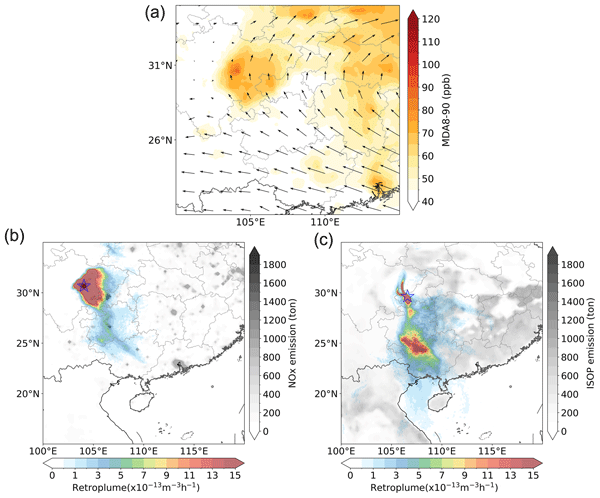
In the scorching August 2022 heatwave, China's Sichuan Basin saw a stark contrast in ozone (O3) levels between Chengdu and Chongqing. The regional disparities were studied considering meteorology, precursors, photochemistry, and transportation. The study highlighted the importance of tailored pollution control measures and underlined the necessity for region-specific strategies to combat O3 pollution on a regional scale.
Nan Wang, Hongyue Wang, Xin Huang, Xi Chen, Yu Zou, Tao Deng, Tingyuan Li, Xiaopu Lyu, and Fumo Yang
Atmos. Chem. Phys., 24, 1559–1570, https://doi.org/10.5194/acp-24-1559-2024, https://doi.org/10.5194/acp-24-1559-2024, 2024
Short summary
Short summary
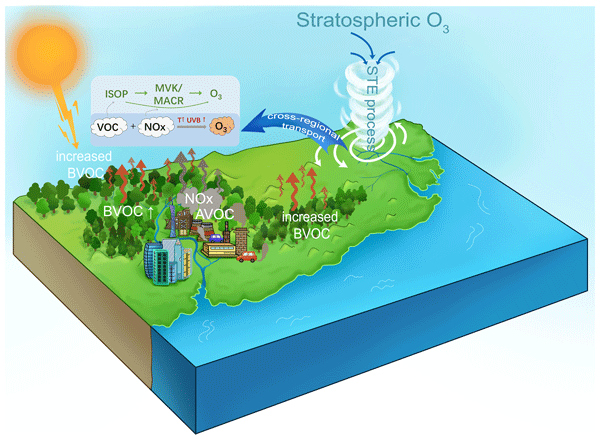
This study explores the influence of extreme-weather-induced natural processes on ozone pollution, which is often overlooked. By analyzing meteorological factors, natural emissions, chemistry pathways and atmospheric transport, we discovered that these natural processes could substantially exacerbate ozone pollution. The findings contribute to a deeper understanding of ozone pollution and offer valuable insights for controlling ozone pollution in the context of global warming.
Jinwen Zhang, Yongjian Liang, Yufei Yang, Chenglei Pei, Hebiao Huang, Bo Huang, Xiufeng Lian, Yingyan Huang, Yuwen Peng, Chunlei Cheng, Cheng Wu, Zhen Zhou, and Mei Li
EGUsphere, https://doi.org/10.5194/egusphere-2026-3381, https://doi.org/10.5194/egusphere-2026-3381, 2026
Short summary
Short summary
Separating human-related carbon dioxide emissions from vegetation exchange in cities often requires costly measurements. We developed a more accessible approach by combining tower-based carbon dioxide flux observations, satellite vegetation data, and ecological models. We found that vegetation uptake partly masked human-related emissions during the day, and gridded inventories showed possible spatial mismatches. This approach can help cities better separate carbon dioxide sources and sinks.
Wenfei Zhu, Qinghong Wang, Qingsong Wang, Jialin Shi, Yu Sun, Juntao Huo, Yi Sun, Jia Chen, Yue Zhao, Mei Li, Jun Chen, Shengrong Lou, and Hui Chen
EGUsphere, https://doi.org/10.5194/egusphere-2026-2447, https://doi.org/10.5194/egusphere-2026-2447, 2026
Short summary
Short summary
This study examines nitrate-containing particles during winter haze in eastern China. A framework combining single-particle mass spectrometry and statistical analysis was developed to better quantify nitrate sources. Results show that nitrate is mainly found in aged particles and strongly mixed with combustion and marine emissions. Pollution episodes are driven by stagnant conditions, high humidity, nighttime reactions, and regional transport.
Shanshan Ouyang, Tao Deng, Jingyang Chen, Run Liu, Xiaoyang Chen, Jinnan Yuan, Yanyan Huang, and Shaw Chen Liu
Atmos. Chem. Phys., 26, 8407–8424, https://doi.org/10.5194/acp-26-8407-2026, https://doi.org/10.5194/acp-26-8407-2026, 2026
Short summary
Short summary
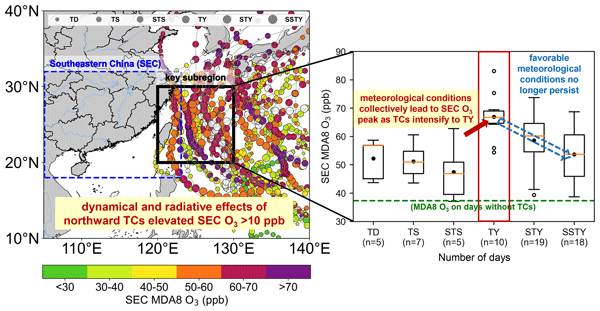
Northward tropical cyclones (TCs) reaching typhoon (TY) intensity, especially within 120–130°E and 20–30°N, elevate ozone concentration in southeastern China through fewer clouds, stronger solar radiation, lower relative humidity, and more stagnant air, while ozone remains high but declines slightly when TC intensity exceeds TY. Numerical simulations with TC intensity sensitivity experiments reveal that the dynamical and radiative effects of these TCs can increase ozone by over 10 ppb.
Xiufeng Lian, Chenglei Pei, Wei Sun, Chen Lv, Kunlun Huang, Lei Lei, Bo Huang, Chunlei Cheng, Guohua Zhang, Xinhui Bi, Zhen Zhou, and Mei Li
EGUsphere, https://doi.org/10.5194/egusphere-2026-1853, https://doi.org/10.5194/egusphere-2026-1853, 2026
Short summary
Short summary
Fireworks release tiny particles that affect air quality. In Guangzhou, we tracked how barium particles from fireworks change in the air. Fireworks raised barium levels up to one thousand times above normal. These particles transformed through chemical reactions. Local policies cut pollution in restricted areas. Long-term health risks stay low, but short-term exposure can be much higher, which may concern children. Our findings help explain particle aging and guide air quality management.
Jinglan Lin, Liqing Wu, Chujun Chen, Yongkang Wu, Rui Lin, Xuemei Wang, and Weihua Chen
Atmos. Chem. Phys., 26, 7081–7103, https://doi.org/10.5194/acp-26-7081-2026, https://doi.org/10.5194/acp-26-7081-2026, 2026
Short summary
Short summary
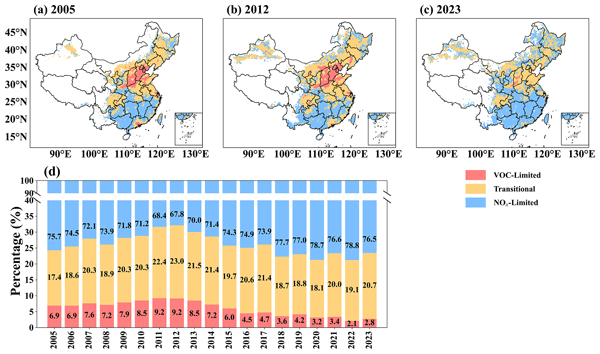
By integrating satellite data from 2005–2023 (warm seasons), we analyzed the spatiotemporal evolution of ozone formation sensitivity across China. Results show a shift toward NOx-limited and transitional regimes under policy measures. Explainable machine learning suggests this evolution is mainly associated with emission changes, while meteorological factors become increasingly important under cleaner conditions. These findings support more precise, region-specific ozone control strategies.
Jinwen Zhang, Yongjian Liang, Chenglei Pei, Bo Huang, Yingyan Huang, Xiufeng Lian, Shaojie Song, Chunlei Cheng, Cheng Wu, Zhen Zhou, Junjie Li, and Mei Li
Atmos. Chem. Phys., 26, 3253–3276, https://doi.org/10.5194/acp-26-3253-2026, https://doi.org/10.5194/acp-26-3253-2026, 2026
Short summary
Short summary
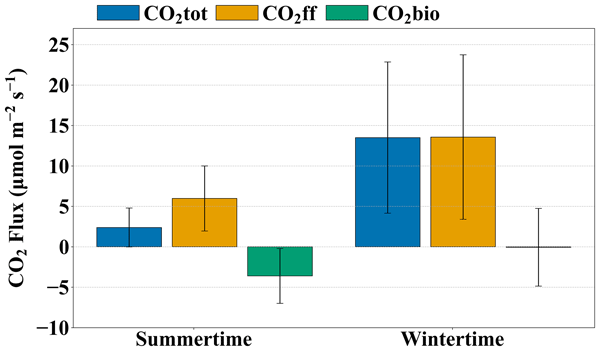
Inadequate characterization of carbon dioxide (CO2) dynamics limits the understanding of coastal megacity carbon cycles. Using an observation-driven framework integrating high-precision CO2/CO measurements, this study shows that the "coastal CO2 dome" can shift seasonally away from the urban core, reveals nonlinear sea–land breeze effects, quantifies urban vegetation's role in CO2 budgets, thereby providing new insights into coastal carbon monitoring and mitigation assessment.
Song Liu, Xiaopu Lyu, Fumo Yang, Zongbo Shi, Xin Huang, Tengyu Liu, Hongli Wang, Mei Li, Jian Gao, Nan Chen, Guoliang Shi, Yu Zou, Chenglei Pei, Chengxu Tong, Xinyi Liu, Li Zhou, Alex B. Guenther, and Nan Wang
Atmos. Chem. Phys., 26, 635–646, https://doi.org/10.5194/acp-26-635-2026, https://doi.org/10.5194/acp-26-635-2026, 2026
Short summary
Short summary
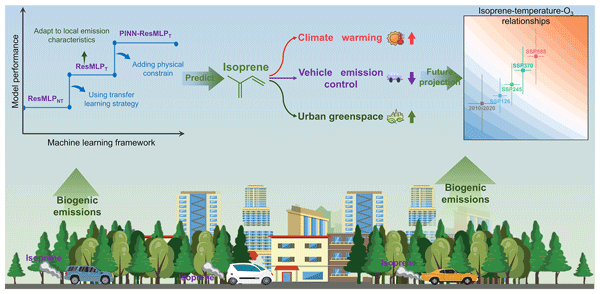
We studied the invisible gas isoprene, which trees and vehicles release into the air and which can worsen urban smog. Using advanced computer learning trained on measurements from many cities, we uncovered how temperature, sunlight, and city greening shape isoprene levels. Comparing Hong Kong and London, we found climate warming boosts isoprene and future ozone pollution, but strong cuts in anthropogenic emission could limit this impact.
Weichao Huang, Sihang Wang, Peng Cheng, Bingna Chen, Bin Yuan, Pengfei Yu, Haichao Wang, Nan Ma, Mei Li, and Keding Lu
Atmos. Chem. Phys., 25, 15403–15414, https://doi.org/10.5194/acp-25-15403-2025, https://doi.org/10.5194/acp-25-15403-2025, 2025
Short summary
Short summary
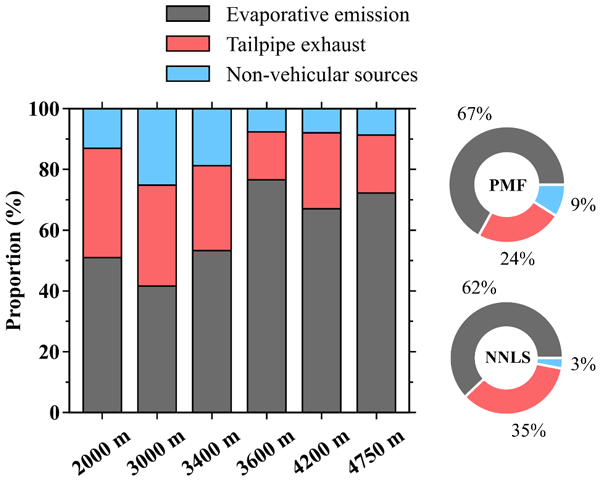
We studied vehicle emissions from ten 3000-meter tunnels on the Tibetan Plateau. Emissions of volatile organic compounds (VOCs) increase with elevation due to the evaporation of fuel oil from low pressure, unlike at lower elevations where tailpipe is predominant. This suggests that specific emission control measures are needed. This research aims to understand emissions at high altitudes and to guide cleaner transport.
Chujun Chen, Weihua Chen, Linhao Guo, Yongkang Wu, Xianzhong Duan, Xuemei Wang, and Min Shao
Atmos. Chem. Phys., 25, 15145–15169, https://doi.org/10.5194/acp-25-15145-2025, https://doi.org/10.5194/acp-25-15145-2025, 2025
Short summary
Short summary
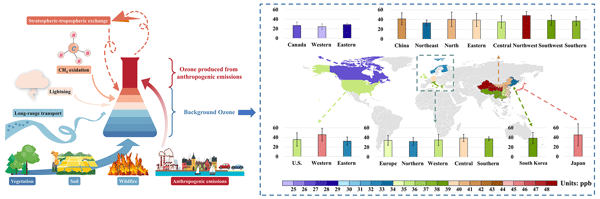
Background O3 forms the baseline level of O3 pollution, even without local human activities. This review examines how background O3 is defined and estimated, revealing significant variations across China, with higher level in the Northwest and lower in the Northeast region. Globally, China’s background O3 levels are medium-to-high and rising. The study calls for integrated estimation methods, international collaboration, and research on climate-ozone links to improve air quality strategies.
Yinbao Jin, Heng Huang, Jian Liu, Yiming Liu, Xiaoyang Chen, Yongqiang Chen, Licheng Li, and Qi Fan
Earth Syst. Sci. Data Discuss., https://doi.org/10.5194/essd-2025-515, https://doi.org/10.5194/essd-2025-515, 2025
Revised manuscript not accepted
Short summary
Short summary
Fires in Southeast and East Asia release large amounts of smoke that harm air quality, weather, and climate. Existing datasets often miss night-time burning and how smoke rises in the atmosphere. We created an open dataset for 2023 that records fire emissions every hour in three dimensions at high resolution. By combining satellite data and machine learning, it improves understanding of when and where smoke is released and supports better forecasts and policy decisions.
Xiufeng Lian, Yongjiang Xu, Fengxian Liu, Long Peng, Xiaodong Hu, Guigang Tang, Xu Dao, Hui Guo, Liwei Wang, Bo Huang, Chunlei Cheng, Lei Li, Guohua Zhang, Xinhui Bi, Xiaofei Wang, Zhen Zhou, and Mei Li
Atmos. Chem. Phys., 25, 8891–8905, https://doi.org/10.5194/acp-25-8891-2025, https://doi.org/10.5194/acp-25-8891-2025, 2025
Short summary
Short summary
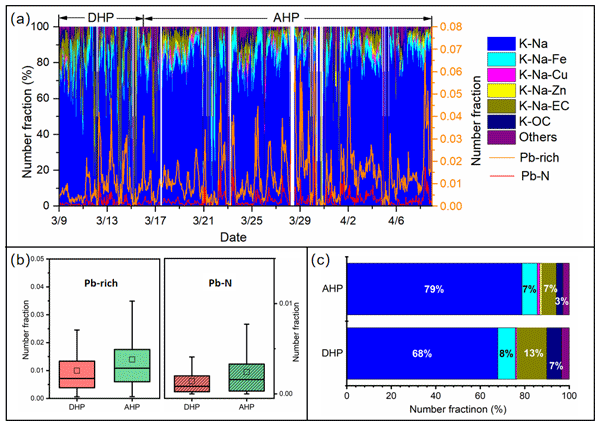
In this study, we analyzed the mixing state and atmospheric chemical processes of Pb-rich single particles in Beijing. We focused on analyzing the differences in Pb-rich particles between the heating period and non-heating period, as well as the formation mechanism of lead nitrate after coal-to-gas conversion. Our results highlighted the improvement of Pb levels in the particulate as a result of coal-to-gas conversion.
Xianzhong Duan, Ming Chang, Guotong Wu, Suping Situ, Shengjie Zhu, Qi Zhang, Yibo Huangfu, Weiwen Wang, Weihua Chen, Bin Yuan, and Xuemei Wang
Atmos. Meas. Tech., 17, 4065–4079, https://doi.org/10.5194/amt-17-4065-2024, https://doi.org/10.5194/amt-17-4065-2024, 2024
Short summary
Short summary
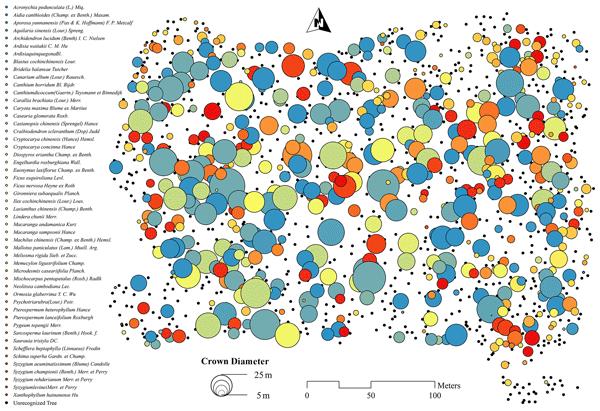
Accurately estimating biogenic volatile organic compound (BVOC) emissions in forest ecosystems has been challenging. This research presents a framework that utilizes drone-based lidar, photogrammetry, and image recognition technologies to identify plant species and estimate BVOC emissions. The largest cumulative isoprene emissions were found in the Myrtaceae family, while those of monoterpenes were from the Rubiaceae family.

Liangbin Wu, Cheng Wu, Tao Deng, Dui Wu, Mei Li, Yong Jie Li, and Zhen Zhou
Atmos. Meas. Tech., 17, 2917–2936, https://doi.org/10.5194/amt-17-2917-2024, https://doi.org/10.5194/amt-17-2917-2024, 2024
Short summary
Short summary
Field comparison of dual-spot (AE33) and single-spot (AE31) Aethalometers by full-year collocated measurements suggests that site-specific correction factors are needed to ensure the long-term data continuity for AE31-to-AE33 transition in black carbon monitoring networks; babs agrees well between AE33 and AE31, with slight variations by wavelength (slope: 0.87–1.04; R2: 0.95–0.97). A ~ 20 % difference in secondary brown carbon light absorption was found between AE33 and AE31.
Nan Wang, Yunsong Du, Dongyang Chen, Haiyan Meng, Xi Chen, Li Zhou, Guangming Shi, Yu Zhan, Miao Feng, Wei Li, Mulan Chen, Zhenliang Li, and Fumo Yang
Atmos. Chem. Phys., 24, 3029–3042, https://doi.org/10.5194/acp-24-3029-2024, https://doi.org/10.5194/acp-24-3029-2024, 2024
Short summary
Short summary
In the scorching August 2022 heatwave, China's Sichuan Basin saw a stark contrast in ozone (O3) levels between Chengdu and Chongqing. The regional disparities were studied considering meteorology, precursors, photochemistry, and transportation. The study highlighted the importance of tailored pollution control measures and underlined the necessity for region-specific strategies to combat O3 pollution on a regional scale.
Liting Yang, Ming Chang, Shuping Situ, Weiwen Wang, and Xuemei Wang
EGUsphere, https://doi.org/10.5194/egusphere-2024-28, https://doi.org/10.5194/egusphere-2024-28, 2024
Preprint archived
Short summary
Short summary
The study aims to develop and apply the WRF-uEMEP model to simulate air quality at the city scale, with a focus on Foshan, the city with the highest industrial density. The research process included model development, calibration, and validation using existing air quality data in Foshan. Research shows that WRF-uEMEP model effectively captures the impact of urban structure on air pollutant processes and reveals the spatial and temporal distribution of air pollutants in Foshan.
Nan Wang, Hongyue Wang, Xin Huang, Xi Chen, Yu Zou, Tao Deng, Tingyuan Li, Xiaopu Lyu, and Fumo Yang
Atmos. Chem. Phys., 24, 1559–1570, https://doi.org/10.5194/acp-24-1559-2024, https://doi.org/10.5194/acp-24-1559-2024, 2024
Short summary
Short summary
This study explores the influence of extreme-weather-induced natural processes on ozone pollution, which is often overlooked. By analyzing meteorological factors, natural emissions, chemistry pathways and atmospheric transport, we discovered that these natural processes could substantially exacerbate ozone pollution. The findings contribute to a deeper understanding of ozone pollution and offer valuable insights for controlling ozone pollution in the context of global warming.
Yinbao Jin, Yiming Liu, Xiao Lu, Xiaoyang Chen, Ao Shen, Haofan Wang, Yinping Cui, Yifei Xu, Siting Li, Jian Liu, Ming Zhang, Yingying Ma, and Qi Fan
Atmos. Chem. Phys., 24, 367–395, https://doi.org/10.5194/acp-24-367-2024, https://doi.org/10.5194/acp-24-367-2024, 2024
Short summary
Short summary
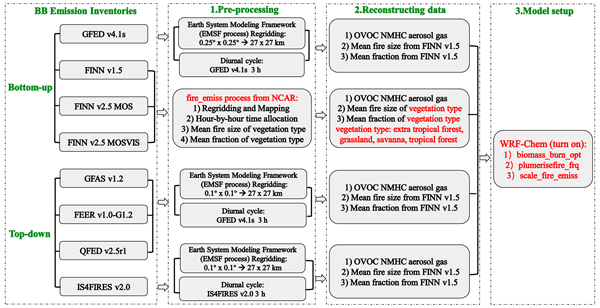
This study aims to address these issues by evaluating eight independent biomass burning (BB) emission inventories (GFED, FINN1.5, FINN2.5 MOS, FINN2.5 MOSVIS, GFAS, FEER, QFED, and IS4FIRES) using the WRF-Chem model and analyzing their impact on aerosol optical properties (AOPs) and direct radiative forcing (DRF) during wildfire events in peninsular Southeast Asia (PSEA) that occurred in March 2019.

Liyuan Zhou, Zhancong Liang, Brix Raphael Go, Rosemarie Ann Infante Cuevas, Rongzhi Tang, Mei Li, Chunlei Cheng, and Chak K. Chan
Atmos. Chem. Phys., 23, 5251–5261, https://doi.org/10.5194/acp-23-5251-2023, https://doi.org/10.5194/acp-23-5251-2023, 2023
Short summary
Short summary
This study reveals the sulfate formation in photosensitized particles from biomass burning under UV and SO2, of which the relative atmospheric importance in sulfate production was qualitatively compared to nitrate photolysis. On the basis of single-particle aerosol mass spectrometry measurements, the number percentage of sulfate-containing particles and relative peak area of sulfate in single-particle spectra exhibited a descending order of 3,4-dimethoxybenzaldehyde > vanillin > syringaldehyde.
Yongkang Wu, Weihua Chen, Yingchang You, Qianqian Xie, Shiguo Jia, and Xuemei Wang
Atmos. Chem. Phys., 23, 453–469, https://doi.org/10.5194/acp-23-453-2023, https://doi.org/10.5194/acp-23-453-2023, 2023
Short summary
Short summary
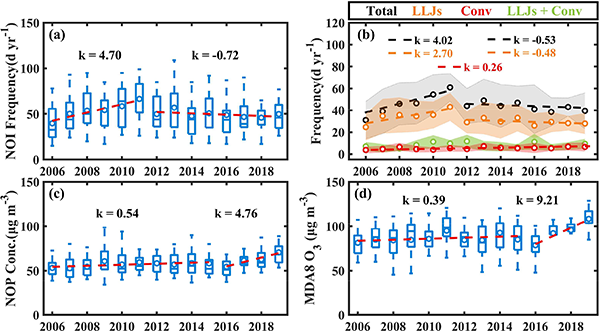
Relying on observed and simulated data, we determine the spatiotemporal characteristics of nocturnal O3 increase (NOI) events in the Pearl River Delta region during 2006–2019. Low-level jets and convective storms are the main meteorological processes causing NOI. Daytime O3 is another essential influencing factor. More importantly, a more prominent role of meteorological processes in NOI has been demonstrated. Our study highlights the important role of meteorology in nocturnal O3 pollution.
Zhancong Liang, Liyuan Zhou, Xinyue Li, Rosemarie Ann Infante Cuevas, Rongzhi Tang, Mei Li, Chunlei Cheng, Yangxi Chu, and Chak Keung Chan
Atmos. Chem. Phys. Discuss., https://doi.org/10.5194/acp-2022-838, https://doi.org/10.5194/acp-2022-838, 2022
Preprint withdrawn
Short summary
Short summary
Incense burning is a common religious ritual, especially in Asian and African communities, with massive particles emitted. While previous research mainly focused on the chemical compositions and potential health impacts of fresh incense particles, our work reveals that nitrate, accompanied by SOA, can rapidly form in incense-burning particles upon photochemical oxidation in the atmosphere. This finding could deepen our understanding of air pollution caused by religious activities.
Haichao Wang, Bin Yuan, E Zheng, Xiaoxiao Zhang, Jie Wang, Keding Lu, Chenshuo Ye, Lei Yang, Shan Huang, Weiwei Hu, Suxia Yang, Yuwen Peng, Jipeng Qi, Sihang Wang, Xianjun He, Yubin Chen, Tiange Li, Wenjie Wang, Yibo Huangfu, Xiaobing Li, Mingfu Cai, Xuemei Wang, and Min Shao
Atmos. Chem. Phys., 22, 14837–14858, https://doi.org/10.5194/acp-22-14837-2022, https://doi.org/10.5194/acp-22-14837-2022, 2022
Short summary
Short summary
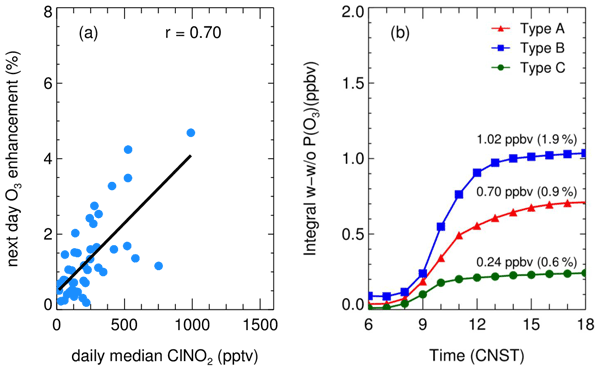
We present intensive field measurement of ClNO2 in the Pearl River Delta in 2019. Large variation in the level, formation, and atmospheric impacts of ClNO2 was found in different air masses. ClNO2 formation was limited by the particulate chloride (Cl−) and aerosol surface area. Our results reveal that Cl− originated from various anthropogenic emissions rather than sea sources and show minor contribution to the O3 pollution and photochemistry.
Xiao-Bing Li, Bin Yuan, Sihang Wang, Chunlin Wang, Jing Lan, Zhijie Liu, Yongxin Song, Xianjun He, Yibo Huangfu, Chenglei Pei, Peng Cheng, Suxia Yang, Jipeng Qi, Caihong Wu, Shan Huang, Yingchang You, Ming Chang, Huadan Zheng, Wenda Yang, Xuemei Wang, and Min Shao
Atmos. Chem. Phys., 22, 10567–10587, https://doi.org/10.5194/acp-22-10567-2022, https://doi.org/10.5194/acp-22-10567-2022, 2022
Short summary
Short summary
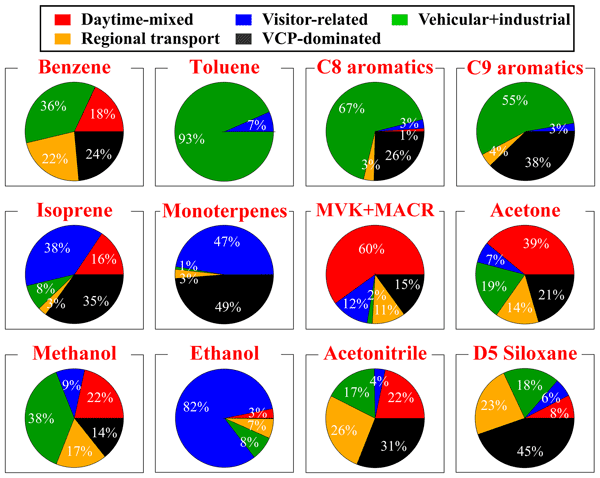
High-time-resolution measurements of volatile organic compounds (VOCs) were made using an online mass spectrometer at a 600 m tall tower in urban region. Compositions, temporal variations, and sources of VOCs were quantitatively investigated in this study. We find that VOC measurements in urban regions aloft could better characterize source characteristics of anthropogenic emissions. Our results could provide important implications in making future strategies for control of VOCs.
Qi Zhang, Shiguo Jia, Weihua Chen, Jingying Mao, Liming Yang, Padmaja Krishnan, Sayantan Sarkar, Min Shao, and Xuemei Wang
Atmos. Chem. Phys. Discuss., https://doi.org/10.5194/acp-2022-394, https://doi.org/10.5194/acp-2022-394, 2022
Revised manuscript not accepted
Short summary
Short summary
We use satellite data in the establishment of methylamines marine biological emission (MBE) inventory for the first time, which considers effects of actual marine environment on methylamines emission fluxes. MBE fluxes of monomethylamine and trimethylamines can be comparable with or even higher than that of terrestrial anthropogenic emissions , while for dimethylamines, the ocean acts as a sink. Wind and Chlorophyll-a were potentially the most important factors affecting MBE fluxes.
Suxia Yang, Bin Yuan, Yuwen Peng, Shan Huang, Wei Chen, Weiwei Hu, Chenglei Pei, Jun Zhou, David D. Parrish, Wenjie Wang, Xianjun He, Chunlei Cheng, Xiao-Bing Li, Xiaoyun Yang, Yu Song, Haichao Wang, Jipeng Qi, Baolin Wang, Chen Wang, Chaomin Wang, Zelong Wang, Tiange Li, E Zheng, Sihang Wang, Caihong Wu, Mingfu Cai, Chenshuo Ye, Wei Song, Peng Cheng, Duohong Chen, Xinming Wang, Zhanyi Zhang, Xuemei Wang, Junyu Zheng, and Min Shao
Atmos. Chem. Phys., 22, 4539–4556, https://doi.org/10.5194/acp-22-4539-2022, https://doi.org/10.5194/acp-22-4539-2022, 2022
Short summary
Short summary
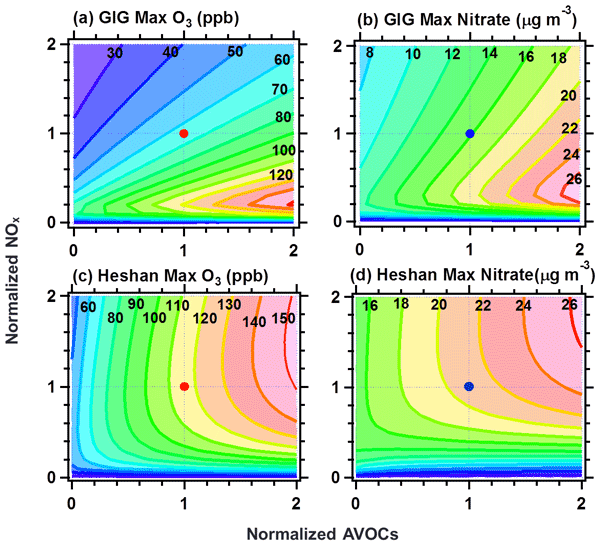
We use a model constrained using observations to study the formation of nitrate aerosol in and downwind of a representative megacity. We found different contributions of various chemical reactions to ground-level nitrate concentrations between urban and suburban regions. We also show that controlling VOC emissions are effective for decreasing nitrate formation in both urban and regional environments, although VOCs are not direct precursors of nitrate aerosol.
Ming Chang, Jiachen Cao, Qi Zhang, Weihua Chen, Guotong Wu, Liping Wu, Weiwen Wang, and Xuemei Wang
Geosci. Model Dev., 15, 787–801, https://doi.org/10.5194/gmd-15-787-2022, https://doi.org/10.5194/gmd-15-787-2022, 2022
Short summary
Short summary
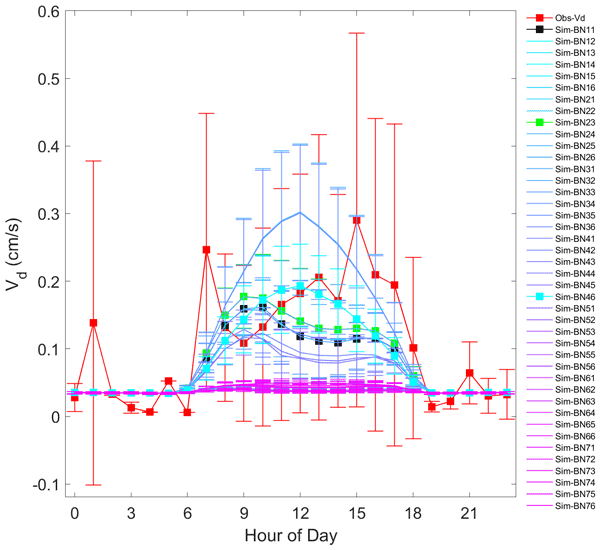
Despite the importance of nitrogen deposition, its simulation is still insufficiently represented in current atmospheric chemistry models. In this study, the improvement of the canopy stomatal resistance mechanism and the nitrogen-limiting schemes in Noah-MP-WDDM v1.42 give new options for simulating nitrogen dry deposition velocity. This study finds that the combined BN-23 mechanism agrees better with the observed NO2 dry deposition velocity, with the mean bias reduced by 50.1 %.
Qi En Zhong, Chunlei Cheng, Zaihua Wang, Lei Li, Mei Li, Dafeng Ge, Lei Wang, Yuanyuan Li, Wei Nie, Xuguang Chi, Aijun Ding, Suxia Yang, Duohong Chen, and Zhen Zhou
Atmos. Chem. Phys., 21, 17953–17967, https://doi.org/10.5194/acp-21-17953-2021, https://doi.org/10.5194/acp-21-17953-2021, 2021
Short summary
Short summary
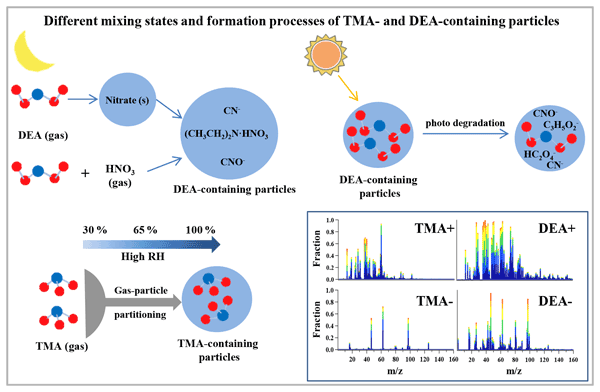
Particulate amines play important roles in new particle formation, aerosol acidity, and hygroscopicity. Most of the field observations did not distinguish the different behavior of each type amine under the same ambient influencing factors. In this study, two amine-containing single particles exhibited different mixing states and disparate enrichment of secondary organics, which provide insight into the discriminated fates of organics during the formation and evolution processes.
Cited articles
Chen, X., Liu, Y., Lai, A., Han, S., Fan, Q., Wang, X., Ling, Z., Huang, F., and Fan, S.: Factors dominating 3-dimensional ozone distribution during high tropospheric ozone period, Environ. Pollut., 232, 55–64, https://doi.org/10.1016/j.envpol.2017.09.017, 2018.
Chen, X., Wu, L., Chen, X., Zhang, Y., Guo, J., Safieddine, S., Huang, F., and Wang, X.: Cross-Tropopause Transport of Surface Pollutants during the Beijing 21 July Deep Convection Event, J. Atmos. Sci., 79, 1349–1362, https://doi.org/10.1175/JAS-D-21-0115.1, 2022a.
Chen, X., Wang, N., Wang, G., Wang, Z., Chen, H., Cheng, C., Li, M., Zheng, L., Wu, L., Zhang, Q., Tang, M., Huang, B., Wang, X., and Zhou, Z.: The Influence of Synoptic Weather Patterns on Spatiotemporal Characteristics of Ozone Pollution Across Pearl River Delta of Southern China, J. Geophys. Res.-Atmos., 127, 1–17, https://doi.org/10.1029/2022jd037121, 2022b.
Chen, Y., Lu, X., and Fung, J. C. H.: Spatiotemporal source apportionment of ozone pollution over the Greater Bay Area, Atmos. Chem. Phys., 24, 8847–8864, https://doi.org/10.5194/acp-24-8847-2024, 2024.
Chen, Z., Liu, J., Cheng, X., Yang, M., and Wang, H.: Positive and negative influences of typhoons on tropospheric ozone over southern China, Atmos. Chem. Phys., 21, 16911–16923, https://doi.org/10.5194/acp-21-16911-2021, 2021.
Chen, Z., Liu, J., Qie, X., Cheng, X., Shen, Y., Yang, M., Jiang, R., and Liu, X.: Transport of substantial stratospheric ozone to the surface by a dying typhoon and shallow convection, Atmos. Chem. Phys., 22, 8221–8240, https://doi.org/10.5194/acp-22-8221-2022, 2022c.
Cong, H., Yuan, Y., Qian, W., and Bi-hui, Z.: Analysis of O3 Pollution Affected by a Succession of Three Landfall Typhoons in 2020 in Eastern China, Huanjing Kexue, 45, 71–80, https://doi.org/10.13227/j.hjkx.202301049, 2024.
Ding, H., Kong, L., You, Y., Mao, J., Chen, W., Chen, D., Chang, M., and Wang, X.: Effects of tropical cyclones with different tracks on ozone pollution over the Pearl River Delta region, Atmos. Res., 286, https://doi.org/10.1016/j.atmosres.2023.106680, 2023.
Dou, X., Li, M., Jiang, Y., Song, Z., Li, P., and Yu, S.: Different contributions of meteorological conditions and emission reductions to the ozone pollution during Shanghai's COVID-19 lockdowns in winter and spring, Atmos. Pollut. Res., 15, https://doi.org/10.1016/j.apr.2024.102252, 2024.
Gao, D., Xie, M., Chen, X., Wang, T., Liu, J., Xu, Q., Mu, X., Chen, F., Li, S., Zhuang, B., Li, M., Zhao, M., and Ren, J.: Systematic classification of circulation patterns and integrated analysis of their effects on different ozone pollution levels in the Yangtze River Delta Region, China, Atmos. Environ., 242, https://doi.org/10.1016/j.atmosenv.2020.117760, 2020.
Gong, D., Du, N., Wang, L., Deng, X., Zhang, X., and Yang, L.: Impacts of meteorological and precursor emission factors on PM2.5 and O3 from 2019 to 2022: Insights from multiple perspectives, Atmos. Res., 315, https://doi.org/10.1016/j.atmosres.2025.107933, 2025.
Guo, Y. P. and Tan, Z. M.: Influence of Track Change on the Inconsistent Poleward Migration of Typhoon Activity, J. Geophys. Res.-Atmos., 127, 1–16, https://doi.org/10.1029/2022JD036640, 2022.
Han, H., Liu, J., Shu, L., Wang, T., and Yuan, H.: Local and synoptic meteorological influences on daily variability in summertime surface ozone in eastern China, Atmos. Chem. Phys., 20, 203–222, https://doi.org/10.5194/acp-20-203-2020, 2020.
Hu, F., Xie, P., Zhu, Y., Zhang, F., Xu, J., Lv, Y., Zhang, Z., Zheng, J., Zhang, Q., Li, Y., and Tian, X.: The impact of evolving synoptic weather patterns on multi-scale transport and sources of persistent high-concentration ozone pollution event in the Yangtze River Delta, China, Sci. Total Environ., 949, https://doi.org/10.1016/j.scitotenv.2024.175048, 2024.
Huang, D., Wan, L., Wan, Y., Chang, S., Ma, X., and Zhao, K.: Gravity Wave Activity and Stratosphere-Troposphere Exchange During Typhoon Molave (2020), J. Trop. Meteorol., 30, 306–326, https://doi.org/10.3724/j.1006-8775.2024.026, 2024.
Huang, T., Yang, Y., O'Connor, E. J., Lolli, S., Haywood, J., Osborne, M., Cheng, J. C.-H., Guo, J., and Yim, S. H.-L.: Influence of a weak typhoon on the vertical distribution of air pollution in Hong Kong: A perspective from a Doppler LiDAR network, Environ. Pollut., 276, https://doi.org/10.1016/j.envpol.2021.116534, 2021.
Jiang, Y., Zhao, T., Meng, K., Cheng, X., and Lv, Q.: 3-D Changes of Tropospheric O3 in Central and Eastern China Induced by Tropical Cyclones over the Northwest Pacific: Recent-Year Characterization with Multi-Source Observations, Remote Sens., 16, https://doi.org/10.3390/rs16071178, 2024.
Kumar, S., Chen, W., and Louis, O.-P.: Ionospheric and Atmospheric Response to Extremely Severe Cyclonic Storm Nida of 29 July–02 August- 2016, J. Geophys. Res.-Space Phys., 128, https://doi.org/10.1029/2023JA031422, 2023.
Li, D., Vogel, B., Mueller, R., Bian, J., Guenther, G., and Riese, M.: Tropical Cyclones Reduce Ozone in the Tropopause Region Over the Western Pacific: An Analysis of 18 Years Ozonesonde Profiles, Earths Future, 9, https://doi.org/10.1029/2020EF001635, 2021.
Li, D., Bian, J., Zhang, X., Vogel, B., Muller, R., and Gunther, G.: Impact of typhoon Soudelor on ozone and water vapor in the Asian monsoon anticyclone western Pacific mode, Atmos. Sci. Lett., 24, https://doi.org/10.1002/asl.1147, 2023a.
Li, M., Zeng, W., Yang, Z., Luo, Y., Zhu, Q., Wang, L., Yang, L., and Liao, C.: Multiple sources emission inventory closely integrated with atmospheric environment management: A case study of Guangdong, China, Atmos. Pollut. Res., 14, 101825, https://doi.org/10.1016/j.apr.2023.101825, 2023b.
Li, Y., Zhao, X., Deng, X., and Gao, J.: The impact of peripheral circulation characteristics of typhoon on sustained ozone episodes over the Pearl River Delta region, China, Atmos. Chem. Phys., 22, 3861–3873, https://doi.org/10.5194/acp-22-3861-2022, 2022.
Lu, P., Liu, R., Luo, Z., Li, S., Wu, Y., Hu, W., and Xue, X.: Impacts of compound extreme weather events on summer ozone in the Beijing-Tianjin-Hebei region, Atmos. Pollut. Res., 15, https://doi.org/10.1016/j.apr.2023.102030, 2024.
Lu, X., Yu, H., Ying, M., Zhao, B., Zhang, S., Lin, L., Bai, L., and Wan, R.: Western North Pacific Tropical Cyclone Database Created by the China Meteorological Administration, Adv. Atmos. Sci., 38, 690–699, https://doi.org/10.1007/s00376-020-0211-7, 2021.
Meng, K., Zhao, T., Xu, X., Hu, Y., Zhao, Y., Zhang, L., Pang, Y., Ma, X., Bai, Y., Zhen, S., and Zhao, Y.: Anomalous surface O3 changes in North China Plain during the northwest-ward movement of a landing typhoon, Sci. Total Environ., 820, https://doi.org/10.1016/j.scitotenv.2022.153196, 2022.
Ouyang, S., Deng, T., Liu, R., Chen, J., He, G., Leung, J. C.-H., Wang, N., and Liu, S. C.: Impact of a subtropical high and a typhoon on a severe ozone pollution episode in the Pearl River Delta, China, Atmos. Chem. Phys., 22, 10751–10767, https://doi.org/10.5194/acp-22-10751-2022, 2022.
Qin, L., Chunyan, D., Biwu, C., and Jianfeng, L.: Reason Analysis and Control of Ozone Pollution in a Southern Coastal City, Environ. Sci. Technol., 43, 71–78, https://doi.org/10.19672/j.cnki.1003-6504.2020.04.012, 2020.
Qiu, Y., Li, X., Chai, W., Liu, Y., Song, M., Tian, X., Zou, Q., Lou, W., Zhang, W., Li, J., and Zhang, Y.: Insights into ozone pollution control in urban areas by decoupling meteorological factors based on machine learning, Atmos. Chem. Phys., 25, 1749–1763, https://doi.org/10.5194/acp-25-1749-2025, 2025.
Qu, K., Wang, X., Yan, Y., Shen, J., Xiao, T., Dong, H., Zeng, L., and Zhang, Y.: A comparative study to reveal the influence of typhoons on the transport, production and accumulation of O3 in the Pearl River Delta, China, Atmos. Chem. Phys., 21, 11593–11612, https://doi.org/10.5194/acp-21-11593-2021, 2021.
Rolph, G., Stein, A., and Stunder, B.: Real-time Environmental Applications and Display sYstem: READY, Environ. Model. Softw., 95, 210–228, https://doi.org/10.1016/j.envsoft.2017.06.025, 2017.
Shen, W., Jin, Y., Li, G., and Cong, P.: Analyzing the response distribution of DO concentration and its environmental factors under the influence of typhoon rain events with remote sensing, Front. Ecol. Evol., 11, https://doi.org/10.3389/fevo.2023.1283281, 2023.
Shuping, S., Chen, C., Haihua, M., Zhuoran, H., Lina, A., Sixin, D., Yan, Z., Min’er, K., and Weihua, C.: Characteristics of ozone pollution in Foshan city and its relationship with meteorology during 2017–2019, Acta Scientiarum Naturalium Universitatis Sunyatseni, 61, 28–35, https://doi.org/10.13471/j.cnki.acta.snus.2021D077, 2022.
Stein, A. F., Draxler, R. R., Rolph, G. D., Stunder, B. J. B., Cohen, M. D., and Ngan, F.: Noaa's hysplit atmospheric transport and dispersion modeling system, Bull. Am. Meteorol. Soc., 96, 2059–2077, https://doi.org/10.1175/BAMS-D-14-00110.1, 2015.
Wan, Y., Yin, Z., Huo, Q., Zhou, B., and Wang, H.: Weather Extremes Led to Large Variability in O3 Pollution and Associated Premature Deaths in East of China, Front. Earth Sci., 10, https://doi.org/10.3389/feart.2022.947001, 2022.
Wang, J., Wang, P., Tian, C., Gao, M., Cheng, T., and Mei, W.: Consecutive Northward Super Typhoons Induced Extreme Ozone Pollution Events in Eastern China, npj Clim. Atmos. Sci., 7, 1–9, https://doi.org/10.1038/s41612-024-00786-z, 2024a.
Wang, K., Zhao, R., Wu, Q., Li, J., Wang, H., and Lin, H.: Responses of surface ozone under the tropical cyclone circulations: Case studies from Fujian Province, China, Atmos. Pollut. Res., 16, https://doi.org/10.1016/j.apr.2024.102323, 2025.
Wang, N., Ling, Z., Deng, X., Deng, T., Lyu, X., Li, T., Gao, X., and Chen, X.: Source Contributions to PM2.5 under Unfavorable Weather Conditions in Guangzhou City, China, Adv. Atmos. Sci., 35, 1145–1159, https://doi.org/10.1007/s00376-018-7212-9, 2018.
Wang, N., Huang, X., Xu, J., Wang, T., Tan, Z. M., and Ding, A.: Typhoon-boosted biogenic emission aggravates cross-regional ozone pollution in China, Sci. Adv., 8, https://doi.org/10.1126/sciadv.abl6166, 2022.
Wang, N., Wang, H., Huang, X., Chen, X., Zou, Y., Deng, T., Li, T., Lyu, X., and Yang, F.: Extreme weather exacerbates ozone pollution in the Pearl River Delta, China: role of natural processes, Atmos. Chem. Phys., 24, 1559–1570, https://doi.org/10.5194/acp-24-1559-2024, 2024b.
Wei, J., Li, Z., Li, K., Dickerson, R. R., Pinker, R. T., Wang, J., Liu, X., Sun, L., Xue, W., and Cribb, M.: Full-coverage mapping and spatiotemporal variations of ground-level ozone (O3) pollution from 2013 to 2020 across China, Remote Sens. Environ., 270, https://doi.org/10.1016/j.rse.2021.112775, 2022.
Xu, J., Zhou, D., Gao, J., Huang, X., Xue, L., Huo, J., Fu, Q., and Ding, A.: Biogenic emissions-related ozone enhancement in two major city clusters during a typical typhoon process, Appl. Geochemistry, 152, https://doi.org/10.1016/j.apgeochem.2023.105634, 2023.
Yang, L., Luo, H., Yuan, Z., Zheng, J., Huang, Z., Li, C., Lin, X., Louie, P. K. K., Chen, D., and Bian, Y.: Quantitative impacts of meteorology and precursor emission changes on the long-term trend of ambient ozone over the Pearl River Delta, China, and implications for ozone control strategy, Atmos. Chem. Phys., 19, 12901–12916, https://doi.org/10.5194/acp-19-12901-2019, 2019.
Yaoyao, C., Tong, L., Yu, W., Jin, S., Yuhong, Z., Siqi, Y., Duohong, C., and Jingyang, C.: Characteristics of Ozone Pollution in Guangdong Province from 2016 to 2020, Ecology and Environment, 31, 2374–2381, https://doi.org/10.16258/j.cnki.1674-5906.2022.12.012, 2022.
Ying, M., Zhang, W., Yu, H., Lu, X., Feng, J., Fan, Y., Zhu, Y., and Chen, D.: An Overview of the China Meteorological Administration Tropical Cyclone Database, J. Atmos. Ocean. Technol., 31, 287–301, https://doi.org/10.1175/JTECH-D-12-00119.1, 2014.
Yufeng, Z., Junjun, Y., Tingting, C., Tao, W., Huang, C., Lili, Z., Boguang, W., and Chengliang, Z.: Influence of typhoon track in northwest Pacific on ozone pollution in autumn in Shantou City, China Environmental Science, 44, 6538–6548, https://doi.org/10.19674/j.cnki.issn1000-6923.20240820.001, 2024.
Zhan, C., Xie, M., Huang, C., Liu, J., Wang, T., Xu, M., Ma, C., Yu, J., Jiao, Y., Li, M., Li, S., Zhuang, B., Zhao, M., and Nie, D.: Ozone affected by a succession of four landfall typhoons in the Yangtze River Delta, China: major processes and health impacts, Atmos. Chem. Phys., 20, 13781–13799, https://doi.org/10.5194/acp-20-13781-2020, 2020.
Zhu, L., Zhou, R., Di, D., Bai, W., and Liu, Z.: Retrieval of Atmospheric Water Vapor Content in the Environment from AHI/H8 Using Both Physical and Random Forest Methods-A Case Study for Typhoon Maria (201808), Remote Sens., 15, https://doi.org/10.3390/rs15020498, 2023.
Short summary
Typhoons moving north near China create ozone pollution in Guangdong by combining strong sunlight with stagnant air. These tyhoons also push ozone-rich air from high altitudes down to ground level. When multiple north-moving typhoons occur back-to-back, they cause widespread and long-lasting ozone pollution. Vertical air currents during these events can contribute up to 16 % of boundary layer ozone.
Typhoons moving north near China create ozone pollution in Guangdong by combining strong...


Altmetrics
Final-revised paper
Preprint