
Articles | Volume 26, issue 12
https://doi.org/10.5194/acp-26-8475-2026
© Author(s) 2026. This work is distributed under
the Creative Commons Attribution 4.0 License.
the Creative Commons Attribution 4.0 License.
Special issue:
https://doi.org/10.5194/acp-26-8475-2026
© Author(s) 2026. This work is distributed under
the Creative Commons Attribution 4.0 License.
the Creative Commons Attribution 4.0 License.
Research article
| 
17 Jun 2026
Research article |
| 17 Jun 2026
| 17 Jun 2026
Active and passive satellite observations coupled with carbon–nitrogen synergy for urban fossil fuel CO2 emissions monitoring
Jinchun Yi
Hubei Key Laboratory of Quantitative Remote Sensing of Land and Atmosphere, School of Remote Sensing and Information Engineering, Wuhan University, Wuhan 430079, China
Yiyang Huang
Hubei Key Laboratory of Quantitative Remote Sensing of Land and Atmosphere, School of Remote Sensing and Information Engineering, Wuhan University, Wuhan 430079, China
Ge Han
CORRESPONDING AUTHOR

Hubei Key Laboratory of Quantitative Remote Sensing of Land and Atmosphere, School of Remote Sensing and Information Engineering, Wuhan University, Wuhan 430079, China
Perception and Effectiveness Assessment for Carbon-neutrality Efforts, Engineering Research Center of Ministry of Education, Institute for Carbon Neutrality, Wuhan University, Wuhan, China
Hongyuan Zhang
State Key Laboratory of Information Engineering in Surveying, Mapping and Remote Sensing, Wuhan University, Luoyu Road No.129, Wuhan 430079, China
Zhipeng Pei
Hubei Key Laboratory of Quantitative Remote Sensing of Land and Atmosphere, School of Remote Sensing and Information Engineering, Wuhan University, Wuhan 430079, China
Perception and Effectiveness Assessment for Carbon-neutrality Efforts, Engineering Research Center of Ministry of Education, Institute for Carbon Neutrality, Wuhan University, Wuhan, China
Haotian Luo
Hubei Key Laboratory of Quantitative Remote Sensing of Land and Atmosphere, School of Remote Sensing and Information Engineering, Wuhan University, Wuhan 430079, China
Yichi Zhang
Hubei Key Laboratory of Quantitative Remote Sensing of Land and Atmosphere, School of Remote Sensing and Information Engineering, Wuhan University, Wuhan 430079, China
Tianqi Shi
Laboratoire des Sciences du Climat et de l'Environnement, LSCE/IPSL, CEA-CNRS-UVSQ, Université Paris-Saclay, 91198 Gif-sur-Yvette, France
Siwei Li
Hubei Key Laboratory of Quantitative Remote Sensing of Land and Atmosphere, School of Remote Sensing and Information Engineering, Wuhan University, Wuhan 430079, China
Perception and Effectiveness Assessment for Carbon-neutrality Efforts, Engineering Research Center of Ministry of Education, Institute for Carbon Neutrality, Wuhan University, Wuhan, China
Wei Gong
Electronic Information School, Wuhan University, Wuhan, China
Wuhan Institute of Quantum Technology, Wuhan, China
Related authors
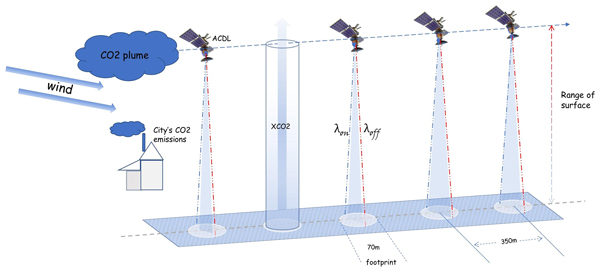
Jinchun Yi, Yiyang Huang, Zhipeng Pei, and Ge Han
Atmos. Chem. Phys., 25, 13687–13710, https://doi.org/10.5194/acp-25-13687-2025, https://doi.org/10.5194/acp-25-13687-2025, 2025
Short summary
Short summary
The inventory overestimated emissions in Beijing and Riyadh by 10–20 % and underestimated emissions in Cairo by 10–30 %. The biosphere flux has a 20–40 % impact on emissions in Beijing during certain periods. Moreover, using night-time and day-time biosphere flux data separately can improve the simulation accuracy of the same orbit by 20–70 % compared to using daily average data.
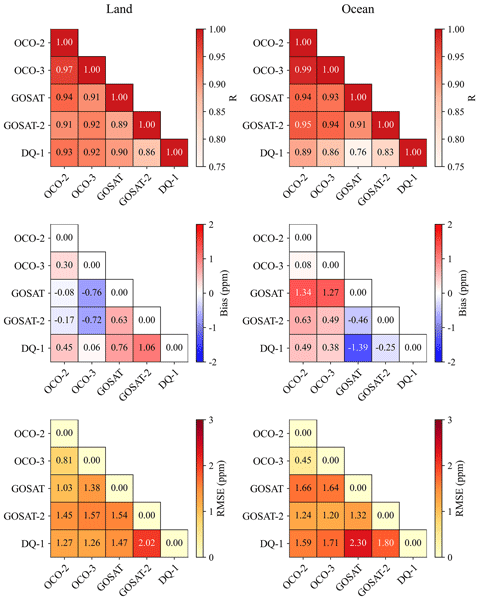
Yike Wang, Ge Han, Hongyuan Zhang, Yiyang Huang, Kangjie Zhou, and Wei Gong
Atmos. Chem. Phys., 26, 14793–14822, https://doi.org/10.5194/acp-26-14793-2026, https://doi.org/10.5194/acp-26-14793-2026, 2026
Short summary
Short summary
This study establishes a unified framework to assess the consistency of DQ-1 (Da Qi-1) ACDL (Aerosol and Carbon Dioxide Lidar) XCO2 with passive satellite products while considering sampling and column-definition differences. DQ-1 agrees well with TCCON (Total Carbon Column Observing Network) and shows consistent spatial patterns with OCO-2, OCO-3 (Orbiting Carbon Observatory), GOSAT, and GOSAT-2 (Greenhouse gases Observing SATellite) over selected regions. It provides complementary XCO2 observations where passive measurements are limited, including nighttime and high latitudes, supporting future joint carbon monitoring and inversion studies.
Huayi Wang, Ge Han, and Zhipeng Pei
Int. Arch. Photogramm. Remote Sens. Spatial Inf. Sci., XLIX-B3-2026, 1471–1476, https://doi.org/10.5194/isprs-archives-XLIX-B3-2026-1471-2026, https://doi.org/10.5194/isprs-archives-XLIX-B3-2026-1471-2026, 2026
Weijie Zou, Zhenping Yin, Tingxin Sun, Zhichao Bu, Yaru Dai, Haofei Wang, Longlong Wang, Yun He, Shuangliang Li, Jiarui Cheng, Xuan Wang, Siwei Li, and Detlef Müller
EGUsphere, https://doi.org/10.5194/egusphere-2026-3036, https://doi.org/10.5194/egusphere-2026-3036, 2026
Short summary
Short summary
Cloud layers can be identified from ground-based laser observations, but stable and consistent results across different instruments and sites remain challenging. This study develops a transferable artificial intelligence method using multi-wavelength lidar signals. It improves cloud boundary detection, works with limited expert labels, and is tested at independent sites with weather balloon checks. It supports reliable automated cloud and aerosol processing.
Zhe Tong, Boming Liu, Xin Ma, Jianping Guo, Haowei Zhang, Haoyu Dong, Ge Han, Yingying Ma, and Wei Gong
Earth Syst. Sci. Data Discuss., https://doi.org/10.5194/essd-2026-73, https://doi.org/10.5194/essd-2026-73, 2026
Revised manuscript accepted for ESSD
Short summary
Short summary
Near-surface wind is crucial for weather and wind energy studies. This work uses physically constrained machine learning combined with satellite wind observations to generate a wind speed profile dataset within the global atmospheric boundary layer. The dataset accurately depicts the spatial distribution and variation of global wind speeds with improved accuracy, finer vertical detail, and reduced data gaps, supporting boundary-layer meteorology, climate studies, and wind energy applications.
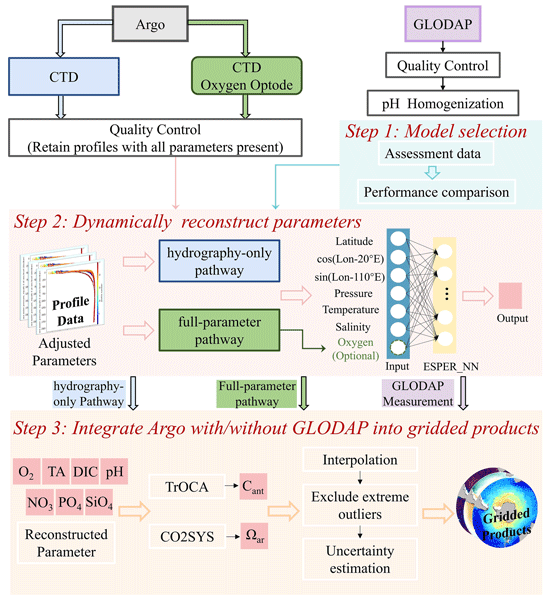
Wanqin Zhong, Xin Ma, Yingxu Wu, Chenglong Li, Tianqi Shi, Wei Gong, and Di Qi
Earth Syst. Sci. Data, 17, 7169–7201, https://doi.org/10.5194/essd-17-7169-2025, https://doi.org/10.5194/essd-17-7169-2025, 2025
Short summary
Short summary
This work addresses a critical observational gap in the Southern Ocean — one of the most important regions for carbon uptake — by integrating comprehensive Argo float observations with historical ship-based measurements. Our findings demonstrate the feasibility of using machine learning models to integrate observations, and support in-depth analyses of carbon transport and storage mechanisms. This can foster broader utilization of Argo floats data in ocean carbon research.
Jinchun Yi, Yiyang Huang, Zhipeng Pei, and Ge Han
Atmos. Chem. Phys., 25, 13687–13710, https://doi.org/10.5194/acp-25-13687-2025, https://doi.org/10.5194/acp-25-13687-2025, 2025
Short summary
Short summary
The inventory overestimated emissions in Beijing and Riyadh by 10–20 % and underestimated emissions in Cairo by 10–30 %. The biosphere flux has a 20–40 % impact on emissions in Beijing during certain periods. Moreover, using night-time and day-time biosphere flux data separately can improve the simulation accuracy of the same orbit by 20–70 % compared to using daily average data.
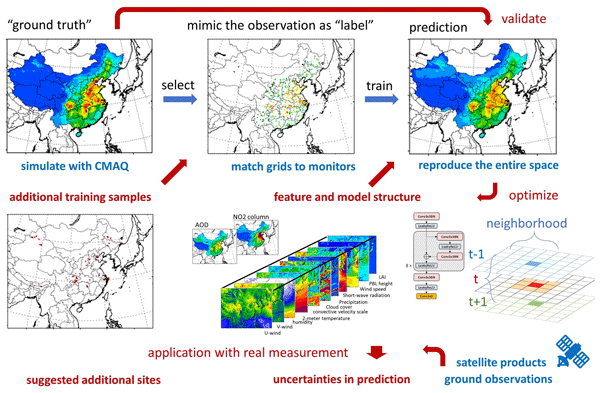
Siwei Li, Yu Ding, Jia Xing, and Joshua S. Fu
Earth Syst. Sci. Data, 16, 3781–3793, https://doi.org/10.5194/essd-16-3781-2024, https://doi.org/10.5194/essd-16-3781-2024, 2024
Short summary
Short summary
Surface PM2.5 data have gained widespread application in health assessments and related fields, while the inherent uncertainties in PM2.5 data persist due to the lack of ground-truth data across the space. This study provides a novel testbed, enabling comprehensive evaluation across the entire spatial domain. The optimized deep-learning model with spatiotemporal features successfully retrieved surface PM2.5 concentrations in China (2013–2021), with reduced biases induced by sample imbalance.
Boming Liu, Xin Ma, Jianping Guo, Renqiang Wen, Hui Li, Shikuan Jin, Yingying Ma, Xiaoran Guo, and Wei Gong
Atmos. Chem. Phys., 24, 4047–4063, https://doi.org/10.5194/acp-24-4047-2024, https://doi.org/10.5194/acp-24-4047-2024, 2024
Short summary
Short summary
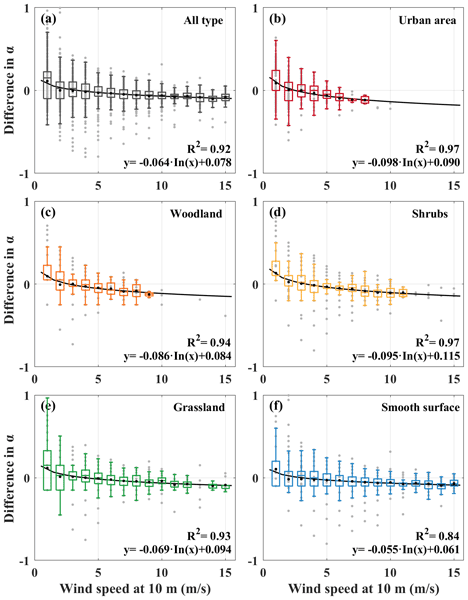
Accurate wind profile estimation, especially for the lowest few hundred meters of the atmosphere, is of great significance for the weather, climate, and renewable energy sector. We propose a novel method that combines the power-law method with the random forest algorithm to extend wind profiles beyond the surface layer. Compared with the traditional algorithm, this method has better stability and spatial applicability and can be used to obtain the wind profiles on different land cover types.
Shikuan Jin, Yingying Ma, Zhongwei Huang, Jianping Huang, Wei Gong, Boming Liu, Weiyan Wang, Ruonan Fan, and Hui Li
Atmos. Chem. Phys., 23, 8187–8210, https://doi.org/10.5194/acp-23-8187-2023, https://doi.org/10.5194/acp-23-8187-2023, 2023
Short summary
Short summary
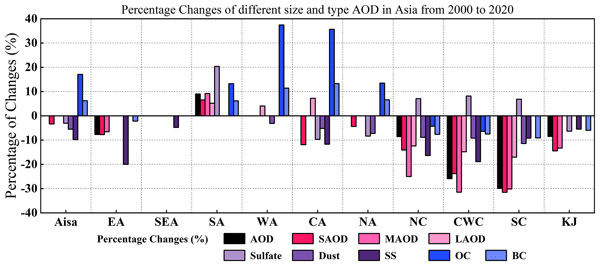
To better understand the Asian aerosol environment, we studied distributions and trends of aerosol with different sizes and types. Over the past 2 decades, dust, sulfate, and sea salt aerosol decreased by 5.51 %, 3.07 %, and 9.80 %, whereas organic carbon and black carbon aerosol increased by 17.09 % and 6.23 %, respectively. The increase in carbonaceous aerosols was a feature of Asia. An exception is found in East Asia, where the carbonaceous aerosols reduced, owing largely to China's efforts.
Boming Liu, Xin Ma, Jianping Guo, Hui Li, Shikuan Jin, Yingying Ma, and Wei Gong
Atmos. Chem. Phys., 23, 3181–3193, https://doi.org/10.5194/acp-23-3181-2023, https://doi.org/10.5194/acp-23-3181-2023, 2023
Short summary
Short summary
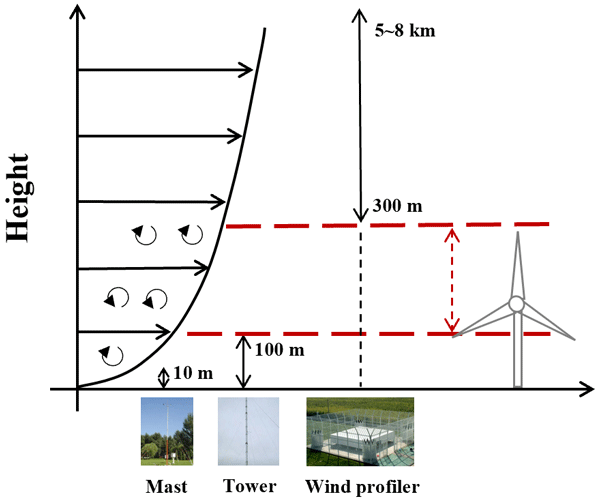
Wind energy is one of the most essential clean and renewable forms of energy in today’s world. However, the traditional power law method generally estimates the hub-height wind speed by assuming a constant exponent between surface and hub-height wind speeds. This inevitably leads to significant uncertainties in estimating the wind speed profile. To minimize the uncertainties, we here use a machine learning algorithm known as random forest to estimate the wind speed at hub height.

Tianqi Shi, Zeyu Han, Ge Han, Xin Ma, Huilin Chen, Truls Andersen, Huiqin Mao, Cuihong Chen, Haowei Zhang, and Wei Gong
Atmos. Chem. Phys., 22, 13881–13896, https://doi.org/10.5194/acp-22-13881-2022, https://doi.org/10.5194/acp-22-13881-2022, 2022
Short summary
Short summary
CH4 works as the second-most important greenhouse gas, its reported emission inventories being far less than CO2. In this study, we developed a self-adjusted model to estimate the CH4 emission rate from strong point sources by the UAV-based AirCore system. This model would reduce the uncertainty in CH4 emission rate quantification accrued by errors in measurements of wind and concentration. Actual measurements on Pniówek coal demonstrate the high accuracy and stability of our developed model.
Shikuan Jin, Yingying Ma, Cheng Chen, Oleg Dubovik, Jin Hong, Boming Liu, and Wei Gong
Atmos. Meas. Tech., 15, 4323–4337, https://doi.org/10.5194/amt-15-4323-2022, https://doi.org/10.5194/amt-15-4323-2022, 2022
Short summary
Short summary
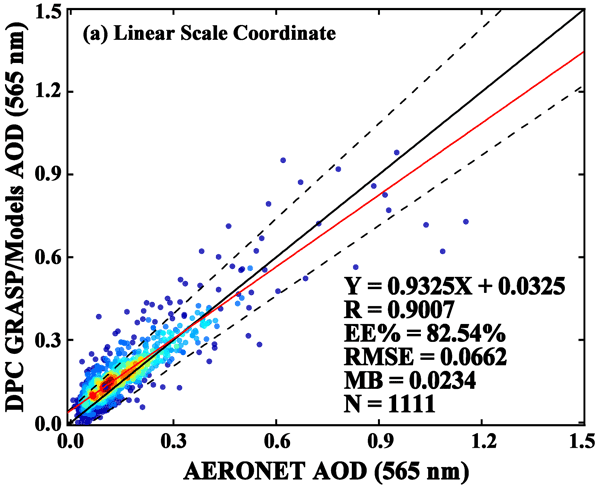
Aerosol parameter retrievals have always been a research focus. In this study, we used an advanced aerosol algorithms (GRASP, developed by Oleg Dubovik) to test the ability of DPC/Gaofen-5 (the first polarized multi-angle payload developed in China) images to obtain aerosol parameters. The results show that DPC/GRASP achieves good results (R > 0.9). This research will contribute to the development of hardware and algorithms for aerosols
Haowei Zhang, Boming Liu, Xin Ma, Ge Han, Qinglin Yang, Yichi Zhang, Tianqi Shi, Jianye Yuan, Wanqi Zhong, Yanran Peng, Jingjing Xu, and Wei Gong
Earth Syst. Sci. Data Discuss., https://doi.org/10.5194/essd-2022-215, https://doi.org/10.5194/essd-2022-215, 2022
Preprint withdrawn
Short summary
Short summary
Obtaining highly accurate and high-resolution spatiotemporal maps of carbon dioxide concentration distributions is crucial for promoting the study of the carbon cycle, and carbon emissions assessed by top-down theory. The official discrete satellite data provided by Gosat-2, OCO-2, and OCO-3 have data voids and relatively low efficiency. Here, we present carbon dioxide cover dataset, an innovative methodology to obtain XCO2 maps of high spatiotemporal resolution by using satellite data.
Shansi Wang, Siwei Li, Jia Xing, Yu Ding, Senlin Hu, Shuchang Liu, Yu Qin, Zhaoxin Dong, Jiaxin Dong, Ge Song, and Lechao Dong
Atmos. Chem. Phys. Discuss., https://doi.org/10.5194/acp-2022-368, https://doi.org/10.5194/acp-2022-368, 2022
Preprint withdrawn
Short summary
Short summary
Future warming meteorological conditions may enhance the influence of regional transport on PM2.5 pollution. Our results prove that climate-friendly policy could lead to considerable co-benefits in mitigating the regional transport of PM2.5 in future. Meanwhile, climate change will exert larger impacts on across-regional (long-distance) transport than inner (neighboring provinces) regional transport, highlighting the significance of multi-regional cooperation in the future.
X. Xia, Z. Zhu, T. Zhang, G. Wei, and Y. Ji
Int. Arch. Photogramm. Remote Sens. Spatial Inf. Sci., XLIII-B3-2022, 545–550, https://doi.org/10.5194/isprs-archives-XLIII-B3-2022-545-2022, https://doi.org/10.5194/isprs-archives-XLIII-B3-2022-545-2022, 2022
Boming Liu, Jianping Guo, Wei Gong, Yong Zhang, Lijuan Shi, Yingying Ma, Jian Li, Xiaoran Guo, Ad Stoffelen, Gerrit de Leeuw, and Xiaofeng Xu
Atmos. Meas. Tech. Discuss., https://doi.org/10.5194/amt-2022-26, https://doi.org/10.5194/amt-2022-26, 2022
Publication in AMT not foreseen
Short summary
Short summary
Aeolus is the first satellite mission to directly observe wind profile information on a global scale. However, Aeolus wind products over China were thus far not evaluated by in-situ comparison. This work is the comparison of wind speed on a large scale between the Aeolus, ERA5 and RS , shedding important light on the data application of Aeolus wind products.

Yingying Ma, Yang Zhu, Boming Liu, Hui Li, Shikuan Jin, Yiqun Zhang, Ruonan Fan, and Wei Gong
Atmos. Chem. Phys., 21, 17003–17016, https://doi.org/10.5194/acp-21-17003-2021, https://doi.org/10.5194/acp-21-17003-2021, 2021
Short summary
Short summary
The vertical distribution of the aerosol extinction coefficient (EC) measured by lidar systems has been used to retrieve the profile of particle matter with a diameter of less than 2.5 μm (PM2.5). However, the traditional linear model cannot consider the influence of multiple meteorological variables sufficiently, which then causes low inversion accuracy. In this study, the machine learning algorithms which can input multiple features are used to solve this constraint.
Cited articles
Agency, I. E.: World energy outlook, OECD/IEA, Paris, https://www.iea.org/reports/world-energy-outlook-2009 (last access: 17 June 2026), 2009.
Beirle, S., Borger, C., Jost, A., and Wagner, T.: Improved catalog of NOx point source emissions (version 2), Earth Syst. Sci. Data, 15, 3051–3073, https://doi.org/10.5194/essd-15-3051-2023, 2023.
Boersma, K. F., Eskes, H. J., Richter, A., De Smedt, I., Lorente, A., Beirle, S., van Geffen, J. H. G. M., Zara, M., Peters, E., Van Roozendael, M., Wagner, T., Maasakkers, J. D., van der A, R. J., Nightingale, J., De Rudder, A., Irie, H., Pinardi, G., Lambert, J.-C., and Compernolle, S. C.: Improving algorithms and uncertainty estimates for satellite NO2 retrievals: results from the quality assurance for the essential climate variables (QA4ECV) project, Atmos. Meas. Tech., 11, 6651–6678, https://doi.org/10.5194/amt-11-6651-2018, 2018.
Che, K., Cai, Z., Liu, Y., Wu, L., Yang, D., Chen, Y., Meng, X., Zhou, M., Wang, J., Yao, L., and Wang, P.: Lagrangian inversion of anthropogenic CO2 emissions from Beijing using differential column measurements, Environ. Res. Lett., 17, 075001, https://doi.org/10.1088/1748-9326/ac7477, 2022.
Che, K., Lauvaux, T., Taquet, N., Stremme, W., Xu, Y., Alberti, C., Lopez, M., García-Reynoso, A., Ciais, P., and Liu, Y.: CO2 emissions estimate from Mexico City using ground-and space-based remote sensing, J. Geophys. Res.-Atmos., 129, e2024JD041297, 2024.
Cheng, C., Liu, D., Wang, S., Zhang, X., Zhang, L., Chen, W., Liu, J., Wan, X., Chen, W., and Chen, X.: Estimating strong point CO2 emissions by combining spaceborne IPDA lidar and HSRL, Remote Sens. Environ., 328, 114898, 2025.
Cifuentes, F., Eskes, H., Dammers, E., Bryan, C., and Boersma, F.: Accurate space-based NOx emission estimates with the flux divergence approach require fine-scale model information on local oxidation chemistry and profile shapes, Geosci. Model Dev., 18, 621–649, https://doi.org/10.5194/gmd-18-621-2025, 2025.
Copernicus Climate Change Service, Climate Data Store: ERA5 hourly data on single levels from 1940 to present, Copernicus Climate Change Service (C3S) Climate Data Store (CDS) [data set], https://doi.org/10.24381/cds.adbb2d47, 2023.
Crippa, M., Guizzardi, D., Muntean, M., Schaaf, E., Dentener, F., van Aardenne, J. A., Monni, S., Doering, U., Olivier, J. G. J., Pagliari, V., and Janssens-Maenhout, G.: Gridded emissions of air pollutants for the period 1970–2012 within EDGAR v4.3.2, Earth Syst. Sci. Data, 10, 1987–2013, https://doi.org/10.5194/essd-10-1987-2018, 2018.
Dai, G., Wu, S., Long, W., Liu, J., Xie, Y., Sun, K., Meng, F., Song, X., Huang, Z., and Chen, W.: Aerosol and cloud data processing and optical property retrieval algorithms for the spaceborne ACDL/DQ-1, Atmos. Meas. Tech., 17, 1879–1890, https://doi.org/10.5194/amt-17-1879-2024, 2024.
Danielson, J. J. and Gesch, D. B.: Global multi-resolution terrain elevation data 2010 (GMTED2010), US Geological Survey, 2331–1258, https://doi.org/10.3133/ofr20111073, 2011.
Dickerson, R. R., Stedman, D. H., and Delany, A. C.: Direct measurements of ozone and nitrogen dioxide photolysis rates in the troposphere, J. Geophys. Res.-Oceans, 87, 4933–4946, 1982.
Eldering, A., Wennberg, P., Crisp, D., Schimel, D., Gunson, M., Chatterjee, A., Liu, J., Schwandner, F., Sun, Y., and O'dell, C.: The Orbiting Carbon Observatory-2 early science investigations of regional carbon dioxide fluxes, Science, 358, eaam5745, 2017.
Feng, S., Jiang, F., Wang, H., Liu, Y., He, W., Wang, H., Shen, Y., Zhang, L., Jia, M., and Ju, W.: China's fossil fuel CO2 emissions estimated using surface observations of coemitted NO2, Environ. Sci. Technol., 58, 8299–8312, 2024.
Glissenaar, I., Boersma, K. F., Anglou, I., Rijsdijk, P., Verhoelst, T., Compernolle, S., Pinardi, G., Lambert, J.-C., Van Roozendael, M., and Eskes, H.: TROPOMI Level 3 tropospheric NO2 dataset with advanced uncertainty analysis from the ESA CCI+ ECV precursor project, Earth Syst. Sci. Data, 17, 4627–4650, https://doi.org/10.5194/essd-17-4627-2025, 2025.
Guan, L., Cohen, J. B., Wang, S., Tiwari, P., Liu, Z., and Qin, K.: Improving aerosol absorption estimates via size-resolved constraints based on AERONET and in situ measurements, Geophys. Res. Lett., 53, e2025GL117418, https://doi.org/10.1029/2025GL117418, 2026.
Hakkarainen, J., Ialongo, I., and Tamminen, J.: Direct space-based observations of anthropogenic CO2 emission areas from OCO-2, Geophys. Res. Lett., 43, 11,400–11,406, https://doi.org/10.1002/2016GL070885, 2016.
Han, G., Huang, Y., Shi, T., Zhang, H., Li, S., Zhang, H., Chen, W., Liu, J., and Gong, W.: Quantifying CO2 emissions of power plants with Aerosols and Carbon Dioxide Lidar onboard DQ-1, Remote Sens. Environ., 313, 114368, https://doi.org/10.1016/j.rse.2024.114368, 2024.
Han, G., Wang, H., Pei, Z., Mao, H., Ying, J., Li, S., Ma, X., Liu, B., Mao, F., and Gong, W.: Quantifying facility-scale CO2 emissions using spaceborne hyperspectral imageries, Remote Sens. Environ., 342, 115478, https://doi.org/10.1016/j.rse.2026.115478, 2026.
Han, G., Zhang, H., Huang, Y., Chen, W., Mao, H., Zhang, X., Ma, X., Li, S., Zhang, H., and Liu, J.: First global XCO2 observations fromspaceborne lidar: methodology and initial result, Remote Sens. Environ., 330, 114954, https://doi.org/10.1016/j.rse.2025.114954, 2025.
Hersbach, H., Bell, B., Berrisford, P., Biavati, G., Horányi, A., Muñoz Sabater, J., Nicolas, J., Peubey, C., Radu, R., and Rozum, I.: The ERA5 global reanalysis, Q. J. Roy. Meteorol. Soc., 146, 1999–2049, https://doi.org/10.1002/qj.3803, 2023.
Huang, T., Zhu, X., Zhong, Q., Yun, X., Meng, W., Li, B., Ma, J., Zeng, E. Y., and Tao, S.: Spatial and temporal trends in global emissions of nitrogen oxides from 1960 to 2014, Environ. Sci. Technol., 51, 7992–8000, 2017.
Huang, Y., Han, G., Shi, T., Li, S., Mao, H., Nie, Y., and Gong, W.: Fi-scape: a divergence theorem based emission quantification model for air/space-borne imaging spectrometer derived xCH4 observations, IEEE J-STARS, 18, 255–272, https://doi.org/10.1109/JSTARS.2024.3490896, 2024.
Huang, Y., Han, G., Yi, J., Shi, T., Zhang, Y., Luo, H., Mao, H., Li, S., Mao, F., and Gong, W.: Rapid methane flux estimation combining MethaneSAT and Sentinel-5P observations: A case study of Turkmenistan, Geophys. Res. Lett., 52, e2025GL119369, https://doi.org/10.1029/2025GL119369, 2025.
Jöckel, P., Tost, H., Pozzer, A., Kunze, M., Kirner, O., Brenninkmeijer, C. A. M., Brinkop, S., Cai, D. S., Dyroff, C., Eckstein, J., Frank, F., Garny, H., Gottschaldt, K.-D., Graf, P., Grewe, V., Kerkweg, A., Kern, B., Matthes, S., Mertens, M., Meul, S., Neumaier, M., Nützel, M., Oberländer-Hayn, S., Ruhnke, R., Runde, T., Sander, R., Scharffe, D., and Zahn, A.: Earth System Chemistry integrated Modelling (ESCiMo) with the Modular Earth Submodel System (MESSy) version 2.51, Geosci. Model Dev., 9, 1153–1200, https://doi.org/10.5194/gmd-9-1153-2016, 2016.
Kiemle, C., Ehret, G., Amediek, A., Fix, A., Quatrevalet, M., and Wirth, M.: Potential of spaceborne lidar measurements of carbon dioxide and methane emissions from strong point sources, Remote Sens-Basel, 9, 1137, https://doi.org/10.3390/rs9111137, 2017.
Koene, E. F. M., Brunner, D., and Kuhlmann, G.: On the theory of the divergence method for quantifying source emissions from satellite observations, J. Geophys. Res.-Atmos., 129, e2023JD039904, https://doi.org/10.1029/2023JD039904, 2024.
Konovalov, I. B., Berezin, E. V., Ciais, P., Broquet, G., Zhuravlev, R. V., and Janssens-Maenhout, G.: Estimation of fossil-fuel CO2 emissions using satellite measurements of “proxy” species, Atmos. Chem. Phys., 16, 13509–13540, https://doi.org/10.5194/acp-16-13509-2016, 2016.
Li, H., Liu, B., Gong, W., Ma, Y., Jin, S., Wang, W., Fan, R., and Jiang, S.: Influence of clouds on planetary boundary layer height: A comparative study and factors analysis, Atmos. Res., 314, 107784, https://doi.org/10.1016/j.atmosres.2024.107784, 2025.
Lin, J. and Gerbig, C.: Accounting for the effect of transport errors on tracer inversions, Geophys. Res. Lett., 32, https://doi.org/10.1029/2004GL021127, 2005.
Liu, F., Duncan, B. N., Krotkov, N. A., Lamsal, L. N., Beirle, S., Griffin, D., McLinden, C. A., Goldberg, D. L., and Lu, Z.: A methodology to constrain carbon dioxide emissions from coal-fired power plants using satellite observations of co-emitted nitrogen dioxide, Atmos. Chem. Phys., 20, 99–116, https://doi.org/10.5194/acp-20-99-2020, 2020.
Liu, F., Tao, Z., Beirle, S., Joiner, J., Yoshida, Y., Smith, S. J., Knowland, K. E., and Wagner, T.: A new method for inferring city emissions and lifetimes of nitrogen oxides from high-resolution nitrogen dioxide observations: a model study, Atmos. Chem. Phys., 22, 1333–1349, https://doi.org/10.5194/acp-22-1333-2022, 2022.
Liu, M., Van Der A, R., Van Weele, M., Eskes, H., Lu, X., Veefkind, P., De Laat, J., Kong, H., Wang, J., and Sun, J.: A new divergence method to quantify methane emissions using observations of Sentinel-5P TROPOMI, Geophys. Res. Lett., 48, e2021GL094151, https://doi.org/10.1029/2021GL094151, 2021.
Lu, L., Cohen, J. B., Qin, K., Tiwari, P., Hu, W., Gao, H., and Zheng, B.: New Perspective on Using Observational Uncertainty to Improve Reliability of NOx Emissions Over Northern China, IEEE T. Geosci. Remote, 63, 1–15, https://doi.org/10.1109/TGRS.2025.3620116, 2025.
Luo, B., Yang, J., Shi, S., Gan, R., Wu, Z., Wang, S., Wang, A., Du, L., and Gong, W.: InceptionFormer: A deep learning framework for UAV LiDAR point cloud completion to improve tree parameters estimation in dense forests, Remote Sens. Environ., 338, 115348, https://doi.org/10.1016/j.rse.2026.115348, 2026.
Miller, J. B., Tans, P. P., and Gloor, M.: Steps for success of OCO-2, Nat. Geosci., 7, 691–691, 2014.
National Centers for Environmental Prediction/National Weather Service/NOAA/U.S. Department of Commerce: NCEP FNL Operational Model Global Tropospheric Analyses, continuing from July 1999, NSF National Center for Atmospheric Research, https://doi.org/10.5065/D6M043C6, 2000 (updated daily).
National Centers for Environmental Prediction/National Weather Service/NOAA/U.S. Department of Commerce: NCEP GDAS/FNL 0.25 Degree Global Tropospheric Analyses and Forecast Grids, NSF National Center for Atmospheric Research [data set], https://doi.org/10.5065/D65Q4T4Z, 2015 (updated daily).
Oda, T., Bun, R., Kinakh, V., Topylko, P., Halushchak, M., Marland, G., Lauvaux, T., Jonas, M., Maksyutov, S., and Nahorski, Z.: Errors and uncertainties in a gridded carbon dioxide emissions inventory, Mitig.Adapt. Strat. Gl., 24, 1007–1050, 2019.
Pei, Z., Han, G., Ma, X., Shi, T., and Gong, W.: A method for estimating the background column concentration of CO2 using the lagrangian approach, IEEE T. Geosci. Remote, 60, 1–12, 2022.
Qin, K., Lu, L., Liu, J., He, Q., Shi, J., Deng, W., Wang, S., and Cohen, J. B.: Model-free daily inversion of NOx emissions using TROPOMI (MCMFE-NOx) and its uncertainty: Declining regulated emissions and growth of new sources, Remote Sens. Environ., 295, 113720, https://doi.org/10.1016/j.rse.2023.113720, 2023.
Qu, C., Wang, W., Wu, Z., Wang, L., Liu, K., Wu, L., and Miao, Z.: Zero-Shot Vision-Language Model for Rapid Damaged Bridge Extraction in Emergency Response: A Case Study of the 2025 Myanmar Earthquake, IEEE Geosci. Remote S., 23, 021127, https://doi.org/10.1109/LGRS.2026.3673614, 2026.
Refaat, T. F., Singh, U. N., Yu, J., Petros, M., Remus, R., and Ismail, S.: Double-pulse 2-ìm integrated path differential absorption lidar airborne validation for atmospheric carbon dioxide measurement, Appl. Optics, 55, 4232–4246, 2016.
Reuter, M., Buchwitz, M., Schneising, O., Krautwurst, S., O'Dell, C. W., Richter, A., Bovensmann, H., and Burrows, J. P.: Towards monitoring localized CO2 emissions from space: co-located regional CO2 and NO2 enhancements observed by the OCO-2 and S5P satellites, Atmos. Chem. Phys., 19, 9371–9383, https://doi.org/10.5194/acp-19-9371-2019, 2019.
Rey-Pommier, A., Chevallier, F., Ciais, P., Christoudias, T., Kushta, J., Georgiou, G., Violaris, A., Dubart, F., and Sciare, J.: Mapping NOx emissions in Cyprus using TROPOMI observations: evaluation of the flux-divergence scheme using multiple parameter sets, Environ. Sci. Pollut. R., 32, 1932–1951, 2025.
Schwandner, F. M., Gunson, M. R., Miller, C. E., Carn, S. A., Eldering, A., Krings, T., Verhulst, K. R., Schimel, D. S., Nguyen, H. M., and Crisp, D.: Spaceborne detection of localized carbon dioxide sources, Science, 358, eaam5782, https://doi.org/10.1126/science.aam5782, 2017.
Sheng, M., Hou, Y., Song, H., Ye, X., Lei, L., Ma, P., and Zeng, Z.-C.: Estimating anthropogenic CO2 emissions from China's Yangtze River Delta using OCO-2 observations and WRF-Chem simulations, Remote Sens. Environ., 316, 114515, https://doi.org/10.1016/j.rse.2024.114515, 2025.
Sun, K.: Derivation of emissions from satellite-observed column amounts and its application to TROPOMI NO2 and CO observations, Geophys. Res. Lett., 49, e2022GL101102, https://doi.org/10.1029/2022GL101102, 2022.
Sun, K., Li, L., Jagini, S., and Li, D.: A satellite-data-driven framework to rapidly quantify air-basin-scale NOx emissions and its application to the Po Valley during the COVID-19 pandemic, Atmos. Chem. Phys., 21, 13311–13332, https://doi.org/10.5194/acp-21-13311-2021, 2021.
Sun, K., Zhu, L., Cady-Pereira, K., Chan Miller, C., Chance, K., Clarisse, L., Coheur, P.-F., González Abad, G., Huang, G., Liu, X., Van Damme, M., Yang, K., and Zondlo, M.: A physics-based approach to oversample multi-satellite, multispecies observations to a common grid, Atmos. Meas. Tech., 11, 6679–6701, https://doi.org/10.5194/amt-11-6679-2018, 2018a.
Sun, Y., Frankenberg, C., Jung, M., Joiner, J., Guanter, L., Köhler, P., and Magney, T.: Overview of Solar-Induced chlorophyll Fluorescence (SIF) from the Orbiting Carbon Observatory-2: Retrieval, cross-mission comparison, and global monitoring for GPP, Remote Sens. Environ., 209, 808–823, 2018b.
Team, M.: The Multi-resolution Emission Inventory Model for Climate and Air Pollution Research, MEIC Model, http://meicmodel.org.cn/?page_id=2351&lang=en#firstPage (last access: 29 January 2026), 2012.
van Geffen, J., Eskes, H., Compernolle, S., Pinardi, G., Verhoelst, T., Lambert, J.-C., Sneep, M., ter Linden, M., Ludewig, A., Boersma, K. F., and Veefkind, J. P.: Sentinel-5P TROPOMI NO2 retrieval: impact of version v2.2 improvements and comparisons with OMI and ground-based data, Atmos. Meas. Tech., 15, 2037–2060, https://doi.org/10.5194/amt-15-2037-2022, 2022.
Veefkind, J. P., Aben, I., McMullan, K., Förster, H., De Vries, J., Otter, G., Claas, J., Eskes, H., De Haan, J., and Kleipool, Q.: TROPOMI on the ESA Sentinel-5 Precursor: A GMES mission for global observations of the atmospheric composition for climate, air quality and ozone layer applications, Remote Sens. Environ., 120, 70–83, 2012.
Verhoelst, T., Compernolle, S., Pinardi, G., Lambert, J.-C., Eskes, H. J., Eichmann, K.-U., Fjæraa, A. M., Granville, J., Niemeijer, S., Cede, A., Tiefengraber, M., Hendrick, F., Pazmiño, A., Bais, A., Bazureau, A., Boersma, K. F., Bognar, K., Dehn, A., Donner, S., Elokhov, A., Gebetsberger, M., Goutail, F., Grutter de la Mora, M., Gruzdev, A., Gratsea, M., Hansen, G. H., Irie, H., Jepsen, N., Kanaya, Y., Karagkiozidis, D., Kivi, R., Kreher, K., Levelt, P. F., Liu, C., Müller, M., Navarro Comas, M., Piters, A. J. M., Pommereau, J.-P., Portafaix, T., Prados-Roman, C., Puentedura, O., Querel, R., Remmers, J., Richter, A., Rimmer, J., Rivera Cárdenas, C., Saavedra de Miguel, L., Sinyakov, V. P., Stremme, W., Strong, K., Van Roozendael, M., Veefkind, J. P., Wagner, T., Wittrock, F., Yela González, M., and Zehner, C.: Ground-based validation of the Copernicus Sentinel-5P TROPOMI NO2 measurements with the NDACC ZSL-DOAS, MAX-DOAS and Pandonia global networks, Atmos. Meas. Tech., 14, 481–510, https://doi.org/10.5194/amt-14-481-2021, 2021.
Wang, R., Tao, S., Ciais, P., Shen, H. Z., Huang, Y., Chen, H., Shen, G. F., Wang, B., Li, W., Zhang, Y. Y., Lu, Y., Zhu, D., Chen, Y. C., Liu, X. P., Wang, W. T., Wang, X. L., Liu, W. X., Li, B. G., and Piao, S. L.: High-resolution mapping of combustion processes and implications for CO2 emissions, Atmos. Chem. Phys., 13, 5189–5203, https://doi.org/10.5194/acp-13-5189-2013, 2013.
Wang, S., Cohen, J. B., Guan, L., Lu, L., Tiwari, P., and Qin, K.: Observationally constrained global NOx and CO emissions variability reveals sources which contribute significantly to CO2 emissions, npj Climate and Atmospheric Science, 8, 87, https://doi.org/10.1038/s41612-025-00977-2, 2025.
Wei, C.: Historical trend and drivers of China's CO2 emissions from 2000 to 2020, Environ. Dev. Sustain., 26, 2225–2244, 2024.
Wu, D., Lin, J. C., Fasoli, B., Oda, T., Ye, X., Lauvaux, T., Yang, E. G., and Kort, E. A.: A Lagrangian approach towards extracting signals of urban CO2 emissions from satellite observations of atmospheric column CO2 (XCO2): X-Stochastic Time-Inverted Lagrangian Transport model (“X-STILT v1”), Geosci. Model Dev., 11, 4843–4871, https://doi.org/10.5194/gmd-11-4843-2018, 2018.
Xing, Y., Han, G., Mao, H., He, H., Bo, Z., Gong, R., Ma, X., and Gong, W.: MAM-YOLOv9: A Multi-Attention Mechanism Network for Methane Emission Facility Detection in High-Resolution Satellite Remote Sensing Images, IEEE T. Geosci. Remote, 63, 5614516, https://doi.org/10.1109/TGRS.2025.3545034, 2025.
Xu, J., Guan, Y., Oldfield, J., Guan, D., and Shan, Y.: China carbon emission accounts 2020–2021, Appl. Energ., 360, 122837, https://doi.org/10.1016/j.apenergy.2024.122837, 2024.
Xu, M., Han, G., Pei, Z., Yu, H., Li, S., and Gong, W.: Advanced method for compiling a high-resolution gridded anthropogenic CO2 emission inventory at a regional scale, Geo-spatial Information Science, 28, 117–130, 2025a.
Xu, T., Zhang, C., and Liu, C.: Enhanced quantification of global carbon emitters using collocated OCO-3 CO2 and NO2 observations from twin polar-orbiting satellites, Geophys. Res. Lett., 52, e2025GL116877, 2025b.
Yang, E. G., Kort, E. A., Ott, L. E., Oda, T., and Lin, J. C.: Using space-based CO2 and NO2 observations to estimate urban CO2 emissions, J. Geophys. Res.-Atmos., 128, e2022JD037736, https://doi.org/10.1029/2022JD037736, 2023.
Ye, X., Lauvaux, T., Kort, E. A., Oda, T., Feng, S., Lin, J. C., Yang, E. G., and Wu, D.: Constraining fossil fuel CO2 emissions from urban area using OCO-2 observations of total column CO2, J. Geophys. Res.-Atmos., 125, e2019JD030528, https://doi.org/10.1029/2019JD030528, 2020.
Yi, J., Huang, Y., Pei, Z., and Han, G.: Urban Area Observing System (UAOS) simulation experiment using DQ-1 total column concentration observations, Atmos. Chem. Phys., 25, 13687–13710, https://doi.org/10.5194/acp-25-13687-2025, 2025a.
Yi, J., Huang, Y., Pei, Z., and Han, G.: Urban Area Observing System (UAOS) simulation experiment using DQ-1 total column concentration observations, Atmos. Chem. Phys., 25, 13687–13710, https://doi.org/10.5194/acp-25-13687-2025, 2025b.
Zhang, H., Han, G., Ma, X., Chen, W., Zhang, X., Liu, J., and Gong, W.: Robust algorithm for precise X CO 2 retrieval using single observation of IPDA LIDAR, Opt. Express, 31, 11846–11863, 2023.
Zhang, H., Han, G., Chen, W., Pei, Z., Liu, B., Liu, J., Zhang, T., Li, S., and Gong, W.: Validation Method for Spaceborne IPDA LIDAR
Zhang, Q., Boersma, K. F., Zhao, B., Eskes, H., Chen, C., Zheng, H., and Zhang, X.: Quantifying daily NOx and CO2 emissions from Wuhan using satellite observations from TROPOMI and OCO-2, Atmos. Chem. Phys., 23, 551–563, https://doi.org/10.5194/acp-23-551-2023, 2023.
Zhang, X., Yang, H., Bu, L., Fan, Z., Xiao, W., Chen, B., Zhang, L., Liu, S., Wang, Z., Liu, J., Chen, W., and Lee, X.: Estimation of diurnal emissions of CO2 from thermal power plants using spaceborne integrated path differential absorption (IPDA) lidar, Atmos. Chem. Phys., 25, 6725–6740, https://doi.org/10.5194/acp-25-6725-2025, 2025.
Zhang, Y., Han, G., Huang, Y., Wang, H., Zhang, H., Pei, Z., Pu, Y., Luo, H., Yi, J., and Shi, T.: Attributing GHG emissions to individual facilities using multi-temporal hyperspectral images: Methodology and applications, ISPRS J. Photogramm., 232, 937–956, 2026.
Zheng, B., Geng, G., Ciais, P., Davis, S. J., Martin, R. V., Meng, J., Wu, N., Chevallier, F., Broquet, G., and Boersma, F.: Satellite-based estimates of decline and rebound in China's CO2 emissions during COVID-19 pandemic, Science Advances, 6, eabd4998, https://doi.org/10.1126/sciadv.abd4998, 2020.
Short summary
This study presents a new way to estimate human-caused carbon dioxide emissions from cities using satellite observations. It combines measurements of nitrogen dioxide and carbon dioxide to better track emissions from urban areas. By applying this approach to several major cities with different environments, the study shows that combining multiple satellite observations can reduce uncertainty and provide more reliable city-level emission estimates.
This study presents a new way to estimate human-caused carbon dioxide emissions from cities...


Special issue
Altmetrics
Final-revised paper
Preprint