
Articles | Volume 26, issue 10
https://doi.org/10.5194/acp-26-7193-2026
© Author(s) 2026. This work is distributed under
the Creative Commons Attribution 4.0 License.
the Creative Commons Attribution 4.0 License.
https://doi.org/10.5194/acp-26-7193-2026
© Author(s) 2026. This work is distributed under
the Creative Commons Attribution 4.0 License.
the Creative Commons Attribution 4.0 License.
Research article
| Highlight paper
| 
27 May 2026
Research article | Highlight paper |
| 27 May 2026
| 27 May 2026
Beyond discrete stratocumulus regimes: a ternary continuum of morphology reveals within-regime variability in cloud susceptibilities

Department of Environment, Planning and Sustainability, Bar-Ilan University, Ramat Gan, Israel
Goutam Choudhury
Department of Environment, Planning and Sustainability, Bar-Ilan University, Ramat Gan, Israel
Graham Feingold
NOAA, Chemical Sciences Laboratory, Boulder, CO, USA
Related authors
Goutam Choudhury, Karoline Block, Mahnoosh Haghighatnasab, Johannes Quaas, Tom Goren, and Matthias Tesche
Atmos. Chem. Phys., 25, 3841–3856, https://doi.org/10.5194/acp-25-3841-2025, https://doi.org/10.5194/acp-25-3841-2025, 2025
Short summary
Short summary
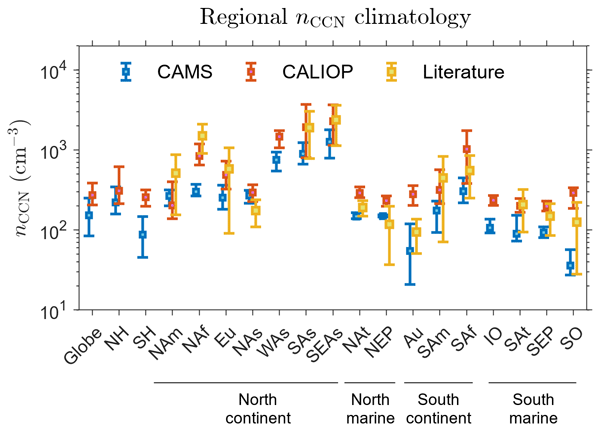
Aerosol particles in the atmosphere increase cloud reflectivity, thereby cooling the Earth. Accurate global measurements of these particles are crucial for estimating this cooling effect. This study compares and harmonizes two newly developed global aerosol datasets, offering insights for their future use and refinement. We identify pristine oceans as a significant source of uncertainty in the datasets and, therefore, in quantifying the role of aerosols in Earth's climate.
Tom Goren, Goutam Choudhury, Jan Kretzschmar, and Isabel McCoy
Atmos. Chem. Phys., 25, 3413–3423, https://doi.org/10.5194/acp-25-3413-2025, https://doi.org/10.5194/acp-25-3413-2025, 2025
Short summary
Short summary
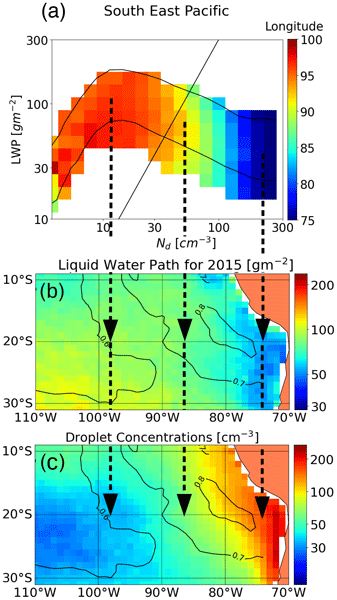
Many studies have identified an inverted-V relationship between the liquid water path (LWP) and droplet concentration (Nd), where LWP increases and then decreases with Nd. Using satellite observations and meteorological data, we demonstrate that the inverted V primarily reflects co-variability between LWP and Nd. We suggest taking a holistic approach that considers this co-variability when assessing the climatological sensitivity of LWP to anthropogenic aerosols.
Rebecca J. Murray-Watson, Edward Gryspeerdt, and Tom Goren
Atmos. Chem. Phys., 23, 9365–9383, https://doi.org/10.5194/acp-23-9365-2023, https://doi.org/10.5194/acp-23-9365-2023, 2023
Short summary
Short summary
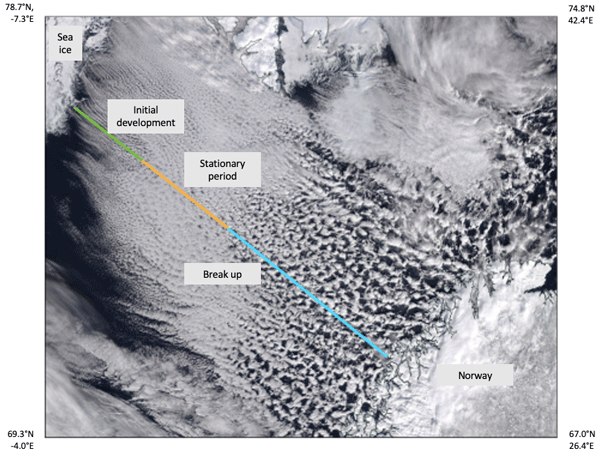
Clouds formed in Arctic marine cold air outbreaks undergo a distinct evolution, but the factors controlling their transition from high-coverage to broken cloud fields are poorly understood. We use satellite and reanalysis data to study how these clouds develop in time and the different influences on their evolution. The aerosol concentration is correlated with cloud break-up; more aerosol is linked to prolonged coverage and a stronger cooling effect, with implications for a more polluted Arctic.
Graham Feingold, Tom Goren, and Takanobu Yamaguchi
Atmos. Chem. Phys., 22, 3303–3319, https://doi.org/10.5194/acp-22-3303-2022, https://doi.org/10.5194/acp-22-3303-2022, 2022
Short summary
Short summary
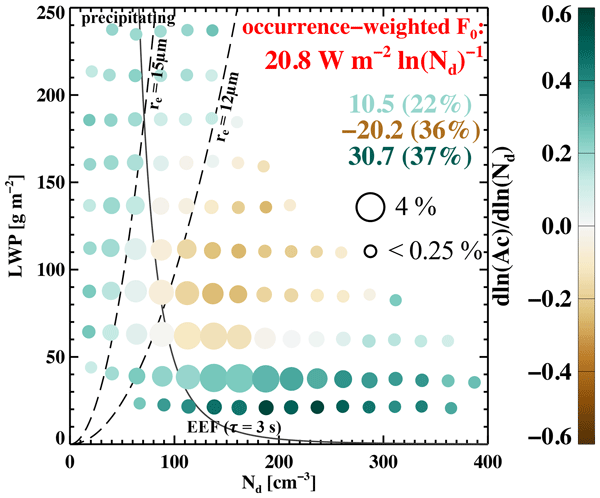
The evaluation of radiative forcing associated with aerosol–cloud interactions remains a significant source of uncertainty in future climate projections. Using high-resolution numerical model output, we mimic typical satellite retrieval methodologies to show that data aggregation can introduce significant error (hundreds of percent) in the cloud albedo susceptibility metric. Spatial aggregation errors tend to be countered by temporal aggregation errors.
Jianhao Zhang, Xiaoli Zhou, Tom Goren, and Graham Feingold
Atmos. Chem. Phys., 22, 861–880, https://doi.org/10.5194/acp-22-861-2022, https://doi.org/10.5194/acp-22-861-2022, 2022
Short summary
Short summary
Oceanic liquid-form clouds are effective sunlight reflectors. Their brightness is highly sensitive to changes in the amount of aerosol particles in the atmosphere and the state of the atmosphere they reside in. This study quantifies this sensitivity using long-term satellite observations and finds an overall cloud brightening (a cooling effect) potential and an essential role of the covarying meteorological conditions in governing this sensitivity for northeastern Pacific stratocumulus.

Matthew W. Christensen, Andrew Gettelman, Jan Cermak, Guy Dagan, Michael Diamond, Alyson Douglas, Graham Feingold, Franziska Glassmeier, Tom Goren, Daniel P. Grosvenor, Edward Gryspeerdt, Ralph Kahn, Zhanqing Li, Po-Lun Ma, Florent Malavelle, Isabel L. McCoy, Daniel T. McCoy, Greg McFarquhar, Johannes Mülmenstädt, Sandip Pal, Anna Possner, Adam Povey, Johannes Quaas, Daniel Rosenfeld, Anja Schmidt, Roland Schrödner, Armin Sorooshian, Philip Stier, Velle Toll, Duncan Watson-Parris, Robert Wood, Mingxi Yang, and Tianle Yuan
Atmos. Chem. Phys., 22, 641–674, https://doi.org/10.5194/acp-22-641-2022, https://doi.org/10.5194/acp-22-641-2022, 2022
Short summary
Short summary
Trace gases and aerosols (tiny airborne particles) are released from a variety of point sources around the globe. Examples include volcanoes, industrial chimneys, forest fires, and ship stacks. These sources provide opportunistic experiments with which to quantify the role of aerosols in modifying cloud properties. We review the current state of understanding on the influence of aerosol on climate built from the wide range of natural and anthropogenic laboratories investigated in recent decades.
Michael S. Diamond, Andrew S. Ackerman, Alejandro Baró Pérez, Ann M. Fridlind, Ehsan Erfani, Caspar Jungbacker, Hyunho Lee, David Painemal, Frida A.-M. Bender, Annica M. L. Ekman, Franziska Glassmeier, Graham Feingold, Fredrik Jansson, David A. Johnson, Matthias Schwarz, Robert Wood, Takanobu Yamaguchi, Jianhao Zhang, Xiaoli Zhou, and Paquita Zuidema
EGUsphere, https://doi.org/10.5194/egusphere-2026-5350, https://doi.org/10.5194/egusphere-2026-5350, 2026
This preprint is open for discussion and under review for Atmospheric Chemistry and Physics (ACP).
Short summary
Short summary
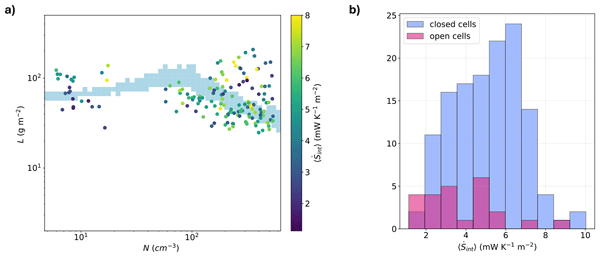
We compare how cloud resolving models represent an important cloud transition over the subtropical oceans. Clouds can either break up by deepening and drying out or by raining and forming an open cell pattern. Compared to observations, the clouds deepen a bit too much and get too polluted when smoke is present. In clean conditions, some models drizzle and break up into open cells while others barely rain; the model spread stems from different rain amounts for similar clouds.
Benjamin Hernandez, Martin S. Singh, Takanobu Yamaguchi, Graham Feingold, and Franziska Glassmeier
Atmos. Chem. Phys., 26, 9337–9356, https://doi.org/10.5194/acp-26-9337-2026, https://doi.org/10.5194/acp-26-9337-2026, 2026
Short summary
Short summary
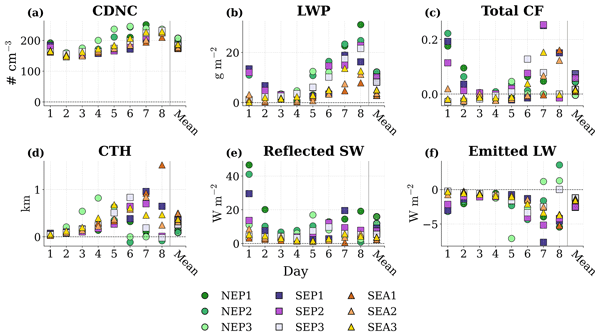
Using detailed numerical simulations, we quantify how stratocumulus cloud decks dissipate energy and produce entropy. We find that entropy production is dominated by irreversible moist processes and is much smaller than in deeper convective clouds. As a result, stratocumulus are remarkably inefficient at converting available energy into atmospheric motions.
Netta Yeheskel, Matthew W. Christensen, Fabian Hoffmann, Graham Feingold, and Guy Dagan
Atmos. Chem. Phys., 26, 8765–8781, https://doi.org/10.5194/acp-26-8765-2026, https://doi.org/10.5194/acp-26-8765-2026, 2026
Short summary
Short summary
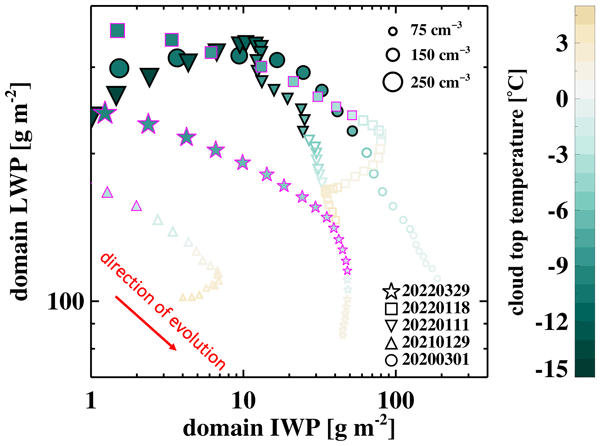
Aerosols influence cloud formation, structure, and radiative effects. As air masses move from the subtropics to the tropics, clouds transition from shallow to deeper systems. Using five years of satellite observations and numerical simulations, we find a robust aerosol impact on this Lagrangian cloud evolution: higher aerosol levels produce thicker, more reflective clouds, enhancing cooling and modifying energy and moisture transport toward the tropics.
Rebecca Gjini, Matthias Morzfeld, Franziska Glassmeier, and Graham Feingold
EGUsphere, https://doi.org/10.5194/egusphere-2026-2871, https://doi.org/10.5194/egusphere-2026-2871, 2026
Short summary
Short summary
We connect two very different types of precipitating stratocumulus cloud models. The first model is a high-resolution simulation that can realistically represent clouds. The second model is a simple, 1D equation that interprets clouds as prey and rain as the predator of clouds. We evaluate the extent to which a simplified cloud model can represent selected aspects of a realistic cloud simulation under different meteorological conditions, highlighting both successes and limitations.
Jianhao Zhang, David Painemal, Tom Dror, Jung-Sub Lim, Armin Sorooshian, and Graham Feingold
Atmos. Chem. Phys., 26, 6015–6034, https://doi.org/10.5194/acp-26-6015-2026, https://doi.org/10.5194/acp-26-6015-2026, 2026
Short summary
Short summary
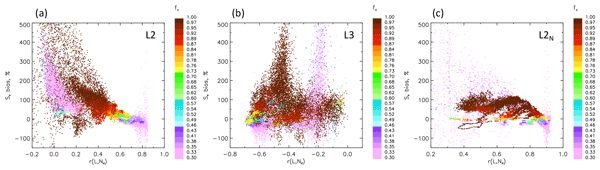
Clouds transitioning from overcast to broken fields play an important role in regulating the amount of sunlight reaching Earth’s surface. Using satellite imagery and a novel space-time exchange approach, we examine these transitions during marine cold-air outbreaks. Our analysis reveals characteristic signatures (or fingerprints) of liquid- and ice-phase processes, demonstrating how space-borne observations can provide new physical insight into cloud evolution.
Prasanth Prabhakaran, Timothy A. Myers, Fabian Hoffmann, and Graham Feingold
Atmos. Chem. Phys., 26, 5151–5167, https://doi.org/10.5194/acp-26-5151-2026, https://doi.org/10.5194/acp-26-5151-2026, 2026
Short summary
Short summary
We explore how climate change and aerosol affect the evolution of marine low-clouds. Using high-resolution simulations, we find that warming has a stronger impact on these clouds, but aerosol becomes more important after the clouds form precipitation. Our results suggest that attempts to brighten these clouds using aerosol may become less effective in a warmer future due to the decrease in cloud cover.
Isabel L. McCoy, Sunil Baidar, Paquita Zuidema, Jan Kazil, W. Alan Brewer, Wayne M. Angevine, and Graham Feingold
Atmos. Chem. Phys., 25, 16233–16261, https://doi.org/10.5194/acp-25-16233-2025, https://doi.org/10.5194/acp-25-16233-2025, 2025
Short summary
Short summary
We use ship observations to investigate the dynamics of small clouds over the tropical oceans. When these cumulus clouds cluster together, they more efficiently move moisture into the cloud layer due to strengthened updrafts. This encourages further clustering, increases local cloud development success, and may help sustain clouds against diurnal variations in their environment. These results have implications for cumulus feedback on the climate, a significant uncertainty in future projections.
Yun He, Goutam Choudhury, Matthias Tesche, Albert Ansmann, Fan Yi, Detlef Müller, and Zhenping Yin
Atmos. Meas. Tech., 18, 5669–5685, https://doi.org/10.5194/amt-18-5669-2025, https://doi.org/10.5194/amt-18-5669-2025, 2025
Short summary
Short summary
We present a global dataset of POlarization LIdar PHOtometer Networking (POLIPHON) dust conversion factors at 532 nm obtained using Aerosol RObotic NETwork (AERONET) observations at 137 sites for ice-nucleating particle (INP) and 123 sites for cloud condensation nucleation (CCN) calculations. We also conduct a comparison of dust CCN concentration profiles derived using both POLIPHON and the independent Optical Modelling of the CALIPSO Aerosol Microphysics (OMCAM) retrieval.
Graham Feingold, Franziska Glassmeier, Jianhao Zhang, and Fabian Hoffmann
Atmos. Chem. Phys., 25, 10869–10885, https://doi.org/10.5194/acp-25-10869-2025, https://doi.org/10.5194/acp-25-10869-2025, 2025
Short summary
Short summary
Scientists usually use snapshots of atmospheric data to glean understanding of time-evolving atmospheric processes. We examine how much can be learned about processes from snapshots using examples from cloud and atmospheric physics. We couch the analysis in terms of the theory of ergodic systems, space-time-exchange, and the Deborah number – concepts that are commonly applied in other branches of physics. We discuss the reasons for the varying degrees of success.
Fabian Hoffmann, Yao-Sheng Chen, and Graham Feingold
Atmos. Chem. Phys., 25, 8657–8670, https://doi.org/10.5194/acp-25-8657-2025, https://doi.org/10.5194/acp-25-8657-2025, 2025
Short summary
Short summary
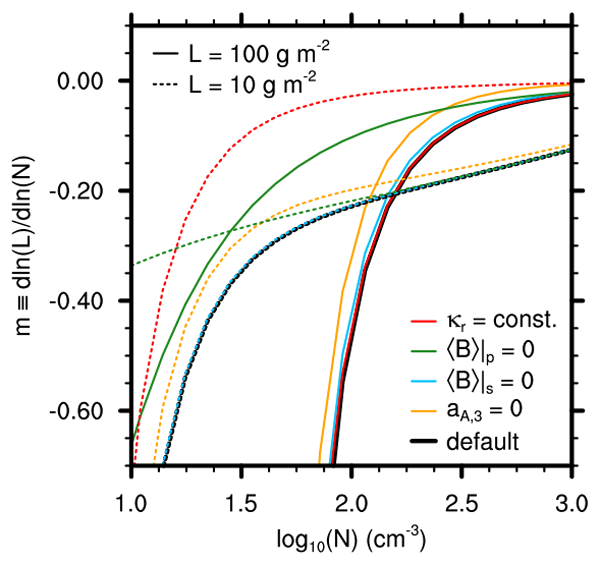
Clouds reflect a substantial portion of the incoming solar radiation back into space. This capacity is determined by the number of cloud droplets, which in turn is influenced by the number of aerosol particles, forming the basis for aerosol–cloud–climate interactions. In this study, we use a simple entrainment parameterization to understand the effect of aerosol on cloud water in weakly and non-precipitating stratocumulus.
Yao-Sheng Chen, Prasanth Prabhakaran, Fabian Hoffmann, Jan Kazil, Takanobu Yamaguchi, and Graham Feingold
Atmos. Chem. Phys., 25, 6141–6159, https://doi.org/10.5194/acp-25-6141-2025, https://doi.org/10.5194/acp-25-6141-2025, 2025
Short summary
Short summary
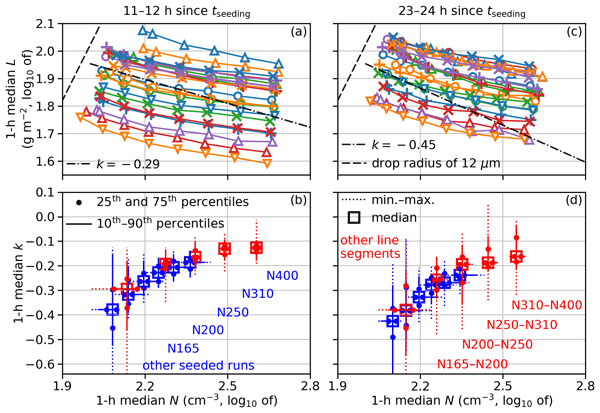
Injecting sea salt aerosols into marine stratiform clouds can distribute the cloud water over more droplets in smaller sizes. This process is expected to make the clouds brighter, allowing them to reflect more sunlight back to space. However, it may also cause the clouds to lose water over time, reducing their ability to reflect sunlight. We use a computer model to show that the loss of cloud water occurs relatively quickly and does not completely offset the initial brightening.
Goutam Choudhury, Karoline Block, Mahnoosh Haghighatnasab, Johannes Quaas, Tom Goren, and Matthias Tesche
Atmos. Chem. Phys., 25, 3841–3856, https://doi.org/10.5194/acp-25-3841-2025, https://doi.org/10.5194/acp-25-3841-2025, 2025
Short summary
Short summary
Aerosol particles in the atmosphere increase cloud reflectivity, thereby cooling the Earth. Accurate global measurements of these particles are crucial for estimating this cooling effect. This study compares and harmonizes two newly developed global aerosol datasets, offering insights for their future use and refinement. We identify pristine oceans as a significant source of uncertainty in the datasets and, therefore, in quantifying the role of aerosols in Earth's climate.
Tom Goren, Goutam Choudhury, Jan Kretzschmar, and Isabel McCoy
Atmos. Chem. Phys., 25, 3413–3423, https://doi.org/10.5194/acp-25-3413-2025, https://doi.org/10.5194/acp-25-3413-2025, 2025
Short summary
Short summary
Many studies have identified an inverted-V relationship between the liquid water path (LWP) and droplet concentration (Nd), where LWP increases and then decreases with Nd. Using satellite observations and meteorological data, we demonstrate that the inverted V primarily reflects co-variability between LWP and Nd. We suggest taking a holistic approach that considers this co-variability when assessing the climatological sensitivity of LWP to anthropogenic aerosols.
Fabian Hoffmann, Franziska Glassmeier, and Graham Feingold
Atmos. Chem. Phys., 24, 13403–13412, https://doi.org/10.5194/acp-24-13403-2024, https://doi.org/10.5194/acp-24-13403-2024, 2024
Short summary
Short summary
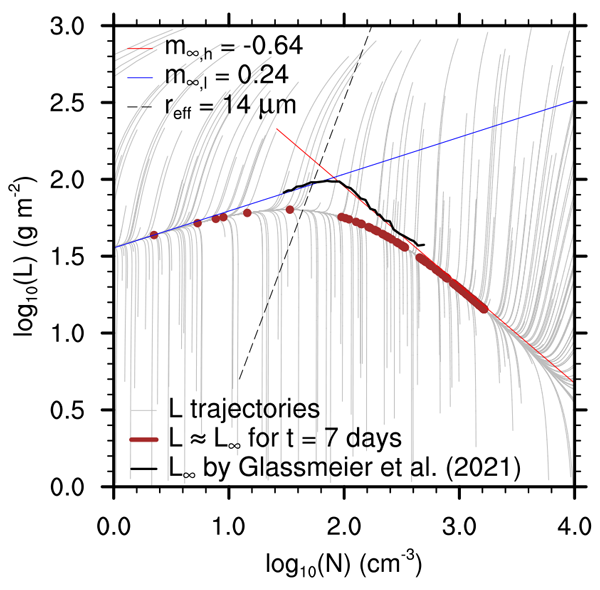
Clouds constitute a major cooling influence on Earth's climate system by reflecting a large fraction of the incident solar radiation back to space. This ability is controlled by the number of cloud droplets, which is governed by the number of aerosol particles in the atmosphere, laying the foundation for so-called aerosol–cloud–climate interactions. In this study, a simple model to understand the effect of aerosol on cloud water is developed and applied.
Yao-Sheng Chen, Jianhao Zhang, Fabian Hoffmann, Takanobu Yamaguchi, Franziska Glassmeier, Xiaoli Zhou, and Graham Feingold
Atmos. Chem. Phys., 24, 12661–12685, https://doi.org/10.5194/acp-24-12661-2024, https://doi.org/10.5194/acp-24-12661-2024, 2024
Short summary
Short summary
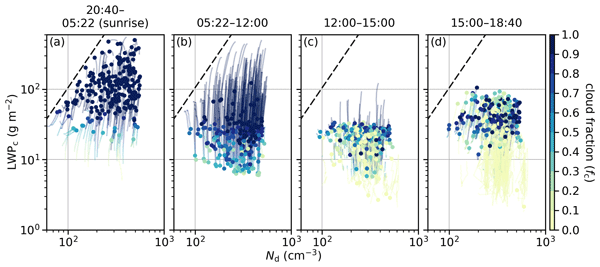
Marine stratocumulus cloud is a type of shallow cloud that covers the vast areas of Earth's surface. It plays an important role in Earth's energy balance by reflecting solar radiation back to space. We used numerical models to simulate a large number of marine stratocumuli with different characteristics. We found that how the clouds develop throughout the day is affected by the level of humidity in the air above the clouds and how closely the clouds connect to the ocean surface.
Jianhao Zhang, Yao-Sheng Chen, Takanobu Yamaguchi, and Graham Feingold
Atmos. Chem. Phys., 24, 10425–10440, https://doi.org/10.5194/acp-24-10425-2024, https://doi.org/10.5194/acp-24-10425-2024, 2024
Short summary
Short summary
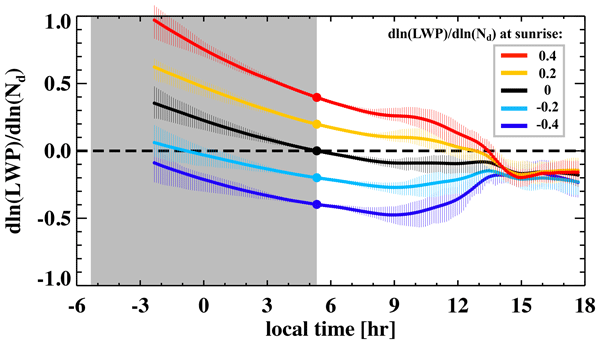
Quantifying cloud response to aerosol perturbations presents a major challenge in understanding the human impact on climate. Using a large number of process-resolving simulations of marine stratocumulus, we show that solar heating drives a negative feedback mechanism that buffers the persistent negative trend in cloud water adjustment after sunrise. This finding has implications for the dependence of the cloud cooling effect on the timing of deliberate aerosol perturbations.
Fani Alexandri, Felix Müller, Goutam Choudhury, Peggy Achtert, Torsten Seelig, and Matthias Tesche
Atmos. Meas. Tech., 17, 1739–1757, https://doi.org/10.5194/amt-17-1739-2024, https://doi.org/10.5194/amt-17-1739-2024, 2024
Short summary
Short summary
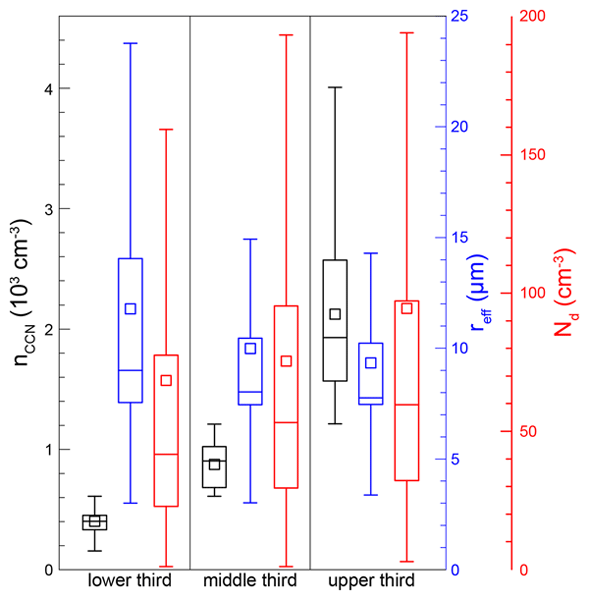
We present a novel method for studying aerosol–cloud interactions. It combines cloud-relevant aerosol concentrations from polar-orbiting lidar observations with the development of individual clouds from geostationary observations. Application to 1 year of data gives first results on the impact of aerosols on the concentration and size of cloud droplets and on cloud phase in the regime of heterogeneous ice formation. The method could enable the systematic investigation of warm and cold clouds.
Prasanth Prabhakaran, Fabian Hoffmann, and Graham Feingold
Atmos. Chem. Phys., 24, 1919–1937, https://doi.org/10.5194/acp-24-1919-2024, https://doi.org/10.5194/acp-24-1919-2024, 2024
Short summary
Short summary
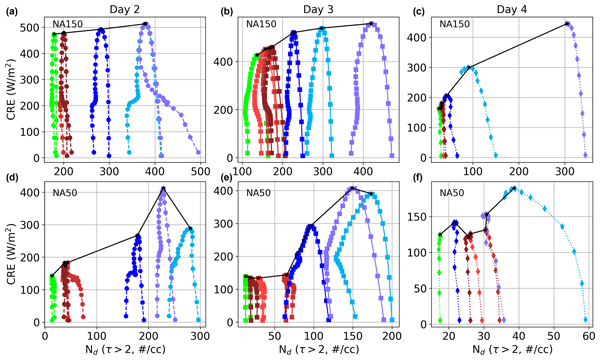
In this study, we explore the impact of deliberate aerosol perturbation in the northeast Pacific region using large-eddy simulations. Our results show that cloud reflectivity is sensitive to the aerosol sprayer arrangement in the pristine system, whereas in the polluted system it is largely proportional to the total number of aerosol particles injected. These insights would aid in assessing the efficiency of various aerosol injection strategies for climate intervention applications.
Rebecca J. Murray-Watson, Edward Gryspeerdt, and Tom Goren
Atmos. Chem. Phys., 23, 9365–9383, https://doi.org/10.5194/acp-23-9365-2023, https://doi.org/10.5194/acp-23-9365-2023, 2023
Short summary
Short summary
Clouds formed in Arctic marine cold air outbreaks undergo a distinct evolution, but the factors controlling their transition from high-coverage to broken cloud fields are poorly understood. We use satellite and reanalysis data to study how these clouds develop in time and the different influences on their evolution. The aerosol concentration is correlated with cloud break-up; more aerosol is linked to prolonged coverage and a stronger cooling effect, with implications for a more polluted Arctic.

Goutam Choudhury and Matthias Tesche
Earth Syst. Sci. Data, 15, 3747–3760, https://doi.org/10.5194/essd-15-3747-2023, https://doi.org/10.5194/essd-15-3747-2023, 2023
Short summary
Short summary
Aerosols in the atmosphere that can form liquid cloud droplets are called cloud condensation nuclei (CCN). Accurate measurements of CCN, especially CCN of anthropogenic origin, are necessary to quantify the effect of anthropogenic aerosols on the present-day as well as future climate. In this paper, we describe a novel global 3D CCN data set calculated from satellite measurements. We also discuss the potential applications of the data in the context of aerosol–cloud interactions.

Hong Chen, K. Sebastian Schmidt, Steven T. Massie, Vikas Nataraja, Matthew S. Norgren, Jake J. Gristey, Graham Feingold, Robert E. Holz, and Hironobu Iwabuchi
Atmos. Meas. Tech., 16, 1971–2000, https://doi.org/10.5194/amt-16-1971-2023, https://doi.org/10.5194/amt-16-1971-2023, 2023
Short summary
Short summary
We introduce the Education and Research 3D Radiative Transfer Toolbox (EaR3T) and propose a radiance self-consistency approach for quantifying and mitigating 3D bias in legacy airborne and spaceborne imagery retrievals due to spatially inhomogeneous clouds and surfaces.
Jianhao Zhang and Graham Feingold
Atmos. Chem. Phys., 23, 1073–1090, https://doi.org/10.5194/acp-23-1073-2023, https://doi.org/10.5194/acp-23-1073-2023, 2023
Short summary
Short summary
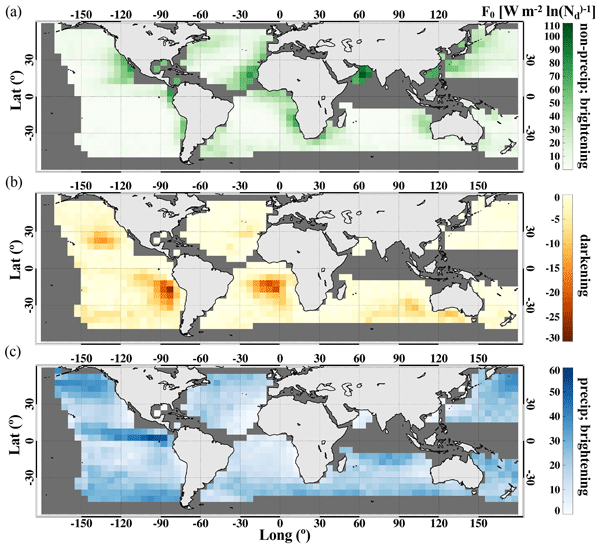
Using observations from space, we show maps of potential brightness changes in marine warm clouds in response to increases in cloud droplet concentrations. The environmental and aerosol conditions in which these clouds reside covary differently in each ocean basin, leading to distinct evolutions of cloud brightness changes. This work stresses the central importance of the covariability between meteorology and aerosol for scaling up the radiative response of cloud brightness changes.
Michael S. Diamond, Pablo E. Saide, Paquita Zuidema, Andrew S. Ackerman, Sarah J. Doherty, Ann M. Fridlind, Hamish Gordon, Calvin Howes, Jan Kazil, Takanobu Yamaguchi, Jianhao Zhang, Graham Feingold, and Robert Wood
Atmos. Chem. Phys., 22, 12113–12151, https://doi.org/10.5194/acp-22-12113-2022, https://doi.org/10.5194/acp-22-12113-2022, 2022
Short summary
Short summary
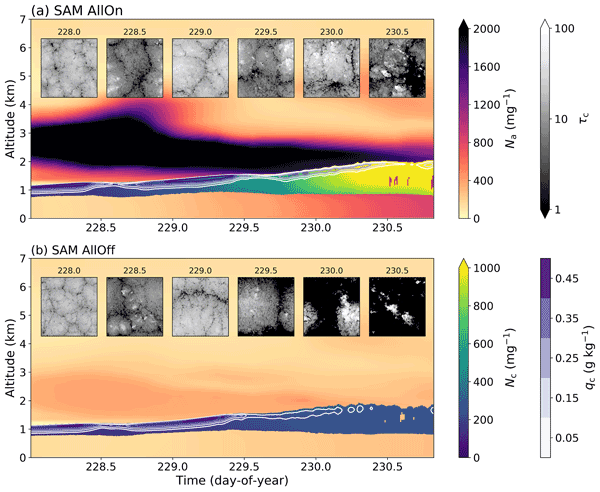
Smoke from southern Africa blankets the southeast Atlantic from June-October, overlying a major transition region between overcast and scattered clouds. The smoke affects Earth's radiation budget by absorbing sunlight and changing cloud properties. We investigate these effects in regional climate and large eddy simulation models based on international field campaigns. We find that large-scale circulation changes more strongly affect cloud transitions than smoke microphysical effects in our case.

Vikas Nataraja, Sebastian Schmidt, Hong Chen, Takanobu Yamaguchi, Jan Kazil, Graham Feingold, Kevin Wolf, and Hironobu Iwabuchi
Atmos. Meas. Tech., 15, 5181–5205, https://doi.org/10.5194/amt-15-5181-2022, https://doi.org/10.5194/amt-15-5181-2022, 2022
Short summary
Short summary
A convolutional neural network (CNN) is introduced to retrieve cloud optical thickness (COT) from passive cloud imagery. The CNN, trained on large eddy simulations from the Sulu Sea, learns from spatial information at multiple scales to reduce cloud inhomogeneity effects. By considering the spatial context of a pixel, the CNN outperforms the traditional independent pixel approximation (IPA) across several cloud morphology metrics.
Edward Gryspeerdt, Franziska Glassmeier, Graham Feingold, Fabian Hoffmann, and Rebecca J. Murray-Watson
Atmos. Chem. Phys., 22, 11727–11738, https://doi.org/10.5194/acp-22-11727-2022, https://doi.org/10.5194/acp-22-11727-2022, 2022
Short summary
Short summary
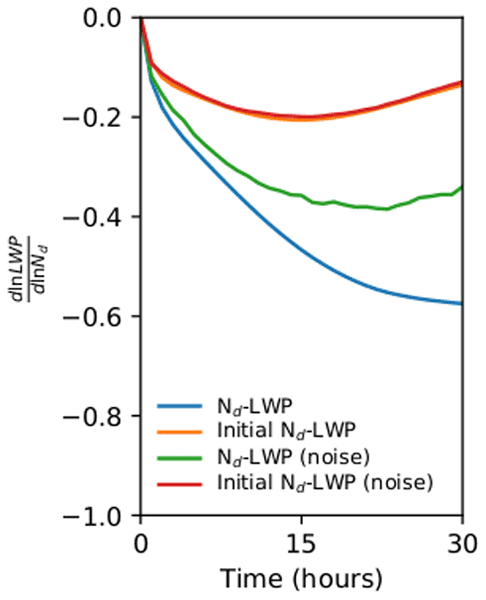
The response of clouds to changes in aerosol remains a large uncertainty in our understanding of the climate. Studies typically look at aerosol and cloud processes in snapshot images, measuring all properties at the same time. Here we use multiple images to characterise how cloud temporal development responds to aerosol. We find a reduction in liquid water path with increasing aerosol, party due to feedbacks. This suggests the aerosol impact on cloud water may be weaker than in previous studies.
Goutam Choudhury, Albert Ansmann, and Matthias Tesche
Atmos. Chem. Phys., 22, 7143–7161, https://doi.org/10.5194/acp-22-7143-2022, https://doi.org/10.5194/acp-22-7143-2022, 2022
Short summary
Short summary
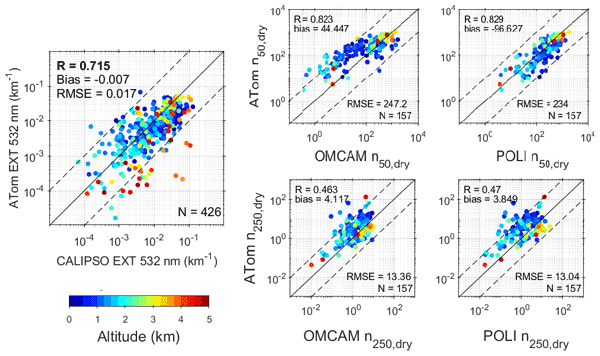
Lidars provide height-resolved type-specific aerosol properties and are key in studying vertically collocated aerosols and clouds. In this study, we compare the aerosol number concentrations derived from spaceborne lidar with the in situ flight measurements. Our results show a reasonable agreement between both datasets. Such an agreement has not been achieved yet. It shows the potential of spaceborne lidar in studying aerosol–cloud interactions, which is needed to improve our climate forecasts.
Graham Feingold, Tom Goren, and Takanobu Yamaguchi
Atmos. Chem. Phys., 22, 3303–3319, https://doi.org/10.5194/acp-22-3303-2022, https://doi.org/10.5194/acp-22-3303-2022, 2022
Short summary
Short summary
The evaluation of radiative forcing associated with aerosol–cloud interactions remains a significant source of uncertainty in future climate projections. Using high-resolution numerical model output, we mimic typical satellite retrieval methodologies to show that data aggregation can introduce significant error (hundreds of percent) in the cloud albedo susceptibility metric. Spatial aggregation errors tend to be countered by temporal aggregation errors.

Goutam Choudhury and Matthias Tesche
Atmos. Meas. Tech., 15, 639–654, https://doi.org/10.5194/amt-15-639-2022, https://doi.org/10.5194/amt-15-639-2022, 2022
Short summary
Short summary
Aerosols are tiny particles suspended in the atmosphere. A fraction of these particles can form clouds and are called cloud condensation nuclei (CCN). Measurements of such aerosol particles are necessary to study the aerosol–cloud interactions and reduce the uncertainty in our future climate predictions. We present a novel methodology to estimate global 3D CCN concentrations from the CALIPSO satellite measurements. The final data set will be used to study the aerosol–cloud interactions.
Jianhao Zhang, Xiaoli Zhou, Tom Goren, and Graham Feingold
Atmos. Chem. Phys., 22, 861–880, https://doi.org/10.5194/acp-22-861-2022, https://doi.org/10.5194/acp-22-861-2022, 2022
Short summary
Short summary
Oceanic liquid-form clouds are effective sunlight reflectors. Their brightness is highly sensitive to changes in the amount of aerosol particles in the atmosphere and the state of the atmosphere they reside in. This study quantifies this sensitivity using long-term satellite observations and finds an overall cloud brightening (a cooling effect) potential and an essential role of the covarying meteorological conditions in governing this sensitivity for northeastern Pacific stratocumulus.
Matthew W. Christensen, Andrew Gettelman, Jan Cermak, Guy Dagan, Michael Diamond, Alyson Douglas, Graham Feingold, Franziska Glassmeier, Tom Goren, Daniel P. Grosvenor, Edward Gryspeerdt, Ralph Kahn, Zhanqing Li, Po-Lun Ma, Florent Malavelle, Isabel L. McCoy, Daniel T. McCoy, Greg McFarquhar, Johannes Mülmenstädt, Sandip Pal, Anna Possner, Adam Povey, Johannes Quaas, Daniel Rosenfeld, Anja Schmidt, Roland Schrödner, Armin Sorooshian, Philip Stier, Velle Toll, Duncan Watson-Parris, Robert Wood, Mingxi Yang, and Tianle Yuan
Atmos. Chem. Phys., 22, 641–674, https://doi.org/10.5194/acp-22-641-2022, https://doi.org/10.5194/acp-22-641-2022, 2022
Short summary
Short summary
Trace gases and aerosols (tiny airborne particles) are released from a variety of point sources around the globe. Examples include volcanoes, industrial chimneys, forest fires, and ship stacks. These sources provide opportunistic experiments with which to quantify the role of aerosols in modifying cloud properties. We review the current state of understanding on the influence of aerosol on climate built from the wide range of natural and anthropogenic laboratories investigated in recent decades.
Cited articles
Ackerman, A. S., Kirkpatrick, M. P., Stevens, D. E., and Toon, O. B.: The impact of humidity above stratiform clouds on indirect aerosol climate forcing, Nature, 432, 1014–1017, https://doi.org/10.1038/nature03174, 2004. a
Albrecht, B. A.: Aerosols, cloud microphysics, and fractional cloudiness, Science, 245, 1227–1230, 1989. a
Bellouin, N., Quaas, J., Gryspeerdt, E., Kinne, S., Stier, P., Watson-Parris, D., Boucher, O., Carslaw, K. S., Christensen, M., Daniau, A. L., Dufresne, J.-L., Feingold, G., Fiedler, S., Forster, P., Gettelman, A., Haywood, J. M., Lohmann, U., Malavelle, F., Mauritsen, T., McCoy, D. T., Myhre, G., Mülmenstädt, J., Neubauer, D., Possner, A., Rugenstein, M., Sato, Y., Schulz, M., Schwartz, S. E., Sourdeval, O., Storelvmo, T., Toll, V., Winker, D., and Stevens, B.: Bounding global aerosol radiative forcing of climate change, Rev. Geophys., 58, e2019RG000660, https://doi.org/10.1029/2019RG000660, 2020. a, b, c
Bretherton, C. S. and Wyant, M. C.: Moisture transport, lower-tropospheric stability, and decoupling of cloud-topped boundary layers, J. Atmos. Sci., 54, 148–167, 1997. a
Bretherton, C. S., Blossey, P. N., and Uchida, J.: Cloud droplet sedimentation, entrainment efficiency, and subtropical stratocumulus albedo, Geophys. Res. Lett., 34, L03813, https://doi.org/10.1029/2006GL027648, 2007. a, b, c
Chen, Y.-C., Christensen, M. W., Stephens, G. L., and Seinfeld, J. H.: Satellite-based estimate of global aerosol–cloud radiative forcing by marine warm clouds, Nat. Geosci., 7, 643–646, https://doi.org/10.1038/ngeo2214, 2014. a
Chen, Y.-S., Prabhakaran, P., Hoffmann, F., Kazil, J., Yamaguchi, T., and Feingold, G.: Magnitude and timescale of liquid water path adjustments to cloud droplet number concentration perturbations for nocturnal non-precipitating marine stratocumulus, Atmos. Chem. Phys., 25, 6141–6159, https://doi.org/10.5194/acp-25-6141-2025, 2025. a
Choudhury, G. and Goren, T.: Sampling bias from satellite retrieval failures of cloud properties and its implications for aerosol-cloud interactions, Geophys. Res. Lett., 52, e2025GL115429, https://doi.org/10.1029/2025GL115429, 2025. a
Davis, A., Marshak, A., Cahalan, R., and Wiscombe, W.: The Landsat scale break in stratocumulus as a three-dimensional radiative transfer effect: implications for cloud remote sensing, J. Atmos. Sci., 54, 241–260, 1997. a
Diamond, M. S., Director, H. M., Eastman, R., Possner, A., and Wood, R.: Substantial cloud brightening from shipping in subtropical low clouds, AGU Advances, 1, e2019AV000111, https://doi.org/10.1029/2019AV000111, 2020. a, b
Dipu, S., Schwarz, M., Ekman, A. M., Gryspeerdt, E., Goren, T., Sourdeval, O., Mülmenstädt, J., and Quaas, J.: Exploring satellite-derived relationships between cloud droplet number concentration and liquid water path using a large-domain large-eddy simulation, Tellus B, 74, 176–188, https://doi.org/10.16993/tellusb.27, 2022. a
Eastman, R., McCoy, I. L., Schulz, H., and Wood, R.: A survey of radiative and physical properties of North Atlantic mesoscale cloud morphologies from multiple identification methodologies, Atmos. Chem. Phys., 24, 6613–6634, https://doi.org/10.5194/acp-24-6613-2024, 2024. a
Erfani, E. and Hosseinpour, F.: A novel approach for reliable classification of marine low cloud morphologies with vision–language models, Atmosphere-Basel, 16, 1252, https://doi.org/10.3390/atmos16111252, 2025. a, b
Feingold, G. and Siebert, H.: Cloud–aerosol interactions from the micro to the cloud scale, in: Clouds in the Perturbed Climate System: Their Relationship to Energy Balance, Atmospheric Dynamics, and Precipitation, edited by: Heintzenberg, J. and Charlson, R. J., MIT Press, Cambridge, Massachusetts, 319–338, https://doi.org/10.7551/mitpress/9780262012874.003.0014, 2009. a
Forster, P., Storelvmo, T., Armour, K., Collins, W., Dufresne, J.-L., Frame, D., Lunt, D., Mauritsen, T., Palmer, M., Watanabe, M., Wild, M., and Zhang, H.: Chapter 7: The Earth's energy budget, climate feedbacks, and climate sensitivity, https://doi.org/10.25455/wgtn.16869671, 2021. a
Geiss, A., Christensen, M. W., Varble, A. C., Yuan, T., and Song, H.: Self-supervised cloud classification, Artificial Intelligence for the Earth Systems, 3, e230036, https://doi.org/10.1175/AIES-D-23-0036.1, 2024. a, b
Goren, T. and Rosenfeld, D.: Decomposing aerosol cloud radiative effects into cloud cover, liquid water path and Twomey components in marine stratocumulus, Atmos. Res., 138, 378–393, https://doi.org/10.1016/j.atmosres.2013.12.008, 2014. a, b, c
Goren, T., Feingold, G., Gryspeerdt, E., Kazil, J., Kretzschmar, J., Jia, H., and Quaas, J.: Projecting stratocumulus transitions on the albedo–cloud fraction relationship reveals linearity of albedo to droplet concentrations, Geophys. Res. Lett., 49, e2022GL101169, https://doi.org/10.1029/2022GL101169, 2022. a, b
Grosvenor, Sourdeval, O., Zuidema, P., Ackerman, A., Alexandrov, M. D., Bennartz, R., Boers, R., Cairns, B., Chiu, J. C., Christensen, M., Deneke, H., Diamond, M., Feingold, G., Fridlind, A., Hünerbein, A., Knist, C., Kollias, P., Marshak, A., McCoy, D., Merk, D., Painemal, D., Rausch, J., Rosenfeld, D., Russchenberg, H., Seifert, P., Sinclair, K., Stier, P., van Diedenhoven, B., Wendisch, M., Werner, F., Wood, R., Zhang, Z., and Quaas, J.: Remote sensing of droplet number concentration in warm clouds: a review of the current state of knowledge and perspectives, Rev. Geophys., 56, 409–453, https://doi.org/10.1029/2017RG000593, 2018. a, b, c
Gryspeerdt, E. and Stier, P.: Regime-based analysis of aerosol-cloud interactions, Geophys. Res. Lett., 39, L21802, https://doi.org/10.1029/2012GL053221, 2012. a
Hoffmann, F., Glassmeier, F., and Feingold, G.: The impact of aerosol on cloud water: a heuristic perspective, Atmos. Chem. Phys. 24, 13403–13412, https://doi.org/10.5194/acp-24-13403-2024, 2024. a
Hoffmann, F., Chen, Y.-S., and Feingold, G.: On the processes determining the slope of cloud water adjustments in weakly and non-precipitating stratocumulus, Atmos. Chem. Phys., 25, 8657–8670, https://doi.org/10.5194/acp-25-8657-2025, 2025. a, b, c
Kazil, J., Yamaguchi, T., and Feingold, G.: Mesoscale organization, entrainment, and the properties of a closed-cell stratocumulus cloud, J. Adv. Model. Earth Sy., 9, 2214–2229, https://doi.org/10.1002/2017MS001072, 2017. a
Khairoutdinov, M. F. and Randall, D. A.: Cloud resolving modeling of the ARM summer 1997 IOP: model formulation, results, uncertainties, and sensitivities, J. Atmos. Sci., 60, 607–625, 2003. a
Loeb, N. G., Kato, S., Loukachine, K., and Manalo-Smith, N.: Angular distribution models for top-of-atmosphere radiative flux estimation from the Clouds and the Earth's Radiant Energy System instrument on the Terra satellite. Part I: Methodology, J. Atmos. Ocean. Tech., 22, 338–351, 2005. a
McCoy, I. L., Wood, R., and Fletcher, J. K.: Identifying meteorological controls on open and closed mesoscale cellular convection associated with marine cold air outbreaks, J. Geophys. Res.-Atmos., 122, 11678–11702, https://doi.org/10.1002/2017JD027031, 2017. a
McCoy, I. L., McCoy, D. T., Wood, R., Zuidema, P., and Bender, F. A.-M.: The role of mesoscale cloud morphology in the shortwave cloud feedback, Geophys. Res. Lett., 50, e2022GL101042, https://doi.org/10.1029/2022GL101042, 2023. a, b
Meskhidze, N., Remer, L. A., Platnick, S., Negrón Juárez, R., Lichtenberger, A. M., and Aiyyer, A. R.: Exploring the differences in cloud properties observed by the Terra and Aqua MODIS Sensors, Atmos. Chem. Phys., 9, 3461–3475, https://doi.org/10.5194/acp-9-3461-2009, 2009. a, b
Mülmenstädt, J., Gryspeerdt, E., Dipu, S., Quaas, J., Ackerman, A. S., Fridlind, A. M., Tornow, F., Bauer, S. E., Gettelman, A., Ming, Y., Zheng, Y., Ma, P.-L., Wang, H., Zhang, K., Christensen, M. W., Varble, A. C., Leung, L. R., Liu, X., Neubauer, D., Partridge, D. G., Stier, P., and Takemura, T.: General circulation models simulate negative liquid water path–droplet number correlations, but anthropogenic aerosols still increase simulated liquid water path, Atmos. Chem. Phys., 24, 7331–7345, https://doi.org/10.5194/acp-24-7331-2024, 2024. a, b, c, d
Pincus, R. and Baker, M. B.: Effect of precipitation on the albedo susceptibility of clouds in the marine boundary layer, Nature, 372, 250–252, 1994. a
Platnick, S., Meyer, K. G., King, M. D., Wind, G., Amarasinghe, N., Marchant, B., Arnold, G. T., Zhang, Z., Hubanks, P. A., Holz, R. E., Yang, P., Ridgway, W. L., and Riedi, J.: The MODIS cloud optical and microphysical products: collection 6 updates and examples from Terra and Aqua, IEEE T. Geosci. Remote, 55, 502–525, 2016. a, b
Possner, A., Wang, H., Wood, R., Caldeira, K., and Ackerman, T. P.: The efficacy of aerosol–cloud radiative perturbations from near-surface emissions in deep open-cell stratocumuli, Atmos. Chem. Phys., 18, 17475–17488, https://doi.org/10.5194/acp-18-17475-2018, 2018. a
Possner, A., Eastman, R., Bender, F., and Glassmeier, F.: Deconvolution of boundary layer depth and aerosol constraints on cloud water path in subtropical stratocumulus decks, Atmos. Chem. Phys., 20, 3609–3621, https://doi.org/10.5194/acp-20-3609-2020, 2020. a, b, c, d
Rampal, N. and Davies, R.: On the factors that determine boundary layer albedo, J. Geophys. Res.-Atmos., 125, e2019JD032244, https://doi.org/10.1029/2019JD032244, 2020. a
Rosenfeld, D., Kaufman, Y. J., and Koren, I.: Switching cloud cover and dynamical regimes from open to closed Benard cells in response to the suppression of precipitation by aerosols, Atmos. Chem. Phys., 6, 2503–2511, https://doi.org/10.5194/acp-6-2503-2006, 2006. a, b
Rosenfeld, D., Wang, H., and Rasch, P. J.: The roles of cloud drop effective radius and LWP in determining rain properties in marine stratocumulus, Geophys. Res. Lett., 39, https://doi.org/10.1029/2012GL052028, 2012. a
Rosenfeld, D., Zhu, Y., Wang, M., Zheng, Y., Goren, T., and Yu, S.: Aerosol-driven droplet concentrations dominate coverage and water of oceanic low-level clouds, Science, 363, eaav0566, https://doi.org/10.1126/science.aav0566, 2019. a, b
Schneider, S. H. and Dickinson, R. E.: Parameterization of fractional cloud amounts in climatic models: the importance of modeling multiple reflections, J. Appl. Meteorol., 15, 1050–1056, 1976. a
Stevens, B., Vali, G., Comstock, K., Wood, R., Van Zanten, M. C., Austin, P. H., Bretherton, C. S., and Lenschow, D. H.: Pockets of open cells and drizzle in marine stratocumulus, B. Am. Meteorol. Soc., 86, 51–57, https://doi.org/10.1175/BAMS-86-1-51, 2005. a
Stevens, B., Bony, S., Brogniez, H., Hentgen, L., Hohenegger, C., Kiemle, C., L'Ecuyer, T. S., Naumann, A. K., Schulz, H., Siebesma, P. A., Vial, J., Winker, D. M., and Zuidema, P.: Sugar, gravel, fish and flowers: mesoscale cloud patterns in the trade winds, Q. J. Roy. Meteor. Soc., 146, 141–152, 2020. a, b
Szczodrak, M., Austin, P. H., and Krummel, P. B.: Variability of optical depth and effective radius in marine stratocumulus clouds, J. Atmos. Sci., 58, 2912–2926, https://doi.org/10.1175/1520-0469(2001)058<2912:VOODAE>2.0.CO;2, 2001. a
Wall, C. J., Norris, J. R., Possner, A., McCoy, D. T., McCoy, I. L., and Lutsko, N. J.: Assessing effective radiative forcing from aerosol–cloud interactions over the global ocean, P. Natl. Acad. Sci. USA, 119, e2210481119, https://doi.org/10.1073/pnas.2210481119, 2022. a
Wang, H. and Feingold, G.: Modeling mesoscale cellular structures and drizzle in marine stratocumulus. Part I: Impact of drizzle on the formation and evolution of open cells, J. Atmos. Sci., 66, 3237–3256, https://doi.org/10.1175/2009JAS3022.1, 2009. a, b, c
Watson-Parris, D., Sutherland, S., Christensen, M., Eastman, R., and Stier, P.: A large-scale analysis of pockets of open cells and their radiative impact, Geophys. Res. Lett., 48, e2020GL092213, https://doi.org/10.1029/2020GL092213, 2021. a
Wolters, E. L. A., Deneke, H. M., van den Hurk, B. J. J. M., Meirink, J. F., and Roebeling, R. A.: Broken and inhomogeneous cloud impact on satellite cloud particle effective radius and cloud-phase retrievals, J. Geophys. Res., 115, D10214, https://doi.org/10.1029/2009JD012205, 2010. a
Wood, R.: Relationships between optical depth, liquid water path, droplet concentration and effective radius in an adiabatic layer cloud, https://atmos.uw.edu/~robwood/papers/chilean_plume/optical_depth_relations.pdf (last access: 10 May 2026), 2006. a
Wood, R.: Cancellation of aerosol indirect effects in marine stratocumulus through cloud thinning, J. Atmos. Sci., 64, 2657–2669, https://doi.org/10.1175/JAS3942.1, 2007. a
Wood, R. and Hartmann, D. L.: Spatial variability of liquid water path in marine low cloud: the importance of mesoscale cellular convection, J. Climate, 19, 1748–1764, https://doi.org/10.1175/JCLI3702.1, 2006. a, b, c, d
Wood, R., O, K.-T., Bretherton, C. S., Mohrmann, J., Albrecht, B. A., Zuidema, P., Ghate, V., Schwartz, C., Eloranta, E., and Glienke, S., Shaw, R. A., Fugal, J., and Minnis, P.: Ultraclean layers and optically thin clouds in the stratocumulus-to-cumulus transition. Part I: Observations, J. Atmos. Sci., 75, 1631–1652, 2018. a, b, c, d, e, f, g
Wu, Y., Liu, J., Zhu, Y., Zhang, Y., Cao, Y., Huang, K.-E., Zheng, B., Wang, Y., Li, Y., Wang, Q., Zhou, C., Liang, Y., Sun, J., Wang, M., and Rosenfeld, D.: A global classification dataset of daytime and nighttime marine low-cloud mesoscale morphology based on deep-learning methods, Earth Syst. Sci. Data, 17, 3243–3258, https://doi.org/10.5194/essd-17-3243-2025, 2025. a, b
Wyant, M. C., Bretherton, C. S., Rand, H. a., and Stevens, D. E.: Numerical simulations and a conceptual model of the stratocumulus to trade cumulus transition, J. Atmos. Sci., 54, 168–192, https://doi.org/10.1175/1520-0469(1997)054<0168:NSAACM>2.0.CO;2, 1997. a
Yamaguchi, T., Feingold, G., and Kazil, J.: Stratocumulus to cumulus transition by drizzle, J. Adv. Model. Earth Sy., 9, 2333–2349, https://doi.org/10.1002/2017MS001104, 2017. a, b
Yuan, T., Song, H., Wood, R., Mohrmann, J., Meyer, K., Oreopoulos, L., and Platnick, S.: Applying deep learning to NASA MODIS data to create a community record of marine low-cloud mesoscale morphology, Atmos. Meas. Tech., 13, 6989–6997, https://doi.org/10.5194/amt-13-6989-2020, 2020. a, b
Zhang, J., Zhou, X., Goren, T., and Feingold, G.: Albedo susceptibility of northeastern Pacific stratocumulus: the role of covarying meteorological conditions, Atmos. Chem. Phys., 22, 861–880, https://doi.org/10.5194/acp-22-861-2022, 2022. a, b
Zhou, X., Bretherton, C. S., Eastman, R., McCoy, I. L., and Wood, R.: Wavelet analysis of properties of marine boundary layer mesoscale cells observed from AMSR-E, J. Geophys. Res.-Atmos., 126, e2021JD034666, https://doi.org/10.1029/2021JD034666, 2021. a, b
Editorial statement
This manuscript introduces a simple, intuitive framework for representing marine cloud morphology in satellite imagery, replacing discrete cloud classifications with a continuum of cloud albedo, cloud fraction, and cloud water among three optical depth classes. Using this framework, the study shows that the frequency-weighted net susceptibility of cloud albedo to changes in droplet number concentration is small. This important result points to valuable new tools for evaluating climate intervention strategies aimed at marine cloud brightening by increasing aerosol concentrations, and suggests that they may have limited impact.
This manuscript introduces a simple, intuitive framework for representing marine cloud...
Short summary
We introduce a new way to describe marine low cloud morphologies as a continuous range rather than discrete types. Using this approach, we show that cloud brightness responses to changes in droplet concentrations vary strongly across cloud morphologies, but the overall effect is small. This suggests that marine cloud brightening may rely more on increasing cloud cover than on making existing clouds brighter.
We introduce a new way to describe marine low cloud morphologies as a continuous range rather...


Altmetrics
Final-revised paper
Preprint