
Articles | Volume 26, issue 1
https://doi.org/10.5194/acp-26-665-2026
© Author(s) 2026. This work is distributed under
the Creative Commons Attribution 4.0 License.
the Creative Commons Attribution 4.0 License.
https://doi.org/10.5194/acp-26-665-2026
© Author(s) 2026. This work is distributed under
the Creative Commons Attribution 4.0 License.
the Creative Commons Attribution 4.0 License.
Research article
| 
15 Jan 2026
Research article |
| 15 Jan 2026
| 15 Jan 2026
Impacts of increasing CO2 on diurnal migrating tide in the equatorial lower thermosphere

Department of Atmospheric Sciences, Yonsei University, Seoul, South Korea
In-Sun Song
Department of Atmospheric Sciences, Yonsei University, Seoul, South Korea
Huixin Liu
Department of Earth and Planetary Science, Kyushu University, Fukuoka, Japan
Han-Li Liu
High Altitude Observatory, National Center for Atmospheric Research, Boulder, CO, USA
Related authors
No articles found.
Guochun Shi, V. Lynn Harvey, Hanli Liu, Nicholas Pedatella, and Gunter Stober
EGUsphere, https://doi.org/10.5194/egusphere-2026-5705, https://doi.org/10.5194/egusphere-2026-5705, 2026
This preprint is open for discussion and under review for Atmospheric Chemistry and Physics (ACP).
Short summary
Short summary
We examined how major wintertime disruptions of the Arctic atmosphere affect the downward transport of nitric oxide. Using satellite observations and a whole-atmosphere model, we found that large-scale waves repeatedly organize nitric oxide into distinct regions and that this transport differs between split and displaced polar vortices. The results improve understanding of how atmospheric dynamics control chemical transport between the upper atmosphere and stratosphere.
Bernd Funke, Michael Höpfner, Stefan Bender, Quentin Errera, Udo Grabowski, Alex Hoffmann, Han-Li Liu, Nick M. Pedatella, Piera Raspollini, Jörn Ungermann, and Björn-Martin Sinnhuber
EGUsphere, https://doi.org/10.5194/egusphere-2026-3881, https://doi.org/10.5194/egusphere-2026-3881, 2026
This preprint is open for discussion and under review for Atmospheric Measurement Techniques (AMT).
Short summary
Short summary
We introduce two performance modeling tools, the Linear Performance Estimator (LPE) and the Fast L2 Simulator (FL2S), developed for CAIRT, a proposed ESA Earth Explorer mission. CAIRT aims to observe the middle atmosphere using an Imaging Fourier Transform Spectrometer. LPE quantifies spatial resolution and tomographic retrieval uncertainties, while FL2S generates synthetic data products that mimic the retrieval chain. Together, they demonstrate CAIRT's ability to meet scientific requirements.
Joseph Klemp, William Skamarock, Soudeh Kamali, Han-Li Liu, and Jihyeon Jang
EGUsphere, https://doi.org/10.5194/egusphere-2026-3568, https://doi.org/10.5194/egusphere-2026-3568, 2026
This preprint is open for discussion and under review for Geoscientific Model Development (GMD).
Short summary
Short summary
In numerically simulating atmospheric phenomena that extend into the thermosphere, it is important to allow the atmosphere to expand/contract vertically in response the significant diabatic heating/cooling that occurs at these high altitudes. This paper examines the suitability of employing a new treatment of the upper boundary in the MPAS-A model that permits its vertical mobility in deep-atmosphere global applications.
Gunter Stober, Hanli Liu, Zishun Qiao, Kaoru Sato, Loretta Pearl Poku, Witali Krochin, Alan Liu, Alexander Kozlovsky, Diego Janches, Jie Zeng, Wen Yi, Masaki Tsutsumi, Njål Gulbrandsen, Satonori Nozawa, Mark Lester, Johan Kero, and Nicholas Mitchell
EGUsphere, https://doi.org/10.5194/egusphere-2026-3156, https://doi.org/10.5194/egusphere-2026-3156, 2026
This preprint is open for discussion and under review for Atmospheric Measurement Techniques (AMT).
Short summary
Short summary
Vertical winds are a crucial atmospheric parameter in the mesosphere/lower thermosphere and are connected to adiabatic heating and cooling of the atmosphere. Mesospheric temperatures are affected by the vertical transport driven by a pole-to-pole circulation with upwelling in the summer hemisphere and downwelling in the winter hemisphere. We present results based on a new retrieval technique for the seasonal climatological vertical winds and an intercomparison to current state-of-the-art models.
Florian Günzkofer, Anders Tjulin, Gang Lu, Hanli Liu, and Gunter Stober
EGUsphere, https://doi.org/10.5194/egusphere-2026-823, https://doi.org/10.5194/egusphere-2026-823, 2026
Short summary
Short summary
Incoherent scatter radars (ISRs) are an important measurement tool for space weather research. However, ISR measurements require previous knowledge of the state of the ionosphere, especially the ratio of atomic oxygen ions (O+) to electrons. We present ISR measurements during the May 2024 "Mothers' Day Storm" and apply data assimilation-based O+ ratios, which should result in more accurate ISR measurements. The advantages and disadvantages of our method are compared to those of other approaches.
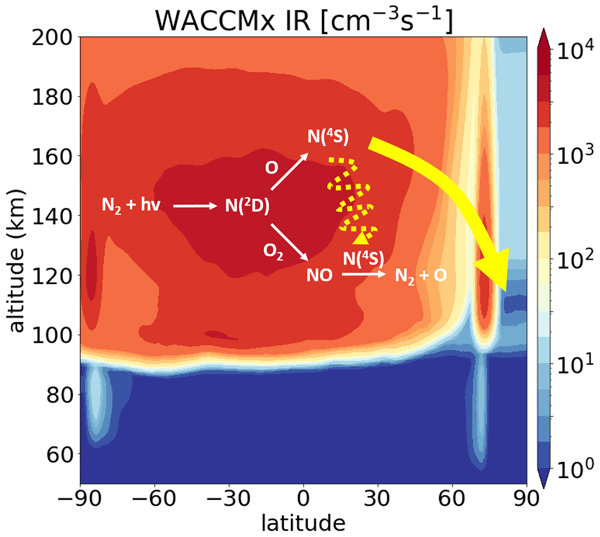
Miriam Sinnhuber, Christina Arras, Stefan Bender, Bernd Funke, Hanli Liu, Daniel R. Marsh, Thomas Reddmann, Eugene Rozanov, Timofei Sukhodolov, Monika E. Szelag, and Jan Maik Wissing
Atmos. Chem. Phys., 25, 14719–14734, https://doi.org/10.5194/acp-25-14719-2025, https://doi.org/10.5194/acp-25-14719-2025, 2025
Short summary
Short summary
Nitric oxide in the upper atmosphere varies with solar activity. Observations show that this starts a chain of processes affecting the ozone layer and climate system. This is often underestimated in models. We compare five models which show large differences in simulated NO. Analysis of these discrepancies identify two processes which interact with each other: the balance between atomic and molecular oxygen in the thermosphere, and a poleward - downward transport in the winter thermosphere.
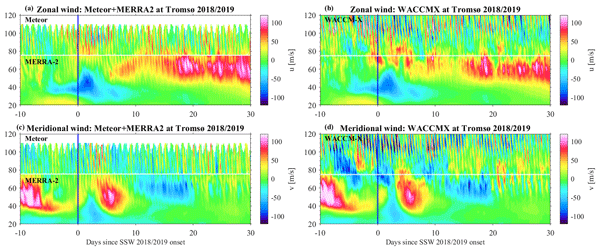
Guochun Shi, Hanli Liu, Masaki Tsutsumi, Njål Gulbrandsen, Alexander Kozlovsky, Dimitry Pokhotelov, Mark Lester, Christoph Jacobi, Kun Wu, and Gunter Stober
Atmos. Chem. Phys., 25, 9403–9430, https://doi.org/10.5194/acp-25-9403-2025, https://doi.org/10.5194/acp-25-9403-2025, 2025
Short summary
Short summary
Concerns about climate change are growing due to its widespread impacts, including rising temperatures, extreme weather events, and disruptions to ecosystems. To address these challenges, urgent global action is needed to monitor the distribution of trace gases and understand their effects on the atmosphere.
Ales Kuchar, Gunter Stober, Dimitry Pokhotelov, Huixin Liu, Han-Li Liu, Manfred Ern, Damian Murphy, Diego Janches, Tracy Moffat-Griffin, Nicholas Mitchell, and Christoph Jacobi
EGUsphere, https://doi.org/10.5194/egusphere-2025-2827, https://doi.org/10.5194/egusphere-2025-2827, 2025
Short summary
Short summary
We studied how the healing of the Antarctic ozone layer is affecting winds high above the South Pole. Using ground-based radar, satellite data, and computer models, we found that winds in the upper atmosphere have become stronger over the past two decades. These changes appear to be linked to shifts in the lower atmosphere caused by ozone recovery. Our results show that human efforts to repair the ozone layer are also influencing climate patterns far above Earth’s surface.
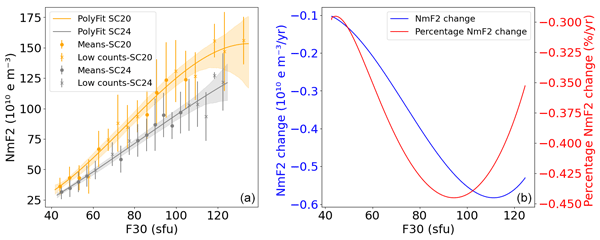
Maria Gloria Tan Jun Rios, Claudia Borries, Huixin Liu, and Jens Mielich
Ann. Geophys., 43, 73–89, https://doi.org/10.5194/angeo-43-73-2025, https://doi.org/10.5194/angeo-43-73-2025, 2025
Short summary
Short summary
This study analyzes changes in the ionospheric response to solar flux over five complete solar cycles (1957 to 2023). We use Juliusruh hourly data of the peak electron density of the F2 layer, NmF2, and three solar extreme ultraviolet (EUV) radiation proxies. The response is better represented by a cubic regression, and F30 shows the highest correlation for describing NmF2 dependence over time. These results reveal a decrease in NmF2 influenced by the intensity of the solar activity index.
Huixin Liu
Hist. Geo Space. Sci., 15, 41–42, https://doi.org/10.5194/hgss-15-41-2024, https://doi.org/10.5194/hgss-15-41-2024, 2024
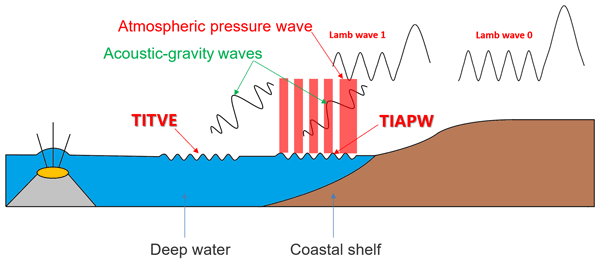
Qinzeng Li, Jiyao Xu, Aditya Riadi Gusman, Hanli Liu, Wei Yuan, Weijun Liu, Yajun Zhu, and Xiao Liu
Atmos. Chem. Phys., 24, 8343–8361, https://doi.org/10.5194/acp-24-8343-2024, https://doi.org/10.5194/acp-24-8343-2024, 2024
Short summary
Short summary
The 2022 Hunga Tonga–Hunga Ha’apai (HTHH) volcanic eruption not only triggered broad-spectrum atmospheric waves but also generated unusual tsunamis which can generate atmospheric gravity waves (AGWs). Multiple strong atmospheric waves were observed in the far-field area of the 2022 HTHH volcano eruption in the upper atmosphere by a ground-based airglow imager network. AGWs caused by tsunamis can propagate to the mesopause region; there is a good match between atmospheric waves and tsunamis.
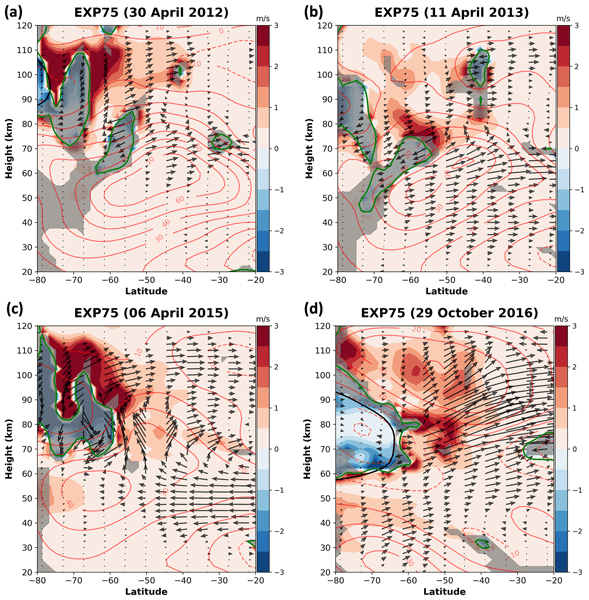
Wonseok Lee, In-Sun Song, Byeong-Gwon Song, and Yong Ha Kim
Atmos. Chem. Phys., 24, 3559–3575, https://doi.org/10.5194/acp-24-3559-2024, https://doi.org/10.5194/acp-24-3559-2024, 2024
Short summary
Short summary
We investigate the seasonal variation of westward-propagating quasi-10 d wave (Q10DW) activity in the southern high-latitude mesosphere. The observed Q10DW is amplified around equinoxes. The model experiments indicate that the Q10DW can be enhanced in the high-latitude mesosphere due to large-scale instability. However, an excessively strong instability in the summer mesosphere spuriously generates the Q10DW in the model, potentially leading to inaccurate model dynamics.
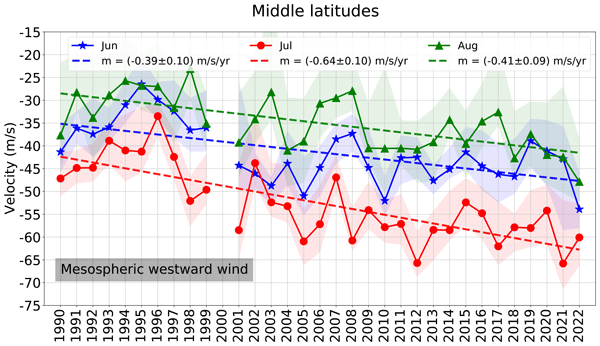
Juliana Jaen, Toralf Renkwitz, Huixin Liu, Christoph Jacobi, Robin Wing, Aleš Kuchař, Masaki Tsutsumi, Njål Gulbrandsen, and Jorge L. Chau
Atmos. Chem. Phys., 23, 14871–14887, https://doi.org/10.5194/acp-23-14871-2023, https://doi.org/10.5194/acp-23-14871-2023, 2023
Short summary
Short summary
Investigation of winds is important to understand atmospheric dynamics. In the summer mesosphere and lower thermosphere, there are three main wind flows: the mesospheric westward, the mesopause southward (equatorward), and the lower-thermospheric eastward wind. Combining almost 2 decades of measurements from different radars, we study the trend, their interannual oscillations, and the effects of the geomagnetic activity over these wind maxima.
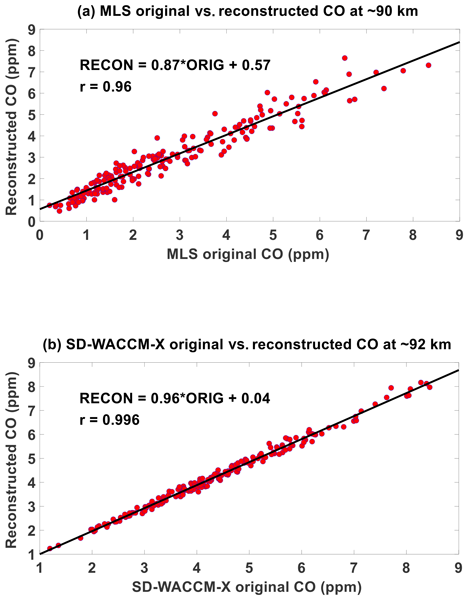
Cornelius Csar Jude H. Salinas, Dong L. Wu, Jae N. Lee, Loren C. Chang, Liying Qian, and Hanli Liu
Atmos. Chem. Phys., 23, 1705–1730, https://doi.org/10.5194/acp-23-1705-2023, https://doi.org/10.5194/acp-23-1705-2023, 2023
Short summary
Short summary
Upper mesospheric carbon monoxide's (CO) photochemical lifetime is longer than dynamical timescales. This work uses satellite observations and model simulations to establish that the migrating diurnal tide and its seasonal and interannual variabilities drive CO primarily through vertical advection. Vertical advection is a transport process that is currently difficult to observe. This work thus shows that we can use CO as a tracer for vertical advection across seasonal and interannual timescales.
Qiong Tang, Chen Zhou, Huixin Liu, Yi Liu, Jiaqi Zhao, Zhibin Yu, Zhengyu Zhao, and Xueshang Feng
Atmos. Chem. Phys. Discuss., https://doi.org/10.5194/acp-2022-534, https://doi.org/10.5194/acp-2022-534, 2022
Preprint withdrawn
Short summary
Short summary
The geomagnetic and solar effect on Es is studied. The negative correlation between Es and geomagnetic activity at mid-latitude is related to the decreased meteor rate during storm period. The increased Es occurrence in high latitude relates to the changing electric field. The positive correlation between Es and solar activity at high latitude is due to the enhanced IMF in solar maximum. The negative correlation in mid and low latitudes relates to the decreased meteor rate during solar activity.
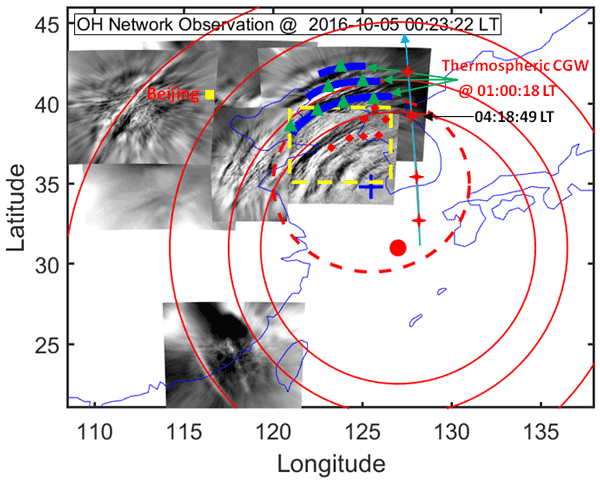
Qinzeng Li, Jiyao Xu, Hanli Liu, Xiao Liu, and Wei Yuan
Atmos. Chem. Phys., 22, 12077–12091, https://doi.org/10.5194/acp-22-12077-2022, https://doi.org/10.5194/acp-22-12077-2022, 2022
Short summary
Short summary
We use ground-based airglow network observations, reanalysis data, and satellite observations to explore the propagation process of concentric gravity waves (CGWs) excited by a typhoon between the troposphere, stratosphere, mesosphere, and thermosphere. We find that CGWs in the mesosphere are generated directly by the typhoon but the CGW observed in the thermosphere may be excited by CGW dissipation in the mesosphere, rather than directly excited by a typhoon and propagated to the thermosphere.
Jooyeop Lee, Martin Claussen, Jeongwon Kim, Je-Woo Hong, In-Sun Song, and Jinkyu Hong
Clim. Past, 18, 313–326, https://doi.org/10.5194/cp-18-313-2022, https://doi.org/10.5194/cp-18-313-2022, 2022
Short summary
Short summary
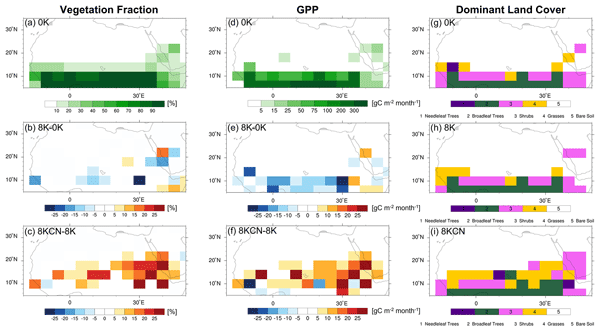
It is still a challenge to simulate the so–called Green Sahara (GS), which was a wet and vegetative Sahara region in the mid–Holocene, using current climate models. Our analysis shows that Holocene greening is simulated better if the amount of soil nitrogen and soil texture is properly modified for the humid and vegetative GS period. Future climate simulation needs to consider consequent changes in soil nitrogen and texture with changes in vegetation cover for proper climate simulations.

Jianfei Wu, Wuhu Feng, Han-Li Liu, Xianghui Xue, Daniel Robert Marsh, and John Maurice Campbell Plane
Atmos. Chem. Phys., 21, 15619–15630, https://doi.org/10.5194/acp-21-15619-2021, https://doi.org/10.5194/acp-21-15619-2021, 2021
Short summary
Short summary
Metal layers occur in the MLT region (80–120 km) from the ablation of cosmic dust. The latest lidar observations show these metals can reach a height approaching 200 km, which is challenging to explain. We have developed the first global simulation incorporating the full life cycle of metal atoms and ions. The model results compare well with lidar and satellite observations of the seasonal and diurnal variation of the metals and demonstrate the importance of ion mass and ion-neutral coupling.
Cited articles
Akmaev, R. A. and Fomichev, V. I.: Cooling of the mesosphere and lower thermosphere due to doubling of CO2, Ann. Geophys., 16, 1501–1512, https://doi.org/10.1007/s00585-998-1501-z, 1998.
Alexander, M. J., Liu, C. C., Bacmeister, J., Bramberger, M., Hertzog, A., and Richter, J. H.: Observational Validation of Parameterized Gravity Waves From Tropical Convection in the Whole Atmosphere Community Climate Model. J. Geophys. Res.-Atmos., 126, https://doi.org/10.1029/2020JD033954, 2021.
Arias-Ortiz, A., Oikawa, P. Y., Carlin, J., Masqué, P., Shahan, J., Kanneg, S., Paytan, A., and Baldocchi, D. D.: Tidal and nontidal marsh restoration: A trade-off between carbon sequestration, methane emissions, and soil accretion, J. Geophys. Res.-Biogeo., 126, e2021JG006573, https://doi.org/10.1029/2021JG006573, 2021.
Becker, E. and Vadas, S. L.: Secondary gravity waves in the winter mesosphere: Results from a high-resolution global circulation model, J. of Geophys. Res.-Atmos., 123, 2605–2627., https://doi.org/10.1002/2017JD027460, 2018.
Becker, E. and Vadas, S. L.: Explicit global simulation of gravity waves in the thermosphere, J. Geophys. Res.-Space, 125, e2020JA028034, https://doi.org/10.1029/2020JA028034, 2020.
Beres, J. H., Alexander, M. J., and Holton, J. R.: A Method of Specifying the Gravity Wave Spectrum above Convection Based on Latent Heating Properties and Background Wind, J. Atmos. Sci., 324–337, https://doi.org/10.1175/1520-0469(2004)061<0324:AMOSTG>2.0.CO;2, 2004.
Beres, J. H., Garcia, R. R., Boville, B. A., and Sassi, F.: Implementation of a gravity wave source spectrum parameterization dependent on the properties of convection in the Whole Atmosphere Community Climate Model (WACCM), J. Geophys. Res.-Atmos., 110, 1–13, https://doi.org/10.1029/2004JD005504, 2005.
Chapman, S. and Lindzen, R. S.: Atmospheric tides: thermal and gravitational, Springer Science & Business Media, https://doi.org/10.1007/978-94-010-3399-2, 1970.
Chou, C. and Neelin, J. D.: Mechanisms of Global Warming Impacts on Regional Tropical Precipitation, J. Climate, 2688–2701, https://doi.org/10.1175/1520-0442(2004)017<2688:MOGWIO>2.0.CO;2, 2004.
Cnossen, I.: Analysis and Attribution of Climate Change in the Upper Atmosphere From 1950 to 2015 Simulated by WACCM-X, J. Geophys. Res.-Space, 125, https://doi.org/10.1029/2020JA028623, 2020.
Emmert, J. T., Fejer, B. G., Shepherd, G. G., and Solheim, B. H.: Average nighttime F region disturbance neutral winds measured by UARS WINDII: Initial results, Geophys. Res. Lett., 31, 1–4, https://doi.org/10.1029/2004GL021611, 2004a.
Emmert, J. T., Picone, J. M., Lean, J. L., and Knowles, S. H.: Global change in the thermosphere: Compelling evidence of a secular decrease in density, J. Geophys. Res.-Space, 109, https://doi.org/10.1029/2003JA010176, 2004b.
Emmert, J. T., Lean, J. L., and Picone, J. M.: Record-low thermospheric density during the 2008 solar minimum, Geophys. Res. Lett., 37, https://doi.org/10.1029/2010GL043671, 2010.
Feng, X., Liu, C., Xie, F., Lu, J., Chiu, L. S., Tintera, G., and Chen, B.: Precipitation characteristic changes due to global warming in a high-resolution (16 km) ECMWF simulation, Q. J. Roy. Meteorol. Soc., 145, 303–317, https://doi.org/10.1002/qj.3432, 2019.
Fomichev, V. I., Blanchet, J.-P., and Turner, D. S.: Matrix parameterization of the 15 µm CO2 band cooling in the middle and upper atmosphere for variable CO2 concentration, J. Geophys. Res., 103, 11505–11528, https://doi.org/10.1029/98JD00799, 1998.
Fomichev, V. I., Jonsson, A. I., de Grandpré, J., Beagley, S. R., McLandress, C., Semeniuk, K., and Shepherd, T. G.: Response of the middle atmosphere to CO2 doubling: Results from the Canadian middle atmosphere model, J. Climate, 20, 1121–1144, https://doi.org/10.1175/JCLI4030.1, 2007.
Forbes, J. M. and Vincent, R. A.: Effects of mean winds and dissipation on the diurnal propagating tide: An analytic approach, Planet. Space Sci., 37.2, 197–209, https://doi.org/10.1016/0032-0633(89)90007-X, 1989.
Franke, H., Preusse, P., and Giorgetta, M.: Changes of tropical gravity waves and the quasi-biennial oscillation in storm-resolving simulations of idealized global warming, Q. J. Roy. Meteorol. Soc., 149, 2838–2860, https://doi.org/10.1002/qj.4534, 2023.
Garcia, R. R.: On the response of the middle atmosphere to anthropogenic forcing, Ann. NY Acad. Sci., 1504, 25–43, https://doi.org/10.1111/nyas.14664, 2021.
Garcia, R. R., Smith, A. K., Kinnison, D. E., de la Cámara, Á., and Murphy, D. J.: Modification of the gravity wave parameterization in the Whole Atmosphere Community Climate Model: Motivation and results, J. Atmos. Sci., 74, 275–291, https://doi.org/10.1175/JAS-D-16-0104.1, 2017.
Garcia, R. R., Yue, J., and Russell, J. M.: Middle Atmosphere Temperature Trends in the Twentieth and Twenty-First Centuries Simulated With the Whole Atmosphere Community Climate Model (WACCM), J. Geophys. Res.-Space, 124, 7984–7993, https://doi.org/10.1029/2019JA026909, 2019.
Groves, G. V.: Notes on obtaining the eigenvalues of Laplace's tidal equation, Planet. Space Sci., 29, 1339–1344, https://doi.org/10.1016/0032-0633(81)90100-8, 1981.
Hagan, M. E., Burrage, M. D., Forbes, J. M., Hackney, J., Randel, W. J., and Zhang, X.: QBO effects on the diurnal tide in the upper atmosphere, Earth Planets Space, 51, 571–578, https://doi.org/10.1186/BF03353216, 1999.
Hersbach, H., Bell, B., Berrisford, P., Hirahara, S., Horányi, A., Muñoz-Sabater, J., Nicolas, J., Peubey, C., Radu, R., Schepers, D., Simmons, A., Soci, C., Abdalla, S., Abellan, X., Balsamo, G., Bechtold, P., Biavati, G., Bidlot, J., Bonavita, M., De Chiara, G., Dahlgren, P., Dee, D., Diamantakis, M., Dragani, R., Flemming, J., Forbes, R., Fuentes, M., Geer, A., Haimberger, L., Healy, S., Hogan, R. J., Hólm, E., Janisková, M., Keeley, S., Laloyaux, P., Lopez, P., Lupu, C., Radnoti, G., de Rosnay, P., Rozum, I., Vamborg, F., Villaume, S., and Thépaut, J.-N.: The ERA5 global reanalysis, Q. J. Roy. Meteorol. Soc., 146, 1999–2049, https://doi.org/10.1002/qj.3803, 2020.
IPCC: Climate Change 2023: Synthesis Report, in: Contribution of Working Groups I, II and III to the Sixth Assessment Report of the Intergovernmental Panel on Climate Change, editeed by: Core Writing Team, Lee, H., and Romero, J., IPCC, Geneva, Switzerland, 184 pp., https://doi.org/10.59327/IPCC/AR6-9789291691647, 2023.
Jonsson, A. I., de Grandpré, J., Fomichev, V. I., McConnell, J. C., and Beagley, S. R.: Doubled CO2-induced cooling in the middle atmosphere: Photochemical analysis of the ozone radiative feedback, J. Geophys. Res.-Atmos., 109, 1–18, https://doi.org/10.1029/2004JD005093, 2004.
Kalisch, S., Preusse, P., Ern, M., Eckermann, S. D., and Riese, M.: Differences in gravity wave drag between realistic oblique and assumed vertical propagation, J. Geophys. Res.-Atmos., 119, 10081–10099, https://doi.org/10.1002/2014JD021779, 2014.
Keating, G. M., Tolson, R. H., and Bradford, M. S.: Evidence of long term global decline in the Earth's thermospheric densities apparently related to anthropogenic effects, Geophys. Res. Lett., 27, 1523–1526, https://doi.org/10.1029/2000GL003771, 2000.
Kogure, M.: Python Scritp: Hough Mode Function, Zenodo [code], https://doi.org/10.5281/zenodo.15752862, 2025.
Kogure, M. and Liu, H.: DW1 Tidal Enhancements in the Equatorial MLT During 2015 El Niño: The Relative Role of Tidal Heating and Propagation, J. Geophys. Res.-Space, 126, https://doi.org/10.1029/2021JA029342, 2021.
Kogure, M., Nakamura, T., Ejiri, M. K., Nishiyama, T., Tomikawa, Y., and Tsutsumi, M.:. Effects of horizontal wind structure on a gravity wave event in the middle atmosphere over Syowa (69° S, 40° E), the Antarctic, Geophys. Res. Lett., 45, 5151–5157, https://doi.org/10.1029/2018GL078264, 2018.
Kogure, M., Liu, H., and Tao, C.: Mechanisms for Zonal Mean Wind Responses in the Thermosphere to Doubled CO2 Concentration, J. Geophys. Res.-Space, 127, https://doi.org/10.1029/2022JA030643, 2022.
Laštovička, J.: Long-Term Trends in the Upper Atmosphere, Wiley, 325–341, https://doi.org/10.1002/9781119815631.ch17, 2021.
Laštovička, J. and Jelínek, Š.: Problems in calculating long-term trends in the upper atmosphere, J. Atmos. Sol.-Terr. Phy., 189, 80–86, https://doi.org/10.1016/j.jastp.2019.04.011, 2019.
Laštovička, J., Akmaev, R. A., Beig, G., Bremer, J., Emmert, J. T., Jacobi, C., Jarvis, M. J., Nedoluha, G., Portnyagin, Yu. I., and Ulich, T.: Emerging pattern of global change in the upper atmosphere and ionosphere, Ann. Geophys., 26, 1255–1268, https://doi.org/10.5194/angeo-26-1255-2008, 2008.
Laštovička, J., Solomon, S. C., and Qian, L.: Trends in the neutral and ionized upper atmosphere, Space Sci. Rev., 168, 113–145, https://doi.org/10.1007/s11214-011-9799-3, 2012.
Lau, W. K. M., Wu, H. T., and Kim, K. M.: A canonical response of precipitation characteristics to global warming from CMIP5 models, Geophys. Res. Lett., 40, 3163–3169, https://doi.org/10.1002/grl.50420, 2013.
Liu, H., Sun, Y.-Y., Miyoshi, Y., and Jin, H.: ENSO effects on MLT diurnal tides: A 21 year reanalysis data-driven GAIA model simulation, J. Geophys. Res.-Space, 122, 5539–5549, https://doi.org/10.1002/2017JA024011, 2017.
Liu, H., Tao, C., Jin, H., and Abe, T.: Geomagnetic Activity Effects on CO2-Driven Trend in the Thermosphere and Ionosphere: Ideal Model Experiments With GAIA. J. Geophys. Res.-Space, 126, https://doi.org/10.1029/2020JA028607, 2021.
Liu, H., Tao, C., Jin, H., and Nakamoto, Y.: Circulation and Tides in a Cooler Upper Atmosphere: Dynamical Effects of CO2 Doubling, Geophys. Res. Lett., 47, https://doi.org/10.1029/2020GL087413, 2020.
Liu, H. L.: Effective Vertical Diffusion by Atmospheric Gravity Waves, Geophys. Res. Lett., 48, https://doi.org/10.1029/2020GL091474, 2021.
Liu, H. L.: Transport of Nitric Oxide in the Winter Mesosphere and Lower Thermosphere, Geophys. Res. Lett., 52, https://doi.org/10.1029/2024GL113027, 2025.
Liu, H. L., Bardeen, C. G., Foster, B. T., Lauritzen, P., Liu, J., Lu, G., Marsh, D. R., Maute, A., McInerney, J. M., Pedatella, N. M., Qian, L., Richmond, A. D., Roble, R. G., Solomon, S. C., Vitt, F. M., and Wang, W.: Development and Validation of the Whole Atmosphere Community Climate Model With Thermosphere and Ionosphere Extension (WACCM-X 2.0), J. Adv. Model. Earth Syst., 10, 381–402, https://doi.org/10.1002/2017MS001232, 2018.
Lu, W. and Fritts, D. C.: Spectral Estimates of Gravity Wave Energy and Momentum Fluxes. Part III: Gravity Wave-Tidal Interactions, J. Atmos. Sci., 50, 3714–3727, https://doi.org/10.1175/1520-0469(1993)050<3714:SEOGWE>2.0.CO;2, 1993.
Lübken, F. J., Berger, U., and Baumgarten, G.: Temperature trends in the midlatitude summer mesosphere, J. Geophys. Res.-Atmos., 118, 13347–13360, https://doi.org/10.1002/2013JD020576, 2013.
Ma, H.: CESM2/WACCM-X future simulation data from 2000 to 2090 [Dataset], Zenodo [data set], https://doi.org/10.5281/zenodo.15189573, 2025.
Ma, H., Liu, H., Liu, H., and Liu, L.: Upper atmosphere responses to IPCC's worst scenario of CO2 increase in the 21st century, Geophys. Res. Lett., 52, e2025GL115452, https://doi.org/10.1029/2025GL115452, 2025.
Marcos, F. A., Wise, J. O., Kendra, M. J., Grossbard, N. J., and Bowman, B. R.: Detection of a long-term decrease in thermospheric neutral density, Geophys. Res. Lett., 32, 1–4, https://doi.org/10.1029/2004GL021269, 2005.
Mayr, H. G. and Mengel, J. G.: Interannual variations of the diurnal tide in the mesosphere generated by the quasi-biennial oscillation, J. Geophys. Res.-Atmos., 110, 1–14, https://doi.org/10.1029/2004JD005055, 2005.
Mayr, H. G., Mengel, J. G., Chan, K. L., and Porter, H. S.: Seasonal variations of the diurnal tide induced by gravity wave filtering, Geophys. Res. Lett., 25, 943–946, https://doi.org/10.1029/98GL00637, 1998.
McLandress, C.: Seasonal variability of the diurnal tide: Results from the Canadian middle atmosphere general circulation model, J. Geophys. Res.-Atmos., 102, 29747–29764, https://doi.org/10.1029/97jd02645, 1997.
McLandress, C.: Interannual variations of the diurnal tide in the mesosphere induced by a zonal-mean wind oscillation in the tropics. Geophys. Res. Lett., 29, 19-1–19-4, https://doi.org/10.1029/2001gl014551, 2002a.
McLandress, C.: The Seasonal Variation of the Propagating Diurnal Tide in the Mesosphere and Lower Thermosphere. Part II: The Role of Tidal Heating and Zonal Mean Winds, J. Atmos. Sci., 59, 907–922, https://doi.org/10.1175/1520-0469(2002)059<0907:TSVOTP>2.0.CO;2, 2002b.
McLandress, C. and Fomichev, V. I.: Amplification of the mesospheric diurnal tide in a doubled CO2 atmosphere, Geophys. Res. Lett., 33, https://doi.org/10.1029/2005GL025345, 2006.
Meyer, C. K.: Gravity wave interactions with the diurnal propagating tide, J. Geophys. Res.-Atmos., 104, 4223–4239, https://doi.org/10.1029/1998JD200089, 1999.
Miyahara, S. and Forbes, J. M.: Interactions between gravity waves and the diurnal tide in the mesosphere and lower thermosphere, J. Meteorol. Soc. Jpn., 69, 523–531, https://doi.org/10.2151/jmsj1965.69.5_523, 1991.
Neale, R. B., Chen, C. C., Gettelman, A., Lauritzen, P. H., Park, S., Williamson, D. L., Conley, A. J., Garcia, R., Kinnison, D., Lamarque, J. F., and Marsh, D.: Description of the NCAR community atmosphere model (CAM 5.0), NCAR Tech. Note Ncar/tn-486+STR, NCAR, 1–12, https://zerogeoengineering.com/wp-content/uploads/2020/11/cam4_desc.pdf (last access: 14 January 2026), 2010.
Ogawa, Y., Motoba, T., Buchert, S. C., Häggström, I., and Nozawa, S.: Upper atmosphere cooling over the past 33 years, Geophys. Res. Lett., 41, 5629–5635, https://doi.org/10.1002/2014GL060591, 2014.
O'Neill, B. C., Tebaldi, C., van Vuuren, D. P., Eyring, V., Friedlingstein, P., Hurtt, G., Knutti, R., Kriegler, E., Lamarque, J.-F., Lowe, J., Meehl, G. A., Moss, R., Riahi, K., and Sanderson, B. M.: The Scenario Model Intercomparison Project (ScenarioMIP) for CMIP6, Geosci. Model Dev., 9, 3461–3482, https://doi.org/10.5194/gmd-9-3461-2016, 2016.
Ortland, D. A. and Alexander, M. J.: Gravity wave influence on the global structure of the diurnal tide in the mesosphere and lower thermosphere, J. Geophys. Res., 111, A10S10, https://doi.org/10.1029/2005JA011467, 2006.
Pedatella, N. M., Liu, H., Liu, H.-L., Herrington, A., and McInerney, J.: Impact of increasing greenhouse gases on the ionosphere and thermosphere response to a May 2024-like geomagnetic superstorm, Geophys. Res. Lett., 52, e2025GL116445, https://doi.org/10.1029/2025GL116445, 2025.
Qian, L., Laštovička, J., Roble, R. G., and Solomon, S. C.: Progress in observations and simulations of global change in the upper atmosphere, J. Geophys. Res.-Space, 116, https://doi.org/10.1029/2010JA016317, 2011.
Ramesh, K. and Sridharan, S.: Long-Term Trends in Tropical (10° N–15° N) Middle Atmosphere (40–110 km) CO2 Cooling, J. Geophys. Res.-Space, 123, 5661–5673, https://doi.org/10.1029/2017JA025060, 2018.
Richter, J. H., Sassi, F., and Garcia, R. R.:Toward a physically based gravity wave source parameterization in a general circulation model, J. Atmos. Sci., 67, 136–156, https://doi.org/10.1175/2009JAS3112.1, 2010.
Roble, R. G. and Dickinson, R. E.: How will changes in carbon dioxide and methane modify the mean structure of the mesosphere and thermosphere?, Geophys. Res. Lett., 16, 1441–1444, https://doi.org/10.1029/GL016i012p01441, 1989.
Russell II, J. M., Mlynczak, M. G., Gordley, L. L., Tansock Jr., J. J., and Esplin, R. W.: Overview of the SABER experiment and preliminary calibration results, Proc. SPIE, 3756, https://doi.org/10.1117/12.366382, 1999.
Sato, K., Watanabe, S., Kawatani, Y., Tomikawa, Y., Miyazaki, K., and Takahashi, M.: On the origins of mesospheric gravity waves, Geophys. Res. Lett., 36, L19801, https://doi.org/10.1029/2009GL039908, 2009.
Scinocca, J. F. and McFarlane, N. A.: The parameterization of drag induced by stratified flow over anisotropic orography, Q. J. Roy. Meteorol. Soc., 126, 2353–2393, https://doi.org/10.1002/qj.49712656802, 2000.
Song, I. and Chun, H.: A Lagrangian Spectral Parameterization of Gravity Wave Drag Induced by Cumulus Convection, J. Atmos. Sci., 65, 1204–1224, https://doi.org/10.1175/2007JAS2369.1, 2008.
Song, I.-S., Lee, C., Chun, H.-Y., Kim, J.-H., Jee, G., Song, B.-G., and Bacmeister, J. T.: Propagation of gravity waves and its effects on pseudomomentum flux in a sudden stratospheric warming event, Atmos. Chem. Phys., 20, 7617–7644, https://doi.org/10.5194/acp-20-7617-2020, 2020.
Vadas, S. L. and Becker, E.: Numerical modeling of the excitation, propagation, and dissipation of primary and secondary gravity waves during wintertime at McMurdo Station in the Antarctic, J. Geophys. Res.-Atmos., 123, 9326–9369. https://doi.org/10.1029/2017JD027974, 2018.
Virtanen, P., Gommers, R., Oliphant, T. E., Haberland, M., Reddy, T., Cournapeau, D., and SciPy 1.0 Contributors: SciPy 1.0: Fundamental Algorithms for Scientific Computing in Python, Nat. Meth., 17, 261–272, https://doi.org/10.1038/s41592-019-0686-2, 2020.
Wang, H., Boyd, J. P., and Akmaev, R. A.: On computation of Hough functions, Geosci. Model Dev., 9, 1477–1488, https://doi.org/10.5194/gmd-9-1477-2016, 2016.
Watanabe, S., Nagashima, T., and Emori, S.: Impact of Global Warming on Gravity Waves, Scient. Online Lett. Atmos., 1, 189–192, https://doi.org/10.2151/sola.2005-049, 2005.
Xu, J., Smith, A. K., Liu, H. L., Yuan, W., Wu, Q., Jiang, G., Mlynczak, M. G., Russell, J. M., and Franke, S. J.: Seasonal and quasi-biennial variations in the migrating diurnal tide observed by Thermosphere, Ionosphere, Mesosphere, Energetics and Dynamics (TIMED), J. Geophys. Res.-Atmos., 114, https://doi.org/10.1029/2008jd011298, 2009.
Yamazaki, Y. and Siddiqui, T. A.: Symmetric and antisymmetric solar migrating semidiurnal tides in the mesosphere and lower thermosphere, J. Geophys. Res.-Atmos., 129, e2023JD040222, https://doi.org/10.1029/2023JD040222, 2024.
Yamazaki, Y., Richmond, A. D., Maute, A., Wu, Q., Ortland, D. A., Yoshikawa, A., Adimula, I. A., Rabiu, B., Kunitake, M., and Tsugawa, T.: Ground magnetic effects of the equatorial electrojet simulated by the TIE-GCM driven by TIMED satellite data, J. Geophys. Res.-Space, 119, 3150–3161, https://doi.org/10.1002/2013JA019487, 2014.
Zhang, G. J. and McFarlane, N. A.: Sensitivity of climate simulations to the parameterization of cumulus convection in the Canadian climate centre general circulation model, Atmos.-Ocean, 33, 407–446, https://doi.org/10.1080/07055900.1995.9649539, 1995.
Zhang, S. R., Holt, J. M., and Kurdzo, J.: Millstone Hill ISR observations of upper atmospheric long-term changes: Height dependency, J. Geophys. Res.-Space, 116, https://doi.org/10.1029/2010JA016414, 2011.
Short summary
We investigate how rising CO₂ changes the migrating diurnal tide driven by solar heating and latent heat. Using a state-of-the-art model under the most extreme scenario in the Intergovernmental Panel on Climate Change report, we find that the tide strengthens between 20–70 km but weakens between 90–110 km. The increase likely reflects lower density and stronger tropical convection, whereas the decrease is consistent with enhanced diffusion.
We investigate how rising CO₂ changes the migrating diurnal tide driven by solar heating and...


Altmetrics
Final-revised paper
Preprint