
Articles | Volume 26, issue 8
https://doi.org/10.5194/acp-26-5799-2026
© Author(s) 2026. This work is distributed under
the Creative Commons Attribution 4.0 License.
the Creative Commons Attribution 4.0 License.
https://doi.org/10.5194/acp-26-5799-2026
© Author(s) 2026. This work is distributed under
the Creative Commons Attribution 4.0 License.
the Creative Commons Attribution 4.0 License.
Technical note
| 
28 Apr 2026
Technical note |
| 28 Apr 2026
| 28 Apr 2026
Technical note: Quantifying the nitrogen isotope difference between ammonium in the atmosphere and ammonia emitted from sources
Chongguo Tian
CORRESPONDING AUTHOR

Key Laboratory of Land and Sea Ecological Governance and Systematic Regulation, Shandong Academy for Environmental Planning, Jinan, 250101, China
Shandong Key Laboratory of Coastal Environmental Processes, CAS Key Laboratory of Coastal Environmental Processes and Ecological Remediation, Yantai Institute of Coastal Zone Research, Chinese Academy of Sciences, Yantai 264003, China
Xuehua Yin
Shandong Key Laboratory of Coastal Environmental Processes, CAS Key Laboratory of Coastal Environmental Processes and Ecological Remediation, Yantai Institute of Coastal Zone Research, Chinese Academy of Sciences, Yantai 264003, China
University of Chinese Academy of Sciences, Beijing, 100049, China
Xuena Yang
Key Laboratory of Land and Sea Ecological Governance and Systematic Regulation, Shandong Academy for Environmental Planning, Jinan, 250101, China
Xiaoxia Yu
Key Laboratory of Land and Sea Ecological Governance and Systematic Regulation, Shandong Academy for Environmental Planning, Jinan, 250101, China
Zhengjie Li
National Engineering Laboratory for Applied Technology of Forestry & Ecology in Southern China, College of Biological Science and Technology, Central South University of Forestry and Technology, Changsha, Hunan 410004, China
Zheng Zong
Environment Research Institute, Shandong University, Qingdao 266237, China
Xinpeng Tian
Shandong Key Laboratory of Coastal Environmental Processes, CAS Key Laboratory of Coastal Environmental Processes and Ecological Remediation, Yantai Institute of Coastal Zone Research, Chinese Academy of Sciences, Yantai 264003, China
Yuchen Li
Shandong Key Laboratory of Coastal Environmental Processes, CAS Key Laboratory of Coastal Environmental Processes and Ecological Remediation, Yantai Institute of Coastal Zone Research, Chinese Academy of Sciences, Yantai 264003, China
University of Chinese Academy of Sciences, Beijing, 100049, China
Roland Kallenborn
Norwegian University of Life Sciences, Faculty of Chemistry, Biotechnology and Food Sciences, Christian Magnus Falsens vei 18, 1433, As, Norway
Yi-Fan Li
International Joint Research Center for Persistent Toxic Substances (IJRC-PTS), State Key Laboratory of Urban Water Resource and Environment, Harbin Institute of Technology, Harbin 150090, China
Related authors
Yuchen Li, Zheng Zong, Xiaoping Wang, Xiaolan Shi, Zeyu Sun, Zhineng Cheng, Ziyang Zhang, Xuehua Yin, Zhifeng Lou, Rong Sun, Roland Kallenborn, and Chongguo Tian
EGUsphere, https://doi.org/10.5194/egusphere-2026-3299, https://doi.org/10.5194/egusphere-2026-3299, 2026
Short summary
Short summary
Long-term measurements at Tuoji Island show that fine-particle pollution in coastal North China is not characterised solely by mass decline under emission controls. Primary-combustion and sulfate signals weakened, but nitrate was increasingly amplified in high-PM2.5 samples, pointing to a growing need for coordinated control of NOx and NH3, with attention to VOC-related oxidation chemistry and humid cold-season conditions.
Zihan Song, Leiming Zhang, Chongguo Tian, Qiang Fu, Zhenxing Shen, Renjian Zhang, Dong Liu, and Song Cui
Atmos. Chem. Phys., 24, 13101–13113, https://doi.org/10.5194/acp-24-13101-2024, https://doi.org/10.5194/acp-24-13101-2024, 2024
Short summary
Short summary
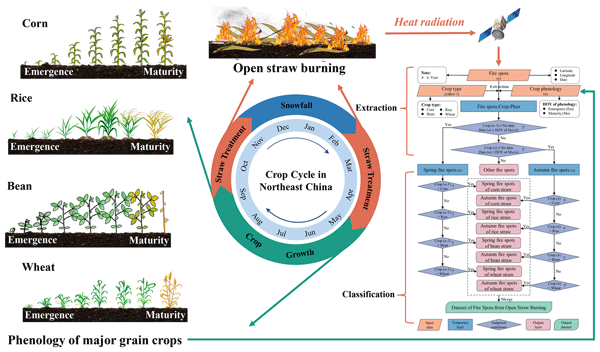
A novel concept integrating crop cycle information into fire spot extraction was proposed. Spatiotemporal variations of open straw burning in Northeast China are revealed. Open straw burning in Northeast China emitted a total of 218 Tg of CO2-eq during 2001–2020. The policy of banning straw burning effectively reduced greenhouse gas emissions.
Fan Zhang, Binyu Xiao, Zeyu Liu, Yan Zhang, Chongguo Tian, Rui Li, Can Wu, Yali Lei, Si Zhang, Xinyi Wan, Yubao Chen, Yong Han, Min Cui, Cheng Huang, Hongli Wang, Yingjun Chen, and Gehui Wang
Atmos. Chem. Phys., 24, 8999–9017, https://doi.org/10.5194/acp-24-8999-2024, https://doi.org/10.5194/acp-24-8999-2024, 2024
Short summary
Short summary
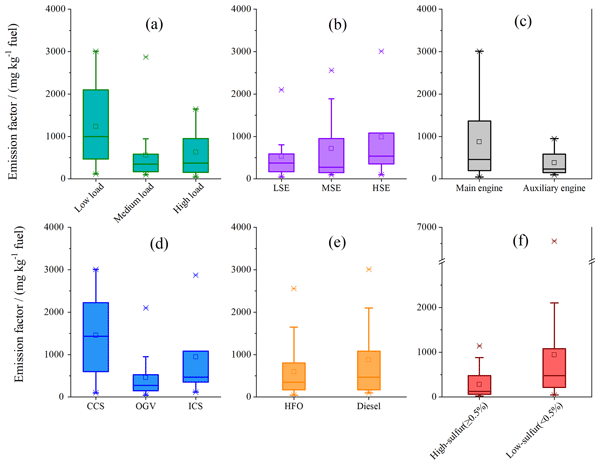
Mandatory use of low-sulfur fuel due to global sulfur limit regulations means large uncertainties in volatile organic compound (VOC) emissions. On-board tests of VOCs from nine cargo ships in China were carried out. Results showed that switching from heavy-fuel oil to diesel increased emission factor VOCs by 48 % on average, enhancing O3 and the secondary organic aerosol formation potential. Thus, implementing a global ultra-low-sulfur oil policy needs to be optimized in the near future.
Yangzhi Mo, Jun Li, Guangcai Zhong, Sanyuan Zhu, Shizhen Zhao, Jiao Tang, Hongxing Jiang, Zhineng Cheng, Chongguo Tian, Yingjun Chen, and Gan Zhang
Atmos. Chem. Phys., 24, 7755–7772, https://doi.org/10.5194/acp-24-7755-2024, https://doi.org/10.5194/acp-24-7755-2024, 2024
Short summary
Short summary
In this study, we found that biomass burning (31.0 %) and coal combustion (31.1 %) were the dominant sources of water-insoluble organic carbon in China, with coal combustion sources exhibiting the strongest light-absorbing capacity. Additionally, we propose a light-absorbing carbonaceous continuum, revealing that components enriched with fossil sources tend to have stronger light-absorbing capacity, higher aromaticity, higher molecular weights, and greater recalcitrance in the atmosphere.
Wenwen Ma, Rong Sun, Xiaoping Wang, Zheng Zong, Shizhen Zhao, Zeyu Sun, Chongguo Tian, Jianhui Tang, Song Cui, Jun Li, and Gan Zhang
Atmos. Chem. Phys., 24, 1509–1523, https://doi.org/10.5194/acp-24-1509-2024, https://doi.org/10.5194/acp-24-1509-2024, 2024
Short summary
Short summary
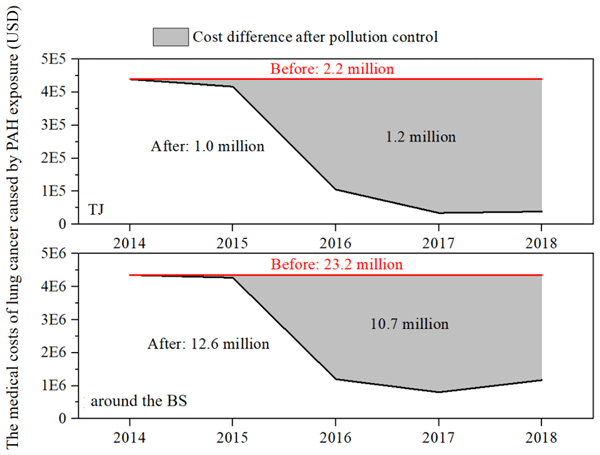
This is the first report of long-term atmospheric PAH monitoring around the Bohai Sea. The results showed that the concentrations of PAHs in the atmosphere around the Bohai Sea decreased from June 2014 to May 2019, especially the concentrations of highly toxic PAHs. This indicates that the contributions from PAH sources changed to a certain extent in different areas, and it also led to reductions in the related health risk and medical costs following pollution prevention and control.
Zeyu Sun, Zheng Zong, Yang Tan, Chongguo Tian, Zeyu Liu, Fan Zhang, Rong Sun, Yingjun Chen, Jun Li, and Gan Zhang
Atmos. Chem. Phys., 23, 12851–12865, https://doi.org/10.5194/acp-23-12851-2023, https://doi.org/10.5194/acp-23-12851-2023, 2023
Short summary
Short summary
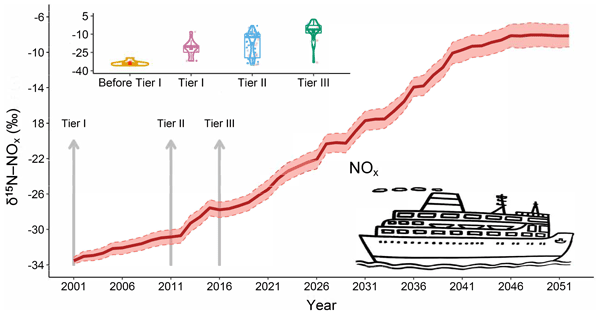
This is the first report of ship-emitted nitrogen stable isotope composition (δ15N) of nitrogen oxides (NOx). The results showed that δ15N–NOx from ships was −18.5 ± 10.9 ‰ and increased monotonically with tightening emission regulations. The selective catalytic reduction system was the most vital factor. The temporal variation in δ15N–NOx was evaluated and can be used to select suitable δ15N–NOx for a more accurate assessment of the contribution of ship-emitted exhaust to atmospheric NOx.
Xiangyun Zhang, Jun Li, Sanyuan Zhu, Junwen Liu, Ping Ding, Shutao Gao, Chongguo Tian, Yingjun Chen, Ping'an Peng, and Gan Zhang
Atmos. Chem. Phys., 23, 7495–7502, https://doi.org/10.5194/acp-23-7495-2023, https://doi.org/10.5194/acp-23-7495-2023, 2023
Short summary
Short summary
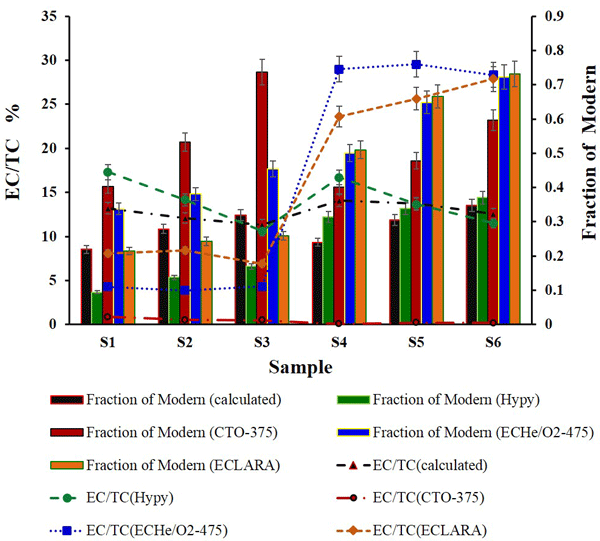
The results show that 14C elemental carbon (EC) was not only related to the isolation method but also to the types and proportions of the biomass sources in the sample. The hydropyrolysis (Hypy) method, which can be used to isolate a highly stable portion of ECHypy and avoid charring, is a more effective and stable approach for the matrix-independent 14C quantification of EC in aerosols, and the 13C–ECHypy and non-fossil ECHypy values of SRM1649b were –24.9 ‰ and 11 %, respectively.
Tingting Li, Jun Li, Zeyu Sun, Hongxing Jiang, Chongguo Tian, and Gan Zhang
Atmos. Chem. Phys., 23, 6395–6407, https://doi.org/10.5194/acp-23-6395-2023, https://doi.org/10.5194/acp-23-6395-2023, 2023
Short summary
Short summary
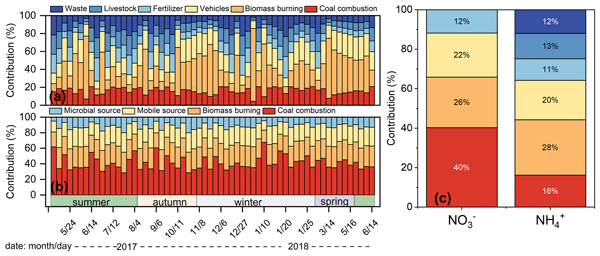
N-NH4+ and N-NO3- were vital components in nitrogenous aerosols and contributed 69 % to total nitrogen in PM2.5. Coal combustion was still the most important source of urban atmospheric NO3-. However, the non-agriculture sources play an increasingly important role in NH4+ emissions.
Jiao Tang, Jun Li, Shizhen Zhao, Guangcai Zhong, Yangzhi Mo, Hongxing Jiang, Bin Jiang, Yingjun Chen, Jianhui Tang, Chongguo Tian, Zheng Zong, Jabir Hussain Syed, Jianzhong Song, and Gan Zhang
EGUsphere, https://doi.org/10.5194/egusphere-2023-403, https://doi.org/10.5194/egusphere-2023-403, 2023
Preprint archived
Short summary
Short summary
This study provides a comprehensive molecular identification of atmospheric common fluorescent components and deciphers their related formation pathways. The fluorescent components varied in molecular composition, and a dominant oxidation pathway for the formation of humic-like fluorescent components was suggested, notwithstanding their different precursor types. Our findings are expected to be helpful to further studies using the EEM-PARAFAC as a tool to study atmospheric BrC.
Hongxing Jiang, Jun Li, Jiao Tang, Min Cui, Shizhen Zhao, Yangzhi Mo, Chongguo Tian, Xiangyun Zhang, Bin Jiang, Yuhong Liao, Yingjun Chen, and Gan Zhang
Atmos. Chem. Phys., 22, 6919–6935, https://doi.org/10.5194/acp-22-6919-2022, https://doi.org/10.5194/acp-22-6919-2022, 2022
Short summary
Short summary
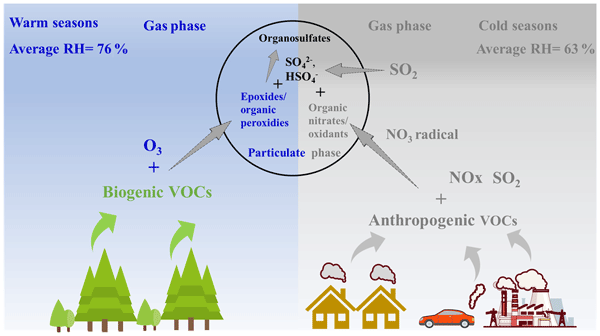
We conducted field observation employing Fourier transform ion cyclotron resonance mass spectrometry to characterize the molecular composition and major formation pathways or sources of organosulfur compounds in Guangzhou, where is heavily influenced by biogenic–anthropogenic interactions and has high relative humidity and temperature. We suggested that heterogeneous reactions such as SO2 uptake and heterogeneous oxidations are important to the molecular variations of organosulfur compounds.
Yuchen Li, Zheng Zong, Xiaoping Wang, Xiaolan Shi, Zeyu Sun, Zhineng Cheng, Ziyang Zhang, Xuehua Yin, Zhifeng Lou, Rong Sun, Roland Kallenborn, and Chongguo Tian
EGUsphere, https://doi.org/10.5194/egusphere-2026-3299, https://doi.org/10.5194/egusphere-2026-3299, 2026
Short summary
Short summary
Long-term measurements at Tuoji Island show that fine-particle pollution in coastal North China is not characterised solely by mass decline under emission controls. Primary-combustion and sulfate signals weakened, but nitrate was increasingly amplified in high-PM2.5 samples, pointing to a growing need for coordinated control of NOx and NH3, with attention to VOC-related oxidation chemistry and humid cold-season conditions.
Zihan Song, Leiming Zhang, Chongguo Tian, Qiang Fu, Zhenxing Shen, Renjian Zhang, Dong Liu, and Song Cui
Atmos. Chem. Phys., 24, 13101–13113, https://doi.org/10.5194/acp-24-13101-2024, https://doi.org/10.5194/acp-24-13101-2024, 2024
Short summary
Short summary
A novel concept integrating crop cycle information into fire spot extraction was proposed. Spatiotemporal variations of open straw burning in Northeast China are revealed. Open straw burning in Northeast China emitted a total of 218 Tg of CO2-eq during 2001–2020. The policy of banning straw burning effectively reduced greenhouse gas emissions.
Fan Zhang, Binyu Xiao, Zeyu Liu, Yan Zhang, Chongguo Tian, Rui Li, Can Wu, Yali Lei, Si Zhang, Xinyi Wan, Yubao Chen, Yong Han, Min Cui, Cheng Huang, Hongli Wang, Yingjun Chen, and Gehui Wang
Atmos. Chem. Phys., 24, 8999–9017, https://doi.org/10.5194/acp-24-8999-2024, https://doi.org/10.5194/acp-24-8999-2024, 2024
Short summary
Short summary
Mandatory use of low-sulfur fuel due to global sulfur limit regulations means large uncertainties in volatile organic compound (VOC) emissions. On-board tests of VOCs from nine cargo ships in China were carried out. Results showed that switching from heavy-fuel oil to diesel increased emission factor VOCs by 48 % on average, enhancing O3 and the secondary organic aerosol formation potential. Thus, implementing a global ultra-low-sulfur oil policy needs to be optimized in the near future.
Yangzhi Mo, Jun Li, Guangcai Zhong, Sanyuan Zhu, Shizhen Zhao, Jiao Tang, Hongxing Jiang, Zhineng Cheng, Chongguo Tian, Yingjun Chen, and Gan Zhang
Atmos. Chem. Phys., 24, 7755–7772, https://doi.org/10.5194/acp-24-7755-2024, https://doi.org/10.5194/acp-24-7755-2024, 2024
Short summary
Short summary
In this study, we found that biomass burning (31.0 %) and coal combustion (31.1 %) were the dominant sources of water-insoluble organic carbon in China, with coal combustion sources exhibiting the strongest light-absorbing capacity. Additionally, we propose a light-absorbing carbonaceous continuum, revealing that components enriched with fossil sources tend to have stronger light-absorbing capacity, higher aromaticity, higher molecular weights, and greater recalcitrance in the atmosphere.
Wenwen Ma, Rong Sun, Xiaoping Wang, Zheng Zong, Shizhen Zhao, Zeyu Sun, Chongguo Tian, Jianhui Tang, Song Cui, Jun Li, and Gan Zhang
Atmos. Chem. Phys., 24, 1509–1523, https://doi.org/10.5194/acp-24-1509-2024, https://doi.org/10.5194/acp-24-1509-2024, 2024
Short summary
Short summary
This is the first report of long-term atmospheric PAH monitoring around the Bohai Sea. The results showed that the concentrations of PAHs in the atmosphere around the Bohai Sea decreased from June 2014 to May 2019, especially the concentrations of highly toxic PAHs. This indicates that the contributions from PAH sources changed to a certain extent in different areas, and it also led to reductions in the related health risk and medical costs following pollution prevention and control.
Zeyu Sun, Zheng Zong, Yang Tan, Chongguo Tian, Zeyu Liu, Fan Zhang, Rong Sun, Yingjun Chen, Jun Li, and Gan Zhang
Atmos. Chem. Phys., 23, 12851–12865, https://doi.org/10.5194/acp-23-12851-2023, https://doi.org/10.5194/acp-23-12851-2023, 2023
Short summary
Short summary
This is the first report of ship-emitted nitrogen stable isotope composition (δ15N) of nitrogen oxides (NOx). The results showed that δ15N–NOx from ships was −18.5 ± 10.9 ‰ and increased monotonically with tightening emission regulations. The selective catalytic reduction system was the most vital factor. The temporal variation in δ15N–NOx was evaluated and can be used to select suitable δ15N–NOx for a more accurate assessment of the contribution of ship-emitted exhaust to atmospheric NOx.
Xiangyun Zhang, Jun Li, Sanyuan Zhu, Junwen Liu, Ping Ding, Shutao Gao, Chongguo Tian, Yingjun Chen, Ping'an Peng, and Gan Zhang
Atmos. Chem. Phys., 23, 7495–7502, https://doi.org/10.5194/acp-23-7495-2023, https://doi.org/10.5194/acp-23-7495-2023, 2023
Short summary
Short summary
The results show that 14C elemental carbon (EC) was not only related to the isolation method but also to the types and proportions of the biomass sources in the sample. The hydropyrolysis (Hypy) method, which can be used to isolate a highly stable portion of ECHypy and avoid charring, is a more effective and stable approach for the matrix-independent 14C quantification of EC in aerosols, and the 13C–ECHypy and non-fossil ECHypy values of SRM1649b were –24.9 ‰ and 11 %, respectively.
Tingting Li, Jun Li, Zeyu Sun, Hongxing Jiang, Chongguo Tian, and Gan Zhang
Atmos. Chem. Phys., 23, 6395–6407, https://doi.org/10.5194/acp-23-6395-2023, https://doi.org/10.5194/acp-23-6395-2023, 2023
Short summary
Short summary
N-NH4+ and N-NO3- were vital components in nitrogenous aerosols and contributed 69 % to total nitrogen in PM2.5. Coal combustion was still the most important source of urban atmospheric NO3-. However, the non-agriculture sources play an increasingly important role in NH4+ emissions.
Jiao Tang, Jun Li, Shizhen Zhao, Guangcai Zhong, Yangzhi Mo, Hongxing Jiang, Bin Jiang, Yingjun Chen, Jianhui Tang, Chongguo Tian, Zheng Zong, Jabir Hussain Syed, Jianzhong Song, and Gan Zhang
EGUsphere, https://doi.org/10.5194/egusphere-2023-403, https://doi.org/10.5194/egusphere-2023-403, 2023
Preprint archived
Short summary
Short summary
This study provides a comprehensive molecular identification of atmospheric common fluorescent components and deciphers their related formation pathways. The fluorescent components varied in molecular composition, and a dominant oxidation pathway for the formation of humic-like fluorescent components was suggested, notwithstanding their different precursor types. Our findings are expected to be helpful to further studies using the EEM-PARAFAC as a tool to study atmospheric BrC.
Hongxing Jiang, Jun Li, Jiao Tang, Min Cui, Shizhen Zhao, Yangzhi Mo, Chongguo Tian, Xiangyun Zhang, Bin Jiang, Yuhong Liao, Yingjun Chen, and Gan Zhang
Atmos. Chem. Phys., 22, 6919–6935, https://doi.org/10.5194/acp-22-6919-2022, https://doi.org/10.5194/acp-22-6919-2022, 2022
Short summary
Short summary
We conducted field observation employing Fourier transform ion cyclotron resonance mass spectrometry to characterize the molecular composition and major formation pathways or sources of organosulfur compounds in Guangzhou, where is heavily influenced by biogenic–anthropogenic interactions and has high relative humidity and temperature. We suggested that heterogeneous reactions such as SO2 uptake and heterogeneous oxidations are important to the molecular variations of organosulfur compounds.
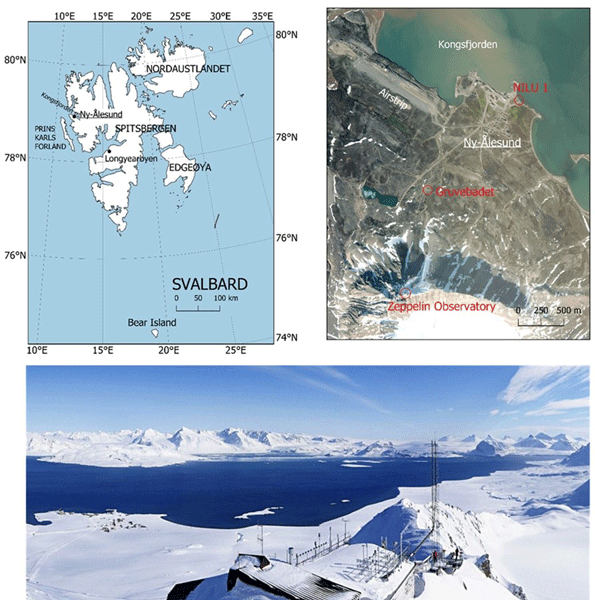
Stephen M. Platt, Øystein Hov, Torunn Berg, Knut Breivik, Sabine Eckhardt, Konstantinos Eleftheriadis, Nikolaos Evangeliou, Markus Fiebig, Rebecca Fisher, Georg Hansen, Hans-Christen Hansson, Jost Heintzenberg, Ove Hermansen, Dominic Heslin-Rees, Kim Holmén, Stephen Hudson, Roland Kallenborn, Radovan Krejci, Terje Krognes, Steinar Larssen, David Lowry, Cathrine Lund Myhre, Chris Lunder, Euan Nisbet, Pernilla B. Nizzetto, Ki-Tae Park, Christina A. Pedersen, Katrine Aspmo Pfaffhuber, Thomas Röckmann, Norbert Schmidbauer, Sverre Solberg, Andreas Stohl, Johan Ström, Tove Svendby, Peter Tunved, Kjersti Tørnkvist, Carina van der Veen, Stergios Vratolis, Young Jun Yoon, Karl Espen Yttri, Paul Zieger, Wenche Aas, and Kjetil Tørseth
Atmos. Chem. Phys., 22, 3321–3369, https://doi.org/10.5194/acp-22-3321-2022, https://doi.org/10.5194/acp-22-3321-2022, 2022
Short summary
Short summary
Here we detail the history of the Zeppelin Observatory, a unique global background site and one of only a few in the high Arctic. We present long-term time series of up to 30 years of atmospheric components and atmospheric transport phenomena. Many of these time series are important to our understanding of Arctic and global atmospheric composition change. Finally, we discuss the future of the Zeppelin Observatory and emerging areas of future research on the Arctic atmosphere.
Cited articles
Baek, B. H. and Aneja, V. P.: Measurement and Analysis of the Relationship between Ammonia, Acid Gases, and Fine Particles in Eastern North Carolina, J. Air Waste Manage., 54, 623–633, https://doi.org/10.1080/10473289.2004.10470933, 2004.
Behera, S. N. and Sharma, M.: Degradation of SO2, NO2 and NH3 leading to formation of secondary inorganic aerosols: An environmental chamber study, Atmos. Environ., 45, 4015–4024, https://doi.org/10.1016/j.atmosenv.2011.04.056, 2011.
Behera, S. N. and Sharma, M.: Transformation of atmospheric ammonia and acid gases into components of PM2.5: an environmental chamber study, Environ. Sci. Pollut. R., 19, 1187–1197, https://doi.org/10.1007/s11356-011-0635-9, 2012.
Behera, S. N., Sharma, M., Aneja, V. P., and Balasubramanian, R.: Ammonia in the atmosphere: a review on emission sources, atmospheric chemistry and deposition on terrestrial bodies, Environ. Sci. Pollut. R., 20, 8092–8131, https://doi.org/10.1007/s11356-013-2051-9, 2013.
Bobbink, R., Hicks, K., Galloway, J., Spranger, T., Alkemade, R., Ashmore, M., Bustamante, M., Cinderby, S., Davidson, E., Dentener, F., Emmett, B., Erisman, J. W., Fenn, M., Gilliam, F., Nordin, A., Pardo, L., and De Vries, W.: Global assessment of nitrogen deposition effects on terrestrial plant diversity: a synthesis, Ecol. Appl., 20, 30–59, https://doi.org/10.1890/08-1140.1, 2010.
Bouwman, A. F., Van Vuuren, D. P., Derwent, R. G., and Posch, M.: A Global Analysis of Acidification and Eutrophication of Terrestrial Ecosystems, Water Air Soil Poll., 141, 349–382, https://doi.org/10.1023/a:1021398008726, 2002.
Cao, H., Liang, T., Tao, S., and Zhang, C. S.: Simulating the temporal of OCP pollution in Hangzhou, China, Chemosphere, 67, 1335–1345, 2007.
Chang, Y., Liu, X., Deng, C., Dore, A. J., and Zhuang, G.: Source apportionment of atmospheric ammonia before, during, and after the 2014 APEC summit in Beijing using stable nitrogen isotope signatures, Atmos. Chem. Phys., 16, 11635–11647, https://doi.org/10.5194/acp-16-11635-2016, 2016.
Chang, Y., Zou, Z., Zhang, Y., Deng, C., Hu, J., Shi, Z., Dore, A. J., and Collett, J. L.: Assessing Contributions of Agricultural and Nonagricultural Emissions to Atmospheric Ammonia in a Chinese Megacity, Environ. Sci. Technol., 53, 1822–1833, https://doi.org/10.1021/acs.est.8b05984, 2019a.
Chang, Y., Zhang, Y.-L., Li, J., Tian, C., Song, L., Zhai, X., Zhang, W., Huang, T., Lin, Y.-C., Zhu, C., Fang, Y., Lehmann, M. F., and Chen, J.: Isotopic constraints on the atmospheric sources and formation of nitrogenous species in clouds influenced by biomass burning, Atmos. Chem. Phys., 19, 12221–12234, https://doi.org/10.5194/acp-19-12221-2019, 2019b.
Chen, Z.-L., Song, W., Hu, C.-C., Liu, X.-J., Chen, G.-Y., Walters, W. W., Michalski, G., Liu, C.-Q., Fowler, D., and Liu, X.-Y.: Significant contributions of combustion-related sources to ammonia emissions, Nat. Commun., 13, 7710, https://doi.org/10.1038/s41467-022-35381-4, 2022.
Coplen, T. B.: Guidelines and recommended terms for expression of stable-isotope-ratio and gas-ratio measurement results, Rapid Commun. Mass Sp., 25, 2538–2560, https://doi.org/10.1002/rcm.5129, 2011.
Dong, J., Wang, S., and Shang, K.: Simulation of the long-term transfer and fate of DDT in Lanzhou, China, Chemosphere, 81, 529–535, 2010.
Elliott, E. M., Yu, Z., Cole, A. S., and Coughlin, J. G.: Isotopic advances in understanding reactive nitrogen deposition and atmospheric processing, Sci. Total Environ., 662, 393–403, https://doi.org/10.1016/j.scitotenv.2018.12.177, 2019.
Feng, S., Xu, W., Cheng, M., Ma, Y., Wu, L., Kang, J., Wang, K., Tang, A., Collett, J. L., Jr., Fang, Y., Goulding, K., Liu, X., and Zhang, F.: Overlooked Nonagricultural and Wintertime Agricultural NH3 Emissions in Quzhou County, North China Plain: Evidence from 15N-Stable Isotopes, Environ. Sci. Tech. Let., 9, 127–133, https://doi.org/10.1021/acs.estlett.1c00935, 2022.
Feng, Y., Su, L., Li, L., Ling, Q., Cheng, K., Lv, J., Hu, J., and Chang, Y.: Process-Based Isolation of Pyrogenic Ammonia in Urban Atmosphere and Implications for Ammonium Nitrate Control, ACS Earth and Space Chemistry, 7, 1314–1321, https://doi.org/10.1021/acsearthspacechem.2c00372, 2023.
Gu, M., Pan, Y., Sun, Q., Walters, W. W., Song, L., and Fang, Y.: Is fertilization the dominant source of ammonia in the urban atmosphere?, Sci. Total Environ., 838, 155890, https://doi.org/10.1016/j.scitotenv.2022.155890, 2022.
Gu, M., Zeng, Y., Walters, W. W., Sun, Q., Fang, Y., and Pan, Y.: Enhanced Nonagricultural Emissions of Ammonia Influence Aerosol Ammonium in an Urban Atmosphere: Evidence from Kinetic Versus Equilibrium Isotope Fractionation Controls on Nitrogen, Environ. Sci. Technol., 59, 650–658, https://doi.org/10.1021/acs.est.4c09103, 2025.
He, Y., Wen, C., Fang, X., and Sun, X.: Impacts of urban-rural integration on landscape patterns and their implications for landscape sustainability: The case of Changsha, China, Landscape Ecol., 39, 129, https://doi.org/10.1007/s10980-024-01926-9, 2024.
Hu, Q., Zhang, L., Evans, G. J., and Yao, X.: Variability of atmospheric ammonia related to potential emission sources in downtown Toronto, Canada, Atmos. Environ., 99, 365–373, https://doi.org/10.1016/j.atmosenv.2014.10.006, 2014.
Ianniello, A., Spataro, F., Esposito, G., Allegrini, I., Rantica, E., Ancora, M. P., Hu, M., and Zhu, T.: Occurrence of gas phase ammonia in the area of Beijing (China), Atmos. Chem. Phys., 10, 9487–9503, https://doi.org/10.5194/acp-10-9487-2010, 2010.
Kawashima, H. and Ono, S.: Nitrogen Isotope Fractionation from Ammonia Gas to Ammonium in Particulate Ammonium Chloride, Environ. Sci. Technol., 53, 10629–10635, https://doi.org/10.1021/acs.est.9b01569, 2019.
Kawashima, H., Ogata, R., and Gunji, T.: Laboratory-based validation of a passive sampler for determination of the nitrogen stable isotope ratio of ammonia gas, Atmos. Environ., 245, 118009, https://doi.org/10.1016/j.atmosenv.2020.118009, 2021.
Kim, T.-W., Lee, K., Najjar, R. G., Jeong, H.-D., and Jeong, H. J.: Increasing N Abundance in the Northwestern Pacific Ocean Due to Atmospheric Nitrogen Deposition, Science, 334, 505–509, https://doi.org/10.1126/science.1206583, 2011.
Li, B., Chen, L., Shen, W., Jin, J., Wang, T., Wang, P., Yang, Y., and Liao, H.: Improved gridded ammonia emission inventory in China, Atmos. Chem. Phys., 21, 15883–15900, https://doi.org/10.5194/acp-21-15883-2021, 2021.
Li, D., Liu, H., and Duan, G.: High-resolution anthropogenic emission inventory for China (2015–2024): Spatiotemporal changes and environmental application, Atmos. Environ., 361, 121495, https://doi.org/10.1016/j.atmosenv.2025.121495, 2025.
Li, L., Lollar, B. S., Li, H., Wortmann, U. G., and Lacrampe-Couloume, G.: Ammonium stability and nitrogen isotope fractionations for NH
Li, Y., Huang, S., and Han, M.: An assessment of the factors that drive changes in the distribution and area of cultivated land in the Yellow River Delta, China, Environ. Earth Sci., 81, 227, https://doi.org/10.1007/s12665-022-10347-3, 2022.
Li, Y., Liu, J., George, C., Herrmann, H., Gu, M., Yang, M., Wang, Y., Mellouki, A., Pan, Y., Felix, J. D., Kawashima, H., Zhang, Z., Wang, S., and Zeng, Y.: Apportioning Atmospheric Ammonia Sources across Spatial and Seasonal Scales by Their Isotopic Fingerprint, Environ. Sci. Technol., 57, 16424–16434, https://doi.org/10.1021/acs.est.3c04027, 2023.
Li, Z., Xiao, H., Walters, W. W., Hastings, M. G., Min, J., Song, L., Lu, W., Wu, L., Yan, W., Liu, S., and Fang, Y.: Nitrogen isotopic characteristics of aerosol ammonium in a Chinese megacity indicate the reduction from vehicle emissions during the lockdown period, Sci. Total Environ., 922, 171265, https://doi.org/10.1016/j.scitotenv.2024.171265, 2024.
Liu, M., Huang, X., Song, Y., Tang, J., Cao, J., Zhang, X., Zhang, Q., Wang, S., Xu, T., Kang, L., Cai, X., Zhang, H., Yang, F., Wang, H., Yu, J. Z., Lau, A. K. H., He, L., Huang, X., Duan, L., Ding, A., Xue, L., Gao, J., Liu, B., and Zhu, T.: Ammonia emission control in China would mitigate haze pollution and nitrogen deposition, but worsen acid rain, P. Natl. Acad. Sci. USA, 116, 7760–7765, https://doi.org/10.1073/pnas.1814880116, 2019.
Ma, X., Xiao, Z., He, L., Shi, Z., Cao, Y., Tian, Z., Vu, T., and Liu, J.: Chemical Composition and Source Apportionment of PM2.5 in Urban Areas of Xiangtan, Central South China, Int. J. Environ. Res. Pub. He., 16, 539, https://doi.org/10.3390/ijerph16040539, 2019.
Pan, Y., Tian, S., Liu, D., Fang, Y., Zhu, X., Zhang, Q., Zheng, B., Michalski, G., and Wang, Y.: Fossil fuel combustion-related emissions dominate atmospheric ammonia sources during severe haze episodes: Evidence from 15N-stable isotope in size-resolved aerosol ammonium, Environ. Sci. Technol., 50, 8049–8056, https://doi.org/10.1021/acs.est.6b00634, 2016.
Pan, Y., Tian, S., Liu, D., Fang, Y., Zhu, X., Gao, M., Wentworth, G. R., Michalski, G., Huang, X., and Wang, Y.: Source Apportionment of Aerosol Ammonium in an Ammonia-Rich Atmosphere: An Isotopic Study of Summer Clean and Hazy Days in Urban Beijing, J. Geophys. Res.-Atmos., 123, 5681–5689, https://doi.org/10.1029/2017JD028095, 2018.
Pan, Y., Gu, M., Song, L., Tian, S., Wu, D., Walters, W. W., Yu, X., Lü, X., Ni, X., Wang, Y., Cao, J., Liu, X., Fang, Y., and Wang, Y.: Systematic low bias of passive samplers in characterizing nitrogen isotopic composition of atmospheric ammonia, Atmos. Res., 243, 105018, https://doi.org/10.1016/j.atmosres.2020.105018, 2020.
Schiferl, L. D., Heald, C. L., Van Damme, M., Clarisse, L., Clerbaux, C., Coheur, P.-F., Nowak, J. B., Neuman, J. A., Herndon, S. C., Roscioli, J. R., and Eilerman, S. J.: Interannual variability of ammonia concentrations over the United States: sources and implications, Atmos. Chem. Phys., 16, 12305–12328, https://doi.org/10.5194/acp-16-12305-2016, 2016.
Schrader, F. and Brummer, C.: Land Use Specific Ammonia Deposition Velocities: a Review of Recent Studies (2004–2013), Water Air Soil Poll., 225, 2114–2125, https://doi.org/10.1007/s11270-014-2114-7, 2014.
Shen, J., Liu, X., Zhang, Y., Fangmeier, A., Goulding, K., and Zhang, F.: Atmospheric ammonia and particulate ammonium from agricultural sources in the North China Plain, Atmos. Environ., 45, 5033–5041, https://doi.org/10.1016/j.atmosenv.2011.02.031, 2011.
Shen, J. L., Tang, A. H., Liu, X. J., Fangmeier, A., Goulding, K. T. W., and Zhang, F. S.: High concentrations and dry deposition of reactive nitrogen species at two sites in the North China Plain, Environ. Pollut., 157, 3106–3113, https://doi.org/10.1016/j.envpol.2009.05.016, 2009.
Sui, X., Yang, L.-X., Yi, H., Yuan, Q., Yan, C., Dong, C., Meng, C.-P., Yao, L., Yang, F., and Wang, W.-X.: Influence of Seasonal Variation and Long-Range Transport of Carbonaceous Aerosols on Haze Formation at a Seaside Background Site, China, Aerosol Air Qual. Res., 15, 1251–1260, https://doi.org/10.4209/aaqr.2014.09.0185, 2015.
Sun, K., Tao, L., Miller, D. J., Pan, D., Golston, L. M., Zondlo, M. A., Griffin, R. J., Wallace, H. W., Leong, Y. J., Yang, M. M., Zhang, Y., Mauzerall, D. L., and Zhu, T.: Vehicle Emissions as an Important Urban Ammonia Source in the United States and China, Environ. Sci. Technol., https://doi.org/10.1021/acs.est.6b02805, 2016.
Sun, X., Zong, Z., Li, Q., Shi, X., Wang, K., Lu, L., Li, B., Qi, H., and Tian, C.: Assessing the emission sources and reduction potential of atmospheric ammonia at an urban site in Northeast China, Environ. Res., 198, 111230, https://doi.org/10.1016/j.envres.2021.111230, 2021.
Sun, Z., Zong, Z., Tan, Y., Tian, C., Liu, Z., Zhang, F., Sun, R., Chen, Y., Li, J., and Zhang, G.: Characterization of the nitrogen stable isotope composition (δ15N) of ship-emitted NOx, Atmos. Chem. Phys., 23, 12851–12865, https://doi.org/10.5194/acp-23-12851-2023, 2023.
Tan, J., Fu, J. S., and Seinfeld, J. H.: Ammonia emission abatement does not fully control reduced forms of nitrogen deposition, P. Natl. Acad. Sci. USA, 117, 9771–9775, https://doi.org/10.1073/pnas.1920068117, 2020.
Ti, C., Ma, S., Peng, L., Tao, L., Wang, X., Dong, W., Wang, L., and Yan, X.: Changes of δ15N values during the volatilization process after applying urea on soil, Environ. Pollut., 270, 116204, https://doi.org/10.1016/j.envpol.2020.116204, 2021.
Urey, H.: The thermodynamic properties of isotopic substances, J. Chem. Soc., 562–581, https://doi.org/10.1039/JR9470000562, 1947.
Walters, W. W., Chai, J., and Hastings, M. G.: Theoretical Phase Resolved Ammonia–Ammonium Nitrogen Equilibrium Isotope Exchange Fractionations: Applications for Tracking Atmospheric Ammonia Gas-to-Particle Conversion, ACS Earth and Space Chemistry, 3, 79–89, https://doi.org/10.1021/acsearthspacechem.8b00140, 2019.
Wang, S., Ren, Y., Xia, B., Liu, K., and Li, H.: Prediction of atmospheric pollutants in urban environment based on coupled deep learning model and sensitivity analysis, Chemosphere, 331, 138830, https://doi.org/10.1016/j.chemosphere.2023.138830, 2023.
Xiao, H.-W., Wu, J.-F., Luo, L., Liu, C., Xie, Y.-J., and Xiao, H.-Y.: Enhanced biomass burning as a source of aerosol ammonium over cities in central China in autumn, Environ. Pollut., 266, 115278, https://doi.org/10.1016/j.envpol.2020.115278, 2020.
Xu, B., You, X., Zhou, Y., Dai, C., Liu, Z., Huang, S., Luo, D., and Peng, H.: The Study of Emission Inventory on Anthropogenic Air Pollutants and Source Apportionment of PM2.5 in the Changzhutan Urban Agglomeration, China, Atmosphere, 11, 739, https://doi.org/10.3390/atmos11070739, 2020.
Xu, S.: Predicted Residual Error Sum of Squares of Mixed Models: An Application for Genomic Prediction, G3-Genes Genom. Genet., 7, 895–909, https://doi.org/10.1534/g3.116.038059, 2017.
Zhai, Y., Liu, X., Chen, H., Xu, B., Zhu, L., Li, C., and Zeng, G.: Source identification and potential ecological risk assessment of heavy metals in PM2.5 from Changsha, Sci. Total Environ., 493, 109–115, https://doi.org/10.1016/j.scitotenv.2014.05.106, 2014.
Zhang, B., Fan, J., Zhang, P., Shen, S., and Ren, Y.: The Changsha historic urban area: a study on the evolution characteristics and influencing factors of the connectivity of construction land, Heritage Science, 12, 287, https://doi.org/10.1186/s40494-024-01401-3, 2024.
Zhang, L., Gong, S., Padro, J., and Barrie, L.: A size-segregated particle dry deposition scheme for an atmospheric aerosol module, Atmos. Environ., 35, 549–560, 2001.
Zhang, X., Zuo, L., Lu, Y., Li, H., and Zhao, Y.: An improved approach for retrieval of tidal flat elevation based on inundation frequency, Estuar. Coast. Shelf S., 313, 109061, https://doi.org/10.1016/j.ecss.2024.109061, 2025.
Zhang, Y., Benedict, K. B., Tang, A., Sun, Y., Fang, Y., and Liu, X.: Persistent Nonagricultural and Periodic Agricultural Emissions Dominate Sources of Ammonia in Urban Beijing: Evidence from 15N Stable Isotope in Vertical Profiles, Environ. Sci. Technol., 54, 102–109, https://doi.org/10.1021/acs.est.9b05741, 2020.
Zhang, Y., Ma, X., Tang, A., Fang, Y., Misselbrook, T., and Liu, X.: Source Apportionment of Atmospheric Ammonia at 16 Sites in China Using a Bayesian Isotope Mixing Model Based on δ15N–NHx Signatures, Environ. Sci. Technol., 57, 6599–6608, https://doi.org/10.1021/acs.est.2c09796, 2023.
Zhang, Y., Dore, A. J., Ma, L., Liu, X. J., Ma, W. Q., Cape, J. N., and Zhang, F. S.: Agricultural ammonia emissions inventory and spatial distribution in the North China Plain, Environ. Pollut., 158, 490–501, https://doi.org/10.1016/j.envpol.2009.08.033, 2010.
Zhao, Y., Zhang, L., Chen, Y., Liu, X., Xu, W., Pan, Y., and Duan, L.: Atmospheric nitrogen deposition to China: A model analysis on nitrogen budget and critical load exceedance, Atmos. Environ., 153, 32–40, https://doi.org/10.1016/j.atmosenv.2017.01.018, 2017.
Zhao, Y., Li, B., Dong, J., Li, Y., Wang, X., Gan, C., Lin, Y., and Liao, H.: Improved ammonia emission inventory of fertilizer application for three major crops in China based on phenological data, Sci. Total Environ., 896, 165225, https://doi.org/10.1016/j.scitotenv.2023.165225, 2023.
Zhu, C., Li, R., Qiu, M., Zhu, C., Gai, Y., Li, L., Yang, N., Sun, L., Wang, C., Wang, B., Yan, G., and Xu, C.: High spatiotemporal resolution ammonia emission inventory from typical industrial and agricultural province of China from 2000 to 2020, Sci. Total Environ., 918, 170732, https://doi.org/10.1016/j.scitotenv.2024.170732, 2024.
Zong, Z., Chen, Y., Tian, C., Fang, Y., Wang, X., Huang, G., Zhang, F., Li, J., and Zhang, G.: Radiocarbon-based impact assessment of open biomass burning on regional carbonaceous aerosols in North China, Sci. Total Environ., 518–519, 1–7, https://doi.org/10.1016/j.scitotenv.2015.01.113, 2015.
Zong, Z., Ren, C., Shi, X., Sun, Z., Huang, X., Tian, C., Li, J., Zhang, G., Fang, Y., and Gao, H.: Isotopic comparison of ammonium between two summertime field campaigns in 2013 and 2021 at a background site of North China, Sci. Total Environ., 905, 167304, https://doi.org/10.1016/j.scitotenv.2023.167304, 2023.
Short summary
This study explores the neglected role of atmospheric deposition in δ15N4a-3s (δ15N difference between NH4+ and source NH3), a key parameter in atmospheric NH4+ source tracing. We develop an integrated model coupling these two processes and find that the difference in δ15N4a-3s between the combined effect and the pure fractionation scenario increases with f (NH4+/NHx molar ratio). This work provides a new idea for precise NH4+ source partitioning.
This study explores the neglected role of atmospheric deposition in δ15N4a-3s (δ15N difference...


Altmetrics
Final-revised paper
Preprint