
Articles | Volume 26, issue 8
https://doi.org/10.5194/acp-26-5567-2026
© Author(s) 2026. This work is distributed under
the Creative Commons Attribution 4.0 License.
the Creative Commons Attribution 4.0 License.
https://doi.org/10.5194/acp-26-5567-2026
© Author(s) 2026. This work is distributed under
the Creative Commons Attribution 4.0 License.
the Creative Commons Attribution 4.0 License.
Research article
| 
23 Apr 2026
Research article |
| 23 Apr 2026
| 23 Apr 2026
Mechanisms of air–sea CO2 exchange in the central Baltic Sea
Yuanxu Dong
CORRESPONDING AUTHOR

Marine Biogeochemistry Research Division, GEOMAR Helmholtz Centre for Ocean Research Kiel, Kiel, Germany
Institute of Environmental Physics, Heidelberg University, Heidelberg, Germany
Christa A. Marandino
Marine Biogeochemistry Research Division, GEOMAR Helmholtz Centre for Ocean Research Kiel, Kiel, Germany
Ryo Dobashi
Department of Oceanography, University of Hawai'i at Mānoa, Honolulu, Hawaii, USA
David T. Ho
Department of Oceanography, University of Hawai'i at Mānoa, Honolulu, Hawaii, USA
Gregor Rehder
Leibniz Institute for Baltic Sea Research Warnemünde, Rostock, Germany
Henry C. Bittig
Leibniz Institute for Baltic Sea Research Warnemünde, Rostock, Germany
Josefine Karnatz
Marine Biogeochemistry Research Division, GEOMAR Helmholtz Centre for Ocean Research Kiel, Kiel, Germany
Bita Sabbaghzadeh
Leibniz Institute for Baltic Sea Research Warnemünde, Rostock, Germany
Helen Czerski
Department of Mechanical Engineering, University College London, London, UK
Anja Engel
Marine Biogeochemistry Research Division, GEOMAR Helmholtz Centre for Ocean Research Kiel, Kiel, Germany
Related authors
Simon F. Hauser, Yuanxu Dong, Anneke ten Doeschate, Kevin McGraw, Brian Ward, and Leonie Esters
EGUsphere, https://doi.org/10.5194/egusphere-2026-4525, https://doi.org/10.5194/egusphere-2026-4525, 2026
This preprint is open for discussion and under review for Atmospheric Chemistry and Physics (ACP).
Short summary
Short summary
The ocean absorbs 25-30% of anthropogenic carbon emissions. Estimates of the global ocean-atmosphere CO2 flux rely on the gas transfer velocity (k) which is normalized to the Schmidt number (Sc). However the Sc number also has an exponent term (n) associated with it, which is typically taken as a constant value of -0.5. Here we characterised n as a function of wind speed and recalculated the global air-sea fluxes with this new transfer velocity term.
Ryo Dobashi, David T. Ho, Yuanxu Dong, Christa A. Marandino, and Helen Czerski
EGUsphere, https://doi.org/10.5194/egusphere-2026-1984, https://doi.org/10.5194/egusphere-2026-1984, 2026
Short summary
Short summary
The exchange of CO2 between the atmosphere and the ocean is a critical component of the global carbon cycle, driven by the air-sea CO2 difference and the gas transfer velocity (k). This study measured k in the central Baltic Sea using the dual tracer technique, finding values comparable to offshore regions at the same wind speed. Commonly used parameterizations fitted the data well, while those derived for the Baltic Sea overestimated k, likely due to differences in measurement methods.
Simon F. Hauser, Yuanxu Dong, Anneke ten Doeschate, Kevin McGraw, Brian Ward, and Leonie Esters
EGUsphere, https://doi.org/10.5194/egusphere-2026-4525, https://doi.org/10.5194/egusphere-2026-4525, 2026
This preprint is open for discussion and under review for Atmospheric Chemistry and Physics (ACP).
Short summary
Short summary
The ocean absorbs 25-30% of anthropogenic carbon emissions. Estimates of the global ocean-atmosphere CO2 flux rely on the gas transfer velocity (k) which is normalized to the Schmidt number (Sc). However the Sc number also has an exponent term (n) associated with it, which is typically taken as a constant value of -0.5. Here we characterised n as a function of wind speed and recalculated the global air-sea fluxes with this new transfer velocity term.
Vertti Kettunen, Tuula Aalto, Henry C. Bittig, Jukka-Pekka Jalkanen, Lauri Laakso, Anteneh Mengistu, Gregor Rehder, Maria Tenkanen, and Martti Honkanen
EGUsphere, https://doi.org/10.5194/egusphere-2026-5442, https://doi.org/10.5194/egusphere-2026-5442, 2026
This preprint is open for discussion and under review for Ocean Science (OS).
Short summary
Short summary
The Baltic Sea carbon balance was estimated using two independent observation-based methods during a 3-year period. One method indicated that the Baltic Sea was a carbon dioxide sink, while the other indicated a source. Ship emissions increased the net carbon dioxide flux to the atmosphere. Despite differences in the overall balance, the methods showed similar patterns in several regions. The results show that both shipping and the method used strongly affect the estimated carbon balance.
Nico Lange, Siv K. Lauvset, Brendan R. Carter, Matthew P. Humphreys, Ryan J. Woosley, Are Olsen, Henry C. Bittig, Alex Kozyr, Marta Álvarez, Kumiko Azetsu-Scott, Susan Becker, Peter J. Brown, Leticia Cotrim da Cunha, Larissa Dias, Mario Hoppema, Masao Ishii, Emil Jeansson, Akihiko Murata, Jens Daniel Müller, Fiz F. Pérez, Carsten Schirnick, Reiner Steinfeldt, Adam Ulfsbo, Anton Velo, and Toste Tanhua
Earth Syst. Sci. Data Discuss., https://doi.org/10.5194/essd-2026-496, https://doi.org/10.5194/essd-2026-496, 2026
Revised manuscript under review for ESSD
Short summary
Short summary
GLODAP is a data product for ocean inorganic carbon and related biogeochemical variables measured by the chemical analysis of water bottle samples from scientific cruises. GLODAPv3 is the third version release of GLODAP. The data that are included have been subjected to extensive quality control, including systematic evaluation of systematic cruise differences. This version contains data from 1181 hydrographic cruises covering the world's oceans from 1972 to 2023.
Sophia Hirschmann, Anabel von Jackowski, Benjamin Pontiller, Katja Metfies, Vasily Povazhnyi, Stefan Neuhaus, Eva-Maria Nöthig, and Anja Engel
EGUsphere, https://doi.org/10.5194/egusphere-2026-4192, https://doi.org/10.5194/egusphere-2026-4192, 2026
This preprint is open for discussion and under review for Biogeosciences (BG).
Short summary
Short summary
Phytoplankton release dissolved organic carbon, including carbohydrates, which are either recycled by microbes or form sticky, sugar-containing gels that may contribute to carbon export via aggregation. By studying phytoplankton communities, dissolved carbohydrate composition and gel formation in the Fram Strait and Kara Sea, we show that blooms dominated by different phytoplankton groups leave distinct organic signatures, suggesting that community shifts could alter carbon processing pathways.
Josefine Karnatz, Theresa Barthelmeß, Bita Sabbaghzadeh, and Anja Engel
Biogeosciences, 23, 4145–4169, https://doi.org/10.5194/bg-23-4145-2026, https://doi.org/10.5194/bg-23-4145-2026, 2026
Short summary
Short summary
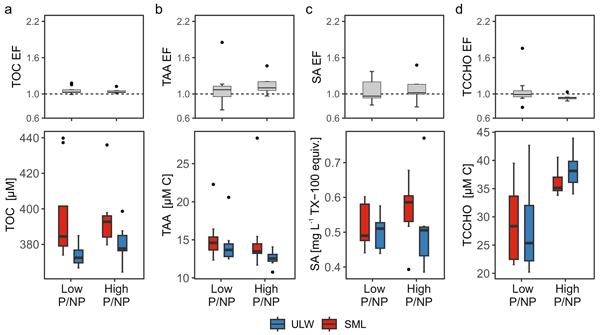
Cyanobacteria form massive summer blooms in the Baltic Sea that release organic compounds to the ocean’s surface. By analyzing the thin boundary layer between ocean and atmosphere, this study shows that cyanobacteria influence the molecular composition and surface properties of the sea surface, increasing surfactants that may reduce gas exchange. The findings provide new insight into how future cyanobacteria blooms could affect air-sea interactions and climate-related processes.
Ulla K. Heede, Matthew C. Long, Alicia Karspeck, Scott Bachman, Nora Loose, Dafydd Stephenson, David T. Ho, Lennart Gerke, Tobias Koffman, Alice Benoit-Cattin, Sara Harðardóttir, and Andreas Macrander
EGUsphere, https://doi.org/10.5194/egusphere-2026-2920, https://doi.org/10.5194/egusphere-2026-2920, 2026
Short summary
Short summary
We use a new open-source ocean model system to conduct simulations of a fjord in Iceland and study how adding alkaline material to seawater can remove CO2 from the air. We compare the model with field data to evaluate the model's accuracy. From our simulations, we show that the added alkaline material creates a short-lived, detectable signal in ocean chemistry in the fjord. Our motivation is to show how this ocean model system can support alkalinity enhancement field trials.
Lea Lange, Dennis Booge, Hendrik Feil, Josefine Karnatz, Ina Stoltenberg, Hermann W. Bange, and Christa A. Marandino
Biogeosciences, 23, 3517–3539, https://doi.org/10.5194/bg-23-3517-2026, https://doi.org/10.5194/bg-23-3517-2026, 2026
Short summary
Short summary
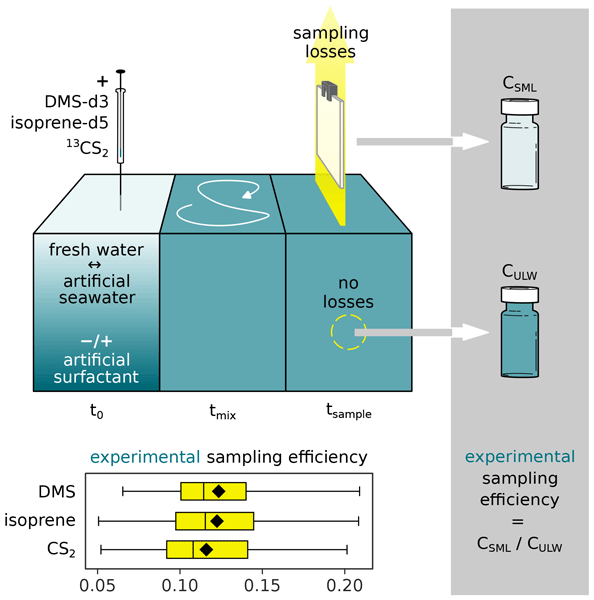
Many gases formed and destroyed in the ocean influence climate and air quality, with evidence that these processes also happen in the skin of the ocean. Studies of this thin upper layer use specialized sampling equipment, which is known to cause losses of the gases. We performed lab experiments to quantify these losses for three gases and found that 13 % remain after sampling. With further tests, our results can be used to obtain reliable gas measurements in the field, which have been elusive.
Pierre Friedlingstein, Michael O'Sullivan, Matthew W. Jones, Robbie M. Andrew, Dorothee C. E. Bakker, Judith Hauck, Peter Landschützer, Corinne Le Quéré, Hongmei Li, Ingrid T. Luijkx, Glen P. Peters, Wouter Peters, Julia Pongratz, Clemens Schwingshackl, Stephen Sitch, Josep G. Canadell, Philippe Ciais, Kjetil Aas, Simone R. Alin, Peter Anthoni, Leticia Barbero, Nicholas R. Bates, Nicolas Bellouin, Alice Benoit-Cattin, Carla F. Berghoff, Raffaele Bernardello, Laurent Bopp, Ida Bagus Mandhara Brasika, Matthew A. Chamberlain, Naveen Chandra, Frédéric Chevallier, Louise P. Chini, Nathan O. Collier, Thomas H. Colligan, Margot Cronin, Laique M. Djeutchouang, Xinyu Dou, Matt P. Enright, Kazutaka Enyo, Michael Erb, Wiley Evans, Richard A. Feely, Liang Feng, Daniel J. Ford, Adrianna Foster, Filippa Fransner, Thomas Gasser, Marion Gehlen, Thanos Gkritzalis, Jefferson Goncalves De Souza, Giacomo Grassi, Luke Gregor, Nicolas Gruber, Bertrand Guenet, Özgür Gürses, Kirsty Harrington, Ian Harris, Jens Heinke, George C. Hurtt, Yosuke Iida, Tatiana Ilyina, Akihiko Ito, Andrew R. Jacobson, Atul K. Jain, Tereza Jarníková, Annika Jersild, Fei Jiang, Steve D. Jones, Etsushi Kato, Ralph F. Keeling, Kees Klein Goldewijk, Jürgen Knauer, Yawen Kong, Jan Ivar Korsbakken, Charles Koven, Taro Kunimitsu, Xin Lan, Junjie Liu, Zhiqiang Liu, Zhu Liu, Claire Lo Monaco, Lei Ma, Gregg Marland, Patrick C. McGuire, Galen A. McKinley, Joe R. Melton, Natalie Monacci, Erwan Monier, Eric J. Morgan, David R. Munro, Jens D. Müller, Shin-Ichiro Nakaoka, Lorna R. Nayagam, Yosuke Niwa, Tobias Nutzel, Are Olsen, Abdirahman M. Omar, Naiqing Pan, Sudhanshu Pandey, Denis Pierrot, Zhangcai Qin, Pierre Regnier, Gregor Rehder, Laure Resplandy, Alizée Roobaert, Thais M. Rosan, Christian Rödenbeck, Jörg Schwinger, Ingunn Skjelvan, T. Luke Smallman, Victoria Spada, Mohanan G. Sreeush, Qing Sun, Adrienne J. Sutton, Colm Sweeney, Didier Swingedouw, Roland Séférian, Shintaro Takao, Hiroaki Tatebe, Hanqin Tian, Xiangjun Tian, Bronte Tilbrook, Hiroyuki Tsujino, Francesco Tubiello, Erik van Ooijen, Guido R. van der Werf, Sebastiaan J. van de Velde, Anthony P. Walker, Rik Wanninkhof, Xiaojuan Yang, Wenping Yuan, Xu Yue, and Jiye Zeng
Earth Syst. Sci. Data, 18, 3211–3288, https://doi.org/10.5194/essd-18-3211-2026, https://doi.org/10.5194/essd-18-3211-2026, 2026
Short summary
Short summary
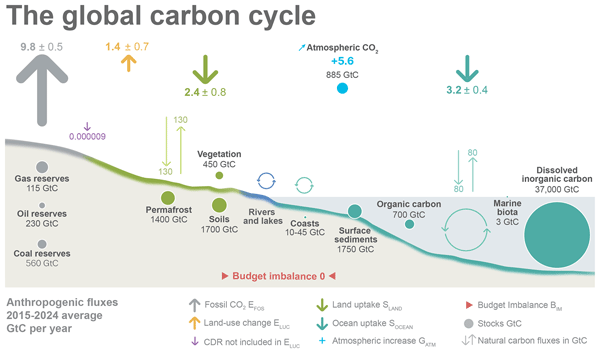
The Global Carbon Budget 2025 describes the methodology, main results, and datasets used to quantify the anthropogenic emissions of carbon dioxide (CO2) and their partitioning among the atmosphere, land ecosystems, and the ocean over the historical period (1750–2025). These living datasets are updated every year to provide the highest transparency and traceability in the reporting of CO2, the key driver of climate change.
Florian Börgel, Itzel Ruvalcaba Baroni, Leonie Barghorn, Leonard Borchert, Bronwyn Cahill, Cyril Dutheil, Leonie Esters, Małgorzata Falarz, Helena L. Filipsson, Matthias Gröger, Jari Hänninen, Magnus Hieronymus, Erko Jakobson, Mehdi Pasha Karami, Karol Kuliński, Taavi Liblik, H. E. Markus Meier, Gabriele Messori, Lev Naumov, Thomas Neumann, Piia Post, Gregor Rehder, Anna Rutgersson, and Georg Sebastian Voelker
Earth Syst. Dynam., 17, 415–450, https://doi.org/10.5194/esd-17-415-2026, https://doi.org/10.5194/esd-17-415-2026, 2026
Short summary
Short summary
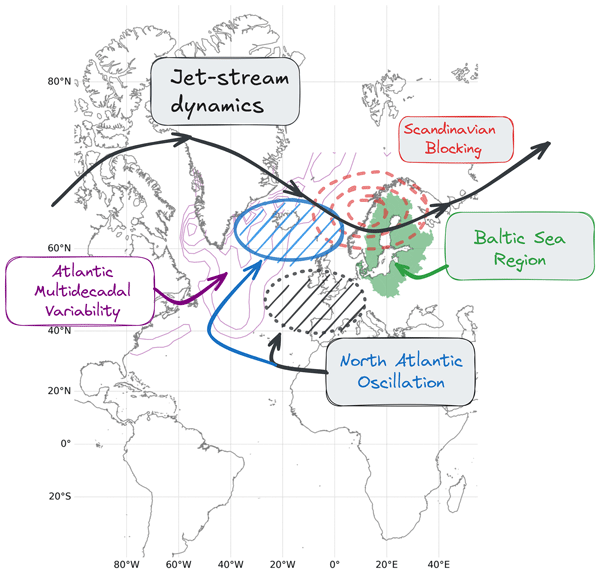
This review explains how weather patterns, guided by the polar jet stream, influence the Baltic Sea’s climate and ecosystem. It covers the North Atlantic Oscillation, blocking events and other processes and discusses how they affect temperature, rainfall, and storms from days to decades. These shifts then impact oxygen levels, productivity, and acidification in the Baltic Sea. Physical links are fairly well known, but biogeochemical pathways remain uncertain.
Ryo Dobashi, David T. Ho, Yuanxu Dong, Christa A. Marandino, and Helen Czerski
EGUsphere, https://doi.org/10.5194/egusphere-2026-1984, https://doi.org/10.5194/egusphere-2026-1984, 2026
Short summary
Short summary
The exchange of CO2 between the atmosphere and the ocean is a critical component of the global carbon cycle, driven by the air-sea CO2 difference and the gas transfer velocity (k). This study measured k in the central Baltic Sea using the dual tracer technique, finding values comparable to offshore regions at the same wind speed. Commonly used parameterizations fitted the data well, while those derived for the Baltic Sea overestimated k, likely due to differences in measurement methods.
Theresa Barthelmeß, Karine Sellegri, Benjamin Pontiller, Lindsay Scheidemann, Karl Safi, and Anja Engel
EGUsphere, https://doi.org/10.5194/egusphere-2026-1873, https://doi.org/10.5194/egusphere-2026-1873, 2026
Short summary
Short summary
Sea spray transports marine organic particles into the atmosphere where they contribute to climate-relevant processes such as cloud formation. We investigated small biogenic gels which were enriched in sea spray aerosols in dependence on the surface sea water conditions as e.g. defined by phytoplankton composition and different organic matter pools. Moreover, the composition of these gels was size-dependent and did not directly mirror the composition of their marine precursors.
Anja Engel, Gernot Friedrichs, Kerstin E. Krall, and Bernd Jähne
Biogeosciences, 23, 2101–2117, https://doi.org/10.5194/bg-23-2101-2026, https://doi.org/10.5194/bg-23-2101-2026, 2026
Short summary
Short summary
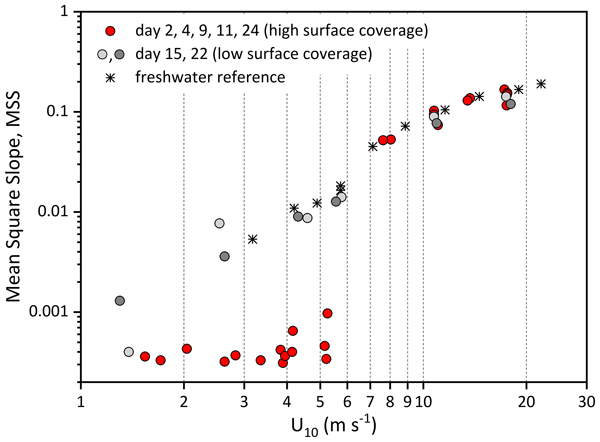
We investigated how organic molecules in the ocean's surface layer accumulate and respond to wind. Using a large wind-wave tank filled with seawater, we found that natural molecules produced by marine microbes gather at the surface under light winds, slowing the exchange of gases such as carbon dioxide. When winds increase, this layer rapidly breaks down. These findings suggest that marine life can influence how the ocean and atmosphere interact, particularly in calm conditions.
Pratirupa Bardhan, Claudia Frey, Gregor Rehder, and Hermann W. Bange
Biogeosciences, 23, 1987–2002, https://doi.org/10.5194/bg-23-1987-2026, https://doi.org/10.5194/bg-23-1987-2026, 2026
Short summary
Short summary
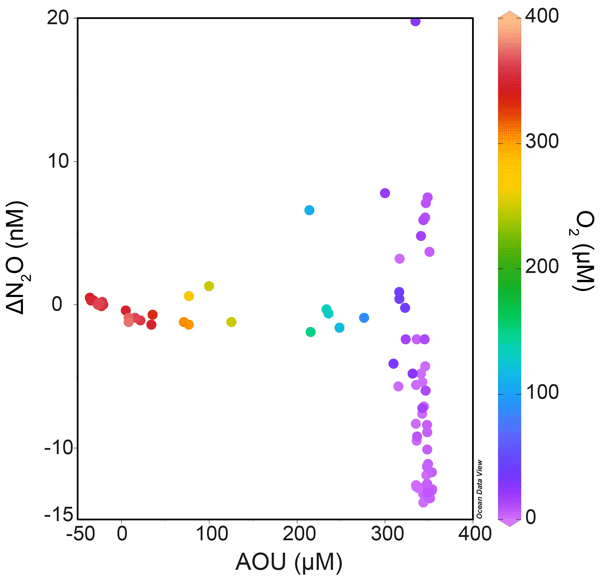
Nitrous oxide (N2O), a potent greenhouse gas, is released from coastal seas & estuaries, yet we don't fully understand how it is formed and consumed. In this study we collected water from several sites in the central Baltic Sea. N2O came from ammonia in oxic waters. Deep waters with low to no oxygen noted more active N2O cycling. The seafloor was a source in some areas. Typically N2O is produced by bacteria, but our results indicate possibility of other players like fungi or chemical reactions.
Evelyn Freney, Karine Sellegri, Therese Barthelmeß, Anja Engel, Darrel Baumgardner, and Dagen Hughes
EGUsphere, https://doi.org/10.5194/egusphere-2026-87, https://doi.org/10.5194/egusphere-2026-87, 2026
Short summary
Short summary
The exchange of material between the ocean and atmosphere plays an important role in regulating Earth’s climate. Through wave action, the ocean releases tiny airborne particles that influence atmospheric processes. This study examines how biological and chemical processes in seawater affect the properties of particles emitted from the ocean, highlighting the complex links between ocean biology and marine aerosols.

Amavi Silva, Surandokht Nikzad, Theresa Barthelmeß, Anja Engel, Hartmut Herrmann, Manuela van Pinxteren, Kai Wirtz, Oliver Wurl, and Markus Schartau
Biogeosciences, 23, 1697–1718, https://doi.org/10.5194/bg-23-1697-2026, https://doi.org/10.5194/bg-23-1697-2026, 2026
Short summary
Short summary
We conducted the first meta-analysis combining marine and freshwater studies to understand organic matter enrichment in the surface microlayer. Nitrogen-rich, particulate compounds are often enriched, with patterns varying by multiple factors. We recommend tracking both absolute concentrations and normalized enrichment patterns to better assess ecological conditions. Our study also introduces improved statistical methods for analyzing and comparing surface microlayer data.
Li-Qing Jiang, Amanda Fay, Jens Daniel Müller, Luke Gregor, Alizée Roobaert, Lydia Keppler, Dustin Carroll, Siv K. Lauvset, Tim DeVries, Judith Hauck, Christian Rödenbeck, Nicolas Metzl, Andrea J. Fassbender, Jean-Pierre Gattuso, Peter Landschützer, Rik Wanninkhof, Christopher Sabine, Simone R. Alin, Mario Hoppema, Are Olsen, Matthew P. Humphreys, Kunal Chakraborty, Ana C. Franco, Kumiko Azetsu-Scott, Dorothee C. E. Bakker, Leticia Barbero, Nicholas R. Bates, Nicole Besemer, Henry C. Bittig, Albert E. Boyd, Daniel Broullón, Wei-Jun Cai, Brendan R. Carter, Thi-Tuyet-Trang Chau, Chen-Tung Arthur Chen, Frédéric Cyr, John E. Dore, Ian Enochs, Richard A. Feely, Hernan E. Garcia, Marion Gehlen, Prasanna Kanti Ghoshal, Lucas Gloege, Melchor González-Dávila, Nicolas Gruber, Debby Ianson, Yosuke Iida, Masao Ishii, Apurva Padamnabh Joshi, Esther Kennedy, Alex Kozyr, Nico Lange, Claire Lo Monaco, Derek P. Manzello, Galen A. McKinley, Natalie M. Monacci, Xose A. Padin, Ana M. Palacio-Castro, Fiz F. Pérez, J. Magdalena Santana-Casiano, Jonathan Sharp, Adrienne Sutton, Jim Swift, Toste Tanhua, Maciej Telszewski, Jens Terhaar, Ruben van Hooidonk, Anton Velo, Andrew J. Watson, Angelicque E. White, Zelun Wu, Liang Xue, Hyelim Yoo, Jiye Zeng, and Guorong Zhong
Earth Syst. Sci. Data, 18, 1405–1462, https://doi.org/10.5194/essd-18-1405-2026, https://doi.org/10.5194/essd-18-1405-2026, 2026
Short summary
Short summary
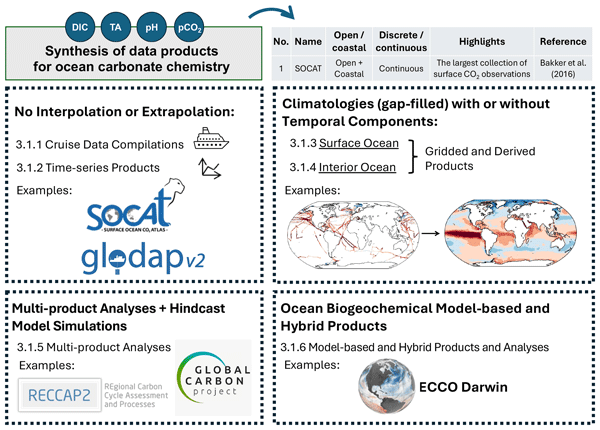
This review article provides an overview of 68 existing ocean carbonate chemistry data products and data product sets, encompassing a broad range of types, including compilations of cruise datasets, gap-filled observational products, model simulations, and more. It is designed to help researchers identify and access the data products that best support their scientific objectives, thereby facilitating progress in understanding the ocean's changing carbonate chemistry.
Lin Yang, Bin Yang, Jing Zhang, Anja Engel, and Gui-Peng Yang
Biogeosciences, 23, 1261–1278, https://doi.org/10.5194/bg-23-1261-2026, https://doi.org/10.5194/bg-23-1261-2026, 2026
Short summary
Short summary
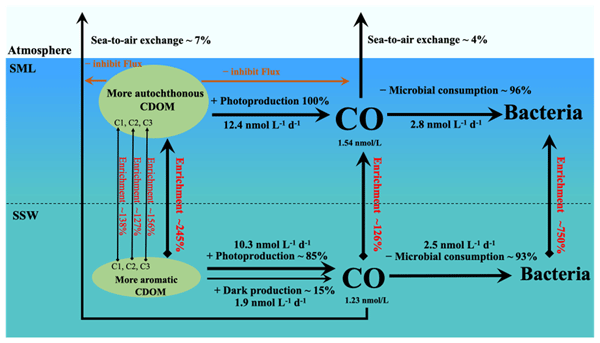
Carbon monoxide (CO), chromophoric dissolved organic matter (CDOM), and fluorescent dissolved organic matter (FDOM) were more frequently enriched in the higher temperature and salinity off-shore regions. Marine-humic like CDOM tends to inhibit the sea-to-air flux of CO in the sea-surface microlayer (SML). The enrichment and photochemical process of CO in the SML were more active during the daytime. The photochemical production and microbial consumption rates of CO in the SML were more active than in the subsurface layer (SSW).

Carsten Rauch, Lisa Deyle, Leonie Jaeger, Edgar Fernando Cortés-Espinoza, Mariana Ribas-Ribas, Josefine Karnatz, Anja Engel, and Oliver Wurl
Ocean Sci., 22, 403–426, https://doi.org/10.5194/os-22-403-2026, https://doi.org/10.5194/os-22-403-2026, 2026
Short summary
Short summary
Microsensors measuring oxygen and temperature were used to gain high-resolution profiles across the surface of a water basin, in which an algal bloom was induced. These novel data show that the oxygen at the sea surface is highly influenced by algal blooms, while the temperature is only indirectly affected by them. Since algal blooms occur globally, this has considerable implications for calculating global air-sea exchanges of gases or heat, especially under low-wind conditions.
Riaz Bibi, Mariana Ribas-Ribas, Leonie Jaeger, Carola Lehners, Lisa Gassen, Edgar Fernando Cortés-Espinoza, Jochen Wollschläger, Claudia Thölen, Hannelore Waska, Jasper Zöbelein, Thorsten Brinkhoff, Isha Athale, Rüdiger Röttgers, Michael Novak, Anja Engel, Theresa Barthelmeß, Josefine Karnatz, Thomas Reinthaler, Dmytro Spriahailo, Gernot Friedrichs, Falko Asmussen Schäfer, and Oliver Wurl
Biogeosciences, 22, 7563–7589, https://doi.org/10.5194/bg-22-7563-2025, https://doi.org/10.5194/bg-22-7563-2025, 2025
Short summary
Short summary
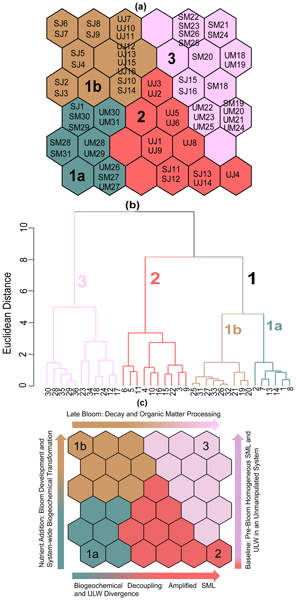
A multidisciplinary mesocosm study was conducted to investigate biogeochemical processes and their relationships in the sea-surface microlayer and underlying water during an induced phytoplankton bloom. Phytoplankton-derived organic matter, fuelled microbial activity and biofilm formation, supporting high bacterial abundance. Distinct temporal patterns in biogeochemical parameters and greater variability in the sea-surface microlayer highlight its influence on air–sea interactions.
Elizabeth Yankovsky, Mengyang Zhou, Michael Tyka, Scott Bachman, David T. Ho, Alicia Karspeck, and Matthew C. Long
Biogeosciences, 22, 5723–5739, https://doi.org/10.5194/bg-22-5723-2025, https://doi.org/10.5194/bg-22-5723-2025, 2025
Short summary
Short summary
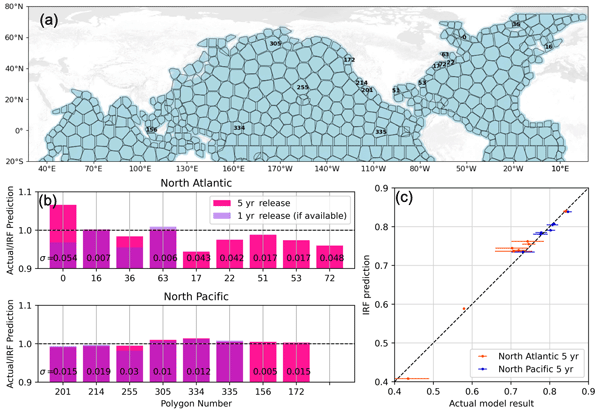
Ocean alkalinity enhancement (OAE) is a promising strategy for ocean-based carbon dioxide removal, as it attempts to accelerate a natural process operating on Earth and may have climatically significant scalability. However, our best strategy for assessing OAE effects involves running computationally expensive climate models. We develop a powerful statistical technique that is able to encapsulate the climatic response to OAE interventions, thus simplifying the OAE carbon accounting problem.
Daniel L. Pönisch, Henry C. Bittig, Martin Kolbe, Ingo Schuffenhauer, Stefan Otto, Peter Holtermann, Kusala Premaratne, and Gregor Rehder
Biogeosciences, 22, 3583–3614, https://doi.org/10.5194/bg-22-3583-2025, https://doi.org/10.5194/bg-22-3583-2025, 2025
Short summary
Short summary
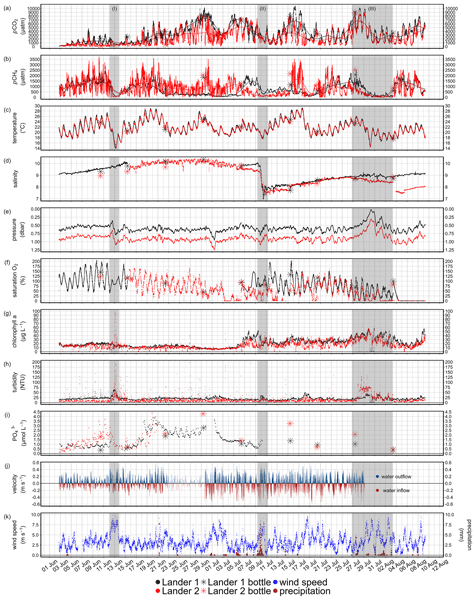
Rewetted peatlands exhibit natural spatiotemporal biogeochemical heterogeneity, influenced by water level and vegetation. This study investigated the variability of greenhouse gas distribution in a peatland rewetted with brackish water. Two innovative sensor-equipped platforms were used to measure a wide range of marine physicochemical variables at high temporal resolution. The measurements revealed strong fluctuations in CO2 and CH4, expressed as multi-day, diurnal, and event-based variability.
Anisbel Leon-Marcos, Moritz Zeising, Manuela van Pinxteren, Sebastian Zeppenfeld, Astrid Bracher, Elena Barbaro, Anja Engel, Matteo Feltracco, Ina Tegen, and Bernd Heinold
Geosci. Model Dev., 18, 4183–4213, https://doi.org/10.5194/gmd-18-4183-2025, https://doi.org/10.5194/gmd-18-4183-2025, 2025
Short summary
Short summary
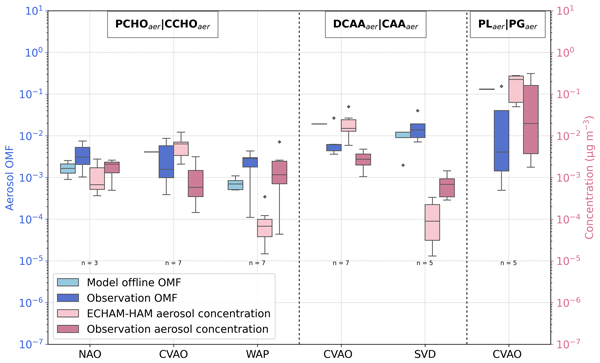
This study represents the primary marine organic aerosol (PMOA) emissions, focusing on their sea–atmosphere transfer. Using the FESOM2.1–REcoM3 model, concentrations of key organic biomolecules were estimated and integrated into the ECHAM6.3–HAM2.3 aerosol–climate model. Results highlight the influence of marine biological activity and surface winds on PMOA emissions, with reasonably good agreement with observations improving aerosol representation in the southern oceans.
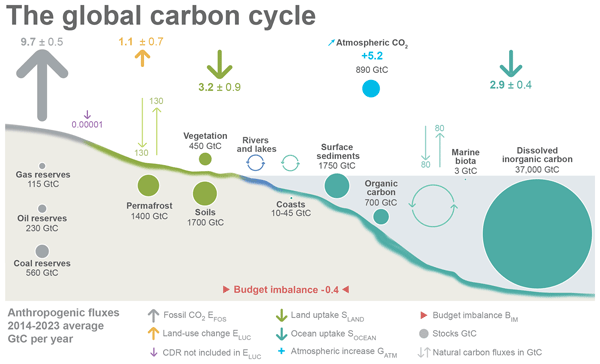
Pierre Friedlingstein, Michael O'Sullivan, Matthew W. Jones, Robbie M. Andrew, Judith Hauck, Peter Landschützer, Corinne Le Quéré, Hongmei Li, Ingrid T. Luijkx, Are Olsen, Glen P. Peters, Wouter Peters, Julia Pongratz, Clemens Schwingshackl, Stephen Sitch, Josep G. Canadell, Philippe Ciais, Robert B. Jackson, Simone R. Alin, Almut Arneth, Vivek Arora, Nicholas R. Bates, Meike Becker, Nicolas Bellouin, Carla F. Berghoff, Henry C. Bittig, Laurent Bopp, Patricia Cadule, Katie Campbell, Matthew A. Chamberlain, Naveen Chandra, Frédéric Chevallier, Louise P. Chini, Thomas Colligan, Jeanne Decayeux, Laique M. Djeutchouang, Xinyu Dou, Carolina Duran Rojas, Kazutaka Enyo, Wiley Evans, Amanda R. Fay, Richard A. Feely, Daniel J. Ford, Adrianna Foster, Thomas Gasser, Marion Gehlen, Thanos Gkritzalis, Giacomo Grassi, Luke Gregor, Nicolas Gruber, Özgür Gürses, Ian Harris, Matthew Hefner, Jens Heinke, George C. Hurtt, Yosuke Iida, Tatiana Ilyina, Andrew R. Jacobson, Atul K. Jain, Tereza Jarníková, Annika Jersild, Fei Jiang, Zhe Jin, Etsushi Kato, Ralph F. Keeling, Kees Klein Goldewijk, Jürgen Knauer, Jan Ivar Korsbakken, Xin Lan, Siv K. Lauvset, Nathalie Lefèvre, Zhu Liu, Junjie Liu, Lei Ma, Shamil Maksyutov, Gregg Marland, Nicolas Mayot, Patrick C. McGuire, Nicolas Metzl, Natalie M. Monacci, Eric J. Morgan, Shin-Ichiro Nakaoka, Craig Neill, Yosuke Niwa, Tobias Nützel, Lea Olivier, Tsuneo Ono, Paul I. Palmer, Denis Pierrot, Zhangcai Qin, Laure Resplandy, Alizée Roobaert, Thais M. Rosan, Christian Rödenbeck, Jörg Schwinger, T. Luke Smallman, Stephen M. Smith, Reinel Sospedra-Alfonso, Tobias Steinhoff, Qing Sun, Adrienne J. Sutton, Roland Séférian, Shintaro Takao, Hiroaki Tatebe, Hanqin Tian, Bronte Tilbrook, Olivier Torres, Etienne Tourigny, Hiroyuki Tsujino, Francesco Tubiello, Guido van der Werf, Rik Wanninkhof, Xuhui Wang, Dongxu Yang, Xiaojuan Yang, Zhen Yu, Wenping Yuan, Xu Yue, Sönke Zaehle, Ning Zeng, and Jiye Zeng
Earth Syst. Sci. Data, 17, 965–1039, https://doi.org/10.5194/essd-17-965-2025, https://doi.org/10.5194/essd-17-965-2025, 2025
Short summary
Short summary
The Global Carbon Budget 2024 describes the methodology, main results, and datasets used to quantify the anthropogenic emissions of carbon dioxide (CO2) and their partitioning among the atmosphere, land ecosystems, and the ocean over the historical period (1750–2024). These living datasets are updated every year to provide the highest transparency and traceability in the reporting of CO2, the key driver of climate change.
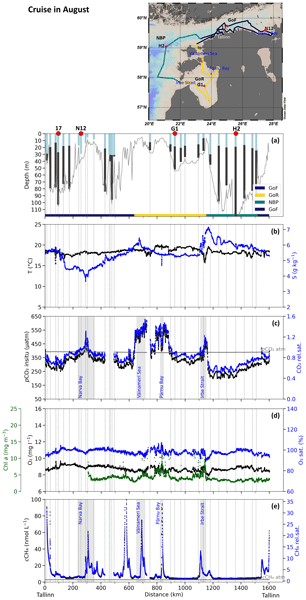
Silvie Lainela, Erik Jacobs, Stella-Theresa Luik, Gregor Rehder, and Urmas Lips
Biogeosciences, 21, 4495–4519, https://doi.org/10.5194/bg-21-4495-2024, https://doi.org/10.5194/bg-21-4495-2024, 2024
Short summary
Short summary
We evaluate the variability of carbon dioxide and methane in the surface layer of the north-eastern basins of the Baltic Sea in 2018. We show that the shallower coastal areas have considerably higher spatial variability and seasonal amplitude of surface layer pCO2 and cCH4 than measured in the offshore areas of the Baltic Sea. Despite this high variability, caused mostly by coastal physical processes, the average annual air–sea CO2 fluxes differed only marginally between the sub-basins.
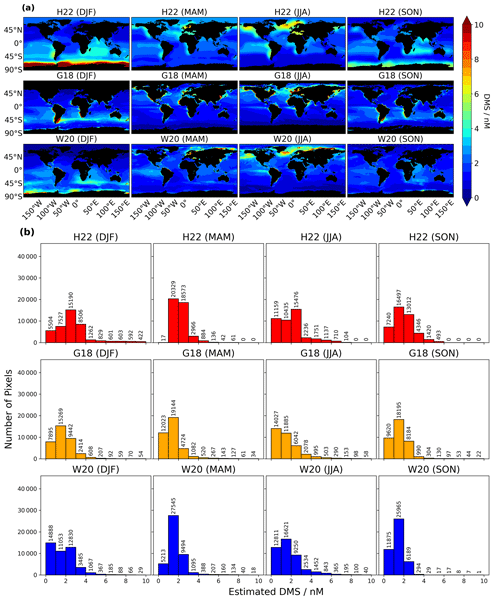
Sankirna D. Joge, Anoop S. Mahajan, Shrivardhan Hulswar, Christa A. Marandino, Martí Galí, Thomas G. Bell, and Rafel Simó
Biogeosciences, 21, 4439–4452, https://doi.org/10.5194/bg-21-4439-2024, https://doi.org/10.5194/bg-21-4439-2024, 2024
Short summary
Short summary
Dimethyl sulfide (DMS) is the largest natural source of sulfur in the atmosphere and leads to the formation of cloud condensation nuclei. DMS emission and quantification of its impacts have large uncertainties, but a detailed study on the emissions and drivers of their uncertainty is missing to date. The emissions are usually calculated from the seawater DMS concentrations and a flux parameterization. Here we quantify the differences in DMS seawater products, which can affect DMS fluxes.
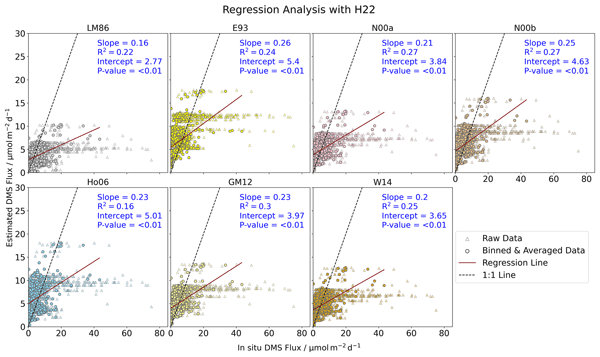
Sankirna D. Joge, Anoop S. Mahajan, Shrivardhan Hulswar, Christa A. Marandino, Martí Galí, Thomas G. Bell, Mingxi Yang, and Rafel Simó
Biogeosciences, 21, 4453–4467, https://doi.org/10.5194/bg-21-4453-2024, https://doi.org/10.5194/bg-21-4453-2024, 2024
Short summary
Short summary
Dimethyl sulfide (DMS) is the largest natural source of sulfur in the atmosphere and leads to the formation of cloud condensation nuclei. DMS emissions and quantification of their impacts have large uncertainties, but a detailed study on the range of emissions and drivers of their uncertainty is missing to date. The emissions are calculated from the seawater DMS concentrations and a flux parameterization. Here we quantify the differences in the effect of flux parameterizations used in models.

Siv K. Lauvset, Nico Lange, Toste Tanhua, Henry C. Bittig, Are Olsen, Alex Kozyr, Marta Álvarez, Kumiko Azetsu-Scott, Peter J. Brown, Brendan R. Carter, Leticia Cotrim da Cunha, Mario Hoppema, Matthew P. Humphreys, Masao Ishii, Emil Jeansson, Akihiko Murata, Jens Daniel Müller, Fiz F. Pérez, Carsten Schirnick, Reiner Steinfeldt, Toru Suzuki, Adam Ulfsbo, Anton Velo, Ryan J. Woosley, and Robert M. Key
Earth Syst. Sci. Data, 16, 2047–2072, https://doi.org/10.5194/essd-16-2047-2024, https://doi.org/10.5194/essd-16-2047-2024, 2024
Short summary
Short summary
GLODAP is a data product for ocean inorganic carbon and related biogeochemical variables measured by the chemical analysis of water bottle samples from scientific cruises. GLODAPv2.2023 is the fifth update of GLODAPv2 from 2016. The data that are included have been subjected to extensive quality controlling, including systematic evaluation of measurement biases. This version contains data from 1108 hydrographic cruises covering the world's oceans from 1972 to 2021.
Cathy Wimart-Rousseau, Tobias Steinhoff, Birgit Klein, Henry Bittig, and Arne Körtzinger
Biogeosciences, 21, 1191–1211, https://doi.org/10.5194/bg-21-1191-2024, https://doi.org/10.5194/bg-21-1191-2024, 2024
Short summary
Short summary
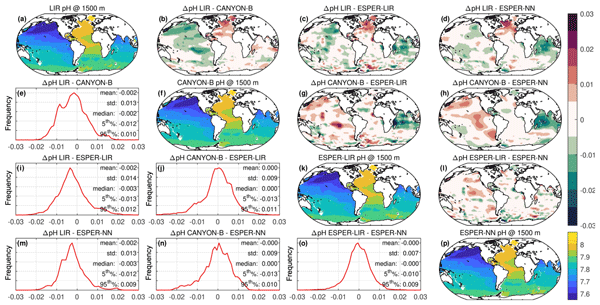
The marine CO2 system can be measured independently and continuously by BGC-Argo floats since numerous pH sensors have been developed to suit these autonomous measurements platforms. By applying the Argo correction routines to float pH data acquired in the subpolar North Atlantic Ocean, we report the uncertainty and lack of objective criteria associated with the choice of the reference method as well the reference depth for the pH correction.
Henry C. Bittig, Erik Jacobs, Thomas Neumann, and Gregor Rehder
Earth Syst. Sci. Data, 16, 753–773, https://doi.org/10.5194/essd-16-753-2024, https://doi.org/10.5194/essd-16-753-2024, 2024
Short summary
Short summary
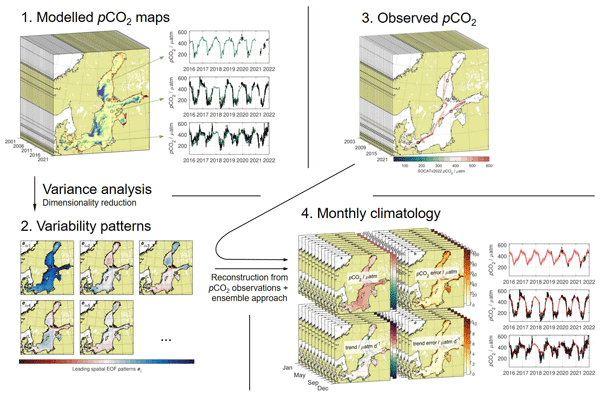
We present a pCO2 climatology of the Baltic Sea using a new approach to extrapolate from individual observations to the entire Baltic Sea. The extrapolation approach uses (a) a model to inform on how data at one location are connected to data at other locations, together with (b) very accurate pCO2 observations from 2003 to 2021 as the base data. The climatology can be used e.g. to assess uptake and release of CO2 or to identify extreme events.
Pierre Friedlingstein, Michael O'Sullivan, Matthew W. Jones, Robbie M. Andrew, Dorothee C. E. Bakker, Judith Hauck, Peter Landschützer, Corinne Le Quéré, Ingrid T. Luijkx, Glen P. Peters, Wouter Peters, Julia Pongratz, Clemens Schwingshackl, Stephen Sitch, Josep G. Canadell, Philippe Ciais, Robert B. Jackson, Simone R. Alin, Peter Anthoni, Leticia Barbero, Nicholas R. Bates, Meike Becker, Nicolas Bellouin, Bertrand Decharme, Laurent Bopp, Ida Bagus Mandhara Brasika, Patricia Cadule, Matthew A. Chamberlain, Naveen Chandra, Thi-Tuyet-Trang Chau, Frédéric Chevallier, Louise P. Chini, Margot Cronin, Xinyu Dou, Kazutaka Enyo, Wiley Evans, Stefanie Falk, Richard A. Feely, Liang Feng, Daniel J. Ford, Thomas Gasser, Josefine Ghattas, Thanos Gkritzalis, Giacomo Grassi, Luke Gregor, Nicolas Gruber, Özgür Gürses, Ian Harris, Matthew Hefner, Jens Heinke, Richard A. Houghton, George C. Hurtt, Yosuke Iida, Tatiana Ilyina, Andrew R. Jacobson, Atul Jain, Tereza Jarníková, Annika Jersild, Fei Jiang, Zhe Jin, Fortunat Joos, Etsushi Kato, Ralph F. Keeling, Daniel Kennedy, Kees Klein Goldewijk, Jürgen Knauer, Jan Ivar Korsbakken, Arne Körtzinger, Xin Lan, Nathalie Lefèvre, Hongmei Li, Junjie Liu, Zhiqiang Liu, Lei Ma, Greg Marland, Nicolas Mayot, Patrick C. McGuire, Galen A. McKinley, Gesa Meyer, Eric J. Morgan, David R. Munro, Shin-Ichiro Nakaoka, Yosuke Niwa, Kevin M. O'Brien, Are Olsen, Abdirahman M. Omar, Tsuneo Ono, Melf Paulsen, Denis Pierrot, Katie Pocock, Benjamin Poulter, Carter M. Powis, Gregor Rehder, Laure Resplandy, Eddy Robertson, Christian Rödenbeck, Thais M. Rosan, Jörg Schwinger, Roland Séférian, T. Luke Smallman, Stephen M. Smith, Reinel Sospedra-Alfonso, Qing Sun, Adrienne J. Sutton, Colm Sweeney, Shintaro Takao, Pieter P. Tans, Hanqin Tian, Bronte Tilbrook, Hiroyuki Tsujino, Francesco Tubiello, Guido R. van der Werf, Erik van Ooijen, Rik Wanninkhof, Michio Watanabe, Cathy Wimart-Rousseau, Dongxu Yang, Xiaojuan Yang, Wenping Yuan, Xu Yue, Sönke Zaehle, Jiye Zeng, and Bo Zheng
Earth Syst. Sci. Data, 15, 5301–5369, https://doi.org/10.5194/essd-15-5301-2023, https://doi.org/10.5194/essd-15-5301-2023, 2023
Short summary
Short summary
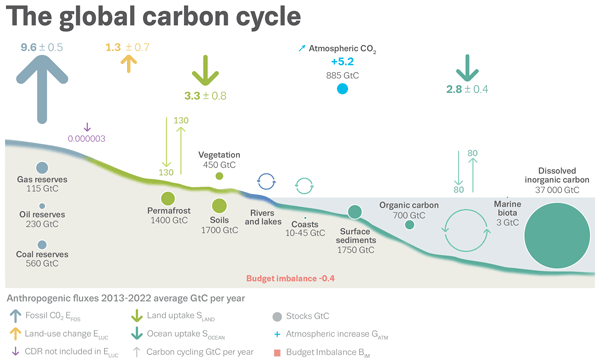
The Global Carbon Budget 2023 describes the methodology, main results, and data sets used to quantify the anthropogenic emissions of carbon dioxide (CO2) and their partitioning among the atmosphere, land ecosystems, and the ocean over the historical period (1750–2023). These living datasets are updated every year to provide the highest transparency and traceability in the reporting of CO2, the key driver of climate change.
David T. Ho, Laurent Bopp, Jaime B. Palter, Matthew C. Long, Philip W. Boyd, Griet Neukermans, and Lennart T. Bach
State Planet, 2-oae2023, 12, https://doi.org/10.5194/sp-2-oae2023-12-2023, https://doi.org/10.5194/sp-2-oae2023-12-2023, 2023
Short summary
Short summary
Monitoring, reporting, and verification (MRV) refers to the multistep process to quantify the amount of carbon dioxide removed by a carbon dioxide removal (CDR) activity. Here, we make recommendations for MRV for Ocean Alkalinity Enhancement (OAE) research, arguing that it has an obligation for comprehensiveness, reproducibility, and transparency, as it may become the foundation for assessing large-scale deployment. Both observations and numerical simulations will be needed for MRV.
Karine Sellegri, Theresa Barthelmeß, Jonathan Trueblood, Antonia Cristi, Evelyn Freney, Clémence Rose, Neill Barr, Mike Harvey, Karl Safi, Stacy Deppeler, Karen Thompson, Wayne Dillon, Anja Engel, and Cliff Law
Atmos. Chem. Phys., 23, 12949–12964, https://doi.org/10.5194/acp-23-12949-2023, https://doi.org/10.5194/acp-23-12949-2023, 2023
Short summary
Short summary
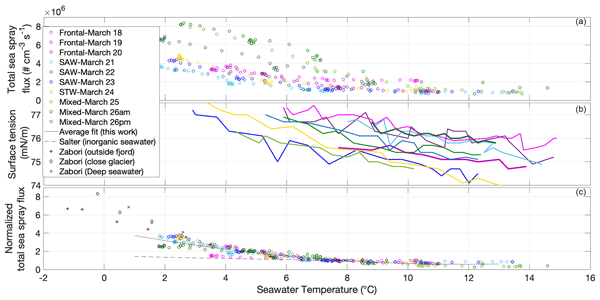
The amount of sea spray emitted to the atmosphere depends on the ocean temperature, but this dependency is not well understood, especially when ocean biology is involved. In this study, we show that sea spray emissions are increased by up to a factor of 4 at low seawater temperatures compared to moderate temperatures, and we quantify the temperature dependence as a function of the ocean biogeochemistry.
Manon Rocco, Erin Dunne, Alexia Saint-Macary, Maija Peltola, Theresa Barthelmeß, Neill Barr, Karl Safi, Andrew Marriner, Stacy Deppeler, James Harnwell, Anja Engel, Aurélie Colomb, Alfonso Saiz-Lopez, Mike Harvey, Cliff S. Law, and Karine Sellegri
EGUsphere, https://doi.org/10.5194/egusphere-2023-516, https://doi.org/10.5194/egusphere-2023-516, 2023
Preprint archived
Short summary
Short summary
During the Sea2cloud campaign in the Southern Pacific Ocean, we measured air-sea emissions from phytopankton of two key atmospheric compounds: DMS and MeSH. These compounds are well-known to play a great role in atmospheric chemistry and climate. We see in this paper that these compounds are most emited by the nanophytoplankton population. We provide here parameters for climate models to predict future trends of the emissions of these compounds and their roles and impacts on the global warming.
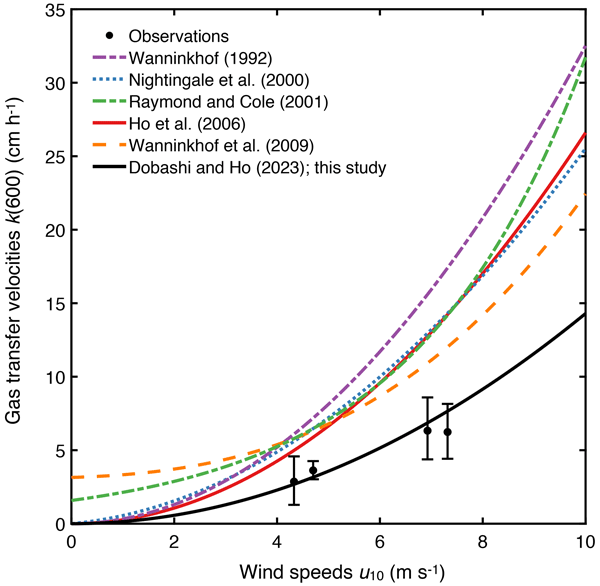
Ryo Dobashi and David T. Ho
Biogeosciences, 20, 1075–1087, https://doi.org/10.5194/bg-20-1075-2023, https://doi.org/10.5194/bg-20-1075-2023, 2023
Short summary
Short summary
Seagrass meadows are productive ecosystems and bury much carbon. Understanding their role in the global carbon cycle requires knowledge of air–sea CO2 fluxes and hence the knowledge of gas transfer velocity (k). In this study, k was determined from the dual tracer technique in Florida Bay. The observed gas transfer velocity was lower than previous studies in the coastal and open oceans at the same wind speeds, most likely due to wave attenuation by seagrass and limited wind fetch in this area.
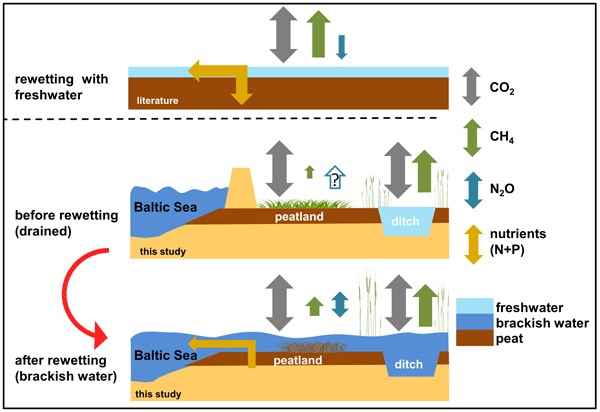
Daniel L. Pönisch, Anne Breznikar, Cordula N. Gutekunst, Gerald Jurasinski, Maren Voss, and Gregor Rehder
Biogeosciences, 20, 295–323, https://doi.org/10.5194/bg-20-295-2023, https://doi.org/10.5194/bg-20-295-2023, 2023
Short summary
Short summary
Peatland rewetting is known to reduce dissolved nutrients and greenhouse gases; however, short-term nutrient leaching and high CH4 emissions shortly after rewetting are likely to occur. We investigated the rewetting of a coastal peatland with brackish water and its effects on nutrient release and greenhouse gas fluxes. Nutrient concentrations were higher in the peatland than in the adjacent bay, leading to an export. CH4 emissions did not increase, which is in contrast to freshwater rewetting.
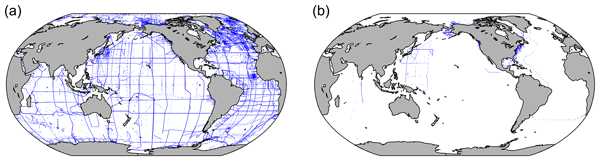
Siv K. Lauvset, Nico Lange, Toste Tanhua, Henry C. Bittig, Are Olsen, Alex Kozyr, Simone Alin, Marta Álvarez, Kumiko Azetsu-Scott, Leticia Barbero, Susan Becker, Peter J. Brown, Brendan R. Carter, Leticia Cotrim da Cunha, Richard A. Feely, Mario Hoppema, Matthew P. Humphreys, Masao Ishii, Emil Jeansson, Li-Qing Jiang, Steve D. Jones, Claire Lo Monaco, Akihiko Murata, Jens Daniel Müller, Fiz F. Pérez, Benjamin Pfeil, Carsten Schirnick, Reiner Steinfeldt, Toru Suzuki, Bronte Tilbrook, Adam Ulfsbo, Anton Velo, Ryan J. Woosley, and Robert M. Key
Earth Syst. Sci. Data, 14, 5543–5572, https://doi.org/10.5194/essd-14-5543-2022, https://doi.org/10.5194/essd-14-5543-2022, 2022
Short summary
Short summary
GLODAP is a data product for ocean inorganic carbon and related biogeochemical variables measured by the chemical analysis of water bottle samples from scientific cruises. GLODAPv2.2022 is the fourth update of GLODAPv2 from 2016. The data that are included have been subjected to extensive quality controlling, including systematic evaluation of measurement biases. This version contains data from 1085 hydrographic cruises covering the world's oceans from 1972 to 2021.
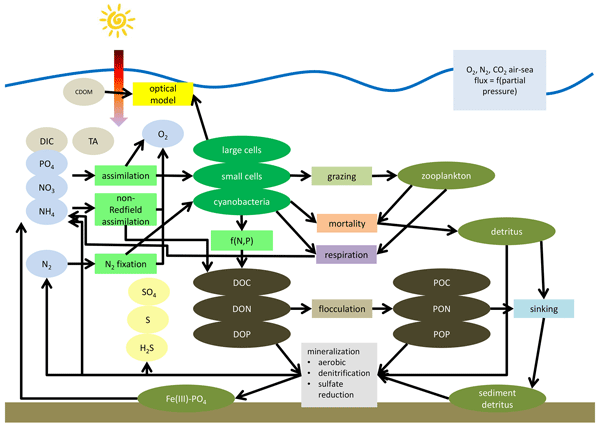
Thomas Neumann, Hagen Radtke, Bronwyn Cahill, Martin Schmidt, and Gregor Rehder
Geosci. Model Dev., 15, 8473–8540, https://doi.org/10.5194/gmd-15-8473-2022, https://doi.org/10.5194/gmd-15-8473-2022, 2022
Short summary
Short summary
Marine ecosystem models are usually constrained by the elements nitrogen and phosphorus and consider carbon in organic matter in a fixed ratio. Recent observations show a substantial deviation from the simulated carbon cycle variables. In this study, we present a marine ecosystem model for the Baltic Sea which allows for a flexible uptake ratio for carbon, nitrogen, and phosphorus. With this extension, the model reflects much more reasonable variables of the marine carbon cycle.

Lin Yang, Jing Zhang, Anja Engel, and Gui-Peng Yang
Biogeosciences, 19, 5251–5268, https://doi.org/10.5194/bg-19-5251-2022, https://doi.org/10.5194/bg-19-5251-2022, 2022
Short summary
Short summary
Enrichment factors of dissolved organic matter (DOM) in the eastern marginal seas of China exhibited a significant spatio-temporal variation. Photochemical and enrichment processes co-regulated DOM enrichment in the sea-surface microlayer (SML). Autochthonous DOM was more frequently enriched in the SML than terrestrial DOM. DOM in the sub-surface water exhibited higher aromaticity than that in the SML.
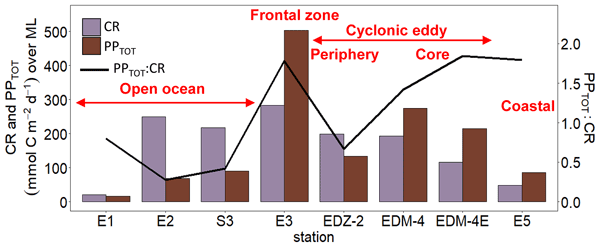
Quentin Devresse, Kevin W. Becker, Arne Bendinger, Johannes Hahn, and Anja Engel
Biogeosciences, 19, 5199–5219, https://doi.org/10.5194/bg-19-5199-2022, https://doi.org/10.5194/bg-19-5199-2022, 2022
Short summary
Short summary
Eddies are ubiquitous in the ocean and alter physical, chemical, and biological processes. However, how they affect organic carbon production and consumption is largely unknown. Here we show how an eddy triggers a cascade effect on biomass production and metabolic activities of phyto- and bacterioplankton. Our results may contribute to the improvement of biogeochemical models used to estimate carbon fluxes in the ocean.
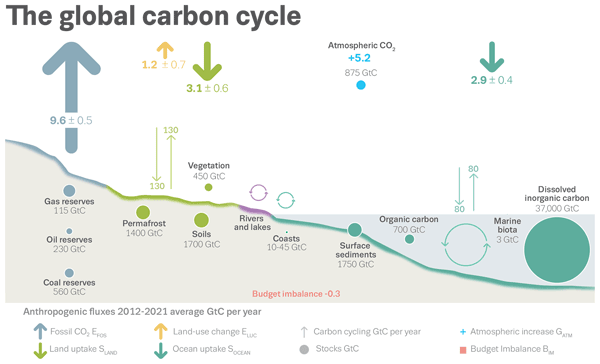
Pierre Friedlingstein, Michael O'Sullivan, Matthew W. Jones, Robbie M. Andrew, Luke Gregor, Judith Hauck, Corinne Le Quéré, Ingrid T. Luijkx, Are Olsen, Glen P. Peters, Wouter Peters, Julia Pongratz, Clemens Schwingshackl, Stephen Sitch, Josep G. Canadell, Philippe Ciais, Robert B. Jackson, Simone R. Alin, Ramdane Alkama, Almut Arneth, Vivek K. Arora, Nicholas R. Bates, Meike Becker, Nicolas Bellouin, Henry C. Bittig, Laurent Bopp, Frédéric Chevallier, Louise P. Chini, Margot Cronin, Wiley Evans, Stefanie Falk, Richard A. Feely, Thomas Gasser, Marion Gehlen, Thanos Gkritzalis, Lucas Gloege, Giacomo Grassi, Nicolas Gruber, Özgür Gürses, Ian Harris, Matthew Hefner, Richard A. Houghton, George C. Hurtt, Yosuke Iida, Tatiana Ilyina, Atul K. Jain, Annika Jersild, Koji Kadono, Etsushi Kato, Daniel Kennedy, Kees Klein Goldewijk, Jürgen Knauer, Jan Ivar Korsbakken, Peter Landschützer, Nathalie Lefèvre, Keith Lindsay, Junjie Liu, Zhu Liu, Gregg Marland, Nicolas Mayot, Matthew J. McGrath, Nicolas Metzl, Natalie M. Monacci, David R. Munro, Shin-Ichiro Nakaoka, Yosuke Niwa, Kevin O'Brien, Tsuneo Ono, Paul I. Palmer, Naiqing Pan, Denis Pierrot, Katie Pocock, Benjamin Poulter, Laure Resplandy, Eddy Robertson, Christian Rödenbeck, Carmen Rodriguez, Thais M. Rosan, Jörg Schwinger, Roland Séférian, Jamie D. Shutler, Ingunn Skjelvan, Tobias Steinhoff, Qing Sun, Adrienne J. Sutton, Colm Sweeney, Shintaro Takao, Toste Tanhua, Pieter P. Tans, Xiangjun Tian, Hanqin Tian, Bronte Tilbrook, Hiroyuki Tsujino, Francesco Tubiello, Guido R. van der Werf, Anthony P. Walker, Rik Wanninkhof, Chris Whitehead, Anna Willstrand Wranne, Rebecca Wright, Wenping Yuan, Chao Yue, Xu Yue, Sönke Zaehle, Jiye Zeng, and Bo Zheng
Earth Syst. Sci. Data, 14, 4811–4900, https://doi.org/10.5194/essd-14-4811-2022, https://doi.org/10.5194/essd-14-4811-2022, 2022
Short summary
Short summary
The Global Carbon Budget 2022 describes the datasets and methodology used to quantify the anthropogenic emissions of carbon dioxide (CO2) and their partitioning among the atmosphere, the land ecosystems, and the ocean. These living datasets are updated every year to provide the highest transparency and traceability in the reporting of CO2, the key driver of climate change.

Li Zhou, Dennis Booge, Miming Zhang, and Christa A. Marandino
Biogeosciences, 19, 5021–5040, https://doi.org/10.5194/bg-19-5021-2022, https://doi.org/10.5194/bg-19-5021-2022, 2022
Short summary
Short summary
Trace gas air–sea exchange exerts an important control on air quality and climate, especially in the Southern Ocean (SO). Almost all of the measurements there are skewed to summer, but it is essential to expand our measurement database over greater temporal and spatial scales. Therefore, we report measured concentrations of dimethylsulfide (DMS, as well as related sulfur compounds) and isoprene in the Atlantic sector of the SO. The observations of isoprene are the first in the winter in the SO.

Theresa Barthelmeß and Anja Engel
Biogeosciences, 19, 4965–4992, https://doi.org/10.5194/bg-19-4965-2022, https://doi.org/10.5194/bg-19-4965-2022, 2022
Short summary
Short summary
Greenhouse gases released by human activity cause a global rise in mean temperatures. While scientists can predict how much of these gases accumulate in the atmosphere based on not only human-derived sources but also oceanic sinks, it is rather difficult to predict the major influence of coastal ecosystems. We provide a detailed study on the occurrence, composition, and controls of substances that suppress gas exchange. We thus help to determine what controls coastal greenhouse gas fluxes.
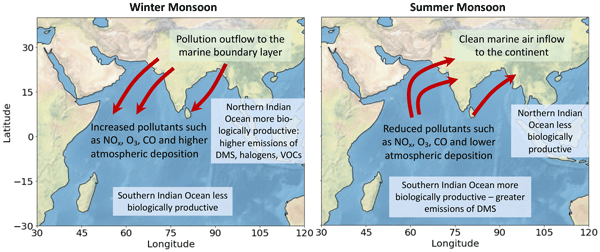
Susann Tegtmeier, Christa Marandino, Yue Jia, Birgit Quack, and Anoop S. Mahajan
Atmos. Chem. Phys., 22, 6625–6676, https://doi.org/10.5194/acp-22-6625-2022, https://doi.org/10.5194/acp-22-6625-2022, 2022
Short summary
Short summary
In the atmosphere over the Indian Ocean, intense anthropogenic pollution from Southeast Asia mixes with pristine oceanic air. During the winter monsoon, high pollution levels are regularly observed over the entire northern Indian Ocean, while during the summer monsoon, clean air dominates. Here, we review current progress in detecting and understanding atmospheric gas-phase composition over the Indian Ocean and its impacts on the upper atmosphere, oceanic biogeochemistry, and marine ecosystems.
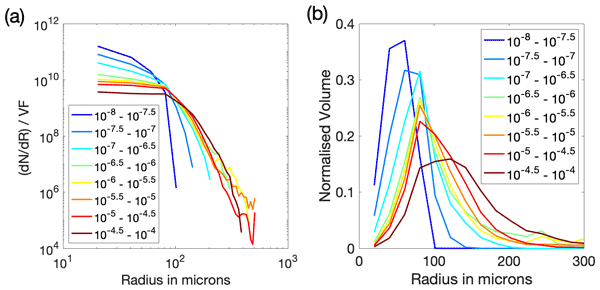
Helen Czerski, Ian M. Brooks, Steve Gunn, Robin Pascal, Adrian Matei, and Byron Blomquist
Ocean Sci., 18, 587–608, https://doi.org/10.5194/os-18-587-2022, https://doi.org/10.5194/os-18-587-2022, 2022
Short summary
Short summary
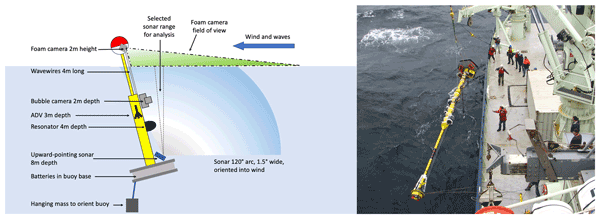
The bubbles formed by breaking waves at the ocean surface are important because they are thought to speed up the movement of gases like carbon dioxide and oxygen between the atmosphere and ocean. We collected data on the bubbles in the top few metres of the ocean which were created by storms in the North Atlantic. The focus in this paper is the bubble sizes and their position in the water. We saw that there are very predictable patterns and set out what happens to bubbles after a wave breaks.
Helen Czerski, Ian M. Brooks, Steve Gunn, Robin Pascal, Adrian Matei, and Byron Blomquist
Ocean Sci., 18, 565–586, https://doi.org/10.5194/os-18-565-2022, https://doi.org/10.5194/os-18-565-2022, 2022
Short summary
Short summary
The bubbles formed by breaking waves speed up the movement of gases like carbon dioxide and oxygen between the atmosphere and the ocean. Understanding where these gases go is an important part of understanding Earth's climate. In this paper we describe measurements of the bubbles close to the ocean surface during big storms in the North Atlantic. We observed small bubbles collecting in distinctive patterns which help us to understand the contribution they make to the ocean breathing.
Manuela van Pinxteren, Tiera-Brandy Robinson, Sebastian Zeppenfeld, Xianda Gong, Enno Bahlmann, Khanneh Wadinga Fomba, Nadja Triesch, Frank Stratmann, Oliver Wurl, Anja Engel, Heike Wex, and Hartmut Herrmann
Atmos. Chem. Phys., 22, 5725–5742, https://doi.org/10.5194/acp-22-5725-2022, https://doi.org/10.5194/acp-22-5725-2022, 2022
Short summary
Short summary
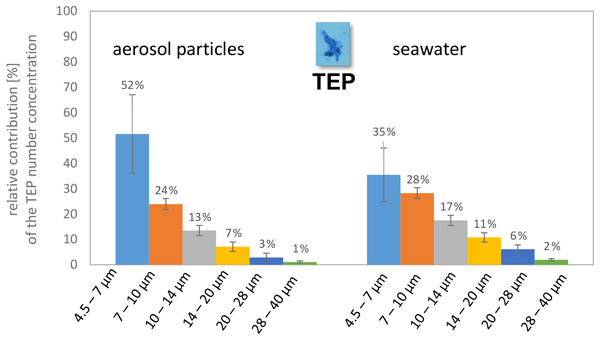
A class of marine particles (transparent exopolymer particles, TEPs) that is ubiquitously found in the world oceans was measured for the first time in ambient marine aerosol particles and marine cloud waters in the tropical Atlantic Ocean. TEPs are likely to have good properties for influencing clouds. We show that TEPs are transferred from the ocean to the marine atmosphere via sea-spray formation and our results suggest that they can also form directly in aerosol particles and in cloud water.
Pierre Friedlingstein, Matthew W. Jones, Michael O'Sullivan, Robbie M. Andrew, Dorothee C. E. Bakker, Judith Hauck, Corinne Le Quéré, Glen P. Peters, Wouter Peters, Julia Pongratz, Stephen Sitch, Josep G. Canadell, Philippe Ciais, Rob B. Jackson, Simone R. Alin, Peter Anthoni, Nicholas R. Bates, Meike Becker, Nicolas Bellouin, Laurent Bopp, Thi Tuyet Trang Chau, Frédéric Chevallier, Louise P. Chini, Margot Cronin, Kim I. Currie, Bertrand Decharme, Laique M. Djeutchouang, Xinyu Dou, Wiley Evans, Richard A. Feely, Liang Feng, Thomas Gasser, Dennis Gilfillan, Thanos Gkritzalis, Giacomo Grassi, Luke Gregor, Nicolas Gruber, Özgür Gürses, Ian Harris, Richard A. Houghton, George C. Hurtt, Yosuke Iida, Tatiana Ilyina, Ingrid T. Luijkx, Atul Jain, Steve D. Jones, Etsushi Kato, Daniel Kennedy, Kees Klein Goldewijk, Jürgen Knauer, Jan Ivar Korsbakken, Arne Körtzinger, Peter Landschützer, Siv K. Lauvset, Nathalie Lefèvre, Sebastian Lienert, Junjie Liu, Gregg Marland, Patrick C. McGuire, Joe R. Melton, David R. Munro, Julia E. M. S. Nabel, Shin-Ichiro Nakaoka, Yosuke Niwa, Tsuneo Ono, Denis Pierrot, Benjamin Poulter, Gregor Rehder, Laure Resplandy, Eddy Robertson, Christian Rödenbeck, Thais M. Rosan, Jörg Schwinger, Clemens Schwingshackl, Roland Séférian, Adrienne J. Sutton, Colm Sweeney, Toste Tanhua, Pieter P. Tans, Hanqin Tian, Bronte Tilbrook, Francesco Tubiello, Guido R. van der Werf, Nicolas Vuichard, Chisato Wada, Rik Wanninkhof, Andrew J. Watson, David Willis, Andrew J. Wiltshire, Wenping Yuan, Chao Yue, Xu Yue, Sönke Zaehle, and Jiye Zeng
Earth Syst. Sci. Data, 14, 1917–2005, https://doi.org/10.5194/essd-14-1917-2022, https://doi.org/10.5194/essd-14-1917-2022, 2022
Short summary
Short summary
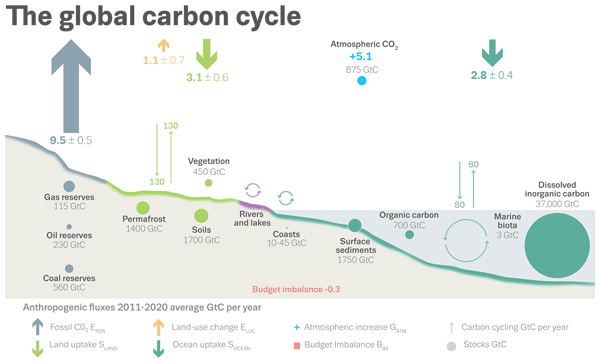
The Global Carbon Budget 2021 describes the data sets and methodology used to quantify the emissions of carbon dioxide and their partitioning among the atmosphere, land, and ocean. These living data are updated every year to provide the highest transparency and traceability in the reporting of CO2, the key driver of climate change.
Karol Kuliński, Gregor Rehder, Eero Asmala, Alena Bartosova, Jacob Carstensen, Bo Gustafsson, Per O. J. Hall, Christoph Humborg, Tom Jilbert, Klaus Jürgens, H. E. Markus Meier, Bärbel Müller-Karulis, Michael Naumann, Jørgen E. Olesen, Oleg Savchuk, Andreas Schramm, Caroline P. Slomp, Mikhail Sofiev, Anna Sobek, Beata Szymczycha, and Emma Undeman
Earth Syst. Dynam., 13, 633–685, https://doi.org/10.5194/esd-13-633-2022, https://doi.org/10.5194/esd-13-633-2022, 2022
Short summary
Short summary
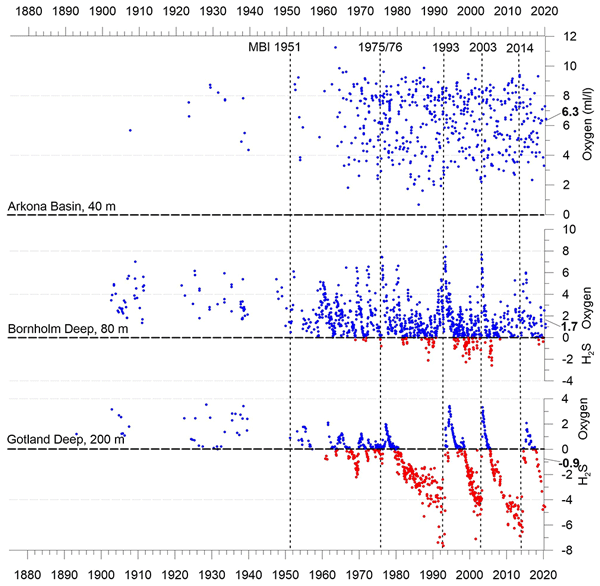
The paper covers the aspects related to changes in carbon, nitrogen, and phosphorus (C, N, P) external loads; their transformations in the coastal zone; changes in organic matter production (eutrophication) and remineralization (oxygen availability); and the role of sediments in burial and turnover of C, N, and P. Furthermore, this paper also focuses on changes in the marine CO2 system, the structure of the microbial community, and the role of contaminants for biogeochemical processes.
Yanan Zhao, Dennis Booge, Christa A. Marandino, Cathleen Schlundt, Astrid Bracher, Elliot L. Atlas, Jonathan Williams, and Hermann W. Bange
Biogeosciences, 19, 701–714, https://doi.org/10.5194/bg-19-701-2022, https://doi.org/10.5194/bg-19-701-2022, 2022
Short summary
Short summary
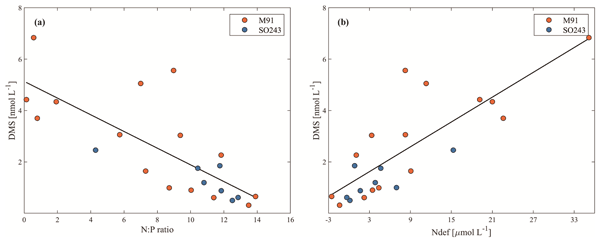
We present here, for the first time, simultaneously measured dimethylsulfide (DMS) seawater concentrations and DMS atmospheric mole fractions from the Peruvian upwelling region during two cruises in December 2012 and October 2015. Our results indicate low oceanic DMS concentrations and atmospheric DMS molar fractions in surface waters and the atmosphere, respectively. In addition, the Peruvian upwelling region was identified as an insignificant source of DMS emissions during both periods.
Siv K. Lauvset, Nico Lange, Toste Tanhua, Henry C. Bittig, Are Olsen, Alex Kozyr, Marta Álvarez, Susan Becker, Peter J. Brown, Brendan R. Carter, Leticia Cotrim da Cunha, Richard A. Feely, Steven van Heuven, Mario Hoppema, Masao Ishii, Emil Jeansson, Sara Jutterström, Steve D. Jones, Maren K. Karlsen, Claire Lo Monaco, Patrick Michaelis, Akihiko Murata, Fiz F. Pérez, Benjamin Pfeil, Carsten Schirnick, Reiner Steinfeldt, Toru Suzuki, Bronte Tilbrook, Anton Velo, Rik Wanninkhof, Ryan J. Woosley, and Robert M. Key
Earth Syst. Sci. Data, 13, 5565–5589, https://doi.org/10.5194/essd-13-5565-2021, https://doi.org/10.5194/essd-13-5565-2021, 2021
Short summary
Short summary
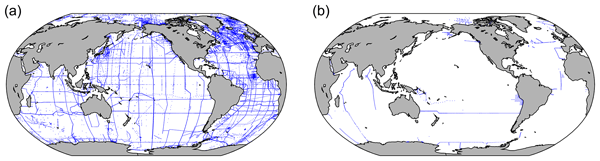
GLODAP is a data product for ocean inorganic carbon and related biogeochemical variables measured by the chemical analysis of water bottle samples from scientific cruises. GLODAPv2.2021 is the third update of GLODAPv2 from 2016. The data that are included have been subjected to extensive quality control, including systematic evaluation of measurement biases. This version contains data from 989 hydrographic cruises covering the world's oceans from 1972 to 2020.
Martti Honkanen, Jens Daniel Müller, Jukka Seppälä, Gregor Rehder, Sami Kielosto, Pasi Ylöstalo, Timo Mäkelä, Juha Hatakka, and Lauri Laakso
Ocean Sci., 17, 1657–1675, https://doi.org/10.5194/os-17-1657-2021, https://doi.org/10.5194/os-17-1657-2021, 2021
Short summary
Short summary
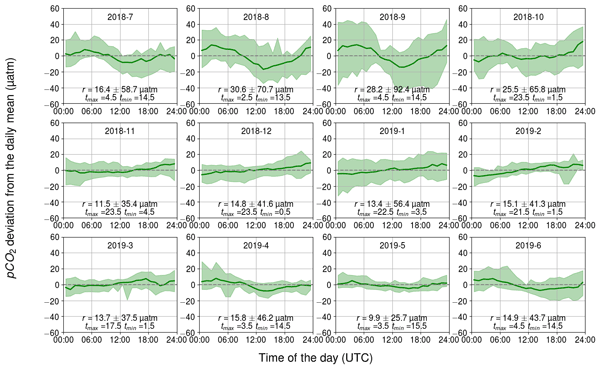
The exchange of carbon dioxide (CO2) between the sea and the atmosphere is regulated by the gradient of CO2 partial pressure (pCO2) between the sea and the air. The daily variation of the seawater pCO2 recorded at the fixed station Utö in the Baltic Sea was found to be mainly biologically driven. Calculation of the annual net exchange of CO2 between the sea and atmosphere based on daily measurements of pCO2 carried out using the same sampling time every day could introduce a bias of up to 12 %.
France Van Wambeke, Vincent Taillandier, Karine Desboeufs, Elvira Pulido-Villena, Julie Dinasquet, Anja Engel, Emilio Marañón, Céline Ridame, and Cécile Guieu
Biogeosciences, 18, 5699–5717, https://doi.org/10.5194/bg-18-5699-2021, https://doi.org/10.5194/bg-18-5699-2021, 2021
Short summary
Short summary
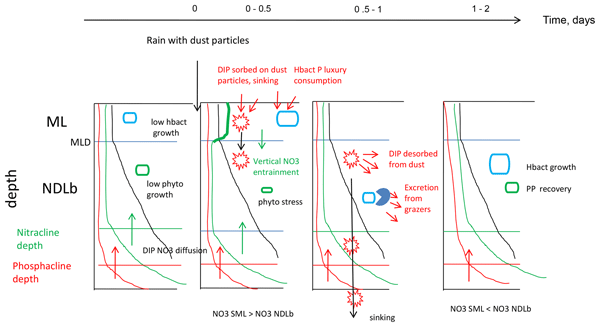
Simultaneous in situ measurements of (dry and wet) atmospheric deposition and biogeochemical stocks and fluxes in the sunlit waters of the open Mediterranean Sea revealed complex physical and biological processes occurring within the mixed layer. Nitrogen (N) budgets were computed to compare the sources and sinks of N in the mixed layer. The transitory effect observed after a wet dust deposition impacted the microbial food web down to the deep chlorophyll maximum.
Cited articles
Bell, T. G., Landwehr, S., Miller, S. D., de Bruyn, W. J., Callaghan, A. H., Scanlon, B., Ward, B., Yang, M., and Saltzman, E. S.: Estimation of bubble-mediated air–sea gas exchange from concurrent DMS and CO2 transfer velocities at intermediate–high wind speeds, Atmos. Chem. Phys., 17, 9019–9033, https://doi.org/10.5194/acp-17-9019-2017, 2017.
Bessonova, V., Tapoglou, E., Dorrell, R., Dethlefs, N., and York, K.: Global evaluation of wave data reanalysis: Comparison of the ERA5 dataset to buoy observations, Appl. Ocean Res., 157, 104490, https://doi.org/10.1016/j.apor.2025.104490, 2025.
Bittig, H. C., Jacobs, E., Neumann, T., and Rehder, G.: A regional pCO2 climatology of the Baltic Sea from in situ pCO2 observations and a model-based extrapolation approach, Earth Syst. Sci. Data, 16, 753–773, https://doi.org/10.5194/essd-16-753-2024, 2024.
Blomquist, B. W., Huebert, B. J., Fairall, C. W., Bariteau, L., Edson, J. B., Hare, J. E., and McGillis, W. R.: Advances in air–sea CO2 flux measurement by eddy correlation, Bound.-Lay. Meteorol., 152, 245–276, https://doi.org/10.1007/s10546-014-9926-2, 2014.
Blomquist, B. W., Brumer, S. E., Fairall, C. W., Huebert, B. J., Zappa, C. J., Brooks, I. M., Yang, M., Bariteau, L., Prytherch, J., Hare, J. E., Czerski, H., Matei, A., and Pascal, R. W.: Wind speed and sea state dependencies of air–sea gas transfer: Results from the High Wind Speed Gas Exchange Study (HiWinGS), J. Geophys. Res.-Oceans, 122, 8034–8062, https://doi.org/10.1002/2017JC013181, 2017.
Bock, E. J., Hara, T., Frew, N. M., and McGillis, W. R.: Relationship between air–sea gas transfer and short wind waves, J. Geophys. Res.-Oceans, 104, 25821–25831, https://doi.org/10.1029/1999JC900200, 1999.
Brockmann, U. H., Huhnerfuss, H., Kattner, G., Broecker, H., and Hentzschel, G.: Artificial surface films in the sea area near Sylt, Limnol. Oceanogr., 27, 1050–1058, https://doi.org/10.4319/lo.1982.27.6.1050, 1982.
Brumer, S. E., Zappa, C. J., Blomquist, B. W., Fairall, C. W., Cifuentes-Lorenzen, A., Edson, J. B., Brooks, I. M., and Huebert, B. J.: Wave-related Reynolds number parameterizations of CO2 and DMS transfer velocities, Geophys. Res. Lett., 44, 9865–9875, https://doi.org/10.1002/2017GL074979, 2017a.
Brumer, S. E., Zappa, C. J., Brooks, I. M., Tamura, H., Brown, S. M., Blomquist, B. W., Fairall, C. W., and Cifuentes-Lorenzen, A.:: Whitecap coverage dependence on wind and wave statistics as observed during SO GasEx and HiWinGS, J. Phys. Oceanogr., 47, 2211–2235, https://doi.org/10.1175/JPO-D-17-0005.1, 2017b.
Bullister, J. L. and Weiss, R. F.: Determination of CCl3F and CCl2F2 in seawater and air, Deep-Sea Res., 35, 839–853, https://doi.org/10.1016/0198-0149(88)90033-7, 1988.
Cole, J. J. and Caraco, N. F.: Atmospheric exchange of carbon dioxide in a low-wind oligotrophic lake measured by the addition of SF6, Limnol. Oceanogr., 43, 647–656, https://doi.org/10.4319/lo.1998.43.4.0647, 1998.
Cosović, B. and Vojvodić, V.: The application of ac polarography to the determination of surface-active substances in seawater, Limnol. Oceanogr., 27, 361–369, https://doi.org/10.4319/lo.1982.27.2.0361, 1982.
Cunliffe, M. and Wurl, O.: Guide to best practices to study the ocean's surface, Marine Biological Association of the United Kingdom for SCOR, Plymouth, UK, http://plymsea.ac.uk/6523 (last access: 14 April 2026), 2014.
De Leeuw, G., Andreas, E. L., Anguelova, M. D., Fairall, C. W., Lewis, E. R., O'Dowd, C., Schulz, M., and Schwartz, S. E.: Production flux of sea spray aerosol, Rev. Geophys., 49, 1–39, https://doi.org/10.1029/2010RG000349, 2011.
Deike, L.: Mass transfer at the ocean-atmosphere interface: The role of wave breaking, droplets, and bubbles, Annu. Rev. Fluid Mech., 54, 191–224, https://doi.org/10.1146/annurev-fluid-030121-014132, 2021.
Deike, L. and Melville, W. K.: Gas transfer by breaking waves, Geophys. Res. Lett., 45, 10482–10492, https://doi.org/10.1029/2018GL078758, 2018.
Dobashi, R. and Ho, D. T.: Air–sea gas exchange in a seagrass ecosystem – results from a
Dobashi, R., Ho, D. T., Dong, Y., Marandino, C. A., and Czerski, H.: Air-sea gas exchange in the central Baltic Sea, EGUsphere [preprint], https://doi.org/10.5194/egusphere-2026-1984, 2026.
Doney, S. C., Wolfe, W. H., McKee, D. C., and Fuhrman, J. G.: The science, engineering, and validation of marine carbon dioxide removal and storage, Annu. Rev. Mar. Sci., 16, 1–27, https://doi.org/10.1146/annurev-marine-040523-014702, 2024.
Dong, Y., Yang, M., Bakker, D. C. E., Kitidis, V., and Bell, T. G.: Uncertainties in eddy covariance air–sea CO2 flux measurements and implications for gas transfer velocity parameterisations, Atmos. Chem. Phys., 21, 8089–8110, https://doi.org/10.5194/acp-21-8089-2021, 2021.
Dong, Y., Jähne, B., Woolf, D. K., Krall, K. E., Yang, M., Czerski, H., Liang, J. H., Brooks, I. M., McNeil, C. L., Wanninkhof, R., and Ho, D. T.: The role of bubbles in air–sea gas exchange: A critical review, Authorea [preprint], https://doi.org/10.22541/essoar.175611263.31332921/v1, 2025.
Durrant, T. H., Greenslade, D. J. M., and Simmonds, I.: The effect of statistical wind corrections on global wave forecasts, Ocean Model., 70, 116–131, https://doi.org/10.1016/j.ocemod.2012.10.006, 2013.
Edson, J. B., Hinton, A. A., Prada, K. E., Hare, J. E., and Fairall, C. W.: Direct covariance flux estimates from mobile platforms at sea, J. Atmos. Ocean. Tech., 15, 547–562, https://doi.org/10.1175/1520-0426(1998)015<0547:DCFEFM>2.0.CO;2, 1998.
Edson, J. B., Jampana, V., Weller, R. A., Bigorre, S. P., Plueddemann, A. J., Fairall, C. W., Miller, S. D., Mahrt, L., Vickers, D., and Hersbach, H.: On the exchange of momentum over the open ocean, J. Phys. Oceanogr., 43, 1589–1610, https://doi.org/10.1175/JPO-D-12-0173.1, 2013.
Fairall, C. W., Bariteau, L., Grachev, A. A., Hill, R. J., Wolfe, D. E., Brewer, W. A., Tucker, S. C., Hare, J. E., and Angevine, W. M.: Turbulent bulk transfer coefficients and ozone deposition velocity in the International Consortium for Atmospheric Research into Transport and Transformation, J. Geophys. Res. Atmos., 111, 1–19, https://doi.org/10.1029/2006JD007597, 2006.
Fairall, C. W., Yang, M., Brumer, S. E., Blomquist, B. W., Edson, J. B., Zappa, C. J., Bariteau, L., Pezoa, S., Bell, T. G., and Saltzman, E. S.: Air–sea trace gas fluxes: Direct and indirect measurements, Front. Mar. Sci., 9, 1–16, https://doi.org/10.3389/fmars.2022.826606, 2022.
Frew, N. M.: The role of organic films in air–sea gas exchange, in: The Sea Surface and Global Change, 121–172, https://doi.org/10.1017/CBO9780511525025.006, 1997.
Frew, N. M., Goldman, J. C., Dennett, M. R., and Johnson, A. S.: Impact of phytoplankton-generated surfactants on air–sea gas exchange, J. Geophys. Res.-Oceans, 95, 3337–3352, https://doi.org/10.1029/JC095iC03p03337, 1990.
Frew, N. M., Bock, E. J., Schimpf, U., Hara, T., Haußecker, H., Edson, J. B., McGillis, W. R., Nelson, R. K., McKenna, S. P., Uz, B. M., and Jähne, B.: Air–sea gas transfer: Its dependence on wind stress, small-scale roughness, and surface films, J. Geophys. Res.-Oceans, 109, 1–23, https://doi.org/10.1029/2003JC002131, 2004.
Garbe, C. S., Rutgersson, A., Boutin, J., De Leeuw, G., Delille, B., Fairall, C. W., Gruber, N., Hare, J., Ho, D. T., and Johnson, M. T.: Transfer across the air–sea interface, in: Ocean-atmosphere interactions of gases and particles, 55–112, Springer, Berlin, Heidelberg, https://doi.org/10.1007/978-3-642-25643-1_2, 2014.
Gerke, L., Arck, Y., and Tanhua, T.: Temporal variability of ventilation in the Eurasian Arctic Ocean, J. Geophys. Res.-Oceans, 129, e2023JC020608, https://doi.org/10.1029/2023JC020608, 2024.
Giudici, A., Jankowski, M. Z., Männikus, R., Najafzadeh, F., Suursaar, Ü., and Soomere, T.: A comparison of Baltic Sea wave properties simulated using two modelled wind data sets, Estuar. Coast. Shelf Sci., 290, 108401, https://doi.org/10.1016/j.ecss.2023.108401, 2023.
Goldman, J. C., Dennett, M. R., and Frew, N. M.: Surfactant effects on air–sea gas exchange under turbulent conditions, Deep-Sea Res. Pt. A, 35, 1953–1970, https://doi.org/10.1016/0198-0149(88)90119-7, 1988.
Gutiérrez-Loza, L., Nilsson, E., Wallin, M. B., Sahlée, E., and Rutgersson, A.: On physical mechanisms enhancing air–sea CO2 exchange, Biogeosciences, 19, 5645–5665, https://doi.org/10.5194/bg-19-5645-2022, 2022.
Hammer, K., Schneider, B., Kuliński, K., and Schulz-Bull, D. E.: Acid-base properties of Baltic Sea dissolved organic matter, J. Mar. Syst., 173, 114–121, https://doi.org/10.1016/j.jmarsys.2017.04.007, 2017.
Harvey, G. W. and Burzell, L. A.: A simple microlayer method for small samples 1, Limnol. Oceanogr., 17, 156–157, https://doi.org/10.4319/lo.1972.17.1.0156, 1972.
Hersbach, H., Bell, B., Berrisford, P., Hirahara, S., Horányi, A., Muñoz-Sabater, J., Nicolas, J., Peubey, C., Radu, R., Schepers, D., Simmons, A., Soci, C., Abdalla, S., Abellan, X., Balsamo, G., Bechtold, P., Biavati, G., Bidlot, J., Bonavita, M., De Chiara, G., Dahlgren, P., Dee, D., Diamantakis, M., Dragani, R., Flemming, J., Forbes, R., Fuentes, M., Geer, A., Haimberger, L., Healy, S., Hogan, R. J., Hólm, E., Janisková, M., Keeley, S., Laloyaux, P., Lopez, P., Lupu, C., Radnoti, G., de Rosnay, P., Rozum, I., Vamborg, F., Villaume, S., and Thépaut, J. N.: The ERA5 global reanalysis, Q. J. Roy. Meteor. Soci., 146, 1999–2049, https://doi.org/10.1002/qj.3803, 2020.
Ho, D. T. and Wanninkhof, R.: Air–sea gas exchange in the North Atlantic:
Ho, D. T., Schlosser, P., and Caplow, T.: Determination of longitudinal dispersion coefficient and net advection in the tidal Hudson River with a large-scale, high resolution SF6 tracer release experiment, Environ. Sci. Technol., 36, 3234–3241, https://doi.org/10.1021/es015814, 2002.
Ho, D. T., Law, C. S., Smith, M. J., Schlosser, P., Harvey, M., and Hill, P.: Measurements of air–sea gas exchange at high wind speeds in the Southern Ocean: Implications for global parameterizations, Geophys. Res. Lett., 33, L16611, https://doi.org/10.1029/2006GL026817, 2006.
Ho, D. T., Bopp, L., Palter, J. B., Long, M. C., Boyd, P. W., Neukermans, G., and Bach, L. T.: Monitoring, reporting, and verification for ocean alkalinity enhancement, in: Guide to Best Practices in Ocean Alkalinity Enhancement Research, edited by: Oschlies, A., Stevenson, A., Bach, L. T., Fennel, K., Rickaby, R. E. M., Satterfield, T., Webb, R., and Gattuso, J.-P., Copernicus Publications, State Planet, 2-oae2023, 12, https://doi.org/10.5194/sp-2-oae2023-12-2023, 2023.
Jähne, B. J., Münnich, K. O. M., Bösinger, R., Dutzi, A., Huber, W., and Libner, P.: On the parameters influencing air-water gas exchange, J. Geophys. Res., 92, 1937–1949, https://doi.org/10.1029/JC092iC02p01937, 1987.
Karnatz, J., Barthelmeß, T., Sabbaghzadeh, B., and Engel, A.: Biochemical Characteristics of the Sea Surface Microlayer in the Central Baltic Sea and Potential Signatures of Cyanobacterial Blooms, EGUsphere [preprint], https://doi.org/10.5194/egusphere-2025-5385, 2025.
Klavins, M. and Purmalis, O.: Humic substances as surfactants, Environ. Chem. Lett., 8, 349–354, https://doi.org/10.1007/s10311-009-0232-z, 2010.
Kunz, J. and Jähne, B.: Investigating small-scale air–sea exchange processes via thermography, Front. Mech. Eng., 4, 4, https://doi.org/10.3389/fmech.2018.00004, 2018.
Kuss, J., Nagel, K., and Schneider, B.: Evidence from the Baltic Sea for an enhanced CO2 air–sea transfer velocity, Tellus B, 56, 175, https://doi.org/10.3402/tellusb.v56i2.16407, 2004.
Landwehr, S., Miller, S. D., Smith, M. J., Bell, T. G., Saltzman, E. S., and Ward, B.: Using eddy covariance to measure the dependence of air–sea CO2 exchange rate on friction velocity, Atmos. Chem. Phys., 18, 4297–4315, https://doi.org/10.5194/acp-18-4297-2018, 2018.
Landwehr, S., Thurnherr, I., Cassar, N., Gysel-Beer, M., and Schmale, J.: Using global reanalysis data to quantify and correct airflow distortion bias in shipborne wind speed measurements, Atmos. Meas. Tech., 13, 3487–3506, https://doi.org/10.5194/amt-13-3487-2020, 2020.
McGillis, W. R., Edson, J. B., Ware, J. D., Dacey, J. W. H., Hare, J. E., Fairall, C. W., and Wanninkhof, R.: Carbon dioxide flux techniques performed during GasEx-98, Mar. Chem., 75, 267–280, https://doi.org/10.1016/S0304-4203(01)00042-1, 2001.
McGillis, W. R., Edson, J. B., Zappa, C. J., Ware, J. D., McKenna, S. P., Terray, E. A., Hare, J. E., Fairall, C. W., Drennan, W., and Donelan, M.: Air–sea CO2 exchange in the equatorial Pacific, J. Geophys. Res.-Oceans, 109, C08S90, https://doi.org/10.1029/2003JC002256, 2004.
McKenna, S. P. and McGillis, W. R.: The role of free-surface turbulence and surfactants in air–water gas transfer, Int. J. Heat Mass Transfer, 47, 539–553, https://doi.org/10.1016/j.ijheatmasstransfer.2003.06.001, 2004.
Mesarchaki, E., Kräuter, C., Krall, K. E., Bopp, M., Helleis, F., Williams, J., and Jähne, B.: Measuring air–sea gas-exchange velocities in a large-scale annular wind–wave tank, Ocean Sci., 11, 121–138, https://doi.org/10.5194/os-11-121-2015, 2015.
Miller, S. D., Hristov, T. S., Edson, J. B., and Friehe, C. A.: Platform motion effects on measurements of turbulence and air–sea exchange over the open ocean, J. Atmos. Ocean. Tech., 25, 1683–1694, https://doi.org/10.1175/2008JTECHO547.1, 2008.
Miller, S. D., Marandino, C., and Saltzman, E. S.: Ship-based measurement of air–sea CO2 exchange by eddy covariance, J. Geophys. Res.-Atmos., 115, D02112, https://doi.org/10.1029/2009JD012193, 2010.
Moat, B. and Yelland, M.: Airflow distortion at instrument sites on the RRS James Clark Ross during the WAGES project, Natl. Oceanogr. Cent. Internal Doc., 12, http://nora.nerc.ac.uk/id/eprint/509304 (last access: 14 April 2026), 2015.
Moat, B. I., Yelland, M. J., and Cooper, E. B.: The airflow distortion at instruments sites on the RRS “James Cook”, Natl. Oceanogr. Cent. Southampton Res. Consult. Rep., 11, 44 pp., http://eprints.soton.ac.uk/id/eprint/41147 (last access: 14 April 2026), 2006.
Mustaffa, N. I. H., Ribas-Ribas, M., Banko-Kubis, H. M., and Wurl, O.: Global reduction of in situ CO2 transfer velocity by natural surfactants in the sea-surface microlayer, P. R. Soc. A, 476, 20190763, https://doi.org/10.1098/rspa.2019.0763, 2020.
Nightingale, P. D., Malin, G., Law, C. S., Watson, A. J., Liss, P. S., Liddicoat, M. I., Boutin, J., and Upstill-Goddard, R. C.: In situ evaluation of air–sea gas exchange parameterizations using novel conservative and volatile tracers, Global Biogeochem. Cy., 14, 373–387, https://doi.org/10.1029/1999GB900091, 2000.
O'Sullivan, N., Landwehr, S., and Ward, B.: Mapping flow distortion on oceanographic platforms using computational fluid dynamics, Ocean Sci., 9, 855–866, https://doi.org/10.5194/os-9-855-2013, 2013.
Ocampo-Torres, F. J. and Donelan, M. A.: On the influence of fetch and the wave field on the CO2 transfer process: Laboratory measurements, in: Air–Water Gas Transfer, edited by: Jähne, B. and Monahan, E. C., AEON Verlag & Studio, Hanau, 543–552, Corpus ID: 111822886, 1995.
Parard, G., Charantonis, A. A., and Rutgersson, A.: Using satellite data to estimate partial pressure of CO2 in the Baltic Sea, J. Geophys. Res.-Biogeo., 121, 1002–1015, https://doi.org/10.1002/2015JG003064, 2016.
Pereira, R., Schneider-Zapp, K., and Upstill-Goddard, R. C.: Surfactant control of gas transfer velocity along an offshore coastal transect: results from a laboratory gas exchange tank, Biogeosciences, 13, 3981–3989, https://doi.org/10.5194/bg-13-3981-2016, 2016.
Pereira, R., Ashton, I., Sabbaghzadeh, B., Shutler, J. D., and Upstill-Goddard, R. C.: Reduced air–sea CO2 exchange in the Atlantic Ocean due to biological surfactants, Nat. Geosci., 11, 492–496, https://doi.org/10.1038/s41561-018-0136-2, 2018.
Pitarch, J., Volpe, G., Colella, S., Krasemann, H., and Santoleri, R.: Remote sensing of chlorophyll in the Baltic Sea at basin scale from 1997 to 2012 using merged multi-sensor data, Ocean Sci., 12, 379–389, https://doi.org/10.5194/os-12-379-2016, 2016.
Prytherch, J. and Yelland, M. J.: Wind, convection and fetch dependence of gas transfer velocity in an Arctic sea-ice lead determined from eddy covariance CO2 flux measurements, Global Biogeochem. Cy., 35, e2020GB006633, https://doi.org/10.1029/2020GB006633, 2021.
Resplandy, L., Hogikyan, A., Müller, J. D., Najjar, R. G., Bange, H. W., Bianchi, D., Weber, T., Cai, W. J., Doney, S. C., Fennel, K., Gehlen, M., Hauck, J., Lacroix, F., Landschützer, P., Le Quéré, C., Roobaert, A., Schwinger, J., Berthet, S., Bopp, L., Chau, T. T. T., Dai, M., Gruber, N., Ilyina, T., Kock, A., Manizza, M., Lachkar, Z., Laruelle, G. G., Liao, E., Lima, I. D., Nissen, C., Rödenbeck, C., Séférian, R., Toyama, K., Tsujino, H., and Regnier, P.: A synthesis of global coastal ocean greenhouse gas fluxes, Global Biogeochem. Cy., 38, 1–38, https://doi.org/10.1029/2023GB007803, 2024.
Ribas-Ribas, M., Helleis, F., Rahlff, J., and Wurl, O.: Air–sea CO2 exchange in a large annular wind-wave tank and the effects of surfactants, Front. Mar. Sci., 5, 457, https://doi.org/10.3389/fmars.2018.00457, 2018.
Rutgersson, A. and Smedman, A.: Enhanced air–sea CO2 transfer due to water-side convection, J. Marine Syst., 80, 125–134, https://doi.org/10.1016/j.jmarsys.2009.11.004, 2010.
Rutgersson, A., Pettersson, H., Nilsson, E., Bergström, H., Wallin, M. B. E., Nilsson, E. D., Sahlée, E., Wu, L. E., and Mårtensson, E. M.: Using land-based stations for air–sea interaction studies, Tellus A, 72, 1–23, https://doi.org/10.1080/16000870.2019.1697601, 2020.
Sabbaghzadeh, B., Upstill-Goddard, R. C., Beale, R., Pereira, R., and Nightingale, P. D.: The Atlantic Ocean surface microlayer from 50° N to 50° S is ubiquitously enriched in surfactants at wind speeds up to 13 m s−1, Geophys. Res. Lett., 44, 2852–2858, https://doi.org/10.1002/2017GL072988, 2017.
Sabbaghzadeh, B., Arévalo-Martínez, D. L., Glockzin, M., Otto, S., and Rehder, G.: Meridional and cross-shelf variability of N2O and CH4 in the eastern-south Atlantic, J. Geophys. Res.-Oceans, 126, e2020JC016878, https://doi.org/10.1029/2020JC016878, 2021.
Salter, M. E., Upstill-Goddard, R. C., Nightingale, P. D., Archer, S. D., Blomquist, B., Ho, D. T., Huebert, B., Schlosser, P., and Yang, M.: Impact of an artificial surfactant release on air–sea gas fluxes during Deep Ocean Gas Exchange Experiment II, J. Geophys. Res.-Oceans, 116, C11007, https://doi.org/10.1029/2011JC007023, 2011.
Schmidt, R. and Schneider, B.: The effect of surface films on the air–sea gas exchange in the Baltic Sea, Mar. Chem., 126, 56–62, https://doi.org/10.1016/j.marchem.2011.03.007, 2011.
Sültenfuß, J., Roether, W., and Rhein, M.: The Bremen mass spectrometric facility for the measurement of helium isotopes, neon, and tritium in water, Isot. Environ. Health Stud., 45, 83–95, https://doi.org/10.1080/10256010902871929, 2009.
Upstill-Goddard, R. C.: Air–sea gas exchange in the coastal zone, Estuar. Coast. Shelf S., 70, 388–404, https://doi.org/10.1016/j.ecss.2006.05.043, 2006.
Vickers, D. and Mahrt, L.: Fetch limited drag coefficients, Bound.-Lay. Meteorol., 85, 53–79, https://doi.org/10.1023/A:1000472623187, 1997.
Wanninkhof, R.: Relationship between wind speed and gas exchange over the ocean revisited, Limnol. Oceanogr.-Meth., 12, 351–362, https://doi.org/10.4319/lom.2014.12.351, 2014.
Wanninkhof, R., Asher, W. E., Ho, D. T., Sweeney, C., and McGillis, W. R.: Advances in quantifying air–sea gas exchange and environmental forcing, Annu. Rev. Mar. Sci., 1, 213–244, https://doi.org/10.1146/annurev.marine.010908.163742, 2009.
Weiss, R. F.: Carbon dioxide in water and seawater: the solubility of a non-ideal gas, Mar. Chem., 2, 203–215, https://doi.org/10.1016/0304-4203(74)90015-2, 1974.
Woolf, D. K.: Bubbles and the air–sea transfer velocity of gases, Atmos. Ocean, 31, 517–540, https://doi.org/10.1080/07055900.1993.9649484, 1993.
Woolf, D. K.: Bubbles and their role in gas exchange, in: The Sea Surface and Global Change, edited by: Liss P. S. and Duce R. A., 173–206, Cambridge University Press, https://doi.org/10.1017/CBO9780511525025.007, 1997.
Woolf, D. K.: Parametrization of gas transfer velocities and sea-state-dependent wave breaking, Tellus B, 57, 87, https://doi.org/10.3402/tellusb.v57i2.16783, 2005.
Woolf, D. K., Land, P. E., Shutler, J. D., Goddijn-Murphy, L. M., and Donlon, C. J.: On the calculation of air–sea fluxes of CO2 in the presence of temperature and salinity gradients, J. Geophys. Res.-Oceans, 121, 1229–1248, https://doi.org/10.1002/2015JC011427, 2016.
Wurl, O., Wurl, E., Miller, L., Johnson, K., and Vagle, S.: Formation and global distribution of sea-surface microlayers, Biogeosciences, 8, 121–135, https://doi.org/10.5194/bg-8-121-2011, 2011.
Yang, M., Smyth, T. J., Kitidis, V., Brown, I. J., Wohl, C., Yelland, M. J., and Bell, T. G.: Natural variability in air–sea gas transfer efficiency of CO2, Sci. Rep., 11, 1–9, https://doi.org/10.1038/s41598-021-92947-w, 2021.
Yang, M., Bell, T. G., Bidlot, J. R., Blomquist, B. W., Butterworth, B. J., Dong, Y., Fairall, C. W., Landwehr, S., Marandino, C. A., Miller, S. D., Saltzman, E. S., and Zavarsky, A.: Global synthesis of air-Sea CO2 transfer velocity estimates from ship-based eddy covariance measurements, Front. Mar. Sci., 9, 1–15, https://doi.org/10.3389/fmars.2022.826421, 2022.
Yang, M., Moffat, D., Dong, Y., and Bidlot, J.-R.: Deciphering the variability in air–sea gas transfer due to sea state and wind history, PNAS Nexus, pgae389, https://doi.org/10.1093/pnasnexus/pgae389, 2024.
Zhao, D., Toba, Y., Suzuki, Y., and Komori, S.: Effect of wind waves on air–sea gas exchange: Proposal of an overall CO2 transfer velocity formula as a function of breaking-wave parameter, Tellus B, 55, 478–487, https://doi.org/10.3402/tellusb.v55i2.16747, 2003.
Short summary
Air-sea gas exchange regulates the Earth’s climate. However, the description of the kinetic exchange process only uses wind speed, neglecting other drivers. In this study, we investigate how fetch and natural surfactants modulate air-sea carbon dioxide exchange. Measurements from the central Baltic Sea show that limited fetch and elevated surfactants significantly suppress this exchange. A new parameterisation is provided, improving regional carbon budgets and evaluations of climate solutions.
Air-sea gas exchange regulates the Earth’s climate. However, the description of the kinetic...


Altmetrics
Final-revised paper
Preprint