
Articles | Volume 26, issue 8
https://doi.org/10.5194/acp-26-5447-2026
© Author(s) 2026. This work is distributed under
the Creative Commons Attribution 4.0 License.
the Creative Commons Attribution 4.0 License.
https://doi.org/10.5194/acp-26-5447-2026
© Author(s) 2026. This work is distributed under
the Creative Commons Attribution 4.0 License.
the Creative Commons Attribution 4.0 License.
Research article
| 
22 Apr 2026
Research article |
| 22 Apr 2026
| 22 Apr 2026
CloudViT: exploring cloud type classification with vision transformers in global satellite data
Julien Lenhardt
CORRESPONDING AUTHOR

Leipzig Institute for Meteorology, Universität Leipzig, Leipzig, Germany
Johannes Quaas
Leipzig Institute for Meteorology, Universität Leipzig, Leipzig, Germany
ScaDS.AI – Center for Scalable Data Analytics and Artificial Intelligence, Leipzig University, Humboldtstraße 25, 04105 Leipzig, Germany
Dino Sejdinovic
School of Computer and Mathematical Sciences & Australian Institute for Machine Learning, University of Adelaide, Adelaide, Australia
Daniel Klocke
Max Planck Institute for Meteorology (MPI-M), Hamburg, Germany
Related authors
Forrest M. Hoffman, Birgit Hassler, Ranjini Swaminathan, Jared Lewis, Bouwe Andela, Nathan Collier, Dóra Hegedűs, Jiwoo Lee, Charlotte Pascoe, Mika Pflüger, Martina Stockhause, Paul Ullrich, Min Xu, Lisa Bock, Felicity Chun, Bettina K. Gier, Douglas I. Kelley, Axel Lauer, Julien Lenhardt, Manuel Schlund, Mohanan G. Sreeush, Katja Weigel, Ed Blockley, Rebecca Beadling, Romain Beucher, Demiso D. Dugassa, Valerio Lembo, Jianhua Lu, Swen Brands, Jerry Tjiputra, Elizaveta Malinina, Brian Medeiros, Enrico Scoccimarro, Jeremy Walton, Phil Kershaw, André Lanfer Marquez, Malcolm J. Roberts, Eleanor O'Rourke, Beth Dingley, Briony Turner, Helene Hewitt, and John P. Dunne
Geosci. Model Dev., 19, 7415–7455, https://doi.org/10.5194/gmd-19-7415-2026, https://doi.org/10.5194/gmd-19-7415-2026, 2026
Short summary
Short summary
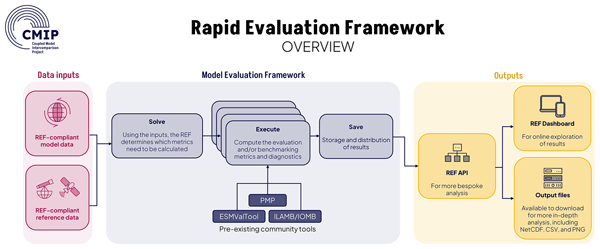
The Rapid Evaluation Framework (REF) is a community-driven platform for benchmarking and performance assessment of Earth system models. Built upon four disparate community evaluation tools, the REF is designed to provide model-data comparisons for the Assessment Fast Track for the Seventh Phase of the Coupled Model Intercomparison Project. The REF will be run at the Earth System Grid Federation to enable model devleopers and scientists to quickly identify model biases and performance issues.
Julien Lenhardt, Johannes Quaas, and Dino Sejdinovic
Atmos. Meas. Tech., 17, 5655–5677, https://doi.org/10.5194/amt-17-5655-2024, https://doi.org/10.5194/amt-17-5655-2024, 2024
Short summary
Short summary
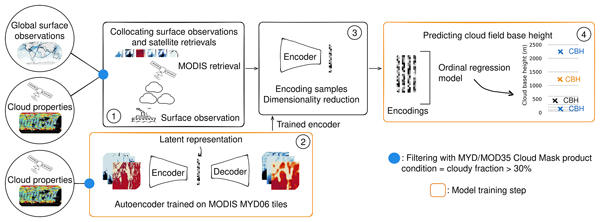
Clouds play a key role in the regulation of the Earth's climate. Aspects like the height of their base are of essential interest to quantify their radiative effects but remain difficult to derive from satellite data. In this study, we combine observations from the surface and satellite retrievals of cloud properties to build a robust and accurate method to retrieve the cloud base height, based on a computer vision model and ordinal regression.
Forrest M. Hoffman, Birgit Hassler, Ranjini Swaminathan, Jared Lewis, Bouwe Andela, Nathan Collier, Dóra Hegedűs, Jiwoo Lee, Charlotte Pascoe, Mika Pflüger, Martina Stockhause, Paul Ullrich, Min Xu, Lisa Bock, Felicity Chun, Bettina K. Gier, Douglas I. Kelley, Axel Lauer, Julien Lenhardt, Manuel Schlund, Mohanan G. Sreeush, Katja Weigel, Ed Blockley, Rebecca Beadling, Romain Beucher, Demiso D. Dugassa, Valerio Lembo, Jianhua Lu, Swen Brands, Jerry Tjiputra, Elizaveta Malinina, Brian Medeiros, Enrico Scoccimarro, Jeremy Walton, Phil Kershaw, André Lanfer Marquez, Malcolm J. Roberts, Eleanor O'Rourke, Beth Dingley, Briony Turner, Helene Hewitt, and John P. Dunne
Geosci. Model Dev., 19, 7415–7455, https://doi.org/10.5194/gmd-19-7415-2026, https://doi.org/10.5194/gmd-19-7415-2026, 2026
Short summary
Short summary
The Rapid Evaluation Framework (REF) is a community-driven platform for benchmarking and performance assessment of Earth system models. Built upon four disparate community evaluation tools, the REF is designed to provide model-data comparisons for the Assessment Fast Track for the Seventh Phase of the Coupled Model Intercomparison Project. The REF will be run at the Earth System Grid Federation to enable model devleopers and scientists to quickly identify model biases and performance issues.
Sajedeh Marjani, Sina Mehrdad, and Johannes Quaas
Atmos. Chem. Phys., 26, 10695–10725, https://doi.org/10.5194/acp-26-10695-2026, https://doi.org/10.5194/acp-26-10695-2026, 2026
Short summary
Short summary
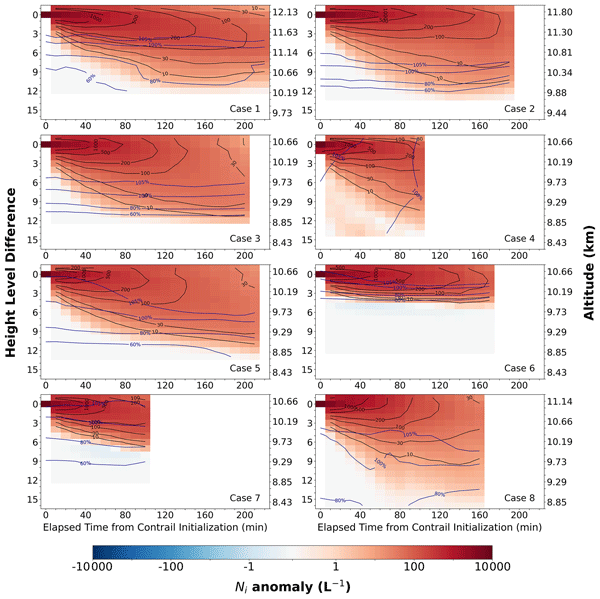
A large part of aviation's climate impact comes from persistent contrails, not just carbon dioxide. This study examined how they evolve under different ice-supersaturated conditions, usually with background clouds. Using high-resolution simulations, we found that contrail growth depends on both the thickness of the supersaturated layer and available water vapor. Contrails can alter surrounding clouds and contribute to warming. Simple thresholds are not enough to predict their impact.
Hans Segura, Allison A. Wing, Heike Kalesse-Los, Ruben Carrasco, James H. Ruppert Jr., Anna Trosits, Louise Nuijens, Felix Ament, Daniel Blandfort, Michael M. Bell, Pierre Bosser, Delián Colón-Burgos, Geet George, Joelle Habib, Jochen Horstmann, Friedhelm Jansen, Lukas Kluft, Robert Kopte, Klas Ove Möller, Peristera Paschou, Hauke Schmidt, Michael Schlundt, Ilya Serikov, Martin Stelzner, Elizabeth J. Thompson, Werenfrid Wimmer, Marcus Dengler, and Daniel Klocke
Earth Syst. Sci. Data Discuss., https://doi.org/10.5194/essd-2026-343, https://doi.org/10.5194/essd-2026-343, 2026
Preprint under review for ESSD
Short summary
Short summary
BOWTIE (Beobachtung von Ozean und Wolken - Das Trans ITCZ Experiment) was an observational campaign occurring in summer 2024, which intensively took measurements from the upper ocean to the upper troposphere in the wettest region of the tropical Atlantic. Here, we provide an overview of the measurements and instrumentation, including remote sensing and conventional, which targeted small-scale processes under different weather regimes, from calm doldrums to gusty, precipitating events.
Hailing Jia, David Neubauer, Yusuf Bhatti, Duncan Watson-Parris, Philip Stier, Johannes Quaas, Daniel Partridge, Ardit Arifi, Anne Kubin, Athanasios Nenes, Muhammed Irfan, Ulas Im, Carl Svenhag, Nick Schutgens, Bastiaan van Diedenhoven, Sylvaine Ferrachat, Ulrike Lohmann, Ina Tegen, Alice Henkes, Guangliang Fu, and Otto Hasekamp
EGUsphere, https://doi.org/10.5194/egusphere-2026-3275, https://doi.org/10.5194/egusphere-2026-3275, 2026
Short summary
Short summary
Tiny aerosol particles affect Earth’s climate by interacting with clouds and sunlight, but their impact remains uncertain. Combining climate model simulations and emulators, we explored millions of model variants across different aerosol and cloud settings to identify the causes of the uncertainty. We found that aerosol emissions and cloud convection are key contributors. Our work suggests that better integration of existing observations could help reduce these uncertainties in the future.
Heikki Järvinen, Jouni Räisänen, Lauri Tuppi, Clément Bouvier, Antonio Sanchez-Benitez, Juniper Tyree, Antti Toropainen, Paolo Davini, Francisco Doblas-Reyes, Thomas Jung, Daniel Klocke, Jenni Kontkanen, Sebastian Milinski, Matteo Nurisso, Himansu Kesari Pradhan, and Irina Sandu
EGUsphere, https://doi.org/10.5194/egusphere-2026-3364, https://doi.org/10.5194/egusphere-2026-3364, 2026
Short summary
Short summary
There is rich process-level variability present in the new-generation kilometre-scale climate simulations. The EU’s Climate Change Adaptation Digital Twin (Climate DT) integrates global Earth observing systems and observation modelling capabilities – until now common only in weather prediction – into operational climate simulation workflow. This provides a novel framework for precise evaluation of fine-scale details of simulation data and informing adaptation decisions at local (city) scales.
Tobias Braun, Sara M. Vallejo-Bernal, Norbert Marwan, Juergen Kurths, Johannes Quaas, Albert Díaz-Guilera, Luis Gimeno, and Miguel D. Mahecha
Earth Syst. Dynam., 17, 695–716, https://doi.org/10.5194/esd-17-695-2026, https://doi.org/10.5194/esd-17-695-2026, 2026
Short summary
Short summary
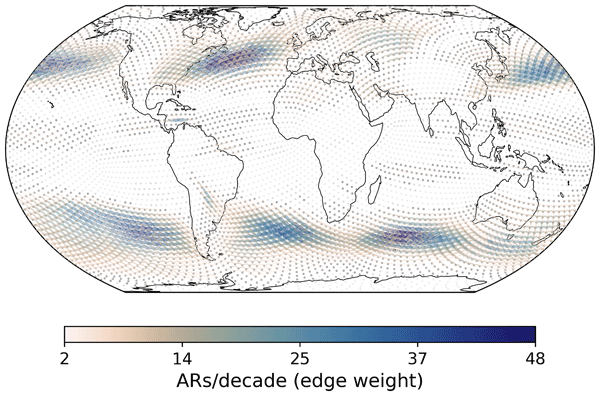
Atmospheric rivers (ARs) move vast amounts of water through the atmosphere and often cause weather extremes, yet they are usually studied as regional events. Using 84 years of mapped AR trajectories, we reveal the global "roadmap" of ARs, a transport network of high-activity hubs, sparse atmospheric highways & hierarchical basins. Our approach shows how water vapor is systematically channelled through an atmospheric transport network, offering new ways to study changes in the global water cycle.
Sudhakar Dipu, Johannes Mülmenstädt, and Johannes Quaas
Atmos. Chem. Phys., 26, 7917–7931, https://doi.org/10.5194/acp-26-7917-2026, https://doi.org/10.5194/acp-26-7917-2026, 2026
Short summary
Short summary
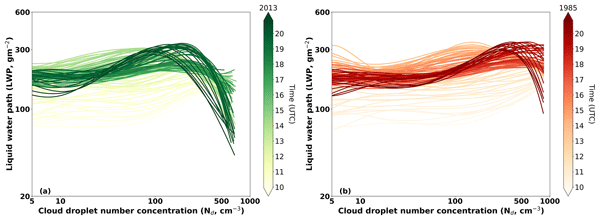
High-resolution Large-Eddy Simulations (LES) are used to examine how aerosols affect liquid water path (LWP) sensitivity in non-precipitating liquid clouds. Two cases, 1985 (high aerosol) and 2013 (low aerosol), show a non-linear Nd–LWP relationship with a shift from positive to negative sensitivity at higher Nd under high aerosol loading. Enhanced cloud-top entrainment, evaporation, and heating drive this shift, highlighting aerosol impact on cloud microphysics and thermodynamics.
Francisco J. Doblas-Reyes, Jenni Kontkanen, Irina Sandu, Mario Acosta, Mohammed Hussam Al Turjmam, Ivan Alsina-Ferrer, Miguel Andrés-Martínez, Costanza Anerdi, Leo Arriola, Marvin Axness, Marc Batlle Martín, Peter Bauer, Tobias Becker, Daniel Beltrán, Sebastian Beyer, Hendryk Bockelmann, Pierre-Antoine Bretonnière, Sebastien Cabaniols, Silvia Caprioli, Miguel Castrillo, Aparna Chandrasekar, Suvarchal Cheedela, Victor Correal, Emanuele Danovaro, Paolo Davini, Jussi Enkovaara, Claudia Frauen, Barbara Früh, Aina Gaya Àvila, Paolo Ghinassi, Rohit Ghosh, Supriyo Ghosh, Iker González, Katherine Grayson, Matthew Griffith, Ioan Hadade, Christopher Haine, Carl Hartick, Utz-Uwe Haus, Shane Hearne, Heikki Järvinen, Bernat Jiménez, Amal John, Marlin Juchem, Thomas Jung, Jessica Kegel, Matthias Kelbling, Kai Keller, Bruno Kinoshita, Theresa Kiszler, Daniel Klocke, Lukas Kluft, Nikolay Koldunov, Tobias Kölling, Joonas Kolstela, Luis Kornblueh, Sergey Kosukhin, Aleksander Lacima-Nadolnik, Jeisson Javier Leal Rojas, Jonni Lehtiranta, Tuomas Lunttila, Anna Luoma, Pekka Manninen, Alexey Medvedev, Sebastian Milinski, Ali Mohammed, Sebastian Müller, Devaraju Naryanappa, Natalia Nazarova, Sami Niemelä, Bimochan Niraula, Henrik Nortamo, Aleksi Nummelin, Matteo Nurisso, Pablo Ortega, Stella Paronuzzi, Xabier Pedruzo-Bagazgoitia, Charles Pelletier, Carlos Peña, Suraj Polade, Himansu Kesari Pradhan, Rommel Quintanilla, Tiago Quintino, Thomas Rackow, Jouni Räisänen, Maqsood Mubarak Rajput, René Redler, Balthasar Reuter, Nuno Rocha Monteiro, Francesc Roura-Adserias, Silva Ruppert, Susan Sayed, Reiner Schnur, Tanvi Sharma, Dmitry Sidorenko, Outi Sievi-Korte, Albert Soret, Christian Steger, Bjorn Stevens, Jan Streffing, Jaleena Sunny, Luiggi Tenorio, Stephan Thober, Ulf Tigerstedt, Oriol Tinto, Juha Tonttila, Heikki Tuomenvirta, Lauri Tuppi, Ginka Van Thielen, Emanuele Vitali, Jost von Hardenberg, Ingo Wagner, Nils Wedi, Jan Wehner, Sven Willner, Xavier Yepes-Arbós, Florian Ziemen, and Janos Zimmermann
Geosci. Model Dev., 19, 2821–2848, https://doi.org/10.5194/gmd-19-2821-2026, https://doi.org/10.5194/gmd-19-2821-2026, 2026
Short summary
Short summary
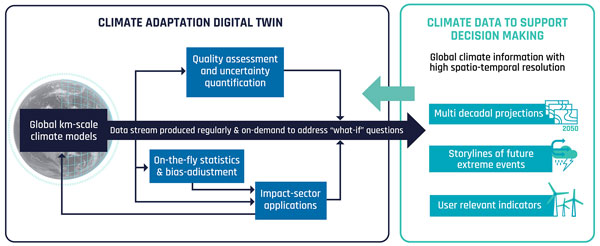
The Climate Change Adaptation Digital Twin (Climate DT) pioneers the operationalisation of global climate projections. It produces global simulations with local granularity for adaptation decision-making. Applications are embedded to generate tailored indicators. A unified workflow orchestrates all components in several supercomputers. Data management ensures consistency and streaming enables real-time use. It is a complementary innovation to initiatives like CMIP, CORDEX, and climate services.
Yannick Emanuel Anders, Karoline Block, Mira Pöhlker, and Johannes Quaas
EGUsphere, https://doi.org/10.5194/egusphere-2026-1404, https://doi.org/10.5194/egusphere-2026-1404, 2026
Short summary
Short summary
Particles in the atmosphere can trigger the formation of cloud droplets, affecting cloud properties and climate. This study evaluates a new global dataset of these particles with measurements from 25 sites around the world. The variability in time and space and their conditional formation behaviour is analysed. The authors identify systematic biases and introduce a simple correction based on observations that greatly improves the dataset’s accuracy.
Marius Winkler, Marius Rixen, Florent Beucher, Fleur Couvreux, Chaehyeon C. Nam, Philippe Peyrillé, Hauke Schmidt, Hans Segura, Karl-Hermann Wieners, Ezri Alkilani-Brown, Abdou Aziz Coly, Giovanni Biagioli, Michael M. Bell, Ester Brito, Emma Chauvin, Julie Capo, Delián Colón-Burgos, Akeem Dawes, Jose Carlos da Luz, Zekican Demiralay, Vincent Douet, Vincent Ducastin, Clarisse Dufaux, Jean-Louis Dufresne, Florence Favot, Thomas Fiolleau, Emilie Fons, Geet George, Helene M. Gloeckner, Suelly Gonçalves, Laurent Gouttesoulard, Lennéa Hayo, Wei-Ting Hsiao, Sarah Kennison, Michael Kopelman, Tsung-Yung Lee, Enora Le Gall, Mateo Lovato, Emily Luschen, Nicolas Maury, Brett McKim, Louis Netz, Diouf Ousseynou, Karsten Peters-von Gehlen, Chavez Pope, Basile Poujol, Niwde Rivera Maldonado, Nina Robbins-Blanch, Nicolas Rochetin, Daniel Rowe, Paula Romero Jure, James H. Ruppert Jr., Jairo Segura Bermudez, Jarrett C. Starr, Martin Stelzner, Connor Stoll, Macintyre Syrett, Abraham Tekoe, Jeremie Trules, Colin Welty, Daniel Klocke, Raphaela Vogel, Sandrine Bony, Allison A. Wing, and Bjorn Stevens
Earth Syst. Sci. Data, 18, 1833–1854, https://doi.org/10.5194/essd-18-1833-2026, https://doi.org/10.5194/essd-18-1833-2026, 2026
Short summary
Short summary
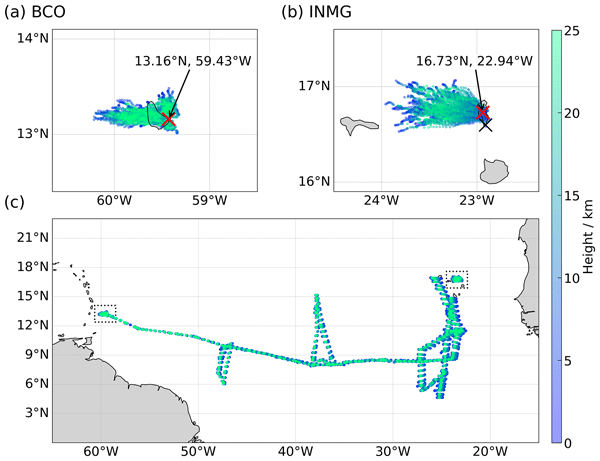
The RAPSODI dataset compiles 624 radiosonde profiles collected during the 2024 ORCESTRA campaign across the tropical Atlantic: from Cape Verde (INMG), the R/V Meteor, and the Barbados Cloud Observatory. It provides high-resolution temperature, humidity, wind, and pressure data to study convection, tropical waves, and ITCZ dynamics. Data are quality-controlled and openly available in Zarr format via IPFS.
Jianqi Zhao, Xiaoyan Ma, Johannes Quaas, and Tong Yang
Atmos. Chem. Phys., 25, 17701–17723, https://doi.org/10.5194/acp-25-17701-2025, https://doi.org/10.5194/acp-25-17701-2025, 2025
Short summary
Short summary
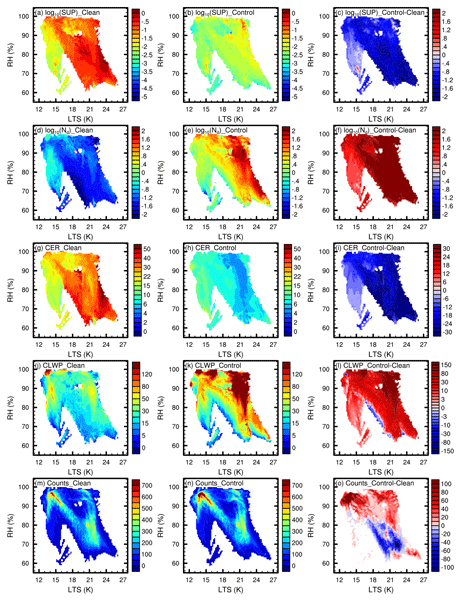
We use the chemistry version of the Weather Research and Forecasting model coupled with spectral bin microphysics to investigate how meteorological conditions impact aerosol–cloud interactions (ACI) under different pollution regimes. Our findings highlight the changes in aerosol effects on clouds and precipitation under varying thermodynamic conditions, as well as the sensitivity of ACI to meteorological conditions under different pollution regimes, which help to clarify the mechanisms behind the nonlinear variation of ACI with environmental conditions.
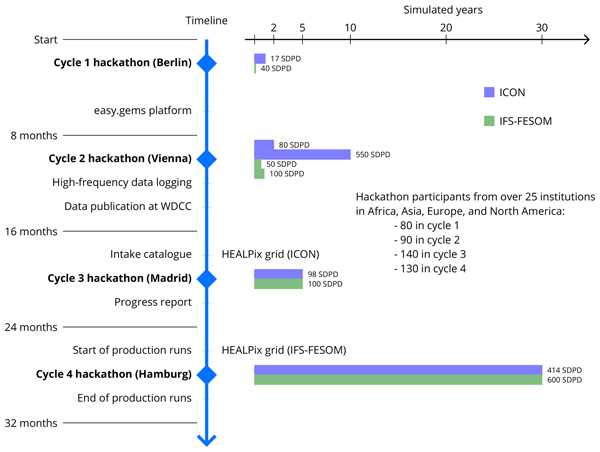
Hans Segura, Xabier Pedruzo-Bagazgoitia, Philipp Weiss, Sebastian K. Müller, Thomas Rackow, Junhong Lee, Edgar Dolores-Tesillos, Imme Benedict, Matthias Aengenheyster, Razvan Aguridan, Gabriele Arduini, Alexander J. Baker, Jiawei Bao, Swantje Bastin, Eulàlia Baulenas, Tobias Becker, Sebastian Beyer, Hendryk Bockelmann, Nils Brüggemann, Lukas Brunner, Suvarchal K. Cheedela, Sushant Das, Jasper Denissen, Ian Dragaud, Piotr Dziekan, Madeleine Ekblom, Jan Frederik Engels, Monika Esch, Richard Forbes, Claudia Frauen, Lilli Freischem, Diego García-Maroto, Philipp Geier, Paul Gierz, Álvaro González-Cervera, Katherine Grayson, Matthew Griffith, Oliver Gutjahr, Helmuth Haak, Ioan Hadade, Kerstin Haslehner, Shabeh ul Hasson, Jan Hegewald, Lukas Kluft, Aleksei Koldunov, Nikolay Koldunov, Tobias Kölling, Shunya Koseki, Sergey Kosukhin, Josh Kousal, Peter Kuma, Arjun U. Kumar, Rumeng Li, Nicolas Maury, Maximilian Meindl, Sebastian Milinski, Kristian Mogensen, Bimochan Niraula, Jakub Nowak, Divya Sri Praturi, Ulrike Proske, Dian Putrasahan, René Redler, David Santuy, Domokos Sármány, Reiner Schnur, Patrick Scholz, Dmitry Sidorenko, Dorian Spät, Birgit Sützl, Daisuke Takasuka, Adrian Tompkins, Alejandro Uribe, Mirco Valentini, Menno Veerman, Aiko Voigt, Sarah Warnau, Fabian Wachsmann, Marta Wacławczyk, Nils Wedi, Karl-Hermann Wieners, Jonathan Wille, Marius Winkler, Yuting Wu, Florian Ziemen, Janos Zimmermann, Frida A.-M. Bender, Dragana Bojovic, Sandrine Bony, Simona Bordoni, Patrice Brehmer, Marcus Dengler, Emanuel Dutra, Saliou Faye, Erich Fischer, Chiel van Heerwaarden, Cathy Hohenegger, Heikki Järvinen, Markus Jochum, Thomas Jung, Johann H. Jungclaus, Noel S. Keenlyside, Daniel Klocke, Heike Konow, Martina Klose, Szymon Malinowski, Olivia Martius, Thorsten Mauritsen, Juan Pedro Mellado, Theresa Mieslinger, Elsa Mohino, Hanna Pawłowska, Karsten Peters-von Gehlen, Abdoulaye Sarré, Pajam Sobhani, Philip Stier, Lauri Tuppi, Pier Luigi Vidale, Irina Sandu, and Bjorn Stevens
Geosci. Model Dev., 18, 7735–7761, https://doi.org/10.5194/gmd-18-7735-2025, https://doi.org/10.5194/gmd-18-7735-2025, 2025
Short summary
Short summary
The Next Generation of Earth Modeling Systems project (nextGEMS) developed two Earth system models that use horizontal grid spacing of 10 km and finer, giving more fidelity to the representation of local phenomena, globally. In its fourth cycle, nextGEMS simulated the Earth System climate over the 2020–2049 period under the SSP3-7.0 scenario. Here, we provide an overview of nextGEMS, insights into the model development, and the realism of multi-decadal, kilometer-scale simulations.
Charlotte Lange and Johannes Quaas
Atmos. Chem. Phys., 25, 10337–10359, https://doi.org/10.5194/acp-25-10337-2025, https://doi.org/10.5194/acp-25-10337-2025, 2025
Short summary
Short summary
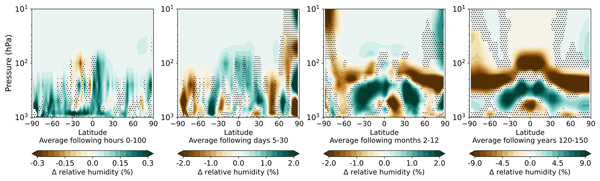
We studied how the Earth’s climate system adjusts to sudden changes in the energy budget by analysing data of four climate models, which simulated a 4 % reduction in incoming solar energy. We found rapid cooling of the atmosphere and shifts in cloud cover and atmospheric circulation patterns like land–sea circulation. Our research helps to better understand cloud adjustments, which are a major source of uncertainty in climate models. This can improve future climate predictions.
Ross J. Herbert, Andrew I. L. Williams, Philipp Weiss, Duncan Watson-Parris, Elisabeth Dingley, Daniel Klocke, and Philip Stier
Atmos. Chem. Phys., 25, 7789–7814, https://doi.org/10.5194/acp-25-7789-2025, https://doi.org/10.5194/acp-25-7789-2025, 2025
Short summary
Short summary
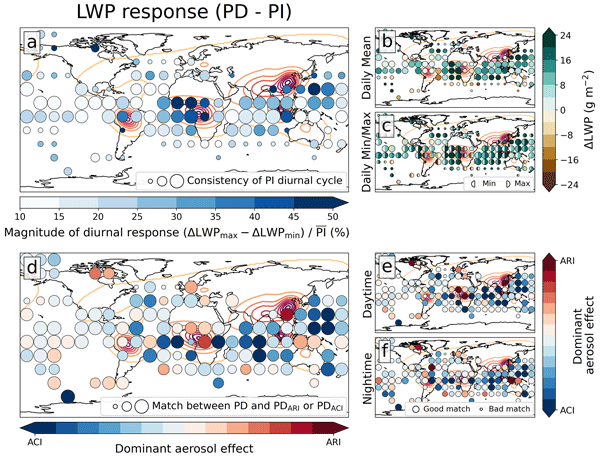
Clouds exist at scales that climate models struggle to represent, limiting our knowledge of how climate change may impact clouds. Here we use a new kilometer-scale global model representing an important step towards the necessary scale. We focus on how aerosol particles modify clouds, radiation, and precipitation. We find the magnitude and manner of responses tend to vary from region to region, highlighting the potential of global kilometer-scale simulations and a need to represent aerosols in climate models.
Goutam Choudhury, Karoline Block, Mahnoosh Haghighatnasab, Johannes Quaas, Tom Goren, and Matthias Tesche
Atmos. Chem. Phys., 25, 3841–3856, https://doi.org/10.5194/acp-25-3841-2025, https://doi.org/10.5194/acp-25-3841-2025, 2025
Short summary
Short summary
Aerosol particles in the atmosphere increase cloud reflectivity, thereby cooling the Earth. Accurate global measurements of these particles are crucial for estimating this cooling effect. This study compares and harmonizes two newly developed global aerosol datasets, offering insights for their future use and refinement. We identify pristine oceans as a significant source of uncertainty in the datasets and, therefore, in quantifying the role of aerosols in Earth's climate.
Johannes Mülmenstädt, Andrew S. Ackerman, Ann M. Fridlind, Meng Huang, Po-Lun Ma, Naser Mahfouz, Susanne E. Bauer, Susannah M. Burrows, Matthew W. Christensen, Sudhakar Dipu, Andrew Gettelman, L. Ruby Leung, Florian Tornow, Johannes Quaas, Adam C. Varble, Hailong Wang, Kai Zhang, and Youtong Zheng
Atmos. Chem. Phys., 24, 13633–13652, https://doi.org/10.5194/acp-24-13633-2024, https://doi.org/10.5194/acp-24-13633-2024, 2024
Short summary
Short summary
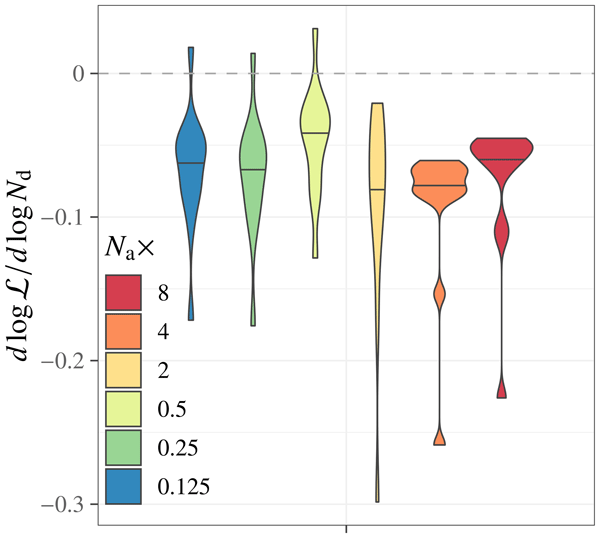
Stratocumulus clouds play a large role in Earth's climate by reflecting incoming solar energy back to space. Turbulence at stratocumulus cloud top mixes in dry, warm air, which can lead to cloud dissipation. This process is challenging for coarse-resolution global models to represent. We show that global models nevertheless agree well with our process understanding. Global models also think the process is less important for the climate than other lines of evidence have led us to conclude.
Jianqi Zhao, Xiaoyan Ma, and Johannes Quaas
EGUsphere, https://doi.org/10.5194/egusphere-2024-3662, https://doi.org/10.5194/egusphere-2024-3662, 2024
Preprint archived
Short summary
Short summary
We conduct a comparative analysis of aerosol-cloud responses in liquid-phase clouds under different aerosol and meteorological conditions based on simulations using the WRF-Chem-SBM model. Our findings highlight the different effects of aerosols on clouds and precipitation, as well as variations in the roles of aerosol and meteorological factors influencing aerosol-cloud interactions, in different environment.
Iris Papakonstantinou-Presvelou and Johannes Quaas
EGUsphere, https://doi.org/10.5194/egusphere-2024-3293, https://doi.org/10.5194/egusphere-2024-3293, 2024
Preprint archived
Short summary
Short summary
As the Arctic warms and the sea ice retreats, more open ocean is exposed, changing how aerosols impact clouds. Our previous 10-year satellite analysis found higher ice crystal numbers over sea ice than over ocean. Using model simulations and aircraft observations we identify here two factors as potential causes at colder temperatures; ice nucleating particles over sea ice and blowing snow. With further sea ice loss, these processes may weaken, leading to fewer ice particles in the future.
Sina Mehrdad, Dörthe Handorf, Ines Höschel, Khalil Karami, Johannes Quaas, Sudhakar Dipu, and Christoph Jacobi
Weather Clim. Dynam., 5, 1223–1268, https://doi.org/10.5194/wcd-5-1223-2024, https://doi.org/10.5194/wcd-5-1223-2024, 2024
Short summary
Short summary
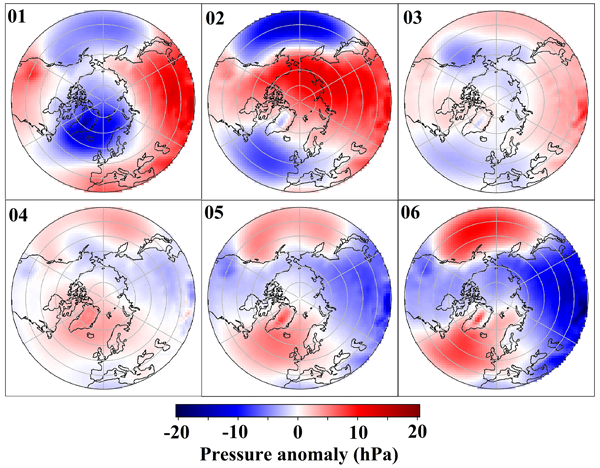
This study introduces a novel deep learning (DL) approach to analyze how regional radiative forcing in Europe impacts the Arctic climate. By integrating atmospheric poleward energy transport with DL-based clustering of atmospheric patterns and attributing anomalies to specific clusters, our method reveals crucial, nuanced interactions within the climate system, enhancing our understanding of intricate climate dynamics.
Julien Lenhardt, Johannes Quaas, and Dino Sejdinovic
Atmos. Meas. Tech., 17, 5655–5677, https://doi.org/10.5194/amt-17-5655-2024, https://doi.org/10.5194/amt-17-5655-2024, 2024
Short summary
Short summary
Clouds play a key role in the regulation of the Earth's climate. Aspects like the height of their base are of essential interest to quantify their radiative effects but remain difficult to derive from satellite data. In this study, we combine observations from the surface and satellite retrievals of cloud properties to build a robust and accurate method to retrieve the cloud base height, based on a computer vision model and ordinal regression.
Jianqi Zhao, Xiaoyan Ma, Johannes Quaas, and Hailing Jia
Atmos. Chem. Phys., 24, 9101–9118, https://doi.org/10.5194/acp-24-9101-2024, https://doi.org/10.5194/acp-24-9101-2024, 2024
Short summary
Short summary
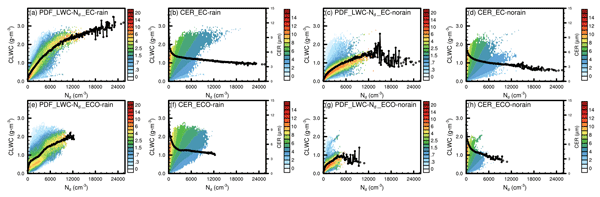
We explore aerosol–cloud interactions in liquid-phase clouds over eastern China and its adjacent ocean in winter based on the WRF-Chem–SBM model, which couples a spectral-bin microphysics scheme and an online aerosol module. Our study highlights the differences in aerosol–cloud interactions between land and ocean and between precipitation clouds and non-precipitation clouds, and it differentiates and quantifies their underlying mechanisms.
Johannes Mülmenstädt, Edward Gryspeerdt, Sudhakar Dipu, Johannes Quaas, Andrew S. Ackerman, Ann M. Fridlind, Florian Tornow, Susanne E. Bauer, Andrew Gettelman, Yi Ming, Youtong Zheng, Po-Lun Ma, Hailong Wang, Kai Zhang, Matthew W. Christensen, Adam C. Varble, L. Ruby Leung, Xiaohong Liu, David Neubauer, Daniel G. Partridge, Philip Stier, and Toshihiko Takemura
Atmos. Chem. Phys., 24, 7331–7345, https://doi.org/10.5194/acp-24-7331-2024, https://doi.org/10.5194/acp-24-7331-2024, 2024
Short summary
Short summary
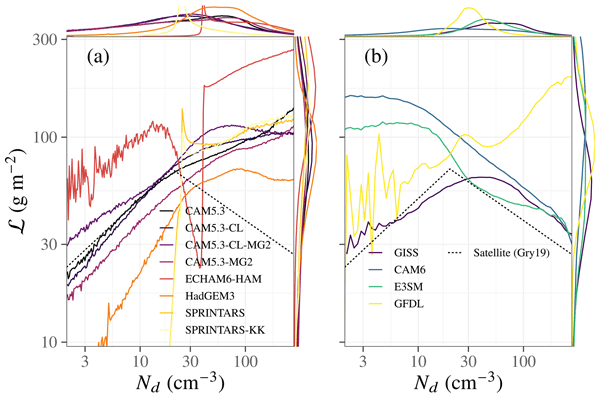
Human activities release copious amounts of small particles called aerosols into the atmosphere. These particles change how much sunlight clouds reflect to space, an important human perturbation of the climate, whose magnitude is highly uncertain. We found that the latest climate models show a negative correlation but a positive causal relationship between aerosols and cloud water. This means we need to be very careful when we interpret observational studies that can only see correlation.
Bjorn Stevens, Stefan Adami, Tariq Ali, Hartwig Anzt, Zafer Aslan, Sabine Attinger, Jaana Bäck, Johanna Baehr, Peter Bauer, Natacha Bernier, Bob Bishop, Hendryk Bockelmann, Sandrine Bony, Guy Brasseur, David N. Bresch, Sean Breyer, Gilbert Brunet, Pier Luigi Buttigieg, Junji Cao, Christelle Castet, Yafang Cheng, Ayantika Dey Choudhury, Deborah Coen, Susanne Crewell, Atish Dabholkar, Qing Dai, Francisco Doblas-Reyes, Dale Durran, Ayoub El Gaidi, Charlie Ewen, Eleftheria Exarchou, Veronika Eyring, Florencia Falkinhoff, David Farrell, Piers M. Forster, Ariane Frassoni, Claudia Frauen, Oliver Fuhrer, Shahzad Gani, Edwin Gerber, Debra Goldfarb, Jens Grieger, Nicolas Gruber, Wilco Hazeleger, Rolf Herken, Chris Hewitt, Torsten Hoefler, Huang-Hsiung Hsu, Daniela Jacob, Alexandra Jahn, Christian Jakob, Thomas Jung, Christopher Kadow, In-Sik Kang, Sarah Kang, Karthik Kashinath, Katharina Kleinen-von Königslöw, Daniel Klocke, Uta Kloenne, Milan Klöwer, Chihiro Kodama, Stefan Kollet, Tobias Kölling, Jenni Kontkanen, Steve Kopp, Michal Koran, Markku Kulmala, Hanna Lappalainen, Fakhria Latifi, Bryan Lawrence, June Yi Lee, Quentin Lejeun, Christian Lessig, Chao Li, Thomas Lippert, Jürg Luterbacher, Pekka Manninen, Jochem Marotzke, Satoshi Matsouoka, Charlotte Merchant, Peter Messmer, Gero Michel, Kristel Michielsen, Tomoki Miyakawa, Jens Müller, Ramsha Munir, Sandeep Narayanasetti, Ousmane Ndiaye, Carlos Nobre, Achim Oberg, Riko Oki, Tuba Özkan-Haller, Tim Palmer, Stan Posey, Andreas Prein, Odessa Primus, Mike Pritchard, Julie Pullen, Dian Putrasahan, Johannes Quaas, Krishnan Raghavan, Venkatachalam Ramaswamy, Markus Rapp, Florian Rauser, Markus Reichstein, Aromar Revi, Sonakshi Saluja, Masaki Satoh, Vera Schemann, Sebastian Schemm, Christina Schnadt Poberaj, Thomas Schulthess, Cath Senior, Jagadish Shukla, Manmeet Singh, Julia Slingo, Adam Sobel, Silvina Solman, Jenna Spitzer, Philip Stier, Thomas Stocker, Sarah Strock, Hang Su, Petteri Taalas, John Taylor, Susann Tegtmeier, Georg Teutsch, Adrian Tompkins, Uwe Ulbrich, Pier-Luigi Vidale, Chien-Ming Wu, Hao Xu, Najibullah Zaki, Laure Zanna, Tianjun Zhou, and Florian Ziemen
Earth Syst. Sci. Data, 16, 2113–2122, https://doi.org/10.5194/essd-16-2113-2024, https://doi.org/10.5194/essd-16-2113-2024, 2024
Short summary
Short summary
To manage Earth in the Anthropocene, new tools, new institutions, and new forms of international cooperation will be required. Earth Virtualization Engines is proposed as an international federation of centers of excellence to empower all people to respond to the immense and urgent challenges posed by climate change.
Sabine Doktorowski, Jan Kretzschmar, Johannes Quaas, Marc Salzmann, and Odran Sourdeval
Geosci. Model Dev., 17, 3099–3110, https://doi.org/10.5194/gmd-17-3099-2024, https://doi.org/10.5194/gmd-17-3099-2024, 2024
Short summary
Short summary
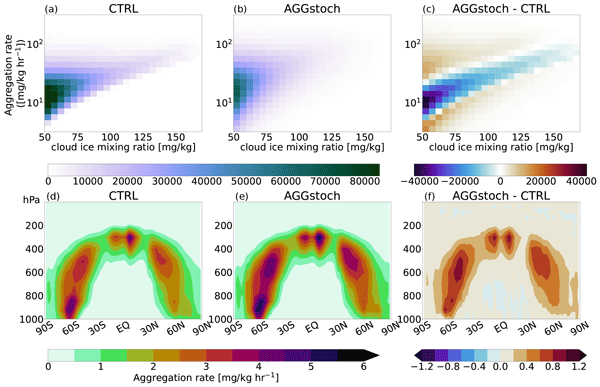
Especially over the midlatitudes, precipitation is mainly formed via the ice phase. In this study we focus on the initial snow formation process in the ICON-AES, the aggregation process. We use a stochastical approach for the aggregation parameterization and investigate the influence in the ICON-AES. Therefore, a distribution function of cloud ice is created, which is evaluated with satellite data. The new approach leads to cloud ice loss and an improvement in the process rate bias.
Karoline Block, Mahnoosh Haghighatnasab, Daniel G. Partridge, Philip Stier, and Johannes Quaas
Earth Syst. Sci. Data, 16, 443–470, https://doi.org/10.5194/essd-16-443-2024, https://doi.org/10.5194/essd-16-443-2024, 2024
Short summary
Short summary
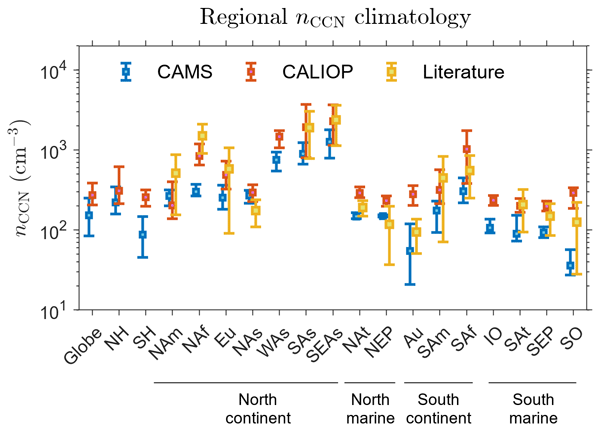
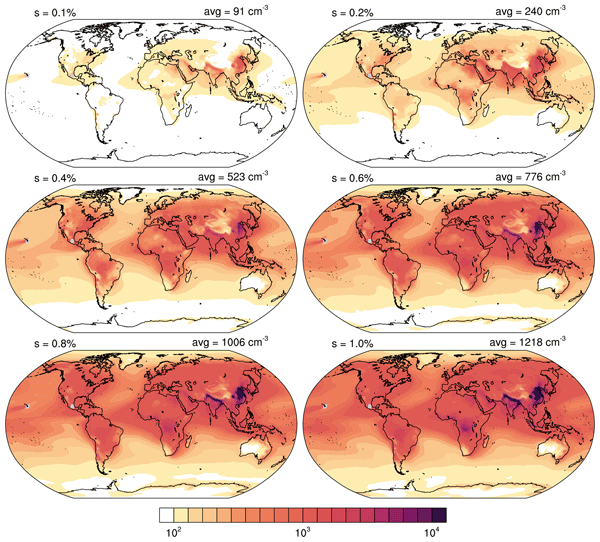
Aerosols being able to act as condensation nuclei for cloud droplets (CCNs) are a key element in cloud formation but very difficult to determine. In this study we present a new global vertically resolved CCN dataset for various humidity conditions and aerosols. It is obtained using an atmospheric model (CAMS reanalysis) that is fed by satellite observations of light extinction (AOD). We investigate and evaluate the abundance of CCNs in the atmosphere and their temporal and spatial occurrence.
Abhiraj Bishnoi, Olaf Stein, Catrin I. Meyer, René Redler, Norbert Eicker, Helmuth Haak, Lars Hoffmann, Daniel Klocke, Luis Kornblueh, and Estela Suarez
Geosci. Model Dev., 17, 261–273, https://doi.org/10.5194/gmd-17-261-2024, https://doi.org/10.5194/gmd-17-261-2024, 2024
Short summary
Short summary
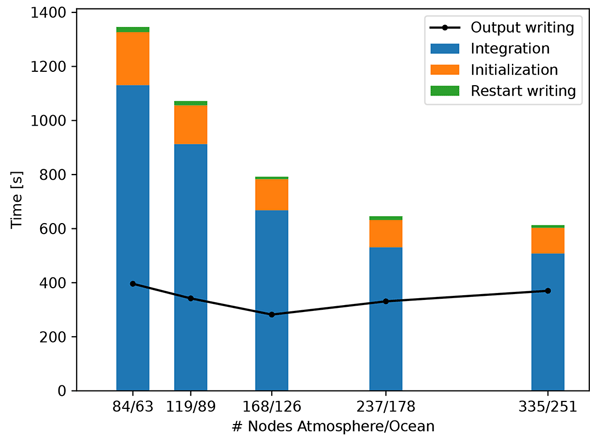
We enabled the weather and climate model ICON to run in a high-resolution coupled atmosphere–ocean setup on the JUWELS supercomputer, where the ocean and the model I/O runs on the CPU Cluster, while the atmosphere is running simultaneously on GPUs. Compared to a simulation performed on CPUs only, our approach reduces energy consumption by 45 % with comparable runtimes. The experiments serve as preparation for efficient computing of kilometer-scale climate models on future supercomputing systems.
Olivia Linke, Johannes Quaas, Finja Baumer, Sebastian Becker, Jan Chylik, Sandro Dahlke, André Ehrlich, Dörthe Handorf, Christoph Jacobi, Heike Kalesse-Los, Luca Lelli, Sina Mehrdad, Roel A. J. Neggers, Johannes Riebold, Pablo Saavedra Garfias, Niklas Schnierstein, Matthew D. Shupe, Chris Smith, Gunnar Spreen, Baptiste Verneuil, Kameswara S. Vinjamuri, Marco Vountas, and Manfred Wendisch
Atmos. Chem. Phys., 23, 9963–9992, https://doi.org/10.5194/acp-23-9963-2023, https://doi.org/10.5194/acp-23-9963-2023, 2023
Short summary
Short summary
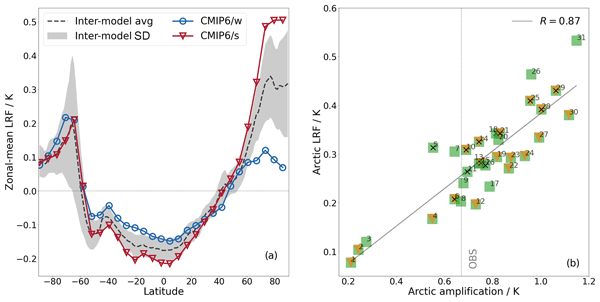
Lapse rate feedback (LRF) is a major driver of the Arctic amplification (AA) of climate change. It arises because the warming is stronger at the surface than aloft. Several processes can affect the LRF in the Arctic, such as the omnipresent temperature inversion. Here, we compare multimodel climate simulations to Arctic-based observations from a large research consortium to broaden our understanding of these processes, find synergy among them, and constrain the Arctic LRF and AA.
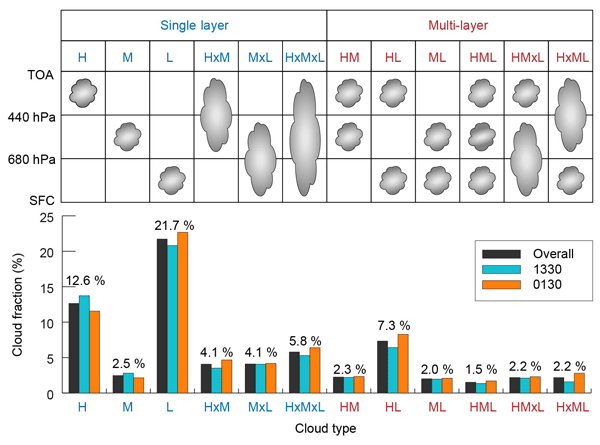
Hao Luo, Johannes Quaas, and Yong Han
Atmos. Chem. Phys., 23, 8169–8186, https://doi.org/10.5194/acp-23-8169-2023, https://doi.org/10.5194/acp-23-8169-2023, 2023
Short summary
Short summary
Clouds exhibit a wide range of vertical structures with varying microphysical and radiative properties. We show a global survey of spatial distribution, vertical extent and radiative effect of various classified cloud vertical structures using joint satellite observations from the new CCCM datasets during 2007–2010. Moreover, the long-term trends in CVSs are investigated based on different CMIP6 future scenarios to capture the cloud variations with different, increasing anthropogenic forcings.
Samuel Kwakye, Heike Kalesse-Los, Maximilian Maahn, Patric Seifert, Roel van Klink, Christian Wirth, and Johannes Quaas
Atmos. Meas. Tech. Discuss., https://doi.org/10.5194/amt-2023-69, https://doi.org/10.5194/amt-2023-69, 2023
Publication in AMT not foreseen
Short summary
Short summary
Insect numbers in the atmosphere can be calculated using polarimetric weather radar but they have to be identified and separated from other echoes, especially weather phenomena. Here, the separation is demonstrated using three machine-learning algorithms and insect count data from suction traps and the nature of radar measurements of different radar echoes is revealed. Random forest is the best separating algorithm and insect echoes radar measurements are distinct.
Jianqi Zhao, Xiaoyan Ma, Johannes Quaas, and Hailing Jia
EGUsphere, https://doi.org/10.5194/egusphere-2023-331, https://doi.org/10.5194/egusphere-2023-331, 2023
Preprint archived
Short summary
Short summary
We improve the ability of WRF-Chem model to simulate aerosol-cloud physical and chemical processes by coupling a spectral-bin cloud microphysics scheme and online aerosol module, and consequently explore the aerosol-cloud interactions over eastern China and its adjacent ocean in boreal winter. Our study highlights the differences in aerosol-cloud interactions between land and ocean, precipitation clouds and non-precipitation clouds, and differentiates and quantifies their underlying mechanisms.
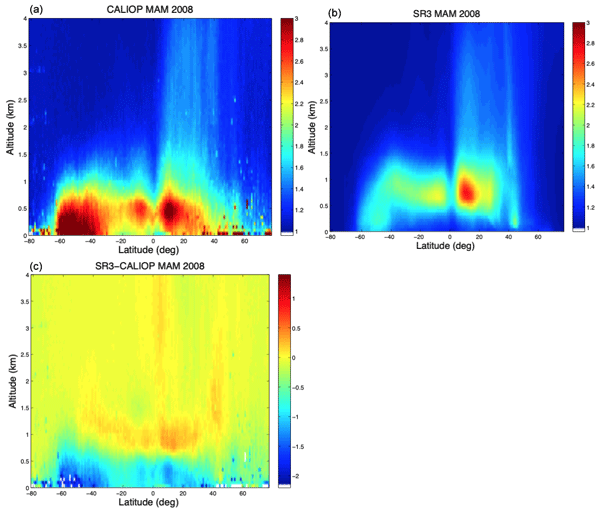
Marine Bonazzola, Hélène Chepfer, Po-Lun Ma, Johannes Quaas, David M. Winker, Artem Feofilov, and Nick Schutgens
Geosci. Model Dev., 16, 1359–1377, https://doi.org/10.5194/gmd-16-1359-2023, https://doi.org/10.5194/gmd-16-1359-2023, 2023
Short summary
Short summary
Aerosol has a large impact on climate. Using a lidar aerosol simulator ensures consistent comparisons between modeled and observed aerosol. We present a lidar aerosol simulator that applies a cloud masking and an aerosol detection threshold. We estimate the lidar signals that would be observed at 532 nm by the Cloud-Aerosol Lidar with Orthogonal Polarization overflying the atmosphere predicted by a climate model. Our comparison at the seasonal timescale shows a discrepancy in the Southern Ocean.
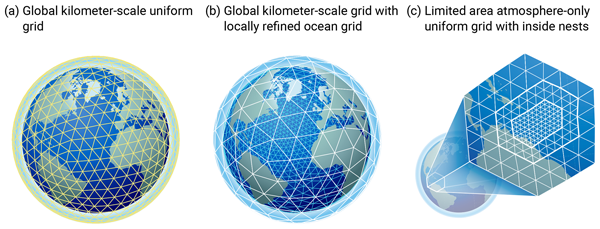
Cathy Hohenegger, Peter Korn, Leonidas Linardakis, René Redler, Reiner Schnur, Panagiotis Adamidis, Jiawei Bao, Swantje Bastin, Milad Behravesh, Martin Bergemann, Joachim Biercamp, Hendryk Bockelmann, Renate Brokopf, Nils Brüggemann, Lucas Casaroli, Fatemeh Chegini, George Datseris, Monika Esch, Geet George, Marco Giorgetta, Oliver Gutjahr, Helmuth Haak, Moritz Hanke, Tatiana Ilyina, Thomas Jahns, Johann Jungclaus, Marcel Kern, Daniel Klocke, Lukas Kluft, Tobias Kölling, Luis Kornblueh, Sergey Kosukhin, Clarissa Kroll, Junhong Lee, Thorsten Mauritsen, Carolin Mehlmann, Theresa Mieslinger, Ann Kristin Naumann, Laura Paccini, Angel Peinado, Divya Sri Praturi, Dian Putrasahan, Sebastian Rast, Thomas Riddick, Niklas Roeber, Hauke Schmidt, Uwe Schulzweida, Florian Schütte, Hans Segura, Radomyra Shevchenko, Vikram Singh, Mia Specht, Claudia Christine Stephan, Jin-Song von Storch, Raphaela Vogel, Christian Wengel, Marius Winkler, Florian Ziemen, Jochem Marotzke, and Bjorn Stevens
Geosci. Model Dev., 16, 779–811, https://doi.org/10.5194/gmd-16-779-2023, https://doi.org/10.5194/gmd-16-779-2023, 2023
Short summary
Short summary
Models of the Earth system used to understand climate and predict its change typically employ a grid spacing of about 100 km. Yet, many atmospheric and oceanic processes occur on much smaller scales. In this study, we present a new model configuration designed for the simulation of the components of the Earth system and their interactions at kilometer and smaller scales, allowing an explicit representation of the main drivers of the flow of energy and matter by solving the underlying equations.
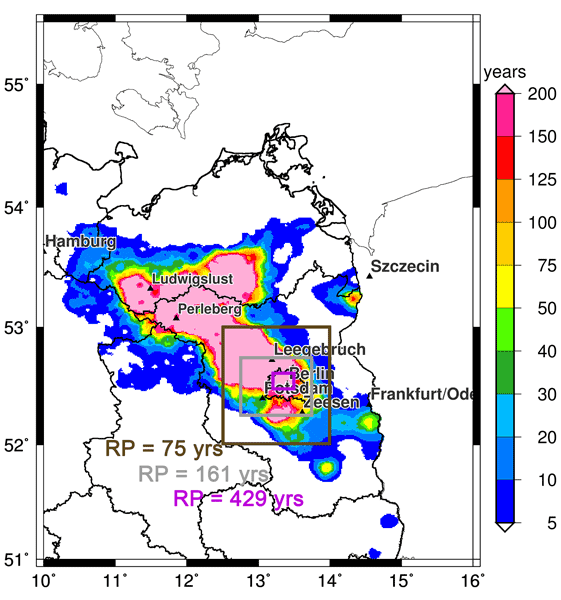
Alberto Caldas-Alvarez, Markus Augenstein, Georgy Ayzel, Klemens Barfus, Ribu Cherian, Lisa Dillenardt, Felix Fauer, Hendrik Feldmann, Maik Heistermann, Alexia Karwat, Frank Kaspar, Heidi Kreibich, Etor Emanuel Lucio-Eceiza, Edmund P. Meredith, Susanna Mohr, Deborah Niermann, Stephan Pfahl, Florian Ruff, Henning W. Rust, Lukas Schoppa, Thomas Schwitalla, Stella Steidl, Annegret H. Thieken, Jordis S. Tradowsky, Volker Wulfmeyer, and Johannes Quaas
Nat. Hazards Earth Syst. Sci., 22, 3701–3724, https://doi.org/10.5194/nhess-22-3701-2022, https://doi.org/10.5194/nhess-22-3701-2022, 2022
Short summary
Short summary
In a warming climate, extreme precipitation events are becoming more frequent. To advance our knowledge on such phenomena, we present a multidisciplinary analysis of a selected case study that took place on 29 June 2017 in the Berlin metropolitan area. Our analysis provides evidence of the extremeness of the case from the atmospheric and the impacts perspectives as well as new insights on the physical mechanisms of the event at the meteorological and climate scales.
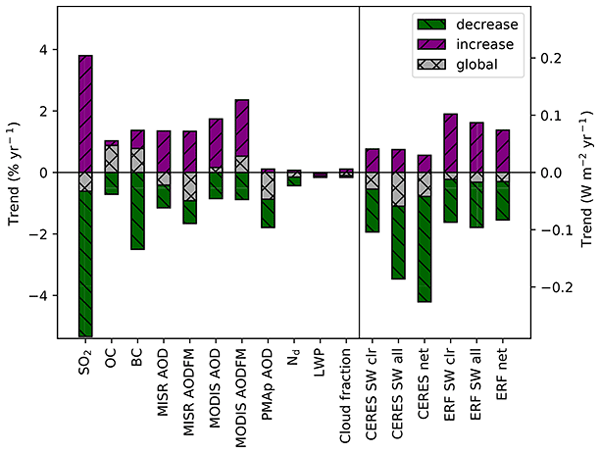
Johannes Quaas, Hailing Jia, Chris Smith, Anna Lea Albright, Wenche Aas, Nicolas Bellouin, Olivier Boucher, Marie Doutriaux-Boucher, Piers M. Forster, Daniel Grosvenor, Stuart Jenkins, Zbigniew Klimont, Norman G. Loeb, Xiaoyan Ma, Vaishali Naik, Fabien Paulot, Philip Stier, Martin Wild, Gunnar Myhre, and Michael Schulz
Atmos. Chem. Phys., 22, 12221–12239, https://doi.org/10.5194/acp-22-12221-2022, https://doi.org/10.5194/acp-22-12221-2022, 2022
Short summary
Short summary
Pollution particles cool climate and offset part of the global warming. However, they are washed out by rain and thus their effect responds quickly to changes in emissions. We show multiple datasets to demonstrate that aerosol emissions and their concentrations declined in many regions influenced by human emissions, as did the effects on clouds. Consequently, the cooling impact on the Earth energy budget became smaller. This change in trend implies a relative warming.
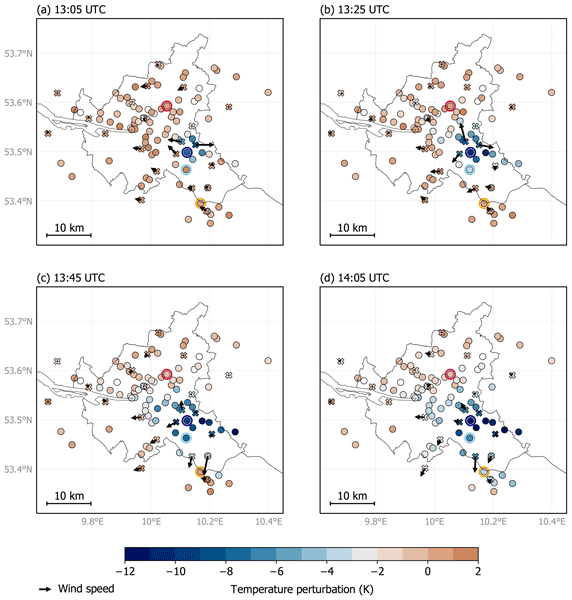
Bastian Kirsch, Cathy Hohenegger, Daniel Klocke, Rainer Senke, Michael Offermann, and Felix Ament
Earth Syst. Sci. Data, 14, 3531–3548, https://doi.org/10.5194/essd-14-3531-2022, https://doi.org/10.5194/essd-14-3531-2022, 2022
Short summary
Short summary
Conventional observation networks are too coarse to resolve the horizontal structure of kilometer-scale atmospheric processes. We present the FESST@HH field experiment that took place in Hamburg (Germany) during summer 2020 and featured a dense network of 103 custom-built, low-cost weather stations. The data set is capable of providing new insights into the structure of convective cold pools and the nocturnal urban heat island and variations of local temperature fluctuations.
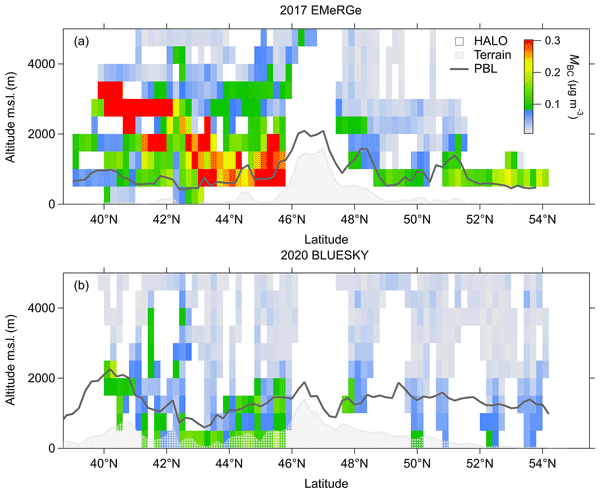
Ovid O. Krüger, Bruna A. Holanda, Sourangsu Chowdhury, Andrea Pozzer, David Walter, Christopher Pöhlker, Maria Dolores Andrés Hernández, John P. Burrows, Christiane Voigt, Jos Lelieveld, Johannes Quaas, Ulrich Pöschl, and Mira L. Pöhlker
Atmos. Chem. Phys., 22, 8683–8699, https://doi.org/10.5194/acp-22-8683-2022, https://doi.org/10.5194/acp-22-8683-2022, 2022
Short summary
Short summary
The abrupt reduction in human activities during the first COVID-19 lockdown created unprecedented atmospheric conditions. We took the opportunity to quantify changes in black carbon (BC) as a major anthropogenic air pollutant. Therefore, we measured BC on board a research aircraft over Europe during the lockdown and compared the results to measurements from 2017. With model simulations we account for different weather conditions and find a lockdown-related decrease in BC of 41 %.
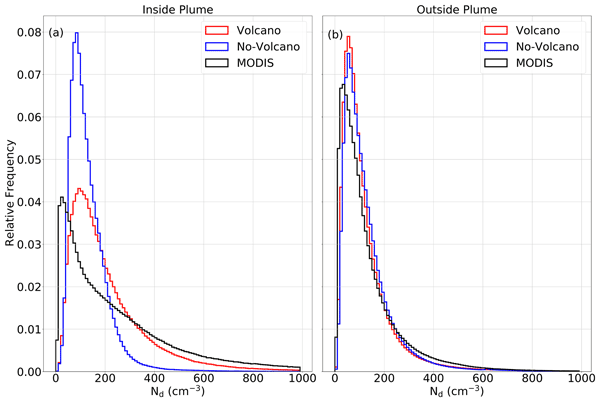
Mahnoosh Haghighatnasab, Jan Kretzschmar, Karoline Block, and Johannes Quaas
Atmos. Chem. Phys., 22, 8457–8472, https://doi.org/10.5194/acp-22-8457-2022, https://doi.org/10.5194/acp-22-8457-2022, 2022
Short summary
Short summary
The impact of aerosols emitted by the Holuhraun volcanic eruption on liquid clouds was assessed from a pair of cloud-system-resolving simulations along with satellite retrievals. Inside and outside the plume were compared in terms of their statistical distributions. Analyses indicated enhancement for cloud droplet number concentration inside the volcano plume in model simulations and satellite retrievals, while there was on average a small effect on both liquid water path and cloud fraction.
Hailing Jia, Johannes Quaas, Edward Gryspeerdt, Christoph Böhm, and Odran Sourdeval
Atmos. Chem. Phys., 22, 7353–7372, https://doi.org/10.5194/acp-22-7353-2022, https://doi.org/10.5194/acp-22-7353-2022, 2022
Short summary
Short summary
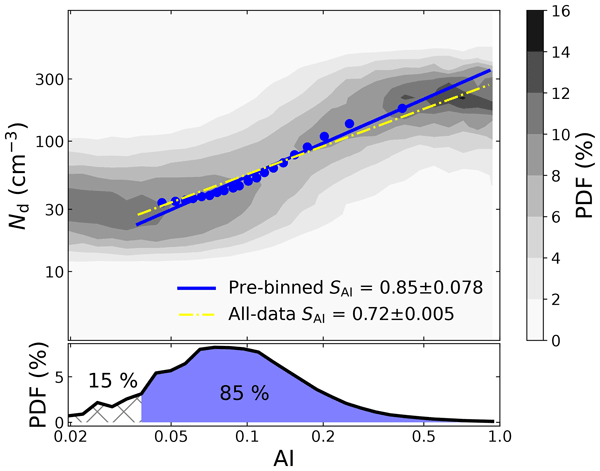
Aerosol–cloud interaction is the most uncertain component of the anthropogenic forcing of the climate. By combining satellite and reanalysis data, we show that the strength of the Twomey effect (S) increases remarkably with vertical velocity. Both the confounding effect of aerosol–precipitation interaction and the lack of vertical co-location between aerosol and cloud are found to overestimate S, whereas the retrieval biases in aerosol and cloud appear to underestimate S.
Po-Lun Ma, Bryce E. Harrop, Vincent E. Larson, Richard B. Neale, Andrew Gettelman, Hugh Morrison, Hailong Wang, Kai Zhang, Stephen A. Klein, Mark D. Zelinka, Yuying Zhang, Yun Qian, Jin-Ho Yoon, Christopher R. Jones, Meng Huang, Sheng-Lun Tai, Balwinder Singh, Peter A. Bogenschutz, Xue Zheng, Wuyin Lin, Johannes Quaas, Hélène Chepfer, Michael A. Brunke, Xubin Zeng, Johannes Mülmenstädt, Samson Hagos, Zhibo Zhang, Hua Song, Xiaohong Liu, Michael S. Pritchard, Hui Wan, Jingyu Wang, Qi Tang, Peter M. Caldwell, Jiwen Fan, Larry K. Berg, Jerome D. Fast, Mark A. Taylor, Jean-Christophe Golaz, Shaocheng Xie, Philip J. Rasch, and L. Ruby Leung
Geosci. Model Dev., 15, 2881–2916, https://doi.org/10.5194/gmd-15-2881-2022, https://doi.org/10.5194/gmd-15-2881-2022, 2022
Short summary
Short summary
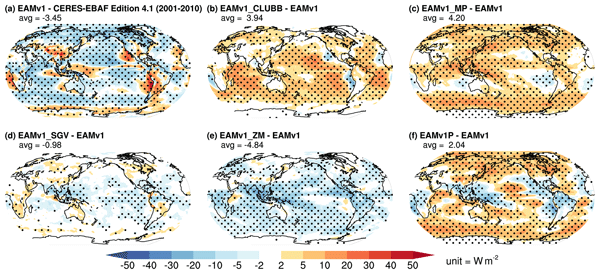
An alternative set of parameters for E3SM Atmospheric Model version 1 has been developed based on a tuning strategy that focuses on clouds. When clouds in every regime are improved, other aspects of the model are also improved, even though they are not the direct targets for calibration. The recalibrated model shows a lower sensitivity to anthropogenic aerosols and surface warming, suggesting potential improvements to the simulated climate in the past and future.

Matthew W. Christensen, Andrew Gettelman, Jan Cermak, Guy Dagan, Michael Diamond, Alyson Douglas, Graham Feingold, Franziska Glassmeier, Tom Goren, Daniel P. Grosvenor, Edward Gryspeerdt, Ralph Kahn, Zhanqing Li, Po-Lun Ma, Florent Malavelle, Isabel L. McCoy, Daniel T. McCoy, Greg McFarquhar, Johannes Mülmenstädt, Sandip Pal, Anna Possner, Adam Povey, Johannes Quaas, Daniel Rosenfeld, Anja Schmidt, Roland Schrödner, Armin Sorooshian, Philip Stier, Velle Toll, Duncan Watson-Parris, Robert Wood, Mingxi Yang, and Tianle Yuan
Atmos. Chem. Phys., 22, 641–674, https://doi.org/10.5194/acp-22-641-2022, https://doi.org/10.5194/acp-22-641-2022, 2022
Short summary
Short summary
Trace gases and aerosols (tiny airborne particles) are released from a variety of point sources around the globe. Examples include volcanoes, industrial chimneys, forest fires, and ship stacks. These sources provide opportunistic experiments with which to quantify the role of aerosols in modifying cloud properties. We review the current state of understanding on the influence of aerosol on climate built from the wide range of natural and anthropogenic laboratories investigated in recent decades.
Silke Trömel, Clemens Simmer, Ulrich Blahak, Armin Blanke, Sabine Doktorowski, Florian Ewald, Michael Frech, Mathias Gergely, Martin Hagen, Tijana Janjic, Heike Kalesse-Los, Stefan Kneifel, Christoph Knote, Jana Mendrok, Manuel Moser, Gregor Köcher, Kai Mühlbauer, Alexander Myagkov, Velibor Pejcic, Patric Seifert, Prabhakar Shrestha, Audrey Teisseire, Leonie von Terzi, Eleni Tetoni, Teresa Vogl, Christiane Voigt, Yuefei Zeng, Tobias Zinner, and Johannes Quaas
Atmos. Chem. Phys., 21, 17291–17314, https://doi.org/10.5194/acp-21-17291-2021, https://doi.org/10.5194/acp-21-17291-2021, 2021
Short summary
Short summary
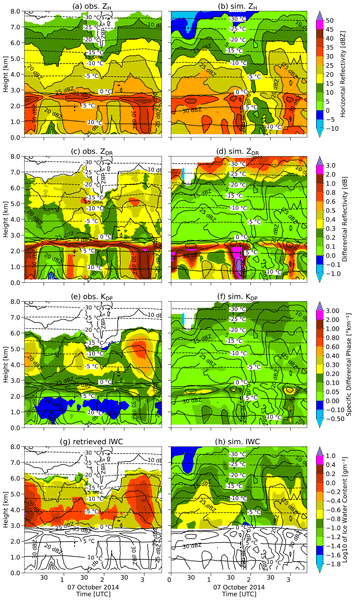
The article introduces the ACP readership to ongoing research in Germany on cloud- and precipitation-related process information inherent in polarimetric radar measurements, outlines pathways to inform atmospheric models with radar-based information, and points to remaining challenges towards an improved fusion of radar polarimetry and atmospheric modelling.
Cited articles
Ackerman, S. A. and Frey, R.: MODIS Atmosphere L2 Cloud Mask Product (35_L2), NASA MODIS Adaptive Processing System, Goddard Space Flight Center, https://doi.org/10.5067/MODIS/MOD35_L2.061, 2017.
Atito, S., Awais, M., and Kittler, J.: Sit: Self-supervised vision transformer, arXiv [preprint], https://doi.org/10.48550/arXiv.2104.03602, 2021.
Baum, B. A., Menzel, W. P., Frey, R. A., Tobin, D. C., Holz, R. E., Ackerman, S. A., Heidinger, A. K., and Yang, P.: MODIS Cloud-Top Property Refinements for Collection 6, J. Appl. Meteorol. Clim., 51, 1145–1163, https://doi.org/10.1175/JAMC-D-11-0203.1, 2012.
Bony, S., Semie, A., Kramer, R. J., Soden, B., Tompkins, A. M., and Emanuel, K. A.: Observed modulation of the tropical radiation budget by deep convective organization and lower-tropospheric stability, AGU Adv., Vol. 1, https://doi.org/10.1029/2019av000155, 2020.
Boucher, O., Randall, D., Artaxo, P., Bretherton, C., Feingold, G., Forster, P., Kerminen, V.-M., Kondo, Y., Liao, H., Lohmann, U., Rasch, P., Satheesh, S. K., Sherwood, S., Stevens, B., and Zhang, X. Y.: Clouds and aerosols, Climate Change 2013: The Physical Science Basis, Contribution of Working Group I to the Fifth Assessment Report of the Intergovernmental Panel on Climate Change, 571–657, https://doi.org/10.1017/CBO9781107415324.016, 2013.
Breiman, L.: Random Forests, Mach. Learn., 45, 5–32, https://doi.org/10.1023/A:1010933404324, 2001.
Carslaw, K.: Aerosols and Climate, 1st edn., Elsevier, ISBN: 9780128197660, 2022.
Cesana, G., Del Genio, A. D., and Chepfer, H.: The Cumulus And Stratocumulus CloudSat-CALIPSO Dataset (CASCCAD), Earth Syst. Sci. Data, 11, 1745–1764, https://doi.org/10.5194/essd-11-1745-2019, 2019.
Chawla, N. V., Bowyer, K. W., Hall, L. O., and Kegelmeyer, W. P.: Smote: synthetic minority over-sampling technique, J. Artif. Intell. Res., 16, 321–357, https://doi.org/10.1613/jair.953, 2002.
Chen, T., Kornblith, S., Norouzi, M., and Hinton, G.: A simple framework for contrastive learning of visual representations, arXiv [preprint], https://doi.org/10.48550/arXiv.2002.05709, 2020.
Deng, J., Dong, W., Socher, R., Li, L., Li, K., and Fei-Fei, L.: Imagenet: A large-scale hierarchical image database, in: 2009 IEEE conference on computer vision and pattern recognition, Miami, FL, USA, 248–255, https://doi.org/10.1109/CVPR.2009.5206848, 2009.
Dhuria, H. L. and Kyle, H. L.: Cloud Types and the Tropical Earth Radiation Budget, J. Climate, 3, 1409–1434, https://doi.org/10.1175/1520-0442(1990)003<1409:CTATTE>2.0.CO;2, 1990.
Dosovitskiy, A., Beyer, L., Kolesnikov, A., Weissenborn, D., Zhai, X., Unterthiner, T., Dehghani, M., Minderer, M., Heigold, G., Gelly, S., Uszkoreit, J., and Houlsby, N.: An image is worth 16×16 words: Transformers for image recognition at scale, arXiv [preprint], https://doi.org/10.48550/arXiv.2010.11929, 2020.
Forster, P., Storelvmo, T., Armour, K., Collins, W., Dufresne, J.-L., Frame, D., Lunt, D. J., Mauritsen, T., Palmer, M. D., Watanabe, M., Wild, M., and Zhang, H.: The Earth's Energy Budget, Climate Feedbacks, and Climate Sensitivity, in: Climate Change 2021: The Physical Science Basis. Contribution of Working Group I to the Sixth Assessment Report of the Intergovernmental Panel on Climate Change, edited by: Masson-Delmotte, V., Zhai, P., Pirani, A., Connors, S. L., Péan, C., Berger, S., Caud, N., Chen, Y., Goldfarb, L., Gomis, M. I., Huang, M., Leitzell, K., Lonnoy, E., Matthews, J. B. R., Maycock, T. K., Waterfield, T., Yelekçi, O., Yu, R., and Zhou, B., Cambridge University Press, Cambridge, United Kingdom and New York, NY, USA, 923–1054, https://doi.org/10.1017/9781009157896.009, 2021.
García, V., Sánchez, J. S., and Mollineda, R. A.: On the effectiveness of preprocessing methods when dealing with different levels of class imbalance, Knowl.-Based Syst., 25, 13–21, https://doi.org/10.1016/j.knosys.2011.06.013, 2012.
Hartmann, D. L., Ockert-Bell, M. E., and Michelsen, M. L.: The Effect of Cloud Type on Earth's Energy Balance: Global Analysis, J. Climate, 5, 1281–1304, https://doi.org/10.1175/1520-0442(1992)005<1281:TEOCTO>2.0.CO;2, 1992.
Hendrycks, D. and Gimpel, K.: Gaussian error linear units (gelus), arXiv [preprint], https://doi.org/10.48550/arXiv.1606.08415, 2016.
Hinton, G. E.: Connectionist learning procedures, Artif. Intell., 40, 185–234, https://doi.org/10.1016/0004-3702(89)90049-0, 1989.
Hohenegger, C., Korn, P., Linardakis, L., Redler, R., Schnur, R., Adamidis, P., Bao, J., Bastin, S., Behravesh, M., Bergemann, M., Biercamp, J., Bockelmann, H., Brokopf, R., Brüggemann, N., Casaroli, L., Chegini, F., Datseris, G., Esch, M., George, G., Giorgetta, M., Gutjahr, O., Haak, H., Hanke, M., Ilyina, T., Jahns, T., Jungclaus, J., Kern, M., Klocke, D., Kluft, L., Kölling, T., Kornblueh, L., Kosukhin, S., Kroll, C., Lee, J., Mauritsen, T., Mehlmann, C., Mieslinger, T., Naumann, A. K., Paccini, L., Peinado, A., Praturi, D. S., Putrasahan, D., Rast, S., Riddick, T., Roeber, N., Schmidt, H., Schulzweida, U., Schütte, F., Segura, H., Shevchenko, R., Singh, V., Specht, M., Stephan, C. C., von Storch, J.-S., Vogel, R., Wengel, C., Winkler, M., Ziemen, F., Marotzke, J., and Stevens, B.: ICON-Sapphire: simulating the components of the Earth system and their interactions at kilometer and subkilometer scales, Geosci. Model Dev., 16, 779–811, https://doi.org/10.5194/gmd-16-779-2023, 2023.
Howard, L.: Essay on the modifications of clouds, John Churchill & Sons, London, 64 pp., ISBN 9781139096966, https://doi.org/10.1017/CBO9781139096966, 1803.
Kaps, A., Lauer, A., Camps-Valls, G., Gentine, P., Gómez-Chova, L., and Eyring, V.: Machine-Learned Cloud Classes From Satellite Data for Process-Oriented Climate Model Evaluation, IEEE T. Geosci. Remote, 61, 1–15, 4100515, https://doi.org/10.1109/TGRS.2023.3237008, 2023.
Kuma, P., Bender, F. A.-M., Schuddeboom, A., McDonald, A. J., and Seland, Ø.: Machine learning of cloud types in satellite observations and climate models, Atmos. Chem. Phys., 23, 523–549, https://doi.org/10.5194/acp-23-523-2023, 2023.
Kurihana, T., Moyer, E., Willett, R., Gilton, D.y, and Foster, I.: Data-Driven Cloud Clustering via a Rotationally Invariant Autoencoder, IEEE T. Geosci. Remote, 60, 1–25, 4103325, https://doi.org/10.1109/TGRS.2021.3098008, 2022.
LeCun, Y. and Bengio, Y.: Convolutional networks for images, speech, and time series, in: The Handbook of Brain Theory and Neural Networks, MIT Press, Cambridge, MA, USA, 255–258, ISBN 0262511029, 1998.
LeCun, Y., Jackel, L. D., Boser, B., Denker, J. S., Graf, H. P., Guyon, I., Henderson, D., Howard, R. E., and Hubbard, W.: Handwritten digit recognition: Applications of neural network chips and automatic learning, IEEE Commun. Mag., 27, 41–46, https://doi.org/10.1109/35.41400, 1989.
Lemaitre, G., Nogueira, F., and Aridas, C., K.: Imbalanced-learn: A Python Toolbox to Tackle the Curse of Imbalanced Datasets in Machine Learning, J. Mach. Learn. Res., 18, 1–5, 2017.
Lenhardt, J., Quaas, J., and Sejdinovic, D.: Marine cloud base height retrieval from MODIS cloud properties using machine learning, Atmos. Meas. Tech., 17, 5655–5677, https://doi.org/10.5194/amt-17-5655-2024, 2024a.
Lenhardt, J., Quaas, J., Sejdinovic, D., and Klocke, D.: CloudViT – Method code and data for the article “CloudViT: exploring cloud type classification with vision transformers in global satellite data”, Zenodo [code and data set], https://doi.org/10.5281/zenodo.12731287, 2024b.
Luo, H., Quaas, J., and Han, Y.: Examining cloud vertical structure and radiative effects from satellite retrievals and evaluation of CMIP6 scenarios, Atmos. Chem. Phys., 23, 8169–8186, https://doi.org/10.5194/acp-23-8169-2023, 2023.
Luo, H., Quaas, J., and Han, J.: Diurnally asymmetric cloud cover trends amplify greenhouse warming, Science Advances, 10, 25, https://doi.org/10.1126/sciadv.ado5179, 2024.
McCoy, I. L., McCoy, D. T., Wood, R., Zuidema, P., and Bender, F. A. M.: The role of mesoscale cloud morphology in the shortwave cloud feedback, Geophys. Res. Lett., 50, 2, https://doi.org/10.1029/2022gl101042, 2023.
Met Office: MIDAS: Global Marine Meteorological Observations Data, NCAS British Atmospheric Data Centre [data set], https://catalogue.ceda.ac.uk/uuid/77910bcec71c820d4c92f40d3ed3f249 (last access: 21 April 2026), 2006.
Met Office: LAND SYNOP reports from land stations collected by the Met Office MetDB System, NCAS British Atmospheric Data Centre [data set], https://catalogue.ceda.ac.uk/uuid/9f80d42106ba708f92ada730ba321831 (last access: 21 April 2026), 2008.
Muhlbauer, A., McCoy, I. L., and Wood, R.: Climatology of stratocumulus cloud morphologies: microphysical properties and radiative effects, Atmos. Chem. Phys., 14, 6695–6716, https://doi.org/10.5194/acp-14-6695-2014, 2014.
Oreopoulos, L., Cho, N., and Lee, D.: New insights about cloud vertical structure from CloudSat and CALIPSO observations, J. Geophys. Res.-Atmos., 122, 9280–9300, https://doi.org/10.1002/2017JD026629, 2017.
Paszke, A., Gross, S., Massa, F., Lerer, A., Bradbury, J., Chanan, G., Killeen, T., Lin, Z., Gimelshein, N., Antiga, L., Desmaison, A., Kopf, A., Yang, E., DeVito, Z., Raison, M., Tejani, A., Chilamkurthy, S., Steiner, B., Fang, L., Bai, J., and Chintala, S.: PyTorch: An Imperative Style, High-Performance Deep Learning Library, in Advances in Neural Information Processing Systems 32 (NeurIPS), 8024–8035, http://papers.neurips.cc/paper/9015-pytorch-an-imperative-style-high-performance-deep-learning-library.pdf (last access: 21 April 2026), 2019.
Pedregosa, F., Varoquaux, G., Gramfort, A., Michel, V., Thirion, B., Grisel, O., Blondel, M., Prettenhofer, P., Weiss, R., Dubourg, V., Vanderplas, J., Passos, A., Cournapeau, D., Brucher, M., Perrot, M., and Duchesnay, E.: Scikit-learn: Machine Learning in Python, J. Mach. Learn. Res., 12, 2825–2830, 2011.
Pincus, R., Hubanks, P. A., Platnick, S., Meyer, K., Holz, R. E., Botambekov, D., and Wall, C. J.: Updated observations of clouds by MODIS for global model assessment, Earth Syst. Sci. Data, 15, 2483–2497, https://doi.org/10.5194/essd-15-2483-2023, 2023.
Platnick, S., King, M. D., Ackerman, S. A., Menzel, W. P., Baum, B. A., Riedi, J. C., and Frey, R. A.: The MODIS cloud products: algorithms and examples from Terra, in: IEEE T. Geosci. Remote, 41, 459–473, https://doi.org/10.1109/TGRS.2002.808301, 2003.
Platnick, S., Ackerman, S. A., King, M. D., Meyer, K., Menzel, W. P., Holz, R. E., Baum, B. A., and Yang, P.: MODIS atmosphere L2 cloud product (06_L2), NASA MODIS Adaptive Processing System, Goddard Space Flight Center, https://doi.org/10.5067/MODIS/MYD06_L2.061, 2017.
Ramanathan, V., Cess, R. D., Harrison, E. F., Minnis, P., Barkstrom, B. R., Ahmad, E., and Hartmann, D.: Cloud Radiative Forcing and Climate: Results from the Earth Radiation Budget Experiment, Science, 243, 57–63, https://doi.org/10.1126/science.243.4887.57, 1989.
Rasp, S., Schulz, H., Bony, S., and Stevens, B.: Combining Crowdsourcing and Deep Learning to Explore the Mesoscale Organization of Shallow Convection, B. Am. Meteorol. Soc., 101, E1980–E1995, https://doi.org/10.1175/BAMS-D-19-0324.1, 2020.
Ronneberger, O., Fischer, P., and Brox, T.: U-Net: Convolutional Networks for Biomedical Image Segmentation, in: Medical Image Computing and Computer-Assisted Intervention (MICCAI 2015), edited by: Navab, N., Hornegger, J., Wells, W., Frangi, A., Lect. Notes Comp. Sc., 9351, https://doi.org/10.1007/978-3-319-24574-4_28, 2015.
Rossow, W. B. and Schiffer, R. A.: ISCCP cloud data products, B. Am. Meteorol. Soc., 71, 2–20, 1991.
Sassen, K., Wang, Z., and Liu, D.: Global distribution of cirrus clouds from CloudSat/Cloud-Aerosol Lidar and Infrared Pathfinder Satellite Observations (CALIPSO) measurements, J. Geophys. Res., 113, D00A12, https://doi.org/10.1029/2008JD009972, 2008.
Slingo, A.: Sensitivity of the Earth's radiation budget to changes in low clouds, Nature, 343, 49–51 https://doi.org/10.1038/343049a0, 1990.
Stevens, B., Giorgetta, M., Esch, M., Mauritsen, T., Crueger, T., Rast, S., Salzmann, M., Schmidt, H., Bader, J., Block, K., Brokopf, R., Fast, I., Kinne, S., Kornblueh, L., Lohmann, U., Pincus, R., Reichler, T., and Roeckner, E.: Atmospheric component of the MPI-M Earth System Model: ECHAM6, J. Adv. Model. Earth Sy., 5, 146–172, https://doi.org/10.1002/jame.20015, 2013.
Stevens, B., Bony, S., Brogniez, H., Hentgen, L., Hohenegger, C., Kiemle, C., L'Ecuyer, T. S., Naumann, A. K., Schulz, H., Siebesma, P. A., Vial, J., Winker, D. M., and Zuidema, P.: Sugar, gravel, fish and flowers: Mesoscale cloud patterns in the trade winds, Q. J. Roy. Meteor. Soc., 146, https://doi.org/10.1002/qj.3662, 2020.
Touvron, H., Vedaldi, A., Douze, M., and Jegou, H.: Fixing the train-test resolution discrepancy, 33rd Conference on Neural Information Processing Systems (NeurIPS 2019), Vancouver, Canada, arXiv [preprint], https://doi.org/10.48550/arXiv.1906.06423, 2019.
Tzallas, V., Hünerbein, A., Stengel, M., Meirink, J. F., Benas, N., Trentmann, J., and Macke, A.: CRAAS: A European Cloud Regime dAtAset Based on the CLAAS-2.1 Climate Data Record, Remote Sens.-Basel, 14, 5548, https://doi.org/10.3390/rs14215548, 2022.
Unglaub, C., Block, K., Mülmenstädt, J., Sourdeval, O., and Quaas, J.: A new classification of satellite-derived liquid water cloud regimes at cloud scale, Atmos. Chem. Phys., 20, 2407–2418, https://doi.org/10.5194/acp-20-2407-2020, 2020.
Vaswani, A., Shazeer, N., Parmar, N., Uszkoreit, J., Jones, L., Gomez, A. N., Kaiser, L., and Polosukhin, I.: Attention Is All You Need, arXiv [preprint], https://doi.org/10.48550/ARXIV.1706.03762, 2017.
WMO: Manual on the observation of clouds and other meteors – International Cloud Atlas Volume I (WMO-No. 407), https://cloudatlas.wmo.int/docs/wmo_407_en-v1.pdf (last access: 25 February 2025), 1975.
WMO: Manual on the observation of clouds and other meteors – International Cloud Atlas (WMO-No. 407), https://cloudatlas.wmo.int (last access: 25 February 2025), 2017.
WMO: Manual on Codes, Volume I.1 – International Codes, Annex II to the WMO Technical Regulations, Part A – Alphanumeric Codes (WMO-No. 306), ISBN: 978-92-63-10306-2, https://library.wmo.int/idurl/4/35713 (last access: 21 April 2026), 2019.
Wood, R.: Stratocumulus clouds, Mon. Weather Rev., 140, 2373–2423, https://doi.org/10.1175/MWR-D-11-00121.1, 2012.
Wood, R. and Hartmann, D. L.: Spatial variability of Liquid water path in marine low cloud: The importance of mesoscale cellular convection, J. Climate, 19, 1748–1764, https://doi.org/10.1175/jcli3702.1, 2006.
Young, A. H., Knapp, K. R., Inamdar, A., Hankins, W., and Rossow, W. B.: The International Satellite Cloud Climatology Project H-Series climate data record product, Earth Syst. Sci. Data, 10, 583–593, https://doi.org/10.5194/essd-10-583-2018, 2018.
Yuan, T., Song, H., Wood, R., Mohrmann, J., Meyer, K., Oreopoulos, L., and Platnick, S.: Applying deep learning to NASA MODIS data to create a community record of marine low-cloud mesoscale morphology, Atmos. Meas. Tech., 13, 6989–6997, https://doi.org/10.5194/amt-13-6989-2020, 2020.
Zantedeschi, V., Falasca, F., Douglas, A., Strange, R., Kusner, M. J., and Watson-Parris, D.: Cumulo: A Dataset for Learning Cloud Classes, Tackling Climate Change with Machine Learning Workshop, 33rd Conference on Neural Information Processing Systems (NeurIPS 2019), Vancouver, Canada, arXiv [preprint], https://doi.org/10.48550/arXiv.1911.04227, 2019.
Zhang, J. L., Liu, P., Zhang, F., and Song, Q. Q.: CloudNet: Ground-based cloud classification with deep convolutional neural network, Geophys. Res. Lett., 45, 8665–8672, https://doi.org/10.1029/2018GL077787, 2018.
Zhao, H., Gallo, O., Frosio, I., and Kautz, J.: Loss functions for image restoration with neural networks, IEEE Transactions on Computational Imaging, 3, 47–57, https://doi.org/10.1109/TCI.2016.2644865, 2016.
Short summary
Clouds come in various shapes and sizes and constitute a fundamental element of the Earth's climate system. Different cloud types show variable impacts on climate change. We present a new cloud type classification method called CloudViT (Cloud Vision Transformer) relying on spatial patterns of cloud properties obtained from satellite data using machine learning. We can thus help understanding the effects of different cloud types on climate change.
Clouds come in various shapes and sizes and constitute a fundamental element of the Earth's...


Altmetrics
Final-revised paper
Preprint