
Articles | Volume 26, issue 8
https://doi.org/10.5194/acp-26-5333-2026
© Author(s) 2026. This work is distributed under
the Creative Commons Attribution 4.0 License.
the Creative Commons Attribution 4.0 License.
https://doi.org/10.5194/acp-26-5333-2026
© Author(s) 2026. This work is distributed under
the Creative Commons Attribution 4.0 License.
the Creative Commons Attribution 4.0 License.
Research article
| 
21 Apr 2026
Research article |
| 21 Apr 2026
| 21 Apr 2026
Isotopic apportionment of sulfate aerosols between natural and anthropogenic sources in the outflow of South Asia

Department of Environmental Science, Stockholm University, 11418 Stockholm, Sweden
Henry Holmstrand
Department of Environmental Science, Stockholm University, 11418 Stockholm, Sweden
Krishnakant Budhavant
Maldives Climate Observatory at Hanimaadhoo, H. Dh. Hanimaadhoo, Maldives
Divecha Centre for Climate Change, Indian Institute of Science, Bangalore, Karnataka 560012, India
Manoj Remani
Department of Environmental Science, Stockholm University, 11418 Stockholm, Sweden
Sophie Haslett
Department of Environmental Science, Stockholm University, 11418 Stockholm, Sweden
Katerina Rodiouchkina
Division of Geosciences, Luleå University of Technology, 971 87 Luleå, Sweden
ALS Scandinavia AB, 977 75, Luleå, Sweden
Ellen Kooijman
Department of Geosciences, Swedish Museum of Natural History, Box 50 007, 104 05 Stockholm, Sweden
Örjan Gustafsson
CORRESPONDING AUTHOR
Department of Environmental Science, Stockholm University, 11418 Stockholm, Sweden
Related authors
No articles found.
Piotr Markuszewski, Mikołaj Mazurkiewicz, Kinga Stawiarz, Małgorzata Śmiszek, Patrycja Jutrzenka-Trzebiatowska, Luca Ferrero, Krishnakant Budhavant, Mateusz Zawadzki, Anna Waleczek, Przemysław Makuch, Douglas Nilsson, Örjan Gustafsson, and Sophie L. Haslett
EGUsphere, https://doi.org/10.5194/egusphere-2026-4321, https://doi.org/10.5194/egusphere-2026-4321, 2026
Short summary
Short summary
We investigated the occurrence and transport of microplastics in air and coastal waters around the Maldives using air and seawater sampling and particle identification. Microplastics occurred in both environments, but their size distributions and composition differed markedly. Airborne concentrations were more closely associated with polluted air transported from South Asia than with local ocean emissions, indicating that regional atmospheric transport delivers microplastics to remote islands.
Krishnakant Babanrao Budhavant, Ahmed Muslim, Joakim Romson, Sreedharan Krishnakumari Satheesh, and Örjan Gustafsson
EGUsphere, https://doi.org/10.5194/egusphere-2026-4276, https://doi.org/10.5194/egusphere-2026-4276, 2026
Short summary
Short summary
Seasonal monsoon winds transport aerosol particles across the equatorial Indian Ocean. Measurements in the Maldives show that the northeast monsoon carries polluted air from South and Southeast Asia, whereas the southwest monsoon brings cleaner marine air from the southern Indian Ocean. These observations improve our understanding of long-range pollution transport and help improve climate and air-quality models.
Peng Yao, Katja Belec, Henry Holmstrand, Josh Balacky, Abdus Salam, Krishnakant Budhavant, Mohanan Remani Manoj, Khaled Shaifullah Joy, Md. Alamin Hossain, Atinderpal Singh, Anil Patel, Neeraj Rastogi, Chinmay Mallik, Kirpa Ram, Gyanesh Kumar Singh, and Örjan Gustafsson
Atmos. Chem. Phys., 26, 7765–7787, https://doi.org/10.5194/acp-26-7765-2026, https://doi.org/10.5194/acp-26-7765-2026, 2026
Short summary
Short summary
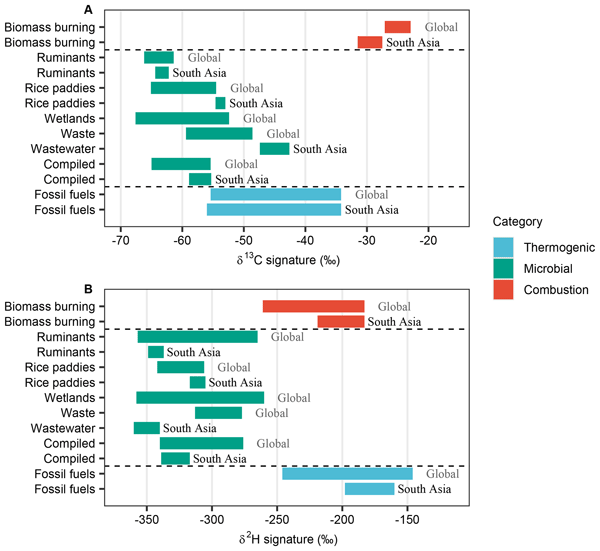
Methane is a powerful greenhouse gas, but its sources remain uncertain in many regions. The isotope fingerprints of methane are diagnostic of its sources, yet their source end-members are poorly constrained for South Asia. Here we determined the methane isotope signal for major sources in South Asia and found these to differ from global averages. Improved regional-specific isotope source fingerprints will help to improve top-down assessments of methane budgets and climate mitigation strategies.
Albin Eriksson, Junjie Wu, Matt O'Regan, and Örjan Gustafsson
EGUsphere, https://doi.org/10.5194/egusphere-2026-2414, https://doi.org/10.5194/egusphere-2026-2414, 2026
Short summary
Short summary
Sea ice is an important regulator of the Arctic climate systems. Records of sea ice past instrumental records are necessary to understand how sea ice is altered during past periods of abrupt climate change, and what consequences such changes have on the polar climates. Here, we reconstructed the sea ice cover of the East Siberian Arctic and found that the sea ice extent likely was linked to protecting/eroding permafrost coastlines during the last deglaciation.
Karin Stegelius, Pauline Thompson, Pia Karbiener, Piotr Markuszewski, Andre S. H. Prevot, Sachchida N. Tripathi, Claudia Mohr, Liine Heikkinen, Krishnakant Budhavant, and Sophie L. Haslett
EGUsphere, https://doi.org/10.5194/egusphere-2026-914, https://doi.org/10.5194/egusphere-2026-914, 2026
Short summary
Short summary
High-time-resolution observations in the Maldives indicate that submicron aerosol over the northern Indian Ocean is primarily composed of inorganic sulfate and highly oxidised organic matter, indicative of aged continental outflow. The consistent composition across various air mass origins, alongside identification of sulfur-containing organics, underscores the influence of long-range transport and sulfate-driven secondary chemistry on regional aerosol characteristics and their climate impacts.
Albin Eriksson, Birgit Wild, Wei-Li Hong, Henry Holmstrand, Francisco J. A. Nascimento, Stefano Bonaglia, Denis Kosmach, Igor Semiletov, Natalia Shakhova, and Örjan Gustafsson
Biogeosciences, 23, 1459–1475, https://doi.org/10.5194/bg-23-1459-2026, https://doi.org/10.5194/bg-23-1459-2026, 2026
Short summary
Short summary
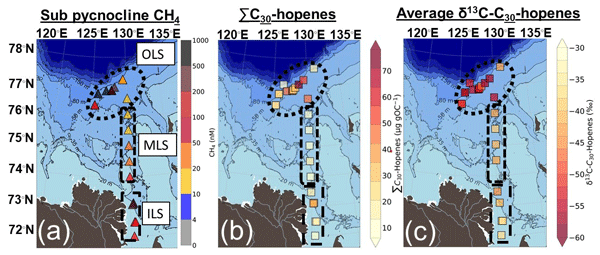
Thawing subsea permafrost in the East Siberian Arctic Seas releases methane, a potent greenhouse gas. Using molecular fossils in sediments, we traced aerobic methane oxidation as a proxy of enhanced methane cycling across the Laptev Sea, including in regions once thought low in emissions. This approach captures long-term patterns of methane cycling over years-decades , overcoming limits of short-term seawater measurements and highlights the importance of the Laptev Sea in Arctic methane cycling.
Lorraine Tual, Christine Authemayou, Caroline Lotout, Matthijs A. Smit, Kira Musiyachenko, Denise Bussien Grosjean, Ellen Kooijman, and Emilie Bruand
Eur. J. Mineral., 37, 639–666, https://doi.org/10.5194/ejm-37-639-2025, https://doi.org/10.5194/ejm-37-639-2025, 2025
Short summary
Short summary
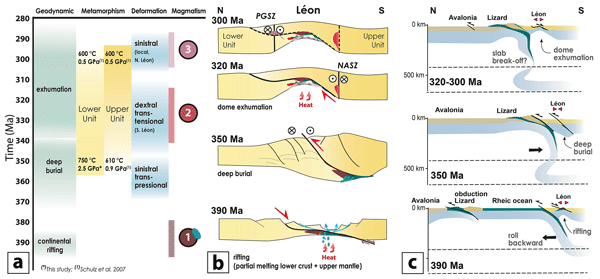
The Léon region in France offers a window into the dramatic geological processes that shaped continents. Studying ancient rocks called eclogite, we uncovered a history of magma generation, deep burial and rapid crustal movement between 390 million and 300 million years ago. The area was shaped by subduction dynamics, where shifting tectonic plates stretched and compressed the crust. These findings help us understand how ancient geological processes continue to influence the Earth’s surface today.
Anderson Da Silva, Louis Marelle, Jean-Christophe Raut, Yvette Gramlich, Karolina Siegel, Sophie L. Haslett, Claudia Mohr, and Jennie L. Thomas
Atmos. Chem. Phys., 25, 5331–5354, https://doi.org/10.5194/acp-25-5331-2025, https://doi.org/10.5194/acp-25-5331-2025, 2025
Short summary
Short summary
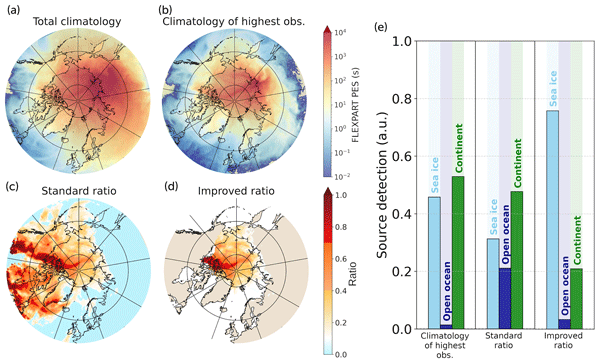
Particle sources in polar climates are unclear, affecting climate representation in models. This study introduces an evaluated method for tracking particles with backward modeling. Tests on simulated particles allowed us to show that traditional detection methods often misidentify sources. An improved method that accurately traces the origins of aerosol particles in the Arctic is presented. The study recommends using this enhanced method for better source identification of atmospheric species.
Krishnakant Budhavant, Mohanan Remani Manoj, Hari Ram Chandrika Rajendran Nair, Samuel Mwaniki Gaita, Henry Holmstrand, Abdus Salam, Ahmed Muslim, Sreedharan Krishnakumari Satheesh, and Örjan Gustafsson
Atmos. Chem. Phys., 24, 11911–11925, https://doi.org/10.5194/acp-24-11911-2024, https://doi.org/10.5194/acp-24-11911-2024, 2024
Short summary
Short summary
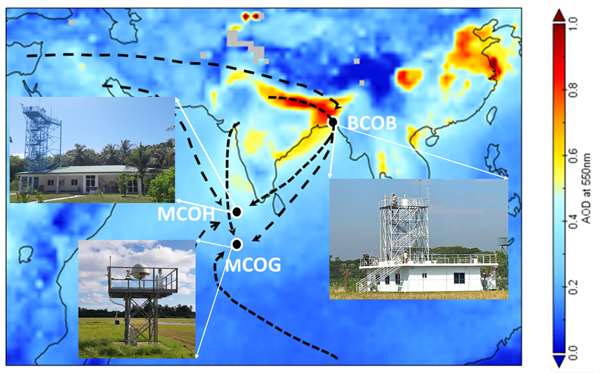
The South Asian Pollution Experiment 2018 used access to three strategically located receptor observatories. Observational constraints revealed opposing trends in the mass absorption cross sections of black carbon (BC MAC) and brown carbon (BrC MAC) during long-range transport. Models estimating the climate effects of BC aerosols may have underestimated the ambient BC MAC over distant receptor areas, leading to discrepancies in aerosol absorption predicted by observation-constrained models.
Wei Huang, Cheng Wu, Linyu Gao, Yvette Gramlich, Sophie L. Haslett, Joel Thornton, Felipe D. Lopez-Hilfiker, Ben H. Lee, Junwei Song, Harald Saathoff, Xiaoli Shen, Ramakrishna Ramisetty, Sachchida N. Tripathi, Dilip Ganguly, Feng Jiang, Magdalena Vallon, Siegfried Schobesberger, Taina Yli-Juuti, and Claudia Mohr
Atmos. Chem. Phys., 24, 2607–2624, https://doi.org/10.5194/acp-24-2607-2024, https://doi.org/10.5194/acp-24-2607-2024, 2024
Short summary
Short summary
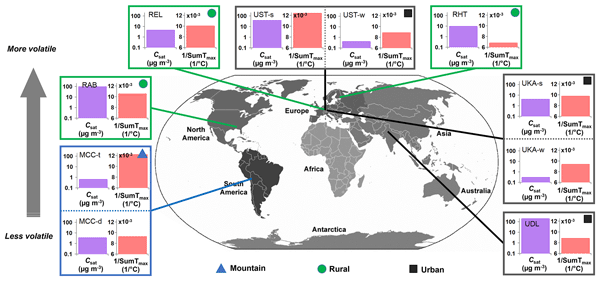
We present distinct molecular composition and volatility of oxygenated organic aerosol particles in different rural, urban, and mountain environments. We do a comprehensive investigation of the relationship between the chemical composition and volatility of oxygenated organic aerosol particles across different systems and environments. This study provides implications for volatility descriptions of oxygenated organic aerosol particles in different model frameworks.
Leonard Kirago, Örjan Gustafsson, Samuel Mwaniki Gaita, Sophie L. Haslett, Michael J. Gatari, Maria Elena Popa, Thomas Röckmann, Christoph Zellweger, Martin Steinbacher, Jörg Klausen, Christian Félix, David Njiru, and August Andersson
Atmos. Chem. Phys., 23, 14349–14357, https://doi.org/10.5194/acp-23-14349-2023, https://doi.org/10.5194/acp-23-14349-2023, 2023
Short summary
Short summary
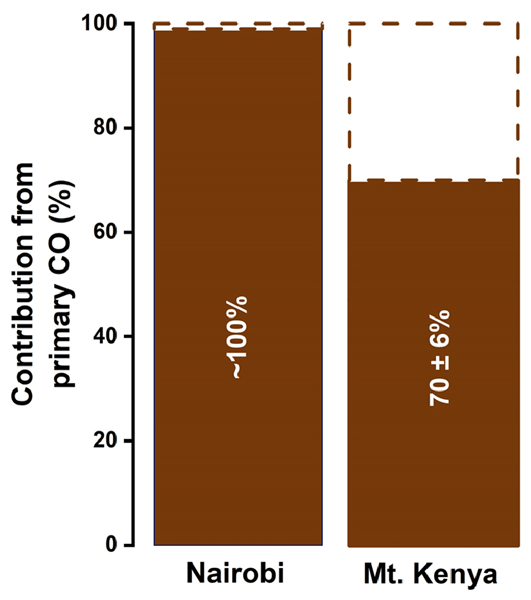
This study provides ground-observational evidence that supports earlier suggestions that savanna fires are the main emitters and modulators of carbon monoxide gas in Africa. Using isotope-based techniques, the study has shown that about two-thirds of this gas is emitted from savanna fires, while for urban areas, in this case Nairobi, primary sources approach 100 %. The latter has implications for air quality policy, suggesting primary emissions such as traffic should be targeted.
Nair Krishnan Kala, Narayana Sarma Anand, Mohanan R. Manoj, Srinivasan Prasanth, Harshavardhana S. Pathak, Thara Prabhakaran, Pramod D. Safai, Krishnaswamy K. Moorthy, and Sreedharan K. Satheesh
Atmos. Chem. Phys., 23, 12801–12819, https://doi.org/10.5194/acp-23-12801-2023, https://doi.org/10.5194/acp-23-12801-2023, 2023
Short summary
Short summary
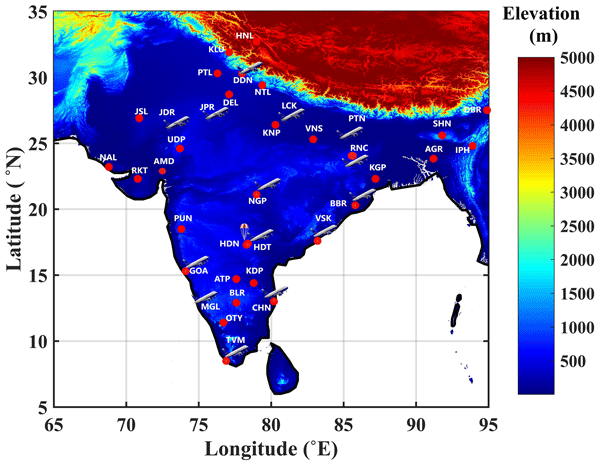
We present a 3D data set of aerosol black carbon over the Indian mainland by assimilating data from surface, aircraft, and balloon measurements, along with multi-satellite observations. Radiative transfer computations using height-resolved aerosol absorption show higher warming in the free troposphere and will have large implications for atmospheric stability. This data set will help reduce the uncertainty in aerosol radiative effects in climate model simulations over the Indian region.
Christoph Heinze, Thorsten Blenckner, Peter Brown, Friederike Fröb, Anne Morée, Adrian L. New, Cara Nissen, Stefanie Rynders, Isabel Seguro, Yevgeny Aksenov, Yuri Artioli, Timothée Bourgeois, Friedrich Burger, Jonathan Buzan, B. B. Cael, Veli Çağlar Yumruktepe, Melissa Chierici, Christopher Danek, Ulf Dieckmann, Agneta Fransson, Thomas Frölicher, Giovanni Galli, Marion Gehlen, Aridane G. González, Melchor Gonzalez-Davila, Nicolas Gruber, Örjan Gustafsson, Judith Hauck, Mikko Heino, Stephanie Henson, Jenny Hieronymus, I. Emma Huertas, Fatma Jebri, Aurich Jeltsch-Thömmes, Fortunat Joos, Jaideep Joshi, Stephen Kelly, Nandini Menon, Precious Mongwe, Laurent Oziel, Sólveig Ólafsdottir, Julien Palmieri, Fiz F. Pérez, Rajamohanan Pillai Ranith, Juliano Ramanantsoa, Tilla Roy, Dagmara Rusiecka, J. Magdalena Santana Casiano, Yeray Santana-Falcón, Jörg Schwinger, Roland Séférian, Miriam Seifert, Anna Shchiptsova, Bablu Sinha, Christopher Somes, Reiner Steinfeldt, Dandan Tao, Jerry Tjiputra, Adam Ulfsbo, Christoph Völker, Tsuyoshi Wakamatsu, and Ying Ye
Biogeosciences Discuss., https://doi.org/10.5194/bg-2023-182, https://doi.org/10.5194/bg-2023-182, 2023
Revised manuscript not accepted
Short summary
Short summary
For assessing the consequences of human-induced climate change for the marine realm, it is necessary to not only look at gradual changes but also at abrupt changes of environmental conditions. We summarise abrupt changes in ocean warming, acidification, and oxygen concentration as the key environmental factors for ecosystems. Taking these abrupt changes into account requires greenhouse gas emissions to be reduced to a larger extent than previously thought to limit respective damage.
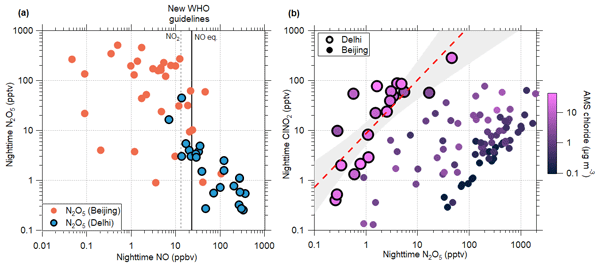
Sophie L. Haslett, David M. Bell, Varun Kumar, Jay G. Slowik, Dongyu S. Wang, Suneeti Mishra, Neeraj Rastogi, Atinderpal Singh, Dilip Ganguly, Joel Thornton, Feixue Zheng, Yuanyuan Li, Wei Nie, Yongchun Liu, Wei Ma, Chao Yan, Markku Kulmala, Kaspar R. Daellenbach, David Hadden, Urs Baltensperger, Andre S. H. Prevot, Sachchida N. Tripathi, and Claudia Mohr
Atmos. Chem. Phys., 23, 9023–9036, https://doi.org/10.5194/acp-23-9023-2023, https://doi.org/10.5194/acp-23-9023-2023, 2023
Short summary
Short summary
In Delhi, some aspects of daytime and nighttime atmospheric chemistry are inverted, and parodoxically, vehicle emissions may be limiting other forms of particle production. This is because the nighttime emissions of nitrogen oxide (NO) by traffic and biomass burning prevent some chemical processes that would otherwise create even more particles and worsen the urban haze.
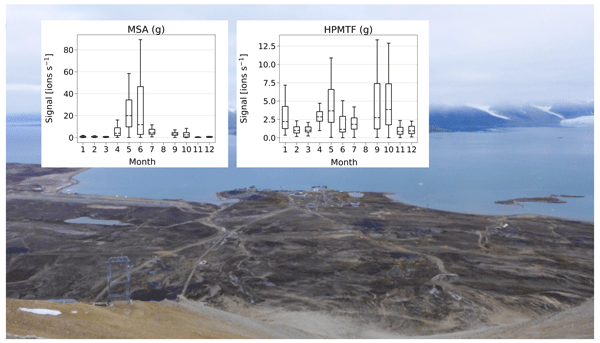
Karolina Siegel, Yvette Gramlich, Sophie L. Haslett, Gabriel Freitas, Radovan Krejci, Paul Zieger, and Claudia Mohr
Atmos. Chem. Phys., 23, 7569–7587, https://doi.org/10.5194/acp-23-7569-2023, https://doi.org/10.5194/acp-23-7569-2023, 2023
Short summary
Short summary
Hydroperoxymethyl thioformate (HPMTF) is a recently discovered oxidation product of dimethyl sulfide (DMS). We present a full year of concurrent gas- and particle-phase observations of HPMTF and other DMS oxidation products from the Arctic. We did not observe significant amounts of HPMTF in the particle phase but a good agreement between gas-phase HMPTF and methanesulfonic acid in the summer. Our study provides information about the relationship between HPMTF and other DMS oxidation products.
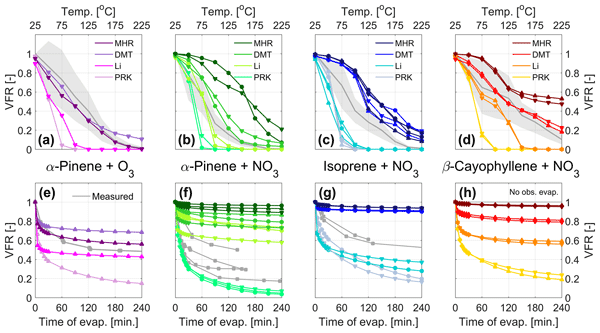
Emelie L. Graham, Cheng Wu, David M. Bell, Amelie Bertrand, Sophie L. Haslett, Urs Baltensperger, Imad El Haddad, Radovan Krejci, Ilona Riipinen, and Claudia Mohr
Atmos. Chem. Phys., 23, 7347–7362, https://doi.org/10.5194/acp-23-7347-2023, https://doi.org/10.5194/acp-23-7347-2023, 2023
Short summary
Short summary
The volatility of an aerosol particle is an important parameter for describing its atmospheric lifetime. We studied the volatility of secondary organic aerosols from nitrate-initiated oxidation of three biogenic precursors with experimental methods and model simulations. We saw higher volatility than for the corresponding ozone system, and our simulations produced variable results with different parameterizations which warrant a re-evaluation of the treatment of the nitrate functional group.
Yvette Gramlich, Karolina Siegel, Sophie L. Haslett, Gabriel Freitas, Radovan Krejci, Paul Zieger, and Claudia Mohr
Atmos. Chem. Phys., 23, 6813–6834, https://doi.org/10.5194/acp-23-6813-2023, https://doi.org/10.5194/acp-23-6813-2023, 2023
Short summary
Short summary
In this study, we investigate the chemical composition of aerosol particles forming clouds in the Arctic. During year-long observations at a mountain site on Svalbard, we find a large contribution of naturally derived aerosol particles in the fraction forming clouds in the summer. Our observations indicate that most aerosol particles can serve as cloud seeds in this remote environment.

Jing Cai, Kaspar R. Daellenbach, Cheng Wu, Yan Zheng, Feixue Zheng, Wei Du, Sophie L. Haslett, Qi Chen, Markku Kulmala, and Claudia Mohr
Atmos. Meas. Tech., 16, 1147–1165, https://doi.org/10.5194/amt-16-1147-2023, https://doi.org/10.5194/amt-16-1147-2023, 2023
Short summary
Short summary
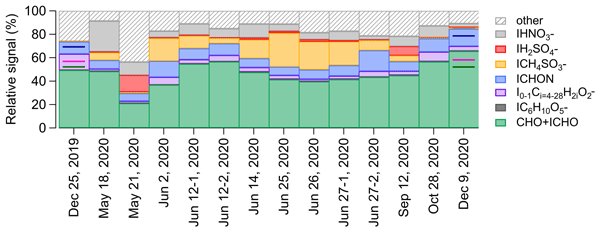
We introduce the offline application of FIGAERO-CIMS by analyzing Teflon and quartz filter samples that were collected at a typical urban site in Beijing with the deposition time varying from 30 min to 24 h. This method provides a feasible, simple, and quantitative way to investigate the molecular composition and volatility of OA compounds by using FIGAERO-CIMS to analyze offline samples.

Varun Kumar, Stamatios Giannoukos, Sophie L. Haslett, Yandong Tong, Atinderpal Singh, Amelie Bertrand, Chuan Ping Lee, Dongyu S. Wang, Deepika Bhattu, Giulia Stefenelli, Jay S. Dave, Joseph V. Puthussery, Lu Qi, Pawan Vats, Pragati Rai, Roberto Casotto, Rangu Satish, Suneeti Mishra, Veronika Pospisilova, Claudia Mohr, David M. Bell, Dilip Ganguly, Vishal Verma, Neeraj Rastogi, Urs Baltensperger, Sachchida N. Tripathi, André S. H. Prévôt, and Jay G. Slowik
Atmos. Chem. Phys., 22, 7739–7761, https://doi.org/10.5194/acp-22-7739-2022, https://doi.org/10.5194/acp-22-7739-2022, 2022
Short summary
Short summary
Here we present source apportionment results from the first field deployment in Delhi of an extractive electrospray ionization time-of-flight mass spectrometer (EESI-TOF). The EESI-TOF is a recently developed instrument capable of providing uniquely detailed online chemical characterization of organic aerosol (OA), in particular the secondary OA (SOA) fraction. Here, we are able to apportion not only primary OA but also SOA to specific sources, which is performed for the first time in Delhi.
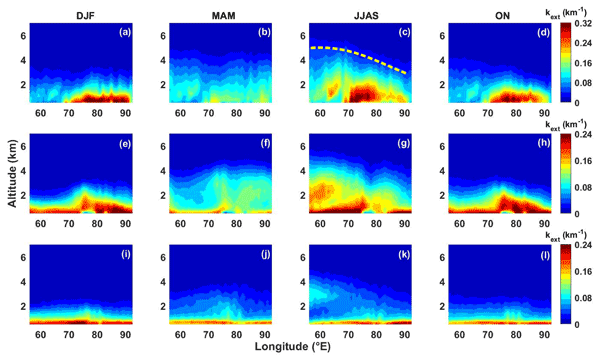
Nair K. Kala, Narayana Sarma Anand, Mohanan R. Manoj, Harshavardhana S. Pathak, Krishnaswamy K. Moorthy, and Sreedharan K. Satheesh
Atmos. Chem. Phys., 22, 6067–6085, https://doi.org/10.5194/acp-22-6067-2022, https://doi.org/10.5194/acp-22-6067-2022, 2022
Short summary
Short summary
We present the 3-D distribution of atmospheric aerosols and highlight its variation with respect to longitudes over the Indian mainland and the surrounding oceans using long-term satellite observations and realistic synthesised data. The atmospheric heating due to the 3-D distribution of aerosols is estimated using radiative transfer calculations. We believe that our findings will have strong implications for aerosol–radiation interactions in regional climate simulations.
Cited articles
Aas, W., Mortier, A., Bowersox, V., Cherian, R., Faluvegi, G., Fagerli, H., Hand, J., Klimont, Z., Galy-Lacaux, C., Lehmann, C. M. B., Myhre, C. L., Myhre, G., Olivié, D., Sato, K., Quaas, J., Rao, P. S. P., Schulz, M., Shindell, D., Skeie, R. B., Stein, A., Takemura, T., Tsyro, S., Vet, R., and Xu, X.: Global and regional trends of atmospheric sulfur, Sci. Rep., 9, https://doi.org/10.1038/s41598-018-37304-0, 2019.
Amrani, A., Said-Ahmad, W., Shaked, Y., and Kiene, R. P.: Sulfur isotope homogeneity of oceanic DMSP and DMS, P. Natl. Acad. Sci. USA, 110, https://doi.org/10.1073/pnas.1312956110, 2013.
Andersson, A., Deng, J., Du, K., Zheng, M., Yan, C., Sköld, M., and Gustafsson, Ö.: Regionally-varying combustion sources of the january 2013 severe haze events over eastern China, Environ. Sci. Technol., 49, https://doi.org/10.1021/es503855e, 2015.
Aswini, A. R., Hegde, P., Aryasree, S., Girach, I. A., and Nair, P. R.: Continental outflow of anthropogenic aerosols over Arabian Sea and Indian Ocean during wintertime: ICARB-2018 campaign, Sci. Total Environ., 712, https://doi.org/10.1016/j.scitotenv.2019.135214, 2020.
Berresheim, H., Elste, T., Tremmel, H. G., Allen, A. G., Hansson, H. C., Rosman, K., Dal Maso, M., Mäkelä, J. M., Kulmala, M., and O'Dowd, C. D.: Gas-aerosol relationships of H2so4, MSA, and OH: Observations in the coastal marine boundary layer at Mace Head, Ireland, J. Geophys. Res.-Atmos., 107, https://doi.org/10.1029/2000JD000229, 2002.
Bikkina, S., Andersson, A., Kirillova, E. N., Holmstrand, H., Tiwari, S., Srivastava, A. K., Bisht, D. S., and Gustafsson, Ö.: Air quality in megacity Delhi affected by countryside biomass burning, Nat. Sustain., 2, https://doi.org/10.1038/s41893-019-0219-0, 2019.
Böttcher, M. E., Brumsack, H. J., and Dürselen, C. D.: The isotopic composition of modern seawater sulfate: I. Coastal waters with special regard to the North Sea, J. Marine Syst., 67, https://doi.org/10.1016/j.jmarsys.2006.09.006, 2007.
Buchard, V., Randles, C. A., da Silva, A. M., Darmenov, A., Colarco, P. R., Govindaraju, R., Ferrare, R., Hair, J., Beyersdorf, A. J., Ziemba, L. D., and Yu, H.: The MERRA-2 aerosol reanalysis, 1980 onward. Part II: Evaluation and case studies, J. Climate, 30, https://doi.org/10.1175/JCLI-D-16-0613.1, 2017.
Budhavant, K., Andersson, A., Bosch, C., Kruså, M., Murthaza, A., Zahid, and Gustafsson, Ö.: Apportioned contributions of PM2.5 fine aerosol particles over the Maldives (northern Indian Ocean) from local sources vs long-range transport, Sci. Total Environ., 536, https://doi.org/10.1016/j.scitotenv.2015.07.059, 2015.
Budhavant, K., Andersson, A., Holmstrand, H., Bikkina, P., Bikkina, S., Satheesh, S. K., and Gustafsson, Ö.: Enhanced Light-Absorption of Black Carbon in Rainwater Compared With Aerosols Over the Northern Indian Ocean, J. Geophys. Res.-Atmos., 125, https://doi.org/10.1029/2019JD031246, 2020.
Budhavant, K., Andersson, A., Holmstrand, H., Satheesh, S. K., and Gustafsson, Ö.: Black carbon aerosols over Indian Ocean have unique source fingerprint and optical characteristics during monsoon season, P. Natl. Acad. Sci. USA, 120, https://doi.org/10.1073/pnas.2210005120, 2023.
Budhavant, K., Manoj, M. R., Nair, H. R. C. R., Gaita, S. M., Holmstrand, H., Salam, A., Muslim, A., Satheesh, S. K., and Gustafsson, Ö.: Changing optical properties of black carbon and brown carbon aerosols during long-range transport from the Indo-Gangetic Plain to the equatorial Indian Ocean, Atmos. Chem. Phys., 24, 11911–11925, https://doi.org/10.5194/acp-24-11911-2024, 2024.
Charlson, R. J., Langner, J., Rodhe, H., Leovy, C. B., and Warren, S. G.: Perturbation of the Northern Hemisphere radiative balance by backscattering from anthropogenic sulfate aerosols, Tellus B, 43, https://doi.org/10.3402/tellusb.v43i4.15404, 1991.
Chen, B., Andersson, A., Lee, M., Kirillova, E. N., Xiao, Q., Kruså, M., Shi, M., Hu, K., Lu, Z., Streets, D. G., Du, K., and Gustafsson, Ö.: Source forensics of black carbon aerosols from China, Environ. Sci. Technol., 47, https://doi.org/10.1021/es401599r, 2013.
Clarke, S., Holmstrand, H., Budhavant, K., Remani, M., Haslett, S., Rodiouchkina, K., Kooijman, E., and Gustafsson, Ö.: Isotopic apportionment of sulfate aerosols between natural and anthropogenic sources in the outflow of South Asia, Bolin Centre Database [data set], https://doi.org/10.17043/clarke-2026-sulfate-aerosols-1, 2026.
Dasari, S. and Widory, D.: Retrospective Isotopic Analysis of Summertime Urban Atmospheric Sulfate in South Asia Using Improved Source Constraints, ACS ES&T Air, 1, 357–364, https://doi.org/10.1021/acsestair.3c00060, 2024.
Dasari, S., Andersson, A., Bikkina, S., Holmstrand, H., Budhavant, K., Satheesh, S., Asmi, E., Kesti, J., Backman, J., Salam, A., Bisht, D. S., Tiwari, S., Hameed, Z., and Gustafsson, Ö.: Photochemical degradation affects the light absorption of water-soluble brown carbon in the South Asian outflow, Sci. Adv., 5, https://doi.org/10.1126/sciadv.aau8066, 2019.
Dasari, S., Andersson, A., Stohl, A., Evangeliou, N., Holmstrand, H., Budhavant, K., Salam, A., and Gustafsson, Ö.: Source Quantification of South Asian Black Carbon Aerosols with Isotopes and Modeling, Environ. Sci. Technol., 54, 11771–11779, https://doi.org/10.1021/acs.est.0c02193, 2020.
Elguindi, N., Granier, C., Stavrakou, T., Darras, S., Bauwens, M., Cao, H., Chen, C., Denier van der Gon, H. A. C., Dubovik, O., Fu, T. M., Henze, D. K., Jiang, Z., Keita, S., Kuenen, J. J. P., Kurokawa, J., Liousse, C., Miyazaki, K., Müller, J. F., Qu, Z., Solmon, F., and Zheng, B.: Intercomparison of Magnitudes and Trends in Anthropogenic Surface Emissions From Bottom-Up Inventories, Top-Down Estimates, and Emission Scenarios, Earths Future, 8, https://doi.org/10.1029/2020EF001520, 2020.
Ganguly, D., Ray, R., Majumdar, N., Chowdhury, C., and Jana, T. K.: Biogenic hydrogen sulphide emissions and non-sea sulfate aerosols over the Indian Sundarban mangrove forest, J. Atmos. Chem., 75, 319–333, https://doi.org/10.1007/s10874-018-9382-3, 2018.
Gelaro, R., McCarty, W., Suárez, M. J., Todling, R., Molod, A., Takacs, L., Randles, C. A., Darmenov, A., Bosilovich, M. G., Reichle, R., Wargan, K., Coy, L., Cullather, R., Draper, C., Akella, S., Buchard, V., Conaty, A., da Silva, A. M., Gu, W., Kim, G. K., Koster, R., Lucchesi, R., Merkova, D., Nielsen, J. E., Partyka, G., Pawson, S., Putman, W., Rienecker, M., Schubert, S. D., Sienkiewicz, M., and Zhao, B.: The modern-era retrospective analysis for research and applications, version 2 (MERRA-2), J. Climate, 30, https://doi.org/10.1175/JCLI-D-16-0758.1, 2017.
Gupta, G., Ratnam, M. V., and Madhavan, B. L.: Changing patterns in the highly contributing aerosol types/species across the globe in the past two decades, Sci. Total Environ., 897, https://doi.org/10.1016/j.scitotenv.2023.165389, 2023.
Harris, E., Sinha, B., Van Pinxteren, D., Tilgner, A., Fomba, K. W., Schneider, J., Roth, A., Gnauk, T., Fahlbusch, B., Mertes, S., Lee, T., Collett, J., Foley, S., Borrmann, S., Hoppe, P., and Herrmann, H.: Enhanced role of transition metal ion catalysis during in-cloud oxidation of SO2, Science, 340, https://doi.org/10.1126/science.1230911, 2013.
Hoesly, R. M., Smith, S. J., Feng, L., Klimont, Z., Janssens-Maenhout, G., Pitkanen, T., Seibert, J. J., Vu, L., Andres, R. J., Bolt, R. M., Bond, T. C., Dawidowski, L., Kholod, N., Kurokawa, J.-I., Li, M., Liu, L., Lu, Z., Moura, M. C. P., O'Rourke, P. R., and Zhang, Q.: Historical (1750–2014) anthropogenic emissions of reactive gases and aerosols from the Community Emissions Data System (CEDS), Geosci. Model Dev., 11, 369–408, https://doi.org/10.5194/gmd-11-369-2018, 2018.
Jamieson, R. E. and Wadleigh, M. A.: A study of the oxygen isotopic composition of precipitation sulphate in eastern Newfoundland, Water Air Soil Poll., 110, https://doi.org/10.1023/a:1005002026009, 1999.
Jongebloed, U. A., Schauer, A. J., Hattori, S., Cole-Dai, J., Larrick, C. G., Salimi, S., Edouard, S. R., Geng, L., and Alexander, B.: Sulfur isotopes quantify the impact of anthropogenic activities on industrial-era Arctic sulfate in a Greenland ice core, Environ. Res. Lett., 18, https://doi.org/10.1088/1748-9326/acdc3d, 2023.
Keene, W. C., Pszenny, A. A. P., Galloway, J. N., and Hawley, M. E.: Sea-salt corrections and interpretation of constituent ratios in marine precipitation, J. Geophys. Res.-Atmos., 91, 6647–6658, https://doi.org/10.1029/jd091id06p06647, 1986.
Kesti, J., Asmi, E., O'Connor, E. J., Backman, J., Budhavant, K., Andersson, A., Dasari, S., Praveen, P. S., Zahid, H., and Gustafsson, Ö.: Changes in aerosol size distributions over the Indian Ocean during different meteorological conditions, Tellus B, 72, https://doi.org/10.1080/16000889.2020.1792756, 2020.
Kirillova, E. N., Andersson, A., Sheesley, R. J., Kruså, M., Praveen, P. S., Budhavant, K., Safai, P. D., Rao, P. S. P., and Gustafsson, Ö.: 13C- And 14C-based study of sources and atmospheric processing of water-soluble organic carbon (WSOC) in South Asian aerosols, J. Geophys. Res.-Atmos., 118, https://doi.org/10.1002/jgrd.50130, 2013.
Kirillova, E. N., Andersson, A., Tiwari, S., Srivastava, A. K., Bisht, D. S., and Gustafsson, Ö.: Water-soluble organic carbon aerosols during a full New Delhi winter: Isotope-based source apportionment and optical properties, J. Geophys. Res., 119, https://doi.org/10.1002/2013JD020041, 2014.
Krishnan, R., Sabin, T. P., Vellore, R., Mujumdar, M., Sanjay, J., Goswami, B. N., Hourdin, F., Dufresne, J. L., and Terray, P.: Deciphering the desiccation trend of the South Asian monsoon hydroclimate in a warming world, Clim. Dynam., 47, 1007–1027, https://doi.org/10.1007/s00382-015-2886-5, 2016.
Lana, A., Bell, T. G., Simó, R., Vallina, S. M., Ballabrera-Poy, J., Kettle, A. J., Dachs, J., Bopp, L., Saltzman, E. S., Stefels, J., Johnson, J. E., and Liss, P. S.: An updated climatology of surface dimethlysulfide concentrations and emission fluxes in the global ocean, Global Biogeochem. Cy., 25, https://doi.org/10.1029/2010GB003850, 2011.
Lee, G., Ahn, J., Park, S. M., Moon, J., Park, R., Sim, M. S., Choi, H., Park, J., and Ahn, J. Y.: Sulfur isotope-based source apportionment and control mechanisms of PM2.5 sulfate in Seoul, South Korea during winter and early spring (2017–2020), Sci. Total Environ., 905, https://doi.org/10.1016/j.scitotenv.2023.167112, 2023.
Lelieveld, J., Pozzer, A., Pöschl, U., Fnais, M., Haines, A., and Münzel, T.: Loss of life expectancy from air pollution compared to other risk factors: A worldwide perspective, Cardiovasc. Res., 116, https://doi.org/10.1093/cvr/cvaa025, 2020.
Li, C., McLinden, C., Fioletov, V., Krotkov, N., Carn, S., Joiner, J., Streets, D., He, H., Ren, X., Li, Z., and Dickerson, R. R.: India Is Overtaking China as the World's Largest Emitter of Anthropogenic Sulfur Dioxide, Sci. Rep., 7, https://doi.org/10.1038/s41598-017-14639-8, 2017.
Li, J., Carlson, B. E., Yung, Y. L., Lv, D., Hansen, J., Penner, J. E., Liao, H., Ramaswamy, V., Kahn, R. A., Zhang, P., Dubovik, O., Ding, A., Lacis, A. A., Zhang, L., and Dong, Y.: Scattering and absorbing aerosols in the climate system, Nature Reviews Earth & Environment, https://doi.org/10.1038/s43017-022-00296-7, 2022.
McDuffie, E. E., Smith, S. J., O'Rourke, P., Tibrewal, K., Venkataraman, C., Marais, E. A., Zheng, B., Crippa, M., Brauer, M., and Martin, R. V.: A global anthropogenic emission inventory of atmospheric pollutants from sector- and fuel-specific sources (1970–2017): an application of the Community Emissions Data System (CEDS), Earth Syst. Sci. Data, 12, 3413–3442, https://doi.org/10.5194/essd-12-3413-2020, 2020.
Miyazaki, K.: TROPESS Chemical Reanalysis Aerosol SO4 6-Hourly 3-Dimensional Product V1, NASA Goddard Earth Sciences Data and Information Services Center (GES DISC) [data set], https://doi.org/10.5067/TWDAYANXT8UM, 2024.
Nair, H. R. C. R., Budhavant, K., Manoj, M. R., Andersson, A., Satheesh, S. K., Ramanathan, V., and Gustafsson, Ö.: Aerosol demasking enhances climate warming over South Asia, NPJ Clim. Atmos. Sci., 6, https://doi.org/10.1038/s41612-023-00367-6, 2023.
Norman, A. L., Barrie, L. A., Toom-Sauntry, D., Sirois, A., Krouse, H. R., Li, S. M., and Sharma, S.: Sources of aerosol sulphate at Alert: Apportionment using stable isotopes, J. Geophys. Res.-Atmos., 104, https://doi.org/10.1029/1999JD900078, 1999.
Norman, A. L., Belzer, W., and Barrie, L.: Insights into the biogenic contribution to total sulphate in aerosol and precipitation in the Fraser Valley afforded by isotopes of sulphur and oxygen, J. Geophys. Res.-Atmos., 109, https://doi.org/10.1029/2002jd003072, 2004.
Pacific Northwest National Laboratory (PNNL): Community Emissions Data System (CEDS) version 4.21, https://doi.org/10.25584/PNNLDataHub/1779095, 2026.
Ram, K., Sarin, M. M., Sudheer, A. K., and Rengarajan, R.: Carbonaceous and secondary inorganic aerosols during wintertime fog and haze over urban sites in the Indo-Gangetic plain, Aerosol Air Qual. Res., 12, https://doi.org/10.4209/aaqr.2011.07.0105, 2012.
Ramanathan, V., Crutzen, P. J., Lelieveld, J., Mitra, A. P., Althausen, D., Anderson, J., Andreae, M. O., Cantrell, W., Cass, G. R., Chung, C. E., Clarke, A. D., Coakley, J. A., Collins, W. D., Conant, W. C., Dulac, F., Heintzenberg, J., Heymsfield, A. J., Holben, B., Howell, S., Hudson, J., Jayaraman, A., Kiehl, J. T., Krishnamurti, T. N., Lubin, D., McFarquhar, G., Novakov, T., Ogren, J. A., Podgorny, I. A., Prather, K., Priestley, K., Prospero, J. M., Quinn, P. K., Rajeev, K., Rasch, P., Rupert, S., Sadourny, R., Satheesh, S. K., Shaw, G. E., Sheridan, P., and Valero, F. P. J.: Indian Ocean Experiment: An integrated analysis of the climate forcing and effects of the great Indo-Asian haze, J. Geophys. Res.-Atmos., 106, https://doi.org/10.1029/2001JD900133, 2001.
Ramarao, M. V. S., Ayantika, D. C., Krishnan, R., Sanjay, J., Sabin, T. P., Mujumdar, M., and Singh, K. K.: Signatures of aerosol-induced decline in evapotranspiration over the Indo-Gangetic Plain during the recent decades, Mausam, 74, 297–310, https://doi.org/10.54302/mausam.v74i2.6031, 2023.
Randles, C. A., da Silva, A. M., Buchard, V., Colarco, P. R., Darmenov, A., Govindaraju, R., Smirnov, A., Holben, B., Ferrare, R., Hair, J., Shinozuka, Y., and Flynn, C. J.: The MERRA-2 aerosol reanalysis, 1980 onward. Part I: System description and data assimilation evaluation, J. Climate, 30, https://doi.org/10.1175/JCLI-D-16-0609.1, 2017.
Rastogi, N., Agnihotri, R., Sawlani, R., Patel, A., Babu, S. S., and Satish, R.: Chemical and isotopic characteristics of PM10 over the Bay of Bengal: Effects of continental outflow on a marine environment, Sci. Total Environ., 726, https://doi.org/10.1016/j.scitotenv.2020.138438, 2020.
Rees, C. E., Jenkins, W. J., and Monster, J.: The sulphur isotopic composition of ocean water sulphate, Geochim. Cosmochim. Ac., 42, https://doi.org/10.1016/0016-7037(78)90268-5, 1978.
Rodiouchkina, K.: Development of a multi-collector inductively coupled plasma massspectrometry method for measurement of stable sulphur isotope ratios in aerosol sulphate, MS thesis Uppsala University, https://urn.kb.se/resolve?urn=urn:nbn:se:uu:diva-357614 (last access: 23 February 2026), 2018.
Sawlani, R., Agnihotri, R., Sharma, C., Patra, P. K., Dimri, A. P., Ram, K., and Verma, R. L.: The severe Delhi SMOG of 2016: A case of delayed crop residue burning, coincident firecracker emissions, and atypical meteorology, Atmos. Pollut. Res., 10, https://doi.org/10.1016/j.apr.2018.12.015, 2019.
Seguin, A. M., Norman, A. L., Eaton, S., Wadleigh, M., and Sharma, S.: Elevated biogenic sulphur dioxide concentrations over the North Atlantic, Atmos. Environ., 44, 1139–1144, https://doi.org/10.1016/j.atmosenv.2010.01.005, 2010.
Seguin, A. M., Norman, A. L., Eaton, S., and Wadleigh, M.: Seasonality in size segregated biogenic, anthropogenic and sea salt sulfate aerosols over the North Atlantic, Atmos. Environ., 45, https://doi.org/10.1016/j.atmosenv.2011.09.033, 2011.
Sharma, S. and Kumar, A. (Eds.): Air pollutant emissions scenario for India – Version 1, The Energy and Resources Institute, New Delhi, India, ISBN 978-81-7993-639-9, 2016.
Shenoy, D. M. and Kumar, M. D.: Variability in abundance and fluxes of dimethyl sulphide in the Indian Ocean, Biogeochemistry, https://doi.org/10.1007/s10533-007-9092-4, 2007.
Szopa, S., Naik, V., Adhikary, B., Artaxo, P., Berntsen, T., Collins, W. D., Aas, W., Akritidis, D., Allen, R. J., Kanaya, Y., Prather, M. J., Kuo, C., Zhai, P., Pirani, A., Connors, S., Péan, C., Berger, S., Caud, N., Chen, Y., Goldfarb, L., Gomis, M., Huang, M., Leitzell, K., Lonnoy, E., Matthews, J., Maycock, T., Waterfield, T., Yelekçi, O., Yu, R., and Zhou, B.: Short-Lived Climate Forcers. In: Climate Change 2021: The Physical Science Basis. Contribution of Working Group I to the Sixth Assessment Report of the Intergovernmental Panel on Climate Change, Cambridge University Press, https://doi.org/10.1017/9781009157896.008, 2021.
Verma, S., Boucher, O., Shekar Reddy, M., Upadhyaya, H. C., Le Van, P., Binkowski, F. S., and Sharma, O. P.: Tropospheric distribution of sulphate aerosols mass and number concentration during INDOEX-IFP and its transport over the Indian Ocean: a GCM study, Atmos. Chem. Phys., 12, 6185–6196, https://doi.org/10.5194/acp-12-6185-2012, 2012.
Wadleigh, M. A.: Sulphur isotopic composition of aerosols over the western North Atlantic Ocean, Can. J. Fish. Aquat. Sci., https://doi.org/10.1139/F04-073, 2004.
Winiger, P., Andersson, A., Yttri, K. E., Tunved, P., and Gustafsson, Ö.: Isotope-Based Source Apportionment of EC Aerosol Particles during Winter High-Pollution Events at the Zeppelin Observatory, Svalbard, Environ. Sci. Technol., 49, https://doi.org/10.1021/acs.est.5b02644, 2015.
World Health Organization: WHO global air quality guidelines: particulate matter (PM2.5 and PM10), ozone, nitrogen dioxide, sulfur dioxide and carbon monoxide, World Health Organization, 2021, https://www.who.int/publications/i/item/9789240034228 (last access: 9 April 2026), 2021.
Short summary
South Asia has the world's highest loadings of sulfate, scattering sunlight, altering clouds and masking greenhouse warming, yet there are large uncertainties regarding the relative contributions of natural and anthropogenic sources to the receptor atmosphere. Here we use δ34S isotopes to distinguish natural versus anthropogenic sulfate sources, revealing strong seasonal contrasts and quantifying the dominance of anthropogenic contributions.
South Asia has the world's highest loadings of sulfate, scattering sunlight, altering clouds and...


Altmetrics
Final-revised paper
Preprint