
Articles | Volume 26, issue 5
https://doi.org/10.5194/acp-26-3567-2026
© Author(s) 2026. This work is distributed under
the Creative Commons Attribution 4.0 License.
the Creative Commons Attribution 4.0 License.
https://doi.org/10.5194/acp-26-3567-2026
© Author(s) 2026. This work is distributed under
the Creative Commons Attribution 4.0 License.
the Creative Commons Attribution 4.0 License.
Research article
| 
10 Mar 2026
Research article |
| 10 Mar 2026
| 10 Mar 2026
Determining the key sources of uncertainty in dimethyl sulfide and methanethiol oxidation under tropical, temperate, and polar marine conditions

Yusuf Hamied Department of Chemistry, University of Cambridge, Cambridge, CB2 1EW, UK
Benedict E. H. Harvey
Yusuf Hamied Department of Chemistry, University of Cambridge, Cambridge, CB2 1EW, UK
Chiara Giorio
Yusuf Hamied Department of Chemistry, University of Cambridge, Cambridge, CB2 1EW, UK
Yusuf Hamied Department of Chemistry, University of Cambridge, Cambridge, CB2 1EW, UK
National Centre for Atmospheric Science, Cambridge, CB2 1EW, UK
Related authors
Lorrie S. D. Jacob, Yao Ge, Chiara Giorio, and Alexander T. Archibald
EGUsphere, https://doi.org/10.5194/egusphere-2026-4710, https://doi.org/10.5194/egusphere-2026-4710, 2026
This preprint is open for discussion and under review for Atmospheric Chemistry and Physics (ACP).
Short summary
Short summary
Dimethyl sulfide and methanethiol are sulfur compounds released from the ocean that break down in the atmosphere, forming acids that can affect clouds and aerosols. Understanding these processes is important for improving climate predictions, but the reactions involved are too numerous for large climate models. In our work, we simplify a detailed, evaluated reaction mechanism and show that it can reproduce the original chemistry, whilst being suitable for climate models.
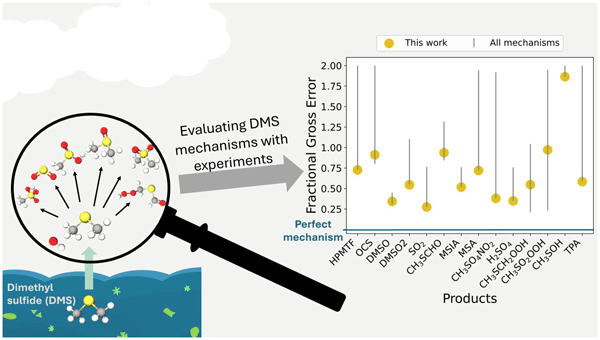
Lorrie Simone Denise Jacob, Chiara Giorio, and Alexander Thomas Archibald
Atmos. Chem. Phys., 24, 3329–3347, https://doi.org/10.5194/acp-24-3329-2024, https://doi.org/10.5194/acp-24-3329-2024, 2024
Short summary
Short summary
Recent studies on DMS have provided new challenges to our mechanistic understanding. Here we synthesise a number of recent studies to further develop and extend a state-of-the-art mechanism. Our new mechanism is shown to outperform all existing mechanisms when compared over a wide set of conditions. The development of an improved DMS mechanism will help lead the way to better the understanding the climate impacts of DMS emissions in past, present, and future atmospheric conditions.
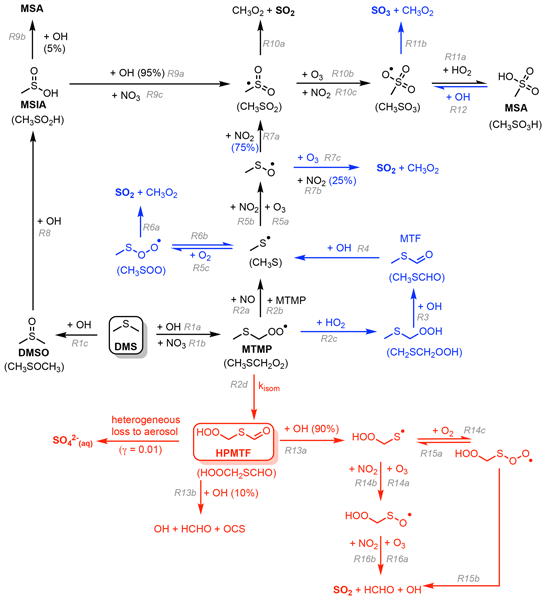
Ben A. Cala, Scott Archer-Nicholls, James Weber, N. Luke Abraham, Paul T. Griffiths, Lorrie Jacob, Y. Matthew Shin, Laura E. Revell, Matthew Woodhouse, and Alexander T. Archibald
Atmos. Chem. Phys., 23, 14735–14760, https://doi.org/10.5194/acp-23-14735-2023, https://doi.org/10.5194/acp-23-14735-2023, 2023
Short summary
Short summary
Dimethyl sulfide (DMS) is an important trace gas emitted from the ocean recognised as setting the sulfate aerosol background, but its oxidation is complex. As a result representation in chemistry-climate models is greatly simplified. We develop and compare a new mechanism to existing mechanisms via a series of global and box model experiments. Our studies show our updated DMS scheme is a significant improvement but significant variance exists between mechanisms.
Lorrie S. D. Jacob, Yao Ge, Chiara Giorio, and Alexander T. Archibald
EGUsphere, https://doi.org/10.5194/egusphere-2026-4710, https://doi.org/10.5194/egusphere-2026-4710, 2026
This preprint is open for discussion and under review for Atmospheric Chemistry and Physics (ACP).
Short summary
Short summary
Dimethyl sulfide and methanethiol are sulfur compounds released from the ocean that break down in the atmosphere, forming acids that can affect clouds and aerosols. Understanding these processes is important for improving climate predictions, but the reactions involved are too numerous for large climate models. In our work, we simplify a detailed, evaluated reaction mechanism and show that it can reproduce the original chemistry, whilst being suitable for climate models.
Olalekan A. M. Popoola, Paolo Cicuta, Rachel H. Georgiou, Lawrence Tom, Ray Freshwater, Kelsey Leet, and Chiara Giorio
EGUsphere, https://doi.org/10.5194/egusphere-2026-2702, https://doi.org/10.5194/egusphere-2026-2702, 2026
Short summary
Short summary
Low-cost CO2 sensors are widely used in cities, but their use in rural environments remains limited. This study shows that, after correcting for environmental effects such as temperature and pressure, these sensors can reliably measure CO2 in agricultural landscapes. The corrected sensors closely matched high-quality reference instruments and successfully captured daily and seasonal changes in rural CO2, demonstrating their potential for long-term climate and land-use monitoring.
Xingpei Ye, Lin Zhang, Xiaolin Wang, Ni Lu, Sebastian Hickman, Guo Luo, and Alex T. Archibald
Atmos. Chem. Phys., 26, 6377–6390, https://doi.org/10.5194/acp-26-6377-2026, https://doi.org/10.5194/acp-26-6377-2026, 2026
Short summary
Short summary
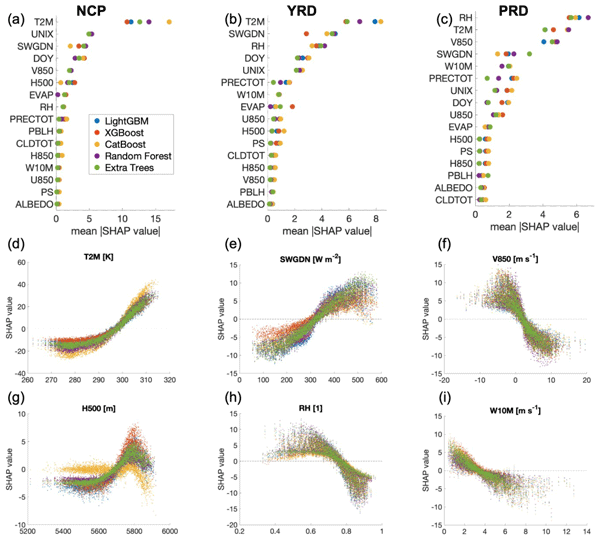
This study investigates how meteorology influences long-term surface ozone trends and pollution events across three major regions in eastern China using an explainable machine learning framework. The results show physically interpretable yet model-dependent ozone-meteorology relationships, highlighting both the potential and the limitations of explainable machine learning for process understanding in atmospheric chemistry.
Paola Formenti, Danitza Klopper, Anais Feron, Mathieu Cazaunau, Servanne Chevaillier, Karine Desboeufs, Claudia Di Biagio, Clarissa Baldo, Cécile Gaimoz, Vincent Michoud, Cécile Mirande-Bret, Sylvain Triquet, François Hemeret, Richard Valorso, Stephen Broccardo, Andreas Namwoonde, Mattheus Hanghome, Chiara Giorio, and Stuart J. Piketh
Earth Syst. Sci. Data Discuss., https://doi.org/10.5194/essd-2026-95, https://doi.org/10.5194/essd-2026-95, 2026
Revised manuscript under review for ESSD
Short summary
Short summary
The southern African west coast is highly impacted by climate change and aerosols from natural and human sources, yet observations are scarce. We present measurements (2014–2019) from the Henties Bay Aerosol Observatory in Namibia, including aerosol properties, ozone and meteorology. This unique dataset will support process studies and improve regional climate modelling.
Gunnar Myhre, Øivind Hodnebrog, Srinath Krishnan, Maria Sand, Marit Sandstad, Ragnhild B. Skeie, Lieven Clarisse, Bruno Franco, Dylan B. Millet, Kelley C. Wells, Alexander Archibald, Hannah N. Bryant, Alex T. Chaudhri, David S. Stevenson, Didier Hauglustaine, Michael Prather, J. Christopher Kaiser, Dirk J. L. Olivie, Michael Schulz, Oliver Wild, Ye Wang, Thérèse Salameh, Jason E. Williams, Philippe Le Sager, Fabien Paulot, Kostas Tsigaridis, and Haley E. Plaas
Geosci. Model Dev., 19, 2577–2591, https://doi.org/10.5194/gmd-19-2577-2026, https://doi.org/10.5194/gmd-19-2577-2026, 2026
Short summary
Short summary
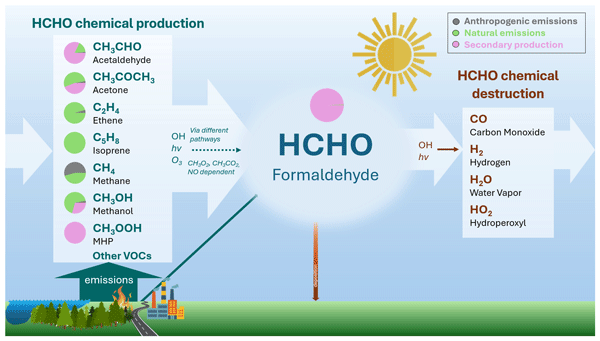
Volatile organic compounds (VOCs) affect air quality and climate, but their behavior in the atmosphere is still uncertain. We launched a global research effort to compare how different models represent these compounds and to improve their accuracy. By analyzing model results alongside observations and satellite data, we aim to better understand the atmospheric composition of these compounds.
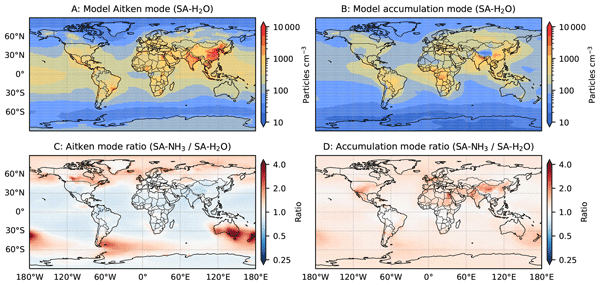
Xu-Cheng He, Nathan Luke Abraham, Han Ding, Maria R. Russo, Daniel P. Grosvenor, Yao Ge, Xuemei Wang, Anthony C. Jones, Pedro Campuzano-Jost, Benjamin Nault, Agnieszka Kupc, Donald Blake, Jose L. Jimenez, Christina J. Williamson, James Weber, Alexander T. Archibald, and Hamish Gordon
Atmos. Chem. Phys., 26, 3805–3851, https://doi.org/10.5194/acp-26-3805-2026, https://doi.org/10.5194/acp-26-3805-2026, 2026
Short summary
Short summary
Aerosols affect clouds and climate. However, current climate models still struggle to simulate them accurately. We used aircraft data from a global mission to evaluate how well the UK Earth System Model represents aerosols and their precursors. Our results show that the model misses key formation processes in clean ocean regions, suggesting that future improvements should focus on better representing how aerosols form naturally in the atmosphere.
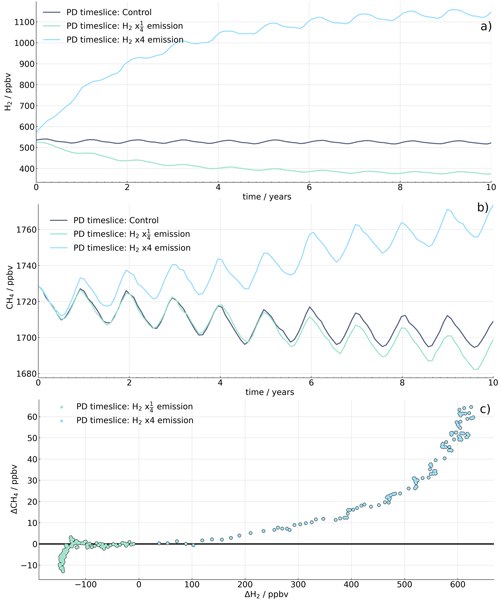
Megan A. J. Brown, Nicola J. Warwick, Nathan Luke Abraham, Paul T. Griffiths, Steve T. Rumbold, Gerd A. Folberth, Fiona M. O'Connor, Hannah Bryant, and Alex T. Archibald
Geosci. Model Dev., 19, 1537–1557, https://doi.org/10.5194/gmd-19-1537-2026, https://doi.org/10.5194/gmd-19-1537-2026, 2026
Short summary
Short summary
Hydrogen (H2) is an indirect greenhouse gas by increasing methane (CH4) lifetime. Interaction between H2 and CH4 is important for hydrogen’s global warming potential (GWP). Global models do not represent this interaction well; H2 or CH4 are prescribed at the surface. We implement an interactive H2 scheme into a global model coupled with interactive CH4. We simulate scenarios demonstrating its capability, improving model performance and more accurately representing H2-CH4 interaction.
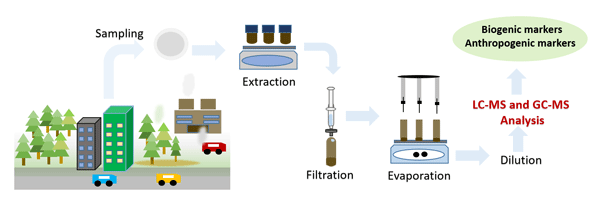
Diana L. Pereira, Aline Gratien, Chiara Giorio, Emmanuelle Mebold, Thomas Bertin, Cécile Gaimoz, Jean-François Doussin, and Paola Formenti
Atmos. Meas. Tech., 19, 1–19, https://doi.org/10.5194/amt-19-1-2026, https://doi.org/10.5194/amt-19-1-2026, 2026
Short summary
Short summary
This study provides two methods for the quantification of molecular markers to improve the description of secondary organic aerosols using chromatographic techniques coupled with mass spectrometry. Compounds from various chemical functionalities (alcohols, acids, aldehydes), from biogenic and anthropogenic origin, were identified. Improved method performance was observed for nitro compounds, which have been associated with anthropogenic activities.
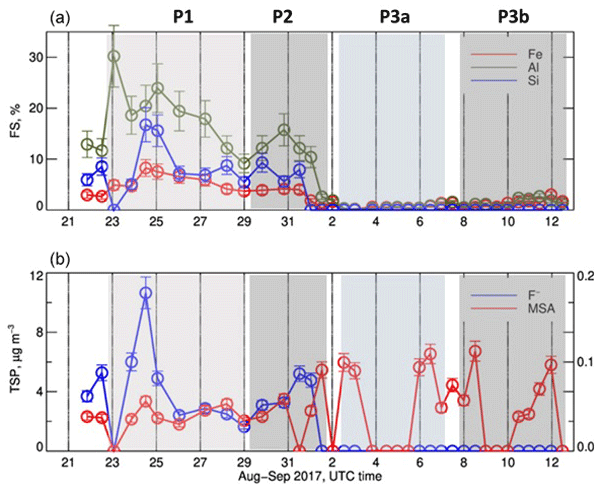
Paola Formenti, Chiara Giorio, Karine Desboeufs, Alexander Zherebker, Marco Gaetani, Clarissa Baldo, Gautier Landrot, Simona Montebello, Servanne Chevaillier, Sylvain Triquet, Guillaume Siour, Claudia Di Biagio, Francesco Battaglia, Jean-François Doussin, Anais Feron, Andreas Namwoonde, and Stuart John Piketh
Atmos. Chem. Phys., 25, 16127–16145, https://doi.org/10.5194/acp-25-16127-2025, https://doi.org/10.5194/acp-25-16127-2025, 2025
Short summary
Short summary
The elemental composition and solubility of several metals, including iron, at a coastal site in Namibia in August–September 2017, indicate that natural and anthropogenic dust had different solubility depending on mineralogy but mostly on the processing by fluoride ions from marine emissions, pointing to the complexity of atmospheric--oceanic interactions in this region of the world influenced by the Benguela current and significant aerosol load.
Chiara Giorio, Anne Monod, Valerio Di Marco, Pierre Herckes, Denise Napolitano, Amy Sullivan, Gautier Landrot, Daniel Warnes, Marika Nasti, Sara D'Aronco, Agathe Gérardin, Nicolas Brun, Karine Desboeufs, Sylvain Triquet, Servanne Chevaillier, Claudia Di Biagio, Francesco Battaglia, Frédéric Burnet, Stuart J. Piketh, Andreas Namwoonde, Jean-François Doussin, and Paola Formenti
Atmos. Chem. Phys., 25, 16107–16125, https://doi.org/10.5194/acp-25-16107-2025, https://doi.org/10.5194/acp-25-16107-2025, 2025
Short summary
Short summary
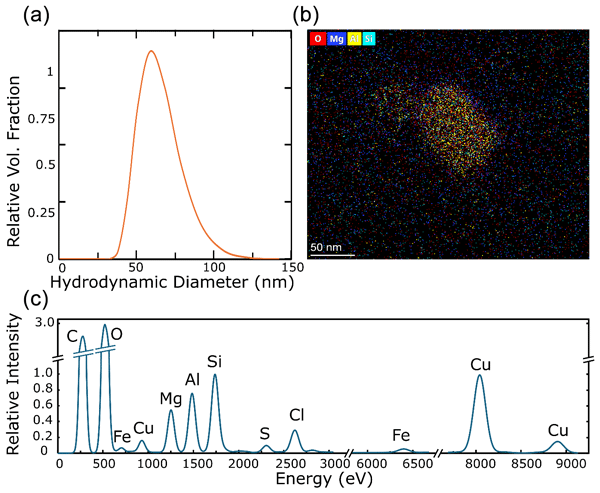
We present a comparison between concentrations of dissolved trace metals in pairs of total suspended particulate (TSP) and fog samples collected in Henties Bay, Namibia, during the AErosols, Radiation and CLOuds in southern Africa (AEROCLO-sA) field campaign. We found enhanced concentrations of dissolved metals in fog samples, which we attributed to metal–ligand complex formation in the early stages of particle activation into droplets that can then remain in a kinetically stable form in fog or lead to the formation of colloidal nanoparticles.
Francesco Battaglia, Paola Formenti, Chiara Giorio, Mathieu Cazaunau, Edouard Pangui, Antonin Bergé, Aline Gratien, Diana L. Pereira, Thomas Bertin, Joel F. de Brito, Manolis N. Romanias, Vincent Michoud, Clarissa Baldo, Servanne Chevaillier, Gael Noyalet, Philippe Decorse, Bénédicte Picquet-Varrault, and Jean-François Doussin
Atmos. Chem. Phys., 25, 12409–12431, https://doi.org/10.5194/acp-25-12409-2025, https://doi.org/10.5194/acp-25-12409-2025, 2025
Short summary
Short summary
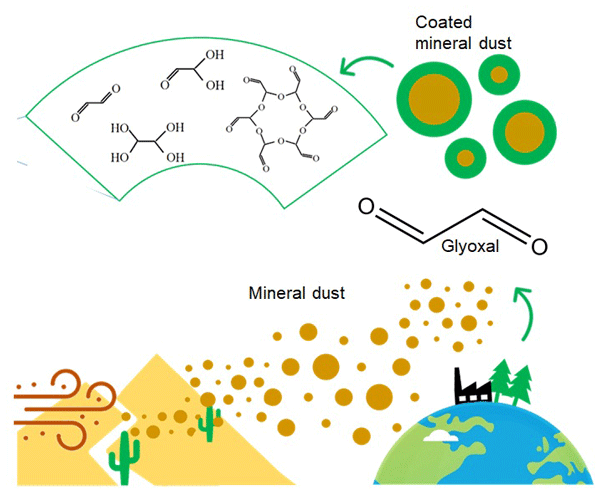
This paper presents an experimental investigation of the interactions between glyoxal, an important volatile organic compound, and mineral dust particles of size and composition typical of natural conditions. We show that their interactions modify, in a definitive way, the concentrations of the gas phase and the surface properties of the dust, which could have important implications for the atmospheric composition and the Earth's climate.
Sergio Harb, Manuela Cirtog, Stéphanie Alage, Christopher Cantrell, Mathieu Cazaunau, Vincent Michoud, Edouard Pangui, Antonin Bergé, Chiara Giorio, Francesco Battaglia, and Bénédicte Picquet-Varrault
Atmos. Chem. Phys., 25, 11003–11024, https://doi.org/10.5194/acp-25-11003-2025, https://doi.org/10.5194/acp-25-11003-2025, 2025
Short summary
Short summary
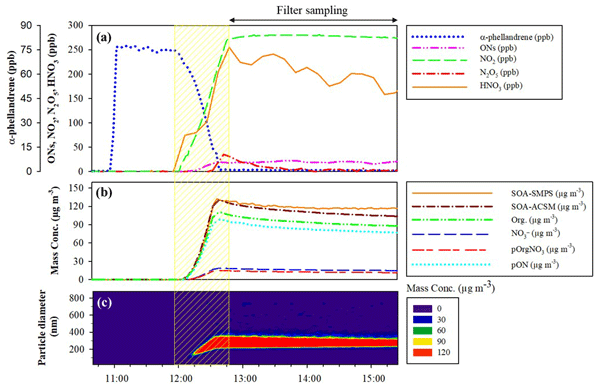
We investigated the reactions of α- and β-phellandrenes (from vegetation emissions) with NO3 radicals, a major nighttime oxidant from human activities. Using lab-based simulations, we examined these reactions and measured particle formation and by-products. Our findings reveal that α- and β-phellandrenes are efficient particle sources and enhance our understanding of biogenic–anthropogenic interactions and their contributions to atmospheric changes affecting climate and health.
Paul T. Griffiths, Laura J. Wilcox, Robert J. Allen, Vaishali Naik, Fiona M. O'Connor, Michael Prather, Alex Archibald, Florence Brown, Makoto Deushi, William Collins, Stephanie Fiedler, Naga Oshima, Lee T. Murray, Bjørn H. Samset, Chris Smith, Steven Turnock, Duncan Watson-Parris, and Paul J. Young
Atmos. Chem. Phys., 25, 8289–8328, https://doi.org/10.5194/acp-25-8289-2025, https://doi.org/10.5194/acp-25-8289-2025, 2025
Short summary
Short summary
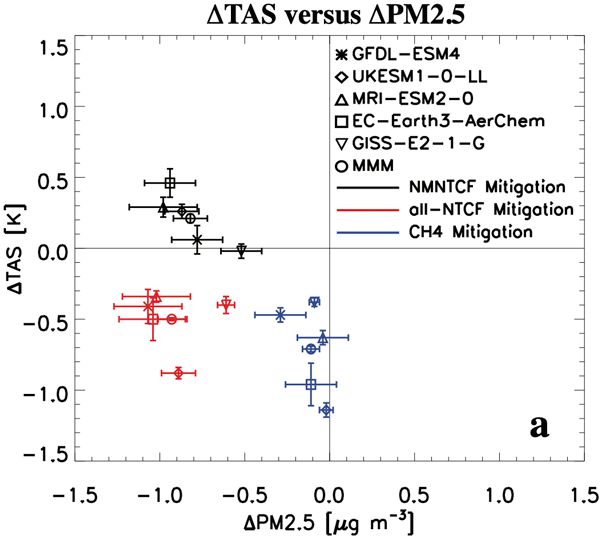
The Aerosol Chemistry Model Intercomparison Project (AerChemMIP) aimed to quantify the climate and air quality impacts of aerosols and chemically reactive gases. We review its contribution to AR6 (Sixth Assessment Report of the Intergovernmental Panel on Climate Change) and the wider understanding of the role of these species in climate and climate change. We identify challenges and provide recommendations to improve the utility and uptake of climate model data, detailed summary tables of CMIP6 models, experiments, and emergent diagnostics.
Diana L. Pereira, Chiara Giorio, Aline Gratien, Alexander Zherebker, Gael Noyalet, Servanne Chevaillier, Stéphanie Alage, Elie Almarj, Antonin Bergé, Thomas Bertin, Mathieu Cazaunau, Patrice Coll, Ludovico Di Antonio, Sergio Harb, Johannes Heuser, Cécile Gaimoz, Oscar Guillemant, Brigitte Language, Olivier Lauret, Camilo Macias, Franck Maisonneuve, Bénédicte Picquet-Varrault, Raquel Torres, Sylvain Triquet, Pascal Zapf, Lelia Hawkins, Drew Pronovost, Sydney Riley, Pierre-Marie Flaud, Emilie Perraudin, Pauline Pouyes, Eric Villenave, Alexandre Albinet, Olivier Favez, Robin Aujay-Plouzeau, Vincent Michoud, Christopher Cantrell, Manuela Cirtog, Claudia Di Biagio, Jean-François Doussin, and Paola Formenti
Atmos. Chem. Phys., 25, 4885–4905, https://doi.org/10.5194/acp-25-4885-2025, https://doi.org/10.5194/acp-25-4885-2025, 2025
Short summary
Short summary
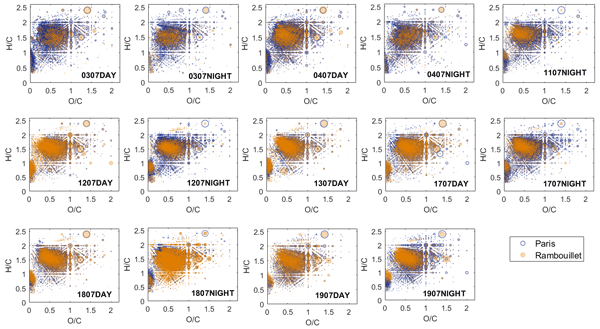
In order to study aerosols in environments influenced by anthropogenic and biogenic emissions, we performed analyses of samples collected during the ACROSS (Atmospheric Chemistry Of the Suburban Forest) campaign in summer 2022 in the greater Paris area. After analysis of the chemical composition by means of total carbon determination and high-resolution mass spectrometry, this work highlights the influence of anthropogenic inputs on the chemical composition of both urban and forested areas.
Alex T. Archibald, Bablu Sinha, Maria R. Russo, Emily Matthews, Freya A. Squires, N. Luke Abraham, Stephane J.-B. Bauguitte, Thomas J. Bannan, Thomas G. Bell, David Berry, Lucy J. Carpenter, Hugh Coe, Andrew Coward, Peter Edwards, Daniel Feltham, Dwayne Heard, Jim Hopkins, James Keeble, Elizabeth C. Kent, Brian A. King, Isobel R. Lawrence, James Lee, Claire R. Macintosh, Alex Megann, Bengamin I. Moat, Katie Read, Chris Reed, Malcolm J. Roberts, Reinhard Schiemann, David Schroeder, Timothy J. Smyth, Loren Temple, Navaneeth Thamban, Lisa Whalley, Simon Williams, Huihui Wu, and Mingxi Yang
Earth Syst. Sci. Data, 17, 135–164, https://doi.org/10.5194/essd-17-135-2025, https://doi.org/10.5194/essd-17-135-2025, 2025
Short summary
Short summary
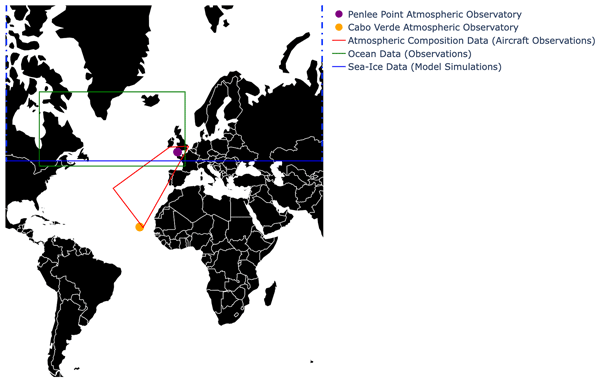
Here, we present an overview of the data generated as part of the North Atlantic Climate System Integrated Study (ACSIS) programme that are available through dedicated repositories at the Centre for Environmental Data Analysis (CEDA; www.ceda.ac.uk) and the British Oceanographic Data Centre (BODC; bodc.ac.uk). The datasets described here cover the North Atlantic Ocean, the atmosphere above (it including its composition), and Arctic sea ice.
Lorrie Simone Denise Jacob, Chiara Giorio, and Alexander Thomas Archibald
Atmos. Chem. Phys., 24, 3329–3347, https://doi.org/10.5194/acp-24-3329-2024, https://doi.org/10.5194/acp-24-3329-2024, 2024
Short summary
Short summary
Recent studies on DMS have provided new challenges to our mechanistic understanding. Here we synthesise a number of recent studies to further develop and extend a state-of-the-art mechanism. Our new mechanism is shown to outperform all existing mechanisms when compared over a wide set of conditions. The development of an improved DMS mechanism will help lead the way to better the understanding the climate impacts of DMS emissions in past, present, and future atmospheric conditions.
Yusuf A. Bhatti, Laura E. Revell, Alex J. Schuddeboom, Adrian J. McDonald, Alex T. Archibald, Jonny Williams, Abhijith U. Venugopal, Catherine Hardacre, and Erik Behrens
Atmos. Chem. Phys., 23, 15181–15196, https://doi.org/10.5194/acp-23-15181-2023, https://doi.org/10.5194/acp-23-15181-2023, 2023
Short summary
Short summary
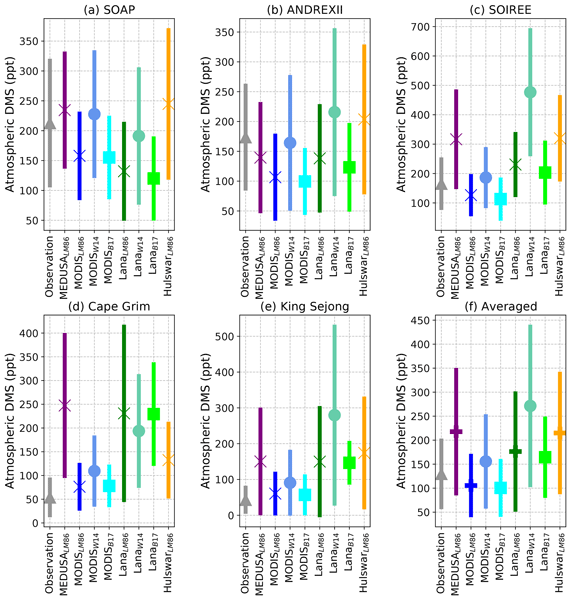
Aerosols are a large source of uncertainty over the Southern Ocean. A dominant source of sulfate aerosol in this region is dimethyl sulfide (DMS), which is poorly simulated by climate models. We show the sensitivity of simulated atmospheric DMS to the choice of oceanic DMS data set and emission scheme. We show that oceanic DMS has twice the influence on atmospheric DMS than the emission scheme. Simulating DMS more accurately in climate models will help to constrain aerosol uncertainty.
Ben A. Cala, Scott Archer-Nicholls, James Weber, N. Luke Abraham, Paul T. Griffiths, Lorrie Jacob, Y. Matthew Shin, Laura E. Revell, Matthew Woodhouse, and Alexander T. Archibald
Atmos. Chem. Phys., 23, 14735–14760, https://doi.org/10.5194/acp-23-14735-2023, https://doi.org/10.5194/acp-23-14735-2023, 2023
Short summary
Short summary
Dimethyl sulfide (DMS) is an important trace gas emitted from the ocean recognised as setting the sulfate aerosol background, but its oxidation is complex. As a result representation in chemistry-climate models is greatly simplified. We develop and compare a new mechanism to existing mechanisms via a series of global and box model experiments. Our studies show our updated DMS scheme is a significant improvement but significant variance exists between mechanisms.
Nicola J. Warwick, Alex T. Archibald, Paul T. Griffiths, James Keeble, Fiona M. O'Connor, John A. Pyle, and Keith P. Shine
Atmos. Chem. Phys., 23, 13451–13467, https://doi.org/10.5194/acp-23-13451-2023, https://doi.org/10.5194/acp-23-13451-2023, 2023
Short summary
Short summary
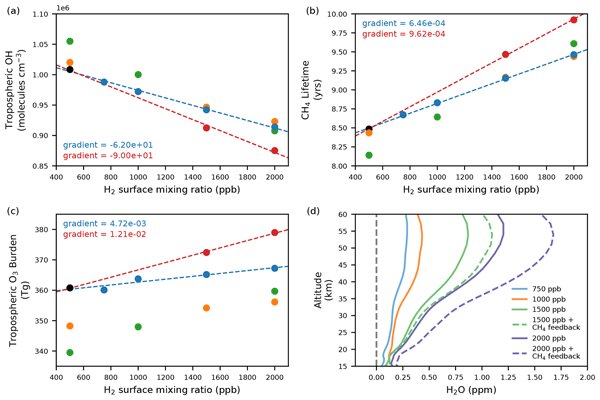
A chemistry–climate model has been used to explore the atmospheric response to changes in emissions of hydrogen and other species associated with a shift from fossil fuel to hydrogen use. Leakage of hydrogen results in indirect global warming, offsetting greenhouse gas emission reductions from reduced fossil fuel use. To maximise the benefit of hydrogen as an energy source, hydrogen leakage and emissions of methane, carbon monoxide and nitrogen oxides should be minimised.

Maria Rosa Russo, Brian John Kerridge, Nathan Luke Abraham, James Keeble, Barry Graham Latter, Richard Siddans, James Weber, Paul Thomas Griffiths, John Adrian Pyle, and Alexander Thomas Archibald
Atmos. Chem. Phys., 23, 6169–6196, https://doi.org/10.5194/acp-23-6169-2023, https://doi.org/10.5194/acp-23-6169-2023, 2023
Short summary
Short summary
Tropospheric ozone is an important component of the Earth system as it can affect both climate and air quality. In this work we use observed tropospheric ozone derived from satellite observations and compare it to tropospheric ozone from model simulations. Our aim is to investigate recent changes (2005–2018) in tropospheric ozone in the North Atlantic region and to understand what factors are driving such changes.
Scott Archer-Nicholls, Rachel Allen, Nathan L. Abraham, Paul T. Griffiths, and Alex T. Archibald
Atmos. Chem. Phys., 23, 5801–5813, https://doi.org/10.5194/acp-23-5801-2023, https://doi.org/10.5194/acp-23-5801-2023, 2023
Short summary
Short summary
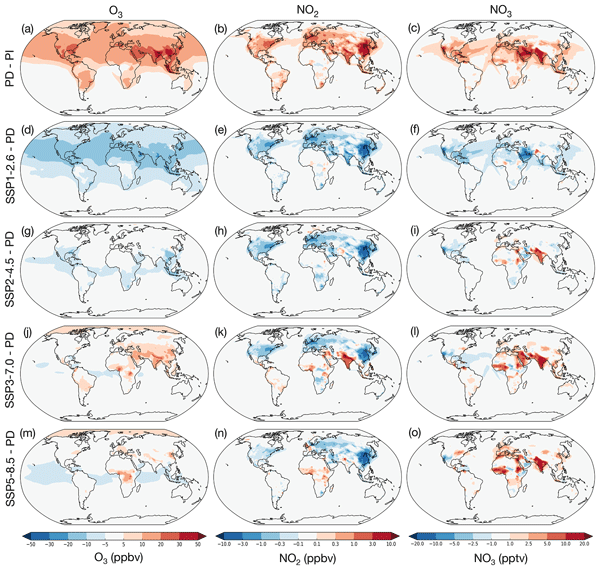
The nitrate radical is a major oxidant at nighttime, but much less is known about it than about the other oxidants ozone and OH. We use Earth system model calculations to show how the nitrate radical has changed in abundance from 1850–2014 and to 2100 under a range of different climate and emission scenarios. Depending on the emissions and climate scenario, significant increases are projected with implications for the oxidation of volatile organic compounds and the formation of fine aerosol.
Ernesto Reyes-Villegas, Douglas Lowe, Jill S. Johnson, Kenneth S. Carslaw, Eoghan Darbyshire, Michael Flynn, James D. Allan, Hugh Coe, Ying Chen, Oliver Wild, Scott Archer-Nicholls, Alex Archibald, Siddhartha Singh, Manish Shrivastava, Rahul A. Zaveri, Vikas Singh, Gufran Beig, Ranjeet Sokhi, and Gordon McFiggans
Atmos. Chem. Phys., 23, 5763–5782, https://doi.org/10.5194/acp-23-5763-2023, https://doi.org/10.5194/acp-23-5763-2023, 2023
Short summary
Short summary
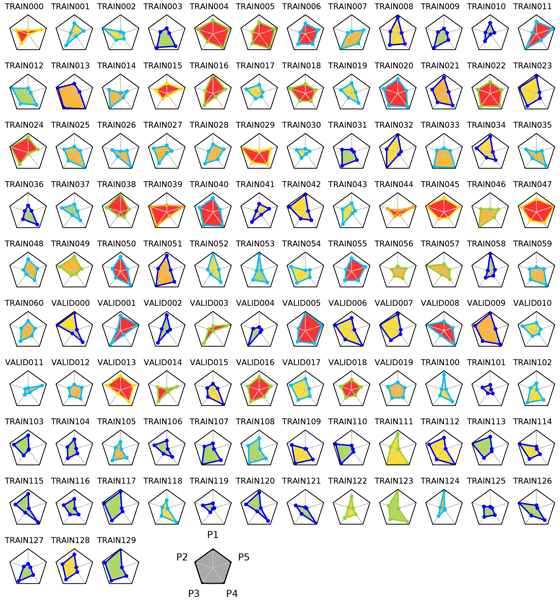
Organic aerosols (OAs), their sources and their processes remain poorly understood. The volatility basis set (VBS) approach, implemented in air quality models such as WRF-Chem, can be a useful tool to describe primary OA (POA) production and aging. However, the main disadvantage is its complexity. We used a Gaussian process simulator to reproduce model results and to estimate the sources of model uncertainty. We do this by comparing the outputs with OA observations made at Delhi, India, in 2018.
Fouzia Fahrin, Daniel C. Jones, Yan Wu, James Keeble, and Alexander T. Archibald
Atmos. Chem. Phys., 23, 3609–3627, https://doi.org/10.5194/acp-23-3609-2023, https://doi.org/10.5194/acp-23-3609-2023, 2023
Short summary
Short summary
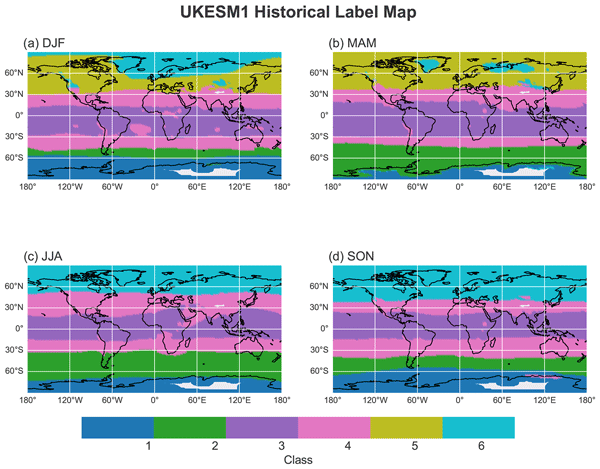
We use a machine learning technique called Gaussian mixture modeling (GMM) to classify vertical ozone profiles into groups based on how the ozone concentration changes with pressure. Even though the GMM algorithm was not provided with spatial information, the classes are geographically coherent. We also detect signatures of tropical broadening in UKESM1 future climate scenarios. GMM may be useful for understanding ozone structures in modeled and observed datasets.
Le Yuan, Olalekan A. M. Popoola, Christina Hood, David Carruthers, Roderic L. Jones, Haitong Zhe Sun, Huan Liu, Qiang Zhang, and Alexander T. Archibald
Atmos. Chem. Phys., 22, 8617–8637, https://doi.org/10.5194/acp-22-8617-2022, https://doi.org/10.5194/acp-22-8617-2022, 2022
Short summary
Short summary
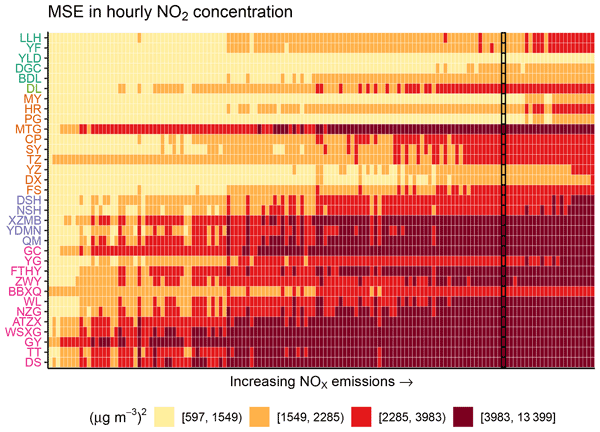
Emission estimates represent a major source of uncertainty in air quality modelling. We developed a novel approach to improve emission estimates from existing inventories using air quality models and routine in situ observations. Using this approach, we derived improved estimates of NOx emissions from the transport sector in Beijing in 2016. This approach has great potential in deriving timely updates of emissions for other pollutants, particularly in regions undergoing rapid emission changes.
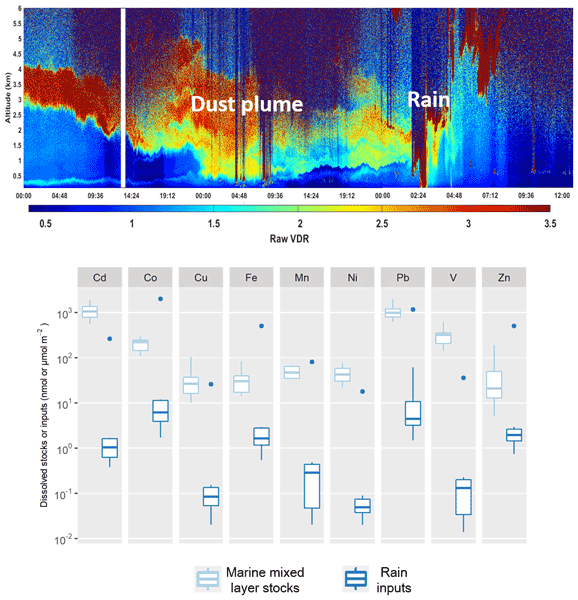
Karine Desboeufs, Franck Fu, Matthieu Bressac, Antonio Tovar-Sánchez, Sylvain Triquet, Jean-François Doussin, Chiara Giorio, Patrick Chazette, Julie Disnaquet, Anaïs Feron, Paola Formenti, Franck Maisonneuve, Araceli Rodríguez-Romero, Pascal Zapf, François Dulac, and Cécile Guieu
Atmos. Chem. Phys., 22, 2309–2332, https://doi.org/10.5194/acp-22-2309-2022, https://doi.org/10.5194/acp-22-2309-2022, 2022
Short summary
Short summary
This article reports the first concurrent sampling of wet deposition samples and surface seawater and was performed during the PEACETIME cruise in the remote Mediterranean (May–June 2017). Through the chemical composition of trace metals (TMs) in these samples, it emphasizes the decrease of atmospheric metal pollution in this area during the last few decades and the critical role of wet deposition as source of TMs for Mediterranean surface seawater, especially for intense dust deposition events.
Cited articles
Albu, M., Barnes, I., Becker, K. H., Patroescu-Klotz, I., Benter, T., and Mocanu, R.: FT-IR Product Study on the OH Radical Initiated Oxidation of Dimethyl Sulfide: Temperature and O2 Partial Pressure Dependence, in: Simulation and Assessment of Chemical Processes in a Multiphase Environment, edited by: Barnes, I. and Kharytonov, M. M., Springer Science, Dortdrecht, 501–513, https://doi.org/10.1007/978-1-4020-8846-9_41, 2008. a, b, c
Allan, B., Ayers, G., Baker, J., Brough, N., Carpenter, L., Creasey, D., Fraser, P., Galbally, I., Gillett, R., Heard, D., Kivlighon, L., Kochhar, M., Krummel, P., Lee, J., Lewis, A., Meyer, M., Mills, G., Monks, P., Pilling, M., Salisbury, G., Steele, P., Sturrock, G., and Weeks, I.: Southern Ocean Atmospheric Photochemistry Experiment 2 (SOAPEX-2): atmospheric constituents concentration measurements from Cape Grim, Tasmania, NCAS British Atmospheric Data Centre [data set], http://catalogue.ceda.ac.uk/uuid/a266f328ead407624dde4bb5c9e2e6a2/ (last access: 27 February 2026), 1987. a
Andreae, M. O., Elbert, W., Cai, Y., Andrea, T. W., and Gras, J.: Non-sea-salt sulfate, methanesulfonate, and nitrate aerosol concentrations and size distributions at Cape Grim, Tasmania, J. Geophys. Res.-Atmos., 104, 21695–21706, https://doi.org/10.1029/1999JD900283, 1999. a
Arathala, P. and Musah, R. A.: Atmospheric degradation of dimethyl sulfone mediated by OH, Cl and NO3, and the C-centered dimethyl sulfone radical + 3O2 reaction: a kinetics and mechanistic study, Atmos. Environ., 315, 119990, https://doi.org/10.1016/j.atmosenv.2023.119990, 2023. a
Assaf, E., Finewax, Z., Marshall, P., Veres, P. R., Neuman, J. A., and Burkholder, J. B.: Measurement of the intramolecular hydrogen-shift rate coefficient for the CH3SCH2OO radical between 314 and 433 K, J. Phys. Chem. A, 127, 2336–2350, https://doi.org/10.1021/acs.jpca.2c09095, 2023. a
Atkinson, R., Baulch, D. L., Cox, R. A., Crowley, J. N., Hampson, R. F., Hynes, R. G., Jenkin, M. E., Rossi, M. J., Troe, J., and IUPAC Subcommittee: Evaluated kinetic and photochemical data for atmospheric chemistry: Volume II – gas phase reactions of organic species, Atmos. Chem. Phys., 6, 3625–4055, https://doi.org/10.5194/acp-6-3625-2006, 2006. a, b, c, d, e, f
Baccarini, A., Dommen, J., Lehtipalo, K., Henning, S., Modini, R. L., Gysel-Beer, M., Baltensperger, U., and Schmale, J.: Low-volatility vapors and new particle formation over the Southern Ocean during the Antarctic Circumnavigation Expedition, J. Geophys. Res.-Atmos., 126, e2021JD035126, https://doi.org/10.1029/2021JD035126, 2021. a
Bates, T. S., Lamb, B. K., Guenther, A., Dignon, J., and Stoiber, R. E.: Sulfur emissions to the atmosphere from natural sources, J. Atmos. Chem., 14, 315–337, https://doi.org/10.1007/BF00115242, 1992. a
Beck, L. J., Sarnela, N., Junninen, H., Hoppe, C. J. M., Garmash, O., Bianchi, F., Riva, M., Rose, C., Peräkylä, O., Wimmer, D., Kausiala, O., Jokinen, T., Ahonen, L., Mikkilä, J., Hakala, J., He, X.-C., Kontkanen, J., Wolf, K. K. E., Cappelletti, D., Mazzola, M., Traversi, R., Petroselli, C., Viola, A. P., Vitale, V., Lange, R., Massling, A., Nøjgaard, J. K., Krejci, R., Karlsson, L., Zieger, P., Jang, S., Lee, K., Vakkari, V., Lampilahti, J., Thakur, R. C., Leino, K., Kangasluoma, J., Duplissy, E.-M., Siivola, E., Marbouti, M., Tham, Y. J., Saiz-Lopez, A., Petäjä, T., Ehn, M., Worsnop, D. R., Skov, H., Kulmala, M., Kerminen, V.-M., and Sipilä, M.: Differing mechanisms of new particle formation at two Arctic sites, Geophys. Res. Lett., 48, e2020GL091334, https://doi.org/10.1029/2020GL091334, 2021. a
Berndt, T.: Methanesulfonic acid (MSA) and SO3 formation from the addition channel of atmospheric dimethyl sulfide oxidation, Chem. Commun., 61, 1443–1446, https://doi.org/10.1039/D4CC05913A, 2025. a, b
Berndt, T., Scholz, W., Mentler, B., Fischer, L., Hoffmann, E. H., Tilgner, A., Hyttinen, N., Prisle, N. L., Hansel, A., and Herrmann, H.: Fast peroxy radical isomerization and OH recycling in the reaction of OH radicals with dimethyl sulfide, J. Phys. Chem. Lett., 10, 6478–6483, https://doi.org/10.1021/acs.jpclett.9b02567, 2019. a
Berndt, T., Chen, J., Møller, K. H., Hyttinen, N., Prisle, N. L., Tilgner, A., Hoffmann, E. H., Herrmann, H., and Kjaergaard, H. G.: SO2 formation and peroxy radical isomerization in the atmospheric reaction of OH radicals with dimethyl disulfide, Chem. Commun., 56, 13634–13637, https://doi.org/10.1039/D0CC05783E, 2020. a
Berndt, T., Hoffmann, E. H., Tilgner, A., Stratmann, F., and Herrmann, H.: Direct sulfuric acid formation from the gas-phase oxidation of reduced-sulfur compounds, Nat. Commun., 14, 4849, https://doi.org/10.1038/s41467-023-40586-2, 2023. a
Berresheim, H., Elste, T., Tremmel, H. G., Allen, A. G., Hansson, H.-C., Rosman, K., Dal Maso, M., Mäkelä, J. M., Kulmala, M., and O'Dowd, C. D.: Gas-aerosol relationships of H2SO4, MSA, and OH: observations in the coastal marine boundary layer at Mace Head, Ireland, J. Geophys. Res.-Atmos., 107, D198100, https://doi.org/10.1029/2000JD000229, 2002. a
Boy, M., Kulmala, M., Ruuskanen, T. M., Pihlatie, M., Reissell, A., Aalto, P. P., Keronen, P., Dal Maso, M., Hellen, H., Hakola, H., Jansson, R., Hanke, M., and Arnold, F.: Sulphuric acid closure and contribution to nucleation mode particle growth, Atmos. Chem. Phys., 5, 863–878, https://doi.org/10.5194/acp-5-863-2005, 2005. a
Burkholder, J. B., Sander, S. P., Abbatt, J. P. D., Barker, J. R., Cappa, C., Crounse, J. D., Dibble, T. S., Huie, R. E., Kolb, C. E., Kurylo, M. J., Orkin, V. L., Percival, C. J., Wilmouth, D. M., and Wine, P. H.: Chemical Kinetics and Photochemical Data for Use in Atmospheric Studies, Evaluation No. 19, Tech. rep., JPL Publication 19-5, Jet Propulsion Laboratory, Pasadena, http://jpldataeval.jpl.nasa.gov/ (last access: 27 February 2026), 2019. a, b, c, d, e
Butler, J. H., King, D. B., Lobert, J. M., Montzka, S. A., Yvon-Lewis, S. A., Hall, B. D., Warwick, N. J., Mondeel, D. J., Aydin, M., and Elkins, J. W.: Oceanic distributions and emissions of short-lived halocarbons, Global Biogeochem. Cy., 21, GB1023, https://doi.org/10.1029/2006GB002732, 2007. a
Cala, B. A., Archer-Nicholls, S., Weber, J., Abraham, N. L., Griffiths, P. T., Jacob, L., Shin, Y. M., Revell, L. E., Woodhouse, M., and Archibald, A. T.: Development, intercomparison, and evaluation of an improved mechanism for the oxidation of dimethyl sulfide in the UKCA model, Atmos. Chem. Phys., 23, 14735–14760, https://doi.org/10.5194/acp-23-14735-2023, 2023. a
Campolongo, F., Saltelli, A., Jensen, N. R., Wilson, J., and Hjorth, J.: The role of multiphase chemistry in the oxidation of dimethylsulphide (DMS). A latitude dependent analysis, J. Atmos. Chem., 32, 327–356, https://doi.org/10.1023/A:1006154618511, 1999. a, b, c, d
Campolongo, F., Cariboni, J., and Saltelli, A.: An effective screening design for sensitivity analysis of large models, Environ. Model. Softw., 22, 1509–1518, https://doi.org/10.1016/j.envsoft.2006.10.004, 2007. a
Carpenter, L. J. and Liss, P. S.: On temperate sources of bromoform and other reactive organic bromine gases, J. Geophys. Res.-Atmos., 105, 20539–20547, https://doi.org/10.1029/2000JD900242, 2000. a
Carslaw, K. S., Lee, L. A., Reddington, C. L., Pringle, K. J., Rap, A., Forster, P. M., Mann, G. W., Spracklen, D. V., Woodhouse, M. T., Regayre, L. A., and Pierce, J. R.: Large contribution of natural aerosols to uncertainty in indirect forcing, Nature, 503, 67–71, https://doi.org/10.1038/nature12674, 2013. a
Cartwright, M. P., Pope, R. J., Harrison, J. J., Chipperfield, M. P., Wilson, C., Feng, W., Moore, D. P., and Suntharalingam, P.: Constraining the budget of atmospheric carbonyl sulfide using a 3-D chemical transport model, Atmos. Chem. Phys., 23, 10035–10056, https://doi.org/10.5194/acp-23-10035-2023, 2023. a, b
Chang, C.-T., Liu, T.-H., and Jeng, F.-T.: Atmospheric concentrations of the Cl atom, CIO radical, and HO radical in the coastal marine boundary layer, Environ. Res., 94, 67–74, https://doi.org/10.1016/j.envres.2003.07.008, 2004. a
Chen, Q., Sherwen, T., Evans, M., and Alexander, B.: DMS oxidation and sulfur aerosol formation in the marine troposphere: a focus on reactive halogen and multiphase chemistry, Atmos. Chem. Phys., 18, 13617–13637, https://doi.org/10.5194/acp-18-13617-2018, 2018. a
Covert, D. S., Kapustin, V. N., Quinn, P. K., and Bates, T. S.: New particle formation in the marine boundary layer, J. Geophys. Res.-Atmos., 97, 20581–20589, https://doi.org/10.1029/92JD02074, 1992. a
Curry, J. A. and Webster, P. J.: Nucleation and diffusional growth, Chap. 5, in: Thermodynamics of Atmospheres and Oceans, edited by: Holton, J. R., vol. 65, Academic Press, Boulder, 129–158, https://doi.org/10.1016/S0074-6142(99)80027-8, 1999. a
Davidson, C., Amrani, A., and Angert, A.: Tropospheric carbonyl sulfide mass balance based on direct measurements of sulfur isotopes, P. Natl. Acad. Sci. USA, 118, e2020060118, https://doi.org/10.1073/pnas.2020060118, 2021. a
Dunker, A. M., Wilson, G., Bates, J. T., and Yarwood, G.: Chemical sensitivity analysis and uncertainty analysis of ozone production in the comprehensive air quality model with extensions applied to eastern Texas, Environ. Sci. Technol., 54, 5391–5399, https://doi.org/10.1021/acs.est.9b07543, 2020. a, b, c
Fung, K. M., Heald, C. L., Kroll, J. H., Wang, S., Jo, D. S., Gettelman, A., Lu, Z., Liu, X., Zaveri, R. A., Apel, E. C., Blake, D. R., Jimenez, J.-L., Campuzano-Jost, P., Veres, P. R., Bates, T. S., Shilling, J. E., and Zawadowicz, M.: Exploring dimethyl sulfide (DMS) oxidation and implications for global aerosol radiative forcing, Atmos. Chem. Phys., 22, 1549–1573, https://doi.org/10.5194/acp-22-1549-2022, 2022. a, b
Goffart, J. and Woloszyn, M.: EASI RBD-FAST: an efficient method of global sensitivity analysis for present and future challenges in building performance simulation, J. Build. Eng., 43, 103129, https://doi.org/10.1016/j.jobe.2021.103129, 2021. a, b
Goss, M. B. and Kroll, J. H.: Chamber studies of OH + dimethyl sulfoxide and dimethyl disulfide: insights into the dimethyl sulfide oxidation mechanism, Atmos. Chem. Phys., 24, 1299–1314, https://doi.org/10.5194/acp-24-1299-2024, 2024. a, b, c
Herman, J. and Usher, W.: SALib: an open-source Python library for Sensitivity Analysis, J. Open Source Softw., 2, 97, https://doi.org/10.21105/joss.00097, 2017. a
Hoffmann, E. H., Tilgner, A., Schrödner, R., Bräuer, P., Wolke, R., and Herrmann, H.: An advanced modeling study on the impacts and atmospheric implications of multiphase dimethyl sulfide chemistry, P. Natl. Acad. Sci. USA, 113, 11776–11781, https://doi.org/10.1073/pnas.1606320113, 2016. a
Jacob, L. S. D., Giorio, C., and Archibald, A. T.: Extension, development, and evaluation of the representation of the OH-initiated dimethyl sulfide (DMS) oxidation mechanism in the Master Chemical Mechanism (MCM) v3.3.1 framework, Atmos. Chem. Phys., 24, 3329–3347, https://doi.org/10.5194/acp-24-3329-2024, 2024. a, b, c, d, e, f
Jacob, L. S. D., Harvey, B. E. H., Giorio, C., and Archibald, A. T.: Input and output files supporting Determining the key sources of uncertainty in dimethyl sulfide and methanethiol oxidation under tropical, temperate, and polar marine conditions, Apollo [code, data set], https://doi.org/10.17863/CAM.124752, 2026. a
Jenkin, M. E., Saunders, S. M., and Pilling, M. J.: The tropospheric degradation of volatile organic compounds: a protocol for mechanism development, Atmos. Environ., 31, 81–104, https://doi.org/10.1016/S1352-2310(96)00105-7, 1997. a
Jernigan, C. M., Fite, C. H., Vereecken, L., Berkelhammer, M. B., Rollins, A. W., Rickly, P. S., Novelli, A., Taraborrelli, D., Holmes, C. D., and Bertram, T. H.: Efficient production of carbonyl sulfide in the low-NOx oxidation of dimethyl sulfide, Geophys. Res. Lett., 49, e2021GL096838, https://doi.org/10.1029/2021GL096838, 2022. a, b, c, d, e, f, g, h
Jernigan, C. M., Rivard, M. J., Berkelhammer, M. B., and Bertram, T. H.: Sulfate and carbonyl sulfide production in aqueous reactions of hydroperoxymethyl thioformate, ACS ES&T Air, 1, 397–404, https://doi.org/10.1021/acsestair.3c00098, 2024. a
Jones, A. E., Wolff, E. W., Salmon, R. A., Bauguitte, S. J.-B., Roscoe, H. K., Anderson, P. S., Ames, D., Clemitshaw, K. C., Fleming, Z. L., Bloss, W. J., Heard, D. E., Lee, J. D., Read, K. A., Hamer, P., Shallcross, D. E., Jackson, A. V., Walker, S. L., Lewis, A. C., Mills, G. P., Plane, J. M. C., Saiz-Lopez, A., Sturges, W. T., and Worton, D. R.: Chemistry of the Antarctic Boundary Layer and the Interface with Snow: an overview of the CHABLIS campaign, Atmos. Chem. Phys., 8, 3789–3803, https://doi.org/10.5194/acp-8-3789-2008, 2008. a, b
Kerminen, V.-M., Chen, X., Vakkari, V., Petäjä, T., Kulmala, M., and Bianchi, F.: Atmospheric new particle formation and growth: review of field observations, Environ. Res. Lett., 13, 103003, https://doi.org/10.1088/1748-9326/aadf3c, 2018. a
Khan, M., Gillespie, S., Razis, B., Xiao, P., Davies-Coleman, M., Percival, C., Derwent, R., Dyke, J., Ghosh, M., Lee, E., and Shallcross, D.: A modelling study of the atmospheric chemistry of DMS using the global model, STOCHEM-CRI, Atmos. Environ., 127, 69–79, https://doi.org/10.1016/j.atmosenv.2015.12.028, 2016. a
Kulmala, M.: How particles nucleate and grow, Science, 302, 1000–1001, https://doi.org/10.1126/science.1090848, 2003. a
Lee, J. D., McFiggans, G., Allan, J. D., Baker, A. R., Ball, S. M., Benton, A. K., Carpenter, L. J., Commane, R., Finley, B. D., Evans, M., Fuentes, E., Furneaux, K., Goddard, A., Good, N., Hamilton, J. F., Heard, D. E., Herrmann, H., Hollingsworth, A., Hopkins, J. R., Ingham, T., Irwin, M., Jones, C. E., Jones, R. L., Keene, W. C., Lawler, M. J., Lehmann, S., Lewis, A. C., Long, M. S., Mahajan, A., Methven, J., Moller, S. J., Müller, K., Müller, T., Niedermeier, N., O'Doherty, S., Oetjen, H., Plane, J. M. C., Pszenny, A. A. P., Read, K. A., Saiz-Lopez, A., Saltzman, E. S., Sander, R., von Glasow, R., Whalley, L., Wiedensohler, A., and Young, D.: Reactive Halogens in the Marine Boundary Layer (RHaMBLe): the tropical North Atlantic experiments, Atmos. Chem. Phys., 10, 1031–1055, https://doi.org/10.5194/acp-10-1031-2010, 2010. a, b
Li, J., Tsona, N. T., Tang, S., Zhang, X., and Du, L.: Influence of water on the gas-phase reaction of dimethyl sulfide with BrO in the marine boundary layer, ACS Omega, 6, 2410–2419, https://doi.org/10.1021/acsomega.0c05945, 2021. a
Lily, M., Hynniewta, S., Lv, X., Chandra, A. K., Tchinda, N. T., and Du, L.: Assessing the isomerization of a primary intermediate (
Lucas, D. D. and Prinn, R. G.: Parametric sensitivity and uncertainty analysis of dimethylsulfide oxidation in the clear-sky remote marine boundary layer, Atmos. Chem. Phys., 5, 1505–1525, https://doi.org/10.5194/acp-5-1505-2005, 2005. a, b, c, d
Lv, G., Zhang, C., and Sun, X.: Understanding the oxidation mechanism of methanesulfinic acid by ozone in the atmosphere, Sci. Rep., 9, 2045–2322, https://doi.org/10.1038/s41598-018-36405-0, 2019. a
McCoy, I. L., McCoy, D. T., Wood, R., Regayre, L., Watson-Parris, D., Grosvenor, D. P., Mulcahy, J. P., Hu, Y., Bender, F. A.-M., Field, P. R., Carslaw, K. S., and Gordon, H.: The hemispheric contrast in cloud microphysical properties constrains aerosol forcing, P. Natl. Acad. Sci. USA, 117, 18998–19006, https://doi.org/10.1073/pnas.1922502117, 2020. a
Natural Environment Research Council, Bauguitte, S., Bloss, W., Clemitshaw, K., Fleming, Z., Heard, D., Jackson, A., Jones, A., Lee, J., Lewis, A., Mills, G., Rankin, A., Read, K., Roscoe, H., Salmon, R., Walker, S., and Wolff, E.: Chemistry of the Antarctic Boundary Layer and the Interface with Snow (CHABLIS): meteorological and atmospheric chemistry field measurements, NCAS British Atmospheric Data Centre [data set], http://catalogue.ceda.ac.uk/uuid/6a5cf2c6e142975e71ff340e0c41777d/ (last access: 27 February 2026), 2005. a
Natural Environment Research Council, Whalley, L., Pszenny, A., and Keene, W.: Reactive halogens in the marine boundary layer (RHaMBLe) campaign at Cape Verde (2007), NCAS British Atmospheric Data Centre [data set], http://catalogue.ceda.ac.uk/uuid/a2d86deca5264e38bce22b8c96f01d99/ (last access: 27 February 2026), 2006. a
Newsome, B. and Evans, M.: Impact of uncertainties in inorganic chemical rate constants on tropospheric composition and ozone radiative forcing, Atmos. Chem. Phys., 17, 14333–14352, https://doi.org/10.5194/acp-17-14333-2017, 2017. a, b
Plischke, E.: An effective algorithm for computing global sensitivity indices (EASI), Reliab. Eng. Syst. Saf., 95, 354–360, https://doi.org/10.1016/j.ress.2009.11.005, 2010. a
Quack, B. and Wallace, D. W. R.: Air-sea flux of bromoform: controls, rates, and implications, Global Biogeochem. Cy., 17, GB1023, https://doi.org/10.1029/2002GB001890, 2003. a
Read, K. A., Mahajan, A. S., Carpenter, L. J., Evans, M. J., Faria, B. V. E., Heard, D. E., Hopkins, J. R., Lee, J. D., Moller, S. J., Lewis, A. C., Mendes, L., McQuaid, J. B., Oetjen, H., Saiz-Lopez, A., Pilling, M. J., and Plane, J. M. C.: Extensive halogen-mediated ozone destruction over the tropical Atlantic Ocean, Nature, 453, 1232–1235, https://doi.org/10.1038/nature07035, 2008. a
Rhyman, L., Lee, E. P. F., Ramasami, P., and Dyke, J. M.: A study of the thermodynamics and mechanisms of the atmospherically relevant reaction dimethyl sulphide (DMS) with atomic chlorine (Cl) in the absence and presence of water using electronic structure methods, Phys. Chem. Chem. Phys., 25, 4780–4793, https://doi.org/10.1039/D2CP05814F, 2023. a
Rodriguez, M. A. and Dabdub, D.: Monte Carlo uncertainty and sensitivity analysis of the CACM chemical mechanism, J. Geophys. Res.-Atmos., 108, D154443, https://doi.org/10.1029/2002JD003281, 2003. a
Rosati, B., Isokääntä, S., Christiansen, S., Jensen, M. M., Moosakutty, S. P., Wollesen de Jonge, R., Massling, A., Glasius, M., Elm, J., Virtanen, A., and Bilde, M.: Hygroscopicity and CCN potential of DMS-derived aerosol particles, Atmos. Chem. Phys., 22, 13449–13466, https://doi.org/10.5194/acp-22-13449-2022, 2022. a
Saiz-Lopez, A. and von Glasow, R.: Reactive halogen chemistry in the troposphere, Chem. Soc. Rev., 41, 6448–6472, https://doi.org/10.1039/C2CS35208G, 2012. a
Saiz-Lopez, A., Mahajan, A. S., Salmon, R. A., Bauguitte, S. J.-B., Jones, A. E., Roscoe, H. K., and Plane, J. M. C.: Boundary layer halogens in coastal Antarctica, Science, 317, 348–351, https://doi.org/10.1126/science.1141408, 2007. a
Saltelli, A. and Annoni, P.: How to avoid a perfunctory sensitivity analysis, Environ. Model. Softw., 25, 1508–1517, https://doi.org/10.1016/j.envsoft.2010.04.012, 2010. a, b, c
Saltelli, A. and Hjorth, J.: Uncertainty and sensitivity analyses of OH-initiated dimethyl sulphide (DMS) oxidation kinetics, J. Atmos. Chem., 21, 187–221, https://doi.org/10.1007/BF00696755, 1995. a, b, c, d
Sandu, A. and Sander, R.: Technical note: Simulating chemical systems in Fortran90 and Matlab with the Kinetic PreProcessor KPP-2.1, Atmos. Chem. Phys., 6, 187–195, https://doi.org/10.5194/acp-6-187-2006, 2006. a
Saunders, S. M., Jenkin, M. E., Derwent, R. G., and Pilling, M. J.: Protocol for the development of the Master Chemical Mechanism, MCM v3 (Part A): tropospheric degradation of non-aromatic volatile organic compounds, Atmos. Chem. Phys., 3, 161–180, https://doi.org/10.5194/acp-3-161-2003, 2003. a, b
Seo, S., Richter, A., Blechschmidt, A.-M., Bougoudis, I., and Burrows, J. P.: Spatial distribution of enhanced BrO and its relation to meteorological parameters in Arctic and Antarctic sea ice regions, Atmos. Chem. Phys., 20, 12285–12312, https://doi.org/10.5194/acp-20-12285-2020, 2020. a
Shen, J., Scholz, W., He, X.-C., Zhou, P., Marie, G., Wang, M., Marten, R., Surdu, M., Rörup, B., Baalbaki, R., Amorim, A., Ataei, F., Bell, D. M., Bertozzi, B., Brasseur, Z., Caudillo, L., Chen, D., Chu, B., Dada, L., Duplissy, J., Finkenzeller, H., Granzin, M., Guida, R., Heinritzi, M., Hofbauer, V., Iyer, S., Kemppainen, D., Kong, W., Krechmer, J. E., Kürten, A., Lamkaddam, H., Lee, C. P., Lopez, B., Mahfouz, N. G. A., Manninen, H. E., Massabò, D., Mauldin, R. L., Mentler, B., Müller, T., Pfeifer, J., Philippov, M., Piedehierro, A. A., Roldin, P., Schobesberger, S., Simon, M., Stolzenburg, D., Tham, Y. J., Tomé, A., Umo, N. S., Wang, D., Wang, Y., Weber, S. K., Welti, A., Wollesen de Jonge, R., Wu, Y., Zauner-Wieczorek, M., Zust, F., Baltensperger, U., Curtius, J., Flagan, R. C., Hansel, A., Möhler, O., Petäjä, T., Volkamer, R., Kulmala, M., Lehtipalo, K., Rissanen, M., Kirkby, J., El-Haddad, I., Bianchi, F., Sipilä, M., Donahue, N. M., and Worsnop, D. R.: High gas-phase methanesulfonic acid production in the OH-initiated oxidation of dimethyl sulfide at low temperatures, Environ. Sci. Technol., 56, 13931–13944, https://doi.org/10.1021/acs.est.2c05154, 2022. a, b, c, d, e, f
Sobol, I.: Global sensitivity indices for nonlinear mathematical models and their Monte Carlo estimates, Math. Comput. Simul., 55, 271–280, https://doi.org/10.1016/S0378-4754(00)00270-6, 2001. a
Sommariva, R., Haggerstone, A.-L., Carpenter, L. J., Carslaw, N., Creasey, D. J., Heard, D. E., Lee, J. D., Lewis, A. C., Pilling, M. J., and Zádor, J.: OH and HO2 chemistry in clean marine air during SOAPEX-2, Atmos. Chem. Phys., 4, 839–856, https://doi.org/10.5194/acp-4-839-2004, 2004. a, b
Stein, B. V., Raponi, E., Sadeghi, Z., Bouman, N., Van Ham, R. C. H. J., and Bäck, T.: A comparison of global sensitivity analysis methods for explainable AI with an application in genomic prediction, IEEE Access, 10, 103364–103381, https://doi.org/10.1109/ACCESS.2022.3210175, 2022. a, b, c, d
Stewart, R. W. and Thompson, A. M.: Kinetic data imprecisions in photochemical rate calculations: means, medians, and temperature dependence, J. Geophys. Res.-Atmos., 101, 20953–20964, https://doi.org/10.1029/96JD01708, 1996. a
Tarantola, S., Gatelli, D., and Mara, T.: Random balance designs for the estimation of first order global sensitivity indices, Reliab. Eng. Syst. Saf., 91, 717–727, https://doi.org/10.1016/j.ress.2005.06.003, 2006. a
Tashmim, L., Porter, W. C., Chen, Q., Alexander, B., Fite, C. H., Holmes, C. D., Pierce, J. R., Croft, B., and Ishino, S.: Contribution of expanded marine sulfur chemistry to the seasonal variability of dimethyl sulfide oxidation products and size-resolved sulfate aerosol, Atmos. Chem. Phys., 24, 3379–3403, https://doi.org/10.5194/acp-24-3379-2024, 2024. a
Tissot, J.-Y. and Prieur, C.: Bias correction for the estimation of sensitivity indices based on random balance designs, Reliab. Eng. Syst. Saf., 107, 205–213, https://doi.org/10.1016/j.ress.2012.06.010, 2012. a
Tomlin, A. S.: The role of sensitivity and uncertainty analysis in combustion modelling, Proc. Combust. Inst., 34, 159–176, https://doi.org/10.1016/j.proci.2012.07.043, 2013. a, b
Vasyunin, A. I., Sobolev, A. M., Wiebe, D. S., and Semenov, D. A.: Influence of uncertainties in the rate constants of chemical reactions on astrochemical modeling results, Astron. Lett., 30, 566–576, https://doi.org/10.1134/1.1784498, 2004. a, b, c
Vereecken, L., Novelli, A., Taraborrelli, D., and Wahner, A.: Perhemiacetal formation and Cl/NO3-initiated chemistry of hydroperoxymethylthioformate (HPMTF) in atmospheric DMS oxidation, Environ. Sci.: Atmos., 5, 181–190, https://doi.org/10.1039/D4EA00134F, 2025. a, b
Veres, P. R., Andrew Neuman, J., Bertram, T. H., Assaf, E., Wolfe, G. M., Williamson, C. J., Weinzierl, B., Tilmes, S., Thompson, C. R., Thames, A. B., Schroder, J. C., Saiz-Lopez, A., Rollins, A. W., Roberts, J. M., Price, D., Peischl, J., Nault, B. A., Møller, K. H., Miller, D. O., Meinardi, S., Li, Q., Lamarque, J. F., Kupc, A., Kjaergaard, H. G., Kinnison, D., Jimenez, J. L., Jernigan, C. M., Hornbrook, R. S., Hills, A., Dollner, M., Day, D. A., Cuevas, C. A., Campuzano-Jost, P., Burkholder, J., Paul Bui, T., Brune, W. H., Brown, S. S., Brock, C. A., Bourgeois, I., Blake, D. R., Apel, E. C., and Ryerson, T. B.: Global airborne sampling reveals a previously unobserved dimethyl sulfide oxidation mechanism in the marine atmosphere, P. Natl. Acad. Sci. USA, 117, 4505–4510, https://doi.org/10.1073/pnas.1919344117, 2020. a, b
Wang, S., Schmidt, J. A., Baidar, S., Coburn, S., Dix, B., Koenig, T. K., Apel, E., Bowdalo, D., Campos, T. L., Eloranta, E., Evans, M. J., DiGangi, J. P., Zondlo, M. A., Gao, R.-S., Haggerty, J. A., Hall, S. R., Hornbrook, R. S., Jacob, D., Morley, B., Pierce, B., Reeves, M., Romashkin, P., ter Schure, A., and Volkamer, R.: Active and widespread halogen chemistry in the tropical and subtropical free troposphere, P. Natl. Acad. Sci. USA, 112, 9281–9286, https://doi.org/10.1073/pnas.1505142112, 2015. a
Wang, X., Jacob, D. J., Downs, W., Zhai, S., Zhu, L., Shah, V., Holmes, C. D., Sherwen, T., Alexander, B., Evans, M. J., Eastham, S. D., Neuman, J. A., Veres, P. R., Koenig, T. K., Volkamer, R., Huey, L. G., Bannan, T. J., Percival, C. J., Lee, B. H., and Thornton, J. A.: Global tropospheric halogen (Cl, Br, I) chemistry and its impact on oxidants, Atmos. Chem. Phys., 21, 13973–13996, https://doi.org/10.5194/acp-21-13973-2021, 2021. a, b
Wohl, C., Villamayor, J., Galí, M., Mahajan, A. S., Fernández, R. P., Cuevas, C. A., Bossolasco, A., Li, Q., Kettle, A. J., Williams, T., Sarda-Esteve, R., Gros, V., Simó, R., and Saiz-Lopez, A.: Marine emissions of methanethiol increase aerosol cooling in the Southern Ocean, Sci. Adv., 10, eadq2465, https://doi.org/10.1126/sciadv.adq2465, 2024. a, b, c, d, e, f, g
Wolke, R., Sehili, A., Simmel, M., Knoth, O., Tilgner, A., and Herrmann, H.: SPACCIM: a parcel model with detailed microphysics and complex multiphase chemistry, Atmos. Environ., 39, 4375–4388, https://doi.org/10.1016/j.atmosenv.2005.02.038, 2005. a
Wollesen de Jonge, R., Elm, J., Rosati, B., Christiansen, S., Hyttinen, N., Lüdemann, D., Bilde, M., and Roldin, P.: Secondary aerosol formation from dimethyl sulfide – improved mechanistic understanding based on smog chamber experiments and modelling, Atmos. Chem. Phys., 21, 9955–9976, https://doi.org/10.5194/acp-21-9955-2021, 2021. a
Wu, R., Wang, S., and Wang, L.: New mechanism for the atmospheric oxidation of dimethyl sulfide. The importance of intramolecular hydrogen shift in a CH3SCH2OO radical, J. Phys. Chem. A, 119, 112–117, https://doi.org/10.1021/jp511616j, 2015. a
Ye, Q., Goss, M. B., Isaacman-VanWertz, G., Zaytsev, A., Massoli, P., Lim, C., Croteau, P., Canagaratna, M., Knopf, D. A., Keutsch, F. N., Heald, C. L., and Kroll, J. H.: Organic sulfur products and peroxy radical isomerization in the OH oxidation of dimethyl sulfide, ACS Earth Space Chem., 5, 2013–2020, https://doi.org/10.1021/acsearthspacechem.1c00108, 2021. a
Ye, Q., Goss, M. B., Krechmer, J. E., Majluf, F., Zaytsev, A., Li, Y., Roscioli, J. R., Canagaratna, M., Keutsch, F. N., Heald, C. L., and Kroll, J. H.: Product distribution, kinetics, and aerosol formation from the OH oxidation of dimethyl sulfide under different RO2 regimes, Atmos. Chem. Phys., 22, 16003–16015, https://doi.org/10.5194/acp-22-16003-2022, 2022. a, b, c, d, e, f, g, h
Yin, F., Grosjean, D., and Seinfeld, J. H.: Photooxidation of dimethyl sulfide and dimethyl disulfide part I: mechanism development, J. Atmos. Chem., 11, 309–364, https://doi.org/10.1007/BF00053780, 1990. a
Short summary
We develop an approach to determine the uncertainty in reactions involved in the breakdown of dimethyl sulfide and methanethiol in the atmosphere, and run simulations spanning temperate, tropical, and polar conditions to quantify the impacts of this uncertainty on the concentration of these sulfur species and their products. We extend this analysis to identify key reactions that drive the uncertainty and highlight areas for further experimental and theoretical work.
We develop an approach to determine the uncertainty in reactions involved in the breakdown of...


Altmetrics
Final-revised paper
Preprint