
Articles | Volume 26, issue 20
https://doi.org/10.5194/acp-26-15273-2026
© Author(s) 2026. This work is distributed under
the Creative Commons Attribution 4.0 License.
the Creative Commons Attribution 4.0 License.
https://doi.org/10.5194/acp-26-15273-2026
© Author(s) 2026. This work is distributed under
the Creative Commons Attribution 4.0 License.
the Creative Commons Attribution 4.0 License.
Research article
| 
29 Oct 2026
Research article |
| 29 Oct 2026
| 29 Oct 2026
Comparative nitrogen speciation in marine and coastal urban aerosols of the Greater Bay Area and implications for PM2.5-bound nitrogen deposition
Department of Chemistry, Hong Kong University of Science & Technology, Clear Water Bay, Kowloon, Hong Kong, 999077, China
Wei Chen
Division of Environment and Sustainability, Hong Kong University of Science & Technology, Clear Water Bay, Kowloon, Hong Kong, 999077, China
Xu Yu
Division of Environment and Sustainability, Hong Kong University of Science & Technology, Clear Water Bay, Kowloon, Hong Kong, 999077, China
now at: Jiangsu Collaborative Innovation Center of Atmospheric Environment and Equipment Technology, Jiangsu Key Laboratory of Atmospheric Environment Monitoring and Pollution Control, School of Environmental Science and Engineering, Nanjing University of Information Science and Technology, Nanjing, 210044, China
Wing Hei Marco Wong
Department of Chemistry, Hong Kong University of Science & Technology, Clear Water Bay, Kowloon, Hong Kong, 999077, China
Ningning Sun
Key Lab of Geographic Information Science of the Ministry of Education, School of Geographic Sciences, East China Normal University, Shanghai, 210062, China
Kun Zhang
Division of Environment and Sustainability, Hong Kong University of Science & Technology, Clear Water Bay, Kowloon, Hong Kong, 999077, China
Weicong Cheng
Department of Ocean Science, Hong Kong University of Science & Technology, Clear Water Bay, Kowloon, Hong Kong, 999077, China
Jianping Gan
Department of Ocean Science, Hong Kong University of Science & Technology, Clear Water Bay, Kowloon, Hong Kong, 999077, China
Center for Ocean Research in Hong Kong and Macau, Hong Kong University of Science & Technology, Clear Water Bay, Kowloon, Hong Kong, 999077, China

Department of Chemistry, Hong Kong University of Science & Technology, Clear Water Bay, Kowloon, Hong Kong, 999077, China
Division of Environment and Sustainability, Hong Kong University of Science & Technology, Clear Water Bay, Kowloon, Hong Kong, 999077, China
Related authors
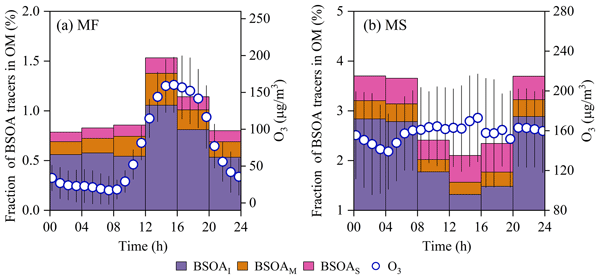
Can Wu, Yubao Chen, Yuwei Sun, Huijun Zhang, Si Zhang, Cong Cao, Jianjun Li, and Gehui Wang
Atmos. Chem. Phys., 25, 11975–11989, https://doi.org/10.5194/acp-25-11975-2025, https://doi.org/10.5194/acp-25-11975-2025, 2025
Short summary
Short summary
Biogenic secondary organic aerosol (BSOA), as an important atmospheric component, is prevalent within the boundary layer and can influence air quality and human health. Our observations demonstrate that anthropogenic NOx and the enhanced aerosol water driven by sulfate inhibit BSOA formation in lifting air masses, leading to a moderate reduction in the SOA burden in the upper boundary layer.

Luke D. Schiferl, Cong Cao, Bronte Dalton, Andrew Hallward-Driemeier, Ricardo Toledo-Crow, and Róisín Commane
Atmos. Chem. Phys., 24, 10129–10142, https://doi.org/10.5194/acp-24-10129-2024, https://doi.org/10.5194/acp-24-10129-2024, 2024
Short summary
Short summary
Carbon monoxide (CO) is an air pollutant and an important indicator of the incomplete combustion of fossil fuels in cities. Using 4 years of winter and spring observations in New York City, we found that both the magnitude and variability of CO from the metropolitan area are greater than expected. Transportation emissions cannot explain the missing and variable CO, which points to energy from buildings as a likely underappreciated source of urban air pollution and greenhouse gas emissions.
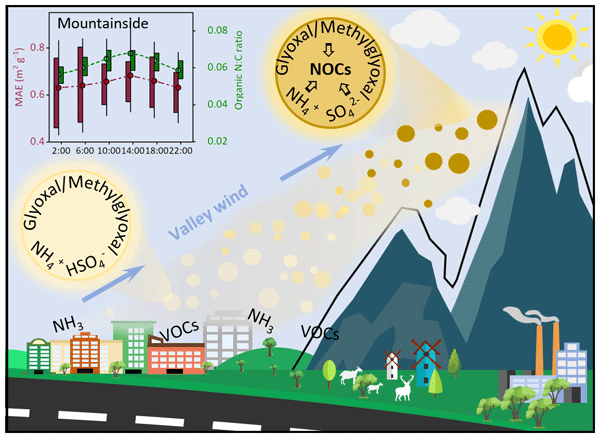
Can Wu, Xiaodi Liu, Ke Zhang, Si Zhang, Cong Cao, Jianjun Li, Rui Li, Fan Zhang, and Gehui Wang
Atmos. Chem. Phys., 24, 9263–9275, https://doi.org/10.5194/acp-24-9263-2024, https://doi.org/10.5194/acp-24-9263-2024, 2024
Short summary
Short summary
Brown carbon (BrC) is prevalent in the troposphere and can efficiently absorb solar and terrestrial radiation. Our observations show that the enhanced light absorption of BrC relative to black carbon at the tropopause can be attributed to the formation of nitrogen-containing organic compounds through the aqueous-phase reactions of carbonyls with ammonium.
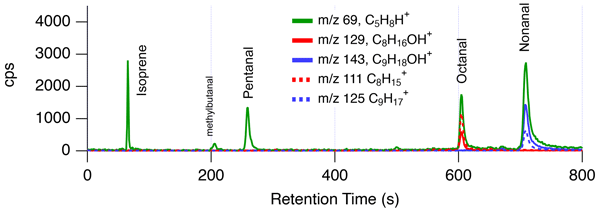
Matthew M. Coggon, Chelsea E. Stockwell, Megan S. Claflin, Eva Y. Pfannerstill, Lu Xu, Jessica B. Gilman, Julia Marcantonio, Cong Cao, Kelvin Bates, Georgios I. Gkatzelis, Aaron Lamplugh, Erin F. Katz, Caleb Arata, Eric C. Apel, Rebecca S. Hornbrook, Felix Piel, Francesca Majluf, Donald R. Blake, Armin Wisthaler, Manjula Canagaratna, Brian M. Lerner, Allen H. Goldstein, John E. Mak, and Carsten Warneke
Atmos. Meas. Tech., 17, 801–825, https://doi.org/10.5194/amt-17-801-2024, https://doi.org/10.5194/amt-17-801-2024, 2024
Short summary
Short summary
Mass spectrometry is a tool commonly used to measure air pollutants. This study evaluates measurement artifacts produced in the proton-transfer-reaction mass spectrometer. We provide methods to correct these biases and better measure compounds that degrade air quality.

Can Wu, Cong Cao, Jianjun Li, Shaojun Lv, Jin Li, Xiaodi Liu, Si Zhang, Shijie Liu, Fan Zhang, Jingjing Meng, and Gehui Wang
Atmos. Chem. Phys., 22, 15621–15635, https://doi.org/10.5194/acp-22-15621-2022, https://doi.org/10.5194/acp-22-15621-2022, 2022
Short summary
Short summary
Over the past decade, the relative abundance of NH4NO3 in aerosol has been enhanced in most urban areas of China, which profoundly affects the PM2.5 pollution episodes. Our work finds that fine-particle nitrate and ammonium exhibited distinct, different physicochemical behaviors in the aerosol aging process.
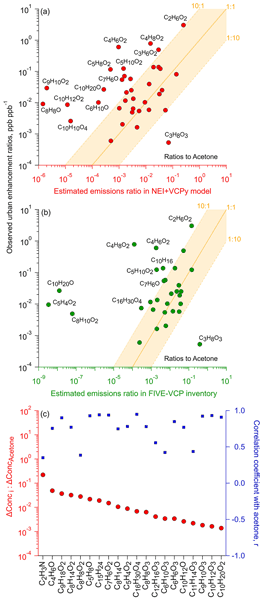
Peeyush Khare, Jordan E. Krechmer, Jo E. Machesky, Tori Hass-Mitchell, Cong Cao, Junqi Wang, Francesca Majluf, Felipe Lopez-Hilfiker, Sonja Malek, Will Wang, Karl Seltzer, Havala O. T. Pye, Roisin Commane, Brian C. McDonald, Ricardo Toledo-Crow, John E. Mak, and Drew R. Gentner
Atmos. Chem. Phys., 22, 14377–14399, https://doi.org/10.5194/acp-22-14377-2022, https://doi.org/10.5194/acp-22-14377-2022, 2022
Short summary
Short summary
Ammonium adduct chemical ionization is used to examine the atmospheric abundances of oxygenated volatile organic compounds associated with emissions from volatile chemical products, which are now key contributors of reactive precursors to ozone and secondary organic aerosols in urban areas. The application of this valuable measurement approach in densely populated New York City enables the evaluation of emissions inventories and thus the role these oxygenated compounds play in urban air quality.
Chao Yu, Lin Zheng, Yujue Wang, Meijing Guo, Xu Yu, Yuqi Guo, Sisi Song, Kyoung-Soon Jang, Xiaohong Yao, Jian Zhen Yu, and Huiwang Gao
Atmos. Chem. Phys., 26, 13175–13188, https://doi.org/10.5194/acp-26-13175-2026, https://doi.org/10.5194/acp-26-13175-2026, 2026
Short summary
Short summary
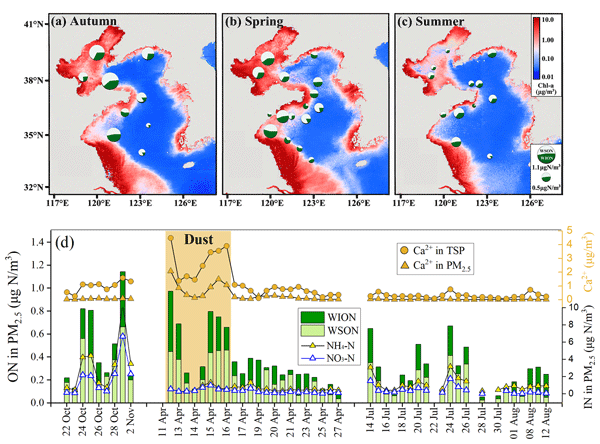
Atmospheric organic nitrogen is an important fraction in marine aerosols, and plays vital roles in organic aerosol absorption and maintaining primary productivity in the open ocean. However, abundance or sources of aerosol organic nitrogen remain unclear in the marine boundary layer. Here, we found that anthropogenic secondary pollutants and dust drove the organic nitrogen formation and the light absorption by organic aerosols over East Asian marginal seas.
Qiongqiong Wang, Zhongliang Huang, Zongjun Li, Shuihui Zhu, Liping Qiao, Min Zhou, Dandan Huang, Hongli Wang, Qingyan Fu, Kezheng Liao, and Jian Zhen Yu
EGUsphere, https://doi.org/10.5194/egusphere-2026-4766, https://doi.org/10.5194/egusphere-2026-4766, 2026
Short summary
Short summary
Brown carbon (BrC) is a poorly understood carbonaceous aerosol component that significantly affects climate and air quality. We examined the sources and secondary formation of BrC based on long-term field measurements of bihourly BrC and a suite of organic and elemental tracers in urban Shanghai. Seasonal contrast of source contributions and complexity of secondary formation and evolution was observed. This study offers a scientific basis for BrC mitigation and urban air quality improvement.
Anouk Marsal, Fabrizia Cavalli, Elise Di Antonio, Stephan Houdier, Pamela Dominutti, Sophie Darfeuil, Jean-Luc Jaffrezo, Stéphane Sauvage, Jean-Philippe Putaud, Ian S. Mudway, Athanasios Nenes, Aikaterini Bougiatioti, Nikolaos Mihalopoulos, André S. H. Prévôt, Despina Paraskevopoulou, Ana Cvitešić Kušan, Sanja Frka, Ana Kroflič, Ajda Delić, Blanka Tariba Lovaković, Andreja Jurič, Carolina Molina, Daniele Contini, Maria Rachele Guascito, Mathilde Lintz, Davy Rousset, Hartmut Herrmann, Eduardo J. d. S. Souza, Frédéric Ledoux, Marc Fadel, Haoran Yu, Jianzhen Yu, Maria Teresa Baeza Romero, Maria Cerrato-Alvarez, Marloes F. van Os, Mathilde N. Delaval, Yamaris Mercedes Mena Cabrera, Nicole Trieu, Greg Evans, Nuria Galindo, Noelia Gómez-Sanchez, Hana Hlaváčková, Pavel Mikuška, Shrutika Kadam, Pourya Shahpoury, Purificación López-Mahía, Jorge Moreda-Piñeiro, Rico K. Y. Cheung, Markus Kalberer, Micol Introna, Sarah S. Steimer, Zhuoying Lin, Suzanne E. Paulson, Saima Iram, Svetlana Stevanovic, Thomas Audoux, Laurent Y. Alleman, Jianing Liu, Ting Fang, P. S. Ganesh Subramanian, Vishal Verma, Tuukka Petäjä, Xavier Querol, Gerard Hoek, Roy M. Harrison, and Gaëlle Uzu
EGUsphere, https://doi.org/10.5194/egusphere-2026-3918, https://doi.org/10.5194/egusphere-2026-3918, 2026
Short summary
Short summary
This collaborative work from 26 worldwide laboratories assessed the measurement of atmospheric particles' oxidative potential (OP) using a common protocol. OP is a metric designed to inform on particles’ harmful effects. Over half of the laboratories obtained satisfactory results, and some critical steps such as liquid handling and OP mathematical determination were identified. Recommendations for future measurements and interlaboratory comparisons are also provided.
Biao Zhou, Kun Zhang, Qiongqiong Wang, Jiqi Zhu, Li Li, and Jian Zhen Yu
Atmos. Chem. Phys., 26, 3589–3606, https://doi.org/10.5194/acp-26-3589-2026, https://doi.org/10.5194/acp-26-3589-2026, 2026
Short summary
Short summary
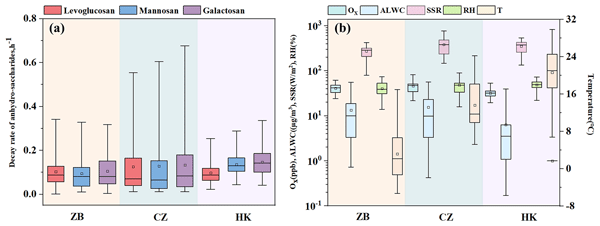
Anhydro-saccharides are key organic markers for biomass burning, but their decay rates and driving factors in real ambient environments remain unclear. This study conducted an online field measurement of PM₂.₅-bound saccharides in three eastern Chinese cities. Daytime levoglucosan decay rates were calculated, and the driving factors were investigated using a machine learning model. Findings of this study offers a strong scientific basis to support air pollution management.
Ningning Sun, Xu Yu, Jian Zhen Yu, Bo Zhang, Yilan Li, Ye Hu, Zhe Li, Zhenlou Chen, and Guitao Shi
Atmos. Chem. Phys., 26, 1699–1712, https://doi.org/10.5194/acp-26-1699-2026, https://doi.org/10.5194/acp-26-1699-2026, 2026
Short summary
Short summary
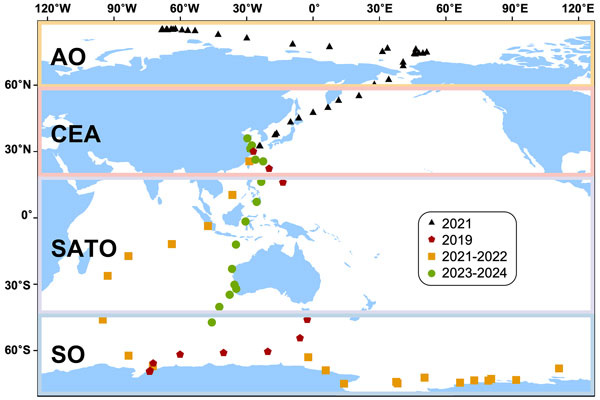
Atmospheric particles over the ocean contain organic nitrogen, affecting climate and ecosystems. This first pole-to-pole study of marine air reveals a strong latitudinal divide, with higher concentrations in the polluted Northern Hemisphere. A key discovery is that air influenced by Antarctic sea ice is enriched in organic nitrogen, revealing a major natural source. Our new dataset improves climate models by clarifying how human emissions and natural processes shape the atmosphere.
Mingfu Cai, Bin Yuan, Weiwei Hu, Ye Chenshuo, Shan Huang, Suxia Yang, Wei Chen, Yuwen Peng, Zhaoxiong Deng, Jun Zhao, Duohong Chen, Jiaren Sun, and Min Shao
Atmos. Chem. Phys., 26, 769–788, https://doi.org/10.5194/acp-26-769-2026, https://doi.org/10.5194/acp-26-769-2026, 2026
Short summary
Short summary
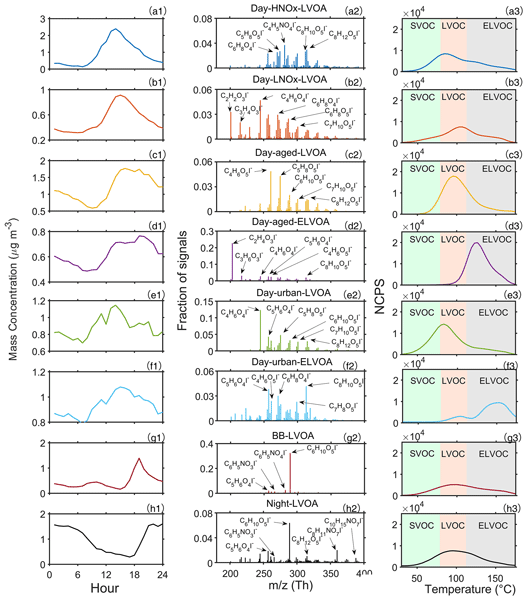
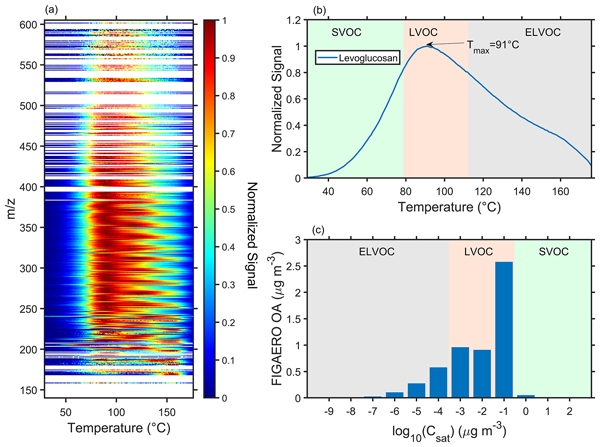
This study investigates how the formation and aging processes of secondary organic aerosol (SOA) influence the evolution of SOA volatility in downwind regions. Our results reveal that elevated NOₓ levels enhanced the daytime SOA volatility by modifying gas-particle partitioning, particularly through suppressing the production of low-volatility organic vapors. In contrast, photochemical aging was associated with reduced SOA volatility.
Xueying Liu, Yeqi Huang, Yao Chen, Xin Feng, Jiading Li, Yang Xu, Yi Chen, Dasa Gu, Hao Sun, Zhi Ning, Jianzhen Yu, Wing Sze Chow, Changqing Lin, Yan Xiang, Tianshu Zhang, Claire Granier, Guy Brasseur, Zhe Wang, and Jimmy C. H. Fung
Atmos. Chem. Phys., 25, 17629–17649, https://doi.org/10.5194/acp-25-17629-2025, https://doi.org/10.5194/acp-25-17629-2025, 2025
Short summary
Short summary
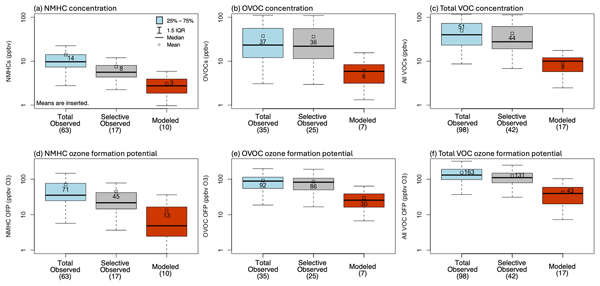
Volatile organic compounds (VOCs) affect ozone formation and air quality. However, our understanding is limited due to insufficient measurements, especially for oxygenated VOCs. This study combines land, ship, and satellite data in Hong Kong, showing that oxygenated VOCs make up a significant portion of total VOCs. Despite their importance, many are underestimated in current models. These findings highlight the need to improve VOC representation in models to enhance air quality management.
Donger Lai, Yanxin Bai, Zijing Zhang, Pui-Kin So, Yong Jie Li, Ying-Lung Steve Tse, Ying-Yeung Yeung, Thomas Schaefer, Hartmut Herrmann, Jian Zhen Yu, Yuchen Wang, and Man Nin Chan
Atmos. Chem. Phys., 25, 12569–12584, https://doi.org/10.5194/acp-25-12569-2025, https://doi.org/10.5194/acp-25-12569-2025, 2025
Short summary
Short summary
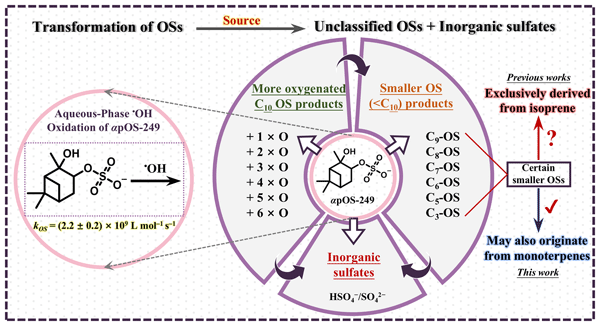
Aqueous-phase •OH oxidation can potentially act as an important atmospheric sink for α-pinene-derived organosulfates (OSs). Such oxidation can also generate a variety of new OS products, and can be as a potential source for some atmospheric OSs with previously unknown origins.
Shubin Li, Yujue Wang, Yiwen Zhang, Yizhe Yi, Yuchen Wang, Yuqi Guo, Chao Yu, Yue Jiang, Jinhui Shi, Chao Zhang, Jialei Zhu, Wei Hu, Jianzhen Yu, Xiaohong Yao, Huiwang Gao, and Min Hu
Atmos. Chem. Phys., 25, 12585–12598, https://doi.org/10.5194/acp-25-12585-2025, https://doi.org/10.5194/acp-25-12585-2025, 2025
Short summary
Short summary
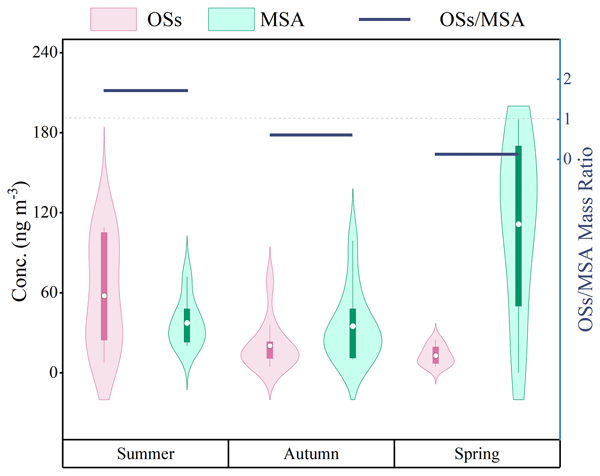
Organosulfates (OSs) are an unrecognized and potentially important component in marine organic aerosols. In this study, we quantified and characterized the OSs over East Asian marginal seas. The chemical nature and spatiotemporal distribution of OSs were modified by the joint influence of marine emissions and transported terrestrial pollutants. The results highlight the vital roles of OSs in shaping organic aerosol formation and sulfur cycle during summer in the marine boundary layer.
Can Wu, Yubao Chen, Yuwei Sun, Huijun Zhang, Si Zhang, Cong Cao, Jianjun Li, and Gehui Wang
Atmos. Chem. Phys., 25, 11975–11989, https://doi.org/10.5194/acp-25-11975-2025, https://doi.org/10.5194/acp-25-11975-2025, 2025
Short summary
Short summary
Biogenic secondary organic aerosol (BSOA), as an important atmospheric component, is prevalent within the boundary layer and can influence air quality and human health. Our observations demonstrate that anthropogenic NOx and the enhanced aerosol water driven by sulfate inhibit BSOA formation in lifting air masses, leading to a moderate reduction in the SOA burden in the upper boundary layer.
Xu Yu, Min Zhou, Shuhui Zhu, Liping Qiao, Jinjian Li, Yingge Ma, Zijing Zhang, Kezheng Liao, Hongli Wang, and Jian Zhen Yu
Atmos. Chem. Phys., 25, 9061–9074, https://doi.org/10.5194/acp-25-9061-2025, https://doi.org/10.5194/acp-25-9061-2025, 2025
Short summary
Short summary
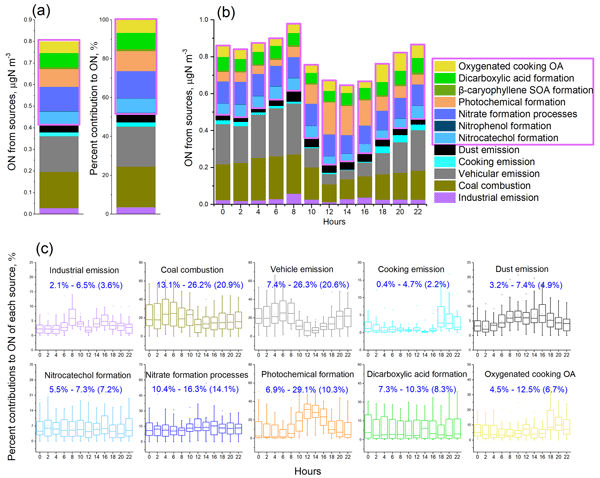
Online measurements of bulk aerosol organic nitrogen (ON), in conjunction with a comprehensive array of source markers, have revealed five emission sources and five potentially significant formation processes of nitrogenous organic aerosols. This study provides a first quantitative source analysis of ON aerosol and valuable observational evidence of secondary ON aerosol formation through NH3 and NOx chemistries.
Mingfu Cai, Chenshuo Ye, Bin Yuan, Shan Huang, E Zheng, Suxia Yang, Zelong Wang, Yi Lin, Tiange Li, Weiwei Hu, Wei Chen, Qicong Song, Wei Li, Yuwen Peng, Baoling Liang, Qibin Sun, Jun Zhao, Duohong Chen, Jiaren Sun, Zhiyong Yang, and Min Shao
Atmos. Chem. Phys., 24, 13065–13079, https://doi.org/10.5194/acp-24-13065-2024, https://doi.org/10.5194/acp-24-13065-2024, 2024
Short summary
Short summary
This study investigated the daytime secondary organic aerosol (SOA) formation in urban plumes. We observed a significant daytime SOA formation through gas–particle partitioning when the site was affected by urban plumes. A box model simulation indicated that urban pollutants (nitrogen oxide and volatile organic compounds) could enhance the oxidizing capacity, while the elevated volatile organic compounds were mainly responsible for promoting daytime SOA formation.
Liyuan Zhou, Qianyun Liu, Christian M. Salvador, Michael Le Breton, Mattias Hallquist, Jian Zhen Yu, Chak K. Chan, and Åsa M. Hallquist
Atmos. Chem. Phys., 24, 11045–11061, https://doi.org/10.5194/acp-24-11045-2024, https://doi.org/10.5194/acp-24-11045-2024, 2024
Short summary
Short summary
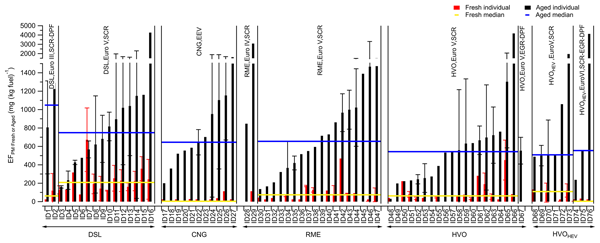
Our research on city bus emissions reveals that alternative fuels (compressed natural gas and biofuels) reduce fresh particle emissions compared to diesel. However, all fuels lead to secondary air pollution. Aiming at guiding better environmental policies, we studied 76 buses using advanced emission measurement techniques. This work sheds light on the complex effects of bus fuels on urban air quality, emphasizing the need for comprehensive evaluations of future transportation technologies.
Luke D. Schiferl, Cong Cao, Bronte Dalton, Andrew Hallward-Driemeier, Ricardo Toledo-Crow, and Róisín Commane
Atmos. Chem. Phys., 24, 10129–10142, https://doi.org/10.5194/acp-24-10129-2024, https://doi.org/10.5194/acp-24-10129-2024, 2024
Short summary
Short summary
Carbon monoxide (CO) is an air pollutant and an important indicator of the incomplete combustion of fossil fuels in cities. Using 4 years of winter and spring observations in New York City, we found that both the magnitude and variability of CO from the metropolitan area are greater than expected. Transportation emissions cannot explain the missing and variable CO, which points to energy from buildings as a likely underappreciated source of urban air pollution and greenhouse gas emissions.
Can Wu, Xiaodi Liu, Ke Zhang, Si Zhang, Cong Cao, Jianjun Li, Rui Li, Fan Zhang, and Gehui Wang
Atmos. Chem. Phys., 24, 9263–9275, https://doi.org/10.5194/acp-24-9263-2024, https://doi.org/10.5194/acp-24-9263-2024, 2024
Short summary
Short summary
Brown carbon (BrC) is prevalent in the troposphere and can efficiently absorb solar and terrestrial radiation. Our observations show that the enhanced light absorption of BrC relative to black carbon at the tropopause can be attributed to the formation of nitrogen-containing organic compounds through the aqueous-phase reactions of carbonyls with ammonium.
Shan Wang, Kezheng Liao, Zijing Zhang, Yuk Ying Cheng, Qiongqiong Wang, Hanzhe Chen, and Jian Zhen Yu
Atmos. Chem. Phys., 24, 5803–5821, https://doi.org/10.5194/acp-24-5803-2024, https://doi.org/10.5194/acp-24-5803-2024, 2024
Short summary
Short summary
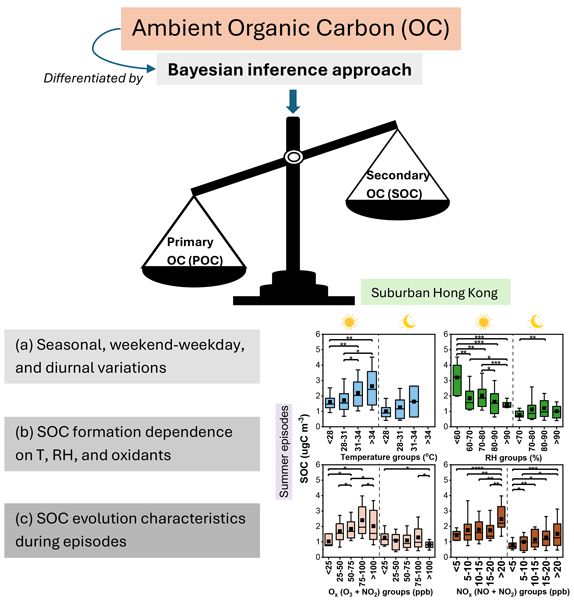
In this work, hourly primary and secondary organic carbon were estimated by a novel Bayesian inference approach in suburban Hong Kong. Their multi-temporal-scale variations and evolution characteristics during PM2.5 episodes were examined. The methodology could serve as a guide for other locations with similar monitoring capabilities. The observation-based results are helpful for understanding the evolving nature of secondary organic aerosols and refining the accuracy of model simulations.
Matthew M. Coggon, Chelsea E. Stockwell, Megan S. Claflin, Eva Y. Pfannerstill, Lu Xu, Jessica B. Gilman, Julia Marcantonio, Cong Cao, Kelvin Bates, Georgios I. Gkatzelis, Aaron Lamplugh, Erin F. Katz, Caleb Arata, Eric C. Apel, Rebecca S. Hornbrook, Felix Piel, Francesca Majluf, Donald R. Blake, Armin Wisthaler, Manjula Canagaratna, Brian M. Lerner, Allen H. Goldstein, John E. Mak, and Carsten Warneke
Atmos. Meas. Tech., 17, 801–825, https://doi.org/10.5194/amt-17-801-2024, https://doi.org/10.5194/amt-17-801-2024, 2024
Short summary
Short summary
Mass spectrometry is a tool commonly used to measure air pollutants. This study evaluates measurement artifacts produced in the proton-transfer-reaction mass spectrometer. We provide methods to correct these biases and better measure compounds that degrade air quality.
Qiongqiong Wang, Shuhui Zhu, Shan Wang, Cheng Huang, Yusen Duan, and Jian Zhen Yu
Atmos. Chem. Phys., 24, 475–486, https://doi.org/10.5194/acp-24-475-2024, https://doi.org/10.5194/acp-24-475-2024, 2024
Short summary
Short summary
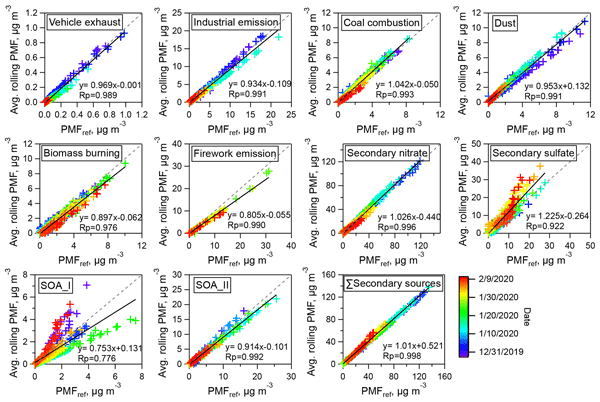
We investigated short-term source apportionment of PM2.5 utilizing rolling positive matrix factorization (PMF) and online PM chemical speciation data, which included source-specific organic tracers collected over a period of 37 d during the winter of 2019–2020 in suburban Shanghai, China. The findings highlight that by imposing constraints on the primary source profiles, short-term PMF analysis successfully replicated both the individual primary sources and the total secondary sources.
Ting Yang, Yu Xu, Qing Ye, Yi-Jia Ma, Yu-Chen Wang, Jian-Zhen Yu, Yu-Sen Duan, Chen-Xi Li, Hong-Wei Xiao, Zi-Yue Li, Yue Zhao, and Hua-Yun Xiao
Atmos. Chem. Phys., 23, 13433–13450, https://doi.org/10.5194/acp-23-13433-2023, https://doi.org/10.5194/acp-23-13433-2023, 2023
Short summary
Short summary
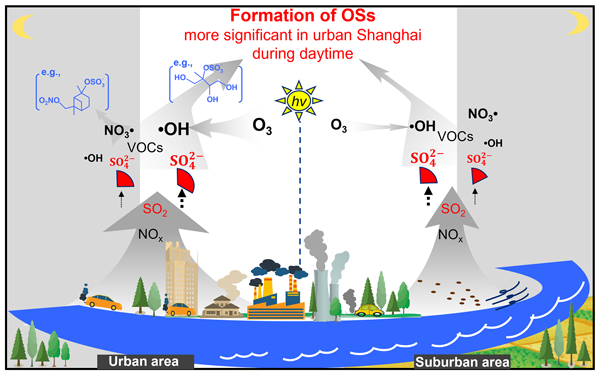
In this study, 130 OS species were quantified in ambient fine particulate matter (PM2.5) collected in urban and suburban Shanghai (East China) in the summer of 2021. The daytime OS formation was concretized based on the interactions among OSs, ultraviolet (UV), ozone (O3), and sulfate. Our finding provides field evidence for the influence of photochemical process and anthropogenic sulfate on OS formation and has important implications for the mitigation of organic particulate pollution.
Yiyu Cai, Chenshuo Ye, Wei Chen, Weiwei Hu, Wei Song, Yuwen Peng, Shan Huang, Jipeng Qi, Sihang Wang, Chaomin Wang, Caihong Wu, Zelong Wang, Baolin Wang, Xiaofeng Huang, Lingyan He, Sasho Gligorovski, Bin Yuan, Min Shao, and Xinming Wang
Atmos. Chem. Phys., 23, 8855–8877, https://doi.org/10.5194/acp-23-8855-2023, https://doi.org/10.5194/acp-23-8855-2023, 2023
Short summary
Short summary
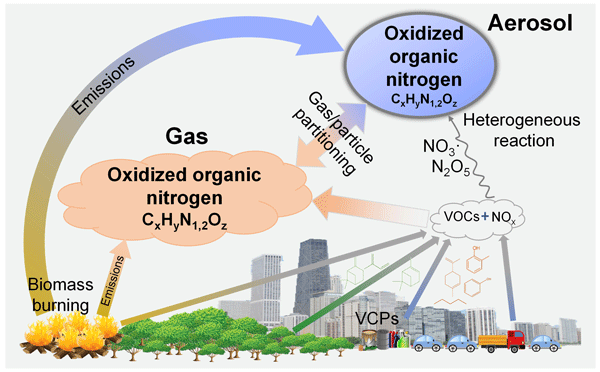
We studied the variability and molecular composition of ambient oxidized organic nitrogen (OON) in both gas and particle phases using a state-of-the-art online mass spectrometer in urban air. Biomass burning and secondary formation were found to be the two major sources of OON. Daytime nitrate radical chemistry for OON formation was more important than previously thought. Our results improved the understanding of the sources and molecular composition of OON in the polluted urban atmosphere.

Wenfeng Lai and Jianping Gan
Ocean Sci., 19, 1107–1121, https://doi.org/10.5194/os-19-1107-2023, https://doi.org/10.5194/os-19-1107-2023, 2023
Short summary
Short summary
Our study shows a high-resolution regional atmospheric model improves near-surface wind and air temperature simulation, resulting in improved circulation and hydrographic simulations in the Pearl River estuary. High-resolution wind forcing is critical for coastal circulation and cross-isobath transport, while high-resolution heat forcing greatly improves sea surface temperature simulation. High-resolution atmospheric forcing is essential for accurately simulating dynamic coastal ocean processes.
Shuhui Zhu, Min Zhou, Liping Qiao, Dan Dan Huang, Qiongqiong Wang, Shan Wang, Yaqin Gao, Shengao Jing, Qian Wang, Hongli Wang, Changhong Chen, Cheng Huang, and Jian Zhen Yu
Atmos. Chem. Phys., 23, 7551–7568, https://doi.org/10.5194/acp-23-7551-2023, https://doi.org/10.5194/acp-23-7551-2023, 2023
Short summary
Short summary
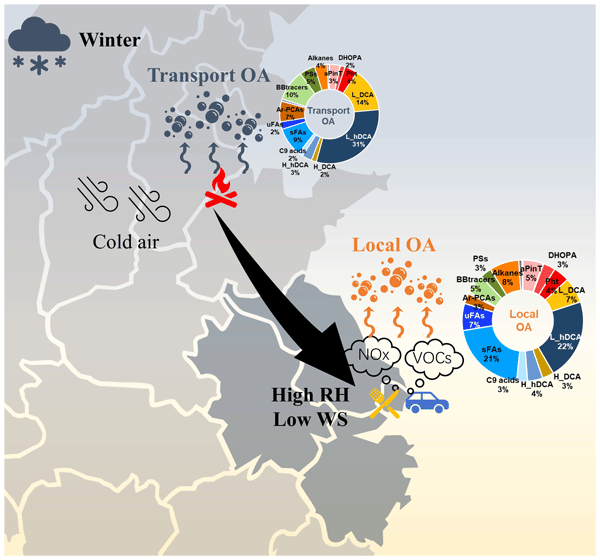
Organic aerosol (OA) is increasingly important in urban PM2.5 pollution as inorganic ions are becoming lower. We investigated the chemical characteristics of OA during nine episodes in Shanghai. The availability of bi-hourly measured molecular markers revealed that the control of local urban sources such as vehicular and cooking emissions lessened the severity of local episodes. Regional control of precursors and biomass burning would reduce PM2.5 episodes influenced by regional transport.
Rui Li, Kun Zhang, Qing Li, Liumei Yang, Shunyao Wang, Zhiqiang Liu, Xiaojuan Zhang, Hui Chen, Yanan Yi, Jialiang Feng, Qiongqiong Wang, Ling Huang, Wu Wang, Yangjun Wang, Jian Zhen Yu, and Li Li
Atmos. Chem. Phys., 23, 3065–3081, https://doi.org/10.5194/acp-23-3065-2023, https://doi.org/10.5194/acp-23-3065-2023, 2023
Short summary
Short summary
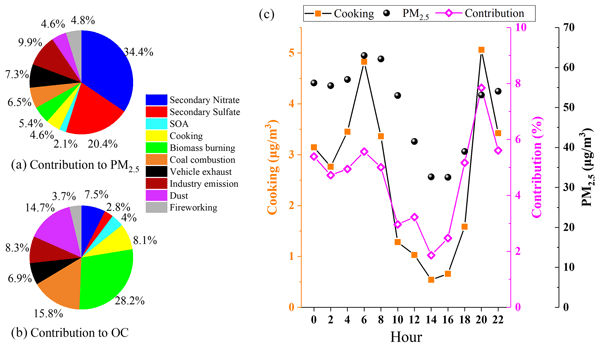
Molecular markers in organic aerosol (OA) provide specific source information on PM2.5, and the contribution of cooking emissions to OA is significant, especially in urban environments. This study investigates the variation in concentrations and oxidative degradation of fatty acids and corresponding oxidation products in ambient air, which can be a guide for the refinement of aerosol source apportionment and provide scientific support for the development of emission source control policies.
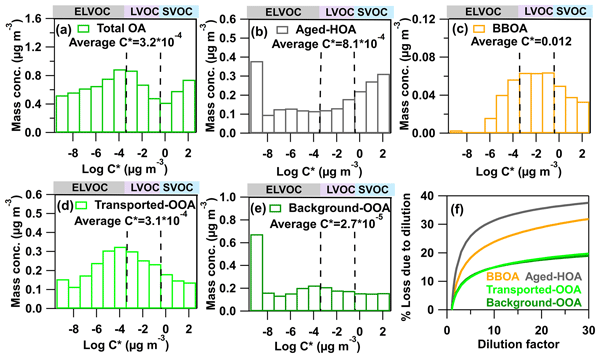
Tingting Feng, Yingkun Wang, Weiwei Hu, Ming Zhu, Wei Song, Wei Chen, Yanyan Sang, Zheng Fang, Wei Deng, Hua Fang, Xu Yu, Cheng Wu, Bin Yuan, Shan Huang, Min Shao, Xiaofeng Huang, Lingyan He, Young Ro Lee, Lewis Gregory Huey, Francesco Canonaco, Andre S. H. Prevot, and Xinming Wang
Atmos. Chem. Phys., 23, 611–636, https://doi.org/10.5194/acp-23-611-2023, https://doi.org/10.5194/acp-23-611-2023, 2023
Short summary
Short summary
To investigate the impact of aging processes on organic aerosols (OA), we conducted a comprehensive field study at a continental remote site using an on-line mass spectrometer. The results show that OA in the Chinese outflows were strongly influenced by upwind anthropogenic emissions. The aging processes can significantly decrease the OA volatility and result in a varied viscosity of OA under different circumstances, signifying the complex physiochemical properties of OA in aged plumes.
Can Wu, Cong Cao, Jianjun Li, Shaojun Lv, Jin Li, Xiaodi Liu, Si Zhang, Shijie Liu, Fan Zhang, Jingjing Meng, and Gehui Wang
Atmos. Chem. Phys., 22, 15621–15635, https://doi.org/10.5194/acp-22-15621-2022, https://doi.org/10.5194/acp-22-15621-2022, 2022
Short summary
Short summary
Over the past decade, the relative abundance of NH4NO3 in aerosol has been enhanced in most urban areas of China, which profoundly affects the PM2.5 pollution episodes. Our work finds that fine-particle nitrate and ammonium exhibited distinct, different physicochemical behaviors in the aerosol aging process.
Peeyush Khare, Jordan E. Krechmer, Jo E. Machesky, Tori Hass-Mitchell, Cong Cao, Junqi Wang, Francesca Majluf, Felipe Lopez-Hilfiker, Sonja Malek, Will Wang, Karl Seltzer, Havala O. T. Pye, Roisin Commane, Brian C. McDonald, Ricardo Toledo-Crow, John E. Mak, and Drew R. Gentner
Atmos. Chem. Phys., 22, 14377–14399, https://doi.org/10.5194/acp-22-14377-2022, https://doi.org/10.5194/acp-22-14377-2022, 2022
Short summary
Short summary
Ammonium adduct chemical ionization is used to examine the atmospheric abundances of oxygenated volatile organic compounds associated with emissions from volatile chemical products, which are now key contributors of reactive precursors to ozone and secondary organic aerosols in urban areas. The application of this valuable measurement approach in densely populated New York City enables the evaluation of emissions inventories and thus the role these oxygenated compounds play in urban air quality.
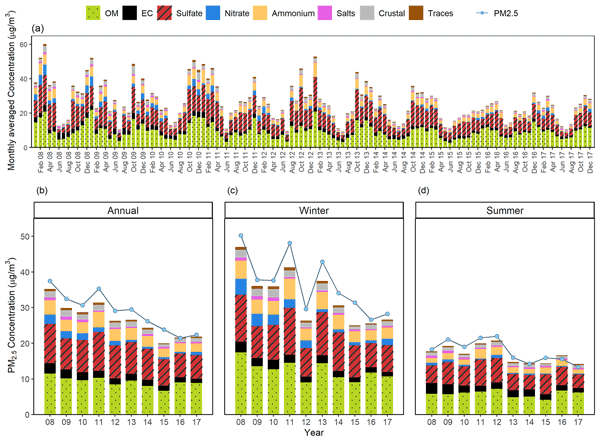
Wing Sze Chow, Kezheng Liao, X. H. Hilda Huang, Ka Fung Leung, Alexis K. H. Lau, and Jian Zhen Yu
Atmos. Chem. Phys., 22, 11557–11577, https://doi.org/10.5194/acp-22-11557-2022, https://doi.org/10.5194/acp-22-11557-2022, 2022
Short summary
Short summary
Long-term monitoring data of PM2.5 chemical composition provide essential information for evaluation and planning of control measures. Here we present a 10-year (2008–2017) time series of PM2.5, its major components, and select source markers in an urban site in Hong Kong. The dataset verified the success of local vehicular emission control measures as well as reduction of sulfate and regional sources such as industrial and coal combustion and crop residue burning emissions over the decade.
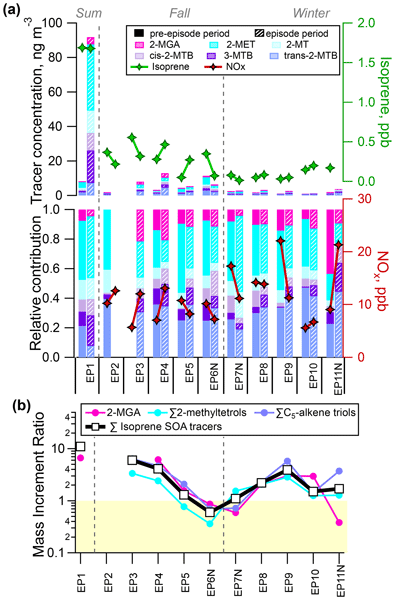
Qiongqiong Wang, Shan Wang, Yuk Ying Cheng, Hanzhe Chen, Zijing Zhang, Jinjian Li, Dasa Gu, Zhe Wang, and Jian Zhen Yu
Atmos. Chem. Phys., 22, 11239–11253, https://doi.org/10.5194/acp-22-11239-2022, https://doi.org/10.5194/acp-22-11239-2022, 2022
Short summary
Short summary
Secondary organic aerosol (SOA) is often enhanced during fine-particulate-matter (PM2.5) episodes. We examined bi-hourly measurements of SOA molecular tracers in suburban Hong Kong during 11 city-wide PM2.5 episodes. The tracers showed regional characteristics for both anthropogenic and biogenic SOA as well as biomass-burning-derived SOA. Multiple tracers of the same precursor revealed the dominance of low-NOx formation pathways for isoprene SOA and less-aged monoterpene SOA during winter.
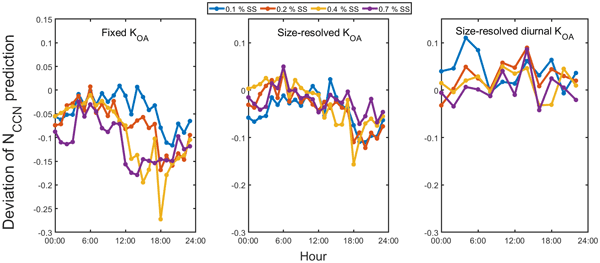
Mingfu Cai, Shan Huang, Baoling Liang, Qibin Sun, Li Liu, Bin Yuan, Min Shao, Weiwei Hu, Wei Chen, Qicong Song, Wei Li, Yuwen Peng, Zelong Wang, Duohong Chen, Haobo Tan, Hanbin Xu, Fei Li, Xuejiao Deng, Tao Deng, Jiaren Sun, and Jun Zhao
Atmos. Chem. Phys., 22, 8117–8136, https://doi.org/10.5194/acp-22-8117-2022, https://doi.org/10.5194/acp-22-8117-2022, 2022
Short summary
Short summary
This study investigated the size dependence and diurnal variation in organic aerosol hygroscopicity, volatility, and cloud condensation nuclei (CCN) activity. We found that the physical properties of OA could vary in a large range at different particle sizes and affected the number concentration of CCN (NCCN) at all supersaturations. Our results highlight the importance of evaluating the atmospheric evolution processes of OA at different size ranges and their impact on climate effects.
Rongshuang Xu, Sze In Madeleine Ng, Wing Sze Chow, Yee Ka Wong, Yuchen Wang, Donger Lai, Zhongping Yao, Pui-Kin So, Jian Zhen Yu, and Man Nin Chan
Atmos. Chem. Phys., 22, 5685–5700, https://doi.org/10.5194/acp-22-5685-2022, https://doi.org/10.5194/acp-22-5685-2022, 2022
Short summary
Short summary
To date, while over a hundred organosulfates (OSs) have been detected in atmospheric aerosols, many of them are still unidentified, with unknown precursors and formation processes. We found the heterogeneous OH oxidation of an α-pinene-derived organosulfate (C10H17O5SNa, αpOS-249, αpOS-249) can proceed at an efficient rate and transform into more oxygenated OSs, which have been commonly detected in atmospheric aerosols and α-pinene-derived SOA in chamber studies.
Yee Ka Wong, Kin Man Liu, Claisen Yeung, Kenneth K. M. Leung, and Jian Zhen Yu
Atmos. Chem. Phys., 22, 5017–5031, https://doi.org/10.5194/acp-22-5017-2022, https://doi.org/10.5194/acp-22-5017-2022, 2022
Short summary
Short summary
Coarse particulate matter (PM) has been shown to cause adverse health impacts, but compared to PM2.5, the source of coarse PM is less studied through field measurements. We collected chemical composition data for coarse PM in Hong Kong for a 1-year period. Using statistical models, we found that regional transport of fugitive dust is responsible for the elevated coarse PM. This work sets an example of how field measurements can be effectively utilized for evidence-based policymaking.
Suxia Yang, Bin Yuan, Yuwen Peng, Shan Huang, Wei Chen, Weiwei Hu, Chenglei Pei, Jun Zhou, David D. Parrish, Wenjie Wang, Xianjun He, Chunlei Cheng, Xiao-Bing Li, Xiaoyun Yang, Yu Song, Haichao Wang, Jipeng Qi, Baolin Wang, Chen Wang, Chaomin Wang, Zelong Wang, Tiange Li, E Zheng, Sihang Wang, Caihong Wu, Mingfu Cai, Chenshuo Ye, Wei Song, Peng Cheng, Duohong Chen, Xinming Wang, Zhanyi Zhang, Xuemei Wang, Junyu Zheng, and Min Shao
Atmos. Chem. Phys., 22, 4539–4556, https://doi.org/10.5194/acp-22-4539-2022, https://doi.org/10.5194/acp-22-4539-2022, 2022
Short summary
Short summary
We use a model constrained using observations to study the formation of nitrate aerosol in and downwind of a representative megacity. We found different contributions of various chemical reactions to ground-level nitrate concentrations between urban and suburban regions. We also show that controlling VOC emissions are effective for decreasing nitrate formation in both urban and regional environments, although VOCs are not direct precursors of nitrate aerosol.
Cited articles
Abdullahi, K. L., Delgado-Saborit, J. M., and Harrison, R. M.: Emissions and indoor concentrations of particulate matter and its specific chemical components from cooking: A review, Atmos. Environ., 71, 260–294, https://doi.org/10.1016/j.atmosenv.2013.01.061, 2013.
Altieri, K. E., Fawcett, S. E., Peters, A. J., Sigman, D. M., and Hastings, M. G.: Marine biogenic source of atmospheric organic nitrogen in the subtropical North Atlantic, P. Natl. Acad. Sci. USA, 113, 925–930, https://doi.org/10.1073/pnas.1516847113, 2016.
Anderson, D. M., Glibert, P. M., and Burkholder, J. M.: Harmful algal blooms and eutrophication: Nutrient sources, composition, and consequences, Estuaries, 25, 704–726, https://doi.org/10.1007/BF02804901, 2002.
Bian, Q., Huang, X. H. H., and Yu, J. Z.: One-year observations of size distribution characteristics of major aerosol constituents at a coastal receptor site in Hong Kong – Part 1: Inorganic ions and oxalate, Atmos. Chem. Phys., 14, 9013–9027, https://doi.org/10.5194/acp-14-9013-2014, 2014.
Bruns, E. A., Perraud, V., Zelenyuk, A., Ezell, M. J., Johnson, S. N., Yu, Y., Imre, D., Finlayson-Pitts, B. J., and Alexander, M. L.: Comparison of FTIR and Particle Mass Spectrometry for the Measurement of Particulate Organic Nitrates, Environ. Sci. Technol., 44, 1056–1061, https://doi.org/10.1021/es9029864, 2010.
Calderón, S. M., Poor, N. D., and Campbell, S. W.: Estimation of the particle and gas scavenging contributions to wet deposition of organic nitrogen, Atmos. Environ., 41, 4281–4290, https://doi.org/10.1016/j.atmosenv.2006.06.067, 2007.
Chen, J., Fu, X., Wang, X., Dong, S., Chen, T., Xue, L., Zhou, Y., Sheng, L., and Wang, W.: Unveiling the overlooked direct emissions of particulate organic nitrates from ship, Environ. Int., 185, 108487, https://doi.org/10.1016/j.envint.2024.108487, 2024.
Chow, J. C., Watson, J. G., Chen, L. W., Chang, M. C., Robinson, N. F., Trimble, D., and Kohl, S.: The IMPROVE_A temperature protocol for thermal/optical carbon analysis: maintaining consistency with a long-term database, J. Air Waste Manage. Assoc., 57, 1014–1023, https://doi.org/10.3155/1047-3289.57.9.1014, 2007.
Chow, W. S., Liao, K., Huang, X. H. H., Leung, K. F., Lau, A. K. H., and Yu, J. Z.: Measurement report: The 10-year trend of PM2.5 major components and source tracers from 2008 to 2017 in an urban site of Hong Kong, China, Atmos. Chem. Phys., 22, 11557–11577, https://doi.org/10.5194/acp-22-11557-2022, 2022.
Daellenbach, K. R., Bozzetti, C., Křepelová, A., Canonaco, F., Wolf, R., Zotter, P., Fermo, P., Crippa, M., Slowik, J. G., Sosedova, Y., Zhang, Y., Huang, R.-J., Poulain, L., Szidat, S., Baltensperger, U., El Haddad, I., and Prévôt, A. S. H.: Characterization and source apportionment of organic aerosol using offline aerosol mass spectrometry, Atmos. Meas. Tech., 9, 23–39, https://doi.org/10.5194/amt-9-23-2016, 2016.
Davies, J. A. and Cox, R. A.: Kinetics of the Heterogeneous Reaction of HNO3 with NaCl: Effect of Water Vapor, J. Phys. Chem. A, 102, 7631–7642, https://doi.org/10.1021/jp982134t, 1998.
Day, D. A., Campuzano-Jost, P., Nault, B. A., Palm, B. B., Hu, W., Guo, H., Wooldridge, P. J., Cohen, R. C., Docherty, K. S., Huffman, J. A., de Sá, S. S., Martin, S. T., and Jimenez, J. L.: A systematic re-evaluation of methods for quantification of bulk particle-phase organic nitrates using real-time aerosol mass spectrometry, Atmos. Meas. Tech., 15, 459–483, https://doi.org/10.5194/amt-15-459-2022, 2022.
DeCarlo, P. F., Kimmel, J. R., Trimborn, A., Northway, M. J., Jayne, J. T., Aiken, A. C., Gonin, M., Fuhrer, K., Horvath, T., Docherty, K. S., Worsnop, D. R., and Jimenez, J. L.: Field-Deployable, High-Resolution, Time-of-Flight Aerosol Mass Spectrometer, Anal. Chem., 78, 8281–8289, https://doi.org/10.1021/ac061249n, 2006.
Diaz, R. J. and Rosenberg, R.: Spreading Dead Zones and Consequences for Marine Ecosystems, Science, 321, 926–929, https://doi.org/10.1126/science.1156401, 2008.
Duce, R. A., LaRoche, J., Altieri, K., Arrigo, K. R., Baker, A. R., Capone, D. G., Cornell, S., Dentener, F., Galloway, J., Ganeshram, R. S., Geider, R. J., Jickells, T., Kuypers, M. M., Langlois, R., Liss, P. S., Liu, S. M., Middelburg, J. J., Moore, C. M., Nickovic, S., Oschlies, A., Pedersen, T., Prospero, J., Schlitzer, R., Seitzinger, S., Sorensen, L. L., Uematsu, M., Ulloa, O., Voss, M., Ward, B., and Zamora, L.: Impacts of Atmospheric Anthropogenic Nitrogen on the Open Ocean, Science, 320, 893–897, https://doi.org/10.1126/science.1150369, 2008.
Farmer, D. K., Matsunaga, A., Docherty, K. S., Surratt, J. D., Seinfeld, J. H., Ziemann, P. J., and Jimenez, J. L.: Response of an aerosol mass spectrometer to organonitrates and organosulfates and implications for atmospheric chemistry, P. Natl. Acad. Sci. USA, 107, 6670–6675, https://doi.org/10.1073/pnas.0912340107, 2010.
Farmer, D. K., Boedicker, E. K., and DeBolt, H. M.: Dry Deposition of Atmospheric Aerosols: Approaches, Observations, and Mechanisms, Annu. Rev. Phys. Chem., 72, 375–397, https://doi.org/10.1146/annurev-physchem-090519-034936, 2021.
Fry, J. L., Kiendler-Scharr, A., Rollins, A. W., Wooldridge, P. J., Brown, S. S., Fuchs, H., Dubé, W., Mensah, A., dal Maso, M., Tillmann, R., Dorn, H.-P., Brauers, T., and Cohen, R. C.: Organic nitrate and secondary organic aerosol yield from NO3 oxidation of β-pinene evaluated using a gas-phase kinetics/aerosol partitioning model, Atmos. Chem. Phys., 9, 1431–1449, https://doi.org/10.5194/acp-9-1431-2009, 2009.
Fry, J. L., Kiendler-Scharr, A., Rollins, A. W., Brauers, T., Brown, S. S., Dorn, H.-P., Dubé, W. P., Fuchs, H., Mensah, A., Rohrer, F., Tillmann, R., Wahner, A., Wooldridge, P. J., and Cohen, R. C.: SOA from limonene: role of NO3 in its generation and degradation, Atmos. Chem. Phys., 11, 3879–3894, https://doi.org/10.5194/acp-11-3879-2011, 2011.
Galloway, J. N., Townsend, A. R., Erisman, J. W., Bekunda, M., Cai, Z., Freney, J. R., Martinelli, L. A., Seitzinger, S. P., and Sutton, M. A.: Transformation of the Nitrogen Cycle: Recent Trends, Questions, and Potential Solutions, Science, 320, 889–892, https://doi.org/10.1126/science.1136674, 2008.
Ge, X., Sun, Y., Trousdell, J., Chen, M., and Zhang, Q.: Enhancing characterization of organic nitrogen components in aerosols and droplets using high-resolution aerosol mass spectrometry, Atmos. Meas. Tech., 17, 423–439, https://doi.org/10.5194/amt-17-423-2024, 2024.
González Benítez, J. M., Cape, J. N., Heal, M. R., van Dijk, N., and Díez, A. V.: Atmospheric nitrogen deposition in south-east Scotland: Quantification of the organic nitrogen fraction in wet, dry and bulk deposition, Atmos. Environ., 43, 4087–4094, https://doi.org/10.1016/j.atmosenv.2009.04.061, 2009.
Graeffe, F., Heikkinen, L., Garmash, O., Aijala, M., Allan, J., Feron, A., Cirtog, M., Petit, J. E., Bonnaire, N., Lambe, A., Favez, O., Albinet, A., Williams, L. R., and Ehn, M.: Detecting and Characterizing Particulate Organic Nitrates with an Aerodyne Long-ToF Aerosol Mass Spectrometer, ACS Earth Space Chem., 7, 230–242, https://doi.org/10.1021/acsearthspacechem.2c00314, 2023.
Guimbaud, C., Arens, F., Gutzwiller, L., Gäggeler, H. W., and Ammann, M.: Uptake of HNO3 to deliquescent sea-salt particles: a study using the short-lived radioactive isotope tracer 13N, Atmos. Chem. Phys., 2, 249–257, https://doi.org/10.5194/acp-2-249-2002, 2002.
Guo, C., Zhou, Y., Zhou, H., Su, C., and Kong, L.: Aerosol Nutrients and Their Biological Influence on the Northwest Pacific Ocean (NWPO) and Its Marginal Seas, Biology, 11, https://doi.org/10.3390/biology11060842, 2022.
He, J., Balasubramanian, R., Burger, D. F., Hicks, K., Kuylenstierna, J. C. I., and Palani, S.: Dry and wet atmospheric deposition of nitrogen and phosphorus in Singapore, Atmos. Environ., 45, 2760–2768, https://doi.org/10.1016/j.atmosenv.2011.02.036, 2011.
Howarth, R. W. and Marino, R.: Nitrogen as the limiting nutrient for eutrophication in coastal marine ecosystems: Evolving views over three decades, Limnol. Oceanogr., 51, 364–376, https://doi.org/10.4319/lo.2006.51.1_part_2.0364, 2006.
Hui, E. C. M., Li, X., Chen, T., and Lang, W.: Deciphering the spatial structure of China's megacity region: A new bay area – The Guangdong-Hong Kong-Macao Greater Bay Area in the making, Cities, 105, https://doi.org/10.1016/j.cities.2018.10.011, 2020.
Jia, Y., Yu, G., Gao, Y., He, N., Wang, Q., Jiao, C., and Zuo, Y.: Global inorganic nitrogen dry deposition inferred from ground- and space-based measurements, Sci. Rep., 6, 19810, https://doi.org/10.1038/srep19810, 2016.
Jickells, T., Baker, A. R., Cape, J. N., Cornell, S. E., and Nemitz, E.: The cycling of organic nitrogen through the atmosphere, Philos. T. Roy. Soc. B, 368, 20130115, https://doi.org/10.1098/rstb.2013.0115, 2013.
Kanakidou, M., Myriokefalitakis, S., Daskalakis, N., Fanourgakis, G., Nenes, A., Baker, A. R., Tsigaridis, K., and Mihalopoulos, N.: Past, Present and Future Atmospheric Nitrogen Deposition, J. Atmos. Sci., 73, 2039–2047, https://doi.org/10.1175/JAS-D-15-0278.1, 2016.
Kanakidou, M., Duce, R. A., Prospero, J. M., Baker, A. R., Benitez-Nelson, C., Dentener, F. J., Hunter, K. A., Liss, P. S., Mahowald, N., Okin, G. S., Sarin, M., Tsigaridis, K., Uematsu, M., Zamora, L. M., and Zhu, T.: Atmospheric fluxes of organic N and P to the global ocean, Global Biogeochem. Cy., 26, https://doi.org/10.1029/2011gb004277, 2012.
Kim, T.-W., Lee, K., Duce, R., and Liss, P.: Impact of atmospheric nitrogen deposition on phytoplankton productivity in the South China Sea, Geophys. Res. Lett., 41, 3156–3162, https://doi.org/10.1002/2014GL059665, 2014.
Kostenidou, E., Martinez-Valiente, A., R'Mili, B., Marques, B., Temime-Roussel, B., Durand, A., André, M., Liu, Y., Louis, C., Vansevenant, B., Ferry, D., Laffon, C., Parent, P., and D'Anna, B.: Technical note: Emission factors, chemical composition, and morphology of particles emitted from Euro 5 diesel and gasoline light-duty vehicles during transient cycles, Atmos. Chem. Phys., 21, 4779–4796, https://doi.org/10.5194/acp-21-4779-2021, 2021.
Lee, M., Shevliakova, E., Stock, C. A., Malyshev, S., and Milly, P. C. D.: Prominence of the tropics in the recent rise of global nitrogen pollution, Nat. Commun., 10, 1437, https://doi.org/10.1038/s41467-019-09468-4, 2019.
Li, D., Gan, J., Hui, R., Liu, Z., Yu, L., Lu, Z., and Dai, M.: Vortex and Biogeochemical Dynamics for the Hypoxia Formation Within the Coastal Transition Zone off the Pearl River Estuary, J. Geophys. Res.-Oceans, 125, https://doi.org/10.1029/2020jc016178, 2020.
Lo, H. W., Yu, X., Chen, H., Chu, W. C., Chung, N. M., Lau, S. W., Li, J., Liang, S., Liao, K., Thomas, H. C. J., Wang, Z., Zhang, Z., Yu, J. Z., and Thibodeau, B.: Tidal currents and atmospheric inorganic nitrogen contribute to diurnal variation of dissolved nutrients and chlorophyll a concentrations in Mirs Bay, Hong Kong, Reg. Stud. Mar. Sci., 81, 103941, https://doi.org/10.1016/j.rsma.2024.103941, 2025.
Luo, L., Kao, S.-J., Bao, H., Xiao, H., Xiao, H., Yao, X., Gao, H., Li, J., and Lu, Y.: Sources of reactive nitrogen in marine aerosol over the Northwest Pacific Ocean in spring, Atmos. Chem. Phys., 18, 6207–6222, https://doi.org/10.5194/acp-18-6207-2018, 2018.
Mackey, K. R. M., Kavanaugh, M. T., Wang, F., Chen, Y., Liu, F., Glover, D. M., Chien, C.-T., and Paytan, A.: Atmospheric and Fluvial Nutrients Fuel Algal Blooms in the East China Sea, Front. Mar. Sci., 4, 2017, https://doi.org/10.3389/fmars.2017.00002, 2017.
Mahowald, N. M., Scanza, R., Brahney, J., Goodale, C. L., Hess, P. G., Moore, J. K., and Neff, J.: Aerosol Deposition Impacts on Land and Ocean Carbon Cycles, Curr. Clim. Change Rep., 3, 16–31, https://doi.org/10.1007/s40641-017-0056-z, 2017.
Nuruddin, M. F., Poon, Y. C. J., He, X., Zhang, Z., Tang, X., Lee, S. S., Zhang, S., He, D., and Wu, L.: Zooplankton Metabolism Shapes Molecular Composition of Dissolved Organic Matter in Coastal Waters, Environ. Sci. Technol., https://doi.org/10.1021/acs.est.6c05592, 2026.
Palta, M. M. and Hartnett, H. E.: Nitrogen Cycle, in: Encyclopedia of Geochemistry: A Comprehensive Reference Source on the Chemistry of the Earth, edited by: White, W. M., Springer International Publishing, Cham, 987–991, https://doi.org/10.1007/978-3-319-39312-4_160, 2018.
Park, J. and Song, H.: Variance of destination region image according to multi-dimensional proximity: A case of the Greater Bay Area, J. Destin. Mark. Manage., 20, https://doi.org/10.1016/j.jdmm.2021.100600, 2021.
Paulot, F., Jacob, D. J., Johnson, M. T., Bell, T. G., Baker, A. R., Keene, W. C., Lima, I. D., Doney, S. C., and Stock, C. A.: Global oceanic emission of ammonia: Constraints from seawater and atmospheric observations, Global Biogeochem. Cy., 29, 1165–1178, https://doi.org/10.1002/2015gb005106, 2015.
Pryor, S. C., Gallagher, M., Sievering, H., Larsen, S. E., Barthelmie, R. J., Birsan, F., Nemitz, E., Rinne, J., Kulmala, M., Grönholm, T., Taipale, R., and Vesala, T.: A review of measurement and modelling results of particle atmosphere–surface exchange, Tellus B, 60, https://doi.org/10.1111/j.1600-0889.2007.00298.x, 2008.
Shi, J., Gao, H., Qi, J., Zhang, J., and Yao, X.: Sources, compositions, and distributions of water-soluble organic nitrogen in aerosols over the China Sea, J. Geophys. Res.-Atmos., 115, https://doi.org/10.1029/2009jd013238, 2010.
Tan, S.-C., Shi, G.-Y., Shi, J.-H., Gao, H.-W., and Yao, X.: Correlation of Asian dust with chlorophyll and primary productivity in the coastal seas of China during the period from 1998 to 2008, J. Geophys. Res., 116, https://doi.org/10.1029/2010jg001456, 2011.
Violaki, K., Zarbas, P., and Mihalopoulos, N.: Long-term measurements of dissolved organic nitrogen (DON) in atmospheric deposition in the Eastern Mediterranean: Fluxes, origin and biogeochemical implications, Mar. Chem., 120, 179–186, https://doi.org/10.1016/j.marchem.2009.08.004, 2010.
Vlachou, A., Daellenbach, K. R., Bozzetti, C., Chazeau, B., Salazar, G. A., Szidat, S., Jaffrezo, J.-L., Hueglin, C., Baltensperger, U., Haddad, I. E., and Prévôt, A. S. H.: Advanced source apportionment of carbonaceous aerosols by coupling offline AMS and radiocarbon size-segregated measurements over a nearly 2-year period, Atmos. Chem. Phys., 18, 6187–6206, https://doi.org/10.5194/acp-18-6187-2018, 2018.
Wang, S. H., Hsu, N. C., Tsay, S. C., Lin, N. H., Sayer, A. M., Huang, S. J., and Lau, W. K. M.: Can Asian dust trigger phytoplankton blooms in the oligotrophic northern South China Sea?, Geophys. Res. Lett., 39, https://doi.org/10.1029/2011gl050415, 2012.
Wedyan, M. A. and Preston, M. R.: The coupling of surface seawater organic nitrogen and the marine aerosol as inferred from enantiomer-specific amino acid analysis, Atmos. Environ., 42, 8698–8705, https://doi.org/10.1016/j.atmosenv.2008.04.038, 2008.
Wu, Y., Liu, J., Zhai, J., Cong, L., Wang, Y., Ma, W., Zhang, Z., and Li, C.: Comparison of dry and wet deposition of particulate matter in near-surface waters during summer, PLoS One, 13, e0199241, https://doi.org/10.1371/journal.pone.0199241, 2018.
Yang, L., Huang, R.-J., Shen, J., Wang, T., Gong, Y., Yuan, W., Liu, Y., Huang, H., You, Q., Huang, D. D., and Huang, C.: New Insights into the Brown Carbon Chromophores and Formation Pathways for Aqueous Reactions of α-Dicarbonyls with Amines and Ammonium, Environ. Sci. Technol., 57, 12351–12361, https://doi.org/10.1021/acs.est.3c04133, 2023.
Yau, Y. Y., Baker, D. M., and Thibodeau, B.: Quantifying the Impact of Anthropogenic Atmospheric Nitrogen Deposition on the Generation of Hypoxia under Future Emission Scenarios in Chinese Coastal Waters, Environ. Sci. Technol., 54, 3920–3928, https://doi.org/10.1021/acs.est.0c00706, 2020.
Yu, X., Pan, Y., Song, W., Li, S., Li, D., Zhu, M., Zhou, H., Zhang, Y., Li, D., Yu, J., Wang, X., and Wang, X.: Wet and Dry Nitrogen Depositions in the Pearl River Delta, South China: Observations at Three Typical Sites With an Emphasis on Water-Soluble Organic Nitrogen, J. Geophys. Res.-Atmos., 125, https://doi.org/10.1029/2019jd030983, 2020.
Yu, X., Li, Q., Ge, Y., Li, Y., Liao, K., Huang, X. H., Li, J., and Yu, J. Z.: Simultaneous Determination of Aerosol Inorganic and Organic Nitrogen by Thermal Evolution and Chemiluminescence Detection, Environ. Sci. Technol., 55, 11579–11589, https://doi.org/10.1021/acs.est.1c04876, 2021.
Yu, X., Wong, Y. K., and Yu, J. Z.: Abundance and sources of organic nitrogen in fine (PM2.5) and coarse (PM2.5−10) particulate matter in urban Hong Kong, Sci. Total Environ., 901, 165880, https://doi.org/10.1016/j.scitotenv.2023.165880, 2023.
Yu, X., Li, Q., Liao, K., Li, Y., Wang, X., Zhou, Y., Liang, Y., and Yu, J. Z.: New measurements reveal a large contribution of nitrogenous molecules to ambient organic aerosol, npj Clim. Atmos. Sci., 7, https://doi.org/10.1038/s41612-024-00620-6, 2024.
Yu, X., Marco Wong, W. H., Cao, C., Zhang, K., Yu, L., Gan, J., and Yu, J. Z.: Significant Contribution of Gaseous Organic Nitrogen to Wet and Dry Nitrogen Deposition: Evidence From Year-Long Monitoring in Coastal Hong Kong, J. Geophys. Res.-Atmos., 131, https://doi.org/10.1029/2025jd046052, 2026.
Zhang, C., Wang, Y., Liu, J., Chen, T., Huang, W., Liu, Z., Chu, B., Ma, Q., and He, H.: Insight into wet scavenging effects on sulfur and nitrogen containing organic compounds in urban Beijing, npj Clim. Atmos. Sci., 7, https://doi.org/10.1038/s41612-024-00756-5, 2024a.
Zhang, J., Yu, L., Li, X., Zhang, C., Shi, T., Wu, X., Yang, C., Gao, W., Li, Q., and Wu, G.: Exploring Annual Urban Expansions in the Guangdong-Hong Kong-Macau Greater Bay Area: Spatiotemporal Features and Driving Factors in 1986–2017, Remote Sens., 12, https://doi.org/10.3390/rs12162615, 2020.
Zhang, L., Gong, S., Padro, J., and Barrie, L.: A size-segregated particle dry deposition scheme for an atmospheric aerosol module, Atmos. Environ., 35, 549–560, https://doi.org/10.1016/S1352-2310(00)00326-5, 2001.
Zhang, L., Jacob, D. J., Knipping, E. M., Kumar, N., Munger, J. W., Carouge, C. C., van Donkelaar, A., Wang, Y. X., and Chen, D.: Nitrogen deposition to the United States: distribution, sources, and processes, Atmos. Chem. Phys., 12, 4539–4554, https://doi.org/10.5194/acp-12-4539-2012, 2012.
Zhang, Q., Jia, S., Chen, W., Mao, J., Yang, L., Krishnan, P., Sarkar, S., Shao, M., and Wang, X.: Contribution of marine biological emissions to gaseous methylamines in the atmosphere: An emission inventory based on multi-source data sets, Sci. Total Environ., 898, 165285, https://doi.org/10.1016/j.scitotenv.2023.165285, 2023.
Zhang, Z. and Yu, J. Z.: Quantifying sensitivity of PM2.5 mass to ammonia and nitrate availability in Hong Kong based on four-year hourly measurements, Environ. Sci. Atmos., 6, 565–578, https://doi.org/10.1039/d5ea00114e, 2026.
Zhang, Z., Liao, K., and Yu, J. Z.: Assessing Temperature-Dependent Bias in Offline Filter-Based Nitrate Measurements: Insights from Multi-Year PM2.5 and PM10 Comparisons with Monitor for Aerosols and Gases in Ambient Air (MARGA), ACS ES&T Air, https://doi.org/10.1021/acsestair.6c00157, 2026.
Zhang, Z. E., Li, J., Zhang, R., Tian, C., Sun, Z., Li, T., Han, M., Yu, K., and Zhang, G.: Increase in Agricultural-Derived NHx and Decrease in Coal Combustion-Derived NOx Result in Atmospheric Particulate N-NH
Zhu, W., Shi, J., Guo, S., Wang, Q., Chen, J., Lou, S., and Hu, M.: Comparative analysis of methods for seasonal particulate organic nitrate estimation in urban areas, npj Clim. Atmos. Sci., 8, 21, https://doi.org/10.1038/s41612-025-00904-5, 2025.
Short summary
Coastal waters receive nitrogen from the air, but its chemical forms are poorly understood. We sampled airborne particles during a cruise in the Guangdong–Hong Kong–Macau Greater Bay Area and at an urban site in Hong Kong. Nitrogen chemistry differed between urban and marine air, and carbon-containing nitrogen declined offshore. Fine particles supplied nitrogen to coastal waters, highlighting the need to consider its chemical form when assessing nutrient inputs and potential ecosystem effects.
Coastal waters receive nitrogen from the air, but its chemical forms are poorly understood. We...


Altmetrics
Final-revised paper
Preprint