
Articles | Volume 26, issue 20
https://doi.org/10.5194/acp-26-15117-2026
© Author(s) 2026. This work is distributed under
the Creative Commons Attribution 4.0 License.
the Creative Commons Attribution 4.0 License.
https://doi.org/10.5194/acp-26-15117-2026
© Author(s) 2026. This work is distributed under
the Creative Commons Attribution 4.0 License.
the Creative Commons Attribution 4.0 License.
Research article
| 
28 Oct 2026
Research article |
| 28 Oct 2026
| 28 Oct 2026
Relative roles of aerosol size and hygroscopicity in modulating marine liquid-phase cloud responses under the winter monsoon
Jianqi Zhao
China Meteorological Administration Aerosol-Cloud and Precipitation Key Laboratory, Nanjing University of Information Science and Technology, Nanjing 210044, China
School of Geographical Sciences, Shanxi Normal University, Taiyuan 030031, China

China Meteorological Administration Aerosol-Cloud and Precipitation Key Laboratory, Nanjing University of Information Science and Technology, Nanjing 210044, China
Hailing Jia
SRON Netherlands Institute for Space Research, Niels Bohrweg 4, 2333 CA Leiden, the Netherlands
Tong Yang
China Meteorological Administration Aerosol-Cloud and Precipitation Key Laboratory, Nanjing University of Information Science and Technology, Nanjing 210044, China
Peili Zou
China Meteorological Administration Aerosol-Cloud and Precipitation Key Laboratory, Nanjing University of Information Science and Technology, Nanjing 210044, China
Yingying Ku
China Meteorological Administration Aerosol-Cloud and Precipitation Key Laboratory, Nanjing University of Information Science and Technology, Nanjing 210044, China
Related authors
Peili Zou, Xiaoyan Ma, Rong Tian, Jianqi Zhao, Tong Yang, and Yingying Ku
Atmos. Chem. Phys., 26, 7485–7501, https://doi.org/10.5194/acp-26-7485-2026, https://doi.org/10.5194/acp-26-7485-2026, 2026
Short summary
Short summary
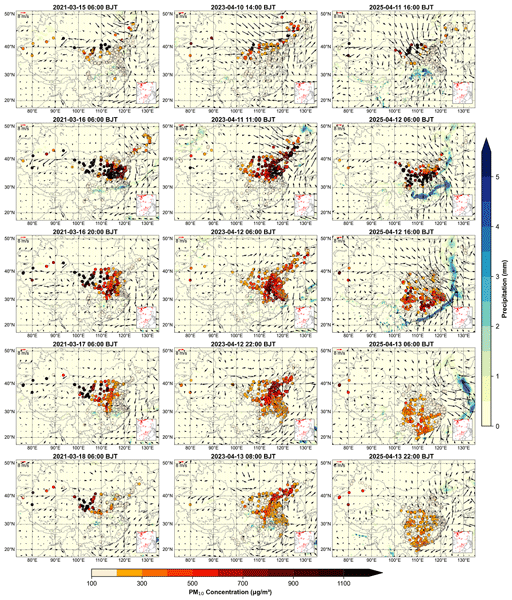
This study examines a severe dust event that occurred in western Inner Mongolia (WIM) on 11 April 2025, which reached Hainan by 13 April. Unlike the dust events in 2021 and 2023 that did not affect Hainan, this case was characterized by a south‑moving Mongolian cyclone. Sustained strong northerly winds pushed both the dust plume and the rainband southward; however, the dust remained positioned behind the rainband, thereby avoiding wet scavenging and facilitating its transport to Hainan.
Jianqi Zhao, Xiaoyan Ma, Johannes Quaas, and Tong Yang
Atmos. Chem. Phys., 25, 17701–17723, https://doi.org/10.5194/acp-25-17701-2025, https://doi.org/10.5194/acp-25-17701-2025, 2025
Short summary
Short summary
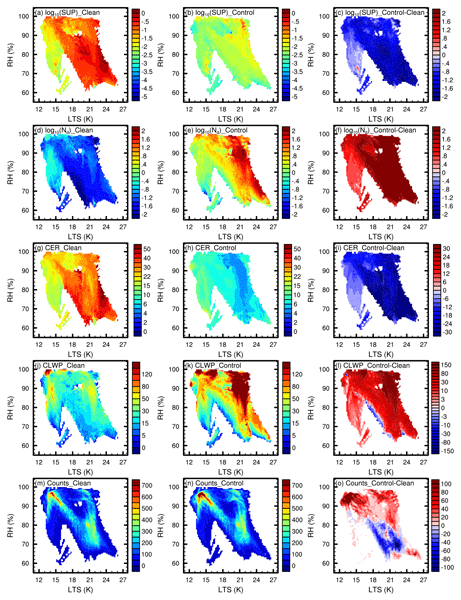
We use the chemistry version of the Weather Research and Forecasting model coupled with spectral bin microphysics to investigate how meteorological conditions impact aerosol–cloud interactions (ACI) under different pollution regimes. Our findings highlight the changes in aerosol effects on clouds and precipitation under varying thermodynamic conditions, as well as the sensitivity of ACI to meteorological conditions under different pollution regimes, which help to clarify the mechanisms behind the nonlinear variation of ACI with environmental conditions.
Jianqi Zhao, Xiaoyan Ma, and Johannes Quaas
EGUsphere, https://doi.org/10.5194/egusphere-2024-3662, https://doi.org/10.5194/egusphere-2024-3662, 2024
Preprint archived
Short summary
Short summary
We conduct a comparative analysis of aerosol-cloud responses in liquid-phase clouds under different aerosol and meteorological conditions based on simulations using the WRF-Chem-SBM model. Our findings highlight the different effects of aerosols on clouds and precipitation, as well as variations in the roles of aerosol and meteorological factors influencing aerosol-cloud interactions, in different environment.
Jianqi Zhao, Xiaoyan Ma, Johannes Quaas, and Hailing Jia
Atmos. Chem. Phys., 24, 9101–9118, https://doi.org/10.5194/acp-24-9101-2024, https://doi.org/10.5194/acp-24-9101-2024, 2024
Short summary
Short summary
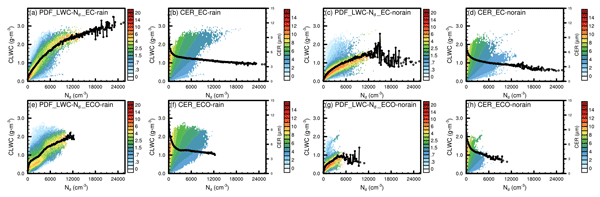
We explore aerosol–cloud interactions in liquid-phase clouds over eastern China and its adjacent ocean in winter based on the WRF-Chem–SBM model, which couples a spectral-bin microphysics scheme and an online aerosol module. Our study highlights the differences in aerosol–cloud interactions between land and ocean and between precipitation clouds and non-precipitation clouds, and it differentiates and quantifies their underlying mechanisms.
Jianqi Zhao, Xiaoyan Ma, Johannes Quaas, and Hailing Jia
EGUsphere, https://doi.org/10.5194/egusphere-2023-331, https://doi.org/10.5194/egusphere-2023-331, 2023
Preprint archived
Short summary
Short summary
We improve the ability of WRF-Chem model to simulate aerosol-cloud physical and chemical processes by coupling a spectral-bin cloud microphysics scheme and online aerosol module, and consequently explore the aerosol-cloud interactions over eastern China and its adjacent ocean in boreal winter. Our study highlights the differences in aerosol-cloud interactions between land and ocean, precipitation clouds and non-precipitation clouds, and differentiates and quantifies their underlying mechanisms.
Ardit Arifi, Hailing Jia, Guangliang Fu, Athanasios Tsikerdekis, Nick Schutgens, Anne Kubin, Yusuf Bhatti, Ulrike Dusek, and Otto Hasekamp
EGUsphere, https://doi.org/10.5194/egusphere-2026-5361, https://doi.org/10.5194/egusphere-2026-5361, 2026
This preprint is open for discussion and under review for Atmospheric Chemistry and Physics (ACP).
Short summary
Short summary
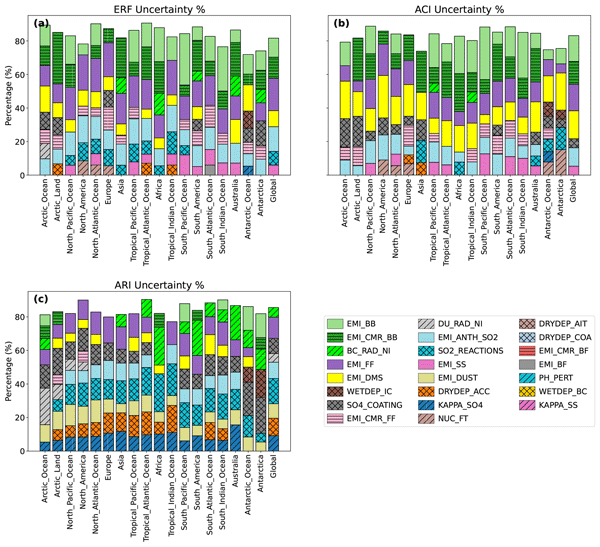
Aerosols are tiny particles that affect climate by scattering and absorbing sunlight and altering clouds. Much of the uncertainty in their climate effect comes from poorly known emissions. Here we provide a new global estimate of aerosol emissions using PACE/SPEXone satellite observations of aerosol amount, size, and absorption. Combining these with a global aerosol climate model through data assimilation, we find a substantial update to current estimates, suggesting stronger aerosol cooling.
Hailing Jia, David Neubauer, Yusuf Bhatti, Duncan Watson-Parris, Philip Stier, Johannes Quaas, Daniel Partridge, Ardit Arifi, Anne Kubin, Athanasios Nenes, Muhammed Irfan, Ulas Im, Carl Svenhag, Nick Schutgens, Bastiaan van Diedenhoven, Sylvaine Ferrachat, Ulrike Lohmann, Ina Tegen, Alice Henkes, Guangliang Fu, and Otto Hasekamp
EGUsphere, https://doi.org/10.5194/egusphere-2026-3275, https://doi.org/10.5194/egusphere-2026-3275, 2026
Short summary
Short summary
Tiny aerosol particles affect Earth’s climate by interacting with clouds and sunlight, but their impact remains uncertain. Combining climate model simulations and emulators, we explored millions of model variants across different aerosol and cloud settings to identify the causes of the uncertainty. We found that aerosol emissions and cloud convection are key contributors. Our work suggests that better integration of existing observations could help reduce these uncertainties in the future.
Yan Liu, Hailing Jia, and Yong Han
Atmos. Chem. Phys., 26, 9373–9392, https://doi.org/10.5194/acp-26-9373-2026, https://doi.org/10.5194/acp-26-9373-2026, 2026
Short summary
Short summary
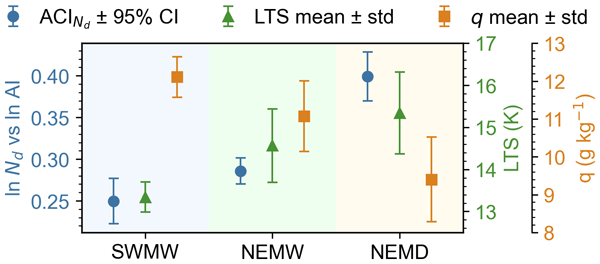
This study explores how tiny particles in the air influence non-raining warm clouds over the South China Sea in different monsoon periods. Using long-term satellite observations and reanalysis datasets, we show that cloud sensitivity to these particles changes with moisture and atmospheric stability. Dry and stable conditions make clouds more responsive, while moist environments weaken this effect. These results help improve how climate models describe cloud behavior.
Peili Zou, Xiaoyan Ma, Rong Tian, Jianqi Zhao, Tong Yang, and Yingying Ku
Atmos. Chem. Phys., 26, 7485–7501, https://doi.org/10.5194/acp-26-7485-2026, https://doi.org/10.5194/acp-26-7485-2026, 2026
Short summary
Short summary
This study examines a severe dust event that occurred in western Inner Mongolia (WIM) on 11 April 2025, which reached Hainan by 13 April. Unlike the dust events in 2021 and 2023 that did not affect Hainan, this case was characterized by a south‑moving Mongolian cyclone. Sustained strong northerly winds pushed both the dust plume and the rainband southward; however, the dust remained positioned behind the rainband, thereby avoiding wet scavenging and facilitating its transport to Hainan.
Yusuf A. Bhatti, Duncan Watson-Parris, Leighton A. Regayre, Hailing Jia, David Neubauer, Ulas Im, Carl Svenhag, Nick Schutgens, Athanasios Tsikerdekis, Athanasios Nenes, Muhammed Irfan, Bastiaan van Diedenhoven, Ardit Arifi, Guangliang Fu, and Otto P. Hasekamp
Atmos. Chem. Phys., 26, 269–293, https://doi.org/10.5194/acp-26-269-2026, https://doi.org/10.5194/acp-26-269-2026, 2026
Short summary
Short summary
Aerosols (small airborne particles) impact Earth's climate, but their extent is unknown. By running climate model simulations and using machine learning to emulate millions of additional variants with different settings, we found that natural emissions like sea spray and sulfur are key sources of uncertainty in climate predictions. Our work shows that understanding these natural processes better can help improve climate models and make future climate projections more accurate.
Jianqi Zhao, Xiaoyan Ma, Johannes Quaas, and Tong Yang
Atmos. Chem. Phys., 25, 17701–17723, https://doi.org/10.5194/acp-25-17701-2025, https://doi.org/10.5194/acp-25-17701-2025, 2025
Short summary
Short summary
We use the chemistry version of the Weather Research and Forecasting model coupled with spectral bin microphysics to investigate how meteorological conditions impact aerosol–cloud interactions (ACI) under different pollution regimes. Our findings highlight the changes in aerosol effects on clouds and precipitation under varying thermodynamic conditions, as well as the sensitivity of ACI to meteorological conditions under different pollution regimes, which help to clarify the mechanisms behind the nonlinear variation of ACI with environmental conditions.
Hongli Chen, Pang-Chi Hsu, Anbao Zhu, and Xiaoyan Ma
Atmos. Chem. Phys., 25, 15765–15783, https://doi.org/10.5194/acp-25-15765-2025, https://doi.org/10.5194/acp-25-15765-2025, 2025
Short summary
Short summary
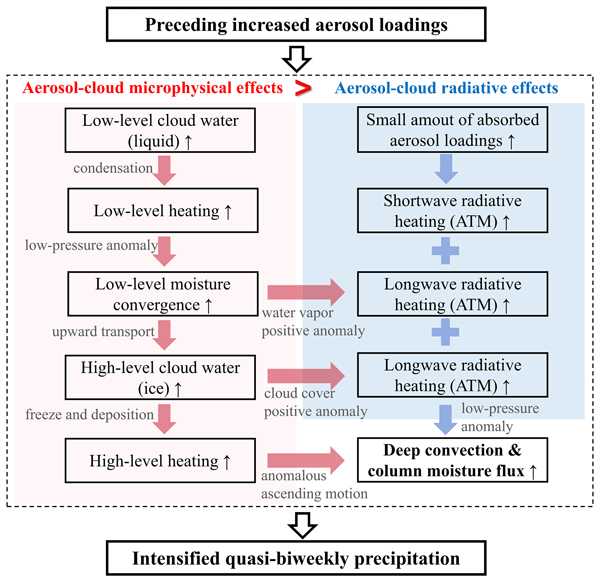
Previous studies mainly examined aerosol effects on short-term rainfall variations. Here we show, using observations and model experiments, that aerosols also intensify rainfall variability on two- to four-week timescales over South China primarily through cloud-microphysical processes, while radiative effects play a secondary role, thereby amplifying prolonged heavy rainfall events.
Jianqi Zhao, Xiaoyan Ma, and Johannes Quaas
EGUsphere, https://doi.org/10.5194/egusphere-2024-3662, https://doi.org/10.5194/egusphere-2024-3662, 2024
Preprint archived
Short summary
Short summary
We conduct a comparative analysis of aerosol-cloud responses in liquid-phase clouds under different aerosol and meteorological conditions based on simulations using the WRF-Chem-SBM model. Our findings highlight the different effects of aerosols on clouds and precipitation, as well as variations in the roles of aerosol and meteorological factors influencing aerosol-cloud interactions, in different environment.
Jianqi Zhao, Xiaoyan Ma, Johannes Quaas, and Hailing Jia
Atmos. Chem. Phys., 24, 9101–9118, https://doi.org/10.5194/acp-24-9101-2024, https://doi.org/10.5194/acp-24-9101-2024, 2024
Short summary
Short summary
We explore aerosol–cloud interactions in liquid-phase clouds over eastern China and its adjacent ocean in winter based on the WRF-Chem–SBM model, which couples a spectral-bin microphysics scheme and an online aerosol module. Our study highlights the differences in aerosol–cloud interactions between land and ocean and between precipitation clouds and non-precipitation clouds, and it differentiates and quantifies their underlying mechanisms.
Tong Sha, Siyu Yang, Qingcai Chen, Liangqing Li, Xiaoyan Ma, Yan-Lin Zhang, Zhaozhong Feng, K. Folkert Boersma, and Jun Wang
Atmos. Chem. Phys., 24, 8441–8455, https://doi.org/10.5194/acp-24-8441-2024, https://doi.org/10.5194/acp-24-8441-2024, 2024
Short summary
Short summary
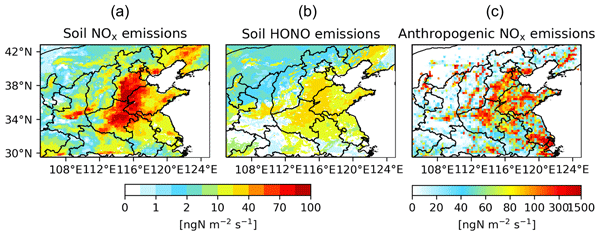
Using an updated soil reactive nitrogen emission scheme in the Unified Inputs for Weather Research and Forecasting coupled with Chemistry (UI-WRF-Chem) model, we investigate the role of soil NO and HONO (Nr) emissions in air quality and temperature in North China. Contributions of soil Nr emissions to O3 and secondary pollutants are revealed, exceeding effects of soil NOx or HONO emission. Soil Nr emissions play an important role in mitigating O3 pollution and addressing climate change.
Kun Wang, Xiaoyan Ma, Rong Tian, and Fangqun Yu
Atmos. Chem. Phys., 23, 4091–4104, https://doi.org/10.5194/acp-23-4091-2023, https://doi.org/10.5194/acp-23-4091-2023, 2023
Short summary
Short summary
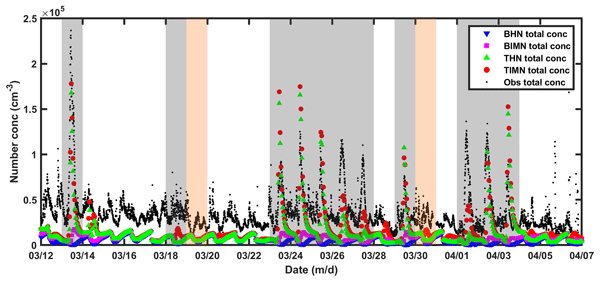
From 12 March to 6 April 2016 in Beijing, there were 11 typical new particle formation days, 13 non-event days, and 2 undefined days. We first analyzed the favorable background of new particle formation in Beijing and then conducted the simulations using four nucleation schemes based on a global chemistry transport model (GEOS-Chem) to understand the nucleation mechanism.
Jianqi Zhao, Xiaoyan Ma, Johannes Quaas, and Hailing Jia
EGUsphere, https://doi.org/10.5194/egusphere-2023-331, https://doi.org/10.5194/egusphere-2023-331, 2023
Preprint archived
Short summary
Short summary
We improve the ability of WRF-Chem model to simulate aerosol-cloud physical and chemical processes by coupling a spectral-bin cloud microphysics scheme and online aerosol module, and consequently explore the aerosol-cloud interactions over eastern China and its adjacent ocean in boreal winter. Our study highlights the differences in aerosol-cloud interactions between land and ocean, precipitation clouds and non-precipitation clouds, and differentiates and quantifies their underlying mechanisms.
Yiwen Hu, Zengliang Zang, Xiaoyan Ma, Yi Li, Yanfei Liang, Wei You, Xiaobin Pan, and Zhijin Li
Atmos. Chem. Phys., 22, 13183–13200, https://doi.org/10.5194/acp-22-13183-2022, https://doi.org/10.5194/acp-22-13183-2022, 2022
Short summary
Short summary
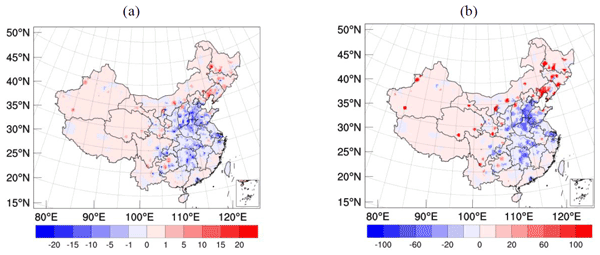
This study developed a four-dimensional variational assimilation (4DVAR) system based on WRF–Chem to optimise SO2 emissions. The 4DVAR system was applied to obtain the SO2 emissions during the early period of the COVID-19 pandemic over China. The results showed that the 4DVAR system effectively optimised emissions to describe the actual changes in SO2 emissions related to the COVID lockdown, and it can thus be used to improve the accuracy of forecasts.
Johannes Quaas, Hailing Jia, Chris Smith, Anna Lea Albright, Wenche Aas, Nicolas Bellouin, Olivier Boucher, Marie Doutriaux-Boucher, Piers M. Forster, Daniel Grosvenor, Stuart Jenkins, Zbigniew Klimont, Norman G. Loeb, Xiaoyan Ma, Vaishali Naik, Fabien Paulot, Philip Stier, Martin Wild, Gunnar Myhre, and Michael Schulz
Atmos. Chem. Phys., 22, 12221–12239, https://doi.org/10.5194/acp-22-12221-2022, https://doi.org/10.5194/acp-22-12221-2022, 2022
Short summary
Short summary
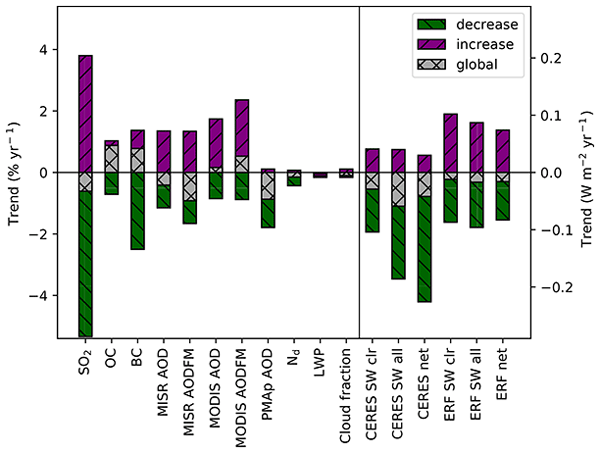
Pollution particles cool climate and offset part of the global warming. However, they are washed out by rain and thus their effect responds quickly to changes in emissions. We show multiple datasets to demonstrate that aerosol emissions and their concentrations declined in many regions influenced by human emissions, as did the effects on clouds. Consequently, the cooling impact on the Earth energy budget became smaller. This change in trend implies a relative warming.
Hailing Jia, Johannes Quaas, Edward Gryspeerdt, Christoph Böhm, and Odran Sourdeval
Atmos. Chem. Phys., 22, 7353–7372, https://doi.org/10.5194/acp-22-7353-2022, https://doi.org/10.5194/acp-22-7353-2022, 2022
Short summary
Short summary
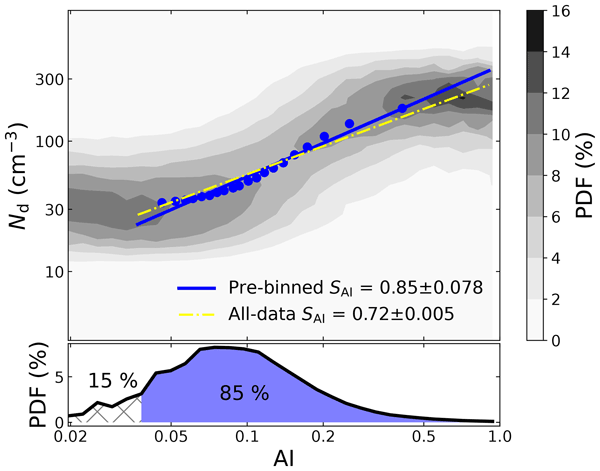
Aerosol–cloud interaction is the most uncertain component of the anthropogenic forcing of the climate. By combining satellite and reanalysis data, we show that the strength of the Twomey effect (S) increases remarkably with vertical velocity. Both the confounding effect of aerosol–precipitation interaction and the lack of vertical co-location between aerosol and cloud are found to overestimate S, whereas the retrieval biases in aerosol and cloud appear to underestimate S.
Cited articles
Andersen, H., Cermak, J., Fuchs, J., Knutti, R., and Lohmann, U.: Understanding the drivers of marine liquid-water cloud occurrence and properties with global observations using neural networks, Atmos. Chem. Phys., 17, 9535–9546, https://doi.org/10.5194/acp-17-9535-2017, 2017.
Anwar, K., Alam, K., Liu, Y., Huang, Z., Huang, J., and Liu, Y.: Analysis of aerosol cloud interactions with a consistent signal of meteorology and other influencing parameters, Atmos. Res., 275, 106241, https://doi.org/10.1016/j.atmosres.2022.106241, 2022.
Buchholz, R., Emmons, L., Tilmes, S., and the CESM2 Development Team: CESM2.1/CAM-chem Instantaneous Output for Boundary Conditions, UCAR/NCAR–Atmospheric Chemistry Observations and Modeling Laboratory [data set], https://doi.org/10.5065/NMP7-EP60,2019.
Bulatovic, I., Igel, A. L., Leck, C., Heintzenberg, J., Riipinen, I., and Ekman, A. M. L.: The importance of Aitken mode aerosol particles for cloud sustenance in the summertime high Arctic – a simulation study supported by observational data, Atmos. Chem. Phys., 21, 3871–3897, https://doi.org/10.5194/acp-21-3871-2021, 2021.
Chelani, A. B., Vyawahare, R. V., and Gautam, S.: Aerosol Variability and Its Impact on Cloud-Precipitation Interaction in Urban Areas of Maharashtra, India, in: Aerosol Optical Depth and Precipitation: Measuring Particle Concentration, Health Risks and Environmental Impacts, edited by: Gautam, S., Kumar, R. P., and Samuel, C., Springer Nature Switzerland, Cham, 33–53, https://doi.org/10.1007/978-3-031-55836-8_3, 2024.
Chen, Y.-C., Xue, L., Lebo, Z. J., Wang, H., Rasmussen, R. M., and Seinfeld, J. H.: A comprehensive numerical study of aerosol-cloud-precipitation interactions in marine stratocumulus, Atmos. Chem. Phys., 11, 9749–9769, https://doi.org/10.5194/acp-11-9749-2011, 2011.
Chen, Y. Y., Yang, K., Zhou, D. G., Qin, J., and Guo, X. F.: Improving the Noah Land Surface Model in Arid Regions with an Appropriate Parameterization of the Thermal Roughness Length, J. Hydrometeorol., 11, 995–1006, https://doi.org/10.1175/2010jhm1185.1, 2010.
Dusek, U., Frank, G. P., Hildebrandt, L., Curtius, J., Schneider, J., Walter, S., Chand, D., Drewnick, F., Hings, S., Jung, D., Borrmann, S., and Andreae, M. O.: Size Matters More Than Chemistry for Cloud-Nucleating Ability of Aerosol Particles, Science, 312, 1375–1378, https://doi.org/10.1126/science.1125261, 2006.
Ekman, A. M. L., Engström, A., and Söderberg, A.: Impact of Two-Way Aerosol–Cloud Interaction and Changes in Aerosol Size Distribution on Simulated Aerosol-Induced Deep Convective Cloud Sensitivity, J. Atmos. Sci., 68, 685–698, https://doi.org/10.1175/2010JAS3651.1, 2011.
Emmons, L. K., Schwantes, R. H., Orlando, J. J., Tyndall, G., Kinnison, D., Lamarque, J., Marsh, D., Mills, M. J., Tilmes, S., and Bardeen, C.: The chemistry mechanism in the community earth system model version 2 (CESM2), J. Adv. Model. Earth Syst., 12, e2019MS001882, https://doi.org/10.1029/2019MS001882, 2020.
Fan, J. W., Leung, L. R., Li, Z. Q., Morrison, H., Chen, H. B., Zhou, Y. Q., Qian, Y., and Wang, Y.: Aerosol impacts on clouds and precipitation in eastern China: Results from bin and bulk microphysics, J. Geophys. Res.-Atmos., 117, D00K36, https://doi.org/10.1029/2011jd016537, 2012.
Fan, J. W., Liu, Y. C., Xu, K. M., North, K., Collis, S., Dong, X. Q., Zhang, G. J., Chen, Q., Kollias, P., and Ghan, S. J.: Improving representation of convective transport for scale-aware parameterization: 1. Convection and cloud properties simulated with spectral bin and bulk microphysics, J. Geophys. Res.-Atmos., 120, 3485–3509, https://doi.org/10.1002/2014jd022142, 2015.
Fan, J. W., Wang, Y., Rosenfeld, D., and Liu, X.: Review of Aerosol–Cloud Interactions: Mechanisms, Significance, and Challenges, J. Atmos. Sci., 73, 4221–4252, https://doi.org/10.1175/JAS-D-16-0037.1, 2016.
Fuentes, E., Coe, H., Green, D., and McFiggans, G.: On the impacts of phytoplankton-derived organic matter on the properties of the primary marine aerosol – Part 2: Composition, hygroscopicity and cloud condensation activity, Atmos. Chem. Phys., 11, 2585–2602, https://doi.org/10.5194/acp-11-2585-2011, 2011.
Gao, W. H., Fan, J. W., Easter, R. C., Yang, Q., Zhao, C., and Ghan, S. J.: Coupling spectral-bin cloud microphysics with the MOSAIC aerosol model in WRF-Chem: Methodology and results for marine stratocumulus clouds, J. Adv. Model. Earth Syst., 8, 1289–1309, https://doi.org/10.1002/2016ms000676, 2016.
Geresdi, I., Mészáros, E., and Molnár, A.: The effect of chemical composition and size distribution of aerosol particles on droplet formation and albedo of stratocumulus clouds, Atmos. Environ., 40, 1845–1855, https://doi.org/10.1016/j.atmosenv.2005.11.012, 2006.
Grell, G. A. and Freitas, S. R.: A scale and aerosol aware stochastic convective parameterization for weather and air quality modeling, Atmos. Chem. Phys., 14, 5233–5250, https://doi.org/10.5194/acp-14-5233-2014, 2014.
Guenther, A., Karl, T., Harley, P., Wiedinmyer, C., Palmer, P. I., and Geron, C.: Estimates of global terrestrial isoprene emissions using MEGAN (Model of Emissions of Gases and Aerosols from Nature), Atmos. Chem. Phys., 6, 3181–3210, https://doi.org/10.5194/acp-6-3181-2006, 2006.
Hernández Pardo, L., Toledo Machado, L. A., Amore Cecchini, M., and Sánchez Gácita, M.: Quantifying the aerosol effect on droplet size distribution at cloud top, Atmos. Chem. Phys., 19, 7839–7857, https://doi.org/10.5194/acp-19-7839-2019, 2019.
Hoffmann, F. and Feingold, G.: Cloud Microphysical Implications for Marine Cloud Brightening: The Importance of the Seeded Particle Size Distribution, J. Atmos. Sci., 78, 3247–3262, https://doi.org/10.1175/JAS-D-21-0077.1, 2021.
Hu, Y., Zang, Z., Ma, X., Li, Y., Liang, Y., You, W., Pan, X., and Li, Z.: Four-dimensional variational assimilation for SO2 emission and its application around the COVID-19 lockdown in the spring 2020 over China, Atmos. Chem. Phys., 22, 13183–13200, https://doi.org/10.5194/acp-22-13183-2022, 2022.
Iacono, M. J., Delamere, J. S., Mlawer, E. J., Shephard, M. W., Clough, S. A., and Collins, W. D.: Radiative forcing by long-lived greenhouse gases: Calculations with the AER radiative transfer models, J. Geophys. Res.-Atmos., 113, 103, https://doi.org/10.1029/2008JD009944, 2008.
IPCC: Climate Change 2013 – The Physical Science Basis: Working Group I Contribution to the Fifth Assessment Report of the Intergovernmental Panel on Climate Change, Cambridge University Press, https://www.ipcc.ch/report/ar5/wg1/ (last access: 13 October 2026), 2014.
Jackson, L. and Forster, P.: The Role of Climate Model Emulators in the IPCC 6th Assessment Report, Workshop Report, Zenodo, https://doi.org/10.5281/zenodo.5615538, 2021.
Jia, H., Ma, X., and Liu, Y.: Exploring aerosol–cloud interaction using VOCALS-REx aircraft measurements, Atmos. Chem. Phys., 19, 7955–7971, https://doi.org/10.5194/acp-19-7955-2019, 2019.
Jia, H. L., Ma, X. Y., Yu, F. Q., and Quaas, J.: Significant underestimation of radiative forcing by aerosol-cloud interactions derived from satellite-based methods, Nat. Commun., 12, 3649, https://doi.org/10.1038/s41467-021-23888-1, 2021.
Khain, A., Ovtchinnikov, M., Pinsky, M., Pokrovsky, A., and Krugliak, H.: Notes on the state-of-the-art numerical modeling of cloud microphysics, Atmos. Res., 55, 159–224, https://doi.org/10.1016/S0169-8095(00)00064-8, 2000.
Khain, A., Pokrovsky, A., Pinsky, M., Seifert, A., and Phillips, V.: Simulation of Effects of Atmospheric Aerosols on Deep Turbulent Convective Clouds Using a Spectral Microphysics Mixed-Phase Cumulus Cloud Model. Part I: Model Description and Possible Applications, J. Atmos. Sci., 61, 2963–2982, https://doi.org/10.1175/jas-3350.1, 2004.
Khain, A. P., Beheng, K. D., Heymsfield, A., Korolev, A., Krichak, S. O., Levin, Z., Pinsky, M., Phillips, V., Prabhakaran, T., Teller, A., van den Heever, S. C., and Yano, J. I.: Representation of microphysical processes in cloud-resolving models: Spectral (bin) microphysics versus bulk parameterization, Rev. Geophys., 53, 247–322, https://doi.org/10.1002/2014rg000468, 2015.
Kogan, Y. L.: The Simulation of a Convective Cloud in a 3-D Model With Explicit Microphysics. Part I: Model Description and Sensitivity Experiments, Journal of Atmospheric Sciences, 48, 1160–1189, https://doi.org/10.1175/1520-0469(1991)048<1160:Tsoacc>2.0.Co;2, 1991.
Li, J., Zhao, C., Sun, Y., Zhao, X., Yang, J., Yang, Y., Chen, A., and Zhou, Y.: Distinct Aerosol Impacts on Local Scale Convective Rainfall Between Sichuan Basin and North China Plain Regions in China, J. Geophys. Res.-Atmos., 130, e2024JD042649, https://doi.org/10.1029/2024JD042649, 2025.
Li, M., Liu, H., Geng, G., Hong, C., Liu, F., Song, Y., Tong, D., Zheng, B., Cui, H., and Man, H.: Anthropogenic emission inventories in China: a review, Natl. Sci. Rev., 4, 834–866, https://doi.org/10.1093/nsr/nwx150, 2017.
Liang, Y., Zhao, C., Yang, Y., Zhao, X., Li, J., and Chen, A.: Distinct Impacts of Aerosol Size on Aerosol-Cloud Interactions Over Ocean and Land Regions in Eastern China, J. Geophys. Res.-Atmos., 131, e2025JD045635, https://doi.org/10.1029/2025JD045635, 2026.
Liu, F., Mao, F., Rosenfeld, D., Pan, Z., Zang, L., Zhu, Y., Yin, J., and Gong, W.: Opposing comparable large effects of fine aerosols and coarse sea spray on marine warm clouds, Commun. Earth Environ., 3, 232, https://doi.org/10.1038/s43247-022-00562-y, 2022.
Liu, Y., Bourgeois, A., Warner, T., Swerdlin, S., and Hacker, J.: Implementation of observation-nudging based FDDA into WRF for supporting ATEC test operations, WRF/MM5 Users' Workshop June, 27–30, https://www2.mmm.ucar.edu/wrf/users/workshops/WS2005/abstracts/Session10/7-Liu.pdf (last access: 13 October 2026), 2005.
Ma, X., Jia, H., Yu, F., and Quaas, J.: Opposite aerosol index-cloud droplet effective radius correlations over major industrial regions and their adjacent oceans, Geophys. Res. Lett., 45, 5771–5778, https://doi.org/10.1029/2018GL077562, 2018.
McCoy, I. L., Wyant, M. C., Blossey, P. N., Bretherton, C. S., and Wood, R.: Aitken Mode Aerosols Buffer Decoupled Mid-Latitude Boundary Layer Clouds Against Precipitation Depletion, J. Geophys. Res.-Atmos., 129, e2023JD039572, https://doi.org/10.1029/2023JD039572, 2024.
McFiggans, G., Artaxo, P., Baltensperger, U., Coe, H., Facchini, M. C., Feingold, G., Fuzzi, S., Gysel, M., Laaksonen, A., Lohmann, U., Mentel, T. F., Murphy, D. M., O'Dowd, C. D., Snider, J. R., and Weingartner, E.: The effect of physical and chemical aerosol properties on warm cloud droplet activation, Atmos. Chem. Phys., 6, 2593–2649, https://doi.org/10.5194/acp-6-2593-2006, 2006.
Mlawer, E. J., Taubman, S. J., Brown, P. D., Iacono, M. J., and Clough, S. A.: Radiative transfer for inhomogeneous atmospheres: RRTM, a validated correlated-k model for the longwave, J. Geophys. Res.-Atmos., 102, 16663–16682, https://doi.org/10.1029/97JD00237, 1997.
NCEP, National Weather Service, NOAA, and U.S. Department of Commerce: NCEP ADP Global Surface Observational Weather Data, NCAR [data set], https://doi.org/10.5065/4F4P-E398, 2004.
NCEP, National Weather Service, NOAA, and U.S. Department of Commerce: NCEP GDAS/FNL 0.25 Degree Global Tropospheric Analyses and Forecast Grids, Research Data Archive at the National Center for Atmospheric Research, Computational and Information Systems Laboratory, NCAR [data set], https://doi.org/10.5065/D65Q4T4Z, 2015.
Niu, L., Zhao, C., Zhang, H., Liang, Y., and Chen, A.: Spatiotemporal characteristics of aerosols and low clouds from MODIS and their implications for marine cloud brightening, Science China Earth Sciences, 1–12, https://doi.org/10.1007/s11430-025-1794-7, 2026.
Niu, X., Ma, X., and Jia, H.: Analysis of cloud-type distribution characteristics over major aerosol emission regions in the Northern Hemisphere by using CloudSat/CALIPSO satellite data, Journal of the Meteorological Sciences, 42, 467–480, https://doi.org/10.12306/2021jms.0006, 2022.
Ovadnevaite, J., Zuend, A., Laaksonen, A., Sanchez, K. J., Roberts, G., Ceburnis, D., Decesari, S., Rinaldi, M., Hodas, N., Facchini, M. C., Seinfeld, J. H., and O' Dowd, C.: Surface tension prevails over solute effect in organic-influenced cloud droplet activation, Nature, 546, 637–641, https://doi.org/10.1038/nature22806, 2017.
Pahlow, M., Parlange, M. B., and Porté-Agel, F.: On Monin–Obukhov similarity in the stable atmospheric boundary layer, Bound.-Lay. Meteorol., 99, 225–248, https://doi.org/10.1023/A:1018909000098, 2001.
Patel, P. N. and Jiang, J. H.: Cloud condensation nuclei characteristics at the Southern Great Plains site: role of particle size distribution and aerosol hygroscopicity, Environ. Res. Commun., 3, 075002, https://doi.org/10.1088/2515-7620/ac0e0b, 2021.
Petters, M. D. and Kreidenweis, S. M.: A single parameter representation of hygroscopic growth and cloud condensation nucleus activity, Atmos. Chem. Phys., 7, 1961–1971, https://doi.org/10.5194/acp-7-1961-2007, 2007.
Quinn, P. K., Bates, T. S., Coffman, D. J., and Covert, D. S.: Influence of particle size and chemistry on the cloud nucleating properties of aerosols, Atmos. Chem. Phys., 8, 1029–1042, https://doi.org/10.5194/acp-8-1029-2008, 2008.
Reutter, P., Su, H., Trentmann, J., Simmel, M., Rose, D., Gunthe, S. S., Wernli, H., Andreae, M. O., and Pöschl, U.: Aerosol- and updraft-limited regimes of cloud droplet formation: influence of particle number, size and hygroscopicity on the activation of cloud condensation nuclei (CCN), Atmos. Chem. Phys., 9, 7067–7080, https://doi.org/10.5194/acp-9-7067-2009, 2009.
Satellite Services Division: Office of Satellite Data Processing and Distribution/NESDIS/NOAA/U.S. Department of Commerce, and National Centers for Environmental Prediction/National Weather Service/NOAA/U.S. Department of Commerce: NCEP ADP Global Upper Air Observational Weather Data, NCAR [data set], https://doi.org/10.5065/39C5-Z211, 2004.
Schulze, B. C., Charan, S. M., Kenseth, C. M., Kong, W., Bates, K. H., Williams, W., Metcalf, A. R., Jonsson, H. H., Woods, R., Sorooshian, A., Flagan, R. C., and Seinfeld, J. H.: Characterization of Aerosol Hygroscopicity Over the Northeast Pacific Ocean: Impacts on Prediction of CCN and Stratocumulus Cloud Droplet Number Concentrations, Earth Space Sci., 7, e2020EA001098, https://doi.org/10.1029/2020EA001098, 2020.
Seinfeld, J. H., Bretherton, C., Carslaw, K. S., Coe, H., DeMott, P. J., Dunlea, E. J., Feingold, G., Ghan, S., Guenther, A. B., and Kahn, R.: Improving our fundamental understanding of the role of aerosol–cloud interactions in the climate system, P. Natl. Acad. Sci. USA, 113, 5781–5790, https://doi.org/10.1073/pnas.1514043113, 2016.
Sha, T., Ma, X. Y., Wang, J., Tian, R., Zhao, J. Q., Cao, F., and Zhang, Y. L.: Improvement of inorganic aerosol component in PM2.5 by constraining aqueous-phase formation of sulfate in cloud with satellite retrievals: WRF-Chem simulations, Sci. Total Environ., 804, 150229, https://doi.org/10.1016/j.scitotenv.2021.150229, 2022.
Shin, H. H., Hong, S. Y., and Dudhia, J.: Impacts of the Lowest Model Level Height on the Performance of Planetary Boundary Layer Parameterizations, Mon. Weather Rev., 140, 664–682, https://doi.org/10.1175/mwr-d-11-00027.1, 2012.
Ward, D. S., Eidhammer, T., Cotton, W. R., and Kreidenweis, S. M.: The role of the particle size distribution in assessing aerosol composition effects on simulated droplet activation, Atmos. Chem. Phys., 10, 5435–5447, https://doi.org/10.5194/acp-10-5435-2010, 2010.
Wild, O., Zhu, X., and Prather, M. J.: Fast-J: Accurate simulation of in-and below-cloud photolysis in tropospheric chemical models, J. Atmos. Chem., 37, 245–282, https://doi.org/10.1023/A:1006415919030, 2000.
Xu, X., Curtis, J. H., West, M., and Riemer, N.: Compensating biases in CCN predictions from composition averaging and neglected surfactant effects, Atmos. Chem. Phys., 26, 10647–10659, https://doi.org/10.5194/acp-26-10647-2026, 2026.
Zaveri, R. A., Easter, R. C., Fast, J. D., and Peters, L. K.: Model for Simulating Aerosol Interactions and Chemistry (MOSAIC), J. Geophys. Res.-Atmos., 113, D13204, https://doi.org/10.1029/2007jd008782, 2008.
Zhang, Q., Meng, J., Quan, J., Gao, Y., Zhao, D., Chen, P., and He, H.: Impact of aerosol composition on cloud condensation nuclei activity, Atmos. Chem. Phys., 12, 3783–3790, https://doi.org/10.5194/acp-12-3783-2012, 2012.
Zhang, Y., Fan, J., Li, Z., and Rosenfeld, D.: Impacts of cloud microphysics parameterizations on simulated aerosol–cloud interactions for deep convective clouds over Houston, Atmos. Chem. Phys., 21, 2363–2381, https://doi.org/10.5194/acp-21-2363-2021, 2021.
Zhao, C., Liu, X., Leung, L. R., Johnson, B., McFarlane, S. A., Gustafson Jr., W. I., Fast, J. D., and Easter, R.: The spatial distribution of mineral dust and its shortwave radiative forcing over North Africa: modeling sensitivities to dust emissions and aerosol size treatments, Atmos. Chem. Phys., 10, 8821–8838, https://doi.org/10.5194/acp-10-8821-2010, 2010.
Zhao, C., Yang, Y., Chi, Y., Sun, Y., Zhao, X., Letu, H., and Xia, Y.: Recent progress in cloud physics and associated radiative effects in China from 2016 to 2022, Atmos. Res., 293, 106899, https://doi.org/10.1016/j.atmosres.2023.106899, 2023.
Zhao, C., Li, J., and Yang, Y.: A Short Review of Microphysical Effects of Aerosols on Clouds and Precipitation, Chinese Journal of Atmospheric Sciences, 49, 949–963, https://doi.org/10.3878/j.issn.1006-9895.2503.25015, 2025a (in Chinese).
Zhao, J., Ma, X., Wu, S., and Sha, T.: Dust emission and transport in Northwest China: WRF-Chem simulation and comparisons with multi-sensor observations, Atmos. Res., 241, 104978, https://doi.org/10.1016/j.atmosres.2020.104978, 2020.
Zhao, J., Ma, X., Quaas, J., and Yang, T.: How meteorological conditions influence aerosol-cloud interactions under different pollution regimes, Atmos. Chem. Phys., 25, 17701–17723, https://doi.org/10.5194/acp-25-17701-2025, 2025b.
Zhao, X., Zhao, C., Chi, Y., Yang, J., Sun, Y., Yang, Y., and Fan, H.: Different Impacts of Aerosols on Cloud Development over Land and Ocean Regions in East China, Adv. Atmos. Sci., 42, 731–743, https://doi.org/10.1007/s00376-024-4165-z, 2025c.
Zheng, B., Tong, D., Li, M., Liu, F., Hong, C., Geng, G., Li, H., Li, X., Peng, L., Qi, J., Yan, L., Zhang, Y., Zhao, H., Zheng, Y., He, K., and Zhang, Q.: Trends in China's anthropogenic emissions since 2010 as the consequence of clean air actions, Atmos. Chem. Phys., 18, 14095–14111, https://doi.org/10.5194/acp-18-14095-2018, 2018.
Short summary
We use a size-resolved aerosol-cloud model to analyze the effects of aerosol size and hygroscopicity in modulating marine liquid-phase cloud responses under the winter monsoon. Our findings highlight the environmental dependence of the impacts of aerosol physicochemical properties on aerosol-cloud interactions, their pronounced effects under specific conditions, and the relative contributions of aerosol size and hygroscopicity.
We use a size-resolved aerosol-cloud model to analyze the effects of aerosol size and...


Altmetrics
Final-revised paper
Preprint