
Articles | Volume 26, issue 19
https://doi.org/10.5194/acp-26-14085-2026
© Author(s) 2026. This work is distributed under
the Creative Commons Attribution 4.0 License.
the Creative Commons Attribution 4.0 License.
Special issue:
https://doi.org/10.5194/acp-26-14085-2026
© Author(s) 2026. This work is distributed under
the Creative Commons Attribution 4.0 License.
the Creative Commons Attribution 4.0 License.
Research article
| 
08 Oct 2026
Research article |
| 08 Oct 2026
| 08 Oct 2026
EarthCARE reveals details on the role of rain in closed-to-open cell transitions

European Space Agency – ESRIN, Frascati, Italy
Daniele Gasbarra
European Space Agency – ESRIN, Frascati, Italy
Robin J. Hogan
European Centre for Medium-Range Weather Forecasts, Reading, United Kingdom
Edward Malina
European Space Agency – ESRIN, Frascati, Italy
Shannon L. Mason
European Centre for Medium-Range Weather Forecasts, Reading, United Kingdom
Blanka Piskala Gvozdikova
European Space Agency – ESRIN, Frascati, Italy
Related authors
Jonas Schaefer, Sarah Grawe, Hans-Christian Clemen, Stephan Mertes, Johannes Schneider, Bruno Wetzel, Daniel Sauer, Jennifer Wolf, Laura Tomsche, Johanna Mayer, Roland Schrödner, Silvia Henning, Tina Jurkat-Witschas, Christiane Voigt, Helmut Ziereis, Theresa Harlaß, Mira Pöhlker, and Frank Stratmann
Atmos. Chem. Phys., 26, 12505–12520, https://doi.org/10.5194/acp-26-12505-2026, https://doi.org/10.5194/acp-26-12505-2026, 2026
Short summary
Short summary
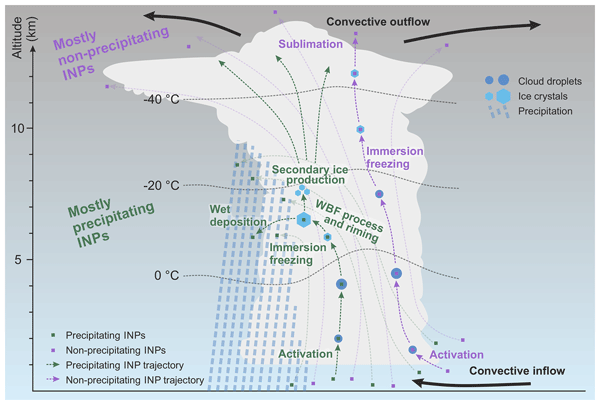
Ice-nucleating particles (INP) are aerosol particles important for ice formation in clouds droplets and thereby influence climate. This study uses airborne measurements over Europe to show how INP are transported through thunderstorms. We show which particles are washed out and which are are transported into the higher troposphere, where they can again affect cloud ice formation. The findings improve understanding of atmospheric particle distribution and help refine climate models.
Blanka Piskala Gvoždíková, Johanna Mayer, Saskia Maria Brose, Edward Malina, Daniele Gasbarra, Anežka Doležalová, and Krasen Samardzhiev
Earth Syst. Sci. Data Discuss., https://doi.org/10.5194/essd-2026-470, https://doi.org/10.5194/essd-2026-470, 2026
Preprint under review for ESSD
Short summary
Short summary
This study introduces Lightning2EarthCARE, an open dataset linking satellite lightning observations with narrow vertical slices through storms from the Earth Cloud, Aerosol and Radiation Explorer mission. Covering August 2024 to January 2026, it includes more than 6000 storms available for case studies and broader analyses. The dataset can help reveal how lightning relates to cloud particles, precipitation, and storm motion, supporting better weather and climate models.
Hemanth Kumar Alladi, Julian Quimbayo-Duarte, Luca Bugliaro, Johanna Mayer, Shweta Singh, and Juerg Schmidli
Atmos. Chem. Phys., 26, 8617–8635, https://doi.org/10.5194/acp-26-8617-2026, https://doi.org/10.5194/acp-26-8617-2026, 2026
Short summary
Short summary
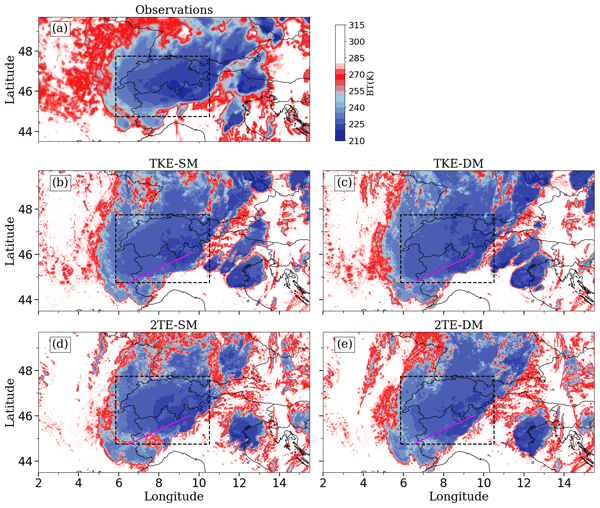
Thunderstorms can transport moisture into the lower stratosphere, affecting climate. Over mountains, models fail to represent them due to underrepresentation of turbulent mixing and cloud microphysics. This study evaluates the operational and new turbulence schemes, with single and double moment microphysics, in the ICOsahedral Nonhydrostatic (ICON) model against observations. The operational turbulence scheme enhances mixing, while double moment produces taller storms with more ice transport.
Vanessa Santos Gabriel, Luca Bugliaro, Mara Montag, Sabrina Ries, Ziming Wang, Kai Widmaier, Matteo Arico, Simon Unterstrasser, Johanna Mayer, Deniz Menekay, Andreas Marsing, Elena de la Torre Castro, Liam Megill, Monika Scheibe, and Christiane Voigt
Earth Syst. Sci. Data, 18, 2397–2412, https://doi.org/10.5194/essd-18-2397-2026, https://doi.org/10.5194/essd-18-2397-2026, 2026
Short summary
Short summary
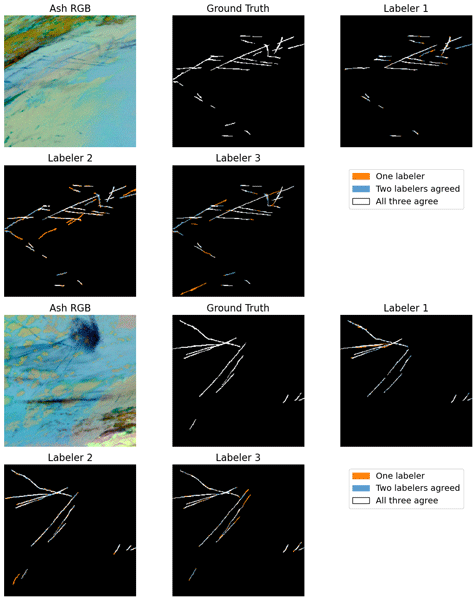
We provide observations of the geostationary Meteosat satellite with contrails labeled by three people complemented with detailed cloud information. Contrails influence climate but are hard to identify in satellite imagery. With this study, we support contrail detection development and evaluation, stress the subjectivity of human labeling and reveal which meteorological conditions highlight or hide contrails. This dataset contributes to a better understanding of aviation’s climate impact.
Manuel Moser, Christiane Voigt, Oliver Eppers, Johannes Lucke, Elena De La Torre Castro, Johanna Mayer, Regis Dupuy, Guillaume Mioche, Olivier Jourdan, Hans-Christian Clemen, Johannes Schneider, Philipp Joppe, Stephan Mertes, Bruno Wetzel, Stephan Borrmann, Marcus Klingebiel, Mario Mech, Christof Lüpkes, Susanne Crewell, André Ehrlich, Andreas Herber, and Manfred Wendisch
Atmos. Chem. Phys., 26, 1867–1887, https://doi.org/10.5194/acp-26-1867-2026, https://doi.org/10.5194/acp-26-1867-2026, 2026
Short summary
Short summary
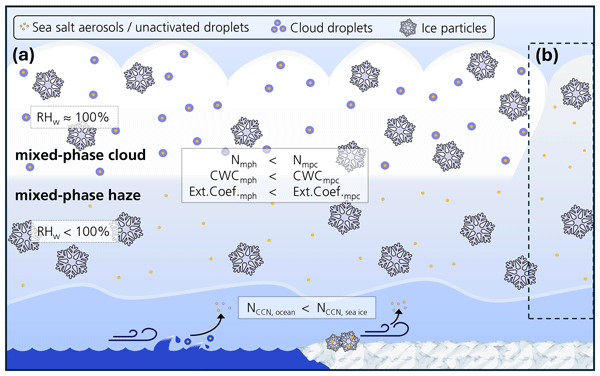
In this study we analyzed Arctic mixed-phase clouds using airborne in-situ measurements in spring 2022. Based on microphysical properties, we show that within these clouds a distinction must be made between classic mixed-phase clouds and a mixed-phase haze regime. Instead of supercooled droplets, the haze regime contains large wet sea salt aerosols. These findings improve our understanding of Arctic low-level cloud processes.

Matteo Aricò, Dennis Piontek, Luca Bugliaro, Johanna Mayer, Richard Müller, Frank Kalinka, and Max Butter
Atmos. Meas. Tech., 18, 7129–7152, https://doi.org/10.5194/amt-18-7129-2025, https://doi.org/10.5194/amt-18-7129-2025, 2025
Short summary
Short summary
The goal is to assess the feasibility of an ice crystal icing detection algorithm based exclusively on remote sensing data. Active measurements are used to train and validate a newly developed random forest algorithm that is applied to passive satellite imagery to estimate the ice crystal icing conditions probability. 83 % of ice crystal icing conditions are correctly detected, showing potential for an operational implementation to mitigate its negative effects on the fleet.

André Ehrlich, Susanne Crewell, Andreas Herber, Marcus Klingebiel, Christof Lüpkes, Mario Mech, Sebastian Becker, Stephan Borrmann, Heiko Bozem, Matthias Buschmann, Hans-Christian Clemen, Elena De La Torre Castro, Henning Dorff, Regis Dupuy, Oliver Eppers, Florian Ewald, Geet George, Andreas Giez, Sarah Grawe, Christophe Gourbeyre, Jörg Hartmann, Evelyn Jäkel, Philipp Joppe, Olivier Jourdan, Zsófia Jurányi, Benjamin Kirbus, Johannes Lucke, Anna E. Luebke, Maximilian Maahn, Nina Maherndl, Christian Mallaun, Johanna Mayer, Stephan Mertes, Guillaume Mioche, Manuel Moser, Hanno Müller, Veronika Pörtge, Nils Risse, Greg Roberts, Sophie Rosenburg, Johannes Röttenbacher, Michael Schäfer, Jonas Schaefer, Andreas Schäfler, Imke Schirmacher, Johannes Schneider, Sabrina Schnitt, Frank Stratmann, Christian Tatzelt, Christiane Voigt, Andreas Walbröl, Anna Weber, Bruno Wetzel, Martin Wirth, and Manfred Wendisch
Earth Syst. Sci. Data, 17, 1295–1328, https://doi.org/10.5194/essd-17-1295-2025, https://doi.org/10.5194/essd-17-1295-2025, 2025
Short summary
Short summary
This paper provides an overview of the HALO–(AC)3 aircraft campaign data sets, the campaign-specific instrument operation, data processing, and data quality. The data set comprises in situ and remote sensing observations from three research aircraft: HALO, Polar 5, and Polar 6. All data are published in the PANGAEA database by instrument-separated data subsets. It is highlighted how the scientific analysis of the HALO–(AC)3 data benefits from the coordinated operation of three aircraft.
Johanna Mayer, Bernhard Mayer, Luca Bugliaro, Ralf Meerkötter, and Christiane Voigt
Atmos. Meas. Tech., 17, 5161–5185, https://doi.org/10.5194/amt-17-5161-2024, https://doi.org/10.5194/amt-17-5161-2024, 2024
Short summary
Short summary
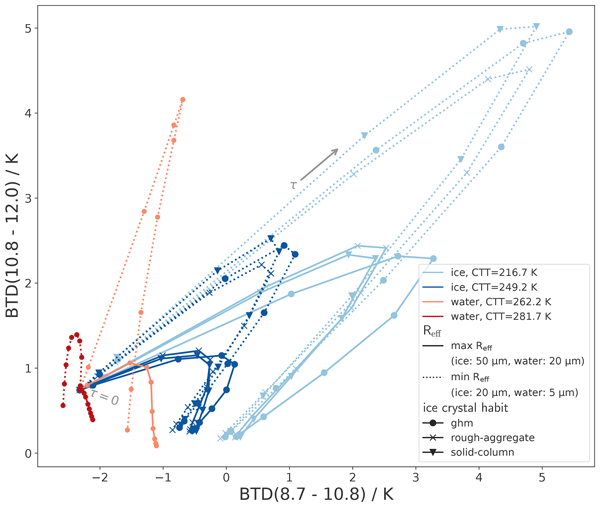
This study uses radiative transfer calculations to characterize the relation of two satellite channel combinations (namely infrared window brightness temperature differences – BTDs – of SEVIRI) to the thermodynamic cloud phase. A sensitivity analysis reveals the complex interplay of cloud parameters and their contribution to the observed phase dependence of BTDs. This knowledge helps to design optimal cloud-phase retrievals and to understand their potential and limitations.
Manfred Wendisch, Susanne Crewell, André Ehrlich, Andreas Herber, Benjamin Kirbus, Christof Lüpkes, Mario Mech, Steven J. Abel, Elisa F. Akansu, Felix Ament, Clémantyne Aubry, Sebastian Becker, Stephan Borrmann, Heiko Bozem, Marlen Brückner, Hans-Christian Clemen, Sandro Dahlke, Georgios Dekoutsidis, Julien Delanoë, Elena De La Torre Castro, Henning Dorff, Regis Dupuy, Oliver Eppers, Florian Ewald, Geet George, Irina V. Gorodetskaya, Sarah Grawe, Silke Groß, Jörg Hartmann, Silvia Henning, Lutz Hirsch, Evelyn Jäkel, Philipp Joppe, Olivier Jourdan, Zsofia Jurányi, Michail Karalis, Mona Kellermann, Marcus Klingebiel, Michael Lonardi, Johannes Lucke, Anna E. Luebke, Maximilian Maahn, Nina Maherndl, Marion Maturilli, Bernhard Mayer, Johanna Mayer, Stephan Mertes, Janosch Michaelis, Michel Michalkov, Guillaume Mioche, Manuel Moser, Hanno Müller, Roel Neggers, Davide Ori, Daria Paul, Fiona M. Paulus, Christian Pilz, Felix Pithan, Mira Pöhlker, Veronika Pörtge, Maximilian Ringel, Nils Risse, Gregory C. Roberts, Sophie Rosenburg, Johannes Röttenbacher, Janna Rückert, Michael Schäfer, Jonas Schaefer, Vera Schemann, Imke Schirmacher, Jörg Schmidt, Sebastian Schmidt, Johannes Schneider, Sabrina Schnitt, Anja Schwarz, Holger Siebert, Harald Sodemann, Tim Sperzel, Gunnar Spreen, Bjorn Stevens, Frank Stratmann, Gunilla Svensson, Christian Tatzelt, Thomas Tuch, Timo Vihma, Christiane Voigt, Lea Volkmer, Andreas Walbröl, Anna Weber, Birgit Wehner, Bruno Wetzel, Martin Wirth, and Tobias Zinner
Atmos. Chem. Phys., 24, 8865–8892, https://doi.org/10.5194/acp-24-8865-2024, https://doi.org/10.5194/acp-24-8865-2024, 2024
Short summary
Short summary
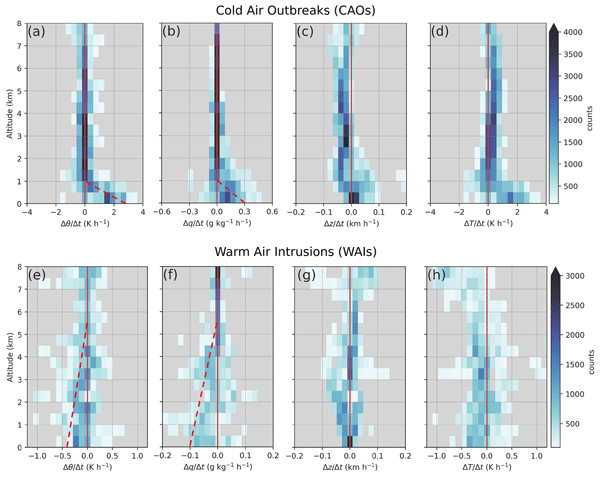
The Arctic is warming faster than the rest of the globe. Warm-air intrusions (WAIs) into the Arctic may play an important role in explaining this phenomenon. Cold-air outbreaks (CAOs) out of the Arctic may link the Arctic climate changes to mid-latitude weather. In our article, we describe how to observe air mass transformations during CAOs and WAIs using three research aircraft instrumented with state-of-the-art remote-sensing and in situ measurement devices.
Andreas Walbröl, Janosch Michaelis, Sebastian Becker, Henning Dorff, Kerstin Ebell, Irina Gorodetskaya, Bernd Heinold, Benjamin Kirbus, Melanie Lauer, Nina Maherndl, Marion Maturilli, Johanna Mayer, Hanno Müller, Roel A. J. Neggers, Fiona M. Paulus, Johannes Röttenbacher, Janna E. Rückert, Imke Schirmacher, Nils Slättberg, André Ehrlich, Manfred Wendisch, and Susanne Crewell
Atmos. Chem. Phys., 24, 8007–8029, https://doi.org/10.5194/acp-24-8007-2024, https://doi.org/10.5194/acp-24-8007-2024, 2024
Short summary
Short summary
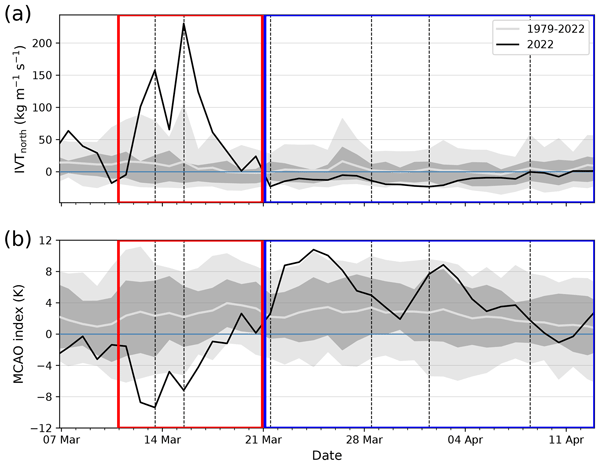
To support the interpretation of the data collected during the HALO-(AC)3 campaign, which took place in the North Atlantic sector of the Arctic from 7 March to 12 April 2022, we analyze how unusual the weather and sea ice conditions were with respect to the long-term climatology. From observations and ERA5 reanalysis, we found record-breaking warm air intrusions and a large variety of marine cold air outbreaks. Sea ice concentration was mostly within the climatological interquartile range.
Johanna Mayer, Luca Bugliaro, Bernhard Mayer, Dennis Piontek, and Christiane Voigt
Atmos. Meas. Tech., 17, 4015–4039, https://doi.org/10.5194/amt-17-4015-2024, https://doi.org/10.5194/amt-17-4015-2024, 2024
Short summary
Short summary
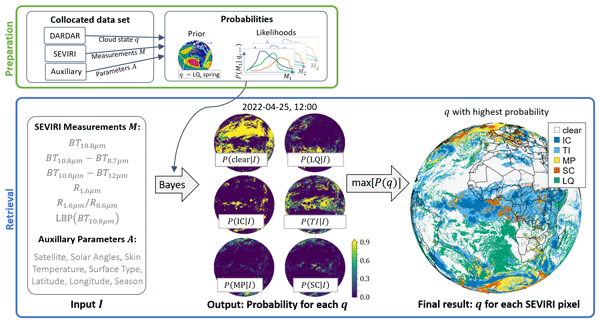
ProPS (PRObabilistic cloud top Phase retrieval for SEVIRI) is a method to detect clouds and their thermodynamic phase with a geostationary satellite, distinguishing between clear sky and ice, mixed-phase, supercooled and warm liquid clouds. It uses a Bayesian approach based on the lidar–radar product DARDAR. The method allows studying cloud phases, especially mixed-phase and supercooled clouds, rarely observed from geostationary satellites. This can be used for comparison with climate models.
Mireia Papke Chica, Valerian Hahn, Tiziana Braeuer, Elena de la Torre Castro, Florian Ewald, Mathias Gergely, Simon Kirschler, Luca Bugliaro Goggia, Stefanie Knobloch, Martina Kraemer, Johannes Lucke, Johanna Mayer, Raphael Maerkl, Manuel Moser, Laura Tomsche, Tina Jurkat-Witschas, Martin Zoeger, Christian von Savigny, and Christiane Voigt
Atmos. Chem. Phys. Discuss., https://doi.org/10.5194/acp-2022-255, https://doi.org/10.5194/acp-2022-255, 2022
Preprint withdrawn
Short summary
Short summary
The mixed-phase temperature regime in convective clouds challenges our understanding of microphysical and radiative cloud properties. We provide a rare and unique dataset of aircraft in situ measurements in a strong mid-latitude convective system. We find that mechanisms initiating ice nucleation and growth strongly depend on temperature, relative humidity, and vertical velocity and variate within the measured system, resulting in altitude dependent changes of the cloud liquid and ice fraction.
Woosub Roh, Masaki Satoh, Romain Fiévet, Mark D. Fielding, Robin J. Hogan, Bjorn Stevens, Takuji Kubota, and Hajime Okamoto
EGUsphere, https://doi.org/10.5194/egusphere-2026-3606, https://doi.org/10.5194/egusphere-2026-3606, 2026
This preprint is open for discussion and under review for Geoscientific Model Development (GMD).
Short summary
Short summary
Clouds and rainfall are still difficult to represent accurately in weather and climate models. We introduce a new project called the EarthCARE–ORCESTRA Model Intercomparison Project (ECOMIP), which uses observations from the new Earth Cloud, Aerosol and Radiation Explorer (EarthCARE) satellite and a tropical field campaign to compare and improve atmospheric models. Initial results show that different models can reproduce the same storm system but differ in its size and structure.
Zhipeng Qu, Cuong Nguyen, Paloma Borque, Alexei Korolev, Howard W. Barker, Keyvan Ranjbar, Lei Liu, Zen Mariani, Meriem Kacimi, Melissa Cholette, Ivan Heckman, Kenny Bala, Natalia Bliankinshtein, Leonid Nichman, Benjamin Riot-Bretêcher, Yi Huang, Jason N. S. Cole, Raphaël Peroni, Stephen Holden, Robert Reed, Robert Crawford, Daniel Michelson, Eve Bigras, Michael Wheeler, John Gyakum, Jason A. Milbrandt, Julie M. Thériault, Kaley A. Walker, Mengistu Wolde, Jean-Pierre Blanchet, Yann Blanchard, Jonas von Bismark, Rob Koopman, Montserrat Piñol Solé, Bernat Puigdomènech Treserras, Robin J. Hogan, and Shannon L. Mason
EGUsphere, https://doi.org/10.5194/egusphere-2026-5347, https://doi.org/10.5194/egusphere-2026-5347, 2026
This preprint is open for discussion and under review for Atmospheric Measurement Techniques (AMT).
Short summary
Short summary
The ECALOT campaign brought together aircraft and ground-based observations in the Ottawa–Montreal region to help evaluate the European Space Agency’s EarthCARE satellite, which studies clouds, aerosols, radiation, and their interactions. By comparing satellite measurements with multi-platform remote-sensing and in situ observations collected during the campaign, ECALOT provides an integrated approach to evaluating EarthCARE products at different stages of the data processing chain.
Carlo Arosio, Alexei Rozanov, Vladimir Rozanov, Andrea Orfanoz-Cheuquelaf, John P. Burrows, Edward Malina, and Hartmut Boesch
EGUsphere, https://doi.org/10.5194/egusphere-2026-5113, https://doi.org/10.5194/egusphere-2026-5113, 2026
This preprint is open for discussion and under review for Atmospheric Measurement Techniques (AMT).
Short summary
Short summary
We present an improved method for retrieving ozone profiles from OMPS satellite limb observations. The aim is to mitigate an artifact related to the variation of surface reflectivity along the satellite line of sight. We prescribe surface reflectivity from VIIRS to mitigate the artifact, particularly in regions with sharp changes in reflectivity, such as coastlines and transitions between clouds and ocean. Updated stratospheric ozone profiles and tropospheric ozone column products are presented.
Jonas Schaefer, Sarah Grawe, Hans-Christian Clemen, Stephan Mertes, Johannes Schneider, Bruno Wetzel, Daniel Sauer, Jennifer Wolf, Laura Tomsche, Johanna Mayer, Roland Schrödner, Silvia Henning, Tina Jurkat-Witschas, Christiane Voigt, Helmut Ziereis, Theresa Harlaß, Mira Pöhlker, and Frank Stratmann
Atmos. Chem. Phys., 26, 12505–12520, https://doi.org/10.5194/acp-26-12505-2026, https://doi.org/10.5194/acp-26-12505-2026, 2026
Short summary
Short summary
Ice-nucleating particles (INP) are aerosol particles important for ice formation in clouds droplets and thereby influence climate. This study uses airborne measurements over Europe to show how INP are transported through thunderstorms. We show which particles are washed out and which are are transported into the higher troposphere, where they can again affect cloud ice formation. The findings improve understanding of atmospheric particle distribution and help refine climate models.
Robin J. Hogan, Bernat Puigdomenech Treserras, Shannon L. Mason, Alexei Korolev, Zhipeng Qu, Kamil Mroz, David P. Donovan, Pavlos Kollias, and Mark D. Fielding
EGUsphere, https://doi.org/10.5194/egusphere-2026-5054, https://doi.org/10.5194/egusphere-2026-5054, 2026
Short summary
Short summary
The EarthCARE satellite carries advanced instruments that allow it to accurately infer vertical profiles of the properties of ice clouds, important for understanding their role in the climate system. Here we use detailed observations from meteorological research aircraft flying underneath the satellite to evaluate EarthCARE’s estimates of the mass of ice in the clouds, the average particle size, and even how fast the air is rising and falling within the cloud due to atmospheric gravity waves.
Blanka Piskala Gvoždíková, Johanna Mayer, Saskia Maria Brose, Edward Malina, Daniele Gasbarra, Anežka Doležalová, and Krasen Samardzhiev
Earth Syst. Sci. Data Discuss., https://doi.org/10.5194/essd-2026-470, https://doi.org/10.5194/essd-2026-470, 2026
Preprint under review for ESSD
Short summary
Short summary
This study introduces Lightning2EarthCARE, an open dataset linking satellite lightning observations with narrow vertical slices through storms from the Earth Cloud, Aerosol and Radiation Explorer mission. Covering August 2024 to January 2026, it includes more than 6000 storms available for case studies and broader analyses. The dataset can help reveal how lightning relates to cloud particles, precipitation, and storm motion, supporting better weather and climate models.
Fiona Lippert, Andrew Gerald Barr, Marcos Herreras-Giralda, Masahiro Momoi, Fernando Rejano, Sha Lu, Otto Hasekamp, Oleg Dubovik, Edward Malina, and Jochen Landgraf
EGUsphere, https://doi.org/10.5194/egusphere-2026-4724, https://doi.org/10.5194/egusphere-2026-4724, 2026
Short summary
Short summary
Retrieving greenhouse gas concentrations from satellite measurements is computationally demanding. We show that machine learning can greatly accelerate this process while maintaining high accuracy and interpretability. Combining simplified atmospheric simulations with neural networks proved substantially more reliable than using machine learning alone. This hybrid approach could facilitate near-real time processing of rapidly increasing data volumes.
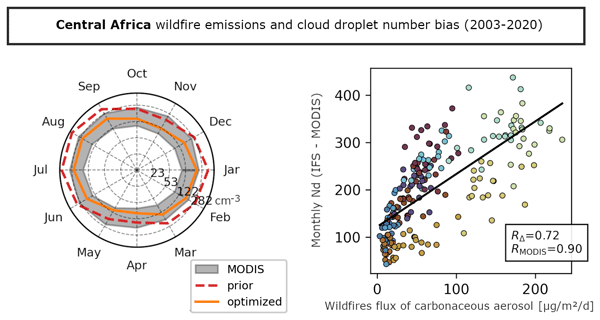
Paolo Andreozzi, Mark D. Fielding, Robin J. Hogan, Richard M. Forbes, Adrian A. Hill, Samuel Rémy, Birger Bohn, and Ulrich Löhnert
Atmos. Chem. Phys., 26, 11309–11338, https://doi.org/10.5194/acp-26-11309-2026, https://doi.org/10.5194/acp-26-11309-2026, 2026
Short summary
Short summary
Aerosols significantly contribute to the Earth’s climate, but models still struggle to represent them. Here we use satellite observations of clouds to constrain aerosol processes in a weather and air-quality model. We show that African wildfires lead to overly bright simulated clouds and that the model removes too much aerosol in mixed-phase clouds. This demonstrates how cloud observations can target weakly constrained aerosol processes, with potential benefits for weather and climate modelling.
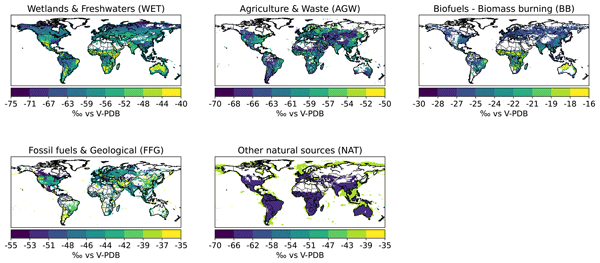
Emeline Tapin, Antoine Berchet, Adrien Martinez, Malika Menoud, Joël Thanwerdas, Xin Lan, Edward Malina, Daniele Gasbarra, and Marielle Saunois
Earth Syst. Sci. Data, 18, 4793–4832, https://doi.org/10.5194/essd-18-4793-2026, https://doi.org/10.5194/essd-18-4793-2026, 2026
Short summary
Short summary
We present global δ¹³C-CH₄ source signature maps (1998–2022) at 1°×1° resolution for five emission sectors and 11 sub-sectors, with quantified uncertainties. Sensitivity experiments with an atmospheric transport model assess how uncertainties in emissions, isotopic signatures, OH sinks, and kinetic isotope effects influence atmospheric δ¹³C-CH₄ and CH₄, providing guidance for isotopic inversions.
Hemanth Kumar Alladi, Julian Quimbayo-Duarte, Luca Bugliaro, Johanna Mayer, Shweta Singh, and Juerg Schmidli
Atmos. Chem. Phys., 26, 8617–8635, https://doi.org/10.5194/acp-26-8617-2026, https://doi.org/10.5194/acp-26-8617-2026, 2026
Short summary
Short summary
Thunderstorms can transport moisture into the lower stratosphere, affecting climate. Over mountains, models fail to represent them due to underrepresentation of turbulent mixing and cloud microphysics. This study evaluates the operational and new turbulence schemes, with single and double moment microphysics, in the ICOsahedral Nonhydrostatic (ICON) model against observations. The operational turbulence scheme enhances mixing, while double moment produces taller storms with more ice transport.
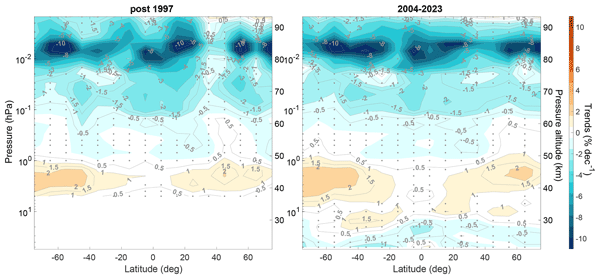
Monika E. Szelag, Viktoria F. Sofieva, Edward Malina, Pekka T. Verronen, Michelle L. Santee, Manuel López-Puertas, Bernd Funke, Gabriele Stiller, Alexandra Laeng, Kaley A. Walker, Patrick E. Sheese, Mark E. Hervig, and Benjamin T. Marshall
Atmos. Chem. Phys., 26, 7503–7522, https://doi.org/10.5194/acp-26-7503-2026, https://doi.org/10.5194/acp-26-7503-2026, 2026
Short summary
Short summary
We present a new global dataset of ozone profiles in the mesosphere and lower thermosphere, created by combining several satellite measurements covering more than three decades. Our results show that ozone is recovering in the stratosphere but decreasing in the mesosphere, with the strongest declines near the mesopause. This dataset provides a valuable resource for investigating long-term changes, improving model performance, and addressing an observational gap in the upper atmosphere.
Benedict Pery, Helen Brindley, Jonathan Murray, Sophie Mosselmans, Sanjeevani Panditharatne, Laura Warwick, Robin Hogan, Yi Huang, Benjamin Riot-Bretêcher, Hilke Oetjen, Dirk Schuettemeyer, and Tristan L'Ecuyer
EGUsphere, https://doi.org/10.5194/egusphere-2026-2443, https://doi.org/10.5194/egusphere-2026-2443, 2026
Short summary
Short summary
The Polar Radiant Energy in the Far-InfraRed Experiment (PREFIRE) satellite mission measures the Earth in a rarely measured part of the electromagnetic spectrum. To build confidence in these new measurements, we test them with an experiment observing the same atmosphere as PREFIRE but from the ground. We find that the PREFIRE measurements agree with what we expect from our ground-based observations, with some unexplained differences needing further study.
Vanessa Santos Gabriel, Luca Bugliaro, Mara Montag, Sabrina Ries, Ziming Wang, Kai Widmaier, Matteo Arico, Simon Unterstrasser, Johanna Mayer, Deniz Menekay, Andreas Marsing, Elena de la Torre Castro, Liam Megill, Monika Scheibe, and Christiane Voigt
Earth Syst. Sci. Data, 18, 2397–2412, https://doi.org/10.5194/essd-18-2397-2026, https://doi.org/10.5194/essd-18-2397-2026, 2026
Short summary
Short summary
We provide observations of the geostationary Meteosat satellite with contrails labeled by three people complemented with detailed cloud information. Contrails influence climate but are hard to identify in satellite imagery. With this study, we support contrail detection development and evaluation, stress the subjectivity of human labeling and reveal which meteorological conditions highlight or hide contrails. This dataset contributes to a better understanding of aviation’s climate impact.
Michael Kahnert, Melanie Ades, Mickaël Bacles, Johannes Flemming, Vincent Guidard, Alexander Haefele, Robin J. Hogan, Samuel Rémy, and Eric Sauvageat
EGUsphere, https://doi.org/10.5194/egusphere-2025-6077, https://doi.org/10.5194/egusphere-2025-6077, 2026
Short summary
Short summary
The Copernicus Atmosphere Monitoring Service (CAMS) provides quality-controlled information related to air quality and health. We explore the possibility to constrain the CAMS global forecasting model by use of ground-based observations of laser light backscattered by particulate matter. We find that the vertical distribution of particulate matter can be predicted more faithfully with this approach, which can have implications for air quality forecasts provided by CAMS to end users.
Manuel Moser, Christiane Voigt, Oliver Eppers, Johannes Lucke, Elena De La Torre Castro, Johanna Mayer, Regis Dupuy, Guillaume Mioche, Olivier Jourdan, Hans-Christian Clemen, Johannes Schneider, Philipp Joppe, Stephan Mertes, Bruno Wetzel, Stephan Borrmann, Marcus Klingebiel, Mario Mech, Christof Lüpkes, Susanne Crewell, André Ehrlich, Andreas Herber, and Manfred Wendisch
Atmos. Chem. Phys., 26, 1867–1887, https://doi.org/10.5194/acp-26-1867-2026, https://doi.org/10.5194/acp-26-1867-2026, 2026
Short summary
Short summary
In this study we analyzed Arctic mixed-phase clouds using airborne in-situ measurements in spring 2022. Based on microphysical properties, we show that within these clouds a distinction must be made between classic mixed-phase clouds and a mixed-phase haze regime. Instead of supercooled droplets, the haze regime contains large wet sea salt aerosols. These findings improve our understanding of Arctic low-level cloud processes.
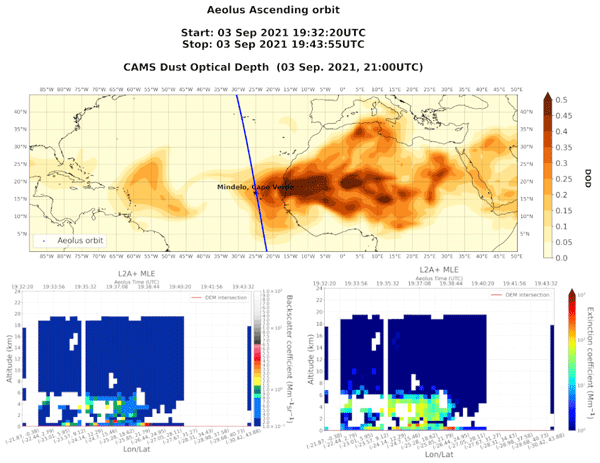
Konstantinos Rizos, Emmanouil Proestakis, Thanasis Georgiou, Antonis Gkikas, Eleni Marinou, Peristera Paschou, Kalliopi Artemis Voudouri, Athanasios Tsikerdekis, David P. Donovan, Gerd-Jan van Zadelhoff, Angela Benedetti, Holger Baars, Athena Augusta Floutsi, Nikos Benas, Martin Stengel, Christian Retscher, Edward Malina, and Vassilis Amiridis
Atmos. Meas. Tech., 19, 699–728, https://doi.org/10.5194/amt-19-699-2026, https://doi.org/10.5194/amt-19-699-2026, 2026
Short summary
Short summary
The Aeolus satellite's lidar system had limitations in detecting certain atmospheric layers and distinguishing between aerosol and cloud types. To improve accuracy, a new dust detection product was developed. By combining data from various sources and validating it with ground-based measurements, this enhanced product performs better than the original. It helps improve dust transport models and weather predictions, making it a valuable tool for atmospheric monitoring and forecasting.
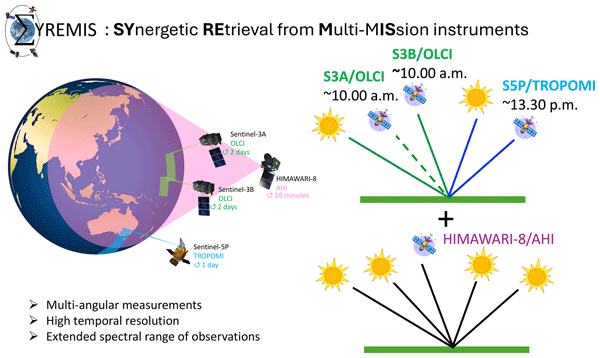
Pavel Litvinov, Cheng Chen, Oleg Dubovik, Siyao Zhai, Christian Matar, Chong Li, Anton Lopatin, David Fuertes, Tatyana Lapyonok, Lukas Bindreiter, Manuel Dornacher, Arthur Lehner, Alexandru Dandocsi, Daniele Gasbarra, and Christian Retscher
Atmos. Meas. Tech., 18, 7679–7716, https://doi.org/10.5194/amt-18-7679-2025, https://doi.org/10.5194/amt-18-7679-2025, 2025
Short summary
Short summary
Developed SYREMIS (SYnergetic REtrieval from Multi-MISsion instruments) approach is based on three main principles: (i) harmonization of the multi-instruments L1 measurements, (ii) their “weighting”, and (iii) optimization of the forward models and the retrieval setups. It substantially enhances aerosol and surface characterization from spaceborne measurements. The approach can be extended to future missions, including synergy with multi-angular, multi-spectral, and polarimetric measurements.
Matteo Aricò, Dennis Piontek, Luca Bugliaro, Johanna Mayer, Richard Müller, Frank Kalinka, and Max Butter
Atmos. Meas. Tech., 18, 7129–7152, https://doi.org/10.5194/amt-18-7129-2025, https://doi.org/10.5194/amt-18-7129-2025, 2025
Short summary
Short summary
The goal is to assess the feasibility of an ice crystal icing detection algorithm based exclusively on remote sensing data. Active measurements are used to train and validate a newly developed random forest algorithm that is applied to passive satellite imagery to estimate the ice crystal icing conditions probability. 83 % of ice crystal icing conditions are correctly detected, showing potential for an operational implementation to mitigate its negative effects on the fleet.
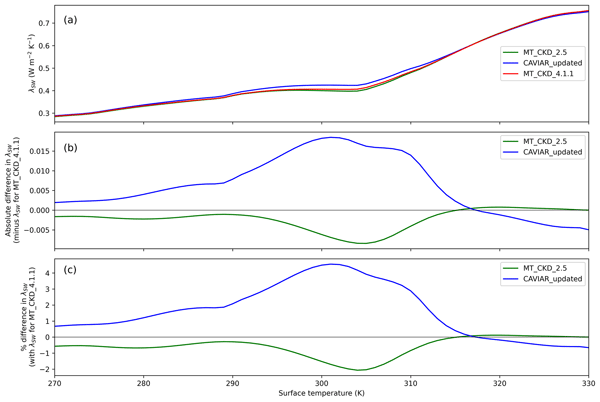
Kaah P. Menang, Stefan A. Buehler, Lukas Kluft, Robin J. Hogan, and Florian E. Roemer
Atmos. Chem. Phys., 25, 11689–11701, https://doi.org/10.5194/acp-25-11689-2025, https://doi.org/10.5194/acp-25-11689-2025, 2025
Short summary
Short summary
We investigated the impact of the shortwave water vapour continuum absorption on clear-sky shortwave radiative feedback. For current temperatures, the impact is modest (<2%). In a warmer world, continuum-induced uncertainty in estimated feedback would be up to ~5%. Representing continuum absorption with the widely used semi-empirical model in radiative transfer calculations leads to an underestimation of this feedback. Constraining the shortwave continuum will help reduce these discrepancies.
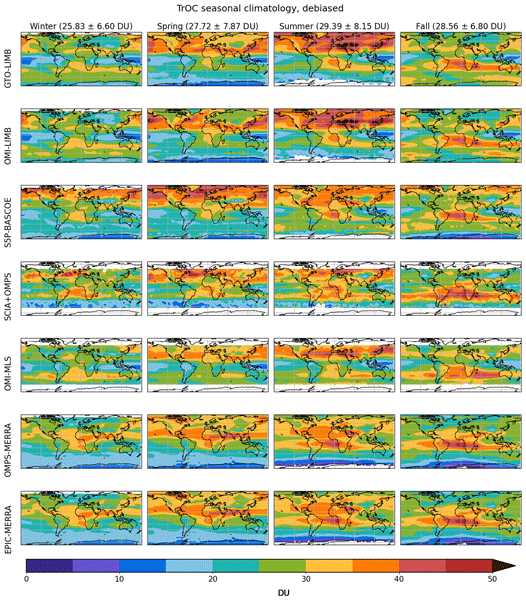
Carlo Arosio, Viktoria Sofieva, Andrea Orfanoz-Cheuquelaf, Alexei Rozanov, Klaus-Peter Heue, Diego Loyola, Edward Malina, Ryan M. Stauffer, David Tarasick, Roeland Van Malderen, Jerry R. Ziemke, and Mark Weber
Atmos. Meas. Tech., 18, 3247–3265, https://doi.org/10.5194/amt-18-3247-2025, https://doi.org/10.5194/amt-18-3247-2025, 2025
Short summary
Short summary
Tropospheric ozone affects air quality and climate, being a pollutant and a greenhouse gas. We analyze satellite data of tropospheric ozone columns obtained by combining two types of observations: one providing stratospheric and the other total ozone. We compare common climatological features and study the influence of the tropopause (troposphere to stratosphere boundary) on the results. We also examine trends over the last 20 years and compare satellite data with ozonesondes to identify drifts.
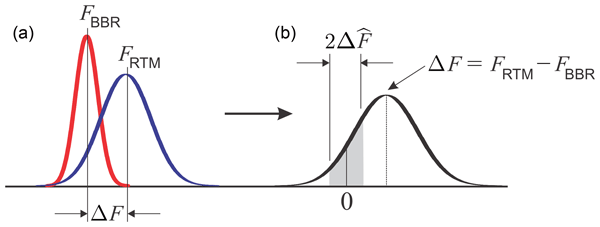
Howard W. Barker, Jason N. S. Cole, Najda Villefranque, Zhipeng Qu, Almudena Velázquez Blázquez, Carlos Domenech, Shannon L. Mason, and Robin J. Hogan
Atmos. Meas. Tech., 18, 3095–3107, https://doi.org/10.5194/amt-18-3095-2025, https://doi.org/10.5194/amt-18-3095-2025, 2025
Short summary
Short summary
Measurements made by three instruments aboard EarthCARE are used to retrieve estimates of cloud and aerosol properties. A radiative closure assessment of these retrievals is performed by the ACMB-DF processor. Radiative transfer models acting on retrieved information produce broadband radiances commensurate with measurements made by EarthCARE’s broadband radiometer. Measured and modelled radiances for small domains are compared, and the likelihood of them differing by 10 W m2 defines the closure.
André Ehrlich, Susanne Crewell, Andreas Herber, Marcus Klingebiel, Christof Lüpkes, Mario Mech, Sebastian Becker, Stephan Borrmann, Heiko Bozem, Matthias Buschmann, Hans-Christian Clemen, Elena De La Torre Castro, Henning Dorff, Regis Dupuy, Oliver Eppers, Florian Ewald, Geet George, Andreas Giez, Sarah Grawe, Christophe Gourbeyre, Jörg Hartmann, Evelyn Jäkel, Philipp Joppe, Olivier Jourdan, Zsófia Jurányi, Benjamin Kirbus, Johannes Lucke, Anna E. Luebke, Maximilian Maahn, Nina Maherndl, Christian Mallaun, Johanna Mayer, Stephan Mertes, Guillaume Mioche, Manuel Moser, Hanno Müller, Veronika Pörtge, Nils Risse, Greg Roberts, Sophie Rosenburg, Johannes Röttenbacher, Michael Schäfer, Jonas Schaefer, Andreas Schäfler, Imke Schirmacher, Johannes Schneider, Sabrina Schnitt, Frank Stratmann, Christian Tatzelt, Christiane Voigt, Andreas Walbröl, Anna Weber, Bruno Wetzel, Martin Wirth, and Manfred Wendisch
Earth Syst. Sci. Data, 17, 1295–1328, https://doi.org/10.5194/essd-17-1295-2025, https://doi.org/10.5194/essd-17-1295-2025, 2025
Short summary
Short summary
This paper provides an overview of the HALO–(AC)3 aircraft campaign data sets, the campaign-specific instrument operation, data processing, and data quality. The data set comprises in situ and remote sensing observations from three research aircraft: HALO, Polar 5, and Polar 6. All data are published in the PANGAEA database by instrument-separated data subsets. It is highlighted how the scientific analysis of the HALO–(AC)3 data benefits from the coordinated operation of three aircraft.
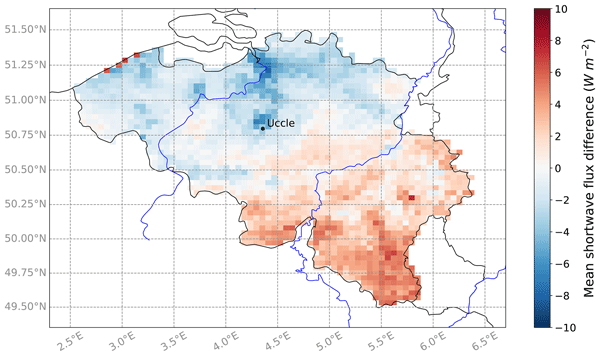
Jean-François Grailet, Robin J. Hogan, Nicolas Ghilain, David Bolsée, Xavier Fettweis, and Marilaure Grégoire
Geosci. Model Dev., 18, 1965–1988, https://doi.org/10.5194/gmd-18-1965-2025, https://doi.org/10.5194/gmd-18-1965-2025, 2025
Short summary
Short summary
The MAR (Modèle Régional Atmosphérique) is a regional climate model used for weather forecasting and studying the climate over various regions. This paper presents an update of MAR thanks to which it can precisely decompose solar radiation, in particular in the UV (ultraviolet) and photosynthesis ranges, both being critical to human health and ecosystems. As a first application of this new capability, this paper presents a method for predicting UV indices with MAR.
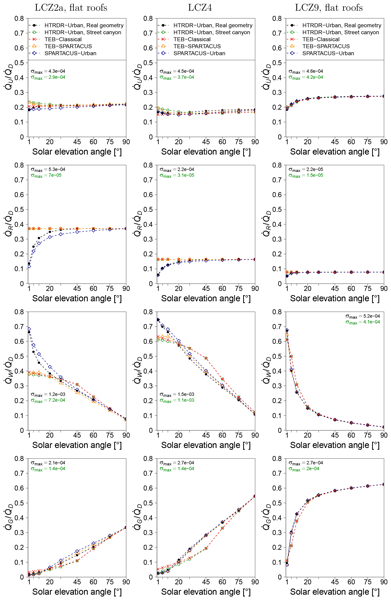
Robert Schoetter, Robin James Hogan, Cyril Caliot, and Valéry Masson
Geosci. Model Dev., 18, 405–431, https://doi.org/10.5194/gmd-18-405-2025, https://doi.org/10.5194/gmd-18-405-2025, 2025
Short summary
Short summary
Radiation is relevant to the atmospheric impact on people and infrastructure in cities as it can influence the urban heat island, building energy consumption, and human thermal comfort. A new urban radiation model, assuming a more realistic form of urban morphology, is coupled to the urban climate model Town Energy Balance (TEB). The new TEB is evaluated with a reference radiation model for a variety of urban morphologies, and an improvement in the simulated radiative observables is found.
Johanna Mayer, Bernhard Mayer, Luca Bugliaro, Ralf Meerkötter, and Christiane Voigt
Atmos. Meas. Tech., 17, 5161–5185, https://doi.org/10.5194/amt-17-5161-2024, https://doi.org/10.5194/amt-17-5161-2024, 2024
Short summary
Short summary
This study uses radiative transfer calculations to characterize the relation of two satellite channel combinations (namely infrared window brightness temperature differences – BTDs – of SEVIRI) to the thermodynamic cloud phase. A sensitivity analysis reveals the complex interplay of cloud parameters and their contribution to the observed phase dependence of BTDs. This knowledge helps to design optimal cloud-phase retrievals and to understand their potential and limitations.
Manfred Wendisch, Susanne Crewell, André Ehrlich, Andreas Herber, Benjamin Kirbus, Christof Lüpkes, Mario Mech, Steven J. Abel, Elisa F. Akansu, Felix Ament, Clémantyne Aubry, Sebastian Becker, Stephan Borrmann, Heiko Bozem, Marlen Brückner, Hans-Christian Clemen, Sandro Dahlke, Georgios Dekoutsidis, Julien Delanoë, Elena De La Torre Castro, Henning Dorff, Regis Dupuy, Oliver Eppers, Florian Ewald, Geet George, Irina V. Gorodetskaya, Sarah Grawe, Silke Groß, Jörg Hartmann, Silvia Henning, Lutz Hirsch, Evelyn Jäkel, Philipp Joppe, Olivier Jourdan, Zsofia Jurányi, Michail Karalis, Mona Kellermann, Marcus Klingebiel, Michael Lonardi, Johannes Lucke, Anna E. Luebke, Maximilian Maahn, Nina Maherndl, Marion Maturilli, Bernhard Mayer, Johanna Mayer, Stephan Mertes, Janosch Michaelis, Michel Michalkov, Guillaume Mioche, Manuel Moser, Hanno Müller, Roel Neggers, Davide Ori, Daria Paul, Fiona M. Paulus, Christian Pilz, Felix Pithan, Mira Pöhlker, Veronika Pörtge, Maximilian Ringel, Nils Risse, Gregory C. Roberts, Sophie Rosenburg, Johannes Röttenbacher, Janna Rückert, Michael Schäfer, Jonas Schaefer, Vera Schemann, Imke Schirmacher, Jörg Schmidt, Sebastian Schmidt, Johannes Schneider, Sabrina Schnitt, Anja Schwarz, Holger Siebert, Harald Sodemann, Tim Sperzel, Gunnar Spreen, Bjorn Stevens, Frank Stratmann, Gunilla Svensson, Christian Tatzelt, Thomas Tuch, Timo Vihma, Christiane Voigt, Lea Volkmer, Andreas Walbröl, Anna Weber, Birgit Wehner, Bruno Wetzel, Martin Wirth, and Tobias Zinner
Atmos. Chem. Phys., 24, 8865–8892, https://doi.org/10.5194/acp-24-8865-2024, https://doi.org/10.5194/acp-24-8865-2024, 2024
Short summary
Short summary
The Arctic is warming faster than the rest of the globe. Warm-air intrusions (WAIs) into the Arctic may play an important role in explaining this phenomenon. Cold-air outbreaks (CAOs) out of the Arctic may link the Arctic climate changes to mid-latitude weather. In our article, we describe how to observe air mass transformations during CAOs and WAIs using three research aircraft instrumented with state-of-the-art remote-sensing and in situ measurement devices.
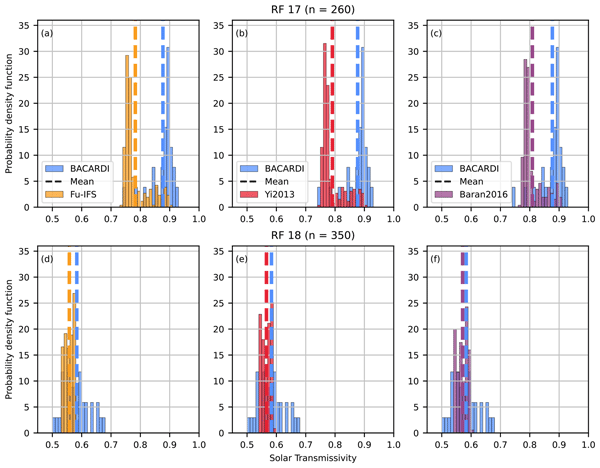
Johannes Röttenbacher, André Ehrlich, Hanno Müller, Florian Ewald, Anna E. Luebke, Benjamin Kirbus, Robin J. Hogan, and Manfred Wendisch
Atmos. Chem. Phys., 24, 8085–8104, https://doi.org/10.5194/acp-24-8085-2024, https://doi.org/10.5194/acp-24-8085-2024, 2024
Short summary
Short summary
Weather prediction models simplify the physical processes related to light scattering by clouds consisting of complex ice crystals. Whether these simplifications are the cause for uncertainties in their prediction can be evaluated by comparing them with measurement data. Here we do this for Arctic ice clouds over sea ice using airborne measurements from two case studies. The model performs well for thick ice clouds but not so well for thin ones. This work can be used to improve the model.
Andreas Walbröl, Janosch Michaelis, Sebastian Becker, Henning Dorff, Kerstin Ebell, Irina Gorodetskaya, Bernd Heinold, Benjamin Kirbus, Melanie Lauer, Nina Maherndl, Marion Maturilli, Johanna Mayer, Hanno Müller, Roel A. J. Neggers, Fiona M. Paulus, Johannes Röttenbacher, Janna E. Rückert, Imke Schirmacher, Nils Slättberg, André Ehrlich, Manfred Wendisch, and Susanne Crewell
Atmos. Chem. Phys., 24, 8007–8029, https://doi.org/10.5194/acp-24-8007-2024, https://doi.org/10.5194/acp-24-8007-2024, 2024
Short summary
Short summary
To support the interpretation of the data collected during the HALO-(AC)3 campaign, which took place in the North Atlantic sector of the Arctic from 7 March to 12 April 2022, we analyze how unusual the weather and sea ice conditions were with respect to the long-term climatology. From observations and ERA5 reanalysis, we found record-breaking warm air intrusions and a large variety of marine cold air outbreaks. Sea ice concentration was mostly within the climatological interquartile range.
Johanna Mayer, Luca Bugliaro, Bernhard Mayer, Dennis Piontek, and Christiane Voigt
Atmos. Meas. Tech., 17, 4015–4039, https://doi.org/10.5194/amt-17-4015-2024, https://doi.org/10.5194/amt-17-4015-2024, 2024
Short summary
Short summary
ProPS (PRObabilistic cloud top Phase retrieval for SEVIRI) is a method to detect clouds and their thermodynamic phase with a geostationary satellite, distinguishing between clear sky and ice, mixed-phase, supercooled and warm liquid clouds. It uses a Bayesian approach based on the lidar–radar product DARDAR. The method allows studying cloud phases, especially mixed-phase and supercooled clouds, rarely observed from geostationary satellites. This can be used for comparison with climate models.
Robin J. Hogan, Anthony J. Illingworth, Pavlos Kollias, Hajime Okamoto, and Ulla Wandinger
Atmos. Meas. Tech., 17, 3081–3083, https://doi.org/10.5194/amt-17-3081-2024, https://doi.org/10.5194/amt-17-3081-2024, 2024
Hanno Müller, André Ehrlich, Evelyn Jäkel, Johannes Röttenbacher, Benjamin Kirbus, Michael Schäfer, Robin J. Hogan, and Manfred Wendisch
Atmos. Chem. Phys., 24, 4157–4175, https://doi.org/10.5194/acp-24-4157-2024, https://doi.org/10.5194/acp-24-4157-2024, 2024
Short summary
Short summary
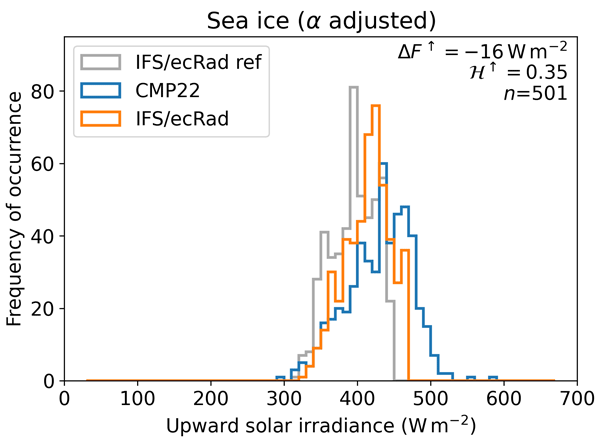
A weather model is used to compare solar radiation with measurements from an aircraft campaign in the Arctic. Model and observations agree on the downward radiation but show differences in the radiation reflected by the surface and the clouds, which in the model is too low above sea ice and too high above open ocean. The model–observation bias is reduced above open ocean by a realistic fraction of clouds and less cloud liquid water and above sea ice by less dark sea ice and more cloud droplets.
Shannon L. Mason, Howard W. Barker, Jason N. S. Cole, Nicole Docter, David P. Donovan, Robin J. Hogan, Anja Hünerbein, Pavlos Kollias, Bernat Puigdomènech Treserras, Zhipeng Qu, Ulla Wandinger, and Gerd-Jan van Zadelhoff
Atmos. Meas. Tech., 17, 875–898, https://doi.org/10.5194/amt-17-875-2024, https://doi.org/10.5194/amt-17-875-2024, 2024
Short summary
Short summary
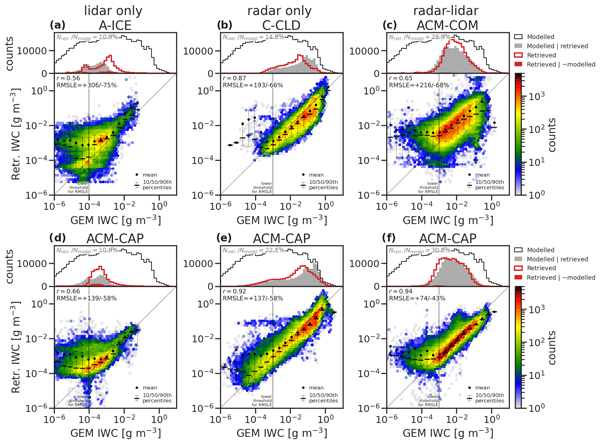
When the EarthCARE mission enters its operational phase, many retrieval data products will be available, which will overlap both in terms of the measurements they use and the geophysical quantities they report. In this pre-launch study, we use simulated EarthCARE scenes to compare the coverage and performance of many data products from the European Space Agency production model, with the intention of better understanding the relation between products and providing a compact guide to users.
Megan A. Stretton, William Morrison, Robin J. Hogan, and Sue Grimmond
Geosci. Model Dev., 16, 5931–5947, https://doi.org/10.5194/gmd-16-5931-2023, https://doi.org/10.5194/gmd-16-5931-2023, 2023
Short summary
Short summary
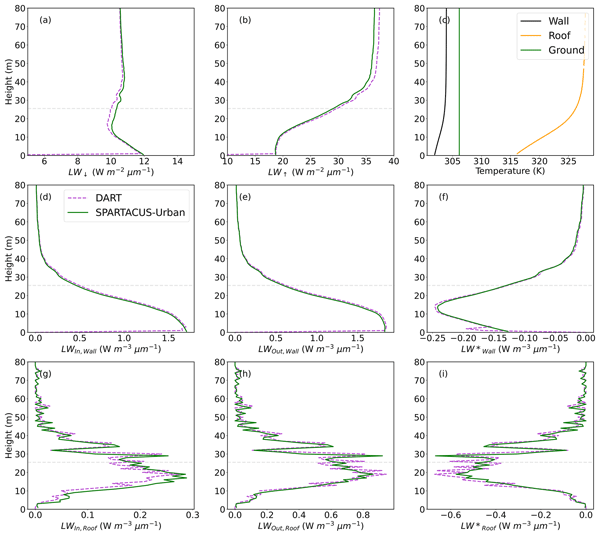
Cities' materials and forms impact radiative fluxes. We evaluate the SPARTACUS-Urban multi-layer approach to modelling longwave radiation, describing realistic 3D geometry statistically using the explicit DART (Discrete Anisotropic Radiative Transfer) model. The temperature configurations used are derived from thermal camera observations. SPARTACUS-Urban accurately predicts longwave fluxes, with a low computational time (cf. DART), but has larger errors with sunlit/shaded surface temperatures.
Shannon L. Mason, Robin J. Hogan, Alessio Bozzo, and Nicola L. Pounder
Atmos. Meas. Tech., 16, 3459–3486, https://doi.org/10.5194/amt-16-3459-2023, https://doi.org/10.5194/amt-16-3459-2023, 2023
Short summary
Short summary
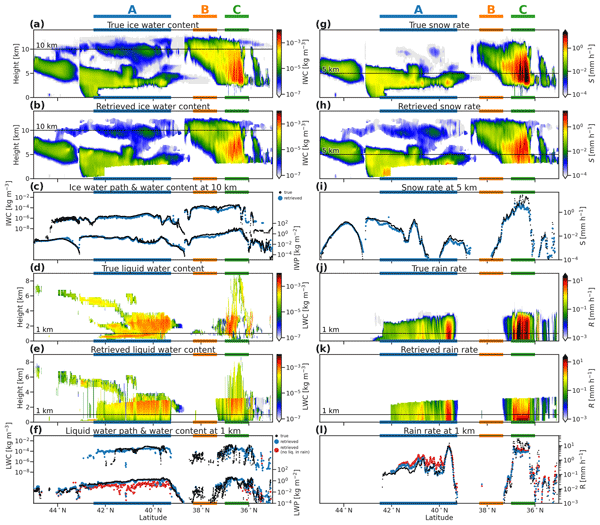
We present a method for accurately estimating the contents and properties of clouds, snow, rain, and aerosols through the atmosphere, using the combined measurements of the radar, lidar, and radiometer instruments aboard the upcoming EarthCARE satellite, and evaluate the performance of the retrieval, using test scenes simulated from a numerical forecast model. When EarthCARE is in operation, these quantities and their estimated uncertainties will be distributed in a data product called ACM-CAP.
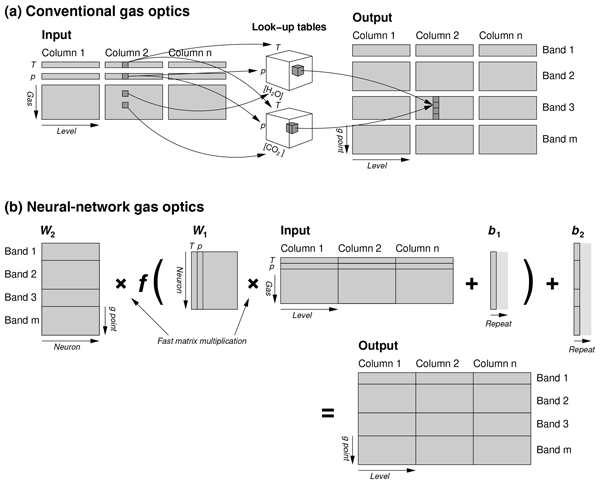
Peter Ukkonen and Robin J. Hogan
Geosci. Model Dev., 16, 3241–3261, https://doi.org/10.5194/gmd-16-3241-2023, https://doi.org/10.5194/gmd-16-3241-2023, 2023
Short summary
Short summary
Climate and weather models suffer from uncertainties resulting from approximated processes. Solar and thermal radiation is one example, as it is computationally too costly to simulate precisely. This has led to attempts to replace radiation codes based on physical equations with neural networks (NNs) that are faster but uncertain. In this paper we use global weather simulations to demonstrate that a middle-ground approach of using NNs only to predict optical properties is accurate and reliable.
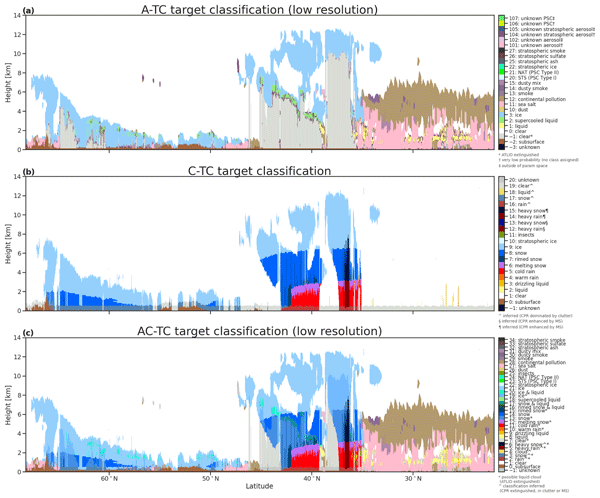
Abdanour Irbah, Julien Delanoë, Gerd-Jan van Zadelhoff, David P. Donovan, Pavlos Kollias, Bernat Puigdomènech Treserras, Shannon Mason, Robin J. Hogan, and Aleksandra Tatarevic
Atmos. Meas. Tech., 16, 2795–2820, https://doi.org/10.5194/amt-16-2795-2023, https://doi.org/10.5194/amt-16-2795-2023, 2023
Short summary
Short summary
The Cloud Profiling Radar (CPR) and ATmospheric LIDar (ATLID) aboard the EarthCARE satellite are used to probe the Earth's atmosphere by measuring cloud and aerosol profiles. ATLID is sensitive to aerosols and small cloud particles and CPR to large ice particles, snowflakes and raindrops. It is the synergy of the measurements of these two instruments that allows a better classification of the atmospheric targets and the description of the associated products, which are the subject of this paper.
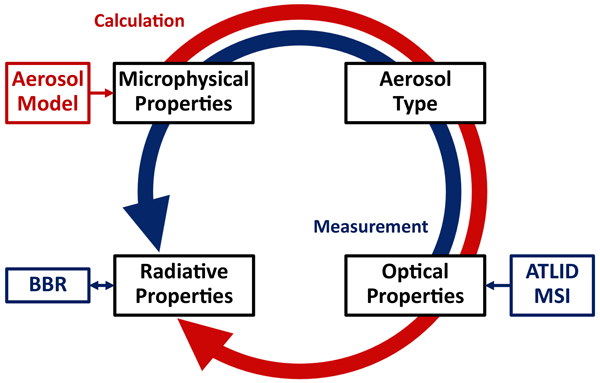
Ulla Wandinger, Athena Augusta Floutsi, Holger Baars, Moritz Haarig, Albert Ansmann, Anja Hünerbein, Nicole Docter, David Donovan, Gerd-Jan van Zadelhoff, Shannon Mason, and Jason Cole
Atmos. Meas. Tech., 16, 2485–2510, https://doi.org/10.5194/amt-16-2485-2023, https://doi.org/10.5194/amt-16-2485-2023, 2023
Short summary
Short summary
We introduce an aerosol classification model that has been developed for the Earth Clouds, Aerosols and Radiation Explorer (EarthCARE). The model provides a consistent description of microphysical, optical, and radiative properties of common aerosol types such as dust, sea salt, pollution, and smoke. It is used for aerosol classification and assessment of radiation effects based on the synergy of active and passive observations with lidar, imager, and radiometer of the multi-instrument platform.
Mireia Papke Chica, Valerian Hahn, Tiziana Braeuer, Elena de la Torre Castro, Florian Ewald, Mathias Gergely, Simon Kirschler, Luca Bugliaro Goggia, Stefanie Knobloch, Martina Kraemer, Johannes Lucke, Johanna Mayer, Raphael Maerkl, Manuel Moser, Laura Tomsche, Tina Jurkat-Witschas, Martin Zoeger, Christian von Savigny, and Christiane Voigt
Atmos. Chem. Phys. Discuss., https://doi.org/10.5194/acp-2022-255, https://doi.org/10.5194/acp-2022-255, 2022
Preprint withdrawn
Short summary
Short summary
The mixed-phase temperature regime in convective clouds challenges our understanding of microphysical and radiative cloud properties. We provide a rare and unique dataset of aircraft in situ measurements in a strong mid-latitude convective system. We find that mechanisms initiating ice nucleation and growth strongly depend on temperature, relative humidity, and vertical velocity and variate within the measured system, resulting in altitude dependent changes of the cloud liquid and ice fraction.
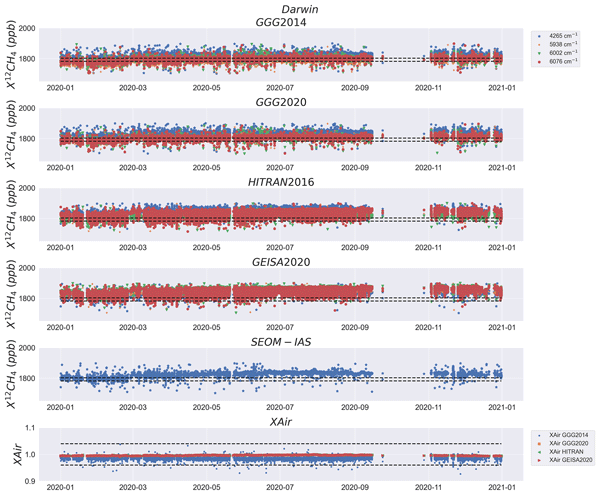
Edward Malina, Ben Veihelmann, Matthias Buschmann, Nicholas M. Deutscher, Dietrich G. Feist, and Isamu Morino
Atmos. Meas. Tech., 15, 2377–2406, https://doi.org/10.5194/amt-15-2377-2022, https://doi.org/10.5194/amt-15-2377-2022, 2022
Short summary
Short summary
Methane retrievals from remote sensing instruments are fundamentally based on spectroscopic parameters, which indicate spectral-line positions, and their characteristics. These parameters are stored in several databases that vary in their make-up. Here we assess how concentrations of methane isotopologues measured from the same Total Carbon Column Observing Network (TCCON) instruments vary across a range of spectral windows using different spectroscopic databases and comment on the implications.

Beatriz M. Monge-Sanz, Alessio Bozzo, Nicholas Byrne, Martyn P. Chipperfield, Michail Diamantakis, Johannes Flemming, Lesley J. Gray, Robin J. Hogan, Luke Jones, Linus Magnusson, Inna Polichtchouk, Theodore G. Shepherd, Nils Wedi, and Antje Weisheimer
Atmos. Chem. Phys., 22, 4277–4302, https://doi.org/10.5194/acp-22-4277-2022, https://doi.org/10.5194/acp-22-4277-2022, 2022
Short summary
Short summary
The stratosphere is emerging as one of the keys to improve tropospheric weather and climate predictions. This study provides evidence of the role the stratospheric ozone layer plays in improving weather predictions at different timescales. Using a new ozone modelling approach suitable for high-resolution global models that provide operational forecasts from days to seasons, we find significant improvements in stratospheric meteorological fields and stratosphere–troposphere coupling.
Cited articles
Berner, A. H., Bretherton, C. S., Wood, R., and Muhlbauer, A.: Marine boundary layer cloud regimes and POC formation in a CRM coupled to a bulk aerosol scheme, Atmos. Chem. Phys., 13, 12549–12572, https://doi.org/10.5194/acp-13-12549-2013, 2013. a, b
Bony, S. and Dufresne, J.: Marine boundary layer clouds at the heart of tropical cloud feedback uncertainties in climate models, Geophys. Res. Lett., 32, https://doi.org/10.1029/2005GL023851, 2005. a
Bretherton, C. S., Uchida, J., and Blossey, P. N.: Slow Manifolds and Multiple Equilibria in Stratocumulus‐Capped Boundary Layers, J. Adv. Model. Earth Sy., 2, https://doi.org/10.3894/JAMES.2010.2.14, 2010. a
Cadeddu, M. P., Ghate, V. P., and Mech, M.: Ground-based observations of cloud and drizzle liquid water path in stratocumulus clouds, Atmos. Meas. Tech., 13, 1485–1499, https://doi.org/10.5194/amt-13-1485-2020, 2020. a
Ceppi, P., Brient, F., Zelinka, M. D., and Hartmann, D. L.: Cloud feedback mechanisms and their representation in global climate models, WIREs Clim. Change, 8, https://doi.org/10.1002/wcc.465, 2017. a
Chandrakar, K. K., Morrison, H., and Witte, M.: Evolution of Droplet Size Distributions During the Transition of an Ultraclean Stratocumulus Cloud System to Open Cell Structure: An LES Investigation Using Lagrangian Microphysics, Geophys. Res. Lett., 49, https://doi.org/10.1029/2022GL100511, 2022. a, b, c, d, e
Comstock, K. K., Yuter, S. E., Wood, R., and Bretherton, C. S.: The Three-Dimensional Structure and Kinematics of Drizzling Stratocumulus, Mon. Weather Rev., 135, 3767–3784, https://doi.org/10.1175/2007MWR1944.1, 2007. a
Danker, J., Sourdeval, O., McCoy, I. L., Wood, R., and Possner, A.: Exploring relations between cloud morphology, cloud phase, and cloud radiative properties in Southern Ocean's stratocumulus clouds, Atmos. Chem. Phys., 22, 10247–10265, https://doi.org/10.5194/acp-22-10247-2022, 2022. a
de Lozar, A. and Muessle, L.: Long-resident droplets at the stratocumulus top, Atmos. Chem. Phys., 16, 6563–6576, https://doi.org/10.5194/acp-16-6563-2016, 2016. a
Eisinger, M., Marnas, F., Wallace, K., Kubota, T., Tomiyama, N., Ohno, Y., Tanaka, T., Tomita, E., Wehr, T., and Bernaerts, D.: The EarthCARE mission: science data processing chain overview, Atmos. Meas. Tech., 17, 839–862, https://doi.org/10.5194/amt-17-839-2024, 2024. a, b
Feingold, G., Koren, I., Wang, H., Xue, H., and Brewer, W. A.: Precipitation-generated oscillations in open cellular cloud fields, Nature, 466, 849–852, https://doi.org/10.1038/nature09314, 2010. a, b
Fons, E., Naumann, A. K., Neubauer, D., Lang, T., and Lohmann, U.: Investigating the sign of stratocumulus adjustments to aerosols in the ICON global storm-resolving model, Atmos. Chem. Phys., 24, 8653–8675, https://doi.org/10.5194/acp-24-8653-2024, 2024. a
Glassmeier, F. and Feingold, G.: Network approach to patterns in stratocumulus clouds, P. Natl. Acad. Sci., 114, 10578–10583, https://doi.org/10.1073/pnas.1706495114, 2017. a
GOES-R Algorithm Working Group: NOAA Geostationary Operation Environmental Satellite-R Series (GOES-R Series) Advanced Baseline Imager (ABI) Level 2 Cloud and Moisture Imagery Products (CMIP), https://doi.org/10.7289/V5736P36, 2017. a
Goren, T., Kazil, J., Hoffmann, F., Yamaguchi, T., and Feingold, G.: Anthropogenic Air Pollution Delays Marine Stratocumulus Breakup to Open Cells, Geophys. Res. Lett., 46, 14135–14144, https://doi.org/10.1029/2019GL085412, 2019. a
Hersbach, H., Bell, B., Berrisford, P., Hirahara, S., Horányi, A., Muñoz‐Sabater, J., Nicolas, J., Peubey, C., Radu, R., Schepers, D., Simmons, A., Soci, C., Abdalla, S., Abellan, X., Balsamo, G., Bechtold, P., Biavati, G., Bidlot, J., Bonavita, M., Chiara, G. D., Dahlgren, P., Dee, D., Diamantakis, M., Dragani, R., Flemming, J., Forbes, R., Fuentes, M., Geer, A., Haimberger, L., Healy, S., Hogan, R. J., Hólm, E., Janisková, M., Keeley, S., Laloyaux, P., Lopez, P., Lupu, C., Radnoti, G., de Rosnay, P., Rozum, I., Vamborg, F., Villaume, S., and Thépaut, J.: The ERA5 global reanalysis, Q. J. Roy. Meteor. Soc., 146, 1999–2049, https://doi.org/10.1002/qj.3803, 2020. a
Hoffmann, F., Glassmeier, F., Yamaguchi, T., and Feingold, G.: On the Roles of Precipitation and Entrainment in Stratocumulus Transitions between Mesoscale States, J. Atmos. Sci., 80, 2791–2803, https://doi.org/10.1175/JAS-D-22-0268.1, 2023. a, b
Hünerbein, A., Bley, S., Deneke, H., Meirink, J. F., van Zadelhoff, G.-J., and Walther, A.: Cloud optical and physical properties retrieval from EarthCARE multi-spectral imager: the M-COP products, Atmos. Meas. Tech., 17, 261–276, https://doi.org/10.5194/amt-17-261-2024, 2024. a
Jensen, M. P., Ghate, V. P., Wang, D., Apoznanski, D. K., Bartholomew, M. J., Giangrande, S. E., Johnson, K. L., and Thieman, M. M.: Contrasting characteristics of open- and closed-cellular stratocumulus cloud in the eastern North Atlantic, Atmos. Chem. Phys., 21, 14557–14571, https://doi.org/10.5194/acp-21-14557-2021, 2021. a, b, c
Koren, I., Tziperman, E., and Feingold, G.: Exploring the nonlinear cloud and rain equation, Chaos, 27, https://doi.org/10.1063/1.4973593, 2017. a
Leon, D. C., Wang, Z., and Liu, D.: Climatology of drizzle in marine boundary layer clouds based on 1 year of data from CloudSat and Cloud‐Aerosol Lidar and Infrared Pathfinder Satellite Observations (CALIPSO), J. Geophys. Res.-Atmos., 113, https://doi.org/10.1029/2008JD009835, 2008. a
Loeb, N. G., Ham, S.-H., Allan, R. P., Thorsen, T. J., Meyssignac, B., Kato, S., Johnson, G. C., and Lyman, J. M.: Observational Assessment of Changes in Earth's Energy Imbalance Since 2000, Surv. Geophys., 45, 1757–1783, https://doi.org/10.1007/s10712-024-09838-8, 2024. a
Mantilla, J. D.: Python package “backtrajectory-calculator”, GitHub, https://github.com/licongren/backtrajectory-calculator/ (last access: 4 February 2026), 2023. a
Mason, S. L., Chiu, J. C., Hogan, R. J., and Tian, L.: Improved rain rate and drop size retrievals from airborne Doppler radar, Atmos. Chem. Phys., 17, 11567–11589, https://doi.org/10.5194/acp-17-11567-2017, 2017. a
Mayer, J.: Tracking stratocumulus cloud mesoscale structure along wind trajectories, TIB [video], https://doi.org/10.5446/73703, 2026a. a, b
Mayer, J.: EarthCARE Marine Stratocumulus Organization and Transition Dataset, ESA Open Science Catalogue [data set], https://doi.org/10.57780/esa-f7cdf8b, 2026b. a
Mayer, J.: EarthCARE Marine Stratocumulus Organization and Transition Code and Workflow, ESA Open Science Catalogue [code], https://doi.org/10.83395/6na1-0q65, 2026c. a
McCoy, I. L., Wood, R., and Fletcher, J. K.: Identifying Meteorological Controls on Open and Closed Mesoscale Cellular Convection Associated with Marine Cold Air Outbreaks, J. Geophys. Res.-Atmos., 122, https://doi.org/10.1002/2017JD027031, 2017. a, b, c
McCoy, I. L., McCoy, D. T., Wood, R., Zuidema, P., and Bender, F. A.: The Role of Mesoscale Cloud Morphology in the Shortwave Cloud Feedback, Geophys. Res. Lett., 50, https://doi.org/10.1029/2022GL101042, 2023. a, b, c
Mohrmann, J., Wood, R., Yuan, T., Song, H., Eastman, R., and Oreopoulos, L.: Identifying meteorological influences on marine low-cloud mesoscale morphology using satellite classifications, Atmos. Chem. Phys., 21, 9629–9642, https://doi.org/10.5194/acp-21-9629-2021, 2021. a, b, c, d
IPCC: Climate Change 2021 – The Physical Science Basis, Cambridge University Press, ISBN 9781009157896, https://doi.org/10.1017/9781009157896, 2023. a
Petters, M. D., Snider, J. R., Stevens, B., Vali, G., Faloona, I., and Russell, L. M.: Accumulation mode aerosol, pockets of open cells, and particle nucleation in the remote subtropical Pacific marine boundary layer, J. Geophys. Res.-Atmos., 111, https://doi.org/10.1029/2004JD005694, 2006. a
Possner, A., Eastman, R., Bender, F., and Glassmeier, F.: Deconvolution of boundary layer depth and aerosol constraints on cloud water path in subtropical stratocumulus decks, Atmos. Chem. Phys., 20, 3609–3621, https://doi.org/10.5194/acp-20-3609-2020, 2020. a
Pugsley, G., Gryspeerdt, E., and Nair, V.: Cloud fraction response to aerosol driven by nighttime processes, P. Natl. Acad. Sci., 122, https://doi.org/10.1073/pnas.2509949122, 2025. a
Rosenfeld, D., Kaufman, Y. J., and Koren, I.: Switching cloud cover and dynamical regimes from open to closed Benard cells in response to the suppression of precipitation by aerosols, Atmos. Chem. Phys., 6, 2503–2511, https://doi.org/10.5194/acp-6-2503-2006, 2006. a, b
Sandu, I. and Stevens, B.: On the Factors Modulating the Stratocumulus to Cumulus Transitions, J. Atmos. Sci., 68, 1865–1881, https://doi.org/10.1175/2011JAS3614.1, 2011. a
Savic-Jovcic, V. and Stevens, B.: The Structure and Mesoscale Organization of Precipitating Stratocumulus, J. Atmos. Sci., 65, 1587–1605, https://doi.org/10.1175/2007JAS2456.1, 2008. a, b, c, d
Schmit, T. J., Griffith, P., Gunshor, M. M., Daniels, J. M., Goodman, S. J., and Lebair, W. J.: A Closer Look at the ABI on the GOES-R Series, B. Am. Meteorol. Soc., 98, 681–698, https://doi.org/10.1175/BAMS-D-15-00230.1, 2017. a
Sharon, T. M., Albrecht, B. A., Jonsson, H. H., Minnis, P., Khaiyer, M. M., van Reken, T. M., Seinfeld, J., and Flagan, R.: Aerosol and Cloud Microphysical Characteristics of Rifts and Gradients in Maritime Stratocumulus Clouds, J. Atmos. Sci., 63, 983–997, https://doi.org/10.1175/JAS3667.1, 2006. a
Stevens, B., Vali, G., Comstock, K., Wood, R., van Zanten, M. C., Austin, P. H., Bretherton, C. S., and Lenschow, D. H.: Pockets of Open Cells and Drizzle in Marine Stratocumulus, B. Am. Meteorol. Soc., 86, 51–58, https://doi.org/10.1175/BAMS-86-1-51, 2005. a, b, c
Stohl, A.: Computation, accuracy and applications of trajectories – A review and bibliography, Atmos. Environ., 32, 947–966, https://doi.org/10.1016/S1352-2310(97)00457-3, 1998. a
Terai, C. R., Bretherton, C. S., Wood, R., and Painter, G.: Aircraft observations of aerosol, cloud, precipitation, and boundary layer properties in pockets of open cells over the southeast Pacific, Atmos. Chem. Phys., 14, 8071–8088, https://doi.org/10.5194/acp-14-8071-2014, 2014. a, b, c
Wang, H. and Feingold, G.: Modeling Mesoscale Cellular Structures and Drizzle in Marine Stratocumulus. Part I: Impact of Drizzle on the Formation and Evolution of Open Cells, J. Atmos. Sci., 66, 3237–3256, https://doi.org/10.1175/2009JAS3022.1, 2009a. a, b, c, d
Wang, H. and Feingold, G.: Modeling Mesoscale Cellular Structures and Drizzle in Marine Stratocumulus. Part II: The Microphysics and Dynamics of the Boundary Region between Open and Closed Cells, J. Atmos. Sci., 66, 3257–3275, https://doi.org/10.1175/2009JAS3120.1, 2009b. a
Watson‐Parris, D., Sutherland, S. A., Christensen, M. W., Eastman, R., and Stier, P.: A Large‐Scale Analysis of Pockets of Open Cells and Their Radiative Impact, Geophys. Res. Lett., 48, https://doi.org/10.1029/2020GL092213, 2021. a
Wood, R. and Hartmann, D. L.: Spatial Variability of Liquid Water Path in Marine Low Cloud: The Importance of Mesoscale Cellular Convection, J. Climate, 19, 1748–1764, https://doi.org/10.1175/JCLI3702.1, 2006. a, b, c, d
Wood, R., Bretherton, C. S., Leon, D., Clarke, A. D., Zuidema, P., Allen, G., and Coe, H.: An aircraft case study of the spatial transition from closed to open mesoscale cellular convection over the Southeast Pacific, Atmos. Chem. Phys., 11, 2341–2370, https://doi.org/10.5194/acp-11-2341-2011, 2011. a, b, c, d, e
Wu, Y., Liu, J., Zhu, Y., Zhang, Y., Cao, Y., Huang, K.-E., Zheng, B., Wang, Y., Li, Y., Wang, Q., Zhou, C., Liang, Y., Sun, J., Wang, M., and Rosenfeld, D.: A global classification dataset of daytime and nighttime marine low-cloud mesoscale morphology based on deep-learning methods, Earth Syst. Sci. Data, 17, 3243–3258, https://doi.org/10.5194/essd-17-3243-2025, 2025. a, b, c, d
Xu, Z., Kollias, P., Sasikumar, S., Battaglia, A., Puigdomènech Treserras, B., and McLinden, M. L. W.: EarthCARE Cloud Profiling Radar observations of the vertical structure of marine stratocumulus clouds, Atmos. Chem. Phys., 26, 4619–4632, https://doi.org/10.5194/acp-26-4619-2026, 2026. a, b, c
Yamaguchi, T., Feingold, G., and Kazil, J.: Stratocumulus to Cumulus Transition by Drizzle, J. Adv. Model. Earth Sy., 9, 2333–2349, https://doi.org/10.1002/2017MS001104, 2017. a, b
Yuan, T., Song, H., Wood, R., Mohrmann, J., Meyer, K., Oreopoulos, L., and Platnick, S.: Applying deep learning to NASA MODIS data to create a community record of marine low-cloud mesoscale morphology, Atmos. Meas. Tech., 13, 6989–6997, https://doi.org/10.5194/amt-13-6989-2020, 2020. a
Zhang, Z., Ackerman, A. S., Feingold, G., Platnick, S., Pincus, R., and Xue, H.: Effects of cloud horizontal inhomogeneity and drizzle on remote sensing of cloud droplet effective radius: Case studies based on large‐eddy simulations, J. Geophys. Res.-Atmos., 117, https://doi.org/10.1029/2012JD017655, 2012. a
Short summary
We investigate transitions from closed to open stratocumulus cells using synergistic observations from the EarthCARE and GOES satellites. Microphysical changes and increasing rain up to 25 hours before transitions support a precipitation-driven pathway. These findings provide new observational constraints on the processes driving stratocumulus breakup and its radiative impact.
We investigate transitions from closed to open stratocumulus cells using synergistic...


Altmetrics
Final-revised paper
Preprint