
Articles | Volume 26, issue 16
https://doi.org/10.5194/acp-26-11627-2026
© Author(s) 2026. This work is distributed under
the Creative Commons Attribution 4.0 License.
the Creative Commons Attribution 4.0 License.
https://doi.org/10.5194/acp-26-11627-2026
© Author(s) 2026. This work is distributed under
the Creative Commons Attribution 4.0 License.
the Creative Commons Attribution 4.0 License.
Research article
| 
18 Aug 2026
Research article |
| 18 Aug 2026
| 18 Aug 2026
Altitude-dependent role of nitric acid in iodic acid-iodous acid nucleation: from marine boundary layer catalyst to upper troposphere core component
Jiaze Zhang
Beijing Key Laboratory of Intelligent Molecular Materials and High-throughput Manufacturing, Key Laboratory of Cluster Science, Ministry of Education of China, School of Chemistry and Chemical Engineering, Beijing Institute of Technology, Beijing, 100081, China
State Key Laboratory of Environment Characteristics and Effects for Near-space, Beijing Institute of Technology, Beijing, 100081, China

Beijing Key Laboratory of Intelligent Molecular Materials and High-throughput Manufacturing, Key Laboratory of Cluster Science, Ministry of Education of China, School of Chemistry and Chemical Engineering, Beijing Institute of Technology, Beijing, 100081, China
State Key Laboratory of Environment Characteristics and Effects for Near-space, Beijing Institute of Technology, Beijing, 100081, China
Beijing Key Laboratory of Intelligent Molecular Materials and High-throughput Manufacturing, Key Laboratory of Cluster Science, Ministry of Education of China, School of Chemistry and Chemical Engineering, Beijing Institute of Technology, Beijing, 100081, China
State Key Laboratory of Environment Characteristics and Effects for Near-space, Beijing Institute of Technology, Beijing, 100081, China
Haotian Zu
Beijing Key Laboratory of Intelligent Molecular Materials and High-throughput Manufacturing, Key Laboratory of Cluster Science, Ministry of Education of China, School of Chemistry and Chemical Engineering, Beijing Institute of Technology, Beijing, 100081, China
State Key Laboratory of Environment Characteristics and Effects for Near-space, Beijing Institute of Technology, Beijing, 100081, China
Jing Li
Beijing Key Laboratory of Intelligent Molecular Materials and High-throughput Manufacturing, Key Laboratory of Cluster Science, Ministry of Education of China, School of Chemistry and Chemical Engineering, Beijing Institute of Technology, Beijing, 100081, China
State Key Laboratory of Environment Characteristics and Effects for Near-space, Beijing Institute of Technology, Beijing, 100081, China
Fengyang Bai
Beijing Key Laboratory of Intelligent Molecular Materials and High-throughput Manufacturing, Key Laboratory of Cluster Science, Ministry of Education of China, School of Chemistry and Chemical Engineering, Beijing Institute of Technology, Beijing, 100081, China
State Key Laboratory of Environment Characteristics and Effects for Near-space, Beijing Institute of Technology, Beijing, 100081, China
Institute of Catalysis for Energy and Environment, College of Chemistry and Chemical Engineering, Shenyang Normal University, Shenyang, 110034, China
Jie Yang
Beijing Key Laboratory of Intelligent Molecular Materials and High-throughput Manufacturing, Key Laboratory of Cluster Science, Ministry of Education of China, School of Chemistry and Chemical Engineering, Beijing Institute of Technology, Beijing, 100081, China
State Key Laboratory of Environment Characteristics and Effects for Near-space, Beijing Institute of Technology, Beijing, 100081, China
Xueshun Chen
State Key Laboratory of Atmospheric Environment and Extreme Meteorology, Institute of Atmospheric Physics, Chinese Academy of Sciences, Beijing, 100029, China
Beijing Key Laboratory of Intelligent Molecular Materials and High-throughput Manufacturing, Key Laboratory of Cluster Science, Ministry of Education of China, School of Chemistry and Chemical Engineering, Beijing Institute of Technology, Beijing, 100081, China
State Key Laboratory of Environment Characteristics and Effects for Near-space, Beijing Institute of Technology, Beijing, 100081, China
Related authors
No articles found.
Tai-Xing Chi, An Ning, Shuang Ni, Wei-Kang Xiao, Yang Liu, Xiu-Cong Deng, Ling Liu, Feng-Yang Bai, Zhen Zhao, and Xiu-Hui Zhang
Atmos. Chem. Phys., 26, 12261–12273, https://doi.org/10.5194/acp-26-12261-2026, https://doi.org/10.5194/acp-26-12261-2026, 2026
Short summary
Short summary
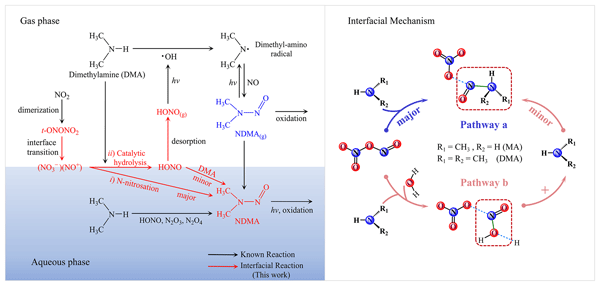
Carcinogenic nitrosamines are pervasive in air pollution, yet their origins remain elusive. Using Born–Oppenheimer molecular dynamics, we demonstrate that nitrosamines form rapidly at the air–water interface via the reaction of amines with dinitrogen tetroxide. This mechanism also yields nitrous acid, thereby exacerbating pollution. By identifying this critical missing source of airborne carcinogens, our work underscores the necessity of integrating interfacial chemistry into atmospheric models.
Nuohang Liu, Baozhu Ge, Danhui Xu, Nan Yang, Xueshun Chen, Qixin Tan, and Zifa Wang
EGUsphere, https://doi.org/10.5194/egusphere-2026-4057, https://doi.org/10.5194/egusphere-2026-4057, 2026
This preprint is open for discussion and under review for Atmospheric Chemistry and Physics (ACP).
Short summary
Short summary
A physically-based below-cloud wet scavenging parameterization was developed and incorporated in the Nested Air Quality Prediction Model System. The scheme substantially improves simulations of nitrogen wet deposition across East Asia, particularly in polluted regions of China, by better capturing below-cloud scavenging coefficients and separating in-cloud and below-cloud processes, supporting more reliable assessments of pollutant transport and deposition.
Lianfang Wei, Xueshun Chen, Wenyi Yang, Zhe Wang, Jie Li, Di Liu, Huiyun Du, Xiaole Pan, Yafang Cheng, Pingqing Fu, and Zifa Wang
Atmos. Chem. Phys., 26, 11667–11682, https://doi.org/10.5194/acp-26-11667-2026, https://doi.org/10.5194/acp-26-11667-2026, 2026
Short summary
Short summary
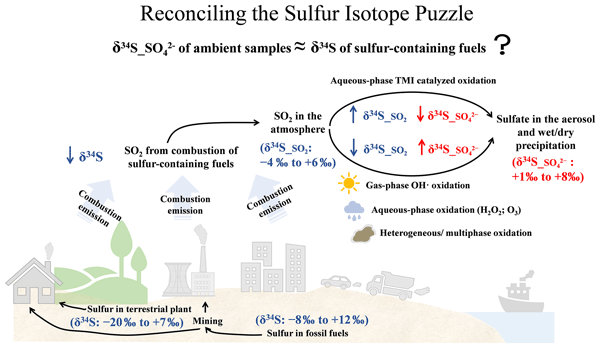
Current models cannot track sulfur isotope changes during atmospheric transformations. We developed a new model that simulates these processes. It reproduces the isotope fractionation patterns, capturing both spatial and seasonal variations. This validation shows sulfate isotope signatures often resemble those of fuels despite chemical processing. Our results suggest combustion alters sulfur isotope ratios, counterbalancing chemical effects.
Ling Liu, Zizhou Cai, An Ning, Biwu Chu, Haotian Zu, Jing Li, Jiayi Tang, and Xiuhui Zhang
EGUsphere, https://doi.org/10.5194/egusphere-2026-2877, https://doi.org/10.5194/egusphere-2026-2877, 2026
Short summary
Short summary
Sulfuric acid (SA)–ammonia (NH3) nucleation cannot fully explain the observed new particle formation in cold regions. Using quantum chemical calculations and atmospheric cluster dynamics simulations, we find trifluoroacetic acid (TFA), a model perfluorocarboxylic acid (PFCA), markedly enhances SA–NH3 nucleation under cold conditions. This work reveals a PFCA-assisted nucleation mechanism and provides a molecular-level foundation for future atmospheric observations and aerosol modeling.
Yang Liu, An Ning, Xiaohua Yang, Yuchen Zhang, Ling Liu, and Xiuhui Zhang
Atmos. Chem. Phys., 26, 9357–9371, https://doi.org/10.5194/acp-26-9357-2026, https://doi.org/10.5194/acp-26-9357-2026, 2026
Short summary
Short summary
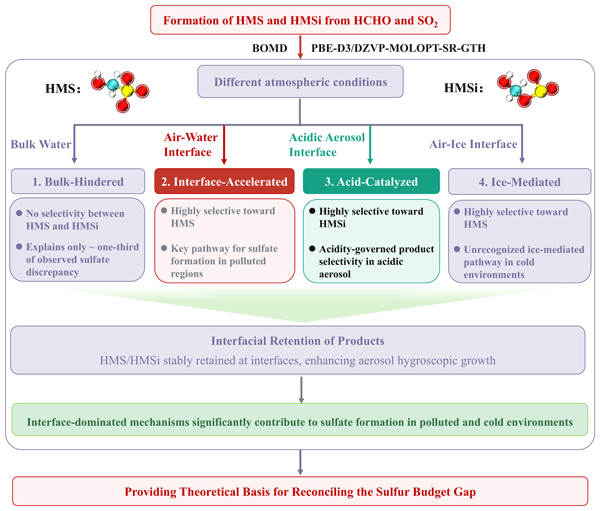
Current atmospheric models fail to explain observed sulfate concentrations in polluted and cold regions. Using Born–Oppenheimer molecular dynamics (BOMD) simulations, we show that hydroxymethanesulfonate and its isomer hydroxymethyl sulfite form mainly through reactions at air–water and air–ice surfaces rather than in bulk water. Strong acidity in polluted aerosols shifts formation toward hydroxymethyl sulfite. These findings help explain long-standing gaps between modeled and observed atmospheric sulfate.
Kai Cao, Qizhong Wu, Xiao Tang, Jinxi Li, Xueshun Chen, Huansheng Chen, Wending Wang, Huangjian Wu, Lei Kong, Jie Li, Jiang Zhu, and Zifa Wang
EGUsphere, https://doi.org/10.5194/egusphere-2026-3368, https://doi.org/10.5194/egusphere-2026-3368, 2026
Short summary
Short summary
This study achieves significant acceleration by developing an optimized advection module for Emission and atmospheric Processes Integrated and Coupled Community Model on Graphics Processing Unit. Through implementing thread-block indexing, minimizing Central Processing Unit and Graphics Processing Unit communication, and an parallel framework, we demonstrate speedups: 556.5× faster offline performance for the Heterogeneous Interface advection solver and 20.5× acceleration in coupled simulations.
Fei Zhang, Xingcai Li, Zifa Wang, Yunyun Wen, Xuyang Zhou, Zichen Wu, Zhuoran Wang, Huansheng Chen, Zhe Wang, and Xueshun Chen
Geosci. Model Dev., 19, 4999–5017, https://doi.org/10.5194/gmd-19-4999-2026, https://doi.org/10.5194/gmd-19-4999-2026, 2026
Short summary
Short summary
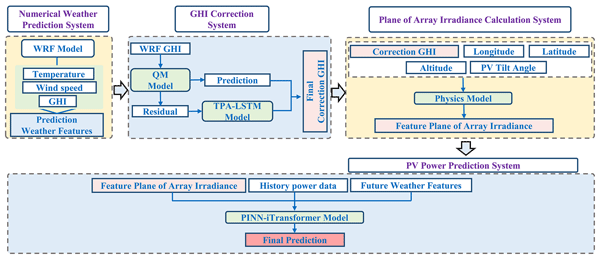
Solar power generation depends on weather conditions and photovoltaic modules, making accurate forecasts crucial for reliable grid operation. We combined weather prediction and artificial intelligence to improve the solar power prediction at different time scales for a plant. By improving sunlight predictions and incorporating physical constraints into the model, our approach reduced errors significantly. This can help integrate clean energy into power grids safely and efficiently.
Jing Li, An Ning, Ling Liu, Xiucong Deng, and Xiuhui Zhang
Atmos. Chem. Phys., 26, 4423–4437, https://doi.org/10.5194/acp-26-4423-2026, https://doi.org/10.5194/acp-26-4423-2026, 2026
Short summary
Short summary
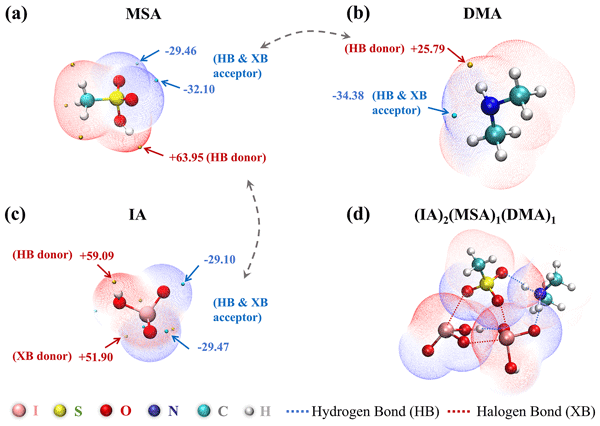
Marine new particle formation involves precursors such as methanesulfonic acid (MSA), iodic acid (IA), and dimethylamine (DMA), yet their nucleation mechanism remains incompletely understood. This study employs theoretical calculations to examine the IA–MSA–DMA system. We propose a nucleation mechanism that underscores the importance of synergistic interactions between sulfur-, iodine-, and nitrogen-containing vapors in driving marine new particle formation.
Xiucong Deng, An Ning, Ling Liu, Fengyang Bai, Jie Yang, Jing Li, Jiarong Liu, and Xiuhui Zhang
Atmos. Chem. Phys., 26, 477–488, https://doi.org/10.5194/acp-26-477-2026, https://doi.org/10.5194/acp-26-477-2026, 2026
Short summary
Short summary
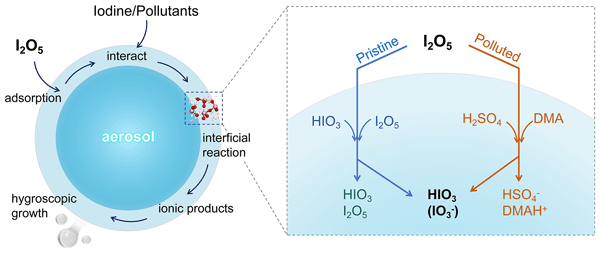
I2O5 is known as a significant contributor to marine aerosol, yet the chemical mechanism remains unclear. The atmospheric complexity arises from intricate coupling effects between I2O5 and diverse chemical species. We performed Born-Oppenheimer molecular dynamics to elucidate the I2O5 hydrolysis mechanisms mediated by prevalent chemicals at the air-water interface. The proposed heterogeneous reactions provides molecular-level insight into the role of I2O5 in the atmospheric iodine chemistry.
Jiaqi Jin, Runlong Cai, Yiliang Liu, Gan Yang, Yueyang Li, Chuang Li, Lei Yao, Jingkun Jiang, Xiuhui Zhang, and Lin Wang
Atmos. Chem. Phys., 25, 17125–17138, https://doi.org/10.5194/acp-25-17125-2025, https://doi.org/10.5194/acp-25-17125-2025, 2025
Short summary
Short summary
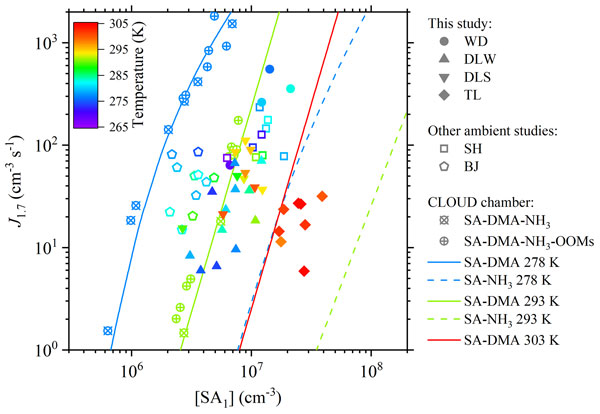
Based on observed atmospheric new particle formation events at multiple sites in eastern China, we find that sulfuric acid and dimethylamine can explain the observed atmospheric nucleation and the differences in the nucleation intensity among campaigns can be largely attributed to temperature and precursor concentrations. Our results also show that oxygenated organic molecules can make a great contribution to the initial growth of freshly nucleated particles in the real atmosphere.
Jing Li, An Ning, Ling Liu, Fengyang Bai, Qishen Huang, Pai Liu, Xiucong Deng, Yunhong Zhang, and Xiuhui Zhang
Atmos. Chem. Phys., 25, 14237–14249, https://doi.org/10.5194/acp-25-14237-2025, https://doi.org/10.5194/acp-25-14237-2025, 2025
Short summary
Short summary
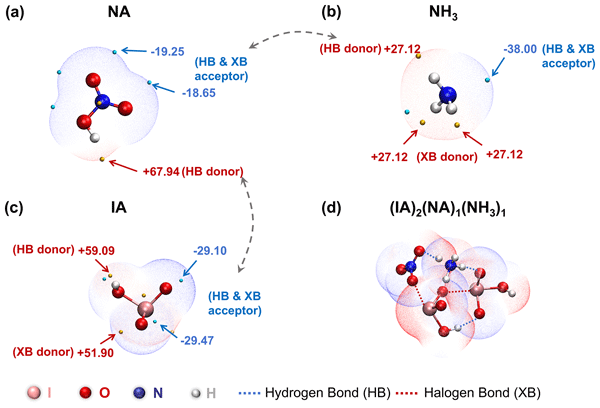
Iodic acid (IA) particles are frequently observed in the upper troposphere and lower stratosphere (UTLS), yet their formation mechanism remains unclear. Nitric acid (NA) and ammonia (NH3) are key nucleation precursors in the UTLS. This study investigates the IA–NA–NH3 system using a theoretical approach. Our proposed nucleation mechanism highlights the crucial role of NA in IA nucleation, providing molecular-level evidence for the missing sources of IA particles in the UTLS.
Kai Cao, Qizhong Wu, Xiao Tang, Jinxi Li, Xueshun Chen, Huansheng Chen, Wending Wang, Huangjian Wu, Lei Kong, Jie Li, Jiang Zhu, and Zifa Wang
EGUsphere, https://doi.org/10.5194/egusphere-2025-2918, https://doi.org/10.5194/egusphere-2025-2918, 2025
Preprint archived
Short summary
Short summary
This study achieves significant acceleration by developing an optimized advection module for Emission and atmospheric Processes Integrated and Coupled Community Model on GPU-like accelerators. Through implementing thread-block coordinated indexing, minimizing CPU-GPU communication, and an hybrid parallelization framework, we demonstrate prominent speedups: 556.5× faster offline performance for the Heterogeneous Interface PPM solver and 20.5× acceleration in coupled simulations.
Huiyun Du, Jie Li, Xueshun Chen, Gabriele Curci, Fangqun Yu, Yele Sun, Xu Dao, Song Guo, Zhe Wang, Wenyi Yang, Lianfang Wei, and Zifa Wang
Atmos. Chem. Phys., 25, 5665–5681, https://doi.org/10.5194/acp-25-5665-2025, https://doi.org/10.5194/acp-25-5665-2025, 2025
Short summary
Short summary
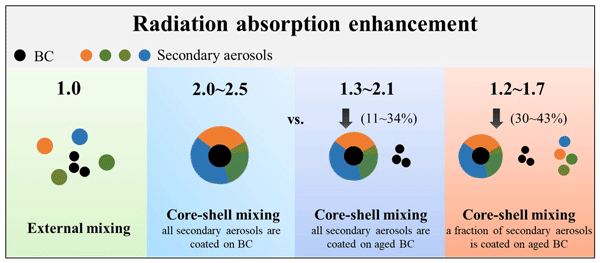
Inadequate consideration of mixing states and coatings on black carbon (BC) hinders aerosol radiation forcing quantification. Core–shell mixing aligns well with observations, but partial internal mixing is a more realistic representation. We used a microphysics module to determine the fraction of embedded BC and coating aerosols, constraining the mixing state. This reduced absorption enhancement by 30 %–43 % in northern China, offering insights into BC's radiative effects.
Zichen Wu, Xueshun Chen, Zifa Wang, Huansheng Chen, Zhe Wang, Qing Mu, Lin Wu, Wending Wang, Xiao Tang, Jie Li, Ying Li, Qizhong Wu, Yang Wang, Zhiyin Zou, and Zijian Jiang
Geosci. Model Dev., 17, 8885–8907, https://doi.org/10.5194/gmd-17-8885-2024, https://doi.org/10.5194/gmd-17-8885-2024, 2024
Short summary
Short summary
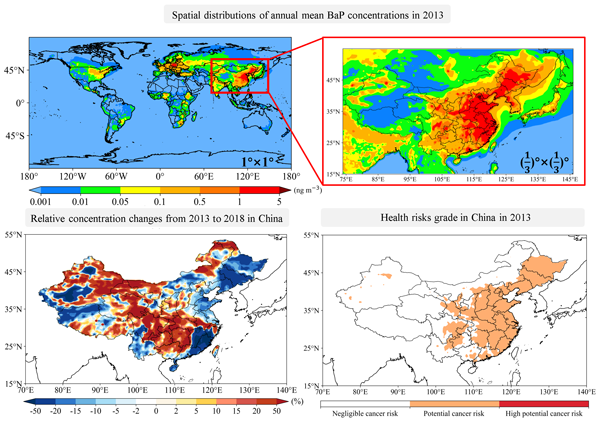
We developed a model to simulate polycyclic aromatic hydrocarbons (PAHs) from global to regional scales. The model can reproduce PAH distribution well. The concentration of BaP (indicator species for PAHs) could exceed the target values of 1 ng m-3 over some areas (e.g., in central Europe, India, and eastern China). The change in BaP is lower than that in PM2.5 from 2013 to 2018. China still faces significant potential health risks posed by BaP although the Action Plan has been implemented.
Jiewen Shen, Bin Zhao, Shuxiao Wang, An Ning, Yuyang Li, Runlong Cai, Da Gao, Biwu Chu, Yang Gao, Manish Shrivastava, Jingkun Jiang, Xiuhui Zhang, and Hong He
Atmos. Chem. Phys., 24, 10261–10278, https://doi.org/10.5194/acp-24-10261-2024, https://doi.org/10.5194/acp-24-10261-2024, 2024
Short summary
Short summary
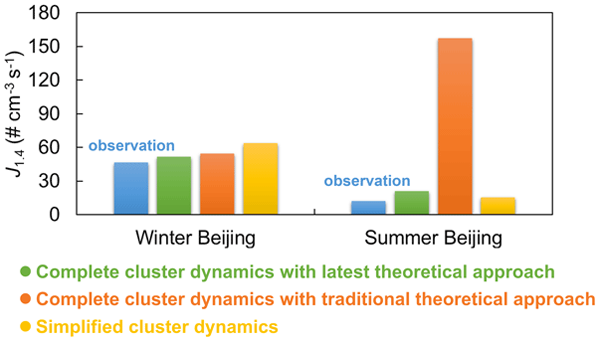
We extensively compare various cluster-dynamics-based parameterizations for sulfuric acid–dimethylamine nucleation and identify a newly developed parameterization derived from Atmospheric Cluster Dynamic Code (ACDC) simulations as being the most reliable one. This study offers a valuable reference for developing parameterizations of other nucleation systems and is meaningful for the accurate quantification of the environmental and climate impacts of new particle formation.
Haotian Zu, Biwu Chu, Yiqun Lu, Ling Liu, and Xiuhui Zhang
Atmos. Chem. Phys., 24, 5823–5835, https://doi.org/10.5194/acp-24-5823-2024, https://doi.org/10.5194/acp-24-5823-2024, 2024
Short summary
Short summary
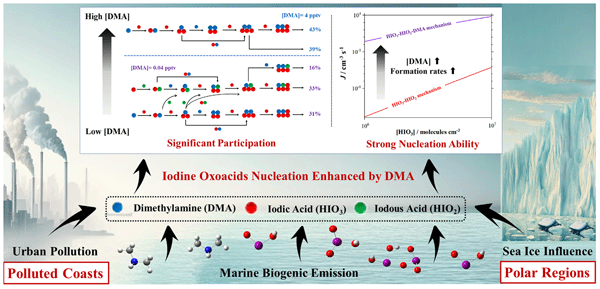
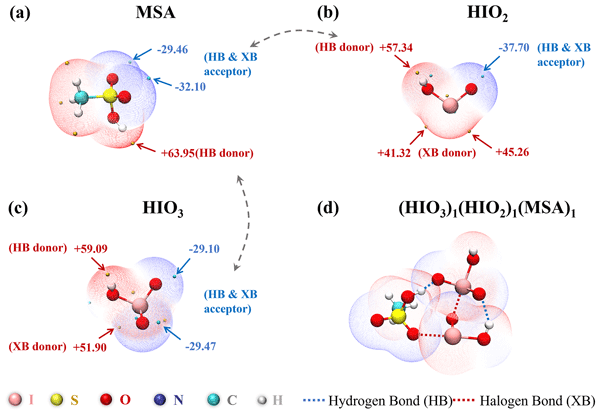
The nucleation of iodic acid (HIO3) and iodous acid (HIO2) was proven to be critical in marine areas. However, HIO3–HIO2 nucleation cannot effectively derive the rapid nucleation in some polluted coasts. We find a significant enhancement of dimethylamine (DMA) on the HIO3–HIO2 nucleation in marine and polar regions with abundant DMA sources, which may establish reasonable connections between the HIO3–HIO2 nucleation and the rapid formation of new particles in polluted marine and polar regions.
Jing Li, Nan Wu, Biwu Chu, An Ning, and Xiuhui Zhang
Atmos. Chem. Phys., 24, 3989–4000, https://doi.org/10.5194/acp-24-3989-2024, https://doi.org/10.5194/acp-24-3989-2024, 2024
Short summary
Short summary
Iodic acid (HIO3) nucleates with iodous acid (HIO2) efficiently in marine areas; however, whether methanesulfonic acid (MSA) can synergistically participate in the HIO3–HIO2-based nucleation is unclear. We provide molecular-level evidence that MSA can efficiently promote the formation of HIO3–HIO2-based clusters using a theoretical approach. The proposed MSA-enhanced iodine nucleation mechanism may help us to deeply understand marine new particle formation events with bursts of iodine particles.
Junhua Wang, Baozhu Ge, Xueshun Chen, Jie Li, Keding Lu, Yayuan Dong, Lei Kong, Zifa Wang, and Yuanhang Zhang
Geosci. Model Dev. Discuss., https://doi.org/10.5194/gmd-2023-22, https://doi.org/10.5194/gmd-2023-22, 2023
Revised manuscript not accepted
Short summary
Short summary
We developed a quantitative decoupling analysis (QDA) method to quantify the contributions of emissions, meteorology, chemical reactions, and their nonlinear interactions on PM2.5. We found the effects of adverse meteorological conditions and the importance of nonlinear interactions. This method can provide valuable information for understanding of key factors to heavy pollution, but also help the modelers to find out the sources of uncertainties in numerical models.
Yangyang Liu, Yue Deng, Jiarong Liu, Xiaozhong Fang, Tao Wang, Kejian Li, Kedong Gong, Aziz U. Bacha, Iqra Nabi, Qiuyue Ge, Xiuhui Zhang, Christian George, and Liwu Zhang
Atmos. Chem. Phys., 22, 9175–9197, https://doi.org/10.5194/acp-22-9175-2022, https://doi.org/10.5194/acp-22-9175-2022, 2022
Short summary
Short summary
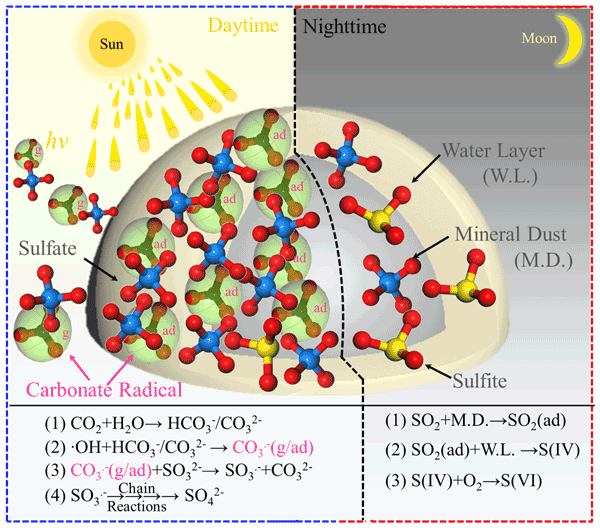
Both CO2 and carbonate salt work as the precursor of carbonate radicals, which largely promotes sulfate formation during the daytime. This study provides the first indication that the carbonate radical not only plays a role as an intermediate in tropospheric anion chemistry but also as a strong oxidant for the surface processing of trace gas in the atmosphere. CO2, carbponate radicals, and sulfate receive attention from those looking at the environment, atmosphere, aerosol, and photochemistry.
An Ning, Ling Liu, Lin Ji, and Xiuhui Zhang
Atmos. Chem. Phys., 22, 6103–6114, https://doi.org/10.5194/acp-22-6103-2022, https://doi.org/10.5194/acp-22-6103-2022, 2022
Short summary
Short summary
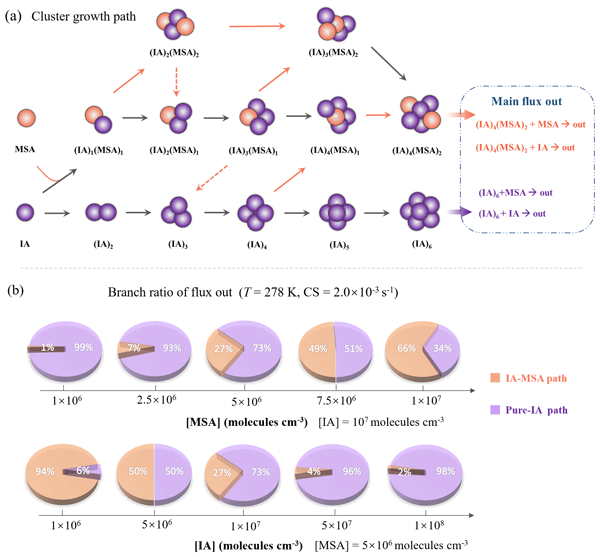
Iodic acid (IA) and methanesulfonic acid (MSA) were previously proved to be significant nucleation precursors in marine areas. However, the nucleation process involved in IA and MSA remains unclear. We show the enhancement of MSA on IA cluster formation and reveal the IAM-SA nucleating mechanism using a theoretical approach. This study helps to understand the clustering process in which marine sulfur- and iodine-containing species are jointly involved and its impact on new particle formation.
Haibo Wang, Ting Yang, Zifa Wang, Jianjun Li, Wenxuan Chai, Guigang Tang, Lei Kong, and Xueshun Chen
Geosci. Model Dev., 15, 3555–3585, https://doi.org/10.5194/gmd-15-3555-2022, https://doi.org/10.5194/gmd-15-3555-2022, 2022
Short summary
Short summary
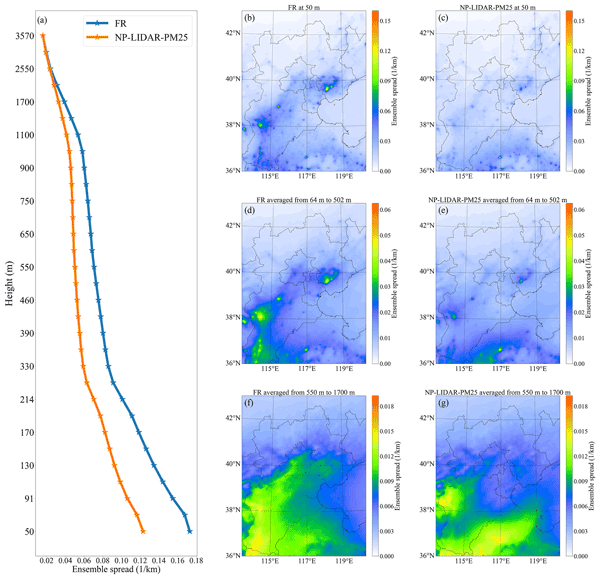
In this paper, we develop an online data coupled assimilation system (NAQPMS-PDAF) with the Eulerian atmospheric chemistry-transport model. NAQPMS-PDAF allows efficient use of large computational resources. The application and performance of the system are investigated by assimilating 1 month of vertical aerosol observations. The results show that NAQPMS-PDAF can significantly improve the performance of aerosol vertical structure simulation and reduce the uncertainty to a large extent.

Narcisse Tsona Tchinda, Lin Du, Ling Liu, and Xiuhui Zhang
Atmos. Chem. Phys., 22, 1951–1963, https://doi.org/10.5194/acp-22-1951-2022, https://doi.org/10.5194/acp-22-1951-2022, 2022
Short summary
Short summary
This study explores the effect of pyruvic acid (PA) both in the SO3 hydrolysis and in sulfuric-acid-based aerosol formation. Results show that in dry and polluted areas, PA-catalyzed SO3 hydrolysis is about 2 orders of magnitude more efficient at forming sulfuric acid than the water-catalyzed reaction. Moreover, PA can effectively enhance the ternary SA-PA-NH3 particle formation rate by up to 4.7×10² relative to the binary SA-NH3 particle formation rate at cold temperatures.
Qian Ye, Jie Li, Xueshun Chen, Huansheng Chen, Wenyi Yang, Huiyun Du, Xiaole Pan, Xiao Tang, Wei Wang, Lili Zhu, Jianjun Li, Zhe Wang, and Zifa Wang
Geosci. Model Dev., 14, 7573–7604, https://doi.org/10.5194/gmd-14-7573-2021, https://doi.org/10.5194/gmd-14-7573-2021, 2021
Short summary
Short summary
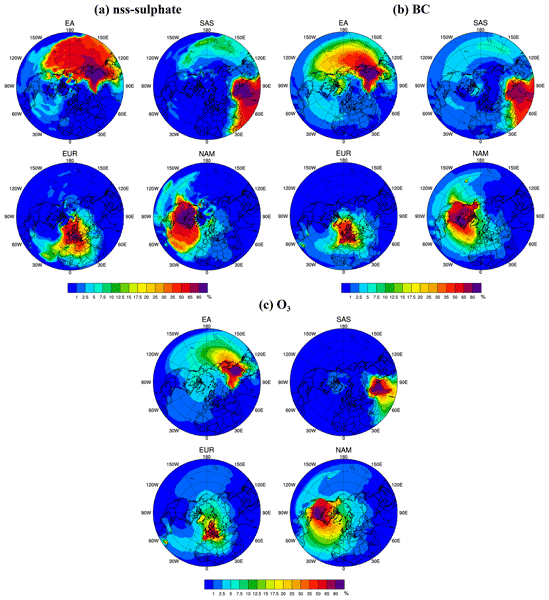
We developed a global tropospheric atmospheric chemistry source–receptor model. This model can quantify the contributions of multiple air pollutants from various source regions in one simulation without introducing the nonlinear error of atmospheric chemistry. The S-R relationships of PM2.5 and O3 from a global high-resolution (0.5° × 0.5°) simulation were given and compared with previous studies. This model will be useful for creating a link between the scientific community and policymakers.
Cited articles
Aas, W., Mortier, A., Bowersox, V., Cherian, R., Faluvegi, G., Fagerli, H., Hand, J., Klimont, Z., Galy-Lacaux, C., Lehmann, C. M. B., Myhre, C. L., Myhre, G., Olivié, D., Sato, K., Quaas, J., Rao, P. S. P., Schulz, M., Shindell, D., Skeie, R. B., Stein, A., Takemura, T., Tsyro, S., Vet, R., and Xu, X.: Global and regional trends of atmospheric sulfur, Sci. Rep., 9, 953, https://doi.org/10.1038/s41598-018-37304-0, 2019.
Almeida, J., Schobesberger, S., Kürten, A., Ortega, I. K., Kupiainen-Määttä, O., Praplan, A. P., Adamov, A., Amorim, A., Bianchi, F., Breitenlechner, M., David, A., Dommen, J., Donahue, N. M., Downard, A., Dunne, E., Duplissy, J., Ehrhart, S., Flagan, R. C., Franchin, A., Guida, R., Hakala, J., Hansel, A., Heinritzi, M., Henschel, H., Jokinen, T., Junninen, H., Kajos, M., Kangasluoma, J., Keskinen, H., Kupc, A., Kurtén, T., Kvashin, A. N., Laaksonen, A., Lehtipalo, K., Leiminger, M., Leppä, J., Loukonen, V., Makhmutov, V., Mathot, S., McGrath, M. J., Nieminen, T., Olenius, T., Onnela, A., Petäjä, T., Riccobono, F., Riipinen, I., Rissanen, M., Rondo, L., Ruuskanen, T., Santos, F. D., Sarnela, N., Schallhart, S., Schnitzhofer, R., Seinfeld, J. H., Simon, M., Sipilä, M., Stozhkov, Y., Stratmann, F., Tomé, A., Tröstl, J., Tsagkogeorgas, G., Vaattovaara, P., Viisanen, Y., Virtanen, A., Vrtala, A., Wagner, P. E., Weingartner, E., Wex, H., Williamson, C., Wimmer, D., Ye, P., Yli-Juuti, T., Carslaw, K. S., Kulmala, M., Curtius, J., Baltensperger, U., Worsnop, D. R., Vehkamäki, H., and Kirkby, J.: Molecular understanding of sulphuric acid–amine particle nucleation in the atmosphere, Nature, 502, 359–363, https://doi.org/10.1038/nature12663, 2013.
Baccarini, A., Karlsson, L., Dommen, J., Duplessis, P., Vüllers, J., Brooks, I. M., Saiz-Lopez, A., Salter, M., Tjernström, M., Baltensperger, U., Zieger, P., and Schmale, J.: Frequent new particle formation over the high Arctic pack ice by enhanced iodine emissions, Nat. Commun., 11, 4924, https://doi.org/10.1038/s41467-020-18551-0, 2020.
Bai, X., Lian, Y., Peng, J., Mao, H., and Jiang, S.: Ethylenediamine-Enhanced Iodic Acid Nucleation: Mechanistic Insights into Marine New Particle Formation, Environ. Sci. Technol., 59, 22772–22783, https://doi.org/10.1021/acs.est.5c08562, 2025.
Besel, V., Kubečka, J., Kurtén, T., and Vehkamäki, H.: Impact of Quantum Chemistry Parameter Choices and Cluster Distribution Model Settings on Modeled Atmospheric Particle Formation Rates, J. Phys. Chem. A, 124, 5931–5943, https://doi.org/10.1021/acs.jpca.0c03984, 2020.
Catling, D. C. and Kasting, J. F.: Atmospheric Evolution on Inhabited and Lifeless Worlds, Cambridge University Press, Cambridge, UK, 2017.
Chan, B. and Yim, W.-L.: Accurate Computation of Cohesive Energies for Small to Medium-Sized Gold Clusters, J. Chem. Theory Comput., 9, 1964–1970, https://doi.org/10.1021/ct400047y, 2013.
Cuevas, C. A., Maffezzoli, N., Corella, J. P., Spolaor, A., Vallelonga, P., Kjær, H. A., Simonsen, M., Winstrup, M., Vinther, B., Horvat, C., Fernandez, R. P., Kinnison, D., Lamarque, J.-F., Barbante, C., and Saiz-Lopez, A.: Rapid increase in atmospheric iodine levels in the North Atlantic since the mid-20th century, Nat. Commun., 9, 1452, https://doi.org/10.1038/s41467-018-03756-1, 2018.
Dalsøren, S. B., Samset, B. H., Myhre, G., Corbett, J. J., Minjares, R., Lack, D., and Fuglestvedt, J. S.: Environmental impacts of shipping in 2030 with a particular focus on the Arctic region, Atmos. Chem. Phys., 13, 1941–1955, https://doi.org/10.5194/acp-13-1941-2013, 2013.
De Souza, G. L. C. and Brown, A.: Probing ground and low-lying excited states for HIO2 isomers, J. Chem. Phys., 141, 234303, https://doi.org/10.1063/1.4903789, 2014.
Dunne, E. M., Gordon, H., Kürten, A., Almeida, J., Duplissy, J., Williamson, C., Ortega, I. K., Pringle, K. J., Adamov, A., Baltensperger, U., Barmet, P., Benduhn, F., Bianchi, F., Breitenlechner, M., Clarke, A., Curtius, J., Dommen, J., Donahue, N. M., Ehrhart, S., Flagan, R. C., Franchin, A., Guida, R., Hakala, J., Hansel, A., Heinritzi, M., Jokinen, T., Kangasluoma, J., Kirkby, J., Kulmala, M., Kupc, A., Lawler, M. J., Lehtipalo, K., Makhmutov, V., Mann, G., Mathot, S., Merikanto, J., Miettinen, P., Nenes, A., Onnela, A., Rap, A., Reddington, C. L. S., Riccobono, F., Richards, N. A. D., Rissanen, M. P., Rondo, L., Sarnela, N., Schobesberger, S., Sengupta, K., Simon, M., Sipilä, M., Smith, J. N., Stozkhov, Y., Tomé, A., Tröstl, J., Wagner, P. E., Wimmer, D., Winkler, P. M., Worsnop, D. R., and Carslaw, K. S.: Global atmospheric particle formation from CERN CLOUD measurements, Science, 354, 1119–1124, https://doi.org/10.1126/science.aaf2649, 2016.
Elm, J.: Elucidating the Limiting Steps in Sulfuric Acid–Base New Particle Formation, J. Phys. Chem. A, 121, 8288–8295, https://doi.org/10.1021/acs.jpca.7b08962, 2017.
Elm, J. and Kristensen, K.: Basis set convergence of the binding energies of strongly hydrogen-bonded atmospheric clusters, Phys. Chem. Chem. Phys., 19, 1122–1133, https://doi.org/10.1039/C6CP06851K, 2017.
Elm, J., Bilde, M., and Mikkelsen, K. V.: Assessment of Density Functional Theory in Predicting Structures and Free Energies of Reaction of Atmospheric Prenucleation Clusters, J. Chem. Theory Comput., 8, 2071–2077, https://doi.org/10.1021/ct300192p, 2012.
Elm, J., Bilde, M., and Mikkelsen, K. V.: Assessment of binding energies of atmospherically relevant clusters, Phys. Chem. Chem. Phys., 15, 16442, https://doi.org/10.1039/c3cp52616j, 2013.
Emamian, S., Lu, T., Kruse, H., and Emamian, H.: Exploring Nature and Predicting Strength of Hydrogen Bonds: A Correlation Analysis Between Atoms-in-Molecules Descriptors, Binding Energies, and Energy Components of Symmetry-Adapted Perturbation Theory, J. Comput. Chem., 40, 2868–2881, https://doi.org/10.1002/jcc.26068, 2019.
Engsvang, M., Wu, H., and Elm, J.: Iodine Clusters in the Atmosphere I: Computational Benchmark and Dimer Formation of Oxyacids and Oxides, ACS Omega, 9, 31521–31532, https://doi.org/10.1021/acsomega.4c01235, 2024.
Fan, J., Wang, Y., Rosenfeld, D., and Liu, X.: Review of Aerosol–Cloud Interactions: Mechanisms, Significance, and Challenges, J. Atmos. Sci., 73, 4221–4252, https://doi.org/10.1175/JAS-D-16-0037.1, 2016.
Finkenzeller, H., Iyer, S., He, X.-C., Simon, M., Koenig, T. K., Lee, C. F., Valiev, R., Hofbauer, V., Amorim, A., Baalbaki, R., Baccarini, A., Beck, L., Bell, D. M., Caudillo, L., Chen, D., Chiu, R., Chu, B., Dada, L., Duplissy, J., Heinritzi, M., Kemppainen, D., Kim, C., Krechmer, J., Kürten, A., Kvashnin, A., Lamkaddam, H., Lee, C. P., Lehtipalo, K., Li, Z., Makhmutov, V., Manninen, H. E., Marie, G., Marten, R., Mauldin, R. L., Mentler, B., Müller, T., Petäjä, T., Philippov, M., Ranjithkumar, A., Rörup, B., Shen, J., Stolzenburg, D., Tauber, C., Tham, Y. J., Tomé, A., Vazquez-Pufleau, M., Wagner, A. C., Wang, D. S., Wang, M., Wang, Y., Weber, S. K., Nie, W., Wu, Y., Xiao, M., Ye, Q., Zauner-Wieczorek, M., Hansel, A., Baltensperger, U., Brioude, J., Curtius, J., Donahue, N. M., Haddad, I. E., Flagan, R. C., Kulmala, M., Kirkby, J., Sipilä, M., Worsnop, D. R., Kurten, T., Rissanen, M., and Volkamer, R.: The gas-phase formation mechanism of iodic acid as an atmospheric aerosol source, Nat. Chem., 15, 129–135, https://doi.org/10.1038/s41557-022-01067-z, 2023.
Francl, M. M., Pietro, W. J., Hehre, W. J., Binkley, J. S., Gordon, M. S., DeFrees, D. J., and Pople, J. A.: Self-consistent molecular orbital methods. XXIII. A polarization-type basis set for second-row elements, J. Chem. Phys., 77, 3654–3665, https://doi.org/10.1063/1.444267, 1982.
Frege, C., Bianchi, F., Molteni, U., Tröstl, J., Junninen, H., Henne, S., Sipilä, M., Herrmann, E., Rossi, M. J., Kulmala, M., Hoyle, C. R., Baltensperger, U., and Dommen, J.: Chemical characterization of atmospheric ions at the high altitude research station Jungfraujoch (Switzerland), Atmos. Chem. Phys., 17, 2613–2629, https://doi.org/10.5194/acp-17-2613-2017, 2017.
Frisch, M. J., Trucks, G. W., Schlegel, H. B., Scuseria, G. E., Robb, M. A., Cheeseman, J. R., Scalmani, G., Barone, V., Mennucci, B., Petersson, G. A., Nakatsuji, H., Caricato, M., Li, X., Hratchian, H. P., Izmaylov, A. F., Bloino, J., Zheng, G., Sonnenberg, J. L., Hada, M., E., M., Toyota, K., Fukuda, R., Hasegawa, J., Ishida, M., Nakajima, T., Honda, Y., Kitao, O., Nakai, H., Vreven, T., Montgomery, J. A., Peralta, J. E., Ogliaro, F., Bearpark, M., Heyd, J. J., Brothers, E., Kudin, K. N., Staroverov, V. N., Kobayashi, R., Normand, J., Raghavachari, K., Rendell, A., Burant, J. C., Iyengar, S. S., Tomasi, J., Cossi, M., Rega, N., Millam, J. M., Klene, M., Knox, J. E., Cross, J. B., Bakken, V., Adamo, C., Jaramillo, J., Gomperts, R., Stratmann, R. E., Yazyev, O., Austin, A. J., Cammi, R., Pomelli, C., Ochterski, J. W., Martin, R. L., Morokuma, K., Zakrzewski, V. G., Voth, G. A., Salvador, P., Dannenberg, J. J., Dapprich, S., Daniels, A. D., Farkas, O., Foresman, J. B., Ortiz, J. V., Cioslowski, J., and Fox, D. J.: Gaussian 09, Revision A.2, Gaussian, Inc., Wallingford CT, https://gaussian.com/g09citation/ (last access: 19 March 2026), 2009.
Frisch, M. J., Trucks, G. W., Schlegel, H. B., Scuseria, G. E., Robb, M. A., Cheeseman, J. R., Scalmani, G., Barone, V., Mennucci, B., Petersson, G. A., Nakatsuji, H., Caricato, M., Li, X., Hratchian, H. P., Izmaylov, A. F., Bloino, J., Zheng, G., Sonnenberg, J. L., Hada, M., Ehara, M., Toyota, K., Fukuda, R., Hasegawa, J., Ishida, M., Nakajima, T., Honda, Y., Kitao, O., Nakai, H., Vreven, T., Montgomery, J. A., Peralta, J. E., Ogliaro, F., Bearpark, M., Heyd, J. J., Brothers, E., Kudin, K. N., Staroverov, V. N., Kobayashi, R., Normand, J., Raghavachari, K., Rendell, A., Burant, J. C., Iyengar, S. S., Tomasi, J., Cossi, M., Rega, N., Millam, J. M., Klene, M., Knox, J. E., Cross, J. B., Bakken, V., Adamo, C., Jaramillo, J., Gomperts, R., Stratmann, R. E., Yazyev, O., Austin, A. J., Cammi, R., Pomelli, C., Ochterski, J. W., Martin, R. L., Morokuma, K., Zakrzewski, V. G., Voth, G. A., Salvador, P., Dannenberg, J. J., Dapprich, S., Daniels, A. D., Farkas, O., Foresman, J. B., Ortiz, J. V., Cioslowski, J., and Fox, D. J.: Gaussian 16, Revision A.03, Gaussian, Inc., Wallingford CT, https://gaussian.com/citation_a03/ (last access: 19 March 2026), 2016.
Gong, W., Beagley, S. R., Cousineau, S., Sassi, M., Munoz-Alpizar, R., Ménard, S., Racine, J., Zhang, J., Chen, J., Morrison, H., Sharma, S., Huang, L., Bellavance, P., Ly, J., Izdebski, P., Lyons, L., and Holt, R.: Assessing the impact of shipping emissions on air pollution in the Canadian Arctic and northern regions: current and future modelled scenarios, Atmos. Chem. Phys., 18, 16653–16687, https://doi.org/10.5194/acp-18-16653-2018, 2018.
Gordon, H., Kirkby, J., Baltensperger, U., Bianchi, F., Breitenlechner, M., Curtius, J., Dias, A., Dommen, J., Donahue, N. M., Dunne, E. M., Duplissy, J., Ehrhart, S., Flagan, R. C., Frege, C., Fuchs, C., Hansel, A., Hoyle, C. R., Kulmala, M., Kürten, A., Lehtipalo, K., Makhmutov, V., Molteni, U., Rissanen, M. P., Stozkhov, Y., Tröstl, J., Tsagkogeorgas, G., Wagner, R., Williamson, C., Wimmer, D., Winkler, P. M., Yan, C., and Carslaw, K. S.: Causes and importance of new particle formation in the present-day and preindustrial atmospheres, J. Geophys. Res.-Atmos., 122, 8739–8760, https://doi.org/10.1002/2017JD026844, 2017.
Halonen, R., Zapadinsky, E., Kurtén, T., Vehkamäki, H., and Reischl, B.: Rate enhancement in collisions of sulfuric acid molecules due to long-range intermolecular forces, Atmos. Chem. Phys., 19, 13355–13366, https://doi.org/10.5194/acp-19-13355-2019, 2019.
Haywood, J. and Boucher, O.: Estimates of the direct and indirect radiative forcing due to tropospheric aerosols: A review, Rev. Geophys., 38, 513–543, https://doi.org/10.1029/1999RG000078, 2000.
He, X.-C., Tham, Y. J., Dada, L., et al.: Role of iodine oxoacids in atmospheric aerosol nucleation, Science, 371, 589–595, https://doi.org/10.1126/science.abe0298, 2021.
He, X.-C., Simon, M., Iyer, S., Xie, H.-B., Rörup, B., Shen, J., Finkenzeller, H., Stolzenburg, D., Zhang, R., Baccarini, A., Tham, Y. J., Wang, M., Amanatidis, S., Piedehierro, A. A., Amorim, A., Baalbaki, R., Brasseur, Z., Caudillo, L., Chu, B., Dada, L., Duplissy, J., El Haddad, I., Flagan, R. C., Granzin, M., Hansel, A., Heinritzi, M., Hofbauer, V., Jokinen, T., Kemppainen, D., Kong, W., Krechmer, J., Kürten, A., Lamkaddam, H., Lopez, B., Ma, F., Mahfouz, N. G. A., Makhmutov, V., Manninen, H. E., Marie, G., Marten, R., Massabò, D., Mauldin, R. L., Mentler, B., Onnela, A., Petäjä, T., Pfeifer, J., Philippov, M., Ranjithkumar, A., Rissanen, M. P., Schobesberger, S., Scholz, W., Schulze, B., Surdu, M., Thakur, R. C., Tomé, A., Wagner, A. C., Wang, D., Wang, Y., Weber, S. K., Welti, A., Winkler, P. M., Zauner-Wieczorek, M., Baltensperger, U., Curtius, J., Kurtén, T., Worsnop, D. R., Volkamer, R., Lehtipalo, K., Kirkby, J., Donahue, N. M., Sipilä, M., and Kulmala, M.: Iodine oxoacids enhance nucleation of sulfuric acid particles in the atmosphere, Science, 382, 1308–1314, https://doi.org/10.1126/science.adh2526, 2023.
Heard, D. E., Read, K. A., Methven, J., Al-Haider, S., Bloss, W. J., Johnson, G. P., Pilling, M. J., Seakins, P. W., Smith, S. C., Sommariva, R., Stanton, J. C., Still, T. J., Ingham, T., Brooks, B., De Leeuw, G., Jackson, A. V., McQuaid, J. B., Morgan, R., Smith, M. H., Carpenter, L. J., Carslaw, N., Hamilton, J., Hopkins, J. R., Lee, J. D., Lewis, A. C., Purvis, R. M., Wevill, D. J., Brough, N., Green, T., Mills, G., Penkett, S. A., Plane, J. M. C., Saiz-Lopez, A., Worton, D., Monks, P. S., Fleming, Z., Rickard, A. R., Alfarra, M. R., Allan, J. D., Bower, K., Coe, H., Cubison, M., Flynn, M., McFiggans, G., Gallagher, M., Norton, E. G., O'Dowd, C. D., Shillito, J., Topping, D., Vaughan, G., Williams, P., Bitter, M., Ball, S. M., Jones, R. L., Povey, I. M., O'Doherty, S., Simmonds, P. G., Allen, A., Kinnersley, R. P., Beddows, D. C. S., Dall'Osto, M., Harrison, R. M., Donovan, R. J., Heal, M. R., Jennings, S. G., Noone, C., and Spain, G.: The North Atlantic Marine Boundary Layer Experiment(NAMBLEX). Overview of the campaign held at Mace Head, Ireland, in summer 2002, Atmos. Chem. Phys., 6, 2241–2272, https://doi.org/10.5194/acp-6-2241-2006, 2006.
Hirshorn, N. S., Zuromski, L. M., Rapp, C., McCubbin, I., Carrillo-Cardenas, G., Yu, F., and Hallar, A. G.: Seasonal significance of new particle formation impacts on cloud condensation nuclei at a mountaintop location, Atmos. Chem. Phys., 22, 15909–15924, https://doi.org/10.5194/acp-22-15909-2022, 2022.
Holzer, C., Franzke, Y. J., and Pausch, A.: Current density functional framework for spin–orbit coupling, J. Chem. Phys., 157, 204102, https://doi.org/10.1063/5.0122394, 2022.
Honrath, R. E., Lu, Y., Peterson, M. C., Dibb, J. E., Arsenault, M. A., Cullen, N. J., and Steffen, K.: Vertical fluxes of NOx, HONO, and HNO3 above the snowpack at Summit, Greenland, Atmos. Environ., 36, 2629–2640, https://doi.org/10.1016/S1352-2310(02)00132-2, 2002.
Humphrey, W., Dalke, A., and Schulten, K.: VMD: visual molecular dynamics, J. Mol. Graph., 14, 33–38, 1996.
Jones, A. E., Brough, N., Anderson, P. S., and Wolff, E. W.: HO2NO2 and HNO3 in the coastal Antarctic winter night: a “lab-in-the-field” experiment, Atmos. Chem. Phys., 14, 11843–11851, https://doi.org/10.5194/acp-14-11843-2014, 2014.
Jurkat, T., Voigt, C., Kaufmann, S., Zahn, A., Sprenger, M., Hoor, P., Bozem, H., Müller, S., Dörnbrack, A., Schlager, H., Bönisch, H., and Engel, A.: A quantitative analysis of stratospheric HCl, HNO3, and O3 in the tropopause region near the subtropical jet, Geophys. Res. Lett., 41, 3315–3321, https://doi.org/10.1002/2013GL059159, 2014.
Koenig, T. K., Baidar, S., Campuzano-Jost, P., Cuevas, C. A., Dix, B., Fernandez, R. P., Guo, H., Hall, S. R., Kinnison, D., Nault, B. A., Ullmann, K., Jimenez, J. L., Saiz-Lopez, A., and Volkamer, R.: Quantitative detection of iodine in the stratosphere, P. Natl. Acad. Sci. USA, 117, 1860–1866, https://doi.org/10.1073/pnas.1916828117, 2020.
Kubečka, J., Besel, V., Kurtén, T., Myllys, N., and Vehkamäki, H.: Configurational Sampling of Noncovalent (Atmospheric) Molecular Clusters: Sulfuric Acid and Guanidine, J. Phys. Chem. A, 123, 6022–6033, https://doi.org/10.1021/acs.jpca.9b03853, 2019.
Kühn, M. and Weigend, F.: Two-component hybrid time-dependent density functional theory within the Tamm-Dancoff approximation, J. Chem. Phys., 142, 034116, https://doi.org/10.1063/1.4905829, 2015.
Kulmala, M., Kontkanen, J., Junninen, H., Lehtipalo, K., Manninen, H. E., Nieminen, T., Petäjä, T., Sipilä, M., Schobesberger, S., Rantala, P., Franchin, A., Jokinen, T., Järvinen, E., Äijälä, M., Kangasluoma, J., Hakala, J., Aalto, P. P., Paasonen, P., Mikkilä, J., Vanhanen, J., Aalto, J., Hakola, H., Makkonen, U., Ruuskanen, T., Mauldin, R. L., Duplissy, J., Vehkamäki, H., Bäck, J., Kortelainen, A., Riipinen, I., Kurtén, T., Johnston, M. V., Smith, J. N., Ehn, M., Mentel, T. F., Lehtinen, K. E. J., Laaksonen, A., Kerminen, V.-M., and Worsnop, D. R.: Direct Observations of Atmospheric Aerosol Nucleation, Science, 339, 943–946, https://doi.org/10.1126/science.1227385, 2013.
Kurfman, L. A., Odbadrakh, T. T., and Shields, G. C.: Calculating Reliable Gibbs Free Energies for Formation of Gas-Phase Clusters that Are Critical for Atmospheric Chemistry: (H2SO4)3, J. Phys. Chem. A, 125, 3169–3176, https://doi.org/10.1021/acs.jpca.1c00872, 2021.
Lane, J. R., Contreras-García, J., Piquemal, J.-P., Miller, B. J., and Kjaergaard, H. G.: Are Bond Critical Points Really Critical for Hydrogen Bonding?, J. Chem. Theory Comput., 9, 3263–3266, https://doi.org/10.1021/ct400420r, 2013.
Legrand, M., McConnell, J. R., Preunkert, S., Arienzo, M., Chellman, N., Gleason, K., Sherwen, T., Evans, M. J., and Carpenter, L. J.: Alpine ice evidence of a three-fold increase in atmospheric iodine deposition since 1950 in Europe due to increasing oceanic emissions, P. Natl. Acad. Sci. USA, 115, 12136–12141, https://doi.org/10.1073/pnas.1809867115, 2018.
Lehtinen, K. E. J., Dal Maso, M., Kulmala, M., and Kerminen, V.-M.: Estimating nucleation rates from apparent particle formation rates and vice versa: Revised formulation of the Kerminen–Kulmala equation, J. Aerosol Sci., 38, 988–994, https://doi.org/10.1016/j.jaerosci.2007.06.009, 2007.
Lehtipalo, K., Rondo, L., Kontkanen, J., Schobesberger, S., Jokinen, T., Sarnela, N., Kürten, A., Ehrhart, S., Franchin, A., Nieminen, T., Riccobono, F., Sipilä, M., Yli-Juuti, T., Duplissy, J., Adamov, A., Ahlm, L., Almeida, J., Amorim, A., Bianchi, F., Breitenlechner, M., Dommen, J., Downard, A. J., Dunne, E. M., Flagan, R. C., Guida, R., Hakala, J., Hansel, A., Jud, W., Kangasluoma, J., Kerminen, V.-M., Keskinen, H., Kim, J., Kirkby, J., Kupc, A., Kupiainen-Määttä, O., Laaksonen, A., Lawler, M. J., Leiminger, M., Mathot, S., Olenius, T., Ortega, I. K., Onnela, A., Petäjä, T., Praplan, A., Rissanen, M. P., Ruuskanen, T., Santos, F. D., Schallhart, S., Schnitzhofer, R., Simon, M., Smith, J. N., Tröstl, J., Tsagkogeorgas, G., Tomé, A., Vaattovaara, P., Vehkamäki, H., Vrtala, A. E., Wagner, P. E., Williamson, C., Wimmer, D., Winkler, P. M., Virtanen, A., Donahue, N. M., Carslaw, K. S., Baltensperger, U., Riipinen, I., Curtius, J., Worsnop, D. R., and Kulmala, M.: The effect of acid–base clustering and ions on the growth of atmospheric nano-particles, Nat. Commun., 7, 11594, https://doi.org/10.1038/ncomms11594, 2016.
Lenthe, E. V., Baerends, E. J., and Snijders, J. G.: Relativistic regular two-component Hamiltonians, J. Chem. Phys., 99, 4597–4610, https://doi.org/10.1063/1.466059, 1993.
Li, J., Carlson, B. E., Yung, Y. L., Lv, D., Hansen, J., Penner, J. E., Liao, H., Ramaswamy, V., Kahn, R. A., Zhang, P., Dubovik, O., Ding, A., Lacis, A. A., Zhang, L., and Dong, Y.: Scattering and absorbing aerosols in the climate system, Nat. Rev. Earth Environ., 3, 363–379, https://doi.org/10.1038/s43017-022-00296-7, 2022.
Li, J., Ning, A., Liu, L., and Zhang, X.: Atmospheric Bases-Enhanced Iodic Acid Nucleation: Altitude-Dependent Characteristics and Molecular Mechanisms, Environ. Sci. Technol., 58, 16962–16973, https://doi.org/10.1021/acs.est.4c06053, 2024a.
Li, J., Wu, N., Chu, B., Ning, A., and Zhang, X.: Molecular-level study on the role of methanesulfonic acid in iodine oxoacid nucleation, Atmos. Chem. Phys., 24, 3989–4000, https://doi.org/10.5194/acp-24-3989-2024, 2024b.
Liu, L., Li, H., Zhang, H., Zhong, J., Bai, Y., Ge, M., Li, Z., Chen, Y., and Zhang, X.: The role of nitric acid in atmospheric new particle formation, Phys. Chem. Chem. Phys., 20, 17406–17414, https://doi.org/10.1039/c8cp02719f, 2018.
Liu, L., Yu, F., Du, L., Yang, Z., Francisco, J. S., and Zhang, X.: Rapid sulfuric acid–dimethylamine nucleation enhanced by nitric acid in polluted regions, P. Natl. Acad. Sci. USA, 118, e2108384118, https://doi.org/10.1073/pnas.2108384118, 2021.
Liu, L., Li, S., Zu, H., and Zhang, X.: Unexpectedly significant stabilizing mechanism of iodous acid on iodic acid nucleation under different atmospheric conditions, Sci. Total Environ., 859, 159832, https://doi.org/10.1016/j.scitotenv.2022.159832, 2023.
Lu, T. and Chen, F.: Multiwfn: A multifunctional wavefunction analyzer, J. Comput. Chem., 33, 580–592, https://doi.org/10.1002/jcc.22885, 2012.
Lu, T. and Chen, Q.: Shermo: A general code for calculating molecular thermochemistry properties, Comput. Theor. Chem., 1200, 113249, https://doi.org/10.1016/j.comptc.2021.113249, 2021.
Ma, F., Xie, H.-B., Zhang, R., Su, L., Jiang, Q., Tang, W., Chen, J., Engsvang, M., Elm, J., and He, X.-C.: Enhancement of Atmospheric Nucleation Precursors on Iodic Acid-Induced Nucleation: Predictive Model and Mechanism, Environ. Sci. Technol., 57, 6944–6954, https://doi.org/10.1021/acs.est.3c01034, 2023.
McGrath, M. J., Olenius, T., Ortega, I. K., Loukonen, V., Paasonen, P., Kurtén, T., Kulmala, M., and Vehkamäki, H.: Atmospheric Cluster Dynamics Code: a flexible method for solution of the birth-death equations, Atmos. Chem. Phys., 12, 2345–2355, https://doi.org/10.5194/acp-12-2345-2012, 2012.
Mehra, M., Wang, Y., Ramesh, C. B., Zhang, R., Zhang, J., Giangrande, S. E., and Wang, J.: Deep Convection-Driven Downward Transport of Trace Gases and Aerosols From the Free Troposphere to the Boundary Layer, Geophys. Res. Lett., 53, e2025GL119490, https://doi.org/10.1029/2025GL119490, 2026.
Neese, F.: The ORCA program system, WIREs Comput. Mol. Sci., 2, 73–78, https://doi.org/10.1002/wcms.81, 2012.
Ning, A., Liu, L., Zhang, S., Yu, F., Du, L., Ge, M., and Zhang, X.: The critical role of dimethylamine in the rapid formation of iodic acid particles in marine areas, npj Clim. Atmos. Sci., 5, 92, https://doi.org/10.1038/s41612-022-00316-9, 2022.
Olenius, T., Kupiainen-Määttä, O., Ortega, I. K., Kurtén, T., and Vehkamäki, H.: Free energy barrier in the growth of sulfuric acid–ammonia and sulfuric acid–dimethylamine clusters, J. Chem. Phys., 139, 084312, https://doi.org/10.1063/1.4819024, 2013.
Peterson, K. A., Figgen, D., Goll, E., Stoll, H., and Dolg, M.: Systematically convergent basis sets with relativistic pseudopotentials. II. Small-core pseudopotentials and correlation consistent basis sets for the post-d group 16–18 elements, J. Chem. Phys., 119, 11113–11123, https://doi.org/10.1063/1.1622924, 2003.
Pope, C. A. and Dockery, D. W.: Health Effects of Fine Particulate Air Pollution: Lines that Connect, J. Air Waste Manage. Assoc., 56, 709–742, https://doi.org/10.1080/10473289.2006.10464485, 2006.
Qi, X., Li, Z., Zhao, C., Zhang, Q., and Zhou, Y.: Environmental impacts of Arctic shipping activities: A review, Ocean Coast. Manag., 247, 106936, https://doi.org/10.1016/j.ocecoaman.2023.106936, 2024.
Randel, W. J., Park, M., Emmons, L., Kinnison, D., Bernath, P., Walker, K. A., Boone, C., and Pumphrey, H.: Asian Monsoon Transport of Pollution to the Stratosphere, Science, 328, 611–613, https://doi.org/10.1126/science.1182274, 2010.
Ranjithkumar, A., Gordon, H., Williamson, C., Rollins, A., Pringle, K., Kupc, A., Abraham, N. L., Brock, C., and Carslaw, K.: Constraints on global aerosol number concentration, SO2 and condensation sink in UKESM1 using ATom measurements, Atmos. Chem. Phys., 21, 4979–5014, https://doi.org/10.5194/acp-21-4979-2021, 2021.
Rappe, A. K., Casewit, C. J., Colwell, K. S., Goddard, W. A., and Skiff, W. M.: UFF, a full periodic table force field for molecular mechanics and molecular dynamics simulations, J. Am. Chem. Soc., 114, 10024–10035, https://doi.org/10.1021/ja00051a040, 1992.
Rolfes, J. D., Neese, F., and Pantazis, D. A.: All-electron scalar relativistic basis sets for the elements Rb–Xe, J. Comput. Chem., 41, 1842–1849, https://doi.org/10.1002/jcc.26355, 2020.
Salignat, R., Rissanen, M., Iyer, S., Baray, J.-L., Tulet, P., Metzger, J.-M., Brioude, J., Sellegri, K., and Rose, C.: Measurement report: Insights into the chemical composition and origin of molecular clusters and potential precursor molecules present in the free troposphere over the southern Indian Ocean: observations from the Maïdo Observatory (2150 m a.s.l., Réunion), Atmos. Chem. Phys., 24, 3785–3812, https://doi.org/10.5194/acp-24-3785-2024, 2024.
Sarr, S., Graton, J., Rahali, S., Montavon, G., and Galland, N.: Delocalized relativistic effects, from the viewpoint of halogen bonding, Phys. Chem. Chem. Phys., 23, 4064–4074, https://doi.org/10.1039/D0CP05840H, 2021.
Schmitz, G. and Elm, J.: Assessment of the DLPNO Binding Energies of Strongly Noncovalent Bonded Atmospheric Molecular Clusters, ACS Omega, 5, 7601–7612, https://doi.org/10.1021/acsomega.0c00436, 2020.
Shen, J., Russell, D. M., DeVivo, J., Kunkler, F., Baalbaki, R., Mentler, B., Scholz, W., Yu, W., Caudillo-Plath, L., Sommer, E., Ahongshangbam, E., Alfaouri, D., Almeida, J., Amorim, A., Beck, L. J., Beckmann, H., Berntheusel, M., Bhattacharyya, N., Canagaratna, M. R., Chassaing, A., Cruz-Simbron, R., Dada, L., Duplissy, J., Gordon, H., Granzin, M., Große Schute, L., Heinritzi, M., Iyer, S., Klebach, H., Krüger, T., Kürten, A., Lampimäki, M., Liu, L., Lopez, B., Martinez, M., Morawiec, A., Onnela, A., Peltola, M., Rato, P., Reza, M., Richter, S., Rörup, B., Sebastian, M. K., Simon, M., Surdu, M., Tamme, K., Thakur, R. C., Tomé, A., Tong, Y., Top, J., Umo, N. S., Unfer, G., Vettikkat, L., Weissbacher, J., Xenofontos, C., Yang, B., Zauner-Wieczorek, M., Zhang, J., Zheng, Z., Baltensperger, U., Christoudias, T., Flagan, R. C., El Haddad, I., Junninen, H., Möhler, O., Riipinen, I., Rohner, U., Schobesberger, S., Volkamer, R., Winkler, P. M., Hansel, A., Lehtipalo, K., Donahue, N. M., Lelieveld, J., Harder, H., Kulmala, M., Worsnop, D. R., Kirkby, J., Curtius, J., and He, X.-C.: New particle formation from isoprene under upper-tropospheric conditions, Nature, 636, 115–123, https://doi.org/10.1038/s41586-024-08196-0, 2024.
Sipilä, M., Sarnela, N., Jokinen, T., Henschel, H., Junninen, H., Kontkanen, J., Richters, S., Kangasluoma, J., Franchin, A., Peräkylä, O., Rissanen, M. P., Ehn, M., Vehkamäki, H., Kurten, T., Berndt, T., Petäjä, T., Worsnop, D., Ceburnis, D., Kerminen, V.-M., Kulmala, M., and O'Dowd, C.: Molecular-scale evidence of aerosol particle formation via sequential addition of HIO3, Nature, 537, 532–534, https://doi.org/10.1038/nature19314, 2016.
Stewart, J. J. P.: Optimization of parameters for semiempirical methods VI: more modifications to the NDDO approximations and re-optimization of parameters, J. Mol. Model., 19, 1–32, https://doi.org/10.1007/s00894-012-1667-x, 2013.
Stewart, J. J. P.: MOPAC2016, Stewart Computational Chemistry, Colorado Springs, CO, USA, http://openmopac.net/ (last access: 22 February 2024), 2016.
Tost, H.: Chemistry–climate interactions of aerosol nitrate from lightning, Atmos. Chem. Phys., 17, 1125–1142, https://doi.org/10.5194/acp-17-1125-2017, 2017.
Twohy, C. H., Clement, C. F., Gandrud, B. W., Weinheimer, A. J., Campos, T. L., Baumgardner, D., Brune, W. H., Faloona, I., Sachse, G. W., Vay, S. A., and Tan, D.: Deep convection as a source of new particles in the midlatitude upper troposphere, J. Geophys. Res., 107, https://doi.org/10.1029/2001JD000323, 2002.
Wang, J., Krejci, R., Giangrande, S., Kuang, C., Barbosa, H. M. J., Brito, J., Carbone, S., Chi, X., Comstock, J., Ditas, F., Lavric, J., Manninen, H. E., Mei, F., Moran-Zuloaga, D., Pöhlker, C., Pöhlker, M. L., Saturno, J., Schmid, B., Souza, R. A. F., Springston, S. R., Tomlinson, J. M., Toto, T., Walter, D., Wimmer, D., Smith, J. N., Kulmala, M., Machado, L. A. T., Artaxo, P., Andreae, M. O., Petäjä, T., and Martin, S. T.: Amazon boundary layer aerosol concentration sustained by vertical transport during rainfall, Nature, 539, 416–419, https://doi.org/10.1038/nature19819, 2016.
Wang, M., Xiao, M., Bertozzi, B., Marie, G., Rörup, B., Schulze, B., Bardakov, R., He, X.-C., Shen, J., Scholz, W., Marten, R., Dada, L., Baalbaki, R., Lopez, B., Lamkaddam, H., Manninen, H. E., Amorim, A., Ataei, F., Bogert, P., Brasseur, Z., Caudillo, L., De Menezes, L.-P., Duplissy, J., Ekman, A. M. L., Finkenzeller, H., Carracedo, L. G., Granzin, M., Guida, R., Heinritzi, M., Hofbauer, V., Höhler, K., Korhonen, K., Krechmer, J. E., Kürten, A., Lehtipalo, K., Mahfouz, N. G. A., Makhmutov, V., Massabò, D., Mathot, S., Mauldin, R. L., Mentler, B., Müller, T., Onnela, A., Petäjä, T., Philippov, M., Piedehierro, A. A., Pozzer, A., Ranjithkumar, A., Schervish, M., Schobesberger, S., Simon, M., Stozhkov, Y., Tomé, A., Umo, N. S., Vogel, F., Wagner, R., Wang, D. S., Weber, S. K., Welti, A., Wu, Y., Zauner-Wieczorek, M., Sipilä, M., Winkler, P. M., Hansel, A., Baltensperger, U., Kulmala, M., Flagan, R. C., Curtius, J., Riipinen, I., Gordon, H., Lelieveld, J., El-Haddad, I., Volkamer, R., Worsnop, D. R., Christoudias, T., Kirkby, J., Möhler, O., and Donahue, N. M.: Synergistic HNO3–H2SO4–NH3 upper tropospheric particle formation, Nature, 605, 483–489, https://doi.org/10.1038/s41586-022-04605-4, 2022.
Wang, Y., Fu, X., Wu, D., Wang, M., Lu, K., Mu, Y., Liu, Z., Zhang, Y., and Wang, T.: Agricultural Fertilization Aggravates Air Pollution by Stimulating Soil Nitrous Acid Emissions at High Soil Moisture, Environ. Sci. Technol., 55, 14556–14566, https://doi.org/10.1021/acs.est.1c04134, 2021.
Williamson, C. J., Kupc, A., Axisa, D., Bilsback, K. R., Bui, T., Campuzano-Jost, P., Dollner, M., Froyd, K. D., Hodshire, A. L., Jimenez, J. L., Kodros, J. K., Luo, G., Murphy, D. M., Nault, B. A., Ray, E. A., Weinzierl, B., Wilson, J. C., Yu, F., Yu, P., Pierce, J. R., and Brock, C. A.: A large source of cloud condensation nuclei from new particle formation in the tropics, Nature, 574, 399–403, https://doi.org/10.1038/s41586-019-1638-9, 2019.
Xiao, Q., Zhang, J., Wang, Y., Ziemba, L. D., Crosbie, E., Winstead, E. L., Robinson, C. E., DiGangi, J. P., Diskin, G. S., Reid, J. S., Schmidt, K. S., Sorooshian, A., Hilario, M. R. A., Woods, S., Lawson, P., Stamnes, S. A., and Wang, J.: New particle formation in the tropical free troposphere during CAMP2Ex: statistics and impact of emission sources, convective activity, and synoptic conditions, Atmos. Chem. Phys., 23, 9853–9871, https://doi.org/10.5194/acp-23-9853-2023, 2023.
Xu, W., Liu, L., Cheng, M., Zhao, Y., Zhang, L., Pan, Y., Zhang, X., Gu, B., Li, Y., Zhang, X., Shen, J., Lu, L., Luo, X., Zhao, Y., Feng, Z., Collett Jr., J. L., Zhang, F., and Liu, X.: Spatial–temporal patterns of inorganic nitrogen air concentrations and deposition in eastern China, Atmos. Chem. Phys., 18, 10931–10954, https://doi.org/10.5194/acp-18-10931-2018, 2018.
Yu, H., Ren, L., Huang, X., Xie, M., He, J., and Xiao, H.: Iodine speciation and size distribution in ambient aerosols at a coastal new particle formation hotspot in China, Atmos. Chem. Phys., 19, 4025–4039, https://doi.org/10.5194/acp-19-4025-2019, 2019.
Zhang, J. and Dolg, M.: ABCluster: the artificial bee colony algorithm for cluster global optimization, Phys. Chem. Chem. Phys., 17, 24173–24181, https://doi.org/10.1039/C5CP04060D, 2015.
Zhang, J., Liu, L., Ning, A., Zu, H., Li, J., Bai, F., Yang, J., Chen, X., and Zhang, X.: Supporting data for the study of the HNO3-HIO3-HIO2 system, Zenodo [data set], https://doi.org/10.5281/zenodo.20712556, 2026.
Zhang, R.: Getting to the Critical Nucleus of Aerosol Formation, Science, 328, 1366–1367, https://doi.org/10.1126/science.1189732, 2010.
Zhang, R., Khalizov, A., Wang, L., Hu, M., and Xu, W.: Nucleation and Growth of Nanoparticles in the Atmosphere, Chem. Rev., 112, 1957–2011, https://doi.org/10.1021/cr2001756, 2012.
Zhang, R., Ma, F., Zhang, Y., Chen, J., Elm, J., He, X.-C., and Xie, H.-B.: HIO3–HIO2-Driven Three-Component Nucleation: Screening Model and Cluster Formation Mechanism, Environ. Sci. Technol., 58, 649–659, https://doi.org/10.1021/acs.est.3c06098, 2024.
Zu, H., Chu, B., Lu, Y., Liu, L., and Zhang, X.: Rapid iodine oxoacid nucleation enhanced by dimethylamine in broad marine regions, Atmos. Chem. Phys., 24, 5823–5835, https://doi.org/10.5194/acp-24-5823-2024, 2024a.
Zu, H., Zhang, S., Liu, L., and Zhang, X.: The vital role of sulfuric acid in iodine oxoacids nucleation: impacts of urban pollutants on marine atmosphere, Environ. Res. Lett., 19, 014076, https://doi.org/10.1088/1748-9326/ad193f, 2024b.
Short summary
Sulfuric acid (SA)-dominated nucleation cannot explain observed tropospheric particulate matter and cloud condensation nuclei. Via quantum chemical calculations and atmospheric cluster dynamics simulations, we find the role of nitric acid shifts from a marine boundary layer catalyst to an upper troposphere cluster core in HIO3–HIO2 nucleation, with particle formation rates surpassing established SA pathways, explaining unaccounted-for new particle formation (NPF) amid falling sulfur and rising marine iodine emissions.
Sulfuric acid (SA)-dominated nucleation cannot explain observed tropospheric particulate matter...


Altmetrics
Final-revised paper
Preprint