
Articles | Volume 26, issue 2
https://doi.org/10.5194/acp-26-1109-2026
© Author(s) 2026. This work is distributed under
the Creative Commons Attribution 4.0 License.
the Creative Commons Attribution 4.0 License.
https://doi.org/10.5194/acp-26-1109-2026
© Author(s) 2026. This work is distributed under
the Creative Commons Attribution 4.0 License.
the Creative Commons Attribution 4.0 License.
Research article
| 
23 Jan 2026
Research article |
| 23 Jan 2026
| 23 Jan 2026
Thirty years of arctic primary marine organic aerosols: patterns, seasonal dynamics, and trends (1990–2019)
Anisbel Leon-Marcos
Modelling of Atmospheric Processes Department, Leibniz Institute for Tropospheric Research, 04318 Leipzig, Germany
Manuela van Pinxteren
Atmospheric Chemistry Department (ACD), Leibniz Institute for Tropospheric Research, 4318 Leipzig, Germany
Sebastian Zeppenfeld
Atmospheric Chemistry Department (ACD), Leibniz Institute for Tropospheric Research, 4318 Leipzig, Germany
Moritz Zeising
Alfred Wegener Institute, Helmholtz Centre for Polar and Marine Research, Bremerhaven, Germany
Astrid Bracher
Alfred Wegener Institute, Helmholtz Centre for Polar and Marine Research, Bremerhaven, Germany
Institute of Environmental Physics, University of Bremen, Bremen, Germany
Laurent Oziel
Alfred Wegener Institute, Helmholtz Centre for Polar and Marine Research, Bremerhaven, Germany
Ina Tegen
Modelling of Atmospheric Processes Department, Leibniz Institute for Tropospheric Research, 04318 Leipzig, Germany

Modelling of Atmospheric Processes Department, Leibniz Institute for Tropospheric Research, 04318 Leipzig, Germany
Related authors
Anisbel Leon-Marcos, Moritz Zeising, Manuela van Pinxteren, Sebastian Zeppenfeld, Astrid Bracher, Elena Barbaro, Anja Engel, Matteo Feltracco, Ina Tegen, and Bernd Heinold
Geosci. Model Dev., 18, 4183–4213, https://doi.org/10.5194/gmd-18-4183-2025, https://doi.org/10.5194/gmd-18-4183-2025, 2025
Short summary
Short summary
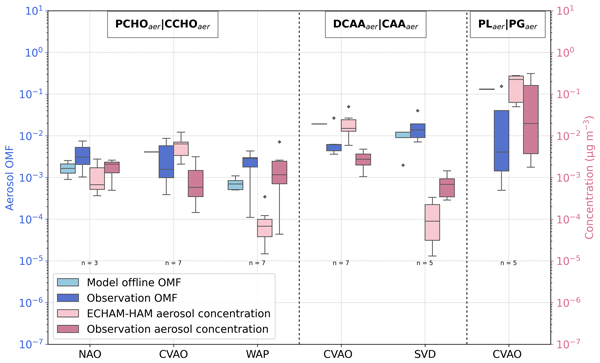
This study represents the primary marine organic aerosol (PMOA) emissions, focusing on their sea–atmosphere transfer. Using the FESOM2.1–REcoM3 model, concentrations of key organic biomolecules were estimated and integrated into the ECHAM6.3–HAM2.3 aerosol–climate model. Results highlight the influence of marine biological activity and surface winds on PMOA emissions, with reasonably good agreement with observations improving aerosol representation in the southern oceans.
Megan Malpas, Floortje van den Heuvel, Rachael H. Rhodes, Xin Yang, Shaun Miller, Manuela van Pinxteren, Sebastian Zeppenfeld, and Markus M. Frey
EGUsphere, https://doi.org/10.5194/egusphere-2026-5047, https://doi.org/10.5194/egusphere-2026-5047, 2026
This preprint is open for discussion and under review for Atmospheric Chemistry and Physics (ACP).
Short summary
Short summary
We investigated a type of aerosol that facilitates the formation of ice in clouds, to understand whether snow on sea ice lifted by strong winds in the Arctic could be a source of this aerosol. We did not observe increases in the concentration of this aerosol during these strong wind events; however, we did observe the formation of ice on aerosol at warmer temperatures. We conclude that aerosol released during strong winds is influenced by both snow sublimation and transport from lower latitudes.
Salem Ibrahim Salem, Andre Valente, Shubha Sathyendranath, Andrei Chuprin, Théo Renard, Jaime Pitarch, Ruth Airs, Moreno Ana, Maria-Manuel Angelico, David Antoine, Robert Arnone, Florinda Artuso, Paulo O. Oliveira, William Balch, Kathryn Barker, Ray Barlow, Simon Bélanger, Marco Bellacicco, Jean-François Berthon, Şükrü Beşiktepe, Francesco Bignami, Yngve Borsheim, Astrid Bracher, Federica Braga, Vittorio Brando, Robert J. W. Brewin, Vanda Brotas, Elisabetta Canuti, Francisco P. Chavez, Andrés Cianca, Hervé Claustre, Lesley Clementson, Simone Colella, Raul Costa, Cristina Nunes, Richard Crout, Emmanuel Devred, Annalisa Di Cicco, Federico Falcini, Ivan Farace, Afonso Ferreira, Scott Freeman, Robert Frouin, Carlos García-Soto, Isabella Giardina, Stuart W. Gibb, Arthur Gleason, Ralf Goericke, Richard Gould, Michael Grant, Nathalie Guillocheau, Hiroto Higa, Stanford B. Hooker, Chuamin Hu, Joji Ishizaka, Thomas Jackson, Mati Kahru, Milton Kampel, Bokyung Kim, Holger Klein, Piotr Kowalczuk, Susanne Kratzer, Raphael Kudela, Antonia Lai, Rosario Lavezza, Jesus Ledesma, Huiwon Lee, Steven Lohrenz, Hubert Loisel, Vivian Lutz, Antonio Mannino, Francesca Margiotta, Victor Martinez-Vicente, Salvatore Marullo, Luca Massi, Patricia Matrai, Atsushi Matsuoka, David McKee, Chiara Melillo, Carlos B. Mendes, Brian G. Mitchell, Tiffany Moisan, Enrique Montes, Frank Muller-Karger, Aimee Neeley, Michael Novak, Leonie O'Dowd, Michael Ondrusek, Emanuele Organelli, Heeyoon Park, Trevor Platt, Francesca Polonelli, Alex Poulton, Mariella Ragni, Michel Repecaud, Maurizio Ribera d’Alcalà, Tamara Rodriguez-Ramos, Rüdiger Röttgers, Manuel Ruiz-Villarreal, Michela Sammartino, Rosalia Santoleri, Gian Marco Scarpa, Thomas Schroeder, Valeria Segura, Timothy Smyth, Denise Smythe-Wright, Heidi M. Sosik, Joanna Stoń-Egiert, Malcolm Taberner, Jing Tan, Rob Thomas, Crystal Thomas, Gavin Tilstone, Andreia Tracana, Michael Twardowski, Vincenzo Vellucci, Gianluca Volpe, Kenneth Voss, Jeremy Werdell, Marcel Wernand, Bozena Wojtasiewicz, Simon Wright, Sunmi Yang, Giuseppe Zibordi, Maria Laura Zoffoli, and Steve Groom
Earth Syst. Sci. Data Discuss., https://doi.org/10.5194/essd-2026-539, https://doi.org/10.5194/essd-2026-539, 2026
Preprint under review for ESSD
Short summary
Short summary
This paper presents the fourth version of the ESA Ocean Colour Climate Change Initiative global in situ bio-optical database. The updated compilation combines observations from many international data sources collected between 1996 and 2025 and includes major expansions in coverage and variables. The dataset provides a consistent reference for validating satellite ocean-colour products and supports algorithm development and long-term climate studies.
Friederike Keil, Markus Quante, Bernd Heinold, and Volker Matthias
Atmos. Chem. Phys., 26, 11561–11582, https://doi.org/10.5194/acp-26-11561-2026, https://doi.org/10.5194/acp-26-11561-2026, 2026
Short summary
Short summary
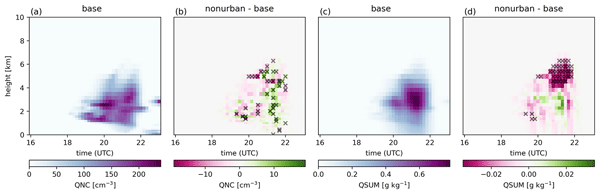
Using model simulations, we studied convective weather events to see how urban aerosol emissions influence cloud microphysics and precipitation. By tracing urban air volumes from convective clouds back to their emission sources, we could isolate the effects of emissions. The results show that urban emissions affect precipitation differently depending on the meteorological situation, highlighting the complex and case-dependent role of cities in shaping local rainfall.
Pascal Kunze, Bernd Heinold, and Ina Tegen
EGUsphere, https://doi.org/10.5194/egusphere-2026-2121, https://doi.org/10.5194/egusphere-2026-2121, 2026
Short summary
Short summary
Dust emission is mostly driven by wind speed and is often linked to convective events. However, the resolution of current climate models cannot resolve these events, which leads to uncertainties in dust emission modelling. This study compares global dust emissions in high-resolution and low-resolution models and shows large differences across major dust source regions. The results highlight that representing convection more realistically is crucial for improving global dust predictions.

Asta C. Heidemann, Alexander Hayward, Philipp Assmy, Atreya Basu, Astrid Bracher, Giulia Castellani, Giacomo Ditullio, Katarzyna Dragańska-Deja, Amane Fujiwara, Glaucia Moreira Fragoso, Jacob Høyer, Jiwoon Hwang, Morten Iversen, Anabel von Jackowski, Thomas Juul-Pedersen, Piotr Kowalczuk, Youngju Lee, Maria A. van Leeuwe, Atsushi Matsuoka, Alenya Merz, Christopher John Mundy, Else Ostermann, Ilka Peeken, Matt Pinkerton, Joanna Stoń-Egiert, Jacqueline Stefels, Antonia U. Thielecke, Gaëlle Veyssiere, Hongyan Xi, Eun Jin Yang, and Rafael Gonçalves-Araujo
Earth Syst. Sci. Data, 18, 5505–5529, https://doi.org/10.5194/essd-18-5505-2026, https://doi.org/10.5194/essd-18-5505-2026, 2026
Short summary
Short summary
Algal pigments are widely used to quantify algal biomass and composition. These organisms form the basis of marine food webs and are vital for the wider ecosystem. Here, we present a pan-Arctic dataset of algal pigments, containing 10 798 measurements collected between 2000 and 2024. This publicly available dataset represents an international collaborative effort and provides an important resource for assessing environmental change and advancing future Arctic ecological and modelling studies.
Sofía Gómez Maqueo Anaya, Sudharaj Aryasree, Konrad Kandler, Eduardo José dos Santos Souza, Khanneh Wadinga Fomba, Dietrich Althausen, Maria Kezoudi, Matthias Faust, Bernd Heinold, Ina Tegen, Moritz Haarig, Holger Baars, and Kerstin Schepanski
Atmos. Chem. Phys., 26, 9929–9966, https://doi.org/10.5194/acp-26-9929-2026, https://doi.org/10.5194/acp-26-9929-2026, 2026
Short summary
Short summary
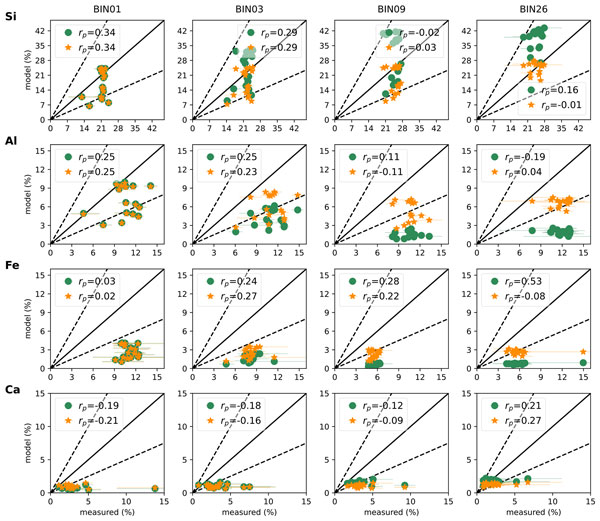
During two 2022 measurement campaigns in Cape Verde, Saharan dust aerosols were collected and analyzed for mineral composition. Mineralogy is crucial for dust–radiation and dust–cloud interactions. We improve dust representation in an atmospheric model by refining the translation of soil into aerosol particle size distributions. Validation with mineral and elemental measurements shows improved representation of some minerals and reveals biases missed by mineral-only comparisons.
Bernd Heinold, Philipp Weiss, Sadhitro De, Anne Kubin, Jason Müller, Fabian Senf, Philip Stier, and Ina Tegen
Geosci. Model Dev., 19, 6167–6187, https://doi.org/10.5194/gmd-19-6167-2026, https://doi.org/10.5194/gmd-19-6167-2026, 2026
Short summary
Short summary
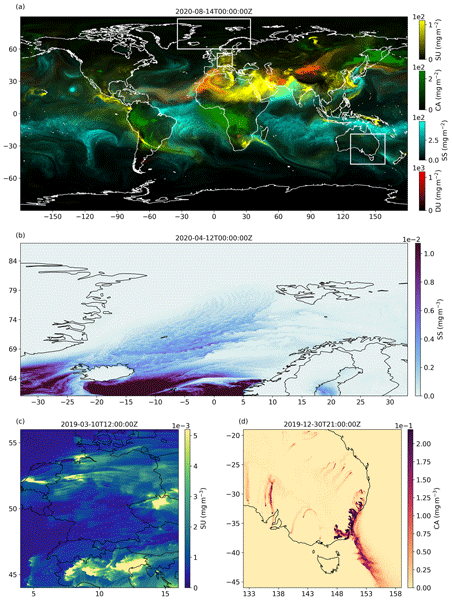
Understanding climate effects of airborne particles requires computer models that can represent small-scale dynamics. We introduce a new regional configuration of a kilometre-scale aerosol–climate model and apply it to air pollution in Central Europe, sea spray in the Atlantic Arctic, and smoke and dust over Australia. The simulations reproduce key particle patterns and variability, but also reveal limitations due to simplified sources and chemistry. The results guide future model improvements.
Friederike Keil, Markus Quante, Bernd Heinold, and Volker Matthias
EGUsphere, https://doi.org/10.5194/egusphere-2026-2934, https://doi.org/10.5194/egusphere-2026-2934, 2026
Short summary
Short summary
Using simulations of two differing rain events, we investigated how sensitive convective precipitation is to urban emission levels by varying emission strengths across a wide range. Low emissions produce only modest effects, but high levels can trigger systematic changes, including substantial increases in ice content and precipitation intensity accompanied by spatial and temporal shifts. The magnitude of these responses depends critically on the prevailing meteorological conditions.
Babu Suja Arun, Thomas Müller, Mira L. Pöhlker, Andreas Held, Christopher Pöhlker, Manuela van Pinxteren, Yifan Yang, Sabine Lüchtrath, Andreas Walbröl, Janna E. Rückert, Philipp Oehlke, Maik Merkel, and Birgit Wehner
Atmos. Chem. Phys., 26, 7287–7310, https://doi.org/10.5194/acp-26-7287-2026, https://doi.org/10.5194/acp-26-7287-2026, 2026
Short summary
Short summary
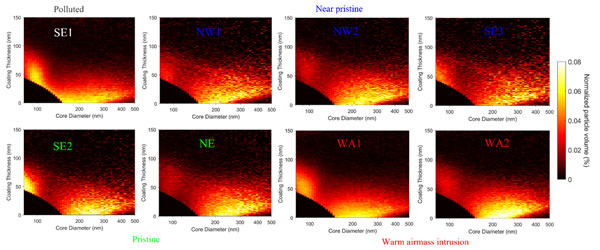
Black carbon (BC) aerosols absorb solar radiation and perturb the Arctic energy budget, yet in-situ studies of their microphysical properties and mixing state in the Arctic remain scarce. Based on observations from a shipborne expedition in the Arctic Ocean, we found substantial BC concentrations and showed that warm airmass intrusions enhanced BC levels. Aged BC exhibited enhanced light absorption. These findings will help improve the representation of BC in climate models.
Sebastian Zeppenfeld, Jonas Schaefer, Christian Pilz, Kerstin Ebell, Moritz Zeising, Frank Stratmann, Holger Siebert, Birgit Wehner, Matthias Wietz, Astrid Bracher, and Manuela van Pinxteren
Atmos. Chem. Phys., 26, 7235–7260, https://doi.org/10.5194/acp-26-7235-2026, https://doi.org/10.5194/acp-26-7235-2026, 2026
Short summary
Short summary
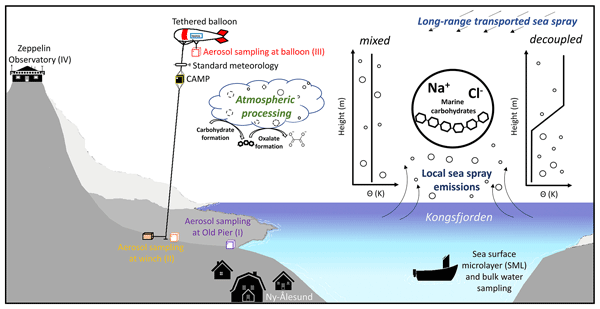
Sea spray aerosol transports inorganic salts and carbohydrates from the ocean into the atmosphere. In this field study conducted in Svalbard, we found that carbohydrates reach elevated altitudes that are relevant for cloud formation and properties.
Olenka Jibaja Valderrama, Daniele Scheres Firak, Thomas Schaefer, Manuela van Pinxteren, Khanneh Wadinga Fomba, and Hartmut Herrmann
Biogeosciences, 23, 1965–1985, https://doi.org/10.5194/bg-23-1965-2026, https://doi.org/10.5194/bg-23-1965-2026, 2026
Short summary
Short summary
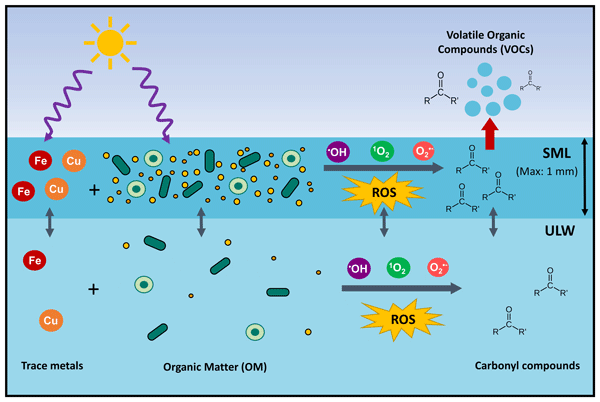
The present study explores the influence of biological activity in the photochemistry of the sea-surface microlayer (SML) and its implications for the emission of volatile organic compounds (VOCs) to the marine atmosphere. Experimental evidence of enhanced photochemical activity of carbonyl compounds in the SML is provided, particularly in periods of higher biological productivity, thereby offering new insights to integrate biological processes and photochemistry in the air-sea boundary.
Moritz Zeising, Laurent Oziel, Silke Thoms, Özgür Gürses, Judith Hauck, Bernd Heinold, Svetlana N. Losa, Manuela van Pinxteren, Christoph Völker, Sebastian Zeppenfeld, and Astrid Bracher
Geosci. Model Dev., 19, 2077–2109, https://doi.org/10.5194/gmd-19-2077-2026, https://doi.org/10.5194/gmd-19-2077-2026, 2026
Short summary
Short summary
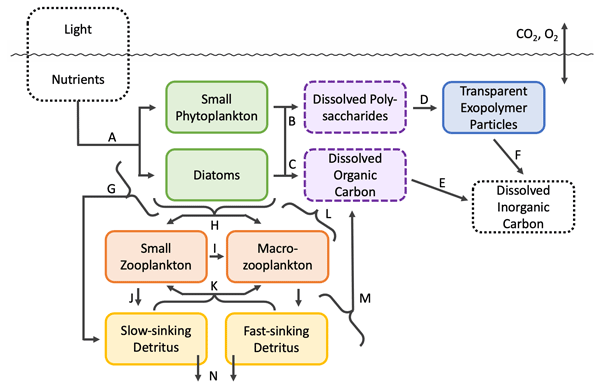
We assess the implementation of additional organic carbon pathways into a global setup of a numerical model, which simulates the ocean circulation, sea ice, and biogeochemical processes. With a focus on the Arctic Ocean, this model tracks the temporal and spatial dynamics of phytoplankton, exudation of organic carbon, and its aggregation to so-called transparent exopolymer particles. We evaluate the simulation using measurements from ship-based and remote-sensing campaigns in the Arctic Ocean.

Amavi Silva, Surandokht Nikzad, Theresa Barthelmeß, Anja Engel, Hartmut Herrmann, Manuela van Pinxteren, Kai Wirtz, Oliver Wurl, and Markus Schartau
Biogeosciences, 23, 1697–1718, https://doi.org/10.5194/bg-23-1697-2026, https://doi.org/10.5194/bg-23-1697-2026, 2026
Short summary
Short summary
We conducted the first meta-analysis combining marine and freshwater studies to understand organic matter enrichment in the surface microlayer. Nitrogen-rich, particulate compounds are often enriched, with patterns varying by multiple factors. We recommend tracking both absolute concentrations and normalized enrichment patterns to better assess ecological conditions. Our study also introduces improved statistical methods for analyzing and comparing surface microlayer data.

Ehsan Mehdipour, Hongyan Xi, Alexander Barth, Aida Alvera-Azcárate, Adalbert Wilhelm, and Astrid Bracher
Geosci. Model Dev., 19, 1619–1643, https://doi.org/10.5194/gmd-19-1619-2026, https://doi.org/10.5194/gmd-19-1619-2026, 2026
Short summary
Short summary
Phytoplankton are vital for marine ecosystems and nutrient cycling, detectable by optical satellites. Data gaps caused by clouds and other non-optimal conditions limit comprehensive analyses like trend monitoring. This study evaluated DINCAE and DINEOF gap-filling methods for reconstructing chlorophyll a datasets, including total chlorophyll a and five major phytoplankton groups. Both methods showed robust reconstruction capabilities, aiding pattern detection and long-term ocean colour analysis.
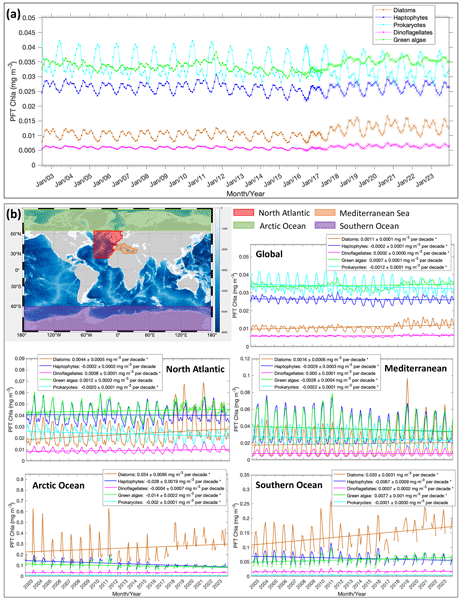
Hongyan Xi, Marine Bretagnon, Ehsan Mehdipour, Julien Demaria, Antoine Mangin, and Astrid Bracher
State Planet, 6-osr9, 7, https://doi.org/10.5194/sp-6-osr9-7-2025, https://doi.org/10.5194/sp-6-osr9-7-2025, 2025
Short summary
Short summary
To better understand the marine phytoplankton variability on different scales in both space and time, this study proposes a machine-learning-based scheme to provide continuous and consistent long-term observations of various phytoplankton groups from space on a global scale, which enables time series analysis for further trend and anomaly investigations. This study provides an essential ocean variable to help assess the ocean health in the biogeochemical aspect.
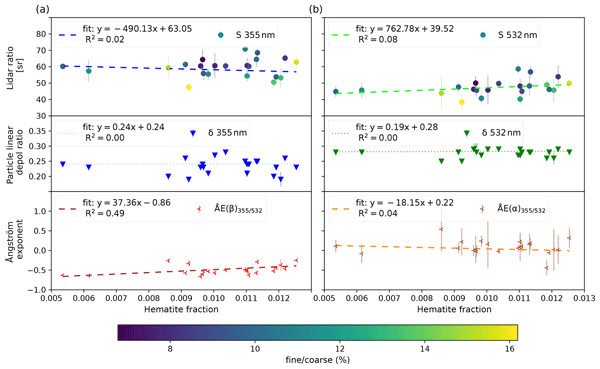
Sofía Gómez Maqueo Anaya, Dietrich Althausen, Julian Hofer, Moritz Haarig, Ulla Wandinger, Bernd Heinold, Ina Tegen, Matthias Faust, Holger Baars, Albert Ansmann, Ronny Engelmann, Annett Skupin, Birgit Heese, and Kerstin Schepanski
Atmos. Chem. Phys., 25, 9737–9764, https://doi.org/10.5194/acp-25-9737-2025, https://doi.org/10.5194/acp-25-9737-2025, 2025
Short summary
Short summary
This study investigates how hematite in Sahara dust affects how dust particles interact with radiation. Using lidar data from Cabo Verde (2021–2022) and hematite content from atmospheric model simulations, the results show that a higher hematite fraction leads to a decrease in the particle backscattering coefficients in a spectrally different way. These findings can improve the representation of mineral dust in climate models, particularly regarding their radiative effect.
Anisbel Leon-Marcos, Moritz Zeising, Manuela van Pinxteren, Sebastian Zeppenfeld, Astrid Bracher, Elena Barbaro, Anja Engel, Matteo Feltracco, Ina Tegen, and Bernd Heinold
Geosci. Model Dev., 18, 4183–4213, https://doi.org/10.5194/gmd-18-4183-2025, https://doi.org/10.5194/gmd-18-4183-2025, 2025
Short summary
Short summary
This study represents the primary marine organic aerosol (PMOA) emissions, focusing on their sea–atmosphere transfer. Using the FESOM2.1–REcoM3 model, concentrations of key organic biomolecules were estimated and integrated into the ECHAM6.3–HAM2.3 aerosol–climate model. Results highlight the influence of marine biological activity and surface winds on PMOA emissions, with reasonably good agreement with observations improving aerosol representation in the southern oceans.
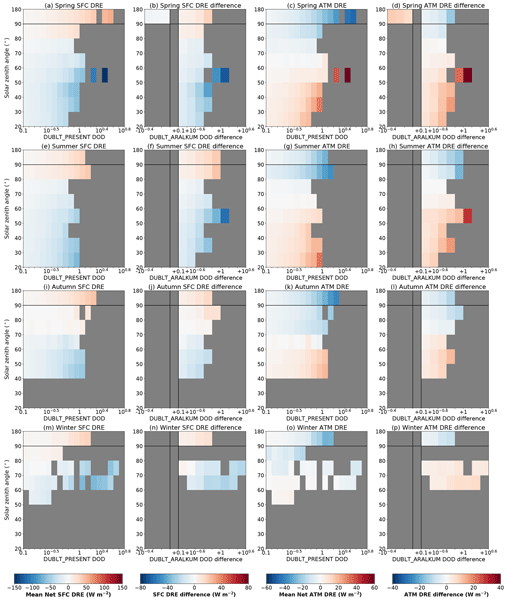
Jamie R. Banks, Bernd Heinold, and Kerstin Schepanski
Atmos. Chem. Phys., 24, 11451–11475, https://doi.org/10.5194/acp-24-11451-2024, https://doi.org/10.5194/acp-24-11451-2024, 2024
Short summary
Short summary
The Aralkum is a new desert in Central Asia formed by the desiccation of the Aral Sea. This has created a source of atmospheric dust, with implications for the balance of solar and thermal radiation. Simulating these effects using a dust transport model, we find that Aralkum dust adds radiative cooling effects to the surface and atmosphere on average but also adds heating events. Increases in surface pressure due to Aralkum dust strengthen the Siberian High and weaken the summer Asian heat low.
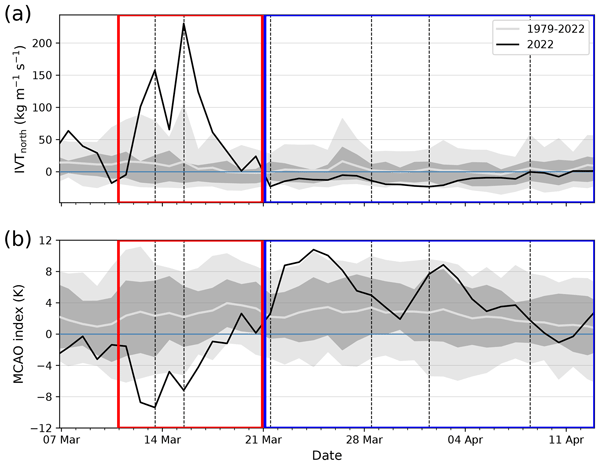
Andreas Walbröl, Janosch Michaelis, Sebastian Becker, Henning Dorff, Kerstin Ebell, Irina Gorodetskaya, Bernd Heinold, Benjamin Kirbus, Melanie Lauer, Nina Maherndl, Marion Maturilli, Johanna Mayer, Hanno Müller, Roel A. J. Neggers, Fiona M. Paulus, Johannes Röttenbacher, Janna E. Rückert, Imke Schirmacher, Nils Slättberg, André Ehrlich, Manfred Wendisch, and Susanne Crewell
Atmos. Chem. Phys., 24, 8007–8029, https://doi.org/10.5194/acp-24-8007-2024, https://doi.org/10.5194/acp-24-8007-2024, 2024
Short summary
Short summary
To support the interpretation of the data collected during the HALO-(AC)3 campaign, which took place in the North Atlantic sector of the Arctic from 7 March to 12 April 2022, we analyze how unusual the weather and sea ice conditions were with respect to the long-term climatology. From observations and ERA5 reanalysis, we found record-breaking warm air intrusions and a large variety of marine cold air outbreaks. Sea ice concentration was mostly within the climatological interquartile range.
Sofía Gómez Maqueo Anaya, Dietrich Althausen, Matthias Faust, Holger Baars, Bernd Heinold, Julian Hofer, Ina Tegen, Albert Ansmann, Ronny Engelmann, Annett Skupin, Birgit Heese, and Kerstin Schepanski
Geosci. Model Dev., 17, 1271–1295, https://doi.org/10.5194/gmd-17-1271-2024, https://doi.org/10.5194/gmd-17-1271-2024, 2024
Short summary
Short summary
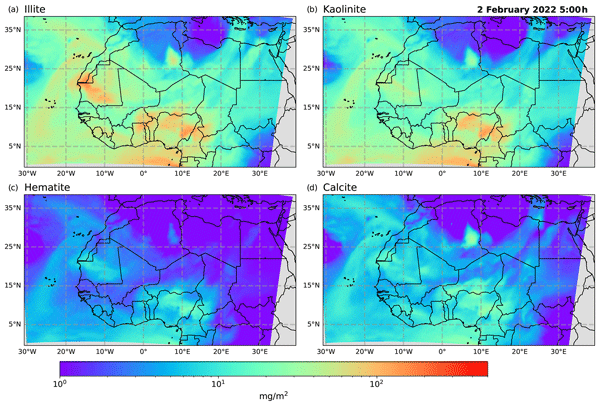
Mineral dust aerosol particles vary greatly in their composition depending on source region, which leads to different physicochemical properties. Most atmosphere–aerosol models consider mineral dust aerosols to be compositionally homogeneous, which ultimately increases model uncertainty. Here, we present an approach to explicitly consider the heterogeneity of the mineralogical composition for simulations of the Saharan atmospheric dust cycle with regard to dust transport towards the Atlantic.
Sebastian Zeppenfeld, Manuela van Pinxteren, Markus Hartmann, Moritz Zeising, Astrid Bracher, and Hartmut Herrmann
Atmos. Chem. Phys., 23, 15561–15587, https://doi.org/10.5194/acp-23-15561-2023, https://doi.org/10.5194/acp-23-15561-2023, 2023
Short summary
Short summary
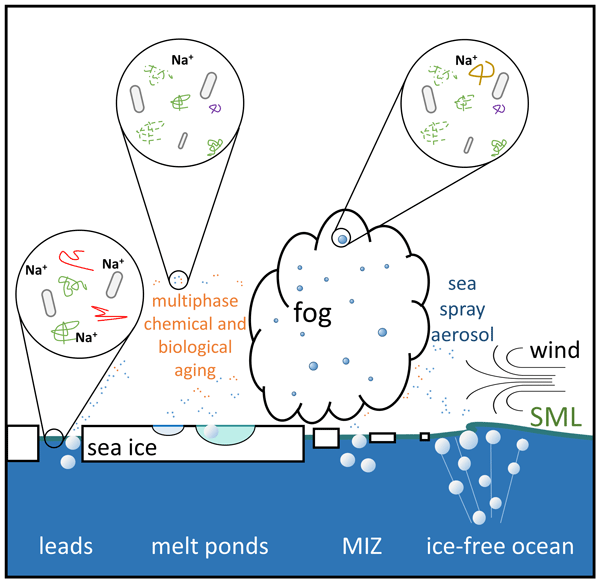
Marine carbohydrates are produced in the surface of the ocean, enter the atmophere as part of sea spray aerosol particles, and potentially contribute to the formation of fog and clouds. Here, we present the results of a sea–air transfer study of marine carbohydrates conducted in the high Arctic. Besides a chemo-selective transfer, we observed a quick atmospheric aging of carbohydrates, possibly as a result of both biotic and abiotic processes.
Aleksandra Cherkasheva, Rustam Manurov, Piotr Kowalczuk, Alexandra N. Loginova, Monika Zabłocka, and Astrid Bracher
EGUsphere, https://doi.org/10.5194/egusphere-2023-2495, https://doi.org/10.5194/egusphere-2023-2495, 2023
Preprint archived
Short summary
Short summary
We aimed to improve the quality of regional Greenland Sea primary production estimates. Seventy two versions of primary production model setups were tested against field data. Best performing models had local biomass and light absorption profiles. Thus by using local parametrizations for these parameters we can improve Arctic primary production model performance. Annual Greenland Sea basin estimates are larger than previously reported.
Michael Weger and Bernd Heinold
Atmos. Chem. Phys., 23, 13769–13790, https://doi.org/10.5194/acp-23-13769-2023, https://doi.org/10.5194/acp-23-13769-2023, 2023
Short summary
Short summary
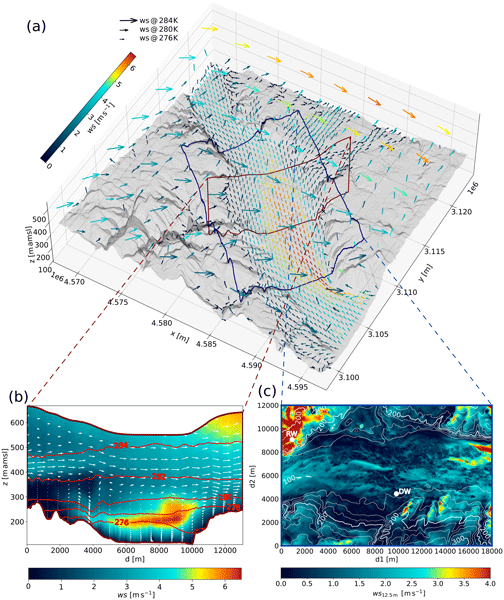
This study investigates the effects of complex terrain on air pollution trapping using a numerical model which simulates the dispersion of emissions under real meteorological conditions. The additionally simulated aerosol age allows us to distinguish areas that accumulate aerosol over time from areas that are more influenced by fresh emissions. The Dresden Basin, a widened section of the Elbe Valley in eastern Germany, is selected as the target area in a case study to demonstrate the concept.
Christoph Heinze, Thorsten Blenckner, Peter Brown, Friederike Fröb, Anne Morée, Adrian L. New, Cara Nissen, Stefanie Rynders, Isabel Seguro, Yevgeny Aksenov, Yuri Artioli, Timothée Bourgeois, Friedrich Burger, Jonathan Buzan, B. B. Cael, Veli Çağlar Yumruktepe, Melissa Chierici, Christopher Danek, Ulf Dieckmann, Agneta Fransson, Thomas Frölicher, Giovanni Galli, Marion Gehlen, Aridane G. González, Melchor Gonzalez-Davila, Nicolas Gruber, Örjan Gustafsson, Judith Hauck, Mikko Heino, Stephanie Henson, Jenny Hieronymus, I. Emma Huertas, Fatma Jebri, Aurich Jeltsch-Thömmes, Fortunat Joos, Jaideep Joshi, Stephen Kelly, Nandini Menon, Precious Mongwe, Laurent Oziel, Sólveig Ólafsdottir, Julien Palmieri, Fiz F. Pérez, Rajamohanan Pillai Ranith, Juliano Ramanantsoa, Tilla Roy, Dagmara Rusiecka, J. Magdalena Santana Casiano, Yeray Santana-Falcón, Jörg Schwinger, Roland Séférian, Miriam Seifert, Anna Shchiptsova, Bablu Sinha, Christopher Somes, Reiner Steinfeldt, Dandan Tao, Jerry Tjiputra, Adam Ulfsbo, Christoph Völker, Tsuyoshi Wakamatsu, and Ying Ye
Biogeosciences Discuss., https://doi.org/10.5194/bg-2023-182, https://doi.org/10.5194/bg-2023-182, 2023
Revised manuscript not accepted
Short summary
Short summary
For assessing the consequences of human-induced climate change for the marine realm, it is necessary to not only look at gradual changes but also at abrupt changes of environmental conditions. We summarise abrupt changes in ocean warming, acidification, and oxygen concentration as the key environmental factors for ecosystems. Taking these abrupt changes into account requires greenhouse gas emissions to be reduced to a larger extent than previously thought to limit respective damage.
Hongyan Xi, Marine Bretagnon, Svetlana N. Losa, Vanda Brotas, Mara Gomes, Ilka Peeken, Leonardo M. A. Alvarado, Antoine Mangin, and Astrid Bracher
State Planet, 1-osr7, 5, https://doi.org/10.5194/sp-1-osr7-5-2023, https://doi.org/10.5194/sp-1-osr7-5-2023, 2023
Short summary
Short summary
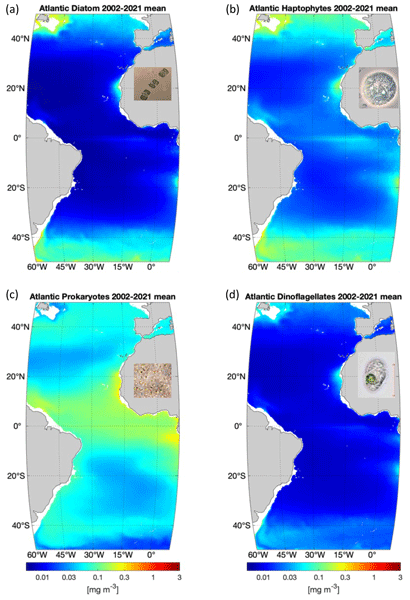
Continuous monitoring of phytoplankton groups using satellite data is crucial for understanding global ocean phytoplankton variability on different scales in both space and time. This study focuses on four important phytoplankton groups in the Atlantic Ocean to investigate their trend, anomaly and phenological characteristics both over the whole region and at subscales. This study paves the way to promote potentially important ocean monitoring indicators to help sustain the ocean health.
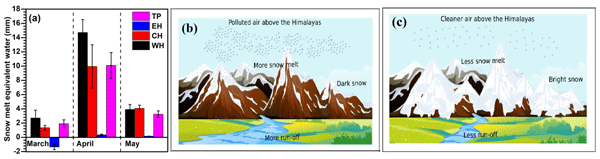
Suvarna Fadnavis, Bernd Heinold, T. P. Sabin, Anne Kubin, Katty Huang, Alexandru Rap, and Rolf Müller
Atmos. Chem. Phys., 23, 10439–10449, https://doi.org/10.5194/acp-23-10439-2023, https://doi.org/10.5194/acp-23-10439-2023, 2023
Short summary
Short summary
The influence of the COVID-19 lockdown on the Himalayas caused increases in snow cover and a decrease in runoff, ultimately leading to an enhanced snow water equivalent. Our findings highlight that, out of the two processes causing a retreat of Himalayan glaciers – (1) slow response to global climate change and (2) fast response to local air pollution – a policy action on the latter is more likely to be within the reach of possible policy action to help billions of people in southern Asia.
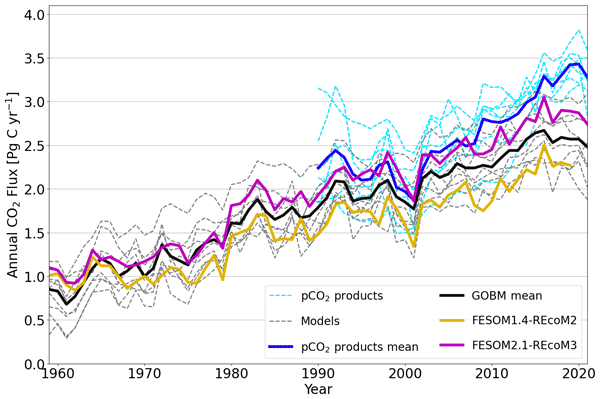
Özgür Gürses, Laurent Oziel, Onur Karakuş, Dmitry Sidorenko, Christoph Völker, Ying Ye, Moritz Zeising, Martin Butzin, and Judith Hauck
Geosci. Model Dev., 16, 4883–4936, https://doi.org/10.5194/gmd-16-4883-2023, https://doi.org/10.5194/gmd-16-4883-2023, 2023
Short summary
Short summary
This paper assesses the biogeochemical model REcoM3 coupled to the ocean–sea ice model FESOM2.1. The model can be used to simulate the carbon uptake or release of the ocean on timescales of several hundred years. A detailed analysis of the nutrients, ocean productivity, and ecosystem is followed by the carbon cycle. The main conclusion is that the model performs well when simulating the observed mean biogeochemical state and variability and is comparable to other ocean–biogeochemical models.
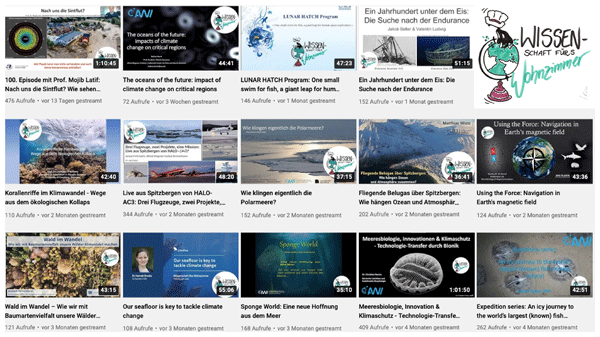
Nicolas Stoll, Matthias Wietz, Stephan Juricke, Franziska Pausch, Corina Peter, Miriam Seifert, Jana C. Massing, Moritz Zeising, Rebecca A. McPherson, Melissa Käß, and Björn Suckow
Polarforschung, 91, 31–43, https://doi.org/10.5194/polf-91-31-2023, https://doi.org/10.5194/polf-91-31-2023, 2023
Short summary
Short summary
Global crises, such as climate change and the COVID-19 pandemic, show the importance of communicating science to the public. We introduce the YouTube channel "Wissenschaft fürs Wohnzimmer", which livestreams presentations on climate-related topics weekly and is accessible to all. The project encourages interaction between scientists and the public and has been running successfully for over 2 years. We present the concept, what we have learnt, and the challenges after 100 streamed episodes.
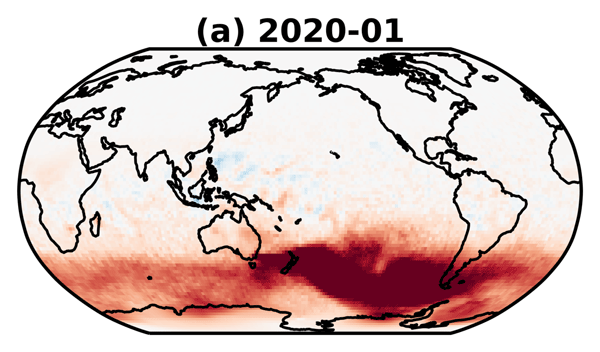
Fabian Senf, Bernd Heinold, Anne Kubin, Jason Müller, Roland Schrödner, and Ina Tegen
Atmos. Chem. Phys., 23, 8939–8958, https://doi.org/10.5194/acp-23-8939-2023, https://doi.org/10.5194/acp-23-8939-2023, 2023
Short summary
Short summary
Wildfire smoke is a significant source of airborne atmospheric particles that can absorb sunlight. Extreme fires in particular, such as those during the 2019–2020 Australian wildfire season (Black Summer fires), can considerably affect our climate system. In the present study, we investigate the various effects of Australian smoke using a global climate model to clarify how the Earth's atmosphere, including its circulation systems, adjusted to the extraordinary amount of Australian smoke.
Manuela van Pinxteren, Sebastian Zeppenfeld, Khanneh Wadinga Fomba, Nadja Triesch, Sanja Frka, and Hartmut Herrmann
Atmos. Chem. Phys., 23, 6571–6590, https://doi.org/10.5194/acp-23-6571-2023, https://doi.org/10.5194/acp-23-6571-2023, 2023
Short summary
Short summary
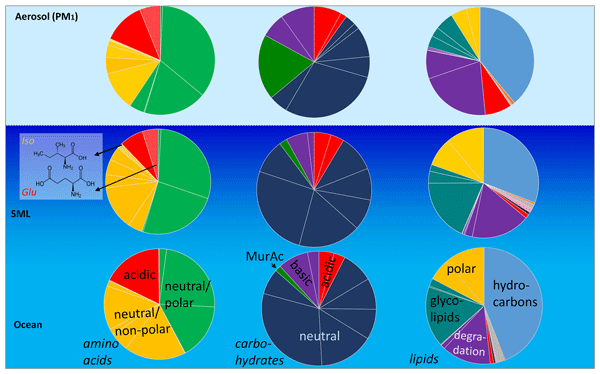
Important marine organic carbon compounds were identified in the Atlantic Ocean and marine aerosol particles. These compounds were strongly enriched in the atmosphere. Their enrichment was, however, not solely explained via sea-to-air transfer but also via atmospheric in situ formation. The identified compounds constituted about 50 % of the organic carbon on the aerosol particles, and a pronounced coupling between ocean and atmosphere for this oligotrophic region could be concluded.
Martine Lizotte, Bennet Juhls, Atsushi Matsuoka, Philippe Massicotte, Gaëlle Mével, David Obie James Anikina, Sofia Antonova, Guislain Bécu, Marine Béguin, Simon Bélanger, Thomas Bossé-Demers, Lisa Bröder, Flavienne Bruyant, Gwénaëlle Chaillou, Jérôme Comte, Raoul-Marie Couture, Emmanuel Devred, Gabrièle Deslongchamps, Thibaud Dezutter, Miles Dillon, David Doxaran, Aude Flamand, Frank Fell, Joannie Ferland, Marie-Hélène Forget, Michael Fritz, Thomas J. Gordon, Caroline Guilmette, Andrea Hilborn, Rachel Hussherr, Charlotte Irish, Fabien Joux, Lauren Kipp, Audrey Laberge-Carignan, Hugues Lantuit, Edouard Leymarie, Antonio Mannino, Juliette Maury, Paul Overduin, Laurent Oziel, Colin Stedmon, Crystal Thomas, Lucas Tisserand, Jean-Éric Tremblay, Jorien Vonk, Dustin Whalen, and Marcel Babin
Earth Syst. Sci. Data, 15, 1617–1653, https://doi.org/10.5194/essd-15-1617-2023, https://doi.org/10.5194/essd-15-1617-2023, 2023
Short summary
Short summary
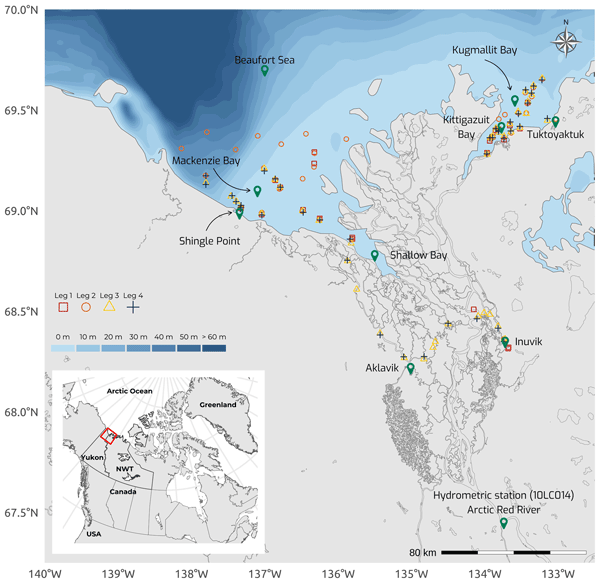
Permafrost thaw in the Mackenzie Delta region results in the release of organic matter into the coastal marine environment. What happens to this carbon-rich organic matter as it transits along the fresh to salty aquatic environments is still underdocumented. Four expeditions were conducted from April to September 2019 in the coastal area of the Beaufort Sea to study the fate of organic matter. This paper describes a rich set of data characterizing the composition and sources of organic matter.
André Valente, Shubha Sathyendranath, Vanda Brotas, Steve Groom, Michael Grant, Thomas Jackson, Andrei Chuprin, Malcolm Taberner, Ruth Airs, David Antoine, Robert Arnone, William M. Balch, Kathryn Barker, Ray Barlow, Simon Bélanger, Jean-François Berthon, Şükrü Beşiktepe, Yngve Borsheim, Astrid Bracher, Vittorio Brando, Robert J. W. Brewin, Elisabetta Canuti, Francisco P. Chavez, Andrés Cianca, Hervé Claustre, Lesley Clementson, Richard Crout, Afonso Ferreira, Scott Freeman, Robert Frouin, Carlos García-Soto, Stuart W. Gibb, Ralf Goericke, Richard Gould, Nathalie Guillocheau, Stanford B. Hooker, Chuamin Hu, Mati Kahru, Milton Kampel, Holger Klein, Susanne Kratzer, Raphael Kudela, Jesus Ledesma, Steven Lohrenz, Hubert Loisel, Antonio Mannino, Victor Martinez-Vicente, Patricia Matrai, David McKee, Brian G. Mitchell, Tiffany Moisan, Enrique Montes, Frank Muller-Karger, Aimee Neeley, Michael Novak, Leonie O'Dowd, Michael Ondrusek, Trevor Platt, Alex J. Poulton, Michel Repecaud, Rüdiger Röttgers, Thomas Schroeder, Timothy Smyth, Denise Smythe-Wright, Heidi M. Sosik, Crystal Thomas, Rob Thomas, Gavin Tilstone, Andreia Tracana, Michael Twardowski, Vincenzo Vellucci, Kenneth Voss, Jeremy Werdell, Marcel Wernand, Bozena Wojtasiewicz, Simon Wright, and Giuseppe Zibordi
Earth Syst. Sci. Data, 14, 5737–5770, https://doi.org/10.5194/essd-14-5737-2022, https://doi.org/10.5194/essd-14-5737-2022, 2022
Short summary
Short summary
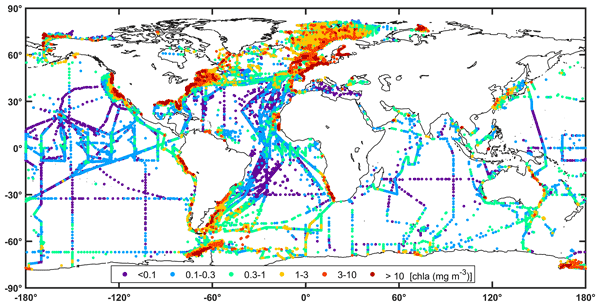
A compiled set of in situ data is vital to evaluate the quality of ocean-colour satellite data records. Here we describe the global compilation of bio-optical in situ data (spanning from 1997 to 2021) used for the validation of the ocean-colour products from the ESA Ocean Colour Climate Change Initiative (OC-CCI). The compilation merges and harmonizes several in situ data sources into a simple format that could be used directly for the evaluation of satellite-derived ocean-colour data.

Bernd Heinold, Holger Baars, Boris Barja, Matthew Christensen, Anne Kubin, Kevin Ohneiser, Kerstin Schepanski, Nick Schutgens, Fabian Senf, Roland Schrödner, Diego Villanueva, and Ina Tegen
Atmos. Chem. Phys., 22, 9969–9985, https://doi.org/10.5194/acp-22-9969-2022, https://doi.org/10.5194/acp-22-9969-2022, 2022
Short summary
Short summary
The extreme 2019–2020 Australian wildfires produced massive smoke plumes lofted into the lower stratosphere by pyrocumulonimbus convection. Most climate models do not adequately simulate the injection height of such intense fires. By combining aerosol-climate modeling with prescribed pyroconvective smoke injection and lidar observations, this study shows the importance of the representation of the most extreme wildfire events for estimating the atmospheric energy budget.
Christian Tatzelt, Silvia Henning, André Welti, Andrea Baccarini, Markus Hartmann, Martin Gysel-Beer, Manuela van Pinxteren, Robin L. Modini, Julia Schmale, and Frank Stratmann
Atmos. Chem. Phys., 22, 9721–9745, https://doi.org/10.5194/acp-22-9721-2022, https://doi.org/10.5194/acp-22-9721-2022, 2022
Short summary
Short summary
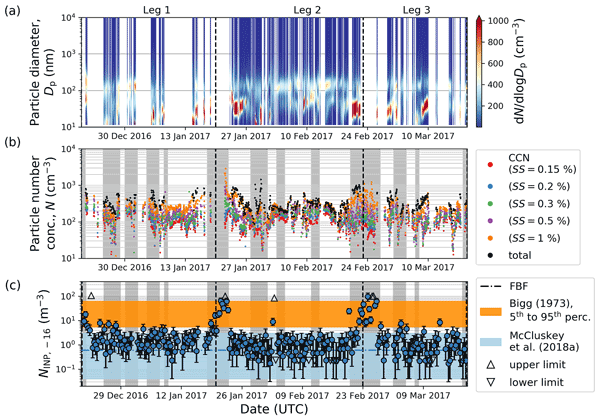
We present the abundance and origin of cloud-relevant aerosol particles in the preindustral-like conditions of the Southern Ocean (SO) during austral summer. Cloud condensation nuclei (CCN) and ice-nucleating particles (INP) were measured during a circum-Antarctic scientific cruise with in situ instrumentation and offline filter measurements, respectively. Transport processes were found to play an equally important role as local sources for both the CCN and INP population of the SO.

Lady Mateus-Fontecha, Angela Vargas-Burbano, Rodrigo Jimenez, Nestor Y. Rojas, German Rueda-Saa, Dominik van Pinxteren, Manuela van Pinxteren, Khanneh Wadinga Fomba, and Hartmut Herrmann
Atmos. Chem. Phys., 22, 8473–8495, https://doi.org/10.5194/acp-22-8473-2022, https://doi.org/10.5194/acp-22-8473-2022, 2022
Short summary
Short summary
This study reports the chemical composition of regionally representative PM2.5 in an area densely populated and substantially industrialized, located in the inter-Andean valley, with the highest sugarcane yield in the world and where sugarcane is burned and harvested year round. We found that sugarcane burning is not portrayed as a distinguishable sample composition component. Instead, the composition analysis revealed multiple associations among sugarcane burning components and other sources.
Manuela van Pinxteren, Tiera-Brandy Robinson, Sebastian Zeppenfeld, Xianda Gong, Enno Bahlmann, Khanneh Wadinga Fomba, Nadja Triesch, Frank Stratmann, Oliver Wurl, Anja Engel, Heike Wex, and Hartmut Herrmann
Atmos. Chem. Phys., 22, 5725–5742, https://doi.org/10.5194/acp-22-5725-2022, https://doi.org/10.5194/acp-22-5725-2022, 2022
Short summary
Short summary
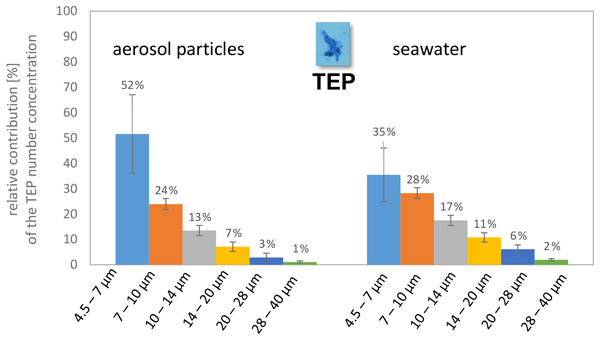
A class of marine particles (transparent exopolymer particles, TEPs) that is ubiquitously found in the world oceans was measured for the first time in ambient marine aerosol particles and marine cloud waters in the tropical Atlantic Ocean. TEPs are likely to have good properties for influencing clouds. We show that TEPs are transferred from the ocean to the marine atmosphere via sea-spray formation and our results suggest that they can also form directly in aerosol particles and in cloud water.
Michael Weger, Holger Baars, Henriette Gebauer, Maik Merkel, Alfred Wiedensohler, and Bernd Heinold
Geosci. Model Dev., 15, 3315–3345, https://doi.org/10.5194/gmd-15-3315-2022, https://doi.org/10.5194/gmd-15-3315-2022, 2022
Short summary
Short summary
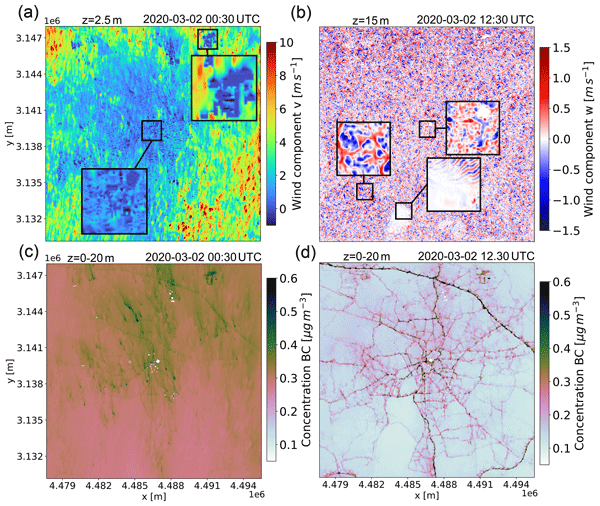
Numerical models are an important tool to assess the air quality in cities,
as they can provide near-continouos data in time and space. In this paper,
air pollution for an entire city is simulated at a high spatial resolution of 40 m.
At this spatial scale, the effects of buildings on the atmosphere,
like channeling or blocking of the air flow, are directly represented by diffuse obstacles in the used model CAIRDIO. For model validation, measurements from air-monitoring sites are used.
M. A. Soppa, D. A. Dinh, B. Silva, F. Steinmetz, L. Alvarado, and A. Bracher
Int. Arch. Photogramm. Remote Sens. Spatial Inf. Sci., XLVI-1-W1-2021, 69–72, https://doi.org/10.5194/isprs-archives-XLVI-1-W1-2021-69-2022, https://doi.org/10.5194/isprs-archives-XLVI-1-W1-2021-69-2022, 2022
Yanan Zhao, Dennis Booge, Christa A. Marandino, Cathleen Schlundt, Astrid Bracher, Elliot L. Atlas, Jonathan Williams, and Hermann W. Bange
Biogeosciences, 19, 701–714, https://doi.org/10.5194/bg-19-701-2022, https://doi.org/10.5194/bg-19-701-2022, 2022
Short summary
Short summary
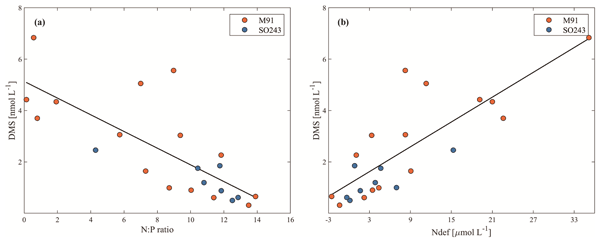
We present here, for the first time, simultaneously measured dimethylsulfide (DMS) seawater concentrations and DMS atmospheric mole fractions from the Peruvian upwelling region during two cruises in December 2012 and October 2015. Our results indicate low oceanic DMS concentrations and atmospheric DMS molar fractions in surface waters and the atmosphere, respectively. In addition, the Peruvian upwelling region was identified as an insignificant source of DMS emissions during both periods.
Nabil Deabji, Khanneh Wadinga Fomba, Souad El Hajjaji, Abdelwahid Mellouki, Laurent Poulain, Sebastian Zeppenfeld, and Hartmut Herrmann
Atmos. Chem. Phys., 21, 18147–18174, https://doi.org/10.5194/acp-21-18147-2021, https://doi.org/10.5194/acp-21-18147-2021, 2021
Short summary
Short summary
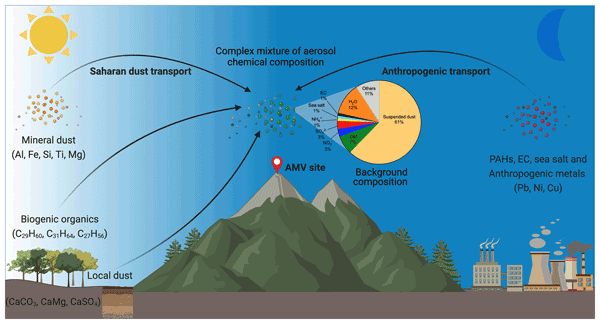
Mountain and high-altitude sites provide representative data for the lower free troposphere, various pathways for aerosol interactions, and changing boundary layer heights useful in understanding atmospheric composition. However, only few studies exist in African regions despite diversity in both natural and anthropogenic emissions. This study provides detailed atmospheric studies in the northern African high-altitude region.
Cited articles
Aksenov, Y., Ivanov, V. V., Nurser, A. J. G., Bacon, S., Polyakov, I. V., Coward, A. C., Naveira-Garabato, A. C., and Beszczynska-Moeller, A.: The Arctic Circumpolar Boundary Current, Journal of Geophysical Research, 116, C09017, https://doi.org/10.1029/2010JC006637, 2011. a
Alpert, P. A., Kilthau, W. P., O'Brien, R. E., Moffet, R. C., Gilles, M. K., Wang, B., Laskin, A., Aller, J. Y., and Knopf, D. A.: Ice-nucleating agents in sea spray aerosol identified and quantified with a holistic multimodal freezing model, Science Advances, 8, https://doi.org/10.1126/sciadv.abq6842, 2022. a
Ardyna, M. and Arrigo, K. R.: Phytoplankton dynamics in a changing Arctic Ocean, Nature Climate Change, 10, 892–903, https://doi.org/10.1038/s41558-020-0905-y, 2020. a, b, c
Arrigo, K. R. and van Dijken, G. L.: Secular trends in Arctic Ocean net primary production, Journal of Geophysical Research, 116, C09011, https://doi.org/10.1029/2011JC007151, 2011. a
Barthel, S., Tegen, I., and Wolke, R.: Do new sea spray aerosol source functions improve the results of a regional aerosol model?, Atmospheric Environment, 198, 265–278, https://doi.org/10.1016/j.atmosenv.2018.10.016, 2019. a
Bigg, E. K. and Leck, C.: Properties of the aerosol over the central Arctic Ocean, Journal of Geophysical Research-Atmospheres, 106, 32101–32109, https://doi.org/10.1029/1999JD901136, 2001a. a
Bigg, E. K. and Leck, C.: Cloud-active particles over the central Arctic Ocean, Journal of Geophysical Research-Atmospheres, 106, 32155–32166, https://doi.org/10.1029/1999JD901152, 2001b. a
Block, K., Schneider, F. A., Mülmenstädt, J., Salzmann, M., and Quaas, J.: Climate models disagree on the sign of total radiative feedback in the Arctic, Tellus A-Dynamic Meteorology and Oceanography, 72, 1696139, https://doi.org/10.1080/16000870.2019.1696139, 2020. a
Burrows, S. M., Ogunro, O., Frossard, A. A., Russell, L. M., Rasch, P. J., and Elliott, S. M.: A physically based framework for modeling the organic fractionation of sea spray aerosol from bubble film Langmuir equilibria, Atmos. Chem. Phys., 14, 13601–13629, https://doi.org/10.5194/acp-14-13601-2014, 2014. a, b, c, d, e, f, g, h
Carlson, C. A.: Production and Removal Processes, Elsevier, pp. 91–151, https://doi.org/10.1016/B978-012323841-2/50006-3, 2002. a
Cherkasheva, A., Manurov, R., Kowalczuk, P., Loginova, A. N., Zabłocka, M., and Bracher, A.: Adaptation of global primary production model to the Greenland Sea conditions: parameterization and monitoring for 1998-2022, Frontiers in Marine Science, 11, https://doi.org/10.3389/fmars.2024.1491180, 2025. a, b
Creamean, J. M., Cross, J. N., Pickart, R., McRaven, L., Lin, P., Pacini, A., Hanlon, R., Schmale, D. G., Ceniceros, J., Aydell, T., Colombi, N., Bolger, E., and DeMott, P. J.: Ice Nucleating Particles Carried From Below a Phytoplankton Bloom to the Arctic Atmosphere, Geophysical Research Letters, 46, 8572–8581, https://doi.org/10.1029/2019GL083039, 2019. a
Creamean, J. M., Barry, K., Hill, T. C. J., Hume, C., DeMott, P. J., Shupe, M. D., Dahlke, S., Willmes, S., Schmale, J., Beck, I., Hoppe, C. J. M., Fong, A., Chamberlain, E., Bowman, J., Scharien, R., and Persson, O.: Annual cycle observations of aerosols capable of ice formation in central Arctic clouds, Nature Communications, 13, 3537, https://doi.org/10.1038/s41467-022-31182-x, 2022. a, b
de Leeuw, G., Guieu, C., Arneth, A., Bellouin, N., Bopp, L., Boyd, P. W., van der Gon, H. A. C. D., Desboeufs, K. V., Dulac, F., Facchini, M. C., Gantt, B., Langmann, B., Mahowald, N. M., Marañón, E., O'Dowd, C., Olgun, N., Pulido-Villena, E., Rinaldi, M., Stephanou, E. G., and Wagener, T.: Ocean–Atmosphere Interactions of Particles, Springer, 171–246, https://doi.org/10.1007/978-3-642-25643-1_4, 2014. a
Deshpande, C. G. and Kamra, A. K.: Physical properties of the arctic summer aerosol particles in relation to sources at Ny-Alesund, Svalbard, Journal of Earth System Science, 123, 201–212, https://doi.org/10.1007/s12040-013-0373-0, 2014. a
Engel, A., Thoms, S., Riebesell, U., Rochelle-Newall, E., and Zondervan, I.: Polysaccharide aggregation as a potential sink of marine dissolved organic carbon, Nature, 428, 929–932, https://doi.org/10.1038/nature02453, 2004. a, b
Engel, A., Handel, N., Wohlers, J., Lunau, M., Grossart, H.-P., Sommer, U., and Riebesell, U.: Effects of sea surface warming on the production and composition of dissolved organic matter during phytoplankton blooms: results from a mesocosm study, Journal of Plankton Research, 33, 357–372, https://doi.org/10.1093/plankt/fbq122, 2011. a
Engel, A., Endres, S., Galgani, L., and Schartau, M.: Marvelous Marine Microgels: On the Distribution and Impact of Gel-Like Particles in the Oceanic Water-Column, Frontiers in Marine Science, 7, https://doi.org/10.3389/fmars.2020.00405, 2020. a
Ervens, B. and Amato, P.: The global impact of bacterial processes on carbon mass, Atmos. Chem. Phys., 20, 1777–1794, https://doi.org/10.5194/acp-20-1777-2020, 2020. a
Facchini, M. C., Rinaldi, M., Decesari, S., Carbone, C., Finessi, E., Mircea, M., Fuzzi, S., Ceburnis, D., Flanagan, R., Nilsson, E. D., de Leeuw, G., Martino, M., Woeltjen, J., and O'Dowd, C. D.: Primary submicron marine aerosol dominated by insoluble organic colloids and aggregates, Geophysical Research Letters, 35, https://doi.org/10.1029/2008GL034210, 2008. a, b, c
Fahlgren, C., Gómez-Consarnau, L., Zábori, J., Lindh, M. V., Krejci, R., Mårtensson, E. M., Nilsson, D., and Pinhassi, J.: Seawater mesocosm experiments in the Arctic uncover differential transfer of marine bacteria to aerosols, Environmental Microbiology Reports, 7, 460–470, https://doi.org/10.1111/1758-2229.12273, 2015. a
Fernández-Méndez, M., Katlein, C., Rabe, B., Nicolaus, M., Peeken, I., Bakker, K., Flores, H., and Boetius, A.: Photosynthetic production in the central Arctic Ocean during the record sea-ice minimum in 2012, Biogeosciences, 12, 3525–3549, https://doi.org/10.5194/bg-12-3525-2015, 2015. a
Frossard, A. A., Russell, L. M., Burrows, S. M., Elliott, S. M., Bates, T. S., and Quinn, P. K.: Sources and composition of submicron organic mass in marine aerosol particles, Journal of Geophysical Research-Atmospheres, 119, https://doi.org/10.1002/2014JD021913, 2014. a
Gantt, B. and Meskhidze, N.: The physical and chemical characteristics of marine primary organic aerosol: a review, Atmos. Chem. Phys., 13, 3979–3996, https://doi.org/10.5194/acp-13-3979-2013, 2013. a, b
Gantt, B., Meskhidze, N., Facchini, M. C., Rinaldi, M., Ceburnis, D., and O'Dowd, C. D.: Wind speed dependent size-resolved parameterization for the organic mass fraction of sea spray aerosol, Atmos. Chem. Phys., 11, 8777–8790, https://doi.org/10.5194/acp-11-8777-2011, 2011. a, b, c
Geider, R. J., Maclntyre, H. L., and Kana, T. M.: A dynamic regulatory model of phytoplanktonic acclimation to light, nutrients, and temperature, Limnology and Oceanography, 43, 679–694, https://doi.org/10.4319/lo.1998.43.4.0679, 1998. a
Gilgen, A., Huang, W. T. K., Ickes, L., Neubauer, D., and Lohmann, U.: How important are future marine and shipping aerosol emissions in a warming Arctic summer and autumn?, Atmos. Chem. Phys., 18, 10521–10555, https://doi.org/10.5194/acp-18-10521-2018, 2018. a, b
Gong, S. L.: A parameterization of sea-salt aerosol source function for sub- and super-micron particles, Global Biogeochemical Cycles, 17, https://doi.org/10.1029/2003GB002079, 2003. a
Gu, W., Xie, Z., Wei, Z., Chen, A., Jiang, B., Yue, F., and Yu, X.: Marine Fresh Carbon Pool Dominates Summer Carbonaceous Aerosols Over Arctic Ocean, Journal of Geophysical Research-Atmospheres, 128, https://doi.org/10.1029/2022JD037692, 2023. a
Guo, K., Chen, J., Yuan, J., Wang, X., Xu, S., Hou, S., and Wang, Y.: Effects of Temperature on Transparent Exopolymer Particle Production and Organic Carbon Allocation of Four Marine Phytoplankton Species, Biology, 11, 1056, https://doi.org/10.3390/biology11071056, 2022. a
Gürses, Ö., Oziel, L., Karakuş, O., Sidorenko, D., Völker, C., Ye, Y., Zeising, M., Butzin, M., and Hauck, J.: Ocean biogeochemistry in the coupled ocean–sea ice–biogeochemistry model FESOM2.1–REcoM3, Geosci. Model Dev., 16, 4883–4936, https://doi.org/10.5194/gmd-16-4883-2023, 2023. a
Harrison, W. G., Børsheim, K. Y., Li, W. K., Maillet, G. L., Pepin, P., Sakshaug, E., Skogen, M. D., and Yeats, P. A.: Phytoplankton production and growth regulation in the Subarctic North Atlantic: A comparative study of the Labrador Sea-Labrador/Newfoundland shelves and Barents/Norwegian/Greenland seas and shelves, Progress in Oceanography, 114, 26–45, https://doi.org/10.1016/j.pocean.2013.05.003, 2013. a
Hartmann, M., Gong, X., Kecorius, S., van Pinxteren, M., Vogl, T., Welti, A., Wex, H., Zeppenfeld, S., Herrmann, H., Wiedensohler, A., and Stratmann, F.: Terrestrial or marine – indications towards the origin of ice-nucleating particles during melt season in the European Arctic up to 83.7° N, Atmos. Chem. Phys., 21, 11613–11636, https://doi.org/10.5194/acp-21-11613-2021, 2021. a, b
Hawkins, L. N. and Russell, L. M.: Polysaccharides, Proteins, and Phytoplankton Fragments: Four Chemically Distinct Types of Marine Primary Organic Aerosol Classified by Single Particle Spectromicroscopy, Advances in Meteorology, 2010, 1–14, https://doi.org/10.1155/2010/612132, 2010. a
Heintzenberg, J., Leck, C., and Tunved, P.: Potential source regions and processes of aerosol in the summer Arctic, Atmos. Chem. Phys., 15, 6487–6502, https://doi.org/10.5194/acp-15-6487-2015, 2015. a
Hu, C., Yue, F., Zhan, H., Leung, K. M., Zhang, R., Gu, W., Liu, H., Chen, A., Cao, Y., Wang, X., and Xie, Z.: Homologous series of n-alkanes and fatty acids in the summer atmosphere from the Bering Sea to the western North Pacific, Atmospheric Research, 285, 106633, https://doi.org/10.1016/j.atmosres.2023.106633, 2023. a
Huang, W. T. K., Ickes, L., Tegen, I., Rinaldi, M., Ceburnis, D., and Lohmann, U.: Global relevance of marine organic aerosol as ice nucleating particles, Atmos. Chem. Phys., 18, 11423–11445, https://doi.org/10.5194/acp-18-11423-2018, 2018. a
Irish, V. E., Elizondo, P., Chen, J., Chou, C., Charette, J., Lizotte, M., Ladino, L. A., Wilson, T. W., Gosselin, M., Murray, B. J., Polishchuk, E., Abbatt, J. P. D., Miller, L. A., and Bertram, A. K.: Ice-nucleating particles in Canadian Arctic sea-surface microlayer and bulk seawater, Atmos. Chem. Phys., 17, 10583–10595, https://doi.org/10.5194/acp-17-10583-2017, 2017. a, b
Johannessen, O. M., Bengtsson, L., Miles, M. W., Kuzmina, S. I., Semenov, V. A., Alekseev, G. V., Nagurnyi, A. P., Zakharov, V. F., Bobylev, L. P., Pettersson, L. H., Hasselmann, K., and Cattle, H. P.: Arctic climate change: observed and modelled temperature and sea-ice variability, Tellus A-Dynamic Meteorology and Oceanography, 56, 328, https://doi.org/10.3402/tellusa.v56i4.14418, 2004. a
Kahru, M., Brotas, V., Manzano-Sarabia, M., and Mitchell, B. G.: Are phytoplankton blooms occurring earlier in the Arctic?, Global Change Biology, 17, 1733–1739, https://doi.org/10.1111/j.1365-2486.2010.02312.x, 2011. a, b
Karlsson, E. S., Charkin, A., Dudarev, O., Semiletov, I., Vonk, J. E., Sánchez-García, L., Andersson, A., and Gustafsson, Ö.: Carbon isotopes and lipid biomarker investigation of sources, transport and degradation of terrestrial organic matter in the Buor-Khaya Bay, SE Laptev Sea, Biogeosciences, 8, 1865–1879, https://doi.org/10.5194/bg-8-1865-2011, 2011. a
Keene, W. C., Maring, H., Maben, J. R., Kieber, D. J., Pszenny, A. A. P., Dahl, E. E., Izaguirre, M. A., Davis, A. J., Long, M. S., Zhou, X., Smoydzin, L., and Sander, R.: Chemical and physical characteristics of nascent aerosols produced by bursting bubbles at a model air-sea interface, Journal of Geophysical Research-Atmospheres, 112, https://doi.org/10.1029/2007JD008464, 2007. a
Kirpes, R. M., Bonanno, D., May, N. W., Fraund, M., Barget, A. J., Moffet, R. C., Ault, A. P., and Pratt, K. A.: Wintertime Arctic Sea Spray Aerosol Composition Controlled by Sea Ice Lead Microbiology, ACS Central Science, 5, 1760–1767, https://doi.org/10.1021/acscentsci.9b00541, 2019. a, b, c, d
Lapere, R., Thomas, J. L., Marelle, L., Ekman, A. M. L., Frey, M. M., Lund, M. T., Makkonen, R., Ranjithkumar, A., Salter, M. E., Samset, B. H., Schulz, M., Sogacheva, L., Yang, X., and Zieger, P.: The Representation of Sea Salt Aerosols and Their Role in Polar Climate Within CMIP6, Journal of Geophysical Research-Atmospheres, 128, https://doi.org/10.1029/2022JD038235, 2023. a, b, c, d
Lapere, R., Marelle, L., Rampal, P., Brodeau, L., Melsheimer, C., Spreen, G., and Thomas, J. L.: Modeling the contribution of leads to sea spray aerosol in the high Arctic, Atmos. Chem. Phys., 24, 12107–12132, https://doi.org/10.5194/acp-24-12107-2024, 2024. a, b
Lawler, M. J., Saltzman, E. S., Karlsson, L., Zieger, P., Salter, M., Baccarini, A., Schmale, J., and Leck, C.: New Insights Into the Composition and Origins of Ultrafine Aerosol in the Summertime High Arctic, Geophysical Research Letters, 48, https://doi.org/10.1029/2021GL094395, 2021. a, b
Leck, C. and Bigg, E. K.: Source and evolution of the marine aerosol—A new perspective, Geophysical Research Letters, 32, https://doi.org/10.1029/2005GL023651, 2005a. a, b, c, d
Leck, C. and Bigg, E. K.: Biogenic particles in the surface microlayer and overlaying atmosphere in the central Arctic Ocean during summer, Tellus B-Chemical and Physical Meteorology, 57, 305, https://doi.org/10.3402/tellusb.v57i4.16546, 2005b. a
Leck, C., Norman, M., Bigg, E. K., and Hillamo, R.: Chemical composition and sources of the high Arctic aerosol relevant for cloud formation, Journal of Geophysical Research-Atmospheres, 107, https://doi.org/10.1029/2001JD001463, 2002. a, b
Leck, C., Gao, Q., Mashayekhy Rad, F., and Nilsson, U.: Size-resolved atmospheric particulate polysaccharides in the high summer Arctic, Atmos. Chem. Phys., 13, 12573–12588, https://doi.org/10.5194/acp-13-12573-2013, 2013. a
Leon-Marcos, A.: Aerosol model code for the paper publication “Modelling emission and transport of key components of primary marine organic aerosol using the global aerosol-climate model ECHAM6.3–HAM2.3” (v1.1_revision), Zenodo [code], https://doi.org/10.5281/zenodo.14193491, 2024a. a
Leon-Marcos, A.: Simulation experiment configuration files for the manuscript “Modelling emission and transport of key components of primary marine organic aerosol using the global aerosol-climate model ECHAM6.3–HAM2.3” (v1.0 submission), Zenodo [code], https://doi.org/10.5281/zenodo.14203456, 2024b. a
Leon-Marcos, A.: Data for paper publication “Modelling emission and transport of key components of primary marine organic aerosol using the global aerosol-climate model ECHAM6.3–HAM2.3” (v2.0), Zenodo [data set], https://doi.org/10.5281/zenodo.15172565, 2025. a
Leon-Marcos, A. and Heinold, B.: Data and plotting scripts for the paper “Thirty Years of Arctic Primary Marine Organic Aerosols: Patterns, Seasonal Dynamics, and Trends (1990–2019)”, Zenodo [code], https://doi.org/10.5281/zenodo.15582702, 2025. a
Leon-Marcos, A., Zeising, M., van Pinxteren, M., Zeppenfeld, S., Bracher, A., Barbaro, E., Engel, A., Feltracco, M., Tegen, I., and Heinold, B.: Modelling emission and transport of key components of primary marine organic aerosol using the global aerosol–climate model ECHAM6.3–HAM2.3, Geosci. Model Dev., 18, 4183–4213, https://doi.org/10.5194/gmd-18-4183-2025, 2025. a, b, c, d, e, f, g, h, i, j, k
Lewis, K. M., van Dijken, G. L., and Arrigo, K. R.: Changes in phytoplankton concentration now drive increased Arctic Ocean primary production, Science, 369, 198–202, https://doi.org/10.1126/science.aay8380, 2020. a, b
Long, M. S., Keene, W. C., Kieber, D. J., Erickson, D. J., and Maring, H.: A sea-state based source function for size- and composition-resolved marine aerosol production, Atmos. Chem. Phys., 11, 1203–1216, https://doi.org/10.5194/acp-11-1203-2011, 2011. a, b
Ma, P.-L., Rasch, P. J., Fast, J. D., Easter, R. C., Gustafson Jr., W. I., Liu, X., Ghan, S. J., and Singh, B.: Assessing the CAM5 physics suite in the WRF-Chem model: implementation, resolution sensitivity, and a first evaluation for a regional case study, Geosci. Model Dev., 7, 755–778, https://doi.org/10.5194/gmd-7-755-2014, 2014. a
Manizza, M., Carroll, D., Menemenlis, D., Zhang, H., and Miller, C. E.: Modeling the Recent Changes of Phytoplankton Blooms Dynamics in the Arctic Ocean, Journal of Geophysical Research-Oceans, 128, https://doi.org/10.1029/2022JC019152, 2023. a
Matulová, M., Husárová, S., Capek, P., Sancelme, M., and Delort, A.-M.: Biotransformation of Various Saccharides and Production of Exopolymeric Substances by Cloud-Borne Bacillus sp. 3B6, Environmental Science and Technology, 48, 14238–14247, https://doi.org/10.1021/es501350s, 2014. a
Mårtensson, E. M., Nilsson, E. D., de Leeuw, G., Cohen, L. H., and Hansson, H.: Laboratory simulations and parameterization of the primary marine aerosol production, Journal of Geophysical Research-Atmospheres, 108, https://doi.org/10.1029/2002JD002263, 2003. a
May, N. W., Quinn, P. K., McNamara, S. M., and Pratt, K. A.: Multiyear study of the dependence of sea salt aerosol on wind speed and sea ice conditions in the coastal Arctic, Journal of Geophysical Research-Atmospheres, 121, 9208–9219, https://doi.org/10.1002/2016JD025273, 2016. a, b, c, d
Miquel, J.: Environment and Biology of the Kara Sea: a General View for Contamination Studies, Marine Pollution Bulletin, 43, 19–27, https://doi.org/10.1016/S0025-326X(00)00235-6, 2001. a
Morrison, H., de Boer, G., Feingold, G., Harrington, J., Shupe, M. D., and Sulia, K.: Resilience of persistent Arctic mixed-phase clouds, Nature Geoscience, 5, 11–17, https://doi.org/10.1038/ngeo1332, 2012. a
Moschos, V., Dzepina, K., Bhattu, D., Lamkaddam, H., Casotto, R., Daellenbach, K. R., Canonaco, F., Rai, P., Aas, W., Becagli, S., Calzolai, G., Eleftheriadis, K., Moffett, C. E., Schnelle-Kreis, J., Severi, M., Sharma, S., Skov, H., Vestenius, M., Zhang, W., Hakola, H., Hellén, H., Huang, L., Jaffrezo, J.-L., Massling, A., Nøjgaard, J. K., Petäjä, T., Popovicheva, O., Sheesley, R. J., Traversi, R., Yttri, K. E., Schmale, J., Prévôt, A. S. H., Baltensperger, U., and Haddad, I. E.: Equal abundance of summertime natural and wintertime anthropogenic Arctic organic aerosols, Nature Geoscience, 15, 196–202, https://doi.org/10.1038/s41561-021-00891-1, 2022. a
Neumann, D., Matthias, V., Bieser, J., Aulinger, A., and Quante, M.: Sensitivity of modeled atmospheric nitrogen species and nitrogen deposition to variations in sea salt emissions in the North Sea and Baltic Sea regions, Atmos. Chem. Phys., 16, 2921–2942, https://doi.org/10.5194/acp-16-2921-2016, 2016. a
Nöthig, E.-M., Ramondenc, S., Haas, A., Hehemann, L., Walter, A., Bracher, A., Lalande, C., Metfies, K., Peeken, I., Bauerfeind, E., and Boetius, A.: Summertime Chlorophyll a and Particulate Organic Carbon Standing Stocks in Surface Waters of the Fram Strait and the Arctic Ocean (1991–2015), Frontiers in Marine Science, 7, https://doi.org/10.3389/fmars.2020.00350, 2020. a, b
O'Dowd, C. D., Langmann, B., Varghese, S., Scannell, C., Ceburnis, D., and Facchini, M. C.: A combined organic-inorganic sea-spray source function, Geophysical Research Letters, 35, https://doi.org/10.1029/2007GL030331, 2008. a, b
Ogunro, O. O., Burrows, S. M., Elliott, S., Frossard, A. A., Hoffman, F., Letscher, R. T., Moore, J. K., Russell, L. M., Wang, S., and Wingenter, O. W.: Global distribution and surface activity of macromolecules in offline simulations of marine organic chemistry, Biogeochemistry, 126, 25–56, https://doi.org/10.1007/s10533-015-0136-x, 2015. a
Orellana, M. V., Matrai, P. A., Leck, C., Rauschenberg, C. D., Lee, A. M., and Coz, E.: Marine microgels as a source of cloud condensation nuclei in the high Arctic, Proceedings of the National Academy of Sciences, 108, 13612–13617, https://doi.org/10.1073/pnas.1102457108, 2011. a
Oziel, L., Özgür Gürses, Torres-Valdés, S., Hoppe, C. J. M., Rost, B., Karakuş, O., Danek, C., Koch, B. P., Nissen, C., Koldunov, N., Wang, Q., Völker, C., Iversen, M., Juhls, B., and Hauck, J.: Climate change and terrigenous inputs decrease the efficiency of the future Arctic Ocean's biological carbon pump, Nature Climate Change, 15, 171–179, https://doi.org/10.1038/s41558-024-02233-6, 2025. a, b
Perovich, D. K., Light, B., Eicken, H., Jones, K. F., Runciman, K., and Nghiem, S. V.: Increasing solar heating of the Arctic Ocean and adjacent seas, 1979–2005: Attribution and role in the ice-albedo feedback, Geophysical Research Letters, 34, https://doi.org/10.1029/2007GL031480, 2007. a
Porter, G. C. E., Adams, M. P., Brooks, I. M., Ickes, L., Karlsson, L., Leck, C., Salter, M. E., Schmale, J., Siegel, K., Sikora, S. N. F., Tarn, M. D., Vüllers, J., Wernli, H., Zieger, P., Zinke, J., and Murray, B. J.: Highly Active Ice-Nucleating Particles at the Summer North Pole, Journal of Geophysical Research-Atmospheres, 127, https://doi.org/10.1029/2021JD036059, 2022. a, b
Randelhoff, A., Holding, J., Janout, M., Sejr, M. K., Babin, M., Éric Tremblay, J., and Alkire, M. B.: Pan-Arctic Ocean Primary Production Constrained by Turbulent Nitrate Fluxes, Frontiers in Marine Science, 7, https://doi.org/10.3389/fmars.2020.00150, 2020. a
Rantanen, M., Karpechko, A. Y., Lipponen, A., Nordling, K., Hyvärinen, O., Ruosteenoja, K., Vihma, T., and Laaksonen, A.: The Arctic has warmed nearly four times faster than the globe since 1979, Communications Earth and Environment, 3, 168, https://doi.org/10.1038/s43247-022-00498-3, 2022. a
Rinaldi, M., Fuzzi, S., Decesari, S., Marullo, S., Santoleri, R., Provenzale, A., von Hardenberg, J., Ceburnis, D., Vaishya, A., O'Dowd, C. D., and Facchini, M. C.: Is chlorophyll-a the best surrogate for organic matter enrichment in submicron primary marine aerosol?, Journal of Geophysical Research-Atmospheres, 118, 4964–4973, https://doi.org/10.1002/jgrd.50417, 2013. a, b
Rocchi, A., von Jackowski, A., Welti, A., Li, G., Kanji, Z. A., Povazhnyy, V., Engel, A., Schmale, J., Nenes, A., Berdalet, E., Simó, R., and Osto, M. D.: Glucose Enhances Salinity-Driven Sea Spray Aerosol Production in Eastern Arctic Waters, Environmental Science and Technology, 58, 8748–8759, https://doi.org/10.1021/acs.est.4c02826, 2024. a, b
Rolph, R. J., Feltham, D. L., and Schröder, D.: Changes of the Arctic marginal ice zone during the satellite era, The Cryosphere, 14, 1971–1984, https://doi.org/10.5194/tc-14-1971-2020, 2020. a, b
Russell, L. M., Hawkins, L. N., Frossard, A. A., Quinn, P. K., and Bates, T. S.: Carbohydrate-like composition of submicron atmospheric particles and their production from ocean bubble bursting, Proceedings of the National Academy of Sciences, 107, 6652–6657, https://doi.org/10.1073/pnas.0908905107, 2010. a, b, c
Schartau, M., Engel, A., Schröter, J., Thoms, S., Völker, C., and Wolf-Gladrow, D.: Modelling carbon overconsumption and the formation of extracellular particulate organic carbon, Biogeosciences, 4, 433–454, https://doi.org/10.5194/bg-4-433-2007, 2007. a
Schmale, J., Zieger, P., and Ekman, A. M. L.: Aerosols in current and future Arctic climate, Nature Climate Change, 11, 95–105, https://doi.org/10.1038/s41558-020-00969-5, 2021. a, b, c
Schourup-Kristensen, V., Sidorenko, D., Wolf-Gladrow, D. A., and Völker, C.: A skill assessment of the biogeochemical model REcoM2 coupled to the Finite Element Sea Ice–Ocean Model (FESOM 1.3), Geosci. Model Dev., 7, 2769–2802, https://doi.org/10.5194/gmd-7-2769-2014, 2014. a, b
Schourup-Kristensen, V., Wekerle, C., Wolf-Gladrow, D. A., and Völker, C.: Arctic Ocean biogeochemistry in the high resolution FESOM 1.4-REcoM2 model, Progress in Oceanography, 168, 65–81, https://doi.org/10.1016/j.pocean.2018.09.006, 2018. a, b
Serreze, M. C. and Barry, R. G.: Processes and impacts of Arctic amplification: A research synthesis, Global and Planetary Change, 77, 85–96, https://doi.org/10.1016/j.gloplacha.2011.03.004, 2011. a
Sofiev, M., Soares, J., Prank, M., de Leeuw, G., and Kukkonen, J.: A regional-to-global model of emission and transport of sea salt particles in the atmosphere, Journal of Geophysical Research-Atmospheres, 116, https://doi.org/10.1029/2010JD014713, 2011. a, b, c
Stammerjohn, S., Massom, R., Rind, D., and Martinson, D.: Regions of rapid sea ice change: An inter-hemispheric seasonal comparison, Geophysical Research Letters, 39, https://doi.org/10.1029/2012GL050874, 2012. a
Steele, M., Ermold, W., and Zhang, J.: Arctic Ocean surface warming trends over the past 100 years, Geophysical Research Letters, 35, https://doi.org/10.1029/2007GL031651, 2008. a
Stier, P., Feichter, J., Kinne, S., Kloster, S., Vignati, E., Wilson, J., Ganzeveld, L., Tegen, I., Werner, M., Balkanski, Y., Schulz, M., Boucher, O., Minikin, A., and Petzold, A.: The aerosol-climate model ECHAM5-HAM, Atmos. Chem. Phys., 5, 1125–1156, https://doi.org/10.5194/acp-5-1125-2005, 2005. a
Struthers, H., Ekman, A. M. L., Glantz, P., Iversen, T., Kirkevåg, A., Mårtensson, E. M., Seland, Ø., and Nilsson, E. D.: The effect of sea ice loss on sea salt aerosol concentrations and the radiative balance in the Arctic, Atmos. Chem. Phys., 11, 3459–3477, https://doi.org/10.5194/acp-11-3459-2011, 2011. a, b
Sze, K. C. H., Wex, H., Hartmann, M., Skov, H., Massling, A., Villanueva, D., and Stratmann, F.: Ice-nucleating particles in northern Greenland: annual cycles, biological contribution and parameterizations, Atmos. Chem. Phys., 23, 4741–4761, https://doi.org/10.5194/acp-23-4741-2023, 2023. a
Taylor, K. E., Williamson, D. L., and Zwiers, F. W.: The Sea Surface Temperature and Sea-Ice Concentration Boundary Conditions for AMIP II Simulations, Program for Climate Model Diagnosis and Intercomparison (PCMDI) Report 60, Lawrence Livermore National Laboratory, Livermore, California, 2000. a
Taylor, P. C., Boeke, R. C., Boisvert, L. N., Feldl, N., Henry, M., Huang, Y., Langen, P. L., Liu, W., Pithan, F., Sejas, S. A., and Tan, I.: Process Drivers, Inter-Model Spread, and the Path Forward: A Review of Amplified Arctic Warming, Frontiers in Earth Science, 9, https://doi.org/10.3389/feart.2021.758361, 2022. a
Tegen, I., Neubauer, D., Ferrachat, S., Siegenthaler-Le Drian, C., Bey, I., Schutgens, N., Stier, P., Watson-Parris, D., Stanelle, T., Schmidt, H., Rast, S., Kokkola, H., Schultz, M., Schroeder, S., Daskalakis, N., Barthel, S., Heinold, B., and Lohmann, U.: The global aerosol–climate model ECHAM6.3–HAM2.3 – Part 1: Aerosol evaluation, Geosci. Model Dev., 12, 1643–1677, https://doi.org/10.5194/gmd-12-1643-2019, 2019. a, b, c
Vignati, E., Wilson, J., and Stier, P.: M7: An efficient size-resolved aerosol microphysics module for large-scale aerosol transport models, Journal of Geophysical Research-Atmospheres, 109, https://doi.org/10.1029/2003JD004485, 2004. a
Wang, H., Easter, R. C., Rasch, P. J., Wang, M., Liu, X., Ghan, S. J., Qian, Y., Yoon, J.-H., Ma, P.-L., and Vinoj, V.: Sensitivity of remote aerosol distributions to representation of cloud–aerosol interactions in a global climate model, Geosci. Model Dev., 6, 765–782, https://doi.org/10.5194/gmd-6-765-2013, 2013. a
Wang, J., Cota, G. F., and Comiso, J. C.: Phytoplankton in the Beaufort and Chukchi Seas: Distribution, dynamics, and environmental forcing, Deep Sea Research Part II-Topical Studies in Oceanography, 52, 3355–3368, https://doi.org/10.1016/j.dsr2.2005.10.014, 2005. a
Wang, S., Jiao, L., Yan, J., Zhao, S., Tian, R., Sun, X., Dai, S., Zhang, X., and Zhang, M.: Impact of sea ice on the physicochemical characteristics of marine aerosols in the Arctic Ocean, Science of The Total Environment, 949, 175135, https://doi.org/10.1016/j.scitotenv.2024.175135, 2024. a
Wendisch, M., Macke, A., Ehrlich, A., Lüpkes, C., Mech, M., Chechin, D., Dethloff, K., Velasco, C. B., Bozem, H., Brückner, M., Clemen, H.-C., Crewell, S., Donth, T., Dupuy, R., Ebell, K., Egerer, U., Engelmann, R., Engler, C., Eppers, O., Gehrmann, M., Gong, X., Gottschalk, M., Gourbeyre, C., Griesche, H., Hartmann, J., Hartmann, M., Heinold, B., Herber, A., Herrmann, H., Heygster, G., Hoor, P., Jafariserajehlou, S., Jäkel, E., Järvinen, E., Jourdan, O., Kästner, U., Kecorius, S., Knudsen, E. M., Köllner, F., Kretzschmar, J., Lelli, L., Leroy, D., Maturilli, M., Mei, L., Mertes, S., Mioche, G., Neuber, R., Nicolaus, M., Nomokonova, T., Notholt, J., Palm, M., van Pinxteren, M., Quaas, J., Richter, P., Ruiz-Donoso, E., Schäfer, M., Schmieder, K., Schnaiter, M., Schneider, J., Schwarzenböck, A., Seifert, P., Shupe, M. D., Siebert, H., Spreen, G., Stapf, J., Stratmann, F., Vogl, T., Welti, A., Wex, H., Wiedensohler, A., Zanatta, M., and Zeppenfeld, S.: The Arctic Cloud Puzzle: Using ACLOUD/PASCAL Multiplatform Observations to Unravel the Role of Clouds and Aerosol Particles in Arctic Amplification, Bulletin of the American Meteorological Society, 100, 841–871, https://doi.org/10.1175/BAMS-D-18-0072.1, 2019. a
Wendisch, M., Brückner, M., Crewell, S., Ehrlich, A., Notholt, J., Lüpkes, C., Macke, A., Burrows, J. P., Rinke, A., Quaas, J., Maturilli, M., Schemann, V., Shupe, M. D., Akansu, E. F., Barrientos-Velasco, C., Bärfuss, K., Blechschmidt, A.-M., Block, K., Bougoudis, I., Bozem, H., Böckmann, C., Bracher, A., Bresson, H., Bretschneider, L., Buschmann, M., Chechin, D. G., Chylik, J., Dahlke, S., Deneke, H., Dethloff, K., Donth, T., Dorn, W., Dupuy, R., Ebell, K., Egerer, U., Engelmann, R., Eppers, O., Gerdes, R., Gierens, R., Gorodetskaya, I. V., Gottschalk, M., Griesche, H., Gryanik, V. M., Handorf, D., Harm-Altstädter, B., Hartmann, J., Hartmann, M., Heinold, B., Herber, A., Herrmann, H., Heygster, G., Höschel, I., Hofmann, Z., Hölemann, J., Hünerbein, A., Jafariserajehlou, S., Jäkel, E., Jacobi, C., Janout, M., Jansen, F., Jourdan, O., Jurányi, Z., Kalesse-Los, H., Kanzow, T., Käthner, R., Kliesch, L. L., Klingebiel, M., Knudsen, E. M., Kovács, T., Körtke, W., Krampe, D., Kretzschmar, J., Kreyling, D., Kulla, B., Kunkel, D., Lampert, A., Lauer, M., Lelli, L., von Lerber, A., Linke, O., Löhnert, U., Lonardi, M., Losa, S. N., Losch, M., Maahn, M., Mech, M., Mei, L., Mertes, S., Metzner, E., Mewes, D., Michaelis, J., Mioche, G., Moser, M., Nakoudi, K., Neggers, R., Neuber, R., Nomokonova, T., Oelker, J., Papakonstantinou-Presvelou, I., Pätzold, F., Pefanis, V., Pohl, C., van Pinxteren, M., Radovan, A., Rhein, M., Rex, M., Richter, A., Risse, N., Ritter, C., Rostosky, P., Rozanov, V. V., Donoso, E. R., Garfias, P. S., Salzmann, M., Schacht, J., Schäfer, M., Schneider, J., Schnierstein, N., Seifert, P., Seo, S., Siebert, H., Soppa, M. A., Spreen, G., Stachlewska, I. S., Stapf, J., Stratmann, F., Tegen, I., Viceto, C., Voigt, C., Vountas, M., Walbröl, A., Walter, M., Wehner, B., Wex, H., Willmes, S., Zanatta, M., and Zeppenfeld, S.: Atmospheric and Surface Processes, and Feedback Mechanisms Determining Arctic Amplification: A Review of First Results and Prospects of the (AC)3 Project, Bulletin of the American Meteorological Society, 104, E208–E242, https://doi.org/10.1175/BAMS-D-21-0218.1, 2023. a, b, c
Whaley, C. H., Mahmood, R., von Salzen, K., Winter, B., Eckhardt, S., Arnold, S., Beagley, S., Becagli, S., Chien, R.-Y., Christensen, J., Damani, S. M., Dong, X., Eleftheriadis, K., Evangeliou, N., Faluvegi, G., Flanner, M., Fu, J. S., Gauss, M., Giardi, F., Gong, W., Hjorth, J. L., Huang, L., Im, U., Kanaya, Y., Krishnan, S., Klimont, Z., Kühn, T., Langner, J., Law, K. S., Marelle, L., Massling, A., Olivié, D., Onishi, T., Oshima, N., Peng, Y., Plummer, D. A., Popovicheva, O., Pozzoli, L., Raut, J.-C., Sand, M., Saunders, L. N., Schmale, J., Sharma, S., Skeie, R. B., Skov, H., Taketani, F., Thomas, M. A., Traversi, R., Tsigaridis, K., Tsyro, S., Turnock, S., Vitale, V., Walker, K. A., Wang, M., Watson-Parris, D., and Weiss-Gibbons, T.: Model evaluation of short-lived climate forcers for the Arctic Monitoring and Assessment Programme: a multi-species, multi-model study, Atmos. Chem. Phys., 22, 5775–5828, https://doi.org/10.5194/acp-22-5775-2022, 2022. a, b
Wilbourn, E. K., Thornton, D. C., Ott, C., Graff, J., Quinn, P. K., Bates, T. S., Betha, R., Russell, L. M., Behrenfeld, M. J., and Brooks, S. D.: Ice Nucleation by Marine Aerosols Over the North Atlantic Ocean in Late Spring, Journal of Geophysical Research-Atmospheres, 125, https://doi.org/10.1029/2019JD030913, 2020. a
Willis, M. D., Köllner, F., Burkart, J., Bozem, H., Thomas, J. L., Schneider, J., Aliabadi, A. A., Hoor, P. M., Schulz, H., Herber, A. B., Leaitch, W. R., and Abbatt, J. P. D.: Evidence for marine biogenic influence on summertime Arctic aerosol, Geophysical Research Letters, 44, 6460–6470, https://doi.org/10.1002/2017GL073359, 2017. a
Willmes, S. and Heinemann, G.: Sea-Ice Wintertime Lead Frequencies and Regional Characteristics in the Arctic, 2003–2015, Remote Sensing, 8, 4, https://doi.org/10.3390/rs8010004, 2015. a, b
Wilson, T. W., Ladino, L. A., Alpert, P. A., Breckels, M. N., Brooks, I. M., Browse, J., Burrows, S. M., Carslaw, K. S., Huffman, J. A., Judd, C., Kilthau, W. P., Mason, R. H., McFiggans, G., Miller, L. A., Najera, J. J., Polishchuk, E., Rae, S., Schiller, C. L., Si, M., Temprado, J. V., Whale, T. F., Wong, J. P., Wurl, O., Yakobi-Hancock, J. D., Abbatt, J. P., Aller, J. Y., Bertram, A. K., Knopf, D. A., and Murray, B. J.: A marine biogenic source of atmospheric ice-nucleating particles, Nature, 525, 234–238, https://doi.org/10.1038/nature14986, 2015. a
Zeising, M., Oziel, L., Gurses, O., Hauck, J., Losa, S., Silke, T., and Bracher, A.: Model code implementing TEP in FESOM2.1-REcoM3, Zenodo [code], https://doi.org/10.5281/zenodo.14017537, 2024. a
Zeising, M., Oziel, L., Thoms, S., Gürses, Ö., Hauck, J., Heinold, B., Losa, S. N., van Pinxteren, M., Völker, C., Zeppenfeld, S., and Bracher, A.: Assessment of transparent exopolymer particles in the Arctic Ocean implemented into the coupled ocean–sea ice–biogeochemistry model FESOM2.1–REcoM3, EGUsphere [preprint], https://doi.org/10.5194/egusphere-2025-4190, 2025. a, b
Zeppenfeld, S., Pinxteren, M. V., Hartmann, M., Bracher, A., Stratmann, F., and Herrmann, H.: Glucose as a Potential Chemical Marker for Ice Nucleating Activity in Arctic Seawater and Melt Pond Samples, Environmental Science and Technology, 53, 8747–8756, https://doi.org/10.1021/acs.est.9b01469, 2019. a, b
Zeppenfeld, S., Pinxteren, M. V., Pinxteren, D. V., Wex, H., Berdalet, E., Vaqué, D., Dall'osto, M., and Herrmann, H.: Aerosol Marine Primary Carbohydrates and Atmospheric Transformation in the Western Antarctic Peninsula, ACS Earth and Space Chemistry, 5, 1032–1047, https://doi.org/10.1021/acsearthspacechem.0c00351, 2021. a
Zeppenfeld, S., van Pinxteren, M., Hartmann, M., Zeising, M., Bracher, A., and Herrmann, H.: Marine carbohydrates in Arctic aerosol particles and fog – diversity of oceanic sources and atmospheric transformations, Atmos. Chem. Phys., 23, 15561–15587, https://doi.org/10.5194/acp-23-15561-2023, 2023. a, b, c, d, e
Zhang, J., Schweiger, A., Webster, M., Light, B., Steele, M., Ashjian, C., Campbell, R., and Spitz, Y.: Melt Pond Conditions on Declining Arctic Sea Ice Over 1979–2016: Model Development, Validation, and Results, Journal of Geophysical Research-Oceans, 123, 7983–8003, https://doi.org/10.1029/2018JC014298, 2018. a, b
Zhang, K., O'Donnell, D., Kazil, J., Stier, P., Kinne, S., Lohmann, U., Ferrachat, S., Croft, B., Quaas, J., Wan, H., Rast, S., and Feichter, J.: The global aerosol-climate model ECHAM-HAM, version 2: sensitivity to improvements in process representations, Atmos. Chem. Phys., 12, 8911–8949, https://doi.org/10.5194/acp-12-8911-2012, 2012. a
Zhao, H., Matsuoka, A., Manizza, M., and Winter, A.: Recent Changes of Phytoplankton Bloom Phenology in the Northern High-Latitude Oceans (2003–2020), Journal of Geophysical Research-Oceans, 127, https://doi.org/10.1029/2021JC018346, 2022. a
Zhao, X., Liu, X., Burrows, S. M., and Shi, Y.: Effects of marine organic aerosols as sources of immersion-mode ice-nucleating particles on high-latitude mixed-phase clouds, Atmos. Chem. Phys., 21, 2305–2327, https://doi.org/10.5194/acp-21-2305-2021, 2021. a
Zinke, J., Pereira Freitas, G., Foster, R. A., Zieger, P., Nilsson, E. D., Markuszewski, P., and Salter, M. E.: Quantification and characterization of primary biological aerosol particles and microbes aerosolized from Baltic seawater, Atmos. Chem. Phys., 24, 13413–13428, https://doi.org/10.5194/acp-24-13413-2024, 2024. a
Zlotnik, I. and Dubinsky, Z.: The effect of light and temperature on DOC excretion by phytoplankton, Limnology and Oceanography, 34, 831–839, https://doi.org/10.4319/lo.1989.34.5.0831, 1989. a
Short summary
This study combines modelled ocean surface concentrations of major marine organic groups with the aerosol-climate model ECHAM-HAM to quantify species-resolved primary marine organic aerosol emissions from 1990 to 2019. Strong seasonality appears, driven by productivity and summer sea-ice loss. Emissions and burdens rise over time, with regional differences across the Arctic and aerosol species.
This study combines modelled ocean surface concentrations of major marine organic groups with...


Altmetrics
Final-revised paper
Preprint