
Articles | Volume 26, issue 14
https://doi.org/10.5194/acp-26-10221-2026
© Author(s) 2026. This work is distributed under
the Creative Commons Attribution 4.0 License.
the Creative Commons Attribution 4.0 License.
https://doi.org/10.5194/acp-26-10221-2026
© Author(s) 2026. This work is distributed under
the Creative Commons Attribution 4.0 License.
the Creative Commons Attribution 4.0 License.
Research article
| 
22 Jul 2026
Research article |
| 22 Jul 2026
| 22 Jul 2026
O3–NOx–VOCs sensitivity in major Chinese regions: detailed insights from GEMS satellite hourly observations
Cheng Huang
School of Atmospheric Sciences, Sun Yat-sen University, Zhuhai, China
Junjie Wang
School of Atmospheric Sciences, Sun Yat-sen University, Zhuhai, China
Yinbao Jin
School of Atmospheric Sciences, Sun Yat-sen University, Zhuhai, China
Guangzhou Meteorological Satellite Ground Station, Guangzhou, China
School of Atmospheric Sciences, Sun Yat-sen University, Zhuhai, China
Qi Fan
CORRESPONDING AUTHOR
School of Atmospheric Sciences, Sun Yat-sen University, Zhuhai, China
Southern Marine Science and Engineering Guangdong Laboratory, Zhuhai, China
Guangdong Province Key Laboratory for Climate Change and Natural Disaster Studies, Sun Yat-sen University, Guangzhou, China
Jhoon Kim
Department of Atmospheric Sciences, Yonsei University, Seoul, South Korea
Related authors
No articles found.
Min Min, Qiang Yu, Jun Li, Han Lin, Yunheng Xue, Xinran Xia, Di Di, Bo Li, and Peng Zhang
EGUsphere, https://doi.org/10.5194/egusphere-2026-3959, https://doi.org/10.5194/egusphere-2026-3959, 2026
Short summary
Short summary
A physics‑constrained transfer learning framework enables accurate radiance transformation across satellite sensors with different SRFs. It integrates a Spectral‑Fidelity‑Preserving model from radiative transfer. Tests confirm robustness to calibration uncertainties and define SRF constraints. FY‑4A/B application improves cloud and precipitation retrievals, enabling operational algorithm transfer.
Hongrui Gao, Qin He, Kai Qin, Jhoon Kim, Diego Loyola, Pravash Tiwari, Lingxiao Lu, and Jason Blake Cohen
Earth Syst. Sci. Data Discuss., https://doi.org/10.5194/essd-2026-443, https://doi.org/10.5194/essd-2026-443, 2026
Preprint under review for ESSD
Short summary
Short summary
There are always gaps in satellite records of air pollution because of factors such as clouds and operating conditions. We used a physics-aware deep learning method, producing a gapless 0.05° hourly dataset of tropospheric nitrogen dioxide over Asian pollution hotspots from 2019 to 2024. The dataset can capture sub-daily changes, revealing how traffic, industry, and clean-air policies shaped pollution, supporting health and environment studies.
Christopher R. Oxford, Haihui Zhu, Maya Mehrotra, Xuan Liu, Yuxuan Ren, Maya Arnott, Isaac Abionum Adimula, Taiye Benjamin Ajibolataiye, Clement Akoshile, Omar Amador-Munoz, Araya Asfaw, Rachel Ying-Wen Chang, Sagnik Dey, Ann M. Dillner, David J. Diner, Connor J. Flynn, Diana Francis, Paterne Gahungu, Rebecca M. Garland, Michel Grutter, Sina Hasheminassab, Fahad Imam, Jhoon Kim, Kristy Langerman, Pei-Chen Lee, Puji Lestari, Po-Hsiung Lin, S. Marcela Loria-Salazar, Tesfaye Mamo, Olga L. Mayol-Bracero, Mogesh Naidoo, Narendra Nelli, Sang Seo Park, Abdus Salam, Bighnaraj Sarangi, Trailokya Saud, Robyn Schofield, Yoav Schechner, Sachchida N. Tripathi, Emily K. West, Eli Windwer, Ming-Tsang Wu, Qiang Zhang, Michael Brauer, Yinon Rudich, Jay R. Turner, and Randall V. Martin
EGUsphere, https://doi.org/10.5194/egusphere-2026-3224, https://doi.org/10.5194/egusphere-2026-3224, 2026
Short summary
Short summary
A high-sensitivity balance, controlled temperature and relative humidity chamber, and filter samples collected around the world were used to develop a mass as a function of relative humidity relationship. We subsequently measured the chemical composition of these same samples. A relationship between the chemical composition and water mass was created and used to calculate aerosol water content showing how composition and water content varies worldwide.
Jiajun Xiong, Yi Wang, Jun Wang, Yanyu Wang, Meng Zhou, Minghui Tao, Wenhui Dong, Jhoon Kim, and Lunche Wang
Atmos. Chem. Phys., 26, 8225–8253, https://doi.org/10.5194/acp-26-8225-2026, https://doi.org/10.5194/acp-26-8225-2026, 2026
Short summary
Short summary
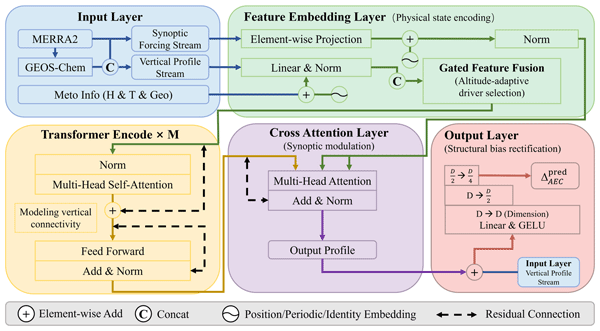
Atmospheric models struggle to accurately map suspended particles at different altitudes. We developed an artificial intelligence tool using multiple data sources to correct these errors, generating precise three-dimensional maps. This approach successfully reduces biases across Asia and North America. Beyond simply correcting data, our tool helps scientists pinpoint physical flaws in existing models, directly guiding improvements for future climate and air quality research.
Julianna A. Christopoulos, Pablo E. Saide, Manas R. Mohanty, Nattamon Maneenoi, Jhoon Kim, Laura Judd, Katherine R. Travis, Savitri Garivait, Agapol Junpen, Kazuyuki Miyazaki, Jinkyul Choi, Takashi Sekiya, David Peterson, Theodore M. McHardy, Nicholas Gapp, Jason M. St. Clair, Erin Delaria, Glenn M. Wolfe, Abby Sebol, Alessandro Franchin, Changmin Cho, Morgan L. Silverman, and James H. Crawford
Atmos. Chem. Phys., 26, 8021–8050, https://doi.org/10.5194/acp-26-8021-2026, https://doi.org/10.5194/acp-26-8021-2026, 2026
Short summary
Short summary
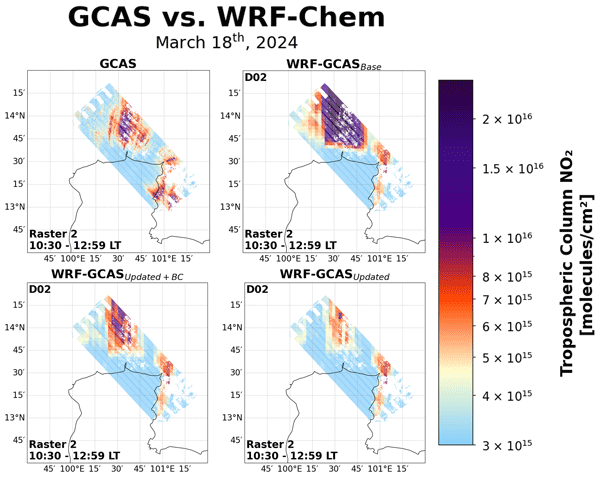
Air quality in rapidly growing cities is difficult to model because emissions vary during the day and are often poorly constrained. We demonstrate a methodology for constraining urban emissions using hourly satellite observations combined with high-resolution air quality modeling in Bangkok. We find that emissions inventories likely overestimate nitrogen dioxide emissions, and that updated emissions improve agreement between the model and independent aircraft and ground-based observations.
Shangyi Liu, Yingjun Zheng, Mengya Sheng, Lu Lee, Chengli Qi, Feng Lu, Bruno Franco, Lieven Clarisse, Cathy Clerbaux, Nicolas Theys, Jhoon Kim, and Zhao-Cheng Zeng
EGUsphere, https://doi.org/10.5194/egusphere-2026-1745, https://doi.org/10.5194/egusphere-2026-1745, 2026
Short summary
Short summary
Volcanic sulfur dioxide evolves rapidly after an eruption, which makes it challenging to monitor. Taking the 2024 Kanlaon eruption as a case study, we propose using a constellation of GEO and LEO satellites to track SO2 mass and layer height at high frequency. In particular, we present the first quantitative SO2 retrieval from a GEO hyperspectral infrared sounder (FY-4B/GIIRS). This research provides a vital blueprint for the future global monitoring of volcanic events.
Zhengyan Zhang, Yan-An Liu, Xinjian Ma, Zhenglong Li, Pengbo Xu, Juan Zhang, Min Min, Di Di, Bo Li, and Jun Li
Earth Syst. Sci. Data, 18, 1683–1701, https://doi.org/10.5194/essd-18-1683-2026, https://doi.org/10.5194/essd-18-1683-2026, 2026
Short summary
Short summary
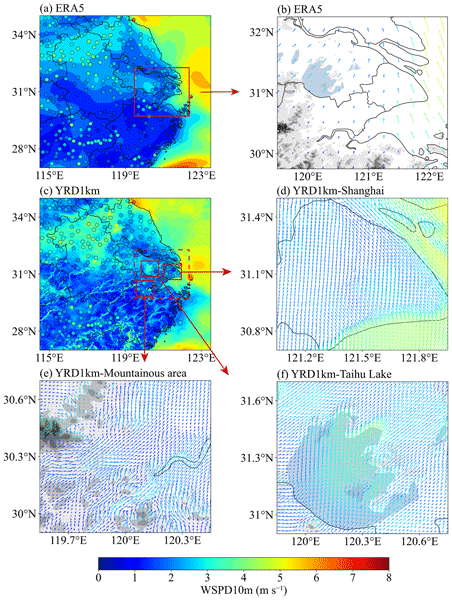
We developed a three-dimensional wind dataset for the Yangtze River Delta with hourly information at one-kilometer resolution for the summers from 2021 to 2023. Using atmospheric modeling combined with ground observations and land surface data, the dataset represents local wind behavior more accurately than existing products. It supports studies of extreme weather, air pollution transport, wind energy planning, and low-altitude airspace safety in rapidly urbanizing regions.
Juseon Bak, Arno Keppens, Daesung Choi, Sungjae Hong, Jae-Hwan Kim, Cheol-Hee Kim, Hyo-Jung Lee, Wonbae Jeon, Jhoon Kim, Ja-Ho Koo, Joowan Kim, Kanghyun Baek, Kai Yang, Xiong Liu, Gonzalo González Abad, Klaus-Peter Heue, Jean-Christopher Lambert, Yeonjin Jung, Hyunkee Hong, and Won-Jin Lee
Atmos. Meas. Tech., 19, 119–134, https://doi.org/10.5194/amt-19-119-2026, https://doi.org/10.5194/amt-19-119-2026, 2026
Short summary
Short summary
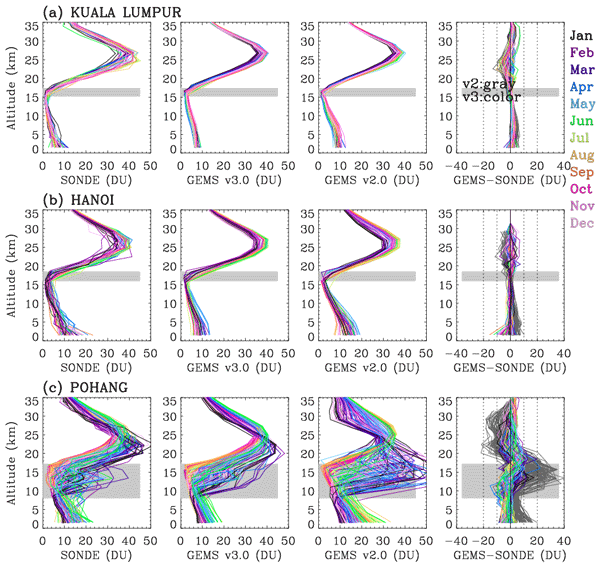
This study presents the first complete description of the operational version 3 ozone profile retrieval algorithm for the Geostationary Environment Monitoring Spectrometer (GEMS) and its performance characteristics. Improvements in radiometric and wavelength calibration reduce spectral fitting uncertainties and enhance agreement with ozonesonde profiles and Pandora total ozone measurements.
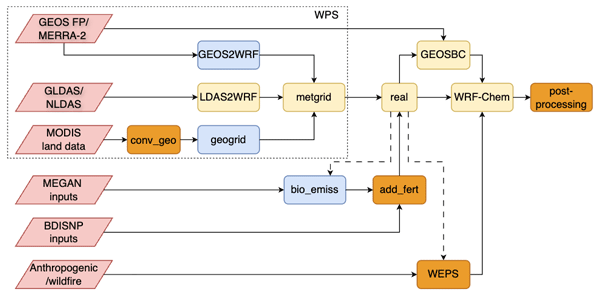
Huanxin Zhang, Jun Wang, Nathan Janechek, Cui Ge, Meng Zhou, Lorena Castro García, Tong Sha, Yanyu Wang, Weizhi Deng, Zhixin Xue, Chengzhe Li, Lakhima Chutia, Yi Wang, Sebastian Val, James L. McDuffie, Sina Hasheminassab, Scott E. Gluck, David J. Diner, Peter R. Colarco, Arlindo M. da Silva, and Jhoon Kim
Geosci. Model Dev., 18, 9061–9099, https://doi.org/10.5194/gmd-18-9061-2025, https://doi.org/10.5194/gmd-18-9061-2025, 2025
Short summary
Short summary
We present the development of the Unified Inputs (of initial and boundary conditions) for WRF (Weather Research and Forecasting)-Chem (UI-WRF-Chem) framework to support the Multi-Angle Imager for Aerosols (MAIA) satellite mission. Major updates include improving dust size distribution in the chemical boundary conditions, updating land surface properties using recent available satellite data and enhancing the representation of soil NOx emissions. We demonstrate subsequent model improvements over several of the MAIA target areas.
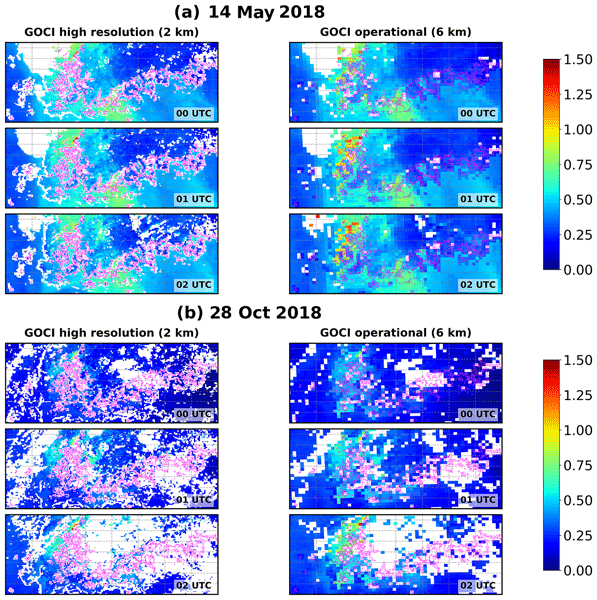
Jeewoo Lee, Jhoon Kim, Seoyoung Lee, Myungje Choi, Jaehwa Lee, Daniel J. Jacob, Su Keun Kuk, and Young-Je Park
Earth Syst. Sci. Data, 17, 5761–5782, https://doi.org/10.5194/essd-17-5761-2025, https://doi.org/10.5194/essd-17-5761-2025, 2025
Short summary
Short summary
Atmospheric aerosols adversely affect human health, with East Asia recognized as one of the most impacted regions. This study presents a long-term (2011–2021), high spatiotemporal resolution aerosol optical depth dataset retrieved from a geostationary satellite over East Asia. The high-resolution data capture subtle aerosol gradients and land-ocean boundaries, providing valuable input for various fields such as aerosol-cloud interaction, climate change, ocean optics, and air quality studies.
Yinbao Jin, Heng Huang, Jian Liu, Yiming Liu, Xiaoyang Chen, Yongqiang Chen, Licheng Li, and Qi Fan
Earth Syst. Sci. Data Discuss., https://doi.org/10.5194/essd-2025-515, https://doi.org/10.5194/essd-2025-515, 2025
Revised manuscript not accepted
Short summary
Short summary
Fires in Southeast and East Asia release large amounts of smoke that harm air quality, weather, and climate. Existing datasets often miss night-time burning and how smoke rises in the atmosphere. We created an open dataset for 2023 that records fire emissions every hour in three dimensions at high resolution. By combining satellite data and machine learning, it improves understanding of when and where smoke is released and supports better forecasts and policy decisions.
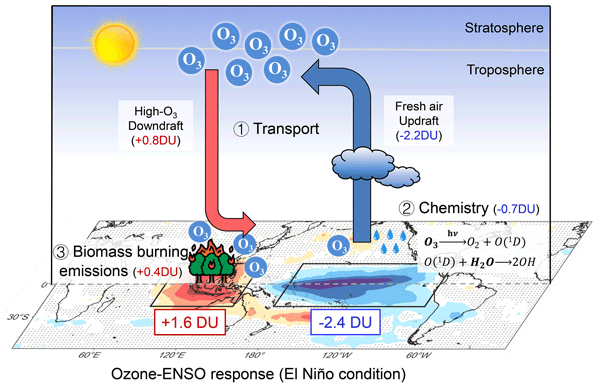
Jingyu Li, Haolin Wang, Qi Fan, and Xiao Lu
Atmos. Chem. Phys., 25, 12983–13006, https://doi.org/10.5194/acp-25-12983-2025, https://doi.org/10.5194/acp-25-12983-2025, 2025
Short summary
Short summary
We use multiple global chemical models to quantify processes contributing to the ozone response to ENSO (El Niño–Southern Oscillation). We find that changes in transport patterns are the dominant factor in the overall ozone–ENSO responses, with the opposing effects of chemical depletion and increased biomass burning on ozone largely offsetting each other. Models consistently project an increase in tropical ozone–ENSO response associated with strengthening anomalous circulation and more abundant water vapor with global warming.
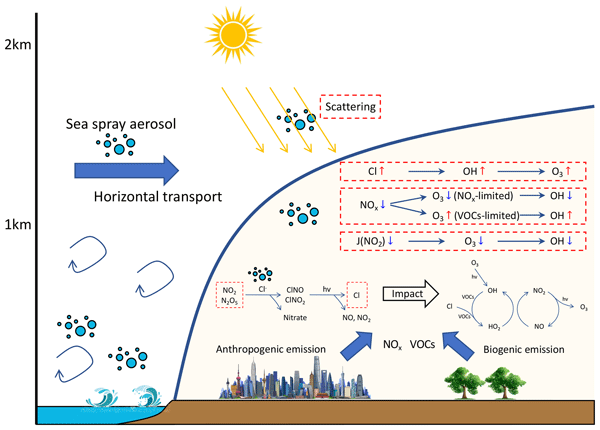
Yingying Hong, Yuqi Zhu, Yuxuan Huang, Yiming Liu, Chuqi Xiong, and Qi Fan
Atmos. Chem. Phys., 25, 11847–11866, https://doi.org/10.5194/acp-25-11847-2025, https://doi.org/10.5194/acp-25-11847-2025, 2025
Short summary
Short summary
This study investigates the impact of sea spray aerosol on ozone formation across Eastern China, highlighting its complex influence through both chemical reactions and radiative effects, which vary seasonally and geographically.
Xinran Xia, Min Min, Jun Li, Yiming Zhao, Ling Gao, and Bo Li
EGUsphere, https://doi.org/10.5194/egusphere-2025-2928, https://doi.org/10.5194/egusphere-2025-2928, 2025
Preprint archived
Short summary
Short summary
New ML method fuses GEO hyperspectral & imager data to improve nighttime cloud retrievals. Achieves ~10 % better accuracy (CER:9.73μm, COT:6.09 errors), especially for thin clouds. Maintains day-night continuity, aids weather/climate monitoring.
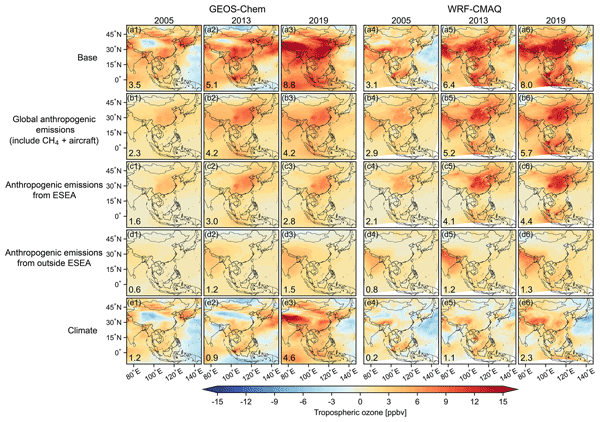
Xiao Lu, Yiming Liu, Jiayin Su, Xiang Weng, Tabish Ansari, Yuqiang Zhang, Guowen He, Yuqi Zhu, Haolin Wang, Ganquan Zeng, Jingyu Li, Cheng He, Shuai Li, Teerachai Amnuaylojaroen, Tim Butler, Qi Fan, Shaojia Fan, Grant L. Forster, Meng Gao, Jianlin Hu, Yugo Kanaya, Mohd Talib Latif, Keding Lu, Philippe Nédélec, Peer Nowack, Bastien Sauvage, Xiaobin Xu, Lin Zhang, Ke Li, Ja-Ho Koo, and Tatsuya Nagashima
Atmos. Chem. Phys., 25, 7991–8028, https://doi.org/10.5194/acp-25-7991-2025, https://doi.org/10.5194/acp-25-7991-2025, 2025
Short summary
Short summary
This study analyzes summertime ozone trends in East and Southeast Asia derived from a comprehensive observational database spanning from 1995 to 2019, incorporating aircraft observations, ozonesonde data, and measurements from 2500 surface sites. Multiple models are applied to attribute to changes in anthropogenic emissions and climate. The results highlight that increases in anthropogenic emissions are the primary driver of ozone increases both in the free troposphere and at the surface.
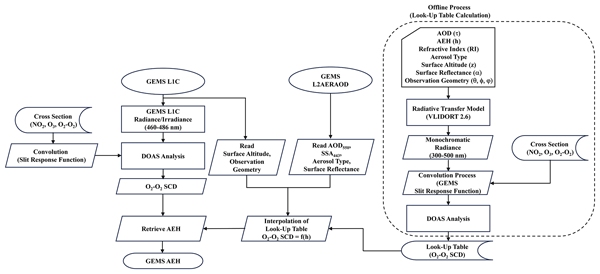
Sang Seo Park, Jhoon Kim, Yeseul Cho, Hanlim Lee, Junsung Park, Dong-Won Lee, Won-Jin Lee, and Deok-Rae Kim
Atmos. Meas. Tech., 18, 2241–2259, https://doi.org/10.5194/amt-18-2241-2025, https://doi.org/10.5194/amt-18-2241-2025, 2025
Short summary
Short summary
An operational aerosol effective height (AEH) retrieval algorithm for the Geostationary Environment Monitoring Spectrometer (GEMS) was developed that solely uses the O2–O2 absorption band considering aerosol and surface properties. AEH retrievals are only performed when aerosol optical depth is larger than 0.3. The retrieval results show significant estimations by comparing the aerosol height from the Cloud–Aerosol Lidar with Orthogonal Polarization and the Tropospheric Monitoring Instrument.
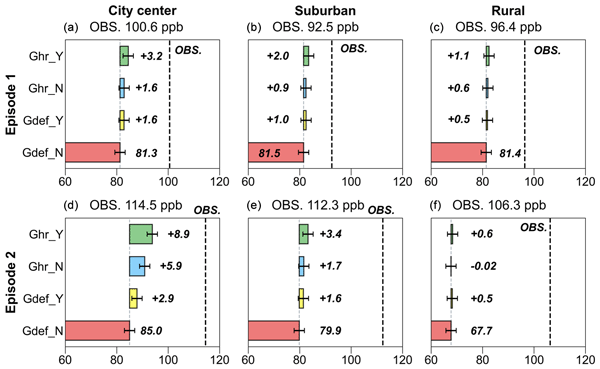
Haofan Wang, Yuejin Li, Yiming Liu, Xiao Lu, Yang Zhang, Qi Fan, Chong Shen, Senchao Lai, Yan Zhou, Tao Zhang, and Dingli Yue
Atmos. Chem. Phys., 25, 5233–5250, https://doi.org/10.5194/acp-25-5233-2025, https://doi.org/10.5194/acp-25-5233-2025, 2025
Short summary
Short summary
This study explores how urban green spaces (UGSs) in Guangzhou influence ozone levels. By using advanced models, we found that natural emissions from these areas can significantly affect air quality. Our results suggest that the design and planning of UGSs should not only consider aesthetics and social factors but also their environmental impacts on air quality.
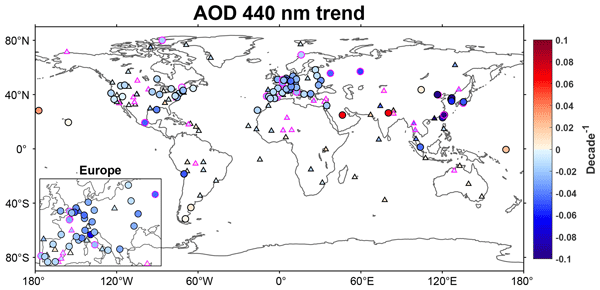
Zhenyu Zhang, Jing Li, Huizheng Che, Yueming Dong, Oleg Dubovik, Thomas Eck, Pawan Gupta, Brent Holben, Jhoon Kim, Elena Lind, Trailokya Saud, Sachchida Nand Tripathi, and Tong Ying
Atmos. Chem. Phys., 25, 4617–4637, https://doi.org/10.5194/acp-25-4617-2025, https://doi.org/10.5194/acp-25-4617-2025, 2025
Short summary
Short summary
We used ground-based remote sensing data from the Aerosol Robotic Network to examine long-term trends in aerosol characteristics. We found aerosol loadings generally decreased globally, and aerosols became more scattering. These changes are closely related to variations in aerosol compositions, such as decreased anthropogenic emissions over East Asia, Europe, and North America; increased anthropogenic sources over northern India; and increased dust activity over the Arabian Peninsula.
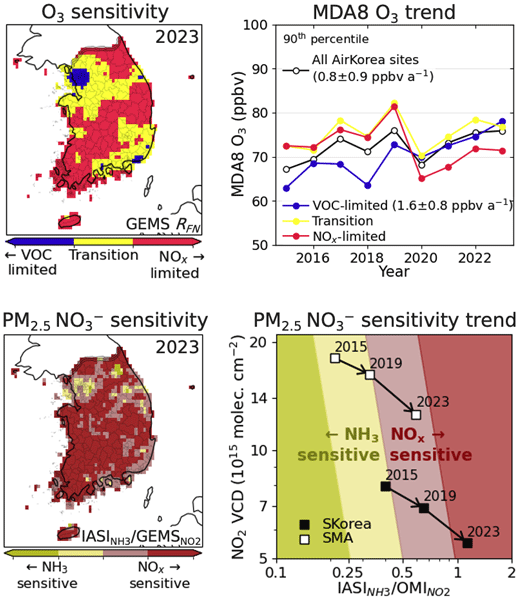
Yujin J. Oak, Daniel J. Jacob, Drew C. Pendergrass, Ruijun Dang, Nadia K. Colombi, Heesung Chong, Seoyoung Lee, Su Keun Kuk, and Jhoon Kim
Atmos. Chem. Phys., 25, 3233–3252, https://doi.org/10.5194/acp-25-3233-2025, https://doi.org/10.5194/acp-25-3233-2025, 2025
Short summary
Short summary
We analyze 2015–2023 air quality trends in South Korea using surface and satellite observations. Primary pollutants have decreased, consistent with emissions reductions. Surface O3 continues to increase and PM2.5 has decreased overall, but the nitrate component has not. O3 and PM2.5 nitrate depend on nonlinear responses from precursor emissions. Satellite data indicate a recent shift to NOx-sensitive O3 and nitrate formation, where further NOx reductions will benefit both O3 and PM2.5 pollution.
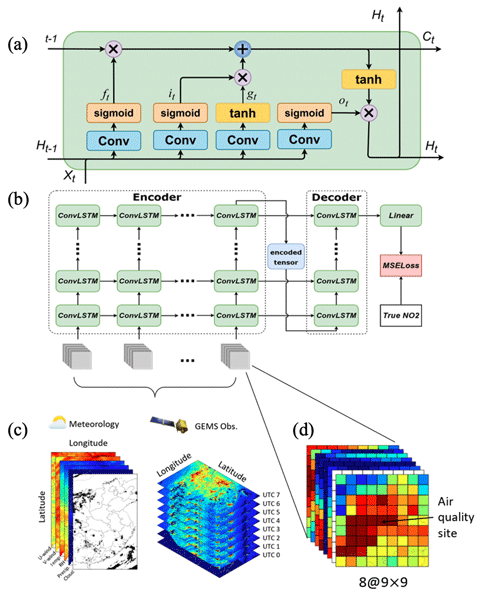
Chengxin Zhang, Xinhan Niu, Hongyu Wu, Zhipeng Ding, Ka Lok Chan, Jhoon Kim, Thomas Wagner, and Cheng Liu
Atmos. Chem. Phys., 25, 759–770, https://doi.org/10.5194/acp-25-759-2025, https://doi.org/10.5194/acp-25-759-2025, 2025
Short summary
Short summary
This research utilizes hourly air pollution observations from the world’s first geostationary satellite to develop a spatiotemporal neural network model for full-coverage surface NO2 pollution prediction over the next 24 hours, achieving outstanding forecasting performance and efficacy. These results highlight the profound impact of geostationary satellite observations in advancing air quality forecasting models, thereby contributing to future models for health exposure to air pollution.
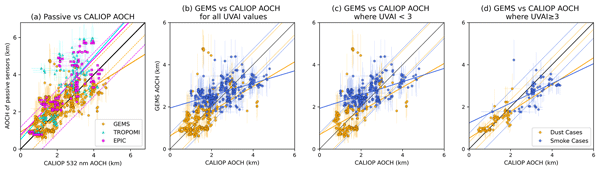
Hyerim Kim, Xi Chen, Jun Wang, Zhendong Lu, Meng Zhou, Gregory R. Carmichael, Sang Seo Park, and Jhoon Kim
Atmos. Meas. Tech., 18, 327–349, https://doi.org/10.5194/amt-18-327-2025, https://doi.org/10.5194/amt-18-327-2025, 2025
Short summary
Short summary
We compare passive aerosol layer height (ALH) retrievals from the Earth Polychromatic Imaging Camera (EPIC), TROPOspheric Monitoring Instrument (TROPOMI), and Geostationary Environment Monitoring Spectrometer (GEMS) with lidar. GEMS shows a lower correlation (R = 0.64) than EPIC and TROPOMI (R > 0.7) but with minimal bias (0.1 km vs. overestimated by ~0.8 km). GEMS performance is improved for an ultraviolet aerosol index ≥ 3. EPIC and GEMS ALH diurnal variation differs slightly.
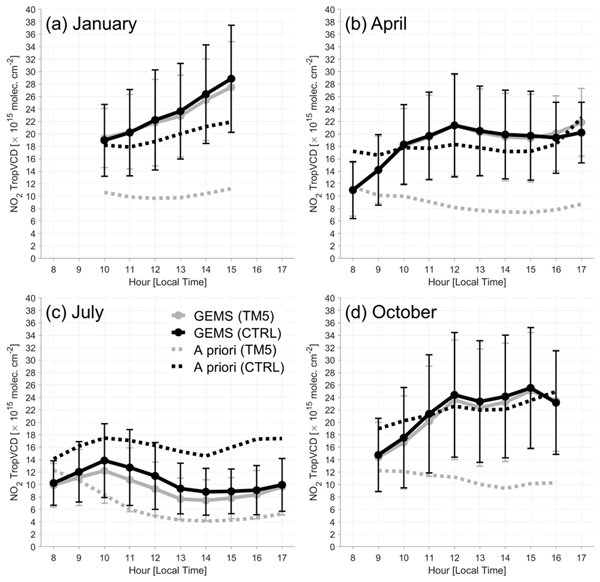
Seunghwan Seo, Si-Wan Kim, Kyoung-Min Kim, Andreas Richter, Kezia Lange, John P. Burrows, Junsung Park, Hyunkee Hong, Hanlim Lee, Ukkyo Jeong, Jung-Hun Woo, and Jhoon Kim
Atmos. Meas. Tech., 18, 115–128, https://doi.org/10.5194/amt-18-115-2025, https://doi.org/10.5194/amt-18-115-2025, 2025
Short summary
Short summary
Over the Seoul metropolitan area, tropospheric NO2 vertical column densities from the Geostationary Environment Monitoring Spectrometer show distinct seasonal features. Also, varying a priori data have substantial impacts on the observed NO2 columns. The a priori data from different chemical transport models resulted in differences of up to −18.3 %. Notably, diurnal patterns of observed NO2 columns are similar for all datasets, although their a priori data exhibit contrasting diurnal patterns.
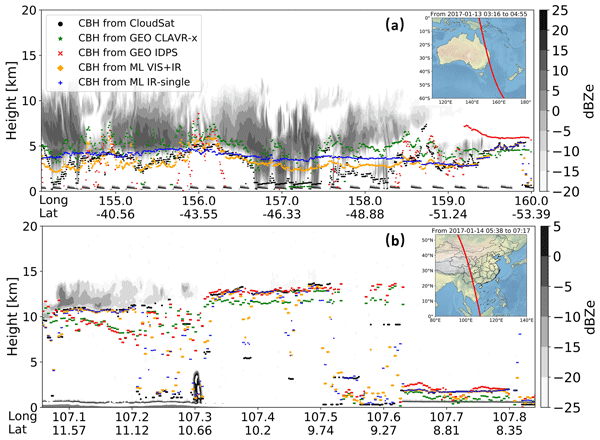
Mengyuan Wang, Min Min, Jun Li, Han Lin, Yongen Liang, Binlong Chen, Zhigang Yao, Na Xu, and Miao Zhang
Atmos. Chem. Phys., 24, 14239–14256, https://doi.org/10.5194/acp-24-14239-2024, https://doi.org/10.5194/acp-24-14239-2024, 2024
Short summary
Short summary
Although machine learning technology is advanced in the field of satellite remote sensing, the physical inversion algorithm based on cloud base height can better capture the daily variation in the characteristics of the cloud base.
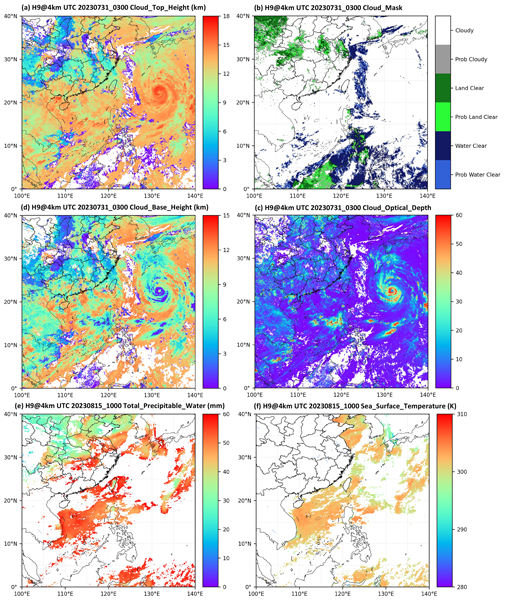
Jian Liu, Jingjing Yu, Chuyong Lin, Min He, Haiyan Liu, Wei Wang, and Min Min
Earth Syst. Sci. Data, 16, 4949–4969, https://doi.org/10.5194/essd-16-4949-2024, https://doi.org/10.5194/essd-16-4949-2024, 2024
Short summary
Short summary
The Japanese Himawari-8 and Himawari-9 (H8/9) geostationary (GEO) satellites are strategically positioned over the South China Sea (SCS), spanning from 3 November 2022 to the present. They mainly provide cloud mask, fraction, height, phase, optical, and microphysical property; layered precipitable water; and sea surface temperature products within a temporal resolution of 10 min and a gridded resolution of 0.05° × 0.05°.
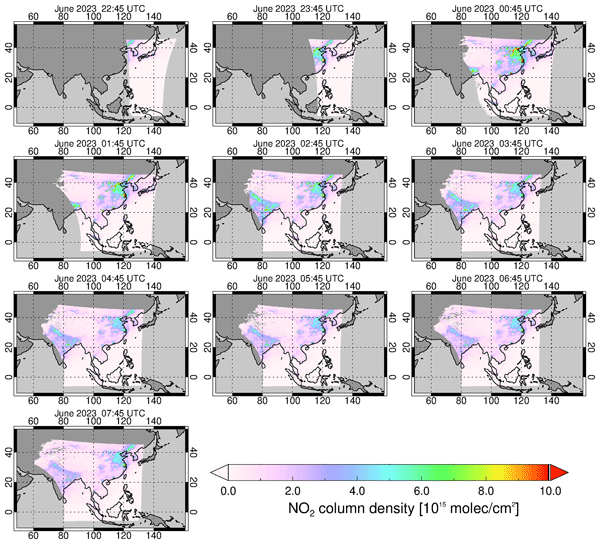
Sora Seo, Pieter Valks, Ronny Lutz, Klaus-Peter Heue, Pascal Hedelt, Víctor Molina García, Diego Loyola, Hanlim Lee, and Jhoon Kim
Atmos. Meas. Tech., 17, 6163–6191, https://doi.org/10.5194/amt-17-6163-2024, https://doi.org/10.5194/amt-17-6163-2024, 2024
Short summary
Short summary
In this study, we developed an advanced retrieval algorithm for tropospheric NO2 columns from geostationary satellite spectrometers and applied it to GEMS measurements. The DLR GEMS NO2 retrieval algorithm follows the heritage from previous and existing algorithms, but improved approaches are applied to reflect the specific features of geostationary satellites. The DLR GEMS NO2 retrievals demonstrate a good capability for monitoring diurnal variability with a high spatial resolution.
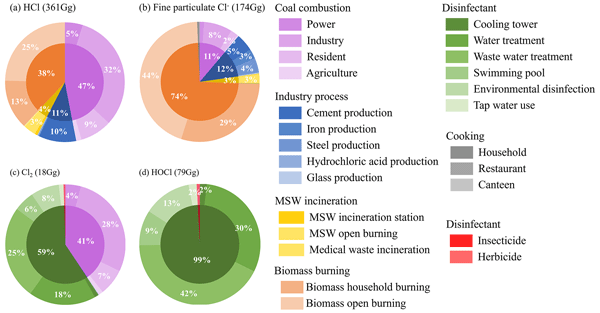
Siting Li, Yiming Liu, Yuqi Zhu, Yinbao Jin, Yingying Hong, Ao Shen, Yifei Xu, Haofan Wang, Haichao Wang, Xiao Lu, Shaojia Fan, and Qi Fan
Atmos. Chem. Phys., 24, 11521–11544, https://doi.org/10.5194/acp-24-11521-2024, https://doi.org/10.5194/acp-24-11521-2024, 2024
Short summary
Short summary
This study establishes an inventory of anthropogenic chlorine emissions in China in 2019 with expanded species (HCl, Cl-, Cl2, HOCl) and sources (41 specific sources). The inventory is validated by a modeling study against the observations. This study enhances the understanding of anthropogenic chlorine emissions in the atmosphere, identifies key sources, and provides scientific support for pollution control and climate change.
Xinran Xia, Rubin Jiang, Min Min, Shengli Wu, Peng Zhang, and Xiangao Xia
Earth Syst. Sci. Data Discuss., https://doi.org/10.5194/essd-2024-395, https://doi.org/10.5194/essd-2024-395, 2024
Revised manuscript not accepted
Short summary
Short summary
Based on the MicroWave Radiation Imager aboard FY-3 series satellites, we developed a global terrestrial precipitable water vapor dataset from 2012 to 2020. This dataset overcomes the limitations of infrared observations and provides accurate, all-weather PWV data ,spanning all types of land surface. Researchers are expected to leverage it to explore the role of water vapor in weather patterns, refine precipitation forecasting, and validate climate simulations.
Myungje Choi, Alexei Lyapustin, Gregory L. Schuster, Sujung Go, Yujie Wang, Sergey Korkin, Ralph Kahn, Jeffrey S. Reid, Edward J. Hyer, Thomas F. Eck, Mian Chin, David J. Diner, Olga Kalashnikova, Oleg Dubovik, Jhoon Kim, and Hans Moosmüller
Atmos. Chem. Phys., 24, 10543–10565, https://doi.org/10.5194/acp-24-10543-2024, https://doi.org/10.5194/acp-24-10543-2024, 2024
Short summary
Short summary
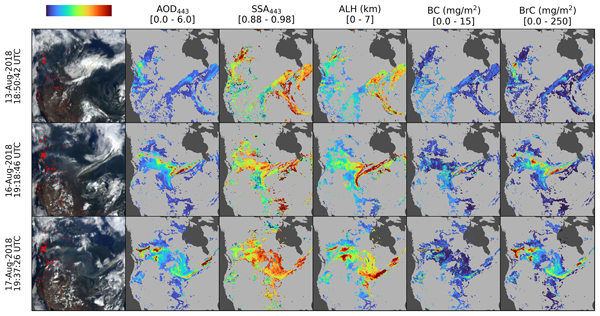
This paper introduces a retrieval algorithm to estimate two key absorbing components in smoke (black carbon and brown carbon) using DSCOVR EPIC measurements. Our analysis reveals distinct smoke properties, including spectral absorption, layer height, and black carbon and brown carbon, over North America and central Africa. The retrieved smoke properties offer valuable observational constraints for modeling radiative forcing and informing health-related studies.
Sooyon Kim, Yeseul Cho, Hanjeong Ki, Seyoung Park, Dagun Oh, Seungjun Lee, Yeonghye Cho, Jhoon Kim, Wonjin Lee, Jaewoo Park, Ick Hoon Jin, and Sangwook Kang
Atmos. Meas. Tech., 17, 5221–5241, https://doi.org/10.5194/amt-17-5221-2024, https://doi.org/10.5194/amt-17-5221-2024, 2024
Short summary
Short summary
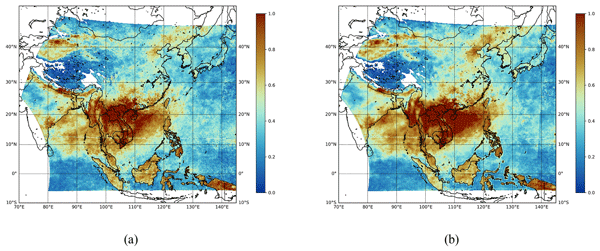
This paper describes new work that improves the processing of GEMS AOD data. First, we enhance the inverse-distance-weighting algorithm by incorporating quality flag information, assigning weights that are inversely proportional to the number of unreliable grids. Second, we leverage a spatiotemporal merging method to address both spatial and temporal variability. Finally, we estimate the mean field values for GEMS AOD data, enhancing our understanding of the impact of aerosols on climate change.
Yujin J. Oak, Daniel J. Jacob, Nicholas Balasus, Laura H. Yang, Heesung Chong, Junsung Park, Hanlim Lee, Gitaek T. Lee, Eunjo S. Ha, Rokjin J. Park, Hyeong-Ahn Kwon, and Jhoon Kim
Atmos. Meas. Tech., 17, 5147–5159, https://doi.org/10.5194/amt-17-5147-2024, https://doi.org/10.5194/amt-17-5147-2024, 2024
Short summary
Short summary
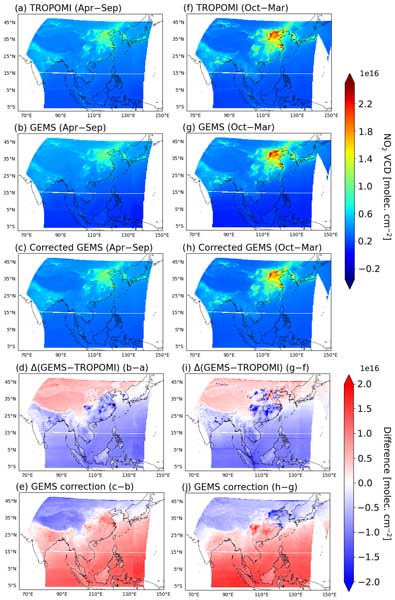
We present an improved NO2 product from GEMS by calibrating it to TROPOMI using machine learning and by reprocessing both satellite products to adopt common NO2 profiles. Our corrected GEMS product combines the high data density of GEMS with the accuracy of TROPOMI, supporting the combined use for analyses of East Asia air quality including emissions and chemistry. This method can be extended to other species and geostationary satellites including TEMPO and Sentinel-4.
Naveed Ahmad, Changqing Lin, Alexis K. H. Lau, Jhoon Kim, Tianshu Zhang, Fangqun Yu, Chengcai Li, Ying Li, Jimmy C. H. Fung, and Xiang Qian Lao
Atmos. Chem. Phys., 24, 9645–9665, https://doi.org/10.5194/acp-24-9645-2024, https://doi.org/10.5194/acp-24-9645-2024, 2024
Short summary
Short summary
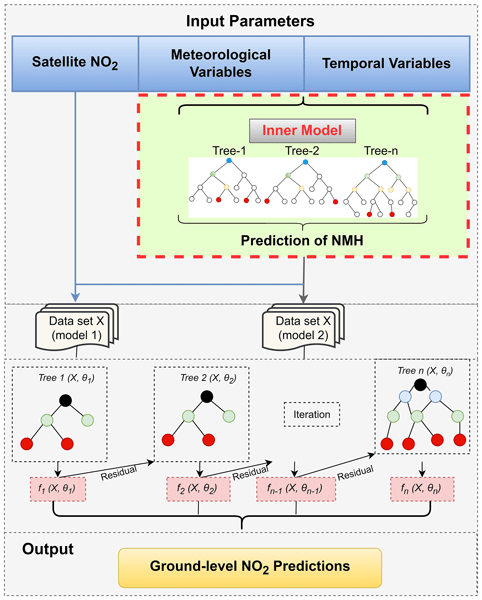
This study developed a nested machine learning model to convert the GEMS NO2 column measurements into ground-level concentrations across China. The model directly incorporates the NO2 mixing height (NMH) into the methodological framework. The study underscores the importance of considering NMH when estimating ground-level NO2 from satellite column measurements and highlights the significant advantages of new-generation geostationary satellites in air quality monitoring.
David P. Edwards, Sara Martínez-Alonso, Duseong S. Jo, Ivan Ortega, Louisa K. Emmons, John J. Orlando, Helen M. Worden, Jhoon Kim, Hanlim Lee, Junsung Park, and Hyunkee Hong
Atmos. Chem. Phys., 24, 8943–8961, https://doi.org/10.5194/acp-24-8943-2024, https://doi.org/10.5194/acp-24-8943-2024, 2024
Short summary
Short summary
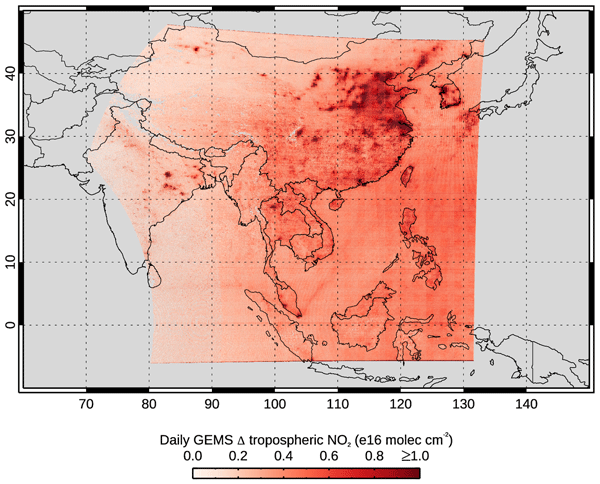
Until recently, satellite observations of atmospheric pollutants at any location could only be obtained once a day. New geostationary satellites stare at a region of the Earth to make hourly measurements, and the Geostationary Environment Monitoring Spectrometer is the first looking at Asia. These data and model simulations show how the change seen for one important pollutant that determines air quality depends on a combination of pollution emissions, atmospheric chemistry, and meteorology.
Yeseul Cho, Jhoon Kim, Sujung Go, Mijin Kim, Seoyoung Lee, Minseok Kim, Heesung Chong, Won-Jin Lee, Dong-Won Lee, Omar Torres, and Sang Seo Park
Atmos. Meas. Tech., 17, 4369–4390, https://doi.org/10.5194/amt-17-4369-2024, https://doi.org/10.5194/amt-17-4369-2024, 2024
Short summary
Short summary
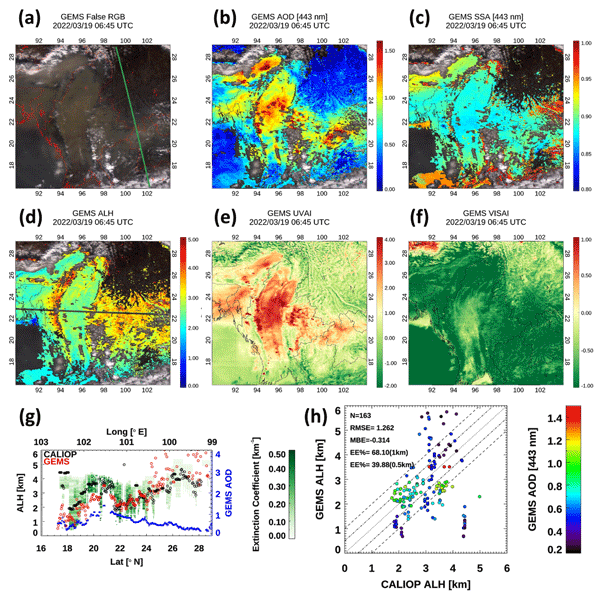
Aerosol optical properties have been provided by the Geostationary Environment Monitoring Spectrometer (GEMS), the world’s first geostationary-Earth-orbit (GEO) satellite instrument designed for atmospheric environmental monitoring. This study describes improvements made to the GEMS aerosol retrieval algorithm (AERAOD) and presents its validation results. These enhancements aim to provide more accurate and reliable aerosol-monitoring results for Asia.
Minseok Kim, Jhoon Kim, Hyunkwang Lim, Seoyoung Lee, Yeseul Cho, Yun-Gon Lee, Sujung Go, and Kyunghwa Lee
Atmos. Meas. Tech., 17, 4317–4335, https://doi.org/10.5194/amt-17-4317-2024, https://doi.org/10.5194/amt-17-4317-2024, 2024
Short summary
Short summary
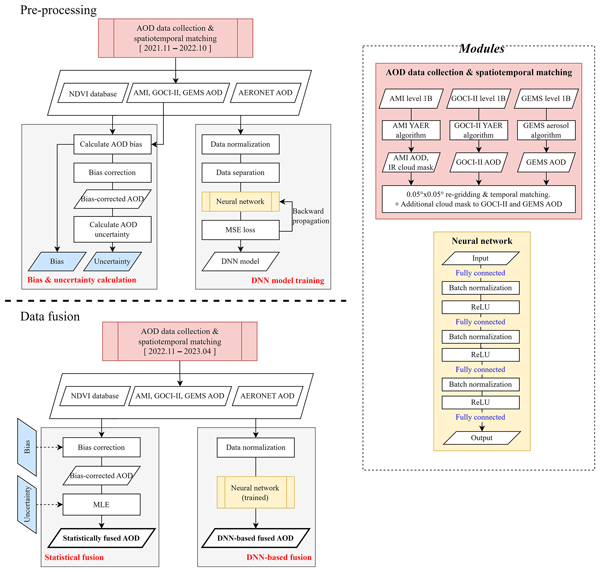
Information about aerosol loading in the atmosphere can be collected from various satellite instruments. Aerosol products from various satellite instruments have their own error characteristics. This study statistically merged aerosol optical depth datasets from multiple instruments aboard geostationary satellites considering uncertainties. Also, a deep neural network technique is adopted for aerosol data merging.
Laura Hyesung Yang, Daniel J. Jacob, Ruijun Dang, Yujin J. Oak, Haipeng Lin, Jhoon Kim, Shixian Zhai, Nadia K. Colombi, Drew C. Pendergrass, Ellie Beaudry, Viral Shah, Xu Feng, Robert M. Yantosca, Heesung Chong, Junsung Park, Hanlim Lee, Won-Jin Lee, Soontae Kim, Eunhye Kim, Katherine R. Travis, James H. Crawford, and Hong Liao
Atmos. Chem. Phys., 24, 7027–7039, https://doi.org/10.5194/acp-24-7027-2024, https://doi.org/10.5194/acp-24-7027-2024, 2024
Short summary
Short summary
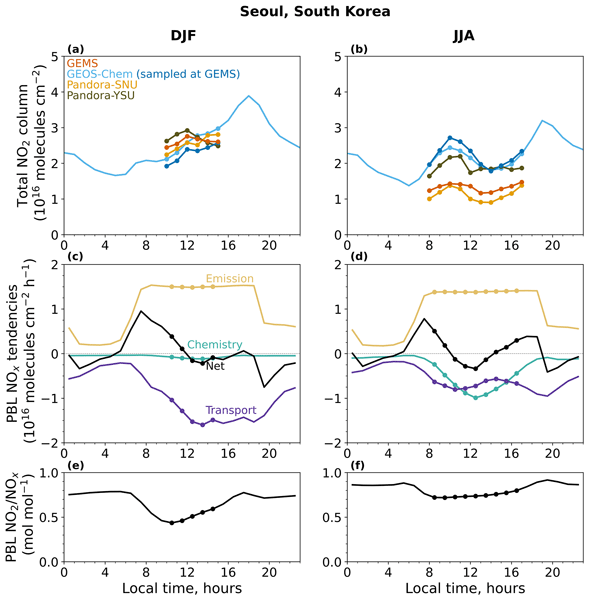
The Geostationary Environment Monitoring Spectrometer (GEMS) provides hourly measurements of NO2. We use the chemical transport model to find how emissions, chemistry, and transport drive the changes in NO2 observed by GEMS at different times of the day. In winter, the chemistry plays a minor role, and high daytime emissions dominate the diurnal variation in NO2, balanced by transport. In summer, emissions, chemistry, and transport play an important role in shaping the diurnal variation in NO2.
Drew C. Pendergrass, Daniel J. Jacob, Yujin J. Oak, Jeewoo Lee, Minseok Kim, Jhoon Kim, Seoyoung Lee, Shixian Zhai, Hitoshi Irie, and Hong Liao
Earth Syst. Sci. Data Discuss., https://doi.org/10.5194/essd-2024-172, https://doi.org/10.5194/essd-2024-172, 2024
Preprint withdrawn
Short summary
Short summary
Fine particles suspended in the atmosphere are a major form of air pollution and an important public health burden. However, measurements of particulate matter are sparse in space and in places like East Asia monitors are established after regulatory policies to improve pollution have changed. In this paper, we use machine learning to fill in the gaps. We train an algorithm to predict pollution at the surface from the atmosphere’s opacity, then produce high resolution maps of data without gaps.

Heesung Chong, Gonzalo González Abad, Caroline R. Nowlan, Christopher Chan Miller, Alfonso Saiz-Lopez, Rafael P. Fernandez, Hyeong-Ahn Kwon, Zolal Ayazpour, Huiqun Wang, Amir H. Souri, Xiong Liu, Kelly Chance, Ewan O'Sullivan, Jhoon Kim, Ja-Ho Koo, William R. Simpson, François Hendrick, Richard Querel, Glen Jaross, Colin Seftor, and Raid M. Suleiman
Atmos. Meas. Tech., 17, 2873–2916, https://doi.org/10.5194/amt-17-2873-2024, https://doi.org/10.5194/amt-17-2873-2024, 2024
Short summary
Short summary
We present a new bromine monoxide (BrO) product derived using radiances measured from OMPS-NM on board the Suomi-NPP satellite. This product provides nearly a decade of global stratospheric and tropospheric column retrievals, a feature that is currently rare in publicly accessible datasets. Both stratospheric and tropospheric columns from OMPS-NM demonstrate robust performance, exhibiting good agreement with ground-based observations collected at three stations (Lauder, Utqiagvik, and Harestua).
Gitaek T. Lee, Rokjin J. Park, Hyeong-Ahn Kwon, Eunjo S. Ha, Sieun D. Lee, Seunga Shin, Myoung-Hwan Ahn, Mina Kang, Yong-Sang Choi, Gyuyeon Kim, Dong-Won Lee, Deok-Rae Kim, Hyunkee Hong, Bavo Langerock, Corinne Vigouroux, Christophe Lerot, Francois Hendrick, Gaia Pinardi, Isabelle De Smedt, Michel Van Roozendael, Pucai Wang, Heesung Chong, Yeseul Cho, and Jhoon Kim
Atmos. Chem. Phys., 24, 4733–4749, https://doi.org/10.5194/acp-24-4733-2024, https://doi.org/10.5194/acp-24-4733-2024, 2024
Short summary
Short summary
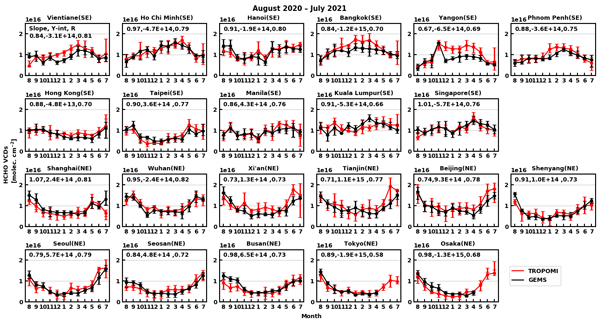
This study evaluates the Geostationary Environment Monitoring Spectrometer (GEMS) HCHO product by comparing its vertical column densities (VCDs) with those of TROPOMI and ground-based observations. Based on some sensitivity tests, obtaining radiance references under clear-sky conditions significantly improves HCHO retrieval quality. GEMS HCHO VCDs captured seasonal and diurnal variations well during the first year of observation, showing consistency with TROPOMI and ground-based observations.
Bo-Ram Kim, Gyuyeon Kim, Minjeong Cho, Yong-Sang Choi, and Jhoon Kim
Atmos. Meas. Tech., 17, 453–470, https://doi.org/10.5194/amt-17-453-2024, https://doi.org/10.5194/amt-17-453-2024, 2024
Short summary
Short summary
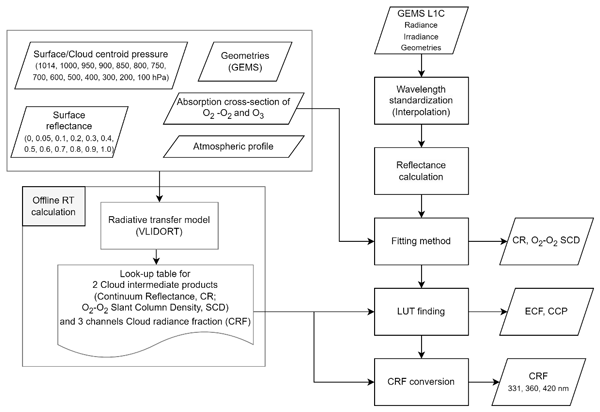
This study introduces the GEMS cloud algorithm and validates its results using data from GEMS and other environmental satellites. The GEMS algorithm is able to detect the lowest cloud heights among the four satellites, and its effective cloud fraction and cloud centroid pressure are well reflected in the retrieval results. The study highlights the algorithm's usefulness in correcting errors in trace gases caused by clouds in the East Asian region.
Yinbao Jin, Yiming Liu, Xiao Lu, Xiaoyang Chen, Ao Shen, Haofan Wang, Yinping Cui, Yifei Xu, Siting Li, Jian Liu, Ming Zhang, Yingying Ma, and Qi Fan
Atmos. Chem. Phys., 24, 367–395, https://doi.org/10.5194/acp-24-367-2024, https://doi.org/10.5194/acp-24-367-2024, 2024
Short summary
Short summary
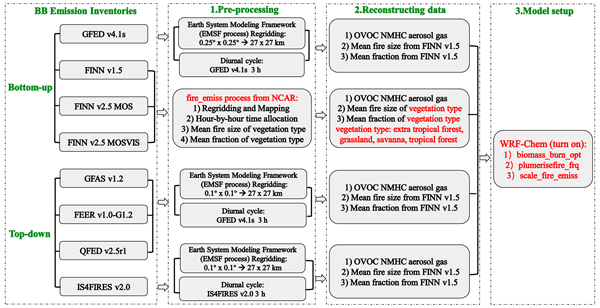
This study aims to address these issues by evaluating eight independent biomass burning (BB) emission inventories (GFED, FINN1.5, FINN2.5 MOS, FINN2.5 MOSVIS, GFAS, FEER, QFED, and IS4FIRES) using the WRF-Chem model and analyzing their impact on aerosol optical properties (AOPs) and direct radiative forcing (DRF) during wildfire events in peninsular Southeast Asia (PSEA) that occurred in March 2019.
Haklim Choi, Xiong Liu, Ukkyo Jeong, Heesung Chong, Jhoon Kim, Myung Hwan Ahn, Dai Ho Ko, Dong-Won Lee, Kyung-Jung Moon, and Kwang-Mog Lee
Atmos. Meas. Tech., 17, 145–164, https://doi.org/10.5194/amt-17-145-2024, https://doi.org/10.5194/amt-17-145-2024, 2024
Short summary
Short summary
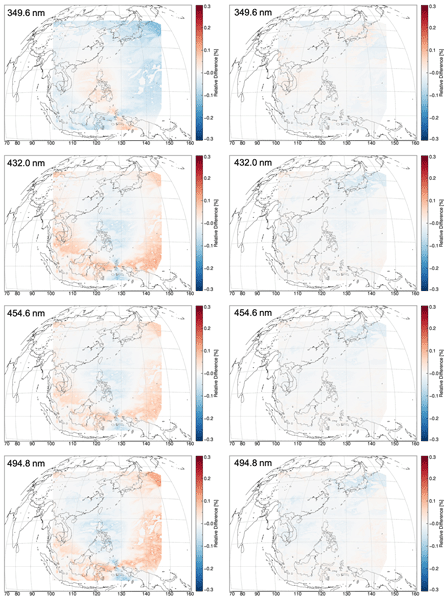
GEMS is the first geostationary satellite to measure the UV--Vis region, and this paper reports the polarization characteristics of GEMS and an algorithm. We develop a polarization correction algorithm optimized for GEMS based on a look-up-table approach that simultaneously considers the polarization of incoming light and polarization sensitivity characteristics of the instrument. Pre-launch polarization error was adjusted close to zero across the spectral range after polarization correction.
Mengyuan Wang, Min Min, Jun Li, Han Lin, Yongen Liang, Binlong Chen, Zhigang Yao, Na Xu, and Miao Zhang
EGUsphere, https://doi.org/10.5194/egusphere-2023-2843, https://doi.org/10.5194/egusphere-2023-2843, 2023
Preprint archived
Short summary
Short summary
Our study primarily addresses the feasibility of employing advanced machine learning and physics-based algorithms to capture the diurnal variations in cloud base height parameters using geostationary meteorological satellite remote sensing. The results indicated that the caution is warranted when utilizing cloud base property products trained on satellite and laser radar data for climate research. Fixed training samples might obscure the pronounced diurnal variations in cloud base heights.
Guowen He, Cheng He, Haofan Wang, Xiao Lu, Chenglei Pei, Xiaonuan Qiu, Chenxi Liu, Yiming Wang, Nanxi Liu, Jinpu Zhang, Lei Lei, Yiming Liu, Haichao Wang, Tao Deng, Qi Fan, and Shaojia Fan
Atmos. Chem. Phys., 23, 13107–13124, https://doi.org/10.5194/acp-23-13107-2023, https://doi.org/10.5194/acp-23-13107-2023, 2023
Short summary
Short summary
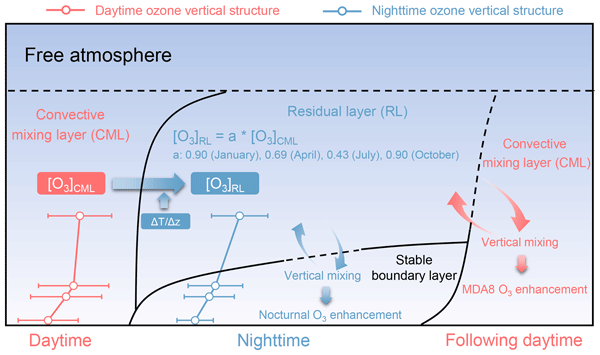
We analyze nighttime ozone in the lower boundary layer (up to 500 m) from the 2017–2019 measurements at the Canton Tower and the WRF-CMAQ model. We identify a strong ability of the residual layer to store daytime ozone in the convective mixing layer, investigate the chemical and meteorological factors controlling nighttime ozone in the residual layer, and quantify the contribution of nighttime ozone in the residual layer to both the nighttime and the following day’s surface ozone air quality.
Yuhang Zhang, Jintai Lin, Jhoon Kim, Hanlim Lee, Junsung Park, Hyunkee Hong, Michel Van Roozendael, Francois Hendrick, Ting Wang, Pucai Wang, Qin He, Kai Qin, Yongjoo Choi, Yugo Kanaya, Jin Xu, Pinhua Xie, Xin Tian, Sanbao Zhang, Shanshan Wang, Siyang Cheng, Xinghong Cheng, Jianzhong Ma, Thomas Wagner, Robert Spurr, Lulu Chen, Hao Kong, and Mengyao Liu
Atmos. Meas. Tech., 16, 4643–4665, https://doi.org/10.5194/amt-16-4643-2023, https://doi.org/10.5194/amt-16-4643-2023, 2023
Short summary
Short summary
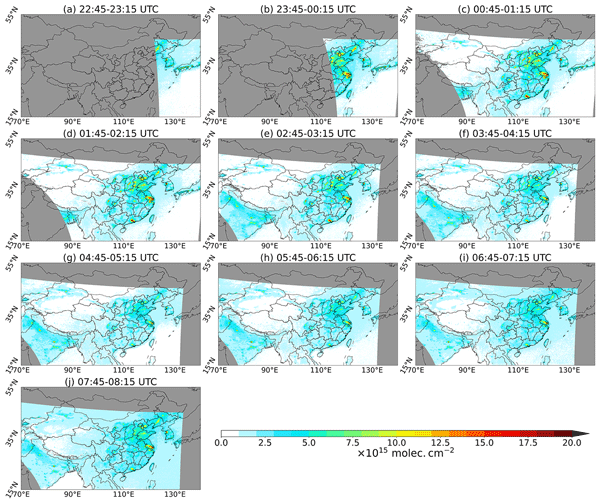
Our tropospheric NO2 vertical column density product with high spatiotemporal resolution is based on the Geostationary Environment Monitoring Spectrometer (GEMS) and named POMINO–GEMS. Strong hotspot signals and NO2 diurnal variations are clearly seen. Validations with multiple satellite products and ground-based, mobile car and surface measurements exhibit the overall great performance of the POMINO–GEMS product, indicating its capability for application in environmental studies.
Serin Kim, Daewon Kim, Hyunkee Hong, Lim-Seok Chang, Hanlim Lee, Deok-Rae Kim, Donghee Kim, Jeong-Ah Yu, Dongwon Lee, Ukkyo Jeong, Chang-Kuen Song, Sang-Woo Kim, Sang Seo Park, Jhoon Kim, Thomas F. Hanisco, Junsung Park, Wonei Choi, and Kwangyul Lee
Atmos. Meas. Tech., 16, 3959–3972, https://doi.org/10.5194/amt-16-3959-2023, https://doi.org/10.5194/amt-16-3959-2023, 2023
Short summary
Short summary
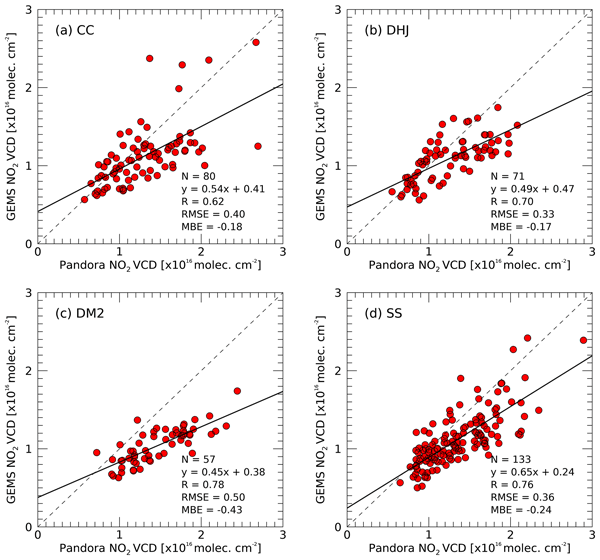
A first evaluation of the Geostationary Environmental Monitoring Spectrometer (GEMS) NO2 was carried out via comparison with the NO2 data obtained from the ground-based Pandora direct-sun measurements at four sites in Seosan, Republic of Korea. Comparisons between GEMS NO2 and Pandora NO2 were performed according to GEMS cloud fraction. GEMS NO2 showed good agreement with that of Pandora NO2 under less cloudy conditions.
Haofan Wang, Jiaxin Qiu, Yiming Liu, Qi Fan, Xiao Lu, Yang Zhang, Kai Wu, Ao Shen, Yifei Xu, Yinbao Jin, Yuqi Zhu, Jiayin Sun, and Haolin Wang
EGUsphere, https://doi.org/10.5194/egusphere-2023-1309, https://doi.org/10.5194/egusphere-2023-1309, 2023
Preprint withdrawn
Short summary
Short summary
This tool improves existing methods by providing temporal and species allocation modules and enabling emission file generation in advance for any time period. The tool is also capable of vertical plane distribution for high altitude emissions and accurately tracks road-related emissions, an area overlooked by other tools. It utilizes 50 % of the CPU capacity for efficient parallel processing during allocation.
Jincheol Park, Jia Jung, Yunsoo Choi, Hyunkwang Lim, Minseok Kim, Kyunghwa Lee, Yun Gon Lee, and Jhoon Kim
Atmos. Meas. Tech., 16, 3039–3057, https://doi.org/10.5194/amt-16-3039-2023, https://doi.org/10.5194/amt-16-3039-2023, 2023
Short summary
Short summary
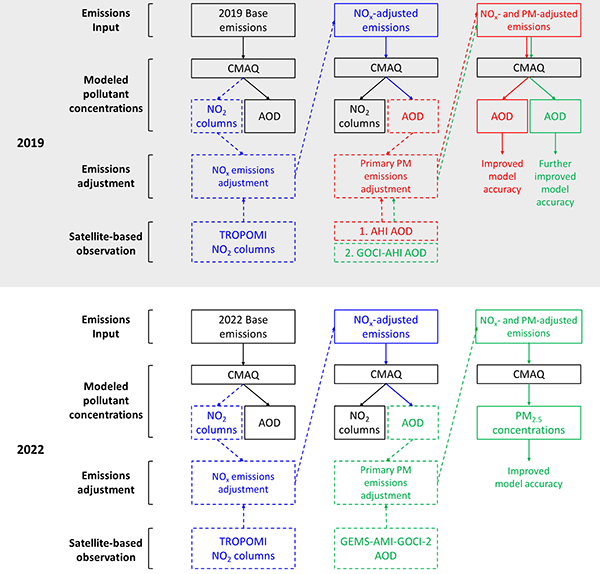
In response to the recent release of new geostationary platform-derived observational data generated by the Geostationary Environment Monitoring Spectrometer (GEMS) and its sister instruments, this study utilized the GEMS data fusion product and its proxy data in adjusting aerosol precursor emissions over East Asia. The use of spatiotemporally more complete observation references in updating the emissions resulted in more promising model performances in estimating aerosol loadings in East Asia.
Minseok Kim, Jhoon Kim, Hyunkwang Lim, Seoyoung Lee, Yeseul Cho, Huidong Yeo, and Sang-Woo Kim
Atmos. Meas. Tech., 16, 2673–2690, https://doi.org/10.5194/amt-16-2673-2023, https://doi.org/10.5194/amt-16-2673-2023, 2023
Short summary
Short summary
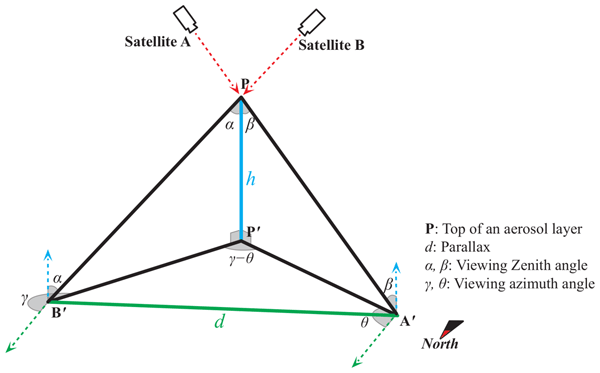
Aerosol height information is important when seeking an understanding of the vertical structure of the aerosol layer and long-range transport. In this study, a geometrical aerosol top height (ATH) retrieval using a parallax of two geostationary satellites is investigated. With sufficient longitudinal separation between the two satellites, a decent ATH product could be retrieved.
Laura Hyesung Yang, Daniel J. Jacob, Nadia K. Colombi, Shixian Zhai, Kelvin H. Bates, Viral Shah, Ellie Beaudry, Robert M. Yantosca, Haipeng Lin, Jared F. Brewer, Heesung Chong, Katherine R. Travis, James H. Crawford, Lok N. Lamsal, Ja-Ho Koo, and Jhoon Kim
Atmos. Chem. Phys., 23, 2465–2481, https://doi.org/10.5194/acp-23-2465-2023, https://doi.org/10.5194/acp-23-2465-2023, 2023
Short summary
Short summary
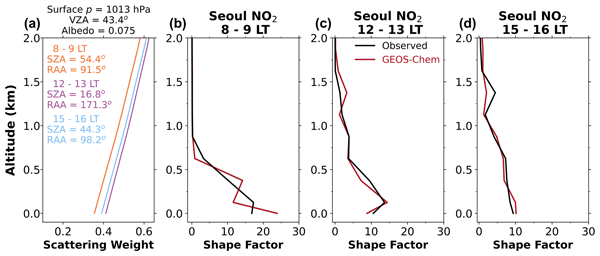
A geostationary satellite can now provide hourly NO2 vertical columns, and obtaining the NO2 vertical columns from space relies on NO2 vertical distribution from the chemical transport model (CTM). In this work, we update the CTM to better represent the chemistry environment so that the CTM can accurately provide NO2 vertical distribution. We also find that the changes in NO2 vertical distribution driven by a change in mixing depth play an important role in the NO2 column's diurnal variation.
Cheng He, Xiao Lu, Haolin Wang, Haichao Wang, Yan Li, Guowen He, Yuanping He, Yurun Wang, Youlang Zhang, Yiming Liu, Qi Fan, and Shaojia Fan
Atmos. Chem. Phys., 22, 15243–15261, https://doi.org/10.5194/acp-22-15243-2022, https://doi.org/10.5194/acp-22-15243-2022, 2022
Short summary
Short summary
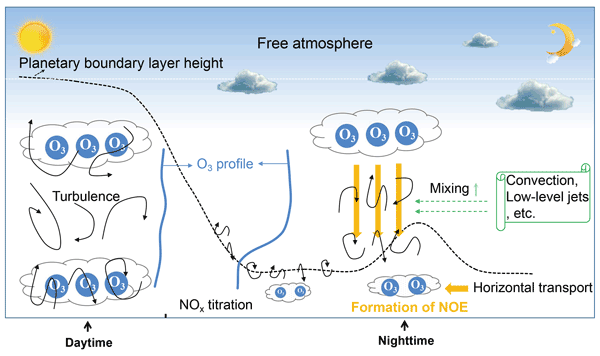
We report that nocturnal ozone enhancement (NOE) events are observed at a high annual frequency of 41 % over 800 sites in China in 2014–2019 (about 50 % higher than that over Europe or the US). High daytime ozone provides a rich ozone source in the nighttime residual layer, determining the overall high frequency of NOE events in China, and enhanced atmospheric mixing then triggers NOE events by allowing the ozone-rich air in the residual layer to be mixed into the nighttime boundary layer.
Ukkyo Jeong, Si-Chee Tsay, N. Christina Hsu, David M. Giles, John W. Cooper, Jaehwa Lee, Robert J. Swap, Brent N. Holben, James J. Butler, Sheng-Hsiang Wang, Somporn Chantara, Hyunkee Hong, Donghee Kim, and Jhoon Kim
Atmos. Chem. Phys., 22, 11957–11986, https://doi.org/10.5194/acp-22-11957-2022, https://doi.org/10.5194/acp-22-11957-2022, 2022
Short summary
Short summary
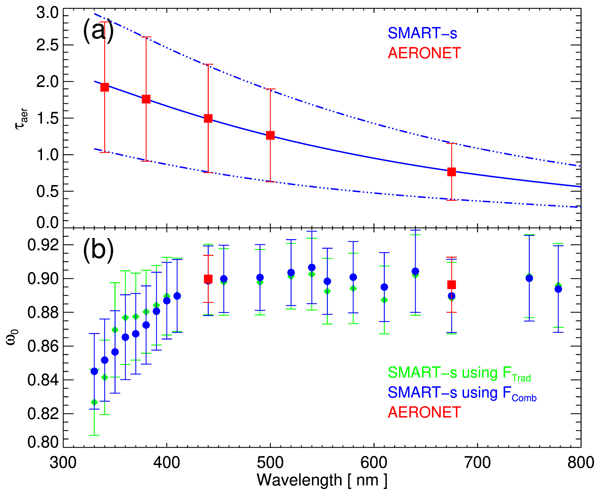
Ultraviolet (UV) measurements from satellite and ground are important for deriving information on several atmospheric trace and aerosol characteristics. Simultaneous retrievals of aerosol and trace gases in this study suggest that water uptake by aerosols is one of the important phenomena affecting aerosol properties over northern Thailand, which is important for regional air quality and climate. Obtained aerosol properties covering the UV are also important for various satellite algorithms.
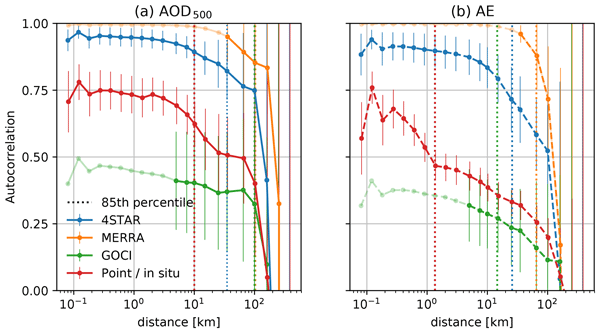
Samuel E. LeBlanc, Michal Segal-Rozenhaimer, Jens Redemann, Connor Flynn, Roy R. Johnson, Stephen E. Dunagan, Robert Dahlgren, Jhoon Kim, Myungje Choi, Arlindo da Silva, Patricia Castellanos, Qian Tan, Luke Ziemba, Kenneth Lee Thornhill, and Meloë Kacenelenbogen
Atmos. Chem. Phys., 22, 11275–11304, https://doi.org/10.5194/acp-22-11275-2022, https://doi.org/10.5194/acp-22-11275-2022, 2022
Short summary
Short summary
Airborne observations of atmospheric particles and pollution over Korea during a field campaign in May–June 2016 showed that the smallest atmospheric particles are present in the lowest 2 km of the atmosphere. The aerosol size is more spatially variable than optical thickness. We show this with remote sensing (4STAR), in situ (LARGE) observations, satellite measurements (GOCI), and modeled properties (MERRA-2), and it is contrary to the current understanding.

Drew C. Pendergrass, Shixian Zhai, Jhoon Kim, Ja-Ho Koo, Seoyoung Lee, Minah Bae, Soontae Kim, Hong Liao, and Daniel J. Jacob
Atmos. Meas. Tech., 15, 1075–1091, https://doi.org/10.5194/amt-15-1075-2022, https://doi.org/10.5194/amt-15-1075-2022, 2022
Short summary
Short summary
This paper uses a machine learning algorithm to infer high-resolution maps of particulate air quality in eastern China, Japan, and the Korean peninsula, using data from a geostationary satellite along with meteorology. We then perform an extensive evaluation of this inferred air quality and use it to diagnose trends in the region. We hope this paper and the associated data will be valuable to other scientists interested in epidemiology, air quality, remote sensing, and machine learning.
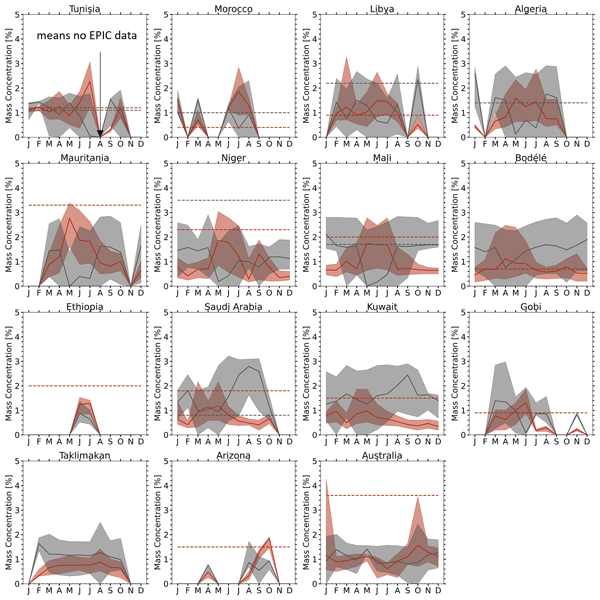
Sujung Go, Alexei Lyapustin, Gregory L. Schuster, Myungje Choi, Paul Ginoux, Mian Chin, Olga Kalashnikova, Oleg Dubovik, Jhoon Kim, Arlindo da Silva, Brent Holben, and Jeffrey S. Reid
Atmos. Chem. Phys., 22, 1395–1423, https://doi.org/10.5194/acp-22-1395-2022, https://doi.org/10.5194/acp-22-1395-2022, 2022
Short summary
Short summary
This paper presents a retrieval algorithm of iron-oxide species (hematite, goethite) content in the atmosphere from DSCOVR EPIC observations. Our results display variations within the published range of hematite and goethite over the main dust-source regions but show significant seasonal and spatial variability. This implies a single-viewing satellite instrument with UV–visible channels may provide essential information on shortwave dust direct radiative effects for climate modeling.
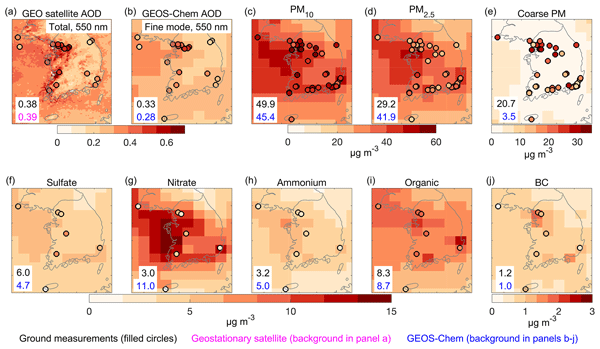
Shixian Zhai, Daniel J. Jacob, Jared F. Brewer, Ke Li, Jonathan M. Moch, Jhoon Kim, Seoyoung Lee, Hyunkwang Lim, Hyun Chul Lee, Su Keun Kuk, Rokjin J. Park, Jaein I. Jeong, Xuan Wang, Pengfei Liu, Gan Luo, Fangqun Yu, Jun Meng, Randall V. Martin, Katherine R. Travis, Johnathan W. Hair, Bruce E. Anderson, Jack E. Dibb, Jose L. Jimenez, Pedro Campuzano-Jost, Benjamin A. Nault, Jung-Hun Woo, Younha Kim, Qiang Zhang, and Hong Liao
Atmos. Chem. Phys., 21, 16775–16791, https://doi.org/10.5194/acp-21-16775-2021, https://doi.org/10.5194/acp-21-16775-2021, 2021
Short summary
Short summary
Geostationary satellite aerosol optical depth (AOD) has tremendous potential for monitoring surface fine particulate matter (PM2.5). Our study explored the physical relationship between AOD and PM2.5 by integrating data from surface networks, aircraft, and satellites with the GEOS-Chem chemical transport model. We quantitatively showed that accurate simulation of aerosol size distributions, boundary layer depths, relative humidity, coarse particles, and diurnal variations in PM2.5 are essential.
Cited articles
Acdan, J. J. M., Pierce, R. B., Dickens, A. F., Adelman, Z., and Nergui, T.: Examining TROPOMI formaldehyde to nitrogen dioxide ratios in the Lake Michigan region: implications for ozone exceedances, Atmos. Chem. Phys., 23, 7867–7885, https://doi.org/10.5194/acp-23-7867-2023, 2023.
Akimoto, H.: Global Air Quality and Pollution, Science, 302, 1716–1719, https://doi.org/10.1126/science.1092666, 2003.
Bae, K., Song, C.-K., Van Roozendael, M., Richter, A., Wagner, T., Merlaud, A., Pinardi, G., Friedrich, M. M., Fayt, C., Dimitropoulou, E., Lange, K., Bösch, T., Zilker, B., Latsch, M., Behrens, L. K., Ziegler, S., Ripperger-Lukosiūnaitė, S., Kuhn, L., Lauster, B., Reischmann, L., Uhlmannsiek, K., Cede, A., Tiefengraber, M., Gebetsberger, M., Park, R. J., Lee, H., Hong, H., Chang, L. S., and Jeon, K.: Validation of GEMS operational v2.0 total column NO2 and HCHO during the GMAP/SIJAQ campaign, Sci. Total Environ., 974, 179190, https://doi.org/10.1016/j.scitotenv.2025.179190, 2025.
Bottorff, B., Lew, M. M., Woo, Y., Rickly, P., Rollings, M. D., Deming, B., Anderson, D. C., Wood, E., Alwe, H. D., Millet, D. B., Weinheimer, A., Tyndall, G., Ortega, J., Dusanter, S., Leonardis, T., Flynn, J., Erickson, M., Alvarez, S., Rivera-Rios, J. C., Shutter, J. D., Keutsch, F., Helmig, D., Wang, W., Allen, H. M., Slade, J. H., Shepson, P. B., Bertman, S., and Stevens, P. S.: OH, HO2, and RO2 radical chemistry in a rural forest environment: measurements, model comparisons, and evidence of a missing radical sink, Atmos. Chem. Phys., 23, 10287–10311, https://doi.org/10.5194/acp-23-10287-2023, 2023.
Camalier, L., Cox, W., and Dolwick, P.: The effects of meteorology on ozone in urban areas and their use in assessing ozone trends, Atmos. Environ., 41, 7127–7137, https://doi.org/10.1016/j.atmosenv.2007.04.061, 2007.
Chang, C. Y., Faust, E., Hou, X. T., Lee, P. K., Hyun, C. K., Brent, C. H., and Liao, K. J.: Investigating ambient ozone formation regimes in neighboring cities of shale plays in the Northeast United States using photochemical modeling and satellite retrievals, Atmos. Environ., 142, 152–170, https://doi.org/10.1016/j.atmosenv.2016.06.058, 2016.
Chen, T. Z., Chu, B. W., Ma, J. Z., Ma, Q. X., Liu, Q., Wang, S. X., He, K. B., Zhao, J. C., and He, H.: Ozone Pollution in China: Current Status and Control Strategies, Engineering, 60, 15–19, https://doi.org/10.1016/j.eng.2025.06.044, 2025.
Coates, J., Mar, K. A., Ojha, N., and Butler, T. M.: The influence of temperature on ozone production under varying NOx conditions – a modelling study, Atmos. Chem. Phys., 16, 11601–11615, https://doi.org/10.5194/acp-16-11601-2016, 2016.
Duncan, B. N., Yoshida, Y., Olson, J. R., Sillman, S., Martin, R. V., Lamsal, L., Hu, Y., Pickering, K. E., Retscher, C., Allen, D. J., and Crawford, J. H.: Application of OMI observations to a space-based indicator of NOx and VOC controls on surface ozone formation, Atmos. Environ., 44, 2213–2223, https://doi.org/10.1016/j.atmosenv.2010.03.010, 2010.
Dyson, J. E., Whalley, L. K., Slater, E. J., Woodward-Massey, R., Ye, C., Lee, J. D., Squires, F., Hopkins, J. R., Dunmore, R. E., Shaw, M., Hamilton, J. F., Lewis, A. C., Worrall, S. D., Bacak, A., Mehra, A., Bannan, T. J., Coe, H., Percival, C. J., Ouyang, B., Hewitt, C. N., Jones, R. L., Crilley, L. R., Kramer, L. J., Acton, W. J. F., Bloss, W. J., Saksakulkrai, S., Xu, J., Shi, Z., Harrison, R. M., Kotthaus, S., Grimmond, S., Sun, Y., Xu, W., Yue, S., Wei, L., Fu, P., Wang, X., Arnold, S. R., and Heard, D. E.: Impact of HO2 aerosol uptake on radical levels and O3 production during summertime in Beijing, Atmos. Chem. Phys., 23, 5679–5697, https://doi.org/10.5194/acp-23-5679-2023, 2023.
Elise, P. and Tracey, H.: Evaluating current satellite capability to observe diurnal change in nitrogen oxides in preparation for geostationary satellite missions, Environ. Res. Lett., 15, 034038, https://doi.org/10.1088/1748-9326/ab6b36, 2020.
Feng, Z. Z., Xu, Y. S., Kobayashi, K., Dai, L. L., Zhang, T. Y., Agathokleous, E., Calatayud, V., Paoletti, E., Mukherjee, A., Agrawal, M., Park, R. J., Oak, Y. J., and Yue, X.: Ozone pollution threatens the production of major staple crops in East Asia, Nature Food, 3, 47–56, https://doi.org/10.1038/S43016-021-00422-6, 2022.
Fiore, A. M., Jacob, D. J., Bey, I., Yantosca, R. M., Field, B. D., and Fusco, A. C.: Background ozone over the United States in summer: origin, trend, and contribution to pollution episodes, J. Geophys. Res., 107, ACH 11-1–ACH 11-25, https://doi.org/10.1029/2001JD000982, 2002
Fu, W., Zhu, L., Kwon, H. A., Park, R. J., Lee, G. T., De Smedt, I., Liu, S., Li, X., Chen, Y., Pu, D., Li, J., Zuo, X., Zhang, P., Li, Y., Yan, Z., Zhang, X., Zhang, J., Wu, X., Shen, H., Ye, J., Wang, C., Fu, T.-M., and Yang, X.: Evaluating GEMS HCHO retrievals with TROPOMI product, Pandora observations, and GEOS-Chem simulations, Earth Space Sci., 12, e2024EA003894, https://doi.org/10.1029/2024EA003894, 2024.
Georgiana, G., Sabina, Ş., Constantin, R., and Cristinel, G.: Assessing of surface-ozone concentration in Bucharest, Romania, using OML and satellite data, Atmos. Pollut. Res., 7, 567–576, https://doi.org/10.1016/j.apr.2016.02.001, 2016.
Guicai, N., Wardle, D. A., and Yim, S. H. L.: Suppression of ozone formation at high temperature in China: from historical observations to future projections, Geophys. Res. Lett., 49, https://doi.org/10.1029/2021GL097090, 2022.
He, Q.: NOx emission inversion and near-surface NO2 estimation based on TROPOMI and GEMS, Ph.D. thesis, School of Environment and Surveying, China University of Mining and Technology, China, 136 pp., https://doi.org/10.27623/d.cnki.gzkyu.2025.000172, 2025.
Itahashi, S., Irie, H., Shimadera, H., and Chatani, S.: Fifteen-Year Trends (2005–2019) in the Satellite-Derived Ozone-Sensitive Regime in East Asia: A Gradual Shift from VOC-Sensitive to NOx-Sensitive, Remote Sensing, 14, 4512, https://doi.org/10.3390/rs14184512, 2022.
Jacob, D. J.: Heterogeneous chemistry and tropospheric ozone, Atmos. Environ., 34, 2131–2159, https://doi.org/10.1016/S1352-2310(99)00462-8, 2000.
Jairo, V. S., Hata, H., Martinez-Noriega, E. J., and Inoue, K.: Ozone trends and their sensitivity in global megacities under the warming climate, Nat. Commun., 15, 10236, https://doi.org/10.1038/s41467-024-54490-w, 2024.
Javed, Z., Liu, C., Khokhar, M. F., Tan, W., Liu, H., Xing, C., Ji, X., Tanvir, A., Hong, Q., and Sandhu, O.: Ground-Based MAX-DOAS Observations of CHOCHO and HCHO in Beijing and Baoding, China, Remote Sens., 11, 1524, https://doi.org/10.3390/rs11131524, 2019.
Jin, X. and Holloway, T.: Spatial and temporal variability of ozone sensitivity over China observed from the Ozone Monitoring Instrument, J. Geophys. Res.-Atmos., 120, 7229–7246, https://doi.org/10.1002/2015JD023250, 2015.
Jin, X. M., Arlene, M. F., Lee, T. M., Lukas, C. V., Lok, N. L., Bryan, D. K., Folkert, B., Isabelle, D. S., Gonzalo, G. A., Kelly, C., and Gail, S. T.: Evaluating a space-based indicator of surface ozone-NOx-VOC sensitivity over midlatitude source regions and application to decadal trends, J. Geophys. Res.-Atmos., 122, 10439–10461, https://doi.org/10.1002/2017JD026720, 2017.
Ju, T., Wang, L., Li, B., Lv, Z., and Gu, Z.: Study on correlation between atmospheric pollutants and meteorological factors during extreme weather in Mexico based on GTWR model, Air Qual. Atmos. Hlth., 18, 1–17, https://doi.org/10.1007/s11869-025-01724-5, 2025.
Kim, J., Jeong, U., Ahn, M. H., Kim, J. H., Park, R. J., Lee, H. L., Song, C. H., Choi, Y. S., Lee, K. H., Yoo, J. M., Jeong, M. J., Park, S. K., Lee, K. M., Song, C. K., Kim, S. W., Kim, Y. J., Kim, S. W., Kim, M. J., Go, S. J., Liu, X., Chance, K., Miller, C. C., Jay, A. S., Ben, V., Bhartia, P. K., Torres, O., Abad, G. G., Haffner, D. P., Ho, K. D., Lee, S. H., Woo, J. H., Chong, H. S., Park, S. S., Nicks, D., and Cho, W. J.: New era of air quality monitoring from space: Geostationary Environment Monitoring Spectrometer (GEMS), B. Am. Meteorol. Soc., 101, E1–E22, https://doi.org/10.1175/BAMS-D-18-0013.1, 2020.
Kim, J.: Diurnal variation of atmospheric composition in Asia seen from space: GEMS, ACAM 2023 Workshop, Boulder, CO, 30 May–2 June, https://www.acom.ucar.edu/webt/ACAM/2023/presentations/O2.03_Kim.pdf (last access: 6 July 2026), 2023.
Klára, Č., Kamil, L., Ladislav, M., and Martin, S.: Intercomparison of Ground- and Satellite-Based Total Ozone Data Products at Marambio Base, Antarctic Peninsula Region, Atmosphere, 10, 721, https://doi.org/10.3390/atmos10110721, 2019.
Lange, K., Richter, A., Bösch, T., Zilker, B., Latsch, M., Behrens, L. K., Okafor, C. M., Bösch, H., Burrows, J. P., Merlaud, A., Pinardi, G., Fayt, C., Friedrich, M. M., Dimitropoulou, E., Van Roozendael, M., Ziegler, S., Ripperger-Lukosiunaite, S., Kuhn, L., Lauster, B., Wagner, T., Hong, H., Kim, D., Chang, L.-S., Bae, K., Song, C.-K., Park, J.-U., and Lee, H.: Validation of GEMS tropospheric NO2 columns and their diurnal variation with ground-based DOAS measurements, Atmos. Meas. Tech., 17, 6315–6344, https://doi.org/10.5194/amt-17-6315-2024, 2024.
Li, J. J. and Li, Y.: Impact of Large-Scale Circulations on Ground-Level Ozone Variability over Eastern China, Atmosphere, 15, 1400, https://doi.org/10.3390/atmos15121400, 2024.
Li, J., Chen, X. S., Wang, Z. F., Du, H. Y., Yang, W. Y., Sun, Y. L., Hu, B., Li, J. J., Wang, W., Wang, T., Fu, P. Q., and Huang, H. L.: Radiative and heterogeneous chemical effects of aerosols on ozone and inorganic aerosols over East Asia, Sci. Total Environ., 622–623, 1327–1342, https://doi.org/10.1016/j.scitotenv.2017.12.041, 2018.
Li, J., Wang, H., Gong, D., Li, Q., Wang, Y., Zhao, W., Zhang, C., Zhou, Z., Zhao, Y., Xu, Q., Zhou, Y., He, C., Ristovski, Z., Morawska, L., Liu, S. C., and Wang, B.: Landscape fragmentation triggers cascading enhancement of surface ozone production, Commun. Earth Environ., 6, 931, https://doi.org/10.1038/s43247-025-02866-1, 2025.
Li, T. W. and Chen, X.: Estimating daily full-coverage surface ozone concentration using satellite observations and a spatiotemporally embedded deep learning approach, Int. J. Appl. Earth Obs., 101, 102356, https://doi.org/10.1016/J.JAG.2021.102356, 2021.
Li, Y.: Study on Ozone Formation Sensitivity in the Pearl River Delta Based on Satellite Remote Sensing and Air Quality Models, PhD thesis, South China University of Technology, China, https://doi.org/10.27151/d.cnki.ghnlu.2021.005599, 2021.
Li, Y., Yu, C., Tao, J., Lu, X., and Chen, L.: Analysis of Ozone Formation Sensitivity in Chinese Representative Regions Using Satellite and Ground-Based Data, Remote Sens., 16, 316, https://doi.org/10.3390/rs16020316, 2024.
Li, Y., Li, C., Li, Y., Wang, T., Li, M., Qu, Y., Wu, H., Xie, M., and Wang, Y.: Decadal evolution of aerosol-mediated ozone responses in Eastern China under clean air actions and carbon neutrality policies, Atmos. Chem. Phys., 26, 1301–1319, https://doi.org/10.5194/acp-26-1301-2026, 2026.
Liang, Y. N., Wang, X. H., Qi, S. M., Xu, J. M., and Liu, R.: Analysis of Ozone Formation Sensitivity in Guangdong Province Based on OMI Satellite and Ground Observation Data, Environmental Science, 45, 6248–6254, https://doi.org/10.13227/j.hjkx.202311261, 2024.
Lyu, C. G., Zhang, W. M., Zhang, C., Shi, Y. F., Zhang, Y., and Wang, Y. P.: Evaluating the spatial representativeness of ground-based observations for satellite total ozone products, Int. J. Appl. Earth Obs., 129, 103778, https://doi.org/10.1016/J.JAG.2024.103778, 2024.
Liu, Y. and Wang, T.: Worsening urban ozone pollution in China from 2013 to 2017 – Part 1: The complex and varying roles of meteorology, Atmos. Chem. Phys., 20, 6305–6321, https://doi.org/10.5194/acp-20-6305-2020, 2020.
Lu, X., Zhang, L., Chen, Y., Zhou, M., Zheng, B., Li, K., Liu, Y., Lin, J., Fu, T.-M., and Zhang, Q.: Exploring 2016–2017 surface ozone pollution over China: source contributions and meteorological influences, Atmos. Chem. Phys., 19, 8339–8361, https://doi.org/10.5194/acp-19-8339-2019, 2019a.
Lu, X., Zhang, L., and Shen, L.: Meteorology and Climate Influences on Tropospheric Ozone: a Review of Natural Sources, Chemistry, and Transport Patterns, Current Pollution Reports, 5, 238–260, https://doi.org/10.1007/s40726-019-00118-3, 2019b.
Mahajan, A. S., Isabelle, D. S., Mriganka, S. B., Sachin, G., Suvarna, F., Chaitri, R., and Michel, V. R.: Inter-annual variations in satellite observations of nitrogen dioxide and formaldehyde over India, Atmos. Environ., 116, 194–201, https://doi.org/10.1016/j.atmosenv.2015.06.004, 2015.
Martin, R. V., Fiore, A. M., and Van Donkelaar, A.: Spacebased diagnosis of surface ozone sensitivity to anthropogenic emissions, Geophys. Res. Lett., 31, https://doi.org/10.1029/2004GL019416, 2004.
Menut, L., Bessagnet, B., Briant, R., Cholakian, A., Couvidat, F., Mailler, S., Pennel, R., Siour, G., Tuccella, P., Turquety, S., and Valari, M.: The CHIMERE v2020r1 online chemistry-transport model, Geosci. Model Dev., 14, 6781–6811, https://doi.org/10.5194/gmd-14-6781-2021, 2021.
Monks, P. S., Archibald, A. T., Colette, A., Cooper, O., Coyle, M., Derwent, R., Fowler, D., Granier, C., Law, K. S., Mills, G. E., Stevenson, D. S., Tarasova, O., Thouret, V., von Schneidemesser, E., Sommariva, R., Wild, O., and Williams, M. L.: Tropospheric ozone and its precursors from the urban to the global scale from air quality to short-lived climate forcer, Atmos. Chem. Phys., 15, 8889–8973, https://doi.org/10.5194/acp-15-8889-2015, 2015.
Oak, Y. J., Jacob, D. J., Balasus, N., Yang, L. H., Chong, H., Park, J., Lee, H., Lee, G. T., Ha, E. S., Park, R. J., Kwon, H.-A., and Kim, J.: A bias-corrected GEMS geostationary satellite product for nitrogen dioxide using machine learning to enforce consistency with the TROPOMI satellite instrument, Atmos. Meas. Tech., 17, 5147–5159, https://doi.org/10.5194/amt-17-5147-2024, 2024.
Pan, Q. Q.: Spatiotemporal Distribution Characteristics of Ozone and Its Precursors in the Yangtze River Delta Region and Analysis of Ozone Formation Processes under Different NOx Emission Scenarios, PhD thesis, Donghua University, China, https://doi.org/10.27012/d.cnki.gdhuu.2023.001648, 2023.
Peng, H. C., Xing, C. Z., Li, Y. K., Zhang, C. X., Lin, J. N., Xue, J. K., Wang, X. H., Song, Y. H., Niu, X. H., and Liu, C.: Studies on regional ozone formation sensitivities and transport with higher spatiotemporal resolutions in a stereoscopic dimension: GEMS and vertical observations, Atmos. Res., 302, 107314, https://doi.org/10.1016/j.atmosres.2024.107314, 2024.
Ren, J., Guo, F., and Xie, S.: Diagnosing ozone–NOx–VOC sensitivity and revealing causes of ozone increases in China based on 2013–2021 satellite retrievals, Atmos. Chem. Phys., 22, 15035–15047, https://doi.org/10.5194/acp-22-15035-2022, 2022.
Romer, P. S., Duffey, K. C., Wooldridge, P. J., Edgerton, E., Baumann, K., Feiner, P. A., Miller, D. O., Brune, W. H., Koss, A. R., de Gouw, J. A., Misztal, P. K., Goldstein, A. H., and Cohen, R. C.: Effects of temperature-dependent NOx emissions on continental ozone production, Atmos. Chem. Phys., 18, 2601–2614, https://doi.org/10.5194/acp-18-2601-2018, 2018.
Sillman, S.: The relation between ozone, NOx and hydrocarbons in urban and polluted rural environments, Atmos. Environ., 33, 1821–1845, https://doi.org/10.1016/S1352-2310(98)00345-8, 1999.
Sillman, S. and He, D.: Some theoretical results concerning O3-NO-VOC chemistry and NO-VOC indicators, J. Geophys. Res.-Atmos., 107, ACH 26-1–ACH 26-15, https://doi.org/10.1029/2001JD001123, 2002.
Souri, A., Nowlan, C., Wolfe, G., Lamsal, L., Miller, C., Abad, G. G., Janz, S., Fried, A., Blake, D., Weinheimer, A., Diskin, G., Liu, X., and Chance, K.: Revisiting the effectiveness of HCHO
Sun, Y., Yin, H., Liu, C., Zhang, L., Cheng, Y., Palm, M., Notholt, J., Lu, X., Vigouroux, C., Zheng, B., Wang, W., Jones, N., Shan, C., Qin, M., Tian, Y., Hu, Q., Meng, F., and Liu, J.: Mapping the drivers of formaldehyde (HCHO) variability from 2015 to 2019 over eastern China: insights from Fourier transform infrared observation and GEOS-Chem model simulation, Atmos. Chem. Phys., 21, 6365–6387, https://doi.org/10.5194/acp-21-6365-2021, 2021.
Tan, Z., Lu, K., Jiang, M., Su, R., Wang, H., Lou, S., Fu, Q., Zhai, C., Tan, Q., Yue, D., Chen, D., Wang, Z., Xie, S., Zeng, L., and Zhang, Y.: Daytime atmospheric oxidation capacity in four Chinese megacities during the photochemically polluted season: a case study based on box model simulation, Atmos. Chem. Phys., 19, 3493–3513, https://doi.org/10.5194/acp-19-3493-2019, 2019.
Tang, G., Wang, Y., Li, X., Ji, D., Hsu, S., and Gao, X.: Spatial-temporal variations in surface ozone in Northern China as observed during 2009–2010 and possible implications for future air quality control strategies, Atmos. Chem. Phys., 12, 2757–2776, https://doi.org/10.5194/acp-12-2757-2012, 2012.
Trainer, M., Williams, E. J., Parrish, D. D., Buhr, M. P., Allwine, E. J., Westberg, H. H., Fehsenfeld, F. C., and Liu, S. C.: Models and observations of the impact of natural hydrocarbons on rural ozone, Nature, 329, 705–707, https://doi.org/10.1038/329705a0, 1987.
Wu, Y., Huo, J., Yang, G., Wang, Y., Wang, L., Wu, S., Yao, L., Fu, Q., and Wang, L.: Measurement report: Production and loss of atmospheric formaldehyde at a suburban site of Shanghai in summertime, Atmos. Chem. Phys., 23, 2997–3014, https://doi.org/10.5194/acp-23-2997-2023, 2023.
Wu, W. L., Xue, W. B., Lei, Y., and Wang, J. N.: Sensitivity of Ozone Formation in the Beijing-Tianjin-Hebei Region and Surrounding Areas Based on OMI Data, China Environmental Science, 38, 1201–1208, https://doi.org/10.19674/j.cnki.issn1000-6923.2018.0143, 2018.
Wang, R., Bei, N., Tie, X., Wu, J., Liu, S., Li, X., Yu, J., Jiang, Q., and Li, G.: Effects of hydroperoxy radical heterogeneous loss on the summertime ozone formation in the North China Plain, Sci. Total Environ., 825, 153993, https://doi.org/10.1016/j.scitotenv.2022.153993, 2022.
Wang, R. F., Ma, X. D., Zhao, T. L., Wang, H. L., Ding, H., and Zheng, X. B.: Evaluation of the Applicability of MACC Reanalysis Ozone Data over China Using Ground-Based Observations and AIRS Satellite Data, Environmental Science, 40, 4412–4422, https://doi.org/10.13227/j.hjkx.201904029, 2019.
Wang, W., van der A, R., Ding, J., van Weele, M., and Cheng, T.: Spatial and temporal changes of the ozone sensitivity in China based on satellite and ground-based observations, Atmos. Chem. Phys., 21, 7253–7269, https://doi.org/10.5194/acp-21-7253-2021, 2021.
Wang, W., Li, X., Cheng, Y., Parrish, D. D., Ni, R., Tan, Z., Liu, Y., Lu, S., Wu, Y., and Chen, S.: Ozone pollution mitigation strategy informed by long-term trends of atmospheric oxidation capacity, Nat. Geosci., 17, 20–25, https://doi.org/10.1038/s41561-023-01334-9, 2024.
Wang, Y., Lampel, J., Xie, P., Beirle, S., Li, A., Wu, D., and Wagner, T.: Ground-based MAX-DOAS observations of tropospheric aerosols, NO2, SO2 and HCHO in Wuxi, China, from 2011 to 2014, Atmos. Chem. Phys., 17, 2189–2215, https://doi.org/10.5194/acp-17-2189-2017, 2017.
Wei, C. B., Yu, G. H., Cao, L. M., Han, H. X., Xia, S. Y., and Huang, X. F.: Tempo-spacial variation and source apportionment of atmospheric formaldehyde in the Pearl River Delta, China, Atmos. Environ., 312, 120016, https://doi.org/10.1016/j.atmosenv.2023.120016, 2023.
Xie, M., Zhu, K., Wang, T., Chen, P., Han, Y., Li, S., Zhuang, B., and Shu, L.: Temporal characterization and regional contribution to O3 and NOx at an urban and a suburban site in Nanjing, China, Sci. Total Environ., 551–552, 533–545, https://doi.org/10.1016/j.scitotenv.2016.02.047, 2016.
Xu, J., Zhang, Z., Rao, L. L., Wang, Y. P., Yan, H. H., Hu, S. T., Shi, C., Liu, S., Gegen, T., Wang, W. Y., Shi, E., Yao, S., Zhu, J., Wang, Y. M., Dong, X. L., and Shi, J. C.: Tropospheric ozone retrieval from satellite remote sensing – a review, Advances in Earth Science, 39, 56–70, 2024.
Xu, W., Yang, H., He, M., Yang, Z., Zhang, Y., Liu, Z. H., and He, Y. M.: Spatiotemporal Distribution and Influencing Factors of Ozone Formation Sensitivity in the Chengdu-Chongqing Region, Environmental Science, 46, 736–745, https://doi.org/10.13227/j.hjkx.202312065, 2025.
Xia, N., Du, E. Z., Guo, Z. D., and Wim, D. V.: The diurnal cycle of summer tropospheric ozone concentrations across Chinese cities: Spatial patterns and main drivers, Environ. Pollut., 286, 117547, https://doi.org/10.1016/ 10.1016/j.envpol.2021.117547, 2021.
Yao, C., Yang, X., Huang, D. D., Donger, L., Yi, C., Guo, J., Xin, F., Hui, L. R., Wang, Q., Huang, C., Wang, H. L., and Wang, Z.: Photochemical impacts of atmospheric carbonyl compounds on ozone formation and radical chemistry in urban Shanghai, Environ. Pollut., 380, 126557, https://doi.org/10.1016/ 10.1016/j.envpol.2025.126557, 2025.
Yu, L., Cheng, M. M., Guo, Z., Zhang, X. Y., Cui, X. M., and Chen, S. G.: Increase in Surface Ozone over Beijing-Tianjin-Hebei and the Surrounding Areas of China Inferred from Satellite Retrievals, 2005–2018, Aerosol Air Qual. Res., 20, 2170–2184, https://doi.org/10.4209/aaqr.2019.11.0603, 2020.
Yang, X., Wu, K., Wang, H., Liu, Y., and Wang, Z.: Summertime ozone pollution in Sichuan Basin, China: Meteorological conditions, sources and process analysis, Atmos. Environ., 226, 117392, https://doi.org/10.1016/j.atmosenv.2020.117392, 2020.
Yang, Y. M, Li, X., Zu, K. X., Lian, C. F., Chen, S. Y., Dong, H. B., Feng, M., Liu, H. F., Liu, J. W., Lu, K. D., Lu, S. H., Ma, X. F., Song, D. L., Wang, W. G., Yang, S. D., Yang, X. P., Yu, X. N., Zhu, Y., Zeng, L. M., Tan, Q. W., and Zhang, Y. H.: Elucidating the effect of HONO on O3 pollution by a case study in southwest China, Sci. Total Environ., 756, 144127, https://doi.org/10.1016/j.scitotenv.2020.144127, 2021.
Zhang, H., Shi, C., Ying, C., Weng, S., Ni, E., Zhao, L., Yang, P., Tang, K., Zhou, X., Ren, C., Chi, X., Zhou, D., Li, M., Li, N., Liu, T., and Huang, X.: HONO formation mechanisms and impacts on ambient oxidants in coastal regions of Fujian, China, Atmos. Chem. Phys., 25, 16797–16816, https://doi.org/10.5194/acp-25-16797-2025, 2025.
Zhang, J. X., Gao, Y., Leung, L. R., Luo, K., Wang, M. H., Zhang, Y., Bell, M. L., and Fan, J. R.: Disentangling the mechanism of temperature and water vapor modulation on ozone under a warming climate, Environ. Res. Lett., 17, 124032, https://doi.org/10.1088/1748-9326/ACA3BC, 2022.
Zhang, K. and Batterman, S. A.: Time allocation shifts and pollutant exposure due to traffic congestion: an analysis using the national human activity pattern survey, Sci. Total Environ., 407, 5493–5500, https://doi.org/10.1016/j.scitotenv.2009.07.008, 2009.
Short summary
Ozone pollution is a growing issue in China, with levels increasing steadily from 2020 to 2024. This study uses satellite data to explore how different pollutants interact to form ozone. The results show that urban areas shift their pollution control strategies throughout the day. These findings suggest that targeting specific pollutants at different times could significantly improve air quality and help reduce harmful ozone pollution in China.
Ozone pollution is a growing issue in China, with levels increasing steadily from 2020 to 2024....


Altmetrics
Final-revised paper
Preprint