
Articles | Volume 26, issue 14
https://doi.org/10.5194/acp-26-10149-2026
© Author(s) 2026. This work is distributed under
the Creative Commons Attribution 4.0 License.
the Creative Commons Attribution 4.0 License.
https://doi.org/10.5194/acp-26-10149-2026
© Author(s) 2026. This work is distributed under
the Creative Commons Attribution 4.0 License.
the Creative Commons Attribution 4.0 License.
Research article
| 
21 Jul 2026
Research article |
| 21 Jul 2026
| 21 Jul 2026
Methanethiol and dimethyl sulfide measurements in seawater and the atmosphere around the Antarctic Peninsula and in the Weddell Sea

Department of Marine Biology and Oceanography, Institut de Ciències del Mar (CSIC), Barcelona, Catalonia, Spain
Centre of Ocean and Atmospheric Sciences, University of East Anglia, Norwich, UK
National Centre for Atmospheric Science, University of East Anglia, Norwich, UK
Aerodyne Research, Billerica, MA, USA
Elisabeth S. M. Deschaseaux
Department of Marine Biology and Oceanography, Institut de Ciències del Mar (CSIC), Barcelona, Catalonia, Spain
Lauriane L. J. Quéléver
Institute for Atmospheric and Earth System Research (INAR-Physics), University of Helsinki, Helsinki, Finland
David C. S. Beddows
National Centre for Atmospheric Science, University of Birmingham, Birmingham, UK
Harald Stark
Aerodyne Research, Billerica, MA, USA
Veronika Pospisilova
Tofwerk AG, Thun, Switzerland
Felipe D. Lopez-Hilfiker
Tofwerk AG, Thun, Switzerland
Guillaume Chamba
Laboratoire de Météorologie Physique, CNRS UMR 6016, Université Clermont Auvergne, Aubière, France
Karine Sellegri
Laboratoire de Météorologie Physique, CNRS UMR 6016, Université Clermont Auvergne, Aubière, France
Elisabet L. Sà
Department of Marine Biology and Oceanography, Institut de Ciències del Mar (CSIC), Barcelona, Catalonia, Spain
Queralt Güell-Bujons
Department of Marine Biology and Oceanography, Institut de Ciències del Mar (CSIC), Barcelona, Catalonia, Spain
Magda Vila
Department of Marine Biology and Oceanography, Institut de Ciències del Mar (CSIC), Barcelona, Catalonia, Spain
Yaiza M. Castillo
Department of Marine Biology and Oceanography, Institut de Ciències del Mar (CSIC), Barcelona, Catalonia, Spain
Arianna Rocchi
Department of Marine Biology and Oceanography, Institut de Ciències del Mar (CSIC), Barcelona, Catalonia, Spain
Ana Sotomayor
Department of Marine Biology and Oceanography, Institut de Ciències del Mar (CSIC), Barcelona, Catalonia, Spain
Unitat de Tecnologia Marina (CSIC), Barcelona, Catalonia, Spain
Dolors Vaqué
Department of Marine Biology and Oceanography, Institut de Ciències del Mar (CSIC), Barcelona, Catalonia, Spain
Manuel Dall'Osto
Department of Marine Biology and Oceanography, Institut de Ciències del Mar (CSIC), Barcelona, Catalonia, Spain
Elisa Berdalet
Department of Marine Biology and Oceanography, Institut de Ciències del Mar (CSIC), Barcelona, Catalonia, Spain
Rafel Simó
CORRESPONDING AUTHOR
Department of Marine Biology and Oceanography, Institut de Ciències del Mar (CSIC), Barcelona, Catalonia, Spain
Related authors
Guillaume Chamba, Karine Sellegri, Valérie Gros, Clémence Rose, Leah Williams, Elisa Berdalet, Dolors Vaqué, Magda Vila, Queralt Güell-Bujons, Elisabet-Laia Sà, Yaiza M. Castillo, Arianna Rocchi, Aurélie Colomb, Jean-Marc Pichon, Mickaël Ribeiro, Charel Wohl, Manuel Dall'Osto, and Rafel Simó
EGUsphere, https://doi.org/10.5194/egusphere-2026-1720, https://doi.org/10.5194/egusphere-2026-1720, 2026
Short summary
Short summary
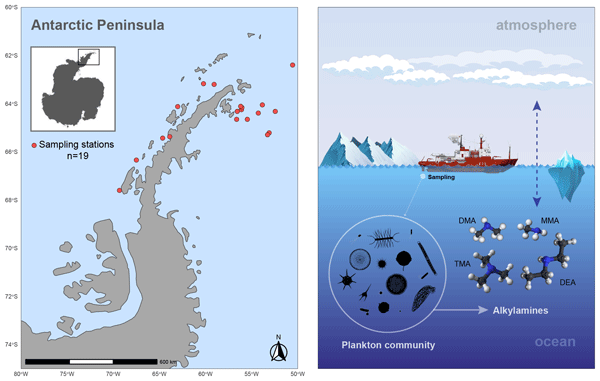
Oceans are a natural source of sulfur compounds that can influence climate by forming aerosol particles. During an oceanographic expedition around the Antarctic Peninsula, we measured the emissions of two of these compounds (DMS and methanethiol), their links to seawater microorganisms and particle formation in large enclosures exposed to natural or reduced UV radiation. Our results suggest that UV reduces these emissions and the formation of nanoparticles.
Arianna Rocchi, Mark F. Fitzsimons, Preston Akenga, Ana Sotomayor, Elisabet L. Sà, Queralt Güell-Bujons, Magda Vila, Yaiza M. Castillo, Manuel Dall'Osto, Dolors Vaqué, Charel Wohl, Rafel Simó, and Elisa Berdalet
Biogeosciences, 22, 3429–3448, https://doi.org/10.5194/bg-22-3429-2025, https://doi.org/10.5194/bg-22-3429-2025, 2025
Short summary
Short summary
During the PolarChange expedition, volatile alkylamines, important players in nitrogen cycling and cloud formation, were measured in Antarctic waters using a high-sensitivity method. Trimethylamine was the dominant alkylamine in marine particles, associated with nanophytoplankton. Dissolved dimethylamine likely originated from trimethylamine degradation, while diethylamine sources remain unclear. These findings confirm the biological origin of alkylamines in polar marine microbial food webs.
Charel Wohl, Anna E. Jones, William T. Sturges, Philip D. Nightingale, Brent Else, Brian J. Butterworth, and Mingxi Yang
Biogeosciences, 19, 1021–1045, https://doi.org/10.5194/bg-19-1021-2022, https://doi.org/10.5194/bg-19-1021-2022, 2022
Short summary
Short summary
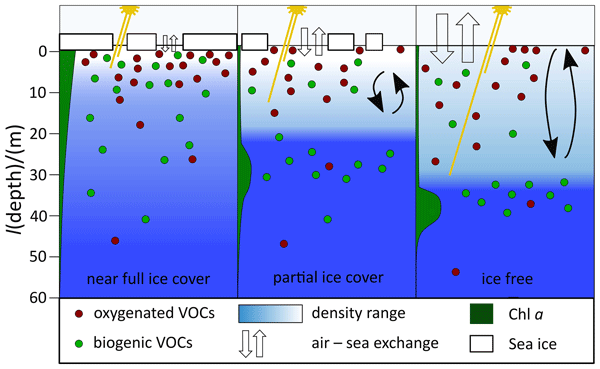
We measured concentrations of five different organic gases in seawater in the high Arctic during summer. We found higher concentrations near the surface of the water column (top 5–10 m) and in areas of partial ice cover. This suggests that sea ice influences the concentrations of these gases. These gases indirectly exert a slight cooling effect on the climate, and it is therefore important to measure the levels accurately for future climate predictions.
Megan S. Claflin, Felipe Lopez-Hilfiker, Urs Rohner, Vasyl Yatsyna, Brian M. Lerner, Joel Thornton, Douglas Worsnop, Manjula Canagaratna, and John Jayne
EGUsphere, https://doi.org/10.5194/egusphere-2026-6002, https://doi.org/10.5194/egusphere-2026-6002, 2026
This preprint is open for discussion and under review for Atmospheric Measurement Techniques (AMT).
Short summary
Short summary
Measurement of volatile organic compounds in diverse environments is important to understand changing emissions and their impact on health and climate. We present a measurement system that is compact, low power, and provides both high-time resolution and molecularly resolved data. This system enables simpler deployment, operation, and analysis while providing a path toward meaningful measurements at long-term monitoring sites, on mobile platforms, and in locations where resources are limited.
Cecilia Righi, Mihai Ciobanu, Neha Deot, Tuija Jokinen, Chengfeng Liu, Qi Yuan, Lauriane L. J. Quéléver, Spiro Jorga, Veronika Pospisilova, Lisa J. Beck, Mario Simon, Marcel Zauner-Wieczorek, Andreas Kürten, Ruben Soler, Teresa Vera, Amalia Muñoz, Lauri R. Ahonen, Chao Yan, Tuukka Petäjä, and Nina Sarnela
Atmos. Meas. Tech., 19, 6357–6378, https://doi.org/10.5194/amt-19-6357-2026, https://doi.org/10.5194/amt-19-6357-2026, 2026
Short summary
Short summary
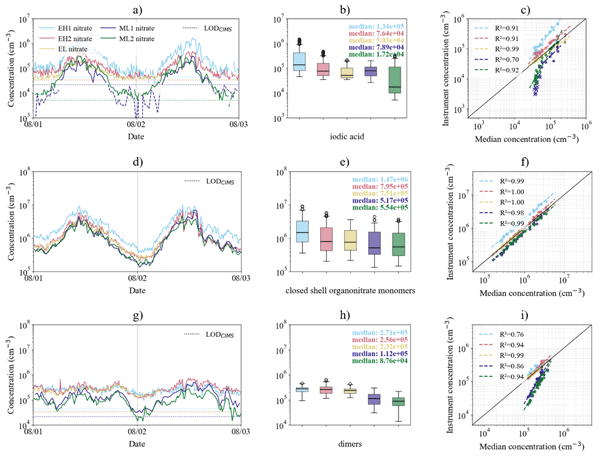
Chemical ionization mass spectrometry is widely used to detect condensable vapors as sulfuric acid and highly oxygenated organic molecules, but results across studies are not always comparable. In summer 2024, an intercomparison campaign involving six instruments was conducted at a boreal forest site. Comparable measurements were achievable when all calibration and correction factors were applied. Instrument behavior depended more on inlet design and operating conditions than reagent ion choice.
Jenna DeVivo, Alexandria Stinchfield, Nirvan Bhattacharyya, Mitch Alton, Mingyi Wang, Siegfried Schobesberger, Liqing Hao, Mitchell Rogers, Alexander Vogel, Imad Zgheib, Natalie Burton, Clara Lietzke, Douglas M. Russell, Eva Sommer, Drew Gentner, Liine Heikkinen, Rainer Volkamer, Jasper Kirkby, Felipe Lopez-Hilfiker, Douglas Worsnop, Manjula Canagaratna, and Neil M. Donahue
EGUsphere, https://doi.org/10.5194/egusphere-2026-4542, https://doi.org/10.5194/egusphere-2026-4542, 2026
This preprint is open for discussion and under review for Atmospheric Chemistry and Physics (ACP).
Short summary
Short summary
The vapors driving atmospheric new particle formation are uncertain, in part because of instrumental limitations at small particle sizes. This study presents a novel coupling of a temperature-programmed desorption inlet with a bipolar mass spectrometer that has multiple types of chemical ionization used to study acid-base reactions controlling particulate evaporation.This method measures more components in atmospheric aerosol and separates reactive pathways contributing to early particle growth.
Sneha Aggarwal, Matthew Salter, Olga Garmash, Felipe Lopez-Hilfiker, Julika Zinke, Joel A. Thornton, Timothy H. Bertram, Jian Wang, Paul Zieger, and Claudia Mohr
EGUsphere, https://doi.org/10.26434/chemrxiv.15000402/v3, https://doi.org/10.26434/chemrxiv.15000402/v3, 2026
Short summary
Short summary
Perfluoroalkyl carboxylic acids (PFCAs) are persistent global contaminants. While sea spray aerosol (SSA) formed by wave breaking is known to transport PFCAs from the ocean to the atmosphere, the focus has primarily been on particle-phase transport. Here, we present evidence that particle-bound PFCAs are subsequently converted to gas phase following SSA emission. This previously unconsidered process may cause particle-only measurements to underestimate the total atmospheric PFCA from SSA.
Aino Ovaska, Daniel Holmberg, Elio Rauth, Mansour Alghamdi, Paulo Artaxo, Eija Asmi, John Backman, Benjamin Bergmans, Matthew Boyer, Liezl Bredenkamp, Maurizio Busetto, Delano Campos De Oliveira, Juan Andrés Casquero-Vera, Darius Ceburnis, Tak Chan, Tommy Chan, Sebastien Conil, Daniele Contini, Suzanne Crumeyrolle, Valentin Duflot, Kostas Eleftheriadis, Johan Esveld, Ekaterina Ezhova, Markus Fiebig, Shahzad Gani, Olga Garmash, Francisco Gómez-Moreno, Roy M. Harrison, Andras Hoffer, Rakesh Hooda, Antti Hyvärinen, Tareq Hussein, Jorma Joutsensaari, Nikos Kalivitis, Heinz Kaminski, Jutta Kesti, Radovan Krejci, Adam Kristensson, Chongai Kuang, Markku Kulmala, Lauri Laakso, Ari Leskinen, Heikki Lihavainen, Andreas Massling, Maik Merkel, Steffen Noe, Jakub Ondracek, Noemí Perez, Jean-Eudes Petit, Tuukka Petäjä, Michael Pikridas, Christopher Pöhlker, Mira Pöhlker, Jean-Philippe Putaud, Ximeng Qi, Cristina Reche, Sergio Rodríguez, Petr Roztocil, Jean Sciare, Karine Sellegri, Dongjie Shang, Ashish Singh, Mikko Sipilä, Henrik Skov, Mar Sorribas, Tamanna Subba, Junying Sun, Peter Tunved, Ville Vakkari, Pieter G. Van Zyl, Aki Virkkula, Jens Voigtländer, Kay Weinhold, Alfred Wiedensohler, Hee-Jung Yoo, Putian Zhou, Kai Puolamäki, Tuomo Nieminen, Veli-Matti Kerminen, Victoria A. Sinclair, and Pauli Paasonen
Earth Syst. Sci. Data Discuss., https://doi.org/10.5194/essd-2026-415, https://doi.org/10.5194/essd-2026-415, 2026
Preprint under review for ESSD
Short summary
Short summary
All clouds form around aerosol particles, and their abundance influences cloud properties. In turn, clouds affect climate by changing how energy moves through the atmosphere, making them important for climate change. To better understand these interactions, we need accurate information on how many aerosol particles are in the atmosphere. Therefore, we have developed a new 21-year global dataset of particle concentrations relevant for cloud formation.
Yuwei Wang, Aristeidis Voliotis, Emily Matthews, Rongrong Wu, Milan Roska, Max Gerrit Adam, René Dubus, Lukas Kesper, Franz Rohrer, Robert Wegener, Benjamin Winter, Kelvin H. Bates, Quanfu He, Thorsten Hohaus, Achim Grasse, Ralf Tillmann, Andreas Wahner, Hui Wang, Christian Wesolek, Sergej Wedel, Yizhen Wu, Sören R. Zorn, Manjula Canagaratna, Douglas Worsnop, Felipe Lopez-Hilfiker, Georgios I. Gkatzelis, Hugh Coe, and Thomas J. Bannan
Atmos. Meas. Tech., 19, 4583–4599, https://doi.org/10.5194/amt-19-4583-2026, https://doi.org/10.5194/amt-19-4583-2026, 2026
Short summary
Short summary
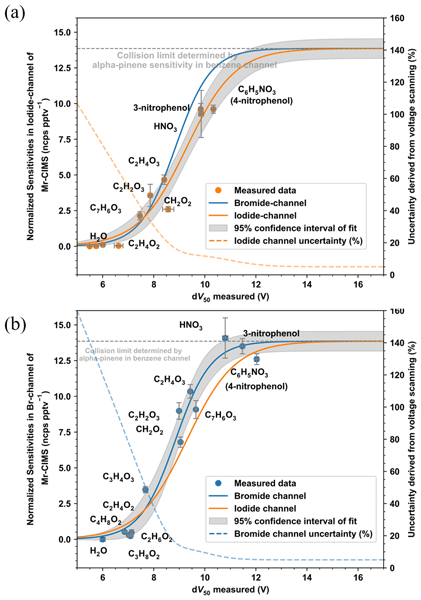
This work developed voltage scanning based calibration approach for a multi-reagent chemical ionization mass spectrometry. This approach improves sensitivity determination for gas-phase compounds. It does not require a calibrant for the target analyte and can estimate sensitivity with acceptable uncertainty based on the experimentally established relationship between binding energies and measured sensitivities. This work is broadly relevant to mass-spectrometric calibration strategies.
Austin D. Dobrecevich, Felipe Lopez-Hilfiker, Chris J. Wright, Urs Rohner, and Joel A. Thornton
Atmos. Meas. Tech., 19, 3481–3490, https://doi.org/10.5194/amt-19-3481-2026, https://doi.org/10.5194/amt-19-3481-2026, 2026
Short summary
Short summary
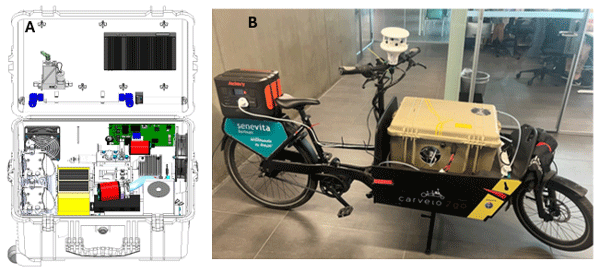
A portable mass spectrometer has been developed to sensitively measure key environmental pollutants at high temporal resolution. Its low power consumption and compact design enable battery-powered operation and deployment in challenging settings such as light aircraft, tall towers, and remote, off-grid locations, providing new insight into atmospheric chemical variability with high spatial and temporal accuracy.
Neil M. Donahue, Victoria Hofbauer, Henning Finkenzeller, Dominik Stolzenburg, Paulus S. Bauer, Randall Chiu, Lubna Dada, Jonathan Duplissy, Xu-Cheng He, Martin Heinritzi, Christopher R. Hoyle, Andreas Kürten, Aleksandr Kvashnin, Katrianne Lehtipalo, Naser Mahfouz, Vladimir Makhmutov, Roy L. Mauldin III, Ugo Molteni, Lauriane L. J. Quéléver, Matti Rissanen, Siegfried Schobesberger, Mario Simon, Andrea C. Wagner, Mingyi Wang, Chao Yan, Penglin Ye, Ilona Riipinen, Hamish Gordon, Joachim Curtius, Armin Hansel, Imad El Haddad, Markku Kulmala, Douglas R. Worsnop, Rainer Volkamer, Paul M. Winkler, Jasper Kirkby, and Richard Flagan
Atmos. Meas. Tech., 19, 3363–3396, https://doi.org/10.5194/amt-19-3363-2026, https://doi.org/10.5194/amt-19-3363-2026, 2026
Short summary
Short summary
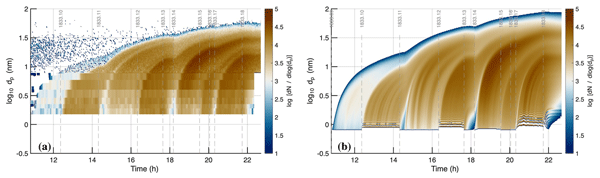
We describe accurate measurement of particle formation and growth in the CERN CLOUD (European Council for Nuclear Research Cosmics Leaving OUtdoor Droplets) chamber, using a suite of gas- and particle-phase instruments. The interconnected measurements establish high accuracy in key particle properties and critically important gas-phase sulfuric acid. This is a template for accurate calibration of similar experiments and thus accurate determination of aerosol nucleation and growth rates, which are an important source of uncertainty in climate science.
Theresa Barthelmeß, Karine Sellegri, Benjamin Pontiller, Lindsay Scheidemann, Karl Safi, and Anja Engel
EGUsphere, https://doi.org/10.5194/egusphere-2026-1873, https://doi.org/10.5194/egusphere-2026-1873, 2026
Short summary
Short summary
Sea spray transports marine organic particles into the atmosphere where they contribute to climate-relevant processes such as cloud formation. We investigated small biogenic gels which were enriched in sea spray aerosols in dependence on the surface sea water conditions as e.g. defined by phytoplankton composition and different organic matter pools. Moreover, the composition of these gels was size-dependent and did not directly mirror the composition of their marine precursors.
Andre F. Schaum, Christopher M. Kenseth, Madison Rutherford, Harald Stark, Manjula R. Canagaratna, Joost A. de Gouw, Jose L. Jimenez, and Kelvin H. Bates
Aerosol Research Discuss., https://doi.org/10.5194/ar-2026-13, https://doi.org/10.5194/ar-2026-13, 2026
Revised manuscript has not been submitted
Short summary
Short summary
Organic aerosols influence global climate though uncertainties in the magnitude of this influence remain large. A comprehensive understanding of the molecular composition of aerosols is key to minimizing these uncertainties. We present a new method for analyzing organic aerosols in real time using ion mobility mass spectrometry, enabling the separation of aerosol components with identical mass. Analysis of standards and laboratory-generated aerosols demonstrate the method’s potential.
Guillaume Chamba, Karine Sellegri, Valérie Gros, Clémence Rose, Leah Williams, Elisa Berdalet, Dolors Vaqué, Magda Vila, Queralt Güell-Bujons, Elisabet-Laia Sà, Yaiza M. Castillo, Arianna Rocchi, Aurélie Colomb, Jean-Marc Pichon, Mickaël Ribeiro, Charel Wohl, Manuel Dall'Osto, and Rafel Simó
EGUsphere, https://doi.org/10.5194/egusphere-2026-1720, https://doi.org/10.5194/egusphere-2026-1720, 2026
Short summary
Short summary
Oceans are a natural source of sulfur compounds that can influence climate by forming aerosol particles. During an oceanographic expedition around the Antarctic Peninsula, we measured the emissions of two of these compounds (DMS and methanethiol), their links to seawater microorganisms and particle formation in large enclosures exposed to natural or reduced UV radiation. Our results suggest that UV reduces these emissions and the formation of nanoparticles.
Alfred W. Mayhew, Lauri Franzon, Kelvin H. Bates, Theo Kurtén, Felipe D. Lopez-Hilfiker, Claudia Mohr, Andrew R. Rickard, Joel A. Thornton, and Jessica D. Haskins
Atmos. Chem. Phys., 25, 17027–17046, https://doi.org/10.5194/acp-25-17027-2025, https://doi.org/10.5194/acp-25-17027-2025, 2025
Short summary
Short summary
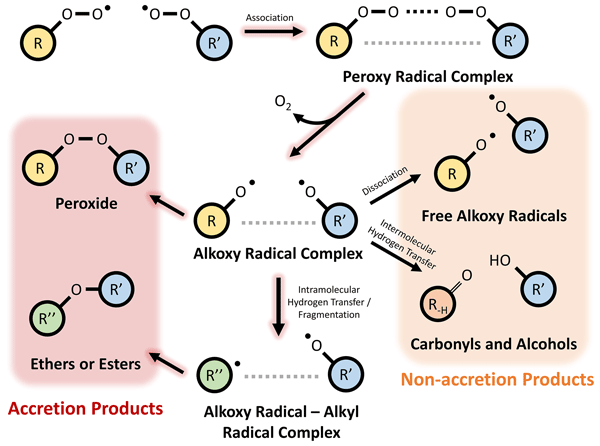
This work outlines an investigation into an understudied atmospheric chemical reaction pathway with the potential to form particulate pollution that has important impacts on air quality and climate. It suggests that this chemical pathway is responsible for a large fraction of the atmospheric particulate matter observed in tropical forested regions, but also highlights the need for further ambient and lab investigations to inform an accurate representation of this process in atmospheric models.
Sneha Aggarwal, Priyanka Bansal, Yuwei Wang, Spiro Jorga, Gabrielle Macgregor, Urs Rohner, Thomas Bannan, Matthew Salter, Paul Zieger, Claudia Mohr, and Felipe Lopez-Hilfiker
Atmos. Meas. Tech., 18, 4227–4247, https://doi.org/10.5194/amt-18-4227-2025, https://doi.org/10.5194/amt-18-4227-2025, 2025
Short summary
Short summary
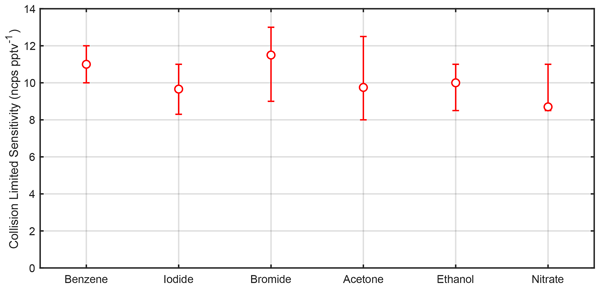
Chemical ionization mass spectrometers used for trace gas analysis can be operated under various conditions, complicating quantitative comparisons. We evaluate sensitivity dependence on a relatively few key instrument parameters and show that when these are held constant, consistent performance is achieved. We show that the maximum sensitivity of a given flow tube reactor across various reagent ion chemistries is a constant, which aids in the quantification of compounds lacking analytical standards.
Arianna Rocchi, Mark F. Fitzsimons, Preston Akenga, Ana Sotomayor, Elisabet L. Sà, Queralt Güell-Bujons, Magda Vila, Yaiza M. Castillo, Manuel Dall'Osto, Dolors Vaqué, Charel Wohl, Rafel Simó, and Elisa Berdalet
Biogeosciences, 22, 3429–3448, https://doi.org/10.5194/bg-22-3429-2025, https://doi.org/10.5194/bg-22-3429-2025, 2025
Short summary
Short summary
During the PolarChange expedition, volatile alkylamines, important players in nitrogen cycling and cloud formation, were measured in Antarctic waters using a high-sensitivity method. Trimethylamine was the dominant alkylamine in marine particles, associated with nanophytoplankton. Dissolved dimethylamine likely originated from trimethylamine degradation, while diethylamine sources remain unclear. These findings confirm the biological origin of alkylamines in polar marine microbial food webs.
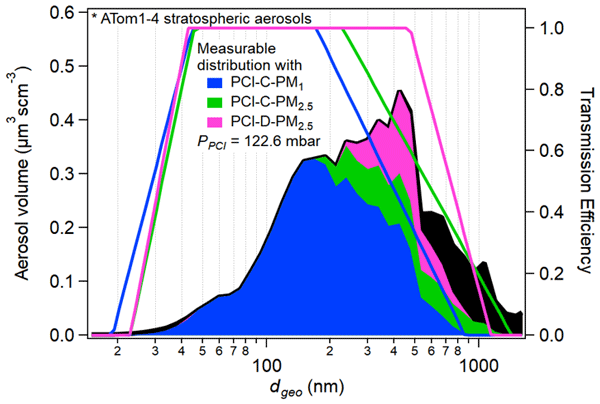
Dongwook Kim, Pedro Campuzano-Jost, Hongyu Guo, Douglas A. Day, Da Yang, Suresh Dhaniyala, Leah Williams, Philip Croteau, John Jayne, Douglas Worsnop, Rainer Volkamer, and Jose L. Jimenez
Aerosol Research, 3, 371–404, https://doi.org/10.5194/ar-3-371-2025, https://doi.org/10.5194/ar-3-371-2025, 2025
Short summary
Short summary
Quantitative real-time aerosol sampling on board aircraft platforms is challenging, especially at higher altitudes. Herein, we present comprehensive analyses of a new aircraft inlet system and tools for aerosol beam diagnostics for aerosol mass spectrometers (AMSs). The beam focusing of aerodynamic lenses and the thermal decomposition on the vaporizer were investigated. The new inlet system can be operated at higher altitudes while sampling aerosols over a broader size range than previous versions.
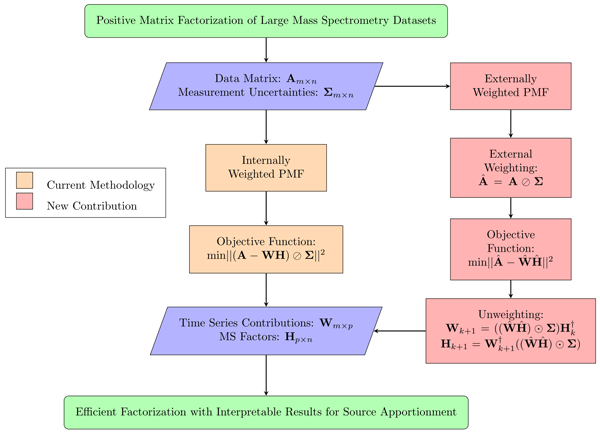
Benjamin C. Sapper, Sean Youn, Daven K. Henze, Manjula Canagaratna, Harald Stark, and Jose L. Jimenez
Geosci. Model Dev., 18, 2891–2919, https://doi.org/10.5194/gmd-18-2891-2025, https://doi.org/10.5194/gmd-18-2891-2025, 2025
Short summary
Short summary
Positive matrix factorization (PMF) has been used by atmospheric scientists to extract underlying factors present in large datasets. This paper presents a new technique for error-weighted PMF that drastically reduces the computational costs of previously developed algorithms. We use this technique to deliver interpretable factors and solution diagnostics from an atmospheric chemistry dataset.
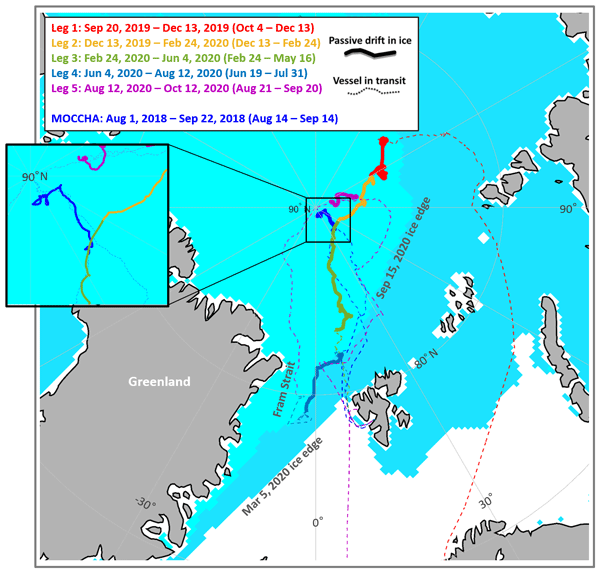
Benjamin Heutte, Nora Bergner, Hélène Angot, Jakob B. Pernov, Lubna Dada, Jessica A. Mirrielees, Ivo Beck, Andrea Baccarini, Matthew Boyer, Jessie M. Creamean, Kaspar R. Daellenbach, Imad El Haddad, Markus M. Frey, Silvia Henning, Tiia Laurila, Vaios Moschos, Tuukka Petäjä, Kerri A. Pratt, Lauriane L. J. Quéléver, Matthew D. Shupe, Paul Zieger, Tuija Jokinen, and Julia Schmale
Atmos. Chem. Phys., 25, 2207–2241, https://doi.org/10.5194/acp-25-2207-2025, https://doi.org/10.5194/acp-25-2207-2025, 2025
Short summary
Short summary
Limited aerosol measurements in the central Arctic hinder our understanding of aerosol–climate interactions in the region. Our year-long observations of aerosol physicochemical properties during the MOSAiC expedition reveal strong seasonal variations in aerosol chemical composition, where the short-term variability is heavily affected by storms in the Arctic. Local wind-generated particles are shown to be an important source of cloud seeds, especially in autumn.
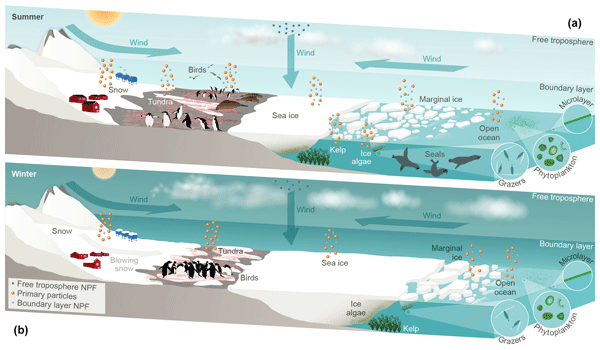
James Brean, David C. S. Beddows, Eija Asmi, Aki Virkkula, Lauriane L. J. Quéléver, Mikko Sipilä, Floortje Van Den Heuvel, Thomas Lachlan-Cope, Anna Jones, Markus Frey, Angelo Lupi, Jiyeon Park, Young Jun Yoon, Rolf Weller, Giselle L. Marincovich, Gabriela C. Mulena, Roy M. Harrison, and Manuel Dall'Osto
Atmos. Chem. Phys., 25, 1145–1162, https://doi.org/10.5194/acp-25-1145-2025, https://doi.org/10.5194/acp-25-1145-2025, 2025
Short summary
Short summary
Our results emphasise how understanding the geographical variation in surface types across the Antarctic is key to understanding secondary aerosol sources.
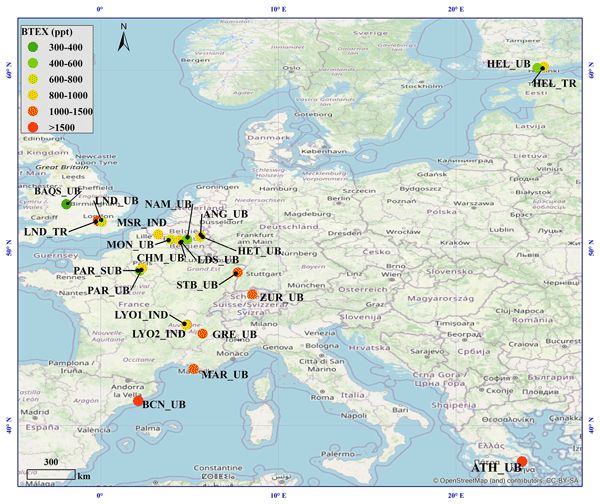
Xiansheng Liu, Xun Zhang, Marvin Dufresne, Tao Wang, Lijie Wu, Rosa Lara, Roger Seco, Marta Monge, Ana Maria Yáñez-Serrano, Marie Gohy, Paul Petit, Audrey Chevalier, Marie-Pierre Vagnot, Yann Fortier, Alexia Baudic, Véronique Ghersi, Grégory Gille, Ludovic Lanzi, Valérie Gros, Leïla Simon, Heidi Héllen, Stefan Reimann, Zoé Le Bras, Michelle Jessy Müller, David Beddows, Siqi Hou, Zongbo Shi, Roy M. Harrison, William Bloss, James Dernie, Stéphane Sauvage, Philip K. Hopke, Xiaoli Duan, Taicheng An, Alastair C. Lewis, James R. Hopkins, Eleni Liakakou, Nikolaos Mihalopoulos, Xiaohu Zhang, Andrés Alastuey, Xavier Querol, and Thérèse Salameh
Atmos. Chem. Phys., 25, 625–638, https://doi.org/10.5194/acp-25-625-2025, https://doi.org/10.5194/acp-25-625-2025, 2025
Short summary
Short summary
This study examines BTEX (benzene, toluene, ethylbenzene, xylenes) pollution in urban areas across seven European countries. Analyzing data from 22 monitoring sites, we found traffic and industrial activities significantly impact BTEX levels, with peaks during rush hours. The risk from BTEX exposure remains moderate, especially in high-traffic and industrial zones, highlighting the need for targeted air quality management to protect public health and improve urban air quality.
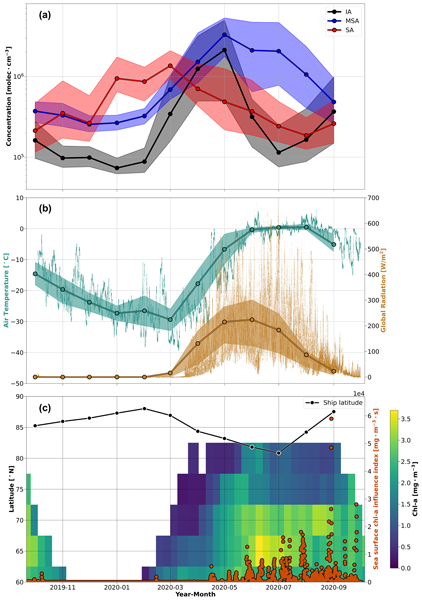
Matthew Boyer, Diego Aliaga, Lauriane L. J. Quéléver, Silvia Bucci, Hélène Angot, Lubna Dada, Benjamin Heutte, Lisa Beck, Marina Duetsch, Andreas Stohl, Ivo Beck, Tiia Laurila, Nina Sarnela, Roseline C. Thakur, Branka Miljevic, Markku Kulmala, Tuukka Petäjä, Mikko Sipilä, Julia Schmale, and Tuija Jokinen
Atmos. Chem. Phys., 24, 12595–12621, https://doi.org/10.5194/acp-24-12595-2024, https://doi.org/10.5194/acp-24-12595-2024, 2024
Short summary
Short summary
We analyze the seasonal cycle and sources of gases that are relevant for the formation of aerosol particles in the central Arctic. Since theses gases can form new particles, they can influence Arctic climate. We show that the sources of these gases are associated with changes in the Arctic environment during the year, especially with respect to sea ice. Therefore, the concentration of these gases will likely change in the future as the Arctic continues to warm.
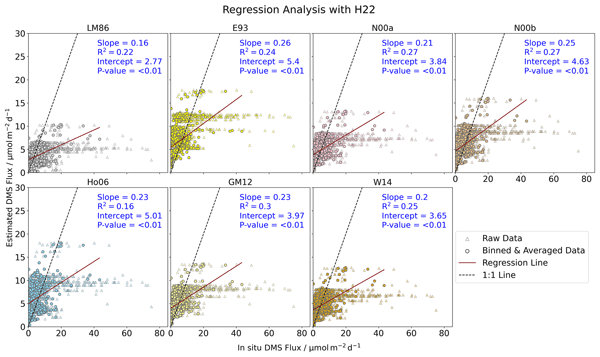
Sankirna D. Joge, Anoop S. Mahajan, Shrivardhan Hulswar, Christa A. Marandino, Martí Galí, Thomas G. Bell, Mingxi Yang, and Rafel Simó
Biogeosciences, 21, 4453–4467, https://doi.org/10.5194/bg-21-4453-2024, https://doi.org/10.5194/bg-21-4453-2024, 2024
Short summary
Short summary
Dimethyl sulfide (DMS) is the largest natural source of sulfur in the atmosphere and leads to the formation of cloud condensation nuclei. DMS emissions and quantification of their impacts have large uncertainties, but a detailed study on the range of emissions and drivers of their uncertainty is missing to date. The emissions are calculated from the seawater DMS concentrations and a flux parameterization. Here we quantify the differences in the effect of flux parameterizations used in models.
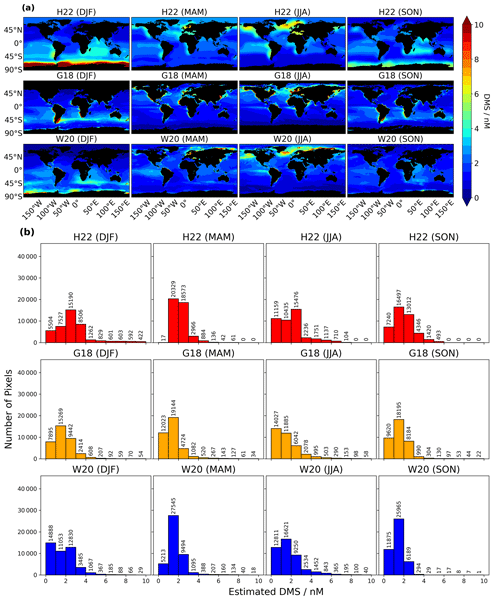
Sankirna D. Joge, Anoop S. Mahajan, Shrivardhan Hulswar, Christa A. Marandino, Martí Galí, Thomas G. Bell, and Rafel Simó
Biogeosciences, 21, 4439–4452, https://doi.org/10.5194/bg-21-4439-2024, https://doi.org/10.5194/bg-21-4439-2024, 2024
Short summary
Short summary
Dimethyl sulfide (DMS) is the largest natural source of sulfur in the atmosphere and leads to the formation of cloud condensation nuclei. DMS emission and quantification of its impacts have large uncertainties, but a detailed study on the emissions and drivers of their uncertainty is missing to date. The emissions are usually calculated from the seawater DMS concentrations and a flux parameterization. Here we quantify the differences in DMS seawater products, which can affect DMS fluxes.
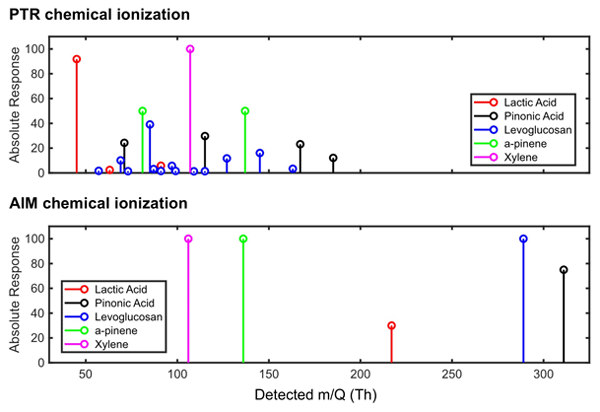
Matthieu Riva, Veronika Pospisilova, Carla Frege, Sebastien Perrier, Priyanka Bansal, Spiro Jorga, Patrick Sturm, Joel A. Thornton, Urs Rohner, and Felipe Lopez-Hilfiker
Atmos. Meas. Tech., 17, 5887–5901, https://doi.org/10.5194/amt-17-5887-2024, https://doi.org/10.5194/amt-17-5887-2024, 2024
Short summary
Short summary
We present a newly designed reduced-pressure chemical ionization reactor for detection of gas-phase organic and inorganic species. The system operates through the combined use of vacuum ultraviolet ionization and photosensitizers to generate numerous adduct ionization schemes. As a result, it offers the ability to simultaneously measure a wide variety of organic and inorganic species in terms of compound volatility and functionality, while being largely independent of changes in sample humidity.
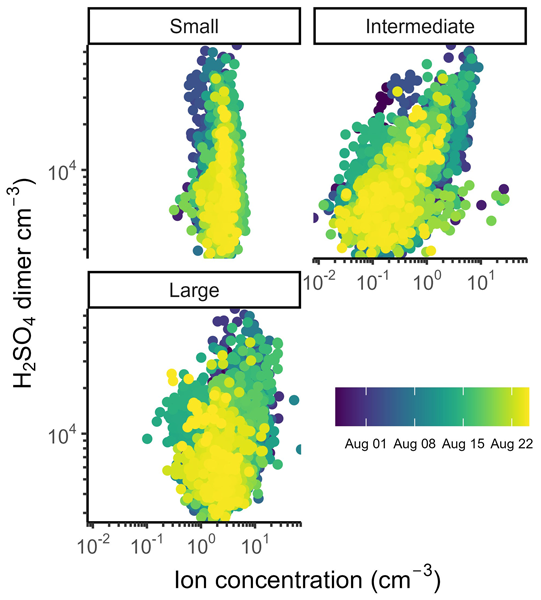
Alex Rowell, James Brean, David C. S. Beddows, Zongbo Shi, Avinash Kumar, Matti Rissanen, Miikka Dal Maso, Peter Mettke, Kay Weinhold, Maik Merkel, and Roy M. Harrison
Atmos. Chem. Phys., 24, 10349–10361, https://doi.org/10.5194/acp-24-10349-2024, https://doi.org/10.5194/acp-24-10349-2024, 2024
Short summary
Short summary
Ions enhance the formation and growth rates of new particles, affecting the Earth's radiation budget. Despite these effects, there is little published data exploring the sources of ions in the urban environment and their role in new particle formation (NPF). Here we show that natural ion sources dominate in urban environments, while traffic is a secondary source. Ions contribute up to 12.7 % of the formation rate of particles, indicating that they are important for forming urban PM.
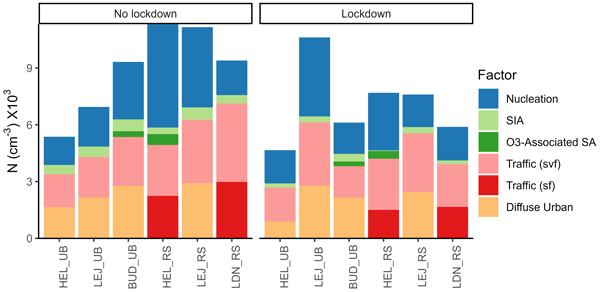
Alex Rowell, James Brean, David C. S. Beddows, Tuukka Petäjä, Máté Vörösmarty, Imre Salma, Jarkko V. Niemi, Hanna E. Manninen, Dominik van Pinxteren, Thomas Tuch, Kay Weinhold, Zongbo Shi, and Roy M. Harrison
Atmos. Chem. Phys., 24, 9515–9531, https://doi.org/10.5194/acp-24-9515-2024, https://doi.org/10.5194/acp-24-9515-2024, 2024
Short summary
Short summary
Different sources of airborne particles in the atmospheres of four European cities were distinguished by recognising their particle size distributions using a statistical procedure, positive matrix factorisation. The various sources responded differently to the changes in emissions associated with COVID-19 lockdowns, and the reasons are investigated. While traffic emissions generally decreased, particles formed from reactions of atmospheric gases decreased in some cities but increased in others.
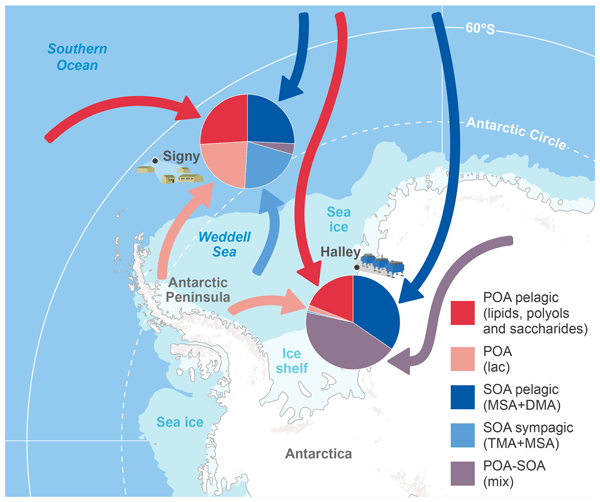
Marco Paglione, David C. S. Beddows, Anna Jones, Thomas Lachlan-Cope, Matteo Rinaldi, Stefano Decesari, Francesco Manarini, Mara Russo, Karam Mansour, Roy M. Harrison, Andrea Mazzanti, Emilio Tagliavini, and Manuel Dall'Osto
Atmos. Chem. Phys., 24, 6305–6322, https://doi.org/10.5194/acp-24-6305-2024, https://doi.org/10.5194/acp-24-6305-2024, 2024
Short summary
Short summary
Applying factor analysis techniques to H-NMR spectra, we present the organic aerosol (OA) source apportionment of PM1 samples collected in parallel at two Antarctic stations, namely Signy and Halley, allowing investigation of aerosol–climate interactions in an unperturbed atmosphere. Our results show remarkable differences between pelagic (open-ocean) and sympagic (sea-ice-influenced) air masses and indicate that various sources and processes are controlling Antarctic aerosols.
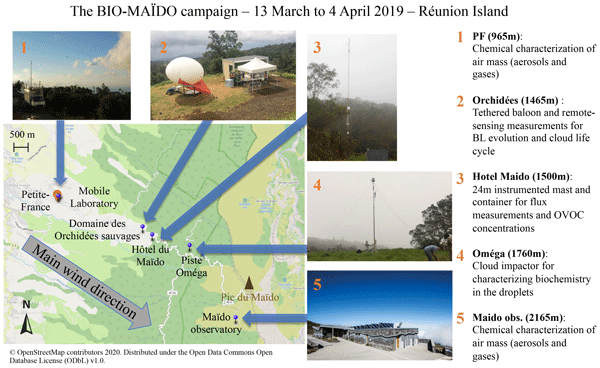
Maud Leriche, Pierre Tulet, Laurent Deguillaume, Frédéric Burnet, Aurélie Colomb, Agnès Borbon, Corinne Jambert, Valentin Duflot, Stéphan Houdier, Jean-Luc Jaffrezo, Mickaël Vaïtilingom, Pamela Dominutti, Manon Rocco, Camille Mouchel-Vallon, Samira El Gdachi, Maxence Brissy, Maroua Fathalli, Nicolas Maury, Bert Verreyken, Crist Amelynck, Niels Schoon, Valérie Gros, Jean-Marc Pichon, Mickael Ribeiro, Eric Pique, Emmanuel Leclerc, Thierry Bourrianne, Axel Roy, Eric Moulin, Joël Barrie, Jean-Marc Metzger, Guillaume Péris, Christian Guadagno, Chatrapatty Bhugwant, Jean-Mathieu Tibere, Arnaud Tournigand, Evelyn Freney, Karine Sellegri, Anne-Marie Delort, Pierre Amato, Muriel Joly, Jean-Luc Baray, Pascal Renard, Angelica Bianco, Anne Réchou, and Guillaume Payen
Atmos. Chem. Phys., 24, 4129–4155, https://doi.org/10.5194/acp-24-4129-2024, https://doi.org/10.5194/acp-24-4129-2024, 2024
Short summary
Short summary
Aerosol particles in the atmosphere play a key role in climate change and air pollution. A large number of aerosol particles are formed from the oxidation of volatile organic compounds (VOCs and secondary organic aerosols – SOA). An important field campaign was organized on Réunion in March–April 2019 to understand the formation of SOA in a tropical atmosphere mostly influenced by VOCs emitted by forest and in the presence of clouds. This work synthesizes the results of this campaign.
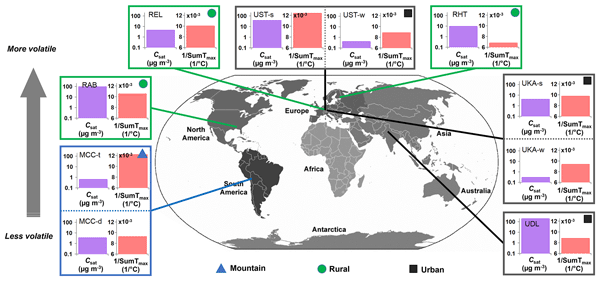
Wei Huang, Cheng Wu, Linyu Gao, Yvette Gramlich, Sophie L. Haslett, Joel Thornton, Felipe D. Lopez-Hilfiker, Ben H. Lee, Junwei Song, Harald Saathoff, Xiaoli Shen, Ramakrishna Ramisetty, Sachchida N. Tripathi, Dilip Ganguly, Feng Jiang, Magdalena Vallon, Siegfried Schobesberger, Taina Yli-Juuti, and Claudia Mohr
Atmos. Chem. Phys., 24, 2607–2624, https://doi.org/10.5194/acp-24-2607-2024, https://doi.org/10.5194/acp-24-2607-2024, 2024
Short summary
Short summary
We present distinct molecular composition and volatility of oxygenated organic aerosol particles in different rural, urban, and mountain environments. We do a comprehensive investigation of the relationship between the chemical composition and volatility of oxygenated organic aerosol particles across different systems and environments. This study provides implications for volatility descriptions of oxygenated organic aerosol particles in different model frameworks.
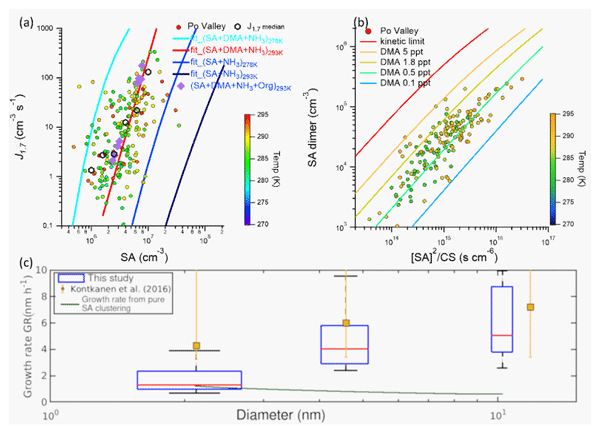
Jing Cai, Juha Sulo, Yifang Gu, Sebastian Holm, Runlong Cai, Steven Thomas, Almuth Neuberger, Fredrik Mattsson, Marco Paglione, Stefano Decesari, Matteo Rinaldi, Rujing Yin, Diego Aliaga, Wei Huang, Yuanyuan Li, Yvette Gramlich, Giancarlo Ciarelli, Lauriane Quéléver, Nina Sarnela, Katrianne Lehtipalo, Nora Zannoni, Cheng Wu, Wei Nie, Juha Kangasluoma, Claudia Mohr, Markku Kulmala, Qiaozhi Zha, Dominik Stolzenburg, and Federico Bianchi
Atmos. Chem. Phys., 24, 2423–2441, https://doi.org/10.5194/acp-24-2423-2024, https://doi.org/10.5194/acp-24-2423-2024, 2024
Short summary
Short summary
By combining field measurements, simulations and recent chamber experiments, we investigate new particle formation (NPF) and growth in the Po Valley, where both haze and frequent NPF occur. Our results show that sulfuric acid, ammonia and amines are the dominant NPF precursors there. A high NPF rate and a lower condensation sink lead to a greater survival probability for newly formed particles, highlighting the importance of gas-to-particle conversion for aerosol concentrations.
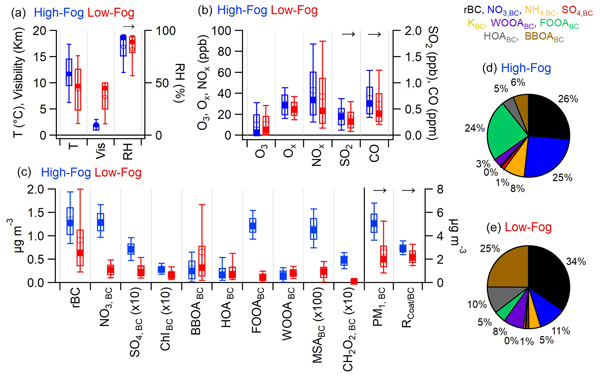
Ryan N. Farley, Sonya Collier, Christopher D. Cappa, Leah R. Williams, Timothy B. Onasch, Lynn M. Russell, Hwajin Kim, and Qi Zhang
Atmos. Chem. Phys., 23, 15039–15056, https://doi.org/10.5194/acp-23-15039-2023, https://doi.org/10.5194/acp-23-15039-2023, 2023
Short summary
Short summary
Soot particles, also known as black carbon (BC), have important implications for global climate and regional air quality. After the particles are emitted, BC can be coated with other material, impacting the aerosol properties. We selectively measured the composition of particles containing BC to explore their sources and chemical transformations in the atmosphere. We focus on a persistent, multiday fog event in order to study the effects of chemical reactions occurring within liquid droplets.
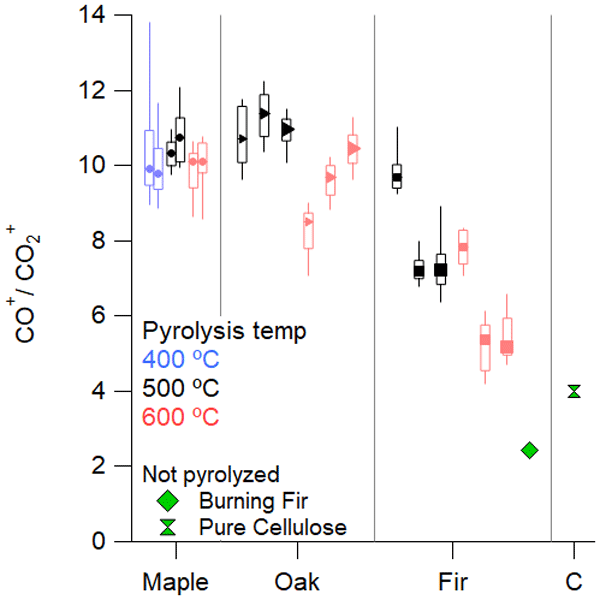
Anita M. Avery, Mariam Fawaz, Leah R. Williams, Tami Bond, and Timothy B. Onasch
Atmos. Chem. Phys., 23, 8837–8854, https://doi.org/10.5194/acp-23-8837-2023, https://doi.org/10.5194/acp-23-8837-2023, 2023
Short summary
Short summary
Pyrolysis is the thermal decomposition of fuels like wood which occurs during combustion or as an isolated process. During combustion, some pyrolysis products are emitted directly, while others are oxidized in the combustion process. This work describes the chemical composition of particle-phase pyrolysis products in order to investigate both the uncombusted emissions from wildfires and the fuel that participates in combustion.
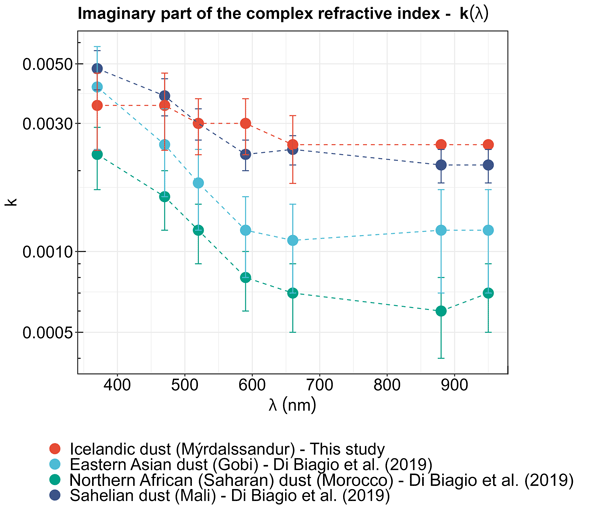
Clarissa Baldo, Paola Formenti, Claudia Di Biagio, Gongda Lu, Congbo Song, Mathieu Cazaunau, Edouard Pangui, Jean-Francois Doussin, Pavla Dagsson-Waldhauserova, Olafur Arnalds, David Beddows, A. Robert MacKenzie, and Zongbo Shi
Atmos. Chem. Phys., 23, 7975–8000, https://doi.org/10.5194/acp-23-7975-2023, https://doi.org/10.5194/acp-23-7975-2023, 2023
Short summary
Short summary
This paper presents new shortwave spectral complex refractive index and single scattering albedo data for Icelandic dust. Our results show that the imaginary part of the complex refractive index of Icelandic dust is at the upper end of the range of low-latitude dust. Furthermore, we observed that Icelandic dust is more absorbing towards the near-infrared, which we attribute to its high magnetite content. These findings are important for modeling dust aerosol radiative effects in the Arctic.
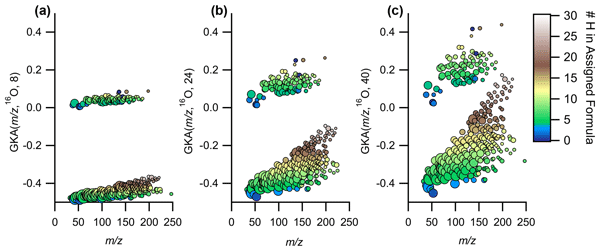
Mitchell W. Alton, Harald J. Stark, Manjula R. Canagaratna, and Eleanor C. Browne
Atmos. Meas. Tech., 16, 3273–3282, https://doi.org/10.5194/amt-16-3273-2023, https://doi.org/10.5194/amt-16-3273-2023, 2023
Short summary
Short summary
Mass spectrometric measurements of atmospheric composition routinely detect hundreds of different ions of varying chemical composition, creating challenges for visualization and data interpretation. We present a new analysis technique to facilitate visualization, while providing greater chemical insight. Additionally, it can aid in identifying the chemical composition of ions. A graphical user interface for performing the analysis is introduced and freely available, enabling broad applications.
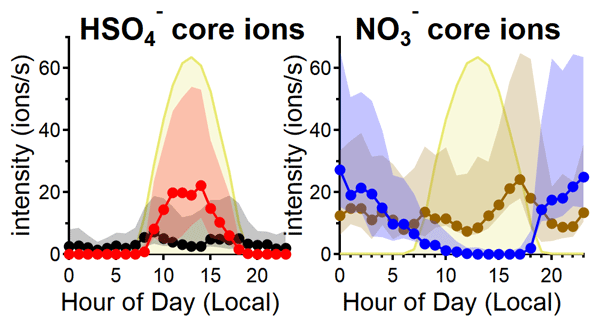
Daniel John Katz, Aroob Abdelhamid, Harald Stark, Manjula R. Canagaratna, Douglas R. Worsnop, and Eleanor C. Browne
Atmos. Chem. Phys., 23, 5567–5585, https://doi.org/10.5194/acp-23-5567-2023, https://doi.org/10.5194/acp-23-5567-2023, 2023
Short summary
Short summary
Ambient ion chemical composition measurements provide insight into trace gases that are precursors for the formation and growth of new aerosol particles. We use a new data analysis approach to increase the chemical information from these measurements. We analyze results from an agricultural region, a little studied land use type that is ~41 % of global land use, and find that the composition of gases important for aerosol formation and growth differs significantly from that in other ecosystems.
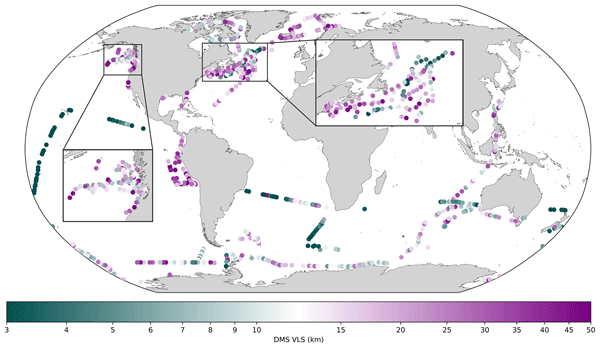
George Manville, Thomas G. Bell, Jane P. Mulcahy, Rafel Simó, Martí Galí, Anoop S. Mahajan, Shrivardhan Hulswar, and Paul R. Halloran
Biogeosciences, 20, 1813–1828, https://doi.org/10.5194/bg-20-1813-2023, https://doi.org/10.5194/bg-20-1813-2023, 2023
Short summary
Short summary
We present the first global investigation of controls on seawater dimethylsulfide (DMS) spatial variability over scales of up to 100 km. Sea surface height anomalies, density, and chlorophyll a help explain almost 80 % of DMS variability. The results suggest that physical and biogeochemical processes play an equally important role in controlling DMS variability. These data provide independent confirmation that existing parameterisations of seawater DMS concentration use appropriate variables.
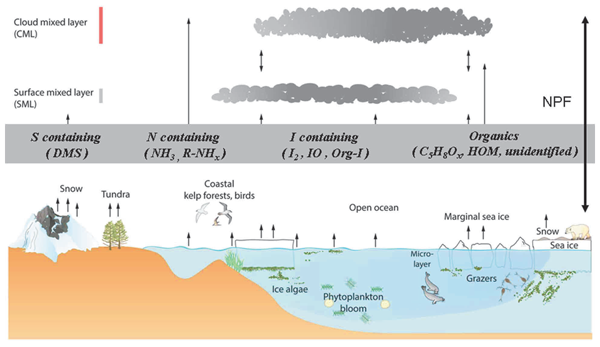
James Brean, David C. S. Beddows, Roy M. Harrison, Congbo Song, Peter Tunved, Johan Ström, Radovan Krejci, Eyal Freud, Andreas Massling, Henrik Skov, Eija Asmi, Angelo Lupi, and Manuel Dall'Osto
Atmos. Chem. Phys., 23, 2183–2198, https://doi.org/10.5194/acp-23-2183-2023, https://doi.org/10.5194/acp-23-2183-2023, 2023
Short summary
Short summary
Our results emphasize how understanding the geographical variation in surface types across the Arctic is key to understanding secondary aerosol sources. We provide a harmonised analysis of new particle formation across the Arctic.
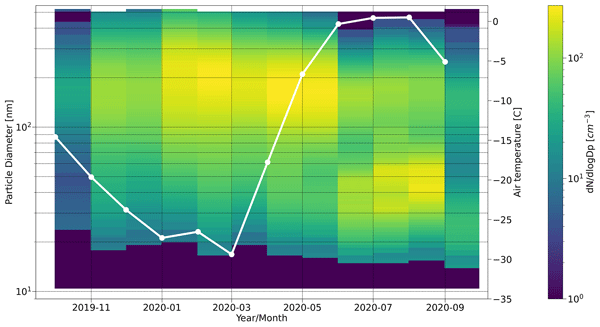
Matthew Boyer, Diego Aliaga, Jakob Boyd Pernov, Hélène Angot, Lauriane L. J. Quéléver, Lubna Dada, Benjamin Heutte, Manuel Dall'Osto, David C. S. Beddows, Zoé Brasseur, Ivo Beck, Silvia Bucci, Marina Duetsch, Andreas Stohl, Tiia Laurila, Eija Asmi, Andreas Massling, Daniel Charles Thomas, Jakob Klenø Nøjgaard, Tak Chan, Sangeeta Sharma, Peter Tunved, Radovan Krejci, Hans Christen Hansson, Federico Bianchi, Katrianne Lehtipalo, Alfred Wiedensohler, Kay Weinhold, Markku Kulmala, Tuukka Petäjä, Mikko Sipilä, Julia Schmale, and Tuija Jokinen
Atmos. Chem. Phys., 23, 389–415, https://doi.org/10.5194/acp-23-389-2023, https://doi.org/10.5194/acp-23-389-2023, 2023
Short summary
Short summary
The Arctic is a unique environment that is warming faster than other locations on Earth. We evaluate measurements of aerosol particles, which can influence climate, over the central Arctic Ocean for a full year and compare the data to land-based measurement stations across the Arctic. Our measurements show that the central Arctic has similarities to but also distinct differences from the stations further south. We note that this may change as the Arctic warms and sea ice continues to decline.
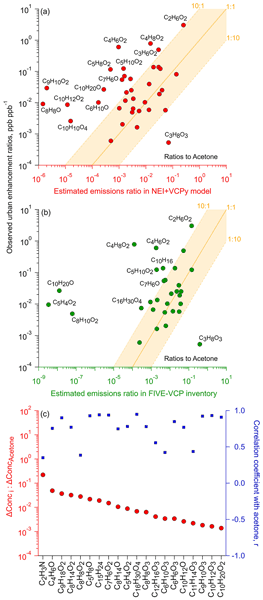
Peeyush Khare, Jordan E. Krechmer, Jo E. Machesky, Tori Hass-Mitchell, Cong Cao, Junqi Wang, Francesca Majluf, Felipe Lopez-Hilfiker, Sonja Malek, Will Wang, Karl Seltzer, Havala O. T. Pye, Roisin Commane, Brian C. McDonald, Ricardo Toledo-Crow, John E. Mak, and Drew R. Gentner
Atmos. Chem. Phys., 22, 14377–14399, https://doi.org/10.5194/acp-22-14377-2022, https://doi.org/10.5194/acp-22-14377-2022, 2022
Short summary
Short summary
Ammonium adduct chemical ionization is used to examine the atmospheric abundances of oxygenated volatile organic compounds associated with emissions from volatile chemical products, which are now key contributors of reactive precursors to ozone and secondary organic aerosols in urban areas. The application of this valuable measurement approach in densely populated New York City enables the evaluation of emissions inventories and thus the role these oxygenated compounds play in urban air quality.
Ivo Beck, Hélène Angot, Andrea Baccarini, Lubna Dada, Lauriane Quéléver, Tuija Jokinen, Tiia Laurila, Markus Lampimäki, Nicolas Bukowiecki, Matthew Boyer, Xianda Gong, Martin Gysel-Beer, Tuukka Petäjä, Jian Wang, and Julia Schmale
Atmos. Meas. Tech., 15, 4195–4224, https://doi.org/10.5194/amt-15-4195-2022, https://doi.org/10.5194/amt-15-4195-2022, 2022
Short summary
Short summary
We present the pollution detection algorithm (PDA), a new method to identify local primary pollution in remote atmospheric aerosol and trace gas time series. The PDA identifies periods of contaminated data and relies only on the target dataset itself; i.e., it is independent of ancillary data such as meteorological variables. The parameters of all pollution identification steps are adjustable so that the PDA can be tuned to different locations and situations. It is available as open-access code.
Dimitrios Bousiotis, David C. S. Beddows, Ajit Singh, Molly Haugen, Sebastián Diez, Pete M. Edwards, Adam Boies, Roy M. Harrison, and Francis D. Pope
Atmos. Meas. Tech., 15, 4047–4061, https://doi.org/10.5194/amt-15-4047-2022, https://doi.org/10.5194/amt-15-4047-2022, 2022
Short summary
Short summary
In the last decade, low-cost sensors have revolutionised the field of air quality monitoring. This paper extends the ability of low-cost sensors to not only measure air pollution, but also to understand where the pollution comes from. This "source apportionment" is a critical step in air quality management to allow for the mitigation of air pollution. The techniques developed in this paper have the potential for great impact in both research and industrial applications.
Lisa J. Beck, Siegfried Schobesberger, Heikki Junninen, Janne Lampilahti, Antti Manninen, Lubna Dada, Katri Leino, Xu-Cheng He, Iida Pullinen, Lauriane L. J. Quéléver, Anna Franck, Pyry Poutanen, Daniela Wimmer, Frans Korhonen, Mikko Sipilä, Mikael Ehn, Douglas R. Worsnop, Veli-Matti Kerminen, Tuukka Petäjä, Markku Kulmala, and Jonathan Duplissy
Atmos. Chem. Phys., 22, 8547–8577, https://doi.org/10.5194/acp-22-8547-2022, https://doi.org/10.5194/acp-22-8547-2022, 2022
Short summary
Short summary
The presented article introduces an overview of atmospheric ions and their composition above the boreal forest. We provide the results of an extensive airborne measurement campaign with an air ion mass spectrometer and particle measurements, showing their diurnal evolution within the boundary layer and free troposphere. In addition, we compare the airborne dataset with the co-located data from the ground at SMEAR II station, Finland.

Shrivardhan Hulswar, Rafel Simó, Martí Galí, Thomas G. Bell, Arancha Lana, Swaleha Inamdar, Paul R. Halloran, George Manville, and Anoop Sharad Mahajan
Earth Syst. Sci. Data, 14, 2963–2987, https://doi.org/10.5194/essd-14-2963-2022, https://doi.org/10.5194/essd-14-2963-2022, 2022
Short summary
Short summary
The third climatological estimation of sea surface dimethyl sulfide (DMS) concentrations based on in situ measurements was created (DMS-Rev3). The update includes a much larger input dataset and includes improvements in the data unification, filtering, and smoothing algorithm. The DMS-Rev3 climatology provides more realistic monthly estimates of DMS, and shows significant regional differences compared to past climatologies.
Lauriane L. J. Quéléver, Lubna Dada, Eija Asmi, Janne Lampilahti, Tommy Chan, Jonathan E. Ferrara, Gustavo E. Copes, German Pérez-Fogwill, Luis Barreira, Minna Aurela, Douglas R. Worsnop, Tuija Jokinen, and Mikko Sipilä
Atmos. Chem. Phys., 22, 8417–8437, https://doi.org/10.5194/acp-22-8417-2022, https://doi.org/10.5194/acp-22-8417-2022, 2022
Short summary
Short summary
Understanding how aerosols form is crucial for correctly modeling the climate and improving future predictions. This work provides extensive analysis of aerosol particles and their precursors at Marambio Station, Antarctic Peninsula. We show that sulfuric acid, ammonia, and dimethylamine are key contributors to the frequent new particle formation events observed at the site. We discuss nucleation mechanisms and highlight the need for targeted measurement to fully understand these processes.

Varun Kumar, Stamatios Giannoukos, Sophie L. Haslett, Yandong Tong, Atinderpal Singh, Amelie Bertrand, Chuan Ping Lee, Dongyu S. Wang, Deepika Bhattu, Giulia Stefenelli, Jay S. Dave, Joseph V. Puthussery, Lu Qi, Pawan Vats, Pragati Rai, Roberto Casotto, Rangu Satish, Suneeti Mishra, Veronika Pospisilova, Claudia Mohr, David M. Bell, Dilip Ganguly, Vishal Verma, Neeraj Rastogi, Urs Baltensperger, Sachchida N. Tripathi, André S. H. Prévôt, and Jay G. Slowik
Atmos. Chem. Phys., 22, 7739–7761, https://doi.org/10.5194/acp-22-7739-2022, https://doi.org/10.5194/acp-22-7739-2022, 2022
Short summary
Short summary
Here we present source apportionment results from the first field deployment in Delhi of an extractive electrospray ionization time-of-flight mass spectrometer (EESI-TOF). The EESI-TOF is a recently developed instrument capable of providing uniquely detailed online chemical characterization of organic aerosol (OA), in particular the secondary OA (SOA) fraction. Here, we are able to apportion not only primary OA but also SOA to specific sources, which is performed for the first time in Delhi.
Roseline C. Thakur, Lubna Dada, Lisa J. Beck, Lauriane L. J. Quéléver, Tommy Chan, Marjan Marbouti, Xu-Cheng He, Carlton Xavier, Juha Sulo, Janne Lampilahti, Markus Lampimäki, Yee Jun Tham, Nina Sarnela, Katrianne Lehtipalo, Alf Norkko, Markku Kulmala, Mikko Sipilä, and Tuija Jokinen
Atmos. Chem. Phys., 22, 6365–6391, https://doi.org/10.5194/acp-22-6365-2022, https://doi.org/10.5194/acp-22-6365-2022, 2022
Short summary
Short summary
Every year intense cyanobacterial and macroalgal blooms occur in the Baltic Sea and in the coastal areas surrounding Helsinki, yet no studies have addressed the impact of biogenic emissions from these blooms on gas vapor concentrations, which in turn could influence new particle formation. This is the first study of its kind to address the chemistry driving new particle formation (NPF) during a bloom period in this region, highlighting the role of biogenic sulfuric acid and iodic acid.

Ruochong Xu, Joel A. Thornton, Ben H. Lee, Yanxu Zhang, Lyatt Jaeglé, Felipe D. Lopez-Hilfiker, Pekka Rantala, and Tuukka Petäjä
Atmos. Chem. Phys., 22, 5477–5494, https://doi.org/10.5194/acp-22-5477-2022, https://doi.org/10.5194/acp-22-5477-2022, 2022
Short summary
Short summary
Monoterpenes are emitted into the atmosphere by vegetation and by the use of certain consumer products. Reactions of monoterpenes in the atmosphere lead to low-volatility products that condense to grow particulate matter or participate in new particle formation and, thus, affect air quality and climate. We use a model of atmospheric chemistry and transport to evaluate the global-scale importance of recent updates to our understanding of monoterpene chemistry in particle formation and growth.
Ülkü Alver Şahin, Roy M. Harrison, Mohammed S. Alam, David C. S. Beddows, Dimitrios Bousiotis, Zongbo Shi, Leigh R. Crilley, William Bloss, James Brean, Isha Khanna, and Rulan Verma
Atmos. Chem. Phys., 22, 5415–5433, https://doi.org/10.5194/acp-22-5415-2022, https://doi.org/10.5194/acp-22-5415-2022, 2022
Short summary
Short summary
Wide-range particle size spectra have been measured in three seasons in Delhi and are interpreted in terms of sources and processes. Condensational growth is a major feature of the fine fraction, and a coarse fraction contributes substantially – but only in summer.
Charel Wohl, Anna E. Jones, William T. Sturges, Philip D. Nightingale, Brent Else, Brian J. Butterworth, and Mingxi Yang
Biogeosciences, 19, 1021–1045, https://doi.org/10.5194/bg-19-1021-2022, https://doi.org/10.5194/bg-19-1021-2022, 2022
Short summary
Short summary
We measured concentrations of five different organic gases in seawater in the high Arctic during summer. We found higher concentrations near the surface of the water column (top 5–10 m) and in areas of partial ice cover. This suggests that sea ice influences the concentrations of these gases. These gases indirectly exert a slight cooling effect on the climate, and it is therefore important to measure the levels accurately for future climate predictions.
Arto Heitto, Kari Lehtinen, Tuukka Petäjä, Felipe Lopez-Hilfiker, Joel A. Thornton, Markku Kulmala, and Taina Yli-Juuti
Atmos. Chem. Phys., 22, 155–171, https://doi.org/10.5194/acp-22-155-2022, https://doi.org/10.5194/acp-22-155-2022, 2022
Short summary
Short summary
For atmospheric aerosol particles to take part in cloud formation, they need to be at least a few tens of nanometers in diameter. By using a particle condensation model, we investigated how two types of chemical reactions, oligomerization and decomposition, of organic molecules inside the particle may affect the growth of secondary aerosol particles to these sizes. We show that the effect is potentially significant, which highlights the importance of increasing understanding of these processes.
Sebastian Landwehr, Michele Volpi, F. Alexander Haumann, Charlotte M. Robinson, Iris Thurnherr, Valerio Ferracci, Andrea Baccarini, Jenny Thomas, Irina Gorodetskaya, Christian Tatzelt, Silvia Henning, Rob L. Modini, Heather J. Forrer, Yajuan Lin, Nicolas Cassar, Rafel Simó, Christel Hassler, Alireza Moallemi, Sarah E. Fawcett, Neil Harris, Ruth Airs, Marzieh H. Derkani, Alberto Alberello, Alessandro Toffoli, Gang Chen, Pablo Rodríguez-Ros, Marina Zamanillo, Pau Cortés-Greus, Lei Xue, Conor G. Bolas, Katherine C. Leonard, Fernando Perez-Cruz, David Walton, and Julia Schmale
Earth Syst. Dynam., 12, 1295–1369, https://doi.org/10.5194/esd-12-1295-2021, https://doi.org/10.5194/esd-12-1295-2021, 2021
Short summary
Short summary
The Antarctic Circumnavigation Expedition surveyed a large number of variables describing the dynamic state of ocean and atmosphere, freshwater cycle, atmospheric chemistry, ocean biogeochemistry, and microbiology in the Southern Ocean. To reduce the dimensionality of the dataset, we apply a sparse principal component analysis and identify temporal patterns from diurnal to seasonal cycles, as well as geographical gradients and
hotspotsof interaction. Code and data are open access.
Clémence Rose, Martine Collaud Coen, Elisabeth Andrews, Yong Lin, Isaline Bossert, Cathrine Lund Myhre, Thomas Tuch, Alfred Wiedensohler, Markus Fiebig, Pasi Aalto, Andrés Alastuey, Elisabeth Alonso-Blanco, Marcos Andrade, Begoña Artíñano, Todor Arsov, Urs Baltensperger, Susanne Bastian, Olaf Bath, Johan Paul Beukes, Benjamin T. Brem, Nicolas Bukowiecki, Juan Andrés Casquero-Vera, Sébastien Conil, Konstantinos Eleftheriadis, Olivier Favez, Harald Flentje, Maria I. Gini, Francisco Javier Gómez-Moreno, Martin Gysel-Beer, Anna Gannet Hallar, Ivo Kalapov, Nikos Kalivitis, Anne Kasper-Giebl, Melita Keywood, Jeong Eun Kim, Sang-Woo Kim, Adam Kristensson, Markku Kulmala, Heikki Lihavainen, Neng-Huei Lin, Hassan Lyamani, Angela Marinoni, Sebastiao Martins Dos Santos, Olga L. Mayol-Bracero, Frank Meinhardt, Maik Merkel, Jean-Marc Metzger, Nikolaos Mihalopoulos, Jakub Ondracek, Marco Pandolfi, Noemi Pérez, Tuukka Petäjä, Jean-Eudes Petit, David Picard, Jean-Marc Pichon, Veronique Pont, Jean-Philippe Putaud, Fabienne Reisen, Karine Sellegri, Sangeeta Sharma, Gerhard Schauer, Patrick Sheridan, James Patrick Sherman, Andreas Schwerin, Ralf Sohmer, Mar Sorribas, Junying Sun, Pierre Tulet, Ville Vakkari, Pieter Gideon van Zyl, Fernando Velarde, Paolo Villani, Stergios Vratolis, Zdenek Wagner, Sheng-Hsiang Wang, Kay Weinhold, Rolf Weller, Margarita Yela, Vladimir Zdimal, and Paolo Laj
Atmos. Chem. Phys., 21, 17185–17223, https://doi.org/10.5194/acp-21-17185-2021, https://doi.org/10.5194/acp-21-17185-2021, 2021
Short summary
Short summary
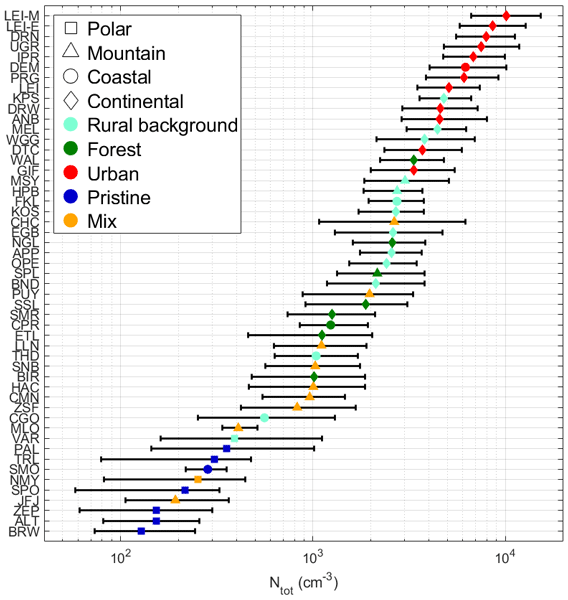
Aerosol particles are a complex component of the atmospheric system the effects of which are among the most uncertain in climate change projections. Using data collected at 62 stations, this study provides the most up-to-date picture of the spatial distribution of particle number concentration and size distribution worldwide, with the aim of contributing to better representation of aerosols and their interactions with clouds in models and, therefore, better evaluation of their impact on climate.
Mariam Fawaz, Anita Avery, Timothy B. Onasch, Leah R. Williams, and Tami C. Bond
Atmos. Chem. Phys., 21, 15605–15618, https://doi.org/10.5194/acp-21-15605-2021, https://doi.org/10.5194/acp-21-15605-2021, 2021
Short summary
Short summary
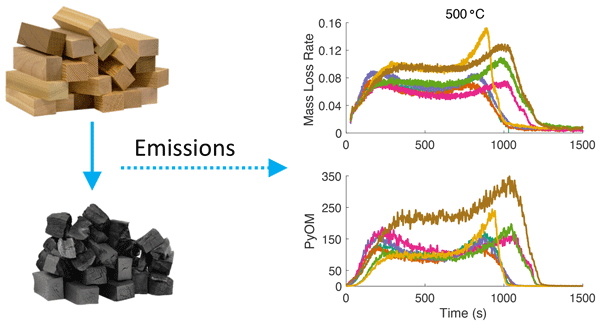
Biomass burning is responsible for 90 % of the emissions of primary organic aerosols to the atmosphere. Emissions from biomass burning sources are considered chaotic. In this work, we developed a controlled experimental approach to understand the controlling factors in emission. Our results showed that emissions are repeatable and deterministic and that emissions from wood can be constrained.
Cited articles
Aggarwal, S., Bansal, P., Wang, Y., Jorga, S., Macgregor, G., Rohner, U., Bannan, T., Salter, M., Zieger, P., Mohr, C., and Lopez-Hilfiker, F.: Identifying key parameters that affect sensitivity of flow tube chemical ionization mass spectrometers, Atmos. Meas. Tech., 18, 4227–4247, https://doi.org/10.5194/amt-18-4227-2025, 2025.
Alvain, S., Moulin, C., Dandonneau, Y., and Loisel, H.: Seasonal distribution and succession of dominant phytoplankton groups in the global ocean: A satellite view, Global Biogeochem. Cy., 22, https://doi.org/10.1029/2007GB003154, 2008.
Archer, S. D., Smith, G. C., Nightingale, P. D., Widdicombe, C. E., Tarran, G. A., Rees, A. P., and Burkill, P. H.: Dynamics of particulate dimethylsulphoniopropionate during a Lagrangian experiment in the northern North Sea, Deep Sea Res. Part II, 49, 2979–2999, https://doi.org/10.1016/S0967-0645(02)00067-X, 2002.
Archer, S. D., Ragni, M., Webster, R., Airs, R. L., and Geider, R. J.: Dimethyl sulfoniopropionate and dimethyl sulfide production in response to photoinhibition in Emiliania huxleyi, Limnol. Oceanogr., 55, 1579–1589, https://doi.org/10.4319/lo.2010.55.4.1579, 2010.
Belviso, S., Bopp, L., Mosseri, J., Tedetti, M., Garcia, N., Griffiths, B., Joux, F., Obernosterer, I., Uitz, J., and Veldhuis, M. J. W.: Effect of natural iron fertilisation on the distribution of DMS and DMSP in the Indian sector of the Southern Ocean, Deep Sea Res. Part II, 55, 893–900, https://doi.org/10.1016/j.dsr2.2007.12.040, 2008.
Bhatti, Y. A., Revell, L. E., Schuddeboom, A. J., McDonald, A. J., Archibald, A. T., Williams, J., Venugopal, A. U., Hardacre, C., and Behrens, E.: The sensitivity of Southern Ocean atmospheric dimethyl sulfide (DMS) to modeled oceanic DMS concentrations and emissions, Atmos. Chem. Phys., 23, 15181–15196, https://doi.org/10.5194/acp-23-15181-2023, 2023.
Bjørklund, G., Crisponi, G., Nurchi, V. M., Cappai, R., Buha Djordjevic, A., and Aaseth, J.: A Review on Coordination Properties of Thiol-Containing Chelating Agents Towards Mercury, Cadmium, and Lead, Molecules, 24, 3247, https://doi.org/10.3390/molecules24183247, 2019.
Bürgmann, H., Howard, E. C., Ye, W., Sun, F., Sun, S., Napierala, S., and Moran, M. A.: Transcriptional response of Silicibacter pomeroyi DSS-3 to dimethylsulfoniopropionate (DMSP), Environ. Microbiol., 9, 2742–2755, https://doi.org/10.1111/j.1462-2920.2007.01386.x, 2007.
Chamba, G., Sellegri, K., Gros, V., Rose, C., Williams, L., Berdalet, E., Vaqué, D., Vila, M., Güell-Bujons, Q., Sà, E.-L., Castillo, Y. M., Rocchi, A., Colomb, A., Pichon, J.-M., Ribeiro, M., Wohl, C., Dall'Osto, M., and Simó, R.: DMS, MeSH and nanoparticles in semi-controlled deck-borne experiments using Antarctic seawater: on the effect of UV light, EGUsphere [preprint], https://doi.org/10.5194/egusphere-2026-1720, 2026.
Chang, Y., Ding, T., Yu, H., Yang, Y., Zhu, L., Liu, X., and Tan, W.: All-in-one: validation and versatile applications of a novel chemical ionization mass spectrometer for simultaneous measurements of volatile organic and inorganic compounds, Atmos. Meas. Tech., 19, 1515–1528, https://doi.org/10.5194/amt-19-1515-2026, 2026.
Davie-Martin, C. L., Giovannoni, S. J., Behrenfeld, M. J., Penta, W. B., and Halsey, K. H.: Seasonal and Spatial Variability in the Biogenic Production and Consumption of Volatile Organic Compounds (VOCs) by Marine Plankton in the North Atlantic Ocean, Front. Mar. Sci., 7, https://doi.org/10.3389/fmars.2020.611870, 2020.
Deppeler, S. L. and Davidson, A. T.: Southern Ocean Phytoplankton in a Changing Climate, Front. Mar. Sci., 4, https://doi.org/10.3389/fmars.2017.00040, 2017.
Deschaseaux, E. S. M., Dunne, E., Schulz, K. G., Eyre, B. D., and Harrison, D. P.: The Central Great Barrier Reef as a Net Source of Climatically Relevant Biogenic Volatile Organic Compounds, J. Geophys. Res.-Oceans, 130, e2024JC021192, https://doi.org/10.1029/2024JC021192, 2025.
Fiddes, S. L., Protat, A., Mallet, M. D., Alexander, S. P., and Woodhouse, M. T.: Southern Ocean cloud and shortwave radiation biases in a nudged climate model simulation: does the model ever get it right?, Atmos. Chem. Phys., 22, 14603–14630, https://doi.org/10.5194/acp-22-14603-2022, 2022.
Flöck, O. R. and Andreae, M. O.: Photochemical and non-photochemical formation and destruction of carbonyl sulfide and methyl mercaptan in ocean waters, Mar. Chem., 54, 11–26, https://doi.org/10.1016/0304-4203(96)00027-8, 1996.
Fung, K. M., Heald, C. L., Kroll, J. H., Wang, S., Jo, D. S., Gettelman, A., Lu, Z., Liu, X., Zaveri, R. A., Apel, E. C., Blake, D. R., Jimenez, J.-L., Campuzano-Jost, P., Veres, P. R., Bates, T. S., Shilling, J. E., and Zawadowicz, M.: Exploring dimethyl sulfide (DMS) oxidation and implications for global aerosol radiative forcing, Atmos. Chem. Phys., 22, 1549–1573, https://doi.org/10.5194/acp-22-1549-2022, 2022.
Galí, M. and Simó, R.: A meta-analysis of oceanic DMS and DMSP cycling processes: Disentangling the summer paradox, Global Biogeochem. Cy., 29, 496–515, https://doi.org/10.1002/2014GB004940, 2015.
Galí, M., Saló, V., Almeda, R., Calbet, A., and Simó, R.: Stimulation of gross dimethylsulfide (DMS) production by solar radiation, Geophys. Res. Lett., 38, https://doi.org/10.1029/2011GL048051, 2011.
Galí, M., Simó, R., Vila-Costa, M., Ruiz-González, C., Gasol, J. M., and Matrai, P.: Diel patterns of oceanic dimethylsulfide (DMS) cycling: Microbial and physical drivers, Global Biogeochem. Cy., 27, 620–636, https://doi.org/10.1002/gbc.20047, 2013.
Galí, M., Devred, E., Pérez, G. L., Kieber, D. J., and Simó, R.: Global Ocean dimethylsulfide photolysis rates quantified with a spectrally and vertically resolved model, Limnol. Oceanogr. Lett., 8, 760–769, https://doi.org/10.1002/lol2.10342, 2023.
Gorbunov, M. Y., Shirsin, E., Nikonova, E. E., Fadeev, V. V., and Falkowski, P. G.: A multi-spectral fluorescence induction and relaxation (FIRe) technique for physiological and taxonomic analysis of phytoplankton communities, Mar. Ecol. Prog. Ser., 644, 1–13, https://doi.org/10.3354/MEPS13358, 2020.
Gros, V., Bonsang, B., Sarda-Estève, R., Nikolopoulos, A., Metfies, K., Wietz, M., and Peeken, I.: Concentrations of dissolved dimethyl sulfide (DMS), methanethiol and other trace gases in context of microbial communities from the temperate Atlantic to the Arctic Ocean, Biogeosciences, 20, 851–867, https://doi.org/10.5194/bg-20-851-2023, 2023.
He, X.-C., Abraham, N. L., Ding, H., Russo, M. R., Grosvenor, D. P., Ge, Y., Wang, X., Jones, A. C., Campuzano-Jost, P., Nault, B., Kupc, A., Blake, D., Jimenez, J. L., Williamson, C. J., Weber, J., Archibald, A. T., and Gordon, H.: Evaluation of UKESM aerosol size and composition using ATom measurements indicates missing marine aerosol formation mechanisms, Atmos. Chem. Phys., 26, 3805–3851, https://doi.org/10.5194/acp-26-3805-2026, 2026.
Henley, S. F., Cavan, E. L., Fawcett, S. E., Kerr, R., Monteiro, T., Sherrell, R. M., Bowie, A. R., Boyd, P. W., Barnes, D. K. A., Schloss, I. R., Marshall, T., Flynn, R., and Smith, S.: Changing Biogeochemistry of the Southern Ocean and Its Ecosystem Implications, Front. Mar. Sci., 7, https://doi.org/10.3389/fmars.2020.00581, 2020.
Hodshire, A. L., Campuzano-Jost, P., Kodros, J. K., Croft, B., Nault, B. A., Schroder, J. C., Jimenez, J. L., and Pierce, J. R.: The potential role of methanesulfonic acid (MSA) in aerosol formation and growth and the associated radiative forcings, Atmos. Chem. Phys., 19, 3137–3160, https://doi.org/10.5194/acp-19-3137-2019, 2019.
Hopkins, F. E., Archer, S. D., Bell, T. G., Suntharalingam, P., and Todd, J. D.: The biogeochemistry of marine dimethylsulfide, Nat. Rev. Earth Environ., 4, 361–376, https://doi.org/10.1038/s43017-023-00428-7, 2023.
Hossain, M., Garland, R. M., and Horowitz, H. M.: Quantifying the impacts of marine aerosols over the southeast Atlantic Ocean using a chemical transport model: implications for aerosol–cloud interactions, Atmos. Chem. Phys., 24, 14123–14143, https://doi.org/10.5194/acp-24-14123-2024, 2024.
Hsu, S. A., Meindl, E. A., and Gilhousen, D. B.: Determining the Power-Law Wind-Profile Exponent under Near-Neutral Stability Conditions at Sea, Appl. Meteorol., 33, https://doi.org/10.1175/1520-0450(1994)033<0757:DTPLWP>2.0.CO;2, 1994.
Hulswar, S., Simó, R., Galí, M., Bell, T. G., Lana, A., Inamdar, S., Halloran, P. R., Manville, G., and Mahajan, A. S.: Third revision of the global surface seawater dimethyl sulfide climatology (DMS-Rev3), Earth Syst. Sci. Data, 14, 2963–2987, https://doi.org/10.5194/essd-14-2963-2022, 2022.
Hunt, D. E., Lin, Y., Church, M. J., Karl, D. M., Tringe, S. G., Izzo, L. K., and Johnson, Z. I.: Relationship between Abundance and Specific Activity of Bacterioplankton in Open Ocean Surface Waters, Appl. Environ. Microbiol., 79, 177–184, https://doi.org/10.1128/AEM.02155-12, 2013.
Ishino, S., Willis, M. D., Angot, H., Bartels-Rausch, T., Crabeck, O., Delille, B., Dunne, E., Franklin, E., Haddon, A., Hayashida, H., Joge, S. D., Lapere, R., Lim, H.-G., Mahajan, A. S., Mallet, M. D., Manville, G., Marelle, L., Nomura, D., Pratt, K. A., Peeken, I., Price, R., Simó, R., Stefels, J., Thomas, J. L., Zang, C. L., and Steiner, N.: The biogenic sulfur cycle in the coupled ocean–sea ice–atmosphere system, Elementa: Sci. Anthropo., 14, 1–60, https://doi.org/10.1525/elementa.2025.00067, 2026.
Jacob, L. S. D., Giorio, C., and Archibald, A. T.: Extension, development, and evaluation of the representation of the OH-initiated dimethyl sulfide (DMS) oxidation mechanism in the Master Chemical Mechanism (MCM) v3.3.1 framework, Atmos. Chem. Phys., 24, 3329–3347, https://doi.org/10.5194/acp-24-3329-2024, 2024.
Johnson, M. T.: A numerical scheme to calculate temperature and salinity dependent air-water transfer velocities for any gas, Ocean Sci., 6, 913–932, https://doi.org/10.5194/os-6-913-2010, 2010.
Jones, G. B., Curran, M. A. J., Swan, H. B., Greene, R. M., Griffiths, F. B., and Clementson, L. A.: Influence of different water masses and biological activity on dimethylsulphide and dimethylsulphoniopropionate in the subantarctic zone of the Southern Ocean during ACE 1, J. Geophys. Res.-Atmos., 103, 16691–16701, https://doi.org/10.1029/98JD01200, 1998.
Kameyama, S., Tanimoto, H., Inomata, S., Suzuki, K., Komatsu, D. D., Hirota, A., Konno, U. T. A., and Tsunogai, U.: Application of PTR-MS to an incubation experiment of the marine diatom Thalassiosira pseudonana, Geochem. J., 45, 355–363, https://doi.org/10.2343/geochemj.1.0127, 2011.
Kettle, A. J., Rhee, T. S., Von Hobe, M., Poulton, A., Aiken, J., and Andreae, M. O.: Assessing the flux of different volatile sulfur gases from the ocean to the atmosphere, J. Geophys. Res.-Atmos., 106, 12193–12209, https://doi.org/10.1029/2000JD900630, 2001.
Kiene, R. P.: Production of methanethiol from dimethylsulfoniopropionate in marine surface waters, Mar. Chem., 54, 69–83, https://doi.org/10.1016/0304-4203(96)00006-0, 1996.
Kiene, R. P. and Linn, L. J.: The fate of dissolved dimethylsulfoniopropionate (DMSP) in seawater: tracer studies using 35S-DMSP, Geochim. Cosmochim. Acta, 64, 2797–2810, https://doi.org/10.1016/S0016-7037(00)00399-9, 2000.
Kiene, R. P. and Slezak, D.: Low dissolved DMSP concentrations in seawater revealed by small-volume gravity filtration and dialysis sampling, Limnol. Oceanogr. Methods, 4, 80–95, https://doi.org/10.4319/lom.2006.4.80, 2006.
Kiene, R. P., Linn, L. J., González, J., Moran, M. A., and Bruton, J. A.: Dimethylsulfoniopropionate and methanethiol are important precursors of methionine and protein-sulfur in marine bacterioplankton, Appl. Environ. Microbiol., 65, 4549–4558, https://doi.org/10.1128/AEM.65.10.4549-4558.1999, 1999.
Kiene, R. P., Linn, L. J., and Bruton, J. A.: New and important roles for DMSP in marine microbial communities, J. Sea Res., 43, 209–224, https://doi.org/10.1016/S1385-1101(00)00023-X, 2000.
Kiene, R. P., Dacey, J., Rellinger, A. N., and Williams, T. E.: Standing stocks and rates for organic sulfur compounds during summer in the subarctic Northeast Pacific (Version 2), https://doi.org/10.26008/1912/bco-dmo.705636.2, 2021.
Kilgour, D. B., Jernigan, C. M., Zhou, S., Brito de Azevedo, E., Wang, J., Zawadowicz, M. A., and Bertram, T. H.: Contribution of Speciated Monoterpenes to Secondary Aerosol in the Eastern North Atlantic, ACS ES&T Air, 555–566, https://doi.org/10.1021/acsestair.3c00112, 2024.
Kinsey, J. D. and Kieber, D. J.: Microwave preservation method for DMSP, DMSO, and acrylate in unfiltered seawater and phytoplankton culture samples, Limnol. Oceanogr. Methods, 14, 196–209, https://doi.org/10.1002/lom3.10081, 2016.
Kinsey, J. D., Tyssebotn, I. M. B., and Kieber, D. J.: Effect of PAR irradiance intensity on Phaeocystis antarctica (Prymnesiophyceae) growth and DMSP, DMSO, and acrylate concentrations, J. Phycol., 59, 963–979, https://doi.org/10.1111/jpy.13360, 2023.
Landa, M., Burns, A. S., Durham, B. P., Esson, K., Nowinski, B., Sharma, S., Vorobev, A., Nielsen, T., Kiene, R. P., and Moran, M. A.: Sulfur metabolites that facilitate oceanic phytoplankton–bacteria carbon flux, The ISME J., 13, 2536–2550, https://doi.org/10.1038/s41396-019-0455-3, 2019.
Lawson, S. J., Law, C. S., Harvey, M. J., Bell, T. G., Walker, C. F., de Bruyn, W. J., and Saltzman, E. S.: Methanethiol, dimethyl sulfide and acetone over biologically productive waters in the southwest Pacific Ocean, Atmos. Chem. Phys., 20, 3061–3078, https://doi.org/10.5194/acp-20-3061-2020, 2020.
Li, C.-X., Chen, K., Sun, X., Liu, L., Xin, M., Liu, X.-L., and Wang, B.-D.: Summer sea ice melting enhances phytoplankton and dimethyl sulfide production, Limnol. Oceanogr., 69, 2453–2472, https://doi.org/10.1002/lno.12681, 2024.
Liss, P. S. and Slater, P. G.: Flux of Gases across the Air-Sea Interface, Nature, 247, 181–184, https://doi.org/10.1038/247181a0, 1974.
Mallet, M. D., Humphries, R. S., Fiddes, S. L., Alexander, S. P., Altieri, K., Angot, H., Anilkumar, N., Bartels-Rausch, T., Creamean, J., Dall'Osto, M., Dommergue, A., Frey, M., Henning, S., Lannuzel, D., Lapere, R., Mace, G. G., Mahajan, A. S., McFarquhar, G. M., Meiners, K. M., Miljevic, B., Peeken, I., Protat, A., Schmale, J., Steiner, N., Sellegri, K., Simó, R., Thomas, J. L., Willis, M. D., Winton, V. H. L., and Woodhouse, M. T.: Untangling the influence of Antarctic and Southern Ocean life on clouds, Elementa: Sci. Anthropo., 11, 00130, https://doi.org/10.1525/elementa.2022.00130, 2023.
Masdeu-Navarro, M., Mangot, J.-F., Xue, L., Cabrera-Brufau, M., Gardner, S. G., Kieber, D. J., González, J. M., and Simó, R.: Spatial and diel patterns of volatile organic compounds, DMSP-derived compounds, and planktonic microorganisms around a tropical scleractinian coral colony, Front. Mar. Sci., 9, https://doi.org/10.3389/fmars.2022.944141, 2022.
McCoy, D. T., Burrows, S. M., Wood, R., Grosvenor, D. P., Elliott, S. M., Ma, P.-L., Rasch, P. J., and Hartmann, D. L.: Natural aerosols explain seasonal and spatial patterns of Southern Ocean cloud albedo, Sci. Adv., 1, e1500157, https://doi.org/10.1126/sciadv.1500157, 2015.
McParland, E. L. and Levine, N. M.: The role of differential DMSP production and community composition in predicting variability of global surface DMSP concentrations, Limnol. Oceanogr., 64, 757–773, https://doi.org/10.1002/lno.11076, 2019.
Mynard, C., Franklin, E. B., Alroe, J., Somerville, N., Patti, A., Siems, S. T., Williams, A., Mallet, M. D., Humphries, R., and Dunne, E.: Constraining Atmospheric Methanethiol Estimates Over the Southern Ocean, Geophys. Res. Lett., 52, e2025GL116470, https://doi.org/10.1029/2025GL116470, 2025.
Novak, G. A., Kilgour, D. B., Jernigan, C. M., Vermeuel, M. P., and Bertram, T. H.: Oceanic emissions of dimethyl sulfide and methanethiol and their contribution to sulfur dioxide production in the marine atmosphere, Atmos. Chem. Phys., 22, 6309–6325, https://doi.org/10.5194/acp-22-6309-2022, 2022.
Omori, Y., Takahashi, T., Wada, S., Hama, T., Inomata, S., and Tanimoto, H.: Production of Oxygen- and Sulfur-Containing Volatile Organic Compounds by Marine Bacteria From Coastal Seawater, J. Geophys. Res.-Biogeosci., 130, e2025JG008969, https://doi.org/10.1029/2025JG008969, 2025.
Padaki, V. G., Palmer, E., Jiang, Y., Buchholz, H. H., Kimbrel, J. A., and Halsey, K. H.: Diatom volatile organic compound production is driven by diel metabolism and the cell cycle, Front. Microbiol., 16, https://doi.org/10.3389/fmicb.2025.1620542, 2025.
Petrou, K., Kranz, S. A., Trimborn, S., Hassler, C. S., Ameijeiras, S. B., Sackett, O., Ralph, P. J., and Davidson, A. T.: Southern Ocean phytoplankton physiology in a changing climate, J. Plant Physiol., 203, 135–150, https://doi.org/10.1016/j.jplph.2016.05.004, 2016.
Read, K. A., Lewis, A. C., Bauguitte, S., Rankin, A. M., Salmon, R. A., Wolff, E. W., Saiz-Lopez, A., Bloss, W. J., Heard, D. E., Lee, J. D., and Plane, J. M. C.: DMS and MSA measurements in the Antarctic Boundary Layer: impact of BrO on MSA production, Atmos. Chem. Phys., 8, 2985–2997, https://doi.org/10.5194/acp-8-2985-2008, 2008.
Rellinger, A. N., Kiene, R. P., del Valle, D. A., Kieber, D. J., Slezak, D., Harada, H., Bisgrove, J., and Brinkley, J.: Occurrence and turnover of DMSP and DMS in deep waters of the Ross Sea, Antarctica, Deep Sea Res. I, 56, 686–702, https://doi.org/10.1016/j.dsr.2008.12.010, 2009.
Rocchi, A., Fitzsimons, M. F., Akenga, P., Sotomayor, A., Sà, E. L., Güell-Bujons, Q., Vila, M., Castillo, Y. M., Dall'Osto, M., Vaqué, D., Wohl, C., Simó, R., and Berdalet, E.: Distribution of alkylamines in surface waters around the Antarctic Peninsula and Weddell Sea, Biogeosciences, 22, 3429–3448, https://doi.org/10.5194/bg-22-3429-2025, 2025.
Rocco, M., Dunne, E., Salignat, R., Saint-Macary, A., Peltola, M., Barthelmeß, T., Chamba, G., Barr, N., Safi, K., Marriner, A., Deppeler, S., Rose, C., Uitz, J., Harnwell, J., Engel, A., Colomb, A., Saiz-Lopez, A., Harvey, M. J., Law, C. S., and Sellegri, K.: Relating Dimethyl Sulphide and Methanethiol Fluxes to Surface Biota in the South-West Pacific Using Shipboard Air-Sea Interface Tanks, J. Geophys. Res.-Atmos., 130, e2024JD041072, https://doi.org/10.1029/2024JD041072, 2025.
Royer, S. J., Galí, M., Mahajan, A. S., Ross, O. N., Pérez, G. L., Saltzman, E. S., and Simó, R.: A high-resolution time-depth view of dimethylsulphide cycling in the surface sea, Sci. Rep., 6, 32325, https://doi.org/10.1038/srep32325, 2016.
Sander, R.: Compilation of Henry's law constants (version 5.0.0) for water as solvent, Atmos. Chem. Phys., 23, 10901–12440, https://doi.org/10.5194/acp-23-10901-2023, 2023.
Schmale, J., Baccarini, A., Thurnherr, I., Henning, S., Efraim, A., Regayre, L., Bolas, C., Hartmann, M., Welti, A., Lehtipalo, K., Aemisegger, F., Tatzelt, C., Landwehr, S., Modini, R. L., Tummon, F., Johnson, J. S., Harris, N., Schnaiter, M., Toffoli, A., Derkani, M., Bukowiecki, N., Stratmann, F., Dommen, J., Baltensperger, U., Wernli, H., Rosenfeld, D., Gysel-Beer, M., and Carslaw, K. S.: Overview of the Antarctic Circumnavigation Expedition: Study of Preindustrial-like Aerosols and Their Climate Effects (ACE-SPACE), B. Am. Meteorol. Soc., https://doi.org/10.1175/bams-d-18-0187.1, 2019.
Schoemann, V., Becquevort, S., Stefels, J., Rousseau, V., and Lancelot, C.: Phaeocystis blooms in the global ocean and their controlling mechanisms: a review, J. Sea Res., 53, 43–66, https://doi.org/10.1016/j.seares.2004.01.008, 2005.
Sheehan, C. E. and Petrou, K.: Dimethylated sulfur production in batch cultures of Southern Ocean phytoplankton, Biogeochemistry, 147, 53–69, https://doi.org/10.1007/s10533-019-00628-8, 2020.
Shemi, A., Ben-Dor, S., Rotkopf, R., Dym, O., and Vardi, A.: Phylogeny and biogeography of the algal DMS-releasing enzyme in the global ocean, ISME Commun., 3, 1–9, https://doi.org/10.1038/s43705-023-00280-2, 2023.
Simó, R.: Production of atmospheric sulfur by oceanic plankton: biogeochemical, ecological and evolutionary links, Trend. Ecol. Evolut., 16, 287–294, https://doi.org/10.1016/S0169-5347(01)02152-8, 2001.
Stefels, J., Steinke, M., Turner, S., Malin, G., and Belviso, S.: Environmental constraints on the production and removal of the climatically active gas dimethylsulphide (DMS) and implications for ecosystem modelling, Biogeochemistry, 83, 245–275, https://doi.org/10.1007/s10533-007-9091-5, 2007.
Sun, J., Todd, J. D., Thrash, J. C., Qian, Y., Qian, M. C., Temperton, B., Guo, J., Fowler, E. K., Aldrich, J. T., Nicora, C. D., Lipton, M. S., Smith, R. D., De Leenheer, P., Payne, S. H., Johnston, A. W. B., Davie-Martin, C. L., Halsey, K. H., and Giovannoni, S. J.: The abundant marine bacterium Pelagibacter simultaneously catabolizes dimethylsulfoniopropionate to the gases dimethyl sulfide and methanethiol, Nat. Microbiol., 1, 16065, https://doi.org/10.1038/nmicrobiol.2016.65, 2016.
Tan, L., Xu, W., He, X., and Wang, J.: The feasibility of Fv/Fm on judging nutrient limitation of marine algae through indoor simulation and in situ experiment, Estu. Coast. Shelf Sci., 229, 106411, https://doi.org/10.1016/j.ecss.2019.106411, 2019.
Tashmim, L., Porter, W. C., Bertram, T. H., Kilgour, D. B., and Rollins, A.: Global Impacts of Marine Methanethiol Emissions and Chemistry in the Atmosphere, Environ. Sci. Technol., 59, 20421–20428, https://doi.org/10.1021/acs.est.5c02019, 2025.
Teng, Z.-J., Qin, Q.-L., Zhang, W., Li, J., Fu, H.-H., Wang, P., Lan, M., Luo, G., He, J., McMinn, A., Wang, M., Chen, X.-L., Zhang, Y.-Z., Chen, Y., and Li, C.-Y.: Biogeographic traits of dimethyl sulfide and dimethylsulfoniopropionate cycling in polar oceans, Microbiome, 9, 207, https://doi.org/10.1186/s40168-021-01153-3, 2021.
Ulshöfer, V. S., Flöck, O. R., Uher, G., and Andreae, M. O.: Photochemical production and air-sea exchange of carbonyl sulfide in the eastern Mediterranean Sea, Mar. Chem., 53, 25–39, https://doi.org/10.1016/0304-4203(96)00010-2, 1996.
Vaqué, D., Berdalet, E., Sotomayor-Garcia, A., Estrada, M., Cabrera-Brufau, M., Masdeu-Navarro, M., Rocchi, A., López-Alforja, X., Vila, M., Marrasé, C., Simó, R., Dall'osto, M., and Sala, M. M.: Assessing the relationship between viruses and protists and their role in dimethylsulphoniopropionate release in Antarctic surface microlayers, Antarct. Sci., 37, 265–277, https://doi.org/10.1017/S0954102025100205, 2025.
Wang, S., Elliott, S., Maltrud, M., and Cameron-Smith, P.: Influence of explicit Phaeocystis parameterizations on the global distribution of marine dimethyl sulfide, J. Geophys. Res.- Biogeosci., 120, 2158–2177, https://doi.org/10.1002/2015JG003017, 2015.
Wanninkhof, R.: Relationship between wind speed and gas exchange over the ocean revisited, Limnol. Oceanogr. Methods, 12, 351–362, https://doi.org/10.4319/lom.2014.12.351, 2014.
Webb, A. L., van Leeuwe, M. A., den Os, D., Meredith, M. P., Venables, H. J., and Stefels, J.: Extreme spikes in DMS flux double estimates of biogenic sulfur export from the Antarctic coastal zone to the atmosphere, Sci. Rep., 9, 1–11, https://doi.org/10.1038/s41598-019-38714-4, 2019.
Williams, L. R.: Measurements of methanethiol (MeSH) and dimethyl sulfide (DMS) in air during POLAR-CHANGE Antarctic research cruise 2023 on board the BIO Hespérides, Zenodo [data set], https://doi.org/10.5281/zenodo.18434929, 2026.
Wohl, C.: Measurements of Methanethiol (MeSH) and dimethyl sulfide (DMS) in surface seawater during POLAR-CHANGE Antarctic expedition 2023 on board the BIO Hespérides, Zenodo [data set], https://doi.org/10.5281/zenodo.12758981, 2024.
Wohl, C. and Simó, R.: Measurements of methanethiol (MeSH) and dimethyl sulfide (DMS) in surface seawater during 2022 at the monthly sampling observatory of Blanes Bay Microbial Observatory, Zenodo, https://zenodo.org/records/12758703, 2024.
Wohl, C., Capelle, D., Jones, A., Sturges, W. T., Nightingale, P. D., Else, B. G. T., and Yang, M.: Segmented flow coil equilibrator coupled to a proton-transfer-reaction mass spectrometer for measurements of a broad range of volatile organic compounds in seawater, Ocean Sci., 15, 925–940, https://doi.org/10.5194/os-15-925-2019, 2019.
Wohl, C., Brown, I., Kitidis, V., Jones, A. E., Sturges, W. T., Nightingale, P. D., and Yang, M.: Underway seawater and atmospheric measurements of volatile organic compounds in the Southern Ocean, Biogeosciences, 17, 2593–2619, https://doi.org/10.5194/bg-17-2593-2020, 2020.
Wohl, C., Jones, A. E., Sturges, W. T., Nightingale, P. D., Else, B., Butterworth, B. J., and Yang, M.: Sea ice concentration impacts dissolved organic gases in the Canadian Arctic, Biogeosciences, 19, 1021–1045, https://doi.org/10.5194/bg-19-1021-2022, 2022.
Wohl, C., Güell-Bujons, Q., Castillo, Y. M., Calbet, A., and Simó, R.: Volatile Organic Compounds Released by Oxyrrhis marina Grazing on Isochrysis galbana, Oceans, 4, 151–169, https://doi.org/10.3390/oceans4020011, 2023a.
Wohl, C., Li, Q., Cuevas, C. A., Fernández, R. P., Yang, M., Saiz-Lopez, A., and Simó, R.: Marine biogenic emissions of benzene and toluene and their contribution to secondary organic aerosols over the polar oceans, Sci. Adv., 9, 1–12, https://doi.org/10.1126/sciadv.add9031, 2023b.
Wohl, C., Villamayor, J., Galí, M., Mahajan, A. S., Fernández, R. P., Cuevas, C. A., Bossolasco, A., Li, Q., Kettle, A. J., Williams, T., Sarda-Esteve, R., Gros, V., Simó, R., and Saiz-Lopez, A.: Marine emissions of methanethiol increase aerosol cooling in the Southern Ocean, Sci. Adv., 10, eadq2465, https://doi.org/10.1126/sciadv.adq2465, 2024.
Wohl, C., Forster, G. L., Edwards, P. M., Suntharalingam, P., and Oram, D. E.: Methanethiol Abundance and Oxidation in a Polluted Marine Atmosphere, Geophys. Res. Lett., 52, e2025GL114929, https://doi.org/10.1029/2025GL114929, 2025.
Wolfe, G. M., Nicely, J. M., St. Clair, J. M., Hanisco, T. F., Liao, J., Oman, L. D., Brune, W. B., Miller, D., Thames, A., González Abad, G., Ryerson, T. B., Thompson, C. R., Peischl, J., McKain, K., Sweeney, C., Wennberg, P. O., Kim, M., Crounse, J. D., Hall, S. R., Ullmann, K., Diskin, G., Bui, P., Chang, C., and Dean-Day, J.: Mapping hydroxyl variability throughout the global remote troposphere via synthesis of airborne and satellite formaldehyde observations, P. Natl. Acad. Sci. USA, 116, 11171–11180, https://doi.org/10.1073/pnas.1821661116, 2019.
Yang, M., Blomquist, B. W., Fairall, C. W., Archer, S. D., and Huebert, B. J.: Air-sea exchange of dimethylsulfide in the Southern Ocean: Measurements from SO GasEx compared to temperate and tropical regions, J. Geophys. Res.-Oceans, 116, https://doi.org/10.1029/2010JC006526, 2011.
Yang, M., Archer, S. D., Blomquist, B. W., Ho, D. T., Lance, V. P., and Torres, R. J.: Lagrangian evolution of DMS during the Southern Ocean gas exchange experiment: The effects of vertical mixing and biological community shift, J. Geophys. Res.-Oceans, 118, 6774–6790, https://doi.org/10.1002/2013JC009329, 2013a.
Yang, M., Nightingale, P. D., Beale, R., Liss, P. S., Blomquist, B. W., and Fairall, C. W.: Atmospheric deposition of methanol over the Atlantic Ocean, P. Natl. Acad. Sci. USA, 110, 20034–20039, https://doi.org/10.1073/pnas.1317840110, 2013b.
Zhang, M., Park, K.-T., Yan, J., Park, K., Wu, Y., Jang, E., Gao, W., Tan, G., Wang, J., and Chen, L.: Atmospheric dimethyl sulfide and its significant influence on the sea-to-air flux calculation over the Southern Ocean, Prog. Oceanogr., 186, 102392, https://doi.org/10.1016/j.pocean.2020.102392, 2020.
Short summary
Methanethiol and dimethyl sulfide are precursors to aerosols which cool the climate. Here we present measurements of these compounds in surface seawater and ambient air around the Antarctic Peninsula and in the Weddell Sea, highlighting that a large fraction of volatile sulfur emissions from the ocean is biogenic methanethiol. This dataset presents some of the factors driving the variability of these compounds.
Methanethiol and dimethyl sulfide are precursors to aerosols which cool the climate. Here we...


Altmetrics
Final-revised paper
Preprint