
Articles | Volume 25, issue 24
https://doi.org/10.5194/acp-25-18527-2025
© Author(s) 2025. This work is distributed under
the Creative Commons Attribution 4.0 License.
the Creative Commons Attribution 4.0 License.
https://doi.org/10.5194/acp-25-18527-2025
© Author(s) 2025. This work is distributed under
the Creative Commons Attribution 4.0 License.
the Creative Commons Attribution 4.0 License.
Research article
| 
19 Dec 2025
Research article |
| 19 Dec 2025
| 19 Dec 2025
Aerosol effects on convective storms under pseudo-global warming conditions: insights from case studies in Germany
Lina Lucas
CORRESPONDING AUTHOR

Institute of Meteorology and Climate Research Troposphere Research (IMKTRO), Karlsruhe Institute of Technology (KIT), Karlsruhe, Germany
Christian Barthlott
Institute of Meteorology and Climate Research Troposphere Research (IMKTRO), Karlsruhe Institute of Technology (KIT), Karlsruhe, Germany
Corinna Hoose
Institute of Meteorology and Climate Research Troposphere Research (IMKTRO), Karlsruhe Institute of Technology (KIT), Karlsruhe, Germany
Peter Knippertz
Institute of Meteorology and Climate Research Troposphere Research (IMKTRO), Karlsruhe Institute of Technology (KIT), Karlsruhe, Germany
Related authors
No articles found.
Julia Thomas, Hendrik Reich, Thorsten Steinert, Gernot Geppert, Klaus Stephan, Anselm Erdmann, Philipp Gasch, Maxime Hervo, Jan Keller, Alberto Carrassi, Peter Knippertz, and Annika Oertel
Earth Syst. Sci. Data Discuss., https://doi.org/10.5194/essd-2026-352, https://doi.org/10.5194/essd-2026-352, 2026
Preprint under review for ESSD
Short summary
Short summary
We present a convective-scale reanalysis of the 'Swabian MOSES 2023' campaign that assimilates 3-months of additional field campaign observations in southwest Germany. It is computed with a 1-hourly assimilation timestep on a 2.2 km grid centred over Germany in moderately complex terrain. In addition to all operationally available observations, it incorporates 6 additional observation types. Among these is an unprecedented number of vertical wind profiles retrieved from 12 Doppler wind lidars.
Miriam Simm, Tom Beucler, and Corinna Hoose
EGUsphere, https://doi.org/10.48550/arXiv.2606.20165, https://doi.org/10.48550/arXiv.2606.20165, 2026
This preprint is open for discussion and under review for Geoscientific Model Development (GMD).
Short summary
Short summary
During numerical weather prediction simulations, it is impractical to routinely save microphysical process rates due to storage constraints. We built PRecover, a machine learning-based method that recovers these process rates from ICON simulation output. Most instantaneous process rates are recovered accurately, and PRecover generalizes well, as shown in two case studies. This enables process-oriented studies of cloud microphysics even when the underlying process rates were not saved initially.
Deepak Waman, Julian Meusel, Behrooz Keshtgar, Gabriella Wallentin, Christian Barthlott, Sachin Patade, Sonali Shete, Thara Prabhakaran, Romain Fievet, Declan Finney, Alan Blyth, and Corinna Hoose
Atmos. Chem. Phys., 26, 11371–11407, https://doi.org/10.5194/acp-26-11371-2026, https://doi.org/10.5194/acp-26-11371-2026, 2026
Short summary
Short summary
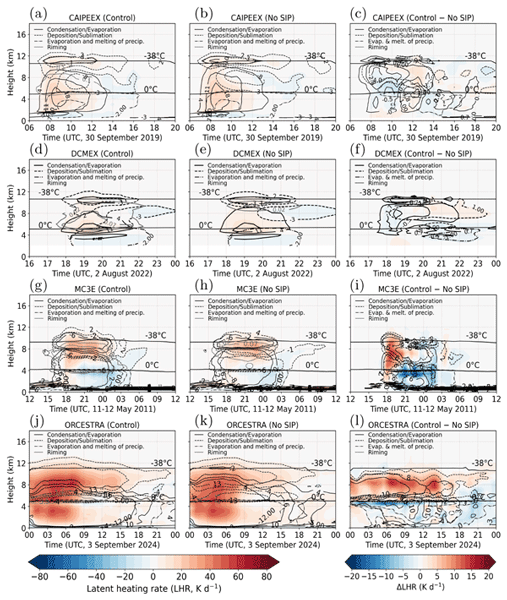
We use a weather model with aircraft and satellite data to study ice multiplication in thunderstorms across India, Mexico, Oklahoma, and the tropical Atlantic. This process can create spurious ice particles in clouds, thereby increasing latent and radiative heating that strengthens stratiform ascents in storms and extends anvil-cloud lifetimes. These results improve our understanding of how small-scale ice processes influence large-scale storm behavior and rainfall patterns.
Gabriella Wallentin, Alexander Böhmländer, Ross Herbert, Heike Wex, Charlotte M. Beall, Pia Bogert, Zoé Brasseur, Jie Chen, Jessie M. Creamean, Paul J. DeMott, Oliver Eckermann, Kunfeng Gao, Xianda Gong, Silvia Henning, Naruki Hiranuma, Christina S. McCluskey, Christos Mitsios, Ottmar Möhler, Athanasios Nenes, Mark D. Tarn, Christian Tatzelt, Ping Tian, Yutaka Tobo, Franziska Vogel, André Welti, Elise Wilbourn, Jennifer Winstone, and Corinna Hoose
EGUsphere, https://doi.org/10.5194/egusphere-2026-4134, https://doi.org/10.5194/egusphere-2026-4134, 2026
This preprint is open for discussion and under review for Geoscientific Model Development (GMD).
Short summary
Short summary
Ice nucleating particles (INPs) are aerosols essential for cloud ice formation in the temperature range -38 °C and 0 °C. Due to measurement challenges, the availability of observations of INPs remains scarce. This study applies machine learning to predict a global INP distribution using aerosol mass concentration reanalysis and observed INPs. This manuscript demonstrates that even with limited measurements, the occurrence of INPs can be estimated, following the spatial pattern of key aerosols.
Fatemeh Zarei, Julia Bruckert, Gholam Ali Hoshyaripour, and Corinna Hoose
Atmos. Chem. Phys., 26, 9697–9719, https://doi.org/10.5194/acp-26-9697-2026, https://doi.org/10.5194/acp-26-9697-2026, 2026
Short summary
Short summary
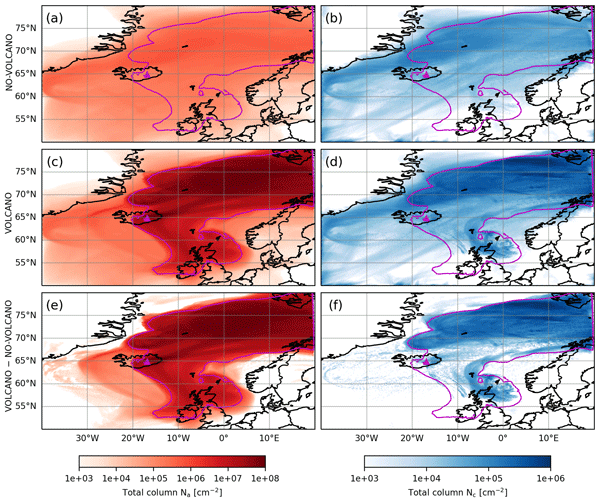
Volcanic eruptions are a rich source of aerosol particles, such as sulfate and ash, that can impact cloud droplet and ice crystal formation. They lead to strong local perturbations of clouds. In this study, these processes were simulated with a numerical model. In two contrasting case studies of an Icelandic and a Caribbean volcano, the perturbations to processes involving liquid droplets and ice crystals are investigated.
Sebastian Vergara-Palacio, Alexei Kiselev, Franziska Vogel, Adolfo González-Romero, Romy Fösig, Xavier Querol, Corinna Hoose, Nsikanabasi Silas Umo, Ottmar Möhler, Konrad Kandler, Carlos Pérez García-Pando, and Martina Klose
Atmos. Chem. Phys., 26, 9113–9147, https://doi.org/10.5194/acp-26-9113-2026, https://doi.org/10.5194/acp-26-9113-2026, 2026
Short summary
Short summary
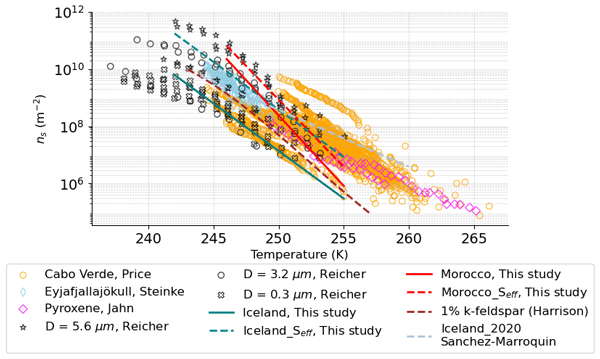
Atmospheric mineral dust can help clouds form ice, changing cloud properties and affecting weather and climate. We tested dust from Morocco and Iceland in more than 300 controlled laboratory experiments. Icelandic samples were up to 100 times less able to promote ice formation than Moroccan samples, and showed mineral-composition dependence. The results show the role of larger dust particles in ice nucleation and their relationship with mineralogy and size for low- and high-latitude sources.
N'Datchoh Evelyne Touré, Peter Knippertz, Andreas H. Fink, Marlon Maranan, Julia Bruckert, Gholamali Hoshyaripour, Jasmin Haupt, and Arona Diedhiou
EGUsphere, https://doi.org/10.5194/egusphere-2026-3128, https://doi.org/10.5194/egusphere-2026-3128, 2026
This preprint is open for discussion and under review for Atmospheric Chemistry and Physics (ACP).
Short summary
Short summary
Rapid urbanization in Africa drives increasing air pollution. Once released, pollutants can travel long distances and impact remote areas. Here, we investigate the dispersion of pollutants from cities along the West African Guinean Coast by the land-sea breeze (LSB) circulation during the dry season using idealized tracer experiments with a weather prediction model. The experiments quantify the typical inland penetration of pollutants and show a transport to the Atlantic Ocean aloft.
Lisa Janina Muth, Gholam Ali Hoshyaripour, Bernhard Vogel, Heike Vogel, and Corinna Hoose
Atmos. Chem. Phys., 26, 8505–8528, https://doi.org/10.5194/acp-26-8505-2026, https://doi.org/10.5194/acp-26-8505-2026, 2026
Short summary
Short summary
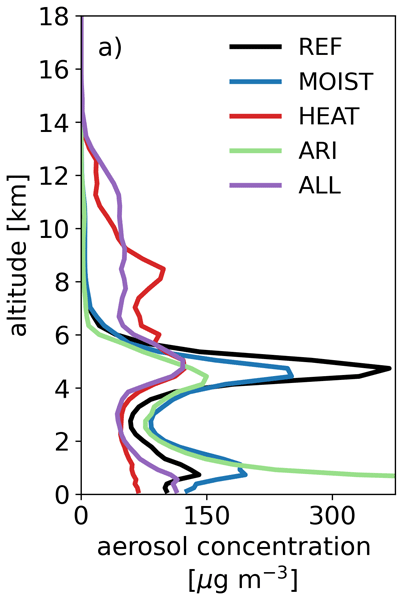
Wildfire plume injection height is key for atmospheric impact but hard to model. This study simulates the 2019/2020 Australian wildfires, testing fire-atmosphere feedbacks. Heat release increases plume rise; moisture has minor effects. Aerosol-radiation interaction lowers injection height initially, then lofts it. Only the combined simulation matches observed upper troposphere aerosol layers, especially during peak fire intensity.
Christian Barthlott, Beata Czajka, Christoph Gebhardt, and Corinna Hoose
Atmos. Chem. Phys., 26, 6061–6081, https://doi.org/10.5194/acp-26-6061-2026, https://doi.org/10.5194/acp-26-6061-2026, 2026
Short summary
Short summary
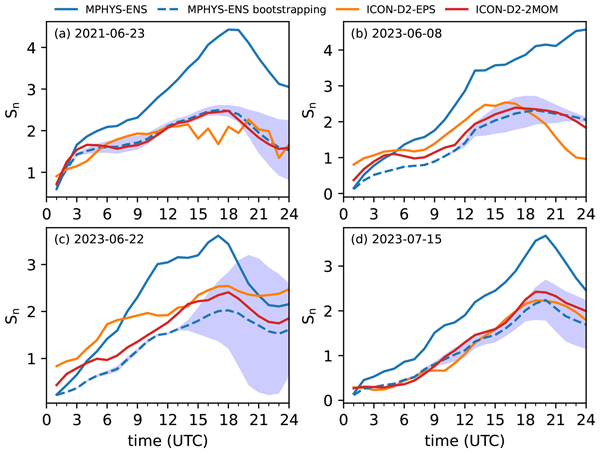
The study uses the ICOsahedral Non-hydrostatic (ICON) model to examine how microphysical uncertainties affect summertime convection in central Europe. A 108-member ensemble varying aerosol and cloud parameters showed strong differences in precipitation intensity and location but little impact on convection onset. Results highlight that cloud microphysics is a key source of forecast uncertainty in convective weather prediction.

Maurus Borne, Peter Knippertz, Michael Rennie, and Martin Weissmann
Weather Clim. Dynam., 7, 489–505, https://doi.org/10.5194/wcd-7-489-2026, https://doi.org/10.5194/wcd-7-489-2026, 2026
Short summary
Short summary
This study shows that Aeolus satellite wind lidar observations significantly improve wind forecasts and that these improvements lead to more accurate rainfall predictions, particularly at longer lead times and during winter seasons in the extratropics. The benefits are likely due to better representation of large-scale atmospheric features such as jet streams and Rossby waves, highlighting Aeolus's value for numerical weather prediction.
Gabriella Wallentin, Luisa Ickes, Peggy Achtert, Matthias Tesche, and Corinna Hoose
Atmos. Chem. Phys., 26, 3069–3089, https://doi.org/10.5194/acp-26-3069-2026, https://doi.org/10.5194/acp-26-3069-2026, 2026
Short summary
Short summary
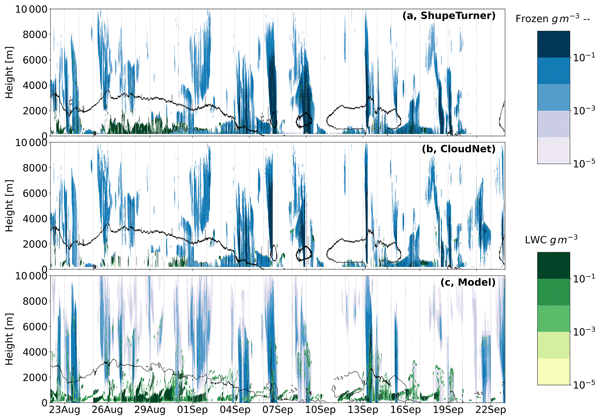
Multilayer clouds are cloud systems with two or more vertically stacked cloud layers. Using a weather prediction model, we simulate clouds in the Arctic during a month. The model is evaluated against observations collected during the ship campaign MOSAiC (Multidisciplinary Drifting Observatory for the Study of Arctic Climate). We find that multilayer clouds frequently occur in the region, in fact, they dominate the cloud occurrence. The study highlights the importance of representing these clouds in simulations over the Arctic.
Gholam Ali Hoshyaripour, Andreas Baer, Sascha Bierbauer, Julia Bruckert, Dominik Brunner, Jochen Förstner, Arash Hamzehloo, Valentin Hanft, Corina Keller, Martina Klose, Pankaj Kumar, Patrick Ludwig, Enrico Metzner, Lisa Muth, Andreas Pauling, Nikolas Porz, Maryam Ramezani Ziarani, Thomas Reddmann, Luca Reißig, Roland Ruhnke, Khompat Satitkovitchai, Axel Seifert, Miriam Sinnhuber, Michael Steiner, Stefan Versick, Heike Vogel, Michael Weimer, Sven Werchner, and Corinna Hoose
Geosci. Model Dev., 19, 1645–1681, https://doi.org/10.5194/gmd-19-1645-2026, https://doi.org/10.5194/gmd-19-1645-2026, 2026
Short summary
Short summary
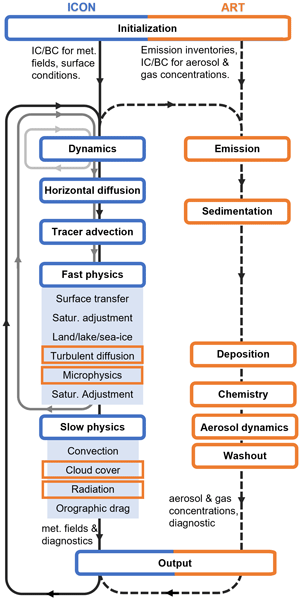
This paper presents recent advances in ICON-ART, a modeling system that simulates atmospheric composition – such as gases and particles – and their interactions with weather and climate. By integrating updated chemistry, emissions, and aerosol processes, ICON-ART enables detailed, scale-spanning simulations. It supports both scientific research and operational forecasts, contributing to improved air quality, weather and climate predictions.
Peggy Achtert, Torsten Seelig, Gabriella Wallentin, Luisa Ickes, Matthew D. Shupe, Corinna Hoose, and Matthias Tesche
Atmos. Chem. Phys., 26, 3049–3068, https://doi.org/10.5194/acp-26-3049-2026, https://doi.org/10.5194/acp-26-3049-2026, 2026
Short summary
Short summary
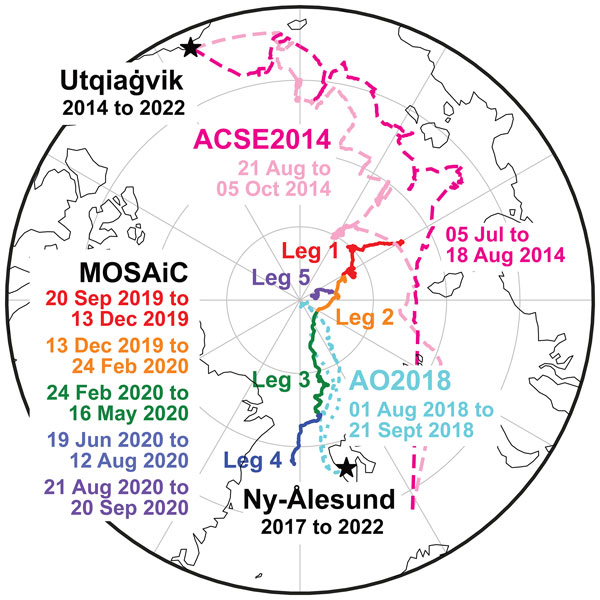
We quantify the occurrence of single- and multi-layer clouds in the Arctic based on combining soundings with cloud-radar observations. We also assess the rate of ice-crystal seeding in multi-layer cloud systems as this is an important initiator of glaciation in super-cooled liquid cloud layers. We find an abundance of multi-layer clouds in the Arctic with seeding in about half to two thirds of cases in which the gap between upper and lower layers ranges between 100 and 1000 m.
Yichen Jia, Hendrik Andersen, David Neubauer, Ulrike Lohmann, Corinna Hoose, and Jan Cermak
EGUsphere, https://doi.org/10.5194/egusphere-2026-569, https://doi.org/10.5194/egusphere-2026-569, 2026
Short summary
Short summary
Understanding how ocean clouds respond to air pollution is important for climate projections. Using artificial intelligence and a climate model, we show that some model settings produce very high cloud cover, leaving little room for further cloud growth as pollution increases. This “headroom effect” can make cloud responses appear weak. Our results highlight the need to consider existing cloud conditions when interpreting how cloud cover responds to the environment.
Hannah Meyer, Konrad Kandler, Sylvain Dupont, Jerónimo Escribano, Jessica Girdwood, George Nikolich, Andrés Alastuey, Vicken Etyemezian, Cristina González-Flórez, Adolfo González-Romero, Tareq Hussein, Mark Irvine, Peter Knippertz, Ottmar Möhler, Xavier Querol, Chris Stopford, Franziska Vogel, Frederik Weis, Andreas Wieser, Carlos Pérez García-Pando, and Martina Klose
Atmos. Meas. Tech., 19, 21–61, https://doi.org/10.5194/amt-19-21-2026, https://doi.org/10.5194/amt-19-21-2026, 2026
Short summary
Short summary
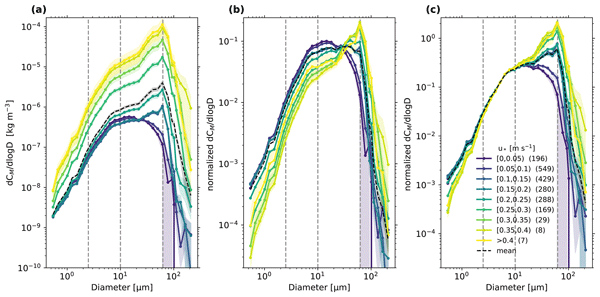
Mineral dust particles emitted from dry soils are of various sizes, yet the abundance of very large particles is not well understood. Here we measured the dust size distribution from fine to giant particles at an emission source during a field campaign in Jordan (J-WADI) using multiple instruments. Our findings show that large particles make up a significant part of the total dust mass. This knowledge is essential to improve climate models and to predict dust impacts on climate and environment.
Lisa Janina Muth, Sascha Bierbauer, Corinna Hoose, Bernhard Vogel, Heike Vogel, and Gholam Ali Hoshyaripour
Atmos. Chem. Phys., 25, 16027–16040, https://doi.org/10.5194/acp-25-16027-2025, https://doi.org/10.5194/acp-25-16027-2025, 2025
Short summary
Short summary
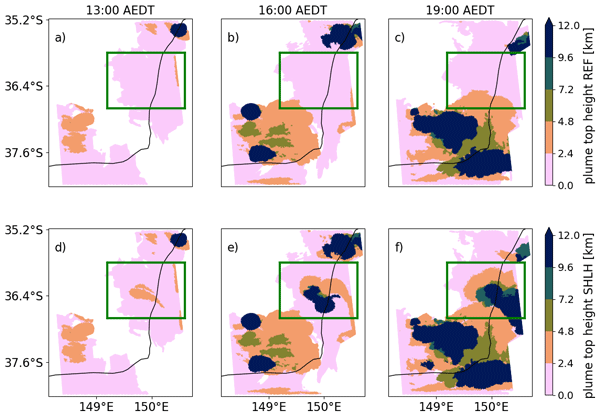
In our study, we explore how intense wildfires create thunderstorm-like clouds that can affect weather and climate globally. Using simulations with high resolution, we found that fire heat and moisture help form these clouds, lifting particles high into the atmosphere. This process is crucial for understanding how fires affect the environment. Despite some differences from observational data, our findings match well over time, showing the importance of fire-induced heat in cloud formation.
Tanguy Jonville, Maurus Borne, Cyrille Flamant, Juan Cuesta, Olivier Bock, Pierre Bosser, Christophe Lavaysse, Andreas Fink, and Peter Knippertz
Atmos. Chem. Phys., 25, 9765–9786, https://doi.org/10.5194/acp-25-9765-2025, https://doi.org/10.5194/acp-25-9765-2025, 2025
Short summary
Short summary
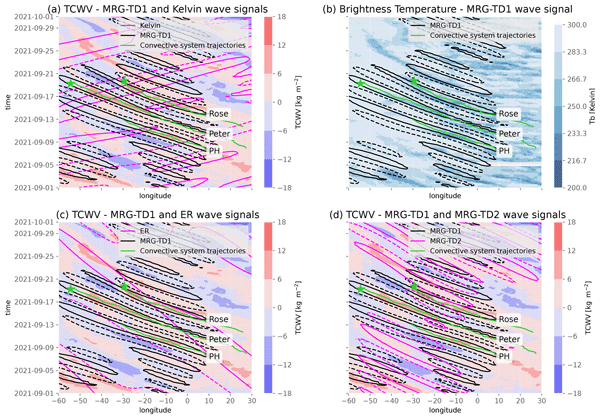
Tropical waves structure the atmosphere. Four types of tropical waves (equatorial Rossby – ER, Kelvin, MRG-TD1, and MRG-TD2 – mixed Rossby gravity–tropical depressions) are studied using filters, satellite measurements, and in situ data from the Clouds–Atmosphere Dynamics–Dust Interaction in West Africa (CADDIWA) campaign held in September 2021 in Cabo Verde. ER waves impact temperature and humidity above 2500 m, MRG-TD1 around 3500 m, and MRG-TD2 around 2000 m. Interactions between these waves favor tropical cyclone formation.
Gabriella Wallentin, Annika Oertel, Luisa Ickes, Peggy Achtert, Matthias Tesche, and Corinna Hoose
Atmos. Chem. Phys., 25, 6607–6631, https://doi.org/10.5194/acp-25-6607-2025, https://doi.org/10.5194/acp-25-6607-2025, 2025
Short summary
Short summary
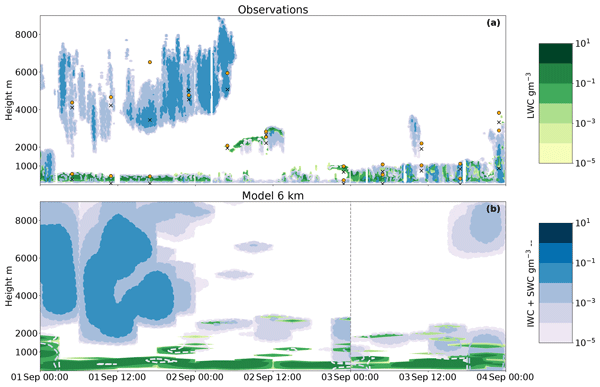
Multilayer clouds are common in the Arctic but remain underrepresented. We use an atmospheric model to simulate multilayer cloud cases from the Arctic expedition MOSAiC 2019/2020. We find that it is complex to accurately model these cloud layers due to the lack of correct temperature profiles. The model also struggles to capture the observed cloud phase and the relative concentration of cloud droplets and cloud ice. We constrain our model to measured aerosols to mitigate this issue.
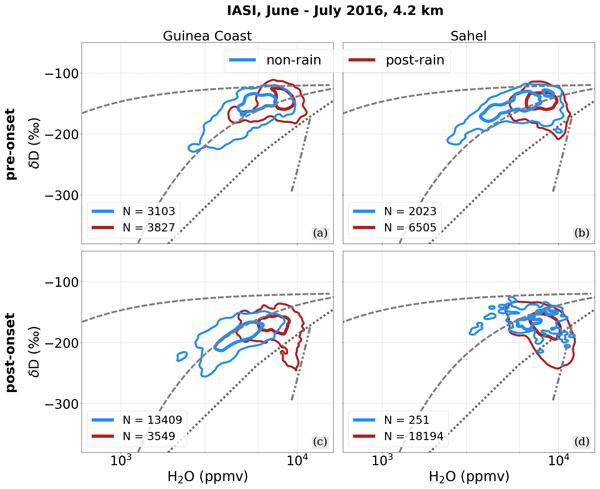
Christopher Johannes Diekmann, Matthias Schneider, Peter Knippertz, Tim Trent, Hartmut Boesch, Amelie Ninja Roehling, John Worden, Benjamin Ertl, Farahnaz Khosrawi, and Frank Hase
Atmos. Chem. Phys., 25, 5409–5431, https://doi.org/10.5194/acp-25-5409-2025, https://doi.org/10.5194/acp-25-5409-2025, 2025
Short summary
Short summary
The West African Monsoon is the main source of rainfall over West Africa, and understanding the development of the monsoon remains challenging due to complex interactions of atmospheric processes. We make use of new satellite datasets of isotopes in tropospheric water vapour to characterize processes controlling the monsoon convection. We find that comparing different water vapour isotopes reveals effects of rain–vapour interactions and air mass transport.
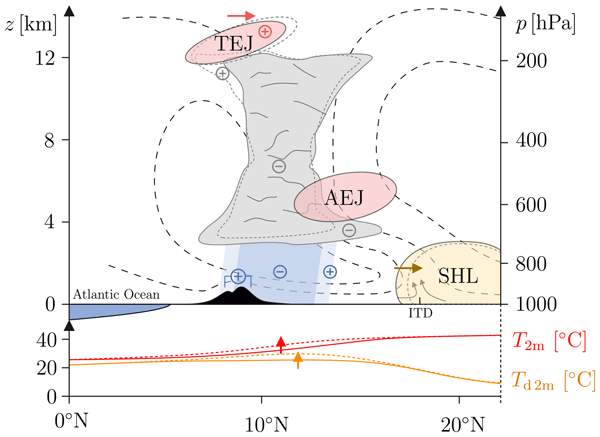
Matthias Fischer, Peter Knippertz, and Carsten Proppe
Weather Clim. Dynam., 6, 113–130, https://doi.org/10.5194/wcd-6-113-2025, https://doi.org/10.5194/wcd-6-113-2025, 2025
Short summary
Short summary
The West African monsoon is vital for millions but difficult to represent with numerical models. Our research aims at improving monsoon simulations by optimizing three model parameters – entrainment rate, ice fall speed, and soil moisture evaporation – using an advanced surrogate-based multi-objective optimization framework. Results show that tuning these parameters can sometimes improve certain monsoon characteristics, however at the expense of others, highlighting the power of our approach.
Selina M. Kiefer, Patrick Ludwig, Sebastian Lerch, Peter Knippertz, and Joaquim G. Pinto
EGUsphere, https://doi.org/10.5194/egusphere-2024-2955, https://doi.org/10.5194/egusphere-2024-2955, 2024
Preprint withdrawn
Short summary
Short summary
Weather forecasts 14 days in advance generally have a low skill but not always. We identify reasons thereof depending on the atmospheric flow, shown by Weather Regimes (WRs). If the WRs during the forecasts follow climatological patterns, forecast skill is increased. The forecast of a cold-wave day is better when the European Blocking WR (high pressure around the British Isles) is present a few days before a cold-wave day. These results can be used to assess the reliability of predictions.
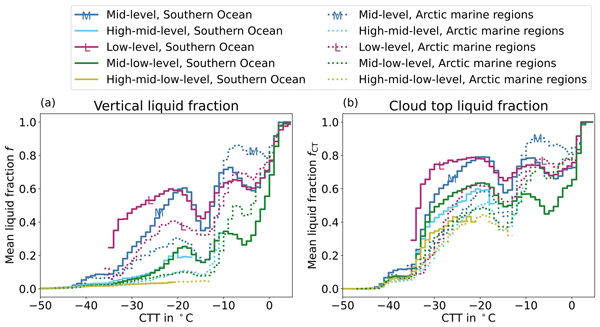
Barbara Dietel, Odran Sourdeval, and Corinna Hoose
Atmos. Chem. Phys., 24, 7359–7383, https://doi.org/10.5194/acp-24-7359-2024, https://doi.org/10.5194/acp-24-7359-2024, 2024
Short summary
Short summary
Uncertainty with respect to cloud phases over the Southern Ocean and Arctic marine regions leads to large uncertainties in the radiation budget of weather and climate models. This study investigates the phases of low-base and mid-base clouds using satellite-based remote sensing data. A comprehensive analysis of the correlation of cloud phase with various parameters, such as temperature, aerosols, sea ice, vertical and horizontal cloud extent, and cloud radiative effect, is presented.
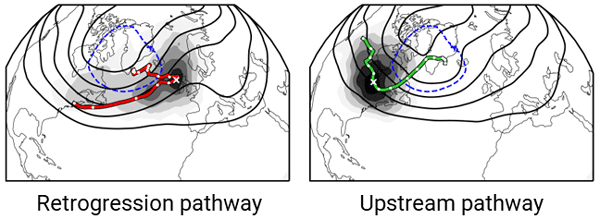
Seraphine Hauser, Franziska Teubler, Michael Riemer, Peter Knippertz, and Christian M. Grams
Weather Clim. Dynam., 5, 633–658, https://doi.org/10.5194/wcd-5-633-2024, https://doi.org/10.5194/wcd-5-633-2024, 2024
Short summary
Short summary
Blocking over Greenland has substantial impacts on the weather and climate in mid- and high latitudes. This study applies a quasi-Lagrangian thinking on the dynamics of Greenland blocking and reveals two pathways of anticyclonic anomalies linked to the block. Moist processes were found to play a dominant role in the formation and maintenance of blocking. This emphasizes the necessity of the correct representation of moist processes in weather and climate models to realistically depict blocking.
Behrooz Keshtgar, Aiko Voigt, Bernhard Mayer, and Corinna Hoose
Atmos. Chem. Phys., 24, 4751–4769, https://doi.org/10.5194/acp-24-4751-2024, https://doi.org/10.5194/acp-24-4751-2024, 2024
Short summary
Short summary
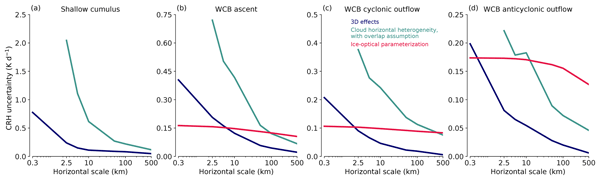
Cloud-radiative heating (CRH) affects extratropical cyclones but is uncertain in weather and climate models. We provide a framework to quantify uncertainties in CRH within an extratropical cyclone due to four factors and show that the parameterization of ice optical properties contributes significantly to uncertainty in CRH. We also argue that ice optical properties, by affecting CRH on spatial scales of 100 km, are relevant for the large-scale dynamics of extratropical cyclones.
Matthias Fischer, Peter Knippertz, Roderick van der Linden, Alexander Lemburg, Gregor Pante, Carsten Proppe, and John H. Marsham
Weather Clim. Dynam., 5, 511–536, https://doi.org/10.5194/wcd-5-511-2024, https://doi.org/10.5194/wcd-5-511-2024, 2024
Short summary
Short summary
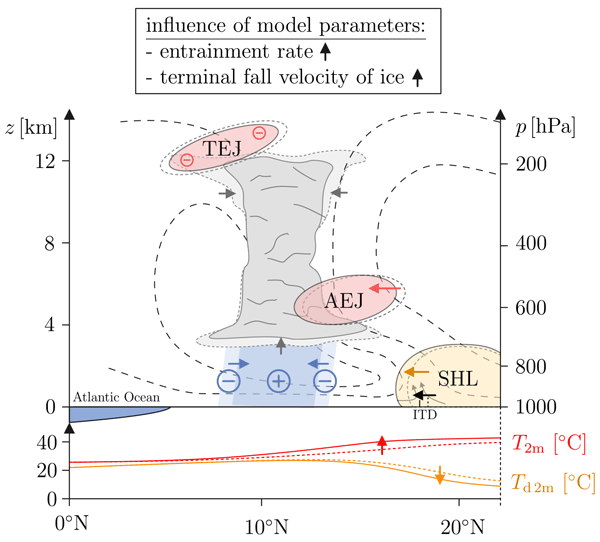
Our research enhances the understanding of the complex dynamics within the West African monsoon system by analyzing the impact of specific model parameters on its characteristics. Employing surrogate models, we identified critical factors such as the entrainment rate and the fall velocity of ice. Precise definition of these parameters in weather models could improve forecast accuracy, thus enabling better strategies to manage and reduce the impact of weather events.
Maurus Borne, Peter Knippertz, Martin Weissmann, Benjamin Witschas, Cyrille Flamant, Rosimar Rios-Berrios, and Peter Veals
Atmos. Meas. Tech., 17, 561–581, https://doi.org/10.5194/amt-17-561-2024, https://doi.org/10.5194/amt-17-561-2024, 2024
Short summary
Short summary
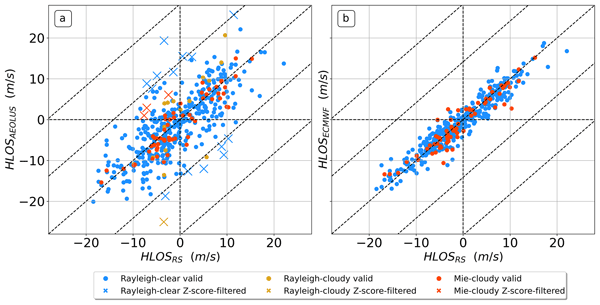
This study assesses the quality of Aeolus wind measurements over the tropical Atlantic. The results identified the accuracy and precision of the Aeolus wind measurements and the potential source of errors. For instance, the study revealed atmospheric conditions that can deteriorate the measurement quality, such as weaker laser signal in cloudy or dusty conditions, and confirmed the presence of an orbital-dependant bias. These results can help to improve the Aeolus wind measurement algorithm.
Hyunju Jung, Peter Knippertz, Yvonne Ruckstuhl, Robert Redl, Tijana Janjic, and Corinna Hoose
Weather Clim. Dynam., 4, 1111–1134, https://doi.org/10.5194/wcd-4-1111-2023, https://doi.org/10.5194/wcd-4-1111-2023, 2023
Short summary
Short summary
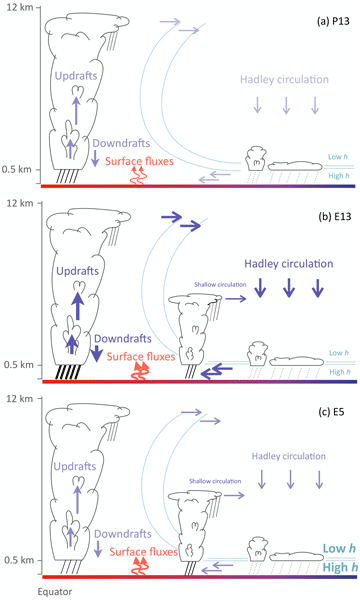
A narrow rainfall belt in the tropics is an important feature for large-scale circulations and the global water cycle. The accurate simulation of this rainfall feature has been a long-standing problem, with the reasons behind that unclear. We present a novel diagnostic tool that allows us to disentangle processes important for rainfall, which changes due to modifications in model. Using our diagnostic tool, one can potentially identify sources of uncertainty in weather and climate models.
Lea Eisenstein, Benedikt Schulz, Joaquim G. Pinto, and Peter Knippertz
Weather Clim. Dynam., 4, 981–999, https://doi.org/10.5194/wcd-4-981-2023, https://doi.org/10.5194/wcd-4-981-2023, 2023
Short summary
Short summary
Mesoscale high-wind features within extratropical cyclones can cause immense damage. In Part 1 of this work, we introduced RAMEFI (RAndom-forest-based MEsoscale wind Feature Identification), an objective, flexible identification tool for these wind features based on a probabilistic random forest. Here, we use RAMEFI to compile a climatology of the features over 19 extended winter seasons over western and central Europe, focusing on relative occurrence, affected areas and further characteristics.
Cunbo Han, Corinna Hoose, Martin Stengel, Quentin Coopman, and Andrew Barrett
Atmos. Chem. Phys., 23, 14077–14095, https://doi.org/10.5194/acp-23-14077-2023, https://doi.org/10.5194/acp-23-14077-2023, 2023
Short summary
Short summary
Cloud phase has been found to significantly impact cloud thermodynamics and Earth’s radiation budget, and various factors influence it. This study investigates the sensitivity of the cloud-phase distribution to the ice-nucleating particle concentration and thermodynamics. Multiple simulation experiments were performed using the ICON model at the convection-permitting resolution of 1.2 km. Simulation results were compared to two different retrieval products based on SEVIRI measurements.
Annika Oertel, Annette K. Miltenberger, Christian M. Grams, and Corinna Hoose
Atmos. Chem. Phys., 23, 8553–8581, https://doi.org/10.5194/acp-23-8553-2023, https://doi.org/10.5194/acp-23-8553-2023, 2023
Short summary
Short summary
Warm conveyor belts (WCBs) are cloud- and precipitation-producing airstreams in extratropical cyclones that are important for the large-scale flow and cloud radiative forcing. We analyze cloud formation processes during WCB ascent in a two-moment microphysics scheme. Quantification of individual diabatic heating rates shows the importance of condensation, vapor deposition, rain evaporation, melting, and cloud-top radiative cooling for total heating and WCB-related potential vorticity structure.
Valerian Hahn, Ralf Meerkötter, Christiane Voigt, Sonja Gisinger, Daniel Sauer, Valéry Catoire, Volker Dreiling, Hugh Coe, Cyrille Flamant, Stefan Kaufmann, Jonas Kleine, Peter Knippertz, Manuel Moser, Philip Rosenberg, Hans Schlager, Alfons Schwarzenboeck, and Jonathan Taylor
Atmos. Chem. Phys., 23, 8515–8530, https://doi.org/10.5194/acp-23-8515-2023, https://doi.org/10.5194/acp-23-8515-2023, 2023
Short summary
Short summary
During the DACCIWA campaign in West Africa, we found a 35 % increase in the cloud droplet concentration that formed in a polluted compared with a less polluted environment and a decrease of 17 % in effective droplet diameter. Radiative transfer simulations, based on the measured cloud properties, reveal that these low-level polluted clouds radiate only 2.6 % more energy back to space, compared with a less polluted cloud. The corresponding additional decrease in temperature is rather small.
Seraphine Hauser, Franziska Teubler, Michael Riemer, Peter Knippertz, and Christian M. Grams
Weather Clim. Dynam., 4, 399–425, https://doi.org/10.5194/wcd-4-399-2023, https://doi.org/10.5194/wcd-4-399-2023, 2023
Short summary
Short summary
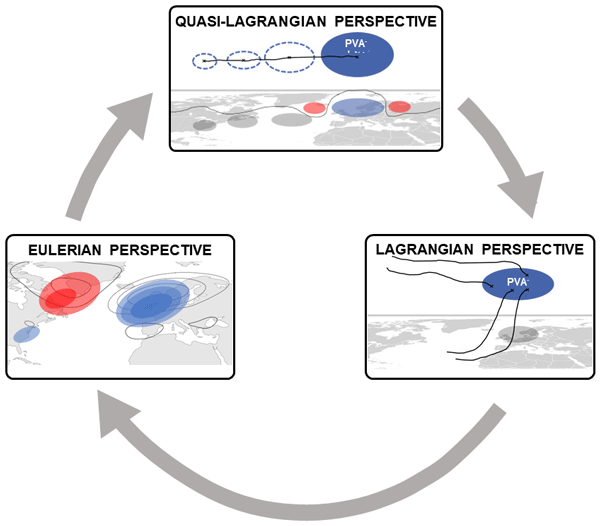
Blocking describes a flow configuration in the midlatitudes where stationary high-pressure systems block the propagation of weather systems. This study combines three individual perspectives that capture the dynamics and importance of various processes in the formation of a major blocking in 2016 from a weather regime perspective. In future work, this framework will enable a holistic view of the dynamics and the role of moist processes in different life cycle stages of blocked weather regimes.

Patrick Ludwig, Florian Ehmele, Mário J. Franca, Susanna Mohr, Alberto Caldas-Alvarez, James E. Daniell, Uwe Ehret, Hendrik Feldmann, Marie Hundhausen, Peter Knippertz, Katharina Küpfer, Michael Kunz, Bernhard Mühr, Joaquim G. Pinto, Julian Quinting, Andreas M. Schäfer, Frank Seidel, and Christina Wisotzky
Nat. Hazards Earth Syst. Sci., 23, 1287–1311, https://doi.org/10.5194/nhess-23-1287-2023, https://doi.org/10.5194/nhess-23-1287-2023, 2023
Short summary
Short summary
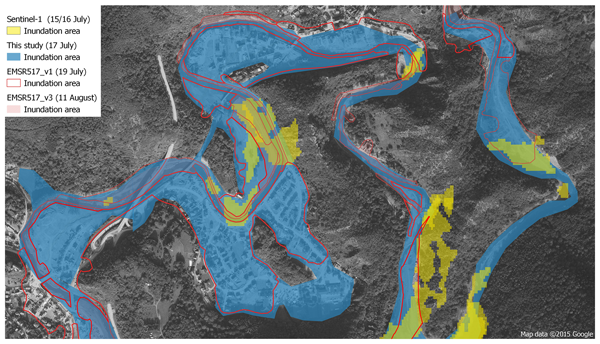
Heavy precipitation in July 2021 led to widespread floods in western Germany and neighboring countries. The event was among the five heaviest precipitation events of the past 70 years in Germany, and the river discharges exceeded by far the statistical 100-year return values. Simulations of the event under future climate conditions revealed a strong and non-linear effect on flood peaks: for +2 K global warming, an 18 % increase in rainfall led to a 39 % increase of the flood peak in the Ahr river.
Julia Thomas, Andrew Barrett, and Corinna Hoose
Atmos. Chem. Phys., 23, 1987–2002, https://doi.org/10.5194/acp-23-1987-2023, https://doi.org/10.5194/acp-23-1987-2023, 2023
Short summary
Short summary
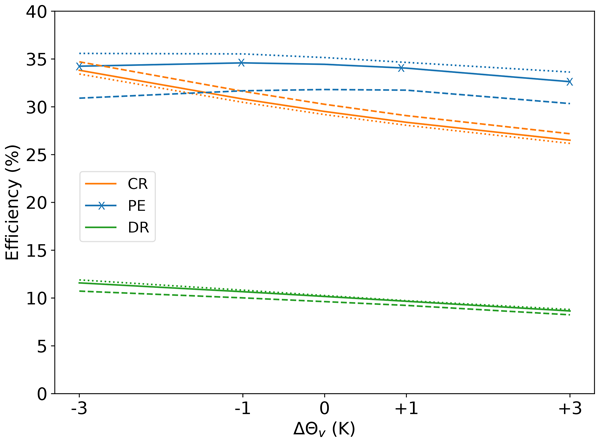
We study the sensitivity of rain formation processes during a heavy-rainfall event over mountains to changes in temperature and pollution. Total rainfall increases by 2 % K−1, and a 6 % K−1 increase is found at the highest altitudes, caused by a mixed-phase seeder–feeder mechanism (frozen cloud particles melt and grow further as they fall through a liquid cloud layer). In a cleaner atmosphere this process is enhanced. Thus the risk of severe rainfall in mountains may increase in the future.
Susanna Mohr, Uwe Ehret, Michael Kunz, Patrick Ludwig, Alberto Caldas-Alvarez, James E. Daniell, Florian Ehmele, Hendrik Feldmann, Mário J. Franca, Christian Gattke, Marie Hundhausen, Peter Knippertz, Katharina Küpfer, Bernhard Mühr, Joaquim G. Pinto, Julian Quinting, Andreas M. Schäfer, Marc Scheibel, Frank Seidel, and Christina Wisotzky
Nat. Hazards Earth Syst. Sci., 23, 525–551, https://doi.org/10.5194/nhess-23-525-2023, https://doi.org/10.5194/nhess-23-525-2023, 2023
Short summary
Short summary
The flood event in July 2021 was one of the most severe disasters in Europe in the last half century. The objective of this two-part study is a multi-disciplinary assessment that examines the complex process interactions in different compartments, from meteorology to hydrological conditions to hydro-morphological processes to impacts on assets and environment. In addition, we address the question of what measures are possible to generate added value to early response management.
Behrooz Keshtgar, Aiko Voigt, Corinna Hoose, Michael Riemer, and Bernhard Mayer
Weather Clim. Dynam., 4, 115–132, https://doi.org/10.5194/wcd-4-115-2023, https://doi.org/10.5194/wcd-4-115-2023, 2023
Short summary
Short summary
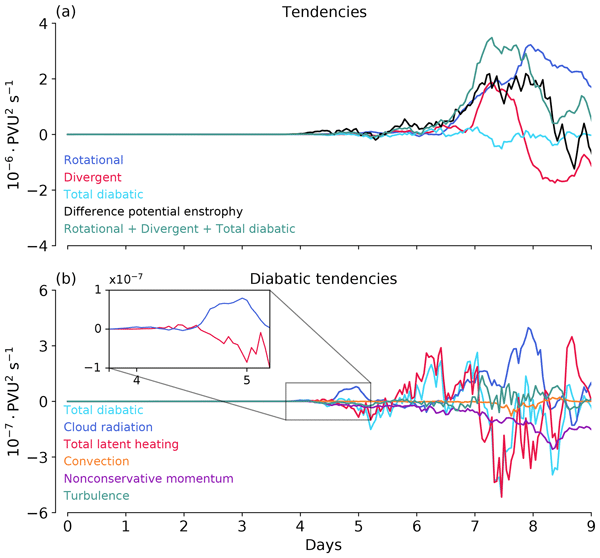
Forecasting extratropical cyclones is challenging due to many physical factors influencing their behavior. One such factor is the impact of heating and cooling of the atmosphere by the interaction between clouds and radiation. In this study, we show that cloud-radiative heating (CRH) increases the intensity of an idealized cyclone and affects its predictability. We find that CRH affects the cyclone mostly via increasing latent heat release and subsequent changes in the synoptic circulation.
Takumi Matsunobu, Christian Keil, and Christian Barthlott
Weather Clim. Dynam., 3, 1273–1289, https://doi.org/10.5194/wcd-3-1273-2022, https://doi.org/10.5194/wcd-3-1273-2022, 2022
Short summary
Short summary
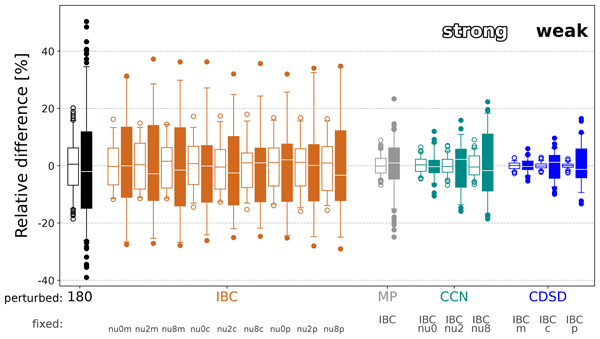
This study quantifies the impact of poorly constrained parameters used to represent aerosol–cloud–precipitation interactions on precipitation and cloud forecasts associated with uncertainties in input atmospheric states. Uncertainties in these parameters have a non-negligible impact on daily precipitation amount and largely change the amount of cloud. The comparison between different weather situations reveals that the impact becomes more important when convection is triggered by local effects.
Lea Eisenstein, Benedikt Schulz, Ghulam A. Qadir, Joaquim G. Pinto, and Peter Knippertz
Weather Clim. Dynam., 3, 1157–1182, https://doi.org/10.5194/wcd-3-1157-2022, https://doi.org/10.5194/wcd-3-1157-2022, 2022
Short summary
Short summary
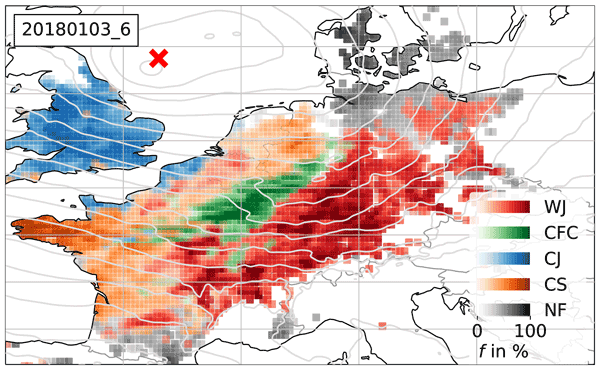
Mesoscale high-wind features within extratropical cyclones can cause immense damage. Here, we present RAMEFI, a novel approach to objectively identify the wind features based on a probabilistic random forest. RAMEFI enables a wide range of applications such as probabilistic predictions for the occurrence or a multi-decadal climatology of these features, which will be the focus of Part 2 of the study, with the goal of improving wind and, specifically, wind gust forecasts in the long run.
Christian Barthlott, Amirmahdi Zarboo, Takumi Matsunobu, and Christian Keil
Atmos. Chem. Phys., 22, 10841–10860, https://doi.org/10.5194/acp-22-10841-2022, https://doi.org/10.5194/acp-22-10841-2022, 2022
Short summary
Short summary
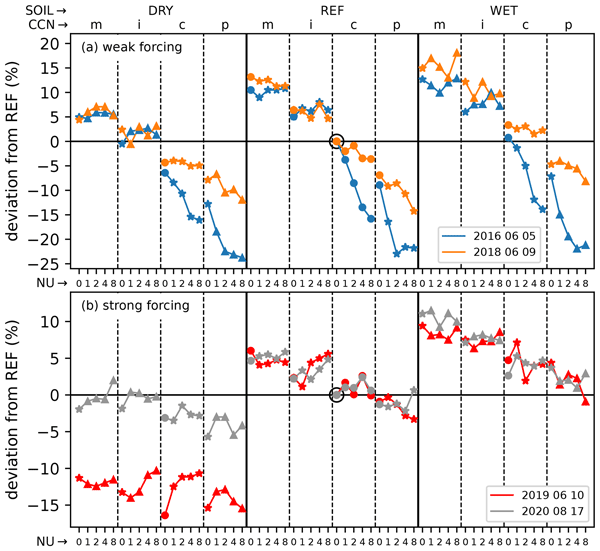
The relevance of microphysical and land-surface uncertainties for convective-scale predictability is evaluated with a combined-perturbation strategy in realistic convection-resolving simulations. We find a large ensemble spread which demonstrates that the uncertainties investigated here and, in particular, their collective effect are highly relevant for quantitative precipitation forecasting of summertime convection in central Europe.

Julia Bruckert, Gholam Ali Hoshyaripour, Ákos Horváth, Lukas O. Muser, Fred J. Prata, Corinna Hoose, and Bernhard Vogel
Atmos. Chem. Phys., 22, 3535–3552, https://doi.org/10.5194/acp-22-3535-2022, https://doi.org/10.5194/acp-22-3535-2022, 2022
Short summary
Short summary
Volcanic emissions endanger aviation and public health and also influence weather and climate. Forecasting the volcanic-plume dispersion is therefore a critical yet sophisticated task. Here, we show that explicit treatment of volcanic-plume dynamics and eruption source parameters significantly improves volcanic-plume dispersion forecasts. We further demonstrate the lofting of the SO2 due to a heating of volcanic particles by sunlight with major implications for volcanic aerosol research.
Adrien Deroubaix, Laurent Menut, Cyrille Flamant, Peter Knippertz, Andreas H. Fink, Anneke Batenburg, Joel Brito, Cyrielle Denjean, Cheikh Dione, Régis Dupuy, Valerian Hahn, Norbert Kalthoff, Fabienne Lohou, Alfons Schwarzenboeck, Guillaume Siour, Paolo Tuccella, and Christiane Voigt
Atmos. Chem. Phys., 22, 3251–3273, https://doi.org/10.5194/acp-22-3251-2022, https://doi.org/10.5194/acp-22-3251-2022, 2022
Short summary
Short summary
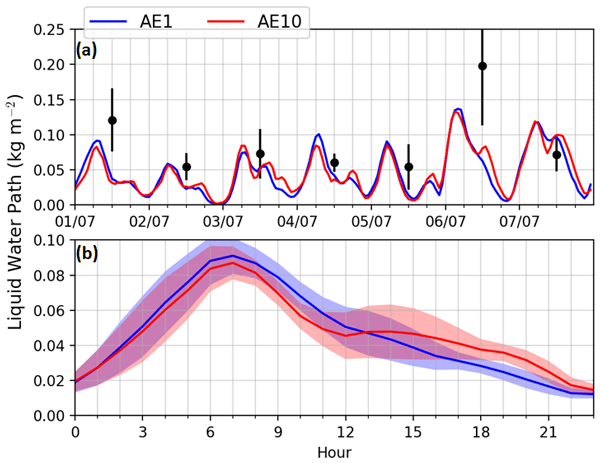
During the summer monsoon in West Africa, pollutants emitted in urbanized areas modify cloud cover and precipitation patterns. We analyze these patterns with the WRF-CHIMERE model, integrating the effects of aerosols on meteorology, based on the numerous observations provided by the Dynamics-Aerosol-Climate-Interactions campaign. This study adds evidence to recent findings that increased pollution levels in West Africa delay the breakup time of low-level clouds and reduce precipitation.

Christian Barthlott, Amirmahdi Zarboo, Takumi Matsunobu, and Christian Keil
Atmos. Chem. Phys., 22, 2153–2172, https://doi.org/10.5194/acp-22-2153-2022, https://doi.org/10.5194/acp-22-2153-2022, 2022
Short summary
Short summary
The relative impact of cloud condensation nuclei (CCN) concentrations and the shape parameter of the cloud droplet size distribution is evaluated in realistic convection-resolving simulations. We find that an increase in the shape parameter can produce almost as large a variation in precipitation as a CCN increase from maritime to polluted conditions. The choice of the shape parameter may be more important than previously thought for determining cloud radiative characteristics.
Christopher J. Diekmann, Matthias Schneider, Benjamin Ertl, Frank Hase, Omaira García, Farahnaz Khosrawi, Eliezer Sepúlveda, Peter Knippertz, and Peter Braesicke
Earth Syst. Sci. Data, 13, 5273–5292, https://doi.org/10.5194/essd-13-5273-2021, https://doi.org/10.5194/essd-13-5273-2021, 2021
Short summary
Short summary
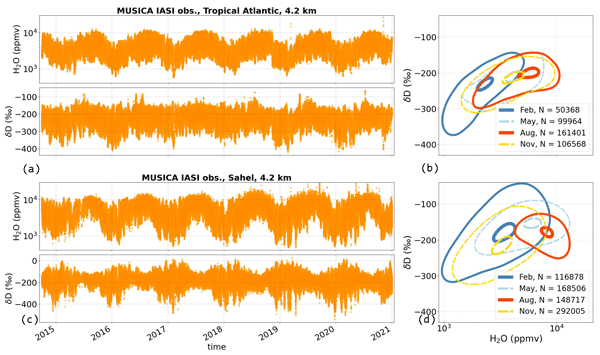
The joint analysis of different stable water isotopes in water vapour is a powerful tool for investigating atmospheric moisture pathways. This paper presents a novel global and multi-annual dataset of H2O and HDO in mid-tropospheric water vapour by using data from the satellite sensor Metop/IASI. Due to its unique combination of coverage and resolution in space and time, this dataset is highly promising for studying the hydrological cycle and its representation in weather and climate models.
Fabienne Dahinden, Franziska Aemisegger, Heini Wernli, Matthias Schneider, Christopher J. Diekmann, Benjamin Ertl, Peter Knippertz, Martin Werner, and Stephan Pfahl
Atmos. Chem. Phys., 21, 16319–16347, https://doi.org/10.5194/acp-21-16319-2021, https://doi.org/10.5194/acp-21-16319-2021, 2021
Short summary
Short summary
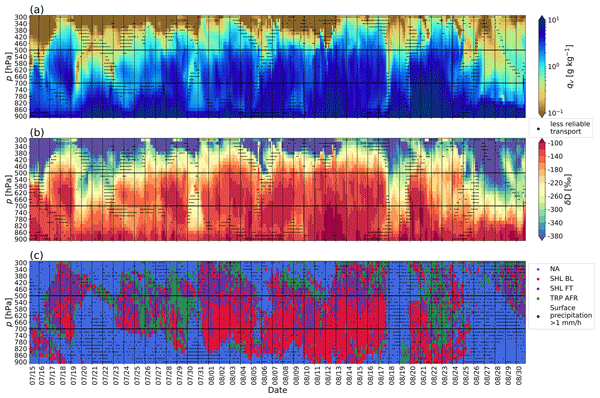
We use high-resolution numerical isotope modelling and Lagrangian backward trajectories to identify moisture transport pathways and governing physical and dynamical processes that affect the free-tropospheric humidity and isotopic variability over the eastern subtropical North Atlantic. Furthermore, we conduct a thorough isotope modelling validation with aircraft and remote-sensing observations of water vapour isotopes.
Cited articles
Allen, J. T., Giammanco, I. M., Kumjian, M. R., Jurgen Punge, H., Zhang, Q., Groenemeijer, P., Kunz, M., and Ortega, K.: Understanding Hail in the Earth System, Rev. Geophys., 58, e2019RG000665, https://doi.org/10.1029/2019RG000665, 2020. a
Altaratz, O., Koren, I., Remer, L., and Hirsch, E.: Review: Cloud invigoration by aerosols—Coupling between microphysics and dynamics, Atmos. Res., 140-141, 38–60, https://doi.org/10.1016/j.atmosres.2014.01.009, 2014. a, b, c
Ashley, W. S., Haberlie, A. M., and Gensini, V. A.: The future of supercells in the United States, B. Am. Meteorol. Soc., 104, E1–E21, https://doi.org/10.1175/BAMS-D-22-0027.1, 2023. a
Barthlott, C. and Hoose, C.: Aerosol effects on clouds and precipitation over central Europe in different weather regimes, J. Atmos. Sci., 75, 4247–4264, https://doi.org/10.1175/JAS-D-18-0110.1, 2018. a
Barthlott, C., Zarboo, A., Matsunobu, T., and Keil, C.: Impacts of combined microphysical and land-surface uncertainties on convective clouds and precipitation in different weather regimes, Atmos. Chem. Phys., 22, 10841–10860, https://doi.org/10.5194/acp-22-10841-2022, 2022a. a, b
Barthlott, C., Zarboo, A., Matsunobu, T., and Keil, C.: Importance of aerosols and shape of the cloud droplet size distribution for convective clouds and precipitation, Atmos. Chem. Phys., 22, 2153–2172, https://doi.org/10.5194/acp-22-2153-2022, 2022b. a
Barthlott, C., Czajka, B., Kunz, M., Saathoff, H., Zhang, H., Böhmländer, A., Gasch, P., Handwerker, J., Kohler, M., Wilhelm, J., Wieser, A., and Hoose, C.: The impact of aerosols and model grid spacing on a supercell storm from Swabian MOSES 2021, Q. J. Roy. Meteor. Soc., 150, 2005–2027, https://doi.org/10.1002/qj.4687, 2024. a, b
Battaglioli, F., Groenemeijer, P., Púčik, T., Taszarek, M., Ulbrich, U., and Rust, H.: Modeled Multidecadal Trends of Lightning and (Very) Large Hail in Europe and North America (1950–2021), J. Appl. Meteor. Climatol., 62, 1627–1653, https://doi.org/10.1175/JAMC-D-22-0195.1, 2023. a
Bauer, P., Thorpe, A., and Brunet, G.: The quiet revolution of numerical weather prediction, Nature, 525, 47–55, https://doi.org/10.1038/nature14956, 2015. a
Baur, F., Keil, C., and Barthlott, C.: Combined effects of soil moisture and microphysical perturbations on convective clouds and precipitation for a locally forced case over Central Europe, Q. J. Roy. Meteor. Soc., 148, 2132–2146, https://doi.org/10.1002/qj.4295, 2022. a
Brennan, K. P., Sprenger, M., Walser, A., Arpagaus, M., and Wernli, H.: An object-based and Lagrangian view on an intense hailstorm day in Switzerland as represented in COSMO-1E ensemble hindcast simulations, Weather Clim. Dynam., 6, 645–668, https://doi.org/10.5194/wcd-6-645-2025, 2025a. a
Brennan, K. P., Thurnherr, I., Sprenger, M., and Wernli, H.: Insights from hailstorm track analysis in European climate change simulations, Nat. Hazards Earth Syst. Sci., 25, 3693–3712, https://doi.org/10.5194/nhess-25-3693-2025, 2025b. a
Brogli, R., Lund Sørland, S., Kröner, N., and Schär, C.: Future summer warming pattern under climate change is affected by lapse-rate changes, Weather Clim. Dynam., 2, 1093–1110, https://doi.org/10.5194/wcd-2-1093-2021, 2021. a, b
Brogli, R., Heim, C., Mensch, J., Sørland, S. L., and Schär, C.: The pseudo-global-warming (PGW) approach: methodology, software package PGW4ERA5 v1.1, validation, and sensitivity analyses, Geosci. Model Dev., 16, 907–926, https://doi.org/10.5194/gmd-16-907-2023, 2023. a
Buizza, R.: Introduction to the special issue on “25 years of ensemble forecasting”, Q. J. Roy. Meteorol. Soc., 145, 1–11, https://doi.org/10.1002/qj.3370, 2019. a
Chen, W., Cui, H., and Zheng, J.: Prediction of Clausius–Clapeyron scaling of daily precipitation extremes over China, J. Climate, 37, 165–177, https://doi.org/10.1175/JCLI-D-23-0030.1, 2024. a
Chin, M., Diehl, T., Tan, Q., Prospero, J. M., Kahn, R. A., Remer, L. A., Yu, H., Sayer, A. M., Bian, H., Geogdzhayev, I. V., Holben, B. N., Howell, S. G., Huebert, B. J., Hsu, N. C., Kim, D., Kucsera, T. L., Levy, R. C., Mishchenko, M. I., Pan, X., Quinn, P. K., Schuster, G. L., Streets, D. G., Strode, S. A., Torres, O., and Zhao, X.-P.: Multi-decadal aerosol variations from 1980 to 2009: a perspective from observations and a global model, Atmos. Chem. Phys., 14, 3657–3690, https://doi.org/10.5194/acp-14-3657-2014, 2014. a
Costa-Surós, M., Sourdeval, O., Acquistapace, C., Baars, H., Carbajal Henken, C., Genz, C., Hesemann, J., Jimenez, C., König, M., Kretzschmar, J., Madenach, N., Meyer, C. I., Schrödner, R., Seifert, P., Senf, F., Brueck, M., Cioni, G., Engels, J. F., Fieg, K., Gorges, K., Heinze, R., Siligam, P. K., Burkhardt, U., Crewell, S., Hoose, C., Seifert, A., Tegen, I., and Quaas, J.: Detection and attribution of aerosol–cloud interactions in large-domain large-eddy simulations with the ICOsahedral Non-hydrostatic model, Atmos. Chem. Phys., 20, 5657–5678, https://doi.org/10.5194/acp-20-5657-2020, 2020. a
Cui, R., Thurnherr, I., Velasquez, P., Brennan, K. P., Leclair, M., Mazzoleni, A., Schmid, T., Wernli, H., and Schär, C.: A European Hail and Lightning Climatology From an 11-Year Kilometer-Scale Regional Climate Simulation, J. Geophys. Res., 130, e2024JD042828, https://doi.org/10.1029/2024JD042828, 2025. a
Da Silva, N. and Haerter, J.: Super-Clausius–Clapeyron scaling of extreme precipitation explained by shift from stratiform to convective rain type, Nat. Geosci., 18, 382–388, https://doi.org/10.1038/s41561-025-01686-4, 2025. a
Fan, J., Wang, Y., Rosenfeld, D., and Liu, X.: Review of aerosol–cloud interactions: Mechanisms, significance, and challenges, J. Atmos. Sci., 73, 4221–4252, https://doi.org/10.1175/JAS-D-16-0037.1, 2016. a
Fan, J., Leung, L. R., Rosenfeld, D., and DeMott, P. J.: Effects of cloud condensation nuclei and ice nucleating particles on precipitation processes and supercooled liquid in mixed-phase orographic clouds, Atmos. Chem. Phys., 17, 1017–1035, https://doi.org/10.5194/acp-17-1017-2017, 2017. a, b
Fan, J., Rosenfeld, D., Zhang, Y., Giangrande, S. E., Li, Z., Machado, L. A. T., Martin, S. T., Yang, Y., Wang, J., Artaxo, P., Barbosa, H. M. J., Braga, R. C., Comstock, J. M., Feng, Z., Gao, W., Gomes, H. B., Mei, F., Pöhlker, C., Pöhlker, M. L., Pöschl, U., and De Souza, R. A. F.: Substantial Convection and Precipitation Enhancements by Ultrafineaerosol Particles, Science, 359, 411–418, https://doi.org/10.1126/science.aan8461, 2018. a
Fan, J., Zhang, Y., Wang, J., Jeong, J.-H., Chen, X., Zhang, S., Lin, Y., Feng, Z., and Adams-Selin, R.: Contrasting responses of hailstorms to anthropogenic climate change in different synoptic weather systems, Earth's Future, 10, e2022EF002768, https://doi.org/10.1029/2022EF002768, 2022. a
Feldmann, M., Blanc, M., Brennan, K. P., Thurnherr, I., Velasquez, P., Martius, O., and Schär, C.: European supercell thunderstorms – A prevalent current threat and an increasing future hazard, Science Advances, 11, eadx0513, https://doi.org/10.1126/sciadv.adx0513, 2025. a, b
Feng, Z., Chen, X., and Leung, L. R.: How Might the May 2015 Flood in the US Southern Great Plains Induced by Clustered MCSs Unfold in the Future?, J. Geophys. Res.-Atmos., 129, e2023JD039605, https://doi.org/10.1029/2023JD039605, 2024. a
Fowler, H. J., Lenderink, G., Prein, A. F., Westra, S., Allan, R. P., Ban, N., Barbero, R., Berg, P., Blenkinsop, S., Do, H. X., Guerreiro, S., Haerter, J. O., Kendon, E. J., Lewis, E., Schaer, C., Sharma, A., Villarini, G., Wasko, C., and Zhang, X.: Anthropogenic intensification of short-duration rainfall extremes, Nature Reviews Earth & Environment, 2, 107–122, https://doi.org/10.1038/s43017-020-00128-6, 2021. a, b, c
Genz, C., Schrödner, R., Heinold, B., Henning, S., Baars, H., Spindler, G., and Tegen, I.: Estimation of cloud condensation nuclei number concentrations and comparison to in situ and lidar observations during the HOPE experiments, Atmos. Chem. Phys., 20, 8787–8806, https://doi.org/10.5194/acp-20-8787-2020, 2020. a
Haerter, J. O. and Berg, P.: Unexpected rise in extreme precipitation caused by a shift in rain type?, Nature Geoscience, 2, 372–373, https://doi.org/10.1038/ngeo523, 2009. a
Hande, L. B., Engler, C., Hoose, C., and Tegen, I.: Seasonal variability of Saharan desert dust and ice nucleating particles over Europe, Atmos. Chem. Phys., 15, 4389–4397, https://doi.org/10.5194/acp-15-4389-2015, 2015. a, b
Hande, L. B., Engler, C., Hoose, C., and Tegen, I.: Parameterizing cloud condensation nuclei concentrations during HOPE, Atmos. Chem. Phys., 16, 12059–12079, https://doi.org/10.5194/acp-16-12059-2016, 2016. a
Handwerker, J., Barthlott, C., Bauckholt, M., Geppert, G., Hühn, E., Nallasamy, N. D., Dick, G., Dietrich, P., Güntner, A., Keller, J., Kunz, M., Landmark, S., Mohannazadeh, M., Morsy, M., Najafi, H., Oertel, A., Rakovec, O., Reich, H., Reich, M., Samaniego, L., Schrön, M., Schütze, C., Steinert, T., Vorogushyn, S., Weber, U., and Wieser, A.: From initiation of convective storms to their impact – The concept of the Swabian MOSES 2023 campaign, Front. Earth Sci., 13, https://doi.org/10.3389/feart.2025.1555755, 2025. a
Hardwick Jones, R., Westra, S., and Sharma, A.: Observed relationships between extreme sub-daily precipitation, surface temperature, and relative humidity, Geophys. Res. Lett., 37, https://doi.org/10.1029/2010GL045081, 2010. a
Harvey, B., Cook, P., Shaffrey, L., and Schiemann, R.: The response of the northern hemisphere storm tracks and jet streams to climate change in the CMIP3, CMIP5, and CMIP6 climate models, J. Geophys. Res.-Atmos., 125, e2020JD032701, https://doi.org/10.1029/2020JD032701, 2020. a
Heikenfeld, M., Marinescu, P. J., Christensen, M., Watson-Parris, D., Senf, F., van den Heever, S. C., and Stier, P.: tobac 1.2: towards a flexible framework for tracking and analysis of clouds in diverse datasets, Geosci. Model Dev., 12, 4551–4570, https://doi.org/10.5194/gmd-12-4551-2019, 2019. a, b
Heise, E., Ritter, B., and Schrodin, E.: Operational implementation of the multilayer soil model TERRA, Technical Report 9, 19 pp., https://doi.org/10.5676/DWD_pub/nwv/cosmo-tr_9, 2006. a
Hirt, M., Craig, G. C., Schäfer, S. A., Savre, J., and Heinze, R.: Cold-pool-driven convective initiation: Using causal graph analysis to determine what convection-permitting models are missing, Q. J. Roy. Meteor. Soc., 146, 2205–2227, https://doi.org/10.1002/qj.3788, 2020. a, b, c, d
Hoeppe, P.: Trends in weather related disasters–Consequences for insurers and society, Weather and Climate Extremes, 11, 70–79, https://doi.org/10.1016/j.wace.2015.10.002, 2016. a
Hogan, R. J. and Bozzo, A.: A Flexible and Efficient Radiation Scheme for the ECMWF Model, Journal of Advances in Modeling Earth Systems, 10, 1990–2008, https://doi.org/10.1029/2018MS001364, 2018. a
Huang, Y., Xue, M., Hu, X.-M., Martin, E., Novoa, H. M., McPherson, R. A., Liu, C., Chen, M., Hong, Y., Perez, A., et al.: Increasing frequency and precipitation intensity of convective storms in the Peruvian Central Andes: Projections from convection-permitting regional climate simulations, Q. J. Roy. Meteor. Soc., https://doi.org/10.1002/qj.4820, 2024. a, b, c
ICON partnership (MPI-M, DWD, DKRZ, KIT, C2SM): ICON release 2025.04, World Data Center for Climate (WDCC) at DKRZ [code], https://doi.org/10.35089/wdcc/iconrelease2025.04, 2025. a
Igel, A. L. and van den Heever, S. C.: Invigoration or enervation of convective clouds by aerosols?, Geophys. Res. Lett., 48, e2021GL093804, https://doi.org/10.1029/2021GL093804, 2021. a, b
Kain, J. S., Weiss, S. J., Bright, D. R., Baldwin, M. E., Levit, J. J., Carbin, G. W., Schwartz, C. S., Weisman, M. L., Droegemeier, K. K., Weber, D. B., and Thomas, K. W.: Some Practical Considerations Regarding Horizontal Resolution in the First Generation of Operational Convection-Allowing NWP, Weather Forecasting, 23, 931–952, https://doi.org/10.1175/WAF2007106.1, 2008. a
Kärcher, B. and Lohmann, U.: A parameterization of cirrus cloud formation: Homogeneous freezing of supercooled aerosols, J. Geophys. Res.-Atmos., 107, https://doi.org/10.1029/2001JD000470, 2002. a
Kärcher, B., Hendricks, J., and Lohmann, U.: Physically based parameterization of cirrus cloud formation for use in global atmospheric models, J. Geophys. Res.-Atmos., 111, https://doi.org/10.1029/2005JD006219, 2006. a
Khain, A., Beheng, K., Heymsfield, A., Korolev, A., Krichak, S., Levin, Z., Pinsky, M., Phillips, V., Prabhakaran, T., Teller, A., van den Heever, S. C., and Yano, J.-I.: Representation of microphysical processes in cloud-resolving models: Spectral (bin) microphysics versus bulk parameterization, Rev. Geophys., 53, 247–322, https://doi.org/10.1002/2014RG000468, 2015. a
Kim, M. H., Lee, J., and Lee, S.-J.: Hail: Mechanisms, Monitoring, Forecasting, Damages, Financial Compensation Systems, and Prevention, Atmosphere, 14, 1642, https://doi.org/10.3390/atmos14111642, 2023. a
Kirshbaum, D. J., Adler, B., Kalthoff, N., Barthlott, C., and Serafin, S.: Moist orographic convection: Physical mechanisms and links to surface-exchange processes, Atmosphere, 9, 80, https://doi.org/10.3390/atmos9030080, 2018. a
Kopp, J., Schröer, K., Schwierz, C., Hering, A., Germann, U., and Martius, O.: The summer 2021 Switzerland hailstorms: weather situation, major impacts and unique observational data, Weather, 78, 184–191, https://doi.org/10.1002/wea.4306, 2023. a
Kröner, N., Kotlarski, S., Fischer, E., Lüthi, D., Zubler, E., and Schär, C.: Separating climate change signals into thermodynamic, lapse-rate and circulation effects: theory and application to the European summer climate, Climate Dynamics, 48, 3425–3440, https://doi.org/10.1007/s00382-016-3276-3, 2017. a, b
Kunz, M. and Puskeiler, M.: High-resolution assessment of the hail hazard over complex terrain from radar and insurance data, Meteorol. Z., 19, 427, https://doi.org/10.1127/0941-2948/2010/0452, 2010. a
Kunz, M., Abbas, S. S., Bauckholt, M., Böhmländer, A., Feuerle, T., Gasch, P., Glaser, C., Groß, J., Hajnsek, I., Handwerker, J., Hase, F., Khordakova, D., Knippertz, P., Kohler, M., Lange, D., Latt, M., Laube, J., Martin, L., Mauder, M., Möhler, O., Mohr, S., Reitter, R. W., Rettenmeier, A., Rolf, C., Saathoff, H., Schrön, M., Schütze, C., Spahr, S., Späth, F., Vogel, F., Völksch, I., Weber, U., Wieser, A., Wilhelm, J., Zhang, H., and Dietrich, P.: Swabian MOSES 2021: An interdisciplinary field campaign for investigating convective storms and their event chains, Front. Earth Sci., 10, 999593, https://doi.org/10.3389/feart.2022.999593, 2022. a, b, c
Leibensperger, E. M., Mickley, L. J., Jacob, D. J., Chen, W.-T., Seinfeld, J. H., Nenes, A., Adams, P. J., Streets, D. G., Kumar, N., and Rind, D.: Climatic effects of 1950–2050 changes in US anthropogenic aerosols – Part 1: Aerosol trends and radiative forcing, Atmos. Chem. Phys., 12, 3333–3348, https://doi.org/10.5194/acp-12-3333-2012, 2012. a
Lenderink, G. and Van Meijgaard, E.: Increase in hourly precipitation extremes beyond expectations from temperature changes, Nature Geoscience, 1, 511–514, https://doi.org/10.1038/ngeo262, 2008. a
Lenderink, G., Barbero, R., Loriaux, J., and Fowler, H.: Super-Clausius–Clapeyron scaling of extreme hourly convective precipitation and its relation to large-scale atmospheric conditions, J. Climate, 30, 6037–6052, https://doi.org/10.1175/JCLI-D-16-0808.1, 2017. a
Leuenberger, D., Koller, M., Fuhrer, O., and Schär, C.: A generalization of the SLEVE vertical coordinate, Mon. Weather Rev., 138, 3683–3689, https://doi.org/10.1175/2010MWR3307.1, 2010. a
Lin, Z., Nie, J., Wang, J., Chen, Y., and Meng, Z.: Responses of mesoscale convective system to global warming: A study on the Henan 2021 record-breaking rainfall event, J. Geophys. Res.-Atmos., 129, e2023JD039473, https://doi.org/10.1029/2023JD039473, 2024. a
Lucas, L., Barthlott, C., Hoose, C., and Knippertz, P.: Aerosol effects on convective storms under pseudo-global warming conditions: insights from case studies in Germany, Zenodo [data set], https://doi.org/10.5281/zenodo.15830656, 2025. a
Magnusson, L. and Källén, E.: Factors influencing skill improvements in the ECMWF forecasting system, Mon. Weather Rev., 141, 3142–3153, https://doi.org/10.1175/MWR-D-12-00318.1, 2013. a
Mallinson, H., Lasher-Trapp, S., Trapp, J., Woods, M., and Orendorf, S.: Hailfall in a Possible Future Climate Using a Pseudo–Global Warming Approach: Hail Characteristics and Mesoscale Influences, J. Climate, 37, 527–549, https://doi.org/10.1175/JCLI-D-23-0181.1, 2024. a, b, c, d
Martinkova, M. and Kysely, J.: Overview of observed Clausius-Clapeyron scaling of extreme precipitation in midlatitudes, Atmosphere, 11, 786, https://doi.org/10.3390/atmos11080786, 2020. a
Priestley, M. D. K. and Catto, J. L.: Future changes in the extratropical storm tracks and cyclone intensity, wind speed, and structure, Weather Clim. Dynam., 3, 337–360, https://doi.org/10.5194/wcd-3-337-2022, 2022. a
Púčik, T., Castellano, C., Groenemeijer, P., Kühne, T., Rädler, A. T., Antonescu, B., and Faust, E.: Large hail incidence and its economic and societal impacts across Europe, Mon. Weather Rev., 147, 3901–3916, https://doi.org/10.1175/MWR-D-19-0204.1, 2019. a
Puskeiler, M., Kunz, M., and Schmidberger, M.: Hail statistics for Germany derived from single-polarization radar data, Atmos. Res., 178, 459–470, https://doi.org/10.1016/j.atmosres.2016.04.014, 2016. a
Rädler, A. T., Groenemeijer, P., Faust, E., and Sausen, R.: Detecting severe weather trends using an additive regressive convective hazard model (AR-CHaMo), Journal of Applied Meteorology and Climatology, 57, 569–587, https://doi.org/10.1175/JAMC-D-17-0132.1, 2018. a, b
Raschendorfer, M.: The new turbulence parameterization of LM, COSMO Newsletter 1, 89–97, 115 pp., http://www.cosmo-model.org (last access: 5 December 2025), 2001. a
Rasmussen, K. L., Prein, A. F., Rasmussen, R. M., Ikeda, K., and Liu, C.: Changes in the convective population and thermodynamic environments in convection-permitting regional climate simulations over the United States, Climate Dynamics, 55, 383–408, https://doi.org/10.1007/s00382-017-4000-7, 2020. a, b
Raupach, T. H., Martius, O., Allen, J. T., Kunz, M., Lasher-Trapp, S., Mohr, S., Rasmussen, K. L., Trapp, R. J., and Zhang, Q.: The effects of climate change on hailstorms, Nature Reviews Earth & Environment, 2, 213–226, https://doi.org/10.1038/s43017-020-00133-9, 2021. a, b, c
Risser, M. D. and Wehner, M. F.: Attributable human-induced changes in the likelihood and magnitude of the observed extreme precipitation during Hurricane Harvey, Geophys. Res. Lett., 44, 12–457, https://doi.org/10.1002/2017GL075888, 2017. a
Rosenfeld, D., Lohmann, U., Raga, G. B., O'Dowd, C. D., Kulmala, M., Fuzzi, S., Reissell, A., and Andreae, M. O.: Flood or drought: how do aerosols affect precipitation?, Science, 321, 1309–1313, https://doi.org/10.1126/science.1160606, 2008. a, b
Schär, C., Frei, C., Lüthi, D., and Davies, H. C.: Surrogate climate-change scenarios for regional climate models, Geophys. Res. Lett., 23, 669–672, https://doi.org/10.1029/96GL00265, 1996. a
Schär, C., Leuenberger, D., Fuhrer, O., Lüthi, D., and Girard, C.: A new terrain-following vertical coordinate formulation for atmospheric prediction models, Mon. Weather Rev., 130, 2459–2480, https://doi.org/10.1175/1520-0493(2002)130<2459:ANTFVC>2.0.CO;2, 2002. a
Schmid, T., Portmann, R., Villiger, L., Schröer, K., and Bresch, D. N.: An open-source radar-based hail damage model for buildings and cars, Nat. Hazards Earth Syst. Sci., 24, 847–872, https://doi.org/10.5194/nhess-24-847-2024, 2024. a
Segal, Y. and Khain, A.: Dependence of droplet concentration on aerosol conditions in different cloud types: application to droplet concentration parameterization of aerosol conditions, J. Geophys. Res., 111, D15240, https://doi.org/10.1029/2005JD006561, 2006. a, b, c
Seifert, A. and Beheng, K. D.: A two-moment cloud microphysics parameterization for mixed-phase clouds. Part 1: Model description, Meteorol. Atmos. Phys., 92, 45–66, https://doi.org/10.1007/s00703-005-0112-4, 2006. a, b, c
Seifert, A., Köhler, C., and Beheng, K. D.: Aerosol-cloud-precipitation effects over Germany as simulated by a convective-scale numerical weather prediction model, Atmos. Chem. Phys., 12, 709–725, https://doi.org/10.5194/acp-12-709-2012, 2012. a
Semie, A. G. and Bony, S.: Relationship between precipitation extremes and convective organization inferred from satellite observations, Geophys. Res. Lett., 47, e2019GL086927, https://doi.org/10.1029/2019GL086927, 2020. a
Smith, S. J., van Aardenne, J., Klimont, Z., Andres, R. J., Volke, A., and Delgado Arias, S.: Anthropogenic sulfur dioxide emissions: 1850–2005, Atmos. Chem. Phys., 11, 1101–1116, https://doi.org/10.5194/acp-11-1101-2011, 2011. a
Sokolowsky, G. A., Freeman, S. W., Jones, W. K., Kukulies, J., Senf, F., Marinescu, P. J., Heikenfeld, M., Brunner, K. N., Bruning, E. C., Collis, S. M., Jackson, R. C., Leung, G. R., Pfeifer, N., Raut, B. A., Saleeby, S. M., Stier, P., and van den Heever, S. C.: tobac v1.5: introducing fast 3D tracking, splits and mergers, and other enhancements for identifying and analysing meteorological phenomena, Geosci. Model Dev., 17, 5309–5330, https://doi.org/10.5194/gmd-17-5309-2024, 2024. a
Tahara, R., Hiraga, Y., and Kazama, S.: Climate change effects on the localized heavy rainfall event in northern Japan in 2022: Uncertainties in a pseudo-global warming approach, Atmos. Res., 314, 107780, https://doi.org/10.1016/j.atmosres.2024.107780, 2025. a
Tao, W.-K., Li, X., Khain, A., Matsui, T., Lang, S., and Simpson, J.: Role of atmospheric aerosol concentration on deep convective precipitation: Cloud-resolving model simulations, J. Geophys. Res.-Atmos., 112, https://doi.org/10.1029/2007JD008728, 2007. a
Taszarek, M., Allen, J., Púčik, T., Groenemeijer, P., Czernecki, B., Kolendowicz, L., Lagouvardos, K., Kotroni, V., and Schulz, W.: A climatology of thunderstorms across Europe from a synthesis of multiple data sources, J. Climate, 32, 1813–1837, https://doi.org/10.1175/JCLI-D-18-0372.1, 2019. a
Thomas, J., Barrett, A., and Hoose, C.: Temperature and cloud condensation nuclei (CCN) sensitivity of orographic precipitation enhanced by a mixed-phase seeder–feeder mechanism: a case study for the 2015 Cumbria flood, Atmos. Chem. Phys., 23, 1987–2002, https://doi.org/10.5194/acp-23-1987-2023, 2023. a
Thompson, R. L., Mead, C. M., and Edwards, R.: Effective storm-relative helicity and bulk shear in supercell thunderstorm environments, Weather Forecasting, 22, 102–115, https://doi.org/10.1175/WAF969.1, 2007. a
Thurnherr, I., Cui, R., Velasquez, P., Wernli, H., and Schär, C.: The Effect of 3 °C Global Warming on Hail Over Europe, Geophys. Res. Lett., 52, e2025GL114811, https://doi.org/10.1029/2025GL114811, 2025. a
Trapp, R. J., Hoogewind, K. A., and Lasher-Trapp, S.: Future changes in hail occurrence in the United States determined through convection-permitting dynamical downscaling, J. Climate, 32, 5493–5509, https://doi.org/10.1175/JCLI-D-18-0740.1, 2019. a
van den Heever, S. C., Stephens, G. L., and Wood, N. B.: Aerosol indirect effects on tropical convection characteristics under conditions of radiative-convective equilibrium, J. Atmos. Sci., 68, 699–718, https://doi.org/10.1175/2010JAS3603.1, 2011. a
van Oldenborgh, G. J., Krikken, F., Lewis, S., Leach, N. J., Lehner, F., Saunders, K. R., van Weele, M., Haustein, K., Li, S., Wallom, D., Sparrow, S., Arrighi, J., Singh, R. K., van Aalst, M. K., Philip, S. Y., Vautard, R., and Otto, F. E. L.: Attribution of the Australian bushfire risk to anthropogenic climate change, Nat. Hazards Earth Syst. Sci., 21, 941–960, https://doi.org/10.5194/nhess-21-941-2021, 2021. a
Wang, Y., Yussouf, N., Kerr, C. A., Stratman, D. R., and Matilla, B. C.: An experimental 1-km Warn-on-Forecast System for hazardous weather events, Mon. Weather Rev., 150, 3081–3102, https://doi.org/10.1175/MWR-D-22-0094.1, 2022. a
Wapler, K.: Mesocyclonic and non-mesocyclonic convective storms in Germany: Storm characteristics and life-cycle, Atmos. Res., 248, 105186, https://doi.org/10.1016/j.atmosres.2020.105186, 2021. a
Watson-Parris, D. and Smith, C. J.: Large uncertainty in future warming due to aerosol forcing, Nature Climate Change, 12, 1111–1113, https://doi.org/10.1038/s41558-022-01516-0, 2022. a
Weisman, M. L. and Rotunno, R.: The use of vertical wind shear versus helicity in interpreting supercell dynamics, J. Atmos. Sci., 57, 1452–1472, https://doi.org/10.1175/1520-0469(2000)057<1452:TUOVWS>2.0.CO;2, 2000. a
Yang, Z., Wang, J., Qian, Y., Chakraborty, T., Xue, P., Pringle, W. J., Huang, C., Kayastha, M. B., Huang, H., Li, J., and Hetland, R.: Summer convective precipitation changes over the Great Lakes region under a warming scenario, J. Geophys. Res.-Atmos., 129, e2024JD041011, https://doi.org/10.1029/2024JD041011, 2024. a, b, c
Yau, M. K. and Rogers, R. R.: A short course in cloud physics, Elsevier, ISBN 9780750632157, 1996. a
Yli-Juuti, T., Mielonen, T., Heikkinen, L., Arola, A., Ehn, M., Isokääntä, S., Keskinen, H.-M., Kulmala, M., Laakso, A., Lipponen, A., et al.: Significance of the organic aerosol driven climate feedback in the boreal area, Nature Communications, 12, 5637, https://doi.org/10.1038/s41467-021-25850-7, 2021. a
Zängl, G., Reinert, D., Rípodas, P., and Baldauf, M.: The ICON (ICOsahedral Non-hydrostatic) modelling framework of DWD and MPI-M: Description of the non-hydrostatic dynamical core, Q. J. Roy. Meteor. Soc., 141, 563–579, https://doi.org/10.1002/qj.2378, 2015. a
Short summary
We studied how climate change and cleaner air could affect severe storms in Germany. Using high-resolution weather simulations of past supercell storms under warmer and less polluted conditions, we found that storms may become more intense, with heavier rainfall and larger hailstones. These changes suggest an increased risk of damage in the future. Our findings help improve understanding of how extreme storms may evolve in a changing climate.
We studied how climate change and cleaner air could affect severe storms in Germany. Using...


Altmetrics
Final-revised paper
Preprint