Articles | Volume 25, issue 23
https://doi.org/10.5194/acp-25-17651-2025
© Author(s) 2025. This work is distributed under
the Creative Commons Attribution 4.0 License.
https://doi.org/10.5194/acp-25-17651-2025
© Author(s) 2025. This work is distributed under
the Creative Commons Attribution 4.0 License.
Temperature and stagnation effects on ozone sensitivity to NOx and VOC: an adjoint modeling study in central California

Yuhan Wang
Department of Earth System Science, Stanford University, Stanford, CA 94305, USA
Lucas A. J. Bastien
Univ. Grenoble Alpes, CNRS, INRAE, IRD, Grenoble INP, IGE, 38000 Grenoble, France
Energy Technologies Area, Lawrence Berkeley National Laboratory, Berkeley, CA 94720, USA
Yuan Wang
Department of Earth System Science, Stanford University, Stanford, CA 94305, USA
Ling Jin
CORRESPONDING AUTHOR
Energy Technologies Area, Lawrence Berkeley National Laboratory, Berkeley, CA 94720, USA
Robert A. Harley
CORRESPONDING AUTHOR
Department of Civil and Environmental Engineering, University of California, Berkeley, CA 94720, USA
Related authors
No articles found.
Hsiang-He Lee, Xue Zheng, Shaoyue Qiu, and Yuan Wang
Atmos. Chem. Phys., 25, 6069–6091, https://doi.org/10.5194/acp-25-6069-2025, https://doi.org/10.5194/acp-25-6069-2025, 2025
Short summary
Short summary
The study investigates how aerosol–cloud interactions affect warm boundary layer stratiform clouds over the eastern North Atlantic. High-resolution weather model simulations reveal that non-rain clouds at the edge of cloud systems are prone to evaporation, leading to an aerosol drying effect and a transition of aerosols back to the accumulation mode for future activation. The study shows that this dynamic behavior is often not adequately represented in most previous prescribed-aerosol simulations.
Xiaojian Zheng, Xiquan Dong, Baike Xi, Timothy Logan, and Yuan Wang
Atmos. Chem. Phys., 24, 10323–10347, https://doi.org/10.5194/acp-24-10323-2024, https://doi.org/10.5194/acp-24-10323-2024, 2024
Short summary
Short summary
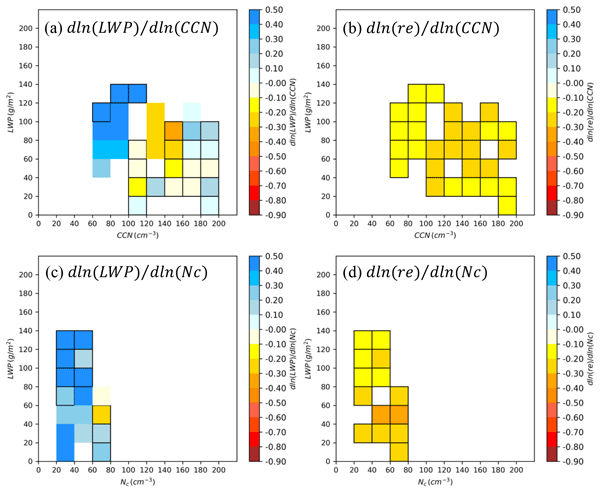
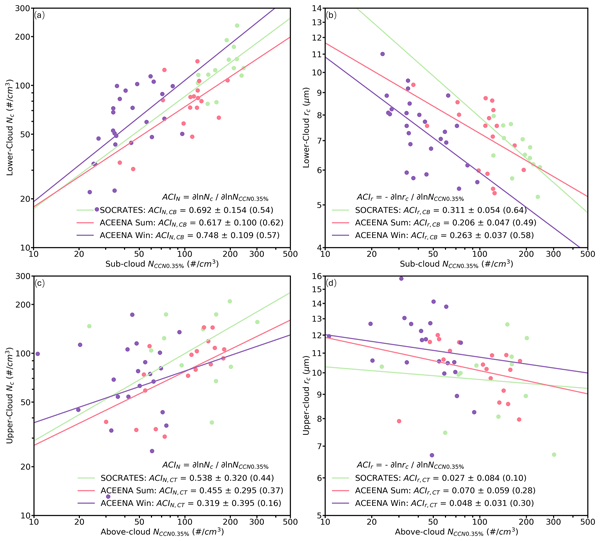
The marine boundary layer aerosol–cloud interactions (ACIs) are examined using in situ measurements from two aircraft campaigns over the eastern North Atlantic (ACE-ENA) and Southern Ocean (SOCRATES). The SOCRATES clouds have more and smaller cloud droplets. The ACE-ENA clouds exhibit stronger drizzle formation and growth. Results found distinctive aerosol–cloud interactions for two campaigns. The drizzle processes significantly alter sub-cloud aerosol budgets and impact the ACI assessments.
Elyse A. Pennington, Yuan Wang, Benjamin C. Schulze, Karl M. Seltzer, Jiani Yang, Bin Zhao, Zhe Jiang, Hongru Shi, Melissa Venecek, Daniel Chau, Benjamin N. Murphy, Christopher M. Kenseth, Ryan X. Ward, Havala O. T. Pye, and John H. Seinfeld
Atmos. Chem. Phys., 24, 2345–2363, https://doi.org/10.5194/acp-24-2345-2024, https://doi.org/10.5194/acp-24-2345-2024, 2024
Short summary
Short summary
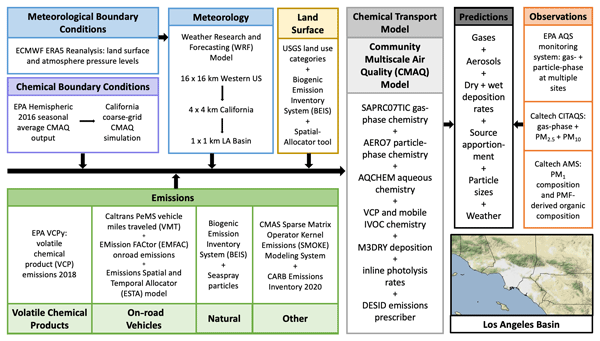
To assess the air quality in Los Angeles (LA), we improved the CMAQ model by using dynamic traffic emissions and new secondary organic aerosol schemes to represent volatile chemical products. Source apportionment demonstrates that the urban areas of the LA Basin and vicinity are NOx-saturated, with the largest sensitivity of O3 to changes in volatile organic compounds in the urban core. The improvement and remaining issues shed light on the future direction of the model development.
Da Gao, Bin Zhao, Shuxiao Wang, Yuan Wang, Brian Gaudet, Yun Zhu, Xiaochun Wang, Jiewen Shen, Shengyue Li, Yicong He, Dejia Yin, and Zhaoxin Dong
Atmos. Chem. Phys., 23, 14359–14373, https://doi.org/10.5194/acp-23-14359-2023, https://doi.org/10.5194/acp-23-14359-2023, 2023
Short summary
Short summary
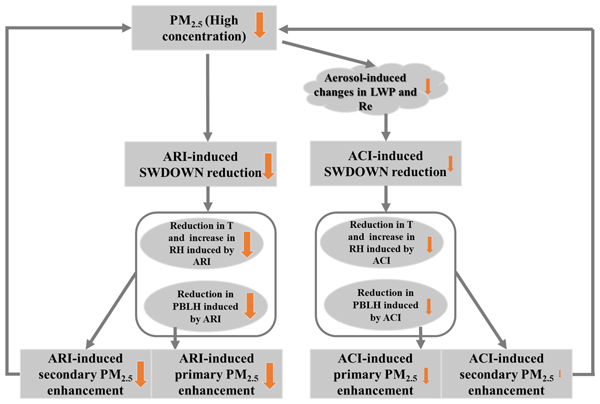
Surface PM2.5 concentrations can be enhanced by aerosol–radiation interactions (ARIs) and aerosol–cloud interactions (ACIs). In this study, we found PM2.5 enhancement induced by ACIs shows a significantly smaller decrease ratio than that induced by ARIs in China with anthropogenic emission reduction from 2013 to 2021, making ACIs more important for enhancing PM2.5 concentrations. ACI-induced PM2.5 enhancement needs to be emphatically considered to meet the national PM2.5 air quality standard.
Yun Lin, Yuan Wang, Jen-Shan Hsieh, Jonathan H. Jiang, Qiong Su, Lijun Zhao, Michael Lavallee, and Renyi Zhang
Atmos. Chem. Phys., 23, 13835–13852, https://doi.org/10.5194/acp-23-13835-2023, https://doi.org/10.5194/acp-23-13835-2023, 2023
Short summary
Short summary
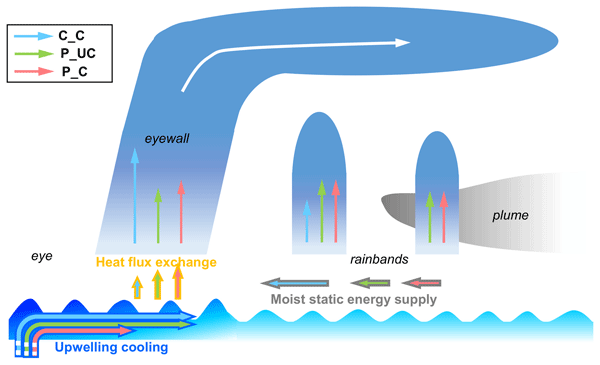
Tropical cyclones (TCs) can cause catastrophic damage to coastal regions. We used a numerical model that explicitly simulates aerosol–cloud interaction and atmosphere–ocean coupling. We show that aerosols and ocean coupling work together to make TC storms bigger but weaker. Moreover, TCs in polluted air have more rainfall and higher sea levels, leading to more severe storm surges and flooding. Our research highlights the roles of aerosols and ocean-coupling feedbacks in TC hazard assessment.
Yuan Wang, Xiaojian Zheng, Xiquan Dong, Baike Xi, and Yuk L. Yung
Atmos. Chem. Phys., 23, 8591–8605, https://doi.org/10.5194/acp-23-8591-2023, https://doi.org/10.5194/acp-23-8591-2023, 2023
Short summary
Short summary
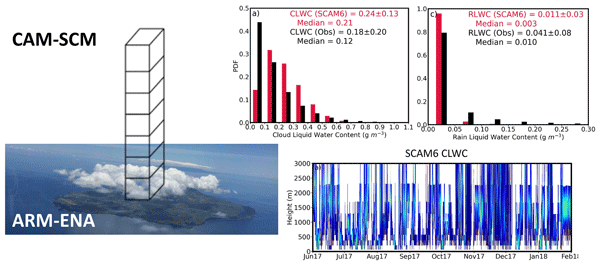
Marine boundary layer clouds remain poorly predicted in global climate models due to multiple entangled uncertainty sources. This study uses the in situ observations from a recent field campaign to constrain and evaluate cloud physics in a simplified version of a climate model. Progress and remaining issues in the cloud physics parameterizations are identified. We systematically evaluate the impacts of large-scale forcing, microphysical scheme, and aerosol concentrations on the cloud property.
Yun Lin, Yuan Wang, Bowen Pan, Jiaxi Hu, Song Guo, Misti Levy Zamora, Pengfei Tian, Qiong Su, Yuemeng Ji, Jiayun Zhao, Mario Gomez-Hernandez, Min Hu, and Renyi Zhang
Atmos. Chem. Phys., 22, 4951–4967, https://doi.org/10.5194/acp-22-4951-2022, https://doi.org/10.5194/acp-22-4951-2022, 2022
Short summary
Short summary
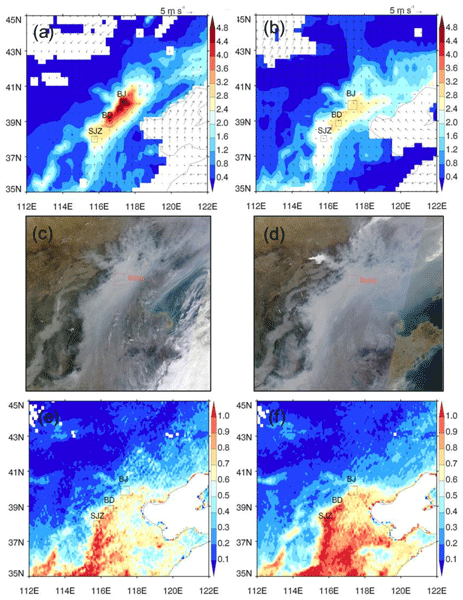
Severe regional haze events, which are characterized by exceedingly high levels of fine particulate matter (PM), occur frequently in many developing countries (such as China and India), with profound implications for human health, weather, and climate. Our work establishes a synthetic view for the dominant regional features during severe haze events, unraveling rapid in situ PM production and inefficient transport, both of which are amplified by atmospheric stagnation.
Xiaojian Zheng, Baike Xi, Xiquan Dong, Peng Wu, Timothy Logan, and Yuan Wang
Atmos. Chem. Phys., 22, 335–354, https://doi.org/10.5194/acp-22-335-2022, https://doi.org/10.5194/acp-22-335-2022, 2022
Short summary
Short summary
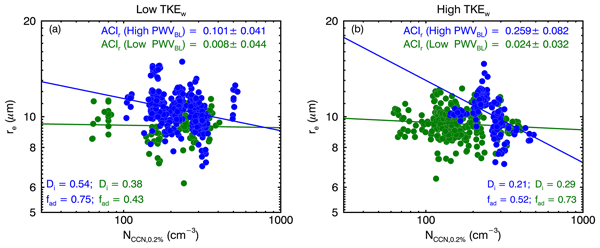
This study uses ground-based observations to investigate the physical processes in the aerosol–cloud interactions in non-precipitating marine boundary layer clouds, over the eastern North Atlantic Ocean. Results show that the cloud responses to the aerosols are diminished with limited water vapor supply, while they are enhanced with increasing water vapor availability. The clouds are found to be most sensitive to the aerosols under sufficient water vapor and strong boundary layer turbulence.
Jiarui Wu, Naifang Bei, Yuan Wang, Xia Li, Suixin Liu, Lang Liu, Ruonan Wang, Jiaoyang Yu, Tianhao Le, Min Zuo, Zhenxing Shen, Junji Cao, Xuexi Tie, and Guohui Li
Atmos. Chem. Phys., 21, 2229–2249, https://doi.org/10.5194/acp-21-2229-2021, https://doi.org/10.5194/acp-21-2229-2021, 2021
Short summary
Short summary
A source-oriented version of the WRF-Chem model is developed to conduct source identification of wintertime PM2.5 in the North China Plain. Trans-boundary transport of air pollutants generally dominates the haze pollution in Beijing and Tianjin. The air quality in Hebei, Shandong, and Shanxi is generally controlled by local emissions. Primary aerosol species, such as EC and POA, are generally controlled by local emissions, while secondary aerosol shows evident regional characteristics.
Cited articles
Ashok, A. and Barrett, S. R. H: Adjoint-based computation of U.S. nationwide ozone exposure isopleths, Atmospheric Environment, 133, 68–80, https://doi.org/10.1016/j.atmosenv.2016.03.025, 2016.
Baertsch-Ritter, N., Keller, J., Dommen, J., and Prevot, A. S. H.: Effects of various meteorological conditions and spatial emissionresolutions on the ozone concentration and ROG/NOx limitationin the Milan area (I), Atmos. Chem. Phys., 4, 423–438, https://doi.org/10.5194/acp-4-423-2004, 2004.
Bastien, L. A. J., McDonald, B. C., Brown, N. J., and Harley, R. A.: High-Resolution Mapping of Sources Contributing to Urban Air Pollution Using Adjoint Sensitivity Analysis: Benzene and Diesel Black Carbon, Environmental Science & Technology, 49, 7276–7284, https://doi.org/10.1021/acs.est.5b00686, 2015.
Bastien, L. A. J., Brown, N. J., and Harley, R. A.: Contributions to local- and regional-scale formaldehyde concentrations, Atmos. Chem. Phys., 19, 8363–8381, https://doi.org/10.5194/acp-19-8363-2019, 2019.
Biswas, J. and Rao, S. T.: Uncertainties in Episodic Ozone Modeling Stemming from Uncertainties in the Meteorological Fields, Journal of Applied Meteorology, 40, 117–136, https://doi.org/10.1175/1520-0450(2001)040<0117:UIEOMS>2.0.CO;2, 2001.
Bloomer, B. J., Stehr, J. W., Piety, C. A., Salawitch, R. J., and Dickerson, R. R.: Observed relationships of ozone air pollution with temperature and emissions, Geophysical Research Letters, 36, 2009GL037308, https://doi.org/10.1029/2009GL037308, 2009.
Byun, D. and Schere, K. L.: Review of the Governing Equations, Computational Algorithms, and Other Components of the Models-3 Community Multiscale Air Quality (CMAQ) Modeling System, Applied Mechanics Reviews, 59, 51–77, https://doi.org/10.1115/1.2128636, 2006.
Cardelino, C. A. and Chameides, W. L.: An Observation-Based Model for Analyzing Ozone Precursor Relationships in the Urban Atmosphere, Journal of the Air & Waste Management Association, 45, 161–180, https://doi.org/10.1080/10473289.1995.10467356, 1995.
Carter, W. P.: Documentation of the SAPRC-99 chemical mechanism for VOC reactivity assessment, Report to California Air Resources Board, Riverside, California, Zenodo [report], https://zenodo.org/records/12600705, 2000.
Coates, J., Mar, K. A., Ojha, N., and Butler, T. M.: The influence of temperature on ozone production under varying NOx conditions – a modelling study, Atmos. Chem. Phys., 16, 11601–11615, https://doi.org/10.5194/acp-16-11601-2016, 2016.
De Foy, B., Brune, W. H., and Schauer, J. J.: Changes in ozone photochemical regime in Fresno, California from 1994 to 2018 deduced from changes in the weekend effect, Environmental Pollution, 263, 114380, https://doi.org/10.1016/j.envpol.2020.114380, 2020.
Dodge, M.: Combined use of modeling techniques and smog chamber data to derive ozone-precursor relationships, International Conference on Photochemical Oxidant Pollution and Its Control: Proceedings, 2, 881–889, 1977.
Emmons, L. K., Walters, S., Hess, P. G., Lamarque, J.-F., Pfister, G. G., Fillmore, D., Granier, C., Guenther, A., Kinnison, D., Laepple, T., Orlando, J., Tie, X., Tyndall, G., Wiedinmyer, C., Baughcum, S. L., and Kloster, S.: Description and evaluation of the Model for Ozone and Related chemical Tracers, version 4 (MOZART-4), Geosci. Model Dev., 3, 43–67, https://doi.org/10.5194/gmd-3-43-2010, 2010.
Gao, Y., Fu, J. S., Drake, J. B., Lamarque, J.-F., and Liu, Y.: The impact of emission and climate change on ozone in the United States under representative concentration pathways (RCPs), Atmos. Chem. Phys., 13, 9607–9621, https://doi.org/10.5194/acp-13-9607-2013, 2013.
Gao, Y., Zhang, J., Yan, F., Leung, L. R., Luo, K., Zhang, Y., and Bell, M. L.: Nonlinear effect of compound extreme weather events on ozone formation over the United States, Weather and Climate Extremes, 30, 100285, https://doi.org/10.1016/j.wace.2020.100285, 2020.
Grell, G. A., Dudhia, J., and Stauffer, D. R.: A description of the fifth-generation Penn State/NCAR Mesoscale Model (MM5), National Center for Atmospheric Research, Boulder, Colorado, https://opensky.ucar.edu/system/files/2024-08/technotes_170.pdf (last access: 29 April 2025), 1994.
Guo, J., Zhang, X., Gao, Y., Wang, Z., Zhang, M., Xue, W., Herrmann, H., Brasseur, G. P., Wang, T., and Wang, Z.: Evolution of Ozone Pollution in China: What Track Will It Follow? Environmental Science & Technology, 57, 109–117, https://doi.org/10.1021/acs.est.2c08205, 2023.
Hakami, A., Henze, D. K., Seinfeld, J. H., Singh, K., Sandu, A., Kim, S., Byun, and Li, Q.: The Adjoint of CMAQ, Environmental Science & Technology, 41, 7807–7817, https://doi.org/10.1021/es070944p, 2007.
Horton, D. E., Skinner, C. B., Singh, D., and Diffenbaugh, N. S.: Occurrence and persistence of future atmospheric stagnation events, Nature Climate Change, 4, 698–703, https://doi.org/10.1038/nclimate2272, 2014.
Hou, P. and Wu, S.: Long-term Changes in Extreme Air Pollution Meteorology and the Implications for Air Quality, Scientific Reports, 6, 23792, https://doi.org/10.1038/srep23792, 2016.
Hu, W., Zhao, Y., Lu, N., Wang, X., Zheng, B., Henze, D. K., Zhang, L., Fu, T.-M., and Zhai, S.: Changing Responses of PM2.5 and Ozone to Source Emissions in the Yangtze River Delta Using the Adjoint Model, Environmental Science & Technology, 58, 628–638, https://doi.org/10.1021/acs.est.3c05049, 2024.
Huang, M., Feng, Z., and Liao, T.: Shift of surface O3-NOx-VOC sensitivity with temperature in the Guangdong-Hong Kong-Macao Greater Bay Area, South China, Environmental Pollution, 372, 125974, https://doi.org/10.1016/j.envpol.2025.125974, 2025.
Jerrett, M., Burnett, R. T., Pope, C. A., Ito, K., Thurston, G., Krewski, D., Shi, Y., Calle, E., and Thun, M.: Long-Term Ozone Exposure and Mortality, New England Journal of Medicine, 360, 1085–1095, https://doi.org/10.1056/NEJMoa0803894, 2009.
Jin, L., Tonse, S., Cohan, D. S., Mao, X., Harley, R. A., and Brown, N. J.: Sensitivity Analysis of Ozone Formation and Transport for a Central California Air Pollution Episode, Environmental Science & Technology, 42, 3683–3689, https://doi.org/10.1021/es072069d, 2008.
Jin, L., Brown, N. J., Harley, R. A., Bao, J., Michelson, S. A., and Wilczak, J. M.: Seasonal versus episodic performance evaluation for an Eulerian photochemical air quality model, Journal of Geophysical Research: Atmospheres, 115, 2009JD012680, https://doi.org/10.1029/2009JD012680, 2010.
Jin, L., Harley, R. A., and Brown, N. J.: Ozone pollution regimes modeled for a summer season in California's San Joaquin Valley: A cluster analysis, Atmospheric Environment, 45, 4707–4718, https://doi.org/10.1016/j.atmosenv.2011.04.064, 2011.
Jin, L., Loisy, A., and Brown, N. J.: Role of meteorological processes in ozone responses to emission controls in California's San Joaquin Valley, Journal of Geophysical Research: Atmospheres, 118, 8010–8022, https://doi.org/10.1002/jgrd.50559, 2013.
Jin, X., Fiore, A. M., Murray, L. T., Valin, L. C., Lamsal, L. N., Duncan, B., Folkert Boersma, K., De Smedt, I., Abad, G. G., Chance, K., and Tonnesen, G. S.: Evaluating a Space-Based Indicator of Surface Ozone-NOx-VOC Sensitivity Over Midlatitude Source Regions and Application to Decadal Trends, Journal of Geophysical Research: Atmospheres, 122, https://doi.org/10.1002/2017JD026720, 2017.
Jin, X., Fiore, A., Boersma, K. F., Smedt, I. D., and Valin, L.: Inferring Changes in Summertime Surface Ozone–NOx–VOC Chemistry over U.S. Urban Areas from Two Decades of Satellite and Ground-Based Observations, Environmental Science & Technology, 54, 6518–6529, https://doi.org/10.1021/acs.est.9b07785, 2020.
Kaduwela, A.: The Central California Ozone Study PIER Final Project Report, California Energy Commission, https://searchworks.stanford.edu/view/7164051 (last access: 25 July 2025), 2007.
Kleinman, L. I.: The dependence of tropospheric ozone production rate on ozone precursors, Atmospheric Environment, 39, 575–586, https://doi.org/10.1016/j.atmosenv.2004.08.047, 2005.
Krupa, S., McGrath, M. T., Andersen, C. P., Booker, F. L., Burkey, K. O., Chappelka, A. H., Chevone, B. I., Pell, E. J., and Zilinskas, B. A.: Ambient Ozone and Plant Health, Plant Disease, 85, 4–12, https://doi.org/10.1094/PDIS.2001.85.1.4, 2001.
Liu, S. C., Trainer, M., Fehsenfeld, F. C., Parrish, D. D., Williams, E. J., Fahey, D. W., Hübler, G., and Murphy, P. C.: Ozone production in the rural troposphere and the implications for regional and global ozone distributions, Journal of Geophysical Research: Atmospheres, 92, 4191–4207, https://doi.org/10.1029/JD092iD04p04191, 1987.
Marr, L. C. and Harley, R. A.: Spectral analysis of weekday–weekend differences in ambient ozone, nitrogen oxide, and non-methane hydrocarbon time series in California, Atmospheric Environment, 36, 2327–2335, https://doi.org/10.1016/S1352-2310(02)00188-7, 2002.
Meehl, G. A. and Tebaldi, C.: More Intense, More Frequent, and Longer Lasting Heat Waves in the 21st Century, Science, 305, 994–997, https://doi.org/10.1126/science.1098704, 2004.
Milford, J. B., Gao, D., Sillman, S., Blossey, P., and Russell, A. G.: Total reactive nitrogen (NOy) as an indicator of the sensitivity of ozone to reductions in hydrocarbon and NOx emissions, Journal of Geophysical Research: Atmospheres, 99, 3533–3542, https://doi.org/10.1029/93JD03224, 1994.
Nussbaumer, C. M. and Cohen, R. C.: The Role of Temperature and NOx in Ozone Trends in the Los Angeles Basin, Environmental Science & Technology, 54, 15652–15659, https://doi.org/10.1021/acs.est.0c04910, 2020.
Pappin, A. J. and Hakami, A.: Attainment vs Exposure: Ozone Metric Responses to Source-Specific NOx Controls Using Adjoint Sensitivity Analysis, Environmental Science & Technology, 47, 13519–13527, https://doi.org/10.1021/es4024145, 2013.
Park, S.-Y., Park, C., Yoo, J.-W., Lee, S.-H., and Lee, H. W.: Adjoint sensitivity of inland ozone to its precursors and meteorological and chemical influences, Atmospheric Environment, 192, 104–115, https://doi.org/10.1016/j.atmosenv.2018.08.006, 2018.
Pfannerstill, E. Y., Arata, C., Zhu, Q., Schulze, B. C., Ward, R., Woods, R., Harkins, C., Schwantes, R. H., Seinfeld, J. H., Bucholtz, A., Cohen, R. C., and Goldstein, A. H.: Temperature-dependent emissions dominate aerosol and ozone formation in Los Angeles, Science, 384, 1324–1329, https://doi.org/10.1126/science.adg8204, 2024.
Pusede, S. E. and Cohen, R. C.: On the observed response of ozone to NOx and VOC reactivity reductions in San Joaquin Valley California 1995–present, Atmos. Chem. Phys., 12, 8323–8339, https://doi.org/10.5194/acp-12-8323-2012, 2012.
Pusede, S. E., Gentner, D. R., Wooldridge, P. J., Browne, E. C., Rollins, A. W., Min, K.-E., Russell, A. R., Thomas, J., Zhang, L., Brune, W. H., Henry, S. B., DiGangi, J. P., Keutsch, F. N., Harrold, S. A., Thornton, J. A., Beaver, M. R., St. Clair, J. M., Wennberg, P. O., Sanders, J., Ren, X., VandenBoer, T. C., Markovic, M. Z., Guha, A., Weber, R., Goldstein, A. H., and Cohen, R. C.: On the temperature dependence of organic reactivity, nitrogen oxides, ozone production, and the impact of emission controls in San Joaquin Valley, California, Atmos. Chem. Phys., 14, 3373–3395, https://doi.org/10.5194/acp-14-3373-2014, 2014.
Pusede, S. E., Steiner, A. L., and Cohen, R. C.: Temperature and Recent Trends in the Chemistry of Continental Surface Ozone, Chemical Reviews, 115, 3898–3918, https://doi.org/10.1021/cr5006815, 2015.
Sandu, A., Daescu, D. N., Carmichael, G. R., and Chai, T.: Adjoint sensitivity analysis of regional air quality models, Journal of Computational Physics, 204, 222–252, 2005.
San Joaquin Valley Air Pollution Control District: 2024 Annual Report to the Community, https://www.valleyair.org/media/5h3bg1n4/annualreport2024-english.pdf (last access: 1 July 2025), 2025.
Schnell, J. L. and Prather, M. J.: Co-occurrence of extremes in surface ozone, particulate matter, and temperature over eastern North America, Proceedings of the National Academy of Sciences, 114, 2854–2859, https://doi.org/10.1073/pnas.1614453114, 2017.
Scott, K. I. and Benjamin, M. T.: Development of a biogenic volatile organic compounds emission inventory for the SCOS97-NARSTO domain, Atmospheric Environment, 37, 39–49, https://doi.org/10.1016/S1352-2310(03)00381-9, 2003.
Shen, L., Mickley, L. J., and Gilleland, E.: Impact of increasing heat waves on U.S. ozone episodes in the 2050s: Results from a multimodel analysis using extreme value theory, Geophysical Research Letters, 43, 4017–4025, https://doi.org/10.1002/2016GL068432, 2016.
Steiner, A. L., Davis, A. J., Sillman, S., Owen, R. C., Michalak, A. M., and Fiore, A. M.: Observed suppression of ozone formation at extremely high temperatures due to chemical and biophysical feedbacks, Proceedings of the National Academy of Sciences, 107, 19685–19690, https://doi.org/10.1073/pnas.1008336107, 2010.
Wang, J. and Angell, J.: Air Stagnation Climatology for the United States (1948–1998), NOAA/Air Resource Laboratory ATLAS, Silver Spring, Maryland, https://www.arl.noaa.gov/documents/reports/atlas.pdf (last access: 25 April 2025), 1999.
Wang, Y.: yhanw0719/paper_met_o3_adj: Wang et al. ACP release (ACP), Zenodo [code], https://doi.org/10.5281/zenodo.17793975, 2025.
Wang, Y., Bastien, L., Jin, L., and Harley, R. A.: Responses of Photochemical Air Pollution in California's San Joaquin Valley to Spatially and Temporally Resolved Changes in Precursor Emissions, Environmental Science & Technology, 56, 7074–7082, https://doi.org/10.1021/acs.est.1c07011, 2022.
Wang, Y., Bastien, L., Jin, L., and Harley, R. A.: Location-Specific Control of Precursor Emissions to Mitigate Photochemical Air Pollution, Environmental Science & Technology, 57, 9693–9701, https://doi.org/10.1021/acs.est.3c01934, 2023.
Wu, W., Fu, T.-M., Arnold, S. R., Spracklen, D. V., Zhang, A., Tao, W., Wang, X., Hou, Y., Mo, J., Chen, J., Li, Y., Feng, X., Lin, H., Huang, Z., Zheng, J., Shen, H., Zhu, L., Wang, C., Ye, J., and Yang, X.: Temperature-Dependent Evaporative Anthropogenic VOC Emissions Significantly Exacerbate Regional Ozone Pollution, Environmental Science & Technology, 58, 5430–5441, https://doi.org/10.1021/acs.est.3c09122, 2024.
Yang, L., Yuan, Z., Luo, H., Wang, Y., Xu, Y., Duan, Y., and Fu, Q.: Identification of long-term evolution of ozone sensitivity to precursors based on two-dimensional mutual verification, Science of The Total Environment, 760, 143401, https://doi.org/10.1016/j.scitotenv.2020.143401, 2021.
Zhang, J., Gao, Y., Luo, K., Leung, L. R., Zhang, Y., Wang, K., and Fan, J.: Impacts of compound extreme weather events on ozone in the present and future, Atmos. Chem. Phys., 18, 9861–9877, https://doi.org/10.5194/acp-18-9861-2018, 2018.
Zhao, S., Pappin, A. J., Morteza Mesbah, S., Joyce Zhang, J. Y., MacDonald, N. L., and Hakami, A.: Adjoint estimation of ozone climate penalties, Geophysical Research Letters, 40, 5559–5563, https://doi.org/10.1002/2013GL057623, 2013.
Short summary
Climate change is making heatwaves and stagnant weather more frequent, which can worsen air pollution. We studied how these extreme conditions affect the sources of summer ozone in California's Central Valley. Using a state-of-the-art modeling tool, we found that weather changes can greatly shift which, where, and when to reduce emissions for the largest air quality benefits. Our results highlight the need to account for extreme weather in designing effective air quality strategies.
Climate change is making heatwaves and stagnant weather more frequent, which can worsen air...
Altmetrics
Final-revised paper
Preprint