
Articles | Volume 25, issue 23
https://doi.org/10.5194/acp-25-17331-2025
© Author(s) 2025. This work is distributed under
the Creative Commons Attribution 4.0 License.
the Creative Commons Attribution 4.0 License.
https://doi.org/10.5194/acp-25-17331-2025
© Author(s) 2025. This work is distributed under
the Creative Commons Attribution 4.0 License.
the Creative Commons Attribution 4.0 License.
Research article
| Highlight paper
| 
02 Dec 2025
Research article | Highlight paper |
| 02 Dec 2025
| 02 Dec 2025
Evidence for the role of thermal and cloud merging in mesoscale convective organization

LMD/IPSL, CNRS, Sorbonne University, Paris, France
Basile Poujol
LMD/IPSL, CNRS, Sorbonne University, Paris, France
now at: Lycée Baimbridge, Les Abymes, Guadeloupe, France
Brett McKim
LMD/IPSL, CNRS, Sorbonne University, Paris, France
Nicolas Rochetin
LMD/IPSL, Ecole Normale Supérieure, Paris, France
Marie Lothon
LAERO, Université de Toulouse, CNRS, UT3, IRD, Toulouse, France
Julia Windmiller
Max Planck Institute for Meteorology, Hamburg, Germany
Nicolas Maury
LMD/IPSL, CNRS, Sorbonne University, Paris, France
LAERO, Université de Toulouse, CNRS, UT3, IRD, Toulouse, France
Clarisse Dufaux
LMD/IPSL, CNRS, Sorbonne University, Paris, France
Louis Jaffeux
LAERO, Université de Toulouse, CNRS, UT3, IRD, Toulouse, France
Patrick Chazette
LSCE/IPSL, CEA, Saclay, France
Julien Delanoë
LATMOS/IPSL, UVSQ Université Paris-Saclay, Sorbonne Université, CNRS, Guyancourt, France
Related authors
Giovanni Biagioli, Alexis Aubel, Riwal Plougonven, and Sandrine Bony
EGUsphere, https://doi.org/10.5194/egusphere-2026-4254, https://doi.org/10.5194/egusphere-2026-4254, 2026
This preprint is open for discussion and under review for Atmospheric Chemistry and Physics (ACP).
Short summary
Short summary
Atmospheric waves produce many effects, such as regularly spaced clouds. One such event was sampled by a research aircraft in a recent campaign, as part of a larger wave collection spanning 500 km. The wave left a clear imprint on wind and temperature measurements. We characterize the waves and explain their surprising extent and persistence: the environment created a waveguide from 5–10 km altitude. We then build an easy-to-calculate metric aggregating factors conducive to waveguide emergence.
Helene Marie Gloeckner, Theresa Mieslinger, Nina Robbins-Blanch, Geet George, Lukas Kluft, Tobias Kölling, Sandrine Bony, Julia Miriam Windmiller, and Bjorn Stevens
Earth Syst. Sci. Data, 18, 4425–4450, https://doi.org/10.5194/essd-18-4425-2026, https://doi.org/10.5194/essd-18-4425-2026, 2026
Short summary
Short summary
As part of the ORCESTRA (Organized Convection and EarthCARE Studies over the Tropical Atlantic) measurement field campaign in August and September 2024, 1191 dropsondes were deployed over the tropical Atlantic. They measure temperature, humidity, and horizontal winds throughout the atmosphere. Here, we present the resulting datasets, which contain different levels of quality controls as well as derived vertical winds. The data will help to understand processes within the tropical rain belt in the Atlantic.
Marius Winkler, Marius Rixen, Florent Beucher, Fleur Couvreux, Chaehyeon C. Nam, Philippe Peyrillé, Hauke Schmidt, Hans Segura, Karl-Hermann Wieners, Ezri Alkilani-Brown, Abdou Aziz Coly, Giovanni Biagioli, Michael M. Bell, Ester Brito, Emma Chauvin, Julie Capo, Delián Colón-Burgos, Akeem Dawes, Jose Carlos da Luz, Zekican Demiralay, Vincent Douet, Vincent Ducastin, Clarisse Dufaux, Jean-Louis Dufresne, Florence Favot, Thomas Fiolleau, Emilie Fons, Geet George, Helene M. Gloeckner, Suelly Gonçalves, Laurent Gouttesoulard, Lennéa Hayo, Wei-Ting Hsiao, Sarah Kennison, Michael Kopelman, Tsung-Yung Lee, Enora Le Gall, Mateo Lovato, Emily Luschen, Nicolas Maury, Brett McKim, Louis Netz, Diouf Ousseynou, Karsten Peters-von Gehlen, Chavez Pope, Basile Poujol, Niwde Rivera Maldonado, Nina Robbins-Blanch, Nicolas Rochetin, Daniel Rowe, Paula Romero Jure, James H. Ruppert Jr., Jairo Segura Bermudez, Jarrett C. Starr, Martin Stelzner, Connor Stoll, Macintyre Syrett, Abraham Tekoe, Jeremie Trules, Colin Welty, Daniel Klocke, Raphaela Vogel, Sandrine Bony, Allison A. Wing, and Bjorn Stevens
Earth Syst. Sci. Data, 18, 1833–1854, https://doi.org/10.5194/essd-18-1833-2026, https://doi.org/10.5194/essd-18-1833-2026, 2026
Short summary
Short summary
The RAPSODI dataset compiles 624 radiosonde profiles collected during the 2024 ORCESTRA campaign across the tropical Atlantic: from Cape Verde (INMG), the R/V Meteor, and the Barbados Cloud Observatory. It provides high-resolution temperature, humidity, wind, and pressure data to study convection, tropical waves, and ITCZ dynamics. Data are quality-controlled and openly available in Zarr format via IPFS.
Louis Jaffeux, Marie Lothon, Fleur Couvreux, Dominique Bouniol, Grégoire Cayez, Lilian Joly, Jérémie Burgalat, Cyrille De Saint Leger, Hubert Bellec, Olivier Henry, Dyaa Chbib, Tetyana Jiang, and Sandrine Bony
Earth Syst. Sci. Data Discuss., https://doi.org/10.5194/essd-2025-586, https://doi.org/10.5194/essd-2025-586, 2025
Revised manuscript accepted for ESSD
Short summary
Short summary
A new dataset from the MAESTRO airborne campaign over the tropical Atlantic near Cabo Verde offers detailed turbulence measurements of temperature, moisture, and wind. The data was processed exploiting exceptional instrumental redundancy to provide best quality turbulence statistics and ensure their reliability. This resource can benefit weather and climate models by providing a clearer picture of how turbulence below clouds influences their formation and organization.
Leonie Villiger, Marina Dütsch, Sandrine Bony, Marie Lothon, Stephan Pfahl, Heini Wernli, Pierre-Etienne Brilouet, Patrick Chazette, Pierre Coutris, Julien Delanoë, Cyrille Flamant, Alfons Schwarzenboeck, Martin Werner, and Franziska Aemisegger
Atmos. Chem. Phys., 23, 14643–14672, https://doi.org/10.5194/acp-23-14643-2023, https://doi.org/10.5194/acp-23-14643-2023, 2023
Short summary
Short summary
This study evaluates three numerical simulations performed with an isotope-enabled weather forecast model and investigates the coupling between shallow trade-wind cumulus clouds and atmospheric circulations on different scales. We show that the simulations reproduce key characteristics of shallow trade-wind clouds as observed during the field experiment EUREC4A and that the spatial distribution of stable-water-vapour isotopes is shaped by the overturning circulation associated with these clouds.
Zhiqiang Cui, Alan Blyth, Ralph Burton, Sandrine Bony, Steven Böing, Alan Gadian, and Leif Denby
EGUsphere, https://doi.org/10.5194/egusphere-2023-1999, https://doi.org/10.5194/egusphere-2023-1999, 2023
Preprint archived
Short summary
Short summary
Cumulus clouds near Barbados can influence how much heat and energy reaches the Earth's surface. A cluster of clouds resembling a flower is presented. Satellite images, dropsonde data, and weather data are used to understand how this cloud system developed. A significant feature was the appearance of a large area of rain at the centre of the cloud system during its later stages. The paper also studied the environmental conditions around the cloud system.
Adriana Bailey, Franziska Aemisegger, Leonie Villiger, Sebastian A. Los, Gilles Reverdin, Estefanía Quiñones Meléndez, Claudia Acquistapace, Dariusz B. Baranowski, Tobias Böck, Sandrine Bony, Tobias Bordsdorff, Derek Coffman, Simon P. de Szoeke, Christopher J. Diekmann, Marina Dütsch, Benjamin Ertl, Joseph Galewsky, Dean Henze, Przemyslaw Makuch, David Noone, Patricia K. Quinn, Michael Rösch, Andreas Schneider, Matthias Schneider, Sabrina Speich, Bjorn Stevens, and Elizabeth J. Thompson
Earth Syst. Sci. Data, 15, 465–495, https://doi.org/10.5194/essd-15-465-2023, https://doi.org/10.5194/essd-15-465-2023, 2023
Short summary
Short summary
One of the novel ways EUREC4A set out to investigate trade wind clouds and their coupling to the large-scale circulation was through an extensive network of isotopic measurements in water vapor, precipitation, and seawater. Samples were taken from the island of Barbados, from aboard two aircraft, and from aboard four ships. This paper describes the full collection of EUREC4A isotopic in situ data and guides readers to complementary remotely sensed water vapor isotope ratios.
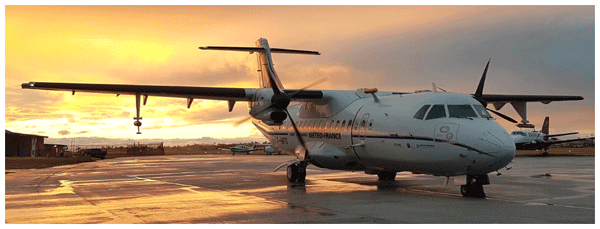
Sandrine Bony, Marie Lothon, Julien Delanoë, Pierre Coutris, Jean-Claude Etienne, Franziska Aemisegger, Anna Lea Albright, Thierry André, Hubert Bellec, Alexandre Baron, Jean-François Bourdinot, Pierre-Etienne Brilouet, Aurélien Bourdon, Jean-Christophe Canonici, Christophe Caudoux, Patrick Chazette, Michel Cluzeau, Céline Cornet, Jean-Philippe Desbios, Dominique Duchanoy, Cyrille Flamant, Benjamin Fildier, Christophe Gourbeyre, Laurent Guiraud, Tetyana Jiang, Claude Lainard, Christophe Le Gac, Christian Lendroit, Julien Lernould, Thierry Perrin, Frédéric Pouvesle, Pascal Richard, Nicolas Rochetin, Kevin Salaün, Alfons Schwarzenboeck, Guillaume Seurat, Bjorn Stevens, Julien Totems, Ludovic Touzé-Peiffer, Gilles Vergez, Jessica Vial, Leonie Villiger, and Raphaela Vogel
Earth Syst. Sci. Data, 14, 2021–2064, https://doi.org/10.5194/essd-14-2021-2022, https://doi.org/10.5194/essd-14-2021-2022, 2022
Short summary
Short summary
The French ATR42 research aircraft participated in the EUREC4A international field campaign that took place in 2020 over the tropical Atlantic, east of Barbados. We present the extensive instrumentation of the aircraft, the research flights and the different measurements. We show that the ATR measurements of humidity, wind, aerosols and cloudiness in the lower atmosphere are robust and consistent with each other. They will make it possible to advance understanding of cloud–climate interactions.
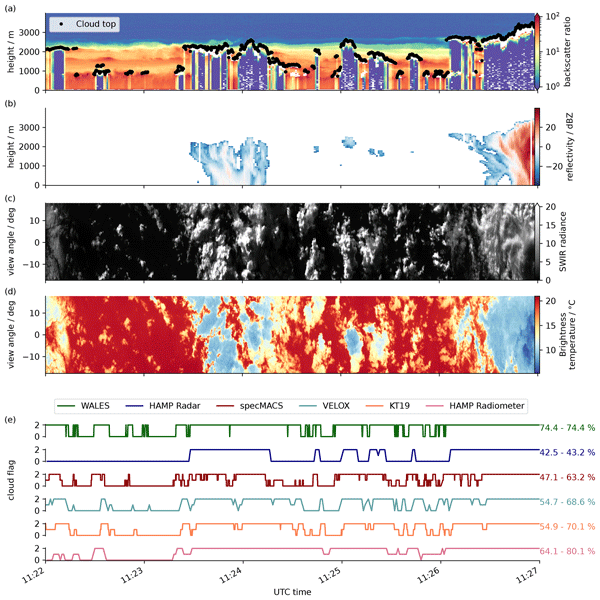
Heike Konow, Florian Ewald, Geet George, Marek Jacob, Marcus Klingebiel, Tobias Kölling, Anna E. Luebke, Theresa Mieslinger, Veronika Pörtge, Jule Radtke, Michael Schäfer, Hauke Schulz, Raphaela Vogel, Martin Wirth, Sandrine Bony, Susanne Crewell, André Ehrlich, Linda Forster, Andreas Giez, Felix Gödde, Silke Groß, Manuel Gutleben, Martin Hagen, Lutz Hirsch, Friedhelm Jansen, Theresa Lang, Bernhard Mayer, Mario Mech, Marc Prange, Sabrina Schnitt, Jessica Vial, Andreas Walbröl, Manfred Wendisch, Kevin Wolf, Tobias Zinner, Martin Zöger, Felix Ament, and Bjorn Stevens
Earth Syst. Sci. Data, 13, 5545–5563, https://doi.org/10.5194/essd-13-5545-2021, https://doi.org/10.5194/essd-13-5545-2021, 2021
Short summary
Short summary
The German research aircraft HALO took part in the research campaign EUREC4A in January and February 2020. The focus area was the tropical Atlantic east of the island of Barbados. We describe the characteristics of the 15 research flights, provide auxiliary information, derive combined cloud mask products from all instruments that observe clouds on board the aircraft, and provide code examples that help new users of the data to get started.
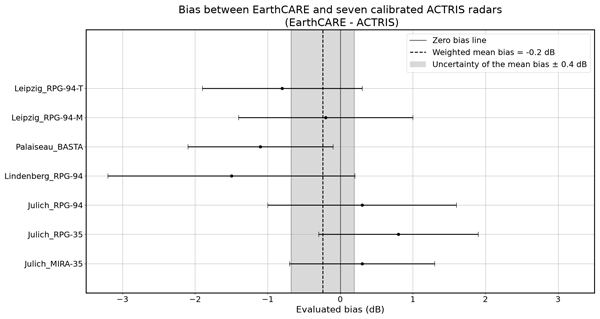
Nathan Feuillard, Felipe Toledo Bittner, Lukas Pfitzenmaier, Jean-François Ribaud, Julien Delanoë, Martial Haeffelin, and Jean-Charles Dupont
Atmos. Meas. Tech., 19, 6075–6097, https://doi.org/10.5194/amt-19-6075-2026, https://doi.org/10.5194/amt-19-6075-2026, 2026
Short summary
Short summary
The Earth Cloud, Aerosol, and Radiation Explorer (EarthCARE) satellite was recently launched and its data needs to be validated. This work focus on the comparison of the data observed from the radar of EarthCARE and from the ground radars of the European Aerosol, Clouds and Trace Gases Research Infrastructure network. We find a very small difference between the data observed by the satellite and the data from the ground, confirming the high quality of the satellite’s radar calibration.
Giovanni Biagioli, Alexis Aubel, Riwal Plougonven, and Sandrine Bony
EGUsphere, https://doi.org/10.5194/egusphere-2026-4254, https://doi.org/10.5194/egusphere-2026-4254, 2026
This preprint is open for discussion and under review for Atmospheric Chemistry and Physics (ACP).
Short summary
Short summary
Atmospheric waves produce many effects, such as regularly spaced clouds. One such event was sampled by a research aircraft in a recent campaign, as part of a larger wave collection spanning 500 km. The wave left a clear imprint on wind and temperature measurements. We characterize the waves and explain their surprising extent and persistence: the environment created a waveguide from 5–10 km altitude. We then build an easy-to-calculate metric aggregating factors conducive to waveguide emergence.
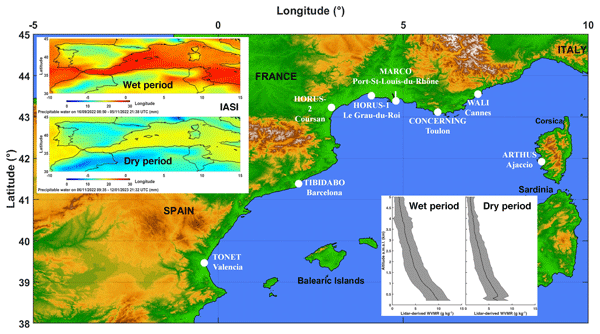
Patrick Chazette, Andreas Behrendt, Adolfo Comerón, Paolo Di Girolamo, Marco Di Paolantonio, Davide Dionisi, Cyrille Flamant, José Luis Gómez-Amo, Jérémy Lagarrigue, Frédéric Laly, Diego Lange, Constantino Muñoz-Porcar, Alejandro Rodríguez-Gómez, Michaël Sicard, Donato Summa, Julien Totems, María Pilar Utrillas, Pedro C. Valdelomar, and Volker Wulfmeyer
Atmos. Meas. Tech., 19, 5223–5242, https://doi.org/10.5194/amt-19-5223-2026, https://doi.org/10.5194/amt-19-5223-2026, 2026
Short summary
Short summary
Between October 2022 and January 2023, the Water Vapour Lidar Network Assimilation (WaLiNeAs) campaign was conducted on the western Mediterranean by four European countries. To improve the forecasting of heavy precipitation events, eight ground-based stations equipped with water vapour Raman lidars were strategically deployed. They offered a valuable chance to verify the consistency of the water vapour products of both the Infrared Atmospheric Sounding Interferometer (IASI) and ERA5 reanalysis.
Nicolas Chiabrando, Gwendal Rivière, Étienne Vignon, and Julien Delanoë
EGUsphere, https://doi.org/10.5194/egusphere-2026-3987, https://doi.org/10.5194/egusphere-2026-3987, 2026
This preprint is open for discussion and under review for Weather and Climate Dynamics (WCD).
Short summary
Short summary
Arctic cyclones are large-scale depressions evolving within the Arctic circle. We study a summertime Arctic cyclone that moved near Svalbard in 2022 and was well observed during the THINICE field campaign to understand what controls the intensity of a near-surface wind jet associated with the cyclone. We find that clouds and near-surface frictional effects globally strengthened the wind while the cyclone was growing, but became much less important after it evolved toward a cold-core structure.
Heather Corden, Julien Delanoë, Massimo Del Guasta, and Alexis Berne
EGUsphere, https://doi.org/10.5194/egusphere-2026-3964, https://doi.org/10.5194/egusphere-2026-3964, 2026
Short summary
Short summary
In Antarctica, intrusions of warm, moist air from the coast to the high plateau are responsible for a significant proportion of the snow accumulating on the ice sheet each year. We present a case study of an intrusion in East Antarctica in February 2025. Meteorological radars along a 1100-km transect were used to investigate the processes leading to precipitation in the intrusion. The processes vary according to the changing temperature, humidity and wind dynamics between the coast and plateau.
Dominique Gantois, Alexandre Baron, Michaël Sicard, Valentin Duflot, Niels Groenen, Nelson Bègue, Sabine Eckhardt, Nikolaos Evangeliou, Martine De Mazière, Corinne Vigouroux, Guillaume Payen, Nicolas Marquestaut, Jean-Marc Metzger, Patrick Chazette, and Cyrille Flamant
EGUsphere, https://doi.org/10.5194/egusphere-2026-3070, https://doi.org/10.5194/egusphere-2026-3070, 2026
Short summary
Short summary
Smoke from Southern African and South American wildfires can travel for thousands of kilometers before reaching the Indian Ocean and Reunion Island. In this study, we use instruments measuring from the ground, from satellites, as well as atmospheric models, to track these smoke plumes and identify their origins and properties. Our findings should help future research focusing on the impact of these plumes on the atmospheric temperature.
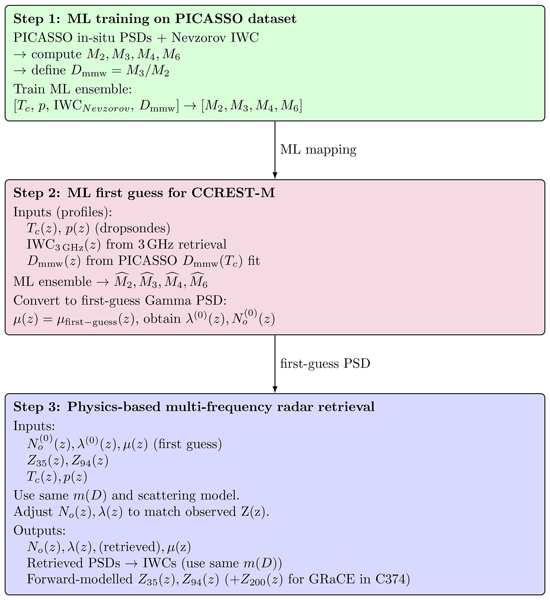
Anthony J. Baran, Stuart Fox, Richard Cotton, Julien Delanoë, Christopher J. Walden, Karina McCusker, Christopher D. Westbrook, and Peter G. Huggard
Atmos. Meas. Tech., 19, 4367–4392, https://doi.org/10.5194/amt-19-4367-2026, https://doi.org/10.5194/amt-19-4367-2026, 2026
Short summary
Short summary
We demonstrate how multi-frequency ground-based radars at 3, 35 and 94 GHz can be used to determine vertical profiles of ice-particle size spectra by combining reflectivity with machine-learning prior information on UK wintertime ice clouds. The method is validated using independent profiles from a 200 GHz radar and aircraft-based in-situ observations. It gives a consistent representation to compare with aircraft-based radiometric measurements in future radiative-transfer closure studies.
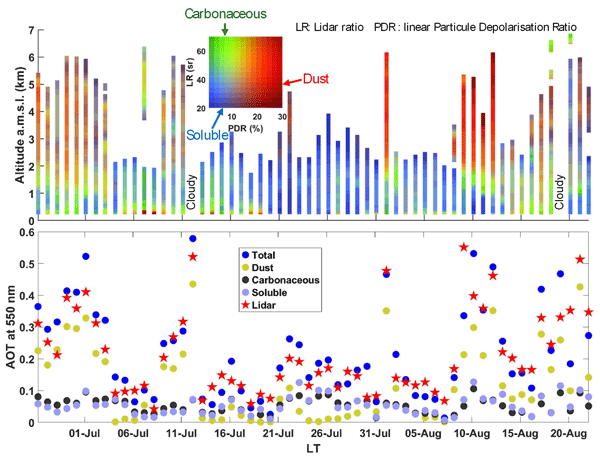
Patrick Chazette
Atmos. Meas. Tech., 19, 4293–4311, https://doi.org/10.5194/amt-19-4293-2026, https://doi.org/10.5194/amt-19-4293-2026, 2026
Short summary
Short summary
A novel aerosol classification methodology based on Raman lidar observations is presented and applied to measurements acquired during the FENNEC field campaign. The temporal evolution of aerosol classes and optical properties is then used to perform a quantitative evaluation of numerical simulations from the Copernicus Atmosphere Monitoring Service (CAMS) global reanalysis (EAC4).
Helene Marie Gloeckner, Theresa Mieslinger, Nina Robbins-Blanch, Geet George, Lukas Kluft, Tobias Kölling, Sandrine Bony, Julia Miriam Windmiller, and Bjorn Stevens
Earth Syst. Sci. Data, 18, 4425–4450, https://doi.org/10.5194/essd-18-4425-2026, https://doi.org/10.5194/essd-18-4425-2026, 2026
Short summary
Short summary
As part of the ORCESTRA (Organized Convection and EarthCARE Studies over the Tropical Atlantic) measurement field campaign in August and September 2024, 1191 dropsondes were deployed over the tropical Atlantic. They measure temperature, humidity, and horizontal winds throughout the atmosphere. Here, we present the resulting datasets, which contain different levels of quality controls as well as derived vertical winds. The data will help to understand processes within the tropical rain belt in the Atlantic.
Aymeric Dziduch, Antoine Baudoux, Guillaume Mioche, Antoine Canzi, Benjamin Doiteau, Manuel Moser, Emma Järvinen, Étienne Vignon, Jean-Christophe Raut, Régis Dupuy, Christophe Gourbeyre, Jean-Luc Baray, Marie Monier, Frédéric Szczap, Guillaume Penide, Julien Delanoë, Odran Sourdeval, Alfons Schwarzenboeck, Stephan Mertes, Franz Martin Schnaiter, Christiane Voigt, Mario Mech, Susanne Crewell, Andreas Herber, Christof Lüpkes, André Ehrlich, Manfred Wendisch, and Olivier Jourdan
EGUsphere, https://doi.org/10.5194/egusphere-2026-3265, https://doi.org/10.5194/egusphere-2026-3265, 2026
This preprint is open for discussion and under review for Atmospheric Chemistry and Physics (ACP).
Short summary
Short summary
This study examines the microphysical properties and ice crystal habits of low-level Arctic mixed-phase clouds around Svalbard. Using airborne in situ observations from four campaigns, we show that cloud microphysical structure and ice crystal habits are influenced by weather conditions and surface type. These results provide quantitative observations to better understand low-level Arctic clouds, their ice formation processes, and their influence on the Arctic atmosphere and climate system.
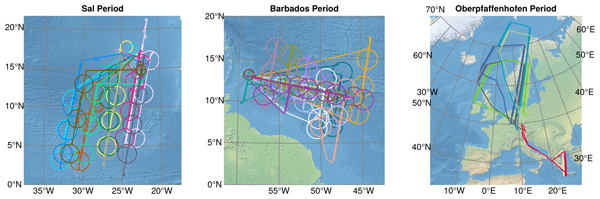
Silke Groß, Florian Ewald, Bjorn Stevens, Martin Wirth, Georgios Dekoutsidis, André Ehrlich, Dimitra Kouklaki, Konstantin Krüger, Sophie Rosenburg, Lea Volkmer, Jonas von Bismark, Lutz Hirsch, Anna E. Luebke, Eleni Marinou, Bernhard Mayer, Montserrat Pinol Sole, Manfred Wendisch, Julia Windmiller, Vassilis Amiridis, Rob Koopman, Takuji Kubota, and Markus Rapp
Atmos. Meas. Tech., 19, 3933–3959, https://doi.org/10.5194/amt-19-3933-2026, https://doi.org/10.5194/amt-19-3933-2026, 2026
Short summary
Short summary
In May 2024 the joint European Space Agency (ESA) and the Japan Aerospace Exploration Agency (JAXA) mission EarthCARE was launched. A similar payload as on the satellite was set up on the German research aircraft HALO, and deployed during an extensive measurement campaign to validated the satellite. We present our instrumentation, the measurements, and its potential for the validation of EarthCARE. We show first validation results and assessments of the EarthCARE data quality.
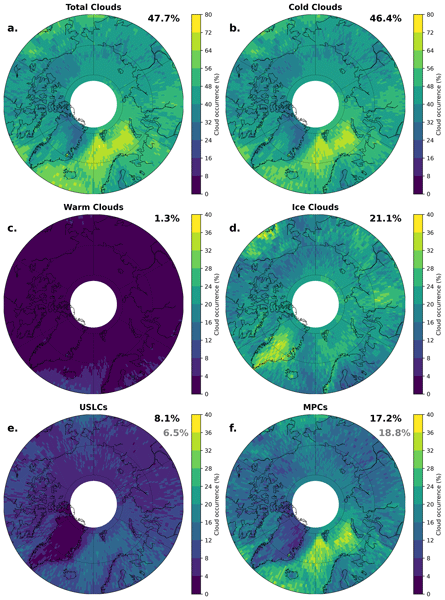
Aymeric Dziduch, Guillaume Mioche, Quentin Coopman, Clément Bazantay, Julien Delanoë, and Olivier Jourdan
Atmos. Chem. Phys., 26, 4019–4047, https://doi.org/10.5194/acp-26-4019-2026, https://doi.org/10.5194/acp-26-4019-2026, 2026
Short summary
Short summary
Low-level clouds play a central role in the Arctic climate by regulating energy exchanges between the surface and the atmosphere. Using eight years of CALIPSO–CloudSat observations, this study investigates the regional and seasonal variability of Arctic low-level cloud types. Mixed-phase and supercooled liquid clouds are frequent over oceanic regions, especially during transition seasons. Their occurrence is strongly influenced by surface coupling, temperature, stability, and cold-air outbreaks.
Marius Winkler, Marius Rixen, Florent Beucher, Fleur Couvreux, Chaehyeon C. Nam, Philippe Peyrillé, Hauke Schmidt, Hans Segura, Karl-Hermann Wieners, Ezri Alkilani-Brown, Abdou Aziz Coly, Giovanni Biagioli, Michael M. Bell, Ester Brito, Emma Chauvin, Julie Capo, Delián Colón-Burgos, Akeem Dawes, Jose Carlos da Luz, Zekican Demiralay, Vincent Douet, Vincent Ducastin, Clarisse Dufaux, Jean-Louis Dufresne, Florence Favot, Thomas Fiolleau, Emilie Fons, Geet George, Helene M. Gloeckner, Suelly Gonçalves, Laurent Gouttesoulard, Lennéa Hayo, Wei-Ting Hsiao, Sarah Kennison, Michael Kopelman, Tsung-Yung Lee, Enora Le Gall, Mateo Lovato, Emily Luschen, Nicolas Maury, Brett McKim, Louis Netz, Diouf Ousseynou, Karsten Peters-von Gehlen, Chavez Pope, Basile Poujol, Niwde Rivera Maldonado, Nina Robbins-Blanch, Nicolas Rochetin, Daniel Rowe, Paula Romero Jure, James H. Ruppert Jr., Jairo Segura Bermudez, Jarrett C. Starr, Martin Stelzner, Connor Stoll, Macintyre Syrett, Abraham Tekoe, Jeremie Trules, Colin Welty, Daniel Klocke, Raphaela Vogel, Sandrine Bony, Allison A. Wing, and Bjorn Stevens
Earth Syst. Sci. Data, 18, 1833–1854, https://doi.org/10.5194/essd-18-1833-2026, https://doi.org/10.5194/essd-18-1833-2026, 2026
Short summary
Short summary
The RAPSODI dataset compiles 624 radiosonde profiles collected during the 2024 ORCESTRA campaign across the tropical Atlantic: from Cape Verde (INMG), the R/V Meteor, and the Barbados Cloud Observatory. It provides high-resolution temperature, humidity, wind, and pressure data to study convection, tropical waves, and ITCZ dynamics. Data are quality-controlled and openly available in Zarr format via IPFS.
Romain Joseph, Jérôme Vidot, Julien Delanoë, and Emmanuel Fontaine
EGUsphere, https://doi.org/10.5194/egusphere-2026-48, https://doi.org/10.5194/egusphere-2026-48, 2026
Preprint archived
Short summary
Short summary
We used aircraft radar measurements inside tropical storm clouds to estimate their ice content, then simulated satellite observations using a radiative transfer model. By testing different assumptions about the shape and number of ice crystals, we examined how these choices influence the simulated radiances. We found that satellite information for these clouds is mainly controlled by conditions near the cloud top, while deeper layers remain largely hidden.
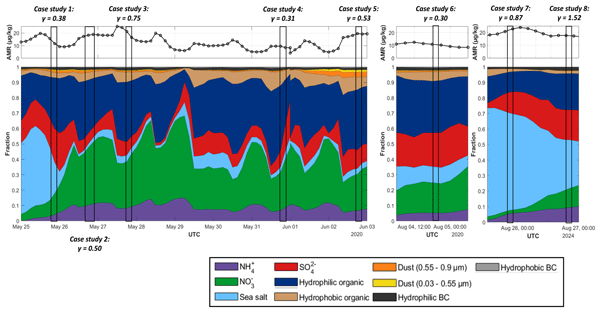
Frédéric Laly, Patrick Chazette, Julien Totems, Vincent Crenn, David Ledur, and Alexandre Marpillat
Atmos. Meas. Tech., 18, 7629–7649, https://doi.org/10.5194/amt-18-7629-2025, https://doi.org/10.5194/amt-18-7629-2025, 2025
Short summary
Short summary
This article presents the evolution of aerosol optical properties as derived from a Raman lidar in relation to relative humidity over the Paris area. It examines the influence of aerosol chemical compounds linked to air mass origins, as well as their relationship with the efficiency of aerosol growth. Such a study provides a better understanding of the interactions between aerosols and water vapour, which is important for reducing the uncertainties surrounding the Earth's radiative balance.
Louis Jaffeux, Marie Lothon, Fleur Couvreux, Dominique Bouniol, Grégoire Cayez, Lilian Joly, Jérémie Burgalat, Cyrille De Saint Leger, Hubert Bellec, Olivier Henry, Dyaa Chbib, Tetyana Jiang, and Sandrine Bony
Earth Syst. Sci. Data Discuss., https://doi.org/10.5194/essd-2025-586, https://doi.org/10.5194/essd-2025-586, 2025
Revised manuscript accepted for ESSD
Short summary
Short summary
A new dataset from the MAESTRO airborne campaign over the tropical Atlantic near Cabo Verde offers detailed turbulence measurements of temperature, moisture, and wind. The data was processed exploiting exceptional instrumental redundancy to provide best quality turbulence statistics and ensure their reliability. This resource can benefit weather and climate models by providing a clearer picture of how turbulence below clouds influences their formation and organization.
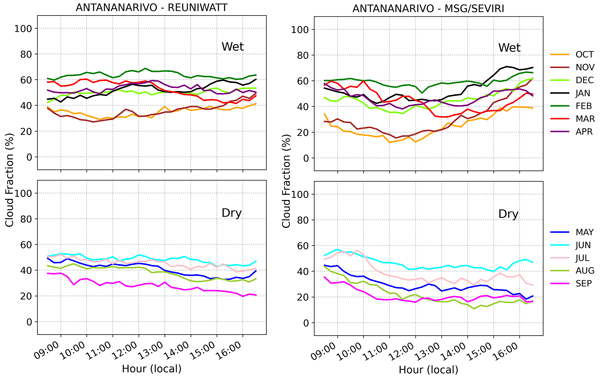
Jean-Marcel Rivonirina, Thierry Portafaix, Solofoarisoa Rakotoniaina, Béatrice Morel, Chao Tang, Kévin Lamy, Marie Lothon, Tom Toulouse, Olivier Liandrat, Solofo Rakotondraompiana, and Hassan Bencherif
Ann. Geophys., 43, 651–666, https://doi.org/10.5194/angeo-43-651-2025, https://doi.org/10.5194/angeo-43-651-2025, 2025
Short summary
Short summary
The lack of ground observation instruments and the vast ocean coverage make the Southwest Indian Ocean (SWIO) region difficult to access and poorly studied. For gathering ground-based camera information, satellite measurements have been used with the primary goal of characterizing both sites Saint-Denis of Reunion Island and Antananarivo Madagascar in terms of cloudiness. This study shows the particularity of each site and enhances our understanding of cloud properties, particularly in the SWIO.
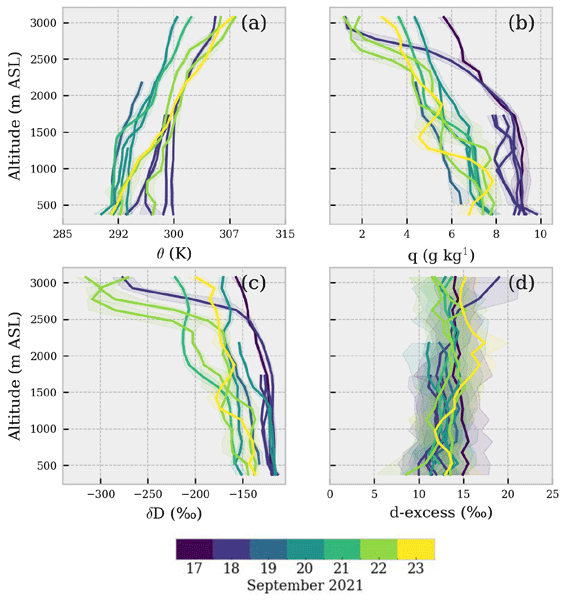
Daniele Zannoni, Hans Christian Steen-Larsen, Harald Sodemann, Iris Thurnherr, Cyrille Flamant, Patrick Chazette, Julien Totems, Martin Werner, and Myriam Raybaut
Atmos. Chem. Phys., 25, 9471–9495, https://doi.org/10.5194/acp-25-9471-2025, https://doi.org/10.5194/acp-25-9471-2025, 2025
Short summary
Short summary
High-resolution airborne observations reveal that mixing between the free troposphere and surface evapotranspiration flux primarily modulates the water vapor isotopic composition in the lower troposphere. Water vapor isotope structure variations occur on the scale of hundreds of meters, underlining the utility of stable isotopes for studying microscale atmospheric dynamics. This study also provides the basis for better validation of water vapor isotope remote sensing retrievals with surface observations.
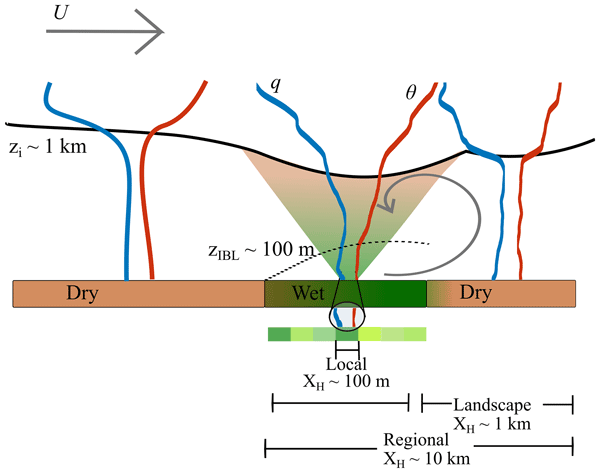
Mary Rose Mangan, Jordi Vilà-Guerau de Arellano, Bart J. H. van Stratum, Marie Lothon, Guylaine Canut-Rocafort, and Oscar K. Hartogensis
Atmos. Chem. Phys., 25, 8959–8981, https://doi.org/10.5194/acp-25-8959-2025, https://doi.org/10.5194/acp-25-8959-2025, 2025
Short summary
Short summary
Using observations and high-resolution turbulence modeling, we examine the influence of irrigation-driven surface heterogeneity on the atmospheric boundary layer (ABL). We use a multi-scale approach for characterizing surface heterogeneity to explore how its influence on the ABL within a grid cell would change with higher-resolution models. We find that the height of the ABL is variable across short distances and that the surface heterogeneity is felt least strongly in the middle of the ABL.
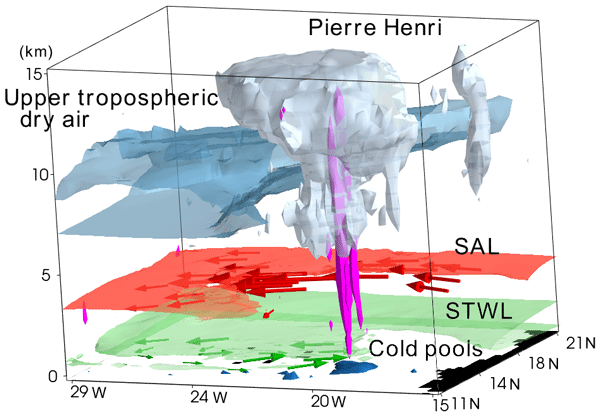
Guillaume Feger, Jean-Pierre Chaboureau, Thibaut Dauhut, Julien Delanoë, and Pierre Coutris
Atmos. Chem. Phys., 25, 7447–7465, https://doi.org/10.5194/acp-25-7447-2025, https://doi.org/10.5194/acp-25-7447-2025, 2025
Short summary
Short summary
Saharan air at the trade wind layer, cold pools, and dry upper troposphere has these three main factors inhibiting the cyclogenesis of the Pierre Henri mesoscale convective system. The findings were obtained through observations made during two flights of the Clouds-Atmospheric Dynamics-Dust Interactions in West Africa (CADDIWA) campaign and a convection-permitting simulation run with the Meso-NH model. They provide new insights into the complex dynamics of cyclogenesis in the Cabo Verde region and challenge the existing model of the Saharan Air Layer (SAL).
Aymeric Dziduch, Guillaume Mioche, Quentin Coopman, Clément Bazantay, Julien Delanoë, and Olivier Jourdan
EGUsphere, https://doi.org/10.5194/egusphere-2025-2698, https://doi.org/10.5194/egusphere-2025-2698, 2025
Preprint archived
Short summary
Short summary
Low-level clouds play a central role in the Arctic climate, modulating the surface energy budget with competing warming and cooling effects. In this study, radar-lidar satellite products are used to investigate the geographical and seasonal variations of different cloud types observed over eight years. Oceanic regions are characterized by high occurrences of low-level mixed-phase clouds, which are influenced by atmospheric stability conditions, surface temperatures and cold air outbreaks.
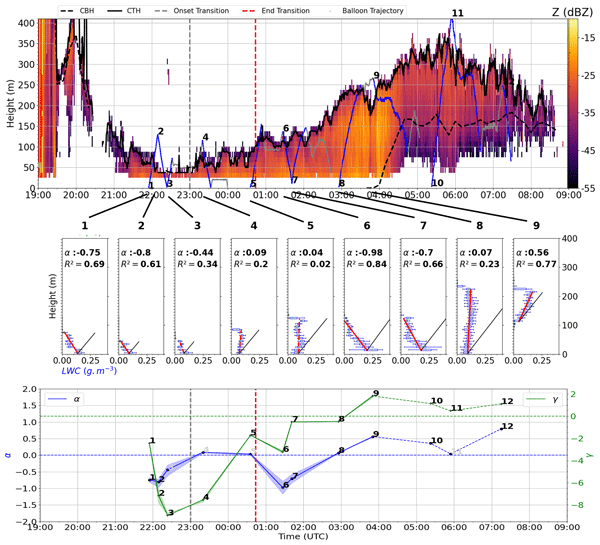
Théophane Costabloz, Frédéric Burnet, Christine Lac, Pauline Martinet, Julien Delanoë, Susana Jorquera, and Maroua Fathalli
Atmos. Chem. Phys., 25, 6539–6573, https://doi.org/10.5194/acp-25-6539-2025, https://doi.org/10.5194/acp-25-6539-2025, 2025
Short summary
Short summary
This study documents vertical profiles of liquid water content (LWC) in fogs from in situ measurements collected during the SOFOG3D field campaign in 2019–2020. The analysis of 140 vertical profiles reveals a reverse trend in LWC, maximum values at ground decreasing with height, during stable conditions in optically thin fogs, evolving towards quasi-adiabatic characteristics when fogs become thick. These results offer new perspectives for better constraining fog numerical simulations.
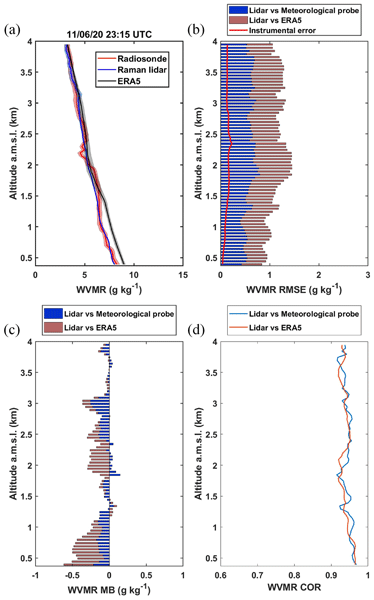
Patrick Chazette, Julien Totems, and Frédéric Laly
Atmos. Meas. Tech., 18, 2681–2699, https://doi.org/10.5194/amt-18-2681-2025, https://doi.org/10.5194/amt-18-2681-2025, 2025
Short summary
Short summary
The use of active remote sensing instruments to sample the atmospheric environment requires accurate calibration that is stable over time so that measurements are reproducible. This is the case for measurements of atmospheric water vapour using Raman lidar, which are of growing interest in the context of climate risks such as extreme precipitation. This study addresses this issue. It is based on six campaigns spread over a period of 7 years between 2016 and 2022.
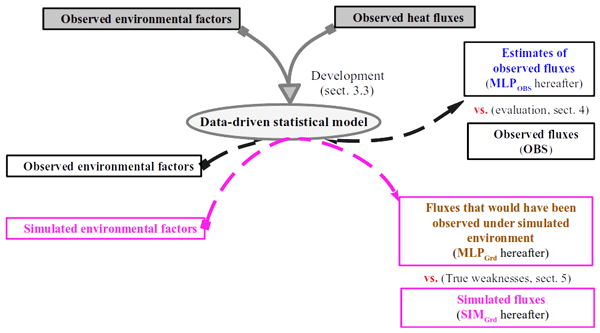
Maurin Zouzoua, Sophie Bastin, Fabienne Lohou, Marie Lothon, Marjolaine Chiriaco, Mathilde Jome, Cécile Mallet, Laurent Barthes, and Guylaine Canut
Geosci. Model Dev., 18, 3211–3239, https://doi.org/10.5194/gmd-18-3211-2025, https://doi.org/10.5194/gmd-18-3211-2025, 2025
Short summary
Short summary
This study proposes using a statistical model to freeze errors due to differences in environmental forcing when evaluating the surface turbulent heat fluxes from numerical simulations with observations. The statistical model is first built with observations and then applied to the simulated environment to generate possibly observed fluxes. This novel method provides insight into differently evaluating the numerical formulation of turbulent heat fluxes with a long period of observational data.
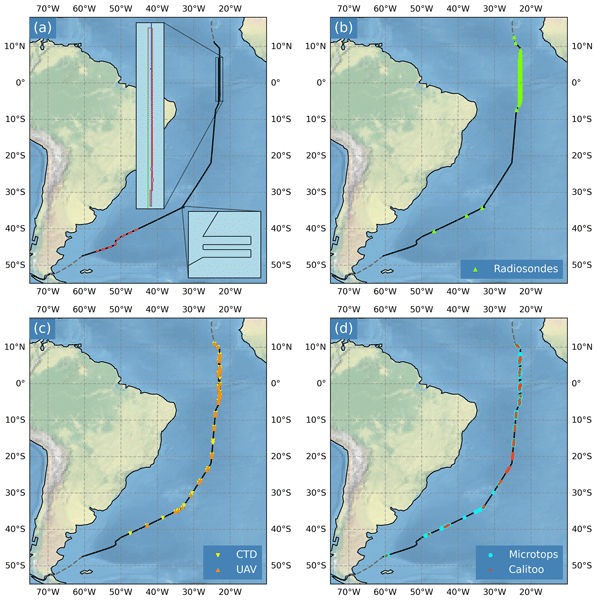
Laura Köhler, Julia Windmiller, Dariusz Baranowski, Michał Brennek, Michał Ciuryło, Lennéa Hayo, Daniel Kȩpski, Stefan Kinne, Beata Latos, Bertrand Lobo, Tobias Marke, Timo Nischik, Daria Paul, Piet Stammes, Artur Szkop, and Olaf Tuinder
Earth Syst. Sci. Data, 17, 633–659, https://doi.org/10.5194/essd-17-633-2025, https://doi.org/10.5194/essd-17-633-2025, 2025
Short summary
Short summary
We present atmospheric and oceanic data from the Atlantic References and Convection ship campaign with the Maria S. Merian from Mindelo to Punta Arenas observed with the integrated ship sensors; humidity and temperature profiler; ceilometer; aerosol instruments (Calitoo, Microtops, and DustTrak); radiosondes; uncrewed aircraft vehicles; and conductivity, temperature, and depth scans. The data include three complete profiles of the Intertropical Convergence Zone and a storm in the South Atlantic.
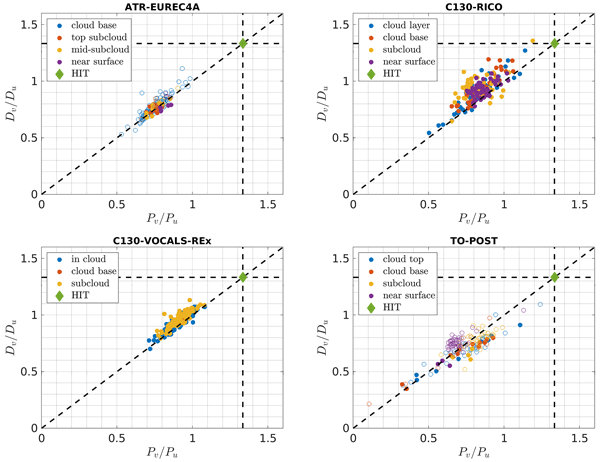
Jakub L. Nowak, Marie Lothon, Donald H. Lenschow, and Szymon P. Malinowski
Atmos. Meas. Tech., 18, 93–114, https://doi.org/10.5194/amt-18-93-2025, https://doi.org/10.5194/amt-18-93-2025, 2025
Short summary
Short summary
According to classical theory, the ratio of turbulence statistics corresponding to transverse and longitudinal wind velocity components equals 4/3 in the inertial range of scales. We analyse a large number of measurements obtained with three research aircraft during four field experiments in different locations and show that the observed ratios are almost always significantly smaller. We discuss potential reasons for this disagreement, but the actual explanation remains to be determined.
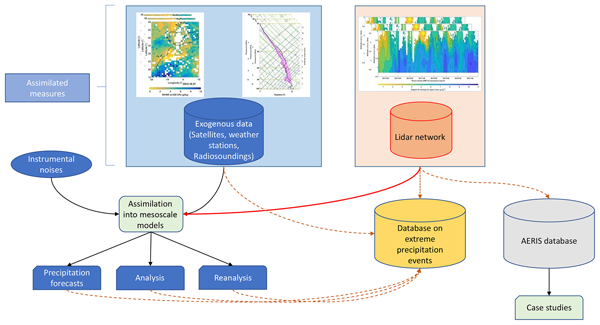
Frédéric Laly, Patrick Chazette, Julien Totems, Jérémy Lagarrigue, Laurent Forges, and Cyrille Flamant
Earth Syst. Sci. Data, 16, 5579–5602, https://doi.org/10.5194/essd-16-5579-2024, https://doi.org/10.5194/essd-16-5579-2024, 2024
Short summary
Short summary
We present a dataset of water vapor mixing ratio profiles acquired during the Water Vapor Lidar Network Assimilation campaign in fall and winter 2022 and summer 2023, using three lidar systems deployed on the western Mediterranean coastline. This innovative campaign provides access to lower-tropospheric water vapor variability to constrain meteorological forecasting models. The scientific objective is to improve forecasting of heavy-precipation events that lead to flash floods and landslides.
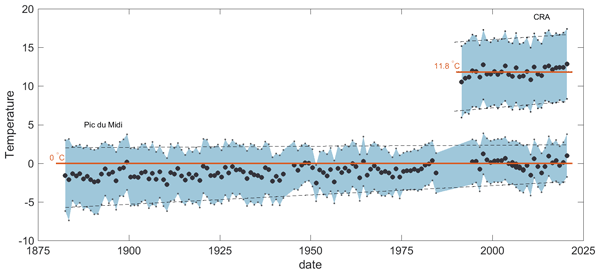
Marie Lothon, François Gheusi, Fabienne Lohou, Véronique Pont, Serge Soula, Corinne Jambert, Solène Derrien, Yannick Bezombes, Emmanuel Leclerc, Gilles Athier, Antoine Vial, Alban Philibert, Bernard Campistron, Frédérique Saïd, Jeroen Sonke, Julien Amestoy, Erwan Bargain, Pierre Bosser, Damien Boulanger, Guillaume Bret, Renaud Bodichon, Laurent Cabanas, Guylaine Canut, Jean-Bernard Estrampes, Eric Gardrat, Zaida Gomez Kuri, Jérémy Gueffier, Fabienne Guesdon, Morgan Lopez, Olivier Masson, Pierre-Yves Meslin, Yves Meyerfeld, Nicolas Pascal, Eric Pique, Michel Ramonet, Felix Starck, and Romain Vidal
Atmos. Meas. Tech., 17, 6265–6300, https://doi.org/10.5194/amt-17-6265-2024, https://doi.org/10.5194/amt-17-6265-2024, 2024
Short summary
Short summary
The Pyrenean Platform for Observation of the Atmosphere (P2OA) is a coupled plain–mountain instrumented platform in southwestern France for the monitoring of climate variables and the study of meteorological processes in a mountainous region. A comprehensive description of this platform is presented for the first time: its instrumentation, the associated dataset, and a meteorological characterization the site. The potential of the P2OA is illustrated through several examples of process studies.
Manfred Wendisch, Susanne Crewell, André Ehrlich, Andreas Herber, Benjamin Kirbus, Christof Lüpkes, Mario Mech, Steven J. Abel, Elisa F. Akansu, Felix Ament, Clémantyne Aubry, Sebastian Becker, Stephan Borrmann, Heiko Bozem, Marlen Brückner, Hans-Christian Clemen, Sandro Dahlke, Georgios Dekoutsidis, Julien Delanoë, Elena De La Torre Castro, Henning Dorff, Regis Dupuy, Oliver Eppers, Florian Ewald, Geet George, Irina V. Gorodetskaya, Sarah Grawe, Silke Groß, Jörg Hartmann, Silvia Henning, Lutz Hirsch, Evelyn Jäkel, Philipp Joppe, Olivier Jourdan, Zsofia Jurányi, Michail Karalis, Mona Kellermann, Marcus Klingebiel, Michael Lonardi, Johannes Lucke, Anna E. Luebke, Maximilian Maahn, Nina Maherndl, Marion Maturilli, Bernhard Mayer, Johanna Mayer, Stephan Mertes, Janosch Michaelis, Michel Michalkov, Guillaume Mioche, Manuel Moser, Hanno Müller, Roel Neggers, Davide Ori, Daria Paul, Fiona M. Paulus, Christian Pilz, Felix Pithan, Mira Pöhlker, Veronika Pörtge, Maximilian Ringel, Nils Risse, Gregory C. Roberts, Sophie Rosenburg, Johannes Röttenbacher, Janna Rückert, Michael Schäfer, Jonas Schaefer, Vera Schemann, Imke Schirmacher, Jörg Schmidt, Sebastian Schmidt, Johannes Schneider, Sabrina Schnitt, Anja Schwarz, Holger Siebert, Harald Sodemann, Tim Sperzel, Gunnar Spreen, Bjorn Stevens, Frank Stratmann, Gunilla Svensson, Christian Tatzelt, Thomas Tuch, Timo Vihma, Christiane Voigt, Lea Volkmer, Andreas Walbröl, Anna Weber, Birgit Wehner, Bruno Wetzel, Martin Wirth, and Tobias Zinner
Atmos. Chem. Phys., 24, 8865–8892, https://doi.org/10.5194/acp-24-8865-2024, https://doi.org/10.5194/acp-24-8865-2024, 2024
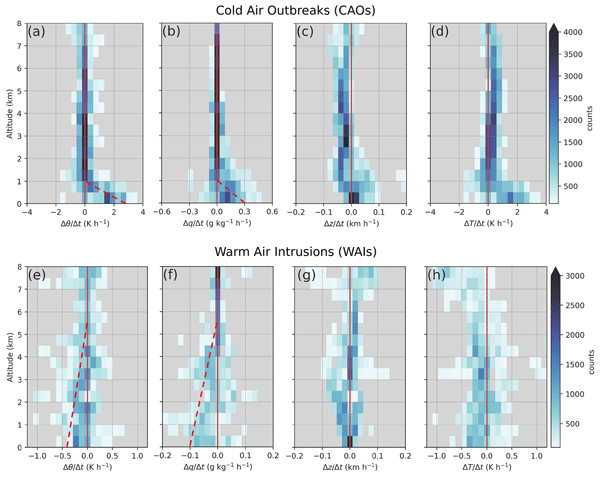
Short summary
Short summary
The Arctic is warming faster than the rest of the globe. Warm-air intrusions (WAIs) into the Arctic may play an important role in explaining this phenomenon. Cold-air outbreaks (CAOs) out of the Arctic may link the Arctic climate changes to mid-latitude weather. In our article, we describe how to observe air mass transformations during CAOs and WAIs using three research aircraft instrumented with state-of-the-art remote-sensing and in situ measurement devices.
Maëlie Chazette, Patrick Chazette, Ilja M. Reiter, Xiaoxia Shang, Julien Totems, Jean-Philippe Orts, Irène Xueref-Remy, and Nicolas Montes
Biogeosciences, 21, 3289–3303, https://doi.org/10.5194/bg-21-3289-2024, https://doi.org/10.5194/bg-21-3289-2024, 2024
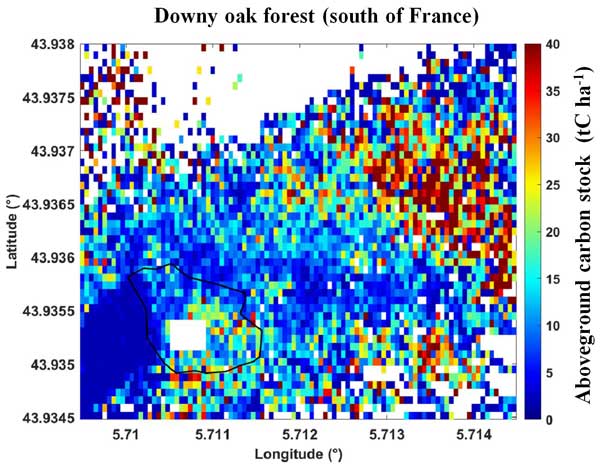
Short summary
Short summary
The approach presented is original in its coupling between field observations and airborne lidar observations. It has been applied to an instrumented reference forest site in the south of France, which is heavily impacted by climate change. It leads to the evaluation of tree heights and ends with assessments of aerial and root carbon stocks. A detailed assessment of uncertainties is presented to add a level of reliability to the scientific products delivered.
Clémantyne Aubry, Julien Delanoë, Silke Groß, Florian Ewald, Frédéric Tridon, Olivier Jourdan, and Guillaume Mioche
Atmos. Meas. Tech., 17, 3863–3881, https://doi.org/10.5194/amt-17-3863-2024, https://doi.org/10.5194/amt-17-3863-2024, 2024
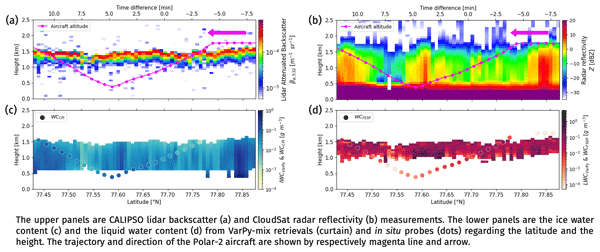
Short summary
Short summary
Radar–lidar synergy is used to retrieve ice, supercooled water and mixed-phase cloud properties, making the most of the radar sensitivity to ice crystals and the lidar sensitivity to supercooled droplets. A first analysis of the output of the algorithm run on the satellite data is compared with in situ data during an airborne Arctic field campaign, giving a mean percent error of 49 % for liquid water content and 75 % for ice water content.
Karina McCusker, Anthony J. Baran, Chris Westbrook, Stuart Fox, Patrick Eriksson, Richard Cotton, Julien Delanoë, and Florian Ewald
Atmos. Meas. Tech., 17, 3533–3552, https://doi.org/10.5194/amt-17-3533-2024, https://doi.org/10.5194/amt-17-3533-2024, 2024
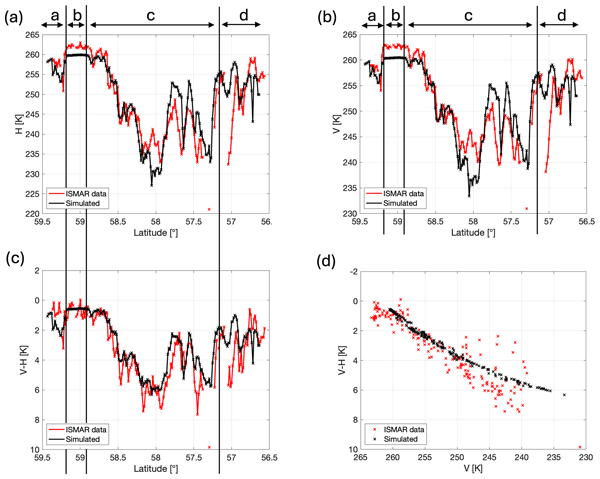
Short summary
Short summary
Polarised radiative transfer simulations are performed using an atmospheric model based on in situ measurements. These are compared to large polarisation measurements to explore whether such measurements can provide information on cloud ice, e.g. particle shape and orientation. We find that using oriented particle models with shapes based on imagery generally allows for accurate simulations. However, results are sensitive to shape assumptions such as the choice of single crystals or aggregates.
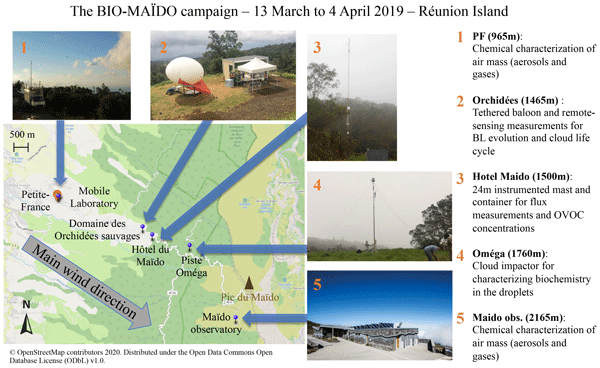
Maud Leriche, Pierre Tulet, Laurent Deguillaume, Frédéric Burnet, Aurélie Colomb, Agnès Borbon, Corinne Jambert, Valentin Duflot, Stéphan Houdier, Jean-Luc Jaffrezo, Mickaël Vaïtilingom, Pamela Dominutti, Manon Rocco, Camille Mouchel-Vallon, Samira El Gdachi, Maxence Brissy, Maroua Fathalli, Nicolas Maury, Bert Verreyken, Crist Amelynck, Niels Schoon, Valérie Gros, Jean-Marc Pichon, Mickael Ribeiro, Eric Pique, Emmanuel Leclerc, Thierry Bourrianne, Axel Roy, Eric Moulin, Joël Barrie, Jean-Marc Metzger, Guillaume Péris, Christian Guadagno, Chatrapatty Bhugwant, Jean-Mathieu Tibere, Arnaud Tournigand, Evelyn Freney, Karine Sellegri, Anne-Marie Delort, Pierre Amato, Muriel Joly, Jean-Luc Baray, Pascal Renard, Angelica Bianco, Anne Réchou, and Guillaume Payen
Atmos. Chem. Phys., 24, 4129–4155, https://doi.org/10.5194/acp-24-4129-2024, https://doi.org/10.5194/acp-24-4129-2024, 2024
Short summary
Short summary
Aerosol particles in the atmosphere play a key role in climate change and air pollution. A large number of aerosol particles are formed from the oxidation of volatile organic compounds (VOCs and secondary organic aerosols – SOA). An important field campaign was organized on Réunion in March–April 2019 to understand the formation of SOA in a tropical atmosphere mostly influenced by VOCs emitted by forest and in the presence of clouds. This work synthesizes the results of this campaign.
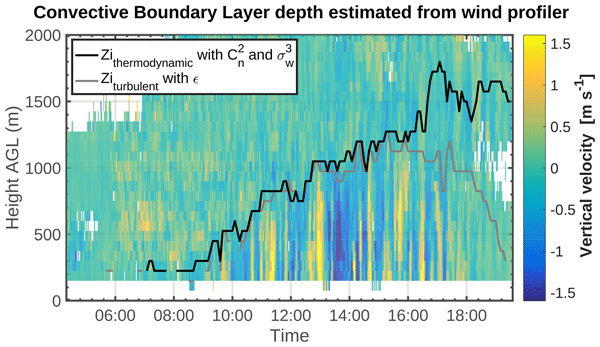
Alban Philibert, Marie Lothon, Julien Amestoy, Pierre-Yves Meslin, Solène Derrien, Yannick Bezombes, Bernard Campistron, Fabienne Lohou, Antoine Vial, Guylaine Canut-Rocafort, Joachim Reuder, and Jennifer K. Brooke
Atmos. Meas. Tech., 17, 1679–1701, https://doi.org/10.5194/amt-17-1679-2024, https://doi.org/10.5194/amt-17-1679-2024, 2024
Short summary
Short summary
We present a new algorithm, CALOTRITON, for the retrieval of the convective boundary layer depth with ultra-high-frequency radar measurements. CALOTRITON is partly based on the principle that the top of the convective boundary layer is associated with an inversion and a decrease in turbulence. It is evaluated using ceilometer and radiosonde data. It is able to qualify the complexity of the vertical structure of the low troposphere and detect internal or residual layers.
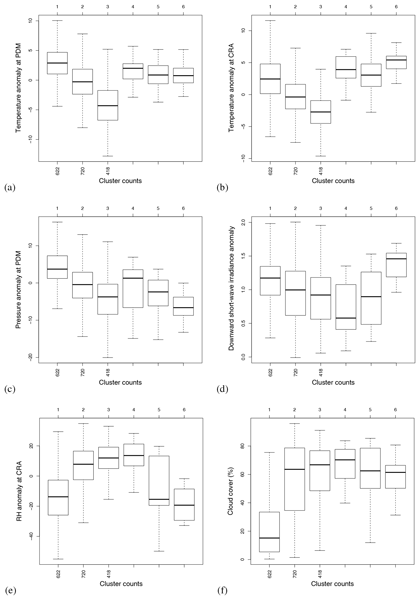
Jérémy Gueffier, François Gheusi, Marie Lothon, Véronique Pont, Alban Philibert, Fabienne Lohou, Solène Derrien, Yannick Bezombes, Gilles Athier, Yves Meyerfeld, Antoine Vial, and Emmanuel Leclerc
Atmos. Chem. Phys., 24, 287–316, https://doi.org/10.5194/acp-24-287-2024, https://doi.org/10.5194/acp-24-287-2024, 2024
Short summary
Short summary
This study investigates the link between weather regime and atmospheric composition at a Pyrenean observatory. Five years of meteorological data were synchronized on a daily basis and then, using a clustering method, separated into six groups of observation days, with most showing marked characteristics of different weather regimes (fair and disturbed weather, winter windstorms, foehn). Statistical differences in gas and particle concentrations appeared between the groups and are discussed.
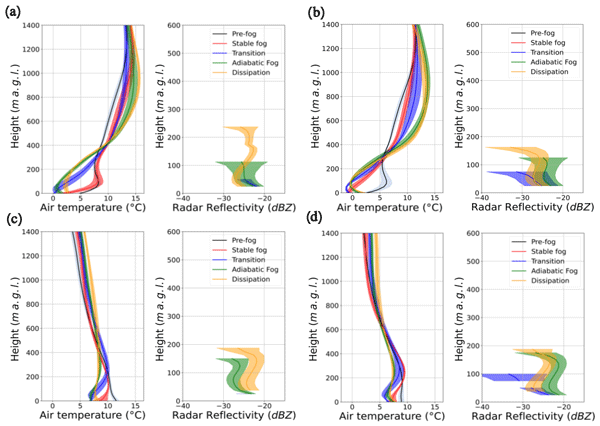
Cheikh Dione, Martial Haeffelin, Frédéric Burnet, Christine Lac, Guylaine Canut, Julien Delanoë, Jean-Charles Dupont, Susana Jorquera, Pauline Martinet, Jean-François Ribaud, and Felipe Toledo
Atmos. Chem. Phys., 23, 15711–15731, https://doi.org/10.5194/acp-23-15711-2023, https://doi.org/10.5194/acp-23-15711-2023, 2023
Short summary
Short summary
This paper documents the role of thermodynamics and turbulence in the fog life cycle over southwestern France. It is based on a unique dataset collected during the SOFOG3D field campaign in autumn and winter 2019–2020. The paper gives a threshold for turbulence driving the different phases of the fog life cycle and the role of advection in the night-time dissipation of fog. The results can be operationalised to nowcast fog and improve short-range forecasts in numerical weather prediction models.
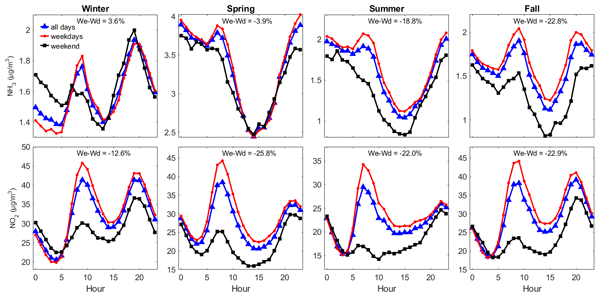
Camille Viatte, Nadir Guendouz, Clarisse Dufaux, Arjan Hensen, Daan Swart, Martin Van Damme, Lieven Clarisse, Pierre Coheur, and Cathy Clerbaux
Atmos. Chem. Phys., 23, 15253–15267, https://doi.org/10.5194/acp-23-15253-2023, https://doi.org/10.5194/acp-23-15253-2023, 2023
Short summary
Short summary
Ammonia (NH3) is an important air pollutant which, as a precursor of fine particulate matter, raises public health concerns. Models have difficulty predicting events of pollution associated with NH3 since ground-based observations of this gas are still relatively sparse and difficult to implement. We present the first relatively long (2.5 years) and continuous record of hourly NH3 concentrations in Paris to determine its temporal variabilities at different scales to unravel emission sources.
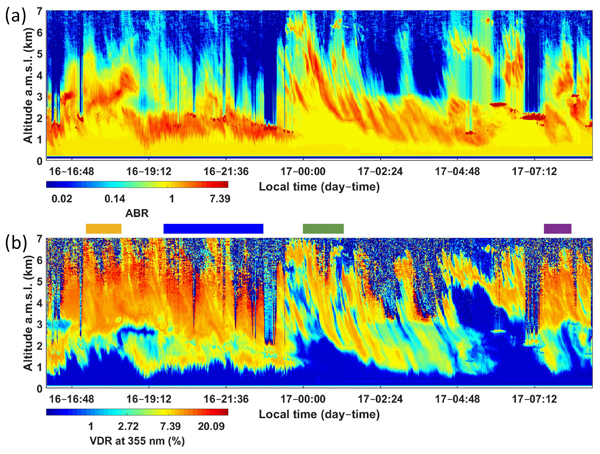
Patrick Chazette and Jean-Christophe Raut
Atmos. Meas. Tech., 16, 5847–5861, https://doi.org/10.5194/amt-16-5847-2023, https://doi.org/10.5194/amt-16-5847-2023, 2023
Short summary
Short summary
The vertical profiles of the effective radii of ice crystals and ice water content in Arctic semi-transparent stratiform clouds were assessed using quantitative ground-based lidar measurements. The field campaign was part of the Pollution in the ARCtic System (PARCS) project which took place from 13 to 26 May 2016 in Hammerfest (70° 39′ 48″ N, 23° 41′ 00″ E). We show that under certain cloud conditions, lidar measurement combined with a dedicated algorithmic approach is an efficient tool.
Leonie Villiger, Marina Dütsch, Sandrine Bony, Marie Lothon, Stephan Pfahl, Heini Wernli, Pierre-Etienne Brilouet, Patrick Chazette, Pierre Coutris, Julien Delanoë, Cyrille Flamant, Alfons Schwarzenboeck, Martin Werner, and Franziska Aemisegger
Atmos. Chem. Phys., 23, 14643–14672, https://doi.org/10.5194/acp-23-14643-2023, https://doi.org/10.5194/acp-23-14643-2023, 2023
Short summary
Short summary
This study evaluates three numerical simulations performed with an isotope-enabled weather forecast model and investigates the coupling between shallow trade-wind cumulus clouds and atmospheric circulations on different scales. We show that the simulations reproduce key characteristics of shallow trade-wind clouds as observed during the field experiment EUREC4A and that the spatial distribution of stable-water-vapour isotopes is shaped by the overturning circulation associated with these clouds.
Zhiqiang Cui, Alan Blyth, Ralph Burton, Sandrine Bony, Steven Böing, Alan Gadian, and Leif Denby
EGUsphere, https://doi.org/10.5194/egusphere-2023-1999, https://doi.org/10.5194/egusphere-2023-1999, 2023
Preprint archived
Short summary
Short summary
Cumulus clouds near Barbados can influence how much heat and energy reaches the Earth's surface. A cluster of clouds resembling a flower is presented. Satellite images, dropsonde data, and weather data are used to understand how this cloud system developed. A significant feature was the appearance of a large area of rain at the centre of the cloud system during its later stages. The paper also studied the environmental conditions around the cloud system.
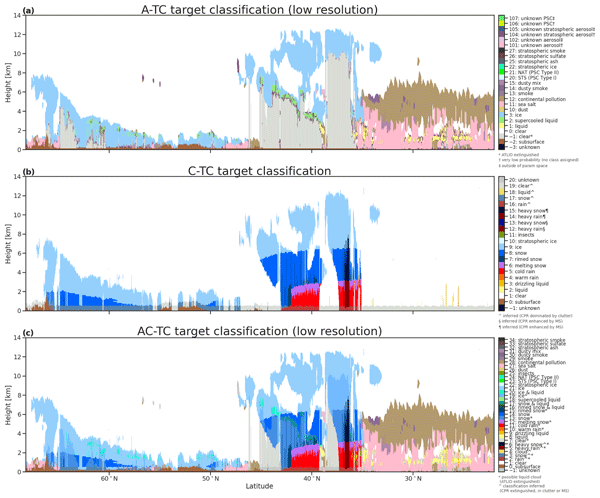
Abdanour Irbah, Julien Delanoë, Gerd-Jan van Zadelhoff, David P. Donovan, Pavlos Kollias, Bernat Puigdomènech Treserras, Shannon Mason, Robin J. Hogan, and Aleksandra Tatarevic
Atmos. Meas. Tech., 16, 2795–2820, https://doi.org/10.5194/amt-16-2795-2023, https://doi.org/10.5194/amt-16-2795-2023, 2023
Short summary
Short summary
The Cloud Profiling Radar (CPR) and ATmospheric LIDar (ATLID) aboard the EarthCARE satellite are used to probe the Earth's atmosphere by measuring cloud and aerosol profiles. ATLID is sensitive to aerosols and small cloud particles and CPR to large ice particles, snowflakes and raindrops. It is the synergy of the measurements of these two instruments that allows a better classification of the atmospheric targets and the description of the associated products, which are the subject of this paper.
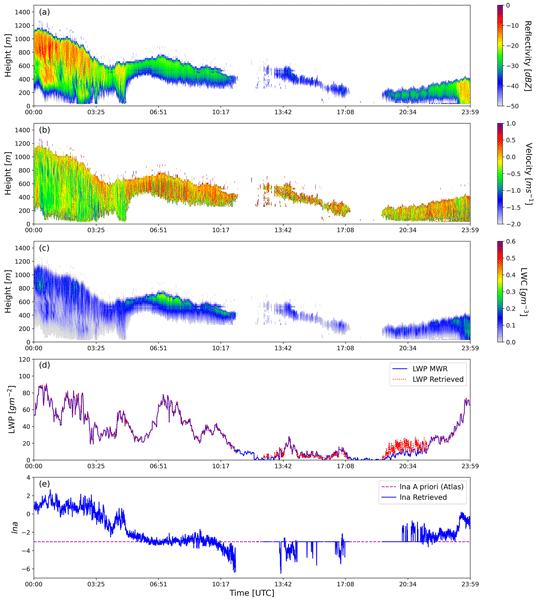
Pragya Vishwakarma, Julien Delanoë, Susana Jorquera, Pauline Martinet, Frederic Burnet, Alistair Bell, and Jean-Charles Dupont
Atmos. Meas. Tech., 16, 1211–1237, https://doi.org/10.5194/amt-16-1211-2023, https://doi.org/10.5194/amt-16-1211-2023, 2023
Short summary
Short summary
Cloud observations are necessary to characterize the cloud properties at local and global scales. The observations must be translated to cloud geophysical parameters. This paper presents the estimation of liquid water content (LWC) using radar and microwave radiometer (MWR) measurements. Liquid water path from MWR scales LWC and retrieves the scaling factor (ln a). The retrievals are compared with in situ observations. A climatology of ln a is built to estimate LWC using only radar information.
Adriana Bailey, Franziska Aemisegger, Leonie Villiger, Sebastian A. Los, Gilles Reverdin, Estefanía Quiñones Meléndez, Claudia Acquistapace, Dariusz B. Baranowski, Tobias Böck, Sandrine Bony, Tobias Bordsdorff, Derek Coffman, Simon P. de Szoeke, Christopher J. Diekmann, Marina Dütsch, Benjamin Ertl, Joseph Galewsky, Dean Henze, Przemyslaw Makuch, David Noone, Patricia K. Quinn, Michael Rösch, Andreas Schneider, Matthias Schneider, Sabrina Speich, Bjorn Stevens, and Elizabeth J. Thompson
Earth Syst. Sci. Data, 15, 465–495, https://doi.org/10.5194/essd-15-465-2023, https://doi.org/10.5194/essd-15-465-2023, 2023
Short summary
Short summary
One of the novel ways EUREC4A set out to investigate trade wind clouds and their coupling to the large-scale circulation was through an extensive network of isotopic measurements in water vapor, precipitation, and seawater. Samples were taken from the island of Barbados, from aboard two aircraft, and from aboard four ships. This paper describes the full collection of EUREC4A isotopic in situ data and guides readers to complementary remotely sensed water vapor isotope ratios.
Alistair Bell, Pauline Martinet, Olivier Caumont, Frédéric Burnet, Julien Delanoë, Susana Jorquera, Yann Seity, and Vinciane Unger
Atmos. Meas. Tech., 15, 5415–5438, https://doi.org/10.5194/amt-15-5415-2022, https://doi.org/10.5194/amt-15-5415-2022, 2022
Short summary
Short summary
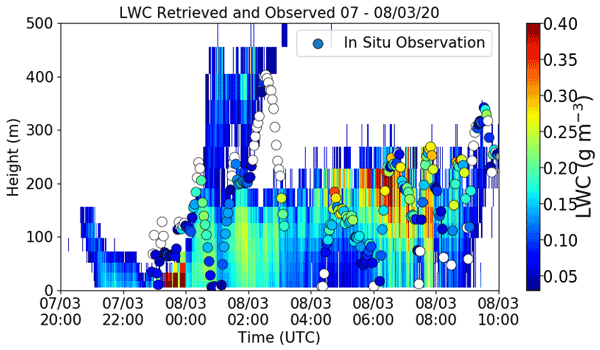
Cloud radars and microwave radiometers offer the potential to improve fog forecasts when assimilated into a high-resolution model. As this process can be complex, a retrieval of model variables is sometimes made as a first step. In this work, results from a 1D-Var algorithm for the retrieval of temperature, humidity and cloud liquid water content are presented. The algorithm is applied first to a synthetic dataset and then to a dataset of real measurements from a recent field campaign.
Meryl Wimmer, Gwendal Rivière, Philippe Arbogast, Jean-Marcel Piriou, Julien Delanoë, Carole Labadie, Quitterie Cazenave, and Jacques Pelon
Weather Clim. Dynam., 3, 863–882, https://doi.org/10.5194/wcd-3-863-2022, https://doi.org/10.5194/wcd-3-863-2022, 2022
Short summary
Short summary
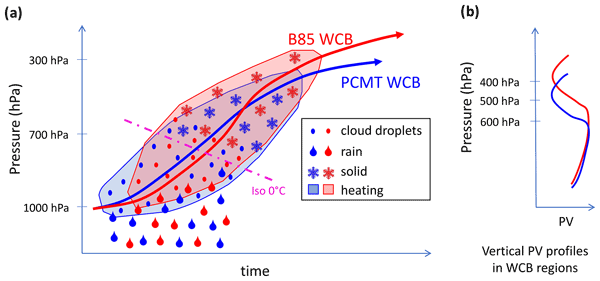
The effect of deep convection representation on the jet stream above the cold front of an extratropical cyclone is investigated in the global numerical weather prediction model ARPEGE. Two simulations using different deep convection schemes are compared with (re)analysis datasets and NAWDEX airborne observations. A deeper jet stream is observed with the less active scheme. The diabatic origin of this difference is interpreted by backward Lagrangian trajectories and potential vorticity budgets.
Cyrille Flamant, Marco Gaetani, Jean-Pierre Chaboureau, Patrick Chazette, Juan Cuesta, Stuart John Piketh, and Paola Formenti
Atmos. Chem. Phys., 22, 5701–5724, https://doi.org/10.5194/acp-22-5701-2022, https://doi.org/10.5194/acp-22-5701-2022, 2022
Short summary
Short summary
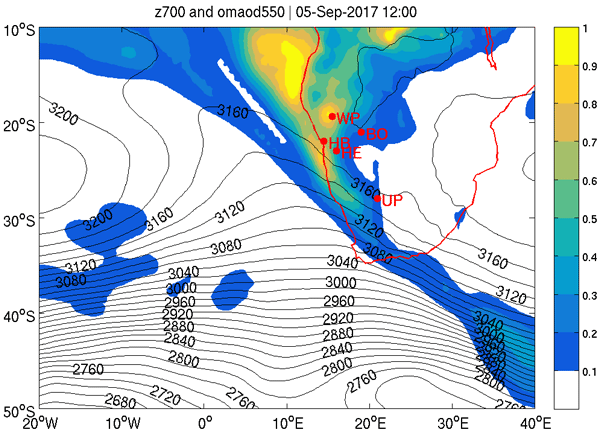
Rivers of smoke extend from tropical southern Africa towards the Indian Ocean during the winter fire season, controlled by the interaction of tropical easterly waves, and westerly waves at mid latitudes. During the AEROCLO-sA field campaign in 2017, a river of smoke was directly observed over Namibia. In this paper, the evolution and atmospheric drivers of the river of smoke are described, and the role of a mid-latitude cut-off low in lifting the smoke to the upper troposphere is highlighted.
Sandrine Bony, Marie Lothon, Julien Delanoë, Pierre Coutris, Jean-Claude Etienne, Franziska Aemisegger, Anna Lea Albright, Thierry André, Hubert Bellec, Alexandre Baron, Jean-François Bourdinot, Pierre-Etienne Brilouet, Aurélien Bourdon, Jean-Christophe Canonici, Christophe Caudoux, Patrick Chazette, Michel Cluzeau, Céline Cornet, Jean-Philippe Desbios, Dominique Duchanoy, Cyrille Flamant, Benjamin Fildier, Christophe Gourbeyre, Laurent Guiraud, Tetyana Jiang, Claude Lainard, Christophe Le Gac, Christian Lendroit, Julien Lernould, Thierry Perrin, Frédéric Pouvesle, Pascal Richard, Nicolas Rochetin, Kevin Salaün, Alfons Schwarzenboeck, Guillaume Seurat, Bjorn Stevens, Julien Totems, Ludovic Touzé-Peiffer, Gilles Vergez, Jessica Vial, Leonie Villiger, and Raphaela Vogel
Earth Syst. Sci. Data, 14, 2021–2064, https://doi.org/10.5194/essd-14-2021-2022, https://doi.org/10.5194/essd-14-2021-2022, 2022
Short summary
Short summary
The French ATR42 research aircraft participated in the EUREC4A international field campaign that took place in 2020 over the tropical Atlantic, east of Barbados. We present the extensive instrumentation of the aircraft, the research flights and the different measurements. We show that the ATR measurements of humidity, wind, aerosols and cloudiness in the lower atmosphere are robust and consistent with each other. They will make it possible to advance understanding of cloud–climate interactions.
Karine Desboeufs, Franck Fu, Matthieu Bressac, Antonio Tovar-Sánchez, Sylvain Triquet, Jean-François Doussin, Chiara Giorio, Patrick Chazette, Julie Disnaquet, Anaïs Feron, Paola Formenti, Franck Maisonneuve, Araceli Rodríguez-Romero, Pascal Zapf, François Dulac, and Cécile Guieu
Atmos. Chem. Phys., 22, 2309–2332, https://doi.org/10.5194/acp-22-2309-2022, https://doi.org/10.5194/acp-22-2309-2022, 2022
Short summary
Short summary
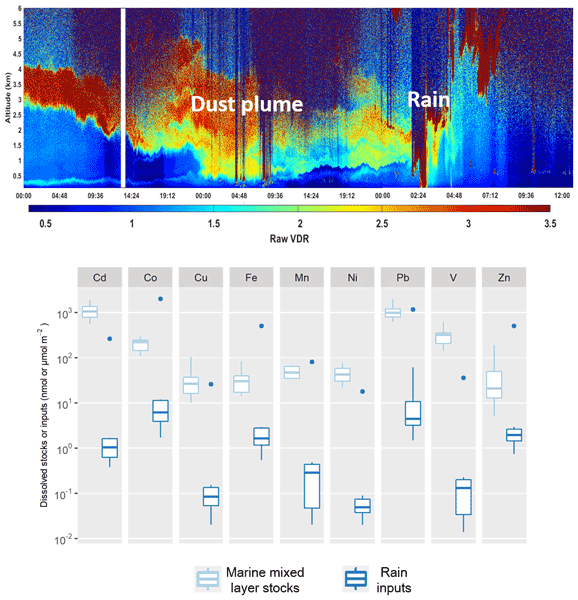
This article reports the first concurrent sampling of wet deposition samples and surface seawater and was performed during the PEACETIME cruise in the remote Mediterranean (May–June 2017). Through the chemical composition of trace metals (TMs) in these samples, it emphasizes the decrease of atmospheric metal pollution in this area during the last few decades and the critical role of wet deposition as source of TMs for Mediterranean surface seawater, especially for intense dust deposition events.
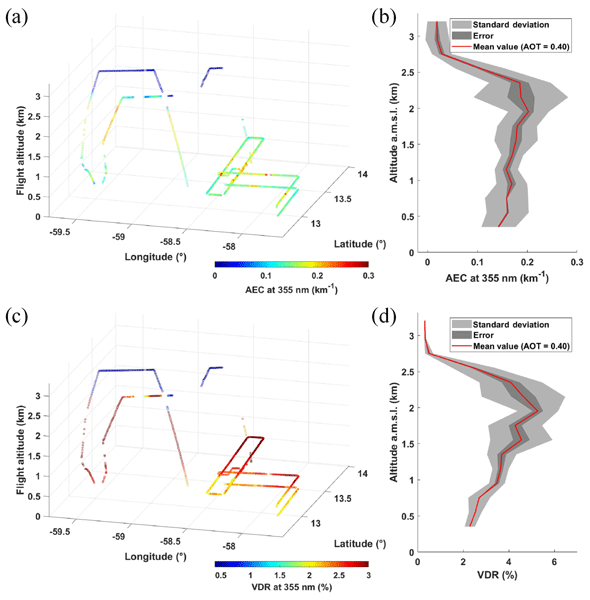
Patrick Chazette, Alexandre Baron, and Cyrille Flamant
Atmos. Chem. Phys., 22, 1271–1292, https://doi.org/10.5194/acp-22-1271-2022, https://doi.org/10.5194/acp-22-1271-2022, 2022
Short summary
Short summary
Within the framework of the international EUREC4A project, horizontal lidar measurements were carried out over Barbados from the French research aircraft ATR-42. These measurements highlighted the strong heterogeneity of the aerosol field (mainly dust and biomass burning aerosols) and therefore of the associated optical properties. This heterogeneity varies according to meteorological conditions and could significantly modulate the climatic impact of aerosols trapped over the tropical Atlantic.
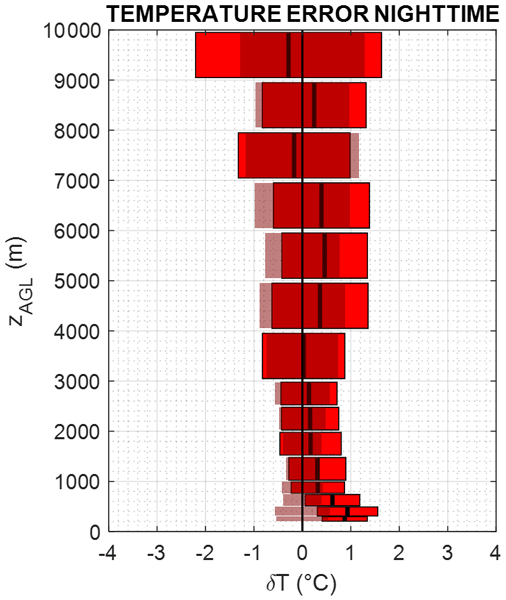
Julien Totems, Patrick Chazette, and Alexandre Baron
Atmos. Meas. Tech., 14, 7525–7544, https://doi.org/10.5194/amt-14-7525-2021, https://doi.org/10.5194/amt-14-7525-2021, 2021
Short summary
Short summary
We describe in detail the design and calibration of the new Raman channels for the WALI system, going over the important sources of bias and uncertainty on retrieved temperature profiles. For the first time, their impact is investigated using horizontal shots in a homogenous atmosphere: the magnitude of the highlighted biases can be much larger than the targeted absolute accuracy of 1° C. Actual measurement errors are quantified using radiosoundings launched close to the lidar site.
Heike Konow, Florian Ewald, Geet George, Marek Jacob, Marcus Klingebiel, Tobias Kölling, Anna E. Luebke, Theresa Mieslinger, Veronika Pörtge, Jule Radtke, Michael Schäfer, Hauke Schulz, Raphaela Vogel, Martin Wirth, Sandrine Bony, Susanne Crewell, André Ehrlich, Linda Forster, Andreas Giez, Felix Gödde, Silke Groß, Manuel Gutleben, Martin Hagen, Lutz Hirsch, Friedhelm Jansen, Theresa Lang, Bernhard Mayer, Mario Mech, Marc Prange, Sabrina Schnitt, Jessica Vial, Andreas Walbröl, Manfred Wendisch, Kevin Wolf, Tobias Zinner, Martin Zöger, Felix Ament, and Bjorn Stevens
Earth Syst. Sci. Data, 13, 5545–5563, https://doi.org/10.5194/essd-13-5545-2021, https://doi.org/10.5194/essd-13-5545-2021, 2021
Short summary
Short summary
The German research aircraft HALO took part in the research campaign EUREC4A in January and February 2020. The focus area was the tropical Atlantic east of the island of Barbados. We describe the characteristics of the 15 research flights, provide auxiliary information, derive combined cloud mask products from all instruments that observe clouds on board the aircraft, and provide code examples that help new users of the data to get started.
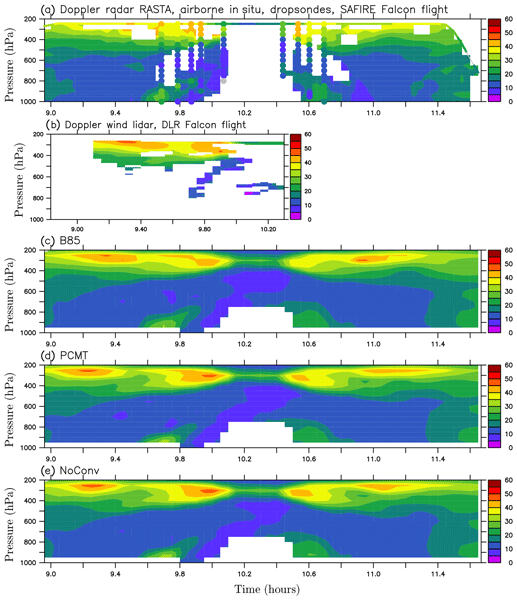
Gwendal Rivière, Meryl Wimmer, Philippe Arbogast, Jean-Marcel Piriou, Julien Delanoë, Carole Labadie, Quitterie Cazenave, and Jacques Pelon
Weather Clim. Dynam., 2, 1011–1031, https://doi.org/10.5194/wcd-2-1011-2021, https://doi.org/10.5194/wcd-2-1011-2021, 2021
Short summary
Short summary
Inacurracies in representing processes occurring at spatial scales smaller than the grid scales of the weather forecast models are important sources of forecast errors. This is the case of deep convection representation in models with 10 km grid spacing. We performed simulations of a real extratropical cyclone using a model with different representations of deep convection. These forecasts lead to different behaviors in the ascending air masses of the cyclone and the jet stream aloft.
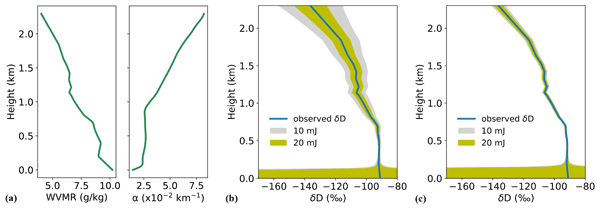
Jonas Hamperl, Clément Capitaine, Jean-Baptiste Dherbecourt, Myriam Raybaut, Patrick Chazette, Julien Totems, Bruno Grouiez, Laurence Régalia, Rosa Santagata, Corinne Evesque, Jean-Michel Melkonian, Antoine Godard, Andrew Seidl, Harald Sodemann, and Cyrille Flamant
Atmos. Meas. Tech., 14, 6675–6693, https://doi.org/10.5194/amt-14-6675-2021, https://doi.org/10.5194/amt-14-6675-2021, 2021
Short summary
Short summary
Laser active remote sensing of tropospheric water vapor is a promising technology for enhancing our understanding of processes governing the global hydrological cycle. We investigate the potential of a ground-based lidar to monitor the main water vapor isotopes at high spatio-temporal resolutions in the lower troposphere. Using a realistic end-to-end simulator, we show that high-precision measurements can be achieved within a range of 1.5 km, in mid-latitude or tropical environments.
Cited articles
Agee, E.: Mesoscale cellular convection over the oceans, Dynamics of Atmospheres and Oceans, 10, 317–341, https://doi.org/10.1016/0377-0265(87)90023-6, 1987. a
Albright, A. L., Bony, S., Stevens, B., and Vogel, R.: Observed Subcloud-Layer Moisture and Heat Budgets in the Trades, Journal of the Atmospheric Sciences, 79, 2363–2385, https://doi.org/10.1175/JAS-D-21-0337.1, 2022. a, b
Albright, A. L., Stevens, B., Bony, S., and Vogel, R.: A New Conceptual Picture of the Trade Wind Transition Layer, Journal of the Atmospheric Sciences, 80, 1547–1563, https://doi.org/10.1175/JAS-D-22-0184.1, 2023. a, b
Alinaghi, P., Janssens, M., Choudhury, G., Goren, T., Siebesma, A. P., and Glassmeier, F.: Shallow cumulus cloud fields are optically thicker when they are more clustered, Quarterly Journal of the Royal Meteorological Society, 150, 3566–3577, https://doi.org/10.1002/qj.4783, 2024. a, b
Arakawa, A. and Schubert, W. H.: Interaction of a Cumulus Cloud Ensemble with the Large-Scale Environment, Part I, Journal of Atmospheric Sciences, 31, 674–701, https://doi.org/10.1175/1520-0469(1974)031<0674:IOACCE>2.0.CO;2, 1974. a, b, c
Asai, T. and Kasahara, A.: A Theoretical Study of the Compensating Downward Motions Associated with Cumulus Clouds, Journal of Atmospheric Sciences, 24, 487–496, https://doi.org/10.1175/1520-0469(1967)024<0487:ATSOTC>2.0.CO;2, 1967. a, b
Batchelor, G. K.: Heat convection and buoyancy effects in fluids, Quarterly Journal of the Royal Meteorological Society, 80, 339–358, https://doi.org/10.1002/qj.49708034504, 1954. a
Becker, T. and Wing, A. A.: Understanding the Extreme Spread in Climate Sensitivity within the Radiative-Convective Equilibrium Model Intercomparison Project, Journal of Advances in Modeling Earth Systems, 12, e2020MS002165, https://doi.org/10.1029/2020MS002165, 2020. a
Blyth, A. M.: Entrainment in Cumulus Clouds, Journal of Applied Meteorology and Climatology, 32, 626–641, https://doi.org/10.1175/1520-0450(1993)032<0626:EICC>2.0.CO;2, 1993. a
Bony, S. and Dufresne, J.-L.: Marine boundary layer clouds at the heart of tropical cloud feedback uncertainties in climate models, Geophysical Research Letters, 32, https://doi.org/10.1029/2005GL023851, 2005. a
Bony, S., Stevens, B., Frierson, D. M. W., Jakob, C., Kageyama, M., Shepherd, R. P. T. G., Sherwood, S. C., Siebesma, A. P., Sobel, A. H., Watanabe, M., and Webb, M. J.: Clouds, circulation and climate sensitivity, Nature Geosci., 8, 261–268, https://doi.org/10.1038/ngeo2398, 2015. a
Bony, S., Stevens, B., Ament, F., Bigorre, S., Chazette, P., Crewell, S., Delanoë, J., Emanuel, K., Farrell, D., Flamant, C., Gross, S., Hirsch, L., Karstensen, J., Mayer, B., Nuijens, L., Ruppert Jr., J. H., Sandu, I., Siebesma, P., Speich, S., Szczap, F., Totems, J., Vogel, R., Wendisch, M., and Wirth, M.: EUREC4A: A field campaign to elucidate the couplings between clouds, convection and circulation, Surveys in Geophysics, 38, 1529–1568, https://doi.org/10.1007/s10712-017-9428-0, 2017. a, b
Bony, S., Schulz, H., Vial, J., and Stevens, B.: Sugar, Gravel, Fish, and Flowers: Dependence of Mesoscale Patterns of Trade-Wind Clouds on Environmental Conditions, Geophysical Research Letters, 47, e2019GL085988, https://doi.org/10.1029/2019GL085988, 2020. a, b, c
Bony, S., Lothon, M., Delanoë, J., Coutris, P., Etienne, J.-C., Aemisegger, F., Albright, A. L., André, T., Bellec, H., Baron, A., Bourdinot, J.-F., Brilouet, P.-E., Bourdon, A., Canonici, J.-C., Caudoux, C., Chazette, P., Cluzeau, M., Cornet, C., Desbios, J.-P., Duchanoy, D., Flamant, C., Fildier, B., Gourbeyre, C., Guiraud, L., Jiang, T., Lainard, C., Le Gac, C., Lendroit, C., Lernould, J., Perrin, T., Pouvesle, F., Richard, P., Rochetin, N., Salaün, K., Schwarzenboeck, A., Seurat, G., Stevens, B., Totems, J., Touzé-Peiffer, L., Vergez, G., Vial, J., Villiger, L., and Vogel, R.: EUREC4A observations from the SAFIRE ATR42 aircraft, Earth Syst. Sci. Data, 14, 2021–2064, https://doi.org/10.5194/essd-14-2021-2022, 2022. a, b, c, d, e, f, g, h, i
Brahimi, M. and Doan-Kim-Son: Interaction between two turbulent plumes in close proximity, Mechanics Research Communications, 12, 249–255, https://doi.org/10.1016/0093-6413(85)90040-0, 1985. a
Bretherton, C. S. and Blossey, P. N.: Understanding Mesoscale Aggregation of Shallow Cumulus Convection Using Large-Eddy Simulation, Journal of Advances in Modeling Earth Systems, 9, 2798–2821, https://doi.org/10.1002/2017MS000981, 2017. a, b, c
Brient, F., Schneider, T., Tan, Z., Bony, S., Qu, X., and Hall, A.: Shallowness of tropical low clouds as a predictor of climate models' response to warming, Climate Dynamics, 47, 433–449, 2016. a
Brilouet, P.-E., Lothon, M., Etienne, J.-C., Richard, P., Bony, S., Lernoult, J., Bellec, H., Vergez, G., Perrin, T., Delanoë, J., Jiang, T., Pouvesle, F., Lainard, C., Cluzeau, M., Guiraud, L., Medina, P., and Charoy, T.: The EUREC4A turbulence dataset derived from the SAFIRE ATR 42 aircraft, Earth Syst. Sci. Data, 13, 3379–3398, https://doi.org/10.5194/essd-13-3379-2021, 2021. a, b, c, d, e
Byers, H. R. and Hall, R. K.: a Census of Cumulus-Cloud Height Versus Precipitation in the Vicinity of Puerto Rico during the Winter and Spring of 1953–1954, Journal of the Atmospheric Sciences, 12, 176–178, https://doi.org/10.1175/1520-0469(1955)012<0176:ACOCCH>2.0.CO;2, 1955. a, b
Böing, S. J., Jonker, H. J. J., Siebesma, A. P., and Grabowski, W. W.: Influence of the Subcloud Layer on the Development of a Deep Convective Ensemble, Journal of the Atmospheric Sciences, 69, 2682–2698, https://doi.org/10.1175/JAS-D-11-0317.1, 2012. a, b, c, d
Chandra, A. S., Kollias, P., and Albrecht, B. A.: Multiyear Summertime Observations of Daytime Fair-Weather Cumuli at the ARM Southern Great Plains Facility, Journal of Climate, 26, 10031–10050, https://doi.org/10.1175/JCLI-D-12-00223.1, 2013. a
Chazette, P., Totems, J., Baron, A., Flamant, C., and Bony, S.: Trade-wind clouds and aerosols characterized by airborne horizontal lidar measurements during the EUREC4A field campaign, Earth Syst. Sci. Data, 12, 2919–2936, https://doi.org/10.5194/essd-12-2919-2020, 2020. a
Cohen, B. G. and Craig, G. C.: Fluctuations in an Equilibrium Convective Ensemble. Part II: Numerical experiments., Journal of the Atmospheric Sciences, 63, 2005–2015, https://doi.org/10.1175/JAS3710.1, 2006. a, b
Craig, G. C. and Cohen, B. G.: Fluctuations in an Equilibrium Convective Ensemble. Part I: Theoretical Formulation, Journal of the Atmospheric Sciences, 63, 1996–2004, https://doi.org/10.1175/JAS3709.1, 2006. a, b
Dawe, J. T. and Austin, P. H.: Statistical analysis of an LES shallow cumulus cloud ensemble using a cloud tracking algorithm, Atmos. Chem. Phys., 12, 1101–1119, https://doi.org/10.5194/acp-12-1101-2012, 2012. a, b
Delanoë, J., Protat, A., Vinson, J.-P., Brett, W., Caudoux, C., Bertrand, F., Parent du Chatelet, J., Hallali, R., Barthes, L., Haeffelin, M., and Dupont, J.-C.: BASTA: A 95-GHz FMCW Doppler Radar for Cloud and Fog Studies, J. Atmos. Oceanic Technol., 33, 1023–1038, 2016. a
Delanoë, J., Chazette, P., Bony, S., Totems, J., Flamant, C., and Baron, A.: SAFIRE ATR42: BASTALIAS L2 dataset, Aeris [data set], https://doi.org/10.25326/316, 2021. a, b, c
EUREC4A: JOANNE: Joint dropsonde Observations of the Atmosphere in tropical North atlaNtic meso-scale Environments (v2.0.0), AERIS data [data set], https://doi.org/10.25326/246, 2021. a
George, G., Stevens, B., Bony, S., Pincus, R., Fairall, C., Schulz, H., Kölling, T., Kalen, Q. T., Klingebiel, M., Konow, H., Lundry, A., Prange, M., and Radtke, J.: JOANNE: Joint dropsonde Observations of the Atmosphere in tropical North atlaNtic meso-scale Environments, Earth Syst. Sci. Data, 13, 5253–5272, https://doi.org/10.5194/essd-13-5253-2021, 2021. a, b, c
George, G., Stevens, B., Bony, S., Vogel, R., and Naumann, A. K.: Widespread shallow mesoscale circulations observed in the trades, Nature Geoscience, 16, 584–589, https://doi.org/10.1038/s41561-023-01215-1, 2023. a, b, c, d
Grabowski, W. W., Bechtold, P., Cheng, A., Forbes, R., Halliwell, C., Khairoutdinov, M., Lang, S., Nasuno, T., Petch, J., Tao, W.-K., Wong, R., Wu, X., and Xu, K.-M.: Daytime convective development over land: A model intercomparison based on LBA observations, Quarterly Journal of the Royal Meteorological Society, 132, 317–344, https://doi.org/10.1256/qj.04.147, 2006. a
Jaffeux, L. and Lothon, M.: MAESTRO 2024 Turbulence Dataset, Aeris [data set], https://doi.org/10.25326/812, 2025. a, b
Jaffeux, L., Lothon, M., Couvreux, F., Bouniol, D., Cayez, G., Joly, L., Burgalat, J., De Saint Leger, C., Bellec, H., Henry, O., Chbib, D., Jiang, T., and Bony, S.: The MAESTRO turbulence dataset derived from the SAFIRE ATR42 aircraft, Earth Syst. Sci. Data Discuss. [preprint], https://doi.org/10.5194/essd-2025-586, in review, 2025. a, b
Janssens, M., Vilà-Guerau de Arellano, J., Scheffer, M., Antonissen, C., Siebesma, A. P., and Glassmeier, F.: Cloud Patterns in the Trades Have Four Interpretable Dimensions, Geophysical Research Letters, 48, e2020GL091001, https://doi.org/10.1029/2020GL091001, 2021. a
Janssens, M., de Arellano, J. V.-G., van Heerwaarden, C. C., de Roode, S. R., Siebesma, A. P., and Glassmeier, F.: Nonprecipitating Shallow Cumulus Convection Is Intrinsically Unstable to Length Scale Growth, Journal of the Atmospheric Sciences, 80, 849–870, https://doi.org/10.1175/JAS-D-22-0111.1, 2023. a, b, c, d, e
Janssens, M., George, G., Schulz, H., Couvreux, F., and Bouniol, D.: Shallow Convective Heating in Weak Temperature Gradient Balance Explains Mesoscale Vertical Motions in the Trades, Journal of Geophysical Research: Atmospheres, 129, e2024JD041417, https://doi.org/10.1029/2024JD041417, 2024. a
Jansson, F., Janssens, M., Grönqvist, J. H., Siebesma, A. P., Glassmeier, F., Attema, J., Azizi, V., Satoh, M., Sato, Y., Schulz, H., and Kölling, T.: Cloud Botany: Shallow Cumulus Clouds in an Ensemble of Idealized Large-Domain Large-Eddy Simulations of the Trades, Journal of Advances in Modeling Earth Systems, 15, e2023MS003796, https://doi.org/10.1029/2023MS003796, 2023. a
Joseph, J. H. and Cahalan, R. F.: Nearest Neighbor Spacing of Fair Weather Cumulus Clouds, Journal of Applied Meteorology (1988–2005), 29, 793–805, 1990. a
Kaye, N. B. and Linden, P. F.: Coalescing axisymmetric turbulent plumes, Journal of Fluid Mechanics, 502, 41–63, https://doi.org/10.1017/S0022112003007250, 2004. a
Khairoutdinov, M. and Randall, D.: High-Resolution Simulation of Shallow-to-Deep Convection Transition over Land, Journal of the Atmospheric Sciences, 63, 3421–3436, https://doi.org/10.1175/JAS3810.1, 2006. a
Konow, H., Ewald, F., George, G., Jacob, M., Klingebiel, M., Kölling, T., Luebke, A. E., Mieslinger, T., Pörtge, V., Radtke, J., Schäfer, M., Schulz, H., Vogel, R., Wirth, M., Bony, S., Crewell, S., Ehrlich, A., Forster, L., Giez, A., Gödde, F., Groß, S., Gutleben, M., Hagen, M., Hirsch, L., Jansen, F., Lang, T., Mayer, B., Mech, M., Prange, M., Schnitt, S., Vial, J., Walbröl, A., Wendisch, M., Wolf, K., Zinner, T., Zöger, M., Ament, F., and Stevens, B.: EUREC4A's HALO, Earth Syst. Sci. Data, 13, 5545–5563, https://doi.org/10.5194/essd-13-5545-2021, 2021. a, b, c, d, e
Kuang, Z. and Bretherton, C. S.: A Mass-Flux Scheme View of a High-Resolution Simulation of a Transition from Shallow to Deep Cumulus Convection, Journal of the Atmospheric Sciences, 63, 1895–1909, https://doi.org/10.1175/JAS3723.1, 2006. a, b
Lamer, K. and Kollias, P.: Observations of fair-weather cumuli over land: Dynamical factors controlling cloud size and cover, Geophysical Research Letters, 42, 8693–8701, https://doi.org/10.1002/2015GL064534, 2015. a
Lamer, K., Kollias, P., and Nuijens, L.: Observations of the variability of shallow trade wind cumulus cloudiness and mass flux, Journal of Geophysical Research: Atmospheres, 120, 6161–6178, https://doi.org/10.1002/2014JD022950, 2015. a
Lareau, N. P., Zhang, Y., and Klein, S. A.: Observed Boundary Layer Controls on Shallow Cumulus at the ARM Southern Great Plains Site, Journal of the Atmospheric Sciences, 75, 2235–2255, https://doi.org/10.1175/JAS-D-17-0244.1, 2018. a
LeMone, M. A. and Pennell, W. T.: The relationship of trade-wind cumulus distribution to subcloud-layer fluxes and structure, Monthly Weather Review, 104, 524–539, https://doi.org/10.1175/1520-0493(1976)104<0524:TROTWC>2.0.CO;2, 1976. a, b, c
LeMone, M. A. and Zipser, E. J.: Cumulonimbus Vertical Velocity Events in GATE. Part I: Diameter, Intensity and Mass Flux, Journal of Atmospheric Sciences, 37, 2444–2457, https://doi.org/10.1175/1520-0469(1980)037<2444:CVVEIG>2.0.CO;2, 1980. a
Lenschow, D. and Stephens, P.: The role of thermals in the convective boundary layer, Boundary-Layer Meteorology, 19, 509–532, https://doi.org/10.1007/BF00122351, 1980. a, b, c, d
Li, S., Chen, J., and Li, P.: MixtureInf: Inference for Finite Mixture Models, r package version 1.1, https://cran.r-project.org/src/contrib/Archive/MixtureInf/MixtureInf_1.1.tar.gz (last access: 14 June 2025), 2016. a
Lothon, M. and Brilouet, P.-E.: SAFIRE ATR42: Turbulence Data 25 Hz (v1.9), Aeris [data set], https://doi.org/10.25326/128, 2020. a
López, R. E.: The Lognormal Distribution and Cumulus Cloud Populations, Monthly Weather Review, 105, 865–872, https://doi.org/10.1175/1520-0493(1977)105<0865:TLDACC>2.0.CO;2, 1977. a
Malkus, J. S. and Ronne, C.: On the structure of some cumulonimbus clouds which penetrated the high tropical troposphere, Tellus, 6, 351–366, https://doi.org/10.3402/tellusa.v6i4.8758, 1954. a
Mei, S.-J. and Yuan, C.: Three-dimensional simulation of building thermal plumes merging in calm conditions: Turbulence model evaluation and turbulence structure analysis, Building and Environment, 203, 108097, https://doi.org/10.1016/j.buildenv.2021.108097, 2021. a
Miao, Q., Geerts, B., and LeMone, M.: Vertical Velocity and Buoyancy Characteristics of Coherent Echo Plumes in the Convective Boundary Layer, Detected by a Profiling Airborne Radar, Journal of Applied Meteorology and Climatology, 45, 838–855, https://doi.org/10.1175/JAM2375.1, 2006. a
Mieslinger, T., Horváth, A., Buehler, S. A., and Sakradzija, M.: The Dependence of Shallow Cumulus Macrophysical Properties on Large-Scale Meteorology as Observed in ASTER Imagery, Journal of Geophysical Research, 124, 11477–11505, https://doi.org/10.1029/2019JD030768, 2019. a
Morrison, H., Peters, J. M., Chandrakar, K. K., and Sherwood, S. C.: Influences of Environmental Relative Humidity and Horizontal Scale of Subcloud Ascent on Deep Convective Initiation, Journal of the Atmospheric Sciences, 79, 337–359, https://doi.org/10.1175/JAS-D-21-0056.1, 2022. a, b, c
Muller, C., Yang, D., Craig, G., Cronin, T., Fildier, B., Haerter, J. O., Hohenegger, C., Mapes, B., Randall, D., Shamekh, S., and Sherwood, S. C.: Spontaneous Aggregation of Convective Storms, Annual Review of Fluid Mechanics, 54, 133–157, https://doi.org/10.1146/annurev-fluid-022421-011319, 2022. a
Narenpitak, P., Kazil, J., Yamaguchi, T., Quinn, P., and Feingold, G.: From Sugar to Flowers: A Transition of Shallow Cumulus Organization During ATOMIC, Journal of Advances in Modeling Earth Systems, 13, e2021MS002619, https://doi.org/10.1029/2021MS002619, 2021. a, b, c, d
Neggers, R. A. J.: Exploring bin-macrophysics models for moist convective transport and clouds, Journal of Advances in Modeling Earth Systems, 7, 2079–2104, https://doi.org/10.1002/2015MS000502, 2015. a, b
Neggers, R. A. J. and Griewank, P. J.: A Decentralized Approach for Modeling Organized Convection Based on Thermal Populations on Microgrids, Journal of Advances in Modeling Earth Systems, 14, e2022MS003042, https://doi.org/10.1029/2022MS003042, 2022. a, b, c
Neggers, R. A. J., Jonker, H. J. J., and Siebesma, A. P.: Size Statistics of Cumulus Cloud Populations in Large-Eddy Simulations, Journal of the Atmospheric Sciences, 60, 1060–1074, https://doi.org/10.1175/1520-0469(2003)60<1060:SSOCCP>2.0.CO;2, 2003. a
Nuijens, L. and Siebesma, A. P.: Boundary Layer Clouds and Convection over Subtropical Oceans in our Current and in a Warmer Climate, Current Climate Change Reports, 5, 80–94, https://doi.org/10.1007/s40641-019-00126-x, 2019. a
Nuijens, L., Serikov, I., Hirsch, L., Lonitz, K., and Stevens, B.: The distribution and variability of low-level cloud in the North Atlantic trades, Quarterly Journal of the Royal Meteorological Society, 140, 2364–2374, https://doi.org/10.1002/qj.2307, 2014. a
Öktem, R. and Romps, D. M.: Prediction for Cloud Spacing Confirmed Using Stereo Cameras, Journal of the Atmospheric Sciences, 78, 3717–3725, https://doi.org/10.1175/JAS-D-21-0026.1, 2021. a
Pera, L. and Gebhart, B.: Laminar plume interactions, Journal of Fluid Mechanics, 68, 259–271, https://doi.org/10.1017/S0022112075000791, 1975. a
Rasp, S., Schulz, H., Bony, S., and Stevens, B.: Combining Crowdsourcing and Deep Learning to Explore the Mesoscale Organization of Shallow Convection, Bulletin of the American Meteorological Society, 101, E1980–E1995, https://doi.org/10.1175/BAMS-D-19-0324.1, 2020. a
Rauber, R. M., Stevens, B., Ochs, H. T., Knight, C., Albrecht, B. A., Blyth, A. M., Fairall, C. W., Jensen, J. B., Lasher-Trapp, S. G., Mayol-Bracero, O. L., Vali, G., Anderson, J. R., Baker, B. A., Bandy, A. R., Burnet, E., Brenguier, J.-L., Brewer, W. A., Brown, P. R. A., Chuang, R., Cotton, W. R., Girolamo, L. D., Geerts, B., Gerber, H., Göke, S., Gomes, L., Heikes, B. G., Hudson, J. G., Kollias, P., Lawson, R. R., Krueger, S. K., Lenschow, D. H., Nuijens, L., O'Sullivan, D. W., Rilling, R. A., Rogers, D. C., Siebesma, A. P., Snodgrass, E., Stith, J. L., Thornton, D. C., Tucker, S., Twohy, C. H., and Zuidema, P.: Rain in Shallow Cumulus Over the Ocean: The RICO Campaign, Bulletin of the American Meteorological Society, 88, 1912–1928, https://doi.org/10.1175/BAMS-88-12-1912, 2007. a
Rooney, G. G.: Merging of two or more plumes arranged around a circle, Journal of Fluid Mechanics, 796, 712–731, https://doi.org/10.1017/jfm.2016.272, 2016. a
Sakradzija, M., Seifert, A., and Heus, T.: Fluctuations in a quasi-stationary shallow cumulus cloud ensemble, Nonlin. Processes Geophys., 22, 65–85, https://doi.org/10.5194/npg-22-65-2015, 2015. a, b
Savre, J. and Craig, G.: Fitting Cumulus Cloud Size Distributions From Idealized Cloud Resolving Model Simulations, Journal of Advances in Modeling Earth Systems, 15, e2022MS003360, https://doi.org/10.1029/2022MS003360, 2023. a
Schulz, H.: C3ONTEXT: a Common Consensus on Convective OrgaNizaTion during the EUREC4A eXperimenT, Earth Syst. Sci. Data, 14, 1233–1256, https://doi.org/10.5194/essd-14-1233-2022, 2022. a, b
Schulz, H., Eastman, R., and Stevens, B.: Characterization and Evolution of Organized Shallow Convection in the Downstream North Atlantic Trades, Journal of Geophysical Research, 126, e2021JD034575, https://doi.org/10.1029/2021JD034575, 2021. a
Seifert, A. and Heus, T.: Large-eddy simulation of organized precipitating trade wind cumulus clouds, Atmos. Chem. Phys., 13, 5631–5645, https://doi.org/10.5194/acp-13-5631-2013, 2013. a
Simpson, J., Simpson, R. H., Andrews, D. A., and Eaton, M. A.: Experimental cumulus dynamics, Reviews of Geophysics, 3, 387–431, https://doi.org/10.1029/RG003i003p00387, 1965. a, b, c
Simpson, J., Westcott, N., Clerman, R., and Pielke, R. A.: On cumulus mergers, Archiv für Meteorologie, Geophysik und Bioklimatologie, Serie A, 29, 1–40, https://doi.org/10.1007/BF02247731, 1980. a
Stevens, B., Bony, S., Brogniez, H., Hentgen, L., Hohenegger, C., Kiemle, C., L'Ecuyer, T. S., Naumann, A. K., Schulz, H., Siebesma, P. A., Vial, J., Winker, D. M., and Zuidema, P.: Sugar, gravel, fish and flowers: Mesoscale cloud patterns in the trade winds, Quarterly Journal of the Royal Meteorological Society, 146, 141–152, https://doi.org/10.1002/qj.3662, 2020. a, b, c, d
Stevens, B., Bony, S., Farrell, D., Ament, F., Blyth, A., Fairall, C., Karstensen, J., Quinn, P. K., Speich, S., Acquistapace, C., Aemisegger, F., Albright, A. L., Bellenger, H., Bodenschatz, E., Caesar, K.-A., Chewitt-Lucas, R., de Boer, G., Delanoë, J., Denby, L., Ewald, F., Fildier, B., Forde, M., George, G., Gross, S., Hagen, M., Hausold, A., Heywood, K. J., Hirsch, L., Jacob, M., Jansen, F., Kinne, S., Klocke, D., Kölling, T., Konow, H., Lothon, M., Mohr, W., Naumann, A. K., Nuijens, L., Olivier, L., Pincus, R., Pöhlker, M., Reverdin, G., Roberts, G., Schnitt, S., Schulz, H., Siebesma, A. P., Stephan, C. C., Sullivan, P., Touzé-Peiffer, L., Vial, J., Vogel, R., Zuidema, P., Alexander, N., Alves, L., Arixi, S., Asmath, H., Bagheri, G., Baier, K., Bailey, A., Baranowski, D., Baron, A., Barrau, S., Barrett, P. A., Batier, F., Behrendt, A., Bendinger, A., Beucher, F., Bigorre, S., Blades, E., Blossey, P., Bock, O., Böing, S., Bosser, P., Bourras, D., Bouruet-Aubertot, P., Bower, K., Branellec, P., Branger, H., Brennek, M., Brewer, A., Brilouet , P.-E., Brügmann, B., Buehler, S. A., Burke, E., Burton, R., Calmer, R., Canonici, J.-C., Carton, X., Cato Jr., G., Charles, J. A., Chazette, P., Chen, Y., Chilinski, M. T., Choularton, T., Chuang, P., Clarke, S., Coe, H., Cornet, C., Coutris, P., Couvreux, F., Crewell, S., Cronin, T., Cui, Z., Cuypers, Y., Daley, A., Damerell, G. M., Dauhut, T., Deneke, H., Desbios, J.-P., Dörner, S., Donner, S., Douet, V., Drushka, K., Dütsch, M., Ehrlich, A., Emanuel, K., Emmanouilidis, A., Etienne, J.-C., Etienne-Leblanc, S., Faure, G., Feingold, G., Ferrero, L., Fix, A., Flamant, C., Flatau, P. J., Foltz, G. R., Forster, L., Furtuna, I., Gadian, A., Galewsky, J., Gallagher, M., Gallimore, P., Gaston, C., Gentemann, C., Geyskens, N., Giez, A., Gollop, J., Gouirand, I., Gourbeyre, C., de Graaf, D., de Groot, G. E., Grosz, R., Güttler, J., Gutleben, M., Hall, K., Harris, G., Helfer, K. C., Henze, D., Herbert, C., Holanda, B., Ibanez-Landeta, A., Intrieri, J., Iyer, S., Julien, F., Kalesse, H., Kazil, J., Kellman, A., Kidane, A. T., Kirchner, U., Klingebiel, M., Körner, M., Kremper, L. A., Kretzschmar, J., Krüger, O., Kumala, W., Kurz, A., L'Hégaret, P., Labaste, M., Lachlan-Cope, T., Laing, A., Landschützer, P., Lang, T., Lange, D., Lange, I., Laplace, C., Lavik, G., Laxenaire, R., Le Bihan, C., Leandro, M., Lefevre, N., Lena, M., Lenschow, D., Li, Q., Lloyd, G., Los, S., Losi, N., Lovell, O., Luneau, C., Makuch, P., Malinowski, S., Manta, G., Marinou, E., Marsden, N., Masson, S., Maury, N., Mayer, B., Mayers-Als, M., Mazel, C., McGeary, W., McWilliams, J. C., Mech, M., Mehlmann, M., Meroni, A. N., Mieslinger, T., Minikin, A., Minnett, P., Möller, G., Morfa Avalos, Y., Muller, C., Musat, I., Napoli, A., Neuberger, A., Noisel, C., Noone, D., Nordsiek, F., Nowak, J. L., Oswald, L., Parker, D. J., Peck, C., Person, R., Philippi, M., Plueddemann, A., Pöhlker, C., Pörtge, V., Pöschl, U., Pologne, L., Posyniak, M., Prange, M., Quiñones Meléndez, E., Radtke, J., Ramage, K., Reimann, J., Renault, L., Reus, K., Reyes, A., Ribbe, J., Ringel, M., Ritschel, M., Rocha, C. B., Rochetin, N., Röttenbacher, J., Rollo, C., Royer, H., Sadoulet, P., Saffin, L., Sandiford, S., Sandu, I., Schäfer, M., Schemann, V., Schirmacher, I., Schlenczek, O., Schmidt, J., Schröder, M., Schwarzenboeck, A., Sealy, A., Senff, C. J., Serikov, I., Shohan, S., Siddle, E., Smirnov, A., Späth, F., Spooner, B., Stolla, M. K., Szkółka, W., de Szoeke, S. P., Tarot, S., Tetoni, E., Thompson, E., Thomson, J., Tomassini, L., Totems, J., Ubele, A. A., Villiger, L., von Arx, J., Wagner, T., Walther, A., Webber, B., Wendisch, M., Whitehall, S., Wiltshire, A., Wing, A. A., Wirth, M., Wiskandt, J., Wolf, K., Worbes, L., Wright, E., Wulfmeyer, V., Young, S., Zhang, C., Zhang, D., Ziemen, F., Zinner, T., and Zöger, M.: EUREC4A, Earth Syst. Sci. Data, 13, 4067–4119, https://doi.org/10.5194/essd-13-4067-2021, 2021. a, b, c
Touzé-Peiffer, L., Vogel, R., and Rochetin, N.: Cold Pools Observed during EUREC4A: Detection and Characterization from Atmospheric Soundings, Journal of Applied Meteorology and Climatology, 61, 593–610, https://doi.org/10.1175/JAMC-D-21-0048.1, 2022. a
Vial, J., Bony, S., Stevens, B., and Vogel, R.: Mechanisms and Model Diversity of Trade-Wind Shallow Cumulus Cloud Feedbacks: A Review, Survey of Geophys., 38, 1331–1353, https://doi.org/10.1007/s10712-017-9418-2, 2017. a
Vial, J., Vogel, R., and Schulz, H.: On the daily cycle of mesoscale cloud organization in the winter trades, Quarterly Journal of the Royal Meteorological Society, 147, 2850–2873, https://doi.org/10.1002/qj.4103, 2021. a
Vogel, R., Bony, S., and Stevens, B.: Estimating the Shallow Convective Mass Flux from the Subcloud-Layer Mass Budget, Journal of the Atmospheric Sciences, 77, 1559–1574, https://doi.org/10.1175/JAS-D-19-0135.1, 2020. a
Williams, A. and Hacker, J.: Interactions between coherent eddies in the lower convective boundary layer, Boundary-Layer Meteorology, 64, 55–74, https://doi.org/10.1007/BF00705662, 1993. a, b
Zilitinkevich, S., Kadantsev, E., Repina, I., Mortikov, E., and Glazunov, A.: Order out of Chaos: Shifting Paradigm of Convective Turbulence, Journal of the Atmospheric Sciences, 78, 3925–3932, https://doi.org/10.1175/JAS-D-21-0013.1, 2021. a
Editorial statement
How convective clouds in the trades self-organize into mesoscale patterns is not well understood. Using airborne observations from the EUREC⁴A campaign, this study shows that the size distributions of boundary-layer thermals and cloud bases follow a double-exponential law. Analytical calculations and statistical simulations show a complex interplay between thermals and clouds that constrains the type of mesoscale cloud pattern that emerges as well as the total cloud fraction. The resulting framework suggests an intriguing path forward for representing these thermals and clouds in weather and climate models.
How convective clouds in the trades self-organize into mesoscale patterns is not well...
Short summary
Space photographs of the Earth show that clouds form diverse, common but poorly understood cloud patterns. The analysis of observations gathered from research aircraft over the tropical ocean shows that the merging of thermals and clouds in the first kilometer of the atmosphere plays a key role in controlling the size, depth and spacing of clouds. This reveals a fundamental process through which clouds interact with each other and with their environment.
Space photographs of the Earth show that clouds form diverse, common but poorly understood cloud...


Altmetrics
Final-revised paper
Preprint