
Articles | Volume 25, issue 23
https://doi.org/10.5194/acp-25-17253-2025
© Author(s) 2025. This work is distributed under
the Creative Commons Attribution 4.0 License.
the Creative Commons Attribution 4.0 License.
https://doi.org/10.5194/acp-25-17253-2025
© Author(s) 2025. This work is distributed under
the Creative Commons Attribution 4.0 License.
the Creative Commons Attribution 4.0 License.
Research article
| 
01 Dec 2025
Research article |
| 01 Dec 2025
| 01 Dec 2025
Predicting ice supersaturation for contrail avoidance: ensemble forecasting using ICON with two-moment ice microphysics

Deutscher Wetterdienst, Frankfurter Straße 135, 63067 Offenbach am Main, Germany
Carmen G. Köhler
Deutscher Wetterdienst, Frankfurter Straße 135, 63067 Offenbach am Main, Germany
Axel Seifert
Deutscher Wetterdienst, Frankfurter Straße 135, 63067 Offenbach am Main, Germany
Linda Schlemmer
Deutscher Wetterdienst, Frankfurter Straße 135, 63067 Offenbach am Main, Germany
Related authors
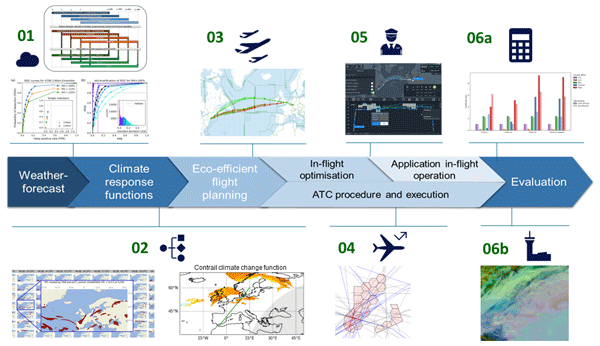
Sigrun Matthes, Klaus Gierens, Christine Frömming, Björn Beckmann, Luca Bugliaro, Katrin Dahlmann, Simone Dietmüller, Maleen Hanst, Sina Hofer, Julian Jene, Simon Kirschler, Carmen G. Köhler, Alexander Lau, Ralph Leemüller, Aline Liedtke, Maximilian Mendiguchia Meuser, Patrick Peter, Vanessa Santos Gabriel, Ines Köhler, Gerd Saueressig, Linda Schlemmer, Jonas Sperling, Swen Schlobach, Ralph Schultz, Kristina von Sack, Nathalie Waltenberg, and Zarah Zengerling
J. Env. Com. Air Transp. Sys., 1, 5, https://doi.org/10.5194/jecats-1-5-2026, https://doi.org/10.5194/jecats-1-5-2026, 2026
Short summary
Short summary
Operational strategies such as eco-efficient flight routing have potential to reduce aviation’s climate effect. A collaborative workflow integrating weather forecast, climate response modelling, flight planning, air traffic control, and climate assessment was developed and tested in D-KULT. Innovative developments demonstrate substantial progress on how to identify alternative trajectories, highlighting remaining challenges with uncertainties in weather forecast and non-CO2 climate effects.
Sigrun Matthes, Klaus Gierens, Christine Frömming, Björn Beckmann, Luca Bugliaro, Katrin Dahlmann, Simone Dietmüller, Maleen Hanst, Sina Hofer, Julian Jene, Simon Kirschler, Carmen G. Köhler, Alexander Lau, Ralph Leemüller, Aline Liedtke, Maximilian Mendiguchia Meuser, Patrick Peter, Vanessa Santos Gabriel, Ines Köhler, Gerd Saueressig, Linda Schlemmer, Jonas Sperling, Swen Schlobach, Ralph Schultz, Kristina von Sack, Nathalie Waltenberg, and Zarah Zengerling
J. Env. Com. Air Transp. Sys., 1, 5, https://doi.org/10.5194/jecats-1-5-2026, https://doi.org/10.5194/jecats-1-5-2026, 2026
Short summary
Short summary
Operational strategies such as eco-efficient flight routing have potential to reduce aviation’s climate effect. A collaborative workflow integrating weather forecast, climate response modelling, flight planning, air traffic control, and climate assessment was developed and tested in D-KULT. Innovative developments demonstrate substantial progress on how to identify alternative trajectories, highlighting remaining challenges with uncertainties in weather forecast and non-CO2 climate effects.
Leonie von Terzi, Axel Seifert, Christoph Siewert, Fabian Jakub, and Stefan Kneifel
EGUsphere, https://doi.org/10.5194/egusphere-2026-3865, https://doi.org/10.5194/egusphere-2026-3865, 2026
Short summary
Short summary
A distinct temperature layer in clouds promotes growth of dendritic ice crystals, producing characteristic radar signatures whose origin has remained unclear. We combined radar observations with microphysical simulations to identify the dominant microphysical processes. Collisions breaking particles into fragments prove essential to reproducing the signatures, alongside crystal growth and aggregation, clarifying the link between radar signals and ice processes for weather models.
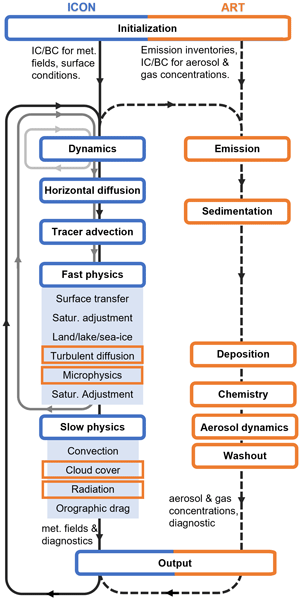
Gholam Ali Hoshyaripour, Andreas Baer, Sascha Bierbauer, Julia Bruckert, Dominik Brunner, Jochen Förstner, Arash Hamzehloo, Valentin Hanft, Corina Keller, Martina Klose, Pankaj Kumar, Patrick Ludwig, Enrico Metzner, Lisa Muth, Andreas Pauling, Nikolas Porz, Maryam Ramezani Ziarani, Thomas Reddmann, Luca Reißig, Roland Ruhnke, Khompat Satitkovitchai, Axel Seifert, Miriam Sinnhuber, Michael Steiner, Stefan Versick, Heike Vogel, Michael Weimer, Sven Werchner, and Corinna Hoose
Geosci. Model Dev., 19, 1645–1681, https://doi.org/10.5194/gmd-19-1645-2026, https://doi.org/10.5194/gmd-19-1645-2026, 2026
Short summary
Short summary
This paper presents recent advances in ICON-ART, a modeling system that simulates atmospheric composition – such as gases and particles – and their interactions with weather and climate. By integrating updated chemistry, emissions, and aerosol processes, ICON-ART enables detailed, scale-spanning simulations. It supports both scientific research and operational forecasts, contributing to improved air quality, weather and climate predictions.
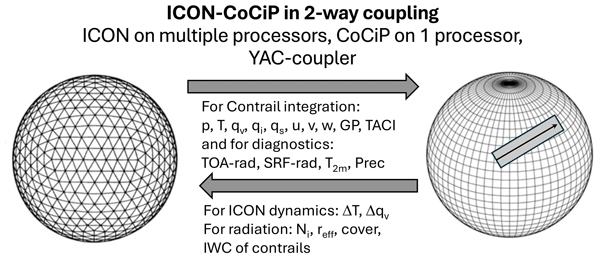
Ulrich Schumann and Axel Seifert
Atmos. Chem. Phys., 25, 18571–18597, https://doi.org/10.5194/acp-25-18571-2025, https://doi.org/10.5194/acp-25-18571-2025, 2025
Short summary
Short summary
Contrails caused by aircraft flying in cold and humid air masses, impact weather and climate. For reduction of the climate impact, one should avoid flights forming warming contrails. This requires good weather forecast of contrail formation conditions and contrail effects. We present a two-way coupling of the Contrail Cirrus Prediction model (CoCiP) with the global Icosahedral Non-hydrostatic numerical weather model (ICON). We find that contrails are predictable – but only for a finite period.
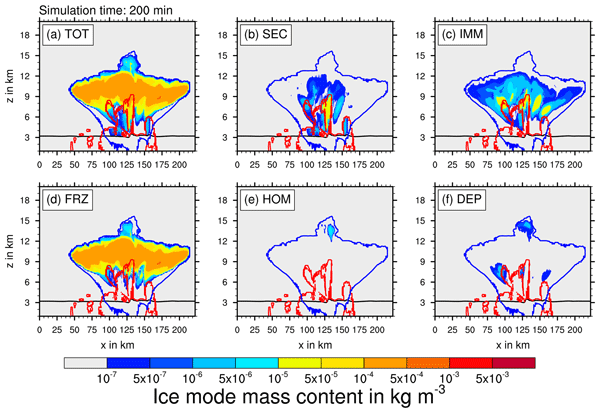
Tim Lüttmer, Peter Spichtinger, and Axel Seifert
Atmos. Chem. Phys., 25, 4505–4529, https://doi.org/10.5194/acp-25-4505-2025, https://doi.org/10.5194/acp-25-4505-2025, 2025
Short summary
Short summary
We investigate ice formation pathways in idealized convective clouds using a novel microphysics scheme that distinguishes between five ice classes each with their own unique formation mechanism. Ice crystals from rime splintering form the lowermost layer of ice crystals around the updraft core. The majority of ice crystals in the anvil of the convective cloud stems from frozen droplets. Ice stemming from homogeneous and deposition nucleation was only relevant in the overshoot.
Stefano Ubbiali, Christian Kühnlein, Christoph Schär, Linda Schlemmer, Thomas C. Schulthess, Michael Staneker, and Heini Wernli
Geosci. Model Dev., 18, 529–546, https://doi.org/10.5194/gmd-18-529-2025, https://doi.org/10.5194/gmd-18-529-2025, 2025
Short summary
Short summary
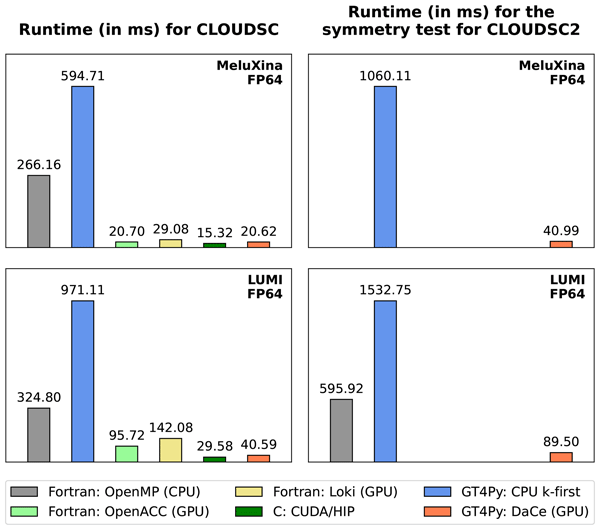
We explore a high-level programming model for porting numerical weather prediction (NWP) model codes to graphics processing units (GPUs). We present a Python rewrite with the domain-specific library GT4Py (GridTools for Python) of two renowned cloud microphysics schemes and the associated tangent-linear and adjoint algorithms. We find excellent portability, competitive GPU performance, robust execution on diverse computing architectures, and enhanced code maintainability and user productivity.
Axel Seifert, Vanessa Bachmann, Florian Filipitsch, Jochen Förstner, Christian M. Grams, Gholam Ali Hoshyaripour, Julian Quinting, Anika Rohde, Heike Vogel, Annette Wagner, and Bernhard Vogel
Atmos. Chem. Phys., 23, 6409–6430, https://doi.org/10.5194/acp-23-6409-2023, https://doi.org/10.5194/acp-23-6409-2023, 2023
Short summary
Short summary
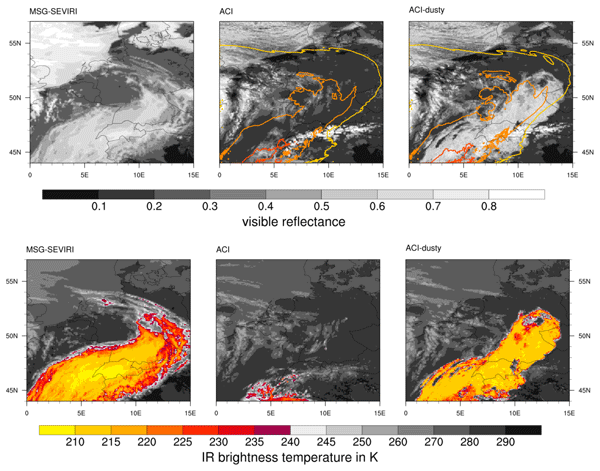
We investigate how mineral dust can lead to the formation of cirrus clouds. Dusty cirrus clouds lead to a reduction in solar radiation at the surface and, hence, a reduced photovoltaic power generation. Current weather prediction systems are not able to predict this interaction between mineral dust and cirrus clouds. We have developed a new physical description of the formation of dusty cirrus clouds. Overall we can show a considerable improvement in the forecast quality of clouds and radiation.
Noviana Dewani, Mirjana Sakradzija, Linda Schlemmer, Ronny Leinweber, and Juerg Schmidli
Atmos. Chem. Phys., 23, 4045–4058, https://doi.org/10.5194/acp-23-4045-2023, https://doi.org/10.5194/acp-23-4045-2023, 2023
Short summary
Short summary
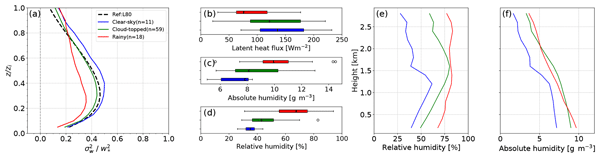
A high daily variability of the normalized vertical velocity variance profiles in the convective boundary layer is observed using Doppler lidar data during the FESSTVaL campaign 2020–2021. The dependency of the normalized vertical velocity variance on several meteorological parameters explains that the moisture processes in the boundary layer contribute to the remaining variability. The finding suggests that a new vertical velocity scale that takes moist processes into account has to be defined.
Markus Karrer, Axel Seifert, Davide Ori, and Stefan Kneifel
Atmos. Chem. Phys., 21, 17133–17166, https://doi.org/10.5194/acp-21-17133-2021, https://doi.org/10.5194/acp-21-17133-2021, 2021
Short summary
Short summary
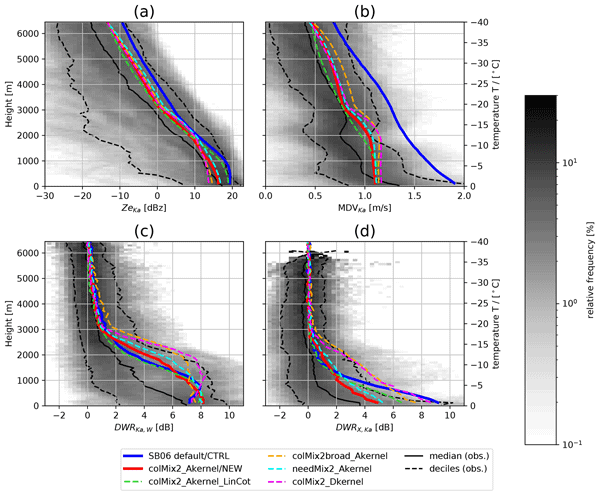
Modeling precipitation is of great relevance, e.g., for mitigating damage caused by extreme weather. A key component in accurate precipitation modeling is aggregation, i.e., sticking together of snowflakes. Simulating aggregation is difficult due to multiple parameters that are not well-known. Knowing how these parameters affect aggregation can help its simulation. We put new parameters in the model and select a combination of parameters with which the model can simulate observations better.
Cited articles
Achatz, U., Alexander, M. J., Becker, E., Chun, H.-Y., Dörnbrack, A., Holt, L., Plougonven, R., Polichtchouk, I., Sato, K., Sheshadri, A., Stephan, Claudia C., van Niekerk, A., and Wright, C. J.: Atmospheric gravity waves: Processes and parameterization, J. Atmos. Sci., 81, 237–262, https://doi.org/10.1175/JAS-D-23-0210.1, 2024. a
Appleman, H.: The formation of exhaust condensation trails by jet aircraft, B. Am. Meteorol. Soc., 34, 14–20, https://doi.org/10.1175/1520-0477-34.1.14, 1953. a
Bechtold, P., Köhler, M., Jung, T., Doblas-Reyes, F., Leutbecher, M., Rodwell, M. J., Vitart, F., and Balsamo, G.: Advances in simulating atmospheric variability with the ECMWF model: From synoptic to decadal time-scales, Q. J. Roy. Meteor. Soc., 134, 1337–1351, https://doi.org/10.1002/qj.289, 2008. a
Bickel, M., Ponater, M., Bock, L., Burkhardt, U., and Reineke, S.: Estimating the effective radiative forcing of contrail cirrus, J. Climate, 33, 1991–2005, https://doi.org/10.1175/JCLI-D-19-0467.1, 2020. a
Bickel, M., Ponater, M., Burkhardt, U., Righi, M., Hendricks, J., and Jöckel, P.: Contrail Cirrus Climate Impact: From Radiative Forcing to Surface Temperature Change, J. Climate, 38, 1895–1912, https://doi.org/10.1175/JCLI-D-24-0245.1, 2025. a
Borella, A., Vignon, É., Boucher, O., and Rohs, S.: An empirical parameterization of the subgrid-scale distribution of water vapor in the UTLS for atmospheric general circulation models, J. Geophys. Res.-Atmos., 129, e2024JD040981, https://doi.org/10.1029/2024JD040981, 2024. a
Borella, A., Vignon, É., Boucher, O., Meurdesoif, Y., and Fairhead, L.: A new prognostic parameterization of subgrid ice supersaturation and cirrus clouds in the ICOLMDZ AGCM, J. Adv. Model. Earth Sy., 17, e2024MS004918, https://doi.org/10.1029/2024MS004918, 2025. a
Borg, L. A., Dirksen, R. J., and Knuteson, R. O.: Land-based cal/val campaigns, in: Field Measurements for Passive Environmental Remote Sensing, Elsevier, 219–233, https://doi.org/10.1016/B978-0-12-823953-7.00001-0, 2023. a
Cooper, W. A.: Ice Initiation in Natural Clouds, American Meteorological Society, Boston, MA, 29–32, https://doi.org/10.1007/978-1-935704-17-1_4, 1986. a
Dekoutsidis, G., Groß, S., Wirth, M., Krämer, M., and Rolf, C.: Characteristics of supersaturation in midlatitude cirrus clouds and their adjacent cloud-free air, Atmos. Chem. Phys., 23, 3103–3117, https://doi.org/10.5194/acp-23-3103-2023, 2023. a
Dietmüller, S., Matthes, S., Dahlmann, K., Yamashita, H., Simorgh, A., Soler, M., Linke, F., Lührs, B., Meuser, M. M., Weder, C., Grewe, V., Yin, F., and Castino, F.: A Python library for computing individual and merged non-CO2 algorithmic climate change functions: CLIMaCCF V1.0, Geosci. Model Dev., 16, 4405–4425, https://doi.org/10.5194/gmd-16-4405-2023, 2023. a
Dirksen, R. J., Haefele, A., Vogt, F. P., Sommer, M., von Rohden, C., Martucci, G., Gonzague, R., Felix, C., Modolo, L., Vömel, H., Simeonov, T., Oelsner, P., Edwards, D., Oakley, T., Gardiner, T., and Ansari, M. I.: Report of WMO's 2022 Upper-Air Instrument Intercomparison Campaign, in: Instruments and Observing Methods Report No. 143, 1–400, WMO, https://library.wmo.int/records/item/ 68808-report-of-wmo-s-2022-upper-air-instrument-intercompar ison-campaign (last access: 24 November 2025), 2022. a
Doms, G., Förstner, J., Heise, E., Herzog, H.-J., Mironov, D., Raschendorfer, M., Reinhardt, T., Ritter, B., Schrodin, R., Schulz, J.-P., and Vogel, G.: A Description of the Nonhydrostatic Regional COSMO Model: Part II Physical Parameterizations (v 6.0), Deutscher Wetterdienst, https://doi.org/10.5676/DWD_pub/nwv/cosmo-doc_6.00_II, 2021. a
Du, J., Berner, J., Buizza, R., Charron, M., Houtekamer, P., Hou, D., Jankov, I., Mu, M., Wang, X., Wei, M., and Yuan, H.: Ensemble methods for meteorological predictions, NOAA/NCEP, https://doi.org/10.7289/V5/ON-NCEP-493, 2018. a
Dyroff, C., Zahn, A., Christner, E., Forbes, R., Tompkins, A. M., and van Velthoven, P. F.: Comparison of ECMWF analysis and forecast humidity data with CARIBIC upper troposphere and lower stratosphere observations, Q. J. Roy. Meteor. Soc., 141, 833–844, https://doi.org/10.1002/qj.2400, 2015. a
ECMWF: IFS Documentation CY49R1 - Part IV: Physical Processes, Chap. 4, ECMWF, https://doi.org/10.21957/c731ee1102, 2024. a, b
Field, P. R., Hogan, R. J., Brown, P. R., Illingworth, A. J., Choularton, T. W., and Cotton, R. J.: Parametrization of ice-particle size distributions for mid-latitude stratiform cloud, Q. J. Roy. Meteor. Soc., 131, 1997–2017, https://doi.org/10.1256/qj.04.134, 2005. a
Grewe, V., Dahlmann, K., Flink, J., Frömming, C., Ghosh, R., Gierens, K., Heller, R., Hendricks, J., Jöckel, P., Kaufmann, S., Kölker, K., Linke, F., Luchkova, T., Lührs, B., Van Manen, J., Matthes, S., Minikin, A., Niklaß, M., Plohr, M., Righi, M., Rosanka, S., Schmitt, A., Schumann, U., Terekhov, I., Unterstrasser, S., Vázquez-Navarro, M., Voigt, C., Wicke, K., Yamashita, H., Zahn, A., and Ziereis, H.: Mitigating the climate impact from aviation: Achievements and results of the DLR WeCare project, Aerospace, 4, 34, https://doi.org/10.3390/aerospace4030034, 2017a. a
Grewe, V., Matthes, S., Frömming, C., Brinkop, S., Jöckel, P., Gierens, K., Champougny, T., Fuglestvedt, J., Haslerud, A., Irvine, E., and Shine, K.: Feasibility of climate-optimized air traffic routing for trans-Atlantic flights, Environ. Res. Lett., 12, 034003, https://doi.org/10.1088/1748-9326/aa5ba0, 2017b. a
Grewe, V., Gangoli Rao, A., Grönstedt, T., Xisto, C., Linke, F., Melkert, J., Middel, J., Ohlenforst, B., Blakey, S., Christie, S., Matthes, S., and Dahlmann, K.: Evaluating the climate impact of aviation emission scenarios towards the Paris agreement including COVID-19 effects, Nat. Commun., 12, 3841, https://doi.org/10.1038/s41467-021-24091-y, 2021. a
Grundner, A., Beucler, T., Gentine, P., and Eyring, V.: Data-driven equation discovery of a cloud cover parameterization, J. Adv. Model. Earth Sy., 16, e2023MS003763, https://doi.org/10.1029/2023MS003763, 2024. a
Hanst, M., Köhler, C. G., Seifert, A., and Schlemmer, L.: Supplementary Code and Data for the Paper ”Predicting Ice Supersaturation for Contrail Avoidance: Ensemble Forecasting using ICON with Two-Moment Ice Microphysics”, Version v1, Zenodo [code/data set], https://doi.org/10.5281/zenodo.15881140, 2025. a
Hardy, B.: ITS-90 formulations for vapor pressure, frostpoint temperature, dewpoint temperature, and enhancement factors in the range −100 to +100 °C, in: The proceedings of the third international symposium on Humidity & Moisture, Teddington, London, England, 1–8, https://www.decatur.de/javascript/dew/resources/its90formulas.pdf (last access: 24 November 2025), 1998. a
Hunt, B. R., Kostelich, E. J., and Szunyogh, I.: Efficient data assimilation for spatiotemporal chaos: A local ensemble transform Kalman filter, Physica D, 230, 112–126, https://doi.org/10.1016/j.physd.2006.11.008, 2007. a
Kahn, B. H., Gettelman, A., Fetzer, E. J., Eldering, A., and Liang, C. K.: Cloudy and clear-sky relative humidity in the upper troposphere observed by the A-train, J. Geophys. Res.-Atmos., 114, https://doi.org/10.1029/2008JD010341, 2009. a
Kärcher, B.: Formation and radiative forcing of contrail cirrus, Nat. Commun., 9, 1824, https://doi.org/10.1038/s41467-018-04068-0, 2018. a
Kärcher, B., Hendricks, J., and Lohmann, U.: Physically based parameterization of cirrus cloud formation for use in global atmospheric models, J. Geophys. Res., 111, https://doi.org/10.1029/2005JD006219, 2006. a
Kärcher, B., DeMott, P., Jensen, E., and Harrington, J.: Studies on the competition between homogeneous and heterogeneous ice nucleation in cirrus formation, J. Geophys. Res.-Atmos., 127, e2021JD035805, https://doi.org/10.1029/2021JD035805, 2022. a
Kärcher, B., Jensen, E., Pokrifka, G., and Harrington, J. Y.: Ice supersaturation variability in cirrus clouds: Role of vertical wind speeds and deposition coefficients, J. Geophys. Res.-Atmos., 128, e2023JD039324, https://doi.org/10.1029/2023JD039324, 2023. a
Klöwer, M., Allen, M., Lee, D., Proud, S., Gallagher, L., and Skowron, A.: Quantifying aviation’s contribution to global warming, Environ. Res. Lett., 16, 104027, https://doi.org/10.1088/1748-9326/ac286e, 2021. a
Köhler, C. G. and Seifert, A.: Identifying sensitivities for cirrus modelling using a two-moment two-mode bulk microphysics scheme, Tellus B, 67, 24494, https://doi.org/10.3402/tellusb.v67.24494, 2015. a, b
Krüger, K., Schäfler, A., Wirth, M., Weissmann, M., and Craig, G. C.: Vertical structure of the lower-stratospheric moist bias in the ERA5 reanalysis and its connection to mixing processes, Atmos. Chem. Phys., 22, 15559–15577, https://doi.org/10.5194/acp-22-15559-2022, 2022. a
Kunz, A., Spelten, N., Konopka, P., Müller, R., Forbes, R. M., and Wernli, H.: Comparison of Fast In situ Stratospheric Hygrometer (FISH) measurements of water vapor in the upper troposphere and lower stratosphere (UTLS) with ECMWF (re)analysis data, Atmos. Chem. Phys., 14, 10803–10822, https://doi.org/10.5194/acp-14-10803-2014, 2014. a
Lee, D. S.: The current state of scientific understanding of the non-CO2 effects of aviation on climate, UK Department for Transport, Manchester Metropolitan University, https://assets.publishing.service.gov.uk/government/uploads/system/uploads/attachment_data/file/813342/non-CO2-effects-report.pdf (last access 24 November 2025), 2018. a
Lee, D. S., Allen, M. R., Cumpsty, N., Owen, B., Shine, K. P., and Skowron, A.: Uncertainties in mitigating aviation non-CO2 emissions for climate and air quality using hydrocarbon fuels, Environmental Science: Atmospheres, 3, 1693–1740, https://doi.org/10.1039/D3EA00091E, 2023. a, b
Lin, Y.-L., Farley, R. D., and Orville, H. D.: Bulk parameterization of the snow field in a cloud model, J. Appl. Meteorol. Clim., 22, 1065–1092, https://doi.org/10.1175/1520-0450(1983)022<1065:BPOTSF>2.0.CO;2, 1983. a
Lührs, B., Linke, F., Matthes, S., Grewe, V., and Yin, F.: Climate impact mitigation potential of European air traffic in a weather situation with strong contrail formation, Aerospace, 8, 50, https://doi.org/10.3390/aerospace8020050, 2021. a
Lüttmer, T., Spichtinger, P., and Seifert, A.: Investigating ice formation pathways using a novel two-moment multi-class cloud microphysics scheme, Atmos. Chem. Phys., 25, 4505–4529, https://doi.org/10.5194/acp-25-4505-2025, 2025. a
Magnus, G.: Versuche über die Spannkräfte des Wasserdampfs, Annalen der Physik, 137, 225–247, https://zs.thulb.uni-jena.de/receive/jportal_jparticle_00114539 (last access: 24 November 2025), 1844. a
Majewski, D., Liermann, D., Prohl, P., Ritter, B., Buchhold, M., Hanisch, T., Paul, G., Wergen, W., and Baumgardner, J.: The operational global icosahedral–hexagonal gridpoint model GME: Description and high-resolution tests, Mon. Weather Rev., 130, 319–338, https://doi.org/10.1175/1520-0493(2002)130<0319:TOGIHG>2.0.CO;2, 2002. a
Matthes, S., Grewe, V., Dahlmann, K., Frömming, C., Irvine, E., Lim, L., Linke, F., Lührs, B., Owen, B., Shine, K., Stromatas, S., Yamashita, H., and Yin, F.: A concept for multi-criteria environmental assessment of aircraft trajectories, Aerospace, 4, 42, https://doi.org/10.3390/aerospace4030042, 2017. a, b
Matthes, S., Dietmüller, S., Dahlmann, K., Frömming, C., Peter, P., Yamashita, H., Grewe, V., Yin, F., and Castino, F.: Updated algorithmic climate change functions (aCCF) V1.0A: Evaluation with the climate-response model AirClim V2.0, Geosci. Model Dev. Discuss. [preprint], https://doi.org/10.5194/gmd-2023-92, 2023. a
Murray, F. W.: On the computation of saturation vapor pressure, J. Appl. Meteorol. Clim., 6, 203–204, https://doi.org/10.1175/1520-0450(1967)006<0203:OTCOSV>2.0.CO;2, 1967. a
Ott, E., Hunt, B. R., Szunyogh, I., Zimin, A. V., Kostelich, E. J., Corazza, M., Kalnay, E., Patil, D., and Yorke, J. A.: A local ensemble Kalman filter for atmospheric data assimilation, Tellus A, 56, 415–428, https://doi.org/10.1111/j.1600-0870.2004.00076.x, 2004. a
Reinert, D., Prill, F., Frank, H., Denhard, M., Baldauf, M., Schraff, C., Gebhardt, C., Marsigli, C., Förstner, J., Zängl, G., Schlemmer, L., Blahak, U., and Welzbacher, C.: DWD Database Reference for the Global and Regional ICON and ICON-EPS Forecasting System, Tech. rep., Deutscher Wetterdienst, https://isabel.dwd.de/SharedDocs/downloads/DE/modelldokumentationen/nwv/icon_d2/icon_d2_dbbeschr_aktuell.pdf?view=nasPublication&nn=16102 (last access: 24 November 2025), 2025. a
Reisner, J., Rasmussen, R. M., and Bruintjes, R. T.: Explicit forecasting of supercooled liquid water in winter storms using the MM5 mesoscale model, 124, 1071–1107, https://doi.org/10.1002/qj.49712454804, 1998. a
Rutledge, S. A., Hegg, D. A., and Hobbs, P. V.: A numerical model for sulfur and nitrogen scavenging in narrow cold-frontal rainbands: 1. Model description and discussion of microphysical fields, J. Geophys. Res., 91, 14385–14402, https://doi.org/10.1029/JD091iD13p14385, 1986. a
Schmidt, E.: Die Entstehung von Eisnebel aus den Auspuffgasen von Flugmotoren, Schriften der Deutschen Akademie der Luftfahrtforschung, 5, 1–15, 1941. a
Schumann, U.: On conditions for contrail formation from aircraft exhausts, Meteorol. Z., 5, 4–23, https://doi.org/10.1127/metz/5/1996/4, 1996. a
Schumann, U.: A contrail cirrus prediction model, Geosci. Model Dev., 5, 543–580, https://doi.org/10.5194/gmd-5-543-2012, 2012. a
Schumann, U., Graf, K., and Mannstein, H.: Potential to reduce the climate impact of aviation by flight level changes, in: 3rd AIAA atmospheric space environments conference, AIAA 2011-3376, https://doi.org/10.2514/6.2011-3376, 2011. a
Seifert, A. and Beheng, K. D.: A double-moment parameterization for simulating autoconversion, accretion and selfcollection, Atmos. Res., 59–60, 265–281, https://doi.org/10.1016/S0169-8095(01)00126-0, 2001. a
Seifert, A., Bachmann, V., Filipitsch, F., Förstner, J., Grams, C. M., Hoshyaripour, G. A., Quinting, J., Rohde, A., Vogel, H., Wagner, A., and Vogel, B.: Aerosol–cloud–radiation interaction during Saharan dust episodes: the dusty cirrus puzzle, Atmos. Chem. Phys., 23, 6409–6430, https://doi.org/10.5194/acp-23-6409-2023, 2022. a
Shapiro, M., Engberg, Z., Teoh, R., Stettler, M., Dean, T., and Abbott, T.: pycontrails: Python library for modeling aviation climate impacts, Zenodo [code], https://doi.org/10.5281/zenodo.7775435, 2025. a
Simorgh, A., Soler, M., González-Arribas, D., Matthes, S., Grewe, V., Dietmüller, S., Baumann, S., Yamashita, H., Yin, F., Castino, F., Linke, F., Lührs, B., and Meuser, M. M.: A comprehensive survey on climate optimal aircraft trajectory planning, Aerospace, 9, 146, https://doi.org/10.3390/aerospace9030146, 2022. a
Sonntag, D.: Advancements in the field of hygrometry, Meteorol. Z., 3, 51–66, https://doi.org/10.1127/metz/3/1994/51, 1994. a
Spichtinger, P. and Leschner, M.: Horizontal scales of ice-supersaturated regions, Tellus B, 68, 29020, https://doi.org/10.3402/tellusb.v68.29020, 2016. a
Spichtinger, P., Marschalik, P., and Baumgartner, M.: Impact of formulations of the homogeneous nucleation rate on ice nucleation events in cirrus, Atmos. Chem. Phys., 23, 2035–2060, https://doi.org/10.5194/acp-23-2035-2023, 2023. a
Steppeler, J., Doms, G., Schättler, U., Bitzer, H., Gassmann, A., Damrath, U., and Gregoric, G.: Meso-gamma scale forecasts using the nonhydrostatic model LM, Meteorol. Atmos. Phys., 82, 75–96, https://doi.org/10.1007/s00703-001-0592-9, 2003. a
Teoh, R., Schumann, U., Gryspeerdt, E., Shapiro, M., Molloy, J., Koudis, G., Voigt, C., and Stettler, M. E. J.: Aviation contrail climate effects in the North Atlantic from 2016 to 2021, Atmos. Chem. Phys., 22, 10919–10935, https://doi.org/10.5194/acp-22-10919-2022, 2022. a, b
Teoh, R., Engberg, Z., Schumann, U., Voigt, C., Shapiro, M., Rohs, S., and Stettler, M. E. J.: Global aviation contrail climate effects from 2019 to 2021, Atmos. Chem. Phys., 24, 6071–6093, https://doi.org/10.5194/acp-24-6071-2024, 2024. a
Tetens, O.: Uber einige meteorologische Begriffe, Z. Geophys., 6, 297–309, 1930. a
Thompson, G., Rasmussen, R. M., and Manning, K.: Explicit forecasts of winter precipitation using an improved bulk microphysics scheme. Part I: Description and sensitivity analysis, Mon. Weather Rev., 132, 519–542, https://doi.org/10.1175/1520-0493(2004)132<0519:EFOWPU>2.0.CO;2, 2004. a
Thompson, G., Scholzen, C., O'Donoghue, S., Haughton, M., Jones, R. L., Durant, A., and Farrington, C.: On the fidelity of high-resolution numerical weather forecasts of contrail-favorable conditions, Atmos. Res., 311, 107663, https://doi.org/10.1016/j.atmosres.2024.107663, 2024. a, b
Tiedtke, M.: A comprehensive mass flux scheme for cumulus parameterization in large-scale models, Mon. Weather Rev., 117, 1779–1800, https://doi.org/10.1175/1520-0493(1989)117<1779:ACMFSF>2.0.CO;2, 1989. a
Tiedtke, M.: Representation of clouds in large-scale models, Mon. Weather Rev., 121, 3040–3061, https://doi.org/10.1175/1520-0493(1993)121<3040:ROCILS>2.0.CO;2, 1993. a
Tompkins, A. M., Gierens, K., and Rädel, G.: Ice supersaturation in the ECMWF integrated forecast system, Q. J. Roy. Meteor. Soc., 133, 53–63, https://doi.org/10.1002/qj.14, 2007. a, b
Ullrich, R., Hoose, C., Möhler, O., Niemand, M., Wagner, R., Höhler, K., Hiranuma, N., Saathoff, H., and Leisner, T.: A new ice nucleation active site parameterization for desert dust and soot, J. Atmos. Sci., 74, 699–717, https://doi.org/10.1175/JAS-D-16-0074.1, 2017. a, b
Unterstrasser, S. and Gierens, K.: Numerical simulations of contrail-to-cirrus transition – Part 1: An extensive parametric study, Atmos. Chem. Phys., 10, 2017–2036, https://doi.org/10.5194/acp-10-2017-2010, 2010. a
Vaisala: Vaisala Radiosonde RS41 Measurement Performance, in: White Paper, VAISALA, 1–28, https://www.vaisala.com/sites/default/files/documents/White paper RS41 Performance B211356EN-A.pdf (last access: 24 November 2025), 2013. a
Wang, J., Chen, J., Du, J., Zhang, Y., Xia, Y., and Deng, G.: Sensitivity of ensemble forecast verification to model bias, Mon. Weather Rev., 146, 781–796, https://doi.org/10.1175/MWR-D-17-0223.1, 2018. a
Wang, Z., Bugliaro, L., Gierens, K., Hegglin, M. I., Rohs, S., Petzold, A., Kaufmann, S., and Voigt, C.: Machine learning for improvement of upper-tropospheric relative humidity in ERA5 weather model data, Atmos. Chem. Phys., 25, 2845–2861, https://doi.org/10.5194/acp-25-2845-2025, 2025. a
Wilhelm, J., Akylas, T., Bölöni, G., Wei, J., Ribstein, B., Klein, R., and Achatz, U.: Interactions between mesoscale and submesoscale gravity waves and their efficient representation in mesoscale-resolving models, J. Atmos. Sci., 75, 2257–2280, https://doi.org/10.1175/JAS-D-17-0289.1, 2018. a
Wilson, D. R. and Ballard, S. P.: A microphysically based precipitation scheme for the UK Meteorological Office Unified Model, 125, 1607–1636, https://doi.org/10.1002/qj.49712555707, 1999. a
WMO: Report of WMO's 2022 Upper-Air Instrument Intercomparison Campaign, Instruments and Observing Methods Report 143, WMO, https://library.wmo.int/idurl/4/68808 (last access: 24 November 2025), 2024. a
Yamashita, H., Grewe, V., Jöckel, P., Linke, F., Schaefer, M., and Sasaki, D.: Air traffic simulation in chemistry-climate model EMAC 2.41: AirTraf 1.0, Geosci. Model Dev., 9, 3363–3392, https://doi.org/10.5194/gmd-9-3363-2016, 2016. a
Zängl, G., Reinert, D., Rípodas, P., and Baldauf, M.: The ICON (ICOsahedral Non-hydrostatic) modelling framework of DWD and MPI-M: Description of the non-hydrostatic dynamical core, Q. J. Roy. Meteor. Soc., 141, 563–579, https://doi.org/10.1002/qj.2378, 2014. a
Short summary
Persistent condensation trails typically occur due to aircraft flying through certain cold and humid regions. In most cases, these contrails have a warming impact on the climate. Predicting these regions in advance allows flight planners to re-route airplanes. We show that an adaptation of the ice microphysics scheme in a certain weather forecast model improves the prediction of these regions. Running an ensemble of simulations with this scheme improves the prediction quality even further.
Persistent condensation trails typically occur due to aircraft flying through certain cold and...


Altmetrics
Final-revised paper
Preprint