Articles | Volume 26, issue 13
https://doi.org/10.5194/acp-26-9981-2026
Measurement report
 | 
16 Jul 2026
Measurement report |  | 16 Jul 2026

Measurement report: Investigation of regional pollutant transport to Beijing, China based on a unique 528 m platform

Xiaoxue Liu, Pengkun Ma, Yubing Pan, Qianqian Wang, Pengfei Tian, Lei Zhang, and Jiannong Quan

Related authors

Physics-constrained inverse neural estimation (PINE) of daily NOx emissions from TROPOMI NO2 columns over the North China Plain
Yinan Wang, Yubing Pan, and Daren Lyu
EGUsphere, https://doi.org/10.5194/egusphere-2026-3233,https://doi.org/10.5194/egusphere-2026-3233, 2026
This preprint is open for discussion and under review for Atmospheric Chemistry and Physics (ACP).
Short summary
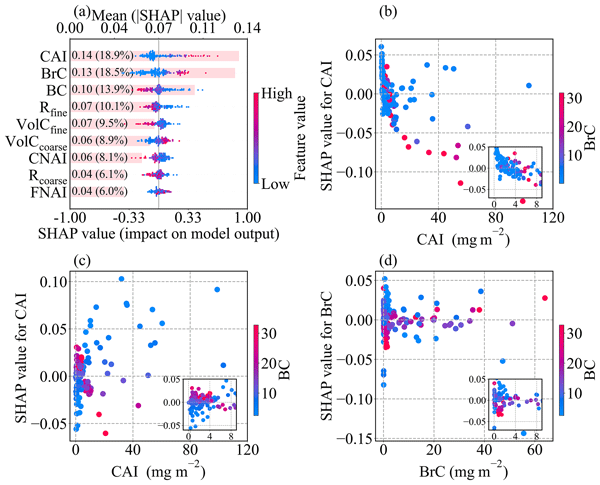
Interpretable machine learning quantifies composition and size influences on aerosol spectral absorption
Wenfang Wang, Pengfei Tian, Shuhua Zeng, Yifei Zhang, Zeren Yu, Chen Cui, Yunfei Wu, Min Chen, and Lei Zhang
Atmos. Chem. Phys., 26, 6471–6487, https://doi.org/10.5194/acp-26-6471-2026,https://doi.org/10.5194/acp-26-6471-2026, 2026
Short summary
The Impact of Multi-Scale Turbulence Structures within the Urban Canopy of a Basin City on Haze Pollution Processes
Meiyan Liu, Yan Ren, Hongsheng Zhang, Min Zhang, Jiening Liang, Pengfei Tian, Xianjie Cao, Jiayun Li, and Lei Zhang
EGUsphere, https://doi.org/10.5194/egusphere-2025-177,https://doi.org/10.5194/egusphere-2025-177, 2025
Preprint archived
Short summary
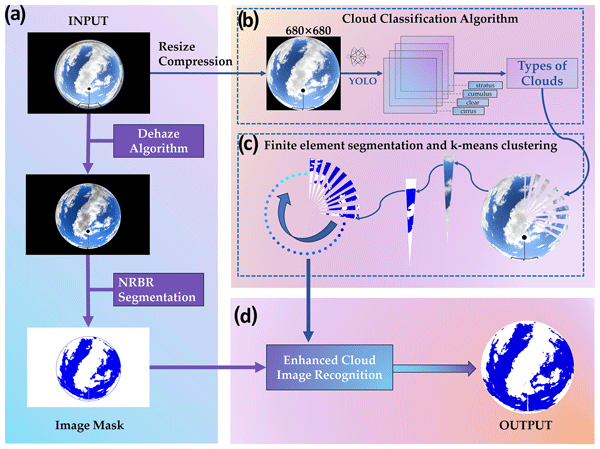
Innovative cloud quantification: deep learning classification and finite-sector clustering for ground-based all-sky imaging
Jingxuan Luo, Yubing Pan, Debin Su, Jinhua Zhong, Lingxiao Wu, Wei Zhao, Xiaoru Hu, Zhengchao Qi, Daren Lu, and Yinan Wang
Atmos. Meas. Tech., 17, 3765–3781, https://doi.org/10.5194/amt-17-3765-2024,https://doi.org/10.5194/amt-17-3765-2024, 2024
Short summary
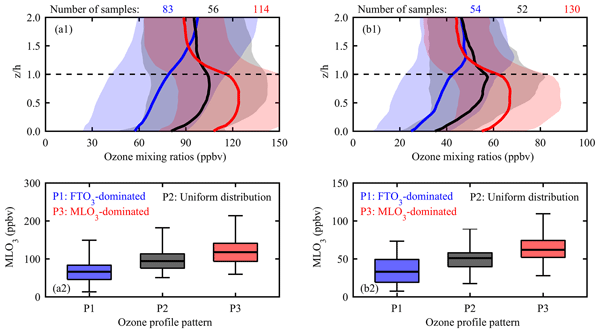
Mixing-layer-height-referenced ozone vertical distribution in the lower troposphere of Chinese megacities: stratification, classification, and meteorological and photochemical mechanisms
Zhiheng Liao, Meng Gao, Jinqiang Zhang, Jiaren Sun, Jiannong Quan, Xingcan Jia, Yubing Pan, and Shaojia Fan
Atmos. Chem. Phys., 24, 3541–3557, https://doi.org/10.5194/acp-24-3541-2024,https://doi.org/10.5194/acp-24-3541-2024, 2024
Short summary

Cited articles

Brown, S. S. and Stutz, J.: Nighttime radical observations and chemistry, Chem. Soc. Rev., 41, 6405–6447, https://doi.org/10.1039/c2cs35181a, 2012. 
Cai, Y., Ye, C., Chen, W., Hu, W., Song, W., Peng, Y., Huang, S., Qi, J., Wang, S., Wang, C., Wu, C., Wang, Z., Wang, B., Huang, X., He, L., Gligorovski, S., Yuan, B., Shao, M., and Wang, X.: The important contribution of secondary formation and biomass burning to oxidized organic nitrogen (OON) in a polluted urban area: insights from in situ measurements of a chemical ionization mass spectrometer (CIMS), Atmos. Chem. Phys., 23, 8855–8877, https://doi.org/10.5194/acp-23-8855-2023, 2023. 
Chen, C., Sun, Y. L., Xu, W. Q., Du, W., Zhou, L. B., Han, T. T., Wang, Q. Q., Fu, P. Q., Wang, Z. F., Gao, Z. Q., Zhang, Q., and Worsnop, D. R.: Characteristics and sources of submicron aerosols above the urban canopy (260 m) in Beijing, China, during the 2014 APEC summit, Atmos. Chem. Phys., 15, 12879–12895, https://doi.org/10.5194/acp-15-12879-2015, 2015. 
Chen, Z., Song, W., Hu, C., Liu, X., Chen, G., Walters, W. W., Michalski, G., Liu, C., Fowler, D., and Liu, X.: Significant contributions of combustion related sources to ammonia emissions, Nat. Commun., 13, 7710, https://doi.org/10.1038/s41467-022-35381-4, 2022. 
Draxler, R. R. and Hess, G. D.: An overview of the HYSPLIT4 modeling system for trajectories, dispersion, and deposition, Aust. Met. Mag., 47, 295–308, 1998. 
Download
Short summary
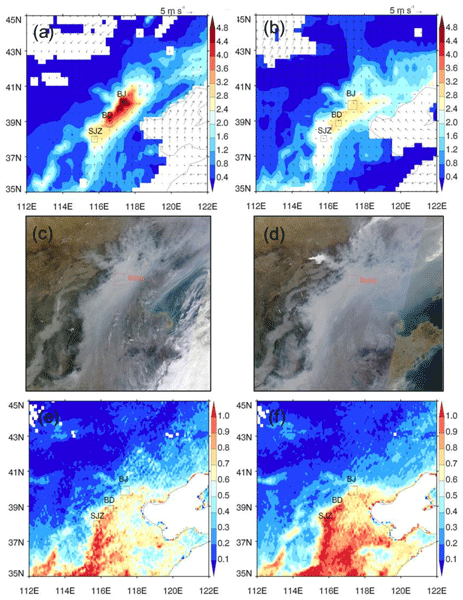
Regional transport is a systemic environmental challenge governed by multiple processes. Observations from a unique 528-m tower in Beijing reveal that aerosols vary among air masses originating from different directions, influenced by regional emission sources and reactions during transport. A comparison of pollutants between the 528-m layer and ground level confirms that transported pollutants are mixed down to the surface during daytime, governed primarily by planetary boundary layer process.
Share
Altmetrics
Final-revised paper
Preprint