
Articles | Volume 26, issue 8
https://doi.org/10.5194/acp-26-5781-2026
© Author(s) 2026. This work is distributed under
the Creative Commons Attribution 4.0 License.
the Creative Commons Attribution 4.0 License.
https://doi.org/10.5194/acp-26-5781-2026
© Author(s) 2026. This work is distributed under
the Creative Commons Attribution 4.0 License.
the Creative Commons Attribution 4.0 License.
Research article
| 
28 Apr 2026
Research article |
| 28 Apr 2026
| 28 Apr 2026
Regulation of cloud particle spectra and vertical structure by sub-cloud aerosols: insights from aircraft observations and numerical simulations
Deyu Liu
Collaborative Innovation Centre on Forecast and Evaluation of Meteorological Disasters (CIC–FEMD), China Meteorological Administration Aerosol–Cloud and Precipitation Key Laboratory, Nanjing University of Information Science and Technology, Nanjing 210044, China
Yue Chen
Collaborative Innovation Centre on Forecast and Evaluation of Meteorological Disasters (CIC–FEMD), China Meteorological Administration Aerosol–Cloud and Precipitation Key Laboratory, Nanjing University of Information Science and Technology, Nanjing 210044, China
Sihan Liu
Hebei Provincial Weather Modification Office, Shijiazhuang 050000, China
Honglei Wang
CORRESPONDING AUTHOR

Collaborative Innovation Centre on Forecast and Evaluation of Meteorological Disasters (CIC–FEMD), China Meteorological Administration Aerosol–Cloud and Precipitation Key Laboratory, Nanjing University of Information Science and Technology, Nanjing 210044, China
Jingyi Chen
Collaborative Innovation Centre on Forecast and Evaluation of Meteorological Disasters (CIC–FEMD), China Meteorological Administration Aerosol–Cloud and Precipitation Key Laboratory, Nanjing University of Information Science and Technology, Nanjing 210044, China
Yang Yang
Hebei Provincial Weather Modification Office, Shijiazhuang 050000, China
Zihan Wang
Collaborative Innovation Centre on Forecast and Evaluation of Meteorological Disasters (CIC–FEMD), China Meteorological Administration Aerosol–Cloud and Precipitation Key Laboratory, Nanjing University of Information Science and Technology, Nanjing 210044, China
Kun Cui
Collaborative Innovation Centre on Forecast and Evaluation of Meteorological Disasters (CIC–FEMD), China Meteorological Administration Aerosol–Cloud and Precipitation Key Laboratory, Nanjing University of Information Science and Technology, Nanjing 210044, China
Tianliang Zhao
Collaborative Innovation Centre on Forecast and Evaluation of Meteorological Disasters (CIC–FEMD), China Meteorological Administration Aerosol–Cloud and Precipitation Key Laboratory, Nanjing University of Information Science and Technology, Nanjing 210044, China
Related authors
Yulin Wang, Yichen Lu, Honglei Wang, Chunsong Lu, Sihan Liu, Yang Yang, Zirui Liu, Yan Yin, Deyu Liu, Yue Chen, and Tianliang Zhao
EGUsphere, https://doi.org/10.5194/egusphere-2026-5114, https://doi.org/10.5194/egusphere-2026-5114, 2026
This preprint is open for discussion and under review for Atmospheric Chemistry and Physics (ACP).
Short summary
Short summary
Cloud water shapes rain and climate, and droplets can stay liquid even below freezing, but differences between warm and supercooled clouds remain unclear. We analysed aircraft observations and used machine learning to identify the controls. The cold clouds were deeper but held less water. Wind was the main control in both, while temperature mattered mainly through its interaction with wind rather than on its own. This should help improve weather and climate models.
Yichen Lu, Honglei Wang, Deyu Liu, Yue Chen, Chong Peng, and Can Song
EGUsphere, https://doi.org/10.5194/egusphere-2026-4682, https://doi.org/10.5194/egusphere-2026-4682, 2026
Short summary
Short summary
Clouds are affected by tiny airborne particles that influence cloud formation and climate. Using aircraft observations over eastern China, this study reveals how the vertical distribution of atmospheric particles controls their cloud-forming ability. The findings improve our understanding of aerosol–cloud interactions and provide new insights for weather and climate modeling.
Yulin Wang, Deyu Liu, Honglei Wang, Shuangshuang Shi, Qun Hu, Zihan Wang, Zirui Liu, Tianliang Zhao, and Lijuan Shen
Atmos. Chem. Phys., 26, 7827–7842, https://doi.org/10.5194/acp-26-7827-2026, https://doi.org/10.5194/acp-26-7827-2026, 2026
Short summary
Short summary
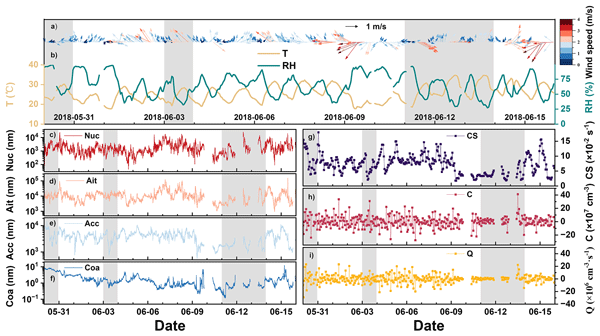
Atmospheric new particles formation plays an important role in air quality and climate change, but it does not always appear even in the similar situation. Using ground measurements and vertical observations, we found this process occurs only when the source increases while the sink weakens at the same time, which is mainly controlled by the development of the boundary layer. The finding helps us better understand particle formation in complex atmospheric environments.
Yongqing Bai, Wen Lu, Tian Zhan, Xiao Yun Sun, Tianliang Zhao, Lijuan Shen, Guicai Ning, Zewen Lin, Kai Meng, and Wuke Wang
EGUsphere, https://doi.org/10.5194/egusphere-2026-4625, https://doi.org/10.5194/egusphere-2026-4625, 2026
This preprint is open for discussion and under review for Atmospheric Chemistry and Physics (ACP).
Short summary
Short summary
The Twain-Hu Basin in central China has extreme heat and severe ozone, yet few combined events. We show that basin O₃ is driven by synoptic transport from upwind sources rather than local heat, with the O₃ peak shifting to September, decoupling ozone from temperature. This pattern may be common in multi-source receptor basins.
Xuewei Hou, Ryan Hossaini, Oliver Wild, Andrea Mazzeo, Richard J. Pope, Ye Wang, Siyuan Wang, Yuanhong Zhao, James Lee, Bin Zhu, Tianliang Zhao, and Alok K. Pandey
Atmos. Chem. Phys., 26, 13767–13793, https://doi.org/10.5194/acp-26-13767-2026, https://doi.org/10.5194/acp-26-13767-2026, 2026
Short summary
Short summary
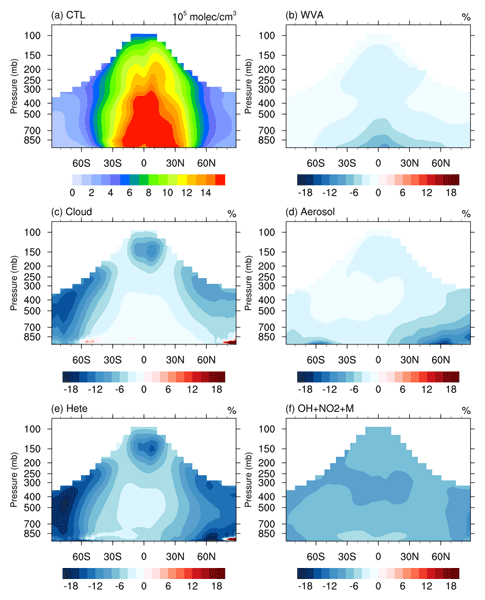
The atmosphere’s ability to remove pollutants and greenhouse gases is largely controlled by the hydroxyl radical, but the causes of its long-term changes remain uncertain. Using a global atmospheric model, we quantified the effects of emissions, weather, and key chemical processes on hydroxyl radical levels between 2000 and 2017. Our findings improve understanding of atmospheric self-cleansing and help reduce uncertainties in future climate assessments.
Xiangde Xu, Wenyue Cai, Tianliang Zhao, Changjun Yang, Kai Meng, Chong Wu, Na Dong, Yueqing Li, Shunjiu Wang, Wenqing Liu, Tianshu Zhang, Ga Zhuo, Shengjun Zhang, Bin Chen, Chunsong Lu, Jinghua Chen, Kai Yang, and Jianming Xu
Atmos. Chem. Phys., 26, 13581–13593, https://doi.org/10.5194/acp-26-13581-2026, https://doi.org/10.5194/acp-26-13581-2026, 2026
Short summary
Short summary
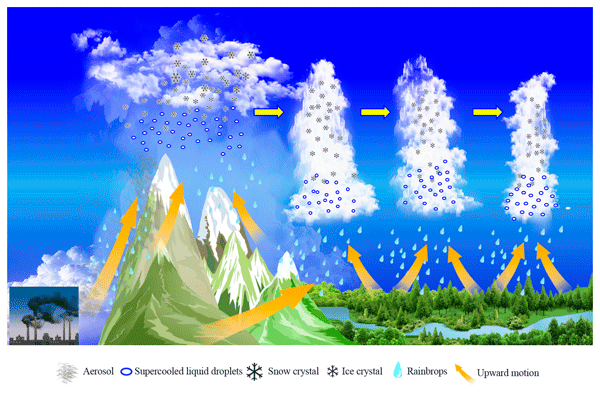
Using satellite and comprehensive ground-based observations, we identify pronounced ice-cloud activation associated with transported exogenous aerosols. Under different large-scale atmospheric circulation regimes, ice-phase cloud activated over Mount Qomolangma (MQ) can be efficiently transported downstream through distinct pathways, exerting a pronounced ice crystal seeding effect on cloud–precipitation conversion.
Yulin Wang, Yichen Lu, Honglei Wang, Chunsong Lu, Sihan Liu, Yang Yang, Zirui Liu, Yan Yin, Deyu Liu, Yue Chen, and Tianliang Zhao
EGUsphere, https://doi.org/10.5194/egusphere-2026-5114, https://doi.org/10.5194/egusphere-2026-5114, 2026
This preprint is open for discussion and under review for Atmospheric Chemistry and Physics (ACP).
Short summary
Short summary
Cloud water shapes rain and climate, and droplets can stay liquid even below freezing, but differences between warm and supercooled clouds remain unclear. We analysed aircraft observations and used machine learning to identify the controls. The cold clouds were deeper but held less water. Wind was the main control in both, while temperature mattered mainly through its interaction with wind rather than on its own. This should help improve weather and climate models.
Yiqi Chen, Le Cao, Xiaochun Zhu, Yan Xia, Tianqi Zhang, Xiuli Lei, Mengke Wang, Liqiang Xu, and Tianliang Zhao
EGUsphere, https://doi.org/10.5194/egusphere-2026-3196, https://doi.org/10.5194/egusphere-2026-3196, 2026
This preprint is open for discussion and under review for Atmospheric Chemistry and Physics (ACP).
Short summary
Short summary
We investigate the spatiotemporal distribution of springtime tropopause folds over the Arctic during 2000–2023 using ERA5 reanalysis data and a three-dimensional tropopause fold labeling algorithm. The study combines pan-Arctic spatial statistics with station-based analyses at Alert, Barrow, Villum, and Zeppelin, providing a climatological characterization of Arctic tropopause fold occurrence, depth dependence, seasonal evolution, and associated upper-tropospheric dynamical background.
Yichen Lu, Honglei Wang, Deyu Liu, Yue Chen, Chong Peng, and Can Song
EGUsphere, https://doi.org/10.5194/egusphere-2026-4682, https://doi.org/10.5194/egusphere-2026-4682, 2026
Short summary
Short summary
Clouds are affected by tiny airborne particles that influence cloud formation and climate. Using aircraft observations over eastern China, this study reveals how the vertical distribution of atmospheric particles controls their cloud-forming ability. The findings improve our understanding of aerosol–cloud interactions and provide new insights for weather and climate modeling.
Pan Zhao, Jingyi Chen, Yang Yang, Yue Jia, and Yang Yu
EGUsphere, https://doi.org/10.5194/egusphere-2026-3025, https://doi.org/10.5194/egusphere-2026-3025, 2026
Short summary
Short summary
Marine cloud brightening (MCB) aims to cool climate by spraying sea-salt aerosols to brighten marine clouds, but whether aerosols can reach clouds efficiently remains uncertain. Using large-eddy simulations with Lagrangian particle tracking, we show that turbulent transport strongly depends on cloud conditions and model resolution. High-liquid-water periods favor stronger transport, while higher-resolution simulations better capture turbulence and cloud droplet activation.
Yulin Wang, Deyu Liu, Honglei Wang, Shuangshuang Shi, Qun Hu, Zihan Wang, Zirui Liu, Tianliang Zhao, and Lijuan Shen
Atmos. Chem. Phys., 26, 7827–7842, https://doi.org/10.5194/acp-26-7827-2026, https://doi.org/10.5194/acp-26-7827-2026, 2026
Short summary
Short summary
Atmospheric new particles formation plays an important role in air quality and climate change, but it does not always appear even in the similar situation. Using ground measurements and vertical observations, we found this process occurs only when the source increases while the sink weakens at the same time, which is mainly controlled by the development of the boundary layer. The finding helps us better understand particle formation in complex atmospheric environments.
Zihan Wang, Yishu Bian, Fuwang Zhang, Honglei Wang, Wen Lin, Jun Hu, Tianliang Zhao, Lijian Shen, and Zuxin Xie
Atmos. Chem. Phys., 26, 7539–7554, https://doi.org/10.5194/acp-26-7539-2026, https://doi.org/10.5194/acp-26-7539-2026, 2026
Short summary
Short summary
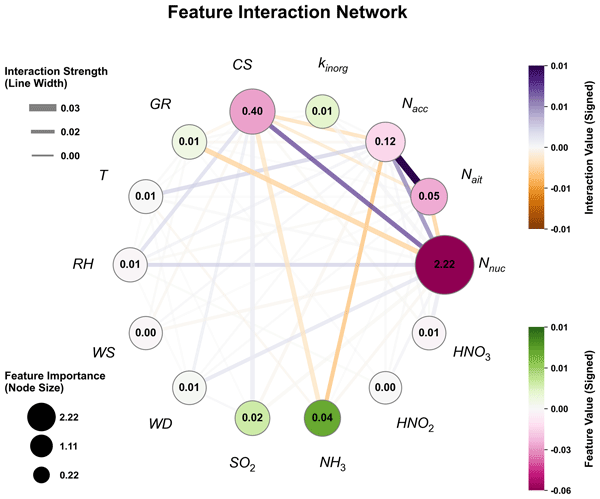
We investigated how new air particles form in cities and affect clouds. Our year-long study revealed a key seasonal pattern: while particle formation events are most frequent in spring, they are surprisingly inefficient at creating the seeds for clouds due to high pollution. In contrast, the cleaner summer air, despite having fewer events, allows the new particles to grow larger and much more effectively enhance potential cloud formation.
Can Song, Chong Peng, Ting Bai, Honglei Wang, Yimei Huang, Jianfang Ding, Yanhua Liu, Zhenping Shao, and Xiuzhu Sha
EGUsphere, https://doi.org/10.5194/egusphere-2026-1706, https://doi.org/10.5194/egusphere-2026-1706, 2026
Short summary
Short summary
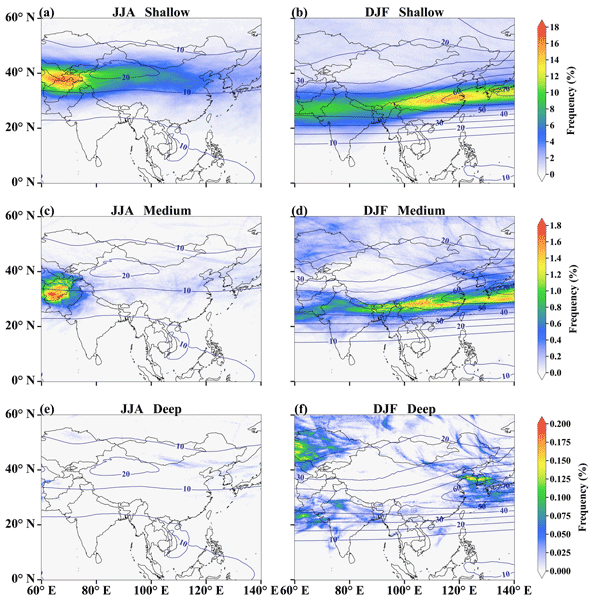
Using aircraft and ground-based observations, this study analyzes a spring snowstorm over North China Plain. It reveals distinct microphysics: stratiform regions feature ice growth by deposition/aggregation, while thunderstorms areas show higher supercooled water content and riming. The precipitation particle distribution characteristic of thunderstorm areas is also revealed. The vertical precipitation structure varies across stages, influenced by phase transitions and updrafts.
Yujia Yang, Le Cao, Liqiang Xu, Mengke Wang, Qingjian Yang, Yuqing Zhang, Tianqi Zhang, Xiuli Lei, Jiangpeng Miao, and Tianliang Zhao
Earth Syst. Sci. Data, 18, 2689–2702, https://doi.org/10.5194/essd-18-2689-2026, https://doi.org/10.5194/essd-18-2689-2026, 2026
Short summary
Short summary
This study provides a high-resolution (0.25°, hourly) tropopause folding dataset for China (2014–2023) using ERA5 (ECMWF Reanalysis version 5) reanalysis data and a three-dimensional labeling method. It fills a critical data gap, enabling detailed spatiotemporal analysis of tropopause folding events. This validated resource provides a solid foundation for investigating stratosphere-troposphere transport and its impacts on near-surface air quality and extreme weather.
Kai Yang, Jinghua Chen, Tianliang Zhao, Xiangde Xu, Chunsong Lu, Shizuo Fu, Yuehan Luo, Qingjian Yang, Ziqian Liu, Zhikuan Li, Lin Wu, and Yuxiang Jin
EGUsphere, https://doi.org/10.5194/egusphere-2026-869, https://doi.org/10.5194/egusphere-2026-869, 2026
Short summary
Short summary
The Tibetan Plateau has little available moisture and energy, so convection is hard to develop. Large-eddy simulations indicates the lake promotes low-level moistening and lowers the barrier to convective initiation, produces shallow clouds and week rain. Mountain alone force lifting, yet the lack of moisture limits terrain-driven precipitation. Lake-mountain coupling is key: the mountain lifts lake-supplied moisture but can also block moisture transport, reshaping precipitation patterns.
Xiaofeng Xu, Zixu Xiong, Jianming Gong, Huilin Zhang, Tianliang Zhao, and Qing He
Atmos. Chem. Phys., 26, 2721–2740, https://doi.org/10.5194/acp-26-2721-2026, https://doi.org/10.5194/acp-26-2721-2026, 2026
Short summary
Short summary
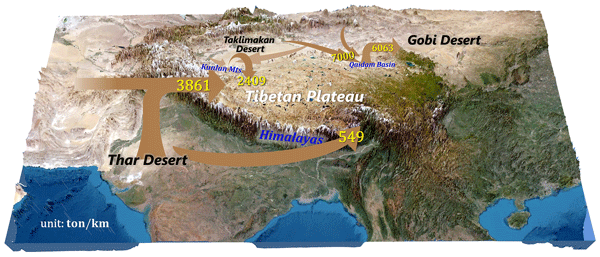
Dust has an important impact on the climate in East Asia. This study comprehensively utilized ground-based and satellite observation data to analyze the spatio-temporal variations of dust in the Tibetan Plateau and its surrounding areas, as well as the diurnal variation characteristics of regional dust transport. This study has deepened the understanding of the variation patterns of dust around the Tibetan Plateau.
Chunshui Lin, Ru-Jin Huang, Jing Duan, Jing Qu, Jiahua Liu, Yi Liu, Yan Luo, Wei Huang, Wei Xu, Yanan Zhan, Zhitao Liu, Sihan Liu, Qingshuang Zhang, Quan Liu, Zirui Liu, Shengrong Lou, Huinan Yang, Dan Dan Huang, Cheng Huang, and Hongli Wang
Atmos. Chem. Phys., 26, 2635–2647, https://doi.org/10.5194/acp-26-2635-2026, https://doi.org/10.5194/acp-26-2635-2026, 2026
Short summary
Short summary
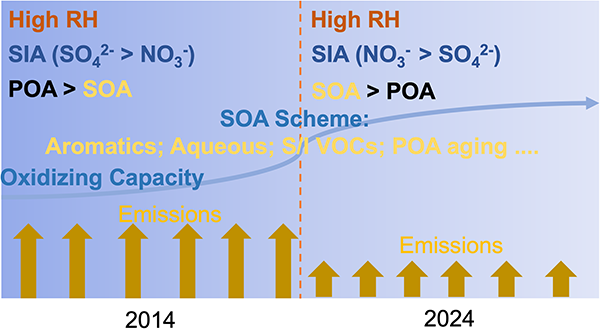
Since China's 2013 Clean Air Act cut PM2.5 by over half, winter haze in the North China Plain persists partly due to secondary organic aerosols now dominating primary organic aerosol, requiring urgent regional cooperation to address model-underestimated chemical transformations and cross-border pollution.
Jingyi Chen, Hailong Wang, Bo Zhang, Hongyu Liu, David Painemal, Armin Sorooshian, Sheng-Lun Tai, and Christiane Voigt
Atmos. Chem. Phys., 26, 2209–2224, https://doi.org/10.5194/acp-26-2209-2026, https://doi.org/10.5194/acp-26-2209-2026, 2026
Short summary
Short summary
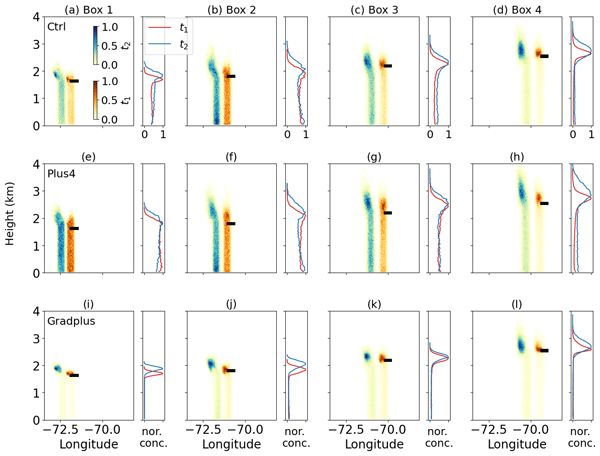
NASA-validated modeling shows +4K SST (sea surface temperature) & +25 % gradients distinctly alter boundary layer dynamics, cloud physics in cold-air outbreaks. Warmer SST reduces cloud cover; increases size, elongation; hydrometeors shift to ice. Sharper Gradients boost liquid water (cold upwind); reduces ice; disrupts organization. Also, SST changes alter cloud-top properties via entrained airmass origin. Resolving ocean-atmosphere coupling in global models is essential for accurate cloud feedback projections.
Zhuozhi Shu, Fumo Yang, Guangming Shi, Yuqing Zhang, Yongjie Huang, Xinning Yu, Baiwan Pan, and Tianliang Zhao
Atmos. Chem. Phys., 25, 15437–15451, https://doi.org/10.5194/acp-25-15437-2025, https://doi.org/10.5194/acp-25-15437-2025, 2025
Short summary
Short summary
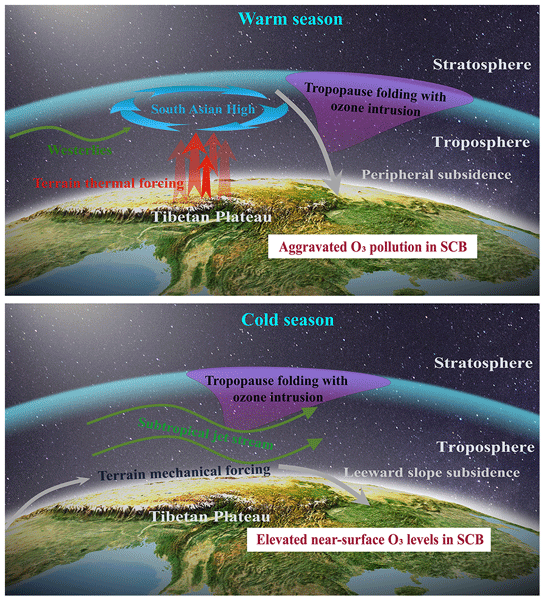
We targeted four stratospheric intrusion episodes to investigate the impacts of cross-layer transport of stratospheric O3 on the near-surface environmental atmosphere over Sichuan Basin and uncover multi-scale atmospheric circulation coupling mechanisms with the seasonally discrepant terrain effects of Tibetan Plateau. Results provided the critical insights into understanding of regional O3 pollution genesis with the exceptional natural sources contribution derived from the stratosphere.
Xiaochun Zhu, Le Cao, Xin Yang, Simeng Li, Jiandong Wang, and Tianliang Zhao
Atmos. Chem. Phys., 25, 12159–12176, https://doi.org/10.5194/acp-25-12159-2025, https://doi.org/10.5194/acp-25-12159-2025, 2025
Short summary
Short summary
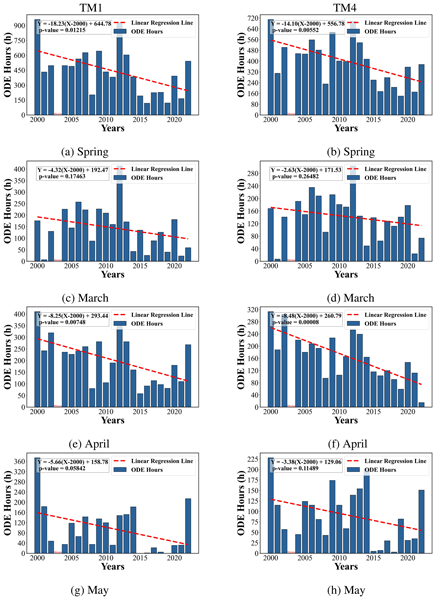
We applied various criteria to identify springtime ozone depletion events (ODEs) at Utqiaġvik, Arctic, and investigated the influence of using different criteria on conclusions regarding the characteristics of ODEs. We found that criteria using fixed thresholds or monthly average-based thresholds were more suitable for identifying ODEs than the others. Applying a threshold that varies with the monthly average or stricter fixed thresholds also indicated a more significant reduction in ODE occurrences.
Qingjian Yang, Tianliang Zhao, Yongqing Bai, Kai Meng, Yuehan Luo, Zhijie Tian, Xiaoyun Sun, Weikang Fu, Kai Yang, and Jun Hu
Atmos. Chem. Phys., 25, 8029–8042, https://doi.org/10.5194/acp-25-8029-2025, https://doi.org/10.5194/acp-25-8029-2025, 2025
Short summary
Short summary
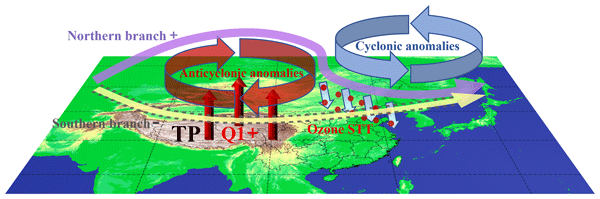
This study reveals a unique driver of the Tibetan Plateau (TP) thermal forcing of the interannual variations in stratosphere-to-troposphere transport (STT) of ozone with diverse structures. Anomalous strong TP thermal forcing induces anticyclonic anomalies in the upper troposphere over the TP, which strengthens and attenuates the northern and southern branches of the westerly jet, intensifying (weakening) the westerly trough for more (fewer) tropopause folds of ozone STT over the East Asian region.
Sihan Liu, Honglei Wang, Delong Zhao, Wei Zhou, Yuanmou Du, Zhengguo Zhang, Peng Cheng, Tianliang Zhao, Yue Ke, Zihao Wu, and Mengyu Huang
Atmos. Chem. Phys., 25, 4151–4165, https://doi.org/10.5194/acp-25-4151-2025, https://doi.org/10.5194/acp-25-4151-2025, 2025
Short summary
Short summary
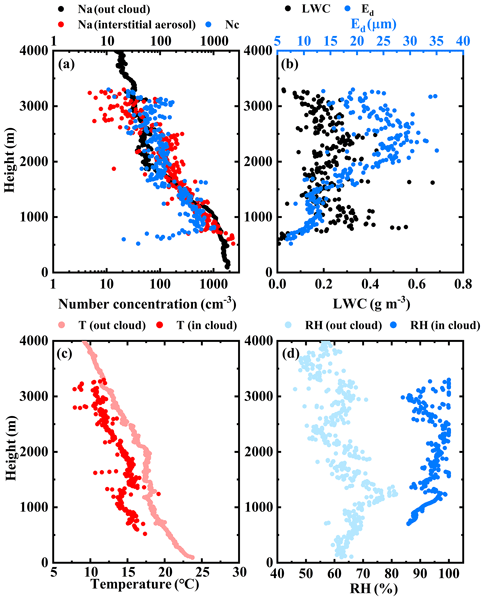
To understand the effect of aerosols on the vertical distribution of stratocumulus microphysical quantities in southwest China, the daily variation characteristics and formation mechanism of the vertical profiles of stratocumulus microphysical characteristics in this region were described using the data of nine cloud-crossing aircraft observations over Guangxi from 10 October to 3 November 2020.
Yongqing Bai, Tianliang Zhao, Kai Meng, Yue Zhou, Jie Xiong, Xiaoyun Sun, Lijuan Shen, Yanyu Yue, Yan Zhu, Weiyang Hu, and Jingyan Yao
Atmos. Chem. Phys., 25, 1273–1287, https://doi.org/10.5194/acp-25-1273-2025, https://doi.org/10.5194/acp-25-1273-2025, 2025
Short summary
Short summary
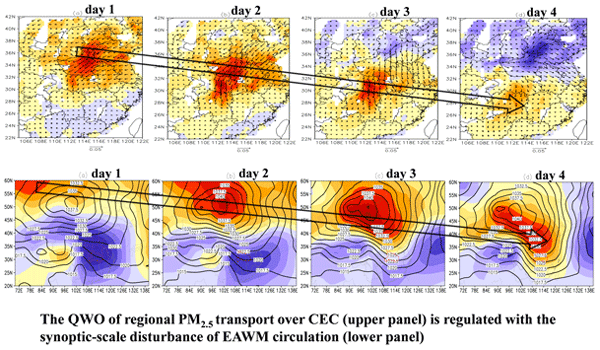
We proposed a composite statistical method to identify the quasi-weekly oscillation (QWO) of regional PM2.5 transport over China in winter from 2015 to 2019. The QWO of regional PM2.5 transport is constrained by synoptic-scale disturbances of the East Asian winter monsoon circulation with the periodic activities of the Siberian high, providing a new insight into the understanding of regional pollutant transport with meteorological drivers in atmospheric environment changes.
Xiaodan Ma, Jianping Huang, Michaela I. Hegglin, Patrick Jöckel, and Tianliang Zhao
Atmos. Chem. Phys., 25, 943–958, https://doi.org/10.5194/acp-25-943-2025, https://doi.org/10.5194/acp-25-943-2025, 2025
Short summary
Short summary
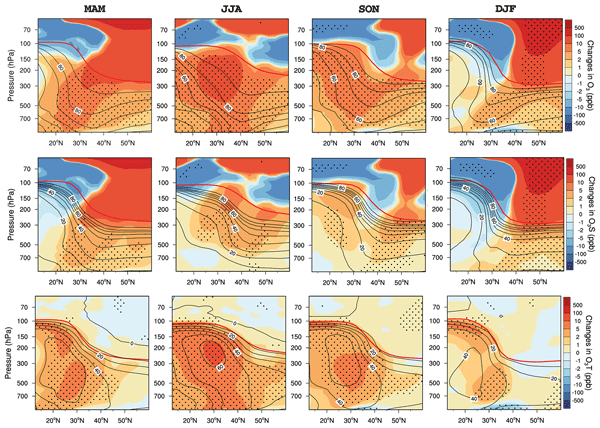
Our research explored changes in ozone levels in the northwest Pacific region over 30 years, revealing a significant increase in the middle-to-upper troposphere, especially during spring and summer. This rise is influenced by both stratospheric and tropospheric sources, which affect climate and air quality in East Asia. This work underscores the need for continued study to understand underlying mechanisms.
Kai Meng, Tianliang Zhao, Yongqing Bai, Ming Wu, Le Cao, Xuewei Hou, Yuehan Luo, and Yongcheng Jiang
Atmos. Chem. Phys., 24, 12623–12642, https://doi.org/10.5194/acp-24-12623-2024, https://doi.org/10.5194/acp-24-12623-2024, 2024
Short summary
Short summary
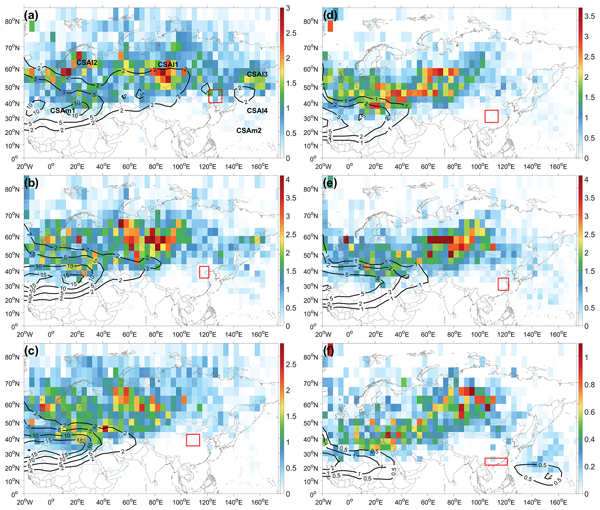
We studied the impact of stratospheric intrusions (SIs) on tropospheric and near-surface ozone in Central and Eastern China from a stratospheric source tracing perspective. SIs contribute the most in the eastern plains, with a contribution exceeding 15 %, and have a small contribution to the west and south. Western Siberia and Mongolia are the most critical source areas for indirect and direct SIs, with the Rossby wave and northeast cold vortex being important driving circulation systems.
Honglei Wang, David W. Tarasick, Jane Liu, Herman G. J. Smit, Roeland Van Malderen, Lijuan Shen, Romain Blot, and Tianliang Zhao
Atmos. Chem. Phys., 24, 11927–11942, https://doi.org/10.5194/acp-24-11927-2024, https://doi.org/10.5194/acp-24-11927-2024, 2024
Short summary
Short summary
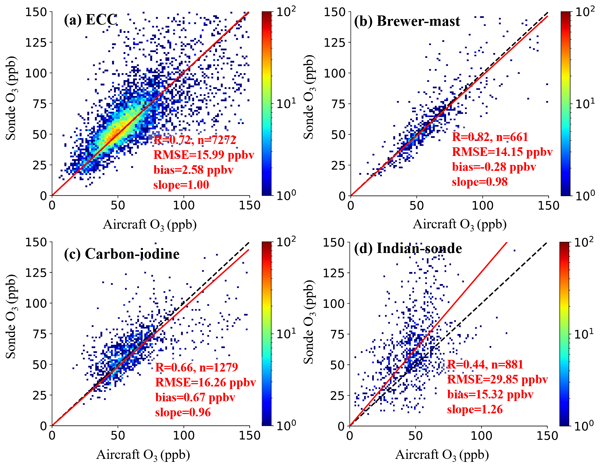
In this study, we identify 23 suitable pairs of sites from World Ozone and Ultraviolet Radiation Data Centre (WOUDC) and In-service Aircraft for a Global Observing System (IAGOS) datasets (1995 to 2021), compare the average vertical distributions of tropospheric O3 from ozonesonde and aircraft measurements, and analyze the differences based on ozonesonde type and station–airport distance.
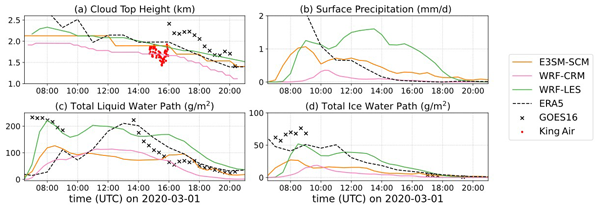
Shuaiqi Tang, Hailong Wang, Xiang-Yu Li, Jingyi Chen, Armin Sorooshian, Xubin Zeng, Ewan Crosbie, Kenneth L. Thornhill, Luke D. Ziemba, and Christiane Voigt
Atmos. Chem. Phys., 24, 10073–10092, https://doi.org/10.5194/acp-24-10073-2024, https://doi.org/10.5194/acp-24-10073-2024, 2024
Short summary
Short summary
We examined marine boundary layer clouds and their interactions with aerosols in the E3SM single-column model (SCM) for a case study. The SCM shows good agreement when simulating the clouds with high-resolution models. It reproduces the relationship between cloud droplet and aerosol particle number concentrations as produced in global models. However, the relationship between cloud liquid water and droplet number concentration is different, warranting further investigation.
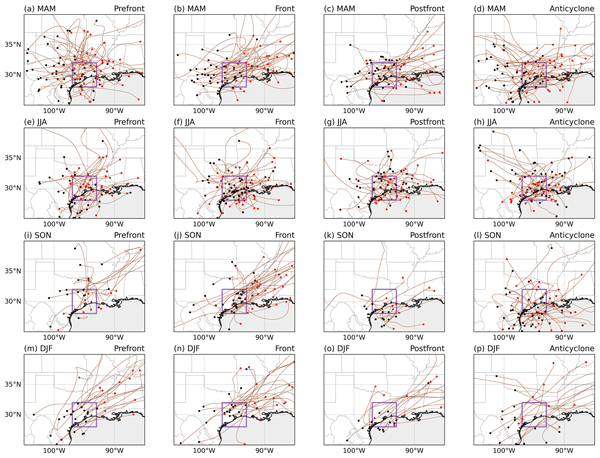
Ye Liu, Yun Qian, Larry K. Berg, Zhe Feng, Jianfeng Li, Jingyi Chen, and Zhao Yang
Atmos. Chem. Phys., 24, 8165–8181, https://doi.org/10.5194/acp-24-8165-2024, https://doi.org/10.5194/acp-24-8165-2024, 2024
Short summary
Short summary
Deep convection under various large-scale meteorological patterns (LSMPs) shows distinct precipitation features. In southeastern Texas, mesoscale convective systems (MCSs) contribute significantly to precipitation year-round, while isolated deep convection (IDC) is prominent in summer and fall. Self-organizing maps (SOMs) reveal convection can occur without large-scale lifting or moisture convergence. MCSs and IDC events have distinct life cycles influenced by specific LSMPs.
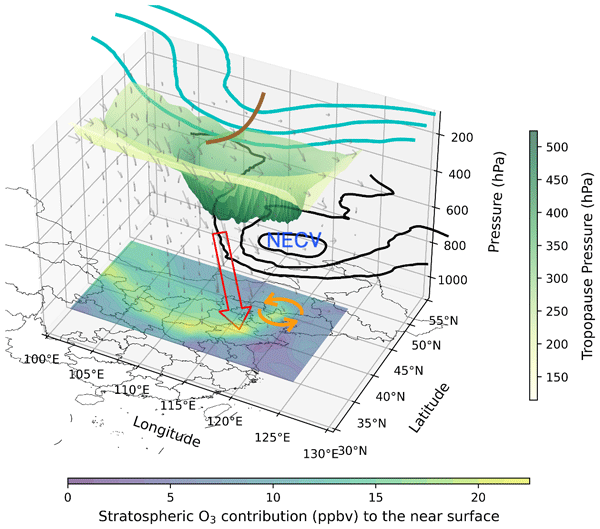
Yuehan Luo, Tianliang Zhao, Kai Meng, Jun Hu, Qingjian Yang, Yongqing Bai, Kai Yang, Weikang Fu, Chenghao Tan, Yifan Zhang, Yanzhe Zhang, and Zhikuan Li
Atmos. Chem. Phys., 24, 7013–7026, https://doi.org/10.5194/acp-24-7013-2024, https://doi.org/10.5194/acp-24-7013-2024, 2024
Short summary
Short summary
We reveal a significant mechanism of stratospheric O3 intrusion (SI) into the atmospheric environment induced by an extratropical cyclone system. This system facilitates the downward transport of stratospheric O3 to the near-surface layer by vertical coupling, involving the upper westerly trough, the middle northeast cold vortex, and the lower extratropical cyclone in the troposphere. On average, stratospheric O3 contributed 26.77 % to near-surface O3 levels over the North China Plain.
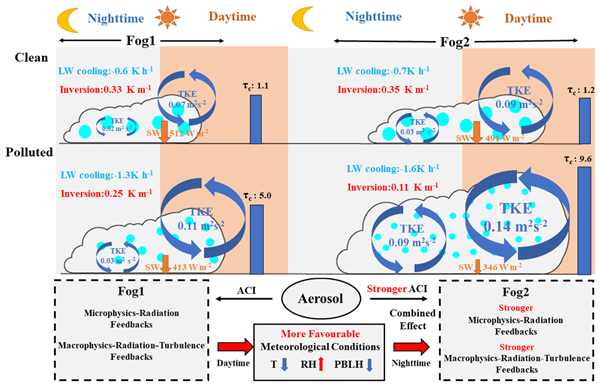
Naifu Shao, Chunsong Lu, Xingcan Jia, Yuan Wang, Yubin Li, Yan Yin, Bin Zhu, Tianliang Zhao, Duanyang Liu, Shengjie Niu, Shuxian Fan, Shuqi Yan, and Jingjing Lv
Atmos. Chem. Phys., 23, 9873–9890, https://doi.org/10.5194/acp-23-9873-2023, https://doi.org/10.5194/acp-23-9873-2023, 2023
Short summary
Short summary
Fog is an important meteorological phenomenon that affects visibility. Aerosols and the planetary boundary layer (PBL) play critical roles in the fog life cycle. In this study, aerosol-induced changes in fog properties become more remarkable in the second fog (Fog2) than in the first fog (Fog1). The reason is that aerosol–cloud interaction (ACI) delays Fog1 dissipation, leading to the PBL meteorological conditions being more conducive to Fog2 formation and to stronger ACI in Fog2.
Chenglong Zhou, Yuzhi Liu, Qingzhe Zhu, Qing He, Tianliang Zhao, Fan Yang, Wen Huo, Xinghua Yang, and Ali Mamtimin
Atmos. Chem. Phys., 22, 5195–5207, https://doi.org/10.5194/acp-22-5195-2022, https://doi.org/10.5194/acp-22-5195-2022, 2022
Short summary
Short summary
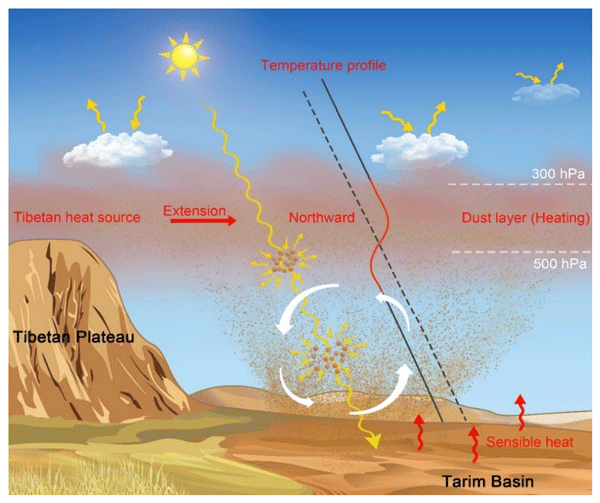
Based on the radiosonde observations, an anomalously warm layer is measured at altitudes between 500 and 300 hPa over the Tarim Basin (TB) with an average intensity of 2.53 and 1.39 K in the spring and summer, respectively. The heat contributions of dust to this anomalously warm atmospheric layer in spring and summer were 13.77 and 10.25 %, respectively. Topographically, the TB is adjacent to the Tibetan Plateau; we propose the concept of the Tibetan heat source’s northward extension.
Xiaoyun Sun, Tianliang Zhao, Yongqing Bai, Shaofei Kong, Huang Zheng, Weiyang Hu, Xiaodan Ma, and Jie Xiong
Atmos. Chem. Phys., 22, 3579–3593, https://doi.org/10.5194/acp-22-3579-2022, https://doi.org/10.5194/acp-22-3579-2022, 2022
Short summary
Short summary
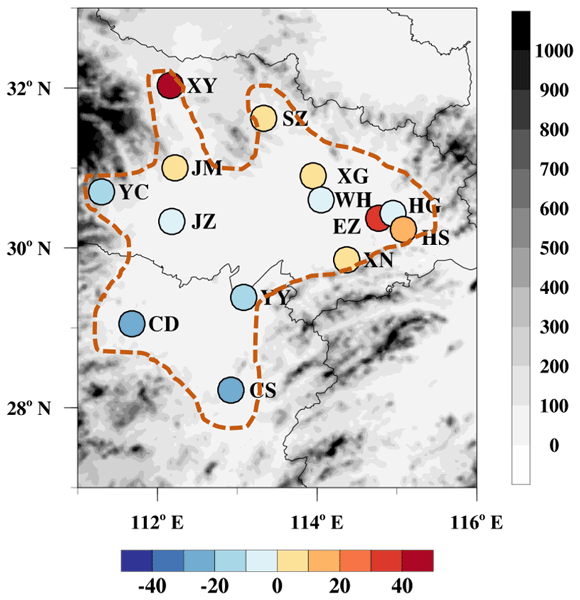
This study revealed the impact of anthropogenic emissions and meteorological conditions on PM2.5 decline in the regional transport of air pollutants over a receptor region in central China. The meteorological drivers led to upwind accelerating and downward offsetting of the effects of emission reductions over the receptor region in regional PM2.5 transport, and the contribution of gaseous precursor emissions to PM2.5 pollution was enhanced with reduced anthropogenic emissions in recent years.
Xiangde Xu, Chan Sun, Deliang Chen, Tianliang Zhao, Jianjun Xu, Shengjun Zhang, Juan Li, Bin Chen, Yang Zhao, Hongxiong Xu, Lili Dong, Xiaoyun Sun, and Yan Zhu
Atmos. Chem. Phys., 22, 1149–1157, https://doi.org/10.5194/acp-22-1149-2022, https://doi.org/10.5194/acp-22-1149-2022, 2022
Short summary
Short summary
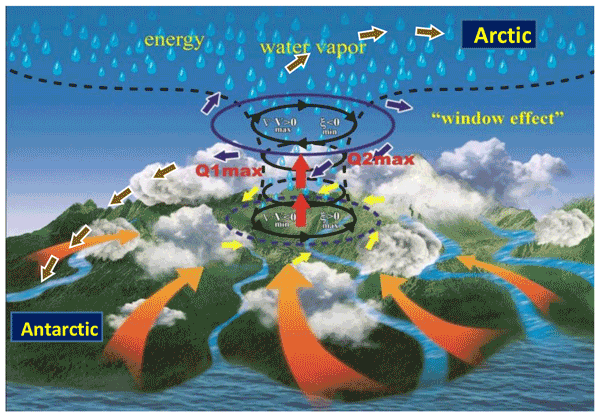
A vertical transport window of tropospheric vapor exists on the Tibetan Plateau (TP). The TP's thermal forcing drives the vertical transport
windowof vapor in the troposphere. The effects of the TP's vertical transport window of vapor are of importance in global climate change.
Cited articles
Albrecht, B. A.: Aerosols, cloud microphysics, and fractional cloudiness, Science, 245, 1227–1230, https://doi.org/10.1126/science.245.4923.1227, 1989.
Barrett, P. A., Blyth, A., Brown, P. R. A., and Abel, S. J.: The structure of turbulence and mixed-phase cloud microphysics in a highly supercooled altocumulus cloud, Atmos. Chem. Phys., 20, 1921–1939, https://doi.org/10.5194/acp-20-1921-2020, 2020.
Baumgardner, D., Jonsson, H., Dawson, W., O'Connor, D., and Newton, R.: The cloud, aerosol and precipitation spectrometer: A new instrument for cloud investigations, Atmos. Res., 59–60, 251–264, https://doi.org/10.1016/S0169-8095(01)00119-3, 2001.
Calderón, S. M., Tonttila, J., Buchholz, A., Joutsensaari, J., Komppula, M., Leskinen, A., Hao, L., Moisseev, D., Pullinen, I., Tiitta, P., Xu, J., Virtanen, A., Kokkola, H., and Romakkaniemi, S.: Aerosol–stratocumulus interactions: towards a better process understanding using closures between observations and large eddy simulations, Atmos. Chem. Phys., 22, 12417–12441, https://doi.org/10.5194/acp-22-12417-2022, 2022.
Calvin, K., Dasgupta, D., Krinner, G., Mukherji, A., Thorne, P. W., Trisos, C., Romero, J., Aldunce, P., Barrett, K., Blanco, G., Cheung, W. W. L., Connors, S., Denton, F., Diongue-Niang, A., Dodman, D., Garschagen, M., Geden, O., Hayward, B., Jones, C., Jotzo, F., Krug, T., Lasco, R., Lee, Y.-Y., Masson-Delmotte, V., Meinshausen, M., Mintenbeck, K., Mokssit, A., Otto, F. E. L., Pathak, M., Pirani, A., Poloczanska, E., Pörtner, H.-O., Revi, A., Roberts, D. C., Roy, J., Ruane, A. C., Skea, J., Shukla, P. R., Slade, R., Slangen, A., Sokona, Y., Sörensson, A. A., Tignor, M., Van Vuuren, D., Wei, Y.-M., Winkler, H., Zhai, P., Zommers, Z., Hourcade, J.-C., Johnson, F. X., Pachauri, S., Simpson, N. P., Singh, C., Thomas, A., Totin, E., Arias, P., Bustamante, M., Elgizouli, I., Flato, G., Howden, M., Méndez-Vallejo, C., Pereira, J. J., Pichs-Madruga, R., Rose, S. K., Saheb, Y., Sánchez Rodríguez, R., Ürge-Vorsatz, D., Xiao, C., Yassaa, N., Alegría, A., Armour, K., Bednar-Friedl, B., Blok, K., Cissé, G., Dentener, F., Eriksen, S., Fischer, E., Garner, G., Guivarch, C., Haasnoot, M., Hansen, G., Hauser, M., Hawkins, E., Hermans, T., Kopp, R., Leprince-Ringuet, N., Lewis, J., Ley, D., Ludden, C., Niamir, L., Nicholls, Z., Some, S., Szopa, S., Trewin, B., Van Der Wijst, K.-I., Winter, G., Witting, M., Birt, A., and Ha, M.: Climate change 2023: synthesis report. Contribution of working groups I, II and III to the sixth assessment report of the intergovernmental panel on climate change, edited by: Core Writing Team, Lee, H., and Romero, J., Intergovernmental Panel on Climate Change (IPCC), Geneva, Switzerland, https://doi.org/10.59327/IPCC/AR6-9789291691647, 2023.
Chalmers, J., Kay, J. E., Middlemas, E. A., Maroon, E. A., and DiNezio, P.: Does disabling cloud radiative feedbacks change spatial patterns of surface greenhouse warming and cooling?, J. Climate, 35, 1787–1807, https://doi.org/10.1175/JCLI-D-21-0391.1, 2022.
Chang, Y., Guo, X., Tang, J., and Lu, G.: Aircraft measurement campaign on summer cloud microphysical properties over the tibetan plateau, Sci. Rep.-UK, 9, 4912, https://doi.org/10.1038/s41598-019-41514-5, 2019.
Che, Y., Zhang, J., Zhao, C., Fang, W., Xue, W., Yang, W., Ji, D., Dang, J., Duan, J., Sun, J., Shen, X., and Zhou, X.: A study on the characteristics of ice nucleating particles concentration and aerosols and their relationship in spring in beijing, Atmos. Res., 247, 105196, https://doi.org/10.1016/j.atmosres.2020.105196, 2021.
Chen, F., Yang, Y., Yu, L., Li, Y., Liu, W., Liu, Y., and Lolli, S.: Distinct effects of fine and coarse aerosols on microphysical processes of shallow-precipitation systems in summer over southern China, Atmos. Chem. Phys., 25, 1587–1601, https://doi.org/10.5194/acp-25-1587-2025, 2025.
Chen, J.: Jingyi-chen/cloud_parcel_mode: Cloud parcel model, Zenodo [code], https://doi.org/10.5281/zenodo.6148660, 2022.
Chen, J., Liu, Y., Zhang, M., and Peng, Y.: New understanding and quantification of the regime dependence of aerosol-cloud interaction for studying aerosol indirect effects, Geophys. Res. Lett., 43, 1780–1787, https://doi.org/10.1002/2016GL067683, 2016.
Chen, J., Liu, Y., Zhang, M., and Peng, Y.: Height dependency of aerosol-cloud interaction regimes, J. Geophys. Res.-Atmos., 123, 491–506, https://doi.org/10.1002/2017JD027431, 2018.
Chen, Q., Yin, Y., Jiang, H., Chu, Z., Xue, L., Shi, R., Zhang, X., and Chen, J.: The roles of mineral dust as cloud condensation nuclei and ice nuclei during the evolution of a hail storm, J. Geophys. Res.-Atmos., 124, 14262–14284, https://doi.org/10.1029/2019JD031403, 2019.
Chen, S., Xue, L., and Yau, M.-K.: Impact of aerosols and turbulence on cloud droplet growth: an in-cloud seeding case study using a parcel–DNS (direct numerical simulation) approach, Atmos. Chem. Phys., 20, 10111–10124, https://doi.org/10.5194/acp-20-10111-2020, 2020.
Christensen, M. W., Jones, W. K., and Stier, P.: Aerosols enhance cloud lifetime and brightness along the stratus-to-cumulus transition, P. Natl. Acad. Sci. USA, 117, 17591–17598, https://doi.org/10.1073/pnas.1921231117, 2020.
Christensen, M. W., Ma, P.-L., Wu, P., Varble, A. C., Mülmenstädt, J., and Fast, J. D.: Evaluation of aerosol–cloud interactions in E3SM using a Lagrangian framework, Atmos. Chem. Phys., 23, 2789–2812, https://doi.org/10.5194/acp-23-2789-2023, 2023.
Coakley, J. A., Cess, R. D., and Yurevich, F. B.: The effect of tropospheric aerosols on the earth's radiation budget: A parameterization for climate models, J. Atmos. Sci., 40, 116–138, https://doi.org/10.1175/1520-0469(1983)040<0116:TEOTAO>2.0.CO;2, 1983.
Dong, X., Sun, X., Yan, F., Zhang, J., Wang, S., Peng, M., and Zhu, H.: Aircraft observation of a two-layer cloud and the analysis of cold cloud seeding effect, Front. Environ. Sci., 10, 855813, https://doi.org/10.3389/fenvs.2022.855813, 2022.
Du, Y., Liu, D., Zhao, D., Huang, M., Tian, P., Wen, D., Xiao, W., Zhou, W., He, H., Pan, B., Zuo, D., Liu, X., Jing, Y., Zhang, R., Sheng, J., Wang, F., Huang, Y., Chen, Y., and Ding, D.: Microphysical view of the development and ice production of mid-latitude stratiform clouds with embedded convection during an extratropical cyclone, Atmos. Chem. Phys., 24, 13429–13444, https://doi.org/10.5194/acp-24-13429-2024, 2024.
Faber, S., French, J. R., and Jackson, R.: Laboratory and in-flight evaluation of measurement uncertainties from a commercial Cloud Droplet Probe (CDP), Atmos. Meas. Tech., 11, 3645–3659, https://doi.org/10.5194/amt-11-3645-2018, 2018.
Feng, Q., Niu, S., Hou, T., Yue, Z., and Shen, D.: Aircraft observations of characteristics and growth of ice particles of two different snowfall clouds in shanxi province, China, Atmosphere-Basel, 12, 477, https://doi.org/10.3390/atmos12040477, 2021.
Fleishauer, R. P., Larson, V. E., and Vonder Haar, T. H.: Observed microphysical structure of midlevel, mixed-phase clouds, J. Atmos. Sci., 59, 1779–1804, https://doi.org/10.1175/1520-0469(2002)059<1779:OMSOMM>2.0.CO;2, 2002.
Gultepe, I. and Isaac, G. A.: Aircraft observations of cloud droplet number concentration: Implications for climate studies, Q. J. Roy. Meteor. Soc., 130, 2377–2390, https://doi.org/10.1256/qj.03.120, 2004.
Hansen, J. E. and Travis, L. D.: Light scattering in planetary atmospheres, Space Sci. Rev., 16, 527–610, https://doi.org/10.1007/BF00168069, 1974.
Heymsfield, A. and Willis, P.: Cloud conditions favoring secondary ice particle production in tropical maritime convection, J. Atmos. Sci., 71, 4500–4526, https://doi.org/10.1175/JAS-D-14-0093.1, 2014.
Heymsfield, A. J., Bansemer, A., and Twohy, C. H.: Refinements to ice particle mass dimensional and terminal velocity relationships for ice clouds. Part I: Temperature dependence, J. Atmos. Sci., 64, 1047–1067, https://doi.org/10.1175/JAS3890.1, 2007.
Hoffmann, F., Glassmeier, F., and Feingold, G.: The impact of aerosol on cloud water: a heuristic perspective, Atmos. Chem. Phys., 24, 13403–13412, https://doi.org/10.5194/acp-24-13403-2024, 2024.
Hou, T., Lei, H., He, Y., Yang, J., Zhao, Z., and Hu, Z.: Aircraft measurements of the microphysical properties of stratiform clouds with embedded convection, Adv. Atmos. Sci., 38, 966–982, https://doi.org/10.1007/s00376-021-0287-8, 2021.
Huang, X., Liu, Z., Liu, J., Hu, B., Wen, T., Tang, G., Zhang, J., Wu, F., Ji, D., Wang, L., and Wang, Y.: Chemical characterization and source identification of PM2.5 at multiple sites in the Beijing–Tianjin–Hebei region, China, Atmos. Chem. Phys., 17, 12941–12962, https://doi.org/10.5194/acp-17-12941-2017, 2017.
Ke, Y., Liu, S., Wang, H., Yang, Y., Hu, Y., Li, X., Cui, Y., Wu, Z., Wang, Z., and Zhao, T.: Influence of boundary layer-cloud coupling on cloud microphysics based on aircraft observations in the north China plain, Sci. Total Environ., 1003, 180679, https://doi.org/10.1016/j.scitotenv.2025.180679, 2025.
Khatri, P., Yoshida, K., and Hayasaka, T.: Aerosol effects on water cloud properties in different atmospheric regimes, J. Geophys. Res.-Atmos., 128, e2023JD039729, https://doi.org/10.1029/2023JD039729, 2023.
Koren, I., Dagan, G., and Altaratz, O.: From aerosol-limited to invigoration of warm convective clouds, Science, 344, 1143–1146, https://doi.org/10.1126/science.1252595, 2014.
Korolev, A., Emery, E., and Creelman, K.: Modification and tests of particle probe tips to mitigate effects of ice shattering, J. Atmos. Ocean. Tech., 30, 690–708, https://doi.org/10.1175/JTECH-D-12-00142.1, 2013.
Kumar, B., Ranjan, R., Yau, M.-K., Bera, S., and Rao, S. A.: Impact of high- and low-vorticity turbulence on cloud–environment mixing and cloud microphysics processes, Atmos. Chem. Phys., 21, 12317–12329, https://doi.org/10.5194/acp-21-12317-2021, 2021.
Lamb, D. and Verlinde, J.: Physics and chemistry of clouds, Cambridge University Press, Cambridge, Cambridge University Press, Cambridge, 584 pp., ISBN 978-1-62870-283-5, 2011.
Lawson, P., Gurganus, C., Woods, S., and Bruintjes, R.: Aircraft observations of cumulus microphysics ranging from the tropics to midlatitudes: Implications for a “new” secondary ice process, J. Atmos. Sci., 74, 2899–2920, https://doi.org/10.1175/JAS-D-17-0033.1, 2017.
Leung, G. R. and Van Den Heever, S. C.: Aerosol breezes drive cloud and precipitation increases, Nat. Commun., 14, 2508, https://doi.org/10.1038/s41467-023-37722-3, 2023.
Li, Y., Liu, X., and Cai, H.: Numerical simulation of aerosol concentration effects on cloud droplet size spectrum evolutions of warm stratiform clouds in Jiangxi, China, Atmos. Chem. Phys., 24, 13525–13540, https://doi.org/10.5194/acp-24-13525-2024, 2024.
Liu, F., Rosenfeld, D., Pan, Z., Zang, L., and Mao, F.: Combined effects of fine and coarse marine aerosol on vertical raindrop size distribution, Npj Clim. Atmos. Sci., 7, 182, https://doi.org/10.1038/s41612-024-00730-1, 2024.
Liu, S., Wang, H., Zhao, D., Zhou, W., Du, Y., Zhang, Z., Cheng, P., Zhao, T., Ke, Y., Wu, Z., and Huang, M.: Measurement report: Aircraft observations of aerosol and microphysical quantities of stratocumulus in autumn over Guangxi Province, China – daylight variation, vertical distribution, and aerosol–cloud interactions, Atmos. Chem. Phys., 25, 4151–4165, https://doi.org/10.5194/acp-25-4151-2025, 2025.
Noh, Y.-J., Seaman, C. J., Vonder Haar, T. H., and Liu, G.: In situ aircraft measurements of the vertical distribution of liquid and ice water content in midlatitude mixed-phase clouds, J. Appl. Meteorol. Clim., 52, 269–279, https://doi.org/10.1175/JAMC-D-11-0202.1, 2013.
Pöschl, U., Martin, S. T., Sinha, B., Chen, Q., Gunthe, S. S., Huffman, J. A., Borrmann, S., Farmer, D. K., Garland, R. M., Helas, G., Jimenez, J. L., King, S. M., Manzi, A., Mikhailov, E., Pauliquevis, T., Petters, M. D., Prenni, A. J., Roldin, P., Rose, D., Schneider, J., Su, H., Zorn, S. R., Artaxo, P., and Andreae, M. O.: Rainforest aerosols as biogenic nuclei of clouds and precipitation in the amazon, Science, 329, 1513–1516, https://doi.org/10.1126/science.1191056, 2010.
Sherwood, S. C., Webb, M. J., Annan, J. D., Armour, K. C., Forster, P. M., Hargreaves, J. C., Hegerl, G., Klein, S. A., Marvel, K. D., Rohling, E. J., Watanabe, M., Andrews, T., Braconnot, P., Bretherton, C. S., Foster, G. L., Hausfather, Z., Von Der Heydt, A. S., Knutti, R., Mauritsen, T., Norris, J. R., Proistosescu, C., Rugenstein, M., Schmidt, G. A., Tokarska, K. B., and Zelinka, M. D.: An assessment of earth's climate sensitivity using multiple lines of evidence, Rev. Geophys., 58, e2019RG000678, https://doi.org/10.1029/2019RG000678, 2020.
Strapp, J. W., Leaitch, W. R., and Liu, P. S. K.: Hydrated and dried aerosol-size-distribution measurements from the particle measuring systems FSSP-300 probe and the deiced PCASP-100X probe, J. Atmos. Ocean. Tech., 9, 548–555, https://doi.org/10.1175/1520-0426(1992)009<0548:HADASD>2.0.CO;2, 1992.
Sun, J. and Ariya, P.: Atmospheric organic and bio-aerosols as cloud condensation nuclei (CCN): A review, Atmos. Environ., 40, 795–820, https://doi.org/10.1016/j.atmosenv.2005.05.052, 2006.
Tang, J., Wang, P., Mickley, L. J., Xia, X., Liao, H., Yue, X., Sun, L., and Xia, J.: Positive relationship between liquid cloud droplet effective radius and aerosol optical depth over eastern China from satellite data, Atmos. Environ., 84, 244–253, https://doi.org/10.1016/j.atmosenv.2013.08.024, 2014.
Tsimpidi, A. P., Scholz, S. M. C., Milousis, A., Mihalopoulos, N., and Karydis, V. A.: Aerosol composition trends during 2000–2020: in-depth insights from model predictions and multiple worldwide near-surface observation datasets, Atmos. Chem. Phys., 25, 10183–10213, https://doi.org/10.5194/acp-25-10183-2025, 2025.
Twomey, S.: The influence of pollution on the shortwave albedo of clouds, J. Atmos. Sci., 34, 1149–1152, https://doi.org/10.1175/1520-0469(1977)034<1149:TIOPOT>2.0.CO;2, 1977.
Wang, H.: Data for regulation of cloud particle spectra and vertical structure by sub-cloud aerosols: Insights from aircraft observations and numerical simulations, Zenodo [data set], https://doi.org/10.5281/zenodo.18185814, 2026.
Wang, L., Li, C., Yao, Z., Zhao, Z., Han, Z., and Wei, Q.: Application of aircraft observations over beijing in cloud microphysical property retrievals from CloudSat, Adv. Atmos. Sci., 31, 926–937, https://doi.org/10.1007/s00376-013-3156-2, 2014.
Wilcox, E. M.: Direct and semi-direct radiative forcing of smoke aerosols over clouds, Atmos. Chem. Phys., 12, 139–149, https://doi.org/10.5194/acp-12-139-2012, 2012.
Wu, X., Wang, M., Zhao, D., Rosenfeld, D., Zhu, Y., Du, Y., Zhou, W., Tian, P., Sheng, J., Wang, F., and Ding, D.: The microphysical characteristics of wintertime cold clouds in north China, Adv. Atmos. Sci., 39, 2056–2070, https://doi.org/10.1007/s00376-022-1274-4, 2022.
Yeom, J. M., Fahandezh Sadi, H., Anderson, J. C., Yang, F., Cantrell, W., and Shaw, R. A.: Cloud microphysical response to entrainment of dry air containing aerosols, Npj Clim. Atmos. Sci., 8, 8, https://doi.org/10.1038/s41612-024-00889-7, 2025.
Zhang, H., Cheng, S., Li, J., Yao, S., and Wang, X.: Investigating the aerosol mass and chemical components characteristics and feedback effects on the meteorological factors in the beijing-tianjin-hebei region, China, Environ. Pollut., 244, 495–502, https://doi.org/10.1016/j.envpol.2018.10.087, 2019.
Zhang, H., Zhang, Y., Li, Z., and Zheng, Y.: Aerosol influences on cloud water: Insights from ARM EPCAPE observations with explainable machine learning, Geophys. Res. Lett., 52, e2025GL115163, https://doi.org/10.1029/2025GL115163, 2025.
Zhao, C., Qiu, Y., Dong, X., Wang, Z., Peng, Y., Li, B., Wu, Z., and Wang, Y.: Negative aerosol-cloud re relationship from aircraft observations over hebei, China, Earth Space Sci., 5, 19–29, https://doi.org/10.1002/2017EA000346, 2018.
Zhao, C., Sun, Y., Yang, J., Li, J., Zhou, Y., Yang, Y., Fan, H., and Zhao, X.: Observational evidence and mechanisms of aerosol effects on precipitation, Sci. Bull., 69, 1569–1580, https://doi.org/10.1016/j.scib.2024.03.014, 2024.
Short summary
Cloud droplets are vital for rainfall and climate, and tiny airborne particles called aerosols can change their size and number. Using airplane observations over Hebei and simulations, we found that aerosols strongly affect droplet vertical distribution. Under high aerosols, lower droplets are larger and more numerous; under low aerosols, upper droplets are larger. These changes affect cloud development, precipitation, and atmospheric energy.
Cloud droplets are vital for rainfall and climate, and tiny airborne particles called aerosols...


Altmetrics
Final-revised paper
Preprint