
Articles | Volume 26, issue 6
https://doi.org/10.5194/acp-26-4489-2026
© Author(s) 2026. This work is distributed under
the Creative Commons Attribution 4.0 License.
the Creative Commons Attribution 4.0 License.
https://doi.org/10.5194/acp-26-4489-2026
© Author(s) 2026. This work is distributed under
the Creative Commons Attribution 4.0 License.
the Creative Commons Attribution 4.0 License.
Research article
| 
02 Apr 2026
Research article |
| 02 Apr 2026
| 02 Apr 2026
Improving forecasts of persistent contrails through ice deposition adjustments

Meteorological Research Division, Environment and Climate Change Canada, Toronto, Ontario, Canada
Alexei Korolev
Meteorological Research Division, Environment and Climate Change Canada, Toronto, Ontario, Canada
Jason A. Milbrandt
Meteorological Research Division, Environment and Climate Change Canada, Toronto, Ontario, Canada
Related authors
Mélissa Cholette, Caroline Jouan, Hugh Morrison, Jason A. Milbrandt, Zhipeng Qu, Zane Dedekind, Alexei Korolev, and Zen Mariani
EGUsphere, https://doi.org/10.5194/egusphere-2026-4229, https://doi.org/10.5194/egusphere-2026-4229, 2026
Short summary
Short summary
This study implements prognostic aerosols in the P3 bulk microphysics scheme. Using aerosol awareness, the convection-permitting simulations of layered Arctic mixed-phase clouds are improved with more persistent supercooled liquid water and better agreement with EarthCARE and in situ observations. The new framework enhances the microphysics realism of aerosol–cloud interactions, which are critical for radiative balance and weather prediction in polar regions and elsewhere.
Zane Dedekind, Ulrike Proske, Sylvaine Ferrachat, Ulrike Lohmann, and David Neubauer
Atmos. Chem. Phys., 24, 5389–5404, https://doi.org/10.5194/acp-24-5389-2024, https://doi.org/10.5194/acp-24-5389-2024, 2024
Short summary
Short summary
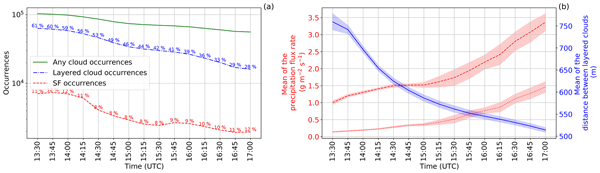
Ice particles precipitating into lower clouds from an upper cloud, the seeder–feeder process, can enhance precipitation. A numerical modeling study conducted in the Swiss Alps found that 48 % of observed clouds were overlapping, with the seeder–feeder process occurring in 10 % of these clouds. Inhibiting the seeder–feeder process reduced the surface precipitation and ice particle growth rates, which were further reduced when additional ice multiplication processes were included in the model.
Zane Dedekind, Jacopo Grazioli, Philip H. Austin, and Ulrike Lohmann
Atmos. Chem. Phys., 23, 2345–2364, https://doi.org/10.5194/acp-23-2345-2023, https://doi.org/10.5194/acp-23-2345-2023, 2023
Short summary
Short summary
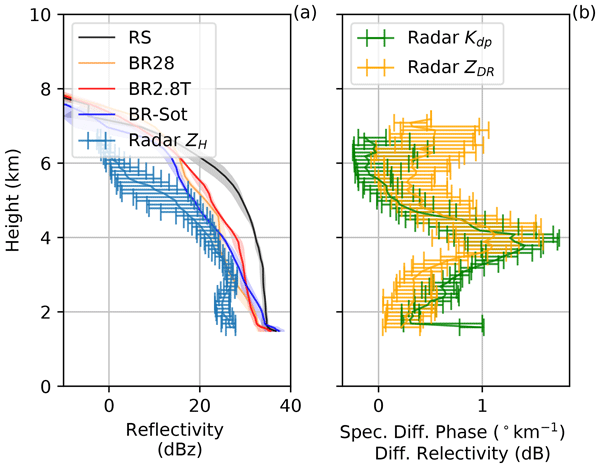
Simulations allowing ice particles to collide with one another producing more ice particles represented surface observations of ice particles accurately. An increase in ice particles formed through collisions was related to sharp changes in the wind direction and speed with height. Changes in wind speed and direction can therefore cause more enhanced collisions between ice particles and alter how fast and how much precipitation forms. Simulations were conducted with the atmospheric model COSMO.
Zane Dedekind, Annika Lauber, Sylvaine Ferrachat, and Ulrike Lohmann
Atmos. Chem. Phys., 21, 15115–15134, https://doi.org/10.5194/acp-21-15115-2021, https://doi.org/10.5194/acp-21-15115-2021, 2021
Short summary
Short summary
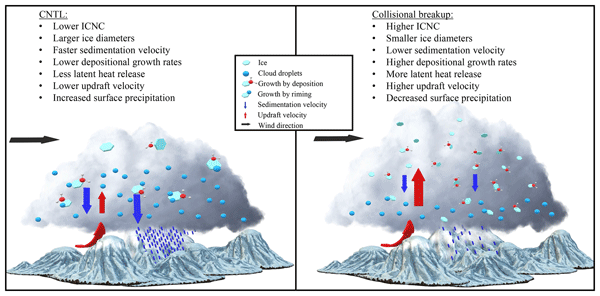
The RACLETS campaign combined cloud and snow research to improve the understanding of precipitation formation in clouds. A numerical weather prediction model, COSMO, was used to assess the importance of ice crystal enhancement by ice–ice collisions for cloud properties. We found that the number of ice crystals increased by 1 to 3 orders of magnitude when ice–ice collisions were permitted to occur, reducing localized regions of high precipitation and, thereby, improving the model performance.
Zhipeng Qu, Cuong Nguyen, Paloma Borque, Alexei Korolev, Howard W. Barker, Keyvan Ranjbar, Lei Liu, Zen Mariani, Meriem Kacimi, Melissa Cholette, Ivan Heckman, Kenny Bala, Natalia Bliankinshtein, Leonid Nichman, Benjamin Riot-Bretêcher, Yi Huang, Jason N. S. Cole, Raphaël Peroni, Stephen Holden, Robert Reed, Robert Crawford, Daniel Michelson, Eve Bigras, Michael Wheeler, John Gyakum, Jason A. Milbrandt, Julie M. Thériault, Kaley A. Walker, Mengistu Wolde, Jean-Pierre Blanchet, Yann Blanchard, Jonas von Bismark, Rob Koopman, Montserrat Piñol Solé, Bernat Puigdomènech Treserras, Robin J. Hogan, and Shannon L. Mason
EGUsphere, https://doi.org/10.5194/egusphere-2026-5347, https://doi.org/10.5194/egusphere-2026-5347, 2026
This preprint is open for discussion and under review for Atmospheric Measurement Techniques (AMT).
Short summary
Short summary
The ECALOT campaign brought together aircraft and ground-based observations in the Ottawa–Montreal region to help evaluate the European Space Agency’s EarthCARE satellite, which studies clouds, aerosols, radiation, and their interactions. By comparing satellite measurements with multi-platform remote-sensing and in situ observations collected during the campaign, ECALOT provides an integrated approach to evaluating EarthCARE products at different stages of the data processing chain.
Robin J. Hogan, Bernat Puigdomenech Treserras, Shannon L. Mason, Alexei Korolev, Zhipeng Qu, Kamil Mroz, David P. Donovan, Pavlos Kollias, and Mark D. Fielding
EGUsphere, https://doi.org/10.5194/egusphere-2026-5054, https://doi.org/10.5194/egusphere-2026-5054, 2026
Short summary
Short summary
The EarthCARE satellite carries advanced instruments that allow it to accurately infer vertical profiles of the properties of ice clouds, important for understanding their role in the climate system. Here we use detailed observations from meteorological research aircraft flying underneath the satellite to evaluate EarthCARE’s estimates of the mass of ice in the clouds, the average particle size, and even how fast the air is rising and falling within the cloud due to atmospheric gravity waves.
Mélissa Cholette, Caroline Jouan, Hugh Morrison, Jason A. Milbrandt, Zhipeng Qu, Zane Dedekind, Alexei Korolev, and Zen Mariani
EGUsphere, https://doi.org/10.5194/egusphere-2026-4229, https://doi.org/10.5194/egusphere-2026-4229, 2026
Short summary
Short summary
This study implements prognostic aerosols in the P3 bulk microphysics scheme. Using aerosol awareness, the convection-permitting simulations of layered Arctic mixed-phase clouds are improved with more persistent supercooled liquid water and better agreement with EarthCARE and in situ observations. The new framework enhances the microphysics realism of aerosol–cloud interactions, which are critical for radiative balance and weather prediction in polar regions and elsewhere.
Patrick C. Taylor, Armin Sorooshian, Rei Ueyama, Sebastian Schmidt, Ihab Abboud, Quincy Allison, Kevin Barry, Sebastian Becker, Holly A. Bender, Joseph R. Bennett, James B. Blair, Niklas Bohn, Linette Boisvert, Matthew D. Brown, Roelof Bruintjes, Anthony Bucholtz, Megan Buzanowicz, Brian Cairns, Filippo Calì Quaglia, Eduard Chemyakin, Bo Chen, Gao Chen, Hong Chen, Yu-Wen Chen, Zezhen Cheng, Swarup China, Dan Chirica, Yonghoon Choi, Peter Colarco, Brian Collister, Ewan Crosbie, Maurice J. Cross, Janet Daniels, Paul DeMott, Joshua P. DiGangi, Alcide Giorgio di Sarra, Glenn S. Diskin, Erica K. Dolinar, Eva-Lou Edwards, Samuel Ephraim, Nikolaos Evangeliou, Romanos Foskinis, Francesca Gallo, Lan Gao, José Luis Gómez-Amo, Daisy Gonzalez, Christine Groot Zwaaftink, Pawan Gupta, Ivan Heckman, Michael Hendrickson, Miguel Ricardo A. Hilario, Ken Hirata, Michelle Hofton, Andrew L. Holen, Ulas Im, Alia L. Khan, Ralph Kahn, Alexei V. Korolev, Sonia Kreidenweis, Thomas Krumpen, Nathan Kurtz, Leslie Lait, Bradley Lamkin, Jack Landy, Nurun Nahar Lata, Paul Lawson, Samuel LeBlanc, Sean Leavor, Jing Li, Thorsten Markus, Hal Maring, Andreas H. Massling, Camille Mavis, Flynn McGinnity, Kerry Meyer, Gabriel Mojica, Richard H. Moore, Parker Morris, Giovanni Muscari, Vikas Nataraja, Amin R. Nehrir, Athanasios Nenes, Edward P. Nowottnick, Matteo Ottaviani, Chelsea Parker, Ryan Patnaude, Michael Perez, Russell J. Perkins, Colten Peterson, Alek Petty, Stevie Phothisane, Chris Polashenski, Kerri A. Pratt, Kayla M. Preisler, John Prytherch, David Rabine, Jens Redemann, Ju-Mee Ryoo, Joseph S. Schlosser, Vanessa Selimovic, Michael A. Shook, Morgan Silverman, Henrik Skov, Alexander Smirnov, Cassidy Soloff, Amy Solomon, Snorre Stamnes, Azusa Takeishi, David R. Thompson, K. Lee Thornhill, Rachel Tilling, Michael Tjernström, Monica Tosco, Pedro C. Valdelomar, David Van Gilst, Jian Wang, Zhien Wang, Andrzej Wasilewski, Manfred Wendisch, Brent Wilder, Edward L. Winstead, Albert Wu, Peng Xian, Lauren M. Zamora, Jiaoshi Zhang, Lei Zhang, Lu Zhang, Luke Ziemba, and Paquita Zuidema
Earth Syst. Sci. Data Discuss., https://doi.org/10.5194/essd-2026-241, https://doi.org/10.5194/essd-2026-241, 2026
Preprint under review for ESSD
Short summary
Short summary
This article summarizes the data sets collected during the Arctic Radiation Cloud aerosol Sea ice Interaction eXperiment (ARCSIX), NASA's most comprehensive Arctic field campaign to date. The overarching goal was to quantify the contributions of surface, clouds, aerosol particles, and precipitation to summer sea ice melt. This paper describes the ARCSIX implementation including the flight strategy, instruments, complementary data sets, access, and usage details.
Alexei V. Korolev and R. Paul Lawson
Atmos. Chem. Phys., 26, 2331–2352, https://doi.org/10.5194/acp-26-2331-2026, https://doi.org/10.5194/acp-26-2331-2026, 2026
Short summary
Short summary
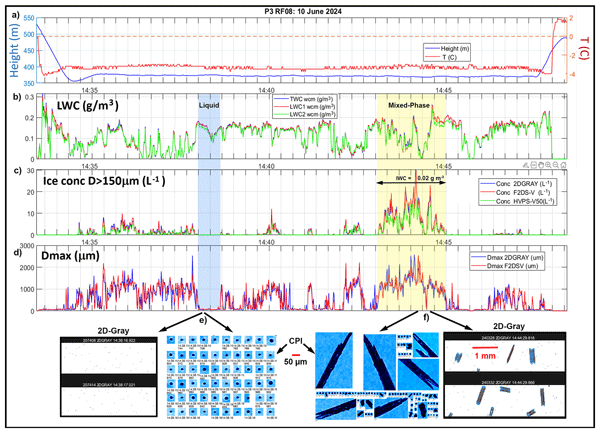
The International Panel on Climate Change has concluded that aerosols and clouds are significant contributors to the rate of warming in the Arctic, which is now shown to be more than twice that of the global average. Climate model predictions suggest that the Arctic Ocean will become ice-free sometime between 2030 and 2050. The research presented here increases our knowledge of how aerosols, clouds and surface properties contribute to warming and the melting of sea ice in the Arctic.
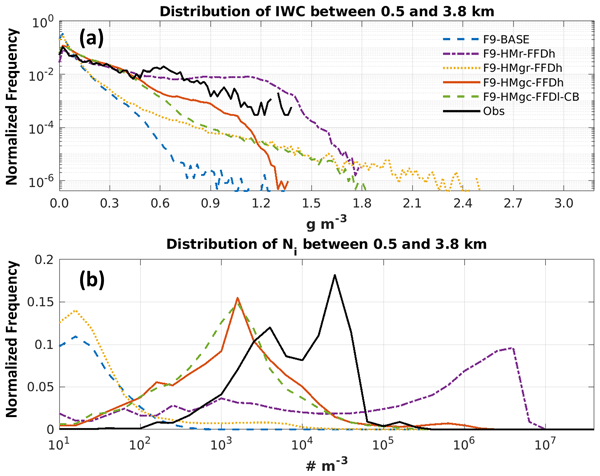
Zhipeng Qu, Alexei Korolev, Jason A. Milbrandt, Ivan Heckman, Mélissa Cholette, Cuong Nguyen, and Mengistu Wolde
Atmos. Chem. Phys., 25, 17845–17868, https://doi.org/10.5194/acp-25-17845-2025, https://doi.org/10.5194/acp-25-17845-2025, 2025
Short summary
Short summary
This study examines the impact of incorporating secondary ice production (SIP) parameterizations into high-resolution numerical weather prediction simulations for mid-latitude continental winter conditions. Aircraft in situ and remote sensing observations are used to evaluate the simulations. Results show that including SIP improves the representation of cloud and freezing rain properties, with its impact varying based on cloud regime, such as convective or stratiform.
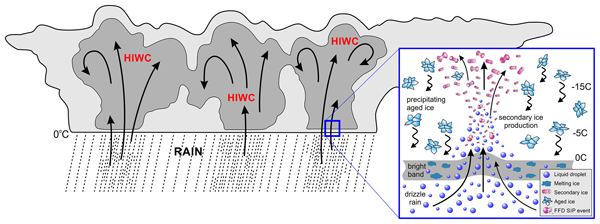
Alexei Korolev, Zhipeng Qu, Jason Milbrandt, Ivan Heckman, Mélissa Cholette, Mengistu Wolde, Cuong Nguyen, Greg M. McFarquhar, Paul Lawson, and Ann M. Fridlind
Atmos. Chem. Phys., 24, 11849–11881, https://doi.org/10.5194/acp-24-11849-2024, https://doi.org/10.5194/acp-24-11849-2024, 2024
Short summary
Short summary
The phenomenon of high ice water content (HIWC) occurs in mesoscale convective systems (MCSs) when a large number of small ice particles with typical sizes of a few hundred micrometers is found at high altitudes. It was found that secondary ice production in the vicinity of the melting layer plays a key role in the formation and maintenance of HIWC. This study presents a conceptual model of the formation of HIWC in tropical MCSs based on in situ observations and numerical simulation.
Zane Dedekind, Ulrike Proske, Sylvaine Ferrachat, Ulrike Lohmann, and David Neubauer
Atmos. Chem. Phys., 24, 5389–5404, https://doi.org/10.5194/acp-24-5389-2024, https://doi.org/10.5194/acp-24-5389-2024, 2024
Short summary
Short summary
Ice particles precipitating into lower clouds from an upper cloud, the seeder–feeder process, can enhance precipitation. A numerical modeling study conducted in the Swiss Alps found that 48 % of observed clouds were overlapping, with the seeder–feeder process occurring in 10 % of these clouds. Inhibiting the seeder–feeder process reduced the surface precipitation and ice particle growth rates, which were further reduced when additional ice multiplication processes were included in the model.
Zane Dedekind, Jacopo Grazioli, Philip H. Austin, and Ulrike Lohmann
Atmos. Chem. Phys., 23, 2345–2364, https://doi.org/10.5194/acp-23-2345-2023, https://doi.org/10.5194/acp-23-2345-2023, 2023
Short summary
Short summary
Simulations allowing ice particles to collide with one another producing more ice particles represented surface observations of ice particles accurately. An increase in ice particles formed through collisions was related to sharp changes in the wind direction and speed with height. Changes in wind speed and direction can therefore cause more enhanced collisions between ice particles and alter how fast and how much precipitation forms. Simulations were conducted with the atmospheric model COSMO.
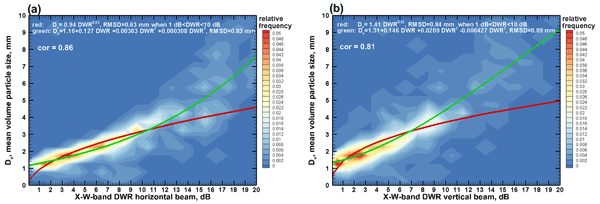
Sergey Y. Matrosov, Alexei Korolev, Mengistu Wolde, and Cuong Nguyen
Atmos. Meas. Tech., 15, 6373–6386, https://doi.org/10.5194/amt-15-6373-2022, https://doi.org/10.5194/amt-15-6373-2022, 2022
Short summary
Short summary
A remote sensing method to retrieve sizes of particles in ice clouds and precipitation from radar measurements at two wavelengths is described. This method is based on relating the particle size information to the ratio of radar signals at these two wavelengths. It is demonstrated that this ratio is informative about different characteristic particle sizes. Knowing atmospheric ice particle sizes is important for many applications such as precipitation estimation and climate modeling.
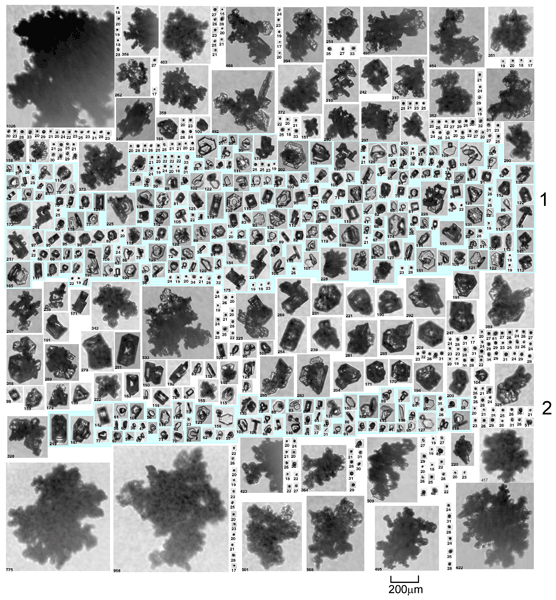
Alexei Korolev, Paul J. DeMott, Ivan Heckman, Mengistu Wolde, Earle Williams, David J. Smalley, and Michael F. Donovan
Atmos. Chem. Phys., 22, 13103–13113, https://doi.org/10.5194/acp-22-13103-2022, https://doi.org/10.5194/acp-22-13103-2022, 2022
Short summary
Short summary
The present study provides the first explicit in situ observation of secondary ice production at temperatures as low as −27 °C, which is well outside the range of the Hallett–Mossop process (−3 to −8 °C). This observation expands our knowledge of the temperature range of initiation of secondary ice in clouds. The obtained results are intended to stimulate laboratory and theoretical studies to develop physically based parameterizations for weather prediction and climate models.
Zhipeng Qu, Alexei Korolev, Jason A. Milbrandt, Ivan Heckman, Yongjie Huang, Greg M. McFarquhar, Hugh Morrison, Mengistu Wolde, and Cuong Nguyen
Atmos. Chem. Phys., 22, 12287–12310, https://doi.org/10.5194/acp-22-12287-2022, https://doi.org/10.5194/acp-22-12287-2022, 2022
Short summary
Short summary
Secondary ice production (SIP) is an important physical phenomenon that results in an increase in the cloud ice particle concentration and can have a significant impact on the evolution of clouds. Here, idealized simulations of a tropical convective system were conducted. Agreement between the simulations and observations highlights the impacts of SIP on the maintenance of tropical convection in nature and the importance of including the modelling of SIP in numerical weather prediction models.
Yongjie Huang, Wei Wu, Greg M. McFarquhar, Ming Xue, Hugh Morrison, Jason Milbrandt, Alexei V. Korolev, Yachao Hu, Zhipeng Qu, Mengistu Wolde, Cuong Nguyen, Alfons Schwarzenboeck, and Ivan Heckman
Atmos. Chem. Phys., 22, 2365–2384, https://doi.org/10.5194/acp-22-2365-2022, https://doi.org/10.5194/acp-22-2365-2022, 2022
Short summary
Short summary
Numerous small ice crystals in tropical convective storms are difficult to detect and could be potentially hazardous for commercial aircraft. Previous numerical simulations failed to reproduce this phenomenon and hypothesized that key microphysical processes are still lacking in current models to realistically simulate the phenomenon. This study uses numerical experiments to confirm the dominant role of secondary ice production in the formation of these large numbers of small ice crystals.
Zane Dedekind, Annika Lauber, Sylvaine Ferrachat, and Ulrike Lohmann
Atmos. Chem. Phys., 21, 15115–15134, https://doi.org/10.5194/acp-21-15115-2021, https://doi.org/10.5194/acp-21-15115-2021, 2021
Short summary
Short summary
The RACLETS campaign combined cloud and snow research to improve the understanding of precipitation formation in clouds. A numerical weather prediction model, COSMO, was used to assess the importance of ice crystal enhancement by ice–ice collisions for cloud properties. We found that the number of ice crystals increased by 1 to 3 orders of magnitude when ice–ice collisions were permitted to occur, reducing localized regions of high precipitation and, thereby, improving the model performance.
Cited articles
Blaylock, B. K.: GOES-2-go: Download and display GOES-East and GOES-West data (Version 2022.07.15), GitHub [code], https://github.com/blaylockbk/goes2go (last access: 13 January 2025), 2023. a
Burkhardt, U. and Kärcher, B.: Process-based simulation of contrail cirrus in a global climate model, J. Geophys. Res.-Atmos., 114, https://doi.org/10.1029/2008JD011491, 2009. a
Burkhardt, U. and Kärcher, B.: Global radiative forcing from contrail cirrus, Nat. Clim. Change, 1, 54–58, https://doi.org/10.1038/nclimate1068, 2011. a
Burkhardt, U., Bock, L., and Bier, A.: Mitigating the contrail cirrus climate impact by reducing aircraft soot number emissions, Climate and Atmospheric Science, 1, 1–7, https://doi.org/10.1038/s41612-018-0046-4, 2018. a
Cholette, M., Milbrandt, J. A., Morrison, H., Kirk, S., and Lalonde, L.-É.: Secondary Ice Production Improves Simulations of Freezing Rain, Geophys. Res. Lett., 51, e2024GL108490, https://doi.org/10.1029/2024GL108490, 2024. a, b
Côté, J., Gravel, S., Méthot, A., Patoine, A., Roch, M., and Staniforth, A.: The Operational CMC–MRB Global Environmental Multiscale (GEM) Model. Part I: Design Considerations and Formulation, Mon. Weather Rev., 126, 1373–1395, https://doi.org/10.1175/1520-0493(1998)126<1373:TOCMGE>2.0.CO;2, 1998. a, b
Dedekind, Z., Korolev, A., and Milbrandt, J.: Software for Improving Forecasts of Persistent Contrails through Ice Deposition Adjustments, Zenodo [code], https://doi.org/10.5281/zenodo.17820613, 2025a. a
Dedekind, Z., Korolev, A., and Milbrandt, J.: Data for Improving Forecasts of Persistent Contrails through Ice Deposition Adjustments, Zenodo [data set], https://doi.org/10.5281/zenodo.15643030, 2025b. a
Flightradar24: Live Flight Tracker – Real-Time Flight Tracker Map, https://www.flightradar24.com/ (last access: 11 June 2025), 2024. a
Fukuta, N. and Takahashi, T.: The Growth of Atmospheric Ice Crystals: A Summary of Findings in Vertical Supercooled Cloud Tunnel Studies, J. Atmos. Sci., 56, 1963–1979, https://doi.org/10.1175/1520-0469(1999)056<1963:TGOAIC>2.0.CO;2, 1999. a, b
Gasparini, B., Atlas, R., Voigt, A., Krämer, M., and Blossey, P. N.: Tropical cirrus evolution in a km-scale model with improved ice microphysics, EGUsphere [preprint], https://doi.org/10.5194/egusphere-2025-203, 2025. a
Gierens, K., Matthes, S., and Rohs, S.: How Well Can Persistent Contrails Be Predicted?, Aerospace, 7, 169, https://doi.org/10.3390/aerospace7120169, 2020. a, b
Gierens, K. M., Monier, M., and Gayet, J.-F.: The deposition coefficient and its role for cirrus clouds, J. Geophys. Res.-Atmos., 108, https://doi.org/10.1029/2001JD001558, 2003. a, b, c
Girard, C., Plante, A., Desgagné, M., McTaggart-Cowan, R., Côté, J., Charron, M., Gravel, S., Lee, V., Patoine, A., Qaddouri, A., Roch, M., Spacek, L., Tanguay, M., Vaillancourt, P. A., and Zadra, A.: Staggered Vertical Discretization of the Canadian Environmental Multiscale (GEM) Model Using a Coordinate of the Log-Hydrostatic-Pressure Type, Mon. Weather Rev., 142, 1183–1196, https://doi.org/10.1175/MWR-D-13-00255.1, 2014. a, b
Hall, W. D. and Pruppacher, H. R.: The Survival of Ice Particles Falling from Cirrus Clouds in Subsaturated Air, J. Atmos. Sci., 33, 1995–2006, https://doi.org/10.1175/1520-0469(1976)033<1995:TSOIPF>2.0.CO;2, 1976. a
Hanst, M., Köhler, C. G., Seifert, A., and Schlemmer, L.: Predicting ice supersaturation for contrail avoidance: ensemble forecasting using ICON with two-moment ice microphysics, Atmos. Chem. Phys., 25, 17253–17274, https://doi.org/10.5194/acp-25-17253-2025, 2025. a
Harrington, J. Y. and Pokrifka, G. F.: An Approximate Criterion for Morphological Transformations in Small Vapor Grown Ice Crystals, J. Atmos. Sci., 81, 401–416, https://doi.org/10.1175/JAS-D-23-0131.1, 2024. a
Jensen, A. A., Harrington, J. Y., Morrison, H., and Milbrandt, J. A.: Predicting Ice Shape Evolution in a Bulk Microphysics Model, J. Atmos. Sci., 81, 401–416, https://doi.org/10.1175/JAS-D-16-0350.1, 2017. a
Jensen, E. J., Kärcher, B., Woods, S., Krämer, M., and Ueyama, R.: The Impact of Gravity Waves on the Evolution of Tropical Anvil Cirrus Microphysical Properties, J. Geophys. Res.-Atmos., 129, e2023JD039887, https://doi.org/10.1029/2023JD039887, 2024. a
Kalluri, S., Alcala, C., Carr, J., Griffith, P., Lebair, W., Lindsey, D., Race, R., Wu, X., and Zierk, S.: From Photons to Pixels: Processing Data from the Advanced Baseline Imager, Remote Sens.-Basel, 10, 177, https://doi.org/10.3390/rs10020177, 2018. a
Kärcher, B.: Formation and radiative forcing of contrail cirrus, Nat. Commun., 9, 1824, https://doi.org/10.1038/s41467-018-04068-0, 2018. a, b, c, d
Kärcher, B. and Yu, F.: Role of aircraft soot emissions in contrail formation, Geophys. Res. Lett., 36, https://doi.org/10.1029/2008GL036649, 2009. a, b, c
Kärcher, B., Burkhardt, U., Bier, A., Bock, L., and Ford, I. J.: The microphysical pathway to contrail formation, J. Geophys. Res.-Atmos., 120, 7893–7927, https://doi.org/10.1002/2015JD023491, 2015. a, b
Köhler, C. G. and Seifert, A.: Identifying sensitivities for cirrus modelling using a two-moment two-mode bulk microphysics scheme, Tellus B, 67, https://doi.org/10.3402/tellusb.v67.24494, 2015. a, b
Korolev, A., Qu, Z., Milbrandt, J., Heckman, I., Cholette, M., Wolde, M., Nguyen, C., McFarquhar, G. M., Lawson, P., and Fridlind, A. M.: High ice water content in tropical mesoscale convective systems (a conceptual model), Atmos. Chem. Phys., 24, 11849–11881, https://doi.org/10.5194/acp-24-11849-2024, 2024. a
Korolev, A. V. and Mazin, I. P.: Supersaturation of Water Vapor in Clouds, J. Atmos. Sci., 60, 2957–2974, https://doi.org/10.1175/1520-0469(2003)060<2957:SOWVIC>2.0.CO;2, 2003. a
Lamb, D. and Verlinde, J.: Physics and Chemistry of Clouds, Cambridge University Press, Cambridge, https://doi.org/10.1017/CBO9780511976377, 2011. a
Lamb, K. D., Harrington, J. Y., Clouser, B. W., Moyer, E. J., Sarkozy, L., Ebert, V., Möhler, O., and Saathoff, H.: Re-evaluating cloud chamber constraints on depositional ice growth in cirrus clouds – Part 1: Model description and sensitivity tests, Atmos. Chem. Phys., 23, 6043–6064, https://doi.org/10.5194/acp-23-6043-2023, 2023. a, b, c
Lee, D. S., Fahey, D. W., Forster, P. M., Newton, P. J., Wit, R. C. N., Lim, L. L., Owen, B., and Sausen, R.: Aviation and global climate change in the 21st century, Atmos. Environ., 43, 3520–3537, https://doi.org/10.1016/j.atmosenv.2009.04.024, 2009. a
Lee, D. S., Fahey, D. W., Skowron, A., Allen, M. R., Burkhardt, U., Chen, Q., Doherty, S. J., Freeman, S., Forster, P. M., Fuglestvedt, J., Gettelman, A., De León, R. R., Lim, L. L., Lund, M. T., Millar, R. J., Owen, B., Penner, J. E., Pitari, G., Prather, M. J., Sausen, R., and Wilcox, L. J.: The contribution of global aviation to anthropogenic climate forcing for 2000 to 2018, Atmos. Environ., 244, 117834, https://doi.org/10.1016/j.atmosenv.2020.117834, 2021. a, b
Lee, D. S., Allen, M. R., Cumpsty, N., Owen, B., Shine, K. P., and Skowron, A.: Uncertainties in mitigating aviation non-CO2 emissions for climate and air quality using hydrocarbon fuels, Environmental Science: Atmospheres, 3, 1693–1740, https://doi.org/10.1039/D3EA00091E, 2023. a
Lewellen, D. C.: Analytic Solutions for Evolving Size Distributions of Spherical Crystals or Droplets Undergoing Diffusional Growth in Different Regimes, J. Atmos. Sci., 69, 417–434, https://doi.org/10.1175/JAS-D-11-029.1, 2012. a
Lewellen, D. C.: Persistent Contrails and Contrail Cirrus. Part II: Full Lifetime Behavior, J. Atmos. Sci., 71, 4420–4438, https://doi.org/10.1175/JAS-D-13-0317.1, 2014. a, b, c, d
Lewellen, D. C. and Lewellen, W. S.: The Effects of Aircraft Wake Dynamics on Contrail Development, J. Atmos. Sci., 58, 390–406, https://doi.org/10.1175/1520-0469(2001)058<0390:TEOAWD>2.0.CO;2, 2001. a
Lewellen, D. C., Meza, O., and Huebsch, W. W.: Persistent Contrails and Contrail Cirrus. Part I: Large-Eddy Simulations from Inception to Demise, J. Atmos. Sci., 71, 4399–4419, https://doi.org/10.1175/JAS-D-13-0316.1, 2014. a
Li, Y., Mahnke, C., Rohs, S., Bundke, U., Spelten, N., Dekoutsidis, G., Groß, S., Voigt, C., Schumann, U., Petzold, A., and Krämer, M.: Upper-tropospheric slightly ice-subsaturated regions: frequency of occurrence and statistical evidence for the appearance of contrail cirrus, Atmos. Chem. Phys., 23, 2251–2271, https://doi.org/10.5194/acp-23-2251-2023, 2023. a
Lohmann, U., Spichtinger, P., Jess, S., Peter, T., and Smit, H.: Cirrus cloud formation and ice supersaturated regions in a global climate model, Environ. Res. Lett., 3, 045022, https://doi.org/10.1088/1748-9326/3/4/045022, 2008. a
Lohmann, U., Lüönd, F., and Mahrt, F.: An Introduction to Clouds by U Lohmann, Cambrige University Press, https://doi.org/10.1017/CBO9781139087513, 2016. a
Lottermoser, A. and Unterstrasser, S.: High-resolution modeling of early contrail evolution from hydrogen-powered aircraft, Atmos. Chem. Phys., 25, 7903–7924, https://doi.org/10.5194/acp-25-7903-2025, 2025. a
Milbrandt, J. A., Bélair, S., Faucher, M., Vallée, M., Carrera, M. L., and Glazer, A.: The Pan-Canadian High Resolution (2.5 km) Deterministic Prediction System, Weather Forecast., 31, 1791–1816, https://doi.org/10.1175/WAF-D-16-0035.1, 2016. a, b
Milbrandt, J. A., Morrison, H., Dawson II, D. T., and Paukert, M.: A Triple-Moment Representation of Ice in the Predicted Particle Properties (P3) Microphysics Scheme, J. Atmos. Sci., 78, 439–458, https://doi.org/10.1175/JAS-D-20-0084.1, 2021. a, b, c
Morrison, H. and Milbrandt, J. A.: Parameterization of Cloud Microphysics Based on the Prediction of Bulk Ice Particle Properties. Part I: Scheme Description and Idealized Tests, J. Atmos. Sci., 72, 287–311, https://doi.org/10.1175/JAS-D-14-0065.1, 2015. a
Morrison, H., Milbrandt, J. A., and Cholette, M.: A Complete Three-Moment Representation of Ice in the Predicted Particle Properties (P3) Microphysics Scheme, J. Adv. Model. Earth Sy., 17, e2024MS004644, https://doi.org/10.1029/2024MS004644, 2025. a, b, c
Niziol, T. A., Snyder, W. R., and Waldstreicher, J. S.: Winter Weather Forecasting throughout the Eastern United States. Part IV: Lake Effect Snow, https://journals.ametsoc.org/view/journals/wefo/10/1/1520-0434_1995_010_0061_wwftte_2_0_co_2.xml (last access: 18 June 2025), 1995. a
Pruppacher, H. R. and Klett, J. D.: Microphysics of Clouds and Precipitation, in: Atmospheric and Oceanographic Sciences Library, 2nd Edn., Springer Netherlands, https://doi.org/10.1007/978-0-306-48100-0_9, 2010 a, b
Qu, Z., Korolev, A., Milbrandt, J. A., Heckman, I., Huang, Y., McFarquhar, G. M., Morrison, H., Wolde, M., and Nguyen, C.: The impacts of secondary ice production on microphysics and dynamics in tropical convection, Atmos. Chem. Phys., 22, 12287–12310, https://doi.org/10.5194/acp-22-12287-2022, 2022. a
Schumann, U.: A contrail cirrus prediction model, Geosci. Model Dev., 5, 543–580, https://doi.org/10.5194/gmd-5-543-2012, 2012. a
Seidel, D. J., Sun, B., Pettey, M., and Reale, A.: Global radiosonde balloon drift statistics, J. Geophys. Res.-Atmos., 116, https://doi.org/10.1029/2010JD014891, 2011. a
Skrotzki, J., Connolly, P., Schnaiter, M., Saathoff, H., Möhler, O., Wagner, R., Niemand, M., Ebert, V., and Leisner, T.: The accommodation coefficient of water molecules on ice – cirrus cloud studies at the AIDA simulation chamber, Atmos. Chem. Phys., 13, 4451–4466, https://doi.org/10.5194/acp-13-4451-2013, 2013. a
Sperber, D. and Gierens, K.: Towards a more reliable forecast of ice supersaturation: concept of a one-moment ice-cloud scheme that avoids saturation adjustment, Atmos. Chem. Phys., 23, 15609–15627, https://doi.org/10.5194/acp-23-15609-2023, 2023. a
Stull, R.: Practical Meteorology: An Algebra-based Survey of Atmospheric Science – version 1.02b, Univ. of British Columbia, 940 pp., ISBN 978-0-88865-283-6, 2017. a
Sussmann, R. and Gierens, K. M.: Lidar and numerical studies on the different evolution of vortex pair and secondary wake in young contrails, J. Geophys. Res.-Atmos., 104, 2131–2142, https://doi.org/10.1029/1998JD200034, 1999. a
Teoh, R., Schumann, U., Majumdar, A., and Stettler, M. E. J.: Mitigating the Climate Forcing of Aircraft Contrails by Small-Scale Diversions and Technology Adoption, Environ. Sci. Technol., 54, 2941–2950, https://doi.org/10.1021/acs.est.9b05608, 2020. a, b
Teoh, R., Schumann, U., Gryspeerdt, E., Shapiro, M., Molloy, J., Koudis, G., Voigt, C., and Stettler, M. E. J.: Aviation contrail climate effects in the North Atlantic from 2016 to 2021, Atmos. Chem. Phys., 22, 10919–10935, https://doi.org/10.5194/acp-22-10919-2022, 2022. a, b
Thompson, G., Scholzen, C., O'Donoghue, S., Haughton, M., Jones, R. L., Durant, A., and Farrington, C.: On the fidelity of high-resolution numerical weather forecasts of contrail-favorable conditions, Atmos. Res., 311, 107663, https://doi.org/10.1016/j.atmosres.2024.107663, 2024. a
Tompkins, A. M., Gierens, K., and Rädel, G.: Ice supersaturation in the ECMWF integrated forecast system, Q. J. Roy. Meteor. Soc., 133, 53–63, https://doi.org/10.1002/qj.14, 2007. a
University of Utah: GOES-16/17/18 on Amazon Download Page, https://home.chpc.utah.edu/~u0553130/Brian_Blaylock/cgi-bin/goes16_download.cgi (last access: 13 May 2024), 2020. a
University of Wyoming: Atmospheric Soundings, https://weather.uwyo.edu/upperair/sounding.html (last access: 13 August 2024), 2024. a
Unterstrasser, S.: Large-eddy simulation study of contrail microphysics and geometry during the vortex phase and consequences on contrail-to-cirrus transition, J. Geophys. Res.-Atmos., 119, 7537–7555, https://doi.org/10.1002/2013JD021418, 2014. a
Unterstrasser, S. and Gierens, K.: Numerical simulations of contrail-to-cirrus transition – Part 1: An extensive parametric study, Atmos. Chem. Phys., 10, 2017–2036, https://doi.org/10.5194/acp-10-2017-2010, 2010. a
Unterstrasser, S., Gierens, K., Sölch, I., and Lainer, M.: Numerical simulations of homogeneously nucleated natural cirrus and contrail-cirrus. Part 1: How different are they?, Meteorol. Z., 621–642, https://doi.org/10.1127/metz/2016/0777, 2017a. a
Unterstrasser, S., Gierens, K., Sölch, I., and Wirth, M.: Numerical simulations of homogeneously nucleated natural cirrus and contrail-cirrus. Part 2: Interaction on local scale, Meteorol. Z., 643–661, https://doi.org/10.1127/metz/2016/0780, 2017b. a
Zhang, C. and Harrington, J. Y.: Including Surface Kinetic Effects in Simple Models of Ice Vapor Diffusion, J. Atmos. Sci., 71, 372–390, https://doi.org/10.1175/JAS-D-13-0103.1, 2014. a
Short summary
We studied how airplane contrails form and persist under cold, moist conditions. Using computer simulations and real observations, we found that weather predicting models often underestimate moisture levels, limiting accurate trail prediction. Adjusting how ice grows in clouds allowed us to better simulate these contrails. Improving moisture representation in models can help predict the climate effects of these clouds.
We studied how airplane contrails form and persist under cold, moist conditions. Using computer...


Altmetrics
Final-revised paper
Preprint