
Articles | Volume 26, issue 6
https://doi.org/10.5194/acp-26-4377-2026
© Author(s) 2026. This work is distributed under
the Creative Commons Attribution 4.0 License.
the Creative Commons Attribution 4.0 License.
https://doi.org/10.5194/acp-26-4377-2026
© Author(s) 2026. This work is distributed under
the Creative Commons Attribution 4.0 License.
the Creative Commons Attribution 4.0 License.
Research article
| 
31 Mar 2026
Research article |
| 31 Mar 2026
| 31 Mar 2026
Emitted yesterday, polluting today: temporal source apportionment of fine particulate matter pollution over Central Europe
Department of Atmospheric Physics, Faculty of Mathematics and Physics, Charles University, Prague, V Holešovičkách 2, 18000 Prague 8, Czech Republic
Lukáš Bartík
Department of Atmospheric Physics, Faculty of Mathematics and Physics, Charles University, Prague, V Holešovičkách 2, 18000 Prague 8, Czech Republic
Jan Karlický
Department of Atmospheric Physics, Faculty of Mathematics and Physics, Charles University, Prague, V Holešovičkách 2, 18000 Prague 8, Czech Republic
Alvaro Patricio Prieto Perez
Department of Atmospheric Physics, Faculty of Mathematics and Physics, Charles University, Prague, V Holešovičkách 2, 18000 Prague 8, Czech Republic
Related authors
Jan Peiker, Jan Karlický, and Peter Huszár
Geosci. Model Dev., 19, 5401–5421, https://doi.org/10.5194/gmd-19-5401-2026, https://doi.org/10.5194/gmd-19-5401-2026, 2026
Short summary
Short summary
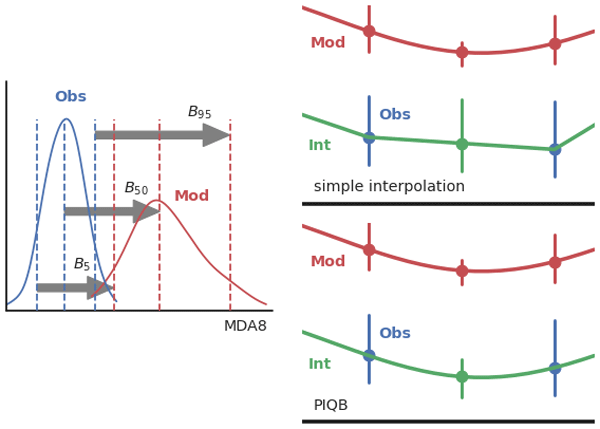
We introduce a novel strategy for bias correction of tropospheric ozone maxima based on parametric interpolation of quantile biases (PIQB) from stations into the model grid. Its performance is evaluated and compared to other strategies found in literature. The results show that PIQB performs very well on simulations with a relatively high horizontal resolution, preserving model-resolved features yet mitigating model errors. We conclude that PIQB is suitable for correcting future projections.
Lukáš Bartík, Peter Huszár, Jan Peiker, Jan Karlický, Ondřej Vlček, and Petr Vodička
Atmos. Chem. Phys., 25, 15301–15328, https://doi.org/10.5194/acp-25-15301-2025, https://doi.org/10.5194/acp-25-15301-2025, 2025
Short summary
Short summary
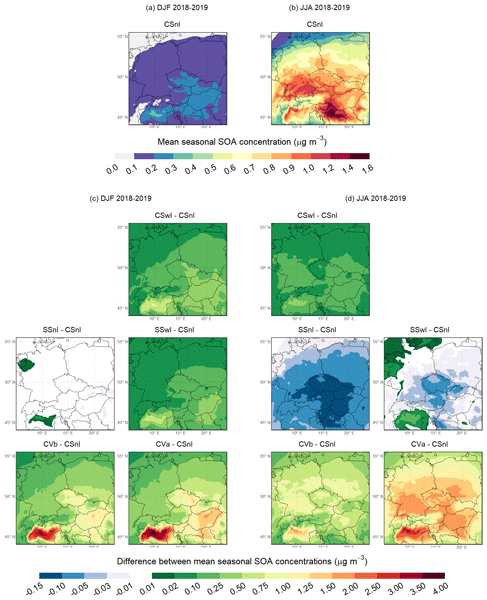
This study investigates how to better understand and predict organic aerosols, which are tiny particles in the air that can affect our health and climate. By using advanced computer models, we examined the impact of different emissions and environmental conditions on these aerosols in Central Europe. Our findings show that including specific emissions significantly improved the accuracy of our predictions.
Jan Karlický, Jáchym Bareš, and Peter Huszár
EGUsphere, https://doi.org/10.5194/egusphere-2025-388, https://doi.org/10.5194/egusphere-2025-388, 2025
Preprint archived
Short summary
Short summary
Our study includes results of WRF model simulations focused to evaluate sensitivity of local climate in cities on urban surface characteristics. Summer urban heat island is mostly impacted by changes in vegetation cover in city, albedo of roofs and irrigated green roofs. Results are usable also to reveal suitable mitigation strategies for reduction of negative aspects of local climate in cities.
Marina Liaskoni, Peter Huszár, Lukáš Bartík, Alvaro Patricio Prieto Perez, Jan Karlický, and Kateřina Šindelářová
Atmos. Chem. Phys., 24, 13541–13569, https://doi.org/10.5194/acp-24-13541-2024, https://doi.org/10.5194/acp-24-13541-2024, 2024
Short summary
Short summary
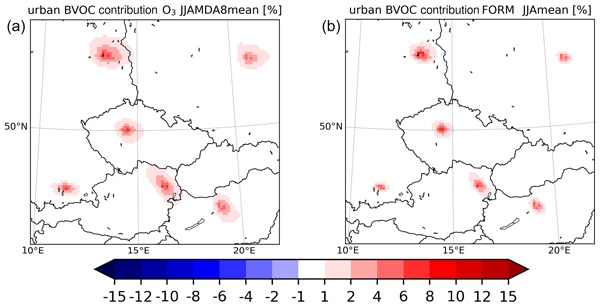
The impact of biogenic emissions of hydrocarbons from vegetation on ozone, as well as on overall oxidative capacity of air, is analyzed for central European cities for a present-day period using a chemistry transport model. Moreover, the analysis evaluates the partial role of urban vegetation in impacting all biogenic emissions. We found substantial increases in ozone due to these emissions, and about 10% of this increase is attributable to vegetation within urban areas.
Michal Belda, Nina Benešová, Jaroslav Resler, Peter Huszár, Ondřej Vlček, Pavel Krč, Jan Karlický, Pavel Juruš, and Kryštof Eben
Geosci. Model Dev., 17, 3867–3878, https://doi.org/10.5194/gmd-17-3867-2024, https://doi.org/10.5194/gmd-17-3867-2024, 2024
Short summary
Short summary
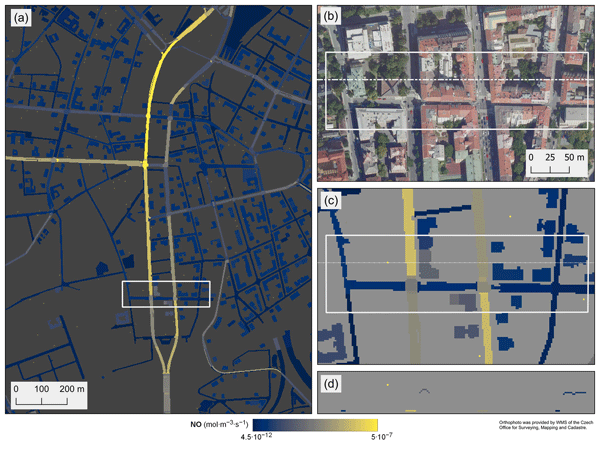
For modeling atmospheric chemistry, it is necessary to provide data on emissions of pollutants. These can come from various sources and in various forms, and preprocessing of the data to be ingestible by chemistry models can be quite challenging. We developed the FUME processor to use a database layer that internally transforms all input data into a rigid structure, facilitating further processing to allow for emission processing from the continental to the street scale.
Lukáš Bartík, Peter Huszár, Jan Karlický, Ondřej Vlček, and Kryštof Eben
Atmos. Chem. Phys., 24, 4347–4387, https://doi.org/10.5194/acp-24-4347-2024, https://doi.org/10.5194/acp-24-4347-2024, 2024
Short summary
Short summary
The presented study deals with the attribution of fine particulate matter (PM2.5) concentrations to anthropogenic emissions over Central Europe using regional-scale models. It calculates the present-day contributions of different emissions sectors to concentrations of PM2.5 and its secondary components. Moreover, the study investigates the effect of chemical nonlinearities by using multiple source attribution methods and secondary organic aerosol calculation methods.
Peter Huszar, Alvaro Patricio Prieto Perez, Lukáš Bartík, Jan Karlický, and Anahi Villalba-Pradas
Atmos. Chem. Phys., 24, 397–425, https://doi.org/10.5194/acp-24-397-2024, https://doi.org/10.5194/acp-24-397-2024, 2024
Short summary
Short summary
Urbanization transforms rural land into artificial land, while due to human activities, it also introduces a great quantity of emissions. We quantify the impact of urbanization on the final particulate matter pollutant levels by looking not only at these emissions, but also at the way urban land cover influences meteorological conditions, how the removal of pollutants changes due to urban land cover, and how biogenic emissions from vegetation change due to less vegetation in urban areas.
Marina Liaskoni, Peter Huszar, Lukáš Bartík, Alvaro Patricio Prieto Perez, Jan Karlický, and Ondřej Vlček
Atmos. Chem. Phys., 23, 3629–3654, https://doi.org/10.5194/acp-23-3629-2023, https://doi.org/10.5194/acp-23-3629-2023, 2023
Short summary
Short summary
Wind-blown dust (WBD) emissions emitted from European soils are estimated for the 2007–2016 period, and their impact on the total particulate matter (PM) concentration is calculated. We found a considerable increase in PM concentrations due to such emissions, especially on selected days (rather than on a seasonal average). We also found that WBD emissions are strongest over western Europe, and the highest impacts on PM are calculated for this region.
Peter Huszar, Jan Karlický, Lukáš Bartík, Marina Liaskoni, Alvaro Patricio Prieto Perez, and Kateřina Šindelářová
Atmos. Chem. Phys., 22, 12647–12674, https://doi.org/10.5194/acp-22-12647-2022, https://doi.org/10.5194/acp-22-12647-2022, 2022
Short summary
Short summary
Urbanization turns rural land cover into artificial land cover, while due to human activities, it introduces a great quantity of emissions. We attempt to quantify the impact of urbanization on the final air pollutant levels by looking not only at these emissions, but also the way urban land cover influences meteorological conditions, how the removal of pollutants changes due to urban land cover, and how biogenic emissions from vegetation change due to less vegetation in urban areas.
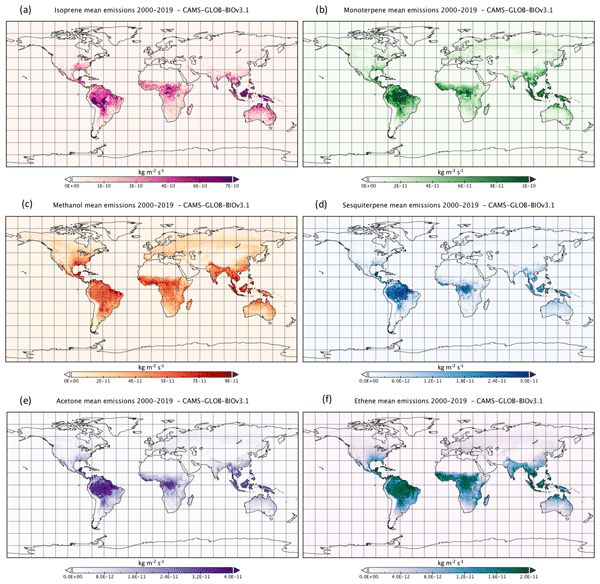
Katerina Sindelarova, Jana Markova, David Simpson, Peter Huszar, Jan Karlicky, Sabine Darras, and Claire Granier
Earth Syst. Sci. Data, 14, 251–270, https://doi.org/10.5194/essd-14-251-2022, https://doi.org/10.5194/essd-14-251-2022, 2022
Short summary
Short summary
Three new datasets of global emissions of biogenic volatile organic compounds (BVOCs) emitted into the atmosphere from terrestrial vegetation were developed for air quality modelling using the Model of Emissions of Gases and Aerosols from Nature (MEGANv2.1) driven by European Centre for Medium-Range Weather Forecasts meteorological reanalyses for the years 2000–2019. The datasets include updates of the isoprene emission factors in Europe and study the impact of land cover change on emissions.
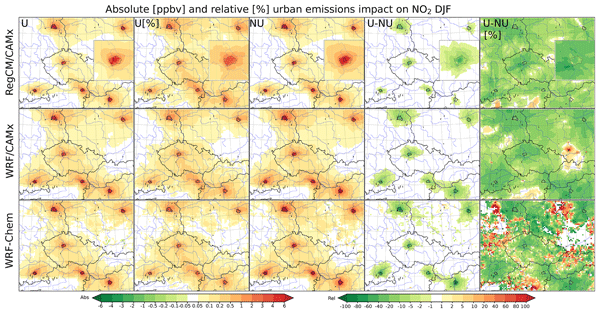
Peter Huszar, Jan Karlický, Jana Marková, Tereza Nováková, Marina Liaskoni, and Lukáš Bartík
Atmos. Chem. Phys., 21, 14309–14332, https://doi.org/10.5194/acp-21-14309-2021, https://doi.org/10.5194/acp-21-14309-2021, 2021
Short summary
Short summary
Urban areas are strong hot spots of emissions influencing local and regional air quality. Cities furthermore influence the meteorological conditions due to their characteristic surface properties and geometry. We found that if these latter effects are not included in the quantification of the impact of urban emissions on regional air quality, this impact will be overestimated, and this overestimation is mainly due to the enhanced turbulence that is present in cities compared to rural areas.
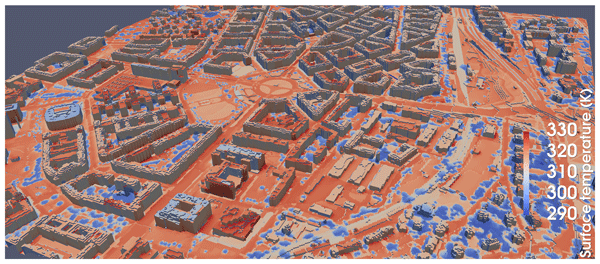
Jaroslav Resler, Kryštof Eben, Jan Geletič, Pavel Krč, Martin Rosecký, Matthias Sühring, Michal Belda, Vladimír Fuka, Tomáš Halenka, Peter Huszár, Jan Karlický, Nina Benešová, Jana Ďoubalová, Kateřina Honzáková, Josef Keder, Šárka Nápravníková, and Ondřej Vlček
Geosci. Model Dev., 14, 4797–4842, https://doi.org/10.5194/gmd-14-4797-2021, https://doi.org/10.5194/gmd-14-4797-2021, 2021
Short summary
Short summary
We describe validation of the PALM model v6.0 against measurements collected during two observational campaigns in Dejvice, Prague. The study focuses on the evaluation of the newly developed or improved radiative and energy balance modules in PALM related to urban modelling. In addition to the energy-related quantities, it also evaluates air flow and air quality under street canyon conditions.
Jan Peiker, Jan Karlický, and Peter Huszár
Geosci. Model Dev., 19, 5401–5421, https://doi.org/10.5194/gmd-19-5401-2026, https://doi.org/10.5194/gmd-19-5401-2026, 2026
Short summary
Short summary
We introduce a novel strategy for bias correction of tropospheric ozone maxima based on parametric interpolation of quantile biases (PIQB) from stations into the model grid. Its performance is evaluated and compared to other strategies found in literature. The results show that PIQB performs very well on simulations with a relatively high horizontal resolution, preserving model-resolved features yet mitigating model errors. We conclude that PIQB is suitable for correcting future projections.
Lukáš Bartík, Peter Huszár, Jan Peiker, Jan Karlický, Ondřej Vlček, and Petr Vodička
Atmos. Chem. Phys., 25, 15301–15328, https://doi.org/10.5194/acp-25-15301-2025, https://doi.org/10.5194/acp-25-15301-2025, 2025
Short summary
Short summary
This study investigates how to better understand and predict organic aerosols, which are tiny particles in the air that can affect our health and climate. By using advanced computer models, we examined the impact of different emissions and environmental conditions on these aerosols in Central Europe. Our findings show that including specific emissions significantly improved the accuracy of our predictions.
Jan Karlický, Jáchym Bareš, and Peter Huszár
EGUsphere, https://doi.org/10.5194/egusphere-2025-388, https://doi.org/10.5194/egusphere-2025-388, 2025
Preprint archived
Short summary
Short summary
Our study includes results of WRF model simulations focused to evaluate sensitivity of local climate in cities on urban surface characteristics. Summer urban heat island is mostly impacted by changes in vegetation cover in city, albedo of roofs and irrigated green roofs. Results are usable also to reveal suitable mitigation strategies for reduction of negative aspects of local climate in cities.
Marina Liaskoni, Peter Huszár, Lukáš Bartík, Alvaro Patricio Prieto Perez, Jan Karlický, and Kateřina Šindelářová
Atmos. Chem. Phys., 24, 13541–13569, https://doi.org/10.5194/acp-24-13541-2024, https://doi.org/10.5194/acp-24-13541-2024, 2024
Short summary
Short summary
The impact of biogenic emissions of hydrocarbons from vegetation on ozone, as well as on overall oxidative capacity of air, is analyzed for central European cities for a present-day period using a chemistry transport model. Moreover, the analysis evaluates the partial role of urban vegetation in impacting all biogenic emissions. We found substantial increases in ozone due to these emissions, and about 10% of this increase is attributable to vegetation within urban areas.
Michal Belda, Nina Benešová, Jaroslav Resler, Peter Huszár, Ondřej Vlček, Pavel Krč, Jan Karlický, Pavel Juruš, and Kryštof Eben
Geosci. Model Dev., 17, 3867–3878, https://doi.org/10.5194/gmd-17-3867-2024, https://doi.org/10.5194/gmd-17-3867-2024, 2024
Short summary
Short summary
For modeling atmospheric chemistry, it is necessary to provide data on emissions of pollutants. These can come from various sources and in various forms, and preprocessing of the data to be ingestible by chemistry models can be quite challenging. We developed the FUME processor to use a database layer that internally transforms all input data into a rigid structure, facilitating further processing to allow for emission processing from the continental to the street scale.
Lukáš Bartík, Peter Huszár, Jan Karlický, Ondřej Vlček, and Kryštof Eben
Atmos. Chem. Phys., 24, 4347–4387, https://doi.org/10.5194/acp-24-4347-2024, https://doi.org/10.5194/acp-24-4347-2024, 2024
Short summary
Short summary
The presented study deals with the attribution of fine particulate matter (PM2.5) concentrations to anthropogenic emissions over Central Europe using regional-scale models. It calculates the present-day contributions of different emissions sectors to concentrations of PM2.5 and its secondary components. Moreover, the study investigates the effect of chemical nonlinearities by using multiple source attribution methods and secondary organic aerosol calculation methods.
Peter Huszar, Alvaro Patricio Prieto Perez, Lukáš Bartík, Jan Karlický, and Anahi Villalba-Pradas
Atmos. Chem. Phys., 24, 397–425, https://doi.org/10.5194/acp-24-397-2024, https://doi.org/10.5194/acp-24-397-2024, 2024
Short summary
Short summary
Urbanization transforms rural land into artificial land, while due to human activities, it also introduces a great quantity of emissions. We quantify the impact of urbanization on the final particulate matter pollutant levels by looking not only at these emissions, but also at the way urban land cover influences meteorological conditions, how the removal of pollutants changes due to urban land cover, and how biogenic emissions from vegetation change due to less vegetation in urban areas.
Marina Liaskoni, Peter Huszar, Lukáš Bartík, Alvaro Patricio Prieto Perez, Jan Karlický, and Ondřej Vlček
Atmos. Chem. Phys., 23, 3629–3654, https://doi.org/10.5194/acp-23-3629-2023, https://doi.org/10.5194/acp-23-3629-2023, 2023
Short summary
Short summary
Wind-blown dust (WBD) emissions emitted from European soils are estimated for the 2007–2016 period, and their impact on the total particulate matter (PM) concentration is calculated. We found a considerable increase in PM concentrations due to such emissions, especially on selected days (rather than on a seasonal average). We also found that WBD emissions are strongest over western Europe, and the highest impacts on PM are calculated for this region.
Peter Huszar, Jan Karlický, Lukáš Bartík, Marina Liaskoni, Alvaro Patricio Prieto Perez, and Kateřina Šindelářová
Atmos. Chem. Phys., 22, 12647–12674, https://doi.org/10.5194/acp-22-12647-2022, https://doi.org/10.5194/acp-22-12647-2022, 2022
Short summary
Short summary
Urbanization turns rural land cover into artificial land cover, while due to human activities, it introduces a great quantity of emissions. We attempt to quantify the impact of urbanization on the final air pollutant levels by looking not only at these emissions, but also the way urban land cover influences meteorological conditions, how the removal of pollutants changes due to urban land cover, and how biogenic emissions from vegetation change due to less vegetation in urban areas.
Katerina Sindelarova, Jana Markova, David Simpson, Peter Huszar, Jan Karlicky, Sabine Darras, and Claire Granier
Earth Syst. Sci. Data, 14, 251–270, https://doi.org/10.5194/essd-14-251-2022, https://doi.org/10.5194/essd-14-251-2022, 2022
Short summary
Short summary
Three new datasets of global emissions of biogenic volatile organic compounds (BVOCs) emitted into the atmosphere from terrestrial vegetation were developed for air quality modelling using the Model of Emissions of Gases and Aerosols from Nature (MEGANv2.1) driven by European Centre for Medium-Range Weather Forecasts meteorological reanalyses for the years 2000–2019. The datasets include updates of the isoprene emission factors in Europe and study the impact of land cover change on emissions.
Peter Huszar, Jan Karlický, Jana Marková, Tereza Nováková, Marina Liaskoni, and Lukáš Bartík
Atmos. Chem. Phys., 21, 14309–14332, https://doi.org/10.5194/acp-21-14309-2021, https://doi.org/10.5194/acp-21-14309-2021, 2021
Short summary
Short summary
Urban areas are strong hot spots of emissions influencing local and regional air quality. Cities furthermore influence the meteorological conditions due to their characteristic surface properties and geometry. We found that if these latter effects are not included in the quantification of the impact of urban emissions on regional air quality, this impact will be overestimated, and this overestimation is mainly due to the enhanced turbulence that is present in cities compared to rural areas.
Jaroslav Resler, Kryštof Eben, Jan Geletič, Pavel Krč, Martin Rosecký, Matthias Sühring, Michal Belda, Vladimír Fuka, Tomáš Halenka, Peter Huszár, Jan Karlický, Nina Benešová, Jana Ďoubalová, Kateřina Honzáková, Josef Keder, Šárka Nápravníková, and Ondřej Vlček
Geosci. Model Dev., 14, 4797–4842, https://doi.org/10.5194/gmd-14-4797-2021, https://doi.org/10.5194/gmd-14-4797-2021, 2021
Short summary
Short summary
We describe validation of the PALM model v6.0 against measurements collected during two observational campaigns in Dejvice, Prague. The study focuses on the evaluation of the newly developed or improved radiative and energy balance modules in PALM related to urban modelling. In addition to the energy-related quantities, it also evaluates air flow and air quality under street canyon conditions.
Cited articles
Aksoyoglu, S. and Prévôt, A. S. H.: Modelling nitrogen deposition: dry deposition velocities on various land-use types in Switzerland, Int. J. Environ. Pollut., 64, 230–245, https://doi.org/10.1504/IJEP.2018.099159, 2018. a
Ansari, T. U., Wild, O., Ryan, E., Chen, Y., Li, J., and Wang, Z.: Temporally resolved sectoral and regional contributions to air pollution in Beijing: informing short-term emission controls, Atmos. Chem. Phys., 21, 4471–4485, https://doi.org/10.5194/acp-21-4471-2021, 2021. a
Athanasopoulou, E., Tombrou, M., Pandis, S. N., and Russell, A. G.: The role of sea-salt emissions and heterogeneous chemistry in the air quality of polluted coastal areas, Atmos. Chem. Phys., 8, 5755–5769, https://doi.org/10.5194/acp-8-5755-2008, 2008. a
Barbara, B., Zioła, N., Mathews, B., Klejnowski, K., and Słaby, K.: The Role of PM2.5 Chemical Composition and Meteorology during High Pollution Periods at a Suburban Background Station in Southern Poland, Aerosol Air Qual. Res., 20, 2433–2447, https://doi.org/10.4209/aaqr.2020.01.0013, 2020. a
Bartík, L., Huszár, P., Karlický, J., Vlček, O., and Eben, K.: Modeling the drivers of fine PM pollution over Central Europe: impacts and contributions of emissions from different sources, Atmos. Chem. Phys., 24, 4347–4387, https://doi.org/10.5194/acp-24-4347-2024, 2024. a, b
Behera, S. N., Sharma, M., Aneja, V. P., and Balasubramanian, R.: Ammonia in the atmosphere: a review on emission sources, atmospheric chemistry and deposition on terrestrial bodies, Environ. Sci. Pollut. Res., 20, 8092–8131, https://doi.org/10.1007/s11356-013-2051-9, 2013. a
Belda, M., Krč, P., Resler, J., Huszár, P., Benešová, N., Karlický, J., and Juruš, P.: FUME-dev/fume: Official 2.0 release (2.0), Zenodo [code], https://doi.org/10.5281/zenodo.10142912, 2023. a
Belda, M., Benešová, N., Resler, J., Huszár, P., Vlček, O., Krč, P., Karlický, J., Juruš, P., and Eben, K.: FUME 2.0 – Flexible Universal processor for Modeling Emissions, Geosci. Model Dev., 17, 3867–3878, https://doi.org/10.5194/gmd-17-3867-2024, 2024. a
Bodor, Z., Bodor, K., Keresztesi, Á., and Szép, R.: Major air pollutants seasonal variation analysis and long-range transport of PM 10 in an urban environment with specific climate condition in Transylvania (Romania), Environ, Sci. Pol. Res., 27, 38181–38199, https://doi.org/10.1007/s11356-020-09838-2, 2020. a
Bougeault, P., and Lacarrere, P.: Parameterization of orography-induced turbulence in a Mesobeta–Scale model, Mon. Weather Rev., 117, 1872–1890, https://doi.org/10.1175/1520-0493(1989)117<1872:POOITI>2.0.CO;2, 1989 a
Buchholz, R. R., Emmons, L. K., Tilmes, S., and The CESM2 Development Team: CESM2.1/CAM-chem instantaneous output for boundary conditions, UCAR/NCAR – Atmospheric Chemistry Observations and Modeling Laboratory. Subset used Lat: 10 to 80, Lon: −20 to 50, January 2010–December 2019, https://doi.org/10.5065/NMP7-EP60, 2019. a
Byun, D. W. and Ching, J. K. S.: Science Algorithms of the EPA Model-3 Community Multiscale Air Quality (CMAQ) Modeling System, Office of Research and Development, U.S. EPA, North Carolina, EPA/600/R-99/030, 1999. a
CAMx: Comprehensive Air Quality Model With Extensions version 7.20 code, Ramboll US Corporation, Novato, CA 94945, USA [code], https://www.camx.com/download/source/ (last access: 20 March 2026), 2022. a
Cao, J., Situ, S., Hao, Y., Xie, S., and Li, L.: Enhanced summertime ozone and SOA from biogenic volatile organic compound (BVOC) emissions due to vegetation biomass variability during 1981–2018 in China, Atmos. Chem. Phys., 22, 2351–2364, https://doi.org/10.5194/acp-22-2351-2022, 2022. a
Cape, J. N., Coyle, M., and Dumitrean, P.: The atmospheric lifetime of black carbon, Atmos. Environ., 59, 256–263, https://doi.org/10.1016/j.atmosenv.2012.05.030, 2012. a
Chakraborty, T., Venter, Z. S., Qian, Y., and Lee, X.: Lower urban humidity moderates outdoor heat stress, AGU Advances, 3, e2022AV000729, https://doi.org/10.1029/2022AV000729, 2022. a
Chen, F. and Dudhia, J.: Coupling an advanced land surface–hydrology model with the penn state–NCAR MM5 modeling system. Part I: Model implementation and sensitivity, Mon. Weather Rev., 129, 569–585, https://doi.org/10.1175/1520-0493(2001)129<0569:CAALSH>2.0.CO;2, 2001. a
Chen, S.-H. and Sun, W.-Y.: A one-dimensional time dependent cloud model, J. Meteorol. Soc. Jpn. Ser. II, 80, 99–118, https://doi.org/10.2151/jmsj.80.99, 2002. a
CORINE: CORINE Land Cover 2012 (vector/raster 100 m), Europe, 6-yearly, European Union's Copernicus Land Monitoring Service information [data set], https://doi.org/10.2909/a84ae124-c5c5-4577-8e10-511bfe55cc0d, 2012. a, b
Crippa, M., Janssens-Maenhout, G., Guizzardi, D., Van Dingenen, R., and Dentener, F.: Contribution and uncertainty of sectorial and regional emissions to regional and global PM2.5 health impacts, Atmos. Chem. Phys., 19, 5165–5186, https://doi.org/10.5194/acp-19-5165-2019, 2019. a
Debevec, C., Sauvage, S., Gros, V., Salameh, T., Sciare, J., Dulac, F., and Locoge, N.: Seasonal variation and origins of volatile organic compounds observed during 2 years at a western Mediterranean remote background site (Ersa, Cape Corsica), Atmos. Chem. Phys., 21, 1449–1484, https://doi.org/10.5194/acp-21-1449-2021, 2021. a
Duan, J., Huang, R.-J., Li, Y., Chen, Q., Zheng, Y., Chen, Y., Lin, C., Ni, H., Wang, M., Ovadnevaite, J., Ceburnis, D., Chen, C., Worsnop, D. R., Hoffmann, T., O'Dowd, C., and Cao, J.: Summertime and wintertime atmospheric processes of secondary aerosol in Beijing, Atmos. Chem. Phys., 20, 3793–3807, https://doi.org/10.5194/acp-20-3793-2020, 2020. a
El Haddad, I., Vienneau, D., Daellenbach, K. R., Modini, R., Slowik, J. G., Upadhyay, A., Vasilakos, P. N., Bell, D., de Hoogh, K., and Prevot, A. S. H.: Opinion: How will advances in aerosol science inform our understanding of the health impacts of outdoor particulate pollution?, Atmos. Chem. Phys., 24, 11981–12011, https://doi.org/10.5194/acp-24-11981-2024, 2024. a
Emmons, L. K., Schwantes, R. H., Orlando, J. J., Tyndall, G., Kinnison, D., Lamarque, J.-F., Marsh, D., Mills, M. J., Tilmes, S., Bardeen, C., Buchholz, R. R., Conley, A., Gettelman, A., Garcia, R., Simpson, I., Blake, D. R., Meinardi, S., and Pétron, G.: The chemistry mechanism in the community earth system model version 2 (CESM2), J. Adv. Model. Earth Syst., 12, https://doi.org/10.1029/2019MS001882, 2020. a
Fierce, L., Riemer, N., and Bond, T. C.: Explaining variance in black carbon's aging timescale, Atmos. Chem. Phys., 15, 3173–3191, https://doi.org/10.5194/acp-15-3173-2015, 2015. a
Gao, C. Y., Heald, C. L., Katich, J. M., Luo, G., and Yu, F.: Remote aerosol simulated during the Atmospheric Tomography (ATom) campaign and implications for aerosol lifetime, J. Geophys. Res.-Atmos., 127, e2022JD036524, https://doi.org/10.1029/2022JD036524, 2022. a
Georgopoulou, M. P., Florou, K., Matrali, A., Starida, G., Kaltsonoudis, C., Nenes, A., and Pandis, S. N.: Diurnal aging of biomass burning emissions: impacts on secondary organic aerosol formation and oxidative potential, Atmos. Chem. Phys., 25, 15835–15855, https://doi.org/10.5194/acp-25-15835-2025, 2025. a
Goel, V., Tripathi, N., Gupta, M., Kumar Sahu, L., Singh, V., and Kumar, M.: Study of secondary organic aerosol formation and aging using ambient air in an oxidation flow reactor during high pollution events over Delhi, Environ. Res., 251, 118542, https://doi.org/10.1016/j.envres.2024.118542, 2024. a
Graham, A. M., Pringle, K. J., Arnold, S. R., Pope, R. J., Vieno, M., Butt, E. W., Conibear, L., Stirling, E. L., and McQuaid, J. B.: Impact of weather types on UK ambient particulate matter concentrations, Atmos. Environ., 5, 100061, https://doi.org/10.1016/j.aeaoa.2019.100061, 2020. a
Granier, C.S., Darras, H., Denier van der Gon, J., Doubalova, N., Elguindi, B., Galle, M., Gauss, M., Guevara, J.-P., Jalkanen, J., and Kuenen, C.: The Copernicus Atmosphere Monitoring Service Global and Regional Emissions; Report April 2019 version [Research Report], ECMWF, Reading, UK, https://doi.org/10.24380/d0bn-kx16, 2019. a
Grell, G. A.: Prognostic evaluation of assumptions used by Cumulus parameterizations, Mon. Weather Rev., 121, 764, https://doi.org/10.1175/1520-0493(1993)121<0764:PEOAUB>2.0.CO;2, 1993. a
Grell, G. A., Peckham, S. E., Schmitz, R., McKeen, S. A., Frost, G., Skamarock, W. C., and Eder, B.: Fully coupled “online” chemistry within the WRF model, Atmos. Environ., 39, 6957–6975, https://doi.org/10.1016/j.atmosenv.2005.04.027, 2005. a
Guenther, A. B., Jiang, X., Heald, C. L., Sakulyanontvittaya, T., Duhl, T., Emmons, L. K., and Wang, X.: The Model of Emissions of Gases and Aerosols from Nature version 2.1 (MEGAN2.1): an extended and updated framework for modeling biogenic emissions, Geosci. Model Dev., 5, 1471–1492, https://doi.org/10.5194/gmd-5-1471-2012, 2012. a
Guevara, M., Jorba, O., Soret, A., Petetin, H., Bowdalo, D., Serradell, K., Tena, C., Denier van der Gon, H., Kuenen, J., Peuch, V.-H., and Pérez García-Pando, C.: Time-resolved emission reductions for atmospheric chemistry modelling in Europe during the COVID-19 lockdowns, Atmos. Chem. Phys., 21, 773–797, https://doi.org/10.5194/acp-21-773-2021, 2021. a
Hardacre, C., Mulcahy, J. P., Pope, R. J., Jones, C. G., Rumbold, S. T., Li, C., Johnson, C., and Turnock, S. T.: Evaluation of SO2, SO
He, J., Gong, S., Yu, Y., Yu, L., Wu, L., Mao, H., Song, C., Zhao, S., Liu, H., Li, X., and Li, R.: Air pollution characteristics and their relation to meteorological conditions during 2014–2015 in major Chinese cities, Environ. Poll., 223, 484–496, https://doi.org/10.1016/j.envpol.2017.01.050, 2017. a
Hersbach, H., Bell, B., Berrisford, P., Biavati, G., Horányi, A., Muñoz Sabater, J., Nicolas, J., Peubey, C., Radu, R., Rozum, I., Schepers, D., Simmons, A., Soci, C., Dee, D., and Thépaut, J.-N.: ERA5 hourly data on single levels from 1940 to present, Copernicus Climate Change Service (C3S) Climate Data Store (CDS) [data set], https://doi.org/10.24381/cds.adbb2d47, 2023. a
Hodzic, A., Madronich, S., Kasibhatla, P. S., Tyndall, G., Aumont, B., Jimenez, J. L., Lee-Taylor, J., and Orlando, J.: Organic photolysis reactions in tropospheric aerosols: effect on secondary organic aerosol formation and lifetime, Atmos. Chem. Phys., 15, 9253–9269, https://doi.org/10.5194/acp-15-9253-2015, 2015. a
Huszar, P., Miksovsky, J., Pisoft, P., Belda, M., and Halenka, T.: Interactive coupling of a regional climate model and a chemistry transport model: evaluation and preliminary results on ozone and aerosol feedback, Clim. Res., 51, 59–88, https://doi.org/10.3354/cr01054, 2012. a
Huszar, P., Belda, M., and Halenka, T.: On the long-term impact of emissions from central European cities on regional air quality, Atmos. Chem. Phys., 16, 1331–1352, https://doi.org/10.5194/acp-16-1331-2016, 2016. a, b
Huszar, P., Karlický, J., Belda, M., Halenka, T., and Pisoft, P.: The impact of urban canopy meteorological forcing on summer photochemistry, Atmos. Environ., 176, 209–228, https://doi.org/10.1016/j.atmosenv.2017.12.037, 2018a. a
Huszar, P., Belda, M., Karlický, J., Bardachova, T., Halenka, T., and Pisoft, P.: Impact of urban canopy meteorological forcing on aerosol concentrations, Atmos. Chem. Phys., 18, 14059–14078, https://doi.org/10.5194/acp-18-14059-2018, 2018b. a, b
Huszar, P., Karlický, J., Ďoubalová, J., Šindelářová, K., Nováková, T., Belda, M., Halenka, T., Žák, M., and Pišoft, P.: Urban canopy meteorological forcing and its impact on ozone and PM2.5: role of vertical turbulent transport, Atmos. Chem. Phys., 20, 1977–2016, https://doi.org/10.5194/acp-20-1977-2020, 2020a. a, b, c
Huszar, P., Karlický, J., Ďoubalová, J., Nováková, T., Šindelářová, K., Švábik, F., Belda, M., Halenka, T., and Žák, M.: The impact of urban land-surface on extreme air pollution over central Europe, Atmos. Chem. Phys., 20, 11655–11681, https://doi.org/10.5194/acp-20-11655-2020, 2020b. a
Huszar, P., Karlický, J., Marková, J., Nováková, T., Liaskoni, M., and Bartík, L.: The regional impact of urban emissions on air quality in Europe: the role of the urban canopy effects, Atmos. Chem. Phys., 21, 14309–14332, https://doi.org/10.5194/acp-21-14309-2021, 2021. a, b
Huszar, P., Prieto Perez, A. P., Bartík, L., Karlický, J., and Villalba-Pradas, A.: Impact of urbanization on fine particulate matter concentrations over central Europe, Atmos. Chem. Phys., 24, 397–425, https://doi.org/10.5194/acp-24-397-2024, 2024. a, b
Huszár, P., Prieto Perez, A. P., Karlický, J., and Bartík, L.: CAMx daily outputs of Temporal Source Apportionment of PM2.5 over Central Europe 2010–2019, Charles University, Faculty of Mathematics and Physics, Katedra fyziky atmosféry, Czech National Repository [data set], https://doi.org/10.48700/datst.htg6v-2vn44, 2025. a
Iacono, M. J., Delamere, J. S., Mlawer, E. J., Shephard, M. W., Clough, S. A., and Collins, W. D.: Radiative forcing by long-lived greenhouse gases: Calculations with the AER radiative transfer models, J. Geophys. Res.-Atmos., 113, https://doi.org/10.1029/2008JD009944, 2008. a
Im, U. and Kanakidou, M.: Impacts of East Mediterranean megacity emissions on air quality, Atmos. Chem. Phys., 12, 6335–6355, https://doi.org/10.5194/acp-12-6335-2012, 2012. a
Jacobson, M. Z., Nghiem, S. V., Sorichetta, A., and Whitney, N.: Ring of impact from the mega-urbanization of Beijing between 2000 and 2009, J. Geophys. Res., 120, 5740–5756, https://doi.org/10.1002/2014JD023008, 2015. a
Janjić, Z. I.: The step-mountain eta coordinate model: Further developments of the convection, viscous sublayer, and turbulence closure schemes, Mon. Weather Rev., 122, 927–945, https://doi.org/10.1175/1520-0493(1994)122<0927:TSMECM>2.0.CO;2, 1994. a
Karlický, J., Huszár, P., Nováková, T., Belda, M., Švábik, F., Ďoubalová, J., and Halenka, T.: The “urban meteorology island”: a multi-model ensemble analysis, Atmos. Chem. Phys., 20, 15061–15077, https://doi.org/10.5194/acp-20-15061-2020, 2020. a, b
Karlický, J., Bareš, J., and Huszár, P.: Sensitivity of modeled urban climate to urban canopy parameters over central Europe, Environmental Research: Climate, 5, 015007, https://doi.org/10.1088/2752-5295/ae228c, 2026. a
Kim, K.-H., Kabir, E., and Kabir, S.: A review on the human health impact of airborne particulate matter, Environ. Int., 74, 136–143, https://doi.org/10.1016/j.envint.2014.10.005, 2015. a
Kristiansen, N. I., Stohl, A., Olivié, D. J. L., Croft, B., Søvde, O. A., Klein, H., Christoudias, T., Kunkel, D., Leadbetter, S. J., Lee, Y. H., Zhang, K., Tsigaridis, K., Bergman, T., Evangeliou, N., Wang, H., Ma, P.-L., Easter, R. C., Rasch, P. J., Liu, X., Pitari, G., Di Genova, G., Zhao, S. Y., Balkanski, Y., Bauer, S. E., Faluvegi, G. S., Kokkola, H., Martin, R. V., Pierce, J. R., Schulz, M., Shindell, D., Tost, H., and Zhang, H.: Evaluation of observed and modelled aerosol lifetimes using radioactive tracers of opportunity and an ensemble of 19 global models, Atmos. Chem. Phys., 16, 3525–3561, https://doi.org/10.5194/acp-16-3525-2016, 2016. a, b, c
Kusaka, H., Kondo, H., Kikegawa, Y., and Kimura, F.: A simple single-layer urban canopy model for atmospheric models: Comparison with multi-layer and slab models, Bound.-Lay. Meteorol., 101, 329–358, https://doi.org/10.1023/A:1019207923078, 2001. a
Lee, C., Martin, R. V., van Donkelaar, A., Lee, H., Dickerson, R. R., Hains, J. C., Krotkov, N., Richter, A., Vinnikov, K., and Schwab, J. J.: SO2 emissions and lifetimes: Estimates from inverse modeling using in situ and global, space-based (SCIAMACHY and OMI) observations, J. Geophys. Res., 116, D06304, https://doi.org/10.1029/2010JD014758, 2011. a
Lhotka, O. and Kyselý, J.: Three-dimensional analysis reveals diverse heat wave types in Europe, Commun. Earth Environ., 5, 323, https://doi.org/10.1038/s43247-024-01497-2, 2024. a
Li, Y., Zhang, J., Sailor, D. J., and Ban-Weiss, G. A.: Effects of urbanization on regional meteorology and air quality in Southern California, Atmos. Chem. Phys., 19, 4439–4457, https://doi.org/10.5194/acp-19-4439-2019, 2019. a, b
Liaskoni, M., Huszar, P., Bartík, L., Prieto Perez, A. P., Karlický, J., and Vlček, O.: Modelling the European wind-blown dust emissions and their impact on particulate matter (PM) concentrations, Atmos. Chem. Phys., 23, 3629–3654, https://doi.org/10.5194/acp-23-3629-2023, 2023. a
Lund, M. T., Samset, B. H., Skeie, R. B., Watson-Parris, D., Katich, J. M., Schwarz, J. P., and Weinzierl, B.: Short Black Carbon lifetime inferred from a global set of aircraft observations, npj Clim. Atmos. Sci., 1, 31, https://doi.org/10.1038/s41612-018-0040-x, 2018. a
Ma, P., Quan, J., Dou, Y., Pan, Y., Liao, Z., Cheng, Z., Jia, X., Wang, Q., Zhan, J., Ma, W., and Zheng, F.: Regime-dependence of nocturnal nitrate formation via N2O5 hydrolysis and its implication for mitigating nitrate pollution, Geophys. Res. Letters, 50, e2023GL106183, https://doi.org/10.1029/2023GL106183, 2023. a
Makra, L., Matyasovszky, I., Guba, Z., Karatzas, K., and Anttila, P.: Monitoring the long-range transport effects on urban PM10 levels using 3D clusters of backward trajectories, Atmos. Environ., 45, 2630–2641, https://doi.org/10.1016/j.atmosenv.2011.02.068, 2011. a
Mani, Z. A., Khorram-Manesh, A., and Goniewicz, K.: Global Health Impacts of Wildfire Disasters From 2000 to 2023: A Comprehensive Analysis of Mortality and Injuries, Disaster Med. Public, 18, e230, https://doi.org/10.1017/dmp.2024.150, 2023. a
Miao, Y., Li, J., Miao, S., Che, H., Wang, Y., Zhang, X., Zhu, R., and Liu, S.: Interaction between planetary boundary layer and PM 2.5 pollution in megacities in China: A review, Current Pollution Reports, 5, 261–271, https://doi.org/10.1007/s40726-019-00124-5, 2019. a
Milousis, A., Scholz, S. M. C., Fuchs, H., Tsimpidi, A. P., and Karydis, V. A.: Global perspectives on nitrate aerosol dynamics: a comprehensive sensitivity analysis, Atmos. Chem. Phys., 26, 571–605, https://doi.org/10.5194/acp-26-571-2026, 2026. a
Mo, J., Gong, S., Zhang, L., He, J., Lu, S., Zhou, Y., Ke, H., and Zhang, H.: Impacts of long-range transports from Central and South Asia on winter surface PM2.5 concentrations in China, Sci. Tot. Environ., 777, 146243, https://doi.org/10.1016/j.scitotenv.2021.146243, 2021. a, b
Nenes, A., Pandis, S. N., and Pilinis, C.: ISORROPIA: a new thermodynamic equilibrium model for multiphase multicomponent inorganic aerosols, Aquat. Geochem., 4, 123–152, https://doi.org/10.1023/A:1009604003981, 1998. a
Oke, T. R.: The energetic basis of the urban heat island, Q. J. Roy. Meteor. Soc., 108, 1–24, https://doi.org/10.1002/qj.49710845502, 1982. a
Oke, T., Mills, G., Christen, A., and Voogt, J.: Urban Climates, Cambridge University Press, https://doi.org/10.1017/9781139016476, 2017. a
Panagi, M., Fleming, Z. L., Monks, P. S., Ashfold, M. J., Wild, O., Hollaway, M., Zhang, Q., Squires, F. A., and Vande Hey, J. D.: Investigating the regional contributions to air pollution in Beijing: a dispersion modelling study using CO as a tracer, Atmos. Chem. Phys., 20, 2825–2838, https://doi.org/10.5194/acp-20-2825-2020, 2020. a, b
Paschalidou, A. K., Kassomenos, P., and Karanikola, P.: Disaggregating the contribution of local dispersion and long-range transport to the high PM10 values measured in a Mediterranean urban environment, Sci. Tot. Environ., 527, 119–125, https://doi.org/10.1016/j.scitotenv.2015.04.094, 2015. a
Passant, N.: Speciation of UK Emissions of Non-methane Volatile Organic Compounds, AEAT/ENV/R/0545, DEFRA, Oxon, UK, https://naei.energysecurity.gov.uk/sites/default/files/empire/AEAT_ENV_0545_final_v2.pdf (last access: 31 March 2026), 2002. a
Pommier, M.: Estimations of NOx emissions, NO2 lifetime and their temporal variation over three British urbanised regions in 2019 using TROPOMI NO2 observations, Environmental Science: Atmospheres, 3, 408–421, https://doi.org/10.1039/D2EA00086E, 2023. a
Prieto Perez, A. P., Huszár, P., and Karlický, J.: Validation of multi-model decadal simulations of present-day central European air-quality, Atmos. Environ., 349, 121077, https://doi.org/10.1016/j.atmosenv.2025.121077, 2025. a, b, c
Ren, Y., Zhang, H., Wei, W., Wu, B., Cai, X., and Song, Y.: Effects of turbulence structure and urbanization on the heavy haze pollution process, Atmos. Chem. Phys., 19, 1041–1057, https://doi.org/10.5194/acp-19-1041-2019, 2019. a
Rudich,Y., Donahue, N. M., and Mentel, T. F.: Aging of Organic Aerosol: Bridging the Gap Between Laboratory and Field Studies, Annu. Rev. Phys. Chem., 58, 321–352, https://doi.org/10.1146/annurev.physchem.58.032806.104432, 2007. a, b
Seinfeld, J. H. and Pandis, S. N.: Atmospheric Chemistry and Physics: From Air Pollution to Climate Change, J. Wiley, New York, ISBN 0-471-17815-2, 1998. a
Sharma, S. K., Sharma, A., Saxena, M., Choudhary, N., Masiwal, R., Mandal, T. K., and Sharma, C.: Chemical characterization and source apportionment of aerosol at an urban area of Central Delhi, India, Atmos. Pol. Res., 7, 110–121, https://doi.org/10.1016/j.apr.2015.08.002, 2016. a
Skyllakou, K., Murphy, B. N., Megaritis, A. G., Fountoukis, C., and Pandis, S. N.: Contributions of local and regional sources to fine PM in the megacity of Paris, Atmos. Chem. Phys., 14, 2343–2352, https://doi.org/10.5194/acp-14-2343-2014, 2014. a
Strader, R., Lurmann, F., and Pandis, S. N.: Evaluation of secondary organic aerosol formation in winter, Atmos. Environ., 33., 4849–4863, https://doi.org/10.1016/S1352-2310(99)00310-6, 1999. a
Tang, Y. S., Braban, C. F., Dragosits, U., Dore, A. J., Simmons, I., van Dijk, N., Poskitt, J., Dos Santos Pereira, G., Keenan, P. O., Conolly, C., Vincent, K., Smith, R. I., Heal, M. R., and Sutton, M. A.: Drivers for spatial, temporal and long-term trends in atmospheric ammonia and ammonium in the UK, Atmos. Chem. Phys., 18, 705–733, https://doi.org/10.5194/acp-18-705-2018, 2018. a
Tham, Y. J., Wang, Z., Li, Q., Wang, W., Wang, X., Lu, K., Ma, N., Yan, C., Kecorius, S., Wiedensohler, A., Zhang, Y., and Wang, T.: Heterogeneous N2O5 uptake coefficient and production yield of ClNO2 in polluted northern China: roles of aerosol water content and chemical composition, Atmos. Chem. Phys., 18, 13155–13171, https://doi.org/10.5194/acp-18-13155-2018, 2018. a
Thunis, P., Clappier, A., de Meij, A., Pisoni, E., Bessagnet, B., and Tarrason, L.: Why is the city's responsibility for its air pollution often underestimated? A focus on PM2.5, Atmos. Chem. Phys., 21, 18195–18212, https://doi.org/10.5194/acp-21-18195-2021, 2021. a
van der Gon, H. D., Hendriks, C., Kuenen, J., Segers, A., and Visschedijk, A.: Description of current temporal emission patterns and sensitivity of predicted AQ for temporal emission patterns, EU FP7 MACC deliverable report D_D-EMIS_1.3, https://atmosphere.copernicus.eu/sites/default/files/2019-07/MACC_TNO_del_1_3_v2.pdf (last access: 20 March 2026), 2011. a
Velásquez-García, M. P., Hernández, K. S., Vergara-Correa, J. A., Pope, R. J., Gómez-Marín, M., and Rendón, A. M.: Long-range transport of air pollutants increases the concentration of hazardous components of PM2.5 in northern South America, Atmos. Chem. Phys., 24, 11497–11520, https://doi.org/10.5194/acp-24-11497-2024, 2024. a
Villalba-Pradas, A., Karlický, J., Huszár, P., Žák, M., and Halenka, T.: Long-Term Impact of Urban Areas on Meteorological Conditions Over Central Europe, Ann NY Acad Sci., 1–16, https://doi.org/10.1111/nyas.70069, 2025. a
Wagstrom, K. M. and Pandis, S. N.: Determination of the age distribution of primary and secondary aerosol species using a chemical transport model, J. Geophys. Res., 114, D14303, https://doi.org/10.1029/2009JD011784, 2009. a, b
Wang, C., Wang, T., and Wang, P.: The Spatial–Temporal Variation of Tropospheric NO2 over China during 2005 to 2018, Atmosphere, 10, 444, https://doi.org/10.3390/atmos10080444, 2019. a
Wang, M., Tang, G., Liu, Y., Ma, M., Yu, M., Hu, B., Zhang, Y., Wang, Y., and Wang, Y.: The difference in the boundary layer height between urban and suburban areas in Beijing and its implications for air pollution, Atmos. Environ., 260, 118552, https://doi.org/10.1016/j.atmosenv.2021.118552, 2021. a, b
Wei, W., Zhang, H., Wu, B., Huang, Y., Cai, X., Song, Y., and Li, J.: Intermittent turbulence contributes to vertical dispersion of PM2.5 in the North China Plain: cases from Tianjin, Atmos. Chem. Phys., 18, 12953–12967, https://doi.org/10.5194/acp-18-12953-2018, 2018. a
Wichink Kruit, R. J., Schaap, M., Sauter, F. J., van Zanten, M. C., and van Pul, W. A. J.: Modeling the distribution of ammonia across Europe including bi-directional surface–atmosphere exchange, Biogeosciences, 9, 5261–5277, https://doi.org/10.5194/bg-9-5261-2012, 2012. a
WRF: Weather Research and Forecast model code, version 4.4 source code, WRF [code], https://github.com/wrf-model/WRF/releases (last access: 20 March 2026), 2022. a
Xie, X., Hu, J., Qin, M., Guo, S., Hu, M., Ji, D., Wang, H., Lou, S., Huang, C., Liu, C., Zhang, H., Ying, Q., Liao, H., and Zhang, Y.: Evolution of atmospheric age of particles and its implications for the formation of a severe haze event in eastern China, Atmos. Chem. Phys., 23, 10563–10578, https://doi.org/10.5194/acp-23-10563-2023, 2023. a, b
Yang, Y., Wang, L., Ma, P. He, Y., Zhao, C., and Zhao, W.: Urban and suburban decadal variations in air pollution of Beijing and its meteorological drivers, Environ. Int., 181, 10831, https://doi.org/10.1016/j.envint.2023.108301, 2023 a
Ying, Q., Zhang, J., Zhang, H., Hu, J., and Kleeman, M. J.: Atmospheric age distribution of primary and secondary inorganic aerosols in a polluted atmosphere, Environ. Sci. Technol., 55, 5668–5676, https://doi.org/10.1021/acs.est.0c07334, 2021. a, b
Ylisirniö, A., Buchholz, A., Mohr, C., Li, Z., Barreira, L., Lambe, A., Faiola, C., Kari, E., Yli-Juuti, T., Nizkorodov, S. A., Worsnop, D. R., Virtanen, A., and Schobesberger, S.: Composition and volatility of secondary organic aerosol (SOA) formed from oxidation of real tree emissions compared to simplified volatile organic compound (VOC) systems , Atmos. Chem. Phys., 20, 5629–5644, https://doi.org/10.5194/acp-20-5629-2020, 2020. a
Zalakeviciute, R., López-Villada, J., and Rybarczyk, Y.: Contrasted Effects of Relative Humidity and Precipitation on Urban PM2.5 Pollution in High Elevation Urban Areas, Sustainability, 10, 2064, https://doi.org/10.3390/su10062064, 2018. a
Zha, J., Zhao, D., Wu, J., and Zhang, P.: Numerical simulation of the effects of land use and cover change on the near-surface wind speed over Eastern China, Clim. Dynam., 53, 1783–1803, https://doi.org/10.1007/s00382-019-04737-w, 2019 a
Zhang, H., Guo, H., Hu, J., Ying, Q., and Kleeman, M.J.: Modeling atmospheric age distribution of elemental carbon using a regional age-resolved particle representation framework, Environ. Sci. Tech., 53, 270–278, https://doi.org/10.1021/acs.est.8b05895, 2019. a, b
Zhang, L., Brook, J. R., and Vet, R.: A revised parameterization for gaseous dry deposition in air-quality models, Atmos. Chem. Phys., 3, 2067–2082, https://doi.org/10.5194/acp-3-2067-2003, 2003. a
Zhang, Y., Seidel, D. J., and Zhang, S.: Trends in Planetary Boundary Layer Height over Europe, J. Climate, 26, 10071–10076, https://doi.org/10.1175/JCLI-D-13-00108.1, 2013. a
Zhou, M., Nie, W., Qiao, L., Huang, D. D., Zhu, S., Lou, S., Wang, H., Wang, Q., Tao, S., Sun, P., and Liu, Y.: Elevated formation of particulate nitrate from N2O5 hydrolysis in the Yangtze River Delta region from 2011 to 2019, Geophys. Res. Let., 49, e2021GL097393, https://doi.org/10.1029/2021GL097393, 2022. a
Zhu, K., Xie, M., Wang, T., Cai, J., Li, S., and Feng, W.: A modeling study on the effect of urban land surface forcing to regional meteorology and air quality over South China, Atmos. Environ., 152, 389–404, https://doi.org/10.1016/j.atmosenv.2016.12.053, 2017. a
Short summary
This study evaluates the role of past emissions on the particulate matter pollution over Central Europe. It uses a chemical transport model along with a novel method of tagging emission according to the day they have been emitted. Our result showed that while the particulate matter pollution in cities is predominantly caused by actual day emissions, emission from day-1 to day-3 can also add a considerable fraction and under special circumstances even week old emissions can be important.
This study evaluates the role of past emissions on the particulate matter pollution over Central...


Altmetrics
Final-revised paper
Preprint