Articles | Volume 26, issue 6
https://doi.org/10.5194/acp-26-4215-2026
© Author(s) 2026. This work is distributed under
the Creative Commons Attribution 4.0 License.

https://doi.org/10.5194/acp-26-4215-2026
© Author(s) 2026. This work is distributed under
the Creative Commons Attribution 4.0 License.
Size-resolved condensation sink as an approach to understand pathways how gaseous emissions affect health and climate

Aerosol Physics Laboratory, Tampere University, Tampere, 33720, Finland
Hilkka Timonen
Aerosol Physics Laboratory, Tampere University, Tampere, 33720, Finland
Atmospheric Composition Research, Finnish Meteorological Institute, Helsinki, 00101, Finland
Topi Rönkkö
Aerosol Physics Laboratory, Tampere University, Tampere, 33720, Finland
Miikka Dal Maso
Aerosol Physics Laboratory, Tampere University, Tampere, 33720, Finland
Related authors
Katariina Kylämäki, Milja Jäppi, Leïla Simon, Wojciech Honkisz, Petteri Marjanen, Laura Salo, Teemu Lepistö, Henna Lintusaari, Luis Barreira, Hannu Kuutti, Matti Rissanen, Piotr Bielaczyc, Hilkka Timonen, Päivi Aakko-Saksa, and Topi Rönkkö
EGUsphere, https://doi.org/10.5194/egusphere-2026-224, https://doi.org/10.5194/egusphere-2026-224, 2026
This preprint is open for discussion and under review for Atmospheric Measurement Techniques (AMT).
Short summary
Short summary
Oxidation flow reactors (OFRs) simulate atmospheric aging of e.g. anthropogenic emissions. In this study, we aged exhaust from passenger cars in two OFRs with different designs. On average, the OFRs produced comparable particle size distributions and emission factors. However, there were differences between the OFRs in secondary particle formation depending on the fuel and technology of the car and the differences were mostly explained by OFR design.
Fanni Mylläri, Niina Kuittinen, Minna Aurela, Teemu Lepistö, Paavo Heikkilä, Laura Salo, Lassi Markkula, Panu Karjalainen, Joel Kuula, Sami Harni, Katriina Kyllönen, Satu Similä, Katriina Kirvelä, Joakim Autio, Marko Palonen, Jouni Valtatie, Anna Häyrinen, Hilkka Timonen, and Topi Rönkkö
Aerosol Research, 4, 23–35, https://doi.org/10.5194/ar-4-23-2026, https://doi.org/10.5194/ar-4-23-2026, 2026
Short summary
Short summary
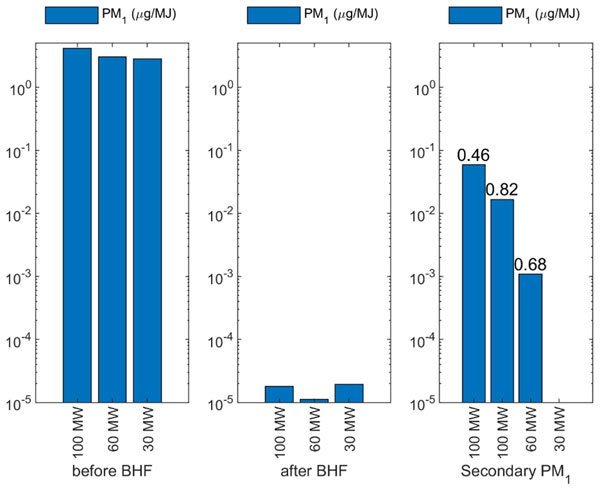
This study examined particle emissions from a large-scale biomass heating plant. Efficient flue gas cleaning, especially with bag-house filters, significantly reduced primary emissions. However, the potential for secondary aerosol formation was found to be 100–1000 times higher than primary emissions, highlighting the need for further research to support air quality and climate goals.
Kimmo Teinilä, Teemu Lepistö, Jarkko V. Niemi, Harri Portin, Anssi Julkunen, Anu Kousa, Joel Kuula, Hanna E. Manninen, Pasi Aalto, Tuukka Petäjä, Topi Rönkkö, Erkka Saukko, and Hilkka Timonen
EGUsphere, https://doi.org/10.5194/egusphere-2025-5777, https://doi.org/10.5194/egusphere-2025-5777, 2025
Short summary
Short summary
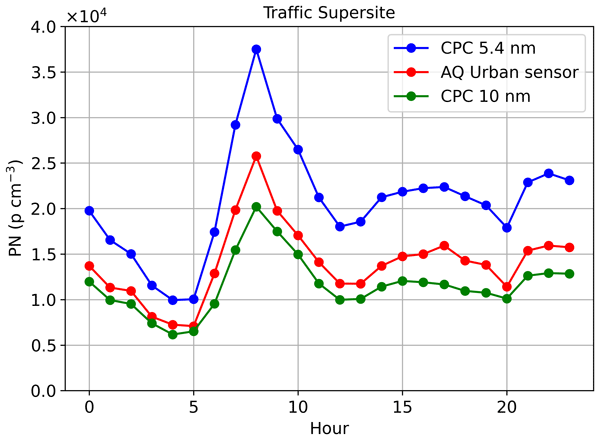
Particle number concentrations were measured with CPCs and AQ Urban sensors at two different urban environments in Helsinki in 2022. The measurement sites were traffic related and background urban sites. The aim of the study was to investigate suitability of using AQ Urban sensors in urban air quality monitoring to obtain particle number concentrations and challenges related to this.
Kimmo Teinilä, Sanna Saarikoski, Henna Lintusaari, Teemu Lepistö, Petteri Marjanen, Minna Aurela, Heidi Hellén, Toni Tykkä, Markus Lampimäki, Janne Lampilahti, Luis Barreira, Timo Mäkelä, Leena Kangas, Juha Hatakka, Sami Harni, Joel Kuula, Jarkko V. Niemi, Harri Portin, Jaakko Yli-Ojanperä, Ville Niemelä, Milja Jäppi, Katrianne Lehtipalo, Joonas Vanhanen, Liisa Pirjola, Hanna E. Manninen, Tuukka Petäjä, Topi Rönkkö, and Hilkka Timonen
Atmos. Chem. Phys., 25, 4907–4928, https://doi.org/10.5194/acp-25-4907-2025, https://doi.org/10.5194/acp-25-4907-2025, 2025
Short summary
Short summary
Physical and chemical properties of particulate matter and concentrations of trace gases were measured in a street canyon in Helsinki, Finland, and an urban background site in January–February 2022 to investigate the effect of wintertime conditions on pollutants. State-of-the-art instruments and a mobile laboratory were used, and the measurement data were analysed further with modelling tools like positive matrix factorization and the Pollution Detection Algorithm.
Teemu Lepistö, Henna Lintusaari, Laura Salo, Ville Silvonen, Luis M. F. Barreira, Jussi Hoivala, Lassi Markkula, Jarkko V. Niemi, Jakub Ondracek, Kimmo Teinilä, Hanna E. Manninen, Sanna Saarikoski, Hilkka Timonen, Miikka Dal Maso, and Topi Rönkkö
Aerosol Research, 2, 271–289, https://doi.org/10.5194/ar-2-271-2024, https://doi.org/10.5194/ar-2-271-2024, 2024
Short summary
Short summary
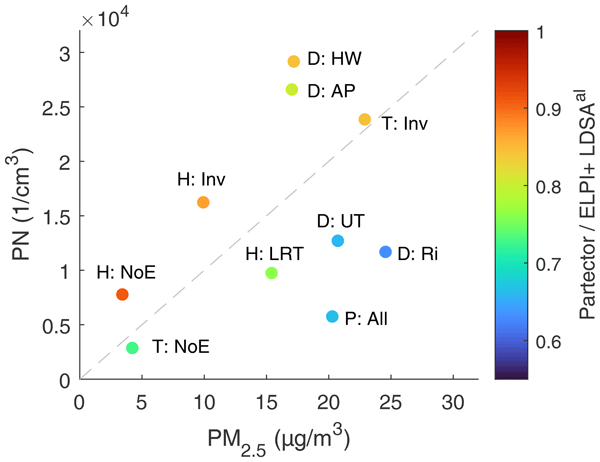
The performances of different particle lung-deposited surface area (LDSAal) measurement methods (Partector, ELPI+, SMPS/DMPS) were compared in ambient conditions. As LDSAal is a health-relevant metric and rather easy to utilise in air quality monitoring, it is crucial to know how the different methods agree, as there are clear differences in their operation. In all, a comparison of different methods can be complicated; still, the methods agree rather well in terms of local pollution (< 400 nm).
Katariina Kylämäki, Milja Jäppi, Leïla Simon, Wojciech Honkisz, Petteri Marjanen, Laura Salo, Teemu Lepistö, Henna Lintusaari, Luis Barreira, Hannu Kuutti, Matti Rissanen, Piotr Bielaczyc, Hilkka Timonen, Päivi Aakko-Saksa, and Topi Rönkkö
EGUsphere, https://doi.org/10.5194/egusphere-2026-224, https://doi.org/10.5194/egusphere-2026-224, 2026
This preprint is open for discussion and under review for Atmospheric Measurement Techniques (AMT).
Short summary
Short summary
Oxidation flow reactors (OFRs) simulate atmospheric aging of e.g. anthropogenic emissions. In this study, we aged exhaust from passenger cars in two OFRs with different designs. On average, the OFRs produced comparable particle size distributions and emission factors. However, there were differences between the OFRs in secondary particle formation depending on the fuel and technology of the car and the differences were mostly explained by OFR design.
Fanni Mylläri, Niina Kuittinen, Minna Aurela, Teemu Lepistö, Paavo Heikkilä, Laura Salo, Lassi Markkula, Panu Karjalainen, Joel Kuula, Sami Harni, Katriina Kyllönen, Satu Similä, Katriina Kirvelä, Joakim Autio, Marko Palonen, Jouni Valtatie, Anna Häyrinen, Hilkka Timonen, and Topi Rönkkö
Aerosol Research, 4, 23–35, https://doi.org/10.5194/ar-4-23-2026, https://doi.org/10.5194/ar-4-23-2026, 2026
Short summary
Short summary
This study examined particle emissions from a large-scale biomass heating plant. Efficient flue gas cleaning, especially with bag-house filters, significantly reduced primary emissions. However, the potential for secondary aerosol formation was found to be 100–1000 times higher than primary emissions, highlighting the need for further research to support air quality and climate goals.
Sami D. Harni, Lasse Johansson, Jarkko V. Niemi, Ville Silvonen, Juan Andrés Casquero-Vera, Anu Kousa, Krista Luoma, Viet Le, David Brus, Konstantinos Doulgeris, Topi Rönkkö, Hanna E. Manninen, Tuukka Petäjä, and Hilkka Timonen
Atmos. Chem. Phys., 25, 18719–18738, https://doi.org/10.5194/acp-25-18719-2025, https://doi.org/10.5194/acp-25-18719-2025, 2025
Short summary
Short summary
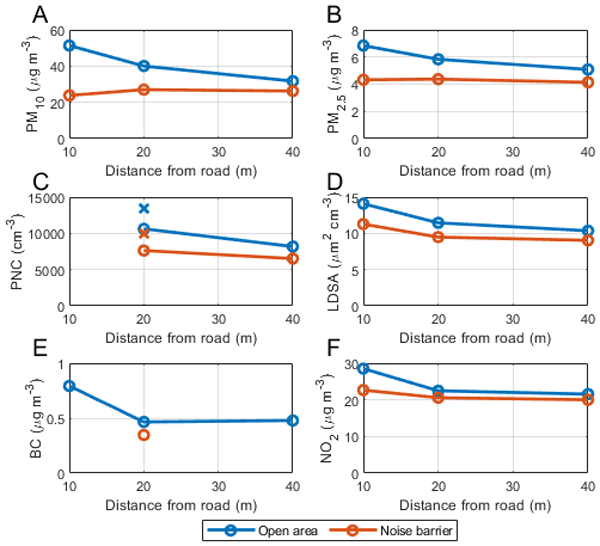
A three-month-long measurement campaign was conducted at Espoo, Finland, in spring 2023. The measurement campaign studied the effect of the noise barrier on pollutant concentration gradients on the side of a major highway. The studied pollutants included PM10, PM2.5, lung deposited surface area (LDSA), particle number concentration (PNC), NO2, and black carbon (BC). The noise barrier was found to be effective in reducing, especially the concentration of particulate pollutants.
Kimmo Teinilä, Teemu Lepistö, Jarkko V. Niemi, Harri Portin, Anssi Julkunen, Anu Kousa, Joel Kuula, Hanna E. Manninen, Pasi Aalto, Tuukka Petäjä, Topi Rönkkö, Erkka Saukko, and Hilkka Timonen
EGUsphere, https://doi.org/10.5194/egusphere-2025-5777, https://doi.org/10.5194/egusphere-2025-5777, 2025
Short summary
Short summary
Particle number concentrations were measured with CPCs and AQ Urban sensors at two different urban environments in Helsinki in 2022. The measurement sites were traffic related and background urban sites. The aim of the study was to investigate suitability of using AQ Urban sensors in urban air quality monitoring to obtain particle number concentrations and challenges related to this.
Mojtaba Bezaatpour, Miikka Dal Maso, and Matti Rissanen
Geosci. Model Dev., 18, 9189–9217, https://doi.org/10.5194/gmd-18-9189-2025, https://doi.org/10.5194/gmd-18-9189-2025, 2025
Short summary
Short summary
We developed a computer program that can read chemical formulas and identify key features in thousands of organic compounds. This helps scientists estimate how easily these compounds evaporate, which is important for understanding air pollution and climate. We tested the program using real-world data and found it to be highly accurate. Our work makes it faster and easier to study the behavior of many complex chemicals in the atmosphere.
Arya Mukherjee, Anni Hartikainen, Markus Somero, Viljami Luostari, Mika Ihalainen, Christopher P. Rüger, Timo Kekäläinen, Ville H. Nissinen, Luis M. F. Barreira, Hanna Koponen, Tuukka Kokkola, Delun Li, Lejish Vettikkat, Pasi Yli-Pirilä, Muhammad Shahzaib, Meri M. Ruppel, Ville Vakkari, Kerneels Jaars, Stefan J. Siebert, Angela Buchholz, Kajar Köster, Pieter G. van Zyl, Hilkka Timonen, Niko Kinnunen, Janne Jänis, Annele Virtanen, Aki Virkkula, and Olli Sippula
Atmos. Chem. Phys., 25, 16747–16774, https://doi.org/10.5194/acp-25-16747-2025, https://doi.org/10.5194/acp-25-16747-2025, 2025
Short summary
Short summary
Warming climate is predicted to increase boreal and peatland fires in Northern Eurasia. Limited studies have characterized light absorbing aerosol emissions from these biomasses, thus necessitating this work. Brown carbon (BrC) emitted from laboratory-scale biomass burning had weak light absorptivities based on their complex refractive index values. A combustion temperature dependent light absorptivity continuum existed for emitted BrC. Photochemical aging decreased BrC light absorptivity.
Joel Kuula, Juho Karhu, Tommi Mikkonen, Aki Virkkula, Hilkka Timonen, Tuomas Hieta, and Markku Vainio
Aerosol Research Discuss., https://doi.org/10.5194/ar-2025-38, https://doi.org/10.5194/ar-2025-38, 2025
Preprint withdrawn
Short summary
Short summary
Black carbon particles absorb sunlight and warm the climate, but their properties change in the atmosphere. We measured how changes in soot particle shape affect size-resolved light absorption. Our results show that compacted particles absorb more light, although this effect can reverse due to competing physical processes.
Frans Graeffe, Kalle Kupi, Hilkka Timonen, and Mikael Ehn
Atmos. Chem. Phys., 25, 10837–10851, https://doi.org/10.5194/acp-25-10837-2025, https://doi.org/10.5194/acp-25-10837-2025, 2025
Short summary
Short summary
Alkanes are a major part of anthropogenic emissions in urban areas, and known for producing secondary organic aerosol (SOA). We measured SOA yields of seven alkanes and their oxygenated derivatives in oxidation flow reactor (OFR) measurements to assess their role in SOA formation. In addition, we observed that cyclic structure enhances SOA production. Furthermore, our observations indicate that multi-generational hydroxyl radical (OH) oxidation is important in the SOA formation.
J. Tapio Elomaa, Krista Luoma, Sami D. Harni, Aki Virkkula, Hilkka Timonen, and Tuukka Petäjä
Aerosol Research, 3, 293–314, https://doi.org/10.5194/ar-3-293-2025, https://doi.org/10.5194/ar-3-293-2025, 2025
Short summary
Short summary
Black carbon (BC) is a pollutant from combustion that affects the climate and is harmful to health. We tested four different small BC sensors with a reference in Helsinki. The sensors compared well with the reference. As a sensor network they were able to capture differences in BC. Changes in temperature (T) and relative humidity (RH) caused error in the measurements. To reduce the effects of T and RH on BC sensors, more robust boxes should be developed, or corrections should be applied.
Kimmo Teinilä, Sanna Saarikoski, Henna Lintusaari, Teemu Lepistö, Petteri Marjanen, Minna Aurela, Heidi Hellén, Toni Tykkä, Markus Lampimäki, Janne Lampilahti, Luis Barreira, Timo Mäkelä, Leena Kangas, Juha Hatakka, Sami Harni, Joel Kuula, Jarkko V. Niemi, Harri Portin, Jaakko Yli-Ojanperä, Ville Niemelä, Milja Jäppi, Katrianne Lehtipalo, Joonas Vanhanen, Liisa Pirjola, Hanna E. Manninen, Tuukka Petäjä, Topi Rönkkö, and Hilkka Timonen
Atmos. Chem. Phys., 25, 4907–4928, https://doi.org/10.5194/acp-25-4907-2025, https://doi.org/10.5194/acp-25-4907-2025, 2025
Short summary
Short summary
Physical and chemical properties of particulate matter and concentrations of trace gases were measured in a street canyon in Helsinki, Finland, and an urban background site in January–February 2022 to investigate the effect of wintertime conditions on pollutants. State-of-the-art instruments and a mobile laboratory were used, and the measurement data were analysed further with modelling tools like positive matrix factorization and the Pollution Detection Algorithm.
Hector Navarro-Barboza, Jordi Rovira, Vincenzo Obiso, Andrea Pozzer, Marta Via, Andres Alastuey, Xavier Querol, Noemi Perez, Marjan Savadkoohi, Gang Chen, Jesus Yus-Díez, Matic Ivancic, Martin Rigler, Konstantinos Eleftheriadis, Stergios Vratolis, Olga Zografou, Maria Gini, Benjamin Chazeau, Nicolas Marchand, Andre S. H. Prevot, Kaspar Dallenbach, Mikael Ehn, Krista Luoma, Tuukka Petäjä, Anna Tobler, Jaroslaw Necki, Minna Aurela, Hilkka Timonen, Jarkko Niemi, Olivier Favez, Jean-Eudes Petit, Jean-Philippe Putaud, Christoph Hueglin, Nicolas Pascal, Aurélien Chauvigné, Sébastien Conil, Marco Pandolfi, and Oriol Jorba
Atmos. Chem. Phys., 25, 2667–2694, https://doi.org/10.5194/acp-25-2667-2025, https://doi.org/10.5194/acp-25-2667-2025, 2025
Short summary
Short summary
Brown carbon (BrC) absorbs ultraviolet (UV) and visible light, influencing climate. This study explores BrC's imaginary refractive index (k) using data from 12 European sites. Residential emissions are a major organic aerosol (OA) source in winter, while secondary organic aerosol (SOA) dominates in summer. Source-specific k values were derived, improving model accuracy. The findings highlight BrC's climate impact and emphasize source-specific constraints in atmospheric models.
Juho Karhu, Tommi Mikkonen, Joel Kuula, Aki Virkkula, Erkki Ikonen, Markku Vainio, Hilkka Timonen, and Tuomas Hieta
Aerosol Research, 3, 113–124, https://doi.org/10.5194/ar-3-113-2025, https://doi.org/10.5194/ar-3-113-2025, 2025
Short summary
Short summary
We present a new photoacoustic instrument for simultaneous measurement of aerosol light absorption at multiple wavelengths. High performance is reached by using an optically read cantilever microphone, which allows for highly sensitive absorption measurements at a compact size. Performance in field conditions is demonstrated with black carbon monitoring at an air quality measurement station, where our results agree well with reference instruments deployed at the site.
Giannis Ioannidis, Nikoletta Bouloti, Paul Tremper, Chaofan Li, Christos Boikos, Nikolaos Rapkos, Till Riedel, Miikka Dal Maso, and Leonidas Ntziachristos
EGUsphere, https://doi.org/10.5194/egusphere-2025-193, https://doi.org/10.5194/egusphere-2025-193, 2025
Preprint archived
Short summary
Short summary
This study introduces SOMA (Secondary Organic Module for Aerosol) to model SOA formation in urban environments, using VOC oxidation inputs from GECKO-A. Based on SOA formation experiments, SOMA incorporates correction factors for calibration purposes. A CFD model simulates toluene dispersion in Augsburg, and it’s linked to SOMA to show that background SOA contributes 21–53 % of total mass, fading after 7 hours, providing better understanding of SOA formation dynamics.
Joel Kuula, Juho Karhu, Tommi Mikkonen, Patrick Grahn, Aki Virkkula, Hilkka Timonen, Tuomas Hieta, and Markku Vainio
Aerosol Research, 3, 1–13, https://doi.org/10.5194/ar-3-1-2025, https://doi.org/10.5194/ar-3-1-2025, 2025
Short summary
Short summary
We developed a new method to measure how particles absorb light as they change in size, which is critical for understanding their climate impact. Our approach uses a sensitive instrument that measures light absorption directly from particles in real time. By pairing this with a device that sorts particles by size, we achieved accurate size-resolved measurements. Our findings closely match theoretical models, offering a promising tool for future research into how particles influence climate.
Sami D. Harni, Minna Aurela, Sanna Saarikoski, Jarkko V. Niemi, Harri Portin, Hanna Manninen, Ville Leinonen, Pasi Aalto, Phil K. Hopke, Tuukka Petäjä, Topi Rönkkö, and Hilkka Timonen
Atmos. Chem. Phys., 24, 12143–12160, https://doi.org/10.5194/acp-24-12143-2024, https://doi.org/10.5194/acp-24-12143-2024, 2024
Short summary
Short summary
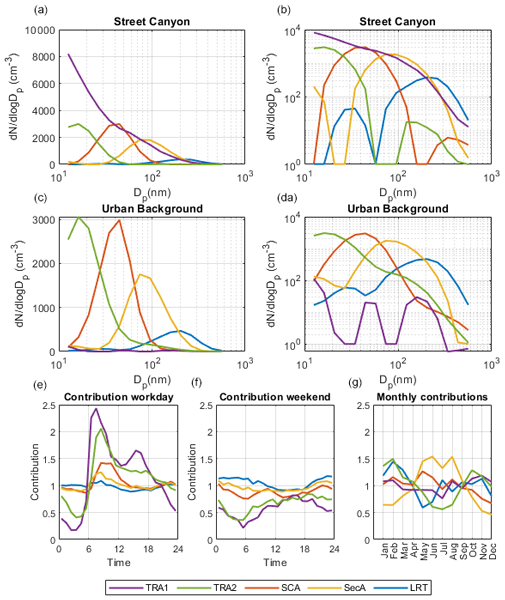
In this study, particle number size distribution data were used in a novel way in positive matrix factorization analysis to find aerosol source profiles in the area. Measurements were made in Helsinki at a street canyon and urban background sites between February 2015 and June 2019. Five different aerosol sources were identified. These sources underline the significance of traffic-related emissions in urban environments despite recent improvements in emission reduction technologies.
Teemu Lepistö, Henna Lintusaari, Laura Salo, Ville Silvonen, Luis M. F. Barreira, Jussi Hoivala, Lassi Markkula, Jarkko V. Niemi, Jakub Ondracek, Kimmo Teinilä, Hanna E. Manninen, Sanna Saarikoski, Hilkka Timonen, Miikka Dal Maso, and Topi Rönkkö
Aerosol Research, 2, 271–289, https://doi.org/10.5194/ar-2-271-2024, https://doi.org/10.5194/ar-2-271-2024, 2024
Short summary
Short summary
The performances of different particle lung-deposited surface area (LDSAal) measurement methods (Partector, ELPI+, SMPS/DMPS) were compared in ambient conditions. As LDSAal is a health-relevant metric and rather easy to utilise in air quality monitoring, it is crucial to know how the different methods agree, as there are clear differences in their operation. In all, a comparison of different methods can be complicated; still, the methods agree rather well in terms of local pollution (< 400 nm).
Alex Rowell, James Brean, David C. S. Beddows, Zongbo Shi, Avinash Kumar, Matti Rissanen, Miikka Dal Maso, Peter Mettke, Kay Weinhold, Maik Merkel, and Roy M. Harrison
Atmos. Chem. Phys., 24, 10349–10361, https://doi.org/10.5194/acp-24-10349-2024, https://doi.org/10.5194/acp-24-10349-2024, 2024
Short summary
Short summary
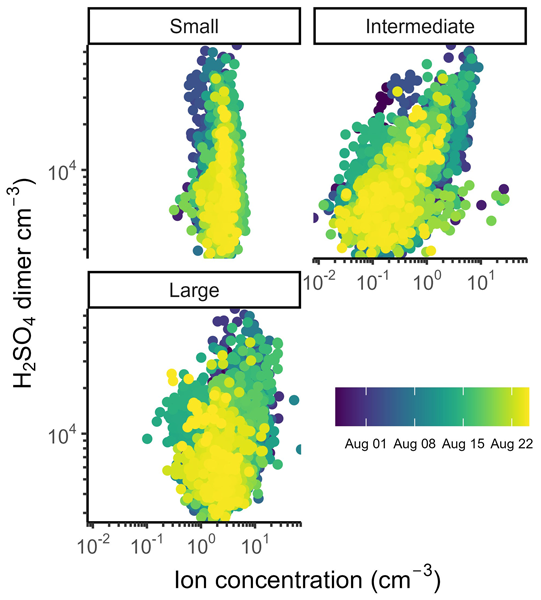
Ions enhance the formation and growth rates of new particles, affecting the Earth's radiation budget. Despite these effects, there is little published data exploring the sources of ions in the urban environment and their role in new particle formation (NPF). Here we show that natural ion sources dominate in urban environments, while traffic is a secondary source. Ions contribute up to 12.7 % of the formation rate of particles, indicating that they are important for forming urban PM.
Pauli Simonen, Miikka Dal Maso, Pinja Prauda, Anniina Hoilijoki, Anette Karppinen, Pekka Matilainen, Panu Karjalainen, and Jorma Keskinen
Atmos. Meas. Tech., 17, 3219–3236, https://doi.org/10.5194/amt-17-3219-2024, https://doi.org/10.5194/amt-17-3219-2024, 2024
Short summary
Short summary
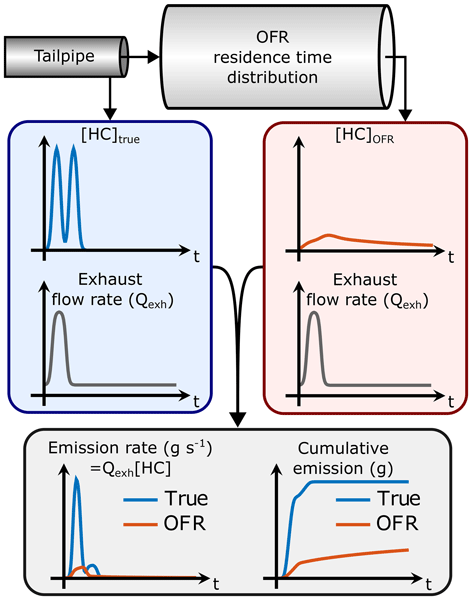
Secondary aerosol is formed in the atmosphere from gaseous emissions. Oxidation flow reactors used in secondary aerosol research do not immediately respond to changes in the inlet concentration of gases because of their broad transfer functions. This may result in incorrect secondary aerosol production factors determined for vehicles. We studied the extent of possible errors and found that oxidation flow reactors with faster responses result in smaller errors.
Jian Zhao, Valter Mickwitz, Yuanyuan Luo, Ella Häkkinen, Frans Graeffe, Jiangyi Zhang, Hilkka Timonen, Manjula Canagaratna, Jordan E. Krechmer, Qi Zhang, Markku Kulmala, Juha Kangasluoma, Douglas Worsnop, and Mikael Ehn
Atmos. Meas. Tech., 17, 1527–1543, https://doi.org/10.5194/amt-17-1527-2024, https://doi.org/10.5194/amt-17-1527-2024, 2024
Short summary
Short summary
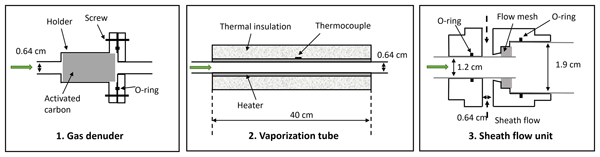
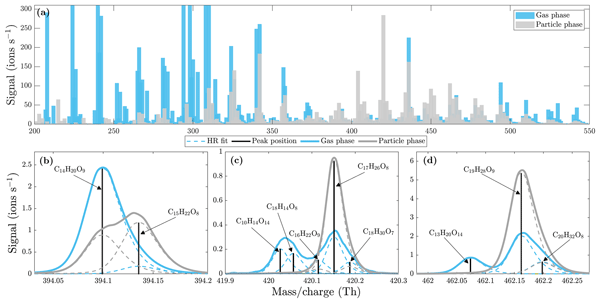
Organic aerosol constitutes a significant portion of atmospheric fine particles but is less characterized due to its vast number of constituents. Recently, we developed a system for online measurements of particle-phase highly oxygenated organic molecules (HOMs). In this work, we systematically characterized the system, developed a new unit to enhance its performance, and demonstrated the essential role of thermograms in inferring volatility and quantifying HOMs in organic aerosols.
Magdalena Okuljar, Olga Garmash, Miska Olin, Joni Kalliokoski, Hilkka Timonen, Jarkko V. Niemi, Pauli Paasonen, Jenni Kontkanen, Yanjun Zhang, Heidi Hellén, Heino Kuuluvainen, Minna Aurela, Hanna E. Manninen, Mikko Sipilä, Topi Rönkkö, Tuukka Petäjä, Markku Kulmala, Miikka Dal Maso, and Mikael Ehn
Atmos. Chem. Phys., 23, 12965–12983, https://doi.org/10.5194/acp-23-12965-2023, https://doi.org/10.5194/acp-23-12965-2023, 2023
Short summary
Short summary
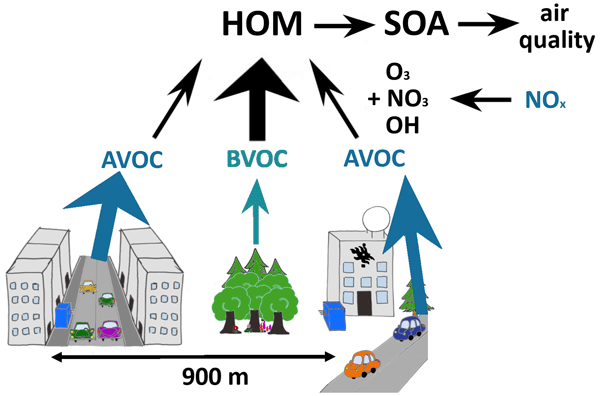
Highly oxygenated organic molecules (HOMs) form secondary organic aerosol that affects air quality and health. In this study, we demonstrate that in a moderately polluted city with abundant vegetation, the composition of HOMs is largely controlled by the effect of NOx on the biogenic volatile organic compound oxidation. Comparing the results from two nearby stations, we show that HOM composition and formation pathways can change considerably within small distances in urban environments.
Jonas Elm, Aladár Czitrovszky, Andreas Held, Annele Virtanen, Astrid Kiendler-Scharr, Benjamin J. Murray, Daniel McCluskey, Daniele Contini, David Broday, Eirini Goudeli, Hilkka Timonen, Joan Rosell-Llompart, Jose L. Castillo, Evangelia Diapouli, Mar Viana, Maria E. Messing, Markku Kulmala, Naděžda Zíková, and Sebastian H. Schmitt
Aerosol Research, 1, 13–16, https://doi.org/10.5194/ar-1-13-2023, https://doi.org/10.5194/ar-1-13-2023, 2023
Ella Häkkinen, Jian Zhao, Frans Graeffe, Nicolas Fauré, Jordan E. Krechmer, Douglas Worsnop, Hilkka Timonen, Mikael Ehn, and Juha Kangasluoma
Atmos. Meas. Tech., 16, 1705–1721, https://doi.org/10.5194/amt-16-1705-2023, https://doi.org/10.5194/amt-16-1705-2023, 2023
Short summary
Short summary
Highly oxygenated compounds contribute to the formation and growth of atmospheric organic aerosol and thus impact the global climate. Knowledge of their transformations and fate after condensing into the particle phase has been limited by the lack of suitable detection techniques. Here, we present an online method for measuring highly oxygenated compounds from organic aerosol. We evaluate the performance of the method and demonstrate that the method is applicable to different organic species.
Sanna Saarikoski, Heidi Hellén, Arnaud P. Praplan, Simon Schallhart, Petri Clusius, Jarkko V. Niemi, Anu Kousa, Toni Tykkä, Rostislav Kouznetsov, Minna Aurela, Laura Salo, Topi Rönkkö, Luis M. F. Barreira, Liisa Pirjola, and Hilkka Timonen
Atmos. Chem. Phys., 23, 2963–2982, https://doi.org/10.5194/acp-23-2963-2023, https://doi.org/10.5194/acp-23-2963-2023, 2023
Short summary
Short summary
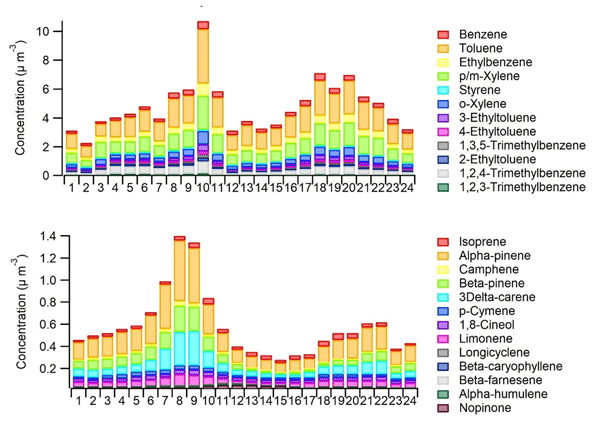
This study elucidates properties and sources of volatile organic compounds (VOCs) and organic aerosol (OA) in a traffic environment. Anthropogenic VOCs (aVOCs) were clearly higher than biogenic VOCs (bVOCs), but bVOCs produced a larger portion of oxidation products. OA consisted mostly of oxygenated OA, representing secondary OA (SOA). SOA was partly associated with bVOCs, but it was also related to long-range transport. Primary OA originated mostly from traffic.
Miska Olin, Magdalena Okuljar, Matti P. Rissanen, Joni Kalliokoski, Jiali Shen, Lubna Dada, Markus Lampimäki, Yusheng Wu, Annalea Lohila, Jonathan Duplissy, Mikko Sipilä, Tuukka Petäjä, Markku Kulmala, and Miikka Dal Maso
Atmos. Chem. Phys., 22, 8097–8115, https://doi.org/10.5194/acp-22-8097-2022, https://doi.org/10.5194/acp-22-8097-2022, 2022
Short summary
Short summary
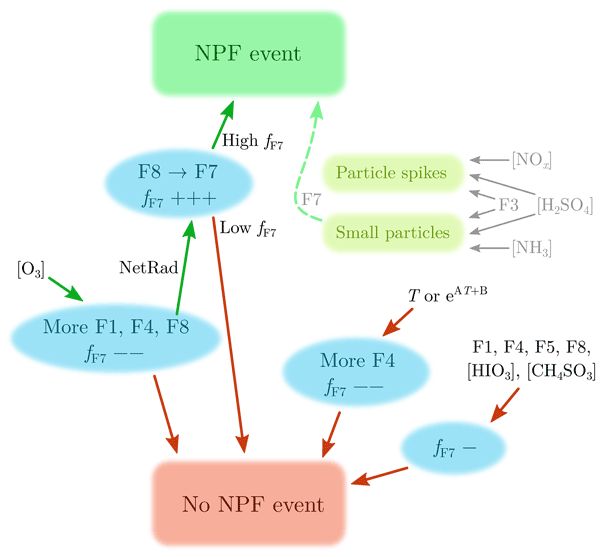
Atmospheric new particle formation is an important source of the total particle number concentration in the atmosphere. Several parameters for predicting new particle formation events have been suggested before, but the results have been inconclusive. This study proposes an another predicting parameter, related to a specific type of highly oxidized organic molecules, especially for similar locations to the measurement site in this study, which was a coastal agricultural site in Finland.
Matthias Karl, Liisa Pirjola, Tiia Grönholm, Mona Kurppa, Srinivasan Anand, Xiaole Zhang, Andreas Held, Rolf Sander, Miikka Dal Maso, David Topping, Shuai Jiang, Leena Kangas, and Jaakko Kukkonen
Geosci. Model Dev., 15, 3969–4026, https://doi.org/10.5194/gmd-15-3969-2022, https://doi.org/10.5194/gmd-15-3969-2022, 2022
Short summary
Short summary
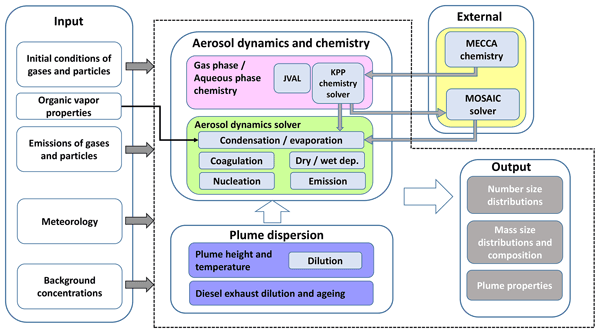
The community aerosol dynamics model MAFOR includes several advanced features: coupling with an up-to-date chemistry mechanism for volatile organic compounds, a revised Brownian coagulation kernel that takes into account the fractal geometry of soot particles, a multitude of nucleation parameterizations, size-resolved partitioning of semi-volatile inorganics, and a hybrid method for the formation of secondary organic aerosols within the framework of condensation and evaporation.
Joel Kuula, Hilkka Timonen, Jarkko V. Niemi, Hanna E. Manninen, Topi Rönkkö, Tareq Hussein, Pak Lun Fung, Sasu Tarkoma, Mikko Laakso, Erkka Saukko, Aino Ovaska, Markku Kulmala, Ari Karppinen, Lasse Johansson, and Tuukka Petäjä
Atmos. Chem. Phys., 22, 4801–4808, https://doi.org/10.5194/acp-22-4801-2022, https://doi.org/10.5194/acp-22-4801-2022, 2022
Short summary
Short summary
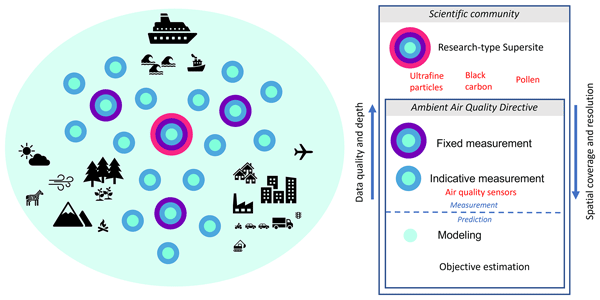
Modern and up-to-date policies and air quality management strategies are instrumental in tackling global air pollution. As the European Union is preparing to revise Ambient Air Quality Directive 2008/50/EC, this paper initiates discussion on selected features of the directive that we believe would benefit from a reassessment. The scientific community has the most recent and deepest understanding of air pollution; thus, its contribution is essential.
Pak Lun Fung, Martha A. Zaidan, Jarkko V. Niemi, Erkka Saukko, Hilkka Timonen, Anu Kousa, Joel Kuula, Topi Rönkkö, Ari Karppinen, Sasu Tarkoma, Markku Kulmala, Tuukka Petäjä, and Tareq Hussein
Atmos. Chem. Phys., 22, 1861–1882, https://doi.org/10.5194/acp-22-1861-2022, https://doi.org/10.5194/acp-22-1861-2022, 2022
Short summary
Short summary
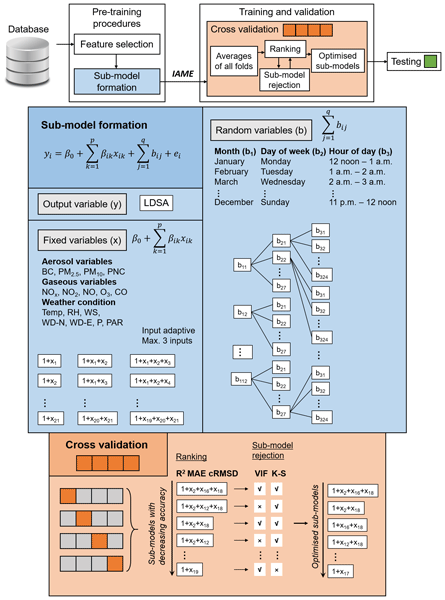
We developed an input-adaptive mixed-effects model, which was automatised to select the best combination of input variables, including up to three fixed effect variables and three time indictors as random effect variables. We tested the model to estimate lung-deposited surface area (LDSA), which correlates well with human health. The results show the inclusion of time indicators improved the sensitivity and the accuracy of the model so that it could serve as a network of virtual sensors.
Miska Olin, David Patoulias, Heino Kuuluvainen, Jarkko V. Niemi, Topi Rönkkö, Spyros N. Pandis, Ilona Riipinen, and Miikka Dal Maso
Atmos. Chem. Phys., 22, 1131–1148, https://doi.org/10.5194/acp-22-1131-2022, https://doi.org/10.5194/acp-22-1131-2022, 2022
Short summary
Short summary
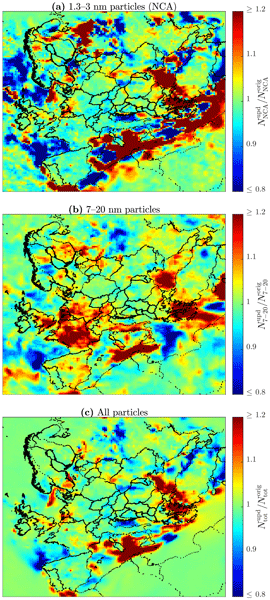
An emission factor particle size distribution was determined from the measurements at an urban traffic site. It was used in updating a pre-existing emission inventory, and regional modeling was performed after the update. Emission inventories typically underestimate nanoparticle emissions due to challenges in determining them with high certainty. This update reveals that the simulated aerosol levels have previously been underestimated especially for urban areas and for sub-50 nm particles.
Sanna Saarikoski, Jarkko V. Niemi, Minna Aurela, Liisa Pirjola, Anu Kousa, Topi Rönkkö, and Hilkka Timonen
Atmos. Chem. Phys., 21, 14851–14869, https://doi.org/10.5194/acp-21-14851-2021, https://doi.org/10.5194/acp-21-14851-2021, 2021
Short summary
Short summary
This study presents the main sources of black carbon (BC) at two urban environments. The largest fraction of BC originated from biomass burning at the residential site (38 %) and from vehicular emissions (57 %) in the street canyon. Also, a significant fraction of BC was associated with urban background or long-range transport. The data are needed by modelers and authorities when assessing climate and air quality impact of BC as well as directing the emission legislation and mitigation actions.
Evelyn Freney, Karine Sellegri, Alessia Nicosia, Leah R. Williams, Matteo Rinaldi, Jonathan T. Trueblood, André S. H. Prévôt, Melilotus Thyssen, Gérald Grégori, Nils Haëntjens, Julie Dinasquet, Ingrid Obernosterer, France Van Wambeke, Anja Engel, Birthe Zäncker, Karine Desboeufs, Eija Asmi, Hilkka Timonen, and Cécile Guieu
Atmos. Chem. Phys., 21, 10625–10641, https://doi.org/10.5194/acp-21-10625-2021, https://doi.org/10.5194/acp-21-10625-2021, 2021
Short summary
Short summary
In this work, we present observations of the organic aerosol content in primary sea spray aerosols (SSAs) continuously generated along a 5-week cruise in the Mediterranean. This information is combined with seawater biogeochemical properties also measured continuously along the ship track to develop a number of parametrizations that can be used in models to determine SSA organic content in oligotrophic waters that represent 60 % of the oceans from commonly measured seawater variables.
Magdalena Okuljar, Heino Kuuluvainen, Jenni Kontkanen, Olga Garmash, Miska Olin, Jarkko V. Niemi, Hilkka Timonen, Juha Kangasluoma, Yee Jun Tham, Rima Baalbaki, Mikko Sipilä, Laura Salo, Henna Lintusaari, Harri Portin, Kimmo Teinilä, Minna Aurela, Miikka Dal Maso, Topi Rönkkö, Tuukka Petäjä, and Pauli Paasonen
Atmos. Chem. Phys., 21, 9931–9953, https://doi.org/10.5194/acp-21-9931-2021, https://doi.org/10.5194/acp-21-9931-2021, 2021
Short summary
Short summary
To estimate the relative contribution of different sources to the particle population in an urban environment, we conducted simultaneous measurements at a street canyon and an urban background station in Helsinki. We investigated the contribution of traffic and new particle formation to particles with a diameter between 1 and 800 nm. We found that during spring traffic does not dominate the particles smaller than 3 nm at either of the stations.
Luis M. F. Barreira, Aku Helin, Minna Aurela, Kimmo Teinilä, Milla Friman, Leena Kangas, Jarkko V. Niemi, Harri Portin, Anu Kousa, Liisa Pirjola, Topi Rönkkö, Sanna Saarikoski, and Hilkka Timonen
Atmos. Chem. Phys., 21, 6297–6314, https://doi.org/10.5194/acp-21-6297-2021, https://doi.org/10.5194/acp-21-6297-2021, 2021
Short summary
Short summary
We present results from the long-term measurements (5 years) of highly time-resolved atmospheric PM1 composition at an urban street canyon site. Overall, the results increased knowledge of the variability of PM1 concentration, composition, and sources in a traffic site and the implications for urban air quality. The investigation of pollution episodes showed that both local and long-range-transported pollutants can still cause elevated PM1 and PM2.5 concentrations in northern Europe.
Cited articles
Ali, M. U., Siyi, L., Yousaf, B., Abbas, Q., Hameed, R., Zheng, C., Kuang, X., and Wong, M. H.: Emission sources and full spectrum of health impacts of black carbon associated polycyclic aromatic hydrocarbons (PAHs) in urban environment: A review, Crit. Rev. Env. Sci. Tec., 1–40, https://doi.org/10.1080/10643389.2020.1738854, 2020.
Boy, M. and Kulmala, M.: Nucleation events in the continental boundary layer: Influence of physical and meteorological parameters, Atmos. Chem. Phys., 2, 1–16, https://doi.org/10.5194/acp-2-1-2002, 2002.
Casquero-Vera, J. A., Pérez-Ramírez, D., Lyamani, H., Rejano, F., Casans, A., Titos, G., Olmo, F. J., Dada, L., Hakala, S., Hussein, T., Lehtipalo, K., Paasonen, P., Hyvärinen, A., Pérez, N., Querol, X., Rodríguez, S., Kalivitis, N., González, Y., Alghamdi, M. A., Kerminen, V.-M., Alastuey, A., Petäjä, T., and Alados-Arboledas, L.: Impact of desert dust on new particle formation events and the cloud condensation nuclei budget in dust-influenced areas, Atmos. Chem. Phys., 23, 15795–15814, https://doi.org/10.5194/acp-23-15795-2023, 2023.
Chang, P.-K., Griffith, S. M., Chuang, H.-C., Chuang, K.-J., Wang, Y.-H., Chang, K.-E., and Hsiao, T.-C.: Particulate matter in a motorcycle-dominated urban area: Source apportionment and cancer risk of lung deposited surface area (LDSA) concentrations, J. Hazard. Mater., 427, 128188, https://doi.org/10.1016/j.jhazmat.2021.128188, 2022.
Chen, G., Canonaco, F., Tobler, A., Aas, W., Alastuey, A., Allan, J., Atabakhsh, S., Aurela, M., Baltensperger, U., Bougiatioti, De Brito, J. F., Ceburnis, D., Chazeau, B., Chebaicheb, H., Daellenbach, K. R., Ehn, M., El Haddad, I., Eleftheriadis, K., Favez, O., Flentje, H., Font, A., Fossum, K., Freney, E., Gini, M., Green, D. C., Heikkinen, L., Herrmann, H., Kalogridis, A.-C., Keernik, H., Lhotka, R., Lin, C., Lunder, C., Maasikmets, M., Manousakas, M. I., Marchand, N., Marin, C., Marmureanu, L., Mihalopoulos, N., Močnik, G., Nęcki, J., O'Dowd, C., Ovadnevaite, J., Peter, T., Petit, J.-E., Pikridas, M., Platt, S. M., Pokorná, P., Poulain, L., Priestman, M., Riffault, V., Rinaldi, M., Różański, K., Schwarz, J., Sciare, J., Simon, L., Skiba, A., Slowik, J. G., Sosedova, Y., Stavroulas, I., Styszko, K., Teinemaa, E., Timonen, H., Tremper, A., Vasilescu, J., Via, M., Vodička, P., Wiedensohler, A., Zografou, O., Minguillón, M. C., and Prévôt, A. S. H.: European aerosol phenomenology – 8: Harmonised source apportionment of organic aerosol using 22 Year-long ACSM/AMS datasets, Environ. Int., 166, 107325, https://doi.org/10.1016/j.envint.2022.107325, 2022.
Daellenbach, K. R., Uzu, G., Jiang, J., Cassagnes, L. E., Leni, Z., Vlachou, A., Stefenelli, G., Canonaco, F., Weber, S., Segers, A., Kuenen, J. J. P., Schaap, M., Favez, O., Albinet, A., Aksoyoglu, S., Dommen, J., Baltensperger, U., Geiser, M., El Haddad, I., Jaffrezo, J.-L., and Prévöt, A. S. H.: Sources of particulate-matter air pollution and its oxidative potential in Europe, Nature, 587, 414–419, https://doi.org/10.1038/s41586-020-2902-8, 2020.
Dal Maso, M., Kulmala, M., Lehtinen, K. E. J., Mäkelä, J. M., Aalto, P., and O'Dowd, C. D.: Condensation and coagulation sinks and formation of nucleation mode particles in coastal and boreal forest boundary layers, J. Geophys. Res., 107, https://doi.org/10.1029/2001JD001053, 2002.
Dal Maso, M., Hyvärinen, A., Komppula, M., Tunved, P., Kerminen, V. M., Lihavainen, H., Viisanen, Y., Hansson, H.-C., and Kulmala, M.: Annual and interannual variation in boreal forest aerosol particle number and volume concentration and their connection to particle formation, Tellus B, 60, 495–508, https://doi.org/10.1111/j.1600-0889.2008.00366.x, 2008.
Fierz, M., Meier, D., Steigmeier, P., and Burtscher, H.: Aerosol measurement by induced currents, Aerosol Sci. Tech., 48, 350–357, https://doi.org/10.1080/02786826.2013.875981, 2014.
Fuchs, N. A. and Sutugin, A. G.: High-dispersed aerosols, Current Aerosol Research, edited by: Hidy, G. M. and Brock, J., Pergamon, Oxford, 1–60, https://doi.org/10.1016/B978-0-08-016674-2.50006-6, 1971.
Fuzzi, S., Baltensperger, U., Carslaw, K., Decesari, S., Denier van der Gon, H., Facchini, M. C., Fowler, D., Koren, I., Langford, B., Lohmann, U., Nemitz, E., Pandis, S., Riipinen, I., Rudich, Y., Schaap, M., Slowik, J. G., Spracklen, D. V., Vignati, E., Wild, M., Williams, M., and Gilardoni, S.: Particulate matter, air quality and climate: lessons learned and future needs, Atmos. Chem. Phys., 15, 8217–8299, https://doi.org/10.5194/acp-15-8217-2015, 2015.
Hakkarainen, H., Salo, L., Mikkonen, S., Saarikoski, S., Aurela, M., Teinilä, K., Ihalainen, M., Martikainen, S., Marjanen, P., Lepistö, L., Kuittinen, N., Saarnio, K., Aakko-Saksa, P., Pfeiffer, T. F., Timonen, H., Rönkkö, T., and Jalava, P. I.: Black carbon toxicity dependence on particle coating: Measurements with a novel cell exposure method, Sci. Total Environ., 838, https://doi.org/10.1016/j.scitotenv.2022.156543, 2022.
Hamed, A., Joutsensaari, J., Mikkonen, S., Sogacheva, L., Dal Maso, M., Kulmala, M., Cavalli, F., Fuzzi, S., Facchini, M. C., Decesari, S., Mircea, M., Lehtinen, K. E. J., and Laaksonen, A.: Nucleation and growth of new particles in Po Valley, Italy, Atmos. Chem. Phys., 7, 355–376, https://doi.org/10.5194/acp-7-355-2007, 2007.
Hanson, D. R.: Mass accommodation of H2SO4 and CH3SO3H on water-sulfuric acid solutions from 6 % to 97 % RH, J. Phys. Chem. A, 109, 6919–6927, https://doi.org/10.1021/jp0510443, 2005.
Heusinkveld, H., Wahle, T., Campbell, A., Westerink, R. H. C., Tran, L., Johnston, H., Stone, V., Cassee, F. R., and Schins, R. P. F.: Neurodegenerative and neurological disorders by small inhaled particles, Neurotoxicology, 113, 94–106, https://doi.org/10.1016/j.neuro.2016.07.007, 2016.
ICRP: Human respiratory tract model for radiological protection, vol. 66, 24, ISBN 0 08 041154 1, 1994.
Järvinen, A., Aitomaa, M., Rostedt, A., Keskinen, J., and Yli-Ojanperä, J.: Calibration of the new electrical low pressure impactor (ELPI+), J. Aerosol Sci., 69, 150–159, https://doi.org/10.1016/j.jaerosci.2013.12.006, 2014.
Järvinen, A., Kuuluvainen, H., Niemi, J. V., Saari, S., Dal Maso, M., Pirjola, L., Hillamo, R., Janka, K., Keskinen, J., and Rönkkö, T.: Monitoring urban air quality with a diffusion charger based electrical particle sensor, Urban Climate, 14, 441–456, https://doi.org/10.1016/j.uclim.2014.10.002, 2015.
Karjalainen, P., Saari, S., Kuuluvainen, H., Kalliohaka, T., Taipale, A., and Rönkkö, T.: Performance of ventilation filtration technologies on characteristic traffic related aerosol down to nanocluster size, Aerosol Sci. Tech., 51, 1398–1408, https://doi.org/10.1080/02786826.2017.1356904, 2017.
Kerminen, V.-M., Paramonov, M., Anttila, T., Riipinen, I., Fountoukis, C., Korhonen, H., Asmi, E., Laakso, L., Lihavainen, H., Swietlicki, E., Svenningsson, B., Asmi, A., Pandis, S. N., Kulmala, M., and Petäjä, T.: Cloud condensation nuclei production associated with atmospheric nucleation: a synthesis based on existing literature and new results, Atmos. Chem. Phys., 12, 12037–12059, https://doi.org/10.5194/acp-12-12037-2012, 2012.
Keskinen, J., Pietarinen, K., and Lehtimäki, M.: Electrical low pressure impactor, J. Aerosol Sci., 23, 353–360, https://doi.org/10.1016/0021-8502(92)90004-F, 1992.
Kontkanen, J., Lehtipalo, K., Ahonen, L., Kangasluoma, J., Manninen, H. E., Hakala, J., Rose, C., Sellegri, K., Xiao, S., Wang, L., Qi, X., Nie, W., Ding, A., Yu, H., Lee, S., Kerminen, V.-M., Petäjä, T., and Kulmala, M.: Measurements of sub-3 nm particles using a particle size magnifier in different environments: from clean mountain top to polluted megacities, Atmos. Chem. Phys., 17, 2163–2187, https://doi.org/10.5194/acp-17-2163-2017, 2017.
Kulmala, M., Kerminen, V. M., Petäjä, T., Ding, A. J., and Wang, L.: Atmospheric gas-to-particle conversion: Why NPF events are observed in megacities?, Faraday Discuss., 200, 271–288, https://doi.org/10.1039/c6fd00257a, 2017.
Kuuluvainen, H., Kannosto, J., Virtanen, A., Mäkelä, J. M., Kulmala, M., Aalto, P., and Keskinen, J.: Technical Note: Measuring condensation sink and ion sink of atmospheric aerosols with the electrical low pressure impactor (ELPI), Atmos. Chem. Phys., 10, 1361–1368, https://doi.org/10.5194/acp-10-1361-2010, 2010.
Lehtinen, K. E. J., Korhonen, H., Dal Maso, M., and Kulmala, M.: On the concept of condensation sink diameter, Boreal Environ. Res., 8, 405–411, 2003.
Leinonen, V., Kokkola, H., Yli-Juuti, T., Mielonen, T., Kühn, T., Nieminen, T., Heikkinen, S., Miinalainen, T., Bergman, T., Carslaw, K., Decesari, S., Fiebig, M., Hussein, T., Kivekäs, N., Krejci, R., Kulmala, M., Leskinen, A., Massling, A., Mihalopoulos, N., Mulcahy, J. P., Noe, S. M., van Noije, T., O'Connor, F. M., O'Dowd, C., Olivie, D., Pernov, J. B., Petäjä, T., Seland, Ø., Schulz, M., Scott, C. E., Skov, H., Swietlicki, E., Tuch, T., Wiedensohler, A., Virtanen, A., and Mikkonen, S.: Comparison of particle number size distribution trends in ground measurements and climate models, Atmos. Chem. Phys., 22, 12873–12905, https://doi.org/10.5194/acp-22-12873-2022, 2022.
Lepistö, T.: Experimental data shown in Figures: Size-resolved condensation sink as an approach to understand pathways how gaseous emissions affect health and climate, Zenodo [data set], https://doi.org/10.5281/zenodo.18997659, 2026.
Lepistö, T., Lintusaari, H., Oudin, A., Barreira, L. M. F., Niemi, J. V., Karjalainen, P., Salo, L., Silvonen, V., Markkula, L., Hoivala, J., Marjanen, P., Martikainen, S., Aurela, M., Reyes Reyes, F., Oyola, P., Kuuluvainen, H., Manninen, H., Schins, R. P. F., Vojtisek-Lom, M., Ondracek, J., Topinka, J., Timonen, H., Jalava, P., Saarikoski, S., and Rönkkö, T.: Particle lung deposited surface area (LDSAal) size distributions in different urban environments and geographical regions: Towards understanding of the PM2.5 dose–response, Environ. Int., 180, https://doi.org/10.1016/j.envint.2023.108224, 2023.
Lepistö, T., Lintusaari, H., Salo, L., Silvonen, V., Barreira, L. M. F., Hoivala, J., Markkula, L., Niemi, J. V., Ondracek, J., Teinilä, K., Manninen, H. E., Saarikoski, S., Timonen, H., Dal Maso, M., and Rönkkö, T.: Comparison of size distribution and electrical particle sensor measurement methods for particle lung deposited surface area (LDSAal) in ambient measurements with varying conditions, Aerosol Research, 2, 271–289, https://doi.org/10.5194/ar-2-271-2024, 2024.
Levy, M. E., Zhang, E., Khalizov, A. F., Zheng, J., Collins, D. R., Glen, C. R., Wang, Y., Yu, X.-Y., Luke, W., Jayne, J. T., and Olaguer, E.: Measurements of submicron aerosols in Houston, Texas during the 2009 SHARP field campaign, J. Geophys. Res.-Atmos., 118, 10518–10534, https://doi.org/10.1002/jgrd.50785, 2013.
Lu, J., Shen, X., Ma, Q., Yu, A., Hu, X., Zhang, Y., Liu, Q., Liu, S., Che, H., Zhang, H., and Sun, J.: Size-resolved effective density of ambient aerosols measured by an AAC–SMPS tandem system in Beijing, Atmos. Environ., 318, 120226, https://doi.org/10.1016/j.atmosenv.2023.120226, 2024.
Mishra, M., Gulia, S., Shukla, N., Goyal, S. K., and Kulshrestha, U. C.: Review of Secondary Aerosol Formation and Its Contribution in Air Pollution Load of Delhi NCR, Water Air Soil Poll., 234, 47, https://doi.org/10.1007/s11270-022-06047-0, 2023.
Pirjola, L., Kulmala, M., Wilck, M., Bischoff, A., Stratmann, F., and Otto, E.: Effects of aerosol dynamics on the formation of sulphuric acid aerosols and cloud condensation nuclei, J. Aerosol Sci., 30, 1079–1094, 1999.
Poling, B. E., Prausnitz, J. M., and O'Connel, J. P.: The Properties of Gases and Liquids, McGraw-Hill, ISBN 978-0070116825, 2000.
Pöschl, U., Canagaratna, M., Jayne, J. T., Molina, L. T., Worsnop, D. R., Kolb, C. E., and Molina, M. J.: Mass Accommodation Coefficient of H2SO4 Vapor on Aqueous Sulfuric Acid Surfaces and Gaseous Diffusion Coefficient of H2SO4 in N2/H2O, J. Phys. Chem. A, 102, 10082–10089, https://doi.org/10.1021/jp982809s, 1998.
Riemer, N., Ault, A. P., West, M., Craig, R. L., and Curtis, J. H.: Aerosol mixing state: Measurements, modeling, and impacts, Rev. Geophys., 57, 187–249, https://doi.org/10.1029/2018RG000615, 2019.
Riipinen, I., Yli-Juuti, T., Pierce, J. R., Petäjä, T., Worsnop, D. R., Kulmala, M., and Donahue, N. M.: The contribution of organics to atmospheric nanoparticle growth, Nat. Geosci., 5, 453–458, https://doi.org/10.1038/ngeo1499, 2012.
Rissler, J., Nordin, E. Z., Eriksson, A. C., Nilsson, P. T., Frosch, M., Sporre, M. K., Wierzbicka, A., Svenningsson, B., Löndahl, J., Messing, M. E., Sjogren, S., Hemmingsen, J. G., Loft, S., Pagels, J. H., and Swietlicki, E.: Effective Density and Mixing State of Aerosol Particles in a Near-Traffic Urban Environment, Environ. Sci. Technol., 48, 6300–6308, https://doi.org/10.1021/es5000353, 2014.
Ristimäki, J., Vaaraslahti, K., Lappi, M., and Keskinen, J.: Hydrocarbon Condensation in Heavy-Duty Diesel Exhaust, Environ. Sci. Technol., 41, 6397–6402, https://doi.org/10.1021/es0624319, 2007.
Rönkkö, T., Kuuluvainen, H., Karjalainen, P., Keskinen, J., Hillamo, R., Niemi, J. V., Pirjola, L., Timonen, H. J., Saarikoski, S., Saukko, E., Järvinen, A., Silvennoinen, H., Rostedt, A., Olin, M., Yli-Ojanperä, J., Nousiainen, P., Kousa, A., and Dal Maso, M.: Traffic is a major source of atmospheric nanocluster aerosol, P. Natl. Acad. Sci. USA, 114, 7549–7554, https://doi.org/10.1073/pnas.1700830114, 2017.
Rönkkö, T. and Timonen, H.: Overview of Sources and Characteristics of Nanoparticles in Urban Traffic-Influenced Areas, J. Alzheimers Dis., 72, 15–28, https://doi.org/10.3233/JAD-190170, 2019.
Rose, C., Collaud Coen, M., Andrews, E., Lin, Y., Bossert, I., Lund Myhre, C., Tuch, T., Wiedensohler, A., Fiebig, M., Aalto, P., Alastuey, A., Alonso-Blanco, E., Andrade, M., Artíñano, B., Arsov, T., Baltensperger, U., Bastian, S., Bath, O., Beukes, J. P., Brem, B. T., Bukowiecki, N., Casquero-Vera, J. A., Conil, S., Eleftheriadis, K., Favez, O., Flentje, H., Gini, M. I., Gómez-Moreno, F. J., Gysel-Beer, M., Hallar, A. G., Kalapov, I., Kalivitis, N., Kasper-Giebl, A., Keywood, M., Kim, J. E., Kim, S.-W., Kristensson, A., Kulmala, M., Lihavainen, H., Lin, N.-H., Lyamani, H., Marinoni, A., Martins Dos Santos, S., Mayol-Bracero, O. L., Meinhardt, F., Merkel, M., Metzger, J.-M., Mihalopoulos, N., Ondracek, J., Pandolfi, M., Pérez, N., Petäjä, T., Petit, J.-E., Picard, D., Pichon, J.-M., Pont, V., Putaud, J.-P., Reisen, F., Sellegri, K., Sharma, S., Schauer, G., Sheridan, P., Sherman, J. P., Schwerin, A., Sohmer, R., Sorribas, M., Sun, J., Tulet, P., Vakkari, V., van Zyl, P. G., Velarde, F., Villani, P., Vratolis, S., Wagner, Z., Wang, S.-H., Weinhold, K., Weller, R., Yela, M., Zdimal, V., and Laj, P.: Seasonality of the particle number concentration and size distribution: a global analysis retrieved from the network of Global Atmosphere Watch (GAW) near-surface observatories, Atmos. Chem. Phys., 21, 17185–17223, https://doi.org/10.5194/acp-21-17185-2021, 2021.
Roy, S., Diveky, M. E., and Signorell, R.: Mass Accommodation Coefficients of Water on Organics from Complementary Photoacoustic and Light Scattering Measurements on Laser-Trapped Droplets, J. Phys. Chem. C, 124, 2481–2489, https://doi.org/10.1021/acs.jpcc.9b09934, 2020.
Sebastian, M., Kompalli, S. K., Kumar, V. A., Jose, S., Babu, S. S., Pandithurai, G., Singh, S., Hooda, R. K., Soni, V. K., Pierce, J. R., Vakkari, V., Asmi, E., Westervelt, D. M., Hyvärinen, A.-P., and Kanawade, V. P.: Observations of particle number size distributions and new particle formation in six Indian locations, Atmos. Chem. Phys., 22, 4491–4508, https://doi.org/10.5194/acp-22-4491-2022, 2022.
Teinilä, K., Timonen, H., Aurela, M., Kuula, J., Rönkkö, T., Hellèn, H., Loukkola, K., Kousa, A., Niemi, J. V., and Saarikoski, S.: Characterization of particle sources and comparison of different particle metrics in an urban detached housing area, Finland, Atmos. Environ., 272, 118939, https://doi.org/10.1016/j.atmosenv.2022.118939, 2022.
Teinilä, K., Saarikoski, S., Lintusaari, H., Lepistö, T., Marjanen, P., Aurela, M., Hellén, H., Tykkä, T., Lampimäki, M., Lampilahti, J., Barreira, L., Mäkelä, T., Kangas, L., Hatakka, J., Harni, S., Kuula, J., V. Niemi, J., Portin, H., Yli-Ojanperä, J., Niemelä, V., Jäppi, M., Lehtipalo, K., Vanhanen, J., Pirjola, L., Manninen, H. E., Petäjä, T., Rönkkö, T., and Timonen, H.: Measurement report: Wintertime aerosol characterization at an urban traffic site in Helsinki, Finland, Atmos. Chem. Phys., 25, 4907–4928, https://doi.org/10.5194/acp-25-4907-2025, 2025.
Trechera, P., Garcia-Marlès, M., Liu, X., Reche, C., Pérez, N., Savadkoohi, M., Beddows, D., Salma, I., Vörösmarty, M., Casans, A., Casquero-Vera, J. A., Hueglin, C., Marchand, N., Chazeau, B., Gille, G., Kalkavouras, P., Mihalopoulos, N., Ondracek, J., Zikova, N., Niemi, J. V., Manninen, H. E., Green, D. C., Trepmper, A. H., Norman, M., Vratolis, S., Eleftheriadis, K., Gómez-Moreno, F. J., Alonso-Blanco, E., Gerwig, H., Wiedensohler, A., Weinhold, K., Merkel, M., Bastian, S., Petit, J.-E., Favez, O., Crumeyrolle, S., Ferlay, N., Dos Santos, S. M., Putaud, J.-P., Timonen, H., Lampilahti, J., Asvach, C., Wolf, C., Kaminski, H., Altug, H., Hoffmann, B., Rich, D. Q., Pandolfi, M., Harrison, R. M., Hopke, P. K., Petäjä, T., Alastuey, A., and Querol, X.: Phenomenology of ultrafine particle concentrations and size distribution across urban Europe, Environ. Int., 172, https://doi.org/10.1016/j.envint.2023.107744, 2023.
Tuovinen, S., Kontkanen, J., Cai, R., and Kulmala, M.: Condensation sink of atmospheric vapors: the effect of vapor properties and the resulting uncertainties, Environ. Sci.: Atmos., 1, 543–557, https://doi.org/10.1039/D1EA00032B, 2021.
Vodonos, A., Awad, Y. A., and Schwartz, J.: The concentration-response between long-term PM2.5 exposure and mortality; A meta-regression approach, Environ. Res., 166, https://doi.org/10.1016/j.envres.2018.06.021, 2018.
Vu, T. V., Delgado-Saborit, J. M., and Harrison, R. M.: A review of hygroscopic growth factors of submicron aerosols from different sources and its implication for calculation of lung deposition efficiency of ambient aerosols, Air Qual. Atmos. Hlth., 8, 429–440, https://doi.org/10.1007/s11869-015-0365-0, 2015.
Wiedensohler, A., Birmili, W., Nowak, A., Sonntag, A., Weinhold, K., Merkel, M., Wehner, B., Tuch, T., Pfeifer, S., Fiebig, M., Fjäraa, A. M., Asmi, E., Sellegri, K., Depuy, R., Venzac, H., Villani, P., Laj, P., Aalto, P., Ogren, J. A., Swietlicki, E., Williams, P., Roldin, P., Quincey, P., Hüglin, C., Fierz-Schmidhauser, R., Gysel, M., Weingartner, E., Riccobono, F., Santos, S., Grüning, C., Faloon, K., Beddows, D., Harrison, R., Monahan, C., Jennings, S. G., O'Dowd, C. D., Marinoni, A., Horn, H.-G., Keck, L., Jiang, J., Scheckman, J., McMurry, P. H., Deng, Z., Zhao, C. S., Moerman, M., Henzing, B., de Leeuw, G., Löschau, G., and Bastian, S.: Mobility particle size spectrometers: harmonization of technical standards and data structure to facilitate high quality long-term observations of atmospheric particle number size distributions, Atmos. Meas. Tech., 5, 657–685, https://doi.org/10.5194/amt-5-657-2012, 2012.
Yin, Z., Ye, X., Jiang, S., Tao, Y., Shi, Y., Yang, X., and Chen, J.: Size-resolved effective density of urban aerosols in Shanghai, Atmos. Environ., 100, 133–140, https://doi.org/10.1016/j.atmosenv.2014.10.055, 2015.
Yli-Juuti, T., Barsanti, K., Hildebrandt Ruiz, L., Kieloaho, A.-J., Makkonen, U., Petäjä, T., Ruuskanen, T., Kulmala, M., and Riipinen, I.: Model for acid-base chemistry in nanoparticle growth (MABNAG), Atmos. Chem. Phys., 13, 12507–12524, https://doi.org/10.5194/acp-13-12507-2013, 2013.
Zaidan, M. A., Haapasilta, V., Relan, R., Paasonen, P., Kerminen, V.-M., Junninen, H., Kulmala, M., and Foster, A. S.: Exploring non-linear associations between atmospheric new-particle formation and ambient variables: a mutual information approach, Atmos. Chem. Phys., 18, 12699–12714, https://doi.org/10.5194/acp-18-12699-2018, 2018.
Zhang, R., Suh, I., Zhao, J., Zhang, D., Fortner, E. C., Tie, X., Molina, L. T., and Molina, M. J.: Atmospheric new particle formation enhanced by organic acids, Science, 304, 1487–1490, https://doi.org/10.1126/science.1095139, 2004.
Short summary
Condensation of vapour molecules onto aerosol particles is a key process regarding aerosol health and climate effects. The condensation sink (CS) estimates the attachment rate of vapour molecules onto existing particles. Here, we explore the concept of size-resolved CS as many of the effects related to condensation are dependent on the size of the existing particles. Our results show clear location-dependent differences in the CS size distributions which may have not been considered before.
Condensation of vapour molecules onto aerosol particles is a key process regarding aerosol...
Altmetrics
Final-revised paper
Preprint