
Articles | Volume 26, issue 3
https://doi.org/10.5194/acp-26-1699-2026
© Author(s) 2026. This work is distributed under
the Creative Commons Attribution 4.0 License.
the Creative Commons Attribution 4.0 License.
https://doi.org/10.5194/acp-26-1699-2026
© Author(s) 2026. This work is distributed under
the Creative Commons Attribution 4.0 License.
the Creative Commons Attribution 4.0 License.
Research article
| 
03 Feb 2026
Research article |
| 03 Feb 2026
| 03 Feb 2026
Aerosol organic nitrogen across the global marine boundary layer: distribution patterns and controlling factors
Ningning Sun
Key Laboratory of Geographic Information Science (Ministry of Education), School of Geographic Sciences and State Key Laboratory of Estuarine and Coastal Research, East China Normal University, Shanghai, China
Division of Environment and Sustainability, Hong Kong University of Science & Technology, Clear Water Bay, Kowloon, Hong Kong, China
Xu Yu
Division of Environment and Sustainability, Hong Kong University of Science & Technology, Clear Water Bay, Kowloon, Hong Kong, China
Jiangsu Key Laboratory of Atmospheric Environment Monitoring and Pollution Control, Jiangsu Collaborative Innovation Center of Atmospheric Environment and Equipment Technology, Joint International Research Laboratory of Climate and Environment Change, School of Environmental Science and Engineering, Nanjing University of Information Science and Technology, Nanjing, Jiangsu, China

Division of Environment and Sustainability, Hong Kong University of Science & Technology, Clear Water Bay, Kowloon, Hong Kong, China
Department of Chemistry, Hong Kong University of Science & Technology, Clear Water Bay, Kowloon, Hong Kong, China
Bo Zhang
Key Laboratory of Geographic Information Science (Ministry of Education), School of Geographic Sciences and State Key Laboratory of Estuarine and Coastal Research, East China Normal University, Shanghai, China
Yilan Li
Key Laboratory of Geographic Information Science (Ministry of Education), School of Geographic Sciences and State Key Laboratory of Estuarine and Coastal Research, East China Normal University, Shanghai, China
Department of Chemistry, State University of New York College of Environmental Science and Forestry, Syracuse, NY, USA
Key Laboratory of Geographic Information Science (Ministry of Education), School of Geographic Sciences and State Key Laboratory of Estuarine and Coastal Research, East China Normal University, Shanghai, China
Zhe Li
Key Laboratory of Geographic Information Science (Ministry of Education), School of Geographic Sciences and State Key Laboratory of Estuarine and Coastal Research, East China Normal University, Shanghai, China
Zhenlou Chen
Key Laboratory of Geographic Information Science (Ministry of Education), School of Geographic Sciences and State Key Laboratory of Estuarine and Coastal Research, East China Normal University, Shanghai, China
Key Laboratory of Geographic Information Science (Ministry of Education), School of Geographic Sciences and State Key Laboratory of Estuarine and Coastal Research, East China Normal University, Shanghai, China
Related authors
Chunlei An, Su Jiang, Guitao Shi, Hongmei Ma, Chuanjin Li, Zhe Li, Xiaolong Li, Ye Hu, Yan Liu, Xiao Yan, Ningning Sun, Bo Zhang, Shugui Hou, and Yuansheng Li
EGUsphere, https://doi.org/10.5194/egusphere-2026-769, https://doi.org/10.5194/egusphere-2026-769, 2026
Short summary
Short summary
Volcanic eruptions can significantly affect the Earth's climate. Reconstructing past volcanic history can provide valuable information for climate modeling. Our study provides a new volcanic record from Dome A, the highest ice dome in Antarctica. Using this record and three other volcanic records from Antarctica, the prominent volcanic events, the change in volcanic frequency and flux, and the variation of snow accumulation rates at Dome A over the past 4000 years are investigated.
Chao Yu, Lin Zheng, Yujue Wang, Meijing Guo, Xu Yu, Yuqi Guo, Sisi Song, Kyoung-Soon Jang, Xiaohong Yao, Jian Zhen Yu, and Huiwang Gao
Atmos. Chem. Phys., 26, 13175–13188, https://doi.org/10.5194/acp-26-13175-2026, https://doi.org/10.5194/acp-26-13175-2026, 2026
Short summary
Short summary
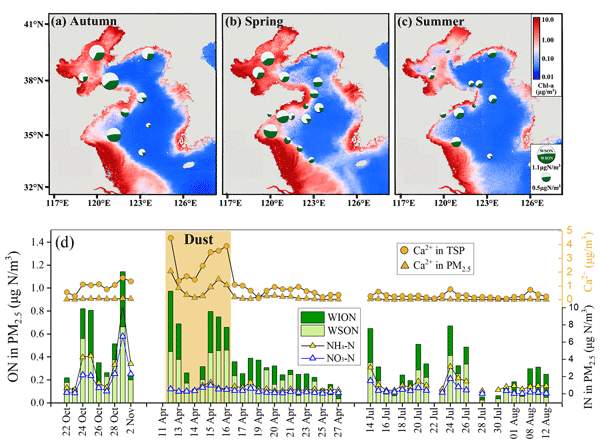
Atmospheric organic nitrogen is an important fraction in marine aerosols, and plays vital roles in organic aerosol absorption and maintaining primary productivity in the open ocean. However, abundance or sources of aerosol organic nitrogen remain unclear in the marine boundary layer. Here, we found that anthropogenic secondary pollutants and dust drove the organic nitrogen formation and the light absorption by organic aerosols over East Asian marginal seas.
Qiongqiong Wang, Zhongliang Huang, Zongjun Li, Shuihui Zhu, Liping Qiao, Min Zhou, Dandan Huang, Hongli Wang, Qingyan Fu, Kezheng Liao, and Jian Zhen Yu
EGUsphere, https://doi.org/10.5194/egusphere-2026-4766, https://doi.org/10.5194/egusphere-2026-4766, 2026
Short summary
Short summary
Brown carbon (BrC) is a poorly understood carbonaceous aerosol component that significantly affects climate and air quality. We examined the sources and secondary formation of BrC based on long-term field measurements of bihourly BrC and a suite of organic and elemental tracers in urban Shanghai. Seasonal contrast of source contributions and complexity of secondary formation and evolution was observed. This study offers a scientific basis for BrC mitigation and urban air quality improvement.
Anouk Marsal, Fabrizia Cavalli, Elise Di Antonio, Stephan Houdier, Pamela Dominutti, Sophie Darfeuil, Jean-Luc Jaffrezo, Stéphane Sauvage, Jean-Philippe Putaud, Ian S. Mudway, Athanasios Nenes, Aikaterini Bougiatioti, Nikolaos Mihalopoulos, André S. H. Prévôt, Despina Paraskevopoulou, Ana Cvitešić Kušan, Sanja Frka, Ana Kroflič, Ajda Delić, Blanka Tariba Lovaković, Andreja Jurič, Carolina Molina, Daniele Contini, Maria Rachele Guascito, Mathilde Lintz, Davy Rousset, Hartmut Herrmann, Eduardo J. d. S. Souza, Frédéric Ledoux, Marc Fadel, Haoran Yu, Jianzhen Yu, Maria Teresa Baeza Romero, Maria Cerrato-Alvarez, Marloes F. van Os, Mathilde N. Delaval, Yamaris Mercedes Mena Cabrera, Nicole Trieu, Greg Evans, Nuria Galindo, Noelia Gómez-Sanchez, Hana Hlaváčková, Pavel Mikuška, Shrutika Kadam, Pourya Shahpoury, Purificación López-Mahía, Jorge Moreda-Piñeiro, Rico K. Y. Cheung, Markus Kalberer, Micol Introna, Sarah S. Steimer, Zhuoying Lin, Suzanne E. Paulson, Saima Iram, Svetlana Stevanovic, Thomas Audoux, Laurent Y. Alleman, Jianing Liu, Ting Fang, P. S. Ganesh Subramanian, Vishal Verma, Tuukka Petäjä, Xavier Querol, Gerard Hoek, Roy M. Harrison, and Gaëlle Uzu
EGUsphere, https://doi.org/10.5194/egusphere-2026-3918, https://doi.org/10.5194/egusphere-2026-3918, 2026
Short summary
Short summary
This collaborative work from 26 worldwide laboratories assessed the measurement of atmospheric particles' oxidative potential (OP) using a common protocol. OP is a metric designed to inform on particles’ harmful effects. Over half of the laboratories obtained satisfactory results, and some critical steps such as liquid handling and OP mathematical determination were identified. Recommendations for future measurements and interlaboratory comparisons are also provided.
Cong Cao, Wei Chen, Xu Yu, Wing Hei Marco Wong, Ningning Sun, Kun Zhang, Weicong Cheng, Jianping Gan, and Jian Zhen Yu
EGUsphere, https://doi.org/10.5194/egusphere-2026-3750, https://doi.org/10.5194/egusphere-2026-3750, 2026
Short summary
Short summary
Coastal waters receive reactive nitrogen from the air, but its chemical forms are poorly known. We collected fine airborne particles during a research cruise in the Guangdong–Hong Kong–Macau Greater Bay Area and compared them with samples from urban Hong Kong. Nitrogen over the ocean differed from urban nitrogen, with more chemically reduced forms. Fine-particle nitrogen deposition to coastal waters was not negligible, suggesting possible effects on nutrient supply and marine ecosystems.
Chengyan Liu, Zhaomin Wang, Dake Chen, Xianxian Han, Hengling Leng, Xi Liang, Liangjun Yan, Xiang Li, Craig Stevens, Andrew McC. Hogg, Kazuya Kusahara, Kaihe Yamazaki, Kay I. Ohshima, Meng Zhou, Xiao Cheng, Dongxiao Wang, Changming Dong, Jiping Liu, Qinghua Yang, Xichen Li, Ruibo Lei, Minghu Ding, Zhaoru Zhang, Dujuan Kang, Di Qi, Tongya Liu, Jihai Dong, Lu An, Ru Chen, Tong Zhang, Xiaoming Hu, Bo Han, Haibo Bi, Qi Shu, Longjiang Mu, Shiming Xu, Hu Yang, Hailong Liu, Tingfeng Dou, Zhixuan Feng, Lei Zheng, Xueyuan Tang, Guitao Shi, Yongqing Cai, Bingrui Li, Yang Wu, Xia Lin, Wenjin Sun, Yu Liu, Kai Yu, Yu Zhang, Weizeng Shao, Xiaoyu Wang, Shaojun Zheng, Chengyi Yuan, Chunxia Zhou, Jian Liu, Yang Liu, Yue Xia, Xiaoyu Pan, Jiabao Zeng, Kechen Liu, Jiahao Fan, Chen Cheng, and Qi Li
Geosci. Model Dev., 19, 2985–3033, https://doi.org/10.5194/gmd-19-2985-2026, https://doi.org/10.5194/gmd-19-2985-2026, 2026
Short summary
Short summary
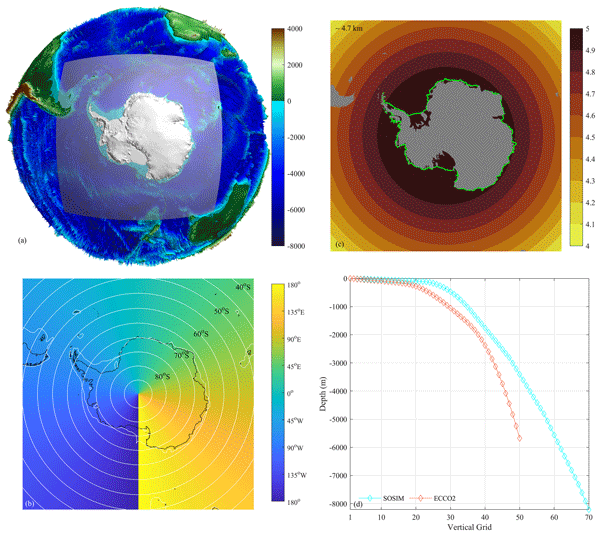
We developed a high-resolution computer model to simulate how the ocean, sea ice, and ice shelves interact around Antarctica. This helps us understand their critical role in global climate and sea-level rise. Our model successfully captures essential features like major currents and seasonal ice changes. Despite some remaining biases, it provides a useful tool for predicting future changes in this vital and rapidly evolving region.
Qiuyu Li, Huanting Hu, Guitao Shi, Danhe Wang, Zhe Li, and Shugui Hou
EGUsphere, https://doi.org/10.5194/egusphere-2025-5800, https://doi.org/10.5194/egusphere-2025-5800, 2026
Preprint archived
Short summary
Short summary
Ancient air trapped in ice bubbles is a valuable archive for studying past climates. However, trapped air can be altered by gas loss through pumping in laboratory. We quantified the characteristics of this loss for the first time based on controlled ice pumping experiments. We discovered that O2 and Ar escape simultaneously through ice microcracks. Crucially, we found that gas loss corrections considering both O2 and Ar significantly reduced data scatter, recovering clearer climate signals.
Biao Zhou, Kun Zhang, Qiongqiong Wang, Jiqi Zhu, Li Li, and Jian Zhen Yu
Atmos. Chem. Phys., 26, 3589–3606, https://doi.org/10.5194/acp-26-3589-2026, https://doi.org/10.5194/acp-26-3589-2026, 2026
Short summary
Short summary
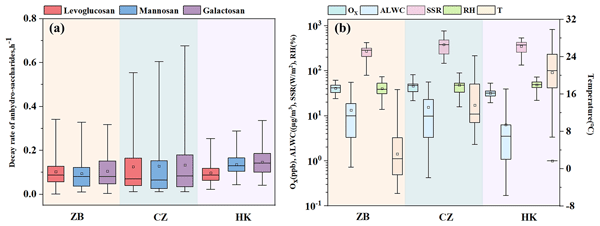
Anhydro-saccharides are key organic markers for biomass burning, but their decay rates and driving factors in real ambient environments remain unclear. This study conducted an online field measurement of PM₂.₅-bound saccharides in three eastern Chinese cities. Daytime levoglucosan decay rates were calculated, and the driving factors were investigated using a machine learning model. Findings of this study offers a strong scientific basis to support air pollution management.
Chunlei An, Su Jiang, Guitao Shi, Hongmei Ma, Chuanjin Li, Zhe Li, Xiaolong Li, Ye Hu, Yan Liu, Xiao Yan, Ningning Sun, Bo Zhang, Shugui Hou, and Yuansheng Li
EGUsphere, https://doi.org/10.5194/egusphere-2026-769, https://doi.org/10.5194/egusphere-2026-769, 2026
Short summary
Short summary
Volcanic eruptions can significantly affect the Earth's climate. Reconstructing past volcanic history can provide valuable information for climate modeling. Our study provides a new volcanic record from Dome A, the highest ice dome in Antarctica. Using this record and three other volcanic records from Antarctica, the prominent volcanic events, the change in volcanic frequency and flux, and the variation of snow accumulation rates at Dome A over the past 4000 years are investigated.
Xueying Liu, Yeqi Huang, Yao Chen, Xin Feng, Jiading Li, Yang Xu, Yi Chen, Dasa Gu, Hao Sun, Zhi Ning, Jianzhen Yu, Wing Sze Chow, Changqing Lin, Yan Xiang, Tianshu Zhang, Claire Granier, Guy Brasseur, Zhe Wang, and Jimmy C. H. Fung
Atmos. Chem. Phys., 25, 17629–17649, https://doi.org/10.5194/acp-25-17629-2025, https://doi.org/10.5194/acp-25-17629-2025, 2025
Short summary
Short summary
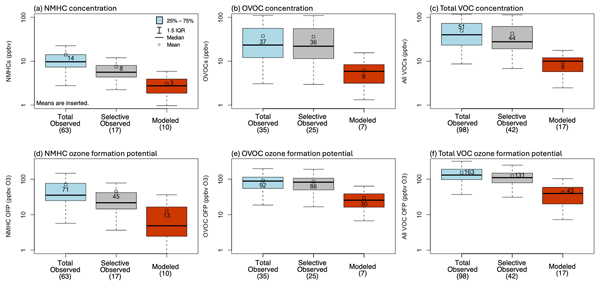
Volatile organic compounds (VOCs) affect ozone formation and air quality. However, our understanding is limited due to insufficient measurements, especially for oxygenated VOCs. This study combines land, ship, and satellite data in Hong Kong, showing that oxygenated VOCs make up a significant portion of total VOCs. Despite their importance, many are underestimated in current models. These findings highlight the need to improve VOC representation in models to enhance air quality management.
Donger Lai, Yanxin Bai, Zijing Zhang, Pui-Kin So, Yong Jie Li, Ying-Lung Steve Tse, Ying-Yeung Yeung, Thomas Schaefer, Hartmut Herrmann, Jian Zhen Yu, Yuchen Wang, and Man Nin Chan
Atmos. Chem. Phys., 25, 12569–12584, https://doi.org/10.5194/acp-25-12569-2025, https://doi.org/10.5194/acp-25-12569-2025, 2025
Short summary
Short summary
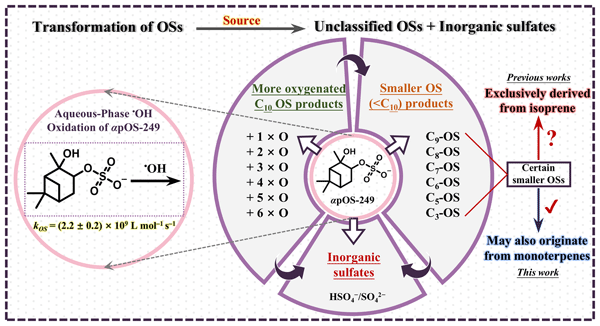
Aqueous-phase •OH oxidation can potentially act as an important atmospheric sink for α-pinene-derived organosulfates (OSs). Such oxidation can also generate a variety of new OS products, and can be as a potential source for some atmospheric OSs with previously unknown origins.
Shubin Li, Yujue Wang, Yiwen Zhang, Yizhe Yi, Yuchen Wang, Yuqi Guo, Chao Yu, Yue Jiang, Jinhui Shi, Chao Zhang, Jialei Zhu, Wei Hu, Jianzhen Yu, Xiaohong Yao, Huiwang Gao, and Min Hu
Atmos. Chem. Phys., 25, 12585–12598, https://doi.org/10.5194/acp-25-12585-2025, https://doi.org/10.5194/acp-25-12585-2025, 2025
Short summary
Short summary
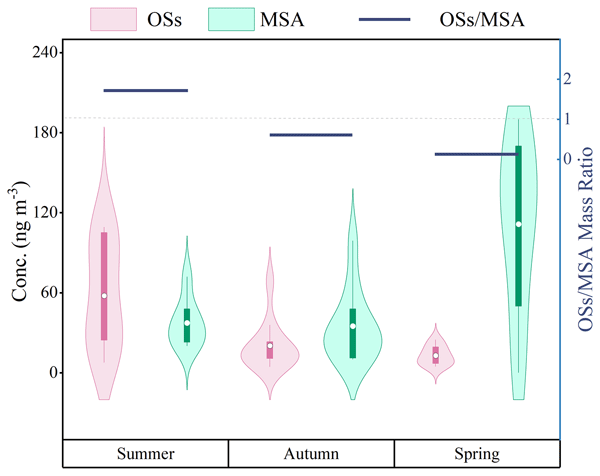
Organosulfates (OSs) are an unrecognized and potentially important component in marine organic aerosols. In this study, we quantified and characterized the OSs over East Asian marginal seas. The chemical nature and spatiotemporal distribution of OSs were modified by the joint influence of marine emissions and transported terrestrial pollutants. The results highlight the vital roles of OSs in shaping organic aerosol formation and sulfur cycle during summer in the marine boundary layer.
Rui Li, Xing Liu, Yubing Shen, Yumeng Shao, Yining Gao, Ziwei Yao, Xi Liu, and Guitao Shi
Atmos. Chem. Phys., 25, 9263–9274, https://doi.org/10.5194/acp-25-9263-2025, https://doi.org/10.5194/acp-25-9263-2025, 2025
Short summary
Short summary
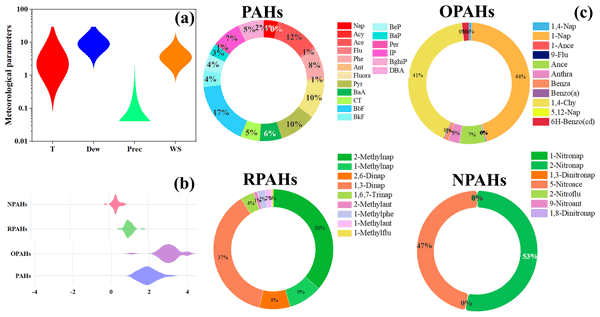
We reveal for the first time the global variations of PAHs and derivatives in marine air. We found that marine aerosols in East China Sea (ECS) and Western Pacific (WP) were significantly affected by coal and engine combustion, while those in Bismarck Sea (BS) and East Australian Sea (EAS) were mainly influenced by wildfire and coal combustion. The Antarctic Ocean (AO) was dominated by biomass burning and local shipping emissions. This finding helps elucidate the mechanism of the global PAH cycle.
Xu Yu, Min Zhou, Shuhui Zhu, Liping Qiao, Jinjian Li, Yingge Ma, Zijing Zhang, Kezheng Liao, Hongli Wang, and Jian Zhen Yu
Atmos. Chem. Phys., 25, 9061–9074, https://doi.org/10.5194/acp-25-9061-2025, https://doi.org/10.5194/acp-25-9061-2025, 2025
Short summary
Short summary
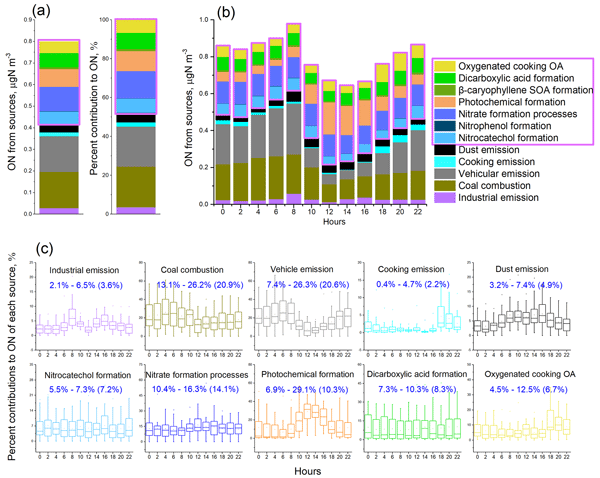
Online measurements of bulk aerosol organic nitrogen (ON), in conjunction with a comprehensive array of source markers, have revealed five emission sources and five potentially significant formation processes of nitrogenous organic aerosols. This study provides a first quantitative source analysis of ON aerosol and valuable observational evidence of secondary ON aerosol formation through NH3 and NOx chemistries.
Anyao Jiang, Xin Meng, Yan Huang, and Guitao Shi
The Cryosphere, 18, 5347–5364, https://doi.org/10.5194/tc-18-5347-2024, https://doi.org/10.5194/tc-18-5347-2024, 2024
Short summary
Short summary
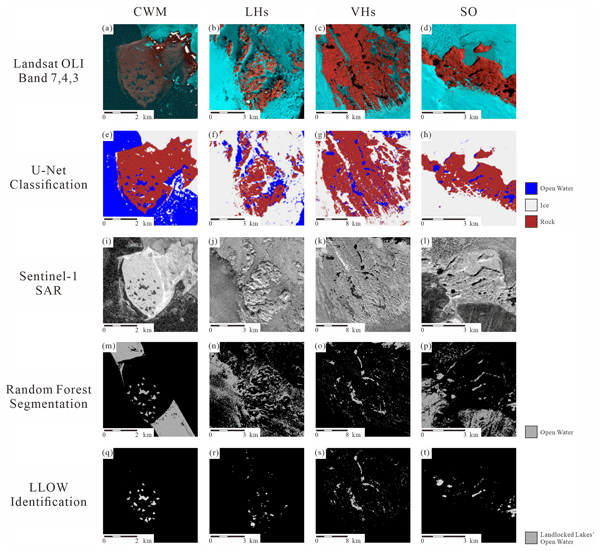
Landlocked lakes are crucial to the Antarctic ecosystem and sensitive to climate change. Limited research on their distribution prompted us to develop an automated detection process using deep learning and multi-source satellite imagery. This allowed us to accurately determine the landlocked lake open water (LLOW) area in Antarctica, generating high-resolution time series data. We find that the changes in positive and negative degree days predominantly drive variations in the LLOW area.
Liyuan Zhou, Qianyun Liu, Christian M. Salvador, Michael Le Breton, Mattias Hallquist, Jian Zhen Yu, Chak K. Chan, and Åsa M. Hallquist
Atmos. Chem. Phys., 24, 11045–11061, https://doi.org/10.5194/acp-24-11045-2024, https://doi.org/10.5194/acp-24-11045-2024, 2024
Short summary
Short summary
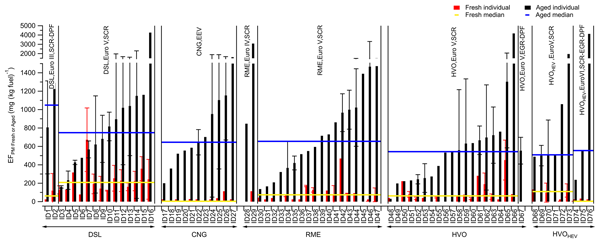
Our research on city bus emissions reveals that alternative fuels (compressed natural gas and biofuels) reduce fresh particle emissions compared to diesel. However, all fuels lead to secondary air pollution. Aiming at guiding better environmental policies, we studied 76 buses using advanced emission measurement techniques. This work sheds light on the complex effects of bus fuels on urban air quality, emphasizing the need for comprehensive evaluations of future transportation technologies.
Shan Wang, Kezheng Liao, Zijing Zhang, Yuk Ying Cheng, Qiongqiong Wang, Hanzhe Chen, and Jian Zhen Yu
Atmos. Chem. Phys., 24, 5803–5821, https://doi.org/10.5194/acp-24-5803-2024, https://doi.org/10.5194/acp-24-5803-2024, 2024
Short summary
Short summary
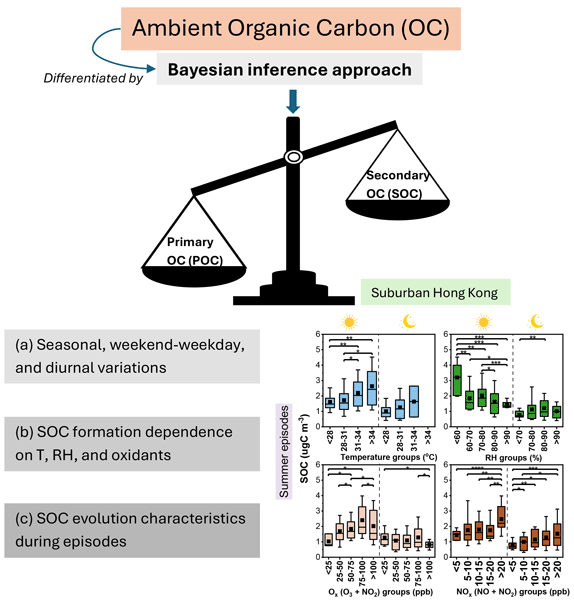
In this work, hourly primary and secondary organic carbon were estimated by a novel Bayesian inference approach in suburban Hong Kong. Their multi-temporal-scale variations and evolution characteristics during PM2.5 episodes were examined. The methodology could serve as a guide for other locations with similar monitoring capabilities. The observation-based results are helpful for understanding the evolving nature of secondary organic aerosols and refining the accuracy of model simulations.
Zhengyi Hu, Wei Jiang, Yuzhen Yan, Yan Huang, Xueyuan Tang, Lin Li, Florian Ritterbusch, Guo-Min Yang, Zheng-Tian Lu, and Guitao Shi
The Cryosphere, 18, 1647–1652, https://doi.org/10.5194/tc-18-1647-2024, https://doi.org/10.5194/tc-18-1647-2024, 2024
Short summary
Short summary
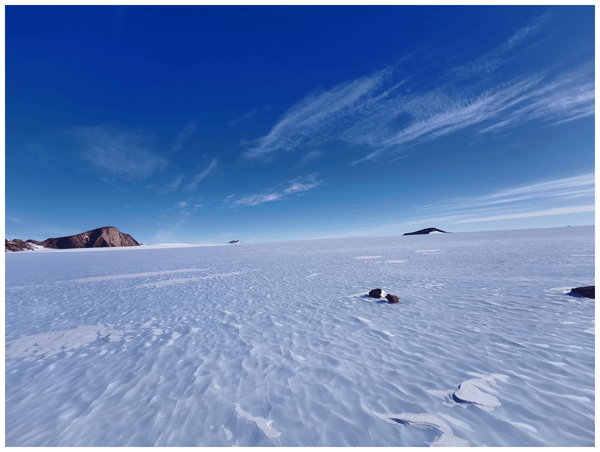
The age of the surface blue ice in the Grove Mountains area is dated to be about 140 000 years, and one meteorite found here is 260 000 years old. It is inferred that the Grove Mountains blue-ice area holds considerable potential for paleoclimate studies.
Qiongqiong Wang, Shuhui Zhu, Shan Wang, Cheng Huang, Yusen Duan, and Jian Zhen Yu
Atmos. Chem. Phys., 24, 475–486, https://doi.org/10.5194/acp-24-475-2024, https://doi.org/10.5194/acp-24-475-2024, 2024
Short summary
Short summary
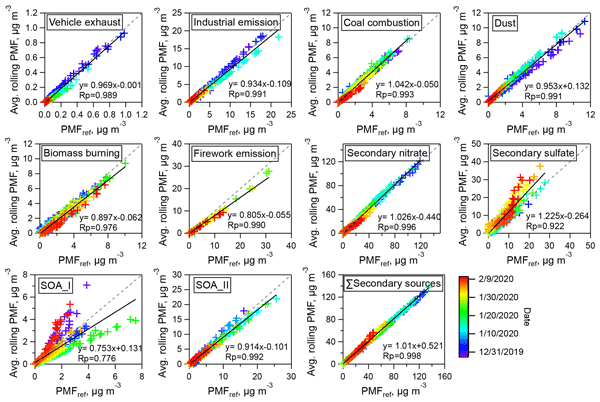
We investigated short-term source apportionment of PM2.5 utilizing rolling positive matrix factorization (PMF) and online PM chemical speciation data, which included source-specific organic tracers collected over a period of 37 d during the winter of 2019–2020 in suburban Shanghai, China. The findings highlight that by imposing constraints on the primary source profiles, short-term PMF analysis successfully replicated both the individual primary sources and the total secondary sources.
Ting Yang, Yu Xu, Qing Ye, Yi-Jia Ma, Yu-Chen Wang, Jian-Zhen Yu, Yu-Sen Duan, Chen-Xi Li, Hong-Wei Xiao, Zi-Yue Li, Yue Zhao, and Hua-Yun Xiao
Atmos. Chem. Phys., 23, 13433–13450, https://doi.org/10.5194/acp-23-13433-2023, https://doi.org/10.5194/acp-23-13433-2023, 2023
Short summary
Short summary
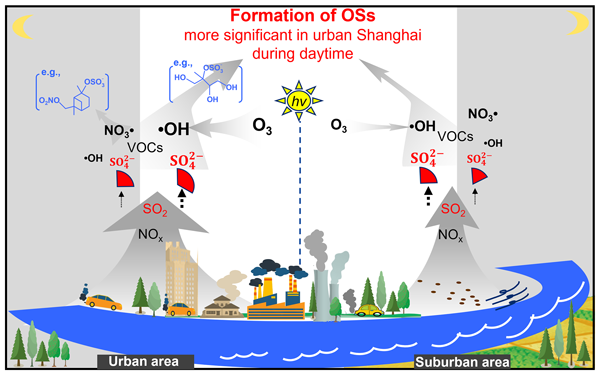
In this study, 130 OS species were quantified in ambient fine particulate matter (PM2.5) collected in urban and suburban Shanghai (East China) in the summer of 2021. The daytime OS formation was concretized based on the interactions among OSs, ultraviolet (UV), ozone (O3), and sulfate. Our finding provides field evidence for the influence of photochemical process and anthropogenic sulfate on OS formation and has important implications for the mitigation of organic particulate pollution.
Shuhui Zhu, Min Zhou, Liping Qiao, Dan Dan Huang, Qiongqiong Wang, Shan Wang, Yaqin Gao, Shengao Jing, Qian Wang, Hongli Wang, Changhong Chen, Cheng Huang, and Jian Zhen Yu
Atmos. Chem. Phys., 23, 7551–7568, https://doi.org/10.5194/acp-23-7551-2023, https://doi.org/10.5194/acp-23-7551-2023, 2023
Short summary
Short summary
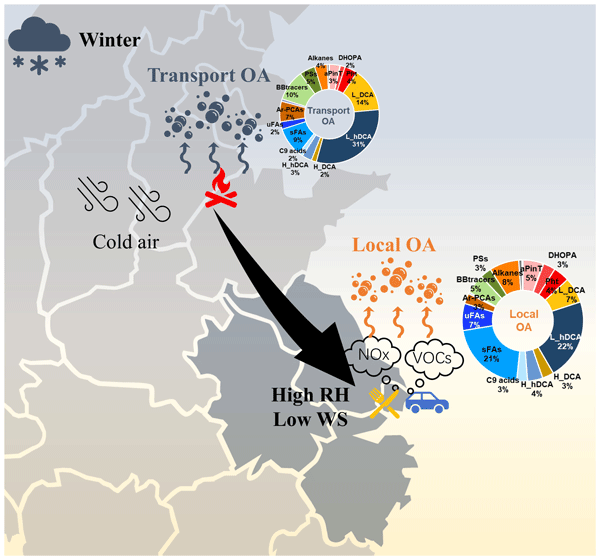
Organic aerosol (OA) is increasingly important in urban PM2.5 pollution as inorganic ions are becoming lower. We investigated the chemical characteristics of OA during nine episodes in Shanghai. The availability of bi-hourly measured molecular markers revealed that the control of local urban sources such as vehicular and cooking emissions lessened the severity of local episodes. Regional control of precursors and biomass burning would reduce PM2.5 episodes influenced by regional transport.
Rui Li, Kun Zhang, Qing Li, Liumei Yang, Shunyao Wang, Zhiqiang Liu, Xiaojuan Zhang, Hui Chen, Yanan Yi, Jialiang Feng, Qiongqiong Wang, Ling Huang, Wu Wang, Yangjun Wang, Jian Zhen Yu, and Li Li
Atmos. Chem. Phys., 23, 3065–3081, https://doi.org/10.5194/acp-23-3065-2023, https://doi.org/10.5194/acp-23-3065-2023, 2023
Short summary
Short summary
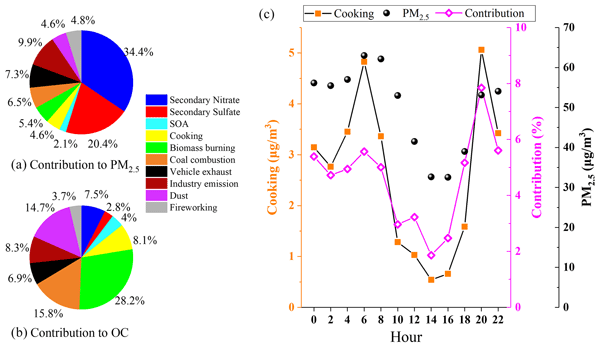
Molecular markers in organic aerosol (OA) provide specific source information on PM2.5, and the contribution of cooking emissions to OA is significant, especially in urban environments. This study investigates the variation in concentrations and oxidative degradation of fatty acids and corresponding oxidation products in ambient air, which can be a guide for the refinement of aerosol source apportionment and provide scientific support for the development of emission source control policies.
Wing Sze Chow, Kezheng Liao, X. H. Hilda Huang, Ka Fung Leung, Alexis K. H. Lau, and Jian Zhen Yu
Atmos. Chem. Phys., 22, 11557–11577, https://doi.org/10.5194/acp-22-11557-2022, https://doi.org/10.5194/acp-22-11557-2022, 2022
Short summary
Short summary
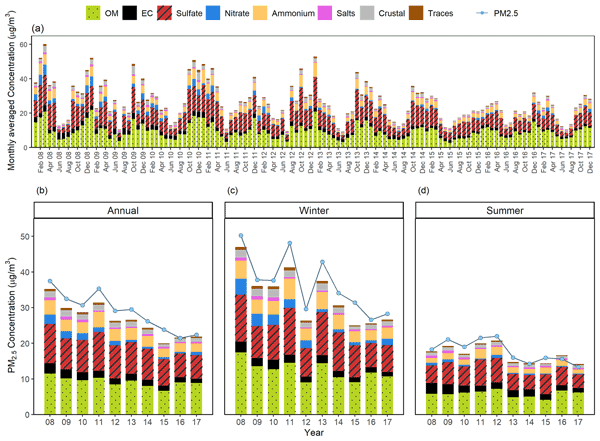
Long-term monitoring data of PM2.5 chemical composition provide essential information for evaluation and planning of control measures. Here we present a 10-year (2008–2017) time series of PM2.5, its major components, and select source markers in an urban site in Hong Kong. The dataset verified the success of local vehicular emission control measures as well as reduction of sulfate and regional sources such as industrial and coal combustion and crop residue burning emissions over the decade.
Qiongqiong Wang, Shan Wang, Yuk Ying Cheng, Hanzhe Chen, Zijing Zhang, Jinjian Li, Dasa Gu, Zhe Wang, and Jian Zhen Yu
Atmos. Chem. Phys., 22, 11239–11253, https://doi.org/10.5194/acp-22-11239-2022, https://doi.org/10.5194/acp-22-11239-2022, 2022
Short summary
Short summary
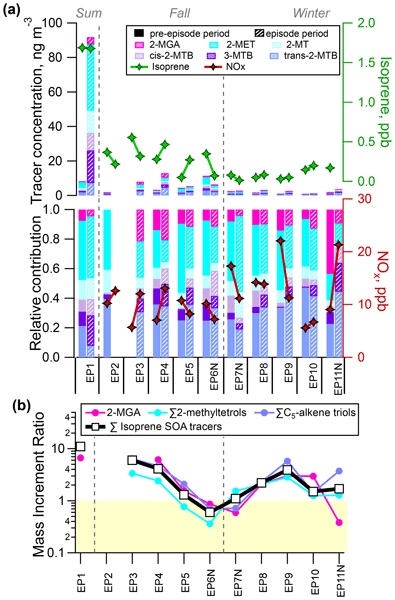
Secondary organic aerosol (SOA) is often enhanced during fine-particulate-matter (PM2.5) episodes. We examined bi-hourly measurements of SOA molecular tracers in suburban Hong Kong during 11 city-wide PM2.5 episodes. The tracers showed regional characteristics for both anthropogenic and biogenic SOA as well as biomass-burning-derived SOA. Multiple tracers of the same precursor revealed the dominance of low-NOx formation pathways for isoprene SOA and less-aged monoterpene SOA during winter.
Rongshuang Xu, Sze In Madeleine Ng, Wing Sze Chow, Yee Ka Wong, Yuchen Wang, Donger Lai, Zhongping Yao, Pui-Kin So, Jian Zhen Yu, and Man Nin Chan
Atmos. Chem. Phys., 22, 5685–5700, https://doi.org/10.5194/acp-22-5685-2022, https://doi.org/10.5194/acp-22-5685-2022, 2022
Short summary
Short summary
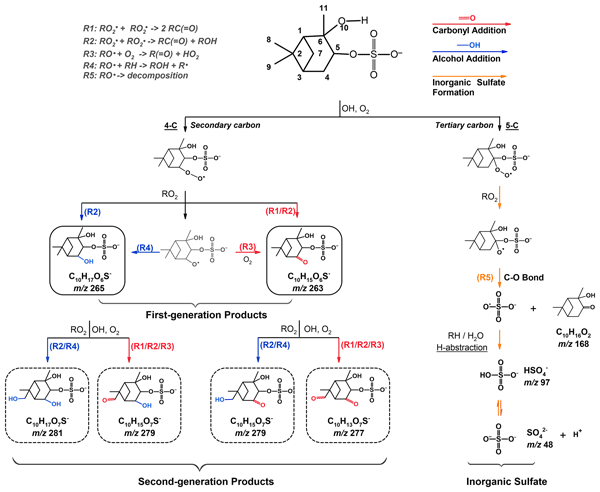
To date, while over a hundred organosulfates (OSs) have been detected in atmospheric aerosols, many of them are still unidentified, with unknown precursors and formation processes. We found the heterogeneous OH oxidation of an α-pinene-derived organosulfate (C10H17O5SNa, αpOS-249, αpOS-249) can proceed at an efficient rate and transform into more oxygenated OSs, which have been commonly detected in atmospheric aerosols and α-pinene-derived SOA in chamber studies.
Yee Ka Wong, Kin Man Liu, Claisen Yeung, Kenneth K. M. Leung, and Jian Zhen Yu
Atmos. Chem. Phys., 22, 5017–5031, https://doi.org/10.5194/acp-22-5017-2022, https://doi.org/10.5194/acp-22-5017-2022, 2022
Short summary
Short summary
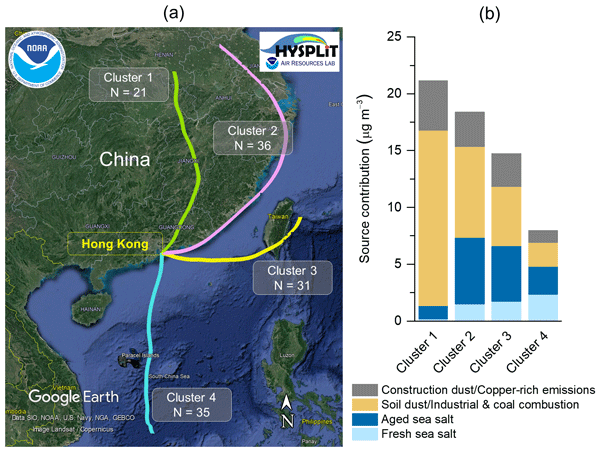
Coarse particulate matter (PM) has been shown to cause adverse health impacts, but compared to PM2.5, the source of coarse PM is less studied through field measurements. We collected chemical composition data for coarse PM in Hong Kong for a 1-year period. Using statistical models, we found that regional transport of fugitive dust is responsible for the elevated coarse PM. This work sets an example of how field measurements can be effectively utilized for evidence-based policymaking.
Cited articles
Almeida, J., Schobesberger, S., Kürten, A., Ortega, I. K., Kupiainen-Määttä, O., Praplan, A. P., Adamov, A., Amorim, A., Bianchi, F., Breitenlechner, M., David, A., Dommen, J., Donahue, N. M., Downard, A., Dunne, E., Duplissy, J., Ehrhart, S., Flagan, R. C., Franchin, A., Guida, R., Hakala, J., Hansel, A., Heinritzi, M., Henschel, H., Jokinen, T., Junninen, H., Kajos, M., Kangasluoma, J., Keskinen, H., Kupc, A., Kurtén, T., Kvashin, A. N., Laaksonen, A., Lehtipalo, K., Leiminger, M., Leppä, J., Loukonen, V., Makhmutov, V., Mathot, S., McGrath, M. J., Nieminen, T., Olenius, T., Onnela, A., Petäjä, T., Riccobono, F., Riipinen, I., Rissanen, M., Rondo, L., Ruuskanen, T., Santos, F. D., Sarnela, N., Schallhart, S., Schnitzhofer, R., Seinfeld, J. H., Simon, M., Sipilä, M., Stozhkov, Y., Stratmann, F., Tomé, A., Tröstl, J., Tsagkogeorgas, G., Vaattovaara, P., Viisanen, Y., Virtanen, A., Vrtala, A., Wagner, P. E., Weingartner, E., Wex, H., Williamson, C., Wimmer, D., Ye, P., Yli-Juuti, T., Carslaw, K. S., Kulmala, M., Curtius, J., Baltensperger, U., Worsnop, D. R., Vehkamäki, H., and Kirkby, J.: Molecular understanding of sulphuric acid–amine particle nucleation in the atmosphere, Nature, 502, 359–363, https://doi.org/10.1038/nature12663, 2013.
Alsante, A. N., Thornton, D. C. O., and Brooks, S. D.: Effect of Aggregation and Molecular Size on the Ice Nucleation Efficiency of Proteins, Environ. Sci. Technol., 58, 4594–4605, https://doi.org/10.1021/acs.est.3c06835, 2024.
Altieri, K. E., Fawcett, S. E., Peters, A. J., Sigman, D. M., and Hastings, M. G.: Marine biogenic source of atmospheric organic nitrogen in the subtropical North Atlantic, Proc. Natl. Acad. Sci. USA, 113, 925–930, https://doi.org/10.1073/pnas.1516847113, 2016.
Altieri, K. E., Fawcett, S. E., and Hastings, M. G.: Reactive Nitrogen Cycling in the Atmosphere and Ocean, Annu. Rev. Earth Planet. Sci., 49, 523–550, https://doi.org/10.1146/annurev-earth-083120-052147, 2021.
Anonymous: A fresh look at element distribution in the North Pacific Ocean, Eos Trans. Am. Geophys. Union, 78, 221–221, https://doi.org/10.1029/97EO00148, 1997.
Arrigo, K. R., Van Dijken, G. L., and Bushinsky, S.: Primary production in the Southern Ocean, 1997–2006, J. Geophys. Res., 113, 2007JC004551, https://doi.org/10.1029/2007JC004551, 2008.
Ashbaugh, L. L., Malm, W. C., and Sadeh, W. Z.: A residence time probability analysis of sulfur concentrations at grand Canyon National Park, Atmos. Environ., 19, 1263–1270, https://doi.org/10.1016/0004-6981(85)90256-2, 1985.
Baker, A. R., Kanakidou, M., Altieri, K. E., Daskalakis, N., Okin, G. S., Myriokefalitakis, S., Dentener, F., Uematsu, M., Sarin, M. M., Duce, R. A., Galloway, J. N., Keene, W. C., Singh, A., Zamora, L., Lamarque, J.-F., Hsu, S.-C., Rohekar, S. S., and Prospero, J. M.: Observation- and model-based estimates of particulate dry nitrogen deposition to the oceans, Atmos. Chem. Phys., 17, 8189–8210, https://doi.org/10.5194/acp-17-8189-2017, 2017.
Blazina, T., Läderach, A., Jones, G. D., Sodemann, H., Wernli, H., Kirchner, J. W., and Winkel, L. H. E.: Marine Primary Productivity as a Potential Indirect Source of Selenium and Other Trace Elements in Atmospheric Deposition, Environ. Sci. Technol., 51, 108–118, https://doi.org/10.1021/acs.est.6b03063, 2017.
Brean, J., Dall'Osto, M., Simó, R., Shi, Z., Beddows, D. C. S., and Harrison, R. M.: Open ocean and coastal new particle formation from sulfuric acid and amines around the Antarctic Peninsula, Nat. Geosci., 14, 383–388, https://doi.org/10.1038/s41561-021-00751-y, 2021.
Cape, J. N., Cornell, S. E., Jickells, T. D., and Nemitz, E.: Organic nitrogen in the atmosphere – Where does it come from? A review of sources and methods, Atmos. Res., 102, 30–48, https://doi.org/10.1016/j.atmosres.2011.07.009, 2011.
Cavalieri, D. J., Gloersen, P., Parkinson, C. L., Comiso, J. C., and Zwally, H. J.: Observed Hemispheric Asymmetry in Global Sea Ice Changes, Science, 278, 1104–1106, https://doi.org/10.1126/science.278.5340.1104, 1997.
Chan, M. N., Choi, M. Y., Ng, N. L., and Chan, C. K.: Hygroscopicity of Water-Soluble Organic Compounds in Atmospheric Aerosols: Amino Acids and Biomass Burning Derived Organic Species, Environ. Sci. Technol., 39, 1555–1562, https://doi.org/10.1021/es049584l, 2005.
Chen, H. Y. and Chen, L.-D.: Occurrence of water soluble organic nitrogen in aerosols at a coastal area, J. Atmos. Chem., 65, 49–71, https://doi.org/10.1007/s10874-010-9181-y, 2010.
Choi, J. H., Jang, E., Yoon, Y. J., Park, J. Y., Kim, T.-W., Becagli, S., Caiazzo, L., Cappelletti, D., Krejci, R., Eleftheriadis, K., Park, K.-T., and Jang, K. S.: Influence of Biogenic Organics on the Chemical Composition of Arctic Aerosols, Global Biogeochem. Cycles, 33, 1238–1250, https://doi.org/10.1029/2019GB006226, 2019.
Chuck, A. L., Turner, S. M., and Liss, P. S.: Direct Evidence for a Marine Source of C1 and C2 Alkyl Nitrates, Science, 297, 1151–1154, https://doi.org/10.1126/science.1073896, 2002.
Cornell, S.: Water-soluble organic nitrogen in atmospheric aerosol: a comparison of UV and persulfate oxidation methods, Atmos. Environ., 33, 833–840, https://doi.org/10.1016/S1352-2310(98)00139-3, 1999.
Cornell, S., Mace, K., Coeppicus, S., Duce, R., Huebert, B., Jickells, T., and Zhuang, L.-Z.: Organic nitrogen in Hawaiian rain and aerosol, J. Geophys. Res., 106, 7973–7983, https://doi.org/10.1029/2000JD900655, 2001.
Creamean, J. M., Barry, K., Hill, T. C. J., Hume, C., DeMott, P. J., Shupe, M. D., Dahlke, S., Willmes, S., Schmale, J., Beck, I., Hoppe, C. J. M., Fong, A., Chamberlain, E., Bowman, J., Scharien, R., and Persson, O.: Annual cycle observations of aerosols capable of ice formation in central Arctic clouds, Nat. Commun., 13, 3537, https://doi.org/10.1038/s41467-022-31182-x, 2022.
Dall'Osto, M., Ovadnevaite, J., Paglione, M., Beddows, D. C. S., Ceburnis, D., Cree, C., Cortés, P., Zamanillo, M., Nunes, S. O., Pérez, G. L., Ortega-Retuerta, E., Emelianov, M., Vaqué, D., Marrasé, C., Estrada, M., Sala, M. M., Vidal, M., Fitzsimons, M. F., Beale, R., Airs, R., Rinaldi, M., Decesari, S., Cristina Facchini, M., Harrison, R. M., O'Dowd, C., and Simó, R.: Antarctic sea ice region as a source of biogenic organic nitrogen in aerosols, Sci. Rep., 7, 6047, https://doi.org/10.1038/s41598-017-06188-x, 2017.
Dall'Osto, M., Airs, R. L., Beale, R., Cree, C., Fitzsimons, M. F., Beddows, D., Harrison, R. M., Ceburnis, D., O'Dowd, C., Rinaldi, M., Paglione, M., Nenes, A., Decesari, S., and Simó, R.: Simultaneous Detection of Alkylamines in the Surface Ocean and Atmosphere of the Antarctic Sympagic Environment, ACS Earth Space Chem., 3, 854–862, https://doi.org/10.1021/acsearthspacechem.9b00028, 2019.
Dawson, M. L., Varner, M. E., Perraud, V., Ezell, M. J., Gerber, R. B., and Finlayson-Pitts, B. J.: Simplified mechanism for new particle formation from methanesulfonic acid, amines, and water via experiments and ab initio calculations, Proc. Natl. Acad. Sci. USA, 109, 18719–18724, https://doi.org/10.1073/pnas.1211878109, 2012.
DeMott, P. J., Hill, T. C. J., McCluskey, C. S., Prather, K. A., Collins, D. B., Sullivan, R. C., Ruppel, M. J., Mason, R. H., Irish, V. E., Lee, T., Hwang, C. Y., Rhee, T. S., Snider, J. R., McMeeking, G. R., Dhaniyala, S., Lewis, E. R., Wentzell, J. J. B., Abbatt, J., Lee, C., Sultana, C. M., Ault, A. P., Axson, J. L., Diaz Martinez, M., Venero, I., Santos-Figueroa, G., Stokes, M. D., Deane, G. B., Mayol-Bracero, O. L., Grassian, V. H., Bertram, T. H., Bertram, A. K., Moffett, B. F., and Franc, G. D.: Sea spray aerosol as a unique source of ice nucleating particles, Proc. Natl. Acad. Sci. USA, 113, 5797–5803, https://doi.org/10.1073/pnas.1514034112, 2016.
Deng, O., Wang, S., Ran, J., Huang, S., Zhang, X., Duan, J., Zhang, L., Xia, Y., Reis, S., Xu, J., Xu, J., De Vries, W., Sutton, M. A., and Gu, B.: Managing urban development could halve nitrogen pollution in China, Nat. Commun., 15, 401, https://doi.org/10.1038/s41467-023-44685-y, 2024.
Duce, R. A., LaRoche, J., Altieri, K., Arrigo, K. R., Baker, A. R., Capone, D. G., Cornell, S., Dentener, F., Galloway, J., Ganeshram, R. S., Geider, R. J., Jickells, T., Kuypers, M. M., Langlois, R., Liss, P. S., Liu, S. M., Middelburg, J. J., Moore, C. M., Nickovic, S., Oschlies, A., Pedersen, T., Prospero, J., Schlitzer, R., Seitzinger, S., Sorensen, L. L., Uematsu, M., Ulloa, O., Voss, M., Ward, B., and Zamora, L.: Impacts of Atmospheric Anthropogenic Nitrogen on the Open Ocean, Science, 320, 893–897, https://doi.org/10.1126/science.1150369, 2008.
Facchini, M. C., Decesari, S., Rinaldi, M., Carbone, C., Finessi, E., Mircea, M., Fuzzi, S., Moretti, F., Tagliavini, E., Ceburnis, D., and O'Dowd, C. D.: Important Source of Marine Secondary Organic Aerosol from Biogenic Amines, Environ. Sci. Technol., 42, 9116–9121, https://doi.org/10.1021/es8018385, 2008.
Fetterer, F., Knowles, K., Meier, W. N., Savoie, M., and Windnagel, A. K.: Sea Ice Index. (G02135, Version 3), National Snow and Ice Data Center, Boulder, Colorado USA [data set], https://doi.org/10.7265/N5K072F8, 2017.
Fisher, J. A., Jacob, D. J., Travis, K. R., Kim, P. S., Marais, E. A., Chan Miller, C., Yu, K., Zhu, L., Yantosca, R. M., Sulprizio, M. P., Mao, J., Wennberg, P. O., Crounse, J. D., Teng, A. P., Nguyen, T. B., St. Clair, J. M., Cohen, R. C., Romer, P., Nault, B. A., Wooldridge, P. J., Jimenez, J. L., Campuzano-Jost, P., Day, D. A., Hu, W., Shepson, P. B., Xiong, F., Blake, D. R., Goldstein, A. H., Misztal, P. K., Hanisco, T. F., Wolfe, G. M., Ryerson, T. B., Wisthaler, A., and Mikoviny, T.: Organic nitrate chemistry and its implications for nitrogen budgets in an isoprene- and monoterpene-rich atmosphere: constraints from aircraft (SEAC4RS) and ground-based (SOAS) observations in the Southeast US, Atmos. Chem. Phys., 16, 5969–5991, https://doi.org/10.5194/acp-16-5969-2016, 2016.
Fitzsimons, M. F., Tilley, M., and Cree, C. H. L.: The determination of volatile amines in aquatic marine systems: A review, Anal. Chim. Acta, 1241, 340707, https://doi.org/10.1016/j.aca.2022.340707, 2023.
Galgani, L., Piontek, J., and Engel, A.: Biopolymers form a gelatinous microlayer at the air-sea interface when Arctic sea ice melts, Sci. Rep., 6, 29465, https://doi.org/10.1038/srep29465, 2016.
Jang, J., Park, J., Park, J., Yoon, Y. J., Dall'Osto, M., Park, K.-T., Jang, E., Lee, J. Y., Cho, K. H., and Lee, B. Y.: Ocean-atmosphere interactions: Different organic components across Pacific and Southern Oceans, Sci. Total Environ., 878, 162969, https://doi.org/10.1016/j.scitotenv.2023.162969, 2023.
Jickells, T., Baker, A. R., Cape, J. N., Cornell, S. E., and Nemitz, E.: The cycling of organic nitrogen through the atmosphere, Philos. Trans. R. Soc. B, 368, 20130115, https://doi.org/10.1098/rstb.2013.0115, 2013.
Jung, J., Han, B., Rodriguez, B., Miyazaki, Y., Chung, H. Y., Kim, K., Choi, J.-O., Park, K., Kim, I.-N., Kim, S., Yang, E. J., and Kang, S.-H.: Atmospheric Dry Deposition of Water-Soluble Nitrogen to the Subarctic Western North Pacific Ocean during Summer, Atmosphere, 10, 351, https://doi.org/10.3390/atmos10070351, 2019.
Keene, W. C., Pszenny, A. A. P., Galloway, J. N., and Hawley, M. E.: Sea-salt corrections and interpretation of constituent ratios in marine precipitation, J. Geophys. Res., 91, 6647–6658, https://doi.org/10.1029/JD091iD06p06647, 1986.
Lesworth, T., Baker, A. R., and Jickells, T.: Aerosol organic nitrogen over the remote Atlantic Ocean, Atmos. Environ., 44, 1887–1893, https://doi.org/10.1016/j.atmosenv.2010.02.021, 2010.
Li, Y., Fu, T.-M., Yu, J. Z., Yu, X., Chen, Q., Miao, R., Zhou, Y., Zhang, A., Ye, J., Yang, X., Tao, S., Liu, H., and Yao, W.: Dissecting the contributions of organic nitrogen aerosols to global atmospheric nitrogen deposition and implications for ecosystems, Natl. Sci. Rev., 10, nwad244, https://doi.org/10.1093/nsr/nwad244, 2023.
Li, Y., Fu, T.-M., Yu, J. Z., Zhang, A., Yu, X., Ye, J., Zhu, L., Shen, H., Wang, C., Yang, X., Tao, S., Chen, Q., Li, Y., Li, L., Che, H., and Heald, C. L.: Nitrogen dominates global atmospheric organic aerosol absorption, Science, 387, 989–995, https://doi.org/10.1126/science.adr4473, 2025.
Luo, L., Kao, S.-J., Bao, H., Xiao, H., Xiao, H., Yao, X., Gao, H., Li, J., and Lu, Y.: Sources of reactive nitrogen in marine aerosol over the Northwest Pacific Ocean in spring, Atmos. Chem. Phys., 18, 6207–6222, https://doi.org/10.5194/acp-18-6207-2018, 2018.
Mace, K. A., Duce, R. A., and Tindale, N. W.: Organic nitrogen in rain and aerosol at Cape Grim, Tasmania, Australia, J. Geophys. Res., 108, 2002JD003051, https://doi.org/10.1029/2002JD003051, 2003.
Matsumoto, K., Yamamoto, Y., Nishizawa, K., Kaneyasu, N., Irino, T., and Yoshikawa-Inoue, H.: Origin of the water-soluble organic nitrogen in the maritime aerosol, Atmos. Environ., 167, 97–103, https://doi.org/10.1016/j.atmosenv.2017.07.050, 2017.
Matsumoto, K., Kobayashi, H., Hara, K., Ishino, S., and Hayashi, M.: Water-soluble organic nitrogen in fine aerosols over the Southern Ocean, Atmos. Environ., 287, 119287, https://doi.org/10.1016/j.atmosenv.2022.119287, 2022.
Mirrielees, J. A., Kirpes, R. M., Costa, E. J., Porter, G. C. E., Murray, B. J., Lata, N. N., Boschi, V., China, S., Grannas, A. M., Ault, A. P., Matrai, P. A., and Pratt, K. A.: Marine aerosol generation experiments in the High Arctic during summertime, Elementa Sci. Anth., 12, 00134, https://doi.org/10.1525/elementa.2023.00134, 2024.
Miyazaki, Y., Kawamura, K., Jung, J., Furutani, H., and Uematsu, M.: Latitudinal distributions of organic nitrogen and organic carbon in marine aerosols over the western North Pacific, Atmos. Chem. Phys., 11, 3037–3049, https://doi.org/10.5194/acp-11-3037-2011, 2011.
Ng, N. L., Brown, S. S., Archibald, A. T., Atlas, E., Cohen, R. C., Crowley, J. N., Day, D. A., Donahue, N. M., Fry, J. L., Fuchs, H., Griffin, R. J., Guzman, M. I., Herrmann, H., Hodzic, A., Iinuma, Y., Jimenez, J. L., Kiendler-Scharr, A., Lee, B. H., Luecken, D. J., Mao, J., McLaren, R., Mutzel, A., Osthoff, H. D., Ouyang, B., Picquet-Varrault, B., Platt, U., Pye, H. O. T., Rudich, Y., Schwantes, R. H., Shiraiwa, M., Stutz, J., Thornton, J. A., Tilgner, A., Williams, B. J., and Zaveri, R. A.: Nitrate radicals and biogenic volatile organic compounds: oxidation, mechanisms, and organic aerosol, Atmos. Chem. Phys., 17, 2103–2162, https://doi.org/10.5194/acp-17-2103-2017, 2017.
Nøjgaard, J. K., Peker, L., Pernov, J. B., Johnson, M. S., Bossi, R., Massling, A., Lange, R., Nielsen, I. E., Prevot, A. S. H., Eriksson, A. C., Canonaco, F., and Skov, H.: A local marine source of atmospheric particles in the High Arctic, Atmos. Environ., 285, 119241, https://doi.org/10.1016/j.atmosenv.2022.119241, 2022.
Park, K., Lee, K., Kim, T., Yoon, Y. J., Jang, E., Jang, S., Lee, B., and Hermansen, O.: Atmospheric DMS in the Arctic Ocean and Its Relation to Phytoplankton Biomass, Global Biogeochemical Cy., 32, 351–359, https://doi.org/10.1002/2017GB005805, 2018.
Pavuluri, C. M., Kawamura, K., and Fu, P. Q.: Atmospheric chemistry of nitrogenous aerosols in northeastern Asia: biological sources and secondary formation, Atmos. Chem. Phys., 15, 9883–9896, https://doi.org/10.5194/acp-15-9883-2015, 2015.
Quinby-Hunt, M. S. and Turehian, K. K.: Distribution of elements in sea water, EoS Trans. Am. Geophys. Union, 64, 130–130, https://doi.org/10.1029/EO064i014p00130, 1983.
Shi, G., Ma, H., Zhu, Z., Hu, Z., Chen, Z., Jiang, S., An, C., Yu, J., Ma, T., Li, Y., Sun, B., and Hastings, M. G.: Using stable isotopes to distinguish atmospheric nitrate production and its contribution to the surface ocean across hemispheres, Earth Planet. Sci. Lett., 564, 116914, https://doi.org/10.1016/j.epsl.2021.116914, 2021.
Shubhankar, B. and Ambade, B.: Chemical characterization of carbonaceous carbon from industrial and semi urban site of eastern India, SpringerPlus, 5, 837, https://doi.org/10.1186/s40064-016-2506-9, 2016.
Siegel, D. A., Behrenfeld, M. J., Maritorena, S., McClain, C. R., Antoine, D., Bailey, S. W., Bontempi, P. S., Boss, E. S., Dierssen, H. M., Doney, S. C., Eplee, R. E., Evans, R. H., Feldman, G. C., Fields, E., Franz, B. A., Kuring, N. A., Mengelt, C., Nelson, N. B., Patt, F. S., Robinson, W. D., Sarmiento, J. L., Swan, C. M., Werdell, P. J., Westberry, T. K., Wilding, J. G., and Yoder, J. A.: Regional to global assessments of phytoplankton dynamics from the SeaWiFS mission, Remote Sens. Environ., 135, 77–91, https://doi.org/10.1016/j.rse.2013.03.025, 2013.
Song, J., Zhao, Y., Zhang, Y., Fu, P., Zheng, L., Yuan, Q., Wang, S., Huang, X., Xu, W., Cao, Z., Gromov, S., and Lai, S.: Influence of biomass burning on atmospheric aerosols over the western South China Sea: Insights from ions, carbonaceous fractions and stable carbon isotope ratios, Environ. Pollut., 242, 1800–1809, https://doi.org/10.1016/j.envpol.2018.07.088, 2018.
Stein, A. F., Draxler, R. R., Rolph, G. D., Stunder, B. J. B., Cohen, M. D., and Ngan, F.: NOAA's HYSPLIT Atmospheric Transport and Dispersion Modeling System, B. Am. Meteorol. Soc., 96, 2059–2077, https://doi.org/10.1175/BAMS-D-14-00110.1, 2015.
Sun, N.: Spatial distribution of organic nitrogen in the global marine boundary layer from Arctic to Antarctic, National Tibetan Plateau/Third Pole Environment Data Center [data set], https://doi.org/10.11888/Atmos.tpdc.303043, 2025.
Taubert, M., Grob, C., Howat, A. M., Burns, O. J., Pratscher, J., Jehmlich, N., Von Bergen, M., Richnow, H. H., Chen, Y., and Murrell, J. C.: Methylamine as a nitrogen source for microorganisms from a coastal marine environment, Environ. Microbiol., 19, 2246–2257, https://doi.org/10.1111/1462-2920.13709, 2017.
Tian, M., Li, H., Wang, G., Fu, M., Qin, X., Lu, D., Liu, C., Zhu, Y., Luo, X., Deng, C., Abdullaev, S. F., and Huang, K.: Seasonal source identification and formation processes of marine particulate water soluble organic nitrogen over an offshore island in the East China Sea, Sci. Total Environ., 863, 160895, https://doi.org/10.1016/j.scitotenv.2022.160895, 2023.
Violaki, K., Sciare, J., Williams, J., Baker, A. R., Martino, M., and Mihalopoulos, N.: Atmospheric water-soluble organic nitrogen (WSON) over marine environments: a global perspective, Biogeosciences, 12, 3131–3140, https://doi.org/10.5194/bg-12-3131-2015, 2015.
Wilson, T. W., Ladino, L. A., Alpert, P. A., Breckels, M. N., Brooks, I. M., Browse, J., Burrows, S. M., Carslaw, K. S., Huffman, J. A., Judd, C., Kilthau, W. P., Mason, R. H., McFiggans, G., Miller, L. A., Nájera, J. J., Polishchuk, E., Rae, S., Schiller, C. L., Si, M., Temprado, J. V., Whale, T. F., Wong, J. P. S., Wurl, O., Yakobi-Hancock, J. D., Abbatt, J. P. D., Aller, J. Y., Bertram, A. K., Knopf, D. A., and Murray, B. J.: A marine biogenic source of atmospheric ice-nucleating particles, Nature, 525, 234–238, https://doi.org/10.1038/nature14986, 2015.
Wu, C. and Yu, J. Z.: Determination of primary combustion source organic carbon-to-elemental carbon (
Wu, G., Hu, Y., Gong, C., Wang, D., Zhang, F., Herath, I. K., Chen, Z., and Shi, G.: Spatial distribution, sources, and direct radiative effect of carbonaceous aerosol along a transect from the Arctic Ocean to Antarctica, Sci. Total Environ., 916, 170136, https://doi.org/10.1016/j.scitotenv.2024.170136, 2024.
Xiao, H.-W., Xiao, H.-Y., Luo, L., Shen, C.-Y., Long, A.-M., Chen, L., Long, Z.-H., and Li, D.-N.: Atmospheric aerosol compositions over the South China Sea: temporal variability and source apportionment, Atmos. Chem. Phys., 17, 3199–3214, https://doi.org/10.5194/acp-17-3199-2017, 2017.
Yan, J., Jung, J., Lin, Q., Zhang, M., Xu, S., and Zhao, S.: Effect of sea ice retreat on marine aerosol emissions in the Southern Ocean, Antarctica, Sci. Total Environ., 745, 140773, https://doi.org/10.1016/j.scitotenv.2020.140773, 2020.
Yan, S., Xu, G., Zhang, H., Wang, J., Xu, F., Gao, X., Zhang, J., Wu, J., and Yang, G.: Factors Controlling DMS Emission and Atmospheric Sulfate Aerosols in the Western Pacific Continental Sea, J. Geophys. Res., 129, e2024JC020886, https://doi.org/10.1029/2024JC020886, 2024.
Yu, X., Li, Q., Ge, Y., Li, Y., Liao, K., Huang, X. H., Li, J., and Yu, J. Z.: Simultaneous Determination of Aerosol Inorganic and Organic Nitrogen by Thermal Evolution and Chemiluminescence Detection, Environ. Sci. Technol., 55, 11579–11589, https://doi.org/10.1021/acs.est.1c04876, 2021.
Zamora, L. M., Prospero, J. M., and Hansell, D. A.: Organic nitrogen in aerosols and precipitation at Barbados and Miami: Implications regarding sources, transport and deposition to the western subtropical North Atlantic, J. Geophys. Res., 116, D20309, https://doi.org/10.1029/2011JD015660, 2011.
Zhou, S., Chen, Y., Paytan, A., Li, H., Wang, F., Zhu, Y., Yang, T., Zhang, Y., and Zhang, R.: Non-Marine Sources Contribute to Aerosol Methanesulfonate Over Coastal Seas, J. Geophys. Res.: Atmospheres, 126, e2021JD034960, https://doi.org/10.1029/2021JD034960, 2021.
Zhou, S., Chen, Y., Wang, F., Bao, Y., Ding, X., and Xu, Z.: Assessing the Intensity of Marine Biogenic Influence on the Lower Atmosphere: An Insight into the Distribution of Marine Biogenic Aerosols over the Eastern China Seas, Environ. Sci. Technol., 57, 12741–12751, https://doi.org/10.1021/acs.est.3c04382, 2023.
Short summary
Atmospheric particles over the ocean contain organic nitrogen, affecting climate and ecosystems. This first pole-to-pole study of marine air reveals a strong latitudinal divide, with higher concentrations in the polluted Northern Hemisphere. A key discovery is that air influenced by Antarctic sea ice is enriched in organic nitrogen, revealing a major natural source. Our new dataset improves climate models by clarifying how human emissions and natural processes shape the atmosphere.
Atmospheric particles over the ocean contain organic nitrogen, affecting climate and ecosystems....


Altmetrics
Final-revised paper
Preprint