
Articles | Volume 26, issue 22
https://doi.org/10.5194/acp-26-16719-2026
© Author(s) 2026. This work is distributed under
the Creative Commons Attribution 4.0 License.
https://doi.org/10.5194/acp-26-16719-2026
© Author(s) 2026. This work is distributed under
the Creative Commons Attribution 4.0 License.
Research article
| 
23 Nov 2026
Research article |
| 23 Nov 2026
Marine organic aerosols reflect ecosystem variability from phytoplankton functional types to micronekton
Emmanuel Chevassus
School of Natural Sciences, Ryan Institute's Centre for Climate and Air Pollution Studies, University of Galway, H91 TK33, Co. Galway, Ireland
Vaios Moschos
School of Natural Sciences, Ryan Institute's Centre for Climate and Air Pollution Studies, University of Galway, H91 TK33, Co. Galway, Ireland
Kirsten N. Fossum
School of Natural Sciences, Ryan Institute's Centre for Climate and Air Pollution Studies, University of Galway, H91 TK33, Co. Galway, Ireland
School of Natural Sciences, Ryan Institute's Centre for Climate and Air Pollution Studies, University of Galway, H91 TK33, Co. Galway, Ireland
Liz Coleman
School of Natural Sciences, Ryan Institute's Centre for Climate and Air Pollution Studies, University of Galway, H91 TK33, Co. Galway, Ireland
Dagmar B. Stengel
School of Natural Sciences, Ryan Institute's Centre for Climate and Air Pollution Studies, University of Galway, H91 TK33, Co. Galway, Ireland
David Nganga
School of Natural Sciences, Ryan Institute's Centre for Climate and Air Pollution Studies, University of Galway, H91 TK33, Co. Galway, Ireland
Vignesh Prabhu
School of Natural Sciences, Ryan Institute's Centre for Climate and Air Pollution Studies, University of Galway, H91 TK33, Co. Galway, Ireland
School of Natural Sciences, Ryan Institute's Centre for Climate and Air Pollution Studies, University of Galway, H91 TK33, Co. Galway, Ireland
now at: Institute of Urban Environment, Chinese Academy of Sciences, Xiamen 361021, China
Darius Ceburnis
School of Natural Sciences, Ryan Institute's Centre for Climate and Air Pollution Studies, University of Galway, H91 TK33, Co. Galway, Ireland
Colin O'Dowd
School of Natural Sciences, Ryan Institute's Centre for Climate and Air Pollution Studies, University of Galway, H91 TK33, Co. Galway, Ireland
Jurgita Ovadnevaite
CORRESPONDING AUTHOR

School of Natural Sciences, Ryan Institute's Centre for Climate and Air Pollution Studies, University of Galway, H91 TK33, Co. Galway, Ireland
Related authors
No articles found.
Xueyan Wang, Lu Lei, Vignesh Prabhu, Wei Xu, Jian Zhao, Chunshui Lin, Kristen N. Fossum, Baihua Chen, Darius Ceburnis, Colin O'Dowd, and Jurgita Ovadnevaite
EGUsphere, https://doi.org/10.5194/egusphere-2026-7038, https://doi.org/10.5194/egusphere-2026-7038, 2026
This preprint is open for discussion and under review for Atmospheric Measurement Techniques (AMT).
Short summary
Short summary
Black carbon from traffic and home heating contributes to urban air pollution, but these sources are difficult to distinguish. Using years of air measurements in Dublin, we combined statistical analysis and machine learning to separate their contributions. Traffic was the largest source, while home heating also made a substantial contribution, especially from burning solid fuels. Our approach can help identify pollution sources and design targeted measures to improve air quality.
Lu Lei, Shan Wang, Jonas Enarsson, Jian Zhao, David Nganga, Ying Li, William Smith, Kirsten N. Fossum, Aneta Wierzbicka, Axel Eriksson, Chunshui Lin, Darius Ceburnis, John Wenger, Stig Hellebust, Colin O’Dowd, and Jurgita Ovadnevaite
EGUsphere, https://doi.org/10.5194/egusphere-2026-6574, https://doi.org/10.5194/egusphere-2026-6574, 2026
This preprint is open for discussion and under review for Atmospheric Chemistry and Physics (ACP).
Short summary
Short summary
By linking online ROS measurements with high-resolution aerosol chemical composition, this study reveals distinct chemical fingerprints and particle-bound ROS across six solid fuels. ROS activity was strongly associated with PAH-related ions, while elevated ROS burdens arose from contrasting contributions of intrinsic ROS activity and PM loading. These findings advance understanding of combustion aerosol chemistry and source-dependent oxidative characteristics of atmospheric aerosols.
Ya-Nan Zhan, Dan Dan Huang, Yaqin Gao, Sheng’ao Jing, Jun Pan, Yingjie Li, Juntao Huo, Yi Sun, Haobin Zhong, Wei Xu, Jing Duan, Ting Wang, Qianying Liu, Lulu Zeng, Yong Jie Li, Cheng Huang, Hongli Wang, Qingyan Fu, and Ru-Jin Huang
EGUsphere, https://doi.org/10.5194/egusphere-2026-6370, https://doi.org/10.5194/egusphere-2026-6370, 2026
This preprint is open for discussion and under review for Atmospheric Chemistry and Physics (ACP).
Short summary
Short summary
This study investigates secondary organic aerosol formation in coastal air using a field-deployed oxidation flow reactor, quantitatively constrains its formation potential and the contributions of major precursors, reveals contrasting production from marine and continental air masses, and highlights the roles of high humidity and continental outflow in secondary organic aerosol formation. These results have implications for air pollution in nearby urban regions.
Max Gräfnings, Yuanyuan Luo, Jian Zhao, Claudia L. Cara-Ortega, Kirsten N. Fossum, Frans Graeffe, Lu Lei, Dagmar B. Stengel, Roseline C. Thakur, Jurgita Ovadnevaite, Mikael Ehn, and Camilla Gustafsson
Biogeosciences, 23, 7183–7201, https://doi.org/10.5194/bg-23-7183-2026, https://doi.org/10.5194/bg-23-7183-2026, 2026
Short summary
Short summary
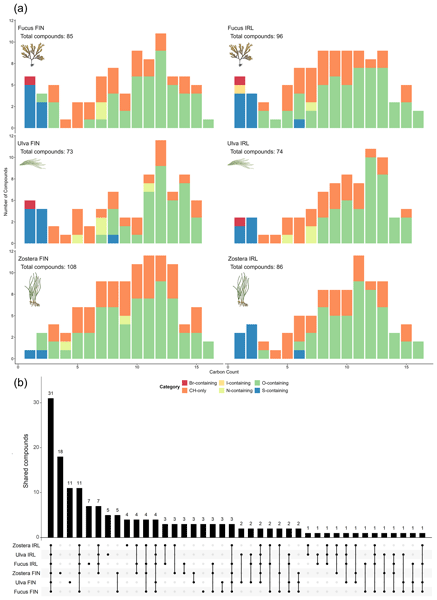
Biogenic volatile organic compounds (BVOCs) emitted by Earth’s ecosystems have profound climate impacts, but emissions from marine benthic sources are poorly quantified. We quantified BVOC emission rates from three macrophytes across two contrasting marine regions and found highly diverse emission profiles with high intra‑ and interspecific variability. Our results underscore the need for more high-quality data, so that macrophyte emissions can eventually be integrated into marine BVOC budgets.
Ting Wang, Youwei Hong, Jing Duan, Liyuan Zhou, Ying Wang, and Wei Xu
EGUsphere, https://doi.org/10.5194/egusphere-2026-4296, https://doi.org/10.5194/egusphere-2026-4296, 2026
This preprint is open for discussion and under review for Atmospheric Chemistry and Physics (ACP).
Short summary
Short summary
Organosulfates are important components of fine particles, but their formation in mountain regions remains poorly constrained. Seasonal samples from Wuyi Mountain were analyzed using high-resolution mass spectrometry. Summer formation was closely linked to acidic, sulfate-rich particles, while winter formation was more influenced by atmospheric oxidation, nitrogen chemistry, and anthropogenic precursors. The results show that seasonal changes reflect both local chemistry and regional transport.
Jing Duan, Ting Wang, Ru-Jin Huang, Jingye Ren, Haobin Zhong, Wei Xu, Chunshui Lin, Yanan Zhan, Huabin Huang, and Yongjie Li
Atmos. Chem. Phys., 26, 11683–11693, https://doi.org/10.5194/acp-26-11683-2026, https://doi.org/10.5194/acp-26-11683-2026, 2026
Short summary
Short summary
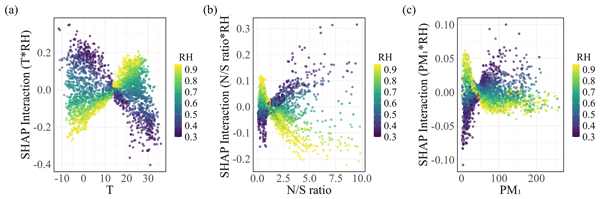
This study combines explainable machine learning with thermodynamic modeling to quantitatively assess how meteorological conditions and chemical composition jointly contribute to aerosol pH variation in an ammonia-rich urban atmosphere. The analysis highlights regime-dependent interactions, threshold behaviors, and sample-specific variability, providing a data-driven framework for interpreting aerosol acidity under diverse environmental conditions.
Lu Lei, Wei Xu, Chunshui Lin, Kirsten N. Fossum, Darius Ceburnis, John Gallagher, Colin O'Dowd, and Jurgita Ovadnevaite
Atmos. Chem. Phys., 26, 10927–10946, https://doi.org/10.5194/acp-26-10927-2026, https://doi.org/10.5194/acp-26-10927-2026, 2026
Short summary
Short summary
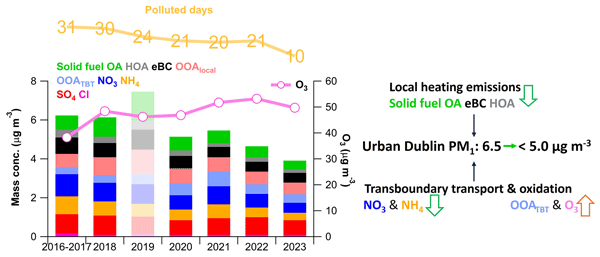
Home heating is the major driver of air pollution across Europe, yet pollution trends and mitigation responses remain limited. PM1 observations from 2016–2023 in a temperate European city influenced by continental pollution reveal changing sources and composition. Major pollution contributors were identified, shaping clear seasonal patterns. Air quality has improved with reduced heating emissions and regional precursors reductions, while secondary organic aerosols show increasing importance.
Liyuan Zhou, Zhancong Liang, Wei Xu, Ru-Jin Huang, Patrick K. H. Lee, and Chak K. Chan
Atmos. Chem. Phys., 26, 10587–10604, https://doi.org/10.5194/acp-26-10587-2026, https://doi.org/10.5194/acp-26-10587-2026, 2026
Short summary
Short summary
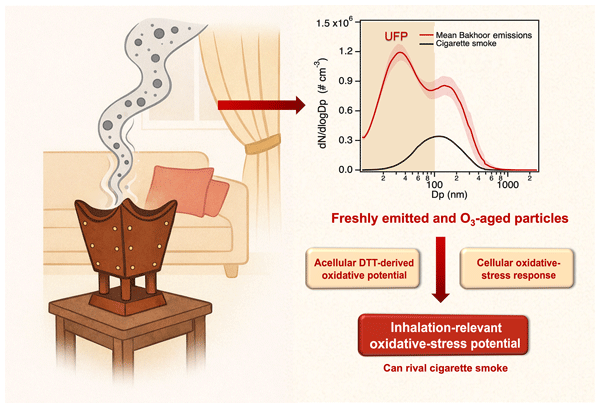
Indoor combustion sources are an important but still poorly understood cause of indoor particle pollution. Using chamber experiments, we studied a widely used incense-burning practice and found that it produces ultrafine-rich particles with strong oxidative activity. We also showed that the burning material, ignition charcoal, and ozone exposure affect how these particles form and change. This work highlights the important role of indoor combustion sources in shaping indoor particle pollution.
Aino Ovaska, Daniel Holmberg, Elio Rauth, Mansour Alghamdi, Paulo Artaxo, Eija Asmi, John Backman, Benjamin Bergmans, Matthew Boyer, Liezl Bredenkamp, Maurizio Busetto, Delano Campos De Oliveira, Juan Andrés Casquero-Vera, Darius Ceburnis, Tak Chan, Tommy Chan, Sebastien Conil, Daniele Contini, Suzanne Crumeyrolle, Valentin Duflot, Kostas Eleftheriadis, Johan Esveld, Ekaterina Ezhova, Markus Fiebig, Shahzad Gani, Olga Garmash, Francisco Gómez-Moreno, Roy M. Harrison, Andras Hoffer, Rakesh Hooda, Antti Hyvärinen, Tareq Hussein, Jorma Joutsensaari, Nikos Kalivitis, Heinz Kaminski, Jutta Kesti, Radovan Krejci, Adam Kristensson, Chongai Kuang, Markku Kulmala, Lauri Laakso, Ari Leskinen, Heikki Lihavainen, Andreas Massling, Maik Merkel, Steffen Noe, Jakub Ondracek, Noemí Perez, Jean-Eudes Petit, Tuukka Petäjä, Michael Pikridas, Christopher Pöhlker, Mira Pöhlker, Jean-Philippe Putaud, Ximeng Qi, Cristina Reche, Sergio Rodríguez, Petr Roztocil, Jean Sciare, Karine Sellegri, Dongjie Shang, Ashish Singh, Mikko Sipilä, Henrik Skov, Mar Sorribas, Tamanna Subba, Junying Sun, Peter Tunved, Ville Vakkari, Pieter G. Van Zyl, Aki Virkkula, Jens Voigtländer, Kay Weinhold, Alfred Wiedensohler, Hee-Jung Yoo, Putian Zhou, Kai Puolamäki, Tuomo Nieminen, Veli-Matti Kerminen, Victoria A. Sinclair, and Pauli Paasonen
Earth Syst. Sci. Data Discuss., https://doi.org/10.5194/essd-2026-415, https://doi.org/10.5194/essd-2026-415, 2026
Preprint under review for ESSD
Short summary
Short summary
All clouds form around aerosol particles, and their abundance influences cloud properties. In turn, clouds affect climate by changing how energy moves through the atmosphere, making them important for climate change. To better understand these interactions, we need accurate information on how many aerosol particles are in the atmosphere. Therefore, we have developed a new 21-year global dataset of particle concentrations relevant for cloud formation.
Wenche Aas, Thérèse Salameh, Robert Wegener, Heidi Hellén, Jean-Luc Jaffrezo, Pontus Roldin, Elisabeth Alonso-Blanco, Andres Alastuey, Crist Amelynck, Jgor Arduini, Benjamin Bergmans, Marie Bertrand, Agnes Borbon, Efstratios Bourtsoukidis, Laetitia Bouvier, David Butterfield, Iris Buxbaum, Darius Ceburnis, Anja Claude, Augustin Colette, Aurélie Colomb, Sophie Darfeuil, James Dernie, Maximilien Desservettaz, Elías Díaz-Ramiro, Marvin Dufresne, René Dubus, Mario Duval, Marie Dury, Anna Font, Kirsten N. Fossum, Evelyn Freney, Gotzon Gangoiti, Yao Ge, Maria Carmen Gomez, Francisco J. Gómez-Moreno, Marie Gohy, Valérie Gros, Paul Hamer, Bryan Hellack, Hartmut Herrmann, Robert Holla, Adéla Holubová, Niels R. Jensen, Tuija Jokinen, Matthew Jones, Uwe Käfer, Lukas Kesper, Dieter Klemp, Dagmar Kubistin, Angela Marinoni, Martina Mazzini, Vy Ngoc Thuy Dinh, Jurgita Ovadnevaite, Tuukka Petäjä, Miguel Portillo-Estrada, Jitka Přívozníková, Jean-Philippe Putaud, Stefan Reimann, Laura Renzi, Veronique Riffault, Stuart Ritchie, Chris Robins, Begoña Artíñano Rodríguez de Torres, Laurent Poulain, Julian Rüdiger, Agnieszka Sanocka, Estibaliz Saez de Camara Oleaga, Niels Schoon, Roger Seco, Ivan Simmons, Leïla Simon, David Simpson, Sverre Solberg, Emmanuel Tison, August Thomasson, Svetlana Tsyro, Marsailidh Twigg, Toni Tykkä, Bert Verreyken, Ågot Watne, Katie Williams, Ana Maria Yáñez-Serrano, Karen Yeung, Ilona Ylivinkka, and Karl Espen Yttri
Atmos. Chem. Phys., 26, 8717–8751, https://doi.org/10.5194/acp-26-8717-2026, https://doi.org/10.5194/acp-26-8717-2026, 2026
Short summary
Short summary
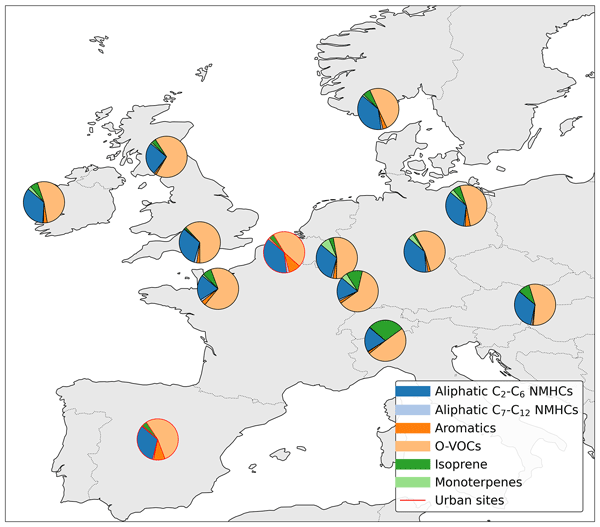
A one-week intensive measurement campaign during the 2022 European heatwave included monitoring of ozone, volatile organic compounds, aerosol chemical composition, and organic tracers to investigate air pollution sources. Results showed that emissions from vegetation and human activities contributed to peaks in ozone and secondary organic aerosol particles. Differences between measurements and model simulations underline the need for better characterization of sources and formation pathways.
Stefanos Papagiannis, Manousos I. Manousakas, Dimitrios F. Anagnostopoulos, Michael Pikridas, Rima Baalbaki, Jean Sciare, Niall O'Sullivan, Stig Hellebust, John Wenger, Kirsten N. Fossum, Jurgita Ovadnevaite, Anja Tremper, David Green, Konstantinos Eleftheriadis, and Evangelia Diapouli
Atmos. Meas. Tech., 19, 3491–3509, https://doi.org/10.5194/amt-19-3491-2026, https://doi.org/10.5194/amt-19-3491-2026, 2026
Short summary
Short summary
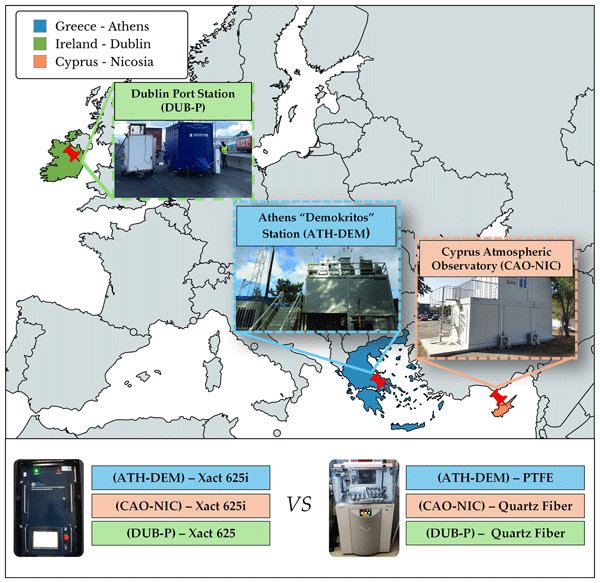
We compared near real-time and benchtop XRF spectrometers measuring trace elements in airborne particles across three European cities. Results show filter material dictates accuracy: Teflon yielded strong inter-instrument agreement, while quartz caused systematic attenuation errors for light elements. Because empirical corrections left residual biases, using optimal substrates—preferably Teflon—is essential for accurately tracking pollution sources.
Nikhil Korhale, Tabish Ansari, Tim Butler, Jurgita Ovadnevaite, Emmanuel Chevassus, Darius Ceburnis, Damien Martin, Colin D. O'Dowd, and Liz Coleman
Atmos. Chem. Phys., 26, 6557–6577, https://doi.org/10.5194/acp-26-6557-2026, https://doi.org/10.5194/acp-26-6557-2026, 2026
Short summary
Short summary
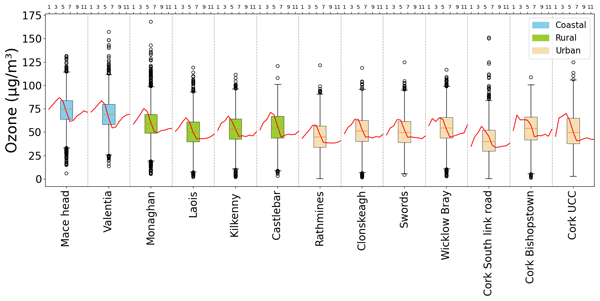
We investigate the distribution and trends of surface ozone and its precursors over Ireland using advanced modelling to determine the drivers of ozone. Trajectory analysis is used to trace the origins of air masses, revealing the impact of transboundary pollution and atmospheric transport. The rising trend has been observed at urban sites over the past two decades, but without a similar trend at coastal sites. Coastal areas consistently show higher ozone levels than rural and urban areas.
Jingye Ren, Wei Xu, Ru-Jin Huang, Fang Zhang, Ying Wang, Lu Chen, Jurgita Ovadnevaite, Darius Ceburnis, Colin O'Dowd, and Yele Sun
Atmos. Chem. Phys., 26, 2985–3000, https://doi.org/10.5194/acp-26-2985-2026, https://doi.org/10.5194/acp-26-2985-2026, 2026
Short summary
Short summary
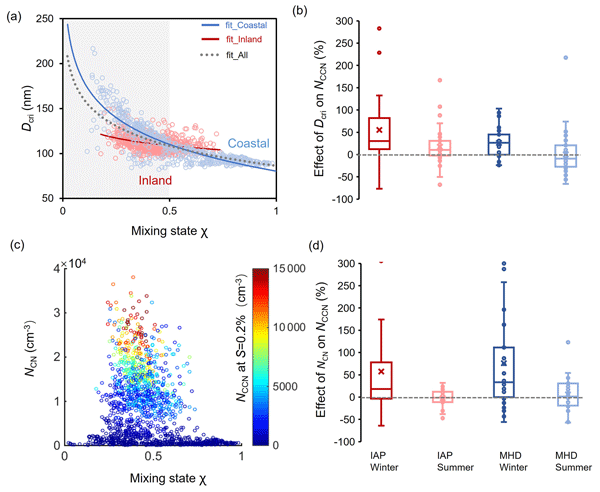
Impact of mixing state on cloud condensation nuclei (CCN) was incorporated in limited modeling with simplified assumption. This study derived a mixing state index from hygroscopicity and systematically investigated the covariation between the mixing state and CCN activity in inland and coastal air. We propose a practical approach for estimating critical diameter from mixing state index, applicable when the aerosol particles are not highly aged.
Sabine Lüchtrath, Sven Klemer, Florian Fröhlich, Darius Ceburnis, Dominik van Pinxteren, Hartmut Herrmann, Wolfgang Frenzel, and Andreas Held
Aerosol Research, 4, 81–101, https://doi.org/10.5194/ar-4-81-2026, https://doi.org/10.5194/ar-4-81-2026, 2026
Short summary
Short summary
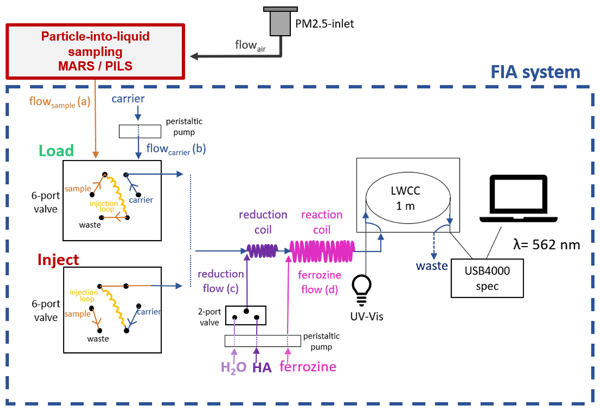
The first online instrument for the speciation of water‑soluble iron in ambient aerosols is presented. The system combines flow injection analysis with spectrophotometric detection using a liquid waveguide capillary cell. Sensitive iron speciation will help to better describe tropospheric aqueous-phase reactions driven by soluble iron, e.g. hydroxyl radical formation through Fenton chemistry. In first measurements in Berlin, ambient water-soluble-iron concentrations reached up to 47 ng m-3.
Chunshui Lin, Ru-Jin Huang, Jing Duan, Jing Qu, Jiahua Liu, Yi Liu, Yan Luo, Wei Huang, Wei Xu, Yanan Zhan, Zhitao Liu, Sihan Liu, Qingshuang Zhang, Quan Liu, Zirui Liu, Shengrong Lou, Huinan Yang, Dan Dan Huang, Cheng Huang, and Hongli Wang
Atmos. Chem. Phys., 26, 2635–2647, https://doi.org/10.5194/acp-26-2635-2026, https://doi.org/10.5194/acp-26-2635-2026, 2026
Short summary
Short summary
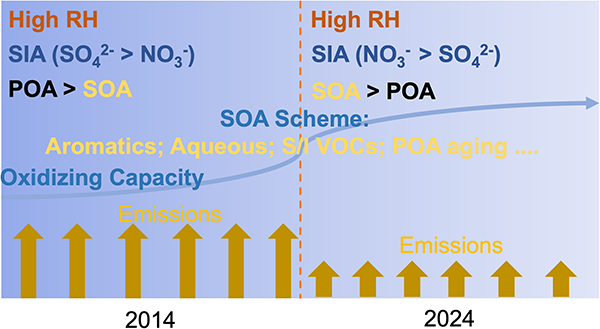
Since China's 2013 Clean Air Act cut PM2.5 by over half, winter haze in the North China Plain persists partly due to secondary organic aerosols now dominating primary organic aerosol, requiring urgent regional cooperation to address model-underestimated chemical transformations and cross-border pollution.
Yujue Wang, Yizhe Yi, Wei Xu, Yiwen Zhang, Shubin Li, Hong-Hai Zhang, Mingliang Gu, Shibo Yan, Jialei Zhu, Chao Zhang, Jinhui Shi, Yang Gao, Xiaohong Yao, and Huiwang Gao
Biogeosciences, 23, 77–93, https://doi.org/10.5194/bg-23-77-2026, https://doi.org/10.5194/bg-23-77-2026, 2026
Short summary
Short summary
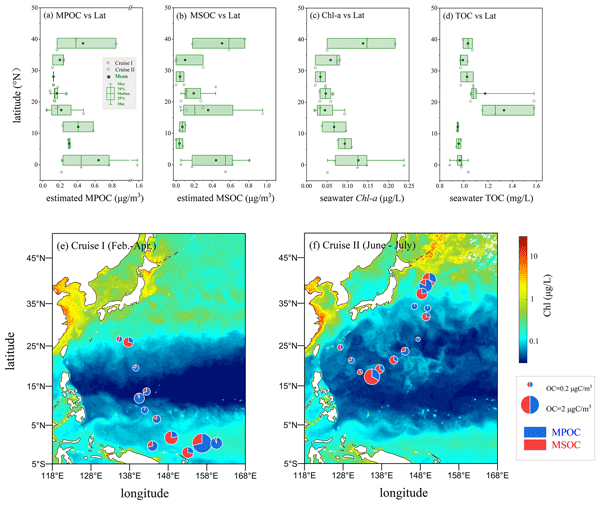
Marine organic aerosols remain poorly quantified, which limits our understanding on the climate regulation of marine aerosols. Based on shipboard cruises over the Pacific Ocean, we proposed an observation-based parameterization approach to estimate the primary and secondary marine organic aerosols using sea surface chlorophyll a and sea salts in marine aerosols. The results highlight that the spatial distribution of marine organic aerosols was driven by the marine biological activities.
Baihua Chen, Lu Lei, Emmanuel Chevassus, Wei Xu, Ling Zhen, Haobin Zhong, Lin Wang, Chunshui Lin, Ru-Jin Huang, Darius Ceburnis, Colin O'Dowd, and Jurgita Ovadnevaite
Atmos. Chem. Phys., 25, 14205–14219, https://doi.org/10.5194/acp-25-14205-2025, https://doi.org/10.5194/acp-25-14205-2025, 2025
Short summary
Short summary
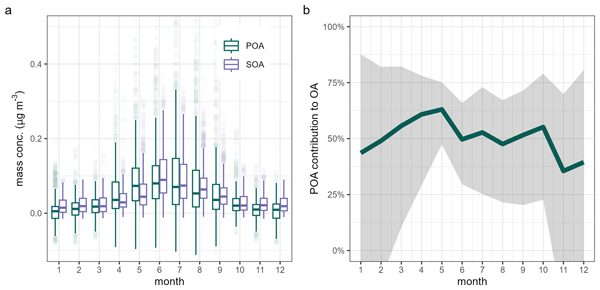
This study uses machine learning to separate marine primary organic aerosol (POA) and secondary organic aerosol (SOA) from 1 decade of high-resolution data. POA averages 51 % of marine organic aerosols annually, peaking at 63 % in summer. A support vector regression model, validated via fuzzy clustering and Monte Carlo simulations, identifies seasonal patterns of POA linked to biological activity. We found diverse impacts of marine POA and SOA on the aerosol hygroscopicity and mixing state.
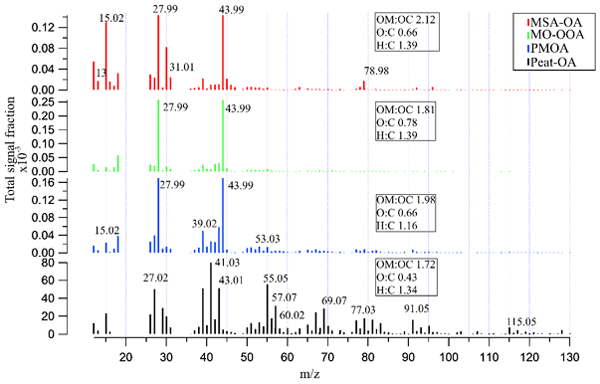
Emmanuel Chevassus, Kirsten N. Fossum, Darius Ceburnis, Lu Lei, Chunshui Lin, Wei Xu, Colin O'Dowd, and Jurgita Ovadnevaite
Atmos. Chem. Phys., 25, 4107–4129, https://doi.org/10.5194/acp-25-4107-2025, https://doi.org/10.5194/acp-25-4107-2025, 2025
Short summary
Short summary
This study presents the first source apportionment of organic aerosol at Mace Head via high-resolution mass spectrometry. Introducing transfer entropy as a novel method reveals that aged organic aerosol originates from both open-ocean ozonolysis and local peat-burning oxidation. Methanesulfonic acid and organic sea spray both mirror phytoplankton activity, with the former closely tied to coccolithophore blooms and the latter linked to diatoms, chlorophytes, and cyanobacteria.
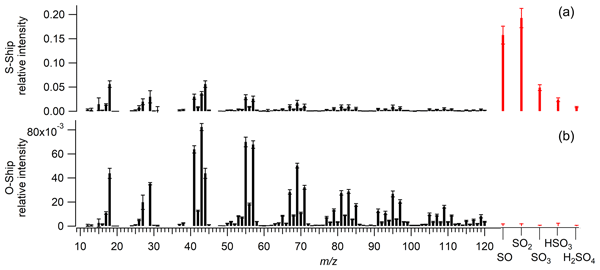
Kirsten N. Fossum, Chunshui Lin, Niall O'Sullivan, Lu Lei, Stig Hellebust, Darius Ceburnis, Aqeel Afzal, Anja Tremper, David Green, Srishti Jain, Steigvilė Byčenkienė, Colin O'Dowd, John Wenger, and Jurgita Ovadnevaite
Atmos. Chem. Phys., 24, 10815–10831, https://doi.org/10.5194/acp-24-10815-2024, https://doi.org/10.5194/acp-24-10815-2024, 2024
Short summary
Short summary
The chemical composition and sources of submicron aerosol in the Dublin Port area were investigated over a month-long campaign. Two distinct types of ship emissions were identified and characterised: sulfate-rich plumes from the use of heavy fuel oil with scrubbers and organic-rich plumes from the use of low-sulfur fuels. The latter were more frequent, emitting double the particle number and having a typical V / Ni ratio for ship emission.
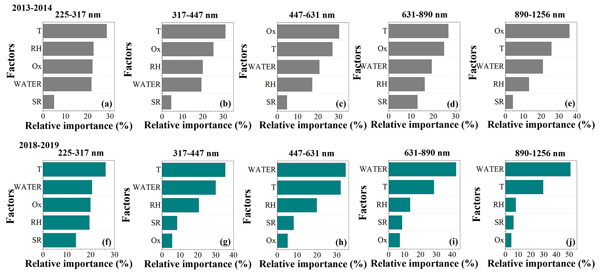
Jing Duan, Ru-Jin Huang, Ying Wang, Wei Xu, Haobin Zhong, Chunshui Lin, Wei Huang, Yifang Gu, Jurgita Ovadnevaite, Darius Ceburnis, and Colin O'Dowd
Atmos. Chem. Phys., 24, 7687–7698, https://doi.org/10.5194/acp-24-7687-2024, https://doi.org/10.5194/acp-24-7687-2024, 2024
Short summary
Short summary
The chemical composition of atmospheric particles has shown significant changes in recent years. We investigated the potential effects of changes in inorganics on aerosol water uptake and, thus, secondary organic aerosol formation in wintertime haze based on the size-resolved measurements of non-refractory fine particulate matter (NR-PM2.5) in Xi’an, northwestern China. We highlight the key role of aerosol water as a medium to link inorganics and organics in their multiphase processes.
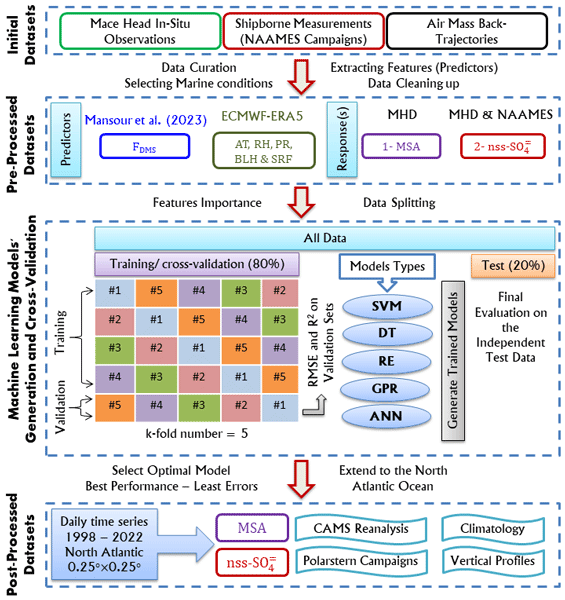
Karam Mansour, Stefano Decesari, Darius Ceburnis, Jurgita Ovadnevaite, Lynn M. Russell, Marco Paglione, Laurent Poulain, Shan Huang, Colin O'Dowd, and Matteo Rinaldi
Earth Syst. Sci. Data, 16, 2717–2740, https://doi.org/10.5194/essd-16-2717-2024, https://doi.org/10.5194/essd-16-2717-2024, 2024
Short summary
Short summary
We propose and evaluate machine learning predictive algorithms to model freshly formed biogenic methanesulfonic acid and sulfate concentrations. The long-term constructed dataset covers the North Atlantic at an unprecedented resolution. The improved parameterization of biogenic sulfur aerosols at regional scales is essential for determining their radiative forcing, which could help further understand marine-aerosol–cloud interactions and reduce uncertainties in climate models
Yuquan Gong, Ru-Jin Huang, Lu Yang, Ting Wang, Wei Yuan, Wei Xu, Wenjuan Cao, Yang Wang, and Yongjie Li
Atmos. Chem. Phys., 23, 15197–15207, https://doi.org/10.5194/acp-23-15197-2023, https://doi.org/10.5194/acp-23-15197-2023, 2023
Short summary
Short summary
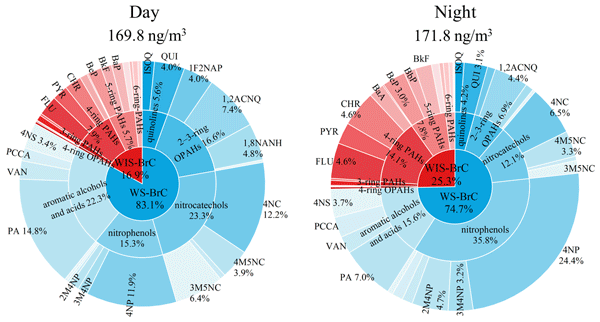
This study reveals the large day–night differences in brown carbon (BrC) chromophore composition, which was not known previously. The results provide insights into the effects of atmospheric processes and emissions on BrC composition.
Jiyeon Park, Hyojin Kang, Yeontae Gim, Eunho Jang, Ki-Tae Park, Sangjong Park, Chang Hoon Jung, Darius Ceburnis, Colin O'Dowd, and Young Jun Yoon
Atmos. Chem. Phys., 23, 13625–13646, https://doi.org/10.5194/acp-23-13625-2023, https://doi.org/10.5194/acp-23-13625-2023, 2023
Short summary
Short summary
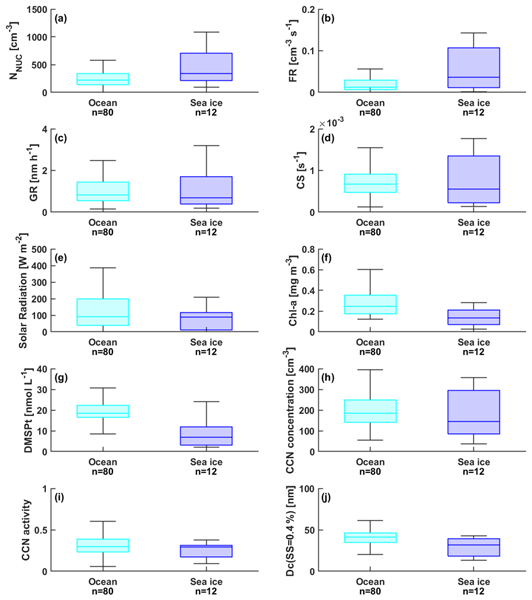
We measured the number size distribution of 2.5–300 nm particles and cloud condensation nuclei (CCN) number concentrations at King Sejong Station on the Antarctic Peninsula continuously from 1 January to 31 December 2018. During the pristine and clean periods, 97 new particle formation (NPF) events were detected. For 83 of these, CCN concentrations increased by 2 %–268 % (median 44 %) following 1 to 36 h (median 8 h) after NPF events.
Yifang Gu, Ru-Jin Huang, Jing Duan, Wei Xu, Chunshui Lin, Haobin Zhong, Ying Wang, Haiyan Ni, Quan Liu, Ruiguang Xu, Litao Wang, and Yong Jie Li
Atmos. Chem. Phys., 23, 5419–5433, https://doi.org/10.5194/acp-23-5419-2023, https://doi.org/10.5194/acp-23-5419-2023, 2023
Short summary
Short summary
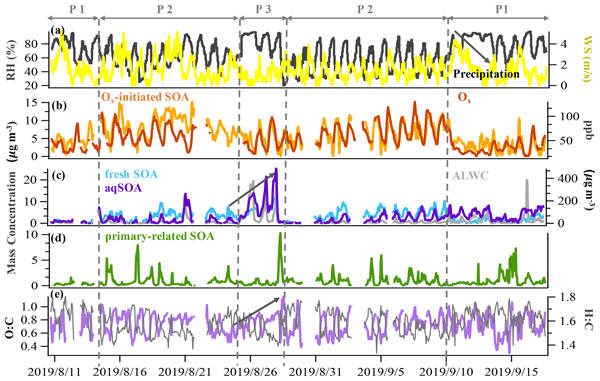
Secondary organic aerosol (SOA) can be produced by various pathways, but its formation mechanisms are unclear. Observations were conducted in the North China Plain during a highly oxidizing atmosphere in summer. We found that fast photochemistry dominated SOA formation during daytime. Two types of aqueous-phase chemistry (nocturnal and daytime processing) take place at high relative humidity. The potential transformation from primary organic aerosol (POA) to SOA was also an important pathway.
Chunshui Lin, Ru-Jin Huang, Haobin Zhong, Jing Duan, Zixi Wang, Wei Huang, and Wei Xu
Atmos. Chem. Phys., 23, 3595–3607, https://doi.org/10.5194/acp-23-3595-2023, https://doi.org/10.5194/acp-23-3595-2023, 2023
Short summary
Short summary
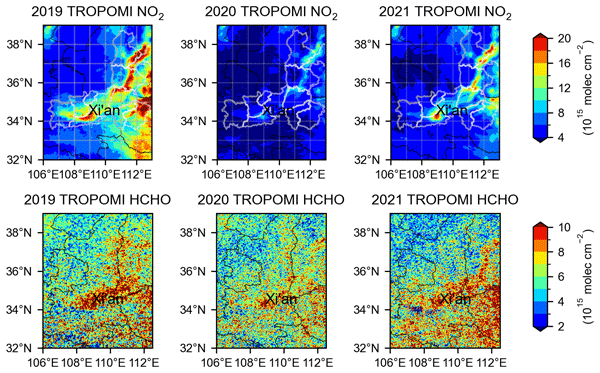
The complex interaction between O3 and PM2.5, coupled with the topology of the Fenwei Plain and the evolution of the boundary layer height, highlights the challenges in further reducing particulate pollution in winter despite years of efforts to reduce emissions. Through scenario analysis in a chemical box model constrained by observation, we show the co-benefits of reducing NOx and VOCs simultaneously in reducing ozone and SOA.
Meng Wang, Yusen Duan, Wei Xu, Qiyuan Wang, Zhuozhi Zhang, Qi Yuan, Xinwei Li, Shuwen Han, Haijie Tong, Juntao Huo, Jia Chen, Shan Gao, Zhongbiao Wu, Long Cui, Yu Huang, Guangli Xiu, Junji Cao, Qingyan Fu, and Shun-cheng Lee
Atmos. Chem. Phys., 22, 12789–12802, https://doi.org/10.5194/acp-22-12789-2022, https://doi.org/10.5194/acp-22-12789-2022, 2022
Short summary
Short summary
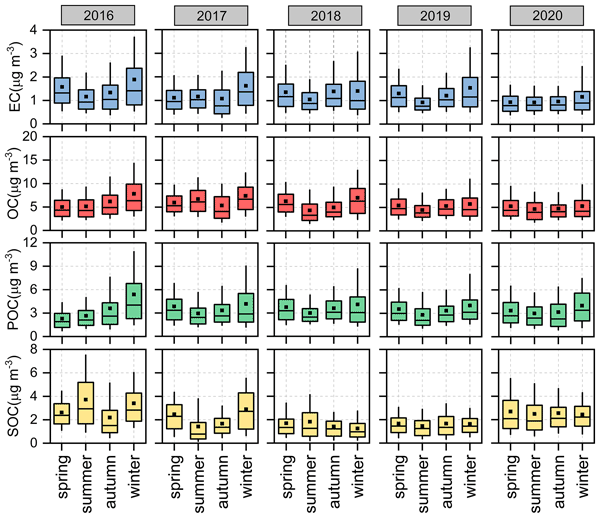
In this study, we report the long-term measurement of organic carbon (OC) and elementary carbon (EC) in PM2.5 with hourly time resolution conducted at a regional site in Shanghai from 2016 to 2020. The results from this study provide critical information about the long-term trend of carbonaceous aerosol, in particular secondary OC, in one of the largest megacities in the world and are helpful for developing pollution control measures from a long-term planning perspective.
Marta Via, Gang Chen, Francesco Canonaco, Kaspar R. Daellenbach, Benjamin Chazeau, Hasna Chebaicheb, Jianhui Jiang, Hannes Keernik, Chunshui Lin, Nicolas Marchand, Cristina Marin, Colin O'Dowd, Jurgita Ovadnevaite, Jean-Eudes Petit, Michael Pikridas, Véronique Riffault, Jean Sciare, Jay G. Slowik, Leïla Simon, Jeni Vasilescu, Yunjiang Zhang, Olivier Favez, André S. H. Prévôt, Andrés Alastuey, and María Cruz Minguillón
Atmos. Meas. Tech., 15, 5479–5495, https://doi.org/10.5194/amt-15-5479-2022, https://doi.org/10.5194/amt-15-5479-2022, 2022
Short summary
Short summary
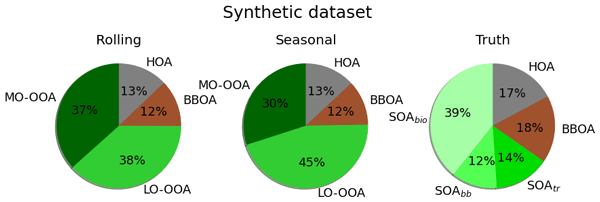
This work presents the differences resulting from two techniques (rolling and seasonal) of the positive matrix factorisation model that can be run for organic aerosol source apportionment. The current state of the art suggests that the rolling technique is more accurate, but no proof of its effectiveness has been provided yet. This paper tackles this issue in the context of a synthetic dataset and a multi-site real-world comparison.
Zhiqiang Zhang, Yele Sun, Chun Chen, Bo You, Aodong Du, Weiqi Xu, Yan Li, Zhijie Li, Lu Lei, Wei Zhou, Jiaxing Sun, Yanmei Qiu, Lianfang Wei, Pingqing Fu, and Zifa Wang
Atmos. Chem. Phys., 22, 10409–10423, https://doi.org/10.5194/acp-22-10409-2022, https://doi.org/10.5194/acp-22-10409-2022, 2022
Short summary
Short summary
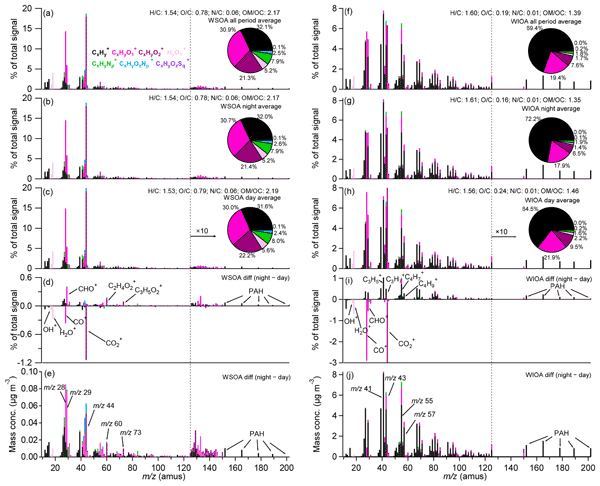
We present a comprehensive characterization of water-soluble organic aerosol and the first mass spectral characterization of water-insoluble organic aerosol in the cold season in Beijing by integrating online and offline aerosol mass spectrometer measurements. WSOA comprised dominantly secondary OA and showed large changes during the transition season from autumn to winter. WIOA was characterized by prominent hydrocarbon ions series, low oxidation states, and significant day–night differences.
Jing Duan, Ru-Jin Huang, Yifang Gu, Chunshui Lin, Haobin Zhong, Wei Xu, Quan Liu, Yan You, Jurgita Ovadnevaite, Darius Ceburnis, Thorsten Hoffmann, and Colin O'Dowd
Atmos. Chem. Phys., 22, 10139–10153, https://doi.org/10.5194/acp-22-10139-2022, https://doi.org/10.5194/acp-22-10139-2022, 2022
Short summary
Short summary
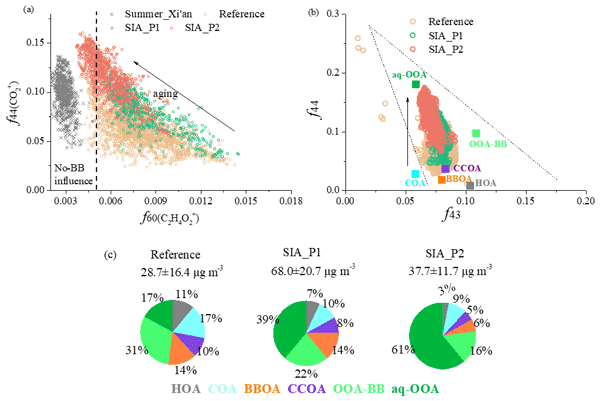
Biomass-burning-influenced oxygenated organic aerosol (OOA-BB), formed from the photochemical oxidation and aging of biomass burning OA (BBOA), was resolved in urban Xi’an. The aqueous-phase processed oxygenated OA (aq-OOA) concentration was more dependent on secondary inorganic aerosol (SIA) content and aerosol liquid water content (ALWC). The increased aq-OOA contribution during SIA-enhanced periods likely reflects OA evolution due to the addition of alcohol or peroxide groups
Haobin Zhong, Ru-Jin Huang, Chunshui Lin, Wei Xu, Jing Duan, Yifang Gu, Wei Huang, Haiyan Ni, Chongshu Zhu, Yan You, Yunfei Wu, Renjian Zhang, Jurgita Ovadnevaite, Darius Ceburnis, and Colin D. O'Dowd
Atmos. Chem. Phys., 22, 9513–9524, https://doi.org/10.5194/acp-22-9513-2022, https://doi.org/10.5194/acp-22-9513-2022, 2022
Short summary
Short summary
To investigate the physico-chemical properties of aerosol transported from major pollution regions in China, observations were conducted ~200 m above the ground at the junction location of the two key pollution areas. We found that the formation efficiency, oxidation state and production rate of secondary aerosol were different in the transport sectors from different pollution regions, and they were largely enhanced by the regional long-distance transport.
Cited articles
Albernhe, S., Gorgues, T., Lehodey, P., Menkes, C., and Titaud, O.: Magon De La Giclais, S., and Conchon, A.: Global characterization of modelled micronekton in biophysically defined provinces, Prog. Oceanogr., 229, 103370, https://doi.org/10.1016/j.pocean.2024.103370, 2024.
Alpert, P. A., Kilthau, W. P., Bothe, D. W., Radway, J. C., Aller, J. Y., and Knopf, D. A.: The influence of marine microbial activities on aerosol production: A laboratory mesocosm study, J. Geophys. Res.-Atmos., 120, 8841–8860, https://doi.org/10.1002/2015JD023469, 2015.
Alsante, A. N., Thornton, D. C. O., Brooks, S. D., Mirrielees, J. A., Wilbourn, E. K., Matthews, B. H., Diaz, B. P., and Bidle, K. D.: Effect of viral infection on the ice nucleation efficiency of marine coccolithophores, Aerosol Sci. Technol., 59, 195–213, https://doi.org/10.1080/02786826.2024.2420675, 2025.
Anderson, D. M., Fey, S. B., Meier, H. S., Vasseur, D. A., and Kremer, C. T.: Nutrient storage links past thermal exposure to current performance in phytoplankton, P. Natl. Acad. Sci. USA, 122, e2418108122, https://doi.org/10.1073/pnas.2418108122, 2025.
Aumont, O., Ethé, C., Tagliabue, A., Bopp, L., and Gehlen, M.: PISCES-v2: an ocean biogeochemical model for carbon and ecosystem studies, Geosci. Model Dev., 8, 2465–2513, https://doi.org/10.5194/gmd-8-2465-2015, 2015.
Bar-On, Y. M. and Milo, R.: The Biomass Composition of the Oceans: A Blueprint of Our Blue Planet, Cell, 179, 1451–1454, https://doi.org/10.1016/j.cell.2019.11.018, 2019.
Beaupré, S. R., Kieber, D. J., Keene, W. C., Long, M. S., Maben, J. R., Lu, X., Zhu, Y., Frossard, A. A., Kinsey, J. D., Duplessis, P., Chang, R. Y.-W., and Bisgrove, J.: Oceanic efflux of ancient marine dissolved organic carbon in primary marine aerosol, Sci. Adv., 5, eaax6535, https://doi.org/10.1126/sciadv.aax6535, 2019.
Becker, K. W., Devresse, Q., Prieto-Mollar, X., Hinrichs, K.-U., and Engel, A.: Mixed-layer lipidomes suggest offshore transport of energy-rich and essential lipids by cyclonic eddies, Commun. Earth Environ., 6, 179, https://doi.org/10.1038/s43247-025-02152-0, 2025.
Behrenfeld, M. J., Moore, R. H., Hostetler, C. A., Graff, J., Gaube, P., Russell, L. M., Chen, G., Doney, S. C., Giovannoni, S., Liu, H., Proctor, C., Bolaños, L. M., Baetge, N., Davie-Martin, C., Westberry, T. K., Bates, T. S., Bell, T. G., Bidle, K. D., Boss, E. S., Brooks, S. D., Cairns, B., Carlson, C., Halsey, K., Harvey, E. L., Hu, C., Karp-Boss, L., Kleb, M., Menden-Deuer, S., Morison, F., Quinn, P. K., Scarino, A. J., Anderson, B., Chowdhary, J., Crosbie, E., Ferrare, R., Hair, J. W., Hu, Y., Janz, S., Redemann, J., Saltzman, E., Shook, M., Siegel, D. A., Wisthaler, A., Martin, M. Y., and Ziemba, L.: The North Atlantic Aerosol and Marine Ecosystem Study (NAAMES): Science Motive and Mission Overview, Front. Mar. Sci., 6, 122, https://doi.org/10.3389/fmars.2019.00122, 2019.
Bi, Y., Wang, F., and Zhang, W.: Omics Analysis for Dinoflagellates Biology Research, Microorganisms, 7, 288, https://doi.org/10.3390/microorganisms7090288, 2019.
Bolaños, L. M., Choi, C. J., Worden, A. Z., Baetge, N., Carlson, C. A., and Giovannoni, S.: Seasonality of the Microbial Community Composition in the North Atlantic, Front. Mar. Sci., 8, 624164, https://doi.org/10.3389/fmars.2021.624164, 2021.
Brockmann, J. E.: Aerosol Transport in Sampling Lines and Inlets, in: Aerosol Measurement, edited by: Kulkarni, P., Baron, P. A., and Willeke, K., Wiley, 68–105, https://doi.org/10.1002/9781118001684.ch6, 2011.
Brotas, V., Tarran, G. A., Veloso, V., Brewin, R. J. W., Woodward, E. M. S., Airs, R., Beltran, C., Ferreira, A., and Groom, S. B.: Complementary Approaches to Assess Phytoplankton Groups and Size Classes on a Long Transect in the Atlantic Ocean, Front. Mar. Sci., 8, 682621, https://doi.org/10.3389/fmars.2021.682621, 2022.
Bullock, H. A., Luo, H., and Whitman, W. B.: Evolution of Dimethylsulfoniopropionate Metabolism in Marine Phytoplankton and Bacteria, Front. Microbiol., 8, https://doi.org/10.3389/fmicb.2017.00637, 2017.
Burrows, S. M., Easter, R. C., Liu, X., Ma, P.-L., Wang, H., Elliott, S. M., Singh, B., Zhang, K., and Rasch, P. J.: OCEANFILMS (Organic Compounds from Ecosystems to Aerosols: Natural Films and Interfaces via Langmuir Molecular Surfactants) sea spray organic aerosol emissions – implementation in a global climate model and impacts on clouds, Atmos. Chem. Phys., 22, 5223–5251, https://doi.org/10.5194/acp-22-5223-2022, 2022.
Corbin, J. C., Othman, A., Allan, J. D., Worsnop, D. R., Haskins, J. D., Sierau, B., Lohmann, U., and Mensah, A. A.: Peak-fitting and integration imprecision in the Aerodyne aerosol mass spectrometer: effects of mass accuracy on location-constrained fits, Atmos. Meas. Tech., 8, 4615–4636, https://doi.org/10.5194/amt-8-4615-2015, 2015.
C3S: ERA5 hourly data on single levels from 1940 to present, Copernicus Climate Change Service (C3S) Climate Data Store (CDS), https://doi.org/10.24381/CDS.ADBB2D47, 2018.
Cala, B. A., Archer-Nicholls, S., Weber, J., Abraham, N. L., Griffiths, P. T., Jacob, L., Shin, Y. M., Revell, L. E., Woodhouse, M., and Archibald, A. T.: Development, intercomparison, and evaluation of an improved mechanism for the oxidation of dimethyl sulfide in the UKCA model, Atmos. Chem. Phys., 23, 14735–14760, https://doi.org/10.5194/acp-23-14735-2023, 2023.
Callaghan, A., De Leeuw, G., Cohen, L., and O'Dowd, C. D.: Relationship of oceanic whitecap coverage to wind speed and wind history, Geophys. Res. Lett., 35, 2008GL036165, https://doi.org/10.1029/2008GL036165, 2008.
Callaghan, A. H., Stokes, M. D., and Deane, G. B.: The effect of water temperature on air entrainment, bubble plumes, and surface foam in a laboratory breaking-wave analog, J. Geophys. Res.-Oceans, 119, 7463–7482, https://doi.org/10.1002/2014JC010351, 2014.
Campbell, J. W.: The lognormal distribution as a model for bio-optical variability in the sea, J. Geophys. Res., 100, 13237–13254, https://doi.org/10.1029/95JC00458, 1995.
Canonaco, F., Crippa, M., Slowik, J. G., Baltensperger, U., and Prévôt, A. S. H.: SoFi, an IGOR-based interface for the efficient use of the generalized multilinear engine (ME-2) for the source apportionment: ME-2 application to aerosol mass spectrometer data, Atmos. Meas. Tech., 6, 3649–3661, https://doi.org/10.5194/amt-6-3649-2013, 2013.
Chen, C.-S., Anaya, J. M., Chen, E. Y.-T., Farr, E., and Chin, W.-C.: Ocean Warming–Acidification Synergism Undermines Dissolved Organic Matter Assembly, PLoS ONE, 10, e0118300, https://doi.org/10.1371/journal.pone.0118300, 2015.
Cheng, Y., Hui, Y., McAleer, M., and Wong, W.-K.: Spurious Relationships for Nearly Non-Stationary Series, Journal of Risk and Financial Management, 14, 366, https://doi.org/10.3390/jrfm14080366, 2021.
Chevassus, E.: Marine Organic Aerosol Reflects Ecosystem Variability from Phytoplankton Functional Types to Micronekton, Zenodo [code], https://doi.org/10.5281/zenodo.20155093, 2026.
Chevassus, E., Fossum, K. N., Ceburnis, D., Lei, L., Lin, C., Xu, W., O'Dowd, C., and Ovadnevaite, J.: Marine organic aerosol at Mace Head: effects from phytoplankton and source region variability, Atmos. Chem. Phys., 25, 4107–4129, https://doi.org/10.5194/acp-25-4107-2025, 2025.
Cifuentes-Lorenzen, A., Zappa, C. J., Randolph, K., and Edson, J. B.: Scaling the Bubble Penetration Depth in the Ocean, J. Geophys. Res.-Oceans, 128, e2022JC019582, https://doi.org/10.1029/2022JC019582, 2023.
Collins, D. B., Bertram, T. H., Sultana, C. M., Lee, C., Axson, J. L., and Prather, K. A.: Phytoplankton blooms weakly influence the cloud forming ability of sea spray aerosol: CCN From Algae Bloom Microcosms, Geophys. Res. Lett., 43, 9975–9983, https://doi.org/10.1002/2016GL069922, 2016.
Crespi, A., Bernardoni, V., Calzolai, G., Lucarelli, F., Nava, S., Valli, G., and Vecchi, R.: Implementing constrained multi-time approach with bootstrap analysis in ME-2: An application to PM2.5 data from Florence (Italy), Sci. Total Environ., 541, 502–511, https://doi.org/10.1016/j.scitotenv.2015.08.159, 2016.
Crocker, D. R., Hernandez, R. E., Huang, H. D., Pendergraft, M. A., Cao, R., Dai, J., Morris, C. K., Deane, G. B., Prather, K. A., and Thiemens, M. H.: Biological Influence on δ13 C and Organic Composition of Nascent Sea Spray Aerosol, ACS Earth Space Chem., 4, 1686–1699, https://doi.org/10.1021/acsearthspacechem.0c00072, 2020.
Czerski, H., Brooks, I. M., Gunn, S., Pascal, R., Matei, A., and Blomquist, B.: Ocean bubbles under high wind conditions – Part 1: Bubble distribution and development, Ocean Sci., 18, 565–586, https://doi.org/10.5194/os-18-565-2022, 2022.
Dacey, J. W. and Wakeham, S. G.: Oceanic dimethylsulfide: production during zooplankton grazing on phytoplankton, Science, 233, 1314–1316, https://doi.org/10.1126/science.233.4770.1314, 1986.
Dall'Osto, M., Vaqué, D., Sotomayor-Garcia, A., Cabrera-Brufau, M., Estrada, M., Buchaca, T., Soler, M., Nunes, S., Zeppenfeld, S., Van Pinxteren, M., Herrmann, H., Wex, H., Rinaldi, M., Paglione, M., Beddows, D. C. S., Harrison, R. M., and Berdalet, E.: Sea Ice Microbiota in the Antarctic Peninsula Modulates Cloud-Relevant Sea Spray Aerosol Production, Front. Mar. Sci., 9, 827061, https://doi.org/10.3389/fmars.2022.827061, 2022.
Dall'Osto, M., Schmidt, K., Campbell, R. G., Nomura, D., Park, J., Yoon, Y. J., and Park, J.: Zooplankton grazing increases atmospheric primary aerosol production in the high Arctic, Elem. Sci. Anth., 13, 00078, https://doi.org/10.1525/elementa.2024.00078, 2025.
Dani, K. G. S. and Loreto, F.: Trade-Off Between Dimethyl Sulfide and Isoprene Emissions from Marine Phytoplankton, Trends Plant Sci., 22, 361–372, https://doi.org/10.1016/j.tplants.2017.01.006, 2017.
DeCarlo, P. F., Kimmel, J. R., Trimborn, A., Northway, M. J., Jayne, J. T., Aiken, A. C., Gonin, M., Fuhrer, K., Horvath, T., Docherty, K. S., Worsnop, D. R., and Jimenez, J. L.: Field-Deployable, High-Resolution, Time-of-Flight Aerosol Mass Spectrometer, Anal. Chem., 78, 8281–8289, https://doi.org/10.1021/ac061249n, 2006.
Deike, L., Reichl, B. G., and Paulot, F.: A Mechanistic Sea Spray Generation Function Based on the Sea State and the Physics of Bubble Bursting, AGU Advances, 3, e2022AV000750, https://doi.org/10.1029/2022AV000750, 2022.
Drewnick, F., Hings, S. S., Alfarra, M. R., Prevot, A. S. H., and Borrmann, S.: Aerosol quantification with the Aerodyne Aerosol Mass Spectrometer: detection limits and ionizer background effects, Atmos. Meas. Tech., 2, 33–46, https://doi.org/10.5194/amt-2-33-2009, 2009.
Duhamel, S., Kim, E., Sprung, B., and Anderson, O. R.: Small pigmented eukaryotes play a major role in carbon cycling in the P-depleted western subtropical North Atlantic, which may be supported by mixotrophy, Limnol. Oceanogr., 64, 2424–2440, https://doi.org/10.1002/lno.11193, 2019.
Efron, B.: Bootstrap Methods: Another Look at the Jackknife, Ann. Stat., 7, 1–26, https://doi.org/10.1214/aos/1176344552, 1979.
Eickhoff, L., Bayer-Giraldi, M., Reicher, N., Rudich, Y., and Koop, T.: Ice nucleating properties of the sea ice diatom Fragilariopsis cylindrus and its exudates, Biogeosciences, 20, 1–14, https://doi.org/10.5194/bg-20-1-2023, 2023.
Eigemann, F., Tait, K., Temperton, B., and Hellweger, F. L.: Internal carbon recycling by heterotrophic prokaryotes compensates for mismatches between phytoplankton production and heterotrophic consumption, ISME J., 18, wrae103, https://doi.org/10.1093/ismejo/wrae103, 2024.
European Union-Copernicus Marine Service: Global ocean biogeochemistry hindcast, [data set], https://doi.org/10.48670/MOI-00019, 2018.
European Union-Copernicus Marine Service: Global ocean low and mid trophic levels biomass content hindcast, [data set], https://doi.org/10.48670/MOI-00020, 2021.
European Union-Copernicus Marine Service: Global ocean low and mid trophic levels biomass content hindcast, Mercator Ocean International [data set], https://doi.org/10.48670/MOI-00020, 2021.
Fiddes, S. L., Woodhouse, M. T., Nicholls, Z., Lane, T. P., and Schofield, R.: Cloud, precipitation and radiation responses to large perturbations in global dimethyl sulfide, Atmos. Chem. Phys., 18, 10177–10198, https://doi.org/10.5194/acp-18-10177-2018, 2018.
Flynn, K. J., Kimmance, S. A., Clark, D. R., Mitra, A., Polimene, L., and Wilson, W. H.: Modelling the Effects of Traits and Abiotic Factors on Viral Lysis in Phytoplankton, Front. Mar. Sci., 8, 667184, https://doi.org/10.3389/fmars.2021.667184, 2021.
Forster, P. M., Smith, C. J., Walsh, T., Lamb, W. F., Lamboll, R., Hauser, M., Ribes, A., Rosen, D., Gillett, N., Palmer, M. D., Rogelj, J., von Schuckmann, K., Seneviratne, S. I., Trewin, B., Zhang, X., Allen, M., Andrew, R., Birt, A., Borger, A., Boyer, T., Broersma, J. A., Cheng, L., Dentener, F., Friedlingstein, P., Gutiérrez, J. M., Gütschow, J., Hall, B., Ishii, M., Jenkins, S., Lan, X., Lee, J.-Y., Morice, C., Kadow, C., Kennedy, J., Killick, R., Minx, J. C., Naik, V., Peters, G. P., Pirani, A., Pongratz, J., Schleussner, C.-F., Szopa, S., Thorne, P., Rohde, R., Rojas Corradi, M., Schumacher, D., Vose, R., Zickfeld, K., Masson-Delmotte, V., and Zhai, P.: Indicators of Global Climate Change 2022: annual update of large-scale indicators of the state of the climate system and human influence, Earth Syst. Sci. Data, 15, 2295–2327, https://doi.org/10.5194/essd-15-2295-2023, 2023.
Fossum, K. N., Lin, C., O'Sullivan, N., Lei, L., Hellebust, S., Ceburnis, D., Afzal, A., Tremper, A., Green, D., Jain, S., Byčenkienė, S., O'Dowd, C., Wenger, J., and Ovadnevaite, J.: Two distinct ship emission profiles for organic-sulfate source apportionment of PM in sulfur emission control areas, Atmos. Chem. Phys., 24, 10815–10831, https://doi.org/10.5194/acp-24-10815-2024, 2024.
Freney, E., Sellegri, K., Nicosia, A., Williams, L. R., Rinaldi, M., Trueblood, J. T., Prévôt, A. S. H., Thyssen, M., Grégori, G., Haëntjens, N., Dinasquet, J., Obernosterer, I., Van Wambeke, F., Engel, A., Zäncker, B., Desboeufs, K., Asmi, E., Timonen, H., and Guieu, C.: Mediterranean nascent sea spray organic aerosol and relationships with seawater biogeochemistry, Atmos. Chem. Phys., 21, 10625–10641, https://doi.org/10.5194/acp-21-10625-2021, 2021.
Fulton, J. M., Fredricks, H. F., Bidle, K. D., Vardi, A., Kendrick, B. J., DiTullio, G. R., and Van Mooy, B. A. S.: Novel molecular determinants of viral susceptibility and resistance in the lipidome of E miliania huxleyi, Environ. Microbiol., 16, 1137–1149, https://doi.org/10.1111/1462-2920.12358, 2014.
Fung, K. M., Heald, C. L., Kroll, J. H., Wang, S., Jo, D. S., Gettelman, A., Lu, Z., Liu, X., Zaveri, R. A., Apel, E. C., Blake, D. R., Jimenez, J.-L., Campuzano-Jost, P., Veres, P. R., Bates, T. S., Shilling, J. E., and Zawadowicz, M.: Exploring dimethyl sulfide (DMS) oxidation and implications for global aerosol radiative forcing, Atmos. Chem. Phys., 22, 1549–1573, https://doi.org/10.5194/acp-22-1549-2022, 2022.
Gamage, D. K., Hasenecz, E., Dorcé, G. P., Mayer, K. J., Sauer, J. S., Lee, C., Prather, K. A., and Stone, E. A.: Molecular Characterization of Nascent and Aged Sea Spray Aerosol, ACS Earth Space Chem., acsearthspacechem.4c00412, https://doi.org/10.1021/acsearthspacechem.4c00412, 2025.
Gangrade, S. and Mangolte, I.: Patchiness of plankton communities at fronts explained by Lagrangian history of upwelled water parcels, Limnol. Oceanogr., 69, 2123–2137, https://doi.org/10.1002/lno.12654, 2024.
Giannerini, S. and Goracci, G.: Entropy-Based Tests for Complex Dependence in Economic and Financial Time Series with the R Package tseriesEntropy, Mathematics, 11, 757, https://doi.org/10.3390/math11030757, 2023.
Goss, M. B. and Kroll, J. H.: Chamber studies of OH + dimethyl sulfoxide and dimethyl disulfide: insights into the dimethyl sulfide oxidation mechanism, Atmos. Chem. Phys., 24, 1299–1314, https://doi.org/10.5194/acp-24-1299-2024, 2024.
Gray, P. C., Savelyev, I., Cassar, N., Lévy, M., Boss, E., Lehahn, Y., Bourdin, G., Thompson, K. A., Windle, A., Gronniger, J., Floge, S., Hunt, D. E., Silsbe, G., Johnson, Z. I., and Johnston, D. W.: Evidence for Kilometer-Scale Biophysical Features at the Gulf Stream Front, J. Geophys. Res.-Oceans, 129, e2023JC020526, https://doi.org/10.1029/2023JC020526, 2024.
Gu, W., Xie, Z., Wei, Z., Chen, A., Jiang, B., Yue, F., and Yu, X.: Marine Fresh Carbon Pool Dominates Summer Carbonaceous Aerosols Over Arctic Ocean, J. Geophys. Res.-Atmos., 128, e2022JD037692, https://doi.org/10.1029/2022JD037692, 2023.
Guadayol, Ò., Mendonca, T., Segura-Noguera, M., Wright, A. J., Tassieri, M., and Humphries, S.: Microrheology reveals microscale viscosity gradients in planktonic systems, P. Natl. Acad. Sci. USA, 118, e2011389118, https://doi.org/10.1073/pnas.2011389118, 2021.
Hansell, D. A., Romera-Castillo, C., and Lopez, C. N.: Dynamics of dissolved organic carbon in the global ocean, in: Biogeochemistry of Marine Dissolved Organic Matter, Elsevier, 769–802, https://doi.org/10.1016/B978-0-443-13858-4.00004-6, 2024.
Heal, K. R., Durham, B. P., Boysen, A. K., Carlson, L. T., Qin, W., Ribalet, F., White, A. E., Bundy, R. M., Armbrust, E. V., and Ingalls, A. E.: Marine Community Metabolomes Carry Fingerprints of Phytoplankton Community Composition, mSystems, 6, e01334-20, https://doi.org/10.1128/mSystems.01334-20, 2021.
Hernández-León, S.: The biological carbon pump, diel vertical migration, and carbon dioxide removal, iScience, 26, 107835, https://doi.org/10.1016/j.isci.2023.107835, 2023.
Hersbach, H., Bell, B., Berrisford, P., Biavati, G., Horányi, A., Muñoz Sabater, J., Nicolas, J., Peubey, C., Radu, R., Rozum, I., Schepers, D., Simmons, A., Soci, C., Dee, D., and Thépaut, J.-N.: ERA5 hourly data on single levels from 1940 to present, Copernicus Climate Change Service (C3S) Climate Data Store (CDS) [data set], https://doi.org/10.24381/cds.adbb2d47, 2023.
Hodshire, A. L., Campuzano-Jost, P., Kodros, J. K., Croft, B., Nault, B. A., Schroder, J. C., Jimenez, J. L., and Pierce, J. R.: The potential role of methanesulfonic acid (MSA) in aerosol formation and growth and the associated radiative forcings, Atmos. Chem. Phys., 19, 3137–3160, https://doi.org/10.5194/acp-19-3137-2019, 2019.
Holm, H. C., Fredricks, H. F., Bent, S. M., Lowenstein, D. P., Ossolinski, J. E., Becker, K. W., Johnson, W. M., Schrage, K., and Van Mooy, B. A. S.: Global ocean lipidomes show a universal relationship between temperature and lipid unsaturation, Science, 376, 1487–1491, https://doi.org/10.1126/science.abn7455, 2022.
Hong, Z., Long, D., Shan, K., Zhang, J.-M., Woolway, R. I., Liu, M., Mann, M. E., and Fang, H.: Declining ocean greenness and phytoplankton blooms in low to mid-latitudes under a warming climate, Sci. Adv., 11, eadx4857, https://doi.org/10.1126/sciadv.adx4857, 2025.
Hu, J., Li, J., Tsona Tchinda, N., Song, Y., Xu, M., Li, K., and Du, L.: Underestimated role of sea surface temperature in sea spray aerosol formation and climate effects, npj Clim. Atmos. Sci., 7, 273, https://doi.org/10.1038/s41612-024-00823-x, 2024.
Hulswar, S., Simó, R., Galí, M., Bell, T. G., Lana, A., Inamdar, S., Halloran, P. R., Manville, G., and Mahajan, A. S.: Third revision of the global surface seawater dimethyl sulfide climatology (DMS-Rev3), Earth Syst. Sci. Data, 14, 2963–2987, https://doi.org/10.5194/essd-14-2963-2022, 2022.
Ickes, L., Porter, G. C. E., Wagner, R., Adams, M. P., Bierbauer, S., Bertram, A. K., Bilde, M., Christiansen, S., Ekman, A. M. L., Gorokhova, E., Höhler, K., Kiselev, A. A., Leck, C., Möhler, O., Murray, B. J., Schiebel, T., Ullrich, R., and Salter, M. E.: The ice-nucleating activity of Arctic sea surface microlayer samples and marine algal cultures, Atmos. Chem. Phys., 20, 11089–11117, https://doi.org/10.5194/acp-20-11089-2020, 2020.
Jackson, R. and Gabric, A.: Climate Change Impacts on the Marine Cycling of Biogenic Sulfur: A Review, Microorganisms, 10, 1581, https://doi.org/10.3390/microorganisms10081581, 2022.
Jang, E., Park, K.-T., Yoon, Y. J., Kim, T.-W., Hong, S.-B., Becagli, S., Traversi, R., Kim, J., and Gim, Y.: New particle formation events observed at the King Sejong Station, Antarctic Peninsula – Part 2: Link with the oceanic biological activities, Atmos. Chem. Phys., 19, 7595–7608, https://doi.org/10.5194/acp-19-7595-2019, 2019.
Jiang, X., Rotily, L., Villermaux, E., and Wang, X.: Submicron drops from flapping bursting bubbles, P. Natl. Acad. Sci. USA, 119, e2112924119, https://doi.org/10.1073/pnas.2112924119, 2022.
Jung, J., Hong, S.-B., Chen, M., Hur, J., Jiao, L., Lee, Y., Park, K., Hahm, D., Choi, J.-O., Yang, E. J., Park, J., Kim, T.-W., and Lee, S.: Characteristics of methanesulfonic acid, non-sea-salt sulfate and organic carbon aerosols over the Amundsen Sea, Antarctica, Atmos. Chem. Phys., 20, 5405–5424, https://doi.org/10.5194/acp-20-5405-2020, 2020.
Kaluarachchi, C. P., Or, V. W., Lan, Y., Hasenecz, E. S., Kim, D., Madawala, C. K., Dorcé, G. P., Mayer, K. J., Sauer, J. S., Lee, C., Cappa, C. D., Bertram, T. H., Stone, E. A., Prather, K. A., Grassian, V. H., and Tivanski, A. V.: Effects of Atmospheric Aging Processes on Nascent Sea Spray Aerosol Physicochemical Properties, ACS Earth Space Chem., 6, 2732–2744, https://doi.org/10.1021/acsearthspacechem.2c00258, 2022.
Kawana, K., Miyazaki, Y., Omori, Y., Tanimoto, H., Kagami, S., Suzuki, K., Yamashita, Y., Nishioka, J., Deng, Y., Yai, H., and Mochida, M.: Number-Size Distribution and CCN Activity of Atmospheric Aerosols in the Western North Pacific During Spring Pre-Bloom Period: Influences of Terrestrial and Marine Sources, J. Geophys. Res.-Atmos., 127, e2022JD036690, https://doi.org/10.1029/2022JD036690, 2022.
Killick, R., Beaulieu, C., Taylor, S., and Hullait, H.: EnvCpt: Detection of Structural Changes in Climate and Environment Time Series, https://cran.r-project.org/web/packages/EnvCpt/index.html (last access: 12 February 2026), 2018.
Klawonn, I., Van Den Wyngaert, S., Parada, A. E., Arandia-Gorostidi, N., Whitehouse, M. J., Grossart, H.-P., and Dekas, A. E.: Characterizing the “fungal shunt”: Parasitic fungi on diatoms affect carbon flow and bacterial communities in aquatic microbial food webs, P. Natl. Acad. Sci. USA, 118, e2102225118, https://doi.org/10.1073/pnas.2102225118, 2021.
Kranzler, C. F., Krause, J. W., Brzezinski, M. A., Edwards, B. R., Biggs, W. P., Maniscalco, M., McCrow, J. P., Van Mooy, B. A. S., Bidle, K. D., Allen, A. E., and Thamatrakoln, K.: Silicon limitation facilitates virus infection and mortality of marine diatoms, Nat. Microbiol., 4, 1790–1797, https://doi.org/10.1038/s41564-019-0502-x, 2019.
Krisch, S., Browning, T. J., Graeve, M., Ludwichowski, K.-U., Lodeiro, P., Hopwood, M. J., Roig, S., Yong, J.-C., Kanzow, T., and Achterberg, E. P.: The influence of Arctic Fe and Atlantic fixed N on summertime primary production in Fram Strait, North Greenland Sea, Sci. Rep., 10, 15230, https://doi.org/10.1038/s41598-020-72100-9, 2020.
Kruskopf, M. and Flynn, K. J.: Chlorophyll content and fluorescence responses cannot be used to gauge reliably phytoplankton biomass, nutrient status or growth rate, New Phytol., 169, 525–536, https://doi.org/10.1111/j.1469-8137.2005.01601.x, 2006.
Kuhlisch, C., Schleyer, G., Shahaf, N., Vincent, F., Schatz, D., and Vardi, A.: Viral infection of algal blooms leaves a unique metabolic footprint on the dissolved organic matter in the ocean, Sci. Adv., 7, eabf4680, https://doi.org/10.1126/sciadv.abf4680, 2021.
Law, C. S. and Miller, L. A.: The air-sea interface in a changing climate: Research advances and future directions, Elem. Sci. Anth., 13, 00022, https://doi.org/10.1525/elementa.2025.00022, 2025.
Lawler, M. J., Schill, G. P., Brock, C. A., Froyd, K. D., Williamson, C., Kupc, A., and Murphy, D. M.: Sea Spray Aerosol Over the Remote Oceans Has Low Organic Content, AGU Adv., 5, e2024AV001215, https://doi.org/10.1029/2024AV001215, 2024.
Le Gland, G., Masdeu-Navarro, M., Galí, M., Vallina, S. M., Gralka, M., Vincent, F., Cordero, O., Vardi, A., and Simó, R.: Biological sources and sinks of dimethylsulfide disentangled by an induced bloom experiment and a numerical model, Limnol. Oceanogr., 69, 140–157, https://doi.org/10.1002/lno.12470, 2024.
Leibensperger III, R. J., Hamlin, J. D., Herbst, J. K., Harb, C., Kimble, K. A., Andreae, M. O., Lee, C., Sandstrom, G., Stokes, M. D., Deane, G. B., and Prather, K. A.: Sea surface warming suppresses primary sea spray aerosol number production, Atmos. Chem. Phys., 26, 12211–12229, https://doi.org/10.5194/acp-26-12211-2026, 2026.
Leon-Marcos, A., Zeising, M., van Pinxteren, M., Zeppenfeld, S., Bracher, A., Barbaro, E., Engel, A., Feltracco, M., Tegen, I., and Heinold, B.: Modelling emission and transport of key components of primary marine organic aerosol using the global aerosol–climate model ECHAM6.3–HAM2.3, Geosci. Model Dev., 18, 4183–4213, https://doi.org/10.5194/gmd-18-4183-2025, 2025.
Lima-Mendez, G., Faust, K., Henry, N., Decelle, J., Colin, S., Carcillo, F., Chaffron, S., Ignacio-Espinosa, J. C., Roux, S., Vincent, F., Bittner, L., Darzi, Y., Wang, J., Audic, S., Berline, L., Bontempi, G., Cabello, A. M., Coppola, L., Cornejo-Castillo, F. M., d'Ovidio, F., De Meester, L., Ferrera, I., Garet-Delmas, M.-J., Guidi, L., Lara, E., Pesant, S., Royo-Llonch, M., Salazar, G., Sánchez, P., Sebastian, M., Souffreau, C., Dimier, C., Picheral, M., Searson, S., Kandels-Lewis, S., Tara Oceans coordinators, Gorsky, G., Not, F., Ogata, H., Speich, S., Stemmann, L., Weissenbach, J., Wincker, P., Acinas, S. G., Sunagawa, S., Bork, P., Sullivan, M. B., Karsenti, E., Bowler, C., De Vargas, C., and Raes, J.: Determinants of community structure in the global plankton interactome, Science, 348, 1262073, https://doi.org/10.1126/science.1262073, 2015.
Liu, C., Li, H., Zheng, H., Wang, G., Qin, X., Chen, J., Zhou, S., Lu, D., Liang, G., Song, X., Duan, Y., Liu, J., Huang, K., and Deng, C.: Ocean Emission Pathway and Secondary Formation Mechanism of Aminiums Over the Chinese Marginal Sea, J. Geophys. Res.-Atmos., 127, e2022JD037805, https://doi.org/10.1029/2022JD037805, 2022.
Liu, W., Holm, H. C., Lipp, J. S., Fredricks, H. F., Van Mooy, B. A. S., and Hinrichs, K.-U.: Unraveling plankton adaptation in global oceans through the untargeted analysis of lipidomes, Sci. Adv., 11, eads4605, https://doi.org/10.1126/sciadv.ads4605, 2025a.
Liu, X. and Wang, M.: Global daily gap-free ocean color products from multi-satellite measurements, Int. J. Appl. Earth Obs., 108, 102714, https://doi.org/10.1016/j.jag.2022.102714, 2022.
Liu, X., Gao, Q., Zhao, F., Jiang, X., Ma, X., Yang, S., Zhu, Y., Wang, Z., Huang, K., Lu, X., and Wang, X.: Sea Surface Temperature: A Key Regulator of Global Perfluoroalkyl Acids Transport across the Sea–Air Interface, Environ. Sci. Technol. Lett., 13, 123–129, https://doi.org/10.1021/acs.estlett.5c01094, 2026.
Liu, Y., Yu, L., Yao, Z., Shen, Y., and Pan, Y.: The effects of turbulence on the growth of three different diatom species, Front. Mar. Sci., 11, 1400798, https://doi.org/10.3389/fmars.2024.1400798, 2024.
Liu, Y., He, Q., Zhan, W., Guo, M., Zheng, Y., Shen, X., and Zhan, H.: Heterogeneity of phytoplankton response to submesoscale processes in the global ocean, Commun. Earth Environ., 6, 386, https://doi.org/10.1038/s43247-025-02365-3, 2025b.
Long, M. S., Keene, W. C., Kieber, D. J., Frossard, A. A., Russell, L. M., Maben, J. R., Kinsey, J. D., Quinn, P. K., and Bates, T. S.: Light-enhanced primary marine aerosol production from biologically productive seawater: Light-Enhanced Marine Aerosol Production, Geophys. Res. Lett., 41, 2661–2670, https://doi.org/10.1002/2014GL059436, 2014.
Longhurst, A. R.: Ecological Geography of the Sea, 2nd edn., Academic Press, https://doi.org/10.1016/B978-0-12-455521-1.X5000-1, 2007.
Lowenstein, D. P., Holm, H. C., Fredricks, H. F., and Van Mooy, B. A. S.: Lipid stoichiometry and biomarkers reflect microbial acclimation and nutrient stress across the Atlantic Ocean, Nat. Commun., https://doi.org/10.1038/s41467-026-79011-9, 2026.
Lu, Z., Qin, G., Zheng, L., Zhang, Y., Huang, L., Zhou, J., Liu, Y., Zheng, M., Hou, E., Song, L., Liu, H., Jiao, N., and Wang, F.: The role of phytoplankton in structuring global oceanic dissolved organic carbon pools, Nat. Commun., 16, 7742, https://doi.org/10.1038/s41467-025-63105-x, 2025.
Ma, X., Coleman, M. L., and Waldbauer, J. R.: Distinct molecular signatures in dissolved organic matter produced by viral lysis of marine cyanobacteria, Environ. Microbiol., 20, 3001–3011, https://doi.org/10.1111/1462-2920.14338, 2018.
Maat, D. and Brussaard, C.: Both phosphorus- and nitrogen limitation constrain viral proliferation in marine phytoplankton, Aquat. Microb. Ecol., 77, 87–97, https://doi.org/10.3354/ame01791, 2016.
Maat, D., Biggs, T., Evans, C., Van Bleijswijk, J., Van Der Wel, N., Dutilh, B., and Brussaard, C.: Characterization and Temperature Dependence of Arctic Micromonas polaris Viruses, Viruses, 9, 134, https://doi.org/10.3390/v9060134, 2017.
Malfatti, F., Lee, C., Tinta, T., Pendergraft, M. A., Celussi, M., Zhou, Y., Sultana, C. M., Rotter, A., Axson, J. L., Collins, D. B., Santander, M. V., Anides Morales, A. L., Aluwihare, L. I., Riemer, N., Grassian, V. H., Azam, F., and Prather, K. A.: Detection of Active Microbial Enzymes in Nascent Sea Spray Aerosol: Implications for Atmospheric Chemistry and Climate, Environ. Sci. Technol. Lett., 6, 171–177, https://doi.org/10.1021/acs.estlett.8b00699, 2019.
Malitsky, S., Ziv, C., Rosenwasser, S., Zheng, S., Schatz, D., Porat, Z., Ben-Dor, S., Aharoni, A., and Vardi, A.: Viral infection of the marine alga Emiliania huxleyi triggers lipidome remodeling and induces the production of highly saturated triacylglycerol, New Phytol., 210, 88–96, https://doi.org/10.1111/nph.13852, 2016.
Mansour, K., Decesari, S., Ceburnis, D., Ovadnevaite, J., Russell, L. M., Paglione, M., Poulain, L., Huang, S., O'Dowd, C., and Rinaldi, M.: IPB-MSA&SO4: a daily 0.25° resolution dataset of in situ-produced biogenic methanesulfonic acid and sulfate over the North Atlantic during 1998–2022 based on machine learning, Earth Syst. Sci. Data, 16, 2717–2740, https://doi.org/10.5194/essd-16-2717-2024, 2024.
Markuszewski, P., Nilsson, E. D., Zinke, J., Mårtensson, E. M., Salter, M., Makuch, P., Kitowska, M., Niedźwiecka-Wróbel, I., Drozdowska, V., Lis, D., Petelski, T., Ferrero, L., and Piskozub, J.: Multi-year gradient measurements of sea spray fluxes over the Baltic Sea and the North Atlantic Ocean, Atmos. Chem. Phys., 24, 11227–11253, https://doi.org/10.5194/acp-24-11227-2024, 2024.
Marsay, C. M., Sanders, R. J., Henson, S. A., Pabortsava, K., Achterberg, E. P., and Lampitt, R. S.: Attenuation of sinking particulate organic carbon flux through the mesopelagic ocean, P. Natl. Acad. Sci. USA, 112, 1089–1094, https://doi.org/10.1073/pnas.1415311112, 2015.
Martínez-Pérez, C., Zweifel, S. T., Pioli, R., and Stocker, R.: Space, the final frontier: The spatial component of phytoplankton–bacterial interactions, Mol. Microbiol., 122, 331–346, https://doi.org/10.1111/mmi.15293, 2024.
Mauritsen, T., Tsushima, Y., Meyssignac, B., Loeb, N. G., Hakuba, M., Pilewskie, P., Cole, J., Suzuki, K., Ackerman, T. P., Allan, R. P., Andrews, T., Bender, F. A. -M., Bloch-Johnson, J., Bodas-Salcedo, A., Brookshaw, A., Ceppi, P., Clerbaux, N., Dessler, A. E., Donohoe, A., Dufresne, J., Eyring, V., Findell, K. L., Gettelman, A., Gristey, J. J., Hawkins, E., Heimbach, P., Hewitt, H. T., Jeevanjee, N., Jones, C., Kang, S. M., Kato, S., Kay, J. E., Klein, S. A., Knutti, R., Kramer, R., Lee, J., McCoy, D. T., Medeiros, B., Megner, L., Modak, A., Ogura, T., Palmer, M. D., Paynter, D., Quaas, J., Ramanathan, V., Ringer, M., Von Schuckmann, K., Sherwood, S., Stevens, B., Tan, I., Tselioudis, G., Sutton, R., Voigt, A., Watanabe, M., Webb, M. J., Wild, M., and Zelinka, M. D.: Earth's Energy Imbalance More Than Doubled in Recent Decades, AGU Adv., 6, e2024AV001636, https://doi.org/10.1029/2024AV001636, 2025.
McParland, E. L. and Levine, N. M.: The role of differential DMSP production and community composition in predicting variability of global surface DMSP concentrations, Limnol. Oceanogr., 64, 757–773, https://doi.org/10.1002/lno.11076, 2019.
Middlebrook, A. M., Bahreini, R., Jimenez, J. L., and Canagaratna, M. R.: Evaluation of Composition-Dependent Collection Efficiencies for the Aerodyne Aerosol Mass Spectrometer using Field Data, Aerosol Sci. Technol., 46, 258–271, https://doi.org/10.1080/02786826.2011.620041, 2012.
Moallemi, A., Landwehr, S., Robinson, C., Simó, R., Zamanillo, M., Chen, G., Baccarini, A., Schnaiter, M., Henning, S., Modini, R. L., Gysel-Beer, M., and Schmale, J.: Sources, Occurrence and Characteristics of Fluorescent Biological Aerosol Particles Measured Over the Pristine Southern Ocean, J. Geophys. Res.-Atmos., 126, e2021JD034811, https://doi.org/10.1029/2021JD034811, 2021.
Modini, R. L., Russell, L. M., Deane, G. B., and Stokes, M. D.: Effect of soluble surfactant on bubble persistence and bubble-produced aerosol particles, J. Geophys. Res.-Atmos., 118, 1388–1400, https://doi.org/10.1002/jgrd.50186, 2013.
Mojica, K. D. A. and Brussaard, C. P. D.: Marine Viruses and Their Role in Marine Ecosystems and Carbon Cycling, Annu. Rev. Mar. Sci., 18, 351–380, https://doi.org/10.1146/annurev-marine-040324-020244, 2026.
Mojica, K. D. A., Huisman, J., Wilhelm, S. W., and Brussaard, C. P. D.: Latitudinal variation in virus-induced mortality of phytoplankton across the North Atlantic Ocean, ISME J., 10, 500–513, https://doi.org/10.1038/ismej.2015.130, 2016.
Moritz, S. and Bartz-Beielstein, T.: imputeTS: Time Series Missing Value Imputation in R, R J., 9, 207–218, https://doi.org/10.32614/RJ-2017-009, 2017.
Moschos, V., Chevassus, E., Fossum, K., Lei, L., Pernov, J., Humphries, R., Keywood, M., O'Dowd, C., Ceburnis, D., and Ovadnevaite, J.: Rising natural aerosols drive marine radiative forcing as pollution declines, Research Square [preprint], https://doi.org/10.21203/rs.3.rs-8776460/v1, 2026.
Needham, D. M. and Fuhrman, J. A.: Pronounced daily succession of phytoplankton, archaea and bacteria following a spring bloom, Nat. Microbiol., 1, 16005, https://doi.org/10.1038/nmicrobiol.2016.5, 2016.
O'Dowd, C., Ceburnis, D., Ovadnevaite, J., Vaishya, A., Rinaldi, M., and Facchini, M. C.: Do anthropogenic, continental or coastal aerosol sources impact on a marine aerosol signature at Mace Head?, Atmos. Chem. Phys., 14, 10687–10704, https://doi.org/10.5194/acp-14-10687-2014, 2014.
O'Dowd, C., Ceburnis, D., Ovadnevaite, J., Bialek, J., Stengel, D. B., Zacharias, M., Nitschke, U., Connan, S., Rinaldi, M., Fuzzi, S., Decesari, S., Cristina Facchini, M., Marullo, S., Santoleri, R., Dell'Anno, A., Corinaldesi, C., Tangherlini, M., and Danovaro, R.: Connecting marine productivity to sea-spray via nanoscale biological processes: Phytoplankton Dance or Death Disco?, Sci. Rep., 5, 14883, https://doi.org/10.1038/srep14883, 2015.
O'Dowd, C. D., Facchini, M. C., Cavalli, F., Ceburnis, D., Mircea, M., Decesari, S., Fuzzi, S., Yoon, Y. J., and Putaud, J.-P.: Biogenically driven organic contribution to marine aerosol, Nature, 431, 676–680, https://doi.org/10.1038/nature02959, 2004.
Ovadnevaite, J., O'Dowd, C., Dall'Osto, M., Ceburnis, D., Worsnop, D. R., and Berresheim, H.: Detecting high contributions of primary organic matter to marine aerosol: A case study, Geophys. Res. Lett., 38, https://doi.org/10.1029/2010GL046083, 2011a.
Ovadnevaite, J., Ceburnis, D., Martucci, G., Bialek, J., Monahan, C., Rinaldi, M., Facchini, M. C., Berresheim, H., Worsnop, D. R., and O'Dowd, C.: Primary marine organic aerosol: A dichotomy of low hygroscopicity and high CCN activity: MARINE AEROSOL-CLOUD INTERACTIONS, Geophys. Res. Lett., L21806, https://doi.org/10.1029/2011GL048869, 2011b.
Ovadnevaite, J., Manders, A., de Leeuw, G., Ceburnis, D., Monahan, C., Partanen, A.-I., Korhonen, H., and O'Dowd, C. D.: A sea spray aerosol flux parameterization encapsulating wave state, Atmos. Chem. Phys., 14, 1837–1852, https://doi.org/10.5194/acp-14-1837-2014, 2014a.
Ovadnevaite, J., Ceburnis, D., Leinert, S., Dall'Osto, M., Canagaratna, M., O'Doherty, S., Berresheim, H., and O'Dowd, C.: Submicron NE Atlantic marine aerosol chemical composition and abundance: Seasonal trends and air mass categorization: Seasonal Trends of Marine Aerosol, J. Geophys. Res.-Atmos., 119, 11850–11863, https://doi.org/10.1002/2013JD021330, 2014b.
Ovadnevaite, J., Zuend, A., Laaksonen, A., Sanchez, K. J., Roberts, G., Ceburnis, D., Decesari, S., Rinaldi, M., Hodas, N., Facchini, M. C., Seinfeld, J. H., and O'Dowd, C.: Surface tension prevails over solute effect in organic-influenced cloud droplet activation, Nature, 546, 637–641, https://doi.org/10.1038/nature22806, 2017.
Owen, K., Saeki, K., Warren, J. D., Bocconcelli, A., Wiley, D. N., Ohira, S.-I., Bombosch, A., Toda, K., and Zitterbart, D. P.: Natural dimethyl sulfide gradients would lead marine predators to higher prey biomass, Commun. Biol., 4, 149, https://doi.org/10.1038/s42003-021-01668-3, 2021.
Partanen, A.-I., Dunne, E. M., Bergman, T., Laakso, A., Kokkola, H., Ovadnevaite, J., Sogacheva, L., Baisnée, D., Sciare, J., Manders, A., O'Dowd, C., de Leeuw, G., and Korhonen, H.: Global modelling of direct and indirect effects of sea spray aerosol using a source function encapsulating wave state, Atmos. Chem. Phys., 14, 11731–11752, https://doi.org/10.5194/acp-14-11731-2014, 2014.
Pierella Karlusich, J. J., Cosnier, K., Zinger, L., Henry, N., Nef, C., Bernard, G., Scalco, E., Dvorak, E., Tara Oceans Coordinators, Acinas, S. G., Babin, M., Bork, P., Boss, E., Bowler, C., Cochrane, G., De Vargas, C., Gorsky, G., Grimsley, N., Guidi, L., Iudicone, D., Jaillon, O., Kandels, S., Karp-Boss, L., Karsenti, E., Not, F., Ogata, H., Pesant, S., Poulton, N., Sardet, C., Speich, S., Stemmann, L., Sullivan, M. B., Sunagawa, S., Wincker, P., Rocha Jimenez Vieira, F., Delage, E., Chaffron, S., Ovchinnikov, S., Zingone, A., and Bowler, C.: Patterns and drivers of diatom diversity and abundance in the global ocean, Nat. Commun., 16, https://doi.org/10.1038/s41467-025-58027-7, 2025.
Prochaska, J. X. and Frouin, R. J.: On the Peril of Inferring Phytoplankton Properties from Remote-Sensing Observations, arXiv [preprint], https://doi.org/10.48550/ARXIV.2408.06149, 2024, 2024.
Rahlff, J., Stolle, C., Giebel, H.-A., Brinkhoff, T., Ribas-Ribas, M., Hodapp, D., and Wurl, O.: High wind speeds prevent formation of a distinct bacterioneuston community in the sea-surface microlayer, FEMS Microbiol. Ecol., 93, https://doi.org/10.1093/femsec/fix041, 2017.
Ribeiro, C. P. and Mewes, D.: On the effect of liquid temperature upon bubble coalescence, Chem. Eng. Sci., 61, 5704–5716, https://doi.org/10.1016/j.ces.2006.04.043, 2006.
Rosati, B., Isokääntä, S., Christiansen, S., Jensen, M. M., Moosakutty, S. P., Wollesen de Jonge, R., Massling, A., Glasius, M., Elm, J., Virtanen, A., and Bilde, M.: Hygroscopicity and CCN potential of DMS-derived aerosol particles, Atmos. Chem. Phys., 22, 13449–13466, https://doi.org/10.5194/acp-22-13449-2022, 2022.
Rosenwasser, S., Mausz, M. A., Schatz, D., Sheyn, U., Malitsky, S., Aharoni, A., Weinstock, E., Tzfadia, O., Ben-Dor, S., Feldmesser, E., Pohnert, G., and Vardi, A.: Rewiring Host Lipid Metabolism by Large Viruses Determines the Fate of Emiliania huxleyi, a Bloom-Forming Alga in the Ocean, Plant Cell, 26, 2689–2707, https://doi.org/10.1105/tpc.114.125641, 2014.
Schreiber, T. and Schmitz, A.: Improved Surrogate Data for Nonlinearity Tests, Phys. Rev. Lett., 77, 635–638, https://doi.org/10.1103/PhysRevLett.77.635, 1996.
Schwier, A. N., Rose, C., Asmi, E., Ebling, A. M., Landing, W. M., Marro, S., Pedrotti, M.-L., Sallon, A., Iuculano, F., Agusti, S., Tsiola, A., Pitta, P., Louis, J., Guieu, C., Gazeau, F., and Sellegri, K.: Primary marine aerosol emissions from the Mediterranean Sea during pre-bloom and oligotrophic conditions: correlations to seawater chlorophyll a from a mesocosm study, Atmos. Chem. Phys., 15, 7961–7976, https://doi.org/10.5194/acp-15-7961-2015, 2015.
Schwier, A. N., Sellegri, K., Mas, S., Charrière, B., Pey, J., Rose, C., Temime-Roussel, B., Jaffrezo, J.-L., Parin, D., Picard, D., Ribeiro, M., Roberts, G., Sempéré, R., Marchand, N., and D'Anna, B.: Primary marine aerosol physical flux and chemical composition during a nutrient enrichment experiment in mesocosms in the Mediterranean Sea, Atmos. Chem. Phys., 17, 14645–14660, https://doi.org/10.5194/acp-17-14645-2017, 2017.
Seidel, M., Vemulapalli, S. P. B., Mathieu, D., and Dittmar, T.: Marine Dissolved Organic Matter Shares Thousands of Molecular Formulae Yet Differs Structurally across Major Water Masses, Environ. Sci. Technol., 56, 3758–3769, https://doi.org/10.1021/acs.est.1c04566, 2022.
Sellegri, K., Nicosia, A., Freney, E., Uitz, J., Thyssen, M., Grégori, G., Engel, A., Zäncker, B., Haëntjens, N., Mas, S., Picard, D., Saint-Macary, A., Peltola, M., Rose, C., Trueblood, J., Lefevre, D., D'Anna, B., Desboeufs, K., Meskhidze, N., Guieu, C., and Law, C. S.: Surface ocean microbiota determine cloud precursors, Sci. Rep., 11, 281, https://doi.org/10.1038/s41598-020-78097-5, 2021.
Sellegri, K., Barthelmeß, T., Trueblood, J., Cristi, A., Freney, E., Rose, C., Barr, N., Harvey, M., Safi, K., Deppeler, S., Thompson, K., Dillon, W., Engel, A., and Law, C.: Quantified effect of seawater biogeochemistry on the temperature dependence of sea spray aerosol fluxes, Atmos. Chem. Phys., 23, 12949–12964, https://doi.org/10.5194/acp-23-12949-2023, 2023a.
Sellegri, K., Harvey, M., Peltola, M., Saint-Macary, A., Barthelmeß, T., Rocco, M., Moore, K. A., Cristi, A., Peyrin, F., Barr, N., Labonnote, L., Marriner, A., McGregor, J., Safi, K., Deppeler, S., Archer, S., Dunne, E., Harnwell, J., Delanoe, J., Freney, E., Rose, C., Bazantay, C., Planche, C., Saiz-Lopez, A., Quintanilla-López, J. E., Lebrón-Aguilar, R., Rinaldi, M., Banson, S., Joseph, R., Lupascu, A., Jourdan, O., Mioche, G., Colomb, A., Olivares, G., Querel, R., McDonald, A., Plank, G., Bukosa, B., Dillon, W., Pelon, J., Baray, J.-L., Tridon, F., Donnadieu, F., Szczap, F., Engel, A., DeMott, P. J., and Law, C. S.: Sea2Cloud: From Biogenic Emission Fluxes to Cloud Properties in the Southwest Pacific, B. Am. Meteor. Soc., 104, E1017–E1043, https://doi.org/10.1175/BAMS-D-21-0063.1, 2023b.
Sellegri, K., Simó, R., Wang, B., Alpert, P. A., Altieri, K., Burrows, S., Hopkins, F. E., Koren, I., McCoy, I. L., Ovadnevaite, J., Salter, M., and Schmale, J.: Influence of open ocean biogeochemistry on aerosol and clouds: Recent findings and perspectives, Elem. Sci. Anth., 12, 00058, https://doi.org/10.1525/elementa.2023.00058, 2024.
Shemi, A., Ben-Dor, S., Rotkopf, R., Dym, O., and Vardi, A.: Phylogeny and biogeography of the algal DMS-releasing enzyme in the global ocean, ISME Commun., 3, https://doi.org/10.1038/s43705-023-00280-2, 2023.
Simis, S. G. H., Ruiz-Verdú, A., Domínguez-Gómez, J. A., Peña-Martinez, R., Peters, S. W. M., and Gons, H. J.: Influence of phytoplankton pigment composition on remote sensing of cyanobacterial biomass, Remote Sens. Environ., 106, 414–427, https://doi.org/10.1016/j.rse.2006.09.008, 2007.
Stein, A. F., Draxler, R. R., Rolph, G. D., Stunder, B. J. B., Cohen, M. D., and Ngan, F.: NOAA's HYSPLIT Atmospheric Transport and Dispersion Modeling System, B. Am. Meteor. Soc., 96, 2059–2077, https://doi.org/10.1175/BAMS-D-14-00110.1, 2015.
Taipale, S., Peltomaa, E., and Salmi, P.: Variation in ω-3 and ω-6 Polyunsaturated Fatty Acids Produced by Different Phytoplankton Taxa at Early and Late Growth Phase, Biomolecules, 10, 559, https://doi.org/10.3390/biom10040559, 2020.
Theiler, J., Eubank, S., Longtin, A., Galdrikian, B., and Doyne Farmer, J.: Testing for nonlinearity in time series: the method of surrogate data, Physica D, 58, 77–94, https://doi.org/10.1016/0167-2789(92)90102-S, 1992.
Thibault, H., Ménard, F., Abitbol-Spangaro, J., Poggiale, J.-C., and Martini, S.: Modeling the contribution of micronekton diel vertical migrations to carbon export in the mesopelagic zone, Biogeosciences, 22, 2181–2200, https://doi.org/10.5194/bg-22-2181-2025, 2025.
Thornton, D. C. O.: Dissolved organic matter (DOM) release by phytoplankton in the contemporary and future ocean, Euro. J. Phycol., 49, 20–46, https://doi.org/10.1080/09670262.2013.875596, 2014.
Thornton, D. C. O., Brooks, S. D., Wilbourn, E. K., Mirrielees, J., Alsante, A. N., Gold-Bouchot, G., Whitesell, A., and McFadden, K.: Production of ice-nucleating particles (INPs) by fast-growing phytoplankton, Atmos. Chem. Phys., 23, 12707–12729, https://doi.org/10.5194/acp-23-12707-2023, 2023.
Trueblood, J. V., Nicosia, A., Engel, A., Zäncker, B., Rinaldi, M., Freney, E., Thyssen, M., Obernosterer, I., Dinasquet, J., Belosi, F., Tovar-Sánchez, A., Rodriguez-Romero, A., Santachiara, G., Guieu, C., and Sellegri, K.: A two-component parameterization of marine ice-nucleating particles based on seawater biology and sea spray aerosol measurements in the Mediterranean Sea, Atmos. Chem. Phys., 21, 4659–4676, https://doi.org/10.5194/acp-21-4659-2021, 2021.
Villermaux, E., Wang, X., and Deike, L.: Bubbles spray aerosols: Certitudes and mysteries, PNAS Nexus, 1, pgac261, https://doi.org/10.1093/pnasnexus/pgac261, 2022.
Wang, J., Curson, A. R. J., Zhou, S., Carrión, O., Liu, J., Vieira, A. R., Walsham, K. S., Monaco, S., Li, C.-Y., Dong, Q.-Y., Wang, Y., Rivera, P. P. L., Wang, X.-D., Zhang, M., Hanwell, L., Wallace, M., Zhu, X.-Y., Leão, P. N., Lea-Smith, D. J., Zhang, Y.-Z., Zhang, X.-H., and Todd, J. D.: Alternative dimethylsulfoniopropionate biosynthesis enzymes in diverse and abundant microorganisms, Nat. Microbiol., 9, 1979–1992, https://doi.org/10.1038/s41564-024-01715-9, 2024.
Wang, Q., Lyu, Z., Omar, S., Cornell, S., Yang, Z., and Montagnes, D. J. S.: Predicting temperature impacts on aquatic productivity: Questioning the metabolic theory of ecology's “canonical” activation energies, Limnol. Oceanogr., 64, 1172–1185, https://doi.org/10.1002/lno.11105, 2019.
Wang, S., Tang, W., Delage, E., Gifford, S., Whitby, H., González, A. G., Eveillard, D., Planquette, H., and Cassar, N.: Investigating the microbial ecology of coastal hotspots of marine nitrogen fixation in the western North Atlantic, Sci. Rep., 11, 5508, https://doi.org/10.1038/s41598-021-84969-1, 2021.
Wenley, J., Currie, K., Lockwood, S., Thomson, B., Baltar, F., and Morales, S. E.: Seasonal Prokaryotic Community Linkages Between Surface and Deep Ocean Water, Front. Mar. Sci., 8, 659641, https://doi.org/10.3389/fmars.2021.659641, 2021.
Wieber, C., Jensen, L. Z., Vergeynst, L., Meire, L., Juul-Pedersen, T., Finster, K., and Šantl-Temkiv, T.: Terrestrial runoff is an important source of biological ice-nucleating particles in Arctic marine systems, Atmos. Chem. Phys., 25, 3327–3346, https://doi.org/10.5194/acp-25-3327-2025, 2025.
Wolf, K. K. E., Hoppe, C. J. M., Rehder, L., Schaum, E., John, U., and Rost, B.: Heatwave responses of Arctic phytoplankton communities are driven by combined impacts of warming and cooling, Sci. Adv., 10, eadl5904, https://doi.org/10.1126/sciadv.adl5904, 2024.
Wolf, M. J., Coe, A., Dove, L. A., Zawadowicz, M. A., Dooley, K., Biller, S. J., Zhang, Y., Chisholm, S. W., and Cziczo, D. J.: Investigating the Heterogeneous Ice Nucleation of Sea Spray Aerosols Using Prochlorococcus as a Model Source of Marine Organic Matter, Environ. Sci. Technol., 53, 1139–1149, https://doi.org/10.1021/acs.est.8b05150, 2019.
Wollesen de Jonge, R., Elm, J., Rosati, B., Christiansen, S., Hyttinen, N., Lüdemann, D., Bilde, M., and Roldin, P.: Secondary aerosol formation from dimethyl sulfide – improved mechanistic understanding based on smog chamber experiments and modelling, Atmos. Chem. Phys., 21, 9955–9976, https://doi.org/10.5194/acp-21-9955-2021, 2021.
Xu, W., Lambe, A., Silva, P., Hu, W., Onasch, T., Williams, L., Croteau, P., Zhang, X., Renbaum-Wolff, L., Fortner, E., Jimenez, J. L., Jayne, J., Worsnop, D., and Canagaratna, M.: Laboratory evaluation of species-dependent relative ionization efficiencies in the Aerodyne Aerosol Mass Spectrometer, Aerosol Sci. Technol., 52, 626–641, https://doi.org/10.1080/02786826.2018.1439570, 2018.
Xu, W., Ovadnevaite, J., Fossum, K. N., Lin, C., Huang, R.-J., O'Dowd, C., and Ceburnis, D.: Aerosol hygroscopicity and its link to chemical composition in the coastal atmosphere of Mace Head: marine and continental air masses, Atmos. Chem. Phys., 20, 3777–3791, https://doi.org/10.5194/acp-20-3777-2020, 2020.
Xu, W., Ovadnevaite, J., Fossum, K. N., Lin, C., Huang, R.-J., Ceburnis, D., and O'Dowd, C.: Sea spray as an obscured source for marine cloud nuclei, Nat. Geosci., 15, 282–286, https://doi.org/10.1038/s41561-022-00917-2, 2022.
Yan, S., Xu, G., Zhang, H., Wang, J., Xu, F., Gao, X., Zhang, J., Wu, J., and Yang, G.: Factors Controlling DMS Emission and Atmospheric Sulfate Aerosols in the Western Pacific Continental Sea, J. Geophys. Res.-Oceans, 129, e2024JC020886, https://doi.org/10.1029/2024JC020886, 2024.
Zamanillo, M., Ortega-Retuerta, E., Nunes, S., Rodríguez-Ros, P., Dall'Osto, M., Estrada, M., Montserrat Sala, M., and Simó, R.: Main drivers of transparent exopolymer particle distribution across the surface Atlantic Ocean, Biogeosciences, 16, 733–749, https://doi.org/10.5194/bg-16-733-2019, 2019.
Zhang, Y., Shen, F., Li, R., Li, M., Li, Z., Chen, S., and Sun, X.: AIGD-PFT: the first AI-driven global daily gap-free 4 km phytoplankton functional type data product from 1998 to 2023, Earth Syst. Sci. Data, 16, 4793–4816, https://doi.org/10.5194/essd-16-4793-2024, 2024a.
Zhang, Z., Liu, H., He, X., Zhang, Y., Wang, Y., Wang, Y., Liang, F., Li, Q., and Wu, G.: Satellite retrieval of oceanic particulate organic carbon: Towards an accurate and seamless dataset for the global ocean, Sci. Total Environ., 955, 176910, https://doi.org/10.1016/j.scitotenv.2024.176910, 2024b.
Zhao, Z., Gonsior, M., Schmitt-Kopplin, P., Zhan, Y., Zhang, R., Jiao, N., and Chen, F.: Microbial transformation of virus-induced dissolved organic matter from picocyanobacteria: coupling of bacterial diversity and DOM chemodiversity, ISME J., 13, 2551–2565, https://doi.org/10.1038/s41396-019-0449-1, 2019.
Zhou, C., Zhou, H., Holsen, T. M., Hopke, P. K., Edgerton, E. S., and Schwab, J. J.: Ambient Ammonia Concentrations Across New York State, J. Geophys. Res.-Atmos., 124, 8287–8302, https://doi.org/10.1029/2019JD030380, 2019.
Zou, H. and Hastie, T.: Regularization and Variable Selection Via the Elastic Net, J. Roy. Stat. Soc. B, 67, 301–320, https://doi.org/10.1111/j.1467-9868.2005.00503.x, 2005.
Short summary
The ocean is a major source of tiny airborne particles that can influence clouds and climate, but their biological controls remain poorly understood. Here, one year of measurements at Mace Head, Ireland, was combined with ocean biology and air-sea data. Sea spray particle formation was found to depend on plankton community, small marine animals, and the combined effects of season, wind, waves and temperature. These results call for mesocosm experiments to better represent sea spray.
The ocean is a major source of tiny airborne particles that can influence clouds and climate,...
Altmetrics
Final-revised paper
Preprint