Articles | Volume 26, issue 21
https://doi.org/10.5194/acp-26-15523-2026
© Author(s) 2026. This work is distributed under
the Creative Commons Attribution 4.0 License.
https://doi.org/10.5194/acp-26-15523-2026
© Author(s) 2026. This work is distributed under
the Creative Commons Attribution 4.0 License.
Impacts of synoptic circulation types on nocturnal ozone increase in the North China Plain: meteorological drivers and physical mechanisms

Huanpeng Wang
School of Environment and Energy, South China University of Technology, Guangzhou, 510006, China
National Engineering Laboratory for Volatile Organic Compounds Pollution Control Technology and Equipment, Guangzhou, 510006, China
Guangdong Provincial Key Laboratory of Atmospheric Environment and Pollution Control, Guangzhou, 510006, China
Guangdong Provincial Engineering and Technology Research Centre for Environmental Risk Prevention and Emergency Disposal, Guangzhou, 510006, China
Xuejiao Deng
Key Laboratory of Regional Numerical Weather Prediction, Guangzhou Institute of Tropical and Marine Meteorology, China Meteorological Administration, Guangzhou, 510680, China
Haomin Huang
School of Environment and Energy, South China University of Technology, Guangzhou, 510006, China
National Engineering Laboratory for Volatile Organic Compounds Pollution Control Technology and Equipment, Guangzhou, 510006, China
Guangdong Provincial Key Laboratory of Atmospheric Environment and Pollution Control, Guangzhou, 510006, China
Guangdong Provincial Engineering and Technology Research Centre for Environmental Risk Prevention and Emergency Disposal, Guangzhou, 510006, China
Daiqi Ye
School of Environment and Energy, South China University of Technology, Guangzhou, 510006, China
National Engineering Laboratory for Volatile Organic Compounds Pollution Control Technology and Equipment, Guangzhou, 510006, China
Guangdong Provincial Key Laboratory of Atmospheric Environment and Pollution Control, Guangzhou, 510006, China
Guangdong Provincial Engineering and Technology Research Centre for Environmental Risk Prevention and Emergency Disposal, Guangzhou, 510006, China
Related authors
No articles found.
Yike Wang, Yueming Cheng, Boru Mai, Tie Dai, Xuejiao Deng, Tao Deng, Xiaoli Zhao, Yiwei Diao, Feng Xia, Miao Liang, Ying Li, and Yixiao Zhu
EGUsphere, https://doi.org/10.5194/egusphere-2025-6272, https://doi.org/10.5194/egusphere-2025-6272, 2025
Preprint archived
Short summary
Short summary
We developed a carbon assimilation system to construct a near-real-time 4-km anthropogenic inventory in the Pearl River Delta. We analyze spatiotemporal emission distributions, compare the inversion inventories against statistical emissions, and elucidate their relationship with ambient CO2 concentrations. The results of this study provide a robust scientific basis for advancing the dynamic updating and quantitative evaluation of anthropogenic emissions across meso- to microscale domains.
Junlin Shen, Ye Kuang, Li Liu, Fengling Yuan, Biao Luo, Hongqing Qiao, Miaomiao Zhai, Gang Zhao, Hanbing Xu, Fei Li, Yu Zou, Tao Deng, and Xuejiao Deng
Atmos. Chem. Phys., 25, 11233–11246, https://doi.org/10.5194/acp-25-11233-2025, https://doi.org/10.5194/acp-25-11233-2025, 2025
Short summary
Short summary
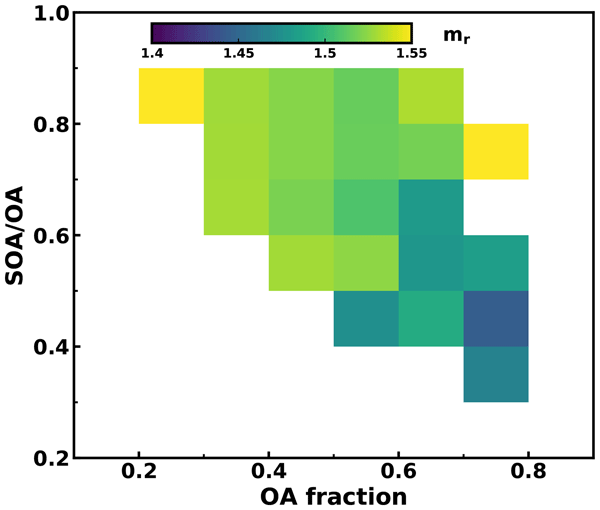
This study provides direct observational evidence that secondary organic aerosol formation enhances the aerosol scattering refractive index and has substantially higher real refractive indices than primary organic aerosols in humid southern China, challenging current model assumptions and offering recommended values that might improve the accuracy of aerosol radiative effect simulations.
Fei Li, Biao Luo, Miaomiao Zhai, Li Liu, Gang Zhao, Hanbing Xu, Tao Deng, Xuejiao Deng, Haobo Tan, Ye Kuang, and Jun Zhao
Atmos. Chem. Phys., 23, 6545–6558, https://doi.org/10.5194/acp-23-6545-2023, https://doi.org/10.5194/acp-23-6545-2023, 2023
Short summary
Short summary
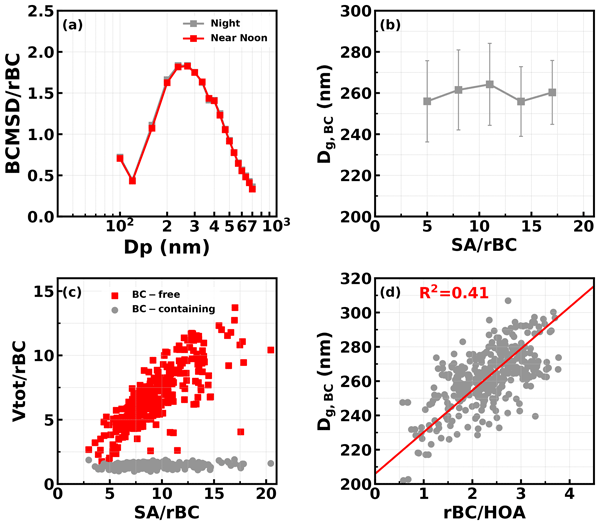
A field campaign was conducted to study black carbon (BC) mass size distributions and mixing states connected to traffic emissions using a system that combines a differential mobility analyzer and single-particle soot photometer. Results showed that the black carbon content of traffic emissions has a considerable influence on both BC mass size distributions and mixing states, which has crucial implications for accurately representing BC from various sources in regional and climate models.
Miaomiao Zhai, Ye Kuang, Li Liu, Yao He, Biao Luo, Wanyun Xu, Jiangchuan Tao, Yu Zou, Fei Li, Changqin Yin, Chunhui Li, Hanbing Xu, and Xuejiao Deng
Atmos. Chem. Phys., 23, 5119–5133, https://doi.org/10.5194/acp-23-5119-2023, https://doi.org/10.5194/acp-23-5119-2023, 2023
Short summary
Short summary
Using year-long aerosol mass spectrometer measurements, roles of secondary organic aerosols (SOA) during haze formations in an urban area of southern China were systematically analyzed. Almost all severe haze events were accompanied by continuous daytime and nighttime SOA formations, whereas coordinated gas-phase photochemistry and aqueous-phase reactions likely played significant roles in quick daytime SOA formations, and nitrate radicals played significant roles in nighttime SOA formations.
Mingfu Cai, Shan Huang, Baoling Liang, Qibin Sun, Li Liu, Bin Yuan, Min Shao, Weiwei Hu, Wei Chen, Qicong Song, Wei Li, Yuwen Peng, Zelong Wang, Duohong Chen, Haobo Tan, Hanbin Xu, Fei Li, Xuejiao Deng, Tao Deng, Jiaren Sun, and Jun Zhao
Atmos. Chem. Phys., 22, 8117–8136, https://doi.org/10.5194/acp-22-8117-2022, https://doi.org/10.5194/acp-22-8117-2022, 2022
Short summary
Short summary
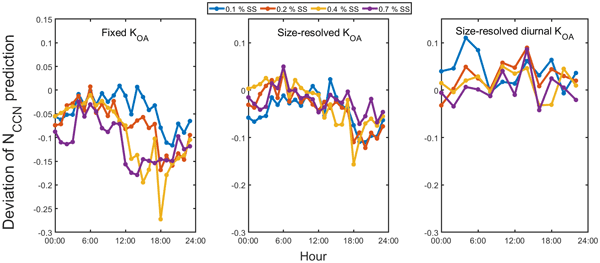
This study investigated the size dependence and diurnal variation in organic aerosol hygroscopicity, volatility, and cloud condensation nuclei (CCN) activity. We found that the physical properties of OA could vary in a large range at different particle sizes and affected the number concentration of CCN (NCCN) at all supersaturations. Our results highlight the importance of evaluating the atmospheric evolution processes of OA at different size ranges and their impact on climate effects.
Li Liu, Ye Kuang, Miaomiao Zhai, Biao Xue, Yao He, Jun Tao, Biao Luo, Wanyun Xu, Jiangchuan Tao, Changqin Yin, Fei Li, Hanbing Xu, Tao Deng, Xuejiao Deng, Haobo Tan, and Min Shao
Atmos. Chem. Phys., 22, 7713–7726, https://doi.org/10.5194/acp-22-7713-2022, https://doi.org/10.5194/acp-22-7713-2022, 2022
Short summary
Short summary
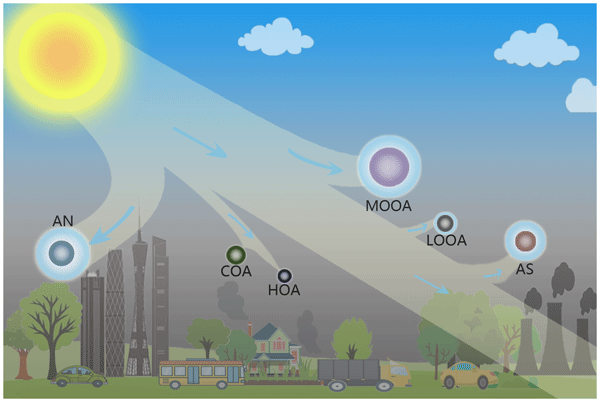
Using simultaneous measurements of a humidified nephelometer system and an aerosol chemical speciation monitor in winter in Guangzhou, the strongest scattering ability of more oxidized oxygenated organic aerosol (MOOA) among aerosol components considering their dry-state scattering ability and water uptake ability was revealed, leading to large impacts of MOOA on visibility degradation. This has important implications for visibility improvement in China and aerosol radiative effect simulation.
Ying Li, Xiangjun Zhao, Xuejiao Deng, and Jinhui Gao
Atmos. Chem. Phys., 22, 3861–3873, https://doi.org/10.5194/acp-22-3861-2022, https://doi.org/10.5194/acp-22-3861-2022, 2022
Short summary
Short summary
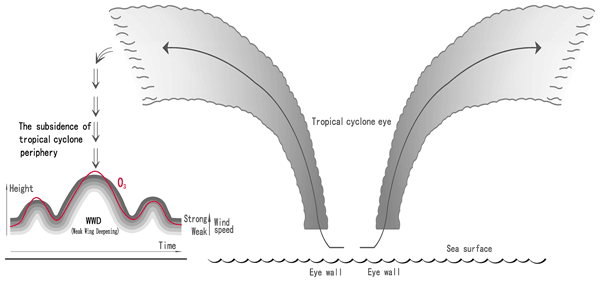
This study finds a new phenomenon of weak wind deepening (WWD) associated with the peripheral circulation of typhoon and gives the influence mechanism of WWD on its contribution to daily variation during sustained ozone episodes. The WWD provides the premise for pollution accumulation in the whole PBL and continued enhancement of ground-level ozone via vertical mixing processes. These findings could benefit the daily daytime ozone forecast in the PRD region and other areas.
Cited articles
Bell, B., Hersbach, H., Simmons, A., Berrisford, P., Dahlgren, P., Horányi, A., Muñoz-Sabater, J., Nicolas, J., Radu, R., Schepers, D., Soci, C., Villaume, S., Bidlot, J. R., Haimberger, L., Woollen, J., Buontempo, C., and Thépaut, J. N.: The ERA5 global reanalysis: Preliminary extension to 1950, Q. J. Roy. Meteor. Soc., 147, 4186–4227, https://doi.org/10.1002/qj.4174, 2021.
Chen, X., Huang, B., Li, M., Xiao, R., Cai, M., Zhou, Z., Ma, S., Gao, W., and Zhou, Z.: A prediction index of the volatile organic compounds pollution conditions in a chemical industrial park based on atmospheric stability, Sci. Total Environ., 919, 170862, https://doi.org/10.1016/j.scitotenv.2024.170862, 2024a.
Chen, Z., Liu, R., Wu, S., Xu, J., Wu, Y., and Qi, S.: Diurnal variation characteristics and meteorological causes of autumn ozone in the Pearl River Delta, China, Sci. Total Environ., 908, 168469, https://doi.org/10.1016/j.scitotenv.2023.168469, 2024b.
Cheng, J., Tong, S., Su, H., and Xu, Z.: Association between sub-daily exposure to ambient air pollution and risk of asthma exacerbations in Australian children, Environ. Res., 212, 113556, https://doi.org/10.1016/j.envres.2022.113556, 2022.
Cheng, X., Yu, J., Chen, L., Sun, Y., Zhang, H., Gao, S., Kong, S., Zheng, H., and Wang, H.: Influence of pollution control measures on the reduction of black carbon in an urban site of megacity, Tianjin, China based on ground-monitored and MERRA-2 reanalysis data, Sci. Total Environ., 912, 169466, https://doi.org/10.1016/j.scitotenv.2023.169466, 2024.
Chowdhury, F. I., Arteaga, C., Alam, M. S., Alam, I., and Resco de Dios, V.: Drivers of nocturnal stomatal conductance in C3 and C4 plants, Sci. Total Environ., 814, 151952, https://doi.org/10.1016/j.scitotenv.2021.151952, 2022.
Dong, Y., Li, J., Guo, J., Jiang, Z., Chu, Y., Chang, L., Yang, Y., and Liao, H.: The impact of synoptic patterns on summertime ozone pollution in the North China Plain, Sci. Total Environ., 735, 139559, https://doi.org/10.1016/j.scitotenv.2020.139559, 2020.
Duan, W., Chen, M., Huang, S., Dai, M., Wang, X., and Xu, L.: PM2.5 prediction based on Lamb-Jenkinson method and LSTM neural network, Environ. Sci. Technol., 43, 92-97, https://doi.org/10.19672/j.cnki.1003-6504.2020.01.014, 2020.
Gelaro, R., McCarty, W., Suárez, M. J., Todling, R., Molod, A., Takacs, L., Randles, C. A., Darmenov, A., Bosilovich, M. G., Reichle, R., Wargan, K., Coy, L., Cullather, R., Draper, C., Akella, S., Buchard, V., Conaty, A., da Silva, A. M., Gu, W., Kim, G.-K., Koster, R., Lucchesi, R., Merkova, D., Nielsen, J. E., Partyka, G., Pawson, S., Putman, W., Rienecker, M., Schubert, S. D., Sienkiewicz, M., and Zhao, B.: The modern-era retrospective analysis for research and applications, version 2 (MERRA-2), J. Climate, 30, 5419–5454, https://doi.org/10.1175/JCLI-D-16-0758.1, 2017.
Gilardi, L., Marconcini, M., Metz-Marconcini, A., Esch, T., and Erbertseder, T.: Long-term exposure and health risk assessment from air pollution: impact of regional scale mobility, Int. J. Health Geogr., 22, 11, https://doi.org/10.1186/s12942-023-00333-8, 2023.
He, C., Lu, X., Wang, H., Wang, H., Li, Y., He, G., He, Y., Wang, Y., Zhang, Y., Liu, Y., Fan, Q., and Fan, S.: The unexpected high frequency of nocturnal surface ozone enhancement events over China: characteristics and mechanisms, Atmos. Chem. Phys., 22, 15243–15261, https://doi.org/10.5194/acp-22-15243-2022, 2022.
He, Y., Wang, H., Wang, H., Xu, X., Li, Y., and Fan, S.: Meteorology and topographic influences on nocturnal ozone increase during the summertime over Shaoguan, China, Atmos. Environ., 256, 118459, https://doi.org/10.1016/j.atmosenv.2021.118459, 2021.
Hersbach, H., Bell, B., Berrisford, P., Hirahara, S., Horányi, A., Muñoz-Sabater, J., Nicolas, J., Peubey, C., Radu, R., Schepers, D., Simmons, A., Soci, C., Abdalla, S., Abellan, X., Balsamo, G., Bechtold, P., Biavati, G., Bidlot, J., Bonavita, M., De Chiara, G., Dahlgren, P., Dee, D., Diamantakis, M., Dragani, R., Flemming, J., Forbes, R., Fuentes, M., Geer, A., Haimberger, L., Healy, S., Hogan, R. J., Hólm, E., Janisková, M., Keeley, S., Laloyaux, P., Lopez, P., Lupu, C., Radnoti, G., de Rosnay, P., Rozum, I., Vamborg, F., Villaume, S., and Thépaut, J. N.: The ERA5 global reanalysis, Q. J. Roy. Meteor. Soc., 146, 1999–2049, https://doi.org/10.1002/qj.3803, 2020.
Hoshika, Y., De Carlo, A., Baraldi, R., Neri, L., Carrari, E., Agathokleous, E., Zhang, L., Fares, S., and Paoletti, E.: Ozone-induced impairment of night-time stomatal closure in O3-sensitive poplar clone is affected by nitrogen but not by phosphorus enrichment, Sci. Total Environ., 692, 713–722, https://doi.org/10.1016/j.scitotenv.2019.07.288, 2019.
Ji, X., Hong, Y., Lin, Y., Xu, K., Chen, G., Liu, T., Xu, L., Li, M., Fan, X., Wang, H., Zhang, H., Chen, Y., Yang, C., Lin, Z., and Chen, J.: Impacts of synoptic patterns and meteorological factors on distribution trends of ozone in Southeast China during 2015–2020, J. Geophys. Res.-Atmos., 128, e2022JD037961, https://doi.org/10.1029/2022JD037961, 2023.
Li, K., Jacob, D. J., Shen, L., Lu, X., De Smedt, I., and Liao, H.: Increases in surface ozone pollution in China from 2013 to 2019: anthropogenic and meteorological influences, Atmos. Chem. Phys., 20, 11423–11433, https://doi.org/10.5194/acp-20-11423-2020, 2020.
Li, L., Xie, F., Li, J., Gong, K., Xie, X., Qin, Y., Qin, M., and Hu, J.: Diagnostic analysis of regional ozone pollution in Yangtze River Delta, China: A case study in summer 2020, Sci. Total Environ., 812, 151511, https://doi.org/10.1016/j.scitotenv.2021.151511, 2022a.
Li, M., Zhang, Q., Zheng, B., Tong, D., Lei, Y., Liu, F., Hong, C., Kang, S., Yan, L., Zhang, Y., Bo, Y., Su, H., Cheng, Y., and He, K.: Persistent growth of anthropogenic non-methane volatile organic compound (NMVOC) emissions in China during 1990–2017: drivers, speciation and ozone formation potential, Atmos. Chem. Phys., 19, 8897–8913, https://doi.org/10.5194/acp-19-8897-2019, 2019.
Li, T., Wu, N., Chen, J., Chan, P.-W., Tang, J., and Wang, N.: Vertical exchange and cross-regional transport of lower-tropospheric ozone over Hong Kong, Atmos. Res., 292, 106877, https://doi.org/10.1016/j.atmosres.2023.106877, 2023.
Li, X.-B., Yuan, B., Wang, S., Wang, C., Lan, J., Liu, Z., Song, Y., He, X., Huangfu, Y., Pei, C., Cheng, P., Yang, S., Qi, J., Wu, C., Huang, S., You, Y., Chang, M., Zheng, H., Yang, W., Wang, X., and Shao, M.: Variations and sources of volatile organic compounds (VOCs) in urban region: insights from measurements on a tall tower, Atmos. Chem. Phys., 22, 10567–10587, https://doi.org/10.5194/acp-22-10567-2022, 2022b.
Liang, D., Yan, H., Tian, Y., Liu, Y., Hao, S., Bai, H., Zhang, G., and Deng, W.: Identification of key controlling factors of ozone pollution in Jinan, northern China over 2013–2020, Front. Ecol. Evol., 10, 930569, https://doi.org/10.3389/fevo.2022.930569, 2022.
Liu, B., Wang, L., Zhang, L., Liao, Z., Wang, Y., Sun, Y., Xin, J., and Hu, B.: Analysis of severe ozone–related human health and weather influence over China in 2019 based on a high-resolution dataset, Environ. Sci. Pollut. Res. Int., 30, 111536-111551, https://doi.org/10.1007/s11356-023-30178-4, 2023.
Liu, J., Wang, L., Li, M., Liao, Z., Sun, Y., Song, T., Gao, W., Wang, Y., Li, Y., Ji, D., Hu, B., Kerminen, V.-M., Wang, Y., and Kulmala, M.: Quantifying the impact of synoptic circulation patterns on ozone variability in northern China from April to October 2013–2017, Atmos. Chem. Phys., 19, 14477–14492, https://doi.org/10.5194/acp-19-14477-2019, 2019.
Liu, N., He, G., Wang, H., He, C., Wang, H., Liu, C., Wang, Y., Wang, H., Li, L., Lu, X., and Fan, S.: Rising frequency of ozone-favorable synoptic weather patterns contributes to 2015–2022 ozone increase in Guangzhou, J. Environ. Sci., 148, 502–514, https://doi.org/10.1016/j.jes.2023.09.024, 2025.
Lu, X., Zhang, L., Chen, Y., Zhou, M., Zheng, B., Li, K., Liu, Y., Lin, J., Fu, T.-M., and Zhang, Q.: Exploring 2016–2017 surface ozone pollution over China: source contributions and meteorological influences, Atmos. Chem. Phys., 19, 8339–8361, https://doi.org/10.5194/acp-19-8339-2019, 2019.
Molod, A., Takacs, L., Suarez, M., and Bacmeister, J.: Development of the GEOS-5 atmospheric general circulation model: evolution from MERRA to MERRA2, Geosci. Model Dev., 8, 1339–1356, https://doi.org/10.5194/gmd-8-1339-2015, 2015.
Monks, P. S., Granier, C., Fuzzi, S., Stohl, A., Williams, M. L., Akimoto, H., Amann, M., Baklanov, A., Baltensperger, U., Bey, I., Blake, N., Blake, R. S., Carslaw, K., Cooper, O. R., Dentener, F., Fowler, D., Fragkou, E., Frost, G. J., Generoso, S., Ginoux, P., Grewe, V., Guenther, A., Hansson, H. C., Henne, S., Hjorth, J., Hofzumahaus, A., Huntrieser, H., Isaksen, I. S. A., Jenkin, M. E., Kaiser, J., Kanakidou, M., Klimont, Z., Kulmala, M., Laj, P., Lawrence, M. G., Lee, J. D., Liousse, C., Maione, M., McFiggans, G., Metzger, A., Mieville, A., Moussiopoulos, N., Orlando, J. J., O'Dowd, C. D., Palmer, P. I., Parrish, D. D., Petzold, A., Platt, U., Pöschl, U., Prévôt, A. S. H., Reeves, C. E., Reimann, S., Rudich, Y., Sellegri, K., Steinbrecher, R., Simpson, D., ten Brink, H., Theloke, J., van der Werf, G. R., Vautard, R., Vestreng, V., Vlachokostas, C., and von Glasow, R.: Atmospheric composition change – global and regional air quality, Atmos. Environ., 43, 5268–5350, https://doi.org/10.1016/j.atmosenv.2009.08.021, 2009.
Nair, P. R., Chand, D., Lal, S., Modh, K. S., Naja, M., Parameswaran, K., Ravindran, S., and Venkataramani, S.: Temporal variations in surface ozone at Thumba (8.6°N, 77°E)-a tropical coastal site in India, Atmos. Environ., 36, 603–610, https://doi.org/10.1016/S1352-2310(01)00527-1, 2002.
Paoletti, E.: Ozone and Mediterranean ecology: plants, people, problems, Environ. Pollut., 157, 1397–1398, https://doi.org/10.1016/j.envpol.2009.03.001, 2009.
Sánchez, M. L., De Torre, B., García, M. A., and Pérez, I.: Ozone concentrations at a high altitude station in the Central Massif (Spain), Chemosphere, 60, 576–584, https://doi.org/10.1016/j.chemosphere.2004.12.079, 2005.
Shen, L., Diao, Y., Zhao, T., Gu, X., and Shi, S. S.: Meteorological influence on persistent O3 pollution events in Wuxi in the Yangtze River Delta, China, Sci. Total Environ., 917, 170484, https://doi.org/10.1016/j.scitotenv.2024.170484, 2024.
Shi, J., Wu, X., Han, X., Zhong, Y., Wang, Z., and Ning, P.: Characterization and sources of carbonaceous aerosols in southwest plateau of China: Effects of biomass burning and low oxygen concentration, Atmos. Environ., 318, 120250, https://doi.org/10.1016/j.atmosenv.2023.120250, 2024.
Song, A., Yan, Y., Kong, S., Ma, J., and Tong, Z.: Impact of synoptic climate system interaction on surface ozone in China during 1950–2014, Atmos. Environ., 279, 119126, https://doi.org/10.1016/j.atmosenv.2022.119126, 2022.
Stein, A. F., Draxler, R. R., Rolph, G. D., Stunder, B. J., Cohen, M. D., and Ngan, F.: NOAA's HYSPLIT atmospheric transport and dispersion modeling system, B. Am. Meteorol. Soc., 96, 2059–2077, https://doi.org/10.1175/BAMS-D-14-00110.1, 2015.
Wang, D., Zhou, J., Han, L., Tian, W., Wang, C., Li, Y., and Chen, J.: Source apportionment of VOCs and ozone formation potential and transport in Chengdu, China, Atmos. Pollut. Res., 14, 101730, https://doi.org/10.1016/j.apr.2023.101730, 2023a.
Wang, G., Liu, X., Kong, F., Zhu, Z., Yan, P., Gao, W., and Zhao, N.: Characteristics of fine particulate matter in Linyi during the 24th Olympic winter Games: An insight into the components, sources, transport pathways, and source distribution, Atmos. Pollut. Res., 15, 102034, https://doi.org/10.1016/j.apr.2023.102034, 2024.
Wang, H., Fan, L., Deng, X., Huang, H., and Ye, D.: Research on the characteristics and triggering factors of concurrent events of ozone pollution and nocturnal ozone increase in Xinxiang, China, Atmos. Environ., 361, 121494, https://doi.org/10.1016/j.atmosenv.2025.121494, 2025.
Wang, H., Wang, H., Lu, X., Lu, K., Zhang, L., Tham, Y. J., Shi, Z., Aikin, K., Fan, S., Brown, S. S., and Zhang, Y.: Increased night-time oxidation over China despite widespread decrease across the globe, Nat. Geosci., 16, 217-223, https://doi.org/10.1038/s41561-022-01122-x, 2023b.
Wang, K., Xie, F., Sulaymon, I. D., Gong, K., Li, N., Li, J., and Hu, J.: Understanding the nocturnal ozone increase in Nanjing, China: Insights from observations and numerical simulations, Sci. Total Environ., 859, 160211, https://doi.org/10.1016/j.scitotenv.2022.160211, 2023c.
Wang, Y., Liu, R., and Xin, F.: Impact of atmospheric circulation patterns on ozone changes in the Pearl River Delta from 2015 to 2020, Environ. Sci., 44, 3080–3088, https://doi.org/10.13227/j.hjkx.202206106, 2023d.
Wu, J., Li, C., Ma, Z., Sun, Z., Zhu, X., and Dong, F.: Influence of meteorological conditions on ozone pollution at Shangdianzi station based on weather classification, Environ. Sci., 41, 4864–4873, https://doi.org/10.13227/j.hjkx.202003307, 2020.
Wu, Y., Chen, W., You, Y., Xie, Q., Jia, S., and Wang, X.: Quantitative impacts of vertical transport on the long-term trend of nocturnal ozone increase over the Pearl River Delta region during 2006–2019, Atmos. Chem. Phys., 23, 453–469, https://doi.org/10.5194/acp-23-453-2023, 2023.
Xu, J., Huang, X., Wang, N., Li, Y., and Ding, A.: Understanding ozone pollution in the Yangtze River Delta of eastern China from the perspective of diurnal cycles, Sci. Total Environ., 752, 141928, https://doi.org/10.1016/j.scitotenv.2020.141928, 2021.
Xue, Y., Wang, L., Jing, Y., Zhang, T., He, S., Ho, K. F., Huang, Y., Chen, L., Cui, L., and Cao, J.: Asian monsoon and local valley wind caused transport of volatile organic compounds episode across Qinling Mountain in China, J. Geophys. Res.-Atmos., 128, e2022JD038256, https://doi.org/10.1029/2022JD038256, 2023.
You, Y., Wang, X., Wu, Y., Chen, W., Chen, B., and Chang, M.: Quantified the influence of different synoptic weather patterns on the transport and local production processes of O3 events in Pearl River Delta, China, Sci. Total Environ., 912, 169066, https://doi.org/10.1016/j.scitotenv.2023.169066, 2024.
Zhang, Y., Li, J., Li, J., Pan, X., Wang, W., Zhu, L., Wang, Z., Chen, X., Yang, W., and Wang, Z.: An intercomparison of ozone taken from the Copernicus atmosphere monitoring service and the second Modern-Era retrospective analysis for research and applications over China during 2018 and 2019, J. Environ. Sci., 114, 514–525, https://doi.org/10.1016/j.jes.2022.01.045, 2022.
Zhao, Y., An, X., Sun, Z., Li, Y., and Hou, Q.: Identification of health effects of complex air pollution in China, Int. J. Env. Res. Pub. He., 19, 12652, https://doi.org/10.3390/ijerph191912652, 2022.
Zhou, M., Zeng, Y., Li, J., Zhou, Y., Zhu, D., Luo, C., Zhuang, Y., Zhang, C., Wang, B., and Situ, S.: lmpact of atmospheric circulation patterns and volatile organic compounds on ozone pollution in Foshan City, Guangdong Province, Acta Sci. Circumst., 43, 215–225, https://doi.org/10.13671/j.hjkxxb.2023.0121, 2023.
Zhu, L., Han, X., Xu, L., Guan, X., Gong, A., Liu, H., and Zhang, M.: Nocturnal ozone enhancement in Shandong Province, China, in 2020–2022: Spatiotemporal distribution and formation mechanisms, Sci. Total Environ., 925, 171542, https://doi.org/10.1016/j.scitotenv.2024.171542, 2024.
Zhu, X., Ma, Z., Li, Z., Wu, J., Guo, H., Yin, X., Ma, X., and Qiao, L.: Impacts of meteorological conditions on nocturnal surface ozone enhancement during the summertime in Beijing, Atmos. Environ., 225, 117368, https://doi.org/10.1016/j.atmosenv.2020.117368, 2020.
Zhu, Y., Chen, D., Li, W., and Zhang, P.: Lamb-Jenkinson circulation type classification system and its application in China, J. Nanjing Inst. Meteor., 30, 289–297, https://doi.org/10.13878/j.cnki.dqkxxb.2007.03.001, 2007.
Short summary
This study investigates how weather types drive nocturnal ozone increase. We resolve four primary weather types in the North China Plain: A-type (57.89 %), S-type (19.88 %), WNE-type (14.04 %), and C-type (8.19 %). Driven by these weather systems, high-pressure subsidence (A-type), cold pool subsidence and shallow convection (C-type), synoptically-driven wind shear (S-type and WNE-type) act as key drivers, facilitating the intrusion of ozone-rich air to the surface.
This study investigates how weather types drive nocturnal ozone increase. We resolve four...
Altmetrics
Final-revised paper
Preprint