
Articles | Volume 26, issue 19
https://doi.org/10.5194/acp-26-14487-2026
© Author(s) 2026. This work is distributed under
the Creative Commons Attribution 4.0 License.
the Creative Commons Attribution 4.0 License.
https://doi.org/10.5194/acp-26-14487-2026
© Author(s) 2026. This work is distributed under
the Creative Commons Attribution 4.0 License.
the Creative Commons Attribution 4.0 License.
Research article
| 
13 Oct 2026
Research article |
| 13 Oct 2026
| 13 Oct 2026
Asymptotic behavior of lidar scattering properties of absorbing dust aerosols across Rayleigh and geometrical-optics regimes: theory and implications
Anthony La Luna
Physics Department, University of Maryland Baltimore County (UMBC), Baltimore, MD, USA

Physics Department, University of Maryland Baltimore County (UMBC), Baltimore, MD, USA
Goddard Earth Sciences Technology and Research (GESTAR) II, UMBC, Baltimore, MD, USA
Goddard Planetary Heliophysics Institute, UMBC, Baltimore, MD, USA
Qianqian Song
Physics Department, University of Maryland Baltimore County (UMBC), Baltimore, MD, USA
Goddard Earth Sciences Technology and Research (GESTAR) II, UMBC, Baltimore, MD, USA
Hongbin Yu
NASA Goddard Space Flight Center (GSFC), Greenbelt, MD, USA
John E. Yorks
NASA Goddard Space Flight Center (GSFC), Greenbelt, MD, USA
Ping Yang
Department of Atmospheric Sciences, Texas A&M University, College Station, TX, USA
Related authors
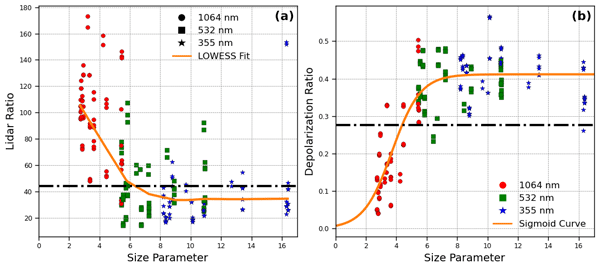
Anthony La Luna, Zhibo Zhang, Jianyu Zheng, Qianqian Song, Hongbin Yu, Jiachen Ding, Ping Yang, and Masanori Saito
Atmos. Chem. Phys., 25, 13359–13377, https://doi.org/10.5194/acp-25-13359-2025, https://doi.org/10.5194/acp-25-13359-2025, 2025
Short summary
Short summary
The lidar backscattering properties of Asian dust particles were studied using a discrete dipole approximation (DDA) model. Both the lidar ratio (LR) and the depolarization ratio (DPR) exhibit an asymptotic trend with dust particle size. Two parameterization schemes were developed: one to estimate the DPR of a single dust particle given its size and the other to estimate the DPR of dust particles with a lognormal particle size distribution given the effective radius.
Thomas F. Eck, Jeffrey S. Reid, Alexander Sinyuk, Pawan Gupta, Antti Arola, Ilya Slutsker, Brent N. Holben, Philippe Goloub, Oleg Dubovik, Joel S. Schafer, Mikhail G. Sorokin, Alexander Smirnov, Hongbin Yu, Dongchul Kim, Elena Lind, Jason Kraft, Elizabeth A. Reid, Aboubacry Diallo, Thierno Ndiaye, Africa Barreto, Sidi Baika, Lahouari Zeudmi-Sahraoui, Francisco Evora, Gael Dubois, Luc Blarel, Rachel T. Pinker, Isaac Abiodun Adimula, Jean Louis Rajot, Aliko Maman, Muguette Allegre, Cassandra Gaston, Peter Sealy, Edmund Blades, Rebecca Chewitt-Lucas, Ian Lau, David Barker, Adel Saad Alshihiween, Abdulrahman Alsaferan, Odbayar Mishigdorj, and Chogsom Jargalsaixan
EGUsphere, https://doi.org/10.5194/egusphere-2026-5531, https://doi.org/10.5194/egusphere-2026-5531, 2026
This preprint is open for discussion and under review for Atmospheric Chemistry and Physics (ACP).
Short summary
Short summary
The optical properties of airborne soil particles from major desert regions measured by ground based remote sensing retrievals are presented. The relative spectral absorption of these particles from the remote sensing data agree very well with absorption of soil dust samples measured in a laboratory. A large fraction of the optical effects were attributed to relatively small submicron sized dust particles which would also be more easily inhalable and therefore may impact human health.
Jianyu Zheng, Hongbin Yu, Chamara Rajapakse, Mian Chin, Michael Schulz, Yves Balkanski, Susanne E. Bauer, Huisheng Bian, Peter Colarco, Dongchul Kim, Ramiro Checa-Garcia, Yevgeny Derimian, Oleg Dubovik, Paul Ginoux, Zak Kipling, Jasper F. Kok, Harri Kokkola, Philippe Le Sager, Lei Li, Marianne Tronstad Lund, Gunnar Myhre, Hitoshi Matsui, Dirk J. L. Olivie, Samuel Remy, Oyvind Seland, Qianqian Song, Toshihiko Takemura, Qian Tan, Kostas Tsigaridis, Twan van Noije, David Winker, Bin Xie, Hua Zhang, Xindan Zhang, and Zhibo Zhang
EGUsphere, https://doi.org/10.5194/egusphere-2026-4322, https://doi.org/10.5194/egusphere-2026-4322, 2026
This preprint is open for discussion and under review for Atmospheric Chemistry and Physics (ACP).
Short summary
Short summary
Winds carry vast amounts of Saharan dust across the Atlantic Ocean, influencing climate, air quality, and ocean ecosystems. Within the Aerosol Comparisons between Observations and Models (AeroCom) project, we evaluated 17 numerical models against observations. Models deposit dust too quickly, so too little reaches the Caribbean. Better simulations require emitting larger particles, treating their non-spherical shapes, and capturing processes that keep dust aloft during transport.
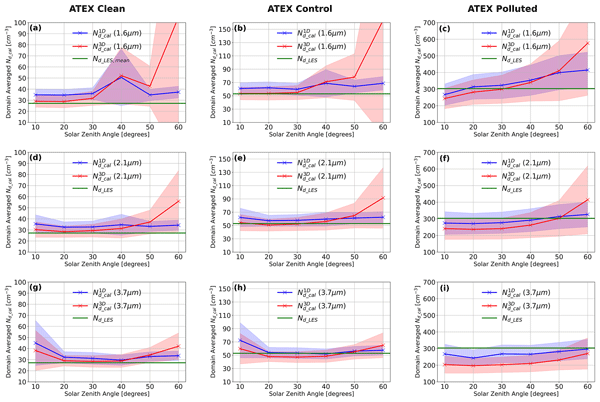
Adeleke S. Ademakinwa, Zhibo Zhang, Daniel Miller, Kerry G. Meyer, Steven Platnick, Zahid H. Tushar, Sanjay Purushotham, and Jianwu Wang
Atmos. Chem. Phys., 26, 11449–11471, https://doi.org/10.5194/acp-26-11449-2026, https://doi.org/10.5194/acp-26-11449-2026, 2026
Short summary
Short summary
Many satellites measure cloud properties using reflected light from droplets, but most assume simple cloud structures, which can reduce accuracy. Using cloud simulations, we tested how these errors affect droplet number in a given volume and climate studies. We found that while they strongly affect small-scales, at the larger-scales used by satellites the errors mostly cancel out at low- to moderate-liquid water path (LWP) and cloud optical depth regimes, meaning satellite data remain reliable for climate research.
Ronghao Wang, Jianyu Zheng, Qianqian Song, Huisheng Bian, Hongbin Yu, and Zhibo Zhang
EGUsphere, https://doi.org/10.5194/egusphere-2026-4228, https://doi.org/10.5194/egusphere-2026-4228, 2026
Short summary
Short summary
Desert dust in the air often mixes with pollution from cities and industry as it travels. Using seventeen years of satellite observations, we mapped where this polluted dust occurs most frequently around the world. We then calculated how pollution coatings change the way dust particles interact with sunlight and with heat radiated by the Earth. Coated particles absorb more energy and warm the atmosphere more strongly, so climate models need to account for this mixing to estimate dust effects.
Elisa Fabbri, Tiziano Maestri, Michele Martinazzo, Federico Donat, Giovanni Bianchini, Massimo Del Guasta, Gianluca Di Natale, Luca Palchetti, Guido Masiello, Giuliano Liuzzi, Tong Ren, and Ping Yang
EGUsphere, https://doi.org/10.5194/egusphere-2026-2806, https://doi.org/10.5194/egusphere-2026-2806, 2026
Short summary
Short summary
Nine years of ground-based far-infrared spectral observations and lidar measurements at Dome C, Antarctica, are used to investigate cloud occurrence and microphysical properties over the Antarctic Plateau. The study shows that Antarctic clouds are dominated by optically thin ice clouds and derives a new parameterization of ice crystal effective dimension specifically adapted to Antarctic conditions, providing improved observational constraints for climate and numerical weather prediction models.
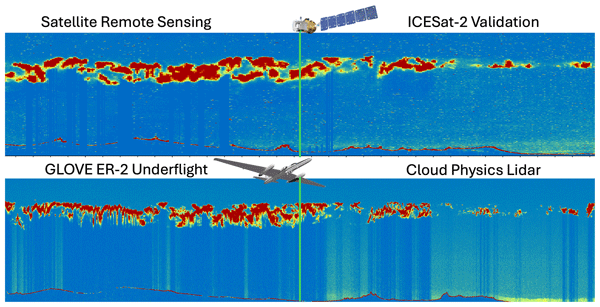
John E. Yorks, Edward P. Nowottnick, Steven Platnick, Kerry G. Meyer, Matthew Walker McLinden, Meloe S. F. Kacenelenbogen, Kenneth E. Christian, Joseph A. Finlon, Natalie A. Midzak, Natalia Roldán-Henao, Patrick A. Selmer, Matthew J. McGill, Erica K. Dolinar, Charles N. Helms, Robert Koopman, Jonas von Bismark, and Montserrat Pińol Solé
Earth Syst. Sci. Data, 18, 3833–3852, https://doi.org/10.5194/essd-18-3833-2026, https://doi.org/10.5194/essd-18-3833-2026, 2026
Short summary
Short summary
The Goddard Space Flight Center's Lidar Observation and Validation Experiment (GLOVE) was a NASA field campaign from January–February 2025 that used a special airplane with scientific instruments to check if satellites measuring Earth's atmosphere were working correctly. The plane flew under two key satellites to compare measurements of clouds, dust, and other particles in the air. Data from 8 flights help scientists better understand how well these space-based instruments perform, especially for detecting different types of clouds and atmospheric conditions.
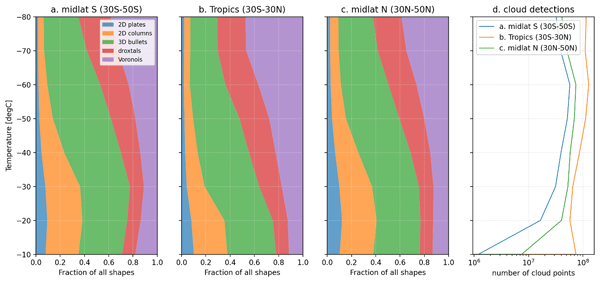
Vincent Noel, Hélène Chepfer, Christelle Barthe, and John Yorks
Atmos. Chem. Phys., 26, 5603–5615, https://doi.org/10.5194/acp-26-5603-2026, https://doi.org/10.5194/acp-26-5603-2026, 2026
Short summary
Short summary
The shape of crystals in ice clouds drives their impact on the earth energy balance. These shapes are very variable and hard to categorize. In this paper, we use a recently developed method to classify clouds in categories of crystal shape. We apply this method to 33 months of measurements from a lidar in space. We discuss how the importance of shape categories changes with the time of the day. These results could be useful for people who try to simulate clouds in atmospheric models.
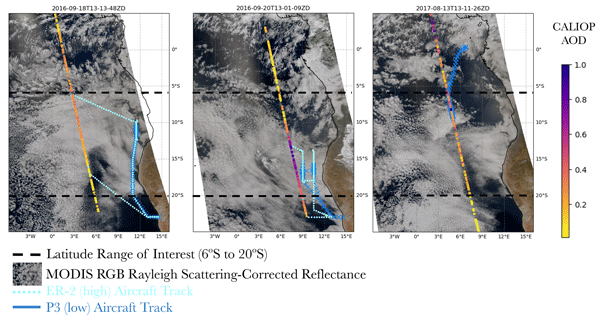
Meloë S. F. Kacenelenbogen, Ralph Kuehn, Nandana D. Amarasinghe, Kerry G. Meyer, Edward P. Nowottnick, Mark A. Vaughan, Hong Chen, Sebastian Schmidt, Richard A. Ferrare, Johnathan W. Hair, Robert C. Levy, Hongbin Yu, Paquita Zuidema, Robert Holz, and Willem Marais
Atmos. Chem. Phys., 25, 15875–15911, https://doi.org/10.5194/acp-25-15875-2025, https://doi.org/10.5194/acp-25-15875-2025, 2025
Short summary
Short summary
Aerosols perturb the radiation balance of the Earth–atmosphere system. To reduce the uncertainty in quantifying present-day climate change, we combine two satellite sensors and a model to assess the aerosol effects on radiation in all-sky conditions. Satellite-based and coincident aircraft measurements of aerosol radiative effects agree well over the southeast Atlantic. This constitutes a crucial first evaluation before we apply our method to more years and more regions of the world.
Anthony La Luna, Zhibo Zhang, Jianyu Zheng, Qianqian Song, Hongbin Yu, Jiachen Ding, Ping Yang, and Masanori Saito
Atmos. Chem. Phys., 25, 13359–13377, https://doi.org/10.5194/acp-25-13359-2025, https://doi.org/10.5194/acp-25-13359-2025, 2025
Short summary
Short summary
The lidar backscattering properties of Asian dust particles were studied using a discrete dipole approximation (DDA) model. Both the lidar ratio (LR) and the depolarization ratio (DPR) exhibit an asymptotic trend with dust particle size. Two parameterization schemes were developed: one to estimate the DPR of a single dust particle given its size and the other to estimate the DPR of dust particles with a lognormal particle size distribution given the effective radius.
Huisheng Bian, Sarah Strode, Mian Chin, Fan Li, Andrea Molad, Peter R. Colarco, and Hongbin Yu
EGUsphere, https://doi.org/10.5194/egusphere-2025-4501, https://doi.org/10.5194/egusphere-2025-4501, 2025
Preprint archived
Short summary
Short summary
We study the North Pacific westerly jet (NPWJ) using four reanalysis datasets and eight CMIP6 models. Our results show that between 1980 and 2019, the NPWJ core oscillates seasonally between north and south, weakening and shifting northward in summer and autumn. Single-forcing simulations further reveal aerosol forcing as the main driver. Incorporating interacting chemistry and time-varying ozone radiative forcing into Earth system models is crucial for simulating long-term atmospheric dynamics.
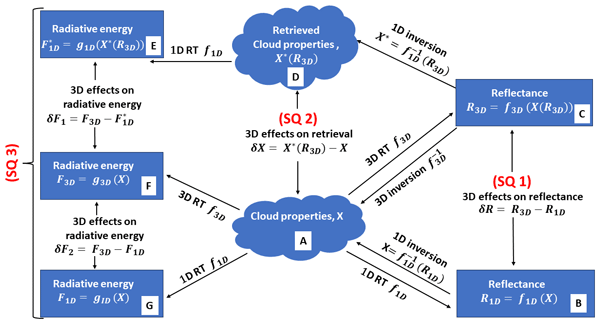
Adeleke S. Ademakinwa, Zahid H. Tushar, Jianyu Zheng, Chenxi Wang, Sanjay Purushotham, Jianwu Wang, Kerry G. Meyer, Tamas Várnai, and Zhibo Zhang
Atmos. Chem. Phys., 24, 3093–3114, https://doi.org/10.5194/acp-24-3093-2024, https://doi.org/10.5194/acp-24-3093-2024, 2024
Short summary
Short summary
Clouds play a critical role in our climate system. At present and in the near future, satellite-based remote sensing is the only means to obtain regional and global observations of cloud properties. The current satellite remote sensing algorithms are mostly based on the so-called 1D radiative transfer. This deviation from the 3D world reality can lead to large errors. In this study we investigate how this error affects our estimation of cloud radiative effects.
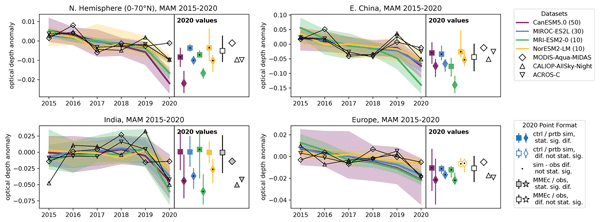
Ruth A. R. Digby, Nathan P. Gillett, Adam H. Monahan, Knut von Salzen, Antonis Gkikas, Qianqian Song, and Zhibo Zhang
Atmos. Chem. Phys., 24, 2077–2097, https://doi.org/10.5194/acp-24-2077-2024, https://doi.org/10.5194/acp-24-2077-2024, 2024
Short summary
Short summary
The COVID-19 lockdowns reduced aerosol emissions. We ask whether these reductions affected regional aerosol optical depth (AOD) and compare the observed changes to predictions from Earth system models. Only India has an observed AOD reduction outside of typical variability. Models overestimate the response in some regions, but when key biases have been addressed, the agreement is improved. Our results suggest that current models can realistically predict the effects of future emission changes.
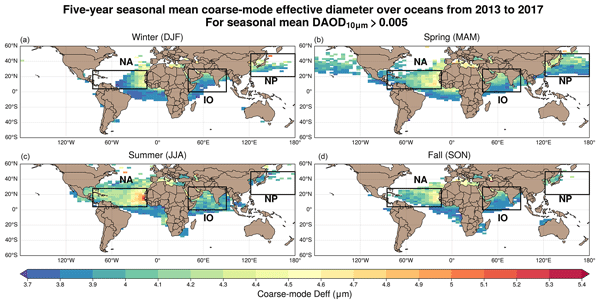
Jianyu Zheng, Zhibo Zhang, Hongbin Yu, Anne Garnier, Qianqian Song, Chenxi Wang, Claudia Di Biagio, Jasper F. Kok, Yevgeny Derimian, and Claire Ryder
Atmos. Chem. Phys., 23, 8271–8304, https://doi.org/10.5194/acp-23-8271-2023, https://doi.org/10.5194/acp-23-8271-2023, 2023
Short summary
Short summary
We developed a multi-year satellite-based retrieval of dust optical depth at 10 µm and the coarse-mode dust effective diameter over global oceans. It reveals climatological coarse-mode dust transport patterns and regional differences over the North Atlantic, the Indian Ocean and the North Pacific.
Huilin Huang, Yun Qian, Ye Liu, Cenlin He, Jianyu Zheng, Zhibo Zhang, and Antonis Gkikas
Atmos. Chem. Phys., 22, 15469–15488, https://doi.org/10.5194/acp-22-15469-2022, https://doi.org/10.5194/acp-22-15469-2022, 2022
Short summary
Short summary
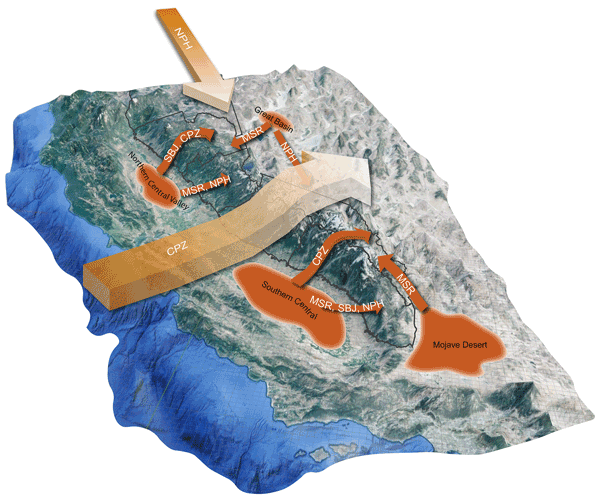
Using a clustering method developed in the field of artificial neural networks, we identify four typical dust transport patterns across the Sierra Nevada, associated with the mesoscale and regional-scale wind circulations. Our results highlight the connection between dust transport and dominant weather patterns, which can be used to understand dust transport in a changing climate.
Qianqian Song, Zhibo Zhang, Hongbin Yu, Jasper F. Kok, Claudia Di Biagio, Samuel Albani, Jianyu Zheng, and Jiachen Ding
Atmos. Chem. Phys., 22, 13115–13135, https://doi.org/10.5194/acp-22-13115-2022, https://doi.org/10.5194/acp-22-13115-2022, 2022
Short summary
Short summary
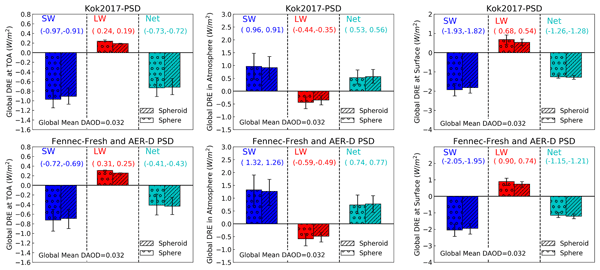
This study developed a dataset that enables us to efficiently calculate dust direct radiative effect (DRE, i.e., cooling or warming our planet) for any given dust size distribution in addition to three sets of dust mineral components and two dust shapes. We demonstrate and validate the method of using this dataset to calculate dust DRE. Moreover, using this dataset we found that dust mineral composition is a more important factor in determining dust DRE than dust size and shape.
Po-Lun Ma, Bryce E. Harrop, Vincent E. Larson, Richard B. Neale, Andrew Gettelman, Hugh Morrison, Hailong Wang, Kai Zhang, Stephen A. Klein, Mark D. Zelinka, Yuying Zhang, Yun Qian, Jin-Ho Yoon, Christopher R. Jones, Meng Huang, Sheng-Lun Tai, Balwinder Singh, Peter A. Bogenschutz, Xue Zheng, Wuyin Lin, Johannes Quaas, Hélène Chepfer, Michael A. Brunke, Xubin Zeng, Johannes Mülmenstädt, Samson Hagos, Zhibo Zhang, Hua Song, Xiaohong Liu, Michael S. Pritchard, Hui Wan, Jingyu Wang, Qi Tang, Peter M. Caldwell, Jiwen Fan, Larry K. Berg, Jerome D. Fast, Mark A. Taylor, Jean-Christophe Golaz, Shaocheng Xie, Philip J. Rasch, and L. Ruby Leung
Geosci. Model Dev., 15, 2881–2916, https://doi.org/10.5194/gmd-15-2881-2022, https://doi.org/10.5194/gmd-15-2881-2022, 2022
Short summary
Short summary
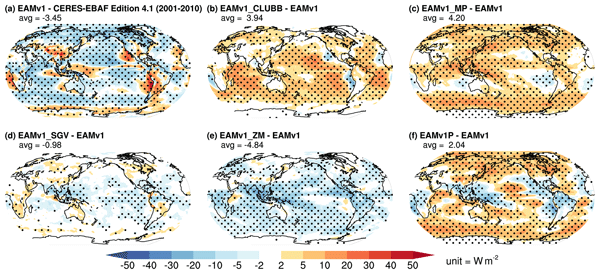
An alternative set of parameters for E3SM Atmospheric Model version 1 has been developed based on a tuning strategy that focuses on clouds. When clouds in every regime are improved, other aspects of the model are also improved, even though they are not the direct targets for calibration. The recalibrated model shows a lower sensitivity to anthropogenic aerosols and surface warming, suggesting potential improvements to the simulated climate in the past and future.
Justin A. Covert, David B. Mechem, and Zhibo Zhang
Atmos. Chem. Phys., 22, 1159–1174, https://doi.org/10.5194/acp-22-1159-2022, https://doi.org/10.5194/acp-22-1159-2022, 2022
Short summary
Short summary
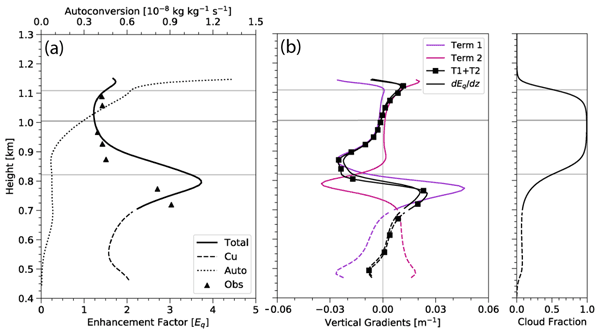
Stratocumulus play an important role in Earth's radiative balance. The simulation of these cloud systems in climate models is difficult due to the scale at which cloud microphysical processes occur compared with model grid sizes. In this study, we use large-eddy simulation to analyze subgrid-scale variability of cloud water and its implications on a cloud water to drizzle model enhancement factor E. We find current values of E may be too large and that E should be vertically dependent in models.
Cited articles
Adebiyi, A., Kok, J. F., Murray, B. J., Ryder, C. L., Stuut, J.-B. W., Kahn, R. A., Knippertz, P., Formenti, P., Mahowald, N. M., Pérez García-Pando, C., Klose, M., Ansmann, A., Samset, B. H., Ito, A., Balkanski, Y., Di Biagio, C., Romanias, M. N., Huang, Y., and Meng, J.: A review of coarse mineral dust in the Earth system, Aeolian Res., 60, 100849, https://doi.org/10.1016/j.aeolia.2022.100849, 2023. a
Bambha, R., Garcia, J., Razenkov, I., and Eloranta, E.: High-Spectral Resolution Lidar (HSRL) Instrument Handbook, Tech. Rep. DOE/SC-ARM-TR–157, ARM Climate Research Facility, Pacific Northwest National Laboratory, Richland, WA, https://doi.org/10.2172/1251392, 2016. a
Cai, Q. and Liou, K.-N.: Polarized light scattering by hexagonal ice crystals: theory, Appl. Optics, 21, 3569–3580, https://doi.org/10.1364/AO.21.003569, 1982. a
Campbell, J. R., Hlavka, D. L., Welton, E. J., Flynn, C. J., Turner, D. D., Spinhirne, J. D., Scott, V. S., and Hwang, I. H.: Full-Time, Eye-Safe Cloud and Aerosol Lidar Observation at Atmospheric Radiation Measurement Program Sites: Instruments and Data Processing, J. Atmos. Ocean. Tech., 19, 431–442, https://doi.org/10.1175/1520-0426(2002)019<0431:FTESCA>2.0.CO;2, 2002. a
Chang, Y., Hu, Q., Goloub, P., Podvin, T., Veselovskii, I., Ducos, F., Dubois, G., Saito, M., Lopatin, A., Dubovik, O., and Chen, C.: Retrieval of microphysical properties of dust aerosols from extinction, backscattering and depolarization lidar measurements using various particle scattering models, Atmos. Chem. Phys., 25, 6787–6821, https://doi.org/10.5194/acp-25-6787-2025, 2025. a
Chang, Y., Hu, Q., Goloub, P., and Podvin, T.: Improved Dust Microphysical Retrieval From LiDAR by Introducing a Priori Constraints From In Situ and Laboratory Measurements, J. Geophys. Res.-Atmos., 131, e2025JD045677, https://doi.org/10.1029/2025JD045677, 2026. a
Connelly, D. S., Thompson, D. R., Mahowald, N. M., Li, L., Carmon, N., Okin, G. S., and Green, R. O.: The EMIT mission information yield for mineral dust radiative forcing, Remote Sens. Environ., 258, 112380, https://doi.org/10.1016/j.rse.2021.112380, 2021. a
Conny, J. M. and Ortiz-Montalvo, D. L.: Effect of heterogeneity and shape on optical properties of urban dust based on three‐dimensional modeling of individual particles, J. Geophys. Res.-Atmos., 122, 9816–9842, https://doi.org/10.1002/2017jd026488, 2017. a
de Foy, B., Burton, S. P., Ferrare, R. A., Hostetler, C. A., Hair, J. W., Wiedinmyer, C., and Molina, L. T.: Aerosol plume transport and transformation in high spectral resolution lidar measurements and WRF-Flexpart simulations during the MILAGRO Field Campaign, Atmos. Chem. Phys., 11, 3543–3563, https://doi.org/10.5194/acp-11-3543-2011, 2011. a, b
DeMott, P. J., Sassen, K., Poellot, M. R., Baumgardner, D., Rogers, D. C., Brooks, S. D., Prenni, A. J., and Kreidenweis, S. M.: African dust aerosols as atmospheric ice nuclei, Geophys. Res. Lett., 30, https://doi.org/10.1029/2003GL017410, 2003. a
Di Biagio, C., Formenti, P., Balkanski, Y., Caponi, L., Cazaunau, M., Pangui, E., Journet, E., Nowak, S., Andreae, M. O., Kandler, K., Saeed, T., Piketh, S., Seibert, D., Williams, E., and Doussin, J.-F.: Complex refractive indices and single-scattering albedo of global dust aerosols in the shortwave spectrum and relationship to size and iron content, Atmos. Chem. Phys., 19, 15503–15531, https://doi.org/10.5194/acp-19-15503-2019, 2019. a, b, c, d, e, f, g
Di Biagio, C., Bru, E., Orta, A., Chevaillier, S., Baldo, C., Bergé, A., Cazaunau, M., Lafon, S., Nowak, S., Pangui, E., Andreae, M. O., Dagsson-Waldhauserova, P., Dintwe, K., Kandler, K., King, J. S., Chaput, A., Okin, G. S., Piketh, S., Saeed, T., Seibert, D., Shi, Z., Williams, E., Sellitto, P., and Formenti, P.: Mid- and far-infrared spectral signatures of mineral dust from low- to high-latitude regions: significance and implications, Atmos. Chem. Phys., 26, 1079–1091, https://doi.org/10.5194/acp-26-1079-2026, 2026. a
Donovan, D. P., van Zadelhoff, G.-J., and Wang, P.: The EarthCARE lidar cloud and aerosol profile processor (A-PRO): the A-AER, A-EBD, A-TC, and A-ICE products, Atmos. Meas. Tech., 17, 5301–5340, https://doi.org/10.5194/amt-17-5301-2024, 2024. a
Dubovik, O., Sinyuk, A., Lapyonok, T., Holben, B. N., Mishchenko, M., Yang, P., Eck, T. F., Volten, H., Muñoz, O., Veihelmann, B., van der Zande, W. J., Leon, J., Sorokin, M., and Slutsker, I.: Application of spheroid models to account for aerosol particle nonsphericity in remote sensing of desert dust, J. Geophys. Res.-Atmos., 111, https://doi.org/10.1029/2005jd006619, 2006. a
Formenti, P. and Di Biagio, C.: Large synthesis of in situ field measurements of the size distribution of mineral dust aerosols across their life cycles, Earth Syst. Sci. Data, 16, 4995–5007, https://doi.org/10.5194/essd-16-4995-2024, 2024. a
Fussell, J. C. and Kelly, F. J.: Mechanisms underlying the health effects of desert sand dust, Environ. Int., 157, 106790, https://doi.org/10.1016/j.envint.2021.106790, 2021. a
Go, S., Lyapustin, A., Schuster, G. L., Choi, M., Ginoux, P., Chin, M., Kalashnikova, O., Dubovik, O., Kim, J., da Silva, A., Holben, B., and Reid, J. S.: Inferring iron-oxide species content in atmospheric mineral dust from DSCOVR EPIC observations, Atmos. Chem. Phys., 22, 1395–1423, https://doi.org/10.5194/acp-22-1395-2022, 2022. a, b
Gómez Maqueo Anaya, S., Althausen, D., Faust, M., Baars, H., Heinold, B., Hofer, J., Tegen, I., Ansmann, A., Engelmann, R., Skupin, A., Heese, B., and Schepanski, K.: The implementation of dust mineralogy in COSMO5.05-MUSCAT, Geosci. Model Dev., 17, 1271–1295, https://doi.org/10.5194/gmd-17-1271-2024, 2024. a
Gómez Maqueo Anaya, S., Althausen, D., Hofer, J., Haarig, M., Wandinger, U., Heinold, B., Tegen, I., Faust, M., Baars, H., Ansmann, A., Engelmann, R., Skupin, A., Heese, B., and Schepanski, K.: Investigating the link between mineral dust hematite content and intensive optical properties by means of lidar measurements and aerosol modeling, Atmos. Chem. Phys., 25, 9737–9764, https://doi.org/10.5194/acp-25-9737-2025, 2025. a
Goudie, A. S.: Desert dust and human health disorders, Environ. Int., 63, 101–113, https://doi.org/10.1016/j.envint.2013.10.011, 2014. a
Green, R. O., Mahowald, N., Thompson, D. R., Ung, C., Brodrick, P., Pollock, R., Bennett, M., Lundeen, S., Joyce, M., Olson-Duvall, W., Oaida, B., Bradley, C., Diaz, E., Clark, R., Vannan, S., Swayze, G., Kokaly, R., Ginoux, P., Miller, R., Okin, G., Garcia-Pando, C. P., Ehlmann, B., Kalashnikova, O., Painter, T. H., Realmuto, V., Chadwick, D., Ben-Dor, E., Pearlshtien, D. H., Guanter, L., Phillips, B., Reath, K., Thorpe, A., Shaw, L., Keebler, A., Ochoa, F., Grant, K., Sen, A., Duren, R., Obiso, V., Gonçalves-Ageitos, M., and Huang, Y.: Performance and Early Results from the Earth Surface Mineral Dust Source Investigation (EMIT) Imaging Spectroscopy Mission, in: 2023 IEEE Aerospace Conference, 1–10, https://doi.org/10.1109/AERO55745.2023.10115851, ISSN: 1095-323X, 2023. a, b
Haarig, M., Ansmann, A., Althausen, D., Klepel, A., Groß, S., Freudenthaler, V., Toledano, C., Mamouri, R.-E., Farrell, D. A., Prescod, D. A., Marinou, E., Burton, S. P., Gasteiger, J., Engelmann, R., and Baars, H.: Triple-wavelength depolarization-ratio profiling of Saharan dust over Barbados during SALTRACE in 2013 and 2014, Atmos. Chem. Phys., 17, 10767–10794, https://doi.org/10.5194/acp-17-10767-2017, 2017. a, b, c, d, e
Haarig, M., Ansmann, A., Engelmann, R., Baars, H., Toledano, C., Torres, B., Althausen, D., Radenz, M., and Wandinger, U.: First triple-wavelength lidar observations of depolarization and extinction-to-backscatter ratios of Saharan dust, Atmos. Chem. Phys., 22, 355–369, https://doi.org/10.5194/acp-22-355-2022, 2022. a, b
Haarig, M., Floutsi, A. A., Hofer, J., and Ansmann, A.: Is the depolarization ratio a global characteristic of mineral dust particles? Review on existing multiwavelength lidar measurements, E3S Web of Conferences, EDP Sciences, 575, 02004, https://doi.org/10.1051/e3sconf/202457502004, 2024. a, b, c, d
Haarig, M., Engelmann, R., Baars, H., Gast, B., Althausen, D., and Ansmann, A.: Discussion of the spectral slope of the lidar ratio between 355 and 1064 nm from multiwavelength Raman lidar observations, Atmos. Chem. Phys., 25, 7741–7763, https://doi.org/10.5194/acp-25-7741-2025, 2025. a
Hulst, H. C. v. d.: Light scattering by small particles, New York, Dover Publications, ISBN 978-0-486-64228-4, 1981. a
Jeong, G. Y., Park, M. Y., Kandler, K., Nousiainen, T., and Kemppinen, O.: Mineralogical properties and internal structures of individual fine particles of Saharan dust, Atmos. Chem. Phys., 16, 12397–12410, https://doi.org/10.5194/acp-16-12397-2016, 2016. a
Journet, E., Balkanski, Y., and Harrison, S. P.: A new data set of soil mineralogy for dust-cycle modeling, Atmos. Chem. Phys., 14, 3801–3816, https://doi.org/10.5194/acp-14-3801-2014, 2014. a
Kandler, K., Benker, N., Bundke, U., Cuevas, E., Ebert, M., Knippertz, P., Rodríguez, S., Schütz, L., and Weinbruch, S.: Chemical composition and complex refractive index of Saharan Mineral Dust at Izaña, Tenerife (Spain) derived by electron microscopy, Atmos. Environ., 41, 8058–8074, https://doi.org/10.1016/j.atmosenv.2007.06.047, 2007. a
Karydis, V. A., Kumar, P., Barahona, D., Sokolik, I., and Nenes, A.: On the effect of dust particles on global cloud condensation nuclei and cloud droplet number, J. Geophys. Res.-Atmos., 116, https://doi.org/10.1029/2011JD016283, 2011. a
Kemppinen, O., Nousiainen, T., and Jeong, G. Y.: Effects of dust particle internal structure on light scattering, Atmos. Chem. Phys., 15, 12011–12027, https://doi.org/10.5194/acp-15-12011-2015, 2015. a
Kim, M.-H., Omar, A. H., Tackett, J. L., Vaughan, M. A., Winker, D. M., Trepte, C. R., Hu, Y., Liu, Z., Poole, L. R., Pitts, M. C., Kar, J., and Magill, B. E.: The CALIPSO version 4 automated aerosol classification and lidar ratio selection algorithm, Atmos. Meas. Tech., 11, 6107–6135, https://doi.org/10.5194/amt-11-6107-2018, 2018. a, b
Kok, J. F., Ridley, D. A., Zhou, Q., Miller, R. L., Zhao, C., Heald, C. L., Ward, D. S., Albani, S., and Haustein, K.: Smaller desert dust cooling effect estimated from analysis of dust size and abundance, Nat. Geosci., 10, 274–278, https://doi.org/10.1038/ngeo2912, 2017. a
Kong, S., Sato, K., and Bi, L.: Lidar Ratio–Depolarization Ratio Relations of Atmospheric Dust Aerosols: The Super-Spheroid Model and High Spectral Resolution Lidar Observations, J. Geophys. Res.-Atmos., 127, https://doi.org/10.1029/2021jd035629, 2022. a
Kong, S., Wang, Z., and Bi, L.: Uncertainties in laboratory-measured shortwave refractive indices of mineral dust aerosols and derived optical properties: a theoretical assessment, Atmos. Chem. Phys., 24, 6911–6935, https://doi.org/10.5194/acp-24-6911-2024, 2024. a
Kustova, N., Konoshonkin, A., Shishko, V., Timofeev, D., Tkachev, I., Wang, Z., and Borovoi, A.: Depolarization Ratio for Randomly Oriented Ice Crystals of Cirrus Clouds, Atmosphere, 13, 1551, https://doi.org/10.3390/atmos13101551, 2022. a, b
La Luna, A., Zhang, Z., Zheng, J., Song, Q., Yu, H., Ding, J., Yang, P., and Saito, M.: Scattering properties and lidar characteristics of Asian dust particles based on realistic shape models, Atmos. Chem. Phys., 25, 13359–13377, https://doi.org/10.5194/acp-25-13359-2025, 2025. a, b, c, d
La Luna, A., Zhang, Z., Song, Q., Yu, H., Yorks, J., and Yang, P.: Data for Asymptotic Behavior of Lidar Scattering Properties of Absorbing Dust Aerosols Across Rayleigh and Geometrical-Optics Regimes: Theory and Implications, Zenodo [data set], https://doi.org/10.5281/zenodo.19011869, 2026. a
Lafon, S., Sokolik, I. N., Rajot, J. L., Caquineau, S., and Gaudichet, A.: Characterization of iron oxides in mineral dust aerosols: Implications for light absorption, J. Geophys. Res.-Atmos., 111, https://doi.org/10.1029/2005JD007016, 2006. a
Macke, A., Mueller, J., and Raschke, E.: Single Scattering Properties of Atmospheric Ice Crystals, J. Atmos. Sci., 53, 2813–2825, https://doi.org/10.1175/1520-0469(1996)053<2813:SSPOAI>2.0.CO;2, 1996. a
Mahowald, N. M., Baker, A. R., Bergametti, G., Brooks, N., Duce, R. A., Jickells, T. D., Kubilay, N., Prospero, J. M., and Tegen, I.: Atmospheric global dust cycle and iron inputs to the ocean, Global Biogeochem. Cy., 19, https://doi.org/10.1029/2004GB002402, 2005. a
Meng, Z., Yang, P., Kattawar, G. W., Bi, L., Liou, K. N., and Laszlo, I.: Single-scattering properties of tri-axial ellipsoidal mineral dust aerosols: A database for application to radiative transfer calculations, J. Aerosol Sci. [data set], 41, 501–512, https://doi.org/10.1016/j.jaerosci.2010.02.008, 2010. a, b, c
Miffre, A., Cholleton, D., Noël, C., and Rairoux, P.: Investigating the dependence of mineral dust depolarization on complex refractive index and size with a laboratory polarimeter at 180.0° lidar backscattering angle, Atmos. Meas. Tech., 16, 403–417, https://doi.org/10.5194/amt-16-403-2023, 2023. a, b
Min, M., Hovenier, J. W., and de Koter, A.: Shape effects in scattering and absorption by randomly oriented particles small compared to the wavelength., in: Electromagnetic and Light Scattering – Theory and Applications VII, edited by: Wriedt, T., 230–233, https://doi.org/10.1051/0004-6361:20030456, 2003. a
Mishchenko, M. I. and Yurkin, M. A.: On the concept of random orientation in far-field electromagnetic scattering by nonspherical particles, Opt. Lett., 42, 494–497, https://doi.org/10.1364/OL.42.000494, 2017. a
Moosmüller, H. and Sorensen, C. M.: Single scattering albedo of homogeneous, spherical particles in the transition regime, J. Quant. Spectrosc. Ra., 219, 333–338, https://doi.org/10.1016/j.jqsrt.2018.08.015, 2018. a
Müller, D., Ansmann, A., Mattis, I., Tesche, M., Wandinger, U., Althausen, D., and Pisani, G.: Aerosol-type-dependent lidar ratios observed with Raman lidar, J. Geophys. Res.-Atmos., 112, https://doi.org/10.1029/2006jd008292, 2007. a
Obiso, V., Gonçalves Ageitos, M., Pérez García-Pando, C., Perlwitz, J. P., Schuster, G. L., Bauer, S. E., Di Biagio, C., Formenti, P., Tsigaridis, K., and Miller, R. L.: Observationally constrained regional variations of shortwave absorption by iron oxides emphasize the cooling effect of dust, Atmos. Chem. Phys., 24, 5337–5367, https://doi.org/10.5194/acp-24-5337-2024, 2024. a, b
Ping, Y. and Liou, K. N.: Single-scattering properties of complex ice crystals in terrestrial atmosphere, Contributions to Atmospheric Physics, 71, https://www.osti.gov/etdeweb/biblio/622363 (last access: 18 September 2026), 1998. a
Regmi, G., Espinosa, W. R., Martins, J. V., Puthukkudy, A., Saito, M., Dubovik, O., Momoi, M., and Lopatin, A.: Combined Lidar-Polarimeter Dust Retrievals using Spheroidal and Hexahedral Particle Shape Models, EGUsphere [preprint], https://doi.org/10.5194/egusphere-2025-5865, 2026. a
Royer, H. M., Sheridan, M. T., Elliott, H. E., Blades, E., Lata, N. N., Cheng, Z., China, S., Zhu, Z., Ault, A. P., and Gaston, C. J.: African dust transported to Barbados in the wintertime lacks indicators of chemical aging, Atmos. Chem. Phys., 25, 5743–5759, https://doi.org/10.5194/acp-25-5743-2025, 2025. a
Ryder, C. L., Highwood, E. J., Rosenberg, P. D., Trembath, J., Brooke, J. K., Bart, M., Dean, A., Crosier, J., Dorsey, J., Brindley, H., Banks, J., Marsham, J. H., McQuaid, J. B., Sodemann, H., and Washington, R.: Optical properties of Saharan dust aerosol and contribution from the coarse mode as measured during the Fennec 2011 aircraft campaign, Atmos. Chem. Phys., 13, 303–325, https://doi.org/10.5194/acp-13-303-2013, 2013. a
Saito, M: TAMUdust2020 Database, Version 1.0.0, Zenodo [data set], https://doi.org/10.5281/zenodo.4711247, 2021. a
Saito, M. and Yang, P.: Advanced Bulk Optical Models Linking the Backscattering and Microphysical Properties of Mineral Dust Aerosol, Geophys. Res. Lett., 48, e2021GL095121, https://doi.org/10.1029/2021GL095121, 2021. a
Saito, M., Yang, P., Ding, J., and Liu, X.: A comprehensive database of the optical properties of irregular aerosol particles for radiative transfer simulations, J. Atmos. Sci., 78, 2089–2111, https://doi.org/10.1175/jas-d-20-0338.1, 2021. a, b
Scanza, R. A., Mahowald, N., Ghan, S., Zender, C. S., Kok, J. F., Liu, X., Zhang, Y., and Albani, S.: Modeling dust as component minerals in the Community Atmosphere Model: development of framework and impact on radiative forcing, Atmos. Chem. Phys., 15, 537–561, https://doi.org/10.5194/acp-15-537-2015, 2015. a, b
Shang, X., Filioglou, M., Hofer, J., Haarig, M., Hu, Q., Goloub, P., Romakkaniemi, S., and Komppula, M.: Decomposition of three aerosol types using lidar-derived depolarization ratios at two wavelengths, Atmos. Meas. Tech., 19, 679–697, https://doi.org/10.5194/amt-19-679-2026, 2026. a
Shi, Z., Krom, M. D., Bonneville, S., Baker, A. R., Bristow, C., Drake, N., Mann, G., Carslaw, K., McQuaid, J. B., Jickells, T., and Benning, L. G.: Influence of chemical weathering and aging of iron oxides on the potential iron solubility of Saharan dust during simulated atmospheric processing, Global Biogeoch. Cy., 25, https://doi.org/10.1029/2010GB003837, 2011. a
Sokolik, I. and Toon, O. B.: Incorporation of mineralogical composition into models of the radiative properties of mineral aerosol from UV to IR wavelengths, J. Geophys. Res.-Atmos., 104, 9423–9444, https://doi.org/10.1029/1998JD200048, 1999. a
Sokolik, I., Andronova, A., and Johnson, T. C.: Complex refractive index of atmospheric dust aerosols, Atmos. Environ. A.-Gen., 27, 2495–2502, https://doi.org/10.1016/0960-1686(93)90021-P, 1993. a
Song, Q., Zhang, Z., Yu, H., Kato, S., Yang, P., Colarco, P., Remer, L. A., and Ryder, C. L.: Net radiative effects of dust in the tropical North Atlantic based on integrated satellite observations and in situ measurements, Atmos. Chem. Phys., 18, 11303–11322, https://doi.org/10.5194/acp-18-11303-2018, 2018. a
Veselovskii, I., Hu, Q., Goloub, P., Podvin, T., Korenskiy, M., Derimian, Y., Legrand, M., and Castellanos, P.: Variability in lidar-derived particle properties over West Africa due to changes in absorption: towards an understanding, Atmos. Chem. Phys., 20, 6563–6581, https://doi.org/10.5194/acp-20-6563-2020, 2020. a
Wang, Z., Bi, L., and Kong, S.: Flexible implementation of the particle shape and internal inhomogeneity in the invariant imbedding T-matrix method, Opt. Express, 31, 29427–29439, https://doi.org/10.1364/OE.498190, 2023. a
Weinzierl, B., Ansmann, A., Prospero, J. M., Althausen, D., Benker, N., Chouza, F., Dollner, M., Farrell, D., Fomba, W. K., Freudenthaler, V., Gasteiger, J., Groß, S., Haarig, M., Heinold, B., Kandler, K., Kristensen, T. B., Mayol-Bracero, O. L., Müller, T., Reitebuch, O., Sauer, D., Schäfler, A., Schepanski, K., Spanu, A., Tegen, I., Toledano, C., and Walser, A.: The Saharan Aerosol Long-Range Transport and Aerosol–Cloud-Interaction Experiment: Overview and Selected Highlights, B. Am. Meteorol. Soc., 98, 1427–1451, https://doi.org/10.1175/BAMS-D-15-00142.1, 2017. a
Welton, E. J. and Campbell, J. R.: Micropulse Lidar Signals: Uncertainty Analysis, J. Atmos. Ocean. Tech., 19, 2089–2094, https://doi.org/10.1175/1520-0426(2002)019<2089:MLSUA>2.0.CO;2, 2002. a
Winker, D. M., Vaughan, M. A., Omar, A., Hu, Y., Powell, K. A., Liu, Z., Hunt, W. H., and Young, S. A.: Overview of the CALIPSO Mission and CALIOP Data Processing Algorithms, J. Atmos. Ocean. Tech., 26, 2310–2323, https://doi.org/10.1175/2009jtecha1281.1, 2009. a
Yang, P. and Liou, K. N.: Geometric-optics–integral-equation method for light scattering by nonspherical ice crystals, Appl. Optics, 35, 6568–6584, https://doi.org/10.1364/AO.35.006568, 1996. a
Yang, P., Ding, J., and Kattawar, G. W.: Applications of Maxwell's equations to light scattering by dielectric particles, in: Light, Plasmonics and Particles, Elsevier, 133–147, ISBN 978-0-323-99901-4, https://doi.org/10.1016/b978-0-323-99901-4.00011-1, 2023. a
Yorks, J. E., McGill, M. J., Palm, S. P., Hlavka, D. L., Selmer, P. A., Nowottnick, E. P., Vaughan, M. A., Rodier, S. D., and Hart, W. D.: An overview of the CATS level 1 processing algorithms and data products, Geophys. Res. Lett., 43, 4632–4639, https://doi.org/10.1002/2016GL068006, 2016. a, b
Young, S. A., Vaughan, M. A., Garnier, A., Tackett, J. L., Lambeth, J. D., and Powell, K. A.: Extinction and optical depth retrievals for CALIPSO's Version 4 data release, Atmos. Meas. Tech., 11, 5701–5727, https://doi.org/10.5194/amt-11-5701-2018, 2018. a
Yu, H., Chin, M., Yuan, T., Bian, H., Remer, L. A., Prospero, J. M., Omar, A., Winker, D., Yang, Y., Zhang, Y., Zhang, Z., and Zhao, C.: The fertilizing role of African dust in the Amazon rainforest: A first multiyear assessment based on data from Cloud‐Aerosol Lidar and Infrared Pathfinder Satellite Observations, Geophys. Res. Lett., 42, 1984–1991, https://doi.org/10.1002/2015GL063040, 2015. a
Yu, H., Tan, Q., Chin, M., Remer, L. A., Kahn, R. A., Bian, H., Kim, D., Zhang, Z., Yuan, T., Omar, A. H., Winker, D. M., Levy, R. C., Kalashnikova, O., Crepeau, L., Capelle, V., and Chédin, A.: Estimates of African Dust Deposition Along the Trans-Atlantic Transit Using the Decadelong Record of Aerosol Measurements from CALIOP, MODIS, MISR, and IASI, J. Geophys. Res.-Atmos., 124, 7975–7996, https://doi.org/10.1029/2019JD030574, 2019. a
Zhang, Y., Saito, M., Yang, P., Schuster, G., and Trepte, C.: Sensitivities of Spectral Optical Properties of Dust Aerosols to Their Mineralogical and Microphysical Properties, J. Geophys. Res.-Atmos., 129, e2023JD040181, https://doi.org/10.1029/2023JD040181, 2024. a, b
Zhang, Z., Yang, P., Kattawar, G. W., Tsay, S.-C., Baum, B. A., Hu, Y., Heymsfield, A. J., and Reichardt, J.: Geometrical-optics solution to light scattering by droxtal ice crystals, Appl. Optics, 43, 2490–2499, https://doi.org/10.1364/AO.43.002490, 2004. a
Zheng, J., Zhang, Z., DeSouza-Machado, S., Ryder, C. L., Garnier, A., Di Biagio, C., Yang, P., Welton, E. J., Yu, H., Barreto, A., and Gonzalez, M. Y.: Assessment of Dust Size Retrievals Based on AERONET: A Case Study of Radiative Closure From Visible-Near-Infrared to Thermal Infrared, Geophys. Res. Lett., 51, e2023GL106808, https://doi.org/10.1029/2023GL106808, 2024. a
Zong, R., Weng, F., Bi, L., Lin, X., Rao, C., and Li, W.: Impact of hematite on dust absorption at wavelengths ranging from 0.2 to 1.0 µm: an evaluation of literature data using the T-matrix method, Opt. Express, 29, 17405–17427, https://doi.org/10.1364/OE.427611, 2021. a
Short summary
Mineral dust blown from deserts affects air quality and climate worldwide. Scientists use laser instruments on satellites to detect and measure dust. We discovered that very large, iron-rich dust particles produce signals that fool these instruments into misidentifying them as pollution or smoke. Using light scattering theory, we showed this confusion follows universal physical laws regardless of dust shape – helping scientists better interpret next-generation satellite measurements.
Mineral dust blown from deserts affects air quality and climate worldwide. Scientists use laser...


Altmetrics
Final-revised paper
Preprint