
Articles | Volume 26, issue 2
https://doi.org/10.5194/acp-26-1415-2026
© Author(s) 2026. This work is distributed under
the Creative Commons Attribution 4.0 License.
the Creative Commons Attribution 4.0 License.
https://doi.org/10.5194/acp-26-1415-2026
© Author(s) 2026. This work is distributed under
the Creative Commons Attribution 4.0 License.
the Creative Commons Attribution 4.0 License.
Research article
| 
28 Jan 2026
Research article |
| 28 Jan 2026
| 28 Jan 2026
Thermodynamics-guided machine learning model for predicting convective boundary layer height and its multi-site applicability
Yufei Chu
School of Marine and Atmospheric Sciences, Stony Brook University, Stony Brook, 11790, USA
NOAA/AOML/Hurricane Research Division, Miami, 33149, USA
Cooperative Institute for Marine and Atmospheric Studies, University of Miami, Miami, 33149, USA
Environmental Science and Technologies Department, Brookhaven National Laboratory, Upton, 11793, USA
Lulin Xue
National Science Foundation National Center for Atmospheric Research, Boulder, 80307, USA
Weiwei Li
National Science Foundation National Center for Atmospheric Research, Boulder, 80307, USA
Hyeyum Hailey Shin
National Science Foundation National Center for Atmospheric Research, Boulder, 80307, USA
Jun A. Zhang
NOAA/AOML/Hurricane Research Division, Miami, 33149, USA
Cooperative Institute for Marine and Atmospheric Studies, University of Miami, Miami, 33149, USA
Hanqing Guo
Department of Electrical and Computer Engineering, University of Hawaii at Manoa, Honolulu, 96822, USA

School of Marine and Atmospheric Sciences, Stony Brook University, Stony Brook, 11790, USA
Related authors
No articles found.
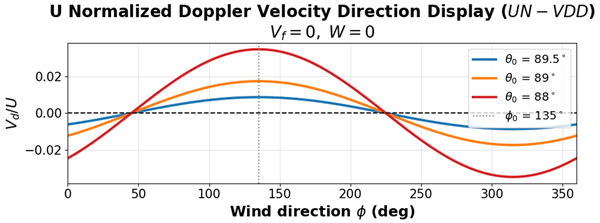
Min Deng, Scott E. Giangrande, Adam K. Theisen, Karen L. Johnson, Iosif A. Lindenmaier, Timothy G. Wendler, Jennifer Comstock, Marquette Rocque, Zeen Zhu, and Alyssa Matthews
Atmos. Meas. Tech., 19, 6327–6339, https://doi.org/10.5194/amt-19-6327-2026, https://doi.org/10.5194/amt-19-6327-2026, 2026
Short summary
Short summary
Cloud radars are used to measure air motion, clouds, and precipitation, but small pointing errors can reduce their accuracy. We developed a method to detect these errors using routine weather balloon observations. Tests with several radar systems in different environments showed that the method can identify small but important pointing biases, helping improve the accuracy and long-term consistency of weather and climate observations.
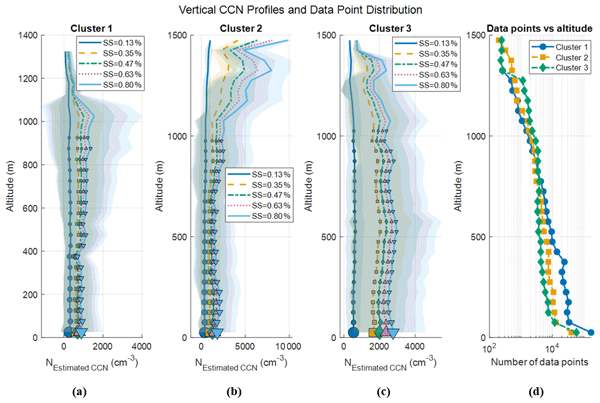
Fan Mei, Jian Wang, Israel Silber, Nurun Nahar Lata, Gregory W. Vandergrift, Jing Li, Bo Chen, Sarah D. Brooks, Michael P. Jensen, Min Deng, Damao Zhang, Darielle Dexheimer, Beat Schmid, Zezhen Cheng, and Swarup China
Atmos. Chem. Phys., 26, 13885–13908, https://doi.org/10.5194/acp-26-13885-2026, https://doi.org/10.5194/acp-26-13885-2026, 2026
Short summary
Short summary
Tethered balloon measurements from 149 flights during DOE ARM TRACER over Houston characterize vertical aerosol and CCN structure. Back-trajectory clustering identifies three air mass types – marine, mixed, and urban – with distinct profiles shaped by boundary-layer depth and coastal circulations. A case study shows mesoscale advection simultaneously transforms thermodynamic and aerosol conditions, underscoring the need to constrain meteorology before attributing cloud changes to aerosol forcing.
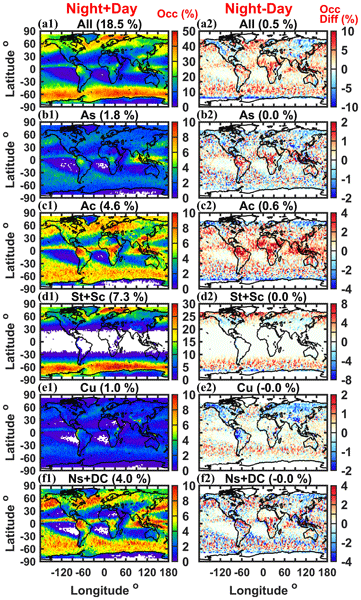
Kang Yang, Zhien Wang, and Min Deng
Atmos. Chem. Phys., 26, 13319–13339, https://doi.org/10.5194/acp-26-13319-2026, https://doi.org/10.5194/acp-26-13319-2026, 2026
Short summary
Short summary
Mixed-phase clouds, which contain both ice crystals and supercooled liquid droplets, strongly influence Earth's radiation budget but remain difficult to represent in climate models. Using global satellite observations, we show that they vary greatly by cloud type, with distinct spatial distributions, vertical structures, and seasonal and surface contrasts. These results provide new observational constraints for improving model representation of mixed-phase clouds.
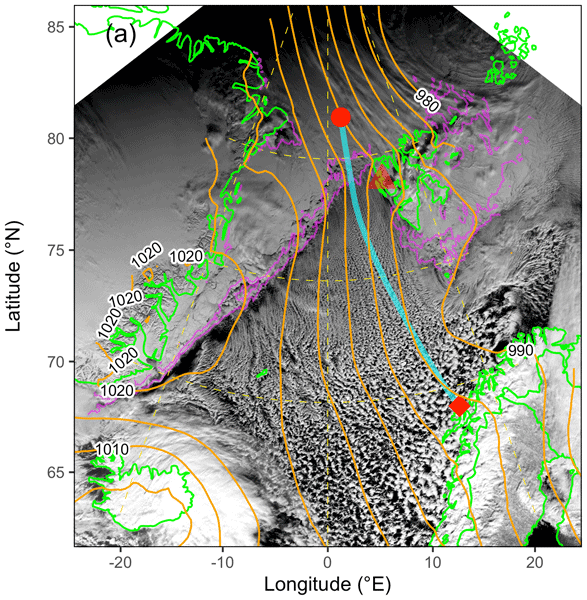
Timothy W. Juliano, Florian Tornow, Ann M. Fridlind, Andrew S. Ackerman, Gregory S. Elsaesser, Bart Geerts, Christian P. Lackner, David Painemal, Israel Silber, Mikhail Ovchinnikov, Gunilla Svensson, Michael Tjernström, Peng Wu, Alejandro Baró Pérez, Peter Bogenschutz, Dmitry Chechin, Kamal Kant Chandrakar, Jan Chylik, Andrey Debolskiy, Rostislav Fadeev, Anu Gupta, Luisa Ickes, Michail Karalis, Martin Köhler, Branko Kosović, Peter Kuma, Weiwei Li, Evgeny Mortikov, Hugh Morrison, Roel A. J. Neggers, Anna Possner, Tomi Raatikainen, Lea Raillard, Sami Romakkaniemi, Niklas Schnierstein, Shin-ichiro Shima, Nikita Silin, Mikhail Tolstykh, Étienne Vignon, Lulin Xue, Meng Zhang, and Xue Zheng
Atmos. Chem. Phys., 26, 13267–13302, https://doi.org/10.5194/acp-26-13267-2026, https://doi.org/10.5194/acp-26-13267-2026, 2026
Short summary
Short summary
Models struggle to capture cloud and precipitation processes and their radiative effects in marine cold-air outbreaks. We use a quasi-Lagrangian framework to compare large-eddy simulation (LES) and single-column model (SCM) output with field and satellite observations. With fixed droplet and ice numbers, LES and SCM agree in liquid-only tests. In mixed-phase conditions, LES plausibly capture cloud thinning and breakup, while SCMs largely remain overcast and thereby miss cloud radiative effects.
Patrick C. Taylor, Armin Sorooshian, Rei Ueyama, Sebastian Schmidt, Ihab Abboud, Quincy Allison, Kevin Barry, Sebastian Becker, Holly A. Bender, Joseph R. Bennett, James B. Blair, Niklas Bohn, Linette Boisvert, Matthew D. Brown, Roelof Bruintjes, Anthony Bucholtz, Megan Buzanowicz, Brian Cairns, Filippo Calì Quaglia, Eduard Chemyakin, Bo Chen, Gao Chen, Hong Chen, Yu-Wen Chen, Zezhen Cheng, Swarup China, Dan Chirica, Yonghoon Choi, Peter Colarco, Brian Collister, Ewan Crosbie, Maurice J. Cross, Janet Daniels, Paul DeMott, Joshua P. DiGangi, Alcide Giorgio di Sarra, Glenn S. Diskin, Erica K. Dolinar, Eva-Lou Edwards, Samuel Ephraim, Nikolaos Evangeliou, Romanos Foskinis, Francesca Gallo, Lan Gao, José Luis Gómez-Amo, Daisy Gonzalez, Christine Groot Zwaaftink, Pawan Gupta, Ivan Heckman, Michael Hendrickson, Miguel Ricardo A. Hilario, Ken Hirata, Michelle Hofton, Andrew L. Holen, Ulas Im, Alia L. Khan, Ralph Kahn, Alexei V. Korolev, Sonia Kreidenweis, Thomas Krumpen, Nathan Kurtz, Leslie Lait, Bradley Lamkin, Jack Landy, Nurun Nahar Lata, Paul Lawson, Samuel LeBlanc, Sean Leavor, Jing Li, Thorsten Markus, Hal Maring, Andreas H. Massling, Camille Mavis, Flynn McGinnity, Kerry Meyer, Gabriel Mojica, Richard H. Moore, Parker Morris, Giovanni Muscari, Vikas Nataraja, Amin R. Nehrir, Athanasios Nenes, Edward P. Nowottnick, Matteo Ottaviani, Chelsea Parker, Ryan Patnaude, Michael Perez, Russell J. Perkins, Colten Peterson, Alek Petty, Stevie Phothisane, Chris Polashenski, Kerri A. Pratt, Kayla M. Preisler, John Prytherch, David Rabine, Jens Redemann, Ju-Mee Ryoo, Joseph S. Schlosser, Vanessa Selimovic, Michael A. Shook, Morgan Silverman, Henrik Skov, Alexander Smirnov, Cassidy Soloff, Amy Solomon, Snorre Stamnes, Azusa Takeishi, David R. Thompson, K. Lee Thornhill, Rachel Tilling, Michael Tjernström, Monica Tosco, Pedro C. Valdelomar, David Van Gilst, Jian Wang, Zhien Wang, Andrzej Wasilewski, Manfred Wendisch, Brent Wilder, Edward L. Winstead, Albert Wu, Peng Xian, Lauren M. Zamora, Jiaoshi Zhang, Lei Zhang, Lu Zhang, Luke Ziemba, and Paquita Zuidema
Earth Syst. Sci. Data Discuss., https://doi.org/10.5194/essd-2026-241, https://doi.org/10.5194/essd-2026-241, 2026
Preprint under review for ESSD
Short summary
Short summary
This article summarizes the data sets collected during the Arctic Radiation Cloud aerosol Sea ice Interaction eXperiment (ARCSIX), NASA's most comprehensive Arctic field campaign to date. The overarching goal was to quantify the contributions of surface, clouds, aerosol particles, and precipitation to summer sea ice melt. This paper describes the ARCSIX implementation including the flight strategy, instruments, complementary data sets, access, and usage details.
Sisi Chen, Lulin Xue, Michelle Harrold, Sarah Tessendorf, Jamie Wolff, Nick Dawson, and Darcy Jacobson
EGUsphere, https://doi.org/10.5194/egusphere-2026-3289, https://doi.org/10.5194/egusphere-2026-3289, 2026
Short summary
Short summary
Glaciogenic seeding is used in winter mountains to enhance snowpack and address water scarcity. Liquid propane seeding, a type of glaciogenic seeding, generates ice in relatively warm conditions where silver iodide is less effective, yet no models exist to simulate its impacts. We built a liquid propane seeding module in a weather model and tested it over idealized mountains. Simulations show snow enhancement is strongest where clouds are rich in supercooled liquid and rain formation is weak.
Samuel Ephraim, Paquita Zuidema, Aaron Bansemer, Lintong Cai, Markus Petters, Elise Rosky, Jefferson R. Snider, Zhien Wang, Sarah Woods, Kevin Barry, Theresa Campos, Owen Cruikshank, Sabine Eckhardt, Nikolaos Evangeliou, Romanos Foskinis, Jeffrey R. French, Bart Geerts, Coltin Grasmick, Silvia Henning, Varun Kumar, Andreas Massling, Camille Mavis, Greg M. McFarquhar, Athanasios Nenes, Gunnar Noer, Ryan Patnaude, Russell Perkins, Lise Lotte Sorensen, Henrik Skov, Tyler Tatro, Florian Tornow, and Lu Zhang
EGUsphere, https://doi.org/10.5194/egusphere-2026-2940, https://doi.org/10.5194/egusphere-2026-2940, 2026
Short summary
Short summary
The processes that establish how mixed-phase closed-cell clouds transition to more open cellular structures are poorly known. First-of-its kind aircraft observations document such a transition in the presence of anomalously high aerosol concentrations over the Nordic Seas at cloud temperatures < -15 °C. The reduces the drop size, discouraging riming. Eventually, ice precipitation produces surface cold pools that drive the convective transition, despite strong counteracting surface fluxes.
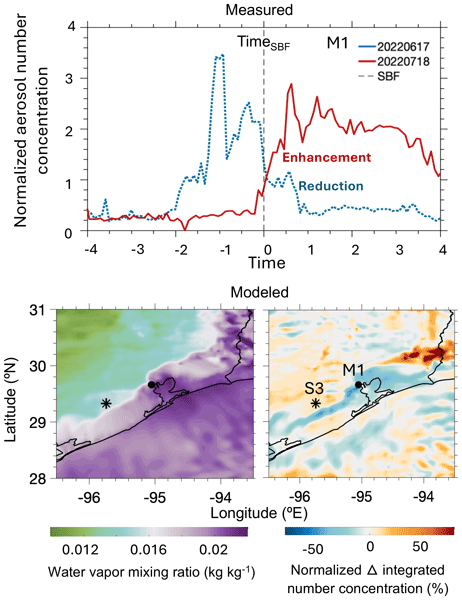
Tamanna Subba, Michael P. Jensen, Min Deng, Scott E. Giangrande, Mark C. Harvey, Ashish Singh, Die Wang, Maria Zawadowicz, and Chongai Kuang
Atmos. Chem. Phys., 26, 2853–2879, https://doi.org/10.5194/acp-26-2853-2026, https://doi.org/10.5194/acp-26-2853-2026, 2026
Short summary
Short summary
Using TRacking Aerosol Convection Interactions Experiment field campaign observations and model simulations, we studied summertime sea-breeze events in southern Texas. When sea-breeze fronts moved inland, they mixed marine and continental air, changing aerosol concentrations by up to a factor of two as far as 50 km inland. The sea breeze also reduced the number of particles that can form cloud droplets, highlighting the connection between coastal meteorology and aerosol-cloud interactions.
Timothy W. Juliano, Florian Tornow, Ann M. Fridlind, Andrew S. Ackerman, Gregory S. Elsaesser, Bart Geerts, Christian P. Lackner, David Painemal, Israel Silber, Mikhail Ovchinnikov, Gunilla Svensson, Michael Tjernström, Peng Wu, Alejandro Baró Pérez, Peter Bogenschutz, Dmitry Chechin, Kamal Kant Chandrakar, Jan Chylik, Andrey Debolskiy, Rostislav Fadeev, Anu Gupta, Luisa Ickes, Michail Karalis, Martin Köhler, Branko Kosović, Peter Kuma, Weiwei Li, Evgeny Mortikov, Hugh Morrison, Roel A. J. Neggers, Anna Possner, Tomi Raatikainen, Sami Romakkaniemi, Niklas Schnierstein, Shin-ichiro Shima, Nikita Silin, Mikhail Tolstykh, Lulin Xue, Meng Zhang, and Xue Zheng
EGUsphere, https://doi.org/10.5194/egusphere-2025-6217, https://doi.org/10.5194/egusphere-2025-6217, 2026
Preprint archived
Short summary
Short summary
Models struggle to capture cloud and precipitation processes and their radiative effects in marine cold-air outbreaks. We use a quasi-Lagrangian framework to compare large-eddy simulation (LES) and single-column model (SCM) output with field and satellite observations. With fixed droplet and ice numbers, LES and SCM agree in liquid-only tests. In mixed-phase conditions, LES plausibly capture cloud thinning and breakup, while SCMs largely remain overcast and thereby miss cloud radiative effects.
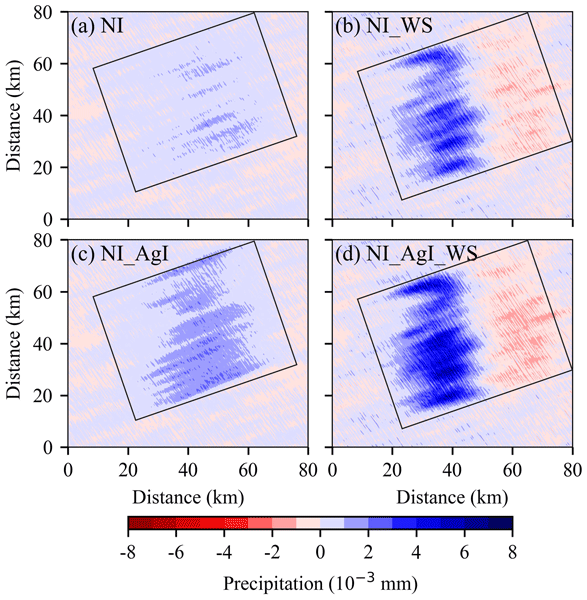
Meilian Chen, Xiaoqin Jing, Jiaojiao Li, Jing Yang, Xiaobo Dong, Bart Geerts, Yan Yin, Baojun Chen, Lulin Xue, Mengyu Huang, Ping Tian, and Shaofeng Hua
Atmos. Chem. Phys., 25, 7581–7596, https://doi.org/10.5194/acp-25-7581-2025, https://doi.org/10.5194/acp-25-7581-2025, 2025
Short summary
Short summary
Several recent studies have reported complete cloud glaciation induced by airborne-based glaciogenic cloud seeding over plains. Since turbulence is an important factor to maintain clouds in a mixed phase, it is hypothesized that turbulence may have an impact on the seeding effect. This hypothesis is evident in the present study, which shows that turbulence can accelerate the impact of airborne glaciogenic seeding of stratiform clouds.
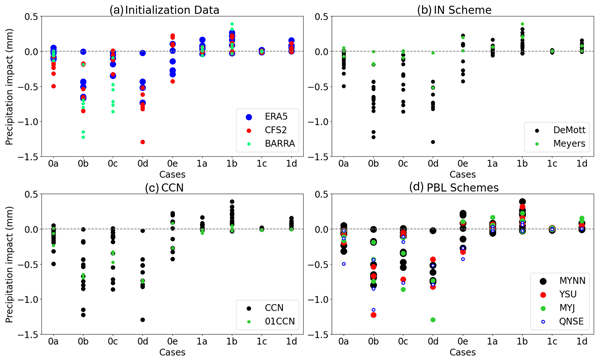
Sisi Chen, Lulin Xue, Sarah A. Tessendorf, Thomas Chubb, Andrew Peace, Suzanne Kenyon, Johanna Speirs, Jamie Wolff, and Bill Petzke
Atmos. Chem. Phys., 25, 6703–6724, https://doi.org/10.5194/acp-25-6703-2025, https://doi.org/10.5194/acp-25-6703-2025, 2025
Short summary
Short summary
This study aims to investigate how cloud seeding affects snowfall in Australia's Snowy Mountains. By running simulations with different setups, we found that seeding impact varies greatly with weather conditions. Seeding increased snow in stable weather but sometimes reduced it in stormy weather. This helps us to better understand when seeding works best to boost water supplies.
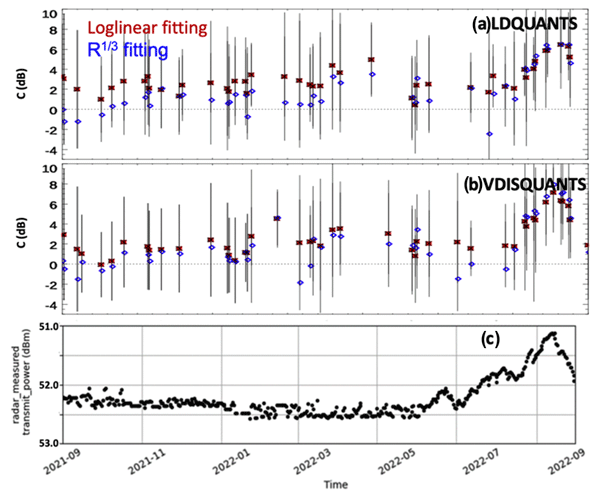
Min Deng, Scott E. Giangrande, Michael P. Jensen, Karen Johnson, Christopher R. Williams, Jennifer M. Comstock, Ya-Chien Feng, Alyssa Matthews, Iosif A. Lindenmaier, Timothy G. Wendler, Marquette Rocque, Aifang Zhou, Zeen Zhu, Edward Luke, and Die Wang
Atmos. Meas. Tech., 18, 1641–1657, https://doi.org/10.5194/amt-18-1641-2025, https://doi.org/10.5194/amt-18-1641-2025, 2025
Short summary
Short summary
A relative calibration technique is developed for the cloud radar by monitoring the intercept of the wet-radome attenuation log-linear behavior as a function of rainfall rates in light and moderate rain conditions. This resulting reflectivity offset during the recent field campaign is compared favorably with the traditional disdrometer comparison near the rain onset, while it also demonstrates similar trends with respect to collocated and independently calibrated reference radars.
Jing Yang, Jiaojiao Li, Meilian Chen, Xiaoqin Jing, Yan Yin, Bart Geerts, Zhien Wang, Yubao Liu, Baojun Chen, Shaofeng Hua, Hao Hu, Xiaobo Dong, Ping Tian, Qian Chen, and Yang Gao
Atmos. Chem. Phys., 24, 13833–13848, https://doi.org/10.5194/acp-24-13833-2024, https://doi.org/10.5194/acp-24-13833-2024, 2024
Short summary
Short summary
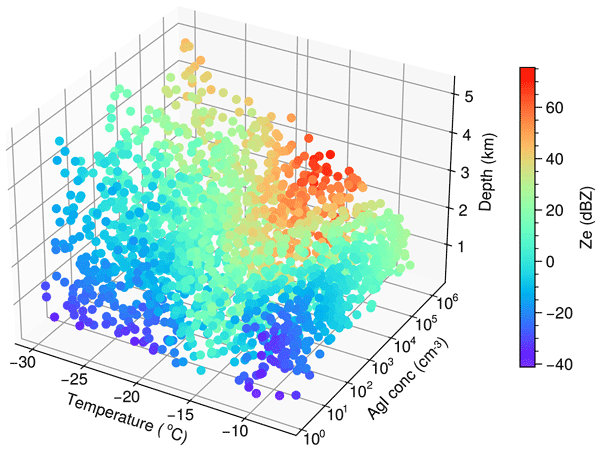
Detecting unambiguous signatures is vital for examining cloud-seeding impacts, but often, seeding signatures are immersed in natural variability. In this study, reflectivity changes induced by glaciogenic seeding using different AgI concentrations are investigated under various conditions, and a method is developed to estimate the AgI concentration needed to detect unambiguous seeding signatures. The results aid in operational seeding-based decision-making regarding the amount of AgI dispersed.
Chongzhi Yin, Shin-ichiro Shima, Lulin Xue, and Chunsong Lu
Geosci. Model Dev., 17, 5167–5189, https://doi.org/10.5194/gmd-17-5167-2024, https://doi.org/10.5194/gmd-17-5167-2024, 2024
Short summary
Short summary
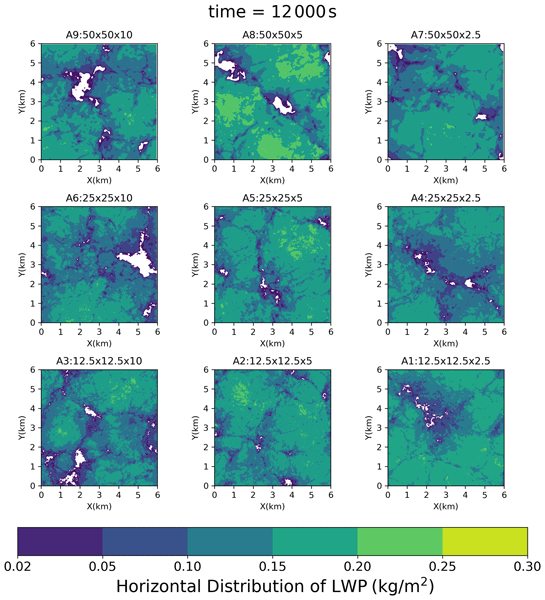
We investigate numerical convergence properties of a particle-based numerical cloud microphysics model (SDM) and a double-moment bulk scheme for simulating a marine stratocumulus case, compare their results with model intercomparison project results, and present possible explanations for the different results of the SDM and the bulk scheme. Aerosol processes can be accurately simulated using SDM, and this may be an important factor affecting the behavior and morphology of marine stratocumulus.
Jingting Huang, S. Marcela Loría-Salazar, Min Deng, Jaehwa Lee, and Heather A. Holmes
Atmos. Chem. Phys., 24, 3673–3698, https://doi.org/10.5194/acp-24-3673-2024, https://doi.org/10.5194/acp-24-3673-2024, 2024
Short summary
Short summary
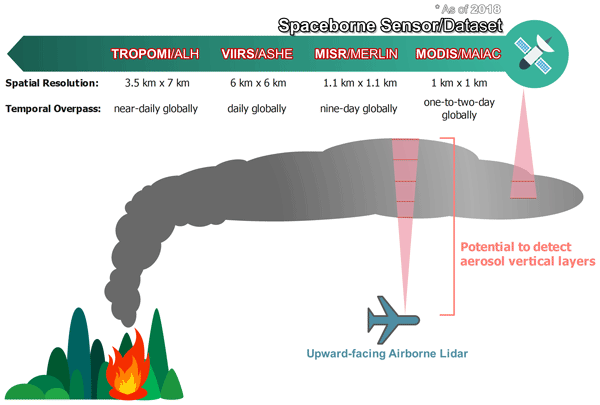
Increased wildfire intensity has resulted in taller wildfire smoke plumes. We investigate the vertical structure of wildfire smoke plumes using aircraft lidar data and establish two effective smoke plume height metrics. Four novel satellite-based plume height products are evaluated for wildfires in the western US. Our results provide guidance on the strengths and limitations of these satellite products and set the stage for improved plume rise estimates by leveraging satellite products.
Sisi Chen, Lulin Xue, Sarah Tessendorf, Kyoko Ikeda, Courtney Weeks, Roy Rasmussen, Melvin Kunkel, Derek Blestrud, Shaun Parkinson, Melinda Meadows, and Nick Dawson
Atmos. Chem. Phys., 23, 5217–5231, https://doi.org/10.5194/acp-23-5217-2023, https://doi.org/10.5194/acp-23-5217-2023, 2023
Short summary
Short summary
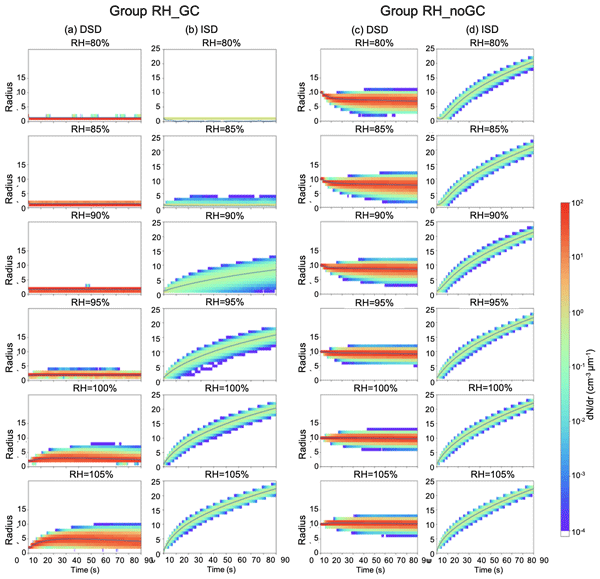
The possible mechanism of effective ice growth in the cloud-top generating cells in winter orographic clouds is explored using a newly developed ultra-high-resolution cloud microphysics model. Simulations demonstrate that a high availability of moisture and liquid water is critical for producing large ice particles. Fluctuations in temperature and moisture down to millimeter scales due to cloud turbulence can substantially affect the growth history of the individual cloud particles.
Yabin Gou, Haonan Chen, Hong Zhu, and Lulin Xue
Atmos. Chem. Phys., 23, 2439–2463, https://doi.org/10.5194/acp-23-2439-2023, https://doi.org/10.5194/acp-23-2439-2023, 2023
Short summary
Short summary
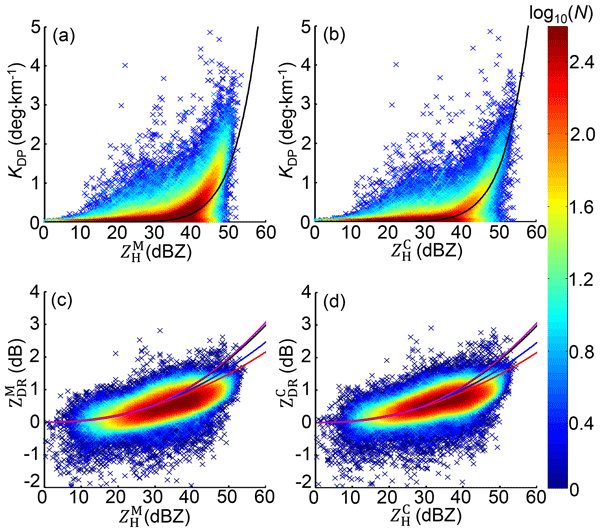
This article investigates the complex precipitation microphysics associated with super typhoon Lekima using a host of in situ and remote sensing observations, including rain gauge and disdrometer data, as well as polarimetric radar observations. The impacts of precipitation microphysics on multi-source data consistency and radar precipitation estimation are quantified. It is concluded that the dynamical precipitation microphysical processes must be considered in radar precipitation estimation.
Istvan Geresdi, Lulin Xue, Sisi Chen, Youssef Wehbe, Roelof Bruintjes, Jared A. Lee, Roy M. Rasmussen, Wojciech W. Grabowski, Noemi Sarkadi, and Sarah A. Tessendorf
Atmos. Chem. Phys., 21, 16143–16159, https://doi.org/10.5194/acp-21-16143-2021, https://doi.org/10.5194/acp-21-16143-2021, 2021
Short summary
Short summary
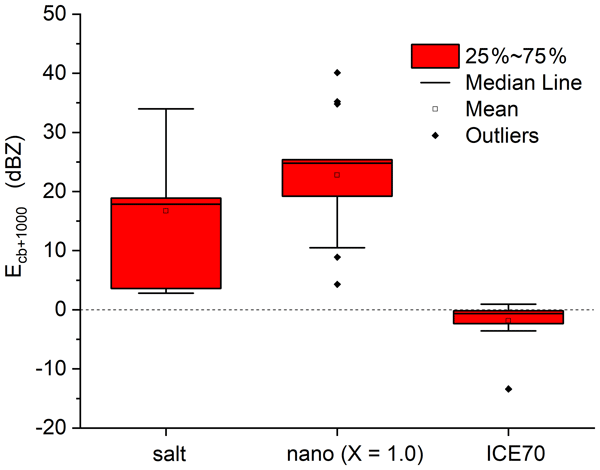
By releasing soluble aerosols into the convective clouds, cloud seeding potentially enhances rainfall. The seeding impacts are hard to quantify with observations only. Numerical models that represent the detailed physics of aerosols, cloud and rain formation are used to investigate the seeding impacts on rain enhancement under different natural aerosol backgrounds and using different seeding materials. Our results indicate that seeding may enhance rainfall under certain conditions.
Cited articles
Angevine, W. M., Grimsdell, A. W., Hartten, L. M., and Delany, A. C.: The Flatland boundary layer experiments, Bull. Am. Meteorol. Soc., 79, 419–432, https://doi.org/10.1175/1520-0477(1998)079<0419:TFBLE>2.0.CO;2, 1998.
Arcomano, T., Szunyogh, I., Wikner, A., Pathak, J., Hunt, B. R., and Ott, E.: A hybrid atmospheric model incorporating machine learning can capture dynamical processes not captured by its physics-based component, Geophys. Res. Lett., 50, e2022GL102649, https://doi.org/10.1029/2022GL102649, 2023.
Arcucci, R., Zhu, J., Hu, S., and Guo, Y. K.: Deep data assimilation: integrating deep learning with data assimilation, Appl. Sci., 11, 1114, https://doi.org/10.3390/app11031114, 2021.
ARM (Atmospheric Radiation Measurement) user facility: Doppler Lidar (DLFPT) data from Southern Great Plains (C1, E32, E37, E39), 2016–2020, compiled by Newsom, R., Shi, Y., and Krishnamurthy, R., ARM Data Center [data set], https://doi.org/10.5439/1025185, 2024.
Ayazpour, Z., Tao, S., Li, D., Scarino, A. J., Kuehn, R. E., and Sun, K.: Estimates of the spatially complete, observational-data-driven planetary boundary layer height over the contiguous United States, Atmos. Meas. Tech., 16, 563–580, https://doi.org/10.5194/amt-16-563-2023, 2023.
Baklanov, A., Schlünzen, K., Suppan, P., Baldasano, J., Brunner, D., Aksoyoglu, S., Carmichael, G., Douros, J., Flemming, J., Forkel, R., Galmarini, S., Gauss, M., Grell, G., Hirtl, M., Joffre, S., Jorba, O., Kaas, E., Kaasik, M., Kallos, G., Kong, X., Korsholm, U., Kurganskiy, A., Kushta, J., Lohmann, U., Mahura, A., Manders-Groot, A., Maurizi, A., Moussiopoulos, N., Rao, S. T., Savage, N., Seigneur, C., Sokhi, R. S., Solazzo, E., Solomos, S., Sørensen, B., Tsegas, G., Vignati, E., Vogel, B., and Zhang, Y.: Online coupled regional meteorology chemistry models in Europe: current status and prospects, Atmos. Chem. Phys., 14, 317–398, https://doi.org/10.5194/acp-14-317-2014, 2014.
Barlow, J. F., Dunbar, T. M., Nemitz, E. G., Wood, C. R., Gallagher, M. W., Davies, F., O'Connor, E., and Harrison, R. M.: Boundary layer dynamics over London, UK, as observed using Doppler lidar during REPARTEE-II, Atmos. Chem. Phys., 11, 2111–2125, https://doi.org/10.5194/acp-11-2111-2011, 2011.
Barlow, J. F., Halios, C. H., Lane, S. E., and Wood, C. R.: Observations of urban boundary layer structure during a strong urban heat island event, Environ. Fluid Mech., 15, 373–398, https://doi.org/10.1007/s10652-014-9335-6, 2015.
Bauer, P., Thorpe, A., and Brunet, G.: The quiet revolution of numerical weather prediction, Nature, 525, 47–55, https://doi.org/10.1038/nature14956, 2015.
Beare, R. J.: The role of shear in the morning transition boundary layer, Bound.-Lay. Meteorol., 129, 395–410, https://doi.org/10.1007/s10546-008-9324-8, 2008.
Beare, R. J., MacVean, M. K., Holtslag, A. A. M., Cuxart, J., Esau, I., Golaz, J.-C., Jimenez, M. A., Khairoutdinov, M., Kosovic, B., Lewellen, D., Lund, T. S., Lundquist, J. K., McCabe, A., Moene, A. F., Noh, Y., Raasch, S., and Sullivan, P.: An intercomparison of large-eddy simulations of the stable boundary layer, Bound.-Lay. Meteorol., 118, 247–272, https://doi.org/10.1007/s10546-004-2820-6, 2006.
Ben Bouallègue, Z., Clare, M. C. A., Magnusson, L., and Co-authors: The rise of data-driven weather forecasting: a first statistical assessment of machine learning–based weather forecasts in an operational-like context, B. Am. Meteorol. Soc., 105, E864–E883, https://doi.org/10.1175/BAMS-D-23-0162.1, 2024.
Bianco, L., Djalalova, I. V., King, C. W., and Wilczak, J. M.: Diurnal evolution and annual variability of boundary-layer height and its correlation to other meteorological variables in California's Central Valley, Bound.-Lay. Meteorol., 141, 491–514, https://doi.org/10.1007/s10546-011-9622-4, 2011.
Breiman, L.: Random forests, Mach. Learn., 45, 5–32, https://doi.org/10.1023/A:1010933404324, 2001.
Brown, A. R., Beare, R. J., Edwards, J. M., Lock, A. P., Keogh, S. J., Milton, S. F., and Walters, D. N.: Upgrades to the boundary-layer scheme in the Met Office numerical weather prediction model, Bound.-Lay. Meteorol., 128, 117–132, https://doi.org/10.1007/s10546-008-9275-0, 2008.
Chen, T. and Guestrin, C.: XGBoost: A scalable tree boosting system, in: Proceedings of the 22nd ACM SIGKDD International Conference on Knowledge Discovery and Data Mining, 785–794, https://doi.org/10.1145/2939672.2939785, 2016.
Chu, Y. and Wang, Z.: ARM PI DATA: ARM SGP PBLH and MLH datasets from Raman lidar and doppler lidar, Atmospheric Radiation Measurement User Facility [data set], https://doi.org/10.5439/2997130, 2025.
Chu, Y., Liu, D., Wang, Z., Wu, D., Deng, Q., Li, L., Zhuang, P., and Wang, Y.: Basic principle and technical progress of Doppler wind lidar, Chinese J. Quantum Electron., 37, 580–600, https://doi.org/10.3969/j.issn.1007-5461.2020.05.008, 2020.
Chu, Y., Wang, Z., Xue, L., Li, Y., Wang, Q., and Zhang, Y.: Characterizing warm atmospheric boundary layer over land by combining Raman and Doppler lidar measurements, Opt. Express, 30, 11892–11911, https://doi.org/10.1364/OE.451728, 2022.
Chu, Y., Wang, Z., Deng, M., Lin, G., Xue, L., Li, W., Shin, H. H., and Brabec, C. M.: The spatial and seasonal variability of the mixing layer height at SGP sites, Adv. Atmos. Sci., accepted, https://doi.org/10.1007/s00376-025-5575-2, 2026.
Chu, Y., Lin, G., Deng, M., Wang, Z., Zhang, Y., and Li, Y.: Characterizing seasonal variation of the atmospheric mixing layer height using machine learning approaches, Remote Sens., 17, 1399, https://doi.org/10.3390/rs17081399, 2025a.
Chu, Y., Lin, G., Deng, M., and Wang, Z.: Characteristics of Eddy Dissipation Rates in Atmosphere Boundary Layer Using Doppler Lidar, Remote Sens., 17, 1652, https://doi.org/10.3390/rs17091652, 2025b.
Cohen, A. E., Cavallo, S. M., Coniglio, M. C., and Brooks, H. E.: A review of planetary boundary layer parameterization schemes and their sensitivity in simulating southeastern U.S. cold season severe weather environments, Weather Forecast., 30, 591–612, https://doi.org/10.1175/WAF-D-14-00105.1, 2015.
Cohn, S. A. and Angevine, W. M.: Boundary layer height and entrainment zone thickness measured by lidars and wind-profiling radars, J. Appl. Meteorol., 39, 1233–1247, https://doi.org/10.1175/1520-0450(2000)039<1233:BLHAEZ> 2.0.CO;2, 2000.
Compton, J. C., Delgado, R., Berkoff, T. A., and Hoff, R. M.: Determination of planetary boundary layer height on short spatial and temporal scales: A demonstration of the covariance wavelet transform in ground-based wind profiler and lidar measurements, J. Atmos. Ocean. Tech., 30, 1566–1575, https://doi.org/10.1175/JTECH-D-12-00116.1, 2013.
Cook, D. R.: Eddy Correlation Flux Measurement System (ECOR) Instrument Handbook, DOE Office Sci. Atmos. Radiat. Meas. (ARM) User Facil., https://doi.org/10.2172/1467448, 2018a.
Cook, D. R.: Energy Balance Bowen Ratio Station (EBBR) Instrument Handbook, DOE Office Sci. Atmos. Radiat. Meas. (ARM) User Facil., https://doi.org/10.2172/1020562, 2018b.
Cunha, B. M. and Barbosa, S. D. J.: Evaluating the Effectiveness of Visual Representations of SHAP Values Toward Explainable Artificial Intelligence, Proc. XXIII Brazilian Symp. Human Factors Comput. Syst., https://doi.org/10.1145/3702038.3702093, 2024.
Cuxart, J., Holtslag, A. A. M., Beare, R. J., Bazile, E., Beljaars, A., Cheng, A., Conangla, L., Ek, M., Freedman, F., Hamdi, R., Kerstein, A., Kitagawa, H., Lenderink, G., Lewellen, D., Mailhot, J., Mauritsen, T., Perov, V., Schayes, G., Steeneveld, G.-J., Svensson, G., Taylor, P., Weng, W., Wunsch, S., and Xu, K. M.: Single-column model intercomparison for a stable PBL, Bound.-Lay. Meteorol., 118, 273–303, https://doi.org/10.1007/s10546-005-3780-1, 2006.
de Arruda Moreira, G., Sánchez-Hernández, G., Guerrero-Rascado, J. L., Cazorla, A., and Alados-Arboledas, L.: Estimating the urban atmospheric boundary layer height from remote sensing applying machine learning techniques, Atmos. Res., 266, 105962, https://doi.org/10.1016/j.atmosres.2021.105962, 2022.
Deardorff, J. W.: Prediction of convective mixed-layer entrainment for realistic capping inversion structure, J. Atmos. Sci., 36, 424–436, https://doi.org/10.1175/1520-0469(1979)036<0424:POCMLE>2.0.CO;2, 1979.
de Burgh-Day, C. O. and Leeuwenburg, T.: Machine learning for numerical weather and climate modelling: a review, Geosci. Model Dev., 16, 6433–6477, https://doi.org/10.5194/gmd-16-6433-2023, 2023.
Du, L., Pan, Y. N., and Wang, W.: Random sample fitting method to determine the planetary boundary layer height using satellite-based lidar backscatter profiles, Remote Sens., 12, 4006, https://doi.org/10.3390/rs12234006, 2020.
Emeis, S., Schäfer, K., and Münkel, C.: Observation of the structure of the urban boundary layer with different ceilometers and validation by RASS data, Meteorol. Z., 18, 149–164, https://doi.org/10.1127/0941-2948/2009/0365, 2009.
Feltz, W. F., Smith, W. L., Howell, H. B., Knuteson, R. O., Woolf, H., and Revercomb, H. E.: Near-continuous profiling of temperature, moisture, and atmospheric stability using the Atmospheric Emitted Radiance Interferometer (AERI), J. Appl. Meteorol., 42, 584–597, https://doi.org/10.1175/1520-0450(2003)042<0584:NPOTMA>2.0.CO;2, 2003.
Fernando, H. J. S.: Fluid dynamics of urban atmospheres in complex terrain, Annu. Rev. Fluid Mech., 42, 365–389, https://doi.org/10.1146/annurev-fluid-121108-145459, 2010.
Garratt, J. R.: The Atmospheric Boundary Layer, Cambridge University Press, Cambridge, New York, ISBN 978-0-521-38052-7, 1992.
Garratt, J. R.: The atmospheric boundary layer, Earth-Sci. Rev., 37, 89–134, https://doi.org/10.1016/0012-8252(94)90026-4, 1994.
Goodfellow, I.: NIPS 2016 Tutorial: Generative Adversarial Networks, arXiv [preprint], https://doi.org/10.48550/arXiv.1701.00160, 2016.
Grenier, H. and Bretherton, C. S.: A moist PBL parameterization for large-scale models and its application to subtropical cloud-topped marine boundary layers, Mon. Weather Rev., 129, 357–377, https://doi.org/10.1175/1520-0493(2001)129<0357:AMPPFL>2.0.CO;2, 2001.
Hägeli, P., Steyn, D. G., and Strawbridge, K. B.: Spatial and temporal variability of mixed-layer depth and entrainment zone thickness, Bound.-Lay. Meteorol., 97, 47–71, https://doi.org/10.1023/A:1002790424133, 2000.
Helmis, C. G., Sgouros, G., Tombrou, M., Schäfer, K., Münkel, C., Bossioli, E., and Dandou, A.: A comparative study and evaluation of mixing-height estimation based on sodar-RASS, ceilometer data and numerical model simulations, Bound.-Lay. Meteorol., 145, 507–526, https://doi.org/10.1007/s10546-012-9743-4, 2012.
Hennemuth, B. and Lammert, A.: Determination of the atmospheric boundary layer height from radiosonde and lidar backscatter, Bound.-Lay. Meteorol., 120, 181–200, https://doi.org/10.1007/s10546-005-9035-3, 2006.
Heo, B.-H., Jacoby-Koaly, S., Kim, K.-E., Campistron, B., Benech, B., and Jung, E.-S.: Use of the Doppler spectral width to improve the estimation of the convective boundary layer height from UHF wind profiler observations, J. Atmos. Oceanic Technol., 20, 408–424, https://doi.org/10.1175/1520-0426(2003)020<0408:UOTDSW>2.0.CO;2, 2003.
Hohenegger, C. and Stevens, B.: Preconditioning deep convection with cumulus congestus, J. Atmos. Sci., 70, 448–464, https://doi.org/10.1175/JAS-D-12-089.1, 2013.
Holtslag, A. A. M., Svensson, G., Baas, P., Basu, S., Beare, B., Beljaars, A. C. M., Bosveld, F. C., Cuxart, J., Lindvall, J., Steeneveld, G. J., and Tjernström, M.: Stable atmospheric boundary layers and diurnal cycles: challenges for weather and climate models, Bull. Amer. Meteor. Soc., 94, 1691–1706, https://doi.org/10.1175/BAMS-D-11-00187.1, 2013.
Hu, X.-M., Nielsen-Gammon, J. W., and Zhang, F.: Evaluation of three planetary boundary layer schemes in the WRF model, J. Appl. Meteorol. Climatol., 49, 1831–1844, https://doi.org/10.1175/2010JAMC2432.1, 2010.
Jin, H., Song, Q., and Hu, X.: Auto-Keras: An Efficient Neural Architecture Search System, in: Proceedings of the 25th ACM SIGKDD International Conference on Knowledge Discovery & Data Mining, Anchorage, AK, USA, 4–8 August 2019, 1946–1956, https://doi.org/10.1145/3292500.3330648, 2019.
Krishnamurthy, R., Newsom, R. K., Berg, L. K., Xiao, H., Ma, P.-L., and Turner, D. D.: On the estimation of boundary layer heights: a machine learning approach, Atmos. Meas. Tech., 14, 4403–4424, https://doi.org/10.5194/amt-14-4403-2021, 2021a.
Krishnamurthy, R., Newsom, R. K., Chand, D., and Shaw, W. J.: Boundary layer climatology at ARM Southern Great Plains, PNNL-30832, Pacific Northwest National Laboratory, Richland, WA, USA, https://doi.org/10.2172/1778833, 2021b.
Lammert, A. and Bösenberg, J.: Determination of the convective boundary-layer height with laser remote sensing, Boundary-Layer Meteorol., 119, 159–170, https://doi.org/10.1007/s10546-005-9020-x, 2006.
Lenschow, D. H., Lothon, M., Mayor, S. D., Sullivan, P. P., and Canut, G.: A comparison of higher-order vertical velocity moments in the convective boundary layer from lidar with in situ measurements and large-eddy simulation, Bound.-Lay. Meteorol., 143, 107–123, https://doi.org/10.1007/s10546-011-9615-3, 2012.
Li, W., D'Amico, D., Bernardet, L., Xue, L., Dudhia, J., Shin, H. H., Firl, G., Sun, S., Harrold, M., Nance, L. B., Ek, M., and Chu, Y.: Demonstrating hierarchical system development with the Common Community Physics Package single-column model: A case study over the Southern Great Plains, Meteorol. Appl., 32, e70073, https://doi.org/10.1002/met.70073, 2025.
Liang, S., Fei, Z., Wu, J., and Lin, X.: Tree-based pipeline optimization-based automated-machine learning model for performance prediction of materials and structures: case studies and UI design, Struct. Control Health Monit., 2024, 1485739, https://doi.org/10.1155/2024/1485739, 2024.
Lilly, D. K.: Models of cloud-topped mixed layers under a strong inversion, Q. J. Roy. Meteor. Soc., 94, 292–309, https://doi.org/10.1002/qj.49709440106, 1968.
Lin, G., Wang, Z., Chu, Y., Ziegler, C. L., Hu, X.-M., Xue, M., Geerts, B., and DeGraw, J.: Airborne measurements of scale-dependent latent heat flux impacted by water vapor and vertical velocity over heterogeneous land surfaces during the CHEESEHEAD19 campaign, J. Geophys. Res.-Atmos., 129, e2023JD039586, https://doi.org/10.1029/2023JD039586, 2024.
Liu, S. and Liang, X.-Z.: Observed diurnal cycle climatology of planetary boundary layer height, J. Climate, 23, 5790–5809, https://doi.org/10.1175/2010JCLI3552.1, 2010.
Liu, Z., Chang, J., Li, H., Chen, S., and Dai, T.: Estimating boundary layer height from lidar data under complex atmospheric conditions using machine learning, Remote Sens., 14, 418, https://doi.org/10.3390/rs14020418, 2022.
Luo, T., Yuan, R., and Wang, Z.: Lidar-based remote sensing of atmospheric boundary layer height over land and ocean, Atmos. Meas. Tech., 7, 173–182, https://doi.org/10.5194/amt-7-173-2014, 2014.
Luo, Z., Song, X., Yin, J., Bu, Z., Chen, Y., Yu, Y., and Zhang, Z.: Comparison and verification of coherent Doppler wind lidar and radiosonde data in the Beijing urban area, Adv. Atmos. Sci., 41, 2203–2214, https://doi.org/10.1007/s00376-024-3240-9, 2024.
Macatangay, R., Sonkaew, T., Bran, S. H., Thongsame, W., Supasri, T., Panya, M., Longmali, J., Solanki, R., Thomson, B. S., and Haug, A.: Temperature-constrained lidar retrieval of planetary boundary layer height over Chiang Mai, Thailand, Atmos. Meas. Tech., 18, 4347–4356, https://doi.org/10.5194/amt-18-4347-2025, 2025.
Madonna, F., Summa, D., Di Girolamo, P., Marra, F., Wang, Y., and Rosoldi, M.: Assessment of trends and uncertainties in the atmospheric boundary layer height estimated using radiosounding observations over Europe, Atmosphere, 12, 301, https://doi.org/10.3390/atmos12030301, 2021.
Mather, J. H. and Voyles, J. W.: The ARM Climate Research Facility: a review of structure and capabilities, B. Am. Meteorol. Soc., 94, 377–392, https://doi.org/10.1175/BAMS-D-11-00218.1, 2013.
Newsom, R. K. and Krishnamurthy, R.: Doppler Lidar (DL) Instrument Handbook, DOE Office Sci. Atmos. Radiat. Meas. (ARM) User Facil., DOE/SC-ARM/TR-101, https://doi.org/10.2172/1034640, 2022.
Olson, R. S., Bartley, N., Urbanowicz, R. J., and Moore, J. H.: Evaluation of a Tree-based Pipeline Optimization Tool for Automating Data Science, in: Proceedings of the Genetic and Evolutionary Computation Conference 2016, Denver, CO, USA, 20–24 July 2016, 485–492, https://doi.org/10.1145/2908812.2908918, 2016.
Peng, K., Xin, J., Zhu, X., Wang, X., Cao, X., Ma, Y., and Wang, Z.: Machine learning model to accurately estimate the planetary boundary layer height of Beijing urban area with ERA5 data, Atmos. Res., 293, 106925, https://doi.org/10.1016/j.atmosres.2023.106925, 2023.
Pino, D., Vilà-Guerau de Arellano, J., and Duynkerke, P. G.: The contribution of shear to the evolution of a convective boundary layer, J. Atmos. Sci., 60, 1913–1926, https://doi.org/10.1175/1520-0469(2003)060<1913:TCOSTT>2.0.CO;2, 2003.
Ponce-Bobadilla, A. V., Schmitt, V., Maier, C. S., Mensing, S., and Stodtmann, S.: Practical guide to SHAP analysis: Explaining supervised machine learning model predictions in drug development, Clin. Transl. Sci., 17, e70056, https://doi.org/10.1111/cts.70056, 2024.
Reichstein, M., Camps-Valls, G., Stevens, B., Jung, M., Denzler, J., Carvalhais, N., and Prabhat: Deep learning and process understanding for data-driven Earth system science, Nature, 566, 195–204, https://doi.org/10.1038/s41586-019-0912-1, 2019.
Salehin, I., Islam, M. S., Saha, P., Noman, S. M., Tuni, A., Hasan, M. M., and Baten, M. A.: AutoML: A systematic review on automated machine learning with neural architecture search, J. Inf. Intell., 2, 52–81, https://doi.org/10.1016/j.jiixd.2023.10.002, 2024.
Sawyer, V. and Li, Z.: Detection, variations and intercomparison of the planetary boundary layer depth from radiosonde, lidar and infrared spectrometer, Atmos. Environ., 79, 518–528, https://doi.org/10.1016/j.atmosenv.2013.07.019, 2013.
Schween, J. H., Hirsikko, A., Löhnert, U., and Crewell, S.: Mixing-layer height retrieval with ceilometer and Doppler lidar: from case studies to long-term assessment, Atmos. Meas. Tech., 7, 3685–3704, https://doi.org/10.5194/amt-7-3685-2014, 2014.
Seibert, P., Beyrich, F., Gryning, S.-E., Joffre, S., Rasmussen, A., and Tercier, P.: Review and intercomparison of operational methods for the determination of the mixing height, Atmos. Environ., 34, 1001–1027, https://doi.org/10.1016/S1352-2310(99)00449-0, 2000.
Seidel, D. J., Ao, C. O., and Li, K.: Estimating climatological planetary boundary layer heights from radiosonde observations: Comparison of methods and uncertainty analysis, J. Geophys. Res.-Atmos., 115, D16113, https://doi.org/10.1029/2009JD013680, 2010.
Shin, H. H., Xue, L., Li, W., Firl, G., D'Amico, D. F., Muñoz-Esparza, D., Ek, M. B., Chu, Y., Wang, Z., Gustafson Jr., W. I. and Vogelmann, A. M.: Large-scale forcing impact on the development of shallow convective clouds revealed from LASSO large-eddy simulations, J. Geophys. Res.-Atmos., 126, e2021JD035208, https://doi.org/10.1029/2021JD035208, 2021.
Sisterson, D. L., Peppler, R. A., Cress, T. S., Lamb, P. J., and Turner, D. D.: The ARM Southern Great Plains (SGP) site, Meteorol. Monogr., 57, 6.1–6.14, https://doi.org/10.1175/AMSMONOGRAPHS-D-16-0004.1, 2016.
Stapleton, A., Dias-Júnior, C. Q., von Randow, C., Farias D'Oliveira, F. A., Pöhlker, C., de Araújo, A. C., Sá, L. D., Santana, R. A., and Eichelmann, E.: Intercomparison of machine learning models to determine the planetary boundary layer height over Central Amazonia, J. Geophys. Res.-Atmos., 130, e2024JD042488, https://doi.org/10.1029/2024JD042488, 2025.
Stensrud, D. J.: Parameterization Schemes: Keys to Understanding NWP Models, Cambridge Univ. Press, Cambridge, UK, https://doi.org/10.1017/CBO9780511812590, 2007.
Stevens, B.: Entrainment in stratocumulus-topped mixed layers, Q. J. Roy. Meteor. Soc., 128, 2663–2690, https://doi.org/10.1256/qj.01.202, 2002.
Stull, R. B.: An introduction to boundary layer meteorology, Springer, Dordrecht, https://doi.org/10.1007/978-94-009-3027-8, 1988.
Su, T. and Zhang, Y.: Deep-learning-derived planetary boundary layer height from conventional meteorological measurements, Atmos. Chem. Phys., 24, 6477–6493, https://doi.org/10.5194/acp-24-6477-2024, 2024.
Sullivan, P. P., McWilliams, J. C., and Moeng, C.-H.: A grid nesting method for large-eddy simulation of planetary boundary-layer flows, Bound.-Layer Meteorol., 80, 167–202, https://doi.org/10.1007/BF00119016, 1998.
Tang, S., Xie, S., Zhang, M., Tang, Q., Zhang, Y., Klein, S. A., Cook, D. R., and Sullivan, R. C.: Differences in eddy-correlation and energy-balance surface turbulent heat flux measurements and their impacts on the large-scale forcing fields at the ARM SGP site, J. Geophys. Res.-Atmos., 124, 3301–3318, https://doi.org/10.1029/2018JD029689, 2019.
Teixeira, J., Piepmeier, J. R., Nehrir, A. R., Ao, C. O., Chen, S. S., Clayson, C. A., Fridlind, A. M., Lebsock, M., McCarty, W., Salmun, H., and Santanello, J. A.: Toward a Global Planetary Boundary Layer Observing System: A Summary, B. Am. Meteorol. Soc., 106, E1566–E1579, https://doi.org/10.1175/BAMS-D-23-0228.1, 2025.
Tucker, S. C., Senff, C. J., Weickmann, A. M., Brewer, W. A., Banta, R. M., Sandberg, S. P., Law, D. C., and Hardesty, R. M.: Doppler lidar estimation of mixing height using turbulence, shear, and aerosol profiles, J. Atmos. Oceanic Technol., 26, 673–688, https://doi.org/10.1175/2008JTECHA1157.1, 2009.
Vogelezang, D. H. P. and Holtslag, A. A. M.: Evaluation and model impacts of alternative boundary-layer height formulations, Bound.-Lay. Meteorol., 81, 245–269, https://doi.org/10.1007/BF02430331, 1996.
von Engeln, A. and Teixeira, J.: A planetary boundary layer height climatology derived from ECMWF reanalysis data, J. Climate, 26, 6575–6590, https://doi.org/10.1175/JCLI-D-12-00385.1, 2013.
Wei, Y., Sun, Y., Ma, Y., Tan, Y., Ren, X., Peng, K., and Xin, J.: Deviations of Boundary Layer Height and Meteorological Parameters Between Ground-Based Remote Sensing and ERA5 over the Complex Terrain of the Mongolian Plateau, Remote Sens., 17, 393, https://doi.org/10.3390/rs17030393, 2025.
Wood, R., and Bretherton, C. S.: On the relationship between stratiform low cloud cover and lower-tropospheric stability, J. Climate, 19, 6425–6432, https://doi.org/10.1175/JCLI3988.1, 2006.
Wulfmeyer, V. and Turner, D.: Land-Atmosphere Feedback Experiment (LAFE) Science Plan, DOE Office of Science Atmospheric Radiation Measurement (ARM) Program, United States, DOE/SC-ARM-16-038, https://doi.org/10.2172/1302151, 2016.
Wulfmeyer, V. and Turner, D.: Land-Atmosphere Feedback Experiment Field Campaign Report, ARM Clim. Res. Facil., Pac. Northwest Natl. Lab., Richland, WA, USA, DOE/SC-ARM-18-007, https://doi.org/10.2172/1424219, 2018.
Zhang, D., Comstock, J., Sivaraman, C., Mo, K., Krishnamurthy, R., Tian, J., Su, T., Li, Z., and Roldán-Henao, N.: Best estimate of the planetary boundary layer height from multiple remote sensing measurements, Atmos. Meas. Tech., 18, 3453–3475, https://doi.org/10.5194/amt-18-3453-2025, 2025.
Zhang, G. J.: Roles of tropospheric and boundary layer forcing in the diurnal cycle of convection in the US southern great plains, Geophys. Res. Lett., 30, 2281, https://doi.org/10.1029/2003GL018554, 2003.
Zhang, J., Zheng, Y., Li, Z., Xia, X., and Chen, H.: A 17-year climatology of temperature inversions above clouds over the ARM SGP site: The roles of cloud radiative effects, Atmos. Res., 237, 104810, https://doi.org/10.1016/j.atmosres.2019.104810, 2020.
Zhong, X., Zhao, L., Ren, P., Zhang, J. and Wang, J.: A physics-guided automated machine learning approach for obtaining surface radiometric temperatures on sunny days based on UAV-derived images, Comput. Environ. Urban Syst., 113, 102175, https://doi.org/10.1016/j.compenvurbsys.2024.102175, 2024.
Short summary
We developed a new machine learning approach to estimate the height of the mixing layer in the lower atmosphere, which is important for predicting weather and air quality. By using daily temperature and heat patterns, the model learns how the atmosphere changes throughout the day. It gives accurate results across different locations and seasons, helping improve future climate and weather forecasts through better understanding of surface–atmosphere interactions.
We developed a new machine learning approach to estimate the height of the mixing layer in the...


Altmetrics
Final-revised paper
Preprint